EP1137400B1 - Compositions containing a peptide and polylactic-glycolic acid suitable for preparing subcutaneous implants with an extended release period toff, verfahren zu seiner herstellung und anlage zur durchfuhrung des verfahrens - Google Patents
Compositions containing a peptide and polylactic-glycolic acid suitable for preparing subcutaneous implants with an extended release period toff, verfahren zu seiner herstellung und anlage zur durchfuhrung des verfahrens Download PDFInfo
- Publication number
- EP1137400B1 EP1137400B1 EP99963398A EP99963398A EP1137400B1 EP 1137400 B1 EP1137400 B1 EP 1137400B1 EP 99963398 A EP99963398 A EP 99963398A EP 99963398 A EP99963398 A EP 99963398A EP 1137400 B1 EP1137400 B1 EP 1137400B1
- Authority
- EP
- European Patent Office
- Prior art keywords
- peptide
- accordance
- fact
- plga
- composition
- Prior art date
- Legal status (The legal status is an assumption and is not a legal conclusion. Google has not performed a legal analysis and makes no representation as to the accuracy of the status listed.)
- Expired - Lifetime
Links
Images




Classifications
-
- A—HUMAN NECESSITIES
- A61—MEDICAL OR VETERINARY SCIENCE; HYGIENE
- A61K—PREPARATIONS FOR MEDICAL, DENTAL OR TOILETRY PURPOSES
- A61K47/00—Medicinal preparations characterised by the non-active ingredients used, e.g. carriers or inert additives; Targeting or modifying agents chemically bound to the active ingredient
- A61K47/30—Macromolecular organic or inorganic compounds, e.g. inorganic polyphosphates
-
- A—HUMAN NECESSITIES
- A61—MEDICAL OR VETERINARY SCIENCE; HYGIENE
- A61K—PREPARATIONS FOR MEDICAL, DENTAL OR TOILETRY PURPOSES
- A61K9/00—Medicinal preparations characterised by special physical form
- A61K9/0012—Galenical forms characterised by the site of application
- A61K9/0019—Injectable compositions; Intramuscular, intravenous, arterial, subcutaneous administration; Compositions to be administered through the skin in an invasive manner
- A61K9/0024—Solid, semi-solid or solidifying implants, which are implanted or injected in body tissue
-
- A—HUMAN NECESSITIES
- A61—MEDICAL OR VETERINARY SCIENCE; HYGIENE
- A61K—PREPARATIONS FOR MEDICAL, DENTAL OR TOILETRY PURPOSES
- A61K9/00—Medicinal preparations characterised by special physical form
- A61K9/14—Particulate form, e.g. powders, Processes for size reducing of pure drugs or the resulting products, Pure drug nanoparticles
- A61K9/16—Agglomerates; Granulates; Microbeadlets ; Microspheres; Pellets; Solid products obtained by spray drying, spray freeze drying, spray congealing,(multiple) emulsion solvent evaporation or extraction
- A61K9/1605—Excipients; Inactive ingredients
- A61K9/1629—Organic macromolecular compounds
- A61K9/1641—Organic macromolecular compounds obtained otherwise than by reactions only involving carbon-to-carbon unsaturated bonds, e.g. polyethylene glycol, poloxamers
- A61K9/1647—Polyesters, e.g. poly(lactide-co-glycolide)
-
- A—HUMAN NECESSITIES
- A61—MEDICAL OR VETERINARY SCIENCE; HYGIENE
- A61P—SPECIFIC THERAPEUTIC ACTIVITY OF CHEMICAL COMPOUNDS OR MEDICINAL PREPARATIONS
- A61P35/00—Antineoplastic agents
-
- A—HUMAN NECESSITIES
- A61—MEDICAL OR VETERINARY SCIENCE; HYGIENE
- A61P—SPECIFIC THERAPEUTIC ACTIVITY OF CHEMICAL COMPOUNDS OR MEDICINAL PREPARATIONS
- A61P5/00—Drugs for disorders of the endocrine system
- A61P5/10—Drugs for disorders of the endocrine system of the posterior pituitary hormones, e.g. oxytocin, ADH
Definitions
- the present invention refers to compositions comprising a peptide and polylactic-glycolic acid suitable for the preparation of subcutaneous implants.
- compositions made up of mixtures of a drug with a polymer of lactic acid or a polymer of glycolic acid or with a copolymer of lactic acid and glycolic acid, as described in the U.S. patent 3.773.919 (Du Pont) are well known.
- compositions are indicated for parenteral administration and have the characteristics of releasing effective quantities of the drug over a set period of time.
- the drug and the polymeric substance can be combined in accordance with any of the known techniques or the particles of the drug can be coated in the polymer operating in accordance with known techniques.
- the U.S. patent 4.767.628 (ICI) describes compositions containing a peptide and a polymer of lactic acid or a copolymer of lactic acid and glycolic acid.
- the peptide and the (co)polymer are dissolved in a solvent which can be the same or different for the two substances, for Example dioxane or water, and then the two solutions are mixed.
- the subsequent operations consist of removing the solvent at low temperature and in extruding the powder obtained in this way.
- composition in the form of cylinders is obtained in which the peptide is distributed homogeneously throughout the polymer.
- the polymer of lactic acid and the copolymer of lactic acid and glycolic acid are incompatible with the peptide therefore diffusion of the peptide through the polymer is impossible.
- the first stage in releasing the peptide described in the U.S. patent 5.366.734 is a stage of diffusion caused by the polymer swelling.
- the second stage of release is caused by the polymer matrix degrading.
- the total release time is limited to the sum of the release times for each stage. However the maximum release time observed is in the order of three months.
- This process consists of the following stages:
- compositions for subcutaneous implants in the patents referred to above consists of the homogeneous distribution of the peptide in the polymeric substance, resulting from using a solution of at least one of the two components.
- the implants currently on the market have the disadvantage of releasing the peptides over a limited period of time, generally of around 3 months.
- compositions comprising a copolymer of lactic and glycolic acids and peptides are described in several further documents.
- the U.S. patent 5,134,122 discloses a method for preparing a pharmaceutical composition with a prolonged release in the form of microparticles of a copolymer of lactic and glycolic acids, which incorporates, as the active substance, the pamoate, tannate, stearate or palmitate salt of a peptide particularly comprising 3 to 45 amino acids.
- the composition is used for preparing injectable suspensions.
- the application WO92/11843 refers to a device for delivering an agent over a prolonged period of time wherein the device comprises a shaped body and an agent to be delivered.
- Said shaped body comprises a bioerodible polymer such as a copolymer of lactic acid and glycolic acid and a hydrophobic compound such as cholesterol.
- the agent is selected from a group comprising polypeptides.
- the U.S. patent 5, 445,832 discloses a process for preparing a composition for sustained release, in form of microspheres of a biodegradable material such as a copolymer of lactic and glycolic acids incorporating a medicamentous peptide comprising 3 to 45 amino acids.
- compositions containing a peptide and a copolymer of lactic and glycolic acids suitable for preparing subcutaneous implants with an extended release time.
- compositions suitable for preparing subcutaneous implants which allow the active substance to be released over a period of time of at least 6 months.
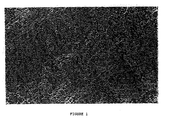
- compositions consist of a polylactic-glycolic acid (PLGA) and a peptide and have the characteristic of distributing peptide particles in the PLGA whose dimensions, under microscopic examination, are extremely heterogeneous, with peptide particles of diameter of between 1 and 60 micrometres dispersed in the polymer matrix.
- PLGA polylactic-glycolic acid
- compositions in accordance with the invention and the process for preparing them will be illustrated in greater depth in the following detailed description.
- compositions consisting of polylactic-glycolic acid (PLGA) and a peptide suitable for the preparation of long-release subcutaneous implants.
- PLGA polylactic-glycolic acid
- compositions in accordance with this invention consist of a PLGA matrix of a high molecular weight incorporating a peptide in the form of particles having extremely heterogeneous dimensions.
- This structure allows the peptide to be released in three stages, which are, respectively: pure diffusion, diffusion with swelling of the PLGA and release caused by PLGA degradation.
- the implant remains unchanged for approximately 6 weeks and over this period releases approximately 30% of the peptide.
- the duration of this pure diffusion stage is essentially determined by the degree of heterogeneity of the dimensions of the peptide particles and the speed is essentially determined by the peptide content in the PLGA matrix.
- the peptide is released by diffusion with swelling of the polymer.
- the residual peptide is released when the matrix is destroyed.
- the succession of the three stages for releasing the peptide without dead time depends on the appropriate choice of constituents in the composition, in particular:
- the technical difficulty of this invention lies in retaining the heterogeneous nature of the dimensions of the peptide particles throughout the process for preparing the implants.
- This difficulty cannot be overcome by using the known techniques of mixing by dissolving in a solvent shared by the two compounds or in one solvent for one of the two compounds, nor by means of the techniques for mixing in the melted state.
- This difficulty has been resolved in this invention by means of wet granulation of the PLGA with the peptide. This operation and the subsequent operations allow the initial heterogeneity of the peptide particles to be retained.
- the invention also refers to the process for preparing these compositions and to the aforementioned subcutaneous implants.
- One such process is a wet granulation process.
- This process consists of the following stages:
- Suitable polylactic-glycolic acid copolymers for use in the invention have molecular weights ranging from 50,000 to 150,000 and a molar ratio between the lactic acid and the glycolic monomer comprised between 50:50 and 95:5.
- Preferred polylactic-glycolic acid (PLGA) to be used in the process in accordance with this invention has a high nominal molecular weight, of between 100,000 and 150,000 D, and a molar ratio between lactic monomer and glycolic monomer of between 70/30 and 75/25.
- the peptides which can be used in this invention are preferably, but not exclusively, analogues of LHRH and comprise, for example avoreline: 5-oxo-L-prolyl-L-histidil-L-tryptophil-L-seryl-L-tyrosil-2-methyl-D-tryptophil-L-leucyl-L-arginyl-N-ethyl-prolylamide; tryptoreline: 5-oxo-L-prolyl-L-histidyl-L-tryptophil-L-seryl-L-tyrosil-D-tryptophil-L-leucyl-L-arginyl-L-prolyl-glicinamide; leuproreline: 5-oxo-L-profil-L-histidyl-L-tryptophil-L-seryl-L-tyrosil-D-leucyl-L-leucyl
- the peptide preferably used in this invention is avoreline.
- the content of peptide in the composition is between 20 and 40%, preferably between 20 and 36% by weight.
- the quantity of liquid added for granulation is between 10 and 60, preferably between 20 and 45 parts by weight in comparison with the mixture.
- stage c takes place at a temperature of between 20-50, preferably between 20-30°C in a current of dry air.
- the transversal section of the cylinders obtained from stage f) reveals under microscope a heterogeneous structure containing peptide particles having the same granulometry as the initial peptide immersed in the matrix constituted by the PLGA.
- the cylinders obtained from stage f) can be successfully used for subcutaneous implants.
- the peptide released during in vitro and in vivo trials takes place over a time period of at least 6 months.
- the overall time for releasing the peptide can be controlled by varying the diameter and the length of the implant.
- PLGA polylactic-glycolic acid
- the mixture obtained was granulated wet by adding 16 ml of ethanol using a 16mm grid.
- the granulate obtained was desiccated for 12 hours at a temperature of 25°C in a current of dry air.
- the speed of rotation of the screws was 5 rev/minute and the temperature was 30°C on entering the extruder and 100°C on leaving the extruder.
- the cylinder obtained by the extrusion was slightly stretched and then cut into segments of length 18 mm which were finally radiosterilised. In this way implants for subcutaneous use with diameter of 1.5 mm, length 18 mm and avoreline content of 25.3% by weight were obtained.
- the implants prepared in accordance with Example 1 were tested in vitro in order to examine the kinetics of releasing avoreline.
- the test was carried out under the following conditions.
- avoreline in the solutions was determined by means of HPLC under the following conditions: Column Vydac 218TP 54300A medium, 5 ⁇ m, dimensions 250 x 4.6 mm Mobile phase 750 ml phosphoric acid 0.1M were added to 250 ml of acetonitrile and the pH was corrected to 2.5 with triethylamine and the mixture filtered over an FH type filter (millipore). Output 1.5 ml/minute. Temperature 30°C Determination UV at 220 nm Injection volume 10 ⁇ l Analysis time 15 minutes
- Example 1 was repeated, with the difference that implants were produced with a diameter of 1.5 mm, length 15 mm and avoreline content of 20.9% by weight.
- Example 1 was repeated with the difference that PLGA having a molecular weight of 121,900 D was used and implants were prepared having a diameter of 1.5 mm, length 18 mm and avoreline content of 27.9% by weight.
- the mixture obtained was granulated wet by adding 6 ml of water using a 1.6mm grid.
- the granulate obtained was desiccated for 12 hours at a temperature of 25 °C in a current of dry air.
- the implants obtained had an avoreline titer of 27.6% by weight.
- the tryptoreline had a titer of 90.5% by weight and a granulometric distribution of between 1 and 60 micrometres.
- the PLGA had a molecular weight of 121,900 D, a molar ratio between lactic monomer and glycolic monomer of 70 : 30 and a 90% granulometric distribution of between 50 and 150 micrometres.
- the mixture obtained was granulated wet by adding 8 ml of ethanol using a 1.6mm grid.
- the granulate obtained was desiccated for 12 hours at a temperature of 25°C in a current of dry air.
- the implants obtained had an avoreline titer of 24.7% by weight. Microscopic examination and the release test produced similar results to Example 1.
- the gosereline had a titer of 89.5% by weight and a granulometric distribution of between 1 and 60 micrometres.
- the PLGA had a molecular weight of 121,900 D, a molar ratio between lactic monomer and glycolic monomer of 70 : 30 and a 90% granulometric distribution between 50 and 150 micrometres.
- the mixture obtained was granulated wet by adding 8 ml of ethanol using a 1.6mm grid.
- the granulate was desiccated for 12 hours at a temperature of 25 °C in a current of dry air.
- the implants obtained had a gosereline titer of 24.9% by weight.
- a group of patients was treated with implants having an avoreline content of 10 mg and a second group was treated with implants having an avoreline content of 15 mg.
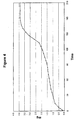
- Figure 5 and Figure 7 refer to the use of implants having an avoreline content of 10 mg while Figures 6 and 8 refer to the use of implants having an avoreline content of 15 mg.
- the left ordinate shows the plasma concentration of LH and FSH expressed in IU/L and the right ordinate shows the plasma concentration of testosterone expressed in nmol/L.
- the left ordinate shows the plasma concentration of avoreline expressed in pg/mL and the right ordinate shows the plasma concentration of testosterone expressed in nmol/L.
- testosterone is suppressed within four weeks after the implant is inserted with this effect lasting for a period of between approximately seven months and approximately twelve months.
- the plasma concentrations which can be determined for avoreline were measured for approximately 6 months after inserting the implant.
Landscapes
- Health & Medical Sciences (AREA)
- Chemical & Material Sciences (AREA)
- Life Sciences & Earth Sciences (AREA)
- Engineering & Computer Science (AREA)
- Veterinary Medicine (AREA)
- Public Health (AREA)
- Medicinal Chemistry (AREA)
- General Health & Medical Sciences (AREA)
- Animal Behavior & Ethology (AREA)
- Pharmacology & Pharmacy (AREA)
- Bioinformatics & Cheminformatics (AREA)
- Epidemiology (AREA)
- Chemical Kinetics & Catalysis (AREA)
- Organic Chemistry (AREA)
- Nuclear Medicine, Radiotherapy & Molecular Imaging (AREA)
- General Chemical & Material Sciences (AREA)
- Biomedical Technology (AREA)
- Neurosurgery (AREA)
- Dermatology (AREA)
- Endocrinology (AREA)
- Diabetes (AREA)
- Inorganic Chemistry (AREA)
- Medicinal Preparation (AREA)
- Medicines That Contain Protein Lipid Enzymes And Other Medicines (AREA)
- Peptides Or Proteins (AREA)
Abstract
Description
- milling a copolymer of lactic acid and glycolic acid,
- wetting the copolymer with an aqueous slurry of a peptide (in the Examples an aqueous solution of avoreline acetate is used):
- mixing this copolymer with the aforementioned slurry so as to obtain a homogeneous mixture;
- drying this mixture at a temperature of no higher than 25°C;
- extruding the mixture at 70-110°C in order to obtain small extruded cylinders suitable for use as subcutaneous implants.
- the heterogeneous nature of the dimensions of the peptide particles determines the first stage of release;
- the characteristics of the PLGA (molecular weight and molar ratio) have an influence on the stages of the swelling and matrix degradation.
avoreline: 5-oxo-L-prolyl-L-histidil-L-tryptophil-L-seryl-L-tyrosil-2-methyl-D-tryptophil-L-leucyl-L-arginyl-N-ethyl-prolylamide;
tryptoreline: 5-oxo-L-prolyl-L-histidyl-L-tryptophil-L-seryl-L-tyrosil-D-tryptophil-L-leucyl-L-arginyl-L-prolyl-glicinamide;
leuproreline: 5-oxo-L-profil-L-histidyl-L-tryptophil-L-seryl-L-tyrosil-D-leucyl-L-leucyl-L-arginyl-N-etil-L-prolylamide;
gosereline: - 5-oxo-L.prolyl-L-histidyl-L-tryptophil-L-seryl-L-tyrosil-tert-butyl-D-seryl-L-leucyl-L-arginyl-L- prolyl-NH-NH-CO-NH2.
- acid-alkalimetric titer : 88.1 % by weight;
- pKa : 6.15-9.70-12.02;
- granulometric distribution : between 1 and 60 micrometres.
- molecular weight of 116,500 D;
- molar ratio between lactic monomer and glycol monomer: 70: 30;
- intrinsic viscosity (CHCl3); 0.98 dl/g measured at 25°C,
- granulometric distribution : in 90% of cases between 50 and 150 micrometres.
| Column | Vydac 218TP 54300A medium, 5 µm, dimensions 250 x 4.6 mm |
| Mobile phase | 750 ml phosphoric acid 0.1M were added to 250 ml of acetonitrile and the pH was corrected to 2.5 with triethylamine and the mixture filtered over an FH type filter (millipore). |
| Output | 1.5 ml/minute. |
| | 30°C |
| Determination | UV at 220 |
| Injection | volume |
| 10 µl | |
| Analysis time | 15 minutes |
- acid-alkalimetric titer: 90.1 % by weight;
- pKa : 6.15 -9.70 -12.02:
- granulometric distribution: between 1 and 60 micrometres.
- molecular weight: 121,900 D;
- molar ratio between lactic monomer and glycolic monomer: 70: 30;
- granulometric distribution : in 90% of cases between 50 and 150 micrometres.
- Graph a) represents the average plasma concentration of the FSH;
- Graph b) represents the average plasma concentration of testosterone;
- Graph c) represents the average plasma concentration of LH;
- Graph d) represents the average plasma concentration of avoreline;
- line e) is the line of castration with reference to testosterone.
Claims (18)
- Composition suitable for the preparation of subcutaneous implants having an extended release time constituted by polylactic-glycolic acid copolymer (PLGA) and a peptide, characterised by the fact that the peptide particles distributed have dimensions which are extremely heterogeneous, with peptide particles having a diameter of between 1 and 60 micrometres dispersed in the PLGA matrix.
- Composition in accordance with claim 1, characterised by the fact that when brought in contact with an aqueous solution of a physiologic type this peptide is released in three stages, with the first stage of this release involving pure diffusion, the second stage of release involving the PLGA swelling up and the third stage of release involving PLGA degradation.
- Composition in accordance with claim 1, characterised by the fact that the aforementioned PLGA has a molecular weight between 50,000 and 150,000 and a molar ratio between lactic monomer and glycolic monomer comprised between 50:50 and 95:5.
- Composition in accordance with claim 3, characterised by the fact that the aforementioned PLGA has a molecular weight of between 100,000 and 150,000 and a molar ratio between lactic monomer and glycolic monomer of between 70/30 and 75/25.
- Composition in accordance with claim 1, characterised by the fact that the aforementioned peptide is chosen from the group containing avoreline, tryptoreline, leuproreline and gosereline.
- Composition in accordance with claim 1, characterised by the fact that the aforementioned peptide is avoreline.
- Composition in accordance with claim 1, characterised by the fact that the aforementioned peptide is tryptoreline.
- Composition in accordance with claim 1, characterised by the factthat the aforementioned peptide is gosereline.
- Composition in accordance with claim 1, characterised by the fact that the peptide content is between 20 and 40%, preferably between 20 and 36% by weight.
- Process for preparing compositions suitable for preparing subcutaneous implants in accordance with claim 1, characterised by the fact that:a) a peptide in the form of particles having a diameter of between 1 and 60 micrometers is homogeneously mixed when dry with PLGA;b) the mixture obtained from stage a) is granulated by means of wet granulation through adding a liquid;c) the granulate is dried until the residual liquid content is preferably 0.5 to 2.0% by weight; andd) the mixture obtained from stage c) is extruded and, if needed, cut and sterilised.
- Process according to claim 10, characterised by the fact that the exposure time in the extruder of step d) is from 4 to 6 minutes at a temperature which ranges from 30°C on entering the extruder to no higher than 110°C on leaving the extruder.
- Process in accordance with claim 10, characterised by the fact that the quantity of peptide used in stage a) is between 20 and 40% and preferably between 20 and 36% by weight in comparison with the mixture constituted by the peptide and PLGA.
- Process in accordance with claim 10, characterised by the fact that when this granulation liquid is ethanol or water the quantity of liquid added is between 10 and 60, preferably between 20 and 45 parts for 100 parts of mixture by weight.
- Process in accordance with claim 10, characterised by the fact that the cylinders obtained by extrusion from stage d) have a diameter of between1.0 and 1.7, preferably 1.3 and 1.5 mm, and a length of between 10 and 30, preferably 15 and 24 mm.
- Subcutaneous implants obtained from the composition as claimed in claim 1.
- Subcutaneous implants prepared using the process in accordance with claims 10 to 14.
- Subcutaneous implants in accordance with claims 15 and 16 having a diameter of between 1.3 and 1.5 mm, length of between 15 and 24 mm and peptide content of between 5 and 20 mg.
- Subcutaneous implants in accordance with claim 17, characterised by the fact that the aforementioned peptide is chosen from the group containing avoreline, tryptoreline, leuproreline and gosereline.
Applications Claiming Priority (3)
| Application Number | Priority Date | Filing Date | Title |
|---|---|---|---|
| IT1998MI002655A IT1304152B1 (en) | 1998-12-10 | 1998-12-10 | COMPOSITIONS INCLUDING A PEPTIDE AND POLYLACTIC-GLYCOLIC ACID FOR THE PREPARATION OF SUBCUTANEOUS IMPLANTS HAVING A PROLONGED |
| ITMI982655 | 1998-12-10 | ||
| PCT/EP1999/009536 WO2000033809A1 (en) | 1998-12-10 | 1999-12-06 | Compositions containing a peptide and polylactic-glycolic acid suitable for preparing subcutaneous implants with an extended release period |
Publications (2)
| Publication Number | Publication Date |
|---|---|
| EP1137400A1 EP1137400A1 (en) | 2001-10-04 |
| EP1137400B1 true EP1137400B1 (en) | 2003-11-12 |
Family
ID=11381206
Family Applications (1)
| Application Number | Title | Priority Date | Filing Date |
|---|---|---|---|
| EP99963398A Expired - Lifetime EP1137400B1 (en) | 1998-12-10 | 1999-12-06 | Compositions containing a peptide and polylactic-glycolic acid suitable for preparing subcutaneous implants with an extended release period toff, verfahren zu seiner herstellung und anlage zur durchfuhrung des verfahrens |
Country Status (16)
| Country | Link |
|---|---|
| US (1) | US6620422B1 (en) |
| EP (1) | EP1137400B1 (en) |
| JP (1) | JP4607329B2 (en) |
| KR (1) | KR100676844B1 (en) |
| CN (1) | CN1149975C (en) |
| AT (1) | ATE253893T1 (en) |
| AU (1) | AU757898C (en) |
| BR (1) | BR9916053B1 (en) |
| CA (1) | CA2354034C (en) |
| DE (1) | DE69912836T2 (en) |
| DK (1) | DK1137400T3 (en) |
| ES (1) | ES2211211T3 (en) |
| IT (1) | IT1304152B1 (en) |
| PT (1) | PT1137400E (en) |
| TW (1) | TW561053B (en) |
| WO (1) | WO2000033809A1 (en) |
Cited By (1)
| Publication number | Priority date | Publication date | Assignee | Title |
|---|---|---|---|---|
| US8263108B2 (en) | 2001-06-22 | 2012-09-11 | Durect Corporation | Zero-order prolonged release coaxial implants |
Families Citing this family (45)
| Publication number | Priority date | Publication date | Assignee | Title |
|---|---|---|---|---|
| JP4490095B2 (en) | 2001-06-29 | 2010-06-23 | メドグラフト マイクロテック インコーポレイテッド | Biodegradable injectable implants and related methods of manufacture and use |
| KR100885070B1 (en) * | 2002-05-08 | 2009-02-25 | 재단법인서울대학교산학협력재단 | Oligopeptides Specific to PLA |
| PT1532985T (en) | 2002-06-25 | 2017-01-20 | Takeda Pharmaceuticals Co | Process for producing a sustained-release composition |
| ATE477268T1 (en) | 2003-01-28 | 2010-08-15 | Ironwood Pharmaceuticals Inc | COMPOSITIONS FOR THE TREATMENT OF GASTROINTESTINAL DISORDERS |
| US7772188B2 (en) | 2003-01-28 | 2010-08-10 | Ironwood Pharmaceuticals, Inc. | Methods and compositions for the treatment of gastrointestinal disorders |
| GB0304726D0 (en) * | 2003-03-01 | 2003-04-02 | Ardana Bioscience Ltd | New Process |
| PT1638535E (en) * | 2003-06-26 | 2007-11-08 | Mediolanum Pharmaceuticals Ltd | Subcutaneous implants having limited initial release of the active principle and subsequent linearly varying extended release thereof |
| ITMI20031302A1 (en) * | 2003-06-26 | 2004-12-27 | Mediolanum Pharmaceuticals Ltd | USE OF ETHANOL AS A PLASTICIZER TO PREPARE SUBCUTANEOUS IMPLANTS CONTAINING THERMALABLE ACTIVE PRINCIPLES DISPERSED IN A PLGA MATRIX. |
| TWI357815B (en) * | 2003-06-27 | 2012-02-11 | Euro Celtique Sa | Multiparticulates |
| JP5105578B2 (en) | 2003-11-05 | 2012-12-26 | サーコード バイオサイエンス インコーポレイテッド | Cell adhesion modulator |
| CN100534527C (en) * | 2003-12-30 | 2009-09-02 | 杜雷科特公司 | Polymeric implants, preferably containing a mixture of PEG and PLG, for controlled release of active agents, preferably a GnRH |
| CA2552241C (en) * | 2003-12-30 | 2013-10-01 | Durect Corporation | Co-polymeric devices for controlled release of active agents |
| FR2865938B1 (en) * | 2004-02-05 | 2006-06-02 | Sod Conseils Rech Applic | SOLID DELAY FORMULATION COMPRISING TRIPTORELINE ACETATE |
| EP2594259A1 (en) | 2004-08-04 | 2013-05-22 | Brookwood Pharmaceuticals, Inc. | Methods for manufacturing delivery devices and devices thereof |
| US20080254086A1 (en) * | 2004-12-23 | 2008-10-16 | Brown James E | Controlled Release Compositions |
| US8168655B2 (en) | 2005-05-17 | 2012-05-01 | Sarcode Bioscience Inc. | Compositions and methods for treatment of eye disorders |
| ITMI20061545A1 (en) * | 2006-08-02 | 2008-02-03 | Mediolanum Pharmaceuticals Ltd | PARTICLES ABLE TO RELEASE THE ACTIVE PRINCIPLE FOR A PROLONGED PERIOD OF TIME |
| ITMI20061538A1 (en) * | 2006-08-02 | 2008-02-03 | Mediolanum Pharmaceuticals Ltd | SUBCUTANEOUS PLANTS ABLE TO RELEASE THE ACTIVE PRINCIPLE FOR A PROLONGED PERIOD OF TIME |
| ITMI20061539A1 (en) * | 2006-08-02 | 2008-02-03 | Mediolanum Pharmaceuticals Ltd | SUBCUTANEOUS PLANTS ABLE TO RELEASE THE ACTIVE PRINCIPLE FOR A PROLONGED PERIOD OF TIME |
| CN101209238B (en) * | 2006-12-27 | 2012-05-09 | 辽宁省计划生育科学研究院 | Biological degradation type long-acting subcutaneous contraception implant containing gestodene and preparation thereof |
| US8969514B2 (en) | 2007-06-04 | 2015-03-03 | Synergy Pharmaceuticals, Inc. | Agonists of guanylate cyclase useful for the treatment of hypercholesterolemia, atherosclerosis, coronary heart disease, gallstone, obesity and other cardiovascular diseases |
| MX2009013293A (en) | 2007-06-04 | 2010-02-15 | Synergy Pharmaceuticals Inc | Agonists of guanylate cyclase useful for the treatment of gastrointestinal disorders, inflammation, cancer and other disorders. |
| US8067028B2 (en) * | 2007-08-13 | 2011-11-29 | Confluent Surgical Inc. | Drug delivery device |
| MX2010004281A (en) | 2007-10-19 | 2010-09-10 | Sarcode Corp | Compositions and methods for treatment of diabetic retinopathy. |
| CA2709712C (en) | 2007-12-20 | 2016-05-10 | Surmodics Pharmaceuticals, Inc. | Process for preparing microparticles having a low residual solvent volume |
| WO2009139817A2 (en) | 2008-04-15 | 2009-11-19 | Sarcode Corporation | Crystalline pharmaceutical and methods of preparation and use thereof |
| JP2011516607A (en) * | 2008-04-15 | 2011-05-26 | サーコード コーポレイション | Delivery of LFA-1 antagonists to the gastrointestinal system |
| EP2810951B1 (en) | 2008-06-04 | 2017-03-15 | Synergy Pharmaceuticals Inc. | Agonists of guanylate cyclase useful for the treatment of gastrointestinal disorders, inflammation, cancer and other disorders |
| CA2730603C (en) | 2008-07-16 | 2019-09-24 | Synergy Pharmaceuticals Inc. | Agonists of guanylate cyclase useful for the treatment of gastrointestinal disorders, inflammation, cancer and other disorders |
| EP2246063A1 (en) * | 2009-04-29 | 2010-11-03 | Ipsen Pharma S.A.S. | Sustained release formulations comprising GnRH analogues |
| US8378105B2 (en) * | 2009-10-21 | 2013-02-19 | Sarcode Bioscience Inc. | Crystalline pharmaceutical and methods of preparation and use thereof |
| WO2011161531A1 (en) | 2010-06-24 | 2011-12-29 | Torrent Pharmaceuticals Limited | Pharmaceutical composition containing goserelin for in-situ implant |
| ES2579319T3 (en) | 2011-05-04 | 2016-08-09 | Balance Therapeutics, Inc. | Pentylenetetrazol derivatives |
| DE102011114864A1 (en) | 2011-10-05 | 2013-04-11 | Acino Ag | Process for producing a homogeneous powder mixture and method for producing an implant and implant |
| SI3715345T1 (en) | 2012-07-25 | 2024-07-31 | Bausch + Lomb Ireland Limited | PREPARATION OF THE LFA-1 INHIBITOR |
| JP2016514671A (en) | 2013-03-15 | 2016-05-23 | シナジー ファーマシューティカルズ インコーポレイテッド | Guanylate cyclase agonists and uses thereof |
| JP2016514670A (en) | 2013-03-15 | 2016-05-23 | シナジー ファーマシューティカルズ インコーポレイテッド | Guanylate cyclase receptor agonists in combination with other drugs |
| CN103446041B (en) * | 2013-08-27 | 2015-06-10 | 青岛东辉医药科技发展有限公司 | Leuprorelin slow-controlled drug release stick and preparation method thereof |
| WO2015054649A2 (en) | 2013-10-10 | 2015-04-16 | Synergy Pharmaceuticals, Inc. | Agonists of guanylate cyclase useful for the treatment of opioid induced dysfunctions |
| CN105287390A (en) * | 2015-11-20 | 2016-02-03 | 北京博恩特药业有限公司 | Long-acting leuprorelin acetate microsphere and preparation method thereof |
| CN105267153B (en) * | 2015-11-27 | 2018-05-11 | 上海苏豪逸明制药有限公司 | A kind of Triptorelin sustained-release microparticle and preparation method thereof |
| JP2019506383A (en) | 2016-01-11 | 2019-03-07 | シナジー ファーマシューティカルズ インコーポレイテッド | Formulations and methods for treating ulcerative colitis |
| CN105878174B (en) * | 2016-04-26 | 2021-06-29 | 广州帝奇医药技术有限公司 | Solid dispersion and preparation method and application thereof |
| CN107281493A (en) * | 2017-06-20 | 2017-10-24 | 苏州乔纳森新材料科技有限公司 | A kind of copolymerized material of polylactic-co-glycolic acid and preparation method thereof |
| WO2026050206A1 (en) | 2024-08-27 | 2026-03-05 | Ironwood Pharmaceuticals, Inc. | Combinations of glp-1 and guanylate cyclase c (gc-c) receptor agonists |
Family Cites Families (7)
| Publication number | Priority date | Publication date | Assignee | Title |
|---|---|---|---|---|
| GB2209937B (en) * | 1987-09-21 | 1991-07-03 | Depiopharm S A | Water insoluble polypeptides |
| CH679207A5 (en) * | 1989-07-28 | 1992-01-15 | Debiopharm Sa | |
| AU653771B2 (en) * | 1991-01-03 | 1994-10-13 | Alkermes Controlled Therapeutics, Inc. | Stabilization of proteins by cationic biopolymers |
| IE920040A1 (en) * | 1991-01-09 | 1992-07-15 | Alza Corp | Bioerodible devices and compositions for diffusional release¹of agents |
| CH683149A5 (en) * | 1991-07-22 | 1994-01-31 | Debio Rech Pharma Sa | Process for the preparation of microspheres of a biodegradable polymeric material. |
| US5945128A (en) | 1996-09-04 | 1999-08-31 | Romano Deghenghi | Process to manufacture implants containing bioactive peptides |
| JP2001505899A (en) * | 1996-12-12 | 2001-05-08 | デーデーエス ドラッグ デリバリー サービス ゲセルシャフト ツーア フェアデルング デア フォルシュング イン ファーマシューティッシャー テクノロジー ウント バイオファーマジー エムベーハー | Formulation in the form of a matrix material-excipient compound optionally containing an active substance |
-
1998
- 1998-12-10 IT IT1998MI002655A patent/IT1304152B1/en active
-
1999
- 1999-12-06 CN CNB998142417A patent/CN1149975C/en not_active Expired - Fee Related
- 1999-12-06 JP JP2000586303A patent/JP4607329B2/en not_active Expired - Fee Related
- 1999-12-06 DK DK99963398T patent/DK1137400T3/en active
- 1999-12-06 CA CA002354034A patent/CA2354034C/en not_active Expired - Fee Related
- 1999-12-06 BR BRPI9916053-6A patent/BR9916053B1/en not_active IP Right Cessation
- 1999-12-06 KR KR1020017006407A patent/KR100676844B1/en not_active Expired - Fee Related
- 1999-12-06 ES ES99963398T patent/ES2211211T3/en not_active Expired - Lifetime
- 1999-12-06 EP EP99963398A patent/EP1137400B1/en not_active Expired - Lifetime
- 1999-12-06 US US09/857,404 patent/US6620422B1/en not_active Expired - Fee Related
- 1999-12-06 WO PCT/EP1999/009536 patent/WO2000033809A1/en not_active Ceased
- 1999-12-06 AU AU19711/00A patent/AU757898C/en not_active Ceased
- 1999-12-06 AT AT99963398T patent/ATE253893T1/en active
- 1999-12-06 PT PT99963398T patent/PT1137400E/en unknown
- 1999-12-06 DE DE69912836T patent/DE69912836T2/en not_active Expired - Lifetime
-
2000
- 2000-03-08 TW TW088121636A patent/TW561053B/en not_active IP Right Cessation
Cited By (2)
| Publication number | Priority date | Publication date | Assignee | Title |
|---|---|---|---|---|
| US8263108B2 (en) | 2001-06-22 | 2012-09-11 | Durect Corporation | Zero-order prolonged release coaxial implants |
| US8889174B1 (en) | 2001-06-22 | 2014-11-18 | Durect Corporation | Zero-order prolonged release coaxial implants |
Also Published As
| Publication number | Publication date |
|---|---|
| DE69912836D1 (en) | 2003-12-18 |
| BR9916053A (en) | 2001-09-04 |
| DE69912836T2 (en) | 2004-11-11 |
| ITMI982655A1 (en) | 2000-06-10 |
| ES2211211T3 (en) | 2004-07-01 |
| DK1137400T3 (en) | 2004-03-22 |
| KR100676844B1 (en) | 2007-01-31 |
| CN1149975C (en) | 2004-05-19 |
| CA2354034C (en) | 2009-01-27 |
| PT1137400E (en) | 2004-03-31 |
| EP1137400A1 (en) | 2001-10-04 |
| IT1304152B1 (en) | 2001-03-08 |
| AU757898B2 (en) | 2003-03-13 |
| CN1329485A (en) | 2002-01-02 |
| BR9916053B1 (en) | 2011-04-19 |
| AU757898C (en) | 2003-12-18 |
| JP4607329B2 (en) | 2011-01-05 |
| AU1971100A (en) | 2000-06-26 |
| KR20010082310A (en) | 2001-08-29 |
| CA2354034A1 (en) | 2000-06-15 |
| TW561053B (en) | 2003-11-11 |
| ATE253893T1 (en) | 2003-11-15 |
| JP2002531486A (en) | 2002-09-24 |
| WO2000033809A1 (en) | 2000-06-15 |
| US6620422B1 (en) | 2003-09-16 |
Similar Documents
| Publication | Publication Date | Title |
|---|---|---|
| AU757898C (en) | Compositions containing a peptide and polylactic-glycolic acid suitable for preparing subcutaneous implants with an extended release period | |
| JP5197763B2 (en) | Medical devices and methods comprising polymers containing bioactive agents | |
| EP1126822B1 (en) | Controlled release liquid delivery compositions with low initial drug burst | |
| DE69623981T2 (en) | NON-POLYMERAL DELIVERED DELIVERY SYSTEMS | |
| US5571525A (en) | Erosion rate modifier for use in bioerodible drug delivery devices and method of use | |
| US6627600B2 (en) | Compressed microparticles for dry injection | |
| US5648097A (en) | Calcium mineral-based microparticles and method for the production thereof | |
| US7160551B2 (en) | Injectable system for controlled drug delivery | |
| EP0858323B1 (en) | Process to manufacture implants containing leuprolide | |
| AU2003217367A1 (en) | Polymer-based compositions for sustained release | |
| JP4073478B2 (en) | Biodegradable controlled-release microspheres and their production | |
| KR20060027353A (en) | Subcutaneous inserts where the initial release of the active ingredient is limited and subsequent prolonged release changes linearly | |
| US6245346B1 (en) | Pharmaceutical compositions for the sustained release of insoluble active principles | |
| EP2054028B1 (en) | Subcutaneous implants releasing an active principle over an extended period of time | |
| MXPA01005756A (en) | Compositions containing a peptide and polylactic-glycolic acid suitable for preparing subcutaneous implants with an extended release period |
Legal Events
| Date | Code | Title | Description |
|---|---|---|---|
| PUAI | Public reference made under article 153(3) epc to a published international application that has entered the european phase |
Free format text: ORIGINAL CODE: 0009012 |
|
| 17P | Request for examination filed |
Effective date: 20010703 |
|
| AK | Designated contracting states |
Kind code of ref document: A1 Designated state(s): AT BE CH CY DE DK ES FI FR GB GR IE IT LI LU MC NL PT SE |
|
| AX | Request for extension of the european patent |
Free format text: AL;LT;LV;MK;RO;SI |
|
| GRAH | Despatch of communication of intention to grant a patent |
Free format text: ORIGINAL CODE: EPIDOS IGRA |
|
| GRAS | Grant fee paid |
Free format text: ORIGINAL CODE: EPIDOSNIGR3 |
|
| GRAA | (expected) grant |
Free format text: ORIGINAL CODE: 0009210 |
|
| AK | Designated contracting states |
Kind code of ref document: B1 Designated state(s): AT BE CH CY DE DK ES FI FR GB GR IE IT LI LU MC NL PT SE |
|
| REG | Reference to a national code |
Ref country code: GB Ref legal event code: FG4D |
|
| REG | Reference to a national code |
Ref country code: CH Ref legal event code: EP |
|
| RAP2 | Party data changed (patent owner data changed or rights of a patent transferred) |
Owner name: MEDIOLANUM PHARMACEUTICALS LIMITED |
|
| REF | Corresponds to: |
Ref document number: 69912836 Country of ref document: DE Date of ref document: 20031218 Kind code of ref document: P |
|
| REG | Reference to a national code |
Ref country code: IE Ref legal event code: FG4D |
|
| NLT2 | Nl: modifications (of names), taken from the european patent patent bulletin |
Owner name: MEDIOLANUM PHARMACEUTICALS LIMITED |
|
| REG | Reference to a national code |
Ref country code: SE Ref legal event code: TRGR |
|
| REG | Reference to a national code |
Ref country code: GR Ref legal event code: EP Ref document number: 20040400549 Country of ref document: GR |
|
| REG | Reference to a national code |
Ref country code: DK Ref legal event code: T3 |
|
| REG | Reference to a national code |
Ref country code: PT Ref legal event code: SC4A Free format text: AVAILABILITY OF NATIONAL TRANSLATION Effective date: 20040206 |
|
| LTIE | Lt: invalidation of european patent or patent extension |
Effective date: 20031112 |
|
| REG | Reference to a national code |
Ref country code: CH Ref legal event code: NV Representative=s name: N&G PATENT SERVICES SA |
|
| REG | Reference to a national code |
Ref country code: ES Ref legal event code: FG2A Ref document number: 2211211 Country of ref document: ES Kind code of ref document: T3 |
|
| ET | Fr: translation filed | ||
| PLBE | No opposition filed within time limit |
Free format text: ORIGINAL CODE: 0009261 |
|
| STAA | Information on the status of an ep patent application or granted ep patent |
Free format text: STATUS: NO OPPOSITION FILED WITHIN TIME LIMIT |
|
| 26N | No opposition filed |
Effective date: 20040813 |
|
| PG25 | Lapsed in a contracting state [announced via postgrant information from national office to epo] |
Ref country code: IT Free format text: LAPSE BECAUSE OF NON-PAYMENT OF DUE FEES Effective date: 20051206 |
|
| PGFP | Annual fee paid to national office [announced via postgrant information from national office to epo] |
Ref country code: AT Payment date: 20101116 Year of fee payment: 12 |
|
| PGFP | Annual fee paid to national office [announced via postgrant information from national office to epo] |
Ref country code: GR Payment date: 20101116 Year of fee payment: 12 |
|
| PGFP | Annual fee paid to national office [announced via postgrant information from national office to epo] |
Ref country code: IT Payment date: 20071116 Year of fee payment: 9 |
|
| PGRI | Patent reinstated in contracting state [announced from national office to epo] |
Ref country code: IT Effective date: 20110616 |
|
| PGFP | Annual fee paid to national office [announced via postgrant information from national office to epo] |
Ref country code: NL Payment date: 20111117 Year of fee payment: 13 Ref country code: PT Payment date: 20111130 Year of fee payment: 13 Ref country code: SE Payment date: 20111115 Year of fee payment: 13 Ref country code: MC Payment date: 20111116 Year of fee payment: 13 Ref country code: LU Payment date: 20111115 Year of fee payment: 13 Ref country code: IE Payment date: 20111115 Year of fee payment: 13 Ref country code: DK Payment date: 20111115 Year of fee payment: 13 Ref country code: FI Payment date: 20111115 Year of fee payment: 13 |
|
| PGFP | Annual fee paid to national office [announced via postgrant information from national office to epo] |
Ref country code: BE Payment date: 20111116 Year of fee payment: 13 |
|
| PGFP | Annual fee paid to national office [announced via postgrant information from national office to epo] |
Ref country code: CY Payment date: 20111128 Year of fee payment: 13 |
|
| REG | Reference to a national code |
Ref country code: PT Ref legal event code: MM4A Free format text: LAPSE DUE TO NON-PAYMENT OF FEES Effective date: 20130606 |
|
| BERE | Be: lapsed |
Owner name: *MEDIOLANUM PHARMACEUTICALS LTD Effective date: 20121231 |
|
| REG | Reference to a national code |
Ref country code: NL Ref legal event code: V1 Effective date: 20130701 |
|
| PG25 | Lapsed in a contracting state [announced via postgrant information from national office to epo] |
Ref country code: SE Free format text: LAPSE BECAUSE OF NON-PAYMENT OF DUE FEES Effective date: 20121207 Ref country code: CY Free format text: LAPSE BECAUSE OF FAILURE TO SUBMIT A TRANSLATION OF THE DESCRIPTION OR TO PAY THE FEE WITHIN THE PRESCRIBED TIME-LIMIT Effective date: 20121206 Ref country code: MC Free format text: LAPSE BECAUSE OF NON-PAYMENT OF DUE FEES Effective date: 20121231 |
|
| REG | Reference to a national code |
Ref country code: AT Ref legal event code: MM01 Ref document number: 253893 Country of ref document: AT Kind code of ref document: T Effective date: 20121206 |
|
| REG | Reference to a national code |
Ref country code: DK Ref legal event code: EBP |
|
| PG25 | Lapsed in a contracting state [announced via postgrant information from national office to epo] |
Ref country code: FI Free format text: LAPSE BECAUSE OF NON-PAYMENT OF DUE FEES Effective date: 20121206 Ref country code: PT Free format text: LAPSE BECAUSE OF NON-PAYMENT OF DUE FEES Effective date: 20130606 |
|
| REG | Reference to a national code |
Ref country code: GR Ref legal event code: ML Ref document number: 20040400549 Country of ref document: GR Effective date: 20130703 |
|
| REG | Reference to a national code |
Ref country code: IE Ref legal event code: MM4A |
|
| PG25 | Lapsed in a contracting state [announced via postgrant information from national office to epo] |
Ref country code: BE Free format text: LAPSE BECAUSE OF NON-PAYMENT OF DUE FEES Effective date: 20121231 |
|
| PG25 | Lapsed in a contracting state [announced via postgrant information from national office to epo] |
Ref country code: NL Free format text: LAPSE BECAUSE OF NON-PAYMENT OF DUE FEES Effective date: 20130701 Ref country code: GR Free format text: LAPSE BECAUSE OF NON-PAYMENT OF DUE FEES Effective date: 20130703 Ref country code: AT Free format text: LAPSE BECAUSE OF NON-PAYMENT OF DUE FEES Effective date: 20121206 Ref country code: IE Free format text: LAPSE BECAUSE OF NON-PAYMENT OF DUE FEES Effective date: 20121206 |
|
| PGRI | Patent reinstated in contracting state [announced from national office to epo] |
Ref country code: IT Effective date: 20110616 |
|
| PG25 | Lapsed in a contracting state [announced via postgrant information from national office to epo] |
Ref country code: DK Free format text: LAPSE BECAUSE OF NON-PAYMENT OF DUE FEES Effective date: 20130102 |
|
| PGFP | Annual fee paid to national office [announced via postgrant information from national office to epo] |
Ref country code: DE Payment date: 20131122 Year of fee payment: 15 Ref country code: FR Payment date: 20131112 Year of fee payment: 15 Ref country code: GB Payment date: 20131108 Year of fee payment: 15 Ref country code: CH Payment date: 20131121 Year of fee payment: 15 |
|
| PGFP | Annual fee paid to national office [announced via postgrant information from national office to epo] |
Ref country code: ES Payment date: 20131123 Year of fee payment: 15 |
|
| PG25 | Lapsed in a contracting state [announced via postgrant information from national office to epo] |
Ref country code: LU Free format text: LAPSE BECAUSE OF NON-PAYMENT OF DUE FEES Effective date: 20121206 |
|
| REG | Reference to a national code |
Ref country code: DE Ref legal event code: R119 Ref document number: 69912836 Country of ref document: DE |
|
| REG | Reference to a national code |
Ref country code: CH Ref legal event code: PL |
|
| GBPC | Gb: european patent ceased through non-payment of renewal fee |
Effective date: 20141206 |
|
| REG | Reference to a national code |
Ref country code: FR Ref legal event code: ST Effective date: 20150831 |
|
| PG25 | Lapsed in a contracting state [announced via postgrant information from national office to epo] |
Ref country code: LI Free format text: LAPSE BECAUSE OF NON-PAYMENT OF DUE FEES Effective date: 20141231 Ref country code: DE Free format text: LAPSE BECAUSE OF NON-PAYMENT OF DUE FEES Effective date: 20150701 Ref country code: GB Free format text: LAPSE BECAUSE OF NON-PAYMENT OF DUE FEES Effective date: 20141206 Ref country code: CH Free format text: LAPSE BECAUSE OF NON-PAYMENT OF DUE FEES Effective date: 20141231 |
|
| PG25 | Lapsed in a contracting state [announced via postgrant information from national office to epo] |
Ref country code: FR Free format text: LAPSE BECAUSE OF NON-PAYMENT OF DUE FEES Effective date: 20141231 |
|
| REG | Reference to a national code |
Ref country code: ES Ref legal event code: FD2A Effective date: 20160201 |
|
| PG25 | Lapsed in a contracting state [announced via postgrant information from national office to epo] |
Ref country code: ES Free format text: LAPSE BECAUSE OF NON-PAYMENT OF DUE FEES Effective date: 20141207 |