EP1136073A1 - Compositions suitable for the treatment of damage caused by ischemia/reperfusion or oxidative stress - Google Patents
Compositions suitable for the treatment of damage caused by ischemia/reperfusion or oxidative stress Download PDFInfo
- Publication number
- EP1136073A1 EP1136073A1 EP00201051A EP00201051A EP1136073A1 EP 1136073 A1 EP1136073 A1 EP 1136073A1 EP 00201051 A EP00201051 A EP 00201051A EP 00201051 A EP00201051 A EP 00201051A EP 1136073 A1 EP1136073 A1 EP 1136073A1
- Authority
- EP
- European Patent Office
- Prior art keywords
- substance
- preparation according
- assay
- xanthine oxidase
- value
- Prior art date
- Legal status (The legal status is an assumption and is not a legal conclusion. Google has not performed a legal analysis and makes no representation as to the accuracy of the status listed.)
- Withdrawn
Links
Classifications
-
- A—HUMAN NECESSITIES
- A61—MEDICAL OR VETERINARY SCIENCE; HYGIENE
- A61K—PREPARATIONS FOR MEDICAL, DENTAL OR TOILETRY PURPOSES
- A61K45/00—Medicinal preparations containing active ingredients not provided for in groups A61K31/00 - A61K41/00
- A61K45/06—Mixtures of active ingredients without chemical characterisation, e.g. antiphlogistics and cardiaca
-
- A—HUMAN NECESSITIES
- A61—MEDICAL OR VETERINARY SCIENCE; HYGIENE
- A61K—PREPARATIONS FOR MEDICAL, DENTAL OR TOILETRY PURPOSES
- A61K31/00—Medicinal preparations containing organic active ingredients
- A61K31/33—Heterocyclic compounds
- A61K31/335—Heterocyclic compounds having oxygen as the only ring hetero atom, e.g. fungichromin
- A61K31/35—Heterocyclic compounds having oxygen as the only ring hetero atom, e.g. fungichromin having six-membered rings with one oxygen as the only ring hetero atom
-
- A—HUMAN NECESSITIES
- A61—MEDICAL OR VETERINARY SCIENCE; HYGIENE
- A61K—PREPARATIONS FOR MEDICAL, DENTAL OR TOILETRY PURPOSES
- A61K36/00—Medicinal preparations of undetermined constitution containing material from algae, lichens, fungi or plants, or derivatives thereof, e.g. traditional herbal medicines
- A61K36/18—Magnoliophyta (angiosperms)
- A61K36/185—Magnoliopsida (dicotyledons)
-
- A—HUMAN NECESSITIES
- A61—MEDICAL OR VETERINARY SCIENCE; HYGIENE
- A61K—PREPARATIONS FOR MEDICAL, DENTAL OR TOILETRY PURPOSES
- A61K36/00—Medicinal preparations of undetermined constitution containing material from algae, lichens, fungi or plants, or derivatives thereof, e.g. traditional herbal medicines
- A61K36/18—Magnoliophyta (angiosperms)
- A61K36/185—Magnoliopsida (dicotyledons)
- A61K36/23—Apiaceae or Umbelliferae (Carrot family), e.g. dill, chervil, coriander or cumin
-
- A—HUMAN NECESSITIES
- A61—MEDICAL OR VETERINARY SCIENCE; HYGIENE
- A61K—PREPARATIONS FOR MEDICAL, DENTAL OR TOILETRY PURPOSES
- A61K36/00—Medicinal preparations of undetermined constitution containing material from algae, lichens, fungi or plants, or derivatives thereof, e.g. traditional herbal medicines
- A61K36/18—Magnoliophyta (angiosperms)
- A61K36/185—Magnoliopsida (dicotyledons)
- A61K36/28—Asteraceae or Compositae (Aster or Sunflower family), e.g. chamomile, feverfew, yarrow or echinacea
-
- A—HUMAN NECESSITIES
- A61—MEDICAL OR VETERINARY SCIENCE; HYGIENE
- A61K—PREPARATIONS FOR MEDICAL, DENTAL OR TOILETRY PURPOSES
- A61K36/00—Medicinal preparations of undetermined constitution containing material from algae, lichens, fungi or plants, or derivatives thereof, e.g. traditional herbal medicines
- A61K36/18—Magnoliophyta (angiosperms)
- A61K36/185—Magnoliopsida (dicotyledons)
- A61K36/38—Clusiaceae, Hypericaceae or Guttiferae (Hypericum or Mangosteen family), e.g. common St. Johnswort
-
- A—HUMAN NECESSITIES
- A61—MEDICAL OR VETERINARY SCIENCE; HYGIENE
- A61K—PREPARATIONS FOR MEDICAL, DENTAL OR TOILETRY PURPOSES
- A61K36/00—Medicinal preparations of undetermined constitution containing material from algae, lichens, fungi or plants, or derivatives thereof, e.g. traditional herbal medicines
- A61K36/18—Magnoliophyta (angiosperms)
- A61K36/185—Magnoliopsida (dicotyledons)
- A61K36/53—Lamiaceae or Labiatae (Mint family), e.g. thyme, rosemary or lavender
-
- A—HUMAN NECESSITIES
- A61—MEDICAL OR VETERINARY SCIENCE; HYGIENE
- A61K—PREPARATIONS FOR MEDICAL, DENTAL OR TOILETRY PURPOSES
- A61K36/00—Medicinal preparations of undetermined constitution containing material from algae, lichens, fungi or plants, or derivatives thereof, e.g. traditional herbal medicines
- A61K36/18—Magnoliophyta (angiosperms)
- A61K36/185—Magnoliopsida (dicotyledons)
- A61K36/577—Malvaceae (Mallow family)
-
- A—HUMAN NECESSITIES
- A61—MEDICAL OR VETERINARY SCIENCE; HYGIENE
- A61K—PREPARATIONS FOR MEDICAL, DENTAL OR TOILETRY PURPOSES
- A61K36/00—Medicinal preparations of undetermined constitution containing material from algae, lichens, fungi or plants, or derivatives thereof, e.g. traditional herbal medicines
- A61K36/18—Magnoliophyta (angiosperms)
- A61K36/185—Magnoliopsida (dicotyledons)
- A61K36/82—Theaceae (Tea family), e.g. camellia
-
- A—HUMAN NECESSITIES
- A61—MEDICAL OR VETERINARY SCIENCE; HYGIENE
- A61K—PREPARATIONS FOR MEDICAL, DENTAL OR TOILETRY PURPOSES
- A61K36/00—Medicinal preparations of undetermined constitution containing material from algae, lichens, fungi or plants, or derivatives thereof, e.g. traditional herbal medicines
- A61K36/18—Magnoliophyta (angiosperms)
- A61K36/88—Liliopsida (monocotyledons)
- A61K36/896—Liliaceae (Lily family), e.g. daylily, plantain lily, Hyacinth or narcissus
- A61K36/8962—Allium, e.g. garden onion, leek, garlic or chives
-
- A—HUMAN NECESSITIES
- A61—MEDICAL OR VETERINARY SCIENCE; HYGIENE
- A61P—SPECIFIC THERAPEUTIC ACTIVITY OF CHEMICAL COMPOUNDS OR MEDICINAL PREPARATIONS
- A61P15/00—Drugs for genital or sexual disorders; Contraceptives
- A61P15/08—Drugs for genital or sexual disorders; Contraceptives for gonadal disorders or for enhancing fertility, e.g. inducers of ovulation or of spermatogenesis
-
- A—HUMAN NECESSITIES
- A61—MEDICAL OR VETERINARY SCIENCE; HYGIENE
- A61P—SPECIFIC THERAPEUTIC ACTIVITY OF CHEMICAL COMPOUNDS OR MEDICINAL PREPARATIONS
- A61P39/00—General protective or antinoxious agents
- A61P39/06—Free radical scavengers or antioxidants
-
- A—HUMAN NECESSITIES
- A61—MEDICAL OR VETERINARY SCIENCE; HYGIENE
- A61P—SPECIFIC THERAPEUTIC ACTIVITY OF CHEMICAL COMPOUNDS OR MEDICINAL PREPARATIONS
- A61P43/00—Drugs for specific purposes, not provided for in groups A61P1/00-A61P41/00
-
- A—HUMAN NECESSITIES
- A61—MEDICAL OR VETERINARY SCIENCE; HYGIENE
- A61P—SPECIFIC THERAPEUTIC ACTIVITY OF CHEMICAL COMPOUNDS OR MEDICINAL PREPARATIONS
- A61P9/00—Drugs for disorders of the cardiovascular system
- A61P9/10—Drugs for disorders of the cardiovascular system for treating ischaemic or atherosclerotic diseases, e.g. antianginal drugs, coronary vasodilators, drugs for myocardial infarction, retinopathy, cerebrovascula insufficiency, renal arteriosclerosis
Definitions
- the present invention relates to compositions containing substances which are able to repair or prevent damage caused by ischemia/reperfusion or oxidative stress. More in particular the present invention relates to a composition containing different substances each interfering at a different stage of the radical cascade caused by the above mentioned disorders.
- Ischemia/reperfusion and oxidative stress related diseases and injuries are a widespread problem world wide. These processes can take place all over the body and are instantly occurring, very fast and cascade like. An approach of braking the cascade chain at only one side, carries the danger of highly reactive components slipping through, and because each component of the chain can start a reaction chain on its own, this implicates an inefficient way of approaching the problem.
- the invention is based on the approach via a mixture of components, that together can interfere at three different stages of the radical cascade. In this way providing a more accurate and effective defence against ischemia/reperfusion and oxidative stress mediated injuries and diseases.
- the cascade can be illustrated as follows:
- Substance a) preferably has an IC-50 value of less than 10 ⁇ M as determined by the xanthine oxidase assay. In the xanthine oxidase assay the reduction of xanthine oxidase activity to convert xanthine to uric acid is measured.
- Substance b) preferably has an IC-50 value of less than 10 ⁇ M as determined by the superoxide scavenging assay.
- the superoxide scavenging assay the reduction of the concentration superoxide radicals resulting from conversion of hypoxanthine by xanthine oxidase is measured.
- the IC-50 value of a substance b) in the superoxide scavenging assay is less than the IC-50 value of said substance in the xanthine oxidase assay in order to discriminate the anti-oxidant from the enzyme inhibitory activities and to mark the component as a superoxide radical scavenging component.
- Substance c) has a value greater than 1.0 in relation to the value for trolox on a molar basis, as determined in the ⁇ -phycoerythrin fluorescence based assay.
- the ⁇ -phycoerythrin fluorescence based assay the reduction of ⁇ -phycoerythrin decomposition by radicals resulting from the thermal decomposition of V50 is measured.
- the value obtained for the substance to be tested is compared, on a molar basis, to the value for Trolox.
- substances a), b) and c) can be any substance, natural or synthetic, as long as they fulfil the above-described criteria.
- substance a) having xanthine oxidase inhibiting properties are quercetin, myricetin, luteolin, chrysin, apigenin and allopurinol.
- polyphenols more preferably flavonoids, are used, in particular those selected from the group consisting of compounds having formula (I) wherein
- R 1 and R 2 are independently H, OH, O, Cl, Br, I, F, N or a group with formula (II) wherein R 7 , R 8 R 9 , R 10 and R 11 are independently OH, H, CH 3 , OGluc Cl, Br, I, F or N; R 3 , R 4 , R 5 and R 6 are independently OH, H, CH 3 , OGluc, Cl, Br, I, F or N; wherein Gluc stands for glucose.
- R 1 is a group with formula (II) and R 2 is OH or H;
- R 8 , R 9 and R 10 are OH or H and R 7 and R 11 are H; and
- R 3 is OH, R 4 is H, R 5 is OH and R 6 is H or R 3 is H, R 4 is H, R 5 is OH and R 6 is OH, or R 3 is H, R 4 is OH, R 5 is H and R 6 is OH.
- substance a) is selected from apigenin, chrysin, luteolin, myricetin, morin and quercetin.
- Substance b) having superoxide radical scavenging properties can be any natural or synthetic substance which complies with the above-mentioned criterion. Examples thereof are epicatechin, epigalocatechin, epigalocatechinochalate, taxifolin. Preferably substance b) is selected from flavonoids. Most preferably substance b) is epicatechin or taxifolin.
- Substance c) having peroxyl radical scavenging properties can be any natural or synthetic substance which complies with the above-mentioned criterion and is preferably selected from quercetin, epicatechin, luteolin.
- the trolox equivalent is determined according to the ⁇ -phycoerythrin fluorescence based assay (mg). In case of apigenin this means that at least 10.9 mg/day apigenin is administered, when this is the only lipid peroxide scavenger present.
- the maximum amount of the substance to be administered is not limited. In general at a certain level no additional effect will be observed because the transport of the substance into the blood of the patient will be limited. For economical reasons the maximum amount of the substance will be the amount at which no additional effect occurs. This can be determined by determining plasma concentrations and testing these concentrations in in vitro assays.
- the present invention also relates to the use of the preparation according to the invention for the treatment of damage caused by ischemia/reperfusion.
- An ischemia/reperfusion mediated condition is herein defined as a condition caused by a reduced blood flow, or a reduced maximal blood flow to a certain organ, tissue or part of an organ or tissue; followed by a period of re-established blood flow. It is also possible that the concentration of oxygen is not matching the demands for certain time periods. This is for example the case in patients suffering from breathing problems as for example COPD, ARDS, and cystic fibrosis.
- the preparation can also be used for the treatment of oxidative stress. Because xanthine oxidase can start the described cascade, events in which oxidative stress is associated with high levels of xanthine oxidase can be treated or prevented with the described preparation. In this case the prevention or treatment is more effective than with xanthine oxidase inhibitors alone because the invention warrants the stop of the cascade at three levels.
- Examples of damage caused by ischemia/reperfusion and oxidative stress are multiple organ failure, subfertility, disorders that occur in relation to surgical procedures, damage to organs after surgical procedures, damage to lungs after damage to tissue or organs in other parts of the body, for instance lung damage after burn injuries or after pancreatitis, organ transplants, heart failure or angina, COPD or ARDS, cystic fibrosis, Inflammatory Bowel Disease ( 1 , 7, 15 ), circulatory shock, gout, rheumatoid arthritis ( 10 , 12), osteoarthrosis ( 6 ), protection against liver damage caused by use of medication or ethanol ( 3 ), inflammation and disorders related therewith, hypertension ( 13 ), muscle damage after sports ( 4 ), acute renal failure ( 2 ), pre-enclampsia or enclampsia ( 8 , 9 ), sepsis ( 14 ).
- arteries can be clamped to avoid excessive blood loss. If this clamp is removed, tissues and organs are reperfused. Moreover, during surgery blood is retained from the intestinal organs. This means that surgery itself induces a mild ischemia/reperfusion cycle for the intestine. Moving and twisting of tissue and organs e.g. large intestine (for the duration of a surgery) can also lead to short and local ischemia and reperfusion events.
- Another example in which surgery leads to an ischemia/reperfusion event is when blood flow to an ischemic part of the body is restored by surgery, e.g. a bypass of a heart, or by pursing of artherosclerotic regions in the leg. Elevations of xanthine oxidase in combination with oxidative stress can also occur in injured human skeletal muscle ( 4 ) or hypertension ( 13 ).
- ischemia of one organ leads to ischemia of another organ.
- the liver receives most of the blood from the intestine. This means that ischemia/reperfusion of the intestine leads to ischemia/reperfusion of the liver. In this way not only damage to the intestine occurs, but also damage to the liver occurs.
- An injured liver releases all kinds of stored enzymes.
- One of these enzymes is xanthine oxidase (XO).
- XO xanthine oxidase
- the blood as drained from the liver by the vena cava reaches the lung.
- the lung is oxygen rich and therefore oxygen radicals can easily be formed.
- the xanthine oxidase produced by the liver can induce damage in the lung. Similar cascades can happen toward kidney and from lung to liver.
- preliminary data are given in which components mixed according to the invention are given to rats in order to prevent this multiple organ failure cascade.
- organ transplantation Organs are removed from the donor (ischemic period) and transplanted into the recipient (reperfusion period). This means that the invention can be used for preparations given to the recipient to decrease ischemia/reperfusion effects in the body, as well as for fluids to preserve the organs before being transplanted into the recipient.
- the preparation can also be used in case of subfertility. Oxidative stress in combination with high xanthine oxidase levels can be observed in subfertility in men ( 5 , 11 ).
- the present invention will reduce XO activity and enhance radical scavenging and therefore improve fertility.
- Another example of restoration of blood flow takes place after a circulatory shock or after a severe blood loss.
- Ischemia/reperfusion also takes place in rheumatoid arthritis and osteoarthrosis. During the swelling of the joints reduction in blood flow to the joint due to the pressure of the swelling can occur. This leads to ischemia. Reduction of the swelling leads to perfusion ( 6 , 10 ).
- the invention is illustrated by the examples, which also show the assays used to determine the properties of the different substances used.
- xanthine oxidase The activity of xanthine oxidase is determined by means of the uric acid production.
- the reaction is started by addition of 66 ⁇ l of the enzyme solution to the above described assay mixture.
- the reaction is monitored after half a minute from the start for 6 minutes, by measuring the absorbance at 295 nm. If the reaction is linear, the result is expressed as ⁇ absorbance/min.
- the absorbance at 295 nm is a measure for the uric acid concentration.
- the IC-50 value is determined as the concentration of the substance to be tested corresponding to 50 % inhibition as compared to the maximum activity.
- the maximum activity is the activity of the enzyme, when no substance is dissolved in DMSO.
- Literature reference Re-evalutation of assay methods and establishment of kit for superoxide dismutase activity, Yoshihiko Oyanagui, Analytical Biochemistry 142, 290-96 (1984).
- the IC-50 value is the concentration of a substance or mixture of which the scavenging activity is 50% of the maximum activity.
- the maximum activity is the absorbance at 550 nm of the above mentioned reference.
- the absorbance measured is corrected for background colouring.
- the correction factor is the absorbance at 550 nm of a sample, incubated as described above, but containing only 10 ⁇ l of DMSO and to which instead of 400 ⁇ l enzyme solution, 400 ⁇ l buffer B is added.
- Conditions in the assay ORAC ROO are the assay ORAC ROO :
- the reaction is started by adding 100 ⁇ l 32nM V-50.
- the time between pipetting and mixing of this last step in a well and the measurement of this well, should be constant. Further, the time between the last pipetting step in a well and the first measurement of the well should be less than 2 minutes.
- V-50 should be stored in the dark at 4 °C until used.
- the reaction kinetics of the wells are monitored in a continuous monitoring process.
- the excitation wavelength is 540 nm, while the emission wavelength is 565 nm.
- the reaction is monitored until the signal of the sample differs no longer from the background signal (+/- 10%).
- the area underneath the curve of the negative reference is subtracted from the area underneath the substance to be measured. This difference in area is then related to a difference in area in relation to a negative reference resulting from trolox.
- a mixture having xanthine oxidase inhibiting, superoxide radical scavenging and peroxyl radical scavenging properties according to the present invention was used in an in vitro experiment to show that this mixtures indeed had these properties.
- a rat model was developed in which a cascade of multiple organ failure occurs. In this model rats were fed a normal feed or a feed of a flavonoid mixture according to the present invention.
- Rats were fed for 5 days a flavonoid enriched diet containing luteolin, quercetin, apigenin, epicatechin and tea extract, or a control diet. Rats were not fasted, but could eat ad libitum until the anaesthesia. Rats were anaesthetised and a clamp on the arteria mesenterica was placed. The experiment was carried out in two groups of nine rats. Ischemia was performed for one hour, followed by two hours of reperfusion. Biochemical parameters were measured in order to check if xanthine oxidase had been inhibited. Parameters indicating oxidative stress and other parameters indicating damage to an organ were measured.
- All parameters described above are parameters indicating liver injury. From the table above tendency towards liver injury can be detected.
Landscapes
- Health & Medical Sciences (AREA)
- Natural Medicines & Medicinal Plants (AREA)
- Life Sciences & Earth Sciences (AREA)
- Chemical & Material Sciences (AREA)
- General Health & Medical Sciences (AREA)
- Public Health (AREA)
- Medicinal Chemistry (AREA)
- Veterinary Medicine (AREA)
- Animal Behavior & Ethology (AREA)
- Pharmacology & Pharmacy (AREA)
- Epidemiology (AREA)
- Engineering & Computer Science (AREA)
- Medical Informatics (AREA)
- Botany (AREA)
- Mycology (AREA)
- Microbiology (AREA)
- Alternative & Traditional Medicine (AREA)
- Biotechnology (AREA)
- General Chemical & Material Sciences (AREA)
- Nuclear Medicine, Radiotherapy & Molecular Imaging (AREA)
- Chemical Kinetics & Catalysis (AREA)
- Organic Chemistry (AREA)
- Bioinformatics & Cheminformatics (AREA)
- Reproductive Health (AREA)
- Heart & Thoracic Surgery (AREA)
- Cardiology (AREA)
- Vascular Medicine (AREA)
- Urology & Nephrology (AREA)
- Toxicology (AREA)
- Gynecology & Obstetrics (AREA)
- Pregnancy & Childbirth (AREA)
- Biochemistry (AREA)
- Endocrinology (AREA)
- Pharmaceuticals Containing Other Organic And Inorganic Compounds (AREA)
- Medicines Containing Material From Animals Or Micro-Organisms (AREA)
- Medicines That Contain Protein Lipid Enzymes And Other Medicines (AREA)
- Medicinal Preparation (AREA)
- Heat Treatment Of Articles (AREA)
- Photosensitive Polymer And Photoresist Processing (AREA)
- Processing Of Meat And Fish (AREA)
Abstract
The present invention relates to a preparation containing
Description
- The present invention relates to compositions containing substances which are able to repair or prevent damage caused by ischemia/reperfusion or oxidative stress. More in particular the present invention relates to a composition containing different substances each interfering at a different stage of the radical cascade caused by the above mentioned disorders.
- Ischemia/reperfusion and oxidative stress related diseases and injuries are a widespread problem world wide. These processes can take place all over the body and are instantly occurring, very fast and cascade like. An approach of braking the cascade chain at only one side, carries the danger of highly reactive components slipping through, and because each component of the chain can start a reaction chain on its own, this implicates an inefficient way of approaching the problem.
- The invention is based on the approach via a mixture of components, that together can interfere at three different stages of the radical cascade. In this way providing a more accurate and effective defence against ischemia/reperfusion and oxidative stress mediated injuries and diseases.
- The cascade can be illustrated as follows:

- According to the present invention, there is provided a preparation containing
- a) at least one substance having xanthine oxidase inhibiting properties;
- b) at least one substance having superoxide radical scavenging properties;
- c) at least one substance having peroxyl radical scavenging properties;
-
- The properties of these substances a), b) and c) can be further defined:
- Substance a) preferably has an IC-50 value of less than 10 µM as determined by the xanthine oxidase assay. In the xanthine oxidase assay the reduction of xanthine oxidase activity to convert xanthine to uric acid is measured.
- Substance b) preferably has an IC-50 value of less than 10 µM as determined by the superoxide scavenging assay. In the superoxide scavenging assay the reduction of the concentration superoxide radicals resulting from conversion of hypoxanthine by xanthine oxidase is measured. Moreover, the IC-50 value of a substance b) in the superoxide scavenging assay is less than the IC-50 value of said substance in the xanthine oxidase assay in order to discriminate the anti-oxidant from the enzyme inhibitory activities and to mark the component as a superoxide radical scavenging component.
- Substance c) has a value greater than 1.0 in relation to the value for trolox on a molar basis, as determined in the β-phycoerythrin fluorescence based assay. In the β-phycoerythrin fluorescence based assay the reduction of β-phycoerythrin decomposition by radicals resulting from the thermal decomposition of V50 is measured. The value obtained for the substance to be tested is compared, on a molar basis, to the value for Trolox.
- The above mentioned tests are further illustrated in the examples.
- According to the present invention substances a), b) and c) can be any substance, natural or synthetic, as long as they fulfil the above-described criteria. Examples of substance a) having xanthine oxidase inhibiting properties are quercetin, myricetin, luteolin, chrysin, apigenin and allopurinol.
- Preferably polyphenols, more preferably flavonoids, are used, in particular those selected from the group consisting of compounds having formula (I)wherein

- R1 and R2 are independently H, OH, O, Cl, Br, I, F, N or a group with formula (II)wherein R7, R8 R9, R10 and R11 are independently OH, H, CH3, OGluc Cl, Br, I, F or N; R3, R4, R5 and R6 are independently OH, H, CH3, OGluc, Cl, Br, I, F or N; wherein Gluc stands for glucose.
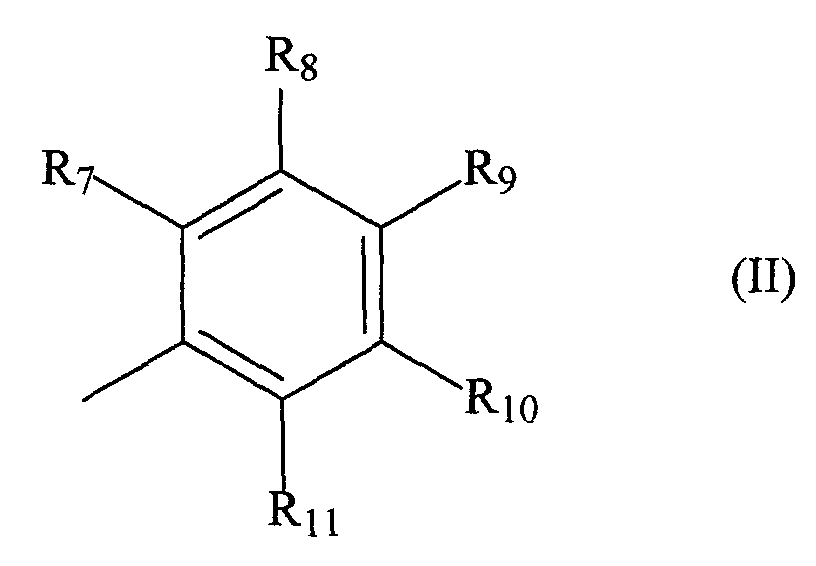
- According to a preferred embodiment of the present invention R1 is a group with formula (II) and R2 is OH or H;
R8, R9 and R10 are OH or H and R7 and R11 are H; and
R3 is OH, R4 is H, R5 is OH and R6 is H or R3 is H, R4 is H, R5 is OH and R6 is OH, or R3 is H, R4 is OH, R5 is H and R6 is OH. - In particular substance a) is selected from apigenin, chrysin, luteolin, myricetin, morin and quercetin.
- Substance b) having superoxide radical scavenging properties can be any natural or synthetic substance which complies with the above-mentioned criterion. Examples thereof are epicatechin, epigalocatechin, epigalocatechinochalate, taxifolin.
Preferably substance b) is selected from flavonoids. Most preferably substance b) is epicatechin or taxifolin. - Substance c) having peroxyl radical scavenging properties can be any natural or synthetic substance which complies with the above-mentioned criterion and is preferably selected from quercetin, epicatechin, luteolin.
- All the above values in the assays are based on pure substances. However, mixtures of substances that comply with any of the three criteria can also be used. Most preferred mixtures are extracts of natural source which contain flavonoids. As a substance a) onion, hypericum perforatum, chammomillae, linden flowers, thyme, parsley extracts can be used. As a substance b) for instance green tea extract, Aerola or Hamamelidis extract can be used. As a substance c) for instance green tea extract or grape skin extract can be used.
- In the preparation of the present invention the xanthine oxidase inhibiting components should be present in an amount such that at least x mg/day is administered, wherein: Σx/(IC-50*D) = 49
wherein the IC-50 is determined according to the xanthine oxidase assay (µg/ml). D = 1000 ml/day. D is a correction factor for the formula, it is not related to the administration of the components. In case of luteolin this means that at least 10 mg/day luteolin is administered, when this is the only xanthine oxidase inhibitor present. For quercetin this is 25 mg/day. - The superoxide radical scavengers should be present in an amount such that at least x mg/day is administered, wherein:
Σx/(IC-50*D) = 14
wherein the IC-50 is determined according to the superoxide assay (µg/ml). D = 1000 ml/day. D is a correction factor for the formula, it is not related to the administration of the components. In case of epicatechin this means that at least 9.8 mg/day epicatechin is administered, when this is the only superoxide scavenger present. - The peroxide scavenger components should be present in an amount such that at least x mg/day is administered, wherein:
x * trolox equivalent = 18. - The trolox equivalent is determined according to the β-phycoerythrin fluorescence based assay (mg). In case of apigenin this means that at least 10.9 mg/day apigenin is administered, when this is the only lipid peroxide scavenger present.
- The maximum amount of the substance to be administered is not limited. In general at a certain level no additional effect will be observed because the transport of the substance into the blood of the patient will be limited. For economical reasons the maximum amount of the substance will be the amount at which no additional effect occurs. This can be determined by determining plasma concentrations and testing these concentrations in in vitro assays.
- The present invention also relates to the use of the preparation according to the invention for the treatment of damage caused by ischemia/reperfusion. An ischemia/reperfusion mediated condition is herein defined as a condition caused by a reduced blood flow, or a reduced maximal blood flow to a certain organ, tissue or part of an organ or tissue; followed by a period of re-established blood flow. It is also possible that the concentration of oxygen is not matching the demands for certain time periods. This is for example the case in patients suffering from breathing problems as for example COPD, ARDS, and cystic fibrosis.
- The preparation can also be used for the treatment of oxidative stress. Because xanthine oxidase can start the described cascade, events in which oxidative stress is associated with high levels of xanthine oxidase can be treated or prevented with the described preparation. In this case the prevention or treatment is more effective than with xanthine oxidase inhibitors alone because the invention warrants the stop of the cascade at three levels.
- Examples of damage caused by ischemia/reperfusion and oxidative stress are multiple organ failure, subfertility, disorders that occur in relation to surgical procedures, damage to organs after surgical procedures, damage to lungs after damage to tissue or organs in other parts of the body, for instance lung damage after burn injuries or after pancreatitis, organ transplants, heart failure or angina, COPD or ARDS, cystic fibrosis, Inflammatory Bowel Disease (1, 7, 15), circulatory shock, gout, rheumatoid arthritis (10, 12), osteoarthrosis (6), protection against liver damage caused by use of medication or ethanol (3), inflammation and disorders related therewith, hypertension (13), muscle damage after sports (4), acute renal failure (2), pre-enclampsia or enclampsia (8, 9), sepsis (14).
- The application of the present preparation in surgery is important. For example, during surgery arteries can be clamped to avoid excessive blood loss. If this clamp is removed, tissues and organs are reperfused. Moreover, during surgery blood is retained from the intestinal organs. This means that surgery itself induces a mild ischemia/reperfusion cycle for the intestine. Moving and twisting of tissue and organs e.g. large intestine (for the duration of a surgery) can also lead to short and local ischemia and reperfusion events. Another example in which surgery leads to an ischemia/reperfusion event is when blood flow to an ischemic part of the body is restored by surgery, e.g. a bypass of a heart, or by pursing of artherosclerotic regions in the leg. Elevations of xanthine oxidase in combination with oxidative stress can also occur in injured human skeletal muscle (4) or hypertension (13).
- Multiple organ failure sometimes occurs when ischemia of one organ leads to ischemia of another organ. The liver receives most of the blood from the intestine. This means that ischemia/reperfusion of the intestine leads to ischemia/reperfusion of the liver. In this way not only damage to the intestine occurs, but also damage to the liver occurs. An injured liver releases all kinds of stored enzymes. One of these enzymes is xanthine oxidase (XO). The blood as drained from the liver by the vena cava reaches the lung. The lung is oxygen rich and therefore oxygen radicals can easily be formed. The xanthine oxidase produced by the liver can induce damage in the lung. Similar cascades can happen toward kidney and from lung to liver. Hereafter preliminary data are given in which components mixed according to the invention are given to rats in order to prevent this multiple organ failure cascade.
- Another specific example where ischemia/reperfusion causes damage is organ transplantation. Organs are removed from the donor (ischemic period) and transplanted into the recipient (reperfusion period). This means that the invention can be used for preparations given to the recipient to decrease ischemia/reperfusion effects in the body, as well as for fluids to preserve the organs before being transplanted into the recipient.
- The preparation can also be used in case of subfertility. Oxidative stress in combination with high xanthine oxidase levels can be observed in subfertility in men (5, 11). The present invention will reduce XO activity and enhance radical scavenging and therefore improve fertility.
- Another example of restoration of blood flow takes place after a circulatory shock or after a severe blood loss.
- Ischemia/reperfusion also takes place in rheumatoid arthritis and osteoarthrosis. During the swelling of the joints reduction in blood flow to the joint due to the pressure of the swelling can occur. This leads to ischemia. Reduction of the swelling leads to perfusion (6, 10).
- The invention is illustrated by the examples, which also show the assays used to determine the properties of the different substances used.
- The activity of xanthine oxidase is determined by means of the uric acid production. Materials used:
phosphate buffer: 50 mM Na2HPO4; MW = 141.96 g/mol; 7.10 g/l, pH adjusted to 7.8 with 1 M HCl
xanthine solution: 21.2 mg/250 ml phosphate buffer
(for dissolving the xanthine this mixture is agitated ultrasonically for 1,5 hours and heated to 90 °C for 5 to 10 minutes)
enzyme solution: XOD (xanthine oxidase) (grade I from buttermilk) 18.5 U/ml, 10.2 µl XOD 18.5 U/ml in 5000 µl in ice-cold phosphate buffer (189*10-3 U/5000 µl). This solution is maintained on ice during the entire experiment to prevent changes in the activity of the enzyme. - Assay mixture:
724 µl phophate buffer pH=7.8
200 µl xanthine solution
10 µl DMSO or the substance to be tested dissolved in DMSO - The reaction is started by addition of 66 µl of the enzyme solution to the above described assay mixture. The reaction is monitored after half a minute from the start for 6 minutes, by measuring the absorbance at 295 nm. If the reaction is linear, the result is expressed as Δabsorbance/min. The absorbance at 295 nm is a measure for the uric acid concentration.
- The IC-50 value is determined as the concentration of the substance to be tested corresponding to 50 % inhibition as compared to the maximum activity. The maximum activity is the activity of the enzyme, when no substance is dissolved in DMSO.
-
Sample IC-50 (µg/ml) IC-50 (µM) Luteolin 0.215 0.75 Apigenin 0.27 1.0 Myricetin 0.48 1.5 Quercetin dihydrate 0.51 1.5 Chrysin 0.645 2.5 Allopurinol 0.84 6.2 Catechin not detectable not detectable Epicatechin not detectable not detectable Curcumin not detectable not detectable Epigalo-catechin-galate (ECCG) not detectable not detectable - These materials were obtained from Indofine chemicals and Sigma.
- Literature reference: Re-evalutation of assay methods and establishment of kit for superoxide dismutase activity, Yoshihiko Oyanagui, Analytical Biochemistry 142, 290-96 (1984).
- All solutions are prepared with analytical grade chemicals and milliQ water.
- Buffer A: 0.2 mM hydroxylamine and 1.87 mM hypoxanthine dissolved in buffer B. For dissolving the components it can be necessary to ultrasonically agitate the mixture of the substances followed by heating the mixture to 80 °C for several minutes.
- Buffer B: 20.8 mM K2HPO4 and 15.6 mM Na2B4O7, the pH being adjusted to 7.0 with 1 M NaOH
- Buffer C (colouring reagent): 300 µg/ml sulfanilic acid and 10 µg/ml N-(1-naphtylethylenediamine) dissolved in 16.7 % acetic acid.
- Enzyme solution: xanthine oxidase from Buttermilk Grade I 5.25 µl of 18.5 U/ml dissolved in 7575 µl buffer B (97*10-3 U in 7575 µl).
-
- 10 µl of the substances to be tested were dissolved in DMSO or milli Q water and added to and mixed with, respectively: 390 µl buffer B and 200 µl buffer A. Next 400 µl of the enzyme solution is added and mixed and the sample is placed directly at 37 °C and incubated at this temperature for 30 minutes. Than the reaction is stopped by adding 2 ml of buffer C. The sample is then incubated at 20 °C for 20 minutes and the absorbance at 550 nm is measured. The absorbance is a result of reaction of a coloring reagent with remaining superoxide radicals and therefore a measure of the amount of superoxide radicals remaining.
- The results were compared with a reference containing only the solvent, i.e. either DMSO or milliQ water.
- The IC-50 value is the concentration of a substance or mixture of which the scavenging activity is 50% of the maximum activity. The maximum activity is the absorbance at 550 nm of the above mentioned reference.
- The absorbance measured is corrected for background colouring. The correction factor is the absorbance at 550 nm of a sample, incubated as described above, but containing only 10 µl of DMSO and to which instead of 400 µl enzyme solution, 400 µl buffer B is added.
-
Sample IC-50 (µg/ml) IC-50 (µM) Epicatechin 0.7 2.4 Myricetin 1.6 3.41) Taxifolin 2.8 9.2 QDH 3.6 10.8 Luteolin >100 Apigenin >100 Chrysin >100 Catechin >100 curcumin >100 ECCG >100 Vitamin C 4.4 25 - 1.Oxygen Radical Absorbance capacity assay for antioxidants, Guohua Cao et al, Free Radical Biology and medicine, vol. 14, pp. 303-311, 1993.
- 2. Phycoerythrin fluorescence based assay for peroxyl radicals: A screen for biologically relevant protective agents; Delange, R.J., Glazer A.N., Anal. Biochem., 177; 300-306 (1989).
- In order to avoid differences in result by small changes in measuring conditions, such as analytical instruments, sensitivity, etc. the end results are expressed in relation to the peroxyl scavenging capacity of a known amount of Trolox (a vitamin E analogue).
- The principle underlying the present method is that B-phycoerythrin is decomposed by radicals that are the result of the thermolitic decomposition of V50 at 20 °C. When a product scavenges these radicals, the decrease in fluorescence in time will occur less quickly. All measurements should be carried out at least in threefold.
- Equipment: Fluorimeter for 96 wells. The temperature of the tray must be kept constant. The variation between the highest and the lowest temperature of the wells should not be more than 0.5 °C. 96 well white trays of Perkin and Elmer were used.
- AAPH (2,2'-azobis(2-aminopropane)dihydrochloride) (e.g. from Wako Chemicals)= V50; MW = 271.19 g/mol; 16 mM in the assay
β-PE (e.g. from Sigma) MW=240,000 g /mol; 16.7 nM in the assay - Trolox (e.g. from Aldrich) MW = 250.29 g/mol; in the assay test in the range of 1-10 µM.
Conditions in the assay ORACROO: - 10 µl sample in ethanol
- 50 µl 50 mM PBS pH=7.4
- 50 µl 66.8 nM β-PE
- Each tray should contain trolox as a reference and as a standard (2 µM or 0.5 mg/l). As a negative control a sample is taken containing only 10 µl ethanol, 50 µl 50 mM PBS, pH=7.4 and 50 µl 66.8 nM β-PE.
-
- The reaction is started by adding 100 µl 32nM V-50. The time between pipetting and mixing of this last step in a well and the measurement of this well, should be constant. Further, the time between the last pipetting step in a well and the first measurement of the well should be less than 2 minutes.
- V-50 should be stored in the dark at 4 °C until used. The reaction kinetics of the wells are monitored in a continuous monitoring process. The excitation wavelength is 540 nm, while the emission wavelength is 565 nm. The reaction is monitored until the signal of the sample differs no longer from the background signal (+/- 10%). The area underneath the curve of the negative reference is subtracted from the area underneath the substance to be measured. This difference in area is then related to a difference in area in relation to a negative reference resulting from trolox.
-
Sample TE (Trolox equivalent) (based on mass) TE (Trolox equivalent) (based on mole weight) apigenin 1.56 1.69 quercetin 1.32 1.78 curcumin 1.27 1.72 epicatechin 1.24 1.44 chrysin 1.23 1.25 luteolin 1.22 1.40 fustin 1.07 1.24 myricetin 0.89 1.13 EGCG 0.54 0.99 - A mixture having xanthine oxidase inhibiting, superoxide radical scavenging and peroxyl radical scavenging properties according to the present invention was used in an in vitro experiment to show that this mixtures indeed had these properties. Next a rat model was developed in which a cascade of multiple organ failure occurs. In this model rats were fed a normal feed or a feed of a flavonoid mixture according to the present invention.
- An experiment was carried out in male Wistar rats. Rats were fed for 5 days a flavonoid enriched diet containing luteolin, quercetin, apigenin, epicatechin and tea extract, or a control diet. Rats were not fasted, but could eat ad libitum until the anaesthesia. Rats were anaesthetised and a clamp on the arteria mesenterica was placed. The experiment was carried out in two groups of nine rats. Ischemia was performed for one hour, followed by two hours of reperfusion. Biochemical parameters were measured in order to check if xanthine oxidase had been inhibited. Parameters indicating oxidative stress and other parameters indicating damage to an organ were measured.
- Determination of uric acid and allatonin levels.
Comparative SE Flavonoid mix SE p Uric acid (µmol/l) 386 193.5 261 90.9 0.03 -
Comparative SE Flavonoid mix SE p Apoptose 2.58 1.91 0.20 0.11 0.02 - A significant reduction was found in apoptose (spontaneous cell death) in animals fed with the flavonoid mixture.
-
Comparative SE Flavonoid mix SE p Plasma: ALAT (U/L) 47 4.1 45.8 7.3 0.45 Arginase (µmol/min) 2.35 0.55 1.83 0.71 0.28 Bilburine (µmol/L) 1.7 0.6 1 0 0.18 ASAT (U/L) 94.3 13.3 78 9.5 0.15 GGT (U/L) 0.4 0.2 0.1 0.1 0.12 Urea (mmol/L) 8.8 3.4 7.2 0.6 0.11 Tissue homogenates 8-iso-PGF2 alpha (pg/ml) 304.7 36 242.2 30 0.12 MDA (nM) 263.6 12.1 236.7 13.1 0.075 - All parameters described above are parameters indicating liver injury. From the table above tendency towards liver injury can be detected.
-
Comparative SE Flavonoid mix SE p Creatinine (µmol/l) 57.4 7.1 49.4 2.9 0.16 - Also kidney function and in general lactate production seem to be decreased when flavonoids are administered.
-
Comparative SE Flavonoid mix SE p Lactate (mmol/L) 1.9 0.2 1.6 0.1 0.2 - In general: intestine function is improved significantly and also other organs seem to profit from the invention.
-
- 1. Buffinton, G. D. & Doe, W. F. Depleted mucosal antioxidant defences in inflammatory bowel disease. Free Radic Biol Med 19, 911-8 (1995).
- 2. Edelstein, C. L., Ling, H. & Schrier, R. W. The nature of renal cell injury. Kidney
- Int 51, 1341-51 (1997).
- 3. Grattagliano, I., Vendemiale, G., Sabb, C., Buonamico, P. & Altomare, E. Oxidation of circulating proteins in alcoholics: role of acetaldehyde and xanthine oxidase. J Hepatol 25, 28-36 (1996).
- 4. Hellsten, Y., Frandsen, U., Orthenblad, N., Sjádin, B. & Richter, E. A. Xanthine oxidase in human skeletal muscle following eccentric exercise: a role in inflammation. J Physiol (Lond) 498, 239-48 (1997).
- 5. Kurpisz, M., Miesel, R., Sanocka, D. & Jedrzejczak, P. Seminal plasma can be a predictive factor for male infertility. Hum Reprod 11, 1223-6 (1996).
- 6. Liang, H. J., Tsai, C. L., Chen, P. Q. & Lu, F. J. Oxidative injury induced by synthetic humic acid polymer and monomer in cultured rabbit articular chondrocytes. Life Sci 65, 1163-73 (1999).
- 7. Lih Brody, L. et al. Increased oxidative stress and decreased antioxidant defenses in mucosa of inflammatory bowel disease. Dig Dis Sci 41, 2078-86 (1996).
- 8. Many, A. & Roberts, J. M. Increased xanthine oxidase during labour--implications for oxidative stress. Placenta 18, 725-6 (1997).
- 9. McKenzie, S. J., Baker, M. S., Buffinton, G. D. & Doe, W. F. Evidence of oxidant-induced injury to epithelial cells during inflammatory bowel disease. J Clin Invest 98, 136-41 (1996).
- 10. Milam, S. B., Zardeneta, G. & Schmitz, J. P. Oxidative stress and degenerative temporomandibular joint disease: a proposed hypothesis. J Oral Maxillofac Surg 56, 214-23 (1998).
- 11. Sanocka, D., Miesel, R., Jedrzejczak, P. & Kurpisz, M. K. Oxidative stress and male infertility. J Androl 17, 449-54 (1996).
- 12. Situnayake, R. D. et al. Chain breaking antioxidant status in rheumatoid arthritis: clinical and laboratory correlates. Ann Rheum Dis 50, 81-6 (1991).
- 13. Suzuki, H. et al. Xanthine oxidase activity associated with arterial blood pressure in spontaneously hypertensive rats. Proc-Natl-Acad-Sci-U-S-A. 95, 4754-9 (1998).
- 14. Taylor, D. E. & Piantadosi, C. A. Oxidative metabolism in sepsis and sepsis syndrome. J Crit Care 10, 122-35 (1995).
- 15. Thomson, A., Hemphill, D. & Jeejeebhoy, K. N. Oxidative stress and antioxidants in intestinal disease. Dig Dis 16, 152-8 (1998).
-
Claims (14)
- Preparation containinga) at least one substance having xanthine oxidase inhibiting properties;b) at least one substance having superoxide radical scavenging properties;c) at least one substance having peroxyl radical scavenging properties;
- Preparation according to claim 1, wherein
- substance a)
- has an IC-50 value of less than 10 µM as determined by the xanthine oxidase assay;
- substance b)
- has an IC-50 value of less than 10 µM as determined by the superoxide scavenging assay; with the proviso that the IC-50 value of substance b) in the superoxide scavenging assay is less that the IC-50 value of said substance in the xanthine oxidase assay;
- substance c)
- has a value greater than 1.0 in relation to the value for trolox on a molar basis, as determined in the β-phycoerythrin fluoresence based assay.
- Preparation according to claim 1 or 2, wherein substance a) is selected from flavonoids, extracts of onion, hypericum perforatum, chammomillae, linden flowers, thyme and parsley, and allopurinol.
- Preparation according to claim 2 or 3, wherein substance a) is selected from compounds having the formula (I)wherein
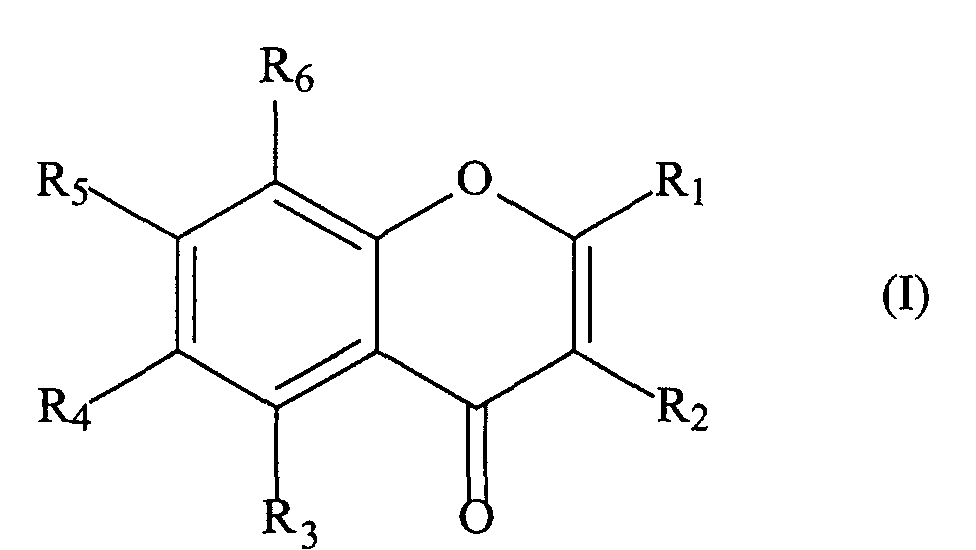
R1 and R2 are independently H, OH, O, Cl, Br, I, F, N or a group with formula (II)wherein R7, R8 R9, R10 and R11 are independently OH, H, CH3, OGluc Cl, Br, I, F or N; R3, R4, R5 and R6 are independently OH, H, CH3, OGluc, Cl, Br, I, F or N.
- Preparation according to claim 4, wherein in formula (I) R1 is a group with formula (II) and R2 is OH or H;
and in formula (II) R8, R9 and R10 are OH or H and R7 and R11 are H; and
R3 is OH, R4 is H, R5 is OH and R6 is H or R3 is H, R4 is H, R5 is OH and R6 is OH, or R3 is H, R4 is OH, R5 is H and R6 is OH. - Preparation according to claim 5, wherein substance a) is selected from apigenin, chrysin, luteolin, myricetin, morin and quercetin.
- Preparation according to any of claims 1 to 6, wherein substance b) is selected from flavonoids.
- Preparation according to claim 7, wherein substance b) is selected from epicatechin, taxifolin or green tea extract.
- Preparation according to any of claims 1 to 8, wherein substance c) is selected from quercetin, epicatechin, luteolin and green tea extract.
- Preparation according to claim 9, wherein substance c) is selected from green tea extract.
- Use of a preparation according to any of claims 1 to 10 for the preparation of a medicament for the treatment of damage caused by ischemia/reperfusion and oxidative stress.
- Use according to claim 11, to prevent multiple organ failure
- Use according to claim 11, to treat subfertility.
- Use according to claim 11, to treat or prevent peri-operative complications.
Priority Applications (12)
| Application Number | Priority Date | Filing Date | Title |
|---|---|---|---|
| EP00201051A EP1136073A1 (en) | 2000-03-22 | 2000-03-22 | Compositions suitable for the treatment of damage caused by ischemia/reperfusion or oxidative stress |
| US10/239,429 US20040076692A1 (en) | 2000-03-22 | 2001-03-22 | Compositions suitable for the treatment of damage caused by ischemia/reperfusion or oxidative stress |
| HK03103853.7A HK1051503B (en) | 2000-03-22 | 2001-03-22 | Compositions suitable for the treatment of damage caused by ischemia/ reperfusion or oxidative stress |
| PCT/NL2001/000233 WO2001070248A1 (en) | 2000-03-22 | 2001-03-22 | Compositions suitable for the treatment of damage caused by ischemia/reperfusion or oxidative stress |
| AU2001242876A AU2001242876A1 (en) | 2000-03-22 | 2001-03-22 | Compositions suitable for the treatment of damage caused by ischemia/reperfusionor oxidative stress |
| AT01915929T ATE316382T1 (en) | 2000-03-22 | 2001-03-22 | COMPOSITIONS FOR THE TREATMENT OF DAMAGE CAUSED BY ISCHEMIA/REPERFUSION OR OXIDATIVE STRESS |
| JP2001568445A JP2003527434A (en) | 2000-03-22 | 2001-03-22 | Compositions suitable for treating injury caused by ischemia / reperfusion or oxidative stress |
| EP01915929A EP1267901B9 (en) | 2000-03-22 | 2001-03-22 | Compositions suitable for the treatment of damage caused by ischemia/reperfusion or oxidative stress |
| ES01915929T ES2257401T3 (en) | 2000-03-22 | 2001-03-22 | APPROPRIATE COMPOSITION FOR THE TREATMENT OF INJURIES CAUSED BY ISCHEMIA / REPERFUSION OR OXIDATIVE STRESS. |
| DK01915929T DK1267901T3 (en) | 2000-03-22 | 2001-03-22 | Means for the treatment of damage caused by ischemia / reperfusion or oxidative stress |
| DE60116860T DE60116860T2 (en) | 2000-03-22 | 2001-03-22 | COMPOSITIONS FOR THE TREATMENT OF DAMAGE CAUSED BY ISCHEMIA / REPERFUSION OR OXIDATIVE STRESS |
| US11/501,000 US20060270615A1 (en) | 2000-03-22 | 2006-08-09 | Compositions suitable for the treatment of damage caused by ischemia/reper-fusion or oxidative stress |
Applications Claiming Priority (1)
| Application Number | Priority Date | Filing Date | Title |
|---|---|---|---|
| EP00201051A EP1136073A1 (en) | 2000-03-22 | 2000-03-22 | Compositions suitable for the treatment of damage caused by ischemia/reperfusion or oxidative stress |
Publications (1)
| Publication Number | Publication Date |
|---|---|
| EP1136073A1 true EP1136073A1 (en) | 2001-09-26 |
Family
ID=8171244
Family Applications (2)
| Application Number | Title | Priority Date | Filing Date |
|---|---|---|---|
| EP00201051A Withdrawn EP1136073A1 (en) | 2000-03-22 | 2000-03-22 | Compositions suitable for the treatment of damage caused by ischemia/reperfusion or oxidative stress |
| EP01915929A Expired - Lifetime EP1267901B9 (en) | 2000-03-22 | 2001-03-22 | Compositions suitable for the treatment of damage caused by ischemia/reperfusion or oxidative stress |
Family Applications After (1)
| Application Number | Title | Priority Date | Filing Date |
|---|---|---|---|
| EP01915929A Expired - Lifetime EP1267901B9 (en) | 2000-03-22 | 2001-03-22 | Compositions suitable for the treatment of damage caused by ischemia/reperfusion or oxidative stress |
Country Status (9)
| Country | Link |
|---|---|
| US (2) | US20040076692A1 (en) |
| EP (2) | EP1136073A1 (en) |
| JP (1) | JP2003527434A (en) |
| AT (1) | ATE316382T1 (en) |
| AU (1) | AU2001242876A1 (en) |
| DE (1) | DE60116860T2 (en) |
| DK (1) | DK1267901T3 (en) |
| ES (1) | ES2257401T3 (en) |
| WO (1) | WO2001070248A1 (en) |
Cited By (5)
| Publication number | Priority date | Publication date | Assignee | Title |
|---|---|---|---|---|
| WO2003041703A3 (en) * | 2001-11-16 | 2003-07-31 | Gho Holding B V | Use of a flavonoid for the treatment of burns |
| AU2003288047B2 (en) * | 2002-12-09 | 2008-03-13 | Fresenius Kabi Deutschland Gmbh | Formulation, which can be administered gastrointestinally, containing green tea extract and an NO donor |
| EP1919472A4 (en) * | 2005-07-21 | 2009-03-18 | Univ Florida | COMPOSITIONS AND METHODS FOR TREATING AND PREVENTING HEALTH IMPLICATIONS RELATED TO HYPERURICEMIA |
| CN102872127A (en) * | 2012-10-27 | 2013-01-16 | 吴俊华 | Application of Houttuynoid C in medicament for preventing or treating pancreatic fibrosis |
| US9155740B2 (en) | 2004-07-21 | 2015-10-13 | Richard J. Johnson | Compositions and methods for treatment and prevention of hyperuricemia related health consequences |
Families Citing this family (13)
| Publication number | Priority date | Publication date | Assignee | Title |
|---|---|---|---|---|
| US7438936B2 (en) * | 2000-06-12 | 2008-10-21 | Access Business Group International Llc | Dietary supplement and related method |
| US7939115B2 (en) * | 2000-06-12 | 2011-05-10 | Access Business Group International Llc | Dietary supplement and related method |
| US7416749B2 (en) * | 2000-06-12 | 2008-08-26 | Access Business Group International Llc | Dietary supplement and related method |
| US20060293256A1 (en) * | 2002-08-06 | 2006-12-28 | Masateru Yamada | Remedy or preventive for kidney disease and method of diagnosing kidney disease |
| FR2854307A1 (en) * | 2003-04-30 | 2004-11-05 | Jean Morelle | USE OF PLANT SUPPLEMENTS OF FOOD ORIGIN, OXIDATIVE ANTI-STRESS PROPERTIES IN THE CONTEXT OF PHYSICAL, HUMAN OR ANIMAL EXERCISE |
| JP2005097222A (en) * | 2003-08-26 | 2005-04-14 | Toyo Shinyaku:Kk | Fermented onion |
| NZ546009A (en) * | 2003-09-19 | 2010-02-26 | Nutricia Nv | Method and composition for preventing multiple organ dysfunction syndrome |
| JP4571952B2 (en) * | 2004-02-05 | 2010-10-27 | アクセス ビジネス グループ インターナショナル リミテッド ライアビリティ カンパニー | Antiallergic compositions and related methods |
| AU2006222556B2 (en) * | 2005-03-11 | 2011-09-29 | Armaron Bio Pty Ltd | Flavonoid compounds and uses thereof |
| JPWO2009093584A1 (en) * | 2008-01-23 | 2011-05-26 | 株式会社カネカ | Preventive or ameliorating agent for plant-derived hyperuricemia |
| US8648059B2 (en) * | 2008-03-13 | 2014-02-11 | The Regents Of The University Of California | Use of epicatechin and derivatives and salts thereof for cardiac protection of ischemic myocardium and to ameliorate adverse cardiac remodeling |
| CN102872124B (en) * | 2012-10-27 | 2013-10-23 | 南京大学 | Application of Houttuynoid A in medicament for preventing or treating pancreatic fibrosis |
| JP7401863B2 (en) * | 2020-10-08 | 2023-12-20 | 国立大学法人 鹿児島大学 | Vasospasm inhibitor, vasospasm preventive agent, oral composition for preventing vasospasm, and oral composition for suppressing vasospasm |
Citations (2)
| Publication number | Priority date | Publication date | Assignee | Title |
|---|---|---|---|---|
| JPH02264720A (en) * | 1989-04-04 | 1990-10-29 | Nikken Food Kk | Oxidation-resistant stress substance |
| WO2000025795A1 (en) * | 1998-10-29 | 2000-05-11 | Merck Patent Gmbh | Compositions comprising a mixture of bioflavonols |
Family Cites Families (14)
| Publication number | Priority date | Publication date | Assignee | Title |
|---|---|---|---|---|
| FR2697159B1 (en) * | 1992-10-22 | 1995-01-13 | Oreal | Cosmetic or dermo-pharmaceutical composition containing in combination a lauroylmethionate of a basic amino acid and at least one polyphenol. |
| FR2699818B1 (en) * | 1992-12-24 | 1995-02-03 | Oreal | Cosmetic or pharmaceutical composition containing in combination a polyphenol and an extract of gingko. |
| GB2290487B (en) * | 1994-06-23 | 1998-06-10 | John Hunter | Dual fuel fluidised bed gasification-combustion system |
| DE4441279C1 (en) * | 1994-11-19 | 1995-09-21 | Abb Management Ag | Current suppressor |
| IT1286564B1 (en) * | 1996-03-05 | 1998-07-15 | Comiter Trading & Services S R | A PRODUCT BASED ON EXTRA VIRGIN OLIVE OIL, VIRGIN OLIVE OIL OR ENRICHED AND INTEGRATED OLIVE OIL, AND A PROCEDURE FOR |
| US5804168A (en) * | 1997-01-29 | 1998-09-08 | Murad; Howard | Pharmaceutical compositions and methods for protecting and treating sun damaged skin |
| US5976568A (en) * | 1997-02-21 | 1999-11-02 | Medical Doctors' Research Institute, Inc. | Modular system of dietary supplement compositions for optimizing health benefits and methods |
| US5886029A (en) * | 1997-09-05 | 1999-03-23 | Dhaliwal; Kirpal S. | Method and composition for treatment of diabetes |
| US5904924A (en) * | 1997-11-04 | 1999-05-18 | Oncologics, Inc. | Green nutritional powder composition |
| US6086915A (en) * | 1998-04-01 | 2000-07-11 | Bioresponse L.L.C. | Compositions and methods of adjusting steroid hormone metabolism through phytochemicals |
| AU6462899A (en) * | 1998-08-06 | 2000-02-28 | Vascular Biotech Gmbh | Combination of active substances, especially for the prophylaxis and therapy of ischaemic organic lesions and reperfusion syndromes |
| DE29908634U1 (en) * | 1999-04-09 | 1999-12-16 | Hoensch, Harald, Prof.Dr.med., 64521 Groß-Gerau | Food supplements for the treatment of intestinal diseases |
| EP1173069A1 (en) * | 1999-04-26 | 2002-01-23 | Imperial Sensus, L.L.C. | Granular delivery system |
| US6291533B1 (en) * | 1999-12-22 | 2001-09-18 | Vitamerica, Inc. | Dietary supplements for each specific blood type |
-
2000
- 2000-03-22 EP EP00201051A patent/EP1136073A1/en not_active Withdrawn
-
2001
- 2001-03-22 AU AU2001242876A patent/AU2001242876A1/en not_active Abandoned
- 2001-03-22 DE DE60116860T patent/DE60116860T2/en not_active Expired - Lifetime
- 2001-03-22 US US10/239,429 patent/US20040076692A1/en not_active Abandoned
- 2001-03-22 DK DK01915929T patent/DK1267901T3/en active
- 2001-03-22 ES ES01915929T patent/ES2257401T3/en not_active Expired - Lifetime
- 2001-03-22 WO PCT/NL2001/000233 patent/WO2001070248A1/en not_active Ceased
- 2001-03-22 AT AT01915929T patent/ATE316382T1/en not_active IP Right Cessation
- 2001-03-22 EP EP01915929A patent/EP1267901B9/en not_active Expired - Lifetime
- 2001-03-22 JP JP2001568445A patent/JP2003527434A/en active Pending
-
2006
- 2006-08-09 US US11/501,000 patent/US20060270615A1/en not_active Abandoned
Patent Citations (2)
| Publication number | Priority date | Publication date | Assignee | Title |
|---|---|---|---|---|
| JPH02264720A (en) * | 1989-04-04 | 1990-10-29 | Nikken Food Kk | Oxidation-resistant stress substance |
| WO2000025795A1 (en) * | 1998-10-29 | 2000-05-11 | Merck Patent Gmbh | Compositions comprising a mixture of bioflavonols |
Non-Patent Citations (5)
| Title |
|---|
| DATABASE BIOSIS [online] BIOSCIENCES INFORMATION SERVICE, PHILADELPHIA, PA, US; YAGI, NOBUAKI ET AL: "Protective effect of green tea extract against reperfusion injury in rats: Antioxidant and anti-inflammatory properties.", XP002145979, retrieved from STN * |
| JOURNAL OF CLINICAL BIOCHEMISTRY AND NUTRITION, (1999) VOL. 27, NO. 2, PP. 89-101. PRINT. * |
| PATENT ABSTRACTS OF JAPAN vol. 015, no. 017 (C - 0796) 14 January 1991 (1991-01-14) * |
| SHOSKES ET AL.: "Synergy if mycophenolate mofetil and bioflavonoids in prevention of immune and ischemic injury", TRANSPLANTATION PROCEEDINGS (5TH ANNUAL CONGRESS OF THE TRANSPLANTATION SOCIETY OF ISRAEL (JUNE 02-05, 1999), vol. 32, no. 4, 2000, XP000917699 * |
| WU TAI-WING ET AL.: "Morin: a wood pigment that protects three types of human cells in the cardiovascular system against oxyradical damage", BIOCHEMICAL PHARMACOLOGY, vol. 47, no. 6, 1994, pages 1099 - 1103, XP000917716 * |
Cited By (6)
| Publication number | Priority date | Publication date | Assignee | Title |
|---|---|---|---|---|
| WO2003041703A3 (en) * | 2001-11-16 | 2003-07-31 | Gho Holding B V | Use of a flavonoid for the treatment of burns |
| AU2003288047B2 (en) * | 2002-12-09 | 2008-03-13 | Fresenius Kabi Deutschland Gmbh | Formulation, which can be administered gastrointestinally, containing green tea extract and an NO donor |
| US9155740B2 (en) | 2004-07-21 | 2015-10-13 | Richard J. Johnson | Compositions and methods for treatment and prevention of hyperuricemia related health consequences |
| EP1919472A4 (en) * | 2005-07-21 | 2009-03-18 | Univ Florida | COMPOSITIONS AND METHODS FOR TREATING AND PREVENTING HEALTH IMPLICATIONS RELATED TO HYPERURICEMIA |
| CN102872127A (en) * | 2012-10-27 | 2013-01-16 | 吴俊华 | Application of Houttuynoid C in medicament for preventing or treating pancreatic fibrosis |
| CN102872127B (en) * | 2012-10-27 | 2013-07-17 | 吴俊华 | Application of Houttuynoid C in medicament for preventing or treating pancreatic fibrosis |
Also Published As
| Publication number | Publication date |
|---|---|
| US20040076692A1 (en) | 2004-04-22 |
| DE60116860D1 (en) | 2006-04-13 |
| JP2003527434A (en) | 2003-09-16 |
| WO2001070248A1 (en) | 2001-09-27 |
| US20060270615A1 (en) | 2006-11-30 |
| EP1267901A1 (en) | 2003-01-02 |
| EP1267901B9 (en) | 2006-06-28 |
| DK1267901T3 (en) | 2006-05-29 |
| ATE316382T1 (en) | 2006-02-15 |
| HK1051503A1 (en) | 2003-08-08 |
| ES2257401T3 (en) | 2006-08-01 |
| EP1267901B1 (en) | 2006-01-25 |
| AU2001242876A1 (en) | 2001-10-03 |
| DE60116860T2 (en) | 2006-09-21 |
Similar Documents
| Publication | Publication Date | Title |
|---|---|---|
| EP1267901B1 (en) | Compositions suitable for the treatment of damage caused by ischemia/reperfusion or oxidative stress | |
| Bachorzewska-Gajewska et al. | Neutrophil-gelatinase-associated lipocalin and renal function after percutaneous coronary interventions | |
| Skov | Glomerular filtration rate in patients with severe and very severe renal insufficiency: Determined by simultaneous inulin, creatinine and 125iothalamate clearance | |
| Sutipornpalangkul et al. | Lipid peroxidation, glutathione, vitamin E, and antioxidant enzymes in synovial fluid from patients with osteoarthritis | |
| KR20010031179A (en) | The use of inhibitors of the renin-angiotensin system | |
| Berbari et al. | Antiangiogenic effects of the oral administration of liquid cartilage extract in humans | |
| WO2018009555A1 (en) | Compounds, compositions and methods for preventing and/or treating inflammation and/or organ dysfunction after pediatric cardiovascular surgery | |
| Shandall et al. | Colonic healing: a role for polymorphonuclear leucocytes and oxygen radical production | |
| Kretzschmar et al. | Plasma levels of glutathione, α-tocopherol and lipid peroxides in polytraumatized patients; evidence for a stimulating effect of TNF α on glutathione synthesis | |
| Wang et al. | Tranexamic acid causes chondral injury through chondrocytes apoptosis induced by activating endoplasmic reticulum stress | |
| Overlack et al. | Decreased urinary kallikrein activity and elevated blood pressure normalized by orally applied kallikrein in essential hypertension | |
| Bowie et al. | Anticoagulant malingerers (the “Dicumarol-eaters”) | |
| Salvi et al. | Protein protection by antioxidants: Development of a convenient assay and structure‐activity relationships of natural polyphenols | |
| HK1051503B (en) | Compositions suitable for the treatment of damage caused by ischemia/ reperfusion or oxidative stress | |
| Bouboulis et al. | Experimental hemorrhagic shock protocol in swine models: The effects of 21-Aminosteroid on the small intestine | |
| Gottleib et al. | Humoral hypercalcemia of malignancy: a syndrome in search of a hormone | |
| Kokubu et al. | ES-8891, an orally active inhibitor of human renin. | |
| Tillman et al. | Serum angiotensin converting enzyme activity and response to angiotensin I in horses | |
| CN114028376A (en) | Application of MG in preparation of NLRP3 pathway inhibitor for hyperuricemia nephropathy and/or gouty arthritis | |
| Maj et al. | Platelet monoamine oxidase activity in schizophrenia: relationship to family history of the illness and neuroleptic treatment | |
| WO2000078326A1 (en) | Method and composition for preventing or treating adverse physiological effects associated with cardiac disease | |
| Ngwenah et al. | Effect of Asparagus africanus (Asparaceae) aqueous extract on renal complications in high fat diet and streptozotocin-induced type 2 diabetes in male albino wistar rats | |
| US20040092035A1 (en) | Assay | |
| US20250090565A1 (en) | Compositions and Methods for Treating Bleeding and Bleeding Disorders | |
| Karayaylali et al. | Nonsynergistic effects of trimetazidine and selenium combination therapy on renal ischemic-reperfusion injury in rats |
Legal Events
| Date | Code | Title | Description |
|---|---|---|---|
| PUAI | Public reference made under article 153(3) epc to a published international application that has entered the european phase |
Free format text: ORIGINAL CODE: 0009012 |
|
| AK | Designated contracting states |
Kind code of ref document: A1 Designated state(s): AT BE CH CY DE DK ES FI FR GB GR IE IT LI LU MC NL PT SE |
|
| AX | Request for extension of the european patent |
Free format text: AL;LT;LV;MK;RO;SI |
|
| AKX | Designation fees paid | ||
| REG | Reference to a national code |
Ref country code: DE Ref legal event code: 8566 |
|
| STAA | Information on the status of an ep patent application or granted ep patent |
Free format text: STATUS: THE APPLICATION IS DEEMED TO BE WITHDRAWN |
|
| 18D | Application deemed to be withdrawn |
Effective date: 20020327 |