EP1135379B1 - Antitumor dibenzofluorene derivatives - Google Patents
Antitumor dibenzofluorene derivatives Download PDFInfo
- Publication number
- EP1135379B1 EP1135379B1 EP99965865A EP99965865A EP1135379B1 EP 1135379 B1 EP1135379 B1 EP 1135379B1 EP 99965865 A EP99965865 A EP 99965865A EP 99965865 A EP99965865 A EP 99965865A EP 1135379 B1 EP1135379 B1 EP 1135379B1
- Authority
- EP
- European Patent Office
- Prior art keywords
- compound
- group
- piperazinyl
- carbon atoms
- dicarboxiamide
- Prior art date
- Legal status (The legal status is an assumption and is not a legal conclusion. Google has not performed a legal analysis and makes no representation as to the accuracy of the status listed.)
- Expired - Lifetime
Links
- 0 *C1c2c(c(*)c(*)c(*)c3*)c3c(*)c(*)c2-c2c(c(*)c(*)c(*)c3O*)c3c(*=C)c(*)c12 Chemical compound *C1c2c(c(*)c(*)c(*)c3*)c3c(*)c(*)c2-c2c(c(*)c(*)c(*)c3O*)c3c(*=C)c(*)c12 0.000 description 3
- FMHRNYVGXOJVJI-UHFFFAOYSA-N O=C1c(c(cccc2)c2cc2)c2-c2c(cccc3)c3ccc12 Chemical compound O=C1c(c(cccc2)c2cc2)c2-c2c(cccc3)c3ccc12 FMHRNYVGXOJVJI-UHFFFAOYSA-N 0.000 description 1
- XFOHWECQTFIEIX-UHFFFAOYSA-N [O-][N+](c1ccc2-c3ccccc3Cc2c1)=O Chemical compound [O-][N+](c1ccc2-c3ccccc3Cc2c1)=O XFOHWECQTFIEIX-UHFFFAOYSA-N 0.000 description 1
Images

Classifications
-
- C—CHEMISTRY; METALLURGY
- C07—ORGANIC CHEMISTRY
- C07D—HETEROCYCLIC COMPOUNDS
- C07D295/00—Heterocyclic compounds containing polymethylene-imine rings with at least five ring members, 3-azabicyclo [3.2.2] nonane, piperazine, morpholine or thiomorpholine rings, having only hydrogen atoms directly attached to the ring carbon atoms
- C07D295/16—Heterocyclic compounds containing polymethylene-imine rings with at least five ring members, 3-azabicyclo [3.2.2] nonane, piperazine, morpholine or thiomorpholine rings, having only hydrogen atoms directly attached to the ring carbon atoms acylated on ring nitrogen atoms
- C07D295/18—Heterocyclic compounds containing polymethylene-imine rings with at least five ring members, 3-azabicyclo [3.2.2] nonane, piperazine, morpholine or thiomorpholine rings, having only hydrogen atoms directly attached to the ring carbon atoms acylated on ring nitrogen atoms by radicals derived from carboxylic acids, or sulfur or nitrogen analogues thereof
- C07D295/182—Radicals derived from carboxylic acids
- C07D295/185—Radicals derived from carboxylic acids from aliphatic carboxylic acids
-
- A—HUMAN NECESSITIES
- A61—MEDICAL OR VETERINARY SCIENCE; HYGIENE
- A61K—PREPARATIONS FOR MEDICAL, DENTAL OR TOILETRY PURPOSES
- A61K31/00—Medicinal preparations containing organic active ingredients
- A61K31/33—Heterocyclic compounds
- A61K31/395—Heterocyclic compounds having nitrogen as a ring hetero atom, e.g. guanethidine or rifamycins
- A61K31/435—Heterocyclic compounds having nitrogen as a ring hetero atom, e.g. guanethidine or rifamycins having six-membered rings with one nitrogen as the only ring hetero atom
- A61K31/44—Non condensed pyridines; Hydrogenated derivatives thereof
- A61K31/445—Non condensed piperidines, e.g. piperocaine
- A61K31/4453—Non condensed piperidines, e.g. piperocaine only substituted in position 1, e.g. propipocaine, diperodon
-
- A—HUMAN NECESSITIES
- A61—MEDICAL OR VETERINARY SCIENCE; HYGIENE
- A61K—PREPARATIONS FOR MEDICAL, DENTAL OR TOILETRY PURPOSES
- A61K31/00—Medicinal preparations containing organic active ingredients
- A61K31/33—Heterocyclic compounds
- A61K31/395—Heterocyclic compounds having nitrogen as a ring hetero atom, e.g. guanethidine or rifamycins
- A61K31/495—Heterocyclic compounds having nitrogen as a ring hetero atom, e.g. guanethidine or rifamycins having six-membered rings with two or more nitrogen atoms as the only ring heteroatoms, e.g. piperazine or tetrazines
-
- A—HUMAN NECESSITIES
- A61—MEDICAL OR VETERINARY SCIENCE; HYGIENE
- A61P—SPECIFIC THERAPEUTIC ACTIVITY OF CHEMICAL COMPOUNDS OR MEDICINAL PREPARATIONS
- A61P35/00—Antineoplastic agents
Definitions
- the present invention relates to compounds having antitumor activity.
- the invention also relates to pharmaceutical compositions that contain one or more of those compounds, methods of using the compounds to inhibit tumor growth in mammals, and methods of preparing the compounds.
- the present invention concerns compounds having a formula selected from the group consisting of and or salts thereof as defined in Claim 1.
- at least one of R 1 -R 13 in formula (I) or at least one of R 1 -R 12 in formula (II) is -R 14 Z.
- R 14 is a substituted or unsubstituted amino or amido group preferably having from 1-12 carbon atoms.
- Z is a substituted or unsubstituted heterocyclic group preferably having from 1-12 carbon atoms.
- R 1 -R 13 in formula (I) or R 1 -R 12 in formula (II) are independently selected from the group consisting of hydrogen, hydroxyl, halogen, nitro, substituted or unsubstituted amino or amido groups preferably having from 1-12 carbon atoms, and alkyl groups preferably having from 1-12 carbon atoms.
- salts of the claimed compounds are part of the present invention.
- suitable salts include but are not limited to the hydrochloride, iodide, and methane sulfonate salts.
- R 11 is -R 14 Z
- R 1 -R 10 and R 12 are independently hydrogen, hydroxyl, halogen, nitro, substituted or unsubstituted amino or amido having from 1-12 carbon atoms, or alkyl having 1-12 carbon atoms.
- R 14 preferably has the formula -NHR 15 -, where R 15 is a substituted or unsubstituted aliphatic group having from 2-6 carbon atoms.
- R 15 preferably is selected from the group consisting of -CO(CH 2 ) n CO- , -(CH 2 ) m -, and -CO(CH 2 ) q CHCH(CH 2 ) r CO- , where n, m, q, and r are independently a number from 0-6.
- n is from 1-4
- m is from 2-6
- q is from 0-2
- r is from 0-2.
- compositions that comprise a compound as described above and a pharmaceutically acceptable carrier.
- a pharmaceutically acceptable carrier for use in a method of inhibiting the growth of tumor cells, in which a tumor-inhibitory amount of a compound as described above is administered to a mammal.
- the compounds and compositions of the present invention are useful in cancer therapy, either by themselves or in combination with other antitumor chemotherapy or radiation therapy.
- Polycyclic aromatic compounds are widely distributed in nature and are considered to be among the significant environmental carcinogens [1].
- considerable research has been directed towards the synthesis of the polycyclic ring systems [2] and examination of their metabolic activation within target cells.
- Several hypotheses [3] have been proposed to establish the correlations between the structure of these metabolites, their cellular interactions and carcinogenicity.
- Examination of several frequently used antitumor agents revealed two common structural features [4]: they have a planar ring system and a basic side chain. It could be predicted, therefore, that in addition to other cellular interactions these compounds would first demonstrate a strong interaction with the lipid domains of the plasma membranes and other membranes within the cell [5].
- antitumoral, DNA-intercalating drugs have been shown to interact with cell membranes and in some cases have demonstrated antitumor activities without further penetrating the cell structure. This then would put them in a class of drugs that have been called generically membrane stabilizing agents (MSA) [6]. These are agents which increase membrane stability against various stressors and often at higher concentration induce membrane destabilization. For example, they may act as anti-hemolytic agents at lower concentrations and cause hemolysis at higher concentrations. In order to determine the importance of these primary interactions with the plasma membrane of tumor cells in antitumor effects, we undertook an exploratory synthetic and biological evaluation of unique polycyclic aromatic compounds.
- compositions containing these compounds will preferably also include one or more pharmaceutically acceptable carriers, such as saline solution, and may also include one or more pharmaceutically acceptable excipients and/or additional biologically active substances.
- the compounds of the present invention can be used in methods of inhibiting the growth of tumor cells in mammals, particularly in humans.
- Specific human malignancies for which these compounds should be useful include breast, colon, ovarian, and prostate cancers, melanoma, leukemia/lymphomas, and possibly others as well.
- the compounds are administered to a mammal in an amount effective to inhibit the growth of tumor cells in the mammal.
- the administration can suitably be parenteral and by intravenous, intraarterial, intramuscular, intralymphatic, intraperitoneal, subcutaneous, intrapleural, or intrathecal injection. Such administration is preferably repeated on a timed schedule until tumor regression or disappearance has been achieved, and may be used in conjunction with other forms of tumor therapy such as surgery or chemotherapy with different agents.
- a compound of the present invention is preferably administered in a dose that is between approximately 0.01 and 100 mg/kg of body weight of the mammalian subject.
- This example relates to synthesis of polycyclic aromatic ketones.
- Oxidation of benzylic methylenes to the ketones by DDQ [14], PCC [15], CrO 3 [16], tBuOOH [17], tetrapyridinesilver peroxydisulfate [18] is known in the literature.
- Harvey et al [19] reported a new oxidation method with n-BuLi in the presence of molecular oxygen. Although this method is attractive, it has several limitations. For example, oxidation of some structurally similar benzylic compounds could not be achieved by this method. Dimer formation in strong basic media was observed and mixtures of products were formed in some cases. Most importantly, extreme precaution has to be taken to get successful results as the method requires absolutely dry and inert media.
- Oxidation of 1, 5, 7, 9, 11 and 13 produced monoketones 2, 6, 8, 10, 12, and 14 in 50-90% yield.
- the presence of the diketone was not observed in the crude product while compound 3 produced a diketone 4 in 72% yield. No side products such as hydroxy, acetates, quinones or dicarboxylic acid were observed during this oxidation.
- This example concerns synthesis of dibenzofluorene derivatives.
- the acid 109 was prepared by refluxing succinic anhydride ( 107 ) with piperidine ( 108a ) and N-methylpiperazine ( 108b ). The amine 106 was then condensed with the side chains 109 by mixed anhydride method.
- the desired diamides 110 were isolated by column chromatography.
- the benzylic methylene group in 110 was oxidized by molecular oxygen [29] to get the ketone 111 which was subsequently reduced to the alcohol 112 . All new compounds gave satisfactory spectral data.
- dibenzofluorene derivative Every dibenzofluorene derivative was tested, as will be described below, against six to eight cultured, tumor cell lines of human and/or animal origin, at least half of which were selected from the NCI panel of test tumors. In each experiment, Adriamycin (ADR) was used as a maximally positive control. Subsequent to our determination that the dibenzofluorene derivative Tx-37 demonstrated consistent, highly positive effects, it was also included in the panel of test agents in every experiment where dibenzofluorene derivatives were tested.
- ADR Adriamycin
- IC 50 values reported as ⁇ g/ml for 72 hours continuous exposure to the drug.
- Drugs were prepared in DMSO:PEG300 (1:1). Further, dilutions were made in a cell culture medium with fetal bovine serum.
- L I210 leukemia
- PC3 prostate
- IC 50 value above 50 ⁇ g/ml indicates that there was insufficient cytotoxicity of the compound to achieve a 50% inhibition of cell growth at 50 ⁇ g/ml. In some cases, we observed cytotoxicity at 100 ⁇ g/ml but few of the drugs are readily soluble at this concentration and the data are not reliable.
- ADR invariably produced the described anti-tumor effect against all tumor lines at concentrations lower than 1 ⁇ g/ml of culture media.
- the effect of the Tx- compounds was divided into five activity groups as described below. In all cases, if activity against a single tumor line differed radically from that against all others, notation was made of this specificity but the agent was grouped as determined by the majority of the results.
- Tx-37 the dibenzofluorene molecule with a terminal N-methyl piperazine heterocyclic ring.
- the substitution of a ketone moiety at position 13 (Tx-50) produced a slight diminution in activity.
- the insertion of an unsaturated bond in the alkyl chain at Tx-37 (Tx-47) reduced its activity significantly.
- Tx-38 with a terminal piperidine heterocyclic ring demonstrated no significant anti-tumor activity and the insertion of an unsaturated bond in this molecule produced little or no change (Tx-48).
- Tx-48 the addition of the hydroxyl moiety at position 13, which caused minor change in Tx-37, greatly increased the activity of Tx-38 (Tx-67).
- Tx-38 and Tx-51 possess little or no activity when compared with the significant activities of Tx-37 and Tx-50 against all tumor lines. Modification of other components of the molecule, however, such as insertion of the hydroxyl moiety at position 13 of Tx-38 (Tx-67) often reduced or eliminated these differences; in this case by greatly enhancing its activity.
Landscapes
- Health & Medical Sciences (AREA)
- Chemical & Material Sciences (AREA)
- Organic Chemistry (AREA)
- Life Sciences & Earth Sciences (AREA)
- General Health & Medical Sciences (AREA)
- Veterinary Medicine (AREA)
- Public Health (AREA)
- Pharmacology & Pharmacy (AREA)
- Medicinal Chemistry (AREA)
- Animal Behavior & Ethology (AREA)
- Epidemiology (AREA)
- Chemical Kinetics & Catalysis (AREA)
- General Chemical & Material Sciences (AREA)
- Nuclear Medicine, Radiotherapy & Molecular Imaging (AREA)
- Pharmaceuticals Containing Other Organic And Inorganic Compounds (AREA)
- Organic Low-Molecular-Weight Compounds And Preparation Thereof (AREA)
- Acyclic And Carbocyclic Compounds In Medicinal Compositions (AREA)
Abstract
Description
- The present invention relates to compounds having antitumor activity. The invention also relates to pharmaceutical compositions that contain one or more of those compounds, methods of using the compounds to inhibit tumor growth in mammals, and methods of preparing the compounds.
- Many thousands of people are diagnosed with cancer each year, and although great advances have been made in cancer therapy, the existing treatments are not successful in many cases. Among the problems with existing therapies are (1) anticancer drugs administered to patients often have toxic effects on non-cancerous cells in the patient's body, (2) cancerous cells whose growth can be inhibited by certain drugs sometimes become resistant to those drugs, and (3) some cancers cannot be effectively treated with a single drug, and sometimes not even with a combination of different anticancer drugs. A long-standing need exists for new anticancer drugs that have one or more of the following characteristics: (1) ability to inhibit the growth of cancerous cells, (2) acceptable levels of toxicity to non-cancerous cells, (3) effectiveness against cancerous cells that are resistant to other drugs, and (4) a different mechanism of action than existing drugs, so that when the new drug is used in combination with an existing drug, the likelihood of the cancer cells developing cross-resistance is reduced.
- The present invention concerns compounds having a formula selected from the group consisting ofand
 or salts thereof as defined in Claim 1. In the above formulas, at least one of R1-R13 in formula (I) or at least one of R1-R12 in formula (II) is -R14Z. R14 is a substituted or unsubstituted amino or amido group preferably having from 1-12 carbon atoms. Z is a substituted or unsubstituted heterocyclic group preferably having from 1-12 carbon atoms. The remainder of R1-R13 in formula (I) or R1-R12 in formula (II) are independently selected from the group consisting of hydrogen, hydroxyl, halogen, nitro, substituted or unsubstituted amino or amido groups preferably having from 1-12 carbon atoms, and alkyl groups preferably having from 1-12 carbon atoms.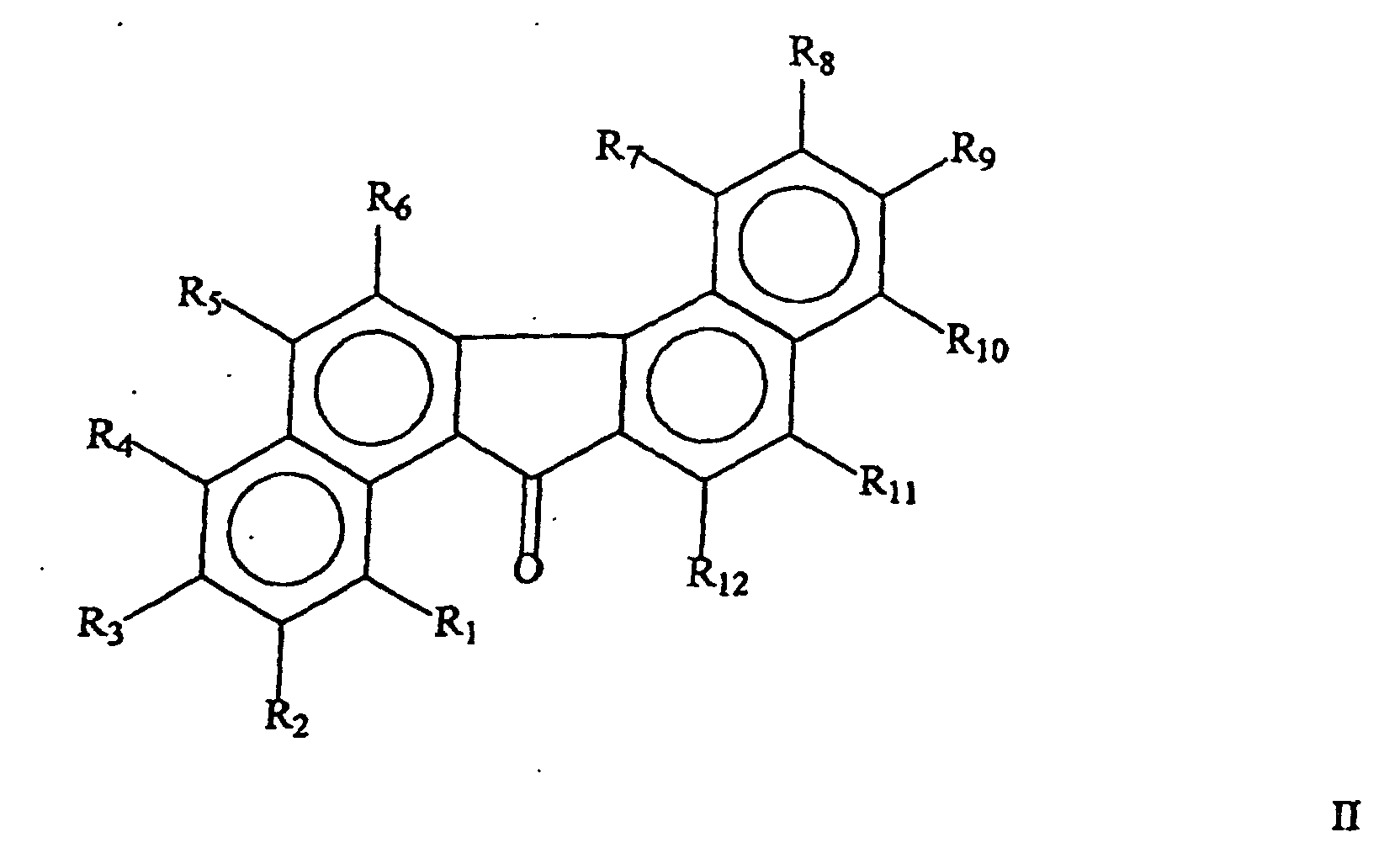
- As mentioned above, salts of the claimed compounds are part of the present invention. Examples of suitable salts include but are not limited to the hydrochloride, iodide, and methane sulfonate salts.
- In one embodiment of the invention where the compound has formula I, R11 is -R14Z, and R1-R10 and R12-R13 are independently hydrogen, hydroxyl, halogen, nitro, substituted or unsubstituted amino or amido having from 1-12 carbon atoms, or alkyl having 1-12 carbon atoms
- In another embodiment of the invention where the compound has formula II, R11 is -R14Z, and R1-R10 and R12 are independently hydrogen, hydroxyl, halogen, nitro, substituted or unsubstituted amino or amido having from 1-12 carbon atoms, or alkyl having 1-12 carbon atoms.
- R14 preferably has the formula -NHR15-, where R15 is a substituted or unsubstituted aliphatic group having from 2-6 carbon atoms. R15 preferably is selected from the group consisting of -CO(CH2)nCO- , -(CH2)m-, and -CO(CH2)qCHCH(CH2)rCO- , where n, m, q, and r are independently a number from 0-6. In one preferred embodiment of the invention, n is from 1-4, m is from 2-6, q is from 0-2, and r is from 0-2. Z preferably is selected from the group consisting of piperidinyl, piperazinyl, morpholinyl, thiomorpholinyl, pyrrolidinyl, hydroxyethyl piperazinyl, aminoethyl piperazinyl, and aminomethyldihydroxy piperidinyl.
- Another aspect of the present invention is pharmaceutical compositions that comprise a compound as described above and a pharmaceutically acceptable carrier. Yet another aspect of the present invention is the compound for use in a method of inhibiting the growth of tumor cells, in which a tumor-inhibitory amount of a compound as described above is administered to a mammal.
- Another disclosure is a method of synthesizing a cyclic hydrocarbon and keto compound. The method comprises the step of reacting a cyclic hydrocarbon compound that comprises at least two rings with a metal bismuthate in the presence of an acid. The metal bismuthate can be for example an alkali metal bismuthate such as sodium bismuthate. As another example, it can be zinc bismuthate. In certain embodiments of this method, the acid can be an organic acid such as acetic acid or a mineral acid such as sulfuric acid. Optionally the reaction can take place in the presence of an organic solvent, such as acetone. The cyclic hydrocarbon reactant preferably comprises from 10-50 carbon atoms.
- The compounds and compositions of the present invention are useful in cancer therapy, either by themselves or in combination with other antitumor chemotherapy or radiation therapy.
-
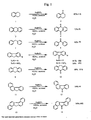
- Fig. 1 depicts a synthesis scheme that is described in Example 1.
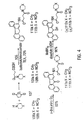
- Figs. 2-4 depict synthesis schemes that are described in Example 2.
-
- Polycyclic aromatic compounds are widely distributed in nature and are considered to be among the significant environmental carcinogens [1]. Previously, considerable research has been directed towards the synthesis of the polycyclic ring systems [2] and examination of their metabolic activation within target cells. Several hypotheses [3] have been proposed to establish the correlations between the structure of these metabolites, their cellular interactions and carcinogenicity. Eventually, most of the polycyclic metabolic products which act as carcinogens, intercalate with or bind covalently to DNA. Examination of several frequently used antitumor agents revealed two common structural features [4]: they have a planar ring system and a basic side chain. It could be predicted, therefore, that in addition to other cellular interactions these compounds would first demonstrate a strong interaction with the lipid domains of the plasma membranes and other membranes within the cell [5].
- In some instances, antitumoral, DNA-intercalating drugs have been shown to interact with cell membranes and in some cases have demonstrated antitumor activities without further penetrating the cell structure. This then would put them in a class of drugs that have been called generically membrane stabilizing agents (MSA) [6]. These are agents which increase membrane stability against various stressors and often at higher concentration induce membrane destabilization. For example, they may act as anti-hemolytic agents at lower concentrations and cause hemolysis at higher concentrations. In order to determine the importance of these primary interactions with the plasma membrane of tumor cells in antitumor effects, we undertook an exploratory synthetic and biological evaluation of unique polycyclic aromatic compounds. This was based on our belief that the potential use of such compounds as antitumor agents has not been systematically explored [7], especially when specific modification is applied to enhance the membrane interaction as the primary effector of antitumor activity. On this basis, we began this systematic analysis by synthesizing a number of dibenzofluorene derivatives and studied their biological effects in vitro on a panel of human tumor cell lines.
- A number of compounds of the present invention and reference compounds have been prepared, and are listed in Table 1.
Compound No. Compound Name Tx-37 N-[11'-(13'H-Dibenzo[a,g]-fluorenyl)]-4-(4'N methyl-piperazinyl)-butane-1,4-dicarboxiamide Tx-38 N-[11'-(13'H-Dibenzo[a,g]-fluorenyl]-4-(1'-piperidinyl)-butane-1,4-dicarboxiamide Tx-47 N-[11'-(13'H-Dibenzo[a,g]-fluorenyl]-4-(4'N methyl-piperazinyl)-but-2-ene-1,4-dicarboxiamide Tx-48 N-[11'-13'H-Dibenzo[a,g]-fluorenyl]-4-(1'-piperidinyl)-but-2-ene-1,4-dicarboxiamide Tx-49 N-[11'-(13'H-Dibenzo[a,g]-fluorenyl)]-4-(4'N methyl-piperazinyl hydrochloride)-butane-1,4-dicarboxiamide Tx-50 N-[11'-(13'H-Dibenzo[a,g]-fluorene-13'-one]-4-(4'N methyl-piperazinyl)-butane-1,4-dicarboxiamide Tx-51 N-[11'-(13'H-Dibenzo[a,g]-fluorene-13'-one]-4-(1'-piperidinyl)-butane-1,4-dicarboxiamide Tx-66 N-[11'-(13'H-Dibenzo[a,g]-fluorene-13'-hydroxy]-4-(4'N-methyl-piperazinyl)-butane-1,4-dicarboxiamide Tx-67 N-[11'-(13'H-Dibenzo[a,g]-fluorene-13'-hydroxy]-4-(1'-piperidinyl)-butane-1,4-dicarboxiamide Tx-68 (reference) N-[2'-(9'H-fluorenyl)]-4-(4'N methyl-piperazinyl)-butane-1,4-dicarboxiamide Tx-69 (reference) N-[2'-(9'H-fluorenyl)]-4-(1'-piperidinyl)-butane-1,4-dicarboxiamide - Methods for synthesizing the compounds of the present invention are described in the examples below. Therapeutic compositions containing these compounds will preferably also include one or more pharmaceutically acceptable carriers, such as saline solution, and may also include one or more pharmaceutically acceptable excipients and/or additional biologically active substances.
- The compounds of the present invention can be used in methods of inhibiting the growth of tumor cells in mammals, particularly in humans. Specific human malignancies for which these compounds should be useful include breast, colon, ovarian, and prostate cancers, melanoma, leukemia/lymphomas, and possibly others as well. The compounds are administered to a mammal in an amount effective to inhibit the growth of tumor cells in the mammal. The administration can suitably be parenteral and by intravenous, intraarterial, intramuscular, intralymphatic, intraperitoneal, subcutaneous, intrapleural, or intrathecal injection. Such administration is preferably repeated on a timed schedule until tumor regression or disappearance has been achieved, and may be used in conjunction with other forms of tumor therapy such as surgery or chemotherapy with different agents. A compound of the present invention is preferably administered in a dose that is between approximately 0.01 and 100 mg/kg of body weight of the mammalian subject.
- The present invention can be further understood from the following examples.
- This example relates to synthesis of polycyclic aromatic ketones.
- The oxidizing power of sodium bismuthate in acid media is proved by the facile conversion of bivalent manganese salts to heptavalent manganese. [8] In comparison to other, common oxidizing agents, the use of this reagent in synthetic organic chemistry has not been extensively explored. Rigby [9] demonstrated the cleavage of vicinal diols and the conversion of acyloins to α-diketones by sodium bismuthate. This reagent was also used for the oxidation of phenols [10], olefins [11] and α-ketols. [12] Recently, a few other bismuth derivatives were developed for the oxidation of various functional groups. [13]
- Oxidation of benzylic methylenes to the ketones by DDQ [14], PCC [15], CrO3 [16], tBuOOH [17], tetrapyridinesilver peroxydisulfate [18] is known in the literature. Recently, Harvey et al [19] reported a new oxidation method with n-BuLi in the presence of molecular oxygen. Although this method is attractive, it has several limitations. For example, oxidation of some structurally similar benzylic compounds could not be achieved by this method. Dimer formation in strong basic media was observed and mixtures of products were formed in some cases. Most importantly, extreme precaution has to be taken to get successful results as the method requires absolutely dry and inert media.
- We have now oxidized benzylic methylenes to ketones under reflux condition, using sodium bismuthate in acetic acid. As shown in Fig. 1, commercially available tetralin (1), diphenylmethane (5), 9-10 dihydroanthracene (3), dibenzosuberane (9) flourene (7a) and 2-nitroflourene (7b) were readily converted to the
respective ketones ketones - Oxidation of 1, 5, 7, 9, 11 and 13 produced
monoketones compound 3 produced adiketone 4 in 72% yield. No side products such as hydroxy, acetates, quinones or dicarboxylic acid were observed during this oxidation. - The mechanism of the sodium bismuthate induced oxidation is not firmly established. Oxidation of phenols by sodium bismuthate in neutral aromatic solvent has been shown to proceed by one-electron [10(e)] (through a radical intermediate) oxidation. Similar reaction in the presence of acetic acid as the solvent is believed to occur through a two-electron [10(f)] (carbonium ion) oxidation process. The suggested mechanism has a close similarity to the chromic acid [20] mediated benzylic oxidation. Thus, we hypothesize that our acid-catalyzed sodium bismuthate induced oxidation of benzylic methylenes may follow one of the processes mentioned above.
- A representative procedure is as follows:
- To the starting methylene compound (20 mmol) in acetic acid (4 mL, 50%) and acetone (2 mL), was added sodium bismuthate (80 mmol) and the mixture was heated to reflux under an argon atmosphere. At the end of reaction as indicated by TLC the mixture was filtered through a pad of celite and diluted with water (10 mL). The mixture was extracted with methylene chloride (3 x 20 mL). The combined organic layer was washed with sodium bicarbonate solution (3 x 10 mL, 10%), brine (10 mL), dried over anhydrous sodium sulfate and concentrated under reduced pressure. The resultant crude product was purified by column chromatography. All products have been characterized through a comparison of mp, TLC and NMR with authentic compounds.
- This example concerns synthesis of dibenzofluorene derivatives.
- We have developed a novel oxidation method for the conversion of benzylic methylenes to benzylic ketones in polycyclic systems by sodium bismuthate. Thus, as shown in Fig. 2,
pentacyclic dibenzofluorene 101 was oxidized to thedibenzofluorenone 102 in good yield. - We have also shown a facile reduction of the polycyclic aromatic nitro compounds to polycyclic aromatic amines (for example, 103 to 104) by samarium metal in the presence of catalytic amounts of iodine (see Fig. 3).
- Using these two methods, we became interested in examining the anti-tumor effects of structurally complex, angular dibenzofluorene [a,g] polycyclic systems with a very reactive bridged methylene group. We believe that a bridged unit in the polycyclic aromatic system could play an important role as this can form cation, anion and radical intermediates. This example describes the nitration study of the 13-H dibenzofluorene (101) and structure-activity relationship studies of several 13-unsubstituted and 13-substituted diamides (110, 111 and 112).
- We prepared pentacyclic dibenzo[a,g]fluorene (110) in 20% yield by following the method reported by Harvey [21]. Functionalization of benzene and naphthalene derivatives by electrophilic reaction [22] is routine organic chemistry. The orientation of the electrophile in such monocyclic or bicyclic derivatives is predictable. Similar substitution reaction in polycyclic aromatic system is extremely difficult and the site of attack does not follow any known orientation rule. In fact, very little is known about the electrophilic substitution reaction in polycyclic aromatic system [23].
- We planned to link a 4-carbon chain side chain with a heterocyclic base at the end to the aromatic ring through nitrogen [24]. Therefore, our task was to prepare
amino dibenzofluorene 106 for the subsequent derivatization. Towards this goal, we reacted theketone 102 with nitric acid in acetic acid under different conditions and failed to get any desired nitro derivative. However, thehydrocarbon 101 produced asingle nitro compound 105 with nitric acid-acetic acid at 0-5°C in 80% yield. (See Fig. 2.) The location of the nitro group in the aromatic system was determined by nmr spectra. The nmr spectrum (400 MHz) of the knownhydrocarbon 101 was taken. Based on the homonuclear decoupling and COSY nmr studies, all the protons in 101 were assigned as follows: (400 MHz, CDCl3) δ: 8.81 (d, 1H, J= 8.46Hz, H7), 8.50 (d, 1H, J= 8.68Hz, H6), 8.02 (d, J= 8.22Hz, H1), 7.89-7.96 (m, 3H, H4, H5, H10), 7.70 and 7.79 (2H, ABq, J=8.23Hz, H11, H12), 7.60-7.65 (m, 1H, H8), 7.45-7.54 (m, 3H, H2, H3, H9). These assignments were supported by the data reported by Jones et al [25]. The nmr spectrum of thenitro compound 105 revealed the absence of the AB quartet which was present in 101. The spectrum of 105 showed a new singlet at δ 8.39 and a new doublet at δ 8.44 ( J= 8.75 Hz ). We eliminated positions C1, C4, C7 and C10 for the nitro group because of the singlet at δ 8.44. The positions C5, C6, C8 and C9 were eliminated based on the homonuclear decoupling and COSY experiment. The region (δ 7.5-7.6) of thehydrocarbon 101 remained unaffected in 105 clearly ruled out positions C2 and C3 for the nitro group in 105. We eliminated position C12 because of the downfield doublet at δ 8.44. The 13C nmr spectrum of 105 showed the presence of nine quaternary carbons. The signal at δ 123.58 due to the C11 carbon (verified by HETCOR study) was not present in the spectrum of 105. A new peak at δ 145.24 appeared because of the nitro group. Thus, we assigned C11 as the site of the nitro group in 105 based on extensive nmr study. - Reduction of the
nitro compound 105 to theamino compound 106 was carried out by Pd-C (10%)-ammonium formate [26], samarium-iodine and Pd-C (10%)-hydrazine hydrate [27]. We found hydrazine hydrate and Pd/C (10%) gave the best results. - Our next task was to prepare the side chains 109 and to couple them to the
amine 106. (See Fig. 4.) The acid 109 was prepared by refluxing succinic anhydride (107) with piperidine (108a) and N-methylpiperazine (108b). Theamine 106 was then condensed with the side chains 109 by mixed anhydride method. [28] - The desired diamides 110 were isolated by column chromatography. The benzylic methylene group in 110 was oxidized by molecular oxygen [29] to get the ketone 111 which was subsequently reduced to the alcohol 112. All new compounds gave satisfactory spectral data.
- The compounds of this example (see Figs. 2, 3, and 4) correlate to the listing of compounds by Tx number in Table 1 as follows:
Compound Compound Tx No. 110a Tx-38 110b Tx-37 111a Tx-51 111b Tx-50 112a Tx-67 112b Tx-66 - Every dibenzofluorene derivative was tested, as will be described below, against six to eight cultured, tumor cell lines of human and/or animal origin, at least half of which were selected from the NCI panel of test tumors. In each experiment, Adriamycin (ADR) was used as a maximally positive control. Subsequent to our determination that the dibenzofluorene derivative Tx-37 demonstrated consistent, highly positive effects, it was also included in the panel of test agents in every experiment where dibenzofluorene derivatives were tested.
- Data are IC50 values (MTT assay) reported as µg/ml for 72 hours continuous exposure to the drug. Drugs were prepared in DMSO:PEG300 (1:1). Further, dilutions were made in a cell culture medium with fetal bovine serum.
-
BRO human melanoma HT-29 human colon adenocarcinoma P388/0 murine lymphatic leukemia MCF-7 human breast carcinoma HL-60 human promyelocytic leukemia OVCAR 3 human ovarian carcinoma - Additional tumor lines against which the drugs were tested in certain series included L I210 (leukemia), PC3 (prostate) and several others.
- Compounds were evaluated for solubility characteristics in vehicles which would be appropriate for use in cell culture. The compounds were added to the cell lines under continuous culture for 72 hours. Inhibition of growth relative to control cell culture was determined by the MTT method at the end of 72 hours. This is a test of the relative ability of a compound to inhibit cell growth not survival. However, inhibition of growth may reflect cell death and/or cytostasis.
- Summarized results of the in vitro cytotoxicity testing, specifically average IC50 values for the various tumor lines, are given in Table 2.
Agent # Runs P388/0 BRO HT-29 MCF-7 OVCAR-3 HL-60 Tx-37 5 2.0 1.8 1.9 3.0 1.9 1.6 Tx-38 3 42.9 46.4 34.4 22.8 39.5 14.9 Tx-47 1 15.4 1.2 16.7 20.2 1.1 1.2 Tx-48 1 71.5 22.6 52.2 18.3 23.4 30.1 Tx-49 1 3.1 2.5 2.5 5.7 2.8 2.5 Tx-50 2 3.7 11.2 10.0 18.1 6.6 4.0 Tx-51 1 55.4 47.2 65.1 27.0 16.2 32.0 Tx-66 1 2.1 6.0 5.9 4.2 2.0 Tx-67 1 9.2 14.7 8.9 8.8 5.6 Tx-68 1 41.7 18.2 31.7 Tx-69 1 41.5 28.9 52.6 - An IC50 value above 50 µg/ml indicates that there was insufficient cytotoxicity of the compound to achieve a 50% inhibition of cell growth at 50 µg/ml. In some cases, we observed cytotoxicity at 100 µg/ml but few of the drugs are readily soluble at this concentration and the data are not reliable.
- ADR invariably produced the described anti-tumor effect against all tumor lines at concentrations lower than 1 µg/ml of culture media. The effect of the Tx- compounds was divided into five activity groups as described below. In all cases, if activity against a single tumor line differed radically from that against all others, notation was made of this specificity but the agent was grouped as determined by the majority of the results.
- Group A. These agents were effective against all tumor lines at concentrations under 5 µg/ml. Some of these compounds were effective at less than 1 log difference from the activity of ADR.
- Group B. These agents were effective against all tumor lines at less than 10 µg/ml.
- Group C. These agents were effective against one-third to one-half of all tumor lines tested at levels less than 10 µg/ml.
- Group D. These agents were effective against one or two of the six to eight tumor lines tested at concentrations of less than 10 µg/ml.
- Group E. These agents produced some anti-tumor effect at doses above 10 µg/ml but less than 20 µg/ml.
- Group F. These agents were "effective" against some tumor lines above 20 µg/ml but often demonstrated no anti-tumor effect.
-
- In summary of these findings, the most active compound produced in this series was Tx-37, the dibenzofluorene molecule with a terminal N-methyl piperazine heterocyclic ring. While the hydrochloride salt (Tx-49) or the addition of a hydroxyl moiety at position 13 (Tx-66), produced minor change in the activity, the substitution of a ketone moiety at position 13 (Tx-50) produced a slight diminution in activity. The insertion of an unsaturated bond in the alkyl chain at Tx-37 (Tx-47) reduced its activity significantly.
- Tx-38 with a terminal piperidine heterocyclic ring demonstrated no significant anti-tumor activity and the insertion of an unsaturated bond in this molecule produced little or no change (Tx-48). However, the addition of the hydroxyl moiety at
position 13, which caused minor change in Tx-37, greatly increased the activity of Tx-38 (Tx-67). - As we have reported in other compounds based on other polycyclic ring structures, those that terminate in a N-methyl piperazine ring again demonstrated far greater activity than those that terminated in a piperidine ring. Thus, Tx-38 and Tx-51 possess little or no activity when compared with the significant activities of Tx-37 and Tx-50 against all tumor lines. Modification of other components of the molecule, however, such as insertion of the hydroxyl moiety at
position 13 of Tx-38 (Tx-67) often reduced or eliminated these differences; in this case by greatly enhancing its activity. - The preceding description of specific embodiments of the present invention is not intended to be a complete list of every possible embodiment of the invention. Persons skilled in this field will recognize that modifications can be made to the specific embodiments described here that would be within the scope of the present invention.
- The following references, to the extent that they provide exemplary procedural or other details supplementary to those set forth herein, are specifically incorporated herein by reference.
- [1] For a general review see: Freudenthal R, Jones PW. Carcinogenesis - a comprehensive survey. New York: Raven Press, 1976; vol. 1-3.
- [2] For a recent example see: Harvey RG. Polycyclic aromatic hydrocarbons. Wiley-VCH, 1997.
- [3] Di Raddo P, Chan TH. J. Org. Chem. 1982;47:1427 and references cited therein.
- [4] For some recent examples: ( a ) Cherubim P, Deady LW, Dorkos M, Quazi NH, Baguley BC, Denny WA. Anti-cancer drug design. 1993;8:429. ( b ) Palmer BD, Lee HH, Baguley BC, Denny WA. J. Med. Chem. 1992;35:258. ( c ) Atwell GJ, Rewcastle GW, Baguley BC, Denny WA. J. Med. Chem. 1987;30:664 and references cited therein.
- [5] Wingard LB, Tritton TR. Cancer Res. 1985;45:3529.
- [6] ( a) Jorgensen K, Ipsen JH. Biochem. Biophys. Acta. 1991;1062:227. ( b ) Kanaho Y, Sato T. Mol. Pharm. 1981; 20:704.
- [7] Bair KW, Tuttle RL, Knick VC, Cory M, McKee DD. J. Med. Chem. 1990;33:2385.
- [8] (a) Burstein, G. T.; Wright, G. A. Nature ( London ), 1969, 221, 169. ( b ) Vogel, A. I. Qualitative Inorganic Analysis, Longman Scientific and Technical: England; Wiley: New York, 1987.
- [9] Rigby, W. J. Chem. Soc. 1950, 1907; 1951, 793.
- [10] ( a ) Hewgill, F. R.; Kennedy, B. R.; Kilpin, D. J. Chem. Soc. 1965, 2904. ( b ) Hewgill, F. R.; Middleton, B. S. J. Chem. Soc. 1965, 2914. ( c ) Adderly, C. J. R.; Hewgill, F. R. J Chem. Soc. C. 1968, 2770. ( d ) Adler, E.; Holmberg, K.; Ryrfor, L. O. Acta Chem. Scand. Ser. B, 1974, 28, 888. ( e ) Kon, E.; McNelis, E. J. Org. Chem. 1975, 40, 1515. ( f ) Kon, E., McNelis, E. J. Org. Chem. 1975, 41, 1646.
- [11] Truesdale, L. K.; Reuman, M. E. J. Org. Chem. 1980, 45, 726.
- [12] Floresca, R.; Kurihara, M.; Watt, D.; Demir, A. J. Org. Chem. 1993, 58, 2196.
- [13] ( a ) Barton, D. H. R.; Finet, J. P. Pure Appl. Chem. 1987, 59, 937. ( b ) Abramovitch, R. A.; Barton, D. H. R.; Finet, J. P. Tetrahedron, 1988, 44, 3039. ( c ) Finet, J. P. Chem. Rev. 1989, 89. ( d ) Firouzabadi, H.; Mohammadpour-Baltork, I. Bull. Chem. Soc. Jpn. 1992, 65, 1131. ( e ) Postel, M. Dunach, E. Coordination Chemistry Rev. 1996, 155, 127.
- [14] Lee, H.; Harvey, R. G. J. Org. Chem. 1988, 53, 4587.
- [15] ( a ) Rathore, R.; Saxena, N.; Chandrasekaran, S. Synth. Commun. 1986, 16, 1493. ( b ) Maurer, J. L.; Berchier, F.;Serino, A. J.; Knobler, C. B.; Hawthrone, M. F. J. Org. Chem. 1990, 55, 838.( c ) Ghosh, S.; Banik, B. K.; Ghatak, U. R. J. Chem. Soc., Perkin Transl, 1991, 3195. ( d ) Ghosh, A. K.; Ray, C.; Ghatak, U. R. Tetrahedron Lett. 1992, 33, 655. ( e ) Ghosh. A. K., Mukhopadhyay; Ghatak, U. R. J. Chem. Soc., Perkin Transl 1994, 327.
- [16] ( a ) Wenkert, E.; Jackson, B. G. J. Am. Chem. Soc. 1958, 211. ( b ) Ghatak, U. R.; Chatterjee, N. R.; Banerjee, A. K.; Chakravarty, J.; Moore, R. E. J. Org. Chem. 1969, 34, 3739. ( c ) Banik, B. K.; Ghosh, S.; Ghatak, U. R. Tetrahedron, 1988, 44, 6947.( d ) Banik, B. K.; Ghatak, U. R. Synth. Commun. 1989, 19, 1351.
- [17] Muzart, J. Tetrahedron Lett. 1987, 28, 2131.
- [18] Firouzabadi, H.; Salechi, P.; Sardarian, A. R.; Seddighi, M. Synth. Commun. 1991, 21, 1121.
- [19] Harvey, R. G.; Abu-shqara, E.; Yang, C. J. Org. Chem. 1992, 57, 6313.
- [20] ( a ) Wiberg, K. B.; Evans, R. J. Tetrahedron, 1960, 8, 313. ( b ) Rocek, J. Tetrahedron Lett. 1962, 4, 135.
- [21] Harvey, R. G.; Pataki, J.; Cortez, C.; DiRaddo, P.; Yang, C. J. Org. Chem. 1991, 56, 1210.
- [22] Ranu, B. C.; Ghosh, K. Jana, U. J. Org. Chem. 1996, 61, 9546 and references cited therein.
- [23] Minabe, M.; Cho, B. P.; Harvey, R. V. J. Am. Chem. Soc. 1989, 111, 3809.
- [24] Palmer, B. D.; Lee, H.H; Baguley, B. C.; Denny, W. A. J. Med. Chem. 1992, 35, 258.
- [25] Jones, D. W.; Matthews, R. S.; Bartle, K. D. Spectrochim Acta, Part A, 1972, 28, 2053.
- [26] Bose, A. K.; Banik, B. K.; Barakat, K. J.; Manhas, M. S. Synlett, 1993, 575.
- [27] Moore, R. E.; Furst, A. J. Org. Chem. 1958, 23, 1504.
- [28] Holzapfel, C. W.; Pettit, G. R. J. Org. Chem. 1985, 50, 2323.
- [29] Harvey, R. G.; Abu-Shqara, E.; Yang, C.X. J. Org. Chem. 1992, 57, 6313.
-
| GROUP A | |
| Tx-37 | |
| Tx-49 | |
| Tx-66 | |
| GROUP B | |
| Tx-50 | |
| Tx-67 | |
| GROUP C | |
| Tx-47 | |
| GROUP E | |
| Tx-68 | |
| GROUP F | |
| Tx-38 | Tx-51 |
| Tx-48 | Tx-69 |
Claims (8)
- A compound having a formula selected from the group consisting ofor a salt thereof;

where R11 is -R14Z, where R14 has the formula NHR15, where R15 is a substituted or unsubstituted aliphatic group having from 2-6 carbon atoms, and Z is selected from substituted piperazinyl groups, unsabstituted piperazinyl groups, substituted piperidinyl groups and unsubstituted piperidinyl groups having from 1-12 carbon atoms;
where R1-R10, R12, and R13 are independently selected from the group consisting of hyrdogen, hydroxyl, halogen, nitro, amino or amido groups having from 1-12 carbon atoms, and alkyl groups having 1-12 carbon atoms. - The compound of claim 1, where R15 is selected from the group consisting of -CO(CH2)nCO-, -(CH2)m-, and -CO(CH2)qCHCH(CH2)rCO- , where n is from 1-4, m is from 2-6, q is from 0-2, and r is from 0-2.
- The compound of claim 1, where Z is selected from the group consisting of piperidinyl, piperazinyl, hydroxyethyl piperazinyl, aminoethyl piperazinyl, and aminomethyldihydroxy piperidinyl.
- The compound of claim 1, where the compound is selected from the group consisting ofN-[11'-(13'H-Dibenzo[a,g]-fluorenyl)]-4-(4'N methyl-piperazinyl)-butane-1,4-dicarboxiamide;N-[11'-(13'H-Dibenzo[a,g]-fluorenyl)]-4-(4'N methyl-piperazinyl hydrochloride)-butane-1,4-dicarboxiamide; andN-[11'-(13'H-Dibenzo[a,g]-fluorene-13'-hydroxy]-4-(4'N-methyl-piperazinyl)-butane-1,4-dicarboxiamide.
- The compound of claim 1, where the compound is selected from the group consisting of:N-[11'-(13'H-Dibenzo[a,g]-fluorene-13'-one]-4-(4'N methyl-piperazinyl)-butane-1,4-dicarboxiamide; andN-[11'-(13'H-Dibenzo[a,g]-fluorene-13'-hydroxy]-4-(1'-piperidinyl)-butane-1,4-dicarboxiamide.
- A compound according to Claim 1 where R15 is a substituted or unsubstituted aliphatic group having from 2-6 carbon atoms;
- A pharmaceutical composition, comprising a compound according to any one of claims 1 to 6 and a pharmaceutically acceptable carrier.
- A compound according to any one of Claims 1 to 6 for use in a method of inhibiting the growth of tumor cells, comprising the step of administering to a mammal an amount, effective to inhibit tumor cell growth, of said compound.
Applications Claiming Priority (3)
| Application Number | Priority Date | Filing Date | Title |
|---|---|---|---|
| US09/203,650 US6184224B1 (en) | 1998-12-01 | 1998-12-01 | Antitumor dibenzofluorene derivatives |
| US203650 | 1998-12-01 | ||
| PCT/US1999/027691 WO2000032583A1 (en) | 1998-12-01 | 1999-11-22 | Antitumor dibenzofluorene derivatives |
Publications (2)
| Publication Number | Publication Date |
|---|---|
| EP1135379A1 EP1135379A1 (en) | 2001-09-26 |
| EP1135379B1 true EP1135379B1 (en) | 2004-10-06 |
Family
ID=22754784
Family Applications (1)
| Application Number | Title | Priority Date | Filing Date |
|---|---|---|---|
| EP99965865A Expired - Lifetime EP1135379B1 (en) | 1998-12-01 | 1999-11-22 | Antitumor dibenzofluorene derivatives |
Country Status (7)
| Country | Link |
|---|---|
| US (3) | US6184224B1 (en) |
| EP (1) | EP1135379B1 (en) |
| JP (1) | JP2002531445A (en) |
| AT (1) | ATE278681T1 (en) |
| CA (1) | CA2352878A1 (en) |
| DE (1) | DE69920953T2 (en) |
| WO (1) | WO2000032583A1 (en) |
Families Citing this family (3)
| Publication number | Priority date | Publication date | Assignee | Title |
|---|---|---|---|---|
| US6849348B2 (en) * | 2002-12-31 | 2005-02-01 | Eastman Kodak Company | Complex fluorene-containing compounds |
| US20050107430A1 (en) * | 2003-10-29 | 2005-05-19 | Banik Bimal K. | Antimicrobial and antiviral compounds |
| JP5030534B2 (en) * | 2006-11-01 | 2012-09-19 | 出光興産株式会社 | Aminodibenzofluorene derivative and organic electroluminescence device using the same |
Family Cites Families (1)
| Publication number | Priority date | Publication date | Assignee | Title |
|---|---|---|---|---|
| CA743137A (en) | 1966-09-20 | Bui-Quoc-Huong | Preparation of 6-aminochrysene and the use thereof |
-
1998
- 1998-12-01 US US09/203,650 patent/US6184224B1/en not_active Expired - Fee Related
-
1999
- 1999-11-22 CA CA002352878A patent/CA2352878A1/en not_active Abandoned
- 1999-11-22 JP JP2000585225A patent/JP2002531445A/en not_active Withdrawn
- 1999-11-22 EP EP99965865A patent/EP1135379B1/en not_active Expired - Lifetime
- 1999-11-22 AT AT99965865T patent/ATE278681T1/en not_active IP Right Cessation
- 1999-11-22 WO PCT/US1999/027691 patent/WO2000032583A1/en not_active Ceased
- 1999-11-22 DE DE69920953T patent/DE69920953T2/en not_active Expired - Fee Related
-
2000
- 2000-08-08 US US09/634,102 patent/US6362200B1/en not_active Expired - Fee Related
-
2002
- 2002-01-14 US US10/047,301 patent/US6479662B2/en not_active Expired - Fee Related
Also Published As
| Publication number | Publication date |
|---|---|
| US20020103191A1 (en) | 2002-08-01 |
| DE69920953D1 (en) | 2004-11-11 |
| EP1135379A1 (en) | 2001-09-26 |
| US6479662B2 (en) | 2002-11-12 |
| US6184224B1 (en) | 2001-02-06 |
| ATE278681T1 (en) | 2004-10-15 |
| WO2000032583A1 (en) | 2000-06-08 |
| CA2352878A1 (en) | 2000-06-08 |
| JP2002531445A (en) | 2002-09-24 |
| WO2000032583A9 (en) | 2000-11-30 |
| US6362200B1 (en) | 2002-03-26 |
| DE69920953T2 (en) | 2006-02-23 |
Similar Documents
| Publication | Publication Date | Title |
|---|---|---|
| EP4368620A1 (en) | Compound serving as kat6 inhibitor | |
| HK1054549B (en) | 2-acyl indol derivatives and their use as anti-tumour agents | |
| Paterna et al. | Monoterpene indole alkaloid azine derivatives as MDR reversal agents | |
| Banik et al. | Synthesis, electrophilic substitution and structure-activity relationship studies of polycyclic aromatic compounds towards the development of anticancer agents | |
| Wislocki et al. | Tumor-initiating ability of the twelve monomethylbenz [a]-anthracenes | |
| Matsumura et al. | Cytotoxicity of the hinokitiol-related compounds, γ-thujaplicin and β-dolabrin | |
| US6096888A (en) | Anthracyclinone derivatives and their use in amyloidosis | |
| EP1218004B1 (en) | 5-methyl indirubin for use in the treatment of human solid tumors | |
| EP3248981B1 (en) | C14-hydroxyl esterified amino acid derivatives of triptolide, and preparation method and use thereof | |
| AU2002258050B2 (en) | Aloe-emodin derivatives and their use in the treatment of neoplastic pathologies | |
| US6479662B2 (en) | Antitumor dibenzofluorene derivatives | |
| Harry et al. | The synthesis, structural characterization and in vitro anti-cancer activity of novel 1-alkyl-1′-N-para-(ferrocenyl) benzoyl dipeptide esters | |
| AU2002258050A1 (en) | Aloe-emodin derivatives and their use in the treatment of neoplastic pathologies | |
| CN118515648A (en) | Androgen receptor degradation agent | |
| US5616563A (en) | Glutathione N-hydroxycarbamoyl thioesters and method of inhibiting neoplastic growth | |
| US6015811A (en) | Antitumor Chrysene derivatives | |
| JP2025508983A (en) | Deuterated retinoid compounds and their synthesis and uses | |
| JP2020502283A (en) | Sulfonylamidones as indoleamine-2,3-dioxygenase inhibitors and their production and use | |
| CN119698299A (en) | Prodrug activation by N-oxides of radiotherapy | |
| KR20120041816A (en) | Novel 2-hydroxy curcuminoid derivatives, a method for preparing the same and pharmaceutical compositions for anticancer property comprising the same | |
| JP3161994B2 (en) | Adamantyl-substituted oxindoles as drugs | |
| EP3013833B1 (en) | Tryptophanol-derived oxazoloisoindolinones: small-molecule p53 activators | |
| CN116217541B (en) | Quinone compounds for targeted inhibition of GPX4 and preparation method and application thereof | |
| EP4596535A1 (en) | Drug for treating human tumor by erf3a targeted protein degradation mechanism | |
| JPS6335622B2 (en) |
Legal Events
| Date | Code | Title | Description |
|---|---|---|---|
| PUAI | Public reference made under article 153(3) epc to a published international application that has entered the european phase |
Free format text: ORIGINAL CODE: 0009012 |
|
| 17P | Request for examination filed |
Effective date: 20010509 |
|
| AK | Designated contracting states |
Kind code of ref document: A1 Designated state(s): AT BE CH CY DE DK ES FI FR GB GR IE IT LI LU MC NL PT SE |
|
| 17Q | First examination report despatched |
Effective date: 20031002 |
|
| GRAP | Despatch of communication of intention to grant a patent |
Free format text: ORIGINAL CODE: EPIDOSNIGR1 |
|
| GRAS | Grant fee paid |
Free format text: ORIGINAL CODE: EPIDOSNIGR3 |
|
| GRAA | (expected) grant |
Free format text: ORIGINAL CODE: 0009210 |
|
| AK | Designated contracting states |
Kind code of ref document: B1 Designated state(s): AT BE CH CY DE DK ES FI FR GB GR IE IT LI LU MC NL PT SE |
|
| PG25 | Lapsed in a contracting state [announced via postgrant information from national office to epo] |
Ref country code: SE Free format text: LAPSE BECAUSE OF FAILURE TO SUBMIT A TRANSLATION OF THE DESCRIPTION OR TO PAY THE FEE WITHIN THE PRESCRIBED TIME-LIMIT Effective date: 20041006 Ref country code: NL Free format text: LAPSE BECAUSE OF FAILURE TO SUBMIT A TRANSLATION OF THE DESCRIPTION OR TO PAY THE FEE WITHIN THE PRESCRIBED TIME-LIMIT Effective date: 20041006 Ref country code: LI Free format text: LAPSE BECAUSE OF FAILURE TO SUBMIT A TRANSLATION OF THE DESCRIPTION OR TO PAY THE FEE WITHIN THE PRESCRIBED TIME-LIMIT Effective date: 20041006 Ref country code: IT Free format text: LAPSE BECAUSE OF FAILURE TO SUBMIT A TRANSLATION OF THE DESCRIPTION OR TO PAY THE FEE WITHIN THE PRESCRIBED TIME-LIMIT;WARNING: LAPSES OF ITALIAN PATENTS WITH EFFECTIVE DATE BEFORE 2007 MAY HAVE OCCURRED AT ANY TIME BEFORE 2007. THE CORRECT EFFECTIVE DATE MAY BE DIFFERENT FROM THE ONE RECORDED. Effective date: 20041006 Ref country code: FI Free format text: LAPSE BECAUSE OF FAILURE TO SUBMIT A TRANSLATION OF THE DESCRIPTION OR TO PAY THE FEE WITHIN THE PRESCRIBED TIME-LIMIT Effective date: 20041006 Ref country code: ES Free format text: LAPSE BECAUSE OF FAILURE TO SUBMIT A TRANSLATION OF THE DESCRIPTION OR TO PAY THE FEE WITHIN THE PRESCRIBED TIME-LIMIT Effective date: 20041006 Ref country code: CY Free format text: LAPSE BECAUSE OF FAILURE TO SUBMIT A TRANSLATION OF THE DESCRIPTION OR TO PAY THE FEE WITHIN THE PRESCRIBED TIME-LIMIT Effective date: 20041006 Ref country code: CH Free format text: LAPSE BECAUSE OF FAILURE TO SUBMIT A TRANSLATION OF THE DESCRIPTION OR TO PAY THE FEE WITHIN THE PRESCRIBED TIME-LIMIT Effective date: 20041006 Ref country code: BE Free format text: LAPSE BECAUSE OF FAILURE TO SUBMIT A TRANSLATION OF THE DESCRIPTION OR TO PAY THE FEE WITHIN THE PRESCRIBED TIME-LIMIT Effective date: 20041006 Ref country code: AT Free format text: LAPSE BECAUSE OF FAILURE TO SUBMIT A TRANSLATION OF THE DESCRIPTION OR TO PAY THE FEE WITHIN THE PRESCRIBED TIME-LIMIT Effective date: 20041006 |
|
| PGFP | Annual fee paid to national office [announced via postgrant information from national office to epo] |
Ref country code: GB Payment date: 20041006 Year of fee payment: 6 |
|
| REG | Reference to a national code |
Ref country code: GB Ref legal event code: FG4D |
|
| REG | Reference to a national code |
Ref country code: CH Ref legal event code: EP |
|
| REG | Reference to a national code |
Ref country code: IE Ref legal event code: FG4D |
|
| REF | Corresponds to: |
Ref document number: 69920953 Country of ref document: DE Date of ref document: 20041111 Kind code of ref document: P |
|
| PG25 | Lapsed in a contracting state [announced via postgrant information from national office to epo] |
Ref country code: LU Free format text: LAPSE BECAUSE OF NON-PAYMENT OF DUE FEES Effective date: 20041122 Ref country code: IE Free format text: LAPSE BECAUSE OF NON-PAYMENT OF DUE FEES Effective date: 20041122 |
|
| PG25 | Lapsed in a contracting state [announced via postgrant information from national office to epo] |
Ref country code: MC Free format text: LAPSE BECAUSE OF NON-PAYMENT OF DUE FEES Effective date: 20041130 |
|
| PGFP | Annual fee paid to national office [announced via postgrant information from national office to epo] |
Ref country code: FR Payment date: 20041201 Year of fee payment: 6 |
|
| PGFP | Annual fee paid to national office [announced via postgrant information from national office to epo] |
Ref country code: DE Payment date: 20041230 Year of fee payment: 6 |
|
| PG25 | Lapsed in a contracting state [announced via postgrant information from national office to epo] |
Ref country code: GR Free format text: LAPSE BECAUSE OF FAILURE TO SUBMIT A TRANSLATION OF THE DESCRIPTION OR TO PAY THE FEE WITHIN THE PRESCRIBED TIME-LIMIT Effective date: 20050106 Ref country code: DK Free format text: LAPSE BECAUSE OF FAILURE TO SUBMIT A TRANSLATION OF THE DESCRIPTION OR TO PAY THE FEE WITHIN THE PRESCRIBED TIME-LIMIT Effective date: 20050106 |
|
| NLV1 | Nl: lapsed or annulled due to failure to fulfill the requirements of art. 29p and 29m of the patents act | ||
| REG | Reference to a national code |
Ref country code: CH Ref legal event code: PL |
|
| PLBE | No opposition filed within time limit |
Free format text: ORIGINAL CODE: 0009261 |
|
| STAA | Information on the status of an ep patent application or granted ep patent |
Free format text: STATUS: NO OPPOSITION FILED WITHIN TIME LIMIT |
|
| ET | Fr: translation filed | ||
| 26N | No opposition filed |
Effective date: 20050707 |
|
| PG25 | Lapsed in a contracting state [announced via postgrant information from national office to epo] |
Ref country code: GB Free format text: LAPSE BECAUSE OF NON-PAYMENT OF DUE FEES Effective date: 20051122 |
|
| REG | Reference to a national code |
Ref country code: IE Ref legal event code: MM4A |
|
| PG25 | Lapsed in a contracting state [announced via postgrant information from national office to epo] |
Ref country code: DE Free format text: LAPSE BECAUSE OF NON-PAYMENT OF DUE FEES Effective date: 20060601 |
|
| GBPC | Gb: european patent ceased through non-payment of renewal fee |
Effective date: 20051122 |
|
| PG25 | Lapsed in a contracting state [announced via postgrant information from national office to epo] |
Ref country code: FR Free format text: LAPSE BECAUSE OF NON-PAYMENT OF DUE FEES Effective date: 20060731 |
|
| REG | Reference to a national code |
Ref country code: FR Ref legal event code: ST Effective date: 20060731 |
|
| PG25 | Lapsed in a contracting state [announced via postgrant information from national office to epo] |
Ref country code: PT Free format text: LAPSE BECAUSE OF NON-PAYMENT OF DUE FEES Effective date: 20050306 |