EP1129750A2 - Game system, game apparatus and computer-readable storage medium therefor - Google Patents
Game system, game apparatus and computer-readable storage medium therefor Download PDFInfo
- Publication number
- EP1129750A2 EP1129750A2 EP01301784A EP01301784A EP1129750A2 EP 1129750 A2 EP1129750 A2 EP 1129750A2 EP 01301784 A EP01301784 A EP 01301784A EP 01301784 A EP01301784 A EP 01301784A EP 1129750 A2 EP1129750 A2 EP 1129750A2
- Authority
- EP
- European Patent Office
- Prior art keywords
- game
- appearing
- rate
- predetermined
- appearing rate
- Prior art date
- Legal status (The legal status is an assumption and is not a legal conclusion. Google has not performed a legal analysis and makes no representation as to the accuracy of the status listed.)
- Granted
Links
Images



Classifications
-
- A63F13/10—
-
- A—HUMAN NECESSITIES
- A63—SPORTS; GAMES; AMUSEMENTS
- A63F—CARD, BOARD, OR ROULETTE GAMES; INDOOR GAMES USING SMALL MOVING PLAYING BODIES; VIDEO GAMES; GAMES NOT OTHERWISE PROVIDED FOR
- A63F13/00—Video games, i.e. games using an electronically generated display having two or more dimensions
- A63F13/60—Generating or modifying game content before or while executing the game program, e.g. authoring tools specially adapted for game development or game-integrated level editor
- A63F13/69—Generating or modifying game content before or while executing the game program, e.g. authoring tools specially adapted for game development or game-integrated level editor by enabling or updating specific game elements, e.g. unlocking hidden features, items, levels or versions
-
- A—HUMAN NECESSITIES
- A63—SPORTS; GAMES; AMUSEMENTS
- A63F—CARD, BOARD, OR ROULETTE GAMES; INDOOR GAMES USING SMALL MOVING PLAYING BODIES; VIDEO GAMES; GAMES NOT OTHERWISE PROVIDED FOR
- A63F13/00—Video games, i.e. games using an electronically generated display having two or more dimensions
- A63F13/45—Controlling the progress of the video game
-
- A—HUMAN NECESSITIES
- A63—SPORTS; GAMES; AMUSEMENTS
- A63F—CARD, BOARD, OR ROULETTE GAMES; INDOOR GAMES USING SMALL MOVING PLAYING BODIES; VIDEO GAMES; GAMES NOT OTHERWISE PROVIDED FOR
- A63F13/00—Video games, i.e. games using an electronically generated display having two or more dimensions
- A63F13/80—Special adaptations for executing a specific game genre or game mode
- A63F13/822—Strategy games; Role-playing games
-
- A—HUMAN NECESSITIES
- A63—SPORTS; GAMES; AMUSEMENTS
- A63F—CARD, BOARD, OR ROULETTE GAMES; INDOOR GAMES USING SMALL MOVING PLAYING BODIES; VIDEO GAMES; GAMES NOT OTHERWISE PROVIDED FOR
- A63F13/00—Video games, i.e. games using an electronically generated display having two or more dimensions
- A63F13/90—Constructional details or arrangements of video game devices not provided for in groups A63F13/20 or A63F13/25, e.g. housing, wiring, connections or cabinets
- A63F13/92—Video game devices specially adapted to be hand-held while playing
-
- A—HUMAN NECESSITIES
- A63—SPORTS; GAMES; AMUSEMENTS
- A63F—CARD, BOARD, OR ROULETTE GAMES; INDOOR GAMES USING SMALL MOVING PLAYING BODIES; VIDEO GAMES; GAMES NOT OTHERWISE PROVIDED FOR
- A63F2300/00—Features of games using an electronically generated display having two or more dimensions, e.g. on a television screen, showing representations related to the game
- A63F2300/20—Features of games using an electronically generated display having two or more dimensions, e.g. on a television screen, showing representations related to the game characterised by details of the game platform
- A63F2300/204—Features of games using an electronically generated display having two or more dimensions, e.g. on a television screen, showing representations related to the game characterised by details of the game platform the platform being a handheld device
-
- A—HUMAN NECESSITIES
- A63—SPORTS; GAMES; AMUSEMENTS
- A63F—CARD, BOARD, OR ROULETTE GAMES; INDOOR GAMES USING SMALL MOVING PLAYING BODIES; VIDEO GAMES; GAMES NOT OTHERWISE PROVIDED FOR
- A63F2300/00—Features of games using an electronically generated display having two or more dimensions, e.g. on a television screen, showing representations related to the game
- A63F2300/40—Features of games using an electronically generated display having two or more dimensions, e.g. on a television screen, showing representations related to the game characterised by details of platform network
- A63F2300/408—Peer to peer connection
-
- A—HUMAN NECESSITIES
- A63—SPORTS; GAMES; AMUSEMENTS
- A63F—CARD, BOARD, OR ROULETTE GAMES; INDOOR GAMES USING SMALL MOVING PLAYING BODIES; VIDEO GAMES; GAMES NOT OTHERWISE PROVIDED FOR
- A63F2300/00—Features of games using an electronically generated display having two or more dimensions, e.g. on a television screen, showing representations related to the game
- A63F2300/60—Methods for processing data by generating or executing the game program
- A63F2300/63—Methods for processing data by generating or executing the game program for controlling the execution of the game in time
-
- A—HUMAN NECESSITIES
- A63—SPORTS; GAMES; AMUSEMENTS
- A63F—CARD, BOARD, OR ROULETTE GAMES; INDOOR GAMES USING SMALL MOVING PLAYING BODIES; VIDEO GAMES; GAMES NOT OTHERWISE PROVIDED FOR
- A63F2300/00—Features of games using an electronically generated display having two or more dimensions, e.g. on a television screen, showing representations related to the game
- A63F2300/80—Features of games using an electronically generated display having two or more dimensions, e.g. on a television screen, showing representations related to the game specially adapted for executing a specific type of game
- A63F2300/8029—Fighting without shooting
-
- A—HUMAN NECESSITIES
- A63—SPORTS; GAMES; AMUSEMENTS
- A63F—CARD, BOARD, OR ROULETTE GAMES; INDOOR GAMES USING SMALL MOVING PLAYING BODIES; VIDEO GAMES; GAMES NOT OTHERWISE PROVIDED FOR
- A63F2300/00—Features of games using an electronically generated display having two or more dimensions, e.g. on a television screen, showing representations related to the game
- A63F2300/80—Features of games using an electronically generated display having two or more dimensions, e.g. on a television screen, showing representations related to the game specially adapted for executing a specific type of game
- A63F2300/807—Role playing or strategy games
Definitions
- the present invention relates to a game system in which the game-player can collect game elements appearing in the progress of the game.
- the appearing rate is set to be low for the items that have an effect of advancing the game advantageously, and the appearing rate is set to be high for the items that do not have such effect.
- a game system in which a plurality of game apparatuses are connected to each other via communication devices so that a plurality of game-players (i.e., user playing the game, hereinafter used in the same meaning) play the same game with exchanging data between those game apparatuses.
- a game system enables the game-players to exchange items between the game apparatuses, and the game-players can collect items in cooperation with each other.
- the appearing rate of items is the same for everyone. Namely, important items appear with low appearing rate for every game-player, and less important items appear with high appearing rate for every game-player. Even in a game system in which the appearing rate of items varies according to a predetermined schedule, the same item appears with the same appearing rate for everyone at a certain time. Therefore, when plural game-players play the same game with communicating via the communication devices, it is less significant for the game-players to collect items in cooperation with each other.
- a game system for executing a game in which game elements appear in a progress of the game based on a predetermined appearing rates determined for each game element and the game elements are collected, the game system including: a condition judging unit for judging a certain condition associated with the game at the time of starting the game; and an appearing rate varying unit for varying the predetermined appearing rate based on a result of the judgment by the condition judging unit and for permitting the game element to appear in a progress of the game based on the varied appearing rate.
- a certain condition associated with the game is judged at the time starting the game. All of the game elements are allotted with the appearing rate, which indicates the probability that the element appears in the game. The appearing rate of the game element is changed based on the judgment result. Then, in the progress of the game, the game elements appear based on the changed appearing rate.
- the certain condition associated with the game is mainly different between the players. The appearing rates of the game elements in the progress of the game may be differentiated between the players, and hence the players can enjoy collecting the game elements in cooperation with each other.
- a game system for executing a game in which game elements appear in a progress of the game based on a predetermined appearing rates determined for each game element and the game elements are collected, the game system including: a condition judging unit for judging a certain condition associated with the game at the time of starting the game; and an appearing rate varying unit for varying the predetermined appearing rate only for specific game element based on a result of the judgment by the condition judging unit and for permitting the specific game element to appear in a progress of the game based on the varied appearing rate.
- a certain condition associated with the game is judged at the time starting the game. All of the game elements are allotted with the appearing rate, which indicates the probability that the element appears in the game. The appearing rates of the specific game elements change based on the judgment result. Then, in the progress of the game, the game elements appear based on the changed appearing rate.
- the certain condition associated with the game is mainly different between the players. The appearing rates of the game elements in the progress of the game may be differentiated between the players, and hence the players can enjoy collecting the game elements in cooperation with each other.
- Each of the game elements may belong to one of a plurality of groups, and the appearing rate varying unit may decrease the predetermined appearing rate for the game element belonging to the specific groups based on the judgment result and permit the specific game element to appear in the progress of the game based on the decreased appearing rate. Therefore, the appearing rate of the specific game elements belonging to a certain group may be decreased in the progress of the game. By this , different groups of the game elements become difficult to collect for each player, and hence the players can enjoy collecting the game elements in cooperation with each other.
- the game system may further include: a condition judging unit for judging whether or not a predetermined condition set during the game is satisfied; and a unit for increasing the appearing rate for the game elements belonging to the group decreased by the appearing rate varying unit when the predetermined condition is satisfied, and for permitting the game elements belonging to the specific group to appear based on the increased appearing rate. Therefore, in order to increase the appearing rate that has been decreased, the game player should satisfy the predetermined condition set in the game (e.g. stage clear condition) , and hence the game-player may have a pleasure in achieving the condition.
- the judgment of certain condition associated with the game at the time of starting the game may include judgment of information inputted by a game-player via an input device.
- the appearing rates of the game elements may be changed based on the information (e.g., the name and/or age of the game-player) inputted by the game-player via the input device. This enables differentiating the appearing rates of the game elements in the progress of the game, and hence the game-players may enjoy collecting the game elements in cooperation with each other.
- the judgment of certain condition associated with the game at the time of starting the game may include judgment of time from a start of the game to a time when a predetermined signal is inputted via an input device.
- the appearing rates of the game elements may be changed based on the time from a start of the game to a time when a predetermined signal is inputted via an input device. This enables differentiating the appearing rates of the game elements in the progress of the game, and hence the game-players may enjoy collecting the game elements in cooperation with each other.
- a computer-readable storage medium for storing program which controls a computer to execute a game in which game elements appear in a progress of the game based on a predetermined appearing rate determined for each game element and the game elements are collected, the program controls the computer to function as: a condition judging unit for judging a certain condition associated with the game at the time of starting the game; and an appearing rate varying unit for varying the predetermined appearing rate only for specific game element based on a result of the judgment by the condition judging unit and for permitting the specific game element to appear in a progress of the game based on the varied appearing rate .
- the game element is an object which the game-player uses in the game and the use of which affects the progress of the game (such as a result of a battle and/or story change).
- the example of the game element includes equipment and magic that the character appearing in the role-playing game or action game uses.
- the character itself may be a game element.
- the game element may include cards in a card collecting game.
- FIG. 1 is a diagram showing a game system according to an embodiment of the present invention.
- FIG. 2 is a block diagram showing a schematic configuration of control system of a game apparatus included in the game system shown in FIG. 1.
- FIG. 3 is a table showing information relating to items.
- FIG. 4 is a table showing the manner in which appearing rates of items change.
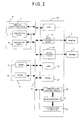
- FIG. 5 is a flowchart showing process for changing item appearing rates belonging to a part of groups based on judgment result of a certain condition associated with the game at the time of starting the game.
- FIG. 1 shows an embodiment of a game system according to the present invention.
- the game system 100 is configured by a pair of portable game apparatuses 1 connected with each other via a communication cable 8. Instead of the communication cable 8, an infrared communication means may be employed.
- Each of the portable game apparatuses 1 basically has the same configuration, and includes a body unit 2, a liquid crystal monitor 3 attached to the body unit 2 and serving as a display device, and an input device 4. It is noted that the plural game apparatuses employed in the game system of the present invention may have different configuration as far as they can execute the same game. In addition, it is noted that the present invention is applicable to a game system 100 including only one game apparatus.
- the input device 4 has a direction instructing switch 5 and a plurality of push-button switches 6.
- the direction instructing switch 5 has a cross-shaped operation member 5a, for example, and outputs a signal corresponding to the manipulation in upward, downward, leftward or rightward of the member 5a (i.e., pressing at the up, down, left or right edges thereof).
- the configuration of such input device 4 is well known, and a lot of variation may be applied thereto.
- a push-button switch may be provided for upward, downward, leftward and rightward direction.
- FIG. 2 shows a configuration of a control device 10 provided in each of the game apparatuses 1.
- the control device 10 is configured as a computer including a CPU 11, which utilizes a microprocessor as a major component.
- a ROM 12 and a RAM 13 serving as main storage devices, an image processing circuit 14, and a sound processing circuit 15 are connected to the CPU 11 via a bus 16.
- the ROM 12 stores a program necessary for the basic control (e.g., activation processing) of the game apparatus 1.
- the image processing circuit 14 controls the liquid crystal monitor 3 in accordance with the display instruction from the CPU 11, and displays images on the monitor 3.
- the sound processing circuit 15 generates an analog audio signal corresponding to the sound generation instruction from the CPU 11, and outputs the audio signal to a speaker 7.
- the switches 5, 6 of the input device 4 are connected to the CPU 11 via the bus 16 so that the CPU 11 can judge the operational condition of the switches 5, 6.
- an external storage device 17 configured separately from the control device 10 is also connected.
- the external storage device 17 may be configured as a cassette attachable to and detachable from the body unit 2, for example, and includes a ROM 18 and a RAM 19 serving as storage media.
- the ROM 18 stores, in advance, a program for controlling the control device 10 to function as the respective means for the present invention as well as various data necessary for the execution of the program.
- the RAM 19 stores, in advance, save data for the game.
- the data in the RAM 19 may be retained by an auxiliary battery in the external storage device 17, for example.
- a rewritable ROM such as an EEPROM may be used.
- the storage media in the external storage device 17 are not limited to the semiconductor storage element, and various storage media such as a magnetic storage medium, an optical storage medium and a magneto-optical storage medium may be used. It is noted that, while an interface circuit is provided between the bus 16 and the respective components as necessary, they are not illustrated for the sake of brevity.
- the configuration of the control device 10 is not limited to the type illustrated, and a control device of other type may be used.
- the CPU 11 is connected to a communication control circuit 20 via the bus 16, and the communication control circuit 20 is connected to a communication connector 22 via a communication interface 21.
- the communication cable 8 is connected to the communication connectors 22 of each game apparatus 1 so that the data communication between the game apparatuses 1 is achieved.
- the communication means between the game apparatuses 1 is not limited to the wired communication via the communication cable 8, and wireless communication such as infrared communication may be used. Further, two or more communication means may be simultaneously used.
- games of various genre may be played on the monitor 3 by means of the CPU 11 which loads the program stored in the ROM 18 of the external storage device 17 into the RAM 13 and executes the program.
- the game-player controls a certain character in the game (hereinafter referred to as "player character” ) via the input device 4 to repeatedly perform adventure and/or battle in the game.
- the player character collects various game elements (hereinafter referred to as "item") prepared in advance in the data stored on the ROM 18, and the story of the game progresses according to the collection result of the items. The following description is made for such game execution condition.
- the items include weapons and protective equipments used by the player character, as well as an energy tank which determines the usability of the weapons, for example, and they are distinguished or classified in various views such as the effect, frequency of use and so on.
- the ability and/or physical fitness vary dependently upon the item to be used, and consequently the dominance in battle or progress degree in adventure changes. These items sometimes appear during the adventure of the player character and/or as a result of the battle between the player character and other character.
- FIG. 3 shows information relating to each item.
- each item belongs to one of four groups 51, and each item is allotted with a serial number 53 in one-to-one correspondence.
- the items are classified into four groups 51 such that each group has generally the same number of items.
- the number of the group 51 may be more than four.
- the appearing rate 54 is set to each item, and the appearance of the item is controlled based on the appearing rate 54. Namely, the items having large appearing rate 54 appear with high probability (i.e., appears frequently), and hence the player character can easily get those items. By way of example, the item that appears if the player character defeats an enemy character frequently appears as its appearing rate is high.
- the appearing rate 54 is determined in accordance with the importance of the item.
- items such as a weapon of high attaching power and/or a protective equipment of high protection power have high importance, and hence the appearing rates 54 for them are set to be low.
- the information shown in FIG. 3 are determined by the producer of the game in advance and written into the ROM 18 as a part of game data together with other information indicating feature and/or attribute of the items, such as the using condition and/or effect of the item.
- the characteristic feature of the present invention is to uniformly change the appearing rates of the items belonging to a group or groups 51 specified based on a judgment result of certain condition associated with the game at the game staring time. For example, if the specified group 51 is the group-A, as shown in FIG. 4, the appearing rates 54 of all items belonging to the group-A are uniformly decreased by multiplying the appearing rates 54 by a predetermined rate "10%". Therefore, all items belonging to the group-A appear less frequently than the items belonging to other groups. It is noted that the appearing rate 60, which is obtained by multiplying the appearing rate 54 by a predetermined rate may be written in the ROM 18 in advance.
- a flag "1" is allotted to the appearing rate 54 and a flag “2" is allotted to the appearing rate 60.
- the flag "2" is set to the group or groups specified based on the judgment result of a certain condition associated with the game at the time when the game starts, and the flag "1" is set to other groups 51.
- the judgment of a certain condition associated with the game at the time of starting the game includes judgment of information that the game-player inputted via the input device 4 at the time of starting the game and judgment of time from the start of the game to the input of a certain signal via the input device 4. As a result of the judgment, a number to judge the condition (hereinafter referred to as "judgment value 55") is determined. As shown in FIG. 3, the judgment value 55 is allotted to each group. While the judgment values are "0", “1", “2” and “3" in the example of FIG. 3, they may range in a certain values.
- the CPU 11 in each game system 1 produces data relating to the appearing rates 54 for the items belonging to each group, and stores them in the RAM 13.
- step S1 a start picture is shown on the liquid crystal monitor 3, and a message is shown which requests the game-player to input the name of the player character (step S1 ) .
- the CPU 11 executes name input processing, with monitoring the signal outputted from the input device 2 in response to the manipulation by the game-player (step S2 ) .
- the name of the player character corresponding to the manipulation of the input device 2 by the game-player is displayed on the name input area on the screen of the monitor 3.
- the CPU 11 detects it (step S3), and determines whether or not the name is inputted (step S4).
- the judgment value 55 is set to "0" if the code (e.g., ASCII code) corresponding to the inputted name ranges between "00" to “40” in hexadecimal, set to "1” if the code ranges between "41” to “80", set to "2” if the code ranges between "81" to "C0” and set to "3” if the code ranges between "C1” to "FF".
- the judgment value 55 maybe determined by various way.
- the judgment value 55 may be determined based on the range of the reminder obtained by dividing the code in one-to-one correspondence with the inputted name by a certain value, or may be determined by using a random number generated based on the inputted name.
- the object of the judgment is not limited to the name of the player character, and other information that may be inputted by the game-player, e.g., the age of the game-player, may be used.
- the group corresponding to the judgment value 55 is specified (step S6). For example, if the judgment value 55 is "0", the group-A is specified as seen in FIG. 3. Then, the appearing rates 54 for all items belonging to the specified group are read out from the RAM 13, and a predetermined value is multiplied to vary the appearing rates 54 (step S7). For example, as shown in FIG. 4, the appearing rates 54 of the all items belonging to the group-A are multiplied by the predetermined rate 0.1 (10%) so that the appearing rates 54 are decreased to the appearing rates 60.
- the predetermined rate may be arbitrarily set by the game producer, and the appearing rate 54 is varied accordingly.
- the appearing rates e.g., the appearing rate 60 shown in FIG.
- step S8 after the multiplication of the predetermined rate are stored in a certain area in the RAM 13 (step S8).
- the appearing rates 54 for the groups other than the groups specified in step S6 are not varied.
- the appearing rates of the items may be partially varied in accordance with the information inputted by the game-player, the appearing rate for the same item may be changed in the progress of the game if the plural game-players input different information from each other. This enables distinguishing the collected items between the game-players, and they can find the pleasure in collecting items in cooperation with each other.
- a game-player can exchange the item, that is difficult to collect, between other game-players to collect desired items in cooperation with other game-players. Since the details of the data communication between the plural game apparatuses are not directly related to the heart of the invention, the detailed description thereof will be omitted.
- the game progresses, and when the predetermined condition set in the game is satisfied, e.g., the player character defeated the boss-character appeared in the game, the changed appearing rates stored in the RAM 13 are read out, and the predetermined rate is multiplied to again change the appearing rates.
- the appearing rates 60 are multiplied by the predetermined rate "200%" to produce the new appearing rates 65, which are then stored in the predetermined area in the RAM 13. Thereafter, items appear based on the new appearing rate 65 .
- the above processing may be repeated every time when the predetermined condition is satisfied. By this, the appearing rate may be gradually increased every time when the player character defeats the boss character in the game.
- step S5 the time from the start of the game to the input of the predetermined signal via the input device 4 may be judged. For example, it is possible to judge the time from the activation of the game program until the game-player presses down a switch on the input device 4 and the CPU 11 detects it, thereby to determine the judgment value 55.
- certain information may be displayed on the liquid crystal monitor 3 in a flashing manner and the timing at which the game-player presses down a switch on the input device 4 may be judged. For example, it is possible to determine the judgment value 55 by judging whether the switch press-down timing is immediately after the information display, or immediately after the disappearance of the information display or immediately before the disappearance of the information display.
- items are classified into groups.
- the appearing rate may be varied, by the unit of item, based on the judgment result of a certain condition associatedwith the game at the time of starting the game.
- the appearing rate for some items set in the game may be varied based on the judgment result of a certain condition associated with the game at time of starting the game. Therefore, the appearing rates for some game elements may be differentiated for each game-players in the progress of the game. Thus, the game-players may find pleasure in collecting the items in cooperation with each other.
Landscapes
- Engineering & Computer Science (AREA)
- Multimedia (AREA)
- Management, Administration, Business Operations System, And Electronic Commerce (AREA)
- User Interface Of Digital Computer (AREA)
- Pinball Game Machines (AREA)
- Processing Or Creating Images (AREA)
Abstract
Description
Claims (7)
- A game system (100) for executing a game in which game elements appear in a progress of the game based on a predetermined appearing rates determined for each game element and the game elements are collected, the game system comprising:a condition judging means (11) for judging a certain condition associated with the game at the time of starting the game; andan appearing rate varying means (11) for varying the predetermined appearing rate based on a result of the judgment by the condition judging means and for permitting the game element to appear in a progress of the game based on the varied appearing rate.
- A game system (100) for executing a game in which game elements appear in a progress of the game based on a predetermined appearing rates determined for each game element and the game elements are collected, the game system comprising:a condition judging means (11) for judging a certain condition associated with the game at the time of starting the game; andan appearing rate varying means (11) for varying the predetermined appearing rate only for specific game element based on a result of the judgment by the condition judging means and for permitting the specific game element to appear in a progress of the game based on the varied appearing rate.
- The game system (100) according to claim 2, wherein each of the game elements belongs to one of a plurality of groups (51), wherein the appearing rate varying means decreases the predetermined appearing rate for the game element belonging to the specific groups based on the judgment result and permits the specific game element to appear in the progress of the game based on the decreased appearing rate.
- The game system (100) according to claim 3, further comprising:a condition judging means (11) for judging whether or not a predetermined condition set during the game is satisfied; anda means (11) for increasing the appearing rate for the game elements belonging to the group decreased by the appearing rate varying means when the predetermined condition is satisfied, and for permitting the game elements belonging to the specific group to appear based on the increased appearing rate.
- The game system (100) according to claim 2, wherein the judgment of certain condition associated with the game at the time of starting the game includes judgment of information inputted by a game-player via an input device.
- The game system (100) according to claim 2, wherein the judgment of certain condition associated with the game at the time of starting the game includes judgment of time from a start of the game to a time when a predetermined signal is inputted via an input device.
- A computer-readable storage medium (17) for storing program which controls a computer to execute a game in which game elements appear in a progress of the game based on a predetermined appearing rate determined for each game element and the game elements are collected, the program controls the computer to function as:a condition judging means (11) for judging a certain condition associated with the game at the time of starting the game; andan appearing rate varying means (11) for varying the predetermined appearing rate only for specific game element based on a result of the judgment by the condition judging means and for permitting the specific game element to appear in a progress of the game based on the varied appearing rate.
Applications Claiming Priority (2)
| Application Number | Priority Date | Filing Date | Title |
|---|---|---|---|
| JP2000057961 | 2000-02-29 | ||
| JP2000057961A JP2001239058A (en) | 2000-02-29 | 2000-02-29 | Game system, game machine, and computer-readable storage medium |
Publications (3)
| Publication Number | Publication Date |
|---|---|
| EP1129750A2 true EP1129750A2 (en) | 2001-09-05 |
| EP1129750A3 EP1129750A3 (en) | 2002-08-21 |
| EP1129750B1 EP1129750B1 (en) | 2007-07-25 |
Family
ID=18578624
Family Applications (1)
| Application Number | Title | Priority Date | Filing Date |
|---|---|---|---|
| EP01301784A Expired - Lifetime EP1129750B1 (en) | 2000-02-29 | 2001-02-27 | Game system, game apparatus and computer-readable storage medium therefor |
Country Status (4)
| Country | Link |
|---|---|
| US (1) | US6805631B2 (en) |
| EP (1) | EP1129750B1 (en) |
| JP (1) | JP2001239058A (en) |
| DE (1) | DE60129492T2 (en) |
Families Citing this family (12)
| Publication number | Priority date | Publication date | Assignee | Title |
|---|---|---|---|---|
| US20040137983A1 (en) * | 2003-01-13 | 2004-07-15 | Gaming Accessory For Wireless Devices | Gaming accessory for wireless devices |
| US8568213B2 (en) | 2005-11-04 | 2013-10-29 | Mattel, Inc. | Game unit with controller-determined characters |
| US8574050B2 (en) | 2005-11-04 | 2013-11-05 | Mattel, Inc. | Game unit with dual joystick controllers |
| US7874918B2 (en) | 2005-11-04 | 2011-01-25 | Mattel Inc. | Game unit with motion and orientation sensing controller |
| US8047915B2 (en) | 2006-01-11 | 2011-11-01 | Lyle Corporate Development, Inc. | Character for computer game and method |
| JP6194453B2 (en) * | 2012-02-07 | 2017-09-13 | 株式会社コナミデジタルエンタテインメント | GAME CONTROL DEVICE, PROGRAM, GAME SYSTEM |
| JP5755763B2 (en) * | 2014-01-09 | 2015-07-29 | 株式会社バンダイナムコエンターテインメント | Server system and item management method |
| JP2014205058A (en) * | 2014-06-24 | 2014-10-30 | 株式会社セガ | Game apparatus and control method thereof, and game program adapted to game apparatus |
| JP5717018B2 (en) * | 2014-08-14 | 2015-05-13 | 株式会社セガ | Game device |
| JP2014230930A (en) * | 2014-08-14 | 2014-12-11 | 株式会社セガ | Game device |
| JP6586409B2 (en) * | 2016-12-16 | 2019-10-02 | 株式会社バンダイナムコエンターテインメント | Information generating apparatus, information providing system, and program |
| JP2024068990A (en) * | 2022-11-09 | 2024-05-21 | 任天堂株式会社 | GAME PROGRAM, INFORMATION PROCESSING SYSTEM, AND INFORMATION PROCESSING METHOD |
Family Cites Families (4)
| Publication number | Priority date | Publication date | Assignee | Title |
|---|---|---|---|---|
| US6200216B1 (en) * | 1995-03-06 | 2001-03-13 | Tyler Peppel | Electronic trading card |
| JP2846846B2 (en) | 1995-08-23 | 1999-01-13 | 株式会社三共 | Reel stop control device |
| US5772508A (en) | 1995-09-28 | 1998-06-30 | Amtex Co., Ltd. | Game or play facilities controlled by physiological information |
| US6402152B1 (en) * | 1999-09-20 | 2002-06-11 | Robert Kutzik | Collectible elements and game method using indicia of occurrence |
-
2000
- 2000-02-29 JP JP2000057961A patent/JP2001239058A/en active Pending
-
2001
- 2001-02-26 US US09/793,325 patent/US6805631B2/en not_active Expired - Fee Related
- 2001-02-27 DE DE60129492T patent/DE60129492T2/en not_active Expired - Lifetime
- 2001-02-27 EP EP01301784A patent/EP1129750B1/en not_active Expired - Lifetime
Also Published As
| Publication number | Publication date |
|---|---|
| EP1129750B1 (en) | 2007-07-25 |
| US20010018359A1 (en) | 2001-08-30 |
| EP1129750A3 (en) | 2002-08-21 |
| DE60129492T2 (en) | 2008-04-17 |
| JP2001239058A (en) | 2001-09-04 |
| DE60129492D1 (en) | 2007-09-06 |
| US6805631B2 (en) | 2004-10-19 |
Similar Documents
| Publication | Publication Date | Title |
|---|---|---|
| USRE37948E1 (en) | Video game apparatus, method and device for controlling same, and memory cartridge for video games | |
| US6540606B1 (en) | Portable information terminal, recording medium and program | |
| US6805631B2 (en) | Game system, game apparatus and computer-readable storage medium therefor | |
| JP5442947B2 (en) | Distribution map display program, information processing apparatus, information processing system, and distribution map display method | |
| US20080293495A1 (en) | Game server and program | |
| JP5926424B2 (en) | Control method, computer and control program | |
| JP6853861B2 (en) | Program, game system and game management server | |
| JPH08280933A (en) | Video game apparatus, control method and device therefor and memory cartridge for video game | |
| US20100056282A1 (en) | Video game processing device, video game processing method and video game processing program | |
| JP2001239056A (en) | Storage medium and card game device | |
| JP2021126425A (en) | Program, terminal, server and game system | |
| US11583773B2 (en) | Game apparatus, storage medium storing game program, game system, and game processing method | |
| JP3818769B2 (en) | Information storage medium, game device, and game system | |
| JP2021007887A (en) | Control programs, computers and control methods | |
| JP7280343B2 (en) | Game control method, computer and control program | |
| JP2001000737A (en) | Game device, game control method, and recording medium | |
| JP5756218B1 (en) | Control method, computer and control program | |
| JP7449989B2 (en) | Game program, information processing system, information processing device, and game processing method | |
| JP3422779B2 (en) | A portable game device that plays with a mobile phone | |
| US20240157234A1 (en) | Storage medium, information processing system, information processing apparatus and information processing method | |
| JP7009539B2 (en) | Game processing equipment, terminals and programs | |
| JP2002085843A (en) | Video game device and recording medium storing program | |
| JPH10328411A (en) | Video game device and program record medium | |
| JP2000296266A (en) | Game machine, battle control method and recording medium thereof | |
| GB2355168A (en) | Games system that displays a message if a communication cable is removed |
Legal Events
| Date | Code | Title | Description |
|---|---|---|---|
| PUAI | Public reference made under article 153(3) epc to a published international application that has entered the european phase |
Free format text: ORIGINAL CODE: 0009012 |
|
| AK | Designated contracting states |
Kind code of ref document: A2 Designated state(s): AT BE CH CY DE DK ES FI FR GB GR IE IT LI LU MC NL PT SE TR |
|
| AX | Request for extension of the european patent |
Free format text: AL;LT;LV;MK;RO;SI |
|
| PUAL | Search report despatched |
Free format text: ORIGINAL CODE: 0009013 |
|
| AK | Designated contracting states |
Kind code of ref document: A3 Designated state(s): AT BE CH CY DE DK ES FI FR GB GR IE IT LI LU MC NL PT SE TR |
|
| AX | Request for extension of the european patent |
Free format text: AL;LT;LV;MK;RO;SI |
|
| RAP1 | Party data changed (applicant data changed or rights of an application transferred) |
Owner name: KONAMI CORPORATION |
|
| 17P | Request for examination filed |
Effective date: 20030129 |
|
| AKX | Designation fees paid |
Designated state(s): DE FR GB |
|
| 17Q | First examination report despatched |
Effective date: 20040119 |
|
| GRAP | Despatch of communication of intention to grant a patent |
Free format text: ORIGINAL CODE: EPIDOSNIGR1 |
|
| GRAS | Grant fee paid |
Free format text: ORIGINAL CODE: EPIDOSNIGR3 |
|
| GRAA | (expected) grant |
Free format text: ORIGINAL CODE: 0009210 |
|
| AK | Designated contracting states |
Kind code of ref document: B1 Designated state(s): DE FR GB |
|
| REG | Reference to a national code |
Ref country code: GB Ref legal event code: FG4D |
|
| REF | Corresponds to: |
Ref document number: 60129492 Country of ref document: DE Date of ref document: 20070906 Kind code of ref document: P |
|
| ET | Fr: translation filed | ||
| REG | Reference to a national code |
Ref country code: GB Ref legal event code: 732E |
|
| PLBE | No opposition filed within time limit |
Free format text: ORIGINAL CODE: 0009261 |
|
| STAA | Information on the status of an ep patent application or granted ep patent |
Free format text: STATUS: NO OPPOSITION FILED WITHIN TIME LIMIT |
|
| 26N | No opposition filed |
Effective date: 20080428 |
|
| REG | Reference to a national code |
Ref country code: FR Ref legal event code: TP |
|
| PGFP | Annual fee paid to national office [announced via postgrant information from national office to epo] |
Ref country code: GB Payment date: 20130218 Year of fee payment: 13 Ref country code: DE Payment date: 20130219 Year of fee payment: 13 Ref country code: FR Payment date: 20130301 Year of fee payment: 13 |
|
| REG | Reference to a national code |
Ref country code: DE Ref legal event code: R119 Ref document number: 60129492 Country of ref document: DE |
|
| GBPC | Gb: european patent ceased through non-payment of renewal fee |
Effective date: 20140227 |
|
| REG | Reference to a national code |
Ref country code: FR Ref legal event code: ST Effective date: 20141031 |
|
| REG | Reference to a national code |
Ref country code: DE Ref legal event code: R119 Ref document number: 60129492 Country of ref document: DE Effective date: 20140902 |
|
| PG25 | Lapsed in a contracting state [announced via postgrant information from national office to epo] |
Ref country code: GB Free format text: LAPSE BECAUSE OF NON-PAYMENT OF DUE FEES Effective date: 20140227 Ref country code: DE Free format text: LAPSE BECAUSE OF NON-PAYMENT OF DUE FEES Effective date: 20140902 Ref country code: FR Free format text: LAPSE BECAUSE OF NON-PAYMENT OF DUE FEES Effective date: 20140228 |