EP1129710A2 - Method for treating migraine symptoms with ibuprofen and salts thereof - Google Patents
Method for treating migraine symptoms with ibuprofen and salts thereof Download PDFInfo
- Publication number
- EP1129710A2 EP1129710A2 EP00310391A EP00310391A EP1129710A2 EP 1129710 A2 EP1129710 A2 EP 1129710A2 EP 00310391 A EP00310391 A EP 00310391A EP 00310391 A EP00310391 A EP 00310391A EP 1129710 A2 EP1129710 A2 EP 1129710A2
- Authority
- EP
- European Patent Office
- Prior art keywords
- ibuprofen
- mixture
- composition
- pharmaceutically acceptable
- isomer
- Prior art date
- Legal status (The legal status is an assumption and is not a legal conclusion. Google has not performed a legal analysis and makes no representation as to the accuracy of the status listed.)
- Withdrawn
Links
Images

Classifications
-
- A—HUMAN NECESSITIES
- A61—MEDICAL OR VETERINARY SCIENCE; HYGIENE
- A61K—PREPARATIONS FOR MEDICAL, DENTAL OR TOILETRY PURPOSES
- A61K31/00—Medicinal preparations containing organic active ingredients
- A61K31/185—Acids; Anhydrides, halides or salts thereof, e.g. sulfur acids, imidic, hydrazonic or hydroximic acids
- A61K31/19—Carboxylic acids, e.g. valproic acid
- A61K31/192—Carboxylic acids, e.g. valproic acid having aromatic groups, e.g. sulindac, 2-aryl-propionic acids, ethacrynic acid
-
- A—HUMAN NECESSITIES
- A61—MEDICAL OR VETERINARY SCIENCE; HYGIENE
- A61P—SPECIFIC THERAPEUTIC ACTIVITY OF CHEMICAL COMPOUNDS OR MEDICINAL PREPARATIONS
- A61P25/00—Drugs for disorders of the nervous system
- A61P25/06—Antimigraine agents
Definitions
- the present invention relates to the treatment of migraine symptoms by the administration of an effective amount of ibuprofen, more specifically the present invention relates to the treatment of phonophobia and photophobia with ibuprofen.
- Migraine provides a wide variation of pain and symptoms, and associated disorders with those who suffer from the disease. Included among these symptoms are nausea, headache, moderate to severe pain, as well as incapacitating pain and total disability in a percentage of patients. Some patients also recite more specific symptoms such as photophobia, painful sensitivity to light; or phonophobia, painful sensitivity to sound.
- Treatment of migraine pain includes both prescription and non-prescription or over-the-counter medication.
- over-counter medication that is currently available is a combination of acetaminophen/aspirin/caffeine, as set forth in US Patent 5,972,916, the contents hereby incorporated by reference as set forth herein in its entirety.
- the combination of active ingredients suffers from the drawback that some of the actives might cause undesired side effects. For example, it is well know that aspirin can cause stomach irritation and caffeine can cause anxiety and sleeplessness.
- the present invention provides a method for treating photophobia and phonophobia associated with a migraine attack by providing an effective amount of ibuprofen, pharmaceutically acceptable salts thereof, isomers thereof, or mixtures thereof.
- the present invention relies on the action of a single active ingredient, i.e., ibuprofen, pharmaceutically acceptable salts thereof, isomers thereof, or mixtures thereof.
- the present invention also contemplates the use of additional ingredients, such as flavors, binders and excipients.
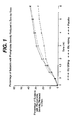
- Figure 1 depicts the percentage of subjects with reduced photophobia over time after treatment with ibuprofen.
- Figure 2 depicts the percentage of subjects with reduced phonophobia over time over time after treatment with ibuprofen.
- Ibuprofen is a well known analgesic material that has analgesic and antipyrritic properties. It is commercially available in various forms for many years.
- ibuprofen, pharmaceutically acceptable salts thereof, isomers thereof, or mixtures thereof are preferably administered as an oral dose, as an effective dose to alleviate the photophobia and phonophobia symptoms, which comprises from about 100 to about 800 milligrams of ibuprofen per dose; preferably from 200 to about 600 and most preferably from about 300 to about 400 milligrams of ibuprofen per dose.
- Typical doses of the pharmaceutically acceptable salts of ibuprofen will vary according to the molecular weight of the salt required to give the equivalent dose of ibuprofen.
- Typical oral doses of pharmaceutically acceptable salts of ibuprofen range from about 110 to about 1700 milligrams per dose.
- Typical doeses of mixtures of ibuprofen or its isomers with pharmaceutically acceptable salts thereof range from about 100 to about 1700 milligrams per dose, preferably from about 200 to about 1300 milligrams per dose, and most preferably from about 300 to about 850 milligrams per dose.
- doses are taken every four to six hours, but care should be taken to avoid exceeding the daily maximum recommended dosage of ibuprofen of 2400 milligrams per day.
- Suitable pharmaceutically acceptable salts of ibuprofen include any of the inorganic cation salts such as sodium, potassium, lithium, magnesium, calcium, cesium, ammonia, ferrous, zinc, manganous, aluminum, ferric, and manganic; organic salts of ibuprofen with primary, secondary, tertiary and quaternary amines, or mixtures thereof.
- organic salts of ibuprofen with primary, secondary, tertiary and quaternary amines include substituted amines including but not limited to naturally occurring substituted amines, cyclic amines, basic ion exchange resins, and mixtures thereof.
- suitable amines include but are not limited to triethylamine, tripropylamine, 2-dimethylaminoethanol, 2-diethylaminoethanol, lysine, arginine, histidine, caffeine, procain, N-ethylpiperidine, hydrabamine, choline, betaine, ethylenediamine, glucosamine, TRIS(hydroxymethyl)-aminomethane, methylglycamine, theobromine, pruines, piperazine, piperidine, polyamine resins and the like, and mixtures thereof.
- a mixture of ibuprofen and its sodium salt may be used.
- Suitable isomers include, but are not limited to R-ibuprofen, S-ibuprofen and mixtures thereof.
- Suitable dosage forms include solids or liquids.
- Solid forms include tablets, capsules, liquid-filled soft gelatin capsules, powders, sachets and the like.
- Suitable liquids include suspensions, solutions, emulsions and the like.
- the ibuprofen, pharmaceutically acceptable salts thereof, isomers thereof, or mixtures thereof may be admixed with various pharmaceutically-acceptable excipients and other ingredients including but not limited to diluents, granulating agents, disintegrating agents, binding agents, lubricants and the like. Examples of these various ingredients are set forth in US Patent 5,660,860, the contents hereby incorporated by reference as if set forth in its entirety.
- Subjects suffering from photophobia due to a migraine were either given a placebo or treated with 200 or 400 milligrams of ibuprofen. Approximately 650 subjects were in the study. Some subjects were given placebos, while others were given either 200 or 400 milligrams of ibuprofen. Periodic assessments of their photophobia were made and the results are presented in Figure 1. The results indicate that at time of two hours or longer the treatment of photophobia with ibuprofen was effective in relieving photophobia
- Subjects suffering from phonophobia due to a migraine were either given a placebo or treated with 200 or 400 milligrams of ibuprofen in tablet form. Periodic assessments of their photophobia were made and the results are presented in Figure 2. The results indicate that at time of two hours or longer the treatment of photophobia with ibuprofen was effective in relieving photophobia.
Landscapes
- Health & Medical Sciences (AREA)
- Animal Behavior & Ethology (AREA)
- Pharmacology & Pharmacy (AREA)
- Veterinary Medicine (AREA)
- Public Health (AREA)
- General Health & Medical Sciences (AREA)
- Chemical & Material Sciences (AREA)
- Life Sciences & Earth Sciences (AREA)
- Medicinal Chemistry (AREA)
- Epidemiology (AREA)
- Neurosurgery (AREA)
- Engineering & Computer Science (AREA)
- Organic Chemistry (AREA)
- Nuclear Medicine, Radiotherapy & Molecular Imaging (AREA)
- Chemical Kinetics & Catalysis (AREA)
- Pain & Pain Management (AREA)
- General Chemical & Material Sciences (AREA)
- Neurology (AREA)
- Biomedical Technology (AREA)
- Bioinformatics & Cheminformatics (AREA)
- Acyclic And Carbocyclic Compounds In Medicinal Compositions (AREA)
Abstract
Description
Claims (9)
- A composition comprising ibuprofen, a pharmaceutically acceptable salt thereof, an isomer thereof or a mixture thereof, as the sole pharmaceutically effective ingredients, for mitigating or treating photophobia or phonophobia associated with migraine.
- The composition of claim 1 wherein the amount of ibuprofen, isomer thereof or mixture thereof, is from 100 to 800 milligrams, preferably from 200 to 600 milligrams, per dose.
- The composition of claim 2 wherein the amount of ibuprofen, isomer thereof or mixture thereof, is about 200 milligrams per dose.
- The composition of claim 1 wherein the amount of ibuprofen isomer thereof or mixture thereof, is about 400 milligrams per dose.
- The composition of claim 1 wherein the amount of the mixture of ibuprofen, an isomer thereof or a pharmaceutically acceptable salt thereof is from 100 to 1700 milligrams per dose, preferably from 200 to 1300 milligrams per dose.
- The composition of any one of claims 1 to 5 wherein the pharmaceutically acceptable salt of ibuprofen is:a) an inorganic cation salt;b) an organic salt of ibuprofen with a pharmaceutically acceptable primary, secondary, tertiary or quaternary amine; orc) a mixture thereof.
- The composition of claim 6 wherein the pharmaceutically acceptable salt of ibuprofen is:a) an inorganic sodium, potassium, lithium, magnesium, calcium, cesium, ammonium, ferrous, zinc, manganous, aluminum, ferric or manganic cation salt; orb) a triethylamine, tripropylamine, 2-dimethylaminoethanol, 2-diethylaminoethanol, lysine, arginine, histidine, caffeine, procain, N-ethylpiperidine, hydrabamine, choline, betaine, ethylenediamine, glucosamine, TRIS(hydroxymethyl)aminomethane, methylglycamine, theobromine, pruine, piperazine, piperidine or polyamine resin organic salt; orc) a mixture thereof.
- The composition of any one of claims 1 to 7 wherein the mixture is a mixture of ibuprofen and its sodium salt.
- The composition of any one of claims 1 to 8 wherein the isomer of ibuprofen is R-ibuprofen, S-ibuprofen or a mixture thereof.
Applications Claiming Priority (4)
| Application Number | Priority Date | Filing Date | Title |
|---|---|---|---|
| US44912499A | 1999-11-24 | 1999-11-24 | |
| US449124 | 1999-11-24 | ||
| US70906900A | 2000-11-09 | 2000-11-09 | |
| US709069 | 2000-11-09 |
Publications (2)
| Publication Number | Publication Date |
|---|---|
| EP1129710A2 true EP1129710A2 (en) | 2001-09-05 |
| EP1129710A3 EP1129710A3 (en) | 2001-11-28 |
Family
ID=27035607
Family Applications (1)
| Application Number | Title | Priority Date | Filing Date |
|---|---|---|---|
| EP00310391A Withdrawn EP1129710A3 (en) | 1999-11-24 | 2000-11-23 | Method for treating migraine symptoms with ibuprofen and salts thereof |
Country Status (9)
| Country | Link |
|---|---|
| US (1) | US20030191188A1 (en) |
| EP (1) | EP1129710A3 (en) |
| JP (1) | JP2001192332A (en) |
| KR (1) | KR20010051939A (en) |
| CN (1) | CN1298700A (en) |
| CA (1) | CA2326549A1 (en) |
| CO (1) | CO5251433A1 (en) |
| MX (1) | MXPA00011557A (en) |
| NZ (1) | NZ508292A (en) |
Cited By (1)
| Publication number | Priority date | Publication date | Assignee | Title |
|---|---|---|---|---|
| KR20040106915A (en) * | 2003-06-05 | 2004-12-20 | 한국유나이티드제약 주식회사 | Formulation and manufacturing process solubilized ibuprofen soft capsules |
Families Citing this family (1)
| Publication number | Priority date | Publication date | Assignee | Title |
|---|---|---|---|---|
| JP2003277258A (en) * | 2002-03-20 | 2003-10-02 | Ss Pharmaceut Co Ltd | Migraine treatment |
Family Cites Families (4)
| Publication number | Priority date | Publication date | Assignee | Title |
|---|---|---|---|---|
| DK0584108T3 (en) * | 1991-05-13 | 2000-10-09 | Boots Co Plc | A pharmaceutical composition comprising ibuprofen salt |
| US5538959A (en) * | 1995-01-26 | 1996-07-23 | Mauskop; Alexander | Analgesic composition for treatment of migraine headaches |
| GB9603699D0 (en) * | 1996-02-21 | 1996-04-17 | Boots Co Plc | Therapeutic composition |
| US5914129A (en) * | 1996-07-23 | 1999-06-22 | Mauskop; Alexander | Analgesic composition for treatment of migraine headaches |
-
2000
- 2000-11-20 NZ NZ508292A patent/NZ508292A/en unknown
- 2000-11-22 JP JP2000356516A patent/JP2001192332A/en active Pending
- 2000-11-23 CN CN00128380A patent/CN1298700A/en active Pending
- 2000-11-23 CA CA002326549A patent/CA2326549A1/en not_active Abandoned
- 2000-11-23 MX MXPA00011557A patent/MXPA00011557A/en unknown
- 2000-11-23 EP EP00310391A patent/EP1129710A3/en not_active Withdrawn
- 2000-11-24 KR KR1020000070461A patent/KR20010051939A/en not_active Withdrawn
- 2000-11-24 CO CO00090142A patent/CO5251433A1/en not_active Application Discontinuation
-
2003
- 2003-04-14 US US10/412,861 patent/US20030191188A1/en not_active Abandoned
Cited By (1)
| Publication number | Priority date | Publication date | Assignee | Title |
|---|---|---|---|---|
| KR20040106915A (en) * | 2003-06-05 | 2004-12-20 | 한국유나이티드제약 주식회사 | Formulation and manufacturing process solubilized ibuprofen soft capsules |
Also Published As
| Publication number | Publication date |
|---|---|
| NZ508292A (en) | 2002-08-28 |
| JP2001192332A (en) | 2001-07-17 |
| CO5251433A1 (en) | 2003-02-28 |
| MXPA00011557A (en) | 2002-08-20 |
| CN1298700A (en) | 2001-06-13 |
| CA2326549A1 (en) | 2001-05-24 |
| US20030191188A1 (en) | 2003-10-09 |
| EP1129710A3 (en) | 2001-11-28 |
| KR20010051939A (en) | 2001-06-25 |
Similar Documents
| Publication | Publication Date | Title |
|---|---|---|
| US4975426A (en) | Cough/cold mixtures comprising non-sedating antihistamine drugs | |
| AU765038B2 (en) | Method for the treatment of insomnia | |
| Diamond | Ibuprofen versus aspirin and placebo in the treatment of muscle contraction headache | |
| RU94046316A (en) | Use of high effective phosphonates for preparing medicinal agents for osteoporosis treatment | |
| US5011841A (en) | Treatment of depression | |
| US20030191188A1 (en) | Method for treating migraine symptoms with ibuprofen and salts thereof | |
| HK1037971A (en) | Method for treating migraine symptoms with ibuprofen and salts thereof | |
| EP1103257A2 (en) | Method for treating migraine symptoms using acetominophen | |
| AU7173300A (en) | Method for treating migraine symptoms with ibuprofen and salts thereof | |
| KR20010051865A (en) | Method for treating migraine symptoms | |
| HK1034459A (en) | Method for treating migraine symptoms using acetominophen | |
| WO2000002592A1 (en) | Pharmaceutical composition containinig gaba analogs and an antiviral agent to treat shingles | |
| HK1036587A (en) | Method for treating migraine symptoms with ibuprofen and salts thereof | |
| ES2249905T3 (en) | TREATMENT OF RENAL COLICO WITH GABA ANALOGS. | |
| KR20010108466A (en) | Combinations of GABA Analogs and Tricyclic Compounds to Treat Depression | |
| KR20010074682A (en) | Compositions Comprising GABA Analogs and a Decongestant to Relieve Sinus Headache Pain | |
| EP0013110A1 (en) | Analgesic composition | |
| Desjardins | Dental Pain: Clinical Evidence with Piroxicam-β-Cyclodextrin | |
| TH33447A (en) | Mixture used once per day to treat disease with a cycloxinase-2 medium. | |
| Entīties | FDA. Drug Approvals | |
| Lepola et al. | Long-term treatment with citalopram in panic disorder | |
| MXPA00011647A (en) | The treatment of renal colic with gaba analogs |
Legal Events
| Date | Code | Title | Description |
|---|---|---|---|
| PUAI | Public reference made under article 153(3) epc to a published international application that has entered the european phase |
Free format text: ORIGINAL CODE: 0009012 |
|
| AK | Designated contracting states |
Kind code of ref document: A2 Designated state(s): AT BE CH CY DE DK ES FI FR GB GR IE IT LI LU MC NL PT SE TR |
|
| AX | Request for extension of the european patent |
Free format text: AL;LT;LV;MK;RO;SI |
|
| PUAL | Search report despatched |
Free format text: ORIGINAL CODE: 0009013 |
|
| AK | Designated contracting states |
Kind code of ref document: A3 Designated state(s): AT BE CH CY DE DK ES FI FR GB GR IE IT LI LU MC NL PT SE TR |
|
| AX | Request for extension of the european patent |
Free format text: AL;LT;LV;MK;RO;SI |
|
| 17P | Request for examination filed |
Effective date: 20020503 |
|
| AKX | Designation fees paid |
Free format text: AT BE CH CY DE DK ES FI FR GB GR IE IT LI LU MC NL PT SE TR |
|
| 17Q | First examination report despatched |
Effective date: 20020821 |
|
| STAA | Information on the status of an ep patent application or granted ep patent |
Free format text: STATUS: THE APPLICATION IS DEEMED TO BE WITHDRAWN |
|
| 18D | Application deemed to be withdrawn |
Effective date: 20041110 |
|
| REG | Reference to a national code |
Ref country code: HK Ref legal event code: WD Ref document number: 1037971 Country of ref document: HK |