FIELD OF THE INVENTION
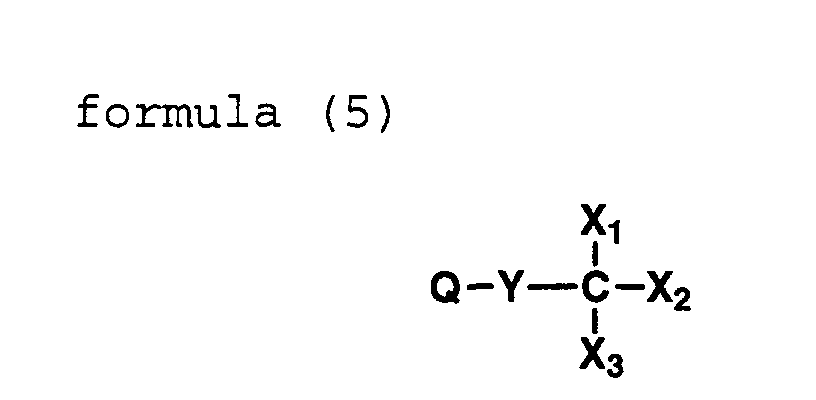
The present invention relates to thermally developable
photothermographic materials and in particular to
photothermographic materials having higher contrast and
exhibiting enhanced uniformity in image density,
specifically, enhanced uniformity in solid image density in
the middle tone and an image forming process by the use
thereof.
BACKGROUND OF THE INVENTION
There are known a number of photosensitive materials
comprising a support having thereon a photosensitive layer,
which forms images upon imagewise exposure. Of these,
techniques of forming images through thermal development are
cited as a system suitable for environmental preservation and
yet simplifying the image forming means.
Thermally developable photothermographic materials are
disclosed, for example, in D. Morgan and B. Shely, U.S. Pat.
Nos. 3,152,904 and 3,457,075, and D.H. Klosterboer,
"Thermally Processed Silver Systems" (Imaging Processes and
Materials, Neblette, 8th Edition, edited by J.M. Sturge, V.
Walworth, and A. Shepp, page 2, 1969), etc. Such
photothermographic materials contain a reducible light-insensitive
silver source (such as organic silver salts), a
catalytically active amount of photocatalyst (such as silver
halide) and a reducing agent, which are dispersed in a binder
matrix. Such photothermographic materials are stable at
ordinary temperature and forms silver upon heating, after
exposure, at a relatively high temperature (e.g., 80° C or
higher) through an oxidation-reduction reaction between the
reducible silver source (which functions as an oxidizing
agent) and the reducing agent. The oxidation-reduction
reaction is accelerated by the catalytic action of a latent
image produced by exposure. Silver formed through reaction
of the reducible silver salt in exposed areas produces a
black image, which contrasts with non-exposes areas, leading
to image formation.
Such image forming processes are employed for medical
diagnostic imaging and graphic art materials. In a medical
diagnostic imaging system, it is desired to be efficiently
exposed using a laser image setter or a laser imager.
However, if a photothermographic material is not relatively
highly sensitive and high in contrast, the use of high power
laser is dispensable, leading to disadvantages in cost. Of
various lasers having different wavelengths, lasers having an
oscillating wavelength of 600 nm or more are preferred in
terms of cost and power, necessitating spectral sensitizers
in the panchromatic or infrared region and supersensitizers.
With regard to the infrared-supersensitizer used in a
photothermographic system, JP-A No. 2-4241 (hereinafter, the
term, JP-A refers to unexamined and published Japanese patent
Application) discloses aminopolycarboxylic acid derivatives
and JP-A Nos. 4-182639 and 5-341432 disclose an aromatic
heterocyclic mercapto-compound and an aromatic heterocyclic
disulfide compound. However, there were problems in that
supersenstizing effects by the use of the aminopolycarboxylic
acid derivatives were relatively low, leading to low
sensitivity, and in addition, the use of the aromatic
heterocyclic mercapto-compound or aromatic heterocyclic
disulfide compound resulted in reduction in sensitivity after
storage under high humidity.
There were proposed techniques for enhancing such
storage stability, including cyclic carbonyl compounds
described in JP-A No. 7-146527 and disulfide compounds having
a specific structure described in JP-A Nos. 10-90823, 10-90824,
10-90825, 10-319534 and 11-4489. However, it was
proved that such techniques were insufficient in the
supersensitization effect and storage performance, and a
further improvement is still sought.
European Patent No. 761,196 and JP-A 9-90550 both
disclose light-sensitive silver halide grains used in a
photothermographic image recording material which occlude
metal ions of the 7th to 11th groups of the periodical table
or their complex ions and incorporation of hydrazine
derivatives into the photothermographic material, thereby
leading to desired photographic characteristics such as high
contrast. As is known in the photographic art, the use of
hydrazine derivatives advantageously leads to enhanced
performance such as relatively high contrast or high density,
which is suitable for use in printing plate making. However,
there were serious disadvantages in practical use in that it
also easily produced so-called black spots which were
commonly shown as sand-like fogging in unexposed areas, and
unevenness in image density caused by slight fluctuations in
developing temperature was rather marked.
SUMMARY OF THE INVENTION
Accordingly, it is an object of the present invention
to provide a photothermographic material having a relatively
high contrast and exhibiting enhanced uniformity in image
density, and particularly, uniformity in solid image density
in the middle tone region.
It is another object of the invention to provide a
photothermographic material exhibiting enhanced sensitivity,
high image quality and superior storage stability, a
preparation method thereof and an image forming method
thereby.
It is another object of the invention to provide a
photothermographic material using a red- to infrared-sensitive
silver halide emulsion exhibiting little variation
in sensitivity caused by variation in exposure conditions.
The above object of the invention can be accomplished
by the following constitution:
DETAILED DESCRIPTION OF THE INVENTION
The photothermographic material according to this
invention, comprising a light-sensitive silver halide, an
organic silver salt, a reducing agent, a thiuronium salt and
a binder, wherein the photothermographic material further
comprises a compound represented by the following formula
(1), (2) or (3). Thereby is obtained a photothermographic
material having a relatively high contrast and exhibiting
enhanced uniformity in image density, particularly,
uniformity in solid image density in the middle tone region.
On the contrary, the use of a compound other than compounds
of formulas (1), (2) and (3) tends to lead to occurrence of
process non-uniformity, a lowered maximum density (Dmax) and
reduced high-contrast.
Formula (1) will be described. R is a univalent
substituent and preferred R is an alkyl group having 1 to 8
carbon atoms, more preferably 1 to 5 carbon atoms, such as
methyl, ethyl, n-propyl, iso-propyl, n-butyl, iso-butyl,
tert-butyl, tert-amyl and n-octyl. Further, m is an integer
of 1 to 4 and when m is 2 or more, plural Rs may be the same
with or different from each other. When Rs are adjacent, the
Rs may combine with each other to form an aliphatic ring,
aromatic ring or heterocyclic ring. R1 and R2 each represent
a hydrogen atom or a univalent substituent.
Exemplary examples of the compound represented by
formula (1) are shown below but the invention is not to be
construed as limiting the same.
Compounds represented by formula (1) can be synthesized
according to known methods, as described in R.G. Elder Field,
Heterocyclic Compounds, John Wirey and Sons, Vol. 1 to 9,
1950-1967 and A.R. Katritzky, Comprehensive heterocyclic
Chemistry, Pergamon Press, 1984.
The compound represented by formula (2) will be
described. Z represents a non-metallic atom group necessary
to form an aromatic heterocyclic 5-membered ring. The
aromatic heterocyclic 5-membered ring is preferably a
thiophene ring and may be substituted. The definition with
respect to the expression "aromatic" is described in, for
example, J. March, Advanced Organic Chemistry, chapter 2
(John Wirey and Sons, 1988). R1 and R2 each represent a
hydrogen atom or a univalent substituent. R1, R2 and a
substituent on the sulfur containing aromatic 5-membered ring
formed by Z may combine with each other to form a ring.
Further, the compound represented by formula (2) may form a
salt upon protonation.
The univalent substituents represented by R1 and R2, or
the substituent(s) on the aromatic heterocyclic 5-membered
ring formed by Z may be the same with or different from each
other. Examples of the substituents include an alkyl group
(preferably having 1 to 20 carbon atoms, more preferably 1 to
12 carbon atoms and still more preferably 1 to 8 carbon
atoms, such as methyl, ethyl, n-propyl, isopropyl, n-butyl,
iso-butyl, tert-butyl, n-heptyl, n-octyl, n-decyl, n-hexadecyl,
cyclopropyl, cyclopentyl, cyclohexyl), an alkenyl
group (preferably having 2 to 20 carbon atoms, more
preferably 2 to 12 carbon atoms , and still more preferably 2
to 8 carbon atoms, e.g., vinyl, allyl, 2-butenyl, 3-pentenyl,
etc.), an alkynyl (preferably having 2 to 20 carbon atoms,
more preferably 2 to 12 carbon atoms , and still more
preferably 2 to 8 carbon atoms, e.g., propargyl, 3-pentynyl,
etc.), aryl group (preferably having 6 to 30 carbon atoms,
more preferably 6 to 20 carbon atoms , and still more
preferably 6 to 12 carbon atoms, e.g., phenyl, p-tolyl, o-aminophenyl,
naphthyl), an amino group (preferably having 0
to 20 carbon atoms, more preferably 0 10 carbon atoms , and
still more preferably 0 to 6 carbon atoms, e.g., amino,
methylamino, ethylamino, dimethylamino, diethylamino,
dibenzylamino, etc.), an alkoxy group (preferably having 1 to
20 carbon atoms, more preferably 1 to 12 carbon atoms , and
still more preferably 1 to 8 carbon atoms, e.g., methoxy,
ethoxy, butoxy, etc.), an aryloxy group (preferably having 6
to 20 carbon atoms, more preferably 6 to 16 carbon atoms ,
and still more preferably 6 to 12 carbon atoms, e.g.,
phenyloxy, 2-naphthyloxy, etc.), an acyl group (preferably
having 1 to 20 carbon atoms, more preferably 1 to 16 carbon
atoms , and still more preferably 1 to 12 carbon atoms, e.g.,
acetyl, formyl, pivaloyl, benzoyl, etc.), an alkoxycarbonyl
group (preferably having 2 to 20 carbon atoms, more
preferably 2 to 16 carbon atoms , and still more preferably 2
to 12 carbon atoms, e.g., methoxycarbonyl, ethoxycarbonyl,
cyclohexyloxycarbonyl, etc.), an aryloxycarbonyl group
(preferably having 7 to 20 carbon atoms, more preferably 7 to
16 carbon atoms , and still more preferably 7 to 10 carbon
atoms, e.g., phenyloxycarbonyl, etc.), an acyloxy group
(preferably having 2 to 20 carbon atoms, more preferably 2 to
16 carbon atoms , and still more preferably 2 to 10 carbon
atoms, e.g., acetoxy, benzoyloxy, etc.), an acylamino group
(preferably having 2 to 20 carbon atoms, more preferably 2 to
16 carbon atoms , and still more preferably 2 to 10 carbon
atoms, e.g., acetylamino, benzoylamino, etc.), an
alkoxycarbonylamino group (preferably having 2 to 20 carbon
atoms, more preferably 2 to 16 carbon atoms , and still more
preferably 2 to 12 carbon atoms, e.g., methoxycarbonylamino,
etc.), an aryloxycarbonylamino group (preferably having 7 to
20 carbon atoms, more preferably 7 to 16 carbon atoms , and
still more preferably 7 to 12 carbon atoms, e.g.,
phenyloxycarbonylamino, etc.), a sulfonylamino group
(preferably having 1 to 20 carbon atoms, more preferably 1 to
16 carbon atoms , and still more preferably 1 to 12 carbon
atoms, e.g., methanesulfonylamino, benzenesulfonylamino,
etc.), a sulfamoyl group (preferably having 0 to 20 carbon
atoms, more preferably 0 to 16 carbon atoms , and still more
preferably 0 to 12 carbon atoms, e.g.,sulfamoyl,
methylsulfamoyl, dimethylsulfamoyl, phenylsulfamoyl, etc.), a
carbamoyl group (preferably having 1 to 20 carbon atoms, more
preferably 1 to 16 carbon atoms , and still more preferably 1
to 12 carbon atoms, e.g., carbamoyl, methylcarbamoyl,
ethylcarbamoyl, diethylcarbamoyl, phenylcarbamoyl, etc.), an
alkylthio group (preferably having 1 to 20 carbon atoms, more
preferably 1 to 16 carbon atoms , and still more preferably 1
to 12 carbon atoms, e.g., methylthio, ethylthio, etc.),
arylthio group (preferably having 6-20 carbon atoms, more
preferably 6 to 16 carbon atoms and still more preferably 6
to 12 carbon atoms, e.g., phenylyhio), a sulfonyl group
(preferably having 1 to 20 carbon atom, more preferably 1 to
16 carbon atoms, and still more preferably 1 to 12 carbon
atoms, e.g., methyl tosyl) a sulfinyl group (preferably
having 1 to 20 carbon atoms, more preferably 1 to 16 carbon
atoms , and still more preferably 1 to 12 carbon atoms, e.g.,
methanesulfinyl, benzenesulfinyl, etc.), an ureido group
(preferably having 1 to 20 carbon atoms, more preferably 1 to
16 carbon atoms , and still more preferably 1 to 12 carbon
atoms, e.g., ureido, methylureido, phenylureido ,etc.), a
phosphoric acid amido group (preferably having 1 to 20 carbon
atoms, more preferably 1 to 16 carbon atoms , and still more
preferably 1 to 12 carbon atoms, e.g., diethylphosphoric acid
amido, phenylphosphoric acid amido, etc.), hydroxy group,
mercapto group, a halogen atom (e.g., fluorine atom, chlorine
atom, bromine atom, iodine atom), cyano group, sulfo group,
sulfino group, carboxy group, nitro group, hydroxamic acid
group, hydrazino group, and a heterocyclic group (e.g.,
imidazolyl, pyridyl, thienyl, furyl, piperidyl, morphoryl.
etc.). These substituent groups may be further substituted.
Further, plural substituent groups may be the same or
different.
R1 and R2 are each preferably a hydrogen atom, an alkyl
group, an aryl group, an alkoxy group, an aryloxy group,
cyano group, a halogen atom, nitro group, or a heterocyclic
group, more preferably a hydrogen atom, an alkyl group, an
aryl group, an alkoxy group, an aryloxy group, a halogen atom
or a heterocyclic group, still more preferably a hydrogen
atom, an alkyl group, an aryl group, or an alkoxy group, and
most preferably a hydrogen atom or an alkyl group. The
substituent on the aromatic heterocyclic 5-membered ring
formed through Z is preferably a hydrogen atom, an alkyl
group, an aryl group, an alkoxy group, an aryloxy group,
cyano group, a halogen atom, nitro group, a carboxy group, an
amino group or an acyl group, more preferably a hydrogen
atom, an alkyl group, an aryl group, an alkoxy group, an
aryloxy group, or a halogen atom, still more preferably a
hydrogen atom, an alkyl group, an aryl group or an alkoxy
group, and most preferably a hydrogen atom, an alkyl group or
an aryl group.
Exemplary examples of the compound represented by
formula (2) are shown below but are by no means limited
these.
Compounds represented by formula (2) can be synthesized
according to known methods, for example, described in
Tetrahedron Letters, 1981, Vol. 22, page 345-348; J.
heterocyc. Chem, 1980, Vol. 17, page 1019-1023; Bull. Soc.
Chim. Fr., 1967, page 4220-4235; Bull. Soc. Chim. Fr., 1967,
page 2495-2507; and French Patent 1453897.
Next, the compound represented by formula (3) will be
described. T represents a univalent substituent, k is an
integer of 1 to 4, and when k is 2 or more, plural Ts may be
the same with or different from each other.
Examples of the substituent group represented by T
include an alkyl group (preferably having 1 to 20 carbon
atoms, more preferably 1 to 12 carbon atoms and still more
preferably 1 to 8 carbon atoms, such as methyl, ethyl, n-propyl,
isopropyl, n-butyl, tert-butyl, iso-butyl, n-heptyl,
n-octyl, n-decyl, n-hexadecyl, cyclopropyl, cyclopentyl,
cyclohexyl), an alkenyl group (preferably having 2 to 20
carbon atoms, more preferably 2 to 12 carbon atoms, and still
more preferably 2 to 8 carbon atoms, e.g., vinyl, allyl, 2-butenyl,
3-pentenyl, etc.), an alkynyl (preferably having 2
to 20 carbon atoms, more preferably 2 to 12 carbon atoms ,
and still more preferably 2 to 8 carbon atoms, e.g.,
propargyl, 3-pentynyl, etc.), aryl group (preferably having 6
to 30 carbon atoms, more preferably 6 to 20 carbon atoms,
and still more preferably 6 to 12 carbon atoms, e.g., phenyl,
p-tolyl, naphthyl), an amino group (preferably having 0 to 20
carbon atoms, more preferably 0 10 carbon atoms , and still
more preferably 0 to 6 carbon atoms, e.g., amino,
methylamino, dimethylamino, diethylamino, dibenzylamino,
etc.), an alkoxy group (preferably having 1 to 20 carbon
atoms, more preferably 1 to 12 carbon atoms , and still more
preferably 1 to 8 carbon atoms, e.g., methoxy, ethoxy,
butoxy, etc.), an aryloxy group (preferably having 6 to 20
carbon atoms, more preferably 6 to 16 carbon atoms , and
still more preferably 6 to 12 carbon atoms, e.g., phenyloxy,
2-naphthyloxy, etc.), an acyl group (preferably having 1 to
20 carbon atoms, more preferably 1 to 16 carbon atoms , and
still more preferably 1 to 12 carbon atoms, e.g., acetyl,
formyl, pivaloyl, benzoyl, etc.), an alkoxycarbonyl group
(preferably having 2 to 20 carbon atoms, more preferably 2 to
16 carbon atoms , and still more preferably 2 to 12 carbon
atoms, e.g., methoxycarbonyl, ethoxycarbonyl,
tetradecyoxycarbonyl, etc.), an aryloxycarbonyl group
(preferably having 7 to 20 carbon atoms, more preferably 7 to
16 carbon atoms , and still more preferably 7 to 10 carbon
atoms, e.g., phenyloxycarbonyl, etc.), an acyloxy group
(preferably having 1 to 20 carbon atoms, more preferably 1 to
16 carbon atoms , and still more preferably 1 to 10 carbon
atoms, e.g., acetoxy, benzoyloxy, etc.), an acylamino group
(preferably having 1 to 20 carbon atoms, more preferably 1 to
16 carbon atoms , and still more preferably 1 to 10 carbon
atoms, e.g., acetylamino, benzoylamino, propionylamino,
etc.), an alkoxycarbonylamino group (preferably having 2 to
20 carbon atoms, more preferably 2 to 16 carbon atoms , and
still more preferably 2 to 12 carbon atoms, e.g.,
methoxycarbonylamino, etc.), an aryloxycarbonylamino group
(preferably having 7 to 20 carbon atoms, more preferably 7 to
16 carbon atoms , and still more preferably 7 to 12 carbon
atoms, e.g., phenyloxycarbonylamino, etc.), a sulfonylamino
group (preferably having 1 to 20 carbon atoms, more
preferably 1 to 16 carbon atoms , and still more preferably 1
to 12 carbon atoms, e.g., methanesulfonylamino,
octanesulfonylamino, benzenesulfonylamino, etc.), a sulfamoyl
group (preferably having 0 to 20 carbon atoms, more
preferably 0 to 16 carbon atoms , and still more preferably 0
to 12 carbon atoms, e.g.,sulfamoyl, methylsulfamoyl,
dimethylsulfamoyl, phenylsulfamoyl, etc.), a carbamoyl group
(preferably having 1 to 20 carbon atoms, more preferably 1 to
16 carbon atoms , and still more preferably 1 to 12 carbon
atoms, e.g., carbamoyl, methylcarbamoyl, diethylcarbamoyl,
phenylcarbamoyl, etc.), an alkylthio group (preferably having
1 to 20 carbon atoms, more preferably 1 to 16 carbon atoms ,
and still more preferably 1 to 12 carbon atoms, e.g.,
methylthio, ethylthio, etc.), arylthio group (preferably
having 6-20 carbon atoms, more preferably 6 to 16 carbon
atoms and still more preferably 6 to 12 carbon atoms, e.g.,
phenylthio), a sulfonyl group (preferably having 1 to 20
carbon atom, more preferably 1 to 16 carbon atoms, and still
more preferably 1 to 12 carbon atoms, e.g., methyltosyl) a
sulfinyl group (preferably having 1 to 20 carbon atoms, more
preferably 1 to 16 carbon atoms , and still more preferably 1
to 12 carbon atoms, e.g., methanesulfinyl, benzenesulfinyl,
etc.), an ureido group (preferably having 1 to 20 carbon
atoms, more preferably 1 to 16 carbon atoms , and still more
preferably 1 to 12 carbon atoms, e.g., ureido, methylureido,
phenylureido ,etc.), a phosphoric acid amido group
(preferably having 1 to 20 carbon atoms, more preferably 1 to
16 carbon atoms , and still more preferably 1 to 12 carbon
atoms, e.g., diethylphosphoric acid amido, phenylphosphoric
acid amido, etc.), hydroxy group, carboxy group, sulfo group,
sulfino group (sulfinic acid group) mercapto group, a halogen
atom (e.g., fluorine atom, chlorine atom, bromine atom,
iodine atom), cyano group, nitro group, hydroxamic acid
group, hydrazino group, and a heterocyclic group (e.g.,
imidazolyl, pyridyl, thienyl, furyl, piperidyl, morphoryl.
etc.). Of these, a group capable of forming a salt with an
alkali metal may form such a salt. These substituent groups
may further be substituted. In cases of two or more
substituents being contained, the substituents may be the
same with or different from each other.
The substituent group represented by T is preferably an
alkyl group, alkenyl group, an aryl group, an aryloxy group,
an acyl group, an acyloxy group, an alkoxycarbonyl group, an
acylamino group, an alkoxycarbonylamino group, an
aryloxycarbonylamino group, a sulfonylamino group, a
sulfamoyl group, a carbamoyl group, a ureido group, a
phosphoric acid amino group, hydro group, carboxy group,
sulfo group, sulfino group, sulfonyl group, a halogen atom,
cyano group, nitro group, or a heterocyclic group; and more
preferably an alkyl group, an aryl group, an alkoxy group, an
aryloxy group, an acyl group, an acylamino group, an
alkoxycarbonylamino group, an aryloxycarbonylamino group, a
sulfonylamino group, a sulfamoyl group, a carbamoyl group,
hydroxy group, sulfonyl group, a halogen atom, cyano group,
or nitro group; still more preferably an alkyl group, an aryl
group, an alkoxy group, an aryloxy group, an acyl group, an
acylamino group, a sulfonylamino group, a sulfamoyl group, a
carbamoyl group, hydroxy group, a sulfonyl group, a halogen
atom, cyano group, or nitro group; and specifically more
preferably an alkyl group, an aryl group, an alkoxy group or
a halogen atom.
Exemplary examples of the compound represented by
formula (3) are shown below bur are by no means limited to
these.
Compounds represented by formula (3) can be synthesized
in accordance with known methods, for example, described in
"Shin-Jikkenkagaku Koza" (Series of Experimental Chemistry)
Vol. 14-III, chapter 5-1 (published by Maruzen); Organic
Functional Group Preparations, chapter 1-9 (Academic Press,
New York and London). Further, some are commercially
available.
The compound represented by formula (1), (2) or (3) can
be incorporated into any one of a light-sensitive layer as an
image forming layer and a light-insensitive layer such as a
protective layer which are provided on the image forming
layer side of a photothermographic material. The compound
represented by formula (1), (2) or (3) is incorporated,
depending of its purpose but preferably in an amount of 10-4
to 1 mol/mol Ag, more preferably 10-3 to 0.3 mol/mol Ag, and
still more preferably 10-3 to 0.1 mol/mol Ag. The compound
represented by formula (1), (2) or (3) may be incorporated
alone or in combination. Specifically, it is preferred to
use the compound of formula (1) or (2) in combination with
the compound of formula (3).
The compound represented by formula (1), (2) or (3) can
be incorporated in any form such as solution, powder, or a
solid particle dispersion. Solid particle dispersion is
achieved using known pulverizing means (e.g., ball mill,
vibration ball mill, side mill, colloid mill, jet mill,
roller mill, etc.). A dispersing aid may be employed in
combination in the solid particle dispersion.
Spectral sensitization techniques of infrared-sensitive
silver halide photographic materials are disclosed in U.S.
Patent Nos. 3,582,344 and 5,013,642; European patent No.
420,012; Russian patent Nos. 1,549,027, 1,596,961 and
1,780,427; JP-B No. 3-10391 and 6-52387 (hereinafter, the
term JP-B refers to published Japanese Patent); JP-A Nos. 3-138638,
3-138642, 3-235940, 3-243944, 3-244667, 4-311948, 4-312577,
5-72660, 5-45773, 5-45774, 5-45775, 5-72660, 5-72661,
5-265120, 5-341432, 6-194781, 6-222491, 6-222492, 6-250323,
6-301141, 6-317868, 6-332103, 6-324425, 7-175158, 7-306512,
8-194282, 8-201959, 9-281638, 9-281639, 9-288326, 9-88327, 9-292672,
9-292673; and JP-B (Tokuhyo-hei) 9-5100122.
Antihalation techniques are also disclosed in JP-A no. 7-13295
and U.S. Patent No. 5,380,635.
In photographic materials to be exposed to infrared
rays of 700 nm or more, visible absorption of a sensitizing
dye or an anti-halation dye can be greatly reduced and a
photographic material substantially having no color can be
advantageously prepared. However, dyes having a absorption
maximum in the infrared region and sensitizing thereto, in
general, have a long conjugated chain, which is easily
affected by environments. Thus, a spacing between the lowest
unoccupied level and the highest occupied level of the dye is
small and the lowest unoccupied level is close to the
conduction band of silver halide, resulting in problems such
that fogging easily occur, sensitivity is reduced after
storage over a long period of time, or photographic material
are easily affected by temperature or humidity at the time of
exposure, leading to variation in sensitivity. Such problems
with respect to sensitivity, storage stability and variation
in photographic performance are remarkable not only in wet-processable
photographic materials but also in
photothermographic materials. To overcome such problems
regarding infrared sensitization, there have been proposed
various techniques for supersensitization. Supersensitizers
used for infrared sensitization are described, for example,
in European Patent Nos. 176,483, 203,698, 465,730 and
509,253; U.S. Patent Nos. 4,946,962 and 5,024,928; Jp-A Nos.
61-69063, 62-299838, 63-159840, 2-67546, 2-134630, 2-157744,
4-184332, 4-255841, 5-45833, 5-45834, 5-313289, 6-2895558-262612
and 9-211773.
In this invention, a thiuronium salt represented by the
following formula (4) is preferably employed as a
supersensitizer:
wherein H
31Ar represent an aromatic hydrocarbon group or an
aromatic heterocyclic group; T
31 represents a bivalent
aliphatic hydrocarbon linkage group or a direct bond; J
31
represents a bivalent linking group containing at least one
of an oxygen atom, sulfur atom and nitrogen atom or a direct
bond; Ra, Rb, Rc and Rd each represent a hydrogen atom, an
acyl group, an aliphatic hydrocarbon group, an aryl group or
a heterocyclic group, or Ra and Rb, Rc and Rd, Ra and Rc, or
Rb and Rd combine with each other to form a nitrogen
containing ring; M
31 represents an ion necessary to
neutralize an intramolecular charge; and k
31 represents the
number of the ion necessary to neutralize an intramolecular
charge.
Examples of a bivalent linking group containing at
least one of an oxygen atom, sulfur atom and nitrogen atom,
represented by J
31 include the following groups, which may be
combined:
wherein Re and Rf are the same as defined in Ra through Rd.
The aromatic hydrocarbon group represented by ArH
31 is a
monocyclic or condensed aryl group (preferably having 6 to 30
carbon atoms, and more preferably 6 to 20 carbon atoms).
Examples thereof include phenyl and naphthyl, and phenyl is
preferred.
The aromatic heterocyclic group represented by ArH31 is
a 5- to 10-membered unsaturated heterocyclic group containing
at least one of N, O and S, which may be monocyclic or
condensed with other ring. A heterocyclic ring of the
heterocyclic group is preferably a 5- or 6-membered aromatic
heterocyclic ring or its benzo-condensed ring, more
preferably a nitrogen-containing, 5- or 6-membered aromatic
heterocyclic ring or its benzo-condensed ring, and still more
preferably one or two nitrogen- containing, 5- or 6-membered
aromatic heterocyclic ring or its benzo-condensed ring.
Examples of the aromatic heterocyclic group include
groups derived from thiophene, furan, pyrrole, imidazole,
pyrazolo, pyridine, pyrazine, pyridazine, triazole, triazine,
indole, indazole, purine, thiadiazole, oxadiazole, quinoline,
phthalazine, naphthylizine, quinoxaline, quinazolone,
cinnoline, pteridine, acrydine, phenathroline, phenazine,
tetrazole, thiazole, oxazole, benzimidazole, benzoxazole,
benzthiazole, benzothiazoline, benzotriazole, tetrazaindene,
and carbazole. Of these, groups derived from imidazole,
pyrazolo, pyridine, pyrazine, indole, indazole, thiadiazole,
oxadiazole, quinoline, phenazine, tetrazole, thiazole,
oxazole, benzimidazole, benzoxazole, benzthiazole,
benzothiazoline, benzotriazole, tetrazaindene, and carbazole
are preferred; and groups derived from imidazole, pyridine,
pyrazine, quinoline, phenazine, tetrazole, thiazole,
benzoxazole, benzoimidazole, benzthiazole, benzothiazoline,
benzotriazole, and carbazole are more preferred.
The aromatic hydrocarbon group and aromatic
heterocyclic group represented by ArH31 may be substituted.
The substituent group is the same as the substituent groups
defined in T31. The substituent group may be further
substituted, and plural substituting group may be the same or
different. Further, the group represented by ArH31 is
preferably an aromatic heterocyclic group.
The aliphatic hydrocarbon group represented by
Ra, Rb, Rc, Rd, Re and Rf include, for example, an alkyl
group (preferably having 1 to 20 carbon atoms, more
preferably 1 to 16 carbon atoms and still more preferably 1
to 12 carbon atoms), an alkenyl group (preferably having 2 to
20 carbon atoms, more preferably 2 to 16 carbon atoms , and
still more preferably 2 to 12 carbon atoms), an alkynyl
(preferably having 2 to 20 carbon atoms, more preferably 2 to
16 carbon atoms , and still more preferably 2 to 12 carbon
atoms) an aryl group (preferably having 6 to 30 carbon atoms,
more preferably 6 to 20 carbon atoms , and still more
preferably 6 to 12 carbon atoms, e.g., phenyl, naphthyl), and
a heterocyclic group (e.g., 2-thiazolyl, 1-piperadynyl, 2-pyridyl,
3-pyridyl,2-thienyl, 2-benzimidazolyl, carbazolyl,
etc.). The heterocyclic group may be a monocyclic ring or a
ring condensed with other ring.
The acyl group represented by Ra, Rb, Rc, Rd, Re and Rf
includes an aliphatic or aromatic one, such as acetyl,
benzoyl, formyl, and pivaloyl. The nitrogen containing
heterocyclic group formed by combination of Ra and Rb, Rc and
Rd, Ra and Rc, or Rb and Rd includes a 3- to 10-membered ,
saturated or unsaturated heterocyclic ring (e.g., ring groups
such as piperidine ring, piperazine ring, acridine ring,
pyrrolidine ring, pyrrol ring and morphorine ring).
Examples of acid anions used as the ion necessary to
neutralize an intramolecular charge, represented by M31
include a halide ion (e.g., chloride ion, bromide ion, iodide
ion, etc.), p-toluenesulfonate ion, perchlorate ion,
tetrafluorobarate ion, sulfate ion, methylsulfate ion,
ethylsulfate ion, methansufonic acid ion and
trifluoromethanesulfonic acid ion.
The aliphatic hydrocarbon group, an aryl group and
heterocyclic group, represented by Ra, Rb, Rc, Rd, Re and Rf
may be substituted at any position. Examples of such
substituent groups include an alkyl group (including a
cycloalkyl group and an aralkyl group, and preferably having
1 to 20 carbon atoms, more preferably 1 to 12 carbon atoms
and still more preferably 1 to 8 carbon atoms, such as
methyl, ethyl, n-propyl, isopropyl, n-butyl, tert-butyl, n-heptyl,
n-octyl, n-decyl, n-undecyl, n-hexadecyl,
cyclopropyl, cyclopentyl, cyclohexyl, benzyl, phenethyl), an
alkenyl group (preferably having 2 to 20 carbon atoms, more
preferably 2 to 12 carbon atoms, and still more preferably 2
to 8 carbon atoms, e.g., vinyl, allyl, 2-butenyl, 3-pentenyl,
etc.), an alkynyl (preferably having 2 to 20 carbon atoms,
more preferably 2 to 12 carbon atoms , and still more
preferably 2 to 8 carbon atoms, e.g., propargyl, 3-pentynyl,
etc.), aryl group (preferably having 6 to 30 carbon atoms,
more preferably 6 to 20 carbon atoms , and still more
preferably 6 to 12 carbon atoms, e.g., phenyl, p-tolyl, o-aminophenyl,
naphthyl), an amino group (preferably having 0
to 20 carbon atoms, more preferably 0 10 carbon atoms , and
still more preferably 0 to 6 carbon atoms, e.g., amino,
methylamino, ethylamino, dimethylamino, diethylamino,
diphenylamino, dibenzylamino, etc.), an imino group
(preferably having 1 to 20 carbon atoms, more preferably 1 to
18 carbon atoms , and still more preferably 1 to 12 carbon
atoms, e.g., methylimono, ethylimono, propylimino,
phenylimino), an alkoxy group (preferably having 1 to 20
carbon atoms, more preferably 1 to 12 carbon atoms , and
still more preferably 1 to 8 carbon atoms, e.g., methoxy,
ethoxy, butoxy, etc.), an aryloxy group (preferably having 6
to 20 carbon atoms, more preferably 6 to 16 carbon atoms ,
and still more preferably 6 to 12 carbon atoms, e.g.,
phenyloxy, 2-naphthyloxy, etc.), an acyl group (preferably
having 1 to 20 carbon atoms, more preferably 1 to 16 carbon
atoms , and still more preferably 1 to 12 carbon atoms, e.g.,
acetyl, formyl, pivaloyl, benzoyl, etc.), an alkoxycarbonyl
group (preferably having 2 to 20 carbon atoms, more
preferably 2 to 16 carbon atoms , and still more preferably 2
to 12 carbon atoms, e.g., methoxycarbonyl, ethoxycarbonyl,
etc.), an aryloxycarbonyl group (preferably having 7 to 20
carbon atoms, more preferably 7 to 16 carbon atoms , and
still more preferably 7 to 10 carbon atoms, e.g.,
phenyloxycarbonyl, etc.), an acyloxy group (preferably having
1 to 20 carbon atoms, more preferably 1 to 16 carbon atoms ,
and still more preferably 1 to 10 carbon atoms, e.g.,
acetoxy, benzoyloxy, etc.), an acylamino group (preferably
having 1 to 20 carbon atoms, more preferably 1 to 16 carbon
atoms , and still more preferably 1 to 10 carbon atoms, e.g.,
acetylamino, benzoylamino, etc.), an alkoxycarbonylamino
group (preferably having 2 to 20 carbon atoms, more
preferably 2 to 16 carbon atoms , and still more preferably 2
to 12 carbon atoms, e.g., methoxycarbonylamino, etc.), an
aryloxycarbonylamino group (preferably having 7 to 20 carbon
atoms, more preferably 7 to 16 carbon atoms , and still more
preferably 7 to 12 carbon atoms, e.g.,
phenyloxycarbonylamino, etc.), a sulfonylamino group
(preferably having 1 to 20 carbon atoms, more preferably 1 to
16 carbon atoms , and still more preferably 1 to 12 carbon
atoms, e.g., methanesulfonylamino, benzenesulfonylamino,
etc.), a sulfamoyl group (preferably having 0 to 20 carbon
atoms, more preferably 0 to 16 carbon atoms , and still more
preferably 0 to 12 carbon atoms, e.g.,sulfamoyl,
methylsulfamoyl, dimethylsulfamoyl, phenylsulfamoyl, etc.), a
carbamoyl group (preferably having 1 to 20 carbon atoms, more
preferably 1 to 16 carbon atoms , and still more preferably 1
to 12 carbon atoms, e.g., carbamoyl, methylcarbamoyl,
diethylcarbamoyl, phenylcarbamoyl, etc.), an alkylthio group
(preferably having 1 to 20 carbon atoms, more preferably 1 to
16 carbon atoms , and still more preferably 1 to 12 carbon
atoms, e.g., methylthio, ethylthio, etc.), arylthio group
(preferably having 6-20 carbon atoms, more preferably 6 to 16
carbon atoms and still more preferably 6 to 12 carbon atoms,
e.g., phenylthio), an alkylsulfonyl or arylsulfonyl group
(preferably having 1 to 20 carbon atom, more preferably 1 to
16 carbon atoms, and still more preferably 1 to 12 carbon
atoms, e.g., methanesulfonyl, tosyl) an alkylsulfonyl or
arylsulfinyl group (preferably having 1 to 20 carbon atoms,
more preferably 1 to 16 carbon atoms , and still more
preferably 1 to 12 carbon atoms, e.g., methanesulfinyl,
benzenesulfinyl, etc.), an ureido group (preferably having 1
to 20 carbon atoms, more preferably 1 to 16 carbon atoms ,
and still more preferably 1 to 12 carbon atoms, e.g., ureido,
methylureido, phenylureido ,etc.), a phosphoric acid amido
group (preferably having 1 to 20 carbon atoms, more
preferably 1 to 16 carbon atoms , and still more preferably 1
to 12 carbon atoms, e.g., diethylphosphoric acid amido,
phenylphosphoric acid amido, etc.), hydroxy group, mercapto
group, a halogen atom (e.g., fluorine atom, chlorine atom,
bromine atom, iodine atom), cyano group, sulfo group, sulfino
group, carboxy group, phosphono group, phosphono group, nitro
group, hydroxamic acid group, hydrazino group, and a
heterocyclic group (e.g., imidazolyl, benzimidazolyl,
thiazolyl, benzothiazolyl, carbazolyl, pyridyl, furyl,
piperidyl, morphoryl. etc.).
Of these substituent groups described above, hydroxy
group, mercapto group, sulfo group, sulfino group, carboxy
group, phosphono group, and phosphino group include their
salts. The substituent group may be further substituted. In
this case, plural substituent may be the same or different.
The preferred substituent groups include an alkyl
group, aralkyl group, alkoxy group, aryl group, alkylthio
group, acyl group, acylamino group, imino group, sulfamoyl
group, sulfonyl group, sulfonylamino group, ureido group,
amino group, halogen atom, nitro group, heterocyclic group,
alkoxycarbonyl group, hydroxy group, sulfo group, carbamoyl
group, and carboxy group. Specifically, an alkyl group,
alkoxy group, aryl group, alkylthio group, acyl group,
acylamino group, imino group, sulfonylamino group, ureido
group, amino group, halogen atom nitro group, heterocyclic
group, alkoxycarbonyl group, hydroxy group, sulfo group,
carbamoyl group and carboxy group are more preferred; and an
alkyl group, alkoxy group, aryl group, alkylthio group,
acylamino group, imino group, ureido group, amino group,
heterocyclic group, alkoxycarbonyl group, hydroxy group,
sulfo group, carbamoyl group and carboxy group are still more
preferred.
The bivalent, aliphatic hydrocarbon linkage group
represented by T31 include a straight-chain, branched cyclic
alkylene group (preferably having 1 to 20 carbon atoms, more
preferably 1 to 16 carbon atoms, and still more preferably 1
to 12 carbon atoms), an alkenylene group (preferably having 2
to 20 carbon atoms, more preferably 2 to 16 carbon atoms, and
still more preferably 2 to 12 carbon atoms), an alkynylene
group (preferably having 2 to 20 carbon atoms, more
preferably 2 to 16 carbon atoms , and still more preferably 2
to 12 carbon atoms), each of which may be substituted by
substituent group(s).
Exemplary examples of the compound represented by
formula (4) are shown below but are by no means limited to
these.
The compound represented by formula (4) is
incorporated, depending of its purpose but preferably in an
amount of 10-4 to 1 mol/mol Ag, more preferably 10-3 to 0.3
mol/mol Ag, and still more preferably 10-3 to 0.1 mol/molAg.
The compound represented by formula (4) may be incorporated
alone or in combination. The compound represented by formula
(4) can be incorporated in any form such as solution, powder,
or a solid particle dispersion. Solid particle dispersion is
achieved using known pulverizing means (e.g., ball mill,
vibration ball mill, side mill, colloid mill, jet mill,
roller mill, etc.). A dispersing aid may be employed in
combination in the solid particle dispersion.
Further, the compound represented by formula (4) is
used preferably in combination with a heteroatom containing
macrocyclic compound. The heteroatom containing macrocyclic
compound contained in thermally developable photosensitive
materials is more effective when used with an infrared
sensitizing dye, leading to enhanced sensitivity and an
improvement in desensitization during storage.
The heteroatom containing macrocyclic compound refers
to a nine- or more membered macrocyclic compound containing
at least a heteroatom selected from a nitrogen atom, an
oxygen atom, a sulfur atom and a selenium atom. The
macrocyclic compound is preferably a 12- to 24-membered ring
and more preferably 15- to 21-membered ring. Representative
compounds thereof include compounds commonly known as a crown
ether, which was synthesized by Pederson in 1967 and a number
of which have been synthesized since its specific report.
The compounds are detailed in C.J. Pederson, Journal of
American Chemical Society vol. 86 (2495), 7017-7036 (1967);
G.W. Gokel & S.H. Korzeniowski, "Macrocyclic Polyether
Synthesis", Springer-Vergal (1982); "Chemistry of Crown
Ether" edited by Oda, Shono & Tabuse, published by Kyoritsu
Shuppan (1978); "Host-Guest" edited by Tabuse, published by
Kyoritsu Shuppan (1979); and Suzuki & Koga, Yuki Gosei Kagaku
( Journal of Organic Synthetic Chemistry) vol. 45 (6) 571-582
(1987).
Exemplary examples of the heteroatom containing
macrocyclic compounds used in the invention are shown below,
but are not limited to these examples.
Advantageous effects of the use of the compound of
formula (4) in combination with the heteroatom containing
macrocyclic compound has not been definitely clear.
Effects of incorporation of these macrocyclic compounds into
conventional silver halide photographic materials are
described in the literature described above. However, it is
surprising that unexpected effects were found even in the
thermally developable photosensitive materials, which are
entirely different in condition from the conventional silver
halide photographic materials. It is not definitely cleared
why these compounds exhibited advantageous effects
specifically in the thermally developable photographic
material. Unlike the photosensitive layer of the
conventional silver halide photographic material, the
thermally developable photosensitive layer contains a silver
source other than silver halide (such as organic silver salts
or toning agent silver complex salts), so that it is supposed
that adsorption of a sensitizing dye to silver halide is
easily deteriorated, as compared to the conventional silver
halide photographic materials. It is also contemplated that
the heteroatom containing macrocyclic compound acts onto it,
promoting adsorption of the dye to silver halide.
The heteroatom containing macrocyclic compound may be
added at any stage after forming silver halide and until
preparing a coating solution, and is added preferably prior
to adding the sensitizing dye. To enhance effects of the
compound in the thermally developable photosensitive
material, as will be described later, it is preferred to
introduce an iodide into the region in the vicinity of the
surface of silver halide grains used in the thermally
developable photosensitive material. It is necessary to
further strengthen the adsorption, as compared to
conventional systems using gelatin. The heteroatom
containing macrocyclic compounds are generally incorporated
into the thermally developable photosensitive layer through
solution in organic solvents such as methanol, ethanol or
fluorinated alcohols, or water. In cases where solubility is
not sufficient, dissolution-promoting agent may be used in
combination, including potassium acetate, potassium iodide,
potassium fluoride, potassium p-toluenesulfonate, KBF4, KPF6,
NH4BF4 and NH4PF6. Any compound containing an ion capable of
forming an inclusion compound together with the heteroatom
containing macrocyclic compound, which is able to improve
solubility may be usable as the dissolution-promoting agent.
In this invention, contrast-increasing agents may be
employed to form high contrast images. Examples thereof
include hydrazine derivatives described in U.S. Patent Nos.
5,464,738, 5,496,695, 6,512,411 and 5,536,622; Japanese
Patent Application Nos. 7-228627, 8-215822, 8-130842, 8-148113,
8-148111 and 8-148116; a quarternary nitrogen
containing compound described in Japanese Patent Application
No. 8-83566; and acrylonitrile compound described in U.S.
Patent 5,545,515. Exemplary compounds thereof are Compound 1
through 10 described in U.S. Patent No. 5,464,738; H-1
through H-28 described in U.S. Patent No. 5,496,695; I-1
through 1-86 described in Japanese Patent Application No. 8-215822;
H-1 through H-62 described in Japanese Patent
Application No. 8-130842; Compound 1-1 through 1-21 described
in Japanese Patent Application No. 8-148113, Compound 1
through 50 described in Japanese Patent Application No. 8-148111;
Compound 1 through 40 described in Japanese Patent
Application No. 8-148116; Compound P-1 through P-26 and T-1
through T-18 described in Japanese Patent Application No. 8-83566,
Compound CN-1 through CN-13 described in U.S. Patent
No. 5,545,515. Further, contrast-increase promoting agents
are preferably employed together with the contrast-increasing
agent to for high contrast images. Examples of contrast-increase
promoting agents (or nucleation-promoting agent)
include amine compounds described in U.S. Patent No.
5,545,505, specifically, AM-1 through Am-5; hydroxamic acids
described in U.S. Patent No. 5,545,507; acrylonitril such as
CN-1 to AN-13 described in U.S. Patent No. 5,545,507;
hydrazine compounds, such as CA-1 to CA-6 described in U.S.
Patent No. 5,558,983; onium salts such as A-1 to A-42, B-1 to
B-27 and C-1 to C-14 described in Japanese Patent Application
No. 8-132836. These contrast-increasing agents and contrast-increase
promoting agents are also disclosed in the foregoing
disclosure with respect to the synthesis method, addition
method and addition amount.
Next, light-sensitive silver halide used in this
invention will be described in detail. Halide composition of
the silver halide used in this invention is not specifically
limited, including silver chloride, silver chlorobromide,
silver bromide, silver iodobromide, silver iodochlorobromide.
The halide composition within the grain may be uniform, or
may be stepwise or continuously varied. Silver halide grains
having a core shell structure are preferably employed. Such
a structure is preferably a 2- to 5-layer structure
core/shell grains, and more preferably 2 to 4-layered
structure core/shell grains. A technique of localizing
silver bromide on the surface of silver chloride or silver
chlorobromide grains is also preferably employed.
Preparation methods of light-sensitive silver halide
are known in the photographic art, as described in Research
Disclosure No. 17029 (June, 1978) and U.S. Patent no.
3,700,458. Concretely, a silver-providing compound and a
halide-providing compound are added into a solution
containing gelatin or other polymers to prepare light-sensitive
silver halide grains, which are further mixed with
an organic silver salt. In order to minimize cloudiness
after image formation, the less the average grain size, the
more preferred, and the average grain size is preferably less
than 0.20 µm, more preferably between 0.01 and 0.15 µm, and
still more preferably between 0.02 and 0.12 µm. The average
grain size as described herein is defined as an average edge
length of silver halide grains, in cases where they are so-called
regular crystals in the form of cube or octahedron.
In cases where they are tabular, the grain size is defined as
a diameter of a circle having an area equivalent to the grain
projected area (so-called circular equivalent diameter).
Furthermore, in cases where grains are not regular crystals,
for example, spherical, or bar-like grains, the grain size
refers to the diameter of a sphere having the same volume as
the silver grain.
The shape of silver halide grains may be cubic,
octahedral, tabular, spherical , bar-like or potato-form
grains. Of these, cubic grains or tabular grains are
preferred. With regard to the tabular silver halide grains,
the average aspect ratio is preferably 100:1 to 2:1, and more
preferably 50:1 to 3:1. Corner-rounded silver halide grains
are also preferred. The outer surface of silver halide
grains is not specifically limited with respect to a Miller
index, but a high ratio accounted for by a Miller index [100]
plane is preferred. This ratio is preferably at least 50%;
is more preferably at least 65%, and is most preferably at
least 80%. The ratio accounted for by the Miller index [100]
face can be obtained based on T. Tani, J. Imaging Sci., 29,
165 (1985) in which adsorption dependency of a [111] face or
a [100] face is utilized.
Silver halide grains used in this invention preferably
contain metals selected from the 7th to 11th groups of the
periodical table or their complex. Such metals or the metals
of the complexes are preferably rhodium, rhenium, ruthenium,
osmium, or iridium. The metal complex may contained alone or
in combination of two or more complexes of the same metal or
different metals. The content is preferably 10-9 to 10-2 mol,
and more preferably 10-8 to 10-4 mol per mol of silver.
Concretely, metal complexes having a structure as described
in JP-A 7-225449 can be employed. Rhodium compounds used in
this invention are preferably an aqueous soluble rhodium
compounds. Examples thereof are a rhodium (III) halide or a
rhodium complex having a ligand such as halogen, amines or
oxalate, including hexachlororhodium(III) complex,
pentachlororhodium (III) complex, tetrachloridiaquorhodium
(III) complex, hexabromorhodium (III) complex,
hexaaminerhodium (III) complex, and trioxalaterhodium (III)
complex. These rhodium compounds are employed through
solution in water or appropriate solvents. To enhance
stability of a rhodium compound solution, aqueous hydrogen
halide solution (e.g., hydrogen chloride, hydrogen bromide,
hydrogen fluoride, etc.) or an alkali halide (e.g., KCl,
NaCL, KBr, NaBr, etc.) may be added thereto. In place of
employing an aqueous.rhodium compound, silver halide grains
doped with rhodium may be added and dissolved. The rhodium
compound is incorporated preferably in an amoun tof 1x10⁻⁸ to
5x10⁻⁶, and more preferably 5x10⁻⁸ to 1x10⁻⁶ mol per mol of
silver halide. The compound may be added at any stage during
preparation of silver halide grains and before emulsion-coating,
and is preferably added during emulsion-making to be
integrated within the silver halide grain.
Rhenium, ruthenium and osmium are incorporated in the
form of an aqueous soluble complex, as described in JP-A 63-2042,
1-285941, 2-20852 and 2-20855. Specifically, six-coordinate
complexes represented by the general following
formula are preferred:
Formula: (ML6)n-:
wherein M represents Ru, Re or Os; L represents a
coordinating ligand; and n is 0, 1, 2, 3 or 4. In this case,
ammonium ion or alkali metal ions are used as a counter ion.
Exemplary examples of the referred ligand represented
by L include a halide ligand, cyanide ligand, cyanato ligand,
nitrosyl, thionitrosyl, nitrosyl and thionitrosyl. Exemplary
examples of complexes are shown below, but are not limited to
these.
[ReCl6]3-
[ReBr6]3-
[Re(NO)Cl5]2-
[Re(NS)Br5]2-
[Re(NO)Cl5]2-
[Re(O)2(CN)4]3-
[RuCl6]3-
[RuCl4(H2O)2]-
[RuCl5(NO)]2-
[RuBr5(NS)]2-
[RU(CO)3Cl3]2-
[Ru(CO)Cl5]2-
[OsCl6]3-
[OsCl5(NO)]2-
[Os(NO)(CN)5]2-
[Os(NS)Br5]2-
[OS(O)2(CN)4]4-
The content of these compounds is preferably 1x10⁻⁹ to
1x10⁻⁵ mol per mol of silver halide, and more preferably 1x10⁻⁸
to 1x10⁻⁶ mol per mol of silver halide.
The compound is optimally added at any stage during
preparation of silver halide grains and before emulsion
coating, and is preferably added during emulsion-making to be
integrated with the silver halide grain. To add the compound
To integrate the foregoing compounds in the interior of
silver halide grains, the compounds are added during
formation of silver halide grains in such a manner that a
powdery metal complex is dissolved with NaCl or KCl and the
resulting solution is added to an aqueous soluble salt or
aqueous soluble halide solution used for grain formation; the
metal complex solution is simultaneously added with silver
salt and halide solutions during grain formation; or a given
amount of the metal complex solution is added to the reaction
vessel in advance. Specifically, it is preferred that a
powdery metal complex is dissolved with NaCl or KCl and the
resulting solution is added to an aqueous soluble salt or
aqueous soluble halide solution used for grain formation.
To allow the compound to be contained in the vicinity of the
grain surface, a given amount of the metal complex solution
may be added immediately after completion of grain formation,
during or at the completion of physical ripening, or during
chemical ripening.
Various iridium compounds are employed in this
invention, including hexachloroiridium, hexaammine iridium,
trioxalatoiridium, hexacyanoiridium, and pentachloronitrocyl
iridium. Such iridium compounds are used through solutionin
water or an appropriate solvent. To enhance stability of a
solution of the iridium compound, an aqueous hydrogen halide
solution (e.g., hydrochloric acid, hydrobromic acid,
hydrofluoric acid) or an alkali halide (e.g., KCl, NaCl, KBr,
NaBr) is further added thereto. In place of employing an
aqueous iridium compound, silver halide grains doped with iri
dium may be added and dissolved.
Further, cobalt, iron, nickel, chromium, palladium
platinum, gold, thallium, copper or lead may be contained in
silver halide grains. Specifically, cobalt, iron, chromium
and ruthenium compounds are employed preferably in the form
of a hexacyano-metal complex, such as ferricyanic acid ion,
ferrocyanic acid ion, and hexacyanoruthenium acid ion. The
metal complex may be contained homogeneously contained within
a silver halide grain, or may be preferentially contained in
the core or shell portion of the grain.
The foregoing metals are contained preferably in an
amount of 1x10⁻⁹ to 1x10⁻⁴ mol per mol of silver halide. The
metals are added, during grain formation, in the form of a
single salt, a double salt or a complex salt.
A light-sensitive silver halide emulsion used in this
invention may or may not be desalted. The silver halide
emulsion can be desalted through noodle washing or a
coagulation method.
The silver halide emulsion is preferably subjected
chemical sensitization. Chemical sensitization is carried
out employing sulfur sensitization, selenium sensitization,
tellurium sensitization or noble metal sensitization alone or
in combination. With regard to the combination thereof, a a
combination of sulfur sensitization and gold sensitization, a
combination of sulfur sensitization, selenium sensitization
and gold sensitization, a combination of sulfur
sensitization, selenium sensitization and gold sensitization,
and a combination of sulfur sensitization, selenium
sensitization and tellurium sensitization are preferred.
Sulfur sensitization is usually conducted in such a
manner that a sulfur sensitizer is added to an emulsion and
the emulsion is stirred at a temperature of 40° C or higher
for a given period of time. Commonly known sulfur
sensitizers are employed, including thiosulfates, thioureas,
thiazoles, and rhodanines as well as a sulfur compound
contained in gelatin. The amount of the sulfur sensitizer to
be added, depending of a pH or a temperature in chemical
ripening and the silver halide grain size, is preferably 10-7
to 10-2, and more preferably 10-5 to 10-3 per mol of silver
halide.
As selenium sensitizers are employed commonly known
selenium compounds. Thus, a labile and/or non-labile
selenium compounds are added to an emulsion and the emulsion
is stirred at a temperature of 40° C or higher for a given
period of time. The labile selenium compounds include those
which are described in JP-B 44-15748, 43-13489; JP-A 4-25832,
4-109240 and 3-121798. Compound represented by general
formulas (VIII) and (IX) described in JP-A 4-324855.
Tellurium sensitizers used in this invention are
compounds capable of forming a sensitization site on the
surface or in the interior of silver halide grains. The rate
of forming silver telluride in a silver halide emulsion can
be determined in accordance with the method described in JP-A
5-313284. Tellurium sensitizers usable in this invention
include, for example, diacyltellurides,
bis(oxycarbonyl)tellurides, bis(carbamoyl)tellurides,
diacyltellurides, bis (oxycarbonyl)ditellurides,
bis(carbamoyl)ditellurides, a compound containing a P=Te
bond, tellurocarboxylic acid salts, di(or poly)tellurides,
tellurides, tellulols, telluroacetals, tellurocarbonyl
compounds, a compound containing a P-Te bond, Te-containing
heterocyclic compounds, telluorocarbonyl compounds, inorganic
tellurium compounds and colloidal tellurium. Exemplary
examples thereof are described in U.S. Patent Nos. 1,623,499,
3,320,069 and 3,772,031; British patent Nos.
235,2111,121,4961,295,462 and 1,396,696; Canadian patent No.
800,958; JP-A 4-204640; Japanese Patent Application Nos. 3-53693,
3-131598 and 4-129787; J. Chem. Soc. Chem. Commun.,
635 (1979), ibid 1102 ((1079) and ibid 645 (1980); J. Chem.
Soc. Perkin Trans. 12191 (1980); S. Patai "The Chemistry of
Organic and Tellurium Compounds" vol. 1 (1986), and ibid vol.
2 (1987). Specifically, compounds represented by general
formulas (II), (III) and (IV) of JP-A 5-313284 are preferred.
The selenium or tellurium sensitizer to be used,
depending of silver halide grains and chemical ripening
conditions, is preferably 10-8 to 10-2, and more preferably
10-7 to 10-3 mol per mol of silver halide. Chemical ripening
conditions are not specifically limited but the pH and pAg
are preferably 5 to 8 and 6 11, respectively, and the
temperature is preferably 40 to 95° C, and more preferably 45
to 85° C.
Novel metal sensitizers usable in this invention
include, for example, gold, platinum, palladium, and iridium
compounds. Specifically, gold sensitization is preferred.
Examples of gold sensitizers used in this invention include
chloroauric acid, potassium chloroaurate, potassium
aurithiocyanate and gold sulfide. The sensitizer is
preferably used in an amount of 10-7 to 10-2 mol per mol of
silver halide. Cadmium salts, sulfites, lead salts or
thallium salts may concurrently be present during formation
of silver halide grains or during their physical ripening.
Reduction sensitization may be employed in this
invention. Exemplary compounds used for the reduction
sensitization include stannous chloride,
aminoiminomethanesulfinic acid, hydrazine derivatives, borane
compounds, silane compounds and polyamine compounds.
Reduction sensitization can also be performed by ripening a
silver halide emulsion at a pH of 7 or more or at a pAg of
8.3 or less. Further, reduction sensitization can be
performed through introduction of single addition of silver
ions during grain formation. Thiosulfonic acid compounds may
be added to a silver halide emulsion according to the method
described in European patent No. 293,917.
Silver halide emulsions used in this invention may be
used alone or in combination thereof (such as emulsions
different in average grain size, emulsions different in
halide composition, emulsions different in crystal habit, and
emulsions different chemical ripening condition). The
content light-sensitive silver halide is preferably 0.01 to
0.5 mol, 0.02 to 0.3, and still more preferably 0.03 to 0.25
mol per mol of an organic silver salt. The thus prepared
silver halide grains are mixed with an organic silver salt in
such a manner that both are mixed by means of a high-speed
stirrer, a ball mill, a sand mill, colloid mill, vibration
mill, or a homogenizer; or the light-sensitive silver halide
is mixed with the organic silver salt at an optimal time
during formation of the organic silver salt.
Sensitizing dyes can be used in the photothermographic
materials used in this invention. There can be employed any
sensitizing dye which is capable of sensitizing silver halide
grains to the desired wavelength region upon adsorption onto
the silver halide grains. Examples of the sensitizing dyes
include cyanine dyes, merocyanine dyes, complex cyanine dyes,
complex merocyanine dyes, holopolar cyanine dyes, styryl
dyes, hemi-cyanine dyes, oxonol dyes and hemi-oxonol dyes.
Sensitizing dyes usable in this invention are described in
Research Disclosure (hereinafter, denoted as RD) Item 17643,
sect. IV-A December, 1978, page 23); ibid, Item 1831, sect.
IX (August, 1979, page 437) and references cited therein.
There can be advantageously selected sensitizing dyes
suitable for spectral characteristics of light sources used
various laser imager, scanner, image-setter and reproduction
camera. As an example of spectral sensitization to the red
light region, for example, compounds I-1 through I-38
described in JP-A No. 54-18726, compounds I-1 through 1-35
described in JP-A No. 6-75322 and compounds I-1 through 1-35
described in JP-A No. 7-287338 for a He-Ne laser light
source; and Dye 1 through 20 described in JP-B No. 55-39818
(herein, the term, JP-B means a published Japanese Patent),
compounds I-1 through I-37 described in JP-A No. 62-284343
and compounds I-1 through I-34 described in JP-A No. 7-287338
for a LED light source are advantageously selected. Using a
variety of commonly known sensitizing dyes including cyanine,
merocyanine, styryl, hemi-cyanine, oxonol, hemi-oxonol and
xanthene dyes, silver halide emulsion grains can be
spectrally sensitized to the wavelength region of 750 to 1400
nm. Useful cyanine dyes are those which contain a basic
nucleus such as a thiazoline nucleus, an oxazoline nucleus, a
pyrroline nucleus, a pyridine nucleus, an oxazole nucleus, a
thiazole nucleus, selenazole nucleus and an imidazole
nucleus. In addition to the basic nucleus, an acid nucleus
such as a thiohydantoin nucleus, rhodanine nucleus,
oxazolidinedione nucleus, thiazolidinedione nucleus,
barbituric acid nucleus, thiazolinone nucleus, malononitrile
nucleus and pyrazolo nucleus are also effective. Of the
foregoing cyanine and merocyanine dyes, those which contain
an imino group or a carboxy group are specifically effective.
For example, there are employed dyes optimally selected from
those which are described in U.S. Patent Nos. 3,761,279,
3,719,495, 3,877,943; British patent No. 1,466,201, 1,469,117
and 1,422,057; JP-B No. 3-10391 and 6-52387; JP-A 5-341432,
6-194781 and 6-301141. Specifically preferred dyes include,
for example, cyanine dyes having a thio-ether bond, such as
cyanine dyes described in JP-A Nos. 62-58239, 3-138638, 3-138642,
4-255840, 5-72659, 5-72661, 6-222491, 2-230506, 6-258757,
6-317868, 6-324425; and JP-A (Tokuhyohei) No. 7-500926;
dyes containing a carboxylic acid group described in
JP-A No. 3-163440 and 6-301141, U.S. Patent No. 5,441,899;
merocyanine dyes, polynucleus merocyanine dyes and
polynucleus cyanine dyes, as described JP-A No. 47-6329, 49-105524,
51-127719, 52-80829, 54-61517, 59-214846, 60-6750,
63-159841, 6-35109, 6-59381, 7-146537, 7-146547, JP-A (TokuHyo-Hei)
No. 55-50111, British Patent No. 1,467,638, and U.S.
Patent No. 5,281,515. Dyes capable of forming a J-band, such
as a dye described U.S. Patent No. 5,510,236 and in Example 5
of 3,871,887, JP-A 2-96131 and 59-48753 are also preferably
employed in this invention.
Sensitizing dyes exhibiting spectral sensitivity within
the infrared region are preferably employed in this
invention. Example of infrared-sensitizing dyes include
those described in U.S. Patent Nos. 4,536,473, 4,515,888, and
4,959,294. The infrared-sensitizing dye is a compound
exhibiting spectral absorption within the wavelength region
of 750 to 1100 nm.
Representative examples of the infrared-sensitizing dye
are shown below, but are by no means limited to thse.
The infrared-sensitizing dye is used in an amount
meeting photographic performance such as sensitivity and fog,
and preferably 10-6 to 1 mol, and more preferably 10-4 to 10-1
mol per mol of silver halide contained in the light-sensitive
layer.
Further, panchromatic sensitizing dyes are also
preferably employed in this invention. The panchromatic
sensitizing dye is a compound exhibiting spectral absorption
with the wavelength region of 600 to 750 nm. Examples of the
pachromatic sensitizing dye are shown below but are by no
means limited to these.
The panchromatic sensitizing dye is used in an amount
meeting photographic performance such as sensitivity and fog,
and preferably 10-6 to 1 mol, and more preferably 10-4 to 10-1
mol per mol of silver halide contained in the light-sensitive
layer.
These dyes may be employed alone or in combination.
For example, combined dyes are used for supersensitization.
A dye having no spectral sensitizing ability or a substance
having no absorption within the visible region, which exhibit
supersensitization along with a spectral sensitizing dye, may
be incorporated into a silver halide emulsion. Useful
sensitizing dyes, combination of dyes exhibiting
supersensitization and materials exhibiting
supersensitization are described in RD 176, 17643, page 23,
sect. IV-J, JP-B No. 49-25500, 43-4933 and JP-A 59-19032 and
59-192242. To incorporate a sensitizing dye into a silver
halide emulsion, the dye may be directly dispersed in the
emulsion, alternatively, the dye may be incorporated to the
emulsion through solution in a solvent such as water,
methanol, ethanol, propanol, acetone, methyl cellosolve,
2,2,3,3-tetrafluoropropanol, 2,2,2-trifluoroethanol, 3-methoxy-1-propanol,
3-methoxy-1-butanol, 1-methoxy-2-propanol,
N,N-dimethylformamide. There can be also employed
a technique of dissolving a dye in a volatile organic
solvent, dispersing the solution in water or a hydrophilic
colloidal medium and incorporating the dispersion into an
emulsion, as described in U.S. Patent No. 3,469,987; a
technique of incorporating a dye into a silver halide
emulsion through solution in an acid or incorporating the dye
to the emulsion in the presence of an acid or base, as
described in JP-b 44-23389, 44-27555 and 57-22091; a
technique in which a dye is dissolved or dispersed in the
presence of a surfactant to be incorporated to a silver
halide emulsion, as described in U.S. Patent No. 3,822,135; a
technique in which a dye is directly dispersed in a
hydrophilic colloidal medium and the dispersion is
incorporated into a silver halide emulsion, as described in
JP-A 53-102733 and 58-105141; a technique in which a dye is
dissolved using a red-shifting compound and the solution is
incorporated into a silver halide emulsion, as described in
JP-A 51-74624. An ultrasonic homogenizer may be employed to
dissolve a sensitizing dye. Sensitizing dyes may be added at
any time during the process of emulsion preparation, for
example, the process of forming silver halide emulsion grains
and/or before desalting, during desalting and/or after
desalting and before starting chemical ripening, as described
in U.S. Patent Nos. 2,735,766, 3,628,960, 4,183,756 and
4,225,666 and JP-A 58-184142 and 60-196749; and immediately
before or during chemical ripening, or after chemical
ripening and before coating, as described in JP-A 58-113920.
Alternatively, a compound alone or in combination with
another compound different in structure may be added
separately, for example, during grain formation and during or
after'chemical ripening; or before, during and after chemical
ripening. The compound to be added and the combination
thereof may be optimally selected. The sensitizing dye can
be incorporated in an intended amount so as to meet
photographic performance such as sensitivity or fogging and
preferably 10-6 to 1 mol, and more preferably 10-4 to 10-1 oer
mol of silver halide.
Light-insensitive organic silver salts used in this
invention are those which are relative stable upon exposure
to light and capable of forming silver images at a
temperature of 80° C or higher, in the presence of a light-exposed
photocatalyst (such as latent images of silver
halide) and a reducing agent. The organic silver salts
usable in this invention include any organic compounds
containing reducible silver ion source. Of organic silver
salts are specifically preferred silver salts of long chain
fatty acids (having 10 to 30 carbon atoms and more preferably
15 to 28 carbon atoms). Organic or inorganic silver complex
salts exhibiting a stability constant of 4.0 to 10.0 are also
preferred. Silver supplying material preferably accounts for
5 to 70% by weight of the image forming layer. Preferred
organic silver salts include a silver salt of an organic
carboxy group-containing compound. Examples thereof include
silver salts of an aliphatic carboxylic acid and an aromatic
carboxylic acid, but are not limited to these. Preferred
silver salts of aliphatic carboxylic acids include, for
example, silver behenate, silver arachidate, silver stearate,
silver oleate, silver laurate, silver caproate, silver
myristate, silver palmitate, silver maleate, silver fumarate,
silver tartrate, silver linolate, silver butylate, silver
camphorate and a mixture thereof.
Silver salts of mercapto group- or thione group-containing
compounds are also usable in this invention.
Preferred example of such silver salts include 3-mercapto-4-phenyl-1,2,4-triazole
silver salt, 2-mercaptobenzimidazole
silver salt, 2-mercapto-5-aminothiadiazole silver salt, 2-(ethylglycolamido)benzothiazole
silver salt, thioglycolic
acid silver salt such as S-alkylthioglycolic acid silver salt
(in which the alkyl group has 12 to 22 carbon atoms),
dithiocarboxylic acid silver salt such as dithioacetic acid
silver salt, thioamido silver salt, 5-carboxy-1-methyl-2-phenyl-4-thiopyridine
silver salt, mercaptotriazine silver
salt, 2-mercaptobenzoxazole silver salt, silver salts
described in U.S. patent 4,123,274 including 1,2,4-mercaptothiazole
silver salt such as 3-amino-5-benzylthio-1,2,4-thiazole
silver salt, and a silver salt of a thione
compound described in U.S. Patent No. 3,301,678, such as 3-(3-carboxyethyl)-4-methyl-thiazoline-2-thione.
Further, imino
group containing compounds can also be employed. Preferred
examples thereof include silver salts of benzotriazole and
its derivatives such as methylbenzotriazole, halogen-substituted
benzotriazole, e.g., 5-chlorobenzotriazole,1,2,4-triazole
or 1-H-tetrazole described in U.S. Patent 4,220,709,
and silver salts of imidazole and its derivatives. There can
be also employed silver acetylides described U.S. Patent Nos.
4,761,361 and 4,775,613.
The shape of the organic silver salt is not
specifically limited but needle crystals having a long axis
(or longitudinal axis) and a short axis (lateral axis).
Thus, needle crystals having a short axis of 0.01 to 0.20 µm
and a long axis of 0.10 to 5.0 µm are preferred and needle
crystals having a short axis of 0.01 to 0.15 and a long axis
of 0.10 to 4.0 are more preferred. Particle size
distribution of a silver salt is preferably monodisperse.
Herein, the expression, monodisperse means that the standard
deviation of the long axis length or the short axis length,
divided by an average length of the long axis or short axis,
respectively, is preferably 100 or less, more preferably not
more than 80%, and still more preferably not more than 50%.
The shape of an organic silver salt can be determined through
transmission type electron microscopic observation.
Alternatively, monodispersity of an organic silver salt can
be defined by determining the standard deviation of a volume-weighted
mean diameter and the standard deviation divided by
a volume-weighted mean diameter (represented in terms of
percentage) is preferably not more than 100%, more preferably
not more than 80%, and still more preferably not more than
50%. For example, laser light is irradiated to organic
silver salt particles dispersed in liquid and an auto-correction
function can be determined with respect to time-variation
of fluctuation of scattered light, from which the
particle size (volume-weighted mean diameter) can be
determined.
Organic silver salts used in this invention may be
subjected to desalting. The method of desalting is not
specifically limited but can be conducted in a commonly known
manner. Filtration methods known in the art is preferably
applied, including centrifugal filtration, suction
filtration, ultrafiltration and washing through flock
formation by coagulation.
In this invention, to obtain a solid particle
dispersion of an organic silver salt exhibiting a high S/N
ratio and having small particle sizes without causing
coagulation, a dispersing method is preferably applied, in
which an aqueous dispersion containing an organic silver salt
and substantially no light-sensitive silver salt is
transformed to a high-speed fluid flow, then causing pressure
drop. After subjecting to such a process, the resulting
aqueous dispersion is mixed with an aqueous light-sensitive
silver salt dispersion to prepare a coating composition of a
light-sensitive image-forming medium. Using the thus
prepared coating composition, there can be obtained a
photothermographic material exhibiting lowered haze, reduced
fogging and enhanced sensitivity. On the contrary, in cases
where a light-sensitive silver salt is concurrently present
when dispersed through transforming to high speed fluid flow
under high pressure, an increase of fogging and reduction of
sensitivity result. The use of an organic solvent, as a
dispersing medium, in place of water results in increased
haze, increased fogging and reduced sensitivity. Further, in
place of mixing the light-sensitive silver salt dispersion,
conversion of a part of the organic silver salt into a light-sensitive
silver salt results in reduction in sensitivity.
In the foregoing, the aqueous dispersion solution obtained
through dispersion at a high speed under high pressure
substantially contains no light-sensitive salt and its
content is not more than 0.1 mol%.
A solid dispersion apparatus used to conduct the
dispersion method described above and techniques thereof are
detailed, for example, in T. Kajiuchi & H. Fujii "Dispersion-system
Rheology and dispersion technique" page357-403
(published by SHIZAN-SHA SHUPPAN, 1991), and "Progresses in
Chemical Enginieering" vol. 24, page 184-185 edited by
Kagakukogakukai, Tokai-shibu (published by MAKI-SHOTEN,
1990). In this dispersing method, at least an aqueous
dispersion containing an organic silver salt is supplied to a
pipe under pressure using a high pressure pump and allowed to
pass through a narrow slit provided within the pipe,
thereafter causing abrupt pressure drop therein to perform
fine dispersion. In the high-pressure homogenizer used in
this invention, it is contemplated that dispersion into fine
particles is performed by dispersing power such as (a)
shearing power produced when a dispersing medium passes
through a narrow interstice at a high speed under a high
pressure and (b) cavitation power produced when a dispersing
medium is released from under high pressure to ordinary
pressure. As such a dispersing apparatus is cited a Gaulin
homogenizer, in which a mixture solution to be dispersed is
supplied under a high pressure, converted to a high speed
flow at an interstice on the cylindrical surface, collides
with the surrounding walls at a high speed and dispersed by
the resulting impact force to form an emulsion. The applied
pressure is generally 10 to 60 MPa and the flow rate is with
the range of a few meters to 30 m per second. To enhance
dispersion efficiency, it is proposed that the high speed
section in the form of a saw blade is employed to increase
the collision number. Recently, there has been developed an
apparatus enabling to conduct dispersion at a higher speed
under a higher pressure. Representative examples there of
include Microfluidizer (available from Microfluidex
International Corp.) and Nanomizer (vailable from TOKUSHUKIKA
KoGYO Co., Ltd.). Specifically, dispersing apparatuses
suitable for this invention include, for example,
Microfluidizer M-110S-EH (fitted with an interaction chamber
H10Z), M-110Y (fitted with an interaction chamber H10Z), M-140K
(fitted with an interaction chamber H10Z), HC-5000
(fitted with an interaction chamber L30Z or H230Z), and HC-8000
(fitted with an interaction chamber E230Z or L30Z), each
of which is available from Microfluidex International Corp.
Using the foregoing apparatus, an aqueous dispersion
containing an organic silver salt is supplied to a pipe with
applying pressure by means of a high pressure pump and
allowed to pass through a narrow slit provided within the
pipe, thereafter causing abrupt pressure drop and enabling to
obtain a suitable organic silver salt dispersion.
An organic silver salt used in this invention can be
dispersed to the desired particle size by adjusting the flow
rate, the pressure difference at the time of pressure-dropping
and the number of the dispersing treatment. The
flow rate and the pressure difference at the time of
pressure-dropping are preferably 200 to 600 m/sec and 90 to
300 MPa, and more preferably 300 to 600 m/sec and 150 to 300
MPa, respectively, in terms of photographic characteristics
and particle size. The dispersing treatment number is
optimally selected, and usually 1 to 10 times, and preferably
1 to 3 times in terms of productivity. It is not preferable
to raise the temperature of the aqueous dispersion under high
pressure in terms of dispersion property and photographic
characteristics. Thus, at a temperature higher than 90° C,
the particle size easily increases, but also fogging tends to
be increased. Accordingly, before being converted to the
high pressure and high flow rate, after being caused to be
pressure-dropped, or before and after, it is preferred to
provide a cooling stage to maintain the aqueous dispersion at
a temperature of 5 to 90° C, preferably 5 to 80° C, and more
preferably 5 to 65° C. Specifically, it is advantageous to
provide such a cooling stage at the time when dispersed at a
high pressure of 150 to 300 MPa. A cooling machine usable in
this invention is optimally selected in accordance with the
required heat-exchanging amount, including, for example, a
double pipe or a double pipe provided with a static mixer,
multiple heat-exchanger and a coiled heat-exchanger. To
enhance the heat-exchanging efficiency, the diameter of the
pipe and the thickness or material thereof can be selected
taking account of the applied pressure. Well water of ca.
20° C, 5 to 10° C water chilled by a refrigerator or a
refrigerant of ethylene glycol/water maintained at -30° C is
optionally employed as a refrigerant used in the cooling
machine.
In the dispersing procedure used in this invention, it
is preferred to disperse the organic silver salt in the
presence of aqueous soluble dispersing agents (or dispersion
promoting agents). Examples of the dispersion promoting
agents include synthetic anionic polymers such as polyacrylic
acid, acrylic acid copolymer, maleic acid copolymer, maleic
acid monoester copolymer, acrylomethylpropanesulfonic acid
copolymer; semi-synthetic anionic polymers such as
carboxtmethyl starch and carbpxymethyl cellulose; anionic
polymers such as alginic acid and pectinic acid; compounds
described in JP-A 7-350753; commonly known anionic, cationic
or nonionic surfactants, commonly known polymers such as
polyvinyl alcohol, polyvinyl pyrrolidine, hydroxypropyl
cellulose, and hydroxypropylmethyl cellulose; and natural
polymers such as gelatin. Of these, polyvinyl alcohols and
water-soluble cellulose derivatives are preferred.
In general, an organic silver salt in the form of
powder or a wet cake is mixed with the dispersion promoting
agent and supplied in the form of slurry to a dispersing
apparatus. Alternatively, the thus mixed organic silver salt
may be thermally treated or treated with a solvent to form
the silver salt in a powdery or wet cake form. Using an
appropriate pH adjusting agent, the pH may be controlled
before, during or after dispersion. Besides mechanical
dispersion, the organic silver salt may be coarsely dispersed
through controlling a pH value and further dispersed in the
presence of a dispersing agent by varying the pH to form fine
particles. In such a case, organic solvents may be used as a
solvent used in the stage of coarse dispersion and the
organic solvent is removed after completion of the fine
dispersion. Thus prepared dispersion can be stocked with
stirring or in the state exhibiting a higher viscosity than
hydrophilic colloid (for example, gelatin is used in a gelled
form). The organic silver salt may be used in any amount but
is preferably in an amount of 0.1 to 5 g, and more preferably
1 to 3 g/m2, based on silver.
Photothermographic materials used relating to this
invention preferably contain a reducing agent for organic
silver salts. The reducing agent may be any material capable
of reducing a silver ion to metallic silver, and preferably
is an organic material. Commonly known photographic
developing agents such as phenidone, hydroquinone and
catechol are useful but hindered phenol type reducing agents
are preferred. The reducing agent is contained preferably in
an amount of 5 to 50 mol%, and more preferably 10 to 40 mol%
per mol on silver of the image forming layer-side. In cases
where contained in a layer other than the image forming
layer, the amount is preferably 10 to 50 mol%. The reducing
agent may be in the form of a so-called precursor, which is
introduced so as to effectively function only at the time of
development. A variety of reducing agents are usable in
photothermographic material employing organic silver salts,
as described in JP-A Nos. 46-6074, 47-1238, 47-33621, 49-4642,
49-115540, 50-14334, 50-36110, 50-147711, 51-32632, 51-102372,
51-32324, 51-51933, 52-84727, 55-108654, 56-16133,
57-82828, 57-82829, 6-3793; U.S. Patent Nos. 3,667,058,
3,679,426, 3,751,252, 3,751,252, 3,751,255, 3,761,270,
3,782,949, 3,839,048, 3,928,686, 5,464,738; German Patent No.
2321328; and European patent No. 692732. Examples thereof
include aldoximes such as phenylamidoxime, 2-thienylamidoxime
and p-phenoxyphenylamidoxime; azines such as 4-hydroxy-3,5-dimethoxybenzaldehydeazine;
a combination of fatty acid aryl
hydrazide and ascorbic acid such as a combination of 2,2'-bis(hydroxymethyl)propionyl-β-phenylhydrazide;
a combination
of polyhydroxybenzene, and hydroxylamine, reductone and/or
hydrazine, such as a combinationof hydroquinone and
bis (ethoxyethyl)hydroxylamine, piperidinohexose reductone
and/or formyl-4-methylphenylhydrazine; hydroxamic acid such
as phenylhydroxmic acid, p-hydroxyphenylhydroxamic acid, and
β-aniline-hydroxamic acid; a combination of azine and
sulfonamidophenol such as phenothiazine and 2,6-dichloro-4-benzenesulfonamidophenol;
-cyanophenylacetic acid derivatives
such as ethyl-α-cyano-2-methylphenylacetate, and ethyl-α-cyanophenylacetate;
bis-β-naphthol such as 2,2'-dihydroxy-1,1'binaphthyl,
6,6'-dibromo-2,2'-dihydroxy-1,1'-binaphthyl,
and bis(2-hydroxy-1-naphthyl)methane; a combination of bis-β-naphthol
and 1.3-dihydroxybenzene derivatives (such as 2,4-dihydoxybenzophenone,
2',4'-dihydroxyacetophenone, etc.); 5-pyrazolone
such as 3-methyl-1-phenyl-5-pyrazolone; reductones
such as dimethylaminohexose reductone,
anhydrodihydroaminohexose reductone and
anhydrodihydropiperidonehexose reductone; sulfonamidophenol
reducing agents such as 2,6-dichloro-4-benzenesulfonamidophenol
and p-benzenesulfonamidophenol; 2-phenylindane-1,3-dione;
chroman such as 2,2-dimethyl-7-t-butyl-6-hydroxychroman;
1,4-dihydroxypyridine such as 2,6-dimethoxy-3,5-dicarboethoxy-1,4-dihydropyridine;
bisphenols
such as bis (2-hydroxy-3-t-butyl-5-methylphenyl) methane, 2,2-bis(40hydroxy-3-methylphenyl)propane,
4,4-ethylidene-bis(2-t-butyl-6-methylphenol),
1,1-bis(2-hydroxy-3,5-dimethylphenyl)-3,5,5-trimethylhexane
and 2,2-bis(3,5-dimethyl-4-hydroxyphenyl)propane;
ascorbic acid derivatives such as
palmotoc acid-1-ascorbyl and stearic acid-ascorbyl; aldehydes
and ketones such as benzil and biacetyl; 3-pyrazolidone and
indane-1,3-dione; and chromanols such as tocopherol.
Preferred reducing agents are bisphenol and chromanol.
Reducing agents used in this invention may be incorporated in
any form such as solution, powder and solid particle
dispersion. Solid particle dispersion can be achieved by
commonly known means such as a ball mill, vibration ball
mill, sand mill, colloid mill, jet mill and roller mill, in
which dispersing agents may be employed.
In this invention, the photothermographic material
preferably contains a compound represented by the following
formula (5):
wherein Q represents an aryl group or a heterocyclic group;
X
1, X
2 and X
3 each represent a hydrogen atom, a halogen atom,
an acyl group, an alkoxycarbonyl group, aryloxycarbonyl
group, a sulfonyl group or an aryl group, provided that at
least one of X
1, X
2 and X
3 is a halogen atom; and Y represents
-C(=O)-, -SO- or -SO
2-.
The compound represented by formula (5) will be further
described. In this invention it is effective to employ a
compound capable of deactivating a reducing agent so that the
thus deactivated reducing agent is incapable of reducing an
organic silver salt. As such a compound, compounds capable
of releasing a halogen atom as an active species are employed
and the compound represented by formula (5) is specifically
preferred.
In formula (5), the aryl group represented by Q may be
a monocyclic or a condensed cyclic compound, preferably being
one having 6 to 30 carbon atoms (e.g., phenyl, naphthyl),
more preferably a phenyl group, a naphthyl group, and still
more preferably a phenyl group.
The heterocyclic group represented by Q a 3- to 10-membered
saturated or unsaturated heterocyclic group
containing at least one of N, O, and S atoms, which may be a
monocycle or may form a cycle condensed with another ring.
The heterocyclic group is preferably a 5- or 6-membered
unsaturated heterocyclic group, which may condense with
another ring, more preferably a 5- or 6-membered aromatic
heterocyclic group, which may condense with another ring, and
still more preferably a 5- or 6-membered aromatic
heterocyclic group containing 1 to 4 nitrogen atoms, which
may condense with another ring. A heterocyclic ring of the
heterocyclic group is preferably imidazole, pyrazolo,
pyridine, pyrimidine, pyrazine, pyridazine, triazole,
triazine, indole, indazole, purine, thiadiazole, oxadiazole,
quinoline, phthalazine, naphthylidine, quinoxaline,
quinazolone, cinnoline, pteridine, tetrazole, thiazole,
oxazole, benzimidazole, benzoxazole, benzthiazole,
indolenine, or tetrazaindene; more preferably imidazole,
pyridine, pyrimidine, pyrazine, pyridazine, triazole,
triazine, thiadiazole, oxadiazole, quinoline, phthalazine,
naphthylidine, quinoxaline, quinazolone, cinnoline,
tetrazole, thiazole, oxazole, benzimidazole, benzoxazole,
benzthiazole, or tetrazaindene; and still more preferably
pyridine, thiadiazole, quinoline and benzthiazole.
The aryl group or heterocyclic group represented by Q
may be substituted. Examples of the substituent group
include an alkyl group, an alkenyl group, an aryl group, an
alkoxy group, an aryloxy group, an acyloxy group, an acyl
group, an alkoxycarbonyl group, an aryloxycarbonyl group, an
acyloxy group, an acylamino group, an alkoxycarbonylamino
group, an aryloxycarbonylamino group, a sulfonylamino group,
a sulfamoyl group, carbamoyl group, a sulfonyl group, a
ureido group, a phosphoric acid amide group, a halogen atom,
cyano group, sulfo group, a carboxy group, nitro group, and a
heterocyclic group. Of these, an alkyl group, an aryl group,
an alkoxy group, an aryloxy group, an acyl group, an
acylamino group, an alkoxycarbonylamino group, an
aryloxycarbonylamino group, a sulfonylamino group, a
sulfamoyl group, carbamoyl group, a ureido group, a
phosphoric acid amide group, a halogen atom, cyano group,
nitro group, and a heterocyclic group are preferred, and an
alkyl group, an aryl group and a halogen atom are more
preferred.
X1, X2 and X3 each are preferably a halogen atom, a
haloalkyl group, an acyl group, an alkoxycarbonyl group, an
aryloxycarbonyl group, a carbamoyl group, a sulfamoyl group,
a sulfonyl group or a heterocyclic group; more preferably a
haloalkyl group, an acyl group, an alkoxycarbonyl group, an
aryloxycarbonyl group, or a sulfonyl group; and still more
preferablya halogen atom, or a trihalomethyl group; and still
more preferably a halogen atom. Of halogen atoms, chlorine
atom, bromine atom and iodine atom are preferred, chlorine
atom and bromine atom are more preferred, and a bromine atom
still more preferred. Y is -C(=O)-, -SO-, or -SO2- and
preferably -SO2-.
Examples of the compound represented by formula (5) are
shown below but are by no means limited to these.
At least an image forming layer of the
photothermographic material used in this invention preferably
contains a polymeric latex in an amount of not less than 50%
by weight, based on the total binder used in the image
forming layer. Such a polymeric latex may used not only in
the image forming layer but also in a protective layer or a
backing layer. In cases where the photothermographic
material according to this invention is applied to graphic
arts use in which one of major problems is dimensional
stability, for example, it is preferred to incorporate a
polymer latex into the protective layer or a backing layer.
Herein, the polymeric latex is a water-insoluble polymeric
material which is dispersed in an aqueous dispersing medium
in the form of fine particles. The dispersion form thereof
may be any one of a form in which a polymer is emulsified in
a dispersing medium, a form of being emulsion-polymerized,
being dispersed in the form of a micell and a form in which a
polymer has a hydrophilic partial structure and its molecular
chain is in the form of a molecular dispersion. The
polymeric latexes are described in "Synthetic Resin Emulsion"
(edited by T. Okuda and h. Inagaki, published by KOBUNSHI-KANKOKAI,
1978), "Application of Synthetic Latex" (edited by
Sugimura et al., published by KOBUNSHI-KANKOKAI, 1993), and
"Chemistry of Synthetic Latex" (S. Muroi, published by
KOBUNSHI-KANKOKAI, 1970). The mean particle size of
dispersing particles is 1 to 50,000 nm, and preferably 5 to
1,000 nm. The particle size distribution thereof is not
specifically limited and may be polydisperse or monodisperse.
The polymeric latexes used in the invention may be those
having a uniform structure as well as core/shell type
latexes. In this case, it is sometimes preferred that the
glass transition temperature is different between the core
and shell. The preferred range of the glass transition point
of a polymer of the polymeric latex used as a binder is
different between image forming layer and protective or
backing layer. In cases where used in the image forming
layer, the glass transition point is preferably -30 to 40° C
to promote diffusion of photographically useful materials at
the time of thermal development. In cases where used in the
protective layer or backing layer, the glass transition point
is preferably 25 to 70° C. The minimum forming (or
tarnishing) temperature (MFT) of the polymeric latexes is
preferably 30 to 90° C, and more preferably 0 to 70° C. A
tarnishing aid is also called a plasticizer, which is an
organic compound (conventionally, an organic solvent) capable
of lowering the MFT of a polymeric latex and described in
"Chemistry of Synthetic Latex" (S. Muroi, published by
KOBUNSHI-KANKOKAI, 1970).
Polymers used for polymeric latexes include acryl
resin, vinyl acetate resin, polyester resin, polyurethane
resin, rubber type resin, vinyl chloride resin, vinylidene
chloride resin, polyolefin resin and their copolymers.
Polymers may be a straight-chained polymer or branched
polymer, or a cross-linked polymer, including homopolymers
and copolymers. The copolymer may be a random copolymer or a
block copolymer. The number-averaged molecular weight of the
copolymer is preferably 5,000 to 1000,000, and more
preferably 10,000 to 100,000. In cases where the molecular
weight is excessively small, mechanical strength of an image
forming layer such as a light-sensitive layer is
insufficient, excessively large molecular weight results in
deterioration in film forming property.
Exemplary examples of polymeric latexes used as binder
include a latex of methylmethacrylate/ethylmethacrylate/
methacrylic acid copolymer, a latex of methylmethacrylate/2-ethylhexylacrylate/styrene/acrylic
acid copolymer, a latex of
styrene/butadiene/acrylic acid copolymer, a latex of
styrene/butadiene/divinylbenzene/methacrylic acid copolymer,
a latex of methylmethacrylate/vinyl chloride/acrylic acid
copolymer, and a latex of vinylidene
chloride/ethylacrylate/acrylonitrile/methacrylic acid
copolymer. Such polymers are commercially available, and
examples of commercially available acryl resin include Sevian
A-4635, 46583, and 4601 (available from DAISEL CHEMICAL INd.
Ltd.)Nipol Lx811, 814, 821, 820, and 857 (available from
NIHON ZEON Co. Ltd. Examples of polyester rein include
FINETEX ES650, 611, 675, 850 (available from DAINIPPON INK
CHEMICAL Co. Ltd.), and WD-size WMS (available from Eastman
Kodak Corp.). Examples of polyurethane resin include HYDRAN
AP10, 20, 30, 40 (available from DAINIPPON INK CHEMICAL Co.
Ltd.). Examples of rubber resin include LACSTAR 7310K, 3307,
4700H, 7132C (available from DAINIPPON INK CHEMICAL Co.
Ltd.); and Nipol Lx416, 410, 438C and 2507 (available from
NIHON ZEON Co. Ltd.). Examples of vinylidene chloride resin
include L502, L513 (available from ASAHI CHEMICAL IND. Co.
Ltd.). Examples of olefin resin include CHEMIPAL s120,
SA100 (available from MITSUI PETROLEUM CHEMICAL IND. Co.
Ltd.). These polymers can be used alone or may be blended.
In this invention, the main binder in the light-sensitive
layer, alternatively, the expression of the binder,
which is mainly comprised of polymeric latex means that
preferably, at least 50% by weight, and more preferably at
least 70% by weight of the whole binder in the light-sensitive
layer is accounted for by the polymer, i.e.,
polymeric latex used in the invention. The binder may be a
polymer alone or blended polymers. In addition to the
polymeric latex, hydrophilic polymers such as gelatin
polyvinyl alcohol, methyl cellulose or hydroxypropyl
cellulose may be optionally incorporated into the light-sensitive
layer (or emulsion layer). The hydrophilic polymer
is incorporated preferably in an amount of not more than 30%
by weight, and more preferably not more than 15% by weight of
the whole binder.
The image forming layer is preferably formed by coating
a water-based coating solution, followed by drying. Herein,
the expression, water-based means that at least 60% by weight
of the solvent (or dispersing medium) contained in the
coating solution is water. As solvents other than water,
there can be usable water-miscible organic solvents such as
methyl alcohol, ethyl alcohol, isopropyl alcohol, methyl
cellosolve, ethyl cellosolve, dimethylformamide and ethyl
acetate. Exemplary solvent composition other than water
include water/methanol = 90/10, water/methanol = 70/30,
water/ethanol = 90/10, water/isopropanol = 90/10,
water/dimethylformamide = 95/5,
water/methanol/dimethylformamide = 80/15/5, and
water/methanol/dimethylformamide = 90/5/5, in which numerals
are represented by weight percentage. The total binder
amount of the image forming layer is 0.2 to 30 g/m2, and more
preferably 1 to 15 g/m2. The image forming layer may contain
a cross-linking agent to cure the binder or a surfactant to
improve coatability.
The silver halide emulsion and/or organic silver salt
used in this invention can be protected from additional
fogging by using antifoggant, a stabilizer or a stabilizer
precursor and reduction in sensitivity during storage can be
prevented. Antifoggants, stabilizers and stabilizer
precursors which are usable alone or in combination include,
for example, thiazonium salts described in U.S. Patent Nos.
2,131,038 and 2,694,716; azaindenes described in U.S. patent
Nos. 2,886,437 and 2,444,605; mercury salts described in U.S.
Patent No. 2,728,663; urazoles described in U.S. Patent No.
3,287,135; sulfocatechols described in U.S. Patent3,235,652;
oximes, nitron and nitroindazoles described in British patent
No. 623,448; polyvalent metal salts described in U.S. Patent
No. 2,839,405; thironium salts described in U.S.
Patent3,220,839; palladium, platinum and gold salts described
in U.S. Patent Nos. 2,566,263 and 2,597,915; organic halogen-substituted
compounds described in U.S. Patent Nos. 4,108,665
and 4,442,202; triazines described in U.S. Patent Nos.
4,128,557, 4,137,079, 4,138,365 and 4,459,350; and phosphorus
compounds described in U.S. Patent No. 4,411,985.
Preferred antifoggants used in this invention are
organic halogen compounds, as described in JP-A Nos. 50-119624,
50-120328, 51-121332, 54-58022, 56-70543, 56-99335,
59-90842, 61-129642, 62-129845, 6-208191, 7-5621, 7-2781, 8-15809;
U.S. Patent Nos. 5,340,712, 5,369,000 and 5,464,737.
Antifoggants used in this invention may be incorporated
in any form such as solution, powder and solid particle
dispersion. Solid particle dispersion can be achieved by
commonly known means such as a ball mill, vibration ball
mill, sand mill, colloid mill, jet mill and roller mill, in
which dispersing agents may be employed.
Mercury (II) salts may be advantageously incorporated,
as an antifoggant, into the image forming layer. Preferred
mercury (II) salts are mercury acetate and mercury bromide.
The mercury salt is incorporated preferably in an amount of
10-9 to 10-3, and more preferably 10-8 to 10-4 mol/mol Ag.
Benzoic acids may be incorporated into
photothermographic materials used in this invention for the
purpose of enhancing sensitivity or anti-fogging. Preferred
benzoic acids are those described in U.S. Patent Nos.
4,784,939 and 4,152,160; Japanese Patent Application Nos. 8-98051,
8-141241, and 8-151242. The benzoic acids may be
incorporated into any position of the photothermographic
material but is preferably incorporated into any layer on the
light-sensitive layer-side, and more preferably into a layer
containing an organic silver salt. The benzoic acids may be
added at any time during the course of preparing a coating
solution. In cases where added into the organic silver salt-containing
layer, for example, the benzoic acids may be added
at any time of preparation of an organic silver salt to
preparation of a coating solution thereof, and is preferable
added at a time after the preparation of an organic silver
salt and immediately before coating. The benzoic acids may
be added in any form, including powder, solution and solid
particle dispersion. Alternatively, it may be added in the
form of a solution of a mixture with a sensitizing dye, a
reducing agent or image toning agent. The benzoic acids is
incorporated preferably in an amount of 10-6 to 2, and more
preferably 10-3 to 0.5 mol/mol Ag.
Mercapto compounds, disulfide compounds or thione
compounds are advantageously used to control the developing
rate or to enhance spectral sensitization efficiency, or to
enhance storage stability before or after being subjected to
development. Specifically, compounds represented by formula:
Ar-SM or Ar-S-S-Ar, wherein M is a hydrogen atom or an alkali
metal atom; Ar is an aromatic ring or condensed aromatic ring
containing a nitrogen atom, oxygen atom, sulfur atom,
selenium atom or tellurium atom. Such aromatic heterocyclic
rings are preferably benzimidazole, naphthoimidazole,
benzthiazole, naphthothiazole, benzoxazole, naphthooxazole,
benzoselenazole, benzotellurazole, imidazole, oxazole,
pyrazole, triazole, triazines, pyrimidine, pyridazine,
pyrazine, pyridine, purine, and quinoline. Other aromatic
heterocyclic rings may also be included. The aromatic
heterocyclic rings described above may be substituted with a
halogen atom (e.g., Cl, Br, I), a hydroxy group, an amino
group, a carboxy group, an alkyl group (having one or more
carbon atoms, and preferablyl to 4 carbon atoms) or an alkoxy
group (having one or more carbon atoms, and preferablyl to 4
carbon atoms). Examples of mercapto group-substituted
aromatic heterocyclic compounds include 2-mercaptobenzimidazole,
2-mercaptobenzoxazole, 2-mercaptobenzthiazole,
5-methyl-2-mercaptobenzimidazole,
6-ethoxy-2-mercaptobenzthiazole, 2,2'-dithiobis(benzthiazole),
3-mercapto-1,2,4-triazole, 4,5-diphenyl-2-imidazole, 2-mercaptoimidazole,
1-ethyl-2-mercaptobenzimidazole,
2-mercaptoquinoline, 8-mercaptopurine, 2-mercapto-4(3H)-quinazoline,
7-trifluoromethyl-4-quinolinethiol,
2,3,5, 6-tetrachloro-4-pyridinethiol, 4-amino-6-hydroxy-2-mercaptopyridine
monohydrate, 2-amino-5-mercapto-1,3,4-thiazole,
3-amino-5-mercapto-1,2,4-triazole, 4-hydroxy-2-mercaptopyridine,
2-mercaptopyridine, 4,6-diamino-2-mercaptopyridine,
2-mercapto-4-methylpyrimidine
hydrochloride, 3-mercapto-5-phenyl-l,2,4-riazole, 2-mercapto-4-phenyloxazole.
These compounds are preferably incorporated
into an emulsion layer, in an amount of 0.0001 to 1.0 mol,
and more preferably 0.001 to 0.3 mol per mol of silver.
The light-sensitive layer may contain, as a plasticizer
or lubricant, polyhydric alcohols (e.g., glycerine or diols
described in U.S. Patent No. 2,960,404), fatty acids or their
esters described in U.S. Patent Nos. 2,588,765 and 3,121,060
and silicone resin described in British Patent No. 955,061.
Photothermographic materials relating to this invention
may be provided with a surface protective layer to prevent
adhesion. Any polymer may be usable as a binder for the
surface protective layer and a carboxy group-containing
polymer is preferably contained in an amount of 0.1 to 5
g/m2. Examples of the carboxy group containing polymer
include natural polymers (e.g., gelatin, alginic acid, etc.),
modified natural polymers (carboxymethyl cellulose,
phthalated gelatin, etc.), synthetic polymers
(polymethacrylate, polyacrylate,
co(alkylmethacrylate/acrylate)polymer,
co(styrene/methacrylate)polymer). The content of the carboxy
group is preferably 10 mmol to 1.4 mol per 100 g of a
polymer. The carboxy group may form a salt with an alkali
metal ion, an alkaline earth metal ion or an organic cation.
The surface protective layer may use an adhesion-preventing
material. Examples of the adhesion-preventing
material include wax, silica particles, styrene-containing
block copolymer elastomer (e.g., styrene-butadiene-styrene,
styrene-isoprene-styrene, etc.), cellulose acetate, cellulose
acetate-butylate, cellulose propionate, and their mixture.
The surface protective layer may contain a cross-linking
agent to cure the binder or a surfactant to improve
coatability.
A light-absorbing material or a filter dye described in
U.S. Patent Nos. 3,253,921, 2,274,782, 2,527,583 and
2,956,879 may be contained in the light-sensitive layer or
the protective layer thereof. Dyes may be mordanted, as
described in U.S. Patent No. 3,282,699. The filter dye is
preferably contained in an amount corresponding to an
absorbance of 0.1 to 3.0, and more preferably 0.2 to 1.5 at
the exposing light wavelength.
The light-sensitive layer may contain various dyes or
pigments. Examples of the dyes or pigments are those
described in color index, including pyrazoloazole dyes,
anthraquinone dyes, azo dyes, azomethine dyes, oxonol dyes,
carbocyanine dyes, styryl dyes, triphenylmethane dyes,
indoaniline dyes, indophenol dyes, phthalocyanine dyes,
organic pigments and inorganic pigments. Exemplary preferred
dyes include anthraquinoe dyes (e.g., Compounds 1 through 9
described in JP-A 341441, Compounds 3-6 through 3-18, 3-23
through 3-38 described in JP-A 5-165147), azomethine dyes
(e.g., Compounds 17 through 47 described in JP-A 5-341441),
indoaniline dyes (e.g., Compounds 11 through 19 described in
JP-A 5-289227, Compound 47 described in JP-A 5-341441,
Compounds 2-10 and 2-11 described in JP-A 5-165147), and azo
dyes (Compounds 10 through 16 described in JP-A 5-341441).
These dyes may be added in the form of solution, emulsion or
solid particle dispersion, or in the form of a dye mordanted
with a polymeric mordant. The dye is preferably contained in
an amount of 1 µg to 1 g per m2.
The photothermographic material relating to this
invention preferably comprises on one side of a support at
least a light-sensitive layer containing a silver halide
emulsion and on the other side of the support a backing
layer, that is, a so-called single-coated photothermographic
material is preferred.
The backing layer preferably exhibits a maximum
absorbance of 0.3 to 2.0 at the desired wavelength region.
In cases where the desired region is 750 to 1400 nm, the
optical density is preferably 0.005 to 0.5 at the wavelengths
of 360 to 750, and an antihalation layer exhibiting an
optical density of 0.001 to 0.3 is more preferred. In cases
the desired region is less than 750 nm, the maximum
absorbance before image formation preferably is 0.3 to 2.0
within the desired region, and an antihalation layer
exhibiting an optical density of 0.005 to 0.3 after image
formation is more preferred. A method for reducing the
optical density after image formation to the above-described
range is not specifically limited and examples thereof
include a technique of reducing the dye density through
decolorization on heating, as described in Belgian Patent No.
733,706; reduction in density through decolorization upon
exposure to light, as described in JP-A 54-17833.
Antihalation dyes usable in this invention include any
compound having an intended absorption within the desired
wavelength region, exhibiting sufficiently reduced absorption
within the visible region after processing and leading to
preferred absorption spectrum of the backing layer. Examples
thereof include dyes described in JP-A 59-56458, 2-216140, 7-13295,
7-11432, and U.S. Patent No. 5,380,635; compounds
described in JP-A 2-68539, page 13, left lower column, line 1
to page 14, left lower column, line 9, JP-A 3-24539, page 14,
left lower column to page 16, right lower column; and dyes
decolorizable on processing. as described in JP-A 52-139136,
53-132334, 56-501480, 57-16060, 57-68831, 57-101835, 59-182436,
7-36145, 7-199409, JP-B 48-33692, 50-16648, 2-41734,
U.S. Patent Nos. 4,088,497, 4,283,487, 4,548,896 and
5,187,049.
Binders suitable for the backing layer are transparent
or semi-transparent and generally colorless, including
natural polymers, synthetic resin, polymers and copolymers,
and medium capable of forming film, such as gelatin, gum
Arabic, poly(vinyl alcohol), hydroxyethyl cellulose,
cellulose acetate, cellulose acetate-butyrate, poly(vinyl
pyrrolidine), casein, starch, poly(acrylic acid), co(styrene-maleic
acid)polymer, co(styrene-acrylonitrile)polymer,
co(styrene-butadiene)polymer, poly(vinyl acetal) [e.g.,
poly(vinyl formal, poly(vinyl butyral)), polyesters,
polyurethanes, phenoxy resin, poly(vinylidene chloride),
polyepoxides, polycarbonates, poly(vinyl acetate9cellulose
esters, and polyamides. The binder may be formed through
water, an organic solvent or emulsion.
In the single-coated photothermographic material
relating to this invention, a matting agent may be
incorporated into the surface protective layer on the light-sensitive
layer-side and/or a backing layer or the surface
protective layer of the backing layer to improve
transportability. Matting agents are, in general, fine
organic or inorganic water-insoluble particles of an organic
or inorganic compound. Any matting agent may be used,
including organic matting agents described in U.S. Patent
Nos. 1.939,213, 2,701,245, 2,322,037, 3,262,782, 3,539,344,
and 3,767,448; and inorganic matting agents described in U.S.
Patent Nos. 1,260,772, 2,192,241, 3,257,206, 3,370,951,
3,523,022 and 3,769,020. Exemplary organic compounds usable
as a matting agent include water-dispersible vinyl polymers
such as polymethyl acrylate, polymethyl methacrylate,
polyacrylonitrile, acrylonitrile-α-methylstyrene copolymer,
polystyrene, styrene-divinylbenzene copolymer, polyvinyl
acetate, polyethylenecarbonate, and polytetrafluoroethylene;
cellulose derivatives such as methyl cellulose, cellulose
acetate, cellulose acetate-ptopionate; starch derivatives
such as carboxy-starch, carboxynitrophenyl-starch, ureaformaldehyde-starch
reaction product, gelatine hardened with
commonly known hardeners and hardened gelatin which has been
hardened through coacervation and is in the form of a
capsulated hollow body. Examples of inorganic compounds
include silicon dioxide, titanium dioxide, magnesium dioxide,
aluminum oxide, barium sulfate, calcium carbonate, silver
chloride or silver bromide which has been de-sensitized
according to the commonly know method, and diatomaceous
earth. The foregoing matting agent may be used alone or in
combination. The size or shape of a matting agent is not
specifically limited and any particle size may be usable.
The particle size is preferably 0.1 to 30 µm. The particle
size distribution of a matting agent may be narrow or broad.
In general, matting agents greatly affect haze or glossiness
of the photothermographic material so that the particle size,
shape or size distribution of a matting agent are optimally
adjusted by blending plural kinds of matting agents.
It is preferred to incorporate a matting agent into a
backing layer. In this case, the backing layer exhibits
preferably, as a measure of a matting degree, a Beck's
surface smoothness degree of 10 to 250 sec., and more
preferably 50 to 180 sec. In this invention, matting agents
are preferably incorporated into the outermost surface layer,
a layer functioning as the outermost surface layer, a layer
closest to the outermost surface layer, or a layer
functioning as a so-called protective layer. The matting
degree of a protective layer for the emulsion layer may be at
any level of producing no star-like spot but the Beck's
surface smoothness degree is preferably 10 to 10,000 sec,
and more preferably 10 to 2,000 sec.
A photographic emulsion for photothermographic use is a
constituent in one or more layers provided in the support.
In the single layer arrangement, the layer comprises an
organic silver salt, silver halide, a reducing agent, a
binder, an image toning agent, a coating aid and other
auxiliary adjuvant(s). In the double layer arrangement, the
first emulsion layer (which is close to the support) contains
an organic silver salt and silver halide, and the second
layer or both layers contain other constituents. There is
also realized a double layer arrangement which comprises a
single emulsion layer containing all constituents and a
protective top-coat. In a multi-layer color
photothermographic material, this two layer combination for
each color may be included. Alternatively, all constituent
may be contained, as described in U.S. Patent No. 4,708,928.
In the case of a multi-dye, as described in U.S. Patent No.
4,460,681, multi-color photothermographic material, each
emulsion layer (light-sensitive layer) is distinguished from
the other by a functional or non-functional barrier layer
provided between emulsion layers. As described in U.S.
Patent Nos. 4,460,681 and 4,374,921, a backside resitive
heating layer is also applicable to photothermographic
materials relating to this invention.
Hardening agents may be employed in the light-sensitive
layer, protective layer or backing layer. Examples of the
hardening agents include poly-isocyanates described in U.S.
Patent No. 4,281,060, and JP-A 6-208193, epoxy compounds
described in U.S. Patent No. 4,791,042, and vinylsulfon
compounds described JP-A 60-89048. Surfactants may be
employed to improve coatability and antistatic property.
Nonionic, anionic, cationic surfactants and fluorinated
surfactants are employed. Exemplary examples thereof include
fluorinated polymeric surfactants described in JP-A 62-170950
and U.S. Patent No. 5,380,644, fluorinated surfactant
describe din JP-A 60-244945 and 63-188135, polysiloxan type
surfactants described in U.S. Patent No. 3,885,965, and
polyalkyleneoxide and anionic surfactants described in JP-A
6-301140.
Photographic emulsions for photothermographic use are
coated on a support. Exemplary supports include polyester
film, subbed polyester film, polyethylene terephthalate film,
polyethylene naphthalate film, cellulose nitrate film,
cellulose ester film, polyvinyl acetal film, polycarbonate
film, relevant resin materials, glass, paper and metal.
There are typically employed baryta paper and a paper support
coated with resin such as partially acetylated α-olefin
polymer, specifically, α-olefin polymer having 2 to 10 carbon
atoms, such as polyethylene, polypropylene, or ethylene-butene
copolymer. The support may be transparent or opaque,
but preferably is transparent. Bi-axially stretched
polyethylene terephthalate (PET) film is also preferred.
When plastic resin film is allowed to pass through a
thermal processor at a temperature of 80° C or higher, the
film generally elongates or shrinks. In cases where the
processed photothermographic material is employed for graphic
arts use, such dimensional variation causes serious problems
in high definition multi-color printing. In this invention
it is accordingly preferred to employ films exhibiting little
dimensional variation, in which internal strain remained in
the film at the time of biaxially stretching is relaxed and
thermal shrinkage strain produced during thermal processing
is minimized. For example, polyethylene terephthalate which
has been subjected to a thermal treatment at a temperature of
100 to 210° C is preferred. Resins exhibiting a high glass
transition point are also preferred, including polyether
ethylketone, polystyrene, polysulfone, polyethersulfone,
polyacrylate and polycarbonate.
Photothermographic materials relating to this invention
may have a layer containing a water-soluble salt (such as a
chloride or nitrate), vapor-deposited metal layer, ionic
polymers described in U.S. Patent Nos. 2,861,056 and
3,206,312, water-insoluble inorganic salts described in U.S.
Patent No. 3,428,451 or fine tin oxide particles described in
JP-A 60-252349 and 57-104931.
Examples of a method for obtaining color images by the
use of the photothermographic material according to this
invention include one described in JP-A 7-13295, page 10,
left column, line 43 to page 11, left column, line 40.
Stabilizers for color dye images include, for example, those
described in British Patent No. 1,326,889, U.S. Patent Nos.
3,432,300, 3,698,909, 3,574,627, 3,573,050, 3,764,337 and
4,042,394.
The photographic emulsion for photothermographic use
can be coated by various coating procedure, such as dip-coating,
air-knife coating, flow coating, and extrusion
coating by a hopper, as described in U.S. Patent No.
2,681,294. Two or more layers can be simultaneously coated
by the methods described in U.S. Patent No. 2,761,791 and
British Patent No. 837,095.
The photothermographic material may be provided with an
additional layer such as a dye receiving layer to receive
transferred dye images, an opaque layer for reflection print,
protective top-coat layer, primer layer known in the
photographic art. In this invention, it is preferred to
obtain images from with one photographic material sheet and
it is therefore preferred that a functional layer necessary
to form images, such as an image receiving layer is not
separated from the photographic material.
Photothermographic materials relating to this invention
may be thermally developed in any manner, but are, after
imagewise exposure, developed by heating. Preferred
embodiments of a thermal processing machine include contact-type
thermal processors, in which a photothermographic
material is brought into contact with a heat source such as a
heated roller or a heated drum, as described in JP-B 5-56499,
Japanese Patent No. (Tokkyo-Koho) 684453, JP-A 9-292695 and
9-297385 and International Patent WO95/30934; and a non-contact
type thermal processors, as described in JP-A 7-13294,
International Patent WO97/28489, WO97/28488 and
WO97/28487. Of these, non-contact type thermal processors
are preferred. The developing temperature is preferably 80
to 250° C, and more preferably 100 to 140° C; and the
developing time is 1 to 180 sec., and more preferably 10 to
90 sec.
To prevent processing unevenness caused by dimensional
change during thermal processing, it is effective to heat the
photothermographic material at a temperature of 80 to 115° C
(preferable not higher than 130° C for at least 5 sec. and
then subject to thermal development to form images(i.e., so-called
multiple heating method).
The photothermographic material relating to this
invention may be exposed in any manner and an exposure light
source is preferably laser light of 600 nm or more.
Preferred lased light used in this invention include gas
laser, YAG laser, dye laser, and semiconductor laser. The
semiconductor laser may be used in combination with a second
harmonic generator. Photothermographic materials relating to
this invention tend to produce interference fringes at the
time of exposure to light. Techniques for preventing an
interference fringe include, for example, a technique
described in JP-A 5-113548, in which laser light is obliquely
incident on the photothermographic material and the use of
multi-mode laser described in International patent
WO95/31754. Photothermographic materials are preferably
exposed so that laser beams are overlapped to eliminate
scanning lines.
EXAMPLES
The present invention will be further described based
on examples but are by no means limited to these.
Example 1
Preparation of photographic support
Both sides of a 175 µm thick PET film blue-tinted with
a density of 0.170 (which was measured by densitometer PDA-65,
available from Konica Corp.) were subjected to corona
discharge at 8 w/m2.
Preparation of light-sensitive silver halide emulsion
In 900 ml of deionized water were dissolved 7.5 g of
gelatin having an average molecular weight of 100,000 and 10
mg of potassium bromide. After adjusting the temperature and
the pH to 35 °C and 3.0, respectively, 370 ml of an aqueous
solution containing 74 g silver nitrate and an equimolar
aqueous solution containing potassium bromide, potassium
iodide (in a molar ratio of 98 to 2) and 1x10⁻⁴ mol/mol Ag of
iridium chloride were added over a period of 10 minutes by
the controlled double-jet method, while the pAg was
maintained at 7.7. Thereafter, 4-hydroxy-6-methyl-1,3,3a,7-tetraazaindene
was added and the pH was adjusted to 5 using
NaOH. There was obtained cubic silver iodobromide grains
having an average grain size of 0.06 µm, a variation
coefficient of the projection area equivalent diameter of 10
percent, and the proportion of the {100} face of 87 percent.
The resulting emulsion was flocculated to remove soluble
salts, employing a flocculating agent and after desalting,
0.1 g of phenoxyethanol was added and the pH and pAg were
adjusted to 5.9 and 7.5, respectively to obtain silver halide
emulsion.
Preparation of powdery organic silver salt
In 4720 ml water at 80° C were dissolved 111.4 g of
behenic acid, 83.8 g of arachidic acid and 54.9 g of stearic
acid. Further thereto was added 540.2 ml of aqueous 1.5M
sodium hydroxide solution with stirring at a high-speed and
after adding 6.9 ml of concentrated nitric acid, the mixture
was cooled to 55° C to obtain an aqueous fatty acid sodium
salt solution. Then, 450 ml water was added thereto, 760.6
ml of aqueous 1M silver nitrate solution was added in 2 min.,
and after stirring for 20 min., the reaction mixture was
filtered to remove soluble salts and washed with deionized
water until the filtrate reached a conductivity of 2 µS/cm.
After being subjected to centrifugal dehydration, the
obtained solid product was dried with hot air at a
temperature of 37° C until the weight thereof was not
reduced. Thus, powdery organic silver salt was obtained.
Preparation of light-sensitive emulsion-dispersing solution
In 1457 g methyl ethyl ketone was dissolved 14.57 g of
polyvinyl butyral powder (Butvar B-79, available from
Monsanto Corp.) and further thereto was gradually added 500 g
of the powdery organic silver salt with stirring by a
dissolver type homogenizer. Thereafter, the mixture was
dispersed using a media type dispersion machine (available
from Gettzmann Corp.), which was packed 1 mm Zr beads
(available from Toray Co. Ltd.) by 80%, at a circumferential
speed of 13 m and for 0.5 min. of a retention time with a
mill to obtain photosensitive emulsion dispersing solutions.
Preparation of light-sensitive layer coating solution
To 500 g of the light-sensitive emulsion dispersing
solution, 100 g of methyl ethyl ketone (MEK) was added with
stirring and maintained at 21° C. Pyridinium hydrobromide
per bromide (PHP) of 0.45 g was added thereto and stirred fro
1 hr., then, calcium bromide (3.25 ml of 10% methanol
solution) was further added and stirred for 30 min. Then the
following compounds added, stirred for 1 hr, then, cooled to
13° C and further stirred for 30 min.
| Sensitizing dye-1 | 7 mg |
| 4-Chloro-2-benzoylbenzoic acid | 1.75 g |
| Supersensitizer (as shown in Table 1) | 0.00085 mole |
Further thereto, 48 g of polyvinyl butyral was added
and dissolved, while being maintained at 13° C, and the
following additives were added:
| Desmodu N3300 (aliphatic isocyanate, available from Movey Corp.) | 1.10 g |
| Tetrachlorophthalic acid | 0.5 g |
| Phthalazine (as shown in Table 1) | 0.009 mole |
| Phthalic acid (as shown in Table 1) | 0.003 mole |
| Reducing agent 1,1-bis(2-hydroxy-3,5-dimethylphenyl)-2-methylpropane | 15 g |
The thus obtained coating solution of light-sensitive
layer was maintained at 13° C and coated on the support
described above. Drying was conducted at 75° C for a period
of 5 min.
Protective layer coating
A solution of the following composition was coated so
as to have a wet thickness of 100 µm and then dried.
| Acetone | 175 ml |
| Methanol | 15 ml |
| Cellulose acetate-butyrate | 8 g |
| Phthalazine | 1.0 g |
| Tetrachlorophthalic acid anhydride | 0.5 g |
| Monodisperse silica (av. particle size 4 µm) | 1 wt%, based on binder |
A solution of the following composition was coated so
as to have a wet thickness of 80 µm and dried to obtain nine
samples.
Photothermographic material samples each were evaluated
according to the following procedure. Results thereof are
shown in Table 1.
Exposure and Development
The thus prepared photothermographic material samples
were each subjected to laser scanning exposure from the
emulsion side using an exposure apparatus having a light
source of 800 to 820 nm semiconductor laser of longitudinal
multi-mode, which was made by means of high frequency
overlapping. In this case, exposure was conducted at an
angle between the exposed surface and exposing laser light
was 75° and in an atmosphere at a temperature of 23° C and
50% RH (and as a result, images with superior sharpness were
unexpectedly obtained, as compared to exposure at an angle of
90°). Using an automatic processor provided with a heated
drum, thereafter, exposed samples were subjected to thermal
development at 110° C for 15 sec., while bringing the
protective layer surface of the photothermographic material
into contact with the drum surface. The thermal development
was conducted in an atmosphere at 23° C and 50% RH.
Contrast
Optical densities of the thus obtained images were
measured using densitometer PDA-65, available from Konica
Corp. and the difference between the maximum and minimum
densities was defined as a contrast.
Uniformity in solid density
Solid density images in the middle tone region,
exhibiting an average optical density of 1.6 ± 0.1 were
measured with respect to 100 portions and a standard
deviation thereof (σ) was defined as a measure of fluctuation
(or unevenness). Thus, evaluation was made based on the
following criteria:
| 5: σ < 0.01 | level markedly improved in density uniformity |
| 4: 0.01 ≤ σ < 0.015 | level improved in density uniformity |
| 3: 0.015 ≤ σ < 0.025 | good level of commercially available products |
| 2: 0.025 ≤ σ < 0.045 | usual level of commercially available products |
| 1: 0.045 ≤ σ < 0.065 | poor level of commercially available products (including coating streaks and unevenness) |
| Sample No. | Supersen sitizer | Phthalazine | Phthalic Acid | Contrast | Density Uniformity | Remark |
| 1 | MMBI | 1-11 | 3-1 | 3.36 | 2 | Comp. |
| 2 | 4-1 | 1-1 | 3-1 | 3.41 | 5 | Inv. |
| 3 | 4-1 | 1-4 | 3-1 | 3.57 | 5 | Inv. |
| 4 | 4-1 | 1-8 | 3-1 | 3.45 | 5 | Inv. |
| 5 | 4-1 | 2-1 | 3-1 | 3.47 | 5 | Inv. |
| 6 | 4-1 | 2-7 | 3-1 | 3.40 | 5 | Inv. |
| 7 | 4-1 | 2-17 | 3-1 | 3.45 | 5 | Inv. |
| 8 | 4-1 | 1-11 | 3-2 | 3.43 | 5 | Inv. |
| 9 | 4-1 | 1-11 | 3-7 | 3.45 | 5 | Inv. |
| 10 | 4-20 | 1-4 | 3-1 | 3.65 | 5 | Inv. |
| MMBI: 5-methyl-2-mercaptobenzimidazole |
Both surfaces of a biaxially stretched thermally fixed
175 µm PET film, available on the market, was subjected to
corona discharging at 8 w/m
2·min. Onto one side of the film,
the subbing coating composition a-1 descried below was
applied so as to form a dried layer thickness of 0.8 µm,
which was then dried. The resulting coating was designated
Subbing Layer A-1. Onto the opposite surface, the subbing
coating composition b-1 described below was applied to form a
dried layer thickness of 0.8 µm. The resulting coating was
designated Subbing Layer B-1.
| Subbing coating composition a-1 |
| Latex solution (solid 30%) of a copolymer consisting of butyl acrylate (30 weight %), t-butyl acrylate (20 weight %) styrene (25 weight%) and 2-hydroxy ethyl acrylate (25 weight %) | 270 g |
| (C-1) | 0.6 g |
| Hexamethylene-1,6-bis (ethyleneurea) | 0.8 g |
| Water to make | 1 liter |
| Subbing coating composition b-1 |
| Latex liquid (solid portion of 30%) of a copolymer consisting of butyl acrylate (40 weight %) styrene (20 weight %) glycidyl acrylate (25 weight %) | 270 g |
| (C-1) | 0.6 g |
| Hexamethylene-1,6-bis(ethyleneurea) | 0.8 g |
| Water to make | 1 liter |
Subsequently, the surfaces of Subbing Layers A-1 and B-1
were subjected to corona discharging with 8 w/m
2·minute.
Onto the Subbing Layer A-1, the upper subbing layer coating
composition a-2 described below was applied so as to form a
dried layer thickness of 0.8 µm, which was designated Subbing
Layer A-2, while onto the Subbing Layer B-1, the upper
subbing layer coating composition b-2 was applied so at to
form a dried layer thickness of 0.8 µm, having a static
preventing function, which was designated Subbing Upper Layer
B-2.
| Upper subbing layer coating composition a-2 |
| Gelatin in an amount (weight) to make 0.4 g/m2 |
| (C-1) | 0.2 g |
| (C-2) | 0.2 g |
| (C-3) | 0.1 g |
| Silica particles (av. size 3 µm) | 0.1 g |
| Water to make | 1 liter |
| Upper subbing layer coating composition b-2 |
| (C-4) | 60 g |
| Latex solution (solid 20% comprising) (C-5) as a substituent | 80 g |
| Ammonium sulfate | 0.5 g |
| (C-6) | 12 g |
| Polyethylene glycol (average molecular weight of 600) | 6 g |
| Water to make | 1 liter |
The thus subbed support was heated at 140° c and
gradually cooled in the foregoing subbing process.
Preparation of light sensitive silver halide Emulsion
In 900 ml of deionized water were dissolved 7.5 g of
gelatin and 10 mg of potassium bromide. After adjusting the
temperature and the pH to 35 °C and 3.0, respectively, 370 ml
of an aqueous solution containing 74 g silver nitrate and an
equimolar aqueous solution containing potassium bromide,
potassium iodide (in a molar ratio of 98 to 2), 1x10⁻⁶
mol/mol Ag of Ir(NO)Cl5 and 1x10⁻⁶ mol/mol Ag of rhodium
chloride were added over a period of 10 minutes by the
controlled double-jet method, while the pAg was maintained at
7.7 and then the pH and pAg were maintained at 8.7 and 7.7,
respectively to perform reduction sensitization. Thereafter,
4-hydroxy-6-methyl-1,3,3a,7-tetraazaindene was added and the
pH was adjusted to 5 using NaOH. There was obtained cubic
silver iodobromide grains having an average grain size of
0.06 µm, a variation coefficient of the projection area
equivalent diameter of 11 percent, and the proportion of the
{100} face of 87 percent. The resulting emulsion was
flocculated to remove soluble salts, employing a flocculating
agent and after desalting, 0.1 g of phenoxyethanol was added
and the pH and pAg were adjusted to 5.9 and 7.5, respectively
to obtain silver halide emulsion A.
Preparation of aqueous sodium behenate
In 945 ml water were dissolved 32.4 g of behenic acid,
9.9 g of arachidic acid and 5.6 g of stearic acid at 90° C.
The, after adding 98 ml of 1.5M aqueous sodium hydroxide
solution with stirring and further adding 0.93 ml of
concentrated nitric acid, the solution was cooled to a
temperature of 55° C to obtain an aqueous organic acid sodium
salt solution.
Preparation of pre-form emulsion
To the solution were added 15. 1 g of the silver halide
emulsion obtained above and the pH was adjusted to 8.1 with
aqueous sodium hydroxide. Subsequently, 147 ml of 1M aqueous
silver nitrate solution was added in 7 min. and stirring
continued further for 20 min., then, the reaction mixture was
subjected to ultrafiltration to remove aqueous soluble salts.
The obtained silver behenate was comprised of particles having
a average particle size of 0.8 µm and a degree of
monodispersity of 8%. After forming flog of the dispersion,
water was removed, water washing and removal of water were
repeated six times, then the product was dried to obtain a
perform emulsion.
Preparation of light sensitive emulsion
To the obtained perform emulsion, 544 g of methyl ethyl
ketone solution (17% by weight) of polyvinyl butyral (mean
molecular weight of 3000) and 107 g of toluene were gradually
added and dispersed by 28 MPa.
Preparation of photothermographic material
Backing layer coating
The backing layer coating solution having the following
composition was coated on the side of the upper sublayer B-2
of the support by an extrusion coater so as to form a wet
layer thickness of 30 µm and dried at 60° C for 3 min.
The light sensitive layer coating solution of the
following composition was coated on the sublayer A-2 side of
the support and further thereon, the protective layer coating
solution was simultaneously coated by an extrusion coater at
a coating speed of 20 m/min so as to form a silver coverage
of 2.4 mg/m
2. Drying was conducted at 55° C for 15 min.
| Surface protective layer coating solution |
| Acetone | 5 ml/m2 |
| Methyl ethyl ketone | 21 ml/m2 |
| Cellulose acetate | 2.3 g/m2 |
| Methanol | 7 ml/m2 |
| Phthalazinone | 250 mg/m2 |
| Matting agent, monodisperse silica having mono-dispersity of 10% and a mean size of 4 µm | 70 mg/m2 |
| CH2=CHSO2CH2CH2OCH2CH2SO2CH=CH2 | 35 mg/m2 |
| C9H19-C6H4-SO3Na | 10 mg/m2 |
Photothermographic material samples No. 11 to 20 were
thus prepared using sensitizing dyes and compounds of formula
(4), as shown in Table 2, provided that the compound of
formula (4) was added 30 min. after addition of the
sensitizing dye.
The thus prepared photothermographic material samples
were evaluated according to the following procedure.
Exposure and Development
The thus prepared photothermographic material samples
were each subjected to laser scanning exposure from the
emulsion side using an exposure apparatus having a light
source of 800 to 820 nm semiconductor laser of longitudinal
multi-mode, which was made by means of high frequency
overlapping and then thermally developed. In this case,
exposure was conducted at an angle between the exposed
surface and exposing laser light was 75°(and as a result,
images with superior sharpness were unexpectedly obtained, as
compared to exposure at an angle of 90°).
Sensitometric Evaluation
Unexposed areas of the developed samples were measured
with respect to a fog density (denoted as "Fog" in the
Table). The less the value thereof, the better. Sensitivity
(also denoted as "S") was represented by relative value of
reciprocal of exposure necessary to a density of a fog
density plus 1.0.
Thermostatic Aging Test
Three sheets of each of the photothermographic
material samples put in a sealed vessel maintained at 25° C
and 55% RH and were allowed to stand in a thermostatic
chamber maintained at 55° C for 7 days (denoted as Aging-2).
Separately, the sample put in the sealed vessel was allowed
to stand at room temperature for 7 days (also denoted as
Aging-1). The second sheet of each aged sample was exposed
to 830 nm laser diode at an angle of 13° from vertical line
to the sample surface and thermally developed at 120° C for
15 sec. using a heated drum. The thus processed samples were
measured with respect to sensitivity and fog density.
Results are shown in Table 2.
| | | Compound | Photographic Performance |
| Sample No. | Formula (4) | Sensitizing Dye | Macrocyclic Compound | Aging-1 | Aging-2 |
| | | | | Fog | S | Fog | S |
| 11 | 4-20 | 4 | S-19 | 0.220 | 165 | 0.255 | 150 |
| 12 | 4-20 | 7 | S-19 | 0.215 | 160 | 0.245 | 150 |
| 13 | 4-20 | 36 | S-19 | 0.215 | 170 | 0.240 | 155 |
| 14 | 4-20 | 39 | S-19 | 0.215 | 165 | 0.240 | 150 |
| 15 | 4-22 | 36 | S-19 | 0.230 | 240 | 0.255 | 225 |
| 16 | 4-25 | 36 | S-19 | 0.230 | 250 | 0.255 | 230 |
| 17 | 4-28 | 36 | S-19 | 0.220 | 165 | 0.245 | 150 |
| 18 | 4-20 | 64 | S-19 | 0.215 | 150 | 0.240 | 125 |
| 19 | 4-20 | 31 | S-19 | 0.220 | 155 | 0.250 | 140 |
| 20 | 4-20 | 56 | S-19 | 0.220 | 155 | 0.255 | 140 |
As can be seen from Table 2, photothermographic
materials exhibited enhanced sensitivity and reduced fog
density, and superior storage stability (Aging-2).
Example 3
Aqueous-coated photothermographic material
Preparation of organic silver salt dispersion
In 850 ml water at 90° C were dissolved 36 g of
behenic acid, 4 g of arachidic acid and 7 g of stearic acid.
Further thereto was added 187 ml of aqueous 1.0M sodium
hydroxide solution with stirring at a high-speed and reacted
for 120 min. After adding 71 ml of 1 mol/1 nitric acid, the
mixture was cooled to 50° C to obtain an aqueous fatty acid
sodium salt solution. Then, 125 ml of aqueous 21 g silver
nitrate solution was added in 2 min., and after stirring for
20 min., the reaction mixture was filtered to remove soluble
salts and washed with deionized water until the filtrate
reached a conductivity of 2 µS/cm. The thus obtained solids
content was added 100 g of aqueous 10 wt% polyvinyl alcohol
solution (PVA 205, available from KURARE Co., Ltd.) and
water was added to make 270 g in total and coarsely
dispersed in an automatic mortar to obtain an organic silver
salt dispersion. This dispersion was further dispersed by a
nanomizer (available from Nono-Mizer Corp.) under the
pressure of 98.07 MPa at collision. The thus obtained
dispersion was comprised of organic silver salt needle
particles exhibiting an average longest length of 0.8 µm and
an average shortest length of 0.04 µm.
Preparation of reducing agent dispersion
To 100 g of 1,1-bis(2-hydroxy-3,5-dimethylphenyl)-3,5,5-trimethylhexane
(reducing agent) and 50 g of
hydroxypropyl cellulose, 850 g of water was mixedly added to
obtain slurry. The slurry was added into a vessel, together
with 840 g of Zirconia beads of a mean diameter of 0.5 mm
and dispersed by a dispersing machine (1/4G sand grinder
mill, available from Imex Corp.) for 5 hrs. to obtain a
reducing agent dispersion.
Preparation of organic poly-halogenated compound dispersion
To 50 g of tribromophenylsulfone (0.127 mol) and 10 g
of hydroxypropyl cellulose, 940 g of water was mixedly added
to obtain slurry. The slurry was added into a vessel,
together with 840 g of Zirconia beads of a mean diameter of
0.5 mm and dispersed by a dispersing machine (1/4G sand
grinder mill, available from Imex Corp.) for 5 hrs. to
obtain a organic polyhalogen compound dispersion.
Preparation of silver halide emulsion
In 1000 ml water, 22 g of phthalated gelatin and 30 mg
of potassium bromide were dissolved. After adjusting the
temperature and the pH to 35 °C and 5.0, respectively, 159 ml
of an aqueous solution containing 18.6 g silver nitrate and
0.9 g of ammonium nitrate and 159 ml of an equimolar aqueous
solution containing potassium bromide were added over a
period of 10 minutes by the controlled double-jet method,
while the pAg was maintained at 7.7. Then, 476 ml of an
aqueous solution containing 55.4 g silver nitrate and 2 g of
ammonium nitrate and 370 ml of an aqueous solution
containing 1 mol/1 potassium bromide and 10 µmol/l
dipotassium hexachloroiridate were added over a period of 30
minutes by the controlled double-jet method, while the pAg
was maintained at 7.7. Thereafter, 1 g of 4-hydroxy-6-methyl-1,3,3a,7-tetraazaindene
was added and the pH was
lowered and desalted through coagulation washing.
Thereafter, 0.1 g of phenoxyethanol was added and the pH and
pAg were adjusted to 5.9 and 8.2. There was obtained cubic
silver iodobromide grains (containing 8 mol% core-iodide and
average iodide of 2 mol% and having an average grain size of
0.05 µm, a variation coefficient of the projection area
equivalent diameter of 8 percent, and the proportion of the
{100} face of 85 percent). The thus prepared silver halide
grain emulsion was heated to 60° C and adding sodium
thiosulfate of 85 µmol, 2,3,4,5,6-pentafluorophenyldiphenylphosphine
selenide of 11 µmol,
tellurium compound of 15 µmol, chloroauric acid of 3 µmol
and thiocyanic acid of 270 µmol, each per of mol of silver,
chemical ripening was conducted for 120 min. Thereafter,
cooling to 40° C, the compound of formula (4), macrocyclic
compound and sensitizing dye were added and after stirring
for 30 min., the emulsion was cooled to 30° C to obtain 8
kinds of silver halide emulsions.

To 1350 g of the organic silver salt dispersion were
added 140 ml pf an aqueous 20 wt% PVA205 solution, 37 ml of
an aqueous 10 wt% phthalazine solution, 220 g of the
reducing agent dispersion and 61 g of the organic
polyhalogen compound. Then, 1100 g of LACSTAR 3307B
(available from DAINIPPON INK Co., Ltd., SRR latex
containing, as a main component, styrene-butadiene
copolymer, having an average particle size of 0.1 to 0.15
and 0.6 wt% equlibrium moisture content of polymer at 25° C
and 60% RH) was added thereto and 120 g of the foregoing
silver halide emulsion was added to prepare a coating
solution of the emulsion layer. The pH was adjusted to 5.0
with 1 mol/l sulfuric acid solution.
Preparation of coating solution of interlayer of the
emulsion layer side
In 900 ml water was dissolved 100 g of MP203 (modified
polyvinyl alcohol, available from KURARE Co., Ltd.) and 2 ml
of an aqueous 5 wt% solution of di(2-ethylhexyl)
sulfosuccinate sodium salt was further added thereto.
Preparation of protective layer coating solution
Inert gelatin of 145 g was dissolved in 1100 ml of hot
water and thereto were added 400 g of 20 wt% polyethyl
acrylate latex, 57 ml of 1 mol/1 sulfuric acid, 10 ml of an
aqueous 5 wt% solution of di(2-ethylhexyl) sulfosuccinate
sodium salt and 280 ml of 10 wt% phthalic acid methanol
solution to obtain a coating solution of the protective
layer of the emulsion layer side.
Preparation of overcoat layer coating solution
After dissolving inert gelatin of 129 g in 1650 ml of
hot water, were added thereto 130 g of gelatin dispersion
containing 12 wt% fine polymethyl methacrylate particles
(average particle size of 2.5 µm), 65 ml of 1 mol/1 sulfuric
acid and 20 ml of an aqueous 5 wt% solution of di(2-ethylhexyl)
sulfosuccinate sodium salt to obtain solution.
Simultaneously with this solution, an aqueous 2 wt% solution
of potassium chromium (III) sulfate 12-hydrate was
continuously added at a flow rate ratio of 0.3 to obtain a
coating solution of an over-coat layer of the emulsion layer
side.
Preparation of backing layer coating solution
Solid base of N,N,N',N'-tetraethylguanidine and 4-carboxysulfonyl-phenylsulfone
(molar ratio of 1:2) of 10 g
was dispersed in a mixture of 10 g polyvinyl alcohol and 88
g water using 1/16G sand grinder mill (available from Imex
Corp.) to obtain an base solution. Basic dye precursor of
2.1 g, 7.9 g of acid material, 0.1 g of an antihalation dye
and 10 g of ethyl acetate were mixed and the resulting
organic solvent phase was mixed with an aqueous phase of 10
g of polyvinyl alcohol and 80 water to obtain a dye-emulsified
dispersing solution (having an average particle
size of 2.5 µm). The thus obtained base solution of 39 g was
mixed with 26 g of dye and 36 g of an aqueous 10 wt%
polyvinyl alcohol solution to obtain a coating solution of a
backing layer.
Gelatin of 20 g, 0.6 g of polymethyl methacrylate
(average particle size of 7 µm), 0.4 g of sidium
dodecybenzenesulfonate and 1 g of X-22-2809 (silicone
compound, available from SHINETSU SILICONE Co., Ltd.) were
dissolved in 480 g of water to obtain a coating solution of
a backing layer-protective layer.
Preparation of sublayer coating solution A
To 200 ml of polyester copolymer dispersion PESRESIN
A-515GB (30%, available from TAKAMATSU YUSHI CO., Ltd.), 50
g of fine polystyrene particles (average size of 0.2 µm) and
20 ml of surfactant A (1 wt%) were added and 1000 ml of
distilled water was further added thereto to obtain sublayer
coating solution A.
To 680 ml of distilled water, 200 ml of aqueous 30 wt%
styrene-butadiene copolymer dispersion
(styrene/butadiene/itaconic acid = 47/50/3 by weight) and
0.1 g of fine polystyrene particles (average size of 2.5 µm)
were added and 1000 ml of distilled water was further added
to obtain sublayer coating solution B.
In 500 ml of distilled water, 10 g of inert gelatin
was dissolved and further thereto was added 40 g of aqueous
dispersion of fine tin oxide-antimony oxide composite
particles (40 wt%) was added and 1000 ml of distilled water
was further added thereto to obtain sublayer coating
solution C.
Preparation of subbed support
One side of 175 µm thick biaxially stretched
polyethylene terephthalate support, which was blue-tinted
with a blue dye described below, was subjected to corona
discharge and was coated with sublayer coating solution A by
a bar coater so as to form a wet coating amount of 5 ml/m
2
and dried at 180° C for 5 min. The resulting dry layer
thickness was ca. 0.3 µm. Then, the other side of the
support was subjected to corona discharge and coated with
sublayer coating solution B by a bar coater so as to form a
wet coating amount of 5 ml/m
2 and dry layer thickness of 0.3
µm, and dried at 180° C for 5 min. Further thereon, sublayer
coating solution C was coated by a bar coater so as to form
a wet coating amount of 3 ml/m
2 and dry layer thickness of
0.03 µm, and dried at 180° C for 5 min. to obtain a subbed
support.
On the backing layer side of the subbed support, the
foregoing backing layer coating solution, the flow rate of
which was adjusted so as to give an optical density of 0.7
at 647 nm and the backing layer-protective layer solution,
the flow rate of which was adjusted so as to give a coating
amount of 50 g/m2 were simultaneously coated employing a
coater as shown in Stephen F. Kistler & Petert M. Schweizer
"LIQUID FILM COATING" (CHAPMAN & AMP, published BY Hall,
1997), page 427, Fig. 111b.1. Further, 82 ml/m2 of the
emulsion layer coating solution, 6.5 ml/m2 of the interlayer,
12.5 ml/m2 of the protective layer coating solution and 12
ml/m2 of the overcoat layer coating solution were
simultaneously coated in this order on the opposite side of
the backing layer of the support, and, after passing through
the chilled zone, dried with hot aire of 30° C and 40% RH at
a blowing rate of 20 m/sec. o obtain photographic material
samples, as shown in Table 3. The surface flatness of the
thus obtained photothermographic material was 600 sec on the
emulsion side and 85 sec. on the backing side (which was
determined based on Beck flatness, measured according to
OHKEN-SHIKI flatness measurement, described in J. TAPPI
paper pulp test method No. 5).
Evaluation
Photographic material samples were allowed to stand at
25° C and 55% RH for 24 hrs. (Aging -1), then exposed to
xenon flush light and thermally developed at 120° C for 15
sec. from the opposite side of the light sensitive layer,
using a thermal processing apparatus provided with a heated
panel. Separately, photothermographic material samples were
allowed to stand at 55° C and 60% RH for 7 days (Aging-2)
and similarly processed. The thus processed samples were
evaluated with respect to sensitivity and fog density (i.e.,
minimum density). The sensitivity and fog density were the
same as defined in Example 2. Results are shown in Table 3.
| | Compound | Photographic Performance |
| Sample No. | Formula (4) | Sensitizing Dye | Macrocyclic Compound | Aging-1 | Aging-2 |
| | | | | Fog | S | Fog | S |
| 21 | 4-20 | 36 | S-19 | 0.220 | 165 | 0.255 | 150 |
| 22 | 4-22 | 36 | S-19 | 0.215 | 160 | 0.245 | 150 |
| 23 | 4-25 | 36 | S-19 | 0.215 | 170 | 0.240 | 155 |
| 24 | 4-28 | 36 | S-19 | 0.215 | 165 | 0.240 | 150 |
| 25 | 4-20 | 7 | S-19 | 0.215 | 160 | 0.240 | 150 |
As can be seen from Table 3, advantageous effects
similar to example 2 ere obtained even in aqueous-coated
photothermographic materials.

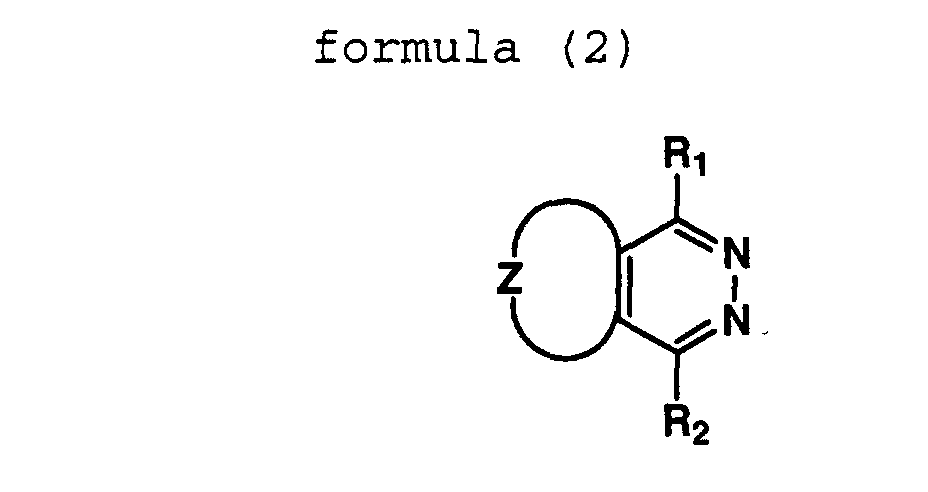
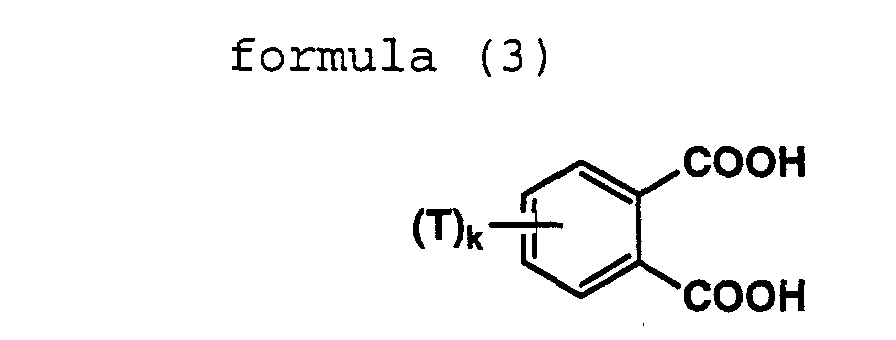

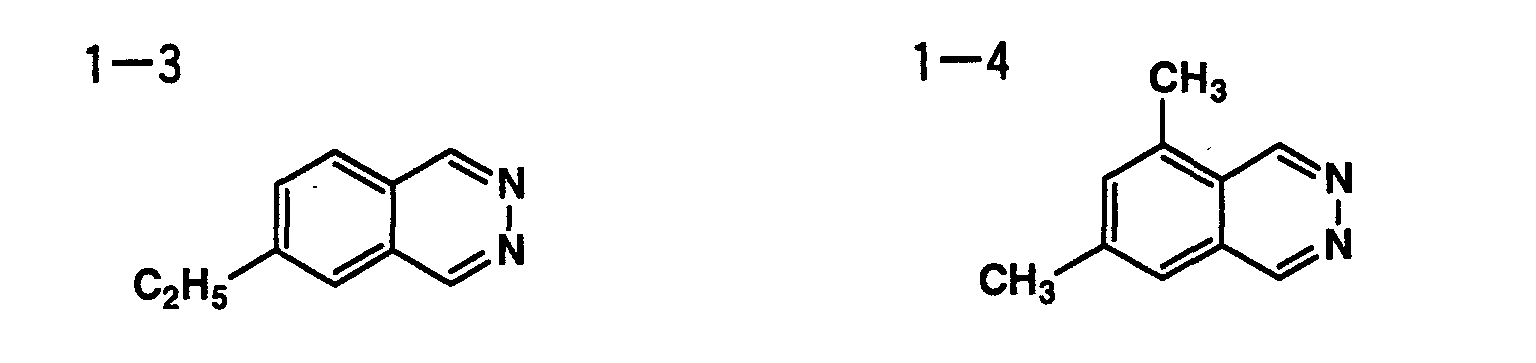
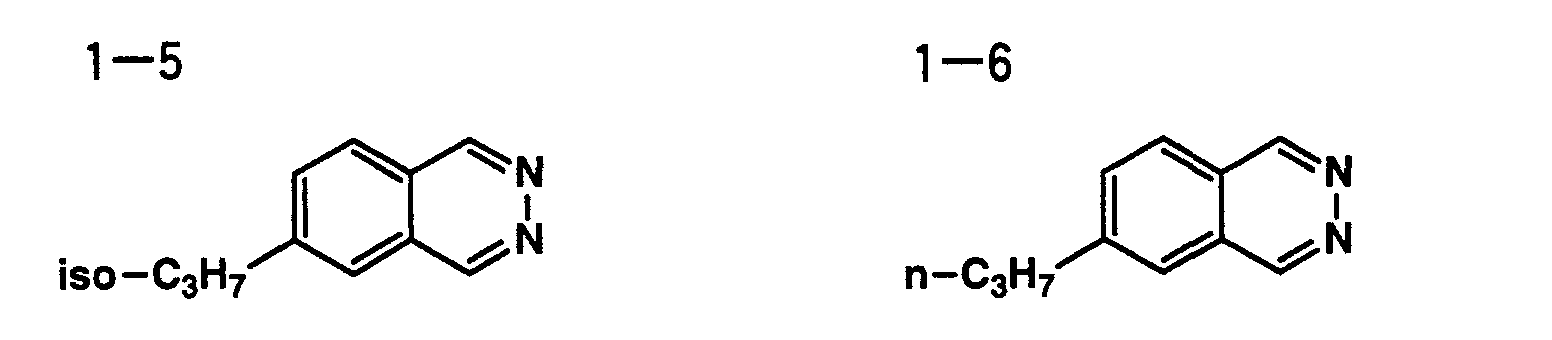
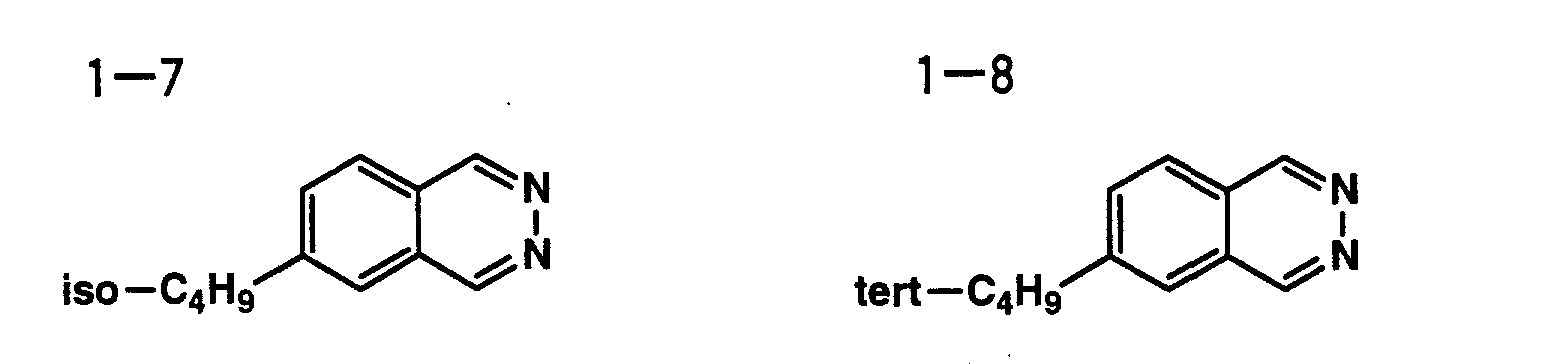
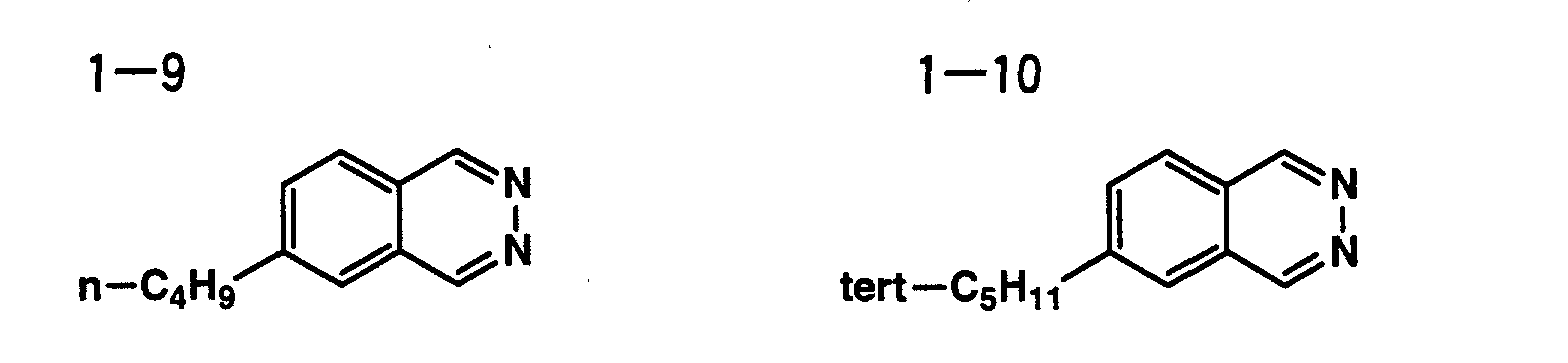


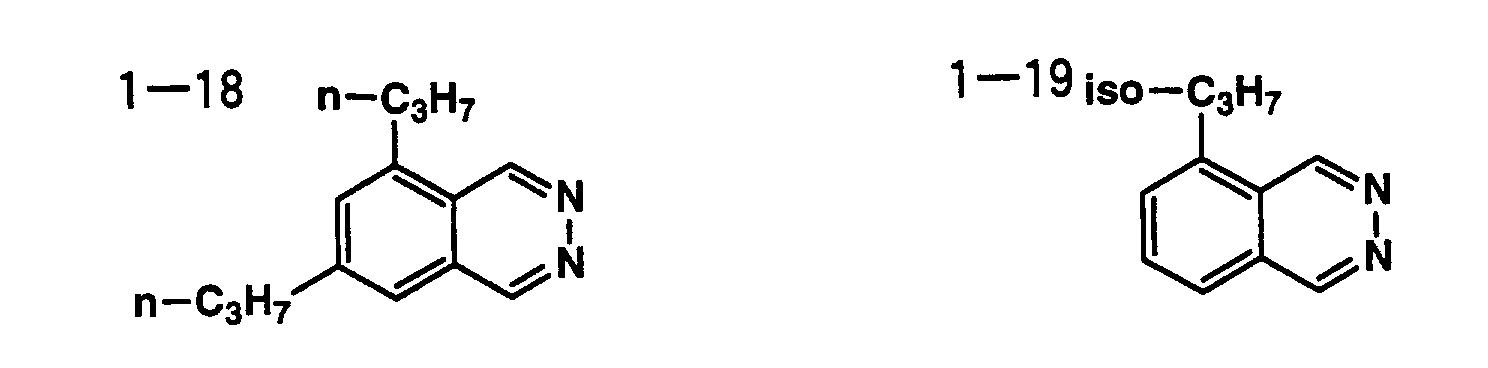


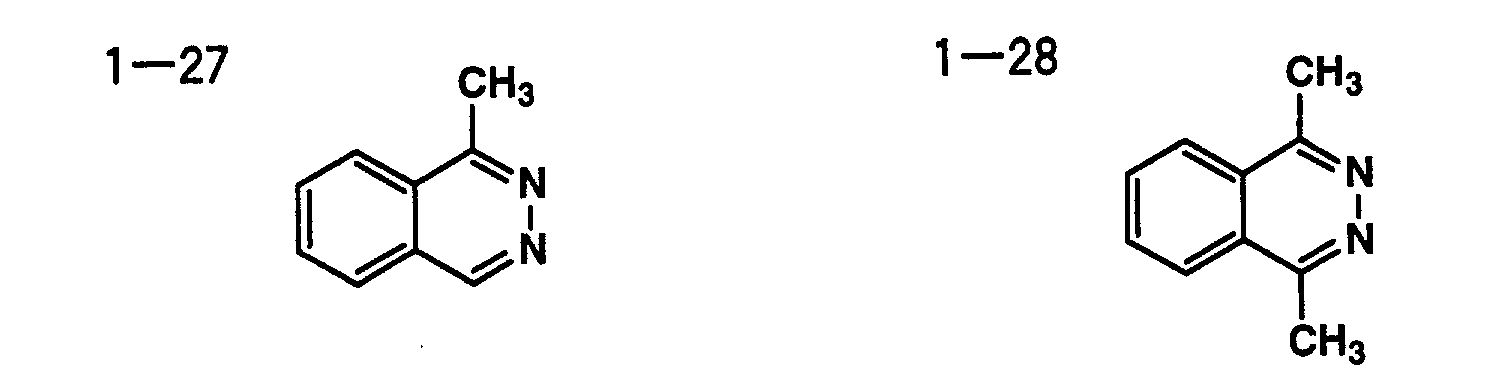


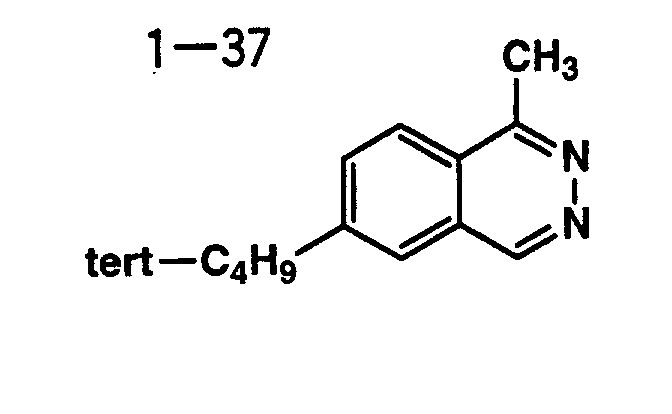
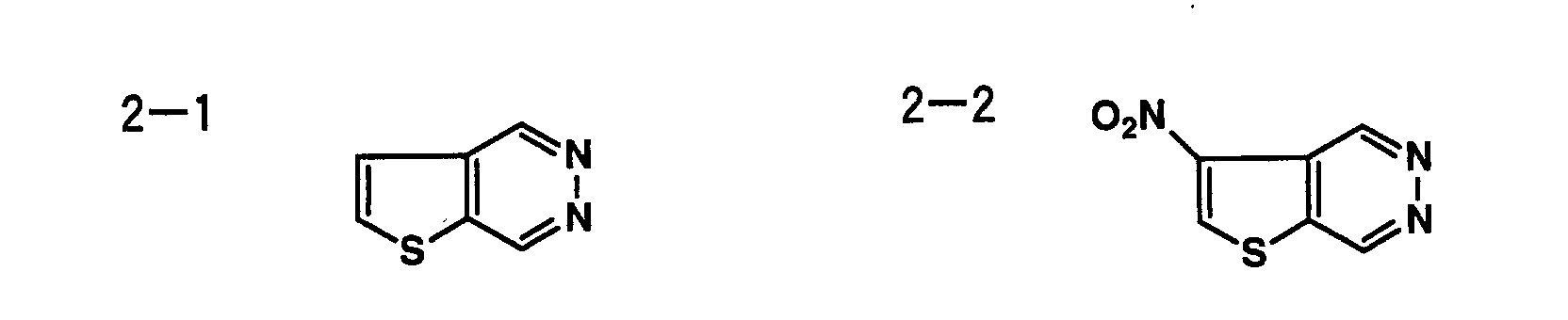





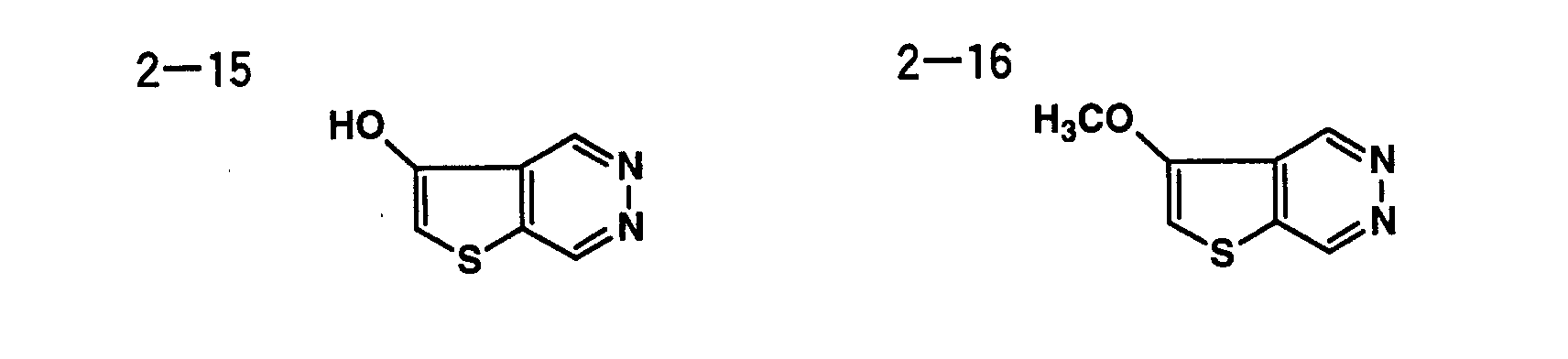
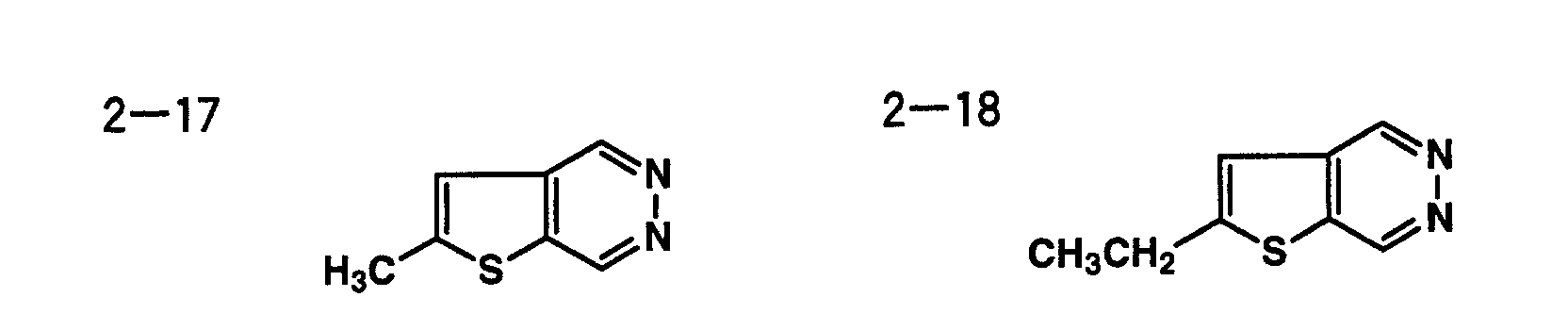



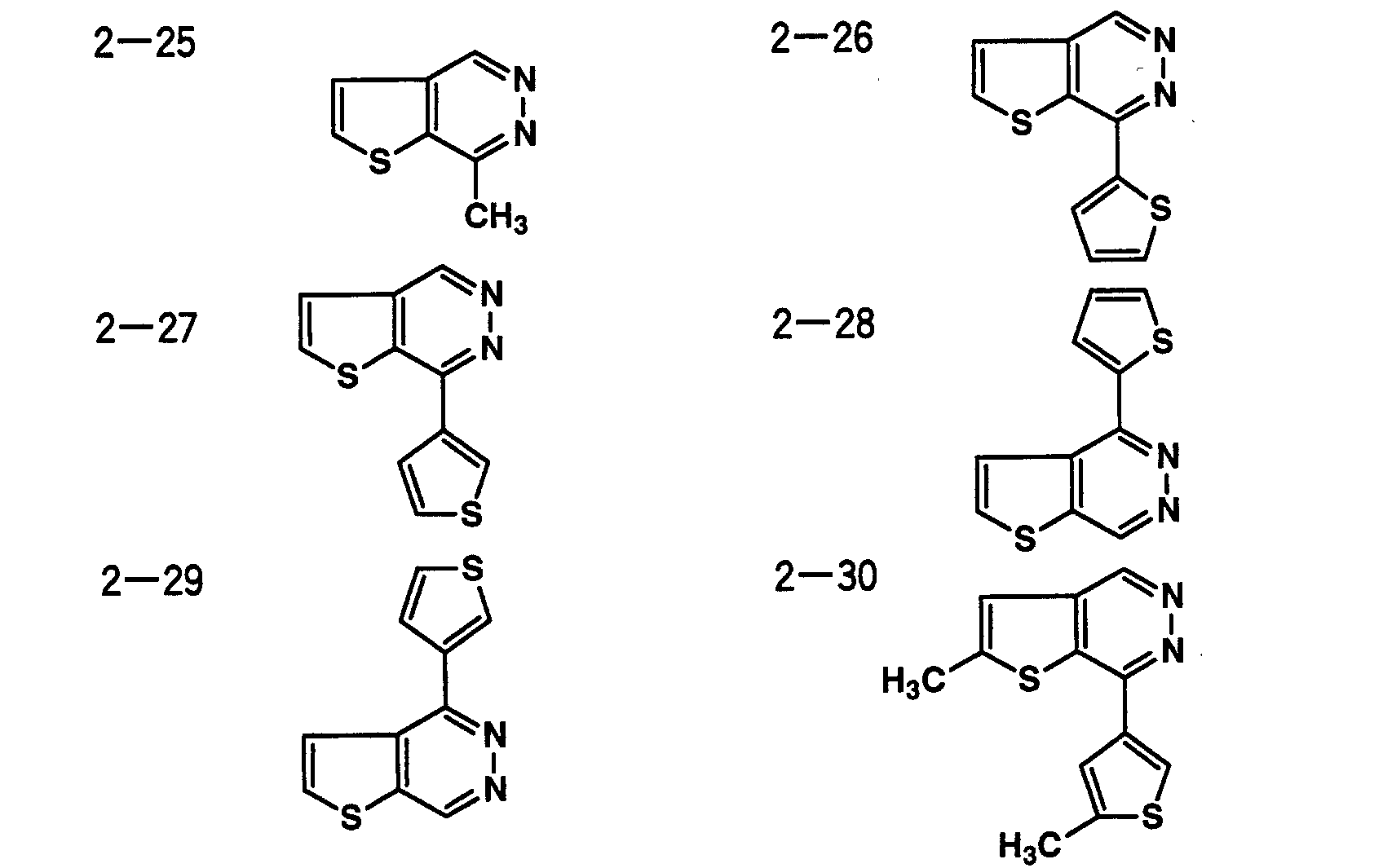


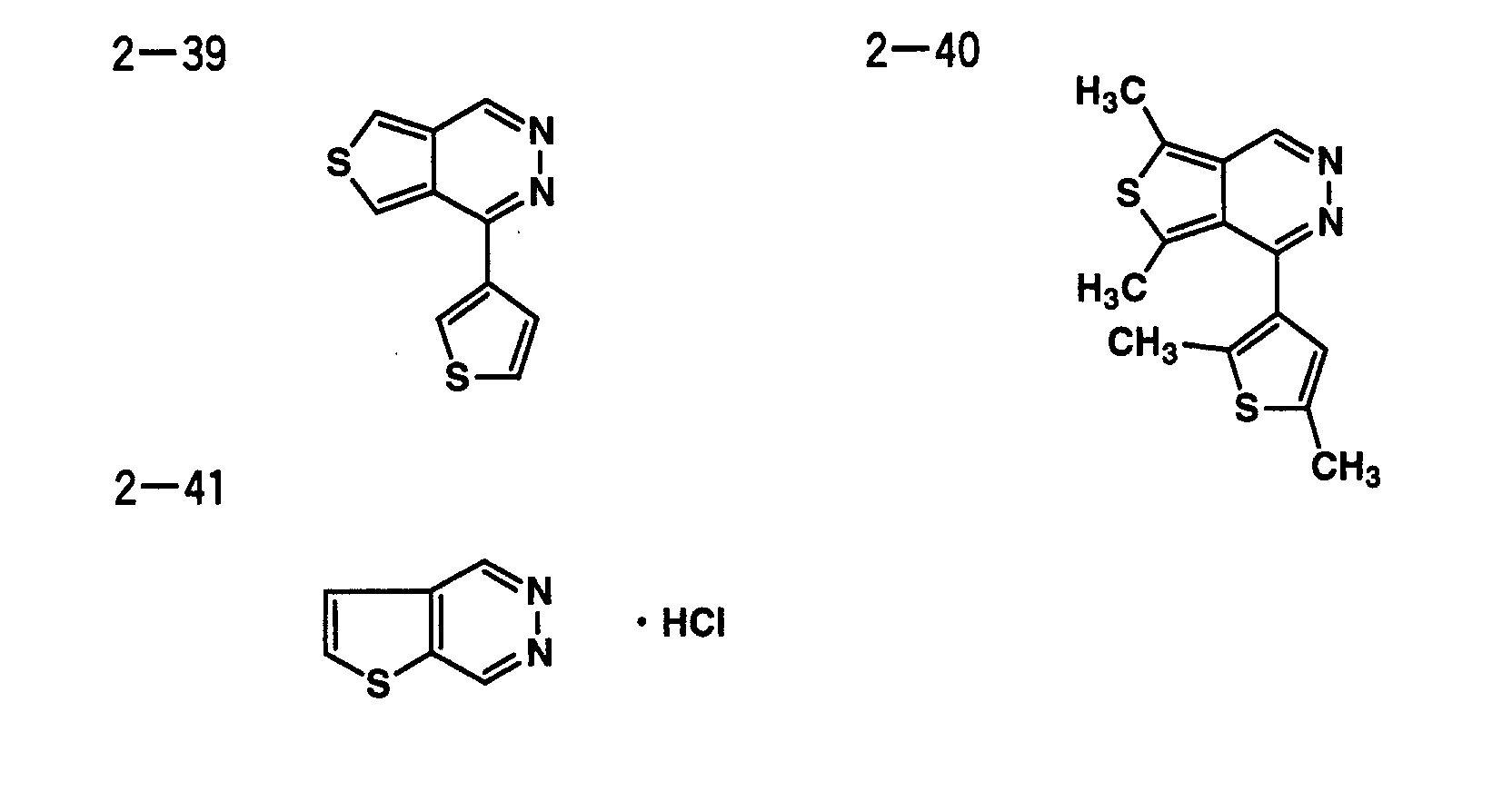


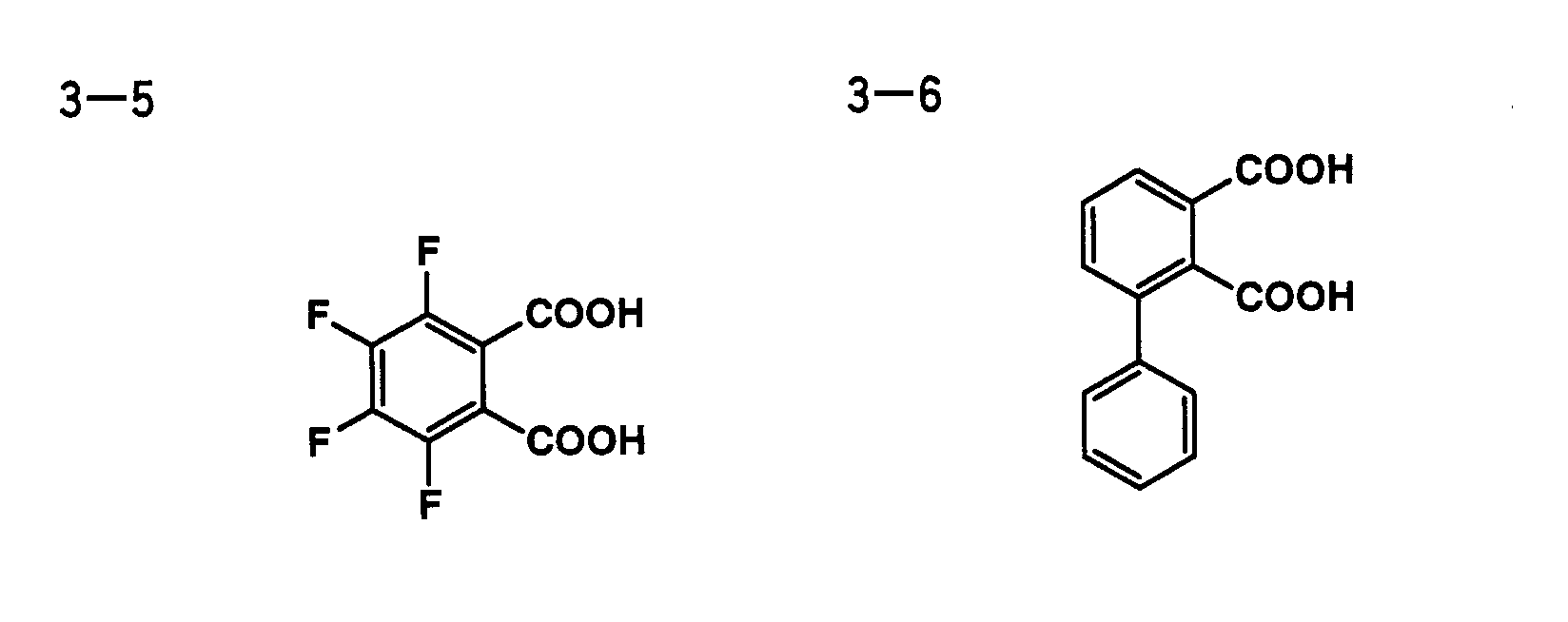
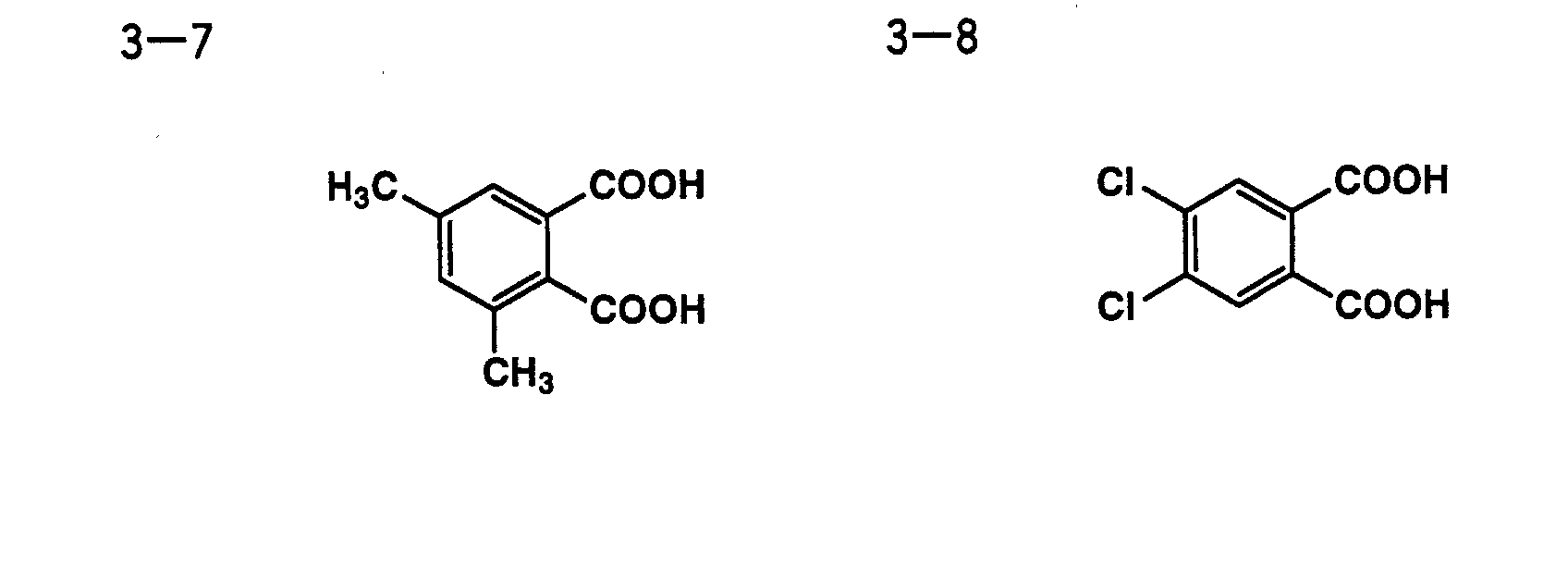



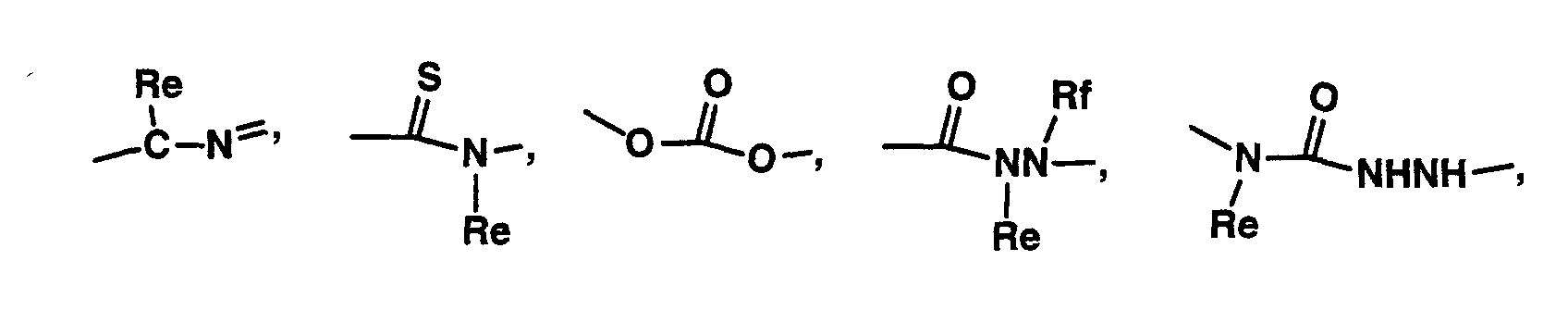


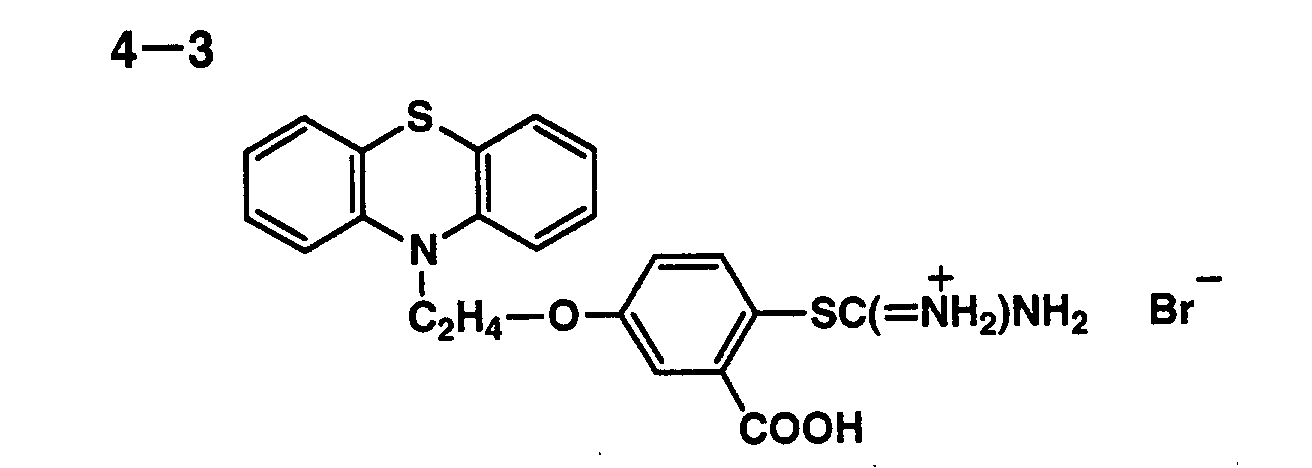
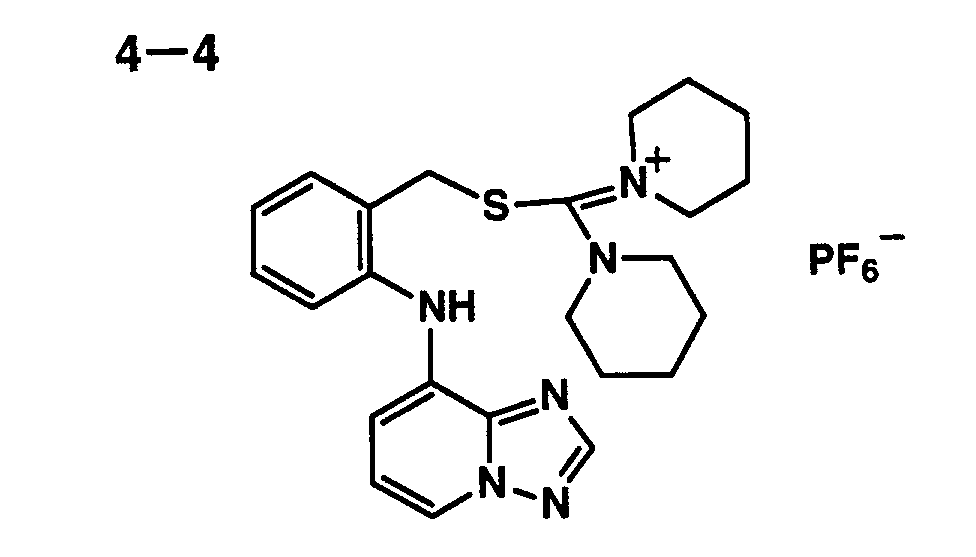


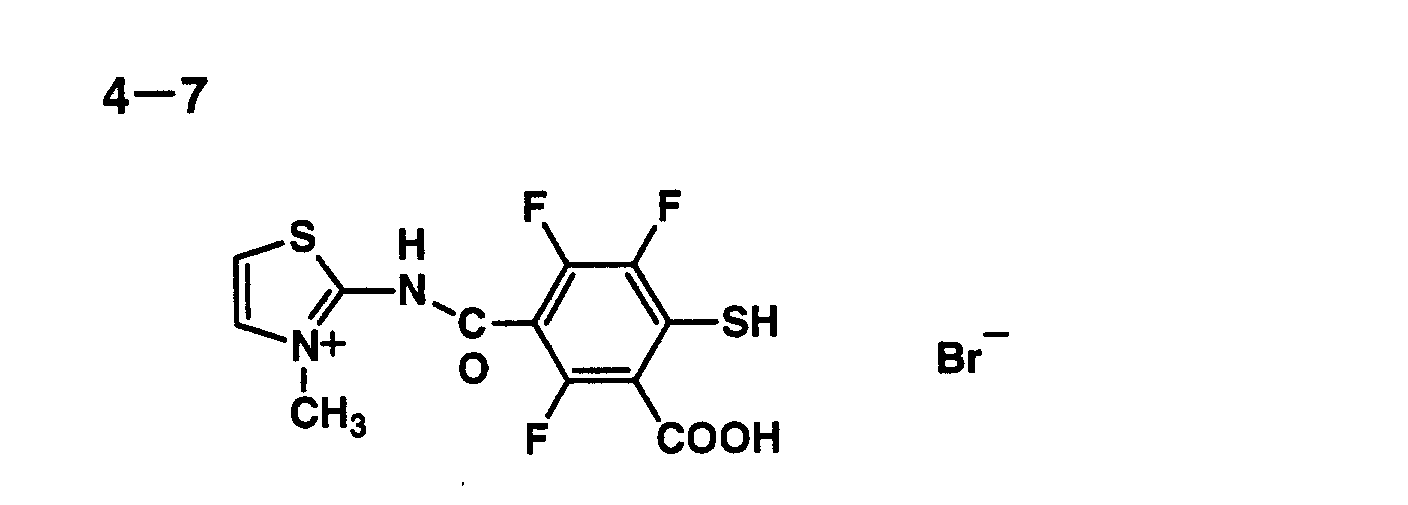


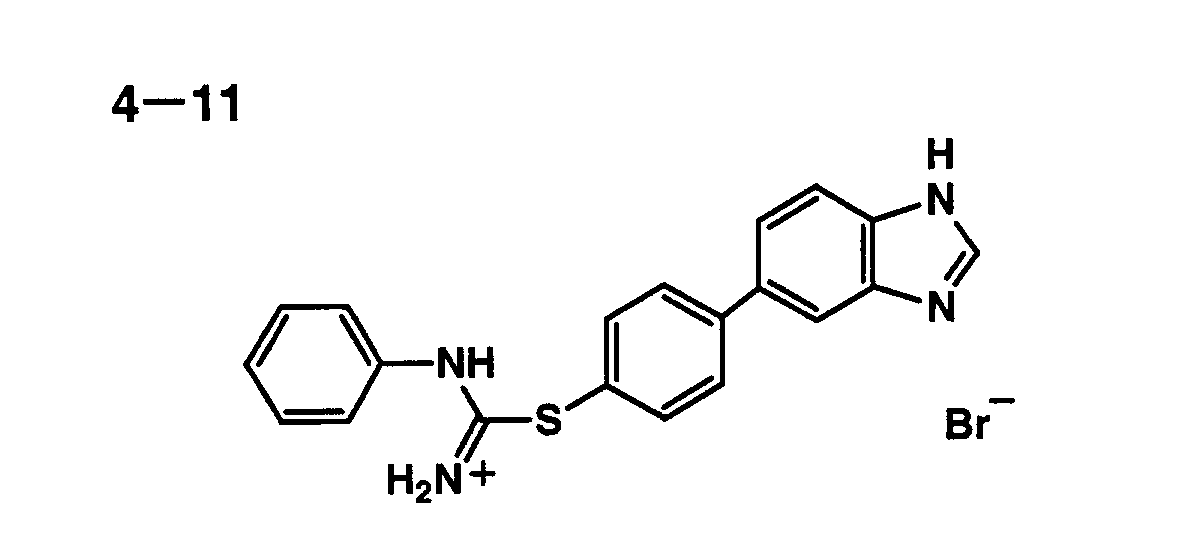

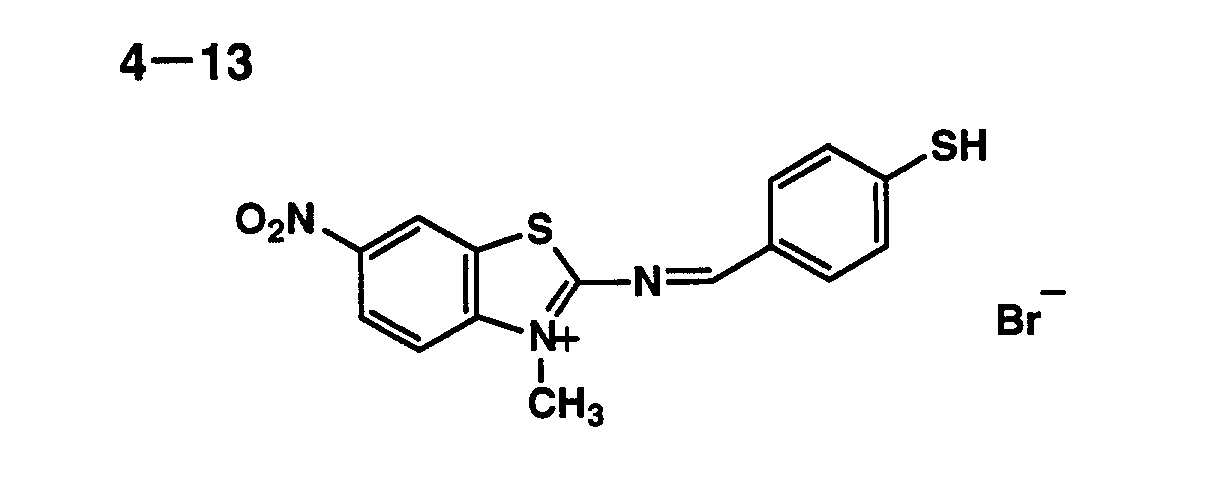


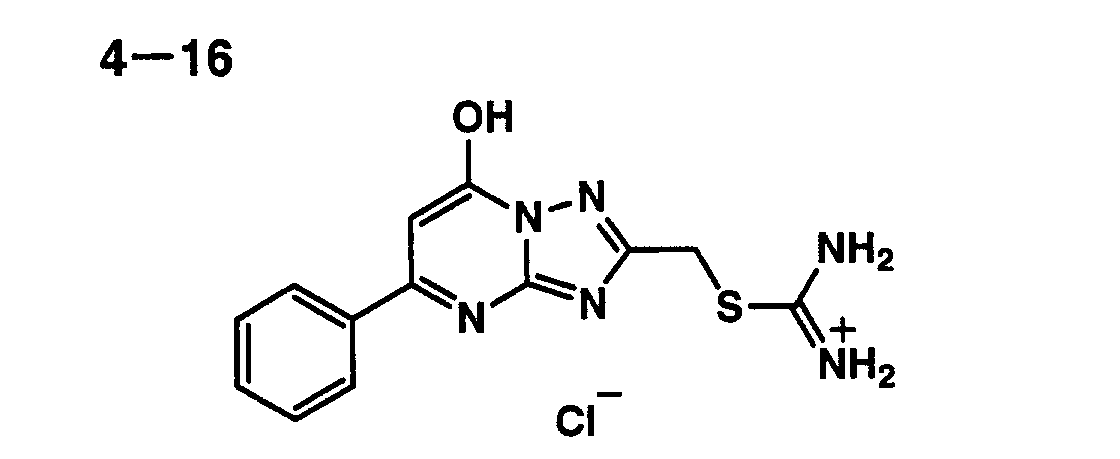

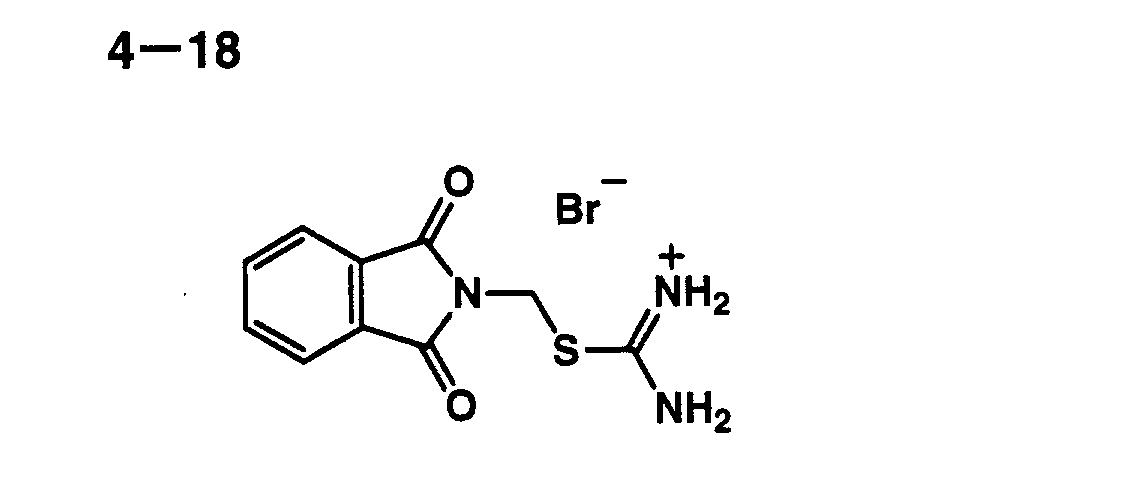
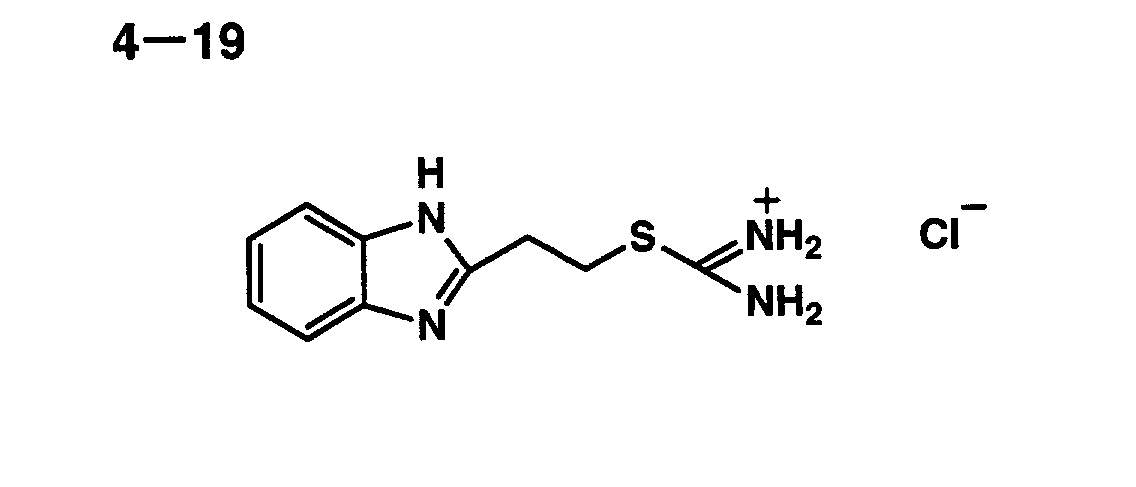


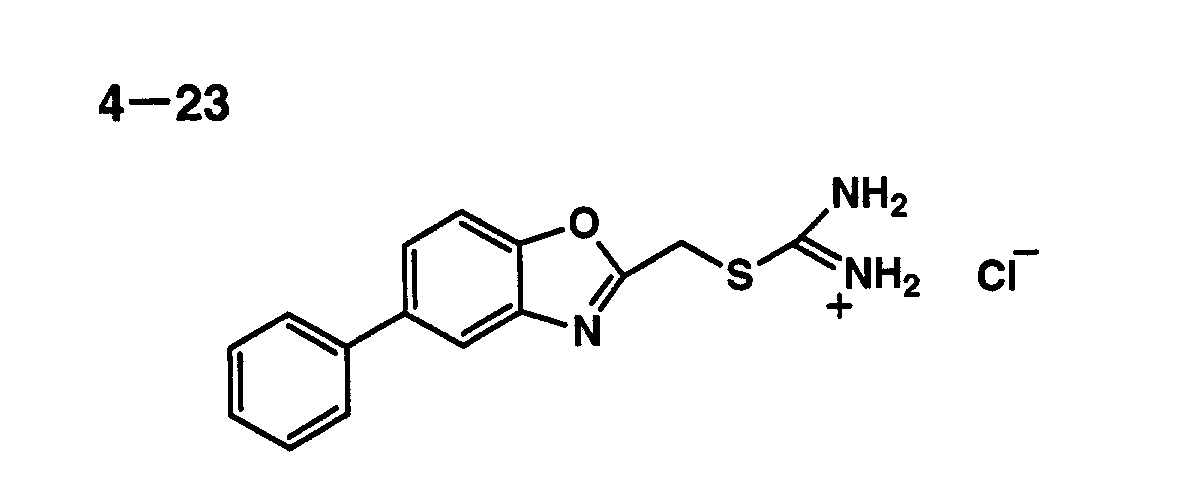
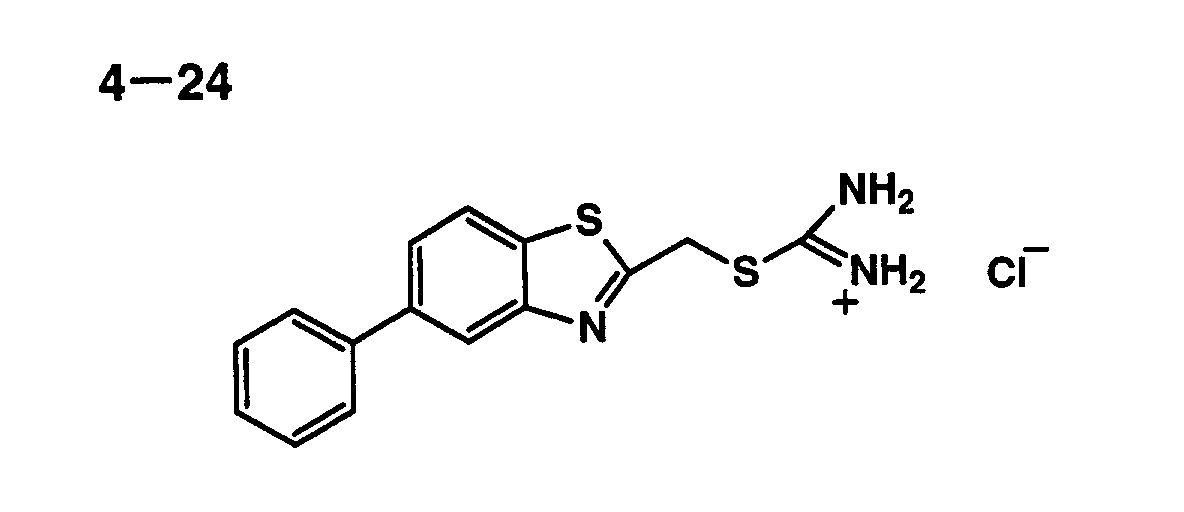


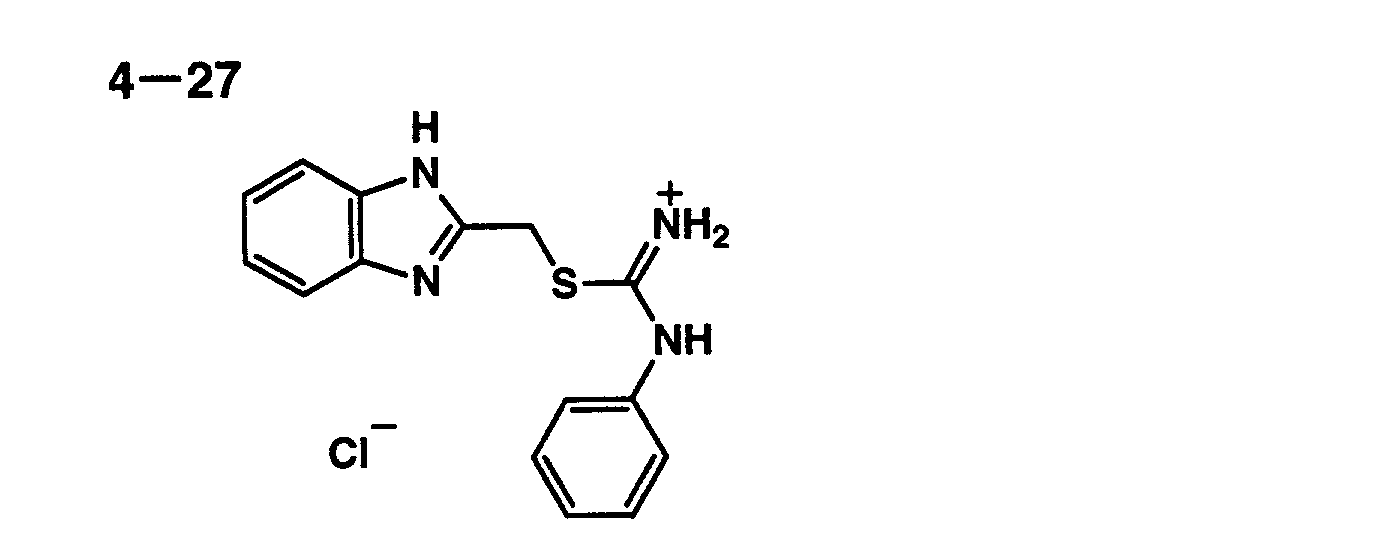
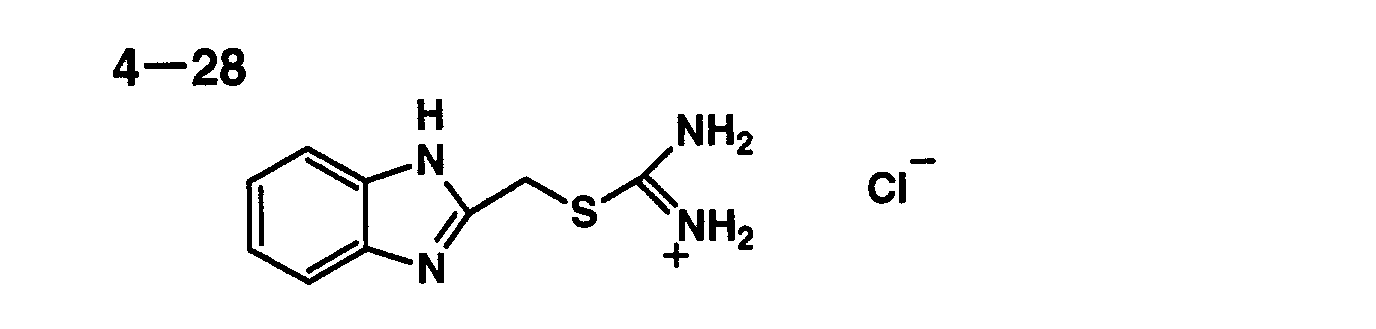


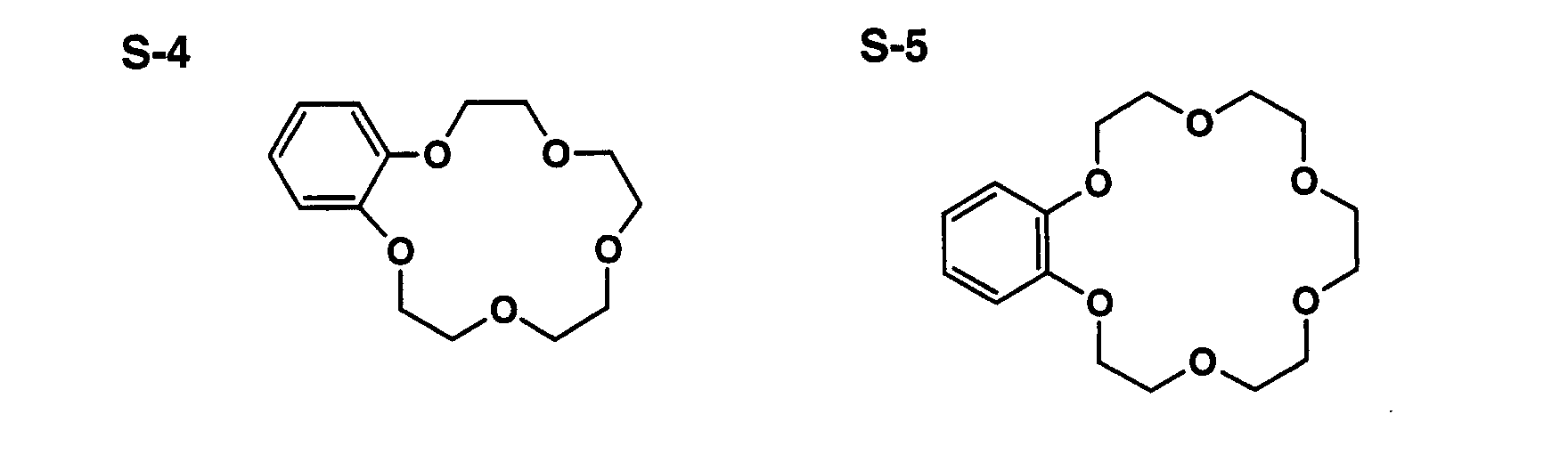


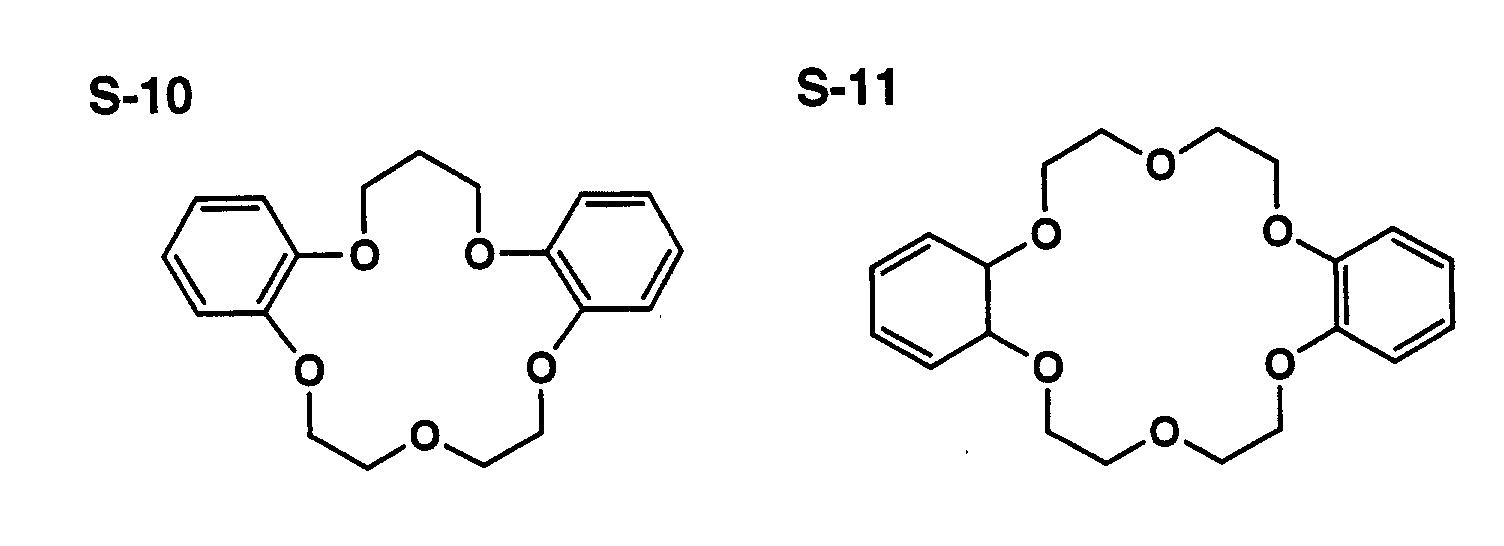

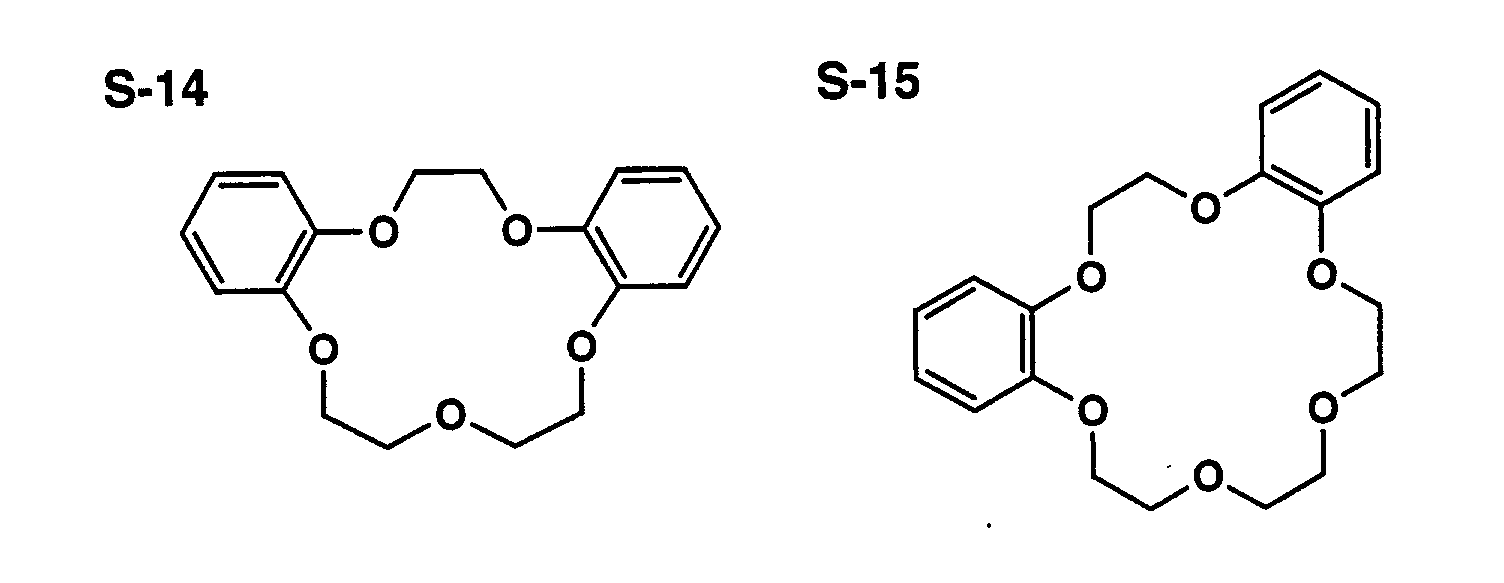
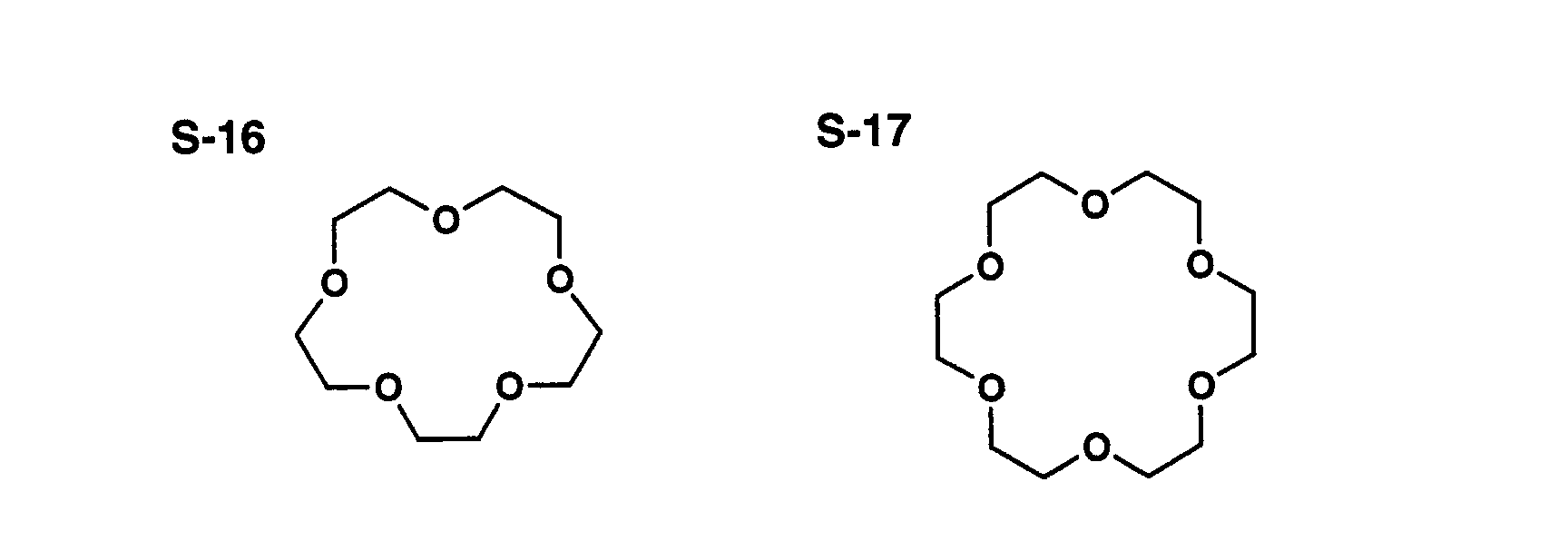

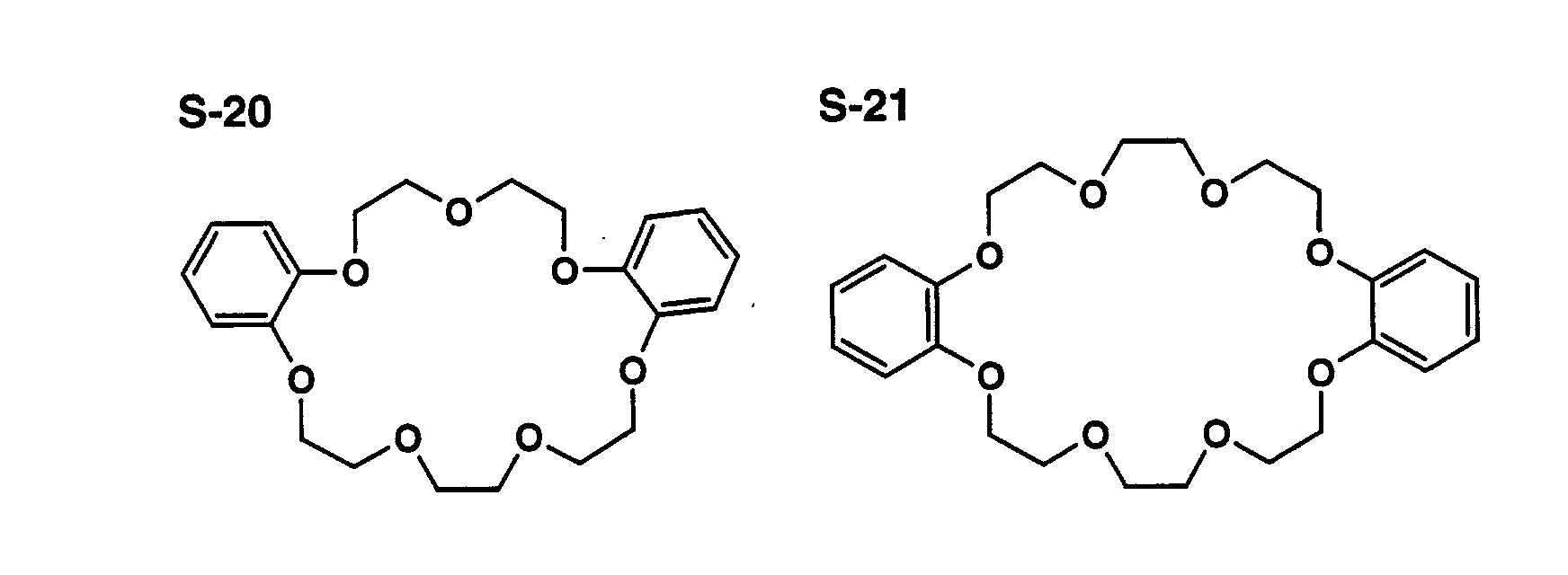

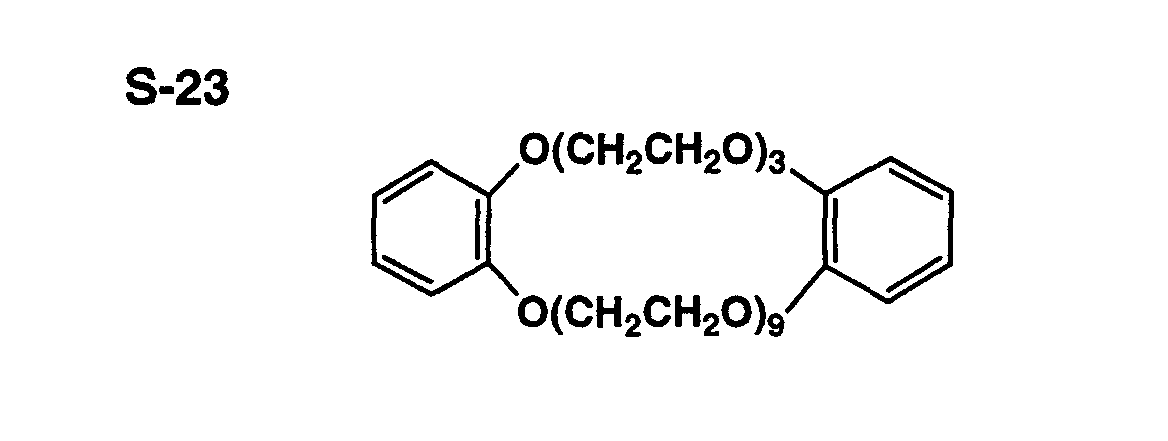
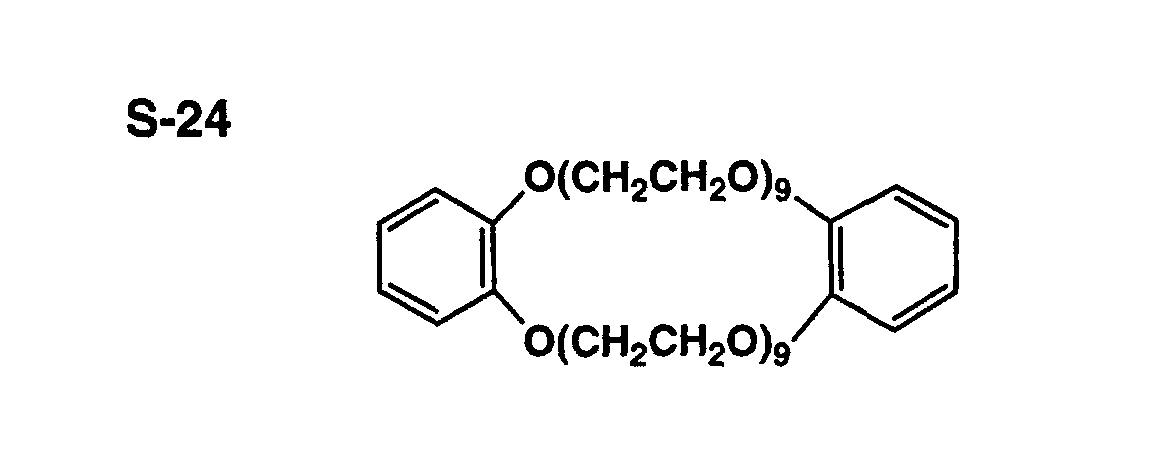


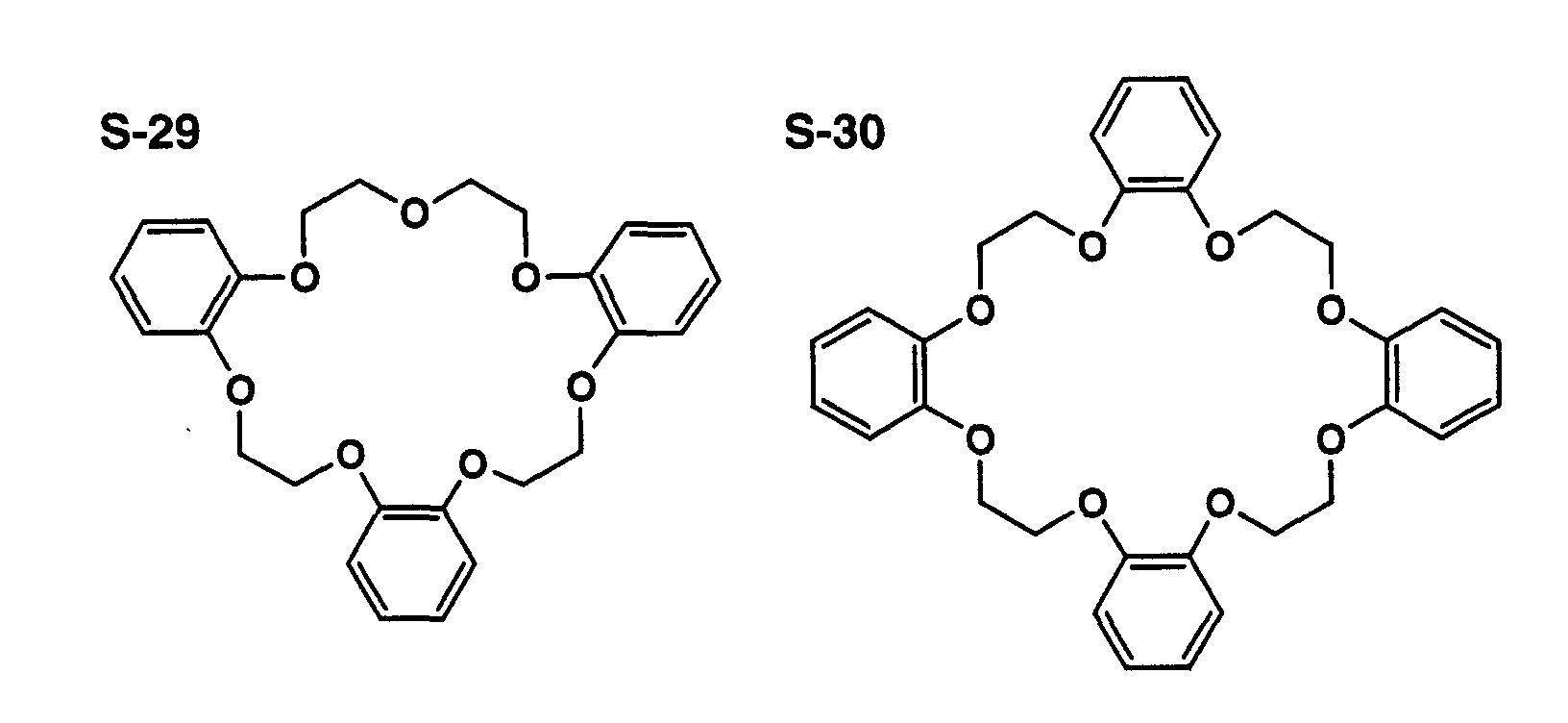
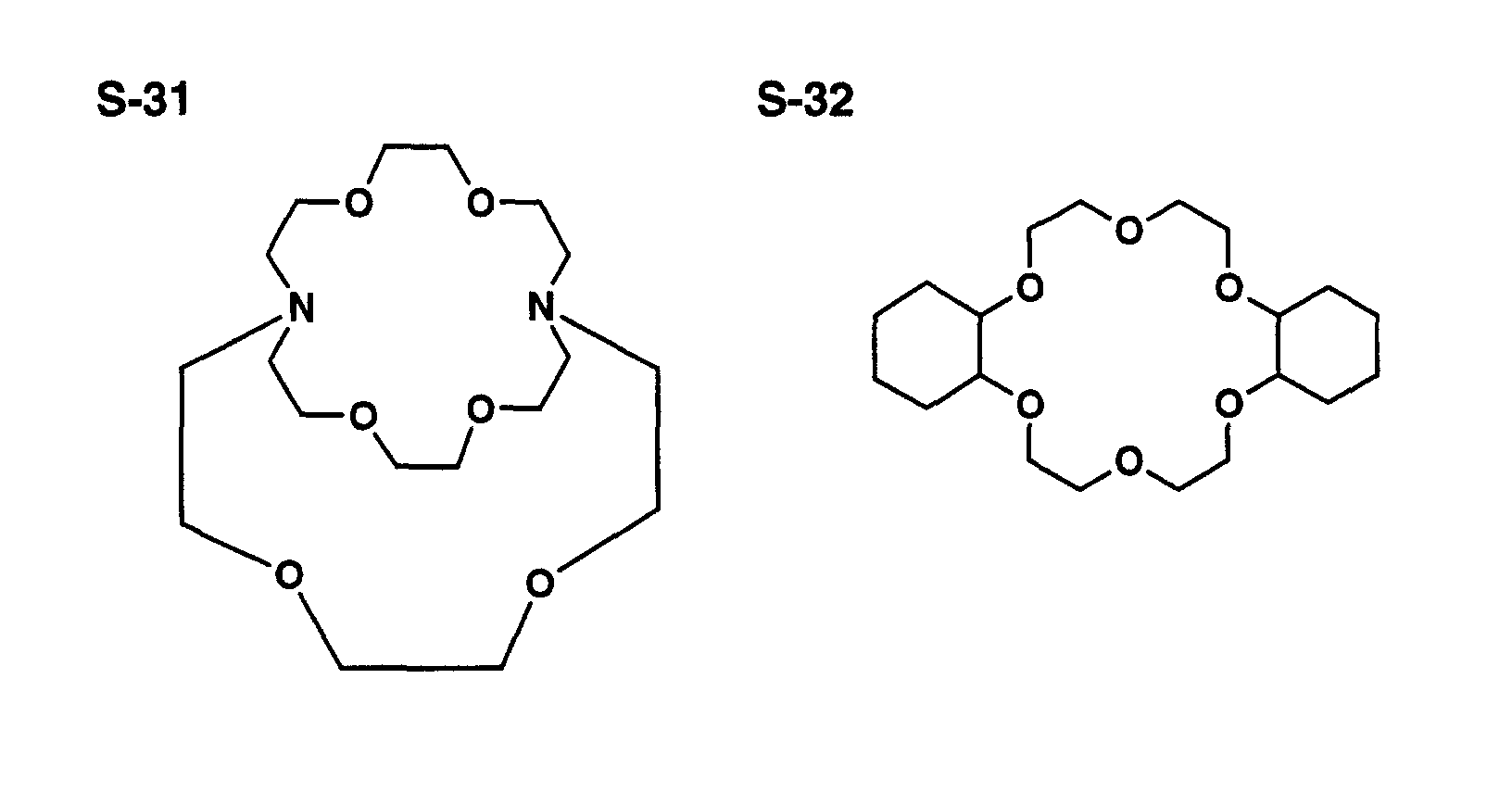


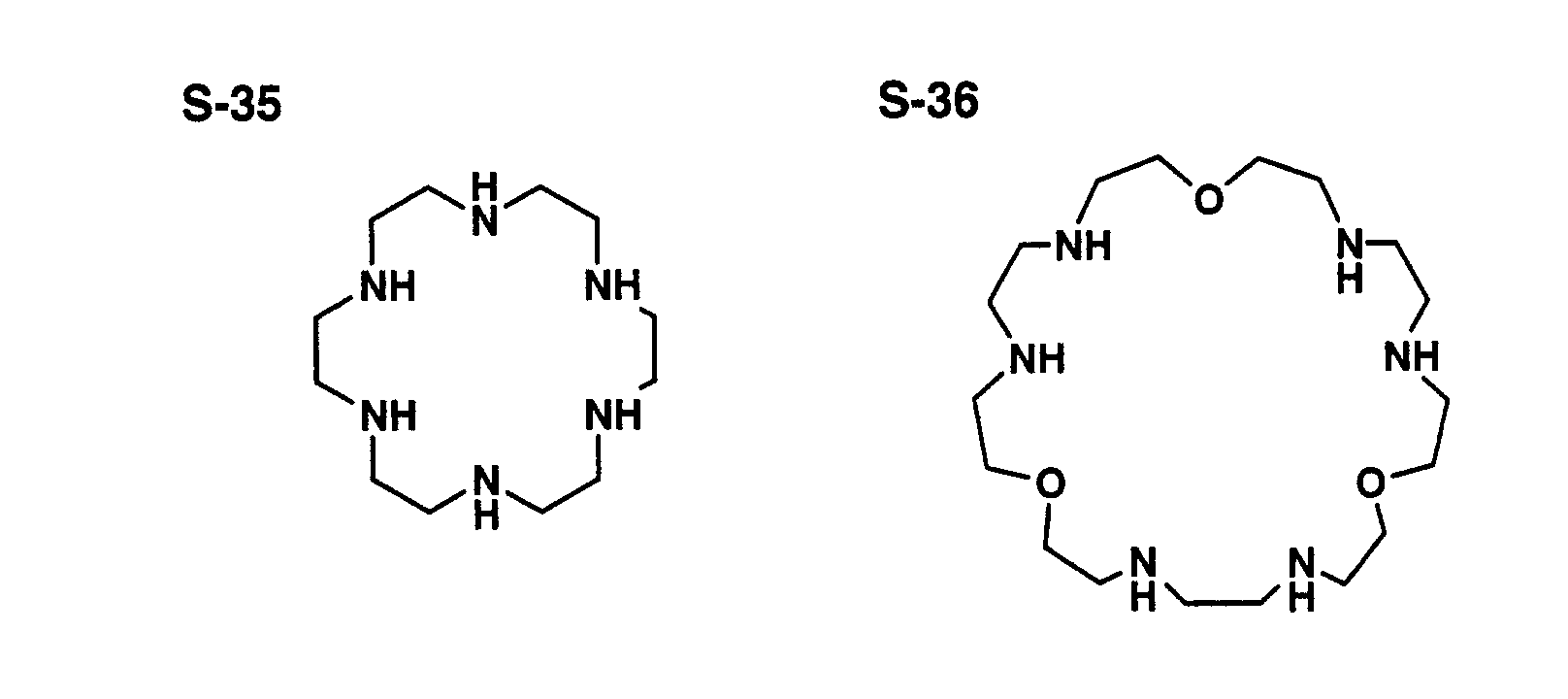
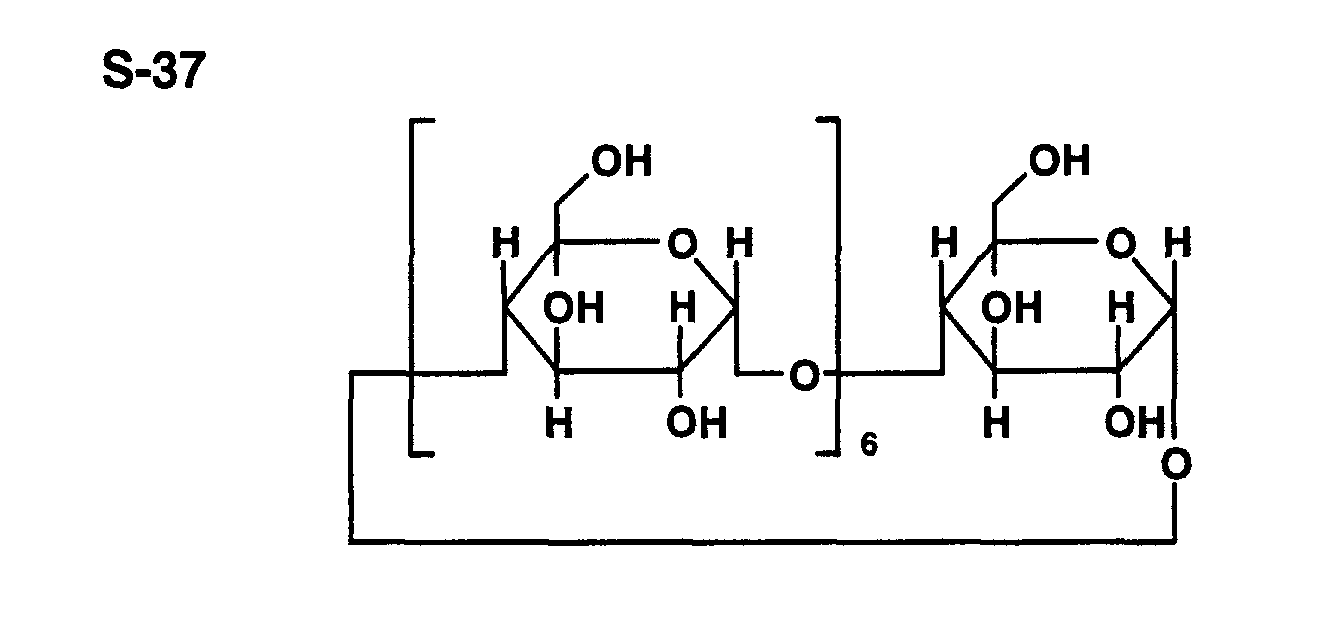
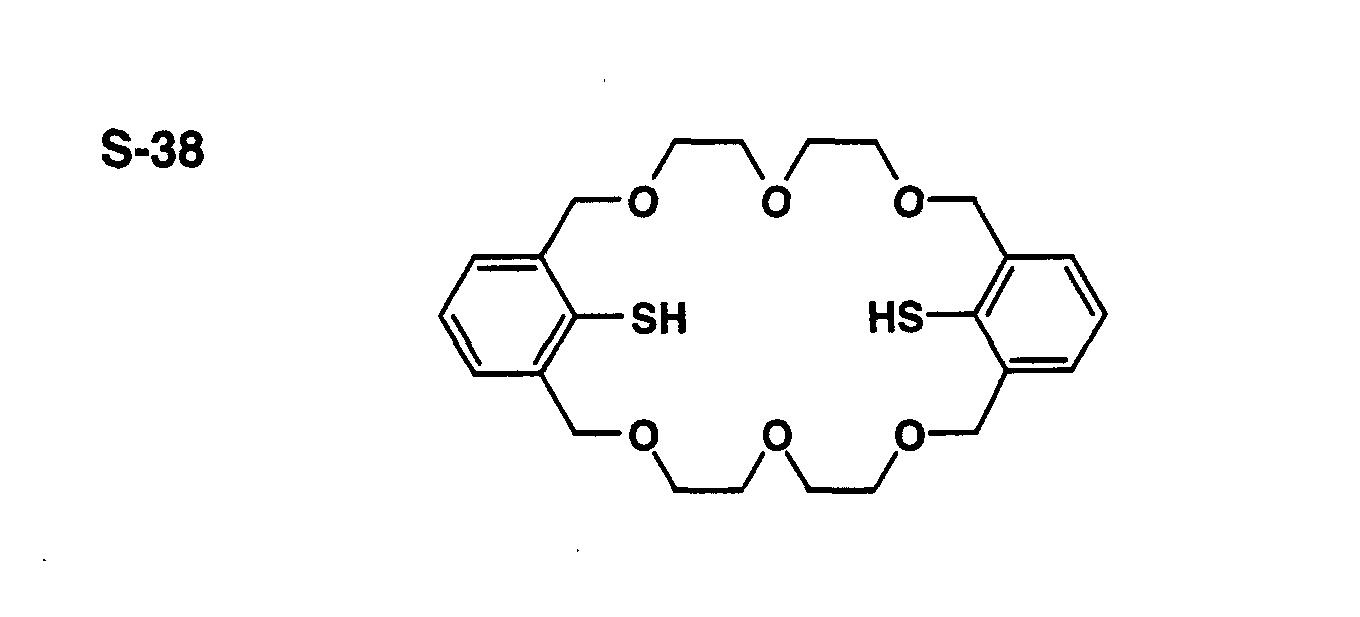
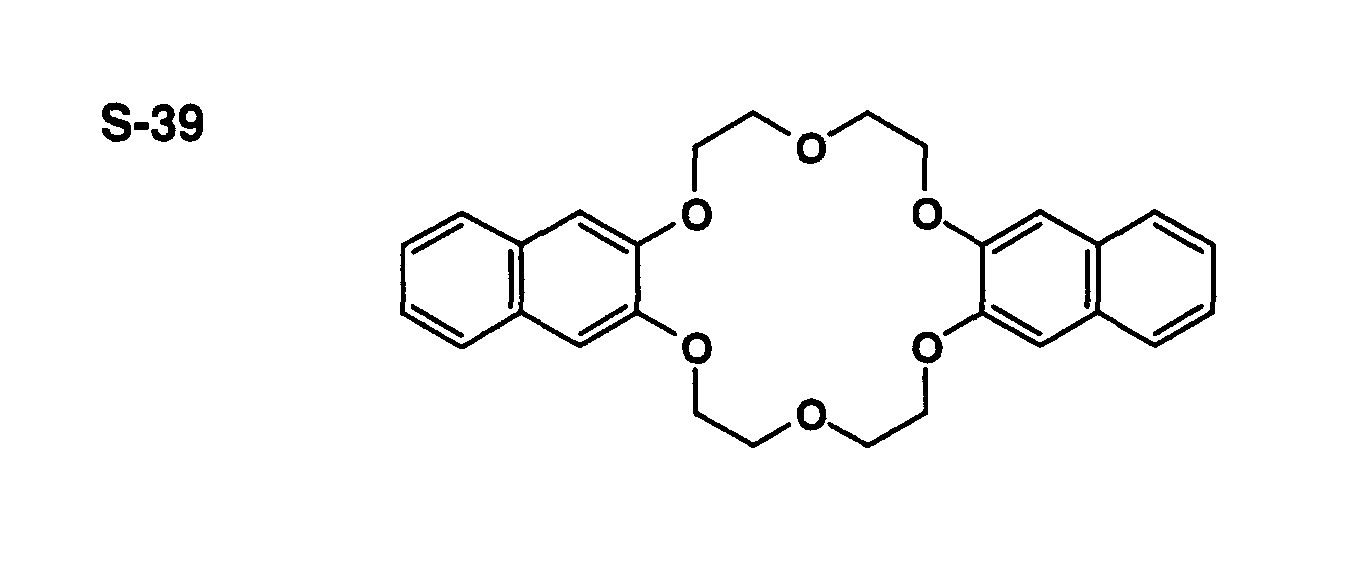


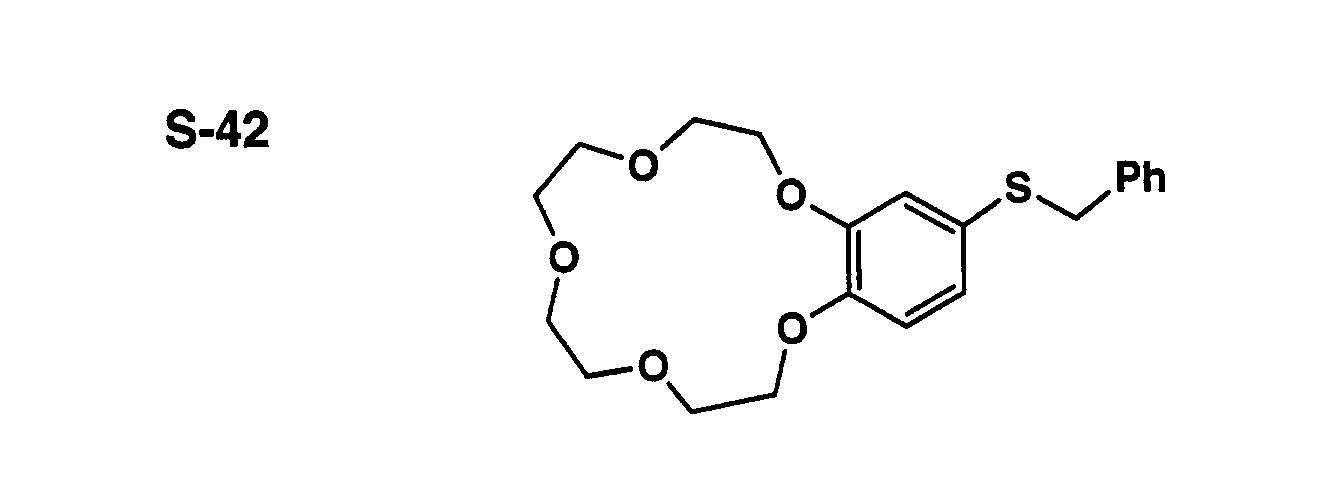

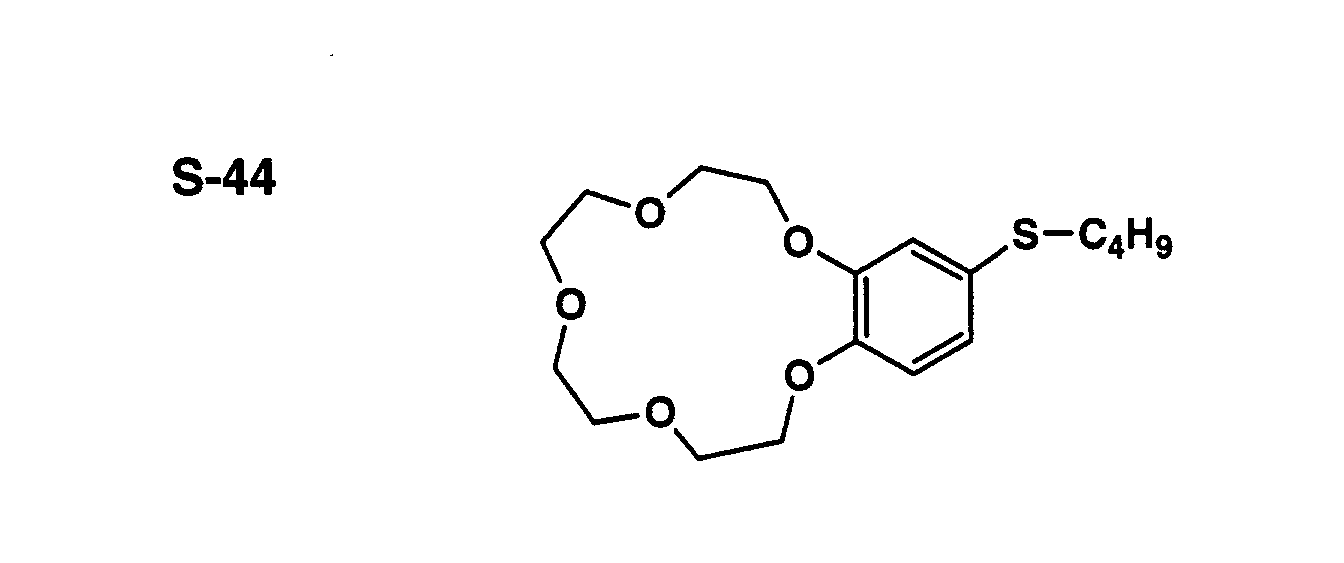
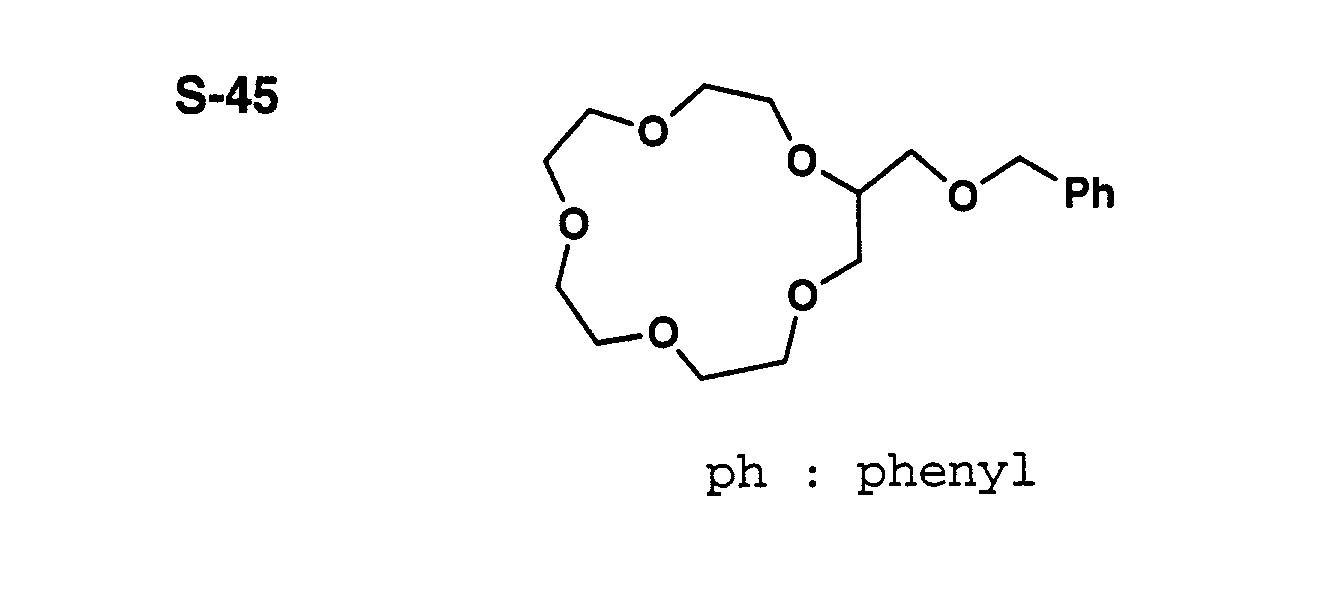

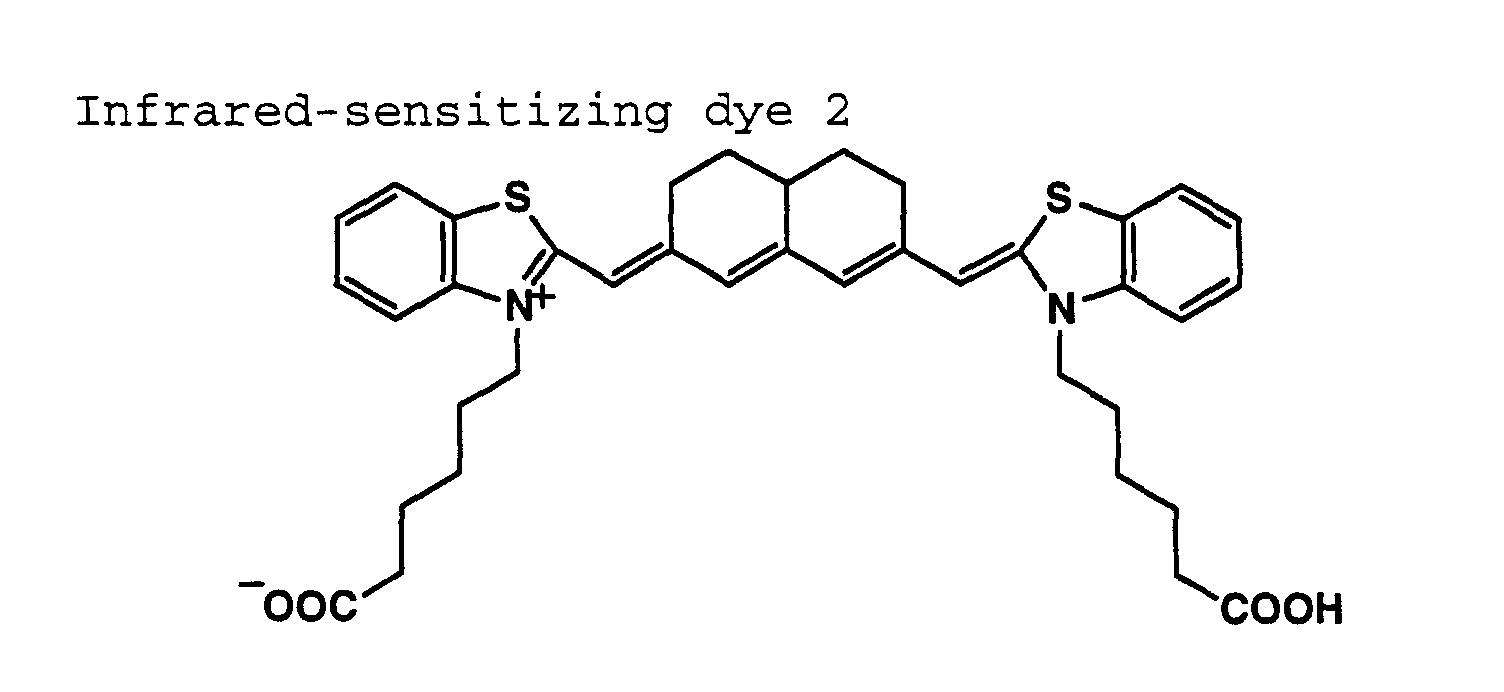

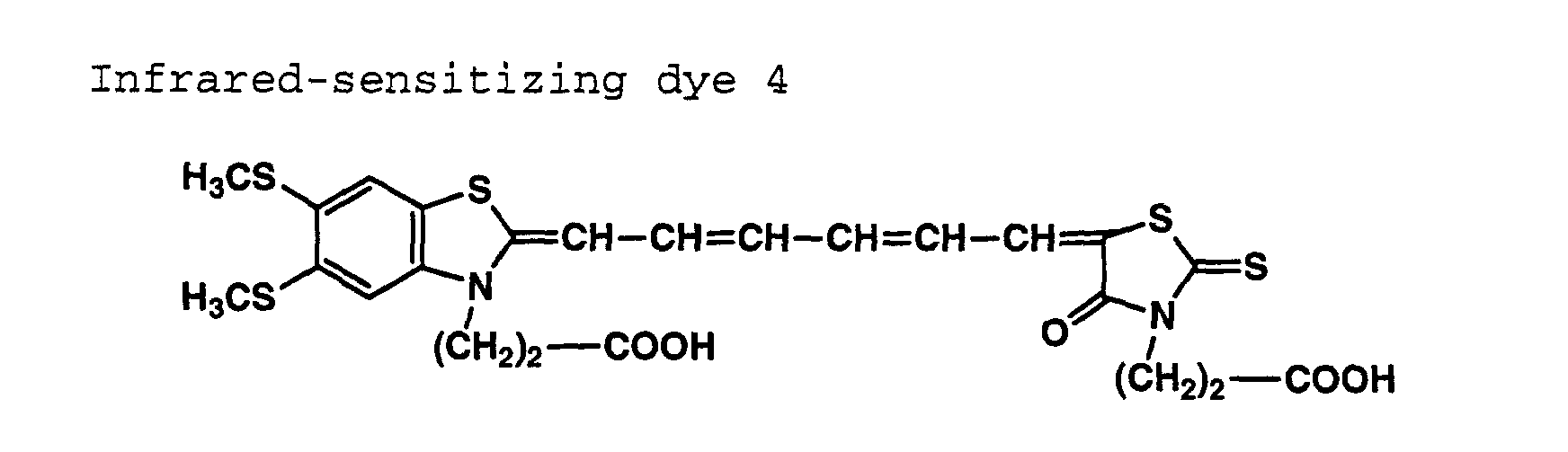


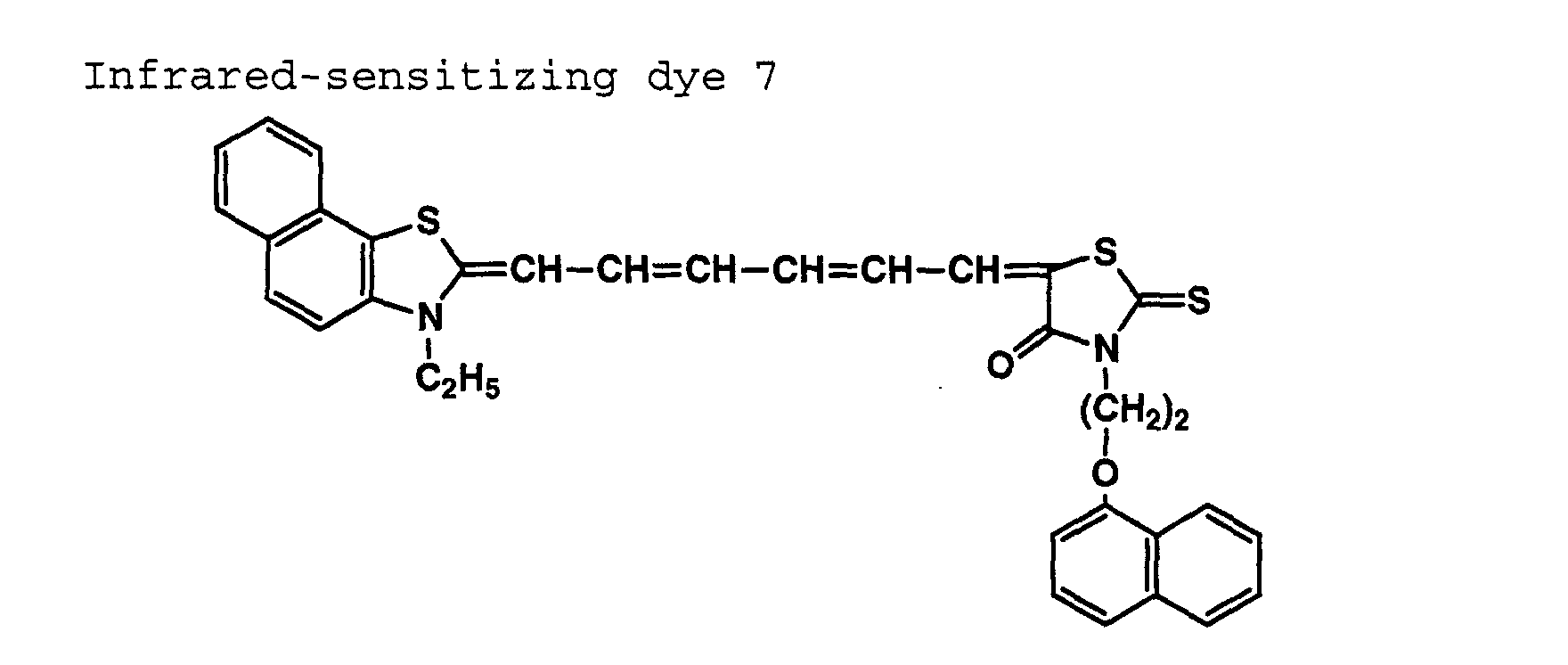


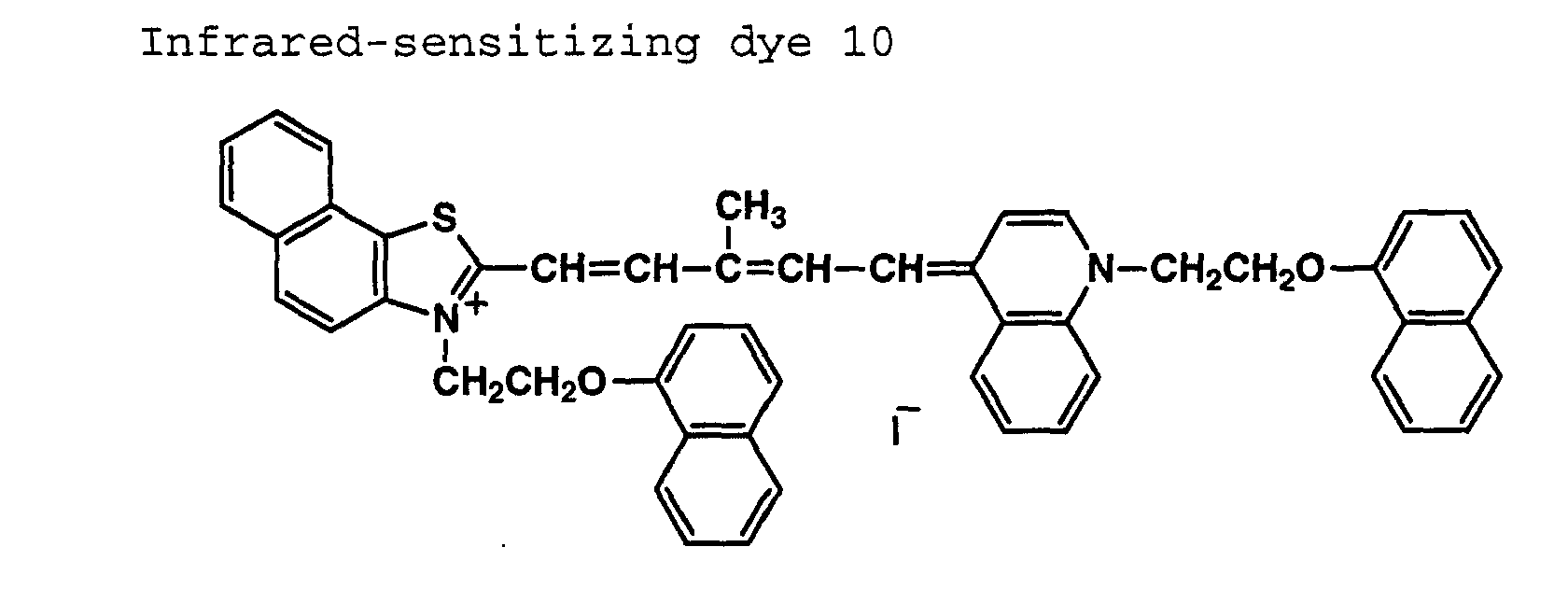
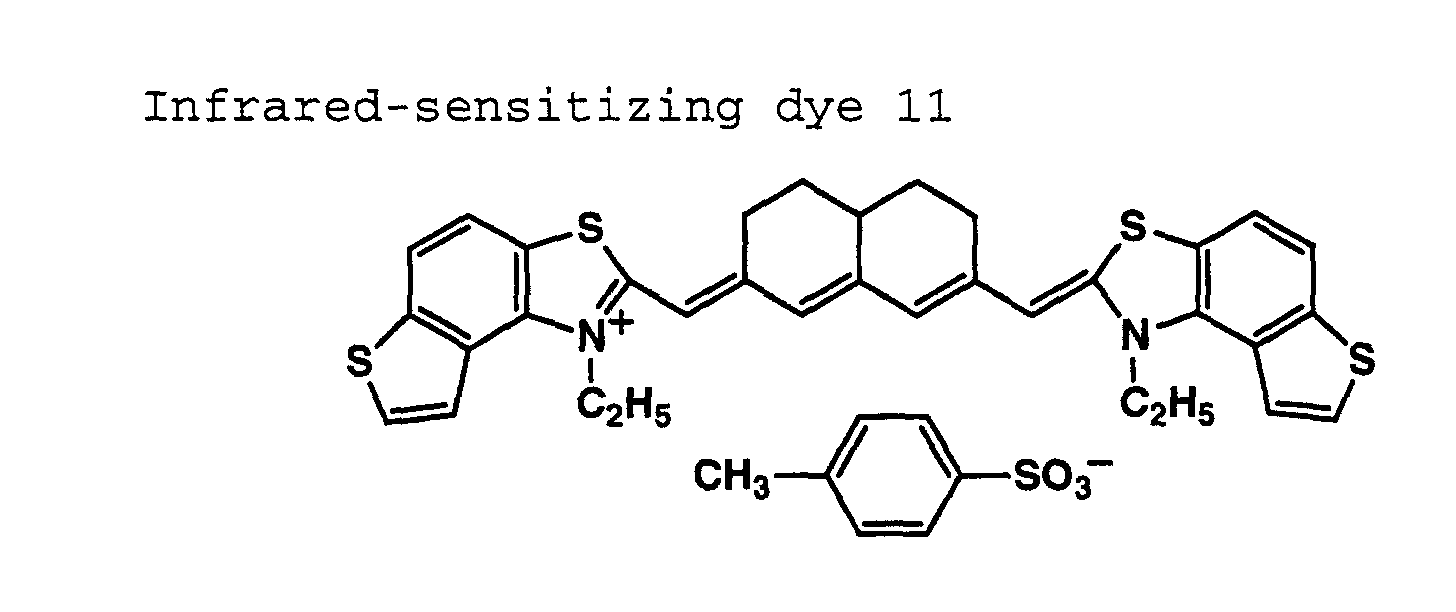

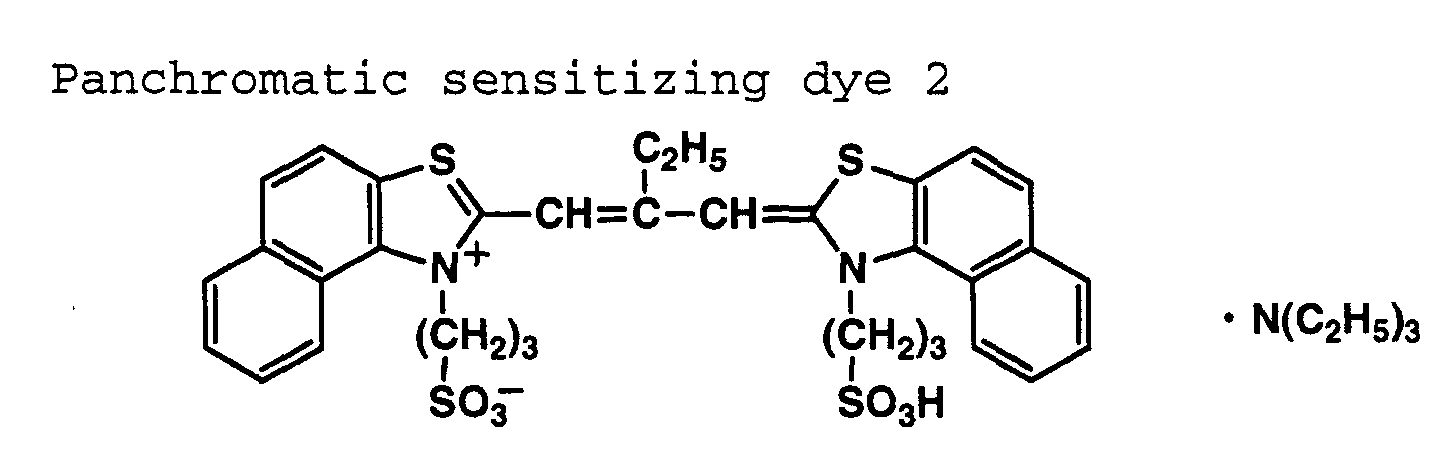
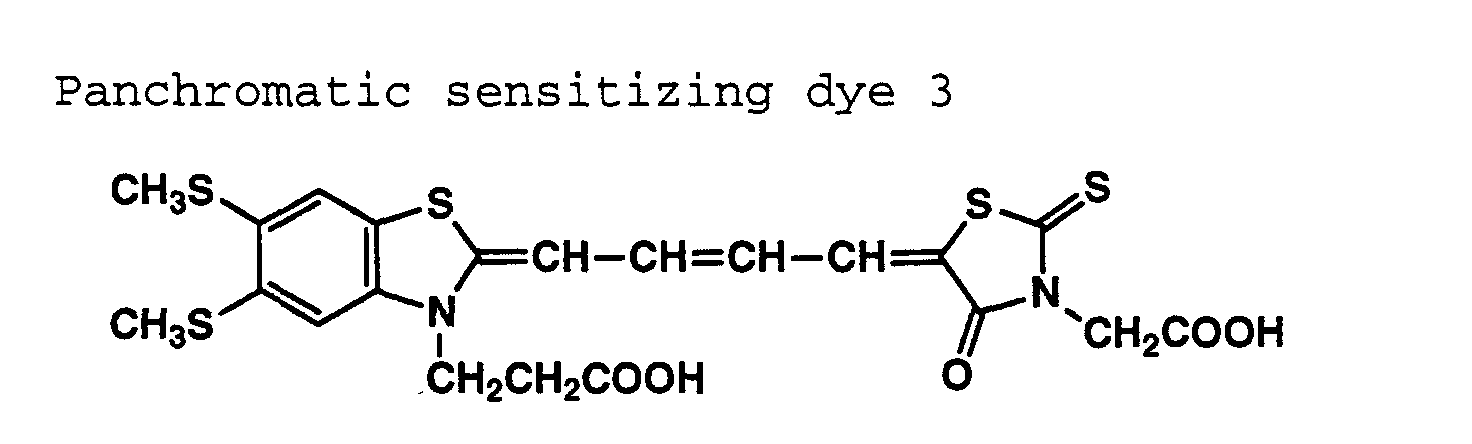
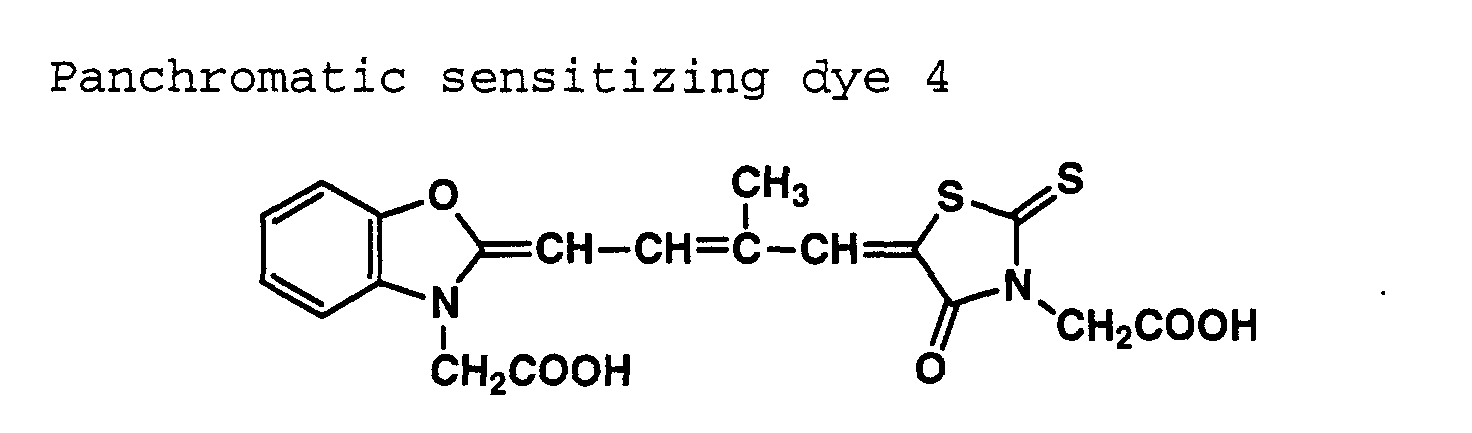


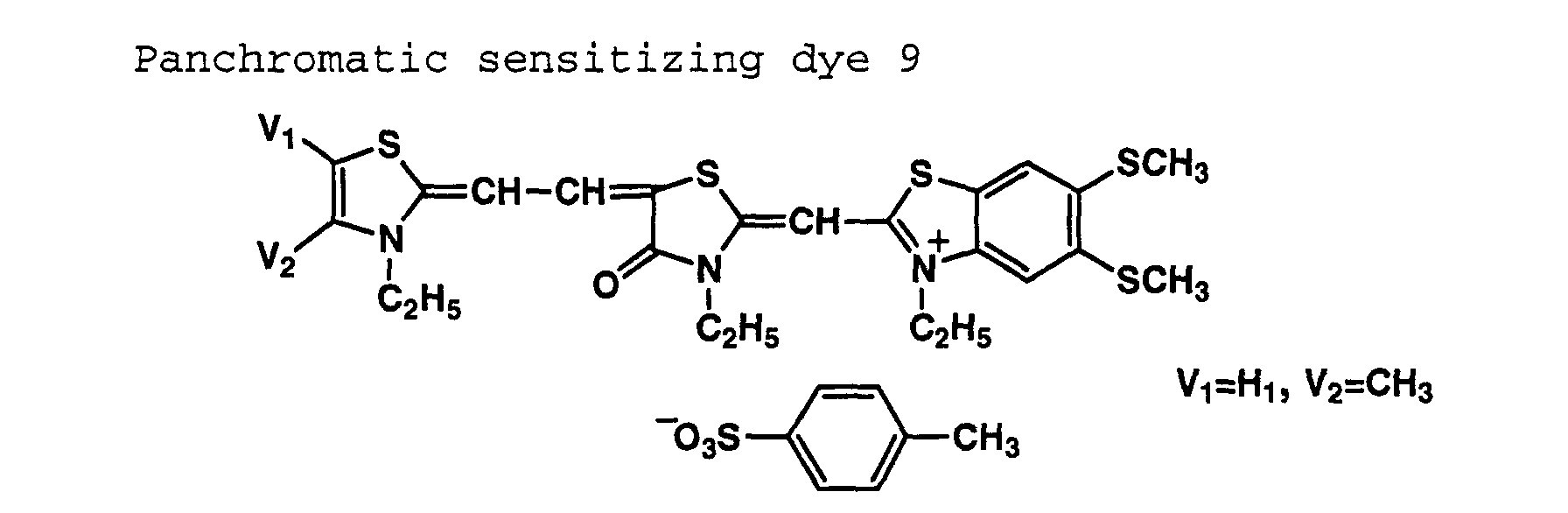


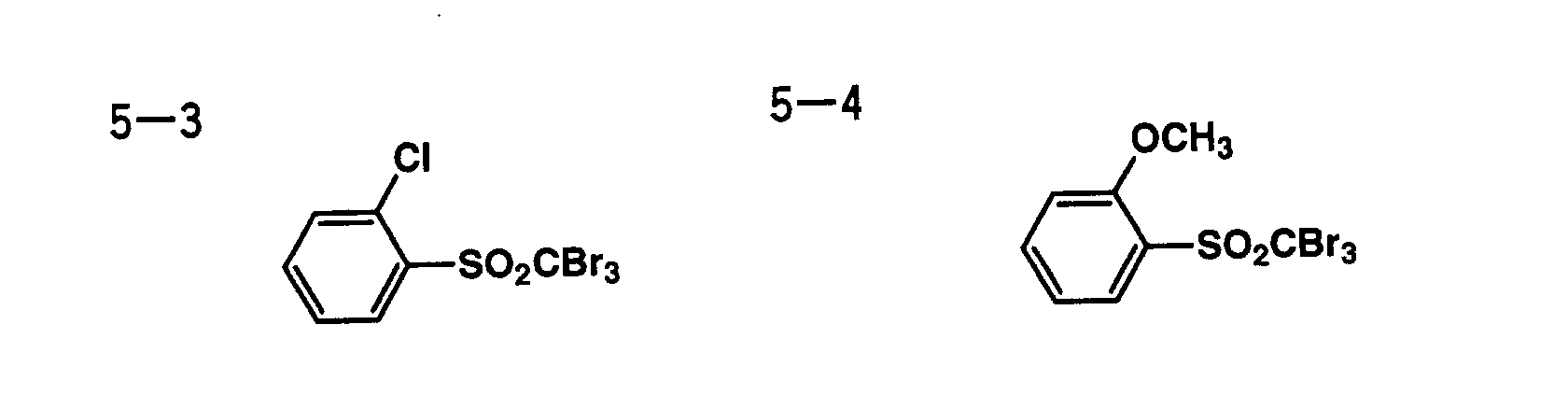
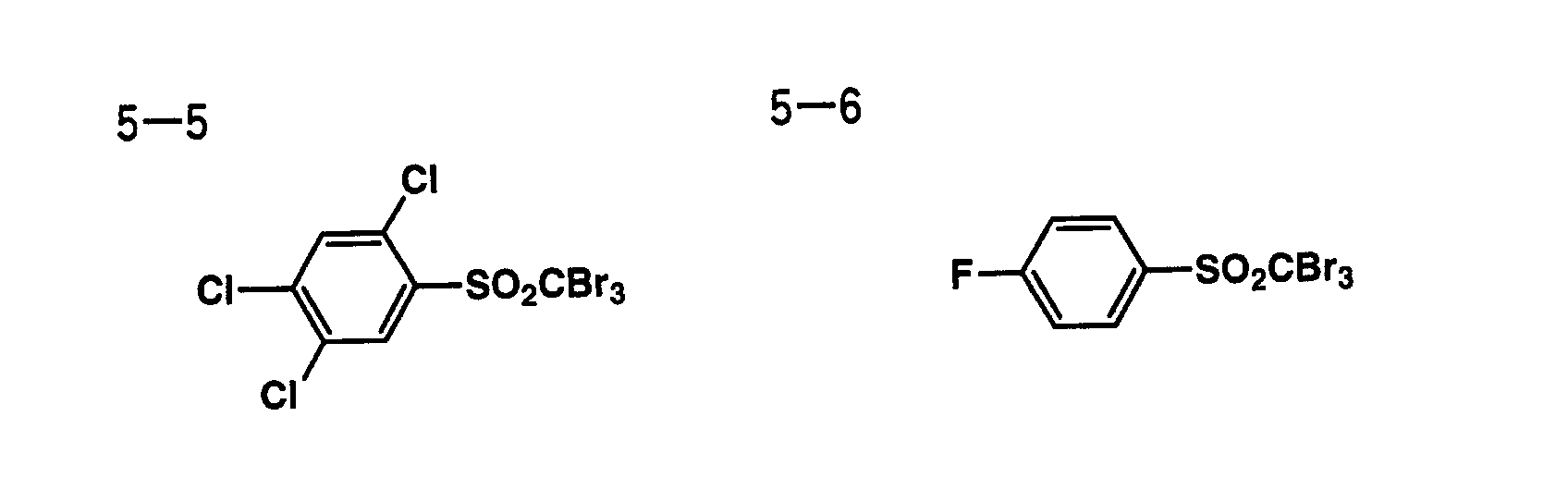
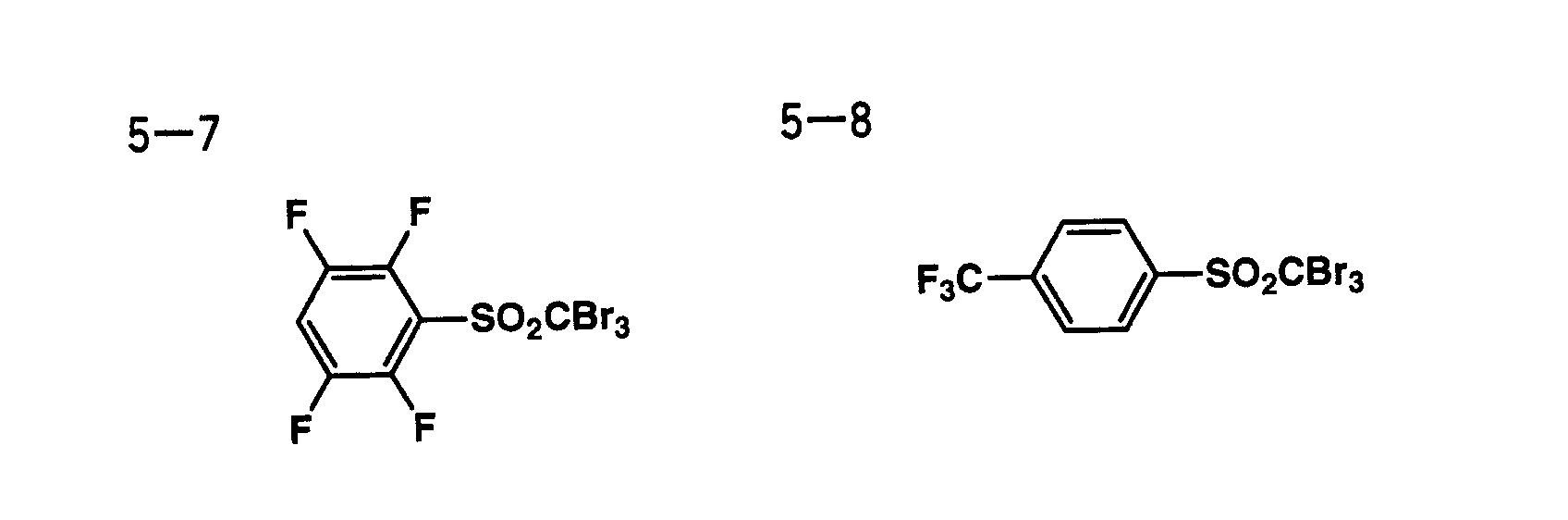
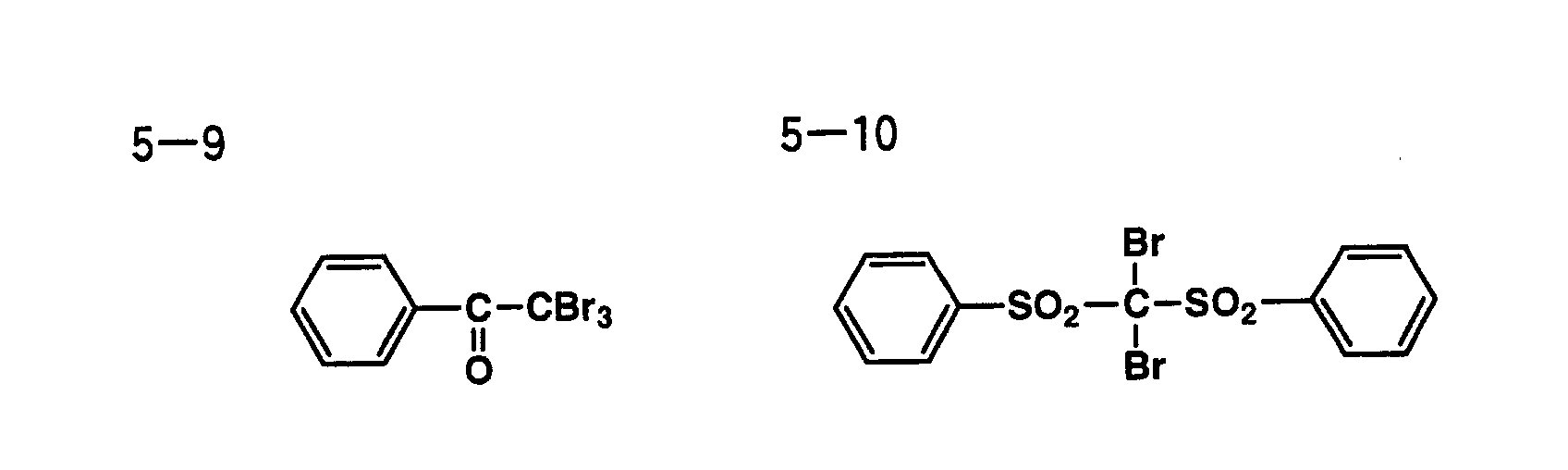
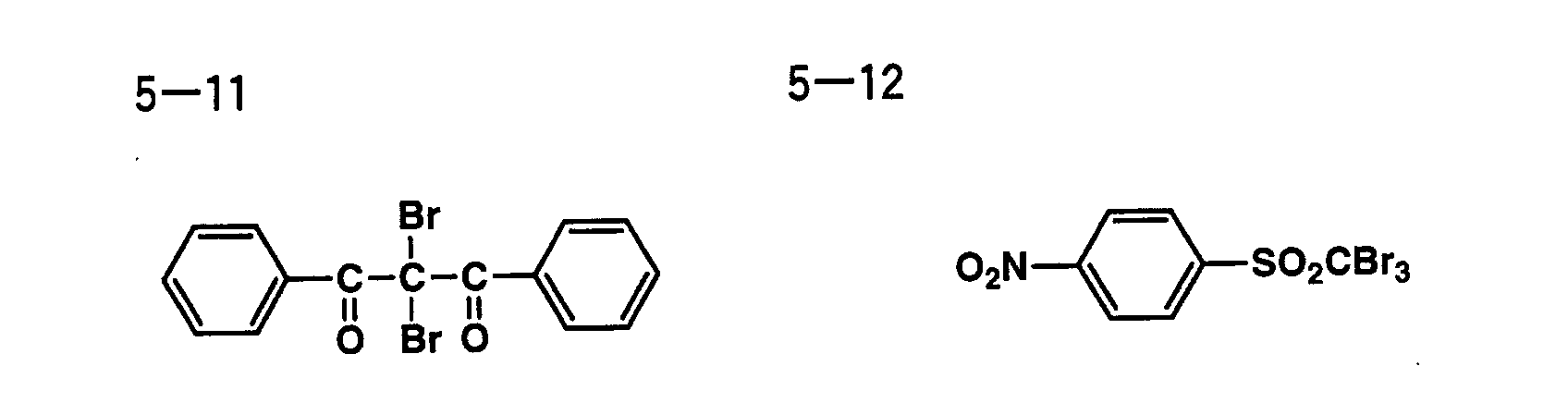

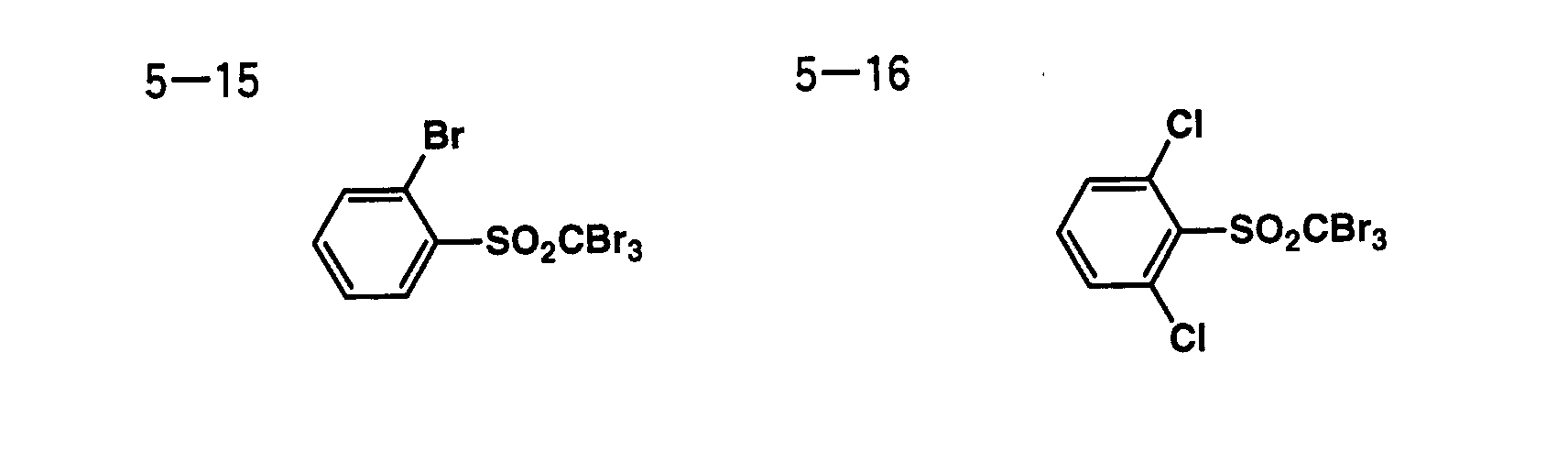

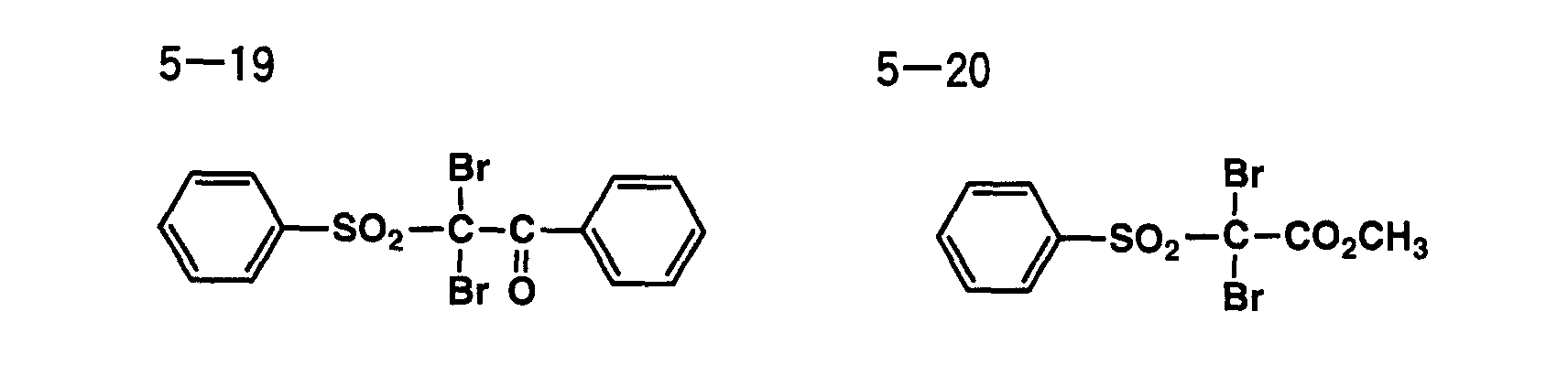

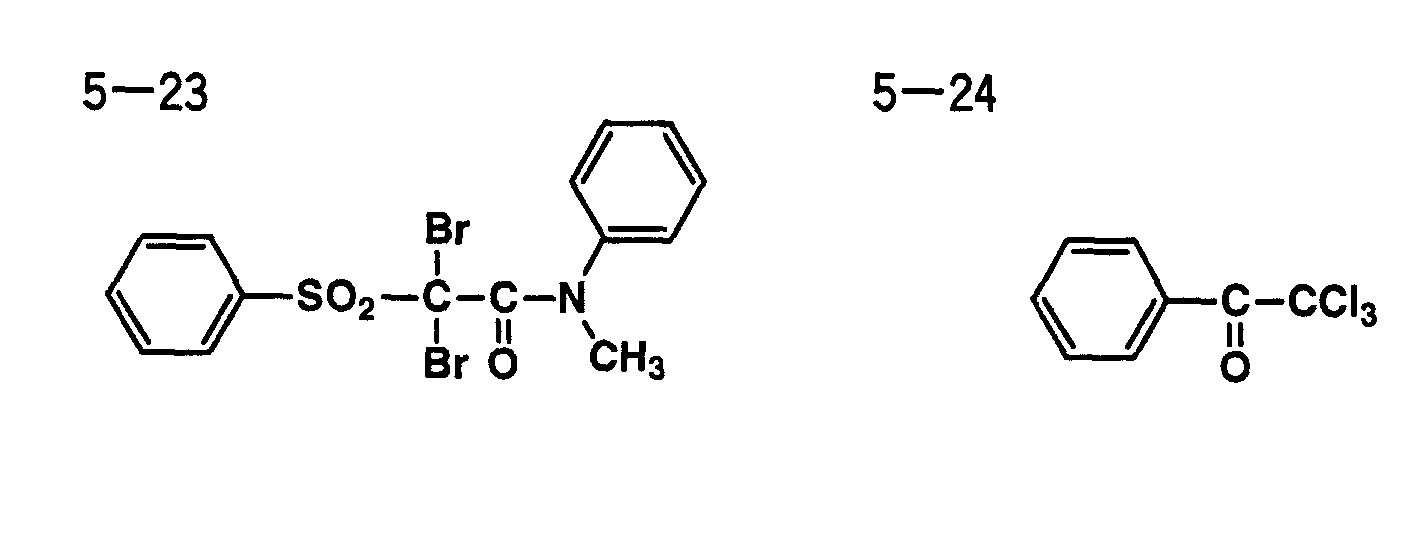

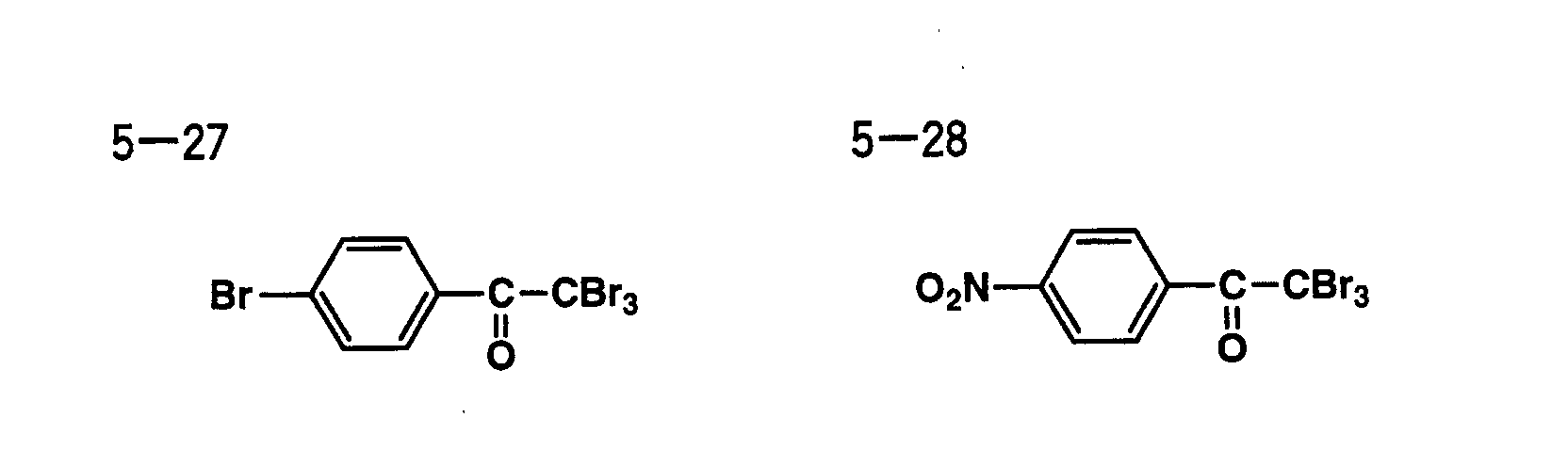

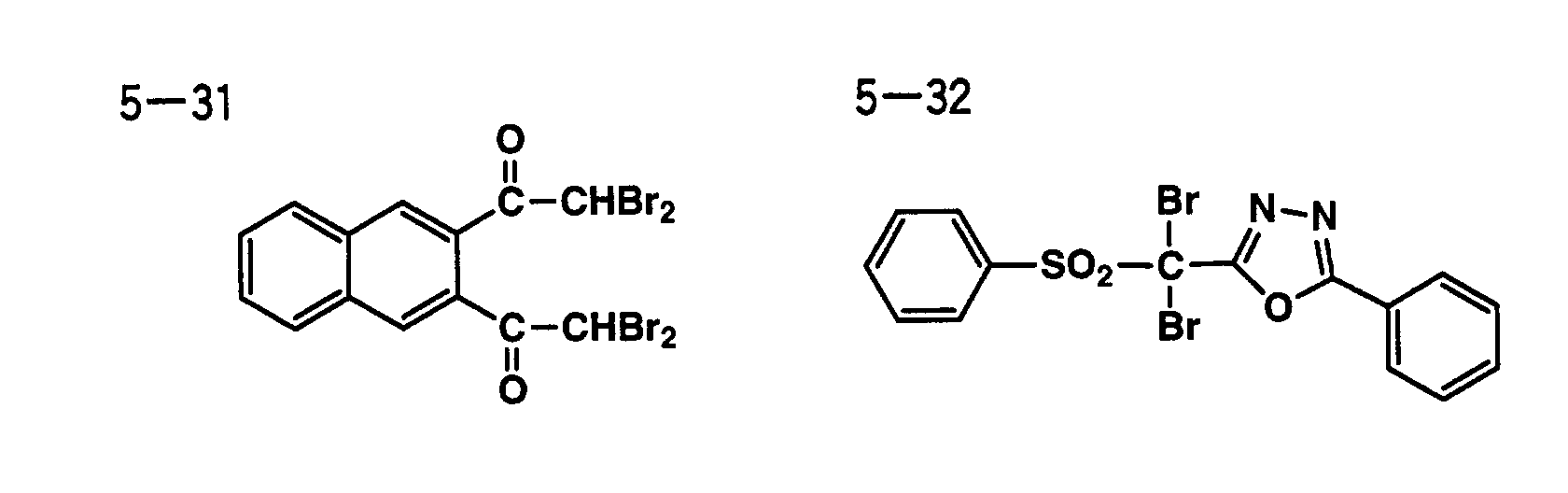
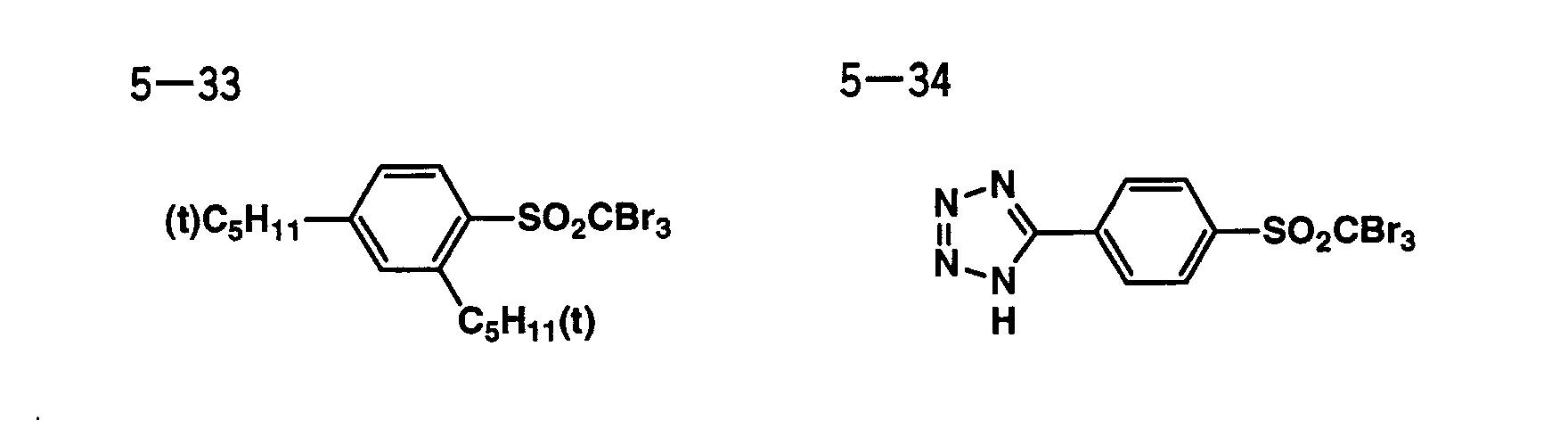

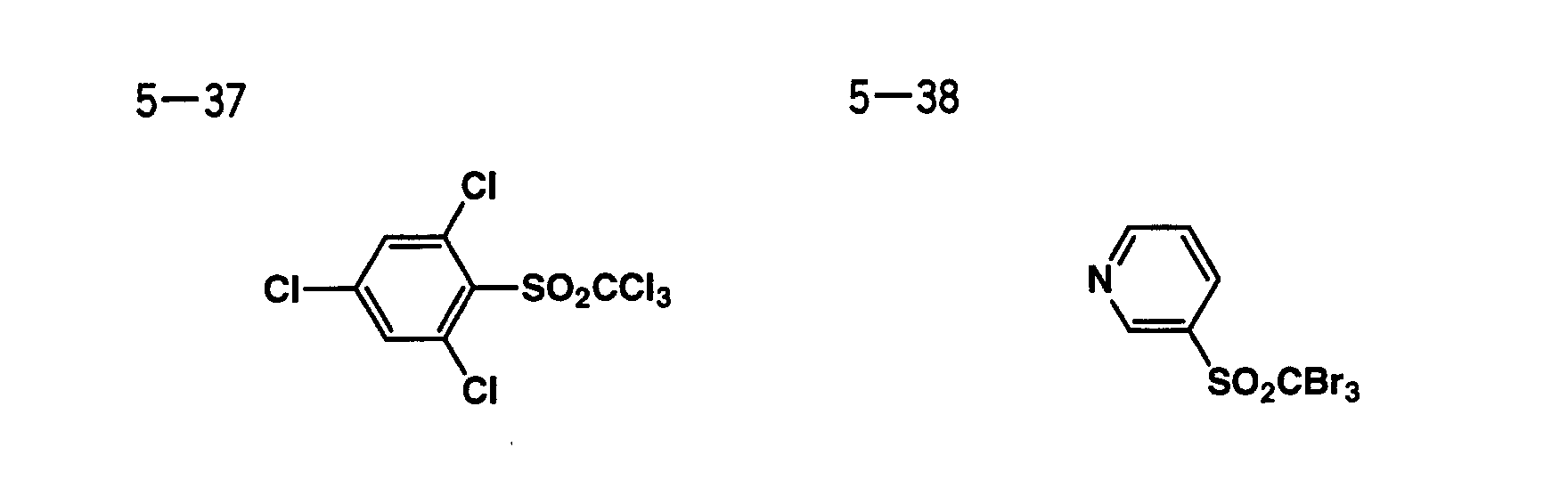


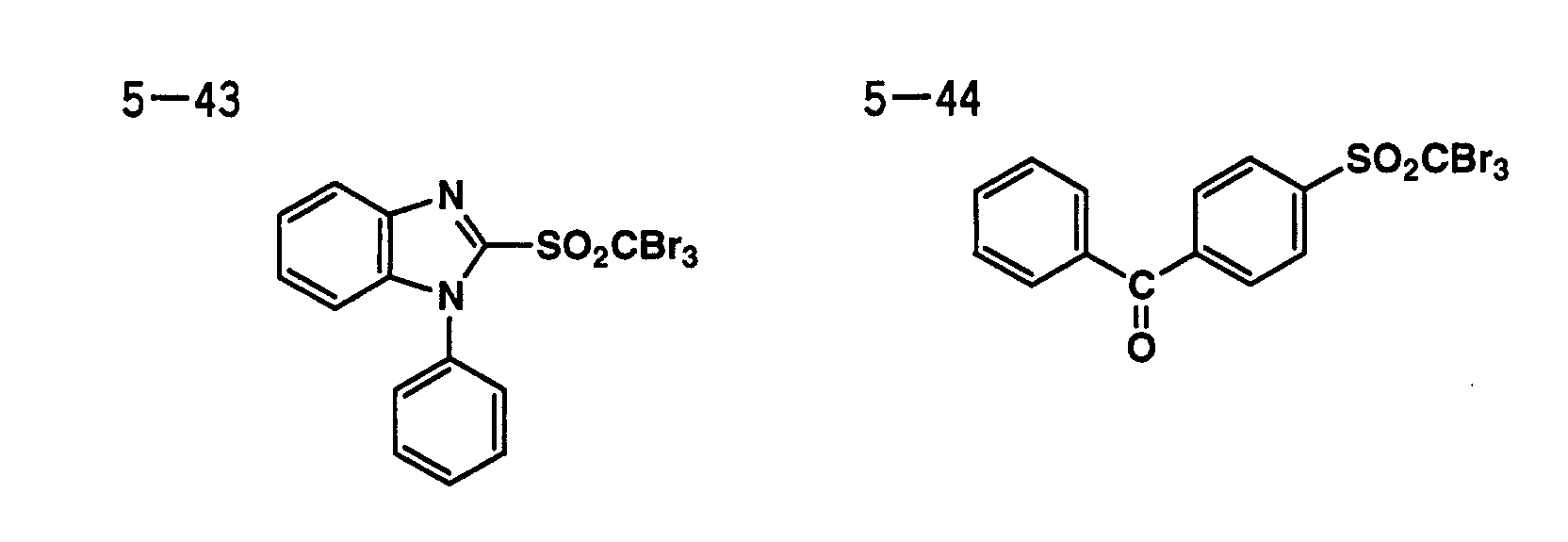


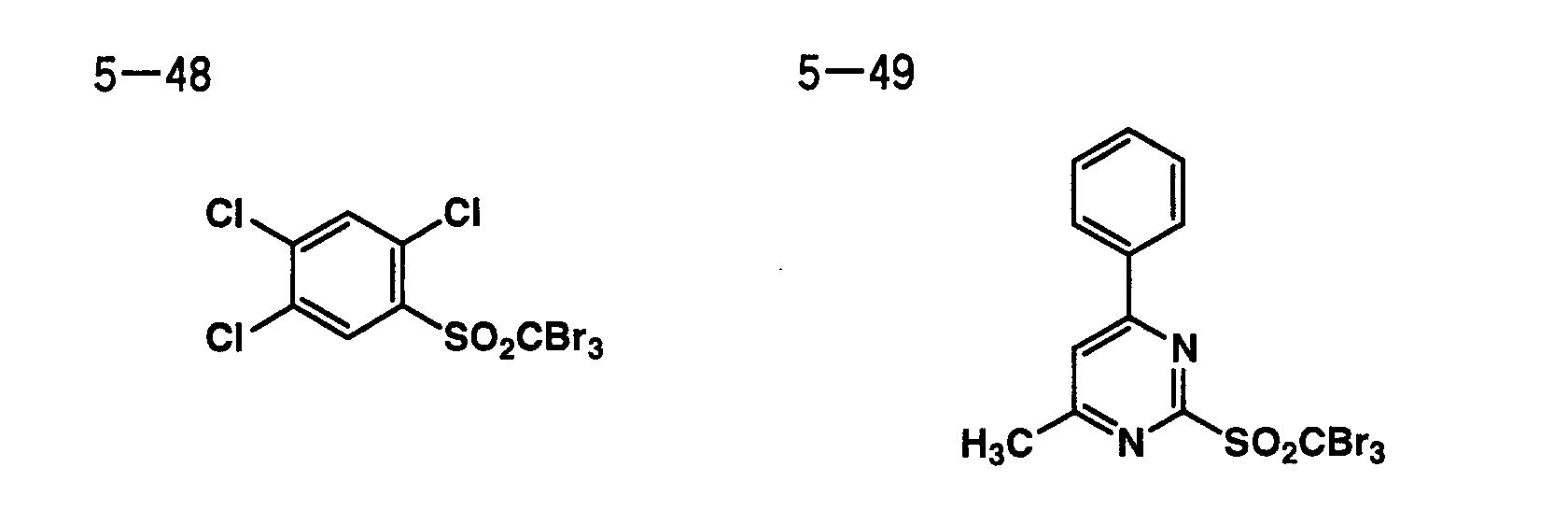

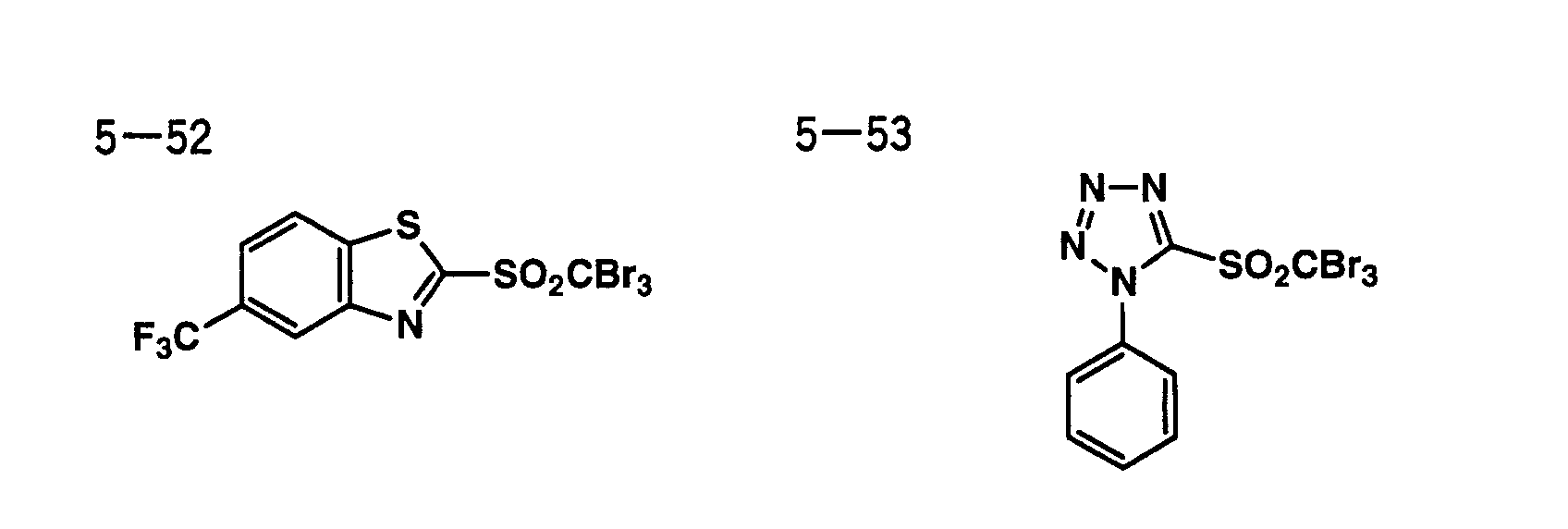
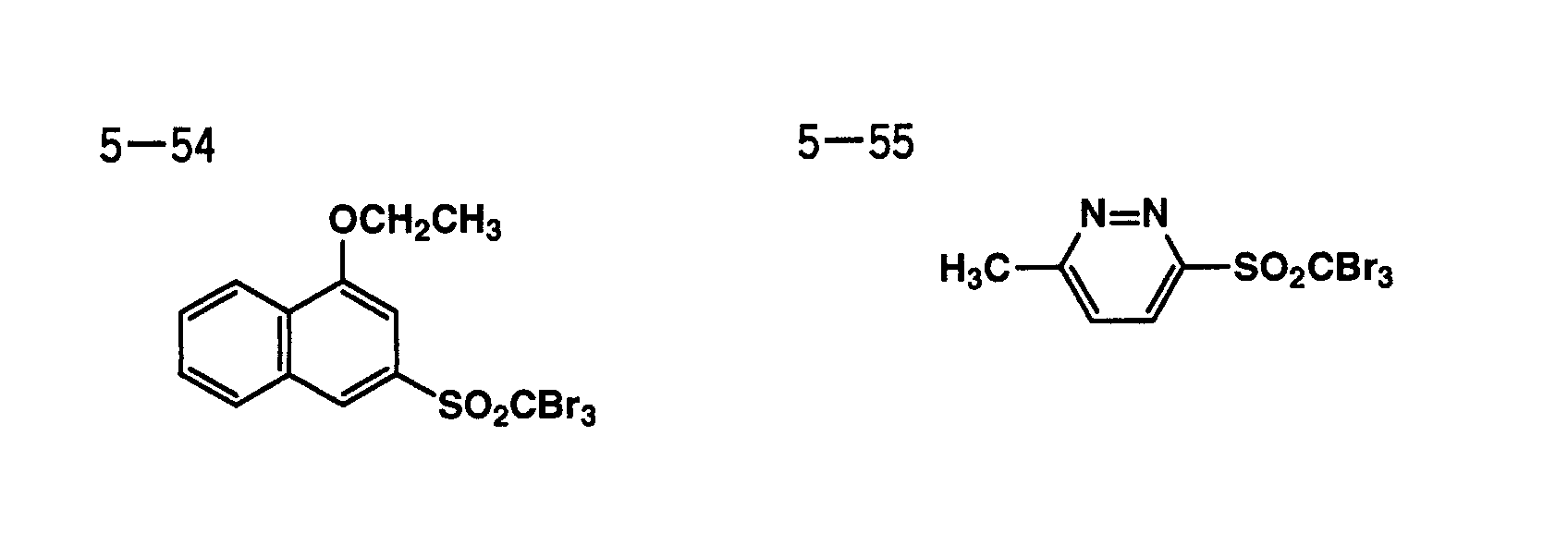
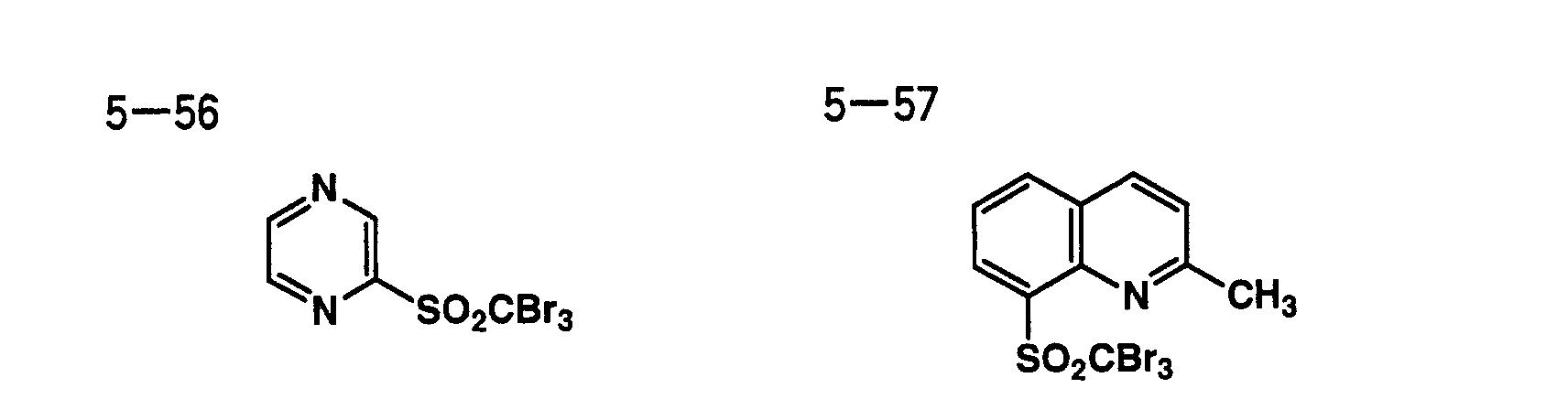

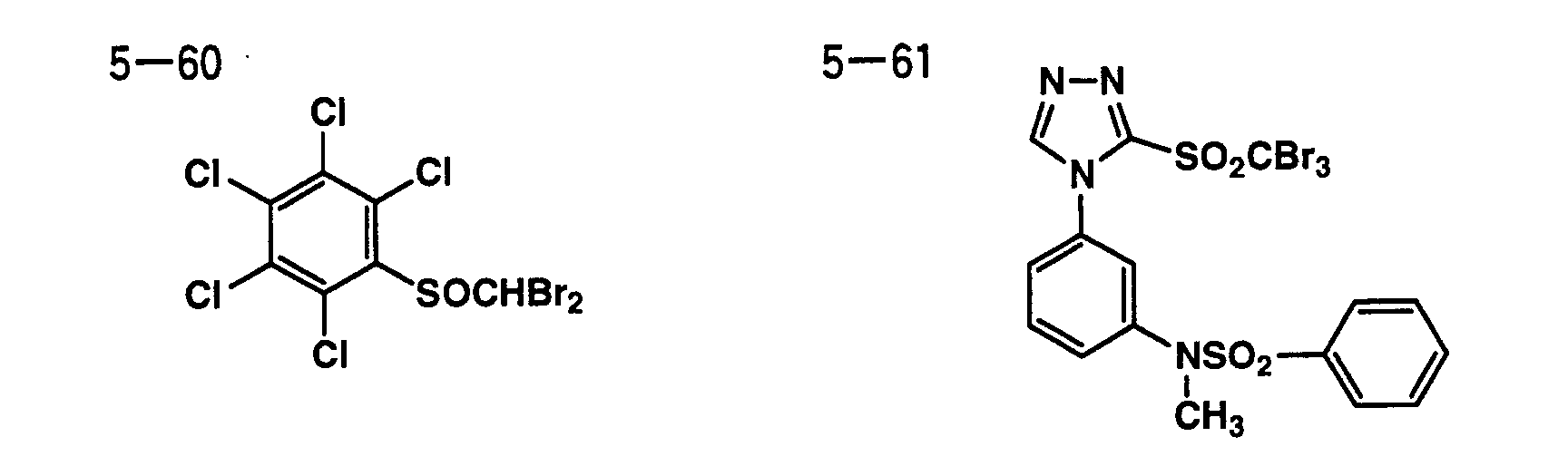

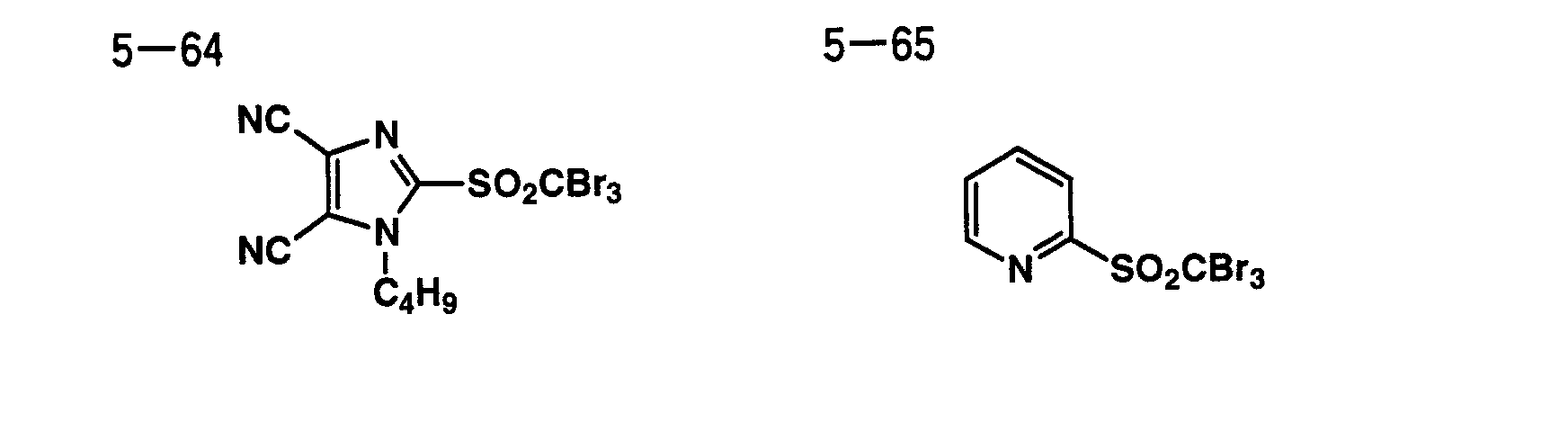

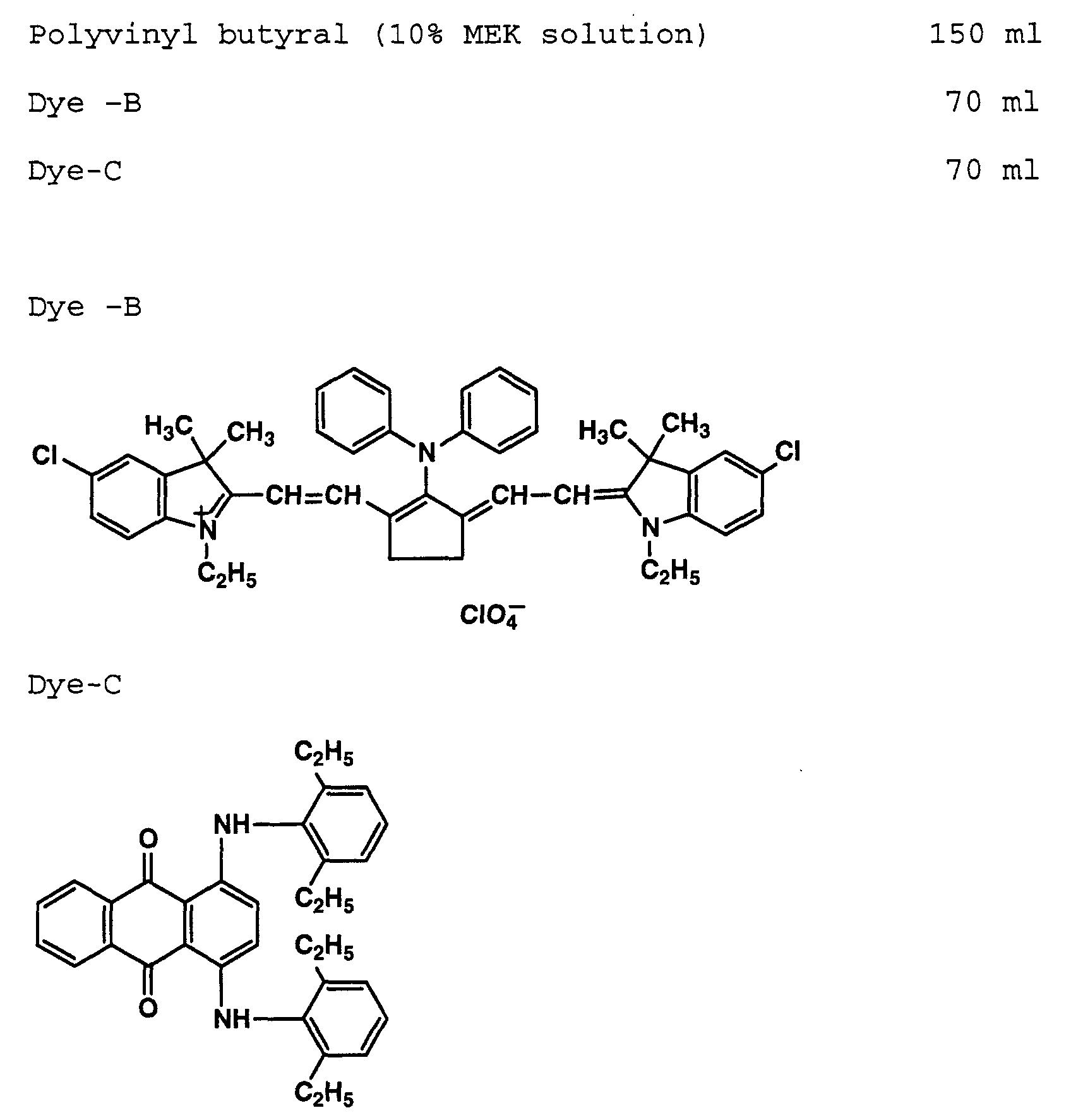

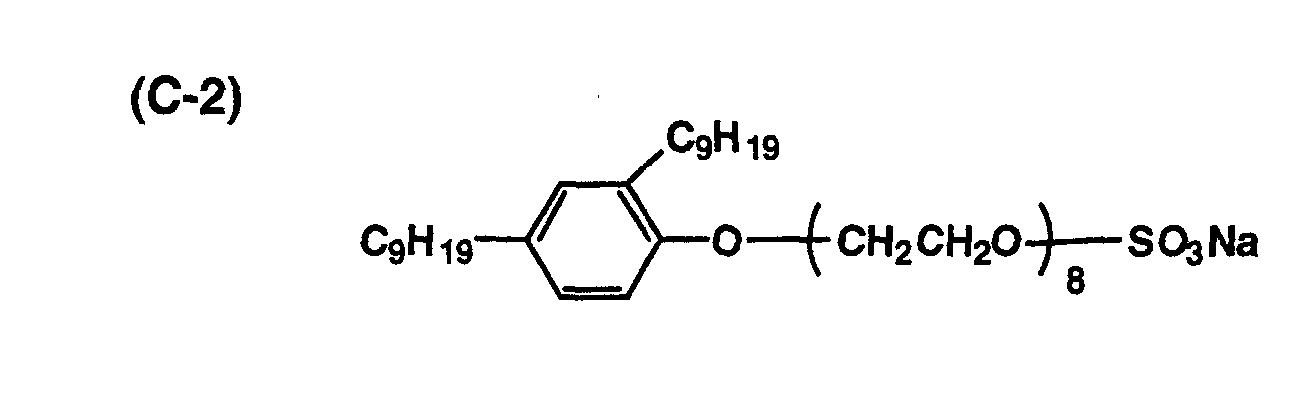

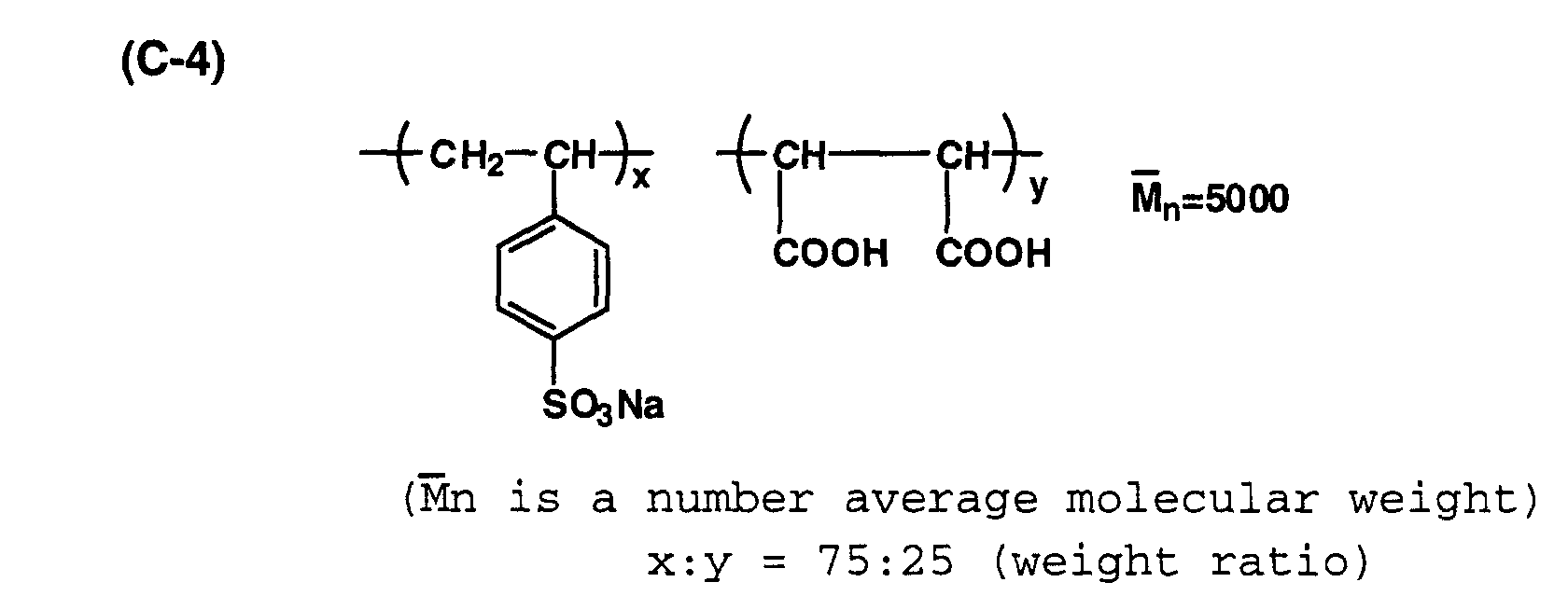
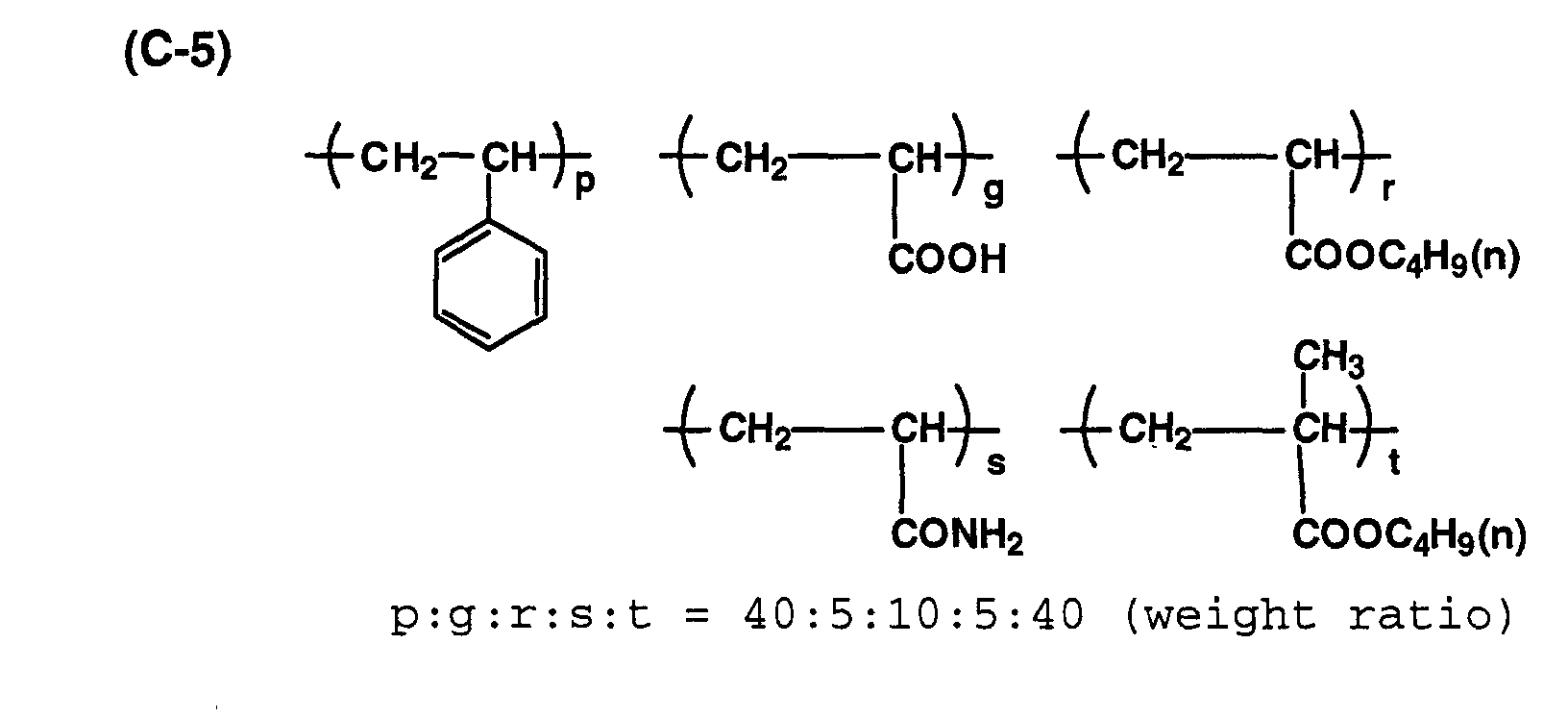
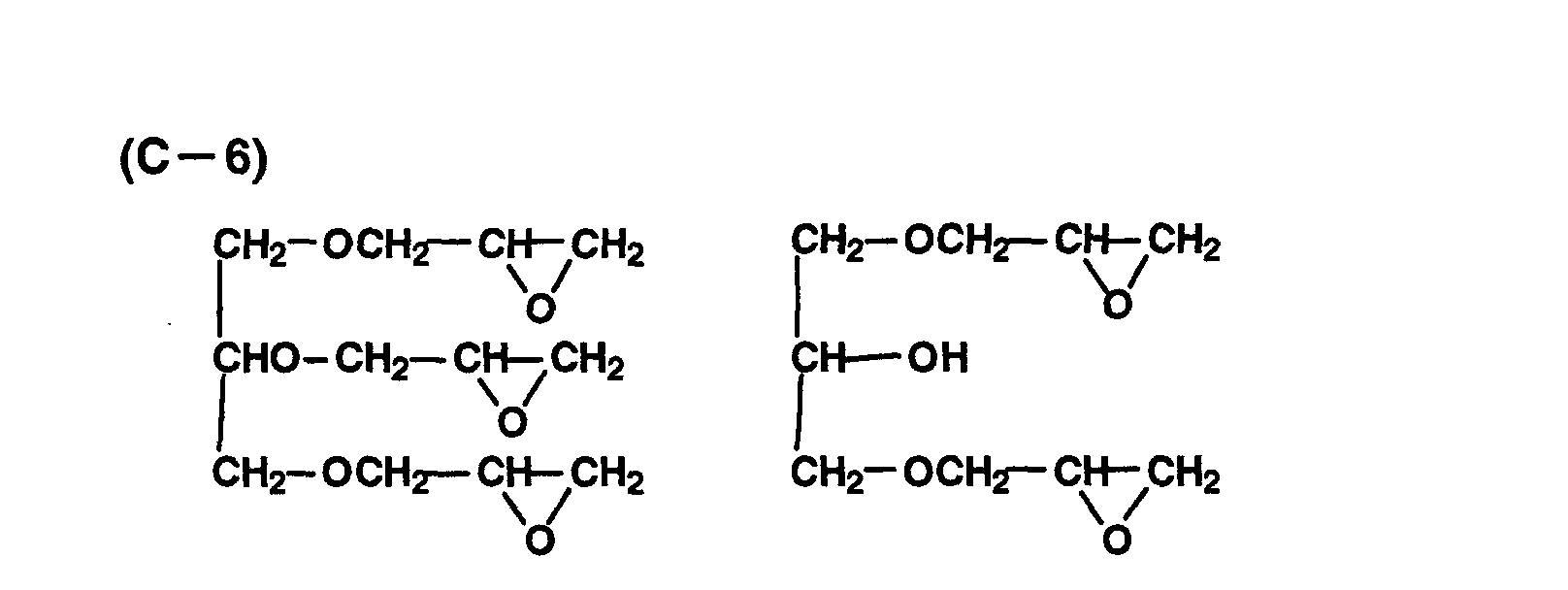
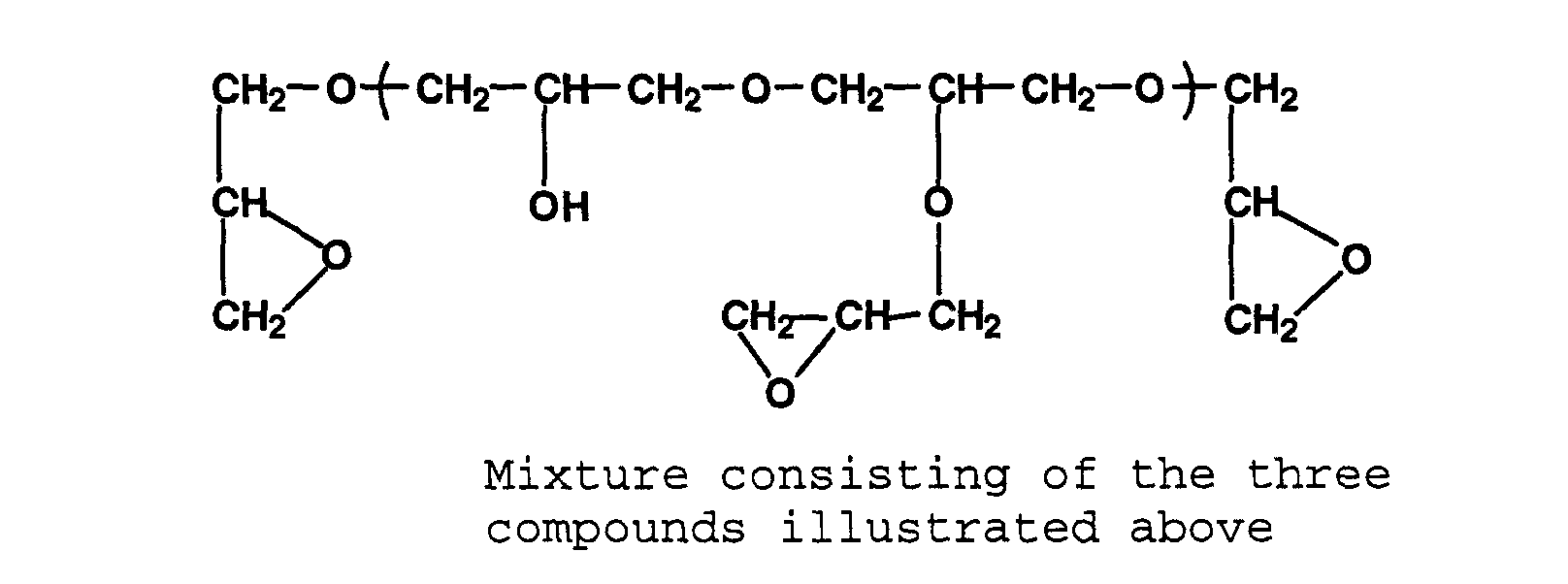
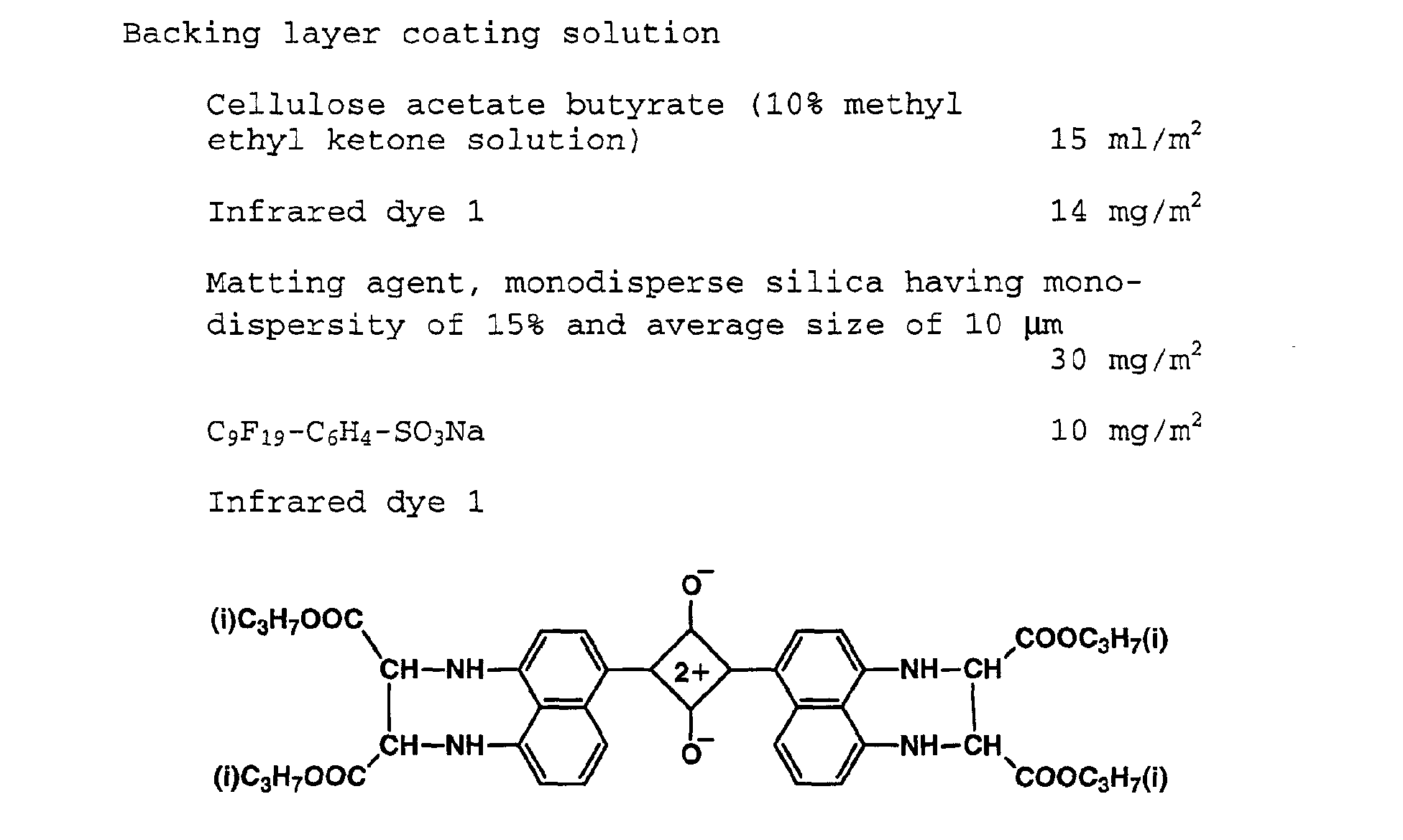


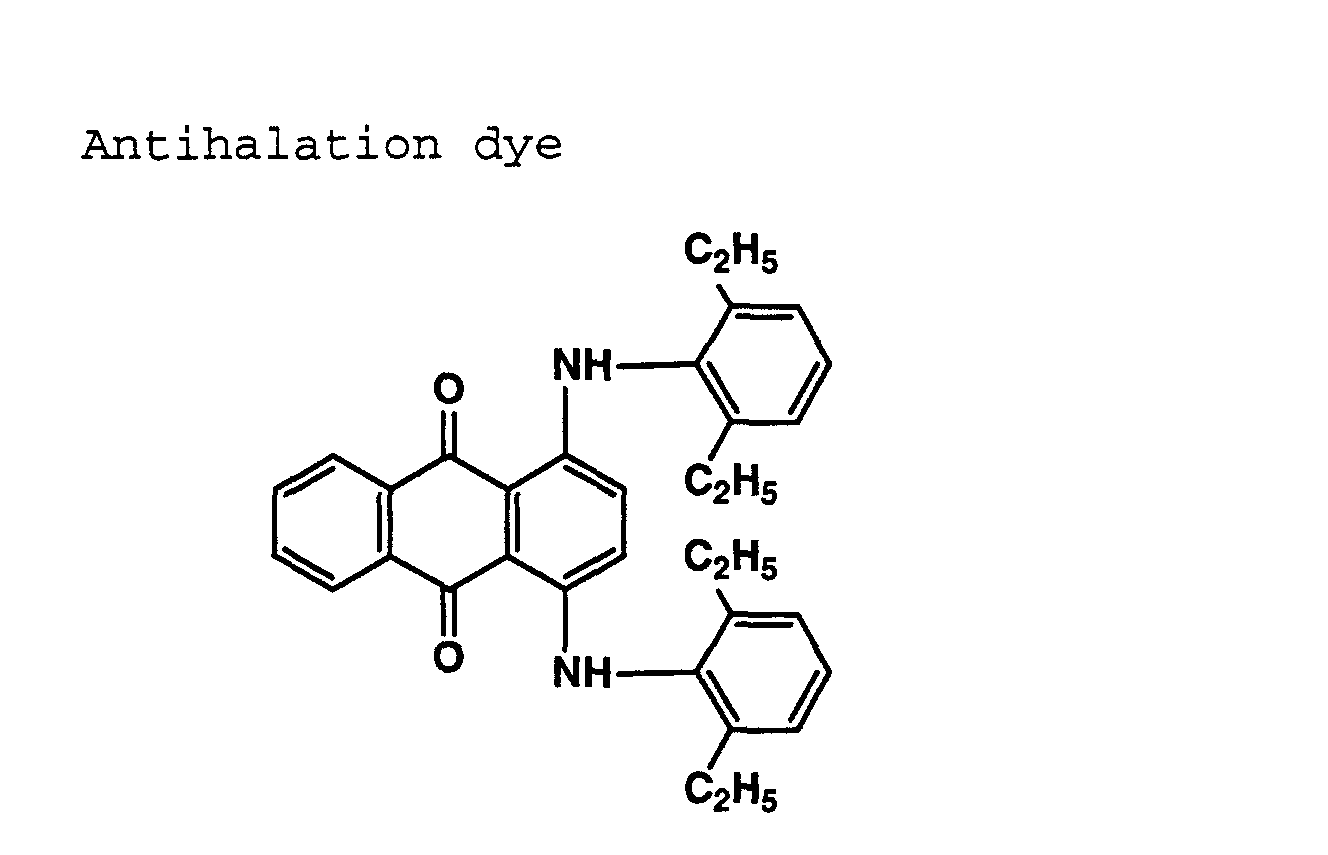
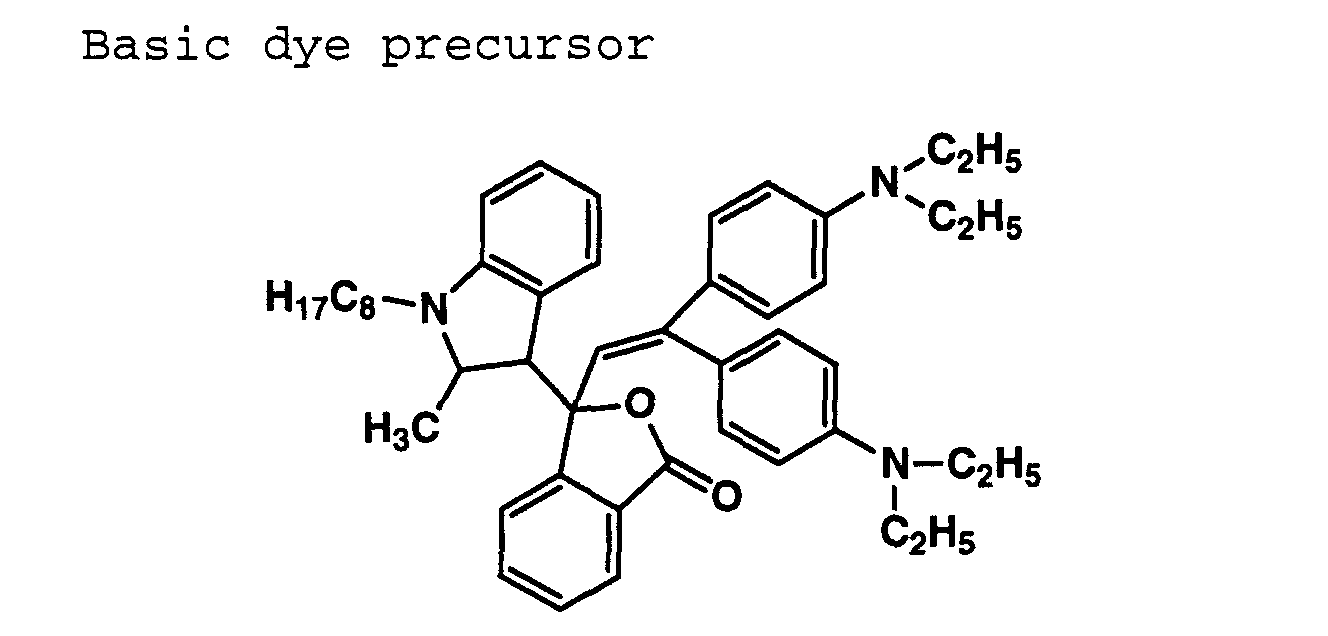
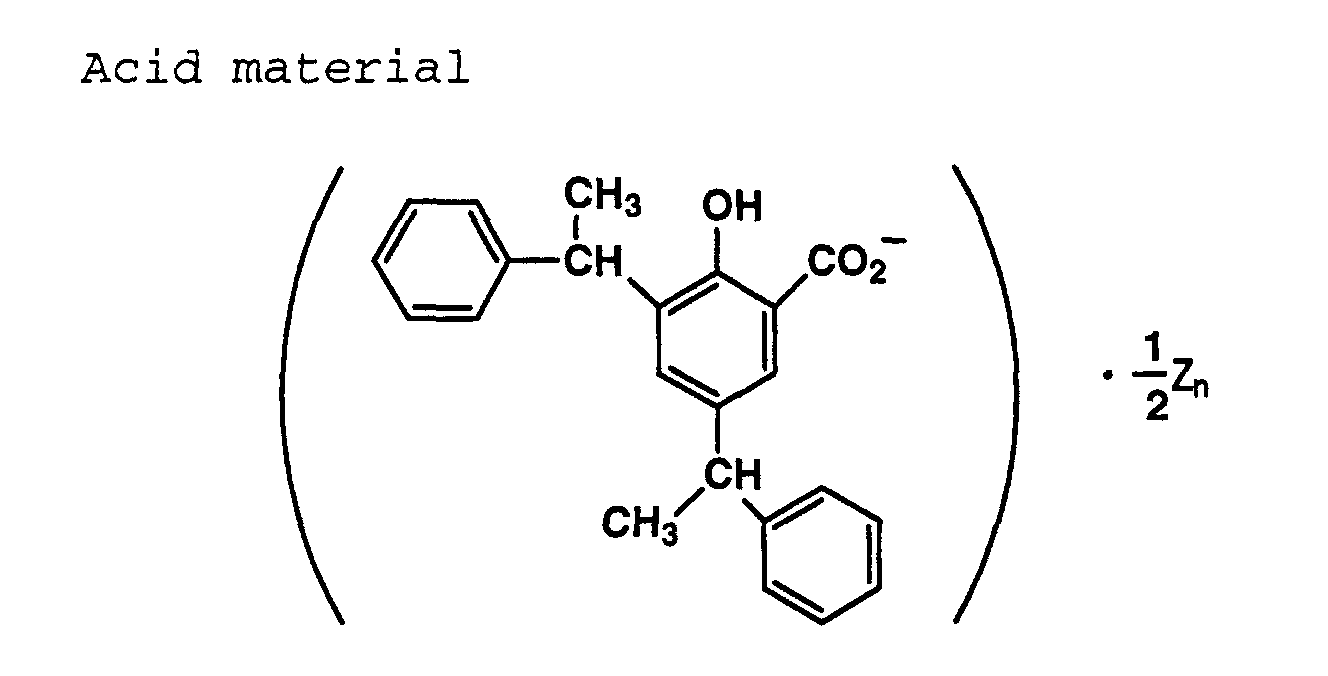

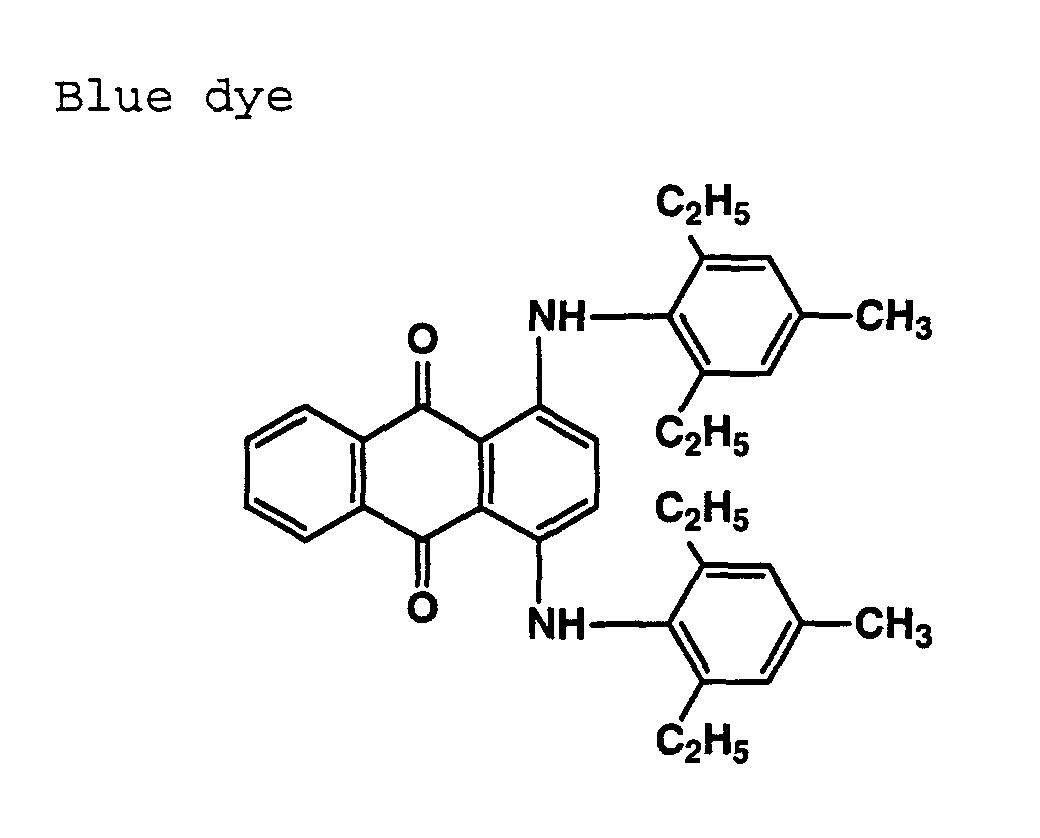
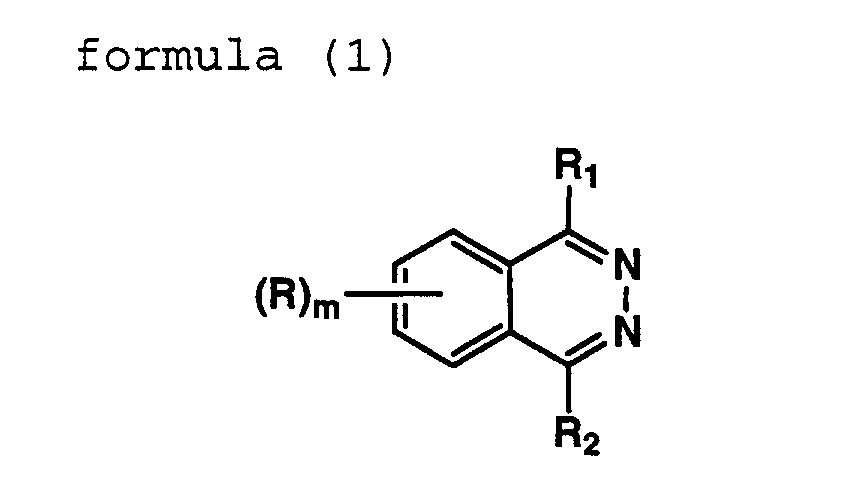 wherein Z represents a non-metallic atom group necessary to form an aromatic heterocyclic 5-membered ring; R1 and R2 each represent a hydrogen atom or a univalent substituent;
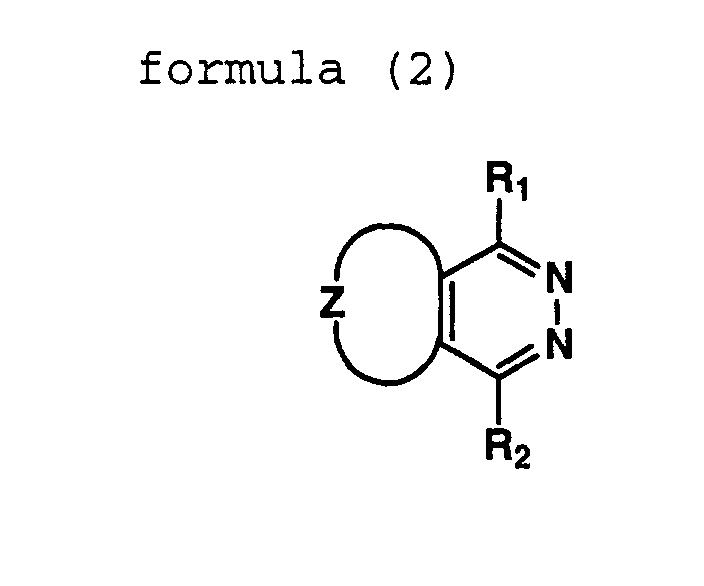 wherein T represents a univalent substituent; k is an integer of 1 to 4.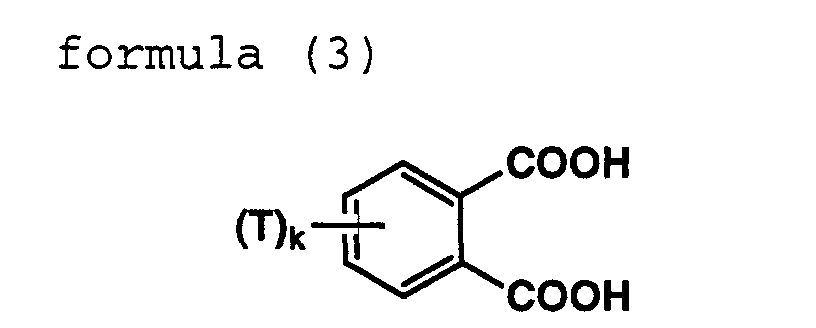
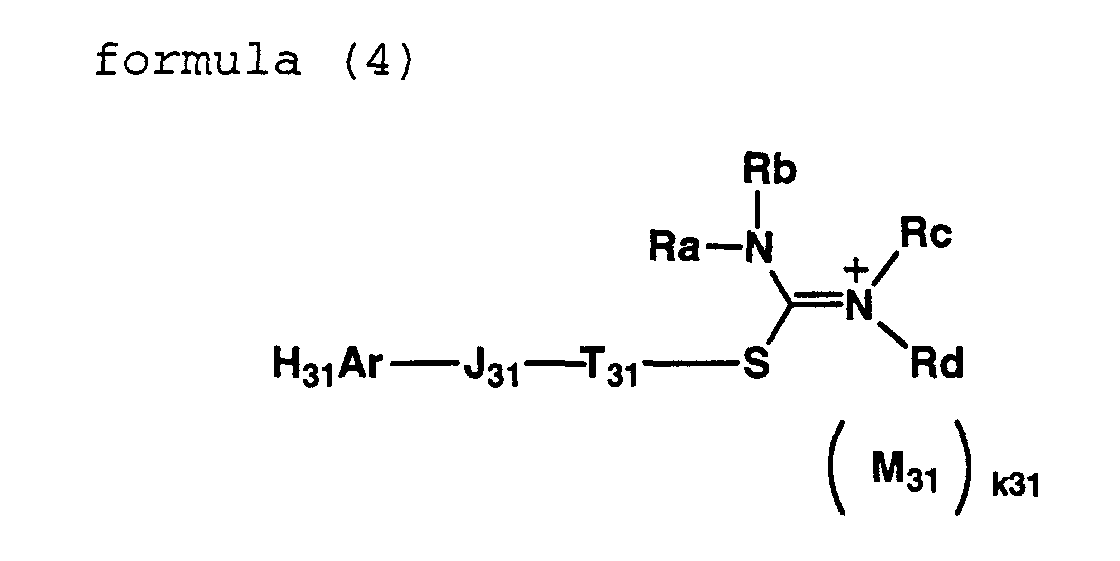


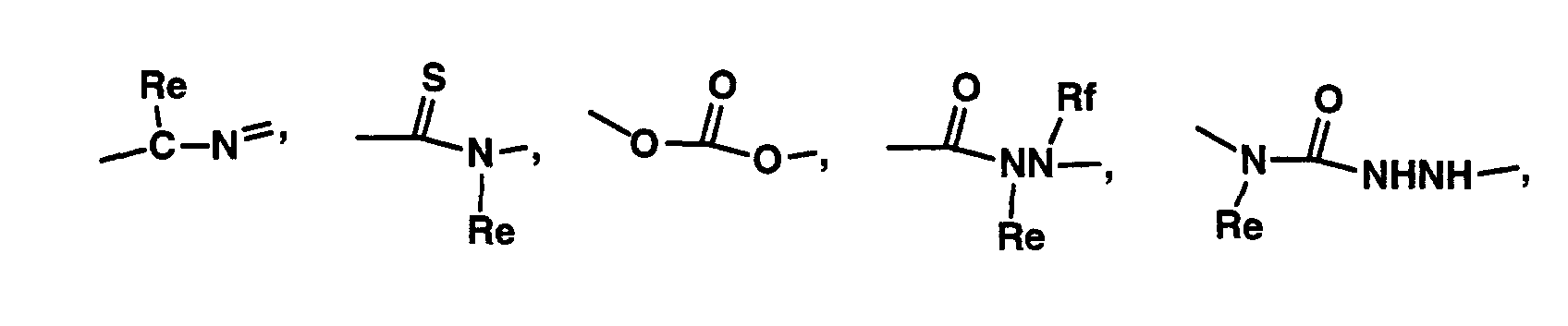 wherein Re and Rf each are the same as defined in Ra through Rd of formula (4); H31Ar is an aryl group having 6 to 30 carbon atoms or a 5- to 10-membered unsaturated heterocyclic group containing at least one of N, O and S; the aliphatic hydrocarbon group represented by Ra, Rb, Rc, Rd, Re and Rf is an alkyl group, an alkenyl group, an alkynyl group, an aryl group having 6 to 20 carbon atoms, a saturated or unsaturated heterocyclic group having 3 to 10 carbon atoms; the acyl group represented by Ra, Rb, Rc, Rd, Re and Rf is an aliphatic or aromatic acyl group having 1 to 12 carbon atoms; the bivalent aliphatic hydrocarbon linkage group represented by T31 is an alkylene group, an alkenylene group or an alkynylene group.