TECHNICAL FIELD
The present invention relates to an angular velocity sensor used in a
vehicle brake control or a roll air bag system.
BACKGROUND ART
A conventional angular velocity sensor is disclosed, for example, in
Electrical Equipment Technical Conference Report (Vol. 38, No, 3, 1994, pp.
26-33). The angular velocity sensor comprises an exciter for providing a
tuning fork vibrator with vibration, a detector for detecting the vibration
level of the vibrator, a detector for detecting a Coriolis force generated
depending on an angular velocity, a first amplifier for amplifying the
output of the detector for detecting the vibration level, and a variable gain
amplifier connected to the exciter for maintaining a constant amplitude of
the tuning fork vibrator by varying the gain according to the output of a
comparator. The variable gain amplifier amplifies a voltage shifted in
phase by 90 degrees from the output voltage of the first amplifier.
The conventional sensor hardly detects a breakage of a connection line
between a detecting electrode and a detecting circuit, a sensitivity change
due to a deterioration of the detection electrode, or trouble in the detection
circuit, and accordingly, hardly has reliability.
SUMMARY OF THE INVENTION
The invention is intended to solve the problems of the prior art, and it
is hence an object thereof to present an angular velocity sensor for
detecting a trouble or a deterioration of itself.
To solve the problems, the invention presents an angular velocity
sensor comprising an element section including a first exciter for providing
a vibrator with drive vibration, a vibration detector for detecting the
vibration level of the vibrator, and a piezoelectric element having at least
two Coriolis detectors for detecting Coriolis vibration generated depending
on an input angular velocity, and also comprising a circuit section
including a driving circuit receiving a signal from the vibration detector
and issuing a signal to the first exciter and a detection circuit for receiving
signals from the Coriolis detectors. The circuit section further comprises a
level judging circuit for judging an abnormal level of electric charges
occurring in the Coriolis detectors and output means for issuing an output
when detecting an abnormality. Each output of Coriolis detectors contains
independently a drive vibration component larger than the reference level
of the level judging circuit. And the layout of the electrodes the element
section is adjusted so that the combined output may contains the vibration
component smaller than the reference level. And therefore, if one of input
lines from the Coriolis detector to the detection circuit is broken, this
abnormality can be detected by the level judging circuit.
BRIEF DESCRIPTION OF THE DRAWINGS
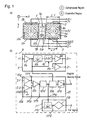
Fig. 1(a) is a block diagram of an angular velocity sensor according to
embodiment 1 of the present invention.
Fig. 1(b) is a circuit diagram of a circuit section of the sensor.
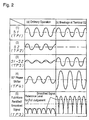
Fig. 2 is a diagram for explaining a signal waveform in the angular
velocity sensor according to embodiment 1 of the present invention.
Fig. 3(a) is a block diagram of an angular velocity sensor according to
embodiment 2 of the present invention.
Fig. 3(b) is a circuit diagram of a circuit section of the sensor.
Fig. 4(a) is a diagram for explaining a signal waveform of the angular
velocity sensor according to embodiment 2 of the present invention.
Fig. 4(b) is a diagram for explaining a signal waveform of the angular
velocity sensor according to embodiment 2 of the present invention.
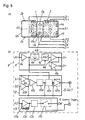
Fig. 5(a) is a block diagram of an angular velocity sensor according to
embodiment 3 of the present invention.
Fig. 5(b) is a circuit diagram of a circuit section of the sensor.
DETAILED DESCRIPTION OF THE PREFERRED EMBODIMENTS OF
THE INVENTION
(Exemplary embodiment 1)
Fig. 1 shows an angular velocity sensor according to exemplary
embodiment 1 of the present invention.
In Fig. 1(a), reference numeral 1 denotes a vibrator of a bimorph
tuning fork type angular velocity sensor composed of piezoelectric
elements laminated in the thickness direction, and reference numerals 7a,
7b indicate the directions of polarization axes of each layer. Reference
numerals 2a, 2b denote first exciters for inducing a drive vibration on the
vibrator 1. Reference numeral 3 denotes a vibration detector composed of
electrodes in the vibrator 1 for detecting the vibration level of the vibrator
1. Reference numeral 5 denotes a fail signal generator disposed on a
surface opposite the vibration detector 3, and having a smaller width than
the electrode of the vibration detector 3. Reference numerals 4a, 4b
denote Coriolis detectors composed of electrodes disposed on the vibrator 1
for detecting a Coriolis force generated depending on angular velocity.
Fig. 1(b) shows a circuit section 8. Reference numeral 9 denotes a
driving circuit. Reference numeral 10 denotes a detecting circuit for
receiving an electric charge occurring in the electrodes of the Coriolis
detectors 4a, 4b, and for converting the charge into a voltage
corresponding to the magnitude of the angular velocity. Reference
numeral 11 denotes a fail detector having a level judging circuit for
detecting a failure in the detection circuit 10 due to an excess electric
charge generated in the Coriolis detectors 4a, 4b.
The driving circuit 9 is connected to the vibration detector (M terminal)
3 of the vibrator 1. The circuit 9 comprises a monitor amplifier 9a for
amplifying the electric charge generated by the vibration of the vibrator 1
detected by the vibration detector 3, a rectifying circuit 9b for full-wave-rectifying
the output of the amplifier 9a, an automatic gain controller
(AGC) 9c for maintaining a constant amplitude of the output of the
vibrator 1, and driving amplifiers 9d, 9e connected to first exciters 2a
(terminal D+), 2d (terminal D-) of the vibrator 1 for driving the vibrator 1.
The circuit 9 makes the vibrator 1 vibrate at the resonance frequency of
the vibrator.
At this time, the driving amplifiers 9d, 9e applies alternating-current
signals of reverse phase against each other to the first exciters 2a, 2b,
respectively. The driving current applied to the electrode of the first
exciter 2a flows into the electrode of the first exciter 2b through relay
electrodes 12a, 12b, and the X-axis direction component of this current
generates a stress for triggering drive vibration. Herein, since the vibrator
1 is composed of a piezoelectric element, the relay electrodes 12a, 12b are
automatically biased at the middle potential between the electrodes of the
first exciters 2a, 2b by the a capacitive component formed by the electrodes
of the first exciters 2a, 2b.
The detection circuit 10, which is connected to Coriolis detectors 4a
(terminal S1) and 4b (terminal S2), comprises sensor amplifiers 10a, 10b
for amplifying the electric charges, which are generated in the Coriolis
detectors 4a, 4b on the basis of the Coriolis force corresponding to a
rotational angular velocity applied to the vibrator 1, a differential
combining unit 10c for differentially combining the outputs of the sensor
amplifiers 10a, 10b, a phase shifter 10d for shifting the phase of the output
of the differential combining unit by 90 degrees, a synchronous detector
10e for demodulating the signal by a Coriolis vibration modulated by the
vibration of the vibrator 1, and a low pass filter 10f for cutting off
unnecessary band and for amplifying a DC component. The circuit 10
issues an angular velocity signal.
The fail detector 11 comprises a rectifying circuit 11a for receiving the
output of the phase shifter 10d and for full-wave rectifying it, and a level
judging circuit 11b for judging the level of the rectified output. The
detector 11 issues a DIAG signal to an outside computer when the sensor is
irregular.
Fig. 1(a) is a sectional view of the vibrator 1, and shows a certain
moment when it is being driven and vibrating. Reference numerals 6a, 6b
denote the electric charges generated due to the vibration.
In the angular velocity sensor of the bimorph tuning fork vibration
type, since the electric charges 6a and 6b are ususally equal, the electric
charge 6a flows into the electrodes of the Coriolis detectors 4a, 4b from the
vibration detector 3. Then, the electric charge 6b flows into the fail signal
generator 5 connected to the GND terminal of the circuit section 8, so that
the drive vibration components are canceled, and only the Coriolis
vibration component is consequently issued.
However, by forming the electrode width (L2) of the fail signal
generator 5 of the present invention smaller than the electrode width (L1)
of the vibration detector 3, the drive vibration components are
intentionally imbalanced, and drive vibration components are then issued
to the Coriolis detectors 4a, 4b.
The drive vibration components generated by the imbalance are inphase
signals in the Coriolis detectors 4a, 4b, and hence canceled in the
differential combining unit 10c in the detection circuit 10.
Fig. 2 shows the operations. Column (a) of Fig. 2 shows waveforms of
the circuit section 8 in ordinary operation, in which signals (1) and (2)
show voltage conversion of charges on the basis of the drive vibration
appearing in the Coriolis detectors 4a, 4b, and they represent signals TP1,
TP2 in Fig. 1, respectively.
In column (a) of Fig. 2, a signal (3) is a differential portion of the two
signals, representing a signal TP3 in Fig. 1. Since the two signals are in
phase, the differential signal is zero if the level is equal. On the other hand,
in column (a) of Fig. 2, a signal (4) is that formed by shifting the signal (3)
in phase by 90 degrees and amplifying it, representing the signal TP2 in
Fig. 1. A signal (5) is a full-wave rectified signal of the signal (4),
representing a signal TP5 in Fig. 1. Its smoothed signal level is lower than
a criterion of the succeeding level judging circuit 11b.
Column (b) of Fig. 2 shows signals at a breakage of the Coriolis detector
4b (terminal S2). Since the signal TP2 of the signal (2) is lost, the
waveform of the signal (1) (TP1) appears directly in the waveform (3)
(TP3) after the differential combination. The waveform shifted by 90
degrees by the phase shifter and amplified is shown as the signal (4) (TP4).
Its full-wave rectified waveform is shown as the signal (5) (TP5). Its
smoothed signal level exceeds the criterion of the succeeding level judging
circuit 11b, so that the sensor may issue a fail signal to an outside
computer.
At this time, if not canceling signals enough due to an electrode
deviation or the like, the differential combining unit 10c may be adjusted
precisely by trimming the electrodes of the fail detector or the like.
(Exemplary embodiment 2)
Fig. 3 shows an angular velocity sensor according to exemplary
embodiment 2 of the present invention.
In Fig. 3(a), reference numeral 1 denotes a vibrator of a bimorph
tuning fork type angular velocity sensor comprising piezoelectric elements
laminated in the thickness direction. Reference numerals 7a, 7b denote
the directions of polarization axes of the layers. Reference numerals 2a, 2b
denote first exciters. Reference numeral 12b denotes a second exciter used
also as a relay electrode for inducing a pseudo-Coriolis vibration.
Reference numeral 3 denotes a vibration detector comprising electrodes
disposed on the piezoelectric elements for detecting the vibration level of
the vibrator 1. Reference numeral 5 denotes a grounding electrode
disposed on a surface opposite the vibration detector 3. Reference
numerals 4a, 4b denote Coriolis detectors comprising electrodes disposed
on the piezoelectric elements for detecting the Coriolis force generated
depending on the angular velocity.
Fig. 3(b) shows a circuit section 8. Reference numeral 9 denotes a
driving circuit. Reference numeral 10 denotes a detection circuit for
receiving an electric charge occurring in the electrodes of the Coriolis
detectors 4a, 4b and for converting the charge into a voltage corresponding
to the magnitude of the angular velocity. Reference numeral 13 denotes a
second driving circuit for inducing a pseudo-Coriolis vibration by applying
an external trigger 16 to the second exciter 12b.
The vibrator 1 is caused to vibrate at the resonance frequency of the
vibrator by the driving circuit 9. At this time, the driving amplifiers 9d, 9e
apply alternating-currents of reverse phase against each other to the first
exciters 2a, 2b, respectively. The driving current applied to the electrode of
the first exciter 2a flows into the electrode of the first exciter 2b through
the relay electrodes, i.e., second exciters 12a, 12b, and the X-axis direction
component of the current generates a stress for triggering a drive
vibration.
When a rotational angular velocity is applied to this sensor, Coriolis
force occurs, and then electric charges are generated in the electrodes of
the Coriolis detectors 4a, 4b. The electrodes of the Coriolis detectors 4a, 4b
are disposed so that the electric charges occurring therein are reverse in
phase against each other. The charges are differentially-combined in the
differential combining unit 10c of the detection circuit 10, and shifted in
phase by 90 degrees by the phase shifter 10d. Then, the combined signal is
detected by the synchronous detector 10e, and the high frequency range of
the combined signal is cut off by the low pass filter 10f. Then, the signal is
amplified, and an angular velocity signal is issued.
A signal from the vibration detector 3, which is based on the drive
vibration of the vibrator 1, is passed through the driving circuit 9 into an
amplifier 13a as an input to the second driving circuit 13. A succeeding
phase shifter 13b shifts the signal in phase by 90 degrees and produces a
signal shifted in phase by 90 degrees from the drive vibration. And the
signal is applied to the electrode 12b of the second exciter on the basis of an
ON/OFF switching state of the external trigger 16.
Fig. 3(a) is a diagram showing currents in the vibrator 1 at a moment
when a signal is applied to the second exciter 12b for inducing the
pseudo-Coriolis vibration. Reference numerals 14a and 14b denote
currents flowing from the second exciter 12b due to the signal. The
pseudo-Coriolis force is produced by a contraction stress and an expansion
stress generated by the current 14a and the current 14b,respectively.
Fig. 4 is a diagram of signal waveforms showing the operations. Fig.
4(a) shows an ordinary operation, when the external trigger 16 is in an
OFF state. Fig. 4(b) shows an operation when the external trigger 16 is in
an ON state. In Fig. 4(b), a signal (3), which is the signal shifted in phase
by 90 degrees from the signal from the vibration detector 3, is fed into the
second exciter 12b. The signal, which is a signal shifted in phase by 90
degrees from a signal (1) of drive vibration, can induce vibration in phase
with the Coriolis vibration.
The electric charges generated by the pseudo-Coriolis vibration appear
in two Coriolis detectors 4a, 4b in reverse phase against each other and are
differentially-combined. A signal (6) shows the waveform after the
differential combination. The drive vibration component thereof, which is
included in the signal (6), is transformed into the signal (8) through the
operations in the succeeding phase shifter and the synchronous detector.
When the external trigger is in the OFF state, shown in Fig. 4(a), areas
of the detected signal waveform are equal above and below the center line,
and the smoothed DC waveform 9 (output 15) thus becomes zero. Whereas,
when the external trigger is the ON state as shown in Fig. 4(b), a
difference between the areas above and below the center line in the
detected signal generates a DC offset in the smoothed DC waveform 9
(output 15).
In the angular velocity sensor having such configuration, a specified
pseudo-Coriolis vibration can be generated in the vibrator 1 by turning on
the external trigger by a command from a control unit of the system in
which the sensor is employed, so that a DC offset can be generated in the
output 15 of the detection circuit 10.
Monitoring this can detect the breakage of signal wires, and further
judge whether the sensitivity is normal or not due to a trouble in circuit
parts.
Further, the second driving circuit 13 may include means for
compensating a temperature characteristic of the piezoelectric
characteristic or an impedance due to fluid resistance of the vibrator 1, for
example, thermistor compensating means 13d. The circuit thus induces a
stable pseudo-Coriolis vibration regardless of an ambient temperature,
and helps judging the fault in the sensor more precisely.
Moreover, the second driving circuit 13 may include a low frequency
oscillator and a multiplication circuit. The signal from the phase shifter
13b, which is used as a carrier, is amplitude-modulated with the signal
from the oscillator. The modulated signal is applied to the second exciter
12b through the switch 13c. An alternating-current signal can be
generated in the output 15 of the detection circuit 10, and makes the
characteristic of the low pass filter 10f of the detection circuit 10 enabled to
be diagnosed.
(Exemplary embodiment 3)
Fig. 5 shows an angular velocity sensor according to exemplary
embodiment 3 of the present invention.
In embodiment 2, the signal driving the second exciter 12b is obtained
from the signal on the basis of the electric charge of the vibration detector
3. In embodiment 3, it is obtained from a second vibration detector 17
opposite to the vibration detector 3, and other structure and operation are
the same as in embodiment 2. In this constitution, the GND connection
electrode is completely excluded successfully among electrodes on the
vibrator 1.
Therefore, as compared with embodiment 2, the sensor obtains a
higher reliability.
INDUSTRIAL APPLICABILITY
The angular velocity sensor having above configurations detects a
breakage of input lines from the Coriolis detectors to the detection circuit.
And generating pseudo-Coriolis force by an external input, the sensor
totally including the circuit section can be diagnosed in total. The angular
velocity sensor suited to applications requesting high reliability such as an
vehicle control and an air bag system is provided.