EP1122328A1 - Sprayed copper-aluminum composite material and method for producing the same - Google Patents
Sprayed copper-aluminum composite material and method for producing the same Download PDFInfo
- Publication number
- EP1122328A1 EP1122328A1 EP00944322A EP00944322A EP1122328A1 EP 1122328 A1 EP1122328 A1 EP 1122328A1 EP 00944322 A EP00944322 A EP 00944322A EP 00944322 A EP00944322 A EP 00944322A EP 1122328 A1 EP1122328 A1 EP 1122328A1
- Authority
- EP
- European Patent Office
- Prior art keywords
- weight
- less
- copper
- alloy
- flame
- Prior art date
- Legal status (The legal status is an assumption and is not a legal conclusion. Google has not performed a legal analysis and makes no representation as to the accuracy of the status listed.)
- Withdrawn
Links
Images


Classifications
-
- F—MECHANICAL ENGINEERING; LIGHTING; HEATING; WEAPONS; BLASTING
- F16—ENGINEERING ELEMENTS AND UNITS; GENERAL MEASURES FOR PRODUCING AND MAINTAINING EFFECTIVE FUNCTIONING OF MACHINES OR INSTALLATIONS; THERMAL INSULATION IN GENERAL
- F16C—SHAFTS; FLEXIBLE SHAFTS; ELEMENTS OR CRANKSHAFT MECHANISMS; ROTARY BODIES OTHER THAN GEARING ELEMENTS; BEARINGS
- F16C33/00—Parts of bearings; Special methods for making bearings or parts thereof
- F16C33/02—Parts of sliding-contact bearings
- F16C33/04—Brasses; Bushes; Linings
- F16C33/06—Sliding surface mainly made of metal
- F16C33/12—Structural composition; Use of special materials or surface treatments, e.g. for rust-proofing
-
- C—CHEMISTRY; METALLURGY
- C23—COATING METALLIC MATERIAL; COATING MATERIAL WITH METALLIC MATERIAL; CHEMICAL SURFACE TREATMENT; DIFFUSION TREATMENT OF METALLIC MATERIAL; COATING BY VACUUM EVAPORATION, BY SPUTTERING, BY ION IMPLANTATION OR BY CHEMICAL VAPOUR DEPOSITION, IN GENERAL; INHIBITING CORROSION OF METALLIC MATERIAL OR INCRUSTATION IN GENERAL
- C23C—COATING METALLIC MATERIAL; COATING MATERIAL WITH METALLIC MATERIAL; SURFACE TREATMENT OF METALLIC MATERIAL BY DIFFUSION INTO THE SURFACE, BY CHEMICAL CONVERSION OR SUBSTITUTION; COATING BY VACUUM EVAPORATION, BY SPUTTERING, BY ION IMPLANTATION OR BY CHEMICAL VAPOUR DEPOSITION, IN GENERAL
- C23C4/00—Coating by spraying the coating material in the molten state, e.g. by flame, plasma or electric discharge
- C23C4/04—Coating by spraying the coating material in the molten state, e.g. by flame, plasma or electric discharge characterised by the coating material
-
- C—CHEMISTRY; METALLURGY
- C23—COATING METALLIC MATERIAL; COATING MATERIAL WITH METALLIC MATERIAL; CHEMICAL SURFACE TREATMENT; DIFFUSION TREATMENT OF METALLIC MATERIAL; COATING BY VACUUM EVAPORATION, BY SPUTTERING, BY ION IMPLANTATION OR BY CHEMICAL VAPOUR DEPOSITION, IN GENERAL; INHIBITING CORROSION OF METALLIC MATERIAL OR INCRUSTATION IN GENERAL
- C23C—COATING METALLIC MATERIAL; COATING MATERIAL WITH METALLIC MATERIAL; SURFACE TREATMENT OF METALLIC MATERIAL BY DIFFUSION INTO THE SURFACE, BY CHEMICAL CONVERSION OR SUBSTITUTION; COATING BY VACUUM EVAPORATION, BY SPUTTERING, BY ION IMPLANTATION OR BY CHEMICAL VAPOUR DEPOSITION, IN GENERAL
- C23C4/00—Coating by spraying the coating material in the molten state, e.g. by flame, plasma or electric discharge
- C23C4/04—Coating by spraying the coating material in the molten state, e.g. by flame, plasma or electric discharge characterised by the coating material
- C23C4/06—Metallic material
- C23C4/08—Metallic material containing only metal elements
-
- F—MECHANICAL ENGINEERING; LIGHTING; HEATING; WEAPONS; BLASTING
- F16—ENGINEERING ELEMENTS AND UNITS; GENERAL MEASURES FOR PRODUCING AND MAINTAINING EFFECTIVE FUNCTIONING OF MACHINES OR INSTALLATIONS; THERMAL INSULATION IN GENERAL
- F16C—SHAFTS; FLEXIBLE SHAFTS; ELEMENTS OR CRANKSHAFT MECHANISMS; ROTARY BODIES OTHER THAN GEARING ELEMENTS; BEARINGS
- F16C2204/00—Metallic materials; Alloys
- F16C2204/20—Alloys based on aluminium
-
- Y—GENERAL TAGGING OF NEW TECHNOLOGICAL DEVELOPMENTS; GENERAL TAGGING OF CROSS-SECTIONAL TECHNOLOGIES SPANNING OVER SEVERAL SECTIONS OF THE IPC; TECHNICAL SUBJECTS COVERED BY FORMER USPC CROSS-REFERENCE ART COLLECTIONS [XRACs] AND DIGESTS
- Y10—TECHNICAL SUBJECTS COVERED BY FORMER USPC
- Y10T—TECHNICAL SUBJECTS COVERED BY FORMER US CLASSIFICATION
- Y10T428/00—Stock material or miscellaneous articles
- Y10T428/12—All metal or with adjacent metals
- Y10T428/12014—All metal or with adjacent metals having metal particles
- Y10T428/12028—Composite; i.e., plural, adjacent, spatially distinct metal components [e.g., layers, etc.]
- Y10T428/12063—Nonparticulate metal component
-
- Y—GENERAL TAGGING OF NEW TECHNOLOGICAL DEVELOPMENTS; GENERAL TAGGING OF CROSS-SECTIONAL TECHNOLOGIES SPANNING OVER SEVERAL SECTIONS OF THE IPC; TECHNICAL SUBJECTS COVERED BY FORMER USPC CROSS-REFERENCE ART COLLECTIONS [XRACs] AND DIGESTS
- Y10—TECHNICAL SUBJECTS COVERED BY FORMER USPC
- Y10T—TECHNICAL SUBJECTS COVERED BY FORMER US CLASSIFICATION
- Y10T428/00—Stock material or miscellaneous articles
- Y10T428/12—All metal or with adjacent metals
- Y10T428/12493—Composite; i.e., plural, adjacent, spatially distinct metal components [e.g., layers, joint, etc.]
- Y10T428/12736—Al-base component
-
- Y—GENERAL TAGGING OF NEW TECHNOLOGICAL DEVELOPMENTS; GENERAL TAGGING OF CROSS-SECTIONAL TECHNOLOGIES SPANNING OVER SEVERAL SECTIONS OF THE IPC; TECHNICAL SUBJECTS COVERED BY FORMER USPC CROSS-REFERENCE ART COLLECTIONS [XRACs] AND DIGESTS
- Y10—TECHNICAL SUBJECTS COVERED BY FORMER USPC
- Y10T—TECHNICAL SUBJECTS COVERED BY FORMER US CLASSIFICATION
- Y10T428/00—Stock material or miscellaneous articles
- Y10T428/12—All metal or with adjacent metals
- Y10T428/12493—Composite; i.e., plural, adjacent, spatially distinct metal components [e.g., layers, joint, etc.]
- Y10T428/12771—Transition metal-base component
- Y10T428/12861—Group VIII or IB metal-base component
- Y10T428/12903—Cu-base component
Definitions
- the present invention relates to flame-sprayed copper-aluminum composite material and its production method.
- the present invention relates to such technical fields as composite material, flame-spraying technique, aluminum-alloy sliding material and copper-alloy sliding material.
- the flame-spraying technique is illustrated in Journal of Japan Institute of Metals "Materia Japan” Vol. 33(1994), No.3. p 268-275, entitled “Recent Developments in Flame-Spraying Technique". Production methods of a metal-ceramic based composite material are explained. The flame-spraying techniques are also illustrated in Tibologist Vol. 41 (1996), No. 11, pages 19-24.
- alloys (a) through (c) are difficult to cast when the Si content exceeds 20%. Such working as forging is more difficult than casting. The wear-resistance of these alloys is, therefore, limited by the Si content.
- the frequently used sliding alloy is a Cu-Pb based alloy, in which the added Pb improves the adhesion resistance and the seizure resistance. Since the wear resistance of copper alloy is poor, it is known to add a hard matter such as Fe 2 P into the copper alloy and to sinter it, as is proposed in United States Patent No. 5,326,384 assigned to the present applicant. The conformability is, however, inevitably impaired by the addition of such hard matter.
- a technique of flame-spraying the copper-alloy sliding material is known from International Publication WO95/25224 of the present applicant et al.
- the copper-hard matter based composite material is also disclosed in this publication.
- the flame-spraying technique proposed in this publication enables a part of the Cu-Pb alloy structure, particularly the Pb structure, to remain unmelted and hence the Pb phase is not coarsened.
- the metal-ceramic based composite materials have been produced by using the flame-spraying technique.
- Metal-metal based composite materials for example, the composite material of Cu-Pb alloy and Al-Si alloy, have not been produced by means of the flame-spraying technique.
- these two kinds of alloys are completely melted together by flame-spraying, practically usable material is not obtained, since a very brittle Cu-Si alloy is formed as well.
- the present inventors devised the flame-spraying conditions and hence successfully obtained the copper-aluminum composite material.
- an object of the present invention to provide copper-aluminum composite material having improved wear resistance and seizure resistance and a method for producing the same.
- the present invention is described with reference to an embodiment in which copper alloy and aluminum alloy are rendered to a composite form.
- a flame-spraying method can obtain this composite material.
- the general tendency of the flame spraying involves (a) and (b): (a) In a case where the copper-alloy powder and the aluminum-alloy powder have equal particle-diameters, the aluminum-alloy powder melts. (b) In a case where the average particle-diameter of the aluminum-alloy powder is much considerably larger than that of the copper-alloy powder, the latter in addition to the former melts.
- the aluminum-alloy powder melts, while the solid properties of the balance of the powder can be essentially maintained in the copper-aluminum composite material thus produced. Since the aluminum alloy exhibits superior wear resistance to that of the copper alloy, and further there are a number of cast aluminum alloys having excellent wear resistance, when this alloy is not entirely alloyed with but is rendered composite with the copper alloy, the wear resistance of the entire composite material can be enhanced more than that of the copper alloy. Considering these points, the weight proportion of the copper alloy is preferably from 75 to 30%, and the balance is the aluminum alloy.
- the "melted phase" in the present invention is the melted phase during the flame spraying of the copper-aluminum composite material. That is, although almost all of the metallic materials undergo the melting in the preceding production process, the melted phase indicates the melting and solidified state specifically during the flame-spraying.
- the copper alloy can contain, by weight percentage, 0.5 % or more, preferably 1% or more and 50% or less of one or more selected from the group consisting of 40% or less of Pb, 30% or less of Sn, 0.5% or less of P, 15% or less of Al, 10% or less of Ag, 5% or less of Mn, 5% or less of Cr, 20% or less of Ni and 30% or less of Zn.
- Preferable contents are as follows: Sn: 0.1-20%, P: 0.2-0.5% or less, Ag: 0.1-8%, Mn: 0.5-4%, Cr: 0.5-3%, Ni: 0.5-15%, and Zn: 5-25%. More preferable contents are as follows: Sn: 0.1-15%, Ag: 0.2-5%, Mn: 0.5-3%, Cr. 1-2%, Ni: 1-10%, and Zn: 10-20%.
- the total amount of the additive elements should be in a range of from 0.5 to 50% because of the above-described reasons.
- the first copper alloy containing these additive elements (excluding the second copper alloy) consists of Cu crystals, in which these elements are solid-dissolved (i.e., the Cu solid-solution), or Cu crystals (including the Cu solid-solution) and other phases.
- the other phases are a crystallized phase, a precipitated phase, a decomposed phase or the like.
- These phases are a metal, an intermetallic compound, or other compounds such as Cu 3 P. That is, if the first copper alloy (excluding the second copper alloy) consists only of these compounds or the like, the inherent sliding properties of copper are not realized. It is, therefore, preferable that the Cu crystals are an essential component of the present invention.
- the second copper alloy may consist only of non-metallic compounds or the like.
- Aluminum alloy which contains from 12 to 60% by weight of Si, can be used in the present invention.
- Si content is less than 12%, Si is slightly effective for enhancing the wear resistance and the seizure resistance.
- Si content exceeds 60%, the strength is seriously lowered so that decrease in wear resistance is incurred.
- a preferable Si content is from 15 to 50%.
- the size of Si particles exceeds 50 ⁇ m, the Si particles are liable to be separated.
- a preferable size is from 1 to 40 ⁇ m.
- Cu is solid-dissolved in the aluminum matrix in super saturation and enhances its strength. The wear due to adhesion wear of Al and separation of Si particles can, thus, be suppressed. In addition, Cu and a part of Sn form an Sn-Cu intermetallic compound, and hence the wear resistance is enhanced. However, when the Cu content exceeds 7.0%, the alloy is excessively hardened to provide appropriate sliding material. A preferable Cu content is from 0.5 to 5%.
- Mg Mg is combined with a part of Si to form Mg-Si intermetallic compounds and hence the wear resistance is enhanced. However, when the Mg content exceeds 5.0%, a coarse Mg phase is formed which impairs the sliding properties.
- Mn is solid-dissolved in the aluminum matrix in super saturation and enhances its strength. Similar effecets to those of Cu, are realized. However, when the Mn content exceeds 1.5%, the alloy is excessively hardened to provide appropriate sliding material. A preferable Mn content is from 0.1 to 1%.
- Fe is solid-dissolved in the aluminum matrix in super saturation and enhances its strength. Similar effects to those of Cu, are realized. However, when the Fe content exceeds 1.5%, the alloy is excessively hardened to provide appropriate sliding material. A preferable Fe content is 1% or less.
- Cr realizes an effect to prevent the coarsening of a soft phase, such as Sn. However, when the Cr content exceeds 5%, the alloy is excessively hardened to provide appropriate sliding material.
- a preferable Cr content is from 0.1 to 3%.
- the first aluminum alloy containing these additive elements (excluding the second aluminum alloy) consists of Al crystals in which these elements are solid-dissolved (i.e., the Al solid-solution), or Al crystals (including the Al solid-solution) and other phases.
- the other phases are a crystallized phase, a precipitated phase, a decomposed phase or the like.
- These phases are a metal, an intermetallic compound, or other compounds. That is, if the first aluminum alloy (excluding the second aluminum alloy) consists only of these compounds or the like, the binder effect of the aluminum alloy is not realized. It is, therefore, preferable that only the Cu crystals are an essential component of the present invention.
- the second aluminum alloy may consist only of chemical compounds or the like.
- composition of this composite material is preferably Cu: 8-82%, Al: 5-50%, Pb: 32% or less, Si: 5-50%, and Sn: 21% by weight percentage (claim 17).
- the copper alloy contains the X component (Sn, P, Al, Ag, Mn, Cr, Ni and/or Zn).
- the entire composition of the composite material is, preferably, Cu: 8-82%, Al: 5-50%, Pb: 32% or less, Si: 5-50%, Sn: 24% or less, P: 0.4% or less, Ag: 8% or less, Mn: 4% or less, Cr: 4% or less, Ni: 16% or less, and Zn: 24% or less, by weight percentage (claim 16).
- the entire composition of their composite material is, preferably, Cu: 8-50%, Al: 15-50%, Pb: 32% or less, Si: 5-50%, Sn: 30% or less, P: 0.4% or less, Ag: 8% or less, Mn: 4% or less, Cr: 4% or less, Ni: 16% or less, and Zn: 24% or less, by weight percentage (claim 20).
- the entire composition of their composite material is, preferably, Cu: 8-50%, Al: 15-50%, Pb: 32% or less, Si: 5-50%, Sn: 24% or less, P: 0.4% or less, Ag: 8% or less, Mn: 5% or less, Cr: 8% or less, Ni: 20% or less, and Zn: 24% or less, Mg: 4.0% or less, and Fe: 1% or less, by weight percentage (claim 21).
- the Sn content is preferable 30% or less.
- the general characteristics of the flame-sprayed layer are described.
- This structure is that of the melted and solidified atomized powder and the like.
- the droplets which have been melted and hence formed in the flame of flame-spraying, are impinged upon the surface of the swash plate and then deformed.
- portions in laminar form, flaky form or in a flat plate are laminated on one another.
- small discs, fish scales, and the like are laminated on one another.
- the atomized powder when the atomized powder is forcedly supplied under pressure of gas into the flame, the atomized powder maintains the form of isolated particles, the particles being scattered.
- the atomized powder seems be melted as is, although a part of the particles may be incorporated with one another.
- Molten droplets impinge upon the swash plate and solidify.
- the thickness of the flame-sprayed layer is decreased to accelerate the cooling speed, one droplet or a few droplets are not incorporated with the other droplets but solidify as independent particles.
- the droplets which are relatively small, collapse and are laminated on one another in the form of numerous fine laminar pieces, as described above.
- the droplets are incorporated with one another and, as a whole, form the flame-sprayed layer.
- the copper-alloy powder which is not melted at least during the flame spraying, is contained in the flame-sprayed layer.
- a mixed structure of the aluminum-alloy melted phase and the unmelted phase of copper-alloy powder is formed.
- the constituent unmelted phase is the copper-alloy powder, which does not disappear in the spray flame but remains in the flame-sprayed layer.
- the melted phase has, therefore, an ordinary flame-sprayed structure having the morphology as described in the preceding item (F), that is, this structure is melted during the flame-spraying.
- the unmelted structure is not melted during the flame-spraying.
- a part of the morphologies as described in the preceding item (F) is deficient in the unmelted structure, as exemplified below.
- the unmelted structure is distinguished from the melted structure, for example, in the following points.
- the main structure of the copper-aluminum composite material of the present invention is a combination of two or more of (a) copper-alloy melted structure, (b) copper-alloy unmelted structure, (c) aluminum-alloy melted structure, and (d) aluminum-alloy unmelted structure (except for the combination of only (a) and (c) and the combination of only (b) and (d)).
- a portion of the powder does not melt during the flame spraying and remains in the flame-sprayed layer. A mixture of a melted structure and an unmelted structure of powder is thus formed. This feature is first described with reference to the Cu-Pb based alloy and subsequently with reference to the Al-Si based alloy.
- the quenched structure of the lead-bronze powder does not disappear even in the spraying flame but remains in the flame-sprayed layer and thus becomes a constituent-phase, copper-bronze powder unmelted structure of the above-mentioned structure.
- the phase mainly composed of lead is dispersed in fine particulate form.
- a laminar phase mainly composed of lead distributes in the copper boundaries.
- This structure is a kind of cast structure but has the features: (a) the main cooling direction is from periphery toward the inner side of the particles; and, (b) the structure is more quenched than that of the ordinary ingot casting or continuous casting.
- the combinations of the structure of the copper-aluminum composite material according to the present invention are:
- the fine Pb phase in the atomized powder remains in the flame-sprayed layer and contributes to the enhancement of sliding properties.
- the melted Cu-Pb alloy powder (A, B, E, F, G) Cu and Pb melt and then solidify. During the melting and solidification, the Pb phase coarsens, and a reaction between the melted Cu and the Al-Si alloy powder takes place. Due to this reaction, the composite material having the Al-Si alloy structure is bonded. In most cases, the surface of the last-mentioned powder is melted during the surface reaction (F, G). In the composite materials (C.
- HVOF high velocity oxyfuel flame spraying
- Flame-spraying condition is preferably 0.45-1.10 MPa of oxygen pressure, 0.45-0.76 MPa of fuel pressure, and from 50 to 250 mm of the flame-spraying distance. Thickness of the flame-sprayed layer is preferably from 10 to 500 ⁇ m.
- Table 1 shows a mixing example of the copper-alloy powder having the particle size of a regular distribution around one average value and the aluminum-alloy powder having the same distribution.
- Table 2 shows a mixing example, in which either or both of the copper alloy and the aluminum alloy is a mixture of coarse and fine particles having a regular distribution of particle size.
- Various metallic substrates such as iron, copper and aluminum substrates can be used as the substrate on which the flame-sprayed layer is formed.
- the shape of the substrate is optional, such as a sheet, a disc, a tube and the like.
- the surface of the substrate is roughened by means of shot-blasting and the like, to Rz 10 to 60 ⁇ m of surface roughness. Then the adhesion strength of a film is enhanced.
- the flame-sprayed layer may be subjected to heat treatment to adjust the hardness. Apart of the structure may be melted at the heat treatment.
- One or more compounds selected from the group consisting of Al 2 O 3 , SiO 2 , SiC, ZrO 2 , Si 3 N 4 , BN, AlN, TiN, TiC, B 4 C, as well as iron-phosphorus compounds, iron-boron compounds, and iron-nitrogen compounds can be added, as a component for enhancing the wear-resistance, into the above-mentioned copper-aluminum composite material, in weight percentage of 30% or less, preferably 10% or less, more preferably 1 to 10%. When the addition amount of these components exceeds 30%, the lubricating property and compatibility are impaired, with the result that seizure is liable to occur.
- the entire composite material can contain 30% or less of graphite in weight percentage in the present invention.
- Graphite is an additive which enhances the lubricating property and hence prevents cracking of the sliding layer. When the graphite content exceeds 30%, the strength of the flame-sprayed layer is disadvantageously lowered.
- a preferable graphite content is from 1.5 to 15%.
- bronze which contains 3% by weight percentage or less of graphite
- Graphite is an additive, which enhances the lubricating property and hence prevents cracking of the sliding layer of a swash plate, When the graphite content exceeds 3%, the strength of the flame-sprayed layer is disadvantageously lowered.
- Preferable graphite content is from 0.15 to 1.5%.
- the intermediate layer is firmly bonded with the (un)melted layer during the flame spraying and enhances the bonding strength of the flame-sprayed layer and the backing metal.
- a preferable thickness of the intermediate layer is from 5 to 100 ⁇ m.
- Cu-Sn-P based alloy can be used as the copper-tin based alloy. Since Cu-Sn-P based alloy has good flowability and is difficult to be oxidized, the intermediate layer formed by spraying this alloy can attain improved properties.
- the above-described flame-sprayed layer can be coated with a soft metal layer, such as plating of Pb, Pb alloy, Sn or Sn alloy. Then, these materials are rapidly worn to form a good compatible surface and make the subsequent wear difficult to occur.
- the soft metallic layer is, for example, a plating layer mainly consisting of Pb and Sn.
- Hardness of the flame-sprayed layer was Hv 260-300.
- the entire composition was 36% of Cu, 31% of Al, 3% of Pb, 22% of Si, 4% of Sn, by weight percentage, the balance being impurities.
- Example 2 The same flame-spraying as in Example 1 was repeated except that the atomized copper-alloy powder of Example 1 was replaced with a Cu-24 weight % of Pb-4 weight % of Sn alloy atomized powder.
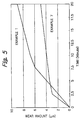
- the same wear test as in Example 1 was carried out. The results are shown in Table 3. Hardness of the flame-sprayed layer was Hv 220-280. In addition, the entire composition was 36% of Cu, 32% ofAl, 7% of Pb, 23% of Si, and 2% of Sn.
- the aluminum virtually does not retain the powder morphology.
- the aluminum-alloy phase provides a matrix where the network or flaky copper-alloy phase crystallizes.
- the aluminum-alloy is almost completely melted, while a portion of the aluminum-alloy reacts with the melted copper so that a Cu-Al compound (i.e., the second copper-alloy) crystallizes.
- Hardness of the flame-sprayed layer was Hv 200-260.
- the entire composition was 45% of Cu, 27% of Al, 6% of Pb, 16% of Si, and 6% of Sn by weight percentage.
- Example 3 The flame-spraying was carried out under the same conditions as in Example 3 except that the atomized copper-alloy powder of Example 5 (i.e., atomized powder of Cu-10 weight % of Pb-10 weight % of Sn alloy) was replaced with a Cu-24 weight % of Pb-10 weight % of Sn alloy atomized powder (30 ⁇ m of average particle diameter).
- Example 5 atomized copper-alloy powder of Example 5
- Example 5 atomized powder of Cu-10 weight % of Pb-10 weight % of Sn alloy
- a Cu-24 weight % of Pb-10 weight % of Sn alloy atomized powder (30 ⁇ m of average particle diameter.
- Hardness of the flame-sprayed layer was Hv 190-240.
- the entire composition was 50% of Cu, 32% of Al, 9% of Pb, 7% of Si, and 2% of Sn by weight percentage.
- Example 1 Only the aluminum alloy of Example 1 was flame sprayed by the same method as in Example 1. The same wear test as in Example 1 was carried out. The results are shown in Table 3. Hardness of the flame-sprayed layer was Hv 210 - 230.
- the present invention provides a flame-spraying method for producing the copper-aluminum composite material
- the desired material can be obtained by a single process of applying the mixed powder on the substrate.
- the copper alloy and the aluminum alloy are essentially not melted together in the composite material but are finely mixed with one another. It is, therefore, expected that the properties of these alloys are utilized.
- such composite material can be formed as a film, such as the sliding layer of sliding members of a compressor.
Landscapes
- Chemical & Material Sciences (AREA)
- Engineering & Computer Science (AREA)
- Mechanical Engineering (AREA)
- Plasma & Fusion (AREA)
- Chemical Kinetics & Catalysis (AREA)
- Materials Engineering (AREA)
- Physics & Mathematics (AREA)
- Metallurgy (AREA)
- Organic Chemistry (AREA)
- General Engineering & Computer Science (AREA)
- Coating By Spraying Or Casting (AREA)
- Sliding-Contact Bearings (AREA)
- Other Surface Treatments For Metallic Materials (AREA)
Abstract
Description
| Composite Material | Cu-Pb Alloy Powder (µ m) | Al-Si Alloy Powder (µ m) |
| A | 30 | 150 |
| C | 50 | 100 |
| D | 75 | 50 |
| Composite Material | Cu-Pb Alloy Powder (µm) | Al-Si Alloy Powder (µm) | ||
| Coarse Particles | Fine Powder | Coarse Particles | Fine Powder | |
| B | 75 | 30 | 150 | - |
| E | 75 | 30 | - | 50 |
| F | 75 | 30 | 150 | 50 |
| G | - | 30 | 150 | 50 |
| Wear Amount (µ m) | |
| Example 1 | 9.0 |
| Example 2 | 6.0 |
| Example 3 | 17.0 |
| Example 4 | 15.0 |
| Example 5 | 5.0 |
| Example 6 | 6.0 |
| Example 7 | 5.0 |
| Comparative Example 1 | 40 |
| Comparative Example 2 | 95 95 |
Claims (36)
- A flame-sprayed copper-aluminum composite material, which comprises copper or a first copper alloy having at least an unmelted phase, and aluminum or a first aluminum alloy having at least a melted phase.
- A flame-sprayed copper-aluminum composite material according to claim 1, wherein said first copper alloy comprises a second copper alloy, which is formed by incorporating said aluminum or a component of the first aluminum alloy into the first copper alloy, by flame-spraying.
- A flame-sprayed copper-aluminum composite material according to claim 1 or 2, wherein said first aluminum alloy comprises a second aluminum alloy, which is formed by incorporating said copper or a component of the first copper alloy into the first aluminum alloy, by to flame-spraying.
- A flame-sprayed copper-aluminum composite material according to any one of claims 1 through 3, characterized in that the main structure consists of the unmelted phase of the copper or the first copper alloy and the melted phase of aluminum or the second aluminum alloy.
- A flame-sprayed copper-aluminum composite material according to claim 4, wherein said flame-sprayed layer surface comprises at least either of the melted phase of copper or the first copper alloy and the melted phase of the first aluminum alloy.
- A flame-sprayed copper-aluminum composite material according to any one of claims 1 through 5, wherein said first copper alloy comprises Pb, and said first aluminum alloy comprises Si.
- A flame-sprayed copper-aluminum composite meterial according to claim 6, characterized in that said first copper alloy comprises 40% by weight or less of Pb, and said first aluminum alloy comprises from 12 to 60% by weight of Si.
- A flame-sprayed copper-aluminum composite material according to claim 7, characterized in that said first copper alloy contains from 0.5 to 50% by weight of one or more selected from the group consisting of 30% by weight or less of Sn, 0.5% by weight or less of P, 15% by weight or less of Al, 10% by weight or less of Ag, 5% by weight or less of Mn, 5% by weight or less of Cr, 20% by weight or less of Ni, and 30% by weight or less of Zn.
- A flame-sprayed copper-aluminum composite material according to claim 7, characterized in that said first aluminum alloy further comprises 30% by weight or less of Sn.
- A flame-sprayed copper-aluminum composite material according to claim 7, characterized in that said first aluminum alloy further comprises at least one element of the group consisting of 7.0% by weight or less of Cu, 5.0% by weight or less of Mg, 1.5% by weight or less of Mn, 1.5% by weight or less of Fe, 8% by weight or less of Cr, and 8.0% by weight or less of Ni.
- A flame-sprayed copper-aluminum composite material according to claim 10, characterized in that said first aluminum alloy further comprises 30% by weight or less of Sn.
- A flame-sprayed copper-aluminum composite material according to claim 8, characterized in that said first aluminum alloy further comprises 30% by weight or less of Sn.
- A flame-sprayed copper-aluminum composite material according to claim 8, characterized in that said first aluminum alloy further comprises at least one element of the group consisting of 7.0% by weight or less of Cu, 5.0% by weight or less of Mg, 1.5% by weight or less of Mn, 1.5% by weight or less of Fe, 8% by weight or less of Cr, and 8.0% by weight or less of Ni.
- A flame-sprayed copper-aluminum composite material according to claim 13, characterized in that said first aluminum alloy further comprises 30% by weight or less of Sn.
- A flame-sprayed copper-aluminum composite material according to claim 7, characterized in that the entire composition is Cu: 8 - 82% by weight, Al: 5-50% by weight, Pb: 32% by weight or less, and Si: 5 - 50% by weight.
- A flame-sprayed copper-aluminum composite material according to claim 8, characterized in that the entire composition is Cu: 8 - 82% by weight, Al: 5-50% by weight, Pb: 32% by weight or less, Si: 5-50% by weight, Sn: 24% by weight or less, P: 0.4% by weight or less, Ag: 8% by weight or less; Mn: 4% by weight or less, Cr: 4% by weight or less, Ni: 16% by weight or less, and Zn: 24% by weight or less.
- A flame-sprayed copper-aluminum composite material according to claim 9, characterized in that the entire composition is Cu: 8-82% by weight, Al: 5-50% by weight, Pb: 32% by weight or less, Si: 5-50% by weight, and Sn: 21% by weight or less.
- A flame-sprayed copper-aluminum composite material according to claim 10, characterized in that the entire composition is Al: 15-50% by weight, Cu: 8-50% by weight, Pb: 32% by weight or less, Si: 5-50% by weight, Mn: 1.2% by weight or less, Cr: 5% by weight or less, Ni: 4% by weight or less, Mg: 4.0% by weight or less, and Fe: 1.2% by weight or less.
- A flame-sprayed copper-aluminum composite material according to claim 11, characterized in that the entire composition is Al: 15-50% by weight, Cu: 8-50% by weight, Pb: 32% by weight or less, Si: 5-50% by weight, Sn: 24% by weight or less, Mn: 1.2% by weight or less, Cr: 5% by weight or less, Ni: 4% by weight or less, Mg: 4.0% by weight or less, and Fe: 1.2% by weight or less.
- A flame-sprayed copper aluminum composite material according to claim 12, characterized in that the entire composition is Al: 15-50% by weight or less, Cu: 8-50% by weight or less, Pb: 32% by weight or less, Si: 5-50% by weight, Sn: 30% by weight or less, Mn: 4% by weight or less, Cr: 4% by weight or less, Ni: 16% by weight or less, and Zn: 24% by weight or less.
- A flame-sprayed copper-aluminum composite material according to claim 13, characterized in that the entire composition is Al: 15 - 50% by weight, Cu: 8-50% by weight, Pb: 32% by weight or less, Si: 5-50% by weight, Sn: 24% by weight or less, P: 0.4% by weight or less, Ag: 8% by weight or less, Mn: 5% by weight or less, Cr: 8% by weight or less, Ni: 20% by weight or less, Zn: 24% by weight or less, Mg: 4.0% by weight or less, and Fe: 1% by weight or less.
- A flame-sprayed copper-aluminum composite material according to claim 14, characterized in that the entire composition is Al: 15-50% by weight, Cu: 8-50% by weight, Pb: 32% by weight or less, Si: 5-50% by weight, Sn: 30% by weight or less, P: 0.4% by weight or less, Ag: 8% by weight or less, Mn: 5% by weight or less, Cr: 8% by weight or less, Ni: 20% by weight or less, Zn: 24% by weight or less, Mg: 4.0% by weight or less, and Fe: 1% by weight or less.
- A flame-sprayed copper-aluminum composite material according to any one of claims 1 through 22, wherein at least a portion of said first copper alloy (except for the second copper alloy) consists of Cu crystals, and at least a portion of said first aluminum alloy (except for the second aluminum alloy) consists of Al crystals.
- A flame-sprayed copper-aluminum composite material according to any one of claims 6 through 23, characterized by further containing 30% by weight or less of graphite particles.
- A flame-sprayed copper-aluminum composite material according to any one of claims 1 through 24, characterized by further containing 30% by weight or less of one or more selected from the group consisting of Al2O3, SiO2, SiC, ZrO2, Si3N4, BN, AlN, TiN, TiC, B4C, as well as iron-phosphorus, iron-boron, and iron-nitrogen compounds.
- A flame-sprayed copper-aluminum composite material according to any one of claims 1 through 25, wherein it is laminated on a substrate and is coated with a soft metal layer.
- A flame-sprayed copper-aluminum composite material according to claim 26, wherein said soft metal layer is a plating layer of Pb, Pb alloy, Sn or Sn alloy.
- A flame-sprayed copper-aluminum composite material according to claim 26, wherein said soft metal layer is a plating layer mainly consisting of Pb and Sn.
- A flame-sprayed copper-aluminum composite material according to any one of claims 1 through 25, characterized in that said flame-sprayed surface layer is coated with a film, which comprises MoS2 or graphite or a mixture of MoS2 and graphite.
- A method for producing a copper-aluminum composite material, characterized in that powder of copper or copper alloy and powder of aluminum or aluminum alloy are flame-sprayed in such a manner that a portion of these powders is melted and a portion is not melted.
- A method for producing a copper-aluminum composite material according to claim 30, characterized in that the main structure of the copper-aluminum composite material is combination of one or more of (a) melted structure of copper or copper alloy, (b) unmelted structure of copper or copper alloy, (c) melted structure of aluminum or aluminum alloy, and (d) unmelted structure of aluminum or aluminum alloy (except for the combination of only (a) and (c) and only (b) and (d)).
- A method for producing a copper-aluminum composite material according to claim 30 or 31, wherein said copper alloy is Cu-Pb based alloy, and said aluminum alloy is Al-Si based alloy.
- A method for producing a copper-aluminum composite material according to any one of claims 30 through 32, characterized by further flame spraying 30% by weight or less of graphite powder.
- A method for producing a copper-aluminum composite material according to any one of claims 30 through 33, characterized by further flame spraying 30% by weight or less of one or more selected from the group consisting of Al2O3, SiO2, SiC, ZrO2, Si3N4, BN, AlN, TiN, TiC, B4C, as well as iron-phosphorus, iron-boron, and iron - nitrogen compounds.
- A method for producing a copper-aluminum composite material according to any one of claims 30 through 34, wherein the flame spraying is carried out on a roughened surface of a metallic substrate.
- A method for producing a copper-aluminum composite material according to any one of claims 30 through 34, wherein heat treatment of the flame-sprayed layer is carried out subsequent to the flame spraying.
Applications Claiming Priority (5)
| Application Number | Priority Date | Filing Date | Title |
|---|---|---|---|
| JP19607299 | 1999-07-09 | ||
| JP11196072A JP3135893B2 (en) | 1999-07-09 | 1999-07-09 | Copper-aluminum composite sprayed layer |
| JP19649199 | 1999-07-09 | ||
| JP19649199A JP3556863B2 (en) | 1999-07-09 | 1999-07-09 | Method for producing copper-aluminum composite material |
| PCT/JP2000/004533 WO2001004373A1 (en) | 1999-07-09 | 2000-07-07 | Sprayed copper-aluminum composite material and method for producing the same |
Publications (2)
| Publication Number | Publication Date |
|---|---|
| EP1122328A1 true EP1122328A1 (en) | 2001-08-08 |
| EP1122328A4 EP1122328A4 (en) | 2005-03-23 |
Family
ID=26509521
Family Applications (1)
| Application Number | Title | Priority Date | Filing Date |
|---|---|---|---|
| EP00944322A Withdrawn EP1122328A4 (en) | 1999-07-09 | 2000-07-07 | PROJECTED COPPER-ALUMINUM COMPOSITE MATERIAL AND METHOD OF MANUFACTURING THE SAME |
Country Status (6)
| Country | Link |
|---|---|
| US (1) | US20060134447A1 (en) |
| EP (1) | EP1122328A4 (en) |
| KR (1) | KR100408313B1 (en) |
| CN (2) | CN100422379C (en) |
| BR (1) | BR0006918A (en) |
| WO (1) | WO2001004373A1 (en) |
Families Citing this family (20)
| Publication number | Priority date | Publication date | Assignee | Title |
|---|---|---|---|---|
| KR100619592B1 (en) * | 2004-10-19 | 2006-09-13 | 재단법인 포항산업과학연구원 | Spray coating alloy material for the production of variable compressor swash plate and manufacturing method of variable compressor swash plate using the same |
| CN100494710C (en) * | 2006-05-25 | 2009-06-03 | 上海电器气压缩机泵业有限公司 | Compressor bearing liner |
| WO2009010297A1 (en) * | 2007-07-18 | 2009-01-22 | Alcan Technology & Management Ag | Aluminium-based duplex-aluminium material with a first phase and a second phase and method for producing said duplex-aluminium material |
| CN102937143B (en) * | 2011-08-15 | 2015-06-17 | 上海核威实业有限公司 | Sliding bearing sleeve sintered from copper-aluminum alloy powder and preparation method thereof |
| CN102991025A (en) * | 2012-12-28 | 2013-03-27 | 江阴东大新材料研究院 | Preparation method of aluminum alloy composite plate fusion covered with honeycomb ceramic interlayer on surface |
| WO2017186252A1 (en) | 2016-04-24 | 2017-11-02 | Debili Mohamed Yacine | Cu/al composite obtained by separation following high-frequency electromagnetic melting |
| CN106282649B (en) * | 2016-08-31 | 2018-11-06 | 宁波新睦新材料有限公司 | A kind of high-strength conductive Cu-base composites and preparation method thereof |
| CN108018419A (en) * | 2016-11-02 | 2018-05-11 | 洛阳铜金属材料发展有限公司 | A kind of separation method of copper-aluminum composite material |
| CN110157943A (en) * | 2018-01-29 | 2019-08-23 | 安徽华晶微电子材料科技有限公司 | A kind of high rigidity rub resistance copper-based material |
| US12135059B2 (en) * | 2018-08-02 | 2024-11-05 | Nissan Motor Co., Ltd. | Sliding member and member for internal combustion engine |
| CN109182833B (en) * | 2018-08-28 | 2020-11-06 | 合肥工业大学 | A kind of copper-based powder metallurgy pantograph sliding plate material with spherical chromium powder as strengthening phase and preparation method thereof |
| CN110184633B (en) * | 2019-05-21 | 2021-09-28 | 上海锦町新材料科技有限公司 | Preparation method of metal film on surface of copper-aluminum composite material |
| CN111235530A (en) * | 2020-01-15 | 2020-06-05 | 董翠萍 | Vacuum spraying treatment process for aluminum profile machining |
| DE102020213651A1 (en) * | 2020-10-29 | 2022-05-05 | Mahle International Gmbh | Wear-resistant, highly thermally conductive sintered alloy, especially for bearing applications and valve seat inserts |
| CN112359309B (en) * | 2020-11-23 | 2023-04-07 | 中国航发沈阳黎明航空发动机有限责任公司 | Preparation method of anti-adhesion coating for aero-engine driving connecting rod |
| CN112981396B (en) * | 2021-02-23 | 2022-02-01 | 山东省科学院新材料研究所 | Laser cladding powder for improving performance of aluminum-magnesium heterogeneous metal rivet joint |
| CN113333741B (en) * | 2021-06-30 | 2023-05-02 | 广东省科学院新材料研究所 | Copper-aluminum-boron nitride composite powder and preparation method and application thereof |
| CN114042926B (en) * | 2021-11-03 | 2024-02-20 | 陕西斯瑞新材料股份有限公司 | Method for improving copper alloy plasma rotary gas atomization powder preparation efficiency |
| CN116689767B (en) * | 2023-05-03 | 2024-02-09 | 山东雪地铝业科技有限公司 | A kind of manufacturing method of aluminum alloy material for aerospace |
| CN117904484A (en) * | 2023-12-27 | 2024-04-19 | 济南二机床铸造有限公司 | Tin-free wear-resistant copper alloy material and preparation method and application thereof |
Family Cites Families (7)
| Publication number | Priority date | Publication date | Assignee | Title |
|---|---|---|---|---|
| US5022455A (en) * | 1989-07-31 | 1991-06-11 | Sumitomo Electric Industries, Ltd. | Method of producing aluminum base alloy containing silicon |
| JPH0626989A (en) * | 1992-07-10 | 1994-02-04 | Shimadzu Corp | Spatial resolution measuring device |
| ES2115731T5 (en) * | 1992-10-30 | 2001-12-01 | Showa Aluminum Corp | SOLDABLE ALUMINUM MATERIAL AND A METHOD TO PRODUCE IT. |
| JP3105690B2 (en) * | 1993-03-23 | 2000-11-06 | 三菱重工業株式会社 | How to make a casting model |
| DE69514994T3 (en) * | 1994-03-16 | 2008-07-03 | Taiho Kogyo Co., Ltd., Toyota | WHEEL DISC FOR DUMP DISC COMPRESSORS |
| JPH1060617A (en) * | 1996-08-22 | 1998-03-03 | Suruzaa Meteko Japan Kk | High speed flame spraying method |
| JP3251562B2 (en) * | 1999-07-09 | 2002-01-28 | 大豊工業株式会社 | Swash plate compressor swash plate |
-
2000
- 2000-07-07 CN CNB2005100714360A patent/CN100422379C/en not_active Expired - Fee Related
- 2000-07-07 EP EP00944322A patent/EP1122328A4/en not_active Withdrawn
- 2000-07-07 CN CNB00801924XA patent/CN1316054C/en not_active Expired - Lifetime
- 2000-07-07 BR BR0006918-3A patent/BR0006918A/en not_active Application Discontinuation
- 2000-07-07 KR KR10-2001-7002996A patent/KR100408313B1/en not_active Expired - Fee Related
- 2000-07-07 WO PCT/JP2000/004533 patent/WO2001004373A1/en not_active Ceased
-
2005
- 2005-11-21 US US11/282,721 patent/US20060134447A1/en not_active Abandoned
Also Published As
| Publication number | Publication date |
|---|---|
| US20060134447A1 (en) | 2006-06-22 |
| CN1321202A (en) | 2001-11-07 |
| CN1683585A (en) | 2005-10-19 |
| WO2001004373A1 (en) | 2001-01-18 |
| BR0006918A (en) | 2001-07-31 |
| CN1316054C (en) | 2007-05-16 |
| CN100422379C (en) | 2008-10-01 |
| EP1122328A4 (en) | 2005-03-23 |
| KR100408313B1 (en) | 2003-12-01 |
| KR20010075003A (en) | 2001-08-09 |
Similar Documents
| Publication | Publication Date | Title |
|---|---|---|
| EP0713972B1 (en) | Swash plate for a swash plate type compressor | |
| EP1122328A1 (en) | Sprayed copper-aluminum composite material and method for producing the same | |
| US5875702A (en) | Swash plate of swash plate compressor and combination of swash plate with shoes | |
| US6541127B1 (en) | Swash plate of swash plate type compressor | |
| KR100347825B1 (en) | Swash plate of swash plate compressor | |
| JP2000179453A (en) | Swash plate compressor swash plate | |
| KR100316558B1 (en) | Aluminum alloy-based sliding material | |
| JP3556863B2 (en) | Method for producing copper-aluminum composite material | |
| JPWO1999047724A1 (en) | Aluminum alloy sliding materials | |
| JP3294209B2 (en) | Aluminum alloy sprayed layer and sliding material with excellent sliding characteristics | |
| JP2965192B2 (en) | Bronze bearing material and manufacturing method thereof | |
| JP2002256371A (en) | Copper alloy for sliding parts | |
| JP2002031045A (en) | Swash plate compressor | |
| JP3753981B2 (en) | Aluminum alloy sprayed layer and sliding material with excellent sliding properties | |
| JP3048143B1 (en) | Thermal spray layer with excellent sliding properties | |
| JP3135893B2 (en) | Copper-aluminum composite sprayed layer | |
| JP2002249844A (en) | Copper alloy for sliding parts | |
| JP2982876B2 (en) | Swash plate compressor swash plate | |
| JPWO1995025224A1 (en) | Swash plate of a swash plate compressor |
Legal Events
| Date | Code | Title | Description |
|---|---|---|---|
| PUAI | Public reference made under article 153(3) epc to a published international application that has entered the european phase |
Free format text: ORIGINAL CODE: 0009012 |
|
| AK | Designated contracting states |
Kind code of ref document: A1 Designated state(s): AT BE CH CY DE DK ES FI FR GB GR IE IT LI LU MC NL PT SE |
|
| 17P | Request for examination filed |
Effective date: 20010711 |
|
| A4 | Supplementary search report drawn up and despatched |
Effective date: 20050209 |
|
| RIC1 | Information provided on ipc code assigned before grant |
Ipc: 7C 22C 21/02 B Ipc: 7C 22C 21/04 B Ipc: 7C 23C 4/04 B Ipc: 7C 23C 4/08 A |
|
| 17Q | First examination report despatched |
Effective date: 20060925 |
|
| STAA | Information on the status of an ep patent application or granted ep patent |
Free format text: STATUS: THE APPLICATION HAS BEEN WITHDRAWN |
|
| 18W | Application withdrawn |
Effective date: 20140317 |