EP1121980A1 - Composition comprising antimony trifluoride and silica - Google Patents
Composition comprising antimony trifluoride and silica Download PDFInfo
- Publication number
- EP1121980A1 EP1121980A1 EP00300705A EP00300705A EP1121980A1 EP 1121980 A1 EP1121980 A1 EP 1121980A1 EP 00300705 A EP00300705 A EP 00300705A EP 00300705 A EP00300705 A EP 00300705A EP 1121980 A1 EP1121980 A1 EP 1121980A1
- Authority
- EP
- European Patent Office
- Prior art keywords
- composition
- silica
- hms
- sbf
- cyclohexanone
- Prior art date
- Legal status (The legal status is an assumption and is not a legal conclusion. Google has not performed a legal analysis and makes no representation as to the accuracy of the status listed.)
- Granted
Links
- VYPSYNLAJGMNEJ-UHFFFAOYSA-N Silicium dioxide Chemical compound O=[Si]=O VYPSYNLAJGMNEJ-UHFFFAOYSA-N 0.000 title claims abstract description 84
- GUNJVIDCYZYFGV-UHFFFAOYSA-K Antimony trifluoride Inorganic materials F[Sb](F)F GUNJVIDCYZYFGV-UHFFFAOYSA-K 0.000 title claims abstract description 60
- 239000000203 mixture Substances 0.000 title claims abstract description 50
- ODNBVEIAQAZNNM-UHFFFAOYSA-N 1-(6-chloroimidazo[1,2-b]pyridazin-3-yl)ethanone Chemical compound C1=CC(Cl)=NN2C(C(=O)C)=CN=C21 ODNBVEIAQAZNNM-UHFFFAOYSA-N 0.000 title claims abstract description 32
- 239000000377 silicon dioxide Substances 0.000 title claims abstract description 32
- JHIVVAPYMSGYDF-UHFFFAOYSA-N cyclohexanone Chemical compound O=C1CCCCC1 JHIVVAPYMSGYDF-UHFFFAOYSA-N 0.000 claims abstract description 49
- MHAJPDPJQMAIIY-UHFFFAOYSA-N Hydrogen peroxide Chemical compound OO MHAJPDPJQMAIIY-UHFFFAOYSA-N 0.000 claims abstract description 34
- 239000003054 catalyst Substances 0.000 claims abstract description 32
- 238000000034 method Methods 0.000 claims abstract description 18
- PAPBSGBWRJIAAV-UHFFFAOYSA-N ε-Caprolactone Chemical compound O=C1CCCCCO1 PAPBSGBWRJIAAV-UHFFFAOYSA-N 0.000 claims abstract description 18
- 238000007254 oxidation reaction Methods 0.000 claims abstract description 12
- 239000000741 silica gel Substances 0.000 claims abstract description 12
- 229910002027 silica gel Inorganic materials 0.000 claims abstract description 12
- 230000003647 oxidation Effects 0.000 claims abstract description 11
- 238000002360 preparation method Methods 0.000 claims abstract description 4
- 238000006243 chemical reaction Methods 0.000 claims description 13
- 229960001866 silicon dioxide Drugs 0.000 claims description 11
- 238000002156 mixing Methods 0.000 claims description 2
- 239000002253 acid Substances 0.000 description 11
- XLYOFNOQVPJJNP-UHFFFAOYSA-N water Substances O XLYOFNOQVPJJNP-UHFFFAOYSA-N 0.000 description 10
- YXFVVABEGXRONW-UHFFFAOYSA-N Toluene Chemical compound CC1=CC=CC=C1 YXFVVABEGXRONW-UHFFFAOYSA-N 0.000 description 9
- 238000011068 loading method Methods 0.000 description 9
- 239000000463 material Substances 0.000 description 9
- HEMHJVSKTPXQMS-UHFFFAOYSA-M Sodium hydroxide Chemical compound [OH-].[Na+] HEMHJVSKTPXQMS-UHFFFAOYSA-M 0.000 description 6
- 238000001035 drying Methods 0.000 description 6
- 230000000694 effects Effects 0.000 description 6
- 238000001354 calcination Methods 0.000 description 5
- 238000010923 batch production Methods 0.000 description 4
- 230000015572 biosynthetic process Effects 0.000 description 4
- 239000006227 byproduct Substances 0.000 description 4
- 238000010924 continuous production Methods 0.000 description 4
- 229920001610 polycaprolactone Polymers 0.000 description 4
- 239000011148 porous material Substances 0.000 description 4
- 239000011541 reaction mixture Substances 0.000 description 4
- NYHNVHGFPZAZGA-UHFFFAOYSA-N 2-hydroxyhexanoic acid Chemical compound CCCCC(O)C(O)=O NYHNVHGFPZAZGA-UHFFFAOYSA-N 0.000 description 3
- 238000006220 Baeyer-Villiger oxidation reaction Methods 0.000 description 3
- 230000003197 catalytic effect Effects 0.000 description 3
- 150000002148 esters Chemical class 0.000 description 3
- 125000002887 hydroxy group Chemical group [H]O* 0.000 description 3
- 150000002576 ketones Chemical class 0.000 description 3
- 150000002596 lactones Chemical class 0.000 description 3
- 239000007800 oxidant agent Substances 0.000 description 3
- 239000004632 polycaprolactone Substances 0.000 description 3
- 239000000047 product Substances 0.000 description 3
- 238000010992 reflux Methods 0.000 description 3
- IJGRMHOSHXDMSA-UHFFFAOYSA-N Atomic nitrogen Chemical compound N#N IJGRMHOSHXDMSA-UHFFFAOYSA-N 0.000 description 2
- 239000007848 Bronsted acid Substances 0.000 description 2
- LFQSCWFLJHTTHZ-UHFFFAOYSA-N Ethanol Chemical compound CCO LFQSCWFLJHTTHZ-UHFFFAOYSA-N 0.000 description 2
- DGAQECJNVWCQMB-PUAWFVPOSA-M Ilexoside XXIX Chemical compound C[C@@H]1CC[C@@]2(CC[C@@]3(C(=CC[C@H]4[C@]3(CC[C@@H]5[C@@]4(CC[C@@H](C5(C)C)OS(=O)(=O)[O-])C)C)[C@@H]2[C@]1(C)O)C)C(=O)O[C@H]6[C@@H]([C@H]([C@@H]([C@H](O6)CO)O)O)O.[Na+] DGAQECJNVWCQMB-PUAWFVPOSA-M 0.000 description 2
- 239000002841 Lewis acid Substances 0.000 description 2
- KFSLWBXXFJQRDL-UHFFFAOYSA-N Peracetic acid Chemical compound CC(=O)OO KFSLWBXXFJQRDL-UHFFFAOYSA-N 0.000 description 2
- JUJWROOIHBZHMG-UHFFFAOYSA-N Pyridine Chemical compound C1=CC=NC=C1 JUJWROOIHBZHMG-UHFFFAOYSA-N 0.000 description 2
- 238000010533 azeotropic distillation Methods 0.000 description 2
- -1 cationic platinum complexes Chemical class 0.000 description 2
- 150000001875 compounds Chemical class 0.000 description 2
- 238000002481 ethanol extraction Methods 0.000 description 2
- 150000007517 lewis acids Chemical class 0.000 description 2
- 238000000926 separation method Methods 0.000 description 2
- 150000004819 silanols Chemical class 0.000 description 2
- 229910052708 sodium Inorganic materials 0.000 description 2
- 239000011734 sodium Substances 0.000 description 2
- 238000001179 sorption measurement Methods 0.000 description 2
- 238000005160 1H NMR spectroscopy Methods 0.000 description 1
- NHQDETIJWKXCTC-UHFFFAOYSA-N 3-chloroperbenzoic acid Chemical compound OOC(=O)C1=CC=CC(Cl)=C1 NHQDETIJWKXCTC-UHFFFAOYSA-N 0.000 description 1
- 229910021630 Antimony pentafluoride Inorganic materials 0.000 description 1
- 229910004835 Na2B4O7 Inorganic materials 0.000 description 1
- GNKTZDSRQHMHLZ-UHFFFAOYSA-N [Si].[Si].[Si].[Ti].[Ti].[Ti].[Ti].[Ti] Chemical compound [Si].[Si].[Si].[Ti].[Ti].[Ti].[Ti].[Ti] GNKTZDSRQHMHLZ-UHFFFAOYSA-N 0.000 description 1
- 230000002378 acidificating effect Effects 0.000 description 1
- 150000007513 acids Chemical class 0.000 description 1
- AZDRQVAHHNSJOQ-UHFFFAOYSA-N alumane Chemical group [AlH3] AZDRQVAHHNSJOQ-UHFFFAOYSA-N 0.000 description 1
- 229910000323 aluminium silicate Inorganic materials 0.000 description 1
- 238000004458 analytical method Methods 0.000 description 1
- 150000001462 antimony Chemical class 0.000 description 1
- VBVBHWZYQGJZLR-UHFFFAOYSA-I antimony pentafluoride Chemical compound F[Sb](F)(F)(F)F VBVBHWZYQGJZLR-UHFFFAOYSA-I 0.000 description 1
- 239000007900 aqueous suspension Substances 0.000 description 1
- 229910052785 arsenic Inorganic materials 0.000 description 1
- RQNWIZPPADIBDY-UHFFFAOYSA-N arsenic atom Chemical compound [As] RQNWIZPPADIBDY-UHFFFAOYSA-N 0.000 description 1
- QVGXLLKOCUKJST-UHFFFAOYSA-N atomic oxygen Chemical compound [O] QVGXLLKOCUKJST-UHFFFAOYSA-N 0.000 description 1
- 229910021538 borax Inorganic materials 0.000 description 1
- KZMGYPLQYOPHEL-UHFFFAOYSA-N boron trifluoride etherate Substances FB(F)F.CCOCC KZMGYPLQYOPHEL-UHFFFAOYSA-N 0.000 description 1
- VZSXFJPZOCRDPW-UHFFFAOYSA-N carbanide;trioxorhenium Chemical compound [CH3-].O=[Re](=O)=O VZSXFJPZOCRDPW-UHFFFAOYSA-N 0.000 description 1
- 150000001732 carboxylic acid derivatives Chemical class 0.000 description 1
- 239000003153 chemical reaction reagent Substances 0.000 description 1
- 239000003795 chemical substances by application Substances 0.000 description 1
- 238000005384 cross polarization magic-angle spinning Methods 0.000 description 1
- 230000007423 decrease Effects 0.000 description 1
- 230000001419 dependent effect Effects 0.000 description 1
- 230000001627 detrimental effect Effects 0.000 description 1
- HNPSIPDUKPIQMN-UHFFFAOYSA-N dioxosilane;oxo(oxoalumanyloxy)alumane Chemical compound O=[Si]=O.O=[Al]O[Al]=O HNPSIPDUKPIQMN-UHFFFAOYSA-N 0.000 description 1
- UQGFMSUEHSUPRD-UHFFFAOYSA-N disodium;3,7-dioxido-2,4,6,8,9-pentaoxa-1,3,5,7-tetraborabicyclo[3.3.1]nonane Chemical compound [Na+].[Na+].O1B([O-])OB2OB([O-])OB1O2 UQGFMSUEHSUPRD-UHFFFAOYSA-N 0.000 description 1
- VTIIJXUACCWYHX-UHFFFAOYSA-L disodium;carboxylatooxy carbonate Chemical compound [Na+].[Na+].[O-]C(=O)OOC([O-])=O VTIIJXUACCWYHX-UHFFFAOYSA-L 0.000 description 1
- JRBPAEWTRLWTQC-UHFFFAOYSA-N dodecylamine Chemical compound CCCCCCCCCCCCN JRBPAEWTRLWTQC-UHFFFAOYSA-N 0.000 description 1
- 230000007613 environmental effect Effects 0.000 description 1
- 238000002474 experimental method Methods 0.000 description 1
- 239000002360 explosive Substances 0.000 description 1
- WIDAIIAPXVKPBV-UHFFFAOYSA-N hydrogen peroxide trifluoroborane Chemical compound OO.FB(F)F WIDAIIAPXVKPBV-UHFFFAOYSA-N 0.000 description 1
- 238000011065 in-situ storage Methods 0.000 description 1
- 238000004519 manufacturing process Methods 0.000 description 1
- 229910044991 metal oxide Inorganic materials 0.000 description 1
- 150000004706 metal oxides Chemical class 0.000 description 1
- 150000002751 molybdenum Chemical class 0.000 description 1
- 229910052757 nitrogen Inorganic materials 0.000 description 1
- 239000011022 opal Substances 0.000 description 1
- 125000002524 organometallic group Chemical group 0.000 description 1
- 230000001590 oxidative effect Effects 0.000 description 1
- 229910052760 oxygen Inorganic materials 0.000 description 1
- 239000001301 oxygen Substances 0.000 description 1
- 230000002572 peristaltic effect Effects 0.000 description 1
- 150000002978 peroxides Chemical class 0.000 description 1
- 239000000843 powder Substances 0.000 description 1
- 238000002203 pretreatment Methods 0.000 description 1
- UMJSCPRVCHMLSP-UHFFFAOYSA-N pyridine Natural products COC1=CC=CN=C1 UMJSCPRVCHMLSP-UHFFFAOYSA-N 0.000 description 1
- 239000010453 quartz Substances 0.000 description 1
- 238000011084 recovery Methods 0.000 description 1
- 238000004064 recycling Methods 0.000 description 1
- 239000011347 resin Substances 0.000 description 1
- 229920005989 resin Polymers 0.000 description 1
- 229940065287 selenium compound Drugs 0.000 description 1
- 150000003343 selenium compounds Chemical class 0.000 description 1
- 230000035939 shock Effects 0.000 description 1
- 229910052710 silicon Inorganic materials 0.000 description 1
- 239000010703 silicon Substances 0.000 description 1
- 229960001922 sodium perborate Drugs 0.000 description 1
- 229940045872 sodium percarbonate Drugs 0.000 description 1
- 239000004328 sodium tetraborate Substances 0.000 description 1
- 235000010339 sodium tetraborate Nutrition 0.000 description 1
- YKLJGMBLPUQQOI-UHFFFAOYSA-M sodium;oxidooxy(oxo)borane Chemical compound [Na+].[O-]OB=O YKLJGMBLPUQQOI-UHFFFAOYSA-M 0.000 description 1
- 239000007787 solid Substances 0.000 description 1
- 238000000935 solvent evaporation Methods 0.000 description 1
- 238000000638 solvent extraction Methods 0.000 description 1
- 238000001228 spectrum Methods 0.000 description 1
- 239000007858 starting material Substances 0.000 description 1
- 238000003756 stirring Methods 0.000 description 1
- 239000003930 superacid Substances 0.000 description 1
- 238000003786 synthesis reaction Methods 0.000 description 1
- 238000010189 synthetic method Methods 0.000 description 1
- 238000002076 thermal analysis method Methods 0.000 description 1
- 238000004448 titration Methods 0.000 description 1
- CYRMSUTZVYGINF-UHFFFAOYSA-N trichlorofluoromethane Chemical compound FC(Cl)(Cl)Cl CYRMSUTZVYGINF-UHFFFAOYSA-N 0.000 description 1
- 239000002699 waste material Substances 0.000 description 1
- 239000010457 zeolite Substances 0.000 description 1
Images

Classifications
-
- C—CHEMISTRY; METALLURGY
- C07—ORGANIC CHEMISTRY
- C07D—HETEROCYCLIC COMPOUNDS
- C07D315/00—Heterocyclic compounds containing rings having one oxygen atom as the only ring hetero atom according to more than one of groups C07D303/00 - C07D313/00
-
- B—PERFORMING OPERATIONS; TRANSPORTING
- B01—PHYSICAL OR CHEMICAL PROCESSES OR APPARATUS IN GENERAL
- B01J—CHEMICAL OR PHYSICAL PROCESSES, e.g. CATALYSIS OR COLLOID CHEMISTRY; THEIR RELEVANT APPARATUS
- B01J21/00—Catalysts comprising the elements, oxides, or hydroxides of magnesium, boron, aluminium, carbon, silicon, titanium, zirconium, or hafnium
- B01J21/06—Silicon, titanium, zirconium or hafnium; Oxides or hydroxides thereof
- B01J21/08—Silica
-
- B—PERFORMING OPERATIONS; TRANSPORTING
- B01—PHYSICAL OR CHEMICAL PROCESSES OR APPARATUS IN GENERAL
- B01J—CHEMICAL OR PHYSICAL PROCESSES, e.g. CATALYSIS OR COLLOID CHEMISTRY; THEIR RELEVANT APPARATUS
- B01J23/00—Catalysts comprising metals or metal oxides or hydroxides, not provided for in group B01J21/00
- B01J23/38—Catalysts comprising metals or metal oxides or hydroxides, not provided for in group B01J21/00 of noble metals
- B01J23/54—Catalysts comprising metals or metal oxides or hydroxides, not provided for in group B01J21/00 of noble metals combined with metals, oxides or hydroxides provided for in groups B01J23/02 - B01J23/36
- B01J23/56—Platinum group metals
- B01J23/64—Platinum group metals with arsenic, antimony, bismuth, vanadium, niobium, tantalum, polonium, chromium, molybdenum, tungsten, manganese, technetium or rhenium
- B01J23/644—Arsenic, antimony or bismuth
- B01J23/6445—Antimony
-
- B—PERFORMING OPERATIONS; TRANSPORTING
- B01—PHYSICAL OR CHEMICAL PROCESSES OR APPARATUS IN GENERAL
- B01J—CHEMICAL OR PHYSICAL PROCESSES, e.g. CATALYSIS OR COLLOID CHEMISTRY; THEIR RELEVANT APPARATUS
- B01J27/00—Catalysts comprising the elements or compounds of halogens, sulfur, selenium, tellurium, phosphorus or nitrogen; Catalysts comprising carbon compounds
- B01J27/06—Halogens; Compounds thereof
- B01J27/08—Halides
- B01J27/12—Fluorides
-
- B—PERFORMING OPERATIONS; TRANSPORTING
- B01—PHYSICAL OR CHEMICAL PROCESSES OR APPARATUS IN GENERAL
- B01J—CHEMICAL OR PHYSICAL PROCESSES, e.g. CATALYSIS OR COLLOID CHEMISTRY; THEIR RELEVANT APPARATUS
- B01J29/00—Catalysts comprising molecular sieves
- B01J29/03—Catalysts comprising molecular sieves not having base-exchange properties
- B01J29/035—Microporous crystalline materials not having base exchange properties, such as silica polymorphs, e.g. silicalites
-
- Y—GENERAL TAGGING OF NEW TECHNOLOGICAL DEVELOPMENTS; GENERAL TAGGING OF CROSS-SECTIONAL TECHNOLOGIES SPANNING OVER SEVERAL SECTIONS OF THE IPC; TECHNICAL SUBJECTS COVERED BY FORMER USPC CROSS-REFERENCE ART COLLECTIONS [XRACs] AND DIGESTS
- Y02—TECHNOLOGIES OR APPLICATIONS FOR MITIGATION OR ADAPTATION AGAINST CLIMATE CHANGE
- Y02P—CLIMATE CHANGE MITIGATION TECHNOLOGIES IN THE PRODUCTION OR PROCESSING OF GOODS
- Y02P20/00—Technologies relating to chemical industry
- Y02P20/50—Improvements relating to the production of bulk chemicals
Definitions
- This invention relates to a composition comprising antimony trifluoride and silica, a method for the preparation of said composition and certain uses of said composition, in particular its use as catalyst.
- peroxycarboxylic acids e.g. peracetic acid, m -chloroperbenzoic acid
- peracetic acid e.g. peracetic acid, m -chloroperbenzoic acid
- m -chloroperbenzoic acid e.g. peracetic acid, m -chloroperbenzoic acid
- the following compounds have been used in conjunction with hydrogen peroxide - boron trifluoride etherate, borax (Na 2 B 4 O 7 ), arsenic containing compounds, cationic platinum complexes, molybdenum complexes, methyltrioxorhenium, selenium compounds, titanium silicate, zeolites, sulfonated resins and sodium hydroxide.
- Tanabe and Hattori have made solid superacids based on antimony pentafluoride supported on silica and other metal oxides (K. Tanabe et al ., Chem. Lett., 1976, 625), but antimony trifluoride supported on silica has not been reported or even suggested, and neither has its use as catalyst in Baeyer-Villiger oxidations.
- the present invention provides a composition comprising antimony trifluoride and silica.
- silica is defined as any form of a dioxide of silicon. Forms of silica may be hydrated. Forms of silica include a crystalline quartz form; a crystalline cristobalite form; a crystalline tridymite form; a crytocrystalline chalcedony form; an amorphous form; an amorphous opal form; an amorphous granular hydrated form (silica-gel); a form including aluminium atoms, such as an aluminosilicate; and a mesoporous form, such as HMS hexagonal mesoporous silica.
- the silica comprises HMS or silica-gel; more preferably the silica comprises HMS.
- the composition is substantially pure. If present, materials other than antimony trifluoride and silica are preferably present in only trace amounts.
- the antimony trifluoride is present in an amount of up to about 2 mmol SbF 3 per gram of composition, more preferably the antimony trifluoride is present in an amount of between 0.1 and 1.5 mmol, preferably 0.5 to 1.5 mmol SbF 3 per gram of composition.
- the present invention further comprises a process comprising the use of the composition comprising antimony trifluoride and silica as a catalyst. Reactions may be carried out as a batch process or in a continuous process.
- the composition catalyses an organic oxidation reaction.
- hydrogen peroxide is used as oxidising agent.
- the composition catalyses an oxidation of a ketone to a lactone or ester, more preferably the composition catalyses the oxidation of cyclohexanone to ⁇ -caprolactone.
- the oxidation of cyclohexanone to ⁇ -caprolactone may be carried out as a batch process or a continuous process.
- the composition, cyclohexanone and hydrogen peroxide are mixed and allowed to react.
- cyclohexanone and hydrogen peroxide may, for example, be passed through a column containing the composition. The product may be removed from the reaction mixture in subsequent separation steps.
- the process of the oxidation of cyclohexanone to ⁇ -caprolactone comprises the steps of:
- steps can be carried out successively, in a batch process, or simultaneously, in a continuous process.
- step (a) is performed at a temperature of up to about 70°C. More preferably, step (a) is performed at room temperature. Typically step (b) is performed over a period of between about 5 minutes to about 120 minutes preferably over about 30 minutes. Typically in steps (b) and (c) the reaction is maintained at a temperature of up to about 110°C, preferably at a temperature of between about 60°C and about 100°C, more preferably between about 70°C and 90°C. It has been found that raising the temperature can improve yields but is detrimental to the recovery of the catalyst. Typically step (c) is performed at a pressure at which the reaction mixture boils (in order to remove water azeotropically). Preferably step (c) is performed at a pressure of between 50 and 150 mbar. Preferably steps (a), (b) and (c) is performed under stirring.
- a molar excess of cyclohexanone is used relative to hydrogen peroxide.
- the molar ratio of cyclohexanone : hydrogen peroxide is up to about 5 : 1, more preferably from about 2 : 1 to about 3 : 1, more preferably about 2.5 : 1.
- the composition is used in an amount of up to 10g per 100ml of cyclohexanone, more preferably the composition is used in an amount of up to 5g per 100ml of cyclohexanone, even more preferably the composition is used in an amount of up to 2g per 100ml of cyclohexanone.
- water is constantly removed from the reaction mixture. Any suitable means may be used for removing water, for example azeotropic removal or use of a dessicant. Preferably the water is removed azeotropically.
- hydrogen peroxide is a 30% to 90% solution in water, more preferably hydrogen peroxide is a 70 to 85% solution in water, for instance an about 85% solution in water.
- Alternative oxidising agents include agents capable of generating hydrogen peroxide in situ and other peroxides such as sodium percarbonate and sodium perborate.
- the present invention further provides a method for the preparation of the composition comprising antimony trifluoride and silica, comprising the step of treating silica with antimony trifluoride.
- the silica is selected from the group consisting of HMS and silica-gel.
- the method comprises the steps of:
- the method comprises the steps of:
- the calcination of the silica is performed at a temperature in the range of about 250°C to about 650°C.
- the drying of the silica is performed at a temperature in the range of about 100°C to about 250°C.
- the step of treating the silica with antimony trifluoride comprises the step of treating the silica with a refluxing mixture of antimony trifluoride in toluene.
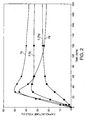
- Figure 1 is a graph showing the rates of formation of ⁇ -caprolactone from cyclohexanone using various antimony trifluoride catalysts.
- Figure 2 is a graph showing the effect of increasing quantity of the HMS-C-SbF3 catalyst on the conversion of cyclohexanone to ⁇ -caprolactone.
- HMS support was synthesised according to the method described by Tanev and Pinnavaia (Science, 1995, vol 267, 865), using 1-aminododecane as a template, which was removed either by calcination of the material for 7 hours in air at 600°C leading to support HMS-C, or by ethanol extraction leading to HMS-E support. Immediately after calcination (avoiding rehydration), the material was treated with a refluxing mixture of antimony trifluoride (for example 1 mmol SbF 3 per gram of HMS-C) in sodium dried toluene for 20 hours followed by solvent evaporation on a rotary evaporator.
- antimony trifluoride for example 1 mmol SbF 3 per gram of HMS-C
- the resulting white fine flowing powder (HMS-C-SbF 3 ) can be handled and stored in air without loss of catalytic activity.
- the HMS was dried at 120°C in a vacuum oven for 4 hours prior to treatment with refluxing antimony trifluoride in sodium dried toluene (HMS-E-SbF 3 ).
- Commercial silica (Merck, Kieselgel 60) was also used as a support after drying at 120°C (K-120-SbF 3 ) or at 600°C (K-600-SbF 3 ).
- the acidic character of the surface of the catalysts was probed via pyridine adsorption, which showed that the catalysts possess both Lewis acid sites (IR band at 1489 cm -1 , possibly due to coordinatively unsaturated antimony centres) and Br ⁇ nsted acid sites (1540 cm -1 , possibly due to the polarisation of surface hydroxyl groups by antimony trifluoride) (see E. V. Benvenutti et al ., J. Chem. Soc. Faraday Trans., 1992, vol. 88(21), 3193-3196).
- the Lewis acid sites can bind water molecules, which will exhibit Br ⁇ nsted acidity.
- antimony trifluoride reacts with the silanols to form some surface species (F 2 Sb-O), which by polarisation of surrounding hydroxyls give rise to several Br ⁇ nsted acid centres. Increasing the amount of antimony trifluoride decreases the amount of available hydroxyls and hence the number of acid sites.
- the nitrogen adsorption isotherms of the various HMS supported catalysts are consistent with the structure of HMS materials. All the prepared catalysts show a lower surface area than that of the starting material (Table 2), which is understandable since the smallest pores may be blocked by antimony trifluoride. The average pore diameter should therefore be larger than that of the parent material, which is the case when the support was pre-treated at 120°C, but not when it was calcined. Surface areas and average pore size diameters of the supported SbF 3 catalysts.
- the catalysts show a high efficiency in catalysing the oxidation of cyclohexanone to ⁇ -caprolactone.
- Excess cyclohexanone 25 ml was used to allow continuous azeotropic removal of the water under reduced pressure ( ⁇ 80mbar/70°C).
- the catalyst 0.5g was mixed with cyclohexanone and heated up to 70°C before hydrogen peroxide (70%, 4.7g) was added dropwise over 30 minutes, using a peristaltic pump.
- 1 H NMR was used to monitor the reaction because of the formation of stable cyclohexanone peroxides, which decompose in GC injectors to give caprolactone, cyclohexanone and other products.
- caprolactone production stops about 15 minutes after the addition of hydrogen peroxide is stopped, and then the caprolactone is gradually converted to hydroxy-caproic acid and low molecular weight polycaprolactone.
- the analysis of the reaction mixture at 60 minutes shows that its active oxygen content is less than 1%, indicating that most of the hydrogen peroxide has reacted.
Landscapes
- Chemical & Material Sciences (AREA)
- Organic Chemistry (AREA)
- Engineering & Computer Science (AREA)
- Materials Engineering (AREA)
- Chemical Kinetics & Catalysis (AREA)
- Crystallography & Structural Chemistry (AREA)
- Catalysts (AREA)
- Organic Low-Molecular-Weight Compounds And Preparation Thereof (AREA)
- Low-Molecular Organic Synthesis Reactions Using Catalysts (AREA)
- Pyrane Compounds (AREA)
Abstract
Description
- This invention relates to a composition comprising antimony trifluoride and silica, a method for the preparation of said composition and certain uses of said composition, in particular its use as catalyst.
- The Baeyer-Villiger oxidation of ketones to lactones or esters (A. Baeyer and V. Villiger, Ber., 1899, vol. 32, page 3625) is a widely used synthetic method and has been comprehensively reviewed (C.H. Hassall, Org. React., 1957, vol. 9, page 73; G.R. Krow, Org. React., 1993, vol. 42, page 251). An example is the oxidation of cyclohexanone to ε-caprolactone, which is of particular industrial interest since it is extensively used in the synthesis of polycaprolactones.
- The most common reagents used for the Baeyer-Villiger oxidation of ketones to lactones or esters are peroxycarboxylic acids (e.g. peracetic acid, m-chloroperbenzoic acid). These are commercially available on a large scale, but their industrial use is impractical for safety and cost reasons. In particular, they are shock sensitive in their pure form and may be explosive in the condensed phase. Moreover, they yield the corresponding carboxylic acid products, which may give rise to separation and recycling problems.
- In order to avoid the use of these potentially dangerous materials and to lower the environmental impact of the waste produced, various other oxidation systems using hydrogen peroxide as the oxidant have been developed. (J. D. McClure et al., J. Org. Chem., 1962, vol. 27, 24; S E. Jacobsen et al., J. Am. Chem. Soc., 1979, vol. 101, 6938; A. Gusso et al., Organometallics, 1994, vol. 13, 3442). For example, the following compounds have been used in conjunction with hydrogen peroxide - boron trifluoride etherate, borax (Na2B4O7), arsenic containing compounds, cationic platinum complexes, molybdenum complexes, methyltrioxorhenium, selenium compounds, titanium silicate, zeolites, sulfonated resins and sodium hydroxide.
- Tanabe and Hattori have made solid superacids based on antimony pentafluoride supported on silica and other metal oxides (K. Tanabe et al., Chem. Lett., 1976, 625), but antimony trifluoride supported on silica has not been reported or even suggested, and neither has its use as catalyst in Baeyer-Villiger oxidations.
- Accordingly, the present invention provides a composition comprising antimony trifluoride and silica. As used herein, "silica" is defined as any form of a dioxide of silicon. Forms of silica may be hydrated. Forms of silica include a crystalline quartz form; a crystalline cristobalite form; a crystalline tridymite form; a crytocrystalline chalcedony form; an amorphous form; an amorphous opal form; an amorphous granular hydrated form (silica-gel); a form including aluminium atoms, such as an aluminosilicate; and a mesoporous form, such as HMS hexagonal mesoporous silica. Preferably the silica comprises HMS or silica-gel; more preferably the silica comprises HMS.
- Preferably the composition is substantially pure. If present, materials other than antimony trifluoride and silica are preferably present in only trace amounts. Preferably the antimony trifluoride is present in an amount of up to about 2 mmol SbF3 per gram of composition, more preferably the antimony trifluoride is present in an amount of between 0.1 and 1.5 mmol, preferably 0.5 to 1.5 mmol SbF3 per gram of composition.
- The present invention further comprises a process comprising the use of the composition comprising antimony trifluoride and silica as a catalyst. Reactions may be carried out as a batch process or in a continuous process. Preferably the composition catalyses an organic oxidation reaction. Preferably hydrogen peroxide is used as oxidising agent. Preferably the composition catalyses an oxidation of a ketone to a lactone or ester, more preferably the composition catalyses the oxidation of cyclohexanone to ε-caprolactone.
- The oxidation of cyclohexanone to ε-caprolactone may be carried out as a batch process or a continuous process. In a batch process, the composition, cyclohexanone and hydrogen peroxide are mixed and allowed to react. In a continuous process, cyclohexanone and hydrogen peroxide may, for example, be passed through a column containing the composition. The product may be removed from the reaction mixture in subsequent separation steps.
- Preferably the process of the oxidation of cyclohexanone to ε-caprolactone comprises the steps of:
- a) mixing the composition with cyclohexanone,
- b) adding hydrogen peroxide to the mixture, and
- c) allowing the reaction to proceed.
-
- These steps can be carried out successively, in a batch process, or simultaneously, in a continuous process.
- Typically, step (a) is performed at a temperature of up to about 70°C. More preferably, step (a) is performed at room temperature. Typically step (b) is performed over a period of between about 5 minutes to about 120 minutes preferably over about 30 minutes. Typically in steps (b) and (c) the reaction is maintained at a temperature of up to about 110°C, preferably at a temperature of between about 60°C and about 100°C, more preferably between about 70°C and 90°C. It has been found that raising the temperature can improve yields but is detrimental to the recovery of the catalyst. Typically step (c) is performed at a pressure at which the reaction mixture boils (in order to remove water azeotropically). Preferably step (c) is performed at a pressure of between 50 and 150 mbar. Preferably steps (a), (b) and (c) is performed under stirring.
- Preferably a molar excess of cyclohexanone is used relative to hydrogen peroxide. Preferably the molar ratio of cyclohexanone : hydrogen peroxide is up to about 5 : 1, more preferably from about 2 : 1 to about 3 : 1, more preferably about 2.5 : 1. Preferably the composition is used in an amount of up to 10g per 100ml of cyclohexanone, more preferably the composition is used in an amount of up to 5g per 100ml of cyclohexanone, even more preferably the composition is used in an amount of up to 2g per 100ml of cyclohexanone.
- Preferably water is constantly removed from the reaction mixture. Any suitable means may be used for removing water, for example azeotropic removal or use of a dessicant. Preferably the water is removed azeotropically.
- Preferably hydrogen peroxide is a 30% to 90% solution in water, more preferably hydrogen peroxide is a 70 to 85% solution in water, for instance an about 85% solution in water. Alternative oxidising agents include agents capable of generating hydrogen peroxide in situ and other peroxides such as sodium percarbonate and sodium perborate.
- The present invention further provides a method for the preparation of the composition comprising antimony trifluoride and silica, comprising the step of treating silica with antimony trifluoride. Preferably the silica is selected from the group consisting of HMS and silica-gel.
- Preferably the method comprises the steps of:
- a) synthesising HMS using a template,
- b) removing the template either by calcination to yield a calcinated HMS support (herein exemplified as HMS-C) or by solvent extraction and subsequent drying to yield a dried HMS support (herein exemplified as HMS-E), and
- c) treating the calcinated HMS with antimony trifluoride to yield a composition of the present invention or treating the dried HMS with antimony trifluoride to yield a composition of the present invention.
-
- Alternatively the method comprises the steps of:
- a) calcinating silica-gel to yield a calcinated silica-gel support (herein exemplified as K-600), or drying silica-gel to yield a dried silica-gel support (herein exemplified as K-120), and
- b) treating the calcinated silica-gel with antimony trifluoride to yield a composition of the present invention or treating the dried silica-gel with antimony trifluoride to yield a composition of the present invention.
-
- Preferably the calcination of the silica is performed at a temperature in the range of about 250°C to about 650°C. Preferably the drying of the silica is performed at a temperature in the range of about 100°C to about 250°C.
- Preferably the step of treating the silica with antimony trifluoride comprises the step of treating the silica with a refluxing mixture of antimony trifluoride in toluene.
- Figure 1 is a graph showing the rates of formation of ε-caprolactone from cyclohexanone using various antimony trifluoride catalysts.
- Figure 2 is a graph showing the effect of increasing quantity of the HMS-C-SbF3 catalyst on the conversion of cyclohexanone to ε-caprolactone.
- The present invention shall now be described by way of examples in order to illustrate the invention without however limiting its scope.
- HMS support was synthesised according to the method described by Tanev and Pinnavaia (Science, 1995, vol 267, 865), using 1-aminododecane as a template, which was removed either by calcination of the material for 7 hours in air at 600°C leading to support HMS-C, or by ethanol extraction leading to HMS-E support. Immediately after calcination (avoiding rehydration), the material was treated with a refluxing mixture of antimony trifluoride (for example 1 mmol SbF3 per gram of HMS-C) in sodium dried toluene for 20 hours followed by solvent evaporation on a rotary evaporator. The resulting white fine flowing powder (HMS-C-SbF3) can be handled and stored in air without loss of catalytic activity. In the case where the template was removed by ethanol extraction, the HMS was dried at 120°C in a vacuum oven for 4 hours prior to treatment with refluxing antimony trifluoride in sodium dried toluene (HMS-E-SbF3). Commercial silica (Merck, Kieselgel 60) was also used as a support after drying at 120°C (K-120-SbF3) or at 600°C (K-600-SbF3).
- The DRIFT spectra of the various catalysts prepared showed no apparent difference to those of underivatised HMS or Kieselgel. Simultaneous Thermal Analysis (STA) traces of various batches of the catalyst, when compared with pure SbF3, suggest that antimony trifluoride reacted with the silica surface to yield as yet undetermined surface species. A 19F CP-MAS-NMR was performed on a HMS-E-SbF3 with CFCl3 as internal standard. The broad peak at -63.8 ppm observed in the composition but is replaced by two peaks at - 122.2 ppm (sharp) and -154 ppm (broad), indicating that SbF3 and silica have reacted. The acidic character of the surface of the catalysts was probed via pyridine adsorption, which showed that the catalysts possess both Lewis acid sites (IR band at 1489 cm-1, possibly due to coordinatively unsaturated antimony centres) and Brønsted acid sites (1540 cm-1, possibly due to the polarisation of surface hydroxyl groups by antimony trifluoride) (see E. V. Benvenutti et al., J. Chem. Soc. Faraday Trans., 1992, vol. 88(21), 3193-3196). In an aqueous environment, the Lewis acid sites can bind water molecules, which will exhibit Brønsted acidity. By potentiometrically titrating aqueous suspensions of the catalysts with sodium hydroxide, the number of acid sites in the catalysts could be determined (Table 1).
Number of acid sites on the supported SbF3 catalysts measured by titration. Material Loading (mmol SbF3 per gram of composition) Total number of acid sites Number of acid sites per SbF3 molecule K-600-SbF3 1 1.63 1.63 HMS-C-SbF3 0.5 1.5 3 HMS-C-SbF3 1 1.94 1.94 HMS-C-SbF3 2 3.3 1.65 HMS-E-SbF3 1 2.1 2.1 - At the same loading of antimony trifluoride, fewer acid sites are formed on the calcined silica-gel support than on calcined HMS support. The drying temperature of HMS supports does not seem to significantly influence the concentration of acid sites generated, but the SbF3 loading does. At a loading of 0.5 mmol SbF3 per gram of composition, three acid sites are generated per SbF3 molecule, while at 1 mmol SbF3 per gram of composition, only two acid sites per SbF3 molecule, and at 2 mmol SbF3 per gram of composition only ca. 1.5 acid site per SbF3 molecule are generated. Without limitation to the scope of the present invention, an explanation for this could be that antimony trifluoride reacts with the silanols to form some surface species (F2Sb-O), which by polarisation of surrounding hydroxyls give rise to several Brønsted acid centres. Increasing the amount of antimony trifluoride decreases the amount of available hydroxyls and hence the number of acid sites.
- The nitrogen adsorption isotherms of the various HMS supported catalysts are consistent with the structure of HMS materials. All the prepared catalysts show a lower surface area than that of the starting material (Table 2), which is understandable since the smallest pores may be blocked by antimony trifluoride. The average pore diameter should therefore be larger than that of the parent material, which is the case when the support was pre-treated at 120°C, but not when it was calcined.
Surface areas and average pore size diameters of the supported SbF3 catalysts. Material Loading (mmol SbF3 per gram of composition) BET Surface Area (m2/g) Average Pore Diameter (nm) Kieselgel 60 - 529 5.7 K-120-SbF3 1 383.5 5.9 K-600-SbF3 1 395 5.7 Calcined HMS - 1151 3.05 HMS-C-SbF3 0.5 835 3 HMS-C-SbF3 1 843 2.98 HMS-C-SbF3 2 712 2.95 EtOH extracted HMS - 1254 3.7 HMS-E-SbF3 1 998 4.1 - The catalysts show a high efficiency in catalysing the oxidation of cyclohexanone to ε-caprolactone. Excess cyclohexanone (25 ml) was used to allow continuous azeotropic removal of the water under reduced pressure (∼80mbar/70°C). The catalyst (0.5g) was mixed with cyclohexanone and heated up to 70°C before hydrogen peroxide (70%, 4.7g) was added dropwise over 30 minutes, using a peristaltic pump. 1H NMR was used to monitor the reaction because of the formation of stable cyclohexanone peroxides, which decompose in GC injectors to give caprolactone, cyclohexanone and other products.
- Control reactions with no catalyst and with underivatised HMS were also carried out. Under those conditions, cyclohexanone oxidation did not occur to more than 2% (based on the amount of hydrogen peroxide introduced) after six hours. Antimony trifluoride without silica support did catalyse the reaction, but the kinetics of the oxidation was much slower than with supported antimony trifluoride (Figure 1). At equivalent SbF3 loading and support pre-treatment, HMS supported catalysts are more efficient than their Kieselgel analogues (Figure 1), possibly because of their higher surface area.
- Re-use experiments showed that the catalyst does not lose activity, but actually gets slightly more active from one run to the other, increasing the caprolactone yield from 27% to 33% between the first and third use of HMS-E-SbF3. The effect of drying the support prior to reacting antimony trifluoride with its surface is very important for the catalytic properties of the resulting material. With SbF3 supported on calcined HMS, which has not been allowed to rehydrate, better yields of caprolactone can be obtained than with SbF3 supported on HMS dried at 120°C. Both the water content of the support and the nature of its surface before SbF3 grafting are important to the final catalytic properties, possibly because the calcined HMS surface mainly presents siloxane bridges, as opposed to silanols for the HMS dried at 120°C.
- When HMS-C-SbF3 is used, caprolactone production stops about 15 minutes after the addition of hydrogen peroxide is stopped, and then the caprolactone is gradually converted to hydroxy-caproic acid and low molecular weight polycaprolactone. The analysis of the reaction mixture at 60 minutes shows that its active oxygen content is less than 1%, indicating that most of the hydrogen peroxide has reacted.
- Variation of the quantity of catalyst (HMS-C-SbF3) at 70°C showed that the reaction rate is dependent on the amount of catalyst used, but that the quantity of polycaprolactone and hydroxy-caproic acid produced is even more influenced by this factor. Hence, larger quantities of catalyst lead to poor caprolactone yield and high yields of hydroxy-caproic acid and polycaprolactone (Figure 2).
- The effect of the SbF3 loading on the activity of the HMS-C-SbF3 catalyst has also been investigated. When it is increased to 2 mmol SbF3 per gram of composition, the initial rate of the reaction is faster and the best caprolactone yield obtained at 70°C is 40.3% (34.6% with a loading of 1 mmol SbF3 per gram of composition, but the amount of by-products is also increased. On the other hand, with a lower loading of 0.5 mmol SbF3 per gram of composition, even though the initial rate of reaction is slightly slower, the yield of caprolactone after 45 minutes is comparable to that obtained with a 1 mmol SbF3 per gram of composition catalyst, and the by-products formation is halved.
- When the reaction is run at 90°C (130 mbar), the efficiency of the catalysts is even greater, enabling yields of ca. 70% of caprolactone to be obtained in 45 minutes. At this temperature, 1 and 2 mmol SbF3 per gram of catalysts based on calcined HMS show the same activity and give comparable amounts of by-products. But when the amount of catalyst used is increased, so is the amount of by-products formed.
Claims (14)
- A composition comprising antimony trifluoride and silica.
- The composition of claim 1, wherein the silica comprises hexagonal mesoporous silica (HMS).
- The composition of claim 1, wherein the silica comprises silica-gel.
- The composition of any one of claims 1 to 3, wherein the antimony trifluoride is present in an amount of between 0.1 and 1.5 mmol SbF3 per gram of composition.
- A process comprising the use of the composition of any one of claims 1 to 4 as a catalyst.
- The process of claim 5, wherein the composition catalyses the oxidation of cyclohexanone to ε-caprolactone.
- The process of claim 6 comprising the steps of:a) mixing the composition with cyclohexanone,b) adding hydrogen peroxide to the mixture, andc) leaving the reaction to proceed.
- The process of claim 7, wherein step (a) is performed at a temperature of up to about 70°C.
- The process of claim 7 or 8, wherein step (b) is performed over a period of between about 5 minutes and about 120 minutes.
- The process of any one of claims 7 to 9, wherein in steps (b) and (c) the reaction is maintained at a temperature of between about 60°C and 100°C.
- The process of any one of claims 7 to 10, wherein step (c) is performed at a pressure of between 50 and 150 mbar.
- The process of any one of claims 7 to 11, wherein the molar ratio of cyclohexanone : hydrogen peroxide is from about 2 : 1 to about 3 : 1.
- The process of any one of claims 6 to 12, wherein the composition is used in an amount of up to 2g per 100ml of cyclohexanone.
- A method for the preparation of the composition of any of claims 1 to 4, comprising the step of treating silica with antimony trifluoride.
Priority Applications (5)
| Application Number | Priority Date | Filing Date | Title |
|---|---|---|---|
| AT00300705T ATE359122T1 (en) | 2000-01-31 | 2000-01-31 | METHOD FOR OXIDATION USING A CATALYST OF A COMPOSITION CONTAINING ANTIMONE TRIFLUORIDE AND SILICON DIOXIDE |
| EP00300705A EP1121980B1 (en) | 2000-01-31 | 2000-01-31 | Process of oxidation with a catalyst comprising a composition of antimony trifluoride and silica |
| DE60034303T DE60034303T2 (en) | 2000-01-31 | 2000-01-31 | A method of oxidation with a catalyst of an antimony trifluoride and silica containing composition |
| US09/771,947 US6531615B2 (en) | 2000-01-31 | 2001-01-30 | Process for the oxidation of cyclohexanone to ε-caprolactone |
| JP2001023660A JP5026639B2 (en) | 2000-01-31 | 2001-01-31 | Composition comprising antimony trifluoride and silica |
Applications Claiming Priority (1)
| Application Number | Priority Date | Filing Date | Title |
|---|---|---|---|
| EP00300705A EP1121980B1 (en) | 2000-01-31 | 2000-01-31 | Process of oxidation with a catalyst comprising a composition of antimony trifluoride and silica |
Publications (2)
| Publication Number | Publication Date |
|---|---|
| EP1121980A1 true EP1121980A1 (en) | 2001-08-08 |
| EP1121980B1 EP1121980B1 (en) | 2007-04-11 |
Family
ID=8172671
Family Applications (1)
| Application Number | Title | Priority Date | Filing Date |
|---|---|---|---|
| EP00300705A Expired - Lifetime EP1121980B1 (en) | 2000-01-31 | 2000-01-31 | Process of oxidation with a catalyst comprising a composition of antimony trifluoride and silica |
Country Status (5)
| Country | Link |
|---|---|
| US (1) | US6531615B2 (en) |
| EP (1) | EP1121980B1 (en) |
| JP (1) | JP5026639B2 (en) |
| AT (1) | ATE359122T1 (en) |
| DE (1) | DE60034303T2 (en) |
Cited By (4)
| Publication number | Priority date | Publication date | Assignee | Title |
|---|---|---|---|---|
| CN103373977A (en) * | 2012-04-27 | 2013-10-30 | 中国石油化工股份有限公司 | Oxidation reaction method of cyclic ketone compound |
| CN103373975A (en) * | 2012-04-27 | 2013-10-30 | 中国石油化工股份有限公司 | Oxidation method of cycloparaffin |
| CN103588747A (en) * | 2012-08-17 | 2014-02-19 | 中国石油化工股份有限公司 | Production method and apparatus for epsilon-caprolactone |
| US12478699B2 (en) | 2019-02-19 | 2025-11-25 | Delox—Investigação, Processos e Equipamentos Científicos, LDA | Sterilization particle containing a sterilization material |
Families Citing this family (6)
| Publication number | Priority date | Publication date | Assignee | Title |
|---|---|---|---|---|
| CN1310836C (en) * | 2002-02-08 | 2007-04-18 | 住友化学工业株式会社 | Metallized mesoporous silicate and method of oxidation with the same |
| CL2013003356A1 (en) | 2013-11-22 | 2014-08-08 | Univ Pontificia Catolica Chile | Mutants of the gene coding for the phenylacetone monooxygenase (pamo) enzyme isolated from fusca or thermononospora fusca thermofibide with substitutions at positions 93.94, and 440 (n, dyf, respectively) and specific combinations of positions 441,442,443 and / or 444 (god , poe, t, v, iowyq respectively) with high performance as catalysts in the conversion of cyclohexanone to epailon-caprolactone and high thermal stability, DNA conditioning and encoded amino acidic sequences. |
| EP2899280A1 (en) | 2014-01-28 | 2015-07-29 | Ernst-Moritz-Arndt-Universität Greifswald | Process for the enzymatic production of oligo-/polyesters |
| US11208394B2 (en) | 2018-09-17 | 2021-12-28 | Regents Of The University Of Minnesota | Chemical process to manufacture branched-caprolactone |
| CN110818671B (en) | 2019-11-28 | 2021-04-20 | 浙江大学 | Preparation method of lactone compounds |
| FR3115320B1 (en) | 2020-10-19 | 2023-05-19 | Safran Aircraft Engines | TURBOMACHINE MODULE INCLUDING STUD PAIRS LOCKING PLATES |
Citations (4)
| Publication number | Priority date | Publication date | Assignee | Title |
|---|---|---|---|---|
| GB1070322A (en) * | 1963-04-24 | 1967-06-01 | Electro Chimie Metal | Process for the preparation of 6-formyloxy caproic acids and derivatives thereof |
| EP0054855A1 (en) * | 1980-12-23 | 1982-06-30 | Ec Erdölchemie Gmbh | Process for the preparation of i-alkenes, catalyst useful therefor and process for the production thereof |
| US4870192A (en) * | 1985-08-12 | 1989-09-26 | Mobil Oil Corporation | Production of lactones and omega-hydroxycarboxylic acids |
| US5712213A (en) * | 1994-06-22 | 1998-01-27 | Institut Francaise Du Petrole | Rejuvenation process for a solid alkylation catalyst |
Family Cites Families (12)
| Publication number | Priority date | Publication date | Assignee | Title |
|---|---|---|---|---|
| US3025306A (en) * | 1960-05-31 | 1962-03-13 | Union Carbide Corp | Process for the production of epsiloncaprolactones and carboxylic acids |
| FR2460285A1 (en) * | 1979-06-29 | 1981-01-23 | Interox | PROCESS FOR THE PRODUCTION OF CARBOXYL COMPOUNDS |
| DE3117053A1 (en) * | 1981-04-29 | 1982-11-18 | EC Erdölchemie GmbH, 5000 Köln | Process for preparing isobutene, catalyst suitable therefor, and method for preparing the catalyst |
| FR2500453A1 (en) * | 1981-02-20 | 1982-08-27 | Ugine Kuhlmann | PROCESS FOR OBTAINING EPSILON-CAPROLACTONE |
| FR2519985A1 (en) * | 1982-01-15 | 1983-07-22 | Ugine Kuhlmann | IMPROVED PROCESS FOR THE MANUFACTURE OF E-CAPROLACTONE |
| JP2503512B2 (en) * | 1987-07-01 | 1996-06-05 | 三菱瓦斯化学株式会社 | Process for producing α, β-unsaturated aliphatic monocarboxylic acid or ester thereof |
| WO1992004394A1 (en) * | 1990-09-11 | 1992-03-19 | E.I. Du Pont De Nemours And Company | Fluidized bed ring-opening polymerization |
| US5883156A (en) * | 1993-08-20 | 1999-03-16 | Nippon Paint Co., Ltd. | Biodegradable resin composition ADN antifouling paint composition |
| JP3902260B2 (en) * | 1996-05-22 | 2007-04-04 | 株式会社豊田中央研究所 | Metal halide-supported mesopore material, metal hydroxide-supported mesopore material, metal oxide-supported mesopore material, metal-supported mesopore material, and production methods thereof |
| EP1056683A2 (en) * | 1997-11-14 | 2000-12-06 | Du Pont Pharmaceuticals Company | Process for the selective oxidation of organic compounds |
| EP0972771A4 (en) * | 1997-12-26 | 2005-06-22 | Daicel Chem | EPSILON-CAPROLACTONE, PROCESS FOR PRODUCING THE SAME, POLYCARBOLACTONE PRODUCED THEREFROM, AND PROCESS FOR PRODUCING THE POLYCARBOLACTONE |
| JP2000256342A (en) * | 1999-03-11 | 2000-09-19 | Daicel Chem Ind Ltd | Method for producing ester or lactone |
-
2000
- 2000-01-31 AT AT00300705T patent/ATE359122T1/en not_active IP Right Cessation
- 2000-01-31 DE DE60034303T patent/DE60034303T2/en not_active Expired - Lifetime
- 2000-01-31 EP EP00300705A patent/EP1121980B1/en not_active Expired - Lifetime
-
2001
- 2001-01-30 US US09/771,947 patent/US6531615B2/en not_active Expired - Lifetime
- 2001-01-31 JP JP2001023660A patent/JP5026639B2/en not_active Expired - Lifetime
Patent Citations (4)
| Publication number | Priority date | Publication date | Assignee | Title |
|---|---|---|---|---|
| GB1070322A (en) * | 1963-04-24 | 1967-06-01 | Electro Chimie Metal | Process for the preparation of 6-formyloxy caproic acids and derivatives thereof |
| EP0054855A1 (en) * | 1980-12-23 | 1982-06-30 | Ec Erdölchemie Gmbh | Process for the preparation of i-alkenes, catalyst useful therefor and process for the production thereof |
| US4870192A (en) * | 1985-08-12 | 1989-09-26 | Mobil Oil Corporation | Production of lactones and omega-hydroxycarboxylic acids |
| US5712213A (en) * | 1994-06-22 | 1998-01-27 | Institut Francaise Du Petrole | Rejuvenation process for a solid alkylation catalyst |
Cited By (7)
| Publication number | Priority date | Publication date | Assignee | Title |
|---|---|---|---|---|
| CN103373977A (en) * | 2012-04-27 | 2013-10-30 | 中国石油化工股份有限公司 | Oxidation reaction method of cyclic ketone compound |
| CN103373975A (en) * | 2012-04-27 | 2013-10-30 | 中国石油化工股份有限公司 | Oxidation method of cycloparaffin |
| CN103373977B (en) * | 2012-04-27 | 2015-07-01 | 中国石油化工股份有限公司 | Oxidation reaction method of cyclic ketone compound |
| CN103373975B (en) * | 2012-04-27 | 2015-07-29 | 中国石油化工股份有限公司 | A kind of Oxidation method of cycloparaffin |
| CN103588747A (en) * | 2012-08-17 | 2014-02-19 | 中国石油化工股份有限公司 | Production method and apparatus for epsilon-caprolactone |
| CN103588747B (en) * | 2012-08-17 | 2015-05-20 | 中国石油化工股份有限公司 | Production method and apparatus for epsilon-caprolactone |
| US12478699B2 (en) | 2019-02-19 | 2025-11-25 | Delox—Investigação, Processos e Equipamentos Científicos, LDA | Sterilization particle containing a sterilization material |
Also Published As
| Publication number | Publication date |
|---|---|
| EP1121980B1 (en) | 2007-04-11 |
| JP2001232205A (en) | 2001-08-28 |
| DE60034303T2 (en) | 2008-01-03 |
| DE60034303D1 (en) | 2007-05-24 |
| US20010018399A1 (en) | 2001-08-30 |
| US6531615B2 (en) | 2003-03-11 |
| JP5026639B2 (en) | 2012-09-12 |
| ATE359122T1 (en) | 2007-05-15 |
Similar Documents
| Publication | Publication Date | Title |
|---|---|---|
| Hulea et al. | Styrene oxidation with H2O2 over Ti-containing molecular sieves with MFI, BEA and MCM-41 topologies | |
| CA2423666C (en) | Crystalline mww-type titanosilicate, its preparation and use thereof for producing epoxides | |
| JP3049086B2 (en) | Oxidation of saturated hydrocarbon chains | |
| Trong On et al. | Catalytic epoxidation of α-pinene over bifunctional mesoporous molecular sieves | |
| Li et al. | Effect of sodium ions on propylene epoxidation catalyzed by titanium silicalite | |
| Blanc et al. | The preparation and use of novel immobilised guanidine catalysts in base-catalysed epoxidation and condensation reactions | |
| KR20020031387A (en) | Process for producing propylene oxide | |
| EP1121980B1 (en) | Process of oxidation with a catalyst comprising a composition of antimony trifluoride and silica | |
| KR20120109603A (en) | Process for making titanium-mww zeolite | |
| US5409876A (en) | Process for oxidating paraffinic compounds with oxygen | |
| Robles-Dutenhefner et al. | Solvent-free liquid-phase autoxidation of monoterpenes catalyzed by sol–gel Co/SiO2 | |
| KR19990087478A (en) | Catalyst composition containing no noble metal | |
| US20080015371A1 (en) | Catalyst | |
| Liu et al. | Isomorphous incorporation of tin ions into extra-large pore framework with high-stannum content as efficient Lewis acid catalyst | |
| Davies et al. | Oxidation of crotyl alcohol using Ti-β and Ti-MCM-41 catalysts | |
| RU2359964C2 (en) | Method for olefin epoxidation with simultaneous production of nylon precursor | |
| US4876372A (en) | Method for preparing epichlorohydrins | |
| Lambert et al. | The catalytic oxidation of cyclohexanone to caprolactone using hexagonal mesoporous silica supported SbF 3 | |
| Samantaray et al. | Amine-modified titania–silica mixed oxides: 1. Effect of amine concentration and activation temperature towards epoxidation of cyclohexene | |
| US20040034258A1 (en) | Crystalline MWW-type titanosilicate catalyst for producing oxidized compound, production process for the catalyst, and process for producing oxidized compound by using the catalyst | |
| JPH06211821A (en) | Method for epoxidizing olefin compound | |
| KR900004926B1 (en) | Method for preparing epichlorohydrins | |
| JP4088433B2 (en) | Method for oxidizing olefins and method for producing oxygenated compounds using the same | |
| Cheng et al. | Characterization and catalytic activity of hydrothermally treated TS-1/SiO2 in propylene epoxidation | |
| CN111085270A (en) | Preparation method of ammonium octamolybdate-based supramolecular material catalyst |
Legal Events
| Date | Code | Title | Description |
|---|---|---|---|
| PUAI | Public reference made under article 153(3) epc to a published international application that has entered the european phase |
Free format text: ORIGINAL CODE: 0009012 |
|
| AK | Designated contracting states |
Kind code of ref document: A1 Designated state(s): AT BE CH CY DE DK ES FI FR GB GR IE IT LI LU MC NL PT SE |
|
| AX | Request for extension of the european patent |
Free format text: AL;LT;LV;MK;RO;SI |
|
| AKX | Designation fees paid | ||
| REG | Reference to a national code |
Ref country code: DE Ref legal event code: 8566 |
|
| 17P | Request for examination filed |
Effective date: 20020408 |
|
| RBV | Designated contracting states (corrected) |
Designated state(s): AT BE CH CY DE DK ES FI FR GB GR IE IT LI LU MC NL PT SE |
|
| 17Q | First examination report despatched |
Effective date: 20041118 |
|
| RTI1 | Title (correction) |
Free format text: PROCESS OF OXIDATION WITH A CATALYST COMPRISING A COMPOSITION OF ANTIMONY TRIFLUORIDE AND SILICA |
|
| GRAP | Despatch of communication of intention to grant a patent |
Free format text: ORIGINAL CODE: EPIDOSNIGR1 |
|
| GRAS | Grant fee paid |
Free format text: ORIGINAL CODE: EPIDOSNIGR3 |
|
| GRAA | (expected) grant |
Free format text: ORIGINAL CODE: 0009210 |
|
| AK | Designated contracting states |
Kind code of ref document: B1 Designated state(s): AT BE CH CY DE DK ES FI FR GB GR IE IT LI LU MC NL PT SE |
|
| PG25 | Lapsed in a contracting state [announced via postgrant information from national office to epo] |
Ref country code: LI Free format text: LAPSE BECAUSE OF FAILURE TO SUBMIT A TRANSLATION OF THE DESCRIPTION OR TO PAY THE FEE WITHIN THE PRESCRIBED TIME-LIMIT Effective date: 20070411 Ref country code: FI Free format text: LAPSE BECAUSE OF FAILURE TO SUBMIT A TRANSLATION OF THE DESCRIPTION OR TO PAY THE FEE WITHIN THE PRESCRIBED TIME-LIMIT Effective date: 20070411 Ref country code: CH Free format text: LAPSE BECAUSE OF FAILURE TO SUBMIT A TRANSLATION OF THE DESCRIPTION OR TO PAY THE FEE WITHIN THE PRESCRIBED TIME-LIMIT Effective date: 20070411 |
|
| REG | Reference to a national code |
Ref country code: GB Ref legal event code: FG4D |
|
| REG | Reference to a national code |
Ref country code: CH Ref legal event code: EP |
|
| REG | Reference to a national code |
Ref country code: IE Ref legal event code: FG4D |
|
| REF | Corresponds to: |
Ref document number: 60034303 Country of ref document: DE Date of ref document: 20070524 Kind code of ref document: P |
|
| PG25 | Lapsed in a contracting state [announced via postgrant information from national office to epo] |
Ref country code: SE Free format text: LAPSE BECAUSE OF FAILURE TO SUBMIT A TRANSLATION OF THE DESCRIPTION OR TO PAY THE FEE WITHIN THE PRESCRIBED TIME-LIMIT Effective date: 20070711 |
|
| PG25 | Lapsed in a contracting state [announced via postgrant information from national office to epo] |
Ref country code: ES Free format text: LAPSE BECAUSE OF FAILURE TO SUBMIT A TRANSLATION OF THE DESCRIPTION OR TO PAY THE FEE WITHIN THE PRESCRIBED TIME-LIMIT Effective date: 20070722 |
|
| PG25 | Lapsed in a contracting state [announced via postgrant information from national office to epo] |
Ref country code: PT Free format text: LAPSE BECAUSE OF FAILURE TO SUBMIT A TRANSLATION OF THE DESCRIPTION OR TO PAY THE FEE WITHIN THE PRESCRIBED TIME-LIMIT Effective date: 20070911 |
|
| NLV1 | Nl: lapsed or annulled due to failure to fulfill the requirements of art. 29p and 29m of the patents act | ||
| REG | Reference to a national code |
Ref country code: CH Ref legal event code: PL |
|
| PG25 | Lapsed in a contracting state [announced via postgrant information from national office to epo] |
Ref country code: AT Free format text: LAPSE BECAUSE OF FAILURE TO SUBMIT A TRANSLATION OF THE DESCRIPTION OR TO PAY THE FEE WITHIN THE PRESCRIBED TIME-LIMIT Effective date: 20070411 |
|
| EN | Fr: translation not filed | ||
| PG25 | Lapsed in a contracting state [announced via postgrant information from national office to epo] |
Ref country code: BE Free format text: LAPSE BECAUSE OF FAILURE TO SUBMIT A TRANSLATION OF THE DESCRIPTION OR TO PAY THE FEE WITHIN THE PRESCRIBED TIME-LIMIT Effective date: 20070411 |
|
| PG25 | Lapsed in a contracting state [announced via postgrant information from national office to epo] |
Ref country code: NL Free format text: LAPSE BECAUSE OF FAILURE TO SUBMIT A TRANSLATION OF THE DESCRIPTION OR TO PAY THE FEE WITHIN THE PRESCRIBED TIME-LIMIT Effective date: 20070411 |
|
| PLBE | No opposition filed within time limit |
Free format text: ORIGINAL CODE: 0009261 |
|
| STAA | Information on the status of an ep patent application or granted ep patent |
Free format text: STATUS: NO OPPOSITION FILED WITHIN TIME LIMIT |
|
| 26N | No opposition filed |
Effective date: 20080114 |
|
| PG25 | Lapsed in a contracting state [announced via postgrant information from national office to epo] |
Ref country code: FR Free format text: LAPSE BECAUSE OF FAILURE TO SUBMIT A TRANSLATION OF THE DESCRIPTION OR TO PAY THE FEE WITHIN THE PRESCRIBED TIME-LIMIT Effective date: 20071207 Ref country code: IT Free format text: LAPSE BECAUSE OF FAILURE TO SUBMIT A TRANSLATION OF THE DESCRIPTION OR TO PAY THE FEE WITHIN THE PRESCRIBED TIME-LIMIT Effective date: 20070411 Ref country code: GR Free format text: LAPSE BECAUSE OF FAILURE TO SUBMIT A TRANSLATION OF THE DESCRIPTION OR TO PAY THE FEE WITHIN THE PRESCRIBED TIME-LIMIT Effective date: 20070712 |
|
| REG | Reference to a national code |
Ref country code: GB Ref legal event code: 732E |
|
| PG25 | Lapsed in a contracting state [announced via postgrant information from national office to epo] |
Ref country code: MC Free format text: LAPSE BECAUSE OF NON-PAYMENT OF DUE FEES Effective date: 20080131 |
|
| PG25 | Lapsed in a contracting state [announced via postgrant information from national office to epo] |
Ref country code: FR Free format text: LAPSE BECAUSE OF FAILURE TO SUBMIT A TRANSLATION OF THE DESCRIPTION OR TO PAY THE FEE WITHIN THE PRESCRIBED TIME-LIMIT Effective date: 20070411 |
|
| PG25 | Lapsed in a contracting state [announced via postgrant information from national office to epo] |
Ref country code: IE Free format text: LAPSE BECAUSE OF NON-PAYMENT OF DUE FEES Effective date: 20080131 |
|
| PG25 | Lapsed in a contracting state [announced via postgrant information from national office to epo] |
Ref country code: CY Free format text: LAPSE BECAUSE OF FAILURE TO SUBMIT A TRANSLATION OF THE DESCRIPTION OR TO PAY THE FEE WITHIN THE PRESCRIBED TIME-LIMIT Effective date: 20070411 |
|
| PG25 | Lapsed in a contracting state [announced via postgrant information from national office to epo] |
Ref country code: DK Free format text: LAPSE BECAUSE OF FAILURE TO SUBMIT A TRANSLATION OF THE DESCRIPTION OR TO PAY THE FEE WITHIN THE PRESCRIBED TIME-LIMIT Effective date: 20070411 |
|
| PG25 | Lapsed in a contracting state [announced via postgrant information from national office to epo] |
Ref country code: LU Free format text: LAPSE BECAUSE OF NON-PAYMENT OF DUE FEES Effective date: 20080131 |
|
| PGFP | Annual fee paid to national office [announced via postgrant information from national office to epo] |
Ref country code: DE Payment date: 20190118 Year of fee payment: 20 Ref country code: GB Payment date: 20190115 Year of fee payment: 20 |
|
| REG | Reference to a national code |
Ref country code: DE Ref legal event code: R082 Ref document number: 60034303 Country of ref document: DE Representative=s name: LEDERER & KELLER PATENTANWAELTE PARTNERSCHAFT , DE Ref country code: DE Ref legal event code: R081 Ref document number: 60034303 Country of ref document: DE Owner name: INGEVITY UK LTD, WARRINGTON, GB Free format text: FORMER OWNER: PERSTORP SPECIALTY CHEMICALS AB, PERSTORP, SE |
|
| REG | Reference to a national code |
Ref country code: GB Ref legal event code: 732E Free format text: REGISTERED BETWEEN 20190829 AND 20190904 |
|
| REG | Reference to a national code |
Ref country code: DE Ref legal event code: R071 Ref document number: 60034303 Country of ref document: DE |
|
| REG | Reference to a national code |
Ref country code: GB Ref legal event code: PE20 Expiry date: 20200130 |
|
| PG25 | Lapsed in a contracting state [announced via postgrant information from national office to epo] |
Ref country code: GB Free format text: LAPSE BECAUSE OF EXPIRATION OF PROTECTION Effective date: 20200130 |