EP1120712A1 - Web application system having session management/distributed management function and mechanism for operating the same - Google Patents
Web application system having session management/distributed management function and mechanism for operating the same Download PDFInfo
- Publication number
- EP1120712A1 EP1120712A1 EP00940913A EP00940913A EP1120712A1 EP 1120712 A1 EP1120712 A1 EP 1120712A1 EP 00940913 A EP00940913 A EP 00940913A EP 00940913 A EP00940913 A EP 00940913A EP 1120712 A1 EP1120712 A1 EP 1120712A1
- Authority
- EP
- European Patent Office
- Prior art keywords
- server
- processing
- application system
- web application
- web
- Prior art date
- Legal status (The legal status is an assumption and is not a legal conclusion. Google has not performed a legal analysis and makes no representation as to the accuracy of the status listed.)
- Withdrawn
Links
Images










Classifications
-
- G—PHYSICS
- G06—COMPUTING OR CALCULATING; COUNTING
- G06F—ELECTRIC DIGITAL DATA PROCESSING
- G06F17/00—Digital computing or data processing equipment or methods, specially adapted for specific functions
-
- H—ELECTRICITY
- H04—ELECTRIC COMMUNICATION TECHNIQUE
- H04L—TRANSMISSION OF DIGITAL INFORMATION, e.g. TELEGRAPHIC COMMUNICATION
- H04L41/00—Arrangements for maintenance, administration or management of data switching networks, e.g. of packet switching networks
- H04L41/22—Arrangements for maintenance, administration or management of data switching networks, e.g. of packet switching networks comprising specially adapted graphical user interfaces [GUI]
-
- G—PHYSICS
- G06—COMPUTING OR CALCULATING; COUNTING
- G06F—ELECTRIC DIGITAL DATA PROCESSING
- G06F15/00—Digital computers in general; Data processing equipment in general
- G06F15/16—Combinations of two or more digital computers each having at least an arithmetic unit, a program unit and a register, e.g. for a simultaneous processing of several programs
-
- H—ELECTRICITY
- H04—ELECTRIC COMMUNICATION TECHNIQUE
- H04L—TRANSMISSION OF DIGITAL INFORMATION, e.g. TELEGRAPHIC COMMUNICATION
- H04L67/00—Network arrangements or protocols for supporting network services or applications
- H04L67/01—Protocols
- H04L67/10—Protocols in which an application is distributed across nodes in the network
- H04L67/1001—Protocols in which an application is distributed across nodes in the network for accessing one among a plurality of replicated servers
- H04L67/1004—Server selection for load balancing
- H04L67/1008—Server selection for load balancing based on parameters of servers, e.g. available memory or workload
-
- H—ELECTRICITY
- H04—ELECTRIC COMMUNICATION TECHNIQUE
- H04L—TRANSMISSION OF DIGITAL INFORMATION, e.g. TELEGRAPHIC COMMUNICATION
- H04L67/00—Network arrangements or protocols for supporting network services or applications
- H04L67/01—Protocols
- H04L67/10—Protocols in which an application is distributed across nodes in the network
- H04L67/1001—Protocols in which an application is distributed across nodes in the network for accessing one among a plurality of replicated servers
- H04L67/1029—Protocols in which an application is distributed across nodes in the network for accessing one among a plurality of replicated servers using data related to the state of servers by a load balancer
-
- H—ELECTRICITY
- H04—ELECTRIC COMMUNICATION TECHNIQUE
- H04L—TRANSMISSION OF DIGITAL INFORMATION, e.g. TELEGRAPHIC COMMUNICATION
- H04L67/00—Network arrangements or protocols for supporting network services or applications
- H04L67/50—Network services
- H04L67/56—Provisioning of proxy services
- H04L67/562—Brokering proxy services
-
- H—ELECTRICITY
- H04—ELECTRIC COMMUNICATION TECHNIQUE
- H04L—TRANSMISSION OF DIGITAL INFORMATION, e.g. TELEGRAPHIC COMMUNICATION
- H04L67/00—Network arrangements or protocols for supporting network services or applications
- H04L67/01—Protocols
- H04L67/02—Protocols based on web technology, e.g. hypertext transfer protocol [HTTP]
-
- H—ELECTRICITY
- H04—ELECTRIC COMMUNICATION TECHNIQUE
- H04L—TRANSMISSION OF DIGITAL INFORMATION, e.g. TELEGRAPHIC COMMUNICATION
- H04L67/00—Network arrangements or protocols for supporting network services or applications
- H04L67/01—Protocols
- H04L67/10—Protocols in which an application is distributed across nodes in the network
- H04L67/1001—Protocols in which an application is distributed across nodes in the network for accessing one among a plurality of replicated servers
-
- H—ELECTRICITY
- H04—ELECTRIC COMMUNICATION TECHNIQUE
- H04L—TRANSMISSION OF DIGITAL INFORMATION, e.g. TELEGRAPHIC COMMUNICATION
- H04L67/00—Network arrangements or protocols for supporting network services or applications
- H04L67/2866—Architectures; Arrangements
- H04L67/288—Distributed intermediate devices, i.e. intermediate devices for interaction with other intermediate devices on the same level
-
- H—ELECTRICITY
- H04—ELECTRIC COMMUNICATION TECHNIQUE
- H04L—TRANSMISSION OF DIGITAL INFORMATION, e.g. TELEGRAPHIC COMMUNICATION
- H04L67/00—Network arrangements or protocols for supporting network services or applications
- H04L67/50—Network services
- H04L67/56—Provisioning of proxy services
-
- H—ELECTRICITY
- H04—ELECTRIC COMMUNICATION TECHNIQUE
- H04L—TRANSMISSION OF DIGITAL INFORMATION, e.g. TELEGRAPHIC COMMUNICATION
- H04L67/00—Network arrangements or protocols for supporting network services or applications
- H04L67/50—Network services
- H04L67/56—Provisioning of proxy services
- H04L67/564—Enhancement of application control based on intercepted application data
Definitions
- the present invention relates to a web application system having functions of session management and distributed management, more particularly relates to a web application system including an operation management mechanism for performing operations such as reading a working status of the web application system, setting a working environment of a processing server, setting a working schedule of an application, and analyzing a log and performance, and an operation management mechanism therefor.
- the processing server processes the requested processing by using a corresponding application. Further, the processing server returns the data as the result of the processing to the requesting client.
- Each company constructs its own such web application system in accordance with the situation of that company.
- the web application system is constructed in a closed environment (for example, when the system is constructed within only one company (client))
- the system can be administered, maintained, and otherwise managed by customization in accordance with the related client.
- a web application system when a client accesses a server and requests processing, the server performs the requested processing by using an application and sends the resultant data to the client.
- the conventional web application system uses a protocol, referred to as an HTTP (Hyper Text Transfer Protocol), using a CGI (Common Gateway Interface).
- HTTP Hyper Text Transfer Protocol
- CGI Common Gateway Interface
- the session is ended at the point of time when the server returns the data requested by the client.
- an extended unique API Application Programming Interface
- the client when performing processing based on a plurality of requests such as processing spanning several web pages, the client must hold the resultant data of the processing obtained by the previous request. For example, in a business system, all the clients must hold the information on the session management and next processing content by the conversation between the processing server and the client (PC), so there arises the inconvenience that the limit of the processing capability ends up being exceeded or the required time becomes large.
- PC processing server
- the above “operations” concretely mean for example the clients reading the working status of the integrated web application system, setting the working environment of the processing server, setting the working schedule of the application, and analyzing the log and performance.
- Individual clients have to be able to easily set the environment in accordance with the processing status and read various statuses without large scale mechanisms being provided for individual clients.
- operations have to be able to be executed by a simple operation while maintaining the secrecy of the individual clients.
- an object of the present invention is to enable session management in accordance with requests by a client in a web application system.
- an object of the present invention is to enable distributed management of servers in a web application system.
- the present inventors took note of the above problem d) and intensively studied various types of operation management mechanisms for reading the working status of an integrated web application system, setting the working environment of a processing server, setting the working schedule of applications, and analyzing the log and performance and as a result constructed a mechanism capable of easily performing such operations in accordance with the individual situations by individual instructions from clients having the right of control by introducing both an operation module and a communication module into the web application system and thereby completed the present invention.
- an object of the present invention is to enable each client having the right of control with respect to the web application to easily perform various types of operations such as reading various types of statuses and setting the environment thereon independently.
- a web application system wherein provision is made of a shared memory for storing information for session management and a session management server between a web server and an application process on a server.
- the session management server can also function as a distributed management server.
- an operation management mechanism for performing an operation with respect to a web application system wherein provision is made of an operation module linked with the processing server and performing processing concerning an operation in accordance with an instruction from a client and a communication module for communication for receiving an instruction from a client and activation of the operation module by this instruction.
- the session management module when there is an initial access from a client, the session management module sets a specific ID for the user and stores session information comprised by both that information and the information of the application operated by the server in the shared memory. If the processing for the initial access ends and the client makes a request for next processing for the application spanning the second time or on or for a different application, the module recognizes that it is the access from a user having the same ID based on the information stored in the shared memory and enables processing in the application process the same as that of the previous time.
- This session management system for managing sessions of processing between requests of the clients and the server handles requests from clients by deciding whether to hold or not hold a session through the session management module.
- the web application system is provided with a distributed management server between the web server and the application process on the server.
- a shared memory may be provided between the web server and the application process, and the distributed management server may also functions as a session management server.
- a main server centrally manages accesses from the client side and assigns processing to sub servers in accordance with their statuses.
- the main server uses the setting information to monitor accesses from the clients to guide the distribution of the processing to the servers.
- the types of the application processes in the servers, the number of startups of the settings of the servers, etc. are stored in the shared memory.
- the main server instructs the distributed processing of the servers in accordance with the setting conditions.
- the related distributed management system configured by grouping a plurality of servers into one main server and a plurality of sub servers, becomes possible by the modular function of distributed management of requests from the clients in accordance with the setting conditions.
- this distributed management system it is possible to distribute application processing to be executed to a plurality of servers and therefore reduce the load applied on any one server occurring due to simultaneous access by a plurality of clients. Further, when one of the sub servers can no longer be used, the other working servers take over its processing. By this, the security can be raised even at the time of natural disasters, man-made disasters, etc.
- the present system which can handle a plurality of servers having relatively low level functions (for example small sized servers) as distributed servers, is more advantageous in views of security and cost than the case of handling web applications by one high performance server (for example a large sized server). Further, the present system can use different types of servers as the main server and the sub servers or the plurality of sub servers, an effective utilization of the current system or current servers becomes easy, and therefore it becomes possible to flexibly construct a new system.
- FIG. 1 shows an overall configuration of a web application system 1 of the present invention.
- the server is configured by one main processing server 2 and a plurality of sub processing servers 2'.
- the main processing server 2 centrally manages accesses from the clients (web browsers) 3 and assigns the processing to the sub processing servers by the setting information on the main server. By this, even in a case where accesses from a plurality of clients 3 are concentrated, it can distribute the load among the sub processing servers 2'.
- Figure 2 is a view of the configuration of a computer forming the main processing server 2 and the sub processing servers 2'.
- the computer 4 is provided with a central processing unit (CPU) 5, a file unit 6 for storing the results of the application process, a main memory 7, and a database 8 and is connected to an I/O unit 9.
- a DSM (Distributed Session Manager) server program for the distributed session management operates on the main memory 7.
- Figure 3 is a view of the system configurations of the main processing server 2 and the sub processing servers 2'.
- the main processing server 2 is provided with a web server 11 connected to the clients (browsers) 3 and a plurality of applications (APP) 15. Between the web server 11 and the applications 15, a DSM server 12, CGI execution modules (dsmcgi.exe) 13 activated from the web server 11, and a shared memory 14 are provided.
- the DSM server 12 is the session management server and distributed management server as well, while the CGI execution module 13 is an interface program between the client side and the application.
- the shared memory 14 stores the information concerning the distributed management and the information concerning the session management.
- Each sub processing server 2' has substantially the same configuration as that of the main processing server 2, but in the present invention, the CGI execution module 13 does not exist in the sub processing server 2', but is provided on the main processing server 2 side.
- Fig. 3 only one sub processing server 2' is shown, but a plurality of sub processing servers 2' can be provided.
- the main processing server 2 is provided with CGI execution modules 13, including the sub processing servers 2', only enough for handling requests from the clients within a range not exceeding the setting information of the main processing server 2.
- FIG. 4 shows the modular structure of the DSM server in the system shown in Fig. 3.
- a DSM server module 21 is comprised by a DSMCGI process 22, a DSM server process 23, and an application process 24.
- a DSMCGI nucleus library 25 for the DSM server 12, CGI execution modules 13, and the shared memory 14 and a communication-use extended library 26 of a specific language for the application 15.
- the DSMCGI process 22 is comprised by the CGI execution modules 13 and the DSMCGI nucleus library 25 and has a session management function.
- the DSM server process 23 is comprised by the DSM server 12 and the DSMCGI nucleus library 25 and has the distributed management function.
- the application process 24 is comprised by the application (APP) 15, the DSMCGI nucleus library 25, and the communication-use extended library 26.
- the communication-use extended library 26 is comprised separately from the nucleus library 25 and dedicated for various languages.
- information such as the IDs of the clients and the applications 15 with the clients connected thereto for the session management are input through the DSMCGI nucleus library 25 to the shared memory 14 and stored.
- the setting conditions such as the status of the main processing server 2, confirmation of the environment of the sub processing server, and the relationships between the sub processing servers 2' and the application 15 are input similarly through the DSMCGI nucleus library 25 to the shared memory 14 and stored.
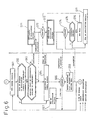
- Figure 5 is a flowchart of the processing in the main processing server
- Fig. 6 is a flowchart of the processing in the sub processing servers.
- a solid line indicates the flow in the normal state
- the dotted line shows the flow in abnormality processing state
- the broken line shows the flow of message notification.
- double line blocks indicate information managed at the shared memory 14.
- the portion on the left side from the vertically drawn one-dot chain line shows the function of the session management (DSMCGI process)
- the portion above "standby" of step S33 on the right side shows the function of the distributed management (DSM server process)
- DSM server process distributed management
- the portion below "standby" of step S33 on the right side shows the function of the application process.
- a CGI execution module (dsmcgi.exe) 13 is activated (step S11).
- the CGI execution module 13 analyzes the information and CGI parameters existing in the shared memory 14, then prepares an ID for the session management and translates the character code etc.
- the current access is the first access from the client 3, it stores the ID for the session management in the shared memory 14.
- the CGI execution module 13 then confirms the information concerning the assignment to the sub processing servers 2' based on the information in the shared memory 14 (step S12).
- step S12 based on the information of the shared memory 14, it is decided by which of the main processing server or the sub processing servers the processing is to be carried out.
- the processing is carried out at the main processing server 2, therefore the routine proceeds to step S13.
- the processing is handed over to the related sub processing server 2' (step S19).
- step S12 when the current access is a second or following access and also the session is held, since the session management information and the distributed management information related to the ID of the related client 3 are stored in the shared memory 14, it is decided whether the server operated in the previous access was the main processing server 2 or a sub processing server 2'. If it was a sub processing server 2' (Y: Yes), the processing is handed over to the sub processing server 2' (step S19), while if it was the main processing server 2 (N: No), the processing is continued at the main processing server 2, therefore the routine proceeds to step S13.
- step S12 When it is decided at step S12 that the processing is to be carried out at the main processing server 2 (N), based on the information in the shared memory 14, it is confirmed whether or not its own (2) application process 24 is holding the session (step S13).
- step S13 if the current access is the second or following access and the session has been held (Y), the routine proceeds to step S15. If the current access is the first access or, even if it is the second or following access but the session is not held (N), the routine proceeds to step S14.
- step S14 based on the information in the shared memory 14, the working status of the application process 24 is confirmed. If the required application process 24 has not been operated before the processing (N), an instruction for activating the application process 24 is issued to the DSM server process 23.
- the DSM server process 23 manages the start and the end of the application process 24.
- the application process 24 is activated (steps S31, 32), that fact is stored in the shared memory 14, and the standby mode is entered until a message of execution of the next process is issued (step S33).
- step S14 when receiving a message of a completion of activation, it is decided at step S14 that the application process 24 is in the working status and the routine proceeds to step S15.
- step S15 a message instructing the execution of the DSMCGI process 22 is sent, and the standby state is entered until the execution of the application process 24 is completed at step S16.
- step S34 When receiving a message of a start of the execution of the process during the standby state (step S33), the application process 24 starts the execution of the process (step S34).
- step S34 When the execution of the process is ended, the results of the processing are stored in a resultant file of the file unit 6, the information concerning the status of the processing is stored in the shared memory 14, a message of the completion of processing is sent to the CGI execution module 13, and the standby mode is entered (step S35).
- the CGI execution module 13 When receiving a message of completion of execution, the CGI execution module 13 obtains the resultant file from the file unit 6 and requests the web server 11 to send it to the client 3 (step S17). Thereafter, a message indicating that the acquisition of the resultant file is completed is sent to the application process 24, whereupon the processing is ended (step S18).
- the application process 24 decides whether or not to automatically end the processing (step S36).
- the parameter of the judgement of the automatic ending there are for example the number of application processes residing in the memory, the elapsed time from the previous connection, and the total number of accesses from the clients 3.
- the application process 24 is automatically ended, and the management information such as the session information stored in the shared memory 14 is cleared (step S38). Further, even in a case where the parameter is satisfied, when continuing processing from the identical user in the state holding the session, the step of the automatic ending is not executed until the next processing for which the session is not held or a request from another user comes.
- step S37 a flag of (Wait/Ready) is set (step S37) and the routine returns to step S33.
- the system is kept on standby while continuing the activation of the application process 24 as it is until a message for execution of the next processing is sent.
- the parameter of this automatic ending there is for example the elapsed time from the start of the standby state.
- this parameter is used for the automatic ending, where there is no next access issued from the client 3 even after a predetermined time has passed from the sending of the results of the processing, the automatic ending will be carried out on the server side.
- the routine proceeds to step S38, where the application process is ended and the management information is cleared.
- the main processing server 2 of Fig. 5 confirms the environments of the sub processing servers 2' at step S12. Here, if there is a sub processing server 2' in which the session with the client 3 currently accessed is in progress, the processing is handed over to the related sub processing server 2', where processing in the same session is carried out.
- step S51 in the sub processing server 2' to which the processing was handed over manages the operation by the DSM server process 23 (step S51).
- the DSM server process 23 performs a predetermined write operation to the shared memory 14, then confirm whether or not the application process 24 is holding a session based on the information in the shared memory 14 (step S52).
- step S52 when the current access is the second or following access and also the session is held (Y), the routine proceeds to step S54. If the current access is the first access or, even if it is the second or following access, but the session is not held (N), the routine proceeds to step S53.
- step S53 the working status of the application process 24 is confirmed based on the information in the shared memory 14.
- the application process 24 is activated (step S71).
- the application process 24 stores that fact in the shared memory 14, send a message indicating the completion of activation to the DSM server process 23, and stands by until the message of the execution of the next process is issued (step S72).
- step S53 when receiving the message of the completion of activation, it is decided at step S53 that the application process 24 is in the working status and the routine proceeds to step S54.
- step S54 a message instructing the start of the execution of the DSMCGI process 22 is sent, and the operation stands by at step S55 until the completion of execution of the application process 24.
- step S72 When receiving the message of the start of the execution of the process during the standby state (step S72), the application process 24 starts the execution of the application process 24 (step S73).
- step S74 When the execution of the processing is ended, the results of the processing are stored in the resultant file of the file unit 6 (Fig. 2), the information concerning the processing status is stored in the shared memory 14, a message of the completion of execution is sent to the DSM server process 23, and the operation enters the standby state (step S74).
- the DSM server process 23 When receiving the message of the completion of execution of the process during the standby state of step S55, the DSM server process 23 obtains the resultant file from the file unit 6 at step S56 and returns the resultant data to the main processing server 2, whereupon the routine returns to step S51.
- step S17 of the CGI execution module (dsmcgi.exe) 13 it is requested to the web server 11 to send the resultant data returned from the sub processing server 2' to the client 3.
- step S74 of the sub processing server 2' (Fig. 6)
- step S75 the judgement of the automatic ending
- step S77 the processing of the ending of the application process 24
- step S76 the setting of the flag
- step S72 the standby state of the execution of the next process
- step S16 when a predetermined time has passed during the standby state of step S16, that is, when the processing of the application process is not ended even if the predetermined time has passed, a forced ending of the application process 24 is instructed to the DSMCGI process 23, and the processing is ended at step S18 and step S39.
- the processing by the application process 24 is ended (step S31).
- the sub processing server 2' if the predetermined time has passed during the standby state of step S55, the application process 24 is ended (step S57), and the routine returns to step S51.
- the application process 24 is independent from the DSMCGI server process 23 so the processes do not interfere with each other and therefore the reliability of the entire system becomes high. Further, by making the application 15 resident in the shared memory 14 and having the requests of the web server 11 received from only small sized execution modules (dsmcgi.exe), the response becomes faster. Further, by placing the session management information in the shared memory 14, high access performance can be realized.
- the load can be spread out, therefore the load to a server occurring due to simultaneous access from a plurality of clients can be reduced. Even when one of the servers cannot be used, if the other servers are working, these servers can take over the processing, therefore the security at the time of natural and man-made disasters can be raised. Further, since a plurality of small sized servers having relatively low level functions can be used as distributed servers, a reduction of the cost of the system can be achieved compared with the case where one high performance server is purchased and web management is carried out by that one server.
- the present web application system can use different types of servers as the main processing server and the sub processing servers 2' or the plurality of sub processing servers 2', so effective utilization of the current system or current servers becomes easy, and therefore it becomes possible to flexibly construct a new system.
- Figure 7 is a view of the basic configuration of a web application system including an operation management mechanism based on the present invention.
- 1 is a web application system similar to that explained above which comprises the main and sub processing servers 2 and 2' as servers and web browsers 3 as the clients.
- the main and sub processing servers 2 and 2' are shown, but the number of them may be freely set.
- the processing servers are provided with applications (APP) to be processed based on requests from the client side.
- APP applications
- the characteristic feature of the present invention in Fig. 7 resides in that the operation management mechanism indicated by 31 is provided to the web application system 1.
- the operation management mechanism 31 comprises server side operation process modules 32 for respective processing servers 2 and 2' and client side operation programs 33 provided in one-to-one correspondence with the modules 32.
- Each client can perform operations such as reading various types of statuses for the web application system 1 and setting the environment in real time on the corresponding web browser 3 via the corresponding operation process module 32 and operation program 33.
- the main processing server 2 centrally manages the accesses from the clients (web browsers 3) and assigns processing to two sub processing servers 2' by the setting information in the main processing server 2.
- the load can be distributed among the sub processing servers 2', so an integrated web application system 1 can be constructed.
- server side operation process module 32 of Fig. 7 will be further concretely shown.
- Figure 8 is a view of the concrete configuration of a server side operation process module.
- 41 is a processing server. This is a generic term referring to the main processing server 2 and sub processing servers 2' in Fig. 7.
- the server side operation process module 32 is provided between this processing server 41 and a client 44 including the client side operation program 33 and comprises an operation module 42 and a communication module 43 as illustrated in the figure.
- the operation management mechanism 31 one of the characteristic features of the present invention, performs operations on the web application system 1 having the application (APP) to be processed by the processing server 41 based on requests from the clients.
- This operation management mechanism 31 is comprised of ⁇ 1> the operation module 42 linked with the processing server 41 and performing processing concerning operations in accordance with instructions from a client 44 and ⁇ 2> the communication module 43 performing communication for receiving the instructions from the client 44 and activation of the operation module 42 by the instructions.
- the operation module 42 of ⁇ 1> is linked with the processing server 41 of the web application system 1 and performs processing concerning operations on the web application system 1 in accordance with instructions from the clients 44.
- the communication module 43 of ⁇ 2> is linked with the processing server 41 of the web application system 1 and activates the operation module 42 for performing the processing concerning operations on the web application system 1 in accordance with instructions from the clients 44 and, at the same time, communicates for receiving instructions from the clients 44.
- the operation module 42 and the communication module 43 are formed in pairs. Pairs of these are provided in one-to-one correspondence with the processing servers 41.
- the operation module 42 can perform processing concerning operations by instructions from the clients 44 via the communication module 43, that is, enables each client 44 to individually execute at least one operation among for example reading the working status of the web application system 1, setting the working environment of the processing server 41, setting the working schedule of the application (APP), and analyzing the log and performance via the processing server 41.
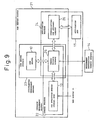
- FIG 9 is a view of an example of a basic module constituting the principal portion of the web application system 1 in Fig. 7.
- This basic module does not include the module of the operation management mechanism 31 based on the present invention. Accordingly, it is substantially the same as in Fig. 4 explained above, but the explanation will be made again while adding additional items.
- the DSM server module 21 corresponds to the processing server 41 (Fig. 8) and is formed by including the DSMCGI process 22, the DSM server process 23, and the application process 24.
- DSM is an abbreviation of "Distributed Session Manager” as already explained and is a unit which executes and manages applications running on the server.
- CGI is an abbreviation for "Common Gateway Interface” and is a unit which functions to receive requests from the web browsers 3 (Fig. 7), call up applications (APP), and returning the execution results to the requesting web browsers 3.
- the DSMCGI process 22 is realized by a CGI execution module (dsmcgi.exe) 13 and a DSMCGI nucleus library 25.
- the DSM server process 23 is realized by a DSM server 12 and a DSMCGI nucleus library 25.
- the application process 24 is realized by a communication-use extended library 26 of a specific language (specific language for running the application), a DSMCGI nucleus library 25, and an application (APP).
- a DSM server 12 Between the web server (11 of Fig. 11) and the application (APP) are provided a DSM server 12, a CGI execution module 13 activated from the web server, and a shared memory 14.
- the DSM server 12 is the session management server and the distributed management server as well.
- the CGI execution module 13 is a program for interfacing between the clients 44 and the applications (APP).
- the shared memory 14 stores the management information such as the information concerning the distributed management and the information concerning the session management. Note that, the DSM server 12 and the CGI execution module 13 form the central components of the DSM server module 21.
- the DSMCGI nucleus library 25 interfaces among the DSM server 12, the CGI execution module 13, and the shared memory 14.
- the DSMCGI process 22 is comprised by the execution module 13 and the DSMCGI nucleus library 25 as described above and functions as the server for the session management together with the DSM server 12. Further, the DSM server process 23 is comprised by the DSM server 12 and the DSMCGI nucleus library 25 and functions as the server for the distributed management together with the CGI execution module 13.
- the management information for the session management such as the ID of the client and the application (APP) to which the client 44 is connected are stored in the shared memory 14 through the DSMCGI nucleus library 25.
- the setting conditions such as the status of the processing server 41 (21), the confirmation of the environment of the sub processing server 2', and the relationship between the sub processing server 2' and the application for the server 2' are stored as the management information in the shared memory 14 through the DSMCGI nucleus library 25.
- the sub processing server 2' has a similar configuration to that of the module of Fig. 9 (there is no CGI execution module 13).
- the DSM server of this sub processing server 2' is connected to the DSM server 12 of Fig. 9 (refer to Fig. 3).
- the operation management mechanism 31 cooperating with the DSM server module 21 for the integrated web application system will be explained in further detail next.
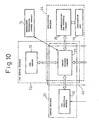
- Figure 10 is a view partially showing the web application system provided with the operation management mechanism (first), and
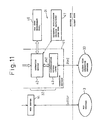
- Fig. 11 is the same view (second).
- Fig. 10 substantially corresponds to Fig. 9.
- Fig. 11 mainly shows the operation management mechanism 31.
- the server side operation process module 32 constituting part of the operation management mechanism 31 and the client side operation program 33 constituting another part of the operation management mechanism 31 are shown.
- the server side operation process module 32 has the operation module 42 and the communication module 43.
- the modules 42 and 43 forming the operation process module 32 realize the operation process 45 together with the DSMCGI nucleus library 25.
- the operation module 42 further can cooperate with an external application process 47.
- a DSM management tool 46 possesses various commands defining the operation of this operation module 42. This tool performs analysis by obtaining the status of the processing server from the operation module and returns the analysis information to the operation module.
- HTTP Hyper Text Transfer Protocol
- the server side operation process module 32 on the right side of Fig. 11 a case where the communication module 43 is realized by using the JAVA language in the embodiment, communicates with the client side by using an RMI protocol, is further connected to the operation module 42 by using a JNI protocol, and activates the module 32 is shown.
- Figure 12 is a view redrawing the configuration of the principal parts of the system shown in Fig. 10 and Fig. 11 along the flow of work.
- the server side operation process module 32 refers to the related information written in the setting file 51 in advance at the time of activation of the processing server (DSM server 12) and the operation module 42 and executes at least one of the setting of the working environment of the processing server and the setting of the working schedule of the application (APP).
- the processing server (DSM server 12) outputs the results of the processing to the information file 52 in accordance with a request from a client.
- the server side operation process module 32 displays the log and performance on the monitor screen by referring to the information file 52.
- the client 44 and the server side communication module 43 communicate by using for example the RMI protocol.
- the operation module 42 is activated via the communication module 43 based on an instruction from the client side.
- the operation module 42 obtains the application management information from the shared memory 14 and retrieves the related application process.
- the information is read and written to and from the setting file 51.
- the DSM server 12 refers to the working environment of the server and the working schedule of the application written in the setting file 51.
- the operation module 42 fetches the related information from the information file 52. Note that, for the analysis, the DSM server 12 receives as input information (processing results, etc.) to be written into the file 52.
- Figure 13 is a view of a first example of a screen (screen configuration) on the display (upper half), and Fig. 14 is the same view (lower half).
- the screen 55 of the display can be roughly divided into two portions.
- the relationship between the main processing servers 2 and the sub processing servers 2' is displayed in the form of the tree in A on the left side.
- information concerning the server selected at the tree screen portion A is displayed.
- the corresponding information is displayed.
- the session statuses of the application processes and the working states of the external applications are displayed in a table.
- the information is obtained from the servers and the screen 55 of the monitor status is updated at predetermined sampling intervals.
- four can be mentioned, for example, hold, standby, in progress ... (not yet accessed).
- resources may be set (application processes reservation) for the application ID here.
- the logs of the application processes are analyzed and read here. Further, the cumulative totals of activations of application processes in a predetermined time (for example one day) are displayed in form of a graph.
- the performance reports of the application processes are analyzed and read here.
- the flow of execution of the application processes is displayed in the form of a tree, that is, in a hierarchy, and the performance of each processing is displayed.
- the information of the setting file of DSMCGI is obtained or set.
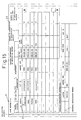
- Figure 15 is a view of a second example of a screen (status monitor) on the display (upper half), and
- Fig. 16 is the same view (lower half).
- the application process information of the server selected in the tree-like hierarchy portion (A of Fig. 13) and the external application information are displayed in the form of a table.
- the information is updated in real time at predetermined sampling intervals (C of Fig. 16).
- the main role of the status monitor (reading) is as follows.
- information (application process information, external application information, memory information, log information) is obtained from the server selected by the user (server name indicated in E of Fig. 15) and the display of the screen 55 is updated.
- the application process session information of the currently selected server and the activating external application information are displayed in the table.
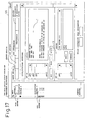
- Figure 17 is a view of a third example of a screen (application setting) on the display.
- This third screen shows particularly the schedule setting function among the application functions.
- the application working schedule is set for every application ID.
- the server affected by the set application ID is determined.
- Figure 18 is a view of a fourth example of a screen (application setting) on the display.
- This fourth screen shows the setting dialog displayed when depressing ADD or EDIT of the application setting screen.
- Fig. 18 shows that the operation of the application is stopped on Wednesday.
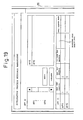
- Figure 19 is a view of a fifth example of a screen (application setting) on the display.
- This fifth screen shows the setting of the resources for the application process.
- the user reserves the application process, specifies the procedure file search path, or specifies the HTML search path for every application ID.
- Figure 20 is a view of a sixth example of a screen (analysis of log information) on the display.
- This sixth screen shows the function of analyzing the log information.
- the log file is divided into individual processings. These are displayed in a table form.
- the analysis results thereof are displayed on the table. Further, it is also possible to display the cumulative total of the operations of the application processes in the specified day as a graph (I).
- the error information is displayed on the screen 55.
- Figure 21 is a view of a seventh example of a screen (analysis of performance) on the display.
- This seventh screen shows the analysis function of the performance report.
- the performance report file is divided into individual processings and displayed in a table form.
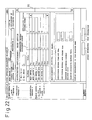
- Figure 22 is a view of an eighth example of a screen (server environment setting) on the display.
- the setting of the working environment for the main processing server 2 is indicated, but it is also possible to edit the setting file (51) of each sub processing server 2'.
- the working environment of the processing server is always set on this screen while referring to the information.
- a user authentication function and a warning function will be additionally explained next as other functions to be provided by the operation management mechanism 31 of the present invention.
- Figure 23 is a view of the screen, as an example, for user authentication on the display.
- N at the top left shows the dialog window for user authentication. If the user ID and password input to this dialog window are incorrect, the server side operation process module 32 is not activated. Note that a general user can only read the information and cannot perform active operations such as changing the working environment setting of the processing server. Only a specific user having the right to this can perform both.
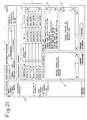
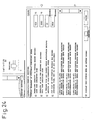
- Figure 24 shows a screen, as an example, of a warning window on the display when depressing the warning setting on the bottom left of the display screen 55.
- the warning can be issued by setting specific conditions, for example, a certain session continuing to be held or in progress or kept in the standby state even after the elapse of a specified time and the remaining amount of memory of the server being small.
- the portion of 0 is a portion for specifying the condition for issuing the warning
- a portion of P is a portion showing the message when a warning is issued.
- the present invention includes as a more preferred embodiment the integrated web application system 1 shown in Fig. 3 and Fig. 4 provided to the market with the operation management mechanism 31 embedded in it. However, its configuration becomes the same as the configuration shown in Fig. 1.
- such a web application system is a web application system having applications (APP) to be processed by processing servers based on requests from clients 44, configured by [1] shared memories 14 and 14' provided between the web server 1 and the application processes 24 and storing information for the session management and a session management server for session management, [2] the operation modules 42 linked with the processing servers 2 and 2' and performing processing for operations on the web application system in accordance with instructions from the clients 44, and [3] the communication modules 43 for communication for receiving instructions from the clients 44 and activation of the operation modules 42 by the instructions.
- APP applications
- the session management server desirably also has a distributed management function.
- the invention provides a web application system having applications (APP) to be processed by processing servers based on requests from clients 44, configured by [1] a distributed management server provided between the web server and the application processes 24 and functioning for distributed management of a plurality of processing servers 41, [2] operation modules 42 linked with the processing servers 2 and 2' and performing processing for operations on the web application system in accordance with instructions from the clients 44, and [3] communication modules 43 for communication for receiving instructions from the clients 44 and activation of the operation modules 42 by the instructions.
- APP applications
- the distributed management server desirably also has a session management function.
- session management is made possible by a web application system having the configuration explained by Fig. 1 to Fig. 6. Further, in the web application system, distributed management of the servers is made possible.
- an integrated web application system comprised of a large number of processing servers each having complex and diverse applications able to be utilized by a large number of users, wherein individual users having the right of control can freely and easily perform various operations including for example reading the working status of the system, setting the working environment of the processing servers, setting the working schedule of the applications, and analyzing the log and performance in accordance with the individual statuses without introducing a large scale mechanism. Further, the secrecy of each user is completely held.
Landscapes
- Engineering & Computer Science (AREA)
- Theoretical Computer Science (AREA)
- Computer Networks & Wireless Communication (AREA)
- Signal Processing (AREA)
- Physics & Mathematics (AREA)
- General Engineering & Computer Science (AREA)
- Computer Hardware Design (AREA)
- Software Systems (AREA)
- General Physics & Mathematics (AREA)
- Data Mining & Analysis (AREA)
- Databases & Information Systems (AREA)
- Mathematical Physics (AREA)
- Human Computer Interaction (AREA)
- Computer And Data Communications (AREA)
- Multi Processors (AREA)
Abstract
Description
Fig. 14 is the same view (lower half).
Claims (29)
- A web application system characterized in that a shared memory for storing information for session management and a session management server are provided between a web server and an application process.
- A web application system as set forth in claim 1, wherein said session management server further has a distributed management function.
- A web application system characterized in that a distributed management server is provided between a web server and an application process.
- A web application system as set forth in claim 3, wherein said distributed management server further has a session management function.
- A session management apparatus for a web application system which comprisesa web server,an application process,a shared memory provided between said web server and said application process and for storing the information for the session management, anda session management server.
- A session management apparatus for a web application system as set forth in claim 5, wherein said session management server further has a distributed management function.
- A distributed management apparatus for a web application system which comprisesa web server,an application process, anda distributed management server provided between said web server and said application process.
- A distributed management apparatus for a web application system as set forth in claim 7, wherein said distributed management server further has a session management function.
- A management server for a web application system provided between a web server and an application process, characterized in that at least one of session management and distributed management is made possible.
- A shared memory for a web application system provided between a web server and a application process, characterized in that the shared memory stores information for session management.
- A modular function program for performing at least one of session management and distributed management in accordance with set conditions for a request from a client in a web application system or a computer readable storage medium storing the same.
- A web application system which is provided with an operation management mechanism for performing an operation on a web application system having an application to be processed by a processing server based on a request from a client, comprisingan operation module linked with said processing server and performing processing concerning said operation in accordance with an instruction from said client anda communication module performing communication for receiving the instruction from said client and activation of said operation module by the instruction.
- A web application system as set forth in claim 12, wherein said operation module executes at least one operation among reading a working status of said web application system, setting a working environment of said processing server, setting a working schedule of said application, and analyzing a log and performance via said processing server as the processing concerning said operation in accordance with an instruction from said client.
- A web application system as set forth in claim 12, wherein said operation module and said communication module are formed as a pair and such pairs are provided in one-to-one correspondence with said processing servers.
- A web application system as set forth in claim 13, wherein a shared memory linked with said processing server and storing the application management information for managing said application is provided, and said operation module executes a read operation by referring to said application management information.
- A web application system as set forth in claim 13, wherein setting files linked with said processing server and said operation module are provided, and said operation module executes at least one of the setting of the working environment of said processing server and the setting of the working schedule of said application by referring to the setting files.
- A web application system as set forth in claim 13, wherein information files for writing information linked with said processing server and said operation module in accordance with an instruction from a client are provided, and said operation module performs at least one of said analysis of a log and analysis of performance by referring to the information files.
- An operation management mechanism for performing an operation on a web application system having an application to be processed by a processing server based on a request from a client, comprisingan operation module linked with said processing server and performing processing concerning said operation in accordance with an instruction from said client anda communication module performing communication for receiving an instruction from said client and activation of said operation module by the instruction.
- An operation management mechanism as set forth in claim 18, wherein said operation module executes at least one operation among reading a working status of said web application system, setting a working environment of said processing server, setting a working schedule of said application, and analyzing a log and performance via said processing server as the processing concerning said operation in accordance with an instruction from said client.
- An operation management mechanism as set forth in claim 18, wherein said operation module and said communication module are formed as a pair and such pairs are provided in one-to-one correspondence with said processing servers.
- An operation management mechanism as set forth in claim 19, wherein a shared memory linked with said processing server and storing application management information for managing said application is provided, and said operation module executes a read operation by referring to said application management information.
- An operation management mechanism as set forth in claim 19, wherein setting files linked with said processing server and said operation module are provided, and said operation module executes at least one of the setting of the working environment of said processing server and the setting of the working schedule of said application by referring to the setting files.
- An operation management mechanism as set forth in claim 19, wherein information files linked with said processing server and said operation module and writing information in accordance with an instruction from a client are provided, and said operation module performs at least one of said analysis of a log and analysis of performance by referring to the information files.
- An operation module for a web application system characterized in that it is linked with a processing server of a web application system and performs processing concerning an operation on the web application system in accordance with an instruction from a client.
- A communication module for a web application system characterized in that it is linked with a processing server of a web application system, activates an operation module for performing processing concerning an operation on the web application system in accordance with an instruction from a client, and performs communication for receiving an instruction from a client.
- A web application system having an application to be processed by a processing server based on a request from a client, characterized by comprisinga shared memory for storing information for a session management and a session management server for said session management provided between a web server and an application process,an operation module linked with said processing server and performing processing concerning an operation on said web application system in accordance with an instruction from said client, anda communication module performing communication for receiving the instruction from said client and activation of said operation module in accordance with the instruction.
- A web application system as set forth in claim 26, wherein said session management server further has a distributed management function.
- A web application system having an application to be processed by a processing server based on a request from a client, characterized by comprisinga distributed management server provided between a web server and an application process and functioning for distributed management of a plurality of processing servers,an operation module linked with said processing server and performing processing concerning an operation on said web application system in accordance with an instruction from said client, anda communication module performing communication for receiving the instruction from said client and activation of said operation module in accordance with the instruction.
- A web application system as set forth in claim 28, wherein said distributed management server further has a session management function.
Applications Claiming Priority (5)
| Application Number | Priority Date | Filing Date | Title |
|---|---|---|---|
| JP11185979A JP2001014242A (en) | 1999-06-30 | 1999-06-30 | Distributed session management system for web applications |
| JP18597999 | 1999-06-30 | ||
| JP2000101338A JP2001282759A (en) | 2000-03-31 | 2000-03-31 | Operation mechanism for operating web application system and web application system |
| JP2000101338 | 2000-03-31 | ||
| PCT/JP2000/004377 WO2001002964A1 (en) | 1999-06-30 | 2000-06-30 | Web application system having session management/distributed management function and mechanism for operating the same |
Publications (2)
| Publication Number | Publication Date |
|---|---|
| EP1120712A1 true EP1120712A1 (en) | 2001-08-01 |
| EP1120712A4 EP1120712A4 (en) | 2006-04-05 |
Family
ID=26503454
Family Applications (1)
| Application Number | Title | Priority Date | Filing Date |
|---|---|---|---|
| EP00940913A Withdrawn EP1120712A4 (en) | 1999-06-30 | 2000-06-30 | Web application system having session management/distributed management function and mechanism for operating the same |
Country Status (5)
| Country | Link |
|---|---|
| EP (1) | EP1120712A4 (en) |
| KR (1) | KR20010073083A (en) |
| CN (1) | CN1229728C (en) |
| CA (1) | CA2341889A1 (en) |
| WO (1) | WO2001002964A1 (en) |
Cited By (3)
| Publication number | Priority date | Publication date | Assignee | Title |
|---|---|---|---|---|
| US20080282255A1 (en) * | 2007-05-09 | 2008-11-13 | Shinichi Kawamoto | Highly-available application operation method and system, and method and system of changing application version on line |
| CN102882941A (en) * | 2012-09-12 | 2013-01-16 | 南通智翔信息科技有限公司 | Uniform and simple communication practical training server |
| US10353741B2 (en) * | 2015-12-03 | 2019-07-16 | Fujitsu Limited | Load distribution of workflow execution request among distributed servers |
Families Citing this family (12)
| Publication number | Priority date | Publication date | Assignee | Title |
|---|---|---|---|---|
| CN101272288B (en) * | 2001-12-27 | 2011-02-09 | 富士施乐株式会社 | Information management server and information management method |
| US20050108570A1 (en) * | 2003-11-19 | 2005-05-19 | International Business Machines Corporation | Method, system and program product for obtaining application data |
| US7441000B2 (en) * | 2003-12-22 | 2008-10-21 | International Business Machines Corporation | Method for session sharing |
| US20060288165A1 (en) * | 2005-06-17 | 2006-12-21 | Microsoft Corporation | Serialization of media transfer communications |
| CN100396000C (en) * | 2005-08-12 | 2008-06-18 | 华为技术有限公司 | Method and system for client to apply for service from server |
| US8722226B2 (en) | 2008-06-12 | 2014-05-13 | 24M Technologies, Inc. | High energy density redox flow device |
| US11909077B2 (en) | 2008-06-12 | 2024-02-20 | Massachusetts Institute Of Technology | High energy density redox flow device |
| US8993159B2 (en) | 2012-12-13 | 2015-03-31 | 24M Technologies, Inc. | Semi-solid electrodes having high rate capability |
| US9362583B2 (en) | 2012-12-13 | 2016-06-07 | 24M Technologies, Inc. | Semi-solid electrodes having high rate capability |
| CN107357559B (en) * | 2016-05-10 | 2021-05-25 | 北京京东尚科信息技术有限公司 | Information control method and device for remote execution server |
| CN107317873B (en) * | 2017-07-21 | 2020-08-11 | 曙光信息产业(北京)有限公司 | Session processing method and device |
| CN110445628B (en) * | 2018-05-02 | 2024-01-12 | 北京京东尚科信息技术有限公司 | NGINX-based server and its deployment and monitoring methods and devices |
Family Cites Families (4)
| Publication number | Priority date | Publication date | Assignee | Title |
|---|---|---|---|---|
| US5708780A (en) * | 1995-06-07 | 1998-01-13 | Open Market, Inc. | Internet server access control and monitoring systems |
| JPH09265443A (en) * | 1996-03-29 | 1997-10-07 | Hitachi Ltd | WWW gateway system |
| US5835724A (en) * | 1996-07-03 | 1998-11-10 | Electronic Data Systems Corporation | System and method for communication information using the internet that receives and maintains information concerning the client and generates and conveys the session data to the client |
| US6606708B1 (en) * | 1997-09-26 | 2003-08-12 | Worldcom, Inc. | Secure server architecture for Web based data management |
-
2000
- 2000-06-30 CA CA002341889A patent/CA2341889A1/en not_active Abandoned
- 2000-06-30 EP EP00940913A patent/EP1120712A4/en not_active Withdrawn
- 2000-06-30 CN CNB008015678A patent/CN1229728C/en not_active Expired - Fee Related
- 2000-06-30 WO PCT/JP2000/004377 patent/WO2001002964A1/en not_active Ceased
- 2000-06-30 KR KR1020017002652A patent/KR20010073083A/en not_active Withdrawn
Cited By (3)
| Publication number | Priority date | Publication date | Assignee | Title |
|---|---|---|---|---|
| US20080282255A1 (en) * | 2007-05-09 | 2008-11-13 | Shinichi Kawamoto | Highly-available application operation method and system, and method and system of changing application version on line |
| CN102882941A (en) * | 2012-09-12 | 2013-01-16 | 南通智翔信息科技有限公司 | Uniform and simple communication practical training server |
| US10353741B2 (en) * | 2015-12-03 | 2019-07-16 | Fujitsu Limited | Load distribution of workflow execution request among distributed servers |
Also Published As
| Publication number | Publication date |
|---|---|
| KR20010073083A (en) | 2001-07-31 |
| CA2341889A1 (en) | 2001-01-11 |
| CN1229728C (en) | 2005-11-30 |
| CN1319207A (en) | 2001-10-24 |
| EP1120712A4 (en) | 2006-04-05 |
| WO2001002964A1 (en) | 2001-01-11 |
Similar Documents
| Publication | Publication Date | Title |
|---|---|---|
| US7133906B2 (en) | System and method for remotely configuring testing laboratories | |
| US6148335A (en) | Performance/capacity management framework over many servers | |
| US7174370B1 (en) | System and methodology for developing, integrating and monitoring computer applications and programs | |
| AU2003204420B2 (en) | Systems and methods for work list prediction | |
| US6601020B1 (en) | System load testing coordination over a network | |
| CA2341889A1 (en) | Web application system having functions of session management and distributed management and operation management mechanisms therefor | |
| US6505248B1 (en) | Method and system for monitoring and dynamically reporting a status of a remote server | |
| US6728947B1 (en) | Workflow distributing apparatus and method | |
| EP1150212B1 (en) | System and method for implementing polling agents in a client management tool | |
| US8473912B2 (en) | Computer readable medium, system and method of debugging software applications modelled using flow paradigms | |
| US6845507B2 (en) | Method and system for straight through processing | |
| US20080177564A1 (en) | Method and apparatus of supporting business performance management with active shared data spaces | |
| WO2001025919A2 (en) | Architectures for netcentric computing systems | |
| EP1308016A2 (en) | System and method for integrating disparate networks for use in electronic communication and commerce | |
| KR20010042737A (en) | Visual data integration system and method | |
| JPH08161212A (en) | Optimal Commit Tree Creation System for Distributed Transaction Processing System | |
| US20100199279A1 (en) | User connectivity process management system | |
| CN109889381A (en) | Automatic configuration management method and device based on fort machine | |
| US20060242276A1 (en) | System and method for remotely configuring testing laboratories | |
| CZ2003563A3 (en) | Network component control system | |
| US4926349A (en) | Method for display panel processing | |
| US20040104928A1 (en) | Unit management system and method | |
| CN114816477A (en) | Server upgrading method, device, equipment, medium and program product | |
| US20070300243A1 (en) | Modular caching method and system for enabling offline functionality of server-client systems | |
| CZ9903576A3 (en) | Moving objects, moving object control method, method of and apparatus for generating moving objects, and storage medium for program for generating moving objects |
Legal Events
| Date | Code | Title | Description |
|---|---|---|---|
| PUAI | Public reference made under article 153(3) epc to a published international application that has entered the european phase |
Free format text: ORIGINAL CODE: 0009012 |
|
| AK | Designated contracting states |
Kind code of ref document: A1 Designated state(s): AT BE CH CY DE DK ES FI FR GB GR IE IT LI LU MC NL PT SE |
|
| 17P | Request for examination filed |
Effective date: 20010625 |
|
| A4 | Supplementary search report drawn up and despatched |
Effective date: 20060216 |
|
| RIC1 | Information provided on ipc code assigned before grant |
Ipc: H04L 29/06 20060101ALI20060210BHEP Ipc: H04L 12/58 20060101ALI20060210BHEP Ipc: G06F 13/00 20060101AFI20010112BHEP |
|
| STAA | Information on the status of an ep patent application or granted ep patent |
Free format text: STATUS: THE APPLICATION IS DEEMED TO BE WITHDRAWN |
|
| 18D | Application deemed to be withdrawn |
Effective date: 20060906 |