EP1120662A1 - Procédé pour tester un circuit intégré comportant des parties matérielles et/ou logicielles ayant un caractère de confidentialité - Google Patents
Procédé pour tester un circuit intégré comportant des parties matérielles et/ou logicielles ayant un caractère de confidentialité Download PDFInfo
- Publication number
- EP1120662A1 EP1120662A1 EP00101502A EP00101502A EP1120662A1 EP 1120662 A1 EP1120662 A1 EP 1120662A1 EP 00101502 A EP00101502 A EP 00101502A EP 00101502 A EP00101502 A EP 00101502A EP 1120662 A1 EP1120662 A1 EP 1120662A1
- Authority
- EP
- European Patent Office
- Prior art keywords
- rng
- password
- integrated circuit
- random number
- tester
- Prior art date
- Legal status (The legal status is an assumption and is not a legal conclusion. Google has not performed a legal analysis and makes no representation as to the accuracy of the status listed.)
- Granted
Links
Images
Classifications
-
- H—ELECTRICITY
- H04—ELECTRIC COMMUNICATION TECHNIQUE
- H04L—TRANSMISSION OF DIGITAL INFORMATION, e.g. TELEGRAPHIC COMMUNICATION
- H04L9/00—Cryptographic mechanisms or cryptographic arrangements for secret or secure communications; Network security protocols
- H04L9/32—Cryptographic mechanisms or cryptographic arrangements for secret or secure communications; Network security protocols including means for verifying the identity or authority of a user of the system or for message authentication, e.g. authorization, entity authentication, data integrity or data verification, non-repudiation, key authentication or verification of credentials
- H04L9/3271—Cryptographic mechanisms or cryptographic arrangements for secret or secure communications; Network security protocols including means for verifying the identity or authority of a user of the system or for message authentication, e.g. authorization, entity authentication, data integrity or data verification, non-repudiation, key authentication or verification of credentials using challenge-response
-
- G—PHYSICS
- G06—COMPUTING OR CALCULATING; COUNTING
- G06F—ELECTRIC DIGITAL DATA PROCESSING
- G06F11/00—Error detection; Error correction; Monitoring
- G06F11/22—Detection or location of defective computer hardware by testing during standby operation or during idle time, e.g. start-up testing
- G06F11/26—Functional testing
-
- G—PHYSICS
- G01—MEASURING; TESTING
- G01R—MEASURING ELECTRIC VARIABLES; MEASURING MAGNETIC VARIABLES
- G01R31/00—Arrangements for testing electric properties; Arrangements for locating electric faults; Arrangements for electrical testing characterised by what is being tested not provided for elsewhere
- G01R31/28—Testing of electronic circuits, e.g. by signal tracer
- G01R31/317—Testing of digital circuits
- G01R31/31701—Arrangements for setting the Unit Under Test [UUT] in a test mode
-
- G—PHYSICS
- G01—MEASURING; TESTING
- G01R—MEASURING ELECTRIC VARIABLES; MEASURING MAGNETIC VARIABLES
- G01R31/00—Arrangements for testing electric properties; Arrangements for locating electric faults; Arrangements for electrical testing characterised by what is being tested not provided for elsewhere
- G01R31/28—Testing of electronic circuits, e.g. by signal tracer
- G01R31/317—Testing of digital circuits
- G01R31/31719—Security aspects, e.g. preventing unauthorised access during test
-
- G—PHYSICS
- G06—COMPUTING OR CALCULATING; COUNTING
- G06F—ELECTRIC DIGITAL DATA PROCESSING
- G06F12/00—Accessing, addressing or allocating within memory systems or architectures
- G06F12/14—Protection against unauthorised use of memory or access to memory
- G06F12/1408—Protection against unauthorised use of memory or access to memory by using cryptography
-
- H—ELECTRICITY
- H04—ELECTRIC COMMUNICATION TECHNIQUE
- H04L—TRANSMISSION OF DIGITAL INFORMATION, e.g. TELEGRAPHIC COMMUNICATION
- H04L9/00—Cryptographic mechanisms or cryptographic arrangements for secret or secure communications; Network security protocols
- H04L9/32—Cryptographic mechanisms or cryptographic arrangements for secret or secure communications; Network security protocols including means for verifying the identity or authority of a user of the system or for message authentication, e.g. authorization, entity authentication, data integrity or data verification, non-repudiation, key authentication or verification of credentials
- H04L9/3226—Cryptographic mechanisms or cryptographic arrangements for secret or secure communications; Network security protocols including means for verifying the identity or authority of a user of the system or for message authentication, e.g. authorization, entity authentication, data integrity or data verification, non-repudiation, key authentication or verification of credentials using a predetermined code, e.g. password, passphrase or PIN
Definitions
- the present invention relates to integrated circuits containing hardware and / or software parts of a confidential nature.
- the object of the present invention is to provide a method for testing integrated circuits by which a test can be performed on the parts that the circuit contains without the content of these parts become accessible to an unauthorized person.
- the tester can have access to the elements confidential to test them, but only if he manages to generate a password with a predetermined relationship to the password pass generated in the integrated circuit. Access to protected elements is thus perfectly preserved.
- the invention also relates to an integrated circuit presenting the Features of claim 7.
- the subject of the invention is also a tester presenting the The features of claim 11.
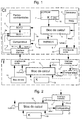
- FIG 1 there is shown an integrated circuit C1 to be tested as well as a T tester.
- T tester When the T tester is connected to the Cl circuit or to another integrated circuit of the same structure, the assembly makes it possible to implement the preferred embodiment of the invention.
- the integrated circuit Cl comprises a section 1 comprising parts material and / or software with a confidential nature and to which access is reserved.
- These may for example be ROM and / or RAM memories containing confidential information such as algorithms, programs, data, or test procedures in this section confidential.
- he can also be hardware parts of the circuit, such as reference such as an oscillator or a voltage regulator for example.
- the specialists will understand that the nature of confidential information or that any physical parts to be protected may be any, the invention having relates only to an authentication process for testing the confidential section 1 of circuit Cl.
- Confidential section or confidential parts 1 are accessible to be tested through a barrier 2 giving parts 1 conditional access.
- This barrier 2 can be materialized in the form of two multiplexers Mux 1 and Mux 2 connected between an input interface 3 of circuit C1 and the confidential section 1.
- the Mux 2 multiplexer can be ordered to allow the passage of test information from interface 3 via a connection 3a and this only if a control signal is delivered by a comparator 4 on a connection 4a.
- Connection 4a is connected to the output of comparator 4, the inputs are connected respectively to connections 4b and 4c, the latter being connected to interface 3.
- the circuit C1 also includes an encryption block 5 in which a first password G k (RNG) -C can be calculated using an encryption algorithm. This works with a random number RNG-C generated in a generator 6 of random numbers and with an encryption key k stored in a section 7 of an EEPROM memory. The generator 6 and the memory section 7 are therefore connected to the encryption block 5.
- RNG first password G k
- the latter is also connected by a password output 8 to a password register 9 to receive the first password G k (RNG) -C which is also connected to the connection 4b to the comparator 4.
- the encryption algorithm implemented in the encryption block 5 may be a public algorithm known per se. For example, it could be the standard algorithm known as DES by specialists.
- the random number generator 6 is also connected to a output interface 10 of circuit Cl.
- the tester T comprises an input interface 11 which is connected, during a test, at the output interface 10 of an integrated circuit C1 to be tested.
- This input interface 11 can thus receive from the latter the random number RNG-C which, at the time of connection for carrying out a test, is present in the random number generator 6 of circuit Cl.
- the tester T also includes an encryption block 12 connected to the input interface 11 to receive the generated random number RNG-C in the integrated circuit Cl.
- This encryption block 12 is arranged to perform encryption using an algorithm identical to that with which the encryption block 5 of circuit Cl.
- the encryption in tester T is performed using an encryption key k stored in a section 13 of a EEPROM memory of tester T. This key k is the same as that contained in the EEPROM memory section 7 of the integrated circuit Cl.
- the tester T is able to calculate a second password G k (RNG) -T on the basis of the random number RNG-C.
- T tester also includes an output interface 14 connected at the output of encryption block 12, so that the password therein calculated can be routed to the integrated circuit Cl.
- This output interface 14 is also connected to a test block 15 capable of implementing the test functions to which the circuit C1 must be submitted and the information of which is forwarded through interfaces 14 and 3 to the Mux 2 multiplexer of the integrated circuit Cl.
- the interfaces 3, 10, 11 and 14 are, in a manner known per se, "state machines" which, using the respective internal clocks of the Cl circuit and T tester manage transmission and reception protocols for routing data between the two components Cl and T.
- This first Mux 1 multiplexer is controlled ("open") by a signal of test mode passing through a conductor 16 coming from the tester T, while the Mux 2 multiplexer is controlled by the output of the comparator 4 (connection 4a).
- the test procedure is initiated by sending the test mode signal passing over the conductor 16. This causes the random number RNG-C to be introduced into the calculation block 5 generated, at the instant considered, by generator 6 and the key k which is extracted from memory 7.
- the first password G k (RNG) -C is then calculated using the encryption algorithm DES for example and this password is placed in register 9.
- the random number RNG-C is also sent to the tester T while being routed by the interfaces 10 and 11 to be applied to the calculation block 12 in which a calculation is also carried out using the same encryption algorithm, starting from the encryption key k extracted from the memory section 13 and from the random number RNG-C received.
- This encryption calculation will result in the production of a second password G k (RNG) -T.
- the latter is routed to the integrated circuit C1 via the interfaces 14 and 3 and then applied to the comparator 4.
- Comparator 4 is arranged to perform a bit-by-bit comparison of the two passwords G k (RNG) -C and G k (RNG) -T which are applied to it.
- the multiplexer Mux 2 is controlled by the signal passing through connection 4a whereby the path leading from the T tester to confidential parts 1 of the integrated circuit Cl via connection 3a, is open.
- the T tester can then perform the required test operations via the test block 15 to verify the confidential parts 1 of the integrated circuit Cl as to their correct operation and if it is the case validate the circuit in question. Failing that Coincidentally, access to confidential parts 1 will remain prohibited T tester.
- This third password F k (RNG) -C is sent to the tester T following the random number RNG-C after initialization of the authentication procedure, through the interfaces 10 and 11.
- the calculation block 12 of the tester T must then also calculate a fourth password F k (RNG) -T which is applied to a comparator 17 forming part of the tester T, this comparator being connected on the one hand to the interface 11 from which it receives the third word from pass F k (RNG) -C calculated in the integrated circuit Cl and on the other hand to the calculation block 12 to receive the fourth password F k (RNG) -T which is calculated there.
- the comparator 17 finds a coincidence between the third and fourth passwords F k (RNG) -C and F k (RNG) -T that it sends to the calculation block 12 an authorization signal for calculation of the second password G k (RNG) -T. To this end, the comparator 17 is connected by its output to this calculation block 12.
- the functions F k (RNG) -C and F k (RNG) -T are used to authenticate the integrated circuit Cl, while the functions G k (RNG) -C and G k (RNG) -T are used to authenticate the tester. This last part constitutes the important part of the object of the invention, with the aim of prohibiting an unauthorized tester from accessing confidential parts of the integrated circuit.
- the third password F k (RNG) -C is also calculated in the integrated circuit Cl as above described and sent to the tester T via the interfaces 10 and 11.
- this third password is applied to the calculation block 12 which is then arranged to carry out a calculation on this word using the inverse algorithm to that used for the calculation of the fourth password F k (RNG) -T.
- This calculation will result in a random number RNG-T which is applied to a comparator 17 '. This is for this purpose connected by one of its inputs to the calculation block 12, its other input being connected to the interface 11 to receive RNG-C.
- the output of the comparator 17 ' is connected to the calculation block 12 so as to send it a signal authorizing the calculation of the second password G k (RNG) -T only if the comparator 17' finds a coincidence between the random numbers RNG -C and RNG-T applied to its inputs.
- This calculation authorization signal then makes it possible to trigger the calculation of the second password G k (RNG) -T in the calculation block 12.
- the bits of the EEPROM section 7 for storing the memory key encryption k are all brought to a predetermined value (for example all bits consist exclusively of level 0 bits or exclusively of level 1 bits).
- a consistency check is carried out via a block of redundancy check 18 (Code redundancy check) included in the EEPROM memory section 7.
- the T tester performs this operation which, initially results in failure due to the initial values of the bits of memorization of the key and that of the key sent by different principle.
- the T tester noting that the key is not yet memorized he introduces one in the EEPROM 7 memory section after which the location correspondent of the EEPROM memory section 7 is blocked in writing and read.
- the test procedure as described above can then start and proceed as described above.
Landscapes
- Engineering & Computer Science (AREA)
- Computer Security & Cryptography (AREA)
- General Engineering & Computer Science (AREA)
- Physics & Mathematics (AREA)
- General Physics & Mathematics (AREA)
- Theoretical Computer Science (AREA)
- Signal Processing (AREA)
- Computer Networks & Wireless Communication (AREA)
- Quality & Reliability (AREA)
- Computer Hardware Design (AREA)
- Storage Device Security (AREA)
- Tests Of Electronic Circuits (AREA)
- Test And Diagnosis Of Digital Computers (AREA)
Abstract
Description
- la figure 1 est un schéma simplifié d'un circuit intégré Cl présentant des parties ayant un caractère de confidentialité, connecté à un testeur pendant que le procédé de l'invention est mis en oeuvre;
- la figure 2 représente une partie du testeur pour illustrer une variante de l'invention.
Claims (13)
- Procédé de test d'un circuit intégré (Cl) contenant des parties matérielles et/ou logicielles (1) ayant un caractère de confidentialité, à l'aide d'un testeur (T), ce procédé étant caractérisé en ce qu'il consiste :dans ledit circuit intégré (Cl) :à engendrer un nombre aléatoire (RNG-C),à chiffrer ce nombre aléatoire (RNG-C) à l'aide d'une clé (k) mémorisée dans le circuit intégré (Cl) par l'intermédiaire d'un algorithme de chiffrement pour obtenir un premier mot de passe (Gk(RNG)-C) età envoyer le nombre aléatoire (RNG-C) vers ledit testeur (T),et, dans ledit testeur (T) :à chiffrer parallèlement ledit nombre aléatoire (RNG-C) reçu à l'aide d'une clé (k) identique à celle utilisée dans ledit circuit intégré par l'intermédiaire d'un algorithme de chiffrement identique à celui mis en oeuvre dans ledit circuit intégré (Cl), pour engendrer un second mot de passe (Gk(RNG)-T), età envoyer ledit second mot de passe (Gk(RNG-T)) du testeur (T) vers ledit circuit intégré (Cl),puis, dans ledit circuit intégré (Cl),à comparer lesdits premier (Gk(RNG)-C) et second (Gk(RNG)-T) mots de passe,à libérer une voie de test (3a) menant dudit testeur auxdites parties à caractère confidentiel (1), seulement si la comparaison établit une coïncidence entre lesdits premier et second mots de passe (Gk(RNG)-C; Gk(RNG)-T), età effectuer le test desdits éléments à caractère confidentiel (1).
- Procédé selon la revendication 1, caractérisé en ce qu'il consiste également :dans ledit circuit intégré (Cl) :à chiffrer ledit nombre aléatoire (RNG-C) à l'aide de ladite clé (k) mémorisée dans le circuit intégré (Cl) par l'intermédiaire dudit algorithme de chiffrement pour obtenir un troisième mot de passe (Fk(RNG)-C);à envoyer ledit troisième mot de passe (Fk(RNG)-C) audit testeur (T); etdans ledit testeur (T) :à chiffrer ledit nombre aléatoire (RNG-C) reçu à l'aide de ladite clé (k) mémorisée dans ledit testeur par l'intermédiaire dudit algorithme de chiffrement pour obtenir un quatrième mot de passe (Fk(RNG)-T);à comparer lesdits troisième et quatrième mots de passe (Fk(RNG)-C; Fk(RNG)-T); età autoriser le chiffrement dudit second mot de passe (Gk(RNG)-T) par ledit testeur (T) seulement s'il y a coïncidence entre lesdits troisième et quatrième mots de passe (Fk(RNG)-C; Fk(RNG)-T).
- Procédé selon la revendication 1, caractérisé en ce qu'il consiste également :dans ledit circuit intégré (Cl) :à chiffrer ledit nombre aléatoire (RNG-C) à l'aide de ladite clé (k) mémorisée dans le circuit intégré (Cl) par l'intermédiaire dudit algorithme de chiffrement pour obtenir un troisième mot de passe (Fk(RNG)-C);à envoyer ledit troisième mot de passe (Fk(RNG)-C) audit testeur (T); etdans ledit testeur (T) :à opérer le chiffrement inverse dudit troisième mot de passe reçu (Fk(RNG)-C), à l'aide de ladite clé (k) mémorisée dans ledit testeur (T) par l'intermédiaire dudit algorithme de chiffrement pour retrouver un nombre aléatoire calculé (RNG-T);à comparer le nombre aléatoire (RNG-C) reçu dudit circuit intégré (Cl) audit nombre aléatoire calculé (RNG-T); età autoriser le chiffrement dudit second mot de passe (Gk(RNG)-T) par ledit testeur (T) seulement s'il y a coïncidence entre lesdits nombres aléatoires reçu et calculé (RNG-T; RNG-T).
- Procédé selon l'une des revendications 2 et 3, caractérisé en ce que le chiffrement desdits troisième et/ou quatrième mots de passe (Fk(RNG)-C; Fk(RNG)-T) étant réalisé sur la base d'un nombre de coups d'horloge différent de celui utilisé pour le chiffrement desdits premier et second mots de passe (Gk(RNG)-C; Gk(RNG)-T).
- Procédé selon l'une des revendications 1 à 4, caractérisé en ce qu'il consiste, en ce qui concerne lesdites coïncidences, à vérifier l'égalité entre lesdits mots de passe (Gk(RNG)-C; Gk(RNG)-T) - (Fk(RNG)-C; Fk(RNG)-T) -, respectivement lesdits nombres aléatoires reçu et calculé (RNG; RNG-T).
- Procédé selon l'une des revendications 1 à 5, caractérisé en ce qu'il consiste, à la fabrication dudit circuit intégré (Cl), à mémoriser une valeur prédéterminée de ladite clé de chiffrement, et lors de l'exécution de la procédure de test à l'aide dudit testeur (T), à envoyer audit circuit intégré (Cl), une valeur de clé de chiffrement (k), à vérifier si ladite clé de chiffrement envoyée (k) présente la valeur prédéterminée mémorisée dans ledit circuit (Cl), à commander la mémorisation de ladite clé envoyée dans ledit circuit (Cl) au cas où une inégalité est constatée lors de ladite vérification et à bloquer dans ce cas la mémorisation dans ledit circuit (Cl) de toute autre clé de chiffrement.
- Circuit intégré (Cl) comprenant des parties matérielles et/ou logicielles ayant un caractère de confidentialité (1) et des moyens (2, 3, 16) pour acheminer conditionnellement vers lesdites parties matérielles et/ou logicielles des informations de test, caractérisé en ce qu'il comprend :un générateur de nombres aléatoires (6);des moyens (7) pour mémoriser une clé de chiffrement (k);des moyens de calcul (12) pour, à l'aide d'un algorithme de chiffrement, calculer un premier mot de passe (Gk(RNG)-C) à partir de ladite clé et d'un nombre aléatoire engendré (RNG-C);des moyens (10) pour acheminer un nombre aléatoire (RNG-C) vers l'extérieur; etdes moyens (4) pour comparer ledit premier mot de passe calculé (Gk(RNG-C) avec un second mot de passe reçu de l'extérieur (Gk(RNG-T), ledit second mot de passe étant calculé selon le nombre aléatoire engendré par le générateur, lesdits moyens de comparaison étant connectés auxdits moyens d'acheminement (2, 3, 16) de manière à ne les rendre transparents auxdites informations de test que s'ils constatent une coïncidence entre lesdits premier et second mots de passe (Gk(RNG)-C; Gk(RNG)-T).
- Circuit intégré selon la revendication 7, caractérisé en ce qu'il comprend des moyens (9) pour mémoriser ledit premier mot de passe (Gk(RNG)-C) calculé, lesdits moyens de mémorisation étant placés avant les moyens de comparaison pour leur fournir ledit premier mot de passe mémorisé au moment de la comparaison avec le second mot de passe (Gk(RNG-T).
- Circuit intégré selon la revendication 7, caractérisé en ce que les moyens de mémorisation de la clé de chiffrement sont une mémoire EEPROM qui comprend également un bloc de vérification de redondance.
- Circuit intégré selon la revendication 7, caractérisé en ce que les moyens de calcul sont prévus pour calculer un troisième mot de passe (Fk(RNG)-C) à l'aide de la clé de chiffrement, du nombre aléatoire engendré (RNG-C) et de l'algorithme de chiffrement du circuit, ledit troisième mot de passe étant destiné à être envoyé vers l'extérieur avec le nombre aléatoire à un testeur spécifique.
- Testeur de circuits intégrés comprenant des parties matérielles et/ou logicielles ayant un caractère de confidentialité, ce testeur comportant des moyens (15) pour effectuer un test de bon fonctionnement desdites parties matérielles et/ou logicielles et des moyens pour acheminer les informations correspondantes audit circuit (Cl), caractérisé en ce qu'il comprend :des moyens (11) pour recevoir un nombre aléatoire (RNG-C) engendré par un circuit intégré à tester;des moyens (13) pour mémoriser une clé de chiffrement (k); etdes moyens de calcul (12) pour, à l'aide d'un algorithme de chiffrement, calculer un second mot de passe (Gk(RNG)-T) à partir de ladite clé de chiffrement (k) et du nombre aléatoire reçu (RNG-C);lesdits moyens de calcul (12) étant connectés auxdits moyens d'acheminement (14) pour envoyer ledit second mot de passe (Gk(RNG)-T) calculé audit circuit intégré (Cl).
- Testeur selon la revendication 11, caractérisé en ce que lesdits moyens de calcul (12) sont également agencés pour, à l'aide d'un algorithme de chiffrement, calculer un quatrième mot de passe (Fk(RNG)-T) à partir de ladite clé de chiffrement (k) et du nombre aléatoire reçu (RNG-C);en ce que lesdits moyens (11) pour recevoir ledit nombre aléatoire sont également agencés pour recevoir un troisième mot de passe (Fk(RNG)-C) calculé dans ledit circuit intégré (Cl), eten ce qu'il comprend également des moyens de comparaison (17) pour vérifier la coïncidence entre ledit troisième mot de passe reçu (Fk(RNG)-C) et ledit quatrième mot de passe calculé (Fk(RNG)-T), lesdits moyens de calcul n'étant autorisé à calculer ledit second mot de passe (Gk(RNG)-T) que si les moyens de comparaison (17) constatent une coïncidence prédéterminée entre lesdits troisième et quatrième mots de passe.
- Testeur selon la revendication 11, caractérisé en ce que :en ce qu'il comprend également des moyens de comparaison (17') pour vérifier la coïncidence entre ledit nombre aléatoire reçu (RNG)-C) et ledit nombre aléatoire calculé (RNG-T), lesdits moyens de calcul n'étant autorisé à calculer ledit second mot de passe (Gk(RNG-T) que si les moyens de comparaison (17') constatent une coïncidence prédéterminée entre lesdits nombres aléatoires (RNG-C et RNG-T).lesdits moyens (11) pour recevoir ledit nombre aléatoire sont également agencés pour recevoir un troisième mot de passe (Fk(RNG)-C) calculé dans ledit circuit intégré (Cl), etlesdits moyens de calcul (12) sont également agencés pour, à l'aide d'un algorithme de chiffrement inverse, et à partir dudit troisième mot de passe (Fk(RNG)-C) calculé dans ledit circuit intégré (Cl) et de ladite clé de chiffrement (k), recalculer un nombre aléatoire (RNG-T); et
Priority Applications (7)
| Application Number | Priority Date | Filing Date | Title |
|---|---|---|---|
| AT00101502T ATE319103T1 (de) | 2000-01-26 | 2000-01-26 | Verfahren zur prüfung einer integrierten schaltung mit vertraulichen software- oder hardware-elementen |
| DE60026186T DE60026186T2 (de) | 2000-01-26 | 2000-01-26 | Verfahren zur Prüfung einer integrierten Schaltung mit vertraulichen Software- oder Hardware-elementen |
| EP00101502A EP1120662B1 (fr) | 2000-01-26 | 2000-01-26 | Procédé pour tester un circuit intégré comportant des parties matérielles et/ou logicielles ayant un caractère de confidentialité |
| US09/764,683 US6944778B2 (en) | 2000-01-26 | 2001-01-18 | Method for testing an integrated circuit including hardware and/or software parts having a confidential nature |
| SG200100292A SG114485A1 (en) | 2000-01-26 | 2001-01-19 | Method for testing an integrated circuit including hardware and/or software parts having a confidential nature |
| KR1020010003504A KR100818620B1 (ko) | 2000-01-26 | 2001-01-22 | 신뢰성을 갖춘 하드웨어부나 소프트웨어부를 포함하는 집적 회로의 테스트 방법 |
| JP2001016639A JP4886934B2 (ja) | 2000-01-26 | 2001-01-25 | 機密特性を有するハードウェアおよび/またはソフトウェア部分を含む集積回路の試験方法 |
Applications Claiming Priority (1)
| Application Number | Priority Date | Filing Date | Title |
|---|---|---|---|
| EP00101502A EP1120662B1 (fr) | 2000-01-26 | 2000-01-26 | Procédé pour tester un circuit intégré comportant des parties matérielles et/ou logicielles ayant un caractère de confidentialité |
Publications (2)
| Publication Number | Publication Date |
|---|---|
| EP1120662A1 true EP1120662A1 (fr) | 2001-08-01 |
| EP1120662B1 EP1120662B1 (fr) | 2006-03-01 |
Family
ID=8167703
Family Applications (1)
| Application Number | Title | Priority Date | Filing Date |
|---|---|---|---|
| EP00101502A Expired - Lifetime EP1120662B1 (fr) | 2000-01-26 | 2000-01-26 | Procédé pour tester un circuit intégré comportant des parties matérielles et/ou logicielles ayant un caractère de confidentialité |
Country Status (7)
| Country | Link |
|---|---|
| US (1) | US6944778B2 (fr) |
| EP (1) | EP1120662B1 (fr) |
| JP (1) | JP4886934B2 (fr) |
| KR (1) | KR100818620B1 (fr) |
| AT (1) | ATE319103T1 (fr) |
| DE (1) | DE60026186T2 (fr) |
| SG (1) | SG114485A1 (fr) |
Cited By (2)
| Publication number | Priority date | Publication date | Assignee | Title |
|---|---|---|---|---|
| EP1785905A1 (fr) * | 2005-11-13 | 2007-05-16 | Honeywell International Inc. | Standard de cryptage avancé pour fournir une interface clé matérielle |
| US8171542B2 (en) | 2006-02-13 | 2012-05-01 | Honeywell International Inc. | Advanced encryption standard to provide hardware key interface |
Families Citing this family (15)
| Publication number | Priority date | Publication date | Assignee | Title |
|---|---|---|---|---|
| US7047174B2 (en) * | 2001-05-02 | 2006-05-16 | Freescale Semiconductor, Inc. | Method for producing test patterns for testing an integrated circuit |
| FI114062B (fi) * | 2001-06-08 | 2004-07-30 | Nokia Corp | Menetelmä tiedonsiirron turvallisuuden varmistamiseksi, tiedonsiirtojärjestelmä ja tiedonsiirtolaite |
| US20030120922A1 (en) * | 2001-12-06 | 2003-06-26 | Fairchild Semiconductor Corporation | Device authentication system and method |
| FR2888433A1 (fr) * | 2005-07-05 | 2007-01-12 | St Microelectronics Sa | Protection d'une quantite numerique contenue dans un circuit integre comportant une interface jtag |
| US8135959B2 (en) * | 2006-04-07 | 2012-03-13 | Honeywell International Inc. | External key to provide protection to devices |
| GB0615392D0 (en) * | 2006-08-03 | 2006-09-13 | Wivenhoe Technology Ltd | Pseudo random number circuitry |
| JP2008180592A (ja) * | 2007-01-24 | 2008-08-07 | Nec Electronics Corp | テストパターン生成回路及びテスト回路 |
| JP5435354B2 (ja) * | 2010-02-04 | 2014-03-05 | 豊丸産業株式会社 | 遊技機及び遊技システム |
| JP2012118884A (ja) * | 2010-12-02 | 2012-06-21 | Toshiba Corp | プロセッサ及び半導体装置 |
| JP2016137003A (ja) * | 2015-01-26 | 2016-08-04 | 株式会社ユニバーサルエンターテインメント | 遊技機 |
| JP2016137001A (ja) * | 2015-01-26 | 2016-08-04 | 株式会社ユニバーサルエンターテインメント | 遊技機 |
| JP6343568B2 (ja) * | 2015-01-26 | 2018-06-13 | 株式会社ユニバーサルエンターテインメント | 遊技機 |
| JP6457824B2 (ja) * | 2015-01-26 | 2019-01-23 | 株式会社ユニバーサルエンターテインメント | 遊技機 |
| CN106771950B (zh) * | 2016-12-21 | 2023-06-27 | 珠海市中芯集成电路有限公司 | 一种用于晶圆的测试系统及其测试方法 |
| JP6469201B2 (ja) * | 2017-11-17 | 2019-02-13 | 株式会社ユニバーサルエンターテインメント | 遊技機 |
Citations (3)
| Publication number | Priority date | Publication date | Assignee | Title |
|---|---|---|---|---|
| US5526311A (en) * | 1993-12-30 | 1996-06-11 | Intel Corporation | Method and circuitry for enabling and permanently disabling test mode access in a flash memory device |
| US5530749A (en) * | 1994-08-15 | 1996-06-25 | International Business Machines Corporation | Methods and apparatus for secure hardware configuration |
| DE19931047A1 (de) * | 1998-07-09 | 2000-01-13 | Schlumberger Systems & Service | Verfahren zum Sichern von Daten in einer Maschine zum Testen elektronischer Bauteile |
Family Cites Families (11)
| Publication number | Priority date | Publication date | Assignee | Title |
|---|---|---|---|---|
| US4802217A (en) * | 1985-06-07 | 1989-01-31 | Siemens Corporate Research & Support, Inc. | Method and apparatus for securing access to a computer facility |
| US4799061A (en) * | 1985-11-18 | 1989-01-17 | International Business Machines Corporation | Secure component authentication system |
| JP2860112B2 (ja) * | 1989-06-21 | 1999-02-24 | 株式会社東芝 | 集積回路のテストデータ送信装置及び送信方法並びに集積回路のデバイステスト回路 |
| FR2716989B1 (fr) * | 1994-03-04 | 1996-04-05 | Gemplus Card Int | Procédé de fonctionnement d'une carte à puce. |
| JP3764517B2 (ja) * | 1996-01-26 | 2006-04-12 | 株式会社ルネサステクノロジ | 通信装置 |
| TW477787B (en) | 1996-08-27 | 2002-03-01 | Pfizer | Pyrido six-membered nitrogen-containing cyclic ring derivatives having corticotropin releasing factor antagonist activity and pharmaceutical composition containing same |
| KR100213188B1 (ko) * | 1996-10-05 | 1999-08-02 | 윤종용 | 사용자 인증 장치 및 방법 |
| US5875248A (en) * | 1997-02-25 | 1999-02-23 | International Business Machines Corporation | Method of counterfeit detection of electronic data stored on a device |
| JP3558488B2 (ja) * | 1997-05-20 | 2004-08-25 | エニー株式会社 | 暗号通信システム |
| KR100243347B1 (ko) * | 1997-06-16 | 2000-08-01 | 정선종 | 컴퓨터 패스워드 보호 방법 |
| US6577229B1 (en) * | 1999-06-10 | 2003-06-10 | Cubic Corporation | Multiple protocol smart card communication device |
-
2000
- 2000-01-26 EP EP00101502A patent/EP1120662B1/fr not_active Expired - Lifetime
- 2000-01-26 AT AT00101502T patent/ATE319103T1/de not_active IP Right Cessation
- 2000-01-26 DE DE60026186T patent/DE60026186T2/de not_active Expired - Lifetime
-
2001
- 2001-01-18 US US09/764,683 patent/US6944778B2/en not_active Expired - Lifetime
- 2001-01-19 SG SG200100292A patent/SG114485A1/en unknown
- 2001-01-22 KR KR1020010003504A patent/KR100818620B1/ko not_active Expired - Fee Related
- 2001-01-25 JP JP2001016639A patent/JP4886934B2/ja not_active Expired - Fee Related
Patent Citations (3)
| Publication number | Priority date | Publication date | Assignee | Title |
|---|---|---|---|---|
| US5526311A (en) * | 1993-12-30 | 1996-06-11 | Intel Corporation | Method and circuitry for enabling and permanently disabling test mode access in a flash memory device |
| US5530749A (en) * | 1994-08-15 | 1996-06-25 | International Business Machines Corporation | Methods and apparatus for secure hardware configuration |
| DE19931047A1 (de) * | 1998-07-09 | 2000-01-13 | Schlumberger Systems & Service | Verfahren zum Sichern von Daten in einer Maschine zum Testen elektronischer Bauteile |
Cited By (2)
| Publication number | Priority date | Publication date | Assignee | Title |
|---|---|---|---|---|
| EP1785905A1 (fr) * | 2005-11-13 | 2007-05-16 | Honeywell International Inc. | Standard de cryptage avancé pour fournir une interface clé matérielle |
| US8171542B2 (en) | 2006-02-13 | 2012-05-01 | Honeywell International Inc. | Advanced encryption standard to provide hardware key interface |
Also Published As
| Publication number | Publication date |
|---|---|
| JP2001264396A (ja) | 2001-09-26 |
| DE60026186T2 (de) | 2006-11-16 |
| KR100818620B1 (ko) | 2008-04-01 |
| DE60026186D1 (de) | 2006-04-27 |
| SG114485A1 (en) | 2005-09-28 |
| US20010010080A1 (en) | 2001-07-26 |
| ATE319103T1 (de) | 2006-03-15 |
| EP1120662B1 (fr) | 2006-03-01 |
| JP4886934B2 (ja) | 2012-02-29 |
| US6944778B2 (en) | 2005-09-13 |
| KR20010078041A (ko) | 2001-08-20 |
Similar Documents
| Publication | Publication Date | Title |
|---|---|---|
| EP1120662B1 (fr) | Procédé pour tester un circuit intégré comportant des parties matérielles et/ou logicielles ayant un caractère de confidentialité | |
| CA2121410C (fr) | Dispositif de protection des cles d'une carte a puce | |
| EP0402210B1 (fr) | Procédé pour vérifier l'intégrité d'un logiciel ou de données, et système pour la mise en oeuvre de ce procédé | |
| EP2280364B1 (fr) | Détecteur d'injection de fautes dans un circuit intégré | |
| FR2989799A1 (fr) | Procede de transfert d'un dispositif a un autre de droits d'acces a un service | |
| FR2926938A1 (fr) | Procede d'authentification et de signature d'un utilisateur aupres d'un service applicatif, utilisant un telephone mobile comme second facteur en complement et independamment d'un premier facteur | |
| EP2291744A2 (fr) | Procede et systeme de validation d'une succession d'evenements vecus par un dispositif | |
| EP1627362A1 (fr) | Methode de generation d'une cle de securite | |
| FR3030831A1 (fr) | Entite electronique securisee, appareil electronique et procede de verification de l’integrite de donnees memorisees dans une telle entite electronique securisee | |
| EP1524795A1 (fr) | Chiffrement de données dans un appareil électronique à plusieurs processeurs symétriques | |
| EP2772869B1 (fr) | Procédé et système de traitement cryptographique utilisant une donnée sensible | |
| EP4068134B1 (fr) | Débogage sécurisé | |
| WO2002041267A1 (fr) | Procede de chargement et de personnalisation des informations et programmes charges dans une carte a puce | |
| FR2600188A1 (fr) | Procede d'habilitation d'un milieu exterieur par un objet portatif relie a ce milieu | |
| FR2788353A1 (fr) | Microprocesseur avec circuits de protection pour securiser l'acces a ses registres | |
| EP4439367B1 (fr) | Circuit et procédé d'interface avec des circuits périphériques | |
| FR2807245A1 (fr) | Procede de protection d'une puce electronique contre la fraude | |
| FR3089320A1 (fr) | Vérification biométrique partagée entre un processeur et un élément sécurisé | |
| FR2913551A1 (fr) | Methode d'authentification mutuelle et recurrente sur internet. | |
| EP4456477A1 (fr) | Procédé de traitement de données biométriques, système et programme d'ordinateur associés | |
| EP4068681A1 (fr) | Procédé et dispositif pour le déchiffrement sécurisé de données chiffrées | |
| WO2002045035A2 (fr) | Procede de verification de l'integrite des donnees dans le traitement des donnees de dispositifs electroniques | |
| FR2780835A1 (fr) | Cryptosysteme a test d'arret simple aleatoire | |
| FR3122745A1 (fr) | procédé pour l’exécution d’un programme chargé dans la mémoire non volatile d’un microcontrôleur en circuit intégré | |
| FR2856815A1 (fr) | Procede d'authentification de donnees contenues dans un objet a memoire |
Legal Events
| Date | Code | Title | Description |
|---|---|---|---|
| PUAI | Public reference made under article 153(3) epc to a published international application that has entered the european phase |
Free format text: ORIGINAL CODE: 0009012 |
|
| AK | Designated contracting states |
Kind code of ref document: A1 Designated state(s): AT BE CH CY DE DK ES FI FR GB GR IE IT LI LU MC NL PT SE |
|
| AX | Request for extension of the european patent |
Free format text: AL;LT;LV;MK;RO;SI |
|
| 17P | Request for examination filed |
Effective date: 20020201 |
|
| AKX | Designation fees paid |
Free format text: AT BE CH CY DE DK ES FI FR GB GR IE IT LI LU MC NL PT SE |
|
| GRAP | Despatch of communication of intention to grant a patent |
Free format text: ORIGINAL CODE: EPIDOSNIGR1 |
|
| GRAS | Grant fee paid |
Free format text: ORIGINAL CODE: EPIDOSNIGR3 |
|
| GRAA | (expected) grant |
Free format text: ORIGINAL CODE: 0009210 |
|
| AK | Designated contracting states |
Kind code of ref document: B1 Designated state(s): AT BE CH CY DE DK ES FI FR GB GR IE IT LI LU MC NL PT SE |
|
| PG25 | Lapsed in a contracting state [announced via postgrant information from national office to epo] |
Ref country code: IT Free format text: LAPSE BECAUSE OF FAILURE TO SUBMIT A TRANSLATION OF THE DESCRIPTION OR TO PAY THE FEE WITHIN THE PRESCRIBED TIME-LIMIT;WARNING: LAPSES OF ITALIAN PATENTS WITH EFFECTIVE DATE BEFORE 2007 MAY HAVE OCCURRED AT ANY TIME BEFORE 2007. THE CORRECT EFFECTIVE DATE MAY BE DIFFERENT FROM THE ONE RECORDED. Effective date: 20060301 Ref country code: AT Free format text: LAPSE BECAUSE OF FAILURE TO SUBMIT A TRANSLATION OF THE DESCRIPTION OR TO PAY THE FEE WITHIN THE PRESCRIBED TIME-LIMIT Effective date: 20060301 Ref country code: IE Free format text: LAPSE BECAUSE OF FAILURE TO SUBMIT A TRANSLATION OF THE DESCRIPTION OR TO PAY THE FEE WITHIN THE PRESCRIBED TIME-LIMIT Effective date: 20060301 Ref country code: FI Free format text: LAPSE BECAUSE OF FAILURE TO SUBMIT A TRANSLATION OF THE DESCRIPTION OR TO PAY THE FEE WITHIN THE PRESCRIBED TIME-LIMIT Effective date: 20060301 Ref country code: NL Free format text: LAPSE BECAUSE OF FAILURE TO SUBMIT A TRANSLATION OF THE DESCRIPTION OR TO PAY THE FEE WITHIN THE PRESCRIBED TIME-LIMIT Effective date: 20060301 |
|
| REG | Reference to a national code |
Ref country code: GB Ref legal event code: FG4D Free format text: NOT ENGLISH |
|
| REG | Reference to a national code |
Ref country code: CH Ref legal event code: EP |
|
| REG | Reference to a national code |
Ref country code: IE Ref legal event code: FG4D Free format text: LANGUAGE OF EP DOCUMENT: FRENCH |
|
| REF | Corresponds to: |
Ref document number: 60026186 Country of ref document: DE Date of ref document: 20060427 Kind code of ref document: P |
|
| PG25 | Lapsed in a contracting state [announced via postgrant information from national office to epo] |
Ref country code: SE Free format text: LAPSE BECAUSE OF FAILURE TO SUBMIT A TRANSLATION OF THE DESCRIPTION OR TO PAY THE FEE WITHIN THE PRESCRIBED TIME-LIMIT Effective date: 20060601 Ref country code: DK Free format text: LAPSE BECAUSE OF FAILURE TO SUBMIT A TRANSLATION OF THE DESCRIPTION OR TO PAY THE FEE WITHIN THE PRESCRIBED TIME-LIMIT Effective date: 20060601 |
|
| PG25 | Lapsed in a contracting state [announced via postgrant information from national office to epo] |
Ref country code: ES Free format text: LAPSE BECAUSE OF FAILURE TO SUBMIT A TRANSLATION OF THE DESCRIPTION OR TO PAY THE FEE WITHIN THE PRESCRIBED TIME-LIMIT Effective date: 20060612 |
|
| REG | Reference to a national code |
Ref country code: CH Ref legal event code: NV Representative=s name: ICB INGENIEURS CONSEILS EN BREVETS SA |
|
| GBT | Gb: translation of ep patent filed (gb section 77(6)(a)/1977) |
Effective date: 20060608 |
|
| PG25 | Lapsed in a contracting state [announced via postgrant information from national office to epo] |
Ref country code: PT Free format text: LAPSE BECAUSE OF FAILURE TO SUBMIT A TRANSLATION OF THE DESCRIPTION OR TO PAY THE FEE WITHIN THE PRESCRIBED TIME-LIMIT Effective date: 20060801 |
|
| NLV1 | Nl: lapsed or annulled due to failure to fulfill the requirements of art. 29p and 29m of the patents act | ||
| REG | Reference to a national code |
Ref country code: IE Ref legal event code: FD4D |
|
| PLBE | No opposition filed within time limit |
Free format text: ORIGINAL CODE: 0009261 |
|
| STAA | Information on the status of an ep patent application or granted ep patent |
Free format text: STATUS: NO OPPOSITION FILED WITHIN TIME LIMIT |
|
| PG25 | Lapsed in a contracting state [announced via postgrant information from national office to epo] |
Ref country code: MC Free format text: LAPSE BECAUSE OF NON-PAYMENT OF DUE FEES Effective date: 20070131 |
|
| 26N | No opposition filed |
Effective date: 20061204 |
|
| BERE | Be: lapsed |
Owner name: EM MICROELECTRONIC-MARIN SA Effective date: 20070131 |
|
| PG25 | Lapsed in a contracting state [announced via postgrant information from national office to epo] |
Ref country code: BE Free format text: LAPSE BECAUSE OF NON-PAYMENT OF DUE FEES Effective date: 20070131 |
|
| PG25 | Lapsed in a contracting state [announced via postgrant information from national office to epo] |
Ref country code: GR Free format text: LAPSE BECAUSE OF FAILURE TO SUBMIT A TRANSLATION OF THE DESCRIPTION OR TO PAY THE FEE WITHIN THE PRESCRIBED TIME-LIMIT Effective date: 20060602 |
|
| PG25 | Lapsed in a contracting state [announced via postgrant information from national office to epo] |
Ref country code: LU Free format text: LAPSE BECAUSE OF NON-PAYMENT OF DUE FEES Effective date: 20070126 Ref country code: CY Free format text: LAPSE BECAUSE OF FAILURE TO SUBMIT A TRANSLATION OF THE DESCRIPTION OR TO PAY THE FEE WITHIN THE PRESCRIBED TIME-LIMIT Effective date: 20060301 |
|
| REG | Reference to a national code |
Ref country code: FR Ref legal event code: PLFP Year of fee payment: 17 |
|
| REG | Reference to a national code |
Ref country code: FR Ref legal event code: PLFP Year of fee payment: 18 |
|
| REG | Reference to a national code |
Ref country code: FR Ref legal event code: PLFP Year of fee payment: 19 |
|
| PGFP | Annual fee paid to national office [announced via postgrant information from national office to epo] |
Ref country code: CH Payment date: 20181221 Year of fee payment: 20 Ref country code: FR Payment date: 20181220 Year of fee payment: 20 Ref country code: GB Payment date: 20181219 Year of fee payment: 20 |
|
| PGFP | Annual fee paid to national office [announced via postgrant information from national office to epo] |
Ref country code: IT Payment date: 20190102 Year of fee payment: 20 Ref country code: DE Payment date: 20181218 Year of fee payment: 20 |
|
| REG | Reference to a national code |
Ref country code: DE Ref legal event code: R071 Ref document number: 60026186 Country of ref document: DE |
|
| REG | Reference to a national code |
Ref country code: CH Ref legal event code: PL |
|
| REG | Reference to a national code |
Ref country code: GB Ref legal event code: PE20 Expiry date: 20200125 |
|
| PG25 | Lapsed in a contracting state [announced via postgrant information from national office to epo] |
Ref country code: GB Free format text: LAPSE BECAUSE OF EXPIRATION OF PROTECTION Effective date: 20200125 |