EP1118679A1 - Method for diagnosing polymorphisms in the human PDH E2 gene - Google Patents
Method for diagnosing polymorphisms in the human PDH E2 gene Download PDFInfo
- Publication number
- EP1118679A1 EP1118679A1 EP01300271A EP01300271A EP1118679A1 EP 1118679 A1 EP1118679 A1 EP 1118679A1 EP 01300271 A EP01300271 A EP 01300271A EP 01300271 A EP01300271 A EP 01300271A EP 1118679 A1 EP1118679 A1 EP 1118679A1
- Authority
- EP
- European Patent Office
- Prior art keywords
- pdh
- seq
- positions
- gene
- polymorphism
- Prior art date
- Legal status (The legal status is an assumption and is not a legal conclusion. Google has not performed a legal analysis and makes no representation as to the accuracy of the status listed.)
- Withdrawn
Links
- 238000000034 method Methods 0.000 title claims abstract description 58
- 101150082674 E2 gene Proteins 0.000 title claims abstract description 36
- 102000054765 polymorphisms of proteins Human genes 0.000 title claims abstract description 30
- 208000037265 diseases, disorders, signs and symptoms Diseases 0.000 claims abstract description 23
- 201000010099 disease Diseases 0.000 claims abstract description 21
- 108090000765 processed proteins & peptides Proteins 0.000 claims abstract description 17
- 102000004196 processed proteins & peptides Human genes 0.000 claims abstract description 16
- 229920001184 polypeptide Polymers 0.000 claims abstract description 15
- 238000003745 diagnosis Methods 0.000 claims abstract description 12
- 239000003814 drug Substances 0.000 claims description 28
- 108700028369 Alleles Proteins 0.000 claims description 26
- 229940079593 drug Drugs 0.000 claims description 24
- 150000007523 nucleic acids Chemical class 0.000 claims description 17
- FWMNVWWHGCHHJJ-SKKKGAJSSA-N 4-amino-1-[(2r)-6-amino-2-[[(2r)-2-[[(2r)-2-[[(2r)-2-amino-3-phenylpropanoyl]amino]-3-phenylpropanoyl]amino]-4-methylpentanoyl]amino]hexanoyl]piperidine-4-carboxylic acid Chemical compound C([C@H](C(=O)N[C@H](CC(C)C)C(=O)N[C@H](CCCCN)C(=O)N1CCC(N)(CC1)C(O)=O)NC(=O)[C@H](N)CC=1C=CC=CC=1)C1=CC=CC=C1 FWMNVWWHGCHHJJ-SKKKGAJSSA-N 0.000 claims description 15
- 102000039446 nucleic acids Human genes 0.000 claims description 15
- 108020004707 nucleic acids Proteins 0.000 claims description 15
- 238000004458 analytical method Methods 0.000 claims description 13
- 239000012634 fragment Substances 0.000 claims description 13
- 150000001413 amino acids Chemical class 0.000 claims description 12
- 235000001014 amino acid Nutrition 0.000 claims description 11
- 229940024606 amino acid Drugs 0.000 claims description 11
- 230000000692 anti-sense effect Effects 0.000 claims description 11
- 230000001404 mediated effect Effects 0.000 claims description 10
- 101710125507 Integrase/recombinase Proteins 0.000 claims description 7
- 230000002974 pharmacogenomic effect Effects 0.000 claims description 6
- 108020005187 Oligonucleotide Probes Proteins 0.000 claims description 5
- 125000003295 alanine group Chemical group N[C@@H](C)C(=O)* 0.000 claims description 5
- 238000007622 bioinformatic analysis Methods 0.000 claims description 5
- 239000002751 oligonucleotide probe Substances 0.000 claims description 5
- 238000002360 preparation method Methods 0.000 claims description 5
- DCXYFEDJOCDNAF-UHFFFAOYSA-N Asparagine Natural products OC(=O)C(N)CC(N)=O DCXYFEDJOCDNAF-UHFFFAOYSA-N 0.000 claims description 4
- 235000004279 alanine Nutrition 0.000 claims description 4
- 235000009582 asparagine Nutrition 0.000 claims description 4
- 229960001230 asparagine Drugs 0.000 claims description 4
- 230000000295 complement effect Effects 0.000 claims description 4
- 230000002068 genetic effect Effects 0.000 claims description 4
- 238000013507 mapping Methods 0.000 claims description 4
- VGRHZPNRCLAHQA-IMJSIDKUSA-N Asp-Asn Chemical compound OC(=O)C[C@H](N)C(=O)N[C@@H](CC(N)=O)C(O)=O VGRHZPNRCLAHQA-IMJSIDKUSA-N 0.000 claims description 3
- 238000009007 Diagnostic Kit Methods 0.000 claims description 3
- HSRXSKHRSXRCFC-WDSKDSINSA-N Val-Ala Chemical compound CC(C)[C@H](N)C(=O)N[C@@H](C)C(O)=O HSRXSKHRSXRCFC-WDSKDSINSA-N 0.000 claims description 3
- 125000000613 asparagine group Chemical group N[C@@H](CC(N)=O)C(=O)* 0.000 claims description 3
- 238000003205 genotyping method Methods 0.000 claims description 3
- 239000003550 marker Substances 0.000 claims 1
- 230000000694 effects Effects 0.000 abstract description 29
- 239000002773 nucleotide Substances 0.000 abstract description 23
- 125000003729 nucleotide group Chemical group 0.000 abstract description 23
- 108090000623 proteins and genes Proteins 0.000 abstract description 21
- LCTONWCANYUPML-UHFFFAOYSA-M Pyruvate Chemical compound CC(=O)C([O-])=O LCTONWCANYUPML-UHFFFAOYSA-M 0.000 abstract description 10
- 238000011282 treatment Methods 0.000 abstract description 7
- 206010040047 Sepsis Diseases 0.000 abstract description 6
- 206010012601 diabetes mellitus Diseases 0.000 abstract description 6
- 208000008589 Obesity Diseases 0.000 abstract description 5
- 208000018262 Peripheral vascular disease Diseases 0.000 abstract description 5
- 235000020824 obesity Nutrition 0.000 abstract description 5
- 230000001225 therapeutic effect Effects 0.000 abstract description 5
- 101710088194 Dehydrogenase Proteins 0.000 abstract description 4
- 208000006673 asthma Diseases 0.000 abstract description 4
- 230000008901 benefit Effects 0.000 abstract description 4
- 239000000463 material Substances 0.000 abstract description 4
- 102000009093 Dihydrolipoyllysine-residue acetyltransferase Human genes 0.000 abstract description 3
- 108010073112 Dihydrolipoyllysine-residue acetyltransferase Proteins 0.000 abstract description 3
- 108091026890 Coding region Proteins 0.000 abstract description 2
- 108091033319 polynucleotide Proteins 0.000 description 20
- 102000040430 polynucleotide Human genes 0.000 description 20
- 239000002157 polynucleotide Substances 0.000 description 20
- 239000013615 primer Substances 0.000 description 17
- 238000003752 polymerase chain reaction Methods 0.000 description 14
- 108091034117 Oligonucleotide Proteins 0.000 description 12
- 230000035772 mutation Effects 0.000 description 12
- 230000003321 amplification Effects 0.000 description 11
- 238000003556 assay Methods 0.000 description 11
- 238000001514 detection method Methods 0.000 description 11
- 238000003199 nucleic acid amplification method Methods 0.000 description 11
- 239000000523 sample Substances 0.000 description 11
- 238000012163 sequencing technique Methods 0.000 description 11
- ZSLZBFCDCINBPY-ZSJPKINUSA-N acetyl-CoA Chemical compound O[C@@H]1[C@H](OP(O)(O)=O)[C@@H](COP(O)(=O)OP(O)(=O)OCC(C)(C)[C@@H](O)C(=O)NCCC(=O)NCCSC(=O)C)O[C@H]1N1C2=NC=NC(N)=C2N=C1 ZSLZBFCDCINBPY-ZSJPKINUSA-N 0.000 description 9
- 210000004027 cell Anatomy 0.000 description 9
- WQZGKKKJIJFFOK-GASJEMHNSA-N Glucose Natural products OC[C@H]1OC(O)[C@H](O)[C@@H](O)[C@@H]1O WQZGKKKJIJFFOK-GASJEMHNSA-N 0.000 description 8
- 239000008103 glucose Substances 0.000 description 8
- 230000015572 biosynthetic process Effects 0.000 description 7
- 238000007894 restriction fragment length polymorphism technique Methods 0.000 description 7
- ZKHQWZAMYRWXGA-KQYNXXCUSA-J ATP(4-) Chemical compound C1=NC=2C(N)=NC=NC=2N1[C@@H]1O[C@H](COP([O-])(=O)OP([O-])(=O)OP([O-])([O-])=O)[C@@H](O)[C@H]1O ZKHQWZAMYRWXGA-KQYNXXCUSA-J 0.000 description 6
- ZKHQWZAMYRWXGA-UHFFFAOYSA-N Adenosine triphosphate Natural products C1=NC=2C(N)=NC=NC=2N1C1OC(COP(O)(=O)OP(O)(=O)OP(O)(O)=O)C(O)C1O ZKHQWZAMYRWXGA-UHFFFAOYSA-N 0.000 description 6
- IAZDPXIOMUYVGZ-UHFFFAOYSA-N Dimethylsulphoxide Chemical compound CS(C)=O IAZDPXIOMUYVGZ-UHFFFAOYSA-N 0.000 description 6
- 238000006243 chemical reaction Methods 0.000 description 6
- 239000002299 complementary DNA Substances 0.000 description 6
- 102000054766 genetic haplotypes Human genes 0.000 description 6
- 238000007254 oxidation reaction Methods 0.000 description 6
- 102000004169 proteins and genes Human genes 0.000 description 6
- 206010067584 Type 1 diabetes mellitus Diseases 0.000 description 5
- 238000009396 hybridization Methods 0.000 description 5
- 230000003647 oxidation Effects 0.000 description 5
- 235000018102 proteins Nutrition 0.000 description 5
- 230000004044 response Effects 0.000 description 5
- CURLTUGMZLYLDI-UHFFFAOYSA-N Carbon dioxide Chemical compound O=C=O CURLTUGMZLYLDI-UHFFFAOYSA-N 0.000 description 4
- 108020004414 DNA Proteins 0.000 description 4
- 108700026244 Open Reading Frames Proteins 0.000 description 4
- JLCPHMBAVCMARE-UHFFFAOYSA-N [3-[[3-[[3-[[3-[[3-[[3-[[3-[[3-[[3-[[3-[[3-[[5-(2-amino-6-oxo-1H-purin-9-yl)-3-[[3-[[3-[[3-[[3-[[3-[[5-(2-amino-6-oxo-1H-purin-9-yl)-3-[[5-(2-amino-6-oxo-1H-purin-9-yl)-3-hydroxyoxolan-2-yl]methoxy-hydroxyphosphoryl]oxyoxolan-2-yl]methoxy-hydroxyphosphoryl]oxy-5-(5-methyl-2,4-dioxopyrimidin-1-yl)oxolan-2-yl]methoxy-hydroxyphosphoryl]oxy-5-(6-aminopurin-9-yl)oxolan-2-yl]methoxy-hydroxyphosphoryl]oxy-5-(6-aminopurin-9-yl)oxolan-2-yl]methoxy-hydroxyphosphoryl]oxy-5-(6-aminopurin-9-yl)oxolan-2-yl]methoxy-hydroxyphosphoryl]oxy-5-(6-aminopurin-9-yl)oxolan-2-yl]methoxy-hydroxyphosphoryl]oxyoxolan-2-yl]methoxy-hydroxyphosphoryl]oxy-5-(5-methyl-2,4-dioxopyrimidin-1-yl)oxolan-2-yl]methoxy-hydroxyphosphoryl]oxy-5-(4-amino-2-oxopyrimidin-1-yl)oxolan-2-yl]methoxy-hydroxyphosphoryl]oxy-5-(5-methyl-2,4-dioxopyrimidin-1-yl)oxolan-2-yl]methoxy-hydroxyphosphoryl]oxy-5-(5-methyl-2,4-dioxopyrimidin-1-yl)oxolan-2-yl]methoxy-hydroxyphosphoryl]oxy-5-(6-aminopurin-9-yl)oxolan-2-yl]methoxy-hydroxyphosphoryl]oxy-5-(6-aminopurin-9-yl)oxolan-2-yl]methoxy-hydroxyphosphoryl]oxy-5-(4-amino-2-oxopyrimidin-1-yl)oxolan-2-yl]methoxy-hydroxyphosphoryl]oxy-5-(4-amino-2-oxopyrimidin-1-yl)oxolan-2-yl]methoxy-hydroxyphosphoryl]oxy-5-(4-amino-2-oxopyrimidin-1-yl)oxolan-2-yl]methoxy-hydroxyphosphoryl]oxy-5-(6-aminopurin-9-yl)oxolan-2-yl]methoxy-hydroxyphosphoryl]oxy-5-(4-amino-2-oxopyrimidin-1-yl)oxolan-2-yl]methyl [5-(6-aminopurin-9-yl)-2-(hydroxymethyl)oxolan-3-yl] hydrogen phosphate Polymers Cc1cn(C2CC(OP(O)(=O)OCC3OC(CC3OP(O)(=O)OCC3OC(CC3O)n3cnc4c3nc(N)[nH]c4=O)n3cnc4c3nc(N)[nH]c4=O)C(COP(O)(=O)OC3CC(OC3COP(O)(=O)OC3CC(OC3COP(O)(=O)OC3CC(OC3COP(O)(=O)OC3CC(OC3COP(O)(=O)OC3CC(OC3COP(O)(=O)OC3CC(OC3COP(O)(=O)OC3CC(OC3COP(O)(=O)OC3CC(OC3COP(O)(=O)OC3CC(OC3COP(O)(=O)OC3CC(OC3COP(O)(=O)OC3CC(OC3COP(O)(=O)OC3CC(OC3COP(O)(=O)OC3CC(OC3COP(O)(=O)OC3CC(OC3COP(O)(=O)OC3CC(OC3COP(O)(=O)OC3CC(OC3COP(O)(=O)OC3CC(OC3CO)n3cnc4c(N)ncnc34)n3ccc(N)nc3=O)n3cnc4c(N)ncnc34)n3ccc(N)nc3=O)n3ccc(N)nc3=O)n3ccc(N)nc3=O)n3cnc4c(N)ncnc34)n3cnc4c(N)ncnc34)n3cc(C)c(=O)[nH]c3=O)n3cc(C)c(=O)[nH]c3=O)n3ccc(N)nc3=O)n3cc(C)c(=O)[nH]c3=O)n3cnc4c3nc(N)[nH]c4=O)n3cnc4c(N)ncnc34)n3cnc4c(N)ncnc34)n3cnc4c(N)ncnc34)n3cnc4c(N)ncnc34)O2)c(=O)[nH]c1=O JLCPHMBAVCMARE-UHFFFAOYSA-N 0.000 description 4
- 239000000427 antigen Substances 0.000 description 4
- 108091007433 antigens Proteins 0.000 description 4
- 102000036639 antigens Human genes 0.000 description 4
- 238000002405 diagnostic procedure Methods 0.000 description 4
- 238000002866 fluorescence resonance energy transfer Methods 0.000 description 4
- 230000002829 reductive effect Effects 0.000 description 4
- 239000000758 substrate Substances 0.000 description 4
- 238000003786 synthesis reaction Methods 0.000 description 4
- 238000012360 testing method Methods 0.000 description 4
- 238000002560 therapeutic procedure Methods 0.000 description 4
- 208000001072 type 2 diabetes mellitus Diseases 0.000 description 4
- 108091032973 (ribonucleotides)n+m Proteins 0.000 description 3
- 238000002965 ELISA Methods 0.000 description 3
- 102000004190 Enzymes Human genes 0.000 description 3
- 108090000790 Enzymes Proteins 0.000 description 3
- LFQSCWFLJHTTHZ-UHFFFAOYSA-N Ethanol Chemical compound CCO LFQSCWFLJHTTHZ-UHFFFAOYSA-N 0.000 description 3
- 241000282412 Homo Species 0.000 description 3
- 102000004160 Phosphoric Monoester Hydrolases Human genes 0.000 description 3
- 108090000608 Phosphoric Monoester Hydrolases Proteins 0.000 description 3
- 108091000080 Phosphotransferase Proteins 0.000 description 3
- 238000000137 annealing Methods 0.000 description 3
- 238000013459 approach Methods 0.000 description 3
- 230000027455 binding Effects 0.000 description 3
- 239000003795 chemical substances by application Substances 0.000 description 3
- 230000000875 corresponding effect Effects 0.000 description 3
- 238000012217 deletion Methods 0.000 description 3
- 230000037430 deletion Effects 0.000 description 3
- 238000003935 denaturing gradient gel electrophoresis Methods 0.000 description 3
- 238000013461 design Methods 0.000 description 3
- 238000011161 development Methods 0.000 description 3
- 238000002651 drug therapy Methods 0.000 description 3
- 230000007274 generation of a signal involved in cell-cell signaling Effects 0.000 description 3
- 238000003018 immunoassay Methods 0.000 description 3
- 230000001965 increasing effect Effects 0.000 description 3
- 238000003780 insertion Methods 0.000 description 3
- 230000037431 insertion Effects 0.000 description 3
- 108020004999 messenger RNA Proteins 0.000 description 3
- 229930027945 nicotinamide-adenine dinucleotide Natural products 0.000 description 3
- BOPGDPNILDQYTO-NNYOXOHSSA-N nicotinamide-adenine dinucleotide Chemical compound C1=CCC(C(=O)N)=CN1[C@H]1[C@H](O)[C@H](O)[C@@H](COP(O)(=O)OP(O)(=O)OC[C@@H]2[C@H]([C@@H](O)[C@@H](O2)N2C3=NC=NC(N)=C3N=C2)O)O1 BOPGDPNILDQYTO-NNYOXOHSSA-N 0.000 description 3
- 230000026731 phosphorylation Effects 0.000 description 3
- 238000006366 phosphorylation reaction Methods 0.000 description 3
- 102000020233 phosphotransferase Human genes 0.000 description 3
- 230000001105 regulatory effect Effects 0.000 description 3
- 230000002441 reversible effect Effects 0.000 description 3
- 239000000126 substance Substances 0.000 description 3
- 238000000123 temperature gradient gel electrophoresis Methods 0.000 description 3
- 210000001519 tissue Anatomy 0.000 description 3
- 230000014616 translation Effects 0.000 description 3
- 239000013598 vector Substances 0.000 description 3
- 208000010444 Acidosis Diseases 0.000 description 2
- 108010014303 DNA-directed DNA polymerase Proteins 0.000 description 2
- 102000016928 DNA-directed DNA polymerase Human genes 0.000 description 2
- ZHNUHDYFZUAESO-UHFFFAOYSA-N Formamide Chemical compound NC=O ZHNUHDYFZUAESO-UHFFFAOYSA-N 0.000 description 2
- 101000829171 Hypocrea virens (strain Gv29-8 / FGSC 10586) Effector TSP1 Proteins 0.000 description 2
- DCXYFEDJOCDNAF-REOHCLBHSA-N L-asparagine Chemical compound OC(=O)[C@@H](N)CC(N)=O DCXYFEDJOCDNAF-REOHCLBHSA-N 0.000 description 2
- CKLJMWTZIZZHCS-REOHCLBHSA-N L-aspartic acid Chemical compound OC(=O)[C@@H](N)CC(O)=O CKLJMWTZIZZHCS-REOHCLBHSA-N 0.000 description 2
- JVTAAEKCZFNVCJ-UHFFFAOYSA-M Lactate Chemical compound CC(O)C([O-])=O JVTAAEKCZFNVCJ-UHFFFAOYSA-M 0.000 description 2
- TWRXJAOTZQYOKJ-UHFFFAOYSA-L Magnesium chloride Chemical compound [Mg+2].[Cl-].[Cl-] TWRXJAOTZQYOKJ-UHFFFAOYSA-L 0.000 description 2
- 241001465754 Metazoa Species 0.000 description 2
- 108091028043 Nucleic acid sequence Proteins 0.000 description 2
- RYYWUUFWQRZTIU-UHFFFAOYSA-N Thiophosphoric acid Chemical class OP(O)(S)=O RYYWUUFWQRZTIU-UHFFFAOYSA-N 0.000 description 2
- 230000005856 abnormality Effects 0.000 description 2
- 239000002671 adjuvant Substances 0.000 description 2
- 230000037429 base substitution Effects 0.000 description 2
- 230000004071 biological effect Effects 0.000 description 2
- 230000033228 biological regulation Effects 0.000 description 2
- 210000004369 blood Anatomy 0.000 description 2
- 239000008280 blood Substances 0.000 description 2
- 239000001569 carbon dioxide Substances 0.000 description 2
- 229910002092 carbon dioxide Inorganic materials 0.000 description 2
- 238000003776 cleavage reaction Methods 0.000 description 2
- 230000007547 defect Effects 0.000 description 2
- JXTHNDFMNIQAHM-UHFFFAOYSA-N dichloroacetic acid Chemical compound OC(=O)C(Cl)Cl JXTHNDFMNIQAHM-UHFFFAOYSA-N 0.000 description 2
- 235000014113 dietary fatty acids Nutrition 0.000 description 2
- 208000035475 disorder Diseases 0.000 description 2
- 229930195729 fatty acid Natural products 0.000 description 2
- 239000000194 fatty acid Substances 0.000 description 2
- 150000004665 fatty acids Chemical class 0.000 description 2
- 239000000499 gel Substances 0.000 description 2
- 230000002440 hepatic effect Effects 0.000 description 2
- 210000004408 hybridoma Anatomy 0.000 description 2
- 238000001727 in vivo Methods 0.000 description 2
- NOESYZHRGYRDHS-UHFFFAOYSA-N insulin Chemical compound N1C(=O)C(NC(=O)C(CCC(N)=O)NC(=O)C(CCC(O)=O)NC(=O)C(C(C)C)NC(=O)C(NC(=O)CN)C(C)CC)CSSCC(C(NC(CO)C(=O)NC(CC(C)C)C(=O)NC(CC=2C=CC(O)=CC=2)C(=O)NC(CCC(N)=O)C(=O)NC(CC(C)C)C(=O)NC(CCC(O)=O)C(=O)NC(CC(N)=O)C(=O)NC(CC=2C=CC(O)=CC=2)C(=O)NC(CSSCC(NC(=O)C(C(C)C)NC(=O)C(CC(C)C)NC(=O)C(CC=2C=CC(O)=CC=2)NC(=O)C(CC(C)C)NC(=O)C(C)NC(=O)C(CCC(O)=O)NC(=O)C(C(C)C)NC(=O)C(CC(C)C)NC(=O)C(CC=2NC=NC=2)NC(=O)C(CO)NC(=O)CNC2=O)C(=O)NCC(=O)NC(CCC(O)=O)C(=O)NC(CCCNC(N)=N)C(=O)NCC(=O)NC(CC=3C=CC=CC=3)C(=O)NC(CC=3C=CC=CC=3)C(=O)NC(CC=3C=CC(O)=CC=3)C(=O)NC(C(C)O)C(=O)N3C(CCC3)C(=O)NC(CCCCN)C(=O)NC(C)C(O)=O)C(=O)NC(CC(N)=O)C(O)=O)=O)NC(=O)C(C(C)CC)NC(=O)C(CO)NC(=O)C(C(C)O)NC(=O)C1CSSCC2NC(=O)C(CC(C)C)NC(=O)C(NC(=O)C(CCC(N)=O)NC(=O)C(CC(N)=O)NC(=O)C(NC(=O)C(N)CC=1C=CC=CC=1)C(C)C)CC1=CN=CN1 NOESYZHRGYRDHS-UHFFFAOYSA-N 0.000 description 2
- JVTAAEKCZFNVCJ-UHFFFAOYSA-N lactic acid Chemical compound CC(O)C(O)=O JVTAAEKCZFNVCJ-UHFFFAOYSA-N 0.000 description 2
- 208000006443 lactic acidosis Diseases 0.000 description 2
- 238000004519 manufacturing process Methods 0.000 description 2
- 208000031225 myocardial ischemia Diseases 0.000 description 2
- 239000002547 new drug Substances 0.000 description 2
- 239000008177 pharmaceutical agent Substances 0.000 description 2
- 230000008569 process Effects 0.000 description 2
- 230000009467 reduction Effects 0.000 description 2
- 230000010410 reperfusion Effects 0.000 description 2
- 238000011160 research Methods 0.000 description 2
- 108091008146 restriction endonucleases Proteins 0.000 description 2
- 230000007017 scission Effects 0.000 description 2
- 125000003607 serino group Chemical group [H]N([H])[C@]([H])(C(=O)[*])C(O[H])([H])[H] 0.000 description 2
- 238000001228 spectrum Methods 0.000 description 2
- 238000013519 translation Methods 0.000 description 2
- 108020005345 3' Untranslated Regions Proteins 0.000 description 1
- QTXZASLUYMRUAN-QLQASOTGSA-N Acetyl coenzyme A (Acetyl-CoA) Chemical compound O[C@@H]1[C@H](OP(O)(O)=O)[C@@H](COP(O)(=O)OP(O)(=O)OCC(C)(C)[C@@H](O)C(=O)NCCC(=O)NCCSC(=O)C)O[C@H]1N1C2=NC=NC(N)=C2N=C1.O[C@@H]1[C@H](OP(O)(O)=O)[C@@H](COP(O)(=O)OP(O)(=O)OCC(C)(C)[C@@H](O)C(=O)NCCC(=O)NCCSC(=O)C)O[C@H]1N1C2=NC=NC(N)=C2N=C1 QTXZASLUYMRUAN-QLQASOTGSA-N 0.000 description 1
- HRPVXLWXLXDGHG-UHFFFAOYSA-N Acrylamide Chemical compound NC(=O)C=C HRPVXLWXLXDGHG-UHFFFAOYSA-N 0.000 description 1
- 206010003591 Ataxia Diseases 0.000 description 1
- 210000002237 B-cell of pancreatic islet Anatomy 0.000 description 1
- 241000283690 Bos taurus Species 0.000 description 1
- 108091028026 C-DNA Proteins 0.000 description 1
- 241000282472 Canis lupus familiaris Species 0.000 description 1
- 241000283707 Capra Species 0.000 description 1
- 206010008120 Cerebral ischaemia Diseases 0.000 description 1
- 108091035707 Consensus sequence Proteins 0.000 description 1
- 238000000018 DNA microarray Methods 0.000 description 1
- 239000003155 DNA primer Substances 0.000 description 1
- 238000001712 DNA sequencing Methods 0.000 description 1
- 102000028526 Dihydrolipoamide Dehydrogenase Human genes 0.000 description 1
- 108010028127 Dihydrolipoamide Dehydrogenase Proteins 0.000 description 1
- 241000283086 Equidae Species 0.000 description 1
- 241000287828 Gallus gallus Species 0.000 description 1
- 206010064571 Gene mutation Diseases 0.000 description 1
- 108091027305 Heteroduplex Proteins 0.000 description 1
- 206010052341 Impaired insulin secretion Diseases 0.000 description 1
- 102000004877 Insulin Human genes 0.000 description 1
- 108090001061 Insulin Proteins 0.000 description 1
- 206010022562 Intermittent claudication Diseases 0.000 description 1
- 108010044467 Isoenzymes Proteins 0.000 description 1
- KDXKERNSBIXSRK-UHFFFAOYSA-N Lysine Natural products NCCCCC(N)C(O)=O KDXKERNSBIXSRK-UHFFFAOYSA-N 0.000 description 1
- 239000004472 Lysine Substances 0.000 description 1
- 108010093369 Multienzyme Complexes Proteins 0.000 description 1
- 102000002568 Multienzyme Complexes Human genes 0.000 description 1
- 241001529936 Murinae Species 0.000 description 1
- 241000699670 Mus sp. Species 0.000 description 1
- 208000021642 Muscular disease Diseases 0.000 description 1
- 108010021466 Mutant Proteins Proteins 0.000 description 1
- 102000008300 Mutant Proteins Human genes 0.000 description 1
- 201000009623 Myopathy Diseases 0.000 description 1
- 241000283973 Oryctolagus cuniculus Species 0.000 description 1
- 101150019587 PDH gene Proteins 0.000 description 1
- 229910019142 PO4 Inorganic materials 0.000 description 1
- 241001494479 Pecora Species 0.000 description 1
- 208000032236 Predisposition to disease Diseases 0.000 description 1
- 206010036790 Productive cough Diseases 0.000 description 1
- 108010011939 Pyruvate Decarboxylase Proteins 0.000 description 1
- 102000053067 Pyruvate Dehydrogenase Acetyl-Transferring Kinase Human genes 0.000 description 1
- 208000002009 Pyruvate Dehydrogenase Complex Deficiency Disease Diseases 0.000 description 1
- 238000001069 Raman spectroscopy Methods 0.000 description 1
- 241000700159 Rattus Species 0.000 description 1
- 108020004511 Recombinant DNA Proteins 0.000 description 1
- 108091081062 Repeated sequence (DNA) Proteins 0.000 description 1
- 238000012300 Sequence Analysis Methods 0.000 description 1
- VMHLLURERBWHNL-UHFFFAOYSA-M Sodium acetate Chemical compound [Na+].CC([O-])=O VMHLLURERBWHNL-UHFFFAOYSA-M 0.000 description 1
- 108010006785 Taq Polymerase Proteins 0.000 description 1
- 108091036066 Three prime untranslated region Proteins 0.000 description 1
- 101710159466 [Pyruvate dehydrogenase (acetyl-transferring)] kinase, mitochondrial Proteins 0.000 description 1
- 230000002159 abnormal effect Effects 0.000 description 1
- 230000003213 activating effect Effects 0.000 description 1
- 230000004913 activation Effects 0.000 description 1
- 230000001154 acute effect Effects 0.000 description 1
- 230000002411 adverse Effects 0.000 description 1
- 235000003704 aspartic acid Nutrition 0.000 description 1
- QVGXLLKOCUKJST-UHFFFAOYSA-N atomic oxygen Chemical compound [O] QVGXLLKOCUKJST-UHFFFAOYSA-N 0.000 description 1
- OQFSQFPPLPISGP-UHFFFAOYSA-N beta-carboxyaspartic acid Natural products OC(=O)C(N)C(C(O)=O)C(O)=O OQFSQFPPLPISGP-UHFFFAOYSA-N 0.000 description 1
- 210000001124 body fluid Anatomy 0.000 description 1
- 239000010839 body fluid Substances 0.000 description 1
- 239000000872 buffer Substances 0.000 description 1
- 230000000747 cardiac effect Effects 0.000 description 1
- 210000003169 central nervous system Anatomy 0.000 description 1
- 230000008859 change Effects 0.000 description 1
- 239000003153 chemical reaction reagent Substances 0.000 description 1
- 235000013330 chicken meat Nutrition 0.000 description 1
- 210000000349 chromosome Anatomy 0.000 description 1
- 230000001684 chronic effect Effects 0.000 description 1
- 108010041758 cleavase Proteins 0.000 description 1
- 230000002860 competitive effect Effects 0.000 description 1
- 150000001875 compounds Chemical class 0.000 description 1
- 238000012790 confirmation Methods 0.000 description 1
- 238000007796 conventional method Methods 0.000 description 1
- 230000002596 correlated effect Effects 0.000 description 1
- 238000006114 decarboxylation reaction Methods 0.000 description 1
- 230000007812 deficiency Effects 0.000 description 1
- 238000004925 denaturation Methods 0.000 description 1
- 230000036425 denaturation Effects 0.000 description 1
- 230000001419 dependent effect Effects 0.000 description 1
- 230000030609 dephosphorylation Effects 0.000 description 1
- 238000006209 dephosphorylation reaction Methods 0.000 description 1
- 229960005215 dichloroacetic acid Drugs 0.000 description 1
- 230000009699 differential effect Effects 0.000 description 1
- 238000006073 displacement reaction Methods 0.000 description 1
- 230000002222 downregulating effect Effects 0.000 description 1
- 238000001962 electrophoresis Methods 0.000 description 1
- 238000005538 encapsulation Methods 0.000 description 1
- 230000002255 enzymatic effect Effects 0.000 description 1
- 239000013604 expression vector Substances 0.000 description 1
- 239000012530 fluid Substances 0.000 description 1
- 238000002875 fluorescence polarization Methods 0.000 description 1
- 230000005714 functional activity Effects 0.000 description 1
- 230000004110 gluconeogenesis Effects 0.000 description 1
- 230000004153 glucose metabolism Effects 0.000 description 1
- 230000034659 glycolysis Effects 0.000 description 1
- 230000007062 hydrolysis Effects 0.000 description 1
- 238000006460 hydrolysis reaction Methods 0.000 description 1
- 201000001421 hyperglycemia Diseases 0.000 description 1
- 238000002649 immunization Methods 0.000 description 1
- 238000000760 immunoelectrophoresis Methods 0.000 description 1
- 230000005847 immunogenicity Effects 0.000 description 1
- 230000001976 improved effect Effects 0.000 description 1
- 238000010348 incorporation Methods 0.000 description 1
- 230000001939 inductive effect Effects 0.000 description 1
- 230000002401 inhibitory effect Effects 0.000 description 1
- 230000000977 initiatory effect Effects 0.000 description 1
- 238000002347 injection Methods 0.000 description 1
- 239000007924 injection Substances 0.000 description 1
- 229940125396 insulin Drugs 0.000 description 1
- 102000006495 integrins Human genes 0.000 description 1
- 108010044426 integrins Proteins 0.000 description 1
- 208000021156 intermittent vascular claudication Diseases 0.000 description 1
- 238000011835 investigation Methods 0.000 description 1
- 238000011005 laboratory method Methods 0.000 description 1
- 239000004310 lactic acid Substances 0.000 description 1
- 235000014655 lactic acid Nutrition 0.000 description 1
- 238000007834 ligase chain reaction Methods 0.000 description 1
- 230000000670 limiting effect Effects 0.000 description 1
- 150000002632 lipids Chemical class 0.000 description 1
- 239000002502 liposome Substances 0.000 description 1
- 239000012160 loading buffer Substances 0.000 description 1
- 229910001629 magnesium chloride Inorganic materials 0.000 description 1
- 210000004962 mammalian cell Anatomy 0.000 description 1
- 238000004949 mass spectrometry Methods 0.000 description 1
- 230000008774 maternal effect Effects 0.000 description 1
- 239000011159 matrix material Substances 0.000 description 1
- 230000035800 maturation Effects 0.000 description 1
- 230000007246 mechanism Effects 0.000 description 1
- 230000002503 metabolic effect Effects 0.000 description 1
- 230000004060 metabolic process Effects 0.000 description 1
- YACKEPLHDIMKIO-UHFFFAOYSA-N methylphosphonic acid Chemical class CP(O)(O)=O YACKEPLHDIMKIO-UHFFFAOYSA-N 0.000 description 1
- 238000000520 microinjection Methods 0.000 description 1
- 230000002438 mitochondrial effect Effects 0.000 description 1
- 239000000203 mixture Substances 0.000 description 1
- 238000010369 molecular cloning Methods 0.000 description 1
- 210000003205 muscle Anatomy 0.000 description 1
- 230000004118 muscle contraction Effects 0.000 description 1
- 230000000626 neurodegenerative effect Effects 0.000 description 1
- 238000002966 oligonucleotide array Methods 0.000 description 1
- 230000004783 oxidative metabolism Effects 0.000 description 1
- 229910052760 oxygen Inorganic materials 0.000 description 1
- 239000001301 oxygen Substances 0.000 description 1
- 238000004806 packaging method and process Methods 0.000 description 1
- 230000008775 paternal effect Effects 0.000 description 1
- 230000007170 pathology Effects 0.000 description 1
- 239000012071 phase Substances 0.000 description 1
- 239000010452 phosphate Substances 0.000 description 1
- 125000002467 phosphate group Chemical group [H]OP(=O)(O[H])O[*] 0.000 description 1
- 230000000865 phosphorylative effect Effects 0.000 description 1
- 230000004962 physiological condition Effects 0.000 description 1
- 230000035479 physiological effects, processes and functions Effects 0.000 description 1
- 230000037452 priming Effects 0.000 description 1
- 238000000734 protein sequencing Methods 0.000 description 1
- 230000005180 public health Effects 0.000 description 1
- 201000006473 pyruvate decarboxylase deficiency Diseases 0.000 description 1
- 208000015445 pyruvate dehydrogenase deficiency Diseases 0.000 description 1
- 238000010791 quenching Methods 0.000 description 1
- 230000000171 quenching effect Effects 0.000 description 1
- 238000003127 radioimmunoassay Methods 0.000 description 1
- 238000003156 radioimmunoprecipitation Methods 0.000 description 1
- 238000009790 rate-determining step (RDS) Methods 0.000 description 1
- 230000009257 reactivity Effects 0.000 description 1
- 230000006798 recombination Effects 0.000 description 1
- 238000005215 recombination Methods 0.000 description 1
- 108091006091 regulatory enzymes Proteins 0.000 description 1
- 230000010076 replication Effects 0.000 description 1
- 238000012552 review Methods 0.000 description 1
- 210000002966 serum Anatomy 0.000 description 1
- 230000035939 shock Effects 0.000 description 1
- 210000003491 skin Anatomy 0.000 description 1
- 239000001632 sodium acetate Substances 0.000 description 1
- 235000017281 sodium acetate Nutrition 0.000 description 1
- 239000007790 solid phase Substances 0.000 description 1
- 239000000243 solution Substances 0.000 description 1
- 230000009870 specific binding Effects 0.000 description 1
- 210000003802 sputum Anatomy 0.000 description 1
- 208000024794 sputum Diseases 0.000 description 1
- 238000003860 storage Methods 0.000 description 1
- 238000006467 substitution reaction Methods 0.000 description 1
- 230000002459 sustained effect Effects 0.000 description 1
- 238000011287 therapeutic dose Methods 0.000 description 1
- 238000013518 transcription Methods 0.000 description 1
- 230000035897 transcription Effects 0.000 description 1
- 208000035408 type 1 diabetes mellitus 1 Diseases 0.000 description 1
Classifications
-
- C—CHEMISTRY; METALLURGY
- C12—BIOCHEMISTRY; BEER; SPIRITS; WINE; VINEGAR; MICROBIOLOGY; ENZYMOLOGY; MUTATION OR GENETIC ENGINEERING
- C12Q—MEASURING OR TESTING PROCESSES INVOLVING ENZYMES, NUCLEIC ACIDS OR MICROORGANISMS; COMPOSITIONS OR TEST PAPERS THEREFOR; PROCESSES OF PREPARING SUCH COMPOSITIONS; CONDITION-RESPONSIVE CONTROL IN MICROBIOLOGICAL OR ENZYMOLOGICAL PROCESSES
- C12Q1/00—Measuring or testing processes involving enzymes, nucleic acids or microorganisms; Compositions therefor; Processes of preparing such compositions
- C12Q1/68—Measuring or testing processes involving enzymes, nucleic acids or microorganisms; Compositions therefor; Processes of preparing such compositions involving nucleic acids
- C12Q1/6876—Nucleic acid products used in the analysis of nucleic acids, e.g. primers or probes
- C12Q1/6883—Nucleic acid products used in the analysis of nucleic acids, e.g. primers or probes for diseases caused by alterations of genetic material
-
- C—CHEMISTRY; METALLURGY
- C12—BIOCHEMISTRY; BEER; SPIRITS; WINE; VINEGAR; MICROBIOLOGY; ENZYMOLOGY; MUTATION OR GENETIC ENGINEERING
- C12Q—MEASURING OR TESTING PROCESSES INVOLVING ENZYMES, NUCLEIC ACIDS OR MICROORGANISMS; COMPOSITIONS OR TEST PAPERS THEREFOR; PROCESSES OF PREPARING SUCH COMPOSITIONS; CONDITION-RESPONSIVE CONTROL IN MICROBIOLOGICAL OR ENZYMOLOGICAL PROCESSES
- C12Q2600/00—Oligonucleotides characterized by their use
- C12Q2600/156—Polymorphic or mutational markers
Definitions
- This invention relates to polymorphisms in the human pyruvate dehydrogenase complex E2 (PDH E2 or PDC E2) gene and corresponding novel allelic polypeptides encoded thereby.
- the invention also relates to methods and materials for analysing allelic variation in the PDH E2 gene, and to the use of PDH E2 polymorphism in the diagnosis and treatment of diseases in which modulation of pyruvate dehydrogenase activity could be of therapeutic benefit, such as diabetes, asthma, obesity, sepsis and peripheral vascular disease.
- ATP adenosine triphosphate
- acetyl CoA acetyl coenzyme A
- the key regulatory enzyme which controls the rate of acetyl CoA formation from glucose is pyruvate dehydrogenase (PDH), which catalyses the oxidation of pyruvate to acetyl CoA and carbon dioxide with concomitant reduction of NAD to NADH.
- PDH pyruvate dehydrogenase
- PDH is a multienzyme complex located in the mitochondrial matrix, containing multiple copies of three enzyme components required to complete the conversion of pyruvate to acetyl CoA (Patel and Roche 1990; FASEB J., 4 : 3224-3233).
- E1 pyruvate decarboxylase, E.C. 1.2.4.1
- E2 dihydrolipoamide acetyltransferase, E.C. 2.3.1.12
- E3 dihydrolipoamide dehydrogenase, E.C. 1.8.1.4 reduces NAD to NADH.
- the E1 enzyme is a heterotetramer composed of two ⁇ and two ⁇ subunits.
- Decarboxylation of pyruvate, catalysed by E1 is the rate limiting step in the overall activity of the PDH complex. This step is also the target for a cycle of phosphorylation and dephosphorylation which forms one of the main mechanisms for regulating PDH activity.
- Two additional enzyme activities are also associated with the PDH complex: a specific kinase (PDK) which is capable of phosphorylating E1 ⁇ at three serine residues, and a loosely-associated specific phosphatase which reverses the phosphorylation. Phosphorylation of only one of the three serine residues on E1 ⁇ renders E1 inactive.
- PDK specific kinase
- the proportion of PDH in its active (dephosphorylated) state is determined by a balance between the activity of the kinase and phosphatase.
- the activity of the kinase may be regulated in vivo by the relative concentrations of metabolic substrates such as NAD/NADH, CoA/acetylCoA and ADP/ATP as well as by the availability of pyruvate itself, therefore providing highly regulated, responsive control of PDH activity.
- E1 ⁇ deficiency is an X-linked disorder which manifests different patterns of clinical presentation between males and females.
- heterozygous females show a wide variation in clinical severity of the disease, due largely to variations in the pattern of X-inactivation and differential effects of specific gene mutations on the expression, stability and activity of the mutant protein.
- a number of mutations in the PDH gene which lead to pyruvate dehydrogenase deficiency have been documented (for a review see NIH OMIM database, reference 312170).
- NIDDM non-insulin dependent
- IDDM insulin-dependent diabetes
- oxidation of lipids is increased with a concomitant reduction in utilisation of glucose, contributing to the hyperglycaemia.
- the activity of PDH is reduced in both insulin-dependent and non insulin-dependent diabetes.
- a further consequence of reduced PDH activity is an increase in pyruvate concentration resulting in increased availability of lactate as a substrate for hepatic gluconeogenesis. Diabetes is further exacerbated by impaired insulin secretion, which has been shown to be associated with reduced PDH activity in pancreatic ⁇ -cells. It is believed that increasing the activity of PDH may increase the rate of glucose oxidation and hence overall glucose utilisation, in addition to reducing hepatic glucose output.
- Oxidation of glucose is capable of yielding more molecules of ATP per mole of oxygen than is oxidation of fatty acids, therefore in conditions where energy demand may exceed energy supply, such as myocardial ischaemia and reperfusion, intermittent claudication, cerebral ischaemia and reperfusion, shifting the balance of substrate utilisation in favour of glucose metabolism may be expected to improve the ability to maintain ATP levels and hence function.
- Activation of PDH is predicted to have this effect.
- An agent which is capable of activating PDH is expected to be of benefit in treating conditions where an excess of circulating lactic acid is manifest such as in certain cases of sepsis.
- DNA polymorphisms may lead to variations in amino acid sequence and consequently to altered protein structure and functional activity. Polymorphisms may also affect mRNA synthesis, maturation, transportation and stability. Polymorphisms which do not result in amino acid changes (silent polymorphisms) or which do not alter any known consensus sequences may nevertheless have a biological effect, for example by altering mRNA folding or stability.
- Polymorphisms may be used to help identify patients most suited to therapy with particular pharmaceutical agents (this is often termed "pharmacogenetics"). Pharmacogenetics can also be used in pharmaceutical research to assist the drug selection process. Polymorphisms may be used in mapping the human genome and to elucidate the genetic component of diseases. The reader is directed to the following references for background details on pharmacogenetics and other uses of polymorphism detection: Linder et al . (1997), Clinical Chemistry, 43 , 254; Marshall (1997), Nature Biotechnology, 15 , 1249; International Patent Application WO 97/40462, Spectra Biomedical; and Schafer et al . (1998), Nature Biotechnology, 16 , 33.
- the present invention is based on the discovery of two single nucleotide polymorphisms (SNPs) in the coding region of the human PDH E2 gene.
- a method for the diagnosis of a polymorphism in PDH E2 in a human comprises determining the sequence of the human at one or more of positions 857 and 1255 in the PDH E2 gene as defined by the positions in SEQ ID NO: 1 or positions 216 or 349 of PDH E2 protein as defined by the position in SEQ ID NO: 2; and determining the status of the human by reference to polymorphism in PDH E2.
- Preferred polymorphisms are any one of the following: Position Polymorphism Reference 857 T/C SEQ ID NO: 1 1255 G/A SEQ ID NO: 1 216 Val-Ala SEQ ID NO: 2 349 Asp-Asn SEQ ID NO: 2
- a method for the diagnosis of a polymorphism in a PDH E2 gene in a human comprises determining the sequence of the nucleic acid of the human at one or more of positions 857 and 1255 in the PDH E2 gene as defined by the positions in SEQ ID NO: 1; and determining the status of the human by reference to polymorphism in the PDH E2 gene.
- the term human includes both a human having or suspected of having a PDH-mediated disease and an asymptomatic human who may be tested for predisposition or susceptibility to such disease. At each position the human may be homozygous for an allele or the human may be a heterozygote.
- 'PDH-mediated disease means any disease in which changing the level of PDH or changing the activity of PDH would be of therapeutic benefit.
- 'PDH drug means any drug which changes the level of PDH or changes the activity of PDH.
- a drug which increases the activity of PDH is preferred.
- polymorphism includes single nucleotide substitution, nucleotide insertion and nucleotide deletion, which in the case of insertion and deletion includes insertion or deletion of one or more nucleotides at a position of a gene and variable numbers of a repeated DNA sequence.
- the method for diagnosis described herein is one in which the single nucleotide polymorphism at position 857 in the PDH E2 gene as defined by the positions in SEQ ID NO: 1 is presence of T and/or C.
- the method for diagnosis described herein is one in which the single nucleotide polymorphism at position 1255 in the PDH E2 gene as defined by the positions in SEQ ID NO: 1 is presence of G and/or A.
- the method for diagnosis is preferably one in which the sequence is determined by a method selected from amplification refractory mutation system and restriction fragment length polymorphism.
- Allelic variation at position 857 in the PDH E2 gene as defined by the positions in SEQ ID NO: 1 consists of a single base substitution from T (the published base), preferably to C.
- Allelic variation at position 1255 in the PDH E2 gene as defined by the positions in SEQ ID NO: 1 consists of a single base substitution from G (the published base), preferably to A.
- the status of the individual may be determined by reference to allelic variation at any one or both positions optionally in combination with any other polymorphism in the gene that is (or becomes) known.
- test sample of nucleic acid is conveniently present in a sample of blood, sputum, skin, bronchoalveolar lavage fluid, or other body fluid or tissue obtained from an individual. It will be appreciated that the test sample may equally comprise a nucleic acid sequence corresponding to the sequence in the test sample, that is to say that all or a part of the region in the sample nucleic acid may firstly be amplified using any convenient technique e.g. PCR, before analysis of allelic variation.
- allelic variation requires a mutation discrimination technique, optionally an amplification reaction and optionally a signal generation system.
- Table 1 lists a number of mutation detection techniques, some based on PCR. These may be used in combination with a number of signal generation systems, a selection of which is listed in Table 2. Further amplification techniques are listed in Table 3. Many current methods for the detection of allelic variation are reviewed by Nollau et al ., Clin. Chem.
- Hybridisation Based Solid phase hybridisation: Dot blots, MASDA, Reverse dot blots, Oligonucleotide arrays (DNA Chips).
- Solution phase hybridisation TaqmanTM - US-5210015 & US-5487972 (Hoffmann-La Roche), Molecular Beacons - Tyagi et al (1996), Nature Biotechnology, 14, 303; WO 95/13399 (Public Health Inst., New York).
- Preferred mutation detection techniques include ARMSTM, ALEXTM, COPS, Taqman, Molecular Beacons, RFLP, and restriction site based PCR and FRET techniques.
- Immunoassay techniques are known in the art e.g. A Practical Guide to ELISA by D M Kemeny, Pergamon Press 1991; Principles and Practice of Immunoassay, 2 nd edition, C P Price & D J Newman, 1997, published by Stockton Press in USA & Canada and by Macmillan Reference in the United Kingdom. Histological techniques are described in Theory and Practice of Histological Techniques by J D Bancroft & A Stevens, 4 th Edition, Churchill Livingstone,1996. Protein sequencing is described in Laboratory Techniques in Biochemistry and Molecular Biology, Volume 9, Sequencing of Proteins and Peptides, G Allen, 2 nd revised edition, Elsevier, 1989.
- Particularly preferred methods include ARMSTM and RFLP based methods.
- ARMSTM is an especially preferred method.
- the diagnostic methods of the invention are used to assess the efficacy of therapeutic compounds in the treatment of PDH-mediated diseases such as diabetes, asthma, obesity, sepsis, and peripheral vascular disease.
- Assays for example reporter-based assays, may be devised to detect whether one or more of the above polymorphisms affect transcription levels and/or message stability.
- allelic variants of the PDH E2 gene may therefore exhibit differences in their ability to regulate protein biosynthesis under different physiological conditions and may display altered abilities to react to different diseases.
- differences in protein regulation arising as a result of allelic variation may have a direct effect on the response of an individual to drug therapy.
- the diagnostic methods of the invention may be useful both to predict the clinical response to such agents and to determine therapeutic dose.
- the diagnostic methods of the invention are used to assess the predisposition of an individual to diseases mediated by PDH. This may be particularly relevant in the development of diabetes, asthma, obesity, sepsis, and peripheral vascular disease and other diseases which are mediated by PDH.
- the present invention may be used to recognise individuals who are particularly at risk from developing these conditions.
- a haplotype is a set of alleles found at linked polymorphic sites (such as within a gene) on a single (paternal or maternal) chromosome. If recombination within the gene is random, there may be as many as 2 n haplotypes, where 2 is the number of alleles at each polymorphic position and n is the number of polymorphic positions.
- One approach to identifying mutations or polymorphisms which are correlated with clinical response is to carry out an association study using all the haplotypes that can be identified in the population of interest.
- each haplotype is limited by the frequency of its rarest allele, so that polymorphisms with low frequency alleles are particularly useful as markers of low frequency haplotypes.
- polymorphisms with low frequency alleles are particularly useful as markers of low frequency haplotypes.
- low frequency polymorphisms may be particularly useful in identifying these mutations (for examples see: De Stefano V et al., Ann Hum Genet (1998) 62 :481-90; and. Keightley AM et al., Blood (1999) 93 :4277-83).
- the diagnostic methods of the invention are used in the development of new drug therapies which selectively target one or more allelic variants of the PDH E2 gene. Identification of a link between a particular allelic variant and predisposition to disease development or response to drug therapy may have a significant impact on the design of new drugs. Drugs may be designed to regulate the biological activity of variants implicated in the disease process whilst minimising effects on other variants.
- the presence or absence of variant nucleotides is detected by reference to the loss or gain of, optionally engineered, sites recognised by restriction enzymes.
- nucleic acid comprising any one of the following polymorphisms:
- Fragments are at least 17 bases, more preferably at least 20 bases, more preferably at least 30 bases.
- a nucleic acid of the invention is preferably in isolated form, for example through being at least partially purified from any substance with which it occurs naturally (if any).
- Novel sequence disclosed herein may be used in another embodiment of the invention to regulate expression of the gene in cells by the use of antisense constructs.
- an example antisense expression construct can be readily constructed for instance using the pREP10 vector (Invitrogen Corporation).
- Transcripts are expected to inhibit translation of the gene in cells transfected with this type of construct.
- Antisense transcripts are effective for inhibiting translation of the native gene transcript, and capable of inducing the effects (e.g., regulation of tissue physiology) herein described.
- Oligonucleotides which are complementary to and hybridisable with any portion of novel gene mRNA disclosed herein are contemplated for therapeutic use.
- Identification may be accomplished by recovering the vector or by polymerase chain reaction (PCR) amplification and sequencing the region containing the inserted nucleic acid material.
- Antisense molecules can be synthesised for antisense therapy. These antisense molecules may be DNA, stable derivatives of DNA such as phosphorothioates or methylphosphonates, RNA, stable derivatives of RNA such as 2'-O-alkylRNA, or other oligonucleotide mimetics.
- U.S. Patent No. 5,652,355 "Hybrid Oligonucleotide Phosphorothioates", issued July 29, 1997, and U.S. Patent No.
- Antisense molecules may be introduced into cells by microinjection, liposome encapsulation or by expression from vectors harboring the antisense sequence.
- the invention further provides nucleotide primers which can detect the polymorphisms of the invention.
- an allele specific primer capable of detecting a PDH E2 gene polymorphism at one or more of positions 857 and 1255 in the PDH E2 gene as defined by the positions in SEQ ID NO: 1.
- An allele specific primer is used, generally together with a constant primer, in an amplification reaction such as a PCR reaction, which provides the discrimination between alleles through selective amplification of one allele at a particular sequence position e.g. as used for ARMSTM assays.
- the allele specific primer is preferably 17- 50 nucleotides, more preferably about 17-35 nucleotides, more preferably about 17-30 nucleotides.
- An allele specific primer preferably corresponds exactly with the allele to be detected but derivatives thereof are also contemplated wherein about 6-8 of the nucleotides at the 3' terminus correspond with the allele to be detected and wherein up to 10, such as up to 8, 6, 4, 2, or 1 of the remaining nucleotides may be varied without significantly affecting the properties of the primer.
- Primers may be manufactured using any convenient method of synthesis. Examples of such methods may be found in standard textbooks, for example "Protocols for Oligonucleotides and Analogues; Synthesis and Properties," Methods in Molecular Biology Series; Volume 20; Ed. Sudhir Agrawal, Humana ISBN: 0-89603-247-7; 1993; 1 st Edition. If required the primer(s) may be labelled to facilitate detection.
- an allele-specific oligonucleotide probe capable of detecting a PDH E2 gene polymorphism at one or more of positions 857 and 1255 in the PDH E2 gene as defined by the positions in SEQ ID NO: 1.
- the allele-specific oligonucleotide probe is preferably 17- 50 nucleotides, more preferably about 17-35 nucleotides, more preferably about 17-30 nucleotides.
- probes will be apparent to the molecular biologist of ordinary skill.
- Such probes are of any convenient length such as up to 50 bases, up to 40 bases, more conveniently up to 30 bases in length, such as for example 8-25 or 8-15 bases in length.
- such probes will comprise base sequences entirely complementary to the corresponding wild type or variant locus in the gene.
- one or more mismatches may be introduced, provided that the discriminatory power of the oligonucleotide probe is not unduly affected.
- the probes of the invention may carry one or more labels to facilitate detection.
- a diagnostic kit comprising an allele specific oligonucleotide probe of the invention and/or an allele-specific primer of the invention.
- kits may comprise appropriate packaging and instructions for use in the methods of the invention.
- Such kits may further comprise appropriate buffer(s), nucleotides, and polymerase(s) such as thermostable polymerases, for example taq polymerase.
- the polymorphisms of this invention may be used as a genetic markers in a linkage study. This particularly applies to the polymorphism at position 1255 in the PDH E2 gene as defined by the positions in SEQ ID NO: 1 because of its relatively high frequency (see Examples below).
- a method of treating a human in need of treatment with a PDH drug in which the method comprises:
- a method of treating a human in need of treatment with a PDH drug in which the method comprises:
- Preferably determination of the status of the human is clinically useful. Examples of clinical usefulness include deciding which drug or drugs to administer and/or establishing the effective amount of the drug or drugs.
- Drugs which increase the activity of PDH are of value in a number of disease conditions, including disease states associated with disorders of glucose utilisation such as diabetes and obesity, and associated with excessive production of lactate such as encountered in sepsis and other causes of lactic acidaemia. Additionally drugs which increase the activity of PDH may be expected to have utility in diseases where supply of energy-rich substrates to tissues is limiting such as peripheral vascular disease, coronary failure and certain cardiac myopathies, muscle ataxia and weakness.
- a PDH drug in the preparation of a medicament for treating a PDH-mediated disease in a human diagnosed as having a polymorphism at one or more of positions 857 and 1255 in the PDH E2 gene as defined by the positions in SEQ ID NO: 1.
- a PDH drug in the preparation of a medicament for treating a PDH-mediated disease in a human diagnosed as having a a polymorphism in PDH E2 in a human, which method comprises determining the sequence of the human at one or more of positions 857 and 1255 in the PDH E2 gene as defined by the positions in SEQ ID NO: 1 or positions 216 or 349 of PDH E2 protein as defined by the position in SEQ ID NO: 2.
- a pharmaceutical pack comprising a PDH drug and instructions for administration of the drug to humans diagnostically tested for a polymorphism at one or more of positions 857 and 1255 in the PDH E2 gene as defined by the positions in SEQ ID NO: 1.
- a pharmaceutical pack comprising a PDH drug and instructions for administration of the drug to humans diagnostically tested for a polymorphism in PDH E2 in a human, which method comprises determining the sequence of the human at one or more of positions 857 and 1255 in the PDH E2 gene as defined by the positions in SEQ ID NO: 1 or positions 216 or 349 of PDH E2 protein as defined by the position in SEQ ID NO: 2.
- a computer readable medium comprising at least one novel polynucleotide sequence of the invention stored on the medium.
- the computer readable medium may be used, for example, in homology searching, mapping, haplotyping, genotyping or pharmacogenetic analysis or any other bioinformatic analysis.
- the reader is referred to Bioinformatics, A practical guide to the analysis of genes and proteins, Edited by A D Baxevanis & B F F Ouellette, John Wiley & Sons, 1998.
- Any computer readable medium may be used, for example, compact disk, tape, floppy disk, hard drive or computer chips.
- polynucleotide sequences of the invention or parts thereof, particularly those relating to and identifying the polymorphisms identified herein represent a valuable information source, for example, to characterise individuals in terms of haplotype and other sub-groupings, such as investigation of susceptibility to treatment with particular drugs. These approaches are most easily facilitated by storing the sequence information in a computer readable medium and then using the information in standard bioinformatics programs or to search sequence databases using state of the art searching tools such as "GCC". Thus, the polynucleotide sequences of the invention are particularly useful as components in databases useful for sequence identity and other search analyses.
- sequence information in a computer readable medium and use in sequence databases in relation to 'polynucleotide or polynucleotide sequence of the invention' covers any detectable chemical or physical characteristic of a polynucleotide of the invention that may be reduced to, converted into or stored in a tangible medium, such as a computer disk, preferably in a computer readable form.
- a tangible medium such as a computer disk
- chromatographic scan data or peak data photographic scan or peak data
- mass spectrographic data sequence gel (or other) data.
- the invention provides a computer readable medium having stored thereon one or more polynucleotide sequences of the invention.
- a computer readable medium comprising and having stored thereon a member selected from the group consisting of: a polynucleotide comprising the sequence of a polynucleotide of the invention, a polynucleotide consisting of a polynucleotide of the invention, a polynucleotide which comprises part of a polynucleotide of the invention, which part includes at least one of the polymorphisms of the invention, a set of polynucleotide sequences wherein the set includes at least one polynucleotide sequence of the invention, a data set comprising or consisting of a polynucleotide sequence of the invention or a part thereof comprising at least one of the polymorphisms identified herein.
- a computer based method for performing sequence identification, said method comprising the steps of providing a polynucleotide sequence comprising a polymorphism of the invention in a computer readable medium; and comparing said polymorphism containing polynucleotide sequence to at least one other polynucleotide or polypeptide sequence to identify identity (homology), i.e. screen for the presence of a polymorphism.
- bioinformatic analysis comprises use of any polymorphism as defined herein in bioinformatic analysis.
- bioinformatic analysis is selected from homology searching, mapping, haplotyping, genotyping or pharmacogenetic analysis.
- an allelic variant of the human PDH E2 polypeptide having a alanine at position 216 and/or an asparagine at position 349 or a fragment thereof comprising at least 10 amino acids provided that the fragment comprises the allelic variant at position 216 and/or position 349.
- Fragments of PDH E2 polypeptide are at least 10 amino acids, more preferably at least 15 amino acids, more preferably at least 20 amino acids.
- the polypeptide of the invention does not encompass naturally occuring polypeptide as it occurs in nature, for example, the polypeptide is at least partially purified from at least one component with which it occurs naturally.
- the polypeptide is at least 30% pure, more preferably at least 60% pure, more preferably at least 90% pure, more preferably at least 95% pure, and more preferably at least 99% pure.
- Antibodies can be prepared using any suitable method. For example, purified polypeptide may be utilised to prepare specific antibodies.
- the term "antibodies” is meant to include polyclonal antibodies, monoclonal antibodies, and the various types of antibody constructs such as for example F(ab') 2 , Fab and single chain Fv.
- Antibodies are defined to be specifically binding if they bind the T679M variant of integrin ⁇ 4 with a K a of greater than or equal to about 10 7 M -1 . Affinity of binding can be determined using conventional techniques, for example those described by Scatchard et al., Ann . N . Y . Acad . Sci., 51 :660 (1949).
- Polyclonal antibodies can be readily generated from a variety of sources, for example, horses, cows, goats, sheep, dogs, chickens, rabbits, mice or rats, using procedures that are well-known in the art.
- antigen is administered to the host animal typically through parenteral injection.
- the immunogenicity of antigen may be enhanced through the use of an adjuvant, for example, Freund's complete or incomplete adjuvant.
- an adjuvant for example, Freund's complete or incomplete adjuvant.
- small samples of serum are collected and tested for reactivity to antigen.
- Examples of various assays useful for such determination include those described in: Antibodies: A Laboratory Manual, Harlow and Lane (eds.), Cold Spring Harbor Laboratory Press, 1988; as well as procedures such as countercurrent immuno-electrophoresis (CIEP), radioimmunoassay, radioimmunoprecipitation, enzyme-linked immuno-sorbent assays (ELISA), dot blot assays, and sandwich assays, see U.S. Patent Nos. 4,376,110 and 4,486,530.
- CIEP countercurrent immuno-electrophoresis
- ELISA enzyme-linked immuno-sorbent assays
- sandwich assays see U.S. Patent Nos. 4,376,110 and 4,486,530.
- Monoclonal antibodies may be readily prepared using well-known procedures, see for example, the procedures described in U.S. Patent Nos. RE 32,011, 4,902,614, 4,543,439 and 4,411,993; Monoclonal Antibodies, Hybridomas: A New Dimension in Biological Analyses, Plenum Press, Kennett, McKearn, and Bechtol (eds.), (1980).
- the monoclonal antibodies of the invention can be produced using alternative techniques, such as those described by Alting-Mees et al., "Monoclonal Antibody Expression Libraries: A Rapid Alternative to Hybridomas", Strategies in Molecular Biology 3 : 1-9 (1990) which is incorporated herein by reference.
- binding partners can be constructed using recombinant DNA techniques to incorporate the variable regions of a gene that encodes a specific binding antibody. Such a technique is described in Larrick et al., Biotechnology, 7 : 394 (1989).
- the antibodies may be used to detect the presence of antigen in a sample using established assay protocols.
- AMPLITAQTM or AMPLITAQ GOLDTM available from Perkin-Elmer Cetus are used as the source of thermostable DNA polymerase.
- Electropherograms were obtained in a standard manner: data was collected by ABI377 data collection software and the wave form generated by ABI PrismTM sequencing analysis (2.1.2).
- Templates were prepared by PCR using the oligonucleotide primers and annealing temperatures set out below.
- the extension temperature was 72° and denaturation temperature 94°; each step was 1 minute.
- 100 pg cDNA was used in each reaction and subjected to 40 cycles of PCR.
- the forward primers were modified to include M13 forward sequence (ABI protocol P/N 402114, Applied Biosystems) at the 5' end of the oligonucleotides.
- Dye-primer sequencing using M13 forward primer was as described in the ABI protocol P/N 402114 for the ABI PrismTM dye primer cycle sequencing core kit with "AmpliTaq FS”TM DNA polymerase, modified in that the annealing temperature was 45° and DMSO was added to the cycle sequencing mix to a final concentration of 5%.
- Y00978 identifies an open reading frame (ORF) which extends previously published sequence at the 5' end but does not identify an ATG start site.
- J03866 contains more 5' sequence than Y00978 and identifies an ATG start site. However, the 5' sequence of J03866 does not match that of Y00978.
- Sequence at positions 1-698 of J03866 did not match the extended sequence determined in our analysis. Sequence J03866 1-698 was found to be identical to murine sulphatase A. Furthermore, we were unable to amplify the predicted PCR product sizes from human lymphoblastoid cell line cDNA using PCR primers designed from sequence J03866 1-698, providing further confirmation that sequence J03866 1-698 is incorrect. J03866 also differs from Y00978 by three missing nucleotides.
Landscapes
- Chemical & Material Sciences (AREA)
- Life Sciences & Earth Sciences (AREA)
- Health & Medical Sciences (AREA)
- Proteomics, Peptides & Aminoacids (AREA)
- Organic Chemistry (AREA)
- Genetics & Genomics (AREA)
- Zoology (AREA)
- Analytical Chemistry (AREA)
- Wood Science & Technology (AREA)
- Engineering & Computer Science (AREA)
- Microbiology (AREA)
- Biochemistry (AREA)
- Biotechnology (AREA)
- Molecular Biology (AREA)
- Biophysics (AREA)
- Physics & Mathematics (AREA)
- Pathology (AREA)
- Immunology (AREA)
- Bioinformatics & Cheminformatics (AREA)
- General Engineering & Computer Science (AREA)
- General Health & Medical Sciences (AREA)
- Measuring Or Testing Involving Enzymes Or Micro-Organisms (AREA)
- Preparation Of Compounds By Using Micro-Organisms (AREA)
- Peptides Or Proteins (AREA)
Abstract
Description
- This invention relates to polymorphisms in the human pyruvate dehydrogenase complex E2 (PDH E2 or PDC E2) gene and corresponding novel allelic polypeptides encoded thereby. The invention also relates to methods and materials for analysing allelic variation in the PDH E2 gene, and to the use of PDH E2 polymorphism in the diagnosis and treatment of diseases in which modulation of pyruvate dehydrogenase activity could be of therapeutic benefit, such as diabetes, asthma, obesity, sepsis and peripheral vascular disease.
- The production of energy for biosynthesis of complex molecules and for muscle contraction is mediated by the hydrolysis of high energy phosphate bonds within adenosine triphosphate (ATP). In oxidative metabolism ATP is generated from acetyl coenzyme A (acetyl CoA), which itself is produced by the beta-oxidation of fatty acids, or as a result of the metabolism of glucose via the glycolytic pathway. The key regulatory enzyme which controls the rate of acetyl CoA formation from glucose is pyruvate dehydrogenase (PDH), which catalyses the oxidation of pyruvate to acetyl CoA and carbon dioxide with concomitant reduction of NAD to NADH.
- PDH is a multienzyme complex located in the mitochondrial matrix, containing multiple copies of three enzyme components required to complete the conversion of pyruvate to acetyl CoA (Patel and Roche 1990; FASEB J., 4: 3224-3233). E1 (pyruvate decarboxylase, E.C. 1.2.4.1) catalyses the non-reversible removal of carbon dioxide from pyruvate; E2 (dihydrolipoamide acetyltransferase, E.C. 2.3.1.12) catalyses the formation of acetyl CoA; and E3 (dihydrolipoamide dehydrogenase, E.C. 1.8.1.4) reduces NAD to NADH. The E1 enzyme is a heterotetramer composed of two α and two β subunits. Decarboxylation of pyruvate, catalysed by E1 is the rate limiting step in the overall activity of the PDH complex. This step is also the target for a cycle of phosphorylation and dephosphorylation which forms one of the main mechanisms for regulating PDH activity. Two additional enzyme activities are also associated with the PDH complex: a specific kinase (PDK) which is capable of phosphorylating E1α at three serine residues, and a loosely-associated specific phosphatase which reverses the phosphorylation. Phosphorylation of only one of the three serine residues on E1α renders E1 inactive. Removal of the phosphate groups by the specific phosphatase restores activity. Thus, the proportion of PDH in its active (dephosphorylated) state is determined by a balance between the activity of the kinase and phosphatase. The activity of the kinase may be regulated in vivo by the relative concentrations of metabolic substrates such as NAD/NADH, CoA/acetylCoA and ADP/ATP as well as by the availability of pyruvate itself, therefore providing highly regulated, responsive control of PDH activity.
- Genetic abnormalities in the PDH complex are the most common cause of primary lactic acidosis in humans. The majority of cases have been linked with a defect in the E1α subunit. Pathologies associated with defects in the PDH complex conform to a broad clinical spectrum ranging from fatal lactic acidosis in the newborn, to a range of chronic neurodegenerative conditions with gross structural abnormalities in the central nervous system. E1α deficiency is an X-linked disorder which manifests different patterns of clinical presentation between males and females. In addition, heterozygous females show a wide variation in clinical severity of the disease, due largely to variations in the pattern of X-inactivation and differential effects of specific gene mutations on the expression, stability and activity of the mutant protein. A number of mutations in the PDH gene which lead to pyruvate dehydrogenase deficiency have been documented (for a review see NIH OMIM database, reference 312170).
- In disease states such as both non-insulin dependent (NIDDM) and insulin-dependent diabetes (IDDM), oxidation of lipids is increased with a concomitant reduction in utilisation of glucose, contributing to the hyperglycaemia. The activity of PDH is reduced in both insulin-dependent and non insulin-dependent diabetes. A further consequence of reduced PDH activity is an increase in pyruvate concentration resulting in increased availability of lactate as a substrate for hepatic gluconeogenesis. Diabetes is further exacerbated by impaired insulin secretion, which has been shown to be associated with reduced PDH activity in pancreatic β-cells. It is believed that increasing the activity of PDH may increase the rate of glucose oxidation and hence overall glucose utilisation, in addition to reducing hepatic glucose output.
- Oxidation of glucose is capable of yielding more molecules of ATP per mole of oxygen than is oxidation of fatty acids, therefore in conditions where energy demand may exceed energy supply, such as myocardial ischaemia and reperfusion, intermittent claudication, cerebral ischaemia and reperfusion, shifting the balance of substrate utilisation in favour of glucose metabolism may be expected to improve the ability to maintain ATP levels and hence function. Activation of PDH is predicted to have this effect.
- An agent which is capable of activating PDH is expected to be of benefit in treating conditions where an excess of circulating lactic acid is manifest such as in certain cases of sepsis.
- The agent dichloroacetic acid which increases the activity of PDH after acute administration in animals (Vary et al., 1988; Circ. Shock, 24: 3-18) has been shown to have the predicted effects in reducing glycaemia (Stacpoole et al, 1978 N. Engl. J. Med. 298, 526-530) and as a therapy for myocardial ischaemia (Bersin and Stacpoole 1997; American Heart Journal, 134: 841-855) and lactic acidaemia (Stacpoole et al, 1983 N. Engl. J. Med 309, 390-396).
- cDNA sequences encoding PDH E2 have been submitted to public databases under the following accession numbers:Y00978, J03866. We believe that sequence J03866 contains a number of errors, discussed in more detail in Example 2. All positions in the human PDH E2 gene herein refer to the positions in SEQ ID NO: 1 (which is equivalent to EMBL accession number Y00978 at the time of filing this application) unless stated otherwise or apparent from the context. All positions in the human PDH E2 protein herein refer to the positions in SEQ ID NO: 2 unless stated otherwise or apparent from the context.
- DNA polymorphisms may lead to variations in amino acid sequence and consequently to altered protein structure and functional activity. Polymorphisms may also affect mRNA synthesis, maturation, transportation and stability. Polymorphisms which do not result in amino acid changes (silent polymorphisms) or which do not alter any known consensus sequences may nevertheless have a biological effect, for example by altering mRNA folding or stability.
- Knowledge of polymorphisms may be used to help identify patients most suited to therapy with particular pharmaceutical agents (this is often termed "pharmacogenetics"). Pharmacogenetics can also be used in pharmaceutical research to assist the drug selection process. Polymorphisms may be used in mapping the human genome and to elucidate the genetic component of diseases. The reader is directed to the following references for background details on pharmacogenetics and other uses of polymorphism detection: Linder et al. (1997), Clinical Chemistry, 43, 254; Marshall (1997), Nature Biotechnology, 15, 1249; International Patent Application WO 97/40462, Spectra Biomedical; and Schafer et al. (1998), Nature Biotechnology, 16, 33.
- Clinical trials have shown that patient response to treatment with pharmaceuticals is often heterogeneous. Thus there is a need for improved approaches to pharmaceutical agent design and therapy.
- Variations in polypeptide sequence will be referred to as follows: original amino acid (using one or three letter nomenclature), position, new amino acid. For (a hypothetical) example "D25K" or "Asp25Lys" means that at position 25 an aspartic acid (D) has been changed to lysine (K). Multiple variations in one polypeptide will be shown between square brackets with individual variations separated by commas.
- The present invention is based on the discovery of two single nucleotide polymorphisms (SNPs) in the coding region of the human PDH E2 gene.
- According to one aspect of the present invention there is provided a method for the diagnosis of a polymorphism in PDH E2 in a human, which method comprises determining the sequence of the human at one or more of positions 857 and 1255 in the PDH E2 gene as defined by the positions in SEQ ID NO: 1 or positions 216 or 349 of PDH E2 protein as defined by the position in SEQ ID NO: 2; and determining the status of the human by reference to polymorphism in PDH E2.
- Preferred polymorphisms are any one of the following:
Position Polymorphism Reference 857 T/C SEQ ID NO: 1 1255 G/A SEQ ID NO: 1 216 Val-Ala SEQ ID NO: 2 349 Asp-Asn SEQ ID NO: 2 - According to one aspect of the present invention there is provided a method for the diagnosis of a polymorphism in a PDH E2 gene in a human, which method comprises determining the sequence of the nucleic acid of the human at one or more of positions 857 and 1255 in the PDH E2 gene as defined by the positions in SEQ ID NO: 1; and determining the status of the human by reference to polymorphism in the PDH E2 gene.
- The term human includes both a human having or suspected of having a PDH-mediated disease and an asymptomatic human who may be tested for predisposition or susceptibility to such disease. At each position the human may be homozygous for an allele or the human may be a heterozygote.
- The term 'PDH-mediated disease' means any disease in which changing the level of PDH or changing the activity of PDH would be of therapeutic benefit.
- The term 'PDH drug' means any drug which changes the level of PDH or changes the activity of PDH. A drug which increases the activity of PDH is preferred.
- The term polymorphism includes single nucleotide substitution, nucleotide insertion and nucleotide deletion, which in the case of insertion and deletion includes insertion or deletion of one or more nucleotides at a position of a gene and variable numbers of a repeated DNA sequence.
- In one embodiment of the invention preferably the method for diagnosis described herein is one in which the single nucleotide polymorphism at position 857 in the PDH E2 gene as defined by the positions in SEQ ID NO: 1 is presence of T and/or C.
- In another embodiment of the invention preferably the method for diagnosis described herein is one in which the single nucleotide polymorphism at position 1255 in the PDH E2 gene as defined by the positions in SEQ ID NO: 1 is presence of G and/or A.
- The method for diagnosis is preferably one in which the sequence is determined by a method selected from amplification refractory mutation system and restriction fragment length polymorphism.
- In another aspect of the invention we provide a method for the diagnosis of PDH-mediated disease, which method comprises:
- i) obtaining sample nucleic acid from an individual,
- ii) detecting the presence or absence of a variant nucleotide at one or more of positions 857 and 1255 in the PDH E2 gene as defined by the positions in SEQ ID NO: 1; and
- iii) determining the status of the individual by reference to polymorphism in the PDH E2 gene.
-
- Allelic variation at position 857 in the PDH E2 gene as defined by the positions in SEQ ID NO: 1 consists of a single base substitution from T (the published base), preferably to C. Allelic variation at position 1255 in the PDH E2 gene as defined by the positions in SEQ ID NO: 1 consists of a single base substitution from G (the published base), preferably to A. The status of the individual may be determined by reference to allelic variation at any one or both positions optionally in combination with any other polymorphism in the gene that is (or becomes) known.
- The test sample of nucleic acid is conveniently present in a sample of blood, sputum, skin, bronchoalveolar lavage fluid, or other body fluid or tissue obtained from an individual. It will be appreciated that the test sample may equally comprise a nucleic acid sequence corresponding to the sequence in the test sample, that is to say that all or a part of the region in the sample nucleic acid may firstly be amplified using any convenient technique e.g. PCR, before analysis of allelic variation.
- It will be apparent to the person skilled in the art that there are a large number of analytical procedures which may be used to detect the presence or absence of variant nucleotides at one or more polymorphic positions of the invention. In general, the detection of allelic variation requires a mutation discrimination technique, optionally an amplification reaction and optionally a signal generation system. Table 1 lists a number of mutation detection techniques, some based on PCR. These may be used in combination with a number of signal generation systems, a selection of which is listed in Table 2. Further amplification techniques are listed in Table 3. Many current methods for the detection of allelic variation are reviewed by Nollau et al., Clin. Chem. 43, 1114-1120, 1997; and in standard textbooks, for example "Laboratory Protocols for Mutation Detection", Ed. by U. Landegren, Oxford University Press, 1996 and "PCR", 2nd Edition by Newton & Graham, BIOS Scientific Publishers Limited, 1997.
Abbreviations: ALEX™ Amplification refractory mutation system linear extension APEX Arrayed primer extension ARMS™ Amplification refractory mutation system b-DNA Branched DNA CMC Chemical mismatch cleavage bp base pair COPS Competitive oligonucleotide priming system DGGE Denaturing gradient gel electrophoresis FRET Fluorescence resonance energy transfer IDDM Insulin-dependent diabetes mellitus LCR Ligase chain reaction MASDA Multiple allele specific diagnostic assay NASBA Nucleic acid sequence based amplification NIDDM non-insulin dependent diabetes mellitus OLA Oligonucleotide ligation assay PCR Polymerase chain reaction PDH Pyruvate Dehydrogenase PDK Pyruvate Dehydrogenase Kinase PDK2 Pyruvate Dehydrogenase Kinase Isoenzyme 2 PTT Protein truncation test RFLP Restriction fragment length polymorphism SDA Strand displacement amplification SNP Single nucleotide polymorphism SSCP Single-strand conformation polymorphism analysis SSR Self sustained replication TGGE Temperature gradient gel electrophoresis 3'UTR 3' Untranslated Region Mutation Detection Techniques General: DNA sequencing, Sequencing by hybridisation Scanning: PTT*, SSCP, DGGE, TGGE, Cleavase, Heteroduplex analysis, CMC, Enzymatic mismatch cleavage * Note: not useful for detection of promoter polymorphisms. Hybridisation Based: Solid phase hybridisation: Dot blots, MASDA, Reverse dot blots, Oligonucleotide arrays (DNA Chips). Solution phase hybridisation: Taqman™ - US-5210015 & US-5487972 (Hoffmann-La Roche), Molecular Beacons - Tyagi et al (1996), Nature Biotechnology, 14, 303; WO 95/13399 (Public Health Inst., New York). Extension Based: ARMS™, ALEX™ - European Patent No. EP 332435 B1 (Zeneca Limited), COPS - Gibbs et al (1989), Nucleic Acids Research, 17, 2347. Incorporation Based: Mini-sequencing, APEX Restriction Enzyme Based: RFLP, Restriction site generating PCR Ligation Based: OLA Other: Invader assay Signal Generation or Detection Systems Fluorescence: FRET, Fluorescence quenching, Fluorescence polarisation - United Kingdom Patent No. 2228998 (Zeneca Limited) Other: Chemiluminescence, Electrochemiluminescence, Raman, Radioactivity, Colorimetric, Hybridisation protection assay, Mass spectrometry. Further Amplification Methods SSR, NASBA, LCR, SDA, b-DNA Protein variation detection methods Immunoassay Immunohistology Peptide sequencing - Preferred mutation detection techniques include ARMS™, ALEX™, COPS, Taqman, Molecular Beacons, RFLP, and restriction site based PCR and FRET techniques. Immunoassay techniques are known in the art e.g. A Practical Guide to ELISA by D M Kemeny, Pergamon Press 1991; Principles and Practice of Immunoassay, 2nd edition, C P Price & D J Newman, 1997, published by Stockton Press in USA & Canada and by Macmillan Reference in the United Kingdom. Histological techniques are described in Theory and Practice of Histological Techniques by J D Bancroft & A Stevens, 4th Edition, Churchill Livingstone,1996. Protein sequencing is described in Laboratory Techniques in Biochemistry and Molecular Biology, Volume 9, Sequencing of Proteins and Peptides, G Allen, 2nd revised edition, Elsevier, 1989.
- Particularly preferred methods include ARMS™ and RFLP based methods. ARMS™ is an especially preferred method.
- In a further aspect, the diagnostic methods of the invention are used to assess the efficacy of therapeutic compounds in the treatment of PDH-mediated diseases such as diabetes, asthma, obesity, sepsis, and peripheral vascular disease.
- Assays, for example reporter-based assays, may be devised to detect whether one or more of the above polymorphisms affect transcription levels and/or message stability.
- Individuals who carry particular allelic variants of the PDH E2 gene may therefore exhibit differences in their ability to regulate protein biosynthesis under different physiological conditions and may display altered abilities to react to different diseases. In addition, differences in protein regulation arising as a result of allelic variation may have a direct effect on the response of an individual to drug therapy. The diagnostic methods of the invention may be useful both to predict the clinical response to such agents and to determine therapeutic dose.
- In a further aspect, the diagnostic methods of the invention, are used to assess the predisposition of an individual to diseases mediated by PDH. This may be particularly relevant in the development of diabetes, asthma, obesity, sepsis, and peripheral vascular disease and other diseases which are mediated by PDH. The present invention may be used to recognise individuals who are particularly at risk from developing these conditions.
- Low frequency polymorphisms may be particularly useful for haplotyping as described below. A haplotype is a set of alleles found at linked polymorphic sites (such as within a gene) on a single (paternal or maternal) chromosome. If recombination within the gene is random, there may be as many as 2n haplotypes, where 2 is the number of alleles at each polymorphic position and n is the number of polymorphic positions. One approach to identifying mutations or polymorphisms which are correlated with clinical response is to carry out an association study using all the haplotypes that can be identified in the population of interest. The frequency of each haplotype is limited by the frequency of its rarest allele, so that polymorphisms with low frequency alleles are particularly useful as markers of low frequency haplotypes. As particular mutations or polymorphisms associated with certain clinical features, such as adverse or abnormal events, are likely to be of low frequency within the population, low frequency polymorphisms may be particularly useful in identifying these mutations (for examples see: De Stefano V et al., Ann Hum Genet (1998) 62:481-90; and. Keightley AM et al., Blood (1999) 93:4277-83).
- In a further aspect, the diagnostic methods of the invention are used in the development of new drug therapies which selectively target one or more allelic variants of the PDH E2 gene. Identification of a link between a particular allelic variant and predisposition to disease development or response to drug therapy may have a significant impact on the design of new drugs. Drugs may be designed to regulate the biological activity of variants implicated in the disease process whilst minimising effects on other variants.
- In a further diagnostic aspect of the invention the presence or absence of variant nucleotides is detected by reference to the loss or gain of, optionally engineered, sites recognised by restriction enzymes.
- According to another aspect of the present invention there is provided a nucleic acid comprising any one of the following polymorphisms:
- the nucleic acid of SEQ ID NO: 1 with C at position 857 as defined by the positions in SEQ ID NO: 1;
- the nucleic acid of SEQ ID NO: 1 with A at position 1255 as defined by the position in SEQ ID NO: 1; or a complementary strand thereof or an antisense sequence thereto or a fragment thereof of at least 20 bases comprising at least one polymorphism.
-
- Fragments are at least 17 bases, more preferably at least 20 bases, more preferably at least 30 bases.
- The scope of the invention does not extend to any nucleic acid as it is found in nature. A nucleic acid of the invention is preferably in isolated form, for example through being at least partially purified from any substance with which it occurs naturally (if any).
- Novel sequence disclosed herein, may be used in another embodiment of the invention to regulate expression of the gene in cells by the use of antisense constructs. To enable methods of down-regulating expression of the gene of the present invention in mammalian cells, an example antisense expression construct can be readily constructed for instance using the pREP10 vector (Invitrogen Corporation). Transcripts are expected to inhibit translation of the gene in cells transfected with this type of construct. Antisense transcripts are effective for inhibiting translation of the native gene transcript, and capable of inducing the effects (e.g., regulation of tissue physiology) herein described. Oligonucleotides which are complementary to and hybridisable with any portion of novel gene mRNA disclosed herein are contemplated for therapeutic use. U.S. Patent No. 5,639,595, "Identification of Novel Drugs and Reagents", issued Jun. 17, 1997, wherein methods of identifying oligonucleotide sequences that display in vivo activity are thoroughly described, is herein incorporated by reference. Expression vectors containing random oligonucleotide sequences derived from previously known polynucleotides are transformed into cells. The cells are then assayed for a phenotype resulting from the desired activity of the oligonucleotide. Once cells with the desired phenotype have been identified, the sequence of the oligonucleotide having the desired activity can be identified. Identification may be accomplished by recovering the vector or by polymerase chain reaction (PCR) amplification and sequencing the region containing the inserted nucleic acid material. Antisense molecules can be synthesised for antisense therapy. These antisense molecules may be DNA, stable derivatives of DNA such as phosphorothioates or methylphosphonates, RNA, stable derivatives of RNA such as 2'-O-alkylRNA, or other oligonucleotide mimetics. U.S. Patent No. 5,652,355, "Hybrid Oligonucleotide Phosphorothioates", issued July 29, 1997, and U.S. Patent No. 5,652,356, "Inverted Chimeric and Hybrid Oligonucleotides", issued July 29, 1997, which describe the synthesis and effect of physiologically-stable antisense molecules, are incorporated by reference. Antisense molecules may be introduced into cells by microinjection, liposome encapsulation or by expression from vectors harboring the antisense sequence.
- The invention further provides nucleotide primers which can detect the polymorphisms of the invention.
- According to another aspect of the present invention there is provided an allele specific primer capable of detecting a PDH E2 gene polymorphism at one or more of positions 857 and 1255 in the PDH E2 gene as defined by the positions in SEQ ID NO: 1.
- An allele specific primer is used, generally together with a constant primer, in an amplification reaction such as a PCR reaction, which provides the discrimination between alleles through selective amplification of one allele at a particular sequence position e.g. as used for ARMS™ assays. The allele specific primer is preferably 17- 50 nucleotides, more preferably about 17-35 nucleotides, more preferably about 17-30 nucleotides.
- An allele specific primer preferably corresponds exactly with the allele to be detected but derivatives thereof are also contemplated wherein about 6-8 of the nucleotides at the 3' terminus correspond with the allele to be detected and wherein up to 10, such as up to 8, 6, 4, 2, or 1 of the remaining nucleotides may be varied without significantly affecting the properties of the primer.
- Primers may be manufactured using any convenient method of synthesis. Examples of such methods may be found in standard textbooks, for example "Protocols for Oligonucleotides and Analogues; Synthesis and Properties," Methods in Molecular Biology Series; Volume 20; Ed. Sudhir Agrawal, Humana ISBN: 0-89603-247-7; 1993; 1st Edition. If required the primer(s) may be labelled to facilitate detection.
- According to another aspect of the present invention there is provided an allele-specific oligonucleotide probe capable of detecting a PDH E2 gene polymorphism at one or more of positions 857 and 1255 in the PDH E2 gene as defined by the positions in SEQ ID NO: 1.
- The allele-specific oligonucleotide probe is preferably 17- 50 nucleotides, more preferably about 17-35 nucleotides, more preferably about 17-30 nucleotides.
- The design of such probes will be apparent to the molecular biologist of ordinary skill. Such probes are of any convenient length such as up to 50 bases, up to 40 bases, more conveniently up to 30 bases in length, such as for example 8-25 or 8-15 bases in length. In general such probes will comprise base sequences entirely complementary to the corresponding wild type or variant locus in the gene. However, if required one or more mismatches may be introduced, provided that the discriminatory power of the oligonucleotide probe is not unduly affected. The probes of the invention may carry one or more labels to facilitate detection.
- According to another aspect of the present invention there is provided a diagnostic kit comprising an allele specific oligonucleotide probe of the invention and/or an allele-specific primer of the invention.
- The diagnostic kits may comprise appropriate packaging and instructions for use in the methods of the invention. Such kits may further comprise appropriate buffer(s), nucleotides, and polymerase(s) such as thermostable polymerases, for example taq polymerase.
- In another aspect of the invention, the polymorphisms of this invention may be used as a genetic markers in a linkage study. This particularly applies to the polymorphism at position 1255 in the PDH E2 gene as defined by the positions in SEQ ID NO: 1 because of its relatively high frequency (see Examples below).
- According to another aspect of the present invention there is provided a method of treating a human in need of treatment with a PDH drug in which the method comprises:
- i) diagnosis of a polymorphism in PDH E2 in a human, which method comprises determining the sequence of the human at one or more of positions 857 and 1255 in the PDH E2 gene as defined by the positions in SEQ ID NO: 1 or positions 216 or 349 of PDH E2 protein as defined by the position in SEQ ID NO: 2; and determining the status of the human by reference to polymorphism in the PDH E2 gene; and
- ii) administering an effective amount of a PDH drug.
-
- According to another aspect of the present invention there is provided a method of treating a human in need of treatment with a PDH drug in which the method comprises:
- i) diagnosis of a polymorphism in the PDH E2 gene in the human, which diagnosis comprises determining the sequence of the nucleic acid at one or more of positions 857 and 1255 in the PDH E2 gene as defined by the positions in SEQ ID NO: 1, and determining the status of the human by reference to polymorphism in the PDH E2 gene; and
- ii) administering an effective amount of a PDH drug.
-
- Preferably determination of the status of the human is clinically useful. Examples of clinical usefulness include deciding which drug or drugs to administer and/or establishing the effective amount of the drug or drugs.
- Drugs which increase the activity of PDH are of value in a number of disease conditions, including disease states associated with disorders of glucose utilisation such as diabetes and obesity, and associated with excessive production of lactate such as encountered in sepsis and other causes of lactic acidaemia. Additionally drugs which increase the activity of PDH may be expected to have utility in diseases where supply of energy-rich substrates to tissues is limiting such as peripheral vascular disease, coronary failure and certain cardiac myopathies, muscle ataxia and weakness.
- According to another aspect of the present invention there is provided use of a PDH drug in the preparation of a medicament for treating a PDH-mediated disease in a human diagnosed as having a polymorphism at one or more of positions 857 and 1255 in the PDH E2 gene as defined by the positions in SEQ ID NO: 1.
- According to another aspect of the present invention there is provided use of a PDH drug in the preparation of a medicament for treating a PDH-mediated disease in a human diagnosed as having a a polymorphism in PDH E2 in a human, which method comprises determining the sequence of the human at one or more of positions 857 and 1255 in the PDH E2 gene as defined by the positions in SEQ ID NO: 1 or positions 216 or 349 of PDH E2 protein as defined by the position in SEQ ID NO: 2.
- According to another aspect of the present invention there is provided a pharmaceutical pack comprising a PDH drug and instructions for administration of the drug to humans diagnostically tested for a polymorphism at one or more of positions 857 and 1255 in the PDH E2 gene as defined by the positions in SEQ ID NO: 1.
- According to another aspect of the present invention there is provided a pharmaceutical pack comprising a PDH drug and instructions for administration of the drug to humans diagnostically tested for a polymorphism in PDH E2 in a human, which method comprises determining the sequence of the human at one or more of positions 857 and 1255 in the PDH E2 gene as defined by the positions in SEQ ID NO: 1 or positions 216 or 349 of PDH E2 protein as defined by the position in SEQ ID NO: 2.
- According to another aspect of the present invention there is provided a computer readable medium comprising at least one novel polynucleotide sequence of the invention stored on the medium. The computer readable medium may be used, for example, in homology searching, mapping, haplotyping, genotyping or pharmacogenetic analysis or any other bioinformatic analysis. The reader is referred to Bioinformatics, A practical guide to the analysis of genes and proteins, Edited by A D Baxevanis & B F F Ouellette, John Wiley & Sons, 1998. Any computer readable medium may be used, for example, compact disk, tape, floppy disk, hard drive or computer chips.
- The polynucleotide sequences of the invention, or parts thereof, particularly those relating to and identifying the polymorphisms identified herein represent a valuable information source, for example, to characterise individuals in terms of haplotype and other sub-groupings, such as investigation of susceptibility to treatment with particular drugs. These approaches are most easily facilitated by storing the sequence information in a computer readable medium and then using the information in standard bioinformatics programs or to search sequence databases using state of the art searching tools such as "GCC". Thus, the polynucleotide sequences of the invention are particularly useful as components in databases useful for sequence identity and other search analyses. As used herein, storage of the sequence information in a computer readable medium and use in sequence databases in relation to 'polynucleotide or polynucleotide sequence of the invention' covers any detectable chemical or physical characteristic of a polynucleotide of the invention that may be reduced to, converted into or stored in a tangible medium, such as a computer disk, preferably in a computer readable form. For example, chromatographic scan data or peak data, photographic scan or peak data, mass spectrographic data, sequence gel (or other) data.
- The invention provides a computer readable medium having stored thereon one or more polynucleotide sequences of the invention. For example, a computer readable medium is provided comprising and having stored thereon a member selected from the group consisting of: a polynucleotide comprising the sequence of a polynucleotide of the invention, a polynucleotide consisting of a polynucleotide of the invention, a polynucleotide which comprises part of a polynucleotide of the invention, which part includes at least one of the polymorphisms of the invention, a set of polynucleotide sequences wherein the set includes at least one polynucleotide sequence of the invention, a data set comprising or consisting of a polynucleotide sequence of the invention or a part thereof comprising at least one of the polymorphisms identified herein.
- A computer based method is also provided for performing sequence identification, said method comprising the steps of providing a polynucleotide sequence comprising a polymorphism of the invention in a computer readable medium; and comparing said polymorphism containing polynucleotide sequence to at least one other polynucleotide or polypeptide sequence to identify identity (homology), i.e. screen for the presence of a polymorphism.
- Another aspect of the invention comprises use of any polymorphism as defined herein in bioinformatic analysis. Preferably the bioinformatic analysis is selected from homology searching, mapping, haplotyping, genotyping or pharmacogenetic analysis.
- According to another aspect of the present invention there is provided an allelic variant of the human PDH E2 polypeptide having a alanine at position 216 and/or an asparagine at position 349 or a fragment thereof comprising at least 10 amino acids provided that the fragment comprises the allelic variant at position 216 and/or position 349.
- Fragments of PDH E2 polypeptide are at least 10 amino acids, more preferably at least 15 amino acids, more preferably at least 20 amino acids. The polypeptide of the invention does not encompass naturally occuring polypeptide as it occurs in nature, for example, the polypeptide is at least partially purified from at least one component with which it occurs naturally. Preferably the polypeptide is at least 30% pure, more preferably at least 60% pure, more preferably at least 90% pure, more preferably at least 95% pure, and more preferably at least 99% pure.
- According to another aspect of the present invention there is provided an antibody specific for an allelic variant of human PDH E2 polypeptide having a alanine at position 216 and/or an asparagine at position 349 or a fragment thereof comprising at least 10 amino acids provided that the fragment comprises the allelic variants at position 216 and /or position 349.
- Antibodies can be prepared using any suitable method. For example, purified polypeptide may be utilised to prepare specific antibodies. The term "antibodies" is meant to include polyclonal antibodies, monoclonal antibodies, and the various types of antibody constructs such as for example F(ab')2, Fab and single chain Fv. Antibodies are defined to be specifically binding if they bind the T679M variant of integrin α4 with a Ka of greater than or equal to about 107 M-1. Affinity of binding can be determined using conventional techniques, for example those described by Scatchard et al., Ann. N.Y. Acad. Sci., 51:660 (1949).
- Polyclonal antibodies can be readily generated from a variety of sources, for example, horses, cows, goats, sheep, dogs, chickens, rabbits, mice or rats, using procedures that are well-known in the art. In general, antigen is administered to the host animal typically through parenteral injection. The immunogenicity of antigen may be enhanced through the use of an adjuvant, for example, Freund's complete or incomplete adjuvant. Following booster immunisations, small samples of serum are collected and tested for reactivity to antigen. Examples of various assays useful for such determination include those described in: Antibodies: A Laboratory Manual, Harlow and Lane (eds.), Cold Spring Harbor Laboratory Press, 1988; as well as procedures such as countercurrent immuno-electrophoresis (CIEP), radioimmunoassay, radioimmunoprecipitation, enzyme-linked immuno-sorbent assays (ELISA), dot blot assays, and sandwich assays, see U.S. Patent Nos. 4,376,110 and 4,486,530.
- Monoclonal antibodies may be readily prepared using well-known procedures, see for example, the procedures described in U.S. Patent Nos. RE 32,011, 4,902,614, 4,543,439 and 4,411,993; Monoclonal Antibodies, Hybridomas: A New Dimension in Biological Analyses, Plenum Press, Kennett, McKearn, and Bechtol (eds.), (1980).
- The monoclonal antibodies of the invention can be produced using alternative techniques, such as those described by Alting-Mees et al., "Monoclonal Antibody Expression Libraries: A Rapid Alternative to Hybridomas", Strategies in Molecular Biology 3: 1-9 (1990) which is incorporated herein by reference. Similarly, binding partners can be constructed using recombinant DNA techniques to incorporate the variable regions of a gene that encodes a specific binding antibody. Such a technique is described in Larrick et al., Biotechnology, 7: 394 (1989).
- Once isolated and purified, the antibodies may be used to detect the presence of antigen in a sample using established assay protocols.
- The invention will now be illustrated but not limited by reference to the following Examples. All temperatures are in degrees Celsius.
- In the Examples below, unless otherwise stated, the following methodology and materials have been applied.
- AMPLITAQ™ or AMPLITAQ GOLD™ available from Perkin-Elmer Cetus, are used as the source of thermostable DNA polymerase.
- General molecular biology procedures can be followed from any of the methods described in "Molecular Cloning - A Laboratory Manual" Second Edition, Sambrook, Fritsch and Maniatis (Cold Spring Harbor Laboratory, 1989) or "Current Protocols in Molecular Biology", Volumes1-3 , Edited by F M Asubel, R Brent & R E Kingston, published by John Wiley, 1998.
- Electropherograms were obtained in a standard manner: data was collected by ABI377 data collection software and the wave form generated by ABI Prism™ sequencing analysis (2.1.2).
- RNA was prepared from lymphoblastoid cell lines from Caucasian donors using standard laboratory protocols (Chomczynski and Sacchi, Anal. Biochem. 162, 156-159, 1987) and used to generate first strand cDNA (Gubler and Hoffman, Gene 25, 263-269, 1983).
- Templates were prepared by PCR using the oligonucleotide primers and annealing temperatures set out below. The extension temperature was 72° and denaturation temperature 94°; each step was 1 minute. Generally 100 pg cDNA was used in each reaction and subjected to 40 cycles of PCR.
Fragment Forward Oligo Reverse Oligo Annealing Temp DMSO MgCl2 176-579 176-198 559-579 55° 5% 1.5mM 455-998 455-475 975-998 60° 0% 1.5mM 815-1206 815-836 1185-1206 62° 0% 1mM 1109-1592 1109-1128 1570-1592 62° 0% 1mM 1429-1893 1429-1450 1871-1893 62° 0% 1mM - For dye-primer sequencing the forward primers were modified to include M13 forward sequence (ABI protocol P/N 402114, Applied Biosystems) at the 5' end of the oligonucleotides.
- Dye-primer sequencing using M13 forward primer was as described in the ABI protocol P/N 402114 for the ABI Prism™ dye primer cycle sequencing core kit with "AmpliTaq FS"™ DNA polymerase, modified in that the annealing temperature was 45° and DMSO was added to the cycle sequencing mix to a final concentration of 5%.
- The extension reactions for each base were pooled, ethanol/sodium acetate precipitated, washed and resuspended in formamide loading buffer.
- 4.25% Acrylamide gels were run on an automated sequencer (ABI 377, Applied Biosystems).
-
Position Published allele Variant allele amino acid change RFLP Allele Frequency 857 T C Val-Ala + Hha I 11/40 1255 G A Asp-Asn - Cla I 17/38
Frequency is the allele frequency of the variant allele in control subjects. - Position 857 of SEQ ID NO: 1, GTG (Val at 216 of SEQ ID NO: 2) to GCG (Ala at 216 of SEQ ID NO: 2); and
- Position 1255 of SEQ ID NO: 1 GAT (Asp at 349 of SEQ ID NO: 2) to AAT (Asn at 349 of SEQ ID NO: 2).
- Two cDNA sequences encoding PDH E2 have been submitted to public databases under accession numbers Y00978 and J03866. Y00978 identifies an open reading frame (ORF) which extends previously published sequence at the 5' end but does not identify an ATG start site. J03866 contains more 5' sequence than Y00978 and identifies an ATG start site. However, the 5' sequence of J03866 does not match that of Y00978.
- We used sequence regions common to Y00978 and J03866 to search public and proprietary sequence databases and were able to obtain extended sequence at the 5' end. The extended sequence identified the start of an open reading frame which was in frame with the ORFs reported within both Y00978 and J03866. The initiating ATG corresponded to position 211 of Y00978, position 843 of J03866.
- Sequence at positions 1-698 of J03866 did not match the extended sequence determined in our analysis. Sequence J03866 1-698 was found to be identical to murine sulphatase A. Furthermore, we were unable to amplify the predicted PCR product sizes from human lymphoblastoid cell line cDNA using PCR primers designed from sequence J03866 1-698, providing further confirmation that sequence J03866 1-698 is incorrect. J03866 also differs from Y00978 by three missing nucleotides.
- Sequence analysis of lymphoblastoid cell line cDNA agreed with the sequence of Y00978. In conclusion, we believe that sequence Y00978 is correct and that the ATG start site corresponds to position 211 of Y00978.

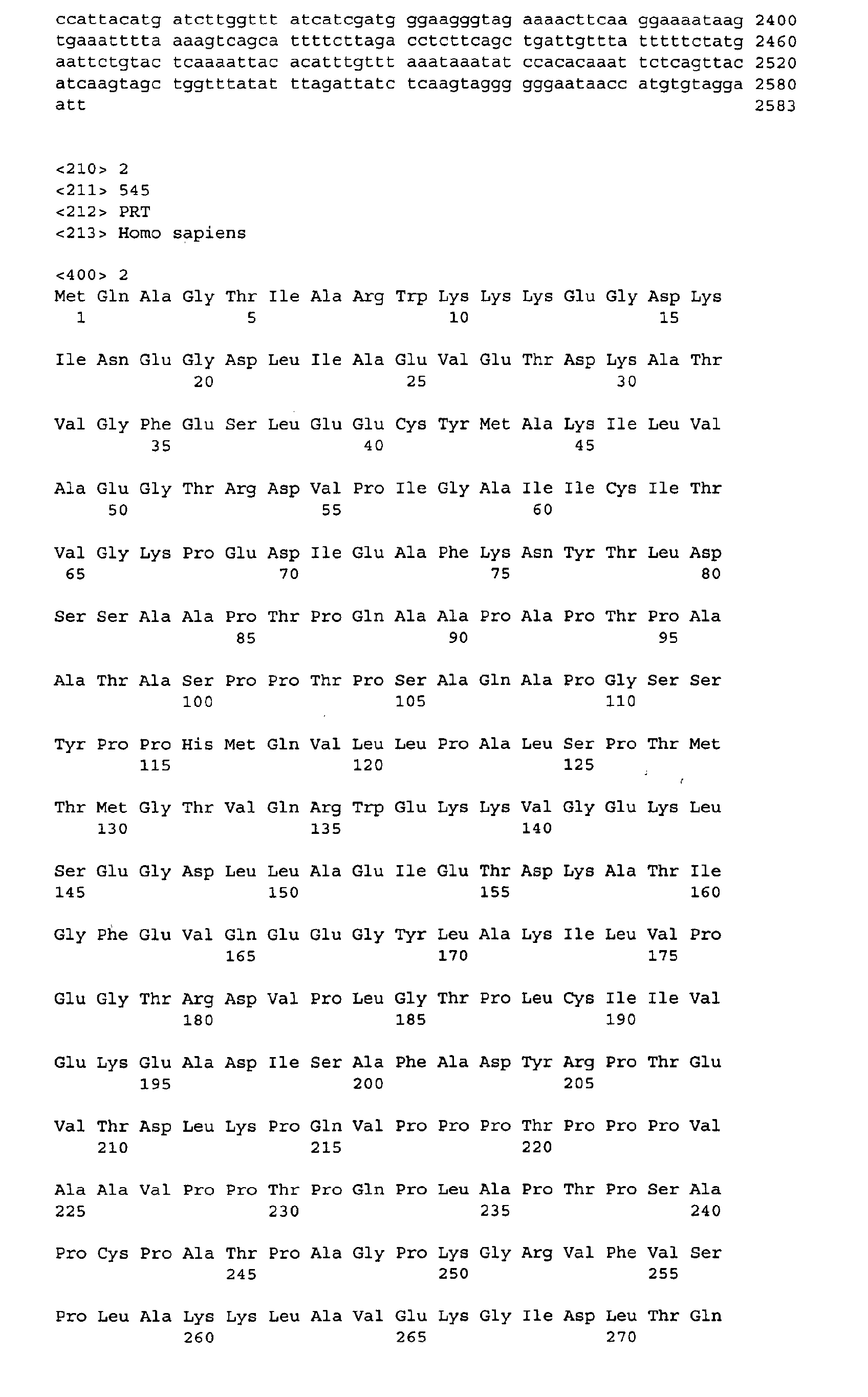

Claims (12)
- A method for the diagnosis of a polymorphism in PDH E2 in a human, which method comprises determining the sequence of the human at one or more of positions 857 and 1255 in the PDH E2 gene as defined by the positions in SEQ ID NO: 1 or positions 216 or 349 of PDH E2 protein as defined by the position in SEQ ID NO: 2; and determining the status of the human by reference to polymorphism in PDH E2.
- A method according to claim 1 in which the polymorphisms are further defined as:
Position Polymorphism Reference 857 T/C SEQ ID NO: 1 1255 G/A SEQ ID NO: 1 216 Val-Ala SEQ ID NO: 2 349 Asp-Asn SEQ ID NO: 2 - An isolated nucleic acid comprising any one of the following polymorphisms:
the nucleic acid of SEQ ID NO: 1 with C at position 857 as defined by the positions in SEQ ID NO: 1;
the nucleic acid of SEQ ID NO: 1 with A at position 1255 as defined by the position in SEQ ID NO: 1; or a complementary strand thereof or an antisense sequence thereto or a fragment thereof of at least 20 bases comprising at least one polymorphism. - An allele specific primer capable of detecting a PDH E2 gene polymorphism at one or more of positions 857 and 1255 in the PDH E2 gene as defined by the positions in SEQ ID NO: 1.
- An allele-specific oligonucleotide probe capable of detecting a PDH E2 gene polymorphism at one or more of positions 857 and 1255 in the PDH E2 gene as defined by the positions in SEQ ID NO: 1.
- A diagnostic kit comprising an allele specific oligonucleotide probe as claimed in claim 5 and/or an allele-specific primer as claimed in claim 4.
- Use of any polymorphism defined in claim 2 as a genetic marker in a linkage study.
- Use of a PDH drug in the preparation of a medicament for treating a PDH-mediated disease in a human diagnosed as having a polymorphism in PDH E2 in a human, which method comprises determining the sequence of the human at one or more of positions 857 and 1255 in the PDH E2 gene as defined by the positions in SEQ ID NO: 1 or positions 216 or 349 of PDH E2 protein as defined by the position in SEQ ID NO: 2.
- An allelic variant of the human PDH E2 polypeptide in isolated form having a alanine at position 216 and/or an asparagine at position 349 or a fragment thereof comprising at least 10 amino acids provided that the fragment comprises the allelic variant at position 216 and/or position 349.
- An antibody specific for an allelic variant of human PDH E2 polypeptide having a alanine at position 216 and/or an asparagine at position 349 or a fragment thereof comprising at least 10 amino acids provided that the fragment comprises the allelic variant at position 216 and /or position 349.
- Use of any polymorphism as defined in claim 1 or 2 in bioinformatic analysis.
- A use according to claim 11 comprising a bioinformatic analysis selected from homology searching, mapping, haplotyping, genotyping or pharmacogenetic analysis.
Applications Claiming Priority (2)
| Application Number | Priority Date | Filing Date | Title |
|---|---|---|---|
| GB0000992 | 2000-01-18 | ||
| GBGB0000992.8A GB0000992D0 (en) | 2000-01-18 | 2000-01-18 | Methods |
Publications (1)
| Publication Number | Publication Date |
|---|---|
| EP1118679A1 true EP1118679A1 (en) | 2001-07-25 |
Family
ID=9883809
Family Applications (1)
| Application Number | Title | Priority Date | Filing Date |
|---|---|---|---|
| EP01300271A Withdrawn EP1118679A1 (en) | 2000-01-18 | 2001-01-12 | Method for diagnosing polymorphisms in the human PDH E2 gene |
Country Status (4)
| Country | Link |
|---|---|
| US (1) | US20030223986A1 (en) |
| EP (1) | EP1118679A1 (en) |
| JP (1) | JP2001245681A (en) |
| GB (1) | GB0000992D0 (en) |
Cited By (1)
| Publication number | Priority date | Publication date | Assignee | Title |
|---|---|---|---|---|
| WO2004048610A1 (en) * | 2002-11-28 | 2004-06-10 | Universidad De Barcelona | Methods of diagnosing and treating diabetes and obesity |
Citations (3)
| Publication number | Priority date | Publication date | Assignee | Title |
|---|---|---|---|---|
| WO1988004689A1 (en) * | 1986-12-16 | 1988-06-30 | Amrad Corporation Limited | Primary biliary cirrhosis autoantigen |
| WO1997040462A2 (en) * | 1996-04-19 | 1997-10-30 | Spectra Biomedical, Inc. | Correlating polymorphic forms with multiple phenotypes |
| WO1999040222A1 (en) * | 1998-02-04 | 1999-08-12 | Variagenics, Inc. | Mismatch detection techniques |
-
2000
- 2000-01-18 GB GBGB0000992.8A patent/GB0000992D0/en not_active Ceased
-
2001
- 2001-01-12 EP EP01300271A patent/EP1118679A1/en not_active Withdrawn
- 2001-01-18 JP JP2001010165A patent/JP2001245681A/en active Pending
-
2003
- 2003-03-27 US US10/400,897 patent/US20030223986A1/en not_active Abandoned
Patent Citations (3)
| Publication number | Priority date | Publication date | Assignee | Title |
|---|---|---|---|---|
| WO1988004689A1 (en) * | 1986-12-16 | 1988-06-30 | Amrad Corporation Limited | Primary biliary cirrhosis autoantigen |
| WO1997040462A2 (en) * | 1996-04-19 | 1997-10-30 | Spectra Biomedical, Inc. | Correlating polymorphic forms with multiple phenotypes |
| WO1999040222A1 (en) * | 1998-02-04 | 1999-08-12 | Variagenics, Inc. | Mismatch detection techniques |
Non-Patent Citations (5)
| Title |
|---|
| MOEHARIO L H ET AL: "THE HUMAN PYRUVATE DEHYDROGENASE COMPLEX A POLYMORPHIC REGION OF THE LIPOATE ACETYLTRANSFERASE E2 SUBUNIT GENE", BIOCHIMICA ET BIOPHYSICA ACTA, vol. 1097, no. 2, 1991, pages 128 - 132, XP000993335, ISSN: 0006-3002 * |
| NOLLAU ET AL: "Methods for detection of point mutations", CLINICAL CHEMISTRY,US,AMERICAN ASSOCIATION FOR CLINICAL CHEMISTRY. WINSTON, vol. 43, no. 7, 1997, pages 1114 - 1128, XP002109368, ISSN: 0009-9147 * |
| PATEL MULCHAND S ET AL: "Mammalian alpha-keto acid dehydrogenase complexes: Gene regulation and genetic defects.", FASEB JOURNAL, vol. 9, no. 12, 1995, pages 1164 - 1172, XP002167026, ISSN: 0892-6638 * |
| SCHAFER A J ET AL: "DNA VARIATION AND THE FUTURE OF HUMAN GENETICS", NATURE BIOTECHNOLOGY,NATURE PUBLISHING,US, vol. 16, January 1998 (1998-01-01), pages 33 - 39, XP000890128, ISSN: 1087-0156 * |
| THEKKUMKARA T J ET AL: "NUCLEOTIDE SEQUENCE OF A COMPLEMENTARY DNA FOR THE DIHYDROLIPOAMIDE ACETYLTRANSFERASE COMPONENT OF HUMAN PYRUVATE DEHYDROGENASE COMPLEX", FEBS (FEDERATION OF EUROPEAN BIOCHEMICAL SOCIETIES) LETTERS, vol. 240, no. 1-2, 1988, pages 45 - 48, XP002167030, ISSN: 0014-5793 * |
Cited By (1)
| Publication number | Priority date | Publication date | Assignee | Title |
|---|---|---|---|---|
| WO2004048610A1 (en) * | 2002-11-28 | 2004-06-10 | Universidad De Barcelona | Methods of diagnosing and treating diabetes and obesity |
Also Published As
| Publication number | Publication date |
|---|---|
| US20030223986A1 (en) | 2003-12-04 |
| GB0000992D0 (en) | 2000-03-08 |
| JP2001245681A (en) | 2001-09-11 |
Similar Documents
| Publication | Publication Date | Title |
|---|---|---|
| Almind et al. | Aminoacid polymorphisms of insulin receptor substrate-1 in non-insulin-dependent diabetes mellitus | |
| US20020090622A1 (en) | Chemical compounds | |
| US20040203034A1 (en) | Optimization of cancer treatment with irinotecan | |
| US20030099977A1 (en) | Genotyping human UDP-glucuronsyltransferase 2B15 (UGT2B15) genes | |
| US20030129596A1 (en) | Chemical compounds | |
| US6797477B2 (en) | Genetic typing of the human cytochrome P450 2A6 gene and related methods | |
| US20070277251A1 (en) | Diagnosis and Prediction of Parkinson's Disease | |
| EP1194595A1 (en) | Polymorphisms in the human hmg-coa reductase gene | |
| US6562574B2 (en) | Association of protein kinase C zeta polymorphisms with diabetes | |
| US20020143162A1 (en) | Methods | |
| US20030044782A1 (en) | Diagnostic assays and kits for body mass and cardiovascular disorders | |
| US5827730A (en) | Mutant DNA encoding insulin receptor substrate 1 | |
| US20030223986A1 (en) | Methods | |
| US20020155446A1 (en) | Very low density lipoprotein receptor polymorphisms and uses therefor | |
| US20030190607A1 (en) | Methods | |
| EP1130122A2 (en) | Methods for the diagnosis of polymorphisms in the human EP1-R gene | |
| WO2000039331A1 (en) | Single nucleotide polymorphism in a pyruvate dehydrogenase kinase isoenzyme 2 (pdk2) in humans | |
| US20030170667A1 (en) | Single nucleotide polymorphisms diagnostic for schizophrenia | |
| WO2009125851A1 (en) | Method for detection of effectiveness of phenylalanine derivative-type compound in diabetes patient | |
| JP2004512842A (en) | Method for assessing risk of non-insulin dependent diabetes based on allyl mutation and body fat in the 5 'flanking region of the insulin gene | |
| KR100726800B1 (en) | Phosphoenolpyruvate Carboxinase 1 Gene Polymorphism | |
| US5840486A (en) | Mutant DNA encoding protein phosphatase 1 G-subunit | |
| US20070122803A1 (en) | Methods for the detection of polymorphisms in the human oatpf gene | |
| US20070243528A1 (en) | Methods for detecting polymorphisms using arms or rflp | |
| WO2002029097A2 (en) | Methods relating to polymorphisms in the human gpr10 gene |
Legal Events
| Date | Code | Title | Description |
|---|---|---|---|
| PUAI | Public reference made under article 153(3) epc to a published international application that has entered the european phase |
Free format text: ORIGINAL CODE: 0009012 |
|
| AK | Designated contracting states |
Kind code of ref document: A1 Designated state(s): AT BE CH CY DE DK ES FI FR GB GR IE IT LI LU MC NL PT SE TR |
|
| AX | Request for extension of the european patent |
Free format text: AL;LT;LV;MK;RO;SI |
|
| 17P | Request for examination filed |
Effective date: 20020125 |
|
| AKX | Designation fees paid |
Free format text: AT BE CH CY DE DK ES FI FR GB GR IE IT LI LU MC NL PT SE TR |
|
| 17Q | First examination report despatched |
Effective date: 20080507 |
|
| STAA | Information on the status of an ep patent application or granted ep patent |
Free format text: STATUS: THE APPLICATION IS DEEMED TO BE WITHDRAWN |
|
| 18D | Application deemed to be withdrawn |
Effective date: 20080918 |