EP1115207A1 - Method of generating distribution content, method and apparatus for content distribution, and method of code conversion - Google Patents
Method of generating distribution content, method and apparatus for content distribution, and method of code conversion Download PDFInfo
- Publication number
- EP1115207A1 EP1115207A1 EP00946267A EP00946267A EP1115207A1 EP 1115207 A1 EP1115207 A1 EP 1115207A1 EP 00946267 A EP00946267 A EP 00946267A EP 00946267 A EP00946267 A EP 00946267A EP 1115207 A1 EP1115207 A1 EP 1115207A1
- Authority
- EP
- European Patent Office
- Prior art keywords
- characters
- character string
- contents
- script
- data
- Prior art date
- Legal status (The legal status is an assumption and is not a legal conclusion. Google has not performed a legal analysis and makes no representation as to the accuracy of the status listed.)
- Withdrawn
Links
Images






Classifications
-
- H—ELECTRICITY
- H03—ELECTRONIC CIRCUITRY
- H03M—CODING; DECODING; CODE CONVERSION IN GENERAL
- H03M7/00—Conversion of a code where information is represented by a given sequence or number of digits to a code where the same, similar or subset of information is represented by a different sequence or number of digits
- H03M7/30—Compression; Expansion; Suppression of unnecessary data, e.g. redundancy reduction
-
- G—PHYSICS
- G06—COMPUTING OR CALCULATING; COUNTING
- G06F—ELECTRIC DIGITAL DATA PROCESSING
- G06F16/00—Information retrieval; Database structures therefor; File system structures therefor
- G06F16/30—Information retrieval; Database structures therefor; File system structures therefor of unstructured textual data
-
- G—PHYSICS
- G06—COMPUTING OR CALCULATING; COUNTING
- G06F—ELECTRIC DIGITAL DATA PROCESSING
- G06F16/00—Information retrieval; Database structures therefor; File system structures therefor
- G06F16/80—Information retrieval; Database structures therefor; File system structures therefor of semi-structured data, e.g. markup language structured data such as SGML, XML or HTML
- G06F16/84—Mapping; Conversion
-
- H—ELECTRICITY
- H04—ELECTRIC COMMUNICATION TECHNIQUE
- H04L—TRANSMISSION OF DIGITAL INFORMATION, e.g. TELEGRAPHIC COMMUNICATION
- H04L65/00—Network arrangements, protocols or services for supporting real-time applications in data packet communication
- H04L65/60—Network streaming of media packets
- H04L65/61—Network streaming of media packets for supporting one-way streaming services, e.g. Internet radio
- H04L65/611—Network streaming of media packets for supporting one-way streaming services, e.g. Internet radio for multicast or broadcast
-
- H—ELECTRICITY
- H04—ELECTRIC COMMUNICATION TECHNIQUE
- H04L—TRANSMISSION OF DIGITAL INFORMATION, e.g. TELEGRAPHIC COMMUNICATION
- H04L67/00—Network arrangements or protocols for supporting network services or applications
- H04L67/01—Protocols
- H04L67/02—Protocols based on web technology, e.g. hypertext transfer protocol [HTTP]
-
- H—ELECTRICITY
- H04—ELECTRIC COMMUNICATION TECHNIQUE
- H04L—TRANSMISSION OF DIGITAL INFORMATION, e.g. TELEGRAPHIC COMMUNICATION
- H04L67/00—Network arrangements or protocols for supporting network services or applications
- H04L67/01—Protocols
- H04L67/06—Protocols specially adapted for file transfer, e.g. file transfer protocol [FTP]
-
- H—ELECTRICITY
- H04—ELECTRIC COMMUNICATION TECHNIQUE
- H04L—TRANSMISSION OF DIGITAL INFORMATION, e.g. TELEGRAPHIC COMMUNICATION
- H04L69/00—Network arrangements, protocols or services independent of the application payload and not provided for in the other groups of this subclass
- H04L69/04—Protocols for data compression, e.g. ROHC
-
- H—ELECTRICITY
- H04—ELECTRIC COMMUNICATION TECHNIQUE
- H04N—PICTORIAL COMMUNICATION, e.g. TELEVISION
- H04N21/00—Selective content distribution, e.g. interactive television or video on demand [VOD]
- H04N21/20—Servers specifically adapted for the distribution of content, e.g. VOD servers; Operations thereof
- H04N21/23—Processing of content or additional data; Elementary server operations; Server middleware
- H04N21/235—Processing of additional data, e.g. scrambling of additional data or processing content descriptors
- H04N21/2353—Processing of additional data, e.g. scrambling of additional data or processing content descriptors specifically adapted to content descriptors, e.g. coding, compressing or processing of metadata
-
- H—ELECTRICITY
- H04—ELECTRIC COMMUNICATION TECHNIQUE
- H04N—PICTORIAL COMMUNICATION, e.g. TELEVISION
- H04N21/00—Selective content distribution, e.g. interactive television or video on demand [VOD]
- H04N21/80—Generation or processing of content or additional data by content creator independently of the distribution process; Content per se
- H04N21/85—Assembly of content; Generation of multimedia applications
- H04N21/854—Content authoring
- H04N21/8543—Content authoring using a description language, e.g. Multimedia and Hypermedia information coding Expert Group [MHEG], eXtensible Markup Language [XML]
-
- H—ELECTRICITY
- H04—ELECTRIC COMMUNICATION TECHNIQUE
- H04N—PICTORIAL COMMUNICATION, e.g. TELEVISION
- H04N7/00—Television systems
- H04N7/16—Analogue secrecy systems; Analogue subscription systems
-
- H—ELECTRICITY
- H04—ELECTRIC COMMUNICATION TECHNIQUE
- H04L—TRANSMISSION OF DIGITAL INFORMATION, e.g. TELEGRAPHIC COMMUNICATION
- H04L65/00—Network arrangements, protocols or services for supporting real-time applications in data packet communication
- H04L65/1066—Session management
- H04L65/1101—Session protocols
Definitions
- the invention relates to a digital data distributing technique in a satellite digital broadcast, communication of multimedia contents, or the like and, more particularly, to a technique for distributing digital data constructed by commands of a computer language.
- the invention relates to a digital data distributing technique for distributing digital data in a markup language (for example, XML (eXtensible Markup Language)) format using a tag which can be arbitrarily defined and, more particularly, to digital data distribution for improving a transmitting efficiency of distribution contents comprising text data such as what is called a script or the like and an executing efficiency on the reception side.
- a markup language for example, XML (eXtensible Markup Language)
- a tag which can be arbitrarily defined
- digital data distribution for improving a transmitting efficiency of distribution contents comprising text data such as what is called a script or the like and an executing efficiency on the reception side.
- a digital signal has a more excellent stability and a higher data compression ratio than those of an analog signal. According to the digital signal, a larger number of channels than that of the analog signal can be assured in a predetermined band irrespective of a cable, a ground wave, and a satellite wave.
- EPG Electronic Program Guide
- video information and audio information services to the user (viewer) can be improved (the EPG incorporates a function for a recording reservation or the like to a VTR in addition to presenting information such as broadcast schedule, program names, and the like of broadcast programs).
- Data in a digital format has a high affinity with information equipment such as a general computer system other than a television.
- a tuner card for a satellite broadcast is attached to the general computer system, received EPG data is analyzed in the computer, a program table is displayed as a window on a computer display, and a program switching, a recording reservation, or the like can be realized by the operation of a mouse cursor.
- broadcast data can be also digitally recorded as it is onto a hard disk built in the computer.
- the television receiver can become an Internet terminal or an electronic commerce terminal.
- the standardizing work regarding digital satellite data broadcast has been being progressed mainly by the ARIB (Association of Radio Industries and Businesses).
- digital transmission data accompanied by the broadcast program is distributed in parallel therewith.
- the program is propagated as a broadcast wave in a format of a "transport stream" (which will be explained hereinlater) constructed by multiplexing the AV data compressed by a predetermined compression system such as an MPEG (Motion Picture Experts Group) 2 or the like and the digital transmission data.
- a transport stream which will be explained hereinlater
- MPEG Motion Picture Experts Group
- the broadcast program information can include peculiar information regarding the broadcast program main body such as title and date of the broadcast program main body, casting of the program, and the like.
- the kind of data included in the broadcast program information and its data structure are systematized to a certain extent in accordance with the service contents which are provided by the program main body. For example, there are information regarding a menu and ingredients in a cooking program, a vote situation which is successively updated in an election spot news program, a personal record regarding the batting or pitching of each player and a place of a team in a professional baseball relay, and the like.
- the broadcast program information is displayed by using a partial area of a display screen for displaying and outputting the broadcast program main body.
- the receiving system is usually constructed by a receiver (set-top-box: STB) for receiving, station selecting, and decoding the broadcast wave and a television for displaying and outputting it and installed to an ordinary home.
- distributed contents A structure of contents (hereinafter, referred to as "distribution contents") which is distributed as digital transmission data will now be described with reference to Fig. 13.
- the distribution contents is constructed by: various kinds of monemedia data such as still image, motion image, audio sound, and the like in addition to text data; and a display/output control program (hereinafter, also referred to as "multimedia encoding application") which integratedly deals with those monomedia data, that is, as multimedia and specifies a state of the broadcast program information.
- a display/output control program hereinafter, also referred to as "multimedia encoding application”
- Reference (link) information for each monomedia data can be built in the display/output control program.
- MHEG Multimedia and Hypermedia Expert Group
- VOD video-on-demand
- MHEG-5 has already been used.
- an encoding space is fixed and it lacks expandability. That is, since it has to be described by using only the encoding space which has unconditionally been fixed, for example, even if one function (API (Application Programming Interface) or the like) is changed, a considerable correcting work is needed.
- API Application Programming Interface
- a general recognition degree is low, the data contents described by the MHEG is not so frequently circulated, and an affinity with a general computer is relatively low in terms of this meaning.
- a tag is arbitrarily defined, that is, there is no limitation in a method of describing attributes, points that a degree of freedom is high, an affinity with a general computer or Internet is high, and the like can be mentioned as points which are more advantageous than those of the MHEG.
- a work to set the XML to a description language of the Internet of the next generation is also being progressed.
- the XML As a standard language of the digital satellite broadcast, information of the data for digital broadcast can be exchanged among various kinds of information equipment such as computer, television, telephone, and the like.
- information of the data for digital broadcast can be exchanged among various kinds of information equipment such as computer, television, telephone, and the like.
- the attributes of the tag can be arbitrarily defined, it is stronger against the data processes as compared with the HTML specified to a layout designation. Therefore, the use of the XML to each field including an electronic commerce is also rapidly being progressed.
- each tag data divided by the tag can be expressed as data having a meaning other than a mere display object. Further, by defining a structure of the tag, the XML document or the data in the document can be structured and described.
- the standardization of the digital satellite data broadcast is being progressed on the basis of the XML. More specifically, the work is separately executed with respect to "basic XML” and "advanced XML” as an expanded edition of the basic XML. According to the basic XML, it is specified that a presentation format which expresses an XML instance onto the display is described by using a tag.
- the advanced XML enables attribute information of the XML instance to be added.
- a rule defining a describing method of the attribute information is a regulation called DTD (Document Type Definition).
- DTD Document Type Definition
- the attribute information which is defined by the tag is fixed and the DTD is unnecessary.
- the DTD can be arbitrarily defined.
- the DTD can be unconditionally defined every field.
- the attribute information of the tag which is used here includes information that is necessary in the case where when different types of apparatuses such as television receiver and computer are connected, each apparatus mutually understands the meaning of the contents and processes the contents and the like.
- the style sheet is a document file for converting, for example, the XML instance into a format to display and output it onto the display screen (or converting into a print output format to a printer).
- the style sheet for the XML instance can be described by using, particularly, a language in an "XSL (eXtensible Stylesheet Language)" format, a “CSS (Cascade Stylesheet)” format, or an "XSLT (XSL Transformation)” format as a derivative standard thereof.
- XSL eXtensible Stylesheet Language
- CSS Cascade Stylesheet
- XSLT XSL Transformation
- the operation can be also specified by a language called a script different from the XML or XSL.
- a script language such as JavaScript, ECMAScript, Jscript, or the like, according to the standard of the XML, XSL, or the like, fundamentally, it is specified that the script is described by ECMAScript ("ECMAScript" is a script language standardized by European Computer Manufactures Association (ECMA)).
- the distribution contents comprising the XML document is accompanied with, for example, the DTD document and style sheet besides the XML document.
- the DTD document is not included in the XML document or the style sheet is sent at a timing different from that of the distribution of the XML document.
- the description language of the distribution contents is not always limited to the XML but can also use another markup language format such as SGML (Standard Generalized Markup Language), HTML, or the like.
- URI Uniform Resource Idenntifier
- the received XML instance is parsing processed by a syntax analyzing program called "XML Perser". That is, the XML parser analyzes structures of the DTD document and XML instance and outputs a document object.
- the document object is a structured document whose tree structure has been formed in accordance with the tags in the original XML document. According to the display function of the receiving system, by interpreting the structure of the document, a layout or the like on the screen is determined and can be display outputted to the display.
- a size of text data as distribution contents becomes a problem here. This is because a load of a transmission path increases and a transmitting efficiency decreases in proportion to the data size.
- Another object of the invention is to provide an excellent data distributing technique which can improve an executing efficiency in a receiving apparatus for receiving distribution contents comprising text data and reduce a memory load.
- the invention is made in consideration of the above problems and according to the first aspect of the invention, there is provided a method of forming distribution contents, comprising the steps of:
- the distribution contents forming method according to the first aspect of the invention can further include a step of temporarily storing the distribution contents obtained after the replacement before distributing the distribution contents.
- the use of a system reservation word as a character string having low redundancy can be also eliminated. This is because if up to the system reservation word is extracted and replaced with other characters or character string, it is accompanied with a change in meaning which the original script inherently has, that is, a change in operation contents which are specified by the script, and it is improper to permit such a replacement.
- the distribution contents forming method can further include the steps of: extracting a sentence comprising characters or character string which is not concerned with processes which are executed on the reception side of the distribution contents; and deleting the extracted sentence.
- the sentence comprising characters or character string which is not concerned with the processes here corresponds to, for example, a comment sentence divided by a predetermined delimiter.
- the distribution contents forming method can further include a step of storing an appearance frequency in the script with respect to each of the characters or character string extracted by the step of extracting the characters or character string of the high redundancy, and
- the characters or character string having a large appearance frequency can be also replaced with the characters or character string whose number of characters is small. Since the characters or character string of the large appearance frequency is expressed by the characters or character string whose number of characters is small, a data compressing effect is raised.
- a contents distributing method or apparatus for distributing contents constructed by a plurality of data modules comprising:
- the use of a system reservation word as a character string of the low redundancy can be also eliminated. This is because if even the system reservation word is extracted and replaced with other characters or character string, it is accompanied with a change in meaning which the original script inherently has, that is, a change in operation contents which are specified by the script and it is improper to permit such a replacement.
- the contents distributing method or apparatus can further include: a step or means for extracting a sentence constructed by the characters or a character string which is not concerned with processes which are executed on the reception side of the distribution contents; and a step or means for deleting the extracted sentence.
- the sentence constructed by the characters or a character string which is not concerned with the processes here corresponds to a comment sentence divided by a predetermined delimiter.
- the contents distributing method or apparatus can further include: a step or means for storing an appearance frequency in the script with respect to each of the characters or character string extracted in the step of extracting the characters or character string of the high redundancy, and in the step or means for replacing the characters or character string of the high redundancy with the characters or character string of the low redundancy, the characters or character string of the large appearance frequency can be also replaced with the characters or character string whose number of characters is small. Since the characters or character string of the large appearance frequency is expressed with the characters or character string whose number of characters is small, a data compressing effect is raised.
- a method of converting a source code constructed by a plurality of characters or character strings having a meaning regarding computer processes comprising the steps of:
- the use of a system reservation word as a character string of the low redundancy can be also eliminated. This is because if even the system reservation word is extracted and replaced with other characters or character string, it is accompanied with a change in meaning which the original script inherently has, that is, a change in operation contents which are specified by a script, and it is improper to permit such a replacement.
- the code converting method according to the third aspect of the invention can further include the steps of: extracting a sentence constructed by characters or a character string which is not concerned with the execution of the code in the source code; and deleting the extracted sentence.
- the sentence constructed by the characters or character string which is not concerned with the execution of the code here corresponds to a comment sentence divided by a predetermined delimiter.
- the code converting method according to the third aspect of the invention can further include a step or means for storing an appearance frequency in the script with respect to each of the characters or character string extracted in the step of extracting the characters or character string of the high redundancy, and in the step or means for replacing the characters or character string of the high redundancy with the characters or character string of the low redundancy, the characters or character string having a large appearance frequency can be also replaced with the characters or character string whose number of characters is small. Since the characters or character string of the large appearance frequency is expressed by the characters or character string whose number of characters is small, a data compressing effect is raised.
- the invention can be preferably applied to digital transmission data which is distributed together with a broadcast program, particularly, to a data file described in a text format in the transmission data.
- the module constructing the digital transmission data comprises: various kinds of monomedia data such as still image, motion image, audio sound, and the like; and a display/output control program for integratedly treating with those monomedia data, that is, as multimedia and specifying a state of broadcast program information (hereinbelow, such a program is also referred to as "multimedia encoding application").
- one of the files constructed by text format data is a display/output control program and its contents is described by a markup description language (XML, SGML, HTML, or the like) in which data attributes are defined by a tag.
- XML markup description language
- SGML SGML
- HTML HyperText Markup Language
- Another text format data included in the module is a script which specifies the operation of the various media data such as audio sound, still image, motion image, and the like.
- the script can be described by a script language such as JavaScript, ECMAScript, JScript, or the like (according to the standard of XML, XSL, or the like, it is fundamentally specified so as to describe it by ECMAScript).
- the display/output control program itself described in the XML format or the like is a program in which the information itself which is screen displayed or print outputted is specified, and since a change of the contents of the text data is accompanied with a change in meaning of the data itself (that is, the operation specified by the program), it is improper to permit such a change.
- the function name or variable name included in the code, the comment sentence, or the like includes redundancy and it is fatal on a transmitting efficiency.
- the function name, variable name, or the like has inherently been named by a person who made the script for the purpose of convenience of improving the readability in the coding or debugging operation (or in accordance with a personal favor), and they have no relation with the operating function which is specified by the script itself. In other words, those function name and variable name can be exchanged with other character string while maintaining the operating function of the script itself.
- the comment sentence has no relation with the execution of the script and can be also omitted.
- a data size of the script is reduced by replacing the function name or variable name which exists in the script and comprises a relatively long character string with a shorter character string (for example, one alphabetical character).
- the data size is further reduced by deleting a comment sentence in the script.
- the function name or variable name in the script has been named by the person who made the script for the purpose of convenience of keeping the readability by human eyes of each function or variable and is constructed by a relatively long character string having a meaning which a person can understand.
- the comment sentence is embedded into the source code in order to memorize the function of each portion (for example, a routine sentence or the like) in the script, the comment sentence itself does not contribute to the realization of the function of the script.
- the function name or variable name constructed by the long character string and the comment sentence have a meaning up to a position of the debug, there is no need to have a meaning which can be interpreted by the person after the debug.
- unidirectional contents distribution such as a satellite data broadcast
- the function name or variable name in the script is replaced with another short character string or it becomes difficult for the person to interpret the meaning and contents of the source code because of the deletion of the comment sentence, there is hardly an adverse influence.
- the size of transmission data can be reduced and a transmitting efficiency is improved upon distribution.
- reception data decreases in the broadcast server, it is sufficient to merely prepare a reception memory of a relatively small capacity and it contributes to the reduction of costs. Since a length of character string of the function name or variable name in the script is minimized, a size of function table or variable table which is allocated to the memory from an interpreter for executing the script can be reduced. Thus, an overhead at the time when the function or variable is called decreases. That is, an executing efficiency of the script is improved, a capacity of the memory can be reduced, so that the costs for the receiver can be reduced. The user of the receiver (that is, viewer) can expect a system of a higher reacting speed owing to the improvement of the executing efficiency.
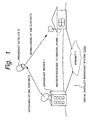
- Fig. 1 is a diagram showing a schematic construction of a satellite digital broadcast system 1000 which is embodied by the invention.
- Fig. 2 is a diagram schematically showing a construction of a broadcast server 1, that is, a transmitting system.
- Fig. 3 is a diagram schematically showing a hardware construction of an example 10-A of a receiving system in a receiver/decoder 10 (that is, ordinary home), more specifically, a diagram showing a construction of the receiving system 10-A installed in a form called STB (set-top-box).
- STB set-top-box
- Fig. 4 is a diagram schematically showing a hardware construction of a receiving system 10-B according to another example, more specifically, a diagram showing a hardware construction of the receiving system 10-B installed in a form such that a tuner card for satellite digital broadcast is installed in a general computer system.
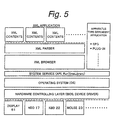
- Fig. 5 schematically illustrates a layer structure in various software programs which are executed by the digital broadcast data receiving system 10.
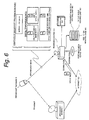
- Fig. 6 is a diagram schematically showing a state where broadcast contents is transferred from the broadcast server 1 to the receiver/decoder 10 through a broadcast satellite 5.
- Fig. 7 is a diagram schematically showing a construction of the broadcast contents which is propagated as a broadcast wave.
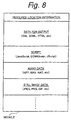
- Fig. 8 is a diagram schematically showing a data structure of a module constructing the digital transmission data.
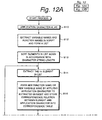
- Fig. 9 is a flowchart showing a processing routine for converting a script.
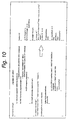
- Fig. 10 is a diagram showing a comparison between source codes of the scripts before and after the execution of the converting process shown in Fig. 9.
- Fig. 11 is a flowchart showing a script substitution processing routine (step S30) defined separately.
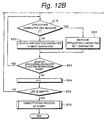
- Fig. 12 is a flowchart showing another example of a processing routine for converting the script.
- Fig. 13 is a diagram schematically showing a data structure of distribution contents as digital transmission data.
- Fig. 1 shows a schematic construction of a satellite digital broadcast system 1000 which is embodied by the present invention.
- the satellite digital broadcast system 1000 comprises: a broadcast station (Broadcast Server) 1 for providing broadcast services; a broadcast satellite (Satellite) 5 for relaying broadcast data; and a receiving station (Receiver/Decoder) 10 for receiving the broadcast data from the satellite 5.
- a broadcast station Broadcast Server
- a broadcast satellite Satellite
- Receiveiver/Decoder for receiving the broadcast data from the satellite 5.
- One or more broadcast servers 1 exist on the ground.
- the satellite 5 exists in the sky fairly over the earth.
- the receiver/decoder 10 corresponds to an ordinary home or the like. Actually, a great number of receivers/decoders exist on the ground.
- the data distribution, that is, the broadcast via the broadcast server 1 and satellite 5 is unidirectional communication.
- the broadcast server 1 multiplexes AV data constructing a broadcast program main body and digital transmission data including program information accompanied by the broadcast program and distributes.
- the AV data is ordinarily compressed in an MPEG (Motion Picture Experts Group) 2 format and transmitted.
- MPEG Motion Picture Experts Group
- a module comprising various monomedia data such as text, still image, motion image, audio sound, and the like and "multimedia encoding application” as a program for controlling display and output of those monomedia data has been data karruseled and stored in the digital transmission data.
- the multimedia encoding application includes: a DTD document which has been described in an XML (eXtensible Markup Language) language format and defines a type of document; and a style sheet described in a language format such as XSL or the like (however, there is also a case where the DTD document and/or the style sheet is not included in the distribution contents).
- XML eXtensible Markup Language
- style sheet described in a language format such as XSL or the like (however, there is also a case where the DTD document and/or the style sheet is not included in the distribution contents).
- a script to specify the operation of the audio sound, still image, motion image, or the like is included in each module.
- Each receiver/decoder 10 and broadcast server 1 can be also bidirectionally connected by a wide area network 7 such as Internet, a dedicated line (not shown), or the like.
- the Internet 7 can be used as an upstream line directing from the receiver/decoder 10 to the broadcast server 1.
- a partially-on-demand broadcast service using the Internet 7 can be also provided.
- Fig. 2 schematically shows a construction of the broadcast server 1, that is, a transmitting system.
- the transmitting system 1 comprises a producing unit 100, a sending unit 200, and a transmitting unit 300. Each unit will be described hereinbelow.
- the producing unit 100 corresponds to the scene where contents of the broadcast program is produced.
- the producing unit 100 produces an XML document describing the contents of the data broadcast, a script which specifies the operation of the XML document, and information such as AV data or the like as a main body of the broadcast program and stores them into local storing devices 102 and 103 of a large capacity, respectively.
- the XML document and the script correspond to resources (which will be explained hereinlater; refer to Figs. 7 and 8) of the resource of each module constructing the digital transmission data.
- the digital transmission data is subjected to an editing process such as coding/debug or the like on an editing system 101.
- the substance of the editing system 101 may be a general computer system called a workstation or personal computer.
- the XML document is a markup language (mentioned before) using the tag which can be arbitrarily defined and a DTD document which defines a document type can be also annexed.
- the XML document in this case is a data main body for output in the receiver/decoder 10.
- the script is a script which specifies the operation of the XML document and is a file in a text format described by a script language such as JavaScript, ECMAScript, JScript, or the like (according to the standard of XML, XSL, or the like, it is fundamentally specified so as to describe the script by ECMAScript).
- the digital transmission data can also include multimedia contents such as audio data, still image data, and the like besides the XML document and script.
- Those distribution contents produced and stored in the producing unit 100 is transferred to the sending unit 200 via, for example, an LAN (Local Area Network) established in the broadcast server 1.
- LAN Local Area Network
- sending data is packetized by each of a contents transmitting system 201, a baseband control system 102 and an AV encoder 203 and transferred to the transmitting unit 300.
- the AV encoder 203 encoding compresses the AV data as a main body of the broadcast program by a compression system such as MPEG2 or the like.
- the data of the contents system is encoded in a multimedia encoding unit 301 and transferred to a contents transmitting system 302.
- a synthesizing unit 304 synthesizes output data of each of the contents transmitting system 302 and an AV data transmitting system 303.
- a modulating unit 305 a synthesis signal is RF modulated and transmitted to the receiver/decoder 10 through an RF transmission path.
- the RF signal is first transmitted to the satellite 5 from a transmitting antenna installed in the broadcast server 1 and subsequently received by a receiving antenna of the receiver/decoder 10 via the satellite 5.
- Fig. 3 schematically shows a hardware construction of the example 10-A of a digital satellite data broadcast receiving system which is installed in the receiver/decoder 10.
- the receiving system 10-A has been widespread to an ordinary home in a form called, for example, STB (set-top-box).
- STB set-top-box
- a CPU 11 as a main controller is mutually connected to each hardware component through a bus 50 and executes an integrated control to each component.
- the broadcast wave received by the antenna is supplied to a tuner 51.
- the broadcast wave conforms with a specified format and includes, for example, program guide information (EPG: Electric Program Guide) and the like.
- EPG Electric Program Guide
- a broadcast wave a wired broadcast wave or a ground wave other than the foregoing broadcast wave can be used, and it is not particularly limited.
- the tuner 51 performs tuning of the broadcst wave of a predetermined channel, that is, station selection and outputs reception data to a subsequent demodulator 52 in accordance with an instruction from the CPU 11.
- the demodulator 52 demodulates the digitally modulated reception data.
- a construction of the tuner 11 can be properly changed or expanded in accordance with whether the transmitted broadcast wave is an analog wave or a digital wave.
- the demodulated digital data is "transport stream” constructed by multiplexing the AV data which was MPEG2 compressed and the digital transmission data.
- the former AV data is a video image and audio information constructing the broadcast program main body.
- the latter digital transmission data is data accompanied by the broadcast program main body and includes, for example, EPG (Electric Program Guide).
- EPG Electronic Program Guide
- the digital transmission data will be explained in detail hereinlater.
- the transport stream is classified into what is called “transport layer” in an OSI (Open Systems Interconnection) reference model.
- a TS decoder 53 interprets the transport stream, separates it into the MPEG2 compressed AV data and the digital transmission data, sends the former to an AV decoder 54, and transmits the latter to the CPU 11 via the bus 50.
- a memory 53A for storing operation data can be also equipped for its own local.
- the AV decoder 54 When the real-time AV data compressed by the MPEG2 system is received from the TS decoder 53, the AV decoder 54 separates it into compression video data and compression audio data.
- the video data is subjected to an MPEG2 decompressing process, thereby reproducing the original video signal.
- the audio data is PCM (Pulse Code Modulation) decoded and, thereafter, synthesized with an additional sound, thereby forming a reproduction audio signal.
- a memory 54A for storing operation data can be also equipped for its own local.
- the reproduction video signal is displayed and outputted onto a display 61 via a multiplexer 55B.
- the reproduction audio signal is outputted to a speaker 62 via a multiplexer 55A and generated as a sound.
- a user interface control unit 56 is a module for processing the input operation from the user and has, for example, operation buttons/switches (not shown) for allowing the user to directly and manually operate and has a function for receiving a remote operation from a remote controller 66 via an infrared ray (IR) or the like.
- the control unit 56 can also include a display panel or an LED indicator (not shown) for displaying the current set contents.
- One of the operation buttons which the user interface control unit 56 has or one of operation buttons which the remote controller 66 has is allocated to a button for validating or invalidating a display output from an OSC display controller 57 (that is, display output such as program information or the like based on the digital transmission data).
- the CPU (Central Processing Unit) 11 is a main controller for integratedly controlling the whole operation of the receiving system 10-A.
- the CPU 11 can execute processes of the digital transmission data which is transferred via the bus 50.
- the digital transmission data is described in the XML (eXtensible Markup Language) language format (which will be explained hereinlater).
- the CPU 11 can execute processing software (which will be explained hereinlater) such as XML parsing browsing (display output or print output) and the like for the XML document on a platform that is provided by the operating system (OS).
- OS operating system
- An RAM (Random Access Memory) 12 is a writable volatile memory which is used for loading an executing program code of the CPU 11 or writing operation data of the executing program.
- An ROM (Read Only Memory) 13 is a read only memory for permanently storing a self diagnosis and initializing program which is executed at the time of turn-on of a power source of the receiving system 10-A and storing microcodes for operation of the hardware.
- a serial input/output (SIO) controller 14 is a peripheral controller for executing a serial data exchange with equipment out of the receiving system 10-A.
- a high speed modem 63 (for example, a transfer rate is equal to 56 kbps) for modulating and demodulating transmission data on an analog telephone line is externally connected to a serial port which is prepared by the SIO controller 14.
- PPP Point-to-Point Protocol
- the receiving system 10-A is connected to the Internet 7 as a wide area network.
- An IEEE1394 interface 15 is a serial high speed interface which can transmit and receive data at a transfer rate of about tens of MBps.
- External equipment corresponding to IEEE1394 can be connected to the IEEE1394 port in a daisy chain or tree manner.
- a video camera 64, a scanner (not shown), and the like can be mentioned as equipment corresponding to IEEE1394.
- a hard disk drive (HDD) 17 is an external storing device for storing the program, data, and the like in a file format of a predetermined format and usually has a relatively large capacity of about a few GB.
- the HDD 17 is connected to the bus 50 via a hard disk interface 18.
- a card interface 18 is a device for realizing bus protocol between a card-type device 65 inserted in a card slot 19 and the bus 50.
- the card-type device 65 there is a PC card having a credit card size constructed as a cartridge type.
- the PC card conforms with the specification "PC Card Standard" specified by the PCMCIA (Personal Computer Memory Card Interface Association) and the JEIDA (Japan Electronic Industry Development Association) in cooperation with each other.
- the PC card there is a memory card constructed by a non-volatile, erasable, and rewritable memory chip such as an EEPROM (Electrically Erasable and Programmable ROM) or the like.
- EEPROM Electrical Erasable and Programmable ROM
- the receiving system 10-A is cheaply constructed in a relatively small size, there is a case where it is difficult on design to install the HDD 17 of a large capacity and a large volume. In such a case, it is presumed that it is preferable to apply a detachable and portable memory card to the system 10-A.
- the detachable memory 65 is not limited to a form factor of the PC card but may be also what is called "memory stick" (trademark).
- the display controller 57 is a dedicated controller for controlling a display output of broadcast program information or the like based on the digital transmission data.
- the CPU 11 controls the station selecting operation of the tuner 51 and performs a display control of the program information and the like in accordance with commands inputted from the user via the user interface control unit 56. That is, the CPU 11 processes the data for digital broadcast transferred from the TS decoder 53, converts into data for display, and supplies it to the display controller 57.
- the display controller 57 generates an image signal of the program information on the basis of the display data and supplies to the multiplexer 55B.
- the CPU 11 also processes the audio data included in the data for digital broadcast and supplies it to the multiplexer 55A via the bus 50.
- the multiplexers 55A and 55B multiplex the display data and audio data supplied from the CPU 11 to the video data and audio data as a broadcast program main body that is outputted from the AV decoder 54 and externally output to the display 61 and speaker 62, respectively. Processes of the data for digital broadcast will be described in detail hereinlater.
- Fig. 4 schematically shows a hardware construction of the digital broadcast data receiving system 10-B according to another example.
- the receiving system 10-B according to the example is installed in a form such that a digital tuner card 40 for satellite digital broadcast is inserted into a general computer system 30.
- the digital tuner card 40 comprises the tuner 51, demodulator 52, TS decoder 53, AV decoder 54, RAMs 53A and 54A, and multiplexers 55A and 55B.
- a construction and functions of the system are almost the same as those of the hardware block having the same reference numerals shown in Fig. 3.
- the digital satellite broadcast tuner card 40 is connected to a system bus (PCI bus) 31 in the computer system 30 via a bus interface (PCI interface) 58 (shown).
- PCI bus system bus
- PCI interface bus interface
- the broadcast wave received from the antenna is station selected by the tuner 51 and demodulated by the demodulator 52.
- the TS decoder 53 interprets the transport stream and separates it into the MPEG2 compressed AV data and the digital transmission data.
- the AV data is supplied to the AV decoder 54, processed in a manner similar to that mentioned above, and externally outputted to the display 61, speaker 62, or the like.
- the digital transmission data is transferred to the computer system 30 side via the PCI interface 58 and processed by the CPU 11 in the system (which will be explained hereinlater).
- the general computer system 30 includes a printed circuit board (not shown) on which main circuit components as well as the CPU 11 (which will be explained hereinlater) are mounted.
- the board is also called “mother board”.
- the foregoing tuner card 40 is provided in a form of, for example, "adapter card” and inserted into a bus slot (not shown) arranged on the mother board.
- the tuner card 40 is not limited to the form of the adapter card but is provided in a form of a PC card which conforms with the specification set by the PCMCIA (Personal Computer Memory Card International Association)/JEIDA (Japan Electronic Industry Development Association) and inserted into the PC card slot 19 (which will be explained hereinlater), and is also assembled in the system construction of the computer system 30.
- PCMCIA Personal Computer Memory Card International Association
- JEIDA Joint Electronic Industry Development Association
- the CPU 11 is a main controller for integratedly controlling the whole operation of the computer system 30.
- the CPU 11 according to this example can execute various software programs (which will be explained hereinlater) for XML contents processes such as XML parsing, XSL processing, browsing, and the like on the platform that is provided by the operating system (OS).
- OS operating system
- a processor bus connected directly to an external pin of the CPU 11 is mutually connected to the system bus 31 via a bus bridge 20.
- the bus bridge 20 in the embodiment includes a memory controller for controlling a memory access to the RAM 12 in addition to a data buffer for absorbing a speed difference between the processor bus and the system bus 31.
- the RAM (Random Access Memory) 12 is a writable volatile memory which is used for loading executing program codes of the CPU 11 and writing operation data of the executing program. Usually, it is constructed by a plurality of DRAM (dynamic RAM) chips.
- the system bus 31 is a common signal transmission path including an address bus, a data bus, a control bus, and the like.
- a PCI (Peripheral Component Interconnect) bus corresponds to it.
- Various peripheral equipment which conform with the PCI interface specification are mutually connected onto the system bus 31.
- the peripheral equipment there is the digital satellite broadcast tuner card 40 mentioned above.
- a unique I/O address (or memory address) has been allocated to each peripheral equipment on the bus 31.
- the CPU 11 (more strictly speaking, the program which is executed by the CPU 11) can realize the transfer of data and commands to the desired peripheral equipment by designating the I/O address (or memory address).
- the ROM (Read Only Memory) 13 is a read only memory for permanently storing a self diagnosis program (POST) which is executed upon turn-on of a power source of the computer system 30 and a basic input/output system (BIOS) for hardware operation.
- the ROM 13 can be constructed by, for example, an EEPROM (Electrically Erasable and Programmable ROM) which can perform the electrical erasing and rewriting operation.
- the serial input/output (SIO) controller 14 is a peripheral controller for serially exchanging data with external equipment of the computer system 30.
- the high speed modem 63 (for example, transfer rate is equal to 56 kbps) for modulating and demodulating transmission data on an analog telephone line is externally connected to a serial port which is prepared by the SIO controller 14.
- the computer system 30 (that is, receiving system 10-B) is connected to the Internet by PPP (Point-to-Point Protocol) connecting to a predetermined access point (not shown) by the high speed modem 63.
- PPP Point-to-Point Protocol
- the IEEE1394 interface 15 is a serial high speed interface which can transmit and receive data at about tens of MBps.
- External equipment corresponding to IEEE1394 can be connected to the IEEE1394 port in a daisy chain or tree manner.
- the video camera 64, scanner (not shown), and the like can be mentioned as equipment corresponding to IEEE1394.
- the hard disk drive (HDD) 17 is an external storing device for storing the programs, data, and the like in a file format of a predetermined format and usually has a relatively large capacity of about a few GB.
- the HDD 17 is connected to the system bus 33 via the hard disk interface 16.
- a keyboard/mouse controller (KMC) 21 is a dedicated controller for processing a user input from a keyboard 22, a mouse 23, or the like.
- the KMC 21 issues an interrupting request to the CPU 11 in response to a scan code input from the keyboard 22 or the detection of a coordinate instruction input from the mouse 23.
- the input operation such as selection of the channel or the like to the receiving system 10-B can be also performed through the keyboard 22 or mouse 23.
- One of function keys which the keyboard 22 has or one of menu buttons arranged on the display 61 has been allocated to a button for operating the validation or invalidation of the display output (that is, display output of the program information or the like based on the digital transmission data) from a video controller 24.
- the card interface 18 is a device for realizing a bus protocol between the bus 50 and the card-type device 65 inserted into the card slot 19.
- the card-type device 65 there is a PC card having a credit card size constructed in a cartridge type.
- the PC card conforms with the specification "PC Card Standard" set by the PCMCIA (Personal Computer Memory Card Interface Association) and the JEIDA (Japan Electronic Industry Development Association) in cooperation with each other.
- the PC card there is a memory card constructed by a non-volatile, erasable, and rewritable memory chip such as an EEPROM (Electrically Erasable and Programmable ROM) or the like.
- EEPROM Electrical Erasable and Programmable ROM
- the digital satellite broadcast receiving system 10-B is cheaply constructed in a relatively small size, there is a case where it is difficult on design to install the HDD 17 having a large capacity and a large volume. In such a case, it is presumed that it is preferable to apply a detachable and portable memory card to the receiving system 10-B.
- the detachable memory 65 is not limited to a form factor of the PC card but may be also what is called "memory stick" (trademark).
- the video controller 24 is a dedicated controller for controlling a screen display in accordance with a draw command from the CPU 11 and has a frame memory (VRAM) 25 for temporarily storing draw information.
- VRAM frame memory
- the video controller 24 has drawing ability (for example, SVGA (Super video Graphics Array) or XGA (eXtended Graphics Array)) over a VGA (Video Graphic Array).
- the CPU 11 controls the station selecting operation of the tuner 11 in accordance with a command inputted from the user via the keyboard 22 or mouse 23 and performs a display control of the program information and the like. That is, the CPU 11 processes the digital broadcast data supplied from the TS decoder 53, converts it into the display data, and supplies to the video controller 24.
- the video controller 24 forms an image signal of the program information on the basis of the display data and supplies it to the multiplexer 55B.
- the CPU 11 also processes the audio data included in the digital broadcast data and supplies it to the multiplexer 55A via the bus 50.
- the multiplexers 55A and 55B multiplex the display data and audio data supplied from the CPU 11 to the video data and audio data as a broadcast program main body that is outputted from the AV decoder 54 and externally output to the display 61 and speaker 62, respectively.
- the processes of the digital broadcast data will be described in detail hereinlater.
- the receiving system 10 can also have an external storing device such as FDD (Floppy Disc Drive), CD-ROM drive, or MO drive in which a portable recording media such as FD (Floppy Disc: trademark), CD-ROM, MO (Magneto-Optical disc), or the like is inserted and a data access can be performed.
- FDD Compact Disc Drive
- CD-ROM Compact Disc
- MO Magnetic-Optical disc
- Fig. 5 schematically illustrates a layer construction among the various software programs which are executed in the digital broadcast data receiving system 10. A function of the software of each layer will be described hereinbelow.
- a hardware control layer as a bottom layer has an object to absorb a difference of the hardware from upper software such as an operating system (OS) or the like and executes the direct input/output operation to each hardware and processes corresponding to a hardware interruption.
- OS operating system
- the hardware control layer is provided to the digital satellite broadcast receiving system 10, for example, in a form such as BIOS (Basic Input/Output System) which has permanently stored in the ROM 13 or "device driver" installed in the HDD 17.
- BIOS Basic Input/Output System
- the operating system is basic software for integratedly managing the hardware and software in the satellite broadcast receiving system 10.
- the OS includes subsystems such as: "file manager” for managing the recording of files on the HDD 17; “memory manager” for managing a memory space; “resource manager” for managing distribution of system resources; “scheduler” for managing the task execution; “window system” for controlling a window display on the display; and the like.
- a system service is a set of functions for allowing an upper program such as an application or the like to call each function from the OS.
- An API Application Programming Interface
- run time library or dynamic link library
- the XML application is a program for controlling a state of the display/output or the like of the data broadcast and is an XML document described by a language with a tag which can perform an arbitrary definition such as XML.
- Each XML document can be also accompanied with a style sheet such as DTD document for definition of a document style, XSL document which specifies a display format (or XSLT as a derivative standard of CSS or XSL) or the like.
- the XML parser is a software program for analyzing the XML document by using the DTD document and transfers the document object as an analysis result to the XSL processor.
- the document object is a structured document in which a tree structure has been formed in accordance with the tag in the original XML document.
- a broadcast wave is first transmitted from the broadcast server 1 to the satellite 5 and transferred from the satellite 5 to the receiver/decoder 10.
- the contents of the transmission broadcast wave is constructed by: video and audio data (AV data) constructing the satellite broadcast program main body; and digital transmission data accompanied by the broadcast program main body.
- AV data video and audio data
- Fig. 7 schematically shows a construction of broadcast contents which is propagated as a broadcast wave.
- the broadcast contents is constructed as "transport stream" obtained by multiplexing the AV data which was compressed by a predetermined compression system such as MPEG (Motion Picture Experts Group) 2 or the like and the digital transmission data (the transport stream is classified into a transport layer of the OSI (Open Systems Interconnection) reference model).
- MPEG Motion Picture Experts Group
- OSI Open Systems Interconnection
- the TS decoder 53 interprets the transport stream and separates into the AV data portion and the digital transmission data portion.
- the AV data portion is processed by the AV decoder 54.
- the digital transmission data portion is processed by the CPU 11.
- the digital transmission data portion comprises a plurality of modules.
- Each module includes an EPG, advertisement information, and other various information associated by the broadcast program main body.
- the digital transmission data portion has been formed as a data karrusel (merry-go-round data).
- Each module repetitively appears during the broadcast of the program main body (thus, the receiving system 10 as a viewer can obtain the module at an arbitrary timing in the program broadcast period and a memory for cache can be omitted).
- An automatic start flag for synchronizing with a display output timing of the module can be embedded into the MPEG2 compressed AV data.
- Fig. 8 schematically shows a data structure of the module.
- one module comprises a plurality of resource elements such as control program (multimedia encoding application) which specifies a state of display or output of the data broadcast, monomedia data such as script which specifies the operation, audio sound, text data, still image, motion image, etc., and the like.
- control program multimedia encoding application
- monomedia data such as script which specifies the operation, audio sound, text data, still image, motion image, etc., and the like.
- Each monomedia data is an object constructing a part of the data broadcast and integratedly handled by the multimedia encoding application.
- Each resource element constructing the module is an independent file having a predetermined format.
- the audio data is described by, for example, an audio dedicated file format such as AIFF, WAV, AAC, or the like.
- the still image is described by an image dedicated file format such as JPEG, PNG, GIF, or the like.
- the head resource location information describes the position information of each resource element in the module.
- the "multimedia encoding application” is a program for controlling a state of display and output of the EPG, advertisement information, and other various data broadcast accompanied by the broadcast program main body and is an XML application described in the XML (eXtensible Markup Language) format. However, it is not necessarily limited to the XML language but can be also described in another markup language format such as SGML, HTML, or the like.
- the XML document can include the DTD document for defining a document type. Since the style information which designates the actual expressing format is not incorporated in the XML document, a style sheet can be also annexed.
- the style sheet is a data file in which an actual expressing format of the XML document as output contents (further, it can also include multimedia contents such as other audio sound, still image, and the like) has been specified.
- the style sheet is a document file described in the XSL (eXtensible Stylesheet Language) format for converting the XML document into a format for displaying and outputting onto the display 61 (or converting into a print output format to the printer (not shown)).
- a script in which the operation of the multimedia contents comprising various monomedia data such as audio sound, text, still image, motion image, and the like has been specified can be also distributed (for example, the script is described by a script language such as JavaScript, ECMAScript, Jscript, or the like.
- the script is described by a script language such as JavaScript, ECMAScript, Jscript, or the like.
- ECMAScript a script language such as JavaScript, ECMAScript, Jscript, or the like.
- the contents described by the standard XML language is transmitted in a form in which the XML document and the style sheet are contained together so long as the style sheet which is used is not limited.
- the digital transmission data portion in the broadcast contents besides a case where the output contents (XML document) and the style sheet (XSL document, CSS document, or the like) are contained together, a case of the transmission of only the XML document main body or the transmission of only the XSL document is also presumed.
- the XSL document can be supplied in a form of transmission or distribution other than the broadcast, for example, it can be supplied by a file download via the network such as Internet or supplied from a portable memory medium such as FD, CD-ROM, MO, memory stick (trademark), or the like in which the XSL document has been held.
- the supplied XML document and XSL document are separated and stored. That is, the HDD 17 (or memory card 65) to store the supplied document files is provided with: a document main body holding unit 80 for holding and managing only the XML document (however, the DTD document can be also contained); and a style sheet holding unit 90 for holding and managing only the XSL document as a style sheet.
- each module constructing the digital transmission data includes two files constructed by the text format data. One of them is an output data file and its contents is described by a markup description language (XML, HTML, or the like) in which the data attributes are defined by a tag.
- XML markup description language
- Another text format data included in the module is a script which specifies the operation of various media data such as audio sound, still image, motion image, and the like.
- this script is described by a script language such as JavaScript, ECMAScript, JScript, or the like (according to the standard of XML, XSL, or the like, it is fundamentally specified so as to describe it by ECMAScript).
- the script is a script in which the processing procedure for allowing the software to execute is described in a text format and ordinarily used for automating a series of processes in which operating procedures which can be controlled by the end user have been combined on the application or OS.
- the information itself which is screen displayed or print outputted is specified, and it is improper to permit the change in contents of the text data of it.
- the function name, variable name, comment sentence, or the like included in the source code of the script includes redundancy and is fatal on the transmitting efficiency.
- the function name, variable name, or the like has inherently been named by the person who made the script for the purpose of convenience of readability by human eyes or the like (or in accordance with a personal favor) and has no relation with the operating function that is specified by the script itself. In other words, those function name and variable name have exchangeability with another character string while maintaining the operating function of the script itself.
- the comment sentence has no relation with the execution of the script and can be also omitted.
- the invention is made by paying attention to the redundancy incorporated by the script described in such a text format.
- the data size of the script is reduced by replacing the function name or variable name which exists in the script and comprises a relatively long character string with a shorter character string (for example, one alphabetical character). Further, the data size is reduced by deleting the comment sentence in the script.
- a processing routine for converting the script file in the text format is shown in a form of a flowchart.
- the script file conversion processing routine is executed by the program producer in the broadcast server 1 (more specifically speaking, the editing system 101 of the producing unit 100 (refer to Fig. 2)) after completion of the making of the digital transmission data.
- step S10 a character string (hereinafter, referred to as "application characters") of low redundancy for substituting it for the character string of high redundancy and a variable i are set to initial values.
- application characters a character string
- one alphabetical character is used as application characters in the ascending order. It is assumed that when the application characters start from A and reach Z, the number of characters is increased one by one in the ascending order like AA, AB, AC, ..., ZZ, AAA, ... .
- the ECMAScript has a rule such that the reservation word starts from a small letter. Therefore, if the script as a processing target is described in the ECMAScript format, by specifying so that the application characters start from a capital letter, the coincidence with the reservation word of the ECMAScript can be easily eliminated. In this case, therefore, a discrimination about whether the application characters coincide with the reservation word of the script or not (step S23 in Fig. 12: which will be explained hereinlater) is unnecessary.
- step S12 by scanning the script as a processing target, the character strings of the high redundancy are extracted and listed.
- the character strings of the high redundancy here are, for example, the function name and variable name. They have the high redundancy as a result of using the words having a meaning in order to raise the readability by human eyes upon coding or debugging operation.
- the function name and variable name can be extracted from the script in accordance with the following rules. That is,
- the first element that is, the original function name and variable name
- the application characters By applying the application characters to this element, a new function name or variable name is set and a correspondence relation between the element and the application characters is stored in a correspondence table (step S16).
- the formed correspondence table is as shown in [Table 1], which will be explained hereinlater.
- step S18 whether the application characters have reached Zn, namely, a character string consisting of only Z or not is discriminated (where, the number n of character strings is expressed by the power of n).
- step S20 follows and the application characters are updated to the next character string in the ascending order of alphabets. If the discrimination result is YES, step S22 follows and the application characters are increased by one character in the ascending order of alphabets (for example, if the application characters are equal to Z, they are updated to AA and if the application characters are equal to ZZ, they are updated to AAA).
- step S24 i is increased by "1" and the processing routine advances to the next element in the list.
- step S26 whether an unprocessed element remains in the list or not is discriminated. If an unprocessed entry remains, the processing routine is returned to step S14 and processes similar to those mentioned above are repetitively executed to the next element. If all of the elements in the list have completely been registered into the correspondence table, the processing routine advances to a subsequent script substitution processing routine (S30). In this routine, the application characters of the low redundancy are substituted for the redundant character string such as function name, variable name, etc. in the original script, thereby compressing the size of script. The whole processing routine is finished.
- step S30 is a processing routine which has separately been defined and its processing procedure is shown in Fig. 11 in a form of a flowchart. Each step in the flowchart will now be described hereinbelow.
- step S31 one entry is extracted from the correspondence table (refer to [Table 1]).
- step S32 one sentence is extracted from the original script. It is now assumed that the sentence here indicates a character string from a blank to the next blank or the next new paragraph position and no blank is included.
- step S33 whether the variable name or function name specified by the entry exists in the sentence or not is discriminated. If a discrimination result is NO, next step S34 is skipped. If it is YES contrarily, the corresponding application characters are substituted for the variable name or function name in step S34.
- step S35 whether the sentence is a comment sentence or not is discriminated. If it is a script in the ECMAScript format, the comment sentence is a character string to the next new paragraph position after a delimiter "//". If the discrimination result is YES, step S36 follows and this comment sentence is deleted from the script.
- step S37 it is tried to obtain the next sentence.
- step S38 whether it is the last sentence or not is discriminated. If another sentence still remains, the processing routine is returned to step S32 and processes similar to those mentioned above are repetitively executed to the next sentence.
- step S39 If the sentence is the last sentence, whether the entry is the last entry in the correspondence table or not is discriminated (step S39). If another entry still remains, the processing routine is returned to step S31, and processes similar to those mentioned above are repetitively executed with respect to the correspondence relation which is specified by the next entry. If the processes regarding all of the correspondence relations are completed, the whole processing routine is finished.
- the script converting process is executed when the script is formed in the producing unit 100 and the script obtained after the converting process is stored as a resource into the storing device 102 of a large capacity.
- a method of converting the script just before sending instead of converting at the timing just after the formation of the script is also considered, in this case, since a module size of resource is changed, there is a possibility that it is necessary to reconstruct the module. It is, therefore, preferable to execute the converting process upon formation of the script. (For example, in the case where one module has been divided into two or more modules and stored before the converting process due to a limitation of the module length, there is also a case where it is fitted within a single module length by the converting process.)
- Fig. 10 shows a comparison between the source codes of the scripts before and after the execution of the converting process shown in Fig. 9.
- this script is text data described by the ECMAScript (ECMAScript is a script language standardized by European Computer Manufactures Association). It should be also noted that it is not a complete program but a partial extraction.
- the character string (for example, "buildArray” or the like) which follows just after a reservation word "function” is a function name and becomes a target to be replaced with a shorter character string.
- a substituted character string (for example, "temporary_argument” or the like) of the left side corresponds to a variable name and becomes a target to be similarly replaced with a short character string.
- the variables defined in the script have been mentioned, the essence of the invention is not limited to them.
- the substituting process to the short character string can be also similarly applied to a variable as an operator which operates the attributes of the display encoding data in the document such as XML, HTML, or the like.
- a character string which starts from the delimiter "//" and reaches the line end is a comment sentence.
- one sentence starting from "//" is searched in the source code and all of the characters to the line end are ignored, namely, deleted.
- a correspondence table shown in the following [Table 1] is formed as a result obtained by executing the converting process shown in Fig. 9 to the original source code shown in Fig. 10.
- the extracted character string of high redundancy such as variable name, function name, or the like is converted into application characters of low redundancy.
- Character string after conversion Character string before conversion (original function name, original variable name)
- a buildArray B temporary_argument C i D urls E go F which G number H resident I Index J url
- variable name or function name in the original source code is replaced with one alphabetical character, and the comment sentence is deleted.
- a code amount is largely reduced and a transmitting efficiency is remarkably improved.
- the processes themselves specified by the script are the same as those before conversion. Therefore, in the satellite broadcast receiving system 10 which receives the converted script, the execution system of the script can similarly handle it irrespective of whether the size reducing process has been performed or not.
- the minimization of the character string length of the function name or variable name in the script is preferable also from a viewpoint of the executing efficiency in the receiving system 10. This is because the size of function table or variable table which is allocated to the memory by the interpreter for executing the script can be reduced, so that an overhead at the time when the function or variable is called decreases.
- the size of script can be compressed to a preferable size.
- step S13 of sorting the elements in the list again is inserted between steps S12 and S14. That is, in step S13, the elements in the list are sorted again in the order from the element of the large appearance frequency in the script.
- the characters or character string of a large appearance frequency is replaced with characters or character string whose number of characters is small, so that the data compressing effect is raised.
- step S23 whether the updated application characters are a system reservation word or not is further discriminated (step S23) between steps S20 and S24. If they are the reservation word, the processing routine is returned to step S18 and they are removed from the targets of the character string conversion. This is because if they are converted into the reservation word, the inherent meaning of the original script, that is, the operation specified by the script is changed, so that it is improper to permit such a conversion.
- the function name and variable name in the script have been named by the person who made the script for convenience of keeping the readability by human eyes of each function name or variable name and each of them is constructed by a relatively long character string having a meaning which can be understood by the person.
- the comment sentence is embedded into the source code in order to memorize the function of each portion (for example, routine sentence or the like) in the script, the comment sentence itself does not contribute to the realization of the function.
- the function name or variable name consisting of a long character string and the comment sentence have a meaning to a position of the debug, it is unnecessary to have the meaning which can be interpreted by the person after the debug.
- the system to the unidirectional contents distribution like a satellite broadcast, there is no need to consider the reuse of the source code at the stage after the transmission.
- the function name or variable name in the script is replaced with another short character string or the comment sentence is deleted and the source code loses the readability by human eyes, there is hardly any trouble by it.
- the size of transmission data can be reduced and the transmitting efficiency is improved upon distribution.
- the receiver/decoder since the size of reception data decreases, it is sufficient to merely prepare a reception memory of a relatively small capacity, so that the costs are reduced. Since the character string length of the function name or variable name is minimized, a size of function table or variable table which is allocated to the memory by the interpreter for executing the script can be reduced. Thus, the overhead at the time when the function or variable is called decreases. That is, the executing efficiency of the script is improved, the memory capacity is reduced, so that the costs for the receiver can be decreased.
- a data amount can be reduced without changing the processing contents of the style sheet described in the text format.
- the transmitting efficiency of the distribution contents can be improved while keeping the conventional forming operation of the style sheet.
- the size of function table or variable table which is allocated to the memory by the interpreter for executing the script can be reduced.
- the overhead at the time when the function or variable is called decreases and the executing efficiency of the script is improved. Therefore, the user (namely, viewer) of the receiver can expect a higher reacting speed of the system owing to the improvement of the executing efficiency.
- the script can be driven on the reception side by using the existing interpreting software. In other words, an extra software development is unnecessary.
Landscapes
- Engineering & Computer Science (AREA)
- Multimedia (AREA)
- Signal Processing (AREA)
- Theoretical Computer Science (AREA)
- Computer Networks & Wireless Communication (AREA)
- Physics & Mathematics (AREA)
- Data Mining & Analysis (AREA)
- Databases & Information Systems (AREA)
- Computer Security & Cryptography (AREA)
- General Engineering & Computer Science (AREA)
- General Physics & Mathematics (AREA)
- Library & Information Science (AREA)
- Two-Way Televisions, Distribution Of Moving Picture Or The Like (AREA)
- Information Transfer Between Computers (AREA)
- Computer And Data Communications (AREA)
- Information Retrieval, Db Structures And Fs Structures Therefor (AREA)
- Data Exchanges In Wide-Area Networks (AREA)
Abstract
Description
in the step or means for replacing the characters or character string of the high redundancy with the characters or character string of the low redundancy, the characters or character string of the large appearance frequency can be also replaced with the characters or character string whose number of characters is small. Since the characters or character string of the large appearance frequency is expressed with the characters or character string whose number of characters is small, a data compressing effect is raised.
in the step or means for replacing the characters or character string of the high redundancy with the characters or character string of the low redundancy, the characters or character string having a large appearance frequency can be also replaced with the characters or character string whose number of characters is small. Since the characters or character string of the large appearance frequency is expressed by the characters or character string whose number of characters is small, a data compressing effect is raised.
| Character string after conversion | Character string before conversion (original function name, original variable name) |
| A | buildArray |
| B | |
| temporary_argument | |
| C | i |
| D | urls |
| E | go |
| F | which |
| G | number |
| H | resident |
| I | Index |
| J | url |
- 1
- BROADCAST SERVER (DIGITAL BROADCAST DATA TRANSMITTING SYSTEM)
- 5
- BROADCAST SATELLITE
- 7
- WIDE AREA NETWORK (INTERNET)
- 10
- RECEIVER/DECODER (GENERAL HOME: DIGITAL BROADCAST DATA RECEIVING SYSTEM)
- 11
- CPU
- 15
- IEEE1394 CONTROLLER
- 16
- HARD DISK INTERFACE
- 17
- HARD DISK DRIVE (HDD)
- 19
- CARD SLOT
- 30
- GENERAL COMPUTER SYSTEM
- 40
- DIGITAL TUNER CARD
- 50
- BUS
- 54
- AV DECODER
- 61
- DISPLAY
- 65
- MEMORY CARD
- 66
- REMOTE CONTROLLER
- 100
- PRODUCING UNIT
- 200
- SENDING UNIT
- 300
- TRANSMITTING UNIT
- 1000
- DIGITAL SATELLITE DATA BROADCAST SYSTEM
Claims (25)
- A distribution contents forming method of forming distribution contents, comprising the steps of:searching the inside of a script constructed by a plurality of characters or character strings formed as one of modules constructing the distribution contents and extracting the characters or character string having high redundancy; andreplacing the characters or character string of the high redundancy extracted in the script with the characters or character string having low redundancy.
- A distribution contents forming method according to claim 1, further including a step of temporarily storing the distribution contents obtained after the replacement before distributing said contents.
- A distribution contents forming method according to claim 1, wherein said characters or character string of the high redundancy includes a function name or a variable name.
- A distribution contents forming method according to claim 1, wherein in the step of replacing said characters or character string of the high redundancy with the characters or character string of the low redundancy, the use of a system reservation word as a character string of the low redundancy is eliminated.
- A distribution contents forming method according to claim 1, further including the steps of: extracting a sentence constructed by the characters or character string which is not concerned with processes which are executed on the reception side of the distribution contents; and deleting said extracted sentence.
- A distribution contents forming method according to claim 5, said sentence constructed by the characters or character string which is not concerned with processes which are executed on the reception side of the distribution contents is a comment sentence divided by a predetermined delimiter.
- A distribution contents forming method according to claim 1, further comprising a step of storing an appearance frequency in the script with respect to each of the characters or character string extracted in the step of extracting the characters or character string of the high redundancy, and
wherein in the step of replacing the characters or character string of the high redundancy with the characters or character string of the low redundancy, the characters or character string having a large appearance frequency is replaced with the characters or character string whose number of characters is small. - A contents distributing method of distributing contents constructed by a plurality of data modules, comprising the steps of:searching the inside of the data module described in a script language format constructed by a plurality of characters or character strings and extracting the characters or character string having high redundancy;replacing the characters or character string of the high redundancy extracted in the script with the characters or character string having low redundancy;storing the data module obtained after the replacement; anddistributing the stored data module.
- A contents distributing method according to claim 8, wherein said characters or character string of the high redundancy includes a function name or a variable name.
- A contents distributing method according to claim 8, wherein in said step of replacing the characters or character string of the high redundancy with the characters or character string of the low redundancy, the use of a system reservation word as a character string of the low redundancy is eliminated.
- A contents distributing method according to claim 8, further including the steps of: extracting a sentence constructed by the characters or character string which is not concerned with processes which are executed on the reception side of the distribution contents; and deleting said extracted sentence.
- A contents distributing method according to claim 11, where the sentence constructed by the characters or character string which is not concerned with processes which are executed on the reception side of the distribution contents is a comment sentence divided by a predetermined delimiter.
- A contents distributing method according to claim 8, further including the step of storing an appearance frequency in the script with respect to each of the characters or character string extracted in the step of extracting the characters or character string of the high redundancy, and
wherein in the step of replacing the characters or character string of the high redundancy with the characters or character string of the low redundancy, the characters or character string having a large appearance frequency is replaced with the characters or character string whose number of characters is small. - A contents distributing apparatus for distributing contents constructed by a plurality of data modules, comprising:means for searching the inside of the data module described in a script language format constructed by a plurality of characters or character strings and extracting the characters or character string having high redundancy;means for replacing the characters or character string of the high redundancy extracted in the script with the characters or character string having low redundancy;means for storing the data module obtained after the replacement; andmeans for distributing the stored data module.
- A contents distributing apparatus according to claim 14, wherein the characters or character string of the high redundancy includes a function name or a variable name.
- A contents distributing apparatus according to claim 14, wherein the means for replacing the characters or character string of the high redundancy with the characters or character string of the low redundancy eliminates the use of a system reservation word as a character string of the low redundancy.
- A contents distributing apparatus according to claim 14, further including: means for extracting a sentence constructed by the characters or character string which is not concerned with processes which are executed on the reception side of the distribution contents; and means for deleting said extracted sentence.
- A contents distributing apparatus according to claim 17, wherein the sentence constructed by the characters or character string which is not concerned with processes which are executed on the reception side of the distribution contents is a comment sentence divided by a predetermined delimiter.
- A contents distributing apparatus according to claim 14, further including means for storing an appearance frequency in the script in each of the characters or character string extracted by the step of extracting the characters or character string of the high redundancy, and
wherein in the means for replacing the characters or character string of the high redundancy with the characters or character string of the low redundancy, the characters or character string having a large appearance frequency is replaced with the characters or character string whose number of characters is small. - A code converting method of converting a source code constructed by a plurality of characters or character strings having a meaning regarding computer processes, comprising the steps of:searching the inside of the source code and extracting the characters or character string having high redundancy; andreplacing the extracted characters or character string of the high redundancy with the characters or character string having low redundancy.
- A code converting method according to claim 20, wherein the characters or character string of the high redundancy includes a function name or a variable name.
- A code converting method according to claim 20, wherein in the step of replacing the characters or character string of the high redundancy with the characters or character string of the low redundancy, the use of a system reservation word as a character string of the low redundancy is eliminated.
- A code converting method according to claim 20, further comprising the steps of: extracting a sentence constructed by the characters or character string which is not concerned with the execution of said code in the source code; and deleting said extracted sentence.
- A code converting method according to claim 23, wherein said sentence constructed by the characters or character string which is not concerned with the execution of the code is a comment sentence divided by a predetermined delimiter.
- A code converting method according to claim 20, further including a step of storing an appearance frequency in the script with respect to each of the characters or character string extracted in the step of extracting the characters or character string of the high redundancy, and
wherein in the step of replacing the characters or character string of the high redundancy with the characters or character string of the low redundancy, the characters or character string having a large appearance frequency is replaced with the characters or character string whose number of characters is small.
Applications Claiming Priority (3)
| Application Number | Priority Date | Filing Date | Title |
|---|---|---|---|
| JP19848399A JP4776050B2 (en) | 1999-07-13 | 1999-07-13 | Delivery content generation method, content delivery method and apparatus, and code conversion method |
| JP19848399 | 1999-07-13 | ||
| PCT/JP2000/004644 WO2001005038A1 (en) | 1999-07-13 | 2000-07-12 | Method of generating distribution content, method and apparatus for content distribution, and method of code conversion |
Publications (2)
| Publication Number | Publication Date |
|---|---|
| EP1115207A1 true EP1115207A1 (en) | 2001-07-11 |
| EP1115207A4 EP1115207A4 (en) | 2001-10-17 |
Family
ID=16391874
Family Applications (1)
| Application Number | Title | Priority Date | Filing Date |
|---|---|---|---|
| EP00946267A Withdrawn EP1115207A4 (en) | 1999-07-13 | 2000-07-12 | DISTRIBUTION CONTENT GENERATION METHOD, CONTENT DISTRIBUTION METHOD AND APPARATUS, AND TRANSCODING METHOD |
Country Status (5)
| Country | Link |
|---|---|
| US (2) | US7308508B1 (en) |
| EP (1) | EP1115207A4 (en) |
| JP (1) | JP4776050B2 (en) |
| CN (1) | CN1321362A (en) |
| WO (1) | WO2001005038A1 (en) |
Cited By (3)
| Publication number | Priority date | Publication date | Assignee | Title |
|---|---|---|---|---|
| WO2002039592A1 (en) * | 2000-11-07 | 2002-05-16 | Ui Evolution, Inc. | Method and apparatus for sending and receiving a data structure in a constituting element occurence frequency based compressed form |
| WO2003085509A1 (en) * | 2002-04-10 | 2003-10-16 | Matsushita Electric Industrial Co., Ltd. | Content generator, receiver, printer, content printing system |
| EP1377058A3 (en) * | 2002-06-18 | 2004-03-24 | Microsoft Corporation | E-commerce facilitation for broadcast services |
Families Citing this family (31)
| Publication number | Priority date | Publication date | Assignee | Title |
|---|---|---|---|---|
| JP2002247551A (en) * | 2001-02-21 | 2002-08-30 | Nec Corp | Bidirectional broadcasting service using fee collecting system and method therefor |
| WO2002095584A2 (en) * | 2001-05-22 | 2002-11-28 | Imagine Broadband Limited | Broadband communications |
| JP2003316561A (en) * | 2002-04-24 | 2003-11-07 | Minolta Co Ltd | Data transmitter and data receiver |
| JP2004120069A (en) | 2002-09-24 | 2004-04-15 | Canon Inc | Image processing apparatus, image processing method, and program for implementing the method |
| US20070067797A1 (en) * | 2003-09-27 | 2007-03-22 | Hee-Kyung Lee | Package metadata and targeting/synchronization service providing system using the same |
| US8055308B2 (en) * | 2003-09-30 | 2011-11-08 | General Motors Llc | Method and system for responding to digital vehicle requests |
| US20060037046A1 (en) * | 2004-08-13 | 2006-02-16 | Microsoft Corporation | Aligning video data to create a comprehensive program guide |
| US7793321B2 (en) * | 2004-08-13 | 2010-09-07 | Microsoft Corporation | Delivering a geographic-specific comprehensive program guide |
| US7519962B2 (en) * | 2004-10-07 | 2009-04-14 | Thomson Financial Llc | Command script parsing using local and extended storage for command lookup |
| US7526506B2 (en) * | 2004-10-21 | 2009-04-28 | Microsoft Corporation | Interlinking sports and television program listing metadata |
| DE102005000653A1 (en) * | 2005-01-04 | 2006-07-13 | Robert Bosch Gmbh | Script-based software installation via broadcast transport media |
| US7921137B2 (en) * | 2005-07-18 | 2011-04-05 | Sap Ag | Methods and systems for providing semantic primitives |
| JP4314238B2 (en) * | 2005-11-18 | 2009-08-12 | キヤノン株式会社 | Information processing apparatus, method, and computer program |
| US20090285280A1 (en) * | 2005-11-29 | 2009-11-19 | Thomas Patrick Newberry | Method and Apparatus for Securing Digital Content |
| US20070150595A1 (en) * | 2005-12-23 | 2007-06-28 | Microsoft Corporation | Identifying information services and schedule times to implement load management |
| JP5002205B2 (en) * | 2006-07-10 | 2012-08-15 | 任天堂株式会社 | Data authentication method and data authentication system |
| US7962937B2 (en) | 2006-08-01 | 2011-06-14 | Microsoft Corporation | Media content catalog service |
| JP4982154B2 (en) * | 2006-11-08 | 2012-07-25 | 株式会社日立製作所 | Structured document parsing method and apparatus |
| KR101451851B1 (en) * | 2007-01-03 | 2014-10-23 | 삼성전자주식회사 | Web server and its web service method |
| FR2914759B1 (en) * | 2007-04-03 | 2009-06-05 | Canon Kk | METHOD AND DEVICE FOR CODING A HIERARCHISED DOCUMENT |
| US7987446B2 (en) * | 2007-04-24 | 2011-07-26 | International Business Machines Corporation | Method for automating variables in end-user programming system |
| KR20100000334A (en) * | 2008-06-24 | 2010-01-06 | 삼성전자주식회사 | Method and apparatus for interfacing devices |
| JP5440004B2 (en) | 2008-10-20 | 2014-03-12 | セイコーエプソン株式会社 | Information distribution system, information distribution system service realization method and program thereof |
| JP5293086B2 (en) * | 2008-10-28 | 2013-09-18 | セイコーエプソン株式会社 | Information distribution system, information distribution system service realization method and program thereof |
| JP2010277440A (en) * | 2009-05-29 | 2010-12-09 | Internatl Business Mach Corp <Ibm> | Method for optimizing character string processing during program execution, and computer system and computer program thereof |
| JP5559001B2 (en) * | 2010-10-15 | 2014-07-23 | 株式会社日立ソリューションズ | Embedded program update method, embedded program update program, electronic device, network system |
| US20140181672A1 (en) * | 2012-12-20 | 2014-06-26 | Lenovo (Beijing) Co., Ltd. | Information processing method and electronic apparatus |
| JP2015177197A (en) * | 2014-03-12 | 2015-10-05 | 船井電機株式会社 | Playback device |
| JP6491438B2 (en) * | 2014-08-29 | 2019-03-27 | 株式会社日立社会情報サービス | Migration support device |
| JP6742692B2 (en) * | 2015-01-30 | 2020-08-19 | 富士通株式会社 | Encoding program and decompression program |
| CN109214179B (en) * | 2017-06-30 | 2021-04-27 | 武汉斗鱼网络科技有限公司 | Program module security detection method and device |
Family Cites Families (32)
| Publication number | Priority date | Publication date | Assignee | Title |
|---|---|---|---|---|
| JPS61112243A (en) * | 1984-11-06 | 1986-05-30 | Matsushita Electric Ind Co Ltd | Program reducing device |
| JPS61204741A (en) * | 1985-03-06 | 1986-09-10 | Nec Corp | Compressing method for source program |
| JPS62166408A (en) * | 1986-01-20 | 1987-07-22 | Fanuc Ltd | Numerical controller |
| JPS6326728A (en) * | 1986-07-19 | 1988-02-04 | Nec Corp | Label collation system |
| US4843389A (en) * | 1986-12-04 | 1989-06-27 | International Business Machines Corp. | Text compression and expansion method and apparatus |
| JPS63213030A (en) * | 1987-02-28 | 1988-09-05 | Casio Comput Co Ltd | BASIC interpreter device |
| US4870415A (en) * | 1987-10-19 | 1989-09-26 | Hewlett-Packard Company | Data compression system with expansion protection |
| US5146221A (en) * | 1989-01-13 | 1992-09-08 | Stac, Inc. | Data compression apparatus and method |
| JPH04130541A (en) | 1990-09-20 | 1992-05-01 | Fujikura Ltd | Basic interpreter |
| JPH04130531A (en) * | 1990-09-20 | 1992-05-01 | Fujikura Ltd | Method for saving memory for handy terminal |
| JPH04299411A (en) * | 1991-03-27 | 1992-10-22 | Nec Corp | File compressor and file expander |
| JP2806468B2 (en) * | 1993-08-24 | 1998-09-30 | 日本電気株式会社 | Program translation method |
| JPH0877197A (en) * | 1994-09-09 | 1996-03-22 | Fujitsu Ltd | String search method |
| JPH0954704A (en) * | 1995-08-11 | 1997-02-25 | Hitachi Ltd | Automatic test program creation system for language processor |
| GB2305746B (en) * | 1995-09-27 | 2000-03-29 | Canon Res Ct Europe Ltd | Data compression apparatus |
| JP3589255B2 (en) * | 1995-10-20 | 2004-11-17 | 富士ゼロックス株式会社 | Document processing apparatus and method |
| US5838963A (en) * | 1995-10-25 | 1998-11-17 | Microsoft Corporation | Apparatus and method for compressing a data file based on a dictionary file which matches segment lengths |
| JPH09246987A (en) * | 1996-03-04 | 1997-09-19 | Toshiba Advanced Syst Kk | Data compression device and data retrieval device for data compressed by the compression device |
| JP3305191B2 (en) * | 1996-03-19 | 2002-07-22 | 富士通株式会社 | Document management apparatus, data compression method, and data restoration method |
| DE19622365B4 (en) * | 1996-06-04 | 2008-08-28 | Deutsche Telekom Ag | Method for a converter for implementing source code |
| JPH1063492A (en) * | 1996-08-23 | 1998-03-06 | Kawasaki Steel Corp | Software specification generator |
| US5999949A (en) * | 1997-03-14 | 1999-12-07 | Crandall; Gary E. | Text file compression system utilizing word terminators |
| JPH10283233A (en) | 1997-04-07 | 1998-10-23 | Pfu Ltd | Execution method of HTML document format application and HTML document conversion tool storage medium |
| JP3859313B2 (en) * | 1997-08-05 | 2006-12-20 | 富士通株式会社 | Tag document compression apparatus and restoration apparatus, compression method and restoration method, compression / decompression apparatus and compression / decompression method, and computer-readable recording medium recording a compression, decompression or compression / decompression program |
| US6163780A (en) * | 1997-10-01 | 2000-12-19 | Hewlett-Packard Company | System and apparatus for condensing executable computer software code |
| US6311223B1 (en) * | 1997-11-03 | 2001-10-30 | International Business Machines Corporation | Effective transmission of documents in hypertext markup language (HTML) |
| US5991713A (en) * | 1997-11-26 | 1999-11-23 | International Business Machines Corp. | Efficient method for compressing, storing, searching and transmitting natural language text |
| US6163811A (en) * | 1998-10-21 | 2000-12-19 | Wildseed, Limited | Token based source file compression/decompression and its application |
| US6635088B1 (en) * | 1998-11-20 | 2003-10-21 | International Business Machines Corporation | Structured document and document type definition compression |
| GB9911099D0 (en) * | 1999-05-13 | 1999-07-14 | Euronet Uk Ltd | Compression/decompression method |
| US7188332B2 (en) * | 1999-10-05 | 2007-03-06 | Borland Software Corporation | Methods and systems for relating a data definition file and a data model for distributed computing |
| KR100408282B1 (en) | 2001-05-16 | 2003-12-03 | 삼성전자주식회사 | Optical recording medium on which wobble signal having header information is recorded, method and apparatus for recording the wobble signal, method and apparatus for reproducing the wobble signal |
-
1999
- 1999-07-13 JP JP19848399A patent/JP4776050B2/en not_active Expired - Fee Related
-
2000
- 2000-07-12 WO PCT/JP2000/004644 patent/WO2001005038A1/en not_active Ceased
- 2000-07-12 EP EP00946267A patent/EP1115207A4/en not_active Withdrawn
- 2000-07-12 CN CN00801934A patent/CN1321362A/en active Pending
- 2000-07-12 US US09/786,878 patent/US7308508B1/en not_active Expired - Fee Related
-
2007
- 2007-09-25 US US11/903,924 patent/US7653752B2/en not_active Expired - Fee Related
Cited By (5)
| Publication number | Priority date | Publication date | Assignee | Title |
|---|---|---|---|---|
| WO2002039592A1 (en) * | 2000-11-07 | 2002-05-16 | Ui Evolution, Inc. | Method and apparatus for sending and receiving a data structure in a constituting element occurence frequency based compressed form |
| US7054953B1 (en) | 2000-11-07 | 2006-05-30 | Ui Evolution, Inc. | Method and apparatus for sending and receiving a data structure in a constituting element occurrence frequency based compressed form |
| WO2003085509A1 (en) * | 2002-04-10 | 2003-10-16 | Matsushita Electric Industrial Co., Ltd. | Content generator, receiver, printer, content printing system |
| CN1299195C (en) * | 2002-04-10 | 2007-02-07 | 松下电器产业株式会社 | Content Gererator, receiver, printer and content printing system |
| EP1377058A3 (en) * | 2002-06-18 | 2004-03-24 | Microsoft Corporation | E-commerce facilitation for broadcast services |
Also Published As
| Publication number | Publication date |
|---|---|
| US7653752B2 (en) | 2010-01-26 |
| US20080028101A1 (en) | 2008-01-31 |
| WO2001005038A1 (en) | 2001-01-18 |
| CN1321362A (en) | 2001-11-07 |
| JP2001028585A (en) | 2001-01-30 |
| JP4776050B2 (en) | 2011-09-21 |
| EP1115207A4 (en) | 2001-10-17 |
| US7308508B1 (en) | 2007-12-11 |
Similar Documents
| Publication | Publication Date | Title |
|---|---|---|
| US7653752B2 (en) | Distribution contents forming method, contents distributing method and apparatus, and code converting method | |
| US7020839B1 (en) | Contents receiving system and contents receiving method | |
| JP4081934B2 (en) | Data distribution method and apparatus, and data reception method and apparatus | |
| US6792577B1 (en) | Data distribution method and apparatus, and data receiving method and apparatus | |
| US7146615B1 (en) | System for fast development of interactive applications | |
| US6453471B1 (en) | Electronic programming guide with movie preview | |
| US7305698B1 (en) | Data communication system, data transmitting apparatus, and data receiving apparatus | |
| US7957974B2 (en) | Method and apparatus for controlling devices connected to home network | |
| WO1998039893A2 (en) | Electronic programming guide with movie preview | |
| EP1038398A4 (en) | Electronic program control system with advertising messages in pop-up windows | |
| US20130093673A1 (en) | Information processing apparatus, information processing method, storage medium, and program | |
| US6278493B1 (en) | Information processor, information processing method as well as broadcasting system and broadcasting method | |
| JP5414792B2 (en) | Method and apparatus for providing rich media service | |
| JP2001292425A (en) | Interactive system with media contents using sliding graphic windows | |
| US7770195B2 (en) | Information processing apparatus and method, information providing apparatus and method, and program thereof | |
| JP2001016202A (en) | Data distribution method and device, and data receiving method and device | |
| KR20020035561A (en) | Apparatus for and method of testing applications | |
| KR20050009168A (en) | Apparatus and method for transmitting/receiving voice electronics program guide information | |
| CN111526414A (en) | Subtitle display method and display equipment | |
| EP1164499A1 (en) | Manipulation of data encoded in a mark-up language | |
| KR20040055556A (en) | Apparatus for Coding Metadata based on eXtensible Markup Language(XML) | |
| WO1999030492A1 (en) | Epg with alpha sorting feature | |
| JP2005004281A (en) | Output control device | |
| Choi et al. | An auto-generating tool for the MPEG-2 formatted test data: ATEP |
Legal Events
| Date | Code | Title | Description |
|---|---|---|---|
| PUAI | Public reference made under article 153(3) epc to a published international application that has entered the european phase |
Free format text: ORIGINAL CODE: 0009012 |
|
| 17P | Request for examination filed |
Effective date: 20010315 |
|
| AK | Designated contracting states |
Kind code of ref document: A1 Designated state(s): DE FR GB |
|
| AX | Request for extension of the european patent |
Free format text: AL;LT;LV;MK;RO;SI |
|
| A4 | Supplementary search report drawn up and despatched |
Effective date: 20010903 |
|
| AK | Designated contracting states |
Kind code of ref document: A4 Designated state(s): DE FR GB |
|
| 17Q | First examination report despatched |
Effective date: 20020219 |
|
| STAA | Information on the status of an ep patent application or granted ep patent |
Free format text: STATUS: THE APPLICATION IS DEEMED TO BE WITHDRAWN |
|
| 18D | Application deemed to be withdrawn |
Effective date: 20020903 |