EP1113609A1 - Broadcasting apparatus and method, receiving apparatus and method, and medium - Google Patents
Broadcasting apparatus and method, receiving apparatus and method, and medium Download PDFInfo
- Publication number
- EP1113609A1 EP1113609A1 EP00929794A EP00929794A EP1113609A1 EP 1113609 A1 EP1113609 A1 EP 1113609A1 EP 00929794 A EP00929794 A EP 00929794A EP 00929794 A EP00929794 A EP 00929794A EP 1113609 A1 EP1113609 A1 EP 1113609A1
- Authority
- EP
- European Patent Office
- Prior art keywords
- data
- receiving
- transport stream
- contents data
- extracting
- Prior art date
- Legal status (The legal status is an assumption and is not a legal conclusion. Google has not performed a legal analysis and makes no representation as to the accuracy of the status listed.)
- Withdrawn
Links
Images









Classifications
-
- H—ELECTRICITY
- H04—ELECTRIC COMMUNICATION TECHNIQUE
- H04N—PICTORIAL COMMUNICATION, e.g. TELEVISION
- H04N7/00—Television systems
- H04N7/20—Adaptations for transmission via a GHz frequency band, e.g. via satellite
-
- H—ELECTRICITY
- H04—ELECTRIC COMMUNICATION TECHNIQUE
- H04H—BROADCAST COMMUNICATION
- H04H40/00—Arrangements specially adapted for receiving broadcast information
- H04H40/18—Arrangements characterised by circuits or components specially adapted for receiving
- H04H40/27—Arrangements characterised by circuits or components specially adapted for receiving specially adapted for broadcast systems covered by groups H04H20/53 - H04H20/95
- H04H40/90—Arrangements characterised by circuits or components specially adapted for receiving specially adapted for broadcast systems covered by groups H04H20/53 - H04H20/95 specially adapted for satellite broadcast receiving
-
- G—PHYSICS
- G06—COMPUTING OR CALCULATING; COUNTING
- G06Q—INFORMATION AND COMMUNICATION TECHNOLOGY [ICT] SPECIALLY ADAPTED FOR ADMINISTRATIVE, COMMERCIAL, FINANCIAL, MANAGERIAL OR SUPERVISORY PURPOSES; SYSTEMS OR METHODS SPECIALLY ADAPTED FOR ADMINISTRATIVE, COMMERCIAL, FINANCIAL, MANAGERIAL OR SUPERVISORY PURPOSES, NOT OTHERWISE PROVIDED FOR
- G06Q30/00—Commerce
- G06Q30/06—Buying, selling or leasing transactions
- G06Q30/0601—Electronic shopping [e-shopping]
Definitions
- the present invention relates to broadcasting equipment and method, receiving equipment and method, and a medium and, more particularly, to broadcasting equipment and a method, receiving equipment and a method, and a medium suitable for use in the case of providing service of downloading contents data.
- Digital satellite broadcasting such as, for example, Sky PerfecTV (trademark) is being widespread.
- the digital satellite broadcasting can transmit a signal of higher quality as compared with existing analog broadcasting and realizes a large number of channels.
- channels dedicated to sports, movies, music, news and the like are prepared.
- a music channel is one of popular channels among the dedicated channels.
- the applicant of the present invention has proposed a system capable of multiplexing music pieceencoded by using the ATRAC (Adaptive Transform Acoustic Coding) system with respect to main broadcasting signals (video signal and sound signal) of the music channel, distributing the resultant data, and charging the viewer who is purchasing (downloading) the ATRAC data, for example, in Japanese Patent Application No. 10-201731.
- ATRAC Adaptive Transform Acoustic Coding
- the ATRAC system is a compression coding system adopted in the case of recording audio data onto an MD (Mini Disc) (trademark).
- preview time (test-listening time) during which there is no charge for viewing is set. Consequently, the viewer can determine whether a program is worth viewing (purchasing) or not during the preview.
- a receiving apparatus as a component of a system as described above has a problem that the apparatus cannot process the two kinds of music piece data simultaneously and independently of each other.
- An object of the present invention is to compensate failure in downloading by setting the purchase limitation time of music piece data in a system of downloading music piece data or the like.
- An object of the present invention is to enable music piece data to be test-listened before the user purchases the music piece data in a system of downloading music piece data or the like.
- An object of the present invention is to enable two kinds of music piece data compression coded in the ATRAC system and the MPEG2 system to be processed simultaneously and independently of each other in a system of downloading music piece data or the like.
- An object of the present invention is to enable efficiency with respect to time to be improved and music piece data of a larger amount to be downloaded within predetermined time by optimizing the order of downloading plural music piece data in a system of downloading music piece data or the like
- the first invention is broadcasting equipment for multiplexing downloadable contents data together with program information onto a main broadcast signal and broadcasting resultant data, comprising:
- the second invention is the broadcasting equipment according to claim 1, wherein the purchase limit time setting means sets timing at which downloading of the contents data of a time immediately preceding the final time among the plurality of times can be instructed as the purchase limit time. By doing in this manner, it is possible to favorably set the purchase limit.
- the third invention is the broadcasting equipment according to claim 2, wherein the contents data includes audio data encoded by the ATRAC system or audio data encoded by the MPEG 2 system.
- the forth invention is a broadcasting method of a broadcasting equipment for multiplexing downloadable contents data together with program information onto a main broadcast signal and broadcasting resultant data, comprising:
- the fifth invention is a medium for allowing broadcasting equipment for multiplexing downloadable contents data together with program information onto a main broadcast signal and broadcasting resultant data to execute a program comprising:
- the sixth invention is receiving equipment for receiving a transport stream obtained by repeatedly multiplexing downloadable contents data together with program information onto a main broadcast signal a plurality of times, comprising:
- the seventh invention is the receiving equipment according to claim 6, wherein the contents data includes audio data encoded by the ATRAC system or audio data encoded by the MPEG2 system.
- the eighth invention is a receiving method of receiving equipment for receiving a transport stream obtained by repeatedly multiplexing downloadable contents data together with program information onto a main broadcast signal a plurality of times, comprising:
- the ninth invention is a medium for allowing a receiving equipment for receiving a transport stream obtained by repeatedly multiplexing downloadable contents data together with program information onto a main broadcast signal a plurality of times to execute a program comprising:
- the tenth invention is receiving equipment for receiving a transport stream obtained by multiplexing plural encoded data encoded by different systems, comprising:
- the eleventh invention is the receiving equipment according to claim 10, wherein
- the twelfth invention is a receiving method of receiving equipment for receiving a transport stream obtained by multiplexing a plurality of encoded data encoded by different systems, comprising:
- the thirteenth invention is a medium for allowing a receiving equipment for receiving a transport stream obtained by multiplexing a plurality of encoded data encoded by different systems to execute a program comprising:
- the forteenth invention is receiving equipment for receiving a transport stream obtained by repeatedly multiplexing a plurality of contents data, comprising:
- the fifteenth invention is the receiving equipment according to claim 14, comprising: display control means for controlling a display to the effect that the contents data unable to be extracted exists when there exists the contents data which cannot be extracted within predetermined time by the extracting means in the plurality of contents data corresponding to the designation by the user received by the receiving means in the case where the extracting means extracts from the transport stream the plurality of contents data corresponding to the designation by the user received by the receiving means in accordance with the order determined by the determining means.
- display control means for controlling a display to the effect that the contents data unable to be extracted exists when there exists the contents data which cannot be extracted within predetermined time by the extracting means in the plurality of contents data corresponding to the designation by the user received by the receiving means in the case where the extracting means extracts from the transport stream the plurality of contents data corresponding to the designation by the user received by the receiving means in accordance with the order determined by the determining means.
- the sixteenth invention is a receiving method of receiving equipment for receiving a transport stream obtained by repeatedly multiplexing a plurality of contents data, comprising:
- the seventeenth invention is a medium for allowing receiving equipment for receiving a transport stream obtained by repeatedly multiplexing a plurality of contents data to execute a program comprising:
- the eighteenth invention is broadcasting equipment for multiplexing downloadable contents data onto a main broadcast signal, comprising:
- the ninteenth invention is the broadcasting equipment according to claim 18, wherein the contents data includes audio data encoded by an ATRAC system or audio data encoded by an MPEG2 system.
- the contents data includes audio data encoded by an ATRAC system or audio data encoded by an MPEG2 system.
- the twentieth invention is broadcasting method of broadcasting equipment for multiplexing downloadable contents data onto a main broadcast signal and broadcasting resultant data, comprising:
- the twenty-first invention is a medium for allowing broadcasting equipment for multiplexing downloadable contents data onto a main broadcast signal and broadcasting resultant data to execute a program comprising:
- the twenty-second invention is receiving equipment for receiving a transport stream obtained by multiplexing downloadable contents data together with program information onto a main broadcast signal, comprising:
- the twenty-third invention is the receiving equipment according to claim 22, wherein the contents data includes audio data encoded by the ATRAC system or audio data encoded by the MPEG2 system.
- the twenty-forth invention is a receiving method of receiving equipment for receiving a transport stream obtained by multiplexing downloadable contents data together with program information onto a main broadcast signal, comprising:
- the twenty-fifth invention is medium for allowing receiving equipment for receiving a transport stream obtained by multiplexing downloadable contents data together with program information onto a main broadcast signal to execute a program characterized by comprising:
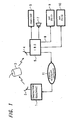
- FIG. 1 is a block diagram showing an example of the configuration of an EMD system to which the invention is applied.
- FIG. 2 is a block diagram showing an example of the configuration of a transmitting equipment 1 in FIG. 1.
- FIG. 3 is a diagram for explaining the type of music piece data for downloading.
- FIG. 4 is a diagram for explaining purchase limit time of the music piece data for downloading.
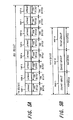
- FIG. 5 is a diagram for explaining a TS packet in which ATRAC data is placed.
- FIG. 6 is a diagram for explaining the TS packet in which ATRAC data is placed.
- FIG. 7 is a diagram for explaining the TS packet in which ATRAC data is placed.
- FIG. 8 is a diagram for explaining the TS packet in which ATRAC data is placed.
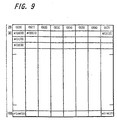
- FIG. 9 is a diagram for explaining an ATRAC data checksum in the TS packet.
- FIG. 10 is a block diagram showing an example of the configuration of the IRD 5 in FIG. 1.
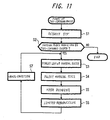
- FIG. 11 is a flowchart for explaining a test-listening process of the IRD 5.
- FIG. 12 is a diagram showing an example of the display of a GUI.
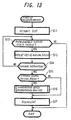
- FIG. 13 is a flowchart for explaining a purchasing process of the IRD 5.
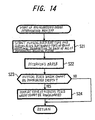
- FIG. 14 is a flowchart for explaining a download order determining process of the IRD 5.
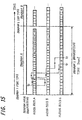
- FIG. 15 is a diagram for explaining the download order determining process.
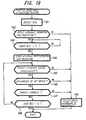
- FIG. 16 is a flowchart for explaining a parallel process of the IRD 5.
- FIG. 17 is a block diagram showing an example of the configuration of an MD recorder 9 in FIG. 1.
- FIG. 18 is a block diagram showing an example of the configuration of an IEEE1394 interface 62 in FIG. 17.
- FIG. 19 is a flowchart for explaining an ATRAC data extracting process of the IEEE1394 interface 62.
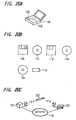
- FIG. 20 is a diagram for explaining media.
- FIG. 1 shows a configuration example of an embodiment of an EMD (Electric Music Distribution) system to which the invention is applied.
- a transmitting equipment 1 on the broadcast station side multiplexes, for example, main broadcast signals (a video signal and a sound signal compression coded by the MPEG2 system) of a music program, music piece data (MPEG audio data and ATRAC data) for downloading a music piecerelated to the music program, and the like, scrambles a resultant signal, executes necessary processes such as error correction of the scrambled signal, performs, for example, QPSK (Quadrature Phase Shift Keying) modulation of an MPEG transport stream obtained (hereinbelow, described as TS), and transmits a resultant signal as an electric wave from an antenna 2
- QPSK Quadrature Phase Shift Keying
- the electric wave transmitted from the antenna 2 is relayed by a communication satellite 3, received by an antenna 4, and supplied to an IRD 5.
- the IRD 5 QPSK demodulates the electric wave received by the antenna 4, performs necessary processes such as error correction, extracts a TS packet of a channel selected by the user, and descrambles the data.
- the IRD 5 MPEG decodes the main broadcast signal included in the extracted TS packet, outputs an obtained video signal to a monitor 6, and outputs the sound signal to a speaker 7
- the IRD 5 extracts the TS packet including the music piece data (ATRAC data) for downloading and supplies the TS packet to an MD deck 9 connected to the IRD 5 via an IEEE1394 bus 8. Further, the IRD 5 MPEG decodes the music piece data (MPEG audio data) for downloading and outputs resultant data to the speaker 7 or an MD deck 10 connected to a sound output terminal.
- the music piece data MPEG audio data
- the IRD 5 records a download history of music piece data into a built-in IC card 40 (FIG. 10) and periodically transmits the download history information to the transmitting equipment 1 via a public telephone network 11.
- the download history information transmitted to the transmitting equipment 1 is used as information for charging the user of the IRD 5.
- the MD deck 9 records the music piece data (ATRAC data) supplied from the IRD 5 via the IEEE1394 bus 8 onto an MD and reproduces the data.
- the MD deck 10 encodes the music piece data (audio data obtained by decoding the MPEG audio data) supplied from the IRD 5 in accordance with the ATRAC system, records the encoded data onto an MD, and reproduces the data.
- FIG. 2 shows an example of a detailed configuration of the transmitting equipment 1.
- An encoder 21 in the transmitting equipment 1 compression encodes a program source (the video signal and the sound signal as main broadcast signals) in accordance with the MPEG2 system and outputs the resultant to a multiplexer 22.
- the multiplexer 22 time-division multiplexes the main broadcast signal from the encoder 21, individual information EMM (Entitlement Management Message) supplied from a scramble control system 25, program information ECM (Entitlement Control Message) supplied from a related information transmitting equipment 26, music piece data for downloading (ATRAC data and MPEG audio data), sound additional information corresponding to the music piece data, an MHEG (Multimedia and Hypermedia Information Coding Experts Group) script realizing an interactive GUI (Graphical User Interface) used at the time of selecting a music pieceto be downloaded on the reception side, and additional information tables (PSI: Program Specific Information) indicating a TS packet in a TS, in which the main broadcast signal, music piece data for downloading, and the like are included, thereby generating a TS in the MPEG2 system.
- the generated TS is supplied to a scrambler 23
- the music piece data for downloading includes ATRAC data (which will be described hereinlater) which does not match the TS in the MPEG2 system, some contrivance is necessary at the time of multiplexing (the details will be described hereinlater)
- the additional information tables PSI are a PAT (Program Association Table), a PMT (Program Map Table), an SIT (Selection Information Table), and the like.
- PAT Program Association Table
- PMT Program Map Table
- SIT Selection Information Table
- the packet ID of the TS packet including the desired data can be known. The details are described in, for example, ETS 300468, Digital Video Broadcasting (DVB); Specification for Service Information (SI) in DVB system
- music piece data for downloading will now be described with reference to FIG. 3.
- music piece data for downloading to be multiplexed on the main broadcast signal of a program A is data on a plurality of musical pieces A, B, and C related to the program A and has two kinds of data for each musical piece; MPEG audio data compression coded by the MPEG2 system and ATRAC data compression coded by the ATRAC system.
- the MPEG audio data and the ATRAC data of each music piece is repeatedly transmitted during the broadcasting time of the program A.
- Time required to transmit MPEG audio data once is equal to time (play time) to reproduce the MPEG audio data.
- Time required to transmit ATRAC data once is equal to a quarter of time required to reproduce the ATRAC data.
- the time to transmit MPEG audio data (music pieceA.mpg) of the music pieceA once is also eight minutes.
- the scrambler 23 scrambles the TS supplied from the multiplexer 22 by using a scramble key (Ks) supplied from the related information transmitting equipment 26 and outputs the resultant to the post stage.
- a program control system 24 generates a predetermined control signal to control the encoder 1.
- the program control system 24 outputs information such as a program ID, a channel ID, and the like on the program corresponding to the main broadcast signal to be compression coded by the encoder 21 to the related information transmitting equipment 26.
- the scramble control system 25 supplies a contract key (Kw) to the related information transmitting equipment 26, generates the individual information EMM including the contract key encrypted by using an individual key peculiar to the IRD 5, and outputs the individual information EMM to the multiplexer 22
- the individual information EMM to be generated has items such as card ID, contract key number (Kw_no), contract key (Kw), contract channel ID (service_id, series_id)/ contract number ID (event_id), contract type (authorize_type), program purchase upper limit (Over_view), SMS call generation date (polling_date), and SMS call generation amount (upkink_fee).
- Kw_no contract key number
- Kw contract channel ID
- service_id, series_id / contract number ID
- event_id contract type
- program purchase upper limit Over_view
- SMS call generation date polyling_date
- SMS call generation amount upkink_fee
- the related information transmitting equipment 26 supplies a scramble key to the scrambler 23.
- the related information transmitting equipment 26 also generates program information ECM including the scramble key encoded by using the contract key supplied from the scramble control system 25 and outputs the program information ECM to the multiplexer 22.
- the program information ECM to be generated has items such as the contract key number (Kw_no), encoded scramble key (Ks_Odd, Ks_Even), channel ID (service_id, series_id, event_id), number ID (event_id), pay-per-view fee (PPV_fee), preview (viewing) time, the limit number of previewing (viewing) times, current time, and purchase limit time.
- Kw_no the contract key number
- Ks_Odd Ks_Even
- channel ID service_id, series_id, event_id
- number ID event_id
- pay-per-view fee PV_fee
- An audio-visual information collecting and processing system 27 processes audio-visual history information and the like supplied from the IRD 5 via the public telephone line 11 and outputs processed information as contract information to the scramble control system 25.
- each of the music piece data can be viewed within the range described as the viewing time and the limit number of viewing times included in the program information ECM.
- the limit number of viewing times is set to a value larger than one so that a plurality of music piece data can be repeatedly compared with each other.
- the viewing time and the limit number of viewing times of music piece data can be set so as to vary according to music piece data
- the music piece data for downloading (MPEG audio data and ATRAC data) of each music piece is repeatedly transmitted during the broadcasting time of the program.
- the music piece data for downloading of the music pieceA is repeatedly transmitted 15 times
- the music piece data for downloading of the music pieceB is repeatedly transmitted 13 times
- the music piece data for downloading of the music pieceC is repeatedly transmitted 11 times.
- the music piece data to be transmitted for the seventh time immediately after the instruction is usually downloaded.
- downloading of the music piece data transmitted for the seventh time fails for some reason, downloading is re-executed with respect to the music piece data to be transmitted for the eighth time.
- the final transmission time of the music piece data on each of the musical pieces is used for re-execution. Timing at which downloading of the music piece data transmitted immediately preceding to the final time is set as purchase limit time by using elapsed time since the program start time. Specifically, as shown in FIG.
- the purchase limit time of the musical pieces A, B, and C are set at timings tl, t2, and t3, respectively.
- the TS packet as a transmission unit of a TS in the MPEG2 system is set to have a fixed length of 188 bytes.
- a sound group as a transmission unit of the ATRAC data has 424 bytes.
- ATRAC data of 159 bytes is arranged in a TS packet, and a PES (Packetized Elementary Stream) packet is constructed by eight TS packets TSP1 to TSP8.
- PES Packetized Elementary Stream
- FIG. 6 shows the configuration of the TS packet in which the ATRAC data is arranged. As shown in the diagram, four bytes from the head of the TS packet made up of 188 bytes are set as a TS packet header, the following 14 bytes are set as a PES packet header, the following two bytes are set as a data header, and the remaining 168 bytes are set as a data body.
- TS packet header sequentially from the head, one sync byte, a TS error indicator in which a flag indicative of presence/absence of an error in the TS packet is written, a payload unit start indicator in which a flag indicating that a new PES packet starts from the payload of the TS packet is written, and TS priority indicative of the degree of importance of the TS packet are arranged.
- stream identification information PID
- TS scrambling control indicative of the presence/absence and kind of scrambling on the payload of the packet
- adaptation field control indicative of the presence/absence of an adaptation field
- continuity counter indicative of a serial number given to a packet having the same PID
- packet start code prefix of a fixed value of three bytes
- stream ID of one byte for identifying the stream and PES packet length of two bytes indicative of the length of the PES packet are arranged.
- fixed pattern "10" of two bits, PES scrambling control of two bits, PES priority of one bit, data alignment indicator of one bit, copy right of one bit, discrimination between original and copy of one bit, PTS and DTS flags of two bits, ESCR flag of one bit, ES rate flag of one bit, DMS trick mode flag of one bit, additional copy information flag of one bit, CRC flag of PES of one bit, and PES extension flag of one bit are arranged
- PES header data length of one byte, fixed pattern "1101" of four bits, time stamp (PTS 32 to PTS 30) of three bits, one market bit, time stamp (PTS 29 to PTS 15) of 15 bits, one market bit, time stamp (PTS 14 to PTS 0) of 15 bits, and one market bit are arranged.
- the TS packet shown in FIG. 6 is the first one of eight TS packets constructing the PES packet.
- stuffing data is disposed in each of the second to eighth TS packets among the eight TS packets.
- Audio data type 1 is to define the audio type (for example, ATRAC).
- Audio data type 2 is to define the classification (for example, ATRAC1 or ATRAC2) in the data type 1.
- the data start indicator is a flag indicating that the TS packet is the head of the music piece data. In the data start indicator of the TS packet as the head of the music piece data, "1" is written.
- the data end indicator is a flag indicating that the TS packet is at the end of the music piece data. In the data end indicator of the TS packet as the end of the music piece data, "1" is written.
- the PES data counter is to indicate the position of the TS packet among the eight TS packets constructing the PES packet.
- identification of copyright mode of one bit identification of EMI (Encryption Mode Information) of one bit, one reserved bit, present PES number of three bytes, reserved two bytes, and ATRAC data checksum of one byte are arranged. After that, the ATRAC data is placed.
- EMI Encryption Mode Information
- the present PES number indicates the PES packet having the TS packet among a plurality of PES packets constructing the musical piece. Consequently, by detecting the present PES numbers and the PES data counters of the TS packets sequentially transmitted, continuity of the TSs on the TS packet unit basis can be checked.
- the ATRAC data checksum is placed in the 29th byte in the TS packet.
- the relation between the ATRAC data checksum and the ATRAC data body in the 30th and subsequent bytes will be described with reference to FIG. 9.
- the values of the bits of the ATRAC data checksum are CS[0] to CS[7] and the values of the bits of the ATRAC data body from the 30th byte to the 188th byte are AT[0][0] to AT[158][7]
- the values of CS[0] to CS[7] are set so that the following is obtained.
- FIG. 10 shows an example of the configuration of the IRD 5.
- a front end unit 31 in the IRD 5 selects a signal corresponding to a station selecting operation of the user from the broadcast signal received by the antenna 4, performs processes such as QPSK demodulation and error correction, and outputs a derived TS (which is scrambled) to a descrambler 32.
- the descrambler 32 descrambles the scrambled TS supplied from the front end unit 31 by using an individual key and the like supplied from the IC card 40 into a TS packet including the main broadcast signals (MPEG video data and MPEG audio data), the MPEG audio data for downloading, the ATRAC data for downloading, the MHEG script for GUI, and the like which are multiplexed on the TS.
- the descrambler 32 supplies the derived TS packet of the MPEG video data in the main broadcast signal to an MPEG video decoder 33, supplies the TS packet of the MPEG audio data in the main broadcast signal and the TS packet of the MPEG audio data for downloading to an MPEG audio decoder, supplies the TS packet of the ATRAC data for downloading to an IEEE1394 interface (I/F) 37, and supplies the TS packet of the MHEG script for GUI to a control unit 39.
- an MPEG video decoder 33 supplies the TS packet of the MPEG audio data in the main broadcast signal and the TS packet of the MPEG audio data for downloading to an MPEG audio decoder
- supplies the TS packet of the ATRAC data for downloading to an IEEE1394 interface (I/F) 37
- supplies the TS packet of the MHEG script for GUI to a control unit 39 supplies the TS packet of the MHEG script for GUI to a control unit 39.
- the MPEG video decoder 33 decodes the MPEG video data supplied from the descrambler 32 and outputs derived video data to a display control unit 34.
- the display control unit 34 for example, superimposes the video data supplied from the MPEG video decoder 33 on a main program display area 51 (FIG. 12) of a GUI screen inputted from the control unit 39 and displays the composite data on the monitor 6.
- the MPEG video decoder 35 decodes the MPEG audio data in the main broadcast signal or the MPEG audio data for downloading supplied from the descrambler 32 and outputs the derived audio data to a sound control unit 36.
- the sound control unit 36 performs an appropriate process such as fade-in and fade-out of the audio data supplied from the MPEG audio decoder 35 on the basis of the control from the control unit 39 and outputs resultant data to the speaker 7 or the MD deck 10.
- the IEEE1394 interface 37 eliminates a PMT corresponding to a program other than the program from which the music piececan be purchased from PAT in the additional information table PSI multiplexed on the TS packet in which the ATRAC data inputted from the descrambler 32 is placed, eliminates PIDs corresponding to the main broadcast signal, MPEG audio data for downloading, and sound additional information from the PMT corresponding to the program, newly adds SIT indicative of a partial TS, and outputs an obtained partial TS to the MD deck 9 via the IEEE1394 bus 8.
- An input unit 38 receives a station selecting operation of the user and an operation on the GUI screen (FIG. 12) and outputs the operation information to the control unit 39.
- the control unit 39 controls each of the units in the IRD 5 on the basis of the operation information from the input unit 38 and predetermined information inputted from the descrambler 32.
- the control unit 39 processes the MHEG script for GUI inputted from the descrambler 32 and outputs the image data to the display control unit 34.
- the IC card 40 In the IC card 40, information such as an individual key for descrambling the TS packet is stored. In response to a request from the descrambler 32, the stored information is supplied to the descrambler 32. History information on watched pay-per-view programs and downloaded music piece data is recorded in the IC card 40. A modem 41 outputs the history information recorded on the IC card 40 to the transmitting equipment 1 via the public telephone network 11 every predetermined period.
- test-listening process of the IRD 5 will now be described with reference to the flowchart of FIG. 11.
- the test-listening process is executed after the user (viewer) of the IRD 5 performs an operation of displaying a GUI for music piecepurchase during test-listening a broadcast program from which the music piece data can be purchased (downloaded) and a GUI as shown in FIG. 12 is displayed on the monitor 6.
- step S1 the descrambler 32 extracts the program information ECM multiplexed on the TS and outputs viewing time, the limit number of test-listen times, and purchase limit time of each of music piece data written in the program information ECM to the control unit 39.
- step S2 the control unit 39 compares the number of test-listen times with the limit number of test-listen times for each musical piece, thereby determining whether a mmusic piecewhich can be test-listened exists or not. When it is determined that a music piecewhich can be test-listened exists, the program advances to step S3.
- step S3 the control unit 39 allows a music piecelist 53 to be displayed on the screen of GUI as shown in FIG. 12.
- the display method of the titles of musical pieces which can be test-listened and purchased and that of the titles of musical pieces which cannot be test-listened (the number of test-listening times has reached the limit number of test-listening times) but can be purchased are distinguished from each other.
- characters of the titles of the musical pieces which can be test-listened and purchased are displayed dark and characters of the titles of the musical pieces which cannot be test-listened but can be purchased are displayed light.
- the user watching the music piecelist 53 selects one of the musical pieces which are displayed in the music piecelist 53 and can be test-listened and depresses a test-listen button 54, in step S4, selection information on the music pieceto be test-listened is supplied from the input unit 38 to the control unit 39.
- step S5 the descrambler 32 outputs the MPEG audio data of the music pieceselected in step S4 to the MPEG audio decoder 35 on the basis of the control from the control unit 39.
- the MPEG audio decoder 35 decodes the MPEG audio data from the descrambler 32 only for length of test-listen time written in the program information ECM on the basis of the control from the control unit 39 and outputs the obtained audio data to the sound control unit 36.
- step S6 the sound control unit 36 makes the volume of the head portion of the audio data supplied from the MPEG audio decoder 35 fade in, makes the ending portion fade out, and outputs the resultant to the speaker 7.
- sound indicative of test-listen may be inserted at the head and ending portions of the audio data.
- the sound quality of the audio data may be changed by using a filter or the like as long as the purpose of the test-listen can be achieved.
- step S7 the control unit 39 increments the number of test-listening times of the music pieceselected in step S4 only by one.
- step S2 until it is determined that a music piecewhich can be test-listened does not exist, subsequent processes are repeated. When it is determined that no music piecewhich can be test-listened exists, the test-listening process is finished.
- the purchasing process of the IRD 5 will now be described with reference to the flowchart of FIG. 13.
- the purchasing process is executed after the user performs an operation of displaying GUI for music piecepurchase to the IRD 5 during test-listening of the program from which the music piece data can be purchased, and the GUI as shown in FIG. 12 is displayed on the monitor 6.
- the music piece data to be purchased is either the MPEG audio data or ATRAC data for downloading.
- the MPEG audio data or ATRAC data is selected by a predetermined operation performed by the user or is selected by the IRD 5 by detecting a sound output terminal of the IRD 5 or a recording equipment (MD deck 9 or the like) connected to the IEEE1394 interface 37.
- step S11 the program information ECM included in the TS is extracted and the viewing time, the limit number of test-listening times, and purchase limit time of each of music piece data written in the program information ECM are outputted from the descrambler 32 to the control unit 39.
- step S12 the control unit 39 compares the current time with the purchase limit time for each musical piece, thereby determining whether a purchasable music pieceexists or not. When it is determined that a purchasable music pieceexists, the program advances to step S13.
- step S13 the control unit 39 allows the music piecelist 53 to be displayed on the screen of the GUI as shown in FIG. 12.
- the titles of musical pieces which can be test-listened and purchased and the titles of musical pieces which cannot be test-listened (the number of test-listening times has reached the limit number of test-listening times) but can be purchased are distinguished and, for example, the titles of musical pieces which can be test-listened and purchased are displayed dark and the titles of musical pieces which cannot be test-listened but can be purchased are displayed light.
- step S14 after the user sees the music piecelist 53 and selects some of the purchasable musical pieces which are displayed in the music piecelist 53, the control unit 39 determines whether a purchase button 55 is depressed or not. Until depression of the purchase button 55 is determined, the program returns to step S12 and subsequent processes are repeated. During the repetition, the display of the titles of musical pieces of which purchase limit time has elapsed is changed. When depression of the purchase button 55 is determined, the program advances to step S15.
- step S15 the control unit 39 determines whether the purchase of a plurality of musical pieces has been instructed by the user in step S14 or not. When it is determined that the purchase of the plurality of musical pieces has been instructed, the program advances to step S16. In step S16, the control unit 39 determines the downloading order of the plurality of musical pieces to be purchased. The process of determining the downloading order will be described with reference to the flowchart of FIG. 14.
- step S21 the descrambler 32 extracts sound additional information at the present time (corresponding to play time and play elapsed time of a musical piece, and transmission time and transmission elapsed time of the MPEG audio data for downloading) corresponding to the plurality of music piece data instructed to be purchased by the control of the control unit 39 from the TS, and outputs the sound additional information to the control unit 39.
- the control unit 39 refers to the sound additional information from the descrambler 32 and optimizes the downloading order of the plurality of music piece data. For example, in the case of purchasing three musical pieces A, B, and C shown in FIG. 15, at time t0 where the purchase instruction is given, the music piece data of which timing of transmission start (music pieceB in this case) is the earliest in the three music piece data is set as music piece data to be downloaded first. At transmission end time of the first music piece data, the music piece data having the earlier transmission start timing (music pieceA in this case) in the music piece data on the remaining two musical pieces is set as music piece data to be downloaded second. The remaining piece (music piecec in this case) is set as the music piece data to be downloaded third.
- the end time is tl.
- the end time is t2 which is behind tl by one musical piece.
- step S23 the control unit 39 determines whether or not there is music piece data which cannot be downloaded due to the purchase limit time in the downloading order determined in step S22. When it is determined that the music piece data which cannot be downloaded exists, the program advances to step S24.
- step S24 the control unit 39 allows the message to the effect that the music piece data which cannot be downloaded exists and the title of the music pieceto be displayed in an information display area 52 in the GUI.
- the user can know the music piece data which cannot be downloaded and can select another music piece data to be purchased as necessary.
- step S23 When it is determined at step S23 that no music piece data which cannot be downloaded exists, the program skips step S24.
- step S17 the descrambler 32 extracts music piece data in accordance with the order determined in step S16 by the control of the control unit 39 and outputs the extracted music piece data to the post stage.
- the MPEG audio data is MPEG decoded by the MPEG audio decoder 35 and, after that, decoded data is supplied to, for example, the MD deck 10 via the sound control unit 36 and the sound output terminal and is recorded.
- the ATRAC data is supplied to the MD deck 9 via the IEEE1394 interface 37 and is recorded.
- the music piece data of a larger amount can be efficiently downloaded.
- step S11 when the control unit 39 detects the level of a received wave and the level is equal to or lower than a predetermined value, it is determined that no purchasable music pieceexists.
- step S14 It is also possible to store the order when a plurality of musical pieces are selected in step S14, skip the downloading order determining process in step S16, and perform downloading in accordance with the order at the time of the selection.
- each of the MD decks 9 and 10 can reproduce the musical pieces in arbitrary order as a provided standardized function.
- the two kinds of MPEG audio data and ATRAC data exist as music piece data for downloading as described above.
- the MPEG audio data in the two kinds of data is reproduced. Therefore, the MPEG audio data can be test-listened while downloading the ATRAC data.
- the parallel process will be described with reference to the flowchart of FIG. 16.
- the parallel process is executed simultaneously with the downloading process in step S17 in FIG. 13.
- the control unit 39 determines whether the music piece data being downloaded is ATRAC data or not and determines that the music piece data being downloaded is ATRAC data in step S31, the program advances to step S32.
- the control unit 39 executes the above-described test-listening process (FIG. 11). The same music pieceas that of the ATRAC data being downloaded and the music piecewhich has already been downloaded cannot be test-listened.
- step S32 is skipped.
- step S32 MPEG audio data on a music piecedifferent from the ATRAC data being downloaded can be purchased.
- a music piece can be test-listened during loading another musical piece, and music piece data on two different musical pieces (ATRAC data on a music pieceand MPEG audio data on another musical piece) can be simultaneously downloaded.
- the MD deck 9 is constructed in such a manner that a control unit 61 for controlling each of the units in the MD deck 9, an IEEE1394 interface 62 for receiving the partial TS including the ATRAC data from the IRD 5, a recording/reproducing unit 63 for controlling recording/reproducing of the ATRAC data to/from an MD 71, and an ATRAC encoder/decoder 68 for decoding the ATRAC data from the recording/reproducing unit 63 and outputting the decoded data to a DAC 69 or encoding digital audio data from the DAC 69 and outputting the encoded data to the recording/reproducing unit 63 are connected to each other via a system bus 70.
- a buffer 64 for temporarily storing ATRAC data to be recorded on an MD a magnetic head 65, an optical pickup 66, and a spindle motor 67 are connected.
- the optical pickup 66 emits a laser beam onto the MD 71 to increase the temperature of the spot irradiated with the laser beam to a predetermined value.
- the magnetic head 65 records a magnetic signal corresponding to the ATRAC data supplied from the recording/reproducing unit 63 to the spot on the MD 71, at which the temperature is increased to the predetermined value by the laser beam from the optical pickup 66.
- the optical pickup 66 irradiates the MD 71 with a laser beam at the time of reproduction, receives reflection light of the laser beam, converts the reflection light to an electric signal, and outputs obtained ATRAC data to the recording/reproducing unit 63.
- the spindle motor 67 rotates the MD 71 on the basis of the control from the recording/reproducing unit 63.
- the DAC 69 for conversion between digital and analog signals is connected to the ATRAC encoder/decoder 68.
- a PES packet including the ATRAC data is detected on the basis of the PSI packet multiplexed on the partial TS from the IRD 5 and, further, only the ATRAC data is extracted from the PES packet.
- the extracted ATRAC data is supplied to the recording/reproducing unit 63 via the system bus 70.
- the recording/reproducing unit 63 controls the optical head 65, optical pickup 66, and spindle motor 67 to record the ATRAC data supplied from the IEEE1394 interface 62 onto the MD 71.
- the recording/reproducing unit 63 controls the optical pickup 66 and the spindle motor 67 to read the ATRAC data from the MD 71 and supplies the ATRAC data to the ATRAC encoder/decoder 68.
- the ATRAC encoder/decoder 68 the ATRAC data supplied from the recording/reproducing unit 63 is decoded and resultant data is outputted to, for example, a speaker via the DAC 69.
- FIG. 18 shows an example of the detailed configuration of the IEEE1394 interface 62.
- a control unit 81 controls processes of a PID detecting unit 82 in response to predetermined information supplied from the control unit 61 and a start/end bit detecting unit 83 to an ATRAC data extracting unit 88.
- the PID detecting unit 82 converts the partial TS supplied from the IRD 5 into an MPEG stream, extracts only the TS packet whose PID (FIG. 13) of 13 bits written in the packet header is equal to a predetermined PID (PID indicative of the TS packet including the ATRAC data) designated by the control unit 81 from the TS packets, and outputs the extracted TS packet to the start/end bit detecting unit 83 and to ATRAC data extracting unit 88 at the post stage.
- PID PID indicative of the TS packet including the ATRAC data
- the start/end bit detecting unit 83 detects a data start indicator (in the 23rd byte in the TS packet shown in FIG. 8) in the TS packet sequentially supplied from the PID detecting unit 82. When "1" is written in the data start indicator, the detection information is outputted to the control unit 81. The detection information is supplied to the control unit 61 via the control unit 81 and is used as a trigger to start recording the ATRAC data onto the MD 71.
- the start/end bit detecting unit 83 detects a data end indicator (the bit next to the LSB side of the data start indicator) in the TS packet. When “1" is written in the data end indicator, the detection information is outputted to the control unit 81. The detection information is supplied to the control unit 61 via the control unit 81 and is used as a trigger to finish the recording of the ATRAC data onto the MD 71.
- the packet counter detecting unit 84 ascertains continuity of the PES data counter (three bits next to the LSB side of the data end indicator) of the TS packet sequentially supplied from the PID detecting unit 82 and a present PES number (from the 24th byte to the 26th byte in the TS packet shown in FIG. 8).
- the PES data counter is a cyclic counter of the values from 0 to 7.
- the present PES number is incremented by one each time the value of the PES data counter is restarted from 0 after 7. That is, in the PES data counter of the first TS packet among eight TS packets constructing a PES packet of a continuous normal TS (TS where no packet dropout occurs), "1" is written. In the PES data counters of the subsequent TS packets, values incremented one by one are sequentially written. In the PES data counter of the eighth TS packet in the PES packet, "7" is written. The present PES number of the eight TS packets is commonly used.
- the packet counter detecting unit 84 When the value of the PES data counter of a TS packet inputted and the value of the present PES number are read and stored and discontinuity of the value of the PES data counter of a TS packet supplied next and the value of the present PES number is detected, the packet counter detecting unit 84 outputs the information to the control unit 81.
- the error detecting unit 85 detects the TS error indicator in the second byte in the TS packet sequentially inputted from the PID detecting unit 82 and determines whether "1" is written or not in the TS error indicator. "1" is written in the TS error indicator when an error correcting process cannot be completed in the front end unit 31 in the IRD 5. When “1" is written in the TS error indicator, therefore, it can be considered that at least one error is included in the TS packet. When it is determined that "1" is written in the TS error indicator, the error detecting unit 85 outputs the information to the control unit 81. When the ATRAC data described in the 30th and subsequent bytes is checked by using the ATRAC data checksum in the 29th byte in the TS packet and an error is detected, the error detecting unit 85 outputs the detection information to the control unit 81.
- the format detecting unit 86 detects the data type (in the 19th byte in the TS packet shown in FIG. 6) of a TS packet subsequently inputted from the PID detecting unit 82, data transmission type (in the 20th byte in the TS packet shown in FIG. 6), FDF field length (in the 21st byte in the TS packet shown in FIG. 8), and audio data types 1 and 2 (in the 21st and 22nd bytes in the TS packet shown in FIG. 8) to check whether or not each of the values written in the bytes is equal to a predetermined value indicative of a packet including ATRAC data. When it is determined that each of the values is not equal to the predetermined value, the format detecting unit 86 outputs the detection information to the control unit 81.
- the copyright information detecting unit 87 detects the copyright, original or copy, copyright mode, and EMI mode (in the 22nd and 23rd bytes in the TS packet shown in FIG. 8) of the TS packet sequentially inputted from the PID detecting unit 82 and checks whether or not each of the values is equal to a predetermined value indicating that the ATRAC data is permitted to be copied. When it is determined that each of the values is not equal to the predetermined value, the copyright information detecting unit 87 outputs the detection information to the control unit 81.
- the ATRAC data extracting unit 88 extracts the ATRAC data placed in the 30th bytes to 188th bytes in the TS packet inputted from the PID detecting unit 82 and outputs the detected data to the post stage.
- the ATRAC data extracting process of the IEEE1394 interface 62 will now be described with reference to the flowchart of FIG. 19.
- the ATRAC data extracting process is started upon receipt of the partial TS from the IRD 5.
- step S41 the PID detecting unit 82 converts the partial TS inputted from the IRD 5 into an MPEG stream, after that, extracts only a TS packet having the PID of 13 bits written in the packet header equal to the PID indicative of the TS packet including the ATRAC data, and outputs the extracted TS packet to the start/end bit detecting unit 83 to the ATRAC data extracting unit 88 at the post stage.
- step S42 the copyright information detecting unit 87 detects the copyright, original or copy, copyright mode, and EMI mode of the TS packet sequentially inputted from the PID detecting unit 82 and checks whether or not each of the values is equal to a predetermined value indicating that the ATRAC data placed in the TS packet is permitted to be copied.
- the program advances to step S43.
- step S43 the start/end bit detecting unit 83 monitors the data start indicator in the TS packet inputted from the PID detecting unit 82, waits until "1" is detected and, when "1" is detected, outputs the detection information to the control unit 81.
- the control unit 81 outputs a predetermined signal to the ATRAC data extracting unit 88 and the control unit 61.
- step S44 in response to the signal from the control unit 81, the ATRAC data extracting 88 extracts the ATRAC data placed in the 30th and subsequent bytes in the TS packet supplied from the PID detecting unit 82 and outputs the extracted ATRAC data to the recording/reproducing unit 63 at the post stage.
- the control unit 61 instructs each of the units in the MD deck 9 to start recording of the ATRAC data onto the MD 71 in response to the signal from the control unit 81, thereby starting the recording of the ATRAC data onto the MD 71.
- step S45 the packet counter detecting unit 84 detects the PES data counter and the present PES number in the TS packet supplied from the PID detecting unit 82 to check the continuity of the values written in the PES data counter and the present PES number.
- the program advances to step S46.
- step S46 the error detecting unit 85 detects a TS error indicator in the TS packet supplied from the PID detecting unit 82 and determines whether "1" is written in the TS error indicator or not. Further, the error detecting unit 85 determines whether or not an error exists in the ATRAC data written in the 30th and subsequent bytes by using the ATRAC data checksum in the TS packet. When "1" is not written in the TS error indicator and it is determined that no error exists in the ATRAC data, the program advances to step S47.
- step S47 the format detecting unit 86 detects the data type, data transmission type, FDF field length, and audio data types 1 and 2 in the TS packet supplied from the PID detecting unit 82 and determines whether or not each of those values is equal to a predetermined value indicative of a packet including the ATRAC data.
- the program advances to step S48.
- step S48 the start/end bit detecting unit 83 monitors the data end indicator in the TS packet supplied from the PID detecting unit 82 and determines whether "1" is written in the data end indicator or not. When it is determined that "1" is not written, the program returns to step S45, and the subsequent processes are repeated. On the contrary, when it is determined that "1" is written in the data end indicator, the start/end bit detecting unit 83 outputs the detection information to the control unit 81. In response to the detection information, the control unit 81 outputs a predetermined signal to the ATRAC data extracting unit 88 and the control unit 61.
- the ATRAC data extracting unit 88 finishes extracting the ATRAC data from the TS packet supplied from the PID detecting unit 82.
- the control unit 61 instructs each of the units in the MD deck 9 to finish the recording of the ATRAC data onto the MD 71, thereby finishing the recording of the ATRAC data onto the MD 71.
- step S42 when the value written in each of the copyright, original or copy, copyright mode, and EMI mode of the TS packet sequentially inputted from the PID detecting unit 82 is not equal to a predetermined value indicating that the ATRAC data placed in the TS packet is permitted to be copied and it is determined that the ATRAC data is not permitted to be copied, the result of the determination is outputted from the copyright information detecting unit 87 to the control unit 81 and the program advances to step S49.
- step S45 when it is determined that the values of each of the PES data counter and the present PES number in the TS packet supplied from the PID detecting unit 82 do not have continuity, the determination result is outputted from the packet counter detecting unit 84 to the control unit 81 and the program advances to step S49.
- step S46 when it is determined that "1" is written in the TS error indicator in the TS packet supplied from the PID detecting unit 82 or when it is determined that an error exists in the ATRAC data, the detection result is outputted from the error detecting unit 85 to the control unit 81 and the program advances to step S49.
- step S47 when it is determined that each of values written in the data type, data transmission type, FDF field length, and audio data types 1 and 2 in the TS packet supplied from the PID detecting unit 82 is not equal to a predetermined value indicative of a packet including the ATRAC data, the program advances to step S49.
- step S49 in response to the determination result from the packet counter detecting unit 84 to the copyright information detecting unit 87, the control unit 81 makes the PID detecting unit 82 stop extracting the TS packet and outputs the information to the control unit 61.
- the control unit 61 instructs each of the units in the MD deck 9 to stop the recording of the ATRAC data onto the MD 71 and notifies the IRD 5 of the stop of recording.
- steps S45 to S47 may be performed in different order or in parallel.
- the error detection using the checksum in step S46 is not executed but only the TS error indicator may be checked.
- the IEEE1394 interface 62 in the MD 9 extracts only the ATRAC data placed in the TS packet. At this time, abnormality (data dropout, occurrence of an error, and the like) which occurs in the TS packet is monitored. When abnormality is detected, the extraction of the ATRAC data is stopped. Thus, a failure in downloading such that abnormal ATRAC data is recorded can be suppressed.
- the invention is applied to digital satellite broadcasting.
- the invention can be also applied to digital cable television broadcasting and digital ground broadcasting.
- the invention is not limited to the audio data distributing service but can be applied to, for example, service of distributing a program processed by a computer or a television game machine.
- the program conformed to the IRD can be provided to the user in a state where it is pre-installed on a hard disk 102 or a semiconductor memory 103 as a recording medium provided in an IRD 101 (corresponding to the IRD 5 in FIG. 1).
- the program can be temporarily or permanently stored in a recording medium such as a floppy disk 111, a CD-ROM (Compact Disc-Read Only Memory) 112, an MO (Magneto Optical) disk 113, a DVD (Digital Versatile Disc) 114, a magnetic disk 115, or a semiconductor memory 116, and can be provided as package software.
- a recording medium such as a floppy disk 111, a CD-ROM (Compact Disc-Read Only Memory) 112, an MO (Magneto Optical) disk 113, a DVD (Digital Versatile Disc) 114, a magnetic disk 115, or a semiconductor memory 116, and can be provided as package software.
- the program can be transferred by radio from a download site 121 to an IRD 123 via a satellite 122 or transferred by a wire or by radio to the IRD 123 via a network 131 such as a local area network or the Internet.
- the program can be stored into a built-in hard disk or the like in the IRD 123.
- the medium in the specification has a concept in a broad sense including all the above media.
- the steps of writing a program provided by the medium include not only processes time-sequentially performed according to the written order but also processes which are not always processed time-sequentially but are executed in parallel or individually.
- the invention can be also applied to a case where data is transmitted as data in another format.
- the invention can be also applied to a case where data in the HTML (Hyper Text Make-up Language) format or data in the XML (extensive Markup Language) format is transmitted.
- HTML Hyper Text Make-up Language
- XML extensive Markup Language
- system denotes the whole equipment constructed by a plurality of equipmentes.
Landscapes
- Business, Economics & Management (AREA)
- General Physics & Mathematics (AREA)
- Engineering & Computer Science (AREA)
- Physics & Mathematics (AREA)
- Accounting & Taxation (AREA)
- Finance (AREA)
- Signal Processing (AREA)
- Astronomy & Astrophysics (AREA)
- Economics (AREA)
- General Business, Economics & Management (AREA)
- Strategic Management (AREA)
- Theoretical Computer Science (AREA)
- Marketing (AREA)
- Development Economics (AREA)
- Multimedia (AREA)
- Two-Way Televisions, Distribution Of Moving Picture Or The Like (AREA)
- Reverberation, Karaoke And Other Acoustics (AREA)
Abstract
To compensate a failure in downloading of music piece data. For example, when a viewer instructs purchase of a music pieceC to an IRD at a timing t0 during the sixth transmission of music piece data, the music piece data to be transmitted for the seventh time immediately after the instruction is usually downloaded. When the downloading of the music piece data transmitted for the seventh time fails for some reason, downloading is re-executed on music piece data to be transmitted for the eighth time. The music piece data for the final transmission time in each of musical pieces is used for re-execution. Timing at which downloading of the music piece data transmitted for the time immediately preceding the final time can be instructed is set as purchase limit time by using elapsed time since program start time. <IMAGE>
Description
The present invention relates to broadcasting equipment and
method, receiving equipment and method, and a medium and, more
particularly, to broadcasting equipment and a method, receiving
equipment and a method, and a medium suitable for use in the case of
providing service of downloading contents data.
Digital satellite broadcasting such as, for example, Sky
PerfecTV (trademark) is being widespread. The digital satellite
broadcasting can transmit a signal of higher quality as compared
with existing analog broadcasting and realizes a large number of
channels. In such digital satellite broadcasting, channels
dedicated to sports, movies, music, news and the like are prepared.
A music channel is one of popular channels among the dedicated
channels.
When a viewer watches such a music channel, he/she may like
a music piecebeing broadcasted and want to purchase a CD (Compact
Disc) or the like containing the musical piece. In such a case, it
is convenient that data on the music piece can be downloaded while
watching the music channel. The applicant of the present invention
has proposed a system capable of multiplexing music pieceencoded by
using the ATRAC (Adaptive Transform Acoustic Coding) system with
respect to main broadcasting signals (video signal and sound signal)
of the music channel, distributing the resultant data, and charging
the viewer who is purchasing (downloading) the ATRAC data, for
example, in Japanese Patent Application No. 10-201731.
The ATRAC system is a compression coding system adopted in
the case of recording audio data onto an MD (Mini Disc) (trademark).
In a system of distributing music piece data and charging
the viewer who purchases it as described above, if purchase of a
plurality of music piece data can be instructed in a lump and the
plurality of music piece data can be downloaded in optimum order,
efficiency with respect to time increases and music piece data of a
larger amount can be downloaded within predetermined time. The
conventional system has a problem that it does not have such a
function.
In a pay-per-view carried out on a movie channel or the like
in digital satellite broadcasting, purchasing (watching) a program
from a midpoint of the program is not sufficiently worthy.
Consequently, in the case where predetermined time is elapsed since
the broadcasting start time of the program, purchase limitation time
is set so that the program cannot be purchased.
In a system of distributing music pieceand charging the
viewer who is purchasing the data as described above, however, the
purchase limitation time is not specified. There is consequently a
problem such that a failure in downloading cannot be compensated.
Further, in a pay-per-view carried out on a movie channel or
the like in digital satellite broadcasting, preview time (test-listening
time) during which there is no charge for viewing is set.
Consequently, the viewer can determine whether a program is worth
viewing (purchasing) or not during the preview.
Such a system of distributing music piece data and charging
the viewer who purchases it has, however, a problem that there is no
regulation regarding test-listening of purchasable music piece data.
Furthermore, a receiving apparatus as a component of a
system as described above has a problem that the apparatus cannot
process the two kinds of music piece data simultaneously and
independently of each other.
Further, in a system of distributing music piece data and
charging the viewer who purchases it as described above, if purchase
of plural music piece data can be instructed in a lump and the
plural music piece data can be downloaded in an optimum order,
efficiency with respect to time increases and music piece data of a
larger amount can be downloaded within predetermined time. The
conventional system has a problem that it does not have such a
function.
An object of the present invention is to compensate failure
in downloading by setting the purchase limitation time of music
piece data in a system of downloading music piece data or the like.
An object of the present invention is to enable music piece
data to be test-listened before the user purchases the music piece
data in a system of downloading music piece data or the like.
An object of the present invention is to enable two kinds of
music piece data compression coded in the ATRAC system and the MPEG2
system to be processed simultaneously and independently of each
other in a system of downloading music piece data or the like.
An object of the present invention is to enable efficiency
with respect to time to be improved and music piece data of a larger
amount to be downloaded within predetermined time by optimizing the
order of downloading plural music piece data in a system of
downloading music piece data or the like
The first invention is broadcasting equipment for
multiplexing downloadable contents data together with program
information onto a main broadcast signal and broadcasting resultant
data, comprising:
The second invention is the broadcasting equipment according
to claim 1, wherein the purchase limit time setting means sets
timing at which downloading of the contents data of a time
immediately preceding the final time among the plurality of times
can be instructed as the purchase limit time. By doing in this
manner, it is possible to favorably set the purchase limit.
The third invention is the broadcasting equipment according
to claim 2, wherein the contents data includes audio data encoded by
the ATRAC system or audio data encoded by the MPEG 2 system. By
doing in this manner, it becomes possible to favorably download the
contents data including audio data encoded by the ATRAC system or
audio data encoded by the MPEG system.
The forth invention is a broadcasting method of a
broadcasting equipment for multiplexing downloadable contents data
together with program information onto a main broadcast signal and
broadcasting resultant data, comprising:
The fifth invention is a medium for allowing broadcasting
equipment for multiplexing downloadable contents data together with
program information onto a main broadcast signal and broadcasting
resultant data to execute a program comprising:
The sixth invention is receiving equipment for receiving a
transport stream obtained by repeatedly multiplexing downloadable
contents data together with program information onto a main
broadcast signal a plurality of times, comprising:
The seventh invention is the receiving equipment according
to claim 6, wherein
the contents data includes audio data encoded by the ATRAC system or audio data encoded by the MPEG2 system. By doing in this manner, it becomes possible to favorably download the contents data including audio data encoded by the ATRAC system or audio data encoded by the MPEG system.
the contents data includes audio data encoded by the ATRAC system or audio data encoded by the MPEG2 system. By doing in this manner, it becomes possible to favorably download the contents data including audio data encoded by the ATRAC system or audio data encoded by the MPEG system.
The eighth invention is a receiving method of receiving
equipment for receiving a transport stream obtained by repeatedly
multiplexing downloadable contents data together with program
information onto a main broadcast signal a plurality of times,
comprising:
The ninth invention is a medium for allowing a receiving
equipment for receiving a transport stream obtained by repeatedly
multiplexing downloadable contents data together with program
information onto a main broadcast signal a plurality of times to
execute a program comprising:
The tenth invention is receiving equipment for receiving a
transport stream obtained by multiplexing plural encoded data
encoded by different systems, comprising:
The eleventh invention is the receiving equipment according
to claim 10, wherein
The twelfth invention is a receiving method of receiving
equipment for receiving a transport stream obtained by multiplexing
a plurality of encoded data encoded by different systems,
comprising:
The thirteenth invention is a medium for allowing a
receiving equipment for receiving a transport stream obtained by
multiplexing a plurality of encoded data encoded by different
systems to execute a program comprising:
The forteenth invention is receiving equipment for receiving
a transport stream obtained by repeatedly multiplexing a plurality
of contents data, comprising:
The fifteenth invention is the receiving equipment according
to claim 14, comprising:
display control means for controlling a display to the effect that the contents data unable to be extracted exists when there exists the contents data which cannot be extracted within predetermined time by the extracting means in the plurality of contents data corresponding to the designation by the user received by the receiving means in the case where the extracting means extracts from the transport stream the plurality of contents data corresponding to the designation by the user received by the receiving means in accordance with the order determined by the determining means. By doing in this manner, it becomes possble to ascertain details concerning the unloadable contents data from the display.
display control means for controlling a display to the effect that the contents data unable to be extracted exists when there exists the contents data which cannot be extracted within predetermined time by the extracting means in the plurality of contents data corresponding to the designation by the user received by the receiving means in the case where the extracting means extracts from the transport stream the plurality of contents data corresponding to the designation by the user received by the receiving means in accordance with the order determined by the determining means. By doing in this manner, it becomes possble to ascertain details concerning the unloadable contents data from the display.
The sixteenth invention is a receiving method of receiving
equipment for receiving a transport stream obtained by repeatedly
multiplexing a plurality of contents data, comprising:
The seventeenth invention is a medium for allowing receiving
equipment for receiving a transport stream obtained by repeatedly
multiplexing a plurality of contents data to execute a program
comprising:
The eighteenth invention is broadcasting equipment for
multiplexing downloadable contents data onto a main broadcast
signal, comprising:
The ninteenth invention is the broadcasting equipment
according to claim 18, wherein
the contents data includes audio data encoded by an ATRAC system or audio data encoded by an MPEG2 system. By doing in this manner, it becomes possible to test-listen the music piece data transmitted as audio data encoded by the ATRAC syster or audio data encoded by theMPEG 2 system before the audio data is purchased.
the contents data includes audio data encoded by an ATRAC system or audio data encoded by an MPEG2 system. By doing in this manner, it becomes possible to test-listen the music piece data transmitted as audio data encoded by the ATRAC syster or audio data encoded by the
The twentieth invention is broadcasting method of
broadcasting equipment for multiplexing downloadable contents data
onto a main broadcast signal and broadcasting resultant data,
comprising:
The twenty-first invention is a medium for allowing
broadcasting equipment for multiplexing downloadable contents data
onto a main broadcast signal and broadcasting resultant data to
execute a program comprising:
The twenty-second invention is receiving equipment for
receiving a transport stream obtained by multiplexing downloadable
contents data together with program information onto a main
broadcast signal, comprising:
The twenty-third invention is the receiving equipment
according to claim 22, wherein
the contents data includes audio data encoded by the ATRAC system or audio data encoded by the MPEG2 system. By doing in this manner, it becomes possible to test-listen the music piece data transmitted as audio data encoded by the ATRAC system or audio data encoded by theMPEG 2 system before it is purchased.
the contents data includes audio data encoded by the ATRAC system or audio data encoded by the MPEG2 system. By doing in this manner, it becomes possible to test-listen the music piece data transmitted as audio data encoded by the ATRAC system or audio data encoded by the
The twenty-forth invention is a receiving method of
receiving equipment for receiving a transport stream obtained by
multiplexing downloadable contents data together with program
information onto a main broadcast signal, comprising:
The twenty-fifth invention is medium for allowing receiving
equipment for receiving a transport stream obtained by multiplexing
downloadable contents data together with program information onto a
main broadcast signal to execute a program characterized by
comprising:
FIG. 1 is a block diagram showing an example of the
configuration of an EMD system to which the invention is applied.
FIG. 2 is a block diagram showing an example of the
configuration of a transmitting equipment 1 in FIG. 1.
FIG. 3 is a diagram for explaining the type of music piece
data for downloading.
FIG. 4 is a diagram for explaining purchase limit time of
the music piece data for downloading.
FIG. 5 is a diagram for explaining a TS packet in which
ATRAC data is placed.
FIG. 6 is a diagram for explaining the TS packet in which
ATRAC data is placed.
FIG. 7 is a diagram for explaining the TS packet in which
ATRAC data is placed.
FIG. 8 is a diagram for explaining the TS packet in which
ATRAC data is placed.
FIG. 9 is a diagram for explaining an ATRAC data
checksum in the TS packet.
FIG. 10 is a block diagram showing an example of the
configuration of the IRD 5 in FIG. 1.
FIG. 11 is a flowchart for explaining a test-listening
process of the IRD 5.
FIG. 12 is a diagram showing an example of the display of a
GUI.
FIG. 13 is a flowchart for explaining a purchasing process
of the IRD 5.
FIG. 14 is a flowchart for explaining a download order
determining process of the IRD 5.
FIG. 15 is a diagram for explaining the download order
determining process.
FIG. 16 is a flowchart for explaining a parallel process of
the IRD 5.
FIG. 17 is a block diagram showing an example of the
configuration of an MD recorder 9 in FIG. 1.
FIG. 18 is a block diagram showing an example of the
configuration of an IEEE1394 interface 62 in FIG. 17.
FIG. 19 is a flowchart for explaining an ATRAC data
extracting process of the IEEE1394 interface 62.
FIG. 20 is a diagram for explaining media.
FIG. 1 shows a configuration example of an embodiment of an
EMD (Electric Music Distribution) system to which the invention is
applied. In the EMD system, a transmitting equipment 1 on the
broadcast station side multiplexes, for example, main broadcast
signals (a video signal and a sound signal compression coded by the
MPEG2 system) of a music program, music piece data (MPEG audio data
and ATRAC data) for downloading a music piecerelated to the music
program, and the like, scrambles a resultant signal, executes
necessary processes such as error correction of the scrambled
signal, performs, for example, QPSK (Quadrature Phase Shift Keying)
modulation of an MPEG transport stream obtained (hereinbelow,
described as TS), and transmits a resultant signal as an electric
wave from an antenna 2
The electric wave transmitted from the antenna 2 is relayed
by a communication satellite 3, received by an antenna 4, and
supplied to an IRD 5. The IRD 5 QPSK demodulates the electric wave
received by the antenna 4, performs necessary processes such as
error correction, extracts a TS packet of a channel selected by the
user, and descrambles the data. The IRD 5 MPEG decodes the main
broadcast signal included in the extracted TS packet, outputs an
obtained video signal to a monitor 6, and outputs the sound signal
to a speaker 7
The IRD 5 extracts the TS packet including the music piece
data (ATRAC data) for downloading and supplies the TS packet to an
MD deck 9 connected to the IRD 5 via an IEEE1394 bus 8. Further,
the IRD 5 MPEG decodes the music piece data (MPEG audio data) for
downloading and outputs resultant data to the speaker 7 or an MD
deck 10 connected to a sound output terminal.
The IRD 5 records a download history of music piece data
into a built-in IC card 40 (FIG. 10) and periodically transmits the
download history information to the transmitting equipment 1 via a
public telephone network 11. The download history information
transmitted to the transmitting equipment 1 is used as information
for charging the user of the IRD 5.
The MD deck 9 records the music piece data (ATRAC data)
supplied from the IRD 5 via the IEEE1394 bus 8 onto an MD and
reproduces the data. The MD deck 10 encodes the music piece data
(audio data obtained by decoding the MPEG audio data) supplied from
the IRD 5 in accordance with the ATRAC system, records the encoded
data onto an MD, and reproduces the data.
FIG. 2 shows an example of a detailed configuration of the
transmitting equipment 1. An encoder 21 in the transmitting
equipment 1 compression encodes a program source (the video signal
and the sound signal as main broadcast signals) in accordance with
the MPEG2 system and outputs the resultant to a multiplexer 22. The
multiplexer 22 time-division multiplexes the main broadcast signal
from the encoder 21, individual information EMM (Entitlement
Management Message) supplied from a scramble control system 25,
program information ECM (Entitlement Control Message) supplied from
a related information transmitting equipment 26, music piece data
for downloading (ATRAC data and MPEG audio data), sound additional
information corresponding to the music piece data, an MHEG
(Multimedia and Hypermedia Information Coding Experts Group) script
realizing an interactive GUI (Graphical User Interface) used at the
time of selecting a music pieceto be downloaded on the reception
side, and additional information tables (PSI: Program Specific
Information) indicating a TS packet in a TS, in which the main
broadcast signal, music piece data for downloading, and the like are
included, thereby generating a TS in the MPEG2 system. The
generated TS is supplied to a scrambler 23
Since the music piece data for downloading includes ATRAC
data (which will be described hereinlater) which does not match the
TS in the MPEG2 system, some contrivance is necessary at the time of
multiplexing (the details will be described hereinlater)
The additional information tables PSI are a PAT (Program
Association Table), a PMT (Program Map Table), an SIT (Selection
Information Table), and the like. By sequentially referring to the
tables, the packet ID of the TS packet including the desired data
can be known. The details are described in, for example, ETS
300468, Digital Video Broadcasting (DVB); Specification for Service
Information (SI) in DVB system
The music piece data for downloading will now be described
with reference to FIG. 3. As shown in FIG. 3, for example, music
piece data for downloading to be multiplexed on the main broadcast
signal of a program A is data on a plurality of musical pieces A, B,
and C related to the program A and has two kinds of data for each
musical piece; MPEG audio data compression coded by the MPEG2 system
and ATRAC data compression coded by the ATRAC system. The MPEG
audio data and the ATRAC data of each music pieceis repeatedly
transmitted during the broadcasting time of the program A.
Time required to transmit MPEG audio data once is equal to
time (play time) to reproduce the MPEG audio data. Time required to
transmit ATRAC data once is equal to a quarter of time required to
reproduce the ATRAC data.
For example, when broadcasting time of the program A is one
hour and the play time of the music pieceA is eight minutes, the
time to transmit MPEG audio data (music pieceA.mpg) of the music
pieceA once is also eight minutes. The MPEG audio data on the music
pieceA is repeatedly transmitted seven times (= 60/8) at the maximum
during the broadcasting time of the program A. On the other hand,
the time required to transmit the ATRAC data on the music pieceA
once is 2 (= 8/4) minutes, and the ATRAC data on the music pieceA is
repeatedly transmitted 30 (= 60/2) times at the maximum. When play
time of the music pieceB is nine minutes, time required to transmit
MPEG audio data on the music pieceB (music pieceB.mpg) is also nine
minutes, and MPEG audio data on the music pieceB is repeatedly
transmitted six (= 60/9) times at the maximum during the
broadcasting time of the program A. On the other hand, time
required to transmit the ATRAC data on the music pieceB once is 2.25
(= 9/4) minutes. During the broadcasting time of the program A, the
ATRAC data on the music pieceB is repeatedly transmitted 26 (=
60/2.25) times at the maximum
Referring to FIG. 2 again, the scrambler 23 scrambles the TS
supplied from the multiplexer 22 by using a scramble key (Ks)
supplied from the related information transmitting equipment 26 and
outputs the resultant to the post stage. A program control system
24 generates a predetermined control signal to control the encoder
1. The program control system 24 outputs information such as a
program ID, a channel ID, and the like on the program corresponding
to the main broadcast signal to be compression coded by the encoder
21 to the related information transmitting equipment 26. The
scramble control system 25 supplies a contract key (Kw) to the
related information transmitting equipment 26, generates the
individual information EMM including the contract key encrypted by
using an individual key peculiar to the IRD 5, and outputs the
individual information EMM to the multiplexer 22
The individual information EMM to be generated has items
such as card ID, contract key number (Kw_no), contract key (Kw),
contract channel ID (service_id, series_id)/ contract number ID
(event_id), contract type (authorize_type), program purchase upper
limit (Over_view), SMS call generation date (polling_date), and SMS
call generation amount (upkink_fee). The details of the items will
be described hereinlater as appropriate.
The related information transmitting equipment 26 supplies a
scramble key to the scrambler 23. The related information
transmitting equipment 26 also generates program information ECM
including the scramble key encoded by using the contract key
supplied from the scramble control system 25 and outputs the program
information ECM to the multiplexer 22.
The program information ECM to be generated has items such
as the contract key number (Kw_no), encoded scramble key (Ks_Odd,
Ks_Even), channel ID (service_id, series_id, event_id), number ID
(event_id), pay-per-view fee (PPV_fee), preview (viewing) time, the
limit number of previewing (viewing) times, current time, and
purchase limit time. The details of the items will be described
hereinlater as appropriate.
An audio-visual information collecting and processing system
27 processes audio-visual history information and the like supplied
from the IRD 5 via the public telephone line 11 and outputs
processed information as contract information to the scramble
control system 25.
The viewing time and the limit number of viewing times of
each of the music piece data included in the program information ECM
will now be described. In the embodiment, each of the music piece
data can be viewed within the range described as the viewing time
and the limit number of viewing times included in the program
information ECM. As the viewing time set for the music piece data,
time shorter than the whole play time of the music pieceand long
enough to select the music pieceis set. The limit number of viewing
times is set to a value larger than one so that a plurality of music
piece data can be repeatedly compared with each other. The viewing
time and the limit number of viewing times of music piece data can
be set so as to vary according to music piece data
The purchase limit time of each music piece data included in
the program information ECM will now be described with reference to
FIG. 4. As described above, the music piece data for downloading
(MPEG audio data and ATRAC data) of each music pieceis repeatedly
transmitted during the broadcasting time of the program. In the
example shown in FIG. 4, during the broadcasting time of the program
A, the music piece data for downloading of the music pieceA is
repeatedly transmitted 15 times, the music piece data for
downloading of the music pieceB is repeatedly transmitted 13 times,
and the music piece data for downloading of the music pieceC is
repeatedly transmitted 11 times.
In the case where, for example, the viewer instructs the IRD
5 to purchase the music pieceC at timing t0 during the sixth
transmission of the music piece data, the music piece data to be
transmitted for the seventh time immediately after the instruction
is usually downloaded. When the downloading of the music piece data
transmitted for the seventh time fails for some reason, downloading
is re-executed with respect to the music piece data to be
transmitted for the eighth time. The final transmission time of the
music piece data on each of the musical pieces is used for re-execution.
Timing at which downloading of the music piece data
transmitted immediately preceding to the final time is set as
purchase limit time by using elapsed time since the program start
time. Specifically, as shown in FIG. 4, the purchase limit time of
the musical pieces A, B, and C are set at timings tl, t2, and t3,
respectively. By setting the purchase limit time as described
above, occurrence of a situation such that downloading cannot be
performed in spite of an instruction of purchase can be suppressed
A process of multiplexing the ATRAC data into the TS in the
MPEG2 system will now be described. The TS packet as a transmission
unit of a TS in the MPEG2 system is set to have a fixed length of
188 bytes. On the other hand, a sound group as a transmission unit
of the ATRAC data has 424 bytes. When the ATRAC data is used as it
is as a TS in the MPEG2 system, the match is poor.
In the embodiment, as shown in FIG. 5(a), ATRAC data of 159
bytes is arranged in a TS packet, and a PES (Packetized Elementary
Stream) packet is constructed by eight TS packets TSP1 to TSP8. One
PES packet therefore includes ATRAC data of 1272 (= 159 x 8) bytes.
Since the ATRAC data of 1272 bytes corresponds to, as shown in FIG.
5(b), three sound groups as transmission units of the ATRAC data,
three sound groups can be transmitted by one PES packet. When an
integer number of sound groups are transmitted by one PES packet,
the match between the ATRAC data and the TS in the MPEG2 system is
good.
FIG. 6 shows the configuration of the TS packet in which the
ATRAC data is arranged. As shown in the diagram, four bytes from
the head of the TS packet made up of 188 bytes are set as a TS
packet header, the following 14 bytes are set as a PES packet
header, the following two bytes are set as a data header, and the
remaining 168 bytes are set as a data body.
In the TS packet header, sequentially from the head, one
sync byte, a TS error indicator in which a flag indicative of
presence/absence of an error in the TS packet is written, a payload
unit start indicator in which a flag indicating that a new PES
packet starts from the payload of the TS packet is written, and TS
priority indicative of the degree of importance of the TS packet are
arranged. Subsequently, stream identification information (PID) of
13 bits indicative of the attribute of an individual stream of the
TS packet, TS scrambling control indicative of the presence/absence
and kind of scrambling on the payload of the packet, adaptation
field control indicative of the presence/absence of an adaptation
field, and continuity counter indicative of a serial number given to
a packet having the same PID are arranged.
In the TS packet header, sequentially from the head, packet
start code prefix of a fixed value of three bytes, stream ID of one
byte for identifying the stream, and PES packet length of two bytes
indicative of the length of the PES packet are arranged.
Subsequently, fixed pattern "10" of two bits, PES scrambling control
of two bits, PES priority of one bit, data alignment indicator of
one bit, copy right of one bit, discrimination between original and
copy of one bit, PTS and DTS flags of two bits, ESCR flag of one
bit, ES rate flag of one bit, DMS trick mode flag of one bit,
additional copy information flag of one bit, CRC flag of PES of one
bit, and PES extension flag of one bit are arranged
Further, PES header data length of one byte, fixed pattern
"1101" of four bits, time stamp (PTS 32 to PTS 30) of three bits,
one market bit, time stamp (PTS 29 to PTS 15) of 15 bits, one market
bit, time stamp (PTS 14 to PTS 0) of 15 bits, and one market bit are
arranged.
In the data header, sequentially from its head, data type of
one byte, data transmission type of six bits, and tag of two bits
are arranged.
The TS packet shown in FIG. 6 is the first one of eight TS
packets constructing the PES packet. In each of the second to
eighth TS packets among the eight TS packets, in place of the PES
packet header and the data header existing in the first TS packet
(FIG. 6), as shown in FIG. 7, stuffing data is disposed.
In the data body in which the ATRAC data is arranged, as
shown in FIG. 8, sequentially from the head (the 21st byte of the TS
packet), FDF field length of four bits indicative of length of an
FDF (Field Dependent Field) and audio data types 1 and 2 each of
four bits are arranged. Audio data type 1 is to define the audio
type (for example, ATRAC). Audio data type 2 is to define the
classification (for example, ATRAC1 or ATRAC2) in the data type 1.
Subsequently, copyright, original/copy (flag corresponding to CGMS
(Copy Generation Management System)), discrimination between stereo
and monophonic, emphasis information, data start indicator, data end
indicator, and PES data counter of three bits are arranged.
The data start indicator is a flag indicating that the TS
packet is the head of the music piece data. In the data start
indicator of the TS packet as the head of the music piece data, "1"
is written. The data end indicator is a flag indicating that the TS
packet is at the end of the music piece data. In the data end
indicator of the TS packet as the end of the music piece data, "1"
is written. The PES data counter is to indicate the position of the
TS packet among the eight TS packets constructing the PES packet.
Further, subsequently, identification of copyright mode of
one bit, identification of EMI (Encryption Mode Information) of one
bit, one reserved bit, present PES number of three bytes, reserved
two bytes, and ATRAC data checksum of one byte are arranged. After
that, the ATRAC data is placed.
The present PES number indicates the PES packet having the
TS packet among a plurality of PES packets constructing the musical
piece. Consequently, by detecting the present PES numbers and the
PES data counters of the TS packets sequentially transmitted,
continuity of the TSs on the TS packet unit basis can be checked.
In the 29th byte in the TS packet, the ATRAC data checksum
is placed. The relation between the ATRAC data checksum and the
ATRAC data body in the 30th and subsequent bytes will be described
with reference to FIG. 9. As shown in FIG. 9, when the values of
the bits of the ATRAC data checksum are CS[0] to CS[7] and the
values of the bits of the ATRAC data body from the 30th byte to the
188th byte are AT[0][0] to AT[158][7], the values of CS[0] to CS[7]
are set so that the following is obtained.
CS[0]^AT[0][0]^AT[1][0]^AT[2][0]^ ^AT[158][0] = 0
Cs[1]^AT[0][1]^AT[1][1]^AT[2][1]^ ^AT[158][1] = 0
...
CS[7]^AT[0][7]^AT[1][7]^AT[2][7]^ ^AT[158][7] = 0
where ^ denotes exclusive OR operation.
As described above, by providing the checksum for the ATRAC
data body, on the reception side of the TS packet, whether there is
an error in the ATRAC data body or not can be determined.
FIG. 10 shows an example of the configuration of the IRD 5.
A front end unit 31 in the IRD 5 selects a signal corresponding to a
station selecting operation of the user from the broadcast signal
received by the antenna 4, performs processes such as QPSK
demodulation and error correction, and outputs a derived TS (which
is scrambled) to a descrambler 32.
The descrambler 32 descrambles the scrambled TS supplied
from the front end unit 31 by using an individual key and the like
supplied from the IC card 40 into a TS packet including the main
broadcast signals (MPEG video data and MPEG audio data), the MPEG
audio data for downloading, the ATRAC data for downloading, the MHEG
script for GUI, and the like which are multiplexed on the TS.
Further, the descrambler 32 supplies the derived TS packet of the
MPEG video data in the main broadcast signal to an MPEG video
decoder 33, supplies the TS packet of the MPEG audio data in the
main broadcast signal and the TS packet of the MPEG audio data for
downloading to an MPEG audio decoder, supplies the TS packet of the
ATRAC data for downloading to an IEEE1394 interface (I/F) 37, and
supplies the TS packet of the MHEG script for GUI to a control unit
39.
The MPEG video decoder 33 decodes the MPEG video data
supplied from the descrambler 32 and outputs derived video data to a
display control unit 34. The display control unit 34, for example,
superimposes the video data supplied from the MPEG video decoder 33
on a main program display area 51 (FIG. 12) of a GUI screen inputted
from the control unit 39 and displays the composite data on the
monitor 6.
The MPEG video decoder 35 decodes the MPEG audio data in the
main broadcast signal or the MPEG audio data for downloading
supplied from the descrambler 32 and outputs the derived audio data
to a sound control unit 36. The sound control unit 36 performs an
appropriate process such as fade-in and fade-out of the audio data
supplied from the MPEG audio decoder 35 on the basis of the control
from the control unit 39 and outputs resultant data to the speaker 7
or the MD deck 10.
The IEEE1394 interface 37 eliminates a PMT corresponding to
a program other than the program from which the music piececan be
purchased from PAT in the additional information table PSI
multiplexed on the TS packet in which the ATRAC data inputted from
the descrambler 32 is placed, eliminates PIDs corresponding to the
main broadcast signal, MPEG audio data for downloading, and sound
additional information from the PMT corresponding to the program,
newly adds SIT indicative of a partial TS, and outputs an obtained
partial TS to the MD deck 9 via the IEEE1394 bus 8.
An input unit 38 receives a station selecting operation of
the user and an operation on the GUI screen (FIG. 12) and outputs
the operation information to the control unit 39. The control unit
39 controls each of the units in the IRD 5 on the basis of the
operation information from the input unit 38 and predetermined
information inputted from the descrambler 32. For example, the
control unit 39 processes the MHEG script for GUI inputted from the
descrambler 32 and outputs the image data to the display control
unit 34.
In the IC card 40, information such as an individual key for
descrambling the TS packet is stored. In response to a request from
the descrambler 32, the stored information is supplied to the
descrambler 32. History information on watched pay-per-view
programs and downloaded music piece data is recorded in the IC card
40. A modem 41 outputs the history information recorded on the IC
card 40 to the transmitting equipment 1 via the public telephone
network 11 every predetermined period.
A test-listening process of the IRD 5 will now be described
with reference to the flowchart of FIG. 11. The test-listening
process is executed after the user (viewer) of the IRD 5 performs an
operation of displaying a GUI for music piecepurchase during test-listening
a broadcast program from which the music piece data can be
purchased (downloaded) and a GUI as shown in FIG. 12 is displayed on
the monitor 6.
In step S1, the descrambler 32 extracts the program
information ECM multiplexed on the TS and outputs viewing time, the
limit number of test-listen times, and purchase limit time of each
of music piece data written in the program information ECM to the
control unit 39. In step S2, the control unit 39 compares the
number of test-listen times with the limit number of test-listen
times for each musical piece, thereby determining whether a mmusic
piecewhich can be test-listened exists or not. When it is
determined that a music piecewhich can be test-listened exists, the
program advances to step S3.
In step S3, the control unit 39 allows a music piecelist 53
to be displayed on the screen of GUI as shown in FIG. 12. Among the
titles of the musical pieces described in the music piecelist 53,
the display method of the titles of musical pieces which can be
test-listened and purchased and that of the titles of musical pieces
which cannot be test-listened (the number of test-listening times
has reached the limit number of test-listening times) but can be
purchased are distinguished from each other. For example,
characters of the titles of the musical pieces which can be test-listened
and purchased are displayed dark and characters of the
titles of the musical pieces which cannot be test-listened but can
be purchased are displayed light.
The user watching the music piecelist 53 selects one of the
musical pieces which are displayed in the music piecelist 53 and can
be test-listened and depresses a test-listen button 54, in step S4,
selection information on the music pieceto be test-listened is
supplied from the input unit 38 to the control unit 39.
In step S5, the descrambler 32 outputs the MPEG audio data
of the music pieceselected in step S4 to the MPEG audio decoder 35
on the basis of the control from the control unit 39. The MPEG
audio decoder 35 decodes the MPEG audio data from the descrambler 32
only for length of test-listen time written in the program
information ECM on the basis of the control from the control unit 39
and outputs the obtained audio data to the sound control unit 36.
In step S6, the sound control unit 36 makes the volume of the head
portion of the audio data supplied from the MPEG audio decoder 35
fade in, makes the ending portion fade out, and outputs the
resultant to the speaker 7.
In place of executing the fade-in and fade-out, sound
indicative of test-listen may be inserted at the head and ending
portions of the audio data. The sound quality of the audio data may
be changed by using a filter or the like as long as the purpose of
the test-listen can be achieved.
In step S7, the control unit 39 increments the number of
test-listening times of the music pieceselected in step S4 only by
one.
After that, in step S2, until it is determined that a music
piecewhich can be test-listened does not exist, subsequent processes
are repeated. When it is determined that no music piecewhich can be
test-listened exists, the test-listening process is finished.
As described above, by enabling each of the music piece data
to be test-listened, it is advantageous for the audiences and also
an effect of prompting purchase is produced. By limiting the number
of test-listening times of each of the music piece data and
executing fade-in, fade-out and the like on the audio data to be
reproduced, it is suppressed that the music piece data is copied by
connecting the test-listened audio data.
The purchasing process of the IRD 5 will now be described
with reference to the flowchart of FIG. 13. The purchasing process
is executed after the user performs an operation of displaying GUI
for music piecepurchase to the IRD 5 during test-listening of the
program from which the music piece data can be purchased, and the
GUI as shown in FIG. 12 is displayed on the monitor 6. The music
piece data to be purchased is either the MPEG audio data or ATRAC
data for downloading. The MPEG audio data or ATRAC data is selected
by a predetermined operation performed by the user or is selected by
the IRD 5 by detecting a sound output terminal of the IRD 5 or a
recording equipment (MD deck 9 or the like) connected to the
IEEE1394 interface 37.
In step S11, the program information ECM included in the TS
is extracted and the viewing time, the limit number of test-listening
times, and purchase limit time of each of music piece data
written in the program information ECM are outputted from the
descrambler 32 to the control unit 39. In step S12, the control
unit 39 compares the current time with the purchase limit time for
each musical piece, thereby determining whether a purchasable music
pieceexists or not. When it is determined that a purchasable music
pieceexists, the program advances to step S13.
In step S13, the control unit 39 allows the music piecelist
53 to be displayed on the screen of the GUI as shown in FIG. 12. In
the music piecelist 53, the titles of musical pieces which can be
test-listened and purchased and the titles of musical pieces which
cannot be test-listened (the number of test-listening times has
reached the limit number of test-listening times) but can be
purchased are distinguished and, for example, the titles of musical
pieces which can be test-listened and purchased are displayed dark
and the titles of musical pieces which cannot be test-listened but
can be purchased are displayed light.
In step S14, after the user sees the music piecelist 53 and
selects some of the purchasable musical pieces which are displayed
in the music piecelist 53, the control unit 39 determines whether a
purchase button 55 is depressed or not. Until depression of the
purchase button 55 is determined, the program returns to step S12
and subsequent processes are repeated. During the repetition, the
display of the titles of musical pieces of which purchase limit time
has elapsed is changed. When depression of the purchase button 55
is determined, the program advances to step S15.
In step S15, the control unit 39 determines whether the
purchase of a plurality of musical pieces has been instructed by the
user in step S14 or not. When it is determined that the purchase of
the plurality of musical pieces has been instructed, the program
advances to step S16. In step S16, the control unit 39 determines
the downloading order of the plurality of musical pieces to be
purchased. The process of determining the downloading order will be
described with reference to the flowchart of FIG. 14.
In step S21, the descrambler 32 extracts sound additional
information at the present time (corresponding to play time and play
elapsed time of a musical piece, and transmission time and
transmission elapsed time of the MPEG audio data for downloading)
corresponding to the plurality of music piece data instructed to be
purchased by the control of the control unit 39 from the TS, and
outputs the sound additional information to the control unit 39.
In step S22, the control unit 39 refers to the sound
additional information from the descrambler 32 and optimizes the
downloading order of the plurality of music piece data. For
example, in the case of purchasing three musical pieces A, B, and C
shown in FIG. 15, at time t0 where the purchase instruction is
given, the music piece data of which timing of transmission start
(music pieceB in this case) is the earliest in the three music piece
data is set as music piece data to be downloaded first. At
transmission end time of the first music piece data, the music piece
data having the earlier transmission start timing (music pieceA in
this case) in the music piece data on the remaining two musical
pieces is set as music piece data to be downloaded second. The
remaining piece (music piecec in this case) is set as the music
piece data to be downloaded third. In the case of optimizing the
downloading order as described above, the end time is tl. On the
contrary, in the case of downloading the musical pieces in
accordance with the order of A, B, and C without optimizing the
downloading order, the end time is t2 which is behind tl by one
musical piece.
Naturally, in the case of downloading music piece data on
three or more musical pieces as well, the downloading order is
optimized in a similar manner.
In step S23, the control unit 39 determines whether or not
there is music piece data which cannot be downloaded due to the
purchase limit time in the downloading order determined in step S22.
When it is determined that the music piece data which cannot be
downloaded exists, the program advances to step S24.
In step S24, the control unit 39 allows the message to the
effect that the music piece data which cannot be downloaded exists
and the title of the music pieceto be displayed in an information
display area 52 in the GUI. By the display, the user can know the
music piece data which cannot be downloaded and can select another
music piece data to be purchased as necessary.
When it is determined at step S23 that no music piece data
which cannot be downloaded exists, the program skips step S24.
After executing the process of determining the downloading
order as described above, the program returns to step S17 in FIG.
13. In step S17, the descrambler 32 extracts music piece data in
accordance with the order determined in step S16 by the control of
the control unit 39 and outputs the extracted music piece data to
the post stage. In the case of downloading MPEG audio data for
downloading, the MPEG audio data is MPEG decoded by the MPEG audio
decoder 35 and, after that, decoded data is supplied to, for
example, the MD deck 10 via the sound control unit 36 and the sound
output terminal and is recorded. In the case where the ATRAC data
is downloaded, the ATRAC data is supplied to the MD deck 9 via the
IEEE1394 interface 37 and is recorded.
By executing the purchasing process including the download
order determining process as described above, the music piece data
of a larger amount can be efficiently downloaded.
The following manner is also possible. In step S11, when
the control unit 39 detects the level of a received wave and the
level is equal to or lower than a predetermined value, it is
determined that no purchasable music pieceexists.
It is also possible to store the order when a plurality of
musical pieces are selected in step S14, skip the downloading order
determining process in step S16, and perform downloading in
accordance with the order at the time of the selection.
Even in the case where the music piece data is downloaded in
the order which is not intended by the user, each of the MD decks 9
and 10 can reproduce the musical pieces in arbitrary order as a
provided standardized function.
In the embodiment, however, the two kinds of MPEG audio data
and ATRAC data exist as music piece data for downloading as
described above. At the time of test-listening the musical piece,
the MPEG audio data in the two kinds of data is reproduced.
Therefore, the MPEG audio data can be test-listened while
downloading the ATRAC data. The parallel process will be described
with reference to the flowchart of FIG. 16.
The parallel process is executed simultaneously with the
downloading process in step S17 in FIG. 13. When the control unit
39 determines whether the music piece data being downloaded is ATRAC
data or not and determines that the music piece data being
downloaded is ATRAC data in step S31, the program advances to step
S32. In step S32, the control unit 39 executes the above-described
test-listening process (FIG. 11). The same music pieceas that of
the ATRAC data being downloaded and the music piecewhich has already
been downloaded cannot be test-listened.
When it is determined in step S31 that the music piece data
being downloaded is not the ATRAC data (that the music piece data
being downloaded is MPEG audio data), step S32 is skipped.
Alternately, in step S32, MPEG audio data on a music
piecedifferent from the ATRAC data being downloaded can be
purchased.
By executing such a parallel process, a music piececan be
test-listened during loading another musical piece, and music piece
data on two different musical pieces (ATRAC data on a music pieceand
MPEG audio data on another musical piece) can be simultaneously
downloaded.
An example of the configuration of the MD deck 9 connected
to the IRD 5 via the IEEE1394 bus 8 will now be described with
reference to FIG. 17. The MD deck 9 is constructed in such a manner
that a control unit 61 for controlling each of the units in the MD
deck 9, an IEEE1394 interface 62 for receiving the partial TS
including the ATRAC data from the IRD 5, a recording/reproducing
unit 63 for controlling recording/reproducing of the ATRAC data
to/from an MD 71, and an ATRAC encoder/decoder 68 for decoding the
ATRAC data from the recording/reproducing unit 63 and outputting the
decoded data to a DAC 69 or encoding digital audio data from the DAC
69 and outputting the encoded data to the recording/reproducing unit
63 are connected to each other via a system bus 70.
To the recording/reproducing unit 63, a buffer 64 for
temporarily storing ATRAC data to be recorded on an MD, a magnetic
head 65, an optical pickup 66, and a spindle motor 67 are connected.
At the time of recording, the optical pickup 66 emits a laser beam
onto the MD 71 to increase the temperature of the spot irradiated
with the laser beam to a predetermined value. The magnetic head 65
records a magnetic signal corresponding to the ATRAC data supplied
from the recording/reproducing unit 63 to the spot on the MD 71, at
which the temperature is increased to the predetermined value by the
laser beam from the optical pickup 66. The optical pickup 66
irradiates the MD 71 with a laser beam at the time of reproduction,
receives reflection light of the laser beam, converts the reflection
light to an electric signal, and outputs obtained ATRAC data to the
recording/reproducing unit 63. The spindle motor 67 rotates the MD
71 on the basis of the control from the recording/reproducing unit
63.
The DAC 69 for conversion between digital and analog signals
is connected to the ATRAC encoder/decoder 68.
The operation will now be described. At the time of
recording, a PES packet including the ATRAC data is detected on the
basis of the PSI packet multiplexed on the partial TS from the IRD 5
and, further, only the ATRAC data is extracted from the PES packet.
The extracted ATRAC data is supplied to the recording/reproducing
unit 63 via the system bus 70. The recording/reproducing unit 63
controls the optical head 65, optical pickup 66, and spindle motor
67 to record the ATRAC data supplied from the IEEE1394 interface 62
onto the MD 71.
At the time of reproduction, the recording/reproducing unit
63 controls the optical pickup 66 and the spindle motor 67 to read
the ATRAC data from the MD 71 and supplies the ATRAC data to the
ATRAC encoder/decoder 68. In the ATRAC encoder/decoder 68, the
ATRAC data supplied from the recording/reproducing unit 63 is
decoded and resultant data is outputted to, for example, a speaker
via the DAC 69.
FIG. 18 shows an example of the detailed configuration of
the IEEE1394 interface 62. A control unit 81 controls processes of
a PID detecting unit 82 in response to predetermined information
supplied from the control unit 61 and a start/end bit detecting unit
83 to an ATRAC data extracting unit 88.
The PID detecting unit 82 converts the partial TS supplied
from the IRD 5 into an MPEG stream, extracts only the TS packet
whose PID (FIG. 13) of 13 bits written in the packet header is equal
to a predetermined PID (PID indicative of the TS packet including
the ATRAC data) designated by the control unit 81 from the TS
packets, and outputs the extracted TS packet to the start/end bit
detecting unit 83 and to ATRAC data extracting unit 88 at the post
stage.
The start/end bit detecting unit 83 detects a data start
indicator (in the 23rd byte in the TS packet shown in FIG. 8) in the
TS packet sequentially supplied from the PID detecting unit 82.
When "1" is written in the data start indicator, the detection
information is outputted to the control unit 81. The detection
information is supplied to the control unit 61 via the control unit
81 and is used as a trigger to start recording the ATRAC data onto
the MD 71. The start/end bit detecting unit 83 detects a data end
indicator (the bit next to the LSB side of the data start indicator)
in the TS packet. When "1" is written in the data end indicator,
the detection information is outputted to the control unit 81. The
detection information is supplied to the control unit 61 via the
control unit 81 and is used as a trigger to finish the recording of
the ATRAC data onto the MD 71.
The packet counter detecting unit 84 ascertains continuity
of the PES data counter (three bits next to the LSB side of the data
end indicator) of the TS packet sequentially supplied from the PID
detecting unit 82 and a present PES number (from the 24th byte to
the 26th byte in the TS packet shown in FIG. 8).
Meanwhile, the PES data counter is a cyclic counter of the
values from 0 to 7. The present PES number is incremented by one
each time the value of the PES data counter is restarted from 0
after 7. That is, in the PES data counter of the first TS packet
among eight TS packets constructing a PES packet of a continuous
normal TS (TS where no packet dropout occurs), "1" is written. In
the PES data counters of the subsequent TS packets, values
incremented one by one are sequentially written. In the PES data
counter of the eighth TS packet in the PES packet, "7" is written.
The present PES number of the eight TS packets is commonly used. In
the PES data counters of eight TS packets subsequent to the above TS
packets, values from 0 to 7 incremented one by one are written
again. Each of the present PES numbers is obtained by adding "1" to
the value written in the PES number of the preceding eight TS
packets. The value of the present PES number of the head TS packet
of the ATRAC data having the data start indicator in which "1" is
written is zero.
When the value of the PES data counter of a TS packet
inputted and the value of the present PES number are read and stored
and discontinuity of the value of the PES data counter of a TS
packet supplied next and the value of the present PES number is
detected, the packet counter detecting unit 84 outputs the
information to the control unit 81.
The error detecting unit 85 detects the TS error indicator
in the second byte in the TS packet sequentially inputted from the
PID detecting unit 82 and determines whether "1" is written or not
in the TS error indicator. "1" is written in the TS error indicator
when an error correcting process cannot be completed in the front
end unit 31 in the IRD 5. When "1" is written in the TS error
indicator, therefore, it can be considered that at least one error
is included in the TS packet. When it is determined that "1" is
written in the TS error indicator, the error detecting unit 85
outputs the information to the control unit 81. When the ATRAC data
described in the 30th and subsequent bytes is checked by using the
ATRAC data checksum in the 29th byte in the TS packet and an error
is detected, the error detecting unit 85 outputs the detection
information to the control unit 81.
The format detecting unit 86 detects the data type (in the
19th byte in the TS packet shown in FIG. 6) of a TS packet
subsequently inputted from the PID detecting unit 82, data
transmission type (in the 20th byte in the TS packet shown in FIG.
6), FDF field length (in the 21st byte in the TS packet shown in
FIG. 8), and audio data types 1 and 2 (in the 21st and 22nd bytes in
the TS packet shown in FIG. 8) to check whether or not each of the
values written in the bytes is equal to a predetermined value
indicative of a packet including ATRAC data. When it is determined
that each of the values is not equal to the predetermined value, the
format detecting unit 86 outputs the detection information to the
control unit 81.
The copyright information detecting unit 87 detects the
copyright, original or copy, copyright mode, and EMI mode (in the
22nd and 23rd bytes in the TS packet shown in FIG. 8) of the TS
packet sequentially inputted from the PID detecting unit 82 and
checks whether or not each of the values is equal to a predetermined
value indicating that the ATRAC data is permitted to be copied.
When it is determined that each of the values is not equal to the
predetermined value, the copyright information detecting unit 87
outputs the detection information to the control unit 81.
The ATRAC data extracting unit 88 extracts the ATRAC data
placed in the 30th bytes to 188th bytes in the TS packet inputted
from the PID detecting unit 82 and outputs the detected data to the
post stage.
The ATRAC data extracting process of the IEEE1394 interface
62 will now be described with reference to the flowchart of FIG. 19.
The ATRAC data extracting process is started upon receipt of the
partial TS from the IRD 5.
In step S41, the PID detecting unit 82 converts the partial
TS inputted from the IRD 5 into an MPEG stream, after that, extracts
only a TS packet having the PID of 13 bits written in the packet
header equal to the PID indicative of the TS packet including the
ATRAC data, and outputs the extracted TS packet to the start/end bit
detecting unit 83 to the ATRAC data extracting unit 88 at the post
stage.
In step S42, the copyright information detecting unit 87
detects the copyright, original or copy, copyright mode, and EMI
mode of the TS packet sequentially inputted from the PID detecting
unit 82 and checks whether or not each of the values is equal to a
predetermined value indicating that the ATRAC data placed in the TS
packet is permitted to be copied. When it is determined that each
of the values is equal to the predetermined value and indicates that
the ATRAC data is permitted to be copied, the program advances to
step S43.
In step S43, the start/end bit detecting unit 83 monitors
the data start indicator in the TS packet inputted from the PID
detecting unit 82, waits until "1" is detected and, when "1" is
detected, outputs the detection information to the control unit 81.
In response to the detection information, the control unit 81
outputs a predetermined signal to the ATRAC data extracting unit 88
and the control unit 61.
In step S44, in response to the signal from the control unit
81, the ATRAC data extracting 88 extracts the ATRAC data placed in
the 30th and subsequent bytes in the TS packet supplied from the PID
detecting unit 82 and outputs the extracted ATRAC data to the
recording/reproducing unit 63 at the post stage. The control unit
61 instructs each of the units in the MD deck 9 to start recording
of the ATRAC data onto the MD 71 in response to the signal from the
control unit 81, thereby starting the recording of the ATRAC data
onto the MD 71.
In step S45, the packet counter detecting unit 84 detects
the PES data counter and the present PES number in the TS packet
supplied from the PID detecting unit 82 to check the continuity of
the values written in the PES data counter and the present PES
number. When it is determined that the values of each of the PES
data counter and the present PES number in the TS packet have
continuity, the program advances to step S46.
In step S46, the error detecting unit 85 detects a TS error
indicator in the TS packet supplied from the PID detecting unit 82
and determines whether "1" is written in the TS error indicator or
not. Further, the error detecting unit 85 determines whether or not
an error exists in the ATRAC data written in the 30th and subsequent
bytes by using the ATRAC data checksum in the TS packet. When "1"
is not written in the TS error indicator and it is determined that
no error exists in the ATRAC data, the program advances to step S47.
In step S47, the format detecting unit 86 detects the data
type, data transmission type, FDF field length, and audio data types
1 and 2 in the TS packet supplied from the PID detecting unit 82 and
determines whether or not each of those values is equal to a
predetermined value indicative of a packet including the ATRAC data.
When it is determined that each of the written values is equal to
the predetermined value indicative of a packet including the ATRAC
data, the program advances to step S48.
In step S48, the start/end bit detecting unit 83 monitors
the data end indicator in the TS packet supplied from the PID
detecting unit 82 and determines whether "1" is written in the data
end indicator or not. When it is determined that "1" is not
written, the program returns to step S45, and the subsequent
processes are repeated. On the contrary, when it is determined that
"1" is written in the data end indicator, the start/end bit
detecting unit 83 outputs the detection information to the control
unit 81. In response to the detection information, the control unit
81 outputs a predetermined signal to the ATRAC data extracting unit
88 and the control unit 61. In response to the signal from the
control unit 81, the ATRAC data extracting unit 88 finishes
extracting the ATRAC data from the TS packet supplied from the PID
detecting unit 82. In response to the signal from the control unit
81, the control unit 61 instructs each of the units in the MD deck 9
to finish the recording of the ATRAC data onto the MD 71, thereby
finishing the recording of the ATRAC data onto the MD 71.
In step S42, when the value written in each of the
copyright, original or copy, copyright mode, and EMI mode of the TS
packet sequentially inputted from the PID detecting unit 82 is not
equal to a predetermined value indicating that the ATRAC data placed
in the TS packet is permitted to be copied and it is determined that
the ATRAC data is not permitted to be copied, the result of the
determination is outputted from the copyright information detecting
unit 87 to the control unit 81 and the program advances to step S49.
In step S45, when it is determined that the values of each
of the PES data counter and the present PES number in the TS packet
supplied from the PID detecting unit 82 do not have continuity, the
determination result is outputted from the packet counter detecting
unit 84 to the control unit 81 and the program advances to step S49.
In step S46, when it is determined that "1" is written in
the TS error indicator in the TS packet supplied from the PID
detecting unit 82 or when it is determined that an error exists in
the ATRAC data, the detection result is outputted from the error
detecting unit 85 to the control unit 81 and the program advances to
step S49.
In step S47, when it is determined that each of values
written in the data type, data transmission type, FDF field length,
and audio data types 1 and 2 in the TS packet supplied from the PID
detecting unit 82 is not equal to a predetermined value indicative
of a packet including the ATRAC data, the program advances to step
S49.
In step S49, in response to the determination result from
the packet counter detecting unit 84 to the copyright information
detecting unit 87, the control unit 81 makes the PID detecting unit
82 stop extracting the TS packet and outputs the information to the
control unit 61. In response to the information, the control unit
61 instructs each of the units in the MD deck 9 to stop the
recording of the ATRAC data onto the MD 71 and notifies the IRD 5 of
the stop of recording.
The processes in steps S45 to S47 may be performed in
different order or in parallel.
When it is considered that occurrence of an error on the
transmission path of the TS is little (that is, the quality of the
transmission path is good), the error detection using the checksum
in step S46 is not executed but only the TS error indicator may be
checked.
As described above, the IEEE1394 interface 62 in the MD 9
extracts only the ATRAC data placed in the TS packet. At this time,
abnormality (data dropout, occurrence of an error, and the like)
which occurs in the TS packet is monitored. When abnormality is
detected, the extraction of the ATRAC data is stopped. Thus, a
failure in downloading such that abnormal ATRAC data is recorded can
be suppressed.
In the EMD system as the embodiment, the invention is
applied to digital satellite broadcasting. The invention can be
also applied to digital cable television broadcasting and digital
ground broadcasting.
The invention is not limited to the audio data distributing
service but can be applied to, for example, service of distributing
a program processed by a computer or a television game machine.
Referring to FIG. 20, a medium used for installing a program
of executing the series of processes to the IRD or MD deck to set a
state in which the program can be executed by the IRD or MD deck
will now be described.
As shown in FIG. 20A, the program conformed to the IRD can
be provided to the user in a state where it is pre-installed on a
hard disk 102 or a semiconductor memory 103 as a recording medium
provided in an IRD 101 (corresponding to the IRD 5 in FIG. 1).
Alternately, as shown in FIG. 20B, the program can be
temporarily or permanently stored in a recording medium such as a
floppy disk 111, a CD-ROM (Compact Disc-Read Only Memory) 112, an MO
(Magneto Optical) disk 113, a DVD (Digital Versatile Disc) 114, a
magnetic disk 115, or a semiconductor memory 116, and can be
provided as package software.
Further, as shown in FIG. 20C, the program can be
transferred by radio from a download site 121 to an IRD 123 via a
satellite 122 or transferred by a wire or by radio to the IRD 123
via a network 131 such as a local area network or the Internet. The
program can be stored into a built-in hard disk or the like in the
IRD 123.
Since a program conformed to the MD deck is similar to that
conformed to the IRD, its description is omitted here.
The medium in the specification has a concept in a broad
sense including all the above media.
In the specification, the steps of writing a program
provided by the medium include not only processes time-sequentially
performed according to the written order but also processes which
are not always processed time-sequentially but are executed in
parallel or individually.
Although the example in which data in the MHEG format is
transmitted as data for GUI or the like distributed from a broadcast
station side has been described in the foregoing embodiment, the
invention can be also applied to a case where data is transmitted as
data in another format. For example, the invention can be also
applied to a case where data in the HTML (Hyper Text Make-up
Language) format or data in the XML (extensive Markup Language)
format is transmitted.
In the specification, the system denotes the whole equipment
constructed by a plurality of equipmentes.
Claims (25)
- Broadcasting equipment for multiplexing downloadable contents data together with program information onto a main broadcast signal and broadcasting resultant data, characterized by comprising:purchase limit time setting means for setting purchase limit time for the contents data;generating means for generating the program information including the purchase limit time; andmultiplexing means for repeatedly multiplexing the same contents data and the program information a plurality of times onto the main broadcast signals of broadcasting time of one program, thereby generating a transport stream.
- The broadcasting equipment according to claim 1, characterized in that
the purchase limit time setting means sets timing at which downloading of the contents data of a time immediately preceding the final time among the plurality of times can be instructed as the purchase limit time. - The broadcasting equipment according to claim 2, wherein the contents data includes audio data encoded by the ATRAC system or audio data encoded by the MPEG2 system.
- A broadcasting method of a broadcasting equipment for multiplexing downloadable contents data together with program information onto a main broadcast signal and broadcasting resultant data, characterized by comprising:a purchase limit time setting step of setting purchase limit time for the contents data;a generating step of generating the program information including the purchase limit time; anda multiplexing step of repeatedly multiplexing the same contents data and the program information a plurality of times onto the main broadcast signals of broadcasting time of one program, thereby generating a transport stream.
- A medium for allowing broadcasting equipment for multiplexing downloadable contents data together with program information onto a main broadcast signal and broadcasting resultant data to execute a program characterized by comprising:a purchase limit time setting step of setting purchase limit time for the contents data;a generating step of generating the program information including the purchase limit time; anda multiplexing step of repeatedly multiplexing the same contents data and the program information onto the main broadcast signals of broadcasting time of one program, thereby generating a transport stream.
- Receiving equipment for receiving a transport stream obtained by repeatedly multiplexing downloadable contents data together with program information onto a main broadcast signal a plurality of times, characterized by comprising:receiving means for receiving an instruction of downloading the contents data from the user;capturing means for capturing the contents from the transport stream in response to the download instruction received by the receiving means;re-executing means for re-executing capture of the contents when the capturing means fails to capture the contents;extracting means for extracting the program information corresponding to the contents data from the transport stream; andstopping means for stopping the receiving process of the receiving means in accordance with purchase limit time included in the program information.
- The receiving equipment according to claim 6, characterized in that
the contents data includes audio data encoded in the ATRAC system or audio data encoded in the MPEG2 system. - A receiving method of receiving equipment for receiving a transport stream obtained by repeatedly multiplexing downloadable contents data together with program information onto a main broadcast signal a plurality of times, characterized by comprising:a receiving step of receiving an instruction of downloading the contents data from the user;a capturing step of capturing the contents from the transport stream in response to the download instruction received in the receiving step;a re-executing step of re-executing capture of the contents when the capturing step fails to capture the contents;an extracting step of extracting the program information corresponding to the contents data from the transport stream; anda stopping step of stopping the receiving process of the receiving means in accordance with purchase limit time included in the program information.
- A medium for allowing a receiving equipment for receiving a transport stream obtained by repeatedly multiplexing downloadable contents data together with program information onto a main broadcast signal a plurality of times to execute a program characterized by comprising:a receiving step of receiving an instruction of downloading the contents data from the user;a capturing step of capturing the contents from the transport stream in response to the download instruction received in the receiving step;a re-executing step of re-executing capture of the contents when the capturing step fails to capture the contents;an extracting step of extracting the program information corresponding to the contents data from the transport stream; anda stopping step of stopping the receiving process of the receiving means in accordance with purchase limit time included in the program information.
- Receiving equipment for receiving a transport stream obtained by repeatedly multiplexing a plurality of contents data, characterized by comprising:reading means for reading predetermined information corresponding to the contents data from the transport stream;receiving means for receiving designation of the contents data from the user;determining means for determining order of extracting the plurality of contents data corresponding to the designation of the user received by the receiving means from the transport stream with reference to the predetermined information read by the reading means on the basis of a predetermined algorithm; andextracting means for extracting the plurality of contents data corresponding to the designation of the user received by the receiving means from the transport stream in accordance with the order determined by the determining means.
- The receiving equipment according to claim 1, characterized by further comprising:
display control means for controlling a display to the effect that the contents data unable to be extracted exists when there exists the contents data which cannot be extracted within predetermined time by the extracting means in the plurality of contents data corresponding to the designation by the user received by the receiving means in the case where the extracting means extracts from the transport stream the plurality of contents data corresponding to the designation by the user received by the receiving means in accordance with the order determined by the determining means. - A receiving method of receiving equipment for receiving a transport stream obtained by repeatedly multiplexing a plurality of contents data, characterized by comprising:a reading step of reading predetermined information corresponding to the contents data from the transport stream;a receiving step of receiving designation of the contents data from the user;a determining step of determining order of extracting a plurality of contents data corresponding to the designation from the user received in the receiving step from the transport stream with reference to the predetermined information read in the reading step on the basis of a predetermined algorithm; andan extracting step of extracting the plurality of contents data corresponding to the designation from the user received in the receiving step from the transport stream in accordance with the order determined in the determining step.
- A medium for allowing receiving equipment for receiving a transport stream obtained by repeatedly multiplexing a plurality of contents data to execute a program characterized by comprising:a reading step of reading predetermined information corresponding to the contents data from the transport stream;a receiving step of receiving designation of the contents data from the user;a determining step of determining order of extracting a plurality of contents data corresponding to the designation from the user received in the receiving step from the transport stream with reference to the predetermined information read in the reading step on the basis of a predetermined algorithm; andan extracting step of extracting the plurality of contents data corresponding to the designation from the user received in the receiving step from the transport stream in accordance with the order determined in the determining step.
- Receiving equipment for receiving a transport stream obtained by multiplexing plural encoded data encoded by different systems, characterized by comprising:first extracting means for extracting first encoded data from the transport stream received;first outputting means for outputting the first encoded data extracted by the first extracting means;second extracting means for extracting second encoded data from the transport stream received;decoding means for decoding the second encoded data extracted by the second extracting means to thereby generate audio data; andsecond outputting means for outputting the audio data generated by the decoding means.
- The receiving equipment according to claim 1, characterized in thatthe first encoded data is audio data compression encoded by using an ATRAC system, andthe second encoded data is audio data compression encoded by using an MPEG2 system.
- A receiving method of a receiving equipment for receiving a transport stream obtained by multiplexing plurally encoded data encoded by different systems, characterized by comprising:a first extracting step of extracting first encoded data from the transport stream received;a first outputting step of outputting the first encoded data extracted in the first extracting step;a second extracting step of extracting second encoded data from the transport stream received;a decoding step of decoding the second encoded data extracted in the second extracting step to thereby generate audio data; anda second outputting step of outputting the audio data generated in the decoding step.
- A medium for allowing a receiving equipment for receiving a transport stream obtained by multiplexing plural encoded data encoded by different systems to execute a program characterized by comprising:a first extracting step of extracting first encoded data from the transport stream received;a first outputting step of outputting the first encoded data extracted in the first extracting step;a second extracting step of extracting second encoded data from the transport stream received;a decoding step of decoding the second encoded data extracted in the second extracting step to thereby generate audio data; anda second outputting step of outputting the audio data generated in the decoding step.
- Broadcasting equipment for multiplexing downloadable contents data onto a main broadcast signal, characterized by comprising:test-listening time setting means for setting test-listening time for the contents data;the test-listening number of times setting means for setting the number of test-listening times of the contents data;generating means for generating program information including the test-listening time and the number of test-listening times; andmultiplexing means for multiplexing the program information generated by the generating means, the main broadcast signal, and the contents data to thereby generate a transport stream.
- The broadcasting equipment according to claim 1, characterized in that
the contents data includes audio data encoded by an ATRAC system or audio data encoded by an MPEG2 system. - A broadcasting method of broadcasting equipment for multiplexing downloadable contents data onto a main broadcast signal and broadcasting resultant data, characterized by comprising:a test-listening time setting step of setting test-listening time for the contents data;a test-listening number of times setting step of setting the number of test-listening times of the contents data;a generating step of generating program information including the test-listening time and the number of test-listening times; anda multiplexing step of multiplexing the program information generated in the generating step, the main broadcast signal, and the contents data to thereby generate a transport stream.
- A medium for allowing broadcasting equipment for multiplexing downloadable contents data onto a main broadcast signal and broadcasting resultant data to execute a program characterized by comprising:a test-listening time setting step of setting test-listening time for the contents data;a test-listening number of times setting step of setting the number of test-listening times of the contents data;a generating step of generating program information including the test-listening time and the number of test-listening times; anda multiplexing step of multiplexing the program information generated in the generating step, the main broadcast signal, and the contents data to thereby generate a transport stream.
- Receiving equipment for receiving a transport stream obtained by multiplexing downloadable contents data together with program information onto a main broadcast signal, characterized by comprising:separating means for separating the contents data from the transport stream;extracting means for extracting the program information corresponding to the contents data separated by the separating means from the transport stream;reproducing means for reproducing the contents data separated by the separating means; andregulating means for regulating a reproducing process of the reproducing means in accordance with the test-listening time and the number of test-listening times included in the program information extracted by the extracting means.
- The receiving equipment according to claim 5, characterized in that
the contents data includes audio data encoded by the ATRAC system or audio data encoded by the MPEG2 system. - A receiving method of receiving equipment for receiving a transport stream obtained by multiplexing downloadable contents data together with program information onto a main broadcast signal, characterized by comprising:a separating step of separating the contents data from the transport stream;an extracting step of extracting the program information corresponding to the contents data separated in the separating step from the transport stream;a reproducing step of reproducing the contents data separated in the separating step; anda regulating step of regulating a reproducing process of the reproducing means in accordance with the test-listening time and the number of test-listening times included in the program information extracted in the extracting step.
- A medium for allowing receiving equipment for receiving a transport stream obtained by multiplexing downloadable contents data together with program information onto a main broadcast signal to execute a program characterized by comprising:a separating step of separating the contents data from the transport stream;an extracting step of extracting the program information of the contents data separated in the separating step from the transport stream;a reproducing step of reproducing the contents data separated in the separating step; anda regulating step of regulating a reproducing process of the reproducing means in accordance with the test-listening time and the number of test-listening times included in the program information extracted in the extracting step.
Applications Claiming Priority (9)
| Application Number | Priority Date | Filing Date | Title |
|---|---|---|---|
| JP13885099A JP2000332822A (en) | 1999-05-19 | 1999-05-19 | Receiving device and method, and medium |
| JP13885299 | 1999-05-19 | ||
| JP13885099 | 1999-05-19 | ||
| JP13884999 | 1999-05-19 | ||
| JP11138851A JP2000332706A (en) | 1999-05-19 | 1999-05-19 | Broadcasting apparatus and method, receiving apparatus and method, and medium |
| JP13885199 | 1999-05-19 | ||
| JP13885299A JP4329157B2 (en) | 1999-05-19 | 1999-05-19 | Receiving apparatus and method, and recording medium |
| JP13884999A JP3901393B2 (en) | 1999-05-19 | 1999-05-19 | Broadcasting apparatus and method, receiving apparatus and method, and recording medium |
| PCT/JP2000/003199 WO2000072483A1 (en) | 1999-05-19 | 2000-05-18 | Broadcasting apparatus and method, receiving apparatus and method, and medium |
Publications (2)
| Publication Number | Publication Date |
|---|---|
| EP1113609A1 true EP1113609A1 (en) | 2001-07-04 |
| EP1113609A4 EP1113609A4 (en) | 2008-08-06 |
Family
ID=27472178
Family Applications (1)
| Application Number | Title | Priority Date | Filing Date |
|---|---|---|---|
| EP00929794A Withdrawn EP1113609A4 (en) | 1999-05-19 | 2000-05-18 | DIFFUSION APPARATUS AND METHOD, APPARATUS AND METHOD FOR RECEIVING, AND SUPPORT |
Country Status (5)
| Country | Link |
|---|---|
| US (2) | US7310810B1 (en) |
| EP (1) | EP1113609A4 (en) |
| KR (1) | KR100735975B1 (en) |
| CN (1) | CN1237743C (en) |
| WO (1) | WO2000072483A1 (en) |
Families Citing this family (18)
| Publication number | Priority date | Publication date | Assignee | Title |
|---|---|---|---|---|
| WO2000072483A1 (en) * | 1999-05-19 | 2000-11-30 | Sony Corporation | Broadcasting apparatus and method, receiving apparatus and method, and medium |
| US8024752B2 (en) * | 2001-06-29 | 2011-09-20 | Thomson Licensing | Method and apparatus for permitting unconfirmed viewing time with addressable pay TV |
| US7486793B2 (en) * | 2002-02-15 | 2009-02-03 | Nagracard S.A. | Invoicing management method of a service transmitted per time unit |
| TW200511860A (en) * | 2003-05-14 | 2005-03-16 | Nagracard Sa | Duration computing method in a security module |
| KR100698620B1 (en) * | 2003-06-16 | 2007-03-21 | 삼성전자주식회사 | Digital Transmission / Reception System with Robust Error Correction Coding Device and Its Error Correction Coding / Correcting Method |
| JP2005092477A (en) * | 2003-09-17 | 2005-04-07 | Sony Corp | Content distribution method, content acquisition apparatus and method, and program |
| JP2005149129A (en) * | 2003-11-14 | 2005-06-09 | Sony Corp | License management method, information processing apparatus and method, and program |
| US20060047602A1 (en) * | 2004-08-31 | 2006-03-02 | Grace James R | Buffering scheme for storage of broadcast content |
| US7620185B2 (en) * | 2004-09-15 | 2009-11-17 | Nokia Corporation | Preview of payable broadcasts |
| US7411868B2 (en) * | 2004-11-14 | 2008-08-12 | International Business Machines Corporation | Estimation of time within untrusted time device disconnected from trusted time device |
| JP4029883B2 (en) * | 2005-03-25 | 2008-01-09 | 船井電機株式会社 | Client terminal device and client / server system |
| WO2008042243A2 (en) * | 2006-09-29 | 2008-04-10 | Audible | Methods and apparatus for customized content delivery |
| GB0625178D0 (en) * | 2006-12-18 | 2007-01-24 | Ubc Media Group Plc | Improvements relating to downloading data |
| FR2910671B1 (en) * | 2006-12-21 | 2009-04-03 | Viaccess Sa | METHOD FOR MANAGING THE NUMBER OF VISUALIZATIONS, SECURITY PROCESSOR AND TERMINAL FOR THIS METHOD |
| KR101282958B1 (en) * | 2007-02-13 | 2013-07-08 | 삼성전자주식회사 | Broadcasting receive apparatus for reporting buying information and the same method |
| US9411571B2 (en) * | 2013-02-28 | 2016-08-09 | Adobe Systems Incorporated | Method and apparatus for deploying software as a service |
| US9392309B2 (en) * | 2013-05-06 | 2016-07-12 | Verizon Patent And Licensing Inc. | Entitlement management for video customers |
| US9602850B2 (en) * | 2013-08-06 | 2017-03-21 | Verizon Patent And Licensing Inc. | Metadata validation |
Family Cites Families (46)
| Publication number | Priority date | Publication date | Assignee | Title |
|---|---|---|---|---|
| US3534266A (en) * | 1967-09-28 | 1970-10-13 | Newsrad Inc | System for automatic transmission and reception of repetitive programs |
| EP0383775B1 (en) | 1988-07-22 | 1994-09-14 | Thomas A Bush | A pay per view entertainment system |
| JPH087827B2 (en) * | 1988-12-28 | 1996-01-29 | 船井電機株式会社 | Pay software billing method |
| JPH02178975A (en) | 1988-12-29 | 1990-07-11 | Fuji Electric Co Ltd | Mos type semiconductor device |
| JPH02199981A (en) | 1989-01-27 | 1990-08-08 | Nippon Telegr & Teleph Corp <Ntt> | Charged program distribution system |
| JP3122500B2 (en) | 1991-10-28 | 2001-01-09 | パイオニア株式会社 | CATV system |
| JPH05176306A (en) | 1991-12-24 | 1993-07-13 | Toshiba Corp | Transmitting equipment and receiving equipment for television signal |
| US5610653A (en) * | 1992-02-07 | 1997-03-11 | Abecassis; Max | Method and system for automatically tracking a zoomed video image |
| US5311325A (en) * | 1992-06-10 | 1994-05-10 | Scientific Atlanta, Inc. | Method and apparatus for providing periodic subscription television services |
| JPH064996A (en) | 1992-06-19 | 1994-01-14 | Tatsuo Yano | Control system of frequency and duration of reproduction of digitized music and video or the like |
| JP3571739B2 (en) | 1993-10-28 | 2004-09-29 | キヤノン株式会社 | Digital image reproduction system, method and apparatus |
| JPH07162832A (en) | 1993-12-10 | 1995-06-23 | Matsushita Electric Ind Co Ltd | Video information transmission device |
| JPH07182837A (en) | 1993-12-22 | 1995-07-21 | Hitachi Ltd | Recording medium product trial service system |
| GB9400101D0 (en) | 1994-01-05 | 1994-03-02 | Thomson Consumer Electronics | Consumer interface for a satellite television system |
| JP3810812B2 (en) | 1994-01-05 | 2006-08-16 | ソニー株式会社 | Broadcasting method, receiving apparatus and interactive broadcasting system |
| RU2158969C2 (en) * | 1994-02-28 | 2000-11-10 | Сони Корпорейшн | Method and device for data recording, data recording carrier, and data reading device |
| JP3500476B2 (en) | 1994-08-05 | 2004-02-23 | 九州日立マクセル株式会社 | Garbage processing equipment |
| US5609534A (en) * | 1994-10-20 | 1997-03-11 | The Distancecaddy Company, L.L.C. | Informational/training video system |
| US5619247A (en) * | 1995-02-24 | 1997-04-08 | Smart Vcr Limited Partnership | Stored program pay-per-play |
| US6215530B1 (en) * | 1995-05-22 | 2001-04-10 | Scientific-Atlanta, Inc. | Logical and composite channel mapping in an MPEG network |
| JPH0965305A (en) | 1995-08-18 | 1997-03-07 | Hitachi Ltd | TV equipment |
| JP3791555B2 (en) | 1995-08-24 | 2006-06-28 | ソニー株式会社 | Response information processing method and processing system for interactive program |
| JP3931356B2 (en) | 1995-10-12 | 2007-06-13 | ソニー株式会社 | Transmitting apparatus and receiving apparatus thereof |
| JPH09135434A (en) | 1995-11-09 | 1997-05-20 | Toshiba Corp | Interactive television system |
| JPH09182036A (en) | 1995-12-25 | 1997-07-11 | Sony Corp | Data transmitter and data receiver |
| JPH10155140A (en) | 1996-08-08 | 1998-06-09 | Matsushita Electric Ind Co Ltd | Information receiving apparatus and information receiving method |
| JP3622365B2 (en) | 1996-09-26 | 2005-02-23 | ヤマハ株式会社 | Voice encoding transmission system |
| JP3825099B2 (en) * | 1996-09-26 | 2006-09-20 | 富士通株式会社 | Video data transfer method and video server device |
| JPH10145342A (en) | 1996-11-08 | 1998-05-29 | Sony Corp | Transmission device, reception device, and transmission / reception device |
| US5889860A (en) | 1996-11-08 | 1999-03-30 | Sunhawk Corporation, Inc. | Encryption system with transaction coded decryption key |
| US6157673A (en) * | 1996-12-26 | 2000-12-05 | Philips Electronics North America Corp. | Fast extraction of program specific information from multiple transport streams |
| GB9703193D0 (en) | 1997-02-15 | 1997-04-02 | Philips Electronics Nv | Television |
| JPH10233745A (en) | 1997-02-18 | 1998-09-02 | Nec Corp | Multiplex transmission method and system |
| US5850218A (en) * | 1997-02-19 | 1998-12-15 | Time Warner Entertainment Company L.P. | Inter-active program guide with default selection control |
| JPH10257001A (en) | 1997-03-10 | 1998-09-25 | Xing:Kk | Information transmission method and system, and host device used in the system |
| JPH10271087A (en) | 1997-03-27 | 1998-10-09 | Sony Corp | Broadcast signal receiver |
| JPH10294924A (en) * | 1997-04-22 | 1998-11-04 | Sharp Corp | Audio and image compression device |
| JPH1155203A (en) | 1997-07-18 | 1999-02-26 | Hewlett Packard Co <Hp> | Transmission and reception system |
| KR20000068642A (en) | 1997-07-29 | 2000-11-25 | 이데이 노부유끼 | Music transmitting device, music receiving device, music transmitting method, music receiving method, and music transmitting system |
| JPH11112451A (en) | 1997-10-03 | 1999-04-23 | Sony Corp | Information processing apparatus and method, and transmission medium |
| JPH11185381A (en) | 1997-10-16 | 1999-07-09 | Shoichi Iida | System and method for purchasing personal recording medium and recording medium recording personal recording medium purchasing program |
| KR100570460B1 (en) | 1997-11-11 | 2006-04-13 | 소니 가부시끼 가이샤 | Transmitter and transmitting Method, Information Editor and editing Method, Receiver and receiving Method, Information Storage and storing Method, and Broadcasting System |
| KR100252108B1 (en) * | 1997-12-20 | 2000-04-15 | 윤종용 | Digital recording and reproducing apparatus employing MPEG compression encoder and decoder and method thereof |
| JPH11252519A (en) * | 1998-03-05 | 1999-09-17 | Mitsubishi Electric Corp | Program information transmission apparatus and program information transmission method |
| US6430357B1 (en) * | 1998-09-22 | 2002-08-06 | Ati International Srl | Text data extraction system for interleaved video data streams |
| WO2000072483A1 (en) * | 1999-05-19 | 2000-11-30 | Sony Corporation | Broadcasting apparatus and method, receiving apparatus and method, and medium |
-
2000
- 2000-05-18 WO PCT/JP2000/003199 patent/WO2000072483A1/en not_active Ceased
- 2000-05-18 CN CNB008014450A patent/CN1237743C/en not_active Expired - Lifetime
- 2000-05-18 EP EP00929794A patent/EP1113609A4/en not_active Withdrawn
- 2000-05-18 US US09/744,121 patent/US7310810B1/en not_active Expired - Lifetime
- 2000-05-18 KR KR1020017000811A patent/KR100735975B1/en not_active Expired - Lifetime
-
2007
- 2007-11-02 US US11/982,505 patent/US8204789B2/en not_active Expired - Fee Related
Also Published As
| Publication number | Publication date |
|---|---|
| EP1113609A4 (en) | 2008-08-06 |
| US7310810B1 (en) | 2007-12-18 |
| KR100735975B1 (en) | 2007-07-06 |
| KR20010071979A (en) | 2001-07-31 |
| US20080168508A1 (en) | 2008-07-10 |
| CN1237743C (en) | 2006-01-18 |
| US8204789B2 (en) | 2012-06-19 |
| CN1318237A (en) | 2001-10-17 |
| WO2000072483A1 (en) | 2000-11-30 |
Similar Documents
| Publication | Publication Date | Title |
|---|---|---|
| US8204789B2 (en) | Apparatus and method for receiving a transport stream containing a plurality of content data | |
| KR100617890B1 (en) | Apparatus and method for transmitting data, apparatus and method for receiving data, and system and method for transmitting and receiving data | |
| KR100363114B1 (en) | Two-way toll communication system with billing system | |
| KR100568890B1 (en) | Transmitting apparatus and method, information editing apparatus and method, receiving apparatus and method, information storing apparatus and method, and broadcasting system | |
| JP4577430B2 (en) | Information processing apparatus and information processing method | |
| KR100786543B1 (en) | Data transmitting method | |
| US7031781B1 (en) | Recording apparatus, recording method and recording medium | |
| JP3915204B2 (en) | Transmission device and method, transmission control device and method, reception device and method, information storage device and method, and broadcasting system | |
| JPH08297919A (en) | Method and apparatus for receiving digital signal | |
| JP4580474B2 (en) | Receiver and information storage system | |
| JP4580473B2 (en) | Transmitting apparatus, receiving apparatus, and information storage system | |
| JP3404863B2 (en) | Information receiver | |
| JP4016160B2 (en) | Data receiving / recording method and data receiving apparatus | |
| JP3901393B2 (en) | Broadcasting apparatus and method, receiving apparatus and method, and recording medium | |
| JP2000332706A (en) | Broadcasting apparatus and method, receiving apparatus and method, and medium | |
| JP4329157B2 (en) | Receiving apparatus and method, and recording medium | |
| JP3887933B2 (en) | Data transmission method and data transmission apparatus | |
| US20060285820A1 (en) | Digital broadcast method and system for supporting dvd recording and relevant receiving and recording method and device | |
| JP2003009078A (en) | Method and apparatus for receiving digital signal | |
| JP3945029B2 (en) | Data transmission method and data transmission apparatus | |
| JP2000332822A (en) | Receiving device and method, and medium | |
| JP4345694B2 (en) | Transmission / reception method and reception method | |
| JPH11243535A (en) | Digital broadcast receiving and reproducing system and digital broadcast transmitting method | |
| JP4902760B2 (en) | Receiving apparatus and receiving method | |
| JP4521467B2 (en) | Digital signal receiving method and apparatus |
Legal Events
| Date | Code | Title | Description |
|---|---|---|---|
| PUAI | Public reference made under article 153(3) epc to a published international application that has entered the european phase |
Free format text: ORIGINAL CODE: 0009012 |
|
| 17P | Request for examination filed |
Effective date: 20010219 |
|
| AK | Designated contracting states |
Kind code of ref document: A1 Designated state(s): AT BE CH CY DE DK ES FI FR GB GR IE IT LI LU MC NL PT SE |
|
| RBV | Designated contracting states (corrected) |
Designated state(s): DE FR GB |
|
| A4 | Supplementary search report drawn up and despatched |
Effective date: 20080707 |
|
| 17Q | First examination report despatched |
Effective date: 20081208 |
|
| STAA | Information on the status of an ep patent application or granted ep patent |
Free format text: STATUS: THE APPLICATION IS DEEMED TO BE WITHDRAWN |
|
| 18D | Application deemed to be withdrawn |
Effective date: 20150714 |