EP1113455A1 - Method and system for generating thermal-mechanical limits for the operation of nuclear fuel rods - Google Patents
Method and system for generating thermal-mechanical limits for the operation of nuclear fuel rods Download PDFInfo
- Publication number
- EP1113455A1 EP1113455A1 EP00311650A EP00311650A EP1113455A1 EP 1113455 A1 EP1113455 A1 EP 1113455A1 EP 00311650 A EP00311650 A EP 00311650A EP 00311650 A EP00311650 A EP 00311650A EP 1113455 A1 EP1113455 A1 EP 1113455A1
- Authority
- EP
- European Patent Office
- Prior art keywords
- fuel
- fuel rod
- rod
- reactor
- internal pressure
- Prior art date
- Legal status (The legal status is an assumption and is not a legal conclusion. Google has not performed a legal analysis and makes no representation as to the accuracy of the status listed.)
- Granted
Links
- 238000000034 method Methods 0.000 title claims abstract description 30
- 239000003758 nuclear fuel Substances 0.000 title claims abstract description 19
- 239000000446 fuel Substances 0.000 claims abstract description 153
- 238000004590 computer program Methods 0.000 claims abstract description 11
- 238000003860 storage Methods 0.000 claims description 4
- 238000009826 distribution Methods 0.000 claims description 3
- 238000013500 data storage Methods 0.000 claims 1
- 238000013461 design Methods 0.000 abstract description 7
- 238000012854 evaluation process Methods 0.000 abstract description 5
- 239000008188 pellet Substances 0.000 description 7
- 238000010586 diagram Methods 0.000 description 6
- 238000011156 evaluation Methods 0.000 description 6
- 230000001105 regulatory effect Effects 0.000 description 6
- 238000005253 cladding Methods 0.000 description 4
- 230000006870 function Effects 0.000 description 4
- 238000012545 processing Methods 0.000 description 4
- 238000004088 simulation Methods 0.000 description 4
- 238000013459 approach Methods 0.000 description 3
- 230000020169 heat generation Effects 0.000 description 3
- 230000003466 anti-cipated effect Effects 0.000 description 2
- 230000004992 fission Effects 0.000 description 2
- 241000218645 Cedrus Species 0.000 description 1
- 206010011906 Death Diseases 0.000 description 1
- 241000196324 Embryophyta Species 0.000 description 1
- 229910052770 Uranium Inorganic materials 0.000 description 1
- 238000010276 construction Methods 0.000 description 1
- 238000005336 cracking Methods 0.000 description 1
- 230000000694 effects Effects 0.000 description 1
- 238000005516 engineering process Methods 0.000 description 1
- 238000010248 power generation Methods 0.000 description 1
- 238000007639 printing Methods 0.000 description 1
- 238000012552 review Methods 0.000 description 1
- 238000010561 standard procedure Methods 0.000 description 1
- JFALSRSLKYAFGM-UHFFFAOYSA-N uranium(0) Chemical compound [U] JFALSRSLKYAFGM-UHFFFAOYSA-N 0.000 description 1
- XLYOFNOQVPJJNP-UHFFFAOYSA-N water Substances O XLYOFNOQVPJJNP-UHFFFAOYSA-N 0.000 description 1
Images


Classifications
-
- G—PHYSICS
- G21—NUCLEAR PHYSICS; NUCLEAR ENGINEERING
- G21D—NUCLEAR POWER PLANT
- G21D3/00—Control of nuclear power plant
- G21D3/001—Computer implemented control
-
- Y—GENERAL TAGGING OF NEW TECHNOLOGICAL DEVELOPMENTS; GENERAL TAGGING OF CROSS-SECTIONAL TECHNOLOGIES SPANNING OVER SEVERAL SECTIONS OF THE IPC; TECHNICAL SUBJECTS COVERED BY FORMER USPC CROSS-REFERENCE ART COLLECTIONS [XRACs] AND DIGESTS
- Y02—TECHNOLOGIES OR APPLICATIONS FOR MITIGATION OR ADAPTATION AGAINST CLIMATE CHANGE
- Y02E—REDUCTION OF GREENHOUSE GAS [GHG] EMISSIONS, RELATED TO ENERGY GENERATION, TRANSMISSION OR DISTRIBUTION
- Y02E30/00—Energy generation of nuclear origin
-
- Y—GENERAL TAGGING OF NEW TECHNOLOGICAL DEVELOPMENTS; GENERAL TAGGING OF CROSS-SECTIONAL TECHNOLOGIES SPANNING OVER SEVERAL SECTIONS OF THE IPC; TECHNICAL SUBJECTS COVERED BY FORMER USPC CROSS-REFERENCE ART COLLECTIONS [XRACs] AND DIGESTS
- Y02—TECHNOLOGIES OR APPLICATIONS FOR MITIGATION OR ADAPTATION AGAINST CLIMATE CHANGE
- Y02E—REDUCTION OF GREENHOUSE GAS [GHG] EMISSIONS, RELATED TO ENERGY GENERATION, TRANSMISSION OR DISTRIBUTION
- Y02E30/00—Energy generation of nuclear origin
- Y02E30/30—Nuclear fission reactors
Definitions
- This invention relates generally to methods for demonstrating compliance of a nuclear reactor with fundamental licensing criteria for nuclear fuel rod internal pressure, and more particularly to a method for establishing thermal-mechanical limits for the use and operation of nuclear fuel rods.
- USNRC Nuclear Regulatory Commission
- USNRC Nuclear Regulatory Commission
- the USNRC is responsible for setting up and reviewing fundamental safety criteria for granting a license for the operation of a nuclear reactor.
- an applicant for a license must be able to demonstrate that the operation of a particular reactor complies with fundamental safety criteria set forth by the USNRC.
- Reactor design and operation evaluation procedures are proposed and, once approved by the USNRC, may form the basis for the granting of an operating license.
- Procedures for demonstration of compliance typically include (among other things) providing statistical/empirical evidence showing that the fuel rods within a reactor function within a given margin of safety at or below some predetermined power level that will ensure that the thermal and mechanical stresses on the fuel rod cladding for all rods in the reactor core are kept at a safe level during the life and use of the fuel ⁇ for example, to prevent any cracking or ruptures of fuel rod cladding and subsequent leaking of contaminates.
- Reactor operating limits are established to ensure that reactor operation is maintained within a fuel rod thermal-mechanical design and safety analysis basis.
- MSHGR maximum linear heat generation rate
- T-M fuel design Thermal-Mechanical
- the conventional methodology for designing thermal-mechanical (T-M) operational limits for fuel rods is to apply a bounding power history analysis on a single hypothetical fuel rod.
- fuel rods may be evaluated to ensure that the effects of fuel rod internal pressure during normal steady-state operation will not result in fuel failure due to an excessive fuel rod cladding pressure loading.
- Such an evaluation is based, for example, on the amount of fission gas released by the uranium fuel pellets in a fuel rod and the resultant pressure within the rod to determine the cladding creep-out rate due to internal gas pressure during normal steady-state operation.
- T-M performance analysis program such as GE Company's GESTR-MECHNICAL (GSTRM) performance code program
- GSTRM GESTR-MECHNICAL
- a generic power limit curve is developed from the T-M evaluation which provides an operating envelope that is valid for the operation of fuel rods in every fuel cycle for all reactors.
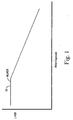
- An example of such a fuel T-M limit envelope is illustrated by curve 10 in the graph of Figure 1 which shows the maximum linear heat generation rate (LHGR) versus pellet exposure.
- the method of the present invention overcomes the above limitations by constructing actual power history profiles for every fuel rod in the reactor core and evaluating the internal pressure for each fuel rod individually.
- Conventional computer programs for generating a power history for an individual fuel rod based on reactor design or actual reactor operations are known. For example, around about the year 1987, General Electric Company developed a computer program called "LERN".
- the LERN program is capable of generating a power history profile for a single fuel rod and is typically used, for example, to perform special studies for particular fuel rods (one at a time).
- fuel rod power histories are constructed for each rod in the reactor core using both pre-acquired historical operating data of each fuel rod during past fuel cycles and a projection of reactor operations into an upcoming fuel-cycle.
- a computer program may employ the above described LERN-type technology or equivalent software to evaluate individual fuel rod power histories for each nuclear fuel rod in the reactor core based both on empirical information acquired during previous fuel cycles and a projected operation of the reactor in an upcoming fuel cycle.
- the program uses the constructed power histories for each fuel rod, the program then performs a rod-by-rod internal pressure analysis wherein it computes thermal and mechanical overpower limits and a maximum internal pressure for each rod in the upcoming fuel cycle to determine which rod or rods are operating with the most limiting power history ⁇ i.e., closest to its internal pressure, and thermal and mechanical overpower limits.
- the power history of this fuel rod or rods is then used as the basis for setting safe operational limits, and determining compliance with U.S.
- NRC requirements rather than relying on an overly conservative conventional bounding power history analysis (which is typically based solely on a single hypothetical fuel rod). Compliance of reactor operation with U.S. NRC licensing requirements is demonstrated by confirming that the fuel rod identified as having the maximum fuel rod internal pressure or thermal and mechanical overpower stresses for the upcoming fuel cycle does not violate the particular fundamental licensing criteria.
- the above fuel rod evaluation process is performed for each operating fuel-cycle of a reactor.
- T-M limit setting approach higher peak operating powers for each rod may be used without violating fundamental safety and governmental imposed criteria for reactor operation.
- implementation of the disclosed method of the present invention allows operation of a reactor using a much less restrictive fuel rod thermal-mechanical limit and, consequently, results in substantial improvements in operational fuel costs and power output.
- the present invention is an improved method for determining/establishing power limit criteria for a nuclear reactor based on the operational history of the fuel rods in the nuclear reactor core.
- the improved method results in a realization of greater operating margins for the fuel rods in the reactor core ⁇ which in turn results in more efficient and cost effective core operation and/or fuel rod configurations.
- the present invention also provides a more direct and less conservative approach toward illustrating compliance of a nuclear reactor with USNRC licensing requirements than the overly conservative processes conventionally used for such purposes.
- the present invention is a data processing system including a computer having memory and various I/O or display devices that is programmed for determining power limit criteria of a nuclear reactor based on computed internal pressures of each fuel rod in the core; and for optional compilation and display of individual power histories and internal pressures for each fuel rod in the core.
- the present invention is a computer program product that may be embodied on any computer-readable medium for distribution and/or storage on a computer system for execution to establish power limit criteria for a nuclear reactor based on the operational thermal-mechanical limits of the fuel rods in the nuclear reactor core.
- a method and system for demonstrating compliance of a nuclear reactor with fundamental licensing criteria for nuclear fuel rod internal pressure during nuclear reactor operation.
- the present invention may be implemented, for example, via FORTRAN computer program code executed using Digital Equipment Corp. Alpha computers running the Open VMS operating system.
- the present invention determines actual power histories of each fuel rod in the reactor core using empirical data acquired from past operation of the reactor and evaluates the internal pressure for each fuel rod for an upcoming fuel cycle.
- this rod evaluation process is performed during the fuel cycle design and licensing process for each operating cycle of a particular nuclear reactor.
- the evaluation process includes a rod-by-rod internal pressure analysis based on empirical data of actual operational power output levels of each fuel rod in the reactor core.
- a computer program constructs individual fuel rod power histories for each nuclear fuel rod in the reactor core based on information acquired during previous fuel cycles and a projected operation of the reactor in an upcoming fuel cycle. Using the constructed power histories for each fuel rod, the program then computes thermal and mechanical overpower limits and the maximum internal pressure for each rod in the upcoming fuel cycle. Licensing compliance is demonstrated by confirming that the computed maximum internal pressure for the upcoming fuel cycle is less than the critical pressure with a statistical confidence mandated by the regulatory agency and that the maximum thermal and mechanical overpower stresses of the fuel rods are below regulatory maximums.
- FIGURE 1 shows a graph illustrating an example thermal-mechanical limit envelope 10 for evaluating fuel rods.
- the envelope represents the operating limit maximum linear heat generation rate (MLHGR) for a fuel rod as function of fuel pellet exposure.
- MHGR operating limit maximum linear heat generation rate
- FIGURE 2 shows a simplified block diagram of an example data processing system, 100, contemplated for performing the evaluation of fuel rod thermal-mechanical limits for each rod in a reactor core in accordance with the method of the present invention.
- system 100 includes CPU 101, storage memory 102, and user interfacing I/O devices 103 and optionally one or more displays 104.
- Storage memory 102 includes a database or files (not shown) containing, for example, reactor plant initial state information, fuel lattice physics analysis results, 3D simulation results, fuel rod type/characteristics data and a program for evaluating fuel rods in accordance with the method of the present invention.
- FIGURE 3 shows a mathematical relationship useful for computing an internal pressure ratio of a fuel rod ⁇ for producing pressure ratio values believed reliable to a 95% degree of confidence.
- the Pressure Ratio value obtained using this equation is based on the ratio between a maximum nominal internal pressure, P max, nom , and a nominal critical internal pressure, P crit, nom , for a fuel rod.
- P max, nom may be determined by performing a conventional T-M type analysis on a fuel rod, for example, as produced by GE's GESTR performance software.
- FIGURE 4 shows a functional program flow diagram of an example embodiment of the fuel rod evaluation program of the present invention.
- Each block of the diagram contains a concise explanation of a functional step performed, for example, by a computer program operating on a single or multi-processor computer system for the purpose of evaluating the thermal-mechanical limits for all fuel rods in a reactor core.
- a computer program operating on a single or multi-processor computer system for the purpose of evaluating the thermal-mechanical limits for all fuel rods in a reactor core.
- the method of the present invention essentially involves examining all fuel rods within each fuel bundle in a reactor core on a rod-by-rod basis to determine internal pressure data for each fuel rod and then using that information to set appropriate limiting operational criteria for the reactor.
- fuel rod power "histories" are constructed based on operating data from reactor process computers and data provided from pre-assembled data files (e.g., reactor 3D simulation files 304, reactor fuel lattice physics analysis files 306, and T-M analysis files 312).
- the reactor specific information provided by these data files may be pre-acquired and digitally stored by conventional means using standard procedures and processes well known in the nuclear industry.
- the fuel rod power histories are then used to perform T-M analysis for each rod individually.
- fuel bundle "histories", block 302 are first constructed using "historical" fuel-cycle data stored in a set of stored input files 304 (e.g., GE's PANAEA CEDAR files).
- This historical fuel-cycle data is produced as a result of running 3D simulations of the reactor for operating conditions covering previous fuel cycles (e.g., cycle n-3 through cycle n-1) and the projected operating conditions for the upcoming cycle (cycle n).
- other reactor specific operational parameters relevant to constructing fuel bundle histories may be input as user data 301.
- the bundle histories so constructed may comprise, for example, fuel rod axial power rating (P), fuel rod exposure data (Exp), water density history (UH) and control fraction data (CF).
- individual fuel rod power histories are developed using the constructed fuel bundle history data and data obtained from a second set of input files 306 (containing reactor fuel lattice analysis data (e.g., GE's TGBLA files).
- reactor fuel lattice analysis data e.g., GE's TGBLA files.
- T-M analysis input files are constructed for running T-M analysis cases using a third set of input files 312 containing fuel rod specific data (e.g., GE's GSTRM files).
- the T-M analysis cases for each rod are run and output files are produced.
- the T-M output files are processed to provide output results, block 318, for each fuel rod for printing or display and then a next fuel bundle is examined.
- Output results 318 include at least peak pressure and exposure data for such rod and may further include other relevant information such as:
- Figure 5 shows an example listing of rod-by-rod output results provided in the preferred implementation of the present invention.
Landscapes
- Engineering & Computer Science (AREA)
- General Engineering & Computer Science (AREA)
- Physics & Mathematics (AREA)
- Plasma & Fusion (AREA)
- High Energy & Nuclear Physics (AREA)
- Monitoring And Testing Of Nuclear Reactors (AREA)
Abstract
Description
- This invention relates generally to methods for demonstrating compliance of a nuclear reactor with fundamental licensing criteria for nuclear fuel rod internal pressure, and more particularly to a method for establishing thermal-mechanical limits for the use and operation of nuclear fuel rods.
- Most countries have some sort of regulatory body or commission for administering the safe use and distribution of nuclear fuels and power generation within their jurisdictions. In the United States of America, for example, the Nuclear Regulatory Commission (USNRC) is the primary governmental regulatory body that is responsible for licensing the construction and operation of nuclear power plants. In its regulatory capacity, the USNRC is responsible for setting up and reviewing fundamental safety criteria for granting a license for the operation of a nuclear reactor. Under such review, an applicant for a license must be able to demonstrate that the operation of a particular reactor complies with fundamental safety criteria set forth by the USNRC. Reactor design and operation evaluation procedures are proposed and, once approved by the USNRC, may form the basis for the granting of an operating license.
- Procedures for demonstration of compliance typically include (among other things) providing statistical/empirical evidence showing that the fuel rods within a reactor function within a given margin of safety at or below some predetermined power level that will ensure that the thermal and mechanical stresses on the fuel rod cladding for all rods in the reactor core are kept at a safe level during the life and use of the fuel ― for example, to prevent any cracking or ruptures of fuel rod cladding and subsequent leaking of contaminates. Reactor operating limits are established to ensure that reactor operation is maintained within a fuel rod thermal-mechanical design and safety analysis basis. These operating limits may be defined, for example, by the maximum allowable fuel pellet operating power as a function of fuel pellet exposure level―usually expressed in terms of the maximum linear heat generation rate (MLHGR) (i.e., the maximum heat generated by a fuel rod per unit length of the rod (Kw/ft) verses exposure (Gwd/mt)).
- As an example, under GE Company's USNRC approved "GESTAR" licensing basis, it is required that fuel design Thermal-Mechanical (T-M) analysis for a reactor be performed using the following conditions: (i) either worst tolerance assumptions are applied or probabilistic analysis are performed to determine statistically bounding results (i.e., upper 95% confidence), and (ii) operating conditions are taken to bound the conditions anticipated during normal steady-state operation and anticipated operational occurrences (AOOs). Based on the T-M analysis performed, operating limits are established to ensure that actual fuel operation is maintained within the fuel rod thermal-mechanical design and safety basis. These operating limits define the maximum allowable fuel pellet operating power level as a function of fuel pellet exposure.
- The conventional methodology for designing thermal-mechanical (T-M) operational limits for fuel rods is to apply a bounding power history analysis on a single hypothetical fuel rod. For example, fuel rods may be evaluated to ensure that the effects of fuel rod internal pressure during normal steady-state operation will not result in fuel failure due to an excessive fuel rod cladding pressure loading. Such an evaluation is based, for example, on the amount of fission gas released by the uranium fuel pellets in a fuel rod and the resultant pressure within the rod to determine the cladding creep-out rate due to internal gas pressure during normal steady-state operation. (For example, a T-M performance analysis program, such as GE Company's GESTR-MECHNICAL (GSTRM) performance code program, may be used to evaluate a fuel rod.) A generic power limit curve is developed from the T-M evaluation which provides an operating envelope that is valid for the operation of fuel rods in every fuel cycle for all reactors. An example of such a fuel T-M limit envelope is illustrated by
curve 10 in the graph of Figure 1 which shows the maximum linear heat generation rate (LHGR) versus pellet exposure. - In developing such a generic operating limit envelope, typically only the fuel rod or rods within a reactor core that experience the maximum expected power and exposure conditions are evaluated. However, it is known that no single fuel rod in a reactor core actually operates with a power history equivalent to its limiting power history, but rather operates substantially below the limiting power for a majority of its operational duty. Prior to the present invention, it has been unfeasible to identify which fuel rods or rod within the core may be operating in the most limiting manner with regard to internal fission gas release. In this regard, the conventional approach of developing a bounding power history for generating thermal-mechanical limits for fuel rods is overly conservative and unnecessarily restricts the operation of nuclear reactors below an optimum level.
- The method of the present invention overcomes the above limitations by constructing actual power history profiles for every fuel rod in the reactor core and evaluating the internal pressure for each fuel rod individually. Conventional computer programs for generating a power history for an individual fuel rod based on reactor design or actual reactor operations are known. For example, around about the year 1987, General Electric Company developed a computer program called "LERN". The LERN program is capable of generating a power history profile for a single fuel rod and is typically used, for example, to perform special studies for particular fuel rods (one at a time). In the present invention, fuel rod power histories are constructed for each rod in the reactor core using both pre-acquired historical operating data of each fuel rod during past fuel cycles and a projection of reactor operations into an upcoming fuel-cycle.
- In implementing the method of the present invention, a computer program may employ the above described LERN-type technology or equivalent software to evaluate individual fuel rod power histories for each nuclear fuel rod in the reactor core based both on empirical information acquired during previous fuel cycles and a projected operation of the reactor in an upcoming fuel cycle. Using the constructed power histories for each fuel rod, the program then performs a rod-by-rod internal pressure analysis wherein it computes thermal and mechanical overpower limits and a maximum internal pressure for each rod in the upcoming fuel cycle to determine which rod or rods are operating with the most limiting power history ― i.e., closest to its internal pressure, and thermal and mechanical overpower limits. The power history of this fuel rod or rods is then used as the basis for setting safe operational limits, and determining compliance with U.S. NRC requirements, rather than relying on an overly conservative conventional bounding power history analysis (which is typically based solely on a single hypothetical fuel rod). Compliance of reactor operation with U.S. NRC licensing requirements is demonstrated by confirming that the fuel rod identified as having the maximum fuel rod internal pressure or thermal and mechanical overpower stresses for the upcoming fuel cycle does not violate the particular fundamental licensing criteria.
- Preferably, the above fuel rod evaluation process is performed for each operating fuel-cycle of a reactor. By using this T-M limit setting approach, higher peak operating powers for each rod may be used without violating fundamental safety and governmental imposed criteria for reactor operation. Moreover, implementation of the disclosed method of the present invention allows operation of a reactor using a much less restrictive fuel rod thermal-mechanical limit and, consequently, results in substantial improvements in operational fuel costs and power output.
- In one aspect, the present invention is an improved method for determining/establishing power limit criteria for a nuclear reactor based on the operational history of the fuel rods in the nuclear reactor core. The improved method results in a realization of greater operating margins for the fuel rods in the reactor core ― which in turn results in more efficient and cost effective core operation and/or fuel rod configurations. In this regard, the present invention also provides a more direct and less conservative approach toward illustrating compliance of a nuclear reactor with USNRC licensing requirements than the overly conservative processes conventionally used for such purposes.
- In another aspect, the present invention is a data processing system including a computer having memory and various I/O or display devices that is programmed for determining power limit criteria of a nuclear reactor based on computed internal pressures of each fuel rod in the core; and for optional compilation and display of individual power histories and internal pressures for each fuel rod in the core.
- In accordance with yet another aspect, the present invention is a computer program product that may be embodied on any computer-readable medium for distribution and/or storage on a computer system for execution to establish power limit criteria for a nuclear reactor based on the operational thermal-mechanical limits of the fuel rods in the nuclear reactor core.
- In accordance with yet a further aspect of the present invention, a method and system is provided for demonstrating compliance of a nuclear reactor with fundamental licensing criteria for nuclear fuel rod internal pressure during nuclear reactor operation.
- An embodiment of the invention will now be described, by way of example, with reference to the accompanying drawings, in which:
- FIGURE 1 is a graph illustrating an example T-M limit envelope curve for evaluating nuclear fuel rods;
- FIGURE 2 is block diagram of an example data processing system used for simulation/modeling of thermal-mechanical limits for nuclear fuel rods;
- FIGURE 3 illustrates an example mathematical formula used to determine the pressure ratio for a fuel rod;
- FIGURE 4 is a flow chart illustrating an example sequence of process steps executable by a data processing system for performing an evaluation of fuel rod thermal-mechanical limits, and
- FIGURE 5 is an example output listing of rod-by-rod evaluation results provided in a preferred implementation of the present invention.
-
- The present invention may be implemented, for example, via FORTRAN computer program code executed using Digital Equipment Corp. Alpha computers running the Open VMS operating system. As embodied in a computer program for execution on a computer, the present invention determines actual power histories of each fuel rod in the reactor core using empirical data acquired from past operation of the reactor and evaluates the internal pressure for each fuel rod for an upcoming fuel cycle. Preferably, this rod evaluation process is performed during the fuel cycle design and licensing process for each operating cycle of a particular nuclear reactor. The evaluation process includes a rod-by-rod internal pressure analysis based on empirical data of actual operational power output levels of each fuel rod in the reactor core. A computer program constructs individual fuel rod power histories for each nuclear fuel rod in the reactor core based on information acquired during previous fuel cycles and a projected operation of the reactor in an upcoming fuel cycle. Using the constructed power histories for each fuel rod, the program then computes thermal and mechanical overpower limits and the maximum internal pressure for each rod in the upcoming fuel cycle. Licensing compliance is demonstrated by confirming that the computed maximum internal pressure for the upcoming fuel cycle is less than the critical pressure with a statistical confidence mandated by the regulatory agency and that the maximum thermal and mechanical overpower stresses of the fuel rods are below regulatory maximums.
- FIGURE 1 shows a graph illustrating an example thermal-
mechanical limit envelope 10 for evaluating fuel rods. The envelope represents the operating limit maximum linear heat generation rate (MLHGR) for a fuel rod as function of fuel pellet exposure. - FIGURE 2 shows a simplified block diagram of an example data processing system, 100, contemplated for performing the evaluation of fuel rod thermal-mechanical limits for each rod in a reactor core in accordance with the method of the present invention. Essentially,
system 100 includesCPU 101,storage memory 102, and user interfacing I/O devices 103 and optionally one ormore displays 104.Storage memory 102 includes a database or files (not shown) containing, for example, reactor plant initial state information, fuel lattice physics analysis results, 3D simulation results, fuel rod type/characteristics data and a program for evaluating fuel rods in accordance with the method of the present invention. - FIGURE 3 shows a mathematical relationship useful for computing an internal pressure ratio of a fuel rod―for producing pressure ratio values believed reliable to a 95% degree of confidence. The Pressure Ratio value obtained using this equation is based on the ratio between a maximum nominal internal pressure, Pmax, nom , and a nominal critical internal pressure, Pcrit, nom , for a fuel rod. Pmax, nom may be determined by performing a conventional T-M type analysis on a fuel rod, for example, as produced by GE's GESTR performance software.
- FIGURE 4 shows a functional program flow diagram of an example embodiment of the fuel rod evaluation program of the present invention. Each block of the diagram contains a concise explanation of a functional step performed, for example, by a computer program operating on a single or multi-processor computer system for the purpose of evaluating the thermal-mechanical limits for all fuel rods in a reactor core. One of ordinary skill will appreciate that the illustrated functional steps of Figure 4, although explained in greater detail below, are essentially self explanatory and may be implemented on a conventional computer by utilizing conventional programming techniques and programming tools well known in the art.
- As illustrated by the functional flow diagram of Figure 4, the method of the present invention essentially involves examining all fuel rods within each fuel bundle in a reactor core on a rod-by-rod basis to determine internal pressure data for each fuel rod and then using that information to set appropriate limiting operational criteria for the reactor. First, fuel rod power "histories" are constructed based on operating data from reactor process computers and data provided from pre-assembled data files (e.g.,
reactor 3D simulation files 304, reactor fuel lattice physics analysis files 306, and T-M analysis files 312). The reactor specific information provided by these data files may be pre-acquired and digitally stored by conventional means using standard procedures and processes well known in the nuclear industry. The fuel rod power histories are then used to perform T-M analysis for each rod individually. - Referring to program flow diagram 300 of Figure 4, fuel bundle "histories", block 302, are first constructed using "historical" fuel-cycle data stored in a set of stored input files 304 (e.g., GE's PANAEA CEDAR files). This historical fuel-cycle data is produced as a result of running 3D simulations of the reactor for operating conditions covering previous fuel cycles (e.g., cycle n-3 through cycle n-1) and the projected operating conditions for the upcoming cycle (cycle n). At this time, other reactor specific operational parameters relevant to constructing fuel bundle histories may be input as
user data 301. The bundle histories so constructed may comprise, for example, fuel rod axial power rating (P), fuel rod exposure data (Exp), water density history (UH) and control fraction data (CF). - Next, at
block 308, individual fuel rod power histories are developed using the constructed fuel bundle history data and data obtained from a second set of input files 306 (containing reactor fuel lattice analysis data (e.g., GE's TGBLA files). Next, atblock 310, T-M analysis input files are constructed for running T-M analysis cases using a third set of input files 312 containing fuel rod specific data (e.g., GE's GSTRM files). Next, atblock 314, the T-M analysis cases for each rod are run and output files are produced. Finally, atblock 316, the T-M output files are processed to provide output results, block 318, for each fuel rod for printing or display and then a next fuel bundle is examined. Output results 318 include at least peak pressure and exposure data for such rod and may further include other relevant information such as: - end-of-life pressure/exposure,
- maximum exp./mode,
- maximum enrichment/GAD.
- This process continues until all bundles in the core are evaluated. Figure 5 shows an example listing of rod-by-rod output results provided in the preferred implementation of the present invention.
Claims (11)
- A method for determining power limit criteria for a nuclear reactor based on operational thermal-mechanical limits of fuel rods in the nuclear reactor core, comprising the steps, executed by a computer, of:a) constructing individual fuel rod power histories (308) for each nuclear fuel rod in the reactor core based on empirical information acquired during previous fuel cycles and the projected operation of the reactor in an upcoming fuel cycle;b) computing internal pressure data (314) for each fuel rod in the core for an upcoming fuel cycle based on the power histories constructed in step (a);c) identifying a fuel rod (316) having a maximum internal pressure;
andd) establishing an operational thermal-mechanical limit (318) based on the power history of the identified fuel rod. - The method of claim 1 wherein step (b) includes computing thermal and mechanical overpower limits for fuel rods in the core.
- The method of claim 1 wherein steps (b) through (d) are repeated for each fuel cycle.
- A method for establishing power limit criteria of a nuclear reactor based on operational thermal-mechanical limits of fuel rods in the nuclear reactor core, comprising the steps of:a) generating thermal and mechanical overpower limits based on conventional limiting analysis;b) computing fuel rod internal pressure data based on actual power history data of a fuel rod and projected reactor operation in a upcoming fuel cycle for each fuel rod in the reactor core;c) identifying a maximum fuel rod internal pressure for the upcoming fuel cycle based on the fuel rod internal pressure data computed in step (b);
andd) confirming that the identified maximum is less than fundamental criteria established by the applicable licensing authority. - The method of claim 5 further including:
repeating steps (b) and (c) for each fuel cycle of the reactor. - A system (100) for establishing power limit criteria for a nuclear reactor based on operational thermal-mechanical limits of fuel rods in the nuclear reactor core, said system comprising a computer (101) including a data storage memory (102) and one or more I/O (103) or display devices (104), said computer programmed to:wherein an operational power limit criteria is established based on thermal-mechanical limit data associated with the identified fuel rod.(i) construct individual fuel rod power histories (308) for each nuclear fuel rod in the reactor core based on empirical information acquired during previous fuel cycles and the projected operation of the reactor in an upcoming fuel cycle;(ii) compute internal pressure data (310, 314) for each fuel rod in the core for an upcoming fuel cycle based on the individual power histories; and(iii) identify a fuel rod having a maximum internal pressure (316);
- The system of claim 6 wherein the computer is further programmed to compute thermal overpower and mechanical overpower limit data for each fuel rod in the reactor core.
- The system of claim 6 wherein the computer provides, via an I/O or display device, output data (318) identifying at least peak internal pressure and exposure information for one or more fuel rods in the reactor core.
- A computer program product embodied on a computer-readable medium for distribution and/or storage on a computer system for execution to establish power limit criteria for a nuclear reactor based on operational thermal-mechanical limits of fuel rods in the nuclear reactor core, comprising:means for constructing individual fuel rod power histories for each nuclear fuel rod in the reactor core based on empirical information acquired during previous fuel cycles and the projected operation of the reactor in an upcoming fuel cycle; andmeans for computing internal pressure data for each fuel rod in the core for an upcoming fuel cycle based on individual fuel rod power histories and for identifying a fuel rod having a maximum internal pressure.
- The computer program product of claim 9 further including means for computing thermal-mechanical limit data for each fuel rod in the core and for establishing an operational thermal-mechanical limit based on thermal-mechanical limit data associated with the identified fuel rod.
- A method for demonstrating compliance of a nuclear reactor with fundamental licensing criteria for nuclear fuel rod internal pressure during nuclear reactor operation, comprising the steps of:wherein the established power limit criteria is based on thermal-mechanical limit data associated with the identified fuel rod.a) constructing individual fuel rod power histories (308) for each nuclear fuel rod in the reactor core based on empirical information acquired during previous fuel cycles and the projected operation of the reactor in an upcoming fuel cycle;b) computing internal pressure data (314) for each fuel rod in the core for an upcoming fuel cycle based on the power histories constructed in step (a);c) identifying a fuel rod having a maximum internal pressure; andd) confirming that the identified maximum (316) is less than an established licensing limit criteria,
Applications Claiming Priority (4)
| Application Number | Priority Date | Filing Date | Title |
|---|---|---|---|
| US17356199P | 1999-12-30 | 1999-12-30 | |
| US173561P | 1999-12-30 | ||
| US678665 | 2000-10-04 | ||
| US09/678,665 US6535568B1 (en) | 1999-12-30 | 2000-10-04 | Method and system for generating thermal-mechanical limits for the operation of nuclear fuel rods |
Publications (2)
| Publication Number | Publication Date |
|---|---|
| EP1113455A1 true EP1113455A1 (en) | 2001-07-04 |
| EP1113455B1 EP1113455B1 (en) | 2012-06-27 |
Family
ID=26869287
Family Applications (1)
| Application Number | Title | Priority Date | Filing Date |
|---|---|---|---|
| EP00311650A Expired - Lifetime EP1113455B1 (en) | 1999-12-30 | 2000-12-22 | Method for generating thermal-mechanical limits for the operation of nuclear fuel rods |
Country Status (5)
| Country | Link |
|---|---|
| US (1) | US6535568B1 (en) |
| EP (1) | EP1113455B1 (en) |
| JP (1) | JP4800477B2 (en) |
| ES (1) | ES2388600T3 (en) |
| TW (1) | TW473737B (en) |
Cited By (8)
| Publication number | Priority date | Publication date | Assignee | Title |
|---|---|---|---|---|
| FR2846139A1 (en) * | 2002-10-21 | 2004-04-23 | Framatome Anp | Determining upper value of at least one parameter of nuclear reactor core performance comprises use of simulated transient function |
| EP1310964A3 (en) * | 2001-11-07 | 2007-09-12 | Global Nuclear Fuel-Americas, LLC | System and method for continuous optimization of control-variables during operation of a nuclear reactor |
| FR2924852A1 (en) * | 2007-12-07 | 2009-06-12 | Areva Np Sas | METHOD FOR DETERMINING THE VALUE OF A PARAMETER REPRESENTATIVE OF THE MANOEUVERABILITY OF A NUCLEAR REACTOR, DETERMINING SYSTEM, COMPUTER PROGRAM AND CORRESPONDING MEDIUM. |
| US8873698B2 (en) | 2002-12-18 | 2014-10-28 | Global Nuclear Fuel—Americas, LLC | Computer-implemented method and system for designing a nuclear reactor core which satisfies licensing criteria |
| US9047995B2 (en) | 2002-12-18 | 2015-06-02 | Global Nuclear Fuel—Americas, LLC | Method and system for designing a nuclear reactor core for uprated power operations |
| CN112037950A (en) * | 2020-09-24 | 2020-12-04 | 中国核动力研究设计院 | Fuel rod fission product release simulation device and use method thereof |
| CN115455633A (en) * | 2022-03-16 | 2022-12-09 | 广西防城港核电有限公司 | A method and system for evaluating the reliability of nuclear reactor nuclear fuel |
| RU2785999C1 (en) * | 2022-09-12 | 2022-12-15 | Общество с ограниченной ответственностью "Пролог" | Method for a comprehensive survey of the mine of an in-vessel nuclear reactor and a device for its implementation. |
Families Citing this family (12)
| Publication number | Priority date | Publication date | Assignee | Title |
|---|---|---|---|---|
| JP4600722B2 (en) * | 2003-12-15 | 2010-12-15 | 株式会社グローバル・ニュークリア・フュエル・ジャパン | Core monitoring device |
| EP1775732B1 (en) * | 2005-08-31 | 2013-07-31 | Westinghouse Electric Sweden AB | A method of estimating dryout properties in a nuclear light water reactor |
| US7633531B2 (en) | 2006-12-31 | 2009-12-15 | General Electric Company | Systems and methods for quantitatively assessing the quality of an image produced by an imaging system |
| JP5388322B2 (en) * | 2007-02-05 | 2014-01-15 | 原子燃料工業株式会社 | Fuel rod soundness judgment method and judgment means |
| FR2914103B1 (en) * | 2007-03-19 | 2009-12-18 | Areva Np | METHOD FOR DETERMINING THE VOLUMIC POWER DISTRIBUTION OF THE HEART OF A NUCLEAR REACTOR |
| US8553829B2 (en) * | 2007-09-26 | 2013-10-08 | Areva Np Sas | Reduced order stress model for online maneuvering, diagnostics of fuel failure and design of core loading patterns of light water reactors |
| US9424376B2 (en) | 2011-11-18 | 2016-08-23 | Terrapower, Llc | Enhanced neutronics systems |
| US10163534B2 (en) * | 2014-01-27 | 2018-12-25 | Terrapower, Llc | Modeling for fuel element deformation |
| FR3053150B1 (en) * | 2016-06-22 | 2020-09-18 | Areva Np | METHOD OF CALCULATING AN IPG MARGIN ASSOCIATED WITH A NUCLEAR REACTOR LOADING PLAN, ASSOCIATED SYSTEM, COMPUTER PROGRAM AND SUPPORT |
| US10685754B2 (en) * | 2016-12-15 | 2020-06-16 | Westinghouse Electric Company Llc | Integration of real-time measurements and atomistic modeling to license nuclear components |
| WO2023048791A2 (en) * | 2021-06-25 | 2023-03-30 | Georgia Tech Research Corporation | Methods and systems for nuclear reactor design using fuel-cladding thermo-mechanics analysis |
| JP7692386B2 (en) * | 2022-04-19 | 2025-06-13 | 三菱重工業株式会社 | Cooling performance evaluation method, analysis device, and cooling performance evaluation program |
Citations (5)
| Publication number | Priority date | Publication date | Assignee | Title |
|---|---|---|---|---|
| JPS6060583A (en) * | 1983-09-14 | 1985-04-08 | 株式会社日立製作所 | Shuffle fuel assembly selection method |
| JPH04198895A (en) * | 1990-11-29 | 1992-07-20 | Toshiba Corp | Monitoring method for nuclear power plant |
| JPH05323088A (en) * | 1992-05-20 | 1993-12-07 | Toshiba Corp | Reactor control rod inspection device |
| JPH06148376A (en) * | 1992-11-02 | 1994-05-27 | Toshiba Corp | Monitoring equipment of operational limit value |
| JPH102987A (en) * | 1996-06-13 | 1998-01-06 | Toshiba Corp | Reactor core monitoring device |
Family Cites Families (9)
| Publication number | Priority date | Publication date | Assignee | Title |
|---|---|---|---|---|
| JPS597295A (en) * | 1982-07-05 | 1984-01-14 | 株式会社日立製作所 | Reactor fuel rod health monitoring device |
| JPS5938686A (en) * | 1982-08-27 | 1984-03-02 | 株式会社日立製作所 | Reactor power control device |
| JPS63108297A (en) * | 1986-10-27 | 1988-05-13 | 株式会社東芝 | Fuel soundness monitor in nuclear reactor core |
| JP3064554B2 (en) * | 1991-09-20 | 2000-07-12 | 株式会社日立製作所 | Reactor core characteristics monitoring device |
| US6061412A (en) * | 1995-10-05 | 2000-05-09 | Westinghouse Electric Company Llc | Nuclear reaction protection system |
| US5912933A (en) * | 1997-12-04 | 1999-06-15 | General Electric Company | Method and system for direct evaluation of operating limit minimum critical power ratios for boiling water reactors |
| US5991352A (en) * | 1998-03-30 | 1999-11-23 | General Electric Company | Method for determining corrosion susceptibility of nuclear fuel cladding to nodular corrosion |
| SE521873C2 (en) * | 1998-08-25 | 2003-12-16 | Toshiba Kk | A core energy instrument system fixed in the core |
| JP2000137093A (en) * | 1998-08-25 | 2000-05-16 | Toshiba Corp | Fixed in-core nuclear instrumentation system of nuclear reactor, nuclear instrumentation processing method, power distribution calculation device and calculation method, and power distribution monitoring system and monitoring method |
-
2000
- 2000-10-04 US US09/678,665 patent/US6535568B1/en not_active Expired - Lifetime
- 2000-12-22 EP EP00311650A patent/EP1113455B1/en not_active Expired - Lifetime
- 2000-12-22 ES ES00311650T patent/ES2388600T3/en not_active Expired - Lifetime
- 2000-12-28 JP JP2000399853A patent/JP4800477B2/en not_active Expired - Lifetime
- 2000-12-30 TW TW089128431A patent/TW473737B/en not_active IP Right Cessation
Patent Citations (5)
| Publication number | Priority date | Publication date | Assignee | Title |
|---|---|---|---|---|
| JPS6060583A (en) * | 1983-09-14 | 1985-04-08 | 株式会社日立製作所 | Shuffle fuel assembly selection method |
| JPH04198895A (en) * | 1990-11-29 | 1992-07-20 | Toshiba Corp | Monitoring method for nuclear power plant |
| JPH05323088A (en) * | 1992-05-20 | 1993-12-07 | Toshiba Corp | Reactor control rod inspection device |
| JPH06148376A (en) * | 1992-11-02 | 1994-05-27 | Toshiba Corp | Monitoring equipment of operational limit value |
| JPH102987A (en) * | 1996-06-13 | 1998-01-06 | Toshiba Corp | Reactor core monitoring device |
Non-Patent Citations (5)
| Title |
|---|
| DATABASE WPI Section Ch Week 198520, Derwent World Patents Index; Class K05, AN 1985-119763, XP002160841 * |
| PATENT ABSTRACTS OF JAPAN vol. 016, no. 527 (P - 1447) 29 October 1992 (1992-10-29) * |
| PATENT ABSTRACTS OF JAPAN vol. 018, no. 142 (P - 1706) 9 March 1994 (1994-03-09) * |
| PATENT ABSTRACTS OF JAPAN vol. 018, no. 454 (P - 1791) 24 August 1994 (1994-08-24) * |
| PATENT ABSTRACTS OF JAPAN vol. 1998, no. 05 30 April 1998 (1998-04-30) * |
Cited By (16)
| Publication number | Priority date | Publication date | Assignee | Title |
|---|---|---|---|---|
| EP1310964A3 (en) * | 2001-11-07 | 2007-09-12 | Global Nuclear Fuel-Americas, LLC | System and method for continuous optimization of control-variables during operation of a nuclear reactor |
| WO2004038730A1 (en) * | 2002-10-21 | 2004-05-06 | Framatome Anp | Method for determining a threshold value of a nuclear reactor operating parameter, corresponding system, computer programme and support |
| US7260512B2 (en) | 2002-10-21 | 2007-08-21 | Framatome Anp | Method for determining threshold value of a nuclear reactor operating parameter, corresponding system, computer programme and support |
| FR2846139A1 (en) * | 2002-10-21 | 2004-04-23 | Framatome Anp | Determining upper value of at least one parameter of nuclear reactor core performance comprises use of simulated transient function |
| US8873698B2 (en) | 2002-12-18 | 2014-10-28 | Global Nuclear Fuel—Americas, LLC | Computer-implemented method and system for designing a nuclear reactor core which satisfies licensing criteria |
| US9047995B2 (en) | 2002-12-18 | 2015-06-02 | Global Nuclear Fuel—Americas, LLC | Method and system for designing a nuclear reactor core for uprated power operations |
| FR2924852A1 (en) * | 2007-12-07 | 2009-06-12 | Areva Np Sas | METHOD FOR DETERMINING THE VALUE OF A PARAMETER REPRESENTATIVE OF THE MANOEUVERABILITY OF A NUCLEAR REACTOR, DETERMINING SYSTEM, COMPUTER PROGRAM AND CORRESPONDING MEDIUM. |
| CN101939795B (en) * | 2007-12-07 | 2014-01-22 | 阿海珐核能公司 | Method of determining the value of a parameter representative of the operability of a nuclear reactor, determining system, computer program and corresponding medium |
| CN101939795A (en) * | 2007-12-07 | 2011-01-05 | 阿海珐核能公司 | Method for determining the value of a parameter characterizing the operability of a nuclear reactor, determining system, computer program and corresponding carrier |
| WO2009071817A3 (en) * | 2007-12-07 | 2009-08-13 | Areva Np | Method of determining the value of a parameter representative of the operability of a nuclear reactor, determining system, computer program and corresponding support |
| US9997263B2 (en) | 2007-12-07 | 2018-06-12 | Areva Np | Method of determining the value of a parameter representative of the operability of a nuclear reactor, determining system, computer and corresponding medium |
| CN112037950A (en) * | 2020-09-24 | 2020-12-04 | 中国核动力研究设计院 | Fuel rod fission product release simulation device and use method thereof |
| CN112037950B (en) * | 2020-09-24 | 2022-02-11 | 中国核动力研究设计院 | Fuel rod fission product release simulation device and use method thereof |
| CN115455633A (en) * | 2022-03-16 | 2022-12-09 | 广西防城港核电有限公司 | A method and system for evaluating the reliability of nuclear reactor nuclear fuel |
| RU2786203C1 (en) * | 2022-05-27 | 2022-12-19 | Общество с ограниченной ответственностью "Пролог" | Method for a comprehensive examination of a block of protective tubes of a nuclear reactor and a device for its implementation |
| RU2785999C1 (en) * | 2022-09-12 | 2022-12-15 | Общество с ограниченной ответственностью "Пролог" | Method for a comprehensive survey of the mine of an in-vessel nuclear reactor and a device for its implementation. |
Also Published As
| Publication number | Publication date |
|---|---|
| US6535568B1 (en) | 2003-03-18 |
| ES2388600T3 (en) | 2012-10-16 |
| TW473737B (en) | 2002-01-21 |
| JP2001296382A (en) | 2001-10-26 |
| EP1113455B1 (en) | 2012-06-27 |
| JP4800477B2 (en) | 2011-10-26 |
Similar Documents
| Publication | Publication Date | Title |
|---|---|---|
| US6535568B1 (en) | Method and system for generating thermal-mechanical limits for the operation of nuclear fuel rods | |
| CN1819064B (en) | Method of determining a fresh fuel bundle design for a core of a nuclear reactor | |
| US5912933A (en) | Method and system for direct evaluation of operating limit minimum critical power ratios for boiling water reactors | |
| KR100652977B1 (en) | System and method for optimization of multiple operational control-variables for a nuclear reactor | |
| US8553829B2 (en) | Reduced order stress model for online maneuvering, diagnostics of fuel failure and design of core loading patterns of light water reactors | |
| US6611572B2 (en) | Determination of operating limit minimum critical power ratio | |
| EP1865514A1 (en) | Method for analysis of pellet-cladding interaction | |
| Hedayat | Developing a practical optimization of the refueling program for ordinary research reactors using a modified simulated annealing method | |
| US7426458B2 (en) | Nuclear reactor reload licensing analysis system and method | |
| Nowack et al. | CESAM–Code for European severe accident management, EURATOM project on ASTEC improvement | |
| Zhang et al. | Application of the BEPU safety analysis method to quantify margins in nuclear power plants | |
| US7693249B2 (en) | Method of improving nuclear reactor performance | |
| Rey et al. | Analysis of control element assembly withdrawal at full power accident scenario using a hybrid conservative and BEPU approach | |
| Peakman et al. | Nexus framework for whole-core fuel performance: Current applications and future trends | |
| Bielen et al. | NRC’s methodology to estimate fuel dispersal during a large break loss of coolant accident | |
| WO2003005376A1 (en) | Method and system for performing a safety analysis of a boiling water nuclear reactor | |
| Kim et al. | Development of fully coupled FRAPTRAN with MARS-KS code system for calculation of fuel behavior during LOCA | |
| Frepoli et al. | Westinghouse Experience in Licensing and Applying Best-Estimate LOCA Methodologies within the Industry: Past, Present and Future | |
| Shah et al. | Concept design, application and optimization of operational parameters for new forced safety injection tank system | |
| Dudley et al. | The reactor core neutronic model for the PBMR plant training simulator | |
| Zhang | Impact of pci/scc on reactor core design and safety evaluation | |
| JP2005505768A (en) | How to authorize an increase in boiling water reactor power | |
| Whittingham et al. | Effects of impact accidents on transport criticality safety cases for LWR packages–a new approach | |
| Levine | History and status of reloading techniques for light water reactors | |
| Ferreira et al. | Safety Analysis Reports of First-Of-A-Kind Nuclear Reactors in Brazil: Proposal of Content for Deterministic Safety Analysis |
Legal Events
| Date | Code | Title | Description |
|---|---|---|---|
| PUAI | Public reference made under article 153(3) epc to a published international application that has entered the european phase |
Free format text: ORIGINAL CODE: 0009012 |
|
| AK | Designated contracting states |
Kind code of ref document: A1 Designated state(s): CH DE ES LI SE |
|
| AX | Request for extension of the european patent |
Free format text: AL;LT;LV;MK;RO;SI |
|
| 17P | Request for examination filed |
Effective date: 20020104 |
|
| AKX | Designation fees paid |
Free format text: CH DE ES LI SE |
|
| GRAP | Despatch of communication of intention to grant a patent |
Free format text: ORIGINAL CODE: EPIDOSNIGR1 |
|
| RIC1 | Information provided on ipc code assigned before grant |
Ipc: G21D 3/00 20060101ALI20111205BHEP Ipc: G21C 17/00 20060101AFI20111205BHEP |
|
| RTI1 | Title (correction) |
Free format text: METHOD FOR GENERATING THERMAL-MECHANICAL LIMITS FOR THE OPERATION OF NUCLEAR FUEL RODS |
|
| GRAS | Grant fee paid |
Free format text: ORIGINAL CODE: EPIDOSNIGR3 |
|
| GRAA | (expected) grant |
Free format text: ORIGINAL CODE: 0009210 |
|
| AK | Designated contracting states |
Kind code of ref document: B1 Designated state(s): CH DE ES LI SE |
|
| REG | Reference to a national code |
Ref country code: CH Ref legal event code: EP |
|
| REG | Reference to a national code |
Ref country code: CH Ref legal event code: NV Representative=s name: SERVOPATENT GMBH |
|
| REG | Reference to a national code |
Ref country code: DE Ref legal event code: R096 Ref document number: 60047297 Country of ref document: DE Effective date: 20120823 |
|
| REG | Reference to a national code |
Ref country code: SE Ref legal event code: TRGR |
|
| REG | Reference to a national code |
Ref country code: ES Ref legal event code: FG2A Ref document number: 2388600 Country of ref document: ES Kind code of ref document: T3 Effective date: 20121016 |
|
| PLBE | No opposition filed within time limit |
Free format text: ORIGINAL CODE: 0009261 |
|
| STAA | Information on the status of an ep patent application or granted ep patent |
Free format text: STATUS: NO OPPOSITION FILED WITHIN TIME LIMIT |
|
| 26N | No opposition filed |
Effective date: 20130328 |
|
| REG | Reference to a national code |
Ref country code: DE Ref legal event code: R097 Ref document number: 60047297 Country of ref document: DE Effective date: 20130328 |
|
| PGFP | Annual fee paid to national office [announced via postgrant information from national office to epo] |
Ref country code: DE Payment date: 20191119 Year of fee payment: 20 Ref country code: SE Payment date: 20191125 Year of fee payment: 20 |
|
| PGFP | Annual fee paid to national office [announced via postgrant information from national office to epo] |
Ref country code: CH Payment date: 20191121 Year of fee payment: 20 |
|
| PGFP | Annual fee paid to national office [announced via postgrant information from national office to epo] |
Ref country code: ES Payment date: 20200102 Year of fee payment: 20 |
|
| REG | Reference to a national code |
Ref country code: CH Ref legal event code: PCAR Free format text: NEW ADDRESS: WANNERSTRASSE 9/1, 8045 ZUERICH (CH) |
|
| REG | Reference to a national code |
Ref country code: DE Ref legal event code: R071 Ref document number: 60047297 Country of ref document: DE |
|
| REG | Reference to a national code |
Ref country code: ES Ref legal event code: FD2A Effective date: 20210729 |
|
| REG | Reference to a national code |
Ref country code: SE Ref legal event code: EUG |
|
| PG25 | Lapsed in a contracting state [announced via postgrant information from national office to epo] |
Ref country code: ES Free format text: LAPSE BECAUSE OF EXPIRATION OF PROTECTION Effective date: 20201223 |