EP1112822A1 - Robot device and method for controlling the same - Google Patents
Robot device and method for controlling the same Download PDFInfo
- Publication number
- EP1112822A1 EP1112822A1 EP00925596A EP00925596A EP1112822A1 EP 1112822 A1 EP1112822 A1 EP 1112822A1 EP 00925596 A EP00925596 A EP 00925596A EP 00925596 A EP00925596 A EP 00925596A EP 1112822 A1 EP1112822 A1 EP 1112822A1
- Authority
- EP
- European Patent Office
- Prior art keywords
- behavior
- motion
- motion models
- behaviors
- robot
- Prior art date
- Legal status (The legal status is an assumption and is not a legal conclusion. Google has not performed a legal analysis and makes no representation as to the accuracy of the status listed.)
- Withdrawn
Links
Images













Classifications
-
- B—PERFORMING OPERATIONS; TRANSPORTING
- B25—HAND TOOLS; PORTABLE POWER-DRIVEN TOOLS; MANIPULATORS
- B25J—MANIPULATORS; CHAMBERS PROVIDED WITH MANIPULATION DEVICES
- B25J13/00—Controls for manipulators
-
- A—HUMAN NECESSITIES
- A63—SPORTS; GAMES; AMUSEMENTS
- A63H—TOYS, e.g. TOPS, DOLLS, HOOPS OR BUILDING BLOCKS
- A63H11/00—Self-movable toy figures
-
- A—HUMAN NECESSITIES
- A63—SPORTS; GAMES; AMUSEMENTS
- A63H—TOYS, e.g. TOPS, DOLLS, HOOPS OR BUILDING BLOCKS
- A63H11/00—Self-movable toy figures
- A63H11/18—Figure toys which perform a realistic walking motion
- A63H11/20—Figure toys which perform a realistic walking motion with pairs of legs, e.g. horses
-
- B—PERFORMING OPERATIONS; TRANSPORTING
- B25—HAND TOOLS; PORTABLE POWER-DRIVEN TOOLS; MANIPULATORS
- B25J—MANIPULATORS; CHAMBERS PROVIDED WITH MANIPULATION DEVICES
- B25J9/00—Program-controlled manipulators
- B25J9/16—Program controls
- B25J9/1628—Program controls characterised by the control loop
- B25J9/163—Program controls characterised by the control loop learning, adaptive, model based, rule based expert control
-
- G—PHYSICS
- G09—EDUCATION; CRYPTOGRAPHY; DISPLAY; ADVERTISING; SEALS
- G09B—EDUCATIONAL OR DEMONSTRATION APPLIANCES; APPLIANCES FOR TEACHING, OR COMMUNICATING WITH, THE BLIND, DEAF OR MUTE; MODELS; PLANETARIA; GLOBES; MAPS; DIAGRAMS
- G09B9/00—Simulators for teaching or training purposes
Definitions
- the present invention relates to a robot and its control method, and is suitably applied to a pet robot.
- the pet robot provided with the 'growth' function if some more innovative contrivance is incorporated into it, that is capable of retaining the user's interest and precluding the user getting tired of the pet robot's behaviors and motions in such a case that the pet robot ceases to grow any longer or that it takes a long period of time until it resumes growing, much more amusement may be induced out of the pet robot.
- the present invention has been made considering the foregoing and intends to offer a robot and control method for it which may increase the amusement on the part of the user.
- the robot is provided with a behavior and/or motion generation means for generating behaviors and/or motions based on the behavior and/or motion models, and a behavior and/or motion model transforming means for transforming behavior and/or motion models into a higher level of behavior and/or motion models at a given timing based on at least one of the input history from the outside and the behavior and/or motion history of its own, so that the behaviors and motions are transformed as if a pet robot were 'growing'.
- a behavior and/or motion generation means for generating behaviors and/or motions based on the behavior and/or motion models
- a behavior and/or motion model transforming means for transforming behavior and/or motion models into a higher level of behavior and/or motion models at a given timing based on at least one of the input history from the outside and the behavior and/or motion history of its own, so that the behaviors and motions are transformed as if a pet robot were 'growing'.
- the robot is provided with a behavior and/or motion generation means for generating behaviors and/or motions based on the behavior and motions models, and a first transforming means for transforming behaviors and/or motions into a higher level of behaviors and/or motions in order, according to a set of first given conditions, and a second transforming means for transforming behaviors and/or motion models into the same or lower level of behaviors and/or motions, according to a set of second given conditions based on at least one of the input history from the outside and behaviors and/or motions history of its own, so that the behaviors and motions of the robot are prevented from being tired of.
- a behavior and/or motion generation means for generating behaviors and/or motions based on the behavior and motions models, and a first transforming means for transforming behaviors and/or motions into a higher level of behaviors and/or motions in order, according to a set of first given conditions, and a second transforming means for transforming behaviors and/or motion models into the same or lower level of behaviors and/or motion
- the robot is provided with a behavior and/or motion generation means for generating behaviors and/or motions based on the behavior and/motion models, and a behavior and/or motion transforming means for transforming behaviors and/or motions into behavior and/or motion models of a higher growth level at a given timing based on the evaluation results obtained by evaluating its own behaviors in accordance with given evaluation functions.
- a behavior and/or motion generation means for generating behaviors and/or motions based on the behavior and/motion models
- a behavior and/or motion transforming means for transforming behaviors and/or motions into behavior and/or motion models of a higher growth level at a given timing based on the evaluation results obtained by evaluating its own behaviors in accordance with given evaluation functions.
- the robot having a plurality of behavior and/or motion models for a plurality of behaviors and/or motions, is provided with a behavior and/or motion generation means for generating behaviors and/or motions based on the behavior and/or motion models of corresponding behavior patterns, and a transforming means for transforming each behavior and/or motion model of the corresponding behavior pattern, with the use of which each behavior and/or motion model of the corresponding behavior pattern can be transformed with different regulations preset for each behavior and/or motion model, so that the individuality of the robot can be diversified.
- a robot can be realized whose amusement quality (entertainingness) is greatly enhanced.
- control method for a robot comprises the first step wherein behaviors and/or motions are generated based on the behavior and/or motion models, and the second step where behavior and/or motion models are transformed into behavior and/or motions models of a higher level at a given timing based on at least one of the input history from the outside and behavior and/or motion history of its own, so that behaviors and motions can be transformed as if the robot were growing.
- a control method can be realized, due to which the amusement quality (entertainingness) of the robot is substantially enhanced.
- control method for a robot comprises the first step where behaviors and/or motions are generated based on the behavior and/or motion models, and the second step wherein behavior and/or motion models are transformed into behavior and/or motion models of a higher growth level based on the first given conditions, and wherein behavior and/or motion models are transformed into behavior and/or motion models of an equal or a lower growth level based according to second given conditions based on at least one of the input history from the outside and behavior and/or motion history of its own, so that the behaviors and motions of a robot are effectively prevented from being tired of.
- a control method can be realized, which increases the amusement of a robot substantially.
- control method for a robot comprises the first step wherein behaviors and/or motions are generated based on the behavior and motion models and the second step wherein behaviors and/or motions are transformed into behavior and motion models of a higher growth level at a given timing based on the evaluation results obtained by evaluating its own behaviors in accordance with given evaluation functions, so that the behaviors and motions are transformed as if a robot were growing.
- the control method for a robot can be realized, whose entertainingness is substantially enhanced.
- control method for a robot having a plurality of behavior and/or motion models for a plurality of behavior patterns comprises the first step wherein behaviors and motions are generated based on each behavior and/or motion of the corresponding behavior pattern, and the second step where each behavior and/or motion model of the corresponding behavior pattern is transformed responding to the influence from the outside, and wherein each behavior and/or motion model of the corresponding behavior pattern is transformed according to a different regulation preset for each behavior and/or motion model, so that the individuality of the robot can be diversified.
- the control method for a robot can be realized that increases the amusement quality (entertainingness) greatly.
- FIG. 1 is a perspective view of the external structure of a pet robot embodying the present invention.
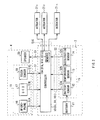
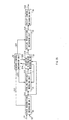
- FIG. 2 is a block diagram of the circuit configuration of a pet robot.
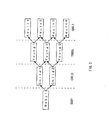
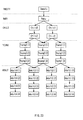
- FIG. 3 is a conceptual chart of growth models.
- FIG. 4 is block diagram instrumental in describing the processes of a controller.
- FIG. 5 is a conceptual diagram instrumental in describing a data processing in a feeling/instinct modeling unit.
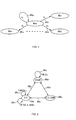
- FIG. 6 is a conceptual diagram of probability automaton.
- FIG. 7 is a conceptual table of a state transition.
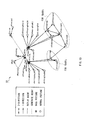
- FIG. 8 is a conceptual diagram instrumental in describing a directed graph.
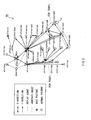
- FIG. 9 is a conceptual diagram of the directed graph for the whole body.
- FIG. 10 a conceptual diagram of a directed graph for the head.
- FIG. 11 is a conceptual diagram of a directed graph for the legs.
- FIG. 12 is a conceptual diagram of a directed graph for the tail.
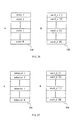
- FIG. 13 is a conceptual diagram of a first growth element list and first growth element counter table.
- FIG. 14 is a conceptual diagram of a second growth element list and second growth element counter table.
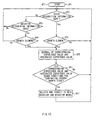
- FIG. 15 is a flowchart of a growth control processing procedure.
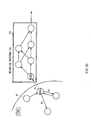
- FIG. 16 is a conceptual diagram of other embodiments.
- FIG. 17 is a conceptual diagram of other embodiments.
- FIG. 18 is a conceptual diagram of growth models in a second embodiment.
- FIG. 19 is a block diagram instrumental in describing the processing of the controller in the second embodiment.
- FIG. 20 is a conceptual diagram instrumental in describing the acquisition and lapse of memory of the behavior patterns attendant upon growth.
- FIG. 21 a conceptual diagram instrumental in describing differential files.
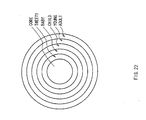
- FIG. 22 is a conceptual diagram instrumental in describing a transforming method for behavior and motion models.
- FIG. 23 is a conceptual diagram instrumental in describing other embodiments.
- FIG. 24 is a conceptual diagram of behavior pattern transforming and retrogressive models in a third embodiment.
- FIG. 25 a block diagram instrumental in describing the processing of the controller in the third embodiment.
- FIG. 26 is a conceptual diagram of a first behavior pattern element list and first behavior pattern element counter table.
- FIG. 27 is a conceptual diagram of a second behavior pattern element list and second behavior pattern element counter table.
- FIG. 28 is a conceptual diagram of a retrogressive element list and retrogressive element counter table.
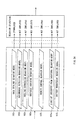
- FIG. 29 is a conceptual diagram of a retrogressive state and stage list.
- FIG. 30 is a flowchart of a behavior pattern transforming processing procedure.
- FIG. 31 is a flowchart of a retrogressive processing procedure.
- FIG. 32 is a conceptual diagram of other embodiments.
- FIG. 33 is a block diagram instrumental in describing the processing of the controller in a fourth embodiment.
- FIG. 34 is a conceptual diagram instrumental in describing a plurality of behavior and motion models provided for each behavior pattern.
- FIG. 35 is a conceptual diagram of a learning speed table.
- the ⁇ 1 ⁇ in Fig. 1 is a pet robot in whole in a first embodiment wherein a leg unit 3A ⁇ 3D is connected to a body unit 2, one each at the left and right part of the front and rear sides, and a head unit 4 and tail unit 5 at the front and rear ends respectively.
- a body unit 2 houses a controller 10 controlling the overall operation of the pet robot 1, a battery 11 as power source for the pet robot 1, and an internal sensor unit 15 made up of a battery sensor 12, thermal sensor 13 and an acceleration sensor 14.
- an external sensor unit 19 placed at the designated positions on the head unit 4 are an external sensor unit 19 made up of a microphone 14 for the 'ear' of the pet robot 1, CCD camera 17 (Charge Coupled Device) for the 'eye' and a touch sensor 18, and a speaker for the 'mouth' respectively.
- CCD camera 17 Charge Coupled Device
- An actuator 21 1 ⁇ 21 n is placed at the joint of each leg unit 3A ⁇ 3D, at the linkage point of each leg unit 3A ⁇ 3D and the body unit 2, at the linkage point of the head unit 4 and body unit 2 as well as at the linkage point of the tail unit 5 and body unit 2.
- the microphone of the external sensor unit 19 collects command sounds given in terms of a scale through a sound commander (not shown in figure), such as 'Walk', 'Lie down', or 'Chase the ball', a resultant voice signal S1A of which is fed to the controller 10.
- the CCD camera takes a picture of the surroundings, an image signal S1B obtained from which is sent to the controller 10.
- the battery sensor 12 of the internal sensor unit 15 detects the residual energy of the battery 11, of which result is sent to the controller 10 as a battery residue detection signal S2A.
- the thermal sensor 13 detects a temperature inside the pet robot 1 whose result is sent to the controller 10 as a temperature detection signal S2B.
- the acceleration sensor 14 detects acceleration in the direction of 3 axes (X, Y and Z) whose result is transferred to the controller 10 as an acceleration detection signal S2C.
- the controller 10 judges external and internal states and the existence of a command or influence from the user based on the voice signal S1A given from the external sensor 19, image sensor SIB and pressure detection signal S1C (these two are put together and called external information signal S1 hereinafter), the battery residue detection signal S2A supplied by the internal sensor unit 15, temperature detection signal S2 B and acceleration detection signal S2C, etc. (they are put together and called internal information signal S2 hereinafter).
- the controller 10 determines the next behavior based on the foregoing judgment result and a control program stored beforehand in the memory 10A, and drives the actuator 21 1 ⁇ 21 n based on the result obtained so as to let the pet robot 1 perform behaviors and motions such as swinging the head unit 4 up and down, left and right, moving the tail 5A of the tail unit 5 and walking by driving the leg unit 3A ⁇ 3D.
- the controller 10 generates a voice signal S3 as required, which is fed to the speaker 20 to output a voice outside based on the voice signal S3 and blink an LED (Light Emitting Diode, not shown in figure) placed at the position where the eyes of the pet robot 1 are supposed to be.
- a voice signal S3 as required, which is fed to the speaker 20 to output a voice outside based on the voice signal S3 and blink an LED (Light Emitting Diode, not shown in figure) placed at the position where the eyes of the pet robot 1 are supposed to be.
- the pet robot 1 is designed to be capable of acting autonomously responding to a state inside and outside of it and commands and influence from the user.
- the pet robot 1 is also designed to transform its behaviors and motions as if it were 'growing' like a real animal, according to the history of input operations such as influence and sound commands exerted by the user and the history of its own behaviors and motions.
- the pet robot 1 comprises, as understood from Fig. 3, the four stages of 'Baby', 'Child', 'Young' and 'Adult' as a growth process.
- Stored beforehand in the memory 10A of the controller 10 are behavior and motion models composed of various control parameters and control programs, which form the bases for behaviors and motions relating to four items: 'walking state', 'motion', 'behavior' and '(barking) sound ' for each 'growth stage'.
- the controller 10 then controls each actuator 21 1 ⁇ 21 n and voice output such that, in accordance with the behavior and motion models of 'Baby' in the initial stage, as to the 'walking state' for example, the pet robot 1 toddles with narrower walking steps, shorter walking periods and lower leg movements, and as to the 'motions', the pet robot 1 conducts just such 'monotonous' actions as 'walk', 'stand', and 'lie down', and as to the behaviors, the pet robot 1 performs just 'monotonous' behaviors, repeating similar ones, and as to the 'sounds', the pet robot 1 barks in a small and short voice by lowering the amplification of the voice signal S3.
- the controller 10 watches for and counts the number of occurrences in respect to a plurality of elements (referred to as 'growth elements' hereinafter) contributing to the predetermined 'growth', such as command inputs by means of sound commands, reinforced learning made up of command inputs corresponding to 'stroke' and 'pat' entered with the use of the sound commands and the number of successes in conducting predetermined behaviors and motions, sensor inputs not corresponding to 'stroke' and 'pat' entered through the touch sensor 18, predetermined behaviors and motions such as 'play with the ball, and other elements.
- 'growth elements' contributing to the predetermined 'growth', such as command inputs by means of sound commands, reinforced learning made up of command inputs corresponding to 'stroke' and 'pat' entered with the use of the sound commands and the number of successes in conducting predetermined behaviors and motions, sensor inputs not corresponding to 'stroke' and 'pat' entered through the touch sensor 18, predetermined behaviors and motions such as 'play with the ball, and other elements.
- the controller 10 transforms behavior and motion models to be used, from the behavior and motions models for 'Child' into a higher set of behavior and motion models for 'Young' based on the accumulated sum of frequencies of those growth elements when the total value of accumulated sum of frequencies of each growth element (this is referred to as 'integrated experience value of the growth elements' hereinafter) exceeds a preset threshold.
- the controller 10 then controls each actuator 21 1 ⁇ 21 n and a voice output from the speaker 20 in accordance with the behavior and motion models for 'Child', such that the pet robot 1, as to the 'walking state', walks a bit more firmly with each actuator 21 1 ⁇ 21 n rotated faster, longer periods of time and the legs raised higher, as to 'motion', moves with 'a bit more enhanced and intricate' movements by increasing the number of motions, as to 'behavior', behaves with 'a bit of objectiveness' by determining the next behavior referring to the previous one, and as to 'sound', barks in 'a bit longer and louder voice' by prolonging and amplifying the length of a voice signal.
- the controller 10 transforms, in a similar manner, the behavior and motion models in order into behavior and motion models of a higher growth level for 'Young' or 'Adult' whenever the integrated experience value of the growth elements exceeds each threshold preset for 'Young' or 'Adult'.
- the rotation speed of each actuator 21 1 ⁇ 21 n is varied according to the corresponding behavior and motion models so as to have the walking periods prolonged, the legs raised higher, or to increase gradually the length and amplification of the voice signal S3 fed to the speaker 20. That is, the number of rotation of the actuator 21 1 ⁇ 21 n is varied for each behavior or motion.
- the 'walking state' of the pet robot 1 transforms from 'toddle' to 'walk more firmly', the 'motion' from 'monotonous' to 'enhanced, intricate', and 'behavior' from 'monotonous' to 'behave with objectiveness', and the 'sound' varies from 'small and short' to 'longer and louder' by stages.
- the pet robot 1 is designed to grow in four stages, namely 'Baby', 'Child', 'Young' and 'Adult', according to the inputs from the outside and the history of the behaviors and motions of its own.
- a plurality of behavior and motion models are, as is apparent from Fig. 3, prepared for each 'growth stage' of 'Baby', 'Child', 'Young' and 'Adult'.
- the behavior and motion models (Child 1) are prepared based on which the behaviors and motions of particular behavior patterns are conducted to represent quick but rough 'wild' movements, and another set of behavior and motion models (Child 2) based on which the behaviors and motions of particular behavior patterns to represent smooth and slow 'calm' movements.
- Young 1 behaviors and motion models for conducting behaviors and motions of much quicker and rougher 'irritating' movements compared to the 'wild' behavior patterns for 'Child'
- Young 2 behavior and motion models for conducting behaviors and motions of slower and smoother moving 'normal' behavior patterns
- Young 3 behavior and motion models for conducting behaviors and motions of much slower moving 'calm' behavior patterns with a less amount of active movements.
- Behavior and motion models for 'Adult' are; Adult 1: behavior and motion models (Adult 1) for conducting behaviors and motions of 'aggressive' behavior patterns with a quality of rougher and quicker movements, performing motions not conforming to the commands from the user, Adult 2: behavior and motion models for conducting 'a bit wilder' behavior patterns with a quality of smoother and slower movements, performing motions conforming to the commands from the user, Adult 3: the behavior and motion models for conducting behaviors and motions of 'a bit calmer' behavior patterns with a quality of smoother and slower movements with a small quantity of motions, always performing motions conforming to the commands from the user, and Adult 4: behavior and motion models for conducting behavior and motions of 'calm' behavior patterns with a quality of much slower movements with a less amount of motions, always performing motions conforming to the commands from the user.
- Adult 1 behavior and motion models (Adult 1) for conducting behaviors and motions of 'aggressive' behavior patterns with a quality of rough
- the controller 10 is designed such that in raising a 'growth stage', one of the behavior and motion models is selected from among the behavior and motion models in the next 'growth stage' based on the accumulated sum of frequencies of each growth element, and that the selected behavior and motion model is used for the next motion in place of the behavior and motion model previously used.
- the behavior and motion models of the current 'growth stage' can transit only to the predetermined behavior and motion models of the next 'growth stage', i.e. just among the behavior and motion models connected with the arrows as shown in Fig. 3. Accordingly, if the behavior and motion model 'Child 1' for conducting 'wild' behaviors and motions is selected for 'Child', for example, the pet robot 1 is not allowed to transit to the behavior and motion model 'Young 3' for 'Young', which performs 'calm' behaviors and motions.
- the pet robot 1 is designed such that its 'behavior patterns' transform as it grows according to the input history of influence and commands from the user and the history of behaviors and motions of its own.
- the state recognition mechanism unit 30 recognizes a particular state based on the external information signal S1 and internal information signal S2, the result of which is conveyed to the feeling/instinct modeling unit 31 and behavior determining mechanism unit 32.
- the state recognition mechanism unit 30 constantly watches for a voice signal S1A given from the microphone 16 of the external sensor unit 19 and recognizes that a command is given when a spectrum of the same scale is detected as the command sound outputted from the sound commander, according to a command such as 'walk', 'lie down' or 'chase the ball' given as the spectrum of the voice signal S1A, the result of which is conveyed to the feeling/instinct modeling unit 31 and behavior determining mechanism unit 32.
- the state recognition mechanism unit 30 also constantly watches for the image signal S1B given from the CCD camera 17 (Fig. 2) and recognizes, for example, a state 'there is a ball' or 'there is a wall' if it detects a 'red, round ball' or a 'plane perpendicular to and higher than the ground' within the image based on the image signal S1B, the result of which is conveyed to the feeling/instinct modeling unit 31 and behavior determining mechanism unit 32.
- the state recognition mechanism unit 30 constantly watches for a pressure detection signal S1C given from the touch sensor 18 (Fig. 2) and recognizes a state 'patted (scolded)' when a pressure is detected which is larger than a given threshold based on the pressure detection signal S1C for a short period of time (e.g. less than 2 seconds), and a state 'stroked (praised) when a pressure is detected which is less than a given threshold for a long period of time (e.g. longer than 2 seconds), the result of which is conveyed to the feeling/instinct modeling unit 31 and behavior determining mechanism unit 32.
- a pressure detection signal S1C given from the touch sensor 18 (Fig. 2) and recognizes a state 'patted (scolded)' when a pressure is detected which is larger than a given threshold based on the pressure detection signal S1C for a short period of time (e.g. less than 2 seconds), and a state 'stroked (praised) when a pressure is detected which is less than a
- the state recognition mechanism unit 30 also constantly watches for an acceleration detection signal S2C given from the acceleration sensor 14 (Fig. 2) of the internal sensor unit 15 and recognizes a state 'received a big impact when an acceleration is detected which is larger than e.g. that of a preset given level based on the acceleration signal S2C, while it recognizes a state 'fell (from the table, etc.)' when an acceleration is detected which is about the gravity acceleration larger than the former, the result of which is conveyed to the feeling/ instinct modeling unit 31 and behavior determining mechanism unit 32.
- the state recognition mechanism unit 30 constantly watches for a temperature detection signal S2B given from the temperature sensor 13 (Fig. 2) and recognizes a state 'the internal temperature has risen when a temperature is detected which is larger than a given value based on the temperature detection signal S2B, the result of which is conveyed to the feeling/instinct modeling unit 31 and behavior determining mechanism unit 32.
- the feeling/instinct modeling unit 31 comprises, as shown in Fig. 5, a basic feeling/motion group 40 consisting of feeling models corresponding to each of six (6) feelings or motions: 'joy', ⁇ grief', 'surprise', 'fear', 'dislike', and 'anger, and a basic desire group 41 consisting of desire units 41A ⁇ 41D provided as desire models corresponding to each of four (4) desires: 'appetite, 'desire for affection', 'inquisitiveness', and 'desire to move', and intensity increase/decrease functions 42A ⁇ 42H provided corresponding to each of the feeling/motion units 40A ⁇ 40F and desire units 41A ⁇ 41D.
- Each of the feeling/motion units 40A ⁇ 40F indicates the intensity of a corresponding feeling or motion in terms of e.g. levels from 0 to 100, which constantly varies based on the intensity information S11A ⁇ S11F given from the intensity increase/decrease functions 42A ⁇ 42H, corresponding to the current intensity.
- Each of the desire units 41A ⁇ 41D indicates, as the feeling/motion unit 40A ⁇ 40F does, the intensity of the corresponding desire in terms of levels from 0 to 100, which constantly varies based on the intensity information S12G ⁇ S12F given from intensity increase/decrease function 42G ⁇ 42K, corresponding to the current intensity.
- the feeling/instinct modeling unit 31 determines a state of feeling by combining the intensities of the feeling/motion units 40A ⁇ 40F and a state of instinct by combining the intensities of the desire units 41A ⁇ 41D.
- the state of feeling and instinct is outputted as feeling/instinct state information S12 at the behavior determining mechanism unit 32.
- the intensity increase/decrease functions 42A ⁇ 42G are the functions for generating and outputting intensity informationS11A ⁇ S11G for increasing or decreasing the intensity of each of the feeling/motion units 40A ⁇ 40F and desire units 41A ⁇ 41D according to the preset parameters as described above, based on the state recognition information S10 given from the state recognition mechanism unit 31 and behavior information S13 indicating the contents of the present or past behaviors of the pet robot 1 itself.
- the characteristics such as 'irritation' or 'calmness' are put into the pet robot 1 by setting different values to the parameters of the intensity increase/decrease functions 42A ⁇ 42G for each behavior and motion model (Baby 1, Child 1, Child 2, Young 1 ⁇ Young 3, Adult 1 ⁇ Adult 4).
- the behavior determining mechanism unit 32 has a plurality of behavior models inside the memory 10A, each corresponding to each of behavior and motion model (Baby 1, Child 1, Child 2, Young 1 Young 3, Adult 1 ⁇ Adult 4).
- the behavior determining mechanism unit 32 determines the next behavior or motion based on the state recognition information 10 given from the state recognition mechanism unit 30, the intensity of each of the feeling/motion unit 40A ⁇ 40F and desire unit 41A ⁇ 41D of the feeling/instinct modeling unit 31, and the corresponding behavior model, the result of which is outputted as determined behavior information 14 at the posture transition mechanism unit 33 and growth control mechanism unit 35.
- the behavior determining mechanism unit 32 uses an algorithm called probability automaton, as a means for determining the next behavior or motion, in determining with probability, to which node ND A0 ⁇ ND An a particular node (state) ND A0 as shown in Fig. 6, should transit including itself based on the transition probability P o ⁇ P n , each set to an arc AR A0 ⁇ AR An connecting the nodes ND A0 ⁇ ND An .
- the memory 10A stores a state transition table 50 as shown in Fig. 7, as behavior models, for each node ND A0 ⁇ ND An and the behavior determining mechanism unit 32 determines the next behavior or motion based on this state transition table 50.
- the input events are enumerated on the 'Input Event' line with priority, which are transition conditions in the node ND A0 ⁇ ND An , and further conditions regarding the transition conditions are described on the columns corresponding to the 'Data Name' and 'Data Range' lines.
- this recognition itself and an event given at the same time that the 'size' of the ball given is within the range of 'from 0 to 1000 (0,1000)' is the condition for the current node ND 100 to transit to another one.
- this recognition result itself and an event given at the same time that the 'distance (DISTANCE)' to the obstacle is within the range of 'from 0 to 100 (0, 100) is the condition for the current node ND 100 to transit to another node.
- the intensity of the feeling/motion unit 40A ⁇ 40F of any of 'joy (JOY), 'surprise (SURPRISE) or 'sadness (SADNESS)' is 'within the range of from 50 to 100 (50, 100).
- the names of nodes to which the node is allowed to transit are enumerated on the row of 'Nodes to which the current node can transit' in the column of the 'transition probability to other nodes' as well as the transition probability on the line of the 'Output Actions' in the column of the 'Transition Probability to other Nodes', which lets the current node transit to any of the other nodes, when all the conditions listed on each line of the 'Name of Input Events', 'Data Value' and 'Range of Data' are satisfied.
- the sum of the transition probabilities on each line in the column of the 'Transition Probability to Other Nodes' is 100 [%].
- the node can transit from the NODE 100 to the 'NODE 120 ' (node 120) with a probability of '30 [%]', and the behaviors and motions of the 'ACTION 1' are outputted at this time.
- Each of the behavior models are made up of a number of nodes of the same nodes connected, described in the state transition table 50.
- the behavior determining mechanism unit 32 determines with probability the next behavior or motion (a behavior or motion described on the line Output Behaviors] using the state transition table 50 of the corresponding node of the suitable behavior models stored in the memory 10A at such a time as when state recognition information 10 is given from the state recognition mechanism unit 30 or when a given period of time has elapsed since the last behavior was discovered, the result of which is outputted as behavior command information S14 at the posture transition mechanism 33 and growth control mechanism 35.
- the posture transition mechanism unit 33 Given behavior command information 14 from the behavior determining mechanism unit 32, the posture transition mechanism unit 33 makes a plan for a series of behaviors for the pet robot 1 to perform behaviors or motions based on the determined behavior information 14 and outputs behavior command information S15 based on the behavior plan at the control mechanism unit 34.
- the posture transition mechanism unit 33 uses, as a means of making an action plan, a directed graph representing a posture the pet robot 1 may take, as shown in Fig. 8, as node ND B0 ⁇ NDB2, of which nodes that can transit to one another are connected by a directed arc AR B0 ⁇ AR B2 expressing behaviors, and representing a behavior terminating at one node among the nodes ND B0 ⁇ ND B2 as self-acting arc AR C0 ⁇ AR C2 .
- the memory 10A stores data of files in the form of data base containing a starting posture and an ending posture of all the behaviors (these files are called 'network definition files' hereinafter) the pet robot 1 can take, which is the source of the directed graph, and the posture transition mechanism unit 33 creates a directed graph 60 ⁇ 63(as shown in Fig. 9 ⁇ 12) for each of the whole body, head, legs and tail based on the network definition files.
- the postures the pet robot 1 may take are largely divided into the four (4) groups: ⁇ stand (o Standing) ⁇ , ⁇ sit (o Sitting) ⁇ , ⁇ Lie down (o Sleeping) ⁇ , and [station (o Station)J which is the posture taken on the charger cradle (not shown in Fig.) to have the battery 11 (Fig. 2) charged.
- Each group of postures has base postures (marked o ⁇ )used in common for all the 'growth stages' and one or a plurality of normal postures (marked o) for 'Baby', 'Child', 'Young', and 'Adult'.
- the portions enclosed by the broken lines in Fig. 9 ⁇ 12 represent normal postures for 'Baby', and, as can be known from Fig. 9, there are prepared ⁇ o Sleeping b (baby) ⁇ , ⁇ o Sleeping b2 ⁇ ⁇ ⁇ o Sleeping b5 ⁇ as normal postures of ⁇ lie down] ⁇ for 'Child' , and ⁇ o Sitting b ⁇ and ⁇ o Sitting b2 ⁇ as normal postures of ⁇ sit ⁇ .
- the posture transition mechanism unit 33 given behavior command information S14 from the behavior determining mechanism unit 32, such as 'Stand up', 'Walk', 'Offer a hand', 'Swing the head' or 'Wag the tail', the posture transition mechanism unit 33, with the use of the corresponding directed graph 60 ⁇ 63 and following the direction of a directed arc, searches for the route to a node to which a posture designated by the current node corresponds, or a directed arc or self-acting arc to which an appointed behavior corresponds. Then behavior commands are outputted as behavior command information S15 at the device control mechanism unit 34, based on which the pet robot 1 performs behaviors in order, corresponding to each directed arc on the route obtained.
- behavior command information S14 from the behavior determining mechanism unit 32, such as 'Stand up', 'Walk', 'Offer a hand', 'Swing the head' or 'Wag the tail'
- behavior transition mechanism unit 33 with the use of the
- the posture transition mechanism unit 33 searches for a route to the node ⁇ o Sleeping b4 ⁇ from the node ⁇ o Sitting b ⁇ on the directed graph 60 for the whole body, and then outputs behavior commands in order as behavior command information 15 at the control mechanism unit 34 to transit the current posture from the node ⁇ o Sitting b ⁇ to the node ⁇ o Sleeping b5 ⁇ , from the node ⁇ o Sleeping b5 ⁇ to the node ⁇ o Sleeping b3 ⁇ , and from the node ⁇ o Sleeping b3 ⁇ to the node ⁇ o Sleeping b4 ⁇ , and finally a behavior command as behavior command information S15 at the control mechanism unit 34
- the posture transition mechanism unit 33 selects a directed arc as a route corresponding to the [growth stage] and [behavior patterns] where and which the pet robot 1 is and has acquired at and by that time, under the control of the growth control mechanism unit 35 (to be described later).
- the posture transition mechanism unit 33 selects a directed arc as a route corresponding to the ⁇ growth stage ⁇ and ⁇ behavior patterns ⁇ where and which the pet robot 1 is and has acquired at and by that time.
- the posture transition mechanism unit 33 searches for the shortest route to the next node, or directed arc or self-acting arc from the current node, regardless of the current [growth stage].
- the posture transition mechanism unit 33 returns a posture of the pet robot 1 to any of the base postures (marked o ⁇ ) based on the directed graph 60 for the whole body, and then outputs behavior command information S15 to let the posture of the head unit, leg units, or tail units transit, using the directed graph 61 ⁇ 63 corresponding to the head unit, let units, or tail unit.
- the control mechanism unit 34 generates a control signal S16 based on behavior command information S15 given from the posture transition mechanism unit 33, and lets the pet robot 1 perform an appointed behavior and motion by driving each actuator 21 1 ⁇ 21 n based on the control signal S16.
- the growth control mechanism unit 35 is supplied with various states recognized as a state recognition signal S20 based on the external information signal S2 and internal information signal S1 given from the state recognition mechanism unit 30.
- the various states includes inputs entered through the touch sensor 18, not strong enough to be identified with, for example, 'stroked' or 'patted', in addition to particular states conveyed to the feeling/instinct modeling unit 31 and behavior determining mechanism unit 32.
- the growth control mechanism unit 35 also has inside the memory 10A the list 70A (referred to as the first growth element list) as shown in Fig. 13A containing the foregoing growth elements which should be referenced in raising a ⁇ growth stage ⁇ of the various states based on the state recognition information S20 given from the state recognition mechanism unit 30, and the counter table 70B (referred to as the first growth element counter table) as shown in 13B to count the accumulated number of frequencies of these growth elements.
- the list 70A referred to as the first growth element list
- Fig. 13A containing the foregoing growth elements which should be referenced in raising a ⁇ growth stage ⁇ of the various states based on the state recognition information S20 given from the state recognition mechanism unit 30, and the counter table 70B (referred to as the first growth element counter table) as shown in 13B to count the accumulated number of frequencies of these growth elements.
- the growth control mechanism unit 35 given the state recognition information 20 from the state recognition mechanism unit 30, judges whether or not a state to be obtained based on the state recognition information 20 referring to the first growth element list 70A, and if this state is found to be a growth element, the corresponding count value (experience value) in the growth counter table 70B is increased by '1'.
- the growth control mechanism unit 35 has inside the memory 10A the list 71A (referred to as the second growth element list) as shown in Fig. 14A, containing the foregoing growth elements which should be referenced in raising a ⁇ growth stage ⁇ of the various behaviors to be obtained based on the behavior command information S14 given from the behavior determining mechanism unit 32, and the counter table 71B (referred to as the second growth element counter table) as shown in Fig. 14B to count the accumulated number of frequencies of these growth elements.
- the list 71A referred to as the second growth element list
- the counter table 71B referred to as the second growth element counter table
- the growth control mechanism unit 35 given the behavior command information S14 from the behavior determining mechanism unit 32, judges whether or not a behavior or motion to be obtained is a growth element based on the behavior command information S14 referring to the second growth element list 71A, and if this behavior is found to be a growth element, the corresponding count value (experience value) in the second growth counter table 71B is increased by ⁇ 1'.
- the growth control mechanism unit 35 increases the count value by '1' of the counter (referred to as ⁇ integrated growth experience value counter' hereinafter) to judge whether or not a [growth stage] prepared separately from the first and second counter tables 70B, 71B and judges whether or not the counter value of the integrated growth experience value counter has reached the counter value preset as a termination condition for the current 'growth stage'.
- the growth control mechanism unit 35 determines a behavior or motion within the next 'growth stage to which the current behavior or motion should be transformed based on each count value in the first and second growth element counter tables 70B, 71B, the results of which are conveyed to the feeling/instinct modeling unit 31, behavior determining mechanism unit 32 and posture transition mechanism unit 33.
- a command is given to the feeling/instinct modeling unit 31, behavior determining mechanism unit 32 and posture transition mechanism unit 33 to select the behavior and motion models for 'Child'.
- the feeling/instinct modeling unit 31 changes, based on the command transforming information S22, the parameter of each of the intensity increase/decrease function 42A ⁇ 42G described in Fig. 5 to the value of a behavior or motion designated.
- the behavior determining mechanism unit 32 transforms a behavior model to be used to that of a behavior and motion model designated based on the command transforming information S22.
- the posture transition mechanism unit 33 changes the setting, so that the directed arc and self-acting arc of a behavior and motion model designated is selected according to the command transforming information S22 in such a case that any directed arc or self-acting arc must be selected from among the directed arcs and self-acting arcs corresponding to a plurality of subsequent behavior and motion models.
- the behavior and motion model comprises the parameter value of each of the intensity increase/decrease function 42A ⁇ 42B in the feeling/instinct modeling unit 31 corresponding to the ⁇ behavior pattern ⁇ in a particular ⁇ growth state ⁇ , a behavior model in the behavior determining mechanism unit 32, and a directed arc or self-acting arc in the posture transition mechanism unit 33.
- the controller lets the pet robot 1 generate behaviors to be capable of acting autonomously, raising the 'growth stage' as required.
- the growth control mechanism unit 35 controls the 'growth stages' of the pet robot 1 according to a growth control processing procedure RT1 as shown in Fig. 15.
- the growth control mechanism unit 35 starts executing this growth control processing procedure RT1 at the step SP1 after the power is turned on for the first time, and judges at the subsequent step SP2 whether or not state recognition information S10 is given from the state recognition mechanism unit 30.
- the growth control mechanism unit 35 proceeds to the step SP3 and judges whether or not behavior determining information S14 is given from the behavior determining mechanism unit 32 (Fig. 4). The growth control mechanism unit 35 returns to the step SP2 if a negative result is obtained at the step SP3 and repeats an SP2-SP3-SP2 loop operation until an affirmative result is obtained at the step SP2 or step SP3.
- the growth control mechanism unit 35 proceeds to the step SP4 and judges whether or not a state to be obtained is a growth element according to the state recognition information S10 given from the state recognition mechanism unit 30.
- the growth control mechanism unit 35 returns to the step SP2 if a negative result is obtained at the step SP4, while if an affirmative result is obtained, the growth control mechanism unit 35 proceeds to the step SP5, and increases by '1' a count value corresponding to the first growth element list 70A (Fig. 13A) and a count value of the integrated experience value counter.
- the growth control mechanism unit 35 proceeds to the step SP6 and judges whether or not the value of the integrated experience value counter reaches the count value preset as a termination condition for the current 'growth stage'.
- the growth control mechanism unit 35 returns to the step SP2 if a negative result is obtained at this step SP6, while if an affirmative result is obtained, it proceeds to the step SP7 and determines a behavior and motion model in the subsequent 'growth stage to which the current behavior and motion model should transit, the result of which is conveyed to the feeling/instinct modeling unit 31, behavior determining mechanism unit 32 and posture transition mechanism unit 33, and then the growth control mechanism unit 35 returns to the step SP2.
- the growth control mechanism unit 35 proceeds to the step 8 and judges whether or not a behavior to be obtained is a growth element according to the behavior determining information S13 given from the behavior determining mechanism unit 32.
- the growth control mechanism unit 35 returns to the step SP2 if a negative result is obtained at this step SP8, while if an affirmative result is obtained, the growth control mechanism unit 35 proceeds to the step SP5 and increases by '1' the count value corresponding to the second growth element list 71A (Fig. 14A) and the count value of the integrated experience value counter respectively, and proceeds to the step SP6 to execute a process similar to the foregoing.
- the pet robot 1 grows gradually to behave and act like an adult as the user exerts such an action as 'pat' or 'stroke' on the pet robot 1, or gives it a command with using the sound commander, or the pet robot itself 1 plays with the ball.
- the pet robot 1 may give a greater sense affinity and satisfaction to the user, exceeding the concept that the robot just walks.
- the pet robot 1 As the pet robot 1 'grows', its 'behavior patterns are varied according to the input history from the user and the history of behaviors and motions of its own, hence it may give a greater sense of amusement (entertainingness) to the user.
- the growth control mechanism 35 of the controller 10 is used as behavior and/or motion transforming means to transform the behavior and/or motion models into behavior and/or motion models of a higher growth level at a given timing, based on at lease either of the input history from the outside and the history of behaviors and/or motions of its own.
- the present invention is not limited to it, but a variety of other structures may be used as behavior and/or motion transforming means, depending upon the mode of a robot embodying the present invention.
- a robotic device 1 'grows' by stages.
- the present invention is not limited to it, but the robotic device may be so designed as to 'grow' with no stages by detecting a state of growth elements and by varying the values of the control parameters in order every time a behavior or motion of the growth elements is performed.
- the robotic device 1 may be designed to 'grow' in such a way that it is allowed to transit to a cell 72 of the cells 72 adjacent to it, which is higher than its own growth level.
- the pet robot 1 is so designed as to 'grow' based on the integrated experience value calculated based on the integrated value of the accumulated sum of frequencies of each growth element.
- the present invention is not limited to it, but a wide range of other calculation means may be employed to calculated the integrated experience value.
- the present invention is not limited to it, but only one of the input history and the history of the behaviors and motions of its own may be used as an element to raise the 'growth stage'.
- other elements than the input history, and the history of its own behavior and motion may be added to the means to raise the growth stage.
- the lapse of time and other things may be practically considered as the element.
- the pet robot 1 may be advisable to let the pet robot 1 appraise the degree of achievement of a certain behavior and motion of its own, for example, a state of growth from a child able to walk on its feet to an adult capable of kicking the ball far away, with the use of a given appraisal function, whose result may be used as an element to raise the 'growth stage'.
- a wide variety of other behaviors and motions than an action 'kick the ball' may be used as objects to be appraised, for example, 'walk' (the speed of walking is appraised).
- the degree of achievement of such behaviors and motions is constantly calculated, and the next 'growth stage' or behavior patterns (Baby 1, Child 1, Child 2, Young 1 ⁇ Young 3, Adult 1 ⁇ Adult 4) may be determined based on the maximum value of the degree of achievement obtained in the process of (the pet robot 1) 'growing' according to the foregoing input history and the history of behaviors and motions of its own.
- the ⁇ 80 ⁇ in the Fig. 1 shows a pet robot in whole in the second embodiment, which is constructed in a way similar to the pet robot 1 in the first embodiment, except that a different method is employed for transforming behavior and motion models.
- the five (5) 'growth stages' are provided for the pet robot 80 as shown in Fig. 18: 'Tweety', 'Baby', 'Child', 'Young', and 'Adult'.
- the controller 81 Fig. 2 processes are divided into the units as shown in Fig.19, wherein the same reference numerals are assigned to the units corresponding to those in Fig. 4, That is, the controller 81 is constructed in the same way as the controller is in the first embodiment, except for a behavior determining mechanism unit 82 which has an enormous amount of state space in which all the behavior patterns the pet robot 80 may realize are stored.
- the behavior determining mechanism unit 82 creates behavior and motion models for each stage in such a way that with a portion of the state space as a core in which the basic behaviors are generated for the pet robot 80, such as 'walk', 'Sleep' and 'Stand', etc., the only small part of the core is used for ⁇ Tweety'. After that, every time the pet robot 80 grows, it is allowed to transit to new partial state space to be increased (partial state space in which new behaviors may take place and a series of behavior patterns are generated) and separate the partial state space which is used no longer (partial state space in which behaviors never take place and a series of behavior patterns are not generated).
- the method in which the transition probability to the state space is varied as it grows is used as a means to allow it to transmit to new partial state space to be increased and cut off unnecessary partial state space.
- the transition probability P 1 is set to '0' in the initial stage and varied to a greater preset value than '0' when it arrives at a corresponding 'growth stage.
- the transition probability from NODE A to NODE B is varied to '0' when that 'growth stage' is arrived at.
- the files 84A ⁇ 84D as shown in Fig. 21 are provided in each behavior and motion model, each corresponding to each 'growth stage of 'Baby', 'Child', 'Young', and 'Adult', as a concrete means to vary the transition probability at the necessary places.
- the behavior determining mechanism unit 82 generates behaviors using the behavior and motion models for 'Tweety in the initial stage, while when notification is given later from the growth control mechanism unit 35 that a 'growth' is attained as described before, the transition probability at each place appointed for each node defined in the corresponding differential file 84A ⁇ 84D is varied to the predetermined value based on the differential file 84A ⁇ 84D for the corresponding 'growth stage'.
- the transition probability located at the first column, on the first line in the area (portion below the line of ⁇ Output Behavior ⁇ and to the right of the ⁇ Range of Data ⁇ column) where transition probabilities in the state transition table 50 of the node NODE 100 are defined is varied to ⁇ 20 ⁇ ⁇ % ⁇ , and the transition probability located at the n th column, on the first line in the state transition table to ⁇ 30 ⁇ ⁇ % ⁇ , and so on.
- the behavior determining mechanism unit 82 varies the corresponding transition probability of other node NODE 320 , NODE 720 ... defined in the file 84A for 'Baby' as well.
- the transition probability up to a certain time is ⁇ 0 ⁇ (that is, transition to a node to be the origin of a series of behavior patterns is prohibited), or a case wherein the transition probability after being varied becomes ⁇ 0 ⁇ (that is, transition to a node to be the origin of a series of behavior patterns is to be prohibited).
- the case may occur that the transition probability is varied to a given value from ⁇ 0 ⁇ , that the value of the transition probability after being varied becomes ⁇ 0 ⁇ , that a series of the behavior patterns take place at a new 'growth stage', or that a series of the behavior patterns do not take place.
- each transition probability in each of the differential file 84A ⁇ 84D is so designated that the sum of each transition probability included in the corresponding line in the state transition table 50 after being varied becomes 100 [%].
- the state space of the behavior and motion models for each 'growth stage' expands in order as the pet robot 80 grows.
- the pet robot 80 generates the behavior and motion models for each 'growth stage and behaves according to the behavior and motion models generated in such a manner that with a portion of the state space where the basic behaviors are conducted as the core, out of the enormously expanded state space where all the behavior patterns are stored, only a small portion including the core is used for 'Tweety, and that a portion of the state space no longer to be used except for the core, is separated as the pet robot 80 grows, or that transition to another portion of the state space to be added is allowed as the pet robot 80 grows.
- the pet robot 80 accordingly it is possible to represent 'growth' more naturally because the state space of the behavior and motion models in each 'stage growth' varies so continuously as to alleviate the discontinuity of the output behaviors before and after a certain 'growth'. Also, with the pet robot 80, since the portion of the state space where the basic behaviors are generated is used in common for all the 'growth stages', the result of learning of the basic behaviors can be handed down to the next 'growth stage' in order.
- the pet robot 80 since a portion of the state space in which the basis behavior is generated is used in common for all the 'growth stages', the work of generating the behavior and motion models for each 'growth stage' can be done easily, and the amount of data of the behavior models are curtailed on the whole compared to the first mode wherein the behavior and motion models are prepared individually for each 'growth stage'.
- each of a series of behavior patterns is modularized, enabling the behavior determining mechanism unit 82 to do generation work more easily as much.
- the partial state space as the core in which the basic behaviors are conducted, out of the enormous state space where all the behavior patterns are stored, the only portion including the core is used for 'Tweety', since portions of the state space not to be used any longer except for the core are separated and the behavior and motion models for each 'growth stage' are generated by allowing transition to a portion of the state space to be added anew, the state space of the behavior and motion models for each 'growth stage' can be varied continuously, thereby curtailing the discontinuity of output behaviors before and after a certain growth. Consequently the 'growth' is represented more naturally, and a pet robot can be realized with a greatly increased entertaining quality.
- each 'growth stage' may be divided into portions, and the partial state space in which the basic behaviors are generated may be used in common for each of divided portions of each 'growth stage'.
- the state space for the behavior and motion models for each 'growth stage' expands in order.
- the present invention is not limited to it, but the state space for the behavior and motion models for each 'growth stage' may be reduced in order, or the state space for the behavior and motion models may be reduced in any of the 'growth stages' while still expanding.
- the 90 in Fig. 1 shows a pet robot in the third mode of the carrying out the present invention.
- the pet robot 90 is configured in the same way as the pet robot 1 in the first embodiment, except that, in addition to the growth function described in the first embodiment, the pet robot 90 is, as shown in Fig. 24, provided with a function to transform the behavior patterns (Baby 1, Child 1, Child 2, Young 1 ⁇ Young 3, Adult 1 ⁇ Adult 4) in the same 'growth stage' as required according to the history of input operations executed by the user and the history of the behaviors and motions of its own, and to retrograde the 'growth stage (namely, to transform the behavior patterns to those in a 'growth stage' of a lower growth level.
- This function is referred to as 'behavior pattern transform/retrograde function' hereinafter).
- the controller 91 (Fig. 2) is so designed as to constantly watches for and count generation in respect to a plurality of elements (referred to as 'behavior pattern transform elements' hereinafter) related to predetermined 'behavior pattern transformation', such as 'saw a color the pet robot 90 likes', 'played with the ball', 'the ball taken away', and 'time (during which the pet robot 90 is) left alone'.
- 'behavior pattern transform elements' related to predetermined 'behavior pattern transformation', such as 'saw a color the pet robot 90 likes', 'played with the ball', 'the ball taken away', and 'time (during which the pet robot 90 is) left alone'.
- each of the following, too, is reckoned as a behavior pattern transforming element and counted separately from the counting of the growth elements: command input with the use of the sound commander, enforced learning comprising sensor inputs corresponding to actions 'stroke' and 'pat' through the touch sensor 18 (Fig. 2) and the number of successes in performing predetermined behaviors and motions, sensor inputs not corresponding to actions 'stroke' and 'pat' through the touch sensor 18, and each of the foregoing growth elements of a given behavior and motion like 'play with the ball'.
- the controller 91 then transforms a behavior and motion model to be used, into another behavior and motion model in the same 'growth stage' regardless of 'growth' when the total value of accumulated sums of these behavior pattern transforming elemnents (referred to as 'integrated experience value of the behavior pattern transforming elemnents' hereinafter) exceeds a preset threshold value.
- each behavior pattern transforming element determines which behavior and motion model of the other behavior and motion models is used as the next behavior and motion model.
- the behavior and motion model used up to the then moment is a behavior and motion model (Young 2) of the 'normal' behavior patterns for 'Young'
- a behavior and motion model (Young 1) of 'irritated' behavior pattern for 'Young' is selected.
- the behavior and motion model (Young 3) of a 'calm' behavior pattern for 'Young' is selected.
- the other behavior models within the same 'growth stage' to which the currently used behavior and motion model is allowed to transform are predetermined, namely limited to the behavior and motion models connected by the arrow lines.
- a behavior and motion model being used is the behavior and motion model (Adult 3) of 'a bit calm' behavior pattern for 'Adult'
- either the behavior and motion model (Adult 2) of 'a bit wild' behavior pattern, or the behavior and motion model (Adult 4) of a 'calm' behavior pattern only can be selected as the next behavior and motion model, and the behavior and motion model (Adult 1) for an 'irritated' behavior pattern can never be used as the next behavior and motion model.
- the controller 91 constantly watches for and count generation in respect to a plurality of predetermined elements relating to the 'retrogression of the growth stages' (referred to as 'retrogressive elements' hereinafter), such as 'fell off the table', 'fell over', or 'received a big impact'.
- the controller 91 transforms a behavior and motion model to be used into a behavior and motion model of a 'growth stage' of a lower growth level than the 'growth model' of the behavior and motion model being used up to the then moment.
- the current 'growth stage' In transforming the current 'growth stage' to a 'growth stage' of a lower growth level, it is predetermined for each retrogressive element to what stage the current 'growth stage' is retrograded (or, to a behavior and motion model of which 'growth stage'). In the case of an event 'fell off the table, etc.' by way of example, the 'growth stage' is retrograded by two stages if the accumulated number of frequencies is '1' (one stage for 'Child'). If the accumulated number of frequencies of an event 'fell over' exceeds the threshold, the growth stage retrogrades by one stage.
- the behavior and motion model (Adult 1)for an 'aggressive' motion pattern for 'Adult' the behavior and motion model (Young 3) of a 'calm' behavior pattern for 'Young' may be selected due to the retrogression.
- the pet robot 90 is designed such that its 'behavior patterns' transform in order even while not 'growing', according to the input history of actions and commands by the user and the history of behaviors and motions of its own, or shocks, etc. just like a real animal transforms its behavior patterns, depending upon how it is reared and as if the mind retrograded due to strong shocks, etc.
- the contents the controller 91 of the pet robot 90 processes can be divided as shown in Fig. 25 in terms of functions, wherein the units corresponding to those in Fig. 4 are assigned the same reference numerals.
- the controller 91 is constructed in the same way as that of the first embodiment, except for a growth control mechanism unit 92.
- the ⁇ transforming of the behavior patterns ⁇ and retrograding of growth stages ⁇ are made under the control of this growth control mechanism unit 92.
- control mechanism unit 92 executes, in parallel with control processing on 'growth' as in the forgoing first embodiment, control processing on the transformation of behavior patterns with the same 'growth stage' and retrogression of the 'growth stages' as follows:
- the growth control mechanism unit 92 stores in a memory 90A a list 93A (referred to as 'first behavior pattern transforming element list' hereinafter) as shown in Fig. 26A wherein the said behavior pattern transforming elements are defined, chosen from among various states based on the state recognition information S20 given from the state recognition mechanism unit 30 that should be referred to in transforming the behavior patterns within the same growth 'stage', and a counter table 93B (referred to as 'first behavior pattern transforming element counter table' hereinafter) shown in Fig. 26B to count each of the accumulated number of frequencies of these behavior pattern transforming elements.
- a list 93A (referred to as 'first behavior pattern transforming element list' hereinafter) as shown in Fig. 26A wherein the said behavior pattern transforming elements are defined, chosen from among various states based on the state recognition information S20 given from the state recognition mechanism unit 30 that should be referred to in transforming the behavior patterns within the same growth 'stage'
- a counter table 93B referred to as
- the growth control mechanism unit 92 Upon receiving the state recognition information S20 from the state recognition mechanism unit 30 the growth control mechanism unit 92 judges whether or not a state obtained based on the state recognition information S20 is a behavior pattern transforming element based on the first behavior pattern transforming element list 93A, and if the state is found to be a behavior pattern transforming element, the corresponding counter value (experience value) within the first behavior pattern transforming element counter table 93B is increased by '1'.
- the growth control mechanism unit 92 also stores in a memory 90A a list 94A (referred to as 'second behavior pattern transforming element list' hereinafter) as shown in Fig. 27A wherein the said behavior pattern transforming elements are defined, chosen from among the behaviors and motions based on the behavior command information S14 given from the behavior determining mechanism unit 32 that should be referred to in transforming the behavior patterns within the same growth 'stage', and a counter table 94B (referred to as 'second behavior pattern transforming element counter table' hereinafter) shown in Fig. 27B to count each of the accumulated numbers of frequencies of these behavior pattern transforming elements.
- a list 94A (referred to as 'second behavior pattern transforming element list' hereinafter) as shown in Fig. 27A wherein the said behavior pattern transforming elements are defined, chosen from among the behaviors and motions based on the behavior command information S14 given from the behavior determining mechanism unit 32 that should be referred to in transforming the behavior patterns within the same growth 'stage'
- the growth control mechanism unit 92 Upon receiving the behavior command information S14 from the behavior determining mechanism unit 32 the growth control mechanism unit 92 judges whether or not a behavior or motion obtained based on the behavior command information S14 is a behavior pattern transforming element based on the second behavior pattern transforming element list 94A, and if the behavior or motion is found to be a growth element, the corresponding counter value (experience value) within the second behavior pattern transforming element counter table 94B is increased by '1'.
- the growth control mechanism unit 92 increases by '1' the count value of the counter (referred to as 'behavior pattern transforming integrated experience value counter' hereinafter) to judge whether or not a behavior pattern should be transformed within the same 'growth stage', which is prepared separately from the first and second behavior pattern transforming element counter tables 93B, 94B), and then judges whether or not the count value of the behavior pattern transforming integrated experience value counter exceeds that preset as a condition to transform the 'behavior pattern'.
- 'behavior pattern transforming integrated experience value counter' the count value of the counter
- the growth control mechanism unit 92 determines that the behavior and motion model should be transformed to which behavior and motion model within the same 'growth stage' based on each of the count values in the first and second behavior pattern transforming element counter tables 93B and 94B, the result of which is conveyed as transforming command information S22 to the feeling/instinct modeling unit 31, behavior determining mechanism unit 32 and posture transition mechanism unit 33.
- the feeling/instinct modeling unit 31 varies the parameter of each of the intensity increase/ decrease function 42A ⁇ 42G to the value of the designated behavior and motion model based on the transforming command information S22. Also, the behavior determining mechanism unit 32 transforms a behavior model to be used into the appointed behavior and motion model based on the transforming command information S22.
- the posture transition mechanism unit 33 changes the setting based on the transforming command information S22 such that a directed arc or self-acting arc corresponding to the appointed behavior and motion model is selected in such a case that one of the directed arcs or self-acting arcs must be selected from among the directed arcs and self-acting arcs corresponding to a plurality of behavior and motion models.
- the growth control mechanism unit 92 controls the transforming of a behavior pattern within the same 'growth stage' according to the history of actions made by the user, operation input of commands with the use of the sound commander, or the history of behaviors and motions of its own.
- the growth control mechanism unit 92 stores in the memory 90A a list 95A (referred to as 'retrogressive element list' hereinafter) as in Fig. 28A wherein the said retrogressive elements are defined, chosen from among various states based on the state recognition information S20 given from the state recognition mechanism unit 30 that should be referred to in retrograding the 'growth state', and a counter table 95B (referred to as 'retrogressive element counter table' hereinafter) shown in Fig. 28B to count each of the accumulated numbers of frequencies of these retrogressive elements.
- a list 95A referred to as 'retrogressive element list' hereinafter
- Fig. 28A wherein the said retrogressive elements are defined, chosen from among various states based on the state recognition information S20 given from the state recognition mechanism unit 30 that should be referred to in retrograding the 'growth state'
- a counter table 95B referred to as 'retrogressive element counter table' hereinafter
- the growth control mechanism unit 92 Upon receiving the state recognition information S20 from the state recognition mechanism unit 30 the growth control mechanism unit 92 judges whether or not the state obtained based on the retrogressive element list 95A, and if the state is found to be a retrogressive element, the corresponding counter value (experience value) within the retrogressive element counter table 95 is increased by '1'.
- the growth control mechanism unit 92 stores in the memory 90A a list 96 (referred to as 'retrogressive condition and stage number list) as in Fig. 29, containing the threshold value preset for each of the retrogressive elements and the number of retrogressive stages of the 'growth stage' in the case that the accumulated sum of frequencies of the retrogressive element exceeds the threshold value.
- a list 96 referred to as 'retrogressive condition and stage number list
- the growth control mechanism unit 92 judges whether or not the count value of the retrogressive element exceeds the threshold value preset for the retrogressive element, referring to the retrogressive condition and stage number list 96.
- the growth control mechanism unit 92 determines at random based on the retrogressive condition and stage number list 96 that the behavior and motion model should be transformed into which behavior and motion model in a 'growth state' lower by as many stages as predetermined for the generation element of the behavior and motion model, the result of which is conveyed as the transforming command information S22 to the feeling/instinct modeling unit 31, behavior determining mechanism unit 32 and posture transition mechanism unit 33.
- the feeling/instinct modeling unit 31 transforms the parameter of each of the increase/decrease functions 42A ⁇ 42G to the value of the appointed behavior and motion model based on the transforming command information S22.
- the behavior determining mechanism unit 32 transforms a behavior model to be used into the appointed behavior and model based on the transforming command information S22.
- the posture transition mechanism unit 33 then changes the setting such that a directed arc or self-acting arc corresponding to the appointed behavior and motion model is selected in such a case that any of directed arc or self-acting arc must be selected from among the directed arcs and self-acting arcs corresponding to a plurality of behavior and motion models.
- the growth control mechanism unit 92 controls the retrograding of the 'growth stages' based on the external information signal S2 from the external sensor 19 and the internal information signal S1 from the internal sensor 15.
- the growth control mechanism unit 92 executes the processing of the behavior pattern transforming in the same 'growth stage' in accordance with the behavior pattern transform processing procedure RT2 shown in the Fig. 30.
- the growth control mechanism unit 92 starts executing the behavior pattern transform processing procedure RT2 at the step SP10 ever time the behavior and motion model is transformed, and judges at the subsequent step SP11 whether or not state recognition information S10 is given from the state recognition mechanism unit 30.
- the growth control mechanism unit 92 proceeds to the step SP12 and judges whether or not behavior determining information S14 is given from the behavior determining mechanism unit 32. If a negative result is obtained at this step SP12, the growth control mechanism unit 92 returns to the step SP11 and repeats an SP11-SP12-SP11 loop until an affirmative result is obtained either at the step SP11 or SP12.
- the growth control mechanism unit 92 proceeds to the step SP13 and judges whether or not the state to be obtained based on the state recognition information S10 given from the state recognition mechanism unit 30 is a behavior pattern transforming element.
- the growth control mechanism unit 92 returns to the step SP11, while if an affirmative result is obtained, the growth control mechanism unit 92 proceeds to the step SP15 and increases by '1' the corresponding count value in the first behavior pattern transforming element counter table 93B (Fig. 26B) and the count value of the integrated experience value counter for the behavior pattern transforming respectively.
- the growth control mechanism unit 92 proceeds to the step SP14 and judges whether or not a behavior or motion to be obtained based on the behavior determining information S14 given from the behavior determining mechanism unit 32 is a behavior pattern transforming element.
- the growth control mechanism unit 92 returns to the step SP11, while if an affirmative result is obtained, the growth control mechanism unit 92 proceeds to the step SP15 and increases by '1' the corresponding count value in the second behavior pattern transforming element counter table 94B (Fig. 27B) and the count value of the behavior pattern transforming integrated experience value counter respectively.
- the growth control mechanism unit 92 proceeds to the step SP16 and judges whether or not the count value of the behavior pattern transforming integrated experience value counter reaches the count value preset as a condition to transform the current behavior and motion model.
- the growth control mechanism unit 92 returns to the step SP11, while if an affirmative result is obtained, the growth control mechanism unit 92 proceeds to the step SP17 and determines that the behavior and motion model should be transformed to which behavior and motion model in the same 'growth stage, the result of which is conveyed to the feeling/instinct modeling unit 31, behavior determining mechanism unit 32 and posture transition mechanism unit 33.
- the growth control mechanism unit 92 proceeds to the step SP18 and resets the first and second behavior pattern transforming element counter tables 93B, 94B such that all the count values in the first and second behavior pattern transforming element counter tables 93B, 94B becomes ⁇ 0'.
- the growth control mechanism unit 92 then proceeds to the step SP19 and terminates the behavior pattern transforming processing procedure RT2.
- the growth control mechanism unit 92 executes the control processing of the retrograding of the 'growth stage' according to the retrogressive processing procedure RT3 shown in Fig. 31, in parallel with the foregoing.
- the growth control mechanism unit 92 starts executing the retrogressive processing procedure RT3 every time the behavior and motion model is transformed, and then proceeds to the subsequent step SP21 and stands by for state recognition information S10 to be supplied from the state recognition mechanism unit 30.
- the growth control mechanism unit 92 proceeds to the step SP22 and judges whether or not the state to be obtained based on the state recognition information S10 given from the state recognition mechanism unit 30 is a retrogressive element.
- the growth control mechanism unit 92 returns to the step SP21, while, if an affirmative result is obtained, the growth control mechanism unit 92 proceeds to the step SP23 and increases by '1' the corresponding count value in the retrogressive element counter table 95B (Fig. 28B).
- the growth control mechanism unit 92 then proceeds to the step SP24 and judges whether or not the count value of the retrogressive element reaches the count value preset as a retrogressive condition, referring to the retrogressive condition and stage number list 96 (Fig. 29).
- the growth control mechanism unit 92 returns to the step SP21, while if an affirmative result is obtained, the growth control mechanism unit 92 proceeds to the step SP25 and determines at random that the behavior and motion model should be transformed to which behavior and motion model in the 'growth stage' of a growth level lower by as many stages as preset for the retrogressive element, the result of which is conveyed to the feeling/instinct modeling unit 31, behavior determining mechanism unit 32 and posture transition mechanism unit 33.
- the growth control mechanism unit 92 then proceeds to the step SP26 and resets the retrogressive element counter table 95B such that all the count values in the retrogressive element counter table 95B becomes ⁇ 0'. Then the growth control mechanism unit 92 proceeds to the step SP27 and terminates the retrogressive processing procedure RT3.
- the pet robot 90 grows by stages: from a stage where its behaviors and motions are childish to a stage where its behaviors and motions are adultlike, as if it 'grew' like a real animal as time goes by.
- the pet robot 90 transforms its behavior patterns not only in 'growing', depending upon how the user has got along with it and the surroundings it has been put in, and according to the history of its own behaviors and motions, etc., but transforms its behaviors and patterns gradually on other occasions, depending upon how the user gets along with it and the surroundings it has been put in, and according to the history of its own behaviors and motions. Meanwhile, it is also possible that the retrogression of the growth level occurs when the pet robot 90 receives strong shocks, for example.
- the pet robot 90 not only its behaviors patterns can be transformed but its growth level retrograded, depending upon how the user gets along with it and the surroundings it has been put in, and according to the history of its own behaviors and motions, with no regard to 'growing', so that it may retain the user's interest and give him/her a larger sense of affinity and satisfaction.
- the present invention is not limited to it, but may be applied widely to robots in a variety of other configurations. It may also be applied to moving characters, etc. on the monitor screen by means of computer graphics.
- the behavior and/or motion generation means to create behaviors and motions based on the behavior and motion models comprises the controller 10, actuators 21 1 ⁇ 21 n , speaker 20, and the LED placed at the position of an eye, etc.
- the present invention is not limited to it, but may be applicable to a variety of other configurations according to the mode of a robot to which the present invention is applied.
- controller 90 growth control mechanism unit 92
- the first transforming means to transform a behavior and motion model to behavior and motion models of a higher growth level in succession
- the second transforming means to transform a behavior and motion model to another behavior and motion model of an equal or a lower growth level based on at least one of the input history from the outside and the history of the behavior and motions of its own.
- the present invention is not limited to it, but these transforming means may be formed in separate units.
- the behavior patterns and growth levels are transformed based on both the input history from the outside and the history of behaviors and motions of its own.
- the present invention is not limited to it, but the behavior patterns and growth levels of the pet robot 1 may be transformed by other timings than 'growth' based on either of the input history from the outside or the history of the behaviors and motions of its own, or by the combination of other elements in addition to the input history from the outside or the history of the behaviors and motions of its own.
- the behavior patterns and growth levels may be transformed based on either the history of its own behaviors or the history of its own motions.
- the pet robot 90 is designed to 'grow' by stages.
- the present invention is not limited to it, but the pet robot 90 may be designed to 'grow' with no stages by detecting the state of growth elements or by gradually varying the control parameter values every time the behavior or motion of the growth element is performed.
- the pet robot 90 is designed to 'grow' or ' retrograde' in four stages: 'Baby', 'Child', 'Young', and 'Adult'.
- the present invention is not limited to it, but the number of 'growth stages' may be set to other numbers than four (4) .
- the behavior patterns of the pet robot 90 are transformed (behavior and motion models are transformed) based on the behavior pattern transform integrated experience value calculated based on the accumulated sum of frequencies of each behavior pattern transforming element.
- the present invention is not limited to it, but the timing to transform the behavior patterns of the pet robot 90 may be determined by other conditions than this.
- transition is allowed only among the behavior and motion models in Fig. 24 connected by the arrow lines in transforming a behavior and motion model within the same 'growth stage'.
- the present invention is not limited to it, but transition may be allowed among the behavior and motion models not connected by the arrow lines.
- the present invention is not limited to it, but it may be also conceivable to use as a retrogressive element, the history of the behaviors and motions of its own in addition to it, or the history of the behaviors and motions of its own only.
- the '100' is a pet robot in whole in a fourth mode of carrying out the present invention, which is constructed in the same way as the pet robot 1 is in the first mode of carrying out the present invention, except for two points: that it is provided with a plurality of behavior and motion models by which to determine the next behavior for each behavior pattern (Baby 1, Child 1, Child 2, Young 1 ⁇ Young 3, Adult 1 ⁇ Adult 4 in Fig. 3) for each 'growth stage', and that it has a function to transform the number of frequencies of appearance of a behavior and motion as physically exerted by the user (This function is referred to as 'learning function' hereinafter).
- the behavior determining mechanism unit 102 of the controller 101 has an individual behavior and motion model 103 1 ⁇ 103 n for each item of several conditions preselected, such as 'deal with the ball', 'autonomous detection', 'feeling expression', and 'avoid an obstacle', etc.
- Each individual behavior and motion model 103 1 ⁇ 103 n is the same as described in Fig. 6 and Fig. 7.
- the behavior determining mechanism unit 102 first determines the next behavior using a behavior and motion model corresponding to each behavior pattern on such occasions as when state recognition information S10 is given from the state recognition mechanism unit 30, or when a given period of time has elapsed since the last behavior appeared, and then selects a behavior from among the determined behaviors, using a behavior and model 103 1 ⁇ 103 n with a high priority in predetermined order according to the then recognition results, etc. obtained by means of the state recognition mechanism unit 30, which (the selected behavior) is conveyed as behavior determining information S14 to the feeling/instinct modeling unit 31, posture transition mechanism unit 33, and learning control mechanism unit 104 respectively.
- the pet robot 100 is designed to be capable of embodying a variety of behaviors and motions from the same input by using a plurality of behavior and motion models 103 1 ⁇ 103 n for each behavior pattern.
- the state recognition mechanism unit 30 recognizes events 'stroked' or 'patted' based on the pressure detection signal S1C (Fig. 2) given from the touch sensor 18, the result of which is conveyed to the learning control mechanism unit 104.
- the learning control mechanism unit 104 knows the present and past behaviors of the pet robot 100 based on the behavior determining information S14 given from the behavior determining mechanism 102. Then, given the recognition result from the state recognition mechanism unit 30 that the pet robot 100 has been 'stroked' while embodying behaviors, the learning control mechanism unit 104 conveys this result to the behavior determining mechanism 102.
- the behavior determining mechanism 102 increases by the predetermined value the transition probability corresponding to the behavior or motion then outputted, which is on the state transition table 50 (Fig. 7) of the node ND A0 ⁇ ND An (Fig. 6) selected just before it for each behavior and motion model 103 1 ⁇ 103 n of the corresponding behavior pattern, while decreases by the predetermined value the other transition probabilities on the same line in response to the former, so that the total sum becomes 100[%].
- the learning control mechanism unit 104 conveys this result to the behavior determining mechanism 102.
- the behavior determining mechanism 102 increases by the predetermined value the transition probability corresponding to the behavior or motion then outputted, which is on the state transition table 50 (Fig. 7) of the node ND A0 ⁇ ND An (Fig. 6) selected just before it for each behavior and motion model 103 1 ⁇ 103 n of the corresponding behavior pattern, while decreases by the predetermined value the other transition probabilities on the same line in response to the former, so that the total sum becomes 100[%].
- the pet robot 100 is capable of transforming its behaviors and motions by achieving learning as physically exerted by the user.
- the learning speed varies in respect to each behavior pattern (Baby 1, Child 1, Child 2, Young 1 ⁇ Young 3, Adult 1 ⁇ Adult 4) and each behavior and motion model 103 1 ⁇ 103 n of each behavior pattern.
- the behavior determining mechanism 102 comprises in a memory 101A (Fig. 2) a table regulating the learning speed for each of the behavior and motion models 103 1 ⁇ 103 n (referred to as 'learning speed table' hereinafter).
- the behavior determining mechanism 102 increases by as much value as specified by the learning speed table 105 the transition probability corresponding to the then outputted behavior or motion on the state transition table 50 (Fig. 7) of the corresponding node ND A0 ⁇ ND An (Fig. 6) in respect to each behavior and motion models 103 1 ⁇ 103 n of the corresponding behavior pattern, while decreases the values of the other transition probabilities on the same line in response to the former.
- the behavior determining mechanism unit 102 increases by '5' only the corresponding transition probability on the state transition table 50 of the corresponding node ND A0 ⁇ ND An in respect to the behavior and motion model 103 1 for 'deal with the ball', by '2' only the corresponding transition probability on the state transition table 50 of the corresponding node ND A0 ⁇ ND An in respect to the behavior and motion model 103 2 for 'autonomous detection', and by '1' only the corresponding transition probability on the state transition table 50 of the corresponding node ND A0 ⁇ ND An in respect to the behavior and motion model 103 3 for 'battery management'.
- the behavior determining mechanism unit 102 decreases by as much value as specified by the learning speed table 105 the transition probability corresponding to the then output behavior or motion on the state transition table 50 (Fig. 7) of the corresponding node ND A0 ND An (Fig. 6) in respect to each behavior and motion model 103 1 103 n of the corresponding behavior pattern while increases the values of the other transition probabilities on the same line in response to the former.
- the behavior determining mechanism unit 102 decreases by '2' only the corresponding transition probability on the state transition table 50 of the corresponding node ND A0 ⁇ ND An in respect to the behavior and motion model 103 1 for 'deal with the ball', by '6' only the corresponding transition probability on the state transition table 50 of the corresponding node ND A0 ⁇ ND An in respect to the behavior and motion model 103 2 for 'autonomous detection', and by '0' (no transforming in the transition probability in this case) the corresponding transition probability on the state transition table 50 of the corresponding node ND A0 ⁇ ND An in respect to the behavior and motion model 103 n for 'battery management'.
- the corresponding transition probability on the state transition table 50 of the corresponding ND A0 ⁇ ND An is varied, in response to the physical influence from the user, by changing the speed of learning of each behavior pattern as well as behavior and motion model 103 1 ⁇ 103 n , in particular, of each behavior pattern.
- the pet robot 100 is capable of representing a variety of individualities by combining 'growth' and 'learning'.
- a variety of individualities may be represented in combination of 'growth' and 'learning' by incorporating the learning function into the pet robot 100 preparing a plurality of behavior and motion models 103 1 ⁇ 103 n for each behavior pattern, and varying the speed of learning for each of behavior and motion models 103 1 ⁇ 103 n according to a behavior pattern.
- a pet robot can be realized that may offer a greatly enhanced quality of amusement.
- the present invention is applied to four-footed walking pet robots as illustrated in Fig. 1.
- the present invention is not limited to it, but may be applied widely to a variety of other robots capable of 'giving' and 'receiving'.
- the present invention is not limited to it, but a different speed of learning may be set for each behavior pattern even in the case that the only behavior and motion model is prepared for each behavior pattern as in the case of the first embodiment for example.
- the speed of learning may be varied for each of the behavior and motion models 103 1 ⁇ 103 n .
- the present invention is not limited to it, but items to learn may be varied for each of the behavior and motion models 103 1 ⁇ 103 n , so that the number of frequencies of an embodiment varies by learning an item (event) 'kick the ball' for example, in a certain behavior and motion model 103 1 ⁇ 103 n (that is, the transition probability increases or decreases) but that it does not vary in the other behavior and motion model 103 1 ⁇ 103 n .
- a learning function may be provided for a certain behavior and motion, for example, that varies control parameters so that a behavior or motion is conducted in a much better way thanks to the learning acquired by the physical influence from the user.
- a learning function capable of interchanging several sets of control parameters prepared for an event 'walking' for example so that the parameters applied to a 'poor way of walking' may be changed to those of a 'better way of walking' by the influence from the user, such as 'stroke' or 'pat', and vice versa.
- the present invention may be applied to entertaining robots such as pet robots.
Landscapes
- Engineering & Computer Science (AREA)
- Theoretical Computer Science (AREA)
- Robotics (AREA)
- Mechanical Engineering (AREA)
- Business, Economics & Management (AREA)
- Physics & Mathematics (AREA)
- Educational Administration (AREA)
- Educational Technology (AREA)
- General Physics & Mathematics (AREA)
- Toys (AREA)
- Manipulator (AREA)
Abstract
Description
as to the 'walking state', walks a bit more firmly with each actuator 211 ~ 21n rotated faster, longer periods of time and the legs raised higher,
as to 'motion', moves with 'a bit more enhanced and intricate' movements by increasing the number of motions, as to 'behavior', behaves with 'a bit of objectiveness' by determining the next behavior referring to the previous one, and
as to 'sound', barks in 'a bit longer and louder voice' by prolonging and amplifying the length of a voice signal.
- state
recognition mechanism unit 30 for recognizing external and internal circumstances - feeling/
instinct modeling unit 31 for determining the state of feeling and instinct based on the results recognized by the staterecognition mechanism unit 30 - behavior determining
mechanism unit 32 for determining the next behavior or motion based on the result recognized by the staterecognition mechanism unit 30 and the output by the feeling/instinct modeling unit 31 - posture
transition mechanism unit 33 for making a plan for a series of motions based on which thepet robot 1 performs behaviors and motions determined by the behavior determiningmechanism unit 32 - device
control mechanism unit 34 for controlling the actuator 211 ~ 21n based on the plan made by the posturetransition mechanism unit 33, and - growth
control mechanism unit 35 for controlling 'growth'.
With the pet robot 80 the contents the controller 81 (Fig. 2) processes are divided into the units as shown in Fig.19, wherein the same reference numerals are assigned to the units corresponding to those in Fig. 4, That is, the controller 81 is constructed in the same way as the controller is in the first embodiment, except for a behavior determining mechanism unit 82 which has an enormous amount of state space in which all the behavior patterns the pet robot 80 may realize are stored.
The ┌transforming of the behavior patterns┘ and retrograding of growth stages┘ are made under the control of this growth
Claims (22)
- A robot characterized by;behavior and/or motion generating means for generating behaviors and/or motions based on behavior and/or motion models, andbehavior and/or motion model transforming means for transforming said behavior and/or motion models into said behavior and/or motion models of a higher growth level at a given timing based on at least one of the input history from the outside and the history of the own behaviors and/or motions of its own.
- The robot of Claim 1 characterized in that;
said behavior and/or motion model transforming means transforms said behavior and/or motion models by stages. - The robot of Claim 2 characterized in that;a plural number of said behavior and/or motion models are provided for each of said stages,said behavior and/or motion transforming means, selects, in transforming said behaviors and/or motions, a behavior and/or motion model into which transition is made, from among said behavior and/or motion models for the next stage based on at least one of the input history from the outside and the history of the behaviors and/or motions of its own.
- The robot of Claim 2 characterized in that;
said behavior and/or motion transforming means, uses part of said behavior and/or motion models in common for each of said stages. - The robot of Claim 2 characterized in that;
said behavior and/or motion transforming means, transforms said behavior and/or motion models by changing a state space, either enlarged or reduced, to be used for generation of said behaviors and/or motions from among said behavior and motion models according to each of said stages. - The robot of Claim 1 characterized in that;
said behavior and/or motion models consist of state nodes and state transition models representing behaviors and/or motions in terms of arcs. - The robot of Claim 6 characterized in that;
said behavior and/or motion transforming means selects said arc based on the probability set for each of a plurality of said arcs and/or weighting coefficients. - A robot characterized in comprising;behavior and/or motion generation means for generating behaviors and/or motions based on behavior and/or motion models,first transforming means for transforming in order said behavior and/or motion models into said behavior and/or motion models of a higher growth level according to first given conditions, andsecond transforming means for transforming said behavior and/or motion models into other behavior and/or motion models of an equal or a lower growth level according to second given conditions based on at least one of the input history from the outside and the history of the behaviors and/or motions of its own.
- The robot of Claim 6 characterized in that;one or a plurality of said behavior and/or motion models are prepared for each of said growth levels,said second transforming means selects, in transforming said behavior and motion models, one of said behavior and/or motion models from among said behavior and/or motion models of the corresponding growth level, which is transformed into a suitable behavior and/or motion model.
- A robot characterized in comprising;behavior and/or motion generation means for generating behaviors and/or motions based on the behavior and/or motion models,behavior and/or motion transforming means for transforming said behavior and/or motion models into said behavior and/or motion models of a higher growth level at a given timing based on the appraisal results by appraising its own behaviors based on given appraisal functions.
- A robot having a plurality of behavior and/or motion models of a plurality of behavior patterns, comprising;behavior and/or motion generating means for generating a behavior and/or motion based on each of said behavior and/or motion models of corresponding said behavior pattern, andtransforming means for transforming each of said behavior and/or motion models of corresponding said behavior pattern according to influence from the outside,said transforming means,transforms each of said behavior and/or motion models of corresponding said behavior pattern by different regulations preset for each of said behavior and/or motion models.
- A control method of a robot characterized in comprising;first step wherein behaviors and/or motions are generated based on the behavior and/or motion models, andsecond step wherein said behavior and/or motion models are transformed into behavior and/or motion models of a higher growth level at a given timing based on at least one of the input history from the outside and the history of the behaviors and motions of its own.
- The control method of a robot of Claim 12 characterized by;said second step wherein,said behavior and motion models are transformed by stages.
- The control method of a robot of Claim 13 characterized in that;a plurality of said behavior and/or motion models are prepared for each of said stage,said second step wherein,one of said behavior and/or motion models, to which transition is made next, is selected from among said behavior and/or motion models within said stage, based on at least one of the input history from the outside and the history of the behaviors and motions of its own.
- The control method of a robot of Claim 13 characterized in that;said second step wherein,parts of said behavior and/or motion models are used in common for each of said stages.
- The control method of a robot of Claim 13 characterized in that;said second step wherein,said behavior and/or motion models are transformed by altering a state space, either enlarged or reduced, to be used for generation of behaviors and motions of said behavior and/or motion models according to each of said stages.
- The control method of a robot of Claim 12 characterized in that;
said behavior and/or motion models consist of state nodes and state transition models representing behaviors and/or motions in terms of arcs. - The control method of a robot of Claim 17 characterized in that;said second step,selects an arc from among said arcs based on a probability and/or weighting coefficient preset for each of a plurality of said arcs.
- A control method of a robot characterized in comprising;first step wherein behaviors and/or motions are generated based on behavior and motion models, andsecond step wherein said behavior and/or motion models are transformed into behavior and/or motion models of a higher growth level in order according to first given conditions, and wherein said behavior and/or motion models are transformed into different behavior and/or motion models of an equal or a lower growth level according to second given conditions based on at least one of the input history from the outside and the history of the behaviors and motions of its own.
- The control method of a robot of Claim 19 characterized in that;one or a plurality of said behavior and/or motion models are prepared for each of said stage levels,said second step wherein,one of said behavior and/or motion models is selected from among said behavior and/or motion models of corresponding said growth level.
- A control method of a robot characterized in that;first step wherein behaviors and/or motions are generated based on behavior and/or motion models, andsecond step wherein said behavior and motion models are transformed into said behavior and motion models of a higher growth level at a given timing based on the appraisal results obtained by appraising its own behaviors based on given appraisal functions.
- A control method of a robot characterized in that;a plurality of behavior and/or motion models are provided for a plurality of behavior models, and comprising;first step wherein behaviors and/or motions are generated based on said behavior and/or motion models of the corresponding behavior patternssecond step wherein each of said behavior and/or motion models of corresponding said behavior pattern is transformed responding to the influence from thesecond step wherein said behavior and/or motion models of the corresponding said behavior patterns are transformed according to the influence from the outside, and characterized by;said second step wherein,each of said behavior and/or motion models of the corresponding behaviors patterns is altered by different regulations preset for each of said behavior and/or motion models.
Applications Claiming Priority (7)
| Application Number | Priority Date | Filing Date | Title |
|---|---|---|---|
| JP12927699 | 1999-05-10 | ||
| JP12927699 | 1999-05-10 | ||
| JP34121099 | 1999-11-30 | ||
| JP34121099 | 1999-11-30 | ||
| JP37554899 | 1999-12-28 | ||
| JP37554899 | 1999-12-28 | ||
| PCT/JP2000/002989 WO2000067961A1 (en) | 1999-05-10 | 2000-05-10 | Robot device and method for controlling the same |
Publications (2)
| Publication Number | Publication Date |
|---|---|
| EP1112822A1 true EP1112822A1 (en) | 2001-07-04 |
| EP1112822A4 EP1112822A4 (en) | 2005-07-20 |
Family
ID=27315909
Family Applications (1)
| Application Number | Title | Priority Date | Filing Date |
|---|---|---|---|
| EP00925596A Withdrawn EP1112822A4 (en) | 1999-05-10 | 2000-05-10 | ROBOT AND CONTROL OF THIS ROBOT |
Country Status (5)
| Country | Link |
|---|---|
| US (2) | US6445978B1 (en) |
| EP (1) | EP1112822A4 (en) |
| KR (1) | KR20010053481A (en) |
| CN (1) | CN1304345A (en) |
| WO (1) | WO2000067961A1 (en) |
Cited By (4)
| Publication number | Priority date | Publication date | Assignee | Title |
|---|---|---|---|---|
| US6682390B2 (en) | 2000-07-04 | 2004-01-27 | Tomy Company, Ltd. | Interactive toy, reaction behavior pattern generating device, and reaction behavior pattern generating method |
| KR100429976B1 (en) * | 2002-02-01 | 2004-05-03 | 엘지전자 주식회사 | Behavior learning heighten method of robot |
| KR100429975B1 (en) * | 2001-12-21 | 2004-05-03 | 엘지전자 주식회사 | Behavior learning heighten method of robot |
| US11275405B2 (en) | 2005-03-04 | 2022-03-15 | Apple Inc. | Multi-functional hand-held device |
Families Citing this family (71)
| Publication number | Priority date | Publication date | Assignee | Title |
|---|---|---|---|---|
| CN1151016C (en) * | 1999-11-30 | 2004-05-26 | 索尼公司 | Robot apparatus, control method thereof, and robot character discrimination method |
| WO2002028603A1 (en) * | 2000-10-05 | 2002-04-11 | Sony Corporation | Robot apparatus and its control method |
| CN1392828A (en) * | 2000-10-11 | 2003-01-22 | 索尼公司 | Robot apparatus, information display system, and information display method |
| JP2002127059A (en) * | 2000-10-20 | 2002-05-08 | Sony Corp | Behavior control device and method, pet robot and control method, robot control system, and recording medium |
| KR20020061961A (en) * | 2001-01-19 | 2002-07-25 | 사성동 | Intelligent pet robot |
| JP2002304188A (en) * | 2001-04-05 | 2002-10-18 | Sony Corp | Word string output device, word string output method, program and recording medium |
| JP2002321177A (en) * | 2001-04-23 | 2002-11-05 | Sony Corp | Legged mobile robot and control method thereof |
| EP1262844A1 (en) * | 2001-06-01 | 2002-12-04 | Sony International (Europe) GmbH | Method for controlling a man-machine-interface unit |
| JP4689107B2 (en) * | 2001-08-22 | 2011-05-25 | 本田技研工業株式会社 | Autonomous robot |
| KR20010088723A (en) * | 2001-08-25 | 2001-09-28 | 장희남 | Apparatus and Method for controlling ROBOT |
| JP2004001162A (en) * | 2002-03-28 | 2004-01-08 | Fuji Photo Film Co Ltd | Pet robot charging system, receiving arrangement, robot, and robot system |
| US20040002790A1 (en) * | 2002-06-28 | 2004-01-01 | Paul Senn | Sensitive devices and sensitive applications |
| US7118443B2 (en) * | 2002-09-27 | 2006-10-10 | Mattel, Inc. | Animated multi-persona toy |
| WO2004052597A1 (en) * | 2002-12-10 | 2004-06-24 | Honda Motor Co.,Ltd. | Robot control device, robot control method, and robot control program |
| JP2004237022A (en) * | 2002-12-11 | 2004-08-26 | Sony Corp | Information processing apparatus and method, program, and recording medium |
| JP4587738B2 (en) * | 2003-08-25 | 2010-11-24 | ソニー株式会社 | Robot apparatus and robot posture control method |
| WO2005099971A1 (en) | 2004-04-16 | 2005-10-27 | Matsushita Electric Industrial Co., Ltd. | Robot, hint output device, robot control system, robot control method, robot control program, and integrated circuit |
| US8000837B2 (en) | 2004-10-05 | 2011-08-16 | J&L Group International, Llc | Programmable load forming system, components thereof, and methods of use |
| US8588979B2 (en) * | 2005-02-15 | 2013-11-19 | Sony Corporation | Enhancements to mechanical robot |
| CN101133385B (en) * | 2005-03-04 | 2014-05-07 | 苹果公司 | Handheld electronic device, handheld device and method of operation thereof |
| ATE522330T1 (en) | 2005-09-30 | 2011-09-15 | Irobot Corp | ROBOT SYSTEM WITH WIRELESS COMMUNICATION USING TCP/IP TRANSMISSION |
| EP1795314B1 (en) * | 2005-12-12 | 2009-10-21 | HONDA MOTOR CO., Ltd. | Legged mobile robot control system |
| US8287372B2 (en) * | 2006-09-28 | 2012-10-16 | Mattel, Inc. | Interactive toy and display system |
| KR100834572B1 (en) * | 2006-09-29 | 2008-06-02 | 한국전자통신연구원 | Robot drive device and control method in response to external stimulus |
| US10437459B2 (en) * | 2007-01-07 | 2019-10-08 | Apple Inc. | Multitouch data fusion |
| US20100099475A1 (en) * | 2007-01-23 | 2010-04-22 | Robo Catcher Partners Co., Ltd. | Premium getting game machine and humanoid bipedal walking robot |
| KR100866212B1 (en) * | 2007-02-08 | 2008-10-30 | 삼성전자주식회사 | Genetic Robot Platform and Genetic Robot Behavioral Expression Methods |
| US8909370B2 (en) * | 2007-05-08 | 2014-12-09 | Massachusetts Institute Of Technology | Interactive systems employing robotic companions |
| US8353767B1 (en) * | 2007-07-13 | 2013-01-15 | Ganz | System and method for a virtual character in a virtual world to interact with a user |
| US20100181943A1 (en) * | 2009-01-22 | 2010-07-22 | Phan Charlie D | Sensor-model synchronized action system |
| US8787543B2 (en) * | 2009-04-17 | 2014-07-22 | Koninklijke Philips N.V. | Ambient telephone communication system, a movement member, method, and computer readable medium therefor |
| US9566710B2 (en) | 2011-06-02 | 2017-02-14 | Brain Corporation | Apparatus and methods for operating robotic devices using selective state space training |
| FR2976700B1 (en) * | 2011-06-17 | 2013-07-12 | Inst Nat Rech Inf Automat | METHOD FOR GENERATING COMMAND COORDINATION CONTROL ORDERS FOR DISPLACING AN ANIMATED PLATFORM AND CORRESPONDING GENERATOR. |
| US20130201316A1 (en) | 2012-01-09 | 2013-08-08 | May Patents Ltd. | System and method for server based control |
| US20140288704A1 (en) * | 2013-03-14 | 2014-09-25 | Hanson Robokind And Intelligent Bots, Llc | System and Method for Controlling Behavior of a Robotic Character |
| US9764468B2 (en) | 2013-03-15 | 2017-09-19 | Brain Corporation | Adaptive predictor apparatus and methods |
| US9242372B2 (en) | 2013-05-31 | 2016-01-26 | Brain Corporation | Adaptive robotic interface apparatus and methods |
| US9314924B1 (en) * | 2013-06-14 | 2016-04-19 | Brain Corporation | Predictive robotic controller apparatus and methods |
| US9792546B2 (en) | 2013-06-14 | 2017-10-17 | Brain Corporation | Hierarchical robotic controller apparatus and methods |
| US9579789B2 (en) | 2013-09-27 | 2017-02-28 | Brain Corporation | Apparatus and methods for training of robotic control arbitration |
| US9463571B2 (en) | 2013-11-01 | 2016-10-11 | Brian Corporation | Apparatus and methods for online training of robots |
| US9597797B2 (en) | 2013-11-01 | 2017-03-21 | Brain Corporation | Apparatus and methods for haptic training of robots |
| JP2015138147A (en) * | 2014-01-22 | 2015-07-30 | シャープ株式会社 | Server, dialogue apparatus, dialogue system, dialogue method and dialogue program |
| US9358685B2 (en) | 2014-02-03 | 2016-06-07 | Brain Corporation | Apparatus and methods for control of robot actions based on corrective user inputs |
| US9346167B2 (en) | 2014-04-29 | 2016-05-24 | Brain Corporation | Trainable convolutional network apparatus and methods for operating a robotic vehicle |
| US9630318B2 (en) | 2014-10-02 | 2017-04-25 | Brain Corporation | Feature detection apparatus and methods for training of robotic navigation |
| US9717387B1 (en) | 2015-02-26 | 2017-08-01 | Brain Corporation | Apparatus and methods for programming and training of robotic household appliances |
| US20170050320A1 (en) * | 2015-08-18 | 2017-02-23 | Behzad Nejat | Novel robotic device with a configurable behavior image |
| KR20170052976A (en) * | 2015-11-05 | 2017-05-15 | 삼성전자주식회사 | Electronic device for performing motion and method for controlling thereof |
| WO2017123761A1 (en) | 2016-01-15 | 2017-07-20 | Irobot Corporation | Autonomous monitoring robot systems |
| JP6517762B2 (en) * | 2016-08-23 | 2019-05-22 | ファナック株式会社 | A robot system that learns the motion of a robot that a human and a robot work together |
| CN107962571B (en) * | 2016-10-18 | 2021-11-02 | 江苏网智无人机研究院有限公司 | Control method, device, robot and system for target object |
| CN108115678B (en) * | 2016-11-28 | 2020-10-23 | 深圳光启合众科技有限公司 | Robot and its motion control method and device |
| US10100968B1 (en) | 2017-06-12 | 2018-10-16 | Irobot Corporation | Mast systems for autonomous mobile robots |
| KR102048365B1 (en) * | 2017-12-11 | 2019-11-25 | 엘지전자 주식회사 | a Moving robot using artificial intelligence and Controlling method for the moving robot |
| CN108734503A (en) * | 2018-03-06 | 2018-11-02 | 北京猎户星空科技有限公司 | A kind of method for information display, device and smart machine |
| US20200022335A1 (en) * | 2018-07-18 | 2020-01-23 | Yuan Qing Wu | Dog's play partner AI dog |
| CN113727767B (en) * | 2018-10-17 | 2023-05-23 | 派拓艺(深圳)科技有限责任公司 | Machine animal splicing model |
| US11921509B2 (en) | 2018-10-30 | 2024-03-05 | Sony Group Corporation | Information processing apparatus, information processing method, and program |
| US11110595B2 (en) | 2018-12-11 | 2021-09-07 | Irobot Corporation | Mast systems for autonomous mobile robots |
| US11439346B2 (en) | 2019-01-03 | 2022-09-13 | Jacob T. Boyle | Robotic device for assisting individuals with a mental illness |
| CN111496802A (en) * | 2019-01-31 | 2020-08-07 | 中国移动通信集团终端有限公司 | Control method, device, device and medium for artificial intelligence equipment |
| CN110125938B (en) * | 2019-02-21 | 2021-07-02 | 北京格元智博科技有限公司 | Robot control method and device and robot |
| CN113711273B (en) * | 2019-04-25 | 2024-09-17 | 三菱电机株式会社 | Movement amount estimation device, movement amount estimation method, and computer-readable recording medium |
| KR102348308B1 (en) * | 2019-11-19 | 2022-01-11 | 주식회사 와이닷츠 | User interaction reaction robot |
| KR102295836B1 (en) * | 2020-11-20 | 2021-08-31 | 오로라월드 주식회사 | Apparatus And System for Growth Type Smart Toy |
| JP7283495B2 (en) * | 2021-03-16 | 2023-05-30 | カシオ計算機株式会社 | Equipment control device, equipment control method and program |
| GB2627970B (en) * | 2023-03-09 | 2025-05-28 | Sony Interactive Entertainment Inc | Apparatus and method for controlling robotic device |
| JP2025050493A (en) * | 2023-09-25 | 2025-04-04 | カシオ計算機株式会社 | ROBOT, ROBOT CONTROL METHOD AND PROGRAM |
| JP2025082177A (en) * | 2023-11-16 | 2025-05-28 | カシオ計算機株式会社 | Robot, and robot control method and program |
| US12611767B2 (en) | 2024-09-06 | 2026-04-28 | Figure Ai Inc. | System and method for efficient control of a humanoid robot |
Family Cites Families (18)
| Publication number | Priority date | Publication date | Assignee | Title |
|---|---|---|---|---|
| DE6941839U (en) | 1969-10-27 | 1970-02-12 | Berker Geb | INSTALLATION SWITCH WITH LARGE-AREA ACTUATION ROCKER |
| US4657104A (en) * | 1983-07-23 | 1987-04-14 | Cybermation, Inc. | Concentric shaft mobile base for robots and the like |
| JPH0783794B2 (en) * | 1986-03-28 | 1995-09-13 | 株式会社ナムコ | Interactive toys |
| US5742738A (en) * | 1988-05-20 | 1998-04-21 | John R. Koza | Simultaneous evolution of the architecture of a multi-part program to solve a problem using architecture altering operations |
| JPH02136904A (en) * | 1988-11-18 | 1990-05-25 | Hitachi Ltd | Motion control device with motion sequence self-generation function |
| US6081750A (en) * | 1991-12-23 | 2000-06-27 | Hoffberg; Steven Mark | Ergonomic man-machine interface incorporating adaptive pattern recognition based control system |
| US5983161A (en) * | 1993-08-11 | 1999-11-09 | Lemelson; Jerome H. | GPS vehicle collision avoidance warning and control system and method |
| JP2848219B2 (en) | 1993-12-13 | 1999-01-20 | カシオ計算機株式会社 | Image display device and image display method |
| US5572646A (en) | 1993-08-25 | 1996-11-05 | Casio Computer Co., Ltd. | Apparatus for displaying images of living things to show growing and/or moving of the living things |
| JPH0783794A (en) | 1993-09-14 | 1995-03-31 | Hitachi Electron Eng Co Ltd | Large LCD panel positioning mechanism |
| JP3413694B2 (en) * | 1995-10-17 | 2003-06-03 | ソニー株式会社 | Robot control method and robot |
| US5963712A (en) * | 1996-07-08 | 1999-10-05 | Sony Corporation | Selectively configurable robot apparatus |
| US5832189A (en) * | 1996-09-26 | 1998-11-03 | Interval Research Corporation | Affect-based robot communication methods and systems |
| JPH10274921A (en) | 1997-03-31 | 1998-10-13 | Bandai Co Ltd | Simulation system for breeding living organisms |
| JP3932462B2 (en) | 1997-05-27 | 2007-06-20 | ソニー株式会社 | Client device, image display control method, shared virtual space providing device and method, and recording medium |
| JPH11126017A (en) * | 1997-08-22 | 1999-05-11 | Sony Corp | Storage medium, robot, information processing device, and electronic pet system |
| JP3765356B2 (en) * | 1997-12-22 | 2006-04-12 | ソニー株式会社 | Robot equipment |
| US6249780B1 (en) * | 1998-08-06 | 2001-06-19 | Yamaha Hatsudoki Kabushiki Kaisha | Control system for controlling object using pseudo-emotions and pseudo-personality generated in the object |
-
2000
- 2000-05-10 US US09/743,229 patent/US6445978B1/en not_active Expired - Fee Related
- 2000-05-10 EP EP00925596A patent/EP1112822A4/en not_active Withdrawn
- 2000-05-10 KR KR1020017000421A patent/KR20010053481A/en not_active Ceased
- 2000-05-10 CN CN00800822A patent/CN1304345A/en active Pending
- 2000-05-10 WO PCT/JP2000/002989 patent/WO2000067961A1/en not_active Ceased
-
2002
- 2002-03-27 US US10/107,968 patent/US6587751B2/en not_active Expired - Fee Related
Cited By (4)
| Publication number | Priority date | Publication date | Assignee | Title |
|---|---|---|---|---|
| US6682390B2 (en) | 2000-07-04 | 2004-01-27 | Tomy Company, Ltd. | Interactive toy, reaction behavior pattern generating device, and reaction behavior pattern generating method |
| KR100429975B1 (en) * | 2001-12-21 | 2004-05-03 | 엘지전자 주식회사 | Behavior learning heighten method of robot |
| KR100429976B1 (en) * | 2002-02-01 | 2004-05-03 | 엘지전자 주식회사 | Behavior learning heighten method of robot |
| US11275405B2 (en) | 2005-03-04 | 2022-03-15 | Apple Inc. | Multi-functional hand-held device |
Also Published As
| Publication number | Publication date |
|---|---|
| US20020103576A1 (en) | 2002-08-01 |
| EP1112822A4 (en) | 2005-07-20 |
| US6587751B2 (en) | 2003-07-01 |
| CN1304345A (en) | 2001-07-18 |
| US6445978B1 (en) | 2002-09-03 |
| KR20010053481A (en) | 2001-06-25 |
| WO2000067961A1 (en) | 2000-11-16 |
Similar Documents
| Publication | Publication Date | Title |
|---|---|---|
| EP1112822A1 (en) | Robot device and method for controlling the same | |
| US7117190B2 (en) | Robot apparatus, control method thereof, and method for judging character of robot apparatus | |
| US6505098B1 (en) | Robot system, robot device, and its cover | |
| US6889117B2 (en) | Robot apparatus and method and system for controlling the action of the robot apparatus | |
| US6493606B2 (en) | Articulated robot and method of controlling the motion of the same | |
| RU2559715C2 (en) | Autonomous robotic life form | |
| US6952629B2 (en) | Robot apparatus, control method for robot apparatus, and toy for robot apparatus | |
| EP1327504B1 (en) | Robot device and behavior control method for robot device | |
| EP1072365A1 (en) | Control system for a modular machine | |
| EP1088629A1 (en) | Robot device and motion control method | |
| US7063591B2 (en) | Edit device, edit method, and recorded medium | |
| CN118012077B (en) | Four-foot robot motion control method and system based on reinforcement learning motion simulation | |
| US20050216121A1 (en) | Robot apparatus and emotion representing method therefor | |
| JPWO2000043167A1 (en) | Robot device and operation control method | |
| US6711467B2 (en) | Robot apparatus and its control method | |
| JP2003039363A (en) | Robot device, behavior learning method for robot device, behavior learning program for robot device, and program recording medium | |
| KR20020026165A (en) | Method for determining action of robot and robot | |
| JP2002205291A (en) | Legged robot, method of controlling behavior of legged robot, and storage medium | |
| US20030056252A1 (en) | Robot apparatus, information display system, and information display method | |
| JP2003191187A (en) | Robot apparatus and control method thereof | |
| JP2002178282A (en) | Robot apparatus and control method thereof | |
| JP2003266352A (en) | Robot device and control method therefor | |
| JP2002120182A (en) | Robot apparatus and control method therefor | |
| JP2001157982A (en) | Robot apparatus and control method therefor | |
| JP2001157980A (en) | Robot apparatus and control method therefor |
Legal Events
| Date | Code | Title | Description |
|---|---|---|---|
| PUAI | Public reference made under article 153(3) epc to a published international application that has entered the european phase |
Free format text: ORIGINAL CODE: 0009012 |
|
| 17P | Request for examination filed |
Effective date: 20010109 |
|
| AK | Designated contracting states |
Kind code of ref document: A1 Designated state(s): DE FR GB |
|
| A4 | Supplementary search report drawn up and despatched |
Effective date: 20050607 |
|
| RIC1 | Information provided on ipc code assigned before grant |
Ipc: 7B 25J 5/00 B Ipc: 7B 25J 13/00 A Ipc: 7A 63H 11/00 B Ipc: 7B 25J 9/16 B Ipc: 7G 09B 9/00 B Ipc: 7G 06N 3/00 B |
|
| STAA | Information on the status of an ep patent application or granted ep patent |
Free format text: STATUS: THE APPLICATION IS DEEMED TO BE WITHDRAWN |
|
| 18D | Application deemed to be withdrawn |
Effective date: 20061201 |