EP1111827A2 - STS-n with enhanced granularity - Google Patents
STS-n with enhanced granularity Download PDFInfo
- Publication number
- EP1111827A2 EP1111827A2 EP00127919A EP00127919A EP1111827A2 EP 1111827 A2 EP1111827 A2 EP 1111827A2 EP 00127919 A EP00127919 A EP 00127919A EP 00127919 A EP00127919 A EP 00127919A EP 1111827 A2 EP1111827 A2 EP 1111827A2
- Authority
- EP
- European Patent Office
- Prior art keywords
- cell
- sts
- framer
- delineator
- broadband
- Prior art date
- Legal status (The legal status is an assumption and is not a legal conclusion. Google has not performed a legal analysis and makes no representation as to the accuracy of the status listed.)
- Granted
Links
Images

Classifications
-
- H—ELECTRICITY
- H04—ELECTRIC COMMUNICATION TECHNIQUE
- H04J—MULTIPLEX COMMUNICATION
- H04J3/00—Time-division multiplex systems
- H04J3/16—Time-division multiplex systems in which the time allocation to individual channels within a transmission cycle is variable, e.g. to accommodate varying complexity of signals, to vary number of channels transmitted
- H04J3/1605—Fixed allocated frame structures
- H04J3/1611—Synchronous digital hierarchy [SDH] or SONET
- H04J3/1617—Synchronous digital hierarchy [SDH] or SONET carrying packets or ATM cells
-
- H—ELECTRICITY
- H04—ELECTRIC COMMUNICATION TECHNIQUE
- H04Q—SELECTING
- H04Q11/00—Selecting arrangements for multiplex systems
- H04Q11/04—Selecting arrangements for multiplex systems for time-division multiplexing
- H04Q11/0428—Integrated services digital network, i.e. systems for transmission of different types of digitised signals, e.g. speech, data, telecentral, television signals
- H04Q11/0478—Provisions for broadband connections
-
- H—ELECTRICITY
- H04—ELECTRIC COMMUNICATION TECHNIQUE
- H04J—MULTIPLEX COMMUNICATION
- H04J2203/00—Aspects of optical multiplex systems other than those covered by H04J14/05 and H04J14/07
- H04J2203/0001—Provisions for broadband connections in integrated services digital network using frames of the Optical Transport Network [OTN] or using synchronous transfer mode [STM], e.g. SONET, SDH
- H04J2203/0064—Admission Control
- H04J2203/0067—Resource management and allocation
-
- H—ELECTRICITY
- H04—ELECTRIC COMMUNICATION TECHNIQUE
- H04L—TRANSMISSION OF DIGITAL INFORMATION, e.g. TELEGRAPHIC COMMUNICATION
- H04L12/00—Data switching networks
- H04L12/54—Store-and-forward switching systems
- H04L12/56—Packet switching systems
- H04L12/5601—Transfer mode dependent, e.g. ATM
- H04L2012/5629—Admission control
- H04L2012/5631—Resource management and allocation
- H04L2012/5632—Bandwidth allocation
-
- H—ELECTRICITY
- H04—ELECTRIC COMMUNICATION TECHNIQUE
- H04L—TRANSMISSION OF DIGITAL INFORMATION, e.g. TELEGRAPHIC COMMUNICATION
- H04L12/00—Data switching networks
- H04L12/54—Store-and-forward switching systems
- H04L12/56—Packet switching systems
- H04L12/5601—Transfer mode dependent, e.g. ATM
- H04L2012/5672—Multiplexing, e.g. coding, scrambling
- H04L2012/5674—Synchronisation, timing recovery or alignment
Definitions
- the present invention relates to telecommunications, and more particularly, to asynchronous transfer mode (ATM) and synchronous transport signal-n (STS-n) communications.
- ATM asynchronous transfer mode
- STS-n synchronous transport signal-n
- the telecommunications industry has developed standards for transporting communication signals synchronously using a synchronous payload envelope (SPE).
- SPE synchronous payload envelope
- An example of an industry-standard SPE is a synchronous optical network (SONET) frame, which has a frame length of 125 ⁇ s and a frame rate of 8 KHz.
- SONET synchronous optical network
- Conventional digital telephony signals are formatted for SONET communications over a conventional narrowband synchronous transport signal (STS) interface.
- STS-1 which is a synchronous transport signal-level 1
- STS-3 which is la synchronous transport signal-level 3
- STS-12 which is a synchronous transport signal-level 12.
- ATM asynchronous transfer mode
- STS asynchronous transfer mode
- SONET standard SPE
- Schemes have been developed for delineation and assembly of ATM cells as broadband STS for SONET communication.
- Conventional SONET bandwidth allocation allows a standard SONET frame to be divided into SONET bandwidth portions for carrying 12 STS-1 signals, 4 STS-3c signals, or a single STS-12c signal.
- STS-3c and STS-12c the letter “c” stands for "concatenated”.
- ATM cells which are transported over the SONET as broadband STS are in the form of broadband STS-1, broadband STS-3c, or broadband STS-12c.
- a method of allocating bandwidth for transporting asynchronous transfer mode (ATM) cells in the form of a synchronous transport signal-n (STS-n) in a temporal frame roughly comprises the steps of:
- the temporal frame comprises a synchronous optical network (SONET) frame, which defines a synchronous payload envelope (SPE) for the STS.
- SONET synchronous optical network
- SPE synchronous payload envelope
- the SONET frame is divided into twelve equal bandwidth portions capable of carrying ATM traffic in the form of broadband STS as well as conventional narrowband STS.
- the bandwidth of the SONET frame for transporting the ATM traffic is capable of being dynamically and flexibly allocated based upon the size of the ATM payload.
- the first number of bandwidth portions for transporting the ATM cells can be any integer between 0 and 12
- the second number of the bandwidth portions for transporting the narrowband STS can also be any integer between 0 and 12.
- the sum of the first and second integers is equal to 12.
- a first ten of the bandwidth portions for transporting the ATM cells are delineated by four cell delineators, and an eleventh bandwidth portion following the first ten bandwidth portions for transporting the ATM cells is delineated by a fifth cell delineator.
- a single cell delineator is used for delineating the ATM cells in the form of a broadband STS-12c signal if all of the twelve bandwidth portions in a SONET frame are allocated for transporting the ATM cells.
- the ATM cells are carried within the SONET frame in the form of at least one broadband STS selected from the group consisting of standard STS-1, STS-3c, and STS-12c.
- the ATM cells within each SONET frame may be transported in the form of a broadband STS-n signal which is equivalent to a combination of one or more standard STS-1 or STS-3c signals.
- n may be any integer between 1 and 12.
- the broadband STS-n is formed as a combination of broadband STS-1 or STS-3c signals if it is not an STS-1, STS-3c or STS-12c itself.
- a narrowband STS can be multiplexed with the broadband STS within the SONET frame.
- the present invention also provides an asynchronous transfer mode (ATM) cell framer, roughly comprising:
- the cell framer further comprises a cell delineator output multiplexer connected to the cell delineator outputs, to generate an output ATM data stream comprising the ATM cells extracted from the broadband STS-n.
- the cell delineators each comprise a cell delineator buffer connected to the cell delineator output multiplexer.
- the cell delineator buffer in each of the cell delineators comprises a first-in-first-out (FIFO) buffer memory.
- the cell framer controller is also connected to the cell delineator output multiplexer to provide a transmit starter cell signal for the output ATM data stream.
- the cell framer further comprises a cell assembler input multiplexer connected to the cell assembler inputs.
- the cell assembler input multiplexer is capable of receiving an input ATM data stream comprising a plurality of ATM cells for assembly by the cell assemblers to form a broadband STS-n.
- the cell assemblers each comprise a cell assembler buffer connected to the cell assembler input multiplexer.
- the cell assembler buffer in each of the cell assemblers comprises a FIFO buffer memory.
- the cell framer controller is also connected to the cell assembler input multiplexer to provide a receive starter cell signal for the input ATM data stream.
- the cell framer further comprises a cell delineator input multiplexer having an STS-n input and a plurality of outputs connected to the cell delineator inputs respectively, wherein n is an integer between 1 and 12.
- the cell delineators each comprise a serial-to-parallel converter connected to a respective one of the outputs of the cell delineator input multiplexer for cell delineation.
- the cell framer controller is also connected to the cell delineator input multiplexer to synchronize the arrival of the STS-n signal from the STS-n input.
- the cell framer further comprises a cell assembler output multiplexer having a plurality of inputs connected to the outputs of the cell assemblers respectively, and an STS output capable of outputting a broadband STS-n signal assembled from the ATM cells.
- the cell assemblers each comprise a parallel-to-serial converter connected to a respective one of the inputs of the cell assembler output multiplexer.
- the cell framer controller is also connected to the cell assembler output multiplexer to synchronize the output broadband STS-n signal assembled from the ATM cells.
- the cell assembler output multiplexer further includes an additional input connected to receive a narrowband STS which does not carry any ATM cells.
- the cell assembler output multiplexer is capable of multiplexing the narrowband STS with the broadband STS-n signal generated by the cell assemblers if the broadband STS-n signal carrying the ATM cells does not occupy the entire bandwidth of a SONET frame.
- the SONET frame is divided into twelve equal bandwidth portions capable of carrying a payload of up to twelve STS-1 signals, four STS-3c signals or one STS-12c signal, five cell delineators and five cell assemblers are provided in the cell framer according to the present invention to form a broadband STS-n signal, wherein n is an integer in the range of 1 to 12 with a granularity of one.
- each of the cell delineators is capable of delineating a broadband STS selected from the group consisting of a broadband STS-1, a broadband STS-3c and a broadband STS-12c.
- the broadband STS-n signal may be a combination of a plurality of broadband STS-1 and STS-3c signals.
- a broadband STS-12c signal completely occupies the entire bandwidth of a SONET frame.
- the present invention provides STS-n with enhanced granularity which allows efficient utilization of the SONET bandwidth for transporting ATM cells in the form of broadband STS-n signals even though the ATM data carried within each SONET frame may not fit exactly within a single broadband STS-1, a single broadband STS-3c, or a single broadband STS-12c.
- a broadband STS-n signal for carrying the ATM payload and conventional narrowband STS-1 signals may share the SONET bandwidth of a SONET frame if the broadband STS-n signal does not occupy the entire SONET bandwidth.
- enhanced granularity for a broadband STS-n signal which carries an ATM payload for transmission over the SONET can be achieved by using a plurality of cell delineators and cell assemblers which are capable of processing broadband STS-1, STS-3c and STS-12c signals, thereby simplifying the hardware design for the cell framer which extracts ATM cells from broadband STS-n signals and assembles ATM cells to form STS-n signals.
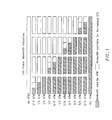
- FIG. 1 shows a diagram illustrating bandwidth allocation for an asynchronous transfer mode (ATM) cell framer in an embodiment according to the present invention.
- a temporal frame such as a synchronous optical network (SONET) frame which defines a synchronous payload envelope (SPE)
- SONET synchronous optical network
- SPE synchronous payload envelope
- STS-1 synchronous transport signal-level 1
- STS-3c concatenated synchronous transport signal-level 3
- STS-12c single concatenated synchronous transport signal-level 12
- ATM cells are assembled to form a broadband STS-n signal which is allocated to some or all of the SONET bandwidth portions for transporting the ATM cells, depending upon the size of ATM payload that need be carried within the SONET frame.
- ATM payload in the form of a broadband STS-n signal is allocated to the SONET bandwidth portions in increments of one bandwidth portion from 0 to 12.
- the shaded bandwidth portions as illustrated in FIG. 1 are allocated for transporting ATM cells in the form of a broadband STS-n signal, whereas the remaining bandwidth portions not allocated for transporting the ATM cells are used for transporting a conventional narrowband STS, for example, one or more narrowband STS-1 signals which are not used for carrying ATM data.
- the broadband STS for carrying the ATM payload within the SONET frame is a broadband STS-n signal, wherein n can be any integer between 0 and 12.
- the fraction of the SONET bandwidth allocated for carrying the ATM payload depends upon the number n of the broadband STS-n signal. For example, if 5/12 of the cell framer bandwidth of a SONET frame is allocated for carrying the ATM payload, then the ATM payload is transported in the form of a broadband STS which is defined as a broadband STS-5 signal. Similarly, if 5/6 of the cell framer bandwidth of a SONET frame is allocated for carrying the ATM payload, then the ATM payload is transported in the form of a broadband STS which is defined as a broadband STS-10 signal.
- the broadband STS-n signal for carrying ATM payload data within a SONET frame is formed as a combination of one or more broadband STS-1 or STS-3c signals, or as a single STS-12c signal for compatibility with standard STS formats.
- three broadband STS-1 signals are received as a single broadband STS-3c signal, which requires only one cell delineator in an ATM cell framer which will be described in detail below.
- Each broadband STS-1 signal which is not combinable with two other broadband STS-1 signals to form a single broadband STS-3c signal requires a separate cell delineator in the ATM cell framer.
- the broadband STS is received as a single STS-12c signal, which requires only one cell delineator in the ATM cell framer.
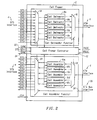
- FIG. 2 shows a block diagram of an embodiment of an ATM cell framer for delineating and assembling ATM cells to provide broadband STS-n signals with enhanced granularity according to the present invention.
- the cell framer 2 is capable of performing duplex functions of cell delineation and cell assembly between an STS interface 4 and an ATM physical layer interface 6.
- the cell delineation function is performed by five cell delineators 8a, 8b, 8c, 8d and 8e, while the cell assembly function is performed by five cell assemblers 10a, 10b, 10c, 10d and 10e.
- the ATM cell framer further comprises a cell framer controller 12 which is connected to the cell delineators 8a, 8b, .. 8e and the cell assemblers 10a, 10b, .. 10e.
- the cell framer controller 12 provides synchronization for the broadband STS-n signal which carries broadband ATM payload data within the SONET bandwidth.
- the cell framer controller 12 provides STS synchronization to the cell delineators 8a, 8b, .. 8e to extract ATM cells from a broadband STS-n signal received from the STS interface 4, and to the cell assemblers 10a, 10b, . . 10e to assemble ATM cells received from the ATM interface 6 to form a broadband STS-n signal.
- the ATM cell framer further comprises a cell delineator input multiplexer 14 having an STS-n input, which is shown as twelve broadband STS-1 inputs for receiving a broadband STS-n signal from the STS interface 4.
- the cell delineators 8a, 8b, .. 8e have a plurality of STS cell delineator inputs, a plurality of cell delineator framer control inputs and a plurality of cell delineator outputs.
- the cell delineator input multiplexer 14 has a plurality of outputs connected to the STS cell delineator inputs, respectively.
- each of the cell delineators After each of the cell delineators receives a broadband STS, it converts the serial STS data of the broadband STS into a parallel data format for header delineation, payload descrambling and error checking functions.
- the cell delineator framer control input of each of the cell delineators receives a synchronization signal from the cell framer controller 12 for synchronizing a frame counter in the cell delineator. An embodiment of the cell delineators will be described in further detail below with reference to FIG. 3.
- the ATM cell framer further comprises a cell delineator output multiplexer 16 in an embodiment to generate an output ATM data stream which is transmitted to the ATM physical layer interface 6.
- the cell delineator output multiplexer 16 has a plurality of inputs connected to the cell delineator outputs which transfer the ATM cells extracted by the cell delineators 8a, 8b, .. 8e from the broadband STS-n signal received from the STS interface 4.
- the cell assemblers 10a, 10b, . . 10e have a plurality of cell assemblers inputs, a plurality of cell assembler framer control inputs and a plurality of cell assembler outputs.
- the cell framer controller 12 is connected to the cell assembler framer control inputs of the cell assemblers 10a, 10b, .. 10e.
- the ATM cell framer according to the present invention further comprises a cell assembler input multiplexer 18 which has an input connected to the ATM physical layer interface 6 and a plurality of outputs connected to the cell assembler inputs.
- the cell assembler input multiplexer 18 receives an input ATM data stream comprising a plurality of ATM cells from the ATM physical layer interface 6 and transmits the ATM cells to one or more of the cell assemblers 10a, 10b, .. 10e, depending upon the number of bandwidth portions of the SONET frame allocated for transporting the broadband STS-n signal assembled by the cell assemblers.
- the ATM cell framer further comprises a cell assembler output multiplexer 20 having a plurality of inputs connected to the cell assembler outputs, respectively, and an STS output capable of outputting a broadband STS-n signal assembled by the cell assemblers 10a, 10b, .. 10e from the ATM cells received from the ATM physical layer interface 6.
- the STS output of the cell assembler output multiplexer 20 is shown in FIG. 2 as twelve STS-1 outputs connected to the STS interface 4.
- the broadband STS generated by each of the cell assemblers 10a, 10b, .. 10e is converted from a parallel data format into a serial STS data format.
- An embodiment of the cell assemblers will be described in further detail below with reference to FIG. 6.
- the cell framer controller 12 is also connected to the cell delineator input multiplexer 14, the cell delineator output multiplexer 16, the cell assembler input multiplexer 18 and the cell assembler output multiplexer 20 in an embodiment to provide frame synchronization for the STS-n signals as well as transmit and receive starter cell signals for the input and output ATM data streams.
- the cell framer controller has an STS synchronization input 22 which carries an STS synchronization signal for the STS-n signal received by the cell delineator input multiplexer 14 from the STS interface 4.
- a serial input STS-1[0:11] is provided to the cell framer controller 12 to indicate to the cell framer controller the amount of bandwidth portions of a SONET frame allocated for ATM traffic in the form of a broadband STS-n signal.
- the serial input STS-1[0:11] may be provided by the STS interface 4 which transmits the broadband STS-n signal to the cell delineator input multiplexer 14.
- the cell framer controller 12 audits incoming payload pointers of the received broadband STS to determine whether the STS is concatenated.
- the contents of the payload pointers determine the routing of the broadband STS and the number of cell delineators or cell assemblers utilized.
- the broadband STS-n signal for carrying ATM cells is capable of occupying the SONET bandwidth in small incremental portions.
- the SONET bandwidth is divided into twelve equal bandwidth portions, and the broadband STS-n signal for carrying ATM payload data may occupy any integral number of the twelve SONET bandwidth portions.
- the cell delineators 8a, 8b, . . 8e as shown in FIG. 2 comprise conventional cell delineators each only capable of delineating a broadband STS-1 signal, a broadband STS-3c signal, or a broadband STS-12c signal
- the STS-n signal received from the STS interface is regarded as a combination of one or more STS-1 signals or STS-3c signals. If the broadband STS received from the STS interface occupies the entire SONET bandwidth, it is regarded as a broadband STS-12c signal.
- one or more of the cell delineators in the cell framer as shown in FIG. 2 may be required to extract ATM payload data from the input STS-n signal.
- the broadband STS carrying ATM payload data occupies only 1/12 of the SONET bandwidth
- only one of the five cell delineators 8a, 8b, .. 8e in the cell framer as shown in FIG. 2 is required to extract ATM data from the broadband STS-1 signal occupying 1/12 of the SONET bandwidth.
- a broadband STS-2 signal for carrying ATM payload data occupies 1/6 of the SONET bandwidth
- two of the five cell delineators 8a, 8b, .. 8e in the cell framer as shown in FIG. 2 are required to delineate the STS-2 signal, which is regarded as a combination of two broadband STS-1 signals.
- the broadband STS occupies 1/4 of the SONET bandwidth, that is, three of the twelve SONET bandwidth portions for carrying ATM traffic
- the broadband STS is received as a single broadband STS-3c signal instead of three separate broadband STS-1 signals.
- a single broadband STS-3c signal requires only one cell delineator for extracting the ATM cells instead of three cell delineators.
- the broadband STS-4 signal is received as a combination of a single broadband STS-3c signal and a single broadband STS-1 signal. In this case, two of the five cell delineators 8a, 8b, .. 8e as shown in FIG. 2 are required for the cell delineation of the broadband STS-3c and the broadband STS-1.
- the broadband STS-5 signal is received as a combination of a single broadband STS-3c signal and two individual broadband STS-1 signals.
- three cell delineators are required for extracting the ATM cells from the broadband STS.
- One cell delineator is required for the cell delineation of the broadband STS-3c signal and two additional cell delineators are required for the cell delineation of the two individual broadband STS-1 signals.
- the broadband STS occupies 1/2 of the SONET bandwidth, that is, six of the twelve SONET bandwidth portions, the broadband STS-6 signal is received as a combination of two broadband STS-3c signals, which require two cell delineators to extract ATM cells from the broadband STS-3c signals.
- the broadband STS for carrying ATM traffic occupies 7/12 of the SONET bandwidth
- the broadband STS is received as a combination of two broadband STS-3c signals and one broadband STS-1 signal.
- three cell delineators are required for extracting the ATM cells from the broadband STS.
- Two cell delineators are required for the cell delineation of the two broadband STS-3c signals and one additional cell delineator is required for the cell delineation of the broadband STS-1 signal.
- broadband STS-8 signal is received as a combination of two broadband STS-3c signals and two broadband STS-1 signals. If the broadband STS for carrying ATM traffic occupies 3/4 of the SONET bandwidth, the broadband STS is received as a combination of three STS-3c signals which require three cell delineators for the extraction of ATM cells.
- the broadband STS-10 signal is received as a combination of three broadband STS-3c signals and a single broadband STS-1 signal.
- ATM cells are extracted from the broadband STS by using four cell delineators, three of which for delineating the three broadband STS-3c signals and one of which for delineating the broadband STS-1 signal.
- n is an integer in the range of 1 to 10 in increments of 1
- ATM cell delineation requires no more than four cell delineators if the broadband STS-n signal is received as one or more broadband STS-1 or STS-3c signals, or a combination thereof.
- the broadband STS for carrying ATM traffic occupies 11/12 of the SONET bandwidth, that is, eleven of the twelve SONET bandwidth portions, the broadband STS-11 signal is received as a combination of three broadband STS-3c signals and two broadband STS-1 signals.
- all of the five cell delineators 8a, 8b, .. 8e as shown in FIG. 2 are required for extracting the ATM cells from the broadband STS.
- the broadband STS for carrying ATM traffic occupies the entire SONET bandwidth, only one of the five cell delineators as shown in FIG. 2 is required for extracting ATM cells from the broadband STS, which is received as a single broadband STS-12c signal. Therefore, in an embodiment in which the integer n of the broadband STS-n signal is in the range of 1 to 12 with a granularity of one, no more than five cell delineators are required in the ATM cell framer.
- the cell framer controller 12 is also connected to the cell assembler output multiplexer 20 to synchronize the output broadband STS generated by the cell assemblers 10a, 10b, .. 10e.
- the cell framer controller 12 has an STS synchronization output 24 which carries a synchronization signal for the broadband STS transmitted to the STS interface 4.
- the cell assembler output multiplexer 20 further includes an additional input 26 for receiving a narrowband STS, for example, one or more narrowband STS-1 signals carrying no ATM traffic, from an STS bus interface 28.
- the cell assembler output multiplexer 20 is further capable of multiplexing the narrowband STS with the broadband STS assembled from the ATM cells by the cell assemblers 10a, 10b, .. 10e. If the broadband STS for carrying ATM traffic does not occupy the entire SONET bandwidth, the bandwidth not occupied by the broadband STS within a SONET frame is available for carrying conventional narrowband STS traffic.
- the cell framer controller 12 is also connected to the cell delineator output multiplexer 16, which receives the extracted ATM cells from the cell delineators 8a, 8b, .. 8e and transmits an ATM data stream to the ATM physical layer interface 6.
- a transmit starter cell signal TSOC is provided to the cell framer controller 12 which signifies to the cell delineator output multiplexer 16 to initiate the generation of the output ATM data stream.
- the cell framer controller 12 is also connected to the cell assembler input multiplexer 18, which receives an input ATM data stream from the ATM physical layer interface 6.
- a receive starter cell signal RSOC is provided to the cell framer controller 12, which signifies to the cell assembler input multiplexer 18 to transmit the ATM cells to one or more of the cell assemblers 10a, 10b, .. 10e depending upon the fraction of the SONET bandwidth required for carrying ATM traffic.
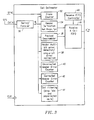
- FIG. 3 shows a block diagram of an embodiment of any given one of the cell delineators 8a, 8b, .. 8e in the cell framer of FIG. 2.
- a serial-to-parallel converter 30 is provided in the cell delineator to receive broadband STS data from the STS interface.
- the serial-to-parallel converter in each of the cell delineators is connected to receive the STS data from a respective one of the outputs of the cell delineator input multiplexer 14 as shown in FIG. 2.
- the serial-to-parallel converter 30 in the cell delineator as shown in FIG. 3 has a parallel 16-bit output which carries the STS data for the delineation of ATM cells.
- a frame counter 32 is provided in the cell delineator with an input for receiving the parallel STS data from the serial-to-parallel converter 30 and another input to receive an input STS synchronization signal SYNC from the cell framer controller 12 as shown in FIG. 2.
- the cell delineator further comprises a header delineator 34, an ATM payload descrambler 36, a header multi-bit error detector which is capable of single-bit error correction 38, an uncorrected header error counter 40, a corrected header error counter 42 and a cell filter 44 for dropping idle and uncorrected cells. Header error detection and correction for an ATM cell may be performed in a conventional manner and known to a person skilled in the art.
- the header delineator 34 performs header delineation for an ATM cell using a cell delineation algorithm which searches all fifty-three possible cell boundary candidates one at a time to determine the valid cell boundary location.
- a cell delineation technique will be described in further detail below with reference to the cell delineation state diagram of FIG. 4 and the header check sequence (HCS) verification state diagram of FIG. 5.
- the header field of the ATM cell is transferred to an output buffer 46.
- the output buffer 46 of the cell delineator comprises a receive first-in-first-out (FIFO) buffer memory which is controlled by a receive FIFO controller 48.
- the receive FIFO buffer memory 46 is capable of storing up to four ATM cells and generates an output ATM data stream which is transferred the ATM physical layer interface.
- the FIFO buffer memory of each of the cell delineators is connected to the cell delineator output multiplexer 16 as shown in FIG 2.
- the ATM payload descrambler 36 in the cell delineator receives parallel STS data from the serial-to-parallel converter 30 and descrambles the data to generate the payload bytes of an ATM cell.
- the ATM payload descrambler 36 comprises a self-synchronous descrambler which operates on a 48-octet ATM cell payload.
- the payload descrambler 36 descrambles the information field carrying the payload data using a polynomial x 43 + 1. Because the payload bytes follow the header bytes in a typical ATM cell, the ATM payload descrambler 36 is disabled for the duration of the header and HCS fields.
- the receive FIFO buffer memory 46 receives the delineated ATM cell header bytes from the header delineator 34 followed in sequence by the descrambled ATM payload bytes received from the payload descrambler 36 for a given ATM cell.
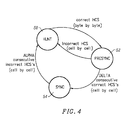
- FIG. 4 shows an embodiment of a cell delineation state diagram illustrating a delineation process performed by the cell delineator as shown in FIG. 3.
- Cell delineation is a process of framing the boundaries of an ATM cell by using the header check sequence (HCS) field found in the ATM cell header.
- HCS header check sequence
- CRC-8 cyclic redundancy code-8
- a cell delineation algorithm searches all of the fifty-three possible cell boundary candidates one at a time to determine the valid cell boundary location.
- the header delineator 34 is said to be in a HUNT state 50 as shown in FIG. 4.
- a state machine in the header delineator 34 locks on the cell boundary indicated by the HCS and the cell delineator enters a PRESYNC state 52.
- the PRESYNC state 52 validates the cell boundary location.
- the cell delineator If the cell boundary is invalid, then an incorrect HCS will be received within the next DELTA cells, at which point a transition back to the HUNT state 50 is executed. If no errors are detected within the HCS field when the cell delineator is in the PRESYNC state 52, the cell delineator then enters a SYNC state 54. While the cell delineator is in the SYNC state 54, synchronization is maintained until ALPHA consecutive incorrect HCS patterns are detected. In such an event, the cell delineator makes a transition back to the HUNT state 50.
- FIG. 5 shows an embodiment of an HCS verification state diagram for cell filtering when the cell delineator is in the SYNC state.
- ATM cells are filtered or dropped based upon HCS errors.
- ATM cells are passed to the receive FIFO buffer memory 46 as shown in FIG. 3 while the cell delineator is in the SYNC state.
- error checking for the HCS is enabled, ATM cells are dropped if uncorrectable HCS errors are detected.
- idle or unassigned cells are assumed to contain all zeroes in the fields for the virtual channel indicator (VCI) and the virtual path identifier (VPI).
- VCI virtual channel indicator
- VPN virtual path identifier
- idle or unassigned cells are dropped upon detecting all zeroes in the fields for the VCI and the VPI.
- the calculation process for the HCS includes a CRC-8 calculation over the first four octets of the ATM cell header.
- the HCS received by the header delineator is verified by using a polynomial x 8 + x 2 + x + 1.
- a coset polynomial x 6 + x 4 + x 2 + 1 is added (modulo 2) to the received HCS octets before comparison with the result of the CRC-8 calculation.
- an HCS verification circuit in the cell delineator implements the HCS verification state diagram as shown in FIG. 5 in an embodiment.
- the HCS verification state machine During normal operations, the HCS verification state machine remains in a correction mode state 56. Incoming ATM cells containing no HCS errors are passed to the receive FIFO buffer memory 46 as shown in FIG. 3. In an embodiment, incoming single-bit errors are corrected to generate a corrected ATM cell, which is passed to the receive FIFO buffer memory 46 in FIG. 3. Referring to FIG. 5, the HCS verification state machine enters a detection mode state 58 upon detecting an error, which could be either a single-bit error or a multi-bit error. While the HCS verification state machine is in the detection mode state 58, detection of any HCS error causes the corresponding ATM cell to be dropped. If the HCS verification state machine does not detect any error in the HCS, the cell delineator makes a transition back to the correction mode state 56.
- correctable HCS errors consisting of single-bit errors are detected while the HCS verification state machine is in the correction mode state 56.
- an 8-bit saturating counter counts the number of corrected single-bit HCS errors. The saturating counter is enabled only when the cell delineator is in the SYNC state and is reset to zero when read.
- the resulting ATM cell with corrected bits is passed to the receive FIFO buffer memory 46 as shown in FIG. 3 while the HCS verification state machine enters the detection mode state 58 as shown in FIG. 5.
- Single-bit errors detected in the correction mode state 56 must be corrected while still in the correction mode state.
- Single-bit HCS errors detected while the HCS verification state machine is in the detection mode state 58 become uncorrectable HCS errors. If multi-bit HCS errors are detected while the HCS verification state machine is in the correction mode state 56, the state machine also enters the detection mode state 58. If uncorrected single-bit HCS errors are detected while the state machine is in the detection mode state 58, an additional 8-bit saturating counter counts the number of uncorrected single-bit HCS errors in an embodiment. The saturating counter is enabled only when the cell delineator is in the SYNC state and is reset to zero when read.
- the receive FIFO buffer memory 46 in the cell delineator is capable of accommodating up to four ATM cells.
- the FIFO buffer memory 46 is controlled by the receive FIFO controller 48, which performs management functions such as filling the FIFO buffer memory 46 and indicating when ATM cells are available to be read.
- the receive FIFO controller 48 is also capable of maintaining FIFO read and write pointers and detecting FIFO overrun and underrun conditions.
- the FIFO buffer memory 46 drops all incoming cells until at least one of the ATM cells has been read from the FIFO buffer memory 46 by the ATM physical layer interface. In this situation, at least one ATM cell will be lost during the FIFO drop operation.
- the offending reading operation sought to be performed by the ATM physical layer interface is ignored by the FIFO buffer memory 46.
- a FIFO overrun condition is indicated through a maskable interrupt and register bit.
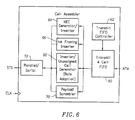
- FIG. 6 shows a block diagram of an embodiment of any given one of the cell assemblers 10a, 10b, .. 10e in the cell framer of FIG. 2.
- a cell assembler buffer 60 is provided in the cell assembler to receive ATM cells from the ATM physical layer interface.
- the cell assembler buffer 60 comprises a four-cell transmit FIFO buffer memory which is capable of storing up to four ATM cells.
- a transmit FIFO controller 62 is connected to the FIFO buffer memory 60 in the cell assembler.
- the FIFO buffer memory within each of the cell assemblers 10a, 10b, .. 10e is connected to the outputs of the cell assembler input multiplexer 18 as shown in FIG. 2.
- the transmit FIFO buffer memory 60 is connected to a header error check (HEC) generator/inserter 64, an H4 framing inserter 66, an idle/unassigned cell generator 68, and an ATM payload scrambler 70.
- HEC header error check
- the HEC generator/inserter 54 performs a CRC-8 calculation over the first four header octets of an ATM cell received from the FIFO buffer memory 60.
- a parallel implementation of the polynomial x 8 + x 2 + x + 1 is used in the CRC-8 calculation.
- the coset polynomial x 6 + x 4 + x 2 + 1 is added (modulo 2) to the residue of the CRC-8 calculation to generate a result which is inserted into the fifth octet of the ATM header.
- the H4 mapping specific indicator octet is inserted into the ATM cell stream in a conventional manner known to a person skilled in the art.
- the ATM payload scrambler 70 performs a scrambling operation on the 48-octet payload information field of an ATM cell while the ATM cell header field is transmitted and unscrambled. Payload scrambling may be performed on the payload data bytes of a typical ATM cell in a conventional manner known to a person skilled in the art.
- an idle or unassigned ATM cell is inserted into the ATM cell stream.
- registers are provided within the idle/unassigned cell generator 68 to program the fields for the generic flow control (GFC), the payload type identifier (PTI), and the cell loss priority (CLP) of the idle cell header and the idle cell payload.
- GFC generic flow control
- PTI payload type identifier
- CLP cell loss priority
- the cell assembler further comprises a parallel-to-serial converter 72 connected to the HEC generator/inserter 64, the H4 framing inserter 66, the idle/unassigned cell generator 68, and the ATM payload scrambler 70.
- the parallel-to-serial converter 72 converts scrambled ATM data into a serial STS data format for transmission to the STS interface.
- the parallel-to-serial converter in each of the cell assemblers 10a, 10b, .. 10e is connected to a respective one of the inputs of the cell assembler output multiplexer 20 as shown in FIG. 2.
- an idle or unassigned ATM cell is generated and transmitted by the idle/unassigned cell generator 68 to the parallel-to-serial converter 72 in the cell assembler if a complete ATM cell has not been received from the ATM physical layer interface and written to the transmit FIFO buffer memory 60.
- the transmit FIFO buffer memory 60 as shown in FIG. 6 is capable of accommodating up to four ATM cells received from the ATM physical layer interface.
- Management functions performed by the transmit FIFO controller 62 include filling the transmit FIFO buffer memory 60, indicating when ATM cells are available to be written to the FIFO buffer memory 60, maintaining the read and write pointers for the transmit FIFO buffer memory 60, and detecting an FIFO overrun condition.
- An FIFO overrun condition occurs when the ATM physical layer interface attempts to write an ATM cell into the FIFO buffer memory 60 when the buffer memory 60 already contains four ATM cells.
- a maskable interrupt is generated by the transmit FIFO controller 62 when the FIFO overrun condition occurs. Attempts for further writing operations by the ATM physical layer interface to the FIFO buffer memory 60 in the cell assembler are ignored until there is memory available in the FIFO buffer memory 60 to receive an ATM cell.
Landscapes
- Engineering & Computer Science (AREA)
- Computer Networks & Wireless Communication (AREA)
- Signal Processing (AREA)
- Data Exchanges In Wide-Area Networks (AREA)
Abstract
Description
Claims (60)
- A method of allocating bandwidth for transporting asynchronous transfer mode (ATM) cells as a synchronous transport signal-n (STS-n) in a temporal frame, the method comprising the steps of:(a) dividing the temporal frame into a plurality of bandwidth portions;(b) assigning a first number of the bandwidth portions for transporting the ATM cells; and(c) assigning a second number of the bandwidth portions for transporting a narrowband STS.
- The method of claim 1, wherein the temporal frame comprises a synchronous optical network (SONET) frame.
- The method of claim 1, wherein the temporal frame is divided into 12 equal bandwidth portions, wherein the first number is an integer, and wherein the second number is an integer.
- The method of claim 3, wherein the first integer is between 0 and 12.
- The method of claim 3, wherein the second integer is between 0 and 12.
- The method of claim 3, wherein the first integer plus the second integer is equal to 12.
- The method of claim 3, wherein a first ten of the bandwidth portions for transporting the ATM cells are delineated by four cell delineators, and wherein an eleventh bandwidth portion following the first ten bandwidth portions for transporting the ATM cells is delineated by a fifth cell delineator.
- The method of claim 1, wherein the ATM cells are carried within the temporal frame as at least one broadband STS.
- The method of claim 8, wherein the broadband STS is selected from the group consisting of STS-1, STS-3c and STS-12c.
- The method of claim 8, wherein the broadband STS comprises a broadband STS-n signal, wherein n is an integer between 1 and 12.
- The method of claim 8, further comprising the step of multiplexing the broadband STS with the narrowband STS within the temporal frame.
- A method of allocating bandwidth for transporting asynchronous transfer mode (ATM) cells as a synchronous transport signal-n (STS-n) in a synchronous optical network (SONET) frame, the method comprising the steps of:(a) assigning 12 equal bandwidth portions to the SONET frame;(b) assigning a first integral number of the bandwidth portions for transporting at least one broadband STS;(c) assigning a second integral number of the bandwidth portions for transporting at least one narrowband STS; and(d) delineating the ATM cells from said at least one broadband STS.
- The method of claim 12, wherein the first integral number is between 0 and 12.
- The method of claim 12, wherein the second integral number is between 0 and 12.
- The method of claim 12, wherein the first integral number plus the second integral number is equal to 12.
- The method of claim 12, wherein a first ten of the bandwidth portions for transporting the ATM cells are delineated by four cell delineators, and wherein an eleventh bandwidth portion following the first ten bandwidth portions for transporting the ATM cells is delineated by a fifth cell delineator.
- The method of claim 12, wherein the broadband STS is selected from the group consisting of STS-1, STS-3c and STS-12c.
- The method of claim 12, wherein the broadband STS comprises a broadband STS-n signal, wherein n is an integer between 1 and 12.
- The method of claim 12, further comprising the step of multiplexing said at least one broadband STS with said at least one narrowband STS within the SONET frame.
- A method of framing asynchronous transfer mode (ATM) cells as a synchronous transport signal-n (STS-n) for transport within a synchronous optical network (SONET) frame, the method comprising the steps of:(a) assigning 12 equal bandwidth portions to the SONET frame;(b) receiving the ATM cells;(c) assembling the ATM cells to form at least one broadband STS;(d) assigning a first integral number of the bandwidth portions for transporting said at least one broadband STS;(e) assigning a second integral number of the bandwidth portions for transporting at least one narrowband STS; and(f) multiplexing said at least one broadband STS with said at least one narrowband STS within the SONET frame.
- The method of claim 20, wherein the first integral number is between 0 and 12.
- The method of claim 20, wherein the second integral number is between 0 and 12.
- The method of claim 20, wherein the first integral number plus the second integral number is equal to 12.
- The method of claim 20, wherein a first ten of the bandwidth portions for transporting the ATM cells are delineated by four cell delineators, and wherein an eleventh bandwidth portion following the first ten bandwidth portions for transporting the ATM cells is delineated by a fifth cell delineator.
- The method of claim 20, wherein the broadband STS is selected from the group consisting of STS-1, STS-3c and STS-12c.
- The method of claim 20, wherein the broadband STS comprises a broadband STS-n signal, wherein n is an integer between 1 and 12.
- An asynchronous transfer mode (ATM) cell framer, comprising:(a) a plurality of cell delineators having a plurality of synchronous transport signal (STS) cell delineator inputs, a plurality of cell delineator framer control inputs and a plurality of cell delineator outputs capable of outputting a plurality of ATM cells;(b) a plurality of cell assemblers having a plurality of cell assembler inputs, a plurality of cell assembler framer control inputs and a plurality of cell assembler outputs; and(c) a cell framer controller, connected to the cell delineators and the cell assemblers, to provide synchronization to the cell delineators and to the cell assemblers.
- The cell framer of claim 27, further comprising a cell delineator output multiplexer connected to the cell delineator outputs, to generate an output ATM data stream comprising the ATM cells extracted from at least one broadband STS.
- The cell framer of claim 28, wherein each of the cell delineators comprises a cell delineator buffer connected to the cell delineator output multiplexer.
- The cell framer of claim 29, wherein the cell delineator buffer comprises a first-in-first-out (FIFO) buffer memory.
- The cell framer of claim 28, wherein the cell framer controller is connected to the cell delineator output multiplexer.
- The cell framer of claim 27, further comprising a cell assembler input multiplexer connected to the cell assembler inputs, the cell assembler input multiplexer capable of receiving an input ATM data stream comprising a plurality of ATM cells.
- The cell framer of claim 32, wherein each of the cell assemblers comprises a cell assembler buffer connected to the cell assembler input multiplexer.
- The cell framer of claim 33, wherein the cell assembler buffer comprises a first-in-first-out (FIFO) buffer memory.
- The cell framer of claim 32, wherein the cell framer controller is connected to the cell assembler input multiplexer.
- The cell framer of claim 27, further comprising a cell delineator input multiplexer having an STS-n input and a plurality of outputs connected to the cell delineator inputs respectively, wherein n is an integer between 1 and 12.
- The cell framer of claim 36, wherein each of the cell delineators comprises a serial-to-parallel converter connected to a respective one of the outputs of the cell delineator input multiplexer.
- The cell framer of claim 36, wherein the cell framer controller is connected to the cell delineator input multiplexer.
- The cell framer of claim 27, further comprising a cell assembler output multiplexer having a plurality of inputs connected to the outputs of the cell assemblers respectively, and an STS output capable of outputting at least one broadband STS assembled from the ATM cells.
- The cell framer of claim 39, wherein each of the cell assemblers comprises a parallel-to-serial converter connected to a respective one of the inputs of the cell assembler output multiplexer.
- The cell framer of claim 39, wherein the cell framer controller is connected to the cell assembler output multiplexer.
- The cell framer of claim 39, wherein the cell assembler output multiplexer further includes an additional input connected to receive a narrowband STS, the cell assembler output multiplexer capable of multiplexing the narrowband STS with the broadband STS assembled from the ATM cells.
- The cell framer of claim 27, wherein the cell delineators comprise five cell delineators, wherein each of the cell delineators is capable of delineating a broadband STS selected from the group consisting of an STS-1, an STS-3c and an STS-12c.
- An asynchronous transfer mode (ATM) cell framer, comprising:(a) five cell delineators having a plurality of cell delineator inputs, a plurality of cell delineator framer control inputs and a plurality of cell delineator outputs, the cell delineator inputs capable of receiving broadband synchronous transport signal-n (STS-n) signals, wherein n is an integer between 1 and 12, the cell delineator outputs capable of outputting a plurality of ATM cells;(b) five cell assemblers having a plurality of cell assembler inputs, a plurality of cell assembler framer control inputs and a plurality of cell assembler outputs; and(c) a cell framer controller, connected to the cell delineators and the cell assemblers, to provide synchronization to the cell delineators and to the cell assemblers.
- The cell framer of claim 44, further comprising a cell delineator output multiplexer connected to the cell delineator outputs, to generate an output ATM data stream comprising the ATM cells extracted from the broadband STS-n signals.
- The cell framer of claim 45, wherein each of the cell delineators comprises a cell delineator buffer connected to the cell delineator output multiplexer.
- The cell framer of claim 46, wherein the cell delineator buffer comprises a first-in-first-out (FIFO) buffer memory.
- The cell framer of claim 45, wherein the cell framer controller is connected to the cell delineator output multiplexer.
- The cell framer of claim 44, further comprising a cell assembler input multiplexer connected to the cell assembler inputs, the cell assembler input multiplexer capable of receiving an input ATM data stream comprising a plurality of ATM cells.
- The cell framer of claim 49, wherein each of the cell assemblers comprises a cell assembler buffer connected to the cell assembler input multiplexer.
- The cell framer of claim 50, wherein the cell assembler buffer comprises a first-in-first-out (FIFO) buffer memory.
- The cell framer of claim 49, wherein the cell framer controller is connected to the cell assembler input multiplexer.
- The cell framer of claim 44, further comprising a cell delineator input multiplexer having an STS-n input and a plurality of outputs connected to the cell delineator inputs respectively, wherein n is an integer between 1 and 12.
- The cell framer of claim 53, wherein each of the cell delineators comprises a serial-to-parallel converter connected to a respective one of the outputs of the cell delineator input multiplexer.
- The cell framer of claim 53, wherein the cell framer controller is connected to the cell delineator input multiplexer.
- The cell framer of claim 44, further comprising a cell assembler output multiplexer having a plurality of inputs connected to the outputs of the cell assemblers respectively, and an STS output capable of outputting at least one broadband STS assembled from the ATM cells.
- The cell framer of claim 56, wherein each of the cell assemblers comprises a parallel-to-serial converter connected to a respective one of the inputs of the cell assembler output multiplexer.
- The cell framer of claim 56, wherein the cell framer controller is connected to the cell assembler output multiplexer.
- The cell framer of claim 56, wherein the cell assembler output multiplexer further includes an additional input connected to receive a narrowband STS, the cell assembler output multiplexer capable of multiplexing the narrowband STS with the broadband STS assembled from the ATM cells.
- The cell framer of claim 44, wherein each of the cell delineators is capable of delineating a broadband STS selected from the group consisting of an STS-1, an STS-3c and an STS-12c.
Applications Claiming Priority (2)
| Application Number | Priority Date | Filing Date | Title |
|---|---|---|---|
| US469569 | 1999-12-22 | ||
| US09/469,569 US6721336B1 (en) | 1999-12-22 | 1999-12-22 | STS-n with enhanced granularity |
Publications (3)
| Publication Number | Publication Date |
|---|---|
| EP1111827A2 true EP1111827A2 (en) | 2001-06-27 |
| EP1111827A3 EP1111827A3 (en) | 2005-10-12 |
| EP1111827B1 EP1111827B1 (en) | 2011-07-27 |
Family
ID=23864268
Family Applications (1)
| Application Number | Title | Priority Date | Filing Date |
|---|---|---|---|
| EP00127919A Expired - Lifetime EP1111827B1 (en) | 1999-12-22 | 2000-12-20 | STS-n with enhanced granularity |
Country Status (3)
| Country | Link |
|---|---|
| US (1) | US6721336B1 (en) |
| EP (1) | EP1111827B1 (en) |
| AT (1) | ATE518320T1 (en) |
Cited By (1)
| Publication number | Priority date | Publication date | Assignee | Title |
|---|---|---|---|---|
| FR2827452A1 (en) * | 2001-07-16 | 2003-01-17 | Nortel Networks Ltd | Heterogeneous stream multiplexed time transmissions having successive frames with unit inserting/synchronizing ATM cells allocated time intervals and other digital words allocated/synchronized different time intervals. |
Families Citing this family (8)
| Publication number | Priority date | Publication date | Assignee | Title |
|---|---|---|---|---|
| JP3681587B2 (en) * | 1999-10-07 | 2005-08-10 | 三菱電機株式会社 | Cell disassembling apparatus, cell disassembling method, and computer-readable recording medium recording a program for causing computer to execute the method |
| US20010030971A1 (en) * | 2000-01-05 | 2001-10-18 | Moody Francis A. | Parallel interconnect implemented with hardware |
| JP3516634B2 (en) * | 2000-05-30 | 2004-04-05 | 日本電気株式会社 | Circuit emulation device and multiplexing method in circuit emulation device |
| US7227844B1 (en) * | 2001-02-21 | 2007-06-05 | Cisco Technology, Inc. | Non-standard concatenation mapping for payloads |
| US6970436B2 (en) * | 2001-05-03 | 2005-11-29 | Lg Electronics Inc. | Apparatus for monitoring asynchronous transfer mode cells in communication systems |
| TW548915B (en) * | 2001-09-11 | 2003-08-21 | Macronix Int Co Ltd | Transmission convergence layer circuit of receiver for asynchronous transmission and its operation method |
| US7088722B1 (en) * | 2002-03-28 | 2006-08-08 | Cisco Technology, Inc. | Method and system for controlling flow of multiplexed data |
| US7484160B2 (en) * | 2005-03-04 | 2009-01-27 | Tellabs Operations, Inc. | Systems and methods for delineating a cell in a communications network |
Citations (4)
| Publication number | Priority date | Publication date | Assignee | Title |
|---|---|---|---|---|
| US3988545A (en) | 1974-05-17 | 1976-10-26 | International Business Machines Corporation | Method of transmitting information and multiplexing device for executing the method |
| US5568486A (en) | 1994-05-30 | 1996-10-22 | Pmc-Sierra, Inc. | Integrated user network interface device |
| WO1997018649A1 (en) | 1995-11-14 | 1997-05-22 | Dsc Communications Corporation | Method and apparatus for multiplexing tdm and atm signals over a communications link |
| EP0874530A1 (en) | 1997-04-22 | 1998-10-28 | AT&T Corp. | Serial data transmission of variable length mini packets using statistical multiplexing |
Family Cites Families (15)
| Publication number | Priority date | Publication date | Assignee | Title |
|---|---|---|---|---|
| US5365510A (en) | 1992-04-09 | 1994-11-15 | Northern Telecom Limited | Communications system with a single protection loop |
| CA2093997C (en) | 1992-04-15 | 1997-04-08 | Yoshihide Kuroda | Compact device for carrying out terminating processing of sts-n signal |
| US5436890A (en) * | 1993-12-30 | 1995-07-25 | Dsc Communications Corporation | Integrated multi-rate cross-connect system |
| US5675580A (en) * | 1993-12-30 | 1997-10-07 | Dsc Communications Corporation | Processor device for terminating and creating synchronous transport signals |
| CA2120542C (en) * | 1994-04-05 | 2003-07-08 | Tom Gray | Cell relay transport mechanism |
| US5548534A (en) | 1994-07-08 | 1996-08-20 | Transwitch Corporation | Two stage clock dejitter circuit for regenerating an E4 telecommunications signal from the data component of an STS-3C signal |
| US5490142A (en) * | 1994-09-30 | 1996-02-06 | Alcatel Network Systems, Inc. | VT group optical extension interface and VT group optical extension format method |
| US5796795A (en) | 1994-11-30 | 1998-08-18 | Gte Laboratories Incorporated | Data transferring circuit which aligns clock and data |
| US5923653A (en) * | 1995-04-21 | 1999-07-13 | Tektronix, Inc. | SONET/SDH receiver processor |
| US5619498A (en) | 1995-08-08 | 1997-04-08 | Broadband Technologies, Inc. | Flag field-based routing mechanism for fiber optic telecommunication system employing STS-based transmission format containing asynchronous transfer mode cells |
| US5917827A (en) | 1996-05-15 | 1999-06-29 | Alcatel Usa Sourcing, L.P. | Multiple rate network interface and method |
| US6069876A (en) * | 1997-02-13 | 2000-05-30 | Nortel Networks Corporation | Performance monitoring of an ATM Network |
| US6169749B1 (en) * | 1997-12-18 | 2001-01-02 | Alcatel Usa Sourcing L.P. | Method of sequencing time division multiplex (TDM) cells in a synchronous optical network (sonet) frame |
| US6310891B1 (en) * | 1997-12-18 | 2001-10-30 | Alcatel Usa Sourcing, L.P. | Method of scheduling time division multiplex (TDM) cells in a synchronous optical network (SONET) frame |
| US6396853B1 (en) * | 1998-05-28 | 2002-05-28 | Nortel Networks Limited | Providing data services to telecommunications user terminals |
-
1999
- 1999-12-22 US US09/469,569 patent/US6721336B1/en not_active Expired - Lifetime
-
2000
- 2000-12-20 EP EP00127919A patent/EP1111827B1/en not_active Expired - Lifetime
- 2000-12-20 AT AT00127919T patent/ATE518320T1/en not_active IP Right Cessation
Patent Citations (4)
| Publication number | Priority date | Publication date | Assignee | Title |
|---|---|---|---|---|
| US3988545A (en) | 1974-05-17 | 1976-10-26 | International Business Machines Corporation | Method of transmitting information and multiplexing device for executing the method |
| US5568486A (en) | 1994-05-30 | 1996-10-22 | Pmc-Sierra, Inc. | Integrated user network interface device |
| WO1997018649A1 (en) | 1995-11-14 | 1997-05-22 | Dsc Communications Corporation | Method and apparatus for multiplexing tdm and atm signals over a communications link |
| EP0874530A1 (en) | 1997-04-22 | 1998-10-28 | AT&T Corp. | Serial data transmission of variable length mini packets using statistical multiplexing |
Cited By (3)
| Publication number | Priority date | Publication date | Assignee | Title |
|---|---|---|---|---|
| FR2827452A1 (en) * | 2001-07-16 | 2003-01-17 | Nortel Networks Ltd | Heterogeneous stream multiplexed time transmissions having successive frames with unit inserting/synchronizing ATM cells allocated time intervals and other digital words allocated/synchronized different time intervals. |
| EP1278392A1 (en) * | 2001-07-16 | 2003-01-22 | Nortel Networks Limited | Method of communication of the ATM flow and relay to carry out the method |
| US7167465B2 (en) | 2001-07-16 | 2007-01-23 | Nortel Networks Limited | Method for ATM flow communication, and relay for implementing the method |
Also Published As
| Publication number | Publication date |
|---|---|
| EP1111827A3 (en) | 2005-10-12 |
| ATE518320T1 (en) | 2011-08-15 |
| EP1111827B1 (en) | 2011-07-27 |
| US6721336B1 (en) | 2004-04-13 |
Similar Documents
| Publication | Publication Date | Title |
|---|---|---|
| US5568486A (en) | Integrated user network interface device | |
| US6631130B1 (en) | Method and apparatus for switching ATM, TDM, and packet data through a single communications switch while maintaining TDM timing | |
| US6765928B1 (en) | Method and apparatus for transceiving multiple services data simultaneously over SONET/SDH | |
| US6646983B1 (en) | Network switch which supports TDM, ATM, and variable length packet traffic and includes automatic fault/congestion correction | |
| EP2271128B1 (en) | Payload mapping in synchronous networks | |
| US7035294B2 (en) | Backplane bus | |
| US20090141719A1 (en) | Transmitting data through commuincation switch | |
| US6151320A (en) | Apparatus and method for identifying boundary of asynchronous transfer mode cell | |
| US6636515B1 (en) | Method for switching ATM, TDM, and packet data through a single communications switch | |
| US7061935B1 (en) | Method and apparatus for arbitrating bandwidth in a communications switch | |
| EP1344355B1 (en) | Methods and apparatus for switching atm, tdm, and packet data through a single communications switch | |
| JP3765899B2 (en) | Transmission equipment | |
| US6721336B1 (en) | STS-n with enhanced granularity | |
| EP1142241B1 (en) | Communications system and associated deskewing methods | |
| US6636511B1 (en) | Method of multicasting data through a communications switch | |
| WO2000036874A1 (en) | Communications system with symmetrical interfaces and associated methods | |
| EP1142242B1 (en) | Communications system and associated deskewing methods | |
| JP3245333B2 (en) | Phase jump prevention method for CBR signal | |
| JP3707536B2 (en) | Communication system with out-of-band control and related method | |
| KR970002714B1 (en) | Atm physical layer subscriber access processor | |
| JP2690627B2 (en) | Asynchronous data transmission method |
Legal Events
| Date | Code | Title | Description |
|---|---|---|---|
| PUAI | Public reference made under article 153(3) epc to a published international application that has entered the european phase |
Free format text: ORIGINAL CODE: 0009012 |
|
| AK | Designated contracting states |
Kind code of ref document: A2 Designated state(s): AT BE CH CY DE DK ES FI FR GB GR IE IT LI LU MC NL PT SE TR |
|
| AX | Request for extension of the european patent |
Free format text: AL;LT;LV;MK;RO;SI |
|
| PUAL | Search report despatched |
Free format text: ORIGINAL CODE: 0009013 |
|
| AK | Designated contracting states |
Kind code of ref document: A3 Designated state(s): AT BE CH CY DE DK ES FI FR GB GR IE IT LI LU MC NL PT SE TR |
|
| AX | Request for extension of the european patent |
Extension state: AL LT LV MK RO SI |
|
| 17P | Request for examination filed |
Effective date: 20060404 |
|
| AKX | Designation fees paid |
Designated state(s): AT BE CH CY DE DK ES FI FR GB GR IE IT LI LU MC NL PT SE TR |
|
| 17Q | First examination report despatched |
Effective date: 20060630 |
|
| GRAP | Despatch of communication of intention to grant a patent |
Free format text: ORIGINAL CODE: EPIDOSNIGR1 |
|
| GRAS | Grant fee paid |
Free format text: ORIGINAL CODE: EPIDOSNIGR3 |
|
| GRAA | (expected) grant |
Free format text: ORIGINAL CODE: 0009210 |
|
| RAP1 | Party data changed (applicant data changed or rights of an application transferred) |
Owner name: ALCATEL LUCENT |
|
| AK | Designated contracting states |
Kind code of ref document: B1 Designated state(s): AT BE CH CY DE DK ES FI FR GB GR IE IT LI LU MC NL PT SE TR |
|
| REG | Reference to a national code |
Ref country code: GB Ref legal event code: FG4D |
|
| REG | Reference to a national code |
Ref country code: CH Ref legal event code: EP |
|
| REG | Reference to a national code |
Ref country code: DE Ref legal event code: R096 Ref document number: 60046257 Country of ref document: DE Effective date: 20110915 |
|
| REG | Reference to a national code |
Ref country code: NL Ref legal event code: VDEP Effective date: 20110727 |
|
| REG | Reference to a national code |
Ref country code: AT Ref legal event code: MK05 Ref document number: 518320 Country of ref document: AT Kind code of ref document: T Effective date: 20110727 |
|
| PG25 | Lapsed in a contracting state [announced via postgrant information from national office to epo] |
Ref country code: NL Free format text: LAPSE BECAUSE OF FAILURE TO SUBMIT A TRANSLATION OF THE DESCRIPTION OR TO PAY THE FEE WITHIN THE PRESCRIBED TIME-LIMIT Effective date: 20110727 Ref country code: PT Free format text: LAPSE BECAUSE OF FAILURE TO SUBMIT A TRANSLATION OF THE DESCRIPTION OR TO PAY THE FEE WITHIN THE PRESCRIBED TIME-LIMIT Effective date: 20111128 Ref country code: SE Free format text: LAPSE BECAUSE OF FAILURE TO SUBMIT A TRANSLATION OF THE DESCRIPTION OR TO PAY THE FEE WITHIN THE PRESCRIBED TIME-LIMIT Effective date: 20110727 Ref country code: FI Free format text: LAPSE BECAUSE OF FAILURE TO SUBMIT A TRANSLATION OF THE DESCRIPTION OR TO PAY THE FEE WITHIN THE PRESCRIBED TIME-LIMIT Effective date: 20110727 Ref country code: BE Free format text: LAPSE BECAUSE OF FAILURE TO SUBMIT A TRANSLATION OF THE DESCRIPTION OR TO PAY THE FEE WITHIN THE PRESCRIBED TIME-LIMIT Effective date: 20110727 |
|
| PG25 | Lapsed in a contracting state [announced via postgrant information from national office to epo] |
Ref country code: AT Free format text: LAPSE BECAUSE OF FAILURE TO SUBMIT A TRANSLATION OF THE DESCRIPTION OR TO PAY THE FEE WITHIN THE PRESCRIBED TIME-LIMIT Effective date: 20110727 Ref country code: GR Free format text: LAPSE BECAUSE OF FAILURE TO SUBMIT A TRANSLATION OF THE DESCRIPTION OR TO PAY THE FEE WITHIN THE PRESCRIBED TIME-LIMIT Effective date: 20111028 Ref country code: CY Free format text: LAPSE BECAUSE OF FAILURE TO SUBMIT A TRANSLATION OF THE DESCRIPTION OR TO PAY THE FEE WITHIN THE PRESCRIBED TIME-LIMIT Effective date: 20110727 |
|
| PG25 | Lapsed in a contracting state [announced via postgrant information from national office to epo] |
Ref country code: IT Free format text: LAPSE BECAUSE OF FAILURE TO SUBMIT A TRANSLATION OF THE DESCRIPTION OR TO PAY THE FEE WITHIN THE PRESCRIBED TIME-LIMIT Effective date: 20110727 |
|
| PLBE | No opposition filed within time limit |
Free format text: ORIGINAL CODE: 0009261 |
|
| STAA | Information on the status of an ep patent application or granted ep patent |
Free format text: STATUS: NO OPPOSITION FILED WITHIN TIME LIMIT |
|
| PG25 | Lapsed in a contracting state [announced via postgrant information from national office to epo] |
Ref country code: DK Free format text: LAPSE BECAUSE OF FAILURE TO SUBMIT A TRANSLATION OF THE DESCRIPTION OR TO PAY THE FEE WITHIN THE PRESCRIBED TIME-LIMIT Effective date: 20110727 |
|
| 26N | No opposition filed |
Effective date: 20120502 |
|
| PG25 | Lapsed in a contracting state [announced via postgrant information from national office to epo] |
Ref country code: MC Free format text: LAPSE BECAUSE OF NON-PAYMENT OF DUE FEES Effective date: 20111231 |
|
| REG | Reference to a national code |
Ref country code: CH Ref legal event code: PL |
|
| REG | Reference to a national code |
Ref country code: DE Ref legal event code: R097 Ref document number: 60046257 Country of ref document: DE Effective date: 20120502 |
|
| REG | Reference to a national code |
Ref country code: IE Ref legal event code: MM4A |
|
| PG25 | Lapsed in a contracting state [announced via postgrant information from national office to epo] |
Ref country code: LI Free format text: LAPSE BECAUSE OF NON-PAYMENT OF DUE FEES Effective date: 20111231 Ref country code: CH Free format text: LAPSE BECAUSE OF NON-PAYMENT OF DUE FEES Effective date: 20111231 Ref country code: IE Free format text: LAPSE BECAUSE OF NON-PAYMENT OF DUE FEES Effective date: 20111220 |
|
| PG25 | Lapsed in a contracting state [announced via postgrant information from national office to epo] |
Ref country code: ES Free format text: LAPSE BECAUSE OF FAILURE TO SUBMIT A TRANSLATION OF THE DESCRIPTION OR TO PAY THE FEE WITHIN THE PRESCRIBED TIME-LIMIT Effective date: 20111107 |
|
| PG25 | Lapsed in a contracting state [announced via postgrant information from national office to epo] |
Ref country code: LU Free format text: LAPSE BECAUSE OF NON-PAYMENT OF DUE FEES Effective date: 20111220 |
|
| PG25 | Lapsed in a contracting state [announced via postgrant information from national office to epo] |
Ref country code: TR Free format text: LAPSE BECAUSE OF FAILURE TO SUBMIT A TRANSLATION OF THE DESCRIPTION OR TO PAY THE FEE WITHIN THE PRESCRIBED TIME-LIMIT Effective date: 20110727 |
|
| REG | Reference to a national code |
Ref country code: GB Ref legal event code: 732E Free format text: REGISTERED BETWEEN 20130926 AND 20131002 |
|
| REG | Reference to a national code |
Ref country code: FR Ref legal event code: GC Effective date: 20131018 |
|
| REG | Reference to a national code |
Ref country code: FR Ref legal event code: RG Effective date: 20141016 |
|
| REG | Reference to a national code |
Ref country code: FR Ref legal event code: PLFP Year of fee payment: 16 |
|
| REG | Reference to a national code |
Ref country code: FR Ref legal event code: PLFP Year of fee payment: 17 |
|
| REG | Reference to a national code |
Ref country code: FR Ref legal event code: PLFP Year of fee payment: 18 |
|
| PGFP | Annual fee paid to national office [announced via postgrant information from national office to epo] |
Ref country code: FR Payment date: 20171221 Year of fee payment: 18 Ref country code: DE Payment date: 20171211 Year of fee payment: 18 |
|
| PGFP | Annual fee paid to national office [announced via postgrant information from national office to epo] |
Ref country code: GB Payment date: 20171221 Year of fee payment: 18 |
|
| REG | Reference to a national code |
Ref country code: DE Ref legal event code: R119 Ref document number: 60046257 Country of ref document: DE |
|
| GBPC | Gb: european patent ceased through non-payment of renewal fee |
Effective date: 20181220 |
|
| PG25 | Lapsed in a contracting state [announced via postgrant information from national office to epo] |
Ref country code: FR Free format text: LAPSE BECAUSE OF NON-PAYMENT OF DUE FEES Effective date: 20181231 Ref country code: DE Free format text: LAPSE BECAUSE OF NON-PAYMENT OF DUE FEES Effective date: 20190702 |
|
| PG25 | Lapsed in a contracting state [announced via postgrant information from national office to epo] |
Ref country code: GB Free format text: LAPSE BECAUSE OF NON-PAYMENT OF DUE FEES Effective date: 20181220 |