EP1109408A2 - Transkodierung für Datenkommunikation - Google Patents
Transkodierung für Datenkommunikation Download PDFInfo
- Publication number
- EP1109408A2 EP1109408A2 EP00123098A EP00123098A EP1109408A2 EP 1109408 A2 EP1109408 A2 EP 1109408A2 EP 00123098 A EP00123098 A EP 00123098A EP 00123098 A EP00123098 A EP 00123098A EP 1109408 A2 EP1109408 A2 EP 1109408A2
- Authority
- EP
- European Patent Office
- Prior art keywords
- field
- message
- data
- code
- modified
- Prior art date
- Legal status (The legal status is an assumption and is not a legal conclusion. Google has not performed a legal analysis and makes no representation as to the accuracy of the status listed.)
- Ceased
Links
Images



Classifications
-
- H—ELECTRICITY
- H04—ELECTRIC COMMUNICATION TECHNIQUE
- H04L—TRANSMISSION OF DIGITAL INFORMATION, e.g. TELEGRAPHIC COMMUNICATION
- H04L9/00—Cryptographic mechanisms or cryptographic arrangements for secret or secure communications; Network security protocols
- H04L9/32—Cryptographic mechanisms or cryptographic arrangements for secret or secure communications; Network security protocols including means for verifying the identity or authority of a user of the system or for message authentication, e.g. authorization, entity authentication, data integrity or data verification, non-repudiation, key authentication or verification of credentials
- H04L9/3236—Cryptographic mechanisms or cryptographic arrangements for secret or secure communications; Network security protocols including means for verifying the identity or authority of a user of the system or for message authentication, e.g. authorization, entity authentication, data integrity or data verification, non-repudiation, key authentication or verification of credentials using cryptographic hash functions
-
- H—ELECTRICITY
- H03—ELECTRONIC CIRCUITRY
- H03M—CODING; DECODING; CODE CONVERSION IN GENERAL
- H03M7/00—Conversion of a code where information is represented by a given sequence or number of digits to a code where the same, similar or subset of information is represented by a different sequence or number of digits
- H03M7/14—Conversion to or from non-weighted codes
-
- H—ELECTRICITY
- H04—ELECTRIC COMMUNICATION TECHNIQUE
- H04N—PICTORIAL COMMUNICATION, e.g. TELEVISION
- H04N19/00—Methods or arrangements for coding, decoding, compressing or decompressing digital video signals
- H04N19/40—Methods or arrangements for coding, decoding, compressing or decompressing digital video signals using video transcoding, i.e. partial or full decoding of a coded input stream followed by re-encoding of the decoded output stream
-
- H—ELECTRICITY
- H04—ELECTRIC COMMUNICATION TECHNIQUE
- H04L—TRANSMISSION OF DIGITAL INFORMATION, e.g. TELEGRAPHIC COMMUNICATION
- H04L2209/00—Additional information or applications relating to cryptographic mechanisms or cryptographic arrangements for secret or secure communication H04L9/00
- H04L2209/30—Compression, e.g. Merkle-Damgard construction
-
- H—ELECTRICITY
- H04—ELECTRIC COMMUNICATION TECHNIQUE
- H04L—TRANSMISSION OF DIGITAL INFORMATION, e.g. TELEGRAPHIC COMMUNICATION
- H04L2209/00—Additional information or applications relating to cryptographic mechanisms or cryptographic arrangements for secret or secure communication H04L9/00
- H04L2209/60—Digital content management, e.g. content distribution
-
- H—ELECTRICITY
- H04—ELECTRIC COMMUNICATION TECHNIQUE
- H04L—TRANSMISSION OF DIGITAL INFORMATION, e.g. TELEGRAPHIC COMMUNICATION
- H04L2209/00—Additional information or applications relating to cryptographic mechanisms or cryptographic arrangements for secret or secure communication H04L9/00
- H04L2209/80—Wireless
Definitions
- This invention relates generally to transcoding in data communications systems. More particularly, embodiments of the invention provide transcoders and transcoding methods, and apparatus and methods for use with or incorporating such transcoding systems.
- Data access and manipulation devices proliferate in many different forms, with widely varying input, output and processing capabilities. This creates difficulties in providing general purpose access to centralized processing and database systems, since such a large range of devices must be accommodated.
- centralized systems are primarily designed to be accessed by powerful devices such as PCs which have sophisticated processing and I/O capabilities compared to many data manipulation devices currently in use.
- portable devices such as small, hand-held computing devices, pagers and mobile phones.
- transcoders processes generically formatted data content in a message received from a source device such as a server to produce a device-specific data message adapted to the capabilities of the intended destination device.
- source device such as a server
- device-specific data message adapted to the capabilities of the intended destination device.
- Common tasks that a transcoder might perform include the removal of non-essential data, conversion between different data formats, data compression or decompression, and general processing of data content to simplify the resulting message.
- transcoder operations can be categorized as one of three main types of operation, namely: omitting data, whereby certain data is removed from the received message; maintaining data, whereby certain data in the received message is maintained without change; or modifying data, whereby certain data in the received message is changed in some way, eg. by altering the existing data through processing, or replacing the existing data with new data.
- the "message" on which the transcoder operates may be any type of data communication to be delivered from a source device to a destination device, from a simple document to a complex communication with textual, graphics, audio or visual content.
- a transcoder may generate View 1 as follows:
- a method of transcoding a data message comprising a plurality of data fields and an authentication code, to produce a transcoded message for transmission to a destination device, the data message being received from a source device wherein said data fields have been coded in accordance with a first coding system, whereby respective data field codes are generated for said data fields and a message code is derived from said data field codes, and wherein said message code has been coded in accordance with a second coding system to generate said authentication code, the method comprising:
- transcoding methods embodying the present invention therefore, on receipt of a data message as defined above, it is determined in the usual way whether to maintain, modify or omit each data field of the received message, and the transcoded message is produced accordingly.
- a field to be omitted is replaced by an omitted field code in the transcoded message
- a field to be modified is replaced in the transcoded message by a modified field comprising the modified data and a modified field code.
- Generation of an omitted or modified field code involves at least the step of coding the original field in accordance with said first coding system, whereby the resulting omitted or modified field code is dependent on the data field code for that field.
- the resulting transcoded message comprises maintained data fields, omitted field codes, modified fields and the authentication code from the received message. Since the omitted and modified field codes are dependent on the original data field codes generated by the source device, a destination device to which the first coding system is known can derive from the transcoded message all the information it needs to regenerate the message code. Assuming the second coding system is also known to the destination device, the destination device can then verify that the message code derived from the transcoded message corresponds to the message code encoded in the authentication code by the source device. Thus, with transcoding methods embodying the invention, sufficient information is included in the transcoded message to enable an appropriately preconfigured destination device to regenerate and verify the message code against the message code authenticated by the source device.
- the transcoding system is such that the destination device can identify the nature of the transcoding operations performed on the original message, and this information can be used to further advantage by the destination device, for example by displaying this information to the user.
- Embodiments of the invention therefore provide an efficient and practical system giving a high degree of verifiability of transcoder operation.
- the omitted field code for a field is simply the data field code for that field, at least for some instances of a field to be omitted.
- the omitted field code is otherwise related to the data field code, for example by further processing the data field code in some way to obtain an omitted field code from which the data field code can be derived by the destination device.
- derivation of the message code in the source device involves coding the data field codes for predetermined groups of fields to generate respective group codes
- a field to be omitted if all fields in the corresponding group are to be omitted, then the omitted field code comprises the group code for that group, and the group of fields is replaced by said group code in the transcoded message; and if less than all fields in the corresponding group are to be omitted, then the omitted field code comprises the data field code for that field.
- the data field codes may be hash values calculated from the original data fields, and a "hash tree" may be calculated over these data field codes such that the aforementioned group codes are the hash values of parent nodes of the hash tree. This will be described in more detail below.
- the modified field code for a field could simply be the data field code for the received field.
- the modified field code is obtained by generating the data field code for the received field, coding the modified data in accordance with the first coding system to generate a modified data code, and representing the difference between that data field code and modified data code in the modified field code.
- the modified field code may represent the aforementioned difference in a number of ways. For example, the modified data code may simply be subtracted from the data field code to generate the modified field code. Alternatively, for example, an exclusive-OR operation may be applied to the data field code and modified data code to generate the modified field code.
- the destination device can regenerate the data field code from the modified data and the modified field code.
- Making the modified field code dependent on both the data field code and the modified data in the modified field provides an additional level of security, since malicious replacement of the modified data after the transcoding process would result in an erroneous data field code being derived at the destination device, and hence failure of the authentication process.
- the present invention also provides a method of processing a data message, comprising a plurality of data fields and an authentication code, received from a source device wherein said data fields have been coded in accordance with a first coding system, whereby respective data field codes are generated for said data fields and a message code is derived from said data field codes, and wherein said message code has been coded in accordance with a second coding system to generate said authentication code, the method comprising transcoding the received data message by a transcoding method as described above, transmitting the transcoded message to the destination device, and, in said destination device: deriving a received message code from the transcoded message using maintained fields, modified fields and omitted field codes in said message in accordance with said first coding system; comparing the received message code with the message code encoded in said authentication code in accordance with said second coding system; and displaying a user message dependent upon the result of the message code comparison.
- the resulting user message could simply indicate that the received message was invalid, and not display the message itself.
- the relevant content of the transcoded message ie. at least the maintained data fields and modified data
- the user message may also explicitly indicate that the message has been authenticated.
- the user message includes transcode indicators indicative of the location in the displayed message of fields omitted or modified in the transcoding process. This allows the user to make a personal assessment of whether the message should be relied upon.
- the destination device provision can be made for the destination device to request omitted fields, or the original content of modified fields, from the transcoder in response to a user input. These original fields can then be displayed to the user.
- a further aspect of the present invention provides a transcoder for transcoding a data message, comprising a plurality of data fields and an authentication code, to produce a transcoded message for transmission to a destination device, the data message being received from a source device wherein said data fields have been coded in accordance with a first coding system, whereby respective data field codes are generated for said data fields and a message code is derived from said data field codes, and wherein said message code has been coded in accordance with a second coding system to generate said authentication code
- the transcoder comprising:
- Another aspect of the present invention provides a destination device for receiving a transcoded message from a transcoder as defined above, the device comprising a memory for storing a received transcoded message, a display, and control logic configured to:
- the invention further extends to a data delivery system comprising such a transcoder and one or more such destination devices. Moreover, the invention extends to a data communication system comprising such a data delivery system and a source device for generating a data message for transmission to a said destination device, the source device comprising message processing logic configured to:
- the message code could be derived in various ways from the field codes depending on the particular nature of the first coding system employed.
- the message code could be obtained by processing one or selected field codes, but preferably all field codes are used in derivation of the message code for the sake of security. While the message code could simply be the group of field codes collectively, in preferred embodiments the field codes are further processed to generate the message code.
- various encryption algorithms might be employed as said second coding system, a signing function can conveniently be used here.
- Figure 1 shows the main elements of a data delivery chain in a data communication system embodying the invention.
- the system includes a source device 1 which can communicate with a transcoder 2 via link 3.
- the source device 1 may be a server for a centralized processing or database system, for example a network server or an Internet server, and link 3 may be a hard-wired or a wireless link as appropriate.
- the transcoder 2 can communicate with a destination device 4 via link 5.
- the destination device 4 may be, for example, a portable device such as a hand-held computing device, pager or mobile phone, and may be one of a number of such devices with which the transcoder can communicate.
- the link 5 may again be a hard-wired or wireless link as appropriate depending on the nature of destination device 4.
- the source device 1 includes processing logic in the form of message processor 6 for generating a data message to be transmitted to destination device 4.
- the processor 6 is configured by software to formulate the data message as described in more detail below.
- hard-wired logic may be used to implement the message processing logic in some embodiments. Either way, suitable implementations will be apparent to those skilled in the art from the description herein.
- Source device 1 also includes transmitter circuitry 7 for transmitting the data message to transcoder 2 via link 3, the specific implementation of the transmitter circuitry 7 depending on the nature of link 3. (although transmitter circuitry 7 is shown for the purposes of this description, in practice, of course, receiver circuitry via which the source device receives incoming communications may also be provided).
- the transcoder 2 includes transceiver circuitry 8 for receiving data messages from source device 1 and communicating data with destination device 4. Again, the specific form of this circuitry depends on the nature of the links 3, 5.
- the transcoder 2 further includes transcoder logic in the form of transcode controller 9 for processing a received message to generate a transcoded message for onward transmission to the destination device 4.
- Transcode controller 9 may be implemented by a processor configured by appropriate software as will be apparent to those skilled in the art from the description herein.
- a memory 10 is associated with transcode controller 9 for temporary storage of received and transcoded messages.
- Destination device 4 includes transceiver circuitry 11 for communicating data with transcoder 2, and control logic in the form of control unit 12, again implemented by a suitably programmed processor, for performing the message authentication functions described below and controlling operation of the device generally.
- the device further includes a memory 13, display 14 and user input means 15, for example a keypad, via which the user can input instructions to the control unit as described further below.
- transcode controller 9 receives the data message from transceiver circuitry 8 and stores the message in memory 10. The transcode controller then determines for each field of the data message whether that field should be maintained, omitted or modified to produce a message in a form suitable for forwarding to the destination device 4. (The particular system by which the transcode controller makes this determination is not central to operation of the present invention and need not be discussed in detail here. Suffice to say that this process may be performed in various ways in accordance with known transcoding systems).
- the transcode controller generates the transcoded message from the received message as described in more detail below, the transcoded message being stored in memory 10.
- the transcoded message is then transmitted to destination device 4 via transceiver circuitry 8.
- the transcoded message is received by control unit 12, via transceiver circuitry 11, and stored in memory 13.
- the control unit 10 checks the authenticity of the received message and supplies a user message, dependent on the result of the authentication process, to display 14 for display to the user.
- the message processor 6 of source device 1 generates a data message from input data using first and second coding systems.
- the first coding system is also used by transcoder 2 to generate the transcoded message, and both of the first and second coding systems are employed in destination device 4 to authenticate a received transcoded message, the appropriate coding systems being preprogrammed in transcode controller 9 and control unit 12 in this embodiment.
- the message processor 6 Prior to the coding stages, the message processor 6 first divides the input data into a number of data fields. The set of data fields form one portion of the data message to be sent to the transcoder.
- Division of the data into fields can be carried out in various ways, for example one field per word, sentence, paragraph or other specified data quantity, and may depend on the nature of the data content as appropriate. Since the transcoder 2 must be able to identify the individual data fields, field boundaries may be specifically indicated in the data message, for example by inclusion of field markers identifying the field boundaries. Alternatively, the transcoder may be preprogrammed with the field division system used by the message processor 6. Either way, once the fields have been defined, the message processor 6 then processes the fields to generate an authentication code to be included in the data message. This is a two-stage process employing both the first and second coding systems mentioned above.
- the first coding system is employed to generate a data field code for each data field and then to derive a message code from the data field codes.
- the resulting message code is encoded using the second coding system to generate the authentication code.
- a hashing algorithm is employed as the first coding system and a signing function is employed as the second coding system. Operation of the hashing algorithm is illustrated in Figure 2.
- Figure 2 illustrates successive steps of the hashing algorithm for the case where ten data fields fl to f10 are included in the data message.
- a hash function H is applied to each field f to generate a hash value H(f) as the data field code for that field.
- H(f) the hash value
- a set of ten field hash values, indicated as hl to hlO, are generated from the ten fields.
- a hash tree is then computed over the set of field hash values h I to h 10 whereby the hash function H is applied again to groups of the field hash values to generate group hash values corresponding to parent nodes of the hash tree, the hash function H then being applied iteratively to groups of the parent nodes, and so on until a single "root hash value" is obtained.
- the hash function H is applied to pairs of neighboring field hash values hl to h10 to generate group hash values h12, h34, h56, h78 and h910 as indicated.
- the function H is reapplied to the first two pairs of these group hash values to generate group hash values h1234 and h5678.
- the function H is then reapplied to hl234 and h5678 to obtain group hash value hl2345678. Finally, the function H is applied to group hash values hl2345678 and h910 to obtain root hash value hl-10 which constitutes the message code for the data message.
- the message processor 6 After generation of the message code h1-10, the message processor 6 applies a signing function Sgn to the message code to generate the authentication code Sgn(h1-10). The authentication code is then added to the original data fields to form the data message to be sent to the transcoder 2.
- Figure 3 illustrates an example of the resulting data message, consisting of the authentication code Sgn(h1-10) and ten data fields f1 to f10, with field markers employed to identify the field boundaries in this case. While this represents a simple example of a data message, it will be appreciated that the data message may be more complex in practice. For example, additional data may be included in the message, such as data relating to constraints to be applied to the transcoding process.
- addressing of messages to a particular transcoder and/or destination device will generally be handled by the transmission protocol employed by the system, eg. HTTP in the case of an Internet server.
- HTTP HyperText Transfer Protocol
- Such transmission protocols are not central to the present invention and need not be discussed here.
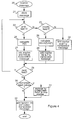
- transcoder 2 On receipt of the data message will now be described with reference to the flow chart of Figure 4.
- This is essentially a two-stage process.
- the transcoder determines whether each field of the message should be maintained, modified or omitted, and calculates hash values as appropriate.
- the transcoder determines whether the length of the transcoded message can be reduced by "compressing" hash values, ie. replacing the hash values for a succession of omitted fields by the group hash value for a parent node of the hash tree of Figure 2.
- the process begins at step 20 when the data message is received by transcode controller 9.
- step 21 the received message is stored by transcode controller 9 in memory 10.
- step 22 the transcode controller 9 then analyses the first field f to determine if this field should be omitted from the message sent to the destination device. If the field is not to be omitted, the process proceeds to step 23 in which the transcode controller decides if the field should be modified in some way, eg. by altering the existing field content or replacing the field content by new data. If no modification is required, the existing field is to be maintained. In this case, operation proceeds to step 24 wherein the original field f, with added field marker, is stored in memory 10 as a first portion of the transcoded message.
- the field marker added by the transcode controller includes data indicating the nature of the field content, ie.
- step 24 indicates that the field content is a maintained field. Operation then proceeds to step 25 wherein the transcode controller determines if there are any more fields of the received message to be considered. Assuming so, operation reverts to step 22 where the next field is considered for omission.
- step 26 the transcode controller calculates an omitted field code in the form of the field hash value H(f) for the current field. Then, in step 27, the hash value H(f) is stored in memory as the next field of the transcoded message, with an associated field marker indicating that the field content is a hash value for an omitted data field. From step 27, operation proceeds again to step 25 in which the transcode controller 9 determines if there is a further field to be considered, and if so the process reverts to step 22 for analysis of this next field.
- Hd hash value
- H(f) hash value
- H(f') modified field hash value
- the transcode controller analyzes the transcoded message stored in memory 10 to determine if it contains a series of field hash values which can be compressed. This is possible where there is a series of field hash values representing a group of omitted fields corresponding to parent node of the hash tree of Figure 2. In particular, if all the fields corresponding to any parent node have been omitted, then it is sufficient to send the group hash value for that parent node in the transcoded message.
- the transcode controller checks whether the transcoded message contains a group of field hash values which can be compressed in this way, and if so operation proceeds to step 31.
- the appropriate series of fields in the transcoded message is replaced by a single field containing the parent node hash value, and the field marker added in this case indicates the number of omitted fields which that hash value represents. Operation then proceeds to step 32.
- step 32 the authentication code Sgn(h1-10) from the originally received message is added to the transcoded message fields stored in memory 10, and the resulting transcoded message is output to the transceiver circuitry 8 for transmission to the destination device 4. Reverting to step 30, if it is determined here that the message does not contain a group of field hash values which can be compressed as described, then operation proceeds directly to step 32.
- transcoded field t1 replaces received fields f1 and f2.
- the delta hash value Hd is the difference between the received field hash value and the hash value for the modified data in each case.
- the message received from source device 1 is retained in transcoder memory 10, the transcoded message being generated as described by reference to the stored message.
- the original message is thus available in memory if required later as described further below.
- the transcoder may produce the transcoded message by operating directly on the stored message received from source device 1, overwriting received fields during the transcoding process.
- step 40 the control unit stores the transcoded message in memory 13.
- step 42 the control unit uses the content of the transcoded fields to obtain a set of definitive hash values for the original message sent by source device 1.
- the operations performed in this step depend on whether a given transcoded field corresponds to a maintained, omitted or modified field. This may be identified by the control unit from the field content, an omitted field being indicated by a hash value, a modified field being indicated by a delta hash value plus ordinary data content, and data content alone signifying a maintained field.
- the control unit applies the hash function H to the data content f to calculate the corresponding field hash values H(f).
- the control unit applies the hash function H to the data content f' to obtain the modified field hash value H(f'), and then adds this to the delta hash value Hd to obtain the original field hash value H(f).
- the required hash values are provided by the transcoded fields themselves.
- step 43 the control unit 12 calculates a received message code by applying the hash function H to the set of field/group hash values obtained in step 42 according to the tree structure of the hashing algorithm.
- step 44 the control unit then compares the received message code with the original message code h1-10 in the authentication code Sgn(h1-10) of the transcoded message.
- the original message code is obtained here by decrypting Sgn(h1-10) using the appropriate public key, thus verifying the signature.
- step 45 the control unit determines whether the received message code is identical to the original message code h1-10. If the codes do not match then the authentication process has failed and it can be assumed that the original message has been tampered with and should not be relied upon.
- step 46 the control unit supplies an appropriate user message to display 14 for display to the user.
- the displayed message may comprise the relevant content of the received transcoded message and a warning that the message failed the authentication process.
- step 47 the control unit supplies the relevant content of the transcoded message, ie the message content of the maintained and modified fields, to the display 14.
- the displayed message can also indicate that the message has been authenticated, and preferably also indicates where fields have been modified or omitted as compared with the original message.
- the displayed message might read: Authenticated message received: [dropped fields] transfer $10 from checking[modified field] A to savings[modified field] B?
- the system may allow the user to retrieve selected modified or omitted fields in case of doubt over whether the semantic content of a message has been altered in the transcoding process.
- the user can select a displayed transcode indicator, ie "[dropped field]", "[modified field]” etc. in the displayed message using input means 15.
- the control unit 12 transmits a request for the original field to transcoder 2 via transceiver circuitry 11.
- This request identifies the particular field required, for example by a field number identifying the location of the required field in the transcoded message. However identified, the transcode controller retrieves the required field from its memory 10, and forwards the field to the destination device 4 for display to the user.
Landscapes
- Engineering & Computer Science (AREA)
- Signal Processing (AREA)
- Computer Security & Cryptography (AREA)
- Multimedia (AREA)
- Computer Networks & Wireless Communication (AREA)
- Theoretical Computer Science (AREA)
- Mobile Radio Communication Systems (AREA)
- Compression, Expansion, Code Conversion, And Decoders (AREA)
- Telephonic Communication Services (AREA)
Priority Applications (1)
| Application Number | Priority Date | Filing Date | Title |
|---|---|---|---|
| EP00123098A EP1109408A3 (de) | 1999-12-14 | 2000-10-25 | Transkodierung für Datenkommunikation |
Applications Claiming Priority (3)
| Application Number | Priority Date | Filing Date | Title |
|---|---|---|---|
| EP99811158 | 1999-12-14 | ||
| EP99811158 | 1999-12-14 | ||
| EP00123098A EP1109408A3 (de) | 1999-12-14 | 2000-10-25 | Transkodierung für Datenkommunikation |
Publications (2)
| Publication Number | Publication Date |
|---|---|
| EP1109408A2 true EP1109408A2 (de) | 2001-06-20 |
| EP1109408A3 EP1109408A3 (de) | 2004-07-07 |
Family
ID=26071545
Family Applications (1)
| Application Number | Title | Priority Date | Filing Date |
|---|---|---|---|
| EP00123098A Ceased EP1109408A3 (de) | 1999-12-14 | 2000-10-25 | Transkodierung für Datenkommunikation |
Country Status (1)
| Country | Link |
|---|---|
| EP (1) | EP1109408A3 (de) |
Cited By (2)
| Publication number | Priority date | Publication date | Assignee | Title |
|---|---|---|---|---|
| FR2844130A1 (fr) * | 2002-09-04 | 2004-03-05 | St Microelectronics Sa | Procede de traitement de donnees audio/video au sein d'un lecteur de disque audio/video, et lecteur correspondant. |
| WO2005076522A1 (en) * | 2004-02-10 | 2005-08-18 | Cryptico A/S | Methods for generating identification values for identifying electronic messages |
Family Cites Families (1)
| Publication number | Priority date | Publication date | Assignee | Title |
|---|---|---|---|---|
| US5903651A (en) * | 1996-05-14 | 1999-05-11 | Valicert, Inc. | Apparatus and method for demonstrating and confirming the status of a digital certificates and other data |
-
2000
- 2000-10-25 EP EP00123098A patent/EP1109408A3/de not_active Ceased
Cited By (3)
| Publication number | Priority date | Publication date | Assignee | Title |
|---|---|---|---|---|
| FR2844130A1 (fr) * | 2002-09-04 | 2004-03-05 | St Microelectronics Sa | Procede de traitement de donnees audio/video au sein d'un lecteur de disque audio/video, et lecteur correspondant. |
| US7266291B2 (en) | 2002-09-04 | 2007-09-04 | Stmicroelectronics Sa | Method for processing audio/video data within an audio/video disk drive, and corresponding drive |
| WO2005076522A1 (en) * | 2004-02-10 | 2005-08-18 | Cryptico A/S | Methods for generating identification values for identifying electronic messages |
Also Published As
| Publication number | Publication date |
|---|---|
| EP1109408A3 (de) | 2004-07-07 |
Similar Documents
| Publication | Publication Date | Title |
|---|---|---|
| US6922778B2 (en) | Transcoding in data communications | |
| CN110933118B (zh) | 边缘计算网关安全通信方法、系统、终端设备及服务器 | |
| CN109542883B (zh) | 一种基于区块链的信息查重方法 | |
| US20080083039A1 (en) | Method for integrity attestation of a computing platform hiding its configuration information | |
| EP1554835B1 (de) | Auf fehlerkorrekturkode basierter nachrichtenauthentifizierungskode | |
| JPH06315027A (ja) | データ通信環境におけるデータ認証のための方法および装置 | |
| US20230229649A1 (en) | Data structure storage optimisation | |
| CN110601815B (zh) | 一种区块链数据处理方法以及设备 | |
| JP2006352904A (ja) | データの正確性チェックのための方法、システムおよび携帯端末 | |
| CN111131278A (zh) | 数据处理方法及装置、计算机存储介质、电子设备 | |
| CN115516454B (zh) | 硬件安全模块和系统 | |
| KR101253683B1 (ko) | 연쇄 해시에 의한 전자서명 시스템 및 방법 | |
| US20060101271A1 (en) | Method and system for conveying alternate acceptable canonicalizations of a digitally signed piece of electronic mail | |
| CN101401094B (zh) | 使用呼号的端点验证 | |
| CN118741436A (zh) | 短信签名标题实名自动化方法及系统 | |
| CN105721156A (zh) | 用于模幂加密方案的通用编码函数 | |
| CN106779705A (zh) | 一种动态支付方法及系统 | |
| JP7499775B2 (ja) | 資源が限られているシステムにおいてメッセージを認証するための方法 | |
| CN113158218A (zh) | 数据加密方法、装置及数据解密方法、装置 | |
| CN116170228A (zh) | 终端标识设备的认证方法、装置、存储介质及设备 | |
| EP1109408A2 (de) | Transkodierung für Datenkommunikation | |
| CN105635114A (zh) | 一种口令校验方法及系统 | |
| CN118473647B (zh) | 邮件加密方法、邮件解密方法、装置及电子设备 | |
| CN107154920B (zh) | 安全信息的加密方法、解密方法及用以接收安全信息的接收装置 | |
| CN113723897A (zh) | 基于区块链的oa审批方法、装置、设备及存储介质 |
Legal Events
| Date | Code | Title | Description |
|---|---|---|---|
| PUAI | Public reference made under article 153(3) epc to a published international application that has entered the european phase |
Free format text: ORIGINAL CODE: 0009012 |
|
| AK | Designated contracting states |
Kind code of ref document: A2 Designated state(s): AT BE CH CY DE DK ES FI FR GB GR IE IT LI LU MC NL PT SE |
|
| AX | Request for extension of the european patent |
Free format text: AL;LT;LV;MK;RO;SI |
|
| PUAL | Search report despatched |
Free format text: ORIGINAL CODE: 0009013 |
|
| RIC1 | Information provided on ipc code assigned before grant |
Ipc: 7H 04L 9/32 B Ipc: 7H 04Q 7/30 B Ipc: 7H 03M 7/14 B Ipc: 7H 04N 7/26 A |
|
| AK | Designated contracting states |
Kind code of ref document: A3 Designated state(s): AT BE CH CY DE DK ES FI FR GB GR IE IT LI LU MC NL PT SE |
|
| AX | Request for extension of the european patent |
Extension state: AL LT LV MK RO SI |
|
| 17P | Request for examination filed |
Effective date: 20041120 |
|
| AKX | Designation fees paid |
Designated state(s): AT BE CH CY DE DK ES FI FR GB GR IE IT LI LU MC NL PT SE |
|
| 17Q | First examination report despatched |
Effective date: 20050503 |
|
| STAA | Information on the status of an ep patent application or granted ep patent |
Free format text: STATUS: THE APPLICATION HAS BEEN REFUSED |
|
| 18R | Application refused |
Effective date: 20060612 |