EP1108709A1 - Aromatic diamine/aromatic dicarboxylate and production method thereof - Google Patents
Aromatic diamine/aromatic dicarboxylate and production method thereof Download PDFInfo
- Publication number
- EP1108709A1 EP1108709A1 EP00127722A EP00127722A EP1108709A1 EP 1108709 A1 EP1108709 A1 EP 1108709A1 EP 00127722 A EP00127722 A EP 00127722A EP 00127722 A EP00127722 A EP 00127722A EP 1108709 A1 EP1108709 A1 EP 1108709A1
- Authority
- EP
- European Patent Office
- Prior art keywords
- aromatic
- aromatic diamine
- dicarboxylate
- aromatic dicarboxylate
- diamine
- Prior art date
- Legal status (The legal status is an assumption and is not a legal conclusion. Google has not performed a legal analysis and makes no representation as to the accuracy of the status listed.)
- Granted
Links
- 150000004984 aromatic diamines Chemical class 0.000 title claims abstract description 102
- 125000003118 aryl group Chemical group 0.000 title claims abstract description 77
- 238000004519 manufacturing process Methods 0.000 title claims abstract description 17
- 239000002245 particle Substances 0.000 claims abstract description 15
- 125000003178 carboxy group Chemical group [H]OC(*)=O 0.000 claims abstract description 3
- XLYOFNOQVPJJNP-UHFFFAOYSA-N water Substances O XLYOFNOQVPJJNP-UHFFFAOYSA-N 0.000 claims description 40
- 229910052783 alkali metal Inorganic materials 0.000 claims description 21
- 239000007864 aqueous solution Substances 0.000 claims description 13
- 238000002156 mixing Methods 0.000 claims description 8
- IUTCEZPPWBHGIX-UHFFFAOYSA-N tin(2+) Chemical compound [Sn+2] IUTCEZPPWBHGIX-UHFFFAOYSA-N 0.000 claims description 6
- 150000001340 alkali metals Chemical class 0.000 claims description 4
- CWYNVVGOOAEACU-UHFFFAOYSA-N Fe2+ Chemical compound [Fe+2] CWYNVVGOOAEACU-UHFFFAOYSA-N 0.000 claims description 2
- 125000004435 hydrogen atom Chemical group [H]* 0.000 claims description 2
- 125000002887 hydroxy group Chemical group [H]O* 0.000 claims description 2
- 125000002496 methyl group Chemical group [H]C([H])([H])* 0.000 claims description 2
- 125000004430 oxygen atom Chemical group O* 0.000 claims description 2
- 229910052717 sulfur Inorganic materials 0.000 claims description 2
- 125000004434 sulfur atom Chemical group 0.000 claims description 2
- 150000003839 salts Chemical class 0.000 abstract description 33
- 238000003860 storage Methods 0.000 abstract description 7
- 239000000835 fiber Substances 0.000 abstract description 3
- IJGRMHOSHXDMSA-UHFFFAOYSA-N Atomic nitrogen Chemical compound N#N IJGRMHOSHXDMSA-UHFFFAOYSA-N 0.000 description 34
- 239000000243 solution Substances 0.000 description 29
- 238000006116 polymerization reaction Methods 0.000 description 26
- HEMHJVSKTPXQMS-UHFFFAOYSA-M Sodium hydroxide Chemical compound [OH-].[Na+] HEMHJVSKTPXQMS-UHFFFAOYSA-M 0.000 description 18
- 229910052757 nitrogen Inorganic materials 0.000 description 17
- DPYROBMRMXHROQ-UHFFFAOYSA-N 4,6-diaminobenzene-1,3-diol Chemical compound NC1=CC(N)=C(O)C=C1O DPYROBMRMXHROQ-UHFFFAOYSA-N 0.000 description 16
- 238000001035 drying Methods 0.000 description 15
- OFOBLEOULBTSOW-UHFFFAOYSA-N Malonic acid Chemical compound OC(=O)CC(O)=O OFOBLEOULBTSOW-UHFFFAOYSA-N 0.000 description 14
- KKEYFWRCBNTPAC-UHFFFAOYSA-N Terephthalic acid Chemical compound OC(=O)C1=CC=C(C(O)=O)C=C1 KKEYFWRCBNTPAC-UHFFFAOYSA-N 0.000 description 14
- 229920000642 polymer Polymers 0.000 description 14
- 239000000178 monomer Substances 0.000 description 13
- 238000006243 chemical reaction Methods 0.000 description 9
- 239000000203 mixture Substances 0.000 description 8
- 229920000137 polyphosphoric acid Polymers 0.000 description 8
- 230000000052 comparative effect Effects 0.000 description 7
- -1 inorganic acid salts Chemical class 0.000 description 7
- KUMOYHHELWKOCB-UHFFFAOYSA-N 4,6-diaminobenzene-1,3-diol;dihydrochloride Chemical compound Cl.Cl.NC1=CC(N)=C(O)C=C1O KUMOYHHELWKOCB-UHFFFAOYSA-N 0.000 description 6
- AHUNLCWALDZRQE-UHFFFAOYSA-N 5-amino-2-azaniumyl-4-sulfanylbenzenethiolate Chemical compound NC1=CC(S)=C(N)C=C1S AHUNLCWALDZRQE-UHFFFAOYSA-N 0.000 description 6
- FAPWRFPIFSIZLT-UHFFFAOYSA-M Sodium chloride Chemical compound [Na+].[Cl-] FAPWRFPIFSIZLT-UHFFFAOYSA-M 0.000 description 6
- 238000001914 filtration Methods 0.000 description 6
- 230000001603 reducing effect Effects 0.000 description 6
- 238000004040 coloring Methods 0.000 description 5
- 239000011261 inert gas Substances 0.000 description 5
- 238000000034 method Methods 0.000 description 5
- 238000012643 polycondensation polymerization Methods 0.000 description 5
- 239000002904 solvent Substances 0.000 description 5
- KKEYFWRCBNTPAC-UHFFFAOYSA-L terephthalate(2-) Chemical compound [O-]C(=O)C1=CC=C(C([O-])=O)C=C1 KKEYFWRCBNTPAC-UHFFFAOYSA-L 0.000 description 5
- DLYUQMMRRRQYAE-UHFFFAOYSA-N tetraphosphorus decaoxide Chemical compound O1P(O2)(=O)OP3(=O)OP1(=O)OP2(=O)O3 DLYUQMMRRRQYAE-UHFFFAOYSA-N 0.000 description 5
- 238000005979 thermal decomposition reaction Methods 0.000 description 5
- GZNAASVAJNXPPW-UHFFFAOYSA-M tin(4+) chloride dihydrate Chemical compound O.O.[Cl-].[Sn+4] GZNAASVAJNXPPW-UHFFFAOYSA-M 0.000 description 5
- FWPIDFUJEMBDLS-UHFFFAOYSA-L tin(II) chloride dihydrate Substances O.O.Cl[Sn]Cl FWPIDFUJEMBDLS-UHFFFAOYSA-L 0.000 description 5
- AFVFQIVMOAPDHO-UHFFFAOYSA-N Methanesulfonic acid Chemical compound CS(O)(=O)=O AFVFQIVMOAPDHO-UHFFFAOYSA-N 0.000 description 4
- WCUXLLCKKVVCTQ-UHFFFAOYSA-M Potassium chloride Chemical compound [Cl-].[K+] WCUXLLCKKVVCTQ-UHFFFAOYSA-M 0.000 description 4
- 239000003963 antioxidant agent Substances 0.000 description 4
- 230000003078 antioxidant effect Effects 0.000 description 4
- 150000001875 compounds Chemical class 0.000 description 4
- 238000011156 evaluation Methods 0.000 description 4
- 239000007789 gas Substances 0.000 description 4
- 238000010438 heat treatment Methods 0.000 description 4
- UFMBOFGKHIXOTA-UHFFFAOYSA-N 2-methylterephthalic acid Chemical compound CC1=CC(C(O)=O)=CC=C1C(O)=O UFMBOFGKHIXOTA-UHFFFAOYSA-N 0.000 description 3
- VEXZGXHMUGYJMC-UHFFFAOYSA-N Hydrochloric acid Chemical compound Cl VEXZGXHMUGYJMC-UHFFFAOYSA-N 0.000 description 3
- OKKJLVBELUTLKV-UHFFFAOYSA-N Methanol Chemical compound OC OKKJLVBELUTLKV-UHFFFAOYSA-N 0.000 description 3
- KWYUFKZDYYNOTN-UHFFFAOYSA-M Potassium hydroxide Chemical compound [OH-].[K+] KWYUFKZDYYNOTN-UHFFFAOYSA-M 0.000 description 3
- 150000008044 alkali metal hydroxides Chemical class 0.000 description 3
- KRKNYBCHXYNGOX-UHFFFAOYSA-N citric acid Chemical compound OC(=O)CC(O)(C(O)=O)CC(O)=O KRKNYBCHXYNGOX-UHFFFAOYSA-N 0.000 description 3
- 239000006185 dispersion Substances 0.000 description 3
- 239000012299 nitrogen atmosphere Substances 0.000 description 3
- 239000002244 precipitate Substances 0.000 description 3
- 238000012545 processing Methods 0.000 description 3
- 239000011780 sodium chloride Substances 0.000 description 3
- 239000000126 substance Substances 0.000 description 3
- 238000005406 washing Methods 0.000 description 3
- PWKNBLFSJAVFAB-UHFFFAOYSA-N 1-fluoro-2-nitrobenzene Chemical compound [O-][N+](=O)C1=CC=CC=C1F PWKNBLFSJAVFAB-UHFFFAOYSA-N 0.000 description 2
- HSSYVKMJJLDTKZ-UHFFFAOYSA-N 3-phenylphthalic acid Chemical compound OC(=O)C1=CC=CC(C=2C=CC=CC=2)=C1C(O)=O HSSYVKMJJLDTKZ-UHFFFAOYSA-N 0.000 description 2
- CSCPPACGZOOCGX-UHFFFAOYSA-N Acetone Chemical compound CC(C)=O CSCPPACGZOOCGX-UHFFFAOYSA-N 0.000 description 2
- VEXZGXHMUGYJMC-UHFFFAOYSA-M Chloride anion Chemical compound [Cl-] VEXZGXHMUGYJMC-UHFFFAOYSA-M 0.000 description 2
- HEDRZPFGACZZDS-UHFFFAOYSA-N Chloroform Chemical compound ClC(Cl)Cl HEDRZPFGACZZDS-UHFFFAOYSA-N 0.000 description 2
- LFQSCWFLJHTTHZ-UHFFFAOYSA-N Ethanol Chemical compound CCO LFQSCWFLJHTTHZ-UHFFFAOYSA-N 0.000 description 2
- DGAQECJNVWCQMB-PUAWFVPOSA-M Ilexoside XXIX Chemical compound C[C@@H]1CC[C@@]2(CC[C@@]3(C(=CC[C@H]4[C@]3(CC[C@@H]5[C@@]4(CC[C@@H](C5(C)C)OS(=O)(=O)[O-])C)C)[C@@H]2[C@]1(C)O)C)C(=O)O[C@H]6[C@@H]([C@H]([C@@H]([C@H](O6)CO)O)O)O.[Na+] DGAQECJNVWCQMB-PUAWFVPOSA-M 0.000 description 2
- UQSXHKLRYXJYBZ-UHFFFAOYSA-N Iron oxide Chemical compound [Fe]=O UQSXHKLRYXJYBZ-UHFFFAOYSA-N 0.000 description 2
- ZLMJMSJWJFRBEC-UHFFFAOYSA-N Potassium Chemical compound [K] ZLMJMSJWJFRBEC-UHFFFAOYSA-N 0.000 description 2
- 238000005119 centrifugation Methods 0.000 description 2
- 239000000470 constituent Substances 0.000 description 2
- 238000000354 decomposition reaction Methods 0.000 description 2
- 230000007423 decrease Effects 0.000 description 2
- 238000002845 discoloration Methods 0.000 description 2
- 238000009826 distribution Methods 0.000 description 2
- 230000000694 effects Effects 0.000 description 2
- 239000001307 helium Substances 0.000 description 2
- 229910052734 helium Inorganic materials 0.000 description 2
- SWQJXJOGLNCZEY-UHFFFAOYSA-N helium atom Chemical compound [He] SWQJXJOGLNCZEY-UHFFFAOYSA-N 0.000 description 2
- IXCSERBJSXMMFS-UHFFFAOYSA-N hydrogen chloride Substances Cl.Cl IXCSERBJSXMMFS-UHFFFAOYSA-N 0.000 description 2
- 229910000041 hydrogen chloride Inorganic materials 0.000 description 2
- 238000007561 laser diffraction method Methods 0.000 description 2
- 229910052751 metal Inorganic materials 0.000 description 2
- 239000002184 metal Substances 0.000 description 2
- 229940098779 methanesulfonic acid Drugs 0.000 description 2
- KYTZHLUVELPASH-UHFFFAOYSA-N naphthalene-1,2-dicarboxylic acid Chemical compound C1=CC=CC2=C(C(O)=O)C(C(=O)O)=CC=C21 KYTZHLUVELPASH-UHFFFAOYSA-N 0.000 description 2
- 239000003960 organic solvent Substances 0.000 description 2
- 230000003647 oxidation Effects 0.000 description 2
- 238000007254 oxidation reaction Methods 0.000 description 2
- XNGIFLGASWRNHJ-UHFFFAOYSA-N phthalic acid Chemical compound OC(=O)C1=CC=CC=C1C(O)=O XNGIFLGASWRNHJ-UHFFFAOYSA-N 0.000 description 2
- 229920002577 polybenzoxazole Polymers 0.000 description 2
- 229910052700 potassium Inorganic materials 0.000 description 2
- 239000011591 potassium Substances 0.000 description 2
- 239000001103 potassium chloride Substances 0.000 description 2
- 235000011164 potassium chloride Nutrition 0.000 description 2
- 239000000047 product Substances 0.000 description 2
- 230000001681 protective effect Effects 0.000 description 2
- 238000000790 scattering method Methods 0.000 description 2
- 229910052708 sodium Inorganic materials 0.000 description 2
- 239000011734 sodium Substances 0.000 description 2
- QHGNHLZPVBIIPX-UHFFFAOYSA-N tin(ii) oxide Chemical compound [Sn]=O QHGNHLZPVBIIPX-UHFFFAOYSA-N 0.000 description 2
- OHLSHRJUBRUKAN-UHFFFAOYSA-N 2,3-dihydroxyterephthalic acid Chemical compound OC(=O)C1=CC=C(C(O)=O)C(O)=C1O OHLSHRJUBRUKAN-UHFFFAOYSA-N 0.000 description 1
- RLXBOUUYEFOFSW-UHFFFAOYSA-N 2,5-diaminobenzene-1,4-diol Chemical compound NC1=CC(O)=C(N)C=C1O RLXBOUUYEFOFSW-UHFFFAOYSA-N 0.000 description 1
- HVXLKRWRWNFGBA-UHFFFAOYSA-N 2,5-diaminobenzene-1,4-dithiol;dihydrochloride Chemical compound Cl.Cl.NC1=CC(S)=C(N)C=C1S HVXLKRWRWNFGBA-UHFFFAOYSA-N 0.000 description 1
- CDOWNLMZVKJRSC-UHFFFAOYSA-N 2-hydroxyterephthalic acid Chemical compound OC(=O)C1=CC=C(C(O)=O)C(O)=C1 CDOWNLMZVKJRSC-UHFFFAOYSA-N 0.000 description 1
- DWUUPAUTLKFPLO-UHFFFAOYSA-N 4,6-diaminobenzene-1,3-dithiol Chemical compound NC1=CC(N)=C(S)C=C1S DWUUPAUTLKFPLO-UHFFFAOYSA-N 0.000 description 1
- VMQMZMRVKUZKQL-UHFFFAOYSA-N Cu+ Chemical compound [Cu+] VMQMZMRVKUZKQL-UHFFFAOYSA-N 0.000 description 1
- 229910021577 Iron(II) chloride Inorganic materials 0.000 description 1
- WHXSMMKQMYFTQS-UHFFFAOYSA-N Lithium Chemical compound [Li] WHXSMMKQMYFTQS-UHFFFAOYSA-N 0.000 description 1
- AFCARXCZXQIEQB-UHFFFAOYSA-N N-[3-oxo-3-(2,4,6,7-tetrahydrotriazolo[4,5-c]pyridin-5-yl)propyl]-2-[[3-(trifluoromethoxy)phenyl]methylamino]pyrimidine-5-carboxamide Chemical compound O=C(CCNC(=O)C=1C=NC(=NC=1)NCC1=CC(=CC=C1)OC(F)(F)F)N1CC2=C(CC1)NN=N2 AFCARXCZXQIEQB-UHFFFAOYSA-N 0.000 description 1
- ABLZXFCXXLZCGV-UHFFFAOYSA-N Phosphorous acid Chemical compound OP(O)=O ABLZXFCXXLZCGV-UHFFFAOYSA-N 0.000 description 1
- LSNNMFCWUKXFEE-UHFFFAOYSA-N Sulfurous acid Chemical compound OS(O)=O LSNNMFCWUKXFEE-UHFFFAOYSA-N 0.000 description 1
- UCKMPCXJQFINFW-UHFFFAOYSA-N Sulphide Chemical compound [S-2] UCKMPCXJQFINFW-UHFFFAOYSA-N 0.000 description 1
- 229910021626 Tin(II) chloride Inorganic materials 0.000 description 1
- CWYAQHJCXZOXEK-UHFFFAOYSA-N [Fe+2].[Sn+2] Chemical group [Fe+2].[Sn+2] CWYAQHJCXZOXEK-UHFFFAOYSA-N 0.000 description 1
- 230000002411 adverse Effects 0.000 description 1
- 229910001508 alkali metal halide Inorganic materials 0.000 description 1
- 150000008045 alkali metal halides Chemical class 0.000 description 1
- 239000012298 atmosphere Substances 0.000 description 1
- 230000015572 biosynthetic process Effects 0.000 description 1
- 239000006227 byproduct Substances 0.000 description 1
- 230000015556 catabolic process Effects 0.000 description 1
- 239000007857 degradation product Substances 0.000 description 1
- 238000006731 degradation reaction Methods 0.000 description 1
- 239000012024 dehydrating agents Substances 0.000 description 1
- 229920001971 elastomer Polymers 0.000 description 1
- 239000004744 fabric Substances 0.000 description 1
- 238000011010 flushing procedure Methods 0.000 description 1
- 238000002309 gasification Methods 0.000 description 1
- 150000003840 hydrochlorides Chemical class 0.000 description 1
- 238000010348 incorporation Methods 0.000 description 1
- 239000012770 industrial material Substances 0.000 description 1
- NMCUIPGRVMDVDB-UHFFFAOYSA-L iron dichloride Chemical compound Cl[Fe]Cl NMCUIPGRVMDVDB-UHFFFAOYSA-L 0.000 description 1
- 229910052744 lithium Inorganic materials 0.000 description 1
- 230000007774 longterm Effects 0.000 description 1
- 238000005259 measurement Methods 0.000 description 1
- 229910001507 metal halide Inorganic materials 0.000 description 1
- 150000005309 metal halides Chemical class 0.000 description 1
- 150000003018 phosphorus compounds Chemical class 0.000 description 1
- 229920003023 plastic Polymers 0.000 description 1
- 239000004033 plastic Substances 0.000 description 1
- 231100000614 poison Toxicity 0.000 description 1
- 230000007096 poisonous effect Effects 0.000 description 1
- 238000003969 polarography Methods 0.000 description 1
- 239000012779 reinforcing material Substances 0.000 description 1
- 239000005060 rubber Substances 0.000 description 1
- KKVTYAVXTDIPAP-UHFFFAOYSA-M sodium;methanesulfonate Chemical compound [Na+].CS([O-])(=O)=O KKVTYAVXTDIPAP-UHFFFAOYSA-M 0.000 description 1
- 238000009987 spinning Methods 0.000 description 1
- 235000011150 stannous chloride Nutrition 0.000 description 1
- 239000007858 starting material Substances 0.000 description 1
- 238000003756 stirring Methods 0.000 description 1
- 150000003464 sulfur compounds Chemical class 0.000 description 1
- 238000012360 testing method Methods 0.000 description 1
- AXZWODMDQAVCJE-UHFFFAOYSA-L tin(II) chloride (anhydrous) Chemical compound [Cl-].[Cl-].[Sn+2] AXZWODMDQAVCJE-UHFFFAOYSA-L 0.000 description 1
- 238000005303 weighing Methods 0.000 description 1
Classifications
-
- C—CHEMISTRY; METALLURGY
- C08—ORGANIC MACROMOLECULAR COMPOUNDS; THEIR PREPARATION OR CHEMICAL WORKING-UP; COMPOSITIONS BASED THEREON
- C08G—MACROMOLECULAR COMPOUNDS OBTAINED OTHERWISE THAN BY REACTIONS ONLY INVOLVING UNSATURATED CARBON-TO-CARBON BONDS
- C08G75/00—Macromolecular compounds obtained by reactions forming a linkage containing sulfur with or without nitrogen, oxygen, or carbon in the main chain of the macromolecule
- C08G75/32—Polythiazoles; Polythiadiazoles
-
- C—CHEMISTRY; METALLURGY
- C07—ORGANIC CHEMISTRY
- C07C—ACYCLIC OR CARBOCYCLIC COMPOUNDS
- C07C215/00—Compounds containing amino and hydroxy groups bound to the same carbon skeleton
- C07C215/74—Compounds containing amino and hydroxy groups bound to the same carbon skeleton having hydroxy groups and amino groups bound to carbon atoms of six-membered aromatic rings of the same carbon skeleton
- C07C215/76—Compounds containing amino and hydroxy groups bound to the same carbon skeleton having hydroxy groups and amino groups bound to carbon atoms of six-membered aromatic rings of the same carbon skeleton of the same non-condensed six-membered aromatic ring
- C07C215/80—Compounds containing amino and hydroxy groups bound to the same carbon skeleton having hydroxy groups and amino groups bound to carbon atoms of six-membered aromatic rings of the same carbon skeleton of the same non-condensed six-membered aromatic ring containing at least two amino groups bound to the carbon skeleton
-
- C—CHEMISTRY; METALLURGY
- C07—ORGANIC CHEMISTRY
- C07C—ACYCLIC OR CARBOCYCLIC COMPOUNDS
- C07C51/00—Preparation of carboxylic acids or their salts, halides or anhydrides
- C07C51/41—Preparation of salts of carboxylic acids
- C07C51/412—Preparation of salts of carboxylic acids by conversion of the acids, their salts, esters or anhydrides with the same carboxylic acid part
-
- C—CHEMISTRY; METALLURGY
- C07—ORGANIC CHEMISTRY
- C07C—ACYCLIC OR CARBOCYCLIC COMPOUNDS
- C07C51/00—Preparation of carboxylic acids or their salts, halides or anhydrides
- C07C51/42—Separation; Purification; Stabilisation; Use of additives
- C07C51/43—Separation; Purification; Stabilisation; Use of additives by change of the physical state, e.g. crystallisation
-
- C—CHEMISTRY; METALLURGY
- C08—ORGANIC MACROMOLECULAR COMPOUNDS; THEIR PREPARATION OR CHEMICAL WORKING-UP; COMPOSITIONS BASED THEREON
- C08G—MACROMOLECULAR COMPOUNDS OBTAINED OTHERWISE THAN BY REACTIONS ONLY INVOLVING UNSATURATED CARBON-TO-CARBON BONDS
- C08G73/00—Macromolecular compounds obtained by reactions forming a linkage containing nitrogen with or without oxygen or carbon in the main chain of the macromolecule, not provided for in groups C08G12/00 - C08G71/00
- C08G73/06—Polycondensates having nitrogen-containing heterocyclic rings in the main chain of the macromolecule
- C08G73/22—Polybenzoxazoles
Definitions
- the present invention relates to a monomer used for producing polybenzazoles formable into a fiber and a film having high strength, high elastic modulus and high heat resistance. More particularly, the present invention relates to aromatic diamine/aromatic dicarboxylate having high polymerizability.
- Polybenzazoles represented by polybenzoxazoles and polybenzothiazoles have been increasingly used for wider applications, such as reinforcing materials for rubber and plastic, industrial materials (e.g., heat resistant felt), and protective purposes (e.g., protective cloth for fire fighters and safety gloves), because they show markedly high dynamic properties, heat resistance and flame resistance, among organic substances.
- a typical production method of a polybenzazole comprises subjecting an aromatic diamine, such as 4,6-diamino-1,3-benzenediol, 2,5-diamino-1,4-benzenedithiol and the like, and an aromatic dicarboxylic acid, such as terephthalic acid, naphthalenedicarboxylic acid, biphenyldicarboxylic acid and the like, to condensation polymerization in a solvent having a dehydrating effect, such as polyphosphoric acid and the like.
- aromatic diamine such as 4,6-diamino-1,3-benzenediol, 2,5-diamino-1,4-benzenedithiol and the like
- aromatic dicarboxylic acid such as terephthalic acid, naphthalenedicarboxylic acid, biphenyldicarboxylic acid and the like
- Aromatic diamines which are monomers of polybenzazoles , are easily oxidized and handled in the form of an inorganic acid salts, which are more stable against oxidation and generally used as hydrochlorides .
- an aromatic diamine hydrochloride is used for producing polybenzazole, however, a poisonous hydrogen chloride gas is generated in a large amount in an early stage of the condensation polymerization. The generation of gas during reaction causes an inflation of the reaction volume and lowers the volume efficiency of a reactor, which is unpreferable from the aspect of productivity.
- U.S. Patent No. 5,276,128 discloses aromatic diamine/aromatic dicarboxylates . These are monomers obtained by forming a salt from an aromatic diamine and aromatic dicarboxylic acid in a 1:1 ratio, which do not contain a component that generates a gas, such as hydrogen chloride. When compared to the use of two kinds of monomers of the aromatic diamine hydrochloride and aromatic dicarboxylic acid; moreover, weighing and charging is advantageously easier.
- the aromatic diamine/aromatic dicarboxylate disclosed in the above-mentioned U.S. Patent No. 5,276,128 does not have sufficient quality.
- the aromatic diamine/aromatic dicarboxylate has a chemical composition ratio of aromatic diamine and aromatic dicarboxylic acid of 1:1. If the polymerization degree is not controlled by the addition of a chain-end terminator and the like, a polybenzazole having an extremely high polymerization degree would be obtained.
- the above-mentioned aromatic diamine/aromatic dicarboxylate is colored in pink or purple. This is considered to be attributable to partial decomposition of the constituent component, aromatic diamine.
- EP 0805173A a reaction is carried out at a low temperature for a long time to afford a polymer having a somewhat higher intrinsic viscosity of 48.5 dl/g than in the above-mentioned USP, from 4,6-diamino-1,3-benzenediol/terephtalate.
- the polymerization degree of the polymer is not sufficient.
- aromatic diamine/aromatic dicarboxylate shows markedly inferior stability against oxidation and heat as compared to aromatic diamine hydrochloride, which prevents long-term storage. Also, it frequently suffers from thermal degradation during production of polybenzazole. This has a consequence that the hue of the polymer becomes poor and the polymerization degree decreases.
- aromatic diamine/aromatic dicarboxylate being in a particulate state and having a specific particle diameter and whiteness is polymerized to give polybenzazole having superior high polymerization degree and superior hue.
- the present invention provides aromatic diamine/aromatic dicarboxylate of the following formula (I) NH 2 -Ar 1 -NH 2 • HOOC-Ar 2 -COOH wherein Ar 1 is a group of the following formula (a) or (b) wherein each Z is independently an oxygen atom or a sulfur atom, and Ar 2 is a group of any of the following formulas (c)-(f) wherein R 1 and R 2 are each independently a hydrogen atom, a methyl group or a hydroxyl group, which is in the form of particles having a median diameter of 5-100 ⁇ m and whiteness of not less than 75.
- the above-mentioned aromatic diamine/aromatic dicarboxylate has a water content of not more than 3000 ppm, and preferably contains tin(II) or iron(II) in a proportion of 0.1-5.0 mol%.
- the present invention also provides a production method of the above-mentioned aromatic diamine/aromatic dicarboxylate, which comprises adding, for mixing, an aqueous solution of aromatic diamine hydrochloride of the following formula (II) NH 2 -Ar 1 -NH 2 • 2HCl wherein Ar 1 is as defined above, to an aqueous solution of alkali metal aromatic dicarboxylate of the following formula (III) MOOC-Ar 2 -COOM wherein Ar 2 is as defined above and M is an alkali metal, under the following conditions (1) and (2): (1) 1.0-1.2 moles of the aromatic diamine hydrochloride are used per 1 mole of the alkali metal aromatic dicarboxylate, and (2)thetemperature during the addition is not less than 70°C and not more than 100°C.
- an aqueous solution of aromatic diamine hydrochloride of the following formula (II) NH 2 -Ar 1 -NH 2 • 2HCl wherein Ar 1 is as defined above to an a
- the present invention provides a production method of polybenzazole, which comprises using the above-mentioned aromatic diamine/aromatic dicarboxylate.
- aromatic diamine/aromatic dicarboxylate of the present invention can be represented by the above-mentioned formula (I).
- aromatic diamine in the aromatic diamine/aromatic dicarboxylate of the above-mentioned formula (I) examples include 4,6-diamino-1,3-benzenediol, 2,5-diamino-1,4-benzenediol, 4,6-diamino-1,3-benzenedithiol, 2,5-diamino-1,4-benzenedithiol and the like.
- aromatic dicarboxylic acid in the aromatic diamine/aromatic dicarboxylate of the above-mentioned formula (I) examples include terephthalic acid, 2-methylterephthalic acid, monohydroxyterephthalic acid, dihydroxyterephthalic acid, phthalic acid, naphthalenedicarboxylic acid, biphenyldicarboxylic acid and the like.
- the aromatic diamine/aromatic dicarboxylate of the above-mentioned formula (I) is preferably that wherein aromatic diamine thereof is 4,6-diamino-1,3-benzenediol or 2,5-diamino-1,4-benzenedithiol, and aromatic dicarboxylic acid thereof is terephthalic acid or 2-methylterephthalic acid, with preference given to 4,6-diamino-1,3-benzenediol/terephtalate, 4,6-diamino-1,3-benzenediol/2-methylterephtalate and 2,5-diamino-1,4-benzenedithiol/terephtalate.
- two or more kinds of the above-mentioned aromatic diamine/aromatic dicarboxylate may be used.
- the aromatic diamine/aromatic dicarboxylate of the present invention is in the form of particles having a median diameter of 5-100 ⁇ m, more preferably 10-70 ⁇ m, particularly preferably 15-50 ⁇ m.
- the median diameter of the salt is within the above-mentioned range, polybenzazole having a high polymerization degree can be produced.
- a monomer having a smaller particle diameter is considered to show greater solubility in the solvent, show faster progress of the reaction, and to be advantageous in producing a polymer having a high polymerization degree.
- the median diameter is meant a value measured with a particle diameter distribution analyzer according to a laser diffraction/scattering method.
- the aromatic diamine/aromatic dicarboxylate of the present invention has a whiteness of not less than 75, preferably not less than 80, more preferably not less than 85.
- the salt has whiteness within this range, polybenzazole superior in hue can be obtained.
- conventional aromatic diamine/aromatic dicarboxylate is used to produce polybenzazole, the originally yellow polymer turns to black-dark brown, red-reddish purple and the like. This aspect has been studied and it has been found that the use of aromatic diamine/aromatic dicarboxylate colored in pink, purple and the like results in polybenzazole having poor hue, wherein the degree of coloring of aromatic diamine/aromatic dicarboxylate influences the hue of the resulting polybenzazole.
- the aromatic diamine/aromatic dicarboxylate of the present invention can be produced by adding, for mixing, an aqueous solution of aromatic diamine hydrochloride of the following formula (II) NH 2 -Ar 1 -NH 2 • 2HCl wherein Ar 1 is as defined above, to an aqueous solution of alkali metal aromatic dicarboxylate of the following formula (III) MOOC-Ar 2 -COOM wherein Ar 2 is as defined above and M is an alkali metal, under the following conditions (1) and (2):
- Examples of the aromatic diamines of the aromatic diamine hydrochlorides of the above-mentioned formula (II) include those exemplified for the aromatic diamines of the aromatic diamine/aromatic dicarboxylates of the above-mentioned formula (I).
- Examples of the aromatic dicarboxylates of the alkali metal aromatic dicarboxylates of the above-mentioned formula (III) include those exemplified for the aromatic dicarboxylic acids of the aromatic diamine/aromatic dicarboxylate of the above-mentioned formula (I).
- the alkali metal expressed by M in the above-mentioned formula (III) may be, for example, sodium, potassium, lithium and the like, with preference given to sodium and potassium in view of high solubility in water.
- an aromatic diamine hydrochloride of the above-mentioned formula (II) is dissolved in water to give an aqueous solution of aromatic diamine hydrochloride.
- Water to be used for this purpose has been preferably deaerated with an inert gas such as nitrogen, helium and the like.
- an inert gas such as nitrogen, helium and the like.
- a compound having a reducing effect may be added to the aqueous aromatic diamine hydrochloride solution.
- Such compounds include metal salts and metal compositions of tin (II) iron(II), copper(I) and the like, such as oxide, chloride, sulfide and the like, and phosphorus compounds such as phosphonic acid and the like and sulfur compounds such as sulfurous acid and the like, with preference given to tin(II) compounds(particularly oxide and chloride).
- the aromatic dicarboxylic acid is dissolved in an aqueous solution containing alkali metal hydroxide to give an aqueous solution of alkali metal aromatic dicarboxylate represented by the above-mentioned formula (III).
- alkali metal hydroxide include sodium hydroxide, potassium hydroxide and the like. This aqueous solution is preferably deaerated with an inert gas.
- the above-mentioned aromatic diamine is preferably used in an equivalent amount with or in slightly excess of the above-mentioned aromatic dicarboxylic acid. That is, the amount of aromatic diamine hydrochloride to be used is preferably 1.0-1.2 moles, more preferably 1.0-1.1 moles, particularly preferably 1.0-1.05 moles, per 1 mole of alkali metal aromatic dicarboxylate.
- the amounts of aromatic diamine hydrochloride and alkali metal aromatic dicarboxylate to be used to this level an aromatic diamine/aromatic dicarboxylate having the above-mentioned particle diameter and satisfactory hue can be obtained with good reproducibility.
- an aromatic diamine/aromatic dicarboxylate that affords a polymer having a high polymerization degree and superior hue, cannot be obtained easily.
- the above-mentioned aqueous solution of aromatic diamine hydrochloride andtheaqueoussolution of alkali metal aromatic dicarboxylate preferably have a higher concentration to achieve superior productivity.
- a salt having a greater median diameter is tended to be formed.
- the concentration is at least not less than 0.2 mol/l, preferably not less than 0.3 mol/l, particularly preferably not less than 0.4 mol/l.
- aqueous aromatic diamine hydrochloride solution and aqueous alkali metal aromatic dicarboxylate solution are mixed, thereby causing a salt exchange reaction, to obtain the aromatic diamine/aromatic dicarboxylate as a white precipitate.
- analkali metal halide such as sodium chloride, potassium chloride and the like, is obtained.
- the temperature during mixing should be at least not less than 70°C, preferably not less than 80°C, more preferably not less than 90°C. When it is less than 70°C, the particle diameter becomes markedly small.
- the upper limit of the temperature during mixing needs to be maintained at not more than 100°C. When it exceeds 100°C, the thermal decomposition of aromatic diamine is promoted.
- the aqueous aromatic diamine hydrochloride solution and the aqueous alkali metal aromatic dicarboxylate solution are preferably mixed by adding the aqueous aromatic diamine hydrochloride solution to the aqueous alkali metal aromatic dicarboxylate solution.
- the aqueous alkali metal aromatic dicarboxylate solution is added to the aqueous aromatic diamine hydrochloride solution, the obtained aromatic diamine/aromatic dicarboxylate is frequently colored, and the whiteness thereof cannot be made to be not less than 75 easily.
- the time for the addition varies depending on the scale of production, since a longer time shows the propensity toward easy coloring of the resultant product, it is preferably set for less than 2 hours.
- the aromatic diamine/aromatic dicarboxylate obtained as mentioned above is filtered and washed with water to remove the salt produced alongside, such as sodium chloride, potassium chloride and the like.
- the filtering and water washing are preferably done in an inert gas atmosphere using, for example, nitrogen, helium and the like. Water to be used for the water washing is preferably deaerated in advance with an inert gas.
- the wet aromatic diamine/aromatic dicarboxylate is preferably dehydrated roughly by centrifugation, suction, pressurization and the like. Thereafter, it is preferably dried by reducing pressure under heating or by flushing with a heated inert gas, such as nitrogen and the like.
- the residual water content of this salt is preferably lowered to about not more than 50 wt% before heating.
- the temperature during drying is preferably not more than 150°C, more preferably not more than 130°C, most preferably not more than 100°C, to avoid discoloration of the salt by drying.
- the temperature during drying does not need to be constant.
- the temperature may be low during the initial stage when the residual water content is high, and may be raised with the lapse of time.
- aromatic diamine/aromatic dicarboxylate is preferably placed under a flowing state by, for example, stirring, during processing.
- the drying time can be shortened by, for example, processing the wet aromatic diamine/aromatic dicarboxylate in a water soluble organic solvent, such as methanol, ethanol, acetone and the like.
- a water soluble organic solvent such as methanol, ethanol, acetone and the like.
- the aromatic diamine/aromatic dicarboxylate obtained as above has high polymerizability and affords polybenzazole having fine hue.
- the above-mentioned aromatic diamine/aromatic dicarboxylate has a water content of preferably not more than 3000 ppm, more preferably not more than 2000 ppm, particularly preferably not more than 1500 ppm. With this water content, it shows superior storage stability that enables maintaining of superior quality over several months.
- the above-mentioned aromatic diamine/aromatic dicarboxylate preferably contains an antioxidant.
- the antioxidant may be any one as long as it does not interfere with the polymerization of polybenzazole. It is most preferably a tin(II) compound, such as tin(II) chloride, tin(II) oxide and the like, or an iron(II) compound, such as iron(II) chloride, iron(II) oxide and the like.
- the antioxidant is added in an amount appropriately set within the range of 0.1-5.0 mol% of aromatic diamine/aromatic dicarboxylate.
- the antioxidant is appropriately added by, for example, dissolving it in the aromatic diamine solution or aromatic dicarboxylic acid solution and allowing incorporation intothesalt during formation thereof, or by adding it while drying the salt.
- the method for producing polybenzazole using the aromatic diamine/aromatic dicarboxylate of the present invention may be similar to the method disclosed in U.S. Patent No. 4,533,693 and the like.
- polyphosphoric acid is used as a dehydrating agent and polymerization solvent, and aromatic diamine/aromatic dicarboxylate is mixed with heating at 70-220°C for condensation polymerization, thereby to obtain a condensed solution of polybenzazole, i.e., a dope.
- condensation polymerization is carried out, the dehydrating effect of polyphosphoric acid may be enhanced by the addition of phosphoric acid anhydride.
- the obtained polybenzazole dope is extruded from a spinning nozzle or die at 150-220°C, polyphosphoric acid is extracted by washing with water, and the resulting product is dried and formed into a fiber or a film having high strength, high elastic modulus and high heat resistance.
- a polymerization degree suitable for processing can be achieved, where necessary, by adding a chain-end terminator or by controlling the polymerization degree by the method disclosed in EP 0805173A.
- Hydrochloride of aromatic diamine such as 4,6-diamino-1,3-benzenediol and the like, is dissolved in water deaerated with nitrogen to give an aqueous aromatic diamine hydrochloride solution having a concentration of not less than 0.2 mol/l.
- a compound having a reducing effect may be added to this aqueous solution in a proportion of 0.1-5.0 mol% of the aromatic diamine hydrochloride.
- an aromatic dicarboxylic acid such as terephthalic acid and the like
- an aqueous solution containing alkali metal hydroxide, such as sodium hydroxide and the like is dissolved in an aqueous solution containing alkali metal hydroxide, such as sodium hydroxide and the like, to give an aqueous alkali metal aromatic dicarboxylate solution having a concentration of not less than 0.2 mol/l, which solution is also deaerated with nitrogen.
- the aqueous aromatic diamine hydrochloride solution is added to the aqueous alkali metal aromatic dicarboxylate solution over several minutes to several dozen minutes to form a white precipitate of aromatic diamine/aromatic dicarboxylate.
- the amount of the aromatic diamine per 1 mole of aromatic dicarboxylic acid is 1.0-1.2 moles, and the reaction temperature is maintained at not less than 70°C and not more than 100°C.
- reaction temperature is cooled to not more than 40°C and aromatic diamine/aromatic dicarboxylate is filtered under a nitrogen stream.
- aromatic diamine/aromatic dicarboxylate is dispersed in water deaerated with nitrogen and the dispersion is again subjected to filtration. This step of dispersing and filtering is repeated several times to remove alkali metal halide such as sodium chloride and the like.
- the wet aromatic diamine/aromatic dicarboxylate is roughly dehydrated by centrifugation, suction, pressurization and the like to a water content of not more than 50 wt%. Thereafter, the dehydrated salt is transferred to an apparatus capable of drying in a flowing state, such as a rotary drier.
- the salt is dried by reducing the pressure under the conditions of not more than 10 Pa and not more than 150°C, to adjust the residual water content to not more than 3000 ppm.
- a compound having a reducing effect may be added in a proportion of about 0.1-5.0 mol% of the salt during drying.
- the obtained aromatic diamine/aromatic dicarboxylate was evaluated for the quality by measurement of the median diameter and whiteness, and further evaluated for polymerizability by a polymerization test.
- the polymerizability is evaluated by adding polyphosphoric acid and phosphoric acid anhydride.
- the temperature thereof is stepwisely raised in a nitrogen stream from 70°C to 220°C, and the mixture is heated and mixed to allow condensation polymerization to give polybenzazole, after which the obtained polybenzazole is dissolved in methanesulfonic acid, and the viscosity of the solution is measured.
- a sample was dispersed in 500 g/l aqueous citric acid solution and the content was measured using a polarography (manufactured by Metrohm Ltd.).
- 4,6-Diamino-1,3-benzenediol dihydrochloride (350 g, 1.64 moles) was dissolved in water (1650 ml) deaerated with nitrogen.
- Terephthalic acid (265 g, 1.60 moles) was dissolved in 1M aqueous sodium hydroxide solution (3200 ml) and deaerated with nitrogen.
- the aqueous 4,6-diamino-1,3-benzenediol dihydrochloride solution was dropwise added to the aqueous disodium terephthalate solution over 10 minutes to form a white precipitate of 4,6-diamino-1,3-benzenediol/terephtalate.
- the reaction temperature was maintained at 90°C.
- the obtained salt was filtered, dispersed in water [3L (liter)] aerated with nitrogen and the dispersion was again subjected to filtration. This step of dispersing and filtering was repeated three times.
- the salt washed with water was suctioned on a filter in a nitrogen atmosphere, and the moisture was removed to about 20 wt%.
- the dehydrated salt was dried by reducing the pressure under the conditions of 1 Pa and 80°C.
- the sample had a median diameter of 37 ⁇ m, a residual water content of 4300 ppm and whiteness of 86.0.
- the finally-obtained salt had a median diameter of 38 ⁇ m, a residual water content of 870 ppm and whiteness of 85.6.
- the finally-obtained salt was evaluated for polymerizability by the following trial polymerization.
- 2,5-Diamino-1,4-benzenedithiol dihydrochloride 400 g, 1.63 moles was dissolved in water (1500 ml) deaerated with nitrogen.
- Terephthalic acid (265 g, 1.54 moles) was dissolved in 1M aqueous sodium hydroxide solution (3200 ml) and deaerated with nitrogen.
- the subsequent steps followed Example 1.
- the obtained 2,5-diamino-1,4-benzenedithiol/terephthalate had a median diameter of 25 ⁇ m, a residual water content of 930 ppm and whiteness of 80.3.
- Example 2 In the same manner as in Example 1 except that tin(II) chloride dihydrate (4.4 g, 0.02 mole) was added to an aqueous 4,6-diamino-1,3-benzenediol dihydrochloride solution, the steps were performed. At 6 hr of drying, a part thereof was taken and used as a sample. The sample had a median diameter of 45 ⁇ m, a residual water content of 4880 ppm, whiteness of 88.1 and an Sn 2+ content of 0.58 mol%.
- the finally-obtained 4,6-diamino-1,3-benzenediol/terephtalate had a median diameter of 47 ⁇ m, a residual water content of 950 ppm, whiteness of 89.3 and an Sn 2+ content of 0.55 mol%.
- Example 2 In the same manner as in Example 1 except that tin(II) chloride dihydrate was not added, the finally-obtained salt was subjected to trial polymerization.
- the obtained poly(paraphenylenebenzobisoxazole) had a yellow hue and an intrinsic viscosity of 64 dl/g.
- Example 1 In the same manner as in Example 1 except that the reaction temperature was set to room temperature, the steps were followed.
- the obtained 4,6-diamino-1,3-benzenediol/terephthalate had a median diameter of 2 ⁇ m, a residual water content of 950 ppm and whiteness of 82.3.
- a sample was taken at 6 hr of drying and subjected to the storage stability evaluation. The evaluation results are shown in Table 1.
- the obtained salt was subjected to trial polymerization in the same manner as in Example 1.
- the obtained poly(paraphenylenebenzobisoxazole) had a dark brown hue and an intrinsic viscosity of 38 dl/g.
- Example 1 The addition method in Example 1 was reversed. That is, an aqueous disodium terephthalate solution was dropwise added to an aqueous 4,6-diamino-1,3-benzenediol dihydrochloride solution. Other conditions were the same.
- the obtained 4,6-diamino-1,3-benzenediol/terephthalate had a median diameter of 32 ⁇ m, a residual water content of 810 ppm and whiteness of 68.7.
- the obtained salt was subjected to trial polymerization in the same manner as in Example 1.
- the obtained poly(paraphenylenebenzobisoxazole) had a reddish purple hue and an intrinsic viscosity of 24 dl/g.
- the obtained salt was subjected to trial polymerization in the same manner as in Example 1.
- the obtained poly(paraphenylenebenzobisoxazole) had a dark purple hue and an intrinsic viscosity of 15 dl/g.
- 4,6-Diamino-1,3-benzenediol dihydrochloride (21.4 g, 0.10 mole) was dissolved in water (100 ml) deaerated with nitrogen.
- Terephthalic acid (16.1 g, 0.10 mol) was dissolved in aqueous sodium hydroxide solution (8 g/water 1000 ml) and deaerated with nitrogen.
- the subsequent steps followed Example 1.
- the obtained 4,6-diamino-1,3-benzenediol/terephtalate had a median diameter of 116 ⁇ m, a residual water content of 520 ppm and whiteness of 78.7.
- the obtained salt was subjected to trial polymerization in the same manner as in Example 1.
- the obtained poly(paraphenylenebenzobisoxazole) had a reddish purple hue and an intrinsic viscosity of 21 dl/g.
- the salt of Comparative Example 1 was colored faster than was the salt of Example 1, and is considered to be susceptible to thermal decomposition.
- the aromatic diamine/aromatic dicarboxylate of the present invention shows extremely high polymerizability, affords polybenzazole having superior hue and is advantageously superior in storage stability. Therefore, it has a better quality than the conventional salts. Moreover, the production method of aromatic diamine/aromatic dicarboxylate of the present invention is a superior method that enables easy production of aromatic diamine/aromatic dicarboxylate having the above-mentioned high quality.
- aromatic diamine/aromatic dicarboxylate and the production method thereof of the present invention are considered to contribute greatly to the field of formed and processed articles of polybenzazole represented by polybenzoxazole and polybenzothiazole.
Landscapes
- Chemical & Material Sciences (AREA)
- Organic Chemistry (AREA)
- Engineering & Computer Science (AREA)
- Oil, Petroleum & Natural Gas (AREA)
- Health & Medical Sciences (AREA)
- Chemical Kinetics & Catalysis (AREA)
- Medicinal Chemistry (AREA)
- Polymers & Plastics (AREA)
- Crystallography & Structural Chemistry (AREA)
- Macromolecular Compounds Obtained By Forming Nitrogen-Containing Linkages In General (AREA)
- Polyamides (AREA)
- Organic Low-Molecular-Weight Compounds And Preparation Thereof (AREA)
Abstract
Description
- The present invention relates to a monomer used for producing polybenzazoles formable into a fiber and a film having high strength, high elastic modulus and high heat resistance. More particularly, the present invention relates to aromatic diamine/aromatic dicarboxylate having high polymerizability.
- Polybenzazoles represented by polybenzoxazoles and polybenzothiazoles have been increasingly used for wider applications, such as reinforcing materials for rubber and plastic, industrial materials (e.g., heat resistant felt), and protective purposes (e.g., protective cloth for fire fighters and safety gloves), because they show markedly high dynamic properties, heat resistance and flame resistance, among organic substances.
- A typical production method of a polybenzazole comprises subjecting an aromatic diamine, such as 4,6-diamino-1,3-benzenediol, 2,5-diamino-1,4-benzenedithiol and the like, and an aromatic dicarboxylic acid, such as terephthalic acid, naphthalenedicarboxylic acid, biphenyldicarboxylic acid and the like, to condensation polymerization in a solvent having a dehydrating effect, such as polyphosphoric acid and the like.
- Aromatic diamines, which are monomers of polybenzazoles , are easily oxidized and handled in the form of an inorganic acid salts, which are more stable against oxidation and generally used as hydrochlorides . When an aromatic diamine hydrochloride is used for producing polybenzazole, however, a poisonous hydrogen chloride gas is generated in a large amount in an early stage of the condensation polymerization. The generation of gas during reaction causes an inflation of the reaction volume and lowers the volume efficiency of a reactor, which is unpreferable from the aspect of productivity.
- As polybenzazoles monomers free of gas generation, U.S. Patent No. 5,276,128 discloses aromatic diamine/aromatic dicarboxylates . These are monomers obtained by forming a salt from an aromatic diamine and aromatic dicarboxylic acid in a 1:1 ratio, which do not contain a component that generates a gas, such as hydrogen chloride. When compared to the use of two kinds of monomers of the aromatic diamine hydrochloride and aromatic dicarboxylic acid; moreover, weighing and charging is advantageously easier.
- However, the aromatic diamine/aromatic dicarboxylate disclosed in the above-mentioned U.S. Patent No. 5,276,128 does not have sufficient quality. The aromatic diamine/aromatic dicarboxylate has a chemical composition ratio of aromatic diamine and aromatic dicarboxylic acid of 1:1. If the polymerization degree is not controlled by the addition of a chain-end terminator and the like, a polybenzazole having an extremely high polymerization degree would be obtained. Furthermore, the above-mentioned aromatic diamine/aromatic dicarboxylate is colored in pink or purple. This is considered to be attributable to partial decomposition of the constituent component, aromatic diamine.
- As a result, the chemical composition of aromatic diamine and aromatic dicarboxylic acid is to be avoided , which prevents the polymerization degree of polybenzazole from increasing and reduces its viscosity. In an example of the above-mentioned USP, for instance, 4,6-diamino-1,3-benzenediol/terephthalate produces polybenzazole having an intrinsic viscosity of up to about 40 dl/g, and 2,5-diamino-1,4-benzenedithiol/terephtalate produces polybenzazole having an intrinsic viscosity of up to about 13 dl/g. In an example of EP 0805173A, a reaction is carried out at a low temperature for a long time to afford a polymer having a somewhat higher intrinsic viscosity of 48.5 dl/g than in the above-mentioned USP, from 4,6-diamino-1,3-benzenediol/terephtalate. However, the polymerization degree of the polymer is not sufficient.
- When polybenzazole is produced from two kinds of monomers of aromatic diamine hydrochloride and aromatic dicarboxylic acid, a yellow polymer is generally obtained. When conventional aromatic diamine/aromatic dicarboxylate is used, only a polymer of a lower grade, which is colored in black to dark brown or dark purple to reddish purple, can be obtained.
- In addition, conventional aromatic diamine/aromatic dicarboxylate shows markedly inferior stability against oxidation and heat as compared to aromatic diamine hydrochloride, which prevents long-term storage. Also, it frequently suffers from thermal degradation during production of polybenzazole. This has a consequence that the hue of the polymer becomes poor and the polymerization degree decreases.
- It is therefore an object of the present invention to overcome low polymerizability, coloring of polymer and the like of conventional aromatic diamine/aromatic dicarboxylate, and to provide a monomer having a quality suitable for the production of polybenzazole, and a production method of aromatic diamine/aromatic dicarboxylate having such quality.
- Such objects can be achieved by the present invention, wherein aromatic diamine/aromatic dicarboxylate being in a particulate state and having a specific particle diameter and whiteness is polymerized to give polybenzazole having superior high polymerization degree and superior hue.
- That is, the present invention provides aromatic diamine/aromatic dicarboxylate of the following formula (I)wherein each Z is independently an oxygen atom or a sulfur atom, and

Ar2 is a group of any of the following formulas (c)-(f)wherein R1 and R2 are each independently a hydrogen atom, a methyl group or a hydroxyl group,
which is in the form of particles having a median diameter of 5-100 µm and whiteness of not less than 75. - Preferably, the above-mentioned aromatic diamine/aromatic dicarboxylate has a water content of not more than 3000 ppm, and preferably contains tin(II) or iron(II) in a proportion of 0.1-5.0 mol%.
- The present invention also provides a production method of the above-mentioned aromatic diamine/aromatic dicarboxylate, which comprises adding, for mixing, an aqueous solution of aromatic diamine hydrochloride of the following formula (II)
- In addition, the present invention provides a production method of polybenzazole, which comprises using the above-mentioned aromatic diamine/aromatic dicarboxylate.
- The aromatic diamine/aromatic dicarboxylate of the present invention can be represented by the above-mentioned formula (I).
- Examples of aromatic diamine in the aromatic diamine/aromatic dicarboxylate of the above-mentioned formula (I) include 4,6-diamino-1,3-benzenediol, 2,5-diamino-1,4-benzenediol, 4,6-diamino-1,3-benzenedithiol, 2,5-diamino-1,4-benzenedithiol and the like.
- Examples of aromatic dicarboxylic acid in the aromatic diamine/aromatic dicarboxylate of the above-mentioned formula (I) include terephthalic acid, 2-methylterephthalic acid, monohydroxyterephthalic acid, dihydroxyterephthalic acid, phthalic acid, naphthalenedicarboxylic acid, biphenyldicarboxylic acid and the like.
- In view of the easiness of obtaining the starting material, the aromatic diamine/aromatic dicarboxylate of the above-mentioned formula (I) is preferably that wherein aromatic diamine thereof is 4,6-diamino-1,3-benzenediol or 2,5-diamino-1,4-benzenedithiol, and aromatic dicarboxylic acid thereof is terephthalic acid or 2-methylterephthalic acid, with preference given to 4,6-diamino-1,3-benzenediol/terephtalate, 4,6-diamino-1,3-benzenediol/2-methylterephtalate and 2,5-diamino-1,4-benzenedithiol/terephtalate.
- In the present invention, two or more kinds of the above-mentioned aromatic diamine/aromatic dicarboxylate may be used.
- The aromatic diamine/aromatic dicarboxylate of the present invention is in the form of particles having a median diameter of 5-100 µm, more preferably 10-70 µm, particularly preferably 15-50 µm. When the median diameter of the salt is within the above-mentioned range, polybenzazole having a high polymerization degree can be produced. In general terms, when a polymer is polymerized in a solution, a monomer having a smaller particle diameter is considered to show greater solubility in the solvent, show faster progress of the reaction, and to be advantageous in producing a polymer having a high polymerization degree. In the case of aromatic diamine/aromatic dicarboxylate, however, a median diameter of less than 5 µm only affords polybenzazole having a smaller polymerization degree. This is postulated to be attributable to the heat stability of aromatic diamine/aromatic dicarboxylate, wherein a salt having a smaller particle diameter in fact tends to be subject to thermal decomposition. It is considered that, when a monomer has a median diameter of less than 5 µm, a polymer having a high polymerization degree cannot be obtained. This is attributable to the considerable influence of the thermal decomposition of the monomer. In contrast, when a monomer has a median diameter exceeding 100 µm, solubility in a solvent decreases, which in turn requires a longer time for polymerization reaction, during which the monomer tends to be influenced by the thermal decomposition. As used herein, by the median diameter is meant a value measured with a particle diameter distribution analyzer according to a laser diffraction/scattering method.
- The aromatic diamine/aromatic dicarboxylate of the present invention has a whiteness of not less than 75, preferably not less than 80, more preferably not less than 85. When the salt has whiteness within this range, polybenzazole superior in hue can be obtained. When conventional aromatic diamine/aromatic dicarboxylate is used to produce polybenzazole, the originally yellow polymer turns to black-dark brown, red-reddish purple and the like. This aspect has been studied and it has been found that the use of aromatic diamine/aromatic dicarboxylate colored in pink, purple and the like results in polybenzazole having poor hue, wherein the degree of coloring of aromatic diamine/aromatic dicarboxylate influences the hue of the resulting polybenzazole. When the coloring is noticeable, in other words, when the whiteness is less than 75, the polymer shows poor hue and a markedly lower polymerization degree. This is because coloring of aromatic diamine/aromatic dicarboxylate is caused by a degradation product of aromatic diamine, which is a constituent component of the salt. As used herein, by the whiteness a value determined by the following formula based on Lab chromaticity,measured with a commercially available colorimeter, is meant:
- The aromatic diamine/aromatic dicarboxylate of the present invention can be produced by adding, for mixing, an aqueous solution of aromatic diamine hydrochloride of the following formula (II)
- (1) 1.0-1.2 moles of the aromatic diamine hydrochloride is used per 1 mole of the alkali metal aromatic dicarboxylate, and
- (2) a temperature during the addition is not less than 70°C and not more than 100°C.
-
- Examples of the aromatic diamines of the aromatic diamine hydrochlorides of the above-mentioned formula (II) include those exemplified for the aromatic diamines of the aromatic diamine/aromatic dicarboxylates of the above-mentioned formula (I). Examples of the aromatic dicarboxylates of the alkali metal aromatic dicarboxylates of the above-mentioned formula (III) include those exemplified for the aromatic dicarboxylic acids of the aromatic diamine/aromatic dicarboxylate of the above-mentioned formula (I).
- The alkali metal expressed by M in the above-mentioned formula (III) may be, for example, sodium, potassium, lithium and the like, with preference given to sodium and potassium in view of high solubility in water.
- The above-mentioned production method is explained in the following according to the order of steps involved.
- First, an aromatic diamine hydrochloride of the above-mentioned formula (II) is dissolved in water to give an aqueous solution of aromatic diamine hydrochloride. Water to be used for this purpose has been preferably deaerated with an inert gas such as nitrogen, helium and the like. To suppress the decomposition of the aromatic diamine, a compound having a reducing effect may be added to the aqueous aromatic diamine hydrochloride solution. Examples of such compounds include metal salts and metal compositions of tin (II) iron(II), copper(I) and the like, such as oxide, chloride, sulfide and the like, and phosphorus compounds such as phosphonic acid and the like and sulfur compounds such as sulfurous acid and the like, with preference given to tin(II) compounds(particularly oxide and chloride).
- The aromatic dicarboxylic acid is dissolved in an aqueous solution containing alkali metal hydroxide to give an aqueous solution of alkali metal aromatic dicarboxylate represented by the above-mentioned formula (III). Examples of alkali metal hydroxide include sodium hydroxide, potassium hydroxide and the like. This aqueous solution is preferably deaerated with an inert gas.
- The above-mentioned aromatic diamine is preferably used in an equivalent amount with or in slightly excess of the above-mentioned aromatic dicarboxylic acid. That is, the amount of aromatic diamine hydrochloride to be used is preferably 1.0-1.2 moles, more preferably 1.0-1.1 moles, particularly preferably 1.0-1.05 moles, per 1 mole of alkali metal aromatic dicarboxylate. By setting the amounts of aromatic diamine hydrochloride and alkali metal aromatic dicarboxylate to be used to this level, an aromatic diamine/aromatic dicarboxylate having the above-mentioned particle diameter and satisfactory hue can be obtained with good reproducibility. Conversely, when the amount of aromatic dicarboxylic acid is in excess, an aromatic diamine/aromatic dicarboxylate, that affords a polymer having a high polymerization degree and superior hue, cannot be obtained easily.
- The above-mentioned aqueous solution of aromatic diamine hydrochloride andtheaqueoussolution of alkali metal aromatic dicarboxylate preferably have a higher concentration to achieve superior productivity. At a lower concentration, a salt having a greater median diameter is tended to be formed. To avoid this, the concentration is at least not less than 0.2 mol/l, preferably not less than 0.3 mol/l, particularly preferably not less than 0.4 mol/l.
- Then, the above-mentioned aqueous aromatic diamine hydrochloride solution and aqueous alkali metal aromatic dicarboxylate solution are mixed, thereby causing a salt exchange reaction, to obtain the aromatic diamine/aromatic dicarboxylate as a white precipitate. Along therewith, a by-product of analkali metal halide, such as sodium chloride, potassium chloride and the like, is obtained.
- To afford particles of the aromatic diamine/aromatic dicarboxylate having a median diameter of 5-100 µm, the temperature during mixing should be at least not less than 70°C, preferably not less than 80°C, more preferably not less than 90°C. When it is less than 70°C, the particle diameter becomes markedly small. In addition, the upper limit of the temperature during mixing needs to be maintained at not more than 100°C. When it exceeds 100°C, the thermal decomposition of aromatic diamine is promoted.
- The aqueous aromatic diamine hydrochloride solution and the aqueous alkali metal aromatic dicarboxylate solution are preferably mixed by adding the aqueous aromatic diamine hydrochloride solution to the aqueous alkali metal aromatic dicarboxylate solution. When the aqueous alkali metal aromatic dicarboxylate solution is added to the aqueous aromatic diamine hydrochloride solution, the obtained aromatic diamine/aromatic dicarboxylate is frequently colored, and the whiteness thereof cannot be made to be not less than 75 easily. While the time for the addition varies depending on the scale of production, since a longer time shows the propensity toward easy coloring of the resultant product, it is preferably set for less than 2 hours.
- The aromatic diamine/aromatic dicarboxylate obtained as mentioned above is filtered and washed with water to remove the salt produced alongside, such as sodium chloride, potassium chloride and the like. The filtering and water washing are preferably done in an inert gas atmosphere using, for example, nitrogen, helium and the like. Water to be used for the water washing is preferably deaerated in advance with an inert gas.
- After filtration, the wet aromatic diamine/aromatic dicarboxylate is preferably dehydrated roughly by centrifugation, suction, pressurization and the like. Thereafter, it is preferably dried by reducing pressure under heating or by flushing with a heated inert gas, such as nitrogen and the like.
- When aromatic diamine/aromatic dicarboxylate having a high residual water content is heated, it tends to show discoloration by drying. Thus, the residual water content of this salt is preferably lowered to about not more than 50 wt% before heating.
- The temperature during drying is preferably not more than 150°C, more preferably not more than 130°C, most preferably not more than 100°C, to avoid discoloration of the salt by drying. In addition, the temperature during drying does not need to be constant. The temperature may be low during the initial stage when the residual water content is high, and may be raised with the lapse of time.
- For uniform drying and obliteration of lump (agglomerate of particles of the above-mentioned salt, having a large particle diameter), aromatic diamine/aromatic dicarboxylate is preferably placed under a flowing state by, for example, stirring, during processing. The drying time can be shortened by, for example, processing the wet aromatic diamine/aromatic dicarboxylate in a water soluble organic solvent, such as methanol, ethanol, acetone and the like. However, it is not a desirable method because the organic solvent that remains in an ultramicro amount in the monomer after drying may adversely affect the production of polybenzazole.
- The aromatic diamine/aromatic dicarboxylate obtained as above has high polymerizability and affords polybenzazole having fine hue.
- The above-mentioned aromatic diamine/aromatic dicarboxylate has a water content of preferably not more than 3000 ppm, more preferably not more than 2000 ppm, particularly preferably not more than 1500 ppm. With this water content, it shows superior storage stability that enables maintaining of superior quality over several months.
- For an improved storage stability, the above-mentioned aromatic diamine/aromatic dicarboxylate preferably contains an antioxidant. The antioxidant may be any one as long as it does not interfere with the polymerization of polybenzazole. It is most preferably a tin(II) compound, such as tin(II) chloride, tin(II) oxide and the like, or an iron(II) compound, such as iron(II) chloride, iron(II) oxide and the like. The antioxidant is added in an amount appropriately set within the range of 0.1-5.0 mol% of aromatic diamine/aromatic dicarboxylate. The antioxidant is appropriately added by, for example, dissolving it in the aromatic diamine solution or aromatic dicarboxylic acid solution and allowing incorporation intothesalt during formation thereof, or by adding it while drying the salt.
- The method for producing polybenzazole using the aromatic diamine/aromatic dicarboxylate of the present invention may be similar to the method disclosed in U.S. Patent No. 4,533,693 and the like. To be specific, polyphosphoric acid is used as a dehydrating agent and polymerization solvent, and aromatic diamine/aromatic dicarboxylate is mixed with heating at 70-220°C for condensation polymerization, thereby to obtain a condensed solution of polybenzazole, i.e., a dope. When condensation polymerization is carried out, the dehydrating effect of polyphosphoric acid may be enhanced by the addition of phosphoric acid anhydride.
- The obtained polybenzazole dope is extruded from a spinning nozzle or die at 150-220°C, polyphosphoric acid is extracted by washing with water, and the resulting product is dried and formed into a fiber or a film having high strength, high elastic modulus and high heat resistance. On this occasion, a polymerization degree suitable for processing can be achieved, where necessary, by adding a chain-end terminator or by controlling the polymerization degree by the method disclosed in EP 0805173A.
- The present invention is described in detail in the following by referring to a preferred embodiment. It is needless to say that the present invention is not limited to the embodiment.
- Hydrochloride of aromatic diamine, such as 4,6-diamino-1,3-benzenediol and the like, is dissolved in water deaerated with nitrogen to give an aqueous aromatic diamine hydrochloride solution having a concentration of not less than 0.2 mol/l. A compound having a reducing effect may be added to this aqueous solution in a proportion of 0.1-5.0 mol% of the aromatic diamine hydrochloride. Separately, an aromatic dicarboxylic acid, such as terephthalic acid and the like, is dissolved in an aqueous solution containing alkali metal hydroxide, such as sodium hydroxide and the like, to give an aqueous alkali metal aromatic dicarboxylate solution having a concentration of not less than 0.2 mol/l, which solution is also deaerated with nitrogen. The aqueous aromatic diamine hydrochloride solution is added to the aqueous alkali metal aromatic dicarboxylate solution over several minutes to several dozen minutes to form a white precipitate of aromatic diamine/aromatic dicarboxylate. The amount of the aromatic diamine per 1 mole of aromatic dicarboxylic acid is 1.0-1.2 moles, and the reaction temperature is maintained at not less than 70°C and not more than 100°C.
- The reaction temperature is cooled to not more than 40°C and aromatic diamine/aromatic dicarboxylate is filtered under a nitrogen stream. The wet aromatic diamine/aromatic dicarboxylate is dispersed in water deaerated with nitrogen and the dispersion is again subjected to filtration. This step of dispersing and filtering is repeated several times to remove alkali metal halide such as sodium chloride and the like.
- The wet aromatic diamine/aromatic dicarboxylate is roughly dehydrated by centrifugation, suction, pressurization and the like to a water content of not more than 50 wt%. Thereafter, the dehydrated salt is transferred to an apparatus capable of drying in a flowing state, such as a rotary drier. The salt is dried by reducing the pressure under the conditions of not more than 10 Pa and not more than 150°C, to adjust the residual water content to not more than 3000 ppm. A compound having a reducing effect may be added in a proportion of about 0.1-5.0 mol% of the salt during drying.
- The obtained aromatic diamine/aromatic dicarboxylate was evaluated for the quality by measurement of the median diameter and whiteness, and further evaluated for polymerizability by a polymerization test.
- The polymerizability is evaluated by adding polyphosphoric acid and phosphoric acid anhydride. The temperature thereof is stepwisely raised in a nitrogen stream from 70°C to 220°C, and the mixture is heated and mixed to allow condensation polymerization to give polybenzazole, after which the obtained polybenzazole is dissolved in methanesulfonic acid, and the viscosity of the solution is measured.
- The present invention is explained in detail by referring to examples. The present invention is not limited by these examples in any way. In the Examples, the median diameter, whiteness, water content, Sn2+ content, and intrinsic viscosity of polymer were measured as follows.
- Measured using a particle diameter distribution analyzer by laser diffraction/scattering method (manufactured by HORIBA, Ltd.), and chloroform as a dispersion solvent.
- A sample (particles) was set in a sample holder of a colorimeter (manufactured by Nippon Denshoku Industries Co., Ltd.) and Lab chromaticity was measured, based on which whiteness was calculated from the following formula.
- Measured using a Karl Fischer moisture titrator equipped with an evaporator (manufactured by Kyoto Electronics Manufacturing Co., Ltd.) at a gasification temperature of 120°C.
- A sample was dispersed in 500 g/l aqueous citric acid solution and the content was measured using a polarography (manufactured by Metrohm Ltd.).
- Measured using Ostwald's viscometer at 25°C in 0.1 M sodium methanesulfonate/distilled methanesulfonic acid.
- 4,6-Diamino-1,3-benzenediol dihydrochloride (350 g, 1.64 moles) was dissolved in water (1650 ml) deaerated with nitrogen. Terephthalic acid (265 g, 1.60 moles) was dissolved in 1M aqueous sodium hydroxide solution (3200 ml) and deaerated with nitrogen. The aqueous 4,6-diamino-1,3-benzenediol dihydrochloride solution was dropwise added to the aqueous disodium terephthalate solution over 10 minutes to form a white precipitate of 4,6-diamino-1,3-benzenediol/terephtalate. The reaction temperature was maintained at 90°C. The obtained salt was filtered, dispersed in water [3L (liter)] aerated with nitrogen and the dispersion was again subjected to filtration. This step of dispersing and filtering was repeated three times. The salt washed with water was suctioned on a filter in a nitrogen atmosphere, and the moisture was removed to about 20 wt%. The dehydrated salt was dried by reducing the pressure under the conditions of 1 Pa and 80°C.
- At 6 hr of drying, a part thereof was taken and used as a storage stability evaluation sample. The evaluation results are shown in Table 1. The sample had a median diameter of 37 µm, a residual water content of 4300 ppm and whiteness of 86.0. At 12 hr of drying, the finally-obtained salt had a median diameter of 38 µm, a residual water content of 870 ppm and whiteness of 85.6.
- The finally-obtained salt was evaluated for polymerizability by the following trial polymerization.
- The above-mentioned finally-obtained salt (13.1 g), 116% polyphosphoric acid (43.3 g), phosphoric acid anhydride (15.0 g) and tin(II) chloride dihydrate (0.1 g) were stirred for mixing at 80°C. The temperature was raised to 150°C over 2 hr, and the mixture was reacted at 150°C for 6 hr. The temperature was raised to 200°C over 1 hr, and the mixture was reacted at 200°C for 1 hr. The obtained poly(paraphenylenebenzobisoxazole) had a yellow hue and an intrinsic viscosity of 62 dl/g.
- 2,5-Diamino-1,4-benzenedithiol dihydrochloride (400 g, 1.63 moles) was dissolved in water (1500 ml) deaerated with nitrogen. Terephthalic acid (265 g, 1.54 moles) was dissolved in 1M aqueous sodium hydroxide solution (3200 ml) and deaerated with nitrogen. The subsequent steps followed Example 1. The obtained 2,5-diamino-1,4-benzenedithiol/terephthalate had a median diameter of 25 µm, a residual water content of 930 ppm and whiteness of 80.3.
- The following trial polymerization was conducted.
- The above-mentioned salt (14.5 g), 116% polyphosphoric acid (43.3 g), phosphoric acid anhydride (15.0 g), and tin(II) chloride dihydrate (0.1 g) were stirred for mixing at 80°C. The mixture was reacted at 150°C for 10 hr and at 200°C for 2 hr. The obtained poly(paraphenylenebenzobisthiazole) had a yellow hue and an intrinsic viscosity of 42 dl/g.
- 4,6-Diamino-1,3-benzenediol dihydrochloride (350 g, 1.64 moles) was dissolved in water (1650 ml) deaerated with nitrogen. 2-Methylterephthalic acid (289 g, 1.60 moles) was dissolved in aqueous sodium hydroxide solution (128 g/water 3800 ml) and deaerated with nitrogen. The subsequent steps followed Example 1. The obtained 4,6-diamino-1,3-benzenediol/2-methylterephtalate had a median diameter of 25 µm, a residual water content of 1050 ppm and whiteness of 87.7.
- The following trial polymerization was conducted.
- The above-mentioned salt (13.7 g), 116% polyphosphoric acid (43.3 g), phosphoric acid anhydride (15.0 g), and tin(II) chloride dihydrate (0.1 g) were stirred for mixing at 80°C. The mixture was reacted at 150°C for 10 hr and at 200°C for 2 hr. The obtained poly(2-methylparaphenylenebenzobisthiazole) had a yellow hue and an intrinsic viscosity of 55 dl/g.
- In the same manner as in Example 1 except that tin(II) chloride dihydrate (4.4 g, 0.02 mole) was added to an aqueous 4,6-diamino-1,3-benzenediol dihydrochloride solution, the steps were performed. At 6 hr of drying, a part thereof was taken and used as a sample. The sample had a median diameter of 45 µm, a residual water content of 4880 ppm, whiteness of 88.1 and an Sn2+ content of 0.58 mol%.
- At 12 hr of drying, the finally-obtained 4,6-diamino-1,3-benzenediol/terephtalate had a median diameter of 47 µm, a residual water content of 950 ppm, whiteness of 89.3 and an Sn2+ content of 0.55 mol%.
- In the same manner as in Example 1 except that tin(II) chloride dihydrate was not added, the finally-obtained salt was subjected to trial polymerization. The obtained poly(paraphenylenebenzobisoxazole) had a yellow hue and an intrinsic viscosity of 64 dl/g.
- In the same manner as in Example 1 except that the reaction temperature was set to room temperature, the steps were followed. The obtained 4,6-diamino-1,3-benzenediol/terephthalate had a median diameter of 2 µm, a residual water content of 950 ppm and whiteness of 82.3. In the same manner as in Example 1, a sample was taken at 6 hr of drying and subjected to the storage stability evaluation. The evaluation results are shown in Table 1.
- The obtained salt was subjected to trial polymerization in the same manner as in Example 1. The obtained poly(paraphenylenebenzobisoxazole) had a dark brown hue and an intrinsic viscosity of 38 dl/g.
- The addition method in Example 1 was reversed. That is, an aqueous disodium terephthalate solution was dropwise added to an aqueous 4,6-diamino-1,3-benzenediol dihydrochloride solution. Other conditions were the same. The obtained 4,6-diamino-1,3-benzenediol/terephthalate had a median diameter of 32 µm, a residual water content of 810 ppm and whiteness of 68.7.
- The obtained salt was subjected to trial polymerization in the same manner as in Example 1. The obtained poly(paraphenylenebenzobisoxazole) had a reddish purple hue and an intrinsic viscosity of 24 dl/g.
- In the same manner as in Example 1 except that the drop addition was performed over 3 hr, the steps were followed. The obtained 4,6-diamino-1,3-benzenediol/terephthalate had a median diameter of 48 µm, a residual water content of 680 ppm and whiteness of 58.8.
- The obtained salt was subjected to trial polymerization in the same manner as in Example 1. The obtained poly(paraphenylenebenzobisoxazole) had a dark purple hue and an intrinsic viscosity of 15 dl/g.
- 4,6-Diamino-1,3-benzenediol dihydrochloride (21.4 g, 0.10 mole) was dissolved in water (100 ml) deaerated with nitrogen. Terephthalic acid (16.1 g, 0.10 mol) was dissolved in aqueous sodium hydroxide solution (8 g/water 1000 ml) and deaerated with nitrogen. The subsequent steps followed Example 1. The obtained 4,6-diamino-1,3-benzenediol/terephtalate had a median diameter of 116 µm, a residual water content of 520 ppm and whiteness of 78.7.
- The obtained salt was subjected to trial polymerization in the same manner as in Example 1. The obtained poly(paraphenylenebenzobisoxazole) had a reddish purple hue and an intrinsic viscosity of 21 dl/g.
- 4,6-Diamino-1,3-benzenediol/terephtalate obtained in Example 1 and Comparative Example 1, which had different median diameters, were evaluated for the thermal decomposability as follows.
- Each sample was heated at 200°C in a nitrogen atmosphere. Each sample was taken every 2 hr thereafter, and evaluated for the whiteness. The results are shown in Table 1.
Median diameter Whiteness Nitrogen atmosphere, 200°C, heating time 0 hr 2 hr 4 hr Example 1 38 µm 85.6 79.0 70.7 Comparative Example 1 2 µm 82.3 68.5 56.1 - As shown in Table 1, the salt of Comparative Example 1 was colored faster than was the salt of Example 1, and is considered to be susceptible to thermal decomposition.
- The aromatic diamine/aromatic dicarboxylate of the present invention shows extremely high polymerizability, affords polybenzazole having superior hue and is advantageously superior in storage stability. Therefore, it has a better quality than the conventional salts. Moreover, the production method of aromatic diamine/aromatic dicarboxylate of the present invention is a superior method that enables easy production of aromatic diamine/aromatic dicarboxylate having the above-mentioned high quality.
- Accordingly, the aromatic diamine/aromatic dicarboxylate and the production method thereof of the present invention are considered to contribute greatly to the field of formed and processed articles of polybenzazole represented by polybenzoxazole and polybenzothiazole.
Claims (5)
- An aromatic diamine/aromatic dicarboxylate of the following formula (I)wherein each Z is independently an oxygen atom or a sulfur atom, and

Ar2 is a group of any of the following formulas (c)-(f)wherein R1 and R2 are each independently a hydrogen atom, a methyl group or a hydroxyl group,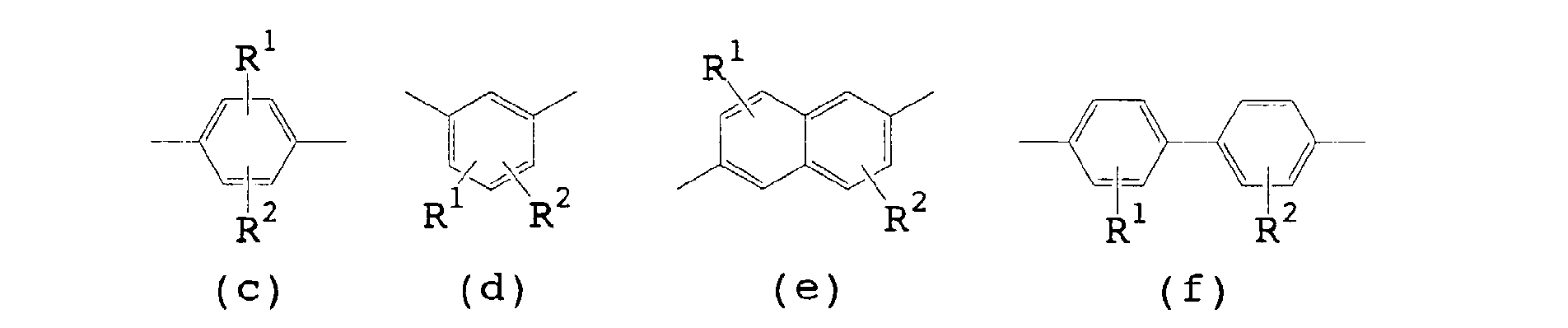
which is in the form of particles having a median diameter of 5-100 µm and whiteness of not less than 75. - The aromatic diamine/aromatic dicarboxylate of claim 1, which has a water content of not more than 3000 ppm.
- The aromatic diamine/aromatic dicarboxylate of claim 1 or 2, which comprises tin(II) or iron(II) in a proportion of 0.1-5.0 mol%.
- A production method of an aromatic diamine/aromatic dicarboxylate of any of claims 1 to 3, which comprises adding, for mixing, an aqueous solution of an aromatic diamine hydrochloride of the following formula (II)
- A production method of a polybenzazole , which comprises using the aromatic diamine/aromatic dicarboxylate of any of claims 1 to 3.
Applications Claiming Priority (2)
| Application Number | Priority Date | Filing Date | Title |
|---|---|---|---|
| JP35955199 | 1999-12-17 | ||
| JP35955199A JP2001172238A (en) | 1999-12-17 | 1999-12-17 | Aromatic diamine/aromatic dicarboxylic acid salt and method for producing the same |
Publications (2)
| Publication Number | Publication Date |
|---|---|
| EP1108709A1 true EP1108709A1 (en) | 2001-06-20 |
| EP1108709B1 EP1108709B1 (en) | 2004-05-26 |
Family
ID=18465089
Family Applications (1)
| Application Number | Title | Priority Date | Filing Date |
|---|---|---|---|
| EP00127722A Expired - Lifetime EP1108709B1 (en) | 1999-12-17 | 2000-12-18 | Production method of aromatic diamine/aromatic dicarboxylate |
Country Status (5)
| Country | Link |
|---|---|
| US (1) | US6617414B2 (en) |
| EP (1) | EP1108709B1 (en) |
| JP (1) | JP2001172238A (en) |
| CN (1) | CN1165517C (en) |
| DE (1) | DE60011021T2 (en) |
Families Citing this family (8)
| Publication number | Priority date | Publication date | Assignee | Title |
|---|---|---|---|---|
| JP4087017B2 (en) * | 1999-07-15 | 2008-05-14 | 本田技研工業株式会社 | Four-wheel vehicle equipped with a turning mechanism |
| CN100441615C (en) * | 2006-09-05 | 2008-12-10 | 东华大学 | A kind of preparation method of polybenzoxazole film |
| CN101209998B (en) * | 2006-12-31 | 2010-05-19 | 盐城鼎龙化工有限公司 | Method for synthesizing 5-amide-6-hydroxy-2-(4-carboxylphenyl)benzoxazole |
| CN101333304B (en) * | 2008-07-28 | 2011-09-28 | 常州市五洲化工有限公司 | Rubber antiager and method for preparing same |
| US8420862B2 (en) * | 2008-12-18 | 2013-04-16 | E I Du Pont De Nemours And Company | Process for the preparation of highly pure monomers for polybenzimidazole materials |
| RU2619126C2 (en) * | 2011-07-26 | 2017-05-12 | ДСМ АйПи АССЕТС Б.В. | Method for diamine/dicarboxylic acid salt production |
| CN113336659B (en) * | 2021-05-31 | 2023-09-08 | 中石化南京化工研究院有限公司 | A method for processing residues containing 4,6-diaminoresorcinol hydrochloride |
| CN115960354B (en) * | 2022-12-30 | 2024-05-24 | 四川大学 | Purification method of polyarylether and high-purity polyarylether |
Citations (3)
| Publication number | Priority date | Publication date | Assignee | Title |
|---|---|---|---|---|
| US5276128A (en) * | 1991-10-22 | 1994-01-04 | The Dow Chemical Company | Salts of polybenzazole monomers and their use |
| EP0805173A1 (en) * | 1996-04-30 | 1997-11-05 | Toyo Boseki Kabushiki Kaisha | Method for production of polybenzazole |
| EP0926186A1 (en) * | 1997-12-24 | 1999-06-30 | Toyo Boseki Kabushiki Kaisha | Method for producing polybenzazole |
-
1999
- 1999-12-17 JP JP35955199A patent/JP2001172238A/en active Pending
-
2000
- 2000-12-15 US US09/736,337 patent/US6617414B2/en not_active Expired - Fee Related
- 2000-12-17 CN CNB001371932A patent/CN1165517C/en not_active Expired - Fee Related
- 2000-12-18 DE DE60011021T patent/DE60011021T2/en not_active Expired - Fee Related
- 2000-12-18 EP EP00127722A patent/EP1108709B1/en not_active Expired - Lifetime
Patent Citations (3)
| Publication number | Priority date | Publication date | Assignee | Title |
|---|---|---|---|---|
| US5276128A (en) * | 1991-10-22 | 1994-01-04 | The Dow Chemical Company | Salts of polybenzazole monomers and their use |
| EP0805173A1 (en) * | 1996-04-30 | 1997-11-05 | Toyo Boseki Kabushiki Kaisha | Method for production of polybenzazole |
| EP0926186A1 (en) * | 1997-12-24 | 1999-06-30 | Toyo Boseki Kabushiki Kaisha | Method for producing polybenzazole |
Also Published As
| Publication number | Publication date |
|---|---|
| CN1165517C (en) | 2004-09-08 |
| EP1108709B1 (en) | 2004-05-26 |
| US6617414B2 (en) | 2003-09-09 |
| JP2001172238A (en) | 2001-06-26 |
| CN1302794A (en) | 2001-07-11 |
| US20010014756A1 (en) | 2001-08-16 |
| DE60011021T2 (en) | 2005-05-25 |
| DE60011021D1 (en) | 2004-07-01 |
Similar Documents
| Publication | Publication Date | Title |
|---|---|---|
| JP3263946B2 (en) | Polybenzazole monomer salts and uses thereof | |
| EP1108709B1 (en) | Production method of aromatic diamine/aromatic dicarboxylate | |
| JP5280889B2 (en) | Method for producing aromatic polyamide | |
| EP0119271B1 (en) | Liquid crystalline polymer compositions, process, and products | |
| EP0213286B1 (en) | Process for the fabrication of aromatic polyamides | |
| JP5536904B2 (en) | Aromatic diamine and method for producing the same, aramid fiber and method for producing the same | |
| GB2023627A (en) | Liquid composition for light and heat stabilisation of polyamides | |
| US4178431A (en) | Aromatic copolyamide fiber from benzidine sulfone or diamino phenanthridone | |
| EP1866467B1 (en) | Process for the production of polyarenazole yarn | |
| EP0559667B1 (en) | Thermoplastically processable aromatic polyether amide | |
| US5142021A (en) | Use of reducing agents in polybenzazole synthesis | |
| CN109666142B (en) | Polyamide acid solution, preparation method and application | |
| Villuendas et al. | Alternating Copoly (ester amide) s derived from Amino Alcohols and l‐Tartaric and Succinic Acids | |
| US9115244B2 (en) | Process for forming an aramid copolymer | |
| IE72205B1 (en) | Process for preparing artomatic polyamides of high hydrolysis resistance | |
| JP3906954B2 (en) | 4,6-diaminoresorcinol and / or salt thereof, method for producing polybenzbisoxazole obtained therefrom, and molded article thereof | |
| JP3918976B2 (en) | Preservation method of phenylenediamine derivative hydrochloride | |
| JP5063583B2 (en) | High intrinsic viscosity polymers and fibers obtained therefrom | |
| US5151490A (en) | Polybenzoxazoles having pendant methyl groups | |
| JPH08113706A (en) | Aramid composition | |
| JP5302674B2 (en) | Method for producing polyareneazole with high intrinsic viscosity using metal powder | |
| KR0167001B1 (en) | Process for preparing full-dull polyester resin | |
| JP2007161757A (en) | Aromatic diamine/aromatic dicarboxylic acid salt and method for producing the same | |
| KR100565133B1 (en) | How to stabilize 4,6-diaminoresorcinol and its salts | |
| JPH0416490B2 (en) |
Legal Events
| Date | Code | Title | Description |
|---|---|---|---|
| PUAI | Public reference made under article 153(3) epc to a published international application that has entered the european phase |
Free format text: ORIGINAL CODE: 0009012 |
|
| AK | Designated contracting states |
Kind code of ref document: A1 Designated state(s): DE FR GB NL |
|
| AX | Request for extension of the european patent |
Free format text: AL;LT;LV;MK;RO;SI |
|
| 17P | Request for examination filed |
Effective date: 20011205 |
|
| AKX | Designation fees paid |
Free format text: DE FR GB NL |
|
| 17Q | First examination report despatched |
Effective date: 20020606 |
|
| RTI1 | Title (correction) |
Free format text: PRODUCTION METHOD OF AROMATIC DIAMINE/AROMATIC DICARBOXYLATE |
|
| GRAP | Despatch of communication of intention to grant a patent |
Free format text: ORIGINAL CODE: EPIDOSNIGR1 |
|
| GRAS | Grant fee paid |
Free format text: ORIGINAL CODE: EPIDOSNIGR3 |
|
| GRAA | (expected) grant |
Free format text: ORIGINAL CODE: 0009210 |
|
| AK | Designated contracting states |
Kind code of ref document: B1 Designated state(s): DE FR GB NL |
|
| REG | Reference to a national code |
Ref country code: GB Ref legal event code: FG4D |
|
| REF | Corresponds to: |
Ref document number: 60011021 Country of ref document: DE Date of ref document: 20040701 Kind code of ref document: P |
|
| ET | Fr: translation filed | ||
| PLBE | No opposition filed within time limit |
Free format text: ORIGINAL CODE: 0009261 |
|
| STAA | Information on the status of an ep patent application or granted ep patent |
Free format text: STATUS: NO OPPOSITION FILED WITHIN TIME LIMIT |
|
| 26N | No opposition filed |
Effective date: 20050301 |
|
| PGFP | Annual fee paid to national office [announced via postgrant information from national office to epo] |
Ref country code: NL Payment date: 20081215 Year of fee payment: 9 |
|
| PGFP | Annual fee paid to national office [announced via postgrant information from national office to epo] |
Ref country code: FR Payment date: 20081212 Year of fee payment: 9 |
|
| PGFP | Annual fee paid to national office [announced via postgrant information from national office to epo] |
Ref country code: DE Payment date: 20081211 Year of fee payment: 9 |
|
| PGFP | Annual fee paid to national office [announced via postgrant information from national office to epo] |
Ref country code: GB Payment date: 20081217 Year of fee payment: 9 |
|
| REG | Reference to a national code |
Ref country code: NL Ref legal event code: V1 Effective date: 20100701 |
|
| GBPC | Gb: european patent ceased through non-payment of renewal fee |
Effective date: 20091218 |
|
| REG | Reference to a national code |
Ref country code: FR Ref legal event code: ST Effective date: 20100831 |
|
| PG25 | Lapsed in a contracting state [announced via postgrant information from national office to epo] |
Ref country code: FR Free format text: LAPSE BECAUSE OF NON-PAYMENT OF DUE FEES Effective date: 20091231 Ref country code: NL Free format text: LAPSE BECAUSE OF NON-PAYMENT OF DUE FEES Effective date: 20100701 |
|
| PG25 | Lapsed in a contracting state [announced via postgrant information from national office to epo] |
Ref country code: DE Free format text: LAPSE BECAUSE OF NON-PAYMENT OF DUE FEES Effective date: 20100701 |
|
| PG25 | Lapsed in a contracting state [announced via postgrant information from national office to epo] |
Ref country code: GB Free format text: LAPSE BECAUSE OF NON-PAYMENT OF DUE FEES Effective date: 20091218 |