Technical Field
The present invention relates to a method for
measuring a water concentration in ammonia. More
specifically, the present invention relates to a method
for measuring a water concentration in ammonia using
infrared spectrometry, particularly, a concentration of
trace water contained in high-purity ammonia used as a raw
material in the production of a semiconductor, for example,
a GaN-type compound semiconductor, and to an infrared
measuring apparatus using the method, to a method for
producing ammonia having a decreased water content, to
ammonia having a decreased water content, and to a
semiconductor nitride film and group III-V compound
semiconductor produced using the ammonia.
Background Art
It is known that the water content of a raw material
gas used in the production of a semiconductor greatly
affects the device characteristics. In particular, for
the production of a GaN crystal, which is one of the blue
light emitting devices, ammonia having a low water
concentration is necessary. In order to measure the water
concentration in ammonia, various methods have heretofore
been proposed. Particularly for measuring water content
in a low concentration in ammonia, (1) gas chromatography
(GC method), (2) thermal decomposition dew point method,
(3) laser spectrometry and (4) infrared spectrometry are
known.
JP-A-9-142833 (the term JP-A as used herein means
"unexamined published Japanese patent application")
discloses a method of reacting water in ammonia with
calcium carbide as a reacting agent and detecting the
acetylene generated by GC method. This method has a
problem in that not only the water content but also
organic impurities in the calcium carbide reacted are
detected and to avoid this, high-purity and stabilized
calcium carbide is necessary but this is hardly available
at present. In addition, the GC method is low in the
accuracy and not practical for the analysis in the level
of several ppm or less because the system has a switch
cock for feeding a sample or a backflash cock for removing
ammonia before it enters the detector, and the water
adsorption onto the inner surface of pipelines increases.
SEMI Standard (SEMI C3.12-94) and JP-A-8-201370
describe a thermal decomposition dew point method. The
thermal decomposition dew point method is a method of
decomposing ammonia into nitrogen and hydrogen at a high
temperature near 1,000°C using a Ni catalyst or a noble
metal catalyst, and measuring the water content by a dew-point
instrument. According to this method, oxygen in the
gas reacts with hydrogen to produce water and the water
content could be determined in excessive values. Oxygen
is contained not only in the raw material gas but also as
an oxide of the catalyst or pipeline material exposed to
high temperatures, which may also cause hydrogen reduction
to produce water. Therefore, the reliability for accuracy
decreases in the measurement of water content of 1 ppm or
less. Moreover, use of flammable ammonia in a high
temperature environment of 1,000°C or more is dangerous
and safety equipment in a large scale is necessary. Thus,
this method is not simple and convenient.
Laser spectrometry is described in Proceedings of
the 5th International Symposium on Semiconductor
Manufacturing (1996, jointly sponsored by UCS/IEEE/SEMI),
page 321. In measuring the water absorption in the near
infrared region by laser spectrometry, since water is
present in the vicinity of ammonia in the absorption
region, a wavelength resolving power of high level is
necessary. However, at present the separation cannot be
attained due to the interaction between gas molecules.
Therefore, ammonia gas having a decreased water content as
low as negligible must be used as a reference gas.
However, it has been heretofore difficult to simply and
conveniently prepare high-purity ammonia which has a
decreased water content and can be used as the reference
gas.
The infrared spectrometry has a problem in that the
ammonia has a broad absorption band and particularly when
a water concentration of 100 ppm or less is measured, the
absorptions by ammonia and the absorptions by water cannot
be easily separated even if the former are weak because
such an absorption by ammonia is present near the
absorption by water in many cases. Furthermore, similarly
to the above-described laser spectrometry, ammonia gas
having a decreased water content as low as negligible must
be used as a reference gas but this has been heretofore
difficult to obtain.
As described above, conventionally known methods for
measuring a water concentration in ammonia have various
problems particularly in the case of measuring the water
content in a low concentration in ammonia. Thus, more
improvements are being demanded.
DISCLOSURE OF THE INVENTION
The present invention has been made under these
circumstances and the objects of the present invention are
to provide a method for measuring a water concentration in
ammonia, in particular a method for measuring a water
concentration in ammonia using infrared spectrometry,
which can measure the water content particularly in a low
concentration in ammonia, and to provide an infrared
measuring apparatus using the method, a method for
producing ammonia having a decreased water content,
ammonia having a decreased water content, and a
semiconductor nitride film and group III-V compound
semiconductor produced using the ammonia.
MEANS TO SOLVE THE PROBLEMS
As a result of extensive investigations to attain
these objects, the present inventors have found that in
the method of measuring a water concentration in ammonia
using infrared spectrometry, the gaseous phase moiety of
liquefied ammonia having a water concentration of 10 ppm
or less can be used as a reference gas because the water
content is very small. Furthermore, the present inventors
have found that the above-described objects can be
attained by using a method of introducing an ammonia gas
into a multi-reflection long optical path cell at a
constant flow rate and measuring it at a wave number
having no overlapping between the infrared absorption by
ammonia and the infrared absorption by water, in
combination with an infrared measuring apparatus equipped
with a vaporizer for vaporizing the liquefied ammonia and
a flow rate-controlling unit. The present invention has
been accomplished based on these findings.
That is, the present invention relates to a method
for measuring a water concentration in ammonia using
infrared spectrometry, an infrared measuring apparatus, a
method for producing ammonia having a decreased water
content, ammonia having a decreased water content, and a
semiconductor nitride film and group III-V compound
semiconductor produced using the ammonia as described in 1
to 21 below:
BRIEF DESCRIPTION OF DRAWINGS
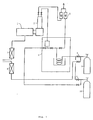
Fig. 1 is a view showing an apparatus for infrared
spectrometry for measuring a water concentration in
ammonia according to the present invention.
Fig. 2 is an enlarged cross sectional view of the
long optical path cell shown in Fig. 1.
Fig. 3 is an enlarged view showing the vaporization
unit shown in Fig. 1.
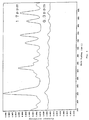
Fig. 4 is a diagram showing-infrared absorption
spectra of water in ammonia measured by the method of the
present invention.
MODE FOR CARRYING OUT THE INVENTION
The present invention provides "a method for
measuring a water concentration in ammonia, where the
gaseous phase moiety of liquefied ammonia having a water
concentration of 10 ppm or less is used as a reference gas,
ammonia is introduced into a multi-reflection long optical
path cell at a constant flow rate and the infrared
absorption intensity is measured at a wave number having
no overlapping of the infrared absorption by ammonia and
the infrared absorption by water," and also provides "an
infrared measuring apparatus capable of measuring the
water content in both ammonia gas and liquefied ammonia,
which is equipped with a vaporizer halving a function of
controlling the temperature and a flow rate controlling
unit for introducing a gas into a gas cell at a constant
flow rate," "a method for producing ammonia having a
decreased water content, comprising the steps of purifying
crude ammonia and measuring a water concentration in the
ammonia using the above-described measurement method,"
"ammonia having a decreased water content as low as 1 ppm
or less obtained by the above method," and "a
semiconductor nitride film and group III-V compound
semiconductor produced using the above-described ammonia
having a decreased water content."
As described above, in the case of measuring the
water content in ammonia by infrared spectrometry ammonia
gas having water content as small as negligible needs be
used as a reference gas. To this purpose, the present
inventors have measured the gas-liquid partition
coefficient of water distributed to the gaseous phase and
the liquid phase of liquefied ammonia and as a result,
this was revealed to be a very small value with gaseous
phase concentration/liquid phase concentration being from
0.01 to 0.1. Heretofore, no paper has reported on the
gas-liquid partition coefficient of liquefied ammonia in a
water concentration region of 10 ppm or less. However,
from the result above, it has been found that the gaseous
phase of ammonia having a very low liquid phase water
concentration is ammonia gas having a decreased water
content as low as negligible and can be used as the
reference gas in the infrared spectrometry of the present
invention.
At this time the calibration curve used for the
determination of a water concentration is obtained by
mixing 50% of the above described ammonia gas having a
very low water concentration and 50% of nitrogen having a
water concentration of from 0. 5 to 2 ppm and determining
the correlation between the water concentration and the
infrared absorption intensity at a measurement wave number
selected from the ranges of from 3,500 to 4,000 cm-1, from
2,600 to 3,100 cm-1, and from 1,900 to 2,400 cm-1. For
simply determining the water concentration of ammonia gas,
it may also be possible to correct and convert a value
obtained from a water concentration calibration curve of
nitrogen 100% gas.
When the infrared absorption wave number of ammonia
and the infrared absorption wave number of water are
examined in particular, the infrared absorption wave
numbers of water present in the ranges of from 3,500 to
4,000 cm-1, from 2,600 to 3,100 cm-1 and from 1,900 to
2,400 cm-1 are found to be small in the influence of
ammonia and free of overlapping with the infrared
absorption by ammonia. Therefore, the infrared absorption
intensity is measured using one or more of wave numbers
falling within these ranges, preferably one or more wave
number selected from the group consisting of 3600, 3609,
3612, 3619, 3629, 3634, 3649, 3656, 3670, 3675, 3688, 3691,
3701, 3709, 3712, 3719, 3722, 3727, 3732, 3736, 3741, 3744,
3749, 3752, 3756, 3759, 3766, 3770, 3779, 3785, 3796, 3801,
3807, 3816, 3821, 3826, 3831, 3835, 3837, 3840, 3843, 3854,
3862, 3865, 3870, 3874, 3880, 3885, 3891, 3894, 3899, 3902
and 3904 cm-1 (variation width: ±1 cm-1), more preferably
one or more wave number selected from the group consisting
of 3801, 3807, 3816, 3821, 3837 and 3854 cm-1 (variation
width: ±1 cm).
Ammonia gas is introduced into a multiple reflection
long optical path cell and determined on the infrared
absorption intensity. The infrared measuring apparatus of
the present invention has a vaporization unit so that it
can analyze even liquefied ammonia and can be suitably
used for the measurement of a trace water concentration of
10 ppm or less in ammonia. At the time of introducing
ammonia gas into the multiple reflection long optical path
cell, the flow rate of ammonia gas is controlled using a
flow rate controlling unit. The flow rate is constant and
is suitably from 0.1 to 5 L/min, preferably from 0.5 to 3
L/min. If the flow rate is less than 0.1 L/min.
reproducibility of the measurement results cannot be
obtained. Whereas if the flow rate exceeds 5 L/min, the
ammonia gas disadvantageously contaminates the measurement
environment. The infrared ray is multi-reflected so as to
increase the sensitivity, and the optical path length here
is suitably from 1 to 40 m, preferably from 2 to 30 m,
more preferably from 4 to 20 m. With this optical path
length, the sensitivity is remarkably improved and good
sensitivity can be obtained.
The method for measuring a water concentration in
ammonia and the infrared measuring apparatus of the
present invention are described below by referring to a
schematic view of the apparatus shown in Fig. 1.
The apparatus shown in Fig. 1 is an apparatus for
infrared spectrometry, equipped with an infrared
spectroscope 1 for measuring water absorption intensity, a
long optical path gas cell 2 for introducing ammonia gas,
a vaporization unit 3 for vaporizing liquefied ammonia, a
connecting line 4 for connecting a measurement sample
cylinder 9, a connecting line 5 for connecting a reference
gas cylinder 10, a water adsorption barrel 6 for drying
nitrogen used for purging the pipelines, a water
adsorption barrel 7 for drying nitrogen used for purging
the infrared spectroscope, and a flow meter 8.
For measuring the water content in ammonia, the
measurement sample cylinder 9 and the reference gas
cylinder 10 are connected to the connecting line 4 and the
connecting line 5, respectively. Dry nitrogen passed
through the adsorption barrel 6 is allowed to flow through
the connecting lines 4 and 5, a flow rate controlling unit
19 shown in Fig. 3 is adjusted to give a constant flow
rate in the flow meter 8, and the pipelines are dried for
30 minutes or more.
Subsequently dry nitrogen is introduced into the
long optical path gas cell 2. Fig. 2 is an enlarged cross
sectional view of a long optical path cell part. In Fig.
2, reference numeral 11 denotes an infrared ray reflection
mirror, 12 denotes an acuminous barrel, 13 denotes a gas
inlet valve, 14 denotes a gas outlet valve, 15 is an
infrared ray entering window, and 16 denotes an infrared
exiting window. The inside of the gas cell 2 is dried to
decrease the water content in nitrogen introduced in the
gas cell 2 to 1 ppm or less. Thereafter, feeding of dry
nitrogen is stopped and then ammonia gas is introduced
from the reference gas cylinder into the gas cell 2. At
this time, similarly to nitrogen, the flow rate is
controlled to a constant flow rate by the flow rate-controlling
unit 19. The reference gas is passed for 60
minutes or more and after replacing the gas in the gas
cell 2, the infrared absorption spectrum is measured. The
results obtained are used as the background of the
infrared spectroscope 1.
Then, passing of the reference gas is stopped and
ammonia gas or liquefied ammonia is allowed to flow from
the measurement sample cylinder 9 connected to the
connecting line 4. In the case of ammonia gas, the gas
flow rate is controlled to a constant flow rate by the
flow rate-controlling unit 19. In the case of liquefied
ammonia, a thermostatic chamber 17 is set at a temperature
of from 40 to 150°C and after the liquefied ammonia
flowing through the heated vaporizer 18 is vaporized, the
gas is controlled to a constant flow rate. In either case,
the gas is passed through the gas cell at the same flow
rate as in the measurement of the reference gas for 60
minutes or more and after replacing the gas within the gas
cell 2, the water absorption intensity is measured.
Fig. 3 shows a vaporization unit 3 which is used in
the case of measuring the water content of liquefied
ammonia. Liquefied ammonia is introduced into the SUS
made vaporizer 18 (diameter: 1/4" to 1/16", length: 0.5 to
5 m) heated at from 40 to 150°C using the thermostatic
chamber 17 and after the gasification by heating, the flow
rate is controlled by the flow rate controlling unit 19.
The gas flow rate is suitably from 0.1 to 5 L/min.
Fig. 4 shows the results obtained when two kinds of
liquefied ammonia different in the water concentration
(1.7 ppm , or 0.3 ppm) each is vaporized using the
vaporization unit 3 with the background of the reference
gas and the ammonia gas is introduced into a gas cell
having an optical path length of 10 m at a flow rate of 2
L/min and analyzed. From the results obtained, it is seen
that the wave number used in the measurement is preferably
3801±1 cm-1, 3807±1 cm-1, 3816±1 cm-1, 3821±1 cm-1, 3837±1
cm-1 or 3854±1 cm-1.
Next, the method for producing ammonia having a
decreased water content will be described below.
The method for producing ammonia having a decreased
water content according to the present invention comprises
the steps of purifying crude ammonia and measuring a water
concentration using the above-described measurement method.
The water content of ammonia produced using the method for
producing ammonia having a decreased water content
according to the present invention is 1 ppm or less,
preferably 0.1 ppm or less.
As the crude ammonia provided in the purifying step,
any ammonia produced by conventional industrial production
methods may be used and the water content thereof is not
particularly limited and preferably 100 to 1,000 ppm. The
method which is used in the step of purifying ammonia may
be a method which uses, for example, distillation. The
distillation method may be either simple distillation or
rectification as far as the water content can be decreased
sufficiently. The method may be either a batch process or
a continuous process.
Further, as the method used in the step of purifying
ammonia, a method in which crude ammonia is contacted with
a purifying agent, e.g., a metal such as zirconium, barium,
or calcium or oxides thereof, alloy of iron and manganese,
zeolite, etc. may be used. These purifying agents may be
used alone or two or more of them may be used as mixtures
in any desired proportions to remove water in ammonia by
reaction or adsorption to thereby purify the ammonia. The
method in which ammonia is contacted with a purifying
agent is preferably a method in which ammonia is contacted
with it in a gaseous phase and purification may be
performed using a batch process, continuous process, etc.
Any purification method may be used as far as the water
content in ammonia can be decreased sufficiently.
Next, semiconductor nitride film of the present
invention will be described.
As described above, use of the production method of
the present invention enables production of ammonia having
a decreased water content and use of ammonia having a
water content of 1 ppm or less enables production of a
semiconductor nitride film. That is, the ammonia having a
decreased water content can be used as a raw material gas
serving as nitrogen source for producing a nitride film by
chemical vapor deposition method (CVD method). In this
case, as the gas for forming a nitride film by reacting
with ammonia gas, compounds of silicon, titanium, aluminum,
tantalum, tungsten, etc.
Representative methods for producing nitride films
include high temperature thermal CVD method, plasma CVD
method, and optical CVD method, from which the production
method can be selected depending on the purpose for which
the resulting nitride films are utilized. For example,
silicon nitride films can be produced by the reaction
between the ammonia gas and a hydride or halide of silicon
by a high temperature thermal CVD method. When the
nitride films are formed, use of ammonia having a low
content of water can decrease SixNyHz forms in which H is
bonded to Si and N in the form of Si-H and N-H, so that
the performance of semiconductors can be increased.
Further, use of the ammonia having a decreased water
content as described above enables production of group
III-V compound semiconductors as shown in the following
examples.
First, a sapphire substrate is contained in a
reaction chamber and supported on a supporting portion,
the reaction chamber is evacuated, and the sapphire
substrate is heated to preferably 400°C using a heater.
Then, organogallium such as trimethylgallium and
organoaluminum such as trimethylaluminum contained in the
container are introduced together with H2 gas into the
reaction chamber through respective inlet conduits. At
the same time, the ammonia gas supplied from a filling
apparatus is introduced into the reaction chamber through
an inlet conduit. The organogallium gas, organoaluminum
gas, and ammonia gas are used as raw materials to form a
buffer layer consisting of AlxGa1-xN on the surface of the
sapphire substrate.
Next, the temperature of the substrate is elevated
to about 1,150°C and a Si compound such as silane is
supplied into the reaction chamber through a conduit along
with supply of the above organogallium, organoaluminum,
and ammonia gases to form an n-type clad layer on the
buffer layer. Then, together with the above organogallium,
organoaluminum, and ammonia gases, a Zn compound such as
dimethylzinc supplied from a container is supplied into
the reaction chamber through a conduit to form an active
layer on the n-type clad layer. Further, together with
the above organogallium, organoaluminum, and ammonia gases,
an Mg compound such as biscyclopentadienyl magnesium from
a container is supplied into the reaction chamber through
a conduit to form a p-type clad layer on the active layer.
Thereafter, the epitaxial wafer thus fabricated is taken
out from the reaction chamber and electrodes are provided
on the n-type and p-type clad layers to obtain a GaN-type
compound semiconductor device.
According to a production method presented as an
example of the above embodiment, the resulting GaN-type
compound semiconductor device is excellent in emission
characteristics such as luminance. Therefore, production
yield can be improved. The reason why the GaN-type
compound semiconductor device fabricated by the above
production example is excellent in emission
characteristics is believed to be attributable to the fact
that the decrease in water content in ammonia to 1 ppm or
less, preferably 0.1 ppm or less can keep the amount of
oxygen which contaminates the n-type and p-type clad
layers and active layer formed from the ammonia as raw
material to a low level and as a result can prevent the
crystallinity of the layers composed of the GaN-type
compound semiconductor from being deteriorated.
To add, although in the above embodiment, methods
for forming n-type and p-type clad layers and active layer
of AlxGa1-xN as a main component using-the above ammonia as
a raw material are exemplified, the present invention is
not limited thereto. The above-described ammonia may be
used in the production of group III-V compound
semiconductors by forming on a substrate layers of group
III-V compounds such as those containing Ga, In, Al, or B,
as a group IIIB element and N, As, or P as a group VB
element, for example, GaN, InGaN, BGaN, AlGaN, InGaAlN,
GaNAs, GaNAsP, InGaNAs, etc.
Hereafter, the present invention will be described
in more detail by an example. However, the present
invention is not limited to the example.
Example
Crude ammonia having a water content of 300 ppm was
continuously purified by distillation under the following
conditions. The water content of the obtained liquid
phase ammonia was measured by infrared spectrometry under
the following conditions to be 0.1 ppm.
| Amount of introduced crude ammonia: | 21 kg/hr |
| Amount of separated high boiling component: | 3 kg/hr |
| Amount of distilled ammonia: | 18 kg/hr |
| Reflux ratio: | 2 |
| Inner pressure of distillation tower: | 0.64 MPa |
(2) Water content measurement conditions
Measurement apparatus
MAGNA IR560 SPECTROMETRE, manufacture by NICOLET
INSTRUMENT Corp.
Measurement wave number3801 cm-1, 3807 cm-1, 3816 cm-1, 3821 cm-1, 3837 cm-1,
3854 cm-1
| Ammonia gas flow rate | 2 L/min |
| Optical path length | 10 m |
| Vaporization temperature | 80°C |
| Reference gas | Gaseous phase of purified ammonia distillate |
| Reference gas flow rate | 2 L/min |
INDUSTRIAL APPLICABILITY
As described in the foregoing pages, according to
the method and apparatus for measuring a water
concentration in ammonia of the present invention, one or
more wave number in the ranges of from 3,500 to 4,000 cm-1,
from 2,600 to 3,100 cm-1 and from 1,900 to 2,400 cm-1 is
used, so that water in a low concentration region of 10
ppm or less can be simply and easily analyzed not only in
ammonia gas but also in liquefied ammonia by controlling
the temperature and vaporizing it. Furthermore, removal
of water in ammonia or the effect of water concentration
on the device characteristics can be estimated, so that
productivity in the production process can be elevated.
Furthermore, use of ammonia having a decreased water
content obtained by the production method of the present
invention enables improvement in the performance of
semiconductor and production of compound semiconductors
with excellent emission properties.