BACKGROUND OF THE INVENTION
1. Field of the Invention
The present invention relates to a dynamic
virtual-channel management circuit and a device
whereto the dynamic virtual-channel management
circuit is applied. More particularly, the present
invention relates to a dynamic virtual-channel
management circuit that manages a virtual channel
dynamically in an ATM communication device, and a
device whereto the dynamic virtual-channel
management circuit is applied.
2. Description of the Related Art
Recently, the demand for data
communication has been increasing rapidly. In the
data communication, since a high layer such as an IP
(Internet Protocol) transfers data for every frame,
a data transmission using an ATM (Asynchronous
Transfer Mode) service is also executed for every
frame. Accordingly, in a case that the ATM is
applied to the data transmission, an AAL5 (AAL Type
5) is used for an AAL (ATM Adaptation Layer) located
between the high layer and the ATM layer so that a
cell header of an ATM cell can include information
that indicates a beginning and an end of the ATM
cell in the frame.
The cell header of an ATM cell includes
the information as described below. The high layer
is initially divided into cells for each virtual
channel (VC). An AAL5-type ATM cell includes a
value "1" for the least significant bit in a 3-bit
PTI (Payload-Type Identifier) field in its cell
header, that is, an AUU (ATM-User to ATM-User
Indication) bit in the PTI field. Other ATM cells
include the value "0" for their AUU bit.
Accordingly, the beginning and the end of a frame
with AAL5-type ATM cells are detected by monitoring
the AUU bit of the ATM cells supplied to the dynamic
virtual-channel management circuit.
A user of virtual channels generally
contracts for each virtual channel in an ATM service,
and sets up a connection for each virtual channel.
However, there exists a network device that only
operates a Virtual Path (VP) as a unit so that the
device cannot obtain contract information of each
virtual channel. Accordingly, the user cannot know
how the virtual channel is multiplexed in the
virtual path.
FIGS. 1A and 1B show a multiplexed virtual
channel. In FIGS. 1A and 1B, a black square shows a
cell in a frame 1 of a virtual channel 1 (VC1) and a
cell in a frame 2 of the virtual channel 1, and a
white square shows a cell in a frame 1 of a virtual
channel 2 (VC2) and a cell in a frame 2 of the
virtual channel 2.
If a terminal device outputs data for
every frame as shown in FIG. 1A, it is very simple
to handle each frame of the virtual channels 1 and 2.
However, the virtual channels 1 and 2 are generally
multiplexed as shown in FIG. 1B so that each end of
frames of the virtual channels 1 and 2 is
unidentified. Consequently, an operation such as an
EPD (Early Packet Discard) operation or a PPD
(Partial Packet Discard) operation for a frame unit
cannot be executed so that communication performance
of data between the terminal device and other
network devices is aggravated.
SUMMARY OF THE INVENTION
Accordingly, it is a general object of the
present invention to provide a dynamic virtual-channel
management circuit that executes a data
operation for a frame unit in a network device which
cannot obtain contract information of an AAL5-type
virtual channel wherein the operation for a frame
unit is enabled, by extracting the AAL5-type virtual
channel from an AAL5-type ATM cell, and registering
the AAL5-type virtual channel to a virtual-channel
management memory, in which the disadvantages
described above are eliminated.
The above-described object of the present
invention is achieved by a dynamic virtual-channel
management circuit, including a virtual-channel
detecting unit that detects a specific virtual
channel among virtual channels provided to the
dynamic virtual-channel management circuit, and a
virtual-channel management memory that stores
contract information on the specific virtual channel
detected by the virtual-channel detecting unit.
Additionally, it is another object of the
present invention to provide a device whereto the
above-described dynamic virtual-channel management
circuit is applied.
The above-described object of the present
invention is achieved by a device including a
dynamic virtual-channel management circuit including
a virtual-channel detecting unit that detects a
specific virtual channel among virtual channels
provided to the dynamic virtual-channel management
circuit, and a virtual-channel management memory
that stores contract information on the specific
virtual channel detected by the virtual-channel
detecting unit, a first cell-buffer that stores ATM
cells other than an ATM cell with the specific
virtual channel, a second cell-buffer that stores
the ATM cell with the specific virtual channel, and
a buffer selecting unit that supplies the ATM cells
other than the ATM cell with the specific virtual
channel to the first cell-buffer, and the ATM cell
with the specific virtual channel to the second
cell-buffer.
Other objects, features and advantages of
the present invention will become more apparent from
the following detailed description when read in
conjunction with the accompanying drawings.
BRIEF DESCRIPTION OF THE DRAWINGS
FIGS. 1A and 1B are diagrams showing a
multiplexed virtual channel;
FIG. 2 is a block diagram showing a
dynamic virtual-channel management circuit according
to a first embodiment of the present invention;
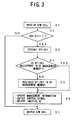
FIG. 3 is a flowchart showing a process
taken by the dynamic virtual-channel management
circuit according to the first embodiment of the
present invention;
FIG. 4 is a diagram showing a format of a
registration request;
FIG. 5 is a block diagram showing a
dynamic virtual-channel management circuit according
to a second embodiment of the present invention;
FIG. 6 is a diagram showing a function of
a time counter in the dynamic virtual-channel
management circuit according to the second
embodiment of the present invention;
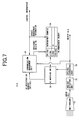
FIG. 7 is a block diagram showing a
dynamic virtual-channel management circuit according
to a third embodiment of the present invention;
FIG. 8 is a flowchart showing a process
taken by the dynamic virtual-channel management
circuit according to the third embodiment of the
present invention;
FIG. 9 is a block diagram showing a
dynamic virtual-channel management circuit according
to a fourth embodiment of the present invention;
FIG. 10 is a block diagram showing a
dynamic virtual-channel management circuit according
to a fifth embodiment of the present invention;
FIG. 11 is a block diagram showing a
dynamic virtual-channel management circuit according
to a sixth embodiment of the present invention;
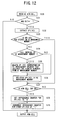
FIG. 12 is a flowchart showing a process
taken by the dynamic virtual-channel management
circuit according to the sixth embodiment of the
present invention;
FIG. 13 is a block diagram showing a
dynamic virtual-channel management circuit according
to a seventh embodiment of the present invention;
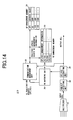
FIG. 14 is a block diagram showing a
dynamic virtual-channel management circuit according
to an eighth embodiment of the present invention;
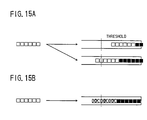
FIGS. 15A and 15B are diagrams showing an
EPD operation of ATM cells;
FIG. 16 is a block diagram showing a first
embodiment of a virtual-channel management device
whereto a dynamic virtual-channel management circuit
according to the present invention is applied;
FIG. 17 is a flowchart showing the EPD
operation executed by the first embodiment of the
virtual-channel management device;
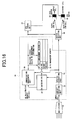
FIG. 18 is a diagram showing a format of
control information;
FIGS. 19A, 19B and 19C are diagrams
showing a PPD operation of ATM cells.
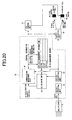
FIG. 20 is a block diagram showing a
second embodiment of a virtual-channel management
device whereto a dynamic virtual-channel management
circuit according to the present invention is
applied;
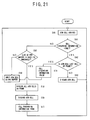
FIG. 21 is a flowchart showing the PPD
operation executed by the second embodiment of the
virtual-channel management device;
FIG. 22 is a block diagram showing a
dynamic virtual-channel management circuit according
to a ninth embodiment of the present invention;
FIG. 23 is an ATM cell format with a tag;
FIG. 24 is a block diagram showing a
dynamic virtual-channel management circuit according
to a tenth embodiment of the present invention;
FIG. 25 is a block diagram showing a
dynamic virtual-channel management circuit according
to an eleventh embodiment of the present invention;
FIG. 26 is a block diagram showing a
dynamic virtual-channel management circuit according
to a twelfth embodiment of the present invention;
FIG. 27 is a block diagram showing a third
embodiment of a virtual-channel management device
whereto a dynamic virtual-channel management circuit
according to the present invention is applied; and
FIG. 28 is a block diagram showing a
fourth embodiment of a virtual-channel management
device whereto a dynamic virtual-channel management
circuit according to the present invention is
applied.
DESCRIPTION OF THE PREFERRED EMBODIMENTS
A description will now be given of
preferred embodiments of the present invention, with
reference to the accompanying drawings.
FIG. 2 is a block diagram showing a
dynamic virtual-channel management circuit according
to a first embodiment of the present invention.
Additionally, FIG. 3 is a flowchart showing a
process taken by the dynamic virtual-channel
management circuit according to the first embodiment
of the present invention.
A dynamic virtual-channel (VC) management
circuit 20 includes an AUU-bit detecting unit 22, a
VPI/VCI extracting unit 24, a VC management memory
26, a VC matching unit 28 and a communication
management unit 30.
In FIG. 2, plural ATM cells with various
AALs such as an AAL5, an AAL2 and an AAL1 are
initially multiplexed by a multiplexer 10 located
outside the dynamic VC management circuit 20, and
are supplied to the AUU-bit detecting unit 22 of the
dynamic VC management circuit 20. After an ATM cell
is received at a step S1 of FIG. 3, the AUU-bit
detecting unit 22 checks an AUU bit, that is, the
least significant bit in a 3-bits PTI field located
in the cell header of the ATM cell at a step S2.
If the AUU bit of the ATM cell is a value
"0", that is, the ATM cell is not an AAL5-type ATM
cell, the ATM cell is transferred to the VPI/VCI
extracting unit 24, and is outputted therefrom to
other devices located outside the dynamic VC
management circuit 20 at a step S7.
If the AUU bit of the ATM cell is a value
"1", that is, the ATM cell is an AAL5-type ATM cell,
the AUU-bit detecting unit 22 requests the VPI/VCI
extracting unit 24 to extract a VPI (Virtual Path
Identifier) and a VCI (Virtual Channel Identifier)
from the ATM cell. It should be noted that the VPI
and the VCI are expressed as the VPI/VCI,
hereinafter.
Subsequently, at a step S3, the VPI/VCI
extracting unit 24 extracts the VPI/VCI that is
requested by the AUU-bit detecting unit 22 to be
extracted from the AAL5-type ATM cell among ATM
cells supplied through the AUU-bit detecting unit 22
to the VPI/VCI extracting unit 24. At the step S3,
the VPI/VCI extracting unit 24 supplies the
extracted VPI/VCI to the VC matching unit 28, and
supplies the AAL5-type ATM cell to the communication
management unit 30.
The VC matching unit 28 compares the
VPI/VCI that is extracted by the VPI/VCI extracting
unit 24 with every VPI/VCI initially registered in
the VC management memory 26 at a step S4. If the
extracted VPI/VCI matches a VPI/VCI registered in
the VC management memory 26, the dynamic VC
management circuit 20 proceeds to a later described
step S6. If the extracted VPI/VCI do not match the
VPI/VCI registered in the VC management memory 26,
the VC matching unit 28 requests the communication
management unit 30 by use of a format shown in FIG.
4 to register the extracted VPI/VCI in the VC
management memory 26, and proceeds to a step S5. In
FIG. 4, a message type is a new registration request,
and VC identification information includes a value
of the extracted VPI/VCI. At the step S5, the
communication management unit 30 registers the
extracted VPI/VCI in the VC management memory 26.
Subsequently, at the step S6, the
communication management unit 30 updates the VC
management memory 26 with using management
information extracted from the AAL5-type ATM cell,
and outputs control information to other devices.
The above-described management information includes,
for example, information indicating whether the ATM
cell is an EOP cell of a frame. Additionally, the
communication management unit 30 monitors whether
virtual channels registered in the VC management
memory 26 are active. If an inactive virtual
channel is detected in the VC management memory 26,
the communication management unit 30 deletes the
inactive virtual channel from the VC management
memory 26. Subsequently the AAL5-type ATM cell is
outputted from the VPI/VCI extracting unit 24 to
other circuits outside the dynamic VC management
device 20 at the step S7.
According to the first embodiment of the
present invention, the dynamic VC management circuit
20 can manage only active AAL5-type virtual channels
that enable frame unit operations, by registering
AAL5-type virtual channels to the VC management
memory 26 if the AAL5-type virtual channels are
previously not in the VC management memory 26.
A description will now be given of a
dynamic VC management circuit wherein the
communication management unit 30 manages virtual
channels by use of a time counter.
FIG. 5 is a block diagram showing a
dynamic VC management circuit according to a second
embodiment of the present invention. Additionally,
FIG. 6 shows a function of a time counter in the
dynamic VC management circuit according to the
second embodiment of the present invention.
A dynamic virtual-channel (VC) management
circuit 20 includes an AUU-bit detecting unit 22, a
VPI/VCI extracting unit 24, a VC management memory
26, a VC matching unit 28 and a communication
management unit 30. As shown in FIG. 5, a time
counter is provided for each VPI/VCI in the VC
management memory 26, that is, for each virtual
channel.
Initially, plural ATM cells with various
AALs such as an AAL5, an AAL2 and an AAL1 are
multiplexed by a multiplexer 10 located outside the
dynamic VC management circuit 20, and are supplied
to the AUU-bit detecting unit 22 of the dynamic VC
management circuit 20. After an ATM cell is
received, the AUU-bit detecting unit 22 checks an
AUU bit, that is, the least significant bit in a 3-bits
PTI field located in the cell header of the ATM
cell.
If the AUU bit of the ATM cell is a value
"0", that is, the ATM cell is not an AAL5-type ATM
cell, the ATM cell is transferred to the VPI/VCI
extracting unit 24, and is outputted therefrom to
other circuits located outside the dynamic VC
management circuit 20.
If the AUU bit of the ATM cell is a value
"1", that is, the ATM cell is an AAL5-type ATM
cell, the AUU-bit detecting unit 22 requests the
VPI/VCI extracting unit 24 to extract a VPI/VCI from
the AAL5-type ATM cell. Subsequently, the VPI/VCI
extracting unit 24 extracts the VPI/VCI that is
requested by the AUU-bit detecting unit 22 to be
extracted from the AAL5-type ATM cell among ATM
cells supplied through the AUU-bit detecting unit 22
to the VPI/VCI extracting unit 24. The VPI/VCI
extracting unit 24 then supplies the extracted
VPI/VCI to the VC matching unit 28, and supplies the
AAL5-type ATM cell to the communication management
unit 30. Additionally, the VPI/VCI extracting unit
24 outputs the AAL5-type ATM cell therefrom to other
devices located outside the dynamic VC management
circuit 20.
The VC matching unit 28 compares the
VPI/VCI that is extracted by the VPI/VCI extracting
unit 24 with every VPI/VCI initially registered in
the VC management memory 26. If the extracted
VPI/VCI does not match the VPI/VCI registered in the
VC management memory 26, the VC matching unit 28
requests the communication management unit 30 to
register the extracted VPI/VCI in the VC management
memory 26. Subsequently, the communication
management unit 30 registers the extracted VPI/VCI
in the VC management memory 26.
The communication management unit 30 then
updates the VC management memory 26 with using
management information extracted from the AAL5-type
ATM cell, and outputs control information to other
devices. The above-described management information
includes, for example, information indicating
whether the AAL5-type ATM cell is an EOP (End Of
Packet) cell of a frame. When the AAL5-type ATM
cell is detected as an EOP cell, the communication
management unit 30 resets the time counter
corresponding to the VPI/VCI of the AAL5-type ATM
cell in the VC management memory 26. The
communication management unit 30 increments a time
counter for each VPI/VCI in the VC management memory
26 each time a certain period elapses. If a number
counted by the time counter for a VPI/VCI in the VC
management memory 26 exceeds a predetermined number
before an EOP cell corresponding to the VPI/VCI is
detected, the communication management unit 30
ascertains that a timeout has occurred at the time
counter, and deletes the VPI/VCI from the VC
management memory 26.
Accordingly, the dynamic VC management
circuit 20 can delete a virtual channel that has not
been used in the dynamic VC management circuit 20
for a certain period of time, from the VC management
memory 26.
A description will now be given of a
dynamic VC management circuit according to a third
embodiment of the present invention.
FIG. 7 is a block diagram showing a
dynamic VC management circuit according to the third
embodiment of the present invention. Additionally,
FIG. 8 shows a function of the dynamic VC management
circuit according to the third embodiment of the
present invention.
A dynamic virtual-channel (VC) management
circuit 20 includes an AUU-bit detecting unit 22, a
VPI/VCI extracting unit 24, a virtual-channel (VC)
management memory 26, a VC matching unit 28 and a
communication management unit 30. As shown in FIG.
7, an infrequency counter is provided for each
VPI/VCI in the VC management memory 26. The
infrequency counter indicates how seldom the VPI/VCI
of a virtual channel corresponding to the
infrequency counter is used in the dynamic VC
management circuit 20.
Initially, plural ATM cells with various
AALs such as an AAL5, an AAL2 and an AAL1 are
multiplexed by a multiplexer 10 located outside the
dynamic VC management circuit 20, and are supplied
to the AUU-bit detecting unit 22 of the dynamic VC
management circuit 20. After an ATM cell is
received at a step S10, the AUU-bit detecting unit
22 checks an AUU bit, that is, the least significant
bit in a 3-bits PTI field located in the cell header
of the ATM cell at a step S11.
If the AUU bit of the ATM cell is a value
"0", that is, the ATM cell is not an AAL5-type ATM
cell, the ATM cell is transferred to the VPI/VCI
extracting unit 24, and is outputted therefrom to
other circuits located outside the dynamic VC
management circuit 20 at a step S19.
If the AUU bit of the ATM cell is a value
"1", that is, the ATM cell is an AAL5-type ATM
cell, the AUU-bit detecting unit 22 requests the
VPI/VCI extracting unit 24 to extract a VPI/VCI from
the AAL5-type ATM cell. Subsequently, the VPI/VCI
extracting unit 24 extracts the VPI/VCI that is
requested by the AUU-bit detecting unit 22 to be
extracted from the AAL5-type ATM cell among ATM
cells supplied through the AUU-bit detecting unit 22
to the VPI/VCI extracting unit 24 at a step S12.
The VPI/VCI extracting unit 24 then supplies the
extracted VPI/VCI to the VC matching unit 28, and
supplies the AAL5-type ATM cell to the communication
management unit 30.
The VC matching unit 28 compares the
VPI/VCI that is extracted by the VPI/VCI extracting
unit 24 with every VPI/VCI initially registered in
the VC management memory 26 at a step S13. If the
extracted VPI/VCI matches the VPI/VCI registered in
the VC management memory 26, the next step is a
later described step S15. If the extracted VPI/VCI
does not match the VPI/VCI registered in the VC
management memory 26, the VC matching unit 28
requests the communication management unit 30 to
register the extracted VPI/VCI in the VC management
memory 26. Subsequently, the communication
management unit 30 registers the extracted VPI/VCI
in the VC management memory 26 at a step S14.
The communication management unit 30 then
updates the VC management memory 26 with using
management information extracted from the AAL5-type
ATM cell, and outputs control information to other
devices. The above-described management information
includes, for example, information indicating
whether the AAL5-type ATM cell is an EOP (End Of
Packet) cell of a frame.
If the AAL5-type ATM cell is determined as
an ATM cell other than an EOP cell at the step S15,
the AAL5-type ATM cell is outputted to other devices
located outside the dynamic VC management circuit 20.
If the AAL5-type ATM cell is detected as an EOP cell
at the step S15, the communication management unit
30 resets the infrequency counter corresponding to
the VPI/VCI of the AAL5-type ATM cell in the VC
management memory 26 at a step S16. Additionally,
the communication management unit 30 increments an
infrequency counter corresponding to each VPI/VCI
other than the VPI/VCI of the AAL5-type ATM cell in
the VC management memory 26 by "1" at a step S17.
If a number counted by an infrequency counter for a
VPI/VCI exceeds a predetermined number before an EOP
cell with the VPI/VCI is detected, the communication
management unit 30 ascertains that the VPI/VCI
corresponding to the infrequency counter is not
frequently used, and deletes the VPI/VCI from the VC
management memory 26 at a step S18. Additionally,
the VPI/VCI extracting unit 24 outputs the AAL5-type
ATM cell therefrom to other devices located outside
the dynamic VC management circuit 20.
Accordingly, the dynamic VC management
circuit 20 can delete a virtual channel that is not
frequently used in the dynamic VC management circuit
20 from the VC management memory 26 when the
infrequency counter corresponding to the VPI/VCI of
the virtual channel exceeds the predetermined number.
A description will now be given of a
dynamic VC management circuit 20 that limits a
registration of a VPI/VCI to the VC management
memory 26 if there is no more space for new entries
in the VC management memory 26.
FIG. 9 is a block diagram showing a
dynamic VC management circuit according to a fourth
embodiment of the present invention.
A dynamic virtual-channel (VC) management
circuit 20 includes an AUU-bit detecting unit 22, a
VPI/VCI extracting unit 24, a virtual-channel (VC)
management memory 26, a VC matching unit 28 and a
communication management unit 30.
Initially, plural ATM cells with various
AALs such as an AAL5, an AAL2 and an AAL1 are
multiplexed by a multiplexer 10 located outside the
dynamic VC management circuit 20, and are supplied
to the AUU-bit detecting unit 22 of the dynamic VC
management circuit 20. After an ATM cell is
received, the AUU-bit detecting unit 22 checks an
AUU bit, that is, the least significant bit in a 3-bits
PTI field located in the cell header of the ATM
cell.
If the AUU bit of the ATM cell is a value
"0", that is, the ATM cell is not an AAL5-type ATM
cell, the ATM cell is transferred to the VPI/VCI
extracting unit 24, and is outputted therefrom to
other circuits located outside the dynamic VC
management circuit 20.
If the AUU bit of the ATM cell is a value
"1", that is, the ATM cell is an AAL5-type ATM
cell, the AUU-bit detecting unit 22 requests the
VPI/VCI extracting unit 24 to extract a VPI/VCI from
the AAL5-type ATM cell. Subsequently, the VPI/VCI
extracting unit 24 extracts the VPI/VCI that is
requested by the AUU-bit detecting unit 22 to be
extracted from the AAL5-type ATM cell among ATM
cells supplied through the AUU-bit detecting unit 22
to the VPI/VCI extracting unit 24. The VPI/VCI
extracting unit 24 then supplies the extracted
VPI/VCI to the VC matching unit 28, and supplies the
AAL5-type ATM cell to the communication management
unit 30.
The VC matching unit 28 compares the
VPI/VCI that is extracted by the VPI/VCI extracting
unit 24 with every VPI/VCI initially registered in
the VC management memory 26. If the extracted
VPI/VCI does not match the VPI/VCI registered in the
VC management memory 26, the VC matching unit 28
requests the communication management unit 30 to
register the extracted VPI/VCI in the VC management
memory 26. Subsequently, the communication
management unit 30 registers the extracted VPI/VCI
in the VC management memory 26.
When the VC matching unit 28 requests the
communication management unit 30 to register the
extracted VPI/VCI in the VC management memory 26, if
the communication management unit 30 receives from
the VC management memory 26 a signal indicating that
the VC management memory 26 cannot accept anymore
VPI/VCI entries, the communication management unit
30 does not register the extracted VPI/VCI to the VC
management memory 26.
If the registration of the VPI/VCI is
successfully executed, the communication management
unit 30 updates the VC management memory 26 with
using management information extracted from the
AAL5-type ATM cell, and outputs control information
to other devices. The above-described management
information includes, for example, information
indicating whether the ATM cell is an EOP cell of a
frame. Additionally, the communication management
unit 30 monitors whether virtual channels registered
in the VC management memory 26 are active. If an
inactive virtual channel is detected in the VC
management memory 26, the communication management
unit 30 deletes the inactive virtual channel from
the VC management memory 26. Additionally, the
VPI/VCI extracting unit 24 outputs the ATM cell
therefrom to other devices located outside the
dynamic VC management circuit 20.
According to the fourth embodiment of the
present invention, a new VPI/VCI is registered to
the VC management memory 26 if the VC management
memory 26 has vacancy for new entries. In other
words, the VC management memory 26 does not accept a
new entry when it has no more space for the entry.
A description will now be given of a
dynamic virtual-channel (VC) management circuit that
deletes an entry which time counter includes the
highest number among all the entries in a VC
management memory when there is no more space for a
new entry therein, and registers the new entry
thereto.
FIG. 10 is a block diagram showing a
dynamic VC management circuit according to a fifth
embodiment of the present invention.
A dynamic VC management circuit 20
includes an AUU-bit detecting unit 22, a VPI/VCI
extracting unit 24, a VC management memory 26, a VC
matching unit 28 and a communication management unit
30. As shown in FIG. 10, a VC searching circuit 32
is provided in the communication management unit 30,
and a time counter is provided for each VPI/VCI in
the VC management memory 26.
When detecting an ATM cell received from
outside the dynamic VC management circuit 20 as an
AAL5-type ATM cell, the AUU-bit detecting unit 22
requests the VPI/VCI extracting unit 24 to extract a
VPI/VCI of the AAL5-type ATM cell. Subsequently,
the VPI/VCI extracting unit 24 extracts the VPI/VCI
from the AAL5-type ATM cell, and supplies the
extracted VPI/VCI to the VC matching unit 28.
Additionally, the VPI/VCI extracting unit 24
transfers the AAL5-type ATM cell received through
the AUU-bit detecting unit 22 to the communication
management unit 30 as well as outputting other ATM
cells to other devices located outside the dynamic
VC management circuit 20.
The VC matching unit 28 checks whether a
VPI/VCI extracted by the VPI/VCI extracting unit 24
from the AAL5-type ATM cell is registered in the VC
management memory 26. If the extracted VPI/VCI is
already registered in the VC management memory 26,
the communication management unit 30 proceeds to a
later described EOP cell detecting process.
If the extracted VPI/VCI is not registered
in the VC management memory 26, the VC matching unit
28 requests the communication management unit 30 to
register the VPI/VCI as a new entry in the VC
management memory 26. Simultaneously, the VC
management memory 26 sends a notification signal to
the communication management unit 30 if there is no
more space for a new entry in the VC management
memory 26. If the notification signal is not
supplied from the VC management memory 26 to the
communication management unit 30, the communication
management unit 30 registers the VPI/VCI to the VC
management memory 26. If the notification signal is
supplied from the VC management memory 26 to the
communication management unit 30, the VC searching
circuit 32 locates a VPI/VCI which time counter
includes the highest number among all VPI/VCI
entries in the VC management memory 26 by checking a
time counter for each VPI/VCI in order.
Subsequently, the communication management
unit 30 deletes the located VPI/VCI from the VC
management memory 26, and then the VPI/VCI of the
AAL5-type ATM cell extracted by the VPI/VCI
extracting unit 24 is registered as a new entry to
the VC management memory 26. At the following EOP
cell detecting process, the AAL5-type ATM cell is
checked whether it is an EOP cell. If it is
ascertained that the AAL5-type ATM cell is not an
EOP cell, the AAL5-type cell is outputted to other
devices located outside the dynamic VC management
circuit 20. If it is ascertained that the AAL5-type
ATM cell is the EOP cell, the communication
management unit 30 resets the time counter for the
VPI/VCI of the AAL5-type ATM cell. Additionally,
the communication management unit 30 increments time
counters for all VPI/VCI entries in the VC
management memory 26 each time a certain period
elapses.
According to the fifth embodiment of the
present invention, the dynamic VC management circuit
20 deletes a virtual channel entry which time
counter includes the highest number among all the
virtual channel entries in the VC management memory
26 when there is no more space for a new entry
therein, and registers the new entry thereto.
A description will now be given of a
dynamic virtual-channel (VC) management circuit that
deletes a virtual channel entry which infrequency
counter includes the highest number among all the
entries in a VC management memory when there is no
more space for a new entry therein, and registers a
new entry thereto.
FIG. 11 is a block diagram showing a
dynamic VC management circuit according to a sixth
embodiment of the present invention. Additionally,
FIG. 12 shows a function of the dynamic VC
management circuit according to the sixth embodiment
of the present invention.
A dynamic VC management circuit 20
includes an AUU-bit detecting unit 22, a VPI/VCI
extracting unit 24, a VC management memory 26, a VC
matching unit 28 and a communication management unit
30. As shown in FIG. 11, a VC searching circuit 32
is provided in the communication management unit 30,
and an infrequency counter is provided for each
VPI/VCI in the VC management memory 26.
When the AUU-bit detecting unit 22 detects
an ATM cell received from outside the dynamic VC
management circuit 20 as an ATM cell other than an
AAL5-type ATM cell at a step S21, the ATM cell is
outputted to other devices from the VPI/VCI
extracting unit 24.
When the AUU-bit detecting unit 22 detects
an ATM cell received from outside the dynamic VC
management circuit 20 as an AAL5-type ATM cell at a
step S21, the other components in the dynamic VC
management circuit 20 execute the following
processes.
At a step S23, the VC matching unit 28
checks whether a VPI/VCI extracted at a step S22 by
the VPI/VCI extracting unit 24 from the AAL5-type
ATM cell is registered in the VC management memory
26. If the extracted VPI/VCI is already registered
in the VC management memory 26, the communication
management unit 30 proceeds to a later described
step S27.
If the extracted VPI/VCI is not registered
in the VC management memory 26, the VC matching unit
28 requests the communication management unit 30 to
register the VPI/VCI as a new entry in the VC
management memory 26. Simultaneously, the VC
management memory 26 sends a notification signal to
the communication management unit 30 at a step S24
if there is no more space for a new entry in the VC
management memory 26. If the notification signal is
not supplied from the VC management memory 26 to the
communication management unit 30 at the step S24,
the VPI/VCI is registered as a new entry to the VC
management memory 26. If the notification signal is
supplied from the VC management memory 26 to the
communication management unit 30 at the step S24,
the VC searching circuit 32 locates a VPI/VCI which
infrequency counter includes the highest number
among all the VPI/VCI entries in the VC management
memory 26 by checking an infrequency counter for
each VPI/VCI in order.
Subsequently, the communication management
unit 30 deletes the located VPI/VCI from the VC
management memory 26 at a step S25, and the VPI/VCI
of the AAL5-type ATM cell extracted by the VPI/VCI
extracting unit 24 is registered as a new entry to
the VC management memory 26 at a step S26.
At the following step S27, the
communication management unit 30 checks whether the
AAL5-type ATM cell is an EOP cell. If it is
ascertained at the step S27 that the AAL5-type ATM
cell is not the EOP cell, the AAL5-type ATM cell is
outputted from the VPI/VCI extracting unit 24 to
other devices. If it is ascertained at the step S27
that the AAL5-type ATM cell is the EOP cell, the
communication management unit 30 resets the
infrequency counter corresponding to the VPI/VCI of
the AAL5-type ATM cell that is newly registered to
the VC management memory 26 at a step S28. The
communication management unit 30 then increments an
infrequency counter corresponding to each VPI/VCI
other than the VPI/VCI of the AAL5-type ATM cell in
the VC management memory 26 by "1" at a step S29.
Additionally the VPI/VCI extracting unit 24 outputs
the AAL5-type ATM cell to other devices.
According to the sixth embodiment of the
present invention, the dynamic VC management circuit
20 deletes a virtual channel entry which infrequency
counter includes the highest number among all the
virtual channel entries in the VC management memory
26 when there is no more space for a new entry
therein, and registers the new entry thereto.
There exists a network device that stores
management information about its virtual paths (VPs),
but does not store management information about its
virtual channels (VCs). A description will now be
given of a dynamic virtual-channel (VC) management
circuit that uses VP management information stored
in a VP management memory for VC management
information. FIG. 13 is a block diagram showing a
dynamic VC management circuit according to a seventh
embodiment of the present invention.
A dynamic VC management circuit 20
includes an AUU-bit detecting unit 22, a VPI/VCI
extracting unit 24, a VC management memory 26, a VC
matching unit 28, a communication management unit 30,
and a VP management memory 34. The VC management
memory 26 stores VC management information, and the
VP management memory 34 initially stores VP
management information.
When detecting an ATM cell received from
outside the dynamic VC management circuit 20 as an
AAL5-type ATM cell, the AUU-bit detecting unit 22
requests the VPI/VCI extracting unit 24 to extract a
VPI/VCI of the AAL5-type ATM cell. Subsequently,
the VPI/VCI extracting unit 24 extracts the VPI/VCI
from the AAL5-type ATM cell, and supplies the
extracted VPI/VCI to the VC matching unit 28.
Additionally, the VPI/VCI extracting unit 24
transfers the AAL5-type ATM cell received through
the AUU-bit detecting unit 22 to the communication
management unit 30 as well as outputting other ATM
cells to other devices located outside the dynamic
VC management circuit 20.
The VC matching unit 28 checks whether the
VPI/VCI extracted by the VPI/VCI extracting unit 24
from the AAL5-type ATM cell is registered in the VC
management memory 26. If the extracted VPI/VCI is
not registered in the VC management memory 26, the
VC matching unit 28 requests the communication
management unit 30 to register the VPI/VCI as a new
entry in the VC management memory 26.
After receiving a request for registering
the VPI/VCI from the VC matching unit 28, the
communication management unit 30 accesses the VP
management memory 34, and checks whether a VPI of a
virtual path corresponding to the VPI extracted by
the VPI/VCI extracting unit 24 is registered. If
the corresponding VPI is registered in the VP
management memory 34, the communication management
unit 30 registers the VPI/VCI extracted by the
VPI/VCI extracting unit 24 to the VC management
memory 26. If the corresponding VPI is not
registered in the VP management memory 34, the
communication management unit 30 does not register
the VPI/VCI extracted by the VPI/VCI extracting unit
24 to the VC management memory 26. Additionally, if
a VPI of a virtual path is deleted from the VP
management memory 34, the communication management
unit 30 deletes the VPI/VCI of a virtual channel
that is included in the virtual path, from the VC
management memory 26.
According to the seventh embodiment of the
present invention, the dynamic VC management circuit
20 can prevent virtual channels included in a
virtual path that is not contracted, from being
registered in the VC management memory 26 by using
the VP management information stored in the VP
management memory 34, and can delete the virtual
channels included in the virtual path from the VC
management memory 26 as soon as a contract of the
virtual path is expired.
FIG. 14 is a block diagram showing a
dynamic VC management circuit according to an eighth
embodiment of the present invention.
A dynamic VC management circuit 20
includes an AUU-bit detecting unit 22, a VPI/VCI
extracting unit 24, a VC management memory 26, a VC
matching unit 28, a communication management unit 30,
and a VP management memory 34. The VC management
memory 26 stores VC management information, and the
VP management memory 34 initially stores service
information such as a service class.
When detecting an ATM cell received from
outside the dynamic VC management circuit 20 as an
AAL5-type ATM cell, the AUU-bit detecting unit 22
requests the VPI/VCI extracting unit 24 to extract a
VPI/VCI of the AAL5-type ATM cell. Subsequently,
the VPI/VCI extracting unit 24 extracts the VPI/VCI
from the AAL5-type ATM cell, and supplies the
extracted VPI/VCI to the VC matching unit 28.
Additionally, the VPI/VCI extracting unit 24
transfers the AAL5-type ATM cell received through
the AUU-bit detecting unit 22 to the communication
management unit 30 as well as outputting other ATM
cells to other devices located outside the dynamic
VC management circuit 20.
The VC matching unit 28 checks whether the
VPI/VCI extracted by the VPI/VCI extracting unit 24
from the AAL5-type ATM cell is registered in the VC
management memory 26. If the extracted VPI/VCI is
not registered in the VC management memory 26, the
VC matching unit 28 requests the communication
management unit 30 to register the VPI/VCI as a new
entry in the VC management memory 26.
After receiving a request for registering
the VPI/VCI from the VC matching unit 28, the
communication management unit 30 accesses the VP
management memory 34, and checks a service class of
a virtual path which VPI corresponds to the VPI
extracted by the VPI/VCI extracting unit 24. If the
service class of the virtual path is an UBR
(Unspecified Bit Rate), the communication management
unit 30 registers the VPI/VCI extracted by the
VPI/VCI extracting unit 24 to the VC management
memory 26, since a later-described frame unit
operation of ATM cells received by the dynamic VC
management circuit 20 is necessary. On the other
hand, if the service class of the virtual path is a
CBR (Constant Bit Rate), the communication
management unit 30 does not register the VPI/VCI to
the VC management memory 26, since the later-described
frame unit operation of ATM cells received
by the dynamic VC management circuit 20 is
unnecessary.
As shown in FIG. 14, there are three VPI
entries 20, 255 and 100 in the VP management memory
34. When a value of a VPI is 20 or 255, a service
class for the VPI is the UBR, and a VPI/VCI of a
virtual channel corresponding to the VPI is
registered to the VC management memory 26. When a
value of a VPI is 100, a service class for the VPI
is the CBR, and nothing is registered to the VC
management memory 26.
Additionally, if a VPI of a virtual path
is deleted from the VP management memory 34, the
communication management unit 30 deletes the VPI/VCI
of a virtual channel that is included in the virtual
path from the VC management memory 26.
The above-mentioned frame unit operation
is, for example, an EPD operation shown in FIG. 15.
If a total number of cells that initially exist in a
queue is not over a threshold of the queue when a
first cell of a frame enters the queue, all cells in
the frame are supplied to the queue even if a total
number of cells in the queue exceeds the threshold
as shown in FIG. 15A. If a total number of cells in
the queue is already over the threshold when the
first cell of the frame enters the queue, all cells
in the frame are discarded from the queue as shown
in FIG. 15B.
According to the eighth embodiment of the
present invention, the dynamic VC management circuit
20 can prevent virtual channels included in a
virtual path that are unnecessary to be processed
through the frame unit operation, from being
registered in the VC management memory 26 by using
the service information stored in the VP management
memory 34.
FIG. 16 is a block diagram showing a first
embodiment of a virtual-channel (VC) management
device whereto a dynamic virtual-channel (VC)
management circuit according to the present
invention is applied.
The VC management device includes a
multiplexer 10, a dynamic VC management circuit 20,
a buffer selecting unit 40, an EPD control unit 42,
a FIFO buffer 44 and an EPD buffer 46.
The dynamic VC management circuit 20
includes an AUU-bit detecting unit 22, a VPI/VCI
extracting unit 24, a VC management memory 26, a VC
matching unit 28 and a communication management unit
30. The VC management memory 26 stores management
information about virtual channels.
Initially, plural ATM cells with various
AALs such as an AAL5, an AAL2 and an AAL1 are
multiplexed by the multiplexer 10 located outside
the dynamic VC management circuit 20, and are
supplied to the AUU-bit detecting unit 22 of the
dynamic VC management circuit 20.
When detecting an ATM cell received from
outside the dynamic VC management circuit 20 as an
AAL5-type ATM cell, the AUU-bit detecting unit 22
requests the VPI/VCI extracting unit 24 to extract a
VPI/VCI of the AAL5-type ATM cell. Subsequently,
the VPI/VCI extracting unit 24 extracts the VPI/VCI
from the AAL5-type ATM cell, and supplies the
extracted VPI/VCI to the VC matching unit 28.
Additionally, the VPI/VCI extracting unit 24
transfers the AAL5-type ATM cell received through
the AUU-bit detecting unit 22 to the communication
management unit 30 as well as outputting other ATM
cells to other devices located outside the dynamic
VC management circuit 20.
The VC matching unit 28 checks whether the
VPI/VCI extracted by the VPI/VCI extracting unit 24
from the AAL5-type ATM cell is registered in the VC
management memory 26. If the extracted VPI/VCI is
not registered in the VC management memory 26, the
VC matching unit 28 requests the communication
management unit 30 to register the VPI/VCI as a new
entry in the VC management memory 26.
After receiving a request for registering
the VPI/VCI from the VC matching unit 28, the
communication management unit 30 registers the
VPI/VCI to the VC management memory 26, and then
updates the VC management memory 26 by use of
management information of the AAL5-type ATM cell.
Additionally, the communication management unit 30
outputs control information to outside the dynamic
VC management circuit 20. Additionally, the
communication management unit 30 monitors all the
virtual channels in the VC management memory 26. If
any inactive virtual channels are detected, the
communication management unit 30 deletes the
inactive virtual channels.
The communication management unit 30 sends
the control information to the buffer selecting unit
40 and to the EPD control unit 42 whenever the
above-described registration or deletion of a
virtual channel is executed. FIG. 18 is a format of
the control information supplied from the
communication management unit 30 to the buffer
selecting unit 40 and to the EPD control unit 42
whenever the above-described registration or
deletion of a virtual channel is executed. As shown
in FIG. 18, a message type is an event notification,
VC identification information includes a value of
the extracted VPI/VCI, and an event type is either a
registration or a deletion.
The EPD control unit 42 stores first-cell
discarding information that is either "true" or
"false". The first-cell discarding information
contains "true" if the first cell in the frame was
discarded, and contains "false" if the first cell in
the frame was not discarded. The buffer selecting
unit 40 supplies AAL5-type ATM cells to the EPD
buffer 46, and supplies ATM cells excluding AAL5-type
ATM cells to the FIFO buffer 44 by use of the
VC identification information included in the
control information.
A description will now be given of the EPD
operation executed by the VC management device with
reference to FIG. 17.
At a step S40 in FIG. 17, the VC
management device initially receives an ATM cell.
The EPD control unit 42 then checks whether the
first-cell discarding information stored therein is
"true" or "false" at a step S41. If the first-cell
discarding information is "true", the EPD control
unit 42 discards the received ATM cell at a step S42.
It should be noted that an initial value of the
first-cell discarding information is set to "false".
Subsequently, the EPD control unit 42 checks whether
the discarded ATM cell is an EOP cell at a step S43.
If it is ascertained at the step S43 that the
discarded ATM cell is not an EOP cell, the EPD
control unit 42 keeps the first-cell discarding
information as "true", and shifts back to the step
S40. If it is ascertained at the step S43 that the
discarded ATM cell is an EOP cell, the EPD control
unit 42 sets the first-cell discarding information
to "false" at a step S44, and shifts back to the
step S40.
At the step S41, if the first-cell
discarding information is "false", the EPD control
unit 42 proceeds to a step S46, and checks whether
the received ATM cell is a first ATM cell in a frame.
It should be noted that the first cell in the frame
is a first ATM cell that arrives at the VC
management device after the EOP cell of the previous
frame arrives, and has the same VPI/VCI as the EOP
cell. If the received ATM cell is not the first
cell in the frame, the EPD control unit 42 proceeds
to a later described step S48. If the received ATM
cell is the first cell in the frame, the EPD control
unit 42 proceeds to a step S47, and checks whether a
total number of ATM cells in the queue exceeds the
threshold of the queue. If the total number of ATM
cells in the queue does not exceed the threshold,
the EPD control unit 42 proceeds to the step S48.
At the step S48, the EPD control unit 42 inputs the
received ATM cell to the EPD buffer 46, and then
shifts back to the step S40.
At the step S47, if the total number of
ATM cells in the queue exceeds the threshold, the
EPD control unit 42 discards the received ATM cell
at a step S49, and proceeds to a step S50. At the
step S50, the EPD control unit 42 sets the first-cell
discarding information to "true", and then
shifts back to the step S40.
A description will now be given of a PPD
operation as a frame unit operation of ATM cells
with reference to FIG. 19.
Cells in a frame are initially supplied
starting from a first cell in the frame to a queue.
The first cell in the frame cell is then outputted
from the queue as shown in FIG. 19A. The remaining
cells of the frame are then supplied to the queue.
If the queue is full, and no more cells of the frame
can be supplied thereto, the remaining cells except
the last cell (EOP cell) are discarded as shown in
FIG. 19B. Additionally, the last cell is stored in
the queue, whereas all the other cells therein are
discarded as shown in FIG. 19C.
FIG. 20 is a block diagram showing a
second embodiment of a virtual-channel (VC)
management device whereto a dynamic virtual-channel
(VC) management circuit according to the present
invention is applied.
The VC management device includes a
multiplexer 10, a dynamic VC management circuit 20,
a buffer selecting unit 40, a PPD control unit 47, a
FIFO buffer 44 and a PPD buffer 48.
The dynamic VC management circuit 20
includes an AUU-bit detecting unit 22, a VPI/VCI
extracting unit 24, a VC management memory 26, a VC
matching unit 28 and a communication management unit
30.
Initially, plural ATM cells with various
AALs such as an AAL5, an AAL2 and an AAL1 are
multiplexed by the multiplexer 10 located outside
the dynamic VC management circuit 20, and are
supplied to the AUU-bit detecting unit 22 of the
dynamic VC management circuit 20.
When detecting an ATM cell received from
outside the dynamic VC management circuit 20 as an
AAL5-type ATM cell, the AUU-bit detecting unit 22
requests the VPI/VCI extracting unit 24 to extract a
VPI/VCI of the AAL5-type ATM cell. Subsequently,
the VPI/VCI extracting unit 24 extracts the VPI/VCI
from the AAL5-type ATM cell, and supplies the
extracted VPI/VCI to the VC matching unit 28.
Additionally, the VPI/VCI extracting unit 24
transfers the AAL5-type ATM cell received through
the AUU-bit detecting unit 22 to the communication
management unit 30 as well as outputting other ATM
cells to other devices located outside the dynamic
VC management circuit 20.
The VC matching unit 28 checks whether the
VPI/VCI extracted by the VPI/VCI extracting unit 24
from the AAL5-type ATM cell is registered in the VC
management memory 26. If the extracted VPI/VCI is
not registered in the VC management memory 26, the
VC matching unit 28 requests the communication
management unit 30 to register the VPI/VCI as a new
entry in the VC management memory 26.
After receiving a request for registering
the VPI/VCI from the VC matching unit 28, the
communication management unit 30 registers the
VPI/VCI to the VC management memory 26, and then
updates the VC management memory 26 by use of
management information of the AAL5-type ATM cell.
Additionally, the communication management unit 30
outputs control information to outside the dynamic
VC management circuit 20. Additionally, the
communication management unit 30 monitors all the
virtual channels in the VC management memory 26. If
any inactive virtual channels are detected, the
communication management unit 30 deletes the
inactive virtual channels.
The communication management unit 30 sends
the control information to the buffer selecting unit
40 and to the PPD control unit 47 whenever the
above-described registration or deletion of a
virtual channel is executed. FIG. 18 is a format of
the control information supplied from the
communication management unit 30 to the buffer
selecting unit 40 and to the PPD control unit 47
whenever the above-described registration or
deletion of a virtual channel is executed.
The PPD control unit 47 stores cell
discarding information that is either "true" or
"false". The cell discarding information contains
"true" if one or more cells in the frame were
discarded, and contains "false" if no cells in the
frame were discarded. The buffer selecting unit 40
supplies AAL5-type ATM cells to the PPD buffer 48,
and supplies ATM cells excluding AAL5-type ATM cells
to the FIFO buffer 44 by use of the VC
identification information included in the control
information.
A description will now be given of the PPD
operation executed by the VC management device with
reference to FIG. 21.
At a step S60 in FIG. 21, the VC
management device initially receives an ATM cell.
The PPD control unit 47 then checks whether the cell
discarding information stored therein is "true" or
"false" at a step S61. If the cell discarding
information is "true", the PPD control unit 47
proceeds to a step S62. It should be noted that an
initial value of the cell discarding information is
set to "false". Subsequently, the PPD control unit
47 checks whether the ATM cell is an EOP cell at the
step S62. If it is ascertained at the step S62 that
the ATM cell is not an EOP cell, the PPD control
unit 47 discards the ATM cell at a step S63, and
shifts back to the step S60. If it is ascertained
at the step S62 that the ATM cell is an EOP cell,
the PPD control unit 47 sets the cell discarding
information to "false", and proceeds to a later
described step S66.
At the step S61, if the cell discarding
information is "false", the PPD control unit 47
proceeds to a step S67, and checks whether a total
number of ATM cells in the queue exceeds the
threshold of the queue. If the total number of ATM
cells in the queue does not exceed the threshold,
the PPD control unit 47 proceeds to the step S66.
At the step S66, the PPD control unit 47 inputs the
received ATM cell to the PPD buffer 48, and then
shifts back to the step S60.
At the step S67, if the total number of
ATM cells in the queue exceeds the threshold, the
PPD control unit 47 discards all the ATM cells in
the same frame with the received ATM cell at a step
S68, and proceeds to a step S69. At the step S69,
the PPD control unit 47 discards the received ATM
cell. At a step S70, the PPD control unit 47 sets
the cell discarding information to "true", and then
shifts back to the step S60.
A description will now be given of a
dynamic virtual-channel (VC) management circuit that
includes a function to add a tag to an ATM cell so
that an AAL5-type virtual channel of the ATM cell is
easily identified. FIG. 22 is a block diagram
showing a dynamic VC management circuit according to
a ninth embodiment of the present invention.
A dynamic VC management circuit 20
includes an AUU-bit detecting unit 22, a VPI/VCI
extracting unit 24, a VC management memory 26, a VC
matching unit 28, a communication management unit 30,
and a tag-adding unit 50.
When detecting an ATM cell received from
outside the dynamic VC management circuit 20 as an
AAL5-type ATM cell, the AUU-bit detecting unit 22
requests the VPI/VCI extracting unit 24 to extract a
VPI/VCI of the AAL5-type ATM cell. Subsequently,
the VPI/VCI extracting unit 24 extracts the VPI/VCI
from the AAL5-type ATM cell, and supplies the
extracted VPI/VCI to the VC matching unit 28.
Additionally, the VPI/VCI extracting unit 24
transfers the AAL5-type ATM cell received through
the AUU-bit detecting unit 22 to the communication
management unit 30 and the tag-adding unit 50.
The VC matching unit 28 checks whether the
VPI/VCI extracted by the VPI/VCI extracting unit 24
from the AAL5-type ATM cell is registered in the VC
management memory 26. If the extracted VPI/VCI is
not registered in the VC management memory 26, the
VC matching unit 28 requests the communication
management unit 30 to register the VPI/VCI as a new
entry in the VC management memory 26.
After receiving a request for registering
the VPI/VCI from the VC matching unit 28, the
communication management unit 30 registers the
VPI/VCI to the VC management memory 26, and then
updates the VC management memory 26 by use of
management information of the AAL5-type ATM cell.
Additionally, the communication management unit 30
outputs control information to outside the dynamic
VC management circuit 20. Additionally, the
communication management unit 30 monitors all the
virtual channels in the VC management memory 26. If
any inactive virtual channels are detected, the
communication management unit 30 deletes the
inactive virtual channels. Each time a VPI/VCI is
registered to or deleted from the VC management
memory 26, control information is provided from the
communication control unit 30 to the tag-adding unit
50.
The tag-adding unit 50 identifies AAL5-type
ATM cells depending on the control information
supplied from the communication management unit 30.
The tag-adding unit 50 adds a binary number
"00000001" as a tag to an AAL5-type ATM cell
provided from the VPI/VCI extracting unit 24, and
adds a binary number "00000000" as another tag to an
ATM cell other than AAL5-type ATM cells provided
from the VPI/VCI extracting unit 24. An ATM cell
with a tag is shown in FIG. 23.
According to the ninth embodiment of the
present invention, a device connected to the dynamic
VC management circuit 20 can detect a type of an ATM
cell provided therefrom by simply checking a tag
attached to the ATM cell.
A description will now be given of a
dynamic virtual-channel (VC) management circuit that
deletes an entry which time counter is the closest
to its timeout among all the entries in a VC
management memory when there is no more space for a
new entry therein, and registers the new entry
thereto.
FIG. 24 is a block diagram showing a
dynamic VC management circuit according to a tenth
embodiment of the present invention.
A dynamic VC management circuit 20
includes an AUU-bit detecting unit 22, a VPI/VCI
extracting unit 24, a VC management memory 26, a VC
matching unit 28 and a communication management unit
30. As shown in FIG. 24, a VC searching circuit 32
is provided in the communication management unit 30,
and a time counter is provided for each VPI/VCI in
the VC management memory 26.
When detecting an ATM cell received from
outside the dynamic VC management circuit 20 as an
AAL5-type ATM cell, the AUU-bit detecting unit 22
requests the VPI/VCI extracting unit 24 to extract a
VPI/VCI of the AAL5-type ATM cell. Subsequently,
the VPI/VCI extracting unit 24 extracts the VPI/VCI
from the AAL5-type ATM cell, and supplies the
extracted VPI/VCI to the VC matching unit 28.
Additionally, the VPI/VCI extracting unit 24
transfers the AAL5-type ATM cell received through
the AUU-bit detecting unit 22 to the communication
management unit 30 as well as outputting other ATM
cells to other devices located outside the dynamic
VC management circuit 20.
The VC matching unit 28 checks whether a
VPI/VCI extracted by the VPI/VCI extracting unit 24
from the AAL5-type ATM cell is registered in the VC
management memory 26. If the extracted VPI/VCI is
already registered in the VC management memory 26,
the communication management unit 30 proceeds to a
later described EOP cell detecting process.
If the extracted VPI/VCI is not registered
in the VC management memory 26, the VC matching unit
28 requests the communication management unit 30 to
register the VPI/VCI as a new entry in the VC
management memory 26. Simultaneously, the VC
management memory 26 sends a notification signal to
the communication management unit 30 if there is no
more space for a new entry in the VC management
memory 26. If the notification signal is not
supplied from the VC management memory 26 to the
communication management unit 30, the communication
management unit 30 registers the VPI/VCI to the VC
management memory 26. If the notification signal is
supplied from the VC management memory 26 to the
communication management unit 30, the VC searching
circuit 32 locates a VPI/VCI which time counter is
the closest to its timeout among all VPI/VCI entries
in the VC management memory 26 by checking a time
counter for each VPI/VCI in order.
Subsequently, the communication management
unit 30 deletes the located VPI/VCI from the VC
management memory 26, and then the VPI/VCI of the
AAL5-type ATM cell extracted by the VPI/VCI
extracting unit 24 is registered as a new entry to
the VC management memory 26. At the following EOP
cell detecting process, the AAL5-type ATM cell is
checked whether it is an EOP cell. If it is
ascertained that the AAL5-type ATM cell is not an
EOP cell, the AAL5-type cell is outputted to other
devices located outside the dynamic VC management
circuit 20. If it is ascertained that the AAL5-type
ATM cell is the EOP cell, the communication
management unit 30 resets the time counter for the
VPI/VCI of the AAL5-type ATM cell. Additionally,
the communication management unit 30 increments time
counters for all VPI/VCI entries in the VC
management memory 26 each time a certain period
elapses.
According to the tenth embodiment of the
present invention, the dynamic VC management circuit
20 deletes a virtual channel entry which time
counter is the closest to its timeout among all the
virtual channel entries in the VC management memory
26 when there is no more space for a new entry
therein, and registers the new entry thereto.
A description will now be given of a
dynamic virtual-channel (VC) management circuit that
deletes a virtual channel entry which infrequency
counter includes the closest number to a
predetermined number among all the entries in a VC
management memory when there is no more space for a
new entry therein, and registers a new entry thereto.
FIG. 25 is a block diagram showing a
dynamic VC management circuit according to an
eleventh embodiment of the present invention.
A dynamic VC management circuit 20
includes an AUU-bit detecting unit 22, a VPI/VCI
extracting unit 24, a VC management memory 26, a VC
matching unit 28 and a communication management unit
30. As shown in FIG. 11, a VC searching circuit 32
is provided in the communication management unit 30,
and an infrequency counter is provided for each
VPI/VCI in the VC management memory 26.
When the AUU-bit detecting unit 22 detects
an ATM cell received from outside the dynamic VC
management circuit 20 as an ATM cell other than an
AAL5-type ATM cell, the ATM cell is outputted to
other devices from the VPI/VCI extracting unit 24.
When the AUU-bit detecting unit 22 detects
an ATM cell received from outside the dynamic VC
management circuit 20 as an AAL5-type ATM cell, the
other components in the dynamic VC management
circuit 20 execute the following processes.
The VC matching unit 28 checks whether a
VPI/VCI extracted by the VPI/VCI extracting unit 24
from the AAL5-type ATM cell is registered in the VC
management memory 26. If the extracted VPI/VCI is
already registered in the VC management memory 26,
the communication management unit 30 proceeds to a
later described EOP cell detecting process.
If the extracted VPI/VCI is not registered
in the VC management memory 26, the VC matching unit
28 requests the communication management unit 30 to
register the VPI/VCI as a new entry in the VC
management memory 26. Simultaneously, the VC
management memory 26 sends a notification signal to
the communication management unit 30 if there is no
more space for a new entry in the VC management
memory 26. If the notification signal is not
supplied from the VC management memory 26 to the
communication management unit 30, the VPI/VCI is
registered as a new entry to the VC management
memory 26. If the notification signal is supplied
from the VC management memory 26 to the
communication management unit 30, the VC searching
circuit 32 locates a VPI/VCI which infrequency
counter includes the closest number to the
predetermined number among all the VPI/VCI entries
in the VC management memory 26 by checking an
infrequency counter for each VPI/VCI in order.
Subsequently, the communication management
unit 30 deletes the located VPI/VCI from the VC
management memory 26, and the VPI/VCI of the AAL5-type
ATM cell extracted by the VPI/VCI extracting
unit 24 is registered as a new entry to the VC
management memory 26.
In the EOP cell detecting process, the
communication management unit 30 checks whether the
AAL5-type ATM cell is an EOP cell. If it is
ascertained that the AAL5-type ATM cell is not the
EOP cell, the AAL5-type ATM cell is outputted from
the VPI/VCI extracting unit 24 to other devices. If
it is ascertained that the AAL5-type ATM cell is the
EOP cell, the communication management unit 30
resets the infrequency counter corresponding to the
VPI/VCI of the AAL5-type ATM cell that is newly
registered to the VC management memory 26. The
communication management unit 30 then increments an
infrequency counter corresponding to each VPI/VCI
other than the VPI/VCI of the AAL5-type ATM cell in
the VC management memory 26 by "1". Additionally
the VPI/VCI extracting unit 24 outputs the AAL5-type
ATM cell to other devices.
According to the eleventh embodiment of
the present invention, the dynamic VC management
circuit 20 deletes a virtual channel entry which
infrequency counter includes the closest number to
the predetermined number among all the virtual
channel entries in the VC management memory 26 when
there is no more space for a new entry therein, and
registers the new entry thereto.
A description will now be given of a
dynamic virtual-channel (VC) management circuit that
uses VP management information stored in a VP
management memory for VC management information, and
stops registering a VPI/VCI to the VC management
memory when the VC management memory is full. FIG.
26 is a block diagram showing a dynamic VC
management circuit according to a twelfth embodiment
of the present invention.
A dynamic VC management circuit 20
includes an AUU-bit detecting unit 22, a VPI/VCI
extracting unit 24, a VC management memory 26, a VC
matching unit 28, a communication management unit 30,
a VC searching circuit 32 and a VP management memory
34. The VC management memory 26 stores VC
management information, and the VP management memory
34 initially stores VP management information. A
time counter is provided for each VPI/VCI in the VC
management memory 26.
When detecting an ATM cell received from
outside the dynamic VC management circuit 20 as an
AALS-type ATM cell, the AUU-bit detecting unit 22
requests the VPI/VCI extracting unit 24 to extract a
VPI/VCI of the AAL5-type ATM cell. Subsequently,
the VPI/VCI extracting unit 24 extracts the VPI/VCI
from the AAL5-type ATM cell, and supplies the
extracted VPI/VCI to the VC matching unit 28.
Additionally, the VPI/VCI extracting unit 24
transfers the AAL5-type ATM cell received through
the AUU-bit detecting unit 22 to the communication
management unit 30 as well as outputting other ATM
cells to other devices located outside the dynamic
VC management circuit 20.
The VC matching unit 28 checks whether the
VPI/VCI extracted by the VPI/VCI extracting unit 24
from the AAL5-type ATM cell is registered in the VC
management memory 26. If the extracted VPI/VCI is
not registered in the VC management memory 26, the
VC matching unit 28 requests the communication
management unit 30 to register the VPI/VCI as a new
entry in the VC management memory 26.
After receiving a request for registering
the VPI/VCI from the VC matching unit 28, the
communication management unit 30 accesses the VP
management memory 34, and checks whether a VPI of a
virtual path corresponding to the VPI extracted by
the VPI/VCI extracting unit 24 is registered. If
the corresponding VPI is registered in the VP
management memory 34, the communication management
unit 30 registers the VPI/VCI extracted by the
VPI/VCI extracting unit 24 to the VC management
memory 26. If the corresponding VPI is not
registered in the VP management memory 34, the
communication management unit 30 does not register
the VPI/VCI extracted by the VPI/VCI extracting unit
24 to the VC management memory 26.
The VC management memory 26 sends a
notification signal to the communication management
unit 30 if there is no more space for a new entry in
the VC management memory 26. If the notification
signal is not supplied from the VC management memory
26 to the communication management unit 30, the
communication management unit 30 registers the
VPI/VCI to the VC management memory 26. If the
notification signal is supplied, the communication
management unit 30 does not register the VPI/VCI to
the VC management memory 26 anymore.
According to the twelfth embodiment of the
present invention, a device connected to the dynamic
VC management circuit can identify an AAL-typed ATM
cell only by checking a tag of an ATM cell provided
from the dynamic VC management circuit.
A description will now be given of a
virtual-channel (VC) management device that uses
VPIs and service class information stored in a VP
management memory for managing virtual channels, and
deletes inactive virtual channels from a VC
management memory by use of time counters, and
executes an EPD operation on a received ATM cell.
FIG. 27 is a block diagram showing a third
embodiment of a virtual-channel (VC) management
device whereto a dynamic virtual-channel (VC)
management circuit according to the present
invention is applied.
The VC management device includes a
multiplexer 10, a dynamic VC management circuit 20,
a buffer selecting unit 40, an EPD control unit 42,
a FIFO buffer 44 and an EPD buffer 46.
The dynamic VC management circuit 20
includes an AUU-bit detecting unit 22, a VPI/VCI
extracting unit 24, a VC management memory 26, a VC
matching unit 28, a communication management unit 30,
a VC searching circuit 32 and a VP management memory
34. A time counter is provided in the VC management
memory 26. Service class information is provided in
the VP management memory 34.
Initially, plural ATM cells with various
AALs such as an AAL5, an AAL2 and an AAL1 are
multiplexed by the multiplexer 10 located outside
the dynamic VC management circuit 20, and are
initially supplied to the AUU-bit detecting unit 22
of the dynamic VC management circuit 20.
When detecting an ATM cell received from
outside the dynamic VC management circuit 20 as an
AAL5-type ATM cell, the AUU-bit detecting unit 22
requests the VPI/VCI extracting unit 24 to extract a
VPI/VCI of the AAL5-type ATM cell. Subsequently,
the VPI/VCI extracting unit 24 extracts the VPI/VCI
from the AAL5-type ATM cell, and supplies the
extracted VPI/VCI to the VC matching unit 28.
Additionally, the VPI/VCI extracting unit 24
transfers the AAL5-type ATM cell received through
the AUU-bit detecting unit 22 to the communication
management unit 30 as well as providing all the ATM
cells supplied to the dynamic VC management circuit
20 to the buffer selecting unit 40.
The VC matching unit 28 checks whether the
VPI/VCI extracted by the VPI/VCI extracting unit 24
from the AAL5-type ATM cell is registered in the VC
management memory 26. If the extracted VPI/VCI is
already registered in the VC management memory 26,
and the AAL5-type ATM cell with the VPI/VCI is an
EOP cell, the communication management unit 30
resets the time counter corresponding to the VPI/VCI
in the VC management memory 26.
If the extracted VPI/VCI is not registered
in the VC management memory 26, the VC matching unit
28 requests the communication management unit 30 to
register the VPI/VCI as a new entry in the VC
management memory 26. Simultaneously, the VC
management memory 26 sends a notification signal to
the communication management unit 30 if there is no
more space for a new entry in the VC management
memory 26.
After receiving a request for registering
the VPI/VCI from the VC matching unit 28, the
communication management unit 30 accesses the VP
management memory 34, and checks a service class of
a virtual path which VPI corresponds to the VPI
extracted by the VPI/VCI extracting unit 24.
If the service class of the virtual path
is an UBR, the communication management unit 30
checks whether it receives the notification signal
from the VC management memory 26. If the
notification signal is supplied from the VC
management memory 26 to the communication management
unit 30, the VC searching circuit 32 locates a
VPI/VCI which time counter is the closest to its
timeout among all the VPIs/VCIs in the VC management
memory 26 by checking a time counter for each
VPI/VCI in order.
Subsequently, the communication management
unit 30 deletes the located VPI/VCI from the VC
management memory 26, and the VPI/VCI of the AAL5-type
ATM cell extracted by the VPI/VCI extracting
unit 24 is registered as a new entry to the VC
management memory 26. If the communication
management unit 30 does not receive the notification
signal, it registers the VPI/VCI to the VC
management memory 26.
On the other hand, if the VPI of the
virtual path corresponding to the VPI extracted by
the VPI/VCI extracting unit 24 is not registered to
the VP management memory 34, or if the service class
of the virtual path is a CBR, the communication
management unit 30 does not register the VPI/VCI to
the VC management memory 26.
Additionally, if a VPI of a virtual path
is deleted from the VP management memory 34, the
communication management unit 30 deletes VPIs/VCIs
of virtual channels that are included in the virtual
path from the VC management memory 26.
Additionally, the communication management
unit 30 increments time counters for all VPIs/VCIs
in the VC management memory 26 each time a certain
period elapses.
Whenever the above-described registration
or deletion of a virtual channel is executed, the
communication management unit 30 sends control
information to the buffer selecting unit 40 and to
the EPD control unit 42.
The EPD control unit 42 stores first-cell
discarding information that is either "true" or
"false". The first-cell discarding information
contains "true" if the first cell in the frame was
discarded, and contains "false" if the first cell in
the frame was not discarded. Additionally, the EPD
control unit 42 controls discarding of an ATM cell
supplied to the VC management device, and inputting
of the ATM cell to the EPD buffer 46. The buffer
selecting unit 40 supplies AAL5-type ATM cells to
the EPD buffer 46, and supplies ATM cells excluding
AAL5-type ATM cells to the FIFO buffer 44 by use of
VC identification information included in the
control information.
Accordingly, the VC management device can
discard all the ATM cells in a frame, and execute an
EPD operation on the ATM cells.
A description will now be given of a
virtual-channel (VC) management device that deletes
the most inactive virtual channel from a VC
management memory by use of an infrequency counter,
adds a tag to an ATM cell, and executes a PPD
operation on a received ATM cell.
FIG. 28 is a block diagram showing a
fourth embodiment of a virtual-channel (VC)
management device whereto a dynamic virtual-channel
(VC) management circuit according to the present
invention is applied.
The VC management device includes a
multiplexer 10, a dynamic VC management circuit 20,
a buffer selecting unit 40, a PPD control unit 47, a
FIFO buffer 44 and a PPD buffer 48.
The dynamic VC management circuit 20
includes an AUU-bit detecting unit 22, a VPI/VCI
extracting unit 24, a VC management memory 26, a VC
matching unit 28, a communication management unit 30,
a VC searching circuit 32 and a tag-adding unit 50.
Plural ATM cells with various AALs such as
an AAL5, an AAL2 and an AAL1 are multiplexed by the
multiplexer 10 located outside the dynamic VC
management circuit 20, and are supplied to the AUU-bit
detecting unit 22 of the dynamic VC management
circuit 20.
When detecting an ATM cell received from
outside the dynamic VC management circuit 20 as an
AAL5-type ATM cell, the AUU-bit detecting unit 22
requests the VPI/VCI extracting unit 24 to extract a
VPI/VCI of the AAL5-type ATM cell. Subsequently,
the VPI/VCI extracting unit 24 extracts the VPI/VCI
from the AAL5-type ATM cell, and supplies the
extracted VPI/VCI to the VC matching unit 28.
Additionally, the VPI/VCI extracting unit 24
transfers the AAL5-type ATM cell received through
the AUU-bit detecting unit 22 to the communication
management unit 30 as well as providing to the tag-adding
unit 50.
The VC matching unit 28 checks whether the
VPI/VCI extracted by the VPI/VCI extracting unit 24
from the AAL5-type ATM cell is registered in the VC
management memory 26. If the extracted VPI/VCI is
already registered in the VC management memory 26,
the communication management unit 30 resets the
infrequency counter corresponding to the VPI/VCI in
the VC management memory 26.
If the extracted VPI/VCI is not registered
in the VC management memory 26, the VC matching unit
28 requests the communication management unit 30 to
register the VPI/VCI as a new entry in the VC
management memory 26.
The communication management unit 30 then
increments an infrequency counter corresponding to
each VPI/VCI in the VC management memory 26 other
than the extracted VPI/VCI by "1". If an
infrequency counter exceeds a fixed number by
incrementing by "1", a VPI/VCI corresponding to the
infrequency counter is deleted from the VC
management memory 26.
Simultaneously, the VC management memory
26 sends a notification signal to the communication
management unit 30 if there is no more space for a
new entry in the VC management memory 26.
If the notification signal is supplied to
the communication management unit 30 when the VC
matching unit 28 requests the communication
management unit 30 to register the VPI/VCI to the VC
management memory 26, the VC searching circuit 32 in
the communication management unit 30 locates a
VPI/VCI which infrequency counter includes the
highest number among all the VPIs/VCIs in the VC
management memory 26 by checking an infrequency
counter for each VPI/VCI in order.
Subsequently, the communication management
unit 30 deletes the located VPI/VCI from the VC
management memory 26, and the VPI/VCI of the AAL5-type
ATM cell extracted by the VPI/VCI extracting
unit 24 is registered as a new entry to the VC
management memory 26. The communication management
unit 30 sends control information to the tag-adding
unit 50 and to the PPD control unit 47 whenever the
above-described registration or deletion of a
virtual channel is executed.
The tag-adding unit 50 identifies AAL5-type
ATM cells depending on the control information
supplied from the communication management unit 30.
The tag-adding unit 50 adds a binary number
"00000001" as a tag to an AAL5-type ATM cell
provided from the VPI/VCI extracting unit 24, and
adds a binary number "00000000" as another tag to an
ATM cell other than AAL5-type ATM cells provided
from the VPI/VCI extracting unit 24. An ATM cell
with a tag is shown in FIG. 23.
The PPD control unit 47 stores cell
discarding information that is either "true" or
"false". The cell discarding information contains
"true" if one or more cells in the frame were
discarded, and contains "false" if no cells in the
frame were discarded. Additionally, the PPD control
unit 47 controls discarding of a received ATM cell,
and inputting of the received ATM cell to the PPD
buffer 48. The buffer selecting unit 40 supplies
AAL5-type ATM cells to the PPD buffer 48, and
supplies ATM cells excluding AAL5-type ATM cells to
the FIFO buffer 44 by use of the VC identification
information included in the control information.
Accordingly, the VC management device can
discard all the ATM cells in a frame, and execute a
PPD operation on the ATM cells.
The above description is provided in order
to enable any person skilled in the art to make and
use the invention and sets forth the best mode
contemplated by the inventors of carrying out the
invention.
The present invention is not limited to
the specially disclosed embodiments and variations,
and modifications may be made without departing from
the scope and spirit of the invention.
The present application is based on
Japanese Priority Application No. 11-336457, filed
on November 26, 1999, the entire contents of which
are hereby incorporated by reference.