EP1104202A2 - Digital video decoding of compressed digital pictures by correcting corrupted header information with an estimated picture size - Google Patents
Digital video decoding of compressed digital pictures by correcting corrupted header information with an estimated picture size Download PDFInfo
- Publication number
- EP1104202A2 EP1104202A2 EP00250397A EP00250397A EP1104202A2 EP 1104202 A2 EP1104202 A2 EP 1104202A2 EP 00250397 A EP00250397 A EP 00250397A EP 00250397 A EP00250397 A EP 00250397A EP 1104202 A2 EP1104202 A2 EP 1104202A2
- Authority
- EP
- European Patent Office
- Prior art keywords
- picture size
- macroblock
- data
- memory
- picture
- Prior art date
- Legal status (The legal status is an assumption and is not a legal conclusion. Google has not performed a legal analysis and makes no representation as to the accuracy of the status listed.)
- Withdrawn
Links
- 238000000034 method Methods 0.000 claims abstract description 39
- 238000013507 mapping Methods 0.000 claims 4
- 230000003111 delayed effect Effects 0.000 abstract 1
- 230000006837 decompression Effects 0.000 description 1
- 238000010586 diagram Methods 0.000 description 1
Images

Classifications
-
- H—ELECTRICITY
- H04—ELECTRIC COMMUNICATION TECHNIQUE
- H04N—PICTORIAL COMMUNICATION, e.g. TELEVISION
- H04N19/00—Methods or arrangements for coding, decoding, compressing or decompressing digital video signals
-
- H—ELECTRICITY
- H04—ELECTRIC COMMUNICATION TECHNIQUE
- H04N—PICTORIAL COMMUNICATION, e.g. TELEVISION
- H04N19/00—Methods or arrangements for coding, decoding, compressing or decompressing digital video signals
- H04N19/85—Methods or arrangements for coding, decoding, compressing or decompressing digital video signals using pre-processing or post-processing specially adapted for video compression
- H04N19/89—Methods or arrangements for coding, decoding, compressing or decompressing digital video signals using pre-processing or post-processing specially adapted for video compression involving methods or arrangements for detection of transmission errors at the decoder
- H04N19/895—Methods or arrangements for coding, decoding, compressing or decompressing digital video signals using pre-processing or post-processing specially adapted for video compression involving methods or arrangements for detection of transmission errors at the decoder in combination with error concealment
-
- H—ELECTRICITY
- H04—ELECTRIC COMMUNICATION TECHNIQUE
- H04N—PICTORIAL COMMUNICATION, e.g. TELEVISION
- H04N19/00—Methods or arrangements for coding, decoding, compressing or decompressing digital video signals
- H04N19/70—Methods or arrangements for coding, decoding, compressing or decompressing digital video signals characterised by syntax aspects related to video coding, e.g. related to compression standards
Definitions
- the present invention relates to the decoding of compressed video sequences consisting of a sequence header followed by one or more groups of coded pictures.
- the present invention is particularly concerned with a technique whereby compressed pictures are properly decoded even if the header information is corrupted or lost.
- Error correction decoders have been developed and used extensively for decoding coded pictures which have been subjected to a forward error correction process at the source site. At a sink site, error correction bits are detected and used to correct data in error. However, if the signal has been corrupted beyond the error correcting capability of the decoder, forward error correction does not work properly. To this end, a replacement technique has been proposed whereby the corrupted portion of data is replaced with one that is properly decoded in previous signals. Japanese Patent Publication 6-98313 discloses this replacement technique.
- the present invention provides a video decoding apparatus for decoding a coded video signal containing a sequence header and at least one coded picture, the sequence header including picture size data
- the apparatus comprising a sequence header decoder for decoding coded sequence data contained in the header and storing the decoded sequence data in a memory, a video decoder for performing a decoding process on a coded picture and producing a first macroblock count from the decoded picture and suspending the decoding process when the first macroblock count is produced, the macroblock count representing a number of macroblocks contained in the decoded picture, and control circuitry for (a) determining a second macroblock count from picture size of the sequence data stored in the memory, (b) comparing the first macroblock count with the second macroblock count, (c) if the first and second macroblock counts are not equal to each other, estimating a picture size based on the second macroblock count and correcting the sequence data in the memory with data representing the estimated picture size, and (d) instructing the
- the present invention provides a method of decoding a coded video signal containing a sequence header and at least one coded picture, the sequence header including picture size data, the method comprising the steps of (a) decoding coded sequence data contained in the header and storing the decoded sequence data in a memory, (b) performing a decoding process on a coded picture and producing a first macroblock count from the decoded, the macroblock count representing a number of macroblocks contained in the decoded picture, (c) suspending the decoding process, (d) determining a second macroblock count from picture size of the sequence data stored in the memory, (e) comparing the first macroblock count with the second macroblock count, (f) if the first and second macroblock counts are equal to each other, resuming the decoding process on the coded picture by using the sequence data of the memory, (g) if the first and second macroblock counts are not equal to each other, estimating a picture size based on the second macroblock count, (h) correcting
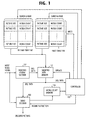
- a digital video decoding apparatus is comprised of a sequence header decoder 101 for receiving a compressed digital video signal encoded according to international standards such as the MPEG standards.
- the compressed video signal contains a sequence header and one or more groups of compressed pictures according to the formats of MPEG-1 and MPEG-2 or a coded single picture in the case of the MPEG-4 format.
- Sequence header decoder 101 decodes the sequence data contained in the sequence header and stores the decoded sequence data in a sequence data memory 102.
- the sequence data includes a sequence header code for indicating the starting point of the sequence header, data indicating the horizontal size of a picture (indicating the number of pixels in the horizontal direction of a picture), the vertical size of the picture (indicating the number of pixels in , the vertical direction of the picture), the pel aspect size (indicating the aspect ratio of the picture), the picture rate (indicating the number of frames in a second) and the bit rate, and so forth.
- the data indicating the horizontal size and vertical size represent the "picture size". In each picture, all of its pixels are grouped into "macroblocks" of 16 x 16 pixels each.
- the sequence header is followed by one or more groups of compressed pictures. These pictures are supplied to a video decoder 103 which performs a decoding process on each picture using the sequence data stored in the memory 102 and delivers a restored (decoded) picture to an external circuit, not shown. From a decoded portion of the picture, the video decoder 103 determines the number of macroblocks contained in that picture and stores it in a macroblock count memory 104 as a macroblock count, and then suspends its decoding process until it is instructed by a controller 105.
- First and second tables 106 and 107 are provided.
- the first table 106 holds picture-size records each containing data indicating the picture size and macroblock count of a picture decoded in the past.
- the second table 107 holds a plurality of data representing predetermined picture sizes mapped to corresponding macroblock counts. Each predetermined picture size is one that is generally used for a particular macroblock count value.
- Controller 105 receives the sequence data of memory 102 and determines a macroblock count from its picture size data and compares this macroblock count with the macroblock count stored in the memory 104 and determines whether they are equal or not. If they are equal, the controller 105 updates the first table 106 with the picture size currently determined from the data stored in the macroblock count memory 102 and the macroblock count currently stored in the memory 104. If they are not equal, the controller 105 concludes that a data error or a data lost has occurred in the sequence data and makes a first search through the first table 106 for a picture size using the macroblock count of the memory 104.
- the controller 105 makes a second search through the second table 107 using the same value of macroblock count. If such a picture size is detected, it is used to replace the picture size stored in the sequence data memory 102. If these searches fail, the controller 105 then uses a default value for replacing the picture size of the sequence data currently stored in memory 102.
- controller 105 The operation of controller 105 is best understood with the following description by reference to the flowchart of Fig. 2.
- the controller 105 checks to see if a new macroblock count is stored in the memory 104 for a coded picture. If so, the controller 105 proceeds to step 201 to receive the sequence data of a current video sequence from the memory 102 and determines the number of macroblocks from the picture size data contained in the sequence data and compares this macroblock count with the one stored in the macroblock count memory 104 (step 202). If the values of these two macroblock counts are equal (step 203), the controller 105 concludes that there is no data error in the sequence data and proceeds to step 204 to store the current picture size and macroblock count in the first table 106. Controller 105 proceeds from step 204 to step 205 to instruct the video decoder 103 to resume the decoding process by using the sequence data of memory 102, and returns to the starting point of the routine.
- step 203 If there occurs data error or data lost in the sequence data, the decision at step 203 is negative and the controller 105 proceeds to step 206 and makes a search through the first table 106 for a picture size that corresponds to the macroblock count value that is supplied from the memory 104. If such a picture size is found in the first table 106, the decision at step 207 is affirmative and the controller proceeds to step 210 to replace the picture size data in the sequence data memory 102 with the picture size detected in the first table 106 and proceeds from step 210 to step 212.
- step 207 the controller 105 proceeds to step 208 and makes a further search through the second table 107 for a predetermined picture size corresponding to the macroblock count of memory 104. If there is one (step 209), step 210 is executed by replacing the picture size of memory 102 with the picture size detected in the second table 107. If the decision at step 209 is negative, the controller 105 proceeds to step 211 to replace the picture size of memory 102 with a default value (e.g., the picture size of the display unit used) and proceeds from step 211 to step 205.
- a default value e.g., the picture size of the display unit used
- step 205 the controller 105 instructs the video decoder 103 to resume its decoding process by using the corrected sequence data of memory 102. Following the execution of step 205, the controller 105 returns to step 200 to continue the video decoding process on the next picture.
Landscapes
- Engineering & Computer Science (AREA)
- Multimedia (AREA)
- Signal Processing (AREA)
- Compression Or Coding Systems Of Tv Signals (AREA)
- Compression, Expansion, Code Conversion, And Decoders (AREA)
Abstract
Description
Claims (10)
- A video decoding apparatus for decoding a coded video signal containing a sequence header and at least one coded picture, said sequence header including picture size data, the apparatus comprising:a sequence header decoder for decoding a coded sequence data contained in said header and storing the decoded sequence data in a memory;a video decoder for performing a decoding process on a coded picture and producing a first macroblock count from the decoded picture and suspending the decoding process when the first macroblock count is produced, said macroblock count representing a number of macroblocks contained in the decoded picture; andcontrol circuitry for (a) determining a second macroblock count from picture size of the sequence data stored in said memory, (b) comparing said first macroblock count with said second macroblock count, (c) if said first and second macroblock counts are not equal to each other, estimating a picture size based on said second macroblock count and correcting the sequence data in said memory with data representing the estimated picture size, and (d) instructing said video decoder to resume the decoding process by using the sequence data of said memory immediately after said first and second macroblock counts are determined to be equal to each other or immediately after the sequence data in said memory is corrected.
- The video decoding apparatus of claim 1, wherein said control circuitry comprises a first table for mapping a plurality of picture size data to a plurality of corresponding macroblock counts and control means for storing a set of picture size data and a corresponding macroblock count in said table as a new picture size record when said first and second macroblock counts are equal to each other and making a search through said first table for detecting a picture size corresponding to said second macroblock count when said first and second macroblock counts are not equal to each other and replacing the picture size data in said memory with data representing the detected picture size.
- The video decoding apparatus of claim 2, wherein said control circuitry further comprises a second table for mapping a plurality of predetermined picture size data to a plurality of corresponding macroblock counts,
said control means being responsive to a failure in said search through said first table for making a further search through said second table for detecting a predetermined picture size corresponding to said second macroblock count and replacing the picture size data in said memory with data representing the detected predetermined picture size. - The video decoding apparatus of claim 3, wherein said control means is responsive to a failure in said further search for replacing the picture size data in said memory with a default value.
- A method of decoding a coded video signal containing a sequence header and at least one coded picture, said sequence header including picture size data, the method comprising the steps of:a) decoding a coded sequence data contained in said header and storing the decoded sequence data in a memory;b) performing a decoding process on a coded picture and producing a first macroblock count from the decoded, said macroblock count representing a number of macroblocks contained in the decoded picture;c) suspending the decoding process;d) determining a second macroblock count from picture size of the sequence data stored in said memory;e) comparing said first macroblock count with said second macroblock count;f) if said first and second macroblock counts are equal to each other, resuming the decoding process on said coded picture by using the sequence data of said memory;g) if said first and second macroblock counts are not equal to each other, estimating a picture size based on said second macroblock count;h) correcting the sequence data in said memory with data representing the estimated picture size; andi) resuming the decoding process on said coded picture by using the corrected sequence data of said memory.
- The decoding method of claim 5, wherein step (g) comprises:mapping picture size data contained in the sequence data of said memory to said second macroblock count in a first table when said first and second macroblock counts are equal to each other; andmaking a search through said first table for detecting a picture size, as said estimated picture size, corresponding to said second macroblock count when said first and second macroblock counts are not equal to each other.
- The decoding method of claim 6, wherein step (h) comprises the step of replacing the picture size data of the sequence data in said memory with data representing the detected picture size.
- The decoding method of claim 6, wherein step (g) further comprises the steps of:g1) mapping a plurality of predetermined picture size data to a plurality of corresponding macroblock counts in a second table;g2) responsive to a failure in said search through said first table, making a further search through said second table for detecting a predetermined picture size, as said estimated picture size, corresponding to said second macroblock count.
- The decoding method of claim 8, wherein step (h) comprises the step of replacing the picture size data of the sequence data in said memory with data representing the detected predetermined picture size.
- The decoding method of claim 8, wherein step (g2) comprises the step of replacing the picture size data in said memory with a default value if said further search results in a failure.
Applications Claiming Priority (2)
| Application Number | Priority Date | Filing Date | Title |
|---|---|---|---|
| JP33513899 | 1999-11-25 | ||
| JP33513899A JP2001157204A (en) | 1999-11-25 | 1999-11-25 | Moving picture decoding method and device |
Publications (2)
| Publication Number | Publication Date |
|---|---|
| EP1104202A2 true EP1104202A2 (en) | 2001-05-30 |
| EP1104202A3 EP1104202A3 (en) | 2002-12-04 |
Family
ID=18285198
Family Applications (1)
| Application Number | Title | Priority Date | Filing Date |
|---|---|---|---|
| EP20000250397 Withdrawn EP1104202A3 (en) | 1999-11-25 | 2000-11-24 | Digital video decoding of compressed digital pictures by correcting corrupted header information with an estimated picture size |
Country Status (4)
| Country | Link |
|---|---|
| US (1) | US6597741B1 (en) |
| EP (1) | EP1104202A3 (en) |
| JP (1) | JP2001157204A (en) |
| CA (1) | CA2326781A1 (en) |
Cited By (5)
| Publication number | Priority date | Publication date | Assignee | Title |
|---|---|---|---|---|
| WO2002067591A3 (en) * | 2001-02-23 | 2003-01-30 | Ericsson Telefon Ab L M | Video bitstream washer |
| EP1345451A1 (en) * | 2002-03-15 | 2003-09-17 | BRITISH TELECOMMUNICATIONS public limited company | Video processing |
| WO2003071777A3 (en) * | 2002-02-21 | 2004-02-26 | British Telecomm | Video processing |
| WO2006131844A1 (en) * | 2005-06-09 | 2006-12-14 | Koninklijke Philips Electronics N.V. | Method and apparatus for correcting data errors and method and apparatus for playing back a disc |
| WO2006079945A3 (en) * | 2005-01-28 | 2007-07-26 | Koninkl Philips Electronics Nv | Method and apparatus for correction video sequence parameters |
Families Citing this family (8)
| Publication number | Priority date | Publication date | Assignee | Title |
|---|---|---|---|---|
| JP3916382B2 (en) * | 2000-07-07 | 2007-05-16 | 沖電気工業株式会社 | Video receiver |
| US7627039B2 (en) * | 2003-09-05 | 2009-12-01 | Realnetworks, Inc. | Parallel video decoding |
| KR100652689B1 (en) | 2004-10-26 | 2006-12-07 | 엘지전자 주식회사 | Method of size analysis of contents in mobile terminal |
| US7730385B2 (en) * | 2005-11-30 | 2010-06-01 | Motorola, Inc. | Method for decoding a received control channel message with a priori information |
| KR100827152B1 (en) * | 2006-10-20 | 2008-05-02 | 삼성전자주식회사 | Efficient H.264 Decoding Method and Apparatus for NAL Unit Error Detection |
| EP2164263A4 (en) * | 2007-04-27 | 2010-08-18 | Panasonic Corp | DEVICE, SYSTEM AND METHOD FOR IMAGE DECODING AND INTEGRATED CIRCUIT |
| JP2011097245A (en) * | 2009-10-28 | 2011-05-12 | Sony Corp | Receiving apparatus, receiving method program and receiving system |
| JP5610199B2 (en) * | 2010-06-09 | 2014-10-22 | ソニー株式会社 | Receiving apparatus, receiving method, and communication system |
Family Cites Families (9)
| Publication number | Priority date | Publication date | Assignee | Title |
|---|---|---|---|---|
| JPH0698313A (en) | 1992-09-14 | 1994-04-08 | Sony Corp | Video decoding device |
| TW245871B (en) * | 1994-08-15 | 1995-04-21 | Gen Instrument Corp | Method and apparatus for efficient addressing of dram in a video decompression processor |
| US5517250A (en) * | 1995-02-28 | 1996-05-14 | General Instrument Corporation Of Delaware | Acquisition of desired data from a packetized data stream and synchronization thereto |
| US5647048A (en) * | 1995-06-07 | 1997-07-08 | Industrial Technology Research Institute | Trick mode VTR tracking for compressed video |
| DE69625982T2 (en) * | 1995-10-18 | 2004-01-22 | Matsushita Electric Industrial Co., Ltd., Kadoma | Information recording and output device |
| JP3491431B2 (en) * | 1996-02-20 | 2004-01-26 | 株式会社日立製作所 | Television signal receiver |
| KR100219144B1 (en) * | 1996-05-14 | 1999-09-01 | 김광호 | Video data decoding device |
| US6094455A (en) * | 1996-09-25 | 2000-07-25 | Matsushita Electric Industrial Co., Ltd. | Image compression/encoding apparatus and system with quantization width control based on bit generation error |
| US6377748B1 (en) * | 1997-02-18 | 2002-04-23 | Thomson Licensing S.A. | Replay bit stream searching |
-
1999
- 1999-11-25 JP JP33513899A patent/JP2001157204A/en active Pending
-
2000
- 2000-11-21 US US09/718,204 patent/US6597741B1/en not_active Expired - Fee Related
- 2000-11-24 CA CA 2326781 patent/CA2326781A1/en not_active Abandoned
- 2000-11-24 EP EP20000250397 patent/EP1104202A3/en not_active Withdrawn
Cited By (8)
| Publication number | Priority date | Publication date | Assignee | Title |
|---|---|---|---|---|
| WO2002067591A3 (en) * | 2001-02-23 | 2003-01-30 | Ericsson Telefon Ab L M | Video bitstream washer |
| GB2388283A (en) * | 2001-02-23 | 2003-11-05 | Ericsson Telefon Ab L M | Video bitstream washer |
| GB2388283B (en) * | 2001-02-23 | 2004-08-18 | Ericsson Telefon Ab L M | Video bitstream washer |
| WO2003071777A3 (en) * | 2002-02-21 | 2004-02-26 | British Telecomm | Video processing |
| EP1345451A1 (en) * | 2002-03-15 | 2003-09-17 | BRITISH TELECOMMUNICATIONS public limited company | Video processing |
| WO2003079693A1 (en) * | 2002-03-15 | 2003-09-25 | British Telecommunications Public Limited Company | Video processing |
| WO2006079945A3 (en) * | 2005-01-28 | 2007-07-26 | Koninkl Philips Electronics Nv | Method and apparatus for correction video sequence parameters |
| WO2006131844A1 (en) * | 2005-06-09 | 2006-12-14 | Koninklijke Philips Electronics N.V. | Method and apparatus for correcting data errors and method and apparatus for playing back a disc |
Also Published As
| Publication number | Publication date |
|---|---|
| US6597741B1 (en) | 2003-07-22 |
| JP2001157204A (en) | 2001-06-08 |
| EP1104202A3 (en) | 2002-12-04 |
| CA2326781A1 (en) | 2001-05-25 |
Similar Documents
| Publication | Publication Date | Title |
|---|---|---|
| US6597741B1 (en) | Digital video decoding of compressed digital pictures by correcting corrupted header information with an estimated picture size | |
| US20220046265A1 (en) | Tracking a reference picture on an electronic device | |
| US6334000B2 (en) | Recorded medium for recording image coding strings | |
| JPS5994979A (en) | Data transmission method | |
| CN1153440A (en) | Digital signal decoding apparatus | |
| USRE38726E1 (en) | Method for encoding and decoding moving picture signals | |
| JPWO2008139721A1 (en) | Decoding device and decoding method | |
| JP3428697B2 (en) | Image decoding method | |
| CA2090382C (en) | Moving picture receiving method and apparatus | |
| US5784112A (en) | Encoding apparatus | |
| JP2003528475A (en) | System for detecting redundant images in a video sequence | |
| JP3065251B2 (en) | Video decoding device | |
| JP2005229395A (en) | Playback device | |
| US20090228763A1 (en) | Method and apparatus for encoding and decoding data with error correction | |
| WO2007063461A2 (en) | Method and apparatus for detecting video data errors | |
| JPH06311052A (en) | Processing unit for compression signal | |
| KR100223821B1 (en) | The circuit and method for error correction in a dvd | |
| US8335965B2 (en) | Semiconductor device and method of controlling the same | |
| JP3611790B2 (en) | Video signal decoding method | |
| JPH09238352A (en) | Image coding apparatus and image decoding apparatus | |
| KR970025192A (en) | Error Correction Method of Image Encoder | |
| JP2008042769A (en) | Moving picture decoding apparatus and moving picture decoding method |
Legal Events
| Date | Code | Title | Description |
|---|---|---|---|
| PUAI | Public reference made under article 153(3) epc to a published international application that has entered the european phase |
Free format text: ORIGINAL CODE: 0009012 |
|
| AK | Designated contracting states |
Kind code of ref document: A2 Designated state(s): AT BE CH CY DE DK ES FI FR GB GR IE IT LI LU MC NL PT SE TR |
|
| AX | Request for extension of the european patent |
Free format text: AL;LT;LV;MK;RO;SI |
|
| PUAL | Search report despatched |
Free format text: ORIGINAL CODE: 0009013 |
|
| AK | Designated contracting states |
Kind code of ref document: A3 Designated state(s): AT BE CH CY DE DK ES FI FR GB GR IE IT LI LU MC NL PT SE TR |
|
| AX | Request for extension of the european patent |
Free format text: AL;LT;LV;MK;RO;SI |
|
| RIC1 | Information provided on ipc code assigned before grant |
Free format text: 7H 04N 7/64 A, 7H 04N 7/68 B, 7H 04N 7/50 B |
|
| 17P | Request for examination filed |
Effective date: 20030131 |
|
| AKX | Designation fees paid |
Designated state(s): DE FR GB SE |
|
| STAA | Information on the status of an ep patent application or granted ep patent |
Free format text: STATUS: THE APPLICATION HAS BEEN WITHDRAWN |
|
| 18W | Application withdrawn |
Effective date: 20031016 |