EP1103270A1 - Method for treating endotoxic shock and inflammatory and autoimmune diseases in mammals - Google Patents
Method for treating endotoxic shock and inflammatory and autoimmune diseases in mammals Download PDFInfo
- Publication number
- EP1103270A1 EP1103270A1 EP00931296A EP00931296A EP1103270A1 EP 1103270 A1 EP1103270 A1 EP 1103270A1 EP 00931296 A EP00931296 A EP 00931296A EP 00931296 A EP00931296 A EP 00931296A EP 1103270 A1 EP1103270 A1 EP 1103270A1
- Authority
- EP
- European Patent Office
- Prior art keywords
- achpa
- vip
- treatment
- mammals
- inflammatory
- Prior art date
- Legal status (The legal status is an assumption and is not a legal conclusion. Google has not performed a legal analysis and makes no representation as to the accuracy of the status listed.)
- Granted
Links
- 206010040070 Septic Shock Diseases 0.000 title claims abstract description 19
- 206010014824 Endotoxic shock Diseases 0.000 title claims abstract description 17
- 241000124008 Mammalia Species 0.000 title claims abstract description 14
- 230000002757 inflammatory effect Effects 0.000 title claims abstract description 10
- 238000000034 method Methods 0.000 title claims description 22
- 208000023275 Autoimmune disease Diseases 0.000 title abstract description 7
- 208000027866 inflammatory disease Diseases 0.000 title abstract description 5
- 102000055135 Vasoactive Intestinal Peptide Human genes 0.000 claims abstract description 60
- 108010003205 Vasoactive Intestinal Peptide Proteins 0.000 claims abstract description 60
- VBUWHHLIZKOSMS-RIWXPGAOSA-N invicorp Chemical compound C([C@@H](C(=O)N[C@@H](CC(C)C)C(=O)N[C@@H](CC(N)=O)C(=O)N[C@@H](CO)C(=O)N[C@@H]([C@@H](C)CC)C(=O)N[C@@H](CC(C)C)C(=O)N[C@@H](CC(N)=O)C(O)=O)NC(=O)[C@H](CCCCN)NC(=O)[C@H](CCCCN)NC(=O)[C@@H](NC(=O)[C@H](C)NC(=O)[C@H](CCSC)NC(=O)[C@H](CCC(N)=O)NC(=O)[C@H](CCCCN)NC(=O)[C@H](CCCNC(N)=N)NC(=O)[C@H](CC(C)C)NC(=O)[C@H](CCCNC(N)=N)NC(=O)[C@@H](NC(=O)[C@H](CC=1C=CC(O)=CC=1)NC(=O)[C@H](CC(N)=O)NC(=O)[C@H](CC(O)=O)NC(=O)[C@@H](NC(=O)[C@H](CC=1C=CC=CC=1)NC(=O)[C@@H](NC(=O)[C@H](C)NC(=O)[C@H](CC(O)=O)NC(=O)[C@H](CO)NC(=O)[C@@H](N)CC=1NC=NC=1)C(C)C)[C@@H](C)O)[C@@H](C)O)C(C)C)C1=CC=C(O)C=C1 VBUWHHLIZKOSMS-RIWXPGAOSA-N 0.000 claims abstract description 60
- 238000004519 manufacturing process Methods 0.000 claims abstract description 26
- 102000004889 Interleukin-6 Human genes 0.000 claims abstract description 24
- 108090001005 Interleukin-6 Proteins 0.000 claims abstract description 24
- 102000004388 Interleukin-4 Human genes 0.000 claims abstract description 14
- 108090000978 Interleukin-4 Proteins 0.000 claims abstract description 14
- 239000003795 chemical substances by application Substances 0.000 claims abstract description 14
- 108090000765 processed proteins & peptides Proteins 0.000 claims abstract description 10
- 239000012190 activator Substances 0.000 claims abstract description 5
- 108060000200 adenylate cyclase Proteins 0.000 claims abstract description 5
- 102000030621 adenylate cyclase Human genes 0.000 claims abstract description 5
- 230000001173 tumoral effect Effects 0.000 claims abstract description 5
- 230000017074 necrotic cell death Effects 0.000 claims abstract description 4
- 239000012634 fragment Substances 0.000 claims abstract 7
- 229940100601 interleukin-6 Drugs 0.000 claims abstract 3
- 230000004913 activation Effects 0.000 claims description 12
- 230000002401 inhibitory effect Effects 0.000 claims description 7
- 210000000447 Th1 cell Anatomy 0.000 claims description 4
- 230000001939 inductive effect Effects 0.000 claims description 3
- 230000001363 autoimmune Effects 0.000 claims 3
- 230000007170 pathology Effects 0.000 claims 3
- 239000003814 drug Substances 0.000 abstract description 3
- 229940124597 therapeutic agent Drugs 0.000 abstract description 2
- 229940028885 interleukin-4 Drugs 0.000 abstract 1
- 239000000126 substance Substances 0.000 abstract 1
- 239000002158 endotoxin Substances 0.000 description 26
- 210000004027 cell Anatomy 0.000 description 20
- 210000002540 macrophage Anatomy 0.000 description 19
- 108060008682 Tumor Necrosis Factor Proteins 0.000 description 18
- 102000000852 Tumor Necrosis Factor-alpha Human genes 0.000 description 18
- 238000002347 injection Methods 0.000 description 15
- 239000007924 injection Substances 0.000 description 15
- 102000004127 Cytokines Human genes 0.000 description 14
- 108090000695 Cytokines Proteins 0.000 description 14
- 241000699670 Mus sp. Species 0.000 description 14
- 230000000694 effects Effects 0.000 description 10
- 230000004083 survival effect Effects 0.000 description 10
- 108090000189 Neuropeptides Proteins 0.000 description 9
- 108020003175 receptors Proteins 0.000 description 9
- 102000005962 receptors Human genes 0.000 description 9
- 230000004044 response Effects 0.000 description 9
- 238000002474 experimental method Methods 0.000 description 8
- 210000004698 lymphocyte Anatomy 0.000 description 7
- 230000008569 process Effects 0.000 description 7
- 241001529936 Murinae Species 0.000 description 6
- MWUXSHHQAYIFBG-UHFFFAOYSA-N Nitric oxide Chemical compound O=[N] MWUXSHHQAYIFBG-UHFFFAOYSA-N 0.000 description 6
- 108010002352 Interleukin-1 Proteins 0.000 description 5
- 102000000589 Interleukin-1 Human genes 0.000 description 5
- 230000028709 inflammatory response Effects 0.000 description 5
- 230000002093 peripheral effect Effects 0.000 description 5
- 241000699666 Mus <mouse, genus> Species 0.000 description 4
- FAPWRFPIFSIZLT-UHFFFAOYSA-M Sodium chloride Chemical compound [Na+].[Cl-] FAPWRFPIFSIZLT-UHFFFAOYSA-M 0.000 description 4
- 238000010171 animal model Methods 0.000 description 4
- 230000001580 bacterial effect Effects 0.000 description 4
- 238000011161 development Methods 0.000 description 4
- 230000004069 differentiation Effects 0.000 description 4
- 210000000987 immune system Anatomy 0.000 description 4
- 230000004054 inflammatory process Effects 0.000 description 4
- 230000005764 inhibitory process Effects 0.000 description 4
- 230000007246 mechanism Effects 0.000 description 4
- 230000001404 mediated effect Effects 0.000 description 4
- 108020004999 messenger RNA Proteins 0.000 description 4
- 102000004196 processed proteins & peptides Human genes 0.000 description 4
- 230000000770 proinflammatory effect Effects 0.000 description 4
- 230000001105 regulatory effect Effects 0.000 description 4
- 230000000638 stimulation Effects 0.000 description 4
- 210000004241 Th2 cell Anatomy 0.000 description 3
- 239000000427 antigen Substances 0.000 description 3
- 108091007433 antigens Proteins 0.000 description 3
- 102000036639 antigens Human genes 0.000 description 3
- 230000034994 death Effects 0.000 description 3
- 238000003114 enzyme-linked immunosorbent spot assay Methods 0.000 description 3
- 230000001435 haemodynamic effect Effects 0.000 description 3
- 230000028993 immune response Effects 0.000 description 3
- 210000001616 monocyte Anatomy 0.000 description 3
- 238000011160 research Methods 0.000 description 3
- 238000012552 review Methods 0.000 description 3
- 210000002966 serum Anatomy 0.000 description 3
- 210000000952 spleen Anatomy 0.000 description 3
- 238000002965 ELISA Methods 0.000 description 2
- 108090000790 Enzymes Proteins 0.000 description 2
- 102000004190 Enzymes Human genes 0.000 description 2
- -1 IL-1β Proteins 0.000 description 2
- 206010061218 Inflammation Diseases 0.000 description 2
- 108090001007 Interleukin-8 Proteins 0.000 description 2
- 102000004890 Interleukin-8 Human genes 0.000 description 2
- 238000000636 Northern blotting Methods 0.000 description 2
- 210000001744 T-lymphocyte Anatomy 0.000 description 2
- 230000001154 acute effect Effects 0.000 description 2
- 239000002671 adjuvant Substances 0.000 description 2
- 230000003110 anti-inflammatory effect Effects 0.000 description 2
- 210000000612 antigen-presenting cell Anatomy 0.000 description 2
- 238000003556 assay Methods 0.000 description 2
- 210000003719 b-lymphocyte Anatomy 0.000 description 2
- 238000004891 communication Methods 0.000 description 2
- 229940124446 critical care medicine Drugs 0.000 description 2
- 230000003111 delayed effect Effects 0.000 description 2
- 201000010099 disease Diseases 0.000 description 2
- 208000037265 diseases, disorders, signs and symptoms Diseases 0.000 description 2
- 210000002889 endothelial cell Anatomy 0.000 description 2
- 230000006870 function Effects 0.000 description 2
- 210000003630 histaminocyte Anatomy 0.000 description 2
- 238000002649 immunization Methods 0.000 description 2
- 230000006872 improvement Effects 0.000 description 2
- 238000000338 in vitro Methods 0.000 description 2
- 210000000265 leukocyte Anatomy 0.000 description 2
- 230000007774 longterm Effects 0.000 description 2
- 230000003472 neutralizing effect Effects 0.000 description 2
- 210000000440 neutrophil Anatomy 0.000 description 2
- 210000004303 peritoneum Anatomy 0.000 description 2
- 210000001539 phagocyte Anatomy 0.000 description 2
- 230000035755 proliferation Effects 0.000 description 2
- 230000003248 secreting effect Effects 0.000 description 2
- 230000028327 secretion Effects 0.000 description 2
- 230000036303 septic shock Effects 0.000 description 2
- 230000004936 stimulating effect Effects 0.000 description 2
- 208000024891 symptom Diseases 0.000 description 2
- 210000001519 tissue Anatomy 0.000 description 2
- 230000000451 tissue damage Effects 0.000 description 2
- 231100000827 tissue damage Toxicity 0.000 description 2
- 231100000027 toxicology Toxicity 0.000 description 2
- 108091032973 (ribonucleotides)n+m Proteins 0.000 description 1
- 102000005738 B7 Antigens Human genes 0.000 description 1
- 108010045634 B7 Antigens Proteins 0.000 description 1
- 102000004506 Blood Proteins Human genes 0.000 description 1
- 108010017384 Blood Proteins Proteins 0.000 description 1
- 208000037487 Endotoxemia Diseases 0.000 description 1
- 108091006027 G proteins Proteins 0.000 description 1
- 102000030782 GTP binding Human genes 0.000 description 1
- 108091000058 GTP-Binding Proteins 0.000 description 1
- 241000237858 Gastropoda Species 0.000 description 1
- 206010018691 Granuloma Diseases 0.000 description 1
- 241000282412 Homo Species 0.000 description 1
- 101000953492 Homo sapiens Inositol hexakisphosphate and diphosphoinositol-pentakisphosphate kinase 1 Proteins 0.000 description 1
- 208000001953 Hypotension Diseases 0.000 description 1
- 108060003951 Immunoglobulin Proteins 0.000 description 1
- 102100037739 Inositol hexakisphosphate and diphosphoinositol-pentakisphosphate kinase 1 Human genes 0.000 description 1
- 108090000174 Interleukin-10 Proteins 0.000 description 1
- 108010002616 Interleukin-5 Proteins 0.000 description 1
- 108700018351 Major Histocompatibility Complex Proteins 0.000 description 1
- 241001465754 Metazoa Species 0.000 description 1
- 208000034486 Multi-organ failure Diseases 0.000 description 1
- 208000010718 Multiple Organ Failure Diseases 0.000 description 1
- 102000003797 Neuropeptides Human genes 0.000 description 1
- 108010029485 Protein Isoforms Proteins 0.000 description 1
- 102000001708 Protein Isoforms Human genes 0.000 description 1
- 206010037660 Pyrexia Diseases 0.000 description 1
- 108010086019 Secretin Proteins 0.000 description 1
- 102100037505 Secretin Human genes 0.000 description 1
- 206010040047 Sepsis Diseases 0.000 description 1
- 238000002946 Total quality control Methods 0.000 description 1
- 238000009825 accumulation Methods 0.000 description 1
- 230000009471 action Effects 0.000 description 1
- 208000038016 acute inflammation Diseases 0.000 description 1
- 230000006022 acute inflammation Effects 0.000 description 1
- 210000000577 adipose tissue Anatomy 0.000 description 1
- 230000016571 aggressive behavior Effects 0.000 description 1
- 210000001132 alveolar macrophage Anatomy 0.000 description 1
- 150000001413 amino acids Chemical group 0.000 description 1
- 238000004458 analytical method Methods 0.000 description 1
- 239000005557 antagonist Substances 0.000 description 1
- YZXBAPSDXZZRGB-DOFZRALJSA-N arachidonic acid Chemical class CCCCC\C=C/C\C=C/C\C=C/C\C=C/CCCC(O)=O YZXBAPSDXZZRGB-DOFZRALJSA-N 0.000 description 1
- 230000005784 autoimmunity Effects 0.000 description 1
- 230000004071 biological effect Effects 0.000 description 1
- 230000031018 biological processes and functions Effects 0.000 description 1
- 230000015572 biosynthetic process Effects 0.000 description 1
- 210000004556 brain Anatomy 0.000 description 1
- 230000001413 cellular effect Effects 0.000 description 1
- 210000003169 central nervous system Anatomy 0.000 description 1
- 238000006243 chemical reaction Methods 0.000 description 1
- 208000037976 chronic inflammation Diseases 0.000 description 1
- 230000006020 chronic inflammation Effects 0.000 description 1
- 230000015271 coagulation Effects 0.000 description 1
- 238000005345 coagulation Methods 0.000 description 1
- 230000002596 correlated effect Effects 0.000 description 1
- 230000000875 corresponding effect Effects 0.000 description 1
- 230000009849 deactivation Effects 0.000 description 1
- 229940079593 drug Drugs 0.000 description 1
- 210000002950 fibroblast Anatomy 0.000 description 1
- 210000000609 ganglia Anatomy 0.000 description 1
- 210000002443 helper t lymphocyte Anatomy 0.000 description 1
- 210000003494 hepatocyte Anatomy 0.000 description 1
- 230000008348 humoral response Effects 0.000 description 1
- 230000002209 hydrophobic effect Effects 0.000 description 1
- 230000036543 hypotension Effects 0.000 description 1
- 210000002865 immune cell Anatomy 0.000 description 1
- 230000001900 immune effect Effects 0.000 description 1
- 230000036737 immune function Effects 0.000 description 1
- 230000036039 immunity Effects 0.000 description 1
- 230000000984 immunochemical effect Effects 0.000 description 1
- 102000018358 immunoglobulin Human genes 0.000 description 1
- 229940072221 immunoglobulins Drugs 0.000 description 1
- 230000002134 immunopathologic effect Effects 0.000 description 1
- 238000001727 in vivo Methods 0.000 description 1
- 230000006698 induction Effects 0.000 description 1
- 230000037456 inflammatory mechanism Effects 0.000 description 1
- 230000000977 initiatory effect Effects 0.000 description 1
- 210000002660 insulin-secreting cell Anatomy 0.000 description 1
- 210000000936 intestine Anatomy 0.000 description 1
- 238000011835 investigation Methods 0.000 description 1
- 230000001665 lethal effect Effects 0.000 description 1
- 210000005228 liver tissue Anatomy 0.000 description 1
- 210000004072 lung Anatomy 0.000 description 1
- 230000001926 lymphatic effect Effects 0.000 description 1
- 210000005210 lymphoid organ Anatomy 0.000 description 1
- 238000012423 maintenance Methods 0.000 description 1
- 102000006240 membrane receptors Human genes 0.000 description 1
- 108020004084 membrane receptors Proteins 0.000 description 1
- 244000005700 microbiome Species 0.000 description 1
- 208000029744 multiple organ dysfunction syndrome Diseases 0.000 description 1
- 210000001640 nerve ending Anatomy 0.000 description 1
- 230000003227 neuromodulating effect Effects 0.000 description 1
- 210000002569 neuron Anatomy 0.000 description 1
- 210000000056 organ Anatomy 0.000 description 1
- 238000012261 overproduction Methods 0.000 description 1
- 239000007800 oxidant agent Substances 0.000 description 1
- 229940094443 oxytocics prostaglandins Drugs 0.000 description 1
- 230000001575 pathological effect Effects 0.000 description 1
- 210000003024 peritoneal macrophage Anatomy 0.000 description 1
- 230000000144 pharmacologic effect Effects 0.000 description 1
- 230000010118 platelet activation Effects 0.000 description 1
- 230000003389 potentiating effect Effects 0.000 description 1
- 238000002360 preparation method Methods 0.000 description 1
- 150000003180 prostaglandins Chemical class 0.000 description 1
- 102000004169 proteins and genes Human genes 0.000 description 1
- 108090000623 proteins and genes Proteins 0.000 description 1
- 230000012121 regulation of immune response Effects 0.000 description 1
- 229960002101 secretin Drugs 0.000 description 1
- OWMZNFCDEHGFEP-NFBCVYDUSA-N secretin human Chemical compound C([C@@H](C(=O)N[C@H](C(=O)N[C@@H](CO)C(=O)N[C@@H](CCC(O)=O)C(=O)N[C@@H](CC(C)C)C(=O)N[C@@H](CO)C(=O)N[C@@H](CCCNC(N)=N)C(=O)N[C@@H](CC(C)C)C(=O)N[C@@H](CCCNC(N)=N)C(=O)N[C@@H](CCC(O)=O)C(=O)NCC(=O)N[C@@H](C)C(=O)N[C@@H](CCCNC(N)=N)C(=O)N[C@@H](CC(C)C)C(=O)N[C@@H](CCC(N)=O)C(=O)N[C@@H](CCCNC(N)=N)C(=O)N[C@@H](CC(C)C)C(=O)N[C@@H](CC(C)C)C(=O)N[C@@H](CCC(N)=O)C(=O)NCC(=O)N[C@@H](CC(C)C)C(=O)N[C@@H](C(C)C)C(N)=O)[C@@H](C)O)NC(=O)[C@@H](NC(=O)CNC(=O)[C@H](CC(O)=O)NC(=O)[C@H](CO)NC(=O)[C@@H](N)CC=1NC=NC=1)[C@@H](C)O)C1=CC=CC=C1 OWMZNFCDEHGFEP-NFBCVYDUSA-N 0.000 description 1
- 210000000813 small intestine Anatomy 0.000 description 1
- 239000000725 suspension Substances 0.000 description 1
- 208000011580 syndromic disease Diseases 0.000 description 1
- 238000003786 synthesis reaction Methods 0.000 description 1
- 210000001541 thymus gland Anatomy 0.000 description 1
- 231100000331 toxic Toxicity 0.000 description 1
- 230000002588 toxic effect Effects 0.000 description 1
- 230000002103 transcriptional effect Effects 0.000 description 1
- 230000000304 vasodilatating effect Effects 0.000 description 1
Images




Classifications
-
- A—HUMAN NECESSITIES
- A61—MEDICAL OR VETERINARY SCIENCE; HYGIENE
- A61K—PREPARATIONS FOR MEDICAL, DENTAL OR TOILETRY PURPOSES
- A61K38/00—Medicinal preparations containing peptides
- A61K38/16—Peptides having more than 20 amino acids; Gastrins; Somatostatins; Melanotropins; Derivatives thereof
- A61K38/17—Peptides having more than 20 amino acids; Gastrins; Somatostatins; Melanotropins; Derivatives thereof from animals; from humans
- A61K38/22—Hormones
- A61K38/2278—Vasoactive intestinal peptide [VIP]; Related peptides (e.g. Exendin)
-
- A—HUMAN NECESSITIES
- A61—MEDICAL OR VETERINARY SCIENCE; HYGIENE
- A61P—SPECIFIC THERAPEUTIC ACTIVITY OF CHEMICAL COMPOUNDS OR MEDICINAL PREPARATIONS
- A61P37/00—Drugs for immunological or allergic disorders
- A61P37/02—Immunomodulators
Definitions
- Endotoxic shock is still the main cause of death in hospitals.
- the strategies for combating the effects of endotoxic shock focus on counteracting the bacterial agents responsible for the effect, on restoring the haemodynamic parameters, preventing cellular activation and on modifying the action of the defence mechanisms (Boyd O; Current Opinion in Anaesthesiology 1996, 9:98).
- TNF ⁇ , IL-1, IL-6 and IL-8 have been correlated with the probability of overcoming a septic episode.
- TNF ⁇ and IL-1 administered to humans or to experimental animals reproduce many of the haemodynamic manifestations of septic shock (Tracey KJ and co-workers; Science 1986, 234:470) and its inhibition has been assayed by means of injection of antagonist receptors and neutralising monoclonal antibodies with different results (Fisher CJ and co-workers; Critical Care Medicine 1994, 22:12).
- the levels of circulating IL-6 are the best indicators of the seriousness of the sepsis and of the possibilities of recovering from the episode (Liaw YS and co-workers.; Journal of the Formosan Medical Association 1997, 96:685).
- Inflammatory processes are a vital process for the survival of all complex organisms. Inflammation is a natural defence process of the organism against foreign agents. The accumulation and activation of leukocytes in places where the aggression takes place is a central occurrence in all inflammatory processes (Schaal TJ and Bacon KB; Current Opinion in Immunology 1994, 6:865). An insufficient inflammatory response may compromise the survival of the organism, but an excessive response, which may be due to failures in the mechanisms of deactivation of the process due to different causes, can lead to an inflammatory or autoimmune disease (Sacca R and co-workers; Current Opinion in Immunology 1997, 9:851). These diseases are an important cause of morbidity and mortality in mammals due to tissue damage associated with said processes.
- Macrophages play a key role in the regulation of immune and inflammatory responses. The execution of these activities is mediated by a whole series of complex processes in which, among others, many products of macrophage origin intervene. As a response to the antigens, and according to their origin, the macrophages secrete pro-inflammatory cytokines and oxidising agents, such as TNF ⁇ , IL-6, IL-1 ⁇ , IL-12 and nitric oxide (Laskin DL and co-workers; Annual Review of Pharmacology and Toxicology 1995, 35:655). TNF ⁇ and IL-6 are, among others, two factors that contribute to physiopathological changes associated with several states of chronic or acute inflammation.
- the macrophages participate in the initiation, maintenance and control of immune responses, acting as potent antigen presenters, providing the T-lymphocytes with a double activation signal: the antigen-molecule complex of the main histocompatibility complex (MHC) and a co-stimulatory signal mediated by molecules of the B7 family (Lenschow DJ and co-workers; Annual Review of Immunology 1996, 14:233).
- the B7 molecules comprise two isoforms, B7.1 and B7.2, both of which are implicated in the stimulation of two different types of T helper cells (Th), Th1 and Th2, and both of these produces a set of different cytokines (Kuchroo VK and co-workers; Cell 1995, 80:707).
- Th1 cells Activation of Th1 cells implies the production of IFN ⁇ and IL-12, among other factors, and is associated with the production of antibodies of the IgG2a isotype and it is manifest as a reaction of delayed inflammatory type.
- the activation of Th2 cells implies the production of IL-4, IL-5 and IL-10, among other factors, is associated with the secretion of antibodies of the isotype IgG1, inhibits the delayed inflammatory response and is manifest as a humoral response (Constant SL y Bottomly K; Annual Review of Immunology 1997, 15:297).
- the factors that determine the differentiation of one or an other type of response are mainly the characteristics of the antigen presenting cells and the cytokines present in the microenvironment in which the response takes place: IL-12 determines the differentiation of Th1 cells while IL-4 does so with Th2. When both are present, the IL-4 effect predominates (O'Garra AO; Immunity 1998, 8:275). Numerous cases of inflammatory and autoimmune diseases are due to the activation of an inappropriate type of Th cell.
- VIP vasoactive intestinal peptide
- VIP exercises its biological effects by means of membrane receptors belonging to the superfamily of seven hydrophobic domains coupled to G proteins, which transduce the information to the final effecter molecules (Laburthe M and Couvineau A; Annals of the New York Academy of Sciences 1988, 527:296).
- the receptors for VIP have been characterised in numerous tissues such as liver and adipose tissue, among others, and correspond to two types, the so-called VIP1 -R (Ishihara T and co-workers; Neuron 1992, 8:811) and VIP2-R (Lutz E. and co-workers; FEBS Letters 1993, 334:3).
- receptors specific to VIP have been characterised in a variety of immune cells which include human peripheral lymphocytes, human monocytes, rat and mouse lymphocytes, alveolar macrophages of rat and peritoneal macrophages of rat and mouse (Gomariz RP and co-workers; Biochemical and Biophysical Research Communications 1994, 203:1599; Delgado M and co-workers; Regulatory Peptides 1996, 62:161).
- VIP modulates a wide variety of immune functions such as the phagocyte function, in each one of the stages of the process, the proliferate response, the production of immunoglobins, the NK activity and the production of cytokines (De La Fuente M and co-workers; Advances in Neuroimmunology 1996, 6:75).
- ACHPA adenylate cyclase hypophysary peptide activator
- Both peptides are widely distributed in the central nervous system and peripheral system.
- the type-1 ACHPA (ACHPA-R-I) with equal affinity for ACHPA-38 and ACHPA-27, but which has an affinity of 300 to 1000 times less for VIP; the type-2 ACHPA receptor (ACHPA-R-II) which recognises VIP, ACHPA-38 and ACHPA-27 with the same affinity, and so is denominated the VIP-ACHPA common receptor and corresponds to the receptor of VIP VIP1-R, and the type-III ACHPA receptor (ACHPA-R-III) which corresponds to the receptor of VIP VIP2-R.
- ACHPA-R-I The type-1 ACHPA (ACHPA-R-I) with equal affinity for ACHPA-38 and ACHPA-27, but which has an affinity of 300 to 1000 times less for VIP
- the type-2 ACHPA receptor (ACHPA-R-II) which recognises VIP, ACHPA-38 and ACHPA-27 with the same affinity, and so is denominated the VIP-ACHPA common receptor and corresponds to the receptor of VIP VIP1-R
- the object of this invention is to develop preparations of VIP, ACHPA and analogues as therapeutic agents in the treatment of endotoxic shock and inflammatory and autoimmune diseases.
- the treatment consists of the administration to mammals, in need thereof, of an effective quantity of an agent that inhibits the production of tumoral necrosis factor (TNF) or IL-6 in a pharmaceutically acceptable vehicle, or else the administration to mammals, in need thereof, of an effective quantity of an agent that increases the production of IL-4, inhibiting the activation of Th1 cells and stimulating the activation of Th2 cells.
- TNF tumoral necrosis factor
- the tumoral necrosis factor is produced by several types of cell which include monocytes and macrophages, T and B lymphocytes, neutrophils, mast cells, tumoral cells and fibroblasts. It is an important regulatory factor of other pro-inflammatory cytokines, such as IL-1 ⁇ , IL-6 and IL-8. TNF ⁇ induces the expression of adhesion molecules in endothelial cells, activates the leukocytes so that they destroy the microorganisms, acts on the hepatocytes in order to increase synthesis of serum proteins which contribute to the response in acute phase and activate the coagulation system. Overproduction of this molecule leads to immunopathological diseases, autoimmunity and inflammation.
- IL-6 is a multifunctional cytokine produced both by lymphocytes and by non-lymphoid cells. It regulates several aspects of the immune response, such as production of proteins that mediate the acute phase of haematopoiesis. In addition, it acts as a mediator in the inflammatory response. Its production is regulated by several factors which include TNF ⁇ , IL-1 and bacterial endotoxin (LPS).
- TNF ⁇ TNF ⁇
- IL-1 bacterial endotoxin
- IL-4 is a cytokine that inhibits the production of pro-inflammatory cytokines, promotes the proliferation and differentiation of activated lymphocyte B molecules and increases the expression of MHC molecules of type II and B lymphocytes. Its possible clinical use in anti-inflammatory treatment and autoimmune diseases has been highlighted.
- VIP and ACHPA can be used to regulate their production.
- VIP and ACHPA modulate the capacity of the antigen presenting cells to act inducing the activation of proliferation and differentiation of lymphocytes with a pattern of cytokine secretion typical of Th2 cells and condition the immune responses "in vivo" favouring the development of response of the humoral type.
- VIP and ACHPA inhibit the production of TNF ⁇ in macrophages stimulated with LPS
- VIP and ACHPA reduce the circulating levels of TNF ⁇ after injection of LPS
- mice In an experiment carried out with mice the circulating levels of TNF ⁇ 2 hours after injection of 25 ⁇ gr of LPS were approximately 4 ngr./ml. Simultaneous administration of 5 nmol of VIP or ACHPA reduced said levels by 60%.
- VIP and ACHPA inhibit production of IL-6 in macrophages stimulated with LPS
- VIP and ACHPA reduce the circulating levels of IL-6 after injection of LPS
- VIP and ACHPA regulate the production of TNF ⁇ and IL-6 at a transcriptional level
- Macrophages from rat were submitted to the experimental conditions described in examples 1 and 3 and their mRNA was isolated. This mRNA was analysed using the Northern Blot technique to detect mRNA of TNF ⁇ and IL-6.
- Figure 5 shows the absence of transcripts for TNF ⁇ or IL-6 when the macrophages activated with LPS are also exposed to VIP or ACHPA.
- VIP and ACHPA increase the proportion of IL-4 secreting cells.
- mice were immunised with 50 ⁇ gr of KLH emulsified in an adjuvant, repeating the injection with 100 ⁇ gr of KLH two weeks later and simultaneously injecting 5 nmol/mouse of VIP, ACHPA or saline solution. Two weeks after the last injection, suspensions were made of the spleen and peritoneum cells. These were cultured for 24 hours in the presence of 50 ⁇ gr/ml of KLH, after which time the number of IL-4 producing cells was determined using the ELISPOT technique. In the mice injected with VIP or ACHPA, the number of IL-4 producing cells increased in the order of 20 times compared to those that were not treated with these neuropeptides (see Figure 7).
- VIP and ACHPA induce the production of antibodies of the isotype IgG1.
- mice were immunised with 50 ⁇ gr of KLH emulsified in an adjuvant, repeating the injection with 100 ⁇ gr of KLH two weeks later and simultaneously injecting 5 nmol/mouse of VIP, ACHPA or saline solution. Two weeks after the last injection, the levels of anti-KLH and its isotype were determined using ELISA specific to the IgG1 and IgG2a isotypes. In mice injected with VIP or ACHPA the anti-KLH antibodies detectable in serum two weeks after the last immunisation are only of the IgG1 isotype, while the in those that only received saline solution they were of the isotype IgG2a (see Figure 8)
- the increase in the proportion of IL-4 producing cells mediated by VIP and ACHPA is related to the expression of B7.2 induced by both neuropeptides.
- mice were immunised in the sample conditions as those for Examples 7 and 8, but in the moment of the second immunisation with KLH the mice that were simultaneously injected with VIP or ACHPA also received 100 ⁇ gr of anti-B7.1, anti-B7.2 antibody or the same quantity of IgG as control. In the mice that received anti-B7.2 antibodies simultaneously to the administration of neuropeptides the number of IL-4 producing cells was reduced to the proportion reached in animals that were not injected with neuropeptides (see Figure 9).
Landscapes
- Health & Medical Sciences (AREA)
- Life Sciences & Earth Sciences (AREA)
- Immunology (AREA)
- Animal Behavior & Ethology (AREA)
- Engineering & Computer Science (AREA)
- Bioinformatics & Cheminformatics (AREA)
- Chemical & Material Sciences (AREA)
- Veterinary Medicine (AREA)
- Medicinal Chemistry (AREA)
- Public Health (AREA)
- General Health & Medical Sciences (AREA)
- Pharmacology & Pharmacy (AREA)
- General Chemical & Material Sciences (AREA)
- Gastroenterology & Hepatology (AREA)
- Nuclear Medicine, Radiotherapy & Molecular Imaging (AREA)
- Chemical Kinetics & Catalysis (AREA)
- Vascular Medicine (AREA)
- Endocrinology (AREA)
- Zoology (AREA)
- Organic Chemistry (AREA)
- Proteomics, Peptides & Aminoacids (AREA)
- Epidemiology (AREA)
- Medicines That Contain Protein Lipid Enzymes And Other Medicines (AREA)
- Pharmaceuticals Containing Other Organic And Inorganic Compounds (AREA)
- Medicines Containing Material From Animals Or Micro-Organisms (AREA)
- Peptides Or Proteins (AREA)
Abstract
Description
- Endotoxic shock is still the main cause of death in hospitals. The strategies for combating the effects of endotoxic shock focus on counteracting the bacterial agents responsible for the effect, on restoring the haemodynamic parameters, preventing cellular activation and on modifying the action of the defence mechanisms (Boyd O; Current Opinion in Anaesthesiology 1996, 9:98).
- It is currently accepted that the inflammatory response to bacterial products directly contributes to the development of endotoxic shock (Parillo JE; New England Journal of Medicine 1993, 328:1471). The toxic bacterial products and those released during tissue damage activate the defence mechanisms, implicating cells such as neutrophils, monocytes, macrophages and endothelial cells, and mediators such as cytokines, platelet activation factor, metabolites of arachidonic acid and nitric oxide, causing haemodynamic changes and organics harmful to the host (Moldawer LL; Critical Care Medicine 1994, 22:3). Many cytokines have been proposed as markers of the seriousness of the development of septic shock. The circulating levels of TNFα, IL-1, IL-6 and IL-8 have been correlated with the probability of overcoming a septic episode. TNFα and IL-1 administered to humans or to experimental animals reproduce many of the haemodynamic manifestations of septic shock (Tracey KJ and co-workers; Science 1986, 234:470) and its inhibition has been assayed by means of injection of antagonist receptors and neutralising monoclonal antibodies with different results (Fisher CJ and co-workers; Critical Care Medicine 1994, 22:12). Among the immunological markers, the levels of circulating IL-6 are the best indicators of the seriousness of the sepsis and of the possibilities of recovering from the episode (Liaw YS and co-workers.; Journal of the Formosan Medical Association 1997, 96:685).
- Despite the advance in the knowledge of the mechanisms and of the technological and pharmacological progress there are still few results concerning an improvement in the data for death, which translate into a figure of around 200,000 per year in the United States and Europe (Vicent J-L and Chamlou R; Current Opinion in Anaesthesiology 1996, 9:146).
- Inflammatory processes are a vital process for the survival of all complex organisms. Inflammation is a natural defence process of the organism against foreign agents. The accumulation and activation of leukocytes in places where the aggression takes place is a central occurrence in all inflammatory processes (Schaal TJ and Bacon KB; Current Opinion in Immunology 1994, 6:865). An insufficient inflammatory response may compromise the survival of the organism, but an excessive response, which may be due to failures in the mechanisms of deactivation of the process due to different causes, can lead to an inflammatory or autoimmune disease (Sacca R and co-workers; Current Opinion in Immunology 1997, 9:851). These diseases are an important cause of morbidity and mortality in mammals due to tissue damage associated with said processes.
- Macrophages play a key role in the regulation of immune and inflammatory responses. The execution of these activities is mediated by a whole series of complex processes in which, among others, many products of macrophage origin intervene. As a response to the antigens, and according to their origin, the macrophages secrete pro-inflammatory cytokines and oxidising agents, such as TNFα, IL-6, IL-1β, IL-12 and nitric oxide (Laskin DL and co-workers; Annual Review of Pharmacology and Toxicology 1995, 35:655). TNFα and IL-6 are, among others, two factors that contribute to physiopathological changes associated with several states of chronic or acute inflammation. The macrophages, in addition, participate in the initiation, maintenance and control of immune responses, acting as potent antigen presenters, providing the T-lymphocytes with a double activation signal: the antigen-molecule complex of the main histocompatibility complex (MHC) and a co-stimulatory signal mediated by molecules of the B7 family (Lenschow DJ and co-workers; Annual Review of Immunology 1996, 14:233). The B7 molecules comprise two isoforms, B7.1 and B7.2, both of which are implicated in the stimulation of two different types of T helper cells (Th), Th1 and Th2, and both of these produces a set of different cytokines (Kuchroo VK and co-workers; Cell 1995, 80:707).
- Activation of Th1 cells implies the production of IFNγ and IL-12, among other factors, and is associated with the production of antibodies of the IgG2a isotype and it is manifest as a reaction of delayed inflammatory type. The activation of Th2 cells implies the production of IL-4, IL-5 and IL-10, among other factors, is associated with the secretion of antibodies of the isotype IgG1, inhibits the delayed inflammatory response and is manifest as a humoral response (Constant SL y Bottomly K; Annual Review of Immunology 1997, 15:297). The factors that determine the differentiation of one or an other type of response are mainly the characteristics of the antigen presenting cells and the cytokines present in the microenvironment in which the response takes place: IL-12 determines the differentiation of Th1 cells while IL-4 does so with Th2. When both are present, the IL-4 effect predominates (O'Garra AO; Immunity 1998, 8:275). Numerous cases of inflammatory and autoimmune diseases are due to the activation of an inappropriate type of Th cell.
- The vasoactive intestinal peptide (VIP) is a basic peptide containing 28 amino acids units whose sequence is (Mutt V and Said SI; European Biochemistry 1974, 42:581):
- His-Ser-Asp-Ala-Val-Phe-Thr-Asp-Asn-Tyr-Thr-Arg-Leu-Arg-Lys-Gln-Met-Ala-Val-Lys-Lys-Tyr-Leu-Asn-Ser-Ile-Leu-Asn-NH2
-
- It was isolated firstly from the small intestine of pig and later was identified in the brain and in the nerve endings of the peripheral system. It was established that it was a neuropeptide with neuromodulating properties (Fahrenkrug J; Pharmacology and Toxicology 1993, 72:354). It takes its name from its peripheral vasodilatory properties. VIP has also been identified in mast cells of rat and in granulomas (Cutz E. and co-worders; Nature 1978, 275:661). Immunochemical studies carried out in histological sections of the thymus, spleen and lymphatic ganglia of rat have identified immunoreactive VIP in lymphocytes of these organs (Gomariz RP and co-workders; Annals of the New York Academy of Sciences 1992, 650:13; Leceta and co-workers; Advances in Neuroimmunology 1996, 6:29).
- VIP exercises its biological effects by means of membrane receptors belonging to the superfamily of seven hydrophobic domains coupled to G proteins, which transduce the information to the final effecter molecules (Laburthe M and Couvineau A; Annals of the New York Academy of Sciences 1988, 527:296). The receptors for VIP have been characterised in numerous tissues such as liver and adipose tissue, among others, and correspond to two types, the so-called VIP1 -R (Ishihara T and co-workers; Neuron 1992, 8:811) and VIP2-R (Lutz E. and co-workers; FEBS Letters 1993, 334:3). In the immune system, receptors specific to VIP have been characterised in a variety of immune cells which include human peripheral lymphocytes, human monocytes, rat and mouse lymphocytes, alveolar macrophages of rat and peritoneal macrophages of rat and mouse (Gomariz RP and co-workers; Biochemical and Biophysical Research Communications 1994, 203:1599; Delgado M and co-workers; Regulatory Peptides 1996, 62:161). VIP modulates a wide variety of immune functions such as the phagocyte function, in each one of the stages of the process, the proliferate response, the production of immunoglobins, the NK activity and the production of cytokines (De La Fuente M and co-workers; Advances in Neuroimmunology 1996, 6:75).
- The adenylate cyclase hypophysary peptide activator (ACHPA) is a member of the family of peptides of the secretin/VIP/glucagons of which two molecular forms are known: ACHPA-38 and ACHPA-27, whose sequences are respectively (Ogi K and co-workers; Biochemical and Biophysical Research communication 1993, 196:1511):
-
- His-Ser-Asp-Gly-Ile-Phe-Thr-Asp-Ser-Tyr-Ser-Arg-Tyr-Arg-Lys-Gln-Met-Ala-Val-Lys-Lys-Thy-Leu-Ala-Ala-Val-Leu-Gly-Lys-Arg-Tyr-Lys-Gln-Arg-Val-Lys-Asn-Lys-NH2
-
-
- His-Ser-Asp-Gly-Ile-Phe-Thr-Asp-Ser-Tyr-Ser-Arg-Tyr-Arg-Lys-Gln-Met-Ala-Val-Lys-Lys-Thy-Leu-Ala-Ala-Val-Leu-NH2
-
- Both peptides are widely distributed in the central nervous system and peripheral system.
- There are also cells that produce ACHPA in the lung, pancreatic B cells and intestine (Arimura A; Regulatory Peptides 1992, 37:287). In the immune system, a large abundance of ACHPA positive cells has been described in central and peripheral lymphoid organs (Gaytan F and co-workers; Cell and Tissue Research 1994, 276:233). For ACHPA, three types of receptor have been described (Shivers BD and co-workers; Endocrinology 991, 128:3055; Inagaki N and co-workers; Proceeding of the National Academy of Sciences USA 1994, 91:2679). The type-1 ACHPA (ACHPA-R-I) with equal affinity for ACHPA-38 and ACHPA-27, but which has an affinity of 300 to 1000 times less for VIP; the type-2 ACHPA receptor (ACHPA-R-II) which recognises VIP, ACHPA-38 and ACHPA-27 with the same affinity, and so is denominated the VIP-ACHPA common receptor and corresponds to the receptor of VIP VIP1-R, and the type-III ACHPA receptor (ACHPA-R-III) which corresponds to the receptor of VIP VIP2-R. Until present, there are few studies on the biological actions of ACHPA in the immune system. The effects of ACHPA are often similar to those of VIP modulating the phagocyte function and the proliferate responses.
- The object of this invention is to develop preparations of VIP, ACHPA and analogues as therapeutic agents in the treatment of endotoxic shock and inflammatory and autoimmune diseases.
- The treatment consists of the administration to mammals, in need thereof, of an effective quantity of an agent that inhibits the production of tumoral necrosis factor (TNF) or IL-6 in a pharmaceutically acceptable vehicle, or else the administration to mammals, in need thereof, of an effective quantity of an agent that increases the production of IL-4, inhibiting the activation of Th1 cells and stimulating the activation of Th2 cells.
- It is known that most of the effects of endotoxic shock are mediated by the activation of the immune system and the inflammatory mechanisms of the host as a response to the bacterial products. The macrophages play a very relevant role in this process as, after their activation, they produce factors such as nitric oxide, prostaglandins and cytokines which are responsible for symptoms such as fever, hypotension, disseminated microcoagulation, multiple organ failure and finally death. In this sense, high circulating levels of TNF, IL-1 and IL-6 associated with endotoxaemia have been described. In animal models these symptoms are reproduced both by the administration of bacterial endotoxins (LPS) and by injection of TNF and IL-1. Other studies have shown the diagnostic value in terms of probability of survival that circulating levels of IL-6 represent (Stoiser B and co-workers; European Journal of Clinical Investigation 1998, 28:672).
- The tumoral necrosis factor (TNF) is produced by several types of cell which include monocytes and macrophages, T and B lymphocytes, neutrophils, mast cells, tumoral cells and fibroblasts. It is an important regulatory factor of other pro-inflammatory cytokines, such as IL-1β, IL-6 and IL-8. TNFα induces the expression of adhesion molecules in endothelial cells, activates the leukocytes so that they destroy the microorganisms, acts on the hepatocytes in order to increase synthesis of serum proteins which contribute to the response in acute phase and activate the coagulation system. Overproduction of this molecule leads to immunopathological diseases, autoimmunity and inflammation.
- IL-6 is a multifunctional cytokine produced both by lymphocytes and by non-lymphoid cells. It regulates several aspects of the immune response, such as production of proteins that mediate the acute phase of haematopoiesis. In addition, it acts as a mediator in the inflammatory response. Its production is regulated by several factors which include TNFα, IL-1 and bacterial endotoxin (LPS).
- IL-4 is a cytokine that inhibits the production of pro-inflammatory cytokines, promotes the proliferation and differentiation of activated lymphocyte B molecules and increases the expression of MHC molecules of type II and B lymphocytes. Its possible clinical use in anti-inflammatory treatment and autoimmune diseases has been highlighted.
- Strategies have been tried for neutralising pro-inflammatory cytokines in the treatment of endotoxic shock but the results do not indicate that there is greater survival in the long term. A treatment that inhibits the production of TNFα and IL-6 would represent a considerable improvement in the evolution of endotoxic shock and in the probabilities of survival. The administration of VIP and ACHPA in animal models achieved these effects and our invention consists in the use of a treatment with these neuropeptides to increase the survival in endotoxic shock and revert pathological inflammatory states and autoimmune diseases.
VIP and ACHPA have anti-inflammatory effects and inhibit the production of IL-6 and TNFα in animal models of induction of endotoxic shock. As these cytokines play an important role in the development of said syndrome, VIP and ACHPA can be used to regulate their production. In addition, VIP and ACHPA modulate the capacity of the antigen presenting cells to act inducing the activation of proliferation and differentiation of lymphocytes with a pattern of cytokine secretion typical of Th2 cells and condition the immune responses "in vivo" favouring the development of response of the humoral type. -
- Figure 1 represents the production of TNFα by murine macrophages in culture (5x10⁵ cells/ml) stimulated with 10ngr/ml of LPS in the presence or absence of 10-8M of VIP or ACHPA during the course of 24 hours.
- Figure 2 represents the production of TNFα by murine macrophages in culture (5x10⁵ cells/ml) after 6 hours of culture with 10ngr/ml of LPS and to which 10-8M of VIP or ACHPA are added at different times.
- Figure 3 represents the production of IL-6 by murine macrophages in culture (5x10⁵ cells/ml) stimulated with 10ngr/ml of LPS in the presence or absence of 10-8M of VIP or ACHPA during the course of 24 hours.
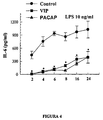
- Figure 4 represents the production of IL-6 by murine macrophages in culture (5x10⁵ cells/ml) after 6 hours of culture with 10ngr/ml of LPS and to which 10-8M of VIP or ACHPA are added at different times.
- Figure 5 presents the Northern Blot analysis for the presence of mRNA of TNFα and IL-6 in macrophages stimulated with LPS in the presence or absence of VIP or ACHPA (18S represents the corresponding rRNA as total quality control of loaded RNA).
- Figure 6 represents the survival in mice injected with 400µgr of LPS and, simultaneously, or after 30 minutes, 1 or 4 hours, with 5 nmol of VIP or ACHPA. A. Control; B: VIP at 0h.; C: VIP at 0,5h; D: VIP at 1 h.; E: VIP at 4 h.
- Figure 7 represents the number of IL-4 secreting cells in the spleen and peritoneum detected by means of the immunabsorption assay technique in conjugated plate with enzymes (ELISPOT) in mice immunised in the conditions specified in Example 7 and which simultaneously to the second injection of antigen received 5 nmol of VIP or ACHPA or an injection of saline solution.
- Figure 8 represents the quantity of anti-haemocyanine immunoglobulins of snail (anti-KLH) of the isotypes IgG2a and IgG1 detectable in serum by means of the technique conjugated immunoabsorption assays with enzymes (ELISA) in immunised mice in the conditions specified in Example 8 and with the serum samples taken two weeks after the last injection.
- Figure 9 represents the number of IL-4 producing cells detected by means of the ELISPOT technique in mice that were immumised in the conditions specified in Examples 7 and 8 and which, in the second injection, received or did not receive 5 nmol of VIP along with 100µgr of IgG, anti-B7.1 or anti-B7.2.
-
- The following examples are only to illustrate the results obtained and do not limit the use of the invention which is detailed in the specified claims.
- In experiments carried out "in vitro" VIP and ACHPA inhibit the production of TNFα in peritoneal murine macrophages stimulated with LPS. The greatest degree of inhibition reaches values near to 60% and occurs with doses of stimulation between 1-10 ngr./ml of LPS. The IC50 value is 80 pM, both for VIP and for ACHPA and its effect was observed up until the end of the experiment (see Figure 1). The inhibitory effect is the same if both neuropeptides are added up until 1 hour after stimulating the macrophages with LPS, although it progressively reduces until disappearing if they are added after 4 hours (see Figure 2).
- In an experiment carried out with mice the circulating levels of
TNFα 2 hours after injection of 25 µgr of LPS were approximately 4 ngr./ml. Simultaneous administration of 5 nmol of VIP or ACHPA reduced said levels by 60%. - In experiments carried out "in vitro" VIP and ACHPA inhibit the production of IL-6 in peritoneal murine macrophages stimulated with LPS. Most of the inhibition reaches values near to 90% and occurs with doses of stimulation of 10 µgr./ml of LPS. The IC50 is 8.6 pM, both for VIP and for ACHPA and the effect was observed up until the end of the experiment (see Figure 3). The inhibitory effect is also observed if the neuropeptides are added after stimulation with LPS, although the degree of inhibition is progressively smaller (see Figure 4).
- In an experiment carried out in mice the circulating levels of IL-6 two hours after injection of 25 µgr. of LPS were approximately 1.5 ngr./ml. The simultaneous administration of 5nmol of VIP or ACHPA reduced said levels by 60% and 75%, respectively.
- Macrophages from rat were submitted to the experimental conditions described in examples 1 and 3 and their mRNA was isolated. This mRNA was analysed using the Northern Blot technique to detect mRNA of TNFα and IL-6. Figure 5 shows the absence of transcripts for TNFα or IL-6 when the macrophages activated with LPS are also exposed to VIP or ACHPA.
- An experiment was carried out in which the long-term survival over a period of 4 days was studied for mice injected with 400µgr of LPS. The results are reflected in figure 6.
- The mortality in these circumstances was 100% after 36 hours. With the simultaneous administration of 5 nmol of VIP or ACHPA a survival of 60% was achieved at the end of the experiment. The administration of neuropeptides up to 1 hour after injection with LPS still gave survival rates close to 50%.
- Groups of mice were immunised with 50 µgr of KLH emulsified in an adjuvant, repeating the injection with 100 µgr of KLH two weeks later and simultaneously injecting 5 nmol/mouse of VIP, ACHPA or saline solution. Two weeks after the last injection, suspensions were made of the spleen and peritoneum cells. These were cultured for 24 hours in the presence of 50 µgr/ml of KLH, after which time the number of IL-4 producing cells was determined using the ELISPOT technique. In the mice injected with VIP or ACHPA, the number of IL-4 producing cells increased in the order of 20 times compared to those that were not treated with these neuropeptides (see Figure 7).
- Groups of mice were immunised with 50 µgr of KLH emulsified in an adjuvant, repeating the injection with 100 µgr of KLH two weeks later and simultaneously injecting 5 nmol/mouse of VIP, ACHPA or saline solution. Two weeks after the last injection, the levels of anti-KLH and its isotype were determined using ELISA specific to the IgG1 and IgG2a isotypes. In mice injected with VIP or ACHPA the anti-KLH antibodies detectable in serum two weeks after the last immunisation are only of the IgG1 isotype, while the in those that only received saline solution they were of the isotype IgG2a (see Figure 8)
- Groups of mice were immunised in the sample conditions as those for Examples 7 and 8, but in the moment of the second immunisation with KLH the mice that were simultaneously injected with VIP or ACHPA also received 100 µgr of anti-B7.1, anti-B7.2 antibody or the same quantity of IgG as control. In the mice that received anti-B7.2 antibodies simultaneously to the administration of neuropeptides the number of IL-4 producing cells was reduced to the proportion reached in animals that were not injected with neuropeptides (see Figure 9).
Claims (9)
- A method for the treatment of endotoxic shock in mammals characterised in that it comprises the administration of an effective quantity of an agent that inhibits the production of tumoral necrosis factor (TNF) in a pharmaceutically acceptable vehicle.
- A method for the treatment of endotoxic shock in mammals according to claim 1, characterised in that the inhibitory agent is a vasoactive intestinal peptide (VIP) or any fragments thereof or some analogue derivative.
- A method for the treatment of endotoxic shock in mammals according to claim 1, characterised in that the inhibitory agent is the adenylate cyclase hypophysary peptide activator (ACHPA) or any fragments thereof or some analogue derivative.
- A method for the treatment of endotoxic shock in mammals characterised in that it comprises the administration of an effective quantity of an agent that inhibits the production of interleukin 6 (IL-6) in a pharmaceutically acceptable vehicle.
- A method for the treatment of endotoxic shock in mammals according to claim 4, characterised in that the inhibitory agent is a vasoactive intestinal peptide (VIP) or any fragments thereof or some analogue derivative.
- A method for the treatment of endotoxic shock in mammals according to claim 4, characterised in that the inhibitory agent is the adenylate cyclase hypophysary peptide activator (ACHPA) or any fragments thereof or some analogue derivative.
- A method for the treatment of inflammatory or autoimmune pathologies in mammals, characterised by the activation of Th1 cells, which comprises the administration of an effective dose of an agent, in a pharmaceutically appropriate vehicle, which induces high levels of IL-4.
- A method for the treatment of inflammatory or autoimmune pathologies in mammals according to claim 7, characterised in that the inducing agent is the vasoactive intestinal peptide (VIP) or a fragment thereof or some analogue derivative.
- A method for the treatment of inflammatory or autoimmune pathologies in mammals according to claim 7, characterised in that the inducing agent is the adenylate cyclase hypophysary activator peptide (ACHPA) or any fragment thereof or some analogue derivative.
Applications Claiming Priority (3)
| Application Number | Priority Date | Filing Date | Title |
|---|---|---|---|
| ES9901235A ES2160495B1 (en) | 1998-04-17 | 1999-06-04 | USE OF VIP AND PACAP PEPTIDES FOR THE TREATMENT OF INFLAMMATORY AND AUTOIMMUNE DISEASES IN MAMMALS. |
| ES9901235 | 1999-06-04 | ||
| PCT/ES2000/000197 WO2000074708A1 (en) | 1999-06-04 | 2000-06-02 | Method for treating endotoxic shock and inflammatory and autoimmune diseases in mammals |
Publications (2)
| Publication Number | Publication Date |
|---|---|
| EP1103270A1 true EP1103270A1 (en) | 2001-05-30 |
| EP1103270B1 EP1103270B1 (en) | 2003-04-16 |
Family
ID=8308713
Family Applications (1)
| Application Number | Title | Priority Date | Filing Date |
|---|---|---|---|
| EP00931296A Expired - Lifetime EP1103270B1 (en) | 1999-06-04 | 2000-06-02 | Treatment of autoimmune diseases in mammals |
Country Status (7)
| Country | Link |
|---|---|
| EP (1) | EP1103270B1 (en) |
| AT (1) | ATE237347T1 (en) |
| AU (1) | AU4927700A (en) |
| CA (1) | CA2345030A1 (en) |
| DE (1) | DE60002143T2 (en) |
| PT (1) | PT1103270E (en) |
| WO (1) | WO2000074708A1 (en) |
Cited By (1)
| Publication number | Priority date | Publication date | Assignee | Title |
|---|---|---|---|---|
| US7468353B2 (en) | 2003-07-14 | 2008-12-23 | Mondobiotech Laboratories Anstalt | Biologically active substance of a vasoactive intestinal peptide for treating interstitial lung diseases |
Families Citing this family (1)
| Publication number | Priority date | Publication date | Assignee | Title |
|---|---|---|---|---|
| PT1719773E (en) | 2004-02-24 | 2009-06-03 | Japan Tobacco Inc | Fused heterotetracyclic compounds and use tehreof as hcv polymerase inhibitor |
Family Cites Families (1)
| Publication number | Priority date | Publication date | Assignee | Title |
|---|---|---|---|---|
| ES2138561B1 (en) * | 1998-04-17 | 2000-07-01 | Univ Madrid Complutense | USE OF VIP PEPTIDES AND PACAP IN THE TREATMENT OF ENDOTOXIC SHOCK IN MAMMALS. |
-
2000
- 2000-06-02 DE DE60002143T patent/DE60002143T2/en not_active Expired - Fee Related
- 2000-06-02 WO PCT/ES2000/000197 patent/WO2000074708A1/en not_active Ceased
- 2000-06-02 EP EP00931296A patent/EP1103270B1/en not_active Expired - Lifetime
- 2000-06-02 CA CA002345030A patent/CA2345030A1/en not_active Abandoned
- 2000-06-02 AT AT00931296T patent/ATE237347T1/en not_active IP Right Cessation
- 2000-06-02 AU AU49277/00A patent/AU4927700A/en not_active Abandoned
- 2000-06-02 PT PT00931296T patent/PT1103270E/en unknown
Non-Patent Citations (1)
| Title |
|---|
| See references of WO0074708A1 * |
Cited By (1)
| Publication number | Priority date | Publication date | Assignee | Title |
|---|---|---|---|---|
| US7468353B2 (en) | 2003-07-14 | 2008-12-23 | Mondobiotech Laboratories Anstalt | Biologically active substance of a vasoactive intestinal peptide for treating interstitial lung diseases |
Also Published As
| Publication number | Publication date |
|---|---|
| DE60002143D1 (en) | 2003-05-22 |
| DE60002143T2 (en) | 2004-03-18 |
| CA2345030A1 (en) | 2000-12-14 |
| PT1103270E (en) | 2003-08-29 |
| AU4927700A (en) | 2000-12-28 |
| WO2000074708A1 (en) | 2000-12-14 |
| ATE237347T1 (en) | 2003-05-15 |
| EP1103270B1 (en) | 2003-04-16 |
Similar Documents
| Publication | Publication Date | Title |
|---|---|---|
| Weyts et al. | Interactions between the immune system and the hypothalamo-pituitary-interrenal axis in fish | |
| Bernhagen et al. | Regulation of the immune response by macrophage migration inhibitory factor: biological and structural features | |
| Delgado et al. | Vasoactive intestinal peptide in the immune system: potential therapeutic role in inflammatory and autoimmune diseases | |
| Calandra et al. | Macrophage migration inhibitory factor (MIF): a glucocorticoid counter-regulator within the immune system | |
| Bateman et al. | The immune-hypothalamic-pituitary-adrenal axis | |
| Besedovsky et al. | Immune-neuro-endocrine interactions: facts and hypotheses | |
| Payan et al. | Neuroimmunology | |
| Kawada et al. | Insights from advances in research of chemically induced experimental models of human inflammatory bowel disease | |
| Sternberg et al. | The stress response and the regulation of inflammatory disease | |
| Nishihira | Novel pathophysiological aspects of macrophage migration inhibitory factor | |
| Taylor et al. | Suppression of nitric oxide generated by inflammatory macrophages by calcitonin gene-related peptide in aqueous humor. | |
| RIVIER et al. | In the mouse, the activation of the hypothalamic pituitary-adrenal axis by a lipopolysaccharide (endotoxin) is mediated through Interleukin-1 | |
| Czura et al. | Targeting high mobility group box 1 as a late-acting mediator of inflammation | |
| Delgado et al. | PACAP in immunity and inflammation | |
| Gomariz et al. | VIP–PACAP system in immunity: new insights for multitarget therapy | |
| Delgado et al. | Anti‐inflammatory properties of the type 1 and type 2 vasoactive intestinal peptide receptors: role in lethal endotoxic shock | |
| BERNTON et al. | Prolactin and immune function | |
| Bourgin et al. | Vasoactive intestinal polypeptide microinjections into the oral pontine tegmentum enhance rapid eye movement sleep in the rat | |
| KR101941975B1 (en) | Composition for Treating Diabetes Containing ATPIF1 | |
| Kazumori et al. | Neutrophil chemoattractant 2β regulates expression of the Reg gene in injured gastric mucosa in rats | |
| Campbell et al. | Endocrine peptides' moonlighting'as immune modulators: roles for somatostatin and GH-releasing factor | |
| Tracey et al. | Physiological responses to cachectin | |
| EP1002542B1 (en) | Use of vip for the preparation of a medicament for treating the endotoxic shock in mammals | |
| Libert et al. | The influence of modulating substances on tumor necrosis factor and interleukin-6 levels after injection of murine tumor necrosis factor or lipopolysaccharide in mice | |
| Berkenbosch et al. | Neuroendocrinology of interleukin-1 |
Legal Events
| Date | Code | Title | Description |
|---|---|---|---|
| PUAI | Public reference made under article 153(3) epc to a published international application that has entered the european phase |
Free format text: ORIGINAL CODE: 0009012 |
|
| 17P | Request for examination filed |
Effective date: 20010302 |
|
| AK | Designated contracting states |
Kind code of ref document: A1 Designated state(s): AT BE CH CY DE DK ES FI FR GB GR IE IT LI LU MC NL PT SE |
|
| AX | Request for extension of the european patent |
Free format text: AL;LT;LV;MK;RO;SI |
|
| 17Q | First examination report despatched |
Effective date: 20010913 |
|
| GRAH | Despatch of communication of intention to grant a patent |
Free format text: ORIGINAL CODE: EPIDOS IGRA |
|
| RTI1 | Title (correction) |
Free format text: TREATMENT OF AUTOIMMUNE DISEASES IN MAMMALS |
|
| RTI1 | Title (correction) |
Free format text: TREATMENT OF AUTOIMMUNE DISEASES IN MAMMALS |
|
| GRAH | Despatch of communication of intention to grant a patent |
Free format text: ORIGINAL CODE: EPIDOS IGRA |
|
| GRAA | (expected) grant |
Free format text: ORIGINAL CODE: 0009210 |
|
| AK | Designated contracting states |
Designated state(s): AT BE CH CY DE DK ES FI FR GB GR IE IT LI LU MC NL PT SE |
|
| PG25 | Lapsed in a contracting state [announced via postgrant information from national office to epo] |
Ref country code: LI Free format text: LAPSE BECAUSE OF FAILURE TO SUBMIT A TRANSLATION OF THE DESCRIPTION OR TO PAY THE FEE WITHIN THE PRESCRIBED TIME-LIMIT Effective date: 20030416 Ref country code: CH Free format text: LAPSE BECAUSE OF FAILURE TO SUBMIT A TRANSLATION OF THE DESCRIPTION OR TO PAY THE FEE WITHIN THE PRESCRIBED TIME-LIMIT Effective date: 20030416 Ref country code: FI Free format text: LAPSE BECAUSE OF FAILURE TO SUBMIT A TRANSLATION OF THE DESCRIPTION OR TO PAY THE FEE WITHIN THE PRESCRIBED TIME-LIMIT Effective date: 20030416 |
|
| REG | Reference to a national code |
Ref country code: GB Ref legal event code: FG4D |
|
| REG | Reference to a national code |
Ref country code: CH Ref legal event code: EP |
|
| REF | Corresponds to: |
Ref document number: 60002143 Country of ref document: DE Date of ref document: 20030522 Kind code of ref document: P |
|
| REG | Reference to a national code |
Ref country code: IE Ref legal event code: FG4D |
|
| PG25 | Lapsed in a contracting state [announced via postgrant information from national office to epo] |
Ref country code: IE Free format text: LAPSE BECAUSE OF NON-PAYMENT OF DUE FEES Effective date: 20030602 Ref country code: CY Free format text: LAPSE BECAUSE OF FAILURE TO SUBMIT A TRANSLATION OF THE DESCRIPTION OR TO PAY THE FEE WITHIN THE PRESCRIBED TIME-LIMIT Effective date: 20030602 Ref country code: LU Free format text: LAPSE BECAUSE OF NON-PAYMENT OF DUE FEES Effective date: 20030602 |
|
| PG25 | Lapsed in a contracting state [announced via postgrant information from national office to epo] |
Ref country code: MC Free format text: LAPSE BECAUSE OF NON-PAYMENT OF DUE FEES Effective date: 20030630 |
|
| PG25 | Lapsed in a contracting state [announced via postgrant information from national office to epo] |
Ref country code: DK Free format text: LAPSE BECAUSE OF FAILURE TO SUBMIT A TRANSLATION OF THE DESCRIPTION OR TO PAY THE FEE WITHIN THE PRESCRIBED TIME-LIMIT Effective date: 20030716 Ref country code: GR Free format text: LAPSE BECAUSE OF FAILURE TO SUBMIT A TRANSLATION OF THE DESCRIPTION OR TO PAY THE FEE WITHIN THE PRESCRIBED TIME-LIMIT Effective date: 20030716 |
|
| REG | Reference to a national code |
Ref country code: SE Ref legal event code: TRGR |
|
| LTIE | Lt: invalidation of european patent or patent extension |
Effective date: 20030416 |
|
| PG25 | Lapsed in a contracting state [announced via postgrant information from national office to epo] |
Ref country code: ES Free format text: LAPSE BECAUSE OF FAILURE TO SUBMIT A TRANSLATION OF THE DESCRIPTION OR TO PAY THE FEE WITHIN THE PRESCRIBED TIME-LIMIT Effective date: 20031030 |
|
| REG | Reference to a national code |
Ref country code: CH Ref legal event code: PL |
|
| ET | Fr: translation filed | ||
| PLBE | No opposition filed within time limit |
Free format text: ORIGINAL CODE: 0009261 |
|
| STAA | Information on the status of an ep patent application or granted ep patent |
Free format text: STATUS: NO OPPOSITION FILED WITHIN TIME LIMIT |
|
| 26N | No opposition filed |
Effective date: 20040119 |
|
| REG | Reference to a national code |
Ref country code: IE Ref legal event code: MM4A |
|
| PGFP | Annual fee paid to national office [announced via postgrant information from national office to epo] |
Ref country code: PT Payment date: 20070521 Year of fee payment: 8 |
|
| PGFP | Annual fee paid to national office [announced via postgrant information from national office to epo] |
Ref country code: SE Payment date: 20070607 Year of fee payment: 8 |
|
| PGFP | Annual fee paid to national office [announced via postgrant information from national office to epo] |
Ref country code: NL Payment date: 20070615 Year of fee payment: 8 |
|
| PGFP | Annual fee paid to national office [announced via postgrant information from national office to epo] |
Ref country code: AT Payment date: 20070620 Year of fee payment: 8 |
|
| PGFP | Annual fee paid to national office [announced via postgrant information from national office to epo] |
Ref country code: BE Payment date: 20070627 Year of fee payment: 8 |
|
| PGFP | Annual fee paid to national office [announced via postgrant information from national office to epo] |
Ref country code: DE Payment date: 20070629 Year of fee payment: 8 |
|
| PGFP | Annual fee paid to national office [announced via postgrant information from national office to epo] |
Ref country code: GB Payment date: 20070511 Year of fee payment: 8 |
|
| PGFP | Annual fee paid to national office [announced via postgrant information from national office to epo] |
Ref country code: IT Payment date: 20070608 Year of fee payment: 8 |
|
| PGFP | Annual fee paid to national office [announced via postgrant information from national office to epo] |
Ref country code: FR Payment date: 20070619 Year of fee payment: 8 |
|
| REG | Reference to a national code |
Ref country code: PT Ref legal event code: MM4A Free format text: LAPSE DUE TO NON-PAYMENT OF FEES Effective date: 20081202 |
|
| BERE | Be: lapsed |
Owner name: *UNIVERSIDAD COMPLUTENSE DE MADRID Effective date: 20080630 |
|
| PG25 | Lapsed in a contracting state [announced via postgrant information from national office to epo] |
Ref country code: PT Free format text: LAPSE BECAUSE OF NON-PAYMENT OF DUE FEES Effective date: 20081202 |
|
| EUG | Se: european patent has lapsed | ||
| GBPC | Gb: european patent ceased through non-payment of renewal fee |
Effective date: 20080602 |
|
| NLV4 | Nl: lapsed or anulled due to non-payment of the annual fee |
Effective date: 20090101 |
|
| PG25 | Lapsed in a contracting state [announced via postgrant information from national office to epo] |
Ref country code: BE Free format text: LAPSE BECAUSE OF NON-PAYMENT OF DUE FEES Effective date: 20080630 |
|
| REG | Reference to a national code |
Ref country code: FR Ref legal event code: ST Effective date: 20090228 |
|
| PG25 | Lapsed in a contracting state [announced via postgrant information from national office to epo] |
Ref country code: DE Free format text: LAPSE BECAUSE OF NON-PAYMENT OF DUE FEES Effective date: 20090101 Ref country code: AT Free format text: LAPSE BECAUSE OF NON-PAYMENT OF DUE FEES Effective date: 20080602 |
|
| PG25 | Lapsed in a contracting state [announced via postgrant information from national office to epo] |
Ref country code: NL Free format text: LAPSE BECAUSE OF NON-PAYMENT OF DUE FEES Effective date: 20090101 |
|
| PG25 | Lapsed in a contracting state [announced via postgrant information from national office to epo] |
Ref country code: GB Free format text: LAPSE BECAUSE OF NON-PAYMENT OF DUE FEES Effective date: 20080602 |
|
| PG25 | Lapsed in a contracting state [announced via postgrant information from national office to epo] |
Ref country code: FR Free format text: LAPSE BECAUSE OF NON-PAYMENT OF DUE FEES Effective date: 20080630 Ref country code: IT Free format text: LAPSE BECAUSE OF NON-PAYMENT OF DUE FEES Effective date: 20080602 |
|
| PG25 | Lapsed in a contracting state [announced via postgrant information from national office to epo] |
Ref country code: SE Free format text: LAPSE BECAUSE OF NON-PAYMENT OF DUE FEES Effective date: 20080603 |