EP1102429B1 - Elektronisches Authentifizierungssystem - Google Patents
Elektronisches Authentifizierungssystem Download PDFInfo
- Publication number
- EP1102429B1 EP1102429B1 EP00118386A EP00118386A EP1102429B1 EP 1102429 B1 EP1102429 B1 EP 1102429B1 EP 00118386 A EP00118386 A EP 00118386A EP 00118386 A EP00118386 A EP 00118386A EP 1102429 B1 EP1102429 B1 EP 1102429B1
- Authority
- EP
- European Patent Office
- Prior art keywords
- user
- key
- communication
- authentication
- center
- Prior art date
- Legal status (The legal status is an assumption and is not a legal conclusion. Google has not performed a legal analysis and makes no representation as to the accuracy of the status listed.)
- Expired - Lifetime
Links
Images


Classifications
-
- H—ELECTRICITY
- H04—ELECTRIC COMMUNICATION TECHNIQUE
- H04L—TRANSMISSION OF DIGITAL INFORMATION, e.g. TELEGRAPHIC COMMUNICATION
- H04L9/00—Cryptographic mechanisms or cryptographic arrangements for secret or secure communications; Network security protocols
- H04L9/30—Public key, i.e. encryption algorithm being computationally infeasible to invert or user's encryption keys not requiring secrecy
-
- H—ELECTRICITY
- H04—ELECTRIC COMMUNICATION TECHNIQUE
- H04L—TRANSMISSION OF DIGITAL INFORMATION, e.g. TELEGRAPHIC COMMUNICATION
- H04L9/00—Cryptographic mechanisms or cryptographic arrangements for secret or secure communications; Network security protocols
- H04L9/08—Key distribution or management, e.g. generation, sharing or updating, of cryptographic keys or passwords
- H04L9/0816—Key establishment, i.e. cryptographic processes or cryptographic protocols whereby a shared secret becomes available to two or more parties, for subsequent use
- H04L9/0819—Key transport or distribution, i.e. key establishment techniques where one party creates or otherwise obtains a secret value, and securely transfers it to the other(s)
- H04L9/083—Key transport or distribution, i.e. key establishment techniques where one party creates or otherwise obtains a secret value, and securely transfers it to the other(s) involving central third party, e.g. key distribution center [KDC] or trusted third party [TTP]
-
- H—ELECTRICITY
- H04—ELECTRIC COMMUNICATION TECHNIQUE
- H04L—TRANSMISSION OF DIGITAL INFORMATION, e.g. TELEGRAPHIC COMMUNICATION
- H04L9/00—Cryptographic mechanisms or cryptographic arrangements for secret or secure communications; Network security protocols
- H04L9/32—Cryptographic mechanisms or cryptographic arrangements for secret or secure communications; Network security protocols including means for verifying the identity or authority of a user of the system or for message authentication, e.g. authorization, entity authentication, data integrity or data verification, non-repudiation, key authentication or verification of credentials
- H04L9/321—Cryptographic mechanisms or cryptographic arrangements for secret or secure communications; Network security protocols including means for verifying the identity or authority of a user of the system or for message authentication, e.g. authorization, entity authentication, data integrity or data verification, non-repudiation, key authentication or verification of credentials involving a third party or a trusted authority
-
- H—ELECTRICITY
- H04—ELECTRIC COMMUNICATION TECHNIQUE
- H04L—TRANSMISSION OF DIGITAL INFORMATION, e.g. TELEGRAPHIC COMMUNICATION
- H04L9/00—Cryptographic mechanisms or cryptographic arrangements for secret or secure communications; Network security protocols
- H04L9/32—Cryptographic mechanisms or cryptographic arrangements for secret or secure communications; Network security protocols including means for verifying the identity or authority of a user of the system or for message authentication, e.g. authorization, entity authentication, data integrity or data verification, non-repudiation, key authentication or verification of credentials
- H04L9/3263—Cryptographic mechanisms or cryptographic arrangements for secret or secure communications; Network security protocols including means for verifying the identity or authority of a user of the system or for message authentication, e.g. authorization, entity authentication, data integrity or data verification, non-repudiation, key authentication or verification of credentials involving certificates, e.g. public key certificate [PKC] or attribute certificate [AC]; Public key infrastructure [PKI] arrangements
Definitions
- This invention relates to an electronic authentication system adapted to improve an authentication reliability of sender and addressee (recipient) of electronic mail and thereby to achieve an electronic mail communication of high security.
- the electronic authentication system of well known art includes the public key cryptosystem and the shared key cryptosystem.
- the public key cryptosystem has been considered as the epoch-making system suitable for communication among many and unspecified persons.
- the public key cryptosystem has conventionally been regarded as a considerably efficient system not only for integrity of data on communication channel so far as a possibility of so-called "impersonation" is neglected.
- the public key cryptosystem has been also regarded as a system being able to prevent a data leakage at a fairly high probability once the public key of a person at the other end has been confirmed.
- the public key cryptosystem is characterized by:
- the shared key cryptosystem has not been adopted for communication among many and unspecified persons for the reason that the keys must be shared by the users A and B communicating with each other and the keys' management is troublesome.
- the total number of keys is a first problem.
- N the number of keys which each user must have
- N x the number of keys which each user must have
- N - 1 the total number of keys required for each user is really (N - 1) both in the public key cryptosystem and in the shared key cryptosystem.
- each user can not communicate with the other respective users unless each user has (N - 1) public keys.
- Each user must have, in addition to (N - 1) public keys, his or her own public key and secret key. Namely, the total number of keys which each user must have is N + 1 in the public key cryptosystem.
- a second problem lies in that the public key cryptosystem allows each user to have pairs of public and secret keys as many as he or she wishes. This means that "impersonation" would be possible in this system for any one of the users.
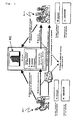
- users A, B possess their own public keys and secret keys (public key and secret key of the user A are designated by 'XXXXX' and 'aaaaaa', respectively, and public key and secret key of the user B are designated by 'YYYYY' and 'bbbbb').
- an authentication center CA manages, in addition to the public keys registered by the respective users (the public key 'XXXXX' of the user A, the pubic key 'YYYYY' of the user B and the public key 'ZZZZZZ'), CA's own secret key 'sssss' and public key 'PPPPPP' used to communicate with the respective users.
- each sender may receive the addressee's public key and the authentication center's public key from the authentication center and encrypt a communication message using the addressee's public key.
- a cryptogram received by the addressee may be decoded using addressee's own secret key.
- the sending unit contains a stored list of secure communication partners and their respective encryption keys, wherein a secure communication is build up immediately if the addressee to which the sender wants to send his mail is contained in this security list.
- an encryption key request is transmitted from the sender to the key center, whereupon the key center transmits the desired information after encryption with the inquire's public key.
- the key distribution center creates the above explained certificate including the public key for a user together with an identification information for that user and the issue date, all encrypted with the private key of the key distribution center.
- the method thus involves the user to present a certificate issued to him by the distribution center including an authorization for delivering a secret communication.
- the body of the message is made using RSA and DES and the message from the user A to the user B takes the form of a cryptogram which has been made using the public key 'YYYYYY' of the user B.
- the user B Upon receipt of the message, the user B decodes this message in the form of the cryptogram using his or her own secret key 'bbbbbb'.
- the users A and B For communication between the users A and B based on this authentication system of prior art, after the users A and B have registered their public keys with the authentication center CA, respectively, the users must make access to the authentication center CA for every communication in order to request the center CA to issue the certificate to be attached to the message or to confirm this certificate. On the other hand, the authentication center must intervene in every communication.
- Identification of the person him- or herself on the public key registration procedure is made on the basis of identification papers such as driver's license and certificate of seal impression filed from the user. On-line procedure of registration is impossible so far as the driver's license and/or the certificate of seal impression are used as means of identification. Obviously, identification of the person him- or herself requires a procedure of registration as strict as possible. While such strict procedure of key registration appears to alleviate a possibility of 'impersonation' by the third person and to improve a security of communication, it is apprehended that this strict procedure might be accompanied with various evils.
- an electronic authentication method comprising a procedure of authentication registration, a procedure of sending and receiving a communication key and a procedure of sending and receiving a security mail, said authentication method being characterized by that:
- the key center In said procedure of sending and receiving said communication key, the key center relies on the registered personal information for authentication to identify the user having transmitted said communication key and the user receiving this communication key.
- Communication between the user and the key center is made using the message encrypted on the basis of a DH system between the user and the key center.
- Delivery of the communication key from said first user to said second user via the key center is made by a cryptogram made using the DH system between said first and second users and said key center is unable to intervene in a content of the message received by said key center from said first user and transmitted by said key center.
- the addressee After having received the communication key of a first user, the addressee holds this communication key and uses this communication key to decode the encrypted message transmitted from said first user until said communication key is renewed.
- the communication key previously warranted by the key center for communication between said first user and said second user by the key center can be renewed with their mutual consent without any intervention of said key center.
- the personal information for authentication peculiar to the user is in the form of digital information such as random digits being easily altered, suggesting no correlation between the particular person and the information content and thereby making it difficult to impersonate the particular person.
- an electronic authentication system which a key center authenticates sender and addressee of a message, wherein said key center has a role of accepting registration of each user's personal information for authentication and managing this and a role of, assumed that a sender of a message is designated as a first user and an addressee of this message is designated as a second user, confirming the personal information for authentication of said first and second users in response to a request from said first user to deliver a communication key to said second user and then receiving said communication key from said first user and delivering this to said second user but said key center has no intervention in a content of the communication between said first user and said second user.
- the respective users register their personal authentication information with a key center KC.
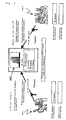
- a key center KC For interpersonal communication between a first user (referred to as the user A in the description of this embodiment given hereunder) sending a message and a particular second user (referred to the user B in the description of this embodiment given hereunder), the users A, B follow 1 ⁇ the registration procedure of authentication information registration, 2 ⁇ the procedure of sending and receiving the communication keys and 3 ⁇ the procedure of sending and receiving a security mail.
- the key center KC authenticates that the sender (user A) is evidently him- or herself.
- key center KC in the system according to this invention is similar to the "authentication center CA" in the public key system of prior art so far as its function to authenticate the users is concerned, a term “key center” is used herein to distinguish the center according to this invention from “authentication center CA” in the public key system of prior art in view of a difference in function offered by these two systems.
- the key center KC in the system according to this invention functions as a strict post office or a matchmaker, i.e., the key center KC intervenes only once in communication between the users and never intervenes in the subsequent communication between these users.
- the key center KC in the system according to this invention functions to accept a registration of user's personal information for authentication and to manage this, on one hand, and functions to receive a communication key from the user A and to deliver this to the user B, on the other hand.
- the key center KC is principally not concerned in a content of message exchanged between the user A and the user B except special cases.
- the key center KC accepts a registration of personal information for authentication (comparable to a certificate of seal impression), the key center KC does not use the personal public key information.
- the procedure of registering information for authentication 1 ⁇ is an initial step on which the respective users on-line register their personal information for authentication at the key center KC.
- the respective users A, B communicate with the key center KC to register their personal information for authentication (personal information for authentication of the user A ' xxxxxx', personal information for authentication of the user B 'yyyyyy') at the key center KC.
- the users C other than the users A, B also register their personal information for authentication 'zzzzzz' at the key center KC.
- the key center KC manages the respective personal information for authentication registered thereat.
- the respective users possess their personal information for authentication and the communication keys of the respective addressees (corresponding to the public keys used by the public key system of prior art). These personal information for authentication and communication keys may be optionally preset by the users so far as they meet prescribed rules.
- the respective users on-line register the personal information for authentication preset by themselves at the key center KC.
- the user A on-line registers his or her personal information for authentication 'xxxxxx'
- the user B on-line registers his or her personal information for authentication 'yyyyy'
- the users C on-line register their personal information for authentication 'zzzzzz', respectively, at the key center KC.
- a renewed personal information for authentication also may be on-line registered whenever the existing personal information for authentication is renewed.
- DH system Diffie-Hellman's key deliver system: the system allowing the users A, B to share an encrypted key (common key). This communication is made using cryptogram based on one-time password so that the registered personal information for authentication can not be monitored by the third person.
- information peculiar to each user is used as the personal information for authentication.
- a term "the information peculiar to each user" used herein should be understood to include the information which can not be known by the persons other than the person uses this particular personal information for authentication and the information which can not be used by the persons other than this particular user.
- a series of digits arranged at random is an example of the former and attributes intrinsic to the individual such as a fingerprint and an iris are examples of the latter.
- the invariable information such as the fingerprint or iris can not be mimicked by the other person, it is possibly presupposed that such information is to be used as the personal information for authentication.
- the data of such fingerprint or iris is inevitably converted to the corresponding digital information which can be easily copied. This means that it is difficult to prevent a leak of the secret information.
- the digital information such as the random digits is preferably used as the personal information for authentication, which can not be easily presupposed to be used as the personal information for authentication and can be readily renewed as occasion demands.
- the user A takes the procedure of sending the communication key (2 ⁇ - 1), i.e., sends (transmits) on line a communication key 'ABABAB' to be used for communication with the user B identified by the user A as an addressee to the key center KC and requests the key center KC to deliver said communication key 'ABABAB' to the user B.
- the key center KC confirms the personal information for authentication 'xxxxxx' of the user A and temporarily stores the encrypted communication key 'ABABAB' transmitted by the user A to the key center KC. Then the key center KC communicates with the user B to confirm the personal information for authentication 'yyyyyy' of the user B and sends (transmits) on line the personal information for authentication of the user A to the user B (2 ⁇ - 2) and the user B thus obtains this communication key 'ABABAB'.
- the key center KC informs the user A of the fact that receipt of the communication key has been rejected.
- This procedure is comparable to the procedure of, under authentication by the key center KC, sealing an envelope in which a letter from the user A to the user B has been put (corresponding to DH encryption between the users A, B; this is not monitored by the key center) and requesting the key center KC to deliver this sealed envelope to the user B.
- the communication key 'ABABAB' transmitted from the first user A to the second user B is the key encrypted in accordance with the DH system between the first user A and the second user B.
- the user B may take the key (exactly to say, may make the same key) out from the sealed envelope (DH encryption).
- the communication between the user A or B and the key center KC is based on the DH system and encrypted by the one-time password. In this way, a leak of the communication key is prevented even against the communication monitoring.
- the communication key 'ABABAB' delivered by the key center KC to the user B is based on the DH system for the user B him- or herself and it is impossible even for the key center KC to falsify the communication key and/or to impersonate the user A.
- the communication key 'ABABAB' received by the user B from the key center KC is trustworthy because this communication key is nothing but the communication key coming from the user A authenticated by the key center KC.
- the user A takes the procedure of sending and receiving the security mail (3 ⁇ ), i.e., encrypts the message using the communication key 'ABABAB' and sends this encrypted message directly to the user B.
- the user B receives this.
- the encrypted message transmitted from the user A to the user B can be decoded using the communication key 'ABABAB' of the user A received from the key center KC, which communication key 'ABABAB' is available for communication between the user A and the user B.
- the message transmitted from the user A directly to the user B on this step is the cryptogram based on the communication key 'ABABAB' delivered from the key center KC and can not be made by any person other than the user A who is the possessor of this communication key.
- the users A, B can use the communication key to establish their business communication without any anxiety because such communication key has a same effect as a signature and is warranted by the key center KC to be the communication key possessed by the user A.
- the communication key 'ABABAB' of the user A will be used for the subsequent communications from the user A to the user B. Also for communication from the user B as the first user to the user A as the second user, it is unnecessary to preset another communication key and, in this case also, the communication key 'ABABAB' can be used as the communication key so far as the communication is made between the user A and the user B.
- the respective users may hold these communication keys and decode the encrypted messages transmitted from the particular users using these communication keys so long as these communication keys are not renewed.
- the communication key warranted by the key center KC and having been used for communication between each pair of users may be renewed by mutual agreement without any intervention of the key center KC.
- the user may send to the key center KC an information which can be decrypted by the key center KC or a message indicating the communication history.
- the key center KC will reject the access by the true user A even when the true user A tries an access to the key center KC using his or her personal information for authentication 'xxxxxx' for the reason that said communication key 'xxxxxx' differs from the personal information for authentication 'ffffff' already registered at the key center KC as the personal information for authentication of the user A.
- the user when the user makes an access to the key center KC to request a confirmation of his or her own personal information for authentication during the procedure of registration or sending and receiving a security mail, the user is informed of an 'impersonation' by the third person from the fact that his or her own personal information for authentication can not be warranted by the key center KC.
- an 'impersonation' by the third person might occur in the system according to this invention only at the initial procedure.
- such 'impersonation' by the third person may occur when the impersonated person has no relationship with the key center KC, i.e., such 'impersonation' may occur at the absence of the security communication by the true user or before the personal information for authentication of the true user is actually registered.
- this 'impersonation' is revealed at once when the true user makes an access to the key center KC for the security communication.
- the information stored in terminal equipment of the user as well as of the key center KC inclusive of the personal information for authentication, the communication key and the message is subjected to double encryption based on the information peculiar to the terminal equipment of the user as well as of the key center KC (hardware information) and on the information optionally preset by the user (software information).
- the information stored in these terminal equipment is that which has been subjected to said double encryption.
- the information stored in the respective terminal equipment are reliably protected against any wiretap or alteration. Should the information stored in the terminal equipment leak, it will be difficult the terminal equipment other than the predetermined terminal equipment to decode the information and it will be difficult for even the insiders of the key center to handle the information illegally. A security level is thus significantly improved.
- this invention enables both the users and the key center to realize the authentication of user him- or herself as well as the leak-free sending and receiving of security mail by using a combination of the communication key corresponding to a modified version of the shared key system and the DH system instead of using the public key system accompanied with a relatively heavy burden.
- the user may register his or her personal information for authentication at the key center in a manner as simple as the resident registration and this registration of the personal information for authentication can be automatically done on-line.
- the user is obligated to make an access to the key center only for registration of renewed personal information for authentication and the initial deliver of the communication key, except special cases. Not only the users but also the key center are relieved of the burden conventionally imposed to both of them.
- this invention enables the user to register his or her personal information for authentication at the key center on-line and additionally to renew whenever the user wishes it. This is an effect which can not be supposed from the public key system of prior art.
- This invention drastically reduces a possibility of the 'impersonation' by the third person and, even if such 'impersonation' occurs, such 'impersonation' by the third person can be revealed at once when the true user makes a security communication.
- This invention allows the user him- or herself to control the personal information for authentication on which the security is entirely based and thereby to use the system at a high security level. Moreover, the system according this invention requires no attachment of extra information to the message and correspondingly accelerates the processing because the message of the security mail is encrypted on the basis of the system corresponding to the public key system of prior art.
Landscapes
- Engineering & Computer Science (AREA)
- Computer Security & Cryptography (AREA)
- Computer Networks & Wireless Communication (AREA)
- Signal Processing (AREA)
- Computing Systems (AREA)
- Theoretical Computer Science (AREA)
- Information Transfer Between Computers (AREA)
- Data Exchanges In Wide-Area Networks (AREA)
- Storage Device Security (AREA)
- Telephonic Communication Services (AREA)
- Computer And Data Communications (AREA)
- Management, Administration, Business Operations System, And Electronic Commerce (AREA)
- Lock And Its Accessories (AREA)
Claims (9)
- Elektronisches Authentifizierungsverfahren umfassend einen Schritt zur Authentifizierungsregistrierung, einen Schritt des Sendens und Empfangens eines Kommunikationsschlüssels und einen Schritt des Sendens und Empfangens einer Sicherheitsmail, wobei der Schritt der Authentifizierungsregistrierung folgende Schritte umfasst:wobei das Authentifizierungsverfahren dadurch charakterisiert ist, dass der Schritt des Sendens und Empfangens des Kommunikationsschlüssels, unter der Annahme, dass ein Sender als ein erster Benutzer und ein Adressat als ein zweiter Benutzer bezeichnet wird, folgende Schritte umfasst:Registrierung einer persönlichen Authentifizierungsinformation, die von jedem Benutzer selbst an einem Schlüsselsystem voreingestellt wird, welche persönliche Authentifizierungsinformation eine Information ist, die für jeden Besucher individuell ist; undHandhabung der von jedem Benutzer übermittelten persönlichen Authentifizierungsinformation durch das Schlüsselzentrum;Übersenden eines Kommunikationsschlüssels, der durch den Diffie-Hellman-Algorithmus verschlüsselt ist, von dem ersten Benutzer zum Schlüsselzentrum;während der verschlüsselte Kommunikationsschlüssel temporär gespeichert wird, kommuniziert das Schlüsselzentrum mit dem zweiten Benutzer, um die persönliche Authentifizierungsinformation des zweiten Benutzers zu bestätigen, undÜbersenden des verschlüsselten Kommunikationsschlüssels vom Schlüsselzentrum zum zweiten Benutzer, wobei
der Kommunikationsschlüssel von dem ersten Benutzer verwendet wird, um eine Nachricht zu verschlüsseln, die an den zweiten Benutzer adressiert ist und von dem zweiten Benutzer verwendet wird, um die verschlüsselte Nachricht zu entschlüsseln; und
der Schritt des Sendens und Empfangens einer Sicherheitsmail folgende Schritte umfasst:Verschlüsseln der Nachricht durch den ersten Benutzer unter Verwendung des Kommunikationsschlüssels, undOnlineübertragung der Nachricht von dem ersten Benutzer direkt zum zweiten Benutzer undEmpfangen dieser verschlüsselten Nachricht des ersten Benutzers durch den zweiten Benutzer, undEntschlüsseln der Nachricht durch Verwendung des Kommunikationsschlüssels, der von dem Schlüsselzentrum an den zweiten Benutzer übertragen wurde. - Elektronisches Authentifizierungsverfahren nach Anspruch 1, bei dem in dem Schritt des Sendens und des Empfangens des Kommunikationsschlüssels das Schlüsselzentrum auf die registrierte personelle Authentifizierungsinformation vertraut, um den Benutzer zu identifizieren, der den Kommunikationsschlüssel übertragen hat, und den Benutzer, der diesen Kommunikationsschlüssel empfängt.
- Elektronisches Authentifizierungsverfahren nach Anspruch 1 oder 2, bei dem die Kommunikation zwischen dem Benutzer und dem Schlüsselzentrum stattfindet unter Verwendung der Nachricht, die auf der Basis eines DH-Systems verschlüsselt wurde zwischen dem Benutzer und dem Schlüsselzentrum.
- Elektronisches Authentifizierungsverfahren nach Anspruch 1, 2 oder 3, bei dem die Abgabe des Kommunikationsschlüssels von dem ersten Benutzer an den zweiten Benutzer über das Schlüsselzentrum durch ein Kryptogramm erfolgt, welches hergestellt wurde unter Verwendung des DH-Systems zwischen dem ersten und zweiten Benutzer, und bei dem das Schlüsselzentrum nicht in der Lage ist, auf den Inhalt der Nachricht Einfluss zu nehmen, der von dem Schlüsselzentrum von dem ersten Benutzer erhalten wurde und von dem Schlüsselzentrum übermittelt wurde.
- Elektronisches Authentifizierungsverfahren nach einem der Ansprüche 1 - 4, bei dem, sobald die persönliche Authentifizierungsinformation am Schlüsselzentrum online registriert wurde, es unnötig für den Benutzer ist, irgendeinen Zugriff zu machen, außer wenn er den Kommunikationsschlüssel sendet und empfängt, wobei die Erneuerung der persönlichen Authentifizierungsinformation oder die Zertifizierung von Inhalten oder die Kommunikationshistorie gefordert wird.
- Elektronisches Authentifizierungsverfahren nach einem der Ansprüche 1 - 5, bei dem, nachdem der Adressat den Kommunikationsschlüssel eines ersten Benutzers empfangen hat, diesen Kommunikationsschlüssel hält und verwendet, um die verschlüsselte Nachricht, die von dem ersten Benutzer übertragen wurde, zu entschlüsseln, bis der Kommunikationsschlüssel erneuert wird.
- Elektronisches Authentifizierungsverfahren nach einem der Ansprüche 1 - 6, bei dem, sollte eine dritte Person vorgeben, der erste Benutzer zu sein, indem er eine andere persönliche Authentifizierungsinformation an dem Schlüsselzentrum registriert, eine derartige Täuschung durch die dritte Person sofort festgestellt wird durch die Tatsache, dass die persönliche Authentifizierungsinformation des ersten Benutzers von dem Schlüsselzentrum nicht gewährt wird, wenn der erste Benutzer für den Schritt der Registrierung oder den Schritt des Sendens und Empfangens der Sicherheitsmail auf das Schlüsselzentrum zugreift.
- Elektronisches Authentifizierungsverfahren nach einem der Ansprüche 1 - 7, bei dem der Kommunikationsschlüssel, der vorher von dem Schlüsselzentrum für die Kommunikation zwischen dem ersten Benutzer und dem zweiten Benutzer gewährt wurde, mit deren gegenseitigem Einverständnis ohne irgendeine Intervention des Schlüsselzentrums erneuert werden kann.
- Elektronisches Authentifizierungsverfahren nach einem der Ansprüche 1 - 8, bei dem die persönliche Authentifizierungsinformation, die jedem Benutzer individuell zugeteilt wird, in der Form digitaler Information, wie z.B. Zufallszahlen, bereit gestellt wird, die leicht geändert werden kann und die keine Korrelation zwischen der bestimmten Person und dem Informationsgehalt nahe legt und es damit schwierig macht, vorzugeben, die bestimmte Person zu sein.
Applications Claiming Priority (2)
| Application Number | Priority Date | Filing Date | Title |
|---|---|---|---|
| JP32471299A JP4941918B2 (ja) | 1999-11-15 | 1999-11-15 | 電子認証システム |
| JP32471299 | 1999-11-15 |
Publications (3)
| Publication Number | Publication Date |
|---|---|
| EP1102429A2 EP1102429A2 (de) | 2001-05-23 |
| EP1102429A3 EP1102429A3 (de) | 2002-07-24 |
| EP1102429B1 true EP1102429B1 (de) | 2005-10-26 |
Family
ID=18168875
Family Applications (1)
| Application Number | Title | Priority Date | Filing Date |
|---|---|---|---|
| EP00118386A Expired - Lifetime EP1102429B1 (de) | 1999-11-15 | 2000-08-24 | Elektronisches Authentifizierungssystem |
Country Status (6)
| Country | Link |
|---|---|
| EP (1) | EP1102429B1 (de) |
| JP (1) | JP4941918B2 (de) |
| KR (1) | KR20010050484A (de) |
| AT (1) | ATE308177T1 (de) |
| DE (1) | DE60023426T2 (de) |
| TW (1) | TW486625B (de) |
Families Citing this family (12)
| Publication number | Priority date | Publication date | Assignee | Title |
|---|---|---|---|---|
| KR20020025343A (ko) * | 2000-09-28 | 2002-04-04 | 양태연 | 기본키와 일회용키를 이용한 파일 암호 와 복호 방법 및그 장치 |
| KR20020042045A (ko) * | 2000-11-29 | 2002-06-05 | 김용민 | 전자우편 송수신 방법 |
| JP2002185448A (ja) * | 2000-12-15 | 2002-06-28 | Cognitive Research Laboratories Inc | データセキュリティを強化したデータ配信システム |
| KR100429594B1 (ko) * | 2001-08-31 | 2004-05-03 | 주식회사 안랩유비웨어 | 전자 서명을 이용한 단문 메시지 부인 봉쇄 방법 |
| KR20030023117A (ko) * | 2001-09-12 | 2003-03-19 | 에스케이 텔레콤주식회사 | 공개키 기반의 무선단문메시지 보안 및 인증방법 |
| KR100449483B1 (ko) * | 2001-10-18 | 2004-09-21 | 한국전자통신연구원 | 공개키 기반 구조에서 생체정보를 이용한 사용자 등록요청 및 승인 방법 |
| KR20040022864A (ko) * | 2002-09-10 | 2004-03-18 | 가림정보기술(주) | 전자 내용증명 문서 전송 시스템 및 그 방법 |
| JP4601470B2 (ja) | 2005-03-18 | 2010-12-22 | 富士通株式会社 | 電子メール転送方法及び装置 |
| EP1908249B1 (de) * | 2005-07-27 | 2012-08-15 | International Business Machines Corporation | Systeme und verfahren zur sicheren ablieferung von dateien an autorisierte empfänger |
| US20080168536A1 (en) * | 2007-01-10 | 2008-07-10 | Rueckwald Mark C | System and methods for reduction of unwanted electronic correspondence |
| KR100848966B1 (ko) | 2008-01-24 | 2008-07-30 | 에스케이 텔레콤주식회사 | 공개키 기반의 무선단문메시지 보안 및 인증방법 |
| KR101590630B1 (ko) * | 2011-12-29 | 2016-02-03 | 주식회사 비즈모델라인 | 공동구매 키 제공 방법 |
Family Cites Families (3)
| Publication number | Priority date | Publication date | Assignee | Title |
|---|---|---|---|---|
| US5491750A (en) * | 1993-12-30 | 1996-02-13 | International Business Machines Corporation | Method and apparatus for three-party entity authentication and key distribution using message authentication codes |
| IL113259A (en) * | 1995-04-05 | 2001-03-19 | Diversinet Corp | A device and method for a secure interface for secure communication and data transfer |
| US5638445A (en) * | 1995-09-19 | 1997-06-10 | Microsoft Corporation | Blind encryption |
-
1999
- 1999-11-15 JP JP32471299A patent/JP4941918B2/ja not_active Expired - Lifetime
-
2000
- 2000-08-24 DE DE60023426T patent/DE60023426T2/de not_active Expired - Fee Related
- 2000-08-24 EP EP00118386A patent/EP1102429B1/de not_active Expired - Lifetime
- 2000-08-24 AT AT00118386T patent/ATE308177T1/de not_active IP Right Cessation
- 2000-09-16 KR KR1020000054386A patent/KR20010050484A/ko not_active Ceased
- 2000-11-07 TW TW089123458A patent/TW486625B/zh not_active IP Right Cessation
Also Published As
| Publication number | Publication date |
|---|---|
| JP4941918B2 (ja) | 2012-05-30 |
| DE60023426D1 (de) | 2005-12-01 |
| EP1102429A3 (de) | 2002-07-24 |
| TW486625B (en) | 2002-05-11 |
| EP1102429A2 (de) | 2001-05-23 |
| ATE308177T1 (de) | 2005-11-15 |
| JP2001144745A (ja) | 2001-05-25 |
| DE60023426T2 (de) | 2006-04-27 |
| KR20010050484A (ko) | 2001-06-15 |
Similar Documents
| Publication | Publication Date | Title |
|---|---|---|
| US7020778B1 (en) | Method for issuing an electronic identity | |
| US7325127B2 (en) | Security server system | |
| US8315393B2 (en) | System for on-line and off-line decryption | |
| US6963971B1 (en) | Method for authenticating electronic documents | |
| US6732270B1 (en) | Method to authenticate a network access server to an authentication server | |
| CN100420227C (zh) | 信息提供方法、信息提供系统以及中继装置 | |
| US6948060B1 (en) | Method and apparatus for monitoring encrypted communication in a network | |
| US20060053280A1 (en) | Secure e-mail messaging system | |
| US20040148500A1 (en) | System for implementing business processes using key server events | |
| WO2008116060A1 (en) | Secure electronic messaging system requiring key retrieval for deriving decryption key | |
| CN108566395A (zh) | 一种基于区块链的文件传输方法、装置及系统 | |
| US20120310840A1 (en) | Authentication method, payment authorisation method and corresponding electronic equipments | |
| JPWO2010150813A1 (ja) | 暗号鍵配布システム | |
| EP1102429B1 (de) | Elektronisches Authentifizierungssystem | |
| US7660987B2 (en) | Method of establishing a secure e-mail transmission link | |
| US7587051B2 (en) | System and method for securing information, including a system and method for setting up a correspondent pairing | |
| JP3711931B2 (ja) | 電子メールシステム、その処理方法及びそのプログラム | |
| KR20010079161A (ko) | 무선통신환경에서 인증서를 사용한 장치 인증 및 통신암호 키 분배 방법 | |
| JP3690237B2 (ja) | 認証方法、記録媒体、認証システム、端末装置、及び認証用記録媒体作成装置 | |
| JP2000031957A (ja) | 通信システム | |
| JPH11331181A (ja) | ネットワーク端末認証装置 | |
| Al-Hammadi et al. | Certified exchange of electronic mail (CEEM) | |
| EP1770901B1 (de) | Authentifizierungsverfahren und dazugehörige Vorrichtungen | |
| JP2003271476A (ja) | Snmpネットワーク管理システム | |
| JPH09326789A (ja) | 携帯無線端末間通信における相手認証方法及びシステム |
Legal Events
| Date | Code | Title | Description |
|---|---|---|---|
| PUAI | Public reference made under article 153(3) epc to a published international application that has entered the european phase |
Free format text: ORIGINAL CODE: 0009012 |
|
| AK | Designated contracting states |
Kind code of ref document: A2 Designated state(s): AT BE CH CY DE DK ES FI FR GB GR IE IT LI LU MC NL PT SE |
|
| AX | Request for extension of the european patent |
Free format text: AL;LT;LV;MK;RO;SI |
|
| RAP1 | Party data changed (applicant data changed or rights of an application transferred) |
Owner name: ONAYA TATSUHIRO |
|
| PUAL | Search report despatched |
Free format text: ORIGINAL CODE: 0009013 |
|
| AK | Designated contracting states |
Kind code of ref document: A3 Designated state(s): AT BE CH CY DE DK ES FI FR GB GR IE IT LI LU MC NL PT SE |
|
| AX | Request for extension of the european patent |
Free format text: AL;LT;LV;MK;RO;SI |
|
| AKX | Designation fees paid | ||
| 17P | Request for examination filed |
Effective date: 20030129 |
|
| RBV | Designated contracting states (corrected) |
Designated state(s): AT BE CH CY DE DK ES FI FR GB GR IE IT LI LU MC NL PT SE |
|
| REG | Reference to a national code |
Ref country code: DE Ref legal event code: 8566 |
|
| R17P | Request for examination filed (corrected) |
Effective date: 20030124 |
|
| 17Q | First examination report despatched |
Effective date: 20030801 |
|
| GRAP | Despatch of communication of intention to grant a patent |
Free format text: ORIGINAL CODE: EPIDOSNIGR1 |
|
| GRAS | Grant fee paid |
Free format text: ORIGINAL CODE: EPIDOSNIGR3 |
|
| GRAA | (expected) grant |
Free format text: ORIGINAL CODE: 0009210 |
|
| AK | Designated contracting states |
Kind code of ref document: B1 Designated state(s): AT BE CH CY DE DK ES FI FR GB GR IE IT LI LU MC NL PT SE |
|
| PG25 | Lapsed in a contracting state [announced via postgrant information from national office to epo] |
Ref country code: AT Free format text: LAPSE BECAUSE OF FAILURE TO SUBMIT A TRANSLATION OF THE DESCRIPTION OR TO PAY THE FEE WITHIN THE PRESCRIBED TIME-LIMIT Effective date: 20051026 Ref country code: NL Free format text: LAPSE BECAUSE OF FAILURE TO SUBMIT A TRANSLATION OF THE DESCRIPTION OR TO PAY THE FEE WITHIN THE PRESCRIBED TIME-LIMIT Effective date: 20051026 |
|
| REG | Reference to a national code |
Ref country code: GB Ref legal event code: FG4D |
|
| REG | Reference to a national code |
Ref country code: CH Ref legal event code: EP |
|
| REG | Reference to a national code |
Ref country code: CH Ref legal event code: NV Representative=s name: ABACUS PATENTANWAELTE KLOCKE SPAETH BARTH Ref country code: IE Ref legal event code: FG4D |
|
| REF | Corresponds to: |
Ref document number: 60023426 Country of ref document: DE Date of ref document: 20051201 Kind code of ref document: P |
|
| PG25 | Lapsed in a contracting state [announced via postgrant information from national office to epo] |
Ref country code: DK Free format text: LAPSE BECAUSE OF FAILURE TO SUBMIT A TRANSLATION OF THE DESCRIPTION OR TO PAY THE FEE WITHIN THE PRESCRIBED TIME-LIMIT Effective date: 20060126 Ref country code: SE Free format text: LAPSE BECAUSE OF FAILURE TO SUBMIT A TRANSLATION OF THE DESCRIPTION OR TO PAY THE FEE WITHIN THE PRESCRIBED TIME-LIMIT Effective date: 20060126 Ref country code: GR Free format text: LAPSE BECAUSE OF FAILURE TO SUBMIT A TRANSLATION OF THE DESCRIPTION OR TO PAY THE FEE WITHIN THE PRESCRIBED TIME-LIMIT Effective date: 20060126 |
|
| PG25 | Lapsed in a contracting state [announced via postgrant information from national office to epo] |
Ref country code: ES Free format text: LAPSE BECAUSE OF FAILURE TO SUBMIT A TRANSLATION OF THE DESCRIPTION OR TO PAY THE FEE WITHIN THE PRESCRIBED TIME-LIMIT Effective date: 20060206 |
|
| PG25 | Lapsed in a contracting state [announced via postgrant information from national office to epo] |
Ref country code: PT Free format text: LAPSE BECAUSE OF FAILURE TO SUBMIT A TRANSLATION OF THE DESCRIPTION OR TO PAY THE FEE WITHIN THE PRESCRIBED TIME-LIMIT Effective date: 20060327 |
|
| NLV1 | Nl: lapsed or annulled due to failure to fulfill the requirements of art. 29p and 29m of the patents act | ||
| ET | Fr: translation filed | ||
| PG25 | Lapsed in a contracting state [announced via postgrant information from national office to epo] |
Ref country code: MC Free format text: LAPSE BECAUSE OF NON-PAYMENT OF DUE FEES Effective date: 20060831 Ref country code: CH Free format text: LAPSE BECAUSE OF NON-PAYMENT OF DUE FEES Effective date: 20060831 Ref country code: LI Free format text: LAPSE BECAUSE OF NON-PAYMENT OF DUE FEES Effective date: 20060831 Ref country code: BE Free format text: LAPSE BECAUSE OF NON-PAYMENT OF DUE FEES Effective date: 20060831 |
|
| PGFP | Annual fee paid to national office [announced via postgrant information from national office to epo] |
Ref country code: IT Payment date: 20060831 Year of fee payment: 7 |
|
| PLBE | No opposition filed within time limit |
Free format text: ORIGINAL CODE: 0009261 |
|
| STAA | Information on the status of an ep patent application or granted ep patent |
Free format text: STATUS: NO OPPOSITION FILED WITHIN TIME LIMIT |
|
| 26N | No opposition filed |
Effective date: 20060727 |
|
| PGFP | Annual fee paid to national office [announced via postgrant information from national office to epo] |
Ref country code: DE Payment date: 20070227 Year of fee payment: 7 Ref country code: FI Payment date: 20070227 Year of fee payment: 7 Ref country code: GB Payment date: 20070227 Year of fee payment: 7 Ref country code: IE Payment date: 20070227 Year of fee payment: 7 |
|
| REG | Reference to a national code |
Ref country code: CH Ref legal event code: PL |
|
| REG | Reference to a national code |
Ref country code: FR Ref legal event code: ST Effective date: 20070430 |
|
| BERE | Be: lapsed |
Owner name: *ONAYA TATSUHIRO Effective date: 20060831 |
|
| GBPC | Gb: european patent ceased through non-payment of renewal fee |
Effective date: 20070824 |
|
| PG25 | Lapsed in a contracting state [announced via postgrant information from national office to epo] |
Ref country code: FR Free format text: LAPSE BECAUSE OF NON-PAYMENT OF DUE FEES Effective date: 20060831 |
|
| PG25 | Lapsed in a contracting state [announced via postgrant information from national office to epo] |
Ref country code: FI Free format text: LAPSE BECAUSE OF NON-PAYMENT OF DUE FEES Effective date: 20070824 |
|
| REG | Reference to a national code |
Ref country code: IE Ref legal event code: MM4A |
|
| PG25 | Lapsed in a contracting state [announced via postgrant information from national office to epo] |
Ref country code: LU Free format text: LAPSE BECAUSE OF NON-PAYMENT OF DUE FEES Effective date: 20060824 Ref country code: DE Free format text: LAPSE BECAUSE OF NON-PAYMENT OF DUE FEES Effective date: 20080301 |
|
| PG25 | Lapsed in a contracting state [announced via postgrant information from national office to epo] |
Ref country code: IE Free format text: LAPSE BECAUSE OF NON-PAYMENT OF DUE FEES Effective date: 20070824 |
|
| PG25 | Lapsed in a contracting state [announced via postgrant information from national office to epo] |
Ref country code: GB Free format text: LAPSE BECAUSE OF NON-PAYMENT OF DUE FEES Effective date: 20070824 Ref country code: CY Free format text: LAPSE BECAUSE OF FAILURE TO SUBMIT A TRANSLATION OF THE DESCRIPTION OR TO PAY THE FEE WITHIN THE PRESCRIBED TIME-LIMIT Effective date: 20051026 |
|
| PG25 | Lapsed in a contracting state [announced via postgrant information from national office to epo] |
Ref country code: IT Free format text: LAPSE BECAUSE OF NON-PAYMENT OF DUE FEES Effective date: 20070824 |