EP1100690B1 - Groupe motopropulseur hybride comportant deux machines electriques - Google Patents
Groupe motopropulseur hybride comportant deux machines electriques Download PDFInfo
- Publication number
- EP1100690B1 EP1100690B1 EP99932941A EP99932941A EP1100690B1 EP 1100690 B1 EP1100690 B1 EP 1100690B1 EP 99932941 A EP99932941 A EP 99932941A EP 99932941 A EP99932941 A EP 99932941A EP 1100690 B1 EP1100690 B1 EP 1100690B1
- Authority
- EP
- European Patent Office
- Prior art keywords
- power unit
- vehicle
- electrical machine
- heat engine
- configuration
- Prior art date
- Legal status (The legal status is an assumption and is not a legal conclusion. Google has not performed a legal analysis and makes no representation as to the accuracy of the status listed.)
- Expired - Lifetime
Links
Images
Classifications
-
- B—PERFORMING OPERATIONS; TRANSPORTING
- B60—VEHICLES IN GENERAL
- B60K—ARRANGEMENT OR MOUNTING OF PROPULSION UNITS OR OF TRANSMISSIONS IN VEHICLES; ARRANGEMENT OR MOUNTING OF PLURAL DIVERSE PRIME-MOVERS IN VEHICLES; AUXILIARY DRIVES FOR VEHICLES; INSTRUMENTATION OR DASHBOARDS FOR VEHICLES; ARRANGEMENTS IN CONNECTION WITH COOLING, AIR INTAKE, GAS EXHAUST OR FUEL SUPPLY OF PROPULSION UNITS IN VEHICLES
- B60K6/00—Arrangement or mounting of plural diverse prime-movers for mutual or common propulsion, e.g. hybrid propulsion systems comprising electric motors and internal combustion engines
- B60K6/20—Arrangement or mounting of plural diverse prime-movers for mutual or common propulsion, e.g. hybrid propulsion systems comprising electric motors and internal combustion engines the prime-movers consisting of electric motors and internal combustion engines, e.g. HEVs
- B60K6/42—Arrangement or mounting of plural diverse prime-movers for mutual or common propulsion, e.g. hybrid propulsion systems comprising electric motors and internal combustion engines the prime-movers consisting of electric motors and internal combustion engines, e.g. HEVs characterised by the architecture of the hybrid electric vehicle
- B60K6/44—Series-parallel type
- B60K6/445—Differential gearing distribution type
-
- B—PERFORMING OPERATIONS; TRANSPORTING
- B60—VEHICLES IN GENERAL
- B60K—ARRANGEMENT OR MOUNTING OF PROPULSION UNITS OR OF TRANSMISSIONS IN VEHICLES; ARRANGEMENT OR MOUNTING OF PLURAL DIVERSE PRIME-MOVERS IN VEHICLES; AUXILIARY DRIVES FOR VEHICLES; INSTRUMENTATION OR DASHBOARDS FOR VEHICLES; ARRANGEMENTS IN CONNECTION WITH COOLING, AIR INTAKE, GAS EXHAUST OR FUEL SUPPLY OF PROPULSION UNITS IN VEHICLES
- B60K6/00—Arrangement or mounting of plural diverse prime-movers for mutual or common propulsion, e.g. hybrid propulsion systems comprising electric motors and internal combustion engines
- B60K6/20—Arrangement or mounting of plural diverse prime-movers for mutual or common propulsion, e.g. hybrid propulsion systems comprising electric motors and internal combustion engines the prime-movers consisting of electric motors and internal combustion engines, e.g. HEVs
- B60K6/22—Arrangement or mounting of plural diverse prime-movers for mutual or common propulsion, e.g. hybrid propulsion systems comprising electric motors and internal combustion engines the prime-movers consisting of electric motors and internal combustion engines, e.g. HEVs characterised by apparatus, components or means specially adapted for HEVs
- B60K6/38—Arrangement or mounting of plural diverse prime-movers for mutual or common propulsion, e.g. hybrid propulsion systems comprising electric motors and internal combustion engines the prime-movers consisting of electric motors and internal combustion engines, e.g. HEVs characterised by apparatus, components or means specially adapted for HEVs characterised by the driveline clutches
- B60K6/383—One-way clutches or freewheel devices
-
- B—PERFORMING OPERATIONS; TRANSPORTING
- B60—VEHICLES IN GENERAL
- B60K—ARRANGEMENT OR MOUNTING OF PROPULSION UNITS OR OF TRANSMISSIONS IN VEHICLES; ARRANGEMENT OR MOUNTING OF PLURAL DIVERSE PRIME-MOVERS IN VEHICLES; AUXILIARY DRIVES FOR VEHICLES; INSTRUMENTATION OR DASHBOARDS FOR VEHICLES; ARRANGEMENTS IN CONNECTION WITH COOLING, AIR INTAKE, GAS EXHAUST OR FUEL SUPPLY OF PROPULSION UNITS IN VEHICLES
- B60K6/00—Arrangement or mounting of plural diverse prime-movers for mutual or common propulsion, e.g. hybrid propulsion systems comprising electric motors and internal combustion engines
- B60K6/20—Arrangement or mounting of plural diverse prime-movers for mutual or common propulsion, e.g. hybrid propulsion systems comprising electric motors and internal combustion engines the prime-movers consisting of electric motors and internal combustion engines, e.g. HEVs
- B60K6/50—Architecture of the driveline characterised by arrangement or kind of transmission units
-
- B—PERFORMING OPERATIONS; TRANSPORTING
- B60—VEHICLES IN GENERAL
- B60W—CONJOINT CONTROL OF VEHICLE SUB-UNITS OF DIFFERENT TYPE OR DIFFERENT FUNCTION; CONTROL SYSTEMS SPECIALLY ADAPTED FOR HYBRID VEHICLES; ROAD VEHICLE DRIVE CONTROL SYSTEMS FOR PURPOSES NOT RELATED TO THE CONTROL OF A PARTICULAR SUB-UNIT
- B60W10/00—Conjoint control of vehicle sub-units of different type or different function
- B60W10/04—Conjoint control of vehicle sub-units of different type or different function including control of propulsion units
- B60W10/06—Conjoint control of vehicle sub-units of different type or different function including control of propulsion units including control of combustion engines
-
- B—PERFORMING OPERATIONS; TRANSPORTING
- B60—VEHICLES IN GENERAL
- B60W—CONJOINT CONTROL OF VEHICLE SUB-UNITS OF DIFFERENT TYPE OR DIFFERENT FUNCTION; CONTROL SYSTEMS SPECIALLY ADAPTED FOR HYBRID VEHICLES; ROAD VEHICLE DRIVE CONTROL SYSTEMS FOR PURPOSES NOT RELATED TO THE CONTROL OF A PARTICULAR SUB-UNIT
- B60W10/00—Conjoint control of vehicle sub-units of different type or different function
- B60W10/04—Conjoint control of vehicle sub-units of different type or different function including control of propulsion units
- B60W10/08—Conjoint control of vehicle sub-units of different type or different function including control of propulsion units including control of electric propulsion units, e.g. motors or generators
-
- B—PERFORMING OPERATIONS; TRANSPORTING
- B60—VEHICLES IN GENERAL
- B60W—CONJOINT CONTROL OF VEHICLE SUB-UNITS OF DIFFERENT TYPE OR DIFFERENT FUNCTION; CONTROL SYSTEMS SPECIALLY ADAPTED FOR HYBRID VEHICLES; ROAD VEHICLE DRIVE CONTROL SYSTEMS FOR PURPOSES NOT RELATED TO THE CONTROL OF A PARTICULAR SUB-UNIT
- B60W10/00—Conjoint control of vehicle sub-units of different type or different function
- B60W10/24—Conjoint control of vehicle sub-units of different type or different function including control of energy storage means
- B60W10/26—Conjoint control of vehicle sub-units of different type or different function including control of energy storage means for electrical energy, e.g. batteries or capacitors
-
- B—PERFORMING OPERATIONS; TRANSPORTING
- B60—VEHICLES IN GENERAL
- B60W—CONJOINT CONTROL OF VEHICLE SUB-UNITS OF DIFFERENT TYPE OR DIFFERENT FUNCTION; CONTROL SYSTEMS SPECIALLY ADAPTED FOR HYBRID VEHICLES; ROAD VEHICLE DRIVE CONTROL SYSTEMS FOR PURPOSES NOT RELATED TO THE CONTROL OF A PARTICULAR SUB-UNIT
- B60W20/00—Control systems specially adapted for hybrid vehicles
-
- B—PERFORMING OPERATIONS; TRANSPORTING
- B60—VEHICLES IN GENERAL
- B60K—ARRANGEMENT OR MOUNTING OF PROPULSION UNITS OR OF TRANSMISSIONS IN VEHICLES; ARRANGEMENT OR MOUNTING OF PLURAL DIVERSE PRIME-MOVERS IN VEHICLES; AUXILIARY DRIVES FOR VEHICLES; INSTRUMENTATION OR DASHBOARDS FOR VEHICLES; ARRANGEMENTS IN CONNECTION WITH COOLING, AIR INTAKE, GAS EXHAUST OR FUEL SUPPLY OF PROPULSION UNITS IN VEHICLES
- B60K1/00—Arrangement or mounting of electrical propulsion units
- B60K1/02—Arrangement or mounting of electrical propulsion units comprising more than one electric motor
-
- Y—GENERAL TAGGING OF NEW TECHNOLOGICAL DEVELOPMENTS; GENERAL TAGGING OF CROSS-SECTIONAL TECHNOLOGIES SPANNING OVER SEVERAL SECTIONS OF THE IPC; TECHNICAL SUBJECTS COVERED BY FORMER USPC CROSS-REFERENCE ART COLLECTIONS [XRACs] AND DIGESTS
- Y02—TECHNOLOGIES OR APPLICATIONS FOR MITIGATION OR ADAPTATION AGAINST CLIMATE CHANGE
- Y02T—CLIMATE CHANGE MITIGATION TECHNOLOGIES RELATED TO TRANSPORTATION
- Y02T10/00—Road transport of goods or passengers
- Y02T10/60—Other road transportation technologies with climate change mitigation effect
- Y02T10/62—Hybrid vehicles
Definitions
- the invention relates to a powertrain for hybrid motor vehicle.
- the invention relates more particularly to a group powertrain for hybrid motor vehicle operating in several configurations, of the type in which elements of a planetary gear such as a crown, a planet, and a planet carrier (s) are linked in rotation to powertrain organs such as a shaft of a first electric machine, an output shaft of a heat engine, and a bridge intended to transmit a driving power to vehicle wheels.
- a planetary gear such as a crown, a planet, and a planet carrier (s)
- powertrain organs such as a shaft of a first electric machine, an output shaft of a heat engine, and a bridge intended to transmit a driving power to vehicle wheels.
- Series hybrids are powertrains in which a heat engine such as a piston engine or a turbine drives a generator that produces electricity to power one or more electric motors related to the vehicle wheels.
- a storage battery stores electrical energy to operate the electric motor.
- Document DE-A-4 127 479 describes a powertrain according to the preamble of claim 1.
- Parallel hybrids are groups powertrains in which a heat engine, a electric machine powered by a battery accumulators, and a mechanical transmission are coupled by means of a device making it possible to link them in rotation to each other, the electric machine being capable of operating either as an engine or power generator.
- These are generally devices comprising an epicyclic train with elements of which are coupled the electric machine, the heat engine and a bridge.
- the heat engine is for example linked in rotation to the planet carrier, the planetary electric machine, and the bridge at the crown.
- the powertrains of parallel hybrid type have the advantage of being able to use both types of thermal and electric propulsion, alternately or simultaneously.
- the vehicle can for example operate in a mode purely electric, generally at low speed and / or city, or in a hybrid mode, generally at speeds intermediates, or even in a thermal mode, generally at higher speeds.
- control means which perform all the functions of power control and management.
- This provision allows direct use of engine power thermal for vehicle propulsion and therefore the electric machine playing only an additional role, to use than electrical components of reduced size and weight.
- a roles assigned to the engine is to recharge the storage battery through the machine electric used in current generator. Such a group powertrain therefore does not require an electric motor cumbersome.
- the planetary gear allows different relationships to be established reduction gear as a function of the activation of different powertrain and speed organs of the vehicle. So, at low or medium speed of the vehicle, the activation of the electric machine allows to use the planetary gear as a continuous speed variator.
- the invention proposes a powertrain to use the train epicyclic in variable speed drive, allowing large gear ratios.
- the invention proposes a group powerplant according to claim 1.
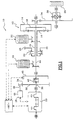
- a planetary gear 12 which includes a crown 14, a sun gear 16 and a planet carrier 18, is linked in rotation to different group organs powertrain 10.
- a heat engine 20 is linked in rotation to the planet carrier 18 of the train, planetary 12, a first electric machine 22 is linked in rotation, via a shaft 21, planetary 16 of the planetary gear 12, and a bridge 24 is linked in rotation to the crown 14 of the train epicyclic 12.
- the bridge 24 is capable of transmitting a driving power to the vehicle's 26 wheels by through a differential 28.
- the first electric machine 22 is shown in the Figure 1 meshing with the shaft 21 via a bevel gear to facilitate understanding of powertrain architecture 10.
- the first machine 22 is coaxial with the tree 21 and the tree 21 is a tree of the first electric machine 22 which passes through its stator (not shown).
- the first machine electric 22 is linked in rotation to a first device for freewheel 23, which is interposed between the shaft 21 and a fixed casing 25 of the powertrain, so that the shaft 21 and the first electric machine 22 can only rotate in only one sense.
- the heat engine 20 comprises an output shaft 30 on which a flywheel is arranged 32 which includes a set of teeth 34 intended to mesh with a pinion 36 of a starter 38 which is capable of start the heat engine 20 in certain configurations of powertrain operation 10.
- a second machine electric 40 is interposed between the heat engine 20 and the planetary gear 12.
- the second electric machine 40 is shown in the figure 1 meshing by means of a bevel gear angle with a shaft 44 which is arranged in position intermediate between the heat engine 20 and the planet carrier (s) 18.
- This representation facilitates understanding powertrain architecture 10.
- the second machine 40 is coaxial with the shaft 44 which is a shaft of the second electric machine 40 which passes through its stator (not represented).
- the second electric machine 40 is therefore linked in rotation with the planet carrier 18 of the planetary gear 12 by via shaft 44, and it is coupled to the motor thermal 20 via a second freewheel 42 which is intended to prevent the engine thermal 20 does not run faster than the second machine electric 40.
- the second freewheel device 42 is more precisely linked in rotation to the heat engine 20 by a coupling made on the flywheel 32, so that the freewheel device 42 also makes the coupling of the output shaft 30 of the heat engine to the input shaft 44 of the planet carrier 18
- the input shaft 44 of the planet carrier 18 includes securing means 46 of the second electric machine 40 which are, for example, advantageously produced in the form of a brake which is arranged on the shaft input 44 of the planet carrier 18.
- securing means 46 of the second electric machine 40 which are, for example, advantageously produced in the form of a brake which is arranged on the shaft input 44 of the planet carrier 18.
- MC control means are susceptible to control the operation of the heat engine 20, immobilization means 46 of the second electric machine 40, and the first and second electric machines 22 and 40.
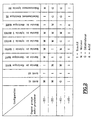
- Figure 2 illustrates the operation of the group powertrain 10 in several configurations controlled by the control means MC.
- control means MC are capable of define several group operating configurations powertrain 10, i.e. to order the operation of the heat engine 20, the first and second electrical machines 22 and 40, and means immobilizer 46, these bodies listed in the left of the table in figure 2.
- the powertrain 10 is capable of operating in ten configurations, which include two configurations of the stationary vehicle, five vehicle configurations forward, one configuration of the vehicle in reverse and two configurations of vehicle slowing down, these configurations appearing in the top row of the table in Figure 2.
- control means command that the heat engine 20 or engine M, the latter, if it is not already, is automatically started by starter 38 whose pinion 36 meshes with the flywheel 34.
- the means MC control system are likely to determine a first configuration A1 of the powertrain 10 to stopping the vehicle in which the heat engine 20 is motor M, the first electric machine 22 operates in motor M, the second electric machine 40 operates in current generator G, and the immobilization means 46 are inactive I.
- this configuration A1 the crown 14 of the planetary gear 12 is stationary due to the law of composition of the speeds in the planetary gear 12.
- the rotational movement of the heat engine 20 transmitted by the shaft 44 of the planet carrier 18 is canceled by the rotational movement of the first electric machine 22 which is transmitted to the input shaft 21 of the planetary 16, so the crown 14 is stationary and does not transmit any movement at the vehicle wheels 26.
- this configuration keeps the vehicle stationary while now the heat engine 20 running to recharge vehicle storage batteries (not shown) through the second electric machine 40 and possibly allow a subsequent restart of the vehicle.
- this configuration also allows to supply all the accessories that require a lot energy, such as the heating and cooling system.
- a second configuration A2 of the vehicle to shutdown all organs of the powertrain 10, i.e. the heat engine 20, the first and second machines 22 and 40, and the immobilization means 46 are inactive I, this configuration corresponding for example to a state of the vehicle in which it is for example in a parking.
- the MC control means are likely to define a third MAVE configuration of powertrain operation 10 in forward electric in which the powertrain 10 operates in an electric forward mode of the vehicle.
- the heat engine 20 is inactive I
- the first and second electrical machines 22 and 40 operate as an M motor
- the immobilization means 46 are inactive 1.
- this MAVE configuration allows the vehicle to evolve using only one source electrical power, which is particularly suitable for use of the vehicle in built-up areas as long as batteries vehicle batteries can supply enough energy to keep the vehicle running fully electrically.
- the control means MC are likely to define a fourth configuration of powertrain MAVT operation 10 corresponding to a thermal forward mode.
- the engine thermal 20 is motor M and drives the planetary gear 12 of the vehicle
- the first electric machine 22 is inactive I and rotates freely without producing or consuming current
- the second electric machine 40 operates as generator G of current to recharge the storage battery
- immobilization means 46 are inactive I.
- the control means MC are also susceptible to determine three operating configurations in MAVH1, MAVH2, and MAVH3 hybrid forward gear, from the group powertrain 10 which correspond corresponding to different uses of the vehicle.
- a fifth MAVH1 running configuration powertrain hybrid front 10 defined by control means MC
- the heat engine 20 is engine M
- the first electric machine 22 is inactive I and does not not turn.
- the planetary 16 of the planetary gear is stationary because it is linked to the freewheel 23 which serves as a point of reaction to the planetary gear 12.
- the first electric machine 22 is also stationary.
- the second electric machine 40 works with motor M and the means immobilizer 46 are inactive I.
- the second electric machine 40 rotates at the same speed as the heat engine 20 so the motive power as well supplied to the planet carrier 18 of the planetary gear train 12 is fully transmitted to the crown 14 of the planetary gear train 12.
- This operating mode defines the same ratio of reduction of the two previous MAVE configurations and MAVT forward, but provides speed maximum higher for the vehicle because the powers of the second electric machine 40 and of the heat engine 20 are added.
- the control means MC are likely to define a sixth MAVH2 operating configuration powertrain hybrid 10, as shown in sixth column of the table of figure 2, in which the heat engine 20 operates as engine M, the first electric machine 22 works with motor M, the second electric machine 40 works as a generator G and immobilization means 46 are inactive I.
- planetary gear 12 combines the speeds of the heat engine 20 and the first electric machine 22 to transmit them to the crown 14 of the planetary gear 12.
- the second electric machine 40 used as a generator, recharges the batteries vehicle batteries.
- This configuration is particularly interesting because it provides a maximum speed higher than that obtained in the previous MAVH1 operating configuration.
- the planetary gear 12 is used here as a speed variator, which allows the heat engine 20 to operate at its maximum power speed, while recharging the storage battery.
- the control means MC are likely to define a seventh MAVH3 operating configuration forward hybrid vehicle in which the engine thermal 20 is motor M, the first and second machines electrics 22 and 40 also operate as an M motor, and the immobilization means 46 are inactive I.
- the train epicyclic 12 transmits motive power from of all powertrain 10 components to the wheels 26 of the vehicle.
- This configuration provides the speed maximum that the powertrain can provide 10 but it is however limited by the capacity of the batteries vehicle accumulators, these are not recharged by any of the two electric machines 22 or 40.
- the control means MC are also susceptible define a MARE operating configuration by electric vehicle reverse.
- the heat engine 20 is stopped and therefore inactive I
- the first electric machine 22 works with motor M
- the second electric machine 40 is inactive is immobilized by immobilization means 46 which are active A.
- the planetary gear 12 performs the reversal of the rotational movement of the first electric machine 22 by means of carried satellites by the planet carrier 18 of the planetary gear, this movement of rotation being transmitted to the crown 14 of the train planetary 12 then to the wheels 26 of the vehicle.
- the control means MC are also susceptible define other RE and HR operating configurations for which powertrain 10 can be used to slow the vehicle down and can be a way to recharging of storage batteries.
- a ninth operating RE configuration in electric vehicle deceleration the heat engine 20 is stopped and inactive I, the first and second machines electrics 22 and 40 operate as current generator G and the immobilizing means 46 are inactive I, so that the kinetic energy of the vehicle is recovered by via the wheels 26 and the planetary gear 12 for drive the first and second electric machines 22 and 40 whose operation as a current generator G allows to recharge the vehicle's storage batteries.
- This vehicle operating configuration is particularly advantageous, because it allows for example, even in built-up areas, recharge the batteries vehicle accumulators as soon as it stops accelerating and / or is slowed down. This possibility of operation therefore achieves an effective retarder, total stopping of the vehicle being provided by conventional brakes (not shown). This possibility of operation therefore also allows, during vehicle design, reduce the size and weight of brakes, these only having the function of stopping the vehicle at the end of the braking phase.
- the means of MC command are likely to command the group powertrain 10 for the heat engine 20 to operate in motor M, the first and second electric machines 22 and 40 operate as a current generator G, and the means immobilizer 46 are inactive I.
- the heat engine 20 operates but does not does not participate in the vehicle slowing down, its functioning for the sole purpose of allowing the vehicle to restart according to an operating mode hybrid or thermal MAVT, MAVH1, MAVH2, or MAVH3 when the deceleration is finished.
- this configuration of operation allows, as for the ninth previously described operating configuration, recharge the storage batteries (not shown) of the vehicle through the first and second machines 22 and 40 electrics operating in G current generators.
Landscapes
- Engineering & Computer Science (AREA)
- Chemical & Material Sciences (AREA)
- Combustion & Propulsion (AREA)
- Transportation (AREA)
- Mechanical Engineering (AREA)
- Automation & Control Theory (AREA)
- Electric Propulsion And Braking For Vehicles (AREA)
- Hybrid Electric Vehicles (AREA)
- Auxiliary Drives, Propulsion Controls, And Safety Devices (AREA)
Description
- la couronne est liée en rotation au pont, le planétaire est lié en rotation à l'arbre de la première machine électrique, et le porte-satellites est lié en rotation à l'arbre de la seconde machine électrique ;
- l'arbre de la première machine électrique est lié à un carter fixe du groupe motopropulseur par l'intermédiaire d'un premier dispositif de roue libre, pour ne tourner que dans un sens ;
- l'arbre de la seconde machine électrique est lié en rotation à l'arbre de sortie du moteur thermique par l'intermédiaire d'un second dispositif de roue libre pour empêcher le moteur thermique de tourner plus vite que la seconde machine électrique et pour que la seconde machine électrique ne puisse tourner que dans le sens de l'arbre de sortie du moteur thermique ;
- les deux machines électriques peuvent chacune fonctionner en moteur ou en générateur de courant ;
- les moyens de commande sont susceptibles de déterminer une première configuration du groupe motopropulseur à l'arrêt du véhicule dans laquelle le moteur thermique fonctionne, la première machine électrique fonctionne en moteur et la seconde machine électrique fonctionne en générateur de courant ;
- les moyens de commande sont susceptibles de déterminer une deuxième configuration du groupe motopropulseur à l'arrêt du véhicule dans laquelle le moteur thermique, la première machine électrique, et la seconde machine électrique ne fonctionnent pas ;
- les moyens de commande sont susceptibles de déterminer une troisième configuration du groupe motopropulseur en marche avant du véhicule dans laquelle le moteur thermique ne fonctionne pas, et dans lequel les première et seconde machines électriques fonctionnent en moteur ;
- les moyens de commande sont susceptibles de déterminer une quatrième configuration du groupe motopropulseur en marche avant du véhicule dans laquelle le moteur thermique fonctionne, la première machine électrique ne fonctionne pas, et la seconde machine électrique fonctionne en générateur de courant ;
- les moyens de commande sont susceptibles de déterminer une cinquième configuration du groupe motopropulseur en marche avant du véhicule dans laquelle le moteur thermique fonctionne, la première machine électrique ne fonctionne pas, et la seconde machine électrique fonctionne en moteur ;
- les moyens de commande sont susceptibles de déterminer une sixième configuration du groupe motopropulseur en marche avant du véhicule dans laquelle le moteur thermique fonctionne, la première machine électrique fonctionne en moteur, et la seconde machine électrique fonctionne en générateur de courant ;
- les moyens de commande sont susceptibles de déterminer une septième configuration du groupe motopropulseur en marche avant du véhicule dans laquelle le moteur thermique fonctionne, et dans laquelle les première et seconde machines électriques fonctionnent en moteurs ;
- les moyens de commande sont susceptibles d'agir sur des moyens d'immobilisation de l'arbre de la seconde machine électrique par rapport au carter fixe du groupe motopropulseur, pour déterminer une huitième configuration du groupe motopropulseur en marche arrière du véhicule dans laquelle le moteur thermique ne fonctionne pas, la première machine électrique fonctionne en moteur et la seconde machine électrique ne fonctionne pas, l'arbre de la seconde machine électrique étant immobilisé par les moyens d'immobilisation ;
- les moyens de commande sont susceptibles de déterminer une neuvième configuration du groupe motopropulseur en marche avant et en ralentissement du véhicule, dans laquelle le moteur thermique ne fonctionne pas, et dans laquelle les première et seconde machines électriques fonctionnent en générateurs de courant ;
- les moyens de commande sont susceptibles de déterminer une dixième configuration du groupe motopropulseur en marche avant et en ralentissement du véhicule, dans laquelle le moteur thermique fonctionne, et dans laquelle les première et seconde machines électriques fonctionnent en générateurs de courant ;
- la figure 1 est un schéma en vue longitudinale d'un groupe motopropulseur selon l'invention ;et
- la figure 2 est un tableau des différentes configurations de fonctionnement du groupe motopropulseur selon l'invention, et des modes de fonctionnement associés du moteur thermique, des deux machines électriques, et des moyens d'immobilisation en rotation de l'arbre de la seconde machine électrique.
Claims (14)
- Groupe motopropulseur (10) pour véhicule à motorisation hybride fonctionnant selon plusieurs configurations (A1, A2, MAVE, MAVT, MAVH1, MAVH2, MAVH3, MARE, RE, RH ), du type dans lequel des éléments d'un train épicycloïdal (12) tels qu'une couronne (14), un planétaire (16), et un porte-satellite(s) (18) sont liés en rotation à des organes du groupe motopropulseur (10) tels qu'un arbre (21) d'une première machine électrique (22), un arbre de sortie (30) d'un moteur thermique (20), et un pont (28) destiné à transmettre une puissance motrice à des roues (26) du véhicule, du type qui comporte une seconde machine électrique (40) qui est interposée entre l'arbre de sortie (30) du moteur thermique (20) et l'élément du train épicycloïdal (12) qui lui est lié en rotation, et des moyens de commande (MC) qui sont susceptibles d'associer des modes de fonctionnement (I, M, G, A) déterminés du moteur thermique (20) et des deux machines électriques (22, 40) aux configurations de fonctionnement (A1, A2, MAVE, MAVT, MAVH1, MAVH2, MAVH3, MARE, RE, RH ) du groupe motopropulseur (10), caractérisé en ce que la couronne (14) est liée en rotation au pont (28), le planétaire (16) est lié en rotation à l'arbre (21) de la première machine électrique (22), et le porte-satellites (18) est lié en rotation à l'arbre (44) de la seconde machine électrique (40).
- Groupe motopropulseur selon la revendication précédente, caractérisé en ce que l'arbre (21) de la première machine électrique (20) est lié à un carter fixe (25) du groupe motopropulseur (10) par l'intermédiaire d'un premier dispositif de roue libre (23), pour ne tourner que dans un sens.
- Groupe motopropulseur (10) selon l'une des revendications précédentes, caractérisé en ce que l'arbre (44) de la seconde machine électrique (40) est lié en rotation à l'arbre de sortie (30) du moteur thermique (20) par l'intermédiaire d'un second dispositif de roue libre (42) pour empêcher le moteur thermique (20) de tourner plus vite que la seconde machine électrique (40) et pour que la seconde machine électrique (40) ne puisse tourner que dans le sens de l'arbre de sortie du moteur thermique (20).
- Groupe motopropulseur (10) selon l'une quelconque des revendications précédentes, caractérisé en ce que les deux machines électriques (22, 40) peuvent chacune fonctionner en moteur (M) ou en générateur de courant (G).
- Groupe motopropulseur (10) selon la revendication 4, caractérisé en ce que les moyens de commande (MC) sont susceptibles de déterminer une première configuration (A1) du groupe motopropulseur (10) à l'arrêt du véhicule dans laquelle le moteur thermique (20) fonctionne (M), la première machine électrique (22) fonctionne en moteur (M) et la seconde machine électrique (40) fonctionne en générateur de courant (G).
- Groupe motopropulseur (10) selon la revendication 4, caractérisé en ce que les moyens de commande (MC) sont susceptibles de déterminer une deuxième configuration (A2) du groupe motopropulseur (10) à l'arrêt du véhicule dans laquelle le moteur thermique ( 20), la première machine électrique (22), et la seconde machine électrique (40) ne fonctionnent pas (I).
- Groupe motopropulseur (10) selon la revendication 4, caractérisé en ce que les moyens de commande (MC) sont susceptibles de déterminer une troisième configuration (MAVE) du groupe motopropulseur (10) en marche avant du véhicule dans laquelle le moteur thermique (20) ne fonctionne pas (I), et dans lequel les première (22) et seconde (40) machines électriques fonctionnent en moteur (M).
- Groupe motopropulseur (10) selon la revendication 4, caractérisé en ce que les moyens de commande (MC) sont susceptibles de déterminer une quatrième configuration (MAVT) du groupe motopropulseur (10) en marche avant du véhicule dans laquelle le moteur thermique (20) fonctionne (M), la première machine électrique (22) ne fonctionne pas (I), et la seconde machine électrique (40) fonctionne en générateur de courant (G).
- Groupe motopropulseur (10) selon la revendication 4, caractérisé en ce que les moyens de commande (MC) sont susceptibles de déterminer une cinquième configuration (MAVH1) du groupe motopropulseur (10) en marche avant du véhicule dans laquelle le moteur thermique (20) fonctionne (M), la première machine électrique (22) ne fonctionne pas (I), et la seconde machine électrique (40) fonctionne en moteur (M).
- Groupe motopropulseur (10) selon la revendication 4, caractérisé en ce que les moyens de commande (MC) sont susceptibles de déterminer une sixième configuration (MAVH2) du groupe motopropulseur (10) en marche avant du véhicule dans laquelle le moteur thermique (20) fonctionne, la première machine électrique (22) fonctionne en moteur (M), et la seconde machine électrique (40) fonctionne en générateur de courant (G).
- Groupe motopropulseur (10) selon la revendication 4, caractérisé en ce que les moyens de commande (MC) sont susceptibles de déterminer une septième (MAVH3) configuration du groupe motopropulseur (10) en marche avant du véhicule dans laquelle le moteur thermique (20) fonctionne (M), et dans laquelle les première (22) et seconde (40) machines électriques fonctionnent en moteurs (M).
- Groupe motopropulseur (10) selon la revendication 4 prise en combinaison avec la revendication 2, caractérisé en ce que les moyens de commande (MC) sont susceptibles d'agir sur des moyens d'immobilisation (46) de l'arbre (44) de la seconde machine électrique (40) par rapport au carter fixe (25). du groupe motopropulseur (10), pour déterminer une huitième configuration (MARE) du groupe motopropulseur (10) en marche arrière du véhicule dans laquelle le moteur thermique (20) ne fonctionne pas (I), la première machine électrique (22) fonctionne en moteur (M) et la seconde machine électrique (40) ne fonctionne pas (I), l'arbre (44) de la seconde machine électrique (44) étant immobilisé par les moyens d'immobilisation (46).
- Groupe motopropulseur (10) selon la revendication 4, caractérisé en ce que les moyens de commande (MC) sont susceptibles de déterminer une neuvième configuration (RE) du groupe motopropulseur (10) en marche avant et en ralentissement du véhicule, dans laquelle le moteur thermique (20) ne fonctionne pas (I), et dans laquelle les première (22) et seconde (40) machines électriques fonctionnent en générateurs de courant (G).
- Groupe motopropulseur (10) selon la revendication 4, caractérisé en ce que les moyens de commande (MC) sont susceptibles de déterminer une dixième configuration (RH) du groupe motopropulseur (10) en marche avant et en ralentissement du véhicule, dans laquelle le moteur thermique (20) fonctionne (M), et dans laquelle les première (20) et seconde (40) machines électriques fonctionnent en générateurs de courant (G).
Applications Claiming Priority (3)
| Application Number | Priority Date | Filing Date | Title |
|---|---|---|---|
| FR9809654A FR2781727B1 (fr) | 1998-07-28 | 1998-07-28 | Groupe motopropulseur hybride comportant deux machines electriques |
| FR9809654 | 1998-07-28 | ||
| PCT/FR1999/001795 WO2000006407A1 (fr) | 1998-07-28 | 1999-07-21 | Groupe motopropulseur hybride comportant deux machines electriques |
Publications (2)
| Publication Number | Publication Date |
|---|---|
| EP1100690A1 EP1100690A1 (fr) | 2001-05-23 |
| EP1100690B1 true EP1100690B1 (fr) | 2004-05-12 |
Family
ID=9529120
Family Applications (1)
| Application Number | Title | Priority Date | Filing Date |
|---|---|---|---|
| EP99932941A Expired - Lifetime EP1100690B1 (fr) | 1998-07-28 | 1999-07-21 | Groupe motopropulseur hybride comportant deux machines electriques |
Country Status (5)
| Country | Link |
|---|---|
| EP (1) | EP1100690B1 (fr) |
| DE (1) | DE69917279T2 (fr) |
| ES (1) | ES2216537T3 (fr) |
| FR (1) | FR2781727B1 (fr) |
| WO (1) | WO2000006407A1 (fr) |
Cited By (1)
| Publication number | Priority date | Publication date | Assignee | Title |
|---|---|---|---|---|
| WO2008122862A1 (fr) * | 2007-04-05 | 2008-10-16 | Bordini Engineering Srl | Système de traction hybride |
Families Citing this family (18)
| Publication number | Priority date | Publication date | Assignee | Title |
|---|---|---|---|---|
| FR2809058A1 (fr) * | 2000-05-17 | 2001-11-23 | Timothee Biel | Transmission evolutive pour vehicule automobile hybride |
| ITBO20000607A1 (it) * | 2000-10-18 | 2002-04-18 | New Holland Italia Spa | Gruppo di propulsione per un mezzo semovente |
| ITBO20000648A1 (it) * | 2000-11-09 | 2002-05-09 | New Holland Italia Spa | Apparecchiatura di comando del regime di un mezzo semovente |
| JP2002199508A (ja) * | 2000-12-27 | 2002-07-12 | Aisin Aw Co Ltd | ハイブリッド型車両 |
| FR2823156B1 (fr) * | 2001-04-06 | 2003-08-01 | Renault Sas | Transmission infiniment variable a derivation de puissance a deux modes de fonctionnement |
| US7004868B2 (en) | 2001-07-23 | 2006-02-28 | Nissan Motor Co., Ltd. | Drivetrain for a vehicle |
| FR2832356A1 (fr) | 2001-11-16 | 2003-05-23 | Timothee Biel | Dispositif et adaptations a ce dispositif de motorisations simples ou composees pour gerer les moteurs a combustion interne et les moteurs electriques sur une plage de regime determinee |
| ATE405465T1 (de) * | 2003-05-23 | 2008-09-15 | Renault Sa | Steuervorrichtung und -verfahren für eine motorantriebseinheit mit getrennter mechanischer und elektrischer steuerung |
| FR2855105B1 (fr) * | 2003-05-23 | 2005-07-22 | Renault Sa | Procede et dispositif de commande d'un groupe motopropulseur en mode tirage avec des controles mecanique et electrique separes |
| FR2855108B1 (fr) * | 2003-05-23 | 2005-07-22 | Renault Sa | Procede et dispositif de commande d'un groupe motopropulseur en mode rampage en vitesse avec des controles mecanique et electrique separes |
| FR2855106B1 (fr) * | 2003-05-23 | 2005-07-22 | Renault Sa | Procede et dispositif de commande d'un groupe motopropulseur en mode "retro" avec des controles mecanique et electrique separes |
| US7780567B2 (en) * | 2007-06-07 | 2010-08-24 | Gm Global Technology Operations, Inc. | Input brake assembly |
| WO2015099593A1 (fr) | 2013-12-23 | 2015-07-02 | Scania Cv Ab | Système de propulsion pour un véhicule |
| KR101794898B1 (ko) * | 2013-12-23 | 2017-12-01 | 스카니아 씨브이 악티에볼라그 | 차량용 추진 시스템 |
| WO2015099595A1 (fr) | 2013-12-23 | 2015-07-02 | Scania Cv Ab | Procédé de déblocage de mécanisme d'engrenage planétaire au cours de la conduite d'un véhicule |
| US10246082B2 (en) | 2013-12-23 | 2019-04-02 | Scania Cv Ab | Propulsion system for a vehicle |
| US10604142B2 (en) | 2013-12-23 | 2020-03-31 | Scania Cv Ab | Method for control of a propulsion system of a vehicle, a propulsion system, a computer program product and a vehicle |
| FR3043277B1 (fr) * | 2015-10-29 | 2020-08-14 | Valeo Systemes De Controle Moteur | Systeme de production d'energie electrique pour un vehicule automobile |
Family Cites Families (4)
| Publication number | Priority date | Publication date | Assignee | Title |
|---|---|---|---|---|
| DE4124479C2 (de) * | 1991-07-24 | 2002-05-16 | Bayerische Motoren Werke Ag | Hybridantrieb, insbesondere für Fahrzeuge |
| FR2734318B1 (fr) | 1995-05-17 | 1997-07-04 | Renault | Turbine a gaz munie d'un dispositif de freinage de son arbre de sortie et chaine de traction hybride de vehicule automobile munie d'une telle turbine |
| FR2742703B1 (fr) * | 1995-12-21 | 1998-01-30 | Renault | Transmission differentielle pour un vehicule a motorisation hybride |
| US6155364A (en) * | 1996-02-21 | 2000-12-05 | Toyota Jidosha Kabushiki Kaisha | Hybrid drive system wherein planetary gear mechanism is disposed radially inwardly of stator coil of motor/generator |
-
1998
- 1998-07-28 FR FR9809654A patent/FR2781727B1/fr not_active Expired - Fee Related
-
1999
- 1999-07-21 EP EP99932941A patent/EP1100690B1/fr not_active Expired - Lifetime
- 1999-07-21 DE DE69917279T patent/DE69917279T2/de not_active Expired - Lifetime
- 1999-07-21 ES ES99932941T patent/ES2216537T3/es not_active Expired - Lifetime
- 1999-07-21 WO PCT/FR1999/001795 patent/WO2000006407A1/fr not_active Ceased
Cited By (1)
| Publication number | Priority date | Publication date | Assignee | Title |
|---|---|---|---|---|
| WO2008122862A1 (fr) * | 2007-04-05 | 2008-10-16 | Bordini Engineering Srl | Système de traction hybride |
Also Published As
| Publication number | Publication date |
|---|---|
| EP1100690A1 (fr) | 2001-05-23 |
| DE69917279T2 (de) | 2005-05-25 |
| ES2216537T3 (es) | 2004-10-16 |
| DE69917279D1 (de) | 2004-06-17 |
| WO2000006407A1 (fr) | 2000-02-10 |
| FR2781727B1 (fr) | 2000-12-29 |
| FR2781727A1 (fr) | 2000-02-04 |
Similar Documents
| Publication | Publication Date | Title |
|---|---|---|
| EP1051308B1 (fr) | Groupe motopropulseur hybride comportant un double train epicycloidal | |
| FR2781727A1 (fr) | Groupe motopropulseur hybride comportant deux machines electriques | |
| EP1453694B9 (fr) | Dispositif de transmission de puissance a au moins deux trains epicycloïdaux | |
| EP0384808B1 (fr) | Alternateur-démarreur avec dispositif d'accouplement automatique | |
| WO2016092184A1 (fr) | Transmission automatique pour véhicule hybride et procédé de commande d'un véhicule hybride | |
| FR2962378A1 (fr) | Systeme d'entrainement pour un vehicule automobile et vehicule automobile comprenant un tel systeme d'entrainement | |
| EP2593320A1 (fr) | Groupe motopropulseur a double train epicycloidal pour vehicule automobile de type hybride | |
| FR2760411A1 (fr) | Systeme d'entrainement hybride pour un vehicule automobile | |
| FR2955165A1 (fr) | Dispositif de transmission a variation de vitesse pour groupe motopropulseur de vehicule automobile et vehicule automobile hybride utilisant un tel dispositif | |
| FR2824509A1 (fr) | Dispositif de traction du type "hybride parallele", notamment pour vehicule automobile | |
| EP1097830A1 (fr) | Groupe motopropulseur hybride comportant au moins deux trains épicycloidaux | |
| FR3062089A1 (fr) | Systeme de transmission de puissance et vehicule avec systeme de transmission de puissance | |
| EP1013494A2 (fr) | Dispositif de traction du type "hybride parallèle" notamment pour véhicule automobile | |
| WO2015181480A1 (fr) | Transmission automatique pour vehicule hybride et procédé de commande | |
| EP1092583A1 (fr) | Groupe motopropulseur d'un véhicule hybride à coupleur électromagnétique | |
| FR3026062A1 (fr) | Transmission automatique pour vehicule hybride thermique/electrique | |
| EP1916141B1 (fr) | Système d'entrainement en déplacement pour véhicule hybride | |
| FR2774039A1 (fr) | Groupe motopropulseur hybride comportant des moyens de freinage de l'alternateur | |
| FR2918003A1 (fr) | Dispositif de traction hybride pour vehicule lourd. | |
| EP1337412B1 (fr) | Groupe motopropulseur hybride a double commande pour un vehicule | |
| FR2834248A1 (fr) | Dispositif de traction hybride parallele, et procedes de commande de ce dispositif | |
| FR2809058A1 (fr) | Transmission evolutive pour vehicule automobile hybride | |
| FR2839023A1 (fr) | Groupe motopropulseur hybride pour un vehicule automobile | |
| FR2745243A1 (fr) | Vehicule hybride electrique avec coupleur electromagnetique | |
| FR2814989A1 (fr) | Groupe motopropulseur hybride comportant des moyens de freinage |
Legal Events
| Date | Code | Title | Description |
|---|---|---|---|
| PUAI | Public reference made under article 153(3) epc to a published international application that has entered the european phase |
Free format text: ORIGINAL CODE: 0009012 |
|
| 17P | Request for examination filed |
Effective date: 20010126 |
|
| AK | Designated contracting states |
Kind code of ref document: A1 Designated state(s): AT BE CH CY DE DK ES FI FR GB GR IE IT LI LU MC NL PT SE |
|
| RAP1 | Party data changed (applicant data changed or rights of an application transferred) |
Owner name: RENAULT S.A.S. |
|
| GRAP | Despatch of communication of intention to grant a patent |
Free format text: ORIGINAL CODE: EPIDOSNIGR1 |
|
| GRAS | Grant fee paid |
Free format text: ORIGINAL CODE: EPIDOSNIGR3 |
|
| GRAA | (expected) grant |
Free format text: ORIGINAL CODE: 0009210 |
|
| AK | Designated contracting states |
Kind code of ref document: B1 Designated state(s): DE ES GB IT |
|
| REG | Reference to a national code |
Ref country code: GB Ref legal event code: FG4D Free format text: NOT ENGLISH |
|
| REG | Reference to a national code |
Ref country code: IE Ref legal event code: FG4D Free format text: FRENCH |
|
| REF | Corresponds to: |
Ref document number: 69917279 Country of ref document: DE Date of ref document: 20040617 Kind code of ref document: P |
|
| GBT | Gb: translation of ep patent filed (gb section 77(6)(a)/1977) |
Effective date: 20040630 |
|
| REG | Reference to a national code |
Ref country code: ES Ref legal event code: FG2A Ref document number: 2216537 Country of ref document: ES Kind code of ref document: T3 |
|
| REG | Reference to a national code |
Ref country code: IE Ref legal event code: FD4D |
|
| PLBE | No opposition filed within time limit |
Free format text: ORIGINAL CODE: 0009261 |
|
| STAA | Information on the status of an ep patent application or granted ep patent |
Free format text: STATUS: NO OPPOSITION FILED WITHIN TIME LIMIT |
|
| 26N | No opposition filed |
Effective date: 20050215 |
|
| PGFP | Annual fee paid to national office [announced via postgrant information from national office to epo] |
Ref country code: ES Payment date: 20110726 Year of fee payment: 13 Ref country code: DE Payment date: 20110722 Year of fee payment: 13 Ref country code: GB Payment date: 20110721 Year of fee payment: 13 |
|
| PGFP | Annual fee paid to national office [announced via postgrant information from national office to epo] |
Ref country code: IT Payment date: 20110722 Year of fee payment: 13 |
|
| GBPC | Gb: european patent ceased through non-payment of renewal fee |
Effective date: 20120721 |
|
| PG25 | Lapsed in a contracting state [announced via postgrant information from national office to epo] |
Ref country code: GB Free format text: LAPSE BECAUSE OF NON-PAYMENT OF DUE FEES Effective date: 20120721 Ref country code: DE Free format text: LAPSE BECAUSE OF NON-PAYMENT OF DUE FEES Effective date: 20130201 |
|
| PG25 | Lapsed in a contracting state [announced via postgrant information from national office to epo] |
Ref country code: IT Free format text: LAPSE BECAUSE OF NON-PAYMENT OF DUE FEES Effective date: 20120721 |
|
| REG | Reference to a national code |
Ref country code: DE Ref legal event code: R119 Ref document number: 69917279 Country of ref document: DE Effective date: 20130201 |
|
| REG | Reference to a national code |
Ref country code: ES Ref legal event code: FD2A Effective date: 20131021 |
|
| PG25 | Lapsed in a contracting state [announced via postgrant information from national office to epo] |
Ref country code: ES Free format text: LAPSE BECAUSE OF NON-PAYMENT OF DUE FEES Effective date: 20120722 |