EP1100031A2 - System and methods for providing instant internet response to traditional braodcast advertising - Google Patents
System and methods for providing instant internet response to traditional braodcast advertising Download PDFInfo
- Publication number
- EP1100031A2 EP1100031A2 EP00309215A EP00309215A EP1100031A2 EP 1100031 A2 EP1100031 A2 EP 1100031A2 EP 00309215 A EP00309215 A EP 00309215A EP 00309215 A EP00309215 A EP 00309215A EP 1100031 A2 EP1100031 A2 EP 1100031A2
- Authority
- EP
- European Patent Office
- Prior art keywords
- receiving unit
- advertising
- consumer
- response button
- information
- Prior art date
- Legal status (The legal status is an assumption and is not a legal conclusion. Google has not performed a legal analysis and makes no representation as to the accuracy of the status listed.)
- Withdrawn
Links
Images

Classifications
-
- G—PHYSICS
- G06—COMPUTING OR CALCULATING; COUNTING
- G06Q—INFORMATION AND COMMUNICATION TECHNOLOGY [ICT] SPECIALLY ADAPTED FOR ADMINISTRATIVE, COMMERCIAL, FINANCIAL, MANAGERIAL OR SUPERVISORY PURPOSES; SYSTEMS OR METHODS SPECIALLY ADAPTED FOR ADMINISTRATIVE, COMMERCIAL, FINANCIAL, MANAGERIAL OR SUPERVISORY PURPOSES, NOT OTHERWISE PROVIDED FOR
- G06Q30/00—Commerce
- G06Q30/02—Marketing; Price estimation or determination; Fundraising
Definitions
- the present invention relates generally to improvements to systems and methods for broadcast advertising, and more particularly to systems and methods for providing instant internet responses to traditional broadcast advertising.
- Retailers typically advertise their products through a number of different media, including television, radio, print, and the internet.
- Broadcast advertising such as television and radio advertising, has the advantage of being able to reach large target audiences.
- a typical broadcast advertisement is limited to 30 seconds or less in duration.
- the retailer can, of course, place a telephone number and mailing address in the ad, together with an invitation for the consumer to call or mail for additional information.
- that approach is cumbersome for both the customer and the retailer.
- an advertising system comprising a receiving unit for receiving broadcast advertising, the receiving unit including a response button that, when depressed by a customer, causes the receiving unit to send out a signal over the internet requesting additional information relating to the advertising.
- the advertising system further includes a retailer data center for receiving the signal sent out by the receiving unit, the retailer data center including an enterprise commerce server that looks up the requested information in a Web database and a mail server for e-mailing the requested information back to the consumer.
- an advertising system comprising: a receiving unit for receiving broadcast advertising, the receiving unit including a response button that, when depressed by a customer, causes the receiving unit to send out a signal over the internet requesting additional information relating to the advertising; a retailer data center for receiving the signal sent out by the receiving unit, the retailer data center including an enterprise commerce server that looks up the requested information in a Web database and a mail server for e-mailing the requested information back to the consumer.
- a receiving unit for use in an advertising system comprising:
- a method of obtaining consumer responses to advertising comprising the following steps:
- the present invention brings together the internet and traditional television advertising to allow a retailer, through its Web site, to provide information in addition to the information containing in an advertisement at a minimal cost.
- a retailer wants to provide additional information with an advertisement
- the retailer prepares advertising copy that contains an explanation during the course of the advertisement instructing the consumer to depress a response button on his or her television or television remote control, radio, or cellular telephone.
- the present invention enables retailers to make more informed budget allocations for various types of media based upon direct consumer responses.
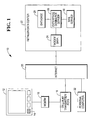
- Fig. 1 shows a first embodiment of a system 10 according to the present invention.
- Target consumers are provided with an internet appliance 12.
- the internet appliance 12 is a receiving unit, such as a television, radio, or even a cellular telephone, that receives traditional broadcasts.
- the appliance 12 is connected to the internet 20 and includes a response button 14, described in further detail below.
- the connection to the internet 20 is provided by a modem 16 and a telephone connection 18 comprising cellular transmitter, plain old telephone service (POTS), a cable connection, or other suitable connection.
- POTS plain old telephone service
- Advertising is broadcast to the internet appliance 12 using traditional methods, such as a cable connection, antenna, satellite dish, or the like.
- this advertising includes a message to the consumer that if additional information is desired, the consumer may depress response button 14 on the internet appliance 12.
- the response button 14 When the response button 14 is depressed, the internet appliance 12 sends out a request signal over the internet 20 to a retailer data center 22.
- a modem bank 24 receives the request signal sent out by the internet appliance 12, and relays the signal to an enterprise commerce server 26.
- the enterprise commerce server 26 performs a lookup operation in a database 28.
- the lookup operation may return a Web page, or, alternatively, the lookup operation may return a hyperlink to a Web page containing the requested information.
- the information or the link is then e-mailed back to the consumer using a mail server 30.
- the consumer may then read the e-mailed information on a personal computer 32.
- the internet appliance 12 may be equipped with the capability of reading e-mail directly.
- Fig. 2 is a diagram of the internet appliance 12 shown in greater detail.
- the internet appliance 12 is controlled by a control software module 34 that is run on a microprocessor.
- Data storage 36 provided by a disk or other persistent memory, is used to store information on a long-term basis for use by the control software module 34.
- I/O interface module 36 provides an interface between the control software module 34 and various input and output devices used in the internet appliance, including the response button 14, a station/channel selector 40, a display 42, and a keyboard 44. It will be apparent that alternative configurations of input and output devices may be used in conjunction with the internet appliance 12, as desired.
- the control software constructs a request signal to be sent out to the retailer data center 22 shown in Fig. 1.
- the control software module 34 accesses a date/time module 46 which provides information as to the exact date and time at which the response button 14 was depressed.
- a date/time module 46 which provides information as to the exact date and time at which the response button 14 was depressed.
- I/O interface 38 which provides access to the station/channel selector 40, the control software module 34 determines what station or channel the internet appliance was set to receive at the time the response button was depressed.
- Formatter object 48 is used by the control software module 34 to construct a request signal that includes the date/time and station/channel information.
- the request signal also includes the consumer's e-mail address, or other identifying information, which is stored in data storage 36.
- the formatted request signal is then sent to the retailer data center through internet connection 50.
- the enterprise commerce server 26 may determine from the date/time and channel/station information which information is being requested by the consumer.
- the internet appliance 12 further includes a remote control unit 52, providing a remote station/channel selector 40a and a response button 14a.
- the remote control unit 52 is coupled to the internet appliance 12 using infrared or other suitable technology. It will be appreciated that other devices having a response button can be coupled to the internet appliance 12, as desired. These devices could include, for example, a keyboard or a mouse.
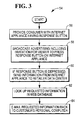
- Fig. 3 shows a flowchart of a method 54 according to the present invention.
- consumers are provided with an internet appliance, such as a television, radio, or cellular telephone, that includes a response button such as that described above.
- the retailer broadcasts advertising over the internet appliance. The advertising includes an invitation to the consumer to press the response button for additional information.
- a request signal is sent to a retailer data center.
- the retailer data center looks up the requested information in a Web database.
- the requested information is e-mailed back to the consumer.
- the present invention provides retailers with the capability to provide additional advertising or offer information, in addition to that provided to consumers through traditional television advertising on a one-to-one interactive basis. It has a number of advantages for the retailer and for the consumer.
- the present invention has the following advantages:
- the present invention provides retailers the ability to track consumer response and interest generated from traditional media advertisements. By routing the additional information set to and accessed later on by consumers through the enterprise commerce server, retailers are able to measure response and interest from traditional advertising. This measurement assists retailers in making their advertising budget allocations across traditional media. Retailers using the present invention will be able to measure responses to a particular advertisement using methods similar to those currently used to measure consumer responses to banner ads appearing on Web pages.
Landscapes
- Business, Economics & Management (AREA)
- Strategic Management (AREA)
- Engineering & Computer Science (AREA)
- Accounting & Taxation (AREA)
- Development Economics (AREA)
- Finance (AREA)
- Economics (AREA)
- Game Theory and Decision Science (AREA)
- Entrepreneurship & Innovation (AREA)
- Marketing (AREA)
- Physics & Mathematics (AREA)
- General Business, Economics & Management (AREA)
- General Physics & Mathematics (AREA)
- Theoretical Computer Science (AREA)
- Management, Administration, Business Operations System, And Electronic Commerce (AREA)
- Information Transfer Between Computers (AREA)
Abstract
Description
a retailer data center for receiving the signal sent out by the receiving unit, the retailer data center including an enterprise commerce server that looks up the requested information in a Web database and a mail server for e-mailing the requested information back to the consumer.
Claims (10)
- An advertising system, comprising: a receiving unit for receiving broadcast advertising, the receiving unit including a response button that, when depressed by a customer, causes the receiving unit to send out a signal over the internet requesting additional information relating to the advertising;
a retailer data center for receiving the signal sent out by the receiving unit, the retailer data center including an enterprise commerce server that looks up the requested information in a Web database and a mail server for e-mailing the requested information back to the consumer. - A system as claimed in claim 1, wherein the receiving unit is connected to a modem which is connected to the internet using a cellular transmitter.
- A system as claimed in claim 1 or claim 2, wherein the receiving unit is connected to a modem which is connected to the internet using a POTS connection.
- A system as claimed in any preceding claim, wherein the receiving unit further includes a remote control unit, and wherein the response button is located on the remote control unit.
- A receiving unit for use in an advertising system, the receiving unit comprising:a control software module;a data storage module accessible by the control software module for storing data;a date/time module accessible by the control software module for providing current date and time information;an input/output module for providing an interface between the control software module and input/output devices in the receiving unit, the input/output devices including a response button and a station selector, such that when the response button is depressed, the control software module uses information from the data storage module and from the input/output devices to send out a message signal.
- A receiving unit as claimed in claim 5, wherein the receiving unit comprises a television.
- A receiving unit as claimed in claim 5, wherein the receiving unit comprises a radio.
- A receiving unit of as claimed in claim 5, wherein the receiving unit comprises a cellular telephone.
- A receiving unit as claimed in any of claims 5 to 8, wherein the receiving unit includes a remote control unit, and wherein the response button is located on the remote control unit.
- A method of obtaining consumer responses to advertising, comprising the following steps:(a) providing a consumer with a receiving unit, the receiving unit having a response button that, when depressed, causes the receiving unit to send out a signal over the internet requesting additional information;(b) broadcasting to the receiving unit an advertisement including an invitation to the consumer to press the response button to request additional information;(c) upon receiving a request for information from the receiving unit, looking up the requested information and then e-mailing it to the consumer.
Applications Claiming Priority (2)
| Application Number | Priority Date | Filing Date | Title |
|---|---|---|---|
| US43614899A | 1999-11-09 | 1999-11-09 | |
| US436148 | 1999-11-09 |
Publications (2)
| Publication Number | Publication Date |
|---|---|
| EP1100031A2 true EP1100031A2 (en) | 2001-05-16 |
| EP1100031A3 EP1100031A3 (en) | 2002-09-25 |
Family
ID=23731303
Family Applications (1)
| Application Number | Title | Priority Date | Filing Date |
|---|---|---|---|
| EP00309215A Withdrawn EP1100031A3 (en) | 1999-11-09 | 2000-10-19 | System and methods for providing instant internet response to traditional braodcast advertising |
Country Status (1)
| Country | Link |
|---|---|
| EP (1) | EP1100031A3 (en) |
Cited By (1)
| Publication number | Priority date | Publication date | Assignee | Title |
|---|---|---|---|---|
| US9258071B1 (en) | 2014-01-06 | 2016-02-09 | Sprint Communications Company L.P. | Wireless communication session initiation based on a frequency modulation (FM) radio data service (RDS) |
Family Cites Families (5)
| Publication number | Priority date | Publication date | Assignee | Title |
|---|---|---|---|---|
| US4450477A (en) * | 1982-03-31 | 1984-05-22 | Lovett Bruce E | Television information system |
| US5682511A (en) * | 1995-05-05 | 1997-10-28 | Microsoft Corporation | Graphical viewer interface for an interactive network system |
| US5961603A (en) * | 1996-04-10 | 1999-10-05 | Worldgate Communications, Inc. | Access system and method for providing interactive access to an information source through a networked distribution system |
| US5907322A (en) * | 1996-10-16 | 1999-05-25 | Catch Tv Acquisition Corp. | Television event marking system |
| CN1146238C (en) * | 1997-05-21 | 2004-04-14 | 皇家菲利浦电子有限公司 | Method and device for transmitting and receiving television programs |
-
2000
- 2000-10-19 EP EP00309215A patent/EP1100031A3/en not_active Withdrawn
Cited By (1)
| Publication number | Priority date | Publication date | Assignee | Title |
|---|---|---|---|---|
| US9258071B1 (en) | 2014-01-06 | 2016-02-09 | Sprint Communications Company L.P. | Wireless communication session initiation based on a frequency modulation (FM) radio data service (RDS) |
Also Published As
| Publication number | Publication date |
|---|---|
| EP1100031A3 (en) | 2002-09-25 |
Similar Documents
| Publication | Publication Date | Title |
|---|---|---|
| CA2493662C (en) | Internet-based submission of cable network content | |
| US6311211B1 (en) | Method and apparatus for delivering electronic advocacy messages | |
| US6628928B1 (en) | Internet-based interactive radio system for use with broadcast radio stations | |
| CA2251676C (en) | Electronic mail system with advertising | |
| AU2004279071B2 (en) | Determining and/or using end user local time information in an ad system | |
| US20150213495A1 (en) | System, method, apparatus and computer media for user control of advertising | |
| US20030021396A1 (en) | Electronic classified advertising interface method and instructions with direct ad access for advertisers | |
| US8863167B2 (en) | System providing sponsored content | |
| US20020072972A1 (en) | Method and system for delayed advertising | |
| CN101501718A (en) | Widget-based advertising | |
| JP2002542538A (en) | Print media management method activated by revenue sharing domain name system scheme | |
| US20020046118A1 (en) | Method of linking advertisements on the World Wide Web with advertisements in other media | |
| US20010051978A1 (en) | Method and apparatus for providing a personalization service across a network | |
| US20080046921A1 (en) | Advertisement Management Device, Advertisement Distribution Device, Advertisement Display Device, Advertisement Distribution Method, And Advertisement Display Method | |
| US20060053050A1 (en) | Method for rating an advertisement | |
| US6559862B1 (en) | Information processing terminal and advertising system using the information processing unit | |
| WO2001029689A2 (en) | Navigational utility for interactive advertisement fulfillment | |
| US7457850B1 (en) | Information server system | |
| JP2002072942A (en) | Advertisement information providing system and advertisement information business method | |
| JP2001325519A (en) | Method and system for two-way broadcast distribution | |
| KR100326732B1 (en) | Internet broadcast advertizing system and method for advertizing through internet broadcast | |
| JP2004178111A (en) | Electronic advertisement providing system, electronic advertisement providing method, advertisement medium and program used in this method | |
| JP2004157817A (en) | Marketing support equipment | |
| KR20020021931A (en) | apparatus and method for providing of advertisements broadcasting using internet television | |
| US20110016481A1 (en) | Electronic Information Request Card Generation and Transmittal System |
Legal Events
| Date | Code | Title | Description |
|---|---|---|---|
| PUAI | Public reference made under article 153(3) epc to a published international application that has entered the european phase |
Free format text: ORIGINAL CODE: 0009012 |
|
| AK | Designated contracting states |
Kind code of ref document: A2 Designated state(s): AT BE CH CY DE DK ES FI FR GB GR IE IT LI LU MC NL PT SE |
|
| AX | Request for extension of the european patent |
Free format text: AL;LT;LV;MK;RO;SI |
|
| PUAL | Search report despatched |
Free format text: ORIGINAL CODE: 0009013 |
|
| AK | Designated contracting states |
Kind code of ref document: A3 Designated state(s): AT BE CH CY DE DK ES FI FR GB GR IE IT LI LU MC NL PT SE |
|
| AX | Request for extension of the european patent |
Free format text: AL;LT;LV;MK;RO;SI |
|
| RIC1 | Information provided on ipc code assigned before grant |
Free format text: 7H 04L 29/06 A, 7H 04N 7/14 B |
|
| 17P | Request for examination filed |
Effective date: 20030325 |
|
| 17Q | First examination report despatched |
Effective date: 20030428 |
|
| AKX | Designation fees paid |
Designated state(s): DE FR GB |
|
| STAA | Information on the status of an ep patent application or granted ep patent |
Free format text: STATUS: THE APPLICATION IS DEEMED TO BE WITHDRAWN |
|
| 18D | Application deemed to be withdrawn |
Effective date: 20031111 |