EP1096039B1 - Method of forming an oxide film on a metallic member and method of cementing the metallic member - Google Patents
Method of forming an oxide film on a metallic member and method of cementing the metallic member Download PDFInfo
- Publication number
- EP1096039B1 EP1096039B1 EP00123350A EP00123350A EP1096039B1 EP 1096039 B1 EP1096039 B1 EP 1096039B1 EP 00123350 A EP00123350 A EP 00123350A EP 00123350 A EP00123350 A EP 00123350A EP 1096039 B1 EP1096039 B1 EP 1096039B1
- Authority
- EP
- European Patent Office
- Prior art keywords
- metallic member
- oxide film
- alloy
- cementing
- gold
- Prior art date
- Legal status (The legal status is an assumption and is not a legal conclusion. Google has not performed a legal analysis and makes no representation as to the accuracy of the status listed.)
- Expired - Lifetime
Links
- 238000000034 method Methods 0.000 title claims description 39
- 239000000853 adhesive Substances 0.000 claims description 23
- 230000001070 adhesive effect Effects 0.000 claims description 23
- CBENFWSGALASAD-UHFFFAOYSA-N Ozone Chemical compound [O-][O+]=O CBENFWSGALASAD-UHFFFAOYSA-N 0.000 claims description 18
- 239000007943 implant Substances 0.000 claims description 18
- 239000000463 material Substances 0.000 claims description 18
- RTAQQCXQSZGOHL-UHFFFAOYSA-N Titanium Chemical compound [Ti] RTAQQCXQSZGOHL-UHFFFAOYSA-N 0.000 claims description 13
- 239000010936 titanium Substances 0.000 claims description 13
- 229910052719 titanium Inorganic materials 0.000 claims description 13
- 239000003479 dental cement Substances 0.000 claims description 8
- 229910001020 Au alloy Inorganic materials 0.000 claims description 7
- 239000003353 gold alloy Substances 0.000 claims description 7
- 239000011347 resin Substances 0.000 claims description 7
- 229920005989 resin Polymers 0.000 claims description 7
- BLRPTPMANUNPDV-UHFFFAOYSA-N Silane Chemical compound [SiH4] BLRPTPMANUNPDV-UHFFFAOYSA-N 0.000 claims description 5
- 229910000077 silane Inorganic materials 0.000 claims description 5
- 229910001316 Ag alloy Inorganic materials 0.000 claims description 4
- 229910001252 Pd alloy Inorganic materials 0.000 claims description 4
- 229910001069 Ti alloy Inorganic materials 0.000 claims description 4
- WAIPAZQMEIHHTJ-UHFFFAOYSA-N [Cr].[Co] Chemical class [Cr].[Co] WAIPAZQMEIHHTJ-UHFFFAOYSA-N 0.000 claims description 4
- 239000007822 coupling agent Substances 0.000 claims description 4
- 229910000623 nickel–chromium alloy Inorganic materials 0.000 claims description 4
- 239000010935 stainless steel Substances 0.000 claims description 4
- 229910001220 stainless steel Inorganic materials 0.000 claims description 4
- JUWSSMXCCAMYGX-UHFFFAOYSA-N gold platinum Chemical compound [Pt].[Au] JUWSSMXCCAMYGX-UHFFFAOYSA-N 0.000 claims 3
- 241001465754 Metazoa Species 0.000 claims 2
- 230000001590 oxidative effect Effects 0.000 claims 2
- MHAJPDPJQMAIIY-UHFFFAOYSA-N Hydrogen peroxide Chemical compound OO MHAJPDPJQMAIIY-UHFFFAOYSA-N 0.000 description 20
- 229910052751 metal Inorganic materials 0.000 description 11
- 239000002184 metal Substances 0.000 description 11
- 210000000988 bone and bone Anatomy 0.000 description 7
- 239000006087 Silane Coupling Agent Substances 0.000 description 6
- 238000005259 measurement Methods 0.000 description 6
- 238000010438 heat treatment Methods 0.000 description 5
- 210000002303 tibia Anatomy 0.000 description 5
- 241000283973 Oryctolagus cuniculus Species 0.000 description 4
- 238000007254 oxidation reaction Methods 0.000 description 4
- 229920003229 poly(methyl methacrylate) Polymers 0.000 description 4
- 239000004926 polymethyl methacrylate Substances 0.000 description 4
- 238000002360 preparation method Methods 0.000 description 4
- 230000006866 deterioration Effects 0.000 description 3
- 239000000203 mixture Substances 0.000 description 3
- 230000003647 oxidation Effects 0.000 description 3
- 238000005498 polishing Methods 0.000 description 3
- 230000002035 prolonged effect Effects 0.000 description 3
- ODLMAHJVESYWTB-UHFFFAOYSA-N propylbenzene Chemical compound CCCC1=CC=CC=C1 ODLMAHJVESYWTB-UHFFFAOYSA-N 0.000 description 2
- 238000007586 pull-out test Methods 0.000 description 2
- HWSSEYVMGDIFMH-UHFFFAOYSA-N 2-[2-[2-(2-methylprop-2-enoyloxy)ethoxy]ethoxy]ethyl 2-methylprop-2-enoate Chemical compound CC(=C)C(=O)OCCOCCOCCOC(=O)C(C)=C HWSSEYVMGDIFMH-UHFFFAOYSA-N 0.000 description 1
- URDOJQUSEUXVRP-UHFFFAOYSA-N 3-triethoxysilylpropyl 2-methylprop-2-enoate Chemical compound CCO[Si](OCC)(OCC)CCCOC(=O)C(C)=C URDOJQUSEUXVRP-UHFFFAOYSA-N 0.000 description 1
- VVQNEPGJFQJSBK-UHFFFAOYSA-N Methyl methacrylate Chemical compound COC(=O)C(C)=C VVQNEPGJFQJSBK-UHFFFAOYSA-N 0.000 description 1
- 230000008878 coupling Effects 0.000 description 1
- 238000010168 coupling process Methods 0.000 description 1
- 238000005859 coupling reaction Methods 0.000 description 1
- 239000000843 powder Substances 0.000 description 1
- 238000010008 shearing Methods 0.000 description 1
Images

Classifications
-
- A—HUMAN NECESSITIES
- A61—MEDICAL OR VETERINARY SCIENCE; HYGIENE
- A61L—METHODS OR APPARATUS FOR STERILISING MATERIALS OR OBJECTS IN GENERAL; DISINFECTION, STERILISATION OR DEODORISATION OF AIR; CHEMICAL ASPECTS OF BANDAGES, DRESSINGS, ABSORBENT PADS OR SURGICAL ARTICLES; MATERIALS FOR BANDAGES, DRESSINGS, ABSORBENT PADS OR SURGICAL ARTICLES
- A61L27/00—Materials for grafts or prostheses or for coating grafts or prostheses
- A61L27/02—Inorganic materials
- A61L27/04—Metals or alloys
-
- A—HUMAN NECESSITIES
- A61—MEDICAL OR VETERINARY SCIENCE; HYGIENE
- A61K—PREPARATIONS FOR MEDICAL, DENTAL OR TOILETRY PURPOSES
- A61K6/00—Preparations for dentistry
- A61K6/30—Compositions for temporarily or permanently fixing teeth or palates, e.g. primers for dental adhesives
-
- A—HUMAN NECESSITIES
- A61—MEDICAL OR VETERINARY SCIENCE; HYGIENE
- A61K—PREPARATIONS FOR MEDICAL, DENTAL OR TOILETRY PURPOSES
- A61K6/00—Preparations for dentistry
- A61K6/40—Primers
-
- A—HUMAN NECESSITIES
- A61—MEDICAL OR VETERINARY SCIENCE; HYGIENE
- A61K—PREPARATIONS FOR MEDICAL, DENTAL OR TOILETRY PURPOSES
- A61K6/00—Preparations for dentistry
- A61K6/80—Preparations for artificial teeth, for filling teeth or for capping teeth
- A61K6/84—Preparations for artificial teeth, for filling teeth or for capping teeth comprising metals or alloys
-
- A—HUMAN NECESSITIES
- A61—MEDICAL OR VETERINARY SCIENCE; HYGIENE
- A61K—PREPARATIONS FOR MEDICAL, DENTAL OR TOILETRY PURPOSES
- A61K6/00—Preparations for dentistry
- A61K6/80—Preparations for artificial teeth, for filling teeth or for capping teeth
- A61K6/84—Preparations for artificial teeth, for filling teeth or for capping teeth comprising metals or alloys
- A61K6/844—Noble metals
-
- A—HUMAN NECESSITIES
- A61—MEDICAL OR VETERINARY SCIENCE; HYGIENE
- A61L—METHODS OR APPARATUS FOR STERILISING MATERIALS OR OBJECTS IN GENERAL; DISINFECTION, STERILISATION OR DEODORISATION OF AIR; CHEMICAL ASPECTS OF BANDAGES, DRESSINGS, ABSORBENT PADS OR SURGICAL ARTICLES; MATERIALS FOR BANDAGES, DRESSINGS, ABSORBENT PADS OR SURGICAL ARTICLES
- A61L27/00—Materials for grafts or prostheses or for coating grafts or prostheses
- A61L27/02—Inorganic materials
- A61L27/04—Metals or alloys
- A61L27/042—Iron or iron alloys
-
- A—HUMAN NECESSITIES
- A61—MEDICAL OR VETERINARY SCIENCE; HYGIENE
- A61L—METHODS OR APPARATUS FOR STERILISING MATERIALS OR OBJECTS IN GENERAL; DISINFECTION, STERILISATION OR DEODORISATION OF AIR; CHEMICAL ASPECTS OF BANDAGES, DRESSINGS, ABSORBENT PADS OR SURGICAL ARTICLES; MATERIALS FOR BANDAGES, DRESSINGS, ABSORBENT PADS OR SURGICAL ARTICLES
- A61L27/00—Materials for grafts or prostheses or for coating grafts or prostheses
- A61L27/02—Inorganic materials
- A61L27/04—Metals or alloys
- A61L27/045—Cobalt or cobalt alloys
-
- A—HUMAN NECESSITIES
- A61—MEDICAL OR VETERINARY SCIENCE; HYGIENE
- A61L—METHODS OR APPARATUS FOR STERILISING MATERIALS OR OBJECTS IN GENERAL; DISINFECTION, STERILISATION OR DEODORISATION OF AIR; CHEMICAL ASPECTS OF BANDAGES, DRESSINGS, ABSORBENT PADS OR SURGICAL ARTICLES; MATERIALS FOR BANDAGES, DRESSINGS, ABSORBENT PADS OR SURGICAL ARTICLES
- A61L27/00—Materials for grafts or prostheses or for coating grafts or prostheses
- A61L27/02—Inorganic materials
- A61L27/04—Metals or alloys
- A61L27/047—Other specific metals or alloys not covered by A61L27/042 - A61L27/045 or A61L27/06
-
- A—HUMAN NECESSITIES
- A61—MEDICAL OR VETERINARY SCIENCE; HYGIENE
- A61L—METHODS OR APPARATUS FOR STERILISING MATERIALS OR OBJECTS IN GENERAL; DISINFECTION, STERILISATION OR DEODORISATION OF AIR; CHEMICAL ASPECTS OF BANDAGES, DRESSINGS, ABSORBENT PADS OR SURGICAL ARTICLES; MATERIALS FOR BANDAGES, DRESSINGS, ABSORBENT PADS OR SURGICAL ARTICLES
- A61L27/00—Materials for grafts or prostheses or for coating grafts or prostheses
- A61L27/02—Inorganic materials
- A61L27/04—Metals or alloys
- A61L27/06—Titanium or titanium alloys
-
- A—HUMAN NECESSITIES
- A61—MEDICAL OR VETERINARY SCIENCE; HYGIENE
- A61L—METHODS OR APPARATUS FOR STERILISING MATERIALS OR OBJECTS IN GENERAL; DISINFECTION, STERILISATION OR DEODORISATION OF AIR; CHEMICAL ASPECTS OF BANDAGES, DRESSINGS, ABSORBENT PADS OR SURGICAL ARTICLES; MATERIALS FOR BANDAGES, DRESSINGS, ABSORBENT PADS OR SURGICAL ARTICLES
- A61L27/00—Materials for grafts or prostheses or for coating grafts or prostheses
- A61L27/28—Materials for coating prostheses
- A61L27/30—Inorganic materials
- A61L27/306—Other specific inorganic materials not covered by A61L27/303 - A61L27/32
-
- A—HUMAN NECESSITIES
- A61—MEDICAL OR VETERINARY SCIENCE; HYGIENE
- A61L—METHODS OR APPARATUS FOR STERILISING MATERIALS OR OBJECTS IN GENERAL; DISINFECTION, STERILISATION OR DEODORISATION OF AIR; CHEMICAL ASPECTS OF BANDAGES, DRESSINGS, ABSORBENT PADS OR SURGICAL ARTICLES; MATERIALS FOR BANDAGES, DRESSINGS, ABSORBENT PADS OR SURGICAL ARTICLES
- A61L27/00—Materials for grafts or prostheses or for coating grafts or prostheses
- A61L27/50—Materials characterised by their function or physical properties, e.g. injectable or lubricating compositions, shape-memory materials, surface modified materials
-
- C—CHEMISTRY; METALLURGY
- C23—COATING METALLIC MATERIAL; COATING MATERIAL WITH METALLIC MATERIAL; CHEMICAL SURFACE TREATMENT; DIFFUSION TREATMENT OF METALLIC MATERIAL; COATING BY VACUUM EVAPORATION, BY SPUTTERING, BY ION IMPLANTATION OR BY CHEMICAL VAPOUR DEPOSITION, IN GENERAL; INHIBITING CORROSION OF METALLIC MATERIAL OR INCRUSTATION IN GENERAL
- C23C—COATING METALLIC MATERIAL; COATING MATERIAL WITH METALLIC MATERIAL; SURFACE TREATMENT OF METALLIC MATERIAL BY DIFFUSION INTO THE SURFACE, BY CHEMICAL CONVERSION OR SUBSTITUTION; COATING BY VACUUM EVAPORATION, BY SPUTTERING, BY ION IMPLANTATION OR BY CHEMICAL VAPOUR DEPOSITION, IN GENERAL
- C23C22/00—Chemical surface treatment of metallic material by reaction of the surface with a reactive liquid, leaving reaction products of surface material in the coating, e.g. conversion coatings, passivation of metals
- C23C22/05—Chemical surface treatment of metallic material by reaction of the surface with a reactive liquid, leaving reaction products of surface material in the coating, e.g. conversion coatings, passivation of metals using aqueous solutions
- C23C22/06—Chemical surface treatment of metallic material by reaction of the surface with a reactive liquid, leaving reaction products of surface material in the coating, e.g. conversion coatings, passivation of metals using aqueous solutions using aqueous acidic solutions with pH less than 6
- C23C22/48—Chemical surface treatment of metallic material by reaction of the surface with a reactive liquid, leaving reaction products of surface material in the coating, e.g. conversion coatings, passivation of metals using aqueous solutions using aqueous acidic solutions with pH less than 6 not containing phosphates, hexavalent chromium compounds, fluorides or complex fluorides, molybdates, tungstates, vanadates or oxalates
- C23C22/50—Treatment of iron or alloys based thereon
-
- C—CHEMISTRY; METALLURGY
- C23—COATING METALLIC MATERIAL; COATING MATERIAL WITH METALLIC MATERIAL; CHEMICAL SURFACE TREATMENT; DIFFUSION TREATMENT OF METALLIC MATERIAL; COATING BY VACUUM EVAPORATION, BY SPUTTERING, BY ION IMPLANTATION OR BY CHEMICAL VAPOUR DEPOSITION, IN GENERAL; INHIBITING CORROSION OF METALLIC MATERIAL OR INCRUSTATION IN GENERAL
- C23C—COATING METALLIC MATERIAL; COATING MATERIAL WITH METALLIC MATERIAL; SURFACE TREATMENT OF METALLIC MATERIAL BY DIFFUSION INTO THE SURFACE, BY CHEMICAL CONVERSION OR SUBSTITUTION; COATING BY VACUUM EVAPORATION, BY SPUTTERING, BY ION IMPLANTATION OR BY CHEMICAL VAPOUR DEPOSITION, IN GENERAL
- C23C22/00—Chemical surface treatment of metallic material by reaction of the surface with a reactive liquid, leaving reaction products of surface material in the coating, e.g. conversion coatings, passivation of metals
- C23C22/05—Chemical surface treatment of metallic material by reaction of the surface with a reactive liquid, leaving reaction products of surface material in the coating, e.g. conversion coatings, passivation of metals using aqueous solutions
- C23C22/06—Chemical surface treatment of metallic material by reaction of the surface with a reactive liquid, leaving reaction products of surface material in the coating, e.g. conversion coatings, passivation of metals using aqueous solutions using aqueous acidic solutions with pH less than 6
- C23C22/48—Chemical surface treatment of metallic material by reaction of the surface with a reactive liquid, leaving reaction products of surface material in the coating, e.g. conversion coatings, passivation of metals using aqueous solutions using aqueous acidic solutions with pH less than 6 not containing phosphates, hexavalent chromium compounds, fluorides or complex fluorides, molybdates, tungstates, vanadates or oxalates
- C23C22/54—Treatment of refractory metals or alloys based thereon
-
- C—CHEMISTRY; METALLURGY
- C23—COATING METALLIC MATERIAL; COATING MATERIAL WITH METALLIC MATERIAL; CHEMICAL SURFACE TREATMENT; DIFFUSION TREATMENT OF METALLIC MATERIAL; COATING BY VACUUM EVAPORATION, BY SPUTTERING, BY ION IMPLANTATION OR BY CHEMICAL VAPOUR DEPOSITION, IN GENERAL; INHIBITING CORROSION OF METALLIC MATERIAL OR INCRUSTATION IN GENERAL
- C23C—COATING METALLIC MATERIAL; COATING MATERIAL WITH METALLIC MATERIAL; SURFACE TREATMENT OF METALLIC MATERIAL BY DIFFUSION INTO THE SURFACE, BY CHEMICAL CONVERSION OR SUBSTITUTION; COATING BY VACUUM EVAPORATION, BY SPUTTERING, BY ION IMPLANTATION OR BY CHEMICAL VAPOUR DEPOSITION, IN GENERAL
- C23C22/00—Chemical surface treatment of metallic material by reaction of the surface with a reactive liquid, leaving reaction products of surface material in the coating, e.g. conversion coatings, passivation of metals
- C23C22/05—Chemical surface treatment of metallic material by reaction of the surface with a reactive liquid, leaving reaction products of surface material in the coating, e.g. conversion coatings, passivation of metals using aqueous solutions
- C23C22/06—Chemical surface treatment of metallic material by reaction of the surface with a reactive liquid, leaving reaction products of surface material in the coating, e.g. conversion coatings, passivation of metals using aqueous solutions using aqueous acidic solutions with pH less than 6
- C23C22/48—Chemical surface treatment of metallic material by reaction of the surface with a reactive liquid, leaving reaction products of surface material in the coating, e.g. conversion coatings, passivation of metals using aqueous solutions using aqueous acidic solutions with pH less than 6 not containing phosphates, hexavalent chromium compounds, fluorides or complex fluorides, molybdates, tungstates, vanadates or oxalates
- C23C22/58—Treatment of other metallic material
-
- C—CHEMISTRY; METALLURGY
- C23—COATING METALLIC MATERIAL; COATING MATERIAL WITH METALLIC MATERIAL; CHEMICAL SURFACE TREATMENT; DIFFUSION TREATMENT OF METALLIC MATERIAL; COATING BY VACUUM EVAPORATION, BY SPUTTERING, BY ION IMPLANTATION OR BY CHEMICAL VAPOUR DEPOSITION, IN GENERAL; INHIBITING CORROSION OF METALLIC MATERIAL OR INCRUSTATION IN GENERAL
- C23C—COATING METALLIC MATERIAL; COATING MATERIAL WITH METALLIC MATERIAL; SURFACE TREATMENT OF METALLIC MATERIAL BY DIFFUSION INTO THE SURFACE, BY CHEMICAL CONVERSION OR SUBSTITUTION; COATING BY VACUUM EVAPORATION, BY SPUTTERING, BY ION IMPLANTATION OR BY CHEMICAL VAPOUR DEPOSITION, IN GENERAL
- C23C28/00—Coating for obtaining at least two superposed coatings either by methods not provided for in a single one of groups C23C2/00 - C23C26/00 or by combinations of methods provided for in subclasses C23C and C25C or C25D
-
- C—CHEMISTRY; METALLURGY
- C23—COATING METALLIC MATERIAL; COATING MATERIAL WITH METALLIC MATERIAL; CHEMICAL SURFACE TREATMENT; DIFFUSION TREATMENT OF METALLIC MATERIAL; COATING BY VACUUM EVAPORATION, BY SPUTTERING, BY ION IMPLANTATION OR BY CHEMICAL VAPOUR DEPOSITION, IN GENERAL; INHIBITING CORROSION OF METALLIC MATERIAL OR INCRUSTATION IN GENERAL
- C23C—COATING METALLIC MATERIAL; COATING MATERIAL WITH METALLIC MATERIAL; SURFACE TREATMENT OF METALLIC MATERIAL BY DIFFUSION INTO THE SURFACE, BY CHEMICAL CONVERSION OR SUBSTITUTION; COATING BY VACUUM EVAPORATION, BY SPUTTERING, BY ION IMPLANTATION OR BY CHEMICAL VAPOUR DEPOSITION, IN GENERAL
- C23C28/00—Coating for obtaining at least two superposed coatings either by methods not provided for in a single one of groups C23C2/00 - C23C26/00 or by combinations of methods provided for in subclasses C23C and C25C or C25D
- C23C28/04—Coating for obtaining at least two superposed coatings either by methods not provided for in a single one of groups C23C2/00 - C23C26/00 or by combinations of methods provided for in subclasses C23C and C25C or C25D only coatings of inorganic non-metallic material
-
- C—CHEMISTRY; METALLURGY
- C23—COATING METALLIC MATERIAL; COATING MATERIAL WITH METALLIC MATERIAL; CHEMICAL SURFACE TREATMENT; DIFFUSION TREATMENT OF METALLIC MATERIAL; COATING BY VACUUM EVAPORATION, BY SPUTTERING, BY ION IMPLANTATION OR BY CHEMICAL VAPOUR DEPOSITION, IN GENERAL; INHIBITING CORROSION OF METALLIC MATERIAL OR INCRUSTATION IN GENERAL
- C23C—COATING METALLIC MATERIAL; COATING MATERIAL WITH METALLIC MATERIAL; SURFACE TREATMENT OF METALLIC MATERIAL BY DIFFUSION INTO THE SURFACE, BY CHEMICAL CONVERSION OR SUBSTITUTION; COATING BY VACUUM EVAPORATION, BY SPUTTERING, BY ION IMPLANTATION OR BY CHEMICAL VAPOUR DEPOSITION, IN GENERAL
- C23C8/00—Solid state diffusion of only non-metal elements into metallic material surfaces; Chemical surface treatment of metallic material by reaction of the surface with a reactive gas, leaving reaction products of surface material in the coating, e.g. conversion coatings, passivation of metals
- C23C8/02—Pretreatment of the material to be coated
-
- C—CHEMISTRY; METALLURGY
- C23—COATING METALLIC MATERIAL; COATING MATERIAL WITH METALLIC MATERIAL; CHEMICAL SURFACE TREATMENT; DIFFUSION TREATMENT OF METALLIC MATERIAL; COATING BY VACUUM EVAPORATION, BY SPUTTERING, BY ION IMPLANTATION OR BY CHEMICAL VAPOUR DEPOSITION, IN GENERAL; INHIBITING CORROSION OF METALLIC MATERIAL OR INCRUSTATION IN GENERAL
- C23C—COATING METALLIC MATERIAL; COATING MATERIAL WITH METALLIC MATERIAL; SURFACE TREATMENT OF METALLIC MATERIAL BY DIFFUSION INTO THE SURFACE, BY CHEMICAL CONVERSION OR SUBSTITUTION; COATING BY VACUUM EVAPORATION, BY SPUTTERING, BY ION IMPLANTATION OR BY CHEMICAL VAPOUR DEPOSITION, IN GENERAL
- C23C8/00—Solid state diffusion of only non-metal elements into metallic material surfaces; Chemical surface treatment of metallic material by reaction of the surface with a reactive gas, leaving reaction products of surface material in the coating, e.g. conversion coatings, passivation of metals
- C23C8/04—Treatment of selected surface areas, e.g. using masks
-
- C—CHEMISTRY; METALLURGY
- C23—COATING METALLIC MATERIAL; COATING MATERIAL WITH METALLIC MATERIAL; CHEMICAL SURFACE TREATMENT; DIFFUSION TREATMENT OF METALLIC MATERIAL; COATING BY VACUUM EVAPORATION, BY SPUTTERING, BY ION IMPLANTATION OR BY CHEMICAL VAPOUR DEPOSITION, IN GENERAL; INHIBITING CORROSION OF METALLIC MATERIAL OR INCRUSTATION IN GENERAL
- C23C—COATING METALLIC MATERIAL; COATING MATERIAL WITH METALLIC MATERIAL; SURFACE TREATMENT OF METALLIC MATERIAL BY DIFFUSION INTO THE SURFACE, BY CHEMICAL CONVERSION OR SUBSTITUTION; COATING BY VACUUM EVAPORATION, BY SPUTTERING, BY ION IMPLANTATION OR BY CHEMICAL VAPOUR DEPOSITION, IN GENERAL
- C23C8/00—Solid state diffusion of only non-metal elements into metallic material surfaces; Chemical surface treatment of metallic material by reaction of the surface with a reactive gas, leaving reaction products of surface material in the coating, e.g. conversion coatings, passivation of metals
- C23C8/06—Solid state diffusion of only non-metal elements into metallic material surfaces; Chemical surface treatment of metallic material by reaction of the surface with a reactive gas, leaving reaction products of surface material in the coating, e.g. conversion coatings, passivation of metals using gases
- C23C8/08—Solid state diffusion of only non-metal elements into metallic material surfaces; Chemical surface treatment of metallic material by reaction of the surface with a reactive gas, leaving reaction products of surface material in the coating, e.g. conversion coatings, passivation of metals using gases only one element being applied
- C23C8/10—Oxidising
-
- C—CHEMISTRY; METALLURGY
- C23—COATING METALLIC MATERIAL; COATING MATERIAL WITH METALLIC MATERIAL; CHEMICAL SURFACE TREATMENT; DIFFUSION TREATMENT OF METALLIC MATERIAL; COATING BY VACUUM EVAPORATION, BY SPUTTERING, BY ION IMPLANTATION OR BY CHEMICAL VAPOUR DEPOSITION, IN GENERAL; INHIBITING CORROSION OF METALLIC MATERIAL OR INCRUSTATION IN GENERAL
- C23C—COATING METALLIC MATERIAL; COATING MATERIAL WITH METALLIC MATERIAL; SURFACE TREATMENT OF METALLIC MATERIAL BY DIFFUSION INTO THE SURFACE, BY CHEMICAL CONVERSION OR SUBSTITUTION; COATING BY VACUUM EVAPORATION, BY SPUTTERING, BY ION IMPLANTATION OR BY CHEMICAL VAPOUR DEPOSITION, IN GENERAL
- C23C8/00—Solid state diffusion of only non-metal elements into metallic material surfaces; Chemical surface treatment of metallic material by reaction of the surface with a reactive gas, leaving reaction products of surface material in the coating, e.g. conversion coatings, passivation of metals
- C23C8/06—Solid state diffusion of only non-metal elements into metallic material surfaces; Chemical surface treatment of metallic material by reaction of the surface with a reactive gas, leaving reaction products of surface material in the coating, e.g. conversion coatings, passivation of metals using gases
- C23C8/08—Solid state diffusion of only non-metal elements into metallic material surfaces; Chemical surface treatment of metallic material by reaction of the surface with a reactive gas, leaving reaction products of surface material in the coating, e.g. conversion coatings, passivation of metals using gases only one element being applied
- C23C8/10—Oxidising
- C23C8/12—Oxidising using elemental oxygen or ozone
-
- C—CHEMISTRY; METALLURGY
- C23—COATING METALLIC MATERIAL; COATING MATERIAL WITH METALLIC MATERIAL; CHEMICAL SURFACE TREATMENT; DIFFUSION TREATMENT OF METALLIC MATERIAL; COATING BY VACUUM EVAPORATION, BY SPUTTERING, BY ION IMPLANTATION OR BY CHEMICAL VAPOUR DEPOSITION, IN GENERAL; INHIBITING CORROSION OF METALLIC MATERIAL OR INCRUSTATION IN GENERAL
- C23C—COATING METALLIC MATERIAL; COATING MATERIAL WITH METALLIC MATERIAL; SURFACE TREATMENT OF METALLIC MATERIAL BY DIFFUSION INTO THE SURFACE, BY CHEMICAL CONVERSION OR SUBSTITUTION; COATING BY VACUUM EVAPORATION, BY SPUTTERING, BY ION IMPLANTATION OR BY CHEMICAL VAPOUR DEPOSITION, IN GENERAL
- C23C8/00—Solid state diffusion of only non-metal elements into metallic material surfaces; Chemical surface treatment of metallic material by reaction of the surface with a reactive gas, leaving reaction products of surface material in the coating, e.g. conversion coatings, passivation of metals
- C23C8/06—Solid state diffusion of only non-metal elements into metallic material surfaces; Chemical surface treatment of metallic material by reaction of the surface with a reactive gas, leaving reaction products of surface material in the coating, e.g. conversion coatings, passivation of metals using gases
- C23C8/08—Solid state diffusion of only non-metal elements into metallic material surfaces; Chemical surface treatment of metallic material by reaction of the surface with a reactive gas, leaving reaction products of surface material in the coating, e.g. conversion coatings, passivation of metals using gases only one element being applied
- C23C8/10—Oxidising
- C23C8/12—Oxidising using elemental oxygen or ozone
- C23C8/14—Oxidising of ferrous surfaces
-
- C—CHEMISTRY; METALLURGY
- C23—COATING METALLIC MATERIAL; COATING MATERIAL WITH METALLIC MATERIAL; CHEMICAL SURFACE TREATMENT; DIFFUSION TREATMENT OF METALLIC MATERIAL; COATING BY VACUUM EVAPORATION, BY SPUTTERING, BY ION IMPLANTATION OR BY CHEMICAL VAPOUR DEPOSITION, IN GENERAL; INHIBITING CORROSION OF METALLIC MATERIAL OR INCRUSTATION IN GENERAL
- C23C—COATING METALLIC MATERIAL; COATING MATERIAL WITH METALLIC MATERIAL; SURFACE TREATMENT OF METALLIC MATERIAL BY DIFFUSION INTO THE SURFACE, BY CHEMICAL CONVERSION OR SUBSTITUTION; COATING BY VACUUM EVAPORATION, BY SPUTTERING, BY ION IMPLANTATION OR BY CHEMICAL VAPOUR DEPOSITION, IN GENERAL
- C23C8/00—Solid state diffusion of only non-metal elements into metallic material surfaces; Chemical surface treatment of metallic material by reaction of the surface with a reactive gas, leaving reaction products of surface material in the coating, e.g. conversion coatings, passivation of metals
- C23C8/06—Solid state diffusion of only non-metal elements into metallic material surfaces; Chemical surface treatment of metallic material by reaction of the surface with a reactive gas, leaving reaction products of surface material in the coating, e.g. conversion coatings, passivation of metals using gases
- C23C8/08—Solid state diffusion of only non-metal elements into metallic material surfaces; Chemical surface treatment of metallic material by reaction of the surface with a reactive gas, leaving reaction products of surface material in the coating, e.g. conversion coatings, passivation of metals using gases only one element being applied
- C23C8/10—Oxidising
- C23C8/16—Oxidising using oxygen-containing compounds, e.g. water, carbon dioxide
-
- C—CHEMISTRY; METALLURGY
- C23—COATING METALLIC MATERIAL; COATING MATERIAL WITH METALLIC MATERIAL; CHEMICAL SURFACE TREATMENT; DIFFUSION TREATMENT OF METALLIC MATERIAL; COATING BY VACUUM EVAPORATION, BY SPUTTERING, BY ION IMPLANTATION OR BY CHEMICAL VAPOUR DEPOSITION, IN GENERAL; INHIBITING CORROSION OF METALLIC MATERIAL OR INCRUSTATION IN GENERAL
- C23C—COATING METALLIC MATERIAL; COATING MATERIAL WITH METALLIC MATERIAL; SURFACE TREATMENT OF METALLIC MATERIAL BY DIFFUSION INTO THE SURFACE, BY CHEMICAL CONVERSION OR SUBSTITUTION; COATING BY VACUUM EVAPORATION, BY SPUTTERING, BY ION IMPLANTATION OR BY CHEMICAL VAPOUR DEPOSITION, IN GENERAL
- C23C8/00—Solid state diffusion of only non-metal elements into metallic material surfaces; Chemical surface treatment of metallic material by reaction of the surface with a reactive gas, leaving reaction products of surface material in the coating, e.g. conversion coatings, passivation of metals
- C23C8/06—Solid state diffusion of only non-metal elements into metallic material surfaces; Chemical surface treatment of metallic material by reaction of the surface with a reactive gas, leaving reaction products of surface material in the coating, e.g. conversion coatings, passivation of metals using gases
- C23C8/08—Solid state diffusion of only non-metal elements into metallic material surfaces; Chemical surface treatment of metallic material by reaction of the surface with a reactive gas, leaving reaction products of surface material in the coating, e.g. conversion coatings, passivation of metals using gases only one element being applied
- C23C8/10—Oxidising
- C23C8/16—Oxidising using oxygen-containing compounds, e.g. water, carbon dioxide
- C23C8/18—Oxidising of ferrous surfaces
-
- C—CHEMISTRY; METALLURGY
- C23—COATING METALLIC MATERIAL; COATING MATERIAL WITH METALLIC MATERIAL; CHEMICAL SURFACE TREATMENT; DIFFUSION TREATMENT OF METALLIC MATERIAL; COATING BY VACUUM EVAPORATION, BY SPUTTERING, BY ION IMPLANTATION OR BY CHEMICAL VAPOUR DEPOSITION, IN GENERAL; INHIBITING CORROSION OF METALLIC MATERIAL OR INCRUSTATION IN GENERAL
- C23C—COATING METALLIC MATERIAL; COATING MATERIAL WITH METALLIC MATERIAL; SURFACE TREATMENT OF METALLIC MATERIAL BY DIFFUSION INTO THE SURFACE, BY CHEMICAL CONVERSION OR SUBSTITUTION; COATING BY VACUUM EVAPORATION, BY SPUTTERING, BY ION IMPLANTATION OR BY CHEMICAL VAPOUR DEPOSITION, IN GENERAL
- C23C8/00—Solid state diffusion of only non-metal elements into metallic material surfaces; Chemical surface treatment of metallic material by reaction of the surface with a reactive gas, leaving reaction products of surface material in the coating, e.g. conversion coatings, passivation of metals
- C23C8/40—Solid state diffusion of only non-metal elements into metallic material surfaces; Chemical surface treatment of metallic material by reaction of the surface with a reactive gas, leaving reaction products of surface material in the coating, e.g. conversion coatings, passivation of metals using liquids, e.g. salt baths, liquid suspensions
-
- C—CHEMISTRY; METALLURGY
- C23—COATING METALLIC MATERIAL; COATING MATERIAL WITH METALLIC MATERIAL; CHEMICAL SURFACE TREATMENT; DIFFUSION TREATMENT OF METALLIC MATERIAL; COATING BY VACUUM EVAPORATION, BY SPUTTERING, BY ION IMPLANTATION OR BY CHEMICAL VAPOUR DEPOSITION, IN GENERAL; INHIBITING CORROSION OF METALLIC MATERIAL OR INCRUSTATION IN GENERAL
- C23C—COATING METALLIC MATERIAL; COATING MATERIAL WITH METALLIC MATERIAL; SURFACE TREATMENT OF METALLIC MATERIAL BY DIFFUSION INTO THE SURFACE, BY CHEMICAL CONVERSION OR SUBSTITUTION; COATING BY VACUUM EVAPORATION, BY SPUTTERING, BY ION IMPLANTATION OR BY CHEMICAL VAPOUR DEPOSITION, IN GENERAL
- C23C8/00—Solid state diffusion of only non-metal elements into metallic material surfaces; Chemical surface treatment of metallic material by reaction of the surface with a reactive gas, leaving reaction products of surface material in the coating, e.g. conversion coatings, passivation of metals
- C23C8/40—Solid state diffusion of only non-metal elements into metallic material surfaces; Chemical surface treatment of metallic material by reaction of the surface with a reactive gas, leaving reaction products of surface material in the coating, e.g. conversion coatings, passivation of metals using liquids, e.g. salt baths, liquid suspensions
- C23C8/42—Solid state diffusion of only non-metal elements into metallic material surfaces; Chemical surface treatment of metallic material by reaction of the surface with a reactive gas, leaving reaction products of surface material in the coating, e.g. conversion coatings, passivation of metals using liquids, e.g. salt baths, liquid suspensions only one element being applied
-
- C—CHEMISTRY; METALLURGY
- C23—COATING METALLIC MATERIAL; COATING MATERIAL WITH METALLIC MATERIAL; CHEMICAL SURFACE TREATMENT; DIFFUSION TREATMENT OF METALLIC MATERIAL; COATING BY VACUUM EVAPORATION, BY SPUTTERING, BY ION IMPLANTATION OR BY CHEMICAL VAPOUR DEPOSITION, IN GENERAL; INHIBITING CORROSION OF METALLIC MATERIAL OR INCRUSTATION IN GENERAL
- C23C—COATING METALLIC MATERIAL; COATING MATERIAL WITH METALLIC MATERIAL; SURFACE TREATMENT OF METALLIC MATERIAL BY DIFFUSION INTO THE SURFACE, BY CHEMICAL CONVERSION OR SUBSTITUTION; COATING BY VACUUM EVAPORATION, BY SPUTTERING, BY ION IMPLANTATION OR BY CHEMICAL VAPOUR DEPOSITION, IN GENERAL
- C23C8/00—Solid state diffusion of only non-metal elements into metallic material surfaces; Chemical surface treatment of metallic material by reaction of the surface with a reactive gas, leaving reaction products of surface material in the coating, e.g. conversion coatings, passivation of metals
- C23C8/80—After-treatment
Definitions
- This invention relates to a method of forming an oxide film on the surface of a metallic member to be cemented to a fixing site by the use of a cementing material and to a method of cementing the metallic member.
- a dental article comprising a metallic member is fixed through a cementing material to an affected part of a patient as a fixing site.
- Such dental article comprising the metallic member may be an orthodontic bracket, a crown or a bridge as a prosthetic material, or an inlay for conservative restoration.
- cementing material use is typically made of a dental cement.
- a conventional cementing technique the following methods are adopted in order to increase the adhesive strength between the metallic member and the dental cement.
- the surface of the metallic member is sandblasted to be polished.
- the metallic member with its surface sandblasted is placed on the affected part of the patient through the dental cement and then cemented by the dental cement.
- the metallic member to be cemented is heated in an electric furnace to form an oxide film on the surface of the metallic member. Then, the metallic member with the oxide film formed thereon is located on the affected part through the dental cement and cemented by the dental cement. In this method, the oxide film is firmly formed on the surface of the metallic member.
- an implant used in the dental field is heated in the electric furnace to be oxidized and then directly implanted in the affected part of the patient to be bonded to a living bone.
- the metallic member requires a long polishing time to remove the oxide film as mentioned above.
- the metallic member may be deteriorated in quality because it is heated in the electric furnace to a high temperature to be oxidized.
- the oxide film is formed on the surface of a predetermined portion of the metallic member by the use of ozone (O 3 ).
- the oxide film is at first formed on the metallic member to be cemented. Specifically, the oxide film is formed by the use of ozone. Thereafter, the metallic member with the oxide film formed thereon is cemented through the cementing material to a fixing site of a patient as an affected part.
- ozone was generated by an ozone generator to be filled in a box.
- Metal plates of pure titanium, a titanium alloy, stainless steel, a nickel-chromium alloy, a cobalt-chromium alloy, a gold-silver-palladium alloy, a gold alloy, and a silver alloy were placed in the box so that the surface of each of the metal plates was oxidized. After oxidization, the metal plates are cemented to each other through a resin-based adhesive as the cementing material.
- the resin-based adhesive use may be made of a mixture of polymethyl methacrylate (PMMA) powder and a methylmethacrylate solution, a mixture of PMMA and 2,2-bis[4-(3-methacryloxy-2-hydroxypropoxy)] phenyl propane, and a mixture of PMMA and triethylene glycol dimethacrylate.
- PMMA polymethyl methacrylate
- methylmethacrylate solution a mixture of PMMA and 2,2-bis[4-(3-methacryloxy-2-hydroxypropoxy)] phenyl propane
- PMMA and triethylene glycol dimethacrylate a mixture of PMMA and triethylene glycol dimethacrylate
- the adhesive strength (MPa) achieved via the oxide film treatment by ozone and adhesion by the resin-based adhesive is illustrated by white bars in the figure.
- the measurement of the adhesive strength was performed in the following manner.
- a plurality of pairs of metal plates of a 10mm square were prepared as metallic members.
- the metal plate pairs as samples were grouped into first through fourth groups.
- An oxide film was formed on each metal plate in the manner which will be described below.
- the metal plates in each sample were cemented to each other by the use of a cementing material.
- one of the metal plates in each sample was given a load in a direction parallel to a plate plane to measure the adhesive strength (MPa: megapascal) against shearing force.
- MPa megapascal
- the adhesive strength was about 38MPa. As the treatment time was prolonged to 10 minutes and 30 minutes, the adhesive strength was gradually increased to about 47MPa and about 55MPa, respectively.
- the oxide film is formed on the surface of a predetermined portion of the metallic member by the use of ozone in the manner similar to that mentioned in conjunction with the second embodiment. Thereafter, silane (namely, ⁇ -methacryloxy propyl triethoxy silane) is applied as a coupling agent on the oxidized surface of the metallic member, i.e., on the oxide film.
- silane namely, ⁇ -methacryloxy propyl triethoxy silane
- the oxide film is at first formed on the surface of the predetermined portion of the metallic member to be cemented. Specifically, the oxide film is formed by the use of ozone. Thereafter, the silane coupling agent is applied on the oxidized surface, i.e., on the oxide film. Then, the metallic member is cemented through a cementing material to a fixing site of a patient as an affected part.
- the oxide film was formed on the metal plate by the use of ozone, in the manner similar to that mentioned in conjunction with the second embodiment. Then, the silane was applied as the coupling agent on the oxidized surface, i.e., on the oxide film. Thereafter, the metal plates with the oxide films formed thereon were cemented to each other by the use of the cementing material.
- the adhesive strength was measured.
- the result of measurement is depicted by hatched bars in Fig. 1.
- the adhesive strength was about 42MPa.
- the adhesive strength was gradually increased to about 51 MPa and about 60MPa, respectively.
- the adhesive strength was slightly greater than the oxide film treatment by ozone alone.
- the oxide film is formed on the surface of a metallic member by treating the surface with a 34% hydrogen peroxide solution and thereafter treating the oxidized surface with the silane coupling agent.
- the oxide film is at first formed on the surface of the metallic member by treating the surface with the 34% hydrogen peroxide solution and thereafter treating the oxidized surface with the silane coupling agent. Then, the metallic member is cemented through a resin-based adhesive to the fixing site of a patient as an affected part.
- the adhesive strength was measured in an experimental test of the fourth embodiment. Specifically, a titanium plate as the metallic member was treated by a 34% hydrogen peroxide solution to form the oxide film, treated by a silane coupling agent, and cemented by a resin-based adhesive to another titanium plate similarly treated. Then, the adhesive strength was measured in the manner similar to that mentioned earlier. Preparation was also made of the control in which titanium plates without the treatment by the 34% hydrogen peroxide solution, i.e., without the oxide films were cemented to each other by the resin-based adhesive.
- the adhesive strength was 16MPa in the control and was 42MPa in the treatment by the 34% hydrogen peroxide alone.
- a most excellent adhesive strength of 58MPa was achieved.
- a titanium implant was treated by ozone to form an oxide film on the surface of the implant in the manner similar to that mentioned in conjunction with the second embodiment.
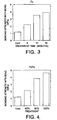
- the implant with the oxide film formed thereon was implanted to a tibia or shinbone of a rabbit. After lapse of eight weeks, the implant was subjected to measurement of bonding strength with the bone by means of the pull-out test. The result of measurement is shown in Fig. 3.
- preparation was also made of the control in which the implant without the ozone treatment, i.e., without the oxide film was implanted to the tibia of the rabbit.
- the bonding strength (MPa) between the bone and the ozone-treated implant was 2.2MPa when the ozone treatment time was five minutes and, as the treatment time was prolonged to 10 minutes and 30 minutes, the bonding strength was gradually increased. This proves that the wettability of a bone tissue is improved by the presence of the oxide film.
- the titanium implant was treated by the hydrogen peroxide solution in three different concentrations to form the oxide film on the surface of the implant in the manner similar to that mentioned in conjunction with the first embodiment. Specifically, the 34% hydrogen peroxide solution as a 100% starting solution was diluted to 60%, diluted to 80%, and not diluted. The titanium implant was dipped in the hydrogen peroxide solutions for several minutes. Thereafter, the implant was implanted to the tibia of the rabbit and, after lapse of eight weeks, the bonding strength with the bone was measured by the pull-out test.
- the titanium implant treated by the hydrogen peroxide solution required a greater drawing force than that required in the titanium implant without such treatment, i.e., without the oxide film.
- the bonding strength between the bone and the titanium implant was improved by the treatment with the hydrogen peroxide treatment.
- the wettability of the bone tissue is improved by the oxide film formed by the treatment with the hydrogen peroxide solution.
- the oxide film similar to that obtained by the conventional heat treatment is formed on the surface of the metallic member within several minutes by the use of hydrogen peroxide, ozone, and the silane coupling agent, alone or in combination.
- the metallic member need not be heated and oxidized in the electric furnace and oxidation can reliably be carried out in a short time.
- the oxide film is formed on the surface of the metallic member by the use of ozone or in combination with the silane coupling agen and the metallic member is cemented to the affected part through the cementing material.
- the process from the oxidation to the cementing can be quickly and reliably carried out without requiring the heat treatment and the oxidation in the electric furnace.
- the oxide film forming method and the cementing method of this invention it is possible to avoid the deterioration in quality of the metallic member due to the high-temperature heat treatment and to save the time for polishing the surface of the metallic member.
Landscapes
- Chemical & Material Sciences (AREA)
- Health & Medical Sciences (AREA)
- Chemical Kinetics & Catalysis (AREA)
- Engineering & Computer Science (AREA)
- Materials Engineering (AREA)
- Mechanical Engineering (AREA)
- Metallurgy (AREA)
- Organic Chemistry (AREA)
- Oral & Maxillofacial Surgery (AREA)
- Epidemiology (AREA)
- Life Sciences & Earth Sciences (AREA)
- Animal Behavior & Ethology (AREA)
- General Health & Medical Sciences (AREA)
- Public Health (AREA)
- Veterinary Medicine (AREA)
- Inorganic Chemistry (AREA)
- Transplantation (AREA)
- Dermatology (AREA)
- Medicinal Chemistry (AREA)
- General Chemical & Material Sciences (AREA)
- Plastic & Reconstructive Surgery (AREA)
- Materials For Medical Uses (AREA)
- Dental Tools And Instruments Or Auxiliary Dental Instruments (AREA)
- Dental Prosthetics (AREA)
- Chemical Treatment Of Metals (AREA)
- Dental Preparations (AREA)
- Ceramic Products (AREA)
Description
Claims (8)
- A method of forming an oxide film on a metallic member included in a dental article, said method being for forming said oxide film on the surface of a predetermined portion of said metallic member, comprising the step of oxidizing the surface of said predetermined portion by the use of ozone to form said oxide film, proviso the method does not include the case of treatment on human or animal body.
- A method as claimed in claim 1, further comprising the step of:applying silane on said oxide film as a coupling agent.
- A method as claimed in claim 1 or 2, wherein said-metallic member is formed by a material selected from a group consisting of a cobalt-chromium alloy, a nickel-chromium alloy, stainless steel,' pure titanium, a titanium alloy, a platinum gold alloy, a gold-silver-palladium alloy, a silver alloy, and a gold alloy.
- A method as claimed in any of claims 1 to 3, wherein said metallic member is an implant.
- A method of fastening a metallic member of a dental article to a fixing part included in an affected part of a prosthetic material or a material for conservative restoration comprising the steps of:oxidizing the surface of a predetermined portion of said metallic member by ozone to form said oxide film;applying a cementing material on the oxide film; andcementing said predetermined portion to said fixing part through said cementing material to fix the metallic member to the fixing part, proviso the method does not include the case of treatment of human or animal body.
- A method as claimed in claim 5, further comprising the step of:applying silane as a coupling agent to the oxide film before the cementing step.
- A method as claimed in claim 5 or 6, wherein said metallic member is formed by a material selected from a group consisting of a cobalt-chromium alloy, a nickel-chromium alloy, stainless steel, pure titanium, a titanium alloy, a platinum gold alloy, a gold-silver-palladium alloy, a silver alloy, and a gold alloy, said cementing material being a dental cement.
- A method as claimed in claim 5 to 7, wherein said metallic member is selected from a group including a cobalt-chromium alloy, a nickel-chromium alloy, stainless steel, pure titanium, a titanium alloy, a platinum gold alloy, a gold-silver-palladium alloy, a silver alloy, and at gold alloy, said cementing material being a resin-based adhesive.
Priority Applications (1)
| Application Number | Priority Date | Filing Date | Title |
|---|---|---|---|
| EP05017551A EP1669477A1 (en) | 1999-10-29 | 2000-10-27 | Method of forming an oxide film on a metallic member and method of cementing the metallic member |
Applications Claiming Priority (4)
| Application Number | Priority Date | Filing Date | Title |
|---|---|---|---|
| JP30880999 | 1999-10-29 | ||
| JP30880999 | 1999-10-29 | ||
| JP2000317987A JP2001192853A (en) | 1999-10-29 | 2000-10-18 | Method for forming oxide film on metal member for bonding and method for bonding metal member |
| JP2000317987 | 2000-10-18 |
Related Child Applications (2)
| Application Number | Title | Priority Date | Filing Date |
|---|---|---|---|
| EP05017551A Division EP1669477A1 (en) | 1999-10-29 | 2000-10-27 | Method of forming an oxide film on a metallic member and method of cementing the metallic member |
| EP05017551.2 Division-Into | 2005-08-11 |
Publications (3)
| Publication Number | Publication Date |
|---|---|
| EP1096039A2 EP1096039A2 (en) | 2001-05-02 |
| EP1096039A3 EP1096039A3 (en) | 2002-06-05 |
| EP1096039B1 true EP1096039B1 (en) | 2005-12-28 |
Family
ID=26565699
Family Applications (2)
| Application Number | Title | Priority Date | Filing Date |
|---|---|---|---|
| EP00123350A Expired - Lifetime EP1096039B1 (en) | 1999-10-29 | 2000-10-27 | Method of forming an oxide film on a metallic member and method of cementing the metallic member |
| EP05017551A Withdrawn EP1669477A1 (en) | 1999-10-29 | 2000-10-27 | Method of forming an oxide film on a metallic member and method of cementing the metallic member |
Family Applications After (1)
| Application Number | Title | Priority Date | Filing Date |
|---|---|---|---|
| EP05017551A Withdrawn EP1669477A1 (en) | 1999-10-29 | 2000-10-27 | Method of forming an oxide film on a metallic member and method of cementing the metallic member |
Country Status (3)
| Country | Link |
|---|---|
| EP (2) | EP1096039B1 (en) |
| JP (1) | JP2001192853A (en) |
| DE (1) | DE60025132T2 (en) |
Families Citing this family (8)
| Publication number | Priority date | Publication date | Assignee | Title |
|---|---|---|---|---|
| JP2003105557A (en) * | 2001-10-01 | 2003-04-09 | Matsumoto Shika Univ | Method of forming oxide film on metal member |
| KR100402919B1 (en) * | 2001-10-15 | 2003-10-22 | 한국과학기술연구원 | An electrochemical surface treating method for implants comprising metallic titanium or titanium alloys |
| KR20040013979A (en) * | 2002-08-09 | 2004-02-14 | 주식회사 네오바이오텍 | The generation method of TixOy system material and the oxidation material of Ti system used micro-hallow emission |
| JP2006307301A (en) * | 2005-05-02 | 2006-11-09 | Yoshioka:Kk | Method for forming oxide film and artificial root material having oxide film |
| FI118181B (en) * | 2005-07-11 | 2007-08-15 | Luvata Oy | A method for improving the fluid flow properties of a heat transfer surface |
| JP5493326B2 (en) * | 2008-10-01 | 2014-05-14 | 富士通セミコンダクター株式会社 | Manufacturing method of semiconductor device |
| WO2010121101A2 (en) * | 2009-04-17 | 2010-10-21 | Research Triangle Institute | Surface modification for enhanced silanation of ceramic materials |
| KR101488064B1 (en) * | 2009-04-30 | 2015-01-29 | 이와타니 산교 가부시키가이샤 | Calcium phosphate complex, and method for production thereof |
Family Cites Families (19)
| Publication number | Priority date | Publication date | Assignee | Title |
|---|---|---|---|---|
| GB1444528A (en) * | 1974-08-29 | 1976-08-04 | Heraeus Gmbh W C | Gold alloy for dental purposes |
| BE821274A (en) * | 1974-10-18 | 1975-02-17 | PROCESS FOR CLEANING, DRYING AND FILLING HAIR TUBES OR OTHER CONDUITS CLOSED TO ONE OF THEIR ENDS AND END DIAMETER | |
| JPH01136652A (en) * | 1987-11-16 | 1989-05-29 | A Sarubo Christopher | Tooth epithesis |
| GB8906160D0 (en) * | 1989-03-17 | 1989-05-04 | Alcan Int Ltd | Surface preparation for aluminium |
| JP2532683B2 (en) * | 1989-10-20 | 1996-09-11 | 松下電器産業株式会社 | Recording medium manufacturing method |
| JP2883741B2 (en) * | 1990-12-10 | 1999-04-19 | 大日本塗料株式会社 | Dental cement hardener |
| JPH0532516A (en) * | 1991-07-30 | 1993-02-09 | Morita Mfg Co Ltd | Dental bactericidal hardening composition |
| JPH06272054A (en) * | 1992-05-14 | 1994-09-27 | Sony Corp | Substrate for forming organic thin film and its production |
| US5849813A (en) * | 1993-02-05 | 1998-12-15 | Minnesota Mining And Manufacturing Company | Oxidative pretreatment for improved adhesion |
| JPH06306620A (en) * | 1993-04-21 | 1994-11-01 | Nkk Corp | Pretreatment method for plating titanium material and plating method for titanium material |
| JPH08257109A (en) * | 1995-03-28 | 1996-10-08 | Nikon Corp | Intraosseous implant and manufacturing method thereof |
| US5532024A (en) * | 1995-05-01 | 1996-07-02 | International Business Machines Corporation | Method for improving the adhesion of polymeric adhesives to nickel surfaces |
| JP2795824B2 (en) * | 1995-05-12 | 1998-09-10 | オオタ株式会社 | Surface treatment method for titanium-based implant and biocompatible titanium-based implant |
| JP3279198B2 (en) * | 1995-10-18 | 2002-04-30 | 日本鋼管株式会社 | Galvanized steel sheet with excellent press formability and adhesion |
| US5674293A (en) * | 1996-01-19 | 1997-10-07 | Implant Sciences Corp. | Coated orthopaedic implant components |
| JP3853881B2 (en) * | 1996-10-07 | 2006-12-06 | 明義 尾坂 | Surface treatment method for medical implant material and biocompatible implant |
| US5855950A (en) * | 1996-12-30 | 1999-01-05 | Implant Sciences Corporation | Method for growing an alumina surface on orthopaedic implant components |
| SE9701647D0 (en) * | 1997-04-30 | 1997-04-30 | Nobel Biocare Ab | Calcium-phonsphate coated implant element |
| US6129928A (en) * | 1997-09-05 | 2000-10-10 | Icet, Inc. | Biomimetic calcium phosphate implant coatings and methods for making the same |
-
2000
- 2000-10-18 JP JP2000317987A patent/JP2001192853A/en active Pending
- 2000-10-27 EP EP00123350A patent/EP1096039B1/en not_active Expired - Lifetime
- 2000-10-27 DE DE60025132T patent/DE60025132T2/en not_active Expired - Lifetime
- 2000-10-27 EP EP05017551A patent/EP1669477A1/en not_active Withdrawn
Also Published As
| Publication number | Publication date |
|---|---|
| EP1096039A2 (en) | 2001-05-02 |
| EP1669477A1 (en) | 2006-06-14 |
| EP1096039A3 (en) | 2002-06-05 |
| JP2001192853A (en) | 2001-07-17 |
| DE60025132D1 (en) | 2006-02-02 |
| DE60025132T2 (en) | 2006-06-29 |
Similar Documents
| Publication | Publication Date | Title |
|---|---|---|
| Stawarczyk et al. | Influence of plasma pretreatment on shear bond strength of self-adhesive resin cements to polyetheretherketone | |
| Akin et al. | Effect of Er: YAG laser application on the shear bond strength and microleakage between resin cements and Y-TZP ceramics | |
| EP1297853B1 (en) | Method of forming an oxide film on a metallic member | |
| Keshvad et al. | Microtensile bond strength of a resin cement to silica‐based and Y‐TZP ceramics using different surface treatments | |
| Tabatabaei et al. | Biomedical materials in dentistry | |
| Omidi et al. | Comparison of micro-shear bond strength of resin cement to zirconia with different surface treatments using universal adhesive and zirconia primer | |
| EP1096039A2 (en) | Method of forming an oxide film on a metallic member and method of cementing the metallic member | |
| Joukhadar et al. | Comparison between different surface treatment methods on shear bond strength of zirconia (in vitro study) | |
| JP2002102330A (en) | Bioimplant material and method of manufacturing the same | |
| Mews et al. | Shear bond strength of orthodontic brackets to enamel after application of a caries infiltrant | |
| Lew et al. | A comparison of shear bond strengths between new and recycled ceramic brackets | |
| Kontonasaki et al. | Apatite formation on dental ceramics modified by a bioactive glass | |
| Alaghehmand et al. | An in vitro comparison of the bond strength of composite to superficial and deep dentin, treated with Er: YAG laser irradiation or acid-etching | |
| Atri et al. | Effect of hydroxyapatite coating in combination with physical modifications on microshear bond strength of zirconia to resin cement | |
| Mudford et al. | An investigation of debonding between heat-cured PMMA and titanium alloy (Ti-6AI-4V) | |
| Kobayashi et al. | Effect of Nd: YAG Laser Irradiation on Shear Bond Strength of Glass-Ionomer Luting Cement to Dentin Surface. | |
| Abu Hasna et al. | Effect of Nd: YAG Laser with/without Graphite Coating on Bonding of Lithium Disilicate Glass‐Ceramic to Human Dentin | |
| Sousa et al. | Surface roughness and bond strength between Y-TZP and self-adhesive resin cement after air particle abrasion protocols | |
| Gulec et al. | Micro-shear bond strength of resin cements to Er, Cr: YSGG laser and/or acid etched enamel | |
| EP1777206A1 (en) | Surface treatment for zirconia based materials | |
| KR102254398B1 (en) | Dental prosthesis and manufacturing method thereof | |
| SEEKAEWSIU et al. | Effect of different surface treatments of titanium surfaces on the shear bond strength between titanium and zirconia surfaces | |
| Özduman et al. | Effect of resin infiltration and various etching techniques on the bond strength of sound and demineralized enamel | |
| Jhingta | Zirconia Over Titanium Implants: The Evidences are not Enough | |
| Uno et al. | Investigating the effectiveness of ceramic materials, particularly zirconium oxide, and the advantages the white metal holds over traditional materials used in dentistry |
Legal Events
| Date | Code | Title | Description |
|---|---|---|---|
| PUAI | Public reference made under article 153(3) epc to a published international application that has entered the european phase |
Free format text: ORIGINAL CODE: 0009012 |
|
| AK | Designated contracting states |
Kind code of ref document: A2 Designated state(s): AT BE CH CY DE DK ES FI FR GB GR IE IT LI LU MC NL PT SE |
|
| AX | Request for extension of the european patent |
Free format text: AL;LT;LV;MK;RO;SI |
|
| RIC1 | Information provided on ipc code assigned before grant |
Free format text: 7C 23C 22/68 A, 7C 23C 8/12 B, 7C 23C 8/14 B, 7A 61K 6/02 B, 7A 61L 27/02 B, 7A 61L 27/04 B, 7A 61L 27/06 B, 7A 61K 6/00 B |
|
| PUAL | Search report despatched |
Free format text: ORIGINAL CODE: 0009013 |
|
| AK | Designated contracting states |
Kind code of ref document: A3 Designated state(s): AT BE CH CY DE DK ES FI FR GB GR IE IT LI LU MC NL PT SE |
|
| AX | Request for extension of the european patent |
Free format text: AL;LT;LV;MK;RO;SI |
|
| 17P | Request for examination filed |
Effective date: 20021128 |
|
| AKX | Designation fees paid |
Designated state(s): DE FR GB IT |
|
| 17Q | First examination report despatched |
Effective date: 20030512 |
|
| GRAP | Despatch of communication of intention to grant a patent |
Free format text: ORIGINAL CODE: EPIDOSNIGR1 |
|
| GRAS | Grant fee paid |
Free format text: ORIGINAL CODE: EPIDOSNIGR3 |
|
| GRAA | (expected) grant |
Free format text: ORIGINAL CODE: 0009210 |
|
| AK | Designated contracting states |
Kind code of ref document: B1 Designated state(s): DE FR GB IT |
|
| PG25 | Lapsed in a contracting state [announced via postgrant information from national office to epo] |
Ref country code: IT Free format text: LAPSE BECAUSE OF FAILURE TO SUBMIT A TRANSLATION OF THE DESCRIPTION OR TO PAY THE FEE WITHIN THE PRESCRIBED TIME-LIMIT;WARNING: LAPSES OF ITALIAN PATENTS WITH EFFECTIVE DATE BEFORE 2007 MAY HAVE OCCURRED AT ANY TIME BEFORE 2007. THE CORRECT EFFECTIVE DATE MAY BE DIFFERENT FROM THE ONE RECORDED. Effective date: 20051228 |
|
| REG | Reference to a national code |
Ref country code: GB Ref legal event code: FG4D |
|
| REF | Corresponds to: |
Ref document number: 60025132 Country of ref document: DE Date of ref document: 20060202 Kind code of ref document: P |
|
| PLBE | No opposition filed within time limit |
Free format text: ORIGINAL CODE: 0009261 |
|
| STAA | Information on the status of an ep patent application or granted ep patent |
Free format text: STATUS: NO OPPOSITION FILED WITHIN TIME LIMIT |
|
| 26N | No opposition filed |
Effective date: 20060929 |
|
| GBPC | Gb: european patent ceased through non-payment of renewal fee |
Effective date: 20061027 |
|
| PG25 | Lapsed in a contracting state [announced via postgrant information from national office to epo] |
Ref country code: GB Free format text: LAPSE BECAUSE OF NON-PAYMENT OF DUE FEES Effective date: 20061027 |
|
| PG25 | Lapsed in a contracting state [announced via postgrant information from national office to epo] |
Ref country code: FR Free format text: LAPSE BECAUSE OF FAILURE TO SUBMIT A TRANSLATION OF THE DESCRIPTION OR TO PAY THE FEE WITHIN THE PRESCRIBED TIME-LIMIT Effective date: 20070216 |
|
| PG25 | Lapsed in a contracting state [announced via postgrant information from national office to epo] |
Ref country code: FR Free format text: LAPSE BECAUSE OF FAILURE TO SUBMIT A TRANSLATION OF THE DESCRIPTION OR TO PAY THE FEE WITHIN THE PRESCRIBED TIME-LIMIT Effective date: 20051228 |
|
| PGFP | Annual fee paid to national office [announced via postgrant information from national office to epo] |
Ref country code: DE Payment date: 20091012 Year of fee payment: 10 |
|
| REG | Reference to a national code |
Ref country code: DE Ref legal event code: R119 Ref document number: 60025132 Country of ref document: DE Effective date: 20110502 |
|
| PG25 | Lapsed in a contracting state [announced via postgrant information from national office to epo] |
Ref country code: DE Free format text: LAPSE BECAUSE OF NON-PAYMENT OF DUE FEES Effective date: 20110502 |