EP1092017B1 - Novel gaba-b receptor - Google Patents
Novel gaba-b receptor Download PDFInfo
- Publication number
- EP1092017B1 EP1092017B1 EP99928897A EP99928897A EP1092017B1 EP 1092017 B1 EP1092017 B1 EP 1092017B1 EP 99928897 A EP99928897 A EP 99928897A EP 99928897 A EP99928897 A EP 99928897A EP 1092017 B1 EP1092017 B1 EP 1092017B1
- Authority
- EP
- European Patent Office
- Prior art keywords
- gaba
- receptor
- cell
- polynucleotide molecule
- human
- Prior art date
- Legal status (The legal status is an assumption and is not a legal conclusion. Google has not performed a legal analysis and makes no representation as to the accuracy of the status listed.)
- Expired - Lifetime
Links
- 102000017934 GABA-B receptor Human genes 0.000 title claims description 26
- 108060003377 GABA-B receptor Proteins 0.000 title claims description 26
- 108020003175 receptors Proteins 0.000 claims description 40
- 102000005962 receptors Human genes 0.000 claims description 38
- 241000282414 Homo sapiens Species 0.000 claims description 31
- 108091033319 polynucleotide Proteins 0.000 claims description 30
- 102000040430 polynucleotide Human genes 0.000 claims description 30
- 239000002157 polynucleotide Substances 0.000 claims description 30
- 239000002773 nucleotide Substances 0.000 claims description 20
- 125000003729 nucleotide group Chemical group 0.000 claims description 20
- 125000003275 alpha amino acid group Chemical group 0.000 claims description 16
- 239000012634 fragment Substances 0.000 claims description 15
- 241000238631 Hexapoda Species 0.000 claims description 9
- FWMNVWWHGCHHJJ-SKKKGAJSSA-N 4-amino-1-[(2r)-6-amino-2-[[(2r)-2-[[(2r)-2-[[(2r)-2-amino-3-phenylpropanoyl]amino]-3-phenylpropanoyl]amino]-4-methylpentanoyl]amino]hexanoyl]piperidine-4-carboxylic acid Chemical compound C([C@H](C(=O)N[C@H](CC(C)C)C(=O)N[C@H](CCCCN)C(=O)N1CCC(N)(CC1)C(O)=O)NC(=O)[C@H](N)CC=1C=CC=CC=1)C1=CC=CC=C1 FWMNVWWHGCHHJJ-SKKKGAJSSA-N 0.000 claims description 7
- 150000001413 amino acids Chemical class 0.000 claims description 7
- 239000013604 expression vector Substances 0.000 claims description 7
- 238000006467 substitution reaction Methods 0.000 claims description 7
- 238000000034 method Methods 0.000 claims description 6
- 239000013600 plasmid vector Substances 0.000 claims description 6
- 210000003734 kidney Anatomy 0.000 claims description 4
- 241000699802 Cricetulus griseus Species 0.000 claims description 3
- 238000012258 culturing Methods 0.000 claims description 3
- 210000001672 ovary Anatomy 0.000 claims description 3
- 210000004027 cell Anatomy 0.000 description 23
- 108090000623 proteins and genes Proteins 0.000 description 10
- 239000002299 complementary DNA Substances 0.000 description 6
- BTCSSZJGUNDROE-UHFFFAOYSA-N gamma-aminobutyric acid Chemical compound NCCCC(O)=O BTCSSZJGUNDROE-UHFFFAOYSA-N 0.000 description 6
- 108020004999 messenger RNA Proteins 0.000 description 6
- 230000031864 metaphase Effects 0.000 description 6
- 210000004556 brain Anatomy 0.000 description 5
- 102000004169 proteins and genes Human genes 0.000 description 5
- 108020004414 DNA Proteins 0.000 description 4
- 230000000694 effects Effects 0.000 description 4
- 229960003692 gamma aminobutyric acid Drugs 0.000 description 4
- 230000037361 pathway Effects 0.000 description 4
- 239000000523 sample Substances 0.000 description 4
- 102000003688 G-Protein-Coupled Receptors Human genes 0.000 description 3
- 108090000045 G-Protein-Coupled Receptors Proteins 0.000 description 3
- 108091028043 Nucleic acid sequence Proteins 0.000 description 3
- 108091034117 Oligonucleotide Proteins 0.000 description 3
- 210000000349 chromosome Anatomy 0.000 description 3
- 210000001320 hippocampus Anatomy 0.000 description 3
- 238000009396 hybridization Methods 0.000 description 3
- 238000011065 in-situ storage Methods 0.000 description 3
- 238000011160 research Methods 0.000 description 3
- OGNSCSPNOLGXSM-UHFFFAOYSA-N (+/-)-DABA Natural products NCCC(N)C(O)=O OGNSCSPNOLGXSM-UHFFFAOYSA-N 0.000 description 2
- 240000004808 Saccharomyces cerevisiae Species 0.000 description 2
- 239000000556 agonist Substances 0.000 description 2
- 239000005557 antagonist Substances 0.000 description 2
- 239000000074 antisense oligonucleotide Substances 0.000 description 2
- 238000012230 antisense oligonucleotides Methods 0.000 description 2
- 230000001580 bacterial effect Effects 0.000 description 2
- 230000004071 biological effect Effects 0.000 description 2
- 210000003710 cerebral cortex Anatomy 0.000 description 2
- 239000003795 chemical substances by application Substances 0.000 description 2
- 230000014107 chromosome localization Effects 0.000 description 2
- 230000002401 inhibitory effect Effects 0.000 description 2
- 239000002858 neurotransmitter agent Substances 0.000 description 2
- 210000003523 substantia nigra Anatomy 0.000 description 2
- 210000001519 tissue Anatomy 0.000 description 2
- 239000003185 4 aminobutyric acid B receptor stimulating agent Substances 0.000 description 1
- FWBHETKCLVMNFS-UHFFFAOYSA-N 4',6-Diamino-2-phenylindol Chemical compound C1=CC(C(=N)N)=CC=C1C1=CC2=CC=C(C(N)=N)C=C2N1 FWBHETKCLVMNFS-UHFFFAOYSA-N 0.000 description 1
- 208000019901 Anxiety disease Diseases 0.000 description 1
- KPYSYYIEGFHWSV-UHFFFAOYSA-N Baclofen Chemical compound OC(=O)CC(CN)C1=CC=C(Cl)C=C1 KPYSYYIEGFHWSV-UHFFFAOYSA-N 0.000 description 1
- 102000053642 Catalytic RNA Human genes 0.000 description 1
- 108090000994 Catalytic RNA Proteins 0.000 description 1
- 241000282693 Cercopithecidae Species 0.000 description 1
- 108091060290 Chromatid Proteins 0.000 description 1
- 102000053602 DNA Human genes 0.000 description 1
- 108091060211 Expressed sequence tag Proteins 0.000 description 1
- 102000004300 GABA-A Receptors Human genes 0.000 description 1
- 108090000839 GABA-A Receptors Proteins 0.000 description 1
- 102000016193 Metabotropic glutamate receptors Human genes 0.000 description 1
- 108010010914 Metabotropic glutamate receptors Proteins 0.000 description 1
- 208000008238 Muscle Spasticity Diseases 0.000 description 1
- 125000001429 N-terminal alpha-amino-acid group Chemical group 0.000 description 1
- 238000000636 Northern blotting Methods 0.000 description 1
- 239000002253 acid Substances 0.000 description 1
- 150000007513 acids Chemical class 0.000 description 1
- 230000009471 action Effects 0.000 description 1
- 230000003213 activating effect Effects 0.000 description 1
- 230000004913 activation Effects 0.000 description 1
- 210000004727 amygdala Anatomy 0.000 description 1
- 230000036506 anxiety Effects 0.000 description 1
- 229960000794 baclofen Drugs 0.000 description 1
- 230000008901 benefit Effects 0.000 description 1
- 230000003491 cAMP production Effects 0.000 description 1
- 210000001159 caudate nucleus Anatomy 0.000 description 1
- 210000003198 cerebellar cortex Anatomy 0.000 description 1
- 210000003591 cerebellar nuclei Anatomy 0.000 description 1
- 210000001638 cerebellum Anatomy 0.000 description 1
- 230000008859 change Effects 0.000 description 1
- 210000004756 chromatid Anatomy 0.000 description 1
- 230000002759 chromosomal effect Effects 0.000 description 1
- 238000010367 cloning Methods 0.000 description 1
- 210000000877 corpus callosum Anatomy 0.000 description 1
- 238000011161 development Methods 0.000 description 1
- 238000009826 distribution Methods 0.000 description 1
- 239000003814 drug Substances 0.000 description 1
- 239000012636 effector Substances 0.000 description 1
- 230000002996 emotional effect Effects 0.000 description 1
- 230000007717 exclusion Effects 0.000 description 1
- 238000002474 experimental method Methods 0.000 description 1
- 210000001652 frontal lobe Anatomy 0.000 description 1
- 230000006870 function Effects 0.000 description 1
- 230000003371 gabaergic effect Effects 0.000 description 1
- 230000002209 hydrophobic effect Effects 0.000 description 1
- 210000003016 hypothalamus Anatomy 0.000 description 1
- 230000002197 limbic effect Effects 0.000 description 1
- 238000004519 manufacturing process Methods 0.000 description 1
- 230000001404 mediated effect Effects 0.000 description 1
- 238000010369 molecular cloning Methods 0.000 description 1
- 210000001577 neostriatum Anatomy 0.000 description 1
- 210000002569 neuron Anatomy 0.000 description 1
- 102000039446 nucleic acids Human genes 0.000 description 1
- 108020004707 nucleic acids Proteins 0.000 description 1
- 150000007523 nucleic acids Chemical class 0.000 description 1
- 230000000144 pharmacologic effect Effects 0.000 description 1
- 239000013612 plasmid Substances 0.000 description 1
- 210000002970 posterior hypothalamus Anatomy 0.000 description 1
- 230000001242 postsynaptic effect Effects 0.000 description 1
- 238000002360 preparation method Methods 0.000 description 1
- 230000003518 presynaptic effect Effects 0.000 description 1
- XJMOSONTPMZWPB-UHFFFAOYSA-M propidium iodide Chemical compound [I-].[I-].C12=CC(N)=CC=C2C2=CC=C(N)C=C2[N+](CCC[N+](C)(CC)CC)=C1C1=CC=CC=C1 XJMOSONTPMZWPB-UHFFFAOYSA-M 0.000 description 1
- 210000002637 putamen Anatomy 0.000 description 1
- 238000012552 review Methods 0.000 description 1
- 108091092562 ribozyme Proteins 0.000 description 1
- 208000018198 spasticity Diseases 0.000 description 1
- 210000000278 spinal cord Anatomy 0.000 description 1
- 210000004281 subthalamic nucleus Anatomy 0.000 description 1
- 210000003478 temporal lobe Anatomy 0.000 description 1
- 238000012360 testing method Methods 0.000 description 1
- 210000001103 thalamus Anatomy 0.000 description 1
- 238000013519 translation Methods 0.000 description 1
- 230000007306 turnover Effects 0.000 description 1
- 239000013603 viral vector Substances 0.000 description 1
- 230000009278 visceral effect Effects 0.000 description 1
Images


Classifications
-
- C—CHEMISTRY; METALLURGY
- C07—ORGANIC CHEMISTRY
- C07K—PEPTIDES
- C07K14/00—Peptides having more than 20 amino acids; Gastrins; Somatostatins; Melanotropins; Derivatives thereof
- C07K14/435—Peptides having more than 20 amino acids; Gastrins; Somatostatins; Melanotropins; Derivatives thereof from animals; from humans
- C07K14/705—Receptors; Cell surface antigens; Cell surface determinants
- C07K14/70571—Receptors; Cell surface antigens; Cell surface determinants for neuromediators, e.g. serotonin receptor, dopamine receptor
-
- A—HUMAN NECESSITIES
- A01—AGRICULTURE; FORESTRY; ANIMAL HUSBANDRY; HUNTING; TRAPPING; FISHING
- A01K—ANIMAL HUSBANDRY; AVICULTURE; APICULTURE; PISCICULTURE; FISHING; REARING OR BREEDING ANIMALS, NOT OTHERWISE PROVIDED FOR; NEW BREEDS OF ANIMALS
- A01K2217/00—Genetically modified animals
- A01K2217/05—Animals comprising random inserted nucleic acids (transgenic)
Definitions
- the present invention relates to isolated polynucleotide molecules which encode a novel transmembrane G-protein coupled receptor designated GABA-B 2 .
- GABA-B 2 novel transmembrane G-protein coupled receptor
- the novel receptor appears to be activated by the neurotransmitter ⁇ -amino butyric acid (GABA).
- GABA ⁇ -amino butyric acid
- GABA-A ⁇ -amino butyric acid
- GABA-B GABAergic inhibitory neurons typically form short pathways (e.g. from striatum to substantia nigra and from cerebellar cortex to deep cerebellar nuclei), although at least one long pathway projecting from the posterior hypothalamus to the cerebral cortex has also been recognised. This long pathway is believed to provide a direct pathway by which limbic, emotional and visceral information may be transferred to the cortex ( Vincent et al., Science 220: 1309-1311, 1993 ).
- GABA-B receptors such as the GABA-B1a and GABA-B1b receptors
- GABA-B agonists e.g. baclofen
- isolating genes encoding GABA-B receptor subtypes so as to enable the recombinant production of GABA-B receptors for the development of novel therapeutics.
- the polynucleotide molecule encodes a GABA-B receptor of human origin of 941 amino acids in length.
- the polynucleotide molecule comprises a nucleotide sequence shown at nucleotides 1 to 3256 or nucleotides 140 to 2962 of SEQ ID NO: 3.
- a plasmid or expression vector including a polynucleotide molecule according to the 1 st aspect of the invention.
- a host cell transformed with a polynucleotide molecule according to the 1 st aspect of the invention comprising a nucleotide sequence shown at nucleotides 1 to 3256 or nucleotides 140 to 2962 of SEQ ID NO: 3, or a plasmid or expression vector according to the 2 nd aspect of the invention.
- the cell is a mammalian or insect cell.
- the cell is a Chinese hamster ovary (CHO) cell, human embryonic kidney (HEK) 293 cell or an insect Sf9 cell.
- CHO Chinese hamster ovary
- HEK human embryonic kidney
- the cell expresses the GABA-B receptor onto the cell's surface.
- a human GABA-B receptor in substantially pure form wherein said receptor has an amino acid sequence shown as SEQ ID NO: 2 or having conservative amino acid substitutions thereto
- the present invention in a 5th aspect, provides an antibody or fragment thereof which specifically binds to such a human GABA-B receptor.
- a non-human animal transformed with a polynucleotide molecule according to the 1st aspect of the invention or a plasmid or expression vector according to the 2nd aspect of the invention.
- a method of producing GABA-B receptors comprising culturing a host cell according to the 3rd aspect of the invention under conditions enabling the expression of GABA-B receptors and optionally recovering the receptors.
- GABA-B2 receptor a GABA-B2 receptor or a functionally equivalent fragment thereof.
- the encoded GABA-B2 receptor maybe characterised by the N-terminal amino acid sequence: MASPRSSGQP (SEQ ID NO: 1) and may encode a human GABA-B2 receptor of about 941 amino acids.
- the isolated polynucleotide molecule encodes a GABA-B2 receptor having an amino acid sequence shown as SEQ ID NO: 2, or having conservative amino acid substitutions thereto.
- the polynucleotide molecule may comprise a nucleotide sequence substantially corresponding to, or showing at least 90% (more preferably, at least 95%) homology to that shown at nucleotides 1 to 3256 or nucleotides 140 to 2962 of SEQ ID NO: 3 or any portion thereof encoding a functionally equivalent GABA-B2 receptor fragment.
- the isolated polynucleotide molecule may be incorporated into plasmids or expression vectors (including viral vectors), which may then be introduced into suitable bacterial, yeast, insect and mammalian, host cells. Such host cells may be used to express the GABA-B2 receptor encoded by the isolated polynucleotide molecule.
- the polynucleotide may also be used for producing GABA-B2 receptors or functionally equivalent fragments thereof in a method, comprising culturing the host cell under conditions enabling the expression of GABA-B2 receptors or functionally equivalent fragments thereof.
- the host cell is mammalian or of insect origin.
- the cell is mammalian, it is presently preferred that it be a Chinese hamster ovary (CHO) cell, monkey kidney (COS) cell or human embryonic kidney 293 cell.
- the cell is of insect origin, it is presently preferred that it be an insect Sf9 cell.
- the GABA-B2 receptors or fragments thereof are expressed onto the surface of the host cell.
- polynucleotide molecule By using the polynucleotide molecule it is possible to obtain GABA-B2 receptor protein or fragments thereof in a substantially pure form.
- GABA-B2 receptor or a functionally equivalent fragment of said receptor, in a substantially pure form.
- a non-human animal may also be transformed with such a polynucleotide molecule.
- a method for detecting agonist or antagonist agents of a GABA-B2 receptor comprising contacting a GABA-B2 receptor, functionally equivalent fragment thereof or a cell transfected with and expressing the DNA molecule, with a test agent under conditions enabling the activation of a GABA-B2 receptor, and detecting an increase or decrease in activity of the GABA-B2 receptor or functionally equivalent fragment thereof.
- An increase or decrease in activity of the receptor or functionally equivalent fragment thereof may be detected by measuring changes in cAMP production, Ca 2+ levels or IP3 turnover after activating the receptor molecule with specific agonists or antagonists.
- oligonucleotide or polynucleotide probe comprising a nucleotide sequence of 10 or more nucleotides, the probe comprising a nucleotide sequence such that the probe specifically hybridises to the polynucleotide molecule of the first aspect under high stringency conditions ( Sambrook et al., Molecular cloning: a laboratory manual, Second Edition, Cold Spring Harbor Laboratory Press ).
- an antisense oligonucleotide or polynucleotide molecules comprising a nucleotide sequence capable of specifically hybridising to an mRNA molecule which encodes a GABA-B2 receptor so as to prevent translation of the mRNA molecule are also described.
- Such antisense oligonucleotide or polynucleotide molecules may include a ribozyme region to catalytically inactivate mRNA to which it is hybridised.
- the polynucleotide molecule may be a dominant negative mutant which encodes a gene product causing an altered phenotype by, for example, reducing or eliminating the activity of endogenous GABA-B2 receptors.
- substantially corresponding as used herein in relation to amino acid sequences is intended to encompass minor variations in the amino acid sequences which do not result in a decrease in biological activity of the GABA-B2 receptor. These variations may include conservative amino acid substitutions.
- the substitutions envisaged are:-
- nucleotide sequences are intended to encompass minor variations in the nucleotide sequences which due to degeneracy in the DNA code do not result in a change in the encoded protein. Further, this term is intended to encompass other minor variations in the sequence which may be required to enhance expression in a particular system but in which the variations do not result in a decrease in biological activity of the encoded protein.
- fragment/s as used herein is intended to refer to fragments of the GABA-B2 receptor that exhibit binding specificity and activity that is substantially equivalent to the GABA-B2 receptor from which it/they is/are derived.
- a human hippocampus cDNA library (Stratagene) was screened under low stringency conditions with a 184 bp 32 P-labelled fragment (corresponding to nucleotides 2051 to 2235 of SEQ ID NO: 3) originated from a human brain EST clone (z43654).
- a cDNA clone encoding a complete human GABA-B gene was obtained from the screen.
- the nucleotide sequence of the cDNA clone is shown as SEQ ID NO: 3 and encodes a protein of 941 amino acids (SEQ ID NO: 2) consisting of a large extracellular domain (amino acids 1 to 480) followed by 7 hydrophobic regions (amino acids 481 to 494, 518 to 545, 558 to 578, 597 to 618, 653 to 676, 691 to 713 and 719 to 743) typical of G-protein coupled receptors.
- Northern analysis has identified brain as the tissue with the highest expression of the human GABA-B2 mRNA.
- Northern analysis experiments using multiple tissue Northern blots identified high levels of expression of the human GABA-B2 mRNA in the cerebellum, cerebral cortex, occipital pole, frontal lobe and temporal lobe. Lower levels of expression were seen in the thalamus, amygldala, hippocampus, substantia nigra, putamen, subthalamic nucleus, caudate nucleus, and medulla. No apparent expression was seen in the spinal cord and corpus callosum.
- in situ hybridisation of rat brain sections has identified discrete areas of expression in the hippocampus, amygdala, the piriform cortex and also the hypothalamus. This mRNA distribution is consistent with the expression of other subtypes of the GABA-B receptor family.
- FISH fluoerescence in situ hybridisation
Landscapes
- Health & Medical Sciences (AREA)
- Life Sciences & Earth Sciences (AREA)
- Chemical & Material Sciences (AREA)
- Organic Chemistry (AREA)
- Immunology (AREA)
- General Health & Medical Sciences (AREA)
- Neurology (AREA)
- Toxicology (AREA)
- Zoology (AREA)
- Gastroenterology & Hepatology (AREA)
- Biomedical Technology (AREA)
- Biochemistry (AREA)
- Biophysics (AREA)
- Cell Biology (AREA)
- Genetics & Genomics (AREA)
- Medicinal Chemistry (AREA)
- Molecular Biology (AREA)
- Proteomics, Peptides & Aminoacids (AREA)
- Engineering & Computer Science (AREA)
- Peptides Or Proteins (AREA)
- Micro-Organisms Or Cultivation Processes Thereof (AREA)
- Preparation Of Compounds By Using Micro-Organisms (AREA)
- Investigating Or Analysing Biological Materials (AREA)
- Measuring Or Testing Involving Enzymes Or Micro-Organisms (AREA)
Description
- The present invention relates to isolated polynucleotide molecules which encode a novel transmembrane G-protein coupled receptor designated GABA-B2. The novel receptor appears to be activated by the neurotransmitter γ-amino butyric acid (GABA).
- γ-amino butyric acid (GABA) is the principal inhibitory neurotransmitter in the brain, whose action is mediated by two types of receptors, GABA-A and GABA-B. GABAergic inhibitory neurons typically form short pathways (e.g. from striatum to substantia nigra and from cerebellar cortex to deep cerebellar nuclei), although at least one long pathway projecting from the posterior hypothalamus to the cerebral cortex has also been recognised. This long pathway is believed to provide a direct pathway by which limbic, emotional and visceral information may be transferred to the cortex (Vincent et al., Science 220: 1309-1311, 1993).
- GABA-B receptors, such as the GABA-B1a and GABA-B1b receptors, are predominantly present in the brain where they are believed to play a major role in learning and memory. In view of these functions and the known benefit of GABA-B agonists (e.g. baclofen) in the treatment of spasticity, anxiety and depression, there is considerable interest in isolating genes encoding GABA-B receptor subtypes so as to enable the recombinant production of GABA-B receptors for the development of novel therapeutics.
-
International Patent Publication WO 97/46675 -
International Patent Publication WO 98/45437 - Bettler et al, Current Opinion in Neurobiology, 8 (3): pp. 345-350, 1998 reviews the pharmacological profiles of pre-synaptic and post-synaptic GABA-B receptor subtypes. The authors speculate on the existence of GABA-B R2 receptor subtypes that might couple to downstream effectors that are different to those coupled to GABA-B R1 receptor subtypes. However, Bettler et al. does not disclose any specific GABA-B R2 receptors and suggests that the cloning of GABA-B receptor subtypes is difficult.
- According to a 1st aspect of the present invention, we provide an isolated polynucleotide molecule encoding a GABA-B receptor having an amino acid sequence shown as SEQ ID NO: 2 or having conservative amino acid substitutions thereto.
- Preferably, the polynucleotide molecule encodes a GABA-B receptor of human origin of 941 amino acids in length.
- Preferably, the polynucleotide molecule comprises a nucleotide sequence shown at
nucleotides 1 to 3256 ornucleotides 140 to 2962 of SEQ ID NO: 3. - There is provided, according to a 2nd aspect of the present invention, a plasmid or expression vector including a polynucleotide molecule according to the 1st aspect of the invention.
- We provide, according to a 3rd aspect of the present invention, a host cell transformed with a polynucleotide molecule according to the 1st aspect of the invention comprising a nucleotide sequence shown at
nucleotides 1 to 3256 ornucleotides 140 to 2962 of SEQ ID NO: 3, or a plasmid or expression vector according to the 2nd aspect of the invention. - Preferably, the cell is a mammalian or insect cell.
- Preferably, the cell is a Chinese hamster ovary (CHO) cell, human embryonic kidney (HEK) 293 cell or an insect Sf9 cell.
- Preferably, the cell expresses the GABA-B receptor onto the cell's surface.
- We provide, according to a 4th aspect of the present invention, a human GABA-B receptor in substantially pure form wherein said receptor has an amino acid sequence shown as SEQ ID NO: 2 or having conservative amino acid substitutions thereto
- The present invention, in a 5th aspect, provides an antibody or fragment thereof which specifically binds to such a human GABA-B receptor.
- In a 6th aspect of the present invention, there is provided a non-human animal transformed with a polynucleotide molecule according to the 1st aspect of the invention or a plasmid or expression vector according to the 2nd aspect of the invention.
- There is provided, in accordance with a 7th aspect of the present invention, a method of producing GABA-B receptors comprising culturing a host cell according to the 3rd aspect of the invention under conditions enabling the expression of GABA-B receptors and optionally recovering the receptors.
- We describe an isolated polynucleotide molecule encoding a GABA-B2 receptor or a functionally equivalent fragment thereof. The encoded GABA-B2 receptor maybe characterised by the N-terminal amino acid sequence: MASPRSSGQP (SEQ ID NO: 1) and may encode a human GABA-B2 receptor of about 941 amino acids.
- The isolated polynucleotide molecule encodes a GABA-B2 receptor having an amino acid sequence shown as SEQ ID NO: 2, or having conservative amino acid substitutions thereto.
- The polynucleotide molecule may comprise a nucleotide sequence substantially corresponding to, or showing at least 90% (more preferably, at least 95%) homology to that shown at
nucleotides 1 to 3256 ornucleotides 140 to 2962 of SEQ ID NO: 3 or any portion thereof encoding a functionally equivalent GABA-B2 receptor fragment. - The isolated polynucleotide molecule may be incorporated into plasmids or expression vectors (including viral vectors), which may then be introduced into suitable bacterial, yeast, insect and mammalian, host cells. Such host cells may be used to express the GABA-B2 receptor encoded by the isolated polynucleotide molecule.
- We therefore describe a mammalian, insect, yeast or bacterial host cell transformed with the polynucleotide molecule of the first aspect.
- The polynucleotide may also be used for producing GABA-B2 receptors or functionally equivalent fragments thereof in a method, comprising culturing the host cell under conditions enabling the expression of GABA-B2 receptors or functionally equivalent fragments thereof.
- Preferably, the host cell is mammalian or of insect origin. Where the cell is mammalian, it is presently preferred that it be a Chinese hamster ovary (CHO) cell, monkey kidney (COS) cell or human embryonic kidney 293 cell. Where the cell is of insect origin, it is presently preferred that it be an insect Sf9 cell.
- In a preferred embodiment, the GABA-B2 receptors or fragments thereof are expressed onto the surface of the host cell.
- By using the polynucleotide molecule it is possible to obtain GABA-B2 receptor protein or fragments thereof in a substantially pure form.
- Accordingly, we describe a GABA-B2 receptor or a functionally equivalent fragment of said receptor, in a substantially pure form.
- We also describe an antibody capable of specifically binding to the GABA-B2 receptor. Such antibodies may be produced by any of the methods routine to the art.
- A non-human animal may also be transformed with such a polynucleotide molecule.
- We describe a method for detecting agonist or antagonist agents of a GABA-B2 receptor, comprising contacting a GABA-B2 receptor, functionally equivalent fragment thereof or a cell transfected with and expressing the DNA molecule, with a test agent under conditions enabling the activation of a GABA-B2 receptor, and detecting an increase or decrease in activity of the GABA-B2 receptor or functionally equivalent fragment thereof.
- An increase or decrease in activity of the receptor or functionally equivalent fragment thereof may be detected by measuring changes in cAMP production, Ca2+ levels or IP3 turnover after activating the receptor molecule with specific agonists or antagonists.
- We describe an oligonucleotide or polynucleotide probe comprising a nucleotide sequence of 10 or more nucleotides, the probe comprising a nucleotide sequence such that the probe specifically hybridises to the polynucleotide molecule of the first aspect under high stringency conditions (Sambrook et al., Molecular cloning: a laboratory manual, Second Edition, Cold Spring Harbor Laboratory Press).
- An antisense oligonucleotide or polynucleotide molecules comprising a nucleotide sequence capable of specifically hybridising to an mRNA molecule which encodes a GABA-B2 receptor so as to prevent translation of the mRNA molecule are also described.
- Such antisense oligonucleotide or polynucleotide molecules may include a ribozyme region to catalytically inactivate mRNA to which it is hybridised.
- The polynucleotide molecule may be a dominant negative mutant which encodes a gene product causing an altered phenotype by, for example, reducing or eliminating the activity of endogenous GABA-B2 receptors.
- The term "substantially corresponding" as used herein in relation to amino acid sequences is intended to encompass minor variations in the amino acid sequences which do not result in a decrease in biological activity of the GABA-B2 receptor. These variations may include conservative amino acid substitutions. The substitutions envisaged are:-
- G, A, V, I, L, M; D, E; N, Q; S, T; K, R, H; F, Y, W, H; and P, Nα-alkalamino acids.
- The term "substantially corresponding" as used herein in relation to nucleotide sequences is intended to encompass minor variations in the nucleotide sequences which due to degeneracy in the DNA code do not result in a change in the encoded protein. Further, this term is intended to encompass other minor variations in the sequence which may be required to enhance expression in a particular system but in which the variations do not result in a decrease in biological activity of the encoded protein.
- The term "functionally equivalent fragment/s" as used herein is intended to refer to fragments of the GABA-B2 receptor that exhibit binding specificity and activity that is substantially equivalent to the GABA-B2 receptor from which it/they is/are derived.
- Throughout this specification, unless the context requires otherwise, the word "comprise", or variations such as "comprises" or "comprising", will be understood to imply the inclusion of a stated element, integer or step, or group of elements, integers or steps, but not the exclusion of any other element, integer or step, or group of elements, integers or steps.
- Reference to percent homology made in this specification have been calculated using the BLAST program blastn as described by Altschul, SF. et al., "Capped BLAST and PSI-BLAST: a new generation of protein database search programs", Nucleic Acids Research, Vol. 25, No. 17, pp. 3389-3402 (1997).
-
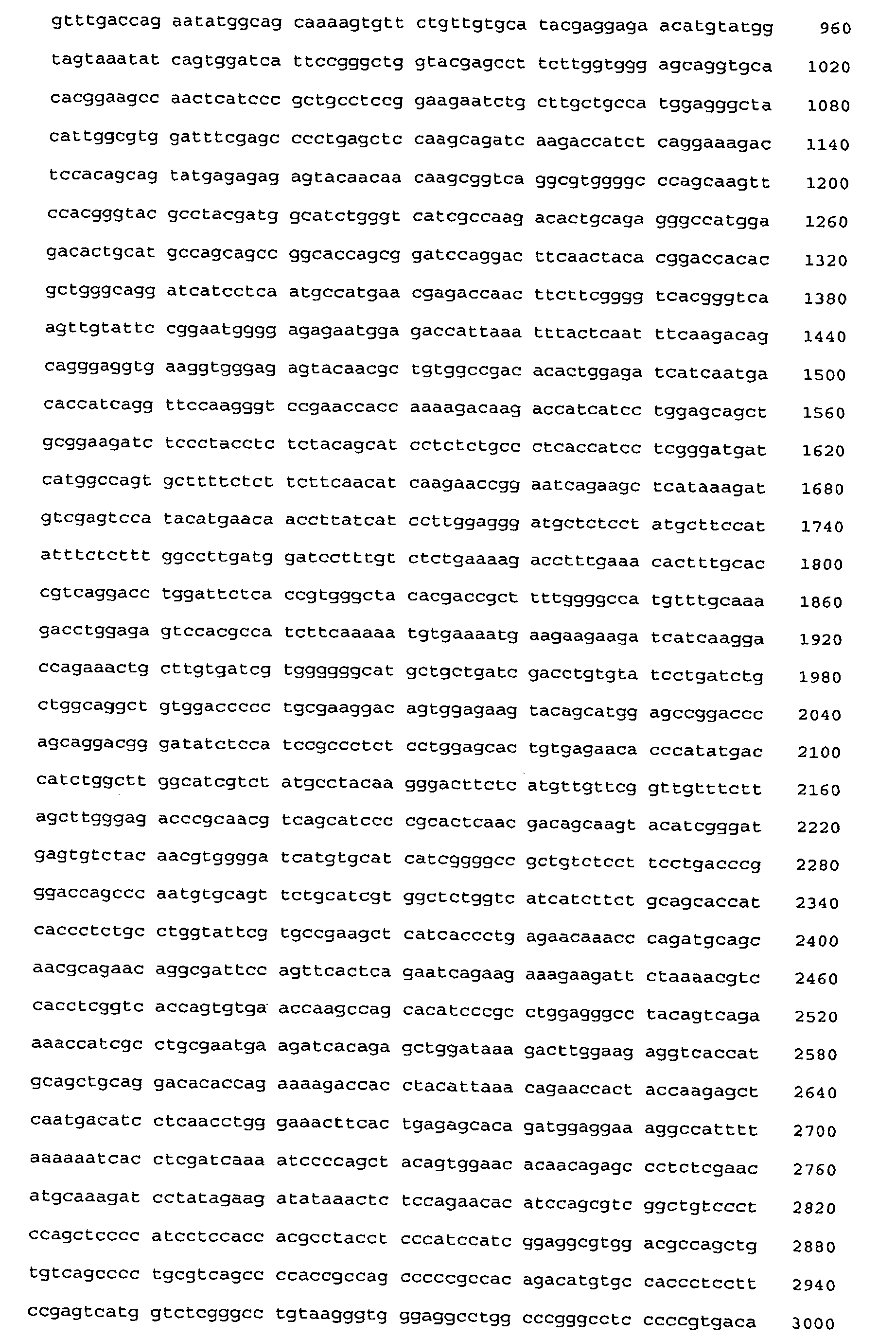
- Figure 1 provides the nucleotide sequence of a cDNA encoding the human GABA-B2 receptor and includes the predicted amino acid sequence.
- Figure 2 shows the degree of identity between the predicted amino acid sequence of the human GABA-B2 and GABA-1b receptors.
- A human hippocampus cDNA library (Stratagene) was screened under low stringency conditions with a 184 bp 32P-labelled fragment (corresponding to nucleotides 2051 to 2235 of SEQ ID NO: 3) originated from a human brain EST clone (z43654). A cDNA clone encoding a complete human GABA-B gene was obtained from the screen. The nucleotide sequence of the cDNA clone is shown as SEQ ID NO: 3 and encodes a protein of 941 amino acids (SEQ ID NO: 2) consisting of a large extracellular domain (
amino acids 1 to 480) followed by 7 hydrophobic regions (amino acids 481 to 494, 518 to 545, 558 to 578, 597 to 618, 653 to 676, 691 to 713 and 719 to 743) typical of G-protein coupled receptors. - Sequence comparison with other G-protein coupled receptors identify GABA-B1a, GABA-B1b (Figure 1) and metabotropic glutamate receptors (Kaupman, K. et al., Nature 386: 239-246, 20 March 1997 and Pin, J. et al., Neuropharmacology 34: 1-26, 1995) as the most closely related group.
- Northern analysis has identified brain as the tissue with the highest expression of the human GABA-B2 mRNA. In particular, Northern analysis experiments using multiple tissue Northern blots (Clontech) identified high levels of expression of the human GABA-B2 mRNA in the cerebellum, cerebral cortex, occipital pole, frontal lobe and temporal lobe. Lower levels of expression were seen in the thalamus, amygldala, hippocampus, substantia nigra, putamen, subthalamic nucleus, caudate nucleus, and medulla. No apparent expression was seen in the spinal cord and corpus callosum.
- Further, in situ hybridisation of rat brain sections has identified discrete areas of expression in the hippocampus, amygdala, the piriform cortex and also the hypothalamus. This mRNA distribution is consistent with the expression of other subtypes of the GABA-B receptor family.
- In order to determine the chromosomal localisation of the human GABA-B2 receptor gene, the complete cDNA clone was nick-translated with biotin-14-dAPT and hybridised in situ at a final concentration of 5 ng/ml to metaphase chromosomal spreads from two normal males. The fluoerescence in situ hybridisation (FISH) method was modified from that previously described (Callen, DF et al., Ann Genet 33: 219-221 1990) in that chromosomes were stained before analysis with both propidium iodide (as counterstain) and DAPI (for chromosome identification). Images of metaphase preparations were captured by a CCD camera and computer enhancement software.
- Twenty metaphases from a first normal male were examined for fluorescent signal. All of these metaphases showed signal on one or both chromatids of chromosome 9 in the region 9q21. There was a total of 7 nonspecific background dots observed in these 20 metaphases. A similar result was obtained from hybridisation of the probe to 20 metaphases from a second normal male.
-
- Applicant: Garvan Institute of Medical Research
Title of Invention: Novel GABA-B Receptor - Prior Application Number: PP4384
Prior Application Filing Date: 1998-06-29 - Number of SEQ ID NOs: 4
- Software: PatentIn Ver. 2.1
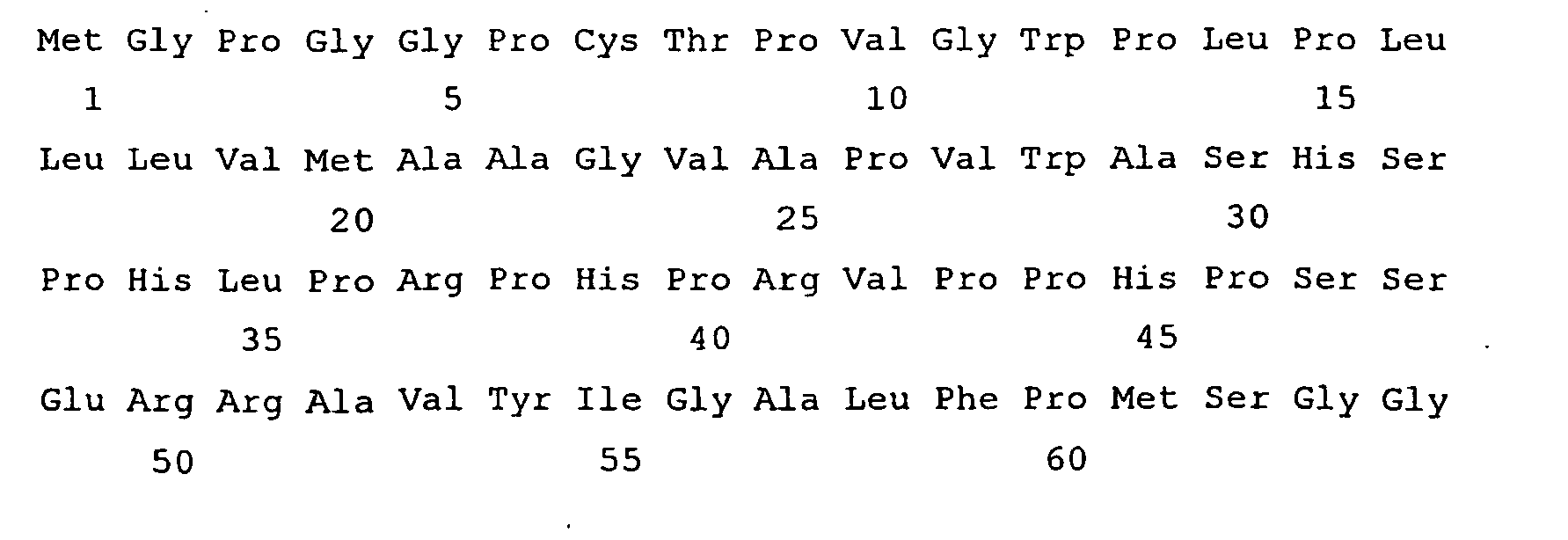
- SEQ ID NO: 1
Length: 10
Type: PRT
Organism: Homo sapiens - Sequence: 1

- SEQ ID NO: 2
Length: 941
Type: PRT
Organism: Homo sapiens - Sequence: 2


- SEQ ID NO: 3
Length: 3256
Type: DNA
Organism: Homo sapiens - Sequence: 3


- SEQ ID NO: 4
Length: 844
Type: PRT
Organism: Homo sapiens - Sequence: 4


-
- <110> Garvan Institute of Medical Research
- <120> Novel GABA-B Receptor
- <130> P010281EP CYK
- <140>
99928897.0
<141> 1999-06-29 - <150> PP4384
<151> 1998-06-29 - <160> 4
- <170> Patent In version 3.0
- <210> 1
<211> 10
<212> PRT
<213> Homo sapiens - <400> 1

- <210> 2
<211> 941
<212> PRT
<213> Homo sapiens - <400> 2


- <210> 3
<211> 3256
<212> DNA
<213> Homo sapiens - <400> 3


- <210> 4
<211> 844
<212> PRT
<213> Homo sapiens - <400> 4


Claims (12)
- An isolated polynucleotide molecule encoding a GABA-B receptor having an amino acid sequence shown as SEQ ID NO: 2 or having conservative amino acid substitutions thereto.
- A polynucleotide molecule according to Claim 1, wherein the polynucleotide molecule encodes a GABA-B receptor of human origin of 941 amino acids in length.
- A polynucleotide molecule according to Claim 1 or 2, wherein the polynucleotide molecule comprises a nucleotide sequence shown at nucleotides 1 to 3256 or nucleotides 140 to 2962 of SEQ ID NO: 3.
- A plasmid or expression vector including a polynucleotide molecule according to any one of Claims 1 to 3.
- A host cell transformed with a polynucleotide molecule according to Claim 3 or a plasmid or expression vector according to Claim 4.
- A host cell according to Claim 5, wherein the cell is a mammalian or insect cell.
- A host cell according to Claim 6, wherein the cell is a Chinese hamster ovary (CHO) cell, human embryonic kidney (HEK) 293 cell or an insect Sf9 cell.
- A host cell according to any one of Claims 5 to 7, wherein the cell expresses the GABA-B receptor onto the cell's surface.
- A human GABA-B receptor in a substantially pure form wherein said receptor has an amino acid sequence shown as SEQ ID NO: 2 or having conservative amino acid substitutions thereto.
- An antibody or fragment thereof which specifically binds to a human GABA B receptor according to claim 9.
- A non-human animal transformed with a polynucleotide molecule according to any one of claims 1 to 3 or a plasmid or expression vector according to claim 4.
- A method of producing GABA-B receptors comprising culturing a host cell according to any one of claims 5 to 8 under conditions enabling the expression of GABA-B receptors and optionally recovering the receptors.
Applications Claiming Priority (3)
| Application Number | Priority Date | Filing Date | Title |
|---|---|---|---|
| AUPP438498 | 1998-06-29 | ||
| AUPP4384A AUPP438498A0 (en) | 1998-06-29 | 1998-06-29 | Novel Gaba-B receptor |
| PCT/AU1999/000524 WO2000000602A1 (en) | 1998-06-29 | 1999-06-29 | Novel gaba-b receptor |
Publications (3)
| Publication Number | Publication Date |
|---|---|
| EP1092017A1 EP1092017A1 (en) | 2001-04-18 |
| EP1092017A4 EP1092017A4 (en) | 2005-06-08 |
| EP1092017B1 true EP1092017B1 (en) | 2007-11-14 |
Family
ID=3808627
Family Applications (1)
| Application Number | Title | Priority Date | Filing Date |
|---|---|---|---|
| EP99928897A Expired - Lifetime EP1092017B1 (en) | 1998-06-29 | 1999-06-29 | Novel gaba-b receptor |
Country Status (7)
| Country | Link |
|---|---|
| US (1) | US6689585B1 (en) |
| EP (1) | EP1092017B1 (en) |
| JP (1) | JP2002519024A (en) |
| AU (1) | AUPP438498A0 (en) |
| CA (1) | CA2331887A1 (en) |
| DE (1) | DE69937563T2 (en) |
| WO (1) | WO2000000602A1 (en) |
Families Citing this family (4)
| Publication number | Priority date | Publication date | Assignee | Title |
|---|---|---|---|---|
| AU9772698A (en) * | 1997-10-27 | 1999-05-17 | Astrazeneca Ab | New nucleotide sequences |
| ES2275351T3 (en) * | 1998-09-07 | 2007-06-01 | Glaxo Group Limited | GABA B-R1C AND GABA B-R2 SUBTIPOS OF GABA B RECEIVER AND ITS HETERODYMERS |
| WO2007053596A1 (en) | 2005-10-31 | 2007-05-10 | Braincells, Inc. | Gaba receptor mediated modulation of neurogenesis |
| CN102267879B (en) | 2010-06-02 | 2013-07-03 | 绍兴文理学院 | Lycopene intermediate and preparation method thereof |
Family Cites Families (6)
| Publication number | Priority date | Publication date | Assignee | Title |
|---|---|---|---|---|
| ES2239352T3 (en) * | 1996-05-30 | 2005-09-16 | Novartis Ag | METABOTROPIC RECEIVERS GABA (B), SPECIFIC LINKS FOR THE RECEIVER AND ITS USES. |
| WO1998045437A2 (en) * | 1997-04-10 | 1998-10-15 | Genetics Institute, Inc. | SECRETED EXPRESSED SEQUENCE TAGS (sESTs) |
| WO1999040114A1 (en) * | 1998-02-05 | 1999-08-12 | Merck & Co., Inc. | Novel gabab receptor dna sequences |
| EP1054995A1 (en) * | 1998-02-20 | 2000-11-29 | Smithkline Beecham | GABAB-R2a, A 7TM RECEPTOR |
| AU3468599A (en) * | 1998-04-03 | 1999-10-25 | Nps Pharmaceuticals, Inc. | Gaba b receptor |
| WO1999061606A1 (en) * | 1998-05-29 | 1999-12-02 | The Government Of The United States As Represented By The Secretary, Department Of Health And Human Services | MAMMALIAN gb2 GABAB RECEPTORS |
-
1998
- 1998-06-29 AU AUPP4384A patent/AUPP438498A0/en not_active Abandoned
-
1999
- 1999-06-29 WO PCT/AU1999/000524 patent/WO2000000602A1/en not_active Ceased
- 1999-06-29 DE DE69937563T patent/DE69937563T2/en not_active Expired - Fee Related
- 1999-06-29 CA CA002331887A patent/CA2331887A1/en not_active Abandoned
- 1999-06-29 EP EP99928897A patent/EP1092017B1/en not_active Expired - Lifetime
- 1999-06-29 US US09/719,085 patent/US6689585B1/en not_active Expired - Fee Related
- 1999-06-29 JP JP2000557355A patent/JP2002519024A/en active Pending
Also Published As
| Publication number | Publication date |
|---|---|
| JP2002519024A (en) | 2002-07-02 |
| EP1092017A1 (en) | 2001-04-18 |
| US6689585B1 (en) | 2004-02-10 |
| CA2331887A1 (en) | 2000-01-06 |
| DE69937563D1 (en) | 2007-12-27 |
| AUPP438498A0 (en) | 1998-07-23 |
| EP1092017A4 (en) | 2005-06-08 |
| DE69937563T2 (en) | 2008-09-18 |
| WO2000000602A1 (en) | 2000-01-06 |
Similar Documents
| Publication | Publication Date | Title |
|---|---|---|
| Blenau et al. | Characterization of a dopamine D1 receptor from Apis mellifera: cloning, functional expression, pharmacology, and mRNA localization in the brain | |
| JP3628691B2 (en) | Human neuronal nicotinic acetylcholine receptor compositions and methods for their use | |
| JP3464672B2 (en) | Stably transfected cell line expressing GABA-A receptor | |
| Pierce et al. | A nonsense mutation in the α1 subunit of the inhibitory glycine receptor associated with bovine myoclonus | |
| MXPA04010674A (en) | Immunoglobulin-domain containing cell surface recognition molecules. | |
| US20200362008A1 (en) | Loss of Function mutations in KCNJ10 cause SeSAME, a human syndrome with sensory, neurological, and renal deficits | |
| Zhao et al. | Vertebrate odorant receptors | |
| AU764310B2 (en) | Human G-protein coupled receptor | |
| AU2005247858A1 (en) | Taste receptors of the T1R family from domestic dog | |
| US7029860B2 (en) | Amyloid-β protein aggregation-regulating factors | |
| US6689585B1 (en) | GABA-B2 receptor | |
| EP1194447B1 (en) | Novel potassium channels and genes encoding these potassium channels | |
| AU764155B2 (en) | Novel GABA-B receptor | |
| EP1092021B1 (en) | Npy-y7 receptor gene | |
| EP0950711A2 (en) | Gonadotropin receptor | |
| TAKATA et al. | Molecular cloning of bovine thyrotropin-releasing hormone receptor gene | |
| JP2002508169A (en) | Galanin receptor GALR3 and nucleotides encoding the same | |
| WO1999061606A1 (en) | MAMMALIAN gb2 GABAB RECEPTORS | |
| WO2002044212A2 (en) | Human g-protein coupled receptor and uses thereof | |
| US6960435B1 (en) | Amyloid β protein agglutination-controlling factor | |
| US7691604B1 (en) | MRG polypeptides and nucleic acids encoding the same | |
| Kudo et al. | Molecular Cloning of ssd-Form Neural Cell Adhesion Molecules (N-CAMs) as the Major Form inXenopusHeart | |
| MXPA02004297A (en) | Cloning, expression and characterisation of a gene expressed in tumour cells and involved in the regulation of the immune response. | |
| US20040081988A1 (en) | Splice variant isoforms of human calcium channel CACNA1B | |
| Bangsow et al. | Identification of a gene selectively expressed in the brain, which encodes a putative transmembrane protein and a soluble cytoplasmic isoform |
Legal Events
| Date | Code | Title | Description |
|---|---|---|---|
| PUAI | Public reference made under article 153(3) epc to a published international application that has entered the european phase |
Free format text: ORIGINAL CODE: 0009012 |
|
| 17P | Request for examination filed |
Effective date: 20010116 |
|
| AK | Designated contracting states |
Kind code of ref document: A1 Designated state(s): CH DE FR GB IT LI |
|
| A4 | Supplementary search report drawn up and despatched |
Effective date: 20050426 |
|
| 17Q | First examination report despatched |
Effective date: 20050729 |
|
| GRAP | Despatch of communication of intention to grant a patent |
Free format text: ORIGINAL CODE: EPIDOSNIGR1 |
|
| GRAS | Grant fee paid |
Free format text: ORIGINAL CODE: EPIDOSNIGR3 |
|
| GRAA | (expected) grant |
Free format text: ORIGINAL CODE: 0009210 |
|
| AK | Designated contracting states |
Kind code of ref document: B1 Designated state(s): CH DE FR GB IT LI |
|
| REG | Reference to a national code |
Ref country code: GB Ref legal event code: FG4D |
|
| REG | Reference to a national code |
Ref country code: CH Ref legal event code: EP |
|
| REF | Corresponds to: |
Ref document number: 69937563 Country of ref document: DE Date of ref document: 20071227 Kind code of ref document: P |
|
| REG | Reference to a national code |
Ref country code: CH Ref legal event code: NV Representative=s name: MICHELI & CIE SA |
|
| ET | Fr: translation filed | ||
| PLBE | No opposition filed within time limit |
Free format text: ORIGINAL CODE: 0009261 |
|
| STAA | Information on the status of an ep patent application or granted ep patent |
Free format text: STATUS: NO OPPOSITION FILED WITHIN TIME LIMIT |
|
| PGFP | Annual fee paid to national office [announced via postgrant information from national office to epo] |
Ref country code: IT Payment date: 20080625 Year of fee payment: 10 |
|
| 26N | No opposition filed |
Effective date: 20080815 |
|
| PGFP | Annual fee paid to national office [announced via postgrant information from national office to epo] |
Ref country code: DE Payment date: 20080703 Year of fee payment: 10 Ref country code: CH Payment date: 20080710 Year of fee payment: 10 |
|
| PGFP | Annual fee paid to national office [announced via postgrant information from national office to epo] |
Ref country code: FR Payment date: 20080617 Year of fee payment: 10 |
|
| PGFP | Annual fee paid to national office [announced via postgrant information from national office to epo] |
Ref country code: GB Payment date: 20080702 Year of fee payment: 10 |
|
| REG | Reference to a national code |
Ref country code: CH Ref legal event code: PL |
|
| GBPC | Gb: european patent ceased through non-payment of renewal fee |
Effective date: 20090629 |
|
| REG | Reference to a national code |
Ref country code: FR Ref legal event code: ST Effective date: 20100226 |
|
| PG25 | Lapsed in a contracting state [announced via postgrant information from national office to epo] |
Ref country code: LI Free format text: LAPSE BECAUSE OF NON-PAYMENT OF DUE FEES Effective date: 20090630 Ref country code: FR Free format text: LAPSE BECAUSE OF NON-PAYMENT OF DUE FEES Effective date: 20090630 Ref country code: CH Free format text: LAPSE BECAUSE OF NON-PAYMENT OF DUE FEES Effective date: 20090630 |
|
| PG25 | Lapsed in a contracting state [announced via postgrant information from national office to epo] |
Ref country code: GB Free format text: LAPSE BECAUSE OF NON-PAYMENT OF DUE FEES Effective date: 20090629 |
|
| PG25 | Lapsed in a contracting state [announced via postgrant information from national office to epo] |
Ref country code: DE Free format text: LAPSE BECAUSE OF NON-PAYMENT OF DUE FEES Effective date: 20100101 |
|
| PG25 | Lapsed in a contracting state [announced via postgrant information from national office to epo] |
Ref country code: IT Free format text: LAPSE BECAUSE OF NON-PAYMENT OF DUE FEES Effective date: 20090629 |