EP1083161A1 - Organometallic compounds for vapor-phase epitaxy of organometal - Google Patents

Organometallic compounds for vapor-phase epitaxy of organometal Download PDF

Info

Publication number
EP1083161A1
EP1083161A1 EP00908068A EP00908068A EP1083161A1 EP 1083161 A1 EP1083161 A1 EP 1083161A1 EP 00908068 A EP00908068 A EP 00908068A EP 00908068 A EP00908068 A EP 00908068A EP 1083161 A1 EP1083161 A1 EP 1083161A1
Authority
EP
European Patent Office
Prior art keywords
ruthenium
organic
compounds
compound
thin film
Prior art date
Legal status (The legal status is an assumption and is not a legal conclusion. Google has not performed a legal analysis and makes no representation as to the accuracy of the status listed.)
Withdrawn
Application number
EP00908068A
Other languages
German (de)
French (fr)
Other versions
EP1083161A4 (en
Inventor
Koji Tanaka Kikinzoku Kogyo K.K. OKAMOTO
Current Assignee (The listed assignees may be inaccurate. Google has not performed a legal analysis and makes no representation or warranty as to the accuracy of the list.)
Tanaka Kikinzoku Kogyo KK
Original Assignee
Tanaka Kikinzoku Kogyo KK
Priority date (The priority date is an assumption and is not a legal conclusion. Google has not performed a legal analysis and makes no representation as to the accuracy of the date listed.)
Filing date
Publication date
Application filed by Tanaka Kikinzoku Kogyo KK filed Critical Tanaka Kikinzoku Kogyo KK
Publication of EP1083161A1 publication Critical patent/EP1083161A1/en
Publication of EP1083161A4 publication Critical patent/EP1083161A4/en
Withdrawn legal-status Critical Current

Links

Images

Classifications

    • CCHEMISTRY; METALLURGY
    • C07ORGANIC CHEMISTRY
    • C07FACYCLIC, CARBOCYCLIC OR HETEROCYCLIC COMPOUNDS CONTAINING ELEMENTS OTHER THAN CARBON, HYDROGEN, HALOGEN, OXYGEN, NITROGEN, SULFUR, SELENIUM OR TELLURIUM
    • C07F17/00Metallocenes
    • CCHEMISTRY; METALLURGY
    • C30CRYSTAL GROWTH
    • C30BSINGLE-CRYSTAL GROWTH; UNIDIRECTIONAL SOLIDIFICATION OF EUTECTIC MATERIAL OR UNIDIRECTIONAL DEMIXING OF EUTECTOID MATERIAL; REFINING BY ZONE-MELTING OF MATERIAL; PRODUCTION OF A HOMOGENEOUS POLYCRYSTALLINE MATERIAL WITH DEFINED STRUCTURE; SINGLE CRYSTALS OR HOMOGENEOUS POLYCRYSTALLINE MATERIAL WITH DEFINED STRUCTURE; AFTER-TREATMENT OF SINGLE CRYSTALS OR A HOMOGENEOUS POLYCRYSTALLINE MATERIAL WITH DEFINED STRUCTURE; APPARATUS THEREFOR
    • C30B25/00Single-crystal growth by chemical reaction of reactive gases, e.g. chemical vapour-deposition growth
    • C30B25/02Epitaxial-layer growth
    • CCHEMISTRY; METALLURGY
    • C07ORGANIC CHEMISTRY
    • C07FACYCLIC, CARBOCYCLIC OR HETEROCYCLIC COMPOUNDS CONTAINING ELEMENTS OTHER THAN CARBON, HYDROGEN, HALOGEN, OXYGEN, NITROGEN, SULFUR, SELENIUM OR TELLURIUM
    • C07F17/00Metallocenes
    • C07F17/02Metallocenes of metals of Groups 8, 9 or 10 of the Periodic Table
    • CCHEMISTRY; METALLURGY
    • C23COATING METALLIC MATERIAL; COATING MATERIAL WITH METALLIC MATERIAL; CHEMICAL SURFACE TREATMENT; DIFFUSION TREATMENT OF METALLIC MATERIAL; COATING BY VACUUM EVAPORATION, BY SPUTTERING, BY ION IMPLANTATION OR BY CHEMICAL VAPOUR DEPOSITION, IN GENERAL; INHIBITING CORROSION OF METALLIC MATERIAL OR INCRUSTATION IN GENERAL
    • C23CCOATING METALLIC MATERIAL; COATING MATERIAL WITH METALLIC MATERIAL; SURFACE TREATMENT OF METALLIC MATERIAL BY DIFFUSION INTO THE SURFACE, BY CHEMICAL CONVERSION OR SUBSTITUTION; COATING BY VACUUM EVAPORATION, BY SPUTTERING, BY ION IMPLANTATION OR BY CHEMICAL VAPOUR DEPOSITION, IN GENERAL
    • C23C16/00Chemical coating by decomposition of gaseous compounds, without leaving reaction products of surface material in the coating, i.e. chemical vapour deposition [CVD] processes
    • C23C16/06Chemical coating by decomposition of gaseous compounds, without leaving reaction products of surface material in the coating, i.e. chemical vapour deposition [CVD] processes characterised by the deposition of metallic material
    • C23C16/18Chemical coating by decomposition of gaseous compounds, without leaving reaction products of surface material in the coating, i.e. chemical vapour deposition [CVD] processes characterised by the deposition of metallic material from metallo-organic compounds
    • CCHEMISTRY; METALLURGY
    • C23COATING METALLIC MATERIAL; COATING MATERIAL WITH METALLIC MATERIAL; CHEMICAL SURFACE TREATMENT; DIFFUSION TREATMENT OF METALLIC MATERIAL; COATING BY VACUUM EVAPORATION, BY SPUTTERING, BY ION IMPLANTATION OR BY CHEMICAL VAPOUR DEPOSITION, IN GENERAL; INHIBITING CORROSION OF METALLIC MATERIAL OR INCRUSTATION IN GENERAL
    • C23CCOATING METALLIC MATERIAL; COATING MATERIAL WITH METALLIC MATERIAL; SURFACE TREATMENT OF METALLIC MATERIAL BY DIFFUSION INTO THE SURFACE, BY CHEMICAL CONVERSION OR SUBSTITUTION; COATING BY VACUUM EVAPORATION, BY SPUTTERING, BY ION IMPLANTATION OR BY CHEMICAL VAPOUR DEPOSITION, IN GENERAL
    • C23C16/00Chemical coating by decomposition of gaseous compounds, without leaving reaction products of surface material in the coating, i.e. chemical vapour deposition [CVD] processes
    • C23C16/22Chemical coating by decomposition of gaseous compounds, without leaving reaction products of surface material in the coating, i.e. chemical vapour deposition [CVD] processes characterised by the deposition of inorganic material, other than metallic material
    • C23C16/30Deposition of compounds, mixtures or solid solutions, e.g. borides, carbides, nitrides
    • C23C16/40Oxides
    • CCHEMISTRY; METALLURGY
    • C30CRYSTAL GROWTH
    • C30BSINGLE-CRYSTAL GROWTH; UNIDIRECTIONAL SOLIDIFICATION OF EUTECTIC MATERIAL OR UNIDIRECTIONAL DEMIXING OF EUTECTOID MATERIAL; REFINING BY ZONE-MELTING OF MATERIAL; PRODUCTION OF A HOMOGENEOUS POLYCRYSTALLINE MATERIAL WITH DEFINED STRUCTURE; SINGLE CRYSTALS OR HOMOGENEOUS POLYCRYSTALLINE MATERIAL WITH DEFINED STRUCTURE; AFTER-TREATMENT OF SINGLE CRYSTALS OR A HOMOGENEOUS POLYCRYSTALLINE MATERIAL WITH DEFINED STRUCTURE; APPARATUS THEREFOR
    • C30B29/00Single crystals or homogeneous polycrystalline material with defined structure characterised by the material or by their shape
    • C30B29/02Elements
    • CCHEMISTRY; METALLURGY
    • C30CRYSTAL GROWTH
    • C30BSINGLE-CRYSTAL GROWTH; UNIDIRECTIONAL SOLIDIFICATION OF EUTECTIC MATERIAL OR UNIDIRECTIONAL DEMIXING OF EUTECTOID MATERIAL; REFINING BY ZONE-MELTING OF MATERIAL; PRODUCTION OF A HOMOGENEOUS POLYCRYSTALLINE MATERIAL WITH DEFINED STRUCTURE; SINGLE CRYSTALS OR HOMOGENEOUS POLYCRYSTALLINE MATERIAL WITH DEFINED STRUCTURE; AFTER-TREATMENT OF SINGLE CRYSTALS OR A HOMOGENEOUS POLYCRYSTALLINE MATERIAL WITH DEFINED STRUCTURE; APPARATUS THEREFOR
    • C30B29/00Single crystals or homogeneous polycrystalline material with defined structure characterised by the material or by their shape
    • C30B29/10Inorganic compounds or compositions
    • C30B29/16Oxides

Definitions

  • the present invention relates to organometallic compounds which are used for forming thin film comprising ruthenium, ruthenium oxide, or high-purity platinum on a substrate through metal-organic vapor-phase epitaxy. More particularly, the present invention relates to such organometallic compounds which are useful for producing, for example, electrode material used in semiconductor devices and parts.
  • organic ruthenium compounds and organic platinum compounds have been employed for forming a variety of ruthenium thin films and platinum thin films through metal-organic vapor-phase epitaxy.
  • ruthenocene i.e., an organic ruthenium compound represented by formula 3: is employed as a source.
  • the organic ruthenium compound represented by formula 3 has 5-membered rings containing exclusively carbon atoms and hydrogen atoms. In this compound, a ruthenium atom is sandwiched by two 5-membered rings.
  • a compound represented by formula 4 has conventionally been employed as a source compound.
  • this organic platinum compound one 5-membered ring; i.e., a cyclopentadiene ring, forms a bond with the platinum atom, and three methyl groups serve as ligands or form bonds with the platinum atom.
  • the organic ruthenium compound represented by formula 3 has a melting point of 198°C.
  • an organic platinum compound represented by formula 4 in which R 1 is H has a melting point of 65°C, and a similar compound in which R 1 is CH 3 has a melting point as high as 30°C.
  • These compounds have relatively low vapor pressure, and control of vaporization rate thereof is disadvantageously difficult.
  • Difficulty in controlling vaporization rate induces variation in thin-film-formation rate, and results in production of thin film lacking in accurately controlled thickness and flatness.
  • the aforementioned ruthenium compound and platinum compounds may be decomposed during heating for vaporization.
  • poor thermal stability thereof is pointed out in the actual production field.
  • a process for forming thin film broadly comprises three steps: (1) vaporizing a source so as to permit feeding of the source onto a substrate; (2) feeding the vaporized source onto the substrate; and (3) depositing particles of the fed source on the substrate.
  • a compound source is typically used instead of an elemental source.
  • the reason for not using an elemental source is that the source itself has a relatively low vapor pressure and is difficult to feed. Therefore, the elemental source is converted to a compound source having a relatively high vapor pressure so as to transport the source.
  • the organic ruthenium compound represented by formula 3 and organic platinum compounds represented by formula 4 are employed as sources, a constant film-formation rate is not obtained, possibly due to a low vapor pressure of the sources.
  • ruthenium thin film, ruthenium oxide thin film, and high-purity platinum thin film which are employed in the semiconductor industry must have a high level of quality which cannot be attained by such a simple approach. For example, to meet the required quality and properties, several factors must be considered, which include crystalline state, lattice constant, thermal expansion coefficient, control of structural defects, mutual diffusion of impurities and constitutional elements, and selective growth.
  • the organic ruthenium compounds and organic platinum compounds according to the present invention exhibit sufficiently high vapor pressure during vaporization, and thin film obtained from the compounds satisfies properties and quality required in the semiconductor industry.
  • an organic ruthenium compound for forming ruthenium thin film or ruthenium oxide thin film on a substrate through metal-organic vapor-phase epitaxy represented by structural formula 1: wherein at least one of the substituents R 1 , R 2 , R 3 , R 4 , R 5 , R 1 ', R 2 ', R 3 ', R 4 ', and R 5 ' in the two 5-membered rings comprises an alkyl group selected from CH 2 CH 3 , CH 2 CH 2 CH 3 , CH 2 CH 2 CH 2 CH 3 , C(CH 3 ) 3 , CH 2 (C 6 H 5 ), COCH 3 , COOCH 3 , and CH 2 OCH 3 ;, with the case in which R 1 , R 2 , R 3 , R 4 , R 5 , R 1 ', R 2 ', R 3 ', R 4 ', and R 5 ' all represent hydrogen atoms being excluded.
  • the ruthenium compounds of the present invention do not include the conventional organic ruthenium compound represented by formula 3 and other known organic ruthenium compounds. Even though conventionally known organic ruthenium compounds are employed as sources of metal-organic vapor-phase epitaxy, vaporization rate is not as constant as that of the organic ruthenium compounds of the present invention.
  • the ruthenium compounds of the present invention represented by structural formula 1 are more bulky than conventionally known organic ruthenium compounds and have increased thermal stability.
  • the organic ruthenium compounds of the present invention are characterized in that at least one of the substituents in the 5-membered cyclopentadiene ring comprises an alkyl group selected from CH 2 CH 3 , CH 2 CH 2 CH 3 , CH 2 CH 2 CH 2 CH 3 , C(CH 3 ) 3 , CH 2 (C 6 H 5 ), COCH 3 , COOCH 3 , and CH 2 OCH 3 with the aforementioned case being excluded.
  • the molecular weight of the compounds is larger than that of ruthenocene represented by formula 2.
  • vapor pressure of the vaporized compounds serving as deposition sources increases and a constant vaporization rate is attained as compared with the case of conventional ruthenocene.
  • an organic platinum compound for forming platinum thin film on a substrate through metal-organic vapor-phase epitaxy represented by structural formula 2: wherein at least one of the substituents R 1 , R 2 , R 3 , R 4 , and R 5 in 5-membered rings comprises an alkyl group selected from CH 3 , CH 2 CH 3 , CH 2 CH 2 CH 3 , CH 2 CH 2 CH 2 CH 3 , C(CH 3 ) 3 , and CH 2 (C 6 H 5 ).
  • At least one substituent in the 5-membered cyclopentadiene ring comprises an alkyl group selected from CH 3 , CH 2 CH 3 , CH 2 CH 2 CH 3 , CH 2 CH 2 CH 2 CH 3 , C(CH 3 ) 3 , and CH 2 (C 6 H 5 ), thereby providing more bulky molecules and elevating the molecular weight of the compounds as compared with conventional organic platinum compounds represented by formula 4.
  • vapor pressure of the vaporized compounds is higher than conventional organic platinum compounds, bulkiness also increases, and a constant vaporization rate is attained.
  • organometallic compounds represented by the aforementioned formulas 1 and 2 have a bulky alkyl group attached to a cyclopentadiene ring, other reactive elements encounter difficulty in approaching Ru or Pt. Therefore, decomposition to metallic platinum or platinum oxide is prevented as compared with the case of organic platinum compounds represented by formula 2.
  • the organometallic compounds as described in claims 1 and 2 exhibit constant vaporization characteristic and thermal stability when they serve as compound sources of metal-organic vapor-phase epitaxy.
  • substituents selected in the present invention contain carbon and hydrogen, and optionally oxygen, depending on the substituents, and contain no other constitutional element.
  • the amounts of impurities in the formed thin film do not increase.
  • a formed platinum film shows considerably high purity without losing the aforementioned characteristics so far as research has determined.
  • the organic ruthenium compounds and the organic platinum compounds of the present invention for employment in metal-organic vapor-phase epitaxy will next be described with reference to best modes for carrying out the invention.
  • the organic ruthenium compounds and the organic platinum compounds are described separately.
  • metal-organic vapor-phase epitaxy was carried out in an MOCVD apparatus shown in Fig. 1, to thereby form ruthenium thin film having a thickness of 1.19 ⁇ m on a glass substrate.
  • Vaporization rate of the compound was constant at 0.03 ⁇ m/minute, and the formed film has variation in thickness of ⁇ 0.001 ⁇ m.
  • metal-organic vapor-phase epitaxy was carried out in the MOCVD apparatus shown in Fig. 1, to thereby form ruthenium thin film having a thickness of 0.76 ⁇ m on a glass substrate.
  • Vaporization rate of the compound was constant at 0.02 ⁇ m/minute, and the formed film has variation in thickness of ⁇ 0.013 ⁇ m.
  • a dichloro( ⁇ -cycloocta-1,5-diene)ruthenium (II) polymer (1190 g) and t-butylcyclopentadienylthallium (2295 g) were dissolved in 1,2-dimethoxyethane (22000 ml), and the mixture was refluxed for 2 hours. After reflux had been completed, the reaction mixture was subjected to extraction by using ethyl alcohol, and the solvent component was removed through distillation, to thereby yield 765 g of bis(t-butylcyclopentadiene) ruthenium having a melting point of 140°C.
  • metal-organic vapor-phase epitaxy was carried out in the MOCVD apparatus shown in Fig. 1, to thereby form ruthenium thin film having a thickness of 1.28 ⁇ m on a glass substrate.
  • Vaporization rate of the compound was constant at 0.032 ⁇ m/minute, and the formed film has variation in thickness of ⁇ 0.003 ⁇ m.
  • metal -organic vapor-phase epitaxy was carried out in the MOCVD apparatus shown in Fig. 1, to thereby form ruthenium thin film having a thickness of 1.20 ⁇ m on a glass substrate.
  • Vaporization rate of the compound was constant at 0.030 ⁇ m/minute, and the formed film has variation in thickness of ⁇ 0.002 ⁇ m.
  • Acetylferrocene (3 mol) and ruthenium chloride (1 mol) were mixed, and the mixture was allowed to react at 250°C for two days, thereby yielding target acetylruthenocene with a yield of 50%.
  • metal-organic vapor-phase epitaxy was carried out in the MOCVD apparatus shown in Fig. 1, to thereby form ruthenium thin film having a thickness of 1.10 ⁇ m on a glass substrate.
  • Vaporization rate of the compound was constant at 0.025 ⁇ m/minute, and the formed film has variation in thickness of ⁇ 0.002 ⁇ m.
  • the present inventor employed ruthenocene represented by formula 3 serving as comparative compound 1.
  • metal-organic vapor-phase epitaxy was carried out in the apparatus shown in Fig. 1, to thereby form ruthenium thin film.
  • Film formation by using comparative compound 1 was compared with that by using the organic ruthenium compounds of the present invention.
  • Comparative compound 2 was prepared as follows. Ruthenium chloride (466 g) and pentamethylcyclopentadienyltrimethylsilane (1653 g) were dissolved in ethyl alcohol (22524 ml), and the mixture was refluxed for 24 hours. After reflux had been completed, the reaction mixture was subjected to extraction by using ethyl alcohol, and the solvent component was removed through distillation, to thereby yield 482 g of CH 3 -substituted bis(pentamethylcyclopentadienyl)ruthenium having a melting point of 250°C serving as a comparative source.
  • comparative compound 3 was prepared as follows. Ruthenium chloride (1000 g) and ethyl alcohol (3000 ml) were mixed, and the mixture was stirred at room temperature for three hours. A methylcyclopentadiene dimer was distilled to prepare methylcyclopentadiene (3500 ml).
  • Organic ruthenium compounds Film thickness ( ⁇ m) 5 min after 10 min after 20 min after 30 min after 40 min after Embodiment 1 0.15 0.31 0.59 0.90 1.19 Embodiment 2 0.10 0.22 0.48 0.63 0.76 Embodiment 3 0.16 0.33 0.64 0.97 1.28 Embodiment 4 0.15 0.30 0.60 0.89 1.20 Embodiment 5 0.13 0.25 0.50 0.75 1.01 Comp. compound 1 0.10 0.25 0.60 1.20 1.50 Comp. compound 2 0.05 0.15 0.50 1.10 1.50 Comp. compound 3 0.12 0.19 0.36 0.46 0.96
  • the organic ruthenium compounds of the present invention exhibit considerably constant vaporization rate, thereby providing constant film-formation rate as compared with conventional organic ruthenium compounds.
  • trimethylplatinum iodide (0.28 g) and ethylcyclopentadienylsodium (0.4 M) were added into tetrahydrofuran (1.95 ml) at room temperature, and the mixture was stirred for 10 minutes. The tetrahydrofuran was removed through distillation, to thereby yield 0.075 g of trimethyl(ethylcyclopentadiene)platinum.
  • metal-organic vapor-phase epitaxy was carried out in the MOCVD apparatus shown in Fig. 1, to thereby form high-purity platinum thin film having a thickness of 0.21 ⁇ m on an SiO 2 substrate.
  • Vaporization rate of the compound was constant at 0.007 ⁇ m/minute, and the formed film has variation in thickness of ⁇ 0.002 ⁇ m.
  • the present inventor further formed platinum thin film by using an organic platinum compound represented by formula 4 in which R1 is H, which served as a comparative compound source.
  • Metal-organic vapor-phase epitaxy was carried out in the MOCVD apparatus shown in Fig. 1. The thickness of each film was measured as time elapsed, and comparison was carried out so as to confirm the effect of the compound of the present invention.
  • Table 3 Organic platinum compounds Film thickness ( ⁇ m) 2 min after 4 min after 8 min after 16 min after 30 min after Embodiment 6 0.015 0.031 0.056 0.111 0.210 Comp. compound 0.010 0.016 0.024 0.112 0.240
  • the organic platinum compounds of the present invention exhibit considerably constant vaporization rate, thereby providing constant film-formation rate as compared with conventional organic platinum compounds.
  • the organic ruthenium compounds and organic platinum compounds of the present invention in metal-organic vapor-phase epitaxy, vaporization rate of the sources is readily controlled and thin-film-formation rate becomes constant, thereby forming ruthenium thin film and platinum thin film having an accurately controlled thickness.
  • the organic platinum compounds of the present invention do not decompose during heating for vaporization and have excellent thermal stability.
  • the present invention satisfies a possible demand for further size-reduction, and enhances the level of integration and packaging density of semiconductor devices and parts.
Landscapes

  • Chemical & Material Sciences (AREA)
  • Organic Chemistry (AREA)
  • Engineering & Computer Science (AREA)
  • Materials Engineering (AREA)
  • Metallurgy (AREA)
  • Crystallography & Structural Chemistry (AREA)
  • Chemical Kinetics & Catalysis (AREA)
  • General Chemical & Material Sciences (AREA)
  • Inorganic Chemistry (AREA)
  • Mechanical Engineering (AREA)
  • Chemical Vapour Deposition (AREA)
  • Crystals, And After-Treatments Of Crystals (AREA)

Abstract

An organoruthenium compound and an organoplatinum compound with each of which a thin film can be deposited at a constant rate and which have excellent thermal stability. The organoruthenium compound has a cyclopentadiene ring, which is a five-membered ring, having as at least one substituent an alkyl group selected among CH2CH3, CH2CH2CH3, CH2CH2CH2CH3, C(CH3)3, CH2(C6H5), COCH3, COOCH3, and CH2OCH3. The platinum compound has a cyclopentadiene ring, which is a five-membered ring, having as at least one substituent an alkyl group selected among CH3, CH2CH3, CH2CH2CH3, CH2CH2CH2CH3, C(CH3)3, and CH2(C6H5).

Description

Technical Field
The present invention relates to organometallic compounds which are used for forming thin film comprising ruthenium, ruthenium oxide, or high-purity platinum on a substrate through metal-organic vapor-phase epitaxy. More particularly, the present invention relates to such organometallic compounds which are useful for producing, for example, electrode material used in semiconductor devices and parts.
Background Art
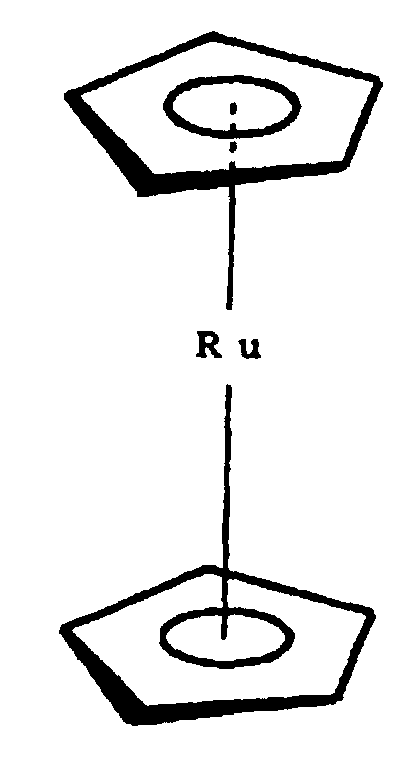
Conventionally, in advanced technical fields related for example to electrode materials for semiconductor devices, organic ruthenium compounds and organic platinum compounds have been employed for forming a variety of ruthenium thin films and platinum thin films through metal-organic vapor-phase epitaxy. In order to form a ruthenium thin film, ruthenocene; i.e., an organic ruthenium compound represented by formula 3:
Figure 00020001
is employed as a source.
The organic ruthenium compound represented by formula 3 has 5-membered rings containing exclusively carbon atoms and hydrogen atoms. In this compound, a ruthenium atom is sandwiched by two 5-membered rings.
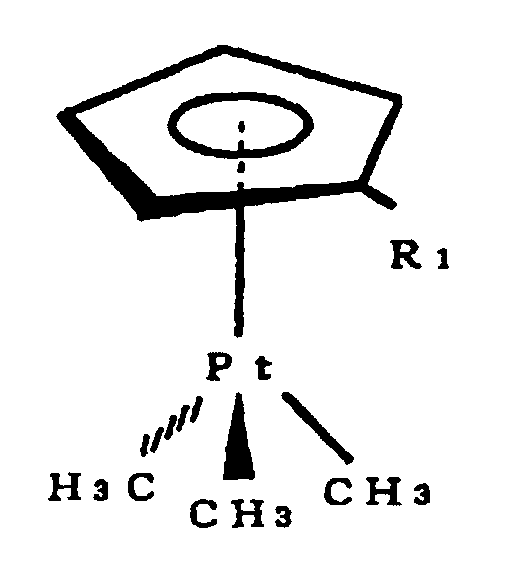
In order to produce a platinum thin film, a compound represented by formula 4:
Figure 00020002
has conventionally been employed as a source compound. In this organic platinum compound, one 5-membered ring; i.e., a cyclopentadiene ring, forms a bond with the platinum atom, and three methyl groups serve as ligands or form bonds with the platinum atom.
However, the organic ruthenium compound represented by formula 3 has a melting point of 198°C. Moreover, an organic platinum compound represented by formula 4 in which R1 is H has a melting point of 65°C, and a similar compound in which R1 is CH3 has a melting point as high as 30°C. These compounds have relatively low vapor pressure, and control of vaporization rate thereof is disadvantageously difficult.
Difficulty in controlling vaporization rate induces variation in thin-film-formation rate, and results in production of thin film lacking in accurately controlled thickness and flatness.
In addition, the aforementioned ruthenium compound and platinum compounds may be decomposed during heating for vaporization. Thus, poor thermal stability thereof is pointed out in the actual production field.
In recent years, there has been persistent demand for further size-reduction in electronic apparatus, and the target level of integration and packaging density of semiconductor devices and parts has further increased. Accordingly, ruthenium thin film, ruthenium oxide thin film, and high-purity platinum thin film which are incorporated into semiconductor devices and parts are required to have a further smaller thickness.
In connection with such a technical trend, so long as compounds exhibiting a variable film-formation rate are employed as sources, strict quality control of produced thin film cannot be attained, thereby generating variation in quality among products. This problem becomes grave as the thickness of devices decreases and the target film thickness decreases further. Unless the problem is solved, formation of thin film by using conventional source compounds inevitably faces a limitation and does not satisfy demands in the market.
Disclosure of the Invention
In view of the foregoing, the present inventor has conducted earnest studies, and have developed organometallic compounds which solve the drawbacks of the conventional organic ruthenium compound represented by formula 3 and organic platinum compounds represented by formula 4.
In general, a process for forming thin film broadly comprises three steps: (1) vaporizing a source so as to permit feeding of the source onto a substrate; (2) feeding the vaporized source onto the substrate; and (3) depositing particles of the fed source on the substrate. In metal-organic vapor-phase epitaxy, a compound source is typically used instead of an elemental source.
The reason for not using an elemental source is that the source itself has a relatively low vapor pressure and is difficult to feed. Therefore, the elemental source is converted to a compound source having a relatively high vapor pressure so as to transport the source. However, when the organic ruthenium compound represented by formula 3 and organic platinum compounds represented by formula 4 are employed as sources, a constant film-formation rate is not obtained, possibly due to a low vapor pressure of the sources.
If the vapor pressure of a source is a sole issue to be considered, increasing the molecular weight of the source would be the easiest solution. However, ruthenium thin film, ruthenium oxide thin film, and high-purity platinum thin film which are employed in the semiconductor industry must have a high level of quality which cannot be attained by such a simple approach. For example, to meet the required quality and properties, several factors must be considered, which include crystalline state, lattice constant, thermal expansion coefficient, control of structural defects, mutual diffusion of impurities and constitutional elements, and selective growth.
The organic ruthenium compounds and organic platinum compounds according to the present invention exhibit sufficiently high vapor pressure during vaporization, and thin film obtained from the compounds satisfies properties and quality required in the semiconductor industry.
Accordingly, in claim 1 of the present invention, there is provided an organic ruthenium compound for forming ruthenium thin film or ruthenium oxide thin film on a substrate through metal-organic vapor-phase epitaxy, represented by structural formula 1:
Figure 00060001
wherein at least one of the substituents R1, R2, R3, R4, R5, R1', R2', R3', R4', and R5' in the two 5-membered rings comprises an alkyl group selected from CH2CH3, CH2CH2CH3, CH2CH2CH2CH3, C(CH3)3, CH2(C6H5), COCH3, COOCH3, and CH2OCH3;, with the case in which R1, R2, R3, R4, R5, R1', R2', R3', R4', and R5' all represent hydrogen atoms being excluded.
The above exclusion is made so as to clarify that the ruthenium compounds of the present invention do not include the conventional organic ruthenium compound represented by formula 3 and other known organic ruthenium compounds. Even though conventionally known organic ruthenium compounds are employed as sources of metal-organic vapor-phase epitaxy, vaporization rate is not as constant as that of the organic ruthenium compounds of the present invention. The ruthenium compounds of the present invention represented by structural formula 1 are more bulky than conventionally known organic ruthenium compounds and have increased thermal stability.
Thus, the organic ruthenium compounds of the present invention are characterized in that at least one of the substituents in the 5-membered cyclopentadiene ring comprises an alkyl group selected from CH2CH3, CH2CH2CH3, CH2CH2CH2CH3, C(CH3)3, CH2(C6H5), COCH3, COOCH3, and CH2OCH3 with the aforementioned case being excluded.
Since in the ruthenium compounds of formula 1 of the present invention, at least one of the substituents of the cyclopentadiene ring has CH2CH3, CH2CH2CH3, CH2CH2CH2CH3, C(CH3)3, CH2(C6H5), COCH3, COOCH3, and CH2OCH3, the molecular weight of the compounds is larger than that of ruthenocene represented by formula 2. As a result, vapor pressure of the vaporized compounds serving as deposition sources increases and a constant vaporization rate is attained as compared with the case of conventional ruthenocene.
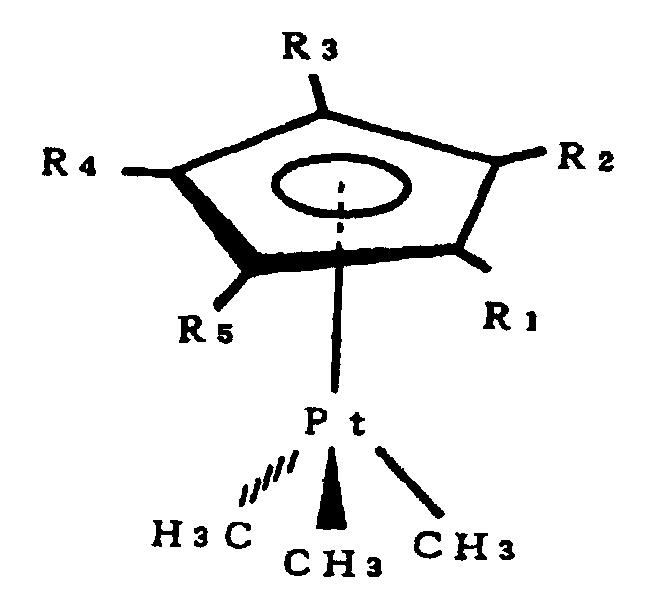
In claim 2 of the present invention, there is provided an organic platinum compound for forming platinum thin film on a substrate through metal-organic vapor-phase epitaxy, represented by structural formula 2: wherein at least one of the substituents R1, R2, R3, R4, and R5 in 5-membered rings comprises an alkyl group selected from CH3, CH2CH3, CH2CH2CH3, CH2CH2CH2CH3, C(CH3)3, and CH2(C6H5).
In the above compounds, the case in which R1, R2, R3, R4, and R5 all represent CH3 groups and the case in which only R1 is a CH3 group are excluded. The exclusion is made so as to clarify that the platinum compounds of the present invention do not include the conventional organic platinum compounds represented by formula 4 and other known organic platinum compounds. Even though conventionally known organic platinum compounds are employed as sources of metal-organic vapor-phase epitaxy, vaporization rate is not as constant as that of the organic platinum compounds of the present invention.
In the organic platinum compound of the present invention represented by structural formula 2, at least one substituent in the 5-membered cyclopentadiene ring comprises an alkyl group selected from CH3, CH2CH3, CH2CH2CH3, CH2CH2CH2CH3, C(CH3)3, and CH2(C6H5), thereby providing more bulky molecules and elevating the molecular weight of the compounds as compared with conventional organic platinum compounds represented by formula 4. As a result, vapor pressure of the vaporized compounds is higher than conventional organic platinum compounds, bulkiness also increases, and a constant vaporization rate is attained.
Since the organometallic compounds represented by the aforementioned formulas 1 and 2 have a bulky alkyl group attached to a cyclopentadiene ring, other reactive elements encounter difficulty in approaching Ru or Pt. Therefore, decomposition to metallic platinum or platinum oxide is prevented as compared with the case of organic platinum compounds represented by formula 2. Thus, the organometallic compounds as described in claims 1 and 2 exhibit constant vaporization characteristic and thermal stability when they serve as compound sources of metal-organic vapor-phase epitaxy.
In addition, substituents selected in the present invention contain carbon and hydrogen, and optionally oxygen, depending on the substituents, and contain no other constitutional element. Thus, the amounts of impurities in the formed thin film do not increase. Particularly, a formed platinum film shows considerably high purity without losing the aforementioned characteristics so far as research has determined.
Several methods are contemplated for producing organic ruthenium compounds and organic platinum compounds. The methods will next be described by way of examples.
Brief Description of the Drawing
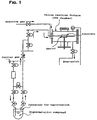
  • Fig. 1 is a schematic representation showing an MOCVD apparatus employed in embodiments for carrying out the present invention.
  • Best Modes for Carrying Out the Invention
    The organic ruthenium compounds and the organic platinum compounds of the present invention for employment in metal-organic vapor-phase epitaxy will next be described with reference to best modes for carrying out the invention. The organic ruthenium compounds and the organic platinum compounds are described separately.
    A. Organic ruthenium compounds Embodiment 1
    Ruthenium chloride (466 g) and trimethylsilylethylcyclopentadiene (1205 g) were dissolved in ethyl alcohol (22524 ml), and the mixture was refluxed for 24 hours. After reflux had been completed, the reaction mixture was subjected to extraction by using ethyl ether, and the solvent component was removed through distillation, to thereby yield 428 g of bis(ethylcyclopentadiene)ruthenium having a melting point of 130°C.
    By using the thus-prepared bis(ethylcyclopentadiene)ruthenium, metal-organic vapor-phase epitaxy was carried out in an MOCVD apparatus shown in Fig. 1, to thereby form ruthenium thin film having a thickness of 1.19 µm on a glass substrate. Vaporization rate of the compound was constant at 0.03 µm/minute, and the formed film has variation in thickness of ±0.001 µm.
    The following conditions for forming ruthenium thin film in the MOCVD apparatus were employed: vacuum of 0.5 Torr; substrate temperature of 200°C; sample temperature of 50°C; carrier gas of argon (80 ccm); and reactive gas of hydrogen (50 ccm). These conditions were also employed in the following Embodiments.
    Embodiment 2
    Ruthenium chloride (466 g) and (benzyl) (trimethylsilyl)cyclopentadiene (1773 g) were dissolved in ethyl alcohol (22524 ml), and the mixture was refluxed for 24 hours. After reflux had been completed, the reaction mixture was subjected to extraction by using ethyl alcohol, and the solvent component was removed through distillation, to thereby yield 857 g of bis(benzyl)(cyclopentadienyl)ruthenium having a melting point of 135°C.
    By using the thus-prepared bis(benzyl) (cyclopentadienyl)ruthenium, metal-organic vapor-phase epitaxy was carried out in the MOCVD apparatus shown in Fig. 1, to thereby form ruthenium thin film having a thickness of 0.76 µm on a glass substrate. Vaporization rate of the compound was constant at 0.02 µm/minute, and the formed film has variation in thickness of ±0.013 µm.
    Embodiment 3
    A dichloro(η-cycloocta-1,5-diene)ruthenium (II) polymer (1190 g) and t-butylcyclopentadienylthallium (2295 g) were dissolved in 1,2-dimethoxyethane (22000 ml), and the mixture was refluxed for 2 hours. After reflux had been completed, the reaction mixture was subjected to extraction by using ethyl alcohol, and the solvent component was removed through distillation, to thereby yield 765 g of bis(t-butylcyclopentadiene) ruthenium having a melting point of 140°C.
    By using the thus-prepared bis(t-butylcyclopentadiene) ruthenium, metal-organic vapor-phase epitaxy was carried out in the MOCVD apparatus shown in Fig. 1, to thereby form ruthenium thin film having a thickness of 1.28 µm on a glass substrate. Vaporization rate of the compound was constant at 0.032 µm/minute, and the formed film has variation in thickness of ±0.003 µm.
    Embodiment 4
    A dichloro(η-cycloocta-1,5-diene)ruthenium (II) polymer (1190 g) and propylcyclopentadienyl·tributyltin (4533 g) were dissolved in 1,2-dimethoxyethane (22000 ml), and the mixture was refluxed for 48 hours. After reflux had been completed, the reaction mixture was cooled to room temperature, to thereby yield 765 g of bis(propylcyclopentadiene)ruthenium having a melting point of 135°C.
    By using the thus-prepared bis(propylclopentadiene)ruthenium, metal -organic vapor-phase epitaxy was carried out in the MOCVD apparatus shown in Fig. 1, to thereby form ruthenium thin film having a thickness of 1.20 µm on a glass substrate. Vaporization rate of the compound was constant at 0.030 µm/minute, and the formed film has variation in thickness of ±0.002 µm.
    Embodiment 5
    Acetylferrocene (3 mol) and ruthenium chloride (1 mol) were mixed, and the mixture was allowed to react at 250°C for two days, thereby yielding target acetylruthenocene with a yield of 50%.
    By using the thus-prepared acetylruthenocene, metal-organic vapor-phase epitaxy was carried out in the MOCVD apparatus shown in Fig. 1, to thereby form ruthenium thin film having a thickness of 1.10 µm on a glass substrate. Vaporization rate of the compound was constant at 0.025 µm/minute, and the formed film has variation in thickness of ±0.002 µm.
    In order to confirm the effect of organic ruthenium compounds of the present invention, the present inventor employed ruthenocene represented by formula 3 serving as comparative compound 1. By using comparative compound 1, metal-organic vapor-phase epitaxy was carried out in the apparatus shown in Fig. 1, to thereby form ruthenium thin film. Film formation by using comparative compound 1 was compared with that by using the organic ruthenium compounds of the present invention.
    Comparative compound 2 was prepared as follows. Ruthenium chloride (466 g) and pentamethylcyclopentadienyltrimethylsilane (1653 g) were dissolved in ethyl alcohol (22524 ml), and the mixture was refluxed for 24 hours. After reflux had been completed, the reaction mixture was subjected to extraction by using ethyl alcohol, and the solvent component was removed through distillation, to thereby yield 482 g of CH3-substituted bis(pentamethylcyclopentadienyl)ruthenium having a melting point of 250°C serving as a comparative source.
    By using bis(pentamethylcyclopentadienyl)ruthenium, metal-organic vapor-phase epitaxy was carried out in the apparatus shown in Fig. 1, to thereby form ruthenium thin film. Film formation by using the compound was compared with that by using the organic ruthenium compounds according to the aforementioned Embodiments.
    Further, comparative compound 3 was prepared as follows. Ruthenium chloride (1000 g) and ethyl alcohol (3000 ml) were mixed, and the mixture was stirred at room temperature for three hours. A methylcyclopentadiene dimer was distilled to prepare methylcyclopentadiene (3500 ml).
    Ruthenium chloride and ethyl alcohol were mixed, and the mixture was stirred at room temperature for three hours. The above methylcyclopentadiene and zinc powder (3000 g) were added to the mixture, and the resultant mixture was allowed to react at room temperature for four days. The reaction mixture was subjected to extraction by using benzene, and the solvent component was removed through distillation, to thereby yield 1000 g of CH3-substituted bis(methylcyclopentadiene)ruthenium serving as a comparative source.
    By using bis(methylcyclopentadiene)ruthenium, metal-organic vapor-phase epitaxy was carried out in an apparatus shown in Fig. 1, to thereby form ruthenium thin film. Film formation by using the compound was compared with that by using the organic ruthenium compounds according to the aforementioned Embodiments.
    By using the organic ruthenium compounds obtained the aforementioned Embodiments and comparative compounds, metal-organic vapor-phase epitaxy was carried out in the MOCVD apparatus shown in Fig. 1, to thereby form the corresponding ruthenium thin films. The thickness of each film was measured as time elapsed, and comparison was carried out so as to confirm the effect of the compounds of the present invention. The results are summarized in Table 1.
    Organic ruthenium compounds Film thickness (µm)
    5 min after 10 min after 20 min after 30 min after 40 min after
    Embodiment 1 0.15 0.31 0.59 0.90 1.19
    Embodiment 2 0.10 0.22 0.48 0.63 0.76
    Embodiment 3 0.16 0.33 0.64 0.97 1.28
    Embodiment 4 0.15 0.30 0.60 0.89 1.20
    Embodiment 5 0.13 0.25 0.50 0.75 1.01
    Comp. compound 1 0.10 0.25 0.60 1.20 1.50
    Comp. compound 2 0.05 0.15 0.50 1.10 1.50
    Comp. compound 3 0.12 0.19 0.36 0.46 0.96
    From the results shown in Table 1, the film-formation rate in each interval of measurement was calculated. The results are shown in Table 2.
    Organic ruthenium compounds Film-formation rate (µm/minute)
    0-5 min 5-10 min 10-20 min 20-30 min 30-40 min
    Embodiment 1 0.030 0.032 0.028 0.031 0.029
    Embodiment 2 0.020 0.024 0.026 0.015 0.013
    Embodiment 3 0.032 0.034 0.031 0.033 0.031
    Embodiment 4 0.030 0.030 0.030 0.029 0.031
    Embodiment 5 0.026 0.024 0.025 0.025 0.026
    Comp. compound 1 0.020 0.030 0.045 0.060 0.030
    Comp. compound 2 0.010 0.020 0.035 0.060 0.040
    Comp. compound 3 0.024 0.014 0.017 0.010 0.050
    As is clear from the results, the organic ruthenium compounds of the present invention exhibit considerably constant vaporization rate, thereby providing constant film-formation rate as compared with conventional organic ruthenium compounds.
    B. Organic platinum compounds Embodiment 6
    trimethylplatinum iodide (0.28 g) and ethylcyclopentadienylsodium (0.4 M) were added into tetrahydrofuran (1.95 ml) at room temperature, and the mixture was stirred for 10 minutes. The tetrahydrofuran was removed through distillation, to thereby yield 0.075 g of trimethyl(ethylcyclopentadiene)platinum.
    By using the thus-prepared trimethyl(ethylcyclopentadiene)platinum, metal-organic vapor-phase epitaxy was carried out in the MOCVD apparatus shown in Fig. 1, to thereby form high-purity platinum thin film having a thickness of 0.21 µm on an SiO2 substrate. Vaporization rate of the compound was constant at 0.007 µm/minute, and the formed film has variation in thickness of ±0.002 µm.
    The following conditions for forming platinum thin film in the MOCVD apparatus were employed: vacuum of 1.0 Torr; substrate temperature of 200°C; sample temperature of 50°C; carrier gas of argon (30 ccm); and reactive gas of hydrogen (40 ccm). These conditions were also employed in the following Embodiment.
    The present inventor further formed platinum thin film by using an organic platinum compound represented by formula 4 in which R1 is H, which served as a comparative compound source. Metal-organic vapor-phase epitaxy was carried out in the MOCVD apparatus shown in Fig. 1. The thickness of each film was measured as time elapsed, and comparison was carried out so as to confirm the effect of the compound of the present invention. The results are summarized in Table 3.
    Organic platinum compounds Film thickness (µm)
    2 min after 4 min after 8 min after 16 min after 30 min after
    Embodiment 6 0.015 0.031 0.056 0.111 0.210
    Comp. compound 0.010 0.016 0.024 0.112 0.240
    From the results shown in Table 3, the film-formation rate in each interval of measurement was calculated. The results are shown in Table 4.
    Organic platinum compounds Film-formation rate (µm/minute)
    0-2 min 2-4 min 4-8 min 8-16 min 16-30 min
    Embodiment 6 0.008 0.008 0.006 0.007 0.007
    Comp. compound 0.005 0.001 0.002 0.011 0.009
    As is clear from the results, the organic platinum compounds of the present invention exhibit considerably constant vaporization rate, thereby providing constant film-formation rate as compared with conventional organic platinum compounds.
    Industrial Applicability
    By using the organic ruthenium compounds and organic platinum compounds of the present invention in metal-organic vapor-phase epitaxy, vaporization rate of the sources is readily controlled and thin-film-formation rate becomes constant, thereby forming ruthenium thin film and platinum thin film having an accurately controlled thickness. In addition, the organic platinum compounds of the present invention do not decompose during heating for vaporization and have excellent thermal stability. Thus, the present invention satisfies a possible demand for further size-reduction, and enhances the level of integration and packaging density of semiconductor devices and parts.
    Claims (2)

    1. An organic ruthenium compound for forming ruthenium thin film or ruthenium oxide thin film on a substrate through metal-organic vapor-phase epitaxy, represented by the following structural formula 1:
      Figure 00200001
      [wherein at least one of the substituents R1, R2, R3, R4, R5, R1', R2', R3', R4', and R5' in the two 5-membered rings comprises an alkyl group selected from CH2CH3, CH2CH2CH3, CH2CH2CH2CH3, C(CH3)3, CH2(C6H5), COCH3, COOCH3, and CH2OCH3;, with the case in which R1, R2, R3, R4, R5, R1', R2', R3', R4'].
    2. An organic platinum compound for forming platinum thin film on a substrate through metal-organic vapor-phase epitaxy, represented by the following structural formula 2:
      Figure 00200002
      [wherein at least one of the substituents R1, R2, R3, R4, and R5 in 5-membered rings comprises an alkyl group selected from CH3, CH2CH3, CH2CH2CH3, CH2CH2CH2CH3, C(CH3)3, and CH2(C6H5); provided that the case in which R1, R2, R3, R4, and R5 all represent CH3 groups and the case in which only R1 is a CH3 group are excluded].
    EP00908068A 1999-03-29 2000-03-14 Organometallic compounds for vapor-phase epitaxy of organometal Withdrawn EP1083161A4 (en)

    Applications Claiming Priority (3)

    Application Number Priority Date Filing Date Title
    JP11086116A JP2000281694A (en) 1999-03-29 1999-03-29 Organometallic compounds for metalorganic vapor phase epitaxy
    JP8611699 1999-03-29
    PCT/JP2000/001546 WO2000058245A1 (en) 1999-03-29 2000-03-14 Organometallic compounds for vapor-phase epitaxy of organometal

    Publications (2)

    Publication Number Publication Date
    EP1083161A1 true EP1083161A1 (en) 2001-03-14
    EP1083161A4 EP1083161A4 (en) 2003-02-26

    Family

    ID=13877737

    Family Applications (1)

    Application Number Title Priority Date Filing Date
    EP00908068A Withdrawn EP1083161A4 (en) 1999-03-29 2000-03-14 Organometallic compounds for vapor-phase epitaxy of organometal

    Country Status (6)

    Country Link
    US (1) US6465669B1 (en)
    EP (1) EP1083161A4 (en)
    JP (1) JP2000281694A (en)
    KR (1) KR20010043221A (en)
    TW (1) TW526182B (en)
    WO (1) WO2000058245A1 (en)

    Cited By (2)

    * Cited by examiner, † Cited by third party
    Publication number Priority date Publication date Assignee Title
    WO2009094259A1 (en) * 2008-01-24 2009-07-30 Praxair Technology, Inc. Organometallic compounds processes and methods of use
    US10465283B2 (en) * 2015-05-12 2019-11-05 Tanaka Kikinzoku Kogyo K.K. Organoplatinum compound for use in the chemical deposition of platinum compound thin films

    Families Citing this family (20)

    * Cited by examiner, † Cited by third party
    Publication number Priority date Publication date Assignee Title
    KR100423913B1 (en) * 2001-12-28 2004-03-22 삼성전자주식회사 Method of forming Ruthenium contained thin layer
    US6777565B2 (en) * 2000-06-29 2004-08-17 Board Of Trustees, The University Of Illinois Organometallic compounds and their use as precursors for forming films and powders of metal or metal derivatives
    JP3507417B2 (en) * 2000-08-03 2004-03-15 田中貴金属工業株式会社 Recycling method of organometallic compounds for MOCVD
    KR100387264B1 (en) * 2000-12-29 2003-06-12 주식회사 하이닉스반도체 Method for manufacturing a capacitor in a semiconductor device
    JP4672897B2 (en) * 2001-04-13 2011-04-20 田中貴金属工業株式会社 Process for producing bis (cyclopentadienyl) ruthenium derivative
    TWI275594B (en) * 2001-08-24 2007-03-11 Theravance Inc Process for preparing vancomycin phosphonate derivatives
    KR100727372B1 (en) 2001-09-12 2007-06-12 토소가부시키가이샤 Ruthenium complex, its manufacturing method and thin film manufacturing method
    TWI274082B (en) * 2002-10-31 2007-02-21 Praxair Technology Inc Methods for making metallocene compounds
    US7927658B2 (en) * 2002-10-31 2011-04-19 Praxair Technology, Inc. Deposition processes using group 8 (VIII) metallocene precursors
    GB0718686D0 (en) * 2007-09-25 2007-10-31 P2I Ltd Vapour delivery system
    JP6041464B2 (en) * 2011-03-03 2016-12-07 大陽日酸株式会社 Metal thin film forming method and metal thin film forming apparatus
    KR101567548B1 (en) * 2013-10-14 2015-11-10 한국화학연구원 Noble Ruthenium compounds, preparation method thereof and process for the thin films using the same
    KR101636491B1 (en) * 2014-07-09 2016-07-05 한국화학연구원 Ruthenium precursors, preparation method thereof and process for the formation of thin films using the same
    US9993819B2 (en) 2014-12-30 2018-06-12 Stmicroelectronics S.R.L. Apparatus for actuating and reading a centrifugal microfluidic disk for biological and biochemical analyses, and use of the apparatus
    JP6043851B1 (en) 2015-09-11 2016-12-14 田中貴金属工業株式会社 Chemical vapor deposition material comprising organic ruthenium compound and chemical vapor deposition method using the chemical vapor deposition material
    JP7114072B2 (en) * 2018-12-06 2022-08-08 株式会社高純度化学研究所 Bis(alkyltetramethylcyclopentadienyl)zinc, raw material for chemical vapor deposition, and method for producing thin film containing zinc
    JP7372353B2 (en) 2020-01-31 2023-10-31 田中貴金属工業株式会社 A chemical vapor deposition raw material comprising an organic ruthenium compound and a chemical vapor deposition method using the chemical vapor deposition raw material
    WO2021153639A1 (en) 2020-01-31 2021-08-05 田中貴金属工業株式会社 Chemical vapor deposition raw material comprising organic ruthenium compound, and chemical vapor deposition method using said chemical vapor deposition raw material
    TWI789848B (en) 2020-08-04 2023-01-11 嶺南大學校產學協力團 Method for forming ruthenium thin film
    JP2023178560A (en) 2022-06-06 2023-12-18 嶺南大學校 産學協力團 Method for producing ruthenium thin film or ruthenium compound thin film by chemical vapor deposition method, and ruthenium thin film or ruthenium compound thin film

    Family Cites Families (6)

    * Cited by examiner, † Cited by third party
    Publication number Priority date Publication date Assignee Title
    DE2246460A1 (en) * 1972-09-21 1974-04-04 Schering Ag METALLOCENE AND METALLOCENE DERIVATIVES WITH RADIOACTIVE CENTRAL ATOM
    DE3441095A1 (en) * 1984-11-07 1986-05-07 Martin Prof. Dr. 1000 Berlin Wenzel Preparation of substituted metallocenes
    US5130172A (en) * 1988-10-21 1992-07-14 The Regents Of The University Of California Low temperature organometallic deposition of metals
    US5118879A (en) * 1989-02-27 1992-06-02 Nippon Oil And Fats Co., Ltd. Fluoroalkyl derivative and process for preparing the same
    JP3371328B2 (en) 1997-07-17 2003-01-27 株式会社高純度化学研究所 Method for producing bis (alkylcyclopentadienyl) ruthenium complex and method for producing ruthenium-containing thin film using the same
    JP3321729B2 (en) * 1998-04-03 2002-09-09 株式会社高純度化学研究所 Trimethyl (ethylcyclopentadienyl) platinum, method for producing the same, and method for producing platinum-containing thin film using the same

    Cited By (2)

    * Cited by examiner, † Cited by third party
    Publication number Priority date Publication date Assignee Title
    WO2009094259A1 (en) * 2008-01-24 2009-07-30 Praxair Technology, Inc. Organometallic compounds processes and methods of use
    US10465283B2 (en) * 2015-05-12 2019-11-05 Tanaka Kikinzoku Kogyo K.K. Organoplatinum compound for use in the chemical deposition of platinum compound thin films

    Also Published As

    Publication number Publication date
    TW526182B (en) 2003-04-01
    EP1083161A4 (en) 2003-02-26
    US6465669B1 (en) 2002-10-15
    KR20010043221A (en) 2001-05-25
    WO2000058245A1 (en) 2000-10-05
    JP2000281694A (en) 2000-10-10

    Similar Documents

    Publication Publication Date Title
    US6465669B1 (en) Organometallic compounds for use in metal-organic vapor-phase epitaxy
    KR100727372B1 (en) Ruthenium complex, its manufacturing method and thin film manufacturing method
    US7816549B2 (en) Metal-containing compound, its production method, metal-containing thin film, and its formation method
    US4992305A (en) Chemical vapor deposition of transistion metals
    KR101284664B1 (en) Organometallic compounds with silylamine ligand, and method for deposition of a thin-film of metal oxide or silicon-containing metal oxide therefrom
    KR20210156444A (en) Molybdenum precursors, thin films using the same and deposition method of the same
    JP4517565B2 (en) Ruthenium complex, method for producing the same, and method for producing the thin film
    EP0181706A1 (en) Hybrid organometallic compounds of In and ba and process for metal organic chemical vapour deposition
    US20080286464A1 (en) Group 2 Metal Precursors For Depositing Multi-Component Metal Oxide Films
    EP1947081B1 (en) Titanium complexes, process for production thereof, titanium -containing thin films, and method for formation thereof
    US6689427B2 (en) Group IV metal precursors and a method of chemical vapor deposition using the same
    KR102286114B1 (en) Group iv transition metal compounds, preparation method thereof and process for the formation of thin films using the same
    US7002032B2 (en) Organic compound for CVD raw material and method of manufacturing metallic or metallic compound thin film using the organic compound
    US6743933B2 (en) Process of forming thin film and precursor for chemical vapor deposition
    WO2000063461A1 (en) Novel organocuprous precursors for chemical vapor deposition of a copper film
    WO2018088079A1 (en) Compound, starting material for thin film formation, thin film production method, and amidine compound
    JP3511228B2 (en) Ethylcyclopentadienyl (1,5-cyclooctadiene) iridium, method for producing the same, and method for producing iridium-containing thin film using the same
    US6429325B1 (en) Copper material for chemical vapor deposition and process for forming thin film using the same
    JP2001122887A (en) Organometallic compound for chemical vapor deposition, method for producing the organometallic compound, and method for producing a thin film using the organometallic compound
    EP1657245B1 (en) Organoiridium compound, process for producing the same, and process for producing film
    US20260015715A1 (en) Vanadium precursor compound for thin film deposition and method of forming thin film containing vanadium using the same
    JP3180616B2 (en) Organic iridium compounds
    JP4289141B2 (en) ORGANIC SILICON COMPOUND, SOLUTION RAW MATERIAL, AND METHOD FOR FORMING SILICON-CONTAINING FILM USING THE COMPOUND
    JP2768250B2 (en) Organic silver compounds for forming silver thin films by metalorganic chemical vapor deposition with high vapor pressure
    US8247617B2 (en) Group 2 metal precursors for depositing multi-component metal oxide films

    Legal Events

    Date Code Title Description
    PUAI Public reference made under article 153(3) epc to a published international application that has entered the european phase

    Free format text: ORIGINAL CODE: 0009012

    17P Request for examination filed

    Effective date: 20000915

    AK Designated contracting states

    Kind code of ref document: A1

    Designated state(s): AT BE CH CY DE DK ES FI FR GB GR IE IT LI LU MC NL PT SE

    RIC1 Information provided on ipc code assigned before grant

    Free format text: 7C 07C 17/02 A, 7C 23C 16/18 B, 7C 07F 17/02 B, 7C 07F 15:00 Z

    A4 Supplementary search report drawn up and despatched

    Effective date: 20030114

    17Q First examination report despatched

    Effective date: 20030505

    STAA Information on the status of an ep patent application or granted ep patent

    Free format text: STATUS: THE APPLICATION IS DEEMED TO BE WITHDRAWN

    18D Application deemed to be withdrawn

    Effective date: 20031118