EP1079653B1 - Apparatus method and system for voice communication hand-off in a mobile packet data network environment - Google Patents
Apparatus method and system for voice communication hand-off in a mobile packet data network environment Download PDFInfo
- Publication number
- EP1079653B1 EP1079653B1 EP00306933A EP00306933A EP1079653B1 EP 1079653 B1 EP1079653 B1 EP 1079653B1 EP 00306933 A EP00306933 A EP 00306933A EP 00306933 A EP00306933 A EP 00306933A EP 1079653 B1 EP1079653 B1 EP 1079653B1
- Authority
- EP
- European Patent Office
- Prior art keywords
- base station
- routing node
- mobile unit
- serving
- hand
- Prior art date
- Legal status (The legal status is an assumption and is not a legal conclusion. Google has not performed a legal analysis and makes no representation as to the accuracy of the status listed.)
- Expired - Lifetime
Links
Images


Classifications
-
- H—ELECTRICITY
- H04—ELECTRIC COMMUNICATION TECHNIQUE
- H04W—WIRELESS COMMUNICATION NETWORKS
- H04W36/00—Hand-off or reselection arrangements
- H04W36/0005—Control or signalling for completing the hand-off
- H04W36/0011—Control or signalling for completing the hand-off for data sessions of end-to-end connection
-
- H—ELECTRICITY
- H04—ELECTRIC COMMUNICATION TECHNIQUE
- H04W—WIRELESS COMMUNICATION NETWORKS
- H04W88/00—Devices specially adapted for wireless communication networks, e.g. terminals, base stations or access point devices
- H04W88/16—Gateway arrangements
-
- H—ELECTRICITY
- H04—ELECTRIC COMMUNICATION TECHNIQUE
- H04W—WIRELESS COMMUNICATION NETWORKS
- H04W36/00—Hand-off or reselection arrangements
- H04W36/12—Reselecting a serving backbone network switching or routing node
-
- H—ELECTRICITY
- H04—ELECTRIC COMMUNICATION TECHNIQUE
- H04W—WIRELESS COMMUNICATION NETWORKS
- H04W8/00—Network data management
- H04W8/26—Network addressing or numbering for mobility support
-
- H—ELECTRICITY
- H04—ELECTRIC COMMUNICATION TECHNIQUE
- H04W—WIRELESS COMMUNICATION NETWORKS
- H04W80/00—Wireless network protocols or protocol adaptations to wireless operation
- H04W80/04—Network layer protocols, e.g. mobile IP [Internet Protocol]
Definitions
- the present invention relates, in general, to wireless communication systems, and more particularly, to an apparatus, method and system for voice communication hand-off in a packet data network environment.
- Cellular IP A New Approach to Internet Host Mobility; Computer Communications Review, association for computing machinery. New York, U.S.A., vol. 29 NR.1, pages 50-65 by Valko, A.G. proposes Cellular IP, a protocol that is optimized to support local mobility but interworks with mobile IP to provide wide area mobility support.
- wireless communication systems typically employ many base stations (transceivers) forming cells or cell sites, either with mobile switching centers for circuit switched communication or with routing nodes for full duplex data packet communication, to provide wireless communication throughout a given geographic region. As a mobile unit may traverse the geographic region, the communication to and from the mobile unit may occur through one or more of these base stations and routing nodes.
- base stations transmitters
- routing nodes for full duplex data packet communication
- various hand-off methods have evolved in circuit switched networks to transfer the wireless communication to the mobile unit from one base station to another base station, while maintaining such an ongoing call or sessions
- EP-A-0 823 827 discloses a mobile communications system which has base stations for communicating with wireless mobile devices and interconnected by an asynchronous transfer mode (ATM) communications network which includes ATM switching centres.
- ATM asynchronous transfer mode
- a handover process coordinates transfer of communications with a mobile device from one base station to another as the device moves between their respective service areas.
- base stations which are likely to be involved in a handover from the base station currently communicating with the mobile device are identified in advance.
- ATM cells being routed through the network to the mobile device are multicast to these base stations, in addition to the base station communicating with the mobile device.
- a need remains to provide for comparatively seamless voice communication hand-offs in mobile data networks, which do not interrupt ongoing voice communication sessions and which are relatively imperceptible to the consumer.
- a wireless communication system should be reasonably efficient and capable of cost-effective implementation, eliminating or minimizing the use of additional network resources.
- the wireless communication system of the present invention provides virtually seamless and imperceptible hand-offs of voice communication sessions of mobile units in a packet data network environment.
- the various embodiments of the present invention are reasonably efficient and capable of cost-effective implementation in existing communication equipment such as routing nodes and base stations.
- the various embodiments of the present invention eliminate or minimize the use of additional network resources, while being compatible with other intelligent network devices and systems.
- an apparatus, method and system are provided for a hand-off of a communication session in a data network.
- the system embodiment includes a gateway routing node, such as a global GSN, a plurality of serving routing nodes, such as serving GSNs, and a plurality of base stations (transceivers).
- a gateway routing node such as a global GSN
- serving routing nodes such as serving GSNs
- base stations transceivers
- the gateway routing node includes instructions, when the second base station has been selected for the hand-off, to establish a second addressing context, for the mobile unit, between the gateway routing node and the second serving routing node, consisting of embedded addressing layers designating the mobile unit, the second base station and the second serving routing node, for routing of incoming data packets to the second base station.
- the gateway routing node then concurrently routes incoming data packets for the mobile unit to the first serving routing node utilizing the first addressing context and to the second serving routing node utilizing the second addressing context.
- the gateway routing node may cease to route incoming data packets for the mobile unit to the first serving routing node utilizing the first addressing context, while continuing to route incoming data packets for the mobile unit to the second serving routing node utilizing the second addressing context.
- the communication session of the mobile unit has been handed off, seamlessly and without interruption, from the serving base station to the target base station.
- Such a hand-off has also occurred utilizing minimal network resources, the switch and the base stations, without involvement of other intelligent or supervisory network elements.
- a system, apparatus and method are illustrated which provide such advantages, namely, providing relatively seamless and imperceptible wireless hand-offs while utilizing minimal network resources (namely, utilizing existing routing nodes and base stations configured in accordance with the invention).
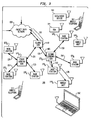
- Fig. 1 is a block diagram illustrating such a system embodiment 100 prior to a hand-off in accordance with the present invention.
- the system 100 may be utilized, for example, for a generalized packet radio service ("GPRS") in Europe or also in the United States.
- the system 100 includes a gateway routing node, referred to as a global GPRS support node (“global GSN") 110, one or more serving GPRS support nodes (“serving GSNs”) 125, such as a first serving GSN 125 A and second serving GSN 125 B , and one or more base stations (or transceivers) 120, such as first base station 120 A and second base station 120 B .
- GPRS generalized packet radio service
- the system 100 includes a gateway routing node, referred to as a global GPRS support node (“global GSN”) 110, one or more serving GPRS support nodes (“serving GSNs”) 125, such as a first serving GSN 125 A and second serving GSN 125 B
- the global GSN 110 and serving GSNs 125 are preferably packet data routing nodes manufactured by Lucent Technologies, Inc., utilized in GPRS systems which have been configured to operate in accordance with the present invention, as discussed in greater detail below.
- the global GSN 110 is coupled to a packet data network 130, for additional routing of voice or data communications.
- the global GSN 110 may also be coupled to other intelligent network devices (not illustrated).
- the base stations 120 include wireless transceivers, for wireless communication with any of a plurality of wireless devices referred to in general as mobile units 140, such as mobile telephones 141, a computer (with wireless modem, wireless terminal adapter or other wireless data transmission device) 142, another data/voice device 143 (such as a mobile telephone with paging functionality), and personal digital assistant ("PDA") 144.
- mobile units 140 such as mobile telephones 141, a computer (with wireless modem, wireless terminal adapter or other wireless data transmission device) 142, another data/voice device 143 (such as a mobile telephone with paging functionality), and personal digital assistant ("PDA") 144.
- PDA personal digital assistant
- the global GSN 110, serving GSNs 125, and base stations 120 are coupled to each other utilizing signaling and/or transmission lines 150, such as the types used for frame relay, as known in the art.
- a communication path 155 has been established to the mobile unit 140 A , for full duplex communication with another device (not illustrated) via first or serving base station 120 A , first serving GSN 125 A , global GSN 110, and through the packet data network 130 to the other device.
- the communication path 155 is for packet data transmission.
- a speaker's utterances may be sampled and digitized (or packetized) at a variety of locations within the system 100, such as within the mobile unit 140 or within the serving base station 120 A .
- the global GSN 110 and first serving GSN 125 A establish an addressing context or scheme (referred to in the art as a "tunnel"), providing embedded layers of addressing for proper routing of the incoming data packets from the global GSN 110 to the first serving GSN 125 A , to the first base station 120 A and to the mobile unit 140 A , and conversely embedded layers of addressing for proper routing for outgoing data packets from the mobile unit 140 A , via the first base station, through the first serving GSN 125 A and global GSN 110, and into the packet data network 130.
- an addressing context or scheme referred to in the art as a "tunnel”
- real-time data packet transmission without significant interruption has a higher priority than transmission accuracy or data reliability.
- any incoming data packets which may not have been delivered in real-time (or close to real-time) become irrelevant (as stale) and may be discarded.
- accuracy has greater significance than real-time delivery, and as a consequence, stale data packets may be buffered and retransmitted, rather than discarded.
- any mobile unit 140 traverses a geographic region and becomes farther away from any given base station 120 with which it has been in communication, the signal or power levels of such wireless communication to and from the mobile unit 140 typically drop below a preferred threshold or range. Under these circumstances, it is preferable for the given base station 120 to hand-off the communication to another base station 120 having a higher signal strength to and from the given mobile unit 140. In accordance with the present invention, this determination may be made by the given mobile unit 140 or by the various base stations 120. Continuing to refer to Fig.
- the mobile unit 140 A (at a time t ⁇ t 1 ) is currently served by first base station 120 A , illustrated as communication or call path 160 (with the portion of the communication session between the global GSN 110 and the packet data network 130 separately illustrated as call path 155).
- the first base station 120 A is generally referred to as a serving base station or serving cell site.
- the second base station 120 B is generally referred to as a target base station or target cell site.
- Fig. 2 is a block diagram illustrating the system embodiment 100 during a hand-off, with the first communication path 160 illustrated from the global GSN 110 through the first serving GSN 125 A and first base station 120 A to the mobile unit 140 A , and a second communication path 165 illustrated from the global GSN 110 through a second serving GSN 125 B and second base station 120 B , in accordance with the present invention.
- the second communication path 165 is established by communication between or among the second, target base station 120 B , the second serving GSN 125 B , and the global GSN 110.
- second base station 120 B has been selected as the target base station for hand-off, the global GSN 110, the second serving GSN 125 B and second base station 120 B are informed of the impending hand-off and engage in various communication set-up activities, discussed in greater detail below.
- Informing the global GSN 110, the second serving GSN 125 B and second base station 120 B of the impending voice communication hand-off may occur in a variety of ways.
- the mobile unit 140 A may provide a corresponding message to the second base station 120 B , which in turn provides corresponding messaging to the second serving GSN 125 B , and in turn, to the global GSN 110.
- such messaging may occur through the first base station 120 A , the first serving GSN 125 A , and then to the global GSN 110, the second serving GSN 125 B and second base station 120 B .
- the system 100 may include transmission links 150 between the serving GSNs 125 and, when so configured, messaging may occur directly between the first serving GSN 125 A and the second serving GSN 125 B .
- the hand-off messaging includes such a designation, to distinguish the hand-off as a voice communication hand-off (rather than other types of data transmission hand-offs, in which timeliness may be of secondary importance).
- the global GSN 110 and the second serving GSN 125 B establish a second addressing context (or second tunnel) for the mobile unit 140 A .
- the global GSN 110 and second serving GSN 125 B first establish a second addressing context, providing embedded layers of addressing for proper routing of the incoming data packets from the global GSN 110 to the second serving GSN 125 B , to the second base station 120 B and to the mobile unit 140 A , and conversely embedded layers of addressing for proper routing for outgoing data packets from the mobile unit 140 A , via the second base station 120 B , through the second serving GSN 125 B and global GSN 110, and into the packet data network 130.
- the first communication path 160 continues to be utilized for communication with the mobile unit 140 A .
- incoming data packets from the packet data network 130 are embedded in addressing layers by the global GSN 110, and these incoming, addressed data packets are routed from the global GSN 110 to the first serving GSN 125 A , to the first base station 120 A and to the mobile unit 140 A , and conversely, outgoing data packets from the mobile unit 140 A . via the first base station 120 A , through the first serving GSN 125 A and global GSN 110, are routed into the packet data network 130.
- the second addressing context is also utilized to route the same (duplicate) incoming data packets to the second base station 120 B . More specifically, simultaneously utilizing the second addressing context, incoming data packets from the packet data network 130 are embedded in addressing layers by the global GSN 110, and these incoming, addressed data packets are routed from the global GSN 110 to the second serving GSN 125 B , to the second base station 120 B . As a consequence, upon completion of the hand-off when the mobile unit 140 A retunes to or otherwise communicates with the second base station 120 B , current incoming data packets are immediately available for transmission to the mobile unit 140 A .
- any outgoing voice communications from the mobile unit 140 A may be transmitted to the second base station 120 B , for routing into the packet data network 130 via the second serving GSN 125 B and global GSN 110 (with the first base station 120 A having completed transmission of any information it previously received from the mobile unit 140 A ).
- the second base station 120 B may simply discard (rather than buffer) incoming data packets designating the mobile unit 140 A . Such completion of the hand-off is discussed below with respect to Fig. 3.
- Fig. 3 is a block diagram illustrating the system embodiment 100 during completion of a hand-off, with the second communication path 165 illustrated from the global GSN 110 through the second serving GSN 125 B and second base station 120 to the mobile unit 140 A , in accordance with the present invention.
- the mobile unit 140 A tunes to a specified channel of or otherwise sets up a communication path to the second base station 120 B , illustrated as communication path 170, for continuing the same voice communication session via the second communication path 165 ( i.e. , via the second addressing context).
- the mobile unit 140 A may immediately receive incoming data packets and transmit outgoing data packets via the second base station 120 B , the second serving GSN 120 B and the global GSN 110.
- the use of the first addressing context by the global GSN 110 may cease, and the first base station 120 A may discard (rather than retransmit or reroute) any incoming data packets designating the mobile unit 140 A .
- the hand-off of the voice communication session over a data network, from the serving base station to the target base station, is then complete, with the voice communication session continuing uninterrupted through data links or paths 155, 165 and 170, as illustrated in Fig. 3.
- the hand-off procedures of the present invention are designed primarily for hand-off of communication sessions occurring in real-time, in which transmission delays or interruptions are highly undesirable, such as voice communications.
- Other types of hand-offs for packet data networks, such as for text file transmission may occur utilizing standard, known procedures, in which both incoming and outgoing data communication is ceased in its entirety, any waiting data is buffered, with data communication (and retransmission (or rerouting) of buffered data) resuming following hand-off.
- the hand-off of the voice communication session occurs seamlessly and without significant or perceptible interruption.
- the only communication interruption in the hand-off of the present invention occurs while the mobile unit 140 retunes to the target, second base station 120 B , an unavoidable interruption on the order of an imperceptible 90 - 100 milliseconds.
- such a hand-off is accomplished without the need for additional network resources.
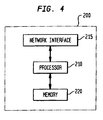
- Fig. 4 is a block diagram illustrating an apparatus embodiment 200 in accordance with the present invention.
- an apparatus 200 may be included within a global GSN 110 or another component of the system 100.
- the apparatus 200 includes a processor 210, a network interface 215, and a memory 220.
- the network interface 215 is utilized to address (utilizing the first addressing context and the second addressing context) and to route incoming and outgoing data packets, when the apparatus 200 is embodied within a global GSN 110.
- the network interface 215 is also utilized for transmission and reception of the various messages mentioned above, such as the hand-off requests routed from the first base station 120 A and first serving GSN 125 A to the second serving GSN 125 B and second base station 120 B .
- the memory 220 may be a magnetic hard drive, an optical storage device, or any other type of data storage apparatus.
- the memory 220 is used to store information pertaining to addressing contexts, routing information, and program instructions, as discussed in greater detail below.
- the processor 210 may include a single integrated circuit ("IC"), or may include a plurality of integrated circuits or other components connected, arranged or grouped together, such as microprocessors, digital signal processors ("DSPs"), application specific integrated circuits ("ASICs"), associated memory (such as RAM and ROM), and other ICs and components.
- DSPs digital signal processors
- ASICs application specific integrated circuits
- associated memory such as RAM and ROM
- processor should be understood to equivalently mean and include a single processor, or arrangement of processors, microprocessors, controllers, or some other grouping of integrated circuits which perform the functions discussed above and also discussed in detail below with reference to Fig. 5, with associated memory, such as microprocessor memory or additional RAM, ROM, EPROM or E 2 PROM.
- the methodology of the invention may be programmed and stored, in the processor 210 with its associated memory (such as memory 220) and other equivalent components, as a set of program instructions for subsequent execution when the processor 210 is operative ( i.e. , powered on and functioning).
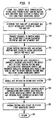
- Fig. 5 is a flow diagram illustrating a method embodiment in accordance with the present invention.
- a full duplex voice communication session has been established with the mobile unit 140 A through the gateway routing node (global GSN 110), the first serving routing node (first serving GSN 125 A ) and first base station 120 A .
- the method determines that a hand-off is necessary or preferable, step 305. This may be accomplished through various methods known in the art, from various requests transmitted by the serving base station, such as base station 120 A , with responses from the potential target base stations, such as base station 120 B , or by determinations made by the particular mobile unit 140.
- a target base station is selected for a hand-off, also as known in the art, such as second base station 120 B .
- step 310 various hand-off messages are transmitted within the system 100, informing the gateway routing node, the serving routing nodes, and the serving (first) and target (second) base stations of the potential hand-off of the mobile unit, depending upon how the target base station has been selected.
- the target base station may be informed of the hand-off directly by the mobile unit, in which case messaging is transmitted among the other system 100 components.
- the serving base station may be informed of the hand-off by the mobile unit 140 or may itself perform that determination, in which case messaging is then transmitted to the other system 100 components.
- this messaging may occur in a variety of ways, such as one or more messages between and among the first base station 120 A , the first serving GSN 125 A , the global GSN 110, the second serving GSN 125 B , and the second base station 120 B .
- the gateway routing node and the second serving routing node such as the global GSN 110 and the second serving GSN 125 B , then establish a second addressing context (tunnel), step 315, such that incoming data packets from the packet data network 130 will be embedded in addressing layers by the global GSN 110, and these incoming, addressed data packets may then be routed from the global GSN 110 to the second serving GSN 125 B , to the second base station 120 B .
- a second addressing context tunnel
- the gateway routing node (such as global GSN 110) concurrently transmits incoming data packets for the mobile unit (from the data network 130) to the first serving routing node (such as first serving GSN 125 A ) utilizing the first addressing context (for transmission to the first base station 120 A ), and to the second serving routing node (such as second serving GSN 125 B ) utilizing the second addressing context (for transmission to the second base station 120 B ).
- the mobile unit is then directed to retune (or initiates its own retuning) to an available channel of or otherwise communicate with the second base station 120 B , step 325, establishing communication link 170 illustrated in Fig. 3, for continuing the same voice communication session through the second communication link 165.
- the second base station 120 B transmits (to the mobile unit) incoming voice communication from the current data packets having the second addressing context, and receives any outgoing voice communication (from the mobile unit) for transmission as data packets to the gateway routing node (and on into the data network 130, as needed), step 330.
- step 330 the hand-off is complete, and the gateway routing node (such as the global GSN 110) may cease to use the first addressing context (and thereby cease transmitting duplicate incoming data packets to the first base station 120 A through the first serving GSN 125 A ), step 335.
- the method may end, return step 340.
- the wireless communication system of the present invention provides virtually seamless and imperceptible hand-offs of voice communication sessions of mobile units within a packet data network environment.
- the various embodiments of the present invention are reasonably efficient and capable of cost-effective implementation in existing communication equipment such as switches and base stations.
- the various embodiments of the present invention eliminate or minimize the use of additional network resources, while being compatible with other intelligent network devices and systems.
Landscapes
- Engineering & Computer Science (AREA)
- Computer Networks & Wireless Communication (AREA)
- Signal Processing (AREA)
- Databases & Information Systems (AREA)
- Mobile Radio Communication Systems (AREA)
- Data Exchanges In Wide-Area Networks (AREA)
Applications Claiming Priority (2)
| Application Number | Priority Date | Filing Date | Title |
|---|---|---|---|
| US384017 | 1999-08-26 | ||
| US09/384,017 US6603972B1 (en) | 1999-08-26 | 1999-08-26 | Apparatus, method and system for voice communication hand-off in a mobile packet data network environment |
Publications (2)
| Publication Number | Publication Date |
|---|---|
| EP1079653A1 EP1079653A1 (en) | 2001-02-28 |
| EP1079653B1 true EP1079653B1 (en) | 2006-05-17 |
Family
ID=23515688
Family Applications (1)
| Application Number | Title | Priority Date | Filing Date |
|---|---|---|---|
| EP00306933A Expired - Lifetime EP1079653B1 (en) | 1999-08-26 | 2000-08-14 | Apparatus method and system for voice communication hand-off in a mobile packet data network environment |
Country Status (9)
| Country | Link |
|---|---|
| US (1) | US6603972B1 (enExample) |
| EP (1) | EP1079653B1 (enExample) |
| JP (1) | JP3792492B2 (enExample) |
| KR (1) | KR100664784B1 (enExample) |
| CN (1) | CN1286555A (enExample) |
| AU (1) | AU5354700A (enExample) |
| BR (1) | BR0003643A (enExample) |
| CA (1) | CA2315987A1 (enExample) |
| DE (1) | DE60027969T2 (enExample) |
Families Citing this family (26)
| Publication number | Priority date | Publication date | Assignee | Title |
|---|---|---|---|---|
| US7310529B1 (en) * | 2000-01-24 | 2007-12-18 | Nortel Networks Limited | Packet data traffic control for cellular wireless networks |
| JP3658277B2 (ja) * | 2000-04-28 | 2005-06-08 | 株式会社日立製作所 | 非静止衛星を使用する通信或いは放送の親側システムあるいは子側装置 |
| US6980518B1 (en) * | 2000-06-23 | 2005-12-27 | International Business Machines Corporation | Gossip-based reliable multicast message recovery system and method |
| US6816732B1 (en) * | 2000-07-27 | 2004-11-09 | Ipr Licensing, Inc. | Optimal load-based wireless session context transfer |
| US7050793B1 (en) | 2001-04-04 | 2006-05-23 | Nortel Networks Limited | Context transfer systems and methods in support of mobility |
| GB2374494A (en) * | 2001-04-12 | 2002-10-16 | Ericsson Telefon Ab L M | SGSN handover in a GPRS Network |
| JP4340400B2 (ja) * | 2001-04-27 | 2009-10-07 | 富士通株式会社 | 階層化パケット網におけるパケット転送方法並びに階層化パケット通信システム並びに同システムに使用されるエッジノード及び移動端末並びに階層化パケット網におけるパケット転送方法 |
| US7272121B2 (en) * | 2001-06-19 | 2007-09-18 | Telcordia Technologies, Inc. | Methods and apparatus for a modular wireless system |
| PT1421802E (pt) | 2001-08-14 | 2013-04-08 | Qualcomm Inc | Processo e dispositivo para a conectividade de uma rede sem fios |
| US7215958B2 (en) | 2001-08-20 | 2007-05-08 | Nokia Corporation | Relocation method, system and network element |
| US7680497B2 (en) * | 2001-09-25 | 2010-03-16 | Qualcomm Incorporated | Method and system for optimizing system-access and soft-handoff parameters based on location information |
| US7003298B1 (en) * | 2002-02-28 | 2006-02-21 | Cisco Technology, Inc. | Devices, softwares and methods for handing off live calls between legs of CSV and VOX modalities |
| SG108909A1 (en) * | 2002-03-13 | 2005-02-28 | Ntt Docomo Inc | Mobile node, mobile communication system, and communication control program |
| KR100463522B1 (ko) * | 2002-04-26 | 2004-12-29 | 엘지전자 주식회사 | 차세대 통신망에서의 핸드오프 방법 |
| KR100987217B1 (ko) | 2003-03-05 | 2010-10-12 | 삼성전자주식회사 | 고속 패킷 데이터 이동통신 시스템에서 핸드오프 방법 |
| US8543703B1 (en) * | 2003-03-25 | 2013-09-24 | Apple Inc. | Method of tracking mobile user sessions |
| GB0312681D0 (en) * | 2003-06-03 | 2003-07-09 | Ericsson Telefon Ab L M | IP mobility |
| US6975881B2 (en) * | 2003-08-25 | 2005-12-13 | Motorola, Inc. | Communication controller and method for maintaining a communication connection during a cell reselection |
| US6907019B2 (en) * | 2003-08-25 | 2005-06-14 | Motorola Inc. | Communication controller and method for managing the traffic flow of a communication connection during a cell reselection |
| DE10352771A1 (de) * | 2003-11-12 | 2005-06-30 | Siemens Ag | Verfahren und Netzelement zur Verteilung und Lenkung von Datenpaketen während eines Wechsels einer mobilen Sende-/Empfangsstation von einer ersten Funkzelle in eine zweite Funkzelle innerhalb eines mobilen Kommunikationsnetzes |
| US20050239445A1 (en) * | 2004-04-16 | 2005-10-27 | Jeyhan Karaoguz | Method and system for providing registration, authentication and access via broadband access gateway |
| FI20060936A0 (fi) * | 2006-10-24 | 2006-10-24 | Nokia Corp | Menetelmä kanavanvaihtojen suorittamiseksi viestintäjärjestelmässä |
| US7693939B2 (en) * | 2007-05-07 | 2010-04-06 | Microsoft Corporation | Context-based routing in multi-hop networks |
| KR100934086B1 (ko) * | 2007-10-29 | 2009-12-24 | 포스데이타 주식회사 | 무선접속 시스템의 핸드오버 방법 및 이를 지원하는 게이트웨이 |
| EP3031240B1 (en) * | 2013-08-09 | 2018-04-25 | Telefonaktiebolaget LM Ericsson (publ) | Apparatus and method for improving handover in a global system for mobile communications |
| CN112533265B (zh) * | 2020-12-09 | 2022-07-01 | 山东黄金矿业(莱州)有限公司三山岛金矿 | 基于无线测距的多网关无线信道及网络路由快速切换方法 |
Family Cites Families (8)
| Publication number | Priority date | Publication date | Assignee | Title |
|---|---|---|---|---|
| CA2066538C (en) * | 1991-07-09 | 1997-12-23 | Brian David Bolliger | Mobile-telephone system call processing arrangement |
| US5267261A (en) * | 1992-03-05 | 1993-11-30 | Qualcomm Incorporated | Mobile station assisted soft handoff in a CDMA cellular communications system |
| WO1995008898A1 (en) * | 1993-09-24 | 1995-03-30 | Nokia Telecommunications Oy | Control handoff method in a cellular telecommunications system |
| SE9304119D0 (sv) * | 1993-12-10 | 1993-12-10 | Ericsson Ge Mobile Communicat | Apparatuses and mobile stations for providing packet data communication in digital TDMA cellular systems |
| US5530693A (en) * | 1995-06-06 | 1996-06-25 | Averbuch; Rod | Method and apparatus for performing handoff in a packet data communication system |
| EP0823827A3 (en) * | 1996-08-09 | 1999-09-29 | Hewlett-Packard Company | Mobile communications systems and methods of operating such systems |
| US6104929A (en) * | 1997-06-20 | 2000-08-15 | Telefonaktiebolaget Lm Ericsson | Data packet radio service with enhanced mobility management |
| US6160804A (en) * | 1998-11-13 | 2000-12-12 | Lucent Technologies Inc. | Mobility management for a multimedia mobile network |
-
1999
- 1999-08-26 US US09/384,017 patent/US6603972B1/en not_active Expired - Lifetime
-
2000
- 2000-08-14 EP EP00306933A patent/EP1079653B1/en not_active Expired - Lifetime
- 2000-08-14 DE DE60027969T patent/DE60027969T2/de not_active Expired - Lifetime
- 2000-08-14 CA CA002315987A patent/CA2315987A1/en not_active Abandoned
- 2000-08-17 BR BR0003643-9A patent/BR0003643A/pt not_active Application Discontinuation
- 2000-08-22 AU AU53547/00A patent/AU5354700A/en not_active Abandoned
- 2000-08-23 KR KR1020000048786A patent/KR100664784B1/ko not_active Expired - Fee Related
- 2000-08-25 JP JP2000254820A patent/JP3792492B2/ja not_active Expired - Fee Related
- 2000-08-25 CN CN00124082A patent/CN1286555A/zh active Pending
Non-Patent Citations (1)
| Title |
|---|
| VALKO A.G.: "CELLULAR IP: A NEW APPROACH TO INTERNET HOST MOBILITY", COMPUTER COMMUNICATION REVIEW, vol. 29, no. 1, 1 January 1999 (1999-01-01), ASSOCIATION FOR COMPUTING MACHINERY, NEW YORK, US, pages 50 - 65, XP000823873 * |
Also Published As
| Publication number | Publication date |
|---|---|
| KR20010030116A (ko) | 2001-04-16 |
| AU5354700A (en) | 2001-03-01 |
| CA2315987A1 (en) | 2001-02-26 |
| JP2001112040A (ja) | 2001-04-20 |
| DE60027969T2 (de) | 2007-05-10 |
| CN1286555A (zh) | 2001-03-07 |
| EP1079653A1 (en) | 2001-02-28 |
| US6603972B1 (en) | 2003-08-05 |
| JP3792492B2 (ja) | 2006-07-05 |
| KR100664784B1 (ko) | 2007-01-04 |
| DE60027969D1 (de) | 2006-06-22 |
| BR0003643A (pt) | 2001-04-03 |
Similar Documents
| Publication | Publication Date | Title |
|---|---|---|
| US6603972B1 (en) | Apparatus, method and system for voice communication hand-off in a mobile packet data network environment | |
| EP1658548B1 (en) | A communication controller and method for maintaining a communication connection during a cell reselection | |
| EP1303157A1 (en) | System and method for switching between base stations in a wireless communications systems | |
| US8630264B2 (en) | Transfer of communication sessions between base stations in wireless networks | |
| RU2350046C2 (ru) | Способ, схема сети связи, сервер сети связи, терминал и программное средство для выбора и изменения режимов работы для голосового соединения с коммутацией пакетов | |
| CA2346919A1 (en) | Method and apparatus for setting up a cordless mobile telecommunications system | |
| US8140073B2 (en) | Method and system for optimized handover for mobile devices | |
| JP2004502388A (ja) | 回線交換環境とパケット交換環境との間でハンドオーバーを実行するシステム及び方法 | |
| KR20140075796A (ko) | Wifi-dect 무선 원격통신 네트워크 내의 단말과 관련된 무선 액세스 포인트를 변경하는 방법 | |
| CN101453753B (zh) | 移动通信系统、网关、集线装置及移交控制方法 | |
| EP1658736B1 (en) | A communication controller and method for managing the traffic flow of a communication connection during a cell reselection | |
| US6801773B2 (en) | Apparatus, method and system for mobile wireless communication hand-off utilizing shared directory numbers and multiway capabilities | |
| US6501952B1 (en) | Apparatus, method and system for mobile wireless communication hand-off utilizing directed call pick-up with barge-in | |
| JP3442257B2 (ja) | パケット通信方法 | |
| US20030003916A1 (en) | Apparatus, method and system for mobile wireless communication hand-off utilizing ISDN multiway capabilities | |
| WO2008153859A1 (en) | Method for performing inter-technology handovers utilizing tunnels | |
| US20050107104A1 (en) | Wireless network and wireless access terminals using enhanced SYNC_ID parameter | |
| US6799040B2 (en) | Apparatus, method and system for mobile wireless communication hand-off utilizing shared directory numbers | |
| US6442388B1 (en) | Method for conducting handoff back communication scenarios | |
| JP2004274458A (ja) | 異種無線システム間のハンドオーバ制御システム、そのシステムに使用されるエッジノードおよび移動通信端末装置 | |
| WO2008033613A1 (en) | A communication system and method for redirecting a call between multiple different operating modes | |
| JP3361933B2 (ja) | 回線呼接続制御システム |
Legal Events
| Date | Code | Title | Description |
|---|---|---|---|
| PUAI | Public reference made under article 153(3) epc to a published international application that has entered the european phase |
Free format text: ORIGINAL CODE: 0009012 |
|
| AK | Designated contracting states |
Kind code of ref document: A1 Designated state(s): DE FI FR GB SE |
|
| AX | Request for extension of the european patent |
Free format text: AL;LT;LV;MK;RO;SI |
|
| 17P | Request for examination filed |
Effective date: 20010815 |
|
| AKX | Designation fees paid |
Free format text: DE FI FR GB SE |
|
| 17Q | First examination report despatched |
Effective date: 20040524 |
|
| GRAP | Despatch of communication of intention to grant a patent |
Free format text: ORIGINAL CODE: EPIDOSNIGR1 |
|
| GRAS | Grant fee paid |
Free format text: ORIGINAL CODE: EPIDOSNIGR3 |
|
| GRAA | (expected) grant |
Free format text: ORIGINAL CODE: 0009210 |
|
| AK | Designated contracting states |
Kind code of ref document: B1 Designated state(s): DE FI FR GB SE |
|
| PG25 | Lapsed in a contracting state [announced via postgrant information from national office to epo] |
Ref country code: FI Free format text: LAPSE BECAUSE OF FAILURE TO SUBMIT A TRANSLATION OF THE DESCRIPTION OR TO PAY THE FEE WITHIN THE PRESCRIBED TIME-LIMIT Effective date: 20060517 |
|
| REG | Reference to a national code |
Ref country code: GB Ref legal event code: FG4D |
|
| REF | Corresponds to: |
Ref document number: 60027969 Country of ref document: DE Date of ref document: 20060622 Kind code of ref document: P |
|
| PG25 | Lapsed in a contracting state [announced via postgrant information from national office to epo] |
Ref country code: SE Free format text: LAPSE BECAUSE OF FAILURE TO SUBMIT A TRANSLATION OF THE DESCRIPTION OR TO PAY THE FEE WITHIN THE PRESCRIBED TIME-LIMIT Effective date: 20060817 |
|
| ET | Fr: translation filed | ||
| PLBE | No opposition filed within time limit |
Free format text: ORIGINAL CODE: 0009261 |
|
| STAA | Information on the status of an ep patent application or granted ep patent |
Free format text: STATUS: NO OPPOSITION FILED WITHIN TIME LIMIT |
|
| 26N | No opposition filed |
Effective date: 20070220 |
|
| REG | Reference to a national code |
Ref country code: GB Ref legal event code: 732E Free format text: REGISTERED BETWEEN 20131031 AND 20131106 |
|
| REG | Reference to a national code |
Ref country code: FR Ref legal event code: CD Owner name: ALCATEL-LUCENT USA INC. Effective date: 20131122 |
|
| REG | Reference to a national code |
Ref country code: FR Ref legal event code: GC Effective date: 20140410 |
|
| REG | Reference to a national code |
Ref country code: FR Ref legal event code: RG Effective date: 20141015 |
|
| REG | Reference to a national code |
Ref country code: FR Ref legal event code: PLFP Year of fee payment: 16 |
|
| REG | Reference to a national code |
Ref country code: FR Ref legal event code: PLFP Year of fee payment: 17 |
|
| REG | Reference to a national code |
Ref country code: FR Ref legal event code: PLFP Year of fee payment: 18 |
|
| REG | Reference to a national code |
Ref country code: FR Ref legal event code: PLFP Year of fee payment: 19 |
|
| PGFP | Annual fee paid to national office [announced via postgrant information from national office to epo] |
Ref country code: DE Payment date: 20180823 Year of fee payment: 19 Ref country code: FR Payment date: 20180827 Year of fee payment: 19 |
|
| PGFP | Annual fee paid to national office [announced via postgrant information from national office to epo] |
Ref country code: GB Payment date: 20180822 Year of fee payment: 19 |
|
| REG | Reference to a national code |
Ref country code: DE Ref legal event code: R119 Ref document number: 60027969 Country of ref document: DE |
|
| GBPC | Gb: european patent ceased through non-payment of renewal fee |
Effective date: 20190814 |
|
| PG25 | Lapsed in a contracting state [announced via postgrant information from national office to epo] |
Ref country code: DE Free format text: LAPSE BECAUSE OF NON-PAYMENT OF DUE FEES Effective date: 20200303 Ref country code: FR Free format text: LAPSE BECAUSE OF NON-PAYMENT OF DUE FEES Effective date: 20190831 |
|
| PG25 | Lapsed in a contracting state [announced via postgrant information from national office to epo] |
Ref country code: GB Free format text: LAPSE BECAUSE OF NON-PAYMENT OF DUE FEES Effective date: 20190814 |