EP1079387A2 - Mechanism for storing information about recorded television broadcasts - Google Patents
Mechanism for storing information about recorded television broadcasts Download PDFInfo
- Publication number
- EP1079387A2 EP1079387A2 EP00306974A EP00306974A EP1079387A2 EP 1079387 A2 EP1079387 A2 EP 1079387A2 EP 00306974 A EP00306974 A EP 00306974A EP 00306974 A EP00306974 A EP 00306974A EP 1079387 A2 EP1079387 A2 EP 1079387A2
- Authority
- EP
- European Patent Office
- Prior art keywords
- file system
- user
- program
- program content
- recorded
- Prior art date
- Legal status (The legal status is an assumption and is not a legal conclusion. Google has not performed a legal analysis and makes no representation as to the accuracy of the status listed.)
- Withdrawn
Links
Images

Classifications
-
- H—ELECTRICITY
- H04—ELECTRIC COMMUNICATION TECHNIQUE
- H04N—PICTORIAL COMMUNICATION, e.g. TELEVISION
- H04N21/00—Selective content distribution, e.g. interactive television or video on demand [VOD]
- H04N21/80—Generation or processing of content or additional data by content creator independently of the distribution process; Content per se
- H04N21/83—Generation or processing of protective or descriptive data associated with content; Content structuring
- H04N21/84—Generation or processing of descriptive data, e.g. content descriptors
-
- G—PHYSICS
- G06—COMPUTING OR CALCULATING; COUNTING
- G06F—ELECTRIC DIGITAL DATA PROCESSING
- G06F16/00—Information retrieval; Database structures therefor; File system structures therefor
- G06F16/40—Information retrieval; Database structures therefor; File system structures therefor of multimedia data, e.g. slideshows comprising image and additional audio data
- G06F16/48—Retrieval characterised by using metadata, e.g. metadata not derived from the content or metadata generated manually
-
- G—PHYSICS
- G06—COMPUTING OR CALCULATING; COUNTING
- G06F—ELECTRIC DIGITAL DATA PROCESSING
- G06F16/00—Information retrieval; Database structures therefor; File system structures therefor
- G06F16/40—Information retrieval; Database structures therefor; File system structures therefor of multimedia data, e.g. slideshows comprising image and additional audio data
-
- G—PHYSICS
- G11—INFORMATION STORAGE
- G11B—INFORMATION STORAGE BASED ON RELATIVE MOVEMENT BETWEEN RECORD CARRIER AND TRANSDUCER
- G11B27/00—Editing; Indexing; Addressing; Timing or synchronising; Monitoring; Measuring tape travel
- G11B27/002—Programmed access in sequence to a plurality of record carriers or indexed parts, e.g. tracks, thereof, e.g. for editing
-
- G—PHYSICS
- G11—INFORMATION STORAGE
- G11B—INFORMATION STORAGE BASED ON RELATIVE MOVEMENT BETWEEN RECORD CARRIER AND TRANSDUCER
- G11B27/00—Editing; Indexing; Addressing; Timing or synchronising; Monitoring; Measuring tape travel
- G11B27/02—Editing, e.g. varying the order of information signals recorded on, or reproduced from, record carriers
- G11B27/031—Electronic editing of digitised analogue information signals, e.g. audio or video signals
- G11B27/034—Electronic editing of digitised analogue information signals, e.g. audio or video signals on discs
-
- G—PHYSICS
- G11—INFORMATION STORAGE
- G11B—INFORMATION STORAGE BASED ON RELATIVE MOVEMENT BETWEEN RECORD CARRIER AND TRANSDUCER
- G11B27/00—Editing; Indexing; Addressing; Timing or synchronising; Monitoring; Measuring tape travel
- G11B27/10—Indexing; Addressing; Timing or synchronising; Measuring tape travel
- G11B27/11—Indexing; Addressing; Timing or synchronising; Measuring tape travel by using information not detectable on the record carrier
-
- G—PHYSICS
- G11—INFORMATION STORAGE
- G11B—INFORMATION STORAGE BASED ON RELATIVE MOVEMENT BETWEEN RECORD CARRIER AND TRANSDUCER
- G11B27/00—Editing; Indexing; Addressing; Timing or synchronising; Monitoring; Measuring tape travel
- G11B27/10—Indexing; Addressing; Timing or synchronising; Measuring tape travel
- G11B27/19—Indexing; Addressing; Timing or synchronising; Measuring tape travel by using information detectable on the record carrier
- G11B27/28—Indexing; Addressing; Timing or synchronising; Measuring tape travel by using information detectable on the record carrier by using information signals recorded by the same method as the main recording
- G11B27/32—Indexing; Addressing; Timing or synchronising; Measuring tape travel by using information detectable on the record carrier by using information signals recorded by the same method as the main recording on separate auxiliary tracks of the same or an auxiliary record carrier
- G11B27/327—Table of contents
-
- H—ELECTRICITY
- H04—ELECTRIC COMMUNICATION TECHNIQUE
- H04N—PICTORIAL COMMUNICATION, e.g. TELEVISION
- H04N21/00—Selective content distribution, e.g. interactive television or video on demand [VOD]
- H04N21/40—Client devices specifically adapted for the reception of or interaction with content, e.g. set-top-box [STB]; Operations thereof
- H04N21/41—Structure of client; Structure of client peripherals
- H04N21/422—Input-only peripherals, i.e. input devices connected to specially adapted client devices, e.g. global positioning system [GPS]
- H04N21/42203—Input-only peripherals, i.e. input devices connected to specially adapted client devices, e.g. global positioning system [GPS] sound input device, e.g. microphone
-
- H—ELECTRICITY
- H04—ELECTRIC COMMUNICATION TECHNIQUE
- H04N—PICTORIAL COMMUNICATION, e.g. TELEVISION
- H04N21/00—Selective content distribution, e.g. interactive television or video on demand [VOD]
- H04N21/40—Client devices specifically adapted for the reception of or interaction with content, e.g. set-top-box [STB]; Operations thereof
- H04N21/43—Processing of content or additional data, e.g. demultiplexing additional data from a digital video stream; Elementary client operations, e.g. monitoring of home network or synchronising decoder's clock; Client middleware
- H04N21/432—Content retrieval operation from a local storage medium, e.g. hard-disk
- H04N21/4325—Content retrieval operation from a local storage medium, e.g. hard-disk by playing back content from the storage medium
-
- H—ELECTRICITY
- H04—ELECTRIC COMMUNICATION TECHNIQUE
- H04N—PICTORIAL COMMUNICATION, e.g. TELEVISION
- H04N21/00—Selective content distribution, e.g. interactive television or video on demand [VOD]
- H04N21/40—Client devices specifically adapted for the reception of or interaction with content, e.g. set-top-box [STB]; Operations thereof
- H04N21/43—Processing of content or additional data, e.g. demultiplexing additional data from a digital video stream; Elementary client operations, e.g. monitoring of home network or synchronising decoder's clock; Client middleware
- H04N21/433—Content storage operation, e.g. storage operation in response to a pause request, caching operations
- H04N21/4332—Content storage operation, e.g. storage operation in response to a pause request, caching operations by placing content in organized collections, e.g. local EPG data repository
-
- H—ELECTRICITY
- H04—ELECTRIC COMMUNICATION TECHNIQUE
- H04N—PICTORIAL COMMUNICATION, e.g. TELEVISION
- H04N21/00—Selective content distribution, e.g. interactive television or video on demand [VOD]
- H04N21/40—Client devices specifically adapted for the reception of or interaction with content, e.g. set-top-box [STB]; Operations thereof
- H04N21/43—Processing of content or additional data, e.g. demultiplexing additional data from a digital video stream; Elementary client operations, e.g. monitoring of home network or synchronising decoder's clock; Client middleware
- H04N21/433—Content storage operation, e.g. storage operation in response to a pause request, caching operations
- H04N21/4335—Housekeeping operations, e.g. prioritizing content for deletion because of storage space restrictions
-
- H—ELECTRICITY
- H04—ELECTRIC COMMUNICATION TECHNIQUE
- H04N—PICTORIAL COMMUNICATION, e.g. TELEVISION
- H04N21/00—Selective content distribution, e.g. interactive television or video on demand [VOD]
- H04N21/40—Client devices specifically adapted for the reception of or interaction with content, e.g. set-top-box [STB]; Operations thereof
- H04N21/43—Processing of content or additional data, e.g. demultiplexing additional data from a digital video stream; Elementary client operations, e.g. monitoring of home network or synchronising decoder's clock; Client middleware
- H04N21/439—Processing of audio elementary streams
- H04N21/4394—Processing of audio elementary streams involving operations for analysing the audio stream, e.g. detecting features or characteristics in audio streams
-
- H—ELECTRICITY
- H04—ELECTRIC COMMUNICATION TECHNIQUE
- H04N—PICTORIAL COMMUNICATION, e.g. TELEVISION
- H04N21/00—Selective content distribution, e.g. interactive television or video on demand [VOD]
- H04N21/40—Client devices specifically adapted for the reception of or interaction with content, e.g. set-top-box [STB]; Operations thereof
- H04N21/43—Processing of content or additional data, e.g. demultiplexing additional data from a digital video stream; Elementary client operations, e.g. monitoring of home network or synchronising decoder's clock; Client middleware
- H04N21/442—Monitoring of processes or resources, e.g. detecting the failure of a recording device, monitoring the downstream bandwidth, the number of times a movie has been viewed, the storage space available from the internal hard disk
- H04N21/44213—Monitoring of end-user related data
- H04N21/44222—Analytics of user selections, e.g. selection of programmes or purchase activity
-
- H—ELECTRICITY
- H04—ELECTRIC COMMUNICATION TECHNIQUE
- H04N—PICTORIAL COMMUNICATION, e.g. TELEVISION
- H04N21/00—Selective content distribution, e.g. interactive television or video on demand [VOD]
- H04N21/40—Client devices specifically adapted for the reception of or interaction with content, e.g. set-top-box [STB]; Operations thereof
- H04N21/47—End-user applications
-
- H—ELECTRICITY
- H04—ELECTRIC COMMUNICATION TECHNIQUE
- H04N—PICTORIAL COMMUNICATION, e.g. TELEVISION
- H04N21/00—Selective content distribution, e.g. interactive television or video on demand [VOD]
- H04N21/40—Client devices specifically adapted for the reception of or interaction with content, e.g. set-top-box [STB]; Operations thereof
- H04N21/47—End-user applications
- H04N21/482—End-user interface for programme selection
-
- G—PHYSICS
- G11—INFORMATION STORAGE
- G11B—INFORMATION STORAGE BASED ON RELATIVE MOVEMENT BETWEEN RECORD CARRIER AND TRANSDUCER
- G11B2220/00—Record carriers by type
- G11B2220/20—Disc-shaped record carriers
-
- G—PHYSICS
- G11—INFORMATION STORAGE
- G11B—INFORMATION STORAGE BASED ON RELATIVE MOVEMENT BETWEEN RECORD CARRIER AND TRANSDUCER
- G11B2220/00—Record carriers by type
- G11B2220/40—Combinations of multiple record carriers
- G11B2220/41—Flat as opposed to hierarchical combination, e.g. library of tapes or discs, CD changer, or groups of record carriers that together store one title
-
- G—PHYSICS
- G11—INFORMATION STORAGE
- G11B—INFORMATION STORAGE BASED ON RELATIVE MOVEMENT BETWEEN RECORD CARRIER AND TRANSDUCER
- G11B27/00—Editing; Indexing; Addressing; Timing or synchronising; Monitoring; Measuring tape travel
- G11B27/10—Indexing; Addressing; Timing or synchronising; Measuring tape travel
- G11B27/102—Programmed access in sequence to addressed parts of tracks of operating record carriers
- G11B27/105—Programmed access in sequence to addressed parts of tracks of operating record carriers of operating discs
-
- G—PHYSICS
- G11—INFORMATION STORAGE
- G11B—INFORMATION STORAGE BASED ON RELATIVE MOVEMENT BETWEEN RECORD CARRIER AND TRANSDUCER
- G11B27/00—Editing; Indexing; Addressing; Timing or synchronising; Monitoring; Measuring tape travel
- G11B27/10—Indexing; Addressing; Timing or synchronising; Measuring tape travel
- G11B27/102—Programmed access in sequence to addressed parts of tracks of operating record carriers
- G11B27/107—Programmed access in sequence to addressed parts of tracks of operating record carriers of operating tapes
-
- G—PHYSICS
- G11—INFORMATION STORAGE
- G11B—INFORMATION STORAGE BASED ON RELATIVE MOVEMENT BETWEEN RECORD CARRIER AND TRANSDUCER
- G11B27/00—Editing; Indexing; Addressing; Timing or synchronising; Monitoring; Measuring tape travel
- G11B27/10—Indexing; Addressing; Timing or synchronising; Measuring tape travel
- G11B27/34—Indicating arrangements
-
- G—PHYSICS
- G11—INFORMATION STORAGE
- G11B—INFORMATION STORAGE BASED ON RELATIVE MOVEMENT BETWEEN RECORD CARRIER AND TRANSDUCER
- G11B27/00—Editing; Indexing; Addressing; Timing or synchronising; Monitoring; Measuring tape travel
- G11B27/36—Monitoring, i.e. supervising the progress of recording or reproducing
Definitions
- the present invention relates generally to interactive television and interactive "replay" TV. More particularly, the invention relates to a speech-enabled system for automatically creating a catalog describing the contents of each TV owner's "library" of stored television broadcasts. The user interacts with the system by speaking complex, natural-language requests for information. The speech recognizer and natural-language parser of the system interpret the meaning of the user's requests and locate those recorded items in the owner's library that best respond to the request. In this way, a user can readily access any previously recorded information without the need for time consuming searching.
- the system may also maintains a database of user-specific information, such as information about which recorded programs the user has accessed more recently (or never). This information may be used, for example, to suggest to the user which recorded programs may be deleted when the capacity of the recording device is near full.
- the basic interactive, replay TV allows the user to specify which programs should be stored for future viewing.
- Current technology uses hard disk recorders to store the program content.
- hard disk recorders may be replaced by other media, including optical media and non-volatile random access memory.
- the basic problem is how to locate stored information at a later time.
- the presently preferred embodiment provides an interactive, multimodal user interface for storing and retrieving information.
- the replay file system of the preferred embodiment captures information about each recorded program from the electronic program guide available via cable, satellite or internet.
- a storage medium such as a hard disk recorder medium
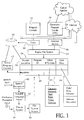
- the medium may be suitably partitioned to store program content (i.e., recorded broadcasts) together with a file system content access table used to retrieve information at a later date.
- the stored program content depicted diagrammatically at 12 , may be stored on the medium 10 according to any suitable physical file storage structure.
- the content may be stored in blocks of a predetermined size at specified starting locations within the storage medium.
- the replay file system 14 used to access the stored program content may also be stored on medium 10 , or alternatively on some other storage device or memory.
- the file system structure is illustrated generally at 16 .
- the structure includes a storage location record 18 for each program recorded.
- the information stored in each storage location record may constitute a pointer or address into the medium 10 , showing where a particular stored program content resides.
- each storage location record Associated with each storage location record is a collection of additional data that is extracted from the electronic program guide, as will be more fully discussed below.
- This additional information may include, for example, a program identifier record 20 , which may be the name of the program or other suitable label.
- other electronic program guide data may be stored in association with each program I.D.
- This other electronic program guide data is illustrated generally at 22 and may include such additional information as the program category (movie, news, weather, etc.) which network broadcasts the program content, the date and time of the broadcast, the actors starring in the broadcast, the director, and so forth. While this other electronic program guide data is not required to locate a recorded program if the program I.D. is known, the additional data is quite useful for enhancing interactive dialog between the user and the system when the program title or label is not known.
- the replay file system may include associated user data records, illustrated at 24 .
- These additional user data records may include, for example, the dates and times a particular program content was viewed, any recorded indexes the user has added to identify favorite parts of the program content, and so forth.
- the dates and times a program has been previously viewed can be used with a special feature of the system that mediates how contents of the medium may be selectively erased if the storage medium is nearing full.
- the user can record preferences in the user data record 24 , indicating whether a particular recorded selection may be automatically erased after a predetermined time, or selectively erased only after it has been viewed, or never erased unless explicitly requested by the user.
- An important aspect of the presently preferred replay file system is that the information used to locate recorded program content does not need to be explicitly written into the file system by the user. Rather, the system automatically extracts the appropriate identifying information from the electronic program guide resource that is available from the cable television or satellite broadcast infrastructure or over the Internet. The system automatically extracts electronic program guide information when the user records program content. The system does this through one of several mechanisms, depending on the particular embodiment.
- the tuner 30 tunes to a particular channel so that program content 32 may be viewed by the user or stored in storage medium 10 .
- the tuner may be connected to a suitable cable television infrastructure or satellite infrastructure, for example. While the tuner is accessing the program content, it also obtains the electronic program guide data 34 from the same cable or satellite infrastructure.
- Tuner 30 passes the electronic program guide information to the replay file system 14 , where the appropriate information is extracted and included in the file system record for the recorded program.
- the electronic program guide information may be accessed from the Internet by a separate Internet access module 36 .
- the Internet access module 36 can be coupled by cable modem to the intemet or by telephone to an internet service provider.
- the intemet access module obtains relevant electronic program guide information pertaining to the program being viewed and stores this information into the replay file system.
- the system employs a sophisticated speech-enabled, multimodal user interface whereby the user can use a combination of speech and/or on-screen prompted input (through remote control pushbuttons or the like) to request recorded information for replay.
- the speech recognizer 50 receives spoken input through a suitable microphone which may be incorporated into the remote control, into a hands free device placed on a nearby coffee table or the like, or into the storage device or television set. Output from the speech recognizer is supplied to a natural language parser 52 .
- the natural language parser of the preferred embodiment is a goal-oriented parser that uses pre-defined goal-oriented grammars to identify different user requests.
- the goal-oriented grammars are structured to correspond with the electronic program guide information by which the stored program content has been indexed.
- the system includes a dialog system 54 that responds to both output from the natural language parser 52 and also to on-screen prompted input.
- the dialog system has the ability to interact with the user, asking the user additional questions if necessary, in order to ascertain what stored program or programs the user is interested in retrieving.
- the dialog system is provided with a file system access module 56 . This module accesses the replay file system records, to return all file system records that match the user's request.
- the user could speak into the system, "I would like to watch a movie.”
- the dialog system would use its file system access module to ascertain whether there are any movies recorded on the storage medium. If there are numerous movies stored on the system, for instance, the dialog system may prompt the user to narrow the request.
- the prompt can be supplied as an on-screen prompt or a synthesized speech prompt, or both. In this case, the prompt might ask the user what category of movie he or she is interested in viewing, listing the categories for which there are currently stored programs. The user could then select the category, and the system would continue to prompt the user until the user selected one program for viewing.
- the dialog system 54 may also guide the user through other system operations, including the recording operation and other maintenance functions.
- the dialog system may be invoked, for example, when the disk is near full, and the system can determine by checking the electronic program guide data that the requested program will not fit on the remaining portion of the disk.
- the dialog system could prompt the user to either refrain from recording the program or to erase one or more previously recorded programs to make room.
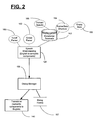
- Figure 2 depicts components of the natural language parser 52 in more detail.
- speech understanding module 128 includes a local parser 160 to identify predetermined relevant task-related fragments.
- Speech understanding module 128 also includes a global parser 162 to extract the overall semantics of the speaker's request.
- the local parser 160 utilizes in the preferred embodiment small and multiple grammars along with several passes and a unique scoring mechanism to provide parse hypotheses.
- the novel local parser 102 recognizes according to this approach phrases such as dates, names of people, and movie categories. If a speaker utters "record me a comedy in which Mel Brooks stars and is shown before January 23rd", the local parser recognizes: “comedy” as being a movie category; "January 23rd” as a date; and "Mel Brooks” as an actor.
- the global parser assembles those items (movie category, date, etc.) together and recognizes that the speaker wishes to record a movie with certain constraints.
- Speech understanding module 128 includes knowledge database 163 which encodes the semantics of a domain (i.e., goal to be achieved).
- knowledge database 163 is preferably a domain-specific database as depicted by reference numeral 165 and is used by dialog manager 130 to determine whether a particular action related to achieving a predetermined goal is possible.
- the preferred embodiment encodes the semantics via a frame data structure 164 .
- the frame data structure 164 contains empty slots 166 which are filled when the semantic interpretation of global parser 162 matches the frame.
- a frame data structure (whose domain is tuner commands) includes an empty slot for specifying the viewer-requested channel for a time period. If viewer 120 has provided the channel, then that empty slot is filled with that information. However, if that particular frame needs to be filled after the viewer has initially provided its request, then dialog manager 130 instructs computer response module 134 to ask viewer 120 to provide a desired channel.
- the frame data structure 164 preferably includes multiple frames which each in turn have multiple slots.
- One frame may have slots directed to attributes of a movie, director, and type of movie.
- Another frame may have slots directed to attributes associated with the time in which the movie is playing, the channel, and so forth.
- Dialog manager 130 uses dialog history data file 167 to assist in filling in empty slots before asking the speaker for the information.
- Dialog history data file 167 contains a log of the conversation which has occurred through the device of the present invention. For example, if a speaker utters "I'd like to watch another Marilyn Monroe movie," the dialog manager 130 examines the dialog history data file 167 to check what movies the user has already viewed or rejected in a previous dialog exchange. If the speaker had previously rejected "Some Like It Hot", then the dialog manager 130 fills the empty slot of the movie title with movies of a different title. If a sufficient number of slots have been filled, then the present invention will ask the speaker to verify and confirm the program selection. Thus, if any assumptions made by the dialog manager 130 through the use of dialog history data file 167 prove to be incorrect, then the speaker can correct the assumption.
- the natural language parser 52 analyzes and extracts semantically important and meaningful topics from a loosely structured, natural language text which may have been generated as the output of an automatic speech recognition system (ASR) used by a dialogue or speech understanding system.
- ASR automatic speech recognition system
- the natural language parser 52 translates the natural language text input to a new representation by generating well-structured tags containing topic information and data, and associating each tag with the segments of the input text containing the tagged information.
- tags may be generated in other forms such as a separate list, or as a semantic frame.
- Robustness is a feature of the natural language parser 52 as the input can contain grammatically incorrect English sentences, due to the following reasons: the input to the recognizer is casual, dialog style, natural speech can contain broken sentences, partial phrases, and the insertion, omission, or mis-recognition of errors by the speech recognizer even when the speech input is considered correct.
- the natural language parser 52 deals robustly with all types of input and extracts as much information as possible.
- Figure 3 depicts the different components of the local parser 160 of the natural language parser 24 .
- the natural language parser 52 preferably utilizes generalized parsing techniques in a multi-pass approach as a fixed-point computation.
- Each topic is described as a context-sensitive LR (left-right and rightmost derivation) grammar, allowing ambiguities.
- the following are references related to context-sensitive LR grammars: A. Aho and J. D. Ullman, Principles of Compiler Design, Addison Wesley Publishing Co., Reading, Massachusetts (1977); and N. Tomita, Generalized LR Parsing, Kluwer Academic Publishers, Boston, Massachusetts (1991).
- a generalized parsing algorithm is used to generate preferably all possible (both complete and partial) parse trees independently for each targeted topic.
- Each pass potentially generates several alternative parse-trees, each parse-tree representing a possibly different interpretation of a particular topic.
- the multiple passes through preferably parallel and independent paths result in a substantial elimination of ambiguities and overlap among different topics.
- the generalized parsing algorithm is a systematic way of scoring all possible parse-trees so that the (N) best candidates are selected utilizing the contextual information present in the system.
- Local parsing system 160 is carried out in three stages: lexical analysis 220 ; parallel parse-forest generation for each topic (for example, generators 230 and 232 ); and analysis and synthesis of parsed components as shown generally by reference numeral 234 .
- Lexical analysis stage 220 identifies and generates tags for the topics (which do not require extensive grammars) in input sentence 218 using lexical filters 226 and 228 . These include, for example, movie names; category of movie; producers; names of actors and actresses; and the like.
- a regular-expression scan of the input sentence 218 using the keywords involved in the mentioned exemplary tags is typically sufficient at this level. Also, performed at this stage is the tagging of words in the input sentence that are not part of the lexicon of particular grammar. These words are indicated using an X-tag so that such noise words are replaced with the letter "X".
- the natural language parser 52 uses a high-level general parsing strategy to describe and parse each topic separately, and generates tags and maps them to the input stream. Due to the nature of unstructured input text 218 , each individual topic parser preferably accepts as large a language as possible, ignoring all but important words, dealing with insertion and deletion errors.
- the parsing of each topic involves designing context-sensitive grammar rules using a meta-level specification language, much like the ones used in LR parsing. Examples of grammars include grammar A 240 and grammar B 242 . Using the present invention's approach, topic grammars 240 and 242 are described as if they were an LR-type grammar, containing redundancies and without eliminating shift and reduce conflicts. The result of parsing an input sentence is all possible parses based on the grammar specifications.
- Generators 230 and 232 generate parse forests 250 and 252 for their topics. Tag-generation is done by synthesizing actual information found in the parse tree obtained during parsing. Tag generation is accomplished via tag and score generators 260 and 262 which respectively generate tags 264 and 266 . Each identified tag also carries information about what set of input words in the input sentence are covered by the tag. Subsequently the tag replaces its cover-set.
- context information 267 is utilized for tag and score generations, such as by generators 260 and 262 . Context information 267 is utilized in the scoring heuristics for adjusting weights associated with a heuristic scoring factor technique that is discussed below.
- Context information 267 preferably includes word confidence vector 268 and dialogue context weights 269 .
- the parser 52 is not limited to using both word confidence vector 268 and dialogue context weights 269 , but also includes using one to the exclusion of the other, as well as not utilizing context information 267 .
- Automatic speech recognition process block 217 generates word confidence vector 268 which indicates how well the words in input sentence 218 were recognized.
- Dialog manager 130 generates dialogue context weights 269 by determining the state of the dialogue. For example, dialog manager 130 asks a user about a particular topic, such as, what viewing time is preferable. Due to this request, dialog manager 130 determines that the state of the dialogue is time-oriented. Dialog manager 130 provides dialogue context weights 269 in order to inform the proper processes to more heavily weight the detected time-oriented words.
- the topic spotting parser of the previous stage generates a significant amount of information that needs to be analyzed and combined together to form the final output of the local parser.
- the parser 52 is preferably as "aggressive" as possible in spotting each topic resulting in the generation of multiple tag candidates. Additionally in the presence of numbers or certain key-words, such as "between”, “before”, “and”, “or”, “around”, etc., and especially if these words have been introduced or dropped due to recognition errors it is possible to construct many alternative tag candidates. For example, an input sentence could have insertion or deletion errors.
- the combining phase determines which tags form a more meaningful interpretation of the input.
- the parser 52 defines heuristics and makes a selection based on them using a N-Best candidate selection process. Each generated tag corresponds to a set of words in the input word string, called the tag's cover-set.
- a heuristic is used that takes into account the cover-sets of the tags used to generate a score. The score roughly depends on the size of the cover-set, the sizes in the number of the words of the gaps within the covered items, and the weights assigned to the presence of certain keywords.
- ASR-derived confidence vector and dialog context information are utilized to assign priorities to the tags. For example applying channel-tags parsing first potentially removes channel-related numbers that are easier to identify uniquely from the input stream, and leaves fewer numbers to create ambiguities with other tags.
- dialog context information is used to adjust the priorities.
- an N-best processor 270 selects the N-best candidates based upon the scores associated with the tags and generates the topic-tags, each representing the information found in the corresponding parse-tree. Once topics have been discovered this way, the corresponding words in the input can be substituted with the tag information. This substitution transformation eliminates the corresponding words from the current input text.
- the output 280 of each pass is fed-back to the next pass as the new input, since the substitutions may help in the elimination of certain ambiguities among competing grammars or help generate better parse-trees by filtering out overlapping symbols.
- the following scoring factors are used to rank the alternative parse trees based on the following attributes of a parse-tree:
- Each path preferably corresponds to a separate topic that can be developed independently, operating on a small amount of data, in a computationally inexpensive way.
- the architecture of the parser 52 is flexible and modular so incorporating additional paths and grammars, for new topics, or changing heuristics for particular topics is straight forward, this also allows developing reusable components that can be shared among different systems easily.
- the system of the invention provides an interactive replay system with dynamically-built replay file system structure. Because the file system structure automatically extracts relevant information from the electronic program guide resources available via cable, satellite and/or intemet, the system requires very little effort on the part of the user, while allowing a very rich interactive dialog to locate and replay stored information.
Landscapes
- Engineering & Computer Science (AREA)
- Multimedia (AREA)
- Signal Processing (AREA)
- Databases & Information Systems (AREA)
- Theoretical Computer Science (AREA)
- General Health & Medical Sciences (AREA)
- Social Psychology (AREA)
- Health & Medical Sciences (AREA)
- General Physics & Mathematics (AREA)
- Data Mining & Analysis (AREA)
- Physics & Mathematics (AREA)
- General Engineering & Computer Science (AREA)
- Computer Networks & Wireless Communication (AREA)
- Human Computer Interaction (AREA)
- Library & Information Science (AREA)
- Television Signal Processing For Recording (AREA)
- Television Systems (AREA)
- Information Retrieval, Db Structures And Fs Structures Therefor (AREA)
- Machine Translation (AREA)
Abstract
Description
- Number of terminal symbols.
- Number of non-terminal symbols.
- The depth of the parse-tree.
- The size of the gaps in the terminal symbols.
- ASR-Confidence measures associated with each terminal symbol.
- Context-adjustable weights associated with each terminal and non-terminal symbol.
Claims (12)
- A file system for organizing recorded items of program content, comprising:a memory having a data structure for storing the location of a recorded item of program content in association with at least one electronic program guide attribute selected from the group consisting of: program title identifier, program category, broadcasting network, date of broadcast, time of broadcast, actors, and director;an interface for receiving electronic program guide attribute information about a specific item of program content to be stored;a file write mechanism that automatically stores said electronic program guide attribute information about said item of program content to be stored in said data structure, anda file read mechanism that ascertains the storage location of a recorded item of program content based on said at least one electronic program guide attribute accessed from said data structure.
- The file system of claim 1 further comprising a natural language dialog system that interacts with said file read mechanism for supplying electronic program guide attribute inquires to said read mechanism based on spoken requests of a user.
- The file system of claim 1 wherein said data structure further includes at least one user data attribute in association with said location of a recorded item of program content.
- The file system of claim 3 wherein said user data attribute stores a record of when the item of program content was viewed by a user.
- The file system of claim 3 wherein said user data attribute stores at least one user-defined index that identifies a user-defined location within a recorded item.
- The file system of claim 3 further comprising storage system maintenance system that selectively erases previously recorded items of program content based at least in part upon said user data attribute.
- The file system of claim 1 wherein said interface for receiving electronic program guide information comprises an internet access system capable of accessing at least one internet-based provider of electronic program guide information.
- The file system of claim 1 wherein said interface for receiving electronic program guide information comprises a tuner for retrieving electronic program guide information from a supplier of program content.
- A system for recording program content comprising a storage medium for storing at least one item of program content and a file system as defined in claim 1.
- The system of claim 9 wherein said storage medium is a disk memory.
- The system of claim 9 wherein said storage medium is a tape memory.
- The system of claim 9 wherein said storage medium is an electronic memory.
Applications Claiming Priority (2)
| Application Number | Priority Date | Filing Date | Title |
|---|---|---|---|
| US38375999A | 1999-08-26 | 1999-08-26 | |
| US383759 | 1999-08-26 |
Publications (2)
| Publication Number | Publication Date |
|---|---|
| EP1079387A2 true EP1079387A2 (en) | 2001-02-28 |
| EP1079387A3 EP1079387A3 (en) | 2003-07-09 |
Family
ID=23514611
Family Applications (1)
| Application Number | Title | Priority Date | Filing Date |
|---|---|---|---|
| EP00306974A Withdrawn EP1079387A3 (en) | 1999-08-26 | 2000-08-15 | Mechanism for storing information about recorded television broadcasts |
Country Status (3)
| Country | Link |
|---|---|
| US (1) | US20040236778A1 (en) |
| EP (1) | EP1079387A3 (en) |
| JP (1) | JP3577454B2 (en) |
Cited By (5)
| Publication number | Priority date | Publication date | Assignee | Title |
|---|---|---|---|---|
| WO2005025216A1 (en) | 2003-09-04 | 2005-03-17 | Sony Corporation | Program data recording method and apparatus |
| WO2004109553A3 (en) * | 2003-06-04 | 2005-03-24 | Matsushita Electric Industrial Co Ltd | Media inventory information presentation system, management device, and terminal device |
| EP1282309B1 (en) * | 2001-07-30 | 2005-11-02 | Funai Electric Co., Ltd. | Apparatus for time-shifted reproduction of video Information |
| EP2417767A4 (en) * | 2009-04-10 | 2013-07-31 | Samsung Electronics Co Ltd | APPARATUS AND METHOD FOR PROVIDING INFORMATION RELATED TO BROADCAST PROGRAMS |
| CN111147905A (en) * | 2019-12-31 | 2020-05-12 | 深圳Tcl数字技术有限公司 | Media resource searching method, television, storage medium and device |
Families Citing this family (167)
| Publication number | Priority date | Publication date | Assignee | Title |
|---|---|---|---|---|
| US8645137B2 (en) | 2000-03-16 | 2014-02-04 | Apple Inc. | Fast, language-independent method for user authentication by voice |
| US7177798B2 (en) * | 2000-04-07 | 2007-02-13 | Rensselaer Polytechnic Institute | Natural language interface using constrained intermediate dictionary of results |
| US6928405B2 (en) * | 2001-09-05 | 2005-08-09 | Inventec Corporation | Method of adding audio data to an information title of a document |
| ITFI20010199A1 (en) | 2001-10-22 | 2003-04-22 | Riccardo Vieri | SYSTEM AND METHOD TO TRANSFORM TEXTUAL COMMUNICATIONS INTO VOICE AND SEND THEM WITH AN INTERNET CONNECTION TO ANY TELEPHONE SYSTEM |
| KR100582953B1 (en) * | 2002-06-05 | 2006-05-23 | 엘지전자 주식회사 | Recording stream management method of recording medium |
| FR2845555A1 (en) * | 2002-10-07 | 2004-04-09 | Thomson Licensing Sa | INTERACTIVE TELEVISION RECEIVING AND BROADCASTING METHODS AND ASSOCIATED DEVICES |
| US7657151B2 (en) | 2005-01-05 | 2010-02-02 | The Directv Group, Inc. | Method and system for displaying a series of recordable events |
| US7290211B2 (en) * | 2005-01-05 | 2007-10-30 | Digital Networks North America, Inc. | Method and system for reconfiguring a selection system based on layers of categories descriptive of recordable events |
| US8677377B2 (en) | 2005-09-08 | 2014-03-18 | Apple Inc. | Method and apparatus for building an intelligent automated assistant |
| US20070157222A1 (en) * | 2005-12-29 | 2007-07-05 | United Video Properties, Inc. | Systems and methods for managing content |
| WO2008030510A2 (en) * | 2006-09-06 | 2008-03-13 | Nexplore Corporation | System and method for weighted search and advertisement placement |
| US9318108B2 (en) | 2010-01-18 | 2016-04-19 | Apple Inc. | Intelligent automated assistant |
| US20080086491A1 (en) * | 2006-10-04 | 2008-04-10 | Mediatek Inc. | Multimedia management and playback apparatus |
| US8977255B2 (en) | 2007-04-03 | 2015-03-10 | Apple Inc. | Method and system for operating a multi-function portable electronic device using voice-activation |
| US9110569B2 (en) * | 2007-08-22 | 2015-08-18 | Linkedin Corporation | Indicating a content preference |
| US9053089B2 (en) | 2007-10-02 | 2015-06-09 | Apple Inc. | Part-of-speech tagging using latent analogy |
| US9330720B2 (en) | 2008-01-03 | 2016-05-03 | Apple Inc. | Methods and apparatus for altering audio output signals |
| US8065143B2 (en) | 2008-02-22 | 2011-11-22 | Apple Inc. | Providing text input using speech data and non-speech data |
| US8996376B2 (en) | 2008-04-05 | 2015-03-31 | Apple Inc. | Intelligent text-to-speech conversion |
| US10496753B2 (en) | 2010-01-18 | 2019-12-03 | Apple Inc. | Automatically adapting user interfaces for hands-free interaction |
| US8464150B2 (en) | 2008-06-07 | 2013-06-11 | Apple Inc. | Automatic language identification for dynamic text processing |
| US20100030549A1 (en) | 2008-07-31 | 2010-02-04 | Lee Michael M | Mobile device having human language translation capability with positional feedback |
| US8768702B2 (en) | 2008-09-05 | 2014-07-01 | Apple Inc. | Multi-tiered voice feedback in an electronic device |
| US8898568B2 (en) | 2008-09-09 | 2014-11-25 | Apple Inc. | Audio user interface |
| US8712776B2 (en) | 2008-09-29 | 2014-04-29 | Apple Inc. | Systems and methods for selective text to speech synthesis |
| US8676904B2 (en) | 2008-10-02 | 2014-03-18 | Apple Inc. | Electronic devices with voice command and contextual data processing capabilities |
| US9959870B2 (en) | 2008-12-11 | 2018-05-01 | Apple Inc. | Speech recognition involving a mobile device |
| US8862252B2 (en) | 2009-01-30 | 2014-10-14 | Apple Inc. | Audio user interface for displayless electronic device |
| US8380507B2 (en) | 2009-03-09 | 2013-02-19 | Apple Inc. | Systems and methods for determining the language to use for speech generated by a text to speech engine |
| US10540976B2 (en) | 2009-06-05 | 2020-01-21 | Apple Inc. | Contextual voice commands |
| US9858925B2 (en) | 2009-06-05 | 2018-01-02 | Apple Inc. | Using context information to facilitate processing of commands in a virtual assistant |
| US10255566B2 (en) | 2011-06-03 | 2019-04-09 | Apple Inc. | Generating and processing task items that represent tasks to perform |
| US10241752B2 (en) | 2011-09-30 | 2019-03-26 | Apple Inc. | Interface for a virtual digital assistant |
| US10241644B2 (en) | 2011-06-03 | 2019-03-26 | Apple Inc. | Actionable reminder entries |
| US9431006B2 (en) | 2009-07-02 | 2016-08-30 | Apple Inc. | Methods and apparatuses for automatic speech recognition |
| US8682649B2 (en) | 2009-11-12 | 2014-03-25 | Apple Inc. | Sentiment prediction from textual data |
| US8311838B2 (en) | 2010-01-13 | 2012-11-13 | Apple Inc. | Devices and methods for identifying a prompt corresponding to a voice input in a sequence of prompts |
| US8381107B2 (en) | 2010-01-13 | 2013-02-19 | Apple Inc. | Adaptive audio feedback system and method |
| US10679605B2 (en) | 2010-01-18 | 2020-06-09 | Apple Inc. | Hands-free list-reading by intelligent automated assistant |
| US10276170B2 (en) | 2010-01-18 | 2019-04-30 | Apple Inc. | Intelligent automated assistant |
| US10705794B2 (en) | 2010-01-18 | 2020-07-07 | Apple Inc. | Automatically adapting user interfaces for hands-free interaction |
| US10553209B2 (en) | 2010-01-18 | 2020-02-04 | Apple Inc. | Systems and methods for hands-free notification summaries |
| DE202011111062U1 (en) | 2010-01-25 | 2019-02-19 | Newvaluexchange Ltd. | Device and system for a digital conversation management platform |
| US8682667B2 (en) | 2010-02-25 | 2014-03-25 | Apple Inc. | User profiling for selecting user specific voice input processing information |
| US9258175B1 (en) | 2010-05-28 | 2016-02-09 | The Directv Group, Inc. | Method and system for sharing playlists for content stored within a network |
| US8713021B2 (en) | 2010-07-07 | 2014-04-29 | Apple Inc. | Unsupervised document clustering using latent semantic density analysis |
| US8719006B2 (en) | 2010-08-27 | 2014-05-06 | Apple Inc. | Combined statistical and rule-based part-of-speech tagging for text-to-speech synthesis |
| US8719014B2 (en) | 2010-09-27 | 2014-05-06 | Apple Inc. | Electronic device with text error correction based on voice recognition data |
| US10515147B2 (en) | 2010-12-22 | 2019-12-24 | Apple Inc. | Using statistical language models for contextual lookup |
| US10762293B2 (en) | 2010-12-22 | 2020-09-01 | Apple Inc. | Using parts-of-speech tagging and named entity recognition for spelling correction |
| US8781836B2 (en) | 2011-02-22 | 2014-07-15 | Apple Inc. | Hearing assistance system for providing consistent human speech |
| US9262612B2 (en) | 2011-03-21 | 2016-02-16 | Apple Inc. | Device access using voice authentication |
| US10057736B2 (en) | 2011-06-03 | 2018-08-21 | Apple Inc. | Active transport based notifications |
| US10672399B2 (en) | 2011-06-03 | 2020-06-02 | Apple Inc. | Switching between text data and audio data based on a mapping |
| US8812294B2 (en) | 2011-06-21 | 2014-08-19 | Apple Inc. | Translating phrases from one language into another using an order-based set of declarative rules |
| US8706472B2 (en) | 2011-08-11 | 2014-04-22 | Apple Inc. | Method for disambiguating multiple readings in language conversion |
| US8994660B2 (en) | 2011-08-29 | 2015-03-31 | Apple Inc. | Text correction processing |
| US8762156B2 (en) | 2011-09-28 | 2014-06-24 | Apple Inc. | Speech recognition repair using contextual information |
| US10134385B2 (en) | 2012-03-02 | 2018-11-20 | Apple Inc. | Systems and methods for name pronunciation |
| US9483461B2 (en) | 2012-03-06 | 2016-11-01 | Apple Inc. | Handling speech synthesis of content for multiple languages |
| US9280610B2 (en) | 2012-05-14 | 2016-03-08 | Apple Inc. | Crowd sourcing information to fulfill user requests |
| US10417037B2 (en) | 2012-05-15 | 2019-09-17 | Apple Inc. | Systems and methods for integrating third party services with a digital assistant |
| US8775442B2 (en) | 2012-05-15 | 2014-07-08 | Apple Inc. | Semantic search using a single-source semantic model |
| US10019994B2 (en) | 2012-06-08 | 2018-07-10 | Apple Inc. | Systems and methods for recognizing textual identifiers within a plurality of words |
| US9721563B2 (en) | 2012-06-08 | 2017-08-01 | Apple Inc. | Name recognition system |
| US9495129B2 (en) | 2012-06-29 | 2016-11-15 | Apple Inc. | Device, method, and user interface for voice-activated navigation and browsing of a document |
| US9576574B2 (en) | 2012-09-10 | 2017-02-21 | Apple Inc. | Context-sensitive handling of interruptions by intelligent digital assistant |
| US9547647B2 (en) | 2012-09-19 | 2017-01-17 | Apple Inc. | Voice-based media searching |
| US8935167B2 (en) | 2012-09-25 | 2015-01-13 | Apple Inc. | Exemplar-based latent perceptual modeling for automatic speech recognition |
| KR20140089871A (en) * | 2013-01-07 | 2014-07-16 | 삼성전자주식회사 | Interactive server, control method thereof and interactive system |
| DE112014000709B4 (en) | 2013-02-07 | 2021-12-30 | Apple Inc. | METHOD AND DEVICE FOR OPERATING A VOICE TRIGGER FOR A DIGITAL ASSISTANT |
| US9733821B2 (en) | 2013-03-14 | 2017-08-15 | Apple Inc. | Voice control to diagnose inadvertent activation of accessibility features |
| US10652394B2 (en) | 2013-03-14 | 2020-05-12 | Apple Inc. | System and method for processing voicemail |
| US9977779B2 (en) | 2013-03-14 | 2018-05-22 | Apple Inc. | Automatic supplementation of word correction dictionaries |
| US9368114B2 (en) | 2013-03-14 | 2016-06-14 | Apple Inc. | Context-sensitive handling of interruptions |
| US10642574B2 (en) | 2013-03-14 | 2020-05-05 | Apple Inc. | Device, method, and graphical user interface for outputting captions |
| US10572476B2 (en) | 2013-03-14 | 2020-02-25 | Apple Inc. | Refining a search based on schedule items |
| US10748529B1 (en) | 2013-03-15 | 2020-08-18 | Apple Inc. | Voice activated device for use with a voice-based digital assistant |
| WO2014144949A2 (en) | 2013-03-15 | 2014-09-18 | Apple Inc. | Training an at least partial voice command system |
| KR102057795B1 (en) | 2013-03-15 | 2019-12-19 | 애플 인크. | Context-sensitive handling of interruptions |
| WO2014144579A1 (en) | 2013-03-15 | 2014-09-18 | Apple Inc. | System and method for updating an adaptive speech recognition model |
| CN105190607B (en) | 2013-03-15 | 2018-11-30 | 苹果公司 | User training through intelligent digital assistants |
| US9582608B2 (en) | 2013-06-07 | 2017-02-28 | Apple Inc. | Unified ranking with entropy-weighted information for phrase-based semantic auto-completion |
| WO2014197336A1 (en) | 2013-06-07 | 2014-12-11 | Apple Inc. | System and method for detecting errors in interactions with a voice-based digital assistant |
| WO2014197334A2 (en) | 2013-06-07 | 2014-12-11 | Apple Inc. | System and method for user-specified pronunciation of words for speech synthesis and recognition |
| WO2014197335A1 (en) | 2013-06-08 | 2014-12-11 | Apple Inc. | Interpreting and acting upon commands that involve sharing information with remote devices |
| KR101959188B1 (en) | 2013-06-09 | 2019-07-02 | 애플 인크. | Device, method, and graphical user interface for enabling conversation persistence across two or more instances of a digital assistant |
| US10176167B2 (en) | 2013-06-09 | 2019-01-08 | Apple Inc. | System and method for inferring user intent from speech inputs |
| KR101809808B1 (en) | 2013-06-13 | 2017-12-15 | 애플 인크. | System and method for emergency calls initiated by voice command |
| KR101749009B1 (en) | 2013-08-06 | 2017-06-19 | 애플 인크. | Auto-activating smart responses based on activities from remote devices |
| US10296160B2 (en) | 2013-12-06 | 2019-05-21 | Apple Inc. | Method for extracting salient dialog usage from live data |
| CN103902723A (en) * | 2014-04-10 | 2014-07-02 | 中央电视台 | Media file catalog metadata aggregation method and device |
| US9620105B2 (en) | 2014-05-15 | 2017-04-11 | Apple Inc. | Analyzing audio input for efficient speech and music recognition |
| US10592095B2 (en) | 2014-05-23 | 2020-03-17 | Apple Inc. | Instantaneous speaking of content on touch devices |
| US9502031B2 (en) | 2014-05-27 | 2016-11-22 | Apple Inc. | Method for supporting dynamic grammars in WFST-based ASR |
| US9734193B2 (en) | 2014-05-30 | 2017-08-15 | Apple Inc. | Determining domain salience ranking from ambiguous words in natural speech |
| US9785630B2 (en) | 2014-05-30 | 2017-10-10 | Apple Inc. | Text prediction using combined word N-gram and unigram language models |
| WO2015184186A1 (en) | 2014-05-30 | 2015-12-03 | Apple Inc. | Multi-command single utterance input method |
| US9430463B2 (en) | 2014-05-30 | 2016-08-30 | Apple Inc. | Exemplar-based natural language processing |
| US9842101B2 (en) | 2014-05-30 | 2017-12-12 | Apple Inc. | Predictive conversion of language input |
| US9760559B2 (en) | 2014-05-30 | 2017-09-12 | Apple Inc. | Predictive text input |
| US10170123B2 (en) | 2014-05-30 | 2019-01-01 | Apple Inc. | Intelligent assistant for home automation |
| US10289433B2 (en) | 2014-05-30 | 2019-05-14 | Apple Inc. | Domain specific language for encoding assistant dialog |
| US9715875B2 (en) | 2014-05-30 | 2017-07-25 | Apple Inc. | Reducing the need for manual start/end-pointing and trigger phrases |
| US10078631B2 (en) | 2014-05-30 | 2018-09-18 | Apple Inc. | Entropy-guided text prediction using combined word and character n-gram language models |
| US9633004B2 (en) | 2014-05-30 | 2017-04-25 | Apple Inc. | Better resolution when referencing to concepts |
| US10659851B2 (en) | 2014-06-30 | 2020-05-19 | Apple Inc. | Real-time digital assistant knowledge updates |
| US9338493B2 (en) | 2014-06-30 | 2016-05-10 | Apple Inc. | Intelligent automated assistant for TV user interactions |
| US10446141B2 (en) | 2014-08-28 | 2019-10-15 | Apple Inc. | Automatic speech recognition based on user feedback |
| US9818400B2 (en) | 2014-09-11 | 2017-11-14 | Apple Inc. | Method and apparatus for discovering trending terms in speech requests |
| US10789041B2 (en) | 2014-09-12 | 2020-09-29 | Apple Inc. | Dynamic thresholds for always listening speech trigger |
| US10074360B2 (en) | 2014-09-30 | 2018-09-11 | Apple Inc. | Providing an indication of the suitability of speech recognition |
| US9886432B2 (en) | 2014-09-30 | 2018-02-06 | Apple Inc. | Parsimonious handling of word inflection via categorical stem + suffix N-gram language models |
| US9646609B2 (en) | 2014-09-30 | 2017-05-09 | Apple Inc. | Caching apparatus for serving phonetic pronunciations |
| US10127911B2 (en) | 2014-09-30 | 2018-11-13 | Apple Inc. | Speaker identification and unsupervised speaker adaptation techniques |
| US9668121B2 (en) | 2014-09-30 | 2017-05-30 | Apple Inc. | Social reminders |
| US10552013B2 (en) | 2014-12-02 | 2020-02-04 | Apple Inc. | Data detection |
| US9711141B2 (en) | 2014-12-09 | 2017-07-18 | Apple Inc. | Disambiguating heteronyms in speech synthesis |
| US9865280B2 (en) | 2015-03-06 | 2018-01-09 | Apple Inc. | Structured dictation using intelligent automated assistants |
| US9721566B2 (en) | 2015-03-08 | 2017-08-01 | Apple Inc. | Competing devices responding to voice triggers |
| US10567477B2 (en) | 2015-03-08 | 2020-02-18 | Apple Inc. | Virtual assistant continuity |
| US9886953B2 (en) | 2015-03-08 | 2018-02-06 | Apple Inc. | Virtual assistant activation |
| US9899019B2 (en) | 2015-03-18 | 2018-02-20 | Apple Inc. | Systems and methods for structured stem and suffix language models |
| US9842105B2 (en) | 2015-04-16 | 2017-12-12 | Apple Inc. | Parsimonious continuous-space phrase representations for natural language processing |
| US10083688B2 (en) | 2015-05-27 | 2018-09-25 | Apple Inc. | Device voice control for selecting a displayed affordance |
| US10127220B2 (en) | 2015-06-04 | 2018-11-13 | Apple Inc. | Language identification from short strings |
| US10101822B2 (en) | 2015-06-05 | 2018-10-16 | Apple Inc. | Language input correction |
| US9578173B2 (en) | 2015-06-05 | 2017-02-21 | Apple Inc. | Virtual assistant aided communication with 3rd party service in a communication session |
| US10186254B2 (en) | 2015-06-07 | 2019-01-22 | Apple Inc. | Context-based endpoint detection |
| US10255907B2 (en) | 2015-06-07 | 2019-04-09 | Apple Inc. | Automatic accent detection using acoustic models |
| US11025565B2 (en) | 2015-06-07 | 2021-06-01 | Apple Inc. | Personalized prediction of responses for instant messaging |
| US10671428B2 (en) | 2015-09-08 | 2020-06-02 | Apple Inc. | Distributed personal assistant |
| US10747498B2 (en) | 2015-09-08 | 2020-08-18 | Apple Inc. | Zero latency digital assistant |
| US10770067B1 (en) * | 2015-09-08 | 2020-09-08 | Amazon Technologies, Inc. | Dynamic voice search transitioning |
| US9697820B2 (en) | 2015-09-24 | 2017-07-04 | Apple Inc. | Unit-selection text-to-speech synthesis using concatenation-sensitive neural networks |
| US10366158B2 (en) | 2015-09-29 | 2019-07-30 | Apple Inc. | Efficient word encoding for recurrent neural network language models |
| US11010550B2 (en) | 2015-09-29 | 2021-05-18 | Apple Inc. | Unified language modeling framework for word prediction, auto-completion and auto-correction |
| US11587559B2 (en) | 2015-09-30 | 2023-02-21 | Apple Inc. | Intelligent device identification |
| US10691473B2 (en) | 2015-11-06 | 2020-06-23 | Apple Inc. | Intelligent automated assistant in a messaging environment |
| US10049668B2 (en) | 2015-12-02 | 2018-08-14 | Apple Inc. | Applying neural network language models to weighted finite state transducers for automatic speech recognition |
| US10223066B2 (en) | 2015-12-23 | 2019-03-05 | Apple Inc. | Proactive assistance based on dialog communication between devices |
| US10446143B2 (en) | 2016-03-14 | 2019-10-15 | Apple Inc. | Identification of voice inputs providing credentials |
| US9934775B2 (en) | 2016-05-26 | 2018-04-03 | Apple Inc. | Unit-selection text-to-speech synthesis based on predicted concatenation parameters |
| US9972304B2 (en) | 2016-06-03 | 2018-05-15 | Apple Inc. | Privacy preserving distributed evaluation framework for embedded personalized systems |
| US10249300B2 (en) | 2016-06-06 | 2019-04-02 | Apple Inc. | Intelligent list reading |
| US10049663B2 (en) | 2016-06-08 | 2018-08-14 | Apple, Inc. | Intelligent automated assistant for media exploration |
| DK179588B1 (en) | 2016-06-09 | 2019-02-22 | Apple Inc. | Intelligent automated assistant in a home environment |
| US10586535B2 (en) | 2016-06-10 | 2020-03-10 | Apple Inc. | Intelligent digital assistant in a multi-tasking environment |
| US10067938B2 (en) | 2016-06-10 | 2018-09-04 | Apple Inc. | Multilingual word prediction |
| US10192552B2 (en) | 2016-06-10 | 2019-01-29 | Apple Inc. | Digital assistant providing whispered speech |
| US10490187B2 (en) | 2016-06-10 | 2019-11-26 | Apple Inc. | Digital assistant providing automated status report |
| US10509862B2 (en) | 2016-06-10 | 2019-12-17 | Apple Inc. | Dynamic phrase expansion of language input |
| DK179343B1 (en) | 2016-06-11 | 2018-05-14 | Apple Inc | Intelligent task discovery |
| DK179049B1 (en) | 2016-06-11 | 2017-09-18 | Apple Inc | Data driven natural language event detection and classification |
| DK201670540A1 (en) | 2016-06-11 | 2018-01-08 | Apple Inc | Application integration with a digital assistant |
| DK179415B1 (en) | 2016-06-11 | 2018-06-14 | Apple Inc | Intelligent device arbitration and control |
| US10043516B2 (en) | 2016-09-23 | 2018-08-07 | Apple Inc. | Intelligent automated assistant |
| US10593346B2 (en) | 2016-12-22 | 2020-03-17 | Apple Inc. | Rank-reduced token representation for automatic speech recognition |
| DK201770439A1 (en) | 2017-05-11 | 2018-12-13 | Apple Inc. | Offline personal assistant |
| DK179745B1 (en) | 2017-05-12 | 2019-05-01 | Apple Inc. | SYNCHRONIZATION AND TASK DELEGATION OF A DIGITAL ASSISTANT |
| DK179496B1 (en) | 2017-05-12 | 2019-01-15 | Apple Inc. | USER-SPECIFIC Acoustic Models |
| DK201770432A1 (en) | 2017-05-15 | 2018-12-21 | Apple Inc. | Hierarchical belief states for digital assistants |
| DK201770431A1 (en) | 2017-05-15 | 2018-12-20 | Apple Inc. | Optimizing dialogue policy decisions for digital assistants using implicit feedback |
| KR102071582B1 (en) * | 2017-05-16 | 2020-01-30 | 삼성전자주식회사 | Method and apparatus for classifying a class to which a sentence belongs by using deep neural network |
| DK179560B1 (en) | 2017-05-16 | 2019-02-18 | Apple Inc. | Far-field extension for digital assistant services |
| US20190005590A1 (en) * | 2017-06-30 | 2019-01-03 | Accenture Global Solutions Limited | Outcome driven case management |
| JP7224083B2 (en) * | 2020-10-30 | 2023-02-17 | 竜 今泉 | Information processing equipment |
Family Cites Families (14)
| Publication number | Priority date | Publication date | Assignee | Title |
|---|---|---|---|---|
| US5353121A (en) * | 1989-10-30 | 1994-10-04 | Starsight Telecast, Inc. | Television schedule system |
| EP1585321B1 (en) * | 1990-09-10 | 2011-07-13 | Starsight Telecast, Inc. | User interface for television schedule system |
| WO1992022983A2 (en) * | 1991-06-11 | 1992-12-23 | Browne H Lee | Large capacity, random access, multi-source recorder player |
| US5410367A (en) * | 1994-02-23 | 1995-04-25 | Aqi Ltd. | Television program scheduler for providing an indication to a user that a television program is about to start |
| JPH0832922A (en) * | 1994-07-14 | 1996-02-02 | Hitachi Ltd | Magnetic recording / reproducing device |
| US5748974A (en) * | 1994-12-13 | 1998-05-05 | International Business Machines Corporation | Multimodal natural language interface for cross-application tasks |
| US5774859A (en) * | 1995-01-03 | 1998-06-30 | Scientific-Atlanta, Inc. | Information system having a speech interface |
| US6075575A (en) * | 1995-10-02 | 2000-06-13 | Starsight Telecast, Inc. | Remote control device and method for using television schedule information |
| US6732369B1 (en) * | 1995-10-02 | 2004-05-04 | Starsight Telecast, Inc. | Systems and methods for contextually linking television program information |
| US5832439A (en) * | 1995-12-14 | 1998-11-03 | U S West, Inc. | Method and system for linguistic command processing in a video server network |
| JP4380797B2 (en) * | 1996-06-17 | 2009-12-09 | スターサイト テレキャスト インコーポレイテッド | Improved television schedule system |
| US5999896A (en) * | 1996-06-25 | 1999-12-07 | Microsoft Corporation | Method and system for identifying and resolving commonly confused words in a natural language parser |
| US5878386A (en) * | 1996-06-28 | 1999-03-02 | Microsoft Corporation | Natural language parser with dictionary-based part-of-speech probabilities |
| US6643620B1 (en) * | 1999-03-15 | 2003-11-04 | Matsushita Electric Industrial Co., Ltd. | Voice activated controller for recording and retrieving audio/video programs |
-
2000
- 2000-08-15 EP EP00306974A patent/EP1079387A3/en not_active Withdrawn
- 2000-08-25 JP JP2000255971A patent/JP3577454B2/en not_active Expired - Fee Related
-
2004
- 2004-07-07 US US10/886,500 patent/US20040236778A1/en not_active Abandoned
Cited By (8)
| Publication number | Priority date | Publication date | Assignee | Title |
|---|---|---|---|---|
| EP1282309B1 (en) * | 2001-07-30 | 2005-11-02 | Funai Electric Co., Ltd. | Apparatus for time-shifted reproduction of video Information |
| WO2004109553A3 (en) * | 2003-06-04 | 2005-03-24 | Matsushita Electric Industrial Co Ltd | Media inventory information presentation system, management device, and terminal device |
| US7647343B2 (en) | 2003-06-04 | 2010-01-12 | Panasonic Corporation | Information presentation system, management device, and terminal device |
| WO2005025216A1 (en) | 2003-09-04 | 2005-03-17 | Sony Corporation | Program data recording method and apparatus |
| EP1662784A4 (en) * | 2003-09-04 | 2011-10-19 | Sony Corp | METHOD AND APPARATUS FOR RECORDING PROGRAM DATA |
| EP2417767A4 (en) * | 2009-04-10 | 2013-07-31 | Samsung Electronics Co Ltd | APPARATUS AND METHOD FOR PROVIDING INFORMATION RELATED TO BROADCAST PROGRAMS |
| US9202523B2 (en) | 2009-04-10 | 2015-12-01 | Samsung Electronics Co., Ltd. | Method and apparatus for providing information related to broadcast programs |
| CN111147905A (en) * | 2019-12-31 | 2020-05-12 | 深圳Tcl数字技术有限公司 | Media resource searching method, television, storage medium and device |
Also Published As
| Publication number | Publication date |
|---|---|
| EP1079387A3 (en) | 2003-07-09 |
| JP3577454B2 (en) | 2004-10-13 |
| US20040236778A1 (en) | 2004-11-25 |
| JP2001103402A (en) | 2001-04-13 |
Similar Documents
| Publication | Publication Date | Title |
|---|---|---|
| EP1079387A2 (en) | Mechanism for storing information about recorded television broadcasts | |
| US6330537B1 (en) | Automatic filtering of TV contents using speech recognition and natural language | |
| US6553345B1 (en) | Universal remote control allowing natural language modality for television and multimedia searches and requests | |
| US6901366B1 (en) | System and method for assessing TV-related information over the internet | |
| US6324512B1 (en) | System and method for allowing family members to access TV contents and program media recorder over telephone or internet | |
| US6513006B2 (en) | Automatic control of household activity using speech recognition and natural language | |
| US6415257B1 (en) | System for identifying and adapting a TV-user profile by means of speech technology | |
| US6643620B1 (en) | Voice activated controller for recording and retrieving audio/video programs | |
| EP1033701B1 (en) | Apparatus and method using speech understanding for automatic channel selection in interactive television | |
| EP1079615A2 (en) | System for identifying and adapting a TV-user profile by means of speech technology | |
| KR100661687B1 (en) | Web-based platform for interactive voice responseivr | |
| US7680853B2 (en) | Clickable snippets in audio/video search results | |
| JP3657844B2 (en) | Automatic TV program search system | |
| US6456978B1 (en) | Recording information in response to spoken requests | |
| US7283959B2 (en) | Compact easily parseable binary format for a context-free grammar | |
| WO2001084539A1 (en) | Voice commands depend on semantics of content information | |
| US6741791B1 (en) | Using speech to select a position in a program | |
| US6058239A (en) | Video catalog with vocal tags | |
| WO2000074377A1 (en) | Method and system utilizing text selected on a web page for searching in a database of television programs |
Legal Events
| Date | Code | Title | Description |
|---|---|---|---|
| PUAI | Public reference made under article 153(3) epc to a published international application that has entered the european phase |
Free format text: ORIGINAL CODE: 0009012 |
|
| AK | Designated contracting states |
Kind code of ref document: A2 Designated state(s): AT BE CH CY DE DK ES FI FR GB GR IE IT LI LU MC NL PT SE |
|
| AX | Request for extension of the european patent |
Free format text: AL;LT;LV;MK;RO;SI |
|
| RIN1 | Information on inventor provided before grant (corrected) |
Inventor name: ZHAO, YI Inventor name: LI, WEIYING Inventor name: DAVIS, TONY Inventor name: KUHN, ROLAND Inventor name: JUNQUA, JEAN-CLAUDE |
|
| 17P | Request for examination filed |
Effective date: 20010813 |
|
| PUAL | Search report despatched |
Free format text: ORIGINAL CODE: 0009013 |
|
| AK | Designated contracting states |
Designated state(s): AT BE CH CY DE DK ES FI FR GB GR IE IT LI LU MC NL PT SE |
|
| AX | Request for extension of the european patent |
Extension state: AL LT LV MK RO SI |
|
| RIC1 | Information provided on ipc code assigned before grant |
Ipc: 7G 11B 27/32 B Ipc: 7G 06F 17/30 B Ipc: 7G 11B 27/031 B Ipc: 7G 11B 27/11 A |
|
| AKX | Designation fees paid |
Designated state(s): DE ES FR GB IT |
|
| 17Q | First examination report despatched |
Effective date: 20050204 |
|
| STAA | Information on the status of an ep patent application or granted ep patent |
Free format text: STATUS: THE APPLICATION IS DEEMED TO BE WITHDRAWN |
|
| 18D | Application deemed to be withdrawn |
Effective date: 20050817 |