EP1077967B1 - Biphenyl oxo-acetic acids useful in the treatment of insulin resistance and hyperglycemia - Google Patents
Biphenyl oxo-acetic acids useful in the treatment of insulin resistance and hyperglycemia Download PDFInfo
- Publication number
- EP1077967B1 EP1077967B1 EP99925583A EP99925583A EP1077967B1 EP 1077967 B1 EP1077967 B1 EP 1077967B1 EP 99925583 A EP99925583 A EP 99925583A EP 99925583 A EP99925583 A EP 99925583A EP 1077967 B1 EP1077967 B1 EP 1077967B1
- Authority
- EP
- European Patent Office
- Prior art keywords
- biphenyl
- benzyl
- yloxy
- pharmaceutically acceptable
- acceptable salt
- Prior art date
- Legal status (The legal status is an assumption and is not a legal conclusion. Google has not performed a legal analysis and makes no representation as to the accuracy of the status listed.)
- Expired - Lifetime
Links
- 0 CCC(CC1)=*C1=CC Chemical compound CCC(CC1)=*C1=CC 0.000 description 3
Classifications
-
- C—CHEMISTRY; METALLURGY
- C07—ORGANIC CHEMISTRY
- C07D—HETEROCYCLIC COMPOUNDS
- C07D307/00—Heterocyclic compounds containing five-membered rings having one oxygen atom as the only ring hetero atom
- C07D307/77—Heterocyclic compounds containing five-membered rings having one oxygen atom as the only ring hetero atom ortho- or peri-condensed with carbocyclic rings or ring systems
- C07D307/78—Benzo [b] furans; Hydrogenated benzo [b] furans
- C07D307/82—Benzo [b] furans; Hydrogenated benzo [b] furans with hetero atoms or with carbon atoms having three bonds to hetero atoms with at the most one bond to halogen, e.g. ester or nitrile radicals, directly attached to carbon atoms of the hetero ring
-
- A—HUMAN NECESSITIES
- A61—MEDICAL OR VETERINARY SCIENCE; HYGIENE
- A61P—SPECIFIC THERAPEUTIC ACTIVITY OF CHEMICAL COMPOUNDS OR MEDICINAL PREPARATIONS
- A61P3/00—Drugs for disorders of the metabolism
- A61P3/04—Anorexiants; Antiobesity agents
-
- A—HUMAN NECESSITIES
- A61—MEDICAL OR VETERINARY SCIENCE; HYGIENE
- A61P—SPECIFIC THERAPEUTIC ACTIVITY OF CHEMICAL COMPOUNDS OR MEDICINAL PREPARATIONS
- A61P3/00—Drugs for disorders of the metabolism
- A61P3/08—Drugs for disorders of the metabolism for glucose homeostasis
-
- A—HUMAN NECESSITIES
- A61—MEDICAL OR VETERINARY SCIENCE; HYGIENE
- A61P—SPECIFIC THERAPEUTIC ACTIVITY OF CHEMICAL COMPOUNDS OR MEDICINAL PREPARATIONS
- A61P3/00—Drugs for disorders of the metabolism
- A61P3/08—Drugs for disorders of the metabolism for glucose homeostasis
- A61P3/10—Drugs for disorders of the metabolism for glucose homeostasis for hyperglycaemia, e.g. antidiabetics
-
- A—HUMAN NECESSITIES
- A61—MEDICAL OR VETERINARY SCIENCE; HYGIENE
- A61P—SPECIFIC THERAPEUTIC ACTIVITY OF CHEMICAL COMPOUNDS OR MEDICINAL PREPARATIONS
- A61P43/00—Drugs for specific purposes, not provided for in groups A61P1/00-A61P41/00
-
- C—CHEMISTRY; METALLURGY
- C07—ORGANIC CHEMISTRY
- C07D—HETEROCYCLIC COMPOUNDS
- C07D235/00—Heterocyclic compounds containing 1,3-diazole or hydrogenated 1,3-diazole rings, condensed with other rings
- C07D235/02—Heterocyclic compounds containing 1,3-diazole or hydrogenated 1,3-diazole rings, condensed with other rings condensed with carbocyclic rings or ring systems
- C07D235/04—Benzimidazoles; Hydrogenated benzimidazoles
- C07D235/06—Benzimidazoles; Hydrogenated benzimidazoles with only hydrogen atoms, hydrocarbon or substituted hydrocarbon radicals, directly attached in position 2
- C07D235/12—Radicals substituted by oxygen atoms
-
- C—CHEMISTRY; METALLURGY
- C07—ORGANIC CHEMISTRY
- C07D—HETEROCYCLIC COMPOUNDS
- C07D307/00—Heterocyclic compounds containing five-membered rings having one oxygen atom as the only ring hetero atom
- C07D307/77—Heterocyclic compounds containing five-membered rings having one oxygen atom as the only ring hetero atom ortho- or peri-condensed with carbocyclic rings or ring systems
- C07D307/78—Benzo [b] furans; Hydrogenated benzo [b] furans
- C07D307/79—Benzo [b] furans; Hydrogenated benzo [b] furans with only hydrogen atoms, hydrocarbon or substituted hydrocarbon radicals, directly attached to carbon atoms of the hetero ring
- C07D307/80—Radicals substituted by oxygen atoms
-
- C—CHEMISTRY; METALLURGY
- C07—ORGANIC CHEMISTRY
- C07D—HETEROCYCLIC COMPOUNDS
- C07D333/00—Heterocyclic compounds containing five-membered rings having one sulfur atom as the only ring hetero atom
- C07D333/02—Heterocyclic compounds containing five-membered rings having one sulfur atom as the only ring hetero atom not condensed with other rings
- C07D333/04—Heterocyclic compounds containing five-membered rings having one sulfur atom as the only ring hetero atom not condensed with other rings not substituted on the ring sulphur atom
- C07D333/06—Heterocyclic compounds containing five-membered rings having one sulfur atom as the only ring hetero atom not condensed with other rings not substituted on the ring sulphur atom with only hydrogen atoms, hydrocarbon or substituted hydrocarbon radicals, directly attached to the ring carbon atoms
- C07D333/14—Radicals substituted by singly bound hetero atoms other than halogen
- C07D333/16—Radicals substituted by singly bound hetero atoms other than halogen by oxygen atoms
-
- C—CHEMISTRY; METALLURGY
- C07—ORGANIC CHEMISTRY
- C07D—HETEROCYCLIC COMPOUNDS
- C07D333/00—Heterocyclic compounds containing five-membered rings having one sulfur atom as the only ring hetero atom
- C07D333/50—Heterocyclic compounds containing five-membered rings having one sulfur atom as the only ring hetero atom condensed with carbocyclic rings or ring systems
- C07D333/52—Benzo[b]thiophenes; Hydrogenated benzo[b]thiophenes
- C07D333/54—Benzo[b]thiophenes; Hydrogenated benzo[b]thiophenes with only hydrogen atoms, hydrocarbon or substituted hydrocarbon radicals, directly attached to carbon atoms of the hetero ring
- C07D333/56—Radicals substituted by oxygen atoms
-
- C—CHEMISTRY; METALLURGY
- C07—ORGANIC CHEMISTRY
- C07D—HETEROCYCLIC COMPOUNDS
- C07D405/00—Heterocyclic compounds containing both one or more hetero rings having oxygen atoms as the only ring hetero atoms, and one or more rings having nitrogen as the only ring hetero atom
- C07D405/02—Heterocyclic compounds containing both one or more hetero rings having oxygen atoms as the only ring hetero atoms, and one or more rings having nitrogen as the only ring hetero atom containing two hetero rings
- C07D405/12—Heterocyclic compounds containing both one or more hetero rings having oxygen atoms as the only ring hetero atoms, and one or more rings having nitrogen as the only ring hetero atom containing two hetero rings linked by a chain containing hetero atoms as chain links
-
- C—CHEMISTRY; METALLURGY
- C07—ORGANIC CHEMISTRY
- C07D—HETEROCYCLIC COMPOUNDS
- C07D409/00—Heterocyclic compounds containing two or more hetero rings, at least one ring having sulfur atoms as the only ring hetero atoms
- C07D409/02—Heterocyclic compounds containing two or more hetero rings, at least one ring having sulfur atoms as the only ring hetero atoms containing two hetero rings
- C07D409/04—Heterocyclic compounds containing two or more hetero rings, at least one ring having sulfur atoms as the only ring hetero atoms containing two hetero rings directly linked by a ring-member-to-ring-member bond
-
- C—CHEMISTRY; METALLURGY
- C07—ORGANIC CHEMISTRY
- C07D—HETEROCYCLIC COMPOUNDS
- C07D409/00—Heterocyclic compounds containing two or more hetero rings, at least one ring having sulfur atoms as the only ring hetero atoms
- C07D409/02—Heterocyclic compounds containing two or more hetero rings, at least one ring having sulfur atoms as the only ring hetero atoms containing two hetero rings
- C07D409/12—Heterocyclic compounds containing two or more hetero rings, at least one ring having sulfur atoms as the only ring hetero atoms containing two hetero rings linked by a chain containing hetero atoms as chain links
-
- C—CHEMISTRY; METALLURGY
- C07—ORGANIC CHEMISTRY
- C07D—HETEROCYCLIC COMPOUNDS
- C07D417/00—Heterocyclic compounds containing two or more hetero rings, at least one ring having nitrogen and sulfur atoms as the only ring hetero atoms, not provided for by group C07D415/00
- C07D417/02—Heterocyclic compounds containing two or more hetero rings, at least one ring having nitrogen and sulfur atoms as the only ring hetero atoms, not provided for by group C07D415/00 containing two hetero rings
- C07D417/06—Heterocyclic compounds containing two or more hetero rings, at least one ring having nitrogen and sulfur atoms as the only ring hetero atoms, not provided for by group C07D415/00 containing two hetero rings linked by a carbon chain containing only aliphatic carbon atoms
-
- C—CHEMISTRY; METALLURGY
- C07—ORGANIC CHEMISTRY
- C07D—HETEROCYCLIC COMPOUNDS
- C07D471/00—Heterocyclic compounds containing nitrogen atoms as the only ring hetero atoms in the condensed system, at least one ring being a six-membered ring with one nitrogen atom, not provided for by groups C07D451/00 - C07D463/00
- C07D471/02—Heterocyclic compounds containing nitrogen atoms as the only ring hetero atoms in the condensed system, at least one ring being a six-membered ring with one nitrogen atom, not provided for by groups C07D451/00 - C07D463/00 in which the condensed system contains two hetero rings
- C07D471/04—Ortho-condensed systems
-
- C—CHEMISTRY; METALLURGY
- C07—ORGANIC CHEMISTRY
- C07D—HETEROCYCLIC COMPOUNDS
- C07D491/00—Heterocyclic compounds containing in the condensed ring system both one or more rings having oxygen atoms as the only ring hetero atoms and one or more rings having nitrogen atoms as the only ring hetero atoms, not provided for by groups C07D451/00 - C07D459/00, C07D463/00, C07D477/00 or C07D489/00
- C07D491/02—Heterocyclic compounds containing in the condensed ring system both one or more rings having oxygen atoms as the only ring hetero atoms and one or more rings having nitrogen atoms as the only ring hetero atoms, not provided for by groups C07D451/00 - C07D459/00, C07D463/00, C07D477/00 or C07D489/00 in which the condensed system contains two hetero rings
- C07D491/04—Ortho-condensed systems
Definitions
- Hyperinsulinemia can be present as a result of insulin resistance, such as is in obese and/or diabetic (NIDDM) subjects and/or glucose intolerant subjects, or in IDDM subjects, as a consequence of over injection of insulin compared with normal physiological release of the hormone by the endocrine pancreas.
- NIDDM diabetic diabetic
- hyperinsulinemia with obesity and with ischemic diseases of the large blood vessels (e.g. atherosclerosis) has been well established by numerous experimental, clinical and epidemiological studies (summarized by Stout, Metabolism 1985, 34, 7, and in more detail by Pyorala et al, Diabetes / Metabolism Reviews 1987, 3, 463). Statistically significant plasma insulin elevations at 1 and 2 hours after oral glucose load correlates with an increased risk of coronary heart disease.
- the independent risk factors obesity and hypertension for atherosclerotic diseases are also associated with insulin resistance.
- insulin resistance is located in peripheral tissues (principally muscle) and correlates directly with the severity of hypertension (DeFronzo and Ferrannini, Diabetes Care 1991, 14, 173).
- insulin resistance generates hyperinsulinemia, which is recruited as a mechanism to limit further weight gain via thermogenesis, but insulin also increases renal sodium reabsorption and stimulates the sympathetic nervous system in kidneys, heart, and vasculature, creating hypertension.
- insulin resistance is usually the result of a defect in the insulin receptor signaling system, at a site post binding of insulin to the receptor.
- Accumulated scientific evidence demonstrating insulin resistance in the major tissues which respond to insulin strongly suggests that a defect in insulin signal transduction resides at an early step in this cascade, specifically at the insulin receptor kinase activity, which appears to be diminished (reviewed by Haring, Diabetalogia 1991, 34, 848).
- PTPases Protein-tyrosine phosphatases play an important role in the regulation of phosphorylation of proteins.
- the interaction of insulin with its receptor leads to phosphorylation of certain tyrosine molecules within the receptor protein, thus activating the receptor kinase.
- PTPases dephosphorylate the activated insulin receptor, attenuating the tyrosine kinase activity.
- PTPases can also modulate post-receptor signaling by catalyzing the dephosphorylation of cellular substrates of the insulin receptor kinase.
- the enzymes that appear most likely to closely associate with the insulin receptor and therefore, most likely to regulate the insulin receptor kinase activity include PTP1B, LAR, PTP ⁇ and SH-PTP2 (B. J. Goldstein, J. Cellular Biochemistry 1992, 48, 33; B. J. Goldstein, Receptor 1993, 3, 1-15,; F. Ahmad and B. J. Goldstein Biochim. Biophys Acta 1995, 1248 ,
- the compounds of this invention have been shown to inhibit PTPases derived from rat liver microsomes and human-derived recombinant PTPase-1B (hPTP-1B) in vitro. They are useful in the treatment of insulin resistance associated with obesity. glucose intolerance, diabetes mellitus, hypertension and ischemic diseases of the large and small blood vessels.
- This invention provides a compound of formula I having the structure wherein
- Pharmaceutically acceptable salts can be formed from organic and inorganic acids, for example, acetic, propionic, lactic, citric, tartaric, succinic, fumaric, maleic, malonic, mandelic, malic, phthalic, hydrochloric, hydrobromic, phosphoric, nitric, sulfuric, methanesulfonic, naphthalenesulfonic, benzenesulfonic, toluenesulfonic, camphorsulfonic, and similarly known acceptable acids when a compound of this invention contains a basic moiety.
- organic and inorganic acids for example, acetic, propionic, lactic, citric, tartaric, succinic, fumaric, maleic, malonic, mandelic, malic, phthalic, hydrochloric, hydrobromic, phosphoric, nitric, sulfuric, methanesulfonic, naphthalenesulfonic, benzenesulfonic, toluen
- Salts may also be formed from organic and inorganic bases, preferably alkali metal salts, for example, sodium, lithium, or potassium, when a compound of this invention contains a carboxylate or phenolic moiety, or similar moiety capable of forming base addition salts.
- alkali metal salts for example, sodium, lithium, or potassium
- Alkyl includes both straight chain as well as branched moieties.
- Halogen means bromine, chlorine, fluorine, and iodine. It is preferred that the aryl portion of the aryl or aralkyl substituent is a phenyl, naphthyl or 1,4-benzodioxan-5-yl group; with phenyl being most preferred.
- the aryl moiety may be optionally mono-, di-, or tri- substituted with a substituent selected from the group consisting of alkyl of 1-6 carbon atoms, alkoxy of 1-6 carbon atoms, trifluoromethyl, halogen, alkoxycarbonyl of 2-7 carbon atoms, alkylamino of 1-6 carbon atoms, and dialkylamino in which each of the alkyl groups is of 1-6 carbon atoms, nitro, cyano, -CO 2 H, alkylcarbonyloxy of 2-7 carbon atoms, and alkylcarbonyl of 2-7 carbon atoms.
- the compounds of this invention may contain an asymmetric carbon atom and some of the compounds of this invention may contain one or more asymmetric centers and may thus give rise to optical isomers and diastereomers. While shown without respect to stereochemistry in Formula I, the present invention includes such optical isomers and diastereomers; as well as the racemic and resolved, enantiomerically pure R and S stereoisomers; as well as other mixtures of the R and S stereoisomers and pharmaceutically acceptable salts thereof.
- Preferred compounds of this invention are those compounds of Formula I, in which:
- Benzofurans (4) were coupled with aryl boronic acids of general structure (5; R 3 , R 4 are alkyl, aryl, trifluoromethyl, substituted aryl, nitro, carbocyclic 5 to 7 carbon atoms rings or heterocyclic rings 5 to 7 atom rings with from 1 to 3 heteroatoms selected from oxygen, nitrogen, and sulfur) using the Suzuki protocol [ref. Syn. Comm. 1981, 11, 513-519] to produce biphenyls (6).
- the aryl boronic acids are either commercially available or can be prepared according to known methodology [ref. J. Org. Chem, 1984, 49, 5237-5243].
- Biphenyls (6) were converted to biphenyls (8) using two different synthetic approaches.
- biphenyls (6) were treated first with n-BuLi and either aldehydes R'CHO or "Weinreb" amides R 1 CON(CH 3 )OCH 3 (R' is as defined above with the exception of halogen), and secondly with boron tribromide in dichloromethane to produce biphenyls (8).
- biphneyls (6) first converted to biphenyls (7) with boron tribromide in dichloromethane [ref. J. Org. Chem.
- biphenyls (7) were converted to biphenyls (8) by using n-BuLi and either aldehydes R 1 CHO or "Weinreb” amides R 1 CON(CH 3 )OCH 3 .
- the required aldehydes and "Weinreb” amides are either commercially available or can be prepared according to known synthetic methodology [ref. Tet. Lett. 1993, 34, 6215-6218].
- the biphenyl boronic acid (11) was prepared from 10 according to known methodology [ref. J. Org. Chem. 1984, 49, 5237-5243] using n-BuLi to generate the aryllithium intermediate which was subsequently treated with triisopropyl borate. Boronic acid (11) was coupled with 3 -bromobenzothiophenes (prepared according to reference J. Am. Chem. Soc. 1950, 72, 571-574) using the Suzuki protocol [ref. Syn. Comm. 1981, 11, 513-519] to produce biphenyls (12). Biphenyls (12) were converted to the biphenyls (13) in a similar manner as described in Scheme I for the conversion of biphenyls (6) to biphenyls (9).
- thienyl and furyl aldehydes (14) are either commercially available or can be prepared from substituted furans or thiophenes.
- Furans or thiophenes undergo metallation at the 2-position with alkyllithium reagents [J. Chem. Soc. Perkin I, 1977, 887] which upon treatment first with a formylating agent (i.e., dimethylformamide), and secondly bromination according to known methodology [ref. J. Am. Chem. Soc. 1950, 72, 571-574] to afford the required compounds (14).
- a formylating agent i.e., dimethylformamide
- the Suzuki coupling protocol [ref. Syn. Comm. 1981, 11, 513-519] was used to generate the terphenyls 31 and 32.
- the biphenyls (33) were alkylated with bromo or chloro-alkylcarboxylates [(Br or Cl)(CH 2 ) n CO 2 R 12 ] in the presence of sodium hydride or potassium carbonate, using dimethylformamide or acetonitrile as the solvent. Subsequent saponification with sodium hydroxide in methyl alcohol and tetrahydrofuran produced biphenyls (34). Coupling of biphenyls (33) with hydroxy-alkyl-carboxylates [HOCH(R 8 )CO 2 R 12 ] using the Mitsunobu protocol [ref. Synthesis.
- the compounds of this invention are useful in treating metabolic disorders related to insulin resistance or hyperglycemia, typically associated with obesity or glucose intolerance.
- the compounds of this invention are therefore, particularly useful in the treatment or inhibition of type II diabetes.
- the compounds of this invention are also useful in modulating glucose levels in disorders such as type I diabetes.
- the liver is removed and washed in cold 0.85% (w/v) saline and weighed.
- the tissue is homogenized on ice in 10 volumes of Buffer A and the microsomes are isolated essentially as described by Meyerovitch J, Rothenberg P, Shechter Y, Bonner-Weir S, Kahn CR. Vanadate normalizes hyperglycemia in two mouse models of non-insulin-dependent diabetes mellitus. J Clin Invest 1991 ; 87 :1286-1294 and Alberts B, Bray D, Lewis J, Raff M, Roberts K, Watson JD, editors. Molecular biology of the cell. New York: Garland Publishing, Inc., 1989 with minor modifications.
- the liver homogenate is filtered through silk to remove any remaining tissue debris and then is centrifuged at 10,000xg for 20 minutes at 40C. The supernatant is decanted and centrifuged at 100,000xgfor 60 minutes at 40C.
- the pellet, microsomes and small vesicles, is resuspended and lightly homogenized in : 20 mM TRIS-HCl (pH 7.4), 50 mM 2-mercaptoethanol, 250 mM sucrose, 2 mM EDTA, 10 mM EGTA, 2 mM AEBSF, 0.1 mM TLCK, 0.1 mM TPCK, 0.5 mM benzamidine, 25 ug/ml leupeptin, 5 ug/ml pepstatin A, 5 ug/ml;H5B antipain, 5 ug/ml chymostatin, 10 ug/ml aprotinin (Buffer A), to a final concentration of approximately 850
- Protein concentration is determined by the Pierce Coomassie Plus Protein Assay using crystalline bovine serum albumin as a standard (Pierce Chemical Co., Rockford, IL). Measurement of PTPase activity: The malachite green-ammonium molybdate method, as described by Lanzetta PA, Alvarez LJ, Reinach PS, Candia OA was used. An improved assay for nanomolar amounts of inorganic phosphate. Anal. Biochem. 1979 ; 100 :95-97, and adapted for the platereader, is used for the nanomolar detection of liberated phosphate by rat hepatic microsomal PTPases. The test procedure uses, as substrate, a dodecaphosphopeptide custom synthesized by AnaSpec, Inc.
- the microsomal fraction (83.25 ul) is preincubated for 10 min at 37deg.C with or without test compound (6.25ul) and 305.5 ul of the 81.83 mM HEPES reaction buffer, pH 7.4.
- Peptide substrate, 10.5 ul at a final concentration of 50 uM, is equilibrated to 37deg.C in a LABLINE Multi-Blok heater equipped with a titerplate adapter.
- the preincubated microsomal preparation (39.5 ul) with or without drug is added to initiate the dephosphorylation reaction, which proceeds at 37deg.C for 30 min.
- the reaction is terminated by the addition of 200 ul of the malachite green-ammonium molybdate-Tween 20 stopping reagent (MG/AM/Tw).
- the stopping reagent consists of 3 parts 0.45% malachite green hydrochloride, 1 part 4.2% ammonium molybdate tetrahydrate in 4 N HCl and 0.5% Tween 20.
- Sample blanks are prepared by the addition of 200 ul MG/AM/Tw to substrate and followed by 39.5 ul of the preincubated membrane with or without drug.
- This standard pharmacological test procedure assess the inhibition of recombinant rat protein tyrosine phosphatase, PTP1B, activity using, as substrate, the phosphotyrosyl dodecapeptide corresponding to the 1142-1153 insulin receptor kinase domain, phosphorylated on the 1146, 1150 and 1151 tyrosine residues.
- the procedure used and results obtained are briefly described below.
- Human recombinant PTP1B was prepared as described by Goldstein (see Goldstein et al. Mol. Cell. Biochem. 109 , 107, 1992 ).
- the enzyme preparation used was in microtubes containing 500-700 ⁇ g/ml protein in 33 mM Tris-HCl, 2 mM EDTA, 10% glycerol and 10 mM 2-mercaptoethanol. Measurement of PTPase activity.
- the malachite green-ammonium molybdate method, as described (Lanzetta et al. Anal. Biochem . 100, 95, 1979 ) and adapted for a platereader, is used for the nanomolar detection of liberated phosphate by recombinant PTP1B.
- the test procedure uses, as substrate, a dodecaphosphopeptide custom synthesized by AnaSpec, Inc. (San Jose, CA).
- the peptide, TRDIYETDYYRK corresponding to the 1142-1153 catalytic domain of the insulin receptor, is tyrosine phosphorylated on the 1146, 1150, and 1151 tyrosine residues.
- the recombinant rPTP1B is diluted with buffer (pH 7.4, containing 33 mM Tris-HCl, 2 mM EDTA and 50 mM b-mercaptoethanol) to obtain an approximate activity of 1000-2000 nmoles/min/mg protein.
- the diluted enzyme (83.25 mL) is preincubated for 10 min at 37°C with or without test compound (6.25 mL) and 305.5 mL of the 81.83 mM HEPES reaction buffer, pH 7.4 peptide substrate, 10.5 ml at a final concentration of 50 mM, and is equilibrated to 37°C. in a LABLINE Multi-Blok heater equipped with a titerplate adapter.
- the preincubated recombinant enzyme preparation (39.5 ml) with or without drug is added to initiate the dephosphorylation reaction, which proceeds at 37°C for 30 min.
- the reaction is terminated by the addition of 200 mL of the malachite green-ammonium molybdate-Tween 20 stopping reagent (MG/AM/Tw).
- the stopping reagent consists of 3 parts 0.45% malachite green hydrochloride, 1 part 4.2% ammonium molybdate tetrahydrate in 4 N HCl and 0.5% Tween 20.
- Sample blanks are prepared by the addition of 200 mL MG/AM/Tw to substrate and followed by 39.5 ml of the preincubated recombinant enzyme with or without drug. The color is allowed to develop at room temperature for 30 min. and the sample absorbances are determined at 650 nm using a platereader (Molecular Devices).
- PTPase activities based on a potassium phosphate standard curve, are expressed as nmoles of phosphate released/min/mg protein. Inhibition of recombinant PTP1B by test compounds is calculated as percent of phosphatase control.
- the non-insulin dependent diabetic (NIDDM) syndrome can be typically characterizes by obesity, hyperglycemia, abnormal insulin secretion, hyperinsulinemia and insulin resistance.
- the genetically obese-hyperglycemic ob/ob mouse exhibits many of these metabolic abnormalities and is thought to be a useful model to search for hypoglycemic agents to treat NIDDM [Coleman, D.: Diabetologia 14 : 141-148, 1978].
- mice [Male or female ob/ob (C57 Bl/6J) and their lean litermates (ob/+ or +/+, Jackson Laboratories) ages 2 to 5 months (10 to 65 g)] of a similar age were randomized according to body weight into 4 groups of 10 mice. The mice were housed 5 per cage and are maintained on normal rodent chow with water ad libitum. Mice received test compound daily by gavage (suspended in 0.5 ml of 0.5% methyl cellulose); dissolved in the drinking water; or admixed in the diet. The dose of compounds given ranges from 2.5 to 200 mg/kg body weight/day. The dose is calculated based on the fed weekly body weight and is expressed as active moiety.
- mice received vehicle only.
- representative compounds of this invention have been shown to inhibit PTPase activity and lower blood glucose levels in diabetic mice, and are therefore useful in treating metabolic disorders related to insulin resistance or hyperglycemia, typically associated with obesity or glucose intolerance. More particularly, the compounds of this invention useful in the treatment or inhibition of type II diabetes, and in modulating glucose levels in disorders such as type I diabetes. As used herein, the term modulating means maintaining glucose levels within clinically normal ranges.
- Effective administration of these compounds may be given at a daily dosage of from about 1 mg/kg to about 250 mg/kg, and may given in a single dose or in two or more divided doses. Such doses may be administered in any manner useful in directing the active compounds herein to the recipient's bloodstream, including orally, via implants, parenterally (including intravenous, intraperitoneal and subcutaneous injections), rectally, vaginally, and transdermally.
- transdermal administrations are understood to include all administrations across the surface of the body and the inner linings of bodily passages including epithelial and mucosal tissues.
- Such administrations may be carried out using the present compounds, or pharmaceutically acceptable salts thereof, in lotions, creams, foams, patches, suspensions, solutions, and suppositories (rectal and vaginal).
- Oral formulations containing the active compounds of this invention may comprise any conventionally used oral forms, including tablets, capsules, buccal forms, troches, lozenges and oral liquids, suspensions or solutions.
- Capsules may contain mixtures of the active compound(s) with inert fillers and/or diluents such as the pharmaceutically acceptable starches (e.g. corn, potato or tapioca starch), sugars, artificial sweetening agents, powdered celluloses, such as crystalline and microcrystalline celluloses, flours, gelatins, gums, etc.
- Useful tablet formulations may be made by conventional compression, wet granulation or dry granulation methods and utilize pharmaceutically acceptable diluents, binding agents, lubricants, disintegrants, suspending or stabilizing agents, including, but not limited to, magnesium stearate, stearic acid, talc, sodium lauryl sulfate, microcrystalline cellulose, carboxymethylcellulose calcium, polyvinylpyrrolidone, gelatin, alginic acid, acacia gum, xanthan gum, sodium citrate, complex silicates, calcium carbonate, glycine, dextrin, sucrose, sorbitol, dicalcium phosphate, calcium sulfate, lactose, kaolin, mannitol, sodium chloride, talc, dry starches and powdered sugar.
- pharmaceutically acceptable diluents including, but not limited to, magnesium stearate, stearic acid, talc, sodium lauryl sulfate, microcrystalline
- Oral formulations herein may utilize standard delay or time release formulations to alter the absorption of the active compound(s).
- Suppository formulations may be made from traditional materials, including cocoa butter, with or without the addition of waxes to alter the suppository's melting point, and glycerin.
- Water soluble suppository bases such as polyethylene glycols of various molecular weights, may also be used.
- the dosage, regimen and mode of administration of these compounds will vary according to the malady and the individual being treated and will be subject to the judgment of the medical practitioner involved. It is preferred that the administration of one or more of the compounds herein begin at a low dose and be increased until the desired effects are achieved.
- n-Butyllithium (2 N, 8.4 mL, 20.98 mmol) was added dropwise into a cold (-78 °C) mixture of 4'-benzofuran-3-yl-biphenyl-4-ol (3.0 g, 10.49 mmol) and tetrahydrofuran (50 mL). The mixture was allowed to gradually warm up to -40 ° C and stirred for 3 hours. N-Methoxy N-methyl benzamide (1.6 mL, 10.49 mmol) was added dropwise into the mixture. The reaction mixture was allowed to gradually warm up to 0 °C and stirred for 30 minutes.
- This compound was prepared from [3-(4'-hydroxy-biphenyl-4-yl)-benzo[b]-thiophen-2-yl]-phenyl-methanone, in substantially the same manner as described in Example 1 step f, and was obtained as a white solid, mp 178-180 °C; MS m / e 392 (M + ); Analysis for: C 27 H 20 OS Calc'd: C, 81.62; H, 5.14 Found: C, 81.60; H, 5.32
- Step f) 4,4"-Dimethoxy-5'- ⁇ 4-[2-(phenylmethyl)benzo[b]thien-3-yl]phenyl ⁇ -[1,1';3',1"-terphenyl]-2'-ol and 4-(2-benzyl-benzo[b]-thiophen-3-yl)-5'-bromo-4"-methoxy[1,1';3',1"-terphenyl]-4'-ol
- Methyl bromoacetate (0.16 mL, 1.66 mmol) was added dropwise into a mixture of 4,4"-dimethoxy-5'- ⁇ 4-[2-(phenylmethyl)benzo[b]thien-3-yl]phenyl ⁇ [1,1';3',1''-terphenyl]-2'-ol (1.0 g, 1.66 mmol), potassium carbonate (0.23 g, 1.66 mmol), and N,N-dimethylformamide (10 mL). The reaction mixture was stirred at 75 °C for 2 hours, and then poured into water and extracted with ethyl acetate. The organic extracts were dried over MgSO 4 .
- This compound was prepared from 3-(4'-methoxy-biphenyl-4-yl)-benzo[b]-thiophene, and 4-fluoro-benzaldehyde, in substantially the same manner, as described in Example 1 , step e, and was obtained as a white solid, mp 66-68 °C; MS m / e 440 (M + ); Analysis for: C 28 H 21 FO 2 S Calc'd: C, 76.34; H, 4.81 Found: C, 75.82; H, 4.89
- Trifluoroacetic acid (5 mL) was added dropwise into a mixture of (4-fluoro-phenyl)-[3-(4'-methoxy-biphenyl-4-yl)-benzo[b]thiophen-2-yl]-methanol (1.2 g, 2.72 mmol), sodium borohydride (0.51 g, 13.75 mmol), and ethyl ether (10 mL).
- the reaction mixture was stirred for 30 minutes, poured into water, basified with sodium hydroxide (2 N), and extracted with ethyl ether. The organic extracts were dried over MgSO 4 . Evaporation and crystallization from ethyl ether/hexanes gave a white solid (1.02 g, 88% yield): mp 100-102; MS m / e 424 (M + );
- This compound was prepared from 2-(4-fluoro-benzyl)-3-(4'-methoxy-biphenyl-4-yl)-benzo[b]-thiophene, in substantially the same manner, as described in Example 1 step d, and g-h , and was obtained as a white solid, mp 151-153 °C; MS m / e 558 (M + ); Analysis for: C 36 H 26 FO 3 S Calc'd: C, 77.40; H, 4.87 Found: C, 77.55; H, 4.58
- Lithium bis(trimethylsilyl)amide (1.0 M, 1.68 mL, 1.68 mmol) was added dropwise into a cold (-78 °C) mixture of 2-[4'-(2-benzyl-benzofuran-3-yl)-biphenyl-4-yloxy]-2-methyl-3-phenyl-propionic acid ethyl ester (0.8 g, 1.68 mmol), and tetrahydrofuran (8.0 mL).
- the mixture was allowed to gradually warm up to -45 °C, and stirred for 2 hours.
- Benzyl bromide (0.29 mL, 2.52 mmol) was added into the reaction mixture. The temperature was gradually raised to room temperature and the reaction was stirred for 15 hours.
- the tide compound was prepared from 4'-(2-benzyl-benzo[b]thiophen-3-yl)-biphenyl-4-ol, and 3,4-dimethoxy-benzaldehyde in substantially the same manner, as described in Example 20, and was obtained as a white solid, mp 59-61 °C; MS m / e 599 (M-H) + ; Analysis for: C 38 H 22 O 5 S x 1.5 H 2 O Calc'd: C, 72.70; H, 5.62 Found: C, 72.40; H, 5.50
- This compound was prepared from 4'-[2-(2,4-dimethoxy-benzyl)-benzo[b]-thiophen-3-yl]-biphenyl-4-ol, in substantially the same manner, as described in Example 1 step d , and was obtained as a white solid, mp 148-150 °C; MS m / e 452 (M + ); Analysis for: C 29 H 24 O 3 S x 0.5 H 2 O Calc'd: C, 75.46; H, 5.46 Found: C, 75.53; H, 5.41
- Step b) 4'- [2-(2,2-Dimethyl-benzo[1,3]dioxol-5-ylmethyl)-benzo[b]thiophene-3-yl)-biphenyl-4-ol
- Camphorsulfonic acid (0.2 g) was added into a mixture of 4-[3-(4'-hydroxy-biphenyl-4-yl)-benzo[b]thiophen-2-ylmethyl]-benzene-1,2-diol (1.4 g, 3.3 mmol), and 2,2-dimethoxy propane (5.0 mL).
- the reaction mixture was stirred at 40 °C for 24 hours, poured into water, and extracted with ethyl ether. The organic extracts were washed with aqueous sodium bicarbonate, and then dried over MgSO 4 .
- This compound was prepared from 4'-[2-(2,2-dimethyl-benzo[1,3]dioxo-5-ylmethyl)-benzo[b]thiophene-3-yl)-biphenyl-4-ol, and (S)-(-)-3-phenyllactic acid methyl ester in substantially the same manner, as described in Example 1 steps g-h , and was obtained as a white solid, mp 68-70 °C; MS m / e 611 (M-H) + ; Analysis for: C 39 H 32 O 5 S x 0.5 H 2 O Calc'd: C, 75.34; H, 5.35 Found: C, 75.35; H, 5.35
- This compound was prepared from 3-bromo-thiophene-2-carboxaldehyde and 4'-methoxy-biphenyl-4-boronic acid in substantially the same manner, as described in Example 2 step a , and was obtained as an off-white solid, mp 139-141 °C; MS m / e 294 (M + ); Analysis for: C 18 H 14 O 2 S Calc'd: C, 73.44; H, 4.79 Found: C, 73.37; H, 4.77
- Phenyl magnesium bromide (2 M, 13.6 mL, 27.21 mmol) was added dropwise into a cold (0 °C) mixture of 3-(4'-methoxy-biphenyl-4-yl)-thiophene-2-carboxaldehyde (8.0 g, 27.21 mmol), and tetrahydrofuran (100 mL).
- the reaction mixture was stirred for 30 minutes, and then quenched with aqueous ammonium chloride, poured into water and extracted with ethyl acetate. The organic extracts were dried over MgSO 4 .
- This compound was prepared from [3-(4'-methoxy-biphenyl-4-yl)-thiophen-2yl]-phenyl-methanol in substantially the same manner, as described in Example 19 step b, and Example 1 steps d-h, and was obtained as a white solid, mp 152-154 °C; MS m / e 489 (M-H) + ; Analysis for: C 32 H 26 O 3 S Calc'd: C, 78.34; H, 5.34 Found: C, 78.32; H, 5.52
- This compound was prepared from 4'-benzo[b]thiophen-3-yl-biphenyl-4-ol and thiazole-2-carboxaldehyde in substantially the same manner, as described in Example 1 step e, and Example 19 step b (with the modification of using triethylsilane in place of sodium borohydride as the reducing agent), and was obtained as a light yellow solid, mp 208-210 °C; MS m / e 399 (M + ); Analysis for: C 24 H 17 NOS 2 x 0.5 H 2 O Calc'd: C, 70.56; H, 4.44; N, 3.43 Found: C, 70.60; H, 4.36; N, 3.35
- This compound was prepared from 4'(2-thiazole -2-yl-methyl-benzo[b]-thiophen-3-yl)-biphenyl-4-ol, and (S)-(-)-3-phenyllactic acid methyl ester, in substantially the same manner, as described in Example 1, steps g-h, and was obtained as a white solid, mp 85-88 °C; MS m / e 547 (M + ); Analysis for: C 33 H 25 NO 3 S 2 x 1 H 2 O Calc'd: C, 70.06; H, 4.81; N, 2.48 Found: C, 69.81; H, 4.80; N, 2.68
- This compound was prepared from 4'-(2-benzyl-furo[2,3-b]pyridin-3-yl)-biphenyl-4-ol, and (R)-(+)-3-phenyllactic acid methyl ester, in substantially the same manner, as described in Example 1, steps g-h.
- step h the hydrolysis was done with potassium hydroxide, and removal of the solvents gave the desired product.
- the tide compound was prepared from 4'-benzo[b]thiophen-3-yl-biphenyl-4-ol and pyridine-2 carboxaldehyde, in substantially the same manner, as described in Example 2, steps e and a, and Example 30, and was obtained as a white solid; MS m / e 540 (M-H) + ; Analysis for: C 35 H 27 NO 3 S x 0.5 H 2 O Calc'd: C, 76.36; H, 5.09; N, 2.54 Found: C, 776.46; H, 5.14; N, 2.29
- This compound was prepared from 4'-(2-benzyl-benzo[b]thiophen-3-yl)-3,5-dibromo-biphenyl-4-ol, and (S)-(+)-a-1,3-dioxo-2-isoindolinebutyric acid methyl ester, in substantially the same manner, as described in Example 1 step g, and was obtained as a light yellow oil (1.2 g, 83% yield); MS m / e 793 (M + );
- Trimethylsilyl iodide (0.29 mL, 2.07 mmol) was added into a mixture of (2R)-2-[4'-(2-benzyl-benzo[b]-thiophen-3-yl)-3,5-dibromo-biphenyl-4-yloxy]-4-(1,3-dioxo-1,3-dihydro-isoindol-2-yl)-butyric acid methyl ester (1.1 g, 1.38 mmol), and methylene chloride (10 mL). The reaction mixture was stirred at 50 °C for 24 hours.
- This compound was prepared from 4-(2-benzyl-benzo[b]-thiophen-3-yl)-4"-chloro[1,1';3',1"-terphenyl]-4'-ol, and (S)-(-)-3-phenyllactic acid methyl ester, in substantially the same manner, as described in Example 1, steps g-h, and was obtained as a white solid, mp 85-87 °C; MS m / e 649 (M-H) + ; Analysis for: C 42 H 31 ClO 3 S x 1.2 H 2 O Calc'd: C, 74.97; H, 5.00 Found: C, 74.74; H, 4.84
- the tide compound was prepared from 4'-(2-benzyl-benzofuran-3-yl)-3,5-dibromo-biphenyl-4-ol, and (R)-(+)-3-phenyllactic acid methyl ester, in substantially the same manner, as described in Example 1, steps g-h , and was obtained as a white solid, mp 90-92 °C; MS m / e 679 (M-H + ; Analysis for: C 36 H 26 Br 2 O 4 Calc'd: C, 63.36; H, 3.84 Found: C, 63.67; H, 3.86
- Iron (III) nitrate nonahydrate (8.04 g, 19.9 mmol) was added to a solution of 4'-(2-benzyl-benzofuran-3-yl)-biphenyl-4-ol (6.8 g, 18.1 mmol) in absolute ethanol (80 mL), and the mixture was heated to 45 °C for 1.5 hour.
- the reaction mixture was cooled to room temperature and poured into HCl (0.1 N) and extracted with ethyl acetate 3 times. The extracts were washed with brine, dried over MgSO 4 and concentrated in vacuo.
- This compound was prepared from 4'-(2-benzyl-benzofuarn-3-yl)-3-nitro-biphenyl-4-ol, and (S)-(-)-3-phenyllactic acid methyl ester, in substantially the same manner, as described in Example 1 steps g-h, and was obtained as a light brown solid, mp 77-82 °C; MS m / e 587 (M + ); Analysis for: C 36 H 27 NO 6 x 1 H 2 O Calc'd: C, 73.59; H, 4.97; N, 2.38 Found: C, 73.89; H, 4.99; N, 2.29
- Phosphorus pentachloride (0.92 g, 4.44 mmol) was added to a refluxing suspension of 3-benzyl-1,3-dihydro-imadazo[4,5-b]pyridin-2-one (1.0 g, 4.44 mmol) in phosporus oxychloride (15 mL). The mixture was refluxed for 12 hours. The solvent was then removed under reduced pressure. The residue was treated with water and basified with sodium hydroxide (5 N) with external cooling. The solution was extracted with ethyl acetate and washed with brine and dried over MgSO 4 and concentrated. The residue was purified by flash chromatography (20% - 30% EtOAc/petroleum ether) and used in the following step.
- This compound was prepared from 3-benzyl-2-chloro-1H- benzimidazole and 4-methoxy-biphenyl-4'-boronic acid, in substantially the same manner, as described in Example 69 step e , and was obtained as a white solid, mp 208 °C; MS m / e 391 (M + H) + .
- This compound was prepared from l-benzyl-2-(4'-methoxy-biphenyl-4-yl)-3H-imadazo[4,5-b]pyridine and (S)-(-)-3-phenyllactic acid methyl ester, in substantially the same manner, as described in Example 1 steps d and g-h, and was obtained as a light yellow solid, mp 254 °C; MS m / e 523 (M-H) + ; Analysis for: C 35 H 28 N 2 O 3 x 0.6 H 2 O Calc'd: C, 78.52; H, 5.45; N, 5.24 Found: C, 78.01; H, 5.38; N, 5.15
Landscapes
- Organic Chemistry (AREA)
- Chemical & Material Sciences (AREA)
- Health & Medical Sciences (AREA)
- Diabetes (AREA)
- Veterinary Medicine (AREA)
- Bioinformatics & Cheminformatics (AREA)
- Medicinal Chemistry (AREA)
- Nuclear Medicine, Radiotherapy & Molecular Imaging (AREA)
- Chemical Kinetics & Catalysis (AREA)
- Pharmacology & Pharmacy (AREA)
- Life Sciences & Earth Sciences (AREA)
- Animal Behavior & Ethology (AREA)
- General Health & Medical Sciences (AREA)
- Public Health (AREA)
- Engineering & Computer Science (AREA)
- General Chemical & Material Sciences (AREA)
- Hematology (AREA)
- Obesity (AREA)
- Emergency Medicine (AREA)
- Endocrinology (AREA)
- Child & Adolescent Psychology (AREA)
- Pharmaceuticals Containing Other Organic And Inorganic Compounds (AREA)
- Organic Low-Molecular-Weight Compounds And Preparation Thereof (AREA)
- Nitrogen Condensed Heterocyclic Rings (AREA)
- Heterocyclic Compounds Containing Sulfur Atoms (AREA)
- Furan Compounds (AREA)
- Plural Heterocyclic Compounds (AREA)
- Acyclic And Carbocyclic Compounds In Medicinal Compositions (AREA)
Abstract
Description
- The prevalence of insulin resistance in glucose intolerant subjects has long been recognized. Reaven et al (American Journal of Medicine 1976, 60, 80) used a continuous infusion of glucose and insulin (insulin/glucose clamp technique) and oral glucose tolerance tests to demonstrate that insulin resistance existed in a diverse group of nonobese, nonketotic subjects. These subjects ranged from borderline glucose tolerant to overt, fasting hyperglycemia. The diabetic groups in these studies included both insulin dependent (IDDM) and noninsulin dependent (NIDDM) subjects.
- Coincident with sustained insulin resistance is the more easily determined hyperinsulinemia, which can be measured by accurate determination of circulating plasma insulin concentration in the plasma of subjects. Hyperinsulinemia can be present as a result of insulin resistance, such as is in obese and/or diabetic (NIDDM) subjects and/or glucose intolerant subjects, or in IDDM subjects, as a consequence of over injection of insulin compared with normal physiological release of the hormone by the endocrine pancreas.
- The association of hyperinsulinemia with obesity and with ischemic diseases of the large blood vessels (e.g. atherosclerosis) has been well established by numerous experimental, clinical and epidemiological studies (summarized by Stout, Metabolism 1985, 34, 7, and in more detail by Pyorala et al, Diabetes/Metabolism Reviews 1987, 3, 463). Statistically significant plasma insulin elevations at 1 and 2 hours after oral glucose load correlates with an increased risk of coronary heart disease.
- Since most of these studies actually excluded diabetic subjects, data relating the risk of atherosclerotic diseases to the diabetic condition are not as numerous, but point in the same direction as for nondiabetic subjects (Pyorala et al). However, the incidence of atherosclerotic diseases in morbidity and mortality statistics in the diabetic population exceeds that of the nondiabetic population (Pyorala et al; Jarrett Diabetes/Metabolism Reviews 1989,5, 547; Harris et al, Mortality from diabetes, in Diabetes in America 1985).
- The independent risk factors obesity and hypertension for atherosclerotic diseases are also associated with insulin resistance. Using a combination of insulin/glucose clamps, tracer glucose infusion and indirect calorimetry, it has been demonstrated that the insulin resistance of essential hypertension is located in peripheral tissues (principally muscle) and correlates directly with the severity of hypertension (DeFronzo and Ferrannini, Diabetes Care 1991, 14, 173). In hypertension of the obese, insulin resistance generates hyperinsulinemia, which is recruited as a mechanism to limit further weight gain via thermogenesis, but insulin also increases renal sodium reabsorption and stimulates the sympathetic nervous system in kidneys, heart, and vasculature, creating hypertension.
- It is now appreciated that insulin resistance is usually the result of a defect in the insulin receptor signaling system, at a site post binding of insulin to the receptor. Accumulated scientific evidence demonstrating insulin resistance in the major tissues which respond to insulin (muscle, liver, adipose), strongly suggests that a defect in insulin signal transduction resides at an early step in this cascade, specifically at the insulin receptor kinase activity, which appears to be diminished (reviewed by Haring, Diabetalogia 1991, 34, 848).
- Protein-tyrosine phosphatases (PTPases) play an important role in the regulation of phosphorylation of proteins. The interaction of insulin with its receptor leads to phosphorylation of certain tyrosine molecules within the receptor protein, thus activating the receptor kinase. PTPases dephosphorylate the activated insulin receptor, attenuating the tyrosine kinase activity. PTPases can also modulate post-receptor signaling by catalyzing the dephosphorylation of cellular substrates of the insulin receptor kinase. The enzymes that appear most likely to closely associate with the insulin receptor and therefore, most likely to regulate the insulin receptor kinase activity, include PTP1B, LAR, PTPα and SH-PTP2 (B. J. Goldstein, J. Cellular Biochemistry 1992, 48, 33; B. J. Goldstein, Receptor 1993, 3, 1-15,; F. Ahmad and B. J. Goldstein Biochim. Biophys Acta 1995, 1248, 57-69).
- McGuire et al. (Diabetes 1991, 40, 939), demonstrated that nondiabetic glucose intolerant subjects possessed significantly elevated levels of PTPase activity in muscle tissue vs. normal subjects, and that insulin infusion failed to suppress PTPase activity as it did in insulin sensitive subjects.
- Meyerovitch et al (J. Clinical Invest. 1989, 84, 976) observed significantly increased PTPase activity in the livers of two rodent models of IDDM. the genetically diabetic BB rat, and the STZ-induced diabetic rat. Sredy et al (Metabolism, 44, 1074, 1995) observed similar increased PTPase activity in the livers of obese, diabetic ob/ob mice, a genetic rodent model of NIDDM.
- The compounds of this invention have been shown to inhibit PTPases derived from rat liver microsomes and human-derived recombinant PTPase-1B (hPTP-1B) in vitro. They are useful in the treatment of insulin resistance associated with obesity. glucose intolerance, diabetes mellitus, hypertension and ischemic diseases of the large and small blood vessels.
- This invention provides a compound of formula I having the structurewherein
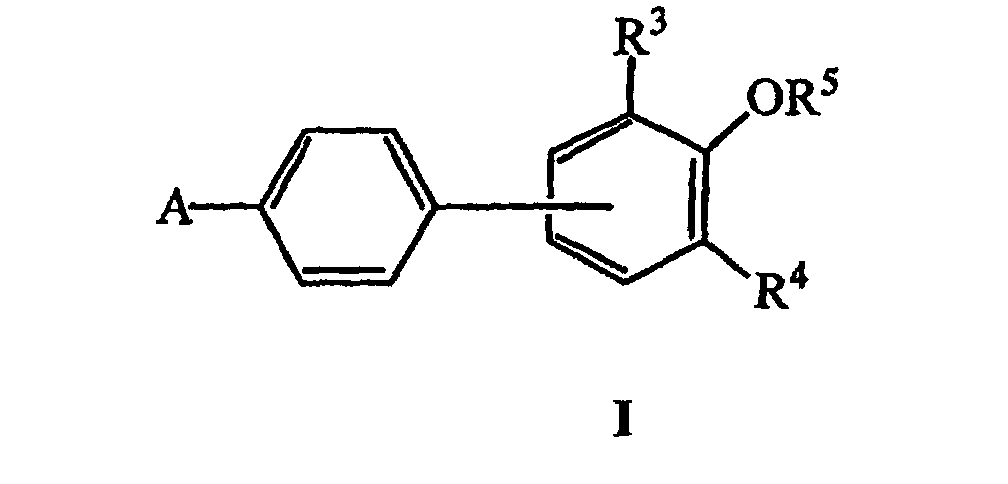
- A
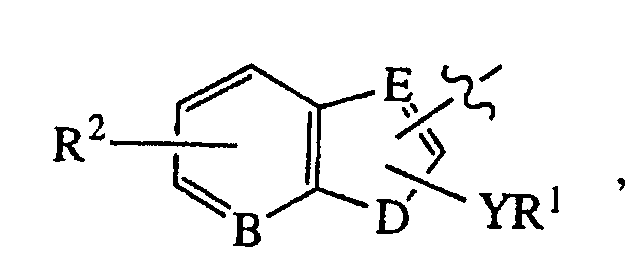
- is

- B
- is carbon or nitrogen;
- D
- is oxygen, sulfur, or nitrogen;
- E
- is carbon or nitrogen;
- Y
- is a bond, methylene, C(O), or CH(OH);
- R1
- is alkyl containing 1 to 12 carbons, aryl of 6-12 carbon atoms, arylalkyl of 7-15 carbon atoms, halogen, carboxaldehyde, trifluoromethyl, alkoxy of 1-6 carbon atoms, 2,2-dimethyl-1,3-benzodioxole, Het-alkyl wherein the alkyl moiety contains 1-6 carbon atoms, or aryl of 6-10 carbon atoms which is mono-, di-, or tri- substituted with halogen, trifluoromethyl, or alkoxy of 1-6 carbon atoms;
- Het
- is

- G
- is oxygen, sulfur or nitrogen;
- R2 and R2a
- are each, independently, hydrogen, alkyl of 1-6 carbon atoms, alkoxy of 1-6 carbon atoms, halogen, trifluoromethyl;
- R3 and R4
- are each, independently, hydrogen, halogen, alkyl of 1-6 carbon atoms, aryl of 6-10 carbon atoms, trifluoromethyl, alkoxy of 1-6 carbon atoms, nitro, amino, alkoxycarbonyl, carbamide, carbamate, urea, alkylsulfoamide, arylsulfoamide, cycloalkyl of 3-8 carbon atoms, -NR7(CH2)mCO2H, pyrrolidinone, a heterocyclic ring containing 5 to7 ring atoms having 1 to 3 heteroatoms selected from oxygen, nitrogen, or sulfur, or aryl of 6-10 carbon atoms mono-, di-, or tri-substituted with trifluoromethyl, alkyl of 1-6 carbon atoms or, alkoxy of 1-6 carbon atoms;
- R5
- is hydrogen, alkyl of 1-6 carbon atoms, -CH(R8)R9, -C(CH3)2CO2R10, -CH(R8)(CH2)nCO2R10, -CH(R8)C6H4CO2R10,
- R6
- is alkyl of 1 to 3 carbon atoms
- R7
- is hydrogen or alkyl of 1 to 6 carbon atoms,
- R8
- is hydrogen, alkyl of 1-6 carbon atoms, aryl of 6-12 carbon atoms, aralkyl of 6-12 carbon atoms, cycloalkyl of 3-8 carbon atoms, phthalic acid, or Q-alkyl wherein the alkyl moiety contains 1-6 carbon atoms;
- Q
- is

- W
- is oxygen, sulfur, or nitrogen;
- R9
- is -CO2R12, -CONHR12, tetrazole, -PO3R12;
- R10
- is hydrogen, alkyl of 1-6 carbon atoms, aryl of 7-15 carbon atoms, or aralkyl of 7-15 carbon atoms;
- R12
- is hydrogen, alkyl, aryl of 6-12 carbon atoms, aralkyl of 7-15 carbon atoms;
- m =
- 1-3;
- n =
- 1-6;
- Pharmaceutically acceptable salts can be formed from organic and inorganic acids, for example, acetic, propionic, lactic, citric, tartaric, succinic, fumaric, maleic, malonic, mandelic, malic, phthalic, hydrochloric, hydrobromic, phosphoric, nitric, sulfuric, methanesulfonic, naphthalenesulfonic, benzenesulfonic, toluenesulfonic, camphorsulfonic, and similarly known acceptable acids when a compound of this invention contains a basic moiety. Salts may also be formed from organic and inorganic bases, preferably alkali metal salts, for example, sodium, lithium, or potassium, when a compound of this invention contains a carboxylate or phenolic moiety, or similar moiety capable of forming base addition salts.
- Alkyl includes both straight chain as well as branched moieties. Halogen means bromine, chlorine, fluorine, and iodine. It is preferred that the aryl portion of the aryl or aralkyl substituent is a phenyl, naphthyl or 1,4-benzodioxan-5-yl group; with phenyl being most preferred. The aryl moiety may be optionally mono-, di-, or tri- substituted with a substituent selected from the group consisting of alkyl of 1-6 carbon atoms, alkoxy of 1-6 carbon atoms, trifluoromethyl, halogen, alkoxycarbonyl of 2-7 carbon atoms, alkylamino of 1-6 carbon atoms, and dialkylamino in which each of the alkyl groups is of 1-6 carbon atoms, nitro, cyano, -CO2H, alkylcarbonyloxy of 2-7 carbon atoms, and alkylcarbonyl of 2-7 carbon atoms.
- The compounds of this invention may contain an asymmetric carbon atom and some of the compounds of this invention may contain one or more asymmetric centers and may thus give rise to optical isomers and diastereomers. While shown without respect to stereochemistry in Formula I, the present invention includes such optical isomers and diastereomers; as well as the racemic and resolved, enantiomerically pure R and S stereoisomers; as well as other mixtures of the R and S stereoisomers and pharmaceutically acceptable salts thereof.
- When A isthe following compounds of A are preferred:


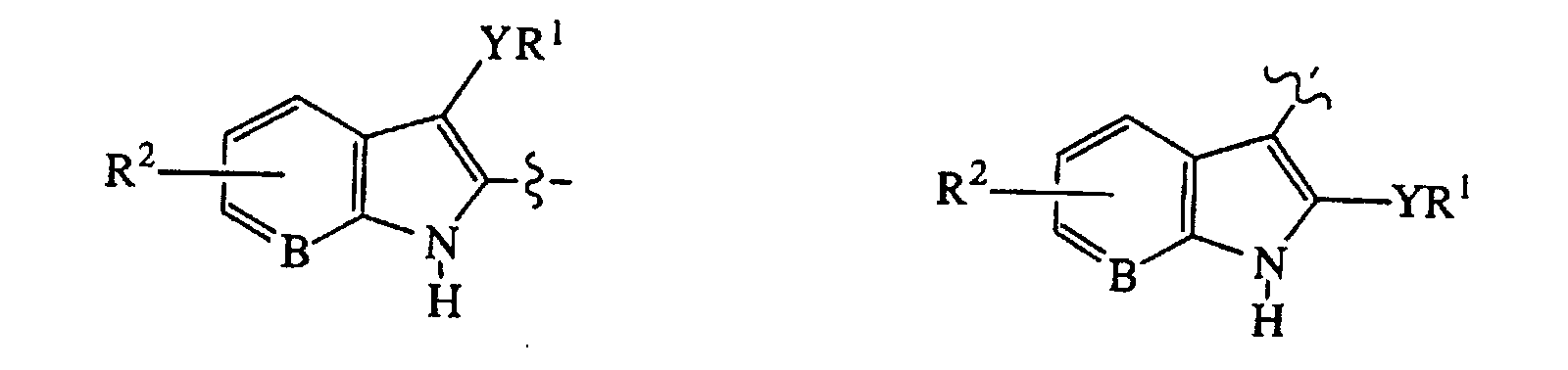
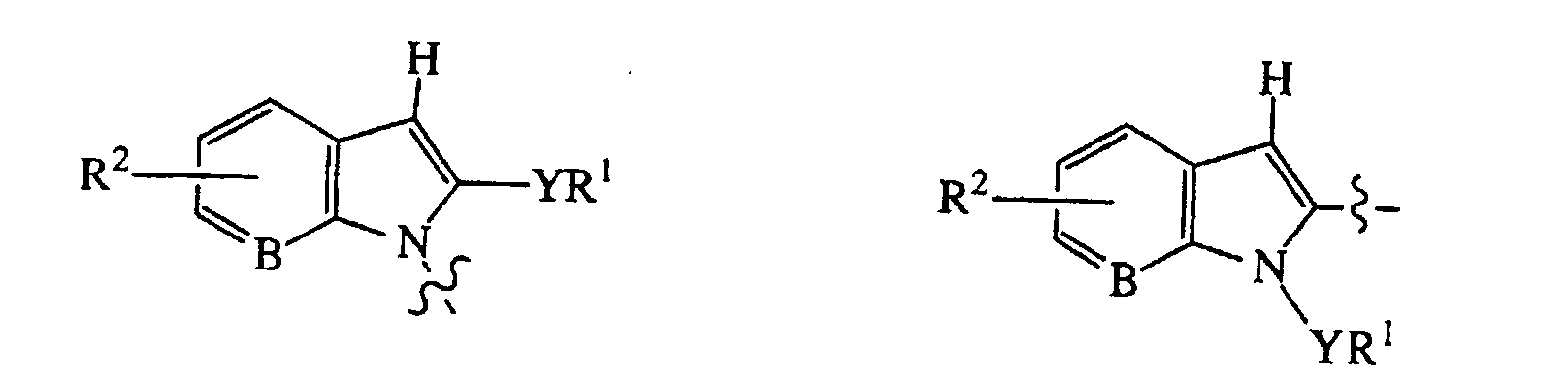
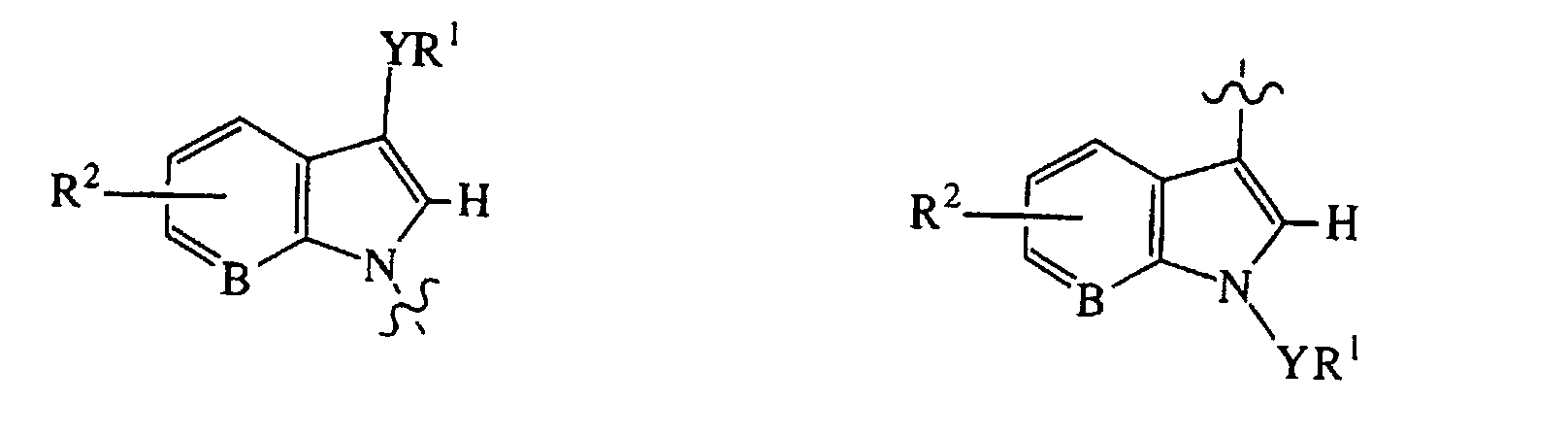
- Preferred compounds of this invention are those compounds of Formula I, in which:
- A
- is
wherein
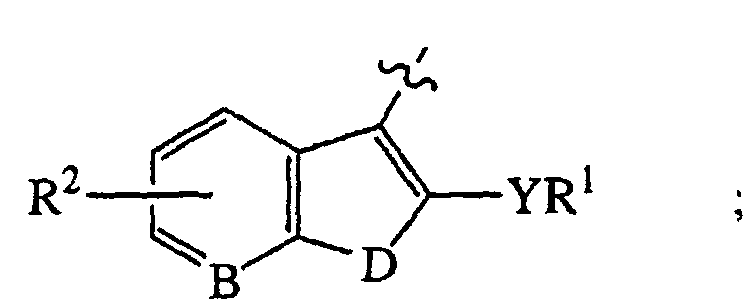
- B
- is carbon or nitrogen;
- D
- is oxygen or sulfur;
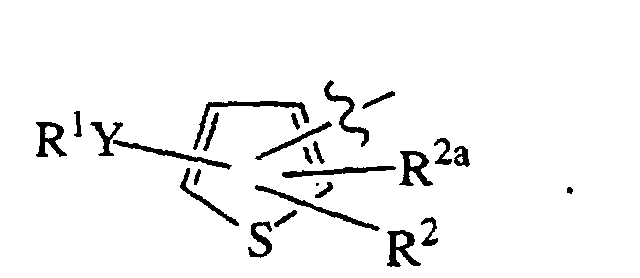
or - A
- is
or

- A
- is
- Specifically preferred compounds of the present invention are set forth below:
- (4'-benzofuran-3-yl-biphenyl-4-yloxy)-acetic acid
- 2-(4'-benzofuran-3-yl-biphenyl-4-yloxy)-3-phenyl-propionic acid
- [4'-(2-bromo-benzofuran-3-yl)-biphenyl-4-yloxy]-acetic acid
- 2-[4'-(2-bromo-benzofuran-3-yl)-biphenyl-4-yloxy]-3-phenyl-propionic acid
- 4'-(2-butyl-benzofuran-3-yl)-biphenyl-4-ol
- [4'-(2-butyl-benzofuran-3-yl)-biphenyl-4-yloxy]-acetic acid
- 2-[4'-(2-butyl-benzofuran-3-yl)-biphenyl-4-yloxy]-3-phenyl-propionic acid
- 2-[4'-(2-benzyl-benzofuran-3-yl)-biphenyl-4-yloxy]-3-phenyl-propionic acid
- 2-[4'-(2-butyl-benzo[b]thiophene-3-yl)-biphenyl-4-yloxy]-3-phenyl-propionic acid
- 2-[4'-(2-benzyl-benzo[b]thioghene-3-yl)-biphenyl-4-yloxy]-3-phenyl-gropionic acid
- 2-[4'-(2-benzoyl-benzofuran-3-yl)-biphenyl-4-yloxy]-3-phenyl-propionic acid
- (2R)-2-[4'-(2-benzyl-benzofuran-3-yl)-biphenyl-4-yloxy]-3-phenyl-propionic acid
- (2S)-2-[4'-(2-benzyl-benzofuran-3-yl)-biphenyl-4-yloxy]-3-phenyl-propionic acid
- (2S)-2-[4'-(2-benzyl-benzofuran-3-yl)-biphenyl-4-yloxy]-3-phenyl-propionic acid tromethamine salt
- (2R)- 2-[4'-(2-benzyl-benzofuran-3-yl)-biphenyl-4-yloxy]-propionic acid
- (R)-[4'-(2-benzyl-benzofuran-3-yl)-biphenyl-4-yloxy]-phenyl-acetic acid
- (2R)-2-{4'-[2-(4-fluoro-benzyl-benzo[b]thiophene-3-yl)-biphenyl-4-yloxy]-3-phenyl-propionic acid
- (2R)-2-{4'-[2-(4-methoxy-benzyl-benzo[b]thiophene-3-yl)-biphenyl-4-yloxy]-3-phenyl-propionic acid
- [4'-(2-butyl-benzo[b]thiophene-3-yl)-biphenyl-4-yloxy]-phenyl-acetic acid
- (2R)-2-{4'-[2-(hydroxy-phenyl-methyl)-benzofuran-3-yl)-biphenyl-4-yloxy]-3-phenyl-propionic acid
- (2S)-2-[4'-(2-benzyl-benzofuran-3-yl)-biphenyl-4-yloxy]-3-phenyl-propionic acid methyl ester
- 2-[4'-(2-benzyl-benzofuran-3-yl)-biphenyl-4-yloxy]-2-methyl-3-phenyl-propionic acid
- (2R)-2- {4'-[2-(3,4-dimethoxy-benzyl)-benzo[b]thiophene-3-yl)-biphenyl-4-yloxy]-3-phenyl-propionic acid
- (2R)-2-{4'-[2-(2,4-dimethoxy-benzyl)-benzo[b]thiophene-3-yl)-biphenyl-4-yloxy]-3-phenyl-propionic acid
- (2R) 2-{4'-[2-(2,2-dimethyl-benzo[1,3]dioxol-5-ylmethyl)-benzo[b]thiophene -3-yl)-biphenyl-4-yloxy]-3-phenyl-propionic acid
- (2R)-2-{4'-[2-(3,4-dihydroxy-benzyl)-benzo[b]thiophene-3-yl)-biphenyl-4-yloxy]-3-phenyl-propionic acid
- (2R)-2-[4'-(2-benzyl-thiophene-3-yl)-biphenyl-4-yloxy]-3-phenyl-propionic acid
- 3-phenyl-2-[4'-(2-thiazole-2-ylmethyl-benzo[b]thiophene-3-yl)-biphenyl-4-yloxy]-propionic acid
- (2R)-3-phenyl-2-[4'-(2-pyridin-2-ylmethyl-benzo[b]thiophene-3-yl)-biphenyl-4-yloxy]-propionic acid sodium salt
- (2R)-3-phenyl-2-[4'-(2-pyridin-2-ylmethyl-benzo[b]thiophene-3-yl)-biphenyl-4-yloxy]-propionic acid
- (2S)-2-[4'-(2-benzyl-furo[2,3]pyridin-3-yl)-biphenyl-4-yloxy]-3-phenyl-propionic acid
- 4'-(2-benzyl-benzo[b]thiophene-3-yl)-3-bromo-biphenyl-4-ol
- 4'-(2-benzyl-benzo[b]thiophene-3-yl)-3,5-dibromo-biphenyl-4-ol
- (2R)-2-[4'-(2-benzyl-benzo[b]thiophene-3-yl)-3-bromo-biphenyl-4-yloxy]-3-phenyl-propionic acid
- (2R)-2-[4'-(2-benzyl-benzo[b]thiophene-3-yl)-3,5-dibromo-biphenyl-4-yloxy]-3-phenyl-propionic acid
- (2R)-2-[4-(2-benzyl-benzo[b]thiophene-3-yl)-4"-methoxy-[1,1';3',1"]terphenyl-4'-yloxy]-3-phenyl-propionic acid
- [(4,4"-dimethoxy-5'-{2-(phenylmethyl)benzo[b]thien-3-yl]phenyl}[1,1';3',1"-terphenyl]-2'-yl)oxy]-acetic acid
- [4-(2-benzyl-benzo[b]-thiophen-3-yl)-5'-bromo-4"-methoxy[1,1';3',1"-terphenyl]-4'-yl)oxy]-acetic acid
- [4'-(2-benzyl-benzo[b]thiophene-3-yl)-3,5-dibromo-biphenyl-4-yloxy]-acetic acid
- [4'-(2-benzyl-benzo[b]thiophene-3-yl)-3-bromo-biphenyl-4-yloxy]-acetic acid
- (2S)-[4'-(2-benzyl-benzo[b]thiophene-3-yl)-3,5-dibromo-biphenyl-4-yloxy]-4-phenyl-butyric acid
- 4-[4'-(2-benzyl-benzo[b]thiophene-3-yl)-3-bromo-biphenyl-4-yloxy]-butyric acid
- N-{(3R)-3-[4'-(2-benzyl-benzo[b]thiophen-3-yl)-3,5-dibromo-biphenyl-4-yloxy]-3-carboxy-propyl]-phthalamic acid
- N-{(3R)-3-[4'-(2-benzyl-benzo[b]thiophen-3-yl)-3,5-dibromo-biphenyl-4-yloxy]-3-methoxycarbonyl-propyl]-phthalamic acid
- (2R)-2-[4-(2-benzyl-benzo[b]thiophene-3-yl)-4"-chloro-[1,1';3',1'']terphenyl-4'-yloxy]-3-phenyl-propionic acid
- (2S)-2-[4'-(2-benzyl-benzofuran-3-yl)-biphenyl-4-yloxy]-4-phenyl-butyric acid
- (2R)-2-[4'-(2-benzyl-benzo[b]-thiophen-3-yl)-3,5-dibromo-biphenyl-4-yloxy]-4-(1,3-dioxo-1,3-dihydro-isoindol-2-yl)-butyric acid
- (2R)-2-[4'-(2-benzyl-benzofuran-3-yl)-biphenyl-4-yloxy]-4-(1,3-dioxo-1,3-dihydro-isoindol-2-yl)-butyric acid
- (2S)-2-[4'-(2-benzyl-benzofuran-3-yl)-3,5-dibromo-biphenyl-4-yloxy]-3-phenyl-propionic acid
- (2S)-2-[4'-(2-benzyl-benzofuran-3-yl)-3-bromo-biphenyl-4-yloxy]-3-phenyl-propionic acid
- (2R)-2-[4'-(2-benzyl-benzofuran-3-yl)-3,5-dibromo-biphenyl-4-yloxy]-4-methyl-pentanoic acid
- 2-[4'-(2-benzyl-benzofuran-3-yl)-3,5-dibromo-biphenyl-4-yloxy]-hexanoic acid
- (2S)-2-(4'-(2-benzyl-benzofuran-3-yl)-3,5-dibromo-biphenyl-4-yloxy]-butyric acid
- (2S)-2-[4'-(2-benzyl-benzofuran-3-yl)-3,5-dibromo-biphenyl-4-yloxy]-octanoic acid
- (2S)-2-[4-(2-benzyl-benzofuran-3-yl)-4"-methoxy-[1,1';3',1"]terphenyl-4'-yloxy]-3-phenyl-propionic acid
- [4-(2-benzyl-benzo[b]-thiophen-3-yl)-5'-bromo-3",4"-dimethoxy[1,1';3',1"-terphenyl]-4'-yl)oxy]-acetic acid
- [4-(2-benzyl-benzo[b]-thiophen-3-yl)-5'-bromo-3"-methoxy[1,1';3',1"-terphenyl]-4'-yl)oxy]-acetic acid
- [[3,3-dimethoxy-5-[4-[2-(phenylmethyl)benzyl-benzo[b]-thiophen-3-yl)-[1,1';3',1"-terphenyl]-4'-yl)oxy]-acetic acid
- [4-(2-benzyl-benzo[b]-thiophen-3-yl)-4''-methoxy[1,1';3',1''-terphenyl]-4'-yl)oxy]-acetic acid
- [4-(2-benzyl-benzo[b]-thiophen-3-yl)-3",4"-dimethoxy[1,1';3',1"-terphenyl]-4'-yl)oxy]-acetic acid
- [4-(2-benzyl-benzo[b]-thiophen-3-yl)-3",4",5"-trimethoxy[1,1';3',1"-terphenyl]-4'-yl)oxy]-acetic acid
- [4-(2-benzyl-benzo[b]-thiophen-3-yl)-[1,1';3',1"-terphenyl]-4'-yl)oxy]-acetic acid
- 4-[4'-(2-benzyl-benzofuran-3-yl)-biphenyl-4-yloxymethyl]-benzoic acid
- (2S)-2-[4'-(1-benzyl-1H-benzimidazol-2-yl)-biphenyl-4-yloxy]-3-phenyl-propionic acid
- (2R)-2-[4'-(3-benzyl-3H-imidazol[4,5-b]pyridin-2-yl)-biphenyl-4-yloxy]-3-phenyl-propionic acid sodium salt
- (2R)-2-[4'-(2-benzyl-4,5-dimethyl-thiophen-3-yl)-biphenyl-4-yloxy]-3-phenyl-propionic acid
- (2R)-2-[4'-(2-benzoyl-benzofuarn-3-yl)-3-nitro-biphenyl-4-yloxy]-3-phenyl-propionic acid
- (2R)-2-[4'-(2-benzyl-benzofuarn-3-yl)-3-nitro-biphenyl-4-yloxy]-3-phenyl-propionic acid
- (2R)-2-[4'-[2-(hydroxy-phenyl-methyl)-benzofuarn-3-yl)-3-nitro-biphenyl-4-yloxy]-3-phenyl-propionic acid
- (2S)-2-[4'-(2-benzyl-benzofuarn-3-yl)-3,5-dimethyl-biphenyl-4-yloxy]-3-phenyl-propionic acid
- (2S)-2-[4'-(5-acetyl-thiophen-2-yl)-biphenyl-4-yloxy]-3-phenyl-propionic acid sodium salt or a pharmaceutically acceptable salt thereof.
-
- The compounds of this invention were prepared according to the following schemes from commercially available starting materials or starting materials which can be prepared using literature procedures. These schemes show the preparation of representative compounds of this invention.

- In Scheme I, commercially available phenols (1; R2 as defined above) were treated with 4-bromophenylacyl bromide (2) in the presence of potassium carbonate to produce ketones (3). Compounds (3) were treated with polyphosphoric acid at high temperatures (150 C°) to afford benzofurans (4) [ref. J. Med. Chem. 1989, 32, 1700-1707]. Benzofurans (4) were coupled with aryl boronic acids of general structure (5; R3, R4 are alkyl, aryl, trifluoromethyl, substituted aryl, nitro, carbocyclic 5 to 7 carbon atoms rings or heterocyclic rings 5 to 7 atom rings with from 1 to 3 heteroatoms selected from oxygen, nitrogen, and sulfur) using the Suzuki protocol [ref. Syn. Comm. 1981, 11, 513-519] to produce biphenyls (6). The aryl boronic acids are either commercially available or can be prepared according to known methodology [ref. J. Org. Chem, 1984, 49, 5237-5243]. Biphenyls (6) were converted to biphenyls (8) using two different synthetic approaches. In the first synthetic approach, biphenyls (6) were treated first with n-BuLi and either aldehydes R'CHO or "Weinreb" amides R1CON(CH3)OCH3 (R' is as defined above with the exception of halogen), and secondly with boron tribromide in dichloromethane to produce biphenyls (8). In the second synthetic approach, biphneyls (6) first converted to biphenyls (7) with boron tribromide in dichloromethane [ref. J. Org. Chem. 1974, 39, 1427-1429], and then biphenyls (7) were converted to biphenyls (8) by using n-BuLi and either aldehydes R1CHO or "Weinreb" amides R1CON(CH3)OCH3. The required aldehydes and "Weinreb" amides are either commercially available or can be prepared according to known synthetic methodology [ref. Tet. Lett. 1993, 34, 6215-6218]. Biphenyls (8) were converted to biphenyls (9) by reduction of the ketones (Y = CO) using the Wolff-Kishner reduction (NH2NH2, KOH; ref. Org. Reactions, 1948, 4, 378), or reduction of the secondary hydroxy group (Y = CHOH) with sodium borohydride in trifluoroacetic acid [ref. Syn. Comm. 1990, 20, 487-493].

- In Scheme II, the biphenyl boronic acid (11) was prepared from 10 according to known methodology [ref. J. Org. Chem. 1984, 49, 5237-5243] using n-BuLi to generate the aryllithium intermediate which was subsequently treated with triisopropyl borate. Boronic acid (11) was coupled with 3 -bromobenzothiophenes (prepared according to reference J. Am. Chem. Soc. 1950, 72, 571-574) using the Suzuki protocol [ref. Syn. Comm. 1981, 11, 513-519] to produce biphenyls (12). Biphenyls (12) were converted to the biphenyls (13) in a similar manner as described in Scheme I for the conversion of biphenyls (6) to biphenyls (9).

- In Scheme III, thienyl and furyl aldehydes (14) are either commercially available or can be prepared from substituted furans or thiophenes. Furans or thiophenes undergo metallation at the 2-position with alkyllithium reagents [J. Chem. Soc. Perkin I, 1977, 887] which upon treatment first with a formylating agent (i.e., dimethylformamide), and secondly bromination according to known methodology [ref. J. Am. Chem. Soc. 1950, 72, 571-574] to afford the required compounds (14). Coupling of aldehydes (14) with 4, 4'-methoxy biphenyl boronic acid using the Suzuki protocol [ref. Syn. Comm. 1981, 11,513-519] gave biphenyls (15). Known or easily prepared Grignard Reagents [ref. Chem. Re. 1954, 54, 835] R1Mg(Cl or Br) (R1 is as defined above with the exception of halogen, trifluoromethyl, lower alkoxy) were first treated with aldehydes (14), followed by reduction of the produced methyl-hydroxy compounds with sodium borohydride and trifluoroacetic acid, and then demethylation with boron tribromide in dichoromethane to afford biphenyls (16).

- In Scheme IV, the furo[2,3-b]pyrinines (18) (R1 is aryl or alkyl) were prepared according to known methodology [ref. Tet. Lett. 1994, 35, 9355-9358]. Bromination of 18 with Br2, in carbon tetrachloride produced 19. Pyridines (19) were converted to biphenyls (20) in a similar manner as described in Scheme I by Suzuki coupling with 4, 4'-methoxy biphenyl boronic acid, and demethylation with boron tribromide.

- In Scheme V, the chloro-nitro-pyridines (21) were treated with primary amines to produce nitro-pyridines (22). The nitro-pyridines (22) were reduced with tin chloride to anilines (23), which upon treatment with ethyl chloroformate and sodium ethoxide gave imidazolones (24). The imidazolones (24) were converted to the 2-chloro-imidazole[4,5-b]pyridines (25). 2-Chlorobenzimidazoles (26) were alkylated in the presence of sodium hydride to give benzimidazoles (27). Both, the imidazole[4,5-b]pyridines (25), and benzimidazoles (27) were converted to the biphenyls (28) in a similar manner as described in Scheme I by Suzuki coupling with 4, 4'-methoxy biphenyl boronic acid, and demethylation with boron tribromide.
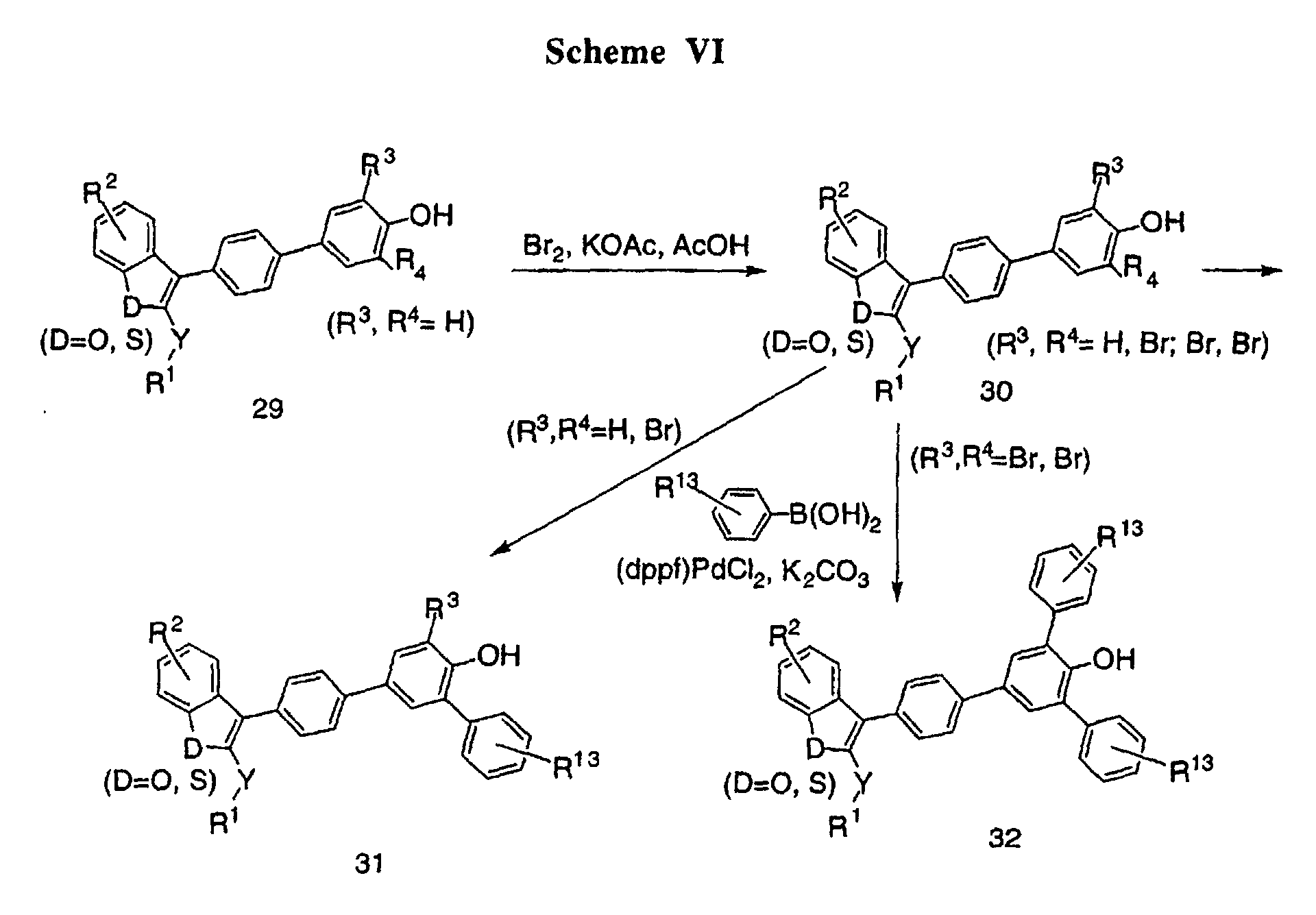
- In Scheme VI, the biphenyl compounds (29; Y = CO, CH2) can be monobrominated or dibrominated using bromine, potassium acetate and acetic acid. One equivalent of bromine in a high dilution reaction mixture and low temperatures in the range of 5-10 C° afforded predominantly the monobrominated product (30; R3, R4 = H, Br). The dibrominated product (30; R3, R4 = Br, Br) was obtained with two equivalents of bromine at room temperature. The Suzuki coupling protocol [ref. Syn. Comm. 1981, 11, 513-519] was used to generate the terphenyls 31 and 32. Coupling of the monobromo compounds (30; R3, R4 = H, Br) with boronic acids R13-Ar-B(OH)2 ; (R13 = halogen, trifluoromethyl, alkoxy, alkyl, nitro, amino, carboalkoxy) in the present of an inorganic base, for example K2CO3, Ba(OH)2, and palladium (0 or II) catalyst, for example Pd(PPh3)4, Pd(OAc)2, (dppf)PdCl2, produced terphenyls (31; R3 = H). Similarly, the dibromo compounds (30; R3, R4 = Br, Br) can undergo Suzuki coupling to afford either the di-coupled product (32) by using 2 equivalents of boronic acid at high temperatures (100 °C), or the mono-coupled-mono-bromo product (31; R3, R4 = Br, Aryl-R13). Both the bromo and dibromo compounds can afford in the same synthetic manner products with various heterocyclic boronic acids, for example thiophene, furan, oxazole, thiazole, pyridine).

- In Scheme VII, the biphenyls (33) were alkylated with bromo or chloro-alkylcarboxylates [(Br or Cl)(CH2)nCO2R12] in the presence of sodium hydride or potassium carbonate, using dimethylformamide or acetonitrile as the solvent. Subsequent saponification with sodium hydroxide in methyl alcohol and tetrahydrofuran produced biphenyls (34). Coupling of biphenyls (33) with hydroxy-alkyl-carboxylates [HOCH(R8)CO2R12] using the Mitsunobu protocol [ref. Synthesis. 1981, 1-27], followed by saponification with sodium hydroxide in methyl alcohol and tetrahydrofuran produced biphenyls (35). Similar experimental protocols were applied and for the biphenyls 16, 20, 28 and 32, for the production of compounds of Formula I.
- The compounds of this invention are useful in treating metabolic disorders related to insulin resistance or hyperglycemia, typically associated with obesity or glucose intolerance. The compounds of this invention are therefore, particularly useful in the treatment or inhibition of type II diabetes. The compounds of this invention are also useful in modulating glucose levels in disorders such as type I diabetes.
- The ability of compounds of this invention to treat or inhibit disorders related to insulin resistance or hyperglycemia was established with representative compounds of this invention in the following two standard pharmacological test procedures which measure the inhibition of PTPase.
- This standard pharmacological test procedure assess the inhibition of rat hepatic microsomal PTPase activity using, as substrate, the phosphotyrosyl dodecapeptide corresponding to the 1142-1153 insulin receptor kinase domain, phosphorylated on the 1146, 1150 and 1151 tyrosine residues. The procedure used and results obtained are briefly outlined below.
Preparation of Microsomal Fraction: Rats (Male Sprague-Dawley rats (Charles River, Kingston, NY) weighing 100-150 g, maintained on standard rodent chow (Purina)) are sacrificed by asphyxiation with CO2 and bilateral thoracotomy. The liver is removed and washed in cold 0.85% (w/v) saline and weighed. The tissue is homogenized on ice in 10 volumes of Buffer A and the microsomes are isolated essentially as described by Meyerovitch J, Rothenberg P, Shechter Y, Bonner-Weir S, Kahn CR. Vanadate normalizes hyperglycemia in two mouse models of non-insulin-dependent diabetes mellitus. J Clin Invest 1991; 87:1286-1294 and Alberts B, Bray D, Lewis J, Raff M, Roberts K, Watson JD, editors. Molecular biology of the cell. New York: Garland Publishing, Inc., 1989 with minor modifications. The liver homogenate is filtered through silk to remove any remaining tissue debris and then is centrifuged at 10,000xg for 20 minutes at 40C. The supernatant is decanted and centrifuged at 100,000xgfor 60 minutes at 40C. The pellet, microsomes and small vesicles, is resuspended and lightly homogenized in : 20 mM TRIS-HCl (pH 7.4), 50 mM 2-mercaptoethanol, 250 mM sucrose, 2 mM EDTA, 10 mM EGTA, 2 mM AEBSF, 0.1 mM TLCK, 0.1 mM TPCK, 0.5 mM benzamidine, 25 ug/ml leupeptin, 5 ug/ml pepstatin A, 5 ug/ml;H5B antipain, 5 ug/ml chymostatin, 10 ug/ml aprotinin (Buffer A), to a final concentration of approximately 850 ug protein/ml. Protein concentration is determined by the Pierce Coomassie Plus Protein Assay using crystalline bovine serum albumin as a standard (Pierce Chemical Co., Rockford, IL).
Measurement of PTPase activity: The malachite green-ammonium molybdate method, as described by Lanzetta PA, Alvarez LJ, Reinach PS, Candia OA was used. An improved assay for nanomolar amounts of inorganic phosphate. Anal. Biochem. 1979;100:95-97, and adapted for the platereader, is used for the nanomolar detection of liberated phosphate by rat hepatic microsomal PTPases. The test procedure uses, as substrate, a dodecaphosphopeptide custom synthesized by AnaSpec, Inc. (San Jose, CA). The peptide, TRDIYETDYYRK, corresponding to the 1142-1153 catalytic domain of the insulin receptor, is tyrosine phosphorylated on the 1146, 1150 and 1151 tyrosine residues. The microsomal fraction (83.25 ul) is preincubated for 10 min at 37deg.C with or without test compound (6.25ul) and 305.5 ul of the 81.83 mM HEPES reaction buffer, pH 7.4. Peptide substrate, 10.5 ul at a final concentration of 50 uM, is equilibrated to 37deg.C in a LABLINE Multi-Blok heater equipped with a titerplate adapter. The preincubated microsomal preparation (39.5 ul) with or without drug is added to initiate the dephosphorylation reaction, which proceeds at 37deg.C for 30 min. The reaction is terminated by the addition of 200 ul of the malachite green-ammonium molybdate-Tween 20 stopping reagent (MG/AM/Tw). The stopping reagent consists of 3 parts 0.45% malachite green hydrochloride, 1 part 4.2% ammonium molybdate tetrahydrate in 4 N HCl and 0.5% Tween 20. Sample blanks are prepared by the addition of 200 ul MG/AM/Tw to substrate and followed by 39.5 ul of the preincubated membrane with or without drug. The color is allowed to develop at room temperature for 30 min and the sample absorbances are determined at 650 nm using a platereader (Molecular Devices). Samples and blanks are prepared in quadruplicates. Screening activity of 50 uM (final) drug is accessed for inhibition of microsomal PTPases.
Calculations: PTPase activities, based on a potassium phosphate standard curve, are expressed as nmoles of phosphate released/min/mg protein. Test compound PTPase inhibition is calculated as percent of control. A four parameter non-linear logistic regression of PTPase activities using SAS release 6.08, PROC NLIN, is used for determining IC50 values of test compounds. All compounds were administered at a concentration of 50 µM. The following results were obtained using representative compounds of this invention.Example % Change from Control 1 -53 2 IC50 = 28.4 uM 3 IC50 = 29.9 uM 4 -11 5 -70 6 -71 7 -73 8 -28 9 -75 10 -72 11 -61 12 -50 13 -50 14 -55 15 -59 16 -53 17 -63 18 IC50 = 24.2 uM 19 IC50 = 21.4 uM 20 IC50 = 41.6 uM 21 IC50 = 35.5 uM 22 -55 25 IC50 = 17.9 uM 26 IC50 = 20.0 uM 27 IC50 = 24.9 uM 28 IC50 = 20.6 uM 29 -19 36 IC50 = 17.9 uM 37 IC50 = 36.8 uM 38 IC50 = 19.3 uM phenylarsine (Reference) -57 - This standard pharmacological test procedure assess the inhibition of recombinant rat protein tyrosine phosphatase, PTP1B, activity using, as substrate, the phosphotyrosyl dodecapeptide corresponding to the 1142-1153 insulin receptor kinase domain, phosphorylated on the 1146, 1150 and 1151 tyrosine residues. The procedure used and results obtained are briefly described below.
Human recombinant PTP1B was prepared as described by Goldstein (see Goldstein et al. Mol. Cell. Biochem. 109, 107, 1992). The enzyme preparation used was in microtubes containing 500-700 µg/ml protein in 33 mM Tris-HCl, 2 mM EDTA, 10% glycerol and 10 mM 2-mercaptoethanol.
Measurement of PTPase activity. The malachite green-ammonium molybdate method, as described (Lanzetta et al. Anal. Biochem. 100, 95, 1979) and adapted for a platereader, is used for the nanomolar detection of liberated phosphate by recombinant PTP1B. The test procedure uses, as substrate, a dodecaphosphopeptide custom synthesized by AnaSpec, Inc. (San Jose, CA). the peptide, TRDIYETDYYRK, corresponding to the 1142-1153 catalytic domain of the insulin receptor, is tyrosine phosphorylated on the 1146, 1150, and 1151 tyrosine residues. The recombinant rPTP1B is diluted with buffer (pH 7.4, containing 33 mM Tris-HCl, 2 mM EDTA and 50 mM b-mercaptoethanol) to obtain an approximate activity of 1000-2000 nmoles/min/mg protein. The diluted enzyme (83.25 mL) is preincubated for 10 min at 37°C with or without test compound (6.25 mL) and 305.5 mL of the 81.83 mM HEPES reaction buffer, pH 7.4 peptide substrate, 10.5 ml at a final concentration of 50 mM, and is equilibrated to 37°C. in a LABLINE Multi-Blok heater equipped with a titerplate adapter. The preincubated recombinant enzyme preparation (39.5 ml) with or without drug is added to initiate the dephosphorylation reaction, which proceeds at 37°C for 30 min. The reaction is terminated by the addition of 200 mL of the malachite green-ammonium molybdate-Tween 20 stopping reagent (MG/AM/Tw). The stopping reagent consists of 3 parts 0.45% malachite green hydrochloride, 1 part 4.2% ammonium molybdate tetrahydrate in 4 N HCl and 0.5% Tween 20. Sample blanks are prepared by the addition of 200 mL MG/AM/Tw to substrate and followed by 39.5 ml of the preincubated recombinant enzyme with or without drug. The color is allowed to develop at room temperature for 30 min. and the sample absorbances are determined at 650 nm using a platereader (Molecular Devices). Sample and blanks are prepared in quadruplicates.
Calculations: PTPase activities, based on a potassium phosphate standard curve, are expressed as nmoles of phosphate released/min/mg protein. Inhibition of recombinant PTP1B by test compounds is calculated as percent of phosphatase control. A four parameter non-linear logistic regression of PTPase activities using SAS release 6.08, PROC NLIN, is used for determining IC50 values of test compounds. The following results were obtained.Example IC50 (µM) 1 0.322 2 0.025 3 0.029 4 -51 (2.5 uM) 5 -47 (2.5 uM) 6 -15 (2.5 uM) 7 -58 (2.5 uM) 8 0.74 9 2.19 10 0.44 11 0.27 12 0.176 13 0.095 14 0.68 15 0.348 16 0.397 17 1.32 18 0.401 19 0.123 20 0.077 21 0.118 22 0.118 23 -36 (2.5 uM) 24 0.293 25 0.213 26 0.085 27 0.077 28 0.122 29 0.97 30 1.16 31 0.59 32 1.51 33 1.55 34 1.07 35 0.454 36 0.058 37 0.025 38 0.053 39 0.105 40 0.362 41 0.29 42 0.178 43 0.044 44 0.054 45 0.181 46 0.052 47 0.225 48 0.341 49 0.038 50 0.056 51 0.054 52 0.052 53 0.133 54 0.023 55 0.043 56 0.047 57 0.028 58 0.025 59 0.08 60 0.071 61 0.100 62 0.105 63 0.369 64 0.512 65 0.074 66 0.788 67 0.103 68 0.231 69 -20 (1 uM) 70 -41 (2.5 uM) 71 -43 (2.5 uM) Phenylarsine oxide (reference standard) 39.7 Sodium orthovanadate (reference standard) 244.8 Ammonium molybdate tetrahydrate (reference standard) 8.7 - The blood glucose lowering activity of representative compounds of this invention were demonstrated in an in vivo standard procedure using diabetic (ob/ob) mice. The procedures used and results obtained are briefly described below.
- The non-insulin dependent diabetic (NIDDM) syndrome can be typically characterizes by obesity, hyperglycemia, abnormal insulin secretion, hyperinsulinemia and insulin resistance. The genetically obese-hyperglycemic ob/ob mouse exhibits many of these metabolic abnormalities and is thought to be a useful model to search for hypoglycemic agents to treat NIDDM [Coleman, D.: Diabetologia 14: 141-148, 1978].
- In each test procedure, mice [Male or female ob/ob (C57 Bl/6J) and their lean litermates (ob/+ or +/+, Jackson Laboratories) ages 2 to 5 months (10 to 65 g)] of a similar age were randomized according to body weight into 4 groups of 10 mice. The mice were housed 5 per cage and are maintained on normal rodent chow with water ad libitum. Mice received test compound daily by gavage (suspended in 0.5 ml of 0.5% methyl cellulose); dissolved in the drinking water; or admixed in the diet. The dose of compounds given ranges from 2.5 to 200 mg/kg body weight/day. The dose is calculated based on the fed weekly body weight and is expressed as active moiety. The positive control, ciglitazone (5-(4-(1-methylcyclohexylmethoxy)benzyl)-2,4-dione, see Chang, A., Wyse, B., Gilchrist, B., Peterson, T. and Diani, A. Diabetes 32: 830-838, 1983.) was given at a dose of 100 mg/kg/day, which produces a significant lowering in plasma glucose. Control mice received vehicle only.
- On the morning of Day 4, 7 or 14 two drops of blood (approximetly 50 ul) were collected into sodium fluoride containing tubes either from the tail vein or after decapitation. For those studies in which the compound was administered daily by gavage the blood samples were collected two hours after compound administration. The plasma was isolated by centrifugation and the concentration of glucose is measured enzymatically on an Abbott V.P. Analyzer.
- For each mouse, the percentage change in plasma glucose on Day 4, 7 or 14 is calculated relative to the mean plasma glucose of the vehicle treated mice. Analysis of variance followed by Dunett's Comparison Test (one-tailed) are used to estimate the significant difference between the plasma glucose values from the control group and the individual compound treated groups (CMS SAS Release 5.18).
- The results shown in the table below shows that the compounds of this invention are antihyperglycemic agents as they lower blood glucose levels in diabetic mice.
Example Dose (mg/Kg) % Change Glucose from Vehicle % Change Insulin from Vehicle 1 100 -40.3 17a 2 25 -25.5 11.2a 3 25 -29.9 23.5a 10 100 -34.2 -51.9 11 100 -40.4 -44.9 12 100 -27.5 -15.8a 13 100 -36.7 5.0a 14 100 -39 19.8a 15 100 -35 4.1a 17 100 13.7a -94.4 19 100 -27.7 1.1a 24 25 -30.5 not determined 28 25 -20 not determined 42 25 -10.6 9.9a 48 25 4.7a -30 55 25 -13.6 35.4a Ciglitazone
(reference standard100 -43 -39 a - no significant activity (p<0.05) at this dose. - Based on the results obtained in the standard pharmacological test procedures, representative compounds of this invention have been shown to inhibit PTPase activity and lower blood glucose levels in diabetic mice, and are therefore useful in treating metabolic disorders related to insulin resistance or hyperglycemia, typically associated with obesity or glucose intolerance. More particularly, the compounds of this invention useful in the treatment or inhibition of type II diabetes, and in modulating glucose levels in disorders such as type I diabetes. As used herein, the term modulating means maintaining glucose levels within clinically normal ranges.
- Effective administration of these compounds may be given at a daily dosage of from about 1 mg/kg to about 250 mg/kg, and may given in a single dose or in two or more divided doses. Such doses may be administered in any manner useful in directing the active compounds herein to the recipient's bloodstream, including orally, via implants, parenterally (including intravenous, intraperitoneal and subcutaneous injections), rectally, vaginally, and transdermally. For the purposes of this disclosure, transdermal administrations are understood to include all administrations across the surface of the body and the inner linings of bodily passages including epithelial and mucosal tissues. Such administrations may be carried out using the present compounds, or pharmaceutically acceptable salts thereof, in lotions, creams, foams, patches, suspensions, solutions, and suppositories (rectal and vaginal).
- Oral formulations containing the active compounds of this invention may comprise any conventionally used oral forms, including tablets, capsules, buccal forms, troches, lozenges and oral liquids, suspensions or solutions. Capsules may contain mixtures of the active compound(s) with inert fillers and/or diluents such as the pharmaceutically acceptable starches (e.g. corn, potato or tapioca starch), sugars, artificial sweetening agents, powdered celluloses, such as crystalline and microcrystalline celluloses, flours, gelatins, gums, etc. Useful tablet formulations may be made by conventional compression, wet granulation or dry granulation methods and utilize pharmaceutically acceptable diluents, binding agents, lubricants, disintegrants, suspending or stabilizing agents, including, but not limited to, magnesium stearate, stearic acid, talc, sodium lauryl sulfate, microcrystalline cellulose, carboxymethylcellulose calcium, polyvinylpyrrolidone, gelatin, alginic acid, acacia gum, xanthan gum, sodium citrate, complex silicates, calcium carbonate, glycine, dextrin, sucrose, sorbitol, dicalcium phosphate, calcium sulfate, lactose, kaolin, mannitol, sodium chloride, talc, dry starches and powdered sugar. Oral formulations herein may utilize standard delay or time release formulations to alter the absorption of the active compound(s). Suppository formulations may be made from traditional materials, including cocoa butter, with or without the addition of waxes to alter the suppository's melting point, and glycerin. Water soluble suppository bases, such as polyethylene glycols of various molecular weights, may also be used.
- It is understood that the dosage, regimen and mode of administration of these compounds will vary according to the malady and the individual being treated and will be subject to the judgment of the medical practitioner involved. It is preferred that the administration of one or more of the compounds herein begin at a low dose and be increased until the desired effects are achieved.
- The following procedures describe the preparation of representative examples of this invention.
- Potassium carbonate (24.8 g, 179.8 mmol) was added into a mixture of 4-bromophenylacyl bromide (50.0 g, 179.8 mmol), phenol (16.9 g, 179.8 mmol) and dry acetone (200mL). The reaction mixture was refluxed for 12 hours, cooled to room temperature, poured into water, and extracted with ethyl ether. The organic extracts were dried over MgSO4. Evaporation gave a yellow solid (49.6 g, 94% yield): MS m/e 291 (M+).
- A mixture of ω-phenoxy-4-bromoacetophenone (49.0 g, 167.8 mmol), polyphosphoric acid (100 g) and xylenes (300 mL) was refluxed for 12 hours. The reaction mixture cooled to room temperature, poured into water, and extracted with ethyl ether. The organic extracts were dried over MgSO4. Evaporation and purification by flash chromatography on silica gel (hexanes/EtAOc 40:1) gave a yellow solid (36.2 g, 79% yield): mp 70-71 °C; MS m/e 272 (M+);
Analysis for: C14H9BrO Calc'd: C, 61,57; H, 3.32; Found: C, 61.80; H, 3.31 - 4-Methoxy-benzeneboronic acid (14.17 g, 70.5 mmol) in ethyl alcohol (10 mL) was added into a mixture of 3-(4-bromophenyl)-1-benzofuran (17.5 g, 64.1 mmol), sodium carbonate (2N, 64.1 mL), tetrakis(triphenylphosphine)palladium(0) (2.23 g, 1.92 mmol), and toluene (200 mL). The reaction mixture was refluxed for 12 hours, cooled to room temperature, and treated with hydrogen peroxide (30%, 5 mL) for 1 hour. Then, the mixture was poured into water and extracted with ethyl acetate. The organic extracts were dried over MgSO4. Evaporation and crystallization from acetone/ethyl ether gave a white solid (14.9 g, 77% yield): mp 137-138 °C; MS m/e 300 (M+);
Analysis for: C21H16O2 Calc'd: C, 83.98; H, 5.37 Found: C, 83.70; H, 5.22 - Boron tribromide (1.0 M, 6.67 mL, 6.67 mmol) was added dropwise into a cold (-78 °C) mixture of 3-(4'-methoxy-biphenyl-4-yl)-benzofuran (2.0 g, 6.67 mmol), and dichloromethane (25 mL). The reaction mixture was allowed to come gradually to room temperature and stirred for 10 hours. Then the mixture cooled to 0 °C and methyl alcohol (5 mL) was added dropwise. After stirring for 10 minutes the mixture was poured into water and extracted with ethyl ether. The organic extracts were dried over MgSO4. Evaporation and crystallization from ethyl ether/hexanes gave a yellow solid (1.69 g, 87% yield): mp 174-175; MS m/e 286 (M+);
Analysis for: C20H14O2 Calc'd: C, 83.90; H, 4.93 Found: C, 83.69; H, 4.88 - n-Butyllithium (2.5 N, 8.4 mL, 20.98 mmol) was added dropwise into a cold (-78 °C) mixture of 4'-benzofuran-3-yl-biphenyl-4-ol (3.0 g, 10.49 mmol) and tetrahydrofuran (50 mL). The mixture was allowed to gradually warm up to -40 ° C and stirred for 3 hours. N-Methoxy N-methyl benzamide (1.6 mL, 10.49 mmol) was added dropwise into the mixture. The reaction mixture was allowed to gradually warm up to 0 °C and stirred for 30 minutes. The reaction was quenched with aqueous ammonium chloride, poured into water, acidified with HCl (2N), and extracted with ethyl acetate. The organic extracts were dried over MgSO4. Evaporation and crystallization from ethyl ether/hexanes gave a yellow solid (2.9 g, 71% yield): mp 231-232; MS m/e 390 (M+);
Analysis for: C27H18O3 Calc'd: C, 83.06; H, 4.65 Found: C, 82.63; H, 4.27 - Hydrazine monohydrate (1.38 g, 27.68 mmol) was added into a mixture of [3-(4'-hydroxy-biphenyl-4-yl)-benzofuran-2-yl]-phenyl-methanone (2.7 g, 6.92 mmol) and diethylene glycol (20 mL). The reaction mixture was stirred at 180 °C for 1 hour. The mixture cooled to room temperature and potassium hydroxide (1.16 g, 20.76 mmol) was gradually added. The mixture stirred at 130 °C for 10 hours, cooled to room temperature , poured into water, and extracted with ethyl ether. The organic extracts were dried over MgSO4. Evaporation and crystallization from ethyl ether/hexanes/acetone gave a white solid (2.45 g, 94% yield): mp 151-153; MS m/e 376 (M+);
Analysis for: C27H20O2 Calc'd: C, 86.15; H, 5.36 Found: C, 85.88; H, 5.13 - Diethylazodicarboxylate (1.67 mL, 10.64 mmol) in benzene (20 mL) was added dropwise into a cold (0 °C) mixture of 4'-(2-benzyl-bnzofuran-3-yl)-biphenyl-4-ol (2.0 g, 5.32 mmol), (R)-(+)-3-phenyllactic acid methyl ester (1.91 g, 10.64 mmol), triphenylphosphine (2.8 g, 10.64 mmol) and benzene (50 mL). The reaction mixture was stirred at room temperature for 30 minutes, poured into water, and extracted with ethyl ether. The organic extracts were dried over MgSO4. Evaporation and purification by flash chromatography on silica gel (hexanes/EtAOc 8:1) gave a yellow oil (2.56 g, 89% yield): MS m/e 538 (M+);
Analysis for: C37H30O4 Calc'd: C, 82.51; H, 5.61 Found: C, 81.74; H, 5.78 - Sodium hydroxide (2.5 N, 10 mL) was added into a mixture of (2S)-2-[4'-(2-benzyl-benzofuran-3-yl)-biphenyl-4-yloxy]-3-phenyl-propionic acid methyl ester (2.5 g, 4.65 mmol), methyl alcohol (40 mL) and tetrahydrofuran (40 mL). The reaction mixture was stirred for 1 hour, poured into water, acidified with HCl (2 N), and extracted with ethyl ether. The organic extracts were dried over MgSO4. Evaporation and crystallization from ethyl ether/hexanes gave a white solid (2.32 g, 95% yield): mp 167-169; MS m/e 376 (M+);
Analysis for: C36H28O4 Calc'd: C, 82.42; H, 5.38 Found: C, 82.26; H, 5.36 - Palladium (II) acetate was added into a mixture of 3-bromo-benzo[b]-thiophene (1.4 g, 6.58 mmol), 4'-methoxy-biphenyl-4-boronic acid (1.5 g, 6.58 mmol), potassium carbonate (2.27 g, 16.45 mmol), acetone (20 mL) and H2O (20 mL). The reaction mixture was stirred at 65 °C for 2h, poured into water, and extracted with ethyl acetate. The organic extracts were dried over MgSO4 Evaporation and crystallization from ethyl ether/hexanes gave an off-white solid (1.76 g, 85% yield): mp 134-136; MS m/e 316 (M+);
Analysis for: C21H16OS Calc'd: C, 79.71; H, 5.10 Found: C, 78.98; H, 5.13 - This compound was prepared from 3-(4'-methoxy-biphenyl-4-yl)-benzo[b]-thiophene, in substantially the same manner, as described in Example 1 step d, and was obtained as an off-white solid, mp 167-169 °C; MS m/e 302 (M+);
Analysis for: C20H14OS Calc'd: C, 79.44; H, 4.67 Found: C, 79.36; H, 4.52 - This compound was prepared from 4'-benzo[b]thiophen-3-yl-biphenyl-4-ol, in substantially the same manner as described in Example 1 step e, and was obtained as a yellow solid, mp 205-207 °C; MS m/e 406 (M+);
Analysis for: C27H18O2S Calc'd: C, 79.78; H, 4.46 Found: C, 78.95; H, 4.59 - This compound was prepared from [3-(4'-hydroxy-biphenyl-4-yl)-benzo[b]-thiophen-2-yl]-phenyl-methanone, in substantially the same manner as described in Example 1 step f, and was obtained as a white solid, mp 178-180 °C; MS m/e 392 (M+); Analysis for: C27H20OS Calc'd: C, 81.62; H, 5.14 Found: C, 81.60; H, 5.32
- Bromine (1.47 mL, 28.69 mmol) in acetic acid (50 mL) was added dropwise over a 30 minutes period into a cold (5 °C) mixture of 4'-(2-benzyl-benzo[b]thiophen-3-yl)-biphenyl-4-ol (7.5 g, 19.13 mmol), potassium acetate (18.6 g, 190.13 mmol), and acetic acid (200 mL). After the addition the mixture was poured into water, and extracted with ethyl ether. The organic extracts were washed with aqueous sodium bisulfite and dried over MgSO4. Evaporation and purification by flash chromatography on silica gel (hexanes/EtAOc/CH2Cl2 3:1:1) gave 4'-(2-benzyl-benzo[b]thiophen-3-yl)-3-bromo-biphenyl-4-ol as a light yellow solid (2.4 g): mp 54-56 °C MS m/e 477 (M+);
Analysis for: C27H19BrOS Calc'd: C, 68.79; H, 4.06 Found: C, 68.37; H, 4.17
and 4'-(2-benzyl-benzo[b]thiophen-3-yl)-3,5-dibromo-biphenyl-4-ol as a light yellow solid (4.7 g); mp 59-61 °C; MS m/e 548 (M+);
Analysis for: C27H18Br2OS Calc'd: C, 58.93; H, 3.30 Found: C, 59.21; H, 3.57 - Palladium (II) acetate (81 mg, 0.036 mmol) was added into a mixture of 4'-(2-benzyl-benzo[b]thiophen-3-yl)-3,5-dibromo-biphenyl-4-ol (1.0 g, 1.82 mmol), 4-methoxy-benzeneboronic acid, barium hydroxide (0.93 g, 5.46 mmol), 1,2-dimethoxyethane (10 mL), and water (10 mL). The mixture was stirred at 75 °C for 10 hours, poured into water, and extracted with ethyl ether. The organic extracts were dried over MgSO4. Evaporation and purification by flash chromatography on silica gel (hexenes/EtAOc 4:1) gave 4,4"-dimethoxy-5'-{4-[2-(phenylmethyl)benzo[b]thien-3-yl]phenyl}[1,1';3',1"-terphenyl]-2'-ol as a yellow solid (0.45 g,): mp 80-82; MS m/e 604 (M+);
Analysis for: C41H32O3S Calc'd: C, 81.43; H, 5.33 Found: C, 80.19; H, 5.44
and 4-(2-benzyl-benzo[b]-thiophen-3-yl)-5'-bromo-4"-methoxy[1,1';3',1"-terphenyl]-4'-ol as a yellow solid (0.45 g,): mp 74-76; MS m/e 576 (M+);
Analysis for: C34H25O2S Calc'd: C, 70.71; H, 4.36 Found: C, 69.78; H, 5.31 - Methyl bromoacetate (0.16 mL, 1.66 mmol) was added dropwise into a mixture of 4,4"-dimethoxy-5'-{4-[2-(phenylmethyl)benzo[b]thien-3-yl]phenyl}[1,1';3',1''-terphenyl]-2'-ol (1.0 g, 1.66 mmol), potassium carbonate (0.23 g, 1.66 mmol), and N,N-dimethylformamide (10 mL). The reaction mixture was stirred at 75 °C for 2 hours, and then poured into water and extracted with ethyl acetate. The organic extracts were dried over MgSO4. Evaporation and purification by flash chromatography on silica gel (hexanes/EtAOc 4:1) gave a yellow oil (1.05 g), which was taken in methyl alcohol (10 mL) and tetrahydrofuran (10 mL), and treated with NaOH (2.5 N 3.0 mL) for 30 minutes. The new reaction mixture was poured into water, acidified with HCl (2 N), and extracted with ethyl ether. The organic extracts were dried over MgSO4. Evaporation and purification by flash chromatography on silica gel (hexanes/EtAOc 3:1) gave white solid (0.79 g, 72 % yield): mp 99-101; MS m/e 662 (M+);
Analysis for: C43H34O5S Calc'd: C, 77.92; H, 5.17 Found: C, 77.03; H, 5.29 - The title compound was prepared from 4-(2-benzyl-benzo[b]-thiophen-3-yl)-5'-bromo-4"-methoxy(1,1';3',1"-terphenyl]-4'-ol, in substantially the same manner, as described in Example 2 step g, and was obtained as a white solid, mp 94-96 °C; MS m/e 634 (M+);
Analysis for: C36H27BrO4S Calc'd: C, 68.03; H, 4.28 Found: C, 67.57; H, 4.29 - Sodium hydride (0.15 g, 3.49 mmol) was added portionwise into a mixture of 4'-benzofuran-3-yl-biphenyl-4-ol (1.0 g, 3.49 mmol), and N,N-dimethylformamide (10 mL). The reaction mixture was stirred for 1 hour, and then methyl bromoacetate (0.49 mL, 5.23 mmol) was added dropwise. The mixture was stirred for 30 minutes, poured into water, and extracted with ethyl acetate. The organic extracts were dried over MgSO4. Evaporation gave a yellow oil (1.25 g). The residue was taken in methyl alcohol (20 mL) and tetrahydrofuran (20 mL), and treated with sodium hydroxide (2.5 N, 5.0 mL) for 30 minutes. The mixture was then poured into water, acidified with HCl (2 N) and extracted with ethyl ether. The organic extracts were dried over MgSO4. Evaporation and crystallization from ethyl ether/hexanes gave a white solid (0.38 g, 32% yield): mp 196-197; MS m/e 344 (M+);
Analysis for: C22H16O4 Calc'd: C, 76.73; H, 4.68 Found: C, 76.63; H, 4.58 - The title compound was prepared from 4'-benzofuran-3-yl-biphenyl-4-ol, in substantially the same manner, as described in Example 2 step g, and was obtained as a white solid, mp 142-143 °C; MS m/e 434 (M+);
Analysis for: C29H22O4 Calc'd: C, 80.17; H, 5.10 Found: C, 80.54; H, 5.09 - Bromine (0.29 mL, 5.67 mmol) in acetic acid (50 mL) was added dropwise over a 30 minutes period into a cold (5 °C) mixture of 3-(4'-methoxy-biphenyl-4-yl)-benzofuran (1.7 g, 5.67 mmol), potassium acetate (5.55 g, 56.7 mmol), and acetic acid (20 mL). After the addition, the mixture was poured into water, and extracted with ethyl ether. The organic extracts were washed with aqueous sodium bisulfite and dried over MgSO4. Evaporation and crystallization gave an off-white solid (1.69 g, 79% yield): mp 136-137 °C MS m/e 378 (M+);
Analysis for: C21H15BrO2 Calc'd: C, 66.51; H, 3.99 Found: C, 66.17; H, 3.84 - This compound was prepared from 2-bromo-3-(4'-methoxy-biphenyl-4-yl)-benzofuran, in substantially the same manner, as described in Example 1 step d, and was obtained as a white solid, mp 150-151 °C; MS m/e 364 (M+);
Analysis for: C20H13BrO2 Calc'd: C, 65.77; H, 3.59 Found: C, 65.47; H, 3.46 - This compound was prepared from 4'-(2-bromo-benzofuran-3-yl)-biphenyl-4-ol, in substantially the same manner, as described in Example 4, and was obtained as a white solid, mp 178-180 °C; MS m/e 423 (M+);
Analysis for: C22H15BrO4 Calc'd: C, 62.43; H, 3.57 Found: C, 61.68; H, 3.42 - The title compound was prepared from 4'-(2-bromo-benzofuran-3-yl)-biphenyl-4-ol and 3-phenyllactic acid methyl ester, in substantially the same manner, as described in Example 1, steps g-h, and was obtained as a white solid, mp 148-149 °C; MS m/e 512 (M+);
Analysis for: C29H21BrO4 Calc'd: C, 67.85; H, 4.12 Found: C, 67.68; H, 4.31 - The title compound was prepared from 4'-benzofuran-3-yl-biphenyl-4-ol and N-methoxy-N-methyl-n-butylamide, in substantially the same manner, as described in Example 1, steps e-f, and was obtained as a white solid, mp 128-129 °C; MS m/e 342 (M+);
Analysis for: C24H22O2 Calc'd: C, 84.18; H, 9.48 Found: C, 84.16; H, 6.45 - The title compound was prepared from 4'-(2-butyl-benzofuran-3-yl)-biphenyl-4-ol, in substantially the same manner, as described in Example 4, and was obtained as a white solid, mp 126-128 °C; MS m/e 400 (M+);
Analysis for: C26H24O4 Calc'd: C, 77.98; H, 6.04 Found: C, 77.80; H, 6.06 - The title compound was prepared from 4'-(2-butyl-benzofuran-3-yl)-biphenyl-4-ol, and 3-phenyllactic acid methyl ester, in substantially the same manner, as described in Example 1, steps g-h , and was obtained as a white solid, mp 169-170 °C; MS m/e 491 (M+H)+;
Analysis for: C33H30O4 Calc'd: C, 80.79; H, 6.16 Found: C, 80.75; H, 6.12 - The title compound was prepared from 4'-(2-benzyl-benzofuran-3-yl)-biphenyl-4-ol, and 3-phenyllactic acid methyl ester, in substantially the same manner, as described in Example 1, steps g-h , and was obtained as a white solid, mp 164-166 °C; MS m/e 524 (M+);
Analysis for: C36H28O4 Calc'd: C, 82.42; H, 5.38 Found: C, 82.14; H, 5.20 - The title compound was prepared from 4'-(2-butyl-benzo[b]-thiophen-3-yl)-biphenyl-4-ol, and 3-phenyllactic acid methyl ester, in substantially the same manner, as described in Example 1, steps g-h , and was obtained as a white solid, mp 159-161°C; MS m/e 507 (M+H)+;
Analysis for: C33H30O3S Calc'd: C, 78.23; H, 5.97 Found: C, 78.12; H, 6.02 - The title compound was prepared from 4'-(2-benzyl-benzo[b]-thiophen-3-yl)-biphenyl-4-ol, and 3-phenyllactic acid methyl ester, in substantially the same manner, as described in Example 1, steps g-h , and was obtained as a white solid, mp 165-167°C; MS mle 540 (M+);
Analysis for: C36H28O3S Calc'd: C, 79.97; H, 5.22 Found: C, 79.96; H, 5.38 - The title compound was prepared from 4'-(2-benzoyl-benzofuran-3-yl)-biphenyl-4-ol, and 3-phenyllactic acid methyl ester, in substantially the same manner, as described in Example 1, steps g-h , and was obtained as a yellow solid, mp 159-161°C; MS m/e 538 (M+);
Analysis for: C36H26O5 Calc'd: C, 80.28; H, 4.86 Found: C, 80.15; H, 4.91 - The title compound was prepared from 4'-(2-benzyl-benzofuran-3-yl)-biphenyl-4-ol, and (S)-(-)-3-phenyllactic acid methyl ester, in substantially the same manner, as described in Example 1, steps g-h, and was obtained as a white solid, mp 167-169 °C; MS m/e 524 (M+);
Analysis for: C36H28O4 Calc'd: C, 82.42; H, 5.38 Found: C, 82.43; H, 5.53 - A mixture of (2S)-2-[4'-(2-benzyl-benzofuran-3-yl)-biphenyl-4-yloxy]-3-phenyl-propionic acid (1.0 g, 1.91 mmol), tromethamine (0.23 g, 1.91 mmol), tetrahydrofuran (10 mL), and water (1.0 mL) was stirred at 60 °C for 1 hour. The volatiles were removed in vacuo and the residue was washed with water and dried to give a white solid (1.1g, 89% yield); mp 147-148; MS m/e 523 (M-H)+;
Analysis for: C36H27O4.tromethamine x 1.5 H2O Calc'd: C, 71.41; H, 6.29; N, 2.08 Found: C, 71.33; H, 6.35; N, 2.40 - The title compound was prepared from 4'-(2-benzyl-benzofuran-3-yl)-biphenyl-4-ol, and (S)-(+)- lactic acid methyl ester, in substantially the same manner, as described in Example 1, steps g-h , and was obtained as a white solid, mp 112-114 °C; MS m/e 448 (M+);
Analysis for: C30H24O4 Calc'd: C, 80.34; H, 5.39 Found: C, 79.86; H, 5.73 - The title compound was prepared from 4'-(2-benzyl-benzofuran-3-yl)-biphenyl-4-ol, and (S)-(+)- mandelic acid methyl ester, in substantially the same manner, as described in Example 1, steps g-h , and was obtained as a white solid, mp 177-179 °C; MS m/e 509 (M-H)+;
Analysis for: C35H26O4 x 0.4 H2O Calc'd: C, 81.19; H, 5.22 Found: C, 81.34; H, 5.46 - This compound was prepared from 3-(4'-methoxy-biphenyl-4-yl)-benzo[b]-thiophene, and 4-fluoro-benzaldehyde, in substantially the same manner, as described in Example 1 , step e, and was obtained as a white solid, mp 66-68 °C; MS m/e 440 (M+);
Analysis for: C28H21FO2S Calc'd: C, 76.34; H, 4.81 Found: C, 75.82; H, 4.89 - Trifluoroacetic acid (5 mL)was added dropwise into a mixture of (4-fluoro-phenyl)-[3-(4'-methoxy-biphenyl-4-yl)-benzo[b]thiophen-2-yl]-methanol (1.2 g, 2.72 mmol), sodium borohydride (0.51 g, 13.75 mmol), and ethyl ether (10 mL). The reaction mixture was stirred for 30 minutes, poured into water, basified with sodium hydroxide (2 N), and extracted with ethyl ether. The organic extracts were dried over MgSO4. Evaporation and crystallization from ethyl ether/hexanes gave a white solid (1.02 g, 88% yield): mp 100-102; MS m/e 424 (M+);
- This compound was prepared from 2-(4-fluoro-benzyl)-3-(4'-methoxy-biphenyl-4-yl)-benzo[b]-thiophene, in substantially the same manner, as described in Example 1 step d, and g-h , and was obtained as a white solid, mp 151-153 °C; MS m/e 558 (M+);
Analysis for: C36H26FO3S Calc'd: C, 77.40; H, 4.87 Found: C, 77.55; H, 4.58 - The title compound was prepared from 3-(4'-methoxy-biphenyl-4-yl)-benzo[b]thiophene, and 4-methoxy-benzaldehyde in substantially the same manner, as described in Example 19 , and was obtained as a white solid, mp 75-77 °C; MS m/e 569 (M-H)+;
Analysis for: C37H30O4S Calc'd: C, 77.87; H, 5.30 Found: C, 76.57; H, 5.39 - The title compound was prepared from 4'-(2-butyl-benzofuran-3-yl)-biphenyl-4-ol, and mandelic acid methyl ester, in substantially the same manner, as described in Example 1, steps g-h , and was obtained as a white solid, mp 157-159 °C; MS m/e 493 (M+H)+;
Analysis for: C32H28O3S Calc'd: C, 78.02; H, 5.73 Found: C, 77.67; H, 5.91 - Sodium borohydride (0.15 g, 4.06 mmol) was added portionwise into a cold (0°C) mixture of (2R)-2-[4'-(2-benzoyl-benzofuran-3-yl)-biphenyl-4-yloxy]-3-phenyl-propionic acid methyl ester (1.5, 2.7 mmol), methyl alcohol (20 mL) and tetrahydrofuran (5 mL). The reaction mixture was allowed to come to room temperature and stirred for 30 minutes. The mixture was then poured into water, acidified with HCl (2 N), and extracted with ethyl acetate. The organic extracts were dried over MgSO4. Evaporation gave a yellow oil (1.4 g), which was taken in methyl alcohol (20 mL), tetrahydrofuran (20 mL), and treated with sodium hydroxide (2.5 N, 5.0 mL) for 30 minutes. The mixture was poured into water, acidified with HCl (2 N) and extracted with ethyl ether. The organic extracts were dried over MgSO4. Evaporation and purification by flash chromatography on silica gel (hexanes/EtAOc 5:1) gave an off-white solid (1.16 g, 79 % yield): mp 95-97; MS m/e 539 (M-H)+;
Analysis for: C36H28O5 Calc'd: C, 79.98; H, 5.22 Found: C, 79.92; H, 5.34 - The title compound was prepared from 4'-(2-benzyl-benzofuran-3-yl)-biphenyl-4-ol, in substantially the same manner, as described in Example 1, step g , and was obtained as a white solid, mp 67-69 °C; MS m/e 538 (M+);
Analysis for: C37H30O4 Calc'd: C, 82.51; H, 5.61 Found: C, 81.74; H, 5.78 - 2-Bromo-propionic acid ethyl ester (1.28 mL, 9.84 mmol) was added dropwise into a mixture of 4'-(2-benzyl-benzofuran-3-yl)-biphenyl-4-ol (3.7 g, 9.48 mmol), potassium carbonate (1.49 g, 10.82 mmol), and N,N-dimethylformamide (10 mL). The reaction mixture was stirred at 70 °C for 10 hours, poured in to water, acidified with HCl (2 N), and extracted with ethyl acetate. The organic extracts were dried over MgSO4. Evaporation and purification by flash chromatography on silica gel (hexanes/EtAOc 10:1) gave a viscous clear oil (4.2 g, 96 % yield): MS m/e 476 (M+);
Analysis for: C32H28O4 x 0.2 H2O Calc'd: C, 80.04; H, 5.96 Found: C, 80.03; H, 6.01 - Lithium bis(trimethylsilyl)amide (1.0 M, 1.68 mL, 1.68 mmol) was added dropwise into a cold (-78 °C) mixture of 2-[4'-(2-benzyl-benzofuran-3-yl)-biphenyl-4-yloxy]-2-methyl-3-phenyl-propionic acid ethyl ester (0.8 g, 1.68 mmol), and tetrahydrofuran (8.0 mL).. The mixture was allowed to gradually warm up to -45 °C, and stirred for 2 hours. Benzyl bromide (0.29 mL, 2.52 mmol) was added into the reaction mixture. The temperature was gradually raised to room temperature and the reaction was stirred for 15 hours. The mixture was then poured in to water, acidified with HCl (2 N) to pH = 5, and extracted with ethyl acetate. The organic extracts were dried over MgSO4. Evaporation and purification by flash chromatography on silica gel (hexanes/EtAOc 5:1) gave an clear oil (0.43 g). The product was saponified according to Example 1 step h, to give a white solid (0.32 g, 34% yield for two steps): MS m/e 538 (M+);
Analysis for: C37H30O4 Calc'd: C, 81.68; H, 5.67 Found: C, 81.66; H, 5.69 - The tide compound was prepared from 4'-(2-benzyl-benzo[b]thiophen-3-yl)-biphenyl-4-ol, and 3,4-dimethoxy-benzaldehyde in substantially the same manner, as described in Example 20, and was obtained as a white solid, mp 59-61 °C; MS m/e 599 (M-H)+;
Analysis for: C38H22O5S x 1.5 H2O Calc'd: C, 72.70; H, 5.62 Found: C, 72.40; H, 5.50 - The title compound was prepared from 4'-(2-benzyl-benzo[b]thiophen-3-yl)-biphenyl-4-ol, and 2,4-dimethoxy-benzaldehyde in substantially the same manner, as described in Example 20, and was obtained as a white solid, mp 70-72 °C; MS m/e 599 (M-H)+;
Analysis for: C38H22O5S x 0.5 H2O Calc'd: C, 74.85; H, 5.37 Found: C, 74.80; H, 5.44 - This compound was prepared from 4'-[2-(2,4-dimethoxy-benzyl)-benzo[b]-thiophen-3-yl]-biphenyl-4-ol, in substantially the same manner, as described in Example 1 step d , and was obtained as a white solid, mp 148-150 °C; MS m/e 452 (M+);
Analysis for: C29H24O3S x 0.5 H2O Calc'd: C, 75.46; H, 5.46 Found: C, 75.53; H, 5.41 - Camphorsulfonic acid (0.2 g) was added into a mixture of 4-[3-(4'-hydroxy-biphenyl-4-yl)-benzo[b]thiophen-2-ylmethyl]-benzene-1,2-diol (1.4 g, 3.3 mmol), and 2,2-dimethoxy propane (5.0 mL). The reaction mixture was stirred at 40 °C for 24 hours, poured into water, and extracted with ethyl ether. The organic extracts were washed with aqueous sodium bicarbonate, and then dried over MgSO4. Evaporation and purification by flash chromatography on silica gel (hexanes/EtAOc 4:1) gave a gray solid (1.19 g, 72% yield): mp 58-60 °C; MS m/e 464 (M+);
Analysis for: C30H24O3S x 1 H2O Calc'd: C, 74.66; H, 5.43 Found: C, 74.53; H, 5.74 - This compound was prepared from 4'-[2-(2,2-dimethyl-benzo[1,3]dioxo-5-ylmethyl)-benzo[b]thiophene-3-yl)-biphenyl-4-ol, and (S)-(-)-3-phenyllactic acid methyl ester in substantially the same manner, as described in Example 1 steps g-h , and was obtained as a white solid, mp 68-70 °C; MS m/e 611 (M-H)+;
Analysis for: C39H32O5S x 0.5 H2O Calc'd: C, 75.34; H, 5.35 Found: C, 75.35; H, 5.35 - A mixture of (2R) 2-{4'-[2-(2,2-dimethyl-benzo[1,3]dioxol-5-ylmethyl)-benzo[b]thiophene-3-yl)-biphenyl-4-yloxy]-3-phenyl-propionic acid (0.38 g, 0.62 mmol), tetrahydrofuran (30 mL) and HCl (2 N, 5.0 mL) was stirred at 50 °C for 10 hours. The reaction mixture was then poured into water, and extracted with ethyl ether. The organic extracts were dried over MgSO4. Evaporation and purification by flash chromatography on acidic silica gel (hexanes/EtAOc 2:1) gave a pink solid (0.26 g, 72% yield): mp 108-110 °C; MS m/e 571 (M-H)+;
Analysis for: C36H28O5S x 0.5 H2O Calc'd: C, 74.33; H, 5.03 Found: C, 74.22; H, 5.28 - This compound was prepared from 3-bromo-thiophene-2-carboxaldehyde and 4'-methoxy-biphenyl-4-boronic acid in substantially the same manner, as described in Example 2 step a , and was obtained as an off-white solid, mp 139-141 °C; MS m/e 294 (M+);
Analysis for: C18H14O2S Calc'd: C, 73.44; H, 4.79 Found: C, 73.37; H, 4.77 - Phenyl magnesium bromide (2 M, 13.6 mL, 27.21 mmol) was added dropwise into a cold (0 °C) mixture of 3-(4'-methoxy-biphenyl-4-yl)-thiophene-2-carboxaldehyde (8.0 g, 27.21 mmol), and tetrahydrofuran (100 mL). The reaction mixture was stirred for 30 minutes, and then quenched with aqueous ammonium chloride, poured into water and extracted with ethyl acetate. The organic extracts were dried over MgSO4. Evaporation and purification by flash chromatography on silica gel (hexanes/EtAOc 4:1) gave an off-white solid (7.2 g, 71% yield): mp 115-117 °C; MS m/e 372 (M+);
Analysis for: C24H20O2S Calc'd: C, 77.39; H, 5.41 Found: C, 77.12; H, 5.48 - This compound was prepared from [3-(4'-methoxy-biphenyl-4-yl)-thiophen-2yl]-phenyl-methanol in substantially the same manner, as described in Example 19 step b, and Example 1 steps d-h, and was obtained as a white solid, mp 152-154 °C; MS m/e 489 (M-H)+;
Analysis for: C32H26O3S Calc'd: C, 78.34; H, 5.34 Found: C, 78.32; H, 5.52 - This compound was prepared from 4'-benzo[b]thiophen-3-yl-biphenyl-4-ol and thiazole-2-carboxaldehyde in substantially the same manner, as described in Example 1 step e, and Example 19 step b (with the modification of using triethylsilane in place of sodium borohydride as the reducing agent), and was obtained as a light yellow solid, mp 208-210 °C; MS m/e 399 (M+);
Analysis for: C24H17NOS2 x 0.5 H2O Calc'd: C, 70.56; H, 4.44; N, 3.43 Found: C, 70.60; H, 4.36; N, 3.35 - This compound was prepared from 4'(2-thiazole -2-yl-methyl-benzo[b]-thiophen-3-yl)-biphenyl-4-ol, and (S)-(-)-3-phenyllactic acid methyl ester, in substantially the same manner, as described in Example 1, steps g-h, and was obtained as a white solid, mp 85-88 °C; MS m/e 547 (M+);
Analysis for: C33H25NO3S2 x 1 H2O Calc'd: C, 70.06; H, 4.81; N, 2.48 Found: C, 69.81; H, 4.80; N, 2.68 - This compound was prepared from 3-bromo-2-benzyl-furo[2,3-b]pyridine, in substantially the same manner, as described in Example 2, steps e and a, and Example 1 step d, and was obtained as an off-white solid, mp 185-186 °C; MS m/e 386 (M+);
Analysis for: C26H19NO2 x 0.4 H2O Calc'd: C, 81.18; H, 5.19; N, 3.64 Found: C, 81.18; H, 5.14; N, 3.47 - This compound was prepared from 4'-(2-benzyl-furo[2,3-b]pyridin-3-yl)-biphenyl-4-ol, and (R)-(+)-3-phenyllactic acid methyl ester, in substantially the same manner, as described in Example 1, steps g-h. In step h the hydrolysis was done with potassium hydroxide, and removal of the solvents gave the desired product. The product was obtained as an off-white solid, mp 85-88 °C; MS m/e 593 (M+);
Analysis for: C33H26NO4K x 1.2 H2O Calc'd: C, 71.82; H, 4.89; N, 2.39 Found: C, 71.84; H, 4.93; N, 2.13 - The title compound was prepared from 4'-benzo[b]thiophen-3-yl-biphenyl-4-ol and pyridine-2 carboxaldehyde, in substantially the same manner, as described in Example 2, steps e and a, and Example 30, and was obtained as a white solid; MS m/e 540 (M-H)+;
Analysis for: C33H26NO3SNa x 1 H2O Calc'd: C, 72.29; H, 4.81; N, 2.41 Found: C, 72.67; H, 4.66; N, 2.41 - The tide compound was prepared from 4'-benzo[b]thiophen-3-yl-biphenyl-4-ol and pyridine-2 carboxaldehyde, in substantially the same manner, as described in Example 2, steps e and a, and Example 30, and was obtained as a white solid; MS m/e 540 (M-H)+;
Analysis for: C35H27NO3S x 0.5 H2O Calc'd: C, 76.36; H, 5.09; N, 2.54 Found: C, 776.46; H, 5.14; N, 2.29 - The title compound was prepared from 4'-benzo[b]thiophen-3-yl-biphenyl-4-ol in substantially the same manner, as described in Example 1 steps e, was and obtained as a light yellow solid (2.4 g): mp 54-56 °C MS m/e 477 (M+);
Analysis for: C27H19BrOS Calc'd: C, 68.79; H, 4.06 Found: C, 68.37; H, 4.17 - The title compound was prepared from 4'-benzo[b]thiophen-3-yl-biphenyl-4-ol in substantially the same manner, as described in Example 1 steps e, was and obtained as a light yellow solid (4.7 g); mp 59-61 °C; MS m/e 548 (M+);
Analysis for: C27H18Br2OS Calc'd: C, 58.93; H, 3.30 Found: C, 59.21; H, 3.57 - The title compound was prepared from 4'-(2-benzyl-benzofuran-3-yl)-3-bromo-biphenyl-4-ol, and (S)-(-)-3-phenyllactic acid methyl ester, in substantially the same manner, as described in Example 1, steps g-h , and was obtained as a white solid, mp 81-83 °C; MS m/e 618 (M+);
Analysis for: C36H27BrO3S Calc'd: C, 69.79; H, 4.39 Found: C, 69,39; H, 4.40 - The title compound was prepared from 4'-(2-benzyl-benzo[b]thiophen-3-yl)-3,5-dibromo-biphenyl-4-ol, and (S)-(-)-3-phenyllactic acid methyl ester, in substantially the same manner, as described in Example 1, steps g-h, and was obtained as a white solid, mp 87-89 °C; MS m/e 696 (M+);
Analysis for: C36H26Br2O3S Calc'd: C, 61.91; H, 3.75 Found: C, 69.99; H, 3.86 - The title compound was prepared from 4-(2-benzyl-benzo[b]thiophene-3-yl)-4"-methoxy-[1,1';3',1"]terphenyl-4'-ol, and (S)-(-)-3-phenyllactic acid methyl ester, in substantially the same manner, as described in Example 1, steps g-h , and was obtained as a white solid, mp 82-84 °C; MS m/e 645 (M-H)+;
Analysis for: C43H34O4S Calc'd: C, 79.85; H, 5.30 Found: C, 79.67; H, 5.79 - The title compound was prepared from 4'-(2-benzyl-benzo[b]thiophen-3-yl)-3,5-dibromo-biphenyl-4-ol, and methyl bromoacetate, in substantially the same manner, as described in Example 2 step g , and was obtained as an off-white solid, mp 183-185 °C; MS m/e 606 (M+);
Analysis for: C29H20Br2O3S Calc'd: C, 57.26; H, 3.31 Found: C, 57.42; H, 3.53 - The title compound was prepared from 4'-(2-benzyl-benzo[b]thiophen-3-yl)-3-bromo-biphenyl-4-ol, and methyl bromoacetate, in substantially the same manner, as described in Example 2 step g , and was obtained as a white solid, mp 150-152 °C; MS m/e 528 (M+);
Analysis for: C29H20Br2O3S Calc'd: C, 65.79; H, 4.00 Found: C, 65.50; H, 4.29 - The title compound was prepared from 4'-(2-benzyl-benzo[b]thiophen-3-yl)-3,5-dibromo-biphenyl-4-ol, and (R)-(-)-2-hydroxy-4-phenylbutyric acid methyl ester, in substantially the same manner, as described in Example 1, steps g-h , and was obtained as a white solid, mp 85-87 °C; MS m/e 709 (M-H)+;
Analysis for: C37H28Br2O3S Calc'd: C, 62.37; H, 3.96 Found: C, 62.03; H, 4.06 - The title compound was prepared from 4'-(2-benzyl-benzo[b]thiophen-3-yl)-3-bromo-biphenyl-4-ol, and 4-bromobutyric acid methyl aster, in substantially the same manner, as described in Example 2 step g , and was obtained as a white solid, mp 135-137 °C; MS m/e 555 (M-H)+;
Analysis for: C31H25BrO3S x 0.3 H2O Calc'd: C, 66.01; H, 4.54 Found: C, 66.13; H, 4.78 - This compound was prepared from 4'-(2-benzyl-benzo[b]thiophen-3-yl)-3,5-dibromo-biphenyl-4-ol, and (S)-(+)-a-1,3-dioxo-2-isoindolinebutyric acid methyl ester, in substantially the same manner, as described in Example 1 step g, and was obtained as a light yellow oil (1.2 g, 83% yield); MS m/e 793 (M+);
- Trimethylsilyl iodide (0.29 mL, 2.07 mmol) was added into a mixture of (2R)-2-[4'-(2-benzyl-benzo[b]-thiophen-3-yl)-3,5-dibromo-biphenyl-4-yloxy]-4-(1,3-dioxo-1,3-dihydro-isoindol-2-yl)-butyric acid methyl ester (1.1 g, 1.38 mmol), and methylene chloride (10 mL). The reaction mixture was stirred at 50 °C for 24 hours. An additional 0.29 mL of trimethylsilyl iodide was added and the mixture was stirred for 48 hours, poured into water and extracted with ethyl acetate. The organic extracts were washed with aqueous sodium bisulfite and dried over MgSO4. Evaporation and purification by flash chromatography on silica gel (hexanes/EtAOc 2:1) gave white solid (0.92 g, 94 % yield): mp 113-115 °C; MS m/e 778 (M-H)+;
Analysis for: C39H27Br2NO5S Calc'd: C, 59.94; H, 3.48; N, 1.79 Found: C, 59.98; H, 3.77; N, 1.74 - Potassium carbonate (0.01 g) was added into a mixture of (2R)-2-[4'-(2-benzyl-benzo[b]-thiophen-3-yl)-3,5-dibromo-biphenyl-4-yloxy]-4-( 1,3-dioxo-1,3-dihydro-isoindol-2-yl)-butyric acid methyl ester (0.5, 0.063 mmol), methyl alcohol (10 mL), and water (0.5 mL). The reaction mixture was stirred at room temperature for 24 hours, poured into water, acidified with HCl (2 N), and extracted with ethyl ether. The organic extracts were dried over MgSO4. Evaporation and purification by flash chromatography on acidic silica gel (hexanes/EtAOc 4:1) gave white solid (0.32 g, 63% yield):
mp 95-97 °C; MS m/e 811 (M+);
Analysis for: C40H31Br2NO6S Calc'd: C, 59.04; H, 3.81; N, 1.72Found: C, 58.43; H, 4.09; N, 1.59 - Sodium hydroxide (2 N, 5.0 mL) was added into a mixture of (2R)-2-[4'-(2-benzyl-benzo[b]-thiophen-3-yl)-3,5-dibromo-biphenyl-4-yloxy]-4-( 1,3-dioxo-1,3-dihydro-isoindol-2-yl)-butyric acid methyl ester (1.0g, 1.26 mmol), methyl alcohol (10 ml) and tetrahydrofuran (10 mL). The reaction mixture was stirred at room temperature for 1 hour, poured into water, acidified with HCl (2 N), and extracted with ethyl ether. The organic extracts were dried over MgSO4. Evaporation and purification by flash chromatography on acidic silica gel (hexanes/EtAOc 2:1) gave white solid (0.82 g, 74% yield): mp 130-132 °C; MS m/e 797 (M+);
Analysis for: C39H29Br2NO6S Calc'd: C, 58.59; H, 3.66 ;N, 1.75 Found: C, 58.20; H, 3.97; N, 1.67 - This compound was prepared from 4-(2-benzyl-benzo[b]-thiophen-3-yl)-4"-chloro[1,1';3',1"-terphenyl]-4'-ol, and (S)-(-)-3-phenyllactic acid methyl ester, in substantially the same manner, as described in Example 1, steps g-h, and was obtained as a white solid, mp 85-87 °C; MS m/e 649 (M-H)+;
Analysis for: C42H31ClO3S x 1.2 H2O Calc'd: C, 74.97; H, 5.00 Found: C, 74.74; H, 4.84 - The title compound was prepared from 4'-(2-benzyl-benzofuran-3-yl)-biphenyl-4-ol, and (R)-(-)-2-hydroxy-4-phenylbutyric acid methyl ester, in substantially the same manner, as described in Example 1, steps g-h , and was obtained as a white solid, mp 152-154 °C; MS m/e 537 (M-H)+;
Analysis for: C37H30O4 Calc'd: C, 82.50; H, 5.61 Found: C, 82.26; H, 5.56 - The title compound was prepared from 4'-(2-benzyl-benzofuran -3-yl)-biphenyl-4-ol, and (S)-(+)-a-1,3-dioxo-2-isoindolinebutyric acid methyl ester, in substantially the same manner, as described in Example 1 step g, and Example 43 step b, and was obtained as a yellow solid, mp 182-184 °C; MS m/e 606 (M-H)+;
Analysis for: C39H29NO6Calc'd: C, 76.40; H, 4.87 Found: C,76.43; H, 5.00 - The tide compound was prepared from 4'-(2-benzyl-benzofuran-3-yl)-3,5-dibromo-biphenyl-4-ol, and (R)-(+)-3-phenyllactic acid methyl ester, in substantially the same manner, as described in Example 1, steps g-h , and was obtained as a white solid, mp 90-92 °C; MS m/e 679 (M-H+;
Analysis for: C36H26Br2O4 Calc'd: C, 63.36; H, 3.84 Found: C, 63.67; H, 3.86 - The title compound was prepared from 4'-(2-benzyl-benzofuran-3-yl)-3-dibromo-biphenyl-4-ol, and (R)-(+)-3-phenyllactic acid methyl ester, in substantially the same manner, as described in Example 1, steps g-h , and was obtained as a white solid, mp 80-82 °C; MS m/e 601 (M-H)+;
Analysis for: C36H27BrO4 Calc'd: C, 71.65; H, 4.51 Found: C, 70.87; H, 4.55 - The title compound was prepared from 4'-(2-benzyl-benzofuran-3-yl)-3,5-dibromo-biphenyl-4-ol, and (S)-(-)-hydroxyisocaproic acid methyl ester, in substantially the same manner, as described in Example 1, steps g-h , and was obtained as a white solid, mp 81-83 °C; MS m/e 645 (M-H)+;
Analysis for: C33H28Br2O4 Calc'd: C, 61.13; H, 4.35 Found: C, 61.30; H, 4.06 - The title compound was prepared from 4'-(2-benzyl-benzofuran-3-yl)-3,5-dibromo-biphenyl-4-ol, and ethyl DL-2-hydroxycaproate, in substantially the same manner, as described in Example 1, steps g-h , and was obtained as a white solid, mp 75-76 °C; MS m/e 645 (M-H)+;
Analysis for: C33H28Br2O4 Calc'd: C, 61.13; H, 4.35 Found: C, 61.27; H, 4.23 - The title compound was prepared from 4'-(2-benzyl-benzofuran-3-yl)-3,5-dibromo-biphenyl-4-ol, and tert-butyl (S)-(-)-hydroxybutyrate, in substantially the same manner, as described in Example 1, steps g-h , and was obtained as a white solid, mp 79-80 °C; MS m/e 617 (M-H)+;
Analysis for: C31H24Br2O4 Calc'd: C, 60.02; H, 3.90 Found: C, 60.41; H, 3.80 - The title compound was prepared from 4'-(2-benzyl-benzofuran-3-yl)-3,5-dibromo-biphenyl-4-ol, and tert-butyl (R)-2-hydroxyoctanoate, in substantially the same manner, as described in Example 1, steps g-h , and was obtained as a white solid, mp 72-74°C; MS m/e 673 (M-H)+;
Analysis for: C35H32Br2O4 Calc'd: C, 62.15; H, 4.77 Found: C, 62.01; H, 4.71 - The title compound was prepared from 4-(2-benzyl-benzofuran-3-yl)-4"-methoxy-[1,1';3',1'']terphenyl-4'-ol, and (S)-(-)-3-phenyllactic acid methyl ester, in substantially the same manner, as described in Example 1, steps g-h , and was obtained as a white solid, mp 73-75 °C; MS m/e 629 (M-H)+;
Analysis for: C43H34 O5 x 0.5 H2O Calc'd: C, 80.73; H, 5.51 Found: C, 80.45; H, 5.32 - The title compound was prepared from 4-(2-benzyl-benzo[b]thiophene-3-yl)-5-bromo-3",4,"-dimethoxy-[1,1';3',1"]terphenyl-4-ol, and methyl bromoacetate, in substantially the same manner, as described in Example 2, steps g , and was obtained as a white solid, mp 103-105 °C; MS m/e 663 (M-H)+;
Analysis for: C37H29BrO5S Calc'd: C, 66.77; H, 4.39 Found: C, 66.77; H, 4.30 - The title compound was prepared from 4-(2-benzyl-benzo[b]thiophene-3-yl)-5-bromo-3" -methoxy-[1,1';3',1"]terphenyl-4'-ol, and methyl bromoacetate, in substantially the same manner, as described in Example 2, steps g , and was obtained as a white solid, mp 88-90 °C; MS m/e 633 (M-H)+;
Analysis for: C36H27BrO4S Calc'd: C, 68.03; H, 4.28 Found: C, 66.75; H, 4.18 - The title compound was prepared from 3,3"-dimethoxy-5'-{4-[2-(phenyl-methyl)benzo[b]thien-3-yl]phenyl}[1,1';3',1"-terphenyl]-2'-ol, and methyl bromoacetate, in substantially the same manner, as described in Example 2, steps g , and was obtained as a white solid, mp 83-85 °C; MS m/e 661(M-H)+;
Analysis for: C43H34O5S x 0.8 H2O Calc'd: C, 76.26; H, 5.30 Found: C, 76.35; H, 5.07 - The title compound was prepared from 4-(2-benzyl-benzo[b]thiophene-3-yl)-4"-methoxy-[1,1';3',1"]terphenyl-4'-ol, and methyl bromoacetate, in substantially the same manner, as described in Example 2, steps g , and was obtained as a white solid, mp 75-77 °C; MS m/e 555 (M-H)+;
Analysis for: C36H28O4S x 1 H2O Calc'd: C, 75.24; H, 5.26 Found: C, 75.56; H, 5.03 - The title compound was prepared from 4-(2-benzyl-benzo[b]thiophene-3-yl)-3",4"-dimethoxy-[1,1';3',1"]terphenyl-4'-ol, and methyl bromoacetate, in substantially the same manner, as described in Example 2, steps g , and was obtained as a white solid, mp 95-97 °C: MS mle 585 (M-H)+;
Analysis for: C37H30 O5S x 0.8 H2O Calc'd: C, 73.93; H, 5.30 Found: C, 73.96; H, 4.98 - The title compound was prepared from 4-(2-benzyl-benzo[b]thiophene-3-yl)-2",3",4"-trimethoxy-[1,1';3',1"]terphenyl-4'-ol, and methyl bromoacetate, in substantially the same manner, as described in Example 2, steps g , and was obtained as a white solid, mp 93-94 °C; MS m/e 615 (M-H)+;
Analysis for: C38H32O6S x 1.0 H2O Calc'd: C, 71.90; H, 5.40 Found: C, 72.12; H, 5.14 - The title compound was prepared from 4-(2-benzyl-benzo[b]thiophene-3-yl)-[1,1';3',1"]terphenyl-4'-ol, and methyl bromoacetate, in substantially the same manner, as described in Example 2, steps g , and was obtained as a white solid, mp 88-90 °C; MS m/e 525 (M-H)+;
Analysis for: C35H26O3S x 0.3 H2O Calc'd: C, 79.01; H, 5.04 Found: C, 79.10; H, 4.92 - The title compound was prepared from 4-(2-benzyl-benzo[b]thiophene-3-yl)-4"-methoxy-[1,1';3',1"]terphenyl-4'-ol, and 4'-bromomethyl-benzoic acid methyl aster, in substantially the same manner, as described in Example 2, steps g , and was obtained as a white solid, mp 208-210 °C; MS m/e 509 (M-H)+;
Analysis for: C35H26O4 Calc'd: C, 81.47; H, 5.20 Found: C, 81.41; H, 5.24 - The title compound was prepared from 4'-(2-benzyl-4,5-dimethyl-thiophen-3-yl)-biphenyl-4-ol, and (S)-(-)-3-phenyllactic acid methyl ester, in substantially the same manner, as described in Example 29, and was obtained as an off-white solid, mp 142-144 °C; MS m/e 517 (M-H)+;
Analysis for: C34H30O3S Calc'd: C, 78.73; H, 5.83 Found: C, 78.06; H, 5.68 - The title compound was prepared from 4'-(2-benzyl-benzofuarn-3-yl)-3,5-dimethyl-biphenyl-4-ol, and (R)-(+)-3-phenyllactic acid methyl ester, in substantially the same manner, as described in Example 1 steps g-h, and was obtained as an off-white solid, mp 68-70 °C; MS m/e 551 (M-H)+;
Analysis for: C38H32O4 Calc'd: C, 82.58; H, 5.84 Found: C, 80.67; H, 5.90 - The title compound was prepared from 4'-(2-benzoyl-benzofuarn-3-yl)-3-nitro-biphenyl-4-ol, and (S)-(-)-3-phenyllactic acid methyl ester, in substantially the same manner, as described in Example 1 steps g-h, and was obtained as a yellow solid, MS m/e 584 (M-H)+;
Analysis for: C36H25NO7 x 0.5 H2O Calc'd: C, 72.97; H, 4.42; N, 2.36 Found: C, 72.67; H, 4.25; N, 2.39 - The title compound was prepared from 4'-[2-(hydroxy-phenyl-methyl)-benzofuarn-3-yl)-3-nitro-biphenyl-4ol, and (S)-(-)-3-phenyllactic acid methyl ester, in substantially the same manner, as described in Example 1 steps g-h, and was obtained as a brown solid, mp 121-125 °C; MS m/e 584 (M-H)+;
Analysis for: C36H27NO7 x 0.75 H2O Calc'd: C, 72.17; H, 4.79; N, 2.34 Found: C, 72.25; H, 4.80; N, 2.16 - Iron (III) nitrate nonahydrate (8.04 g, 19.9 mmol) was added to a solution of 4'-(2-benzyl-benzofuran-3-yl)-biphenyl-4-ol (6.8 g, 18.1 mmol) in absolute ethanol (80 mL), and the mixture was heated to 45 °C for 1.5 hour. The reaction mixture was cooled to room temperature and poured into HCl (0.1 N) and extracted with ethyl acetate 3 times. The extracts were washed with brine, dried over MgSO4 and concentrated in vacuo. Purification by flash chromatography (10% EtOAc/petroleum ether) gave the title compound as a yellow solid, mp 75 °C; MS m/e 420 (M - H)+.
Analysis for C27H19NO4 • 0.5 H2O: Calcd. C, 75.34; H, 4.68; N, 3.25. Found: C, 75.6; H, 4.51; N, 3.11. - This compound was prepared from 4'-(2-benzyl-benzofuarn-3-yl)-3-nitro-biphenyl-4-ol, and (S)-(-)-3-phenyllactic acid methyl ester, in substantially the same manner, as described in Example 1 steps g-h, and was obtained as a light brown solid, mp 77-82 °C; MS m/e 587 (M+);
Analysis for: C36H27NO6 x 1 H2O Calc'd: C, 73.59; H, 4.97; N, 2.38 Found: C, 73.89; H, 4.99; N, 2.29 - To a stirred solution of 2-chloro-3-nitropyridine (10 g, 63.1 mmol) in toluene (100 mL) was added in one portion benzyl amine (13.5 g, 126 mmol) and set to reflux overnight. The reaction was cooled to room temperature and filtered. The solvent was evaporated and the residue was purified by flash chromatography (10% EtOAc/petroleum ether) affording the title compound as a yellow solid, mp 78 °C; MS m/e 229 (M+). Analysis for C12H11N3O2: Calcd. C, 62.87; H, 4.84; N, 18.33. Found: C, 63.15; H, 4.74; N, 18.28.
- A solution of benzyl-(3-nitro-pyridin-2-yl)-amine (5.00 g, 21.8 mmol) and tin (II) chloride dihydrate (24.6 g, 109.1 mmol) in EtOAc (100 ml) was refluxed for 2 hours. The reaction was cooled to room temperature, carefully quenched with sat. aq. NaHCO3 (until basic), diluted with EtOAc (350 mL), stirred overnight and filtered, The biphasic filtrate was separated and the aqueous phase extracted with EtOAc. The combined organic extracts were dried (MgSO4) and concentrated. Purification by flash chromatography (40% - 50% EtOAc/petroleum ether) gave the title compound as a light red solid, mp 88 °C; MS m/e 200 (M + H)+. Analysis for C12H13N3: Calcd. C, 72.33; H, 6.58; N, 21.09. Found: C, 72.23; H, 6.68; N, 21.42.
- Ethyl chloroformate (3.34 g, 30.7 mmol) was added to a solution of benzyl-pyridine-2,3-diamine (2.78 g, 14.0 mmol) in chloroform (70 mL), and the mixture was refluxed for 1.5 hours. The reaction mixture was washed with aqueous NaHCO3 and water, and evaporated to dryness. The residue was subjected to to column chromatography on silica gel. Elution with 50% EtOAc/chloroform gave a brown oil (a mixture of mono and bis ethoxycarbonylated compounds. A solution of this oil in absolute ethanol (15 mL) was added to a solution of sodium ethoxide (10 mmol) in absolute ethanol (15 mL), and the mixture was refluxed for 3 hours. The reaction mixture was concentrated in vacuo. The residue was diluted with water, neutralized with 2 N HCl and extracted with ethyl acetate. The extract was washed with water, dried over MgSO4, and concentrated. Purification by flash chromatography (20% - 40% EtOAc/petroleum ether) gave the title compound as an orange solid, mp 172 °C; MS m/e 225 (M+). Analysis for C13H11N3O: Calcd. C, 69.32; H, 4.92; N, 18.65. Found: C, 69.08; H, 5.01; N, 18.00.
- Phosphorus pentachloride (0.92 g, 4.44 mmol) was added to a refluxing suspension of 3-benzyl-1,3-dihydro-imadazo[4,5-b]pyridin-2-one (1.0 g, 4.44 mmol) in phosporus oxychloride (15 mL). The mixture was refluxed for 12 hours. The solvent was then removed under reduced pressure. The residue was treated with water and basified with sodium hydroxide (5 N) with external cooling. The solution was extracted with ethyl acetate and washed with brine and dried over MgSO4 and concentrated. The residue was purified by flash chromatography (20% - 30% EtOAc/petroleum ether) and used in the following step.
- The above haloimidazopyridine (0.423 g, 1.74 mmol) and tetrakis-(triphenylphosphine)palladium(0) (100 mg, 0.09 mmol) were dissolved in the minimum amount of 1,2-dimethoxyethane and stirred for 10 minutes at room temperature under a nitrogen atmosphere. 4'-Methoxy-biphenyl-4-boronic acid (0.61 g, 1.91 mmol) was added, followed by aqueous sodium carbonate (2 M , 3.5 mL). The mixture was refluxed for 12 hours, diluted with water and extracted with methylenechloride and dried over MgSO4 and concentrated. Purification by flash chromatography (5% - 10% EtOAc/methylenechloride) gave the title compound as a white solid, mp 159 °C; MS m/e 391 (M+). Analysis for C26H21N3O Calcd.: C, 79.77; H, 5.41; N, 10.73. Found: C, 79.48; H, 5.50; N, 10.80.
- The title compound was prepared from 3-benzyl-2-(4'-methoxy-biphenyl-4-yl)-3H-imadazo[4,5-b]pyridine and (S)-(-)-3-phenyllactic acid methyl ester, in substantially the same manner, as described in Example 1 steps d and g-h, and was obtained as a white solid, MS m/e 524 (M-H)+;
Analysis for: C34H27N3O3Na Calc'd: C, 72.20; H, 5.15; N, 7.43 Found: C, 72.59; H, 5.02; N, 7.38 - This compound was prepared from 3-benzyl-2-chloro-1H- benzimidazole and 4-methoxy-biphenyl-4'-boronic acid, in substantially the same manner, as described in Example 69 step e , and was obtained as a white solid, mp 208 °C; MS m/e 391 (M + H)+.
- This compound was prepared from l-benzyl-2-(4'-methoxy-biphenyl-4-yl)-3H-imadazo[4,5-b]pyridine and (S)-(-)-3-phenyllactic acid methyl ester, in substantially the same manner, as described in Example 1 steps d and g-h, and was obtained as a light yellow solid, mp 254 °C; MS m/e 523 (M-H)+;
Analysis for: C35H28N2O3 x 0.6 H2O Calc'd: C, 78.52; H, 5.45; N, 5.24 Found: C, 78.01; H, 5.38; N, 5.15 - The title compound was prepared from 4'-(5-acetyl-thiophen-2-yl)-biphenyl-4-ol and (R)-(+)-3-phenyllactic acid methyl ester, in substantially the same manner, as described in Example 1 steps d and g-h, and was obtained as a yellow solid, MS m/e 443 (M+H)+;
Analysis for: C27H22O4SNa Calc'd: C, 69.14; H, 4.62 Found: C, 69.09; H, 4.78 - The following compounds were prepared in substantially the same manner as described in Examples 1-71
- 2-bromo-3-(4'-methoxy-biphenyl-4-yl)-benzofuran
- 4'-(2-bromo-benzofuran-3-yl)-biphenyl-4-ol
- 2-butyl-3-(4'-methoxy-biphenyl-4-yl)-benzofuran
- 1-[3-(4'-methoxy-biphenyl-4-yl)-benzofuran-2-yl]-butan-1-one
- [3-(4'-hydroxy-biphenyl-4-yl)-benzofuran-3-yl]-phenyl-methanone
- 4'-benzo[b]thiophen-3-yl-biphenyl-4-ol
- 3-(4'-methoxy-biphenyl-4-yl)-benzo[b]thiophene
- 4'-(2-butyl-benzo[b]thiophen-3-yl)-biphenyl-4-ol
- 4'-(2-benzyl-benzo[b]thiopen-3-yl)-biphenyl-4-ol
- [3-(4'-hydroxy-biphenyl-4-yl)-benzo[b]thiophen-2-yl]-phenyl-methanone
- (4-fluoro-phenyl)-[3-(4'-methoxy-biphenyl-4-yl)-benzo[b]thiophen-2-yl]-methanol
- 2-(4-fluoro-benzyl)-3-(4'-methoxy-biphenyl-4-yl)-benzo[b]thiophene
- 4'- {2-hydroxy-(4-methoxy-phenyl)-methyl]-benzo[b]thiophen-3-yl}-biphenyl-4-ol
- 1-[3-(4'-hydroxy-biphenyl-4-yl)-benzofuran-2-yl]-ethanone
- 4'-[2-(4-methoxy-benzyl)-benzo[b]thiophen-3-yl]-biphenyl-4-ol
- 4'-(2-ethyl-benzofuran-3-yl)-biphenyl-4-ol
- 2-[4'-(2-benzyl-benzofuran-3-yl)-biphenyl-4-yloxy]-propionic acid ethyl ester
- 4'-[2-(3,4-dimethoxy-benzyl)-benzothiophen-3-yl]-biphenyl-4-ol
- 4'-[2-(2,4- dimethoxy-benzyl)-benzothiophen-3-yl]-biphenyl-4-ol
- 3-(4'-methoxy-biphenyl-4-yl)-thiophen-2-carboxaldehyde
- 4-[3-(4'-hydroxy-biphenyl-4-yl)-benzo[b]thiophen-2-ylmethyl]-benzene-1,2-diol
- 4'-[2-(2,2-dimethyl-benzo[1,3]dioxo-5-ylmethyl)-benzothiophen-3-yl]-biphenyl-4-ol
- [3-(4-methoxy-biphenyl-4-yl)-thiophen-2-yl] -phenyl-methanol
- 2-benzyl-3-(4'-methoxy-biphenyl-4-yl)-thiophene
- 4'-(2-thiazole-2-ylmethyl-benzo[b]thiophen-3-yl)-biphenyl-4-ol
- 4'-[2-(4-hydroxy-benzyl)-benzo[b]thiophen-3-yl]-biphenyl-4-ol
- 2-benzyl-3-(4'-methoxy-biphenyl-4-yl)-furo[2,3-b]pyridine
- 4-'(2-benzyl-furo[2,3-b]pyridin-3-yl)-biphenyl-4-ol
- 4,4"-dimethoxy-5'- {4-[2-(phenylmethyl)benzo[b]thiophen-3-yl]phenyl}[1,1';3',1"-terphenyl]-2'-ol
- 4-(2-benzyl-benzo[b]thiophen-3-yl)-5'-bromo-4"-methoxy-[1,1';3',1"]terphenyl-4'-ol
- 4'-(2-benzyl-benzo[b]thiophen-3-yl)-3,5-diiodo-biphenyl-4-ol
- 4'-(2-benzyl-benzofuran-3-yl)-3,5-dibromo-biphenyl-4-ol
- 4'-(2-benzyl-benzofuran-3-yl)-3-bromo-biphenyl-4-ol.
-
or a pharmaceutically acceptable salt thereof, which are useful in treating metabolic disorders related to insulin resistance or hyperglycemia.
Claims (9)
- A compound of formula I having the structurewherein
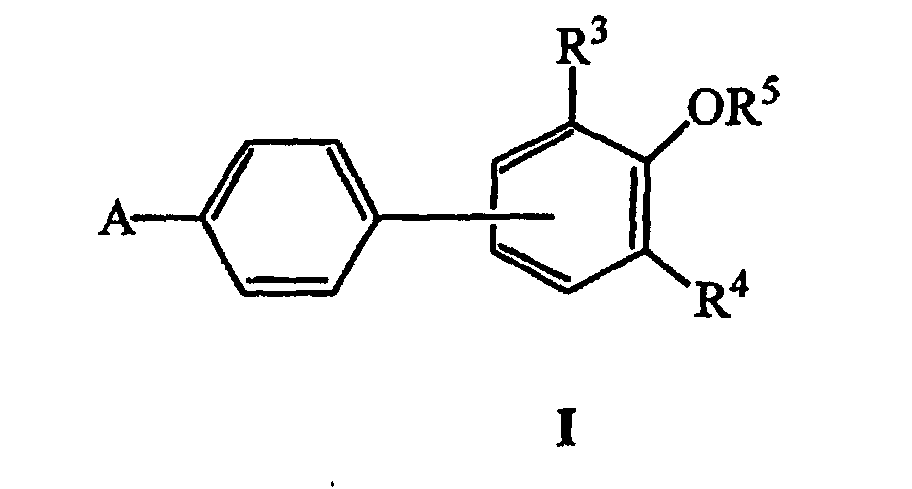
- A
- is

- B
- is carbon or nitrogen;
- D
- is oxygen, sulfur, or nitrogen;
- E
- is carbon or nitrogen;
- Y
- is a bond, methylene, C(O), or CH(OH);
- R1
- is alkyl containing 1 to 12 carbons, aryl of 6-12 carbon atoms, arylalkyl of 7-15 carbon atoms, halogen, carboxaldehyde, trifluoromethyl, alkoxy of 1-6 carbon atoms, 2,2-dimethyl-1,3-benzodioxole, Het-alkyl wherein the alkyl moiety contains 1-6 carbon atoms, or aryl of 6-10 carbon atoms which is mono-, di-, or tri-substituted with halogen, trifluoromethyl, or alkoxy of 1-6 carbon atoms;
- Het
- is
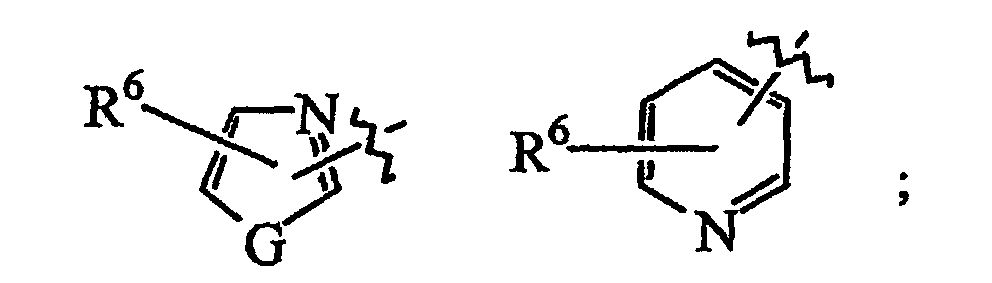
- G
- is oxygen, sulfur or nitrogen;
- R2 and R2a
- are each, independently, hydrogen, alkyl of 1-6 carbon atoms, alkoxy of 1-6 carbon atoms, halogen, trifluoromethyl;
- R3 and R4
- are each, independently, hydrogen, halogen, alkyl of 1-6 carbon atoms, aryl of 6-10 carbon atoms, trifluoromethyl, alkoxy of 1-6 carbon atoms, nitro, amino, alkoxycarbonyl, carbamide, carbamate, urea, alkylsulfoamide, arylsulfoamide, cycloalkyl of 3-8 carbon atoms, -NR7(CH2)mCO2H, pyrrolidinone, a heterocyclic ring containing 5 to 7 ring atoms having 1 to 3 heteroatoms selected from oxygen, nitrogen, or sulfur, or aryl of 6-10 carbon atoms mono-, di-, or tri-substituted with trifluoromethyl, alkyl of 1-6 carbon atoms or, alkoxy of 1-6 carbon atoms;
- R5
- is hydrogen, alkyl of 1-6 carbon atoms, -CH(R8)R9, -C(CH3)2CO2R10, -CH(R8)(CH2)nCO2R10, -CH(R8)C6H4CO2R10,
- R6
- is alkyl of 1 to 3 carbon atoms,
- R7
- is hydrogen or alkyl of 1 to 6 carbon atoms,
- R8
- is hydrogen, alkyl of 1-6 carbon atoms, aryl of 6-12 carbon atoms, aralkyl of 6-12 carbon atoms, cycloalkyl of 3-8 carbon atoms, phthalic acid, or Q-alkyl wherein the alkyl moiety contains 1-6 carbon atoms;
- Q
- is

- W
- is oxygen, sulfur, or nitrogen;
- R9
- is -CO2R12, -CONHR12, tetrazole, -PO3R12;
- R10
- is hydrogen, alkyl of 1-6 carbon atoms, aryl of 7-15 carbon atoms, or aralkyl of 7-15 carbon atoms;
- R12
- is hydrogen, alkyl, aryl of 6-12 carbon atoms, aralkyl of 7-15 carbon atoms;
- m =
- 1-3;
- n =
- 1-6;
or a pharmaceutically acceptable salt thereof. - The compound according to claim 1, wherein
- A
- is
wherein
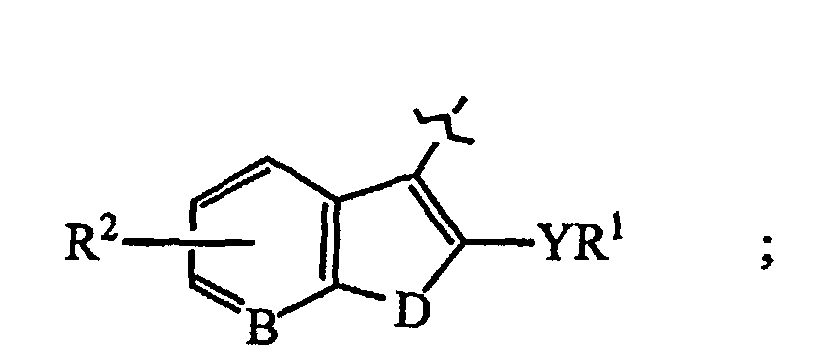
- B
- is carbon or nitrogen;
- D
- is oxygen or sulfur;
- The compound according to claim 1, wherein
- A
- is
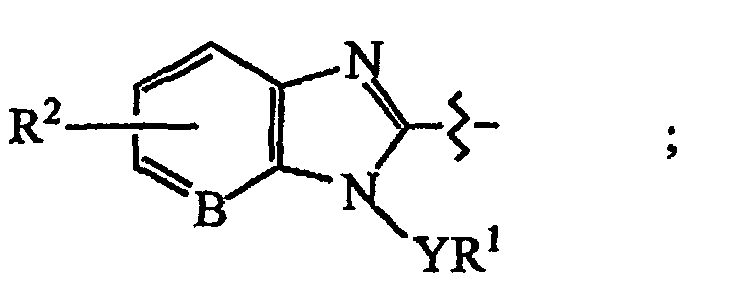
- The compound according to claim 1, wherein
- A
- is

- The compound according to claim 1 which is:(4'-benzofuran-3-yl-biphenyl-4-yloxy)-acetic acid or a pharmaceutically acceptable salt thereof;2-(4'-benzofuran-3-yl-biphenyl-4-yloxy)-3-phenyl-propionic acid or a pharmaceutically acceptable salt thereof;[4'-(2-bromo-benzofuran-3-yl)-biphenyl-4-yloxy]-acetic acid or a pharmaceutically acceptable salt thereof;2-[4'-(2-bromo-benzofuran-3-yl)-biphenyl-4-yloxy]-3-phenyl-propionic acid or a pharmaceutically acceptable salt thereof;4'-(2-butyl-benzofuran-3-yl)-biphenyl-4-ol or a pharmaceutically acceptable salt thereof;[4'-(2-butyl-benzofuran-3-yl)-biphenyl-4-yloxy]-acetic acid or a pharmaceutically acceptable salt thereof;2-[4'-(2-butyl-benzofuran-3-yl)-biphenyl-4-yloxy]-3-phenyl-propionic acid or a pharmaceutically acceptable salt thereof;2-[4'-(2-benzyl-benzofuran-3-yl)-biphenyl-4-yloxy]-3-phenyl-propionic acid or a pharmaceutically acceptable salt thereof;2-[4'-(2-butyl-benzo[b]thiophene-3-yl)-biphenyl-4-yloxy]-3-phenyl-propionic acid or a pharmaceutically acceptable salt thereof;2-[4'-(2-benzyl-benzo[b]thiophene-3-yl)-biphenyl-4-yloxy]-3-phenyl-propionic acid or a pharmaceutically acceptable salt thereof;2-[4'-(2-benzoyl-benzofuran-3-yl)-biphenyl-4-yloxy]-3-phenyl-propionic acid or a pharmaceutically acceptable salt thereof;(2R)-2-[4'-(2-benzyl-benzofuran-3-yl)-biphenyl-4-yloxy]-3-phenyl-propionic acid or a pharmaceutically acceptable salt thereof;(2S)-2-[4'-(2-benzyl-benzofuran-3-yl)-biphenyl-4-yloxy]-3-phenyl-propionic acid or a pharmaceutically acceptable salt thereof;(2S)-2-[4'-(2-benzyl-benzofuran-3-yl)-biphenyl-4-yloxy]-3-phenyl-propionic acid tromethamine salt;(2R)- 2-[4'-(2-benzyl-benzofuran-3-yl)-biphenyl-4-yloxy]-propionic acid or a pharmaceutically acceptable salt thereof;(R)-[4'-(2-benzyl-benzofuran-3-yl)-biphenyl-4-yloxy]-phenyl-acetic acid or a pharmaceutically acceptable salt thereof;(2R)-2- {4'-[2-(4-fluoro-benzyl-benzo[b]thiophene-3-yl)-biphenyl-4-yloxy]-3-phenyl-propionic acid or a pharmaceutically acceptable salt thereof;(2R)-2-{4'-[2-(4-methoxy-benzyl-benzo[b]thiophene-3-yl)-biphenyl-4-yloxy]-3-phenyl-propionic acid or a pharmaceutically acceptable salt thereof;[4'-(2-butyl-benzo[b]thiophene-3-yl)-biphenyl-4-yloxy]-phenyl-acetic acid or a pharmaceutically acceptable salt thereof;(2R)-2- {4'-[2-(hydroxy-phenyl-methyl)-benzofuran-3-yl)-biphenyl-4-yloxy]-3-phenyl-propionic acid or a pharmaceutically acceptable salt thereof;(2S)-2-[4'-(2-benzyl-benzofuran-3-yl)-biphenyl-4-yloxy]-3-phenyl-propionic acid methyl ester;2-[4'-(2-benzyl-benzofuran-3-yl)-biphenyl-4-yloxy]-2-methyl-3-phenyl-propionic acid or a pharmaceutically acceptable salt thereof;(2R)-2-{4'-[2-(3,4-dimethoxy-benzyl)-benzo[b]thiophene-3-yl)-biphenyl-4-yloxy]-3-phenyl-propionic acid or a pharmaceutically acceptable salt thereof;(2R)-2- {4'-[2-(2,4-dimethoxy-benzyl)-benzo[b]thiophene-3-yl)-biphenyl-4-yloxy]-3-phenyl-propionic acid or a pharmaceutically acceptable salt thereof;(2R) 2-{4'-[2-(2,2-dimethyl-benzo[1,3]dioxo-5-ylmethyl)-benzo[b]thiophene-3-yl)-biphenyl-4-yloxy]-3-phenyl-propionic acid or a pharmaceutically acceptable salt thereof;(2R)-2- {4'-[2-(3,4-dihydroxy-benzyl)-benzo[b]thiophene-3-yl)-biphenyl-4-yloxy]-3-phenyl-propionic acid or a pharmaceutically acceptable salt thereof;(2R)-2-[4'-(2-benzyl-thiophene-3-yl)-biphenyl-4-yloxy]-3-phenyl-propionic acid or a pharmaceutically acceptable salt thereof;3-phenyl-2-[4'-(2-thiazole-2-ylmethyl-benzo[b]thiophene-3-yl)-biphenyl-4-yloxy]-propionic acid or a pharmaceutically acceptable salt thereof;(2R)-3-phenyl-2-[4'-(2-pyridin-2-ylmethyl-benzo[b]thiophene-3-yl)-biphenyl-4-yloxy]-propionic acid sodium salt;(2R)-3-phenyl-2-[4'-(2-pyridin-2-ylmethyl-benzo[b]thiophene-3-yl)-biphenyl-4-yloxy]-propionic acid or a pharmaceutically acceptable salt thereof;(2S)-2-[4'-(2-benzyl-furo[2,3]pyridin-3-yl)-biphenyl-4-yloxy]-3-phenyl-propionic acid or a pharmaceutically acceptable salt thereof;4'-(2-benzyl-benzo[b]thiophene-3-yl)-3-bromo-biphenyl-4-ol or a pharmaceutically acceptable salt thereof;4'-(2-benzyl-benzo[b]thiophene-3-yl)-3,5-dibromo-biphenyl-4-ol or a pharmaceutically acceptable salt thereof;(2R)-2-[4'-(2-benzyl-benzo[b]thiophene-3-yl)-3-bromo-biphenyl-4-yloxy]-3-phenyl-propionic acid or a pharmaceutically acceptable salt thereof;(2R)-2-[4'-(2-benzyl-benzo[b]thiophene-3-yl)-3,5-dibromo-biphenyl-4-yloxy]-3-phenyl-propionic acid or a pharmaceutically acceptable salt thereof;(2R)-2-[4-(2-benzyl-benzo[b]thiophene-3-yl)-4"-methoxy-[1,1';3',1"]terphenyl-4'-yloxy]-3-phenyl-propionic acid or a pharmaceutically acceptable salt thereof;[(4,4"-dimethoxy-5'-{2-(phenylmethyl)benzo[b]thien-3-yl]phenyl}[1,1';3',1"-terphenyl]-2'-yl)oxy]-acetic acid or a pharmaceutically acceptable salt thereof;[4-(2-benzyl-benzo[b]-thiophen-3-yl)-5'-bromo-4"-methoxy[1,1';3',1"-terphenyl]-4'-yl)oxy]-acetic acid or a pharmaceutically acceptable salt thereof;[4'-(2-benzyl-benzo[b]thiophene-3-yl)-3,5-dibromo-biphenyl-4-yloxy]-acetic acid or a pharmaceutically acceptable salt thereof;[4'-(2-benzyl-benzo[b]thiophene-3-yl)-3-bromo-biphenyl-4-yloxy]-acetic acid or a pharmaceutically acceptable salt thereof;(2S)-[4'-(2-benzyl-benzo[b]thiophene-3-yl)-3,5-dibromo-biphenyl-4-yloxy]-4-phenyl-butyric acid or a pharmaceutically acceptable salt thereof;4-[4'-(2-benzyl-benzo[b]thiophene-3-yl)-3-bromo-biphenyl-4-yloxy]-butyric acid or a pharmaceutically acceptable salt thereof;N-{(3R)-3-[4'-(2-benzyl-benzo[b]thiophen-3-yl)-3,5-dibromo-biphenyl-4-yloxy]-3-carboxy-propyl]-phthalamic acid or a pharmaceutically acceptable salt thereof;N-{(3R)-3-[4'-(2-benzyl-benzo[b]thiophen-3-yl)-3,5-dibromo-biphenyl-4-yloxy]-3-methoxycarbonyl-propyl]-phthalamic acid or a pharmaceutically acceptable salt thereof;(2R)-2-[4-(2-benzyl-benzo[b]thiophene-3-yl)-4"-chloro-[1,1';3',1"]terphenyl-4'-yloxy]-3-phenyl-propionic acid or a pharmaceutically acceptable salt thereof;(2S)-2-[4'-(2-benzyl-benzofuran-3-yl)-biphenyl-4-yloxy]-4-phenyl-butyric acid or a pharmaceutically acceptable salt thereof;(2R)-2-[4'-(2-benzyl-benzo[b]-thiophen-3-yl)-3,5-dibromo-biphenyl-4-yloxy]-4-(1,3-dioxo-1,3-dihydro-isoindol-2-yl)-butyric acid or a pharmaceutically acceptable salt thereof;(2R)-2-[4'-(2-benzyl-benzofuran-3-yl)-biphenyl-4-yloxy]-4-( 1,3-dioxo-1,3-dihydroisoindol-2-yl)-butyric acid or a pharmaceutically acceptable salt thereof;(2S)-2-[4'-(2-benzyl-benzofuran-3-yl)-3,5-dibromo-biphenyl-4-yloxy]-3-phenyl-propionic acid or a pharmaceutically acceptable salt thereof;(2S)-2-[4'-(2-benzyl-benzofuran-3-yl)-3-bromo-biphenyl-4-yloxy]-3-phenyl-propionic acid or a pharmaceutically acceptable salt thereof;(2R)-2-[4'-(2-benzyl-benzofuran-3-yl)-3,5-dibromo-biphenyl-4-yloxy]-4-methyl-pentanoic acid or a pharmaceutically acceptable salt thereof;2-[4'-(2-benzyl-benzofuran-3-yl)-3,5-dibromo-biphenyl-4-yloxy]-hexanoic acid or a pharmaceutically acceptable salt thereof;(2S)-2-[4'-(2-benzyl-benzofuran-3-yl)-3,5-dibromo-biphenyl-4-yloxy]-butyric acid or a pharmaceutically acceptable salt thereof;(2S)-2-[4'-(2-benzyl-benzofuran-3-yl)-3,5-dibromo-biphenyl-4-yloxy]-octanoic acid or a pharmaceutically acceptable salt thereof;(2S)-2-[4-(2-benzyl-benzofuran-3-yl)-4"-methoxy-[1,1';3',1"]terphenyl-4'-yloxy]-3-phenyl-propionic acid or a pharmaceutically acceptable salt thereof;[4-(2-benzyl-benzo[b]-thiophen-3-yl)-5'-bromo-3",4"-dimethoxy[1,1';3',1"-terphenyl]-4'-yl)oxy]-acetic acid or a pharmaceutically acceptable salt thereof;[4-(2-benzyl-benzo[b]-thiophen-3-yl)-5'-bromo-3"-methoxy[1,1';3',1"-terphenyl]-4'-yl)oxy]-acetic acid or a pharmaceutically acceptable salt thereof;[[3,3-dimethoxy-5-[4-[2-(phenylmethyl)benzyl-benzo[b]-thiophen-3-yl)-[1,1';3',1"-terphenyl]-4'-yl)oxy]-acetic acid or a pharmaceutically acceptable salt thereof;[4-(2-benzyl-benzo[b]-thiophen-3-yl)-4"-methoxy[1,1';3',1"-terphenyl]-4'-yl)oxy]-acetic acid or a pharmaceutically acceptable salt thereof;[4-(2-benzyl-benzo[b]-thiophen-3-yl)-3",4''-dimethoxy[1,1';3',1"-terphenyl]-4'-yl)oxy]-acetic acid or a pharmaceutically acceptable salt thereof;[4-(2-benzyl-benzo[b]-thiophen-3-yl)-3",4",5"-trimethoxy[1,1';3',1"-terphenyl]-4'-yl)oxy]-acetic acid or a pharmaceutically acceptable salt thereof;[4-(2-benzyl-benzo[b]-thiophen-3-yl)-[1,1';3',1"-terphenyl]-4'-yl)oxy]-acetic acid or a pharmaceutically acceptable salt thereof;4-[4'-(2-benzyl-benzofuran-3-yl)-biphenyl-4-yloxymethyl]-benzoic acid or a pharmaceutically acceptable salt thereof;(2S)-2-[4'-(1-benzyl-1H-benzimidazol-2-yl)-biphenyl-4-yloxy]-3-phenyl-propionic acid or a pharmaceutically acceptable salt thereof;(2R)-2-[4'-(3-benzyl-3H-imidazol[4,5-b]pyridin-2-yl)-biphenyl-4-yloxy]-3-phenyl-propionic acid sodium salt;(2R)-2-[4'-(2-benzyl-4,5-dimethyl-thiophen-3-yl)-biphenyl-4-yloxy]-3-phenyl-propionic acid or a pharmaceutically acceptable salt thereof;(2R)-2-[4'-(2-benzoyl-benzofuarn-3-yl)-3-nitro-biphenyl-4-yloxy]-3-phenyl-propionic acid or a pharmaceutically acceptable salt thereof;(2R)-2-[4'-(2-benzyl-benzofuarn-3-yl)-3-nitro-biphenyl-4-yloxy]-3-phenyl-propionic acid or a pharmaceutically acceptable salt thereof;(2R)-2-{4'-[2-(hydroxy-phenyl-methyl)-benzofuarn-3-yl)-3-nitro-biphenyl-4-yloxy]-3-phenyl-propionic acid or a pharmaceutically acceptable salt thereof;(2S)-2-[4'-(2-benzyl-benzofuarn-3-yl)-3,5-dimethyl-biphenyl-4-yloxy]-3-phenyl-propionic acid or a pharmaceutically acceptable salt thereof; or(2S)-2-[4'-(5-acetyl-thiophen-2-yl)-biphenyl-4-yloxy]-3-phenyl-propionic acid sodium salt.
- A compound of formula I as shown and defined in claim 1 or a pharmaceutically acceptable salt thereof for use in treating metabolic disorders mediated by insulin resistance or hyperglycemia in a mammal.
- A compound of formula I as shown and defined in claim 1 or a pharmaceutically acceptable salt thereof for use in treating or inhibiting type II diabetes in a mammal.
- A compound of formula I as shown and defined in claim 1 or a pharmaceutically acceptable salt thereof for use in modulating glucose levels in a mammal.
- A pharmaceutical composition which comprises a compound of formula I as shown and defined in claim 1 or a pharmaceutically acceptable salt thereof, and a pharmaceutical carrier.
Applications Claiming Priority (3)
| Application Number | Priority Date | Filing Date | Title |
|---|---|---|---|
| US7620598A | 1998-05-12 | 1998-05-12 | |
| US76205 | 1998-05-12 | ||
| PCT/US1999/010201 WO1999058518A2 (en) | 1998-05-12 | 1999-05-10 | Biphenyl oxo-acetic acids useful in the treatment of insulin resistance and hyperglycemia |
Publications (2)
| Publication Number | Publication Date |
|---|---|
| EP1077967A2 EP1077967A2 (en) | 2001-02-28 |
| EP1077967B1 true EP1077967B1 (en) | 2002-12-04 |
Family
ID=22130573
Family Applications (1)
| Application Number | Title | Priority Date | Filing Date |
|---|---|---|---|
| EP99925583A Expired - Lifetime EP1077967B1 (en) | 1998-05-12 | 1999-05-10 | Biphenyl oxo-acetic acids useful in the treatment of insulin resistance and hyperglycemia |
Country Status (8)
| Country | Link |
|---|---|
| EP (1) | EP1077967B1 (en) |
| JP (1) | JP2002514635A (en) |
| CN (1) | CN1308622A (en) |
| AT (1) | ATE229015T1 (en) |
| AU (1) | AU4183699A (en) |
| CA (1) | CA2330557A1 (en) |
| DE (1) | DE69904318D1 (en) |
| WO (1) | WO1999058518A2 (en) |
Cited By (1)
| Publication number | Priority date | Publication date | Assignee | Title |
|---|---|---|---|---|
| DE10351859A1 (en) * | 2003-11-06 | 2005-06-09 | Beiersdorf Ag | Cosmetic and/or dermatological oil/water emulsions with viscosity within specified range, used as sprayable cosmetic preparation and textile impregnant, contain microcrystalline cellulose, xanthan gum and optionally repellent |
Families Citing this family (45)
| Publication number | Priority date | Publication date | Assignee | Title |
|---|---|---|---|---|
| US6548529B1 (en) | 1999-04-05 | 2003-04-15 | Bristol-Myers Squibb Company | Heterocyclic containing biphenyl aP2 inhibitors and method |
| WO2001047922A2 (en) | 1999-12-24 | 2001-07-05 | Aventis Pharma Limited | Azaindoles |
| EP1743655B1 (en) | 2000-01-21 | 2014-06-25 | Novartis AG | Combinations comprising dipeptidylpeptidase-iv inhibitors and antidiabetic agents |
| EP1284260A4 (en) * | 2000-05-22 | 2004-03-31 | Takeda Chemical Industries Ltd | TYROSINE PHOSPHATASE INHIBITORS |
| US6472545B2 (en) | 2000-08-29 | 2002-10-29 | Abbott Laboratories | Protein tyrosine phosphatase inhibitors |
| WO2002018363A2 (en) * | 2000-08-29 | 2002-03-07 | Abbott Laboratories | 3-phenyl-propanoic acid derivatives as protein tyrosine phosphatase inhibitors |
| GB0115109D0 (en) | 2001-06-21 | 2001-08-15 | Aventis Pharma Ltd | Chemical compounds |
| AU2002348276A1 (en) | 2001-11-16 | 2003-06-10 | Bristol-Myers Squibb Company | Dual inhibitors of adipocyte fatty acid binding protein and keratinocyte fatty acid binding protein |
| AU2002349705A1 (en) | 2001-12-03 | 2003-06-17 | Japan Tobacco Inc. | Azole compound and medicinal use thereof |
| BRPI0409914A (en) * | 2003-04-30 | 2006-04-25 | Inst For Pharm Discovery Inc | substituted carboxylic acids |
| US7371759B2 (en) | 2003-09-25 | 2008-05-13 | Bristol-Myers Squibb Company | HMG-CoA reductase inhibitors and method |
| US7141596B2 (en) | 2003-10-08 | 2006-11-28 | Incyte Corporation | Inhibitors of proteins that bind phosphorylated molecules |
| US7420059B2 (en) | 2003-11-20 | 2008-09-02 | Bristol-Myers Squibb Company | HMG-CoA reductase inhibitors and method |
| CA2572770A1 (en) | 2004-07-08 | 2006-01-19 | Novo-Nordisk A/S | Polypeptide protracting tags comprising a tetrazole moiety |
| AU2005302409A1 (en) * | 2004-10-28 | 2006-05-11 | The Institutes For Pharmaceutical Discovery Llc | Substituted carboxylic acids |
| EP1805136A1 (en) * | 2004-10-28 | 2007-07-11 | The Institutes for Pharmaceutical Discovery, LLC | Substituted phenylalkanoic acids |
| US7524870B2 (en) * | 2004-12-03 | 2009-04-28 | Hoffmann-La Roche Inc. | Biaryloxymethylarenecarboxylic acids as glycogen synthase activators |
| DE102004060542A1 (en) | 2004-12-16 | 2006-07-06 | Sanofi-Aventis Deutschland Gmbh | Hydroxybiphenyl carboxylic acids and derivatives, process for their preparation and their use |
| PT1931350E (en) | 2005-09-14 | 2014-02-12 | Takeda Pharmaceutical | ADMINISTRATION OF DIPEPTIDIL PEPTIDASE INHIBITORS |
| ES2393757T3 (en) * | 2005-11-17 | 2012-12-27 | Eli Lilly & Company | Glucagon receptor antagonists, preparation and therapeutic uses |
| JP5054770B2 (en) * | 2006-07-11 | 2012-10-24 | デウン ファーマシューティカル カンパニー リミテッド | Novel biarylbenzimidazole derivatives and pharmaceutical compositions containing the same |
| WO2008033931A1 (en) * | 2006-09-13 | 2008-03-20 | The Institutes For Pharmaceutical Discovery, Llc | Para-xylylene carboxylic acids and isothiazolones useful as protein tyrosine phosphatases (ptps) in particular ptp-ib |
| US8969514B2 (en) | 2007-06-04 | 2015-03-03 | Synergy Pharmaceuticals, Inc. | Agonists of guanylate cyclase useful for the treatment of hypercholesterolemia, atherosclerosis, coronary heart disease, gallstone, obesity and other cardiovascular diseases |
| MX354786B (en) | 2007-06-04 | 2018-03-21 | Synergy Pharmaceuticals Inc | AGONISTS OF GUANYLATE CYCLASE USEFUL FOR THE TREATMENT OF GASTROINTESTINAL DISORDERS, INFLAMMATION, CANCER and OTHER DISORDERS. |
| JP2009096720A (en) * | 2007-10-12 | 2009-05-07 | Idemitsu Kosan Co Ltd | Biodegradable liquid ester compounds |
| ES2522968T3 (en) | 2008-06-04 | 2014-11-19 | Synergy Pharmaceuticals Inc. | Guanylate cyclase agonists useful for the treatment of gastrointestinal disorders, inflammation, cancer and other disorders |
| AU2009270833B2 (en) | 2008-07-16 | 2015-02-19 | Bausch Health Ireland Limited | Agonists of guanylate cyclase useful for the treatment of gastrointestinal, inflammation, cancer and other disorders |
| US8323805B2 (en) | 2009-06-04 | 2012-12-04 | Nitto Denko Corporation | Emissive aryl-heteroaryl acetylenes |
| US20100326526A1 (en) | 2009-06-29 | 2010-12-30 | Nitto Denko Corporation | Emissive aryl-heteroaryl compounds |
| JP5773585B2 (en) | 2009-06-29 | 2015-09-02 | 日東電工株式会社 | Luminescent triaryl |
| WO2011041293A1 (en) | 2009-09-30 | 2011-04-07 | Takeda Pharmaceutical Company Limited | Pyrazolo [1, 5-a] pyrimidine derivatives as apoptosis signal-regulating kinase 1 inhibitors |
| PL2531501T3 (en) | 2010-02-03 | 2014-05-30 | Takeda Pharmaceuticals Co | Apoptosis signal-regulating kinase 1 inhibitors |
| US9616097B2 (en) | 2010-09-15 | 2017-04-11 | Synergy Pharmaceuticals, Inc. | Formulations of guanylate cyclase C agonists and methods of use |
| HUE029002T2 (en) | 2010-12-17 | 2017-01-30 | Mitsubishi Tanabe Pharma Corp | Continuous arycyclic compound |
| US8426040B2 (en) | 2010-12-22 | 2013-04-23 | Nitto Denko Corporation | Compounds for use in light-emitting devices |
| US8933243B2 (en) | 2011-06-22 | 2015-01-13 | Nitto Denko Corporation | Polyphenylene host compounds |
| JP5977349B2 (en) | 2012-06-15 | 2016-08-24 | 田辺三菱製薬株式会社 | Aromatic heterocyclic compounds |
| US9486433B2 (en) | 2012-10-12 | 2016-11-08 | Mochida Pharmaceuticals Co. Ltd. | Compositions and methods for treating non-alcoholic steatohepatitis |
| US10441560B2 (en) | 2013-03-15 | 2019-10-15 | Mochida Pharmaceutical Co., Ltd. | Compositions and methods for treating non-alcoholic steatohepatitis |
| AU2014235209B2 (en) | 2013-03-15 | 2018-06-14 | Bausch Health Ireland Limited | Guanylate cyclase receptor agonists combined with other drugs |
| US9889108B2 (en) | 2013-03-15 | 2018-02-13 | Mochida Pharmaceutical Co., Ltd. | Compositions and methods for treating non-alcoholic steatohepatitis |
| AU2014235215A1 (en) | 2013-03-15 | 2015-10-01 | Synergy Pharmaceuticals Inc. | Agonists of guanylate cyclase and their uses |
| BR112015030326A2 (en) | 2013-06-05 | 2017-08-29 | Synergy Pharmaceuticals Inc | ULTRAPURE GUANYLATE CYCLASE C AGONISTS, METHOD OF MANUFACTURING AND USING THEM |
| EP3013796B9 (en) * | 2013-06-27 | 2020-07-01 | LG Chem, Ltd. | Biaryl derivatives as gpr120 agonists |
| CN105067814A (en) * | 2015-07-24 | 2015-11-18 | 中国科学院成都生物研究所 | Helicase hydrolysis ATP activity determination method |
Family Cites Families (5)
| Publication number | Priority date | Publication date | Assignee | Title |
|---|---|---|---|---|
| JPH0678340B2 (en) * | 1990-05-09 | 1994-10-05 | フアイザー・インコーポレイテツド | Azabenzimidazole in the treatment of asthma, arthritis and related disorders |
| JP2941971B2 (en) * | 1991-02-13 | 1999-08-30 | キヤノン株式会社 | Liquid crystal composition, liquid crystal element having the same, display method and display device using the same |
| AU702887B2 (en) * | 1995-10-31 | 1999-03-11 | Merck & Co., Inc. | Substituted pyridyl pyrroles, compositions containing such compounds and methods of use |
| WO1997021435A1 (en) * | 1995-12-14 | 1997-06-19 | Merck & Co., Inc. | Antagonists of gonadotropin releasing hormone |
| CA2206997A1 (en) * | 1996-07-10 | 1998-01-10 | Eli Lilly And Company | Benzothiophene compounds and methods of use |
-
1999
- 1999-05-10 EP EP99925583A patent/EP1077967B1/en not_active Expired - Lifetime
- 1999-05-10 CN CN99808387A patent/CN1308622A/en active Pending
- 1999-05-10 CA CA002330557A patent/CA2330557A1/en not_active Abandoned
- 1999-05-10 AT AT99925583T patent/ATE229015T1/en not_active IP Right Cessation
- 1999-05-10 WO PCT/US1999/010201 patent/WO1999058518A2/en not_active Ceased
- 1999-05-10 JP JP2000548322A patent/JP2002514635A/en active Pending
- 1999-05-10 DE DE69904318T patent/DE69904318D1/en not_active Expired - Lifetime
- 1999-05-10 AU AU41836/99A patent/AU4183699A/en not_active Abandoned
Cited By (1)
| Publication number | Priority date | Publication date | Assignee | Title |
|---|---|---|---|---|
| DE10351859A1 (en) * | 2003-11-06 | 2005-06-09 | Beiersdorf Ag | Cosmetic and/or dermatological oil/water emulsions with viscosity within specified range, used as sprayable cosmetic preparation and textile impregnant, contain microcrystalline cellulose, xanthan gum and optionally repellent |
Also Published As
| Publication number | Publication date |
|---|---|
| CN1308622A (en) | 2001-08-15 |
| ATE229015T1 (en) | 2002-12-15 |
| WO1999058518A3 (en) | 2000-01-20 |
| EP1077967A2 (en) | 2001-02-28 |
| WO1999058518A2 (en) | 1999-11-18 |
| DE69904318D1 (en) | 2003-01-16 |
| CA2330557A1 (en) | 1999-11-18 |
| AU4183699A (en) | 1999-11-29 |
| JP2002514635A (en) | 2002-05-21 |
Similar Documents
| Publication | Publication Date | Title |
|---|---|---|
| EP1077967B1 (en) | Biphenyl oxo-acetic acids useful in the treatment of insulin resistance and hyperglycemia | |
| US6369072B2 (en) | Biphenyl oxo-acetic acids useful in the treatment of insulin resistance and hyperglycemia | |
| US6844358B2 (en) | Phenyl oxo-acetic acids useful in the treatment of insulin resistance and hyperglycemia | |
| AU756337B2 (en) | Benzothiophenes, benzofurans, and indoles useful in the treatment of insulin resistance and hyperglycemia | |
| US6110963A (en) | Aryl-oxo-acetic acids useful in the treatment of insulin resistance and hyperglycemia | |
| WO1999058519A1 (en) | Phenyl oxo-acetic acids useful in the treatment of insulin resistance and hyperglycemia | |
| US6444670B2 (en) | Benzothiophenes, benzofurans, and indoles useful in the treatment of insulin-resistance and hyperglycemia | |
| WO1999058521A1 (en) | 11-aryl-benzo[b]naphtho[2,3-d]furans and 11-aryl-benzo[b]naphtho[2,3-d]thiophenes useful in the treatment of insulin resistance and hyperglycemia | |
| US6310081B1 (en) | Biphenyl sulfonyl aryl carboxylic acids useful in the treatment of insulin resistance and hyperglycemia | |
| US6699896B1 (en) | Oxazole-aryl-carboxylic acids useful in the treatment of insulin resistance and hyperglycemia | |
| US6221902B1 (en) | Biphenyl sulfonyl aryl carboxylic acids useful in the treatment of insulin resistance and hyperglycemia | |
| US6057316A (en) | 4-aryl-1-oxa-9-thia-cyclopenta[b]fluorenes | |
| US6110962A (en) | 11-aryl-benzo[B]naphtho[2,3-D]furans and 11-aryl-benzo[B]naphtho[2,3-D]thiophenes useful in the treatment of insulin resistance and hyperglycemia | |
| US6001867A (en) | 1-aryl-dibenzothiophenes | |
| EP1077966B1 (en) | Biphenyl sulfonyl aryl carboxylic acids useful in the treatment of insulin resistance and hyperglycemia | |
| WO1999058511A1 (en) | Oxazole-aryl-carboxylic acids useful in the treatment of insulin resistance and hyperglycemia | |
| US6340676B2 (en) | 4-aryl-1-oxa-9-thia-cyclopenta (b) fluorenes | |
| MXPA00011086A (en) | Biphenyl oxo-acetic acids useful in the treatment of insulin resistance and hyperglycemia | |
| MXPA00011085A (en) | Biphenyl sulfonyl aryl carboxylic acids useful in the treatment of insulin resistance and hyperglycemia | |
| MXPA00011083A (en) | Phenyl oxo-acetic acids useful in the treatment of insulin resistance and hyperglycemia | |
| MXPA00011089A (en) | 11-aryl-benzo[b]naphtho[2,3-d]furans and 11-aryl-benzo[b]naphtho[2,3-d]thiophenes useful in the treatment of insulin resistance and hyperglycemia | |
| MXPA00011090A (en) | Oxazole-aryl-carboxylic acids useful in the treatment of insulin resistance and hyperglycemia |
Legal Events
| Date | Code | Title | Description |
|---|---|---|---|
| PUAI | Public reference made under article 153(3) epc to a published international application that has entered the european phase |
Free format text: ORIGINAL CODE: 0009012 |
|
| 17P | Request for examination filed |
Effective date: 20001024 |
|
| AK | Designated contracting states |
Kind code of ref document: A2 Designated state(s): AT BE CH CY DE DK ES FI FR GB GR IE IT LI LU NL PT SE |
|
| AX | Request for extension of the european patent |
Free format text: AL PAYMENT 20001024;LT PAYMENT 20001024;LV PAYMENT 20001024;RO PAYMENT 20001024;SI PAYMENT 20001024 |
|
| 17Q | First examination report despatched |
Effective date: 20010619 |
|
| GRAG | Despatch of communication of intention to grant |
Free format text: ORIGINAL CODE: EPIDOS AGRA |
|
| RAP1 | Party data changed (applicant data changed or rights of an application transferred) |
Owner name: WYETH |
|
| GRAG | Despatch of communication of intention to grant |
Free format text: ORIGINAL CODE: EPIDOS AGRA |
|
| GRAH | Despatch of communication of intention to grant a patent |
Free format text: ORIGINAL CODE: EPIDOS IGRA |
|
| GRAH | Despatch of communication of intention to grant a patent |
Free format text: ORIGINAL CODE: EPIDOS IGRA |
|
| GRAA | (expected) grant |
Free format text: ORIGINAL CODE: 0009210 |
|
| AK | Designated contracting states |
Kind code of ref document: B1 Designated state(s): AT BE CH CY DE DK ES FI FR GB GR IE IT LI LU NL PT SE |
|
| AX | Request for extension of the european patent |
Free format text: AL PAYMENT 20001024;LT PAYMENT 20001024;LV PAYMENT 20001024;RO PAYMENT 20001024;SI PAYMENT 20001024 |
|
| PG25 | Lapsed in a contracting state [announced via postgrant information from national office to epo] |
Ref country code: NL Free format text: LAPSE BECAUSE OF FAILURE TO SUBMIT A TRANSLATION OF THE DESCRIPTION OR TO PAY THE FEE WITHIN THE PRESCRIBED TIME-LIMIT Effective date: 20021204 Ref country code: IT Free format text: LAPSE BECAUSE OF FAILURE TO SUBMIT A TRANSLATION OF THE DESCRIPTION OR TO PAY THE FEE WITHIN THE PRESCRIBED TIME-LIMIT;WARNING: LAPSES OF ITALIAN PATENTS WITH EFFECTIVE DATE BEFORE 2007 MAY HAVE OCCURRED AT ANY TIME BEFORE 2007. THE CORRECT EFFECTIVE DATE MAY BE DIFFERENT FROM THE ONE RECORDED. Effective date: 20021204 Ref country code: GR Free format text: LAPSE BECAUSE OF FAILURE TO SUBMIT A TRANSLATION OF THE DESCRIPTION OR TO PAY THE FEE WITHIN THE PRESCRIBED TIME-LIMIT Effective date: 20021204 Ref country code: FR Free format text: LAPSE BECAUSE OF FAILURE TO SUBMIT A TRANSLATION OF THE DESCRIPTION OR TO PAY THE FEE WITHIN THE PRESCRIBED TIME-LIMIT Effective date: 20021204 Ref country code: FI Free format text: LAPSE BECAUSE OF FAILURE TO SUBMIT A TRANSLATION OF THE DESCRIPTION OR TO PAY THE FEE WITHIN THE PRESCRIBED TIME-LIMIT Effective date: 20021204 Ref country code: BE Free format text: LAPSE BECAUSE OF FAILURE TO SUBMIT A TRANSLATION OF THE DESCRIPTION OR TO PAY THE FEE WITHIN THE PRESCRIBED TIME-LIMIT Effective date: 20021204 Ref country code: AT Free format text: LAPSE BECAUSE OF FAILURE TO SUBMIT A TRANSLATION OF THE DESCRIPTION OR TO PAY THE FEE WITHIN THE PRESCRIBED TIME-LIMIT Effective date: 20021204 |
|
| REF | Corresponds to: |
Ref document number: 229015 Country of ref document: AT Date of ref document: 20021215 Kind code of ref document: T |
|
| REG | Reference to a national code |
Ref country code: GB Ref legal event code: FG4D |
|
| REG | Reference to a national code |
Ref country code: CH Ref legal event code: NV Representative=s name: E. BLUM & CO. PATENTANWAELTE Ref country code: CH Ref legal event code: EP |
|
| REG | Reference to a national code |
Ref country code: IE Ref legal event code: FG4D |
|
| REF | Corresponds to: |
Ref document number: 69904318 Country of ref document: DE Date of ref document: 20030116 |
|
| PG25 | Lapsed in a contracting state [announced via postgrant information from national office to epo] |
Ref country code: SE Free format text: LAPSE BECAUSE OF FAILURE TO SUBMIT A TRANSLATION OF THE DESCRIPTION OR TO PAY THE FEE WITHIN THE PRESCRIBED TIME-LIMIT Effective date: 20030304 Ref country code: DK Free format text: LAPSE BECAUSE OF FAILURE TO SUBMIT A TRANSLATION OF THE DESCRIPTION OR TO PAY THE FEE WITHIN THE PRESCRIBED TIME-LIMIT Effective date: 20030304 |
|
| PG25 | Lapsed in a contracting state [announced via postgrant information from national office to epo] |
Ref country code: PT Free format text: LAPSE BECAUSE OF FAILURE TO SUBMIT A TRANSLATION OF THE DESCRIPTION OR TO PAY THE FEE WITHIN THE PRESCRIBED TIME-LIMIT Effective date: 20030305 Ref country code: DE Free format text: LAPSE BECAUSE OF FAILURE TO SUBMIT A TRANSLATION OF THE DESCRIPTION OR TO PAY THE FEE WITHIN THE PRESCRIBED TIME-LIMIT Effective date: 20030305 |
|
| NLV1 | Nl: lapsed or annulled due to failure to fulfill the requirements of art. 29p and 29m of the patents act | ||
| PG25 | Lapsed in a contracting state [announced via postgrant information from national office to epo] |
Ref country code: LU Free format text: LAPSE BECAUSE OF NON-PAYMENT OF DUE FEES Effective date: 20030510 Ref country code: GB Free format text: LAPSE BECAUSE OF NON-PAYMENT OF DUE FEES Effective date: 20030510 Ref country code: CY Free format text: LAPSE BECAUSE OF FAILURE TO SUBMIT A TRANSLATION OF THE DESCRIPTION OR TO PAY THE FEE WITHIN THE PRESCRIBED TIME-LIMIT Effective date: 20030510 |
|
| PG25 | Lapsed in a contracting state [announced via postgrant information from national office to epo] |
Ref country code: IE Free format text: LAPSE BECAUSE OF NON-PAYMENT OF DUE FEES Effective date: 20030512 |
|
| LTIE | Lt: invalidation of european patent or patent extension |
Effective date: 20021204 |
|
| PG25 | Lapsed in a contracting state [announced via postgrant information from national office to epo] |
Ref country code: LI Free format text: LAPSE BECAUSE OF NON-PAYMENT OF DUE FEES Effective date: 20030531 Ref country code: CH Free format text: LAPSE BECAUSE OF NON-PAYMENT OF DUE FEES Effective date: 20030531 |
|
| PG25 | Lapsed in a contracting state [announced via postgrant information from national office to epo] |
Ref country code: ES Free format text: LAPSE BECAUSE OF FAILURE TO SUBMIT A TRANSLATION OF THE DESCRIPTION OR TO PAY THE FEE WITHIN THE PRESCRIBED TIME-LIMIT Effective date: 20030627 |
|
| PLBE | No opposition filed within time limit |
Free format text: ORIGINAL CODE: 0009261 |
|
| STAA | Information on the status of an ep patent application or granted ep patent |
Free format text: STATUS: NO OPPOSITION FILED WITHIN TIME LIMIT |
|
| EN | Fr: translation not filed | ||
| 26N | No opposition filed |
Effective date: 20030905 |
|
| GBPC | Gb: european patent ceased through non-payment of renewal fee |
Effective date: 20030510 |
|
| REG | Reference to a national code |
Ref country code: CH Ref legal event code: PL |
|
| REG | Reference to a national code |
Ref country code: IE Ref legal event code: MM4A |