EP1076096A1 - Process for producing GDP-fucose - Google Patents
Process for producing GDP-fucose Download PDFInfo
- Publication number
- EP1076096A1 EP1076096A1 EP00117167A EP00117167A EP1076096A1 EP 1076096 A1 EP1076096 A1 EP 1076096A1 EP 00117167 A EP00117167 A EP 00117167A EP 00117167 A EP00117167 A EP 00117167A EP 1076096 A1 EP1076096 A1 EP 1076096A1
- Authority
- EP
- European Patent Office
- Prior art keywords
- gkdm
- culture broth
- gtp
- fucose
- gdp
- Prior art date
- Legal status (The legal status is an assumption and is not a legal conclusion. Google has not performed a legal analysis and makes no representation as to the accuracy of the status listed.)
- Ceased
Links
Images

Classifications
-
- C—CHEMISTRY; METALLURGY
- C12—BIOCHEMISTRY; BEER; SPIRITS; WINE; VINEGAR; MICROBIOLOGY; ENZYMOLOGY; MUTATION OR GENETIC ENGINEERING
- C12P—FERMENTATION OR ENZYME-USING PROCESSES TO SYNTHESISE A DESIRED CHEMICAL COMPOUND OR COMPOSITION OR TO SEPARATE OPTICAL ISOMERS FROM A RACEMIC MIXTURE
- C12P19/00—Preparation of compounds containing saccharide radicals
- C12P19/26—Preparation of nitrogen-containing carbohydrates
- C12P19/28—N-glycosides
- C12P19/30—Nucleotides
- C12P19/32—Nucleotides having a condensed ring system containing a six-membered ring having two N-atoms in the same ring, e.g. purine nucleotides, nicotineamide-adenine dinucleotide
Definitions
- the present invention relates to processes for producing guanosine 5'-diphospho-fucose (hereinafter referred to as "GDP-fucose") and guanosine 5'-diphospho-4-keto-6-deoxymannose (hereinafter referred to as "GKDM").
- GDP-fucose is useful, for example, as a synthetic substrate of complex carbohydrates which are useful, for example, for application to and immunotherapy for the protection against infections by bacteria, viruses and the like and cardiovascular diseases.
- GKDM is useful as, for example, an intermediate for the production of GDP-fucose.
- An object of the present invention is to provide efficient processes for producing GDP-fucose and GKDM.
- the present inventors have conducted intensive studies, and found that the inhibition of GDP-mannose 4,6-dehydratase activity by GDP-fucose can unexpectedly be avoided, and therefore GDP-fucose can be formed efficiently, by forming and accumulating GKDM (a precursor of GDP-fucose), and then converting the thus accumulated GKDM into GDP-fucose.
- GKDM a precursor of GDP-fucose
- the process is preferably conducted in the culture broth of a microorganism capable of forming GTP from a GTP precursor or a treated product of the culture broth.
- a microorganism capable of forming GTP from a GTP precursor or a treated product of the culture broth.
- Any microorganism can be used so long as it is a microorganism having such an ability.
- Appropriate GTP precursors are well-known, and include those described later. Examples of such microorganisms include those belonging to the genus Escherichia and the genus Corynebacterium .
- Examples of the microorganisms belonging to the genus Escherichia include Escherichia coli and the like.
- Examples of the microorganisms belonging to the genus Corynebacterium include Corynebacterium ammoniagenes and the like. Specific examples include Corynebacterium ammoniagenes ATCC 21170 and the like.
- the process is preferably conducted in the culture broth of a microorganism capable of forming GKDN from a saccharide and GTP or a treated product of the culture broth.
- a microorganism capable of forming GKDN from a saccharide and GTP or a treated product of the culture broth.
- Appropriate saccharides are also well-known, and include those described later.
- Examples of such microorganisms include those having a strong activity of at least one enzyme selected from the group consisting of glk , manB , manC , pgm , pfk and gmd .
- the above microorganisms having a strong enzyme activity mean microorganisms having an activity of at least one enzyme selected from the group consisting of, for example, glk , manB , manC , pgm , pfk and gmd which has been improved compared to the activity of the corresponding parent strain.
- the parent strain means a microorganism used as the origin for the construction of a variant, a cell fusion strain, a transductant or a recombinant strain.
- the microorganisms having an activity of at least one enzyme selected from the above enzymes which has been improved from the activity of the parent strain may be any of a variant, a cell fusion strain, a transductant and a recombinant strain.
- Examples thereof include microorganisms belonging to the genus Escherichia and the genus Corynebacterium .
- Preferred examples include Escherichia coli and Corynebacterium ammoniagenes .
- a transformant in which an activity of at least one enzyme selected from glk , manB , manC , pgm , pfk and gmd is improved by recombinant DNA techniques can also be used.
- Examples thereof include Escherichia coli NM522 having a recombinant DNA (pNK11) containing a glk gene derived from Escherichia coli ( J. Bacteriol ., 179 : 1298 (1997)), Escherichia coli NM522 having a recombinant DNA (pNK11) containing a manB gene derived from Escherichia coli ( J.
- GKDM When a microorganism is capable of forming GTP from a GTP precursor and is also capable of forming GKDM from a saccharide and GTP simultaneously, GKDM can then be formed by the microorganism from a GTP precursor and a saccharide. Also, in the case of a microorganism which has only a part of the activities necessary for forming GKDM from a saccharide and GTP in one strain, GKDM can be formed by appropriately combining at least two microorganisms.
- microorganism capable of converting GKDM into GDP-fucose used in the present invention, so long as it has such a converting activity.
- a microorganism having a strong wcaG activity can be used.
- a microorganism belonging to the genus Escherichia or the genus Corynebacterium such as Escherichia coli , Corynebacterium ammoniagenes , or the like, can be exemplified.
- a transformant in which activities of GKDM epimerase/reductase are improved by recombinant DNA techniques can also be used.
- examples thereof include Escherichia coli NM522 having a recombinant DNA (pGE8) containing an Escherichia coli wcaG gene ( J. Bacteriol., 178 : 4885 (1996)).
- a gene related to the formation of GDP-fucose or GKDM can be expressed in a host by making a DNA fragment containing the gene into a DNA fragment having an appropriate length containing the gene with restriction enzymes or by the PCR, inserting the resulting fragment into the downstream of the promoter of an appropriate expression vector, and then introducing the DNA-inserted expression vector into a host cell suitable for the expression vector.
- bacteria Any of bacteria, yeast and the like can be used as the host cell, so long as it can express the gene of interest.
- Examples of the expression vector include those capable of replicating autonomously in the above-described host cell or capable of being integrated into chromosome, and containing a promoter at the position where the gene of interest can be transcribed.
- the gene expression vector can replicate autonomously in the prokaryote and is a recombinant DNA which is constructed from a promoter, a ribosome binding sequence, a DNA of interest and a transcription termination sequence. It may contain a gene which controls the promoter.
- Examples of the expression vector include pKK223-3 and pGEX-2T (both manufactured by Amersham Pharmacia Biotech Co.), pSE280 (manufactured by Invitrogen Co.), pGEMEX-1 (manufactured by Promega Co.), pQE-30 (manufactured by Quiagen Co.), pET-3 (manufactured by Novagen Co.), pKYP10 (Japanese Published Unexamined Patent Application No. 110600/83), pKYP200 ( Agric. Biol. Chem. , 48 : 669 (1984)), pLSA1 ( Agric. Biol. Chem., 53 : 277 (1989)), pGEL1 ( Proc.
- Any promoter can be used, so long as it can function in host cells, such as Escherichia coli and the like.
- Examples thereof include promoters derived from a bacterium or phage, such as trp promoter (P trp ), lac promoter (P lac ), P L promoter (P L ), P R promoter, P SE promoter, and the like, SPO1 promoter, SPO2 promoter, penP promoter, and the like.
- Further examples include artificially designed and modified promoters, such as a promoter prepared by connecting two P trp 's in series, tac promoter, lac T7 promoter, and let I promoter.
- a plasmid in which the space between the Shine-Dalgarno sequence which is a ribosome binding sequence and the initiation codon is controlled at an appropriate distance (e.g., 6 to 18 bases).
- the transcription termination sequence is not always necessary for the expression of the DNA of interest; however, it is preferred to arrange the transcription termination sequence just behind the structural gene.
- prokaryote examples include microorganisms belonging to the genus Escherichia , Serratia , Bacillus , Brevibacterium , Corynebacterium , Microbacterium , Pseudomonas , and the like. Specific examples include Escherichia coli XL1-Blue, Escherichia coli XL2-Blue, Escherichia coli DH1, Escherichia coli MC1000, Escherichia coli W1485, Escherichia coli NM522, Escherichia coli JM109, Escherichia coli HB101, Escherichia coli No.
- any process can be used, so long as it is a process for introducing the DNA into the host cell, such as a process using a calcium ion ( Proc. Natl. Acad. Sci., USA , 69 : 2110 (1972)), a protoplast process (Japanese Published Unexamined Patent Application No. 248394/88), an electroporation process ( Nucleic Acids Research , 16 : 6127 (1988)), and the like.
- a calcium ion Proc. Natl. Acad. Sci., USA , 69 : 2110 (1972)
- a protoplast process Japanese Unexamined Patent Application No. 248394/88
- an electroporation process Nucleic Acids Research , 16 : 6127 (1988)
- examples of useful expression vectors include YEp13 (ATCC 37115), YEp24 (ATCC 37051), YEp50 (ATCC 37419), pHS19, pHS15, and the like.
- Any promoter can be used, so long as it can function in the yeast strain.
- Examples thereof include PH05 promoter, PGK promoter, GAP promoter, ADH promoter, gal 1 promoter, gal 10 promoter, heat shock polypeptide promoter, MF ⁇ 1 promoter, CUP 1 promoter, and the like.
- yeast strains belonging to the genus Saccharomyces include yeast strains belonging to the genus Saccharomyces , Schizosaccharomyces , Kluyveromyces , Trichosporon , Schwanniomyces , Pichia , Candida , and the like. Specific examples include Saccharomyces cerevisiae , Schizosaccharomyces pombe , Kluyveromyces lactis , Trichosporon pullulans , Schwanniomyces alluvius , Pichia pastoris , Candida utilis , and the like.
- any process can be used, so long as it is a process for introducing the DNA into yeast.
- Examples thereof include an electroporation process ( Methods in Enzymol., 194 : 182 (1990)), a spheroplast process ( Proc . Natl . Acad. Sci. USA, 81 : 4889 (1984)), a lithium acetate process ( J. Bacteriol., 153 : 163 (1983)), and the like.
- Culturing of the transformant of the present invention in a medium can be carried out in accordance with a process generally used for culturing a host.
- the transformant obtained using a prokaryote such as Escherichia coli or the like, or a eukaryote, such as yeast or the like
- any one of natural media and synthetic media can be used, so long as it contains a carbon source, a nitrogen source, inorganic salts and the like which can be assimilated by the organism and can perform culturing of the transformant efficiently.
- Any material which can be assimilated by the organism can be used as the carbon source.
- examples thereof include carbohydrates (e.g., glucose, fructose, sucrose, molasses containing them, starch, starch hydrolysate, etc. ), organic acids (e.g., acetic acid, propionic acid, etc .), alcohols (e.g., ethanol, propanol, etc .), and the like.
- nitrogen source examples include ammonia, ammonia salts of inorganic or organic acids (e.g., ammonium chloride, ammonium sulfate, ammonium acetate, ammonium phosphate, etc .), other nitrogen-containing compounds, peptone, meat extract, yeast extract, corn steep liquor, casein hydrolysate, soybean meal, soybean meal hydrolysate, various fermented cells and digests thereof, and the like.
- ammonia ammonia salts of inorganic or organic acids (e.g., ammonium chloride, ammonium sulfate, ammonium acetate, ammonium phosphate, etc .)
- other nitrogen-containing compounds e.g., peptone, meat extract, yeast extract, corn steep liquor, casein hydrolysate, soybean meal, soybean meal hydrolysate, various fermented cells and digests thereof, and the like.
- inorganic materials used in the medium include potassium dihydrogen phosphate, dipotassium hydrogen phosphate, magnesium phosphate, magnesium sulfate, sodium chloride, ferrous sulfate, manganese sulfate, copper sulfate and calcium carbonate.
- the culturing is carried out generally under aerobic conditions, such as shaking culture, submerged aeration agitation culture, and the like.
- the culturing temperature is preferably from 15 to 40°C, and the culturing time is generally from 5 hours to 7 days.
- the medium pH is controlled at a pH from 3.0 to 9.0.
- the pH is adjusted by an inorganic or organic acid, an alkali solution, urea, calcium carbonate, ammonia, or the like.
- antibiotics such as ampicillin and chloramphenicol, and the like, may be optionally added to the medium during culturing.
- an inducer may be optionally added to the medium.
- an inducer may be optionally added to the medium.
- isopropyl- ⁇ -D-thiogalactopyranoside may be added to the medium; and when a microorganism transformed with an expression vector using trp promoter is cultured, indole acrylate may be added.
- microorganisms When at least two microorganisms are used in the process of the present invention, such microorganisms may be separately cultured to use the respective culture broths, or they may be simultaneously inoculated into a single culture vessel to carry out mixture culturing and then the resulting culture broth is used. Alternatively, during or after completion of the culturing of any one of the microorganisms, the remaining microorganism is inoculated and cultured and the resulting culture broth is used.
- a microbial culture broth obtained by culturing or a treated product of the culture broth after its various treatments can be used as an enzyme source in the process of the present invention in an aqueous medium.
- Examples of the treated product of the culture broth include a concentrated product of the culture broth, a dried product of the culture broth, cells obtained by centrifuging the culture broth, a dried product of the cells, a freeze-dried product of the cells, a surfactant-treated product of the cells, an ultrasonic wave-treated product of the cells, a mechanical grinding-treated product of the cells, a solvent-treated product of the cells, an enzyme-treated product of the cells, a protein fraction of the cells, an immobilized product of the cells, an enzyme preparation obtained by extracting from the cells, and the like.
- the microorganism in the process of the present invention is used at an amount of from 1 to 500 g/l, preferably from 5 to 300 g/l, as wet cells. Also, when the formation reaction is carried out simultaneously using at least two microorganisms, the amount of the total wet cells of the microorganisms in an aqueous medium is from 2 to 500 g/l, preferably from 10 to 400 g/l.
- Examples of the GTP precursor used in the process of the present invention include guanine, xanthine, hypoxanthine, guanosine, xanthosine, inosine, guanosine 5'-monophosphate, xanthosine 5'-monophosphate, inosine 5'-monophosphate, and the like.
- the precursor which can be used include a purified compound, a salt of the precursor, and a culture broth containing the precursor produced by fermentation of a microorganism or the precursor partially purified from the culture broth, so long as the contaminants do not inhibit the reaction.
- the GTP precursor is used at a concentration of from 0.1 mM to 1.0 M, preferably from 0.01 to 0.5 M.
- Examples of the saccharide used in the process of the present invention include glucose, fructose, mannose, derivatives thereof, and the like.
- the saccharide may be used as a purified product or a material containing the same, so long as the contaminants do not inhibit the reaction.
- the saccharide may be added in a lump at the time of starting of the reaction, or dividually or continuously during the reaction.
- the saccharide is used at a concentration of from 0.1 mM to 2.0 M.
- an energy donor e.g., a coenzyme, a phosphate ion, a magnesium ion, a chelating agent (e.g., phytic acid, etc .), a surfactant and an organic solvent may be optionally added.
- a chelating agent e.g., phytic acid, etc .
- Any compound can be used as the energy donor, so long as it promotes the formation.
- examples thereof include carbohydrates (e.g., glucose, fructose, sucrose, lactose, maltose, mannitol, sorbitol, etc. ), organic acids (e.g., pyruvic acid, lactic acid, acetic acid, etc. ), amino acids (e.g., glycine, alanine, aspartic acid, glutamic acid, etc. ), molasses, starch hydrolysate, and the like.
- the energy donor is used at a concentration of from 1.0 mM to 2.0 M.
- phosphate ion examples include orthophosphoric acid, pyrophosphoric acid, tripolyphosphoric acid, polyphosphoric acid, metaphosphoric acid, inorganic phosphates (e.g. potassium dihydrogenphosphate, dipotassium hydrogenphosphate, sodium dihydrogenphosphate, disodium hydrogenphosphate, etc. ), and the like.
- the phosphate ion is used at a concentration of from 1.0 mM to 1.0 M.
- magnesium ion examples include inorganic magnesium salts (e.g., magnesium sulfate, magnesium nitrate, magnesium chloride, etc. ), organic magnesium salts (e.g., magnesium citrate, etc .), and the like.
- the magnesium ion is generally used at a concentration of from 1 to 100 mM.
- Any surfactant can be used, so long as it can promote the formation.
- examples thereof include nonionic surfactants (for example, polyoxyethylene octadecylamine (e.g., Nymeen S-215, manufactured by NOF CORPORATION), etc ), cationic surfactants (for example, cetyltrimethylammonium bromide, alkyldimethyl benzylammonium chloride (e.g., Cation F2-40E, manufactured by NOF CORPORATION), etc .), anionic surfactants (for example, lauroyl sarcosinate, etc.
- nonionic surfactants for example, polyoxyethylene octadecylamine (e.g., Nymeen S-215, manufactured by NOF CORPORATION), etc )
- cationic surfactants for example, cetyltrimethylammonium bromide, alkyldimethyl benzylammonium chloride (e.g., Cation F2-40E, manufactured
- tertiary amines for example, alkyldimethylamine (e.g., Tertiary Amine FB, manufactured by NOF Corporation), etc .
- the surfactant is generally used at a concentration of from 0.1 to 50 g/l.
- organic solvent examples include xylene, toluene, aliphatic alcohol, acetone, ethyl acetate, and the like.
- the organic solvent is generally used at a concentration of from 0.1 to 50 ml/l.
- aqueous medium used in the process of the present invention examples include water, buffers (e.g., buffers of phosphate, carbonate, acetate, borate, citrate, Tris, etc. ), alcohols (e.g., methanol, ethanol, etc .), esters (e.g., ethyl acetate, etc .), ketones (e.g., acetone, etc .), amides (e.g., acetamide, etc .), and the like.
- a culture medium of a microorganism may be used as the aqueous medium.
- the process of the present invention is carried out in the aqueous medium for 1 to 96 hours at pH 5 to 10, preferably pH 6 to 8 and at a temperature of 20 to 50°C.
- the GDP-fucose and GKDM formed in the aqueous medium can be determined using HPLC or the like in accordance with the process described in WO 98/12343.
- the GDP-fucose and GKDM formed in the aqueous medium can be recovered in accordance with a usual process using activated carbon or an ion exchange resin ( Carbohyd. Res., 242 : 69 (1993)).
- a DNA primer having the nucleotide sequence of SEQ ID NO:1 and a DNA primer having the nucleotide sequence of SEQ ID NO:2 were synthesized using a 8905 type DNA synthesizer manufactured by Perceptive Biosystems Co.
- PCR was carried out using a glk gene-containing plasmid pNT46 (WO 98/12343) DNA as a template.
- the PCR was carried out using 40 ⁇ l of a reaction solution containing 1 ng of pNT46 DNA, 0.5 ⁇ M of each primer, 2.5 units of Pfu DNA polymerase (manufactured by Stratagene Co.), 4 ⁇ l of ⁇ 10 buffer for Pfu DNA polymerase (manufactured by Stratagene Co.) and 200 ⁇ M of each deoxyNTP, by repeating a cycle of 94°C for 1 minute, 42°C for 2 minutes and 72°C for 3 minutes 30 times.
- reaction solution A 1/10 volume of the reaction solution was subjected to agarose gel electrophoresis to confirm amplification of the fragment of interest and then the remaining reaction solution was mixed with the same volume of TE (10 mM Tris-HCl (pH 8.0) and 1 mM EDTA)-saturated phenol/chloroform (1 vol/1 vol).
- the thus obtained upper layer was mixed with two volumes of cold ethanol, and the mixture was allowed to stand at -80°C for 30 minutes. The resulting solution was centrifuged to obtain a precipitate of DNA.
- the precipitate of DNA was dissolved in 20 ⁇ l of TE. Using 5 ⁇ l of the resulting solution, the DNA was digested with restriction enzymes Bgl II and Sal I, the resulting DNA fragments were separated by agarose gel electrophoresis, and then a fragment of 1.3 kb was recovered using Gene Clean II Kit.
- a manB and manC expression plasmid pNK7 (WO 98/12343) (0.2 ⁇ g) was digested with restriction enzymes Bam HI and Sal I, the DNA fragments were separated by agarose gel electrophoresis, and then a fragment of 8.2 kb was recovered in the same manner.
- the fragments of 1.3 kb and 8.2 kb were subjected to a ligation reaction at 16°C for 16 hours.
- Escherichia coli NM522 was transformed in accordance with the known process described above, and the resulting transformants were spread on an LB agar medium containing 50 ⁇ g/ml ampicillin, followed by culturing overnight at 30°C.
- Plasmids were extracted from the thus grown transformant colonies in accordance with the known process described above to obtain a plasmid pNK11 capable of expressing glk , manB and manC .
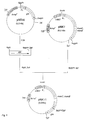
- the structure of this plasmid was confirmed by restriction enzyme digestion (Fig. 1).
- symbols “Amp r " and “cI857” represent an ampicillin-resistant gene and cI857 repressor, respectively.
- Escherichia coli NM522/pNT55 (WO 98/12343) was transformed in accordance with the known process, and the resulting transformants were spread on an LB agar medium containing 50 ⁇ g/ml ampicillin and 10 ⁇ g/ml chloramphenicol, followed by culturing overnight at 30°C.
- Escherichia coli NM522/pNK11/pNT55 as a strain capable of simultaneously expressing glk , manB , manC , pgm and pfkB was obtained.
- Escherichia coli W3110 (ATCC 27325) was cultured by the process described in Current Protocols in Molecular Biology , and then chromosomal DNA of the microorganism was isolated and purified.
- PCR was carried out in accordance with the process described in Example 1 using 0.1 ⁇ g of the chromosomal DNA of Escherichia coli W3110 (ATCC 27325) as a template.
- reaction solution A 1/10 volume of the reaction solution was subjected to agarose gel electrophoresis to confirm amplification of the fragment of interest, and then the remaining reaction solution was mixed with the same volume of TE-saturated phenol/chloroform.
- the thus obtained upper layer was mixed with two volumes of cold ethanol, and the mixture was allowed to stand at -80°C for 30 minutes. The resulting solution was centrifuged to obtain a precipitate of DNA.
- the precipitate of DNA was dissolved in 20 ⁇ l of TE. Using 5 ⁇ l of the resulting solution, the DNA was digested with restriction enzymes Hin dIII and Xba I, the resulting DNA fragments were separated by agarose gel electrophoresis, and then a DNA fragment of 1.1 kb was recovered using Gene Clean II Kit.
- PCR was carried out in accordance with the process described in Example 1 using the DNA of a trp promoter-containing plasmid pNT54 (WO 98/12343) as a template.
- reaction solution A 1/10 volume of the reaction solution was subjected to agarose gel electrophoresis to confirm amplification of the fragment of interest, and then the remaining reaction solution was mixed with the same volume of TE-saturated phenol/chloroform.
- the thus obtained upper layer was mixed with two volumes of cold ethanol, and the mixture was allowed to stand at -80°C for 30 minutes. The resulting solution was centrifuged to obtain a precipitate of DNA, and the precipitate of DNA was dissolved in 20 ⁇ l of TE.
- the DNA was digested with restriction enzymes Eco RI and Xba I, the resulting DNA fragments were separated by agarose gel electrophoresis, and then a DNA fragment of 0.4 kb was recovered in the same manner.
- the fragments of 1.1 kb, 0.4 kb and 3.0 kb were subjected to a ligation reaction at 16°C for 16 hours.
- the Escherichia coli NM522 was transformed in accordance with the known process described above, and the resulting transformants were spread on the LB agar medium containing 50 ⁇ g/ml ampicillin, followed by culturing overnight at 30°C.
- Plasmids were extracted from the thus grown transformant colonies in accordance with the known process described above to obtain an expression plasmid pGE19.
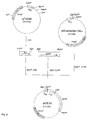
- the structure of this plasmid was confirmed by restriction enzyme digestion (Fig. 2).
- PCR was carried out in accordance with the process described in Example 1 using the chromosomal DNA of Escherichia coli W3110 (ATCC 27325) as a template.
- reaction solution A 1/10 volume of the reaction solution was subjected to agarose gel electrophoresis to confirm amplification of the fragment of interest, and then the remaining reaction solution was mixed with the same volume of TE-saturated phenol/chloroform.
- the thus obtained upper layer was mixed with two volumes of cold ethanol, and the mixture was allowed to stand at -80°C for 30 minutes.
- the resulting solution was centrifuged to obtain a precipitate of DNA, and the precipitate of DNA was dissolved in 20 ⁇ l of TE.
- the DNA was digested with restriction enzymes Cla I and Xho I, the resulting DNA fragments were separated by agarose gel electrophoresis, and then a DNA fragment of 1.0 kb was recovered using Gene Clean II Kit.
- the fragments of 1.0 kb and 5.2 kb were subjected to a ligation reaction at 16°C for 16 hours.
- the Escherichia coli NM522 was transformed in accordance with the known process described above, and the resulting transformants were spread on the LB agar medium containing 50 ⁇ g/ml ampicillin, followed by culturing overnight at 30°C.
- Plasmids were extracted from the thus grown transformant colonies in accordance with the known process described above to obtain an expression plasmid pGE8.
- the structure of this plasmid was confirmed by restriction enzyme digestion (Fig. 3).
- the Escherichia coli NM522/pNK11/pNT55 obtained in Example 1 was inoculated into a 1 L baffled conical flask containing 125 ml of LB medium supplemented with 50 ⁇ /ml ampicillin and 10 ⁇ g/ml chloramphenicol, followed by culturing at 28°C and at 220 rpm for 17 hours.
- the resulting culture broth (125 ml) was inoculated into a 5 L culture vessel containing 2.5 L of a liquid medium (pH not adjusted) composed of 10 g/l glucose, 12 g/l bactotryptone (manufactured by Difco Co.), 24 g/l yeast extract (manufactured by Difco Co.), 2.3 g/l KH 2 PO 4 , 12.5 g/l K 2 HPO 4 and 50 ⁇ g/ml ampicillin, followed by culturing at 30°C for 4 hours under conditions of 600 rpm and 2.5 L/minute aeration, and further culturing at 40°C for 3 hours.
- a liquid medium pH not adjusted
- 10 g/l glucose, 12 g/l bactotryptone manufactured by Difco Co.
- 24 g/l yeast extract manufactured by Difco Co.
- 2.3 g/l KH 2 PO 4 12.5 g/l K 2 HPO 4 and 50 ⁇ g/ml
- the medium pH was maintained at 7.0 using 28% aqueous ammonia. Also, glucose was added during the culturing when necessary.
- the resulting culture broth was centrifuged to obtain wet cells. Since the wet cells can be preserved at -20°C as occasion demands, it was possible to use them by thawing prior to use.
- the Escherichia coli NM522/pGE19 obtained in Example 2 was inoculated into a 1 L baffled conical flask containing 125 ml of LB medium supplemented with 50 ⁇ /ml ampicillin, followed by culturing at 28°C and at 220 rpm for 17 hours.
- the resulting culture broth (125 ml) was inoculated into a 5 L culture vessel containing 2.5 L of a liquid medium (pH not adjusted) composed of 10 g/l glucose, 12 g/l Bactotryptone (manufactured by Difco Co.), 24 g/l yeast extract (manufactured by Difco Co.), 2.3 g/l KH 2 PO 4 , 12.5 g/l K 2 HPO 4 and 50 ⁇ g/ml ampicillin, followed by culturing at 37°C for 6 hours under conditions of 600 rpm and 2.5 L/minute aeration.
- the medium pH was maintained at 7.0 using 28% aqueous ammonia.
- glucose was added during the culturing when necessary.
- the resulting culture broth was centrifuged to obtain wet cells. Since the wet cells can be preserved at -20°C as occasion demands, it was possible to use them by thawing prior to use.
- Corynebacterium ammoniagenes ATCC 21170 was inoculated into a 300 ml baffled conical flask containing 25 ml of a liquid medium composed of 50 g/l glucose, 10 g/l polypeptone (manufactured by Nihon Pharmaceutical Co., Ltd.), 10 g/l yeast extract (manufactured by Oriental Yeast Co., Ltd.), 5 g/l urea, 5 g/l (NH 4 ) 2 SO 4 , 1 g/l KH 2 PO 4 , 3 g/l K 2 HPO 4 , 1 g/l MgSO 4 ⁇ 7H 2 O, 0.1 g/l CaCl 2 ⁇ 2H 2 O, 10 mg/l FeSO 4 ⁇ 7H 2 O, 10 mg/l ZnSO 4 ⁇ 7H 2 O, 20 mg/l MnSO 4 ⁇ 4 ⁇ 6H 2 O, 20 mg/l L-cysteine, 10 mg/l calcium D-pantothen
- the resulting culture broth (20 ml) was inoculated into a 2 L baffled conical flask containing 250 ml of a liquid medium having the same composition, followed by culturing at 28°C and at 220 rpm for 24 hours.
- the thus obtained culture broth was used as a seed culture broth.
- the seed culture broth (250 ml) was inoculated into a 5 L culture vessel containing 2.25 L of a liquid medium composed of 150 g/l glucose, 5 g/l meat extract (manufactured by Kyokuto Pharmaceutical Industrial Co., Ltd.), 10 g/l KH 2 PO 4 , 10 g/l K 2 HPO 4 , 10 g/l MgSO 4 ⁇ 7H 2 O, 0.1 g/l CaCl 2 ⁇ 2H 2 O, 20 mg/l FeSO 4 ⁇ 7H 2 O, 10 mg/l ZnSO 4 ⁇ 7H 2 O, 20 mg/l MnSO 4 ⁇ 4 ⁇ 6H 2 O (separate sterilization), 15 mg/ml ⁇ -alanine (separate sterilization), 20 mg/l L-cysteine, 100 ⁇ g/l biotin, 2 g/l urea and 5 mg/l vitamin B 1 (separate sterilization) (adjusted to pH 7.2 with 10 N Na
- the resulting culture broth was centrifuged to obtain wet cells. Since the wet cells can be preserved at -20°C as occasion demands, it was possible to use them by thawing prior to use.
- reaction product was analyzed by HPLC to confirm that 18.6 g/l (29.4 mM) of GKDM (2Na salt) was formed and accumulated in the reaction solution.
- the Escherichia coli NM522/pNK11/pNT55 obtained in Example 1 was cultured by the process described in Example 4, followed by centrifuging to obtain wet cells.
- the Escherichia coli NM522/pGE19 obtained in Example 2 was cultured by the process described in Example 4, followed by centrifuging to obtain wet cells.
- the Escherichia coli NM522/pGE8 obtained in Example 3 was cultured by a process similar to the Escherichia coli NM522/pNK11/pNT55 described in Example 4 except for adding ampicillin only instead of adding ampicillin and chloramphenicol, followed by centrifuging to obtain wet cells.
- the Corynebacterium ammoniagenes ATCC 21170 was cultured by the process described in Example 4, followed by centrifuging to obtain wet cells.
- wet cells can be preserved at -20°C as occasion demands, it was possible to use them by thawing prior to use.
- the Escherichia coli NM522/pGE8 wet cells were added to give a concentration of 15 g/l, and the reaction was continued for 10 hours.
- the pH of the reaction solution was maintained at 7.2 using 4 N NaOH, and fructose and KH 2 PO 4 were added when necessary.
- reaction product was analyzed by HPLC to confirm that 14.0 g/l GDP-fucose was formed and accumulated in the reaction solution.
Landscapes
- Life Sciences & Earth Sciences (AREA)
- Chemical & Material Sciences (AREA)
- Organic Chemistry (AREA)
- Health & Medical Sciences (AREA)
- Zoology (AREA)
- Engineering & Computer Science (AREA)
- Wood Science & Technology (AREA)
- Microbiology (AREA)
- General Chemical & Material Sciences (AREA)
- Chemical Kinetics & Catalysis (AREA)
- Biotechnology (AREA)
- Molecular Biology (AREA)
- Biochemistry (AREA)
- Bioinformatics & Cheminformatics (AREA)
- General Engineering & Computer Science (AREA)
- General Health & Medical Sciences (AREA)
- Genetics & Genomics (AREA)
- Preparation Of Compounds By Using Micro-Organisms (AREA)
- Micro-Organisms Or Cultivation Processes Thereof (AREA)
Abstract
Description
- The present invention relates to processes for producing guanosine 5'-diphospho-fucose (hereinafter referred to as "GDP-fucose") and guanosine 5'-diphospho-4-keto-6-deoxymannose (hereinafter referred to as "GKDM"). GDP-fucose is useful, for example, as a synthetic substrate of complex carbohydrates which are useful, for example, for application to and immunotherapy for the protection against infections by bacteria, viruses and the like and cardiovascular diseases. Also, GKDM is useful as, for example, an intermediate for the production of GDP-fucose.
- As a process for producing GDP-fucose, a chemical synthesis process (Carbohyd. Res., 242: 69 (1993)) is known; however, it has disadvantages in terms of stereoselectivity and the supply of a substrate. The processes in which enzymes are used (Agric. Biol. Chem., 48: 823 (1984), WO 93/08205, and WO 99/09180) are not suitable for large scale production since they use expensive materials. Also, the enzymes require complex purification steps. A process using the activity of a microorganism has been developed (WO 98/12343) and is a useful process; however, it requires further modification for use as an industrial production process. In addition, it is known that the activity of GDP-mannose 4,6-dehydratase as the starting enzyme in the biosynthesis of GDP-fucose from GDP-mannose is inhibited by the final product, GDP-fucose (Biochim. Biophys. Acta, 117: 79 (1966); FEBS Lett., 412: 126 (1997)).
- An object of the present invention is to provide efficient processes for producing GDP-fucose and GKDM.
- This object and others are provided by the present invention, which relates to the following (1) to (18).
- (1) A process for producing GDP-fucose, comprising:
- allowing GKDM and an enzyme source to be present in an aqueous medium, wherein the enzyme source is a culture broth of a microorganism capable of converting GKDM into GDP-fucose or a treated product of the culture broth;
- forming and accumulating GDP-fucose in the aqueous medium; and
- recovering the GDP-fucose from the aqueous medium.
- (2) The process according to (1), wherein GKDM is
- provided by the preceding steps, comprising:
- allowing GTP, a saccharide and an enzyme source to be present in an aqueous medium, wherein the enzyme source is a culture broth of a microorganism capable of forming GKDM from a saccharide and GTP or a treated product of the culture broth; and
- forming and accumulating GKDM in the aqueous medium.
- (3) A process for producing GDP-fucose, comprising:
- allowing a guanosine 5'-triphosphate (hereinafter referred to as "GTP") precursor, a saccharide and enzyme sources to be present in an aqueous medium, wherein the enzyme sources are a culture broth of a microorganism capable of forming GTP from a GTP precursor or a treated product of the culture broth, and a culture broth of at least one microorganism capable of forming GKDM from a saccharide and GTP or a treated product of the culture broth;
- forming and accumulating GKDM in the aqueous medium;
- converting the accumulated GKDM into GDP-fucose using, as an enzyme source, a culture broth of a microorganism capable of converting GKDM into GDP-fucose or a treated product of the culture broth to form and accumulate GDP-fucose in the aqueous medium; and
- recovering the GDP-fucose from the aqueous medium.
- (4) A process for producing GKDM comprising:
- allowing a GTP precursor, a saccharide and enzyme sources to be present in an aqueous medium, wherein the enzyme sources are a culture broth of a microorganism capable of forming GTP from a GTP precursor or a treated product of the culture broth, and a culture broth of at least one microorganism capable of forming GKDM from a saccharide and GTP or a treated product of the culture broth;
- forming and accumulating GKDM in the aqueous medium; and
- recovering the GKDM from the aqueous medium.
- (5) The process according to (1) to (4), wherein the treated product of the culture broth is selected from the group consisting of a concentrated product of the culture broth, a dried product of the culture broth, cells obtained by centrifuging the culture broth, a dried product of the cells, a freeze-dried product of the cells, a surfactant-treated product of the cells, an ultrasonic wave-treated product of the cells, a mechanical grinding-treated product of the cells, a solvent-treated product of the cells, an enzyme-treated product of the cells, a protein fraction of the cells, an immobilized product of the cells, and an enzyme preparation obtained by extracting the cells.
- (6) The process according to (3) to (5), wherein the GTP precursor is selected from the group consisting of guanine, xanthine, hypoxanthine, guanosine, xanthosine, inosine, guanosine 5'-monophosphate, xanthosine 5'-monophosphate, and inosine 5'-monophosphate.
- (7) The process according to (2) to (6), wherein the saccharide is selected from the group consisting of glucose, fructose, and mannose.
- (8) The process according to (3) to (7), wherein the microorganism capable of forming GTP from a GTP precursor is selected from microorganisms belonging to the genus Corynebacterium.
- (9) The process according to (8), wherein the microorganism is Corynebacterium ammoniagenes.
- (10) The process according to (2) to (9), wherein the microorganism capable of forming GKDM form a saccharide and GTP is at least two kinds of microorganisms.
- (11) The process according to (2) to (10), wherein the microorganism capable of forming GKDM from a saccharide and GTP is at least one microorganism selected from microorganisms belonging to the genera Escherichia and Corynebacterium.
- (12) The process according to (11), wherein the microorganism belonging to the genus Escherichia is Escherichia coli.
- (13) The process according to (11), wherein the microorganism belonging to the genus Corynebacterium is Corynebacterium ammoniagenes.
- (14) The process according to (2) to (13), wherein the microorganism capable of forming GKDM from a saccharide and GTP is a microorganism having a strong activity of at least one enzyme selected from the group consisting of glucokinase (hereinafter referred to as "glk"), phosphomannomutase (hereinafter referred to as "manB"), mannose 1-phosphate guanylyltransferase (hereinafter referred to as "manC"), phosphoglucomutase (hereinafter referred to as "pgm"), phosphofructokinase (hereinafter referred to as "pfk"), and GDP-mannose 4,6-dehydratase (hereinafter referred to as "gmd").
- (15) The process according to (14), wherein the microorganism has a recombinant DNA comprising a vector containing at least one gene selected form the group consisting of a glk-encoding gene, a manB-encoding gene, a manC-encoding gene, a pgm-encoding gene, a pfk-encoding gene, and a gmd-encoding gene.
- (16) The process according (15), wherein the glk-encoding gene, the manB-encoding gene, the manC-encoding gene, the pgm-encoding gene, the pfk-encoding gene or the gmd-encoding gene is a gene derived from Escherichia coli.
- (17) The process according to (1) to (16), wherein the microorganism capable of converting GKDM into GDP-fucose is a microorganism having strong GKDM epimerase/reductase (hereinafter referred to as "wcaG") activity.
- (18) The process according to (17), wherein the microorganism has a recombinant DNA comprising a vector containing a wcaG-encoding gene.
- (19) The process according to (18), wherein the wcaG-encoding gene is derived from Escherichia coil.
-
-
- Fig. 1 shows construction steps of a plasmid pNK11 capable of expressing glk, manB and manC.
- Fig. 2 shows construction steps of a plasmid pGE19 capable of expressing gmd.
- Fig. 3 shows construction steps of a plasmid pGE8 capable of expressing wcaG.
-
- This application is based on Japanese application No. Hei 11-225889 filed on August 10, 1999, the entire contents of which is incorporated hereinto by reference.
- In order to achieve the above and other objects, the present inventors have conducted intensive studies, and found that the inhibition of GDP-mannose 4,6-dehydratase activity by GDP-fucose can unexpectedly be avoided, and therefore GDP-fucose can be formed efficiently, by forming and accumulating GKDM (a precursor of GDP-fucose), and then converting the thus accumulated GKDM into GDP-fucose.
- The process is preferably conducted in the culture broth of a microorganism capable of forming GTP from a GTP precursor or a treated product of the culture broth. Any microorganism can be used so long as it is a microorganism having such an ability. Appropriate GTP precursors are well-known, and include those described later. Examples of such microorganisms include those belonging to the genus Escherichia and the genus Corynebacterium.
- Examples of the microorganisms belonging to the genus Escherichia include Escherichia coli and the like. Examples of the microorganisms belonging to the genus Corynebacterium include Corynebacterium ammoniagenes and the like. Specific examples include Corynebacterium ammoniagenes ATCC 21170 and the like.
- Also, the process is preferably conducted in the culture broth of a microorganism capable of forming GKDN from a saccharide and GTP or a treated product of the culture broth. Appropriate saccharides are also well-known, and include those described later. Examples of such microorganisms include those having a strong activity of at least one enzyme selected from the group consisting of glk, manB, manC, pgm, pfk and gmd. The above microorganisms having a strong enzyme activity mean microorganisms having an activity of at least one enzyme selected from the group consisting of, for example, glk, manB, manC, pgm, pfk and gmd which has been improved compared to the activity of the corresponding parent strain. The parent strain means a microorganism used as the origin for the construction of a variant, a cell fusion strain, a transductant or a recombinant strain. The microorganisms having an activity of at least one enzyme selected from the above enzymes which has been improved from the activity of the parent strain may be any of a variant, a cell fusion strain, a transductant and a recombinant strain.
- Examples thereof include microorganisms belonging to the genus Escherichia and the genus Corynebacterium. Preferred examples include Escherichia coli and Corynebacterium ammoniagenes.
- Additionally, a transformant in which an activity of at least one enzyme selected from glk, manB, manC, pgm, pfk and gmd is improved by recombinant DNA techniques can also be used. Examples thereof include Escherichia coli NM522 having a recombinant DNA (pNK11) containing a glk gene derived from Escherichia coli (J. Bacteriol., 179: 1298 (1997)), Escherichia coli NM522 having a recombinant DNA (pNK11) containing a manB gene derived from Escherichia coli (J. Bacteriol., 178: 4885 (1996)), Escherichia coli NM522 having a recombinant DNA (pNK11) containing a manC gene derived from Escherichia coli (J. Bacteriol., 178: 4885 (1996)), Escherichia coli NM522 having a recombinant DNA (pNT55) containing a pgm gene derived from Escherichia coli (J. Bacteriol., 176: 1298 (1994)) (WO 98/12343), Escherichia coli NM522 having a recombinant DNA (pNT55) containing a pfkB gene derived from Escherichia coli (Gene, 28: 337 (1984)) (WO 98/12343), Escherichia coli NM522 having a recombinant DNA (pGE19) containing a gmd gene derived from Escherichia coli (J. Bacteriol., 178: 4885 (1996)), and the like.
- When a microorganism is capable of forming GTP from a GTP precursor and is also capable of forming GKDM from a saccharide and GTP simultaneously, GKDM can then be formed by the microorganism from a GTP precursor and a saccharide. Also, in the case of a microorganism which has only a part of the activities necessary for forming GKDM from a saccharide and GTP in one strain, GKDM can be formed by appropriately combining at least two microorganisms.
- Any microorganism can be used as the microorganism capable of converting GKDM into GDP-fucose used in the present invention, so long as it has such a converting activity. For example, a microorganism having a strong wcaG activity can be used.
- Specifically, a microorganism belonging to the genus Escherichia or the genus Corynebacterium, such as Escherichia coli, Corynebacterium ammoniagenes, or the like, can be exemplified.
- Furthermore, a transformant in which activities of GKDM epimerase/reductase are improved by recombinant DNA techniques can also be used. Examples thereof include Escherichia coli NM522 having a recombinant DNA (pGE8) containing an Escherichia coli wcaG gene (J. Bacteriol., 178: 4885 (1996)).
- In the above production of GDP-fucose and GKDM using recombinant DNA techniques, various processes related to genetic recombination, such as isolation and purification of a plasmid DNA from a microorganism, digestion of the plasmid DNA with restriction enzymes, isolation and purification of the digested DNA fragment, enzymatic ligation of the DNA fragments, transformation using a recombinant DNA, and the like, can be carried out in accordance with known processes (e.g., Molecular Cloning, A Laboratory Manual, Second Edition, Cold Spring Harbor Laboratory Press (1989) (hereinafter referred to as "Molecular Cloning, Second Edition") and Current Protocols in Molecular Biology, John Wiley & Sons (1987-1997) (hereinafter referred to as "Current Protocols in Molecular Biology")). Also, a polymerase chain reaction (hereinafter referred to as "PCR") can be carried out in accordance with a known process (PCR Protocols, Academic Press (1990)).
- A gene related to the formation of GDP-fucose or GKDM can be expressed in a host by making a DNA fragment containing the gene into a DNA fragment having an appropriate length containing the gene with restriction enzymes or by the PCR, inserting the resulting fragment into the downstream of the promoter of an appropriate expression vector, and then introducing the DNA-inserted expression vector into a host cell suitable for the expression vector.
- Any of bacteria, yeast and the like can be used as the host cell, so long as it can express the gene of interest.
- Examples of the expression vector include those capable of replicating autonomously in the above-described host cell or capable of being integrated into chromosome, and containing a promoter at the position where the gene of interest can be transcribed.
- When a prokaryote, such as a bacterium or the like, is used as the host cell, it is preferred that the gene expression vector can replicate autonomously in the prokaryote and is a recombinant DNA which is constructed from a promoter, a ribosome binding sequence, a DNA of interest and a transcription termination sequence. It may contain a gene which controls the promoter.
- Examples of the expression vector include pKK223-3 and pGEX-2T (both manufactured by Amersham Pharmacia Biotech Co.), pSE280 (manufactured by Invitrogen Co.), pGEMEX-1 (manufactured by Promega Co.), pQE-30 (manufactured by Quiagen Co.), pET-3 (manufactured by Novagen Co.), pKYP10 (Japanese Published Unexamined Patent Application No. 110600/83), pKYP200 (Agric. Biol. Chem., 48: 669 (1984)), pLSA1 (Agric. Biol. Chem., 53: 277 (1989)), pGEL1 (Proc. Natl. Acad. Sci., USA, 82: 4306 (1995)), pBluescript II SK+ (manufactured by Stratagene Co.), pBluescript II SK- (manufactured by Stratagene Co.), pTrS30 (prepared from Escherichia coli JM109/pTrS30 (FERM BP-5407)), pTrS32 (prepared from Escherichia coli JM109/pTrS32 (FERM BP-5408)), pUC19 (Gene, 33: 103 (1985)), pSTV28 (manufactured by Takara Shuzo Co., Ltd.), pUC118 (manufactured by Takara Shuzo Co., Ltd.), pPAC31 (WO 98/12343), and the like.
- Any promoter can be used, so long as it can function in host cells, such as Escherichia coli and the like. Examples thereof include promoters derived from a bacterium or phage, such as trp promoter (Ptrp), lac promoter (Plac), PL promoter (PL), PR promoter, PSE promoter, and the like, SPO1 promoter, SPO2 promoter, penP promoter, and the like. Further examples include artificially designed and modified promoters, such as a promoter prepared by connecting two Ptrp's in series, tac promoter, lac T7 promoter, and let I promoter.
- It is preferred to use a plasmid in which the space between the Shine-Dalgarno sequence which is a ribosome binding sequence and the initiation codon is controlled at an appropriate distance (e.g., 6 to 18 bases).
- In the recombinant DNA of the present invention, the transcription termination sequence is not always necessary for the expression of the DNA of interest; however, it is preferred to arrange the transcription termination sequence just behind the structural gene.
- Examples of the prokaryote include microorganisms belonging to the genus Escherichia, Serratia, Bacillus, Brevibacterium, Corynebacterium, Microbacterium, Pseudomonas, and the like. Specific examples include Escherichia coli XL1-Blue, Escherichia coli XL2-Blue, Escherichia coli DH1, Escherichia coli MC1000, Escherichia coli W1485, Escherichia coli NM522, Escherichia coli JM109, Escherichia coli HB101, Escherichia coli No. 49, Escherichia coli W3110, Escherichia coli NY49, Serratia ficaria, Serratia fonticola, Serratia liquefaciens, Serratia marcescens, Bacillus subtilis, Bacillus amyloliquefaciens, Brevibacterium immariophilum ATCC 14068, Brevibacterium saccharolyticum ATCC 14066, Corynebacterium ammoniagenes, Corynebacterium glutamicum ATCC 13032, Corynebacterium glutamicum ATCC 14067, Corynebacterium glutamicum ATCC 13869, Corynebacterium acetoacidophilum ATCC 13870, Microbacterium ammoniaphilum ATCC 15354, Pseudomonas sp. D-0110, and the like.
- As the process for introducing a recombinant DNA, any process can be used, so long as it is a process for introducing the DNA into the host cell, such as a process using a calcium ion (Proc. Natl. Acad. Sci., USA, 69: 2110 (1972)), a protoplast process (Japanese Published Unexamined Patent Application No. 248394/88), an electroporation process (Nucleic Acids Research, 16: 6127 (1988)), and the like.
- When a yeast strain is used as the host cell, examples of useful expression vectors include YEp13 (ATCC 37115), YEp24 (ATCC 37051), YEp50 (ATCC 37419), pHS19, pHS15, and the like.
- Any promoter can be used, so long as it can function in the yeast strain. Examples thereof include PH05 promoter, PGK promoter, GAP promoter, ADH promoter, gal 1 promoter, gal 10 promoter, heat shock polypeptide promoter, MFα1 promoter, CUP 1 promoter, and the like.
- Examples of the host cell include yeast strains belonging to the genus Saccharomyces, Schizosaccharomyces, Kluyveromyces, Trichosporon, Schwanniomyces, Pichia, Candida, and the like. Specific examples include Saccharomyces cerevisiae, Schizosaccharomyces pombe, Kluyveromyces lactis, Trichosporon pullulans, Schwanniomyces alluvius, Pichia pastoris, Candida utilis, and the like.
- As the process for introducing the recombinant DNA, any process can be used, so long as it is a process for introducing the DNA into yeast. Examples thereof include an electroporation process (Methods in Enzymol., 194: 182 (1990)), a spheroplast process (Proc. Natl. Acad. Sci. USA, 81: 4889 (1984)), a lithium acetate process (J. Bacteriol., 153: 163 (1983)), and the like.
- Culturing of the transformant of the present invention in a medium can be carried out in accordance with a process generally used for culturing a host.
- As the medium for culturing, the transformant obtained using a prokaryote, such as Escherichia coli or the like, or a eukaryote, such as yeast or the like, as the host, any one of natural media and synthetic media can be used, so long as it contains a carbon source, a nitrogen source, inorganic salts and the like which can be assimilated by the organism and can perform culturing of the transformant efficiently.
- Any material which can be assimilated by the organism can be used as the carbon source. Examples thereof include carbohydrates (e.g., glucose, fructose, sucrose, molasses containing them, starch, starch hydrolysate, etc.), organic acids (e.g., acetic acid, propionic acid, etc.), alcohols (e.g., ethanol, propanol, etc.), and the like.
- Examples of the nitrogen source include ammonia, ammonia salts of inorganic or organic acids (e.g., ammonium chloride, ammonium sulfate, ammonium acetate, ammonium phosphate, etc.), other nitrogen-containing compounds, peptone, meat extract, yeast extract, corn steep liquor, casein hydrolysate, soybean meal, soybean meal hydrolysate, various fermented cells and digests thereof, and the like.
- Examples of inorganic materials used in the medium include potassium dihydrogen phosphate, dipotassium hydrogen phosphate, magnesium phosphate, magnesium sulfate, sodium chloride, ferrous sulfate, manganese sulfate, copper sulfate and calcium carbonate.
- The culturing is carried out generally under aerobic conditions, such as shaking culture, submerged aeration agitation culture, and the like. The culturing temperature is preferably from 15 to 40°C, and the culturing time is generally from 5 hours to 7 days. During the culturing, the medium pH is controlled at a pH from 3.0 to 9.0. The pH is adjusted by an inorganic or organic acid, an alkali solution, urea, calcium carbonate, ammonia, or the like.
- In addition, antibiotics, such as ampicillin and chloramphenicol, and the like, may be optionally added to the medium during culturing.
- When a microorganism transformed with an expression vector in which an inducible promoter is used as the promoter is cultured, an inducer may be optionally added to the medium. For example, when a microorganism transformed with an expression vector using lac promoter is cultured, isopropyl-β-D-thiogalactopyranoside may be added to the medium; and when a microorganism transformed with an expression vector using trp promoter is cultured, indole acrylate may be added.
- When at least two microorganisms are used in the process of the present invention, such microorganisms may be separately cultured to use the respective culture broths, or they may be simultaneously inoculated into a single culture vessel to carry out mixture culturing and then the resulting culture broth is used. Alternatively, during or after completion of the culturing of any one of the microorganisms, the remaining microorganism is inoculated and cultured and the resulting culture broth is used.
- A microbial culture broth obtained by culturing or a treated product of the culture broth after its various treatments can be used as an enzyme source in the process of the present invention in an aqueous medium.
- Examples of the treated product of the culture broth include a concentrated product of the culture broth, a dried product of the culture broth, cells obtained by centrifuging the culture broth, a dried product of the cells, a freeze-dried product of the cells, a surfactant-treated product of the cells, an ultrasonic wave-treated product of the cells, a mechanical grinding-treated product of the cells, a solvent-treated product of the cells, an enzyme-treated product of the cells, a protein fraction of the cells, an immobilized product of the cells, an enzyme preparation obtained by extracting from the cells, and the like.
- The microorganism in the process of the present invention is used at an amount of from 1 to 500 g/l, preferably from 5 to 300 g/l, as wet cells. Also, when the formation reaction is carried out simultaneously using at least two microorganisms, the amount of the total wet cells of the microorganisms in an aqueous medium is from 2 to 500 g/l, preferably from 10 to 400 g/l.
- Examples of the GTP precursor used in the process of the present invention include guanine, xanthine, hypoxanthine, guanosine, xanthosine, inosine, guanosine 5'-monophosphate, xanthosine 5'-monophosphate, inosine 5'-monophosphate, and the like. The precursor which can be used include a purified compound, a salt of the precursor, and a culture broth containing the precursor produced by fermentation of a microorganism or the precursor partially purified from the culture broth, so long as the contaminants do not inhibit the reaction. The GTP precursor is used at a concentration of from 0.1 mM to 1.0 M, preferably from 0.01 to 0.5 M.
- Examples of the saccharide used in the process of the present invention include glucose, fructose, mannose, derivatives thereof, and the like. The saccharide may be used as a purified product or a material containing the same, so long as the contaminants do not inhibit the reaction. The saccharide may be added in a lump at the time of starting of the reaction, or dividually or continuously during the reaction. The saccharide is used at a concentration of from 0.1 mM to 2.0 M.
- In the process of the present invention, an energy donor, a coenzyme, a phosphate ion, a magnesium ion, a chelating agent (e.g., phytic acid, etc.), a surfactant and an organic solvent may be optionally added.
- Any compound can be used as the energy donor, so long as it promotes the formation. Examples thereof include carbohydrates (e.g., glucose, fructose, sucrose, lactose, maltose, mannitol, sorbitol, etc.), organic acids (e.g., pyruvic acid, lactic acid, acetic acid, etc.), amino acids (e.g., glycine, alanine, aspartic acid, glutamic acid, etc.), molasses, starch hydrolysate, and the like. The energy donor is used at a concentration of from 1.0 mM to 2.0 M.
- Examples of the phosphate ion include orthophosphoric acid, pyrophosphoric acid, tripolyphosphoric acid, polyphosphoric acid, metaphosphoric acid, inorganic phosphates (e.g. potassium dihydrogenphosphate, dipotassium hydrogenphosphate, sodium dihydrogenphosphate, disodium hydrogenphosphate, etc.), and the like. The phosphate ion is used at a concentration of from 1.0 mM to 1.0 M.
- Examples of the magnesium ion include inorganic magnesium salts (e.g., magnesium sulfate, magnesium nitrate, magnesium chloride, etc.), organic magnesium salts (e.g., magnesium citrate, etc.), and the like. The magnesium ion is generally used at a concentration of from 1 to 100 mM.
- Any surfactant can be used, so long as it can promote the formation. Examples thereof include nonionic surfactants (for example, polyoxyethylene octadecylamine (e.g., Nymeen S-215, manufactured by NOF CORPORATION), etc), cationic surfactants (for example, cetyltrimethylammonium bromide, alkyldimethyl benzylammonium chloride (e.g., Cation F2-40E, manufactured by NOF CORPORATION), etc.), anionic surfactants (for example, lauroyl sarcosinate, etc.), tertiary amines (for example, alkyldimethylamine (e.g., Tertiary Amine FB, manufactured by NOF Corporation), etc.), and the like, which may be used alone or as a mixture of at least two thereof. The surfactant is generally used at a concentration of from 0.1 to 50 g/l.
- Examples of the organic solvent include xylene, toluene, aliphatic alcohol, acetone, ethyl acetate, and the like. The organic solvent is generally used at a concentration of from 0.1 to 50 ml/l.
- Examples of the aqueous medium used in the process of the present invention include water, buffers (e.g., buffers of phosphate, carbonate, acetate, borate, citrate, Tris, etc.), alcohols (e.g., methanol, ethanol, etc.), esters (e.g., ethyl acetate, etc.), ketones (e.g., acetone, etc.), amides (e.g., acetamide, etc.), and the like. Alternatively, a culture medium of a microorganism may be used as the aqueous medium.
- The process of the present invention is carried out in the aqueous medium for 1 to 96 hours at pH 5 to 10, preferably pH 6 to 8 and at a temperature of 20 to 50°C.
- The GDP-fucose and GKDM formed in the aqueous medium can be determined using HPLC or the like in accordance with the process described in WO 98/12343.
- The GDP-fucose and GKDM formed in the aqueous medium can be recovered in accordance with a usual process using activated carbon or an ion exchange resin (Carbohyd. Res., 242: 69 (1993)).
- Preferred embodiments of the present invention are shown in the following Examples. However, the present invention is not limited thereto.
- A DNA primer having the nucleotide sequence of SEQ ID NO:1 and a DNA primer having the nucleotide sequence of SEQ ID NO:2 were synthesized using a 8905 type DNA synthesizer manufactured by Perceptive Biosystems Co.
- Using these synthetic DNA primers, PCR was carried out using a glk gene-containing plasmid pNT46 (WO 98/12343) DNA as a template. The PCR was carried out using 40 µl of a reaction solution containing 1 ng of pNT46 DNA, 0.5 µM of each primer, 2.5 units of Pfu DNA polymerase (manufactured by Stratagene Co.), 4 µl of × 10 buffer for Pfu DNA polymerase (manufactured by Stratagene Co.) and 200 µM of each deoxyNTP, by repeating a cycle of 94°C for 1 minute, 42°C for 2 minutes and 72°C for 3 minutes 30 times.
- A 1/10 volume of the reaction solution was subjected to agarose gel electrophoresis to confirm amplification of the fragment of interest and then the remaining reaction solution was mixed with the same volume of TE (10 mM Tris-HCl (pH 8.0) and 1 mM EDTA)-saturated phenol/chloroform (1 vol/1 vol).
- After centrifugation of the mixture, the thus obtained upper layer was mixed with two volumes of cold ethanol, and the mixture was allowed to stand at -80°C for 30 minutes. The resulting solution was centrifuged to obtain a precipitate of DNA.
- The precipitate of DNA was dissolved in 20 µl of TE. Using 5 µl of the resulting solution, the DNA was digested with restriction enzymes BglII and SalI, the resulting DNA fragments were separated by agarose gel electrophoresis, and then a fragment of 1.3 kb was recovered using Gene Clean II Kit.
- A manB and manC expression plasmid pNK7 (WO 98/12343) (0.2 µg) was digested with restriction enzymes BamHI and SalI, the DNA fragments were separated by agarose gel electrophoresis, and then a fragment of 8.2 kb was recovered in the same manner.
- Using a ligation kit, the fragments of 1.3 kb and 8.2 kb were subjected to a ligation reaction at 16°C for 16 hours. Using the ligation reaction solution, Escherichia coli NM522 was transformed in accordance with the known process described above, and the resulting transformants were spread on an LB agar medium containing 50 µg/ml ampicillin, followed by culturing overnight at 30°C.
- Plasmids were extracted from the thus grown transformant colonies in accordance with the known process described above to obtain a plasmid pNK11 capable of expressing glk, manB and manC. The structure of this plasmid was confirmed by restriction enzyme digestion (Fig. 1). In Fig. 1, symbols "Ampr" and "cI857" represent an ampicillin-resistant gene and cI857 repressor, respectively.
- Using the thus obtained plasmid pNK11, Escherichia coli NM522/pNT55 (WO 98/12343) was transformed in accordance with the known process, and the resulting transformants were spread on an LB agar medium containing 50 µg/ml ampicillin and 10 µg/ml chloramphenicol, followed by culturing overnight at 30°C. By selecting the thus grown transformants, Escherichia coli NM522/pNK11/pNT55 as a strain capable of simultaneously expressing glk, manB, manC, pgm and pfkB was obtained.
- Escherichia coli W3110 (ATCC 27325) was cultured by the process described in Current Protocols in Molecular Biology, and then chromosomal DNA of the microorganism was isolated and purified.
- Using DNAs synthesized by the 8905 type DNA synthesizer manufactured by Perceptive Biosystems Co., having the nucleotide sequences of SEQ ID NOs:3 and 4, respectively, as primers, PCR was carried out in accordance with the process described in Example 1 using 0.1 µg of the chromosomal DNA of Escherichia coli W3110 (ATCC 27325) as a template.
- A 1/10 volume of the reaction solution was subjected to agarose gel electrophoresis to confirm amplification of the fragment of interest, and then the remaining reaction solution was mixed with the same volume of TE-saturated phenol/chloroform.
- After centrifugation of the mixture, the thus obtained upper layer was mixed with two volumes of cold ethanol, and the mixture was allowed to stand at -80°C for 30 minutes. The resulting solution was centrifuged to obtain a precipitate of DNA.
- The precipitate of DNA was dissolved in 20 µl of TE. Using 5 µl of the resulting solution, the DNA was digested with restriction enzymes HindIII and XbaI, the resulting DNA fragments were separated by agarose gel electrophoresis, and then a DNA fragment of 1.1 kb was recovered using Gene Clean II Kit.
- Using DNA preparations synthesized by the 8905 type DNA synthesizer manufactured by Perceptive Biosystems Co., having the nucleotide sequences of SEQ ID NOs:5 and 6, respectively, as primers, PCR was carried out in accordance with the process described in Example 1 using the DNA of a trp promoter-containing plasmid pNT54 (WO 98/12343) as a template.
- A 1/10 volume of the reaction solution was subjected to agarose gel electrophoresis to confirm amplification of the fragment of interest, and then the remaining reaction solution was mixed with the same volume of TE-saturated phenol/chloroform.
- After centrifugation of the mixture, the thus obtained upper layer was mixed with two volumes of cold ethanol, and the mixture was allowed to stand at -80°C for 30 minutes. The resulting solution was centrifuged to obtain a precipitate of DNA, and the precipitate of DNA was dissolved in 20 µl of TE.
- Using 5 µl of the resulting solution, the DNA was digested with restriction enzymes EcoRI and XbaI, the resulting DNA fragments were separated by agarose gel electrophoresis, and then a DNA fragment of 0.4 kb was recovered in the same manner.
- After 0.2 µg of pBluescriptII SK+ DNA was digested with restriction enzymes EcoRI and HindIII, the DNA fragments were separated by agarose gel electrophoresis, and then a DNA fragment of 3.0 kb was recovered in the same manner.
- Using a ligation kit, the fragments of 1.1 kb, 0.4 kb and 3.0 kb were subjected to a ligation reaction at 16°C for 16 hours.
- Using the ligation reaction solution, the Escherichia coli NM522 was transformed in accordance with the known process described above, and the resulting transformants were spread on the LB agar medium containing 50 µg/ml ampicillin, followed by culturing overnight at 30°C.
- Plasmids were extracted from the thus grown transformant colonies in accordance with the known process described above to obtain an expression plasmid pGE19. The structure of this plasmid was confirmed by restriction enzyme digestion (Fig. 2).
- Using DNA preparations synthesized by the 8905 type DNA synthesizer manufactured by Perceptive Biosystems Co., having the nucleotide sequences of SEQ ID NOs:7 and 8, respectively, as primers, PCR was carried out in accordance with the process described in Example 1 using the chromosomal DNA of Escherichia coli W3110 (ATCC 27325) as a template.
- A 1/10 volume of the reaction solution was subjected to agarose gel electrophoresis to confirm amplification of the fragment of interest, and then the remaining reaction solution was mixed with the same volume of TE-saturated phenol/chloroform.
- After centrifugation of the mixture, the thus obtained upper layer was mixed with two volumes of cold ethanol, and the mixture was allowed to stand at -80°C for 30 minutes. The resulting solution was centrifuged to obtain a precipitate of DNA, and the precipitate of DNA was dissolved in 20 µl of TE. Using 5 µl of the resulting solution, the DNA was digested with restriction enzymes ClaI and XhoI, the resulting DNA fragments were separated by agarose gel electrophoresis, and then a DNA fragment of 1.0 kb was recovered using Gene Clean II Kit.
- After 0.2 µg of pPAC31 DNA was digested with restriction enzymes ClaI and SalI was digested, the DNA fragments were separated by agarose gel electrophoresis, and then a DNA fragment of 5.2 kb was recovered in the same manner.
- Using a ligation kit, the fragments of 1.0 kb and 5.2 kb were subjected to a ligation reaction at 16°C for 16 hours.
- Using the ligation reaction solution, the Escherichia coli NM522 was transformed in accordance with the known process described above, and the resulting transformants were spread on the LB agar medium containing 50 µg/ml ampicillin, followed by culturing overnight at 30°C.
- Plasmids were extracted from the thus grown transformant colonies in accordance with the known process described above to obtain an expression plasmid pGE8. The structure of this plasmid was confirmed by restriction enzyme digestion (Fig. 3).
- The Escherichia coli NM522/pNK11/pNT55 obtained in Example 1 was inoculated into a 1 L baffled conical flask containing 125 ml of LB medium supplemented with 50 µ/ml ampicillin and 10 µg/ml chloramphenicol, followed by culturing at 28°C and at 220 rpm for 17 hours. The resulting culture broth (125 ml) was inoculated into a 5 L culture vessel containing 2.5 L of a liquid medium (pH not adjusted) composed of 10 g/l glucose, 12 g/l bactotryptone (manufactured by Difco Co.), 24 g/l yeast extract (manufactured by Difco Co.), 2.3 g/l KH2PO4, 12.5 g/l K2HPO4 and 50 µg/ml ampicillin, followed by culturing at 30°C for 4 hours under conditions of 600 rpm and 2.5 L/minute aeration, and further culturing at 40°C for 3 hours. During the culturing, the medium pH was maintained at 7.0 using 28% aqueous ammonia. Also, glucose was added during the culturing when necessary. The resulting culture broth was centrifuged to obtain wet cells. Since the wet cells can be preserved at -20°C as occasion demands, it was possible to use them by thawing prior to use.
- The Escherichia coli NM522/pGE19 obtained in Example 2 was inoculated into a 1 L baffled conical flask containing 125 ml of LB medium supplemented with 50 µ/ml ampicillin, followed by culturing at 28°C and at 220 rpm for 17 hours. The resulting culture broth (125 ml) was inoculated into a 5 L culture vessel containing 2.5 L of a liquid medium (pH not adjusted) composed of 10 g/l glucose, 12 g/l Bactotryptone (manufactured by Difco Co.), 24 g/l yeast extract (manufactured by Difco Co.), 2.3 g/l KH2PO4, 12.5 g/l K2HPO4 and 50 µg/ml ampicillin, followed by culturing at 37°C for 6 hours under conditions of 600 rpm and 2.5 L/minute aeration. During the culturing, the medium pH was maintained at 7.0 using 28% aqueous ammonia. Also, glucose was added during the culturing when necessary. The resulting culture broth was centrifuged to obtain wet cells. Since the wet cells can be preserved at -20°C as occasion demands, it was possible to use them by thawing prior to use.
- Corynebacterium ammoniagenes ATCC 21170 was inoculated into a 300 ml baffled conical flask containing 25 ml of a liquid medium composed of 50 g/l glucose, 10 g/l polypeptone (manufactured by Nihon Pharmaceutical Co., Ltd.), 10 g/l yeast extract (manufactured by Oriental Yeast Co., Ltd.), 5 g/l urea, 5 g/l (NH4)2SO4, 1 g/l KH2PO4, 3 g/l K2HPO4, 1 g/l MgSO4·7H2O, 0.1 g/l CaCl2·2H2O, 10 mg/l FeSO4·7H2O, 10 mg/l ZnSO4·7H2O, 20 mg/l MnSO4·4∼6H2O, 20 mg/l L-cysteine, 10 mg/l calcium D-pantothenate, 5 mg/l vitamin B1, 5 mg/l nicotinic acid and 30 µg/l biotin (adjusted to pH 7.2 with 10 N NaOH), followed by culturing at 28°C and at 220 rpm for 24 hours.
- The resulting culture broth (20 ml) was inoculated into a 2 L baffled conical flask containing 250 ml of a liquid medium having the same composition, followed by culturing at 28°C and at 220 rpm for 24 hours. The thus obtained culture broth was used as a seed culture broth.
- The seed culture broth (250 ml) was inoculated into a 5 L culture vessel containing 2.25 L of a liquid medium composed of 150 g/l glucose, 5 g/l meat extract (manufactured by Kyokuto Pharmaceutical Industrial Co., Ltd.), 10 g/l KH2PO4, 10 g/l K2HPO4, 10 g/l MgSO4·7H2O, 0.1 g/l CaCl2·2H2O, 20 mg/l FeSO4·7H2O, 10 mg/l ZnSO4·7H2O, 20 mg/l MnSO4·4∼6H2O (separate sterilization), 15 mg/ml β-alanine (separate sterilization), 20 mg/l L-cysteine, 100 µg/l biotin, 2 g/l urea and 5 mg/l vitamin B1 (separate sterilization) (adjusted to pH 7.2 with 10 N NaOH), followed by culturing at 32°C for 24 hours under conditions of 600 rpm and 2.5 L/minute aeration. During the culturing, the medium pH was maintained at 6.8 using 28% aqueous ammonia.
- The resulting culture broth was centrifuged to obtain wet cells. Since the wet cells can be preserved at -20°C as occasion demands, it was possible to use them by thawing prior to use.
- A reaction solution of 25 g/l of the above Escherichia coli NM522/pNK11/pNT55 wet cells, 15 g/l of the above Escherichia coli NM522/pGE19 wet cells, 150 g/l of the above Corynebacterium ammoniagenes ATCC 21170 wet cells, 60 g/l fructose, 30 g/l mannose, 20 g/l GMP, 25 g/l KH2PO4, 5 g/l MgSO4·7H2O, 5 g/l phytic acid, 4 g/l Nymeen S-215 and 10 ml/l xylene was put into a 200 ml beaker, and the reaction solution was stirred (900 rpm) using a magnetic stirrer to carry out the reaction at 32°C for 12 hours. During the reaction, the pH of the reaction solution was maintained at 7.2 using 4 N NaOH, and fructose and KH2PO4 were added when necessary.
- After completion of the reaction, the reaction product was analyzed by HPLC to confirm that 18.6 g/l (29.4 mM) of GKDM (2Na salt) was formed and accumulated in the reaction solution.
- The Escherichia coli NM522/pNK11/pNT55 obtained in Example 1 was cultured by the process described in Example 4, followed by centrifuging to obtain wet cells.
- The Escherichia coli NM522/pGE19 obtained in Example 2 was cultured by the process described in Example 4, followed by centrifuging to obtain wet cells.
- The Escherichia coli NM522/pGE8 obtained in Example 3 was cultured by a process similar to the Escherichia coli NM522/pNK11/pNT55 described in Example 4 except for adding ampicillin only instead of adding ampicillin and chloramphenicol, followed by centrifuging to obtain wet cells.
- The Corynebacterium ammoniagenes ATCC 21170 was cultured by the process described in Example 4, followed by centrifuging to obtain wet cells.
- Since the wet cells can be preserved at -20°C as occasion demands, it was possible to use them by thawing prior to use.
- A reaction solution (30 ml) of 25 g/l of the above Escherichia coli NM522/pNK11/pNT55 wet cells, 15 g/l of the above Escherichia coli NM522/pGE19 wet cells, 150 g/l of the above Corynebacterium ammoniagenes ATCC 21170 wet cells, 60 g/l fructose, 30 g/l mannose, 30 g/l GMP, 25 g/l KH2PO4, 5 g/l MgSO4·7H2O, 5 g/l phytic acid, 4 g/l Nymeen S-215 and 10 ml/l xylene was put into a 200 ml beaker, and the reaction solution was stirred (900 rpm) using a magnetic stirrer to carry out the reaction at 32°C for 12 hours. After 12 hours of the reaction, the Escherichia coli NM522/pGE8 wet cells were added to give a concentration of 15 g/l, and the reaction was continued for 10 hours. During the reaction, the pH of the reaction solution was maintained at 7.2 using 4 N NaOH, and fructose and KH2PO4 were added when necessary.
- After completion of the reaction, the reaction product was analyzed by HPLC to confirm that 14.0 g/l GDP-fucose was formed and accumulated in the reaction solution.
- When the reaction was carried out for 22 hours by adding the Escherichia coli NM522/pGE8 (15 g/l) wet cells at the time of starting of the reaction, the amount of the accumulated GDP-fucose (2Na salt) was 3.7 g/l (5.9 mM).
- While the invention has been described in detail and with reference to specific embodiments thereof, it will be apparent to one skill in the art that various changes and modifications can be made therein without departing from the spirit and scope thereof.

Claims (19)
- A process for producing guanosine 5'-diphospho-fuctose, comprising:allowing guanosine 5'-diphospho-4-keto-6-deoxymannose ("GKDM") and an enzyme source to be present in an aqueous medium, wherein the enzyme source is a culture broth of a microorganism capable of converting GKDM into guanosine 5'-diphospho-fucose ("GDP-fucose") or a treated product of the culture broth;forming and accumulating GDP-fucose in the aqueous medium; andrecovering the GDP-fucose from the aqueous medium.
- The process of claim 1, wherein GKDM is provided by the preceding steps, comprising:allowing GTP, a saccharide and an enzyme source to be present in an aqueous medium, wherein the enzyme source is a culture broth of a microorganism capable of forming GKDM from a saccharide and GTP or a treated product of the culture broth; andforming and accumulating GKDM in the aqueous medium.
- A process for producing guanosine 5'-diphospho-fucose, comprising:allowing a guanosine 5'-triphosphate ("GTP") precursor, a saccharide and enzyme sources to be present in an aqueous medium, wherein the enzyme sources are a culture broth of a microorganism capable of forming GTP from a GTP precursor or a treated product of the culture broth, and a culture broth of at least one microorganism capable of forming guanosine 5'-diphospho-4-keto-6-deoxymannose ("GKDM") from a saccharide and GTP or a treated product of the culture broth;forming and accumulating GKDM in the aqueous medium;converting the accumulated GKDM into guanosine 5'-diphospho-fucose ("GDP-fucose") using, as an enzyme source, a culture broth of a microorganism capable of converting GKDM into GDP-fucose or a treated product of the culture broth to form and accumulate GDP-fucose in the aqueous medium; andrecovering the GDP-fucose from the aqueous medium.
- A process for producing guanosine 5'-diphospho-4-keto-6-deoxymannose, comprising;allowing a guanosine 5'-triphosphate ("GTP") precursor, a saccharide and enzyme sources to be present in an aqueous medium, wherein the enzyme sources are a culture broth of a microorganism capable of forming GTP from a GTP precursor or a treated product of the culture broth, and a culture broth of at least one microorganism capable of forming 5'-diphospho-4-keto-6-deoxymannose ("GKDM") from a saccharide and GTP or a treated product of the culture broth;forming and accumulating GKDM in the aqueous medium; andrecovering the GKDM from the aqueous medium.
- The process according to any one of claims 1 to 4, wherein the treated product of the culture broth is selected from the group consisting of a concentrated product of the culture broth, a dried product of the culture broth, cells obtained by centrifuging the culture broth, a dried product of the cells, a freeze-dried product of the cells, a surfactant-treated product of the cells, an ultrasonic wave-treated product of the cells, a mechanical grinding-treated product of the cells, a solvent-treated product of the cells, an enzyme-treated product of the cells, a protein fraction of the cells, an immobilized product of the cells, and an enzyme preparation obtained by extracting the cells.
- The process according to any one of claims 3 to 5, wherein the GTP precursor is selected from the group consisting of guanine, xanthine, hypoxanthine, guanosine, xanthosine, inosine, guanosine 5'-monophosphate, xanthosine 5'-monophosphate, and inosine 5'-monophosphate.
- The process according to any one of claims 2 to 6, wherein the saccharide is selected from the group consisting of glucose, fructose, and mannose.
- The process according to any one of claims 3 to 7, wherein the microorganism capable of forming GTP from a GTP precursor is selected from microorganisms belonging to the genus Corynebacterium.
- The process according to claim 8, wherein the microorganism is Corynebacterium ammoniagenes.
- The process according to any one of claims 2 to 9, wherein the microorganism capable of forming GKDM form a saccharide and GTP is at least two kinds of microorganisms.
- The process according to any one of claims 2 to 10, wherein the microorganism capable of forming GKDM from a saccharide and GTP is at least one microorganism selected from microorganisms belonging to the genera Escherichia and Corynebacterium.
- The process according to claim 11, wherein the microorganism belonging to the genus Escherichia is Escherichia coli.
- The process according to claim 11, wherein the microorganism belonging to the genus Corynebacterium is Corynebacterium ammoniagenes.
- The process according to any one of claims 2 to 13, wherein the microorganism capable of forming GKDM from a saccharide and GTP is a microorganism having a strong activity of at least one enzyme selected from the group consisting of glucokinase ("glk"), phosphomannomutase ("manB"), mannose 1-phosphate guanylyltransferase ("manC"), phosphoglucomutase ("pgm"), phosphofructokinase ("pfk"), and GDP-mannose 4,6-dehydratase ("gmd").
- The process according to claim 14, wherein the microorganism has a recombinant DNA comprising a vector containing at least one gene selected form the group consisting of a glk-encoding gene, a manB-encoding gene, a manC-encoding gene, a pgm-encoding gene, a pfk-encoding gene, and a gmd-encoding gene.
- The process according to claim 15, wherein the glk-encoding gene, the manB-encoding gene, the manC-encoding gene, the pgm-encoding gene, the pfk-encoding gene or the gmd-encoding gene is a gene derived from Escherichia coli.
- The process according to any one of claims 1 to 16, wherein the microorganism capable of converting GKDM into GDP-fucose is a microorganism having strong GKDM epimerase/reductase ("wcaG") activity.
- The process according to claim 17, wherein the microorganism has a recombinant DNA comprising a vector containing a wcaG-encoding gene.
- The process according to claim 18, wherein the wcaG-encoding gene is derived from Escherichia coli.
Applications Claiming Priority (2)
| Application Number | Priority Date | Filing Date | Title |
|---|---|---|---|
| JP22588999 | 1999-08-10 | ||
| JP22588999 | 1999-08-10 |
Publications (1)
| Publication Number | Publication Date |
|---|---|
| EP1076096A1 true EP1076096A1 (en) | 2001-02-14 |
Family
ID=16836470
Family Applications (1)
| Application Number | Title | Priority Date | Filing Date |
|---|---|---|---|
| EP00117167A Ceased EP1076096A1 (en) | 1999-08-10 | 2000-08-10 | Process for producing GDP-fucose |
Country Status (6)
| Country | Link |
|---|---|
| US (1) | US6875591B1 (en) |
| EP (1) | EP1076096A1 (en) |
| KR (1) | KR100721692B1 (en) |
| CN (1) | CN1163616C (en) |
| CA (1) | CA2315512A1 (en) |
| TW (1) | TWI223003B (en) |
Families Citing this family (17)
| Publication number | Priority date | Publication date | Assignee | Title |
|---|---|---|---|---|
| US7274975B2 (en) * | 2005-06-06 | 2007-09-25 | Gridpoint, Inc. | Optimized energy management system |
| US20070203860A1 (en) * | 2006-02-24 | 2007-08-30 | Gridpoint, Inc. | Energy budget manager |
| US8103389B2 (en) * | 2006-05-18 | 2012-01-24 | Gridpoint, Inc. | Modular energy control system |
| CN101870992A (en) * | 2010-06-21 | 2010-10-27 | 天津科技大学 | Method for synthesizing GDP-fucose by coupling fermentation with genetically engineered bacteria |
| CN102120999A (en) * | 2010-12-17 | 2011-07-13 | 天津科技大学 | Method for synthesizing human milk fucosylation oligosaccharide by using genetic engineering strain through coupling and fermenting |
| EP2895592A1 (en) | 2011-03-23 | 2015-07-22 | Société Industrielle Limousine d'Application Biologique (SILAB) | A yeast recombinant cell capable of producing gdp-fucose |
| KR101152876B1 (en) * | 2011-04-15 | 2012-06-12 | 서울대학교산학협력단 | Method for production of gdp-l-fucose by overexpression of guanosine-inosine kinase in recombinant escherichia coli |
| KR101152878B1 (en) * | 2011-04-15 | 2012-06-12 | 서울대학교산학협력단 | Method for production of gdp-l-fucose by overexpression of glucose-6-phosphate dehydrogenase and guanosine-inosine kinase in recombinant escherichia coli |
| TWI655284B (en) * | 2014-11-25 | 2019-04-01 | 黃俊文 | Culture medium's replication method |
| KR101731263B1 (en) * | 2016-04-25 | 2017-05-02 | 서울대학교 산학협력단 | Recombinant corynebacterium glutamicum for the production of fucosyllactose and method for the production of 2'-fucosyllactose therefrom |
| CN110662842B (en) * | 2017-04-21 | 2023-03-21 | 首尔大学校产学协力团 | Production method of 3-fucosyllactose using corynebacterium glutamicum |
| CN107805622B (en) * | 2017-11-08 | 2021-04-30 | 光明乳业股份有限公司 | Recombinant bacillus subtilis for synthesizing guanosine diphosphate rock sugar and construction method and application thereof |
| CN109749976B (en) * | 2019-01-30 | 2022-04-01 | 光明乳业股份有限公司 | Recombinant bacillus subtilis for efficiently synthesizing guanosine diphosphate fucose and construction method and application thereof |
| EP3719135A1 (en) * | 2019-04-01 | 2020-10-07 | Max-Planck-Gesellschaft zur Förderung der Wissenschaften e.V. | Enzymatic method for preparation of gdp-fucose |
| CN111607548B (en) * | 2020-05-14 | 2021-11-16 | 浙江农林大学 | Recombinant escherichia coli for producing mannan and application thereof |
| CN113403239B (en) * | 2021-08-23 | 2021-11-23 | 中国科学院天津工业生物技术研究所 | Corynebacterium glutamicum strain and application thereof |
| WO2023138545A1 (en) * | 2022-01-21 | 2023-07-27 | 中国科学院上海药物研究所 | Method for synthesizing rare sugar nucleotide by gdp-mannose |
Citations (2)
| Publication number | Priority date | Publication date | Assignee | Title |
|---|---|---|---|---|
| EP0870841A1 (en) * | 1996-09-17 | 1998-10-14 | Kyowa Hakko Kogyo Co., Ltd. | Processes for producing sugar nucleotides and complex carbohydrates |
| WO1999036555A1 (en) * | 1998-01-15 | 1999-07-22 | Cytel Corporation | Enzymatic conversion of gdp-mannose to gdp-fucose |
Family Cites Families (4)
| Publication number | Priority date | Publication date | Assignee | Title |
|---|---|---|---|---|
| JPH0870841A (en) * | 1994-09-08 | 1996-03-19 | Yamazaki Sangyo Kk | Ashtray |
| DE19735994A1 (en) * | 1997-08-19 | 1999-02-25 | Piepersberg Wolfgang Prof Dr | Synthesizing guanosine |
| KR20000046155A (en) * | 1998-12-31 | 2000-07-25 | 구자홍 | Apparatus for controlling image of children broadcasting program of television and method thereof |
| KR100870841B1 (en) * | 2004-08-09 | 2008-11-27 | 더 질레트 컴퍼니 | Self heating shaving foam products |
-
2000
- 2000-08-03 US US09/631,709 patent/US6875591B1/en not_active Expired - Fee Related
- 2000-08-08 CA CA002315512A patent/CA2315512A1/en not_active Abandoned
- 2000-08-09 KR KR1020000046155A patent/KR100721692B1/en not_active Expired - Fee Related
- 2000-08-09 TW TW089115987A patent/TWI223003B/en not_active IP Right Cessation
- 2000-08-10 EP EP00117167A patent/EP1076096A1/en not_active Ceased
- 2000-08-10 CN CNB001286978A patent/CN1163616C/en not_active Expired - Fee Related
Patent Citations (2)
| Publication number | Priority date | Publication date | Assignee | Title |
|---|---|---|---|---|
| EP0870841A1 (en) * | 1996-09-17 | 1998-10-14 | Kyowa Hakko Kogyo Co., Ltd. | Processes for producing sugar nucleotides and complex carbohydrates |
| WO1999036555A1 (en) * | 1998-01-15 | 1999-07-22 | Cytel Corporation | Enzymatic conversion of gdp-mannose to gdp-fucose |
Non-Patent Citations (1)
| Title |
|---|
| STURLA L ET AL: "Expression, purification and characterization of GDP -D- mannose 4,6- dehydratase from Escherichia coli", FEBS LETTERS,NL,ELSEVIER SCIENCE PUBLISHERS, AMSTERDAM, vol. 412, no. 1, 21 July 1997 (1997-07-21), pages 126 - 130, XP002087189, ISSN: 0014-5793 * |
Also Published As
| Publication number | Publication date |
|---|---|
| CA2315512A1 (en) | 2001-02-10 |
| TWI223003B (en) | 2004-11-01 |
| CN1292422A (en) | 2001-04-25 |
| KR20010050030A (en) | 2001-06-15 |
| US6875591B1 (en) | 2005-04-05 |
| KR100721692B1 (en) | 2007-05-28 |
| CN1163616C (en) | 2004-08-25 |
Similar Documents
| Publication | Publication Date | Title |
|---|---|---|
| US6875591B1 (en) | Process for producing GDP-fucose | |
| KR100555161B1 (en) | Preparation method of sugar nucleotides and complex sugars | |
| JPWO1998012343A1 (en) | Methods for producing sugar nucleotides and glycoconjugates | |
| EP1081230B1 (en) | Process for producing N-acetyl-neuraminic acid | |
| JP4977608B2 (en) | Method for purifying cytidine diphosphate choline | |
| EP1484406B1 (en) | Process for producing n-acetylneuraminic acid | |
| WO2003095660A1 (en) | Process for producing cytidine 5’-diphocphate choline | |
| US20040166568A1 (en) | Processes for producing sugar nucleotides and complex carbohydrates | |
| HK1033960A (en) | Process for producing gdp-fucose | |
| JP2001112488A (en) | GDP-Fucose production method | |
| JP3739352B2 (en) | Methods for producing sugar nucleotides and complex carbohydrates | |
| JP5112869B2 (en) | Method for producing cytidine diphosphate choline | |
| JPWO1998011247A1 (en) | Methods for producing sugar nucleotides and glycoconjugates | |
| HK1016220A (en) | Processes for producing sugar nucleotides and complex carbohydrates |
Legal Events
| Date | Code | Title | Description |
|---|---|---|---|
| PUAI | Public reference made under article 153(3) epc to a published international application that has entered the european phase |
Free format text: ORIGINAL CODE: 0009012 |
|
| AK | Designated contracting states |
Kind code of ref document: A1 Designated state(s): AT BE CH CY DE DK ES FI FR GB GR IE IT LI LU MC NL PT SE |
|
| AX | Request for extension of the european patent |
Free format text: AL;LT;LV;MK;RO;SI |
|
| 17P | Request for examination filed |
Effective date: 20010316 |
|
| AKX | Designation fees paid |
Free format text: AT BE CH CY DE DK ES FI FR GB GR IE IT LI LU MC NL PT SE |
|
| 17Q | First examination report despatched |
Effective date: 20020205 |
|
| STAA | Information on the status of an ep patent application or granted ep patent |
Free format text: STATUS: THE APPLICATION HAS BEEN REFUSED |
|
| 18R | Application refused |
Effective date: 20050414 |
|
| REG | Reference to a national code |
Ref country code: HK Ref legal event code: WD Ref document number: 1033960 Country of ref document: HK |