EP1069794A2 - Cell search control method, mobile station and mobile communications system - Google Patents
Cell search control method, mobile station and mobile communications system Download PDFInfo
- Publication number
- EP1069794A2 EP1069794A2 EP00305842A EP00305842A EP1069794A2 EP 1069794 A2 EP1069794 A2 EP 1069794A2 EP 00305842 A EP00305842 A EP 00305842A EP 00305842 A EP00305842 A EP 00305842A EP 1069794 A2 EP1069794 A2 EP 1069794A2
- Authority
- EP
- European Patent Office
- Prior art keywords
- perch channel
- frequency
- searching
- new
- mobile station
- Prior art date
- Legal status (The legal status is an assumption and is not a legal conclusion. Google has not performed a legal analysis and makes no representation as to the accuracy of the status listed.)
- Granted
Links
Images


Classifications
-
- H—ELECTRICITY
- H04—ELECTRIC COMMUNICATION TECHNIQUE
- H04W—WIRELESS COMMUNICATION NETWORKS
- H04W48/00—Access restriction; Network selection; Access point selection
- H04W48/16—Discovering, processing access restriction or access information
-
- H—ELECTRICITY
- H04—ELECTRIC COMMUNICATION TECHNIQUE
- H04J—MULTIPLEX COMMUNICATION
- H04J11/00—Orthogonal multiplex systems, e.g. using WALSH codes
- H04J11/0069—Cell search, i.e. determining cell identity [cell-ID]
-
- H—ELECTRICITY
- H04—ELECTRIC COMMUNICATION TECHNIQUE
- H04W—WIRELESS COMMUNICATION NETWORKS
- H04W36/00—Hand-off or reselection arrangements
- H04W36/24—Reselection being triggered by specific parameters
- H04W36/30—Reselection being triggered by specific parameters by measured or perceived connection quality data
- H04W36/304—Reselection being triggered by specific parameters by measured or perceived connection quality data due to measured or perceived resources with higher communication quality
-
- H—ELECTRICITY
- H04—ELECTRIC COMMUNICATION TECHNIQUE
- H04W—WIRELESS COMMUNICATION NETWORKS
- H04W36/00—Hand-off or reselection arrangements
- H04W36/24—Reselection being triggered by specific parameters
- H04W36/32—Reselection being triggered by specific parameters by location or mobility data, e.g. speed data
-
- H—ELECTRICITY
- H04—ELECTRIC COMMUNICATION TECHNIQUE
- H04W—WIRELESS COMMUNICATION NETWORKS
- H04W36/00—Hand-off or reselection arrangements
- H04W36/24—Reselection being triggered by specific parameters
- H04W36/32—Reselection being triggered by specific parameters by location or mobility data, e.g. speed data
- H04W36/324—Reselection being triggered by specific parameters by location or mobility data, e.g. speed data by mobility data, e.g. speed data
-
- H—ELECTRICITY
- H04—ELECTRIC COMMUNICATION TECHNIQUE
- H04W—WIRELESS COMMUNICATION NETWORKS
- H04W88/00—Devices specially adapted for wireless communication networks, e.g. terminals, base stations or access point devices
- H04W88/02—Terminal devices
-
- Y—GENERAL TAGGING OF NEW TECHNOLOGICAL DEVELOPMENTS; GENERAL TAGGING OF CROSS-SECTIONAL TECHNOLOGIES SPANNING OVER SEVERAL SECTIONS OF THE IPC; TECHNICAL SUBJECTS COVERED BY FORMER USPC CROSS-REFERENCE ART COLLECTIONS [XRACs] AND DIGESTS
- Y02—TECHNOLOGIES OR APPLICATIONS FOR MITIGATION OR ADAPTATION AGAINST CLIMATE CHANGE
- Y02D—CLIMATE CHANGE MITIGATION TECHNOLOGIES IN INFORMATION AND COMMUNICATION TECHNOLOGIES [ICT], I.E. INFORMATION AND COMMUNICATION TECHNOLOGIES AIMING AT THE REDUCTION OF THEIR OWN ENERGY USE
- Y02D30/00—Reducing energy consumption in communication networks
- Y02D30/70—Reducing energy consumption in communication networks in wireless communication networks
Definitions
- the present invention relates to a control method of cell search (searching for a new perch channel), a mobile station and a mobile communications system including a mobile station and a plurality of base stations.
- a widespread mobile communications system such as a mobile telephone system provides services by dividing its entire service area into rather small radio zones.
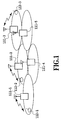
- a system comprises a plurality of base stations 111-1 - 111-5 covering divided radio zones, and mobile stations 112-1 - 112-3 carrying out communications with the base stations 111-1 - 111-5 by establishing radio channels between them.
- Radio waves radiated from a base station at a certain transmission power propagates through space to a receiving site with attenuation.
- perch channels from distant base stations are usually received at lower received power, whereas those from near base stations are received at higher received power.
- the received powers of the perch channels from the base stations vary widely with the movement of the mobile stations. To receive signals transmitted from the base stations, it is important for each mobile station to always monitor the perch channels from the base stations and to select the best base station.
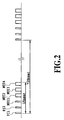
- Fig. 2 is a schematic diagram illustrating a structure of a paging channel specified in "Specification of Air-Interface for 3G Mobile System Volume 3". According to the specification, to increase the effect of the intermittent reception effect, a number of mobile stations are divided into a plurality of groups, and paging signals for individual groups are each mapped onto a single physical channel. Fig. 2 illustrates a paging signal for one of such groups.
- symbols PI's designate a very short signal indicating the presence or absence of the paging
- MUI's (MUI1 - MUI4) include paging information (ID number of the mobile stations).
- Each mobile station receives the PI portion first, and then receives the MUI portion only when a decision is made that the paging takes place as a result of receiving the PI portion. This makes it possible for the mobile station to reduce its consumption power to a minimum thanks to a small duty ratio of the reception because it is enough for the mobile station to carry out the two operations: receiving the paging for the group to which the mobile station belongs and receiving only the PI portion when no paging information is present.
- the mobile station Since the mobile station must receive many possible perch channels in the search operation for neighboring base stations, it is important for the mobile station to limit the frequency of the search operations to a minimum in order to increase the effect of the intermittent reception.
- IMT-2000 International Mobile Telecommunication-2000
- 3GPP Third Generation Partnership Project
- the transmission schemes of the paging information are described in "3G TS 25.211 V3.2.0” which revises the "Specification of Air-Interface for 3G Mobile System Volume 3" a little to increase versatility.
- the information indicating the presence and absence of the paging is transmitted over a PICH (Paging Indicator CHannel), and the paging information itself is transmitted over a SCCPCH (Secondary Common Control Physical CHannel).
- PICH Paging Indicator CHannel
- SCCPCH Servicedary Common Control Physical CHannel
- the mobile station To select the best base station, it is necessary for each mobile station to always monitor the perch channels of the neighboring base stations by searching for and receiving them.
- the mobile station must reduce the duty ratio of its receiver to increase the life of the battery.
- reducing the duty ratio of the receiver will bring about undesirable results such as prescribed service quality cannot be achieved because of the degradation in the accuracy of selecting the base station.
- increasing the accuracy of selecting the base station by increasing the duty ratio of the receiver present an important problem of reducing the usefulness of the mobile station because of heavier consumption of its battery.
- the present invention is implemented to solve the foregoing problems. It is therefore an object of the present invention to provide a (peripheral) cell search control method of a mobile station capable reducing the consumption power with maintaining the accuracy of selecting a best base station.
- Fig. 3 is a schematic diagram illustrating the operation of the present invention.
- a mobile station 312 moves along the arrow through areas covered by four base stations 311-1 - 311-4, and assume that the mobile station 312 captures the perch channels of the three base stations 311-1 - 311-3, but not the perch channel of the base stations 311-4.
- the mobile station 312 is close to one of the base stations, at the start position, for example, it can receive the perch channel from the base stations 311-1 in a good condition. Accordingly, the need for searching for better base stations is low, and hence reducing the frequency of the search little affects the receiving quality.
- the need increases for switching to the perch channel of another better base station, and the probability also increases of receiving a perch channel of a new base station such as the base station 311-4 whose perch channel is not captured.
- the received power (received level) of a perch channel is high when the mobile station is close to the base station, while it is low when the mobile station is at a cell periphery, that is, near a cell boundary between a plurality of cells.
- the received SIR Signal to Interference power Ratio
- the mobile station when the mobile station is at the cell periphery, that is, near the cell boundary between a plurality of cells, since the received power itself of the perch channels is low, and the probability is high of receiving interference from perches of other base stations, the received SIR of the perch channels is low.
- CDMA Code Division Multiple Access
- the propagation loss which is calculated from the received power of the perch channel and from the transmission power obtained by decoding the perch channel, is low near the base station, and is high at the cell periphery, that is, near the cell boundary between the plurality of cells.
- the mobile station controls its transmission power such that the base station can receive the transmitted signal at a certain quality (in terms of the received power or received SIR)
- the transmission power is low near the base station and increases at the cell periphery, that is, near the cell boundary between the plurality of cells.
- the ratio of the second minimum propagation loss to the minimum propagation loss is large near the base station.
- the number of perches with received power whose ratio to the highest received power is greater than a predetermined value is small near the base station because the highest received power is by far the greatest, whereas it is large at the cell periphery, that is, near the cell boundary of the plurality of cells because of receiving many perch channels at nearly the same received power, which also holds for the received SIR.
- the propagation loss the number of perch channels with the propagation loss whose ratio to the minimum propagation loss is less than a predetermined value will be smaller near the base stations.
- the present invention automatically makes a decision as to whether the mobile station is at the cell periphery at which the need for searching for a new perch channel is large, or near the base station at which the need is little, and increases the search frequency at a location of the large need, and reduces it at a location of the little need.
- the present invention also detects the moving speed of the mobile station to change the search frequency of the new perch channels: increases it when the need for searching is great; and decreases when the need is small.
- a cell search control method by which a mobile station searches for a perch channel transmitted by a base station to capture and receive the perch channel, and determines which base station to communicate with or to be standby for, the cell search control method comprising:
- the measuring step may measure received power of the currently captured perch channel
- the measuring step may measure received power of the currently captured perch channel
- the measuring step may measure received power of the currently captured perch channel
- the measuring step may measure a received SIR of the currently captured perch channel
- the measuring step may measure a received SIR of the currently captured perch channel
- the measuring step may measure a received SIR of the currently captured perch channel
- the cell search control method may further comprise:
- the cell search control method may further comprise:
- the cell search control method may further comprise:
- a cell search control method by which a mobile station searches for a perch channel transmitted by a base station to capture and receive the perch channel, and determines which base station to communicate with or to be standby for, the cell search control method comprising:
- a cell search control method by which a mobile station searches for a perch channel transmitted by a base station to capture and receive the perch channel, and determines which base station to communicate with or to be standby for, the cell search control method comprising:
- a mobile station which searches for a perch channel transmitted by a base station to capture and receive the perch channel, and determines which base station to communicate with or to be standby for, the mobile station comprising:
- the measuring means may measure received power of the currently captured perch channel
- the measuring means may measure received power of the currently captured perch channel
- the measuring means may measure received power of the currently captured perch channel
- the measuring means may measure a received SIR of the currently captured perch channel
- the measuring means may measure a received SIR of the currently captured perch channel
- the measuring means may measure a received SIR of the currently captured perch channel
- the mobile station may further comprise:
- the mobile station may further comprise:
- the mobile station may further comprise:
- the mobile station may monitor paging to itself by intermittent reception in a standby mode.
- a mobile station which searches for a perch channel transmitted by a base station to capture and receive the perch channel, and determines which base station to communicate with or to be standby for, the mobile station comprising:
- the mobile station may monitor paging to itself by intermittent reception in a standby mode.
- a mobile station which searches for a perch channel transmitted by a base station to capture and receive the perch channel, and determines which base station to communicate with or to be standby for, the mobile station comprising:
- the mobile station may monitor paging to itself by intermittent reception in a standby mode.
- a mobile communications system including a plurality of base stations and a mobile station which searches for perch channels transmitted by the plurality of base stations to capture and receive the perch channels, and determines which base station to communicate with or to be standby for, the mobile station comprising:
- a mobile communications system including a plurality of base stations and a mobile station which searches for perch channels transmitted by the plurality of base stations to capture and receive the perch channels, and determines which base station to communicate with or to be standby for, the mobile station comprising:
- a mobile communications system including a plurality of base stations and a mobile station which searches for perch channels transmitted by the plurality of base stations to capture and receive the perch channels, and determines which base station to communicate with or to be standby for, the mobile station comprising:
- the foregoing configurations make it possible for the cell search control method in the mobile station to save the consumption power with maintaining the accuracy of selecting the best base station.
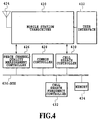
- Fig. 4 is a block diagram showing an embodiment 1 of a mobile station in accordance with the present invention, which shows only portions of the mobile station associated with the present invention.
- the present embodiment 1 of the mobile station comprises a mobile station transceiver 420, a user interface 422, an antenna 424, a perch channel quality measurement controller 426, a common controller 428, a cell search controller 430, a cell search frequency controller 432, a memory 434, and a bus 436.
- the present embodiment 1 of the mobile station searches for perch channels transmitted by base stations, captures and receives them, and decides which base station to communicate with or to be standby for. In the standby mode, the mobile station monitors paging to itself by means of intermittent reception.
- the mobile station transceiver 420 demodulates user information and a control signal which are modulated and transmitted by the base stations, and codes and modulates a user signal and a control signal. Although the mobile station transceiver 420 differs depending on its access scheme such as FDMA (Frequency Division Multiple Access), TDMA (Time Division Multiple Access) or CDMA (Code Division Multiple Access), the difference in the modulation and demodulation schemes in the radio section have nothing to do with the effect of the present invention.
- the mobile station transceiver 420 is connected with the antenna 424 and user interface 422.
- the common controller 428 carries out overall control of the mobile station.
- the perch channel quality measurement controller 426 instructs the mobile station transceiver 420 to carry out the quality measurement of the perch channels, and obtains the results of the measurement.
- the cell search controller 430 instructs the mobile station transceiver 420 to carry out the cell search, and obtains the results of the cell search.
- the cell search frequency controller 432 controls the cell search in response to the results of the quality measurement of the perch channels.
- the memory 434 stores various data.
- the bus 436 interconnects the common controller 428, perch channel quality measurement controller 426, cell search controller 430, cell search frequency controller 432 and memory 434.
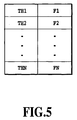
- Fig. 5 is a table showing an example of data stored in the memory 434 of the present embodiment.
- symbols TH1, TH2, ..., and THN each designate a threshold value to be compared with the measured quality of the perch channels.
- the threshold values consist of values to be compared with one of the following: the highest received power of the (currently captured) perch channels; the ratio of the second highest to the highest received power of the perch channels; the number of perch channels with received power whose ratio to the highest received power is greater than a predetermined value; the highest received SIR of the perch channels; the ratio of the second highest to the highest received SIR of the perch channels; the number of perch channels with a received SIR whose ratio to the highest received SIR is greater than a predetermined value; the minimum propagation loss between the mobile station and the base stations; the ratio of the second minimum to the minimum propagation loss between the mobile station and the base stations; and the number of the perch channels (base stations) with a propagation loss whose ratio
- the cell search frequencies F1, F2, ..., and FN are set in such a manner that when the highest received power is high, the cell search frequency is low, whereas when the highest received power is low, the cell search frequency is high.
- the cell search frequencies F1, F2, ..., and FN are set in such a manner that when the ratio is high, the cell search frequency is high, whereas when the ratio is low, the cell search frequency is low.
- the cell search frequencies F1, F2, ..., and FN are set in such a manner that when the number of perch channels is great, the cell search frequency is high, whereas when the number of perch channels is small, the cell search frequency is low.
- the cell search frequencies F1, F2, ..., and FN are set in such a manner that when the highest received SIR is high, the cell search frequency is low, whereas when the highest received SIR is low, the cell search frequency is high.
- the cell search frequencies F1, F2, ..., and FN are set in such a manner that when the ratio is high, the cell search frequency is high, whereas when the ratio is low, the cell search frequency is low.
- the cell search frequencies F1, F2, ..., and FN are set in such a manner that when the number of perch channels is great, the cell search frequency is high, whereas when the number of perch channels is small, the cell search frequency is low.
- the cell search frequencies F1, F2, ..., and FN are set in such a manner that when the minimum propagation loss is high, the cell search frequency is high, whereas when the minimum propagation loss is low, the cell search frequency is low.
- the cell search frequencies F1, F2, ..., and FN are set in such a manner that when the ratio is low, the cell search frequency is high, whereas when the ratio is high, the cell search frequency is low.
- the cell search frequencies F1, F2, ..., and FN are set in such a manner that when the number of the perch channels is great, the cell search frequency is high, whereas when the number of the perch channels is small, the cell search frequency is low.
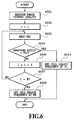
- Fig. 6 is a flowchart illustrating a processing of controlling the cell search frequency of the present embodiment 1.
- the perch channel quality measurement controller 426 instructs the mobile station transceiver 420 to measure the quality (such as received power) of each of the currently captured perch channels, and stores the results into the memory 434 (step S601). For example, when deciding the cell search frequency in response to the highest value of the measured received powers, the perch channel quality measurement controller 426 stores only the highest value into the memory 434 to be used in a subsequent comparison (S604).
- the cell search frequency controller 432 initializes a loop variable i to one (S602), and reads the threshold value TH1 from the memory 434 (S603).
- the base stations transmit the power information (transmission power information) of the perch channels to the mobile station over the perch channels. Then, the mobile station measures the received power of the perch channels at step S601, decodes the perch channels, extracts the transmission power information, and obtains the propagation losses from the received power and the transmission power.
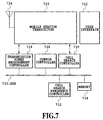
- Fig. 7 is a block diagram showing a configuration of an embodiment 2 of the mobile station in accordance with the present invention, which shows only portions of the mobile station associated with the present invention.
- the present embodiment 2 of the mobile station comprises a mobile station transceiver 720, a user interface 722, an antenna 724, a transmission power measurement controller 738, a common controller 728, a cell search controller 730, a cell search frequency controller 732, a memory 734 and a bus 736.
- the present embodiment 2 of the mobile station searches for perch channels transmitted by base stations, captures and receives them and determines which base station to communicate with or to be standby for. Besides, in the standby mode, it monitors the paging to itself by the intermittent reception.
- the mobile station transceiver 720 demodulates the user information and control signal which are radio modulated and transmitted by the base station, and codes and modulates a user signal and a control signal which are transmitted by the mobile station.
- the mobile station transceiver 720 is connected with the antenna 724 and user interface 722.
- the common controller 728 carries out overall control of the mobile station.
- the transmission power measurement controller 738 instructs the mobile station transceiver 720 to measure the transmission power of the signal to be transmitted to the base station that the mobile station currently communicate with or is currently standby for, and obtains the measured result.
- the cell search controller 730 instructs the mobile station transceiver 720 to carry out the cell search, and obtains the cell search result.
- the cell search frequency controller 732 controls the frequency for carrying out the cell search in response to the measured result of the transmission power.
- the memory 734 stores various types of data.
- the bus 736 interconnects the common controller 728, transmission power measurement controller 738, cell search controller 730, cell search frequency controller 732 and memory 734.
- the present embodiment 2 of the mobile station controls the signal transmission power such that the transmitted signal is received by the base station at a certain required quality level (received power or received SIR).
- the transmission power control is performed on the basis of the command transmitted from the base station.
- the data content stored on the memory 734 is the same as that illustrated in Fig. 5.
- the threshold values TH1, TH2, ..., and THN are compared with minimum measured transmission power (if there is only one base station that the mobile station currently communicate with or is currently standby for, and transmission power is measured for only the signal that is transmitted to that base station, then that transmission power is used as minimum measured transmission power).
- the cell search frequencies F1, F2, ..., and FN are set in such a manner that when the lowest transmission power is high, the cell search frequency is high, whereas when the lowest transmission power is low, the cell search frequency is low.
- Fig. 8 is a flowchart illustrating a processing of controlling the cell search frequency of the present embodiment 2.
- the flow of Fig. 8 is similar to that of Fig. 6.
- the transmission power is measured at step S801, and the cell search frequency is determined through steps S802 - S808.
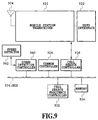
- Fig. 9 is a block diagram showing a configuration of an embodiment 3 of the mobile station in accordance with the present invention, which shows only portions of the mobile station associated with the present invention.
- the present embodiment 3 of the mobile station comprises a mobile station transceiver 920, a user interface 922, an antenna 924, a speed detection controller 940, a speed detector 942, a common controller 928, a cell search controller 930, a cell search frequency controller 932, a memory 934 and a bus 936.
- the present embodiment 3 of the mobile station searches for perch channels transmitted by base stations, captures and receives them and determines which base station to communicate with or to be standby for. Besides, in the standby mode, it monitors the paging to itself by the intermittent reception.
- the mobile station transceiver 920 demodulates the user information and a control signal which are radio modulated and transmitted by the base station, and codes and modulates a user signal and a control signal which are transmitted by the mobile station.
- the mobile station transceiver 920 is connected with the antenna 924 and user interface 922.
- the speed detector 942 detects the moving speed of the mobile station. There are various methods of detecting the moving speed such as using a speedometer of a vehicle; detecting the fading pitch of the received signal; using a pedometer etc. The effect of the present invention, however, has nothing to do with the methods of detecting the moving speed.
- the common controller 928 carries out overall control of the mobile station.
- the speed detection controller 940 instructs the speed detector 942 to measure the current moving speed of the mobile station, and obtains the measured result.
- the cell search controller 930 instructs the mobile station transceiver 920 to carry out the cell search, and obtains the cell search results.
- the cell search frequency controller 932 controls the frequency for carrying out the cell search in response to the measured result of the moving speed.
- the memory 934 stores various types of data.
- the bus 936 interconnects the common controller 928, speed detection controller 940, cell search controller 930, cell search frequency controller 932 and memory 934.
- the data content stored on the memory 934 is the same as that illustrated in Fig. 5.
- the threshold values TH1, TH2, ..., and THN are compared with the moving speed detected.
- the cell search frequencies F1, F2, ..., and FN are set in such a manner that when the moving speed is high, the cell search frequency is high, whereas when the moving speed is low, the cell search frequency is low.
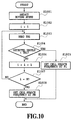
- Fig. 10 is a flowchart illustrating a processing of controlling the cell search frequency of the present embodiment 3.
- the flow of Fig. 10 is similar to that of Fig. 6.
- the moving speed is detected at step S1001, and the cell search frequency is determined through steps S1002 - S1008.
- the mobile station measures the receiving quality of the currently captured perch channels of the base stations, or the transmission power of the signals transmitted to the base stations; automatically makes a decision as to whether the mobile station is located at the cell periphery in which the need for searching for a new perch channel is great, or located in neighborhood of the base stations in which the need is little; and increases the frequency of the search at a location where the need is great and decreases it at a location where the need is little.
- the receiving quality of the perch channel includes the following: the highest received power; the ratio of the second highest received power to the highest received power; the number of perch channels with received power whose ratio to the highest received power is greater than a predetermined value; the highest received SIR; the ratio of the second highest received SIR to the highest received SIR; the number of perch channels with a received SIR whose ratio to the highest received SIR is greater than a predetermined value; the minimum propagation loss calculated from the perch received power and the transmission power obtained by decoding the perch channels; the ratio of the second minimum propagation loss to the minimum propagation loss; the number of perch channels with a propagation loss whose ratio to the minimum propagation loss is less than a predetermined value; and the like.
- the mobile station detects its moving speed, and increases the frequency of the search when the frequency of the appearance of a new perch channel is high, while it decreases the frequency of the search when the frequency of appearance of a new perch channel is low.
- the cell search control method in the mobile station can save the consumption power with maintaining the accuracy of selecting the best base station. More specifically, when the fluctuations in the receiving quality of the perch channel is sharp, the mobile station sets the frequency at high of searching for the perch channels to enable the receiving quality of the signal transmitted from the base station to the mobile station to be maintained at a high level, whereas when the fluctuations in the receiving quality of the perch channel is slow, the mobile station sets the frequency at low of searching for the perch channels to save the consumption power of the mobile station, offering an advantage of being able to increase the life of the battery.
Landscapes
- Engineering & Computer Science (AREA)
- Computer Networks & Wireless Communication (AREA)
- Signal Processing (AREA)
- Computer Security & Cryptography (AREA)
- Databases & Information Systems (AREA)
- Mobile Radio Communication Systems (AREA)
Abstract
Description
Claims (30)
- A cell search control method by which a mobile station searches for a perch channel transmitted by a base station to capture and receive the perch channel, and determines which base station to communicate with or to be standby for, said cell search control method characterized by comprising:a measuring step of measuring receiving quality of a currently captured perch channel; anda control step of determining a frequency of searching for a new perch channel in response to the receiving quality measured by said measuring step.
- The cell search control method as claimed in claim 1, characterized in thatsaid measuring step measures received power of the currently captured perch channel; andsaid control step controls the frequency of searching for a new perch channel in response to the highest received power measured by said measuring step such that when the highest received power is high, the frequency of searching for a new perch channel is low, whereas when the highest received power is low, the frequency of searching for a new perch channel is high.
- The cell search control method as claimed in claim 1, characterized in thatsaid measuring step measures received power of the currently captured perch channel; andsaid control step controls the frequency of searching for a new perch channel in response to the ratio of the second highest received power to the highest received power measured by said measuring step such that when the ratio is high, the frequency of searching for a new perch channel is high, whereas when the ratio is low, the frequency of searching for a new perch channel is low.
- The cell search control method as claimed in claim 1, characterized in thatsaid measuring step measures received power of the currently captured perch channel; andsaid control step controls the frequency of searching for a new perch channel in response to the number of perch channels with received power whose ratio to the highest received power measured by said measuring step is greater than a predetermined value such that when the number of perch channels is great, the frequency of searching for a new perch channel is high, whereas when the number of perch channels is small, the frequency of searching for a new perch channel is low.
- The cell search control method as claimed in claim 1, characterized in thatsaid measuring step measures a received SIR of the currently captured perch channel; andsaid control step controls the frequency of searching for a new perch channel in response to the highest received SIR measured by said measuring step such that when the highest received SIR is high, the frequency of searching for a new perch channel is low, whereas when the highest received SIR is low, the frequency of searching for a new perch channel is high.
- The cell search control method as claimed in claim 1, characterized in thatsaid measuring step measures a received SIR of the currently captured perch channel; andsaid control step controls the frequency of searching for a new perch channel in response to the ratio of the second highest received SIR to the highest received SIR measured by said measuring step such that when the ratio is high, the frequency of searching for a new perch channel is high, whereas when the ratio is low, the frequency of searching for a new perch channel is low.
- The cell search control method as claimed in claim 1, characterized in thatsaid measuring step measures a received SIR of the currently captured perch channel; andsaid control step controls the frequency of searching for a new perch channel in response to the number of perch channels with a received SIR whose ratio to the highest received SIR measured by said measuring step is greater than a predetermined value such that when the number of perch channels is great, the frequency of searching for a new perch channel is high, whereas when the number of perch channels is small, the frequency of searching for a new perch channel is low.
- The cell search control method as claimed in claim 1, further characterized by comprising:an extracting step of decoding a received perch channel, and extracting transmission power information, the perch channel including its own transmission power information, characterized in thatsaid measuring step measures received power of a currently captured perch channel; andsaid control step obtains a propagation loss between the mobile station and a base station that transmits the perch channel from the received power measured by said measuring step and the transmission power of the perch channel with the received power extracted by said extracting step, and controls the frequency of searching for a new perch channel in response to the minimum propagation loss obtained such that when the minimum propagation loss is high, the frequency of searching for a new perch channel is high, whereas when the minimum propagation loss is low, the frequency of searching for a new perch channel is low.
- The cell search control method as claimed in claim 1, further characterized by comprising:an extracting step of decoding a received perch channel, and extracting transmission power information, the perch channel including its own transmission power information, characterized in thatsaid measuring step measures received power of a currently captured perch channel; andsaid control step obtains a propagation loss between the mobile station and a base station that transmits the perch channel from the received power measured by said measuring step and the transmission power of the perch channel with the received power extracted by said extracting step, and controls the frequency of searching for a new perch channel in response to the ratio of the second minimum propagation loss to the minimum propagation loss obtained such that when the ratio is low, the frequency of searching for a new perch channel is high, whereas when the ratio is high, the frequency of searching for a new perch channel is low.
- The cell search control method as claimed in claim 1, further characterized by comprising:an extracting step of decoding a received perch channel, and extracting transmission power information, the perch channel including its own transmission power information, characterized in thatsaid measuring step measures received power of a currently captured perch channel; andsaid control step obtains a propagation loss between the mobile station and a base station that transmits the perch channel from the received power measured by said measuring step and the transmission power of the perch channel with the received power extracted by said extracting step, and controls the frequency of searching for a new perch channel in response to the number of perch channels with a propagation loss whose ratio to the minimum propagation loss obtained is less than a predetermined value such that when the number of the perch channels is great, the frequency of searching for a new perch channel is high, whereas when the number of the perch channels is small, the frequency of searching for a new perch channel is low.
- A cell search control method by which a mobile station searches for a perch channel transmitted by a base station to capture and receive the perch channel, and determines which base station to communicate with or to be standby for, said cell search control method characterized by comprising:a measuring step of measuring transmission power of a signal to be transmitted to the base station that the mobile station currently communicate with or is currently standby for; anda control step of controlling a frequency of searching for a new perch channel in response to the lowest transmission power measured by said measuring step such that when the lowest transmission power is high, the frequency of searching for a new perch channel is high, whereas when the lowest transmission power is low, the frequency of searching for a new perch channel is low.
- A cell search control method by which a mobile station searches for a perch channel transmitted by a base station to capture and receive the perch channel, and determines which base station to communicate with or to be standby for, said cell search control method characterized by comprising:a detecting step of detecting a moving speed of the mobile station; anda controlling step of controlling a frequency of searching for a new perch channel in response to the moving speed detected by said detecting step such that when the moving speed is high, the frequency of searching for a new perch channel is high, whereas when the moving speed is low, the frequency of searching for a new perch channel is low.
- A mobile station which searches for a perch channel transmitted by a base station to capture and receive the perch channel, and determines which base station to communicate with or to be standby for, said mobile station characterized by comprising:measuring means for measuring receiving quality of a currently captured perch channel; andcontrol means for determining a frequency of searching for a new perch channel in response to the receiving quality measured by said measuring means.
- The mobile station as claimed in claim 13, characterized in thatsaid measuring means measures received power of the currently captured perch channel; andsaid control means controls the frequency of searching for a new perch channel in response to the highest received power measured by said measuring means such that when the highest received power is high, the frequency of searching for a new perch channel is low, whereas when the highest received power is low, the frequency of searching for a new perch channel is high.
- The mobile station as claimed in claim 13, characterized in thatsaid measuring means measures received power of the currently captured perch channel; andsaid control means controls the frequency of searching for a new perch channel in response to the ratio of the second highest received power to the highest received power measured by said measuring means such that when the ratio is high, the frequency of searching for a new perch channel is high, whereas when the ratio is low, the frequency of searching for a new perch channel is low.
- The mobile station as claimed in claim 13, characterized in thatsaid measuring means measures received power of the currently captured perch channel; andsaid control means controls the frequency of searching for a new perch channel in response to the number of perch channels with received power whose ratio to the highest received power measured by said measuring means is greater than a predetermined value such that when the number of perch channels is great, the frequency of searching for a new perch channel is high, whereas when the number of perch channels is small, the frequency of searching for a new perch channel is low.
- The mobile station as claimed in claim 13, characterized in thatsaid measuring means measures a received SIR of the currently captured perch channel; andsaid control means controls the frequency of searching for a new perch channel in response to the highest received SIR measured by said measuring means such that when the highest received SIR is high, the frequency of searching for a new perch channel is low, whereas when the highest received SIR is low, the frequency of searching for a new perch channel is high.
- The mobile station as claimed in claim 13, characterized in thatsaid measuring means measures a received SIR of the currently captured perch channel; andsaid control means controls the frequency of searching for a new perch channel in response to the ratio of the second highest received SIR to the highest received SIR measured by said measuring means such that when the ratio is high, the frequency of searching for a new perch channel is high, whereas when the ratio is low, the frequency of searching for a new perch channel is low.
- The mobile station as claimed in claim 13, characterized in thatsaid measuring means measures a received SIR of the currently captured perch channel; andsaid control means controls the frequency of searching for a new perch channel in response to the number of perch channels with a received SIR whose ratio to the highest received SIR measured by said measuring means is greater than a predetermined value such that when the number of perch channels is great, the frequency of searching for a new perch channel is increased, whereas when the number of perch channels is small, the frequency of searching for a new perch channel is low.
- The mobile station as claimed in claim 13, further characterized by comprising:extracting means for decoding a received perch channel, and for extracting transmission power information, the perch channel including its own transmission power information, characterized in thatsaid measuring means measures received power of a currently captured perch channel; andsaid control means obtains a propagation loss between the mobile station and a base station that transmits the perch channel from the received power measured by said measuring means and the transmission power of the perch channel with the received power extracted by said extracting means, and controls the frequency of searching for a new perch channel in response to the minimum propagation loss obtained such that when the minimum propagation loss is high, the frequency of searching for a new perch channel is high, whereas when the minimum propagation loss is low, the frequency of searching for a new perch channel is low.
- The mobile station as claimed in claim 13, further characterized by comprising:extracting means for decoding a received perch channel, and for extracting transmission power information, the perch channel including its own transmission power information, characterized in thatsaid measuring means measures received power of a currently captured perch channel; andsaid control means obtains a propagation loss between the mobile station and a base station that transmits the perch channel from the received power measured by said measuring means and the transmission power of the perch channel with the received power extracted by said extracting means, and controls the frequency of searching for a new perch channel in response to the ratio of the second minimum propagation loss to the minimum propagation loss obtained such that when the ratio is low, the frequency of searching for a new perch channel is high, whereas when the ratio is high, the frequency of searching for a new perch channel is low.
- The mobile station as claimed in claim 13, further characterized by comprising:extracting means for decoding a received perch channel, and for extracting transmission power information, the perch channel including its own transmission power information, characterized in thatsaid measuring means measures received power of a currently captured perch channel; andsaid control means obtains a propagation loss between the mobile station and a base station that transmits the perch channel from the received power measured by said measuring means and the transmission power of the perch channel with the received power extracted by said extracting means, and controls the frequency of searching for a new perch channel in response to the number of perch channels with a propagation loss whose ratio to the minimum propagation loss obtained is less than a predetermined value such that when the number of the perch channels is great, the frequency of searching for a new perch channel is high, whereas when the number of the perch channels is small, the frequency of searching for a new perch channel is low.
- The mobile station as claimed in claim 13, characterized in that said mobile station monitors paging to itself by intermittent reception in a standby mode.
- A mobile station which searches for a perch channel transmitted by a base station to capture and receive the perch channel, and determines which base station to communicate with or to be standby for, said mobile station characterized by comprising:measuring means for measuring transmission power of a signal to be transmitted to the base station that the mobile station currently communicate with or is currently standby for; andcontrol means for controlling a frequency of searching for a new perch channel in response to the lowest transmission power measured by said measuring means such that when the lowest transmission power is high, the frequency of searching for a new perch channel is high, whereas when the lowest transmission power is low, the frequency of searching for a new perch channel is low.
- The mobile station as claimed in claim 24, characterized in that said mobile station monitors paging to itself by intermittent reception in a standby mode.
- A mobile station which searches for a perch channel transmitted by a base station to capture and receive the perch channel, and determines which base station to communicate with or to be standby for, said mobile station characterized by comprising:detecting means for detecting a moving speed of the mobile station; andcontrol means for controlling a frequency of searching for a new perch channel in response to the moving speed detected by said detecting means such that when the moving speed is high, the frequency of searching for a new perch channel is high, whereas when the moving speed is low, the frequency of searching for a new perch channel is low.
- The mobile station as claimed in claim 26, characterized in that said mobile station monitors paging to itself by intermittent reception in a standby mode.
- A mobile communications system including a plurality of base stations and a mobile station which searches for perch channels transmitted by the plurality of base stations to capture and receive the perch channels, and determines which base station to communicate with or to be standby for, said mobile station characterized by comprising:measuring means for measuring receiving quality of a currently captured perch channel; andcontrol means for determining a frequency of searching for a new perch channel in response to the receiving quality measured by said measuring means.
- A mobile communications system including a plurality of base stations and a mobile station which searches for perch channels transmitted by the plurality of base stations to capture and receive the perch channels, and determines which base station to communicate with or to be standby for, said mobile station characterized by comprising:measuring means for measuring transmission power of a signal to be transmitted to the base station that the mobile station currently communicate with or is currently standby for; andcontrol means for controlling a frequency of searching for a new perch channel in response to the lowest transmission power measured by said measuring means such that when the lowest transmission power is high, the frequency of searching for a new perch channel is high, whereas when the lowest transmission power is low, the frequency of searching for a new perch channel is low.
- A mobile communications system including a plurality of base stations and a mobile station which searches for perch channels transmitted by the plurality of base stations to capture and receive the perch channels, and determines which base station to communicate with or to be standby for, said mobile station characterized by comprising:detecting means for detecting a moving speed of the mobile station; andcontrol means for controlling a frequency of searching for a new perch channel in response to the moving speed detected by said detecting means such that when the moving speed is high, the frequency of searching for a new perch channel is high, whereas when the moving speed is low, the frequency of searching for a new perch channel is low.
Priority Applications (1)
| Application Number | Priority Date | Filing Date | Title |
|---|---|---|---|
| EP06076660.7A EP1729530B1 (en) | 1999-07-14 | 2000-07-11 | Cell search control method, mobile station and mobile communications system |
Applications Claiming Priority (2)
| Application Number | Priority Date | Filing Date | Title |
|---|---|---|---|
| JP20097999 | 1999-07-14 | ||
| JP20097999A JP3690717B2 (en) | 1999-07-14 | 1999-07-14 | Cell search control method, mobile station, and mobile communication system |
Related Child Applications (1)
| Application Number | Title | Priority Date | Filing Date |
|---|---|---|---|
| EP06076660.7A Division EP1729530B1 (en) | 1999-07-14 | 2000-07-11 | Cell search control method, mobile station and mobile communications system |
Publications (3)
| Publication Number | Publication Date |
|---|---|
| EP1069794A2 true EP1069794A2 (en) | 2001-01-17 |
| EP1069794A3 EP1069794A3 (en) | 2001-09-19 |
| EP1069794B1 EP1069794B1 (en) | 2006-09-06 |
Family
ID=16433507
Family Applications (2)
| Application Number | Title | Priority Date | Filing Date |
|---|---|---|---|
| EP06076660.7A Expired - Lifetime EP1729530B1 (en) | 1999-07-14 | 2000-07-11 | Cell search control method, mobile station and mobile communications system |
| EP00305842A Expired - Lifetime EP1069794B1 (en) | 1999-07-14 | 2000-07-11 | Cell search control method, mobile station and mobile communications system |
Family Applications Before (1)
| Application Number | Title | Priority Date | Filing Date |
|---|---|---|---|
| EP06076660.7A Expired - Lifetime EP1729530B1 (en) | 1999-07-14 | 2000-07-11 | Cell search control method, mobile station and mobile communications system |
Country Status (7)
| Country | Link |
|---|---|
| US (1) | US7139571B1 (en) |
| EP (2) | EP1729530B1 (en) |
| JP (1) | JP3690717B2 (en) |
| KR (1) | KR100365634B1 (en) |
| CN (1) | CN1279776C (en) |
| DE (1) | DE60030512T2 (en) |
| SG (1) | SG114466A1 (en) |
Cited By (11)
| Publication number | Priority date | Publication date | Assignee | Title |
|---|---|---|---|---|
| GB2380637A (en) * | 2001-08-22 | 2003-04-09 | Nec Corp | Cell searching mechanism |
| EP1283608A3 (en) * | 2001-08-09 | 2005-11-30 | NTT DoCoMo, Inc. | Carrier detecting method in a CDMA mobile communication system |
| US7171232B2 (en) | 2004-01-30 | 2007-01-30 | Oki Electric Industry Co., Ltd. | Method of selecting a cell to connect by radio with a mobile station and a mobile communications terminal therefor |
| EP1804532A1 (en) * | 2005-12-30 | 2007-07-04 | Samsung Electronics Co., Ltd. | System for improving overall battery life of a gsm communication device |
| WO2009146349A1 (en) * | 2008-05-30 | 2009-12-03 | Motorola, Inc. | Method and apparatus for selecting scanning rates in a multi-mode communication device |
| EP2203020A1 (en) * | 2008-12-23 | 2010-06-30 | Research In Motion Limited | Scanning methods and apparatus for mobile devices in wireless local area networks for reduced power consumption |
| EP2089674A4 (en) * | 2006-12-29 | 2010-08-18 | Agere Systems Inc | METHOD AND APPARATUS FOR EXTENDING BATTERY LIFE IN A MOBILE COMMUNICATION DEVICE BY DETECTING TRAVEL |
| EP2364049A1 (en) * | 2010-02-26 | 2011-09-07 | Research In Motion Limited | Reducing WLAN power consumption on a mobile device utilizing a cellular radio interface |
| US8195251B2 (en) | 2010-02-26 | 2012-06-05 | Research In Motion Limited | Reducing WLAN power consumption on a mobile device utilizing a cellular radio interface |
| US8437313B2 (en) | 2008-12-23 | 2013-05-07 | Research In Motion Limited | Scanning methods and apparatus for mobile devices in wireless local area networks for reduced power consumption |
| EP1532824B1 (en) * | 2002-08-15 | 2016-02-24 | Motorola Mobility LLC | Method and apparatus for scanning for neighboring cells |
Families Citing this family (21)
| Publication number | Priority date | Publication date | Assignee | Title |
|---|---|---|---|---|
| KR100454961B1 (en) * | 2001-10-10 | 2004-11-06 | 삼성전자주식회사 | Apparatus and method for searching cell of discontinuous reception mode in mobile communication system |
| JP4089245B2 (en) * | 2002-03-06 | 2008-05-28 | 日本電気株式会社 | Mobile communication terminal device, cell search control method thereof, and program |
| KR20050091106A (en) * | 2002-03-29 | 2005-09-14 | 인터디지탈 테크날러지 코포레이션 | Low layer paging indicator processing system and method for multi-layer communication equipment |
| JP3764152B2 (en) | 2003-06-17 | 2006-04-05 | 株式会社東芝 | Mobile communication terminal handoff control method and mobile communication terminal |
| JPWO2005029723A1 (en) * | 2003-09-18 | 2006-11-30 | 三菱電機株式会社 | Mobile communication terminal |
| KR101069451B1 (en) * | 2004-04-14 | 2011-09-30 | 엘지전자 주식회사 | Method of receiving neighbor cell service in mobile communication system |
| US7917140B2 (en) * | 2004-12-06 | 2011-03-29 | Telefonaktiebolaget L M Ericsson (Publ) | Initial cell search in mobile communications systems |
| WO2006131977A1 (en) | 2005-06-09 | 2006-12-14 | Mitsubishi Denki Kabushiki Kaisha | Mobile wireless communication system, base station apparatus, wireless network control apparatus and mobile station apparatus |
| KR100650398B1 (en) * | 2005-12-30 | 2006-11-30 | 주식회사 팬택 | WiBro terminal and method for determining the effective sleep period by measuring the preamble |
| US8655419B2 (en) * | 2007-02-01 | 2014-02-18 | Microsoft Corporation | Providing a power state alter signal to a device based upon a position signal corresponding to the mobile device |
| EP2160911B1 (en) | 2007-06-27 | 2016-03-30 | Telefonaktiebolaget LM Ericsson (publ) | Method of driving a mobile communication terminal |
| US8428637B2 (en) * | 2007-07-10 | 2013-04-23 | Qualcomm Incorporated | Extending access terminal battery life through search rate control |
| JP5094279B2 (en) * | 2007-08-27 | 2012-12-12 | キヤノン株式会社 | Communication device |
| CN101919289B (en) * | 2007-11-27 | 2013-07-10 | 夏普株式会社 | Mobile station device, wireless communication system, mobile station device control method |
| CN101599810B (en) * | 2008-06-06 | 2013-06-05 | 博通集成电路(上海)有限公司 | Error concealing device and error concealing method |
| JP5156498B2 (en) * | 2008-06-18 | 2013-03-06 | 株式会社エヌ・ティ・ティ・ドコモ | Base station and mobile communication method |
| KR101471085B1 (en) | 2008-09-18 | 2014-12-09 | 삼성전자주식회사 | Apparatus and method for automatic searching a low-power bs supporting an access of registered user in mobile communication system |
| US8843131B2 (en) * | 2009-05-28 | 2014-09-23 | Qualcomm Incorporated | Reducing frequent handoffs of a wireless communication device |
| US8706137B2 (en) * | 2011-08-02 | 2014-04-22 | Qualcomm Incorporated | Likelihood of mobile device portal transition |
| CN112333744B (en) * | 2020-11-25 | 2023-04-07 | Oppo(重庆)智能科技有限公司 | Cell registration method, device, equipment and storage medium |
| WO2023188143A1 (en) * | 2022-03-30 | 2023-10-05 | 日本電気株式会社 | Communication control device, terminal device, mobile body, communication system, communication control commercial law, and program |
Family Cites Families (34)
| Publication number | Priority date | Publication date | Assignee | Title |
|---|---|---|---|---|
| US5603081A (en) * | 1993-11-01 | 1997-02-11 | Telefonaktiebolaget Lm Ericsson | Method for communicating in a wireless communication system |
| TW306102B (en) * | 1993-06-14 | 1997-05-21 | Ericsson Telefon Ab L M | |
| JP3483295B2 (en) | 1994-04-15 | 2004-01-06 | 富士通株式会社 | Peripheral zone carrier monitoring method and mobile station |
| JP3148506B2 (en) | 1994-04-27 | 2001-03-19 | 株式会社エヌ・ティ・ティ・ドコモ | Mobile communication cell determination method and mobile station device thereof |
| JPH07327256A (en) | 1994-05-31 | 1995-12-12 | Kenwood Corp | Standby control method for mobile stations in mobile radio |
| JPH0846563A (en) | 1994-07-28 | 1996-02-16 | Sanyo Electric Co Ltd | Control method for digital car telephone system |
| JPH08107585A (en) | 1994-10-06 | 1996-04-23 | Toyo Commun Equip Co Ltd | Mobile radio communication system |
| DE69534333T2 (en) * | 1994-11-22 | 2006-05-24 | Ntt Mobile Communications Network Inc. | Control channel search method in a mobile station |
| US5566366A (en) * | 1994-11-30 | 1996-10-15 | Motorola, Inc. | Method of power conservation in a data communications system |
| JP2966325B2 (en) * | 1995-08-29 | 1999-10-25 | 株式会社ケンウッド | Standby control method for digital mobile phones |
| JPH0998465A (en) * | 1995-09-29 | 1997-04-08 | Nec Corp | Mobile radio telephone control method and mobile radio telephone |
| JPH0998131A (en) | 1995-10-03 | 1997-04-08 | Kokusai Electric Co Ltd | Channel scanning control method and mobile phone |
| JP2986388B2 (en) * | 1995-10-19 | 1999-12-06 | エヌ・ティ・ティ移動通信網株式会社 | Perch channel setting method in mobile communication |
| JP3078216B2 (en) * | 1995-12-13 | 2000-08-21 | 株式会社エヌ・ティ・ティ・ドコモ | Base station selection method |
| US6067460A (en) * | 1996-05-23 | 2000-05-23 | Nokia Mobile Phones Limited | Mobile station having enhanced standby mode |
| US6493561B1 (en) * | 1996-06-24 | 2002-12-10 | Fujitsu Limited | Mobile communication system enabling efficient use of small-zone base stations |
| FI104680B (en) * | 1997-01-09 | 2000-04-14 | Nokia Mobile Phones Ltd | Method for analyzing neighbor cell data in a cellular network and mobile station |
| JPH10327473A (en) * | 1997-05-22 | 1998-12-08 | Toyo Commun Equip Co Ltd | Mobile radio terminal |
| KR100265584B1 (en) | 1997-07-22 | 2000-09-15 | 정태기 | Idle Handoff Control Method in Mobile Communication |
| US6725068B2 (en) * | 1997-08-05 | 2004-04-20 | Tokyo Digital Phone Co., Ltd. | Digital wireless telephone system |
| GB2328582B (en) * | 1997-08-22 | 2002-06-19 | Nec Technologies | Mobile radio station -station monitoring control |
| JPH1198071A (en) | 1997-09-20 | 1999-04-09 | Matsushita Electric Ind Co Ltd | CDMA mobile radio terminal |
| JPH11113044A (en) * | 1997-09-30 | 1999-04-23 | Sony Corp | Communication method, transmission method, reception method, base station and terminal device |
| JP3119617B2 (en) * | 1997-12-22 | 2000-12-25 | 日本電気移動通信株式会社 | Mobile communication system and control line allocation method therefor |
| JP3109504B2 (en) * | 1998-03-27 | 2000-11-20 | 日本電気株式会社 | Cellular system, method for avoiding adjacent frequency interference in cellular system, and mobile station |
| JP3169886B2 (en) * | 1998-03-27 | 2001-05-28 | 日本電気移動通信株式会社 | Channel control method for digital mobile communication system. |
| US6603773B2 (en) * | 1998-04-08 | 2003-08-05 | Nokia Mobile Phones Limited | Method and system for controlling the transmission power of certain parts of a radio transmission |
| JP2885789B1 (en) | 1998-05-08 | 1999-04-26 | 静岡日本電気株式会社 | Wireless telephone base station search method and communication system |
| JP2947279B1 (en) * | 1998-07-31 | 1999-09-13 | 日本電気株式会社 | Spread spectrum communication system and handover method in spread spectrum communication system |
| JP3204310B2 (en) * | 1998-08-12 | 2001-09-04 | 日本電気株式会社 | CDMA mobile communication system and downlink transmission power control method thereof |
| JP3864326B2 (en) * | 1998-08-19 | 2006-12-27 | 富士通株式会社 | Handover method, base station, mobile station, and mobile communication system |
| JP3447579B2 (en) * | 1998-10-07 | 2003-09-16 | 松下電器産業株式会社 | Wireless communication device and wireless communication method |
| US6665277B1 (en) * | 1998-10-16 | 2003-12-16 | Texas Instruments Incorporated | Comma free codes for fast cell search using tertiary synchronization channel |
| JP2000201101A (en) * | 1999-01-07 | 2000-07-18 | Fujitsu Ltd | Spreading communication system and its mobile device |
-
1999
- 1999-07-14 JP JP20097999A patent/JP3690717B2/en not_active Expired - Fee Related
-
2000
- 2000-07-11 EP EP06076660.7A patent/EP1729530B1/en not_active Expired - Lifetime
- 2000-07-11 EP EP00305842A patent/EP1069794B1/en not_active Expired - Lifetime
- 2000-07-11 SG SG200003878A patent/SG114466A1/en unknown
- 2000-07-11 DE DE60030512T patent/DE60030512T2/en not_active Expired - Lifetime
- 2000-07-13 US US09/616,013 patent/US7139571B1/en not_active Expired - Fee Related
- 2000-07-13 KR KR1020000040170A patent/KR100365634B1/en not_active Expired - Fee Related
- 2000-07-14 CN CNB001262947A patent/CN1279776C/en not_active Expired - Fee Related
Cited By (18)
| Publication number | Priority date | Publication date | Assignee | Title |
|---|---|---|---|---|
| EP1283608A3 (en) * | 2001-08-09 | 2005-11-30 | NTT DoCoMo, Inc. | Carrier detecting method in a CDMA mobile communication system |
| US7024191B2 (en) | 2001-08-09 | 2006-04-04 | Ntt Docomo, Inc. | Mobile station apparatus, mobile communication system, and carrier detecting method |
| GB2380637B (en) * | 2001-08-22 | 2005-07-27 | Nec Corp | Cellular telephone equipment and cell search method used therefor |
| US7162239B2 (en) | 2001-08-22 | 2007-01-09 | Nec Corporation | Cellular telephone equipment and cell search method used therefor |
| GB2380637A (en) * | 2001-08-22 | 2003-04-09 | Nec Corp | Cell searching mechanism |
| EP1532824B1 (en) * | 2002-08-15 | 2016-02-24 | Motorola Mobility LLC | Method and apparatus for scanning for neighboring cells |
| US7171232B2 (en) | 2004-01-30 | 2007-01-30 | Oki Electric Industry Co., Ltd. | Method of selecting a cell to connect by radio with a mobile station and a mobile communications terminal therefor |
| EP1804532A1 (en) * | 2005-12-30 | 2007-07-04 | Samsung Electronics Co., Ltd. | System for improving overall battery life of a gsm communication device |
| US7761122B2 (en) | 2005-12-30 | 2010-07-20 | Samsung Electronics Co., Ltd | System for improving overall battery life of a GSM communication device |
| EP2089674A4 (en) * | 2006-12-29 | 2010-08-18 | Agere Systems Inc | METHOD AND APPARATUS FOR EXTENDING BATTERY LIFE IN A MOBILE COMMUNICATION DEVICE BY DETECTING TRAVEL |
| WO2009146349A1 (en) * | 2008-05-30 | 2009-12-03 | Motorola, Inc. | Method and apparatus for selecting scanning rates in a multi-mode communication device |
| EP2203020A1 (en) * | 2008-12-23 | 2010-06-30 | Research In Motion Limited | Scanning methods and apparatus for mobile devices in wireless local area networks for reduced power consumption |
| US8437313B2 (en) | 2008-12-23 | 2013-05-07 | Research In Motion Limited | Scanning methods and apparatus for mobile devices in wireless local area networks for reduced power consumption |
| US8195251B2 (en) | 2010-02-26 | 2012-06-05 | Research In Motion Limited | Reducing WLAN power consumption on a mobile device utilizing a cellular radio interface |
| EP2480031A1 (en) * | 2010-02-26 | 2012-07-25 | Research In Motion Limited | Reducing WLAN power consumption on a mobile device utilizing a cellular radio interface |
| US8385988B2 (en) | 2010-02-26 | 2013-02-26 | Research In Motion Limited | Reducing WLAN power consumption on a mobile device utilizing a cellular radio interface |
| US8874177B2 (en) | 2010-02-26 | 2014-10-28 | Blackberry Limited | Reducing WLAN power consumption on a mobile device utilizing a cellular radio interface |
| EP2364049A1 (en) * | 2010-02-26 | 2011-09-07 | Research In Motion Limited | Reducing WLAN power consumption on a mobile device utilizing a cellular radio interface |
Also Published As
| Publication number | Publication date |
|---|---|
| EP1069794B1 (en) | 2006-09-06 |
| EP1069794A3 (en) | 2001-09-19 |
| EP1729530B1 (en) | 2013-05-29 |
| US7139571B1 (en) | 2006-11-21 |
| DE60030512T2 (en) | 2007-01-11 |
| EP1729530A2 (en) | 2006-12-06 |
| SG114466A1 (en) | 2005-09-28 |
| CN1283014A (en) | 2001-02-07 |
| JP2001028778A (en) | 2001-01-30 |
| DE60030512D1 (en) | 2006-10-19 |
| KR20010015324A (en) | 2001-02-26 |
| JP3690717B2 (en) | 2005-08-31 |
| KR100365634B1 (en) | 2002-12-26 |
| EP1729530A3 (en) | 2007-12-26 |
| CN1279776C (en) | 2006-10-11 |
Similar Documents
| Publication | Publication Date | Title |
|---|---|---|
| EP1729530B1 (en) | Cell search control method, mobile station and mobile communications system | |
| US7437152B2 (en) | Control method of searching neighboring cells, mobile station, and mobile, communication system | |
| KR100259907B1 (en) | Mobile station | |
| JP3440044B2 (en) | Communication terminal device and wireless communication method | |
| KR100709933B1 (en) | System and method for detection of coverage edge in wireless communication device | |
| US7558575B2 (en) | Method and apparatus for wireless communication in a high velocity environment | |
| KR100258480B1 (en) | Hand off way and wireless communication device | |
| KR101407462B1 (en) | Network node control for facilitating relocation | |
| US7209728B2 (en) | Mobile communication terminal apparatus which performs intermittent reception | |
| GB2316836A (en) | Method of and apparatus for pilot channel acquisition | |
| US20020094843A1 (en) | Intelligent base station antenna beam-steering using mobile multipath feedback | |
| EP0932319A2 (en) | Handover in sectorized radiocells | |
| KR100761697B1 (en) | Method and apparatus for determining cell reselection in mobile communication terminal | |
| JP4469136B2 (en) | Communication terminal device and wireless communication method | |
| US20020137513A1 (en) | Communication terminal apparatus and radio communication method | |
| EP1152624B1 (en) | Communication terminal and wireless communication method | |
| US6678530B1 (en) | Dynamic power control of a channel signal | |
| JP2007027877A (en) | Communication terminal apparatus and handover method | |
| GB2343331A (en) | Base station signals to switch mobile terminals out of a power saving mode to ensure that its own power budget is not exceeded | |
| JP2004356909A (en) | Communication terminal device and wireless communication method |
Legal Events
| Date | Code | Title | Description |
|---|---|---|---|
| PUAI | Public reference made under article 153(3) epc to a published international application that has entered the european phase |
Free format text: ORIGINAL CODE: 0009012 |
|
| AK | Designated contracting states |
Kind code of ref document: A2 Designated state(s): AT BE CH CY DE DK ES FI FR GB GR IE IT LI LU MC NL PT SE Kind code of ref document: A2 Designated state(s): DE GB IT |
|
| AX | Request for extension of the european patent |
Free format text: AL;LT;LV;MK;RO;SI |
|
| PUAL | Search report despatched |
Free format text: ORIGINAL CODE: 0009013 |
|
| AK | Designated contracting states |
Kind code of ref document: A3 Designated state(s): AT BE CH CY DE DK ES FI FR GB GR IE IT LI LU MC NL PT SE |
|
| AX | Request for extension of the european patent |
Free format text: AL;LT;LV;MK;RO;SI |
|
| 17P | Request for examination filed |
Effective date: 20020304 |
|
| AKX | Designation fees paid |
Free format text: DE GB IT |
|
| 17Q | First examination report despatched |
Effective date: 20020424 |
|
| GRAP | Despatch of communication of intention to grant a patent |
Free format text: ORIGINAL CODE: EPIDOSNIGR1 |
|
| GRAS | Grant fee paid |
Free format text: ORIGINAL CODE: EPIDOSNIGR3 |
|
| GRAA | (expected) grant |
Free format text: ORIGINAL CODE: 0009210 |
|
| AK | Designated contracting states |
Kind code of ref document: B1 Designated state(s): DE GB IT |
|
| PG25 | Lapsed in a contracting state [announced via postgrant information from national office to epo] |
Ref country code: IT Free format text: LAPSE BECAUSE OF FAILURE TO SUBMIT A TRANSLATION OF THE DESCRIPTION OR TO PAY THE FEE WITHIN THE PRESCRIBED TIME-LIMIT;WARNING: LAPSES OF ITALIAN PATENTS WITH EFFECTIVE DATE BEFORE 2007 MAY HAVE OCCURRED AT ANY TIME BEFORE 2007. THE CORRECT EFFECTIVE DATE MAY BE DIFFERENT FROM THE ONE RECORDED. Effective date: 20060906 |
|
| REG | Reference to a national code |
Ref country code: GB Ref legal event code: FG4D |
|
| REF | Corresponds to: |
Ref document number: 60030512 Country of ref document: DE Date of ref document: 20061019 Kind code of ref document: P |
|
| PLBE | No opposition filed within time limit |
Free format text: ORIGINAL CODE: 0009261 |
|
| STAA | Information on the status of an ep patent application or granted ep patent |
Free format text: STATUS: NO OPPOSITION FILED WITHIN TIME LIMIT |
|
| 26N | No opposition filed |
Effective date: 20070607 |
|
| PGFP | Annual fee paid to national office [announced via postgrant information from national office to epo] |
Ref country code: DE Payment date: 20130703 Year of fee payment: 14 |
|
| PGFP | Annual fee paid to national office [announced via postgrant information from national office to epo] |
Ref country code: GB Payment date: 20130710 Year of fee payment: 14 |
|
| PGFP | Annual fee paid to national office [announced via postgrant information from national office to epo] |
Ref country code: IT Payment date: 20130719 Year of fee payment: 14 |
|
| REG | Reference to a national code |
Ref country code: DE Ref legal event code: R119 Ref document number: 60030512 Country of ref document: DE |
|
| GBPC | Gb: european patent ceased through non-payment of renewal fee |
Effective date: 20140711 |
|
| PG25 | Lapsed in a contracting state [announced via postgrant information from national office to epo] |
Ref country code: DE Free format text: LAPSE BECAUSE OF NON-PAYMENT OF DUE FEES Effective date: 20150203 Ref country code: IT Free format text: LAPSE BECAUSE OF NON-PAYMENT OF DUE FEES Effective date: 20140711 |
|
| PG25 | Lapsed in a contracting state [announced via postgrant information from national office to epo] |
Ref country code: GB Free format text: LAPSE BECAUSE OF NON-PAYMENT OF DUE FEES Effective date: 20140711 |
|
| REG | Reference to a national code |
Ref country code: DE Ref legal event code: R079 Ref document number: 60030512 Country of ref document: DE Free format text: PREVIOUS MAIN CLASS: H04Q0007320000 Ipc: H04W0088000000 |