EP1069787A1 - Creation of personalised services by sending change information from user- to service creation device - Google Patents
Creation of personalised services by sending change information from user- to service creation device Download PDFInfo
- Publication number
- EP1069787A1 EP1069787A1 EP99401789A EP99401789A EP1069787A1 EP 1069787 A1 EP1069787 A1 EP 1069787A1 EP 99401789 A EP99401789 A EP 99401789A EP 99401789 A EP99401789 A EP 99401789A EP 1069787 A1 EP1069787 A1 EP 1069787A1
- Authority
- EP
- European Patent Office
- Prior art keywords
- service
- personalised
- telecommunications
- sce
- telecommunications service
- Prior art date
- Legal status (The legal status is an assumption and is not a legal conclusion. Google has not performed a legal analysis and makes no representation as to the accuracy of the status listed.)
- Granted
Links
- 238000000034 method Methods 0.000 description 2
- 238000012544 monitoring process Methods 0.000 description 2
- 230000005540 biological transmission Effects 0.000 description 1
- 230000001627 detrimental effect Effects 0.000 description 1
- 230000000694 effects Effects 0.000 description 1
- 230000000007 visual effect Effects 0.000 description 1
Images

Classifications
-
- H—ELECTRICITY
- H04—ELECTRIC COMMUNICATION TECHNIQUE
- H04Q—SELECTING
- H04Q3/00—Selecting arrangements
- H04Q3/0016—Arrangements providing connection between exchanges
- H04Q3/0029—Provisions for intelligent networking
- H04Q3/0054—Service creation techniques
Definitions
- the present invention relates to a personalised service generation enabling device as described in the preamble of claim 1, a service creation element as described in the preamble of claim 4 and the related software modules as described in the preambles of claim 5, claim 6, claim 7 and claim 8.
- a method is described where a user of telecommunication services has facilities to make changes in the services a telecommunications service provider provides to this user.
- the user is able to access a telecommunications service provider's service change system by connecting with a computer to an internet-site of the telecommunications service provider.
- the user is provided with a number of forms guiding the user through the process of performing the changing of services while guarding against possible actions by customers that could be detrimental to the public switched telephone network.
- This form consists of a number of fields each representing a kind of changeable variable where a value or variable to be picked from a list can be filled in.
- An object of the present invention is to provide a device for realising service changes as in the system of the above known type but wherein the user is enabled to change the provided service in such a way that he can use his service in the most efficient way only offering him the functionality he needs to use.
- the user can, based on the provided service, determine the changes of the provided service he wishes and notify the personalised service generation enabling device hereof in order to generate a change information that enables the service creation environment to actually create a personalised service by adapting the originally provided service
- a user of the service disposes of at least, reduced service creation environment, he is able to perform the desired changes in a provided service. In this way, he can decide by himself which service components and/or service characteristics needs to be changed in order to adapt the service provided by the telecommunications service provider to the specific need of this single user.
- the user notifies the personalised service generation enabling device hereof in order to enable this device to generate a change information that in its turn enables the service creation environment to actually create a personalised service by adapting the originally provided service.
- the service user-terminal possesses a means to monitor the actual service usage of the provided service. By comparing this actual service usage to the provided service, it is possible to determine the change information that enables the service creation environment to actually create a personalised service by adapting the originally provided service, based on the result of the comparison and a set of predetermined rules.
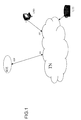
- the essential elements of this embodiment of the present invention are a telecommunications network TN constituted by a public switched telecommunications network PSTN.
- This network can be implemented by any other telecommunications network, such as for example the internet.
- SCE service creation element that enables a network provider as well as a service user to make changes in the service provided to each user.
- This service creation element has the entire provided service at its disposal.
- UT0 is a personal computer with a belonging screen, keyboard and a mouse.
- UT1 is a telephone terminal with some kind of application programmers interface API.
- the service creation environment is via a Transmission Control Protocol over Internet Protocol, further referred to as a TCP/IP, connection and the necessary termination means coupled to the telecommunications network TN.
- TCP/IP Transmission Control Protocol over Internet Protocol
- Both user terminals are supposed to be connected to the network via a common PSTN-connection.
- PSTN-connection In case of the personal computer UT0 additionally a modem is used for establishing the connection.
- the service creation element SCE as presented in FIG. 2 is built up of a service creation means SCM that creates a telecommunications service and is able to create a personalised telecommunications service based on this telecommunications service.
- the change information receiving means CIRM has an input-terminal which is also an input-terminal ICIF of service creation element SCE.
- the change information receiving means CIRM has an output-terminal which is also an input-terminal of the service creation means SCM which in its turn is coupled to a database DB.
- the service creation means SCM has another output-terminal which is coupled an input-terminal of the sending means SEM.
- Sending means SEM has an output-terminal which is also an output-terminal OS of the service creation element SCE.
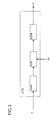
- the user-terminal UT0 as presented in FIG. 3 is built up of a telecommunications service accessing means TSAM that is able to provide the telecommunications service available within the service creation element SCE to a user.
- a service generation information means SGIM that is able to translate a user generated change instruction based on the telecommunications service. This change instruction inputted via a computer terminal change instruction is translated by said service generation information means SGIM resulting in a service generation information which can be handled by said service creation element SCE to change the telecommunications service.
- a service generation information sending means SGSM that sends the service generation information to the service creation element SCE enabling the service creation element SCE to create the personalised telecommunications service.
- the telecommunications service accessing means TSAM has an input-terminal that is also an input-terminal of the user-terminal UT0.
- the telecommunications service accessing means TSAM has an output-terminal which is coupled to an input-terminal of the service generation information means SGIM which has a second input-terminal ICI that is also an input-terminal of the user-terminal UT0.
- the service generation information means SGIM has an output-terminal which is coupled to an input-terminal of the service generation information sending means SGSM that in its turn has an output-terminal that is at the same time an output-terminal OT of the user-terminal UT0.
- the user-terminal UT1 comprises the means as described for user-terminal UT0 but differs in that this terminal additionally possesses monitoring means (not shown) to monitor a use of the to the user provided telecommunications service in order to generate a change instruction that is based on a number of rules. This generated change instruction then is applied to the service generation information means via its second input-terminal.
- the service provided is not entirely satisfying the needs of a user of user-terminal UT1 while invocating the provided service.
- the user is enabled to change the provided service in such a way that he can use his service in the most efficient way only offering him the functionality he needs to use, this service is called the personalised service.
- the user has personal computer UT0 at its disposal whereon the telecommunications accessing means TSAM is available that is able to retrieve the entire provided service or only a representation thereof and make the service visible on the personal computer screen.
- the user is able to make changes in the visual representation of the provided service by using drag and drop and a graphical user interface. Each of these user-actions is referred to as change instructions.
- This actual use is monitored by the monitoring means within the user-terminal UT1. This actual use is here also compared with the service functionality of the entire provided service functionality. Then there is a set of rules that in case of a certain behaviour of the user a change instruction will be derived from the rule that applies to the behaviour.
- Such a rule could be "if the service user does not use feature X during a period of 14 days, then propose to remove service feature X", if the user always uses the same functionality then derive a shortcut for this functionality leaving out a number of not essential steps to get the functionality".
- the change instruction is generated in a way that the user influences the generation of change instructions in an indirect way, the change instruction is provided to the service generation information means.
- This means will translate the provided change instruction in the same way as is done as described in the previous embodiment. All subsequent steps are performed in the same manner as described in the previous embodiment.
- the example concerning the service feature usage is not restricting for the to be changed functionality.
- the changes may fall within a range up to service logic changes and also data changes.
Landscapes
- Engineering & Computer Science (AREA)
- Computer Networks & Wireless Communication (AREA)
- Telephonic Communication Services (AREA)
- Two-Way Televisions, Distribution Of Moving Picture Or The Like (AREA)
Abstract
Description
To change the provided service in such way the user has personal computer UT0 at its disposal whereon the telecommunications accessing means TSAM is available that is able to retrieve the entire provided service or only a representation thereof and make the service visible on the personal computer screen. The user is able to make changes in the visual representation of the provided service by using drag and drop and a graphical user interface. Each of these user-actions is referred to as change instructions. The service generation information means SGIM translates all these user change instructions into a service creation element change instruction. All generated change instructions together represent the change of the provided service in order to get the personalised service. This service creation element change instruction is a change instruction that can be interpreted and taken into effect by the SCE. Subsequently the service generation information sending means SGSM transmits the service creation element change instruction towards the SCE through the telecommunications network TN. The change instruction receiving means CIRM of the SCE in its turn receives all transmitted service creation element change instructions and provides the service creation means SCM with these instructions. The service creation means SCM interprets each instruction in its turn and performs all changes to the provided service, in the end resulting in a personalised service. This personalised service is stored then in a customer specific storage area. Subsequently the personalised service is installed within the relevant network element with the network TN, making the service in this way accessible to the user of user terminal UT0.
Claims (8)
- Personalised service generation enabling device, for generating information enabling a service creation element (SCE) to generate a personalised telecommunications service based on a telecommunications service comprising at least one service component and created by said service creation element (SCE), CHARACTERISED IN THAT said device comprises:a. telecommunications service accessing means (TSAM), adapted to provide said telecommunications service to a user;b. service generation information means (SGIM), having an input for receiving a change instruction and being adapted to translate said change instruction based on said telecommunications service received via said telecommunications service accessing means (TSAM), to a service generation information which can be handled by said service creation element (SCE) to change said telecommunications service; andc. service generation information sending means (SGSM), coupled with an input to an output of said service generation information means (SGIM) and adapted to send said service generation information to said service creation element (SCE) enabling said service creation element (SCE) to create said personalised telecommunications service.
- Personalised service generation enabling device according to claim 1, CHARACTERISED IN THAT said change instruction is a user generated change instruction based on said telecommunications service, inputted via a computer terminal to said service generation information means (SGIM).
- Personalised service generation enabling device according to claim 1, CHARACTERISED IN THAT said device further comprises means, coupled to an input of said service generation information means (SGIM), and adapted to monitor a use of said telecommunications service by said user to generate said change instruction based on said use and on at least one predetermined rule and to apply said change instruction to said service generation information means (SGIM).
- Service creation element, for generating a personalised telecommunications service based on a telecommunications service, said service creation element comprising the following means:a. service creation means (SCM), adapted to create a telecommunication service;b. personalised service creation means (SCM), adapted to create a personalised telecommunications service, CHARACTERISED IN THAT said service creation element (SCE) further comprises:c. sending means (SEM), coupled with an input to an output of said service creation (SCM) and adapted to provide a user with said telecommunications service;d. change information receiving means (CIRM), coupled with an output to an input of said personalised service creation means (SCM) and adapted to receive change information enabling said service creation element (SCE) to generate said personalised telecommunications service based on said telecommunications service; ande. personalised service creation means (SCM), further adapted to interpret said change information enabling said service creation element (SCE) to generate a personalised telecommunications service based on said telecommunications service and create said personalised service.
- Software module for running on a processing system for inclusion in a personalised service generation enabling device and for generating information enabling a service creation element (SCE) to generate a personalised telecommunications service based on a telecommunications service comprising at least one service component and created by said service creation element (SCE), CHARACTERISED IN THAT said software module comprises the following software sub-modules:a. a telecommunications service accessing sub-module, adapted to provide said telecommunications service to a user;b. a service generation information sub-module, having an input for receiving a change instruction and being adapted to translate said change instruction based on said telecommunications service received via said telecommunications service accessing sub-module to a service generation information which can be handled by said service creation element (SCE) to change said telecommunications service; andc. a service generation information sending sub-module, co-operating with said service generation information sub-module and adapted to send said service generation information to said service creation element (SCE) enabling said service creation element (SCE) to create said personalised telecommunications service.
- Software module according to claim 5, CHARACTERISED IN THAT said change instruction is a user generated change instruction based on said telecommunications service, inputted via a computer terminal to said telecommunications service accessing sub-module.
- Software module according to claim 5, CHARACTERISED IN THAT said software module further comprises a sub-module, co-operating with said service generation information sub-module, and adapted to monitor a use of said telecommunications service by said user to generate said change instruction based on said use and on at least one predetermined rule and to apply said change instruction to said service generation information sub-module.
- Software module, for running on a processing system for inclusion in a service creation element and for generating a personalised telecommunications service based on a telecommunications service, said software module comprising the following sub-modules:a. a service creation sub-module, adapted to create a telecommunication service;b. a personalised service creation sub-module, adapted to create a personalised telecommunications service, CHARACTERISED IN THAT said software module further comprises the following sub-modules:c. a sending means sub-module, co-operating with said service creation sub-module and adapted to provide a user with said telecommunications service;d. a change information receiving sub-module, co-operating with said personalised service creation sub-module and adapted to receive change information enabling said service creation element (SCE) to generate said personalised telecommunications service based on said telecommunications service; ande. a personalised service creation sub-module, further adapted to interpret said change information enabling said service creation element (SCE) to generate a personalised telecommunications service based on said telecommunications service and create said personalised service.
Priority Applications (6)
| Application Number | Priority Date | Filing Date | Title |
|---|---|---|---|
| EP99401789A EP1069787B1 (en) | 1999-07-16 | 1999-07-16 | Creation of personalised services by sending change information from user- to service creation device |
| DE69940194T DE69940194D1 (en) | 1999-07-16 | 1999-07-16 | Generation of user-specific services are sent in the change information from the user to the service generation apparatus |
| AT99401789T ATE419714T1 (en) | 1999-07-16 | 1999-07-16 | CREATION OF USER-INDIVIDUAL SERVICES IN WHICH CHANGE INFORMATION IS SENT FROM THE USER TO THE SERVICE GENERATION APPARATUS |
| AU39387/00A AU3938700A (en) | 1999-07-16 | 2000-06-08 | Personalised service generation enabling device, a service creation element and related software modules |
| CA002311101A CA2311101A1 (en) | 1999-07-16 | 2000-06-12 | Personalised service generation enabling device, a service creation element and related software modules |
| US09/605,973 US6898629B1 (en) | 1999-07-16 | 2000-06-29 | Personalised service generation enabling device, a service creation element and related software modules |
Applications Claiming Priority (1)
| Application Number | Priority Date | Filing Date | Title |
|---|---|---|---|
| EP99401789A EP1069787B1 (en) | 1999-07-16 | 1999-07-16 | Creation of personalised services by sending change information from user- to service creation device |
Publications (2)
| Publication Number | Publication Date |
|---|---|
| EP1069787A1 true EP1069787A1 (en) | 2001-01-17 |
| EP1069787B1 EP1069787B1 (en) | 2008-12-31 |
Family
ID=8242061
Family Applications (1)
| Application Number | Title | Priority Date | Filing Date |
|---|---|---|---|
| EP99401789A Expired - Lifetime EP1069787B1 (en) | 1999-07-16 | 1999-07-16 | Creation of personalised services by sending change information from user- to service creation device |
Country Status (6)
| Country | Link |
|---|---|
| US (1) | US6898629B1 (en) |
| EP (1) | EP1069787B1 (en) |
| AT (1) | ATE419714T1 (en) |
| AU (1) | AU3938700A (en) |
| CA (1) | CA2311101A1 (en) |
| DE (1) | DE69940194D1 (en) |
Families Citing this family (1)
| Publication number | Priority date | Publication date | Assignee | Title |
|---|---|---|---|---|
| US8752002B2 (en) * | 2009-10-29 | 2014-06-10 | International Business Machines Corporation | Automatically generating artifacts for service delivery |
Citations (3)
| Publication number | Priority date | Publication date | Assignee | Title |
|---|---|---|---|---|
| EP0847176A2 (en) | 1996-12-06 | 1998-06-10 | International Business Machines Corporation | User invocation of services in public switched telephone network via parallel data networks |
| WO1998054915A1 (en) | 1997-05-30 | 1998-12-03 | Alcatel Usa Sourcing, L.P. | World wide web interface to telecom service creation environment |
| WO1999020060A1 (en) | 1997-10-09 | 1999-04-22 | Alcatel Usa Sourcing, L.P. | Service management access point |
Family Cites Families (6)
| Publication number | Priority date | Publication date | Assignee | Title |
|---|---|---|---|---|
| US5701419A (en) * | 1992-03-06 | 1997-12-23 | Bell Atlantic Network Services, Inc. | Telecommunications service creation apparatus and method |
| US5455853A (en) * | 1992-08-25 | 1995-10-03 | Bell Communications Research, Inc. | Method of creating a telecommunication service template |
| EP0756804B1 (en) * | 1994-04-21 | 2001-11-14 | BRITISH TELECOMMUNICATIONS public limited company | Service creation apparatus for a communications network |
| SE503376C2 (en) * | 1994-06-13 | 1996-06-03 | Ericsson Telefon Ab L M | Customer profiled telecommunications service |
| US5991803A (en) * | 1997-03-28 | 1999-11-23 | Telefonaktiebolaget Lm Ericsson (Publ) | Decoupling service creation environment from service logic execution environment |
| US6336138B1 (en) * | 1998-08-25 | 2002-01-01 | Hewlett-Packard Company | Template-driven approach for generating models on network services |
-
1999
- 1999-07-16 AT AT99401789T patent/ATE419714T1/en not_active IP Right Cessation
- 1999-07-16 DE DE69940194T patent/DE69940194D1/en not_active Expired - Lifetime
- 1999-07-16 EP EP99401789A patent/EP1069787B1/en not_active Expired - Lifetime
-
2000
- 2000-06-08 AU AU39387/00A patent/AU3938700A/en not_active Abandoned
- 2000-06-12 CA CA002311101A patent/CA2311101A1/en not_active Abandoned
- 2000-06-29 US US09/605,973 patent/US6898629B1/en not_active Expired - Lifetime
Patent Citations (3)
| Publication number | Priority date | Publication date | Assignee | Title |
|---|---|---|---|---|
| EP0847176A2 (en) | 1996-12-06 | 1998-06-10 | International Business Machines Corporation | User invocation of services in public switched telephone network via parallel data networks |
| WO1998054915A1 (en) | 1997-05-30 | 1998-12-03 | Alcatel Usa Sourcing, L.P. | World wide web interface to telecom service creation environment |
| WO1999020060A1 (en) | 1997-10-09 | 1999-04-22 | Alcatel Usa Sourcing, L.P. | Service management access point |
Also Published As
| Publication number | Publication date |
|---|---|
| ATE419714T1 (en) | 2009-01-15 |
| US6898629B1 (en) | 2005-05-24 |
| DE69940194D1 (en) | 2009-02-12 |
| CA2311101A1 (en) | 2001-01-16 |
| AU3938700A (en) | 2001-01-18 |
| EP1069787B1 (en) | 2008-12-31 |
Similar Documents
| Publication | Publication Date | Title |
|---|---|---|
| US6161128A (en) | Internet based service control system allows telecommunications subscriber modifies telecommunications services through an internet gateway | |
| US6810419B1 (en) | Device for operating a network management system | |
| EP1040680B1 (en) | Architecture-independent application invocation over a telephony network | |
| EP1020088B1 (en) | Service management access point | |
| DE69733751T2 (en) | SYSTEM AND METHOD FOR SUPPORTING AND MANAGING REMOTE SERVICE SERVICES | |
| CN1062698C (en) | Method and system for controlling the operation of a telephone exchange from a subscriber connection | |
| CN1116757C (en) | System and method for managing subscriber-related traffic in a telephone network | |
| US6499059B1 (en) | Method of controlling a network element using a service profile and apparatus of the same | |
| AU744645B2 (en) | Graphical subscription manager intelligent network | |
| KR20000069516A (en) | Method and device in telecommunications network | |
| US7974990B2 (en) | Managing program applications | |
| CA2216762C (en) | Methods for automatic service provisioning for telecommunications | |
| US20030016798A1 (en) | System and method for billing communications services provisioned on demand in converging telecommunications networks | |
| EP1069787B1 (en) | Creation of personalised services by sending change information from user- to service creation device | |
| WO1999020058A1 (en) | System and method for supporting flexible telephony service management | |
| KR19980702868A (en) | Service Management Operations and Supporting Systems and Methods | |
| WO2000078089A1 (en) | A broadband interconnection system | |
| CN1585443A (en) | Operation and maintenance center wizard | |
| KR100647420B1 (en) | Voice recognition system using client / server model and method of providing voice recognition service using same | |
| CA2272771A1 (en) | Node and link representation of network services | |
| Mizuno et al. | Advanced Intelligent Network and the Internet combination service and its customization | |
| US20030123638A1 (en) | Multi-application operations management for single system environments | |
| CN111355617B (en) | Method and device for configuring network resources based on application and electronic equipment | |
| US6310945B1 (en) | Three tier client/server model for legacy switches | |
| US8824486B2 (en) | Network re-routing systems and methods |
Legal Events
| Date | Code | Title | Description |
|---|---|---|---|
| PUAI | Public reference made under article 153(3) epc to a published international application that has entered the european phase |
Free format text: ORIGINAL CODE: 0009012 |
|
| AK | Designated contracting states |
Kind code of ref document: A1 Designated state(s): AT BE CH CY DE DK ES FI FR GB GR IE IT LI LU MC NL PT SE |
|
| AX | Request for extension of the european patent |
Free format text: AL;LT;LV;MK;RO;SI |
|
| 17P | Request for examination filed |
Effective date: 20010717 |
|
| AKX | Designation fees paid |
Free format text: AT BE CH CY DE DK ES FI FR GB GR IE IT LI LU MC NL PT SE |
|
| 17Q | First examination report despatched |
Effective date: 20060203 |
|
| RAP1 | Party data changed (applicant data changed or rights of an application transferred) |
Owner name: ALCATEL LUCENT |
|
| GRAP | Despatch of communication of intention to grant a patent |
Free format text: ORIGINAL CODE: EPIDOSNIGR1 |
|
| GRAS | Grant fee paid |
Free format text: ORIGINAL CODE: EPIDOSNIGR3 |
|
| GRAA | (expected) grant |
Free format text: ORIGINAL CODE: 0009210 |
|
| AK | Designated contracting states |
Kind code of ref document: B1 Designated state(s): AT BE CH CY DE DK ES FI FR GB GR IE IT LI LU MC NL PT SE |
|
| REG | Reference to a national code |
Ref country code: GB Ref legal event code: FG4D Ref country code: CH Ref legal event code: EP |
|
| REF | Corresponds to: |
Ref document number: 69940194 Country of ref document: DE Date of ref document: 20090212 Kind code of ref document: P |
|
| REG | Reference to a national code |
Ref country code: IE Ref legal event code: FG4D |
|
| PG25 | Lapsed in a contracting state [announced via postgrant information from national office to epo] |
Ref country code: NL Free format text: LAPSE BECAUSE OF FAILURE TO SUBMIT A TRANSLATION OF THE DESCRIPTION OR TO PAY THE FEE WITHIN THE PRESCRIBED TIME-LIMIT Effective date: 20081231 Ref country code: FI Free format text: LAPSE BECAUSE OF FAILURE TO SUBMIT A TRANSLATION OF THE DESCRIPTION OR TO PAY THE FEE WITHIN THE PRESCRIBED TIME-LIMIT Effective date: 20081231 |
|
| NLV1 | Nl: lapsed or annulled due to failure to fulfill the requirements of art. 29p and 29m of the patents act | ||
| PG25 | Lapsed in a contracting state [announced via postgrant information from national office to epo] |
Ref country code: ES Free format text: LAPSE BECAUSE OF FAILURE TO SUBMIT A TRANSLATION OF THE DESCRIPTION OR TO PAY THE FEE WITHIN THE PRESCRIBED TIME-LIMIT Effective date: 20090411 Ref country code: BE Free format text: LAPSE BECAUSE OF FAILURE TO SUBMIT A TRANSLATION OF THE DESCRIPTION OR TO PAY THE FEE WITHIN THE PRESCRIBED TIME-LIMIT Effective date: 20081231 |
|
| PG25 | Lapsed in a contracting state [announced via postgrant information from national office to epo] |
Ref country code: SE Free format text: LAPSE BECAUSE OF FAILURE TO SUBMIT A TRANSLATION OF THE DESCRIPTION OR TO PAY THE FEE WITHIN THE PRESCRIBED TIME-LIMIT Effective date: 20090331 Ref country code: PT Free format text: LAPSE BECAUSE OF FAILURE TO SUBMIT A TRANSLATION OF THE DESCRIPTION OR TO PAY THE FEE WITHIN THE PRESCRIBED TIME-LIMIT Effective date: 20090601 Ref country code: AT Free format text: LAPSE BECAUSE OF FAILURE TO SUBMIT A TRANSLATION OF THE DESCRIPTION OR TO PAY THE FEE WITHIN THE PRESCRIBED TIME-LIMIT Effective date: 20081231 |
|
| PG25 | Lapsed in a contracting state [announced via postgrant information from national office to epo] |
Ref country code: DK Free format text: LAPSE BECAUSE OF FAILURE TO SUBMIT A TRANSLATION OF THE DESCRIPTION OR TO PAY THE FEE WITHIN THE PRESCRIBED TIME-LIMIT Effective date: 20081231 |
|
| PLBE | No opposition filed within time limit |
Free format text: ORIGINAL CODE: 0009261 |
|
| STAA | Information on the status of an ep patent application or granted ep patent |
Free format text: STATUS: NO OPPOSITION FILED WITHIN TIME LIMIT |
|
| 26N | No opposition filed |
Effective date: 20091001 |
|
| PG25 | Lapsed in a contracting state [announced via postgrant information from national office to epo] |
Ref country code: MC Free format text: LAPSE BECAUSE OF NON-PAYMENT OF DUE FEES Effective date: 20090731 |
|
| REG | Reference to a national code |
Ref country code: CH Ref legal event code: PL |
|
| PG25 | Lapsed in a contracting state [announced via postgrant information from national office to epo] |
Ref country code: LI Free format text: LAPSE BECAUSE OF NON-PAYMENT OF DUE FEES Effective date: 20090731 Ref country code: CH Free format text: LAPSE BECAUSE OF NON-PAYMENT OF DUE FEES Effective date: 20090731 |
|
| PG25 | Lapsed in a contracting state [announced via postgrant information from national office to epo] |
Ref country code: IE Free format text: LAPSE BECAUSE OF NON-PAYMENT OF DUE FEES Effective date: 20090716 |
|
| PG25 | Lapsed in a contracting state [announced via postgrant information from national office to epo] |
Ref country code: GR Free format text: LAPSE BECAUSE OF FAILURE TO SUBMIT A TRANSLATION OF THE DESCRIPTION OR TO PAY THE FEE WITHIN THE PRESCRIBED TIME-LIMIT Effective date: 20090401 |
|
| PG25 | Lapsed in a contracting state [announced via postgrant information from national office to epo] |
Ref country code: IT Free format text: LAPSE BECAUSE OF FAILURE TO SUBMIT A TRANSLATION OF THE DESCRIPTION OR TO PAY THE FEE WITHIN THE PRESCRIBED TIME-LIMIT Effective date: 20081231 |
|
| PG25 | Lapsed in a contracting state [announced via postgrant information from national office to epo] |
Ref country code: LU Free format text: LAPSE BECAUSE OF NON-PAYMENT OF DUE FEES Effective date: 20090716 |
|
| PG25 | Lapsed in a contracting state [announced via postgrant information from national office to epo] |
Ref country code: CY Free format text: LAPSE BECAUSE OF FAILURE TO SUBMIT A TRANSLATION OF THE DESCRIPTION OR TO PAY THE FEE WITHIN THE PRESCRIBED TIME-LIMIT Effective date: 20081231 |
|
| REG | Reference to a national code |
Ref country code: GB Ref legal event code: 732E Free format text: REGISTERED BETWEEN 20130926 AND 20131002 |
|
| REG | Reference to a national code |
Ref country code: FR Ref legal event code: GC Effective date: 20131018 |
|
| REG | Reference to a national code |
Ref country code: FR Ref legal event code: RG Effective date: 20141016 |
|
| REG | Reference to a national code |
Ref country code: FR Ref legal event code: PLFP Year of fee payment: 17 |
|
| REG | Reference to a national code |
Ref country code: FR Ref legal event code: CA Effective date: 20150521 |
|
| REG | Reference to a national code |
Ref country code: FR Ref legal event code: CA Effective date: 20150521 |
|
| REG | Reference to a national code |
Ref country code: FR Ref legal event code: PLFP Year of fee payment: 18 |
|
| REG | Reference to a national code |
Ref country code: FR Ref legal event code: PLFP Year of fee payment: 19 |
|
| REG | Reference to a national code |
Ref country code: FR Ref legal event code: PLFP Year of fee payment: 20 |
|
| PGFP | Annual fee paid to national office [announced via postgrant information from national office to epo] |
Ref country code: FR Payment date: 20180725 Year of fee payment: 20 Ref country code: DE Payment date: 20180723 Year of fee payment: 20 |
|
| PGFP | Annual fee paid to national office [announced via postgrant information from national office to epo] |
Ref country code: GB Payment date: 20180719 Year of fee payment: 20 |
|
| REG | Reference to a national code |
Ref country code: DE Ref legal event code: R071 Ref document number: 69940194 Country of ref document: DE |
|
| REG | Reference to a national code |
Ref country code: GB Ref legal event code: PE20 Expiry date: 20190715 |
|
| PG25 | Lapsed in a contracting state [announced via postgrant information from national office to epo] |
Ref country code: GB Free format text: LAPSE BECAUSE OF EXPIRATION OF PROTECTION Effective date: 20190715 |