-
The invention relates to a polynucleotide encoding a novel anion transporter protein, the
protein encoded by that polynucleotide, a recombinant cell expressing this protein as
well as a method for identification compounds effecting the transporter function of the
protein. The invention furthermore relates to a method for identifying polymorphisms as
well as to nucleotide acid segments used in that method.
-
Sialic acid storage diseases (SASD) are characterized by accumulation of the acid
monosaccharide sialic acid in the lysosomal compartment in several tissues and cell
types (Gahl, W.A. et al. in The Metabolic and Molecular Bases of Inherited Disease.
(eds Scriver, C.R., Beaudet, A.L., Sly, W.S. & Valle, D., 7th Ed.) 3763-3797 (McGraw-Hill,
New York, 1995)). Two distinct phenotypes of SASD can be distinguished; the
originally described adult type, Salla disease and the more severe infantile type ISSD.
Salla disease is prevalent in the Finnish population but occasional patients have been
found worldwide. Clinically Salla disease patients are normal at birth, present signs of
hypotonia and ataxia during the first six months of life and thereafter show delayed
motor and intellectual development. Dysmorphic features as well as visceral
manifestations are absent and the life span of patients is close to normal. Developmental
delay is associated with disturbed myelination in the central nervous system as seen
with MRI. Clinical presentation of ISSD is severe leading to death at early age.
Intrauterine manifestations, such as fetal hydrops and ascites have been reported and
failure to thrive, hepatosplenomegaly, coarse facial features, mild bone dysplasia and
hypopigmented skin are frequently encountered in ISSD. Rare intermediate phenotypes
have also been described. Enlarged lysosomes can be seen in skin, liver, bone marrow
and several other tissues in EM study, evidencing the lysosomal accumulation of free
sialic acid. Urinary excretion of free sialic acid is approximately 10-fold in Salla disease
and 100-fold in ISSD allowing an easy screening test for these disorders.
-
Early studies in which cultured fibroblasts were loaded with sialic acid demonstrated
retention of sialic acid in mutant cells providing indirect evidence for a defective
transport system as primary cause of sialic acid storage disorders. From purified
lysosomal membranes of rat liver a novel carrier for a wide range of structurally
unrelated acid monosaccharides including sialic acid, glucuronic acid and glucoaldonic
acids was characterized (Mancini et al. J. Biol. Chem. 264, 15247-15254 (1989)). By
testing the transport in lysosomal membranes purified from cultured fibroblasts it was
observed that transport of sialic acid and glucuronic acid is defective in patients with
Salla disease and ISSD. EBV-transformed lymphoblasts from parents of Salla disease
patients had intermediate transport rates suggesting gene-dosage in obligate carriers of
an autosomal recessive disorder.
-
The gene for Salla disease was assigned to chromosome 6q14-q15 in linkage study with
Finnish family material (Schleutker, J. et al. Genomics 27, 286-292 (1995)). Based on
allelic association and haplotype analysis the critical area harboring the Salla disease
gene was restricted to approximately 200 kb. The common haplotype by allele
association of the two closest markers (AFMa336zf9, AFMb281wg9) was present in 91
percent of the parental Salla disease chromosomes, but only in one non-Salla disease
chromosome strongly suggesting a founder mutation in the Finnish population
(Schleutker, J. et al. J. Med. Genet. 33, 36-41 (1996)). Salla disease and ISSD were
further shown to be allelic disorders using linkage analysis in ISSD families from
various ethnic origin. A physical map was constructed to cover the 200 kb area flanked
by the loci D6S280 and D6S1622 providing the basis for precise physical positioning of
the gene (Leppanen, P. et al. Genomics 37, 62-67 (1996)).
-
Purification of the lysosomal sialic acid transporter from rat liver revealed that a single
57 kDa hydrophobic polypeptide accounts for transport of both acid monosaccharides
and aliphatic (non-sugar) monocarboxylates.
-
According to the present invention a new human ACS gene mapping to the critical
SASD region in the immediate vicinity of the locus D6S1596 has been identified.
Mutations which predictively disrupt the transport function were found in both Salla
disease and ISSD patients indicating that this ACS gene codes for the lysosomal
membrane sialic acid transporter and that the mutations in the gene arc the primary
cause of lysosomal sialic acid storage diseases.
-
The major type of sialic acid in humans is N-acetylneuraminic acid (NeuAc). In other
mammals, a variable but often minor percentage of the sialic acids is represented by N-glycolylneuraminic
acid (NeuGc). These monocarboxylic N-substituted
monosaccharides are essential components of oligosaccharides (OGS) either present in
glycoproteins or gangliosides. OGS-bound sialic acids are involved in main metabolic
functions like immunological processes, hormonal responses, signal transmission in
neurons, tumor progression, cell adhesion and protection from premature degradation.
-
The expression pattern of genes encoding lysosomal enzymes reflects their ubiquitous
distribution in different animal tissues and cell types that in turn relates to the relative
amount and quality of substrates to be degraded. In this respect these genes can be
compared with housekeeping genes. However, this does not imply that their expression
is not regulated, for instance, at certain stages of embryonal development, tissue
differentiation or under specific physiological conditions.
-
In recent years unexpected roles for lysosomal enzymes have emerged or have been
postulated. A model of T and B lymphocytes interaction proposes that resting splenic B
cells do not interact with a specific T cell population unless they are activated and do
present antigens to T helper cells.
-
This interaction process is mediated by membrane bound glycoprotein(s) on the surface
of B cells that should be devoid of terminal sialic acid residues. The lysosomal enzymes
have been suggested to play a role in specific degradation or regulation of bioactive
peptides including oxcytocin, substance P, angiotensin I and endothelin. Finally, an
important role is known to be played by certain lysosomal enzymes in reproductive
processes, like ovulation, acrosome reaction and egg implantation.
-
The degradative activity of lymphocytes play an important role in a number of essential
immune functions. It is well known that synthesis of the enzymes and structural
components of the lysosomal compartment play an important role in lymphocyte
activation. A model of T- and B-lymphocytes interaction proposes that resting splenic
B-cells do not interact with a specific T-cell population unless they are activated and do
present antigens to T-helper cells. This interaction process is mediated by membrane
bound glycoproteins(s) on the surface of B-cells that should be devoid of terminal sialic
acid residues.
-
It has been hypothesized that lysosomal enzymes involved in desialylation could be
involved in this proces (Kearse et al., Cell Immunol 115: 334-351 (1988), J. Immunol
140: 1770-1778 (1988)).
-
The gene according to the invention encodes an inorganic phosphate cotransporter
family member protein belonging to the anion cation symporter family (ACS). This
family contains several eukaryotic, including mammalian inorganic transporters
(Na+/phosphate cotransporters) as well as prokaryotic organic anion transporters
(among which proton acid sugar symporters for hexuronate and glucarate). ACS
members transport their substrates in symport with either Na+ or H+, depending on the
system. The ACS family belongs to the extensive group of the major facilitator
superfamily (MFS) of transporters. The MFS is one of the two largest families of
membrane transporters found on earth. It is present ubiquitously in bacteria, archaea,
and eukarya and includes members that can function by solute uniport, solute/cation
symport, solute/cation antiport and or solute/solute antiport with inwardly and or
outwardly directed polarity. All homologous proteins known thusfar were identified on
the basis of sequence similarity. Phylogenetic analysis revealed the occurrence of 17
distinct families within this group of proteins, each of which generally transports a
single class of compounds. Compounds transported by these permease family members
(hereinafter called targets) include simple sugars, oligosaccharides, inositols, drugs,
aminoacids, nucleosides, organophosphate esters, krebs cycle metabolites, and a large
variety of organic and inorganic anions and cations. The sialin transporter shows
extensive homology over the whole open reading frame with rat and human brain
sodium phosphate symporters and with a proton hexuronate symporter. All permeases of
the MFS possess either 12 or 14 putative or established transmembrane alpha-helical
spanners. A human brain specific sodium-dependent inorganic phosphate cotransporter
(BNPI) has been described by Bellocchio et al. J. of Neuroscience 18, 8648-8659
(1998). This Na+ dependent inorganic phosphate transporter localizes almost
exclusively to terminals forming asymetric excitatory-type synapses suggesting a role in
multiple glutamatergic neurotransmission pathways. Loss of function mutations in the
C. elegans homologous gene (EAT-4) causes defective glutamatergic chemical
transmission and appears to have little effect on other functions of neurons (Lee et al. J.
Neuroscience 19, 159-167 (1999)).
-
A better knowledge of these transporters, their mechanism of action and of the ligands
which are transported by these proteins might help to create a better insight in normal
physiology and pathology, which eventually will lead to better treatment of sialic acid
associated diseases and abnormalities linked to suboptimal Sialin transporter
functioning.
-
The present invention provides for such a novel transporter. More specific, the present
invention provides for a polynucleotide sequence comprising encoding SEQ ID NO: 1.
-
The complete genetic sequence can be used in the preparation of vector molecules for
expression of the protein in suitable host cells. Complete genes or variants thereof can
be derived from cDNA or genomic DNA from natural sources or synthesized using
known methods.
-
The invention also includes the entire mRNA sequence part of which is indicated in
SEQ ID NO: 2. A complete coding DNA sequence is shown in SEQ ID NO:2
nucleotides 271-1755. Furthermore, to accommodate codon variability, the invention
also includes sequences coding for the same amino acid sequences as the sequences
disclosed herein. Also portions of the coding sequences coding for individual domains
of the expressed protein are part of the invention as well as allelic and species variations
thereof. Sometimes, a gene is expressed in a certain tissue as a splicing variant, resulting
in an altered 5' or 3' mRNA or the inclusion of an additional exon sequence. These
sequences as well as the proteins encoded by these sequences all are expected to
perform the same or similar functions and form also part of the invention.
-
The sequence information as provided herein should not be so narrowly construed as to
require inclusion of erroneously identified bases. The specific sequence disclosed herein
can be readily used to isolate the complete genes which in turn can easily be subjected
to further sequence analyses thereby identifying sequencing errors.
-
Thus, in one aspect, the present invention provides for isolated polynucleotides
encoding a novel transporter.
-
The DNA according to the invention may be obtained from cDNA. The tissues
preferably are from human origin. Preferably ribonucleic acids are isolated from fetal
brain, fetal liver, fetal spleen, placenta or other tissues. Alternatively, the coding
sequence might be genomic DNA, or prepared using DNA synthesis techniques. The
polynucleotide may also be in the form of RNA. If the polynucleotide is DNA, it may be
in single stranded or double stranded form. The single strand might be the coding strand
or the non-coding (anti-sense) strand.
-
The present invention further relates to polynucleotides having slight variations or have
polymorphic sites. Polynucleotides having slight variations encode polypeptides which
retain the same biological function or activity as the natural, mature protein.
Alternatively, also fragments of the above mentioned polynucleotides which code for
domains of the transporter proteins which still are capable of binding to targets are
embodied in the invention. Polymorpic sites arc useful for diagnostic purposes.
-
Such polynucleotides can be identified by hybridization under preferably highly
stringent conditions. According to the present invention the term "stringent" means
washing conditions of 1 x SSC, 0.1% SDS at a temperature of 65 °C; highly stringent
conditions refer to a reduction in SSC towards 0.3 x SSC.
-
The DNA according to the invention will be very useful for in vivo or in vitro
expression of the novel transporter proteins according to the invention in sufficient
quantities and in substantially pure form.
-
Northern blot analysis of human RNA samples showed two major transcripts (4.5 and
3.5 kb) which are ubiquitously expressed in heart, kidney, skeletal muscle, liver,
placenta and brain. The transporter according to the invention furthermore distinguishes
itself from the other known major facilitator transport family members in differences in
tissue distribution, indicating that there may be important differences between these
tissues at the level of signal transduction.
-
The identification of a novel ACS family transporter could be a major step forward to
the existing clinical therapies based on the lack of the gene product responsible for
abnormalities and/or diseases which are ascribed to these transporters. The transporter
according to the invention will be useful in the development of target analogues that
selectively activate or block this transporter according to the invention. This should be
considered as one of the major advantages of the present invention.
-
Thus, the invention will facilitate better treatment of sialic acid associated diseases
and/or the design of new drugs for CNS and hemic immune related disorders, in which
sialic acid and/or sugars may play an important role.
-
Also functional equivalents that is transporters comprising SEQ ID NO: 1 or parts
thereof having variations of the sequence while still maintaining functional
characteristics, are included in the invention.
-
The variations that can occur in a sequence may be demonstrated by (an) amino acid
difference(s) in the overall sequence or by deletions, substitutions, insertions, inversions
or additions of (an) amino acid(s) in said sequence. Amino acid substitutions that are
expected not to essentially alter biological and immunological activities, have been
described. Amino acid replacements between related amino acids or replacements which
have occurred frequently in evolution are, inter alia Ser/Ala, Ser/Gly, Asp/Gly,
Asp/Asn, Ile/Val (see Dayhof, M.D., Atlas of protein sequence and structure, Nat.
Biomed. Res. Found., Washington D.C., 1978, vol. 5, suppl. 3). Based on this
information Lipman and Pearson developed a method for rapid and sensitive protein
comparison (Science, 1985, 227, 1435-1441) and determining the functional similarity
between homologous polypeptides. It will be clear that also polynucleotides coding for
such variants are part of the invention.
-
The polypeptides according to the present invention include the polypeptides
comprising SEQ ID NO:1 but also polypeptides with a similarity of 70%, preferably
90%, more preferably 95%. Also portions of such polypeptides still capable of
conferring biological effects are included. Especially portions which still bind to targets
form part of the invention. Such portions may be functional per se, e.g. in solubilized
form or they might be linked to other polypeptides, either by known biotechnological
ways or by chemical synthesis, to obtain chimeric proteins. Such proteins might be
useful as therapeutic agent by preventing the target from interacting with the natural
transporters in the body.
-
Alternatively, downregulation of the expression level of the transporter can be obtained
by using anti-sense nucleic acids through triple-helix formation (Cooney et al., 1988,
Science, 241, 456-459) or by binding to the mRNA. This in itself could also lead to
treatment of sialic acid related diseases or lysosomal storage disorders in general.
-
A wide variety of host cell and cloning vehicle combinations may be usefully employed
in cloning the nucleic acid sequence coding for the transporter or the target-binding
domain of the invention. For example, useful cloning vehicles may include
chromosomal, non-chromosomal and synthetic DNA sequences such as various known
bacterial plasmids and wider host range plasmids and vectors derived from
combinations of plasmids and phage or virus DNA.
-
Vehicles for use in expression of the transporter or target-binding domain thereof of the
present invention will further comprise control sequences operably linked to the nucleic
acid sequence coding for the target-binding domain. Such control sequences generally
comprise a promoter sequence and sequences, which regulate and/or enhance expression
levels. Of course control and other sequences can vary depending on the host cell
selected.
-
Suitable expression vectors are for example bacterial or yeast plasmids, wide host range
plasmids and vectors derived from combinations of plasmid and phage or virus DNA.
Vectors derived from chromosomal DNA are also included. Furthermore an origin of
replication and/or a dominant selection marker can be present in the vector according to
the invention. The vectors according to the invention are suitable for transforming a host
cell.
-
Recombinant expression vectors comprising the DNA of the invention as well as cells
transformed with said DNA or said expression vector also form part of the present
invention.
-
Suitable host cells according to the invention are bacterial host cells, yeast and other
fungi, plant or animal host such as Chinese Harnster Ovary cells or monkey cells. Thus,
a host cell which comprises the DNA or expression vector according to the invention is
also within the scope of the invention. The engineered host cells can be cultured in
conventional nutrient media which can be modified e.g. for appropriate selection,
amplification or induction of transcription. The culture conditions such as temperature,
pH, nutrients etc. are well known to those ordinary skilled in the art.
-
The techniques for the preparation of the DNA or the vector according to the invention
as well as the transformation or transfection of a host cell with said DNA or vector are
standard and well known in the art, see for instance Sambrook et al., Molecular Cloning:
A laboratory Manual. 2nd Ed., Cold Spring Harbor Laboratory, Cold Spring Harbor,
NY, 1989.
-
The protein according to the invention can be recovered and purified from recombinant
cell cultures by common biochemical purification methods (as decribed in Havelaar et
al, J. Biol. Chem. 273, 34568-34574 (1998)) including ammonium sulfate precipitation,
extraction, chromatography such as hydrophobic interaction chromatography, cation or
anion exchange chromatography or affinity chromatography and high performance
liquid chromatography. If necessary, also protein refolding steps can be included.
Alternatively the protein can be expresssed and purified as a fusion protein containing
("tags") which can be used for affinity purification.
-
Sialic acid transport proteins according to the present invention can be used for the in
vitro or in vitro identification of novel targets or analogues. For this purpose e.g.
binding studies can be performed with cells transformed with DNA according to the
invention or an expression vector comprising DNA according to the invention, said cells
expressing the transporter according to the invention.
-
Alternatively also the novel purified transporter according to the invention as well as the
target-binding domain thereof can be used in an assay for the identification of functional
targets or analogues for the transporter.
-
Methods to determine target binding as well as in vitro and in vivo assays to determine
biological transport activity of transporters are well known. In general, transporter
proteins shuttle compounds across membranes. This feature can be used ideally for
testing binding, stimulation or inhibition of a functional response.
-
The transporter can be produced in high quantities by expression of the cDNA
constructs described above. After purification of the expressed protein, this transporter
can be reconstituted in an artificial membrane to measure its transport function. The
transporter is a very hydrophobic integral membrane protein that can be solubilized with
the help of detergents like triton X-100. In this state the protein can be purified (if
necessary). Subsequently the micelles of protein and detergents will be mixed with
purified egg yolk phospholipids. The now formed mixed micelles of protein-detergent-phospholipids
will be added to Amberlite XAD-2(Fluka inc.) beads in a ratio of 1:1,
followed by 30 minutes rotation at room temperature. In this manner the detergent
concentration will be lowered slowly and proteoliposomes will be formed with the sialin
transporter incorporated in their membranes. Proteoliposomes can be separated from
beads and bound detergent by a short centrifugation step. The resulting proteoliposomes
can be used for transport assays. Uptake of e.g. radioactive sialic and or glucuronic acid
can be measured as described earlier for transport studies in lysosomal membrane
vesicles (see Mancini et al. J. Biol. Chem. 264, 15247-15254 (1989)). Using such an
assay compounds can be identified that influence the uptake of sialic and glucuronic
acid. Compounds to be tested will be mixed with sialic acid or glucuronic acid on the
same site of the membrane of the proteoliposome (usually the outside) (Cis-Inhibition
test). When such compounds show interaction with the transport binding site a
competive inhibition of the uptake of the radiolabeled sialic or glucuronic acid will be
observed. When such compouds show inhibition, but in a non-competitive manner, they
have interaction but not at the specific substrate binding site. If no inhibition is seen
compounds do not show any interaction. To test whether compounds that show
inhibition can actually be transported across the membrane a Trans-Stimulation test can
be performed. In this test the compound to be tested must be preloaded in the
proteoliposomes during their formation. If the compound is transported by the
transporter it will be exchanged by the radioactive substrates sialic or glucuronic acid
which are present on the other (outside) of the membrane of the proteoliposome. In this
manner an increase of sialic or glucuronic acid uptake can be observed in preloaded
proteoliposomes compared to uptake in not preloaded proteoliposomes.
-
Thus, the present invention provides for a method for identifying compounds that effect
the transporter function of the protein according to the invention. The method comprises
the steps of
- a) introducing into a suitable host cell a nucleotide encoding the transporter according to
the invention DNA
- b) culturing the host cells under conditions to allow expression of the introduced DNA
sequence;
- c) bringing the host cell from step or a membrane fraction thereof into contact with
target molecules and compounds potentially effecting the transporter function of the
expressed protein encoded by DNA from step a;
- d) establishing the transport efficiency of the expressed protein.
-
-
Optionally the expression product might be isolated and the transport measured on
purified recombinant transporter.
-
As an alternative the protein might also be part of artificial membranes.
-
The present invention thus provides for a quick and economic method to screen for
therapeutic agents for the prevention and/or treatment of diseases related to sialic acid or
the transporter protein according to the invention. The method according to the
invention furthermore provides for the selection of selective therapeutic agents
discriminating between different transporters thus leading to a more effective
therapeutic agent and/or diminishing of side effects. The method is especially suited to
be used for the high throughput screening of numerous potential target compounds.
-
Compounds which activate or inhibit the transporter function may be employed in
therapeutic treatments to activate or inhibit the transporter of the present invention.
-
The invention also provides for a method for the formulation of a pharmaceutical
composition comprising mixing the activator or inhibitor compounds identified with a
pharmaceutically acceptable carrier.
-
Pharmaceutical acceptable carriers are well known to those skilled in the art and
include, for example, sterile salin, lactose, sucrose, calcium phosphate, gelatin, dextrin,
agar, pectin, peanut oil, olive oil, sesame oil and water.
-
Furthermore the pharmaceutical composition according to the invention may comprise
one or more stabilizers such as, for example, carbohydrates including sorbitol, mannitol,
starch, sucrosedextrin and glucose, proteins such as albumin or casein, and buffers like
alkaline phosphates. Methods for making preparations and intravenous admixtures are
disclosed in Remingtons's Pharmaceutical Sciences, pp. 1463-1497 (16th ed. 1980,
Mack Publ. Co of Easton, Pa, USA).
-
Thus, the inhibitor or activator compounds identified by using the transporter according
to the invention are useful in the preparation of a pharmaceutical. The pharmaceutical is
to be used in CNS or immune related disorders.
-
Also within the scope of the invention are antibodies, especially monoclonal antibodies
raised against the transporter molecule according to the invention. Such antibodies can
be used therapeutically to inhibit transporter function and diagnostically to detect
transporter molecules. The antibodies can be prepared according to methods known in
the art e.g. as described in EP488470.
-
The invention furthermore relates to the use of the transporter gene as part of a
diagnostic assay for sialic acid transport defects related to mutations in the nucleic acid
sequences encoding this transporter. Such mutations may e.g. be detected by using PCR
(Saiki et al., Nature, 324, 163-166 (1986)) or specific hybridization. Also the relative
levels of RNA can be determined using e.g. hybridization or quantitative PCR
technology or DNA microarrays.
-
Also within the scope of the invention therefore are nucleic acid segments obtained
from SEQ ID NO:2 which include a polymorphic site. Preferably these sites are located
at positions 385, 803, 818, 1072, 1248, 1271 or 1382, most preferably at position 385.
-
The nucleic acid segments are preferably at least 10 contiguous nucleotides, preferably
10-100 nucleotides.
-
Another aspect of the invention relates to nucleotide segments having a nucleotide
sequence capable of specifically hybridizing to the invariant proximal or invariant distal
nucleotide sequence of a single nucleotide polymorphic site of SEQ ID NO:2, and being
used to specifically detect the single nucleotide polymorphism site. Such nucleotide
segments are especially useful in assays based on primer elongation methods such as
e.g. PCR or NASBA.
-
The invention also relates to a method of analyzing a nucleic acid, comprising obtaining
a nucleic acid from an individual; and determining a base occupying the polymorphic
site of SEQ ID NO:2. preferably the sites at positions 385, 803, 818, 1072, 1248, 1271
or 1382, most preferably at position 385.
-
The presence and the levels of the transporters themselves can be assayed by
immunological technologies such as radioimmuno assays, Western blots and ELISA
using specific antibodies raised against the receptor. Such techniques for measuring
RNA and protein levels are well known to the skilled artisan.
-
The determination of expression levels of different transporters in individual patients
may lead to fine tuning of treatment protocols.
-
The following examples are illustrative for the invention and should in no way be
interpreted as limiting the scope of the invention.
Legends to the figures
Figure 1
-
Northern blot analysis of sialin expression. The lanes correspond to the following
tissues: lane 1, brain; 2, heart; 3, skeletal muscle; 4, colon; 5, thymus; 6, spleen; 7,
kidney; 8, liver; 9, small intestine; 10, placenta; 11, lung; 12, peripheral blood
leukocytes.
Figure 2
-
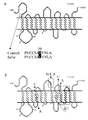
Putative 2D model of human sialin. Membrane topology prediction algorithms suggest
that sialin contains twelve transmembrane domains with the amino- and carboxy-termini
facing towards the cytosol. Triangles indicate the six potential N-glycosylation sites.
Small circles indicate amino acid residues. The mutation found in Salla disease is
indicated in (a). A missense mutation R39C changes an arginine residue into a cysteine
residue leading to a protein modification just before the first transmembrane domain.
The different mutations found in infantile sialic acid storage disease, ISSD are indicated
in (b). Mutations in patients (A-F) are indicated by boxes. For details of the mutations
see Table 1. A: patient DR; B: patient AB; C: patient AZ; D: patient JG; E: patient RD;
F: patient McI.
Examples
Example 1
Identification of ESTs mapping at the SASD locus
-
Linkage analysis mapped the disease locus for Salla disease and for ISSD to the refined
area on chromosome 6q14-q15 and a physical map was constructed over the disease
locus, flanked by markers D6S280 and D6S1622. This area is covered by several
overlapping genomic (PAC) clones. The Iluman Genemap 1998 provided by the
international RII mapping consortium was screened for ESTs in the immediate vicinity
of central marker D6S1596. Several overlapping clones from the genebank EST division
were found, which showed a considerable similarity with a C. elegans hypothetical
protein C38C10.2. This C. elegans protein has been classified within the ACS family of
anion/cation symporters. This family contains a number of phosphate transporters as
well as a bacterial glucuronic acid (hexuronate) transporter from E.coli (EXUT). Three
Genbank clones 667681, 265499 and 209208 were used for subsequent studies. Phage
library plating and screening conditions were as described (Sambrook, J., Fritsch, E.F.
& Maniatis, T. Molecular Cloning: A Laboratory Manual (Cold Spring Harbor
Laboratory Press, Cold Spring Harbor, New York, 1989). Human cDNA clones were
isolated from human liver, brain and placenta Clontech cDNA libraries using probes
derived from EST clones. cDNA inserts were isolated by PCR and sequenced. 5'RACE
PCR was carried out using the Gibco BRL system according to the manufacturer's
protocol.
Example 2
The sequence of a novel anion-cation symporter cDNA
-
The EST clones from example 1 hybridized to PAC202M22 covering the critical disease
region and were thus considered to be part of a functional and positional candidate
cDNA. By sequencing, it was found that these EST's represented only the 3'end of the
cDNA, and therefore we used the same EST's as probes to screen a human fetal liver
cDNA library (Clontech). Several overlapping positive clones were obtained. Screening
more cDNA libraries (placenta and brain) with PCR amplified fragments of these
clones, as well as rapid amplification of cDNA ends (RACE) resulted in a 2.5 kb
sequence. This sequence included an ORF of 1485 bp, predicting a 495 amino acid
protein sequence. Approximately 270 bp of 3' and 750 bp of 5' UTR have been
sequenced. Upstream of the first ATG a stopcodon was found suggesting that the
translation- initiating methionine has been obtained.
-
Searching for sequence homology using the BLAST program showed that this sequence
has a significant homology with several members of the anion-cation symporter (ACS)
family of transporters. The gene has been designated AST (anion and sugar transporter)
(SEQ ID NO:2).
-
The predicted polypeptide encoded by AST gene contains twelve transmembrane
domains, similar to that of most MFS members (SEQ ID NO:1). Extensive sequence
homology was found with human brain and kidney Na+-phosphate symporters (Ni, B. et
al. J. Neurochem. 66, 2227-2238 (1996); Chong, S.S. et al. Genomics 18, 355-359
(1993)) and with a H+-hexuronate symporter from E.coli (Hugouvieux-Cotte-Pattat, N.
& Robert-Baudouy, J. of Bacteriol. 169, 1223-1231 (1987); Blattner, F.R. et al. Science
277, 1453-1474 (1997)). Sialin shows 37 %, 34 % and 16 % sequence identity with
NaPbrain, NaPrenal and EcHex respectively. The similarity scores are 61 %, 57 % and
40 % respectively. Only the amino- and carboxyterminal regions do not show any
significant homology.
-
Northern analysis of human tissues showed two major transcripts of ≈4.5 and ≈3.5 kb,
which are ubiquitously expressed but are more abundant in heart, kidney, skeletal
muscle, liver, placenta and brain (Fig. 1).
-
A human 12-lane Multiple Tissue Northern (MTN) blot from Clontech was used.
Hybridizations were performed using ExpressHyb (Clontech), according to the
manufacturer's instructions. As probes we used either a 500 bp PCR product derived
from the AST cDNA, or a specific 20-mer oligonucleotide 5'-CAGTGTGCTGCTCTGCTCGT-3'
. Probes were 32P labeled and purified as described
by the manufacturer.
Example 3
Mutations in Salla disease and ISSD patients
-
To detect mutations in the novel anion transporter gene (AST), primers were designed
for RT-PCR analysis of cDNA from five confirmed typical Finnish Salla disease
patients, from six earlier described patients with the severe infantile phenotype ISSD
and from several controls. The five Salla patients shared the typical 1-3 haplotype of the
closest markers known to be present in 91 percent of the Finnish Salla disease
chromosomes. Most of the cell lines used for mutation analysis are known to have
increased level of free sialic acid and were also used to demonstrate biochemically the
transport defect.
-
The total cDNA was sequenced in four overlapping PCR's. RT-PCR reaction products
were run on 1% agarose gels, isolated and sequenced by the ABI system in two
directions. The results are summarized in Table 1.
| AST mutations found in Salla disease and ISSD patients |
| Nucleotide change | AA number/mutation | Protein consequence | Patients |
| Salla Disease |
| 115 C > T | R39C | Arginine to cysteine in loop before first TM domain | Finnish Salla patients: LR, SE, SL, AA, PE homozygous |
| ISSD |
| 533 del C | 78 | Frameshift resulting in 33 novel amino acids then premature truncation | French patient DR heterozygous |
| (1112-1259) del 148 bp | 371 | Frameshift resulting in 27 novel amino acids then premature truncation | French patient DR heterozygous |
| 548 A > G | H183R | Histidine to arginine in transmembrane domain 4 | Yugoslavian patient AZ heterozygous |
| 1001 C > G | P334R | Proline to arginine in transmembrane domain 8 | Yugoslavian patient AZ heterozygous |
| 978-979 ins 500 bp | 327 | Probably truncation | Italian patient AB homozygous |
| (802-816) del 15 bp | 268 del | Deletion of five amino acids [SSLRN] transmembrane domains 6 and 7 | French-Canad. patients JG and RD and English patient MeI apparently homozygous |
| Numbering of amino acids refers to the sialin protein sequence, numbering of nucleotides refers to the AST cDNA sequence, with the first nucleotide of the ATG initiation codon as nr.1. |
-
Patient fibroblast or lymphoblast cell lines were established from Finnish Salla disease
patients. Fibroblast strains from ISSD patients were obtained from previously described
patients (see Table 1). Fibroblasts were cultured in Ham's F10 (Gibco BRL)
supplemented with 15 % fetal calf serum and antibiotics. Lymphoblasts were cultured in
RPMI 1640 (Gibco BRL) supplemented with 10 % fetal calf serum and antibiotics.
Total RNA was isolated from control and patient cultured fibroblasts (or lymphoblasts)
using RNAzol B (Campro Scientific) according to the manufacturer's protocol.
Subsequently first strand cDNA was generated by the Superscript Preamplification
system (Gibco BRL) using random hexamer priming. Gene specific primers were
designed to facilitate 5'RACE and mutation analysis. cDNA was amplified by PCR
using the Perkin Elmer 9600 Gene Amp PCR system. The PCR reaction amplification
mixture (50 µl) contained dNTP's (25 mM each), forward and reverse primers (100
pmol), Taq DNA polymerase (5 U; Gibco BRL), 1x PCR buffer (Gibco BRL), 1%
DMSO, 0.02 % Wl (Gibco BRL) and 2 mM MgCl
2. PCR conditions were 5 min. 95 °C;
40 cyles of 1 min. 95 °C, 1 min. 59 "C, 2 min. 72 "C; and 10 min.72 "C. PCR products
were analysed on 1 % agarose gels, purified using QIAquick PCR purification kit
(Qiagen) and sequenced using the ABI Prism Big Dye Terminator Cycle Sequencing kit
(Applied Biosystems) and an Applied Biosystems ABI 377 fluorescent sequencer. The
complete open reading frame and 5 prime and 3 prime UTR's were sequenced using 5
different overlapping primer pairs:
-
Allele specific PCR was performed using as a 5'primer either 5'-CAGTGTGCTGCTCTGCTC-3'
(wt) or 5'-CAGTGTGCTGCTCTGCTT-3' (mut) and
as a 3'primer 5'-AGGCCAAAATTGCTAAGTTGT-3'. Cycling conditions were 95°C
11 min, 95°C 30 sec, 57°C 30 sec, 72°C 1 min for 35 cycles using MJResearch thermal
cycler PTC-225 and AmplitaqGold (Roche).
Example 4
ISSD patients
-
Sequence analysis of six different ISSD patients of various ethnic origin revealed six
different mutations (Table 1).
-
The ISSD patient of French origin (patient DR), was found to be a compound
heterozygote with a 1 basepair deletion (533 del C) in one allele and a 148 basepairs
deletion starting at position 1112 G till 1259 C in the other allele. Both deletions cause a
frameshift and are predicted either to result in an unstable mRNA or in premature
truncation of the protein.
-
The ISSD patient of Italian ancestry (patient AB), was homozygote for a ≈500 bp
insertion at position 978 of the AST gene as observed by electrophoresis of PCR
products and haplotype analysis. Subsequent sequencing identified the site of the
insertion as indicated in Table 1.
-
The ISSD patient of Yugoslavian origin (patient AZ), showed two heterozygote
missense mutations, 548A→G and 1001C→G in the AST sequence. The former leads to
substitution of histidine with arginine (H183R) and the latter to substitution of proline
with arginine (P334R), respectively. The effect of the H183R mutation cannot be
predicted at present but the P334R mutation eliminates a highly conserved proline
residue among ACS members and orthologues, and predictively leads to a major
functional change. No other mutations were found in cDNA from this patient.
-
The French-Canadian ISSD patients (JG and RD) carried a 15 bp apparently
homozygote deletion (de1802T-816T) leading to predicted deletion of five aminoacids
SSLRN in the cytosolic loop between transmembrane domain 6 and 7.
-
An English ISSD patient (McI) was found to carry this same homozygous 15 bp
deletion. The mutations found in Salla disease and ISSD patients are indicated in a
putative model of sialin (Fig. 2a and b).