BACKGROUND OF THE INVENTION
1. Field of the Invention
The present invention relates to a turbo decoder for
decoding a sequence that has been generated according to a
turbo-coding scheme.
2. Description of the Related Art
A transmission system using a turbo-decoding scheme can
provide, for a desired transmission rate (SN ratio), an SN
ratio (transmission rate) that is very close to the maximum
SN ratio (transmission rate; generally called the Shannon
limit) that is given by Shannon's channel coding theorem,
because decoding that conforms to an error correcting coding
scheme that was used in the transmitting end is repeatedly
performed in the receiving end.
Therefore, the turbo coder and the turbo decoder are
promising as devices that can be applied to not only deep space
communication but also mobile communication, broadcast, and
reproduction systems of magnetic recording media, and
applications in these fields are now being studied, developed,
and put into practical use enthusiastically.
Fig. 9 is a block diagram showing the configuration of
a first example transmission system using a turbo-decoding
scheme.
As shown in Fig. 9, a transmitting end 90 and a receiving
end 91 are connected to each other via a transmission path 92.
In the transmitting end 90, transmission information U
is supplied to a turbo coder 93 and the outputs of the turbo
coder 93 are connected to one ends of the transmission path
92.
In the turbo coder 93, the transmission information U
is supplied to the inputs of an elementary encoder 94-1 and
an interleaver (π) 95 and the output of the interleaver 95
is connected to the input of an elementary encoder 94-2. A
transmission sequence consisting of the following items is
obtained at the output of the turbo coder 93:
- Code words (non-coded words) Xa that have been
generated without coding processing applied to the
transmission information U.
- Code words Xb that have been generated with prescribed
error correcting coding processing applied to the transmission
information U in the elementary encoder 94-1.
- Code words Xc that have been generated with prescribed
error correcting coding processing applied to the transmission
information U in the elementary encoder 94-2.
In the receiving end 91, a received sequence consisting
of words ya, yb, and yc that have been transmitted over the
transmission path 92, correspond to the respective code words
Xa, Xb, and Xc, and are obtained as results of soft decision
is supplied to corresponding inputs of a receive buffer 96.
In general, the received sequence is deteriorated in SN
ratio because of a fluctuation of the transmission
characteristics of the transmission path 92 and noise that has
been superimposed in the transmission path 92.
Among the outputs of the receive buffer 96, the output
corresponding to the words ya is connected to the first input
of an elementary decoder 97-1 and the input of an interleaver
(π) 98-1. The output of the interleaver 98-1 is connected
to the first input of an elementary decoder 97-2. Among the
outputs of the receive buffer 96, the outputs corresponding
to the words yb and yc are connected to the second inputs of
the respective elementary decoders 97-1 and 97-2. The output
of the elementary decoder 97-1 is connected to the third input
of the elementary decoder 97-2 via an interleaver 98-2. One
output of the elementary decoder 97-2 is connected to the third
input of the elementary decoder 97-1 via a de-interleaver (π
-1) 99-1, and the other output of the elementary decoder 97-2
is connected to the input of a de-interleaver (π-1) 99-2. A
decoding result is obtained at the output of the de-interleaver
99-2.
For the sake of simplicity, it is assumed that the coding
that is performed by each of the elementary coders 94-1 and
94-2 is convolutional coding using a common constraint length
and rate of coding.
In the above-configured receiving end 91, a received
sequence that has been transmitted over the transmission path
92 is separated into words ya, yb, and yc on a prescribed code
block basis and stored in storage areas of the receive buffer
96 corresponding to the respective kinds of words ya, yb, and
yc.
The elementary decoders 97-1 and 97-2, the interleavers
98-1 and 98-2, and the de-interleavers 99-1 and 99-2 are
initialized prior to a start of decoding processing to be
performed on those code blocks.
After completion of the initialization, the elementary
decoder 97-1 outputs a likelihood L1 by performing decoding
processing that conforms to the coding processing that was
performed by the elementary coder 94-1 in the transmitting end
90 on a likelihood that is supplied from the elementary decoder
97-2 via the de-interleaver 99-1 and words ya and yb that are
supplied from the receive buffer 96 on a bit-by-bit basis.
The interleavers 98-1 and 98-2 perform the same
interleave processing as performed by the interleaver 95 in
the transmitting end 90 on the word ya that is supplied parallel
from the receive buffer 96 and the likelihood L1, respectively.
The elementary decoder 97-2 outputs a likelihood L2 and
a demodulation result (for simplicity, it is assumed here that
the demodulation result is obtained as a result of hard
decision) by performing decoding processing that conforms to
the coding processing that was performed by the elementary
coder 94-2 in the transmitting end 90 on results of the above
interleave processing and a word yc that is supplied from the
receive buffer 96 on a bit-by-bit basis.
The de-interleaver 99-2 outputs a most probable decoding
result for the transmission information U by de-interleaving
the demodulation result in the same manner as the de-interleaver
99-1 does.
In the receiving end 91, the elementary decoders 97-1
and 97-2, the interleavers 98-1 and 98-2, and the de-interleavers
99-1 and 99-2 cooperate to repeatedly perform,
together with the receive buffer 96, the above processing on
a bit-by-bit basis a prescribed number of times.
Since at the output of the de-interleaver 99-2 the
above-mentioned likelihood is increased gradually during the
course of the decoding that is repeated in the above-described
manner, transmission information could be obtained that has
been restored with higher precision than in a transmission
system using a concatenated code.
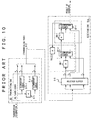
Fig. 10 is a block diagram showing the configuration of
a second transmission system using a turbo-decoding scheme.
The components in Fig. 10 having the same function and
configuration as the corresponding components in Fig. 9 are
given the same reference symbols as the latter and will not
be described below.
The transmission system of Fig. 10 is different in
configuration from that of Fig. 9 in a receiving end 91A that
replaces the receiving end 91.
In the receiving end 91A, as indicated by two-dot-chain-line
frames in Figs. 9 and 10, decoding processing
corresponding to the coding processing performed by the
elementary coder 94-1 in the transmitting end 90 and decoding
processing corresponding to the coding processing performed
under cooperation between the interleaver 95 and the
elementary coder 94-2 are performed in order that is reverse
to the order in the receiving end 91 shown in Fig. 9.
Therefore, a most probable decoding result for
transmission information U is obtained at the output of the
elementary decoder 97-1 without intervention of the de-interleaver
99-2.
Fig. 11 is a block diagram showing the configuration of
a third transmission system using a turbo-decoding scheme.
The components in Fig. 11 having the same function and
configuration as the corresponding components in Fig. 9 are
given the same reference symbols as the latter and will not
be described below.
The transmission system of Fig. 11 is different in
configuration from that of Fig. 9 in a receiving end 91B that
replaces the receiving end 91.
The receiving end 91B is different in configuration from
the receiving end 91 in that an elementary decoder 100 serving
as both of the elementary decoders 97-1 and 97-2 is provided
in place of the elementary decoders 97-1 and 97-2; that an
interleaver 101 is provided in place of the interleaver 98-1;
that a de-interleaver 102 is provided in place of the de-interleaver
99-2; that a feedback processing part 103 serving
as both of the interleaver 98-2 and the de-interleaver 99-1
is provided in place of the interleaver 98-2 and the de-interleaver
99-1; that a selector 104 is provided between the
outputs corresponding to words yb and yc among the outputs of
the receive buffer 96 and one input of the elementary decoder
100; and that a controlling part 105 is provided to which output
ports corresponding to control terminals of the elementary
decoder 100, the interleaver 101, the de-interleaver 102, the
feedback processing part 103, the selector 104, and the receive
buffer 96 are connected.
In the receiving
end 91B having the above configuration,
the controlling part 105 synchronizes with words ya, yb, and
yc that are read out from the receive
butter 96 on a bit-by-bit
basis and alternately makes switching for the following forms
and pieces of information on a bit-by-bit basis:
That is, the elementary decoder 100 performs decoding
processing that is equivalent to the decoding processing that
is performed by the elementary decoders 97-1 and 97-2 shown
in Fig. 9 or 10 by cooperating with the interleaver 101, the
de-interleaver 102, the feedback processing part 103, the
selector 104, and the receive buffer 96 under the control of
the controlling part 105.
Therefore, the performance of the receiving end 91B does
not lower as long as the above-described cooperation is made
properly and the decoding processing that is performed under
such cooperation is performed at a prescribed speed, and its
hardware scale is made smaller than of the receiving ends 91
or 91A shown in Fig. 9 or 10.
In Fig. 11, each of the pieces of information I, D, and
F for which switching is made alternately as mentioned above
is given as a permutation of words that are two of the following
items that are separated by a separator "/" and selected in
time-series order cyclically:
- "π" indicating a state that interleave processing
should be performed.
- " π -1" indicating a state that de-interleave
processing should be performed.
- "1" indicating a state that neither interleave
processing nor de-interleave processing is necessary and input
information should be output without being subjected to none
of those.
In Fig. 11, similarly, the information S is a permutation
of symbols "yb" and "yc" showing respective words yb and yc
to be selected by the selector 104 that are separated by a
separator "/" and selected in time-series order cyclically.
Further, in Fig. 11, two kinds of information enclosed
in less than and greater than signs <> or parentheses () are
shown for each of the pieces of information I, D, F, and S.
Of the two kinds of information, the information enclosed in
less than and greater than signs <> indicates a combination
to be used to realize processing that is equivalent to the
decoding processing that is performed in the receiving end 91
shown in Fig. 9. The information enclosed in parentheses ()
indicates a combination to be used to realize processing that
is equivalent to the decoding processing that is performed in
the receiving end 91A shown in Fig. 10.
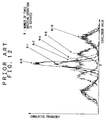
Incidentally, in the above conventional examples, as
shown in Fig. 12, the likelihood value L1 or L2 that is computed
by the elementary decoders 97-1, 97-2, or 100 increases as the
number N of times of repetitive execution of the above-described
decoding processing by the elementary decoder 97-1,
97-2 or 100 increases.
For example, to maintain high transmission quality even
in a case where the number N is large because the transmission
characteristics of the transmission path 92 frequently vary
to a large extent or the level of noise superimposed on a
transmission sequence in the transmission path 92 is high, the
elementary decoders 97-1, 97-2, 100 need to perform operations
with a word length that is much longer than the word length
of words ya, yb, and yc that are obtained as a received sequence.
Further, the word length per unit storage area of a memory
to be used for the interleave processing or the de-interleave
processing by the interleavers 98-1 and 98-2 and the de-interleavers
99-1 and 99-2 also becomes very long.
Therefore, in the conventional examples, the scale of
hardware constituting the receiving end becomes larger when
larger deterioration in transmission quality may occur in the
transmission path 92.
In general, an attempt to suppress increase in hardware
scale tends to encounter limitations relating to the following
items. This may prevent application of the turbo coding scheme
or attainment of desired transmission quality.
- Circuit type
- Selection of devices to be used
- Power consumption
- Mounting technology including thermal designing
- Algorithms of decoding processing to be performed by
the elementary decoders 97-1, 97-2, and 100.
SUMMARY OF THE INVENTION
An object of the present invention is to provide a turbo
decoder which can flexibly adapt to a variety of transmission
characteristics of transmission paths and can secure high
transmission quality without the need for greatly changing the
hardware scale and configuration.
Another object of the invention is to provide a turbo
decoder which can prevent a large drop in the accuracy of
obtaining likelihood and approximately keep the range of
likelihood values fixed even in a case where likelihood is
obtained repeatedly over a large number of times or over a
number of times that may vary to a large extent during the course
of turbo-decoding.
Another object of the invention is to provide a turbo
decoder which can make the gain of turbo-decoding larger than
in a case where interleave processing is performed with a
constant word length and precision irrespective of the form
of scaling that is determined by a scaling section (described
later).
Still another object of the invention is to provide a
turbo decoder which can reduce the scale of hardware and
enables efficient turbo-decoding even in a case where coding
is repeated over a number N of times during the course of
turbo-coding, where N is large or may be changed.
Yet another object of the invention is to provide a turbo
decoder which can reduce the scale of hardware and enables
efficient turbo-decoding not only in a case where coding is
repeated over a large number of times or over a variable number
of times during the course of turbo-coding, but even in a case
where the coding scheme is unfixed or may vary.
A further object of the invention is to provide a turbo
decoder which can simplify the configuration of hardware as
long as the word length of the likelihood determined by the
decoding section is within an allowable range.
Another object of the invention is to provide a turbo
decoder which can determine likelihood with high accuracy
during the course of turbo-decoding while preventing the order
from increasing rapidly.
Another object of the invention is to provide a turbo
decoder which can perform scaling efficiently with high
reliability, according to simple arithmetic operations.
Still another object is to provide a turbo decoder which
can simplify the configuration of a decoding section that is
incorporated in a transmission system or equipment.
Yet another object of the invention is to provide a turbo
decoder which can reduce the cost, size, and power consumption
of a transmission system and equipment, increase their
reliability, realize highly accurate, highly efficient
decoding, and improve the transmission quality and
performance.
The above objects are attained by a turbo decoder in which
a distribution of likelihood values that are obtained during
the course of turbo-decoding is watched and the object of an
operation to be subjected to the computation of likelihood
subsequent to the turbo-decoding is scaled in accordance with
the distribution.
In this turbo decoder, even in a case where likelihood
is obtained repeatedly over a large number of times or over
a number of times that may vary to a large extent during the
course of turbo-decoding, the range of likelihood values is
kept approximately fixed without a large drop in the accuracy
in obtaining likelihood.
The above objects are attained by a turbo decoder in which
interleave processing to be performed during the subsequent
operation is performed in block on a word, among the objects
of the turbo-decoding, representing transmission information
that was appended on a common code block without being
subjected to any coding on a transmitting end.
In this turbo decoder, prescribed interleave processing
with a word length and accuracy that conform to scaling
determined by a scaling section (described later) is properly
performed on a non-coded word to be subjected to the subsequent
operation.
Therefore, the gain of the turbo-decoding can be
enlarged compared to a case where such interleave processing
is performed with constant word length and accuracy
irrespective of such scaling.
The above objects are attained by a turbo decoder in which
interleave processing is newly performed in block after
de-interleave processing that nullifies all interleave
processing that was performed while a pre-operation was
performed.
In this turbo decoder, as long as the responsiveness
needed for the de-interleave processing to respond is
permitted to drop or the de-interleave processing and the
interleave processing are performed in block, the gain of the
turbo-decoding can be enlarged compared to a case where the
interleave processing is performed with a constant word length
and precision irrespective of the form of the scaling that is
determined by the scaling section.
The above objects are attained by a turbo decoder in which
elementary decoders are provided in a number that is smaller
than the number of times coding was performed during the course
of turbo-coding on a transmitting end and in which it performs
desired decoding processing by these elementary decoders
according to pipeline control.
In this turbo decoder, the scale of hardware can be
reduced and efficient turbo-decoding is enabled even in a case
where coding is repeated over a number N of times during the
course of turbo-coding, where N is large or may vary.
The above objects are attained by a turbo decoder in which
the number of the elementary decoders provided is "1" and
plural kinds of turbo-decoding, including the desired decoding
processing are performed in series by the elementary decoder.
In this turbo decoder, the scale of hardware can be
reduced and efficient turbo-decoding is enabled not only in
a case where coding is repeated over a large number of times
or over a variable number of times during the course of
turbo-coding, but even in a case where the coding scheme is
unfixed or may be changed.
The above objects are attained by a turbo decoder in which
interleave processing and de-interleave processing to be
performed repeatedly during the course of the turbo-decoding
are performed while reading from a memory for storing an
operation object of the interleave processing and the de-interleave
processing.
In this turbo decoder, since the above-mentioned scaling
is performed en bloc during the course of interleave processing
and de-interleave processing, the configuration of hardware
can be simplified as long as the word length of the likelihood
determined during the course of the decoding is within an
allowable range.
The above objects are attained by a turbo decoder in which
when an order increase between a previously obtained
likelihood and a subsequently obtained likelihood has exceeded
a prescribed value, the likelihood is rounded and used in a
further subsequent operation.
In this turbo decoder, when a likelihood value that is
obtained as a result of the pre-operation has increased rapidly,
a low-order value of the likelihood is rounded and is used as
an object of a subsequent operation.
The above objects are attained by a turbo decoder in which
the likelihood range (likelihood value distribution) is
recognized as a maximum value or an average value of likelihood
values obtained previously.
In this turbo decoder, as long as the curve for the
distribution of many likelihood values is unimodal in a range
that shifts according to the repeated number of times
likelihood is obtained and a direction in which that range
shifts is known, such a maximum value or an average value
represents general features of the range with high accuracy.
Therefore, scaling can be performed efficiently with
high reliability according to simple arithmetic operations.
Other objects and features of the invention will become
apparent from the following description that will be made with
reference to the accompanying drawings.
BRIEF DESCRIPTION OF THE DRAWINGS
The nature, the principle, and utility of the invention
will become more apparent from the following detailed
description when read in conjunction with the accompanying
drawings in which like parts are designated by identical
reference numbers, in which:
DETAILED DESCRIPTION OF THE PREFERRED EMBODIMENTS
First, the principles of turbo decoders according to the
present invention will be described with reference to Fig. 1.
Fig. 1 is a block diagram showing the principles of first
to fourth turbo decoders according to the invention.
The principle of the first turbo decoder according to
the invention is as follows.
A decoding section 11 accepts a received sequence on a
code block basis and turbo-decoding on the received sequence
by restoring transmission information represented by the
received sequence. A range watching section 12 obtains a
distribution of likelihood values that are obtained during the
course of the turbo-decoding performed by the decoding section
11. A scaling section 13 determines a scaling that will
suppress a variation of a distribution of likelihood values
obtained as a result of a subsequent operation, to be a scaling
for an object of the subsequent operation performed under the
distribution obtained by the range watching section 12, where
the subsequent operation is performed for the decoding section
11 to complete the turbo-decoding for a common code block. The
decoding section 11 applies the scaling determined by the
scaling section 13 to the object of the subsequent operation.
In this turbo decoder, even in a case where likelihood
is obtained repeatedly over a large number of times or over
a number of times that may vary to a large extent during the
course of the turbo-decoding, the range of likelihood values
is kept approximately fixed without a large drop in the
accuracy of obtaining likelihood.
The principle of the second turbo decoder according to
the invention is as follows.
The decoding section 11 performs, in block, interleave
processing to be performed prior to both a pre-operation that
was performed prior to the subsequent operation on a non-coded
word, among the objects of the subsequent operation,
representing transmission information that was appended to the
common code block on a transmitting end without being subjected
to any coding, and the subsequent operation, and applies the
scaling determined by the scaling section 13 to the non-coded
word.
In this turbo decoder, prescribed interleave processing
with a word length and accuracy that conform to the scaling
determined by the scaling section 13 is properly performed on
a non-coded word to be subjected to the subsequent operation.
Therefore, the gain of the turbo-decoding can be enlarged
compared to a case where such interleave processing is
performed with a constant word length and accuracy
irrespective of the form of the scaling that is determined by
the scaling section 13.
The principle of the third turbo decoder according to
the invention is as follows.
The decoding section 11 performs, in block, de-interleave
processing that is reversible to all interleave
processing that was performed during a pre-operation that was
performed prior to the subsequent operation and all interleave
processing to be performed prior to the pre-operation and the
subsequent operation on a non-coded word, among the objects
of the subsequent operation, subjected to the pre-operation
and represents transmission information appended to the common
code block without being subjected to any coding on a
transmitting end, and applies the scaling determined by the
scaling section 13 to the non-coded word.
In this turbo decoder, de-interleave processing that
nullifies all interleave processing that was performed during
a pre-operation is performed on a non-coded word to be
subjected to the subsequent operation before execution of
prescribed interleave processing with a word length and
accuracy that conform to the scaling determined by the scaling
section 13.
Therefore, as long as the speed for the de-interleave
processing to respond is permitted to drop or the de-interleave
processing and the interleave processing are performed in
block, the gain of the turbo-decoding can be enlarged compared
to a case where the interleave processing is performed with
a constant word length and accuracy irrespective of the form
of the scaling that is determined by the scaling section 13.
The principle of the fourth turbo decoder according to
the invention is as follows.
The decoding section 11 has number n of elementary
decoders 21-1 to 21-n and turbo-decodes the received sequence
according to a pipeline control while cooperating with the n
of elementary decoders 21-1 to 21-n, n being smaller than the
number N of times coding was performed during the course of
turbo-coding on a transmitting end to generate a transmission
sequence corresponding to the received sequence.
In this turbo decoder, the scale of hardware can be
reduced and efficient turbo-decoding is enabled even in a case
where coding is repeated over a number N of times during the
course of turbo-coding, where N is large or may vary.
Fig. 2 is a block diagram showing the principles of fifth
to eighth turbo decoders according to the invention.
The principle of the fifth turbo decoder according to
the invention is as follows.
The decoding section 11 has a single elementary decoder
31 that can adapt to all of a plurality of decoding schemes
that were employed during the course of turbo-coding on a
transmitting end to generate a transmission sequence
corresponding to the received sequence and performs decoding
according to a single designated decoding scheme among the
plurality of decoding schemes, and turbo-decodes the received
sequence by decoding in series according to the plurality of
decoding schemes by using the single elementary decoder 31.
In this turbo decoder, the scale of hardware can be
reduced and efficient turbo-decoding is enabled not only in
a case where coding is repeated over a large number of times
or over a variable number of times during the course of
turbo-coding, but even in a case where the coding scheme is
unfixed or may vary.
The principle of the sixth turbo decoder according to
the invention is as follows.
The decoding section 11 has a memory 11M to be used in
interleave processing and de-interleave processing that are
performed on the object of the subsequent operation prior to
the subsequent operation, and performs the scaling determined
by the scaling section 13 while reading from the memory 11M.
In this turbo decoder, since the scaling determined by
the scaling section 13 is performed in block during the course
of interleave processing and de-interleave processing, the
configuration of hardware can be simplified as long as the word
length of a likelihood determined by the decoding section 11
and can be stored in the memory 11M is within an allowable range.
The principle of the seventh turbo decoder according to
the invention is as follows.
The scaling section 13 obtains, when the scaling should
be updated, a range of varied likelihood values as compared
with previously determined scaling, and employs, as new
scaling, scaling that makes a width of the range smaller than
a prescribed threshold value when the width of the range has
exceeded the prescribed threshold value.
In this turbo decoder, when a likelihood value that is
obtained as a result of the pre-operation has increased rapidly,
a low-order value of the likelihood is rounded and is used as
an object of a subsequent operation.
The principle of the eighth turbo decoder according to
the invention is as follows.
The range watching section 12 obtains the likelihood
value distribution as a maximum value or an average value of
likelihood values obtained previously.
In this turbo decoder, as long as the curve for the
distribution of many likelihood values is unimodal in a range
that shifts according to the repeated number of times
likelihood is obtained and a direction in which that range
shifts is known, such a maximum value or an average value
represents general features of the range with high accuracy.
Therefore, scaling can be performed efficiently with
high precision based on simple arithmetic operations.
Embodiments of the invention will be hereinafter
described with reference to the drawings.
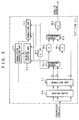
Fig. 3 is a block diagram showing a first embodiment of
the invention.
The components in Fig. 3 having the same function and
configuration as the corresponding components in Fig. 9 are
given the same reference symbols and will not be described
below.
This embodiment is different in configuration from the
conventional example of Fig. 9 in that a normalizing part 51
is provided between the receive buffer 96 and the elementary
decoders 97-1 and 97-2 and the interleaver 98-1; that a
normalizing part 52 is provided having a ports that are
interposed between the output of the elementary decoder 97-1
and the input of the interleaver 98-2 and ports that are
interposed between the output of the elementary decoder 97-2
and the input of the de-interleaver 99-1; that a valid bit
detecting part 53 is provided that is directly connected to
the outputs of the elementary decoders 97-1 and 97-2; and that
a normalization controlling part 54 is provided whose input
is directly connected to the output of the valid bit detecting
part 53 and that has outputs connected to the control inputs
of the respective normalizing parts 51 and 52.
Since the configuration of the transmitting end is the
same as in the conventional example of Fig. 9, it is not
illustrated nor described.
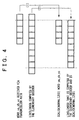
Fig. 4 is a chart showing the operation of the first
embodiment of the invention. The operation of this embodiment
will be described below with reference to Figs. 3 and 4.
At a start, the valid bit detecting part 53 outputs, for
likelihoods computed by the elementary decoders 97-1 and 97-2,
initial values of order identification information indicating
a standard range where the elementary decoders 97-1 and 97-2
can cooperate with the interleavers 98-1 and 98-2 and the
de-interleavers 99-1 and 99-2 without causing overflow or a
truncation error and the number of bits that conforms to the
standard range.
In a state that the individual sections operate steadily
in cooperation, the valid bit detecting part 53 determines
order identification information indicating the number of bits
effectively representing likelihoods that have been computed
by the elementary decoders 97-1 and 97-2 in the same manner
as in the conventional example (e.g., bits excluding both or
one of useless bits having a value "0" among high-order bits
and useless bits having a value "0" among low-order bits) among
all the bits representing those likelihoods as well as a weight
(order) of those bits.
Every time the order identification information is
updated, the normalization controlling part 54 judges the
magnitude relationship between the following items:
- The number of bits indicated by the new order
identification information
- The prescribed word lengths of words ya, yb, and yc
and likelihoods to be input to the elementary decoders 97-1
and 97-2, the interleavers 98-1 and 98-2, and the de-interleavers
99-1 and 99-2
Further, the normalization controlling part 54
generates first and second selection signals indicating
bit-based scaling that assures continuation of the above-mentioned
cooperation by correcting the new number of bits and
the order identification information in accordance with a
result of the above judgment.
The normalizing part 51 performs the above-mentioned
scaling (indicated by symbol (1) in Fig. 4) by extracting the
bits of the order and the number of bits indicated by the first
selection signal from bit strings representing words ya, yb,
and yc that are read out cyclically from the receive buffer
96 in the same manner as in the conventional example, and
supplies words ya, yb, and yc that are obtained as a result
of the scaling to the elementary decoders 97-1 and 97-2 and
the interleaver 98-1.
The normalizing part 52 similarly performs the
above-mentioned scaling (indicated by symbol (2) in Fig. 4)
by extracting the bits of the order and the number of bits
indicated by the second selection signal from bit strings
representing likelihoods computed by the respective
elementary decoders 97-1 and 97-2, and supplies likelihoods
that are obtained as a result of the scaling to the interleaver
98-2 and the de-interleaver 99-1, respectively.
With the above operation, even when the range of
likelihoods that are obtained during the course of the decoding
processing that is performed repeatedly for ya, yb, and yc in
the same manner as in the conventional example varies, words
ya, yb, and yc and likelihoods that are operation objects of
the repeatedly performed decoding processing are supplied to
the elementary decoders 97-1 and 97-2, the interleavers 98-1
and 98-2, and the de-interleavers 99-1 and 99-2 while scaling
is performed that avoids overflow and minimizes rounding
errors.
In general, the scale of hardware constituting the
normalizing parts 51 and 52, the valid bit detecting part 53,
and the normalization controlling part 54 is much smaller than
the scale of hardware constituting computing units and
memories that increases as the number of times of repetition
of decoding processing increases.
Therefore, even in a case where the number of times of
repetition of decoding processing is large or may vary to a
large extent, furthermore, even when the word length of
computing units provided in the elementary decoders 97-1 and
97-2 and the word length of memories provided in the respective
interleavers 98-1 and 98-2 and de-interleavers 99-1 and 99-2
are small, this embodiment suppresses lowering in reliability
and increase in running cost to very small degrees and enables
accurate turbo-decoding.
Fig. 5 is a block diagram showing a second embodiment
of the invention.
The components in Fig. 5 having the same function and
configuration as the corresponding components in Fig. 11 are
given the same reference symbols and will not be described
below.
This embodiment is different in configuration from the
conventional example of Fig. 11 in that an interleaver 61, a
de-interleaver 62, a feedback processing part 63, a
controlling part 64, and a selector 65 are provided in place
of the interleaver 101, the de-interleaver 102, the feedback
processing part 103, the controlling part 105, and the selector
104, respectively; and that a valid bit detecting part 66 is
provided whose input is directly connected, together with the
input of the feedback processing part 63, to a corresponding
output of the elementary decoder 100 and whose output is
connected to a corresponding input port of the controlling part
64.
The operation of this embodiment will be described
below.
Like the valid bit detecting part 53 shown in Fig. 3,
the valid bit detecting part 66 determines the number of bits
and order identification information in accordance with a
likelihood computed by the elementary decoder 100.
Every time the number of bits and order identification
information are newly determined, the controlling part 64
judges the magnitude relationship between the new number of
bits and the prescribed word lengths of words ya, yb, and yc
and a likelihood to be input to the elementary decoder 100,
the interleaver 101, and the de-interleaver 102 in the same
manner as the normalization controlling part 54 shown in Fig.
3 does. The controlling part 64 determines bit-based scaling
that assures continuation of the above-mentioned cooperation
by correcting the new number of bits and the order
identification information in accordance with a result of the
above judgment.
Further, as in the case of the conventional example of
Fig. 11, the controlling part 64 synchronizes with words ya,
yb, and yc that are read out from the receive buffer 96 on a
bit-by-bit basis and generates pieces of information I, D, F,
and S (described above) on a bit-by-bit basis.
Still further, the controlling part 64 generates pieces
of information i, d, f, and s by appending scaling pointers
indicating the above-mentioned scaling to the respective
pieces of information I, D, F, and S, and supplies those pieces
of information i, d, f, and s to the interleaver 61, the
de-interleaver 62, the feedback processing part 63, and the
selector 65, respectively.
Having the functions of the selector 104 shown in Fig.
11 and the normalizing part 51 shown in Fig. 3, the selector
65 performs scaling by extracting the bits of the order and
the number of bits indicated by the scaling pointer included
in the information s from bit strings representing words yb
and yc that are read out from the receive buffer 96 cyclically
in accordance with the scaling pointer included in the
information s in the same manner as the normalizing part 51
does. The selector 65 supplies words yb or yc obtained as a
result of the scaling to the elementary decoder 100.
Having the functions of the normalizing part 51 shown
in Fig. 3 and the interleaver 101 shown in Fig. 11, the
interleaver 61 performs scaling by extracting the bits of the
order and the number of bits indicated by the scaling pointer
included in the information i from a bit string representing
a word ya that is read out from the receive buffer 96 cyclically
in accordance with the scaling information included in the
information i in the same manner as the normalizing part 51
does. The interleaver 61 supplies a word ya obtained as a
result of the scaling to the elementary decoder 100.
Having the functions of the normalizing part 52 shown
in Fig. 3 and the feedback processing part 103 shown in Fig.
11, the feedback processing part 63 performs scaling indicated
by the scaling pointer included in the information f in the
same manner as the normalizing part 52 does.
With the above operation, the elementary decoder 100
performs decoding processing that is equivalent to the
decoding processing that is performed by the elementary
decoders 97-1 and 97-2 shown in Figs. 9 and 10 in the same manner
as in the conventional example of Fig. 11.
Therefore, this embodiment makes the hardware scale
smaller than in the embodiment of Fig. 3 while avoiding
overflow and minimizing rounding errors like the embodiment
of Fig. 3.
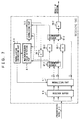
Fig. 6 is a block diagram showing a third embodiment of
the invention.
The components in Fig. 6 having the same function and
configuration as the corresponding components in Fig. 3 are
given the same reference symbols and will not be described
below.
This embodiment is different in configuration from the
embodiment of Fig. 3 in that an interleaver 71 is provided in
place of the interleaver 98-2; that a de-interleaver 72 is
provided in place of the de-interleaver 99-1; that the
normalizing part 52 is not provided; and of the outputs of the
normalization controlling part 54 the output connected to the
normalization section 52 in Fig. 3 is connected to
corresponding inputs of the interleaver 71 and the de-interleaver
72.
The interleaver 71 has a memory 71M to be used for
interleave processing and a reading circuit 71R that has a bus
to be used for reading from the memory 71M and a control terminal
connected to a corresponding output of the normalization
controlling part 54 and that performs addressing for reading
from the memory 71M.
The de-interleaver 72 has a memory 72M to be used for
de-interleave processing and a reading circuit 72R that has
a bus to be used for reading from the memory 72M and a control
terminal connected to a corresponding output of the
normalization controlling part 54 and that performs addressing
for reading from the memory 72M.
The operation of this embodiment will be described
below.
The word lengths of the storage areas of the memory 71M
provided in the interleaver 71 and the memory 72M provided in
the de-interleaver 72 are preset at values that assure reliable
storage of valid bit strings representing likelihoods that can
be computed by the elementary decoders 97-1 and 97-2 in the
same manner as in the embodiment of Fig. 3.
Likelihoods computed by the elementary decoders 97-1 and
97-2 are written cyclically to the storage areas of the
memories 71M and 72M according to prescribed addressing
(hereinafter referred to as "write addressing").
The reading circuits 71R and 72R read out the likelihoods
that have been written to the storage areas of the memories
71M and 72M according to read addressing that is different from
the above write addressing, perform scaling instead of the
normalizing part 52 shown in Fig. 3 by extracting the bits of
the order and the number of bits indicated by a second signal
that is supplied from the normalizing part 54 from bits strings
representing the read-out likelihoods, and supply likelihoods
that are obtained as a result of the scaling to the respective
elementary decoders 97-2 and 97-1, respectively.
As described above, since the interleaver 71 and the
de-interleaver 72 that also serve as the normalizing part 52
shown in Fig. 3 are provided in place of the interleaver 98-2
and the de-interleaver 99-1 shown in Fig. 3, this embodiment
can simplify the hardware configuration without lowering the
accuracy of decoding as long as the number of valid bits
representing likelihoods that can be computed by the
elementary decoders 97-1 and 97-2 is allowable.
Fig. 7 is a block diagram showing a fourth embodiment
of the invention.
The components in Fig. 7 having the same function and
configuration as the corresponding components in Fig. 3 are
given the same reference symbols and will not be described
below.
This embodiment is different in configuration from the
embodiment of Fig. 3 in that a maximum/minimum value detecting
part 81 is provided in place of the valid bit detecting part
53.
Fig. 8 shows the operation of the fourth embodiment of
the invention. The operation of this embodiment will be
described below with reference to Figs. 7 and 8.
The maximum/minimum value detecting part 81 accepts
likelihoods (hereinafter referred to as "updated
likelihoods") computed by the elementary decoders 97-1 and
97-2, and judges, for the values of updated likelihoods that
are given according to scaling that is applied in advance
(hereinafter referred to as "pre-scaling"), the magnitude
relationship between:
- the updated likelihoods computed by the elementary
decoder 97-1, 97-2, and an upper limit that is preset less than
or equal to the maximum likelihood value that can be expressed
validly under this scaling
- the updated likelihoods computed by the elementary
decoder 97-1, 97-2, and a lower limit that is preset greater
than or equal to the minimum likelihood value that can be
expressed validly under this scaling.
Further, the maximum/minimum value detecting part 81
generates the following identification information by
performing the above judgment:
- When it is recognized that the updated likelihood is
smaller than the above-mentioned lower limit, order
identification information is generated indicating that the
scale should be changed to the 1-bit lower position than in
the pre-scaling (indicated by symbols (1) in Fig. 8) while the
predetermined, fixed number of bits is maintained.
- When it is recognized that the updated likelihood is
greater than or equal to the above-mentioned lower limit and
less than or equal to the upper limit, order identification
information is generated indicating that the application of
the pre-scaling should be continued.
- When it is recognized that the updated likelihood is
greater than the above-mentioned upper limit, order
identification information is generated indicating that the
scale should be changed to the 1-bit higher position than in
the pre-scaling (indicated by symbols (2) in Fig. 8) while the
above-mentioned fixed number of bits is maintained.
The normalization controlling part 54 and the
normalizing parts 51 and 52 perform the scaling indicated by
such order identification information while cooperating with
each other in accordance with such order identification
information.
With the above operation, the normalizing parts 51 and
52 can change the scaling step by step without causing unduly
large rounding errors even when the value or distribution of
likelihoods that are obtained as a result of decoding that is
repeatedly performed by the elementary decoders 97-1 and 97-2
varies rapidly as long as the above-mentioned difference
between the maximum value and upper limit and the above-mentioned
difference between the lower limit and minimum value
are set at proper values in advance.
In this embodiment, the order of a likelihood that is
obtained as a result of a subsequent decoding operation is
prevented from increasing rapidly by 2 or more bits by setting
the above-mentioned difference between the maximum value and
upper limit and the above-mentioned difference between the
lower limit and minimum value at proper values.
However, in a case where rounding of the least
significant bit of a likelihood that is obtained as a result
of the preceding decoding operation is permitted, the
following processing may be performed by the maximum/minimum
value detecting part 81 and scaling that is adapted to such
order identification information (including appended
information) may be performed by the normalization controlling
part 54 and the normalizing parts 51 and 52:
- Recognition of rapid order increase of two or more bits
(mentioned above).
- Processing of appending, to order identification
information, information indicating that the likelihood
should be rounded prior to the subsequent decoding operation.
Further, the above configuration secures flexible
adaptability to the forms of the interleave processing
performed by the interleavers 98-1 and 98-2 and the de-interleave
processing performed by the de-interleavers 99-1
and 99-2 in addition to the scheme of decoding operations
performed by the elementary decoders 97-1 and 97-2, and
increases the stability to errors and deviations of the
above-mentioned upper limit and lower limit.
In this embodiment, even when the order of a likelihood
obtained as a result of decoding processing is different from
the order of a likelihood obtained before in the same manner
by two or more bits, neither a retrial of decoding processing
for obtaining such a likelihood nor scaling of an object of
an operation that precedes the retrial is performed.
However, occurrence of rounding errors (described
above) may be avoided by making such a retrial as long as
lowering of the speed of the decoding processing is permitted.
Each of the above embodiments does not specify a detailed
procedure of the processing performed by the valid bit
detecting part 53 or 66 or the maximum/minimum value detecting
part 81. The procedure may be in any form as long as it can
adapt to a distribution (described above) of likelihood values
and can prevent overflow and generation of useless rounding
errors during the course of operations to be performed
subsequently.
Each of the above embodiments does not disclose the
format of a bit string representing a likelihood that is
determined by the elementary decoder 97-1, 97-2 or 100. The
format may be in any form as long as a bit string as an object
of subsequent operations (described above) is subjected to
interleave processing and de-interleave processing with
desired accuracy and scaling is performed thereon properly.
In each of the above embodiments, the procedure of the
decoding operation to be performed by the elementary decoder
97-1, 97-2, or 100, the form of the interleave processing
performed by the interleaver 98-1, 98-2, 61, or 71 or the
feedback processing part 63, and the form of the de-interleave
processing to be performed by the de-interleaver 99-1, 99-2,
or 62 or the feedback processing part 63 are fixed. However,
the procedure of such a decoding operation, the decoding scheme,
the form of the interleave processing, and the form of the
de-interleave processing may be switched properly as long as
related information is given as known information in
synchronism with a received sequence.
Each of the above embodiments does not specify the
algorithm of the decoding processing performed by the
elementary decoder 97-1, 97-2, or 100. The decoding
processing, which is not a feature that characterizes the
invention, can be realized according to not only the Viterbi
decoding but also the following decoding schemes as long as
they can adapt to the coding processing performed by the
elementary coders 94-1 and 94-2 that are provided in the
transmitting end 90 and can realize desired accuracy and
response speed:
- The MAP (maximum aposteriori probability) decoding
(including the log-MAP decoding and the sub-log-MAP decoding)
that is realized by operations that maximize the probability
of correct decoding.
- The SOVA (soft-output Viterbi algorithm) decoding.
Therefore, in the following, details of the decoding
processing performed by the elementary decoders 97-1 and 97-2
will not be described.
Each of the above embodiments does not specify the
standard according which to recognize completion of decoding
processing. The standard may be any of the following and other
standards, and is not a feature that characterizes the
invention. Further, use of a variety of known algorithms is
possible for the standard. Therefore, the standard will not
be described below.
- A time point when the difference between a previously
determined likelihood and a newly determined likelihood
becomes smaller than a desired value.
- A time point when likelihoods have been determined
repeatedly a predetermined number of times irrespective of the
above difference.
In each of the above embodiments, scaling of likelihood
and a word ya to become objects of a subsequent operation is
performed on a bit-by-bit basis upon a start of the operation.
However, the scaling may be performed every word length (bits)
that is predetermined for the word length of a symbol at each
symbol point as long as the scaling adapts to a signal space
diagram under a modulation scheme that was applied to a
received sequence that is transmitted over the transmission
path 92 when turbo-decoding is realized at a desired speed with
desired accuracy.
The scaling of a likelihood and a word ya may be performed
at any time point of a subsequent operation that is performed
to complete the turbo-decoding on a code block (a word ya, yb,
or yc) basis. The scaling may be performed plural times.
In each of the embodiments of Figs. 3, 6, and 7, the number
of elementary decoders 97-1 and 97-2 provided in the receiving
end is equal to the number N (= 2) of elementary coders that
are used for the turbo-coding in the transmitting end. However,
the number n of elementary decoders to be provided in the
receiving end may be smaller than the number N of elementary
coders, and the transmission delay time may be decreased or
the transmission quality may be increased by causing the n
elementary decoders to cooperate to perform the turbo-decoding
efficiently according to a pipeline control.
The invention is not limited to the above embodiments
and various modifications may be made without departing from
the spirit and the scope of the invention, any improvement
may be made in part or all of the components.