EP1061906B1 - Monolithic tablet for controlled drug release - Google Patents
Monolithic tablet for controlled drug release Download PDFInfo
- Publication number
- EP1061906B1 EP1061906B1 EP99909726.4A EP99909726A EP1061906B1 EP 1061906 B1 EP1061906 B1 EP 1061906B1 EP 99909726 A EP99909726 A EP 99909726A EP 1061906 B1 EP1061906 B1 EP 1061906B1
- Authority
- EP
- European Patent Office
- Prior art keywords
- tablet
- release
- salt
- formulations
- drug
- Prior art date
- Legal status (The legal status is an assumption and is not a legal conclusion. Google has not performed a legal analysis and makes no representation as to the accuracy of the status listed.)
- Expired - Lifetime
Links
- 238000013267 controlled drug release Methods 0.000 title description 5
- 229940079593 drug Drugs 0.000 claims description 56
- 239000003814 drug Substances 0.000 claims description 56
- UIIMBOGNXHQVGW-UHFFFAOYSA-M Sodium bicarbonate Chemical compound [Na+].OC([O-])=O UIIMBOGNXHQVGW-UHFFFAOYSA-M 0.000 claims description 48
- 150000003839 salts Chemical class 0.000 claims description 39
- 239000011159 matrix material Substances 0.000 claims description 34
- 239000001866 hydroxypropyl methyl cellulose Substances 0.000 claims description 27
- 229920003088 hydroxypropyl methyl cellulose Polymers 0.000 claims description 27
- UFVKGYZPFZQRLF-UHFFFAOYSA-N hydroxypropyl methyl cellulose Chemical group OC1C(O)C(OC)OC(CO)C1OC1C(O)C(O)C(OC2C(C(O)C(OC3C(C(O)C(O)C(CO)O3)O)C(CO)O2)O)C(CO)O1 UFVKGYZPFZQRLF-UHFFFAOYSA-N 0.000 claims description 27
- 235000010979 hydroxypropyl methyl cellulose Nutrition 0.000 claims description 27
- 235000017557 sodium bicarbonate Nutrition 0.000 claims description 24
- 229910000030 sodium bicarbonate Inorganic materials 0.000 claims description 24
- 238000004090 dissolution Methods 0.000 claims description 23
- 229960004166 diltiazem Drugs 0.000 claims description 15
- HSUGRBWQSSZJOP-RTWAWAEBSA-N diltiazem Chemical group C1=CC(OC)=CC=C1[C@H]1[C@@H](OC(C)=O)C(=O)N(CCN(C)C)C2=CC=CC=C2S1 HSUGRBWQSSZJOP-RTWAWAEBSA-N 0.000 claims description 15
- 238000013270 controlled release Methods 0.000 claims description 14
- AQHHHDLHHXJYJD-UHFFFAOYSA-N propranolol Chemical compound C1=CC=C2C(OCC(O)CNC(C)C)=CC=CC2=C1 AQHHHDLHHXJYJD-UHFFFAOYSA-N 0.000 claims description 13
- 229920003171 Poly (ethylene oxide) Polymers 0.000 claims description 12
- 239000011736 potassium bicarbonate Substances 0.000 claims description 9
- 235000015497 potassium bicarbonate Nutrition 0.000 claims description 9
- 229910000028 potassium bicarbonate Inorganic materials 0.000 claims description 9
- TYJJADVDDVDEDZ-UHFFFAOYSA-M potassium hydrogencarbonate Chemical compound [K+].OC([O-])=O TYJJADVDDVDEDZ-UHFFFAOYSA-M 0.000 claims description 9
- SGTNSNPWRIOYBX-UHFFFAOYSA-N 2-(3,4-dimethoxyphenyl)-5-{[2-(3,4-dimethoxyphenyl)ethyl](methyl)amino}-2-(propan-2-yl)pentanenitrile Chemical compound C1=C(OC)C(OC)=CC=C1CCN(C)CCCC(C#N)(C(C)C)C1=CC=C(OC)C(OC)=C1 SGTNSNPWRIOYBX-UHFFFAOYSA-N 0.000 claims description 8
- 229960001722 verapamil Drugs 0.000 claims description 8
- 238000009792 diffusion process Methods 0.000 claims description 7
- 238000012377 drug delivery Methods 0.000 claims description 7
- 239000013543 active substance Substances 0.000 claims description 6
- 229960003712 propranolol Drugs 0.000 claims description 6
- 238000006243 chemical reaction Methods 0.000 claims description 5
- 239000012736 aqueous medium Substances 0.000 claims description 4
- 230000000670 limiting effect Effects 0.000 claims description 2
- 239000000203 mixture Substances 0.000 description 67
- 239000003826 tablet Substances 0.000 description 67
- 238000009472 formulation Methods 0.000 description 31
- WCUXLLCKKVVCTQ-UHFFFAOYSA-M Potassium chloride Chemical compound [Cl-].[K+] WCUXLLCKKVVCTQ-UHFFFAOYSA-M 0.000 description 28
- 239000000872 buffer Substances 0.000 description 16
- 239000004615 ingredient Substances 0.000 description 16
- 239000002609 medium Substances 0.000 description 16
- FEDJGPQLLNQAIY-UHFFFAOYSA-N 2-[(6-oxo-1h-pyridazin-3-yl)oxy]acetic acid Chemical compound OC(=O)COC=1C=CC(=O)NN=1 FEDJGPQLLNQAIY-UHFFFAOYSA-N 0.000 description 15
- 229960005316 diltiazem hydrochloride Drugs 0.000 description 15
- 229920000642 polymer Polymers 0.000 description 15
- 239000001103 potassium chloride Substances 0.000 description 15
- 235000011164 potassium chloride Nutrition 0.000 description 15
- 239000002552 dosage form Substances 0.000 description 9
- 230000003993 interaction Effects 0.000 description 7
- 238000013461 design Methods 0.000 description 6
- 230000002496 gastric effect Effects 0.000 description 6
- GUBGYTABKSRVRQ-QKKXKWKRSA-N Lactose Natural products OC[C@H]1O[C@@H](O[C@H]2[C@H](O)[C@@H](O)C(O)O[C@@H]2CO)[C@H](O)[C@@H](O)[C@H]1O GUBGYTABKSRVRQ-QKKXKWKRSA-N 0.000 description 5
- 230000008859 change Effects 0.000 description 5
- 230000000694 effects Effects 0.000 description 5
- 230000003628 erosive effect Effects 0.000 description 5
- 239000008101 lactose Substances 0.000 description 5
- 230000036962 time dependent Effects 0.000 description 5
- 238000013459 approach Methods 0.000 description 4
- 230000000052 comparative effect Effects 0.000 description 4
- 230000007423 decrease Effects 0.000 description 4
- 238000004519 manufacturing process Methods 0.000 description 4
- 239000008057 potassium phosphate buffer Substances 0.000 description 4
- 230000001629 suppression Effects 0.000 description 4
- XLYOFNOQVPJJNP-UHFFFAOYSA-N water Substances O XLYOFNOQVPJJNP-UHFFFAOYSA-N 0.000 description 4
- UXVMQQNJUSDDNG-UHFFFAOYSA-L Calcium chloride Chemical compound [Cl-].[Cl-].[Ca+2] UXVMQQNJUSDDNG-UHFFFAOYSA-L 0.000 description 3
- 230000002378 acidificating effect Effects 0.000 description 3
- 239000001110 calcium chloride Substances 0.000 description 3
- 229910001628 calcium chloride Inorganic materials 0.000 description 3
- 235000011148 calcium chloride Nutrition 0.000 description 3
- 239000012738 dissolution medium Substances 0.000 description 3
- 229940126534 drug product Drugs 0.000 description 3
- 210000001035 gastrointestinal tract Anatomy 0.000 description 3
- -1 hydrochloride salts Chemical class 0.000 description 3
- 230000007246 mechanism Effects 0.000 description 3
- 238000000034 method Methods 0.000 description 3
- 239000000825 pharmaceutical preparation Substances 0.000 description 3
- 230000008569 process Effects 0.000 description 3
- 239000000047 product Substances 0.000 description 3
- 239000002904 solvent Substances 0.000 description 3
- 230000008961 swelling Effects 0.000 description 3
- 238000012360 testing method Methods 0.000 description 3
- 229940127291 Calcium channel antagonist Drugs 0.000 description 2
- VEXZGXHMUGYJMC-UHFFFAOYSA-N Hydrochloric acid Chemical compound Cl VEXZGXHMUGYJMC-UHFFFAOYSA-N 0.000 description 2
- TWRXJAOTZQYOKJ-UHFFFAOYSA-L Magnesium chloride Chemical compound [Mg+2].[Cl-].[Cl-] TWRXJAOTZQYOKJ-UHFFFAOYSA-L 0.000 description 2
- CSNNHWWHGAXBCP-UHFFFAOYSA-L Magnesium sulfate Chemical compound [Mg+2].[O-][S+2]([O-])([O-])[O-] CSNNHWWHGAXBCP-UHFFFAOYSA-L 0.000 description 2
- 239000002876 beta blocker Substances 0.000 description 2
- 230000000975 bioactive effect Effects 0.000 description 2
- 239000000480 calcium channel blocker Substances 0.000 description 2
- 238000010668 complexation reaction Methods 0.000 description 2
- 229940044369 dilacor Drugs 0.000 description 2
- HDRXZJPWHTXQRI-BHDTVMLSSA-N diltiazem hydrochloride Chemical compound [Cl-].C1=CC(OC)=CC=C1[C@H]1[C@@H](OC(C)=O)C(=O)N(CC[NH+](C)C)C2=CC=CC=C2S1 HDRXZJPWHTXQRI-BHDTVMLSSA-N 0.000 description 2
- 238000005516 engineering process Methods 0.000 description 2
- 239000007788 liquid Substances 0.000 description 2
- 239000013563 matrix tablet Substances 0.000 description 2
- 239000000843 powder Substances 0.000 description 2
- 230000007425 progressive decline Effects 0.000 description 2
- 230000000750 progressive effect Effects 0.000 description 2
- 238000011160 research Methods 0.000 description 2
- WBHQBSYUUJJSRZ-UHFFFAOYSA-M sodium bisulfate Chemical compound [Na+].OS([O-])(=O)=O WBHQBSYUUJJSRZ-UHFFFAOYSA-M 0.000 description 2
- 229910000342 sodium bisulfate Inorganic materials 0.000 description 2
- LWIHDJKSTIGBAC-UHFFFAOYSA-K tripotassium phosphate Chemical compound [K+].[K+].[K+].[O-]P([O-])([O-])=O LWIHDJKSTIGBAC-UHFFFAOYSA-K 0.000 description 2
- HSUGRBWQSSZJOP-UHFFFAOYSA-N 5-[2-(dimethylamino)ethyl]-2-(4-methoxyphenyl)-4-oxo-2,3,4,5-tetrahydro-1,5-benzothiazepin-3-yl acetate Chemical compound C1=CC(OC)=CC=C1C1C(OC(C)=O)C(=O)N(CCN(C)C)C2=CC=CC=C2S1 HSUGRBWQSSZJOP-UHFFFAOYSA-N 0.000 description 1
- 206010002383 Angina Pectoris Diseases 0.000 description 1
- FEWJPZIEWOKRBE-JCYAYHJZSA-N Dextrotartaric acid Chemical compound OC(=O)[C@H](O)[C@@H](O)C(O)=O FEWJPZIEWOKRBE-JCYAYHJZSA-N 0.000 description 1
- 206010020772 Hypertension Diseases 0.000 description 1
- 229920003091 Methocel™ Polymers 0.000 description 1
- 239000004698 Polyethylene Substances 0.000 description 1
- 238000012356 Product development Methods 0.000 description 1
- DOQPXTMNIUCOSY-UHFFFAOYSA-N [4-cyano-4-(3,4-dimethoxyphenyl)-5-methylhexyl]-[2-(3,4-dimethoxyphenyl)ethyl]-methylazanium;chloride Chemical compound [H+].[Cl-].C1=C(OC)C(OC)=CC=C1CCN(C)CCCC(C#N)(C(C)C)C1=CC=C(OC)C(OC)=C1 DOQPXTMNIUCOSY-UHFFFAOYSA-N 0.000 description 1
- 238000010521 absorption reaction Methods 0.000 description 1
- 230000009471 action Effects 0.000 description 1
- 239000002775 capsule Substances 0.000 description 1
- 239000003054 catalyst Substances 0.000 description 1
- 229920003086 cellulose ether Polymers 0.000 description 1
- 239000007795 chemical reaction product Substances 0.000 description 1
- 239000003795 chemical substances by application Substances 0.000 description 1
- 230000001684 chronic effect Effects 0.000 description 1
- 239000013068 control sample Substances 0.000 description 1
- 239000000599 controlled substance Substances 0.000 description 1
- 230000003247 decreasing effect Effects 0.000 description 1
- 239000008367 deionised water Substances 0.000 description 1
- 229910021641 deionized water Inorganic materials 0.000 description 1
- 230000001419 dependent effect Effects 0.000 description 1
- 238000001647 drug administration Methods 0.000 description 1
- 239000000890 drug combination Substances 0.000 description 1
- 238000013265 extended release Methods 0.000 description 1
- 239000000945 filler Substances 0.000 description 1
- 238000010579 first pass effect Methods 0.000 description 1
- 230000009477 glass transition Effects 0.000 description 1
- 229920001477 hydrophilic polymer Polymers 0.000 description 1
- 230000000977 initiatory effect Effects 0.000 description 1
- 210000000936 intestine Anatomy 0.000 description 1
- 239000007942 layered tablet Substances 0.000 description 1
- 229910001629 magnesium chloride Inorganic materials 0.000 description 1
- 229910052943 magnesium sulfate Inorganic materials 0.000 description 1
- 235000019341 magnesium sulphate Nutrition 0.000 description 1
- 238000007726 management method Methods 0.000 description 1
- 239000000463 material Substances 0.000 description 1
- GRVDJDISBSALJP-UHFFFAOYSA-N methyloxidanyl Chemical group [O]C GRVDJDISBSALJP-UHFFFAOYSA-N 0.000 description 1
- 229960002237 metoprolol Drugs 0.000 description 1
- IUBSYMUCCVWXPE-UHFFFAOYSA-N metoprolol Chemical compound COCCC1=CC=C(OCC(O)CNC(C)C)C=C1 IUBSYMUCCVWXPE-UHFFFAOYSA-N 0.000 description 1
- 229960001300 metoprolol tartrate Drugs 0.000 description 1
- 230000004048 modification Effects 0.000 description 1
- 238000012986 modification Methods 0.000 description 1
- 230000000877 morphologic effect Effects 0.000 description 1
- 230000007935 neutral effect Effects 0.000 description 1
- 239000002547 new drug Substances 0.000 description 1
- 229960001597 nifedipine Drugs 0.000 description 1
- HYIMSNHJOBLJNT-UHFFFAOYSA-N nifedipine Chemical compound COC(=O)C1=C(C)NC(C)=C(C(=O)OC)C1C1=CC=CC=C1[N+]([O-])=O HYIMSNHJOBLJNT-UHFFFAOYSA-N 0.000 description 1
- 238000005457 optimization Methods 0.000 description 1
- 230000003204 osmotic effect Effects 0.000 description 1
- 239000002245 particle Substances 0.000 description 1
- 230000001575 pathological effect Effects 0.000 description 1
- 239000008177 pharmaceutical agent Substances 0.000 description 1
- 239000000546 pharmaceutical excipient Substances 0.000 description 1
- 229920000573 polyethylene Polymers 0.000 description 1
- 229910000160 potassium phosphate Inorganic materials 0.000 description 1
- 235000011009 potassium phosphates Nutrition 0.000 description 1
- 238000002360 preparation method Methods 0.000 description 1
- 230000000135 prohibitive effect Effects 0.000 description 1
- 230000002035 prolonged effect Effects 0.000 description 1
- 210000003296 saliva Anatomy 0.000 description 1
- 230000035945 sensitivity Effects 0.000 description 1
- 210000002784 stomach Anatomy 0.000 description 1
- 239000000126 substance Substances 0.000 description 1
- 230000002522 swelling effect Effects 0.000 description 1
- 230000001360 synchronised effect Effects 0.000 description 1
- 230000001839 systemic circulation Effects 0.000 description 1
- 229940095064 tartrate Drugs 0.000 description 1
- WUBVEMGCQRSBBT-UHFFFAOYSA-N tert-butyl 4-(trifluoromethylsulfonyloxy)-3,6-dihydro-2h-pyridine-1-carboxylate Chemical compound CC(C)(C)OC(=O)N1CCC(OS(=O)(=O)C(F)(F)F)=CC1 WUBVEMGCQRSBBT-UHFFFAOYSA-N 0.000 description 1
- 230000007723 transport mechanism Effects 0.000 description 1
- 229960000881 verapamil hydrochloride Drugs 0.000 description 1
Images








Classifications
-
- A—HUMAN NECESSITIES
- A61—MEDICAL OR VETERINARY SCIENCE; HYGIENE
- A61K—PREPARATIONS FOR MEDICAL, DENTAL OR TOILETRY PURPOSES
- A61K9/00—Medicinal preparations characterised by special physical form
- A61K9/0012—Galenical forms characterised by the site of application
- A61K9/0053—Mouth and digestive tract, i.e. intraoral and peroral administration
- A61K9/0065—Forms with gastric retention, e.g. floating on gastric juice, adhering to gastric mucosa, expanding to prevent passage through the pylorus
-
- A—HUMAN NECESSITIES
- A61—MEDICAL OR VETERINARY SCIENCE; HYGIENE
- A61K—PREPARATIONS FOR MEDICAL, DENTAL OR TOILETRY PURPOSES
- A61K9/00—Medicinal preparations characterised by special physical form
- A61K9/20—Pills, tablets, discs, rods
- A61K9/2004—Excipients; Inactive ingredients
- A61K9/2009—Inorganic compounds
-
- A—HUMAN NECESSITIES
- A61—MEDICAL OR VETERINARY SCIENCE; HYGIENE
- A61K—PREPARATIONS FOR MEDICAL, DENTAL OR TOILETRY PURPOSES
- A61K9/00—Medicinal preparations characterised by special physical form
- A61K9/20—Pills, tablets, discs, rods
- A61K9/2004—Excipients; Inactive ingredients
- A61K9/2022—Organic macromolecular compounds
- A61K9/2031—Organic macromolecular compounds obtained otherwise than by reactions only involving carbon-to-carbon unsaturated bonds, e.g. polyethylene glycol, polyethylene oxide, poloxamers
-
- A—HUMAN NECESSITIES
- A61—MEDICAL OR VETERINARY SCIENCE; HYGIENE
- A61K—PREPARATIONS FOR MEDICAL, DENTAL OR TOILETRY PURPOSES
- A61K9/00—Medicinal preparations characterised by special physical form
- A61K9/20—Pills, tablets, discs, rods
- A61K9/2004—Excipients; Inactive ingredients
- A61K9/2022—Organic macromolecular compounds
- A61K9/205—Polysaccharides, e.g. alginate, gums; Cyclodextrin
- A61K9/2054—Cellulose; Cellulose derivatives, e.g. hydroxypropyl methylcellulose
Definitions
- the present invention pertains to a controlled release dosage form, based on a modified hydrophillic matrix composition.
- Controlled release pharmaceutical dosage forms have received much attention in recent years and are highly desirable for providing a constant level of pharmaceutical agent to a patient over some extended period of time.
- the use of single or multiple unit dosage forms as controlled drug delivery devices encompasses a wide range of technologies and includes polymeric as well as nonpolymeric excipients. These dosage forms optimize the drug input rate into the systemic circulation, improve patient compliance, minimize side effects, and maximize drug product efficacy.
- controlled release products is frequently necessary for chronic drug administration, such as in the delivery of the calcium-channel blockers nifedipine and diltiazem and the beta-adrenergic blocker Propranolol in the management of angina and hypertension
- physiochemical properties and intrinsic characteristics of the drug such as high or low solubility, limited absorption, or presystemic metabolism, may impose specific constraints during product development.
- hydrophilic swellable matrices Drug diffusion from the matrix is accomplished by swelling, dissolution and/or erosion.
- the major component of these systems is a hydrophilic polymer.
- diffusivity is high in polymers containing flexible chains and low in crystalline polymers. With changes in morphological characteristics, the mobility of the polymer segments will change and diffusivity can be controlled. Addition of other components, such as a drug, another polymer, soluble or insoluble fillers, or solvent, can alter the intermolecular forces, free volume, glass transition temperature, and consequently, can alter the transport mechanisms. Cost is also a factor in these modified compositions.
- time dependent drug release from these compositions is a continuing objective of research in this area, as is controlled diffusivity compositions which are more easily manufactured. Such compositions, which are more easily manufacturable, have the potential to lower cost of the dosage form.
- the present invention is a new monolithic dosage form that delivers pharmaceutically active agents in a controlled release manner, and that is easy to manufacture.
- This dosage form in a form such as a monolithic tablet, may approach zero order delivery of drugs which are either of high or low solubility.
- This dosage form or tablet is comprised of a hydrophilic swellable matrix, in which is disposed a pharmaceutically active agent and a salt as defined in the claims.
- the salt either in combination with the drug, or another salt upon reaction in an aqueous medium, causes a hardening reaction of the matrix. The rate of outward diffusion is controlled by exposing the product to an aqueous medium.
- the invention encompasses formulations for the controlled release, preferably zero order release, of bioactive material from a new monolithic system.
- formulations are based on simple swellable hydrodynamically balanced monolithic matrix tablet in which may be incorporated a range of water-soluble (low to high) bioactive drugs and salts. Extended or zero order release is accomplished through the novel application of polymeric matrix modification, as detailed below, by incorporating a salt in a swellable matrix:
- swellable polymer such as hydroxypropylmethylcellulose (HPMC)
- HPMC hydroxypropylmethylcellulose
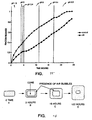
- the effervescent nature of sodium bicarbonate causes a generation of gas within the tablet and production of air bubbles. These air bubbles may result in floatation of the tablet, which may increase the gastric residence time of the tablet and result in a prolonged release of the drug in the acidic environment. In addition, this enhances the total mean gastrointestinal residence time and allows for increased biavailability. This is shown schematically in Figure 16 , where the tablet progresses over time from an intact and unswollen state to a floatable matrix which is loose and clear.
- the differential rate of matrix hardening is the driving principle in the novel system of the present invention, which is dependent on and controlled by the rate of liquid ingress to the tablet core.
- the rate of drug diffusion decreases. This phenomenon compensates for the increase in diffusion path length and decrease in the surface area of the receding core which arises from the swelling property of the polymer.
- the drug release process can be tailored for up to 24 hours. Control of the changes in core hardness and synchronization of the rubbery/swelling front and described receding phase boundaries as well as erosion of the dissolution front boundary (i.e. erosion of the tablet periphery) results in controlled drug release, preferably including zero order kinetics.
- polymer matrix hardening is also easily achievable through double salt interaction.
- This binary salt combination is also uniformly dispersed in the polymeric matrix, which through ionic interaction/complexation/molecular and/or self association, increases the relative strength and rigidity of the matrix, resulting in controlled drug release with a similar mechanism to that described above.
- Drugs such as the calcium-channel blockers Diltiazem and Verapamil and the beta-adrenergic blocker Propranolol (as the hydrochloride salts), with water solubilities of 50, 8 and 5% respectively, have been used in the present invention.
- HPMC K4M hydrophilic matrix material useful in the present invention.
- HPMC K4M is a nonionic swellable hydrophillic polymer manufactured by "The Dow Chemical Company” under the tradename “Methocel”.
- HPMC K4M is also abbreviated as HPMC K4MP, in which the "P” refers to premium cellulose ether designed for controlled release formulations.
- the "4" in the abbreviation suggests that the polymer has a nominal viscosity (2 % in water) of 4000.
- the percent of methoxyl and hydroxypropryl groups are 19 - 24 and 7-12, respectively.
- HPMC K4M is a free-flowing, off-white powder with a particle size limitation of 90% ⁇ 100 mesh screen.
- HPMC K4M is a free-flowing, off-white powder with a particle size limitation of 90% ⁇ 100 mesh screen.
- HPMC K4M is a free-flowing, off-white powder with a particle size limitation of 90% ⁇ 100 mesh
- Formulations of the present invention may include, potassium bicarbonate.
- Fig. 14 illustrates the use of some salts with diltiazem hydrochloride.
- the amount of salt to be used may easily be determined, by those skilled in the art, taking into consideration the solubility of the drug, the nature of the polymer and the required degree of matrix hardening desired.
- 100 mg of sodium bicarbonate provides suitable matrix hardening for zero order controlled release, while in the case of the same amount of drug in a different polymer such as polyethylene oxide, 50 mg of sodium bicarbonate appears to be ideal for the attainment of controlled zero order release.
- the change in pH of the dissolution media does not markedly change the pattern except for a burst effect at pH ⁇ 5.4, which is not a limiting factor considering the fact that the tablet will not be immediately exposed to pH 5.4 in the gastrointestinal tract, and instead must first pass through the acidic gastric environment.
- the resulting drug release profile is provided in Figure 15 .
- the addition of salt in the formulation is not used as a pH modifying agent. Therefore, the relative salt proportion is essentially irrelevant with respect to changes in pH.
- the formulations of the inventions are illustrated by the following examples. All ingredients are initially individually massed and simultaneously incorporated. The premix is blended in a V-blender. The resultant homogeneous powder is compressed into tablets using conventional technologies.
- Example 3 demonstrates the use of potassium bicarbonate as the incorporated salt.
- Linear retardation of drug release is observed after an initial burst phase corresponding to approximately 10% of the drug. This phenomenon has importance in the provision of a mini-loading dose prior to gradual metering of the drug which may be useful in some combinations.
- potassium bicarbonate is incorporated in a polyethylene matrix system.
- the result are seen graphically in Figure 4 . Suppression of drug release achieved while still maintaining a linear drug release. In addition, the suppression of drug release is virtually unchanged at salt concentrations beyond 50mg/tablet.
- HPMC and sodium bicarbonate are a suitable combination for the release of drugs such as propranolol.
- the presence of sodium bicarbonate results in a substantial suppression of drug release, as compared to the use of HPMC alone.
- Example 6 demonstrates the use of potassium bicarbonate as the incorporated salt with polyethylene oxide as the polymeric matrix. Linear retardation of drug release is observed upon the addition of 100mg of salt.
- Verapamil HCl in the present invention is demonstrated in Example 7 and depicted in Figure 7 . As shown, the use of 100mg of sodium bicarbonate results in a decreased rate of release of Verapamil HCl from a matrix.
- the formulations I1-I2 of Table 7 are particularly relevant in this regard.
- Example 8 demonstrates and Figure 8 illustrates that by selection of a suitable polymer for the matrix, a more controlled retardation of Verapamil hydrochloride may be effected.
- the release curve deviates from linearity toward concavity, such a profile is desirable when a slow onset of drug action is preferred.
- the concavity in release is evident only with polyethylene oxide. This is due to the sensitivity, in this combination, of the drug release profile to low salt content.
- Figure 9 is a graph of data from (Comparative) Example 9, showing the fractional release of diltiazem hydrochloride from hydrophillic matrix tablets in the absence of salt and with lactose as a salt substitute.
- the high solubility of diltiazem is the dominant factor in determining release rate.
- Example 10 As depicted in Figure 10 , compositions like those of Comparative Example 9 are modified by the addition of sodium bicarbonate. In each case, the formulations L1-L2 of Table 10 exhibit a more linear drug release rate, as compared to the control sample of Comparative Example 9. This illustrates that the presence of relatively large amounts of excpients such as lactose do not alter the principle of a drug release which is based on differential hardening rate within the matrix and in turn, results in a greater potential in formulation flexibility.
- excpients such as lactose
- Figure 11 is a graph showing the fractional release of diltiazem hydrochloride from the hydrophillic matrix tablets in accordance with Example 11 of the present invention and formulations M1-M4 of Table 11.
- the swellable, floatable monolithic tablet system when formulated with a salt such as sodium bicarbonate (100mg) exhibits a drug release profile which is similar to the commercial multilayer multitablet system of Dilacor ® XR.
- Each commercial capsule of Dilacor ® XR contains 4 three-layered tablets equivalent to 240mg of Diltiazem hydrochloride.
- Figure 12 demonstrates the influence of dissolution medium pH on the release of Diltiazem HCl. On exposure of the tablets to an increasingly basic environment, a more pronounced burst effect is observed, while still approaching a zero order drug release. Comparatively, a change in dissolution medium pH does not produce marked variation in drug release when compared to the release at pH 1.5.
- Figure 13 illustrates the influence of double salt interaction on the control of the 100% water soluble drug, matoprolol tartrate.
- the salt content is increased from 100 to 200mg in both cases, there is a progressive decrease in drug release. This is indicative of an increase in matrix hardening when higher salt contents are used in the formulation, which in turn causes a slower drug release effect.
- Example 14 as depicted in Figure 14 , demonstrates that controlled drug release may also be attained by the use of other salts. As a result, the formulation is not be restricted to sodium bicarbonate. The quantity of salt used dictates the degree of drug release suppression which approaches zero-order.
- Example 15 illustrates that by conducting one continuous test using media which simulates the gastrointestinal milieu as well as simulating the gastrointestinal transit time, the drug release from formulation Q2 maintains essentially a controlled zero-order release. This indicates that the formulation is relatively insensitive to changes in gastrointestinal pH.
Landscapes
- Health & Medical Sciences (AREA)
- Chemical & Material Sciences (AREA)
- General Health & Medical Sciences (AREA)
- Public Health (AREA)
- Pharmacology & Pharmacy (AREA)
- Epidemiology (AREA)
- Life Sciences & Earth Sciences (AREA)
- Animal Behavior & Ethology (AREA)
- Veterinary Medicine (AREA)
- Medicinal Chemistry (AREA)
- Inorganic Chemistry (AREA)
- Nutrition Science (AREA)
- Physiology (AREA)
- Medicinal Preparation (AREA)
- Pharmaceuticals Containing Other Organic And Inorganic Compounds (AREA)
- Acyclic And Carbocyclic Compounds In Medicinal Compositions (AREA)
Description
- The present invention pertains to a controlled release dosage form, based on a modified hydrophillic matrix composition.
- Controlled release pharmaceutical dosage forms have received much attention in recent years and are highly desirable for providing a constant level of pharmaceutical agent to a patient over some extended period of time. The use of single or multiple unit dosage forms as controlled drug delivery devices encompasses a wide range of technologies and includes polymeric as well as nonpolymeric excipients. These dosage forms optimize the drug input rate into the systemic circulation, improve patient compliance, minimize side effects, and maximize drug product efficacy.
- The use of controlled release products is frequently necessary for chronic drug administration, such as in the delivery of the calcium-channel blockers nifedipine and diltiazem and the beta-adrenergic blocker Propranolol in the management of angina and hypertension For delivery system design, physiochemical properties and intrinsic characteristics of the drug, such as high or low solubility, limited absorption, or presystemic metabolism, may impose specific constraints during product development.
- Advancements of extended release drug products have come about by the simultaneous convergence of many factors, including the discovery of novel polymers, formulation optimization, better understanding of physiological and pathological constraints, prohibitive cost of developing new drug entities, and the introduction of biopharmaceutics in drug product design.
- One aspect of research about controlled-release delivery systems involves designing a system which produces steady-state plasma drug levels, which is also referred to as zero-order drug release kinetics. To meet this objective, numerous design variations have been attempted, and their major controlling mechanisms include diffusion/dissolution, chemical reactions, the use of osmotic pump devices, and multiple layer tablet designs, all of which incorporate numerous manufacturing steps and many associated drug release mechanisms. The complicated processes involved in the manufacture of such ultimately contributes to increased costs to the consumer.
- One attractive design for potential zero-order drug release is the use of hydrophilic swellable matrices. Drug diffusion from the matrix is accomplished by swelling, dissolution and/or erosion. The major component of these systems is a hydrophilic polymer. In general, diffusivity is high in polymers containing flexible chains and low in crystalline polymers. With changes in morphological characteristics, the mobility of the polymer segments will change and diffusivity can be controlled. Addition of other components, such as a drug, another polymer, soluble or insoluble fillers, or solvent, can alter the intermolecular forces, free volume, glass transition temperature, and consequently, can alter the transport mechanisms. Cost is also a factor in these modified compositions. Still better controlled, time dependent drug release from these compositions is a continuing objective of research in this area, as is controlled diffusivity compositions which are more easily manufactured. Such compositions, which are more easily manufacturable, have the potential to lower cost of the dosage form.
- The present invention is a new monolithic dosage form that delivers pharmaceutically active agents in a controlled release manner, and that is easy to manufacture. This dosage form, in a form such as a monolithic tablet, may approach zero order delivery of drugs which are either of high or low solubility. This dosage form or tablet is comprised of a hydrophilic swellable matrix, in which is disposed a pharmaceutically active agent and a salt as defined in the claims. The salt, either in combination with the drug, or another salt upon reaction in an aqueous medium, causes a hardening reaction of the matrix. The rate of outward diffusion is controlled by exposing the product to an aqueous medium. This in turn causes a hardening reaction to occur in a time dependent manner from the outer boundaries towards the inner boundaries of the product; the hardened reaction product, in turn limits outward diffusion of the drug as the inward ingress of aqueous medium causes a progressive hardening from the outer boundaries of the dosage form or tablet in a direction towards the inner core there.
-
-
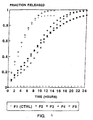
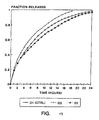
Figure 1 is a graph showing the fractional release of diltiazem hydrochloride from tablets in accordance with Example 1 of the present invention and formulations A1-A5 of Table 1. -
Figure 2 is a graph showing the fractional release of diltiazem hydrochloride from tablets in accordance with Example 2 of the present invention and formulations B1-B5 of Table 2. -
Figure 3 is a graph showing the fractional release of diltiazem hydrochloride from the tablets in accordance with Example 3 of the present invention and formulations E1-E5 of Table 3. -
Figure 4 is a graph showing the fractional release of diltiazem hydrochloride from tablets in accordance with Example 4 of the present invention and formulations F1-F5 of Table 4. -
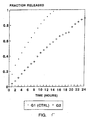
Figure 5 is a graph showing the fractional release of Propranolol HCl from tablets in accordance with Example 5 of the present invention and formulations G1-G2 of Table 5. -
Figure 6 is a graph showing the fractional release of Propranolol from tablets in accordance with Example 6 of the present invention and formulations H1-H2 of Table 6. -
Figure 7 is a graph showing the fractional release of Verapamil HCl from tablets in accordance with Example 7 of the present invention and formulations I1-I2 of Table 7. -
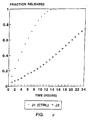
Figure 8 is a graph showing the fractional release of Verapamil HCl from tablets in accordance with Example 8 of the present invention and formulations J1-J2 of Table 8. -
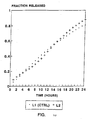
Figure 9 is a graph showing the fractional release of diltiazem hydrochloride from tablets in accordance with Example 9 of the present invention and formulations K1-K2 of Table 9. -
Figure 10 is a graph showing the fractional release of diltiazem hydrochloride from tablets in accordance with example 10 of the present invention and formulations LI-L2 of Table 10. -
Figure 11 is a graph showing the fractional release of diltiazem hydrochloride from tablets in accordance with Example 11 of the present invention and formulations M1-M4 of Table 11 -
Figure 12 is a graph showing the fractional release of diltiazem hydrochloride from tablets in accordance with Example 12 of the present invention and formulation N1 of Table 12. -
Figure 13 is a graph showing the fractional release of Metoprolol from tablets in accordance with Example 13 of the present invention and formulations O1-O3 of Table 13. -
Figure 14 is a graph showing the fractional release of diltiazem hydrochloride from tablets using salt combinations of sodium bisulfate, potassium bicarbonate, magnesium sulfate, and calcium chloride. -
Figure 15 is a graph showing the fractional release of formulation A5 of the present invention during exposure to continuously changing pH levels. -
Figure 16 is a schematic representation depicting the dissolution of the floatable monolithic matrix tablet over time. - The invention encompasses formulations for the controlled release, preferably zero order release, of bioactive material from a new monolithic system.
- These formulations are based on simple swellable hydrodynamically balanced monolithic matrix tablet in which may be incorporated a range of water-soluble (low to high) bioactive drugs and salts. Extended or zero order release is accomplished through the novel application of polymeric matrix modification, as detailed below, by incorporating a salt in a swellable matrix:
- As a tablet passes through the human digestive tract, it is subjected to pH values ranging from 1.5 to 7.4. The saliva of the mouth has a neutral pH, the stomach has a pH varying from 2.0-4.0, and the pH of the intestines carries a pH between 5.0-7.5. Therefore, it is important to consider the effects of this pH range on dissolution of a drug tablet. For a drug to approach zero-order release, it's dissolution must be independent of the pH in the surrounding environment.
- Through processes of ionic interaction/complexation/molecular and/or self association between a drug and a salt or salt/drug combinations, homogeneously dispersed in a swellable polymer such as hydroxypropylmethylcellulose (HPMC), modify the dynamics of the matrix swelling rate and erosion of the swellable polymer, in accordance with variations in an external pH environment ranging from 1.5-7.0.
- These interactions result in controlled matrix hardening. Such hardening is responsible for the control of polymer erosion/dissolution and drug release rates. By design, solvent penetrates the periphery of the tablet and a rapid initial interaction between drug and salt embedded in the polymeric matrix causes immediate hardening of the outer tablet boundary, the rate of hardening consistently decreases toward the center of the matrix core in a time-dependent manner over a long period of time (e.g. 24 hours).
- The effervescent nature of sodium bicarbonate causes a generation of gas within the tablet and production of air bubbles. These air bubbles may result in floatation of the tablet, which may increase the gastric residence time of the tablet and result in a prolonged release of the drug in the acidic environment. In addition, this enhances the total mean gastrointestinal residence time and allows for increased biavailability. This is shown schematically in
Figure 16 , where the tablet progresses over time from an intact and unswollen state to a floatable matrix which is loose and clear. - The differential rate of matrix hardening is the driving principle in the novel system of the present invention, which is dependent on and controlled by the rate of liquid ingress to the tablet core. With the simultaneous time-dependent decrease in gel layer integrity, the rate of drug diffusion decreases. This phenomenon compensates for the increase in diffusion path length and decrease in the surface area of the receding core which arises from the swelling property of the polymer. Hence, better controlled, preferably zero order, drug release is achieved. The drug release process can be tailored for up to 24 hours. Control of the changes in core hardness and synchronization of the rubbery/swelling front and described receding phase boundaries as well as erosion of the dissolution front boundary (i.e. erosion of the tablet periphery) results in controlled drug release, preferably including zero order kinetics. Optionally, polymer matrix hardening is also easily achievable through double salt interaction. This binary salt combination is also uniformly dispersed in the polymeric matrix, which through ionic interaction/complexation/molecular and/or self association, increases the relative strength and rigidity of the matrix, resulting in controlled drug release with a similar mechanism to that described above.
- Drugs such as the calcium-channel blockers Diltiazem and Verapamil and the beta-adrenergic blocker Propranolol (as the hydrochloride salts), with water solubilities of 50, 8 and 5% respectively, have been used in the present invention.
- One hydrophilic matrix material useful in the present invention is HPMC K4M. This is a nonionic swellable hydrophillic polymer manufactured by "The Dow Chemical Company" under the tradename "Methocel". HPMC K4M is also abbreviated as HPMC K4MP, in which the "P" refers to premium cellulose ether designed for controlled release formulations. The "4" in the abbreviation suggests that the polymer has a nominal viscosity (2 % in water) of 4000. The percent of methoxyl and hydroxypropryl groups are 19 - 24 and 7-12, respectively. In its physical form, HPMC K4M is a free-flowing, off-white powder with a particle size limitation of 90% < 100 mesh screen. There are other types of HPMC such as K100LVP, K15MP, K100MP, E4MP and E10MP CR with nominal viscosities of 100, 1500, 100000, 4000, and 10000 respectively.
- Formulations of the present invention may include, potassium bicarbonate.
Fig. 14 illustrates the use of some salts with diltiazem hydrochloride. - It is believed that an interaction between drug and salt forms a complex in the surrounding swellable matrix in a layered fashion because it occurs in a time-dependent manner as the solvent media for drug release penetrates the tablet inwardly.. Likewise, because the catalyst for the initiation of drug release is liquid ingress, so too is the rate of drug release controlled by the inwardly progressive hardening of the salt complex..
- The amount of salt to be used may easily be determined, by those skilled in the art, taking into consideration the solubility of the drug, the nature of the polymer and the required degree of matrix hardening desired. In case of diltiazem hydrochloride in a HPMC matrix, 100 mg of sodium bicarbonate provides suitable matrix hardening for zero order controlled release, while in the case of the same amount of drug in a different polymer such as polyethylene oxide, 50 mg of sodium bicarbonate appears to be ideal for the attainment of controlled zero order release.
- On the basis of the drug release profiles presented in
Figure 12 , the change in pH of the dissolution media, from acidic to basic, does not markedly change the pattern except for a burst effect at pH≥5.4, which is not a limiting factor considering the fact that the tablet will not be immediately exposed to pH 5.4 in the gastrointestinal tract, and instead must first pass through the acidic gastric environment. This has been confirmed by subjecting the formulation (A5) to a carefully synchronized test of continuous changing pH environment simulating the gastrointestinal tract. This has been achieved with the aid of the Bio Dis Release Rate Tester (Vankel Instruments). The resulting drug release profile is provided inFigure 15 . The addition of salt in the formulation is not used as a pH modifying agent. Therefore, the relative salt proportion is essentially irrelevant with respect to changes in pH. - The formulations of the inventions are illustrated by the following examples. All ingredients are initially individually massed and simultaneously incorporated. The premix is blended in a V-blender. The resultant homogeneous powder is compressed into tablets using conventional technologies.
-
INGREDIENTS FORMULATIONS (mg/tablet) A1 (ctrl) A2 * A3 * A4 * A5 Diltiazem HCl 100 100 100 100 100 HPMC K4M 200 200 200 200 200 Sodium bicarbonate 0 10 50 75 100 TOTAL WEIGHT OF TABLET 300 310 350 375 400 * reference example -
Medium: Potassium chloride buffer pH 1.5 Volume: 900 ml Apparatus: Rotating paddle RPM: 50 - As shown in
Figure 1 the results of this Example reflect a progressive decrease in the release of diltiazem hydrochloride with an increase in the sodium bicarbonate content within the HPMC matrix. This increase in salt content is accompanied by an increase in the linearity of the drug release profiles. In particular, formulation A5, which contains 100mg of sodium bicarbonate provides drug release which most closely approaches zero order over a 24-hour period. -
INGREDIENTS FORMULATIONS (mg/tablet) B1 (ctrl) B2 * B3 * B4 * B5 Diltiazem HCl 100 100 100 100 100 PEO 4M 200 200 200 200 200 Sodium bicarbonate 0 10 50 75 100 TOTAL WEIGHT OF TABLET 300 310 350 375 400 * reference example -
Medium: Potassium chloride buffer pH 1.5 Volume: 900 ml Apparatus: Rotating paddle RPM: 50 - This Example demonstrates, as depicted in
Figure 2 , that salt induced controlled drug release is also observed with polyethylene oxide as the polymeric matrix. This suggests that the present invention is not polymer-limited. The linearity in profiles seen at even the lowest salt concentration, 10mg. At higher concentrations (above 50mg), the profiles tend to become concave, which suggests that the level of salt required for linear drug release is lower for polyethylene oxide than for HPMC. -
INGREDIENTS FORMULATIONS (mg/tablet) E1 (ctrl) E2 * E3 * E4 * E5 Diltiazem HCl 100 100 100 100 100 HPMC K4M 200 200 200 200 200 Potassium bicarbonate 0 10 50 75 100 TOTAL WEIGHT OF TABLET 300 310 350 375 400 * reference example -
Medium: Potassium chloride buffer pH 1.5 Volume: 900 ml Apparatus: Rotating paddle RPM: 50 - As depicted in
Figure 3 , Example 3 demonstrates the use of potassium bicarbonate as the incorporated salt. Linear retardation of drug release is observed after an initial burst phase corresponding to approximately 10% of the drug. This phenomenon has importance in the provision of a mini-loading dose prior to gradual metering of the drug which may be useful in some combinations. -
INGREDIENTS FORMULATIONS (mg/tablet) F1 (ctrl) F2 * F3 * F4 * F5 Diltiazem HCl 100 100 100 100 100 PEO 4M 200 200 200 200 200 Potassium bicarbonate 0 10 50 75 100 TOTAL WEIGHT OF TABLET 300 310 350 375 400 * reference example -
Medium: Potassium chloride buffer pH 1.5 Volume: 900 ml Apparatus: Rotating paddle RPM: 50 - In this example, potassium bicarbonate is incorporated in a polyethylene matrix system. The result are seen graphically in
Figure 4 . Suppression of drug release achieved while still maintaining a linear drug release. In addition, the suppression of drug release is virtually unchanged at salt concentrations beyond 50mg/tablet. -
INGREDIENTS FORMULATIONS (mg/tablet) G1 (ctrl) G2 Propanolol HCl 100 100 HPMC K4M 200 200 Sodium bicarbonate 0 100 TOTAL WEIGHT OF TABLET 300 400 -
Medium: Potassium chloride buffer pH 1.5 Volume: 900 ml Apparatus: Rotating paddle RPM: 50 - This example, as depicted in
Figure 5 , demonstrates that HPMC and sodium bicarbonate are a suitable combination for the release of drugs such as propranolol. The presence of sodium bicarbonate results in a substantial suppression of drug release, as compared to the use of HPMC alone. -
INGREDIENTS FORMULATIONS (mg/tablet) H1 (ctrl) H2 Propanolol HCl 100 100 PEO K4M 200 200 Sodium bicarbonate 0 100 TOTAL WEIGHT OF TABLET 300 400 -
Medium: Potassium chloride buffer pH 1.5 Volume: 900 ml Apparatus: Rotating paddle RPM: 50 - As depicted in
Figure 6 , Example 6 demonstrates the use of potassium bicarbonate as the incorporated salt with polyethylene oxide as the polymeric matrix. Linear retardation of drug release is observed upon the addition of 100mg of salt. -
INGREDIENTS FORMULATIONS (mg/tablet) I1 (ctrl) I2 Verapamil HCl 100 100 HPMC 200 200 Sodium bicarbonate 0 100 TOTAL WEIGHT OF TABLET 300 400 -
Medium: Potassium chloride buffer pH 1.5 Volume: 900 ml Apparatus: Rotating paddle RPM: 50 - The use of Verapamil HCl in the present invention is demonstrated in Example 7 and depicted in
Figure 7 . As shown, the use of 100mg of sodium bicarbonate results in a decreased rate of release of Verapamil HCl from a matrix. The formulations I1-I2 of Table 7 are particularly relevant in this regard. -
INGREDIENTS FORMULATIONS (mg/tablet) J1 (ctrl) J2 Verapamil HCl 100 100 PEO 4M 200 200 Sodium bicarbonate 0 100 TOTAL WEIGHT OF TABLET 300 400 -
Medium: Potassium chloride buffer pH 1.5 Volume: 900 ml Apparatus: Rotating paddle RPM: 50 - Example 8 demonstrates and
Figure 8 illustrates that by selection of a suitable polymer for the matrix, a more controlled retardation of Verapamil hydrochloride may be effected. Although the release curve deviates from linearity toward concavity, such a profile is desirable when a slow onset of drug action is preferred. The concavity in release is evident only with polyethylene oxide. This is due to the sensitivity, in this combination, of the drug release profile to low salt content. -
INGREDIENTS FORMULATIONS (mg/tablet) K1 (ctrl) K2 Diltiazem HCl 100 100 HPMC K4M 200 200 Lactose 0 150 TOTAL WEIGHT OF TABLET 300 450 -
Medium: Potassium chloride buffer pH 1.5 Volume: 900 ml Apparatus: Rotating paddle RPM: 50 -
Figure 9 is a graph of data from (Comparative) Example 9, showing the fractional release of diltiazem hydrochloride from hydrophillic matrix tablets in the absence of salt and with lactose as a salt substitute. The addition of 150mg of lactose, as compared to the salt addition of other examples, resulted in no significant change in the release pattern. In this case the high solubility of diltiazem is the dominant factor in determining release rate. -
INGREDIENTS FORMULATIONS (mg/tablet) L1 (ctrl) L2 Diltiazem HCl 100 100 HPMC K4M 200 200 Sodium bicarbonate 100 100 Lactose 0 150 TOTAL WEIGHT OF TABLET 400 550 -
Medium: Potassium chloride buffer pH 1.5 Volume: 900 ml Apparatus: Rotating paddle RPM: 50 - In Example 10, as depicted in
Figure 10 , compositions like those of Comparative Example 9 are modified by the addition of sodium bicarbonate. In each case, the formulations L1-L2 of Table 10 exhibit a more linear drug release rate, as compared to the control sample of Comparative Example 9. This illustrates that the presence of relatively large amounts of excpients such as lactose do not alter the principle of a drug release which is based on differential hardening rate within the matrix and in turn, results in a greater potential in formulation flexibility. -
INGREDIENTS FORMULATIONS (mg/tablet) M1 (ctrl) M2 M3 ** Dilacor XR® M4 * Diltiazem HCl 240 240 240 240 HPMC K4M 200 200 250 n/a Sodium bicarbonate 0 100 100 n/a TOTAL WEIGHT OF TABLET 300 310 350 936 * Commercial multitablet, multilayer preparation
** reference example -
Medium: Potassium chloride buffer pH 1.5 Volume: 900 ml Apparatus: Rotating paddle RPM: 50 -
Figure 11 is a graph showing the fractional release of diltiazem hydrochloride from the hydrophillic matrix tablets in accordance with Example 11 of the present invention and formulations M1-M4 of Table 11. The swellable, floatable monolithic tablet system, when formulated with a salt such as sodium bicarbonate (100mg) exhibits a drug release profile which is similar to the commercial multilayer multitablet system of Dilacor® XR. Each commercial capsule of Dilacor® XR contains 4 three-layered tablets equivalent to 240mg of Diltiazem hydrochloride. -
INGREDIENTS FORMULATIONS (mg/tablet) N1 Diltiazem HCl 100 HPMC K4M 200 Sodium bicarbonate 100 TOTAL WEIGHT OF TABLET 400 -
Medium: Potassium chloride buffer pH 1.5, Potassium phosphate buffers pH 5.4, 6, 6.4, and 6.8. Volume: 900 ml Apparatus: Rotating paddle RPM: 50 -
Figure 12 demonstrates the influence of dissolution medium pH on the release of Diltiazem HCl. On exposure of the tablets to an increasingly basic environment, a more pronounced burst effect is observed, while still approaching a zero order drug release. Comparatively, a change in dissolution medium pH does not produce marked variation in drug release when compared to the release at pH 1.5. -
INGREDIENTS FORMULATIONS (mg/tablet) O1 (ctrl) O2 O3 * Metoprolol Tartrate 100 100 100 HPMC K4M 200 200 200 Sodium bicarbonate - 100 200 Calcium chloride - 100 200 TOTAL WEIGHT OF TABLET 300 500 700 * reference example -
Medium: Deionized water pH 5.5. Volume: 900 ml Apparatus: Rotating paddle RPM: 50 -
Figure 13 illustrates the influence of double salt interaction on the control of the 100% water soluble drug, matoprolol tartrate. As the salt content is increased from 100 to 200mg in both cases, there is a progressive decrease in drug release. This is indicative of an increase in matrix hardening when higher salt contents are used in the formulation, which in turn causes a slower drug release effect. -
INGREDIENTS FORMULATIONS (mg/tablet) P2 Diltiazem HCl 100 HPMC K4M 200 Sodium bisulfate 0 Potassium bicarbonate 100 Magnesium chloride 0 Calcium chloride 0 TOTAL WEIGHT OF TABLET 400 -
Medium: Potassium chloride buffer pH 1.5 Volume: 900 ml Apparatus: Rotating paddle RPM: 50 - Example 14, as depicted in
Figure 14 , demonstrates that controlled drug release may also be attained by the use of other salts. As a result, the formulation is not be restricted to sodium bicarbonate. The quantity of salt used dictates the degree of drug release suppression which approaches zero-order. -
INGREDIENTS FORMULATIONS (mg/tablet) Q1 (ctrl) Q2 Diltiazem HCl 100 100 HPMC K4M 200 200 Sodium bicarbonate - 100 TOTAL WEIGHT OF TABLET 300 400 - Medium:
- Row 1 - Potassium chloride buffer pH 1.5 (6 vessels)
- Row 2 - Potassium chloride buffer pH 3 (6 vessels)
- Row 3 - Potassium phosphate buffer pH 5.4 (6 vessels)
- Row 4 - Potassium phosphate buffer pH 6 (6 vessels)
- Row 5 - Potassium phosphate buffer pH 6.4 (6 vessels)
- Row 6 - Potassium phosphate buffer pH 6.8 (6 vessels)
- Duration spent by tablet in each row:
- Row 1 - 4 hours
- Row 2 - 0.5 hours
- Row 3 - 0.5 hours
- Row 4 - 6 hours
- Row 5 - 6 hours
- Row 6 - 7 hours
- Total duration of test: 24 hours
- Volume of medium in each vessel: 220 ml
- Apparatus: Bio Dis Release Rate Tester (Vankel Instruments)
- Dips per minute (dpm): 10
- Example 15, as depicted in
Figure 15 , illustrates that by conducting one continuous test using media which simulates the gastrointestinal milieu as well as simulating the gastrointestinal transit time, the drug release from formulation Q2 maintains essentially a controlled zero-order release. This indicates that the formulation is relatively insensitive to changes in gastrointestinal pH.
Claims (6)
- A monolithic controlled release drug delivery tablet comprising:a hydrophilic swellable matrix, wherein said matrix is hydroxypropylmethylcellulose or polyethylene oxide; in which is disposeda pharmaceutically active agent,a salt homogeneously dispersed in said hydroxypropylmethylcellulose or polyethylene oxide at a concentration at an amount of 50% by weight of hydroxypropylmethylcellulose or polyethylene oxide; wherein said salt is selected from the group consisting of sodium bicarbonate and potassium bicarbonate.
- A monolithic controlled release drug delivery tablet as recited in claim 1, wherein said salt, either alone or in combination with said pharmaceutically active agent, upon reaction in an aqueous medium, forms hardened area within the matrix, said hardened area limiting the outward diffusion of said pharmaceutically active agent.
- A monolithic controlled release drug delivery tablet as recited in claim 1 wherein said hydrophilic swellable matrix is hydroxypropylmethylcellulose.
- A monolithic controlled release drug delivery tablet as recited in claim 1, wherein said pharmaceutically active agent is diltiazem, propranolol, or verapamil.
- A monolithic controlled release drug delivery tablet as recited in claim 1 wherein said salt is sodium bicarbonate.
- A monolithic controlled release drug delivery tablet as recited in claim 1 wherein the dissolution of the drug is independent of the pH in the surrounding environment.
Applications Claiming Priority (3)
| Application Number | Priority Date | Filing Date | Title |
|---|---|---|---|
| US37096 | 1998-03-09 | ||
| US09/037,096 US6090411A (en) | 1998-03-09 | 1998-03-09 | Monolithic tablet for controlled drug release |
| PCT/US1999/004508 WO1999045887A2 (en) | 1998-03-09 | 1999-03-02 | Monolithic tablet for controlled drug release |
Publications (3)
| Publication Number | Publication Date |
|---|---|
| EP1061906A1 EP1061906A1 (en) | 2000-12-27 |
| EP1061906A4 EP1061906A4 (en) | 2009-07-08 |
| EP1061906B1 true EP1061906B1 (en) | 2014-01-15 |
Family
ID=21892431
Family Applications (1)
| Application Number | Title | Priority Date | Filing Date |
|---|---|---|---|
| EP99909726.4A Expired - Lifetime EP1061906B1 (en) | 1998-03-09 | 1999-03-02 | Monolithic tablet for controlled drug release |
Country Status (9)
| Country | Link |
|---|---|
| US (1) | US6090411A (en) |
| EP (1) | EP1061906B1 (en) |
| JP (1) | JP2003526598A (en) |
| AU (1) | AU2886799A (en) |
| CA (1) | CA2323102C (en) |
| DK (1) | DK1061906T3 (en) |
| ES (1) | ES2457501T3 (en) |
| PT (1) | PT1061906E (en) |
| WO (1) | WO1999045887A2 (en) |
Families Citing this family (90)
| Publication number | Priority date | Publication date | Assignee | Title |
|---|---|---|---|---|
| US6878386B1 (en) | 1999-04-13 | 2005-04-12 | Beecham Pharmaceuticals (Pte) Limited | Method of treating a bacterial infection comprising amoxycillin and potassium clavulanate |
| US7250176B1 (en) | 1999-04-13 | 2007-07-31 | Beecham Pharmaceuticals (Pte) Limited | Method of treating a bacterial infection |
| US6733780B1 (en) | 1999-10-19 | 2004-05-11 | Genzyme Corporation | Direct compression polymer tablet core |
| DE10014588A1 (en) | 2000-03-27 | 2001-10-04 | Basf Ag | Sustained-release oral dosage form that floats in gastric fluid includes a blend of polyvinyl acetate and polyvinylpyrrolidone |
| US6488962B1 (en) * | 2000-06-20 | 2002-12-03 | Depomed, Inc. | Tablet shapes to enhance gastric retention of swellable controlled-release oral dosage forms |
| US6767899B1 (en) * | 2000-08-29 | 2004-07-27 | Leiner Health Services Corp. | Composition and method for treatment of conditions having an inflammatory component |
| PL368306A1 (en) * | 2001-08-29 | 2005-03-21 | Ranbaxy Laboratories Limited | Controlled release formulation of clarithromycin or tinidazol |
| US20070098784A1 (en) | 2001-09-28 | 2007-05-03 | Nutraceutix, Inc. | Delivery system for biological component |
| CA2461708C (en) * | 2001-09-28 | 2012-08-07 | Nutraceutix, Inc. | Delivery system for biological component |
| US6723340B2 (en) | 2001-10-25 | 2004-04-20 | Depomed, Inc. | Optimal polymer mixtures for gastric retentive tablets |
| AU2002366638A1 (en) * | 2001-12-06 | 2003-06-23 | Scolr Pharma, Inc. | Isoflavone composition for oral delivery |
| CA2481091A1 (en) * | 2002-04-05 | 2003-10-23 | Penwest Pharmaceuticals Co. | Sustained release metoprolol formulations |
| US7776314B2 (en) | 2002-06-17 | 2010-08-17 | Grunenthal Gmbh | Abuse-proofed dosage system |
| US20040052844A1 (en) * | 2002-09-16 | 2004-03-18 | Fang-Hsiung Hsiao | Time-controlled, sustained release, pharmaceutical composition containing water-soluble resins |
| CL2003002653A1 (en) * | 2002-12-18 | 2005-04-22 | Wyeth Corp | PHARMACEUTICAL COMPOSITION THAT INCLUDES (A) AN NON-STEROID ANTI-INFLAMMATORY (NSAID), PREFERREDLY IBUPROFEN, (B) A DECONGESTIONANT, PREFERENTIALLY PSEUDOEFEDRINE AND (C) AN ANTIHISTAMINIC, PREFERENTLY CHLORINE; METHOD FOR YOUR PREPARATION |
| US20040253311A1 (en) * | 2002-12-18 | 2004-12-16 | Roger Berlin | Multi-layer tablet comprising non-steroidal anti-inflammatory drugs, decongestants and non-sedating antihist amines |
| DE10336400A1 (en) | 2003-08-06 | 2005-03-24 | Grünenthal GmbH | Anti-abuse dosage form |
| US20070048228A1 (en) | 2003-08-06 | 2007-03-01 | Elisabeth Arkenau-Maric | Abuse-proofed dosage form |
| DE102005005446A1 (en) | 2005-02-04 | 2006-08-10 | Grünenthal GmbH | Break-resistant dosage forms with sustained release |
| DE10361596A1 (en) | 2003-12-24 | 2005-09-29 | Grünenthal GmbH | Process for producing an anti-abuse dosage form |
| US20050214388A1 (en) * | 2004-02-18 | 2005-09-29 | Gorham Thomas R | Multivitamin formulations containing controlled-release magnesium |
| US20050220875A1 (en) * | 2004-03-31 | 2005-10-06 | Agency For Science, Technology And Research | Sustained-release tablet formulation |
| DE102004032049A1 (en) | 2004-07-01 | 2006-01-19 | Grünenthal GmbH | Anti-abuse, oral dosage form |
| US8779175B2 (en) | 2004-10-25 | 2014-07-15 | Synthonics, Inc. | Coordination complexes, pharmaceutical solutions comprising coordination complexes, and methods of treating patients |
| US7799937B2 (en) | 2004-10-25 | 2010-09-21 | Synthonics, Inc. | Metal coordinated compositions |
| US20060141054A1 (en) | 2004-10-25 | 2006-06-29 | Thomas Piccariello | Metal coordinated compositions |
| US7985418B2 (en) | 2004-11-01 | 2011-07-26 | Genzyme Corporation | Aliphatic amine polymer salts for tableting |
| DE102005005449A1 (en) | 2005-02-04 | 2006-08-10 | Grünenthal GmbH | Process for producing an anti-abuse dosage form |
| ITBO20050123A1 (en) * | 2005-03-07 | 2005-06-06 | Alfa Wassermann Spa | GASTRORESISTIC PHARMACEUTICAL FORMULATIONS CONTAINING RIFAXIMINA |
| DE102005011029A1 (en) * | 2005-03-08 | 2006-09-14 | Maria Clementine Martin Klosterfrau Vertriebsgesellschaft Mbh | Composition for peroral application with controlled release of active substances |
| CN101257894A (en) * | 2005-07-07 | 2008-09-03 | 法纳姆公司 | Sustained-release pharmaceutical composition of highly water-soluble drug |
| BRPI0615410A2 (en) * | 2005-08-30 | 2013-02-13 | Nicholas Piramal India Ltd | metformin prolonged release pharmaceutical composition and process for producing metformin |
| WO2007027566A2 (en) * | 2005-09-02 | 2007-03-08 | Genzyme Corporation | Method for removing phosphate and polymer used therefore |
| CA2622693C (en) | 2005-09-15 | 2015-05-05 | Genzyme Corporation | Sachet formulation for amine polymers |
| US20070092565A1 (en) * | 2005-10-25 | 2007-04-26 | Pharmascience Inc. | Gastric retention drug delivery system |
| US20090317355A1 (en) * | 2006-01-21 | 2009-12-24 | Abbott Gmbh & Co. Kg, | Abuse resistant melt extruded formulation having reduced alcohol interaction |
| US20090022798A1 (en) * | 2007-07-20 | 2009-01-22 | Abbott Gmbh & Co. Kg | Formulations of nonopioid and confined opioid analgesics |
| US8309104B2 (en) * | 2006-03-02 | 2012-11-13 | Watson Pharmaceuticals, Inc. | Oral controlled release formulation for sedative and hypnotic agents |
| WO2007130463A2 (en) * | 2006-05-05 | 2007-11-15 | Genzyme Corporation | Amine condensation polymers as phosphate sequestrants |
| CN104161736A (en) | 2006-06-01 | 2014-11-26 | Msd消费保健品公司 | Sustained release pharmaceutical dosage form containing phenylephrine |
| WO2008011047A2 (en) * | 2006-07-18 | 2008-01-24 | Genzyme Corporation | Amine dendrimers |
| EP2066293A2 (en) | 2006-09-29 | 2009-06-10 | Genzyme Corporation | Amide dendrimer compositions |
| US8163799B2 (en) | 2006-12-14 | 2012-04-24 | Genzyme Corporation | Amido-amine polymer compositions |
| EP2114376A1 (en) * | 2007-02-23 | 2009-11-11 | Genzyme Corporation | Amine polymer compositions |
| JP2010520285A (en) * | 2007-03-08 | 2010-06-10 | ゲンズイメ コーポレーション | Sulfone polymer composition |
| EP2152277A1 (en) * | 2007-04-27 | 2010-02-17 | Genzyme Corporation | Amido-amine dendrimer compositions |
| US8974825B2 (en) * | 2007-07-06 | 2015-03-10 | Lupin Limited | Pharmaceutical compositions for gastrointestinal drug delivery |
| EP2217215A1 (en) * | 2007-12-14 | 2010-08-18 | Genzyme Corporation | Coated pharmaceutical compositions |
| CA2713128C (en) | 2008-01-25 | 2016-04-05 | Gruenenthal Gmbh | Pharmaceutical dosage form |
| JP2011511782A (en) | 2008-02-12 | 2011-04-14 | アボット・ラボラトリーズ | Extended release hydrocodone acetaminophen and related methods and uses |
| BRPI0912014A2 (en) | 2008-05-09 | 2019-03-06 | Grünenthal GmbH | A process for preparing an intermediate powder formulation and a final solid dosage form using a spray freeze step |
| US20110142952A1 (en) * | 2008-06-20 | 2011-06-16 | Harris David J | Pharmaceutical Compositions |
| CA2758976C (en) | 2009-04-20 | 2015-02-03 | Alain Baron | Chemosensory receptor ligand-based therapies |
| US9901551B2 (en) | 2009-04-20 | 2018-02-27 | Ambra Bioscience Llc | Chemosensory receptor ligand-based therapies |
| US8828953B2 (en) * | 2009-04-20 | 2014-09-09 | NaZura BioHealth, Inc. | Chemosensory receptor ligand-based therapies |
| RU2015138422A (en) | 2009-07-22 | 2018-12-25 | Грюненталь Гмбх | STABLE DURING OXIDATION, STRONG-BREAKED DOSAGE FORM |
| CN102573805A (en) | 2009-07-22 | 2012-07-11 | 格吕伦塔尔有限公司 | Hot-melt extruded controlled release dosage form |
| US8241680B2 (en) | 2010-06-30 | 2012-08-14 | Rock Creek Pharmaceuticals, Inc. | Nutraceutical product containing anatabine and yerba maté |
| BR112013005234A2 (en) | 2010-09-02 | 2016-05-03 | Gruenenthal Gmbh | Tamper resistant dosage form comprising an anionic polymer. |
| NZ607392A (en) * | 2010-09-02 | 2015-03-27 | Gruenenthal Chemie | Tamper resistant dosage form comprising inorganic salt |
| EP2630491A4 (en) | 2010-10-19 | 2014-08-27 | Elcelyx Therapeutics Inc | Chemosensory receptor ligand-based therapies |
| PT2661266T (en) | 2011-01-07 | 2020-11-30 | Anji Pharma Us Llc | Chemosensory receptor ligand-based therapies |
| US20120244218A1 (en) | 2011-03-25 | 2012-09-27 | Durkee Shane E | Calcium supplement |
| US10702485B2 (en) | 2011-07-09 | 2020-07-07 | Syntrix Biosystems Inc. | Compositions and methods for overcoming resistance to tramadol |
| PE20141638A1 (en) | 2011-07-29 | 2014-11-22 | Gruenenthal Chemie | HANDLE PROOF TABLET PROVIDING IMMEDIATE DRUG RELEASE |
| RS56527B1 (en) | 2011-07-29 | 2018-02-28 | Gruenenthal Gmbh | Tamper-resistant tablet providing immediate drug release |
| CN108578405A (en) | 2011-08-29 | 2018-09-28 | 菲利普莫里斯产品有限公司 | Product for anti-inflammatory support |
| MX356421B (en) | 2012-02-28 | 2018-05-29 | Gruenenthal Gmbh | Tamper-resistant dosage form comprising pharmacologically active compound and anionic polymer. |
| DK2838512T3 (en) | 2012-04-18 | 2018-11-19 | Gruenenthal Gmbh | MANIPULATED AND DOSAGE DUMPED PHARMACEUTICAL DOSAGE FORM |
| WO2013158928A2 (en) | 2012-04-18 | 2013-10-24 | Elcelyx Therapeutics, Inc. | Chemosensory receptor ligand-based therapies |
| US10064945B2 (en) | 2012-05-11 | 2018-09-04 | Gruenenthal Gmbh | Thermoformed, tamper-resistant pharmaceutical dosage form containing zinc |
| CN105530935A (en) | 2013-03-14 | 2016-04-27 | 红山生物医药有限公司 | Antiemetic Sustained Release Solid Dosage Form |
| CA2913558C (en) | 2013-05-24 | 2021-06-29 | Rhodes Technologies | Opioid ketal compounds and uses thereof |
| AR096439A1 (en) | 2013-05-29 | 2015-12-30 | Gruenenthal Gmbh | DOSAGE METHOD RESISTING TO INDEED USE CONTAINING ONE OR MORE PARTICLES |
| JP6445537B2 (en) | 2013-05-29 | 2018-12-26 | グリュネンタール・ゲゼルシャフト・ミト・ベシュレンクテル・ハフツング | Tamper-resistant dosage forms containing one or more particles |
| DE102013009114A1 (en) | 2013-05-29 | 2014-12-04 | Franz Gerstheimer | Pharmaceutical composition to overcome metabolic problems |
| US10624862B2 (en) | 2013-07-12 | 2020-04-21 | Grünenthal GmbH | Tamper-resistant dosage form containing ethylene-vinyl acetate polymer |
| AU2014356581C1 (en) | 2013-11-26 | 2020-05-28 | Grunenthal Gmbh | Preparation of a powdery pharmaceutical composition by means of cryo-milling |
| BR112016020877B1 (en) * | 2014-03-11 | 2022-11-29 | Redhill Biopharma Ltd | USE OF ONDANSETRON, USE OF A CORE COMPRISING A NONIONIC POLYMER MATRIX AND COMPRESSED |
| MX2016014738A (en) | 2014-05-12 | 2017-03-06 | Gruenenthal Gmbh | Tamper resistant immediate release capsule formulation comprising tapentadol. |
| MX2016015417A (en) | 2014-05-26 | 2017-02-22 | Gruenenthal Gmbh | Multiparticles safeguarded against ethanolic dose-dumping. |
| US9617230B2 (en) | 2014-12-22 | 2017-04-11 | Farmington Pharma Development | Creatine prodrugs, compositions and methods of use thereof |
| JP2018517676A (en) | 2015-04-24 | 2018-07-05 | グリュネンタール・ゲゼルシャフト・ミト・ベシュレンクテル・ハフツング | Anti-modification formulation with immediate release and resistance to solvent extraction |
| AU2016319203A1 (en) | 2015-09-10 | 2018-02-22 | Grünenthal GmbH | Protecting oral overdose with abuse deterrent immediate release formulations |
| EP3675842A4 (en) | 2017-08-31 | 2021-05-19 | Purdue Pharma L.P. | DOSAGE FORMS |
| IL274701B2 (en) | 2017-12-01 | 2024-07-01 | Ultragenyx Pharmaceutical Inc | Creatine prodrugs, compositions and methods of use thereof |
| AU2019224127B2 (en) | 2018-02-23 | 2021-12-09 | Rhodes Technologies | Novel opioid compounds and uses thereof |
| PL3898607T3 (en) | 2018-12-17 | 2024-03-18 | Philip Morris Products S.A. | 3-(1,2,3,6-tetrahydropyridin-2-yl)pyridine glutarate or a pharmaceutically acceptable solvate thereof |
| US11000488B2 (en) | 2019-03-22 | 2021-05-11 | Syntrix Biosystems Inc. | Treating pain using desmetramadol |
| US20200375511A1 (en) * | 2019-05-29 | 2020-12-03 | Senseonics, Incorporated | Tailored drug delivery vehicles for in vivo protection of analyte sensing compounds |
Family Cites Families (21)
| Publication number | Priority date | Publication date | Assignee | Title |
|---|---|---|---|---|
| US3954959A (en) * | 1973-03-28 | 1976-05-04 | A/S Alfred Benzon | Oral drug preparations |
| GB1468172A (en) * | 1973-03-28 | 1977-03-23 | Benzon As Alfred | Oral drug preparations |
| US4264573A (en) * | 1979-05-21 | 1981-04-28 | Rowell Laboratories, Inc. | Pharmaceutical formulation for slow release via controlled surface erosion |
| PH18946A (en) * | 1983-04-21 | 1985-11-14 | Elan Corp Plc | Controlled absorption pharmaceutical composition |
| US5002776A (en) * | 1983-12-22 | 1991-03-26 | Elan Corporation, Plc | Controlled absorption diltiazem formulations |
| EP0205336B1 (en) * | 1985-06-11 | 1991-09-11 | Teijin Limited | Oral sustained release pharmaceutical preparation |
| US4755180A (en) * | 1986-06-16 | 1988-07-05 | Alza Corporation | Dosage form comprising solubility regulating member |
| GB8616669D0 (en) * | 1986-07-09 | 1986-08-13 | Merk Sharpe & Dohme Ltd | Pharmaceutical compositions |
| IE60311B1 (en) * | 1987-09-24 | 1994-06-29 | American Home Prod | Sustained release etodolac |
| US4946686A (en) * | 1987-09-24 | 1990-08-07 | Merck & Co., Inc. | Solubility modulated drug delivery system |
| US5120548A (en) * | 1989-11-07 | 1992-06-09 | Merck & Co., Inc. | Swelling modulated polymeric drug delivery device |
| US5288505A (en) * | 1991-06-26 | 1994-02-22 | Galephar P.R., Inc., Ltd. | Extended release form of diltiazem |
| WO1993007858A1 (en) * | 1991-10-16 | 1993-04-29 | Arto Olavi Urtti | Peroral drug delivery system |
| SE9202250D0 (en) * | 1992-07-29 | 1992-07-29 | Gacell Lab Ab | CONTROLLED RELEASE MORPHINE PREPARATION |
| US5376384A (en) * | 1992-12-23 | 1994-12-27 | Kinaform Technology, Inc. | Delayed, sustained-release pharmaceutical preparation |
| US5419917A (en) * | 1994-02-14 | 1995-05-30 | Andrx Pharmaceuticals, Inc. | Controlled release hydrogel formulation |
| DE4406424A1 (en) * | 1994-02-28 | 1995-08-31 | Bayer Ag | Expandable dosage forms |
| US5603955A (en) * | 1994-07-18 | 1997-02-18 | University Of Cincinnati | Enhanced loading of solutes into polymer gels |
| MY113429A (en) * | 1995-02-28 | 2002-02-28 | Univ Temple | Controlled release tablet containing swellable polyethylene oxide |
| US5560928A (en) * | 1995-06-23 | 1996-10-01 | Defelice; Stephen L. | Nutritional and/or dietary composition and method of using the same |
| US5830503A (en) * | 1996-06-21 | 1998-11-03 | Andrx Pharmaceuticals, Inc. | Enteric coated diltiazem once-a-day formulation |
-
1998
- 1998-03-09 US US09/037,096 patent/US6090411A/en not_active Expired - Lifetime
-
1999
- 1999-03-02 WO PCT/US1999/004508 patent/WO1999045887A2/en not_active Ceased
- 1999-03-02 JP JP2000535303A patent/JP2003526598A/en active Pending
- 1999-03-02 ES ES99909726.4T patent/ES2457501T3/en not_active Expired - Lifetime
- 1999-03-02 EP EP99909726.4A patent/EP1061906B1/en not_active Expired - Lifetime
- 1999-03-02 DK DK99909726.4T patent/DK1061906T3/en active
- 1999-03-02 CA CA2323102A patent/CA2323102C/en not_active Expired - Lifetime
- 1999-03-02 AU AU28867/99A patent/AU2886799A/en not_active Abandoned
- 1999-03-02 PT PT99909726T patent/PT1061906E/en unknown
Non-Patent Citations (2)
| Title |
|---|
| DURIG T ET AL: "Guar-based monolithic matrix systems: effect of ionizable and non-ionizable substances and excipients on gel dynamics and release kinetics", JOURNAL OF CONTROLLED RELEASE, ELSEVIER, AMSTERDAM, NL, vol. 80, no. 1-3, 23 April 2002 (2002-04-23), pages 45 - 56, XP004348623, ISSN: 0168-3659, DOI: 10.1016/S0168-3659(01)00546-6 * |
| PILLAY V ET AL: "ELECTROLYTE-INDUCED COMPOSITIONAL HETEROGENEITY: A NOVEL APPROACH FOR RATE-CONTROLLED ORAL DRUG DELIVERY", JOURNAL OF PHARMACEUTICAL SCIENCES, AMERICAN PHARMACEUTICAL ASSOCIATION, WASHINGTON, US, vol. 88, no. 11, 1 November 1999 (1999-11-01), pages 1140 - 1148, XP000853396, ISSN: 0022-3549, DOI: 10.1021/JS9901054 * |
Also Published As
| Publication number | Publication date |
|---|---|
| EP1061906A1 (en) | 2000-12-27 |
| WO1999045887A3 (en) | 2008-03-06 |
| JP2003526598A (en) | 2003-09-09 |
| CA2323102C (en) | 2010-04-27 |
| PT1061906E (en) | 2014-04-14 |
| EP1061906A4 (en) | 2009-07-08 |
| WO1999045887A2 (en) | 1999-09-16 |
| US6090411A (en) | 2000-07-18 |
| DK1061906T3 (en) | 2014-03-24 |
| ES2457501T3 (en) | 2014-04-28 |
| AU2886799A (en) | 1999-09-27 |
| CA2323102A1 (en) | 1999-09-16 |
Similar Documents
| Publication | Publication Date | Title |
|---|---|---|
| US6090411A (en) | Monolithic tablet for controlled drug release | |
| JP3954117B2 (en) | Drugs containing tramadol salts that gradually release active substances | |
| US5945125A (en) | Controlled release tablet | |
| US5399362A (en) | Once-a-day metoprolol oral dosage form | |
| EP0730444B1 (en) | Sustained release formulations for 24 hour release of metoprolol | |
| KR100858848B1 (en) | Metformin sustained-release tablet | |
| AU613663B2 (en) | Sustained release etodolac | |
| EP0776660A2 (en) | Long-lasting release nifedipine preparation | |
| AU2003261298A1 (en) | Sustained release formulations of metformin | |
| NZ220875A (en) | A sustained release pharmaceutical composition in oral dosage form comprising a core matrix, a medicament and a coating layer | |
| PL194505B1 (en) | Core tablet for controlled release of gliclazide after oral administration | |
| EP1513504A1 (en) | Sustained release oral dosage forms of gabapentin | |
| MXPA02006335A (en) | Hydrogeldriven layered drug dosage form. | |
| EP2326312A1 (en) | Paliperidone composition comprising solid matrix particles | |
| KR20200082006A (en) | Extended release formulation containing tofacitinib or pharmaceutically acceptable salts thereof as an active ingredient and the preparation method for the same | |
| EP3753554B1 (en) | Extended-release pharmaceutical composition containing lacosamide | |
| WO2004096182A1 (en) | Extended release matrix tablets of carvedilol | |
| EP2386302A1 (en) | A controlled release pharmaceutical dosage form of trimetazidine and processes for the preparation thereof | |
| BG107055A (en) | Orally administered controlled delivery system for once daily administration of ciprofloxacin | |
| EP4659745A1 (en) | Brivaracetam double-release three-layer tablet and preparation method therefor | |
| KR100912680B1 (en) | Controlled release formulation | |
| KR20160105662A (en) | Pharmaceutical composition comprising eperison and pelubiprofen | |
| JPH04360826A (en) | Controlled release pharmaceutical preparation | |
| MXPA00008893A (en) | Monolithic tablet for controlled drug release | |
| EP2848244A1 (en) | Extended release tablet formulations of quetiapine |
Legal Events
| Date | Code | Title | Description |
|---|---|---|---|
| PUAI | Public reference made under article 153(3) epc to a published international application that has entered the european phase |
Free format text: ORIGINAL CODE: 0009012 |
|
| 17P | Request for examination filed |
Effective date: 20001005 |
|
| AK | Designated contracting states |
Kind code of ref document: A1 Designated state(s): AT BE CH CY DE DK ES FI FR GB GR IE IT LI LU MC NL PT SE |
|
| RIN1 | Information on inventor provided before grant (corrected) |
Inventor name: FASSIHI, REZA Inventor name: PILLAY, VINESS |
|
| D17D | Deferred search report published (deleted) | ||
| RIC1 | Information provided on ipc code assigned before grant |
Ipc: A61K 47/38 20060101ALI20090312BHEP Ipc: A61K 47/34 20060101ALI20090312BHEP Ipc: A61K 47/02 20060101ALI20090312BHEP Ipc: A61K 9/00 20060101AFI20090312BHEP |
|
| A4 | Supplementary search report drawn up and despatched |
Effective date: 20090610 |
|
| 17Q | First examination report despatched |
Effective date: 20090729 |
|
| REG | Reference to a national code |
Ref country code: DE Ref legal event code: R079 Ref document number: 69944980 Country of ref document: DE Free format text: PREVIOUS MAIN CLASS: A61K0031000000 Ipc: A61K0009200000 |
|
| GRAP | Despatch of communication of intention to grant a patent |
Free format text: ORIGINAL CODE: EPIDOSNIGR1 |
|
| RIC1 | Information provided on ipc code assigned before grant |
Ipc: A61K 47/38 20060101ALI20130204BHEP Ipc: A61K 47/02 20060101ALI20130204BHEP Ipc: A61K 9/20 20060101AFI20130204BHEP Ipc: A61K 9/00 20060101ALI20130204BHEP Ipc: A61K 47/34 20060101ALI20130204BHEP |
|
| GRAS | Grant fee paid |
Free format text: ORIGINAL CODE: EPIDOSNIGR3 |
|
| GRAP | Despatch of communication of intention to grant a patent |
Free format text: ORIGINAL CODE: EPIDOSNIGR1 |
|
| INTG | Intention to grant announced |
Effective date: 20131011 |
|
| GRAP | Despatch of communication of intention to grant a patent |
Free format text: ORIGINAL CODE: EPIDOSNIGR1 |
|
| GRAA | (expected) grant |
Free format text: ORIGINAL CODE: 0009210 |
|
| INTG | Intention to grant announced |
Effective date: 20131122 |
|
| AK | Designated contracting states |
Kind code of ref document: B1 Designated state(s): AT BE CH CY DE DK ES FI FR GB GR IE IT LI LU MC NL PT SE |
|
| REG | Reference to a national code |
Ref country code: GB Ref legal event code: FG4D Ref country code: CH Ref legal event code: EP |
|
| REG | Reference to a national code |
Ref country code: AT Ref legal event code: REF Ref document number: 649457 Country of ref document: AT Kind code of ref document: T Effective date: 20140215 |
|
| REG | Reference to a national code |
Ref country code: IE Ref legal event code: FG4D |
|
| REG | Reference to a national code |
Ref country code: DE Ref legal event code: R096 Ref document number: 69944980 Country of ref document: DE Effective date: 20140227 |
|
| REG | Reference to a national code |
Ref country code: DK Ref legal event code: T3 Effective date: 20140318 |
|
| REG | Reference to a national code |
Ref country code: PT Ref legal event code: SC4A Free format text: AVAILABILITY OF NATIONAL TRANSLATION Effective date: 20140404 |
|
| REG | Reference to a national code |
Ref country code: SE Ref legal event code: TRGR |
|
| REG | Reference to a national code |
Ref country code: NL Ref legal event code: T3 |
|
| REG | Reference to a national code |
Ref country code: ES Ref legal event code: FG2A Ref document number: 2457501 Country of ref document: ES Kind code of ref document: T3 Effective date: 20140428 |
|
| REG | Reference to a national code |
Ref country code: GR Ref legal event code: EP Ref document number: 20140400730 Country of ref document: GR Effective date: 20140515 |
|
| PG25 | Lapsed in a contracting state [announced via postgrant information from national office to epo] |
Ref country code: CY Free format text: LAPSE BECAUSE OF FAILURE TO SUBMIT A TRANSLATION OF THE DESCRIPTION OR TO PAY THE FEE WITHIN THE PRESCRIBED TIME-LIMIT Effective date: 20140115 |
|
| REG | Reference to a national code |
Ref country code: HK Ref legal event code: WD Ref document number: 1033904 Country of ref document: HK |
|
| REG | Reference to a national code |
Ref country code: DE Ref legal event code: R097 Ref document number: 69944980 Country of ref document: DE |
|
| PG25 | Lapsed in a contracting state [announced via postgrant information from national office to epo] |
Ref country code: LU Free format text: LAPSE BECAUSE OF FAILURE TO SUBMIT A TRANSLATION OF THE DESCRIPTION OR TO PAY THE FEE WITHIN THE PRESCRIBED TIME-LIMIT Effective date: 20140302 |
|
| PLBE | No opposition filed within time limit |
Free format text: ORIGINAL CODE: 0009261 |
|
| STAA | Information on the status of an ep patent application or granted ep patent |
Free format text: STATUS: NO OPPOSITION FILED WITHIN TIME LIMIT |
|
| 26N | No opposition filed |
Effective date: 20141016 |
|
| REG | Reference to a national code |
Ref country code: DE Ref legal event code: R097 Ref document number: 69944980 Country of ref document: DE Effective date: 20141016 |
|
| REG | Reference to a national code |
Ref country code: FR Ref legal event code: PLFP Year of fee payment: 18 |
|
| PG25 | Lapsed in a contracting state [announced via postgrant information from national office to epo] |
Ref country code: MC Free format text: LAPSE BECAUSE OF FAILURE TO SUBMIT A TRANSLATION OF THE DESCRIPTION OR TO PAY THE FEE WITHIN THE PRESCRIBED TIME-LIMIT Effective date: 20140115 |
|
| REG | Reference to a national code |
Ref country code: FR Ref legal event code: PLFP Year of fee payment: 19 |
|
| PGFP | Annual fee paid to national office [announced via postgrant information from national office to epo] |
Ref country code: FR Payment date: 20170213 Year of fee payment: 19 Ref country code: FI Payment date: 20170309 Year of fee payment: 19 Ref country code: NL Payment date: 20170320 Year of fee payment: 19 Ref country code: CH Payment date: 20170314 Year of fee payment: 19 Ref country code: DE Payment date: 20170221 Year of fee payment: 19 Ref country code: GR Payment date: 20170213 Year of fee payment: 19 Ref country code: SE Payment date: 20170313 Year of fee payment: 19 |
|
| PGFP | Annual fee paid to national office [announced via postgrant information from national office to epo] |
Ref country code: AT Payment date: 20170227 Year of fee payment: 19 Ref country code: IE Payment date: 20170309 Year of fee payment: 19 Ref country code: PT Payment date: 20170302 Year of fee payment: 19 Ref country code: DK Payment date: 20170310 Year of fee payment: 19 Ref country code: GB Payment date: 20170301 Year of fee payment: 19 Ref country code: BE Payment date: 20170124 Year of fee payment: 19 |
|
| PGFP | Annual fee paid to national office [announced via postgrant information from national office to epo] |
Ref country code: ES Payment date: 20170214 Year of fee payment: 19 Ref country code: IT Payment date: 20170320 Year of fee payment: 19 |
|
| REG | Reference to a national code |
Ref country code: DE Ref legal event code: R119 Ref document number: 69944980 Country of ref document: DE |
|
| REG | Reference to a national code |
Ref country code: DK Ref legal event code: EBP Effective date: 20180331 |
|
| PG25 | Lapsed in a contracting state [announced via postgrant information from national office to epo] |
Ref country code: PT Free format text: LAPSE BECAUSE OF NON-PAYMENT OF DUE FEES Effective date: 20180903 Ref country code: FI Free format text: LAPSE BECAUSE OF NON-PAYMENT OF DUE FEES Effective date: 20180302 Ref country code: SE Free format text: LAPSE BECAUSE OF NON-PAYMENT OF DUE FEES Effective date: 20180303 |
|
| REG | Reference to a national code |
Ref country code: CH Ref legal event code: PL |
|
| REG | Reference to a national code |
Ref country code: NL Ref legal event code: MM Effective date: 20180401 |
|
| REG | Reference to a national code |
Ref country code: AT Ref legal event code: MM01 Ref document number: 649457 Country of ref document: AT Kind code of ref document: T Effective date: 20180302 |
|
| GBPC | Gb: european patent ceased through non-payment of renewal fee |
Effective date: 20180302 |
|
| REG | Reference to a national code |
Ref country code: BE Ref legal event code: MM Effective date: 20180331 |
|
| REG | Reference to a national code |
Ref country code: IE Ref legal event code: MM4A |
|
| PG25 | Lapsed in a contracting state [announced via postgrant information from national office to epo] |
Ref country code: NL Free format text: LAPSE BECAUSE OF NON-PAYMENT OF DUE FEES Effective date: 20180401 |
|
| PG25 | Lapsed in a contracting state [announced via postgrant information from national office to epo] |
Ref country code: GR Free format text: LAPSE BECAUSE OF NON-PAYMENT OF DUE FEES Effective date: 20181003 Ref country code: AT Free format text: LAPSE BECAUSE OF NON-PAYMENT OF DUE FEES Effective date: 20180302 Ref country code: DE Free format text: LAPSE BECAUSE OF NON-PAYMENT OF DUE FEES Effective date: 20181002 Ref country code: IE Free format text: LAPSE BECAUSE OF NON-PAYMENT OF DUE FEES Effective date: 20180302 |
|
| PG25 | Lapsed in a contracting state [announced via postgrant information from national office to epo] |
Ref country code: BE Free format text: LAPSE BECAUSE OF NON-PAYMENT OF DUE FEES Effective date: 20180331 Ref country code: CH Free format text: LAPSE BECAUSE OF NON-PAYMENT OF DUE FEES Effective date: 20180331 Ref country code: LI Free format text: LAPSE BECAUSE OF NON-PAYMENT OF DUE FEES Effective date: 20180331 Ref country code: IT Free format text: LAPSE BECAUSE OF NON-PAYMENT OF DUE FEES Effective date: 20180302 Ref country code: GB Free format text: LAPSE BECAUSE OF NON-PAYMENT OF DUE FEES Effective date: 20180302 |
|
| PG25 | Lapsed in a contracting state [announced via postgrant information from national office to epo] |
Ref country code: FR Free format text: LAPSE BECAUSE OF NON-PAYMENT OF DUE FEES Effective date: 20180331 |
|
| PG25 | Lapsed in a contracting state [announced via postgrant information from national office to epo] |
Ref country code: DK Free format text: LAPSE BECAUSE OF NON-PAYMENT OF DUE FEES Effective date: 20180331 |
|
| PG25 | Lapsed in a contracting state [announced via postgrant information from national office to epo] |
Ref country code: PT Free format text: LAPSE BECAUSE OF EXPIRATION OF PROTECTION Effective date: 20190410 |
|
| REG | Reference to a national code |
Ref country code: ES Ref legal event code: FD2A Effective date: 20190904 |
|
| PG25 | Lapsed in a contracting state [announced via postgrant information from national office to epo] |
Ref country code: ES Free format text: LAPSE BECAUSE OF NON-PAYMENT OF DUE FEES Effective date: 20180303 |