-
This invention relates to compounds useful as stabilizers in photothermographic
elements.
-
Silver halide-containing, photothermographic imaging materials (i.e., heat-developable
photographic elements) which are developed with heat and without
liquid development have been known in the art for many years. These materials
are also known as "dry silver" compositions or emulsions and generally comprise a
support having coated thereon: (a) a photosensitive compound that generates silver
atoms when irradiated; (b) a relatively or completely non-photosensitive, reducible
silver source; (c) a reducing agent (i.e., a developer) for silver ion, for example, for
the silver ion in the non-photosensitive, reducible silver source; and (d) a binder.
-
In photothermographic elements, the photosensitive compound is generally
a photographic type photosensitive silver halide which must be in catalytic
proximity to the non-photosensitive, reducible silver source. Catalytic proximity
requires an intimate physical association of these two materials so that when silver
atoms (also known as silver specks, clusters, or nuclei) are generated by irradiation
or light exposure of the photosensitive silver halide, those nuclei are able to
catalyze the reduction of the reducible silver source within a catalytic sphere of
influence around the silver specks. It has long been understood that silver atoms
(Ag°) are a catalyst for the reduction of silver ions, and that the photosensitive
silver halide can be placed into catalytic proximity with the non-photosensitive,
reducible silver source in a number of different fashions (see, for example,
Research Disclosure, June 1978, Item No. 17029).
-
The silver halide may be made "in situ, "for example by adding a halogen-containing
source to a reducible silver source to achieve partial methasis and thus
causing the in-situ formation of silver halide (AgX) grains throughout the silver
soap (see, for example, U.S. Patent No. 3,457,075).
-
The silver halide may also be pre-formed and prepared by an ex situ process
whereby the silver halide (AgX) grains are prepared and grown in an aqueous or an
organic solvent. It is reported in the art that when silver halide is made ex situ, one
has the possibility of controlling the grain size, grain size distribution, dopant
levels, and composition much more precisely, so that one can impart more specific
properties to the photothermographic element and can do so much more
consistently than with the in situ technique.
-
The silver halide grains prepared ex-situ may then be added to and
physically mixed with the reducible silver salt.
-
A more preferable method is to prepare the reducible silver salt in the
presence of the ex-situ prepared grains. In this process, the pre-formed grains are
introduced prior to and are present during the formation of the silver soap.
Co-precipitation of the silver halide and reducible silver source provides a more
intimate mixture of the two materials (see, for example, M. J. Simons U.S. Patent
No. 3,839,049).
-
The non-photosensitive, reducible silver source is a material that contains
silver ions. Typically, the preferred non-photosensitive reducible silver source is a
silver salt of a long chain aliphatic carboxylic acid having from 10 to 30 carbon
atoms. The silver salt of behenic acid or mixtures of acids of similar molecular
weight are generally used. Salts of other organic acids or other organic
compounds, such as silver imidazolates, have been proposed. U.S. Patent No.
4,260,677 discloses the use of complexes of inorganic or organic silver salts as
non-photosensitive, reducible silver sources.
-
In both photographic and photothermographic emulsions, exposure of the
photographic silver halide tor light produces small clusters of silver atoms (Ag°).
The imagewise distribution of these clusters is known in the art as a latent image.
This latent image is generally not visible by ordinary means. Thus, the photosensitive
emulsion must be further developed to produce a visible image. This is
accomplished by the reduction of silver ions which are in catalytic proximity to
silver halide grains bearing the clusters of silver atoms (i.e., the latent image). This
produces a black-and-white image. In photographic elements, the silver halide is
reduced to form the black-and-white negative image in a conventional black-and-white
negative imaging process. In photothermographic elements, the light-insensitive
silver source is reduced to form the visible black-and-white negative
image while much of the silver halide remains as silver halide and is not reduced.
-
In photothermographic elements, the reducing agent for the silver ion of the
light-insensitive silver salt, often referred to as a "developer," may be any
compound, preferably any organic compound, that can reduce silver ion to metallic
silver and is preferably of relatively low activity until it is heated to a temperature
above 100°C. At elevated temperatures, in the presence of the latent image, the
silver ion of the non-photosensitive reducible silver source (e.g., silver carboxylate)
is reduced by the reducing agent for silver ion. This produces a negative black-and-white
image of elemental silver.
-
While conventional photographic developers such as methyl gallate, hydroquinone,
substituted-hydroquinones, catechol, pyrogallol, ascorbic acid, and
ascorbic acid derivatives are useful, they tend to result in very reactive photothermographic
formulations and fog during preparation and coating of photothermographic
elements. As a result, hindered phenol developers (i.e., reducing
agents) have traditionally been preferred.
Differences Between Photothermography and Photography
-
The imaging arts have long recognized that the field of photothermography
is clearly distinct from that of photography. Photothermographic elements differ
significantly from conventional silver halide photographic elements which require
wet-processing.
-
In photothermographic imaging elements, a visible image is created by heat
as a result of the reaction of a developer incorporated within the element. Heat is
essential for development. Temperatures of over 100°C are routinely required. In
contrast, conventional wet-processed photographic imaging elements require
processing in aqueous processing baths to provide a visible image (e.g., developing
and fixing baths). Development is usually performed at a more moderate
temperature (e.g., 30°C to 50°C).
-
In photothermographic elements, only a small amount of silver halide is
used to capture light and a different form of silver (e.g., silver carboxylate) is used
to generate the image with heat. Thus, the silver halide serves as a catalyst for the
physical development of the non-photosensitive, reducible silver source. In
contrast, conventional wet-processed, black-and-white photographic elements use
only one form of silver (e.g., silver halide); which, upon chemical development, is
itself converted to the silver image; or which upon physical development requires
addition of an external silver source. Additionally, photothermographic elements
require an amount of silver halide per unit area that is as little as one-hundredth of
that used in conventional wet-processed silver halide.
-
Photothermographic systems employ a light-insensitive silver salt, such as a
silver carboxylate, which participates with the developer in developing the latent
image. In contrast, chemically developed photographic systems do not employ a
light-insensitive silver salt directly in the image-forming process. As a result, the
image in photothermographic elements is produced primarily by reduction of the
light-insensitive silver source (e.g., silver carboxylate) while the image in photographic
black-and-white elements is produced primarily by the silver halide.
-
In photothermographic elements, all of the "chemistry" of the system is
incorporated within the element itself. For example, photothermographic elements
incorporate a developer (i.e., a reducing agent for the non-photosensitive reducible
source of silver) within the element while conventional photographic elements do
not. Even in so-called instant photography, the developer chemistry is physically
separated from the photosensitive silver halide until development is desired. The
incorporation of the developer into photothermographic elements can lead to
increased formation of various types of "fog." Much effort has gone into the
preparation and manufacture of photothermographic elements to minimize
formation of fog upon preparation of the photothermographic emulsion as well as
during coating, storage, and post-processing handling of the photothermographic
element.
-
In photothermographic elements, the unexposed silver halide inherently
remains after development and the element must be stabilized against further
development. In contrast, the silver halide is removed from photographic elements
after development to prevent further imaging (i.e., the fixing step).
-
In photothermographic elements, the binder is capable of wide variation
and a number of binders are useful in preparing these elements. In contrast,
photographic elements are limited almost exclusively to hydrophilic colloidal
binders such as gelatin.
-
Because photothermographic elements require thermal processing, they
pose different considerations and present distinctly different problems in
manufacture and use. In addition, the effects of additives (e.g., stabilizers,
antifoggants, speed enhancers, sensitizers, supersensitizers, etc.), which are
intended to have a direct effect upon the imaging process, can vary depending upon
whether they have been incorporated in a photothermographic element or
incorporated in a photographic element.
-
Because of these and other differences, additives which have one effect in
conventional silver halide photography may behave quite differently in photothermographic
elements where the underlying chemistry is so much more complex.
For example, it is not uncommon for an antifoggant for a silver halide system to
produce various types of fog when incorporated into photothermographic elements.
-
Distinctions between photothermographic and photographic elements are
described in Imaging Processes and Materials (Neblette's Eighth Edition);
J. Sturge et al. Ed; Van Nostrand Reinhold: New York, 1989, Chapter 9; in
Unconventional Imaging Processes; E. Brinckman et al, Ed; The Focal Press:
London and New York: 1978, pp. 74-75; and in C-f Zou, M. R. V. Shayun, B. Levy,
and N Serpone J. Imaging Sci. Technol. 1996, 40, 94-103.
Fog in Photothermographic Elements
-
Various techniques are typically employed to try and gain higher sensitivity
in a photothermographic element. In efforts to make more sensitive photothermographic
elements, one of the most difficult parameters to maintain at a very low
level is the various types of fog or Dmin. Fog is spurious image density which
appears in non-imaged areas of the element after development and is often reported
in sensitometric results as Dmin. Photothermographic emulsions, in a manner
similar to photographic emulsions and other light-sensitive systems, tend to suffer
from fog.
-
Photothermographic elements can suffer from fog during preparation and
storage of the photothermographic emulsion. This is referred to as "pot-life" fog.
In addition photothermographic elements can suffer an increase in fog upon coating
and drying of the of the photothermographic element. This is referred to as
"coating" fog. The fog level of freshly prepared photothermographic elements
caused by "pot-life" fog and coating fog will be referred to herein as initial fog or
initial Dmin.
-
In addition, the fog level of photothermographic elements often rises as the
element is stored, or "ages." This type of fog will be referred to herein as shelf-aging
fog. Adding to the difficulty of fog control on shelf aging is the fact that the
developer is incorporated in the photothermographic element. A great amount of
work has been done to improve the shelf life characteristics of photothermographic
elements.
-
A third type of fog in photothermographic systems results from instability
of the image and/or background after processing. The density of the image or the
Dmin of non-imaged areas continues to increase with time. This type of fog is
known variously as "print instability," "post-processing fog," or "silver print-out."
One cause of post-processing fog is from the photosensitive silver halide still
present in the developed image continuing to catalyze formation of metallic silver.
Another cause is from the decomposition of other materials in the photothermographic
element such as sensitizers, antihalation materials, stabilizers, etc. Post-processing
fog often occurs from prolonged room light handling. It can be
particularly severe if imaged and developed photothermographic elements are left
on a light box; are stored for a prolonged period of time as, for example, during
transport in a hot vehicle by a courier service or a patient; or are used as
photomasks and require post-processing exposure such as in graphic arts contact
frames.
-
In color photothermographic elements, often unreacted dye forming or dye
releasing compounds may slowly oxidize and form areas of color in the unexposed
areas. In these elements, stabilizers are often added to reduce "leuco dye backgrounding."
-
U.S. Patent No. 5,686,228 describes the use of propenenitrile compounds as
antifoggants for black-and-white photothermographic and thermographic elements.
U.S. Patent No 5,460,938 describes the use of 2-(tribromomethylsulfonyl)quinoline
as an antifoggant in photothermographic elements. 2-(4-Chlorobenzoyl)benzoic
acid, benzotriazole, and tetrachlorophthalic acid, have also been used as antifoggants
in photothermographic elements.
-
There is a continued need for improved stabilizer compounds that inhibit all
types of fog and do not have any detrimental effects on the photothermographic
element.
-
The present invention shows compounds having general structures (I) or (II)
can be used as antifoggants and stabilizers in photothermographic elements,
preferably black-and-white photothermographic elements. The compounds are
particularly effective in decreasing "pot-life" fog and post-processing fog.
-
The photothermographic elements comprise a support bearing an imaging
coating (specifically, a photosensitive, image-forming, photothermographic
coating) comprising:
- (a) a photosensitive silver halide;
- (b) a non-photosensitive, reducible source of silver;
- (c) a reducing agent for the non-photosensitive, reducible source of
silver; and
- (d) a binder;
the element characterized as further comprising a compound having
general structure (I)
wherein X is O or S; and Y is NH2, OH, or O- M+ wherein M+ is a metal atom.-
-
In another embodiment, the benzene ring of compound having general
structure (I) is substituted as shown in compound having general structure (II)
wherein X and Y are as defined above; R is hydrogen, alkyl groups having from 1
to 10 carbon atoms, preferably from 1 to 6 carbon atoms; alkoxy groups having
from 1 to 10 carbon atoms, preferably from 1 to 6 carbon atoms; and Z is H,
COOH, or CONH
2.
-
The present invention provides heat-developable, photothermographic
elements which are capable of providing high photospeed; stable, high density
images with high resolution, good sharpness; and good shelf stability using a dry
and rapid process.
-
The photothermographic elements of this invention can be used, for
example, in conventional black-and-white photothermography, in electronically
generated black-and-white hardcopy recording, in the graphic arts area (e.g., imagesetting
and phototypesetting), in digital proofing, and in digital radiographic
imaging. Furthermore, the absorbance of these photothermographic elements
between 350 nanometers (nm) to 450 nm is sufficiently low (less than 0.50) to
permit their use in graphic arts applications such as contact printing, proofing, and
duplicating ("duping").
-
In photothermographic elements of this invention, the components of the
imaging coating can be in one or more layers. The layer(s) that contain the
photosensitive silver halide and non-photosensitive, reducible silver source are
referred to herein as emulsion layer(s). The silver halide and the non-photosensitive,
reducible silver source are in catalytic proximity, and preferably in the
same emulsion layer. According to the present invention, the compounds having
general structures (I) or (II) can be added either to the emulsion layer(s) or to one or
more layer(s) adjacent to the emulsion layer(s). Layers that are adjacent to the
emulsion layer(s) may be, for example, protective topcoat layers, primer layers,
interlayers, opacifying layers, antistatic layers, antihalation layers, barrier layers,
auxiliary layers, etc. It is preferred that the compound having general structures (I)
or (II) be present in the photothermographic emulsion layer or topcoat layer
-
The present invention also provides a process for the formation of a visible
image by first exposing to electromagnetic radiation and thereafter heating the
inventive photothermographic element. In one embodiment, the present invention
provides a process comprising:
- (a) exposing the inventive photothermographic element on a support
transparent to ultraviolet radiation or short wavelength visible
radiation, to electromagnetic radiation to which the photosensitive
silver halide of the element is sensitive, to generate a latent image;
- (b) heating the exposed element to develop the latent image into a
visible image;
- (c) positioning the element with a visible image thereon between a
source of ultraviolet or short wavelength visible radiation energy
and an ultraviolet or short wavelength radiation photosensitive
imageable medium; and
- (d) thereafter exposing the imageable medium to ultraviolet or short
wavelength visible radiation through the visible image on the
element, thereby absorbing ultraviolet or short wavelength visible
radiation in the areas of the element where there is a visible image
and transmitting ultraviolet or short wavelength visible radiation
through areas of the element where there is no visible image.
-
-
When the photothermographic element used in this invention is heat
developed, preferably at a temperature of from 80°C to 250°C (176°F to 482°F) for
a duration of from 1 second to 2 minutes, in a substantially water-free condition
after, or simultaneously with, imagewise exposure, a black-and-white silver image
is obtained. The photothermographic element may be exposed in step (a) with
visible, infrared, or laser radiation such as from an infrared laser, a laser diode, or
an infrared laser diode.
-
In the descriptions of the photothermographic elements of the present
invention, "a" or "an" component refers to "at least one" of that component. For
example, in the element described above, the compound having general structures
(I) or (II) can be one or more compounds having general structure (I), one or more
compounds having general structure (II) or mixtures of such compounds.
-
Heating in a substantially water-free condition as used herein, means
heating at a temperature of 80°C to 250°C with little more than ambient water vapor
present. The term "substantially water-free condition" means that the reaction
system is approximately in equilibrium with water in the air, and water for inducing
or promoting the reaction is not particularly or positively supplied from the exterior
to the element. Such a condition is described in T. H. James, The Theory of the
Photographic Process, Fourth Edition, Macmillan 1977, page 374.
-
- "Photothermographic element" means a construction comprising at least
one photothermographic emulsion layer or a two trip photothermographic set of
layers (the "two-trip coating where the silver halide and the reducible silver source
are in one layer and the other essential components or desirable additives are
distributed as desired in an adjacent coating layer) and any supports, topcoat layers,
image-receiving layers, blocking layers, antihalation layers, subbing or priming
layers, etc.
- "Emulsion layer" or "photothermographic emulsion layer" means a layer of
a photothermographic element that contains the photosensitive silver halide and
non-photosensitive reducible silver source material.
- "Ultraviolet region of the spectrum" means that region of the spectrum less
than or equal to 400 nm, preferably from 100 nm to 400 nm (sometimes marginally
inclusive up to 405 or 410 nm, although these ranges are often visible to the naked
human eye), preferably from 100 nm to 400 nm. More preferably, the ultraviolet
region of the spectrum is the region between 190 nm and 400 nm.
- "Visible region of the spectrum" means from 400 nm to 750 nm.
- "Short wavelength visible region of the spectrum" means that region of the
spectrum from 400 nm to 450 nm.
- "Red region of the spectrum" means from 640 nm to 750 nm. Preferably
the red region of the spectrum is from 650 nm to 700 nm.
- "Infrared region of the spectrum" means from 750 nm to 1400 nm.
-
-
As is well understood in this area, substitution is not only tolerated, but is
often advisable and substitution is anticipated on the compounds used in the
present invention.
-
In the compounds disclosed herein, when a compound is referred to as
"having the general structure" of a given formula, any substitution which does not
alter the bond structure of the formula or the shown atoms within that structure is
included within the formula, unless such substitution is specifically excluded by
language (such as "free of carboxy-substituted alkyl"). For example, where there is
a benzene ring structure shown substituent groups may be placed on the benzene
ring structure, but the atoms making up the benzene ring structure may not be
replaced. Thus, in the foregoing-disclosed general structure, the benzene ring may
contain additional substituent groups.
-
As a means of simplifying the discussion and recitation of certain
substituent groups, the terms "group" and "moiety" are used to differentiate
between those chemical species that may be substituted and those which may not
be so substituted. Thus, when the term "group," such as "aryl group," is used to
describe a substituent, that substituent includes the use of additional substituents
beyond the literal definition of the basic group. Where the term "moiety" is used to
describe a substituent, only the unsubstituted group is intended to be included. For
example, the phrase, "alkyl group" is intended to include not only pure hydrocarbon
alkyl chains, such as methyl, ethyl, propyl, t-butyl, cyclohexyl, iso-octyl,
octadecyl and the like, but also alkyl chains bearing substituents known in the art,
such as hydroxyl, alkoxy, phenyl, halogen atoms (F, Cl, Br, and I), cyano, nitro,
amino, carboxy, etc. For example, alkyl group includes ether groups.(e.g.,
CH3-CH2-CH2-O-CH2-), haloalkyls, nitroalkyls, carboxyalkyls, hydroxyalkyls,
sulfoalkyls, etc. On the other hand, the phrase "alkyl moiety" is limited to the
inclusion of only pure hydrocarbon alkyl chains, such as methyl, ethyl, propyl,
t-butyl, cyclohexyl, iso-octyl, octadecyl, and the like. Substituents that adversely
react with other active ingredients, such as very strongly electrophilic or oxidizing
substituents, would of course be excluded by the ordinarily skilled artisan as not
being inert or harmless.
-
Other aspects, advantages, and benefits of the present invention are
apparent from the detailed description, examples, and claims.
-
Medical images are used by radiologists to make medical diagnosis.
Therefore, it is undesirable to have image degradation when they are left on a light
box or stored for a prolonged period of time as, for example, during transport in a
hot vehicle by a courier service or a patient.
-
For this reason, photothermographic systems have only recently begun to
find widespread use as replacements for wet silver halide in imaging systems.
European Laid Open Patent Application No. 0 627 660 and U.S. Patent No.
5,434,043 describe most of the characteristics and attributes of a photothermographic
element having, for example, an antihalation system, silver halide grains
having an average particle size of less than 0.10 µm, and infrared super-sensitization
leading to an infrared photothermographic article meeting the
requirements for medical or graphic arts laser recording applications.
-
We have found that compounds having general structure (I), shown below,
stabilize photothermographic elements against various types of fog. These
compounds have general structure (I):
wherein X is O or S; and Y is NH
2, OH, or O
- M
+ wherein M
+ is a metal atom.
-
The benzene ring in compounds having general structure (I) is capable of
wide substitution. Non limiting substituents include alkyl groups (e.g., methyl,
ethyl, propyl, iso-propyl, etc.); alkenyl groups; alkaryl groups (e.g. p-tolyl); aralkyl
groups (e.g. benzyl); carboxylic acid or ester groups (e.g., C(O)OH, C(O)O-R1);
amide groups and nitrogen substituted amide groups (e.g. C(O)NH2, C(O)NHR1,
C(O)NR1 2); halogen groups (e.g., fluorine, chlorine, bromine, iodine); alkoxy or
aryloxy groups (e.g., methoxy, ethoxy, phenoxy, etc.); cyano; alkyl or aryl sulfonyl
groups. More than one substituent on the benzene ring is envisioned. Compounds
of this type, and their methods of preparation and incorporation are known to those
skilled in the art of organic chemistry. Many are commercially available.
-
In another embodiment, the benzene ring of compound having general
structure (I) is substituted as shown in compound having general structure (II)
wherein X and Y are as defined above. Preferred substituents R on the benzene
ring are hydrogen, alkyl groups having from 1 to 10 carbon atoms, preferably from
1 to 6 carbon atoms; and alkoxy groups having from 1 to 10 carbon atoms,
preferably from 1 to 6 carbon atoms. Preferred substituents Z on the benzene ring
are H, COOH, or CONH
2.
-
In compounds having general structures (I) or (II), when Y is a metal atom
it is preferred that it be a metal from group (Ia) or group (Ib) of the periodic table.
More preferably it is preferred that the metal atom be an alkali metal atom such as
lithium, sodium, or potassium. It is to be understood that when Y is a metal atom
then the stoichiometry of general structures (I) or (II) may be somewhat different
from that shown. It is also to be understood that when Y is a metal atom it should
not provide color to compounds having general structures (I) or (II), nor should the
metal be photosensitive or thermosensitive.
-
The use of compounds having general structures (I) or (II) in imaging
sciences appears to be not well documented. DE 2,234,736 (Chem. Abstr.
79:85,631) entitled "Control of the Electrostatic Properties of Photographic
Material" and assigned to Kodak describes Compound I-3 (shown below) as an
agent for reducing the susceptibility of photographic film to form an electrostatic
charge under frictional contact. EP 743 558 entitled "Photographic Metal-Chelating
Compound" and assigned to Fuji Photo Film describes compounds
useful as metal chelating compounds during the bleaching of photographic film.
Related compounds appear in. JP 57-147,627 assigned to Oriental Photo describes
the use of a compound where X=CH2, Y=OH, Z=C(O)OC2H5 in photothermographic
elements.
-
As also noted above, photothermographic elements can suffer from
"pot-life" fog during preparation and storage of the photothermographic emulsion.
We have found that incorporation of compounds having general structure s (I) or
(II) into photothermographic elements can help stabilize the photothermographic
emulsion against "pot-life" fog.
-
As also noted above, photothermographic elements can suffer from "post-processing"
fog. This is evidenced by increased Dmin after several days on a light
box or if stored in the dark at elevated temperatures. The rate at which the Dmin
increase occurs depends on the light level and temperature of the light box. We
have found that incorporation of compounds having general structures (I) or (II)
into photothermographic elements can permit the use of decreased amounts of
other antifoggants and stabilizers while maintaining print stability and delaying the
onset of increase in Dmin.
-
Although not wishing to be bound by theory. Applicants believe that the X
and Y groups may complex with undesiredly formed silver atoms to prevent
catalytic development of the non-photosensitive, reducible source of silver and thus
provide stability to the photothermographic element.
-
Compounds having general structures (I) or (II) may be prepared by
procedures known in the art and by procedures as described later herein.
Representative compounds useful in the present invention are shown below. These
representations are exemplary and are not intended to be limiting.
-
The following are comparative compounds that either are insoluble in a
desired coating solvent (e.g., MEK or methanol) or fog a coated photothermographic
emulsion.
Also, compounds where X=NH do not appear to provide antifoggant properties
when incorporated into photothermographic emulsion.
-
The photothermographic elements of the present invention can be further
protected against the production of fog and can be further stabilized against loss of
sensitivity during storage. While not necessary for the practice of the invention, it
may be advantageous to add mercury (II) salts to the emulsion layer(s) as an
antifoggant. Preferred mercury (II) salts for this purpose are mercuric acetate and
mercuric bromide.
-
Other suitable antifoggants and stabilizers, which can be used alone or in
combination with the compounds described herein include the thiazolium salts
described in U.S. Patent Nos. 2,131,038 and 2,694,716; the azaindenes described in
U.S. Patent No. 2,886,437; the triazaindolizines described in U.S. Patent No.
2,444,605; the mercury salts described in U.S. Patent No. 2,728,663; the urazoles
described in U.S. Patent No. 3,287,135; the sulfocatechols described in U.S. Patent
No. 3,235,652; the oximes described in British Patent No. 623,448; the polyvalent
metal salts described in U.S. Patent No. 2,839,405; the thiuronium salts described
in U.S. Patent No. 3,220,839; the palladium, platinum and gold salts described in
U.S. Patent Nos. 2,566,263 and 2,597,915; and the 2-(tribromomethylsulfonyl)-quinoline
compounds described in U.S. Patent No. 5,460,938. Stabilizer precursor
compounds capable of releasing stabilizers upon application of heat during
development can also be used in combination with the stabilizers of this invention.
Such precursor compounds are described in, for example, U.S. Patent Nos.
5,158,866; 5,175,081; 5,298,390; and 5,300,420.
The Photosensitive Silver Halide
-
As noted above, the present invention includes a photosensitive silver
halide. The photosensitive silver halide can be any photosensitive silver halide,
such as silver bromide, silver iodide, silver chloride, silver bromoiodide, silver
chlorobromoiodide, silver chlorobromide, etc.
-
The silver halide may be in any form that is photosensitive including, but
not limited to cubic, octahedral, rhombic dodecahedral, orthorhombic, tetrahedral,
other polyhedral habits, etc., and may have epitaxial growth of crystals thereon.
-
The silver halide grains may have a uniform ratio of halide throughout; they
may have a graded halide content, with a continuously varying ratio of, for
example, silver bromide and silver iodide; or they may be of the core-shell-type,
having a discrete core of one halide ratio, and a discrete shell of another halide
ratio. Core-shell silver halide grains useful in photothermographic elements and
methods of preparing these materials are described in U.S. Patent No. 5,382,504.
A core-shell silver halide grain having an iridium-doped core is particularly
preferred. Iridium doped core-shell grains of this type are described in U.S. Patent
No. 5,434,043.
-
The photosensitive silver halide can be added to the emulsion layer in any
fashion so long as it is placed in catalytic proximity to the light-insensitive
reducible silver compound that serves as a source of reducible silver.
-
It is preferred to that the silver halide be pre-formed and prepared by an
ex-situ process. The silver halide grains prepared ex-situ may then be added to and
physically mixed with the reducible silver source. It is more preferable to form the
non-photosensitive reducible silver source in the presence of ex-situ prepared silver
halide. In this process, silver soap is formed in the presence of the pre-formed
silver halide grains. Co-precipitation of the silver halide and reducible source of
silver provides a more intimate mixture of the two materials (see, for example,
M. J. Simons U.S. Patent No. 3,839,049). Materials of this type are often referred
to as "pre-formed emulsions."
-
It is desirable in the practice of this invention with photothermographic
elements to use pre-formed silver halide grains of less than 0.10 µm in an infrared
sensitized, photothermographic material. It is also preferred to use iridium doped
silver halide grains and iridium doped core-shell silver halide grains as disclosed in
European Laid Open Patent Application No 0 627 660 and U.S. Patent No.
5,434,043 described above.
-
Pre-formed silver halide emulsions used in the material of this invention
can be unwashed or washed to remove soluble salts. In the latter case, the soluble
salts can be removed by chill-setting and leaching or the emulsion can be
coagulation washed (e.g., by the procedures described in U.S. Patent Nos.
2,618,556; 2,614,928; 2,565,418; 3,241,969; and 2,489,341).
-
It is also effective to use an in situ process in which a halogen-containing
compound is added to an organic silver salt to partially convert the silver of the
organic silver salt to silver halide.
-
Additional methods of preparing these silver halide and organic silver salts
and manners of blending them are described in Research Disclosure, June 1978,
item 17029; U.S. Patent Nos. 3,700,458 and 4,076,539; and Japanese Patent
Application Nos. 13224/74, 42529/76, and 17216/75.
-
The light-sensitive silver halide used in the photothermographic elements of
the present invention is preferably present in an amount of 0.005 mole to 0.5 mole,
more preferably, 0.01 mole to 0.15 mole per mole, and most preferably, 0.03 mole
to 0.12 mole, per mole of non-photosensitive reducible silver salt.
Sensitizers
-
The silver halide used in the present invention may be chemically and
spectrally sensitized in a manner similar to that used to sensitize conventional wet-processed
silver halide photographic materials or state-of-the-art heat-developable
photothermographic elements.
-
For example, it may be chemically sensitized with a chemical sensitizing
agent, such as a compound containing sulfur, selenium, tellurium, etc., or a
compound containing gold, platinum, palladium, ruthenium, rhodium, iridium, or
combinations thereof, etc., a reducing agent such as a tin halide, etc., or a
combination thereof. The details of these procedures are described in T.H. James,
The Theory of the Photographic Process, Fourth Edition, Chapter 5, pp. 149 to
169. Suitable chemical sensitization procedures are also disclosed in U.S. Patent
Nos. 1,623,499; 2,399,083; 3,297,447; and 3,297,446. One preferred method of
chemical sensitization is by oxidative decomposition of a spectral sensitizing dye
in the presence of a photothermographic emulsion. Such methods are described in
Winslow et al., PCT Publication No. WO 9845754 (U.S. Patent Application Serial
No. 08/841,953, filed April 8, 1997).
-
The addition of sensitizing dyes to the photosensitive silver halides serves
to provide them with high sensitivity to visible and infrared light by spectral
sensitization. Thus, the photosensitive silver halides may be spectrally sensitized
with various known dyes that spectrally sensitize silver halide. Non-limiting
examples of sensitizing dyes that can be employed include cyanine dyes,
merocyanine dyes, complex cyanine dyes, complex merocyanine dyes, holopolar
cyanine dyes, hemicyanine dyes, styryl dyes, and hemioxanol dyes. Of these dyes,
cyanine dyes, merocyanine dyes, and complex merocyanine dyes are particularly
useful. Suitable sensitizing dyes such as described, for example, in U.S. Patent
Nos. 3,719,495; 5,393,654; 5,441,866; and 5,541,054 are particularly effective.
-
An appropriate amount of sensitizing dye added is generally 10-10 to 10-1
mole; and preferably, 10-8 to 10-3 moles per mole of silver halide.
Supersensitizers
-
To enhance the speed and sensitivity of the photothermographic elements, it
is often desirable to use supersensitizers. Any supersensitizer can be used that
increases the sensitivity to light. For example, preferred infrared supersensitizers
are described in European Laid Open Patent Application No. 0 559 228 and include
heteroaromatic mercapto compounds or heteroaromatic disulfide compounds of the
formulae: Ar-S-M and Ar-S-S-Ar, wherein M represents a hydrogen atom or an
alkali metal atom.
-
In the above noted supersensitizers, Ar represents a heteroaromatic ring or
fused heteroaromatic ring containing one or more of nitrogen, sulfur, oxygen,
selenium, or tellurium atoms. Preferably, the heteroaromatic ring comprises benzimidazole,
naphthimidazole, benzothiazole, naphthothiazole, benzoxazole, naphthoxazole,
benzoselenazole, benzotellurazole, imidazole, oxazole, pyrazole, triazole,
thiazole, thiadiazole, tetrazole, triazine, pyrimidine, pyridazine, pyrazine, pyridine,
purine, quinoline, or quinazolinone. However, compounds having other
heteroaromatic rings are envisioned to be suitable supersensitizers for use in the
elements of the present invention.
-
The heteroaromatic ring may also carry substituents. Examples of preferred
substituents being selected from the group consisting of halogen (e.g., Br and Cl),
hydroxy, amino, carboxy, alkyl (e.g., of 1 or more carbon atoms, preferably 1 to 4
carbon atoms) and alkoxy (e.g., of 1 or more carbon atoms, preferably of 1 to 4
carbon atoms.
-
Most preferred supersensitizers are 2-mercaptobenzimidazole, 2-mercapto-5-methylbenzimidazole
(MMBI), 2-mercaptobenzothiazole, and 2-mercaptobenzoxazole
(MBO).
-
If used, a supersensitizer is preferably present in an emulsion layer in an
amount of at least 0.001 mole per mole of silver in the emulsion layer More
preferably, a supersensitizer is present within a range of 0.001 mole to 1.0 mole,
and most preferably, 0.01 mole to 0.3 mole, per mole of silver halide.
The Non-Photosensitive Reducible Silver Source Material
-
The non-photosensitive reducible silver source used in the elements of the
present invention can be any material that contains a source of reducible silver
ions. Preferably, it is a silver salt that is comparatively stable to light and forms a
silver image when heated to 80°C or higher in the presence of an exposed photocatalyst
(such as silver halide) and a reducing agent.
-
Silver salts of organic acids, particularly silver salts of long chain fatty
carboxylic acids, are preferred. The chains typically contain 10 to 30, preferably 15
to 28, carbon atoms. Suitable organic silver salts include silver salts of organic
compounds having a carboxyl group. Examples thereof include a silver salt of an
aliphatic carboxylic acid and a silver salt of an aromatic carboxylic acid. Preferred
examples of the silver salts of aliphatic carboxylic acids include silver behenate,
silver arachidate, silver stearate, silver oleate, silver laurate, silver caprate, silver
myristate, silver palmitate, silver maleate, silver fumarate, silver tartarate, silver
furoate, silver linoleate, silver butyrate, silver camphorate, and mixtures thereof
Silver salts that can be substituted with a halogen atom or a hydroxyl group also
can be effectively used. Preferred examples of the silver salts of aromatic
carboxylic acid and other carboxyl group-containing compounds include: silver
benzoate, a silver-substituted benzoate, such as silver 3,5-dihydroxybenzoate,
silver o-methylbenzoate, silver m-methylbenzoate, silver p-methylbenzoate, silver
2,4-dichlorobenzoate, silver acetamidobenzoate, silver p-phenylbenzoate, etc.;
silver gallate; silver tannate; silver phthalate; silver terephthalate; silver salicylate;
silver phenylacetate; silver pyromellilate; a silver salt of 3-carboxymethyl-4-methyl-4-thiazoline-2-thione
or the like as described in U.S. Patent No.
3,785,830; and a silver salt of an aliphatic carboxylic acid containing a thioether
group as described in U.S. Patent No. 3,330,663. Soluble silver carboxylates
having increased solubility in coating solvents and affording coatings with less
light scattering can also be used. Such silver carboxylates are described in U.S.
Patent No. 5,491,059.
-
Silver salts of compounds containing mercapto or thione groups and
derivatives thereof can also be used. Preferred examples of these compounds
include: a silver salt of 3-mercapto-4-phenyl-1,2,4-triazole; a silver salt of
2-mercaptobenzimidazole; a silver salt of 2-mercapto-5-aminothiadiazole; a silver
salt of 2-(2-ethylglycolamido)benzothiazole; a silver salt of thioglycolic acid, such
as a silver salt of a S-alkylthioglycolic acid (wherein the alkyl group has from 12 to
22 carbon atoms); a silver salt of a dithiocarboxylic acid such as a silver salt of
dithioacetic acid; a silver salt of thioamide; a silver salt of 5-carboxylic-1-methyl-2-phenyl-4-thiopyridine;
a silver salt of mercaptotriazine; a silver salt of
2-mercaptobenzoxazole; a silver salt as described in U.S. Patent No. 4,123,274, for
example, a silver salt of a 1,2,4-mercaptothiazole derivative, such as a silver salt of
3-amino-5-benzylthio-1,2,4-thiazole; and a silver salt of a thione compound, such
as a silver salt of 3-(2-carboxyethyl)-4-methyl-4-thiazoline-2-thione as disclosed in
U.S. Patent No. 3,201,678.
-
Furthermore, a silver salt of a compound containing an imino group can be
used. Preferred examples of these compounds include: silver salts of benzotriazole
and substituted derivatives thereof, for example, silver methylbenzotriazole and
silver 5-chlorobenzotriazole, etc.; silver salts of 1,2,4-triazoles or 1-H-tetrazoles as
described in U.S. Patent No. 4,220,709; and silver salts of imidazoles and
imidazole derivatives.
-
Silver salts of acetylenes can also be used. Silver acetylides are described
in U.S. Patent Nos. 4,761,361 and 4,775,613.
-
It is also found convenient to use silver half soaps. A preferred example of
a silver half soap is an equimolar blend of silver carboxylate and carboxylic acid,
which analyzes for 14.5% by weight solids of silver in the blend and which is
prepared by precipitation from an aqueous solution of the sodium salt of a
commercial carboxylic acid.
-
Transparent sheet materials made on transparent film backing require a
transparent coating. For this purpose a silver carboxylate full soap, containing not
more than 15% of free carboxylic acid and analyzing 22% silver, can be used.
-
The method used for making silver soap emulsions is well known in the art
and is disclosed in Research Disclosure, April 1983, item 22812, Research
Disclosure, October 1983, item 23419, and U.S. Patent No. 3,985,565.
-
The silver halide and the non-photosensitive reducible silver source that
form a starting point of development should be in catalytic proximity (i.e., reactive
association). "Catalytic proximity" or "reactive association" means that they
should be in the same layer, in adjacent layers, or in layers separated from each
other by an intermediate layer having a thickness of less than 1 micrometer (1 µm).
It is preferred that the silver halide and the non-photosensitive reducible silver
source be present in the same layer.
-
Photothermographic emulsions containing pre-formed silver halide can be
sensitized with chemical sensitizers, and/or with spectral sensitizers as described
above.
-
The source of reducible silver is preferably present in an amount of 5% by
weight to 70% by weight, and more preferably, 10% to 50% by weight, based on
the total weight of the emulsion layers.
The Reducing Agent for the Non-Photosensitive Reducible Silver Source
-
The reducing agent for the organic silver salt may be any compound,
preferably organic compound, that can reduce silver ion to metallic silver.
Conventional photographic developers such as phenidone, hydroquinones, and
catechol are useful, but hindered phenol reducing agents or mixtures of hindered
phenol reducing agents are preferred.
-
Hindered phenol developers are compounds that contain only one hydroxy
group on a given phenyl ring and have at least one additional substituent located
ortho to the hydroxy group. They differ from traditional photographic developers,
which contain two hydroxy groups on the same phenyl ring (such as is found in
hydroquinones). Hindered phenol developers may contain more than one hydroxy
group as long as each hydroxy group is located on different phenyl rings. Hindered
phenol developers include, for example, binaphthols (i.e., dihydroxybinaphthyls),
biphenols (i.e., dihydroxybiphenyls), bis(hydroxynaphthyl)methanes, bis(hydroxyphenyl)methanes,
hindered phenols, and hindered naphthols each of which may be
variously substituted.
-
Non-limiting representative binaphthols include 1,1'-bi-2-naphthol;
1,1'-bi-4-methyl-2-naphthol; and 6,6'-dibromo-bi-2-naphthol. For additional
compounds see U.S. Patent No. 5,262,295 at column 6, lines 12-13.
-
Non-limiting representative biphenols include 2,2'-dihydroxy-3,3'-di-t-butyl-5,5-dimethylbiphenyl;
2,2'-dihydroxy-3,3',5,5'-tetra-t-butylbiphenyl;
2,2'-dihydroxy-3,3'-di-t-butyl-5,5'-dichlorobiphenyl; 2-(2-hydroxy-3-t-butyl-5-methylphenyl)-4-methyl-6-n-hexylphenol;
4,4'-dihydroxy-3,3',5,5'-tetra-t-butylbiphenyl;
and 4,4'-dihydroxy-3,3',5,5'-tetramethylbiphenyl.
For additional compounds see U.S. Patent No. 5,262,295 at column 4, lines 17-47.
-
Non-limiting representative bis(hydroxynaphthyl)methanes include
4,4'-methylenebis(2-methyl-1-naphthol). For additional compounds see U.S.
Patent No. 5,262,295 at column 6, lines 14-16.
-
Non-limiting representative bis(hydroxyphenyl)methanes include
bis(2-hydroxy-3-t-butyl-5-methylphenyl)methane (CAO-5); 1,1-bis(2-hydroxy-3,5-dimethylphenyl)-3,5,5-trimethylhexane
(NONOX; PERMANAX WSO);
1,1-bis(3,5-di-t-butyl-4-hydroxyphenyl)methane; 2,2-bis(4-hydroxy-3-methylphenyl)propane;
4,4-ethylidene-bis(2-t-butyl-6-methylphenol); 1,1-Bis(2-hydroxy-3,5-dimethylphenyl)isobutane
(LOWINOX 22IB46); and 2,2-bis(3,5-dimethyl-4-hydroxyphenyl)propane.
For additional compounds see U.S. Patent No.
5,262,295 at column 5, line 63, to column 6, line 8.
-
Non-limiting representative hindered phenols include 2,6-di-t-butylphenol;
2,6-di-t-butyl-4-methylphenol; 2,4-di-t-butylphenol; 2,6-dichlorophenol;
2,6-dimethylphenol; and 2-t-butyl-6-methylphenol.
-
Non-limiting representative hindered naphthols include 1-naphthol;
4-methyl-1-naphthol; 4-methoxy-1-naphthol; 4-chloro-1-naphthol; and 2-methyl-1-naphthol.
For additional compounds see U.S. Patent No. 5,262,295 at column 6,
lines 17-20.
-
Photothermographic elements of the invention may contain co-developers
or mixtures of co-developers in combination with the hindered phenol developer or
mixture of hindered phenol developers. Addition of co-developers is especially
useful for the preparation of high-contrast photothermographic elements. For
example, the trityl hydrazide or formyl phenylhydrazine compounds described in
U.S. Patent No. 5,496,695 may be used; the amine compounds described in U.S.
Patent No. 5,545,505 may be used; the hydroxamic acid compounds described in
U.S. Patent No. 5,545,507 may be used; the acrylonitrile compounds described in
U.S. Patent No. 5,545,515 may be used; the 3-heteroaromatic-substituted
acrylonitrile compounds described in U.S. Patent No. 5,635,339 may be used; the
hydrogen atom donor compounds described in U.S. Patent No. 5,637,449 may be
used; the 2-substituted malondialdehyde compounds described in U.S. Patent No.
5,654,130 may be used; and/or the 4-substituted isoxazole compounds described in
U.S. Patent No. 5,705,324 may be used.
-
The amounts of the above described reducing agents that are added to the
photothermographic element of the present invention may be varied depending
upon the particular compound used, upon the type of emulsion layer, and whether
components of the reducing agent are located in the emulsion layer or a topcoat
layer. However, for photothermographic systems when present in the emulsion
layer, the hindered phenol is preferably present in an amount of 0.01 mole to 50
moles, and more preferably, 0.05 mole to 25 moles, per mole of silver halide; and
the co-developer, when present, is preferably present in an amount of 0.0005 mole
to 25 moles, and more preferably, 0.0025 mole to 10 moles, per mole of the silver
halide.
-
The hindered phenol developer is preferably present in an amount of 1% by
weight to 15% by weight of the imaging coating, which can include emulsion
layers, topcoats, etc. The co-developer (when used) is preferably present in an
amount of 0.01% by weight to 1.5% by weight of the imaging coating.
-
In multilayer photothermographic constructions, if one of the reducing
agents is added to a layer other than the emulsion layer, slightly higher proportions
may be necessary. In such constructions, the hindered phenol developer is
preferably present in an amount of 2% to 20% by weight, and the co-developer
(when used) is preferably present in an amount of 0.2% to 20% by weight, of the
layer in which it is present.
-
Photothermographic elements of the invention may also contain other
additives such as additional shelf-life stabilizers, toners, development accelerators,
acutance dyes, post-processing stabilizers or stabilizer precursors, and other
image-modifying agents.
The Binder
-
The photosensitive silver halide, the non-photosensitive reducible source of
silver, the reducing agent system, and any other additives used in the present
invention are generally added to at least one binder. The binder(s) that can be used
in the present invention can be employed individually or in combination with one
another. It is preferred that the binder be selected from polymeric materials, such
as, for example, natural and synthetic resins that are sufficiently polar to hold the
other ingredients in solution or suspension.
-
A typical hydrophilic binder is a transparent or translucent hydrophilic
colloid. Examples of hydrophilic binders include: a natural substance, for
example, a protein such as gelatin, a gelatin derivative, a cellulose derivative, etc.;
a polysaccharide such as starch, gum arabic, pullulan, dextrin, etc.; and a synthetic
polymer, for example, a water-soluble polyvinyl compound such as polyvinyl
alcohol, polyvinyl pyrrolidone, acrylamide polymer, etc. Another example of a
hydrophilic binder is a dispersed vinyl compound in latex form which is used for
the purpose of increasing dimensional stability of a photographic element.
-
Examples of typical hydrophobic binders are polyvinyl acetals, polyvinyl
chloride, polyvinyl acetate, cellulose acetate, polyolefins, polyesters, polystyrene,
polyacrylonitrile, polycarbonates, methacrylate copolymers, maleic anhydride ester
copolymers, butadiene-styrene copolymers, and the like. Copolymers (e.g.,
terpolymers) are also included in the definition of polymers. The polyvinyl acetals,
such as polyvinyl butyral and polyvinyl formal, and vinyl copolymers such as
polyvinyl acetate and polyvinyl chloride are particularly preferred.
-
Although the binder can be hydrophilic or hydrophobic, preferably it is
hydrophobic in the silver-containing layer(s). Optionally, these polymers may be
used in combination of two or more thereof.
-
Where the proportions and activities of the reducing agent for the non-photosensitive
reducible source of silver require a particular developing time and
temperature, the binder should be able to withstand those conditions. Generally, it
is preferred that the binder not decompose or lose its structural integrity at 250°F
(121°C) for 60 seconds, and more preferred that it not decompose or lose its
structural integrity at 350°F (177°C) for 60 seconds.
-
The polymer binder is used in an amount sufficient to carry the components
dispersed therein, that is, within the effective range of the action as the binder. The
effective range can be appropriately determined by one skilled in the art.
Preferably, a binder is used at a level of 30% by weight to 90% by weight, and
more preferably at a level of 45% by weight to 85% by weight, based on the total
weight of the layer in which they are included.
Photothermographic Formulations
-
The formulation for the photothermographic emulsion layer can be prepared
by dissolving and dispersing the binder, the photosensitive silver halide, the non-photosensitive
reducible source of silver, the reducing agent for the non-photosensitive
reducible silver source, and optional additives in an inert organic solvent,
such as, for example, toluene, 2-butanone, or tetrahydrofuran.
-
The use of "toners" or derivatives thereof which improve the image is
highly desirable, but is not essential to the element. Preferably, if used, a toner can
be present in an amount of 0.01% by weight to 10%, and more preferably 0.1% by
weight to 10% by weight, based on the total weight of the layer in which it is
included. Toners are usually incorporated in the photothermographic emulsion
layer Toners are well known materials in the photothermographic art, as shown in
U.S. Patent Nos. 3,080,254; 3,847,612; and 4,123,282.
-
Examples of toners include: phthalimide and N-hydroxyphthalimide; cyclic
imides, such as succinimide, pyrazoline-5-ones, quinazolinone, 1-phenylurazole,
3-phenyl-2-pyrazoline-5-one, and 2,4-thiazolidinedione; naphthalimides, such as
N-hydroxy-1,8-naphthalimide; cobalt complexes, such as cobaltic hexamine
trifluoroacetate; mercaptans such as 3-mercapto-1,2,4-triazole, 2,4-dimercaptopyrimidine,
3-mercapto-4,5-diphenyl-1,2,4-triazole and 2,5-dimercapto-1,3,4-thiadiazole;
N-(aminomethyl)aryldicarboximides, such as (N,N-dimethylaminomethyl)phthalimide,
and N-(dimethylaminomethyl)naphthalene-2,3-dicarboximide; a
combination of blocked pyrazoles, isothiuronium derivatives, and certain photobleach
agents, such as a combination of N,N'-hexamethylene-bis(1-carbamoyl-3,5-dimethylpyrazole),
1,8-(3,6-diazaoctane)bis(isothiuronium)trifluoroacetate, and
2-(tribromomethylsulfonyl benzothiazole); merocyanine dyes such as 3-ethyl-5-[(3-ethyl-2-benzothiazolinylidene)-1-methyl-ethylidene]-2-thio-2,4-o-azolidinedione;
phthalazinone, phthalazinone derivatives, or metal salts or these derivatives,
such as 4-(1-naphthyl)phthalazinone, 6-chlorophthalazinone, 5,7-dimethoxyphthalazinone,
and 2,3-dihydro-1,4-phthalazinedione; a combination of phthalazine
plus one or more phthalic acid derivatives, such as phthalic acid, 4-methylphthalic
acid, 4-nitrophthalic acid, and tetrachlorophthalic anhydride, quinazolinediones,
benzoxazine or naphthoxazine derivatives; rhodium complexes functioning not
only as tone modifiers but also as sources of halide ion for silver halide formation
in situ, such as ammonium hexachlororhodate (III), rhodium bromide, rhodium
nitrate, and potassium hexachlororhodate (III); inorganic peroxides and persulfates,
such as ammonium peroxydisulfate and hydrogen peroxide; benzoxazine-2,4-diones,
such as 1,3-benzoxazine-2,4-dione, 8-methyl-1,3-benzoxazine-2,4-dione,
and 6-nitro-1,3-benzoxazine-2,4-dione; pyrimidines and asym-triazines,
such as 2,4-dihydroxypyrimidine, 2-hydroxy-4-aminopyrimidine, and azauracil;
and tetraazapentalene derivatives, such as 3,6-dimercapto-1,4-diphenyl-1H,4H-2,3a,5,6a-tetraazapentalene
and 1,4-di-(o-chlorophenyl)-3,6-dimercapto-1H,4H-2,3a,5,6a-tetraazapentalene.
-
Photothermographic elements of the invention can contain plasticizers and
lubricants such as polyalcohols and diols of the type described in U.S. Patent No.
2,960,404; fatty acids or esters, such as those described in U.S. Patent Nos.
2,588,765 and 3,121,060; and silicone resins, such as those described in British
Patent No. 955,061.
-
Photothermographic elements of the invention can contain matting agents
such as starch, titanium dioxide, zinc oxide, silica, and polymeric beads including
beads of the type described in U.S. Patent Nos. 2,992,101 and 2,701,245.
-
The photothermographic elements of the present invention may contain
antistatic or conducting layers. Such layers may contain soluble salts (e.g.,
chlorides, nitrates, etc.), evaporated metal layers, ionic polymers such as those
described in U.S. Patent Nos. 2,861,056 and 3,206,312, or insoluble inorganic salts
such as those described in U.S. Patent No. 3,428,451.
-
The photothermographic elements of this invention may also contain
electroconductive underlayers to reduce static electricity effects and improve
transport through processing equipment. Such layers are described in U.S. Patent
No. 5,310,640.
Photothermographic Constructions
-
The photothermographic elements of this invention may be constructed of
one or more layers on a support. Single layer elements should contain the silver
halide, the non-photosensitive reducible silver source material, the reducing agent
for the non-photosensitive reducible silver source, the binder, as well as optional
materials such as toners, acutance dyes, coating aids, and other adjuvants.
-
Two-layer constructions (often referred to as two-trip constructions because
of the coating of two distinct layers on the support) preferably contain silver halide
and non-photosensitive reducible silver source in one emulsion layer (usually the
layer adjacent to the support) and, for example, the reducing agent and other
ingredients in the second layer or distributed between both layers. If desired, the
reducing agent or mixture of reducing agents may be in separate layers. If desired,
the reducing agent may be in one layer and the co-developer (when used) may be in
separate layers. Two layer constructions comprising a single emulsion layer
coating containing all the ingredients and a protective topcoat are also envisioned.
-
Photothermographic emulsions used in this invention can be coated by
various coating procedures including wire wound rod coating, dip coating, air knife
coating, curtain coating, or extrusion coating using hoppers of the type described in
U.S. Patent No. 2,681,294. If desired, two or more layers can be coated
simultaneously by the procedures described in U.S. Patent Nos. 2,761,791 and
5,340,613; and British Patent No. 837,095. A typical coating gap for the emulsion
layer can be 10 micrometers (µm) to 150 µm, and the layer can be dried in forced
air at a temperature of 20°C to 100°C. It is preferred that the thickness of the layer
be selected to provide maximum image densities greater than 0.2, and, more
preferably, in a range of 0.5 to 4.0, as measured by a MacBeth Color Densitometer
Model TD 504.
-
Photothermographic elements according to the present invention can
contain acutance dyes and antihalation dyes. The dyes may be incorporated into
the photothermographic emulsion layer as acutance dyes according to known
techniques. The dyes may also be incorporated into antihalation layers according
to known techniques as an antihalation backing layer, an antihalation underlayer or
as an overcoat. It is preferred that the photothermographic elements of this
invention contain an antihalation coating on the support opposite to the side on
which the emulsion and topcoat layers are coated. Antihalation and acutance dyes
useful in the present invention are described in U.S. Patent Nos. 5,135,842;
5,266,452; 5,314,795; and 5,380,635.
-
Development conditions will vary, depending on the construction used, but
will typically involve heating the imagewise exposed material at a suitably elevated
temperature. The latent image obtained after exposure can be developed by heating
the material at a moderately elevated temperature of, for example, 80°C to 250°C,
preferably 100°C to 200°C, for a sufficient period of time, generally 1 second to 2
minutes. Heating may be carried out by the typical heating means such as a hot
plate, an iron, a hot roller, a heat generator using carbon or titanium white, a
resistive layer in the element, or the like.
-
If desired, the imaged element may be subjected to a first heating step at a
temperature and for a time sufficient to intensify and improve the stability of the
latent image but insufficient to produce a visible image and later subjected to a
second heating step at a temperature and for a time sufficient to produce the visible
image. Such a method and its advantages are described in U.S. Patent No.
5,279,928.
The Support
-
Photothermographic emulsions used in the invention can be coated on a
wide variety of supports. The support, or substrate, can be selected from a wide
range of materials depending on the imaging requirement. Supports may be
transparent or at least translucent. Typical supports include polyester film, subbed
polyester film (e.g., polyethylene terephthalate or polyethylene naphthalate),
cellulose acetate film, cellulose ester film, polyvinyl acetal film, polyolefinic film
(e.g., polethylene or polypropylene or blends thereof), polycarbonate film, and
related or resinous materials, as well as glass, paper, and the like. Typically, a
flexible support is employed, especially a polymeric film support, which can be
partially acetylated or coated, particularly with a polymeric subbing or priming
agent. Preferred polymeric materials for the support include polymers having good
dimensional stability upon heating and development, such as polyesters.
Particularly preferred polyesters are polyethylene terephthalate and polyethylene
naphthalate.
-
Where the photothermographic element is to be used as a photomask, the
support should be transparent or highly transmissive of the radiation (i.e.,
ultraviolet or short wavelength visible radiation) used in the final imaging process.
-
A support with a backside resistive heating layer can also be used in photothermographic
imaging systems such as shown in U.S. Patent No. 4,374,921.
Use as a Photomask
-
The possibility of absorbance of the photothermographic elements of the
present invention in the range of 350 nm to 450 nm in non-imaged areas facilitates
the use of the photothermographic elements of the present invention in a process
where there is a subsequent exposure of an ultraviolet or short wavelength visible
radiation sensitive imageable medium. For example, imaging the photothermographic
element and subsequent development affords a visible image. The
developed photothermographic element absorbs ultraviolet or short wavelength
visible radiation in the areas where there is a visible image and transmits ultraviolet
or short wavelength visible radiation where there is no visible image. The
developed element may then be used as a mask and placed between an ultraviolet
or short wavelength visible radiation energy source and an ultraviolet or short
wavelength visible radiation photosensitive imageable medium such as, for
example, a photopolymer, diazo material, or photoresist. This process is
particularly useful where the imageable medium comprises a printing plate and the
photothermographic element serves as an imagesetting film.
-
Objects and advantages of this invention will now be illustrated by the
following examples, but the particular materials and amounts thereof recited in
these examples, as well as other conditions and details, should not be construed to
unduly limit this invention.
EXAMPLES
-
All materials used in the following examples are readily available from
standard commercial sources, such as Aldrich Chemical Co., Milwaukee, WI,
unless otherwise specified. All percentages are by weight unless otherwise
indicated. The following additional terms and materials were used.
- ACRYLOID A-21 is an acrylic copolymer available from Rohm and Haas,
Philadelphia, PA.
- BUTVAR B-79 is a polyvinyl butyral resin available from Monsanto
Company, St. Louis, MO.
- CAB 171-15S is a cellulose acetate butyrate resin available from Eastman
Kodak Co.
- CBBA is 2-(4-chlorobenzoyl)benzoic acid.
- DESMODUR N3300 is an aliphatic hexamethylene diisocyanate available
from Bayer Chemicals, Pittsburgh, PA.
- MEK is methyl ethyl ketone (2-butanone).
- MeOH is methanol.
- MMBI is 2-mercapto-5-methylbenzimidazole.
- 4-MPA is 4-methylphthalic acid.
- PERMANAX WSO is 1,1-bis(2-hydroxy-3,5-dimethylphenyl)-3,5,5-trimethylhexane
[CAS RN=7292-14-0] and is available from St-Jean
PhotoChemicals, Inc., Quebec. It is a reducing agent (i.e., a hindered phenol
developer) for the non-photosensitive reducible source of silver It is also known
as NONOX.
- PET is polyethylene terephthalate.
- PHP is pyridinium hydrobromide perbromide.
- PHZ is phthalazine.
- TCPA is tetrachlorophthalic acid.
- TCPAN is tetrachlorophthalic anhydride.
-
-
Sensitizing Dye-1 is described in U.S. Patent No. 5,541,054 and has the
following structure:
-
Compound Pr-01 is described in U.S. Patent No. 5,686,228 and has the
following structure:
-
Antifoggant A is 2-(tribromomethylsulfonyl)quinoline and is described in
U.S. Patent No 5,460,938. It has the following structure:
-
Vinyl Sulfone-1 (VS-1) is described in European Laid Open Patent
Application No. 0 600 589 A2 and has the following structure:
-
Antihalation Dye-1 (AH-1) is described in PCT Patent Application No.
WO 95/23,357 (filed January 11, 1995) and is believed to have the following
structure:
-
The following examples provide exemplary synthetic procedures and
preparatory procedures using the compounds of the invention.
Source of Stabilizer Compounds Having General Structures (I) or (II)
-
- Compound I-1 is [2-(aminocarbonyl)phenoxy]acetic acid, CAS Registry
Number [25395-22-6]. It is commercially available from TCI America.
- Compound I-2 is [2-(aminocarbonyl)phenoxy]acetic acid, monosodium salt,
CAS Registry Number [3785-32-8]. It is commercially available from TCI
America.
- Compound I-3 is 2-(carboxymethoxy)benzoic acid, CAS Registry Number
[635-53-0]. It is commercially available from Lancaster Synthesis.
- Compound I-4 is (2,4-di-tert-pentylphenoxy)-acetic acid, CAS Registry
Number [13402-96-5]. It is commercially available from Aldrich Chemical
Company.
- Compound I-5 is 2-[(carboxymethyl)thio]benzoic acid, CAS Registry
Number [135-13-7] It is commercially available from Maybridge.
- Compound C-1 is 2-(2-ethoxy-2-oxoethoxy)benzoic acid ethyl ester, CAS
Registry Number [56424-77-2]. It is commercially available from Lancaster
Synthesis
- Compound C-2 is [2-(aminocarbonyl)phenoxy]acetic acid ethyl ester, CAS
Registry Number [90074-90-1]. It was prepared by esterification of C-1 with
HCl(g) and ethanol.
- Compound C-3 is 2-carboxybenzenepropanoic acid, CAS Registry Number
[776-79-4].
-
Emulsion Preparation
-
The following examples demonstrate the use of the stabilizer compounds of
this invention in combination with hindered phenol developers.
-
The preparation of a pre-formed silver iodobromide emulsion, silver soap
dispersion, homogenate, and halidized homogenate solutions used in the Examples
is described below.
Photothermographic Formulations - The following describes the
preparation of one batch of photothermographic formulation. Enough batches of
this formulation were prepared for all coatings in each example. Compounds
having general structures (I) or (II) were incorporated in the emulsion layer.
-
A pre-formed iridium-doped core-shell silver carboxylate soap was
prepared as described in U.S. Patent No. 5,434,043.
-
The pre-formed soap contained 2.0% by weight of a 0.05 micrometer (µm)
diameter iridium-doped core-shell silver iodobromide emulsion (25% core
containing 8% iodide, 92% bromide; and 75% all-bromide shell containing 1 x
10-5 mole of iridium4+). A dispersion of this silver carboxylate soap containing
25.2% solids (soap), 1.3% BUTVAR B-79 polyvinyl butyral resin, and 73.5%
2-butanone was homogenized.
-
To 170 grams (g) of this silver soap dispersion maintained at 67°F (19°C),
was added 40 g of 2-butanone, and a solution of 0.23 g pyridinium hydrobromide
perbromide in 1.00 g of methanol. After 1 hour of mixing, a solution of 0.05 g of
calcium bromide in 0.35 g methanol and a solution of 0.15 g of zinc bromide in
1.02 g of methanol were added. After 30 minutes, the following infrared
sensitizing dye premix was added.
| Material | Amount |
| MMBI | 0.14 g |
| Sensitizing Dye-1 | 0.0067 g |
| CBBA | 2.61 g |
| Methanol | 5.000 g |
-
After 1 hour of mixing, the temperature was lowered to 52°F (11°C) and
stirring was continued for an additional 30 minutes, followed by the addition of
45 g of BUTVAR B-79 polyvinyl butyral. Stirring for 15 minutes was followed by
addition of 1.3 g of 2-(tribromomethylsulfonyl)quinoline. After 15 minutes, 0.4 g
of DESMODUR N3300 was added. After another 15 minutes, 1.05 g of
phthalazine was added, followed 15 minutes later by 0.36 g of tetrachlorophthalic
acid. Stirring for an additional 15 minutes was followed by addition of 0.53 g of
4-methylphthalic acid. This was followed by the addition of 10.6 g of
1,1-bis(2-hydroxy-3,5-dimethylphenyl)-3,5,5-trimethylhexane (PERMANAX
WSO).
-
A topcoat solution was prepared in the following manner; 0.56 g of
ACRYLOID-21 polymethyl methacrylate and 15 g of CAB 171-15S cellulose
acetate butyrate were mixed in 183 g of 2-butanone until dissolved. To this premix
was then added 0.27 g of Vinyl Sulfone-1 (VS-1), 0.50 g of compound Pr-01, and
0.100 g of tetrachlorophthalic anhydride.
Coating and Drying of Samples
-
Samples were coated out under infrared safelights using a dual-knife coater.
The photothermographic formulation and topcoat solution were coated onto a 7 mil
(177.8 µm) blue tinted polyethylene terephthalate support provided with an
antihalation back coating containing AH-1 in CAB 171-15S resin. After raising the
hinged knives, the support was placed in position on the coater bed. The knives
were then lowered and locked into place. The height of the knives was adjusted
with wedges controlled by screw knobs and measured with electronic gauges.
Knife #1 was raised to 10.3 mil (261.62 micrometer), the clearance corresponding
to the desired thickness of the support plus the wet thickness of photothermographic
emulsion layer #1. Knife #2 was raised to 12.0 mil (304.8 micrometer) the
height equal to the desired thickness of the support plus the wet thickness of photothermographic
emulsion layer #1 plus the wet thickness of topcoat layer #2.
-
Aliquots of solutions #1 and #2 were simultaneously poured onto the
support in front of the corresponding knives. The support was immediately drawn
past the knives and into an oven to produce a double layered coating. The coated
photothermographic element was then dried by taping the support to a belt, which
was rotated inside a BLUE-M oven. All samples were dried for 5 minutes at 185°F
(85°C).
Sensitometry
-
The coated and dried photothermographic elements prepared above were
cut into 1.5-inch x 11-inch strips (3.8 cm x 27.9 cm) and exposed with a scanning
laser sensitometer incorporating an 811 nm laser diode. The total scan time for the
sample was 6 seconds. The samples were developed using a heated roll processor
either for 15 seconds at 255°F (124°C) or for 25 seconds at 255°F (124°C).
-
Densitometry measurements were made on a custom built computer
scanned densitometer using a filter appropriate to the sensitivity of the photothermographic
element and are believed to be comparable to measurements from
commercially available densitometers.
- Dmin is the density of the non-exposed areas after development. It is the
average of eight lowest density values on the exposed side of the fiducial mark.
- Dmax is the highest density value on the exposed side of the fiducial mark.
- Speed-2 is Log1/E + 4 corresponding to the density value of 1.00 above
Dmin where E is the exposure in ergs/cm2.
- Average Contrast-1 (AC-1) is the absolute value of the slope of the line
joining the density points of 0.60 and 2.00 above Dmin.
- Average Contrast-2 (AC-2) is the absolute value of the slope of the line
joining the density points 1.00 and 2.40 above Dmin.
- Average Contrast-3 (AC-3) is the absolute value of the slope of the line
joining the density points of 2.40 and 2.90 above Dmin.
- Toe Contrast-1 (TC-1) is the absolute value of the slope of the line joining
the density points 0.30 above Dmin - 0.45 LogE and 0.30 above Dmin - 0.20 LogE.
- Toe Contrast-2 (TC-2) is the absolute value of the slope of the line joining
the density points 0.30 above Dmin - 0.20 LogE and 0.30 above Dmin.
Contrast A is the absolute value of the slope of the line joining the density points of
0.07 and 0.17 above Dmin.
-
-
The stabilizer compounds of this invention were studied using
PERMANAX WSO as the hindered phenol developer. The structures of the
stabilizer compounds studied are shown above.
Example 1
-
As noted above, one problem encountered in preparing photothermographic
elements is "pot-life" fog and coating fog. Photothermographic formulations were
prepared as described above incorporating stabilizer compounds I-1 and I-3 into
300 g of the photothermographic emulsion. Some formulations were coated, dried,
and imaged immediately after preparation. Other formulations were stored for
24 hr after preparation before coating, drying, and imaging.
-
Samples 1-1 through 1-6 were processed by heating at 255°C for 15
seconds. Samples 1-7 through 1-12 were processed by heating at 255°C for 25
seconds.
-
The results, shown below, demonstrate that incorporation of compounds
having general structures (I) or (II) provide photothermographic elements stabilized
against "pot-life" fog and coating fog while having little if any effect on other
sensitometric properties.
| Sample | Stabilizer | Pot Time | Dmin | Dmax | Speed-2 |
| 1-1 | none | initial | 0.206 | 4.325 | 1.993 |
| 1-2 | none | 24 hr | 0.209 | 4.434 | 1.945 |
| 1-3 | 0.15 g I-1 | initial | 0.199 | 4.309 | 1.960 |
| 1-4 | 0.15 g I-1 | 24 hr | 0.199 | 4.303 | 1.918 |
| 1-5 | 0.4 g I-3 | initial | 0.197 | 4.020 | 1.972 |
| 1-6 | 0.4 g I-3 | 24 hr | 0.199 | 4.187 | 1.919 |
| 1-7 | none | initial | 0.235 | 4.103 | 2.083 |
| 1-8 | none | 24 hr | 0.247 | 4.364 | 2.064 |
| 1-9 | 0.15 g I-1 | initial | 0.220 | 4.076 | 2.091 |
| 1-10 | 0.15 g I-1 | 24 hr | 0.221 | 4.168 | 2.085 |
| 1-11 | 0.4 g I-3 | initial | 0.214 | 3.993 | 2.068 |
| 1-12 | 0.4 g I-3 | 24 hr | 0.216 | 4.041 | 3.013 |
| Sample | AC-1 | AC-2 | AC-3 | TC-1 | TC-2 |
| 1-1 | 6.657 | 6.891 | 5.930 | 0.193 | 1.181 |
| 1-2 | 6.528 | 7.751 | 4.334 | 0.217 | 1.129 |
| 1-3 | 6.558 | 7.897 | 8.723 | 0.179 | 1.210 |
| 1-4 | 6.652 | 7.474 | 7.146 | 0.209 | 1.164 |
| 1-5 | 6.928 | 7.631 | 4.782 | 0.183 | 1.223 |
| 1-6 | 7.061 | 9.144 | 2.799 | 0.204 | 1.183 |
| 1-7 | 5.040 | 4.740 | 3.214 | 0.222 | 1.124 |
| 1-8 | 5.157 | 5.022 | 4.390 | 0.210 | 2.267 |
| 1-9 | 5.725 | 5.255 | 4.368 | 0.199 | 1.175 |
| 1-10 | 5.307 | 5.319 | 4.029 | 0.208 | 1.151 |
| 1-11 | 5.368 | 5.291 | 3.855 | 0.190 | 1.210 |
| 1-12 | 5.217 | 5.172 | 4.111 | 0.195 | 1.168 |
Example 2
-
Photothermographic formulations were prepared as described above
incorporating 0.350 g of stabilizer compound I-1 into 300 g of photothermographic
emulsion but also incorporating reduced amounts of Antifoggant A (AF-A). Some
formulations were coated, dried, and imaged immediately after preparation. Other
formulations were stored for 24 hr after preparation before coating, drying, and
imaging.
-
Samples 2-1 through 2-6 were processed by heating at 255°C for 15
seconds. Samples 2-7 through 2-9 were processed by heating at 255°C for 25
seconds.
-
The results, shown below, demonstrate that addition of compounds having
general structures (I) or (II) allow reduction in the amount of antifoggants with
little, if any, effect on "pot-life" fog or on other initial sensitometric properties.
| Sample | Antifoggant | Pot Time | Dmin | Dmax | Speed-2 |
| 2-1 | AF-A 100% | initial | 0.206 | 4.325 | 1.993 |
| 2-2 | AF-A 100% | 24 hr | 0.209 | 4.434 | 1.945 |
| 2-3 | AF-A 25% | initial | 0.197 | 4.267 | 1.884 |
| 2-4 | AF-A 25% | 24 hr | 0.198 | 4.198 | 1.797 |
| 2-5 | AF-A 10% | initial | 0.203 | 4.252 | 1.956 |
| 2-6 | AF-A 10% | 24 hr | 0.207 | 4.147 | 1.888 |
| Sample | AC-1 | AC-2 | AC-3 | TC-1 | TC-2 |
| 2-1 | 6.657 | 6.891 | 5.930 | 0.193 | 1.181 |
| 2-2 | 6.528 | 7.751 | 4.334 | 0.217 | 1.129 |
| 2-3 | 5.963 | 7.086 | 6.314 | 0.206 | 1.162 |
| 2-4 | 5.800 | 6.449 | 5.815 | 0.228 | 1.154 |
| 2-5 | 5.939 | 7.369 | 5.493 | 0.237 | 1.127 |
| 2-6 | 5.758 | 7.079 | 6.009 | 0.215 | 1.666 |
| Sample | Antifoggant | Pot Time | Dmin | Dmax | Speed-2 |
| 2-7 | AF-A 100% | initial | 0.235 | 4.103 | 2.083 |
| 2-8 | AF-A 25% | initial | 0.228 | 4.017 | 2.054 |
| 2-9 | AF-A 10% | initial | 0.248 | 4.135 | 2.092 |
| Sample | AC-1 | AC-2 | AC-3 | TC-1 | TC-2 |
| 2-7 | 5.040 | 4.740 | 3.214 | 0.222 | 1.124 |
| 2-8 | 6.183 | 5.753 | 3.169 | 0.204 | 1.141 |
| 2-9 | 6.734 | 5.793 | 3.252 | 0.239 | 1.055 |
Example 3
-
Photothermographic formulations were prepared as described above but
incorporating the indicated amounts of stabilizer compounds I-1, I-4, I-5 into 40 g
aliquots of emulsion along with only 25% of the amount of Antifoggant A (AF-A)
normally added to the formulation. A comparative sample incorporating compound
C-3 was also prepared. Some formulations were coated, dried, and imaged
immediately after preparation. Other formulations were stored for 24 hr after
preparation before coating, drying, and imaging.
-
Samples 3-1 through 3-9 were processed by heating at 255°C for 15
seconds. Samples 3-10 through 3-18 were processed by heating at 255°C for 25
seconds.
-
The results, shown below, demonstrate that addition of compounds having
general structures (I) or (II) along with a reduced amount of other antifoggants
provides photothermographic elements with additional protection against "pot life"
and coating fog. Little if any effect on other sensitometric properties is found.
| Sample | Stabilizer | Pot Time | Dmin | Dmax | Speed-2 |
| 3-1 | None | initial | 0.217 | 4.375 | 2.082 |
| 3-2 | None | 24 hr | 0.226 | 4.546 | 2.075 |
| 3-3 | 30 mg I-1 | initial | 0.196 | 3.895 | 1.953 |
| 3-4 | 90 mg I-3 | initial | 0.204 | 4.133 | 2.001 |
| 3-5 | 134 mg I-4 | initial | 0.202 | 4.242 | 1.979 |
| 3-6 | 130 mg I-5 | initial | 0.200 | 3.861 | 2.035 |
| 3-7 | 130 mg I-5 | 24 hr | 0.203 | 3.751 | 1.964 |
| 3-8 | 117 mg I-6 | initial | 0.198 | 3.491 | 2.017 |
| 3-9 | 90 mg C-3 | initial | 0.226 | 3.829 | 2.122 |
| Sample | AC-1 | AC-2 | AC-3 | TC-1 | TC-2 |
| 3-1 | 6.301 | 8.043 | 6.499 | 0.285 | 1.054 |
| 3-2 | 6.312 | 7.787 | 7.549 | 0.260 | 1.076 |
| 3-3 | 5.618 | 6.336 | 4.858 | 0.221 | 1.159 |
| 3-4 | 5.898 | 6.661 | 6.583 | 0.205 | 1.155 |
| 3-5 | 6.167 | 7.078 | 9.936 | 0.215 | 1.150 |
| 3-6 | 5.952 | 6.439 | 3.295 | 0.203 | 1.188 |
| 3-7 | 6.204 | 7.021 | 6.471 | 0.199 | 1.195 |
| 3-8 | 5.899 | 5.960 | 2.746 | 0.221 | 1.157 |
| 3-9 | 6.718 | 6.247 | 2.802 | 0.222 | 1.137 |
| Sample | Stabilizer | Pot Time | Dmin | Dmax | Speed-2 |
| 3-10 | None | initial | 0.292 | 4.124 | 2.211 |
| 3-11 | None | 24 hr | 0.329 | 4.391 | 2.205 |
| 3-12 | 30 mg I-1 | initial | 0.241 | 3.652 | 2.135 |
| 3-13 | 90 mg I-3 | initial | 0.287 | 3.824 | 2.129 |
| 3-14 | 134 mg I-4 | initial | 0.245 | 4.031 | 2.135 |
| 3-15 | 130 mg I-5 | initial | 0.249 | 3.920 | 2.160 |
| 3-16 | 130 mg I-5 | 24 hr | 0.260 | 3.952 | 2.112 |
| 3-17 | 117 mg I-6 | initial | 0.240 | 3.474 | 2.175 |
| 3-18 | 90 mg C-3 | initial | 0.316 | 3.658 | 2.230 |
| Sample | AC-1 | AC-2 | AC-3 | TC-1 | TC-2 |
| 3-10 | 6.211 | 5.547 | 3.215 | 0.252 | 1.070 |
| 3-11 | 5.952 | 5.175 | 3.718 | 0.241 | 1.052 |
| 3-12 | 6.192 | 4.956 | 2.658 | 0.261 | 1.083 |
| 3-13 | 5.779 | 4.690 | 3.161 | 0.203 | 1.052 |
| 3-14 | 6.602 | 5.940 | 3.209 | 0.248 | 1.049 |
| 3-15 | 5.109 | 4.616 | 3.610 | 0.228 | 1.140 |
| 3-16 | 5.200 | 4.448 | 5.767 | 0.226 | 1.134 |
| 3-17 | 4.785 | 4.021 | 2.147 | 0.260 | 1.071 |
| 3-18 | 4.159 | 3.701 | 7.863 | 0.224 | 1.130 |
Example 4
-
Photothermographic formulations were prepared as described above but
incorporating various amounts of stabilizer compounds I-1, I-3, I-5 and I-6 into
40 g aliquots of photothermographic emulsion along with only 25% of the amount
of Antifoggant A (AF-A) normally added to the emulsion. A comparative sample
incorporating compound C-2 was also prepared. Some formulations were coated,
dried, and imaged immediately after preparation. Other formulations were stored
for 24 hr after preparation before coating, drying, and imaging.
-
Samples 4-1 through 3-10 were processed by heating at 255°C for 15
seconds. Samples 4-11 through 3-20 were processed by heating at 255°C for 25
seconds.
-
The results, shown below, demonstrate that addition of compounds having
general structures (I) or (II) along with reduced amounts of other antifoggants
provides additional protection against "pot life" and coating fog.
| Sample | Stabilizer | Pot Time | Dmin | Dmax | Speed-2 |
| 4-1 | None | initial | 0.223 | 4.206 | 2.042 |
| 4-2 | None | 24 hr | 0.220 | 4.267 | 2.014 |
| 4-3 | 35 mg I-1 | initial | 0.198 | 3.973 | 1.920 |
| 4-4 | 35 mg I-1 | 24 hr | 0.198 | 3.986 | 1.855 |
| 4-5 | 70 mg I-1 | initial | 0.198 | 4.011 | 1.935 |
| 4-6 | 70 mg I-3 | initial | 0.205 | 4.025 | 1.978 |
| 4-7 | 90 mg I-3 | initial | 0.203 | 3.951 | 1.950 |
| 4-8 | 97 mg I-5 | initial | 0.204 | 4.037 | 2.016 |
| 4-9 | 117 mg I-6 | initial | 0.201 | 3.568 | 2.004 |
| 4-10 | 102 mg C-2 | initial | 0.216 | 4.082 | 2.043 |
| Sample | AC-1 | AC-2 | AC-3 | TC-1 | TC-2 |
| 4-1 | 6.371 | 7.560 | 5.321 | 0.235 | 1.121 |
| 4-2 | 6.140 | 7.342 | 6.323 | 0.217 | 1.120 |
| 4-3 | 5.984 | 6.615 | 5.622 | 0.227 | 1.145 |
| 3-4 | 5.173 | 7.109 | 9.703 | 0.251 | 1.115 |
| 3-5 | 5.919 | 6.961 | 5.741 | 0.225 | 1.156 |
| 3-6 | 5.726 | 6.928 | 4.312 | 0.227 | 1.137 |
| 3-7 | 5.843 | 7.155 | 4.674 | 0.217 | 1.153 |
| 3-8 | 6.412 | 7.675 | 4.718 | 0.215 | 1.172 |
| 3-9 | 6.038 | 6.245 | 3.963 | 0.167 | 1.243 |
| 4-10 | 6.193 | 6.837 | 4.224 | 0.194 | 1.179 |
| Sample | Stabilizer | Pot Time | Dmin | Dmax | Speed-2 |
| 4-11 | None | initial | 0.300 | 4.086 | 2.184 |
| 4-12 | None | 24 hr | 0.332 | 4.328 | 2.166 |
| 4-13 | 35 mg I-1 | initial | 0.231 | 3.782 | 2.075 |
| 4-14 | 35 mg I-1 | 24 hr | 0.243 | 3.969 | 2.060 |
| 4-15 | 70 mg I-1 | initial | 0.245 | 4.114 | 2.109 |
| 4-16 | 70 mg I-3 | initial | 0.278 | 4.045 | 2.113 |
| 4-17 | 90 mg I-3 | initial | 0.277 | 3.935 | 2.104 |
| 4-18 | 97 mg I-5 | initial | 0.253 | 3.930 | 2.148 |
| 4-19 | 117 mg I-6 | initial | 0.240 | 3.530 | 2.138 |
| 4-20 | 102 mg C-2 | initial | 0.300 | 4.019 | 2.180 |
| Sample | AC-1 | AC-2 | AC-3 | TC-1 | TC-2 |
| 4-11 | 4.828 | 4.508 | 3.293 | 0.283 | 1.040 |
| 4-12 | 5.188 | 4.766 | 4.66 | 0.185 | 1.075 |
| 4-13 | 6.140 | 5.860 | 2.390 | 0.177 | 1.138 |
| 3-14 | 6.382 | 5.967 | 2.702 | 0.248 | 1.089 |
| 3-15 | 6.819 | 5.944 | 3.884 | 0.212 | 1.120 |
| 3-16 | 5.115 | 4.538 | 3.339 | 0.159 | 1.064 |
| 3-17 | 5.180 | 4.626 | 2.941 | 0.234 | 1.093 |
| 3-18 | 5.523 | 4.689 | 6.443 | 0.230 | 1.115 |
| 3-19 | 4.902 | 4.246 | 2.241 | 0.232 | 1.132 |
| 4-20 | 4.817 | 4.283 | 3.226 | 0.254 | 1.091 |
Example 5
-
As noted above, it is undesirable to have image degradation when an
imaged photothermographic element is left on a light box. The print stability of
photothermographic elements incorporating stabilizer compounds having general
structures (I) or (II) was tested on a Picker light box. The light level and
temperature were measured at various points at the surface of the light box.
| | Picker Light Box |
| Location | Light Level (foot candles) | Temp. °F |
| Under Clip | | 119 +/- 2 |
| ½ inch down from clip | 475 +/- 50 | 110 +/- 2 |
| 3 inches down from clip | 700 +/- 50 | 105 +/- 2 |
| 8 inches down from clip | 850 +/- 50 | 101 +/- 2 |
-
Photothermographic formulations were prepared as described above
incorporating various amounts of compound I-1 into 300 g of photothermographic
emulsion. In these samples, no Pr-01 was incorporated in the topcoat solution.
The photothermographic formulation and topcoat solution were coated and dried as
described above. Sensitometry strips of the photothermographic element were
prepared, imaged, and developed. The strips were then mounted on a Picker light
box with the Dmax side of the strip near the clip. The strips were left on the light
box for 11 days. Densitometry measurements were made in the Dmin region of the
strip, approximately 5 in (12.7 cm) down from the clip. Measurements were made
on a custom built computer scanned densitometer using a blue filter and are
believed to be comparable to measurements made by commercially available
densitometers.
-
The results, shown below, indicate that incorporation of stabilizer
compounds having general structures (I) or (II) in a photothermographic element,
having a reduced amount of antifoggant improve the print stability of photothermographic
elements on a light box.
| Amount of AF-A | Stabilizer Compound | Delta Dmin 11 Days |
| 100% AF-A | None | 0.848 |
| 100% AF-A | 0.15 g I-1 | 0.943 |
| 25% AF-A | 0.20 g I-1 | 0.133 |
| 25% AF-A | 0.35 g I-1 | 0.069 |
| 10% AF-A | 0.35 g I-1 | 0.083 |
-
Reasonable modifications and variations are possible from the foregoing
disclosure without departing from either the spirit or scope of the present invention
as defined by the claims.

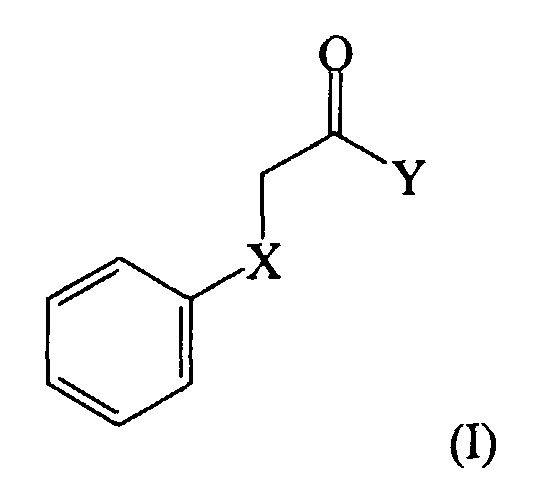
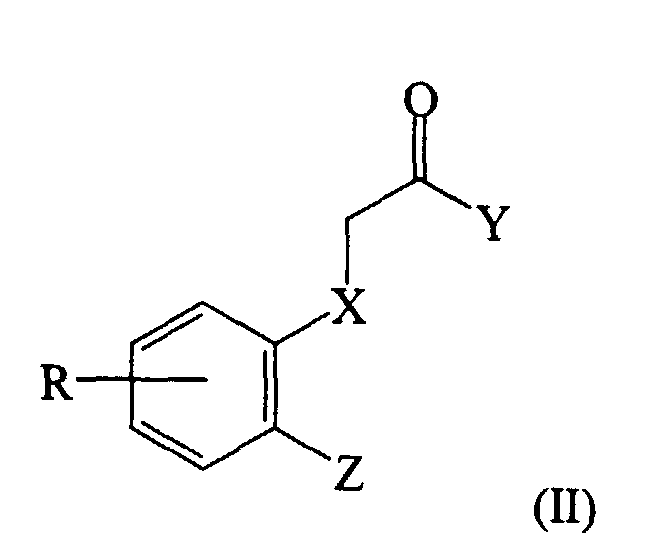

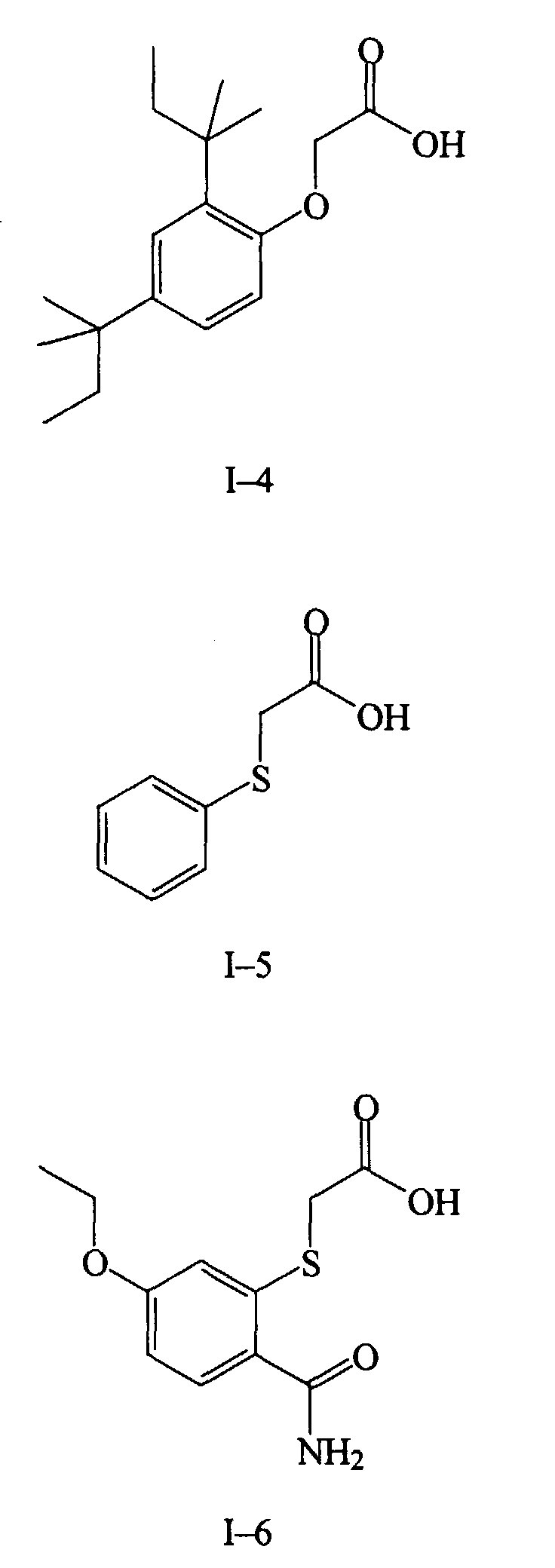
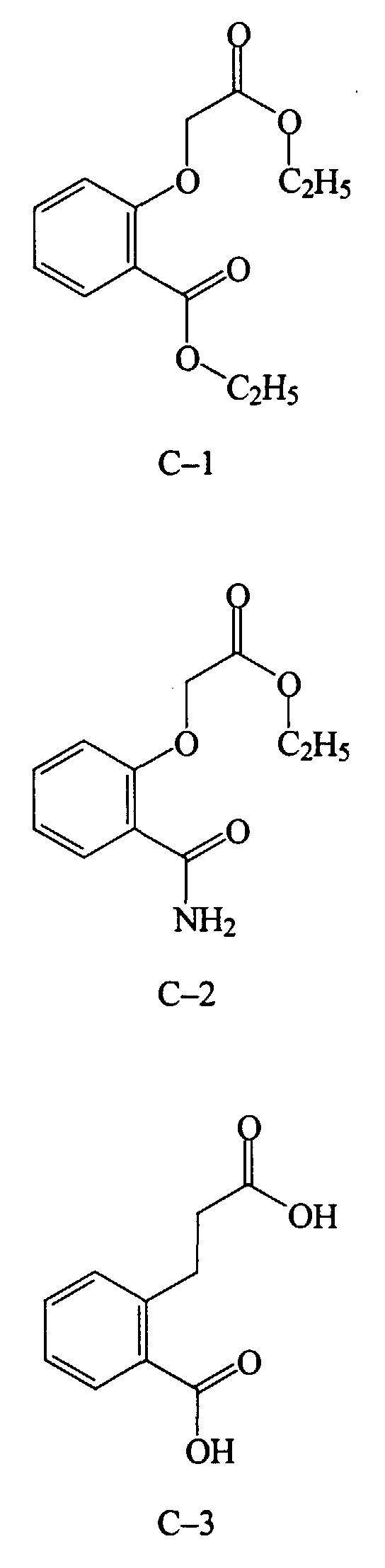
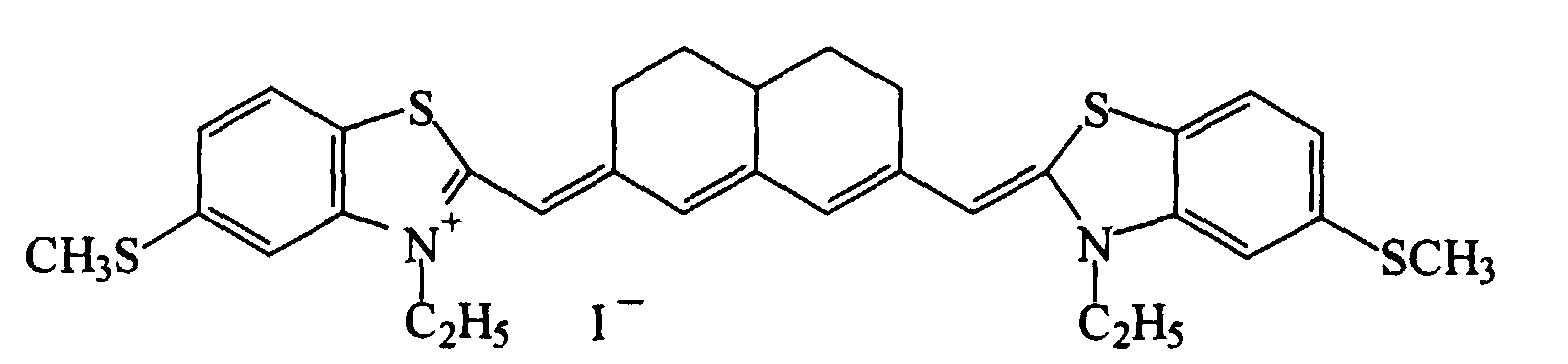
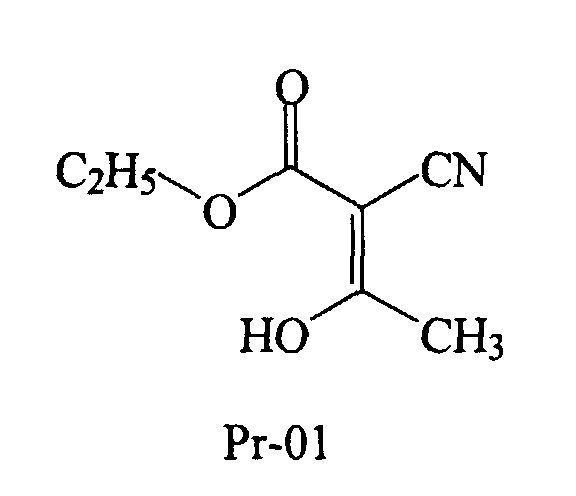
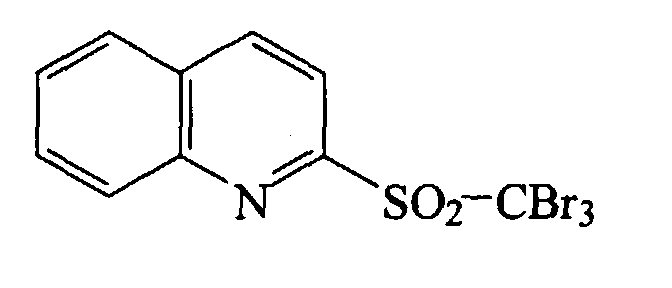


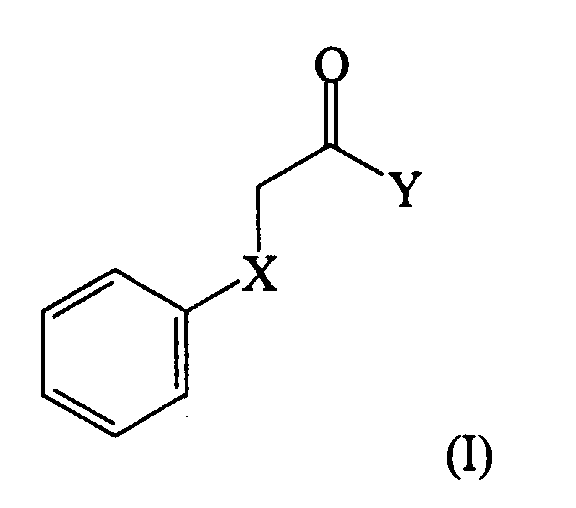
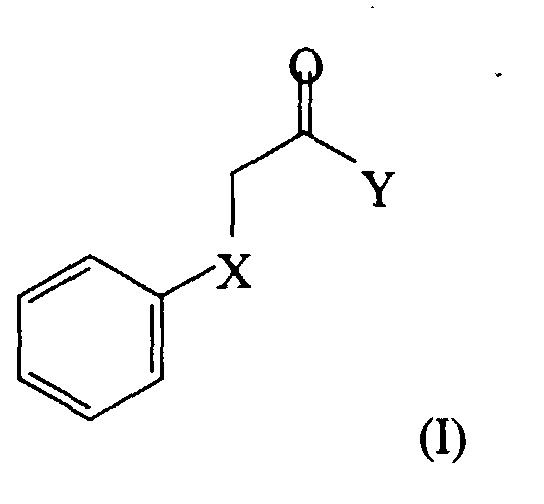
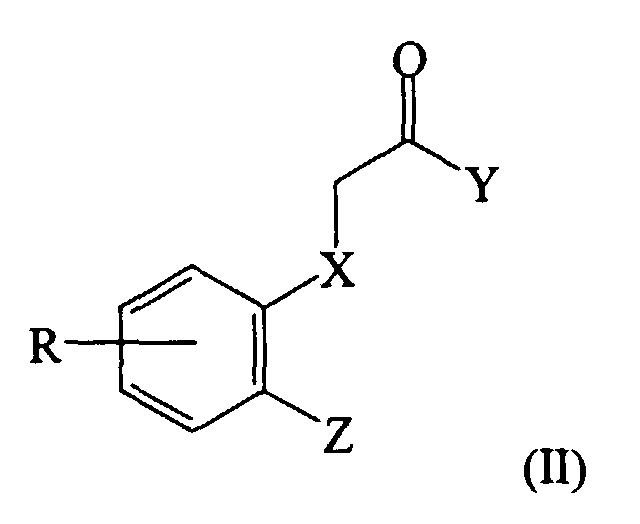
 and mixtures thereof.