EP1058114A2 - Diluting reagent and method providing time-independent consistency in mean corpuscular volume assays - Google Patents
Diluting reagent and method providing time-independent consistency in mean corpuscular volume assays Download PDFInfo
- Publication number
- EP1058114A2 EP1058114A2 EP00304578A EP00304578A EP1058114A2 EP 1058114 A2 EP1058114 A2 EP 1058114A2 EP 00304578 A EP00304578 A EP 00304578A EP 00304578 A EP00304578 A EP 00304578A EP 1058114 A2 EP1058114 A2 EP 1058114A2
- Authority
- EP
- European Patent Office
- Prior art keywords
- blood
- reagent
- mcv
- set forth
- sample
- Prior art date
- Legal status (The legal status is an assumption and is not a legal conclusion. Google has not performed a legal analysis and makes no representation as to the accuracy of the status listed.)
- Granted
Links
- 239000003153 chemical reaction reagent Substances 0.000 title claims abstract description 101
- 238000003556 assay Methods 0.000 title claims abstract description 25
- 238000007865 diluting Methods 0.000 title claims abstract description 23
- 238000000034 method Methods 0.000 title claims abstract description 20
- 239000008280 blood Substances 0.000 claims abstract description 57
- 210000004369 blood Anatomy 0.000 claims abstract description 56
- 239000002736 nonionic surfactant Substances 0.000 claims abstract description 36
- 230000003204 osmotic effect Effects 0.000 claims abstract description 29
- 239000003146 anticoagulant agent Substances 0.000 claims abstract description 15
- 210000003743 erythrocyte Anatomy 0.000 claims abstract description 15
- 229940127090 anticoagulant agent Drugs 0.000 claims abstract description 10
- 239000002245 particle Substances 0.000 claims abstract description 8
- 230000004660 morphological change Effects 0.000 claims abstract description 6
- 239000000126 substance Substances 0.000 claims description 12
- -1 polyoxyethylene Polymers 0.000 claims description 11
- FFJCNSLCJOQHKM-CLFAGFIQSA-N (z)-1-[(z)-octadec-9-enoxy]octadec-9-ene Chemical compound CCCCCCCC\C=C/CCCCCCCCOCCCCCCCC\C=C/CCCCCCCC FFJCNSLCJOQHKM-CLFAGFIQSA-N 0.000 claims description 8
- 229920003171 Poly (ethylene oxide) Polymers 0.000 claims description 8
- 239000007864 aqueous solution Substances 0.000 claims description 8
- 229940127219 anticoagulant drug Drugs 0.000 claims description 5
- 125000003342 alkenyl group Chemical group 0.000 claims description 4
- 125000000217 alkyl group Chemical group 0.000 claims description 4
- 125000000304 alkynyl group Chemical group 0.000 claims description 4
- 230000008261 resistance mechanism Effects 0.000 claims description 3
- 239000004094 surface-active agent Substances 0.000 abstract description 7
- 230000008569 process Effects 0.000 abstract description 5
- 150000003839 salts Chemical class 0.000 abstract description 4
- XLYOFNOQVPJJNP-UHFFFAOYSA-N water Substances O XLYOFNOQVPJJNP-UHFFFAOYSA-N 0.000 abstract description 2
- HEMHJVSKTPXQMS-UHFFFAOYSA-M Sodium hydroxide Chemical compound [OH-].[Na+] HEMHJVSKTPXQMS-UHFFFAOYSA-M 0.000 description 18
- FAPWRFPIFSIZLT-UHFFFAOYSA-M Sodium chloride Chemical compound [Na+].[Cl-] FAPWRFPIFSIZLT-UHFFFAOYSA-M 0.000 description 16
- 239000000243 solution Substances 0.000 description 12
- 230000002489 hematologic effect Effects 0.000 description 11
- 239000011780 sodium chloride Substances 0.000 description 8
- 239000003085 diluting agent Substances 0.000 description 7
- 229920001223 polyethylene glycol Polymers 0.000 description 6
- 239000008055 phosphate buffer solution Substances 0.000 description 5
- 239000000872 buffer Substances 0.000 description 4
- 238000005534 hematocrit Methods 0.000 description 4
- 239000000203 mixture Substances 0.000 description 4
- 239000002202 Polyethylene glycol Substances 0.000 description 3
- 238000003113 dilution method Methods 0.000 description 3
- RAXXELZNTBOGNW-UHFFFAOYSA-N imidazole Natural products C1=CNC=N1 RAXXELZNTBOGNW-UHFFFAOYSA-N 0.000 description 3
- 210000000265 leukocyte Anatomy 0.000 description 3
- ZQPPMHVWECSIRJ-KTKRTIGZSA-N oleic acid Chemical class CCCCCCCC\C=C/CCCCCCCC(O)=O ZQPPMHVWECSIRJ-KTKRTIGZSA-N 0.000 description 3
- 239000012266 salt solution Substances 0.000 description 3
- BGXNGARHYXNGPK-UHFFFAOYSA-N 2-[1-[(4-methoxyphenyl)methylsulfanyl]cyclohexyl]acetic acid Chemical compound C1=CC(OC)=CC=C1CSC1(CC(O)=O)CCCCC1 BGXNGARHYXNGPK-UHFFFAOYSA-N 0.000 description 2
- 235000011437 Amygdalus communis Nutrition 0.000 description 2
- KCXVZYZYPLLWCC-UHFFFAOYSA-N EDTA Chemical class OC(=O)CN(CC(O)=O)CCN(CC(O)=O)CC(O)=O KCXVZYZYPLLWCC-UHFFFAOYSA-N 0.000 description 2
- WQZGKKKJIJFFOK-GASJEMHNSA-N Glucose Natural products OC[C@H]1OC(O)[C@H](O)[C@@H](O)[C@@H]1O WQZGKKKJIJFFOK-GASJEMHNSA-N 0.000 description 2
- VEXZGXHMUGYJMC-UHFFFAOYSA-N Hydrochloric acid Chemical compound Cl VEXZGXHMUGYJMC-UHFFFAOYSA-N 0.000 description 2
- WCUXLLCKKVVCTQ-UHFFFAOYSA-M Potassium chloride Chemical compound [Cl-].[K+] WCUXLLCKKVVCTQ-UHFFFAOYSA-M 0.000 description 2
- 241000220304 Prunus dulcis Species 0.000 description 2
- CZMRCDWAGMRECN-UGDNZRGBSA-N Sucrose Chemical compound O[C@H]1[C@H](O)[C@@H](CO)O[C@@]1(CO)O[C@@H]1[C@H](O)[C@@H](O)[C@H](O)[C@@H](CO)O1 CZMRCDWAGMRECN-UGDNZRGBSA-N 0.000 description 2
- 229930006000 Sucrose Natural products 0.000 description 2
- 235000020224 almond Nutrition 0.000 description 2
- 239000004599 antimicrobial Substances 0.000 description 2
- 210000004027 cell Anatomy 0.000 description 2
- 230000008859 change Effects 0.000 description 2
- 238000007822 cytometric assay Methods 0.000 description 2
- 230000000694 effects Effects 0.000 description 2
- 239000008103 glucose Substances 0.000 description 2
- 239000007788 liquid Substances 0.000 description 2
- 239000000463 material Substances 0.000 description 2
- 238000005259 measurement Methods 0.000 description 2
- GLDOVTGHNKAZLK-UHFFFAOYSA-N octadecan-1-ol Chemical compound CCCCCCCCCCCCCCCCCCO GLDOVTGHNKAZLK-UHFFFAOYSA-N 0.000 description 2
- 230000000452 restraining effect Effects 0.000 description 2
- 230000000087 stabilizing effect Effects 0.000 description 2
- 239000005720 sucrose Substances 0.000 description 2
- 235000000346 sugar Nutrition 0.000 description 2
- JNYAEWCLZODPBN-JGWLITMVSA-N (2r,3r,4s)-2-[(1r)-1,2-dihydroxyethyl]oxolane-3,4-diol Chemical compound OC[C@@H](O)[C@H]1OC[C@H](O)[C@H]1O JNYAEWCLZODPBN-JGWLITMVSA-N 0.000 description 1
- WRIDQFICGBMAFQ-UHFFFAOYSA-N (E)-8-Octadecenoic acid Natural products CCCCCCCCCC=CCCCCCCC(O)=O WRIDQFICGBMAFQ-UHFFFAOYSA-N 0.000 description 1
- KWVPFECTOKLOBL-KTKRTIGZSA-N 2-[(z)-octadec-9-enoxy]ethanol Chemical group CCCCCCCC\C=C/CCCCCCCCOCCO KWVPFECTOKLOBL-KTKRTIGZSA-N 0.000 description 1
- ICIDSZQHPUZUHC-UHFFFAOYSA-N 2-octadecoxyethanol Chemical compound CCCCCCCCCCCCCCCCCCOCCO ICIDSZQHPUZUHC-UHFFFAOYSA-N 0.000 description 1
- LQJBNNIYVWPHFW-UHFFFAOYSA-N 20:1omega9c fatty acid Natural products CCCCCCCCCCC=CCCCCCCCC(O)=O LQJBNNIYVWPHFW-UHFFFAOYSA-N 0.000 description 1
- QSBYPNXLFMSGKH-UHFFFAOYSA-N 9-Heptadecensaeure Natural products CCCCCCCC=CCCCCCCCC(O)=O QSBYPNXLFMSGKH-UHFFFAOYSA-N 0.000 description 1
- BTBUEUYNUDRHOZ-UHFFFAOYSA-N Borate Chemical compound [O-]B([O-])[O-] BTBUEUYNUDRHOZ-UHFFFAOYSA-N 0.000 description 1
- IAYPIBMASNFSPL-UHFFFAOYSA-N Ethylene oxide Chemical compound C1CO1 IAYPIBMASNFSPL-UHFFFAOYSA-N 0.000 description 1
- 102000001554 Hemoglobins Human genes 0.000 description 1
- 108010054147 Hemoglobins Proteins 0.000 description 1
- 239000005642 Oleic acid Substances 0.000 description 1
- ZQPPMHVWECSIRJ-UHFFFAOYSA-N Oleic acid Natural products CCCCCCCCC=CCCCCCCCC(O)=O ZQPPMHVWECSIRJ-UHFFFAOYSA-N 0.000 description 1
- 239000007983 Tris buffer Substances 0.000 description 1
- 230000009471 action Effects 0.000 description 1
- 239000000654 additive Substances 0.000 description 1
- 230000000996 additive effect Effects 0.000 description 1
- 229910052783 alkali metal Inorganic materials 0.000 description 1
- 229910052784 alkaline earth metal Chemical class 0.000 description 1
- 238000004458 analytical method Methods 0.000 description 1
- 230000002421 anti-septic effect Effects 0.000 description 1
- 239000003963 antioxidant agent Substances 0.000 description 1
- 230000003078 antioxidant effect Effects 0.000 description 1
- 235000006708 antioxidants Nutrition 0.000 description 1
- WQZGKKKJIJFFOK-VFUOTHLCSA-N beta-D-glucose Chemical compound OC[C@H]1O[C@@H](O)[C@H](O)[C@@H](O)[C@@H]1O WQZGKKKJIJFFOK-VFUOTHLCSA-N 0.000 description 1
- 238000004820 blood count Methods 0.000 description 1
- 238000003759 clinical diagnosis Methods 0.000 description 1
- 239000000470 constituent Substances 0.000 description 1
- 238000002405 diagnostic procedure Methods 0.000 description 1
- 239000012895 dilution Substances 0.000 description 1
- 238000010790 dilution Methods 0.000 description 1
- QLBHNVFOQLIYTH-UHFFFAOYSA-L dipotassium;2-[2-[bis(carboxymethyl)amino]ethyl-(carboxylatomethyl)amino]acetate Chemical compound [K+].[K+].OC(=O)CN(CC([O-])=O)CCN(CC(O)=O)CC([O-])=O QLBHNVFOQLIYTH-UHFFFAOYSA-L 0.000 description 1
- 238000007599 discharging Methods 0.000 description 1
- 230000001205 effect on erythrocytes Effects 0.000 description 1
- 238000005516 engineering process Methods 0.000 description 1
- 150000002148 esters Chemical class 0.000 description 1
- 125000005456 glyceride group Chemical group 0.000 description 1
- 230000001678 irradiating effect Effects 0.000 description 1
- QXJSBBXBKPUZAA-UHFFFAOYSA-N isooleic acid Natural products CCCCCCCC=CCCCCCCCCC(O)=O QXJSBBXBKPUZAA-UHFFFAOYSA-N 0.000 description 1
- 239000000644 isotonic solution Substances 0.000 description 1
- 230000007246 mechanism Effects 0.000 description 1
- 238000012986 modification Methods 0.000 description 1
- 230000004048 modification Effects 0.000 description 1
- GOQYKNQRPGWPLP-UHFFFAOYSA-N n-heptadecyl alcohol Natural products CCCCCCCCCCCCCCCCCO GOQYKNQRPGWPLP-UHFFFAOYSA-N 0.000 description 1
- 229940049964 oleate Drugs 0.000 description 1
- 229940095127 oleth-20 Drugs 0.000 description 1
- 125000006353 oxyethylene group Chemical group 0.000 description 1
- 239000008363 phosphate buffer Substances 0.000 description 1
- 239000002504 physiological saline solution Substances 0.000 description 1
- 239000000244 polyoxyethylene sorbitan monooleate Substances 0.000 description 1
- 235000010482 polyoxyethylene sorbitan monooleate Nutrition 0.000 description 1
- 229940068968 polysorbate 80 Drugs 0.000 description 1
- 229920000053 polysorbate 80 Polymers 0.000 description 1
- 239000001103 potassium chloride Substances 0.000 description 1
- 235000011164 potassium chloride Nutrition 0.000 description 1
- 238000012216 screening Methods 0.000 description 1
- 239000002904 solvent Substances 0.000 description 1
- 229940100459 steareth-20 Drugs 0.000 description 1
- 150000008163 sugars Chemical class 0.000 description 1
- JZBRFIUYUGTUGG-UHFFFAOYSA-J tetrapotassium;2-[2-[bis(carboxylatomethyl)amino]ethyl-(carboxylatomethyl)amino]acetate Chemical compound [K+].[K+].[K+].[K+].[O-]C(=O)CN(CC([O-])=O)CCN(CC([O-])=O)CC([O-])=O JZBRFIUYUGTUGG-UHFFFAOYSA-J 0.000 description 1
- 230000036962 time dependent Effects 0.000 description 1
- LENZDBCJOHFCAS-UHFFFAOYSA-N tris Chemical compound OCC(N)(CO)CO LENZDBCJOHFCAS-UHFFFAOYSA-N 0.000 description 1
Classifications
-
- G—PHYSICS
- G01—MEASURING; TESTING
- G01N—INVESTIGATING OR ANALYSING MATERIALS BY DETERMINING THEIR CHEMICAL OR PHYSICAL PROPERTIES
- G01N33/00—Investigating or analysing materials by specific methods not covered by groups G01N1/00 - G01N31/00
- G01N33/48—Biological material, e.g. blood, urine; Haemocytometers
- G01N33/50—Chemical analysis of biological material, e.g. blood, urine; Testing involving biospecific ligand binding methods; Immunological testing
- G01N33/5005—Chemical analysis of biological material, e.g. blood, urine; Testing involving biospecific ligand binding methods; Immunological testing involving human or animal cells
- G01N33/5094—Chemical analysis of biological material, e.g. blood, urine; Testing involving biospecific ligand binding methods; Immunological testing involving human or animal cells for blood cell populations
-
- G—PHYSICS
- G01—MEASURING; TESTING
- G01N—INVESTIGATING OR ANALYSING MATERIALS BY DETERMINING THEIR CHEMICAL OR PHYSICAL PROPERTIES
- G01N15/00—Investigating characteristics of particles; Investigating permeability, pore-volume or surface-area of porous materials
- G01N15/10—Investigating individual particles
- G01N15/1031—Investigating individual particles by measuring electrical or magnetic effects
- G01N15/12—Investigating individual particles by measuring electrical or magnetic effects by observing changes in resistance or impedance across apertures when traversed by individual particles, e.g. by using the Coulter principle
-
- Y—GENERAL TAGGING OF NEW TECHNOLOGICAL DEVELOPMENTS; GENERAL TAGGING OF CROSS-SECTIONAL TECHNOLOGIES SPANNING OVER SEVERAL SECTIONS OF THE IPC; TECHNICAL SUBJECTS COVERED BY FORMER USPC CROSS-REFERENCE ART COLLECTIONS [XRACs] AND DIGESTS
- Y10—TECHNICAL SUBJECTS COVERED BY FORMER USPC
- Y10T—TECHNICAL SUBJECTS COVERED BY FORMER US CLASSIFICATION
- Y10T436/00—Chemistry: analytical and immunological testing
- Y10T436/10—Composition for standardization, calibration, simulation, stabilization, preparation or preservation; processes of use in preparation for chemical testing
-
- Y—GENERAL TAGGING OF NEW TECHNOLOGICAL DEVELOPMENTS; GENERAL TAGGING OF CROSS-SECTIONAL TECHNOLOGIES SPANNING OVER SEVERAL SECTIONS OF THE IPC; TECHNICAL SUBJECTS COVERED BY FORMER USPC CROSS-REFERENCE ART COLLECTIONS [XRACs] AND DIGESTS
- Y10—TECHNICAL SUBJECTS COVERED BY FORMER USPC
- Y10T—TECHNICAL SUBJECTS COVERED BY FORMER US CLASSIFICATION
- Y10T436/00—Chemistry: analytical and immunological testing
- Y10T436/10—Composition for standardization, calibration, simulation, stabilization, preparation or preservation; processes of use in preparation for chemical testing
- Y10T436/101666—Particle count or volume standard or control [e.g., platelet count standards, etc.]
-
- Y—GENERAL TAGGING OF NEW TECHNOLOGICAL DEVELOPMENTS; GENERAL TAGGING OF CROSS-SECTIONAL TECHNOLOGIES SPANNING OVER SEVERAL SECTIONS OF THE IPC; TECHNICAL SUBJECTS COVERED BY FORMER USPC CROSS-REFERENCE ART COLLECTIONS [XRACs] AND DIGESTS
- Y10—TECHNICAL SUBJECTS COVERED BY FORMER USPC
- Y10T—TECHNICAL SUBJECTS COVERED BY FORMER US CLASSIFICATION
- Y10T436/00—Chemistry: analytical and immunological testing
- Y10T436/10—Composition for standardization, calibration, simulation, stabilization, preparation or preservation; processes of use in preparation for chemical testing
- Y10T436/108331—Preservative, buffer, anticoagulant or diluent
-
- Y—GENERAL TAGGING OF NEW TECHNOLOGICAL DEVELOPMENTS; GENERAL TAGGING OF CROSS-SECTIONAL TECHNOLOGIES SPANNING OVER SEVERAL SECTIONS OF THE IPC; TECHNICAL SUBJECTS COVERED BY FORMER USPC CROSS-REFERENCE ART COLLECTIONS [XRACs] AND DIGESTS
- Y10—TECHNICAL SUBJECTS COVERED BY FORMER USPC
- Y10T—TECHNICAL SUBJECTS COVERED BY FORMER US CLASSIFICATION
- Y10T436/00—Chemistry: analytical and immunological testing
- Y10T436/25—Chemistry: analytical and immunological testing including sample preparation
- Y10T436/2525—Stabilizing or preserving
-
- Y—GENERAL TAGGING OF NEW TECHNOLOGICAL DEVELOPMENTS; GENERAL TAGGING OF CROSS-SECTIONAL TECHNOLOGIES SPANNING OVER SEVERAL SECTIONS OF THE IPC; TECHNICAL SUBJECTS COVERED BY FORMER USPC CROSS-REFERENCE ART COLLECTIONS [XRACs] AND DIGESTS
- Y10—TECHNICAL SUBJECTS COVERED BY FORMER USPC
- Y10T—TECHNICAL SUBJECTS COVERED BY FORMER US CLASSIFICATION
- Y10T436/00—Chemistry: analytical and immunological testing
- Y10T436/25—Chemistry: analytical and immunological testing including sample preparation
- Y10T436/25625—Dilution
Definitions
- the present invention relates to assaying mean corpuscular volume (MCV) in blood samples; more particularly the invention relates to reagents for, as well as a method of use in, MCV assays using a particle analyzer.
- MCV mean corpuscular volume
- CBC complete blood count
- WBC white blood cell
- Hb hemoglobin concentration
- Ht hematocrit
- PHT platelet
- the MCV is one among vital items obtained by calculating from these cytometric assay values.
- the MCV is obtained as the hematocrit divided by the RBC-count, that is, the value Ht/RBC, the hematocrit being the percentage of erythrocytes (red blood cells) in a unit volume of whole blood.
- the MCV then is the average volume of a single red blood cell, and accordingly it is given in fL, femtoliters, or 10 -15 L.
- the hematological analyzers noted above employ flow cytometers.
- flow cytometers a diluted blood sample is discharged into a flow cell at high speed through a very thin nozzle, and the discharging flow from the nozzle is surrounded by the cylindrical flow of a sheathing liquid (laminar flow).
- laminar flow a sheathing liquid
- the cells, whose passage in the sample flow is thus controlled by the laminar flow, are then detected optically, by irradiating the flow with a laser beam, as well as electrically, by measuring the resistance or conductivity.
- the sample generally must be treated with an anti-coagulant agent such as an EDTA salt, and diluted with a physiologically isotonic solution.
- an anti-coagulant agent such as an EDTA salt
- diluents for diluting whole blood there are in general such solutions as physiological saline, Ringer's solution, Locke's solution, and Tyrode's solution.
- physiological saline Ringer's solution
- Locke's solution Locke's solution
- Tyrode's solution a solution of a hematological analyzer
- the foregoing diluents can be used.
- diluents optimized for individual analyzers are employed.
- a basic problem with the current technology in preparing whole blood samples for MCV assay is that the actual MCV changes with post-blood drawing elapsed time.
- the MCV value that is necessary and important in clinical diagnosis is that which would be obtained immediately after the blood sample is drawn, that is, that value which corresponds to the MCV of the original blood.
- the MCV value as part of a CBC is not measured until as much as 72 hours have passed following drawing of the blood sample. At that point, however, blood samples as such no longer yield suitable MCV assay values. After the blood is drawn, the RBCs in the sample swell, such that MCV values measured with the post-drawing elapse of time are progressively larger than the original RBC mean volume. The original MCV is the actual measurement diagnostically required.
- Japanese Pat. Publ. 8-33388 (1996), Japanese Pat. Publ. 7-82010 (1995), and Japanese Laid Open Pat. 8-122327 (1996) disclose various aqueous solutions containing nonionic surfactants. Nevertheless, whichever of these solutions is used as a flow-cytometer sheathing liquid, and the nonionic surfactants are added for eliminating air bubbles within the flow chamber.
- Japanese Pat. Publ. 1-33780 (1989) discloses a diluent into which a nonionic surfactant has been added to neutralize the effect on erythrocytes of antiseptic agents, ultimately with the object of restraining post-dilution change in the measured MCV due to the antiseptic agents. Nevertheless, Japanese Pat. Publ. 1-33780 does not disclose a method of restraining change in measured MCV due to the passage time after drawing blood samples.
- the present invention compels a blood sample to yield an MCV value assayed at elapsed time after the sample is drawn to be remarkably consistent with the original MCV value of the sample, that is, the immediate post-drawing MCV value.
- a reagent in accordance with the invention is a blood sample aqueous diluting solution that includes a small amount of a predetermined surfactant added within a limited range of concentration.
- the osmotic pressure of the reagent is adjusted with a suitable substance to be within a predetermined range.
- a reagent for the present invention is an aqueous solution including a nonionic surfactant, and a salt or suitable substance for adjusting osmotic pressure ( ⁇ ) to be approximately 150-400 mOsm/kg.
- the osmotic pressure ( ⁇ ) of the reagent is approximately 230-350 mOsm/kg; especially preferable is an osmotic pressure ( ⁇ ) of approximately 260-320 mOsm/kg.
- ⁇ osmotic pressure
- any of the following can be used.
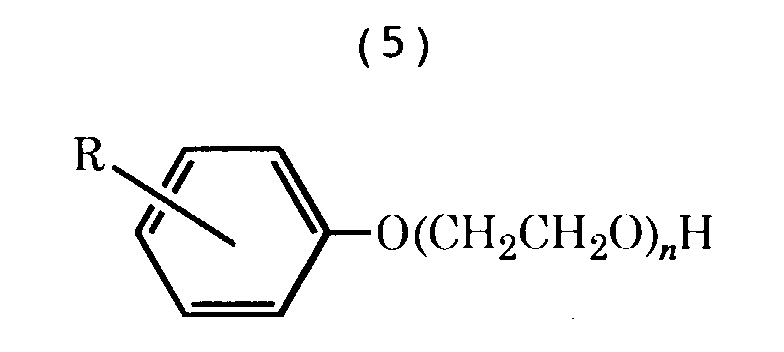
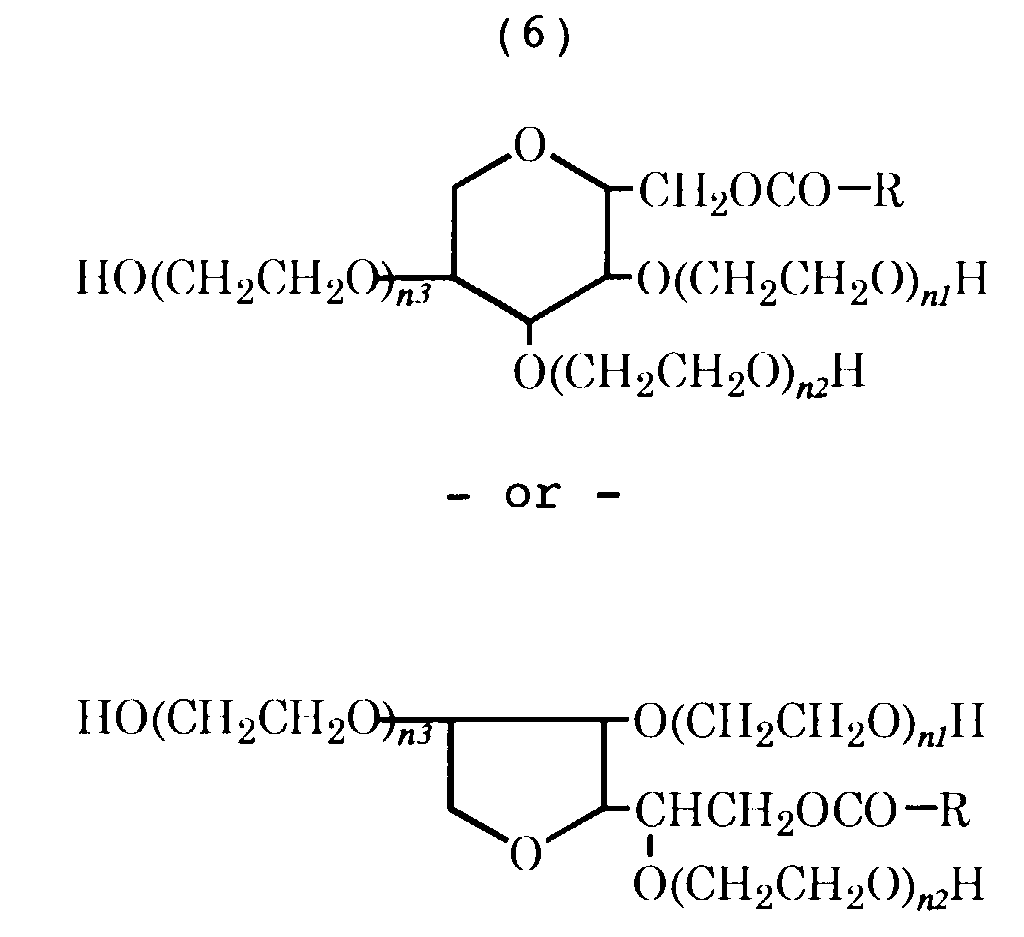
- R-O(CH 2 CH 2 O) n H (2) R-COO(CH 2 CH 2 O) n H (3) R-COO(CH 2 CH 2 O) n CO-R wherein R indicates one of an alkyl chain, an alkenyl chain and an alkynyl chain, respectively having 12-24 carbons; and n, n 1 + n 2 + n 3 , and n 1 + n 2 + n 3 + n 4 + n 5 + n 6 indicate an integer 5-70.
- the nonionic surfactant includes at least one of an alkyl chain, an alkenyl chain and an alkynyl chain, respectively having 12-24 carbons.
- the nonionic surfactant preferably includes a polyoxyethylene chain having an ethylene oxide molar addition number of 5-70.
- any of the following nonionic surfactants can be used in an embodiment in accordance with the present invention.
- One further preferable nonionic surfactant is Oleth-20 (polyoxyethylene [20] oleyl ether). This surfactant contains a polyoxyethylene oleyl ether mixture wherein the average number of oxyethylene units per molecule is approximately 20.
- CTFA Names is the source of the names for the substances noted above.
- nonionic surfactants as herein defined could also be used. It should also apparent that commercially available nonionic surfactants are suitable for this invention, provided that they otherwise conform to the parameters given herein. It is well known that these commercially available nonionic surfactants are not chemically pure materials. Consequently, concomitant introduction of related nonionic structures and extraneous materials into a reagent in accordance with the invention is within its scope, on the condition that the foregoing parameters are satisfied.
- the surfactants or mixtures thereof are transparent in the salt solution.
- the nonionic surfactants are preferably soluble in water to yield a clear solution at a minimum weight concentration of 0.1%.
- the concentration of the given nonionic surfactants for inclusion in the reagent can be suitably determined according to the osmotic pressure and the composition of the salt solution as the solvent. In general, however, the nonionic surfactants can be employed at a low concentration in the range of approximately 0.0005%-0.5%. A preferable concentration is in the range of approximately 0.001%-0.1%, and most preferably is in the range of approximately 0.005%-0.05%.
- the nonionic surfactant is used in the salt solution thus designed for diluting and stabilizing blood samples for hematological assay.
- the nonionic surfactant preferably has a hydrophile/ lipophile (HLB) balance of 10-20.
- HLB hydrophile/ lipophile
- the pH of a reagent in accordance with the invention is preferably 6.0-8.5.
- a reagent given by the present invention further includes a buffer for stabilizing its pH, an additive for adjusting the osmotic pressure of the reagent solution, an antiseptic substance, or an anti-oxidant.
- Suitable buffers are not particularly limited; however, phosphate buffers, borate buffers, tris buffer, imidazole buffers, etc. are preferable.
- Suitable substances for adjusting the pH of the reagent are not particularly limited, but can be, for example, hydrochloric acid or sodium hydroxide.
- Suitable substances for adjusting for adjusting the osmotic pressure are not particularly limited.
- at least one selected from an alkali metal salt or an alkali earth metal salt of sodium chloride, and potassium chloride may be used.
- a sugar such as sucrose, glucose, etc., or a polyethylene glycol may be used.
- a method in accordance with the present invention includes: (a) an anti-coagulant treatment process wherein the blood sample is treated with an anti-coagulant agent; (b) a dilution process wherein the blood sample treated with an anti-coagulant agent is diluted with a reagent solution containing a surfactant to compel a morphological change in red blood cells in the sample, and (c) an assay process wherein the blood sample is assayed in a particle analyzer following the dilution process at the elapse of, for example, at least 48 hours after blood drawing.
- the hematological assay is conducted in a particle analyzer based on the electrical resistance principle; the sheath-flow electrical resistance mechanism is more preferable.
- the assay process can be a process wherein the blood sample is assayed in a particle analyzer following said dilution process at the elapse of up to at least 72 hours.
- an appropriate amount of an anti-coagulant agent such as EDTA salt is added into a whole blood sample immediately after blood drawing.
- the samples are preferably obtained by using a vacuum blood-drawing tube, and preferably are treated with an anti-coagulant agent at the time the blood is drawn.
- a diluting solution of the present invention compels morphological changes in blood sample RBCs, and acts on blood samples up to at least 72 hours old accordingly to yield MCV results consistent with those obtained immediately post-drawing.
- the action mechanism of the present invention has not been proved. Nevertheless, it was discovered that diluting a blood sample with a solution adjusted to have a predetermined osmotic pressure and containing a predetermined surfactant compels a morphological change in the blood sample RBCs that restores consistency in assayed MCV.
- the morphological change is to an extent that the MCV value of red blood cells measured at elapsed time post-drawing is equivalent within a diagnostically acceptable range to the MCV value immediately after a blood sample is drawn. Consequently, the present invention provides consistent MCV values throughout the diagnostic life of the blood sample.
- time-dependent changes in the MCV of a blood sample can be limited. Discrepancies in MCV assayed at different times during the period between when the sample is drawn, and at least 72 hours thereafter, can be controlled to be within about ⁇ 4(fL), which is well within a diagnostically acceptable range.
- Blood samples were treated with EDTA-3K anti-coagulant. The samples were then subjected to an MCV assay in Sysmex Co. Ltd.'s automated hematological analyzer SE-9500 immediately post blood-drawing, and at 72 hours thereafter. The blood samples were stored at 25°C.
- Reagent A (Conventional): 15 mM phosphate buffer solution
- the osmotic pressure of this reagent was adjusted with sodium chloride to be approximately 250 mOsm/kg, and its pH was adjusted with sodium hydroxide to be approximately 7.8.
- Reagent B 15 mM phosphate buffer solution ; 0.015% polyoxyethylene (20) oleyl ether
- Blood samples were treated with EDTA-2K anti-coagulant. The samples were then subjected to an MCV assay in Sysmex Co. Ltd.'s automated hematological analyzer SE-9500 12 hours and 48 hours post blood-drawing. The blood samples were stored at 25°C.
- Reagent A 15 mM phosphate buffer solution
- the osmotic pressure of this reagent was adjusted with sodium chloride to be approximately 250 mOsm/kg, and its pH was adjusted with sodium hydroxide to be approximately 7.8.
- Reagent C 15 mM phosphate buffer solution
- the osmotic pressure of this reagent was adjusted with sodium chloride to be approximately 285 mOsm/kg, and its pH was adjusted with sodium hydroxide to be approximately 7.8.
- Reagent D 15 mM phosphate buffer solution ; 0.015% polyoxyethylene (20) oleyl ether
- Embodiment 3 variation in MCV was measured employing reagents prepared from Reagent D by varying its osmotic pressure. The osmotic pressures of the reagents were adjusted by changing the amount of sodium chloride added. The blood samples was stored at 25°C. The samples were assayed in Sysmex Co. Ltd.'s automated hematological analyzer SE-9500 to determine MCV.
- Embodiment 4 variation in MCV was measured employing reagents prepared by adding the nonionic surfactant polyoxyethylene (20) oleyl ether to Reagent A at various concentrations.
- the blood samples were stored at 25°C.
- the samples were assayed in Sysmex Co. Ltd.'s automated hematological analyzer SE-9500 to determine MCV.
- Reagent A 0.000% nonionic surfactant Reagent E 0.015% nonionic surfactant
- Reagent I 0.150% nonionic surfactant
- Reagent J 0.300% nonionic surfactant MEAN CORPUSCULAR VOLUME IN FEMOTOLITERS (fL) Conc.
- Reagents in Embodiment 5 were prepared by adding approximately 0.015% polyoxyethylene (20) oleyl ether to Reagent E, and then adjusting the osmotic pressure of the diluent to 285 mOsm/kg with the following substances.
- Reagent D sodium chloride Reagent K sucrose Reagent L glucose Reagent M polyethylene glycol (MW400)
- Embodiment 5 The effect on variation in MCV of the foregoing substances employed for adjusting the osmotic pressure of the reagents was measured in Embodiment 5.
- the blood samples were stored at 25°C.
- the samples were assayed in Sysmex Co. Ltd.'s automated hematological analyzer SE-9500 to determine MCV.
- Embodiment 5-1 MEAN CORPUSCULAR VOLUME IN FEMOTOLITERS (fL) Reagent Post Blood-Drawing Time Variation Percentage 12 hours 48 hours Reagent A 94.7 (fL) 105.1 (fL) + 10.4(fL) + 11.0 (%) Reagent D 92.5 (fL) 94.8 (fL) + 2.3 (fL) + 2.5 (%) Reagent K 91.6 (fL) 94.9 (fL) + 3.3 (fL) + 3.6 (%) Reagent L 93.0 (fL) 95.8 (fL) + 2.7 (fL) + 2.9 (%) Embodiment 5-2 MEAN CORPUSCULAR VOLUME IN FEMOTOLITERS (fL) Reagent Post Blood-Drawing Time Variation Percentage 12 hours 48 hours Reagent A 94.4 (fL) 104.7(fL) + 10.3 (fL) + 10.9 (%) Reagent D 92.8 (fL) 95.6(fL) +
- the substances employed generally for adjusting osmotic pressure are not limited to those given in Embodiment 5-1 and Embodiment 5-2.
- the results indicate, however, that salts, sugars and polyethylene glycol are preferable.
Landscapes
- Life Sciences & Earth Sciences (AREA)
- Health & Medical Sciences (AREA)
- Immunology (AREA)
- Engineering & Computer Science (AREA)
- Urology & Nephrology (AREA)
- Chemical & Material Sciences (AREA)
- Cell Biology (AREA)
- Biomedical Technology (AREA)
- Molecular Biology (AREA)
- Hematology (AREA)
- Physics & Mathematics (AREA)
- General Physics & Mathematics (AREA)
- Ecology (AREA)
- Tropical Medicine & Parasitology (AREA)
- Food Science & Technology (AREA)
- Medicinal Chemistry (AREA)
- Biochemistry (AREA)
- Analytical Chemistry (AREA)
- Biotechnology (AREA)
- General Health & Medical Sciences (AREA)
- Microbiology (AREA)
- Pathology (AREA)
- Investigating Or Analysing Biological Materials (AREA)
- Measuring Or Testing Involving Enzymes Or Micro-Organisms (AREA)
Abstract
Description
R-O(CH2CH2O) n H
R-COO(CH2CH2O) n H
R-COO(CH2CH2O) n CO-R



| SAMPLE NO. 1 MEAN CORPUSCULAR VOLUME IN FEMOTOLITERS (fL) | ||||
| Reagent | Post Blood-Drawing Time | Variation | Percentage | |
| Immediate | 72 hours | |||
| Reagent A | 83.8 (fL) | 97.1 (fL) | + 13.3 (fL) | + 15.9 (%) |
| Reagent B | 88.2 (fL) | 90.4 (fL) | + 2.2 (fL) | + 2.5 (%) |
| SAMPLE NO. 2 MEAN CORPUSCULAR VOLUME IN FEMOTOLITERS (fL) | ||||
| Reagent | Post Blood-Drawing Time | Variation | Percentage | |
| Immediate | 72 hours | |||
| Reagent A | 89.7 (fL) | 103.9 (fL) | + 14.2 (fL) | + 15.8 (%) |
| Reagent B | 93.1 (fL) | 96.0 (fL) | + 2.9 (fL) | + 3.1 (%) |
| SAMPLE NO. 3 MEAN CORPUSCULAR VOLUME IN FEMOTOLITERS (fL) | ||||
| Reagent | Post Blood-Drawing Time | Variation | Percentage | |
| Immediate | 72 hours | |||
| Reagent A | 89.6 (fL) | 103.9 (fL) | + 14.3 (fL) | + 16.0 (%) |
| Reagent B | 93.9 (fL) | 96.0 (fL) | + 2.1 (fL) | + 2.2 (%) |
| MEAN CORPUSCULAR VOLUME IN FEMOTOLITERS (fL) | ||||
| Reagent | Post Blood-Drawing Time | Variation | Percentage | |
| 12 hours | 48 hours | |||
| Reagent A | 93.5 (fL) | 102.6 (fL) | + 9.1 (fL) | + 9.7 (%) |
| Reagent C | 93.4 (fL) | 103.7 (fL) | +10.3 (fL) | + 11.0 (%) |
| Reagent D | 92.7 (fL) | 95.4 (fL) | + 2.7 (fL) | + 2.9 (%) |
| Reagent D | π = 285 mOsm/kg (pH 7.8) |
| Reagent E | π = 250 mOsm/kg (pH 7.8) |
| Reagent F | π = 268 mOsm/kg (pH 7.8) |
| Reagent G | π = 300 mOsm/kg (pH 7.8) |
| Reagent H | π = 320 mOsm/kg (pH 7.8) |
| Embodiment 3-1 MEAN CORPUSCULAR VOLUME IN FEMOTOLITERS (fL) | ||||
| Reagent | Post Blood-Drawing Time | Variation | Percentage | |
| 12 hours | 48 hours | |||
| Reagent A | 94.5 (fL) | 103.7 (fL) | + 9.2 (fL) | + 9.7 (%) |
| Reagent E (π 250) | 93.4 (fL) | 98.3 (fL) | + 4.9 (fL) | + 5.2 (%) |
| Reagent D (π 285) | 92.3 (fL) | 94.2 (fL) | + 1.8 (fL) | + 2.0 (%) |
| Embodiment 3-2 MEAN CORPUSCULAR VOLUME IN FEMOTOLITERS (fL) | ||||
| Reagent | Post Blood-Drawing Time | Variation | Percentage | |
| 12 hours | 48 hours | |||
| Reagent A | 97.4 (fL) | 106.7 (fL) | + 9.3 (fL) | + 9.5 (%) |
| Reagent F (π 268) | 95.4 (fL) | 99.0 (fL) | + 3.6 (fL) | + 3.8 (%) |
| Reagent D (π 285) | 94.1 (fL) | 94.3 (fL) | + 0.2 (fL) | + 0.2 (%) |
| Embodiment 3-3 MEAN CORPUSCULAR VOLUME IN FEMOTOLITERS (fL) | ||||
| Reagent | Post Blood-Drawing Time | Variation | Percentage | |
| 12 hours | 48 hours | |||
| Reagent A | 94.5 (fL) | 103.4 (fL) | + 8.9 (fL) | + 9.4 (%) |
| Reagent D (π 285) | 92.3 (fL) | 95.9 (fL) | + 3.6 (fL) | + 3.9 (%) |
| Reagent G (π 300) | 91.6 (fL) | 95.0 (fL) | + 3.4 (fL) | + 3.7 (%) |
| Reagent H (π 320) | 91.6( fL) | 93.5 (fL) | + 1.9 (fL) | + 2.1 (%) |
| Reagent A | 0.000% nonionic surfactant |
| Reagent E | 0.015% nonionic surfactant |
| Reagent I | 0.150% nonionic surfactant |
| Reagent J | 0.300% nonionic surfactant |
| MEAN CORPUSCULAR VOLUME IN FEMOTOLITERS (fL) | ||||
| Conc. (%) | Post Blood-Drawing Time | Variation | Percentage | |
| 12 hours | 48 hours | |||
| Reagent A (0.000%) | 95.8 (fL) | 105.9 (fL) | + 10.1(fL) | + 10.5 (%) |
| Reagent E (0.015%) | 95.4 (fL) | 100.0 (fL) | + 5.6 (fL) | + 5.9 (%) |
| Reagent I (0.150%) | 96.6 (fL) | 100.9 (fL) | + 4.3 (fL) | + 4.5 (%) |
| Reagent J (0.300%) | 96.2 (fL) | 100.4 (fL) | + 4.2 (fL) | + 4.4 (%) |
| Reagent D | sodium chloride |
| Reagent K | sucrose |
| Reagent L | glucose |
| Reagent M | polyethylene glycol (MW400) |
| Embodiment 5-1 MEAN CORPUSCULAR VOLUME IN FEMOTOLITERS (fL) | ||||
| Reagent | Post Blood-Drawing Time | Variation | Percentage | |
| 12 hours | 48 hours | |||
| Reagent A | 94.7 (fL) | 105.1 (fL) | + 10.4(fL) | + 11.0 (%) |
| Reagent D | 92.5 (fL) | 94.8 (fL) | + 2.3 (fL) | + 2.5 (%) |
| Reagent K | 91.6 (fL) | 94.9 (fL) | + 3.3 (fL) | + 3.6 (%) |
| Reagent L | 93.0 (fL) | 95.8 (fL) | + 2.7 (fL) | + 2.9 (%) |
| Embodiment 5-2 MEAN CORPUSCULAR VOLUME IN FEMOTOLITERS (fL) | ||||
| Reagent | Post Blood-Drawing Time | Variation | Percentage | |
| 12 hours | 48 hours | |||
| Reagent A | 94.4 (fL) | 104.7(fL) | + 10.3 (fL) | + 10.9 (%) |
| Reagent D | 92.8 (fL) | 95.6(fL) | + 2.8 (fL) | + 3.0 (%) |
| Reagent M | 92.9 (fL) | 93.6 (fL) | + 0.7 (fL) | + 0.8 (%) |
Claims (17)
- A blood-sample diluting reagent for MCV assay, said reagent being an aqueous solution comprising:at least one nonionic surfactant; anda substance for adjusting osmotic pressure of the aqueous solution to be approximately 150-400 mOsm/kg; whereinsaid nonionic surfactant and said substance for adjusting osmotic pressure are selected such that said diluting reagent compels the blood sample to yield an MCV value assayed at post-drawing elapsed time consistent within a diagnostically acceptable range with immediate post-drawing MCV value of the blood sample.
- A blood-sample diluting reagent as set forth in claim 1, wherein the osmotic pressure is adjusted to be approximately 230-350 mOsm/kg.
- A blood-sample diluting reagent as set forth in claim 2, wherein the osmotic pressure is adjusted to be approximately 260-320 mOsm/kg.
- A blood-sample diluting reagent as set forth in claim 1, wherein said nonionic surfactant is selected from the group consisting of:
R-O(CH2CH2O) n H
R- COO(CH2CH2O) n H
R-COO (CH2CH2O) n CO -R
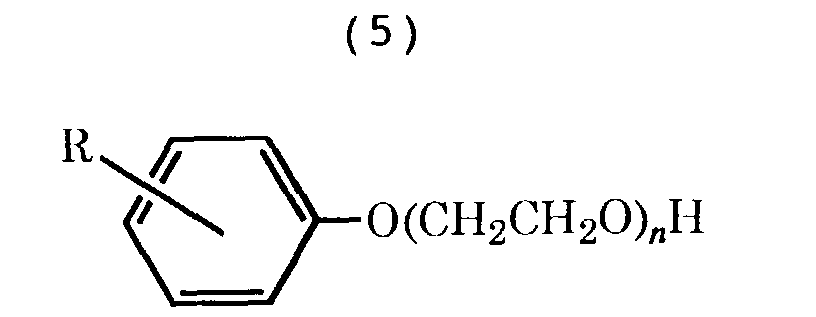
 wherein R indicates one of an alkyl chain, an alkenyl chain and an alkynyl chain, respectively having 12-24 carbons; and n, n1 + n2 + n3, and n1 + n2 + n3 + n4 + n5 + n6 indicate an integer 5-70.
- A blood-sample diluting reagent as set forth in claim 5, wherein said nonionic surfactant is polyoxyethylene (20) oleyl ether.
- A blood-sample diluting reagent as set forth in claim 1, wherein said nonionic surfactant has a hydrophile/ lipophile balance of 10-20.
- A blood-sample diluting reagent as set forth in claim 1, wherein said nonionic surfactant is present in the aqueous solution in a 5.0 X 10⁻⁴ to 5.0 X 10⁻¹ % concentration.
- A blood-sample diluting reagent as set forth in claim 1, wherein said diluting reagent has a pH of 6.0-8.5.
- A method for MCV assay of a blood sample preserved for up to at least 72 hours, the method comprising:a step of treating a drawn blood sample with an anti-coagulant agent;a step of diluting the anti-coagulant treated blood sample with a diluting reagent for compelling a morphological change in erythrocytes of the blood sample to yield an MCV value at post-drawing elapsed time to be consistent within a diagnostically acceptable range with immediate post-drawing MCV value of the blood sample; anda step of assaying the blood sample to obtain its MCV value in a particle analyzer.
- A method for MCV assay as set forth in claim 9, wherein in said step of assaying the blood sample, the particle analyzer employs an electrical resistance mechanism.
- A method for MCV assay as set forth in Claim 10, wherein the particle analyzer assays by a sheath flow electrical resistance mechanism.
- A method for MCV assay as set forth in Claim 9, wherein the diluting reagent an aqueous solution comprising at least one nonionic surfactant, and a substance for adjusting osmotic pressure of the aqueous solution to be approximately 150-400 mOsm/kg.
- A method for MCV assay as set forth in Claim 12, wherein the diluting reagent includes at least one nonionic surfactant selected from the group consisting of:
R-O(CH2CH2O) n H
R-COO(CH2CH2O) n H
R-COO(CH2CH2O) n CO-R
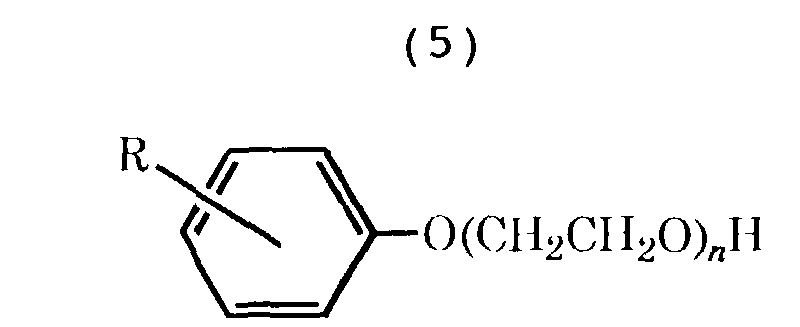
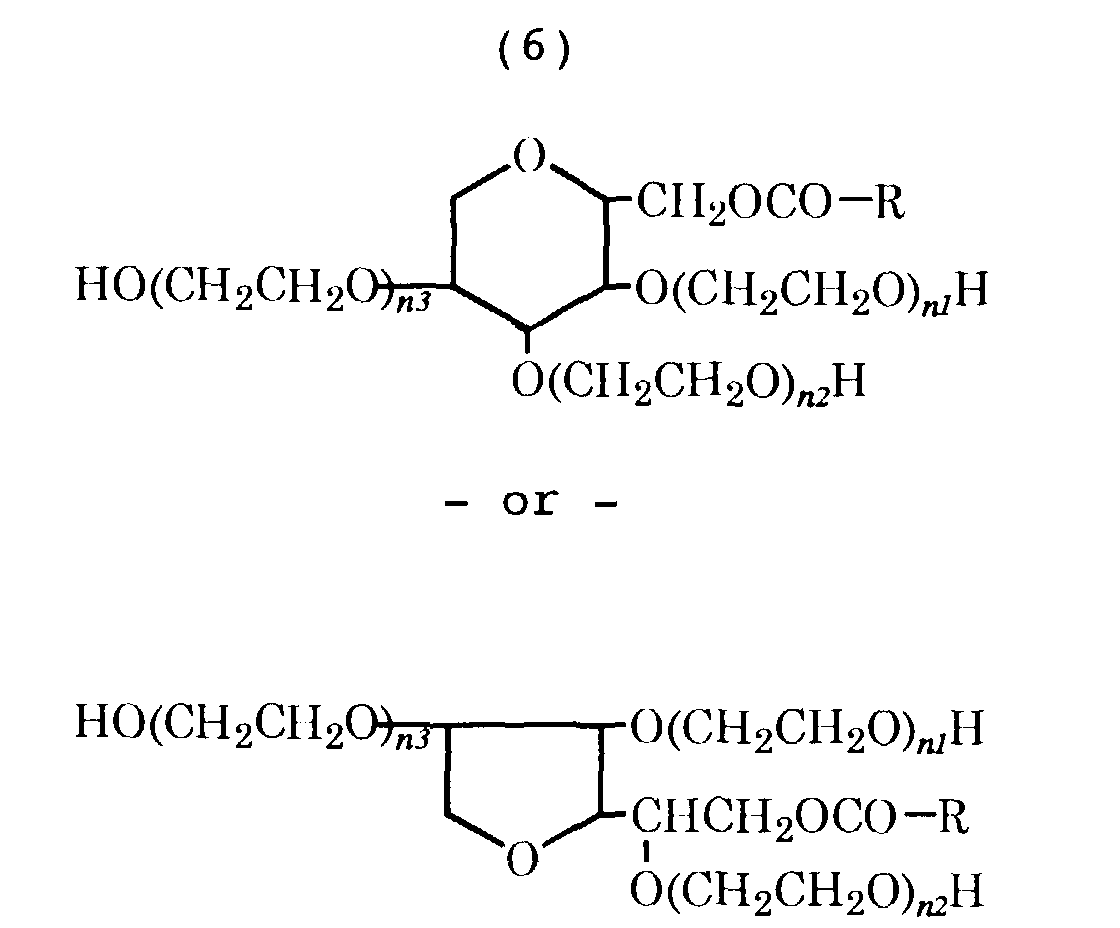 wherein R indicates one of an alkyl chain, an alkenyl chain and an alkynyl chain, respectively having 12-24 carbons; and n, n1 + n2 + n3, and n1 + n2 + n3 + n4 + n5 + n6 indicate an integer 5-70.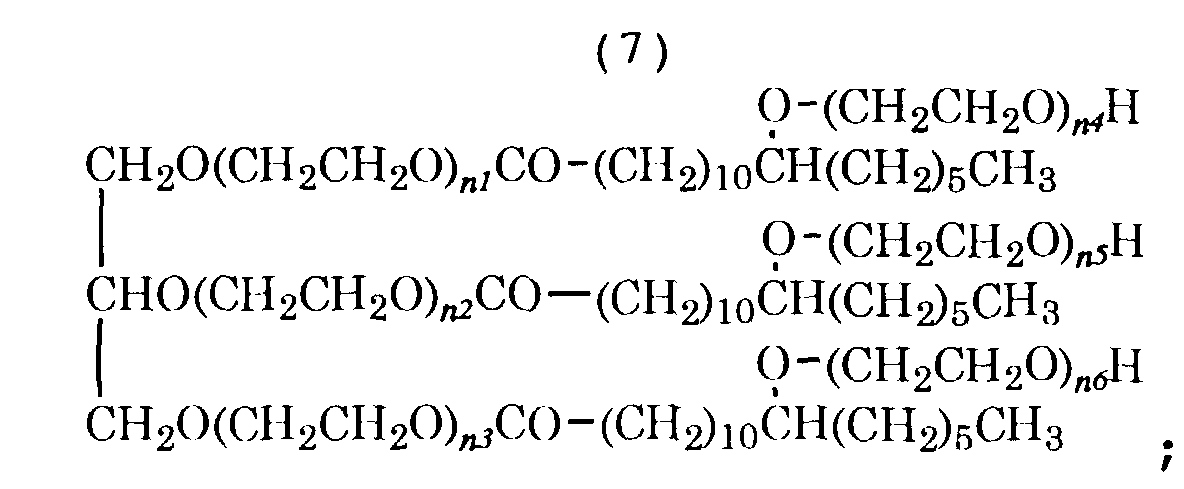
- A method for MCV assay as set forth in claim 13, wherein the nonionic surfactant is polyoxyethylene (20) oleyl ether.
- A method for MCV assay as set forth in claim 12, wherein the nonionic surfactant has a hydrophile/lipophile balance of 10-20.
- A method for MCV assay as set forth in claim 12, wherein the nonionic surfactant is present in the aqueous solution in a 5.0 X 10⁻⁴ to 5.0 X 10⁻¹ % concentration.
- A method for MCV assay as set forth in claim 12, wherein the diluting reagent has a pH of 6.0-8.5.
Applications Claiming Priority (2)
| Application Number | Priority Date | Filing Date | Title |
|---|---|---|---|
| US09/323,689 US6225124B1 (en) | 1999-06-02 | 1999-06-02 | Diluting reagent and method compelling time-independent consistency in MCV assay |
| US323689 | 1999-06-02 |
Publications (3)
| Publication Number | Publication Date |
|---|---|
| EP1058114A2 true EP1058114A2 (en) | 2000-12-06 |
| EP1058114A3 EP1058114A3 (en) | 2001-12-12 |
| EP1058114B1 EP1058114B1 (en) | 2006-01-04 |
Family
ID=23260311
Family Applications (1)
| Application Number | Title | Priority Date | Filing Date |
|---|---|---|---|
| EP00304578A Expired - Lifetime EP1058114B1 (en) | 1999-06-02 | 2000-05-30 | Method providing time-independent consistency in mean corpuscular volume assays |
Country Status (6)
| Country | Link |
|---|---|
| US (1) | US6225124B1 (en) |
| EP (1) | EP1058114B1 (en) |
| JP (1) | JP4086452B2 (en) |
| CN (1) | CN1276526A (en) |
| AT (1) | ATE315226T1 (en) |
| DE (1) | DE60025309T2 (en) |
Cited By (1)
| Publication number | Priority date | Publication date | Assignee | Title |
|---|---|---|---|---|
| EP2700944A3 (en) * | 2012-08-21 | 2014-05-07 | Rauf Gareyev | A method for determining endogenous and exogenous markers in blood |
Families Citing this family (10)
| Publication number | Priority date | Publication date | Assignee | Title |
|---|---|---|---|---|
| US6706526B2 (en) | 2002-01-24 | 2004-03-16 | Coulter International Corp. | Low formaldehyde producing blood diluent |
| US6916662B2 (en) * | 2003-01-31 | 2005-07-12 | Abbott Laboratories | Performance improvement for hematology analysis |
| JP4606261B2 (en) * | 2005-07-13 | 2011-01-05 | 三井造船株式会社 | Particle measurement method |
| US7482165B2 (en) * | 2005-08-24 | 2009-01-27 | Beckman Coulter, Inc. | Method of preventing white blood cell interferences to red blood cell measurements of a blood sample |
| JP5288970B2 (en) * | 2008-09-26 | 2013-09-11 | シスメックス株式会社 | Method for measuring mean red blood cell volume using a reagent for diluting blood samples |
| CN101995455B (en) * | 2009-08-14 | 2014-08-27 | 深圳迈瑞生物医疗电子股份有限公司 | Hemocyte analytical reagent, preparation method thereof and method for stabilizing mean corpuscular volume (MCV) |
| US9091677B2 (en) | 2010-08-09 | 2015-07-28 | Beckman Coulter, Inc. | Isotonic buffered composition and method that enables counting of cells |
| JP5461642B2 (en) * | 2012-09-06 | 2014-04-02 | シスメックス株式会社 | A reagent for diluting a blood sample for measuring the average red blood cell volume of a blood sample |
| CN104981691B (en) * | 2013-03-12 | 2020-03-31 | 雅培实验室 | Reagents, systems and methods for analyzing red blood cells and platelets |
| CN103743616A (en) * | 2013-12-19 | 2014-04-23 | 深圳市雷诺华科技实业有限公司 | Diluent for blood analyzer |
Family Cites Families (20)
| Publication number | Priority date | Publication date | Assignee | Title |
|---|---|---|---|---|
| US3973189A (en) * | 1972-05-15 | 1976-08-03 | General Science Corporation | Hematology system |
| US4358394A (en) * | 1979-05-07 | 1982-11-09 | Coulter Electronics, Inc. | Process for preparing whole blood reference controls having long term stability |
| US4299726A (en) * | 1979-05-07 | 1981-11-10 | Coulter Electronics, Inc. | Process for preparing whole blood reference controls having long term stability, preconditioning diluent and media therefor |
| US4506018A (en) * | 1982-12-30 | 1985-03-19 | Becton, Dickinson And Company | Blood diluent |
| EP0316453B1 (en) * | 1987-05-29 | 1996-03-27 | Toa Medical Electronics Co., Ltd. | Method for classifying leukocytes and reagents |
| JP2635142B2 (en) * | 1987-05-29 | 1997-07-30 | 東亜医用電子株式会社 | Leukocyte classification method and reagent |
| JPS6433780A (en) | 1987-07-29 | 1989-02-03 | Matsushita Electric Industrial Co Ltd | Magnetic sheet device |
| JPH0833388B2 (en) * | 1987-10-16 | 1996-03-29 | 東亜医用電子株式会社 | Sheath liquid for particle analyzer |
| JPH0782010B2 (en) * | 1987-10-16 | 1995-09-06 | 東亜医用電子株式会社 | Sheath liquid for particle analyzer |
| JP2619900B2 (en) * | 1988-01-27 | 1997-06-11 | 東亜医用電子株式会社 | Reagent and method for measuring leukocytes and hemoglobin in blood |
| JP3345135B2 (en) * | 1992-11-19 | 2002-11-18 | シスメックス株式会社 | Blood analysis method |
| EP0598663B1 (en) * | 1992-11-19 | 2000-02-02 | Sysmex Corporation | A pretreatment method for blood analysis |
| JP3301646B2 (en) * | 1993-03-19 | 2002-07-15 | シスメックス株式会社 | Reagent for immature cell measurement |
| JPH0782010A (en) | 1993-06-30 | 1995-03-28 | Ryoji Watabe | Dielectric heating element and incinerator |
| JP3320869B2 (en) * | 1993-12-22 | 2002-09-03 | シスメックス株式会社 | Leukocyte analysis reagent |
| JPH0833388A (en) | 1994-07-21 | 1996-02-02 | Mitsubishi Electric Corp | Linear carrier |
| JP3334020B2 (en) | 1994-10-24 | 2002-10-15 | 日本光電工業株式会社 | Sheath liquid for particle and cell measurement |
| US5888752A (en) * | 1995-05-16 | 1999-03-30 | Bayer Corporation | Universal rinse reagent and method for use in hematological analyses of whole blood samples |
| US5639630A (en) * | 1995-05-16 | 1997-06-17 | Bayer Corporation | Method and reagent composition for performing leukocyte differential counts on fresh and aged whole blood samples, based on intrinsic peroxidase activity of leukocytes |
| JP4042925B2 (en) * | 1996-11-20 | 2008-02-06 | シスメックス株式会社 | Classification and counting method for immature leukocytes |
-
1999
- 1999-06-02 US US09/323,689 patent/US6225124B1/en not_active Expired - Lifetime
-
2000
- 2000-05-30 DE DE60025309T patent/DE60025309T2/en not_active Expired - Lifetime
- 2000-05-30 AT AT00304578T patent/ATE315226T1/en not_active IP Right Cessation
- 2000-05-30 EP EP00304578A patent/EP1058114B1/en not_active Expired - Lifetime
- 2000-06-01 JP JP2000164543A patent/JP4086452B2/en not_active Expired - Fee Related
- 2000-06-02 CN CN00106392A patent/CN1276526A/en active Pending
Cited By (1)
| Publication number | Priority date | Publication date | Assignee | Title |
|---|---|---|---|---|
| EP2700944A3 (en) * | 2012-08-21 | 2014-05-07 | Rauf Gareyev | A method for determining endogenous and exogenous markers in blood |
Also Published As
| Publication number | Publication date |
|---|---|
| JP4086452B2 (en) | 2008-05-14 |
| DE60025309T2 (en) | 2006-08-24 |
| DE60025309D1 (en) | 2006-03-30 |
| EP1058114A3 (en) | 2001-12-12 |
| EP1058114B1 (en) | 2006-01-04 |
| JP2000356636A (en) | 2000-12-26 |
| US6225124B1 (en) | 2001-05-01 |
| ATE315226T1 (en) | 2006-02-15 |
| CN1276526A (en) | 2000-12-13 |
Similar Documents
| Publication | Publication Date | Title |
|---|---|---|
| ES2284160T3 (en) | MULTIPURPOSE REAGENT SYSTEM ABLE TO LIST QUICKLY BLOOD SAMPLES COMPLETE. | |
| JP3679127B2 (en) | Reagent and method for determining differential formula of leukocytes in blood | |
| DE69535413T2 (en) | Reagent and method for analyzing solid components in urine | |
| ES2784011T3 (en) | Procedure and device to collect and preserve cells for analysis | |
| US4389490A (en) | Method of stabilizing platelets for determining multiple platelet parameters in reference control and calibrator compositions; and diluents thereof | |
| CA1222679A (en) | Reagent for combined diluting and lysing whole blood | |
| EP1058115B1 (en) | Leukocyte classification reagent | |
| US7135341B2 (en) | Reference control containing a nucleated red blood cell component | |
| EP0598663A2 (en) | A pretreatment method for blood analysis | |
| WO1998002740A1 (en) | Method and composition for preserving antigens and nucleic acids and process for utilizing cytological material produced by same | |
| CN1119657C (en) | Concentration determining reagent for white blood cell and haemoglobin | |
| US7449337B2 (en) | Lytic reagent and method for leukocytes differential in whole blood | |
| JPWO2004001408A1 (en) | Leukocyte classification and counting method | |
| US6225124B1 (en) | Diluting reagent and method compelling time-independent consistency in MCV assay | |
| JP3345135B2 (en) | Blood analysis method | |
| US5843608A (en) | Reagent and method for differential determination of leukocytes in blood | |
| JP3759512B2 (en) | Automated method for assaying body fluid samples such as cerebrospinal fluid and reagents therefor | |
| EP0049478B1 (en) | Multi-purpose blood diluent | |
| JP3929283B2 (en) | Bone marrow nucleated cell classification and counting method | |
| EP0582736A1 (en) | Flow cytometry sheath reagent for elimination of red cells with preservation of nucleated cells | |
| JP2004513369A5 (en) | ||
| Wright et al. | Acute Babesia bovis infection: A study of the vascular lesions in kidney and lung | |
| JP4338206B2 (en) | Classification and counting method of erythroblasts | |
| Nemec et al. | The effect of high anticoagulant k3-edta concentration on complete blood count and white blood cell differential counts in healthy beagle dogs | |
| JP4107441B2 (en) | Reagent for classification counting of erythroblasts |
Legal Events
| Date | Code | Title | Description |
|---|---|---|---|
| PUAI | Public reference made under article 153(3) epc to a published international application that has entered the european phase |
Free format text: ORIGINAL CODE: 0009012 |
|
| AK | Designated contracting states |
Kind code of ref document: A2 Designated state(s): AT BE CH CY DE DK ES FI FR GB GR IE IT LI LU MC NL PT SE |
|
| AX | Request for extension of the european patent |
Free format text: AL;LT;LV;MK;RO;SI |
|
| PUAL | Search report despatched |
Free format text: ORIGINAL CODE: 0009013 |
|
| AK | Designated contracting states |
Kind code of ref document: A3 Designated state(s): AT BE CH CY DE DK ES FI FR GB GR IE IT LI LU MC NL PT SE |
|
| AX | Request for extension of the european patent |
Free format text: AL;LT;LV;MK;RO;SI |
|
| 17P | Request for examination filed |
Effective date: 20020208 |
|
| 17Q | First examination report despatched |
Effective date: 20020627 |
|
| AKX | Designation fees paid |
Free format text: AT BE CH CY DE DK ES FI FR GB GR IE IT LI LU MC NL PT SE |
|
| GRAP | Despatch of communication of intention to grant a patent |
Free format text: ORIGINAL CODE: EPIDOSNIGR1 |
|
| RTI1 | Title (correction) |
Free format text: METHOD PROVIDING TIME-INDEPENDENT CONSISTENCY IN MEAN CORPUSCULAR VOLUME ASSAYS |
|
| GRAS | Grant fee paid |
Free format text: ORIGINAL CODE: EPIDOSNIGR3 |
|
| GRAA | (expected) grant |
Free format text: ORIGINAL CODE: 0009210 |
|
| AK | Designated contracting states |
Kind code of ref document: B1 Designated state(s): AT BE CH CY DE DK ES FI FR GB GR IE IT LI LU MC NL PT SE |
|
| PG25 | Lapsed in a contracting state [announced via postgrant information from national office to epo] |
Ref country code: CH Free format text: LAPSE BECAUSE OF FAILURE TO SUBMIT A TRANSLATION OF THE DESCRIPTION OR TO PAY THE FEE WITHIN THE PRESCRIBED TIME-LIMIT Effective date: 20060104 Ref country code: FI Free format text: LAPSE BECAUSE OF FAILURE TO SUBMIT A TRANSLATION OF THE DESCRIPTION OR TO PAY THE FEE WITHIN THE PRESCRIBED TIME-LIMIT Effective date: 20060104 Ref country code: LI Free format text: LAPSE BECAUSE OF FAILURE TO SUBMIT A TRANSLATION OF THE DESCRIPTION OR TO PAY THE FEE WITHIN THE PRESCRIBED TIME-LIMIT Effective date: 20060104 Ref country code: BE Free format text: LAPSE BECAUSE OF FAILURE TO SUBMIT A TRANSLATION OF THE DESCRIPTION OR TO PAY THE FEE WITHIN THE PRESCRIBED TIME-LIMIT Effective date: 20060104 Ref country code: AT Free format text: LAPSE BECAUSE OF FAILURE TO SUBMIT A TRANSLATION OF THE DESCRIPTION OR TO PAY THE FEE WITHIN THE PRESCRIBED TIME-LIMIT Effective date: 20060104 |
|
| REG | Reference to a national code |
Ref country code: GB Ref legal event code: FG4D |
|
| REG | Reference to a national code |
Ref country code: CH Ref legal event code: EP |
|
| REG | Reference to a national code |
Ref country code: IE Ref legal event code: FG4D |
|
| REF | Corresponds to: |
Ref document number: 60025309 Country of ref document: DE Date of ref document: 20060330 Kind code of ref document: P |
|
| PG25 | Lapsed in a contracting state [announced via postgrant information from national office to epo] |
Ref country code: DK Free format text: LAPSE BECAUSE OF FAILURE TO SUBMIT A TRANSLATION OF THE DESCRIPTION OR TO PAY THE FEE WITHIN THE PRESCRIBED TIME-LIMIT Effective date: 20060404 Ref country code: SE Free format text: LAPSE BECAUSE OF FAILURE TO SUBMIT A TRANSLATION OF THE DESCRIPTION OR TO PAY THE FEE WITHIN THE PRESCRIBED TIME-LIMIT Effective date: 20060404 |
|
| PG25 | Lapsed in a contracting state [announced via postgrant information from national office to epo] |
Ref country code: ES Free format text: LAPSE BECAUSE OF FAILURE TO SUBMIT A TRANSLATION OF THE DESCRIPTION OR TO PAY THE FEE WITHIN THE PRESCRIBED TIME-LIMIT Effective date: 20060415 |
|
| PG25 | Lapsed in a contracting state [announced via postgrant information from national office to epo] |
Ref country code: IE Free format text: LAPSE BECAUSE OF NON-PAYMENT OF DUE FEES Effective date: 20060530 |
|
| PG25 | Lapsed in a contracting state [announced via postgrant information from national office to epo] |
Ref country code: MC Free format text: LAPSE BECAUSE OF NON-PAYMENT OF DUE FEES Effective date: 20060531 |
|
| PG25 | Lapsed in a contracting state [announced via postgrant information from national office to epo] |
Ref country code: PT Free format text: LAPSE BECAUSE OF FAILURE TO SUBMIT A TRANSLATION OF THE DESCRIPTION OR TO PAY THE FEE WITHIN THE PRESCRIBED TIME-LIMIT Effective date: 20060605 |
|
| REG | Reference to a national code |
Ref country code: CH Ref legal event code: PL |
|
| ET | Fr: translation filed | ||
| PLBE | No opposition filed within time limit |
Free format text: ORIGINAL CODE: 0009261 |
|
| STAA | Information on the status of an ep patent application or granted ep patent |
Free format text: STATUS: NO OPPOSITION FILED WITHIN TIME LIMIT |
|
| 26N | No opposition filed |
Effective date: 20061005 |
|
| PG25 | Lapsed in a contracting state [announced via postgrant information from national office to epo] |
Ref country code: GR Free format text: LAPSE BECAUSE OF FAILURE TO SUBMIT A TRANSLATION OF THE DESCRIPTION OR TO PAY THE FEE WITHIN THE PRESCRIBED TIME-LIMIT Effective date: 20060405 |
|
| PG25 | Lapsed in a contracting state [announced via postgrant information from national office to epo] |
Ref country code: LU Free format text: LAPSE BECAUSE OF NON-PAYMENT OF DUE FEES Effective date: 20060530 |
|
| PG25 | Lapsed in a contracting state [announced via postgrant information from national office to epo] |
Ref country code: CY Free format text: LAPSE BECAUSE OF FAILURE TO SUBMIT A TRANSLATION OF THE DESCRIPTION OR TO PAY THE FEE WITHIN THE PRESCRIBED TIME-LIMIT Effective date: 20060104 |
|
| PGFP | Annual fee paid to national office [announced via postgrant information from national office to epo] |
Ref country code: NL Payment date: 20090517 Year of fee payment: 10 |
|
| PGFP | Annual fee paid to national office [announced via postgrant information from national office to epo] |
Ref country code: IT Payment date: 20090521 Year of fee payment: 10 |
|
| REG | Reference to a national code |
Ref country code: NL Ref legal event code: V1 Effective date: 20101201 |
|
| PG25 | Lapsed in a contracting state [announced via postgrant information from national office to epo] |
Ref country code: NL Free format text: LAPSE BECAUSE OF NON-PAYMENT OF DUE FEES Effective date: 20101201 Ref country code: IT Free format text: LAPSE BECAUSE OF NON-PAYMENT OF DUE FEES Effective date: 20100530 |
|
| REG | Reference to a national code |
Ref country code: FR Ref legal event code: PLFP Year of fee payment: 17 |
|
| PGFP | Annual fee paid to national office [announced via postgrant information from national office to epo] |
Ref country code: GB Payment date: 20160525 Year of fee payment: 17 Ref country code: DE Payment date: 20160524 Year of fee payment: 17 |
|
| PGFP | Annual fee paid to national office [announced via postgrant information from national office to epo] |
Ref country code: FR Payment date: 20160412 Year of fee payment: 17 |
|
| REG | Reference to a national code |
Ref country code: DE Ref legal event code: R119 Ref document number: 60025309 Country of ref document: DE |
|
| GBPC | Gb: european patent ceased through non-payment of renewal fee |
Effective date: 20170530 |
|
| REG | Reference to a national code |
Ref country code: FR Ref legal event code: ST Effective date: 20180131 |
|
| PG25 | Lapsed in a contracting state [announced via postgrant information from national office to epo] |
Ref country code: DE Free format text: LAPSE BECAUSE OF NON-PAYMENT OF DUE FEES Effective date: 20171201 Ref country code: GB Free format text: LAPSE BECAUSE OF NON-PAYMENT OF DUE FEES Effective date: 20170530 |
|
| PG25 | Lapsed in a contracting state [announced via postgrant information from national office to epo] |
Ref country code: FR Free format text: LAPSE BECAUSE OF NON-PAYMENT OF DUE FEES Effective date: 20170531 |