FIELD OF INVENTION
The present invention relates to hydrotreating of diesel
fuels and in particular to improvement of those processes
in a staged process.
BACKGROUND
The need to produce extremely clean transportation fuels is
continually increasing. Future standards are being set,
which cannot be achieved with existing process equipment.
Although improved commercial catalysts are available, they
are not sufficiently active to meet the increasingly more
strict requirements for higher quality commercial fuels,
and thus modifications of process equipment are also neessary.
Such changes in process equipment will be expensive
and there is a need to identify novel processes to meet
these requirements.
DETAILED DESCRIPTION
Overall Process Description
It is in the context of the above problems that the present
invention was conceived. When the sulphur level must be
lowered to less than 500 ppm sulphur, the conversions that
are required involve desulphurization of highly substituted
dibenzothiophenes, especially those in which the substituents
are present on the aromatic rings adjacent to the heterocyclic
sulphur atom. We will refer to such compounds as
refractory sulphur compounds (RS-compounds). A typical example
of such a compound is 4,6-dimethyldibenzothiophene
(46 DMDBT). We have found that the conversion of the most
refractory sulphur compounds (such as 46 DMDBT) in diesel
fuels is made even more difficult by the presence of certain
other components found in normal feeds to diesel hydrotreaters.
Such compounds are referred to as inhibitors
for HDS. We have discovered that if such inhibitors are selectively
removed from the feed and the feed containing
less inhibitors is hydrotreated under typical commercial
conditions used in today's refineries, then the RS-compounds
can be readily removed by hydrotreating using
conventional catalyst loadings and process conditions. The
degree to which the inhibitors are removed will depend on
the particular adsorbent used and the cost of the removal
process. In many instances, it is not necessary to remove
all of the inhibitors to experience the benefits of our
combined process. For ease of discussion, we will refer to
diesel fuels which have been contacted with adsorbents for
the inhibitors as "inhibitor free" diesel fuels, however,
we do not mean to imply that 100% of the inhibitors have
been removed. Fig.s 2 and 3 and Example 1 illustrate this
point.
Hydrotreating Process
The hydrotreating step of the combined process scheme of
this invention can be any conventional hydrotreating process.
This includes fixed or ebulated bed operations at conventional
operating conditions such as temperatures in the
range of 250°C to 450°C, preferably 300°C to 380°C. Pressures
are also conventional such as 20-60 atm of hydrogen,
and preferably below 40 atm of hydrogen. Higher temperatures
and pressures will also provide the benefits of the
present invention, however, lower pressures and temperatures
are preferred to avoid yield losses of valuable diesel
fuels and to avoid the need for construction of new
process equipment in order to achieve extremely strict sulphur
standards such as less than 300 ppm sulphur or even
more strict sulphur standards of less than 50 ppm sulphur.
Catalysts used in the hydrotreating step are preferably
those employed conventionally, such as mixed cobalt and/or
nickel and molybdenum sulphides supported on alumina and
mixed nickel and tungsten sulphides supported on alumina or
silica. The combined process of this invention will also
benefit newly developed catalysts such as those containing
ruthenium sulfide and catalysts using novel supports such
as silica-aluminas, carbons or other materials. For details
on the state of the art in conventional hydrotreating processes,
we refer to "Hydrotreating Catalysis - Science and
Technology", by H. Topsøe, B.S. Clausen and F.E. Massoth,
Springer-Verlag Publishers, Heidelberg, 1996.
Inhibitor Removal Processes
It is possible to envision many ways of removing materials,
which inhibit the hydrotreating process, especially the hydrodesulphurization
of RS-compounds. However, the removal
of inhibitors should be done in a practical way if this
principle is to be realized commercially. The method used
for inhibitor removal should be highly selective for only
the inhibitors and should not remove the valuable components
of the diesel fuel or other non-inhibiting components
of the diesel fuel. An alternative process would be to selectively
remove the RS-compounds as described in US Patent
No. 5,454,933. However, in that patent the yield of diesel
fuel was not specified, and in attempting to duplicate this
patent, we have observed that the adsorbent carbon, though
showing some selectivity for RS-compounds, has a high capacity
for all diesel fuel components. When one attempts to
recover the valuable diesel fuel components, the RS-compounds
are also released, as the strength of adsorption
is not high. Thus, it may be possible to concentrate the
RS-compounds, but not remove them specifically. There are
many different classes of materials that can inhibit the
HDS of RS-compounds.
It is well known that certain basic compounds such as quinolines
and acridines inhibit HDS reactions (see H. Topsøe,
B.S. Clausen and F.E. Massoth, "Hydrotreating Catalysis -
Science and Technology", Springer-Verlag publishers, Berlin
1996; M.J. Girgis and B.C. Gates, Ind. Eng. Chem. Res., pp.
2021-2058, Vol. 30 No. 9, 1991; D.D. Whitehurst, T. Isoda
and I. Mochida, Advances in Catalysis, pp. 345-471, Vol.
42, 1998; and references therein). However, any compound
that will compete with RS-compounds for adsorption on the
catalytic site will inhibit the HDS of the RS-compound.
Thus, in addition to basic compounds, other strongly adsorbing
species in the diesel fuel that is to be hydrotreated
will lower the rate of removal of sulphur from the
diesel fuel. We have found that such inhibitors are all
highly polar materials that may be selectively removed from
the hydrocarbons and RS-compounds by various adsorbents. By
polar compounds we mean classical basic compounds such as
were described above, including their benzo-analogs. These
may be identified in diesel fuels by titration with strong
acids in non-aqueous media. Other inhibitors include acidic
nitrogen species, such as carbazoles, indoles and their
benzo-analogs. Such acidic N-compounds can be identified by
titration with strong bases in non-aqueous media. Still
other inhibitors include amphoteric compounds such as hydroxyquinolines,
and still other neutral compounds containing
more than one nitrogen in an aromatic ring system or
compounds which contain both oxygen and nitrogen in the
same molecule. Further, inhibitors need not contain nitrogen,
but may e.g. be composed of highly polar oxygen containing
species.
Thus, it is possible to devise adsorption processes, which
will selectively remove certain chemical classes of inhibitors
or selectively remove essentially all inhibitor molecules
by virtue of their polar nature. We have devised several
different means to achieve selective inhibitor removal
from diesel fuels using either their chemical properties or
their polar properties. The particular method that is preferred
will depend on the particular situation and the specific
diesel fuel that is to be processed. However, the
most preferred general method for inhibitor removal is
based on their polar nature. The following text describes
the various methods we have devised for use in the combined
process of this invention.
Liquid Adsorbent Processes
In the present invention, our approach is to selectively
remove the inhibitors for RS-compound conversion and then
selectively desulphurize the inhibitor free feed in conventional
HDS operations. We have found that only certain adsorbents
have the selectivety desired. Liquid adsorbents
can be identified using their solvent parameters, fd, fp
and fh, as defined by Teas [see J.P. Teas, "Graphic Analysis
of Resin Solubilities", J. Paint Technology 19, 40
(1968)]. To define the useful range of solubility parameters,
it is customary to construct a triangular diagram and
identify an area within the diagram in which the desired
results are obtained. This effective area reflects the
solubility characteristics of desirable solvents in terms
of their solvent parameters, fd, fp and fh, which reflect
the solvents' dispersive, hydrogen bonding and polarity
characteristics, respectively. Fig. 4 shows the region of
desired properties in the present invention. Solvents that
have solubility parameters that fall within the desired
range shown in Fig. 4 will be able to selectively remove
the inhibitors, while rejecting the valuable diesel fuel
components. In this example, dimethylformamide, dimethylsulphoxide
and methanol containing 25% water are shown to
fall within the desired area for our process. In Fig. 5,
examples of solvents that are not suitable for our process
are shown. In this case water alone is a poor solvent for
the inhibitors, while toluene and acetone are not selective
for the inhibitors as they are good solvents for diesel
fuel and do not form a separate phase. A further example of
how two non-useful solvents may be combined in specific
proportions to make a mixture, which has the correct solvent
properties, is shown in Fig. 6. In this example, n-propanol
is a borderline adsorbent as it is too strong a
solvent for the desired inhibitor free fuel and water is
too poor a solvent for the inhibitors. A mixture of the two
falls within our desired range of solvent parameters. A
further advantage of some mixtures is that some specific
combinations form azeotropes (constant boiling mixtures),
which have the desired solvent parameters. This is the case
shown in Fig. 6, where the azeotrope of water and n-propanol
consists of 71.8% n-propanol and 28.2% water. This
azeotrope boils at a lower temperature than either component
and would thus retain constant composition in the distillation
step used for solvent recovery.
Another important property of the solvent used to remove
inhibitors is the density of the liquid. To operate a successful
separation process, the density of the solvent
should have a lower or higher specific gravity than the
diesel fuel being treated. The difference between the specific
gravity of the diesel fuel and the solvent should be
at least 0.02 specific gravity units, and preferably more
than this value.
To select a pure solvent or mixture, which has the correct
solubility parameters for use in our process, one only
needs to find the solvent parameters of the solvent or components
of the mixture (from the literature or by experimental
determination) and plot them on a triangular diagram
similar to the one shown in Fig. 4. If the plot of the
solubility parameters falls within the desired area of Fig.
4 then material will be useful for the process of this invention.
If a mixed solvent is to be used, the mixed components
should constitute a single phase in order to effectively
extract the inhibitors from the diesel fuel.
To recover the solvent for reuse, distillation or, in some
instances, a simple flash process can separate the solvent
from the dissolved inhibitors. The isolated inhibitors may
be disposed of by burning or in some cases they may serve
as sources of chemicals.
The process used for removing inhibitors with a liquid adsorbent
can be any conventional process used for liquid-liquid
extraction such as columnar counter current flow,
stirred tank, hydroclone, etc. It may also be staged to increase
the efficiency or it may be a single contact process,
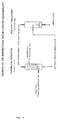
depending on the degree of separation desired. An illustration
of this stage of our invention for selectively
removing inhibitors with liquid adsorbents is given in Fig.
7. The schematic diagram illustrated in Fig. 7 represents a
columnar countercurrent flow process. This illustration is
only one example of a process that can be used to selectively
remove the inhibitors prior to hydrotreating, but
should suffice to instruct anyone skilled in the art as to
how to conduct such a process.
The range of conditions, which may be used in this extraction
process, is quite broad and will depend on the particular
solvents used and hydrotreating feeds that are being
treated. Ambient conditions are preferred, but in some
cases the efficiency of inhibitor removal or the density
difference between the solvent and the diesel fuel may be
optimized by raising or lowering the temperature. However,
the temperature should not be higher than the boiling point
of either the diesel fuel or the extraction solvent, and
the temperature should not be lower than the freezing or
pour point of the diesel fuel or extraction solvent. For
ease of extraction solvent recovery, the boiling point of
the extraction solvent should be considerably different
from the diesel fuel boiling range, and preferably the solvent
should have a boiling point lower than the lowest
boiling component of the diesel fuel, or the lowest boiling
inhibitor in the diesel fuel.
Solid Adsorbent Processes
Another version of the present invention is to use a solid
adsorbent in the inhibitor adsorption step. In this mode,
many process variations are possible. The adsorption process
may be conducted in a fixed bed operation or in moving
beds, such as fluidized beds, ebulated beds, or simple moving
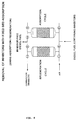
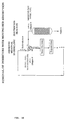
beds. Fig.s 8 and 9 illustrate two examples of such
processes. For all cases in which solid adsorbents are
used, three integrated steps are needed for the overall
process. Firstly, the solid adsorbent is contacted with the
diesel fuel to remove inhibitors. Secondly, the solid is
separated from the physically adsorbed inhibitor free fuel.
Thirdly, the solid adsorbent, containing strongly held inhibitors
is regenerated to provide inhibitor free adsorbent,
which is reused.
In Fig. 8 two fixed beds are shown, in which one is in the
adsorption mode, while the other is in the regeneration
mode. The inhibitor free fuel is predominantly separated
from the solid adsorbent by merely passing the diesel fuel
through the fixed bed of adsorbent. However, a small amount
of inhibitor free fuel is retained on the adsorbent at the
end of the adsorption cycle, and this inhibitor free fuel
is recovered prior to the regeneration step. Inhibitor free
recovery is achieved by a stripping operation with a hot
gas such as steam, hydrogen, refinery gaseous fuel, or
other refinery gases produced as byproducts from another
refinery process. The stripping operation can also be conducted
with a light liquid, such as a C4-C7 hydrocarbon,
but this stripping liquid should then be recovered with
some stripping gas, prior to the adsorbent regeneration.
In this mode of inhibitor adsorption, the diesel fuel constitutes
a liquid phase. The preferred temperature range
for this mode of operation is from ambient to slightly below
the initial boiling point of the diesel fuel being
treated. This temperature range is generally between 15°C
to 300°C, but could also be conducted at sub-ambient temperatures
if desired. The preferred range is from 20°C to
200°C.
The adsorption cycle length is determined by the capacity
of the adsorbent to remove the inhibitors from the diesel
fuel feed. This is generally determined by analysis of the
inhibitor free fuel for N-compound content. The preferred
level of nitrogen in the treated inhibitor free fuel is
generally below 200 ppm, and, more preferred, the level
should be below 100 ppm, or even more preferred less than
20 ppm. At this level of nitrogen in the inhibitor free
fuel, the subsequent hydrodesulphurization (HDS) is quite
facile, and levels of sulphur in the product of less than
200 ppm can be achieved under mild conventional process
conditions including lower pressures such as 30 atm of hydrogen
as will be shown in the examples.
In another embodiment of this invention, the adsorption
step can be conducted at elevated temperatures, where the
diesel fuel is in the vapor phase. This temperature should
be high enough for the diesel fuel to be in the vapor
phase, but low enough for the cracking of the valuable diesel
fuel not to occur. The temperature should also be low
enough such that inhibitors are adsorbed by the solid adsorbent
and are not released back into the inhibitor free
fuel stream. In this mode of operation, the temperature
range is generally from 300°C to 450°C, and the preferred
temperature range is from 350°C to 400°C. When operating in
this mode, the inhibitor free fuel is not substantially adsorbed
by the solid adsorbent, and the stripping operation
may in some instances not be necessary. The regeneration of
the adsorbent is conducted as described above, when the adsorbent's
capacity for removing the inhibitors has been
reached. In this mode, the level of nitrogen in the effluent,
inhibitor free fuel, again determines the capacity of
the adsorbent to remove inhibitors. As described above, the
level of nitrogen in the effluent is preferably below 200
ppm and even more preferred below 20 ppm.
In the regeneration step, it is preferable to restore the
solid adsorbent's capacity, so that it may be recycled back
to the adsorption zone and reused. Such regeneration can be
either oxidative, i.e. by burning in a fixed bed operation,
or reductive. In some cases it may be desirable to heat exchange
the regenerated hot solid adsorbent, either directly
or indirectly to recover the heat from the combusted polar
compounds and/or to cool the adsorbent to the desired temperature
for the adsorption zone. For hydrogenative regeneration,
the inhibitors adsorbed on the adsorbent may be
removed by high temperature contact with a gas containing
molecular hydrogen, such as pure hydrogen or a refinery off
gas containing a substantial portion of molecular hydrogen.
This contact with hydrogen can be done at atmospheric or
elevated pressures, but it is essential that the temperature
be above 400°C. These regeneration procedures should
be conducted at temperatures, which do not lower the surface
area of the solid adsorbent, but substantially remove
all of the inhibitors as gaseous products. The preferred
temperature range for these regeneration steps is from
400°C to 1000°C, and even more preferred, between 500°C to
700°C. In some instances, the solid adsorbent may contain
catalytic additives, which enhance the regeneration process.
For example, in oxidative regenerations, oxidation
catalysts such as calcium, magnesium, iron, potassium or
sodium may be added, and in such instances, the preferred
combustion temperature is 350°C to 500°C. Hydrogenative regenerations
may be enhanced by hydrogenation catalysis,
such as nickel, iron, platinum, palladium, or other group
VIII metals.
Other embodiments of this invention include inhibitor removal
steps, in which the solid adsorbent is continuously
circulated between the adsorption step in one vessel and
the regeneration step in a separate vessel. Such processes
include moving beds, ebulated beds, hydroclones, fluidized
beds, etc. with external regeneration. These moving bed
processes can be stand-alone operations or can be integrated
with existing refinery equipment. In one preferred
embodiment of this invention, the inhibitor removal step is
integrated with an existing FCC operation in the refinery.
In this embodiment, the adsorbent comprises the steady
state, or equilibrium, FCC catalyst. Fig. 9 illustrates one
example of this type of integrated process. As can be seen
in the figure, the equilibrium catalyst is taken out as a
side stream just after regeneration and is then contacted
with the diesel fuel feed that contains inhibitors. The inhibitor
free fuel is separated from the FCC catalyst adsorbent
and then hydrotreated to remove sulphur contaminants
as described above. The FCC adsorbent, containing inhibitors
and some physically adsorbed inhibitor free fuel,
is returned to the FCC operation in the stripper zone,
where the inhibitor free fuel is recovered as part of the
FCC product stream, and the inhibitors are retained by the
FCC adsorbent. The FCC adsorbent is admixed with FCC catalyst
containing coke produced in the FCC process and both
are regenerated by combustion in the FCC regenerator.
In such an integrated process, the relative amounts of
equilibrium catalyst that are taken for the inhibitor adsorption
process and returned to the FCC cracking process
are determined by the content of inhibitors in the diesel
fuel feed and the capacity of the equilibrium catalyst to
remove those inhibitors.
As the regenerated FCC catalyst often exits the regenerator
at temperatures in excess of 900°C, it is sometimes desirable
to cool the adsorbent FCC catalyst stream before the
adsorption step in order to avoid cracking of the diesel
fuel. This can be accomplished by either direct heat exchange
with steam or refinery gas or by indirect heat exchange
with water which produces steam for refinery heat or
power generation. The degree of temperature reduction will
depend on which mode of operation is employed in the adsorption
step as described above.
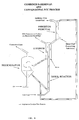
Another embodiment of this invention is shown in Fig. 10,
where the adsorbent and fuel to be treated are contacted in
a conical circulating vessel, such as a hydroclone. Such
types of vessels are highly effective in separating solids
and liquids at high throughputs. In such a process, the
critical features include contact times between the solid
and liquid sufficient to achieve the desired level of inhibitor
reduction, and flow velocities for liquid and solid
which can achieve separation of liquid and solid without
carryover of solid into the liquid exit stream. It is
within the scope of this invention to conduct such adsorption
processes at room temperature, at elevated temperatures
or sub-ambient temperatures, depending on the nature
of the adsorbent, the nature of the fuel that is being
treated and the desired result of the treatment. Anyone expert
in this area can easily determine the optimal conditions
by experimental studies.
Suitable Solid Adsorbents
As will be shown in the examples, the choice of a suitable
solid adsorbent for inhibitors is the key to the success of
this combined process. We have found that many porous
solids, when contacted with diesel fuel feeds, can provide
some benefit to the HDS of refractory sulphur compounds
(RS-compounds). However, the solid adsorbents of choice
should not only have the capability of removing inhibitors,
but they should be highly selective in this removal and
should have capacities for removing substantial amounts of
inhibitors before they are no longer effective. Once the
inhibitors have been adsorbed, the adsorbent should have
the properties that allow the recovery of physically adsorbed
inhibitor free fuel, while strongly retaining the
adsorbed inhibitors. In addition, the preferred solid adsorbents
should have the durability to withstand regeneration
in a process in which the adsorbed inhibitors are
burned off of the adsorbent without losing their effectiveness
in multiple cycles of adsorption/regeneration.
It is possible to remove inhibitors using organic solid adsorbents,
and the use of such materials falls within the
scope of this invention. However, regeneration of such materials
is more complicated than for inorganic solids as
combustion is not a viable option. Suitable solids include
porous carbons and intrinsically porous ion-exchange resins
(so-called macroreticular resins). As will be shown in the
examples, both strongly acidic and strongly basic ion-exchange
resins adsorb some inhibitors from diesel fuel
feeds, and such treatments of diesel fuel feeds allows a
higher degree of HDS of RS-compounds than is possible for
untreated diesel fuel feeds. However, regeneration of the
ion-exchange resins, to restore their original capacity for
inhibitor removal, requires large volumes of reagent liquids
(e.g. aqueous or alcoholic acids and bases) to remove
the chemically adsorbed diesel fuel components and restore
the active sites within the ion-exchange resin. Carbon adsorbents
have similar disadvantages in that they are not
highly selective for only the inhibitors and they cannot be
regenerated by burning.
Another class of materials, which has been found to be effective
for the combined process of this invention, is porous
strongly basic alkaline earth oxide containing materials.
Examples of such materials include carefully calcined
magnesium hydroxy carbonates and porous Portland cements.
These materials have the additional advantage that they can
function as oxidation catalysts, which allows the use of
lower temperatures in the regeneration step.
The most effective solids, which have been identified for
this application, are acidic silica/alumina containing materials
having surface areas greater than 100 m2/g. Such
materials include pure silica/aluminas produced by co-precipitating
silica and alumina from a variety of precursors
as well as composites containing said silica/aluminas
in combination with other materials, such as zeolites. The
acidity of these adsorbents can be conveniently measured by
the well-known "alpha" test as described by Weisz and Miale,
J. Catal. 4, 527 (1965). This test measures a solid's
ability to crack hexane at atmospheric pressure and 538°C.
Normal silica/aluminas containing about 4% aluminum have
alpha values of 1, whereas composites containing zeolites
can have alpha values exceeding 100. For the purposes of
the present invention, it is preferable to utilize solid
adsorbents having alpha values of from 0.5 to 10 and most
preferred from 1-5. Such materials are often used as catalyst
supports or as composite catalysts. They are highly
durable and may be regenerated many times without losing
effectiveness in the application of the present invention.
This is especially true for FCC cracking catalysts in which
the binder or matrix (silica/alumina) comprises about 60%
of the composite and an acidic zeolite comprises the rest
of the composite. The acidity of such composites can be improved
by impregnation of or co-precipitation of the silica/alumina
with phosphorus containing acids prior to the
final calcination step as described in U.S. Patent Nos
3,962,364, 4,044,065, 4,454,241 and 5,481,057. Such phosphorus
treated silica/alumina containing composites are
also preferred materials in the present invention.
EXAMPLES
Example 1
In order to evaluate the effect of removing inhibitors from
diesel fuels prior to the hydrotreating process, a series
of experiments were conducted, in which a standard diesel
fuel was contacted in various ways with several solid adsorbents,
and the treated and untreated feeds were subsequently
desulphurized under standard conditions. The composition
of the diesel fuel feed is given in Table 1.
| Composition of Standard Diesel Fuels |
| | % Aromatics |
| | | ppm 4MDBT | PPM 46DMDBT | ppm N | %H | S.G. | Mono | Di | Tri | Total |
| A | 1.5990 | 330 | 160 | 293 | 12.3 | 0.8733 | 13.02 | 14.84 | 5.22 | 33.08 |
| B | 1.6050 | 291 | 142 | 327 | | 0.8742 |
Diesel fuel B was percolated through a dry column of activated
chromatographic grade silica gel. In trial tests it
was found that all of the N-compounds, some of the S-compounds
and some of the aromatics were removed from the
diesel fuel passing through the silica gel column for the
first two equivalent bed volumes of diesel fuel, which were
percolated. The next three equivalent bed volumes of eluted
diesel fuel contained essentially no N-compounds, and the
S-compounds and aromatics eluted at the same concentration
as in the parent feed. In the next four bed volumes of
eluted diesel fuel, it was observed that 54 ppm of N had
eluted. Thus, it took about two bed volumes of diesel fuel
to come to equilibrium with the silica gel column in terms
of S-compounds and aromatics. The capacity of this silica
gel for selectively removing N-compounds and leaving the S-compounds
and aromatics in their original concentration was
about three bed volumes of diesel eluting through the column
after the column came to equilibrium with the diesel
fuel. Thus, it is important not to exceed the capacity of
the adsorbent for removing inhibitors from the diesel fuel
in the adsorbent step of this combined process.
Using a similar procedure, 16 liters of diesel fuel were
prepared in which the N-compounds and other polar inhibitors
were removed from the diesel fuel, but the S-compounds
and aromatic hydrocarbons were present in approximately
their original concentrations. The nitrogen content of the
above treated "inhibitor free fuel" was found to be about 7
ppm. This treated diesel fuel will be referred to as inhibitor
free diesel fuel 1C. Thus, the above treatment removed
over 97% of all of the N-containing inhibitors in the
diesel fuel. The aromatic hydrocarbons and sulphur level of
this inhibitor free fuel were found to be essentially the
same as that of the untreated diesel fuel, and the distribution
and content of RS-compounds was also the same as
those of the untreated diesel fuel. This "inhibitor free
fuel" was then used for hydrotreating studies to demonstrate
how the reactivity of RS-compounds is greatly improved
by removing inhibitors in a pretreating step.
Example 2
The effectiveness of different liquid adsorbents for removing
inhibitors from diesel fuels were determined by contacting
diesel fuel A of Example 1 and various liquid adsorbents
using a variety of procedures as described in
Table 2. The effectiveness was evaluated by determining the
amount of N-compounds removed from the diesel fuel and the
non-selective loss of diesel fuel to the adsorbent liquid.
As can be seen from the table, liquids like acetone, and
toluene are not effective as they completely dissolve the
diesel fuel, and there is no phase separation. Liquids such
as water give good phase separation, but do not extract the
inhibitors. Liquids, having just the right solvent parameters
such as dimethylformamide, selectively remove inhibitors,
which gives a high yield of treated diesel fuel. The
table also shows that azeotropic mixtures are effective adsorbents,
but that some azeotropes are more effective than
others e.g. i-propyl alcohol/water azeotrope contains too
little water, which results in an excessive solubility of
diesel fuel in the azeotropic mixture, and gives a low
yield of treated diesel fuel. By contrast, n-propyl alcohol/water
azeotrope contains the right amount of water,
which provides high selectivity for inhibitors with excellent
yields of treated diesel fuel product. Also shown in
the table are comparisons of conventional caustic extraction
of the diesel fuel in an attempt to selectively remove
acidic inhibitors. This extraction also produced an emulsion
that was difficult to break. The amount of material
extracted was very little, and the level of nitrogen in the
treated fuel was not lowered significantly.
| Adsorption of Inhibitors by Liquid Adsorbents |
| | | | Nitrogen Content |
| | Liquid Adsorbent | Treatment Method | * Extracted Oil | Extract | % of Oil Lost to Absorption Liquid |
| A | Dimethyl Formamide | Single Extraction | 212 | 3881 | 4.0 |
| B | MeOH/H2O (25%) | Three Extractions | 135 | 20000 | 0.8 |
| C | MeOH/H2O (25%) | PREP 4ext 3.5/1.5 | 237 |
| D | n-PrOH/H2O(28%) | Single Extraction | | | 1.3 |
| E | i-PrOH/H2O (13%) | Single Extraction | | 968 |
| F | MeOH (trace H2O) | Continuous L/L Extn | 213 |
| G | i-PrOH/H2O (13%) | Continuous L/L Extn | | | 23 |
| H | i-PrOH/H2O (28%) | Continuous L/L Extn | | 3103 | 5.0 |
| I | Acetone | Single Extraction | (No Phase Separation) |
| J | Toluene | Single Extraction | (No Phase Separation) |
| K | Water | Single Extraction | >290 | No Extract) |
| |
| | Caustic Extractions |
| I | Aqueous 2N NaOH | Single Extraction | 286 | 1522 | 0.1 |
| J | 75MeOH/25H2O NaOH | Single Extraction | 259 | 2512 | 0.9 |
To demonstrate the effectiveness of a variety of solid adsorbents
for removing inhibitors from diesel fuels before
hydrotreating, the diesel fuel A of Example 1 was contacted
with selected solid adsorbents at a ratio of 10 parts diesel
fuel to 0.5 parts of solid adsorbent. The original inhibitor
contents of the diesel fuel were estimated in three
ways; total nitrogen content = 293 ppm; the total content
of carbazoles = 41.4 ppmN (estimated by GC/AED); and the
content of one specific inhibitor, 1-methylcarbazole (1
MCARB) = 2.7 ppmN. These same indicators were measured after
contact of the diesel fuel with the solid at room temperature
for 5-10 hr. It should be noted that these treatments
did not substantially affect the concentration of RS-compounds
or aromatic hydrocarbons in the treated diesel
fuel, but selectively removed the polar inhibitors. The results
summarized below in Table 3 show the following. Many
porous solid inorganic oxides remove inhibitors from the
diesel fuel. Both acidic adsorbents (C and D) and basic adsorbents
(F, H, J and K) are effective in removing inhibitors.
To demonstrate the need for high porosity in the adsorbent,
examples E and F show that a basic solid with no
porosity, such as crystalline powdered magnesium hydroxy
carbonate, is not highly effective, but if it is calcined
at 450°C to decompose the carbonate and generate porosity,
an effective adsorbent can be produced. The Examples N, O
and P show that carbons are also effective adsorbents and
further that their effectiveness can be affected by pre-treatment
conditions. It can be seen that Diahope (a commercially
available carbon) has superior adsorbent properties,
if it is calcined in air rather than in inert atmosphere.
Microcrystalline basic silicates and mixed oxides
(Example J) as well as natural minerals (Examples L and M)
can also be used in this adsorption step.
| Effectivenes of Different Solid Adsorbents for Removing Inhibitors |
| | % Inhibitor Removal |
| | SOLID ADSORBENTS | Total Nitrogen | Carbazoles | 1MCARB |
| A | Alumina | 28.7 |
| B | Silica | 36.9 |
| C | Silica/Alumina A | 33.4 |
| D | Silica/Alumina B | 27.3 |
| E | 4MgCO3·Mg(OH)2·5H2O | 5.8 |
| F | 4MgCO3·Mg(OH)2·5H2O Calc. 450°C | 40.4 | 52.4 | 59.1 |
| G | Ca(OH)2 | | 5.7 | 22.7 |
| H | Zn(OH)2 | | 6.3 | 16.0 |
| I | ZrO2 | | 12.4 | 27.1 |
| J | Gray Cement (as rec) | | 17.8 | 34.3 |
| K | AMB-A27 | | 71.8 | 82.8 |
| L | Florosil | | | 12.3 |
| M | Talc | | 41.0 | 45.7 |
| N | Diahope (450°C/Air) | 47.4 |
| O | Diahope (450°C/N2) | 27.6 |
| P | Carbosorb | | 9.1 | 24.8 |
To demonstrate that the conditions used for preparing the
adsorbent prior to use in the adsorbent step are important
and to show that the ratio of adsorbent to diesel fuel is
important, a series of experiments were conducted in which
adsorbents were prepared by calcining magnesium hydroxy
carbonate at different temperatures in air for 2 hr and
then contacting the adsorbent and diesel fuel in different
ratios at room temperature overnight. In all cases, 10
weight units of diesel fuel were treated with the weights
of adsorbents shown in Table 4. These results indicate that
it is important for the adsorbent to have a high surface
area, and if the level of inhibitors in the diesel fuel is
to be lowered to less than 100 ppmN, then surface areas of
at least 100 m
2/gr are required for this adsorbent. Other
work indicates that for other adsorbents, it is also important
for the adsorbent to have at least 100 m
2/gr surface
area. The data of Table 4 show also that for any given adsorbent,
there is a capacity limitation to its ability to
remove inhibitors from diesel fuel. For this specific adsorbent,
a ratio of 1 part adsorbent to 10 parts diesel
fuel was necessary to lower the nitrogen level of the
treated diesel fuel to less than 100 ppm N. Thus, for any
adsorbent that is to be considered for the combined process
of the present invention, it is necessary to establish the
relative amounts of adsorbent used to diesel fuel treated
in order to achieve levels of inhibitors of less than 200
ppmN in the treated diesel fuel. In subsequent examples, we
will show that the levels of inhibitors in treated diesel
fuels should be less than 200 ppmN for an effective process,
and that it is even more desirable to lower the level
of inhibitors in the treated diesel fuel to less than 100
ppmN. As is also shown by the data of Table 4, the preparation
method for the adsorbent is critical for the specific
adsorbent of this example. If the temperature of preparation
is too high, the surface area becomes low, and the effectiveness
of the adsorbent declines. This is particularly
important when one considers that the overall process requires
that the adsorbent be reused in a cyclic process.
Thus, if the adsorbent becomes saturated with inhibitor, it
must be regenerated and then used again for adsorption of
inhibitors from additional diesel fuel. If this regeneration
is accomplished by combustion, then the temperature
must be controlled in such a way that surface area is not
lost during combustion of the adsorbed inhibitors. Fortunately,
in this specific example, the adsorbent contains
alkaline earth ions which catalyze combustion, and the temperature
necessary for complete removal of the inhibitors
is lowered to a range in which surface area is not lost
during regeneration.
| Importance of Surface Area and Diesel/Adsorbent Ratio |
| | Calcination Temp. (C) | Surface Area m2/gr | Adsorbent Weight | Product ppm N | Percent Removed |
| A | none | ∼1 | 0.5 | 276 | 5.8 |
| B | 450 | 149 | 0.5 | 170 | 40.4 |
| C | 450 | 149 | 1 | 92 | 67.7 |
| D | 450 | 149 | 2 | 49 | 82.8 |
| E | 550 | 88 | 1 | 182 | 36.1 |
| F | 550 | 88 | 2 | 119 | 58.2 |
In some instances, it may be desired to integrate the adsorption
step of this combined process with another process
in a refinery in order to minimize the costs of equipment
construction. Such integrated processes can also take advantage
of the availability of very rugged inexpensive materials,
which have been designed for severe process applications,
including processes in which the solid experiences
high temperature swings without loss of physical integrity.
One example of this was described in Fig. 9. In this example,
a small portion of the equilibrium catalyst circulating
in an FCC process is taken out as a side stream and
used as the adsorbent in the first stage of the combined
process of the present invention. The adsorbent, which becomes
saturated with inhibitors, is then recycled back to
the stripper section of the FCC process, where adsorbed inhibitor
free diesel fuel is recovered, and the FCC catalyst
containing adsorbed inhibitors is then burned in the FCC
regenerator. Other examples of combined processes can include
the use of fixed bed hydrocracking processes, where
the catalyst must be periodically regenerated by combustion
of coke on catalyst. Such catalysts are also useful for the
process of the present invention. To demonstrate the ability
of such commercial catalysts to perform as adsorbents
in the first stage of the combined process of the present
invention, several catalysts were contacted with the diesel
fuels of Example 1, and the amount of the inhibitors adsorbed
by these catalysts was determined. The results of
these studies are summarized here.
Example 6
Preparation of Feeds for HDS of Diesel Fuels Containing Reduced
Inhibitor Levels.
In order to demonstrate the improvement in processability
of diesel fuels using the combined processes of the present
invention, the diesel fuels of Example 1 were treated with
several adsorbents in different ways to lower the inhibitor
levels of the diesel fuels prior to hydroprocessing. The
adsorbents used in this first step of our combined process
and the resultant treated diesel fuels containing a lower
level of inhibitors consisted of the following:
- A) The diesel fuel of Example 1B was extracted 4 times
with a 75/25 mixture of methanol and water at room
temperature. The relative volumes of diesel fuel to
adsorbent were 2.3/1. Analysis of the treated diesel
fuel showed that this process removed 26% of the inhibitors.
- B) The diesel fuel of Example 1B was contacted at room
temperature in a stirred vessel overnight with a
strong acid ion-exchange resin (Amberlyst-15 in protonic
form). The volume of diesel fuel treated was 3
volumes of diesel fuel per volume of ion-exchange
resin. The ion-exchange resin was removed by filtration,
and an analysis of the treated diesel fuel
showed that this process removed 39% of the inhibitors.
- C) The diesel fuel of Example 1B was percolated at room
temperature through a fixed bed of a strong base ion-exchange
resin (Amberlyst-A27 in the hydroxide form),
so that the total volume of diesel fuel treated was
2.4 volumes of diesel fuel per volume of ion-exchange
resin. Analysis of the treated diesel fuel showed that
this process removed 76% of the inhibitors.
- D) The diesel fuel of Example 1B was contacted at room
temperature overnight with a porous strong base inorganic
solid (calcined magnesium hydroxy carbonate).
The volume of diesel fuel treated was 10 parts by
weight of diesel fuel per 1 part by weight of the adsorbent.
The solids were removed by filtration, and
the process was repeated a second time. Analysis of
the treated diesel fuel showed that this process removed
76% of the inhibitors.
- E) The diesel fuel of Example 1B was contacted at room
temperature overnight with a commercial equilibrium
FCC catalyst (containing 40% rare earth Y-zeolite).
The volume of diesel fuel treated was 4.8 parts by
weight of diesel fuel per 1 part by weight of the adsorbent.
The solids were removed by filtration. Analysis
of the treated diesel fuel showed that this process
removed 39% of the inhibitors.
- F) The diesel fuel of Example 1B was contacted at room
temperature over a weekend with a commercial silica
alumina cracking catalyst base. The volume of diesel
fuel treated was 2.7 parts by weight of diesel fuel
per 1 part by weight of the adsorbent. The solids were
removed by filtration. Analysis of the treated diesel
fuel showed that this process removed 94% of the inhibitors.
Example 7
Hydrotreatment of Diesel Fuels Having Reduced Inhibitor
Contents.
The treated diesel fuels of Examples 1 and 6 as well as the
parent untreated diesel fuel of Example 1B were hydrotreated
in a fixed bed downflow reactor containing a commercial
hydrotreating catalyst composed of mixed nickel and
molybdenum sulphides supported on alumina. The feed compositions
are summarized in Table 5. Several reaction conditions
were used and these are summarized together with the
results of the hydrotreating studies in Table 6. The hydrogen
to hydrocarbon ratios in all tests were 500/1 (Nl/l).
These results show that in all cases, prior treatment of
the diesel fuel with a selective adsorbent results in dramatic
improvements in the subsequent hydrotreating process.
This is particularly true for the RS-compounds, where in
all feeds (treated and untreated) the initial level of RS-compounds
were found to be 750-800 ppmS.
Thus, to reach a level of 100 or 50 ppmS in the final product,
the RS-compound conversions must be 87 and 93%, which
is extremely difficult to achieve without the use of the
combined process of the present invention.
The data also show that the total N level in the treated
feed is not an accurate indicator of the hydroprocess ability
of the adsorbent treated diesel fuel. To illustrate
this, the adsorbent treated feeds of Examples 7D, 7G and 7H
all showed approximately the same benefit in hydroprocess
ability compared with the untreated case (Example 7B), even
though the adsorbent treatments resulted in different levels
of total nitrogen in the treated products. These data
show that adsorbents, which are acidic in nature (for example
7D, 7H and 7I) are highly effective in removing the
strongest inhibitors in the diesel fuel. In addition, the
data show that if the level of total nitrogen is reduced to
less than 100 ppmN and especially to a level of about 20
ppmN, the adsorbent treated feed can easily be hydroprocessed
to produce a product which contains less than 50 ppmS
(Examples 7Q and 7R). Also shown in the examples is the
fact that with the combined process of the present invention,
it is possible to produce diesel fuels which contain
less than 10 ppm total nitrogen.
| FEED COMPOSITIONS |
| | Treatment | ppmS | ppm N |
| Example 1A | Untreated | 15990 | 293.0 |
| Example 1B | Untreated | 16050 | 327.0 |
| Example 6A | MeOH/H2O | 16030 | 237.0 |
| Example 6B | AMB-15 | 15780 | 205.0 |
| Example 6C | AMB-A27 | 15870 | 80.0 |
| Example 6D | MgOx | 16080 | 80.0 |
| Example 6E | FCC | 15700 | 201.0 |
| Example 6F | HCB-130x | 13970 | 21.0 |
| Example 1C | SiO2 | | 14580 | 6.3 |
| HYDROTRATING CONDITIONS AND PRODUCT COMPOSITIONS |
| | | | | | Product Composition | %RS-Compound Removed |
| Example 7 | Treatment | Temp. (C) | Pressure atm(H2) | LHSV | ppmS | ppmN |
| A | Untreated | 328 | 30 | 1.64 | 1034 | 79.0 | 46.2 |
| B | Untreated | 328 | 30 | 1.54 | 648 | 34.0 | 57.0 |
| C | MeOH/H2O | 328 | 30 | 1.50 | 505 | 24.0 | 64.6 |
| D | AMB-15 | 328 | 30 | 1.55 | 290 | 11.0 | 72.1 |
| E | AMB-A27 | 328 | 30 | 1.51 | 412 | 11.0 | 67.8 |
| F | MgOx | 328 | 30 | 1.69 | 350 | 6.7 | 70.0 |
| G | MgOx | 328 | 30 | 1.51 | 303 | 6.0 | 74.0 |
| H | FCC | 328 | 30 | 1.52 | 267 | 9.0 | 72.9 |
| I | HCB-130x | 328 | 30 | 1.63 | 78 | 2.4 | 89.6 |
| J | SiO2 | 328 | 30 | 1.69 | 96 | 2.8 | 87.1 |
| |
| K | Untreated | 340 | 30 | 1.45 | 339 | 58.0 | 70.4 |
| L | MeOH/H2O | 340 | 30 | 1.49 | 188 | 17.0 | 75.6 |
| M | AMB-15 | 340 | 30 | 1.51 | 113 | 7.4 | 84.9 |
| N | AMB-A27 | 340 | 30 | 1.53 | 173 | 8.0 | 76.8 |
| O | MgOx | 340 | 30 | 1.47 | 117 | 4.4 | 84.3 |
| P | FCC | 340 | 30 | 1.55 | 110 | 7.0 | 85.3 |
| Q | HCB-130x | 340 | 30 | 1.43 | 41 | 2.6 | 94.5 |
| R | SiO2 | 340 | 30 | 1.47 | 46 | 2.5 | 93.8 |
To demonstrate that the treatments in Examples 1-7 truly
accomplished a selective removal of inhibitors from the
diesel fuel rather than causing some other change in the
diesel fuel composition, such as altering the sulphur compounds
or aromatic hydrocarbons in the fuel, a series of
experiments were conducted, in which specific N-compounds
were added back to the inhibitor free diesel fuel of Example
1C. The N-compounds, which were added back, included
3-methylindole (3 MIND), 1,4-dimethylcarbazole (14 DMCB)
and acridine (ACRD), and each compound was added in such an
amount that the level of nitrogen in the inhibitor free
diesel fuel was increased by 300 ppmN. The untreated diesel
fuel contained 327 ppmN. The three compounds used in this
study represent three of the major classes of N-compounds,
which were identified in the diesel fuel. Indoles and carbazoles
are acidic and acridine is basic. Thus, an acidic
adsorbent should have a higher preference for adsorbing basic
compounds, such as acridine, while basic adsorbents
should have a higher preference for adsorbing acidic
N-compounds, such as indoles and carbazoles. Both acidic
and basic N-compounds are adsorbed by adsorbents having
highly polar surfaces, and there is a higher preference for
adsorption of polyaromatic ring N-compounds over single or
double ring aromatic N-compounds. The results of these
studies are shown in Table 7. The results show clearly that
all three of the N-compound additives caused the level of
desulphurization of the diesel fuel to decrease and that
the basic additive, acridine, caused the greatest inhibition.
The lighter acidic additive (3-methylindole) caused
the smallest inhibition. Comparing these results with those
of Example 7 shows that adsorbents, which are selective for
the removal of basic N-compounds, will give the greatest
benefit in the combined process of the present invention.
Such adsorbents are acidic in nature as in Examples 7D, 7H
and 7I.
| EFFECTS OF SPECIFIC INHIBITORS ON HYDROTREATING |
| | | | | | | Product Composition |
| Example | Treatment | Additive | Temp. (C) | Pressure atm(H2) | LHSV | ppmS | ppmN | %RS-Compounds Removed |
| A | Untreated | None | 328 | 30 | 1.46 | 1034 | 79.0 | 46.2 |
| B | SiO2 | None | 328 | 30 | 1.47 | 93 | 2.1 | 87.5 |
| C | SiO2 | 3MIND | 328 | 30 | 1.46 | 179 | 2.8 | 76.0 |
| D | SiO2 | 14DMCB | 328 | 30 | 1.46 | 217 | 5.8 | 71.0 |
| E | SiO2 | ACRD | 328 | 30 | 1.46 | 1070 | 11.0 | 45.0 |
For an adsorbent to be useful in our invention, it must
perform several functions. Firstly, it must selectively adsorb
the inhibitors from the oil; secondly, it must be regenerable
without causing any significant yield losses of
any valuable oil that may be physically adsorbed within the
pores of the adsorbent; and thirdly, the adsorbent must selectively
retain the inhibitors during the stripping step
of the regeneration - prior to combustion to restore the
original adsorption capacity of the adsorbent. Thus, some
adsorbents may have good adsorption capacities for inhibitors,
but may not be able to retain the inhibitors during
the stripping step. Other adsorbents may have good inhibitor
retention properties, but may be too active and may induce
cracking of valuable oils during the stripping step.
To illustrate such problems, the following experiments were
conducted. The diesel fuel of Example 1B was treated with
three different adsorbents (Examples 1C, 6E and 6F) to remove
inhibitors from the diesel fuel. The resultant adsorbents,
containing both removed inhibitors and physically adsorbed
diesel fuel, were heated in the presence of a stripping
gas at elevated temperature to remove the adsorbed
diesel fuels, while selectively retaining the adsorbed inhibitors.
In these experiments, the ratio of diesel fuel to
adsorbent was 10/1, and the adsorbents containing both
strongly adsorbed inhibitors and physically adsorbed diesel
fuel were isolated by filtration. The stripping operation
consisted of placing the recovered adsorbent, containing
the adsorbed inhibitors and diesel fuels, in a tubular furnace
and programming the furnace temperature from room temperature
to 450°C, while flowing N
2 gas through the furnace.
Diesel fuels, which were removed from the adsorbent,
were collected in a cooled trap, and any light cracked
products were allowed to escape. The yields of recovered
treated diesel fuels, compositions of the treated oils,
yields of stripped diesel fuels and the composition of
stripped diesel fuels are summarized in Table 8.
| Treatment of Diesel Fuel with Adsorbent
and Adsorbent Regeneration |
| Absorbent | Oil recovered by filtration | Oil adsorbed by solid | Oil recovered by stripping solid | Diesel loss due to cracking; % of amount of adsorbed oil | Calcd % of nitrogen retained in solid during strip ping step |
| | % of total amount of oil contacted with solid | %S | ppmN | % of total amount of oil contacted with solid | Calcd %S | Calcd ppmN | % of amount of adsorbed oil | %S | ppm N |
| None | | 1.60 | 327 |
| Silica gel | 93 | 1.51 | 107 | 7 | 2.75 | 3140 | 100 | 2.04 | 2000 | 0 | 36 |
| Equil FCC | 96 | 1.56 | 195 | 4 | 2.61 | 3670 | 100 | 2.05 | 1000 | 0 | 73 |
| HDC Base | 94 | 1.54 | 53 | 6 | 2.50 | 4470 | 33 | n.a. | 2500 | 67 | 81 |
It can be seen that all of the adsorbents are effective in
selectively removing inhibitors from the diesel fuel. The
HDC base has good retention of inhibitors in the stripping
operation, but induces excessive cracking of valuable diesel
fuel during the stripping step. By contrast, silica gel
has low retention of inhibitors in the stripping step but
does not induce cracking. The most preferred adsorbent is
equilibrium FCC catalyst, which did not induce cracking
during the stripping step, while retaining the inhibitors.
The alpha values, as measured in the standard hexane cracking
test, of the three adsorbents were ∼0 for silica gel,
about 1 for the equilibrium FCC catalyst and about 100 for
the hydrocracking catalyst base (HCB-130x). Thus, it can be
seen that the most preferred adsorbents should have an intermediate
alpha activity of 0.3 to 10.