EP1056480B1 - Electron beam sterilization of liquid adhesive compositions - Google Patents
Electron beam sterilization of liquid adhesive compositions Download PDFInfo
- Publication number
- EP1056480B1 EP1056480B1 EP99903147A EP99903147A EP1056480B1 EP 1056480 B1 EP1056480 B1 EP 1056480B1 EP 99903147 A EP99903147 A EP 99903147A EP 99903147 A EP99903147 A EP 99903147A EP 1056480 B1 EP1056480 B1 EP 1056480B1
- Authority
- EP
- European Patent Office
- Prior art keywords
- electron beam
- container
- acid
- stabilizing agent
- composition
- Prior art date
- Legal status (The legal status is an assumption and is not a legal conclusion. Google has not performed a legal analysis and makes no representation as to the accuracy of the status listed.)
- Expired - Lifetime
Links
Classifications
-
- A—HUMAN NECESSITIES
- A61—MEDICAL OR VETERINARY SCIENCE; HYGIENE
- A61L—METHODS OR APPARATUS FOR STERILISING MATERIALS OR OBJECTS IN GENERAL; DISINFECTION, STERILISATION OR DEODORISATION OF AIR; CHEMICAL ASPECTS OF BANDAGES, DRESSINGS, ABSORBENT PADS OR SURGICAL ARTICLES; MATERIALS FOR BANDAGES, DRESSINGS, ABSORBENT PADS OR SURGICAL ARTICLES
- A61L2/00—Disinfection or sterilisation of materials or objects, in general; Accessories therefor
- A61L2/02—Disinfection or sterilisation of materials or objects, in general; Accessories therefor using physical processes
- A61L2/08—Radiation
- A61L2/087—Particle radiation, e.g. electron-beam, alpha or beta radiation
-
- A—HUMAN NECESSITIES
- A61—MEDICAL OR VETERINARY SCIENCE; HYGIENE
- A61L—METHODS OR APPARATUS FOR STERILISING MATERIALS OR OBJECTS IN GENERAL; DISINFECTION, STERILISATION OR DEODORISATION OF AIR; CHEMICAL ASPECTS OF BANDAGES, DRESSINGS, ABSORBENT PADS OR SURGICAL ARTICLES; MATERIALS FOR BANDAGES, DRESSINGS, ABSORBENT PADS OR SURGICAL ARTICLES
- A61L2/00—Disinfection or sterilisation of materials or objects, in general; Accessories therefor
- A61L2/02—Disinfection or sterilisation of materials or objects, in general; Accessories therefor using physical processes
- A61L2/08—Radiation
-
- A—HUMAN NECESSITIES
- A61—MEDICAL OR VETERINARY SCIENCE; HYGIENE
- A61L—METHODS OR APPARATUS FOR STERILISING MATERIALS OR OBJECTS IN GENERAL; DISINFECTION, STERILISATION OR DEODORISATION OF AIR; CHEMICAL ASPECTS OF BANDAGES, DRESSINGS, ABSORBENT PADS OR SURGICAL ARTICLES; MATERIALS FOR BANDAGES, DRESSINGS, ABSORBENT PADS OR SURGICAL ARTICLES
- A61L2/00—Disinfection or sterilisation of materials or objects, in general; Accessories therefor
- A61L2/02—Disinfection or sterilisation of materials or objects, in general; Accessories therefor using physical processes
- A61L2/08—Radiation
- A61L2/081—Gamma radiation
-
- A—HUMAN NECESSITIES
- A61—MEDICAL OR VETERINARY SCIENCE; HYGIENE
- A61L—METHODS OR APPARATUS FOR STERILISING MATERIALS OR OBJECTS IN GENERAL; DISINFECTION, STERILISATION OR DEODORISATION OF AIR; CHEMICAL ASPECTS OF BANDAGES, DRESSINGS, ABSORBENT PADS OR SURGICAL ARTICLES; MATERIALS FOR BANDAGES, DRESSINGS, ABSORBENT PADS OR SURGICAL ARTICLES
- A61L2/00—Disinfection or sterilisation of materials or objects, in general; Accessories therefor
- A61L2/02—Disinfection or sterilisation of materials or objects, in general; Accessories therefor using physical processes
- A61L2/08—Radiation
- A61L2/12—Microwaves
-
- A—HUMAN NECESSITIES
- A61—MEDICAL OR VETERINARY SCIENCE; HYGIENE
- A61L—METHODS OR APPARATUS FOR STERILISING MATERIALS OR OBJECTS IN GENERAL; DISINFECTION, STERILISATION OR DEODORISATION OF AIR; CHEMICAL ASPECTS OF BANDAGES, DRESSINGS, ABSORBENT PADS OR SURGICAL ARTICLES; MATERIALS FOR BANDAGES, DRESSINGS, ABSORBENT PADS OR SURGICAL ARTICLES
- A61L2/00—Disinfection or sterilisation of materials or objects, in general; Accessories therefor
- A61L2/16—Disinfection or sterilisation of materials or objects, in general; Accessories therefor using chemical substances
- A61L2/20—Gaseous substances, e.g. vapours
-
- A—HUMAN NECESSITIES
- A61—MEDICAL OR VETERINARY SCIENCE; HYGIENE
- A61L—METHODS OR APPARATUS FOR STERILISING MATERIALS OR OBJECTS IN GENERAL; DISINFECTION, STERILISATION OR DEODORISATION OF AIR; CHEMICAL ASPECTS OF BANDAGES, DRESSINGS, ABSORBENT PADS OR SURGICAL ARTICLES; MATERIALS FOR BANDAGES, DRESSINGS, ABSORBENT PADS OR SURGICAL ARTICLES
- A61L2/00—Disinfection or sterilisation of materials or objects, in general; Accessories therefor
- A61L2/16—Disinfection or sterilisation of materials or objects, in general; Accessories therefor using chemical substances
- A61L2/20—Gaseous substances, e.g. vapours
- A61L2/206—Ethylene oxide
-
- A—HUMAN NECESSITIES
- A61—MEDICAL OR VETERINARY SCIENCE; HYGIENE
- A61L—METHODS OR APPARATUS FOR STERILISING MATERIALS OR OBJECTS IN GENERAL; DISINFECTION, STERILISATION OR DEODORISATION OF AIR; CHEMICAL ASPECTS OF BANDAGES, DRESSINGS, ABSORBENT PADS OR SURGICAL ARTICLES; MATERIALS FOR BANDAGES, DRESSINGS, ABSORBENT PADS OR SURGICAL ARTICLES
- A61L2/00—Disinfection or sterilisation of materials or objects, in general; Accessories therefor
- A61L2/16—Disinfection or sterilisation of materials or objects, in general; Accessories therefor using chemical substances
- A61L2/20—Gaseous substances, e.g. vapours
- A61L2/208—Hydrogen peroxide
-
- C—CHEMISTRY; METALLURGY
- C08—ORGANIC MACROMOLECULAR COMPOUNDS; THEIR PREPARATION OR CHEMICAL WORKING-UP; COMPOSITIONS BASED THEREON
- C08L—COMPOSITIONS OF MACROMOLECULAR COMPOUNDS
- C08L35/00—Compositions of homopolymers or copolymers of compounds having one or more unsaturated aliphatic radicals, each having only one carbon-to-carbon double bond, and at least one being terminated by a carboxyl radical, and containing at least one other carboxyl radical in the molecule, or of salts, anhydrides, esters, amides, imides or nitriles thereof; Compositions of derivatives of such polymers
- C08L35/04—Homopolymers or copolymers of nitriles
Definitions
- the present invention is directed to treatment of liquid compositions that are useful as biomedical adhesives and sealants, particularly methods of sterilizing them. More particularly, the present invention relates to a method using electron beam irradiation to sterilize monomeric liquid adhesive compositions, for example 1,1-disubstituted ethylene monomers.
- U.S. Patent No. 5,530,037 to McDonnell et al. discloses sterilizing cyanoacrylates using gamma radiation. Additionally, several other methods are disclosed including ionizing radiation. However, most of these methods are said to be unsuitable in their applicability to cyanoacrylate adhesives. In particular, the '037 patent states that electron beam accelerators have relatively low penetration and are effective only in sterilizing the outer surface of a container.
- U.S. Patent No. 2,904,392 to Pomerantz et al. discloses a method of packaging various chemicals, gasoline, polymerized plastics, or polymerizable monomers in film-formed bags and subjecting the bags to high intensity ionizing irradiation to effect sterilization.
- the radiation is obtainable from beams of high energy electrons produced by high voltage electron accelerators.
- irradiation at a suitable dosage level can be utilized to initiate polymerization without the assistance of a chemical catalyst or promoter. In this manner, polymerization can be achieved at low temperatures and the resultant polymer is essentially pure.
- U.S. Patent No. 3,704,089 to Stehlik discloses a process for the sterilization of monomeric esters of ⁇ -cyanoacrylic acids.
- the sterilization is carried out by ionizing irradiation (e.g., Co 60-gamma irradiation) after the esters have cooled, preferably to below their solidification points.
- ionizing irradiation e.g., Co 60-gamma irradiation
- U.S. Patent No. 2,921,006 to Schmitz et al. discloses polymerization of organic compounds with high energy electrons and, more particularly, polymerization of such compounds in the liquid or solid state by irradiation with high energy electrons.
- the organic compounds are contained in a receptacle covered with an aluminum sheet.
- U.S. Patent No. 3,122,633 to Steigerwald discloses an apparatus for polymerization of liquid materials by subdividing a polymer organic material into small volumes and irradiating the material while in the subdivided state with an electron beam source.
- U.S. Patent No. 3,780,308 to Nablo discloses surface sterilization and/or surface treatment of containers and other articles, the walls of which have a high specific energy absorption for relatively low energy electrons.
- the electron beam slightly penetrates container walls to effect surface sterilization, while substantially absorbing the electrons within the walls to minimize x-ray generation.
- the present invention uses electron beam irradiation to sterilize liquid adhesive compositions inside their containers. There is substantially no initiation of polymerization of monomeric liquid adhesive compositions that affects the utility of the monomer or monomers. Benefits of electron beam irradiation include the ability to sterilize the liquid composition on a production line without initiating any substantial polymerization, in a'few seconds and at a lower penetration than gamma irradiation.
- the sterilized liquid adhesive compositions have good shelf life and excellent stability.
- the temperature levels of the liquid adhesive compositions during electron beam irradiation change only slightly from room temperature. In addition, post sterilization microbiological testing and a quarantine period are not required.
- the present invention is directed to sterilizing a liquid adhesive composition in a container using electron beam irradiation.
- the liquid adhesive composition is subjected to a dosage of 0.5-10 MRad (5-100 kGy), preferably about 1.0 - 5.0 MRad (10-50 kGy), and more preferably 2-3 Mrad (20-30 kGy), of electron beam irradiation.
- the time of exposure is relative to the strength of the beam and is typically in the range of tenths of a second to seconds (depending on the conveyor speed) and is preferably less than one minute. Time of exposure will change from day to day depending on the beam strength at the time of setup. Dosimeters may be used to determine the exposure of the samples.
- the two main groups of electron beam accelerators are: (1) a Dynamitron, which uses an insulated core transformer, and (2) radio frequency (RF) linear accelerators (linacs).
- the Dynamitron is a particle accelerator (4.5 MeV) designed to impart energy to electrons.
- the high energy electrons are generated and accelerated by the electrostatic fields of the accelerator electrodes arranged within the length of the glass-insulated beam tube (acceleration tube).
- These electrons, traveling through an extension of the evacuation beam tube and beam transport (drift pipe) are subjected to a magnet deflection system in order to produce a "scanned" beam, prior to leaving the vacuum enclosure through a beam window.
- the dose can be adjusted with the control of the percent scan, the beam current and the conveyor speed.
- the liquid adhesive composition may be in any type of at least partially electron beam permeable container, including, but not limited to, glass, plastic, and film-formed packages.
- the container may be sealed or have an opening.
- glass containers include, but are not limited to, ampules, vials, syringes, pipettes, applicators, and the like.
- the penetration of electron beam irradiation is a function of the packaging. If there is not enough penetration from the side of a stationary electron beam, the container may be flipped or rotated to achieve adequate penetration. Alternatively, the electron beam source can be moved about a stationary package. In order to determine the dose distribution and dose penetration in product load, a dose map can be performed. This will identify the minimum and maximum dose zone within a product.
- the container may be subjected to gamma irradiation.
- the container may be placed in a kit with other components that need to be sterilized. The entire kit may then be sterilized.
- the entire kit may be sterilized by chemical (e.g., with ethylene oxide or hydrogen peroxide vapor), physical (e.g., dry heat) or other techniques such as microwave irradiation and electron beam irradiation.
- the liquid composition in embodiments is a monomeric adhesive composition.
- the monomer is an alpha-cyanoacrylate.
- Preferred monomer compositions of the present invention and polymers formed therefrom are useful as tissue adhesives, sealants for preventing bleeding or for covering open wounds, and in other biomedical applications. They find uses in, for example, apposing surgically incised or traumatically lacerated tissues; retarding blood flow from wounds; drug delivery; dressing bums; and aiding repair and regrowth of living tissue.
- plasticizers with the adverse effect of reducing the film strength. It has been discovered that, contrary to prior belief, the film strength (e.g., toughness) under certain conditions is not adversely reduced upon the addition of greater amounts of plasticizing agent. Depending on the particular acidic stabilizing agent and the purity of the monomer utilized in the adhesive composition, the addition of greater amounts of plasticizing agent may increase the toughness of the resulting bond formed on the wound. Acidic stabilizing agents do not significantly affect the polymerization of the monomer in the present composition and provide increased film strength with increasing amounts of plasticizing agents.
- Monomers that may be used in this invention are readily polymerizable, e.g. anionically polymerizable or free radical polymerizable, to form polymers. Such monomers include those that form polymers, which may, but do not need to, biodegrade. Reference is made, for example, to U.S. Patent No. 5,328,687. As defined herein, "histotoxicity" refers to adverse tissue response, such as inflammation due to the presence of toxic materials in the tissue.
- Examples of monomers within the scope of the invention include alphacyanoacrylates.
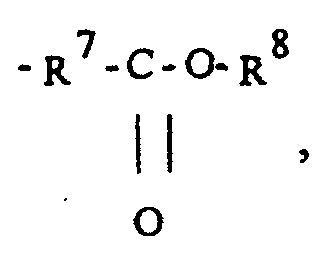
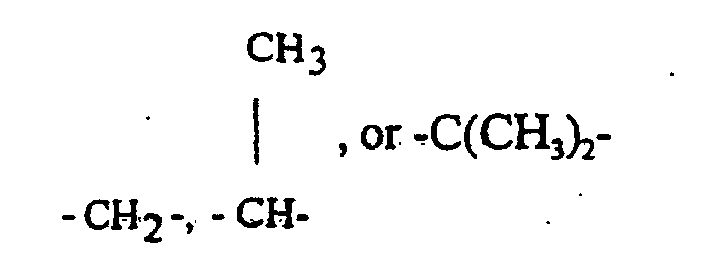
- Monomers for use in this invention are alpha-cyanoacrylates. These monomers are known in the art and have the formula wherein R 2 is hydrogen and R 3 is a hydrocarbyl or substituted hydrocarbyl group; a group having the formula -R 4 -O-R 5 -O-R 6 , wherein R 4 is a 1,2-alkylene group having 2-4 carbon atoms, R 5 is an alkylene group having 2-4 carbon atoms, and R 6 is an alkyl group having 1-6 carbon atoms; or a group having the formula wherein R 7 is wherein n is 1-10, preferably 1-5 carbon atoms and R 8 is an organic moiety.
- suitable hydrocarbyl and substituted hydrocarbyl groups include straight chain or branched chain alkyl groups having 1-16 carbon atoms; straight chain or branched chain C 1 -C 16 alkyl groups substituted with an acyloxy group, a haloalkyl group, an alkoxy group, a halogen atom, a cyano group, or a haloalkyl group; straight chain or branched chain alkenyl groups having 2 to 16 carbon atoms; straight chain or branched chain alkynyl groups having 2 to 12 carbon atoms; cycloalkyl groups; aralkyl groups; alkylaryl groups; and aryl groups.
- the organic moiety R 8 may be substituted or unsubstituted and may be straight chain, branched or cyclic, saturated, unsaturated or aromatic.
- organic moieties include C 1 -C 8 alkyl moieties, C 2 -C 8 alkenyl moieties, C 2 -C 8 alkynyl moieties, C 3 -C 12 cycloaliphatic moieties, aryl moieties such as phenyl and substituted phenyl and aralkyl moieties such as benzyl, methylbenzyl and phenylethyl.
- organic moieties include substituted hydrocarbon moieties, such as halo (e.g., chloro-, fluoro- and bromo-substituted hydrocarbons) and oxy- (e.g., alkoxy substituted hydrocarbons) substituted hydrocarbon moieties.
- Preferred organic radicals are alkyl, alkenyl and alkynyl moieties having from 1 to about 8 carbon atoms, and halo-substituted derivatives thereof. Particularly preferred are alkyl moieties of 4 to 6 carbon atoms.
- R 3 is preferably an alkyl group having 1-10 carbon atoms or a group having the formula -AOR 9 , wherein A is a divalent straight or branched chain alkylene or oxyalkylene moiety having 2-8 carbon atoms, and R 9 is a straight or branched alkyl moiety having 1-8 carbon atoms.
- Examples of groups represented by the formula -AOR 9 include 1-methoxy-2-propyl, 2-butoxy ethyl, isopropoxy ethyl, 2-methoxy ethyl, and 2-ethoxy ethyl.
- the preferred alpha-cyanoacrylate monomers used in this invention are 2-octyl cyanoacrylate, dodecyl cyanoacrylate, 2-ethylhexyl cyanoacrylate, butyl cyanoacrylate, methyl cyanoacrylate, 3-methoxybutyl cyanoacrylate, 2-butoxyethyl cyanoacrylate, 2-isopropoxyethyl cyanoacrylate, or 1-methoxy-2-propyl cyanoacrylate.
- the alpha-cyanoacrylates of formula (II) can be prepared according to methods known in the art. Reference is made, for example, to U.S. Patents Nos. 2,721,858 and 3,254,111.
- the alpha cyanoacrylates can be prepared by reacting an alkyl cyanoacetate with formaldehyde in a non-aqueous organic solvent and in the presence of a basic catalyst, followed by pyrolysis of the anhydrous intermediate polymer in the presence of a polymerization inhibitor.
- the alpha-cyanoacrylate monomers prepared with low moisture content and essentially free of impurities are preferred for biomedical use.
- alpha-cyanoacrylates of formula (II) wherein R 3 is a group having the formula -R 4 -O-R 5 -O-R 6 can be prepared according to the method disclosed in U.S. Patent No. 4,364,876 to Kimura et al.. In the Kimura et al.
- the alpha-cyanoacrylates are prepared by producing a cyanoacetate by esterifying cyanoacetic acid with an alcohol or by transesterifying an alkyl cyanoacetate and an alcohol; condensing the cyanoacetate and formaldehyde or para-formaldehyde in the presence of a catalyst at a molar ratio of 0.5-1.5:1, preferably 0.8-1.2:1, to obtain a condensate; depolymerizing the condensation reaction mixture either directly or after removal of the condensation catalyst to yield crude cyanoacrylate; and distilling the crude cyanoacrylate to form a high purity cyanoacrylate.
- alpha-cyanoacrylates of formula (II) wherein R 3 is a group having the formula can be prepared according to the procedure described in U.S. Patent No. 3,995,641 to Kronenthal et al..
- such alpha-cyanoacrylate monomers are prepared by reacting an alkyl ester of an alpha-cyanoacrylic acid with a cyclic 1,3-diene to form a Diels-Alder adduct which is then subjected to alkaline hydrolysis followed by acidification to form the corresponding alpha-cyanoacrylic acid adduct.
- the alpha-cyanoacrylic acid adduct is preferably esterified by an alkyl bromoacetate to yield the corresponding carbalkoxymethyl alpha-cyanoacrylate adduct.
- the alpha-cyanoacrylic acid adduct may be converted to the alpha-cyanoacrylyl halide adduct by reaction with thionyl chloride.
- the alpha-cyanoacrylyl halide adduct is then reacted with an alkyl hydroxyacetate or a methyl substituted alkyl hydroxyacetate to yield the corresponding carbalkoxymethyl alpha-cyanoacrylate adduct or carbalkoxy alkyl alpha-cyanoacrylate adduct, respectively.
- the cyclic 1,3-diene blocking group is finally removed and the carbalkoxy methyl alpha-cyanoacrylate adduct or the carbalkoxy alkyl alpha-cyanoacrylate adduct is converted into the corresponding carbalkoxy alkyl alpha-cyanoacrylate by heating the adduct in the presence of a slight deficit of maleic anhydride.
- the monomers of formula (III) wherein R 3 is an alkyl group of 1-10 carbon atoms i.e., the 2-cyanopenta-2,4-dienoic acid esters, can be prepared by reacting an appropriate 2-cyanoacetate with acrolein in the presence of a catalyst such as zinc chloride. This method of preparing 2-cyanopenta-2,4-dienoic acid esters is disclosed, for example, in U.S. Patent No. 3,554,990.
- Preferred monomers are alkyl alpha-cyanoacrylates and more preferably octyl alpha-cyanoacrylates, especially 2-octyl alpha-cyanoacrylate.
- Monomers utilized in the present application should be very pure and contain few impurities (e.g., surgical grade).
- compositions of the present invention may include at least one plasticizing agent that imparts flexibility to the polymerized monomer formed on the wound or incision.
- the plasticizing agent preferably contains little or no moisture and should not significantly affect the polymerization of the monomer.
- compositions are exemplified by U.S. Patents Nos. 5,259,835 and 5,328,687 and U.S. Patent Application Serial Nos. 08/609,921, 08/714,288, 08/909,845, 08/755,007, 08/920,876, and 08/488,411.
- plasticizers examples include acetyl tributyl citrate, dimethyl sebacate, triethyl phosphate, tri(2-ethylhexyl)phosphate, tri(p-cresyl) phosphate, glyceryl triacetate, glyceryl tributyrate, diethyl sebacate, dioctyl adipate, isopropyl myristate, butyl stearate, lauric acid, trioctyl trimellitate, dioctyl glutarate and mixtures thereof.
- Preferred plasticizers are tributyl citrate and acetyl tributyl citrate.
- suitable plasticizers include polymeric plasticizers, such as polyethylene glycol (PEG) esters and capped PEG esters or ethers, polyester glutarates and polyester adipates.
- compositions of the present invention include mixtures of anionic stabilizing agents and radical stabilizing agents.
- anionic stabilizing agents include, but are not limited to, sultones (e.g., ⁇ -chloro- ⁇ -hydroxy- o -toluenesulfonic acid- ⁇ -sultone), sulfur dioxide, sulfuric acid, sulfonic acid, lactone, boron trifluoride, organic acids, such as acetic acid or phosphoric acid, alkyl sulfate, alkyl sulfite, 3-sulfolene, alkylsulfone, alkyl sulfoxide, mercaptan, and alkyl sulfide and mixtures thereof.
- Preferable anionic stabilizing agents are acidic stabilizing agents of organic acids such as acetic acid or phosphoric acid.
- the amount of sulfur dioxide stabilizer is less than 100 ppm, preferably 5-75 ppm, and more preferably from about 20-50 ppm.
- the amount of sultone and/or trifluoracetic acid is about 500-3000 ppm.
- radical stabilizing agents examples include hydroquinone, hydroquinone monomethyl ether, catechol, pyrogallol, benzoquinone, 2-hydroxybenzoquinone, p-methoxy phenol, t-butyl catechol, butylated hydroxy anisole (BHA), butylated hydroxy toluene, and t-butyl hydroquinone.
- the amount of BHA is about 1,000-5,000 ppm.
- compositions of the present invention may also include at least one biocompatible agent effective to reduce active formaldehyde concentration levels produced during in vivo biodegradation of the polymer (also referred to herein as "formaldehyde concentration reducing agents").
- this component is a formaldehyde scavenger compound.
- formaldehyde scavenger compounds useful in this invention include sulfites; bisulfites; mixtures of sulfites and bisulfites; ammonium sulfite salts; amines; amides; imides; nitriles; carbamates; alcohols; mercaptans; proteins; mixtures of amines, amides, and proteins; active methylene compounds such as cyclic ketones and compounds having a b-dicarbonyl group; and heterocyclic ring compounds free of a carbonyl group and containing an NH group, with the ring made up of nitrogen or carbon atoms, the ring being unsaturated or, when fused to a phenyl group, being unsaturated or saturated, and the NH group being bonded to a carbon or a nitrogen atom, which atom is directly bonded by a double bond to another carbon or nitrogen atom.
- Bisulfites and sulfites useful as the formaldehyde scavenger compound in this invention include alkali metal salts such as lithium, sodium and potassium salts, and ammonium salts, for example, sodium bisulfite, potassium bisulfite, lithium bisulfite, ammonium bisulfite, sodium sulfite, potassium sulfite, lithium sulfite, ammonium sulfite, and the like.
- amines useful in this invention include the aliphatic and aromatic amines such as, for example, aniline, benzidine, aminopyrimidine, toluene-diamine, triethylenediamine, diphenylamine, diaminodiphenylamine, hydrazines and hydrazide.
- Suitable proteins include collagen, gelatin, casein, soybean protein, vegetable protein, keratin and glue.
- the preferred protein for use in this invention is casein.
- Suitable amides for use in this invention include urea, cyanamide, acrylamide, benzamide, and acetamide.
- Urea is a preferred amide.
- Suitable alcohols include phenols, 1,4-butanediol, d-sorbitol, and polyvinyl alcohol.
- Suitable compounds having a b-dicarbonyl group include malonic acid, acetylacetone, ethylacetone, acetate, malonamide, diethylmalonate or another malonic ester.
- Preferred cyclic ketones for use in this invention include cyclohexanone or cyclopentanone.
- heterocyclic compounds for use as the formaldehyde scavenger in this invention are disclosed, for example, in U.S. Patent No. 4,127,382 (Perry).
- Such heterocyclic compounds include, for example, benzimidazole, 5-methyl benzimidazole, 2-methylbenzimidazole, indole, pyrrole, 1,2,4-triazole, indoline, benzotriazole, indoline, and the like.
- a preferred formaldehyde scavenger for use in this invention is sodium bisulfite.
- the formaldehyde concentration reducing agent e.g., formaldehyde scavenger compound
- the "effective amount” is that amount sufficient to reduce the amount of formaldehyde generated during subsequent in vivo biodegradation of the polymerized cyanoacrylate. This amount will depend on the type of active formaldehyde concentration reducing agent, and can be readily determined without undue experimentation by those skilled in the art.
- the formaldehyde concentration reducing agent may be used in this invention in either free form or in microencapsulated form.
- Other compositions are exemplified by U.S. Patent Application Serial No. 08/714,288.
- the formaldehyde concentration reducing agent is released from the microcapsule continuously over a period of time during the in vivo biodegradation of the cyanoacrylate polymer.
- the microencapsulated form of the formaldehyde concentration reducing agent is preferred because this embodiment prevents or substantially reduces polymerization of the cyanoacrylate monomer by the formaldehyde concentration reducing agent, which increases shelf-life and facilitates handling of the monomer composition during use.
- Microencapsulation of the formaldehyde scavenger can be achieved by many known microencapsulation techniques.
- microencapsulation can be carried out by dissolving a coating polymer in a volatile solvent, e.g., methylene chloride, to a polymer concentration of about 6% by weight; adding a formaldehyde scavenger compound in particulate form to the coating polymer/solvent solution under agitation to yield a scavenger concentration of 18% by weight; slowly adding a surfactant-containing mineral oil solution to the polymer solution under rapid agitation; allowing the volatile solvent to evaporate under agitation; removing the agitator; separating the solids from the mineral oil; and washing and drying the microparticles.
- the size of the microparticles will range from about 0.001 to about 1000 microns.
- the coating polymer for microencapsulating the formaldehyde concentration reducing agent should be polymers which undergo in vivo bioerosion, preferably at rates similar to or greater than the cyanoacrylate polymer formed by the monomer, and should have low inherent moisture content.
- bioerosion can occur as a result of the physical or chemical breakdown of the encapsulating material, for example, by the encapsulating material passing from solid to solute in the presence of body fluids, or by biodegradation of the encapsulating material by agents present in the body.
- polyesters such as polyglycolic acid, polylactic acid, poly-1,4-dioxa-2-one, polyoxaltes, polycarbonates, copolymers of polyglycolic acid and polylactic acid, polycaprolactone, poly-b-hydroxybutyrate, copolymers of epsilon-caprolactone and delta-valerolactone, copolymers of epsilon-caprolactone and DL-dilactide, and polyester hydrogels; polyvinylpyrrolidone; polyamides; gelatin; albumin; proteins; collagen; poly(orthoesters); poly(anhydrides); poly(alkyl-2-cyanoacrylates); poly(dihydropyrans); poly(acetals); poly(phosphazenes); poly(urethanes); poly(dioxinones); cellulose; and starches.
- polyesters such as polyglycolic acid, polylactic acid, poly-1,4-dioxa-2-one,
- composition of this invention may further contain one or more adjuvant substances, such as thickening agents, medicaments, or the like, to improve the medical utility of the monomer for particular medical applications.
- adjuvant substances such as thickening agents, medicaments, or the like
- Suitable thickeners include, for example, polycyanoacrylates, polylactic acid, poly-1,4-dioxa-2-one, polyoxalates, polyglycolic acid, lactic-glycolic acid copolymers, polycaprolactone, lactic acid-caprolactone copolymers, poly-3-hydroxybutyric acid, polyorthoesters, polyalkyl acrylates, copolymers of alkylacrylate and vinyl acetate, polyalkyl methacrylates, and copolymers of alkyl methacrylates and butadiene.
- alkyl methacrylates and acrylates are poly(2-ethylhexyl methacrylate) and poly(2-ethylhexyl acrylate), also poly(butylmethacrylate) and poly(butylacrylate), also copolymers of various acrylate and methacrylate monomers, such as poly(butylmethacrylate- co -methylacrylate).
- difunctional monomeric cross-linking agents may be added to the monomer compositions of this invention.
- crosslinking agents are known. Reference is made, for example, to U.S. Patent No. 3,940,362 to Overhults.
- suitable crosslinking agents include alkyl bis(2-cyanoacrylates), triallyl isocyanurates, alkylene diacrylates, alkylene dimethacrylates, trimethylol propane triacrylate, and alkyl bis(2-cyanoacrylates).
- a catalytic amount of an amine activated free radical initiator or rate modifier may be added to initiate polymerization or to modify the rate of polymerization of the cyanoacrylate monomer/crosslinking agent blend.
- the adhesive compositions may additionally contain heat and/or light (e.g., visible or ultraviolet light) activated initiators and accelerators that initiate cross-linking of cyanoacrylate compositions containing compounds of formula (I).
- heat and/or light e.g., visible or ultraviolet light
- Suitable polymerization initiators for the cyanoacrylate compositions include, but are not limited to, detergent compositions; surfactants: e.g., nonionic surfactants such as polysorbate 20 (e.g., Tween 20TM), polysorbate 80 (e.g., Tween 80TM) and poloxamers, cationic surfactants such as tetrabutylammonium bromide, anionic surfactants such as benzalkonium chloride or its pure components, stannous octoate (tin (II) 2-ethylheaxanoate), and sodium tetradecyl sulfate, and amphoteric or zwitterionic surfactants such as dodecyldimethyl(3-sulfopropyl)ammonium hydroxide, inner salt; amines, imines and amides, such as imidazole,
- surfactants e.g., nonionic surfactants such as polysorbate 20 (
- compositions of the present invention may further contain fibrous reinforcement and colorants, i.e., dyes and pigments.
- fibrous reinforcement include PGA microfibrils, collagen microfibrils, cellulosic microfibrils, and olefinic microfibrils.
- suitable colorants include 1-hydroxy-4-[4-methylphenyl-amino]-9,10 anthracenedione (D+C violet No. 2); disodium salt of 6-hydroxy-5-[(4-sulfophenyl)axo]-2-naphthalene-sulfonic acid (FD+C Yellow No.
- liquid compositions of the present invention can be applied by known means such as with a glass stirring rod, sterile brush or medicine dropper.
- a pressurized aerosol dispensing package is preferred in which the adhesive composition is in solution with a compatible anhydrous propellant.
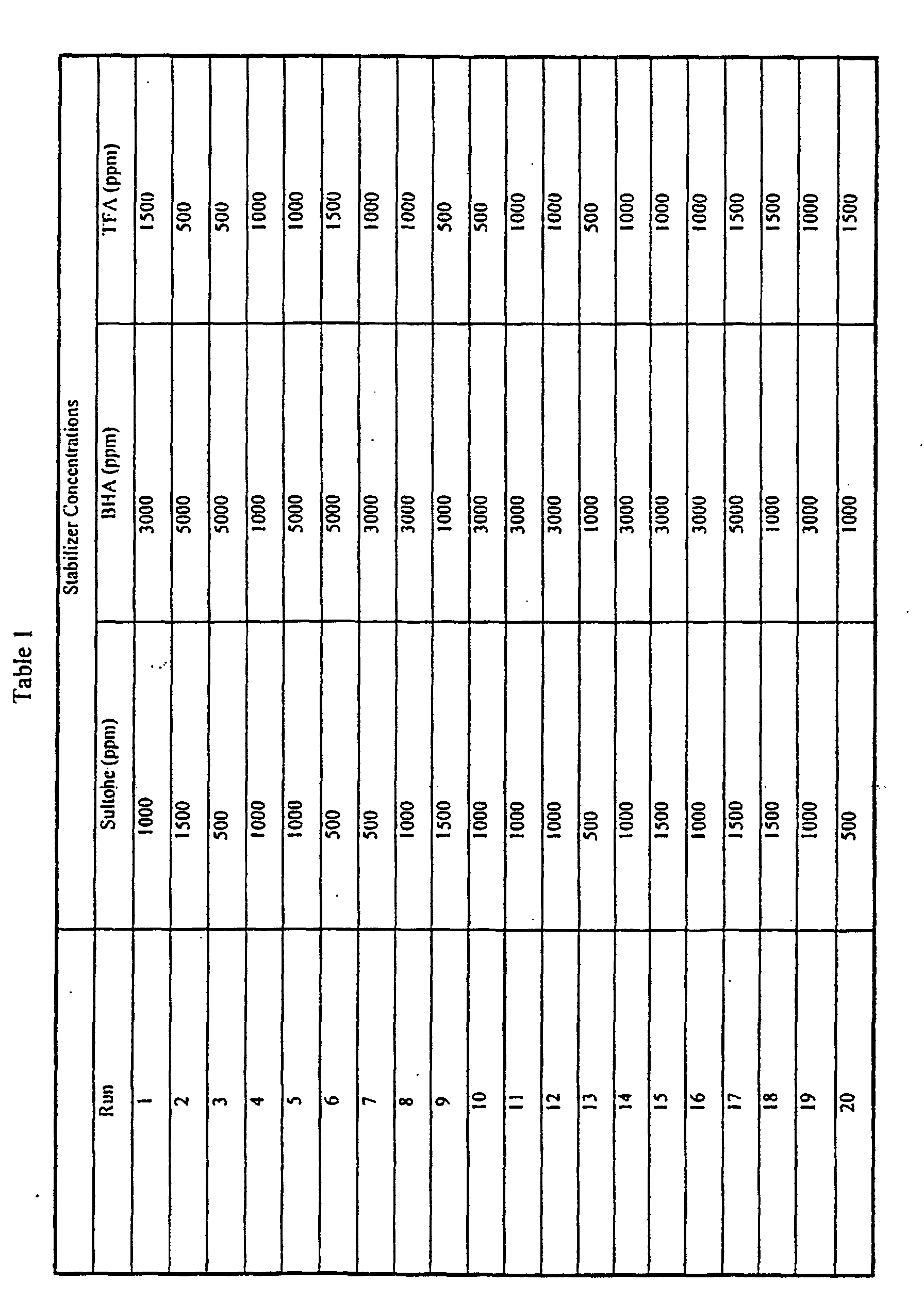
- Table 1 shows the stabilizer concentrations for runs 1-20 in Tables 2-7.
- Table 8 shows the stabilizer concentrations for runs 1-27 in Tables 9-11.
- Tables 2 and 5 show the initial viscosity for 2-octylcyanoacrylate monomeric compositions containing less than 5 ppm SO 2 and without SO 2 respectively when sterilized by electron beam irradiation.
- Tables 6-7 show the change in viscosity over time for 2-octylcyanoacrylate compositions containing no SO 2 that have been sterilized by electron beam irradiation. The change in viscosity is a measure of polymerization and thus the stability of the liquid adhesive monomeric compositions.
- Table 9 shows the initial viscosity for 2-octylcyanoacrylate monomeric compositions containing 1500 ppm hydroquinone and 27 ppm SO 2 when sterilized by electron beam irradiation.
- Tables 10-11 demonstrate that monomeric compositions containing stabilizing agents exhibit good stability as shown by the small change in viscosity when sterilized by electron beam irradiation.
- Table 12 demonstrates that n-butyl cyanoacrylate monomeric compositions also exhibit good stability when sterilized by electron beam irradiation.
Landscapes
- Health & Medical Sciences (AREA)
- Epidemiology (AREA)
- Life Sciences & Earth Sciences (AREA)
- Animal Behavior & Ethology (AREA)
- General Health & Medical Sciences (AREA)
- Public Health (AREA)
- Veterinary Medicine (AREA)
- Chemical & Material Sciences (AREA)
- Chemical Kinetics & Catalysis (AREA)
- General Chemical & Material Sciences (AREA)
- Medicinal Chemistry (AREA)
- Polymers & Plastics (AREA)
- Organic Chemistry (AREA)
- Materials For Medical Uses (AREA)
- Apparatus For Disinfection Or Sterilisation (AREA)
- Adhesives Or Adhesive Processes (AREA)
Abstract
Description



| 2OCA Formulations with SO2 | |||
| Viscosity (cps) | |||
| Run | Control | 20 kGy | 30 kGy |
| 1 | 6.1 | 7.8 | 9.5 |
| 2 | 6.2 | 7.6 | 9.2 |
| 3 | 6.3 | 7.0 | 8.4 |
| 4 | 6.2 | 7.1 | 7.9 |
| 5 | 6.3 | 6.8 | 7.9 |
| 6 | 6.3 | 7.7 | 9.9 |
| 7 | 6.4 | 7.3 | N.D. |
| 8 | 6.3 | 7.1 | 8.4 |
| 9 | 6.3 | 7.1 | 8.4 |
| 10 | 6.2 | 7.1 | 8.5 |
| 11 | 6.2 | 7.3 | 8.5 |
| 12 | 6.2 | 7.1 | 8.5 |
| 13 | 6.3 | 7.2 | 8.5 |
| 14 | 6.2 | 7.2 | 8.6 |
| 15 | 6.1 | 6.9 | 8.3 |
| 16 | 6.1 | 7.8 | 10.2 |
| 17 | 6.1 | 7.6 | 9.3 |
| 18 | 6.1 | 7.1 | 8.3 |
| 19 | 6.2 | 7.1 | 8.2 |
| 20 | 6.3 | 6.9 | 7.8 |
| 2OCA Formulations with SO2 20 kGy Exposed Samples Accelerated Stability Results (80°C) | |||
| Viscosity (cps) | |||
| Run | t=0 | t=6 d | t = 12 d |
| 1 | 7.8 | 30 | 449 |
| 2 | 7.6 | 1000 | 1000 |
| 3 | 7.0 | 69 | N.D. |
| 4 | 7.1 | 25 | 401 |
| 5 | 6.8 | 1000 | 1000 |
| 6 | 7.7 | 28 | 1000 |
| 7 | 7.3 | 15 | N.D. |
| 8 | 7.1 | 54 | 1000 |
| 9 | 7.1 | 23 | 1000 |
| 10 | 7.1 | 37 | 1000 |
| 11 | 7.3 | 33 | 1000 |
| 12 | 7.1 | 53 | 1000 |
| 13 | 7.2 | 45 | 1000 |
| 14 | 7.2 | 23 | 1000 |
| 15 | 6.9 | 20 | 478 |
| 16 | 7.8 | 20 | 177 |
| 17 | 7.6 | 50 | 1000 |
| 18 | 7.1 | 22 | 1000 |
| 19 | 7.1 | 16 | 304 |
| 20 | 6.9 | 34 | 1000 |
| 2OCA Formulations with SO2 30 kGy Exposed Samples Accelerated Stability Results (80°C) | |||
| Viscosity (cps) | |||
| Run | Control | t=6 d | t = 12 d |
| 1 | 9.5 | 191 | 1000 |
| 2 | 9.2 | 1000 | 1000 |
| 3 | 8.4 | 540 | 1000 |
| 4 | 7.9 | 384 | 1000 |
| 5 | 7.9 | 1000 | 1000 |
| 6 | 9.9 | 97 | 1000 |
| 7 | N.D. | N.D. | N.D. |
| 8 | 8.4 | 242 | 1000 |
| 9 | 8.4 | 63 | 1000 |
| 10 | 8.5 | 111 | 1000 |
| 11 | 8.5 | 130 | 1000 |
| 12 | 8.5 | 552 | 1000 |
| 13 | 8.5 | 157 | 1000 |
| 14 | 8.6 | 63 | 1000 |
| 15 | 8.3 | 49 | 1000 |
| 16 | 10.2 | 59 | 1000 |
| 17 | 9.3 | 187 | 1000 |
| 18 | 8.3 | 50 | 1000 |
| 19 | 8.2 | 26 | 1000 |
| 20 | 7.8 | 87 | 1000 |
| 2OCA Formulations without SO2 | |||
| Viscosity (cps) | |||
| Run | Control | 20 kGy | 30 kGy |
| 1 | 6.1 | 8.2 | 9.8 |
| 2 | 6.2 | 7.9 | 9.1 |
| 3 | 6.2 | 7.5 | 8.3 |
| 4 | 6.1 | 7.2 | 7.9 |
| 5 | 6.1 | 6.6 | 7.8 |
| 6 | 6.3 | 7.8 | 9.6 |
| 7 | 6.1 | 7.4 | 8.1 |
| 8 | 6.1 | 7.3 | 8.0 |
| 9 | 6.1 | 7.4 | 8.3 |
| 10 | 6.2 | 7.5 | 8.3 |
| 11 | 6.1 | 7.5 | 8.2 |
| 12 | 6.3 | 7.4 | 8.2 |
| 13 | 6.0 | 7.3 | 8.3 |
| 14 | 6.2 | 7.5 | 8.1 |
| 15 | 6.2 | 7.3 | 7.8 |
| 16 | 6.0 | 8.6 | 10.7 |
| 17 | 6.1 | 8.6 | 11.0 |
| 18 | 6.1 | 7.7 | 8.6 |
| 19 | 6.1 | 7.4 | 8.0 |
| 20 | 6.2 | 7.2 | 7.5 |
| 2OCA Formulations without SO2 20 kGy Exposed Samples Accelerated Stability Results (80°C) | |||
| Viscosity (cps) | |||
| Run | Control | t=6 d | t = 12 d |
| 1 | 8.2 | 1000 | 1000 |
| 2 | 7.9 | 1000 | 1000 |
| 3 | 7.5 | 1000 | 1000 |
| 4 | 7.2 | 1000 | 1000 |
| 5 | 6.6 | 1000 | 1000 |
| 6 | 7.8 | 1000 | 1000 |
| 7 | 7.4 | 329 | 1000 |
| 8 | 7.3 | 1000 | 1000 |
| 9 | 7.4 | 345 | 1000 |
| 10 | 7.5 | 262 | 1000 |
| 11 | 7.5 | 520 | 1000 |
| 12 | 7.4 | 417 | 1000 |
| 13 | 7.3 | 198 | 1000 |
| 14 | 7.5 | 213 | 1000 |
| 15 | 7.3 | 428 | 1000 |
| 16 | 8.6 | 1000 | 1000 |
| 17 | 8.6 | 1000 | 1000 |
| 18 | 7.7 | 20 | N.D. |
| 19 | 7.4 | 16 | 92.0 |
| 20 | 7.2 | 37 | N.D. |
| 2OCA Formulations without SO2 30 kGy Exposed Samples Accelerated Stability results (80°C) | |||
| Viscosity (cps) | |||
| Run | Control | t=6 d | t = 12 d |
| 1 | 9.8 | 1000 | 1000 |
| 2 | 9.1 | 1000 | 1000 |
| 3 | 8.3 | 1000 | 1000 |
| 4 | 7.9 | 1000 | 1000 |
| 5 | 7.8 | 1000 | 1000 |
| 6 | 9.6 | 1000 | 1000 |
| 7 | 8.1 | 1000 | 1000 |
| 8 | 8.0 | 1000 | 1000 |
| 9 | 8.3 | 1000 | 1000 |
| 10 | 8.3 | 1000 | 1000 |
| 11 | 8.2 | 1000 | 1000 |
| 12 | 8.2 | 1000 | 1000 |
| 13 | 8.3 | 1000 | 1000 |
| 14 | 8.1 | 1000 | 1000 |
| 15 | 7.8 | 1000 | 1000 |
| 16 | 10.7 | 1000 | 1000 |
| 17 | 11.0 | 1000 | 1000 |
| 18 | 8.6 | 1000 | 1000 |
| 19 | 8.0 | 149 | 1000 |
| 20 | 7.5 | 240 | 1000 |
| Stabilizer Concentrations | |||
| Run | Sultone (ppm) | BHA (ppm) | TFA (ppm) |
| 1 | 0 | 500 | 0 |
| 2 | 0 | 500 | 750 |
| 3 | 0 | 500 | 1500 |
| 4 | 0 | 2000 | 0 |
| 5 | 0 | 2000 | 750 |
| 6 | 0 | 2000 | 1500 |
| 7 | 0 | 3500 | 0 |
| 8 | 0 | 3500 | 750 |
| 9 | 0 | 3500 | 1500 |
| 10 | 750 | 500 | 0 |
| 11 | 750 | 500 | 750 |
| 12 | 750 | 500 | 1500 |
| 13 | 750 | 2000 | 0 |
| 14 | 750 | 2000 | 750 |
| 15 | 750 | 2000 | 1500 |
| 16 | 750 | 3500 | 0 |
| 17 | 750 | 3500 | 750 |
| 18 | 750 | 3500 | 1500 |
| 19 | 1500 | 500 | 0 |
| 20 | 1500 | 500 | 750 |
| 21 | 1500 | 500 | 1500 |
| 22 | 1500 | 2000 | 0 |
| 23 | 1500 | 2000 | 750 |
| 24 | 1500 | 2000 | 1500 |
| 25 | 1500 | 3500 | 0 |
| 26 | 1500 | 3500 | 750 |
| 27 | 1500 | 3500 | 1500 |
| Initial Results (t=0) | |||
| Viscosity (cps) | |||
| Run | Control | 20 kGy | 30 kGy |
| 1 | 6.8 | 10.2 | 12.0 |
| 2 | 6.6 | 8.6 | 9.8 |
| 3 | 6.7 | 8.7 | 10.0 |
| 4 | 6.7 | 9.4 | 11.0 |
| 5 | 6.7 | 8.3 | 9.3 |
| 6 | 6.7 | 8.1 | 8.7 |
| 7 | 6.6 | 9.1 | 10.0 |
| 8 | 6.6 | 8.5 | 8.9 |
| 9 | 6.6 | 8.6 | 8.4 |
| 10 | 6.6 | 10.3 | 12.0 |
| 11 | 6.7 | 9.3 | 10.0 |
| 12 | 6.6 | 9.1 | 9.5 |
| 13 | 6.8 | 9.8 | 11.0 |
| 14 | 6.7 | 8.9 | 9.3 |
| 15 | 6.7 | 8.6 | 9.2 |
| 16 | 6.6 | 9.4 | 9.7 |
| 17 | 6.8 | 8.6 | 9.6 |
| 18 | 6.8 | 8.5 | 9.3 |
| 19 | 6.8 | 10.0 | 11.0 |
| 20 | 6.5 | 9.7 | 11.2 |
| 21 | 6.7 | 9.2 | 10.7 |
| 22 | 6.7 | 9.7 | 11.0 |
| 23 | 6.8 | 9.0 | 9.8 |
| 24 | 6.9 | 8.6 | 9.8 |
| 25 | 6.7 | 9.3 | 10.0 |
| 26 | 6.7 | 8.8 | 9.8 |
| 27 | 6.6 | 8.6 | 8.8 |
| 20 kGy Exposed | ||
| Accelerated Stability Results (80°C) | ||
| Viscosity (cps) | ||
| Run | t=0 | t=3 d |
| 1 | 10.2 | 13 |
| 2 | 8.6 | 14 |
| 3 | 8.7 | 16 |
| 4 | 9.4 | 11 |
| 5 | 8.3 | 11 |
| 6 | 8.1 | 16 |
| 7 | 9.1 | 11 |
| 8 | 8.5 | 11 |
| 9 | 8.6 | 13 |
| 10 | 10.3 | 12 |
| 11 | 9.3 | 13 |
| 12 | 9.1 | 15 |
| 13 | 9.8 | 11 |
| 14 | 8.9 | 11 |
| 15 | 8.6 | 14 |
| 16 | 9.4 | 11 |
| 17 | 8.6 | 11 |
| 18 | 8.5 | 12 |
| 19 | 10.0 | 13 |
| 20 | 9.7 | 13 |
| 21 | 9.2 | 14 |
| 22 | 9.7 | 12 |
| 23 | 9.0 | 11 |
| 24 | 8.6 | 12 |
| 25 | 9.3 | 11 |
| 26 | 8.8 | 11 |
| 27 | 8.6 | 13 |
| 30 kGy Exposed | ||
| Accelerated Stability Results (80°C) | ||
| Viscosity (cps) | ||
| Run | t=0 | t=3d |
| 1 | 12.0 | 21 |
| 2 | 9.8 | 23 |
| 3 | 10.0 | 24 |
| 4 | 11.0 | 18 |
| 5 | 9.3 | 18 |
| 6 | 8.7 | 22 |
| 7 | 10.0 | 15 |
| 8 | 8.9 | 15 |
| 9 | 8.4 | 18 |
| 10 | 12.0 | 18 |
| 11 | 10.0 | 16 |
| 12 | 9.5 | 19 |
| 13 | 11.0 | 14 |
| 14 | 9.3 | 13 |
| 15 | 9.2 | 17 |
| 16 | 9.7 | 13 |
| 17 | 9.6 | 14 |
| 18 | 9.3 | 15 |
| 19 | 11.0 | 16 |
| 20 | 11.2 | 17 |
| 21 | 10.7 | 18 |
| 22 | 11.0 | 15 |
| 23 | 9.8 | 15 |
| 24 | 9.8 | 16 |
| 25 | 10.0 | 14 |
| 26 | 9.8 | 13 |
| 27 | 8.8 | 14 |

Claims (20)
- A method for sterilizing a liquid monomeric adhesive composition wherein said monomer is an alpha-cyanoacrylate, characterized in that it comprises the following steps(a) obtaining said composition comprising at least one stabilizing agent inhibiting polymerisation consisting of a mixture of at least one anionic stabilizing agent and at least one radical stabilizing agent,(b) placing the composition obtained according to step (a) into a container which is at least partially electron beam permeable,(c) sterilizing the composition obtained according to step (a) in said container by subjecting said composition to electron beam irradiation at a dose of from 0.5 MRad (5 kGy) to 10 MRad (100 kGy) with an electron beam accelerator.
- The method according to claim 1, wherein said monomer is octylcyanoacrylate or butylcyanoacrylate.
- The method according to claim 1, wherein said container is sealed.
- The method according to claim 1, wherein said container is made of glass.
- The method according to claim 1, wherein said container is made of plastic.
- The method according to claim 4, wherein said container is selected from the group consisting of ampules, vials, syringes, pipettes, tubes and applicators.
- The method according to claim 1, wherein said electron beam irradiation has a dosage of from about 1,5-5,0 MRad.
- The method according to claim 1, wherein said dosage is from about 2,0-3,0 MRad.
- The method according to claim 1, wherein said subjecting to electron beam irradiation lasts for less than 1 minute.
- The method according to claim 1, comprising subjecting said sterilized container and composition to further chemical, physical or irradiation sterilization.
- The method according to claim 10, further comprising subjecting said container to gamma irradiation, microwave irradiation, ethylene oxide, hydrogen peroxide vapor or dry heat.
- The method according to claim 1, wherein said at least one stabilizing agent is acidic and has an aqueous pKa of -12 to 7.
- The method according to claim 1, wherein said stabilizing agent is selected from the group consisting of sulfur dioxide, sulfuric acid, trifluoroacetic acid, butylated hydroxy anisole, butylated hydroxy toluene, hydroquinone and sultone.
- The method according to claim 1, wherein said stabilizing agent is butylated hydroxy anisole.
- The method according to claim 1, wherein said stabilizing agent is sulfuric acid.
- The method according to claim 13, wherein said stabilizing agent is sulfur dioxide and is present in an amount of less than about 27 ppm.
- The method according to claim 1, wherein said stabilizing agent is hydroquinone.
- The method according to claim 1, wherein said composition further comprises a thickening agent.
- The method according to claim 18, wherein said thickening agent is selected from the group consisting of polyalkyl acrylates, polycyanoacrylates, polyactic acid, poly-1,4-dioxa-2-one, polyoxalates, polyglycolic acid, lactic-glycolic acid copolymers, polycaprolactone, lactic acid-caprolactone copolymers, poly-3-hydroxybutiric acid, polyorthoesters, polyalkyl acrylates, copolymers of alkylacrylate and vinyl acetate, polyalkyl methacrylates, and copolymers of alkyl methacrylates and butadiene.
- The method according to claim 1, wherein said sterilization is conducted at room temperature.
Applications Claiming Priority (3)
| Application Number | Priority Date | Filing Date | Title |
|---|---|---|---|
| US25472 | 1993-03-03 | ||
| US09/025,472 US6143805A (en) | 1998-02-18 | 1998-02-18 | Electron beam sterilization of liquid adhesive compositions |
| PCT/US1999/000992 WO1999042142A1 (en) | 1998-02-18 | 1999-01-19 | Electron beam sterilization of liquid adhesive compositions |
Publications (2)
| Publication Number | Publication Date |
|---|---|
| EP1056480A1 EP1056480A1 (en) | 2000-12-06 |
| EP1056480B1 true EP1056480B1 (en) | 2004-05-06 |
Family
ID=21826262
Family Applications (1)
| Application Number | Title | Priority Date | Filing Date |
|---|---|---|---|
| EP99903147A Expired - Lifetime EP1056480B1 (en) | 1998-02-18 | 1999-01-19 | Electron beam sterilization of liquid adhesive compositions |
Country Status (10)
| Country | Link |
|---|---|
| US (1) | US6143805A (en) |
| EP (1) | EP1056480B1 (en) |
| JP (1) | JP3667636B2 (en) |
| CN (1) | CN1297360A (en) |
| AT (1) | ATE265864T1 (en) |
| AU (1) | AU735362B2 (en) |
| BR (1) | BR9908080A (en) |
| CA (1) | CA2320786C (en) |
| DE (1) | DE69917002T2 (en) |
| WO (1) | WO1999042142A1 (en) |
Cited By (1)
| Publication number | Priority date | Publication date | Assignee | Title |
|---|---|---|---|---|
| DE102006027305A1 (en) * | 2006-06-06 | 2007-12-13 | Aesculap Ag & Co. Kg | Sterilized cyanoacrylate packaging |
Families Citing this family (85)
| Publication number | Priority date | Publication date | Assignee | Title |
|---|---|---|---|---|
| US5762955A (en) | 1994-02-04 | 1998-06-09 | Smith; Stephen Jay | Method for application and maintenance of medication on body tissue |
| US20020018689A1 (en) * | 1995-06-07 | 2002-02-14 | Badejo Ibraheem T. | Adhesive applicators with improved polymerization initiators |
| WO2000012411A2 (en) * | 1998-09-01 | 2000-03-09 | Closure Medical Corporation | Package assembly with applicator and container for adhesive materials |
| GB9820457D0 (en) | 1998-09-18 | 1998-11-11 | Medlogic Global Corp | Methods for sterilizing cyanoacrylate compositions |
| JP4249395B2 (en) * | 1998-09-18 | 2009-04-02 | メドロジック グローバル リミテッド | Method for sterilizing a cyanoacrylate composition |
| US6310166B1 (en) * | 1999-08-12 | 2001-10-30 | Closure Medical Corporation | Sterilized cyanoacrylate solutions containing thickeners |
| AU7397800A (en) * | 1999-09-24 | 2001-04-30 | Atomic Energy Of Canada Limited | Electron beam sterilization of contained liquids |
| US6579469B1 (en) * | 1999-10-29 | 2003-06-17 | Closure Medical Corporation | Cyanoacrylate solutions containing preservatives |
| US6183593B1 (en) * | 1999-12-23 | 2001-02-06 | Closure Medical Corporation | 1,1-disubstituted ethylene adhesive compositions containing polydimethylsiloxane |
| US6698162B2 (en) * | 2000-03-23 | 2004-03-02 | Teikoku Pharma Usa, Inc. | Methods of producing a terminally sterilized topical patch preparation |
| US6620846B1 (en) * | 2000-08-02 | 2003-09-16 | Closure Medical Corporation | Absorbable adhesive compositions |
| US6492573B1 (en) * | 2000-08-17 | 2002-12-10 | Arthur Ashman | Biocompatible oral bandage, application and method of manufacture |
| US6605667B1 (en) | 2000-09-08 | 2003-08-12 | Closure Medical Corporation | Antioxidant enriched adhesive compositions and storage containers therefor |
| US6607631B1 (en) | 2000-09-08 | 2003-08-19 | Closure Medical Corporation | Adhesive compositions with reduced coefficient of friction |
| US6579916B1 (en) | 2000-11-21 | 2003-06-17 | Medlogic Global Corporation | Methods for sterilizing cyanoacrylate compositions |
| AU2002243215A1 (en) * | 2000-11-21 | 2002-07-24 | Medlogic Global Corporation | Method for sterilizing cyanoacrylate compositions |
| US6616019B2 (en) * | 2001-07-18 | 2003-09-09 | Closure Medical Corporation | Adhesive applicator with improved applicator tip |
| US6811341B2 (en) | 2001-08-16 | 2004-11-02 | Closure Medical Corporation | Multiple-component combining |
| US6547467B2 (en) | 2001-08-29 | 2003-04-15 | Closure Medical Corporation | Microapplicators, delivery systems and methods for adhesives and sealants |
| US6849082B2 (en) | 2001-10-19 | 2005-02-01 | Spartan Products Inc. | Method for curing cyanoacrylate adhesives |
| US7255874B1 (en) | 2001-12-21 | 2007-08-14 | Closure Medical Corporation | Biocompatible polymers and adhesives: compositions, methods of making and uses related thereto |
| US20030158579A1 (en) | 2002-02-20 | 2003-08-21 | Max Azevedo | Method for curing cyanoacrylate adhesives |
| CA2484737C (en) * | 2002-02-20 | 2011-04-12 | Spartan Products Inc. | Method for the fabrication of cyanoacrylate adhesives wherein excess stabilizer is removed |
| US20030183801A1 (en) * | 2002-03-28 | 2003-10-02 | Hu Yang | Porous oxygen scavenging material |
| US7371345B2 (en) * | 2002-12-23 | 2008-05-13 | Closure Medical Corporation | Sterilization of medical adhesive kits |
| US20040151688A1 (en) * | 2003-01-31 | 2004-08-05 | Closure Medical Corporation | Adhesive treatment for epistaxis |
| CA2457248C (en) | 2003-02-07 | 2012-07-17 | Closure Medical Corporation | Applicators, dispensers and methods for dispensing and applying adhesive material |
| US20040223932A1 (en) * | 2003-05-05 | 2004-11-11 | Closure Medical Corporation | Adhesive treatment for acne |
| US20040223946A1 (en) * | 2003-05-05 | 2004-11-11 | Closure Medical Corporation | Adhesive treatment for insect and related bites |
| US20050042266A1 (en) * | 2003-08-21 | 2005-02-24 | Closure Medical Corporation | Cyanoacrylate compositions containing anti-microbial agent |
| US20050196376A1 (en) * | 2004-03-03 | 2005-09-08 | G. L. Loomis & Associates, Inc. | Preparation of polymerizable compositions |
| US20050197421A1 (en) * | 2004-03-03 | 2005-09-08 | Loomis Gary L. | Process for preparation of cyanoacrylate compositions |
| US20060030808A1 (en) * | 2004-08-09 | 2006-02-09 | Aso Corporation | Liquid bandage and tissue sealant |
| US20060045897A1 (en) * | 2004-08-27 | 2006-03-02 | Aso Corporation | Occlusive articles for wart treatment |
| US20060093572A1 (en) * | 2004-11-03 | 2006-05-04 | Bordoloi Binoy K | Cyanoacrylate monomer formulation containing diiodomethyl-p-tolylsulfone and 2,4,4'-trichloro-2' -hydroxydiphenyl ether |
| DE602006006798D1 (en) * | 2005-01-14 | 2009-06-25 | Henkel Ag & Co Kgaa | X-RAY CYANOACRYLATE COMPOSITIONS |
| JP5567270B2 (en) | 2005-08-17 | 2014-08-06 | ロチャル インダストリーズ エルエルピー | Liquid coating materials and kits |
| DE602006020490D1 (en) * | 2005-12-07 | 2011-04-14 | Rochal Ind Llp | ADJUSTABLE FASTENER AND COVER MATERIAL |
| US20070248486A1 (en) * | 2006-04-24 | 2007-10-25 | Clast Trading Ltd | Process for Sterilization of Cyanoacrylate Adhesive Compositions and Devices |
| US7772306B2 (en) * | 2006-07-18 | 2010-08-10 | Glustitch, Inc. | Cyanoacrylate compositions having increased stability under irradiation |
| US8603138B2 (en) | 2006-10-04 | 2013-12-10 | Ethicon Endo-Surgery, Inc. | Use of an adhesive to treat intraluminal bleeding |
| US7914511B2 (en) | 2006-10-18 | 2011-03-29 | Ethicon Endo-Surgery, Inc. | Use of biosurgical adhesive as bulking agent |
| US7441973B2 (en) | 2006-10-20 | 2008-10-28 | Ethicon Endo-Surgery, Inc. | Adhesive applicator |
| US7749235B2 (en) | 2006-10-20 | 2010-07-06 | Ethicon Endo-Surgery, Inc. | Stomach invagination method and apparatus |
| US7658305B2 (en) | 2006-10-25 | 2010-02-09 | Ethicon Endo-Surgery, Inc. | Adhesive applier with articulating tip |
| US7892250B2 (en) | 2006-11-01 | 2011-02-22 | Ethicon Endo-Surgery, Inc. | Use of biosurgical adhesive on inflatable device for gastric restriction |
| US8876844B2 (en) | 2006-11-01 | 2014-11-04 | Ethicon Endo-Surgery, Inc. | Anastomosis reinforcement using biosurgical adhesive and device |
| US7833216B2 (en) | 2006-11-08 | 2010-11-16 | Ethicon Endo-Surgery, Inc. | Fluid plunger adhesive dispenser |
| US8118508B2 (en) | 2006-11-30 | 2012-02-21 | Closure Medical Corporation | Dispenser with a frangible container and a rotating breaking member, for dispensing a polymerizable monomer adhesive |
| EP1967213B1 (en) * | 2007-03-05 | 2014-02-26 | NOBA Verbandmittel Danz GmbH u. Co. KG | Method for manufacturing a dressing |
| US8376013B2 (en) | 2008-03-11 | 2013-02-19 | Duke University | Plasmonic assisted systems and methods for interior energy-activation from an exterior source |
| US20080302827A1 (en) * | 2007-06-06 | 2008-12-11 | Gerrish Donald L | Spray dispenser |
| US8729121B2 (en) | 2007-06-25 | 2014-05-20 | Adhezion Biomedical, Llc | Curing accelerator and method of making |
| CA2698922A1 (en) * | 2007-09-06 | 2009-03-12 | Suremilk, Llc. | Universal drinking adapter for beverage bottles to allow for liquid consumption and devices and kits for determining small molecules, metal ions, endotoxins, and bacteria found inmilk, and methods of use thereof |
| EP2742875B1 (en) | 2007-11-14 | 2016-02-24 | Adhezion Biomedical, LLC | Cyanoacrylate tissue adhesives |
| US8293838B2 (en) | 2008-06-20 | 2012-10-23 | Adhezion Biomedical, Llc | Stable and sterile tissue adhesive composition with a controlled high viscosity |
| US8198344B2 (en) | 2008-06-20 | 2012-06-12 | Adhezion Biomedical, Llc | Method of preparing adhesive compositions for medical use: single additive as both the thickening agent and the accelerator |
| US20110117047A1 (en) | 2008-06-23 | 2011-05-19 | Adhezion Biomedical, Llc | Cyanoacrylate tissue adhesives with desirable permeability and tensile strength |
| US8609128B2 (en) | 2008-10-31 | 2013-12-17 | Adhezion Biomedical, Llc | Cyanoacrylate-based liquid microbial sealant drape |
| US8652510B2 (en) | 2008-10-31 | 2014-02-18 | Adhezion Biomedical, Llc | Sterilized liquid compositions of cyanoacrylate monomer mixtures |
| US9254133B2 (en) | 2008-10-31 | 2016-02-09 | Adhezion Biomedical, Llc | Sterilized liquid compositions of cyanoacrylate monomer mixtures |
| BRPI1008909B8 (en) | 2009-02-20 | 2021-06-22 | Covidien Lp | system to treat a vein |
| US8608642B2 (en) | 2010-02-25 | 2013-12-17 | Ethicon Endo-Surgery, Inc. | Methods and devices for treating morbid obesity using hydrogel |
| JP2013521984A (en) | 2010-03-23 | 2013-06-13 | ハイパーブランチ メディカル テクノロジー, インコーポレイテッド | Disposable syringe applicator for multi-component formulations and method of use thereof |
| US9309019B2 (en) | 2010-05-21 | 2016-04-12 | Adhezion Biomedical, Llc | Low dose gamma sterilization of liquid adhesives |
| US8927603B2 (en) | 2010-06-07 | 2015-01-06 | Adhezion Biomedical, Llc | X-ray sterilization of liquid adhesive compositions |
| WO2013013080A1 (en) | 2011-07-20 | 2013-01-24 | Sapheon, Inc. | Enhanced ultrasound visualization of intravascular devices |
| WO2013033282A2 (en) * | 2011-09-02 | 2013-03-07 | The Procter & Gamble Company | Personal care composition comprising butylated hydroxyanisole compound |
| EP2594247A3 (en) * | 2011-09-02 | 2015-01-07 | The Procter & Gamble Company | Personal care composition comprising butylated hydroxyanisole compound |
| CN103842456A (en) | 2011-09-30 | 2014-06-04 | 3M创新有限公司 | Conformable Coatings and Compositions |
| US8808620B1 (en) | 2012-02-22 | 2014-08-19 | Sapheon, Inc. | Sterilization process design for a medical adhesive |
| EP3019556B1 (en) | 2013-07-12 | 2017-12-27 | Datwyler Pharma Packaging Belgium NV | A part consisting of a material and a method of manufacturing such part and a method of radiation sterilisation of such part |
| US8877882B1 (en) | 2013-10-04 | 2014-11-04 | Rochal Industries Llp | Non-self-adherent coating materials |
| US9962461B2 (en) | 2014-03-10 | 2018-05-08 | 3M Innovative Properties Company | Conformable coating composition |
| US9421297B2 (en) | 2014-04-02 | 2016-08-23 | Adhezion Biomedical, Llc | Sterilized compositions of cyanoacrylate monomers and naphthoquinone 2,3-oxides |
| EP3125774B1 (en) | 2014-04-04 | 2020-05-27 | HyperBranch Medical Technology, Inc. | Extended tip spray applicator for two-component surgical selant, and methods of use thereof |
| EP2990796A1 (en) | 2014-08-29 | 2016-03-02 | The Procter and Gamble Company | Device for testing the properties of hair fibres |
| WO2016164315A1 (en) | 2015-04-06 | 2016-10-13 | 3M Innovative Properties Company | Removable film forming gel compositions and methods for their application |
| WO2018071278A1 (en) | 2016-10-13 | 2018-04-19 | 3M Innovative Properties Company | Removable film-forming gel compositions featuring adhesion promoters |
| ES3038388T3 (en) * | 2017-02-09 | 2025-10-13 | Femasys Inc | Methods and compositions comprising biodegradable cyanoacrylates |
| EP4385529B1 (en) | 2018-05-02 | 2025-07-16 | Femasys Inc. | Devices for controlled delivery |
| WO2020243506A1 (en) | 2019-05-31 | 2020-12-03 | Kindeva Drug Delivery | Removable film-forming gel compositions featuring adhesion promoters |
| WO2021257687A1 (en) | 2020-06-19 | 2021-12-23 | Okapi Medical, Llc | Adhesive applicator including novel applicator tip |
| DE102021130776B4 (en) | 2021-11-24 | 2023-09-07 | Fraunhofer-Gesellschaft zur Förderung der angewandten Forschung eingetragener Verein | DEVICE AND METHOD FOR TREATMENT OF LIQUID |
| CN116474130B (en) * | 2023-03-02 | 2025-07-18 | 浙江伽奈维医疗科技有限公司 | Sterilization method of venous embolism adhesive |
Family Cites Families (20)
| Publication number | Priority date | Publication date | Assignee | Title |
|---|---|---|---|---|
| BE520401A (en) * | 1952-06-03 | |||
| US2721858A (en) * | 1954-03-10 | 1955-10-25 | Eastman Kodak Co | Method of making alpha-cyanoacrylates |
| US2904392A (en) * | 1956-04-19 | 1959-09-15 | Pomerantz Reuben | Method of packaging and treating articles |
| US3122633A (en) * | 1959-12-14 | 1964-02-25 | Steigerwald Karl Heinz | Apparatus for polymerization of liquid materials |
| US3254111A (en) * | 1960-12-09 | 1966-05-31 | Eastman Kodak Co | Esters of alpha-cyanoacrylic acid and process for the manufacture thereof |
| US3554990A (en) * | 1968-06-10 | 1971-01-12 | Eastman Kodak Co | Esters of 2-cyanopenta-2,4-dienoic acid and polymers thereof |
| GB1281457A (en) * | 1969-11-17 | 1972-07-12 | Oesterr Studien Atomenergie | Sterilisation of tissue binding adhesives |
| US3780308A (en) * | 1971-06-07 | 1973-12-18 | Energy Sciences Inc | Process and apparatus for surface sterilization of materials |
| US3940362A (en) * | 1972-05-25 | 1976-02-24 | Johnson & Johnson | Cross-linked cyanoacrylate adhesive compositions |
| US3995641A (en) * | 1975-04-23 | 1976-12-07 | Ethicon, Inc. | Surgical adhesives |
| US4127382A (en) * | 1977-04-21 | 1978-11-28 | Perry Ronald S | Process for the reduction of free formaldehyde on textile fabrics |
| JPS56135455A (en) * | 1980-03-27 | 1981-10-22 | Toagosei Chem Ind Co Ltd | Novel 2-cyanoacrylate and curable composition |
| US5259835A (en) * | 1991-08-29 | 1993-11-09 | Tri-Point Medical L.P. | Wound closure means and method using flowable adhesive |
| US5624669A (en) * | 1993-03-31 | 1997-04-29 | Tri-Point Medical Corporation | Method of hemostatic sealing of blood vessels and internal organs |
| US5328687A (en) * | 1993-03-31 | 1994-07-12 | Tri-Point Medical L.P. | Biocompatible monomer and polymer compositions |
| TW359683B (en) * | 1993-12-23 | 1999-06-01 | Loctite Ireland Ltd | Sterilized cyanoacrylate adhesive composition, and a method of making such composition |
| GB2306469B (en) * | 1995-11-02 | 1998-05-13 | Chemence Ltd | Sterilising cyanoacrylate preparations |
| US5684042A (en) * | 1997-01-10 | 1997-11-04 | Medlogic Global Corporation | Cyanoacrylate compositions comprising an antimicrobial agent |
| DE69810328T2 (en) * | 1997-10-09 | 2003-10-16 | Flowers Park Ltd., Winsford | COMPILATION OF MIXED CYANOACRYLATE ESTERS |
| JP4249395B2 (en) * | 1998-09-18 | 2009-04-02 | メドロジック グローバル リミテッド | Method for sterilizing a cyanoacrylate composition |
-
1998
- 1998-02-18 US US09/025,472 patent/US6143805A/en not_active Expired - Lifetime
-
1999
- 1999-01-19 AT AT99903147T patent/ATE265864T1/en not_active IP Right Cessation
- 1999-01-19 WO PCT/US1999/000992 patent/WO1999042142A1/en not_active Ceased
- 1999-01-19 DE DE69917002T patent/DE69917002T2/en not_active Expired - Lifetime
- 1999-01-19 AU AU23235/99A patent/AU735362B2/en not_active Ceased
- 1999-01-19 CA CA002320786A patent/CA2320786C/en not_active Expired - Fee Related
- 1999-01-19 EP EP99903147A patent/EP1056480B1/en not_active Expired - Lifetime
- 1999-01-19 JP JP2000532155A patent/JP3667636B2/en not_active Expired - Fee Related
- 1999-01-19 CN CN99805096A patent/CN1297360A/en active Pending
- 1999-01-19 BR BR9908080-0A patent/BR9908080A/en not_active IP Right Cessation
Cited By (3)
| Publication number | Priority date | Publication date | Assignee | Title |
|---|---|---|---|---|
| DE102006027305A1 (en) * | 2006-06-06 | 2007-12-13 | Aesculap Ag & Co. Kg | Sterilized cyanoacrylate packaging |
| DE202007019156U1 (en) | 2006-06-06 | 2010-10-28 | Aesculap Ag | Sterilized cyanoacrylate packaging |
| DE102006027305B4 (en) * | 2006-06-06 | 2016-12-22 | Aesculap Ag | Method for sterilizing a gas-permeable and germ-proof packaging |
Also Published As
| Publication number | Publication date |
|---|---|
| CN1297360A (en) | 2001-05-30 |
| AU2323599A (en) | 1999-09-06 |
| BR9908080A (en) | 2000-10-31 |
| DE69917002D1 (en) | 2004-06-09 |
| EP1056480A1 (en) | 2000-12-06 |
| CA2320786C (en) | 2004-08-10 |
| US6143805A (en) | 2000-11-07 |
| CA2320786A1 (en) | 1999-08-26 |
| AU735362B2 (en) | 2001-07-05 |
| JP3667636B2 (en) | 2005-07-06 |
| WO1999042142A1 (en) | 1999-08-26 |
| ATE265864T1 (en) | 2004-05-15 |
| JP2002503522A (en) | 2002-02-05 |
| DE69917002T2 (en) | 2005-05-04 |
Similar Documents
| Publication | Publication Date | Title |
|---|---|---|
| EP1056480B1 (en) | Electron beam sterilization of liquid adhesive compositions | |
| US6352704B1 (en) | Flavored cyanoacrylate compositions | |
| US6174919B1 (en) | Cyanoacrylate compositions with vinyl terminated ester groups | |
| EP0965623B1 (en) | Stabilized monomer adhesive compositions | |
| EP1206291B1 (en) | Sterilized cyanoacrylate solutions containing thickeners | |
| EP0886507B1 (en) | Monomeric compositions effective as wound closure devices | |
| EP1007110B1 (en) | Methods of applying monomeric compositions effective as wound closure devices | |
| US5874044A (en) | Heat sterilization of cyanoacrylate | |
| EP1073468A1 (en) | Use of an adhesive composition over a bioactive polymerization initiator or accelerator |
Legal Events
| Date | Code | Title | Description |
|---|---|---|---|
| PUAI | Public reference made under article 153(3) epc to a published international application that has entered the european phase |
Free format text: ORIGINAL CODE: 0009012 |
|
| 17P | Request for examination filed |
Effective date: 20000905 |
|
| AK | Designated contracting states |
Kind code of ref document: A1 Designated state(s): AT BE CH CY DE DK ES FI FR GB GR IE IT LI LU MC NL PT SE |
|
| 17Q | First examination report despatched |
Effective date: 20010116 |
|
| GRAP | Despatch of communication of intention to grant a patent |
Free format text: ORIGINAL CODE: EPIDOSNIGR1 |
|
| GRAS | Grant fee paid |
Free format text: ORIGINAL CODE: EPIDOSNIGR3 |
|
| GRAA | (expected) grant |
Free format text: ORIGINAL CODE: 0009210 |
|
| AK | Designated contracting states |
Kind code of ref document: B1 Designated state(s): AT BE CH CY DE DK ES FI FR GB GR IE IT LI LU MC NL PT SE |
|
| PG25 | Lapsed in a contracting state [announced via postgrant information from national office to epo] |
Ref country code: NL Free format text: LAPSE BECAUSE OF FAILURE TO SUBMIT A TRANSLATION OF THE DESCRIPTION OR TO PAY THE FEE WITHIN THE PRESCRIBED TIME-LIMIT Effective date: 20040506 Ref country code: LI Free format text: LAPSE BECAUSE OF FAILURE TO SUBMIT A TRANSLATION OF THE DESCRIPTION OR TO PAY THE FEE WITHIN THE PRESCRIBED TIME-LIMIT Effective date: 20040506 Ref country code: FI Free format text: LAPSE BECAUSE OF FAILURE TO SUBMIT A TRANSLATION OF THE DESCRIPTION OR TO PAY THE FEE WITHIN THE PRESCRIBED TIME-LIMIT Effective date: 20040506 Ref country code: CH Free format text: LAPSE BECAUSE OF FAILURE TO SUBMIT A TRANSLATION OF THE DESCRIPTION OR TO PAY THE FEE WITHIN THE PRESCRIBED TIME-LIMIT Effective date: 20040506 Ref country code: BE Free format text: LAPSE BECAUSE OF FAILURE TO SUBMIT A TRANSLATION OF THE DESCRIPTION OR TO PAY THE FEE WITHIN THE PRESCRIBED TIME-LIMIT Effective date: 20040506 Ref country code: AT Free format text: LAPSE BECAUSE OF FAILURE TO SUBMIT A TRANSLATION OF THE DESCRIPTION OR TO PAY THE FEE WITHIN THE PRESCRIBED TIME-LIMIT Effective date: 20040506 |
|
| REG | Reference to a national code |
Ref country code: GB Ref legal event code: FG4D |
|
| REG | Reference to a national code |
Ref country code: CH Ref legal event code: EP |
|
| REF | Corresponds to: |
Ref document number: 69917002 Country of ref document: DE Date of ref document: 20040609 Kind code of ref document: P |
|
| REG | Reference to a national code |
Ref country code: IE Ref legal event code: FG4D |
|
| PG25 | Lapsed in a contracting state [announced via postgrant information from national office to epo] |
Ref country code: SE Free format text: LAPSE BECAUSE OF FAILURE TO SUBMIT A TRANSLATION OF THE DESCRIPTION OR TO PAY THE FEE WITHIN THE PRESCRIBED TIME-LIMIT Effective date: 20040806 Ref country code: GR Free format text: LAPSE BECAUSE OF FAILURE TO SUBMIT A TRANSLATION OF THE DESCRIPTION OR TO PAY THE FEE WITHIN THE PRESCRIBED TIME-LIMIT Effective date: 20040806 Ref country code: DK Free format text: LAPSE BECAUSE OF FAILURE TO SUBMIT A TRANSLATION OF THE DESCRIPTION OR TO PAY THE FEE WITHIN THE PRESCRIBED TIME-LIMIT Effective date: 20040806 |
|
| PG25 | Lapsed in a contracting state [announced via postgrant information from national office to epo] |
Ref country code: ES Free format text: LAPSE BECAUSE OF FAILURE TO SUBMIT A TRANSLATION OF THE DESCRIPTION OR TO PAY THE FEE WITHIN THE PRESCRIBED TIME-LIMIT Effective date: 20040817 |
|
| NLV1 | Nl: lapsed or annulled due to failure to fulfill the requirements of art. 29p and 29m of the patents act | ||
| REG | Reference to a national code |
Ref country code: CH Ref legal event code: PL |
|
| ET | Fr: translation filed | ||
| PG25 | Lapsed in a contracting state [announced via postgrant information from national office to epo] |
Ref country code: LU Free format text: LAPSE BECAUSE OF NON-PAYMENT OF DUE FEES Effective date: 20050119 Ref country code: CY Free format text: LAPSE BECAUSE OF FAILURE TO SUBMIT A TRANSLATION OF THE DESCRIPTION OR TO PAY THE FEE WITHIN THE PRESCRIBED TIME-LIMIT Effective date: 20050119 |
|
| PG25 | Lapsed in a contracting state [announced via postgrant information from national office to epo] |
Ref country code: MC Free format text: LAPSE BECAUSE OF NON-PAYMENT OF DUE FEES Effective date: 20050131 |
|
| PLBE | No opposition filed within time limit |
Free format text: ORIGINAL CODE: 0009261 |
|
| STAA | Information on the status of an ep patent application or granted ep patent |
Free format text: STATUS: NO OPPOSITION FILED WITHIN TIME LIMIT |
|
| 26N | No opposition filed |
Effective date: 20050208 |
|
| PG25 | Lapsed in a contracting state [announced via postgrant information from national office to epo] |
Ref country code: PT Free format text: LAPSE BECAUSE OF NON-PAYMENT OF DUE FEES Effective date: 20041006 |
|
| PGFP | Annual fee paid to national office [announced via postgrant information from national office to epo] |
Ref country code: IE Payment date: 20140110 Year of fee payment: 16 Ref country code: DE Payment date: 20140115 Year of fee payment: 16 |
|
| PGFP | Annual fee paid to national office [announced via postgrant information from national office to epo] |
Ref country code: IT Payment date: 20140120 Year of fee payment: 16 Ref country code: FR Payment date: 20140108 Year of fee payment: 16 |
|
| PGFP | Annual fee paid to national office [announced via postgrant information from national office to epo] |
Ref country code: GB Payment date: 20140115 Year of fee payment: 16 |
|
| REG | Reference to a national code |
Ref country code: DE Ref legal event code: R119 Ref document number: 69917002 Country of ref document: DE |
|
| GBPC | Gb: european patent ceased through non-payment of renewal fee |
Effective date: 20150119 |
|
| PG25 | Lapsed in a contracting state [announced via postgrant information from national office to epo] |
Ref country code: DE Free format text: LAPSE BECAUSE OF NON-PAYMENT OF DUE FEES Effective date: 20150801 Ref country code: GB Free format text: LAPSE BECAUSE OF NON-PAYMENT OF DUE FEES Effective date: 20150119 |
|
| REG | Reference to a national code |
Ref country code: FR Ref legal event code: ST Effective date: 20150930 |
|
| REG | Reference to a national code |
Ref country code: IE Ref legal event code: MM4A |
|
| PG25 | Lapsed in a contracting state [announced via postgrant information from national office to epo] |
Ref country code: FR Free format text: LAPSE BECAUSE OF NON-PAYMENT OF DUE FEES Effective date: 20150202 |
|
| PG25 | Lapsed in a contracting state [announced via postgrant information from national office to epo] |
Ref country code: IT Free format text: LAPSE BECAUSE OF NON-PAYMENT OF DUE FEES Effective date: 20150119 |
|
| PG25 | Lapsed in a contracting state [announced via postgrant information from national office to epo] |
Ref country code: IE Free format text: LAPSE BECAUSE OF NON-PAYMENT OF DUE FEES Effective date: 20150119 |