EP1046680A2 - Pigments, the process of their manufacture and their use - Google Patents
Pigments, the process of their manufacture and their use Download PDFInfo
- Publication number
- EP1046680A2 EP1046680A2 EP00810302A EP00810302A EP1046680A2 EP 1046680 A2 EP1046680 A2 EP 1046680A2 EP 00810302 A EP00810302 A EP 00810302A EP 00810302 A EP00810302 A EP 00810302A EP 1046680 A2 EP1046680 A2 EP 1046680A2
- Authority
- EP
- European Patent Office
- Prior art keywords
- pigments
- pigment
- acid
- bearing
- diketopyrrolo
- Prior art date
- Legal status (The legal status is an assumption and is not a legal conclusion. Google has not performed a legal analysis and makes no representation as to the accuracy of the status listed.)
- Granted
Links
Classifications
-
- C—CHEMISTRY; METALLURGY
- C09—DYES; PAINTS; POLISHES; NATURAL RESINS; ADHESIVES; COMPOSITIONS NOT OTHERWISE PROVIDED FOR; APPLICATIONS OF MATERIALS NOT OTHERWISE PROVIDED FOR
- C09B—ORGANIC DYES OR CLOSELY-RELATED COMPOUNDS FOR PRODUCING DYES, e.g. PIGMENTS; MORDANTS; LAKES
- C09B67/00—Influencing the physical, e.g. the dyeing or printing properties of dyestuffs without chemical reactions, e.g. by treating with solvents grinding or grinding assistants, coating of pigments or dyes; Process features in the making of dyestuff preparations; Dyestuff preparations of a special physical nature, e.g. tablets, films
- C09B67/0033—Blends of pigments; Mixtured crystals; Solid solutions
-
- C—CHEMISTRY; METALLURGY
- C09—DYES; PAINTS; POLISHES; NATURAL RESINS; ADHESIVES; COMPOSITIONS NOT OTHERWISE PROVIDED FOR; APPLICATIONS OF MATERIALS NOT OTHERWISE PROVIDED FOR
- C09B—ORGANIC DYES OR CLOSELY-RELATED COMPOUNDS FOR PRODUCING DYES, e.g. PIGMENTS; MORDANTS; LAKES
- C09B57/00—Other synthetic dyes of known constitution
- C09B57/004—Diketopyrrolopyrrole dyes
Definitions
- the present invention relates to new hybrid pigments of the class of diketopyrrolo [3,4-c]pyrrole (DPP) pigments, the process of their manufacturing and to their. use as pigments.
- DPP diketopyrrolo [3,4-c]pyrrole
- Diketopyrrolo[3,4-c]pyrrole (DPP) pigments are well known pigments.
- Known processes for preparing mixed crystals or solid solutions containing a DPP pigment as described e.g. in US Patent 4,783,540 include recrystallization in organic solvents, acid or alkaline precipitation and intensive milling of a mixture containing the corresponding pigment components.
- Diketopyrrolo[3,4-c]pyrrole (DPP) pigments are formed by reacting a dialkyl succinate with nitriles in the presence of a strong base. An excess of base is required in order to get good yields. It has now been found that the diketopyrrolo[3,4-c]pyrrole pigment alkali salt suspension, formed during the synthesis, can be mixed with pigments bearing "acid” hydrogens like -NH, -OH or -CONH- groups, and is then able to form metal salts. The excess of base is used for the formation of the metal salt of the pigments bearing "acid” hydrogens like -NH, -OH or -CONH- groups.
- the mixture of metal salts is precipitated in water or a mixture of water and alcohol, optionally in the presence of additives known in the state of the art to control the particle size distribution.
- the hybrid pigments are formed thereby.
- the co-precipitation of the metal salts generates an advantageous interaction of crystals.
- This process has the advantage that the final pigment composition is obtained with a fine particle size and doesn't need to be milled. With the hybrid pigments so obtained, it is possible to obtain highly advantageous shifts in shades, which are of great interest. Moreover, the hybrid pigments described in this invention, possess excellent dispersability, high color strength, high weatherability, high saturation and outstanding heat stability in engineering plastics. The pigmentary properties are better than the application properties of the individual components and/or their mechanical mixtures.
- the invention provides in one of its aspects the new process for the preparation of hybrid pigments of diketopyrrolo[3,4-c]pyrrole pigments according to the formula (I) where A and B are each, independently of the other, a radical of the formula (II) in which R 1 and R 2 are each, independently of the other, hydrogen, halogen, C 1 -C 5 alkyl, nitrile or phenyl; and of pigments bearing "acid" hydrogens like -NH, -OH or -CONH- groups of the class comprising diketopyrrolo[3,4-c]pyrrole, quinacridone, anthraquinone, benzimidazolone, naphthol AS, monoazo pigments, disazo pigments, disazo condensation pigments, isoindolinone, dioxazine, benzimidazolone triphenodioxazine, thiazine indigo, perinone, quinophthalone and metal complex pigments.
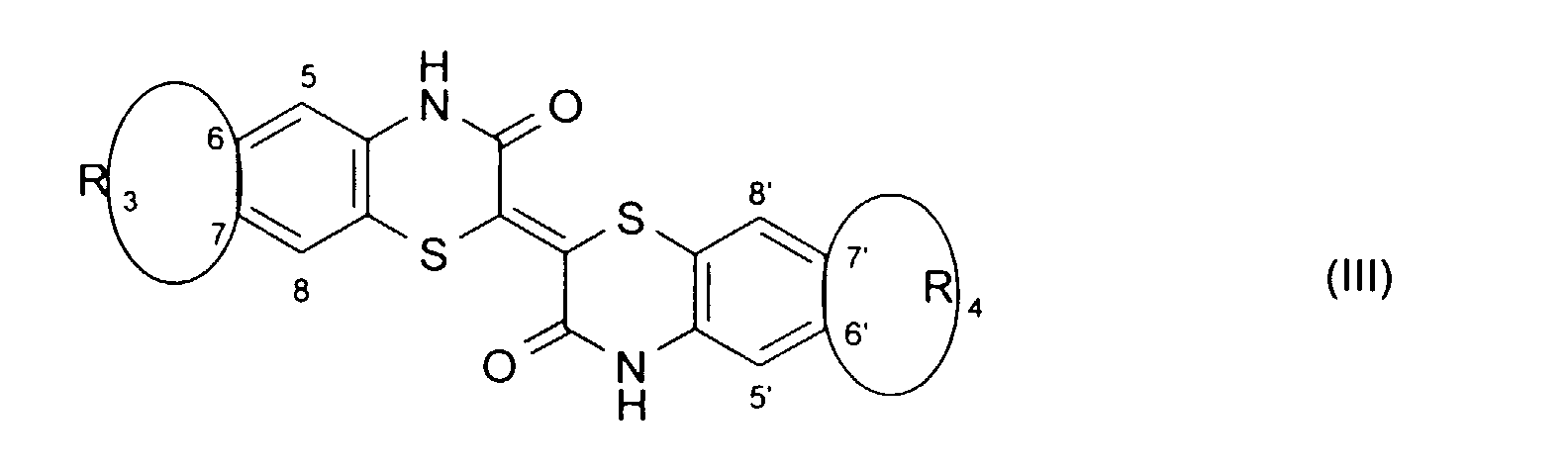
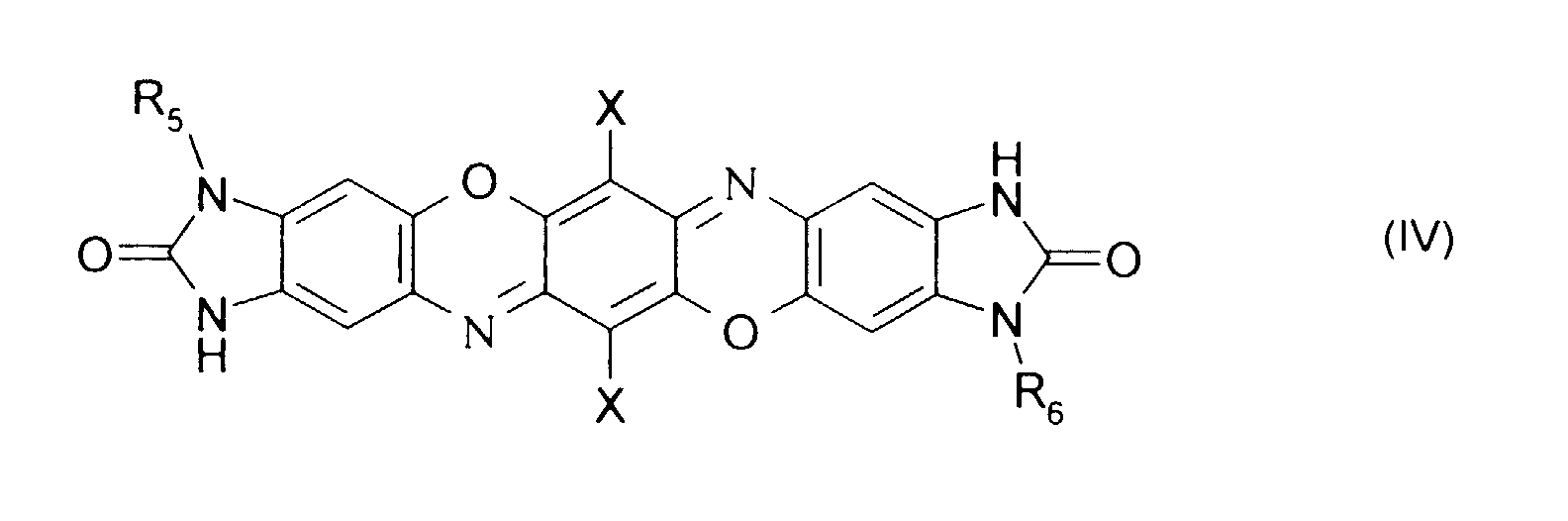
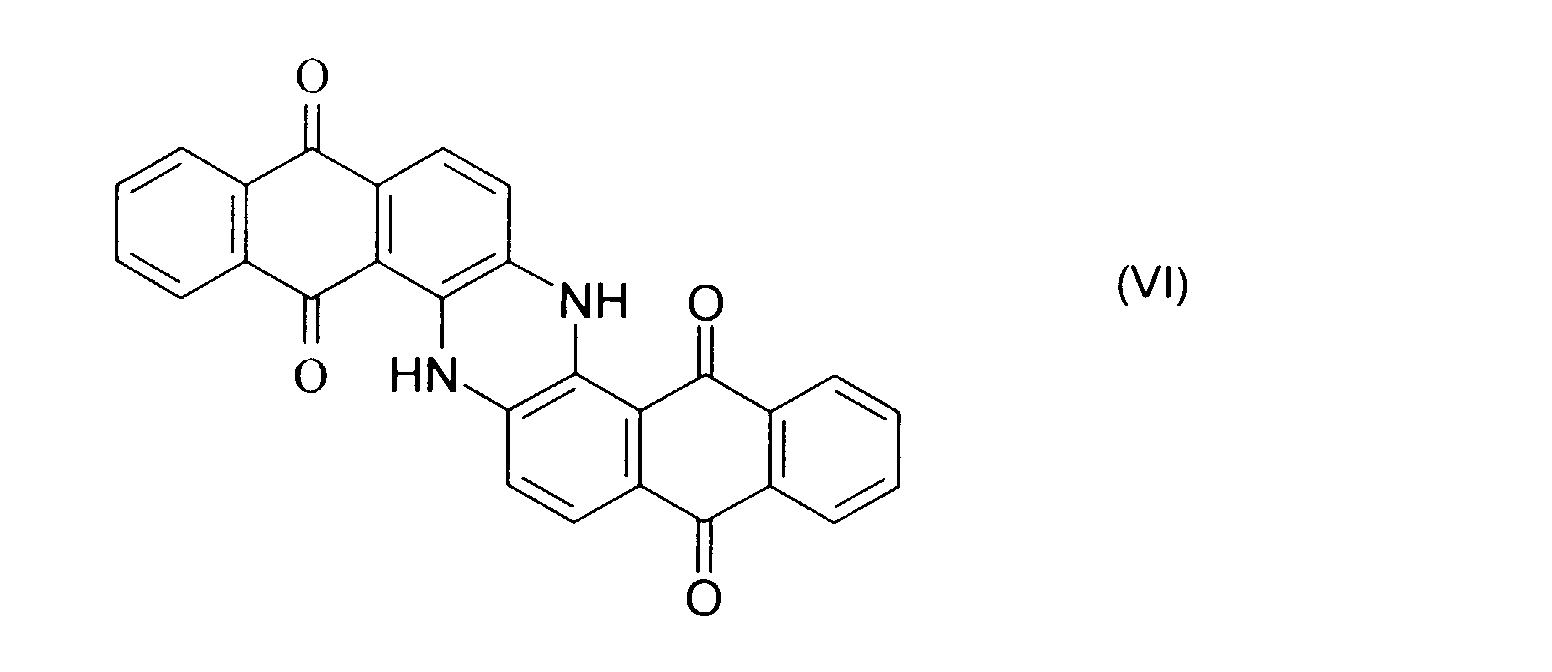
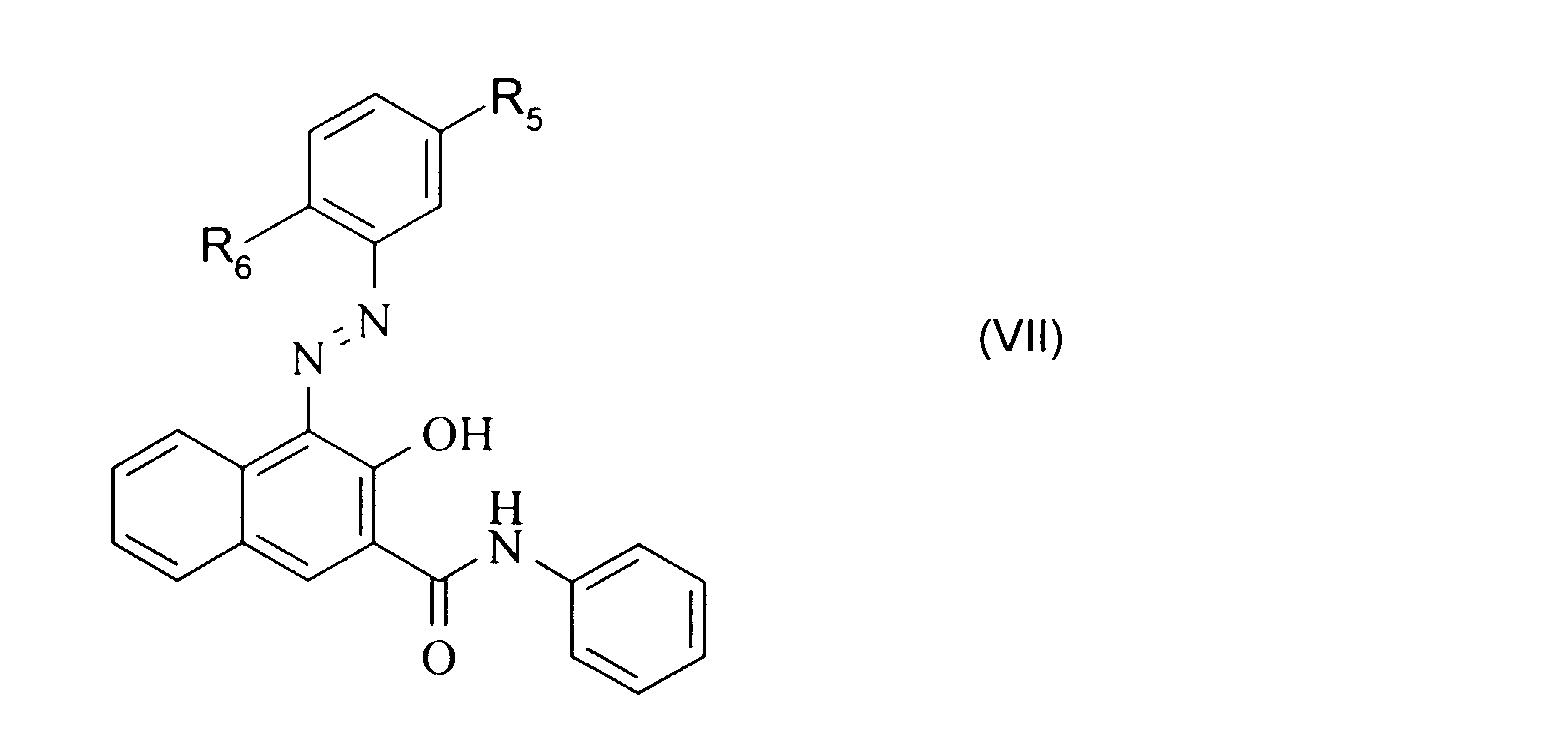
- Such pigments bearing "acid” hydrogens like -NH-, -OH or -CONH- groups preferably correspond to the formula (III) to (XI) in which R 3 and R 4 are independently the atoms necessary to complete the formation of a substituted or unsubstituted aromatic or aliphatic carbocyclic or heterocyclic ring system; R 5 and R 6 have the meaning of hydrogen, C 1-4 alkyl or hylogen; R 7 and R 8 have the meaning of C 1-4 alkoxy, nitro, C 1-4 alkoxycarbonyl or phenylaminocarbonyl; and X has the meaning of hydrogen and chloro.
- R 3 and R 4 are independently selected from the residues consisting of wherein R a is hydrogen, C 1-4 alkyl, halogen, C 1-4 alkoxy or trifluoromethyl; R b and R c are independently of each other, hydrogen or C 1-4 alkyl especially methyl or ethyl, or aryl.
- R a has the meaning halogen, it can be F, Cl or Br, preferably Cl, and such substituent can be present more than once.
- R 5 and R 6 can also have the meaning of phenyl or substituted phenyl.
- This process for the preparation of hybrid pigments consists in preparing the diketopyrrolo[3,4-c]pyrrole pigment alkali salt suspension with an excess of base, mixing it with a crude pigment bearing "acid” hydrogens like -NH, -OH or -CONH- groups and after the formation of the metal salt of the pigments bearing "acid” hydrogens like -NH, -OH or -CONH- groups, discharging the mixture of metal salts into water or a mixture of water and alcohol. The two pigment salts are precipitating together and the obtained product is isolated.
- the pigment salt suspension is prepared by mixing a diketopyrrolo [3,4-c]pyrrole pigment alkali salt suspension with a crude pigment bearing "acid" hydrogens like -NH, -OH or -CONH- groups, at a temperature in the order of 30 to 100°C, preferably from 50 to 95°C. The mixture is stirred, preferably at or below 95°C, until it is homogenous.
- the hybrid pigment is then precipitated from the pigment metal salts suspension to form a pigment suspension by precipitation methods known in the art.
- suitable precipitation methods include drowning into water or an alcohol, or adding an alcohol and/or water to the pigment salt suspension.
- the water and/or alcohol can be used in any desired mixing ratio between 5 and 20 parts by weight per 1 part of the pigment alkali metal salts formed.
- the presence of a mineral acid such as sulfuric acid or an organic acid, such as acetic acid, in the water and/or an alcohol is advantageous in such precipitation methods.
- the solvent used is an alcohol, in particular a secondary or tertiary alcohol.
- Preferred tertiary alcohols are tert-butanol and ter-amyl alcohol.
- Suitable strong bases include alkali metals; such as lithium, sodium and potassium, and alkali metal alkoxides derived in particular from primary, secondary or tertiary aliphatic alcohols having 1 to 10 carbon atoms. It is also possible to use a mixture of the above mentioned alkali metal alkoxides. Preference is given to using alkali metal alkoxides, the alkali metal being especially sodium or potassium, and the alkoxide is preferably derived from a secondary or tertiary alcohol. A particularly preferred strong base is sodium teramylate. These alkali metal alkoxides can also be prepared in situ by reacting the corresponding alcohol with alkali metal.
- the strong base can be used in an amount from 0,1 to 10 mol, preferably from 1,6 to 2,0 mol, based on 1 mole of the nitrile compound used as a starting compound for the pigments of formula (I) and corresponding to the formulae A-CN and B-CN in which A and B are each as defined above and both compounds in the nitrile mixture are in molar ratio of 100:0 to 50:50 relative to each other.
- the formation of the pigment alkali salts suspension can be carried out at a temperature from 60 to 140°C, preferably from 80 to 120°C.
- the obtained pigment salts suspension is drowned into water or an alcohol or an alcohol/water mixture.
- Suitable alcohols are methanol, ethanol, n-propanol, isopropylalcohol, ter-butanol and especially ter-amyl alcohol.
- the water and/or alcohol can be used in any desired mixing ratio between 5 and 20 parts by weight per 1 part of the pigment alkali metal salt formed. Water or ter-amyl alcohol/water mixtures are particularly suitable for drowning the pigment salts suspension.
- pigments with a particle size below 1.5 microns are obtained.
- the conditioned pigment is isolated by filtration, with the presscake being washed with water or an organic solvent, preferably methanol, followed by water and dried. Good results can be obtained by performing the filtration in acidic conditions.
- the present invention relates to a process for preparing hybrid pigments comprising a diketopyrrolo[3,4-c]pyrrole pigment compound and a crude pigment bearing "acid" hydrogens like -NH, -OH or -CONH- groups which process comprises
- the proportion of the diketopyrrolo[3,4-c]pyrrole pigment and the pigment bearing "acid" hydrogens like -NH, -OH or -CONH- groups in the hybrid pigment can vary between 10 and 90 % by weight of the "other" pigment with 90 to 10% of diketopyrrolo[3,4-c]pyrrole pigment, in particular between 30 and 70 % by weight of the "other” pigment with 70 to 30% of diketopyrrolo[3,4-c]pyrrole pigment, especially between 40 and 60 % by weight of the "other” pigment with 60 to 40% of diketopyrrolo[3,4-c]pyrrole pigment.
- ternary hybrid pigments by mixing the diketopyrrolo[3,4-c]pyrrole pigment alkali salt suspension with two pigments bearing "acid" hydrogens like -NH, -OH or -CONH- groups.
- a further aspect of the invention consists in providing new hybrid pigments of diketopyrrolo[3,4-c]pyrrole pigments according to formula (I) (as defined above) and of other pigments bearing "acid" hydrogens like -NH, -OH or -CONH- groups belonging to the class comprising anthraquinone, benzimidazolone, naphthol AS, monoazo and disazo pigments, disazo condensation pigments, isoindolinone, dioxazine, benzimidazolone triphenodioxazine, thiazine indigo, perinone, quinophthalone and metal complex pigments.
- Preferred hybrid pigments according to the invention are those consisting of a diketopyrrolo[3,4-c]pyrrole pigment and of a pigment according to one of the formulae (III), (IV), (VI), (VII), (VIII), (IX), (X) and (XI) as defined above.
- Especially preferred hybrid pigments are those consisting of a diketopyrrolo[3,4-c]pyrrole pigment according to formula (I) and a thiazine indigo pigment according to formula (III) or a benzimidazolone triphenodioxazine pigment according to formula (IV).
- the hybrid pigments according to the invention are suitable for the mass pigmentation of suitable substrates including synthetic polymers, synthetic resins and regenerated fibers optionally in the presence of solvents.
- substrates more particularly include oil or water and solvent based surface coatings, polyester spinning melts, polyethylene, polystyrene and polyvinyl chloride molding materials, rubber and synthetic leather.
- the pigments can be used in the manufacture of printing inks, for the mass coloration of paper and for coating and printing textiles.
- hybrid pigments according to the invention are also suitable as colorants in electrophotographic toners and developers, such as one- or two-component powder toners (also called one- or two-component developers), magnetic toners, liquid toners, polymerization toners and specialty toners (literature: L.B. Schein, "Electrophotography and Development Physics”; Springer Series in Electrophysics 14, Springer Verlag, 2 nd Edition, 1992).
- electrophotographic toners and developers such as one- or two-component powder toners (also called one- or two-component developers), magnetic toners, liquid toners, polymerization toners and specialty toners (literature: L.B. Schein, "Electrophotography and Development Physics”; Springer Series in Electrophysics 14, Springer Verlag, 2 nd Edition, 1992).
- Typical toner binders are addition polymerization, polyaddition and polycondensation resins, such as styrene, styrene-acrylate, styrene-butadiene, acrylate, polyester and phenol-epoxy resins, polysulphones, polyurethanes, individually or in combination, and also polyethylene and polypropylene, which may comprise further constituents, such as charge control agents, waxes or flow assistants, or may be modified subsequently with these additives.
- polyaddition and polycondensation resins such as styrene, styrene-acrylate, styrene-butadiene, acrylate, polyester and phenol-epoxy resins, polysulphones, polyurethanes, individually or in combination, and also polyethylene and polypropylene, which may comprise further constituents, such as charge control agents, waxes or flow assistants, or may be modified subsequently with these additives.
- the hybrid pigments according to the invention are suitable, furthermore, as colorants in powders and powder coating materials, especially in triboelectrically or electrokinetically sprayable powder coating materials which are used for the surface coating of articles made, for example, from metal, wood, plastic, glass, ceramic, concrete, textile material, paper or rubber (J.F. Hughes, "Electrostatics Powder Coating” Research Studies, John Wiley & Sons, 1984).
- Powder coating resins that are typically employed are epoxy resins, carboxyl- and hydroxyl-containing polyester resins, polyurethane resins and acrylic resins, together with customary hardeners. Combinations of resins are also used. For example, epoxy resins are frequently employed in combination with carboxyl- and hydroxyl-containing polyester resins.
- Typical hardener components are, for example, acid anhydrides, imidazoles and also dicyanodiamide and its derivatives, blocked isocyanates, bisacylurethanes, phenolic and melamine resins, triglycidyl isocyanurates, oxazolines and dicarboxylic acids.
- hybrid pigments formed by a process according to the invention are suitable as colorants in ink-jet inks, both aqueous and non-aqueous, and in those inks, which operate in accordance with the hot-melt process.
- the hybrid pigments are also suitable as colorants in cosmetic compositions.
- the co-pigments When applied to the afore-mentioned substrates the co-pigments are found to be resistant to migration and fast to light, and show fastness to washing, chlorite, hypochlorite and peroxide bleaching, rubbing, overspraying and solvents. Notably, the pigments display high tinctorial power, good opacity and good heat stability.
- the co-pigments according to the invention are used in amounts of 0.01 to 30% by weight, preferably of 0.1 to 10% by weight.
- a reactor of 1500 ml is charged with 400 ml of ter-amyl alcohol under nitrogen. 50ml of ter-amyl alcohol are distilled off the reactor. 18.4g (0.80 moles) of sodium are added and the mixture is heated to 95-102°C. The molten sodium is then maintained overnight at 100-105°C with vigorous stirring. To the resulting solution are then added at 80°C, 62.5g (0.44 moles) of 4-chlorobenzonitrile. Subsequently 58g (0.286 moles) of diisopropyl succinate are metered in at 96°C over 2 hours. The resulting isopropanol is distilled off at the same time. The reaction mixture is further stirred for 8 hours.
- a reactor of 1500 ml is charged with 400 ml of ter-amyl alcohol under nitrogen. 50ml of ter-amyl alcohol are distilled off the reactor. 18.4g (0.80 moles) of sodium are added and the mixture is heated to 95-102°C. The molten sodium is then maintained overnight at 100-105°C with vigorous stirring. To the resulting solution are then added at 80°C, 62.5g (0.44 moles) of 4-chlorobenzonitrile. Subsequently 58g (0.286 moles) of diisopropyl succinate are metered in at 96°C over 2 hours. The resulting isopropanol is distilled off at the same time. The reaction mixture is further stirred for 8 hours.
- a reactor of 1500 ml is charged with 400 ml of ter-amyl alcohol under nitrogen. 50ml of ter-amyl alcohol are distilled off the reactor. 18.4g (0.80 moles) of sodium are added and the mixture is heated to 95-102°C. The molten sodium is then maintained overnight at 100-105°C with vigorous stirring. To the resulting solution are then added at 80°C, 62.5g (0.44 moles) of 4-chlorobenzonitrile. Subsequently 58g (0.286 moles) of diisopropyl succinate are metered in at 96°C over 2 hours. The resulting isopropanol is distilled off at the same time. The reaction mixture is further stirred for 8 hours.
- Hybrid pigments of diketopyrrolo[3,4-c]pyrrole pigments (I), with pigments of the structures, according to formula (III), (IV), (V), (VI), (VII), (VIII), (IX), (X), (XI) are prepared according to the process described in the previous examples 1-3, adjusting the amount of pigment introduced in the beginning to reach the expected ratio between diketopyrrolo[3,4-c]pyrrole pigment and the crude pigment bearing "acid" hydrogen like -NH, -OH or -CONH- groups. They are listed in the following table. Ex.
- Ratio (molar percent) Hue in lacquers R 1 R 2 R 3 R 4 X Structure III 4 4-Cl 4'-Cl 7-Cl 7'-Cl - 40/60 Red 5 4-Cl 4'-Cl 7-Cl 7'-Cl - 50/50 Red 6
- the preparation of a 1 % colored PVC sheet is performed as follows: 100 parts of clear PVC are mixed with 0.1 part of pigment (obtained according to Example 1) for 2 minutes. The mixture is passed between two rollers for 5 minutes, the front roller being heated at 130°C and the rear roller being heated at 135°C. Then the sheet is pressed under a pressure of 25 tones between two chromium-plated steel plates heated at 165°C, for 5 minutes. The pressed sheet is colored with a red shade.
- the preparation of a 0.1% colored PVC sheet is performed as follows: 100 parts of PVC-white (0.5% TiO 2 ) are mixed with 0.1 part of pigment for 2 minutes. The mixture is passed between two rollers for 8 minutes, the front roller being heated at 160°C and the rear roller being heated at 165°C. Then the sheet is pressed under a pressure of 25 tones between two chromium-plated steel plates heated at 160°C, for 5 minutes.
- the preparation of the alkydmelamine (AM5) resin coating is performed as follows: 3.6 g of pigment, 26.4g of clear AM5 (35%) and 85g of glass beads are stirred in a Skandex stirrer for 30 minutes. 30g of this preparation are mixed with 60g of clear AM5 (55.8%). The dispersion is sprayed on a cardboard sheet, air-dried for 15 minutes and baked at 140°C in an oven for 30 minutes.
- the preparation of the alkydmelamine (AM5) resin coating is performed as follows: 3.6g of pigment, 26.4 parts of clear AM5 (35%) and 85g of glass beads are stirred in a Skandex stirrer for 30 minutes. 7.5g p of this preparation are mixed with 20g of AM5-white (30% TiO 2 ). The dispersion is sprayed on a cardboard sheet, air-dried for 15 minutes and baked at 140°C in an oven for 30 minutes.
Landscapes
- Chemical & Material Sciences (AREA)
- Organic Chemistry (AREA)
- Chemical Kinetics & Catalysis (AREA)
- Compositions Of Macromolecular Compounds (AREA)
- Nitrogen Condensed Heterocyclic Rings (AREA)
- Inks, Pencil-Leads, Or Crayons (AREA)
- Cosmetics (AREA)
- Paints Or Removers (AREA)
- Developing Agents For Electrophotography (AREA)
- Coloring (AREA)
- Pigments, Carbon Blacks, Or Wood Stains (AREA)
Abstract
Description


and of pigments bearing "acid" hydrogens like -NH, -OH or -CONH- groups of the class comprising diketopyrrolo[3,4-c]pyrrole, quinacridone, anthraquinone, benzimidazolone, naphthol AS, monoazo pigments, disazo pigments, disazo condensation pigments, isoindolinone, dioxazine, benzimidazolone triphenodioxazine, thiazine indigo, perinone, quinophthalone and metal complex pigments.



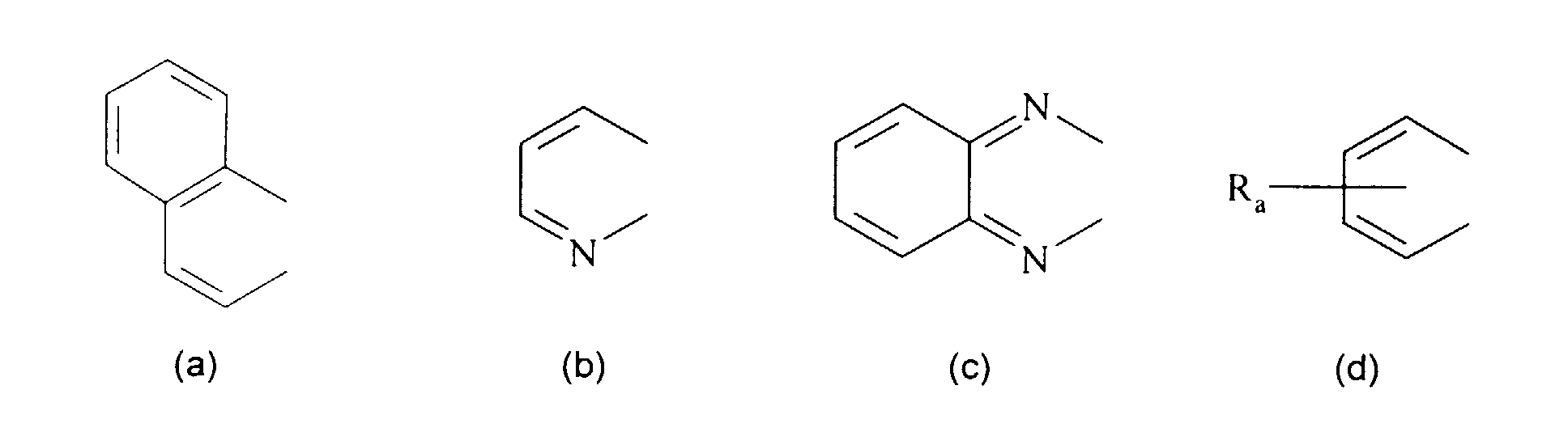
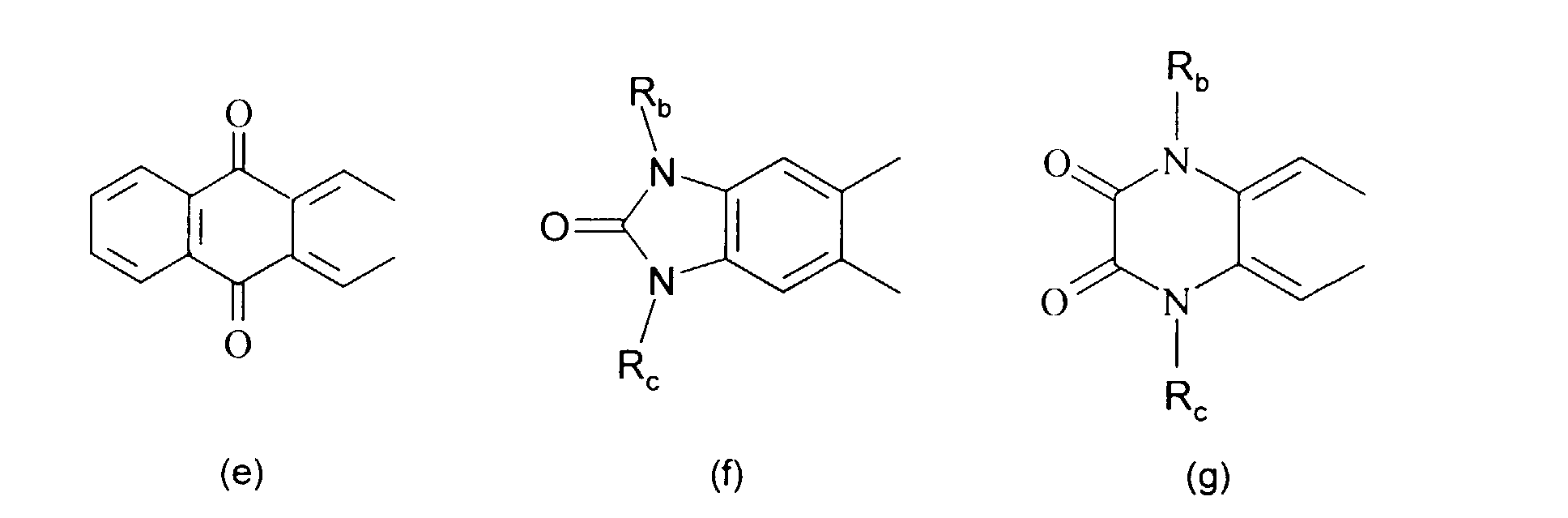
| Ex. | Diketopyrrolo [3,4-c]pyrrole Pigment (I) | pigment bearing "acid" hydrogens like -NH, -OH or -CONH groups | Ratio (molar percent) | Hue in lacquers | |||
| R1 | R2 | R3 | R4 | X | |||
| Structure III | |||||||
| 4 | 4-Cl | 4'-Cl | 7-Cl | 7'-Cl | - | 40/60 | Red |
| 5 | 4-Cl | 4'-Cl | 7-Cl | 7'-Cl | - | 50/50 | Red |
| 6 | 4-Cl | 4'-Cl | 7-Cl | 7'-Cl | - | 70/30 | Red |
| 7 | 4-Cl | 4'-Cl | 7-Cl | 7'-Cl | - | 80/20 | Red |
| 8 | 4-CH3 | 4'-CH3 | 7-Cl | 7'-Cl | - | 80/20 | Red |
| 9 | 4-CH3 | 4'-CH3 | 7-Cl | 7'-Cl | - | 50/50 | Red |
| 10 | 4-Cl | 4'-Cl | H | H | - | 50/50 | Red |
| 11 | 4-Cl | 4'-Cl | H | H | - | 70/30 | Red |
| 12 | 4-CH3 | 4'-CH3 | H | H | - | 20/80 | Orange |
| 13 | 4-CH3 | 4'-CH3 | H | H | - | 50/50 | Red |
| 14 | 4-Cl | 4'-Cl | 7-CH3 | 7'-CH3 | - | 80/20 | Red |
| 15 | 4-Cl | 4'-Cl | 7-CH3 | 7'-CH3 | - | 50/50 | Red |
| 16 | 4-CH3 | 4'-CH3 | 7-CH3 | 7'-CH3 | - | 80/20 | Orange |
| 17 | 4-terButyl | 4-terButyl | 7-CH3 | 7'-CH3 | - | 50/50 | Orange |
| Structure IV | |||||||
| 18 | 4-Cl | 4'-Cl | CH3 | CH3 | Cl | 70/30 | Red violet |
| 19 | 4-Cl | 4'-Cl | C2H5 | C2H5 | Cl | 70/30 | Red violet |
| 20 | 4-Cl | 4'-Cl | C6H5 | C6H5 | H | 70/30 | Bluish red |
| 21 | 4-Cl | 4'-Cl | p-Cl-C6H5 | p-Cl-C6H5 | H | 70/30 | Bluish red |
| Structure V | |||||||
| 22 | 4-Cl | 4'-Cl | H | H | - | 60/40 | Red |
| 23 | 4-Cl | 4'-Cl | H | H | - | 50/50 | Red |
| 24 | 4-Cl | 4'-Cl | 2-CH3 | 9-CH3 | - | 50/50 | Red |
| 25 | 4-Cl | 4'-Cl | 2-Cl | 9-Cl | - | 80/20 | Red |
| 26 | 4-CH3 | 4'-CH3 | H | H | - | 50/50 | Red |
| 27 | 4-CH3 | 4'-CH3 | 2-CH3 | 9-CH3 | - | 50/50 | Red |
| 28 | 4-CH3 | 4'-CH3 | 2-Cl | 9-Cl | - | 80/20 | Red |
| 29 | H | H | H | H | - | 50/50 | Red |
| 30 | H | H | 2-CH3 | 9-CH3 | - | 80/20 | Red |
| 31 | H | H | 2-Cl | 9-Cl | - | 80/20 | Red |
| Structure VI | |||||||
| 32 | 4-Cl | 4'-Cl | - | - | - - | 80/20 | Reddish blue |
| 33 | 4-Cl | 4'-Cl | - | - | - | 20/80 | Bluish red |
| 34 | 4-Cl | 4'-Cl | - | - | - | 50/50 | Reddish blue |
| 35 | H | H | - | - | - | 60/40 | Reddish blue |
| 36 | H | H | - | - | - | 40/60 | Reddish blue |
| 37 | 4-CH3 | 4'-CH3 | - | - | - | 60/40 | Reddish blue |
| 38 | 4-CH3 | 4'-CH3 | - | - | - | 40/60 | Bluish red |
| Structure VII | |||||||
| 39 | 4-Cl | 4'-Cl | Cl | H | - | 60/40 | Red |
| 40 | 4-Cl | 4'-Cl | H | Cl | - | 50/50 | Red |
| 41 | H | H | Cl | H | - | 50/50 | orange |
| 42 | H | H | H | Cl | - | 40/60 | Reddish orange |
| 43 | 4-CH3 | 4'-CH3 | Cl | H | - | 60/40 | Reddish orange |
| 44 | 4-CH3 | 4'-CH3 | H | Cl | - | 50/50 | Red |
| Structure VIII | |||||||
| 45 | 4-Cl | 4'-Cl | 3-COOCH3 | 5-COOCH3 | - | 60/40 | Orange |
| 46 | 4-Cl | 4'-Cl | 2-COOCH3 | 5-COOCH3 | - | 50/50 | Orange |
| 47 | 4-Cl | 4'-Cl | 2-NO2 | 4-Cl | - | 50/50 | Orange |
| 48 | H | H | 3-COOCH3 | 5-COOCH3 | - | 60/40 | Orange |
| 49 | H | H | 2-COOCH3 | 5-COOCH3 | - | 80/20 | Orange |
| 50 | H | H | 2-NO2 | 4-Cl | - | 50/50 | Orange |
| 51 | 4-CH3 | 4'-CH3 | 3-COOCH3 | 5-COOCH3 | - | 60/40 | Orange |
| 52 | 4-CH3 | 4'-CH3 | 2-COOCH3 | 5-COOCH3 | - | 80/20 | Orange |
| 53 | 4-CH3 | 4'-CH3 | 2-NO2 | 4-Cl | - | 40/60 | Reddish orange |
| Structure IX | |||||||
| 54 | 4-Cl | 4'-Cl | 2-COOCH3 | H | - | 50/50 | Red |
| 55 | 4-Cl | 4'-Cl | 2-OCH3 | 4-CONHC6H5 - | 60/40 | 60/40 | Red |
| 56 | H | H | 2-COOCH3 | H | - | 50/50 | Red |
| 57 | H | H | 2-OCH3 | 4-CONHC6H5 - | 60/40 | 60/40 | Red |
| 58 | 4-CH3 | 4'-CH3 | 2-COOCH3 | H | - | 50/50 | Red |
| 59 | 4-CH3 | 4'-CH3 | 2-OCH3 | 4-CONHC6H5 - | 60/40 | 60/40 | Red |
| Structure X | |||||||
| 60 | 4-Cl | 4'-Cl | H | - | - | 60/40 | Orange |
| 61 | H | H | H | - | - | 50/50 | Orange |
| 62 | 4-Cl | 4'-Cl | Cl | - | - | 30/70 | Orange |
| 63 | 4-Cl | 4'-Cl | - | - | - | 60/40 | Orange |
| 64 | H | H | - | - | - | 50/50 | Orange |
| 65 | 4-CH3 | 4'-CH3 | - | - | - | 30/70 | Orange |
100 parts of clear PVC are mixed with 0.1 part of pigment (obtained according to Example 1) for 2 minutes. The mixture is passed between two rollers for 5 minutes, the front roller being heated at 130°C and the rear roller being heated at 135°C. Then the sheet is pressed under a pressure of 25 tones between two chromium-plated steel plates heated at 165°C, for 5 minutes. The pressed sheet is colored with a red shade.
100 parts of PVC-white (0.5% TiO2) are mixed with 0.1 part of pigment for 2 minutes. The mixture is passed between two rollers for 8 minutes, the front roller being heated at 160°C and the rear roller being heated at 165°C. Then the sheet is pressed under a pressure of 25 tones between two chromium-plated steel plates heated at 160°C, for 5 minutes.
3.6 g of pigment, 26.4g of clear AM5 (35%) and 85g of glass beads are stirred in a Skandex stirrer for 30 minutes. 30g of this preparation are mixed with 60g of clear AM5 (55.8%). The dispersion is sprayed on a cardboard sheet, air-dried for 15 minutes and baked at 140°C in an oven for 30 minutes.
3.6g of pigment, 26.4 parts of clear AM5 (35%) and 85g of glass beads are stirred in a Skandex stirrer for 30 minutes. 7.5g p of this preparation are mixed with 20g of AM5-white (30% TiO2). The dispersion is sprayed on a cardboard sheet, air-dried for 15 minutes and baked at 140°C in an oven for 30 minutes.
Claims (9)
- A process for the preparation of hybrid pigments of diketopyrrolo[3,4-c]pyrrole pigments according to the formula (I)where A and B are each, independently of the other, a radical of the formula (II)
 in which R1 and R2 are each, independently of the other, hydrogen, halogen, C1-C5alkyl, nitrile or phenyl;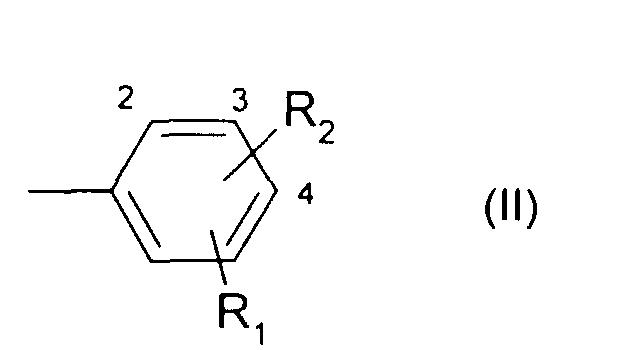
and of pigments bearing "acid" hydrogens like -NH, -OH or -CONH- groups, comprising the step of mixing the diketopyrrolo[3,4-c]pyrrole alkali salt suspension with a crude pigment bearing "acid" hydrogens like -NH, -OH or -CONH- groups in the presence of an excess of base and precipitating the salts together. - Hybrid pigments according to claim 1 in which the pigment bearing "acid" hydrogen belongs to the class comprising anthraquinone, benzimidazolone, naphthol AS, monoazo pigments, disazo pigments, disazo condensation pigments, isoindolinone, dioxazine, benzimidazolone triphenodioxazine, thiazine indigo, perinone, quinophthalone and metal complex pigments.
- Hybrid pigments according to claim 2 in which the pigment bearing "acid" hydrogen corresponds to the formula (III), (IV) or (VI) to (XI)
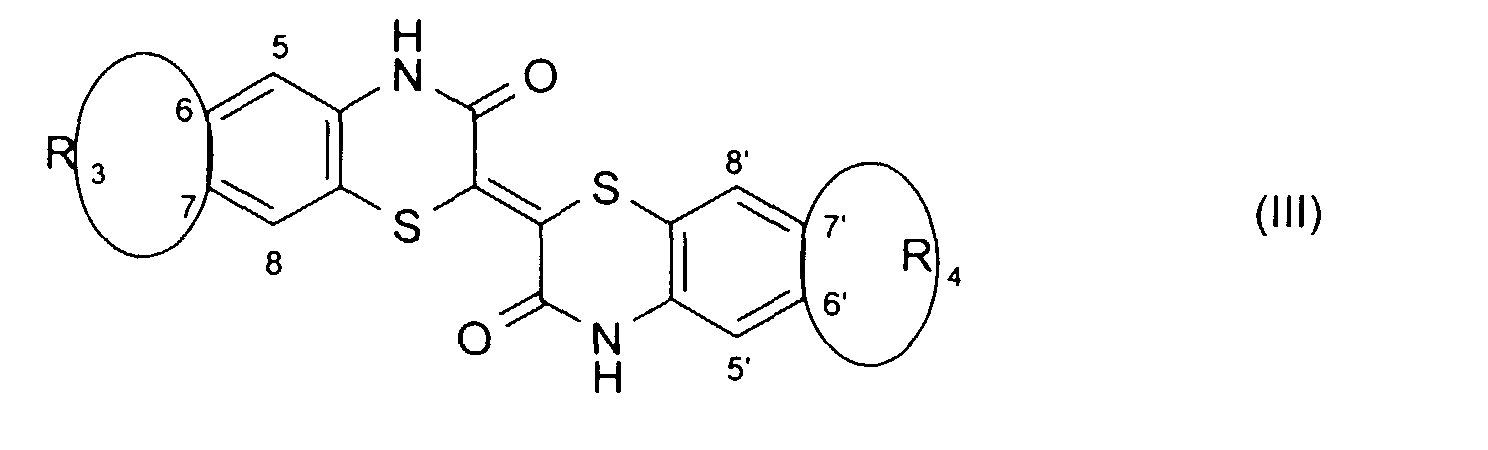
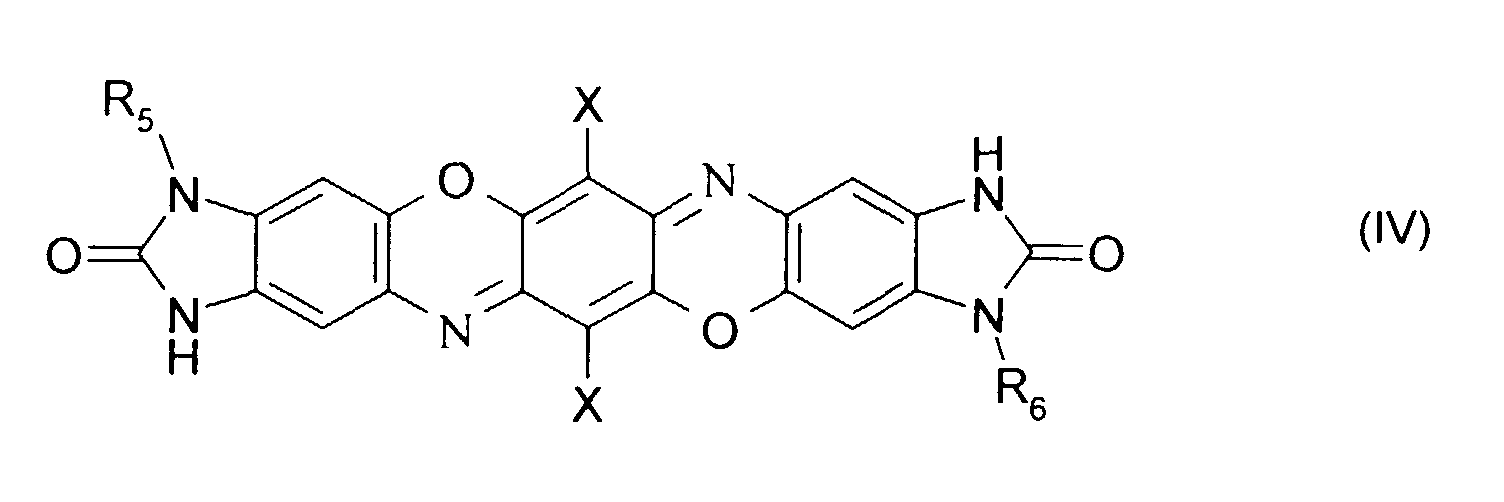


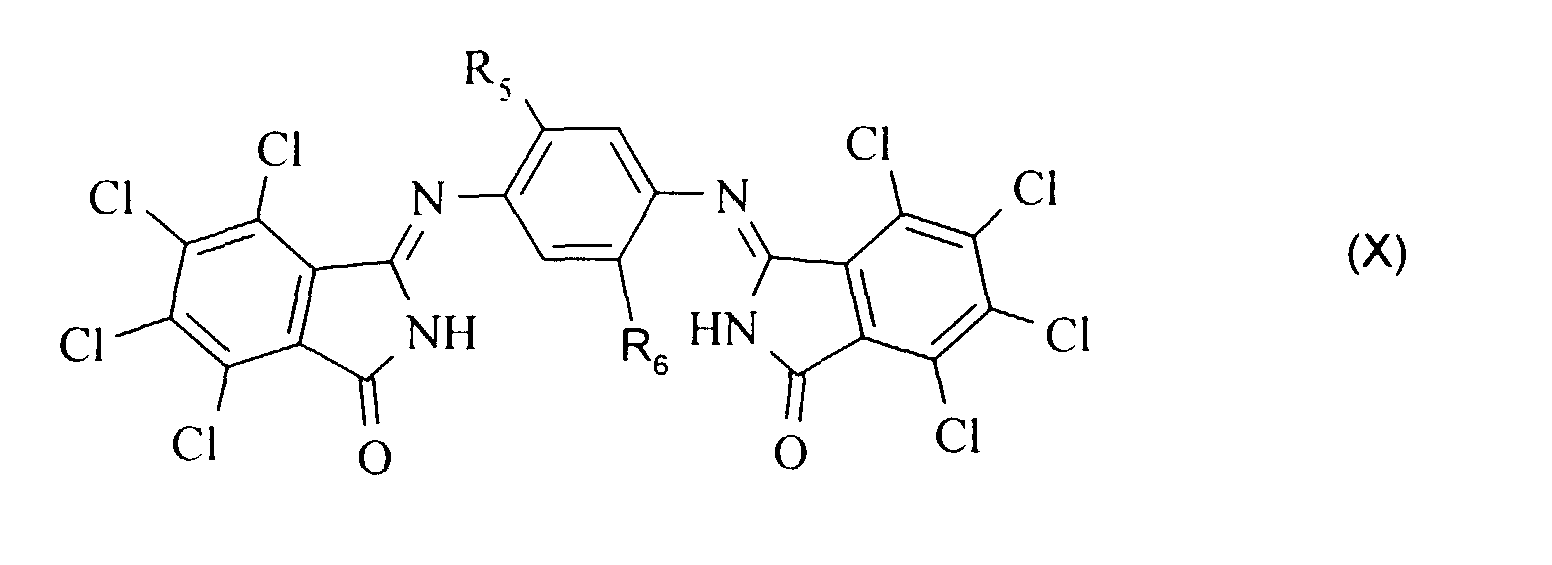 in which R3 and R4 are independently the atoms necessary to complete the formation of a substituted or unsubstituted aromatic or aliphatic carbocyclic or heterocyclic ring system; R5 and R6 have the meaning of hydrogen, C1-4alkyl or halogen; R7 and R8 have the meaning of C1-4alkoxy, nitro, C1-4alkoxycarbonyl or phenylaminocarbonyl; and X has the meaning of hydrogen and chloro, provided that in formula (IV) R5 and R6 can also have the meaning of phenyl or substituted phenyl
- Use of hybrid pigments of diketopyrrolo[3,4-c]pyrrole pigment and of pigments bearing "acid" hydrogens like -NH, -OH or -CONH- groups as defined in claim 2 for the mass pigmentation of substrates, preferably synthetic polymers, synthetic resins and regenerated fibers.
- Use of hybrid pigments of diketopyrrolo[3,4-c]pyrrole pigment and of pigments bearing "acid" hydrogens like -NH, -OH or -CONH- groups as defined in claim 2, as a colorant for printing inks or textiles.
- Use of hybrid pigments of diketopyrrolo[3,4-c]pyrrole pigment and pigments bearing "acid" hydrogens like -NH, -OH or -CONH- groups as defined in claim 2, as a colorant for electrographic toners and developers.
- Use of hybrid pigments of diketopyrrolo[3,4-c]pyrrole pigment and of pigments bearing "acid" hydrogens like -NH, -OH or -CONH- groups as defined in claim 2, as a colorant in powders and powder coating materials.
- Use of hybrid pigments of diketopyrrolo[3,4-c]pyrrole pigment and pigments bearing "acid" hydrogens like -NH, -OH or -CONH- groups as defined in claim 2, as a colorant in ink-jet inks.
- Use of hybrid pigments of diketopyrrolo[3,4-c]pyrrole pigment and pigments bearing "acid" hydrogens like -NH, -OH or -CONH- groups as defined in claim 2, as a colorant in cosmetic compositions.
Applications Claiming Priority (4)
| Application Number | Priority Date | Filing Date | Title |
|---|---|---|---|
| GBGB9907945.1A GB9907945D0 (en) | 1999-04-08 | 1999-04-08 | Mixed crystals or solid solution of pigments |
| GB9907945 | 1999-04-08 | ||
| GB9922413 | 1999-09-23 | ||
| GBGB9922413.1A GB9922413D0 (en) | 1999-09-23 | 1999-09-23 | New pigments the process of their manufacturing and their use |
Publications (3)
| Publication Number | Publication Date |
|---|---|
| EP1046680A2 true EP1046680A2 (en) | 2000-10-25 |
| EP1046680A3 EP1046680A3 (en) | 2003-02-12 |
| EP1046680B1 EP1046680B1 (en) | 2006-07-26 |
Family
ID=26315394
Family Applications (1)
| Application Number | Title | Priority Date | Filing Date |
|---|---|---|---|
| EP00810302A Expired - Lifetime EP1046680B1 (en) | 1999-04-08 | 2000-04-06 | Pigments, the process of their manufacture and their use |
Country Status (7)
| Country | Link |
|---|---|
| US (1) | US6375732B1 (en) |
| EP (1) | EP1046680B1 (en) |
| JP (1) | JP2001019869A (en) |
| KR (1) | KR20000071603A (en) |
| AT (1) | ATE334173T1 (en) |
| DE (1) | DE60029507T2 (en) |
| ES (1) | ES2269091T3 (en) |
Cited By (4)
| Publication number | Priority date | Publication date | Assignee | Title |
|---|---|---|---|---|
| WO2005039515A1 (en) * | 2003-10-17 | 2005-05-06 | Ciba Specialty Chemicals Holding Inc. | Cosmetic formulations comprising diketo diphenyl pyrrolo-pyrrole pigments |
| WO2005039513A1 (en) * | 2003-10-17 | 2005-05-06 | Ciba Specialty Chemicals Holding Inc. | Cosmetic formulations comprising diketo diphenyl pyrrolo-pyrrole pigments |
| WO2006128539A3 (en) * | 2005-05-31 | 2007-02-01 | Clariant Produkte Deutchland G | C.i. pigment blue 80-based blue dye |
| WO2007060259A3 (en) * | 2005-11-28 | 2007-11-01 | Agfa Graphics Nv | Non-aqueous pigment dispersions using dispersion synergists |
Families Citing this family (7)
| Publication number | Priority date | Publication date | Assignee | Title |
|---|---|---|---|---|
| JP4526650B2 (en) * | 1999-04-22 | 2010-08-18 | クラリアント ファイナンス (ビーブイアイ) リミティド | Solid solution |
| GB9914173D0 (en) | 1999-06-18 | 1999-08-18 | Clariant Int Ltd | New heterocyclic compounds |
| DE10106147A1 (en) * | 2001-02-10 | 2002-08-14 | Clariant Gmbh | Acidic pigment dispersants and pigment preparations |
| GB0104240D0 (en) * | 2001-02-21 | 2001-04-11 | Clariant Int Ltd | Copolymer composition having pigment like properties |
| DE102007011068A1 (en) * | 2007-03-07 | 2008-09-11 | Clariant International Ltd. | Process for the direct preparation of finely divided diketopyrrolopyrrole pigments |
| JP5256663B2 (en) * | 2007-08-10 | 2013-08-07 | 東洋インキScホールディングス株式会社 | Red colored composition and red colored coating film formed from the colored composition |
| JP6120757B2 (en) * | 2013-12-10 | 2017-04-26 | 大日精化工業株式会社 | Diketopyrrolopyrrole pigment composition and pigment colorant using the same |
Family Cites Families (23)
| Publication number | Priority date | Publication date | Assignee | Title |
|---|---|---|---|---|
| EP0061426B1 (en) | 1981-03-20 | 1985-02-13 | Ciba-Geigy Ag | Process for colouring highly molecular organic material and polycyclic pigments |
| ATE22104T1 (en) | 1982-05-17 | 1986-09-15 | Ciba Geigy Ag | PRODUCTION OF PYRROLO-(3,4-C)-PYRROLENES. |
| US4783540A (en) | 1986-08-07 | 1988-11-08 | Ciba-Geigy Corporation | Solid solutions of pyrrolo-(3,4-C)-pyrrols |
| ES2058327T3 (en) * | 1987-02-02 | 1994-11-01 | Ciba Geigy Ag | SOLID SOLUTIONS OF PYRROLLO- (3,4-C) -PIRROLES WITH QUINACRIDONAS. |
| US4810304A (en) | 1987-02-02 | 1989-03-07 | Ciba-Geigy Corporation | Solid solutions of pyrrolo-(3,4-C)-pyrroles with quinacridones |
| US4931566A (en) * | 1987-07-31 | 1990-06-05 | Ciba-Geigy Corporation | Process for the preparation of pyrrolo[3,4-c]pyrroles |
| DE3926466C2 (en) | 1989-08-10 | 1996-12-19 | Christoph Dipl Ing Caesar | Microreactor for carrying out chemical reactions of two chemical substances with strong heat |
| KR0143777B1 (en) | 1989-11-28 | 1998-07-01 | 월터 클리웨인, 한스-피터 위트린 | Compositions of Materials Based on Diketopyrrolopyrrole |
| DE59206108D1 (en) | 1991-10-23 | 1996-05-30 | Hoechst Ag | Pigment preparations |
| US5534328A (en) | 1993-12-02 | 1996-07-09 | E. I. Du Pont De Nemours And Company | Integrated chemical processing apparatus and processes for the preparation thereof |
| TW372244B (en) | 1993-07-29 | 1999-10-21 | Ciba Sc Holding Ag | Process for producing novel finely divided highly transparent diketopyrrolopyrrole pigments |
| US5457203A (en) * | 1993-09-15 | 1995-10-10 | Ciba-Geigy Corporation | Pigmentary synthesis of quinacridone solid solutions |
| EP0654506B1 (en) * | 1993-11-22 | 2000-05-17 | Ciba SC Holding AG | Process for the manufacture of synergetic mixtures of pigments |
| US5492564A (en) | 1994-03-16 | 1996-02-20 | Ciba-Geigy Corporation | Diketopyrrolopyrrole pigment with high chroma |
| US5811062A (en) | 1994-07-29 | 1998-09-22 | Battelle Memorial Institute | Microcomponent chemical process sheet architecture |
| US5529623A (en) | 1994-09-28 | 1996-06-25 | Ciba-Geigy Corporation | Pigmentary solid solutions of pyrrolo[3,4-c]pyrroles and quinacridones |
| DE59507427D1 (en) | 1994-09-28 | 2000-01-20 | Ciba Sc Holding Ag | Mixed crystals and solid solutions of 1,4-diketopyrrolopyrroles |
| US5641351A (en) | 1995-04-14 | 1997-06-24 | Ciba-Geigy Corporation | Pigment compositions based on 3,6-di(biphenyl)1,4-diketo-pyrrolo[3,4c]-pyrrole |
| TW341572B (en) | 1995-09-20 | 1998-10-01 | Ciba Sc Holding Ag | Preparation of mixed crystals and solid solutions of 1,4-diketopyrrolopyrroles |
| EP0794235B1 (en) | 1996-03-06 | 2000-02-02 | Ciba SC Holding AG | Ternary solid solutions of 1,4-diketo-pyrrolopyrroles and quinacridones |
| DE59703652D1 (en) | 1996-08-22 | 2001-07-05 | Ciba Sc Holding Ag | Crystal modification of a diketopyrrolopyrrole pigment |
| US6200378B1 (en) * | 1997-01-29 | 2001-03-13 | CLARIANT FINANCE (BVIø) LIMITED | Thiazine indigo pigments, solid solutions thereof and their preparation |
| US6057449A (en) | 1998-06-02 | 2000-05-02 | Ciba Specialty Chemicals Corporation | Direct preparation of pyrrolo[3,4-c]pyrroles |
-
2000
- 2000-03-30 US US09/538,825 patent/US6375732B1/en not_active Expired - Fee Related
- 2000-03-31 JP JP2000098508A patent/JP2001019869A/en not_active Withdrawn
- 2000-04-06 AT AT00810302T patent/ATE334173T1/en not_active IP Right Cessation
- 2000-04-06 EP EP00810302A patent/EP1046680B1/en not_active Expired - Lifetime
- 2000-04-06 DE DE60029507T patent/DE60029507T2/en not_active Expired - Fee Related
- 2000-04-06 ES ES00810302T patent/ES2269091T3/en not_active Expired - Lifetime
- 2000-04-07 KR KR1020000018246A patent/KR20000071603A/en not_active Abandoned
Cited By (6)
| Publication number | Priority date | Publication date | Assignee | Title |
|---|---|---|---|---|
| WO2005039515A1 (en) * | 2003-10-17 | 2005-05-06 | Ciba Specialty Chemicals Holding Inc. | Cosmetic formulations comprising diketo diphenyl pyrrolo-pyrrole pigments |
| WO2005039513A1 (en) * | 2003-10-17 | 2005-05-06 | Ciba Specialty Chemicals Holding Inc. | Cosmetic formulations comprising diketo diphenyl pyrrolo-pyrrole pigments |
| WO2006128539A3 (en) * | 2005-05-31 | 2007-02-01 | Clariant Produkte Deutchland G | C.i. pigment blue 80-based blue dye |
| US7686883B2 (en) | 2005-05-31 | 2010-03-30 | Clariant Produkte (Deutschland) Gmbh | C.I. pigment blue 80-based blue dye |
| WO2007060259A3 (en) * | 2005-11-28 | 2007-11-01 | Agfa Graphics Nv | Non-aqueous pigment dispersions using dispersion synergists |
| US7648571B2 (en) | 2005-11-28 | 2010-01-19 | Agfa Graphics Nv | Non-aqueous pigment dispersions using dispersion synergists |
Also Published As
| Publication number | Publication date |
|---|---|
| DE60029507D1 (en) | 2006-09-07 |
| ES2269091T3 (en) | 2007-04-01 |
| EP1046680A3 (en) | 2003-02-12 |
| US6375732B1 (en) | 2002-04-23 |
| KR20000071603A (en) | 2000-11-25 |
| ATE334173T1 (en) | 2006-08-15 |
| EP1046680B1 (en) | 2006-07-26 |
| JP2001019869A (en) | 2001-01-23 |
| DE60029507T2 (en) | 2007-07-19 |
Similar Documents
| Publication | Publication Date | Title |
|---|---|---|
| JP4230772B2 (en) | Acid pigment dispersants and pigment formulations | |
| KR100588884B1 (en) | Perylene Compounds and Pigment Preparations | |
| US6409816B1 (en) | Pigment preparations based on diketopyrrolopyrrole pigments with basic perylene dispersants | |
| EP1046680B1 (en) | Pigments, the process of their manufacture and their use | |
| US6413309B1 (en) | Pigment preparations comprising two or more perylene compounds | |
| US6482817B1 (en) | Hybrid pigments | |
| US6255482B1 (en) | Triphendioxazine compounds | |
| EP0686673A1 (en) | Isoindolin pigments | |
| EP1379527B1 (en) | Epindolidione pigments | |
| US6472527B1 (en) | Process for the preparation of thiazine-indigo compounds and of new intermediates therefor | |
| EP1341851B1 (en) | Process for the preparation of triphenodioxazine pigments | |
| US5747566A (en) | Water-insoluble azo colorants based on aminoquinazolinediones | |
| KR20050067381A (en) | Novel diketopyrrolopyrrole pigments | |
| US7524953B2 (en) | Triphendioxazine pigments | |
| US6617453B1 (en) | Triphendioxazine compounds | |
| CA2207972A1 (en) | Water-insoluble azo colorants based on n-acetoacetyldehydrothiotoluidine |
Legal Events
| Date | Code | Title | Description |
|---|---|---|---|
| PUAI | Public reference made under article 153(3) epc to a published international application that has entered the european phase |
Free format text: ORIGINAL CODE: 0009012 |
|
| AK | Designated contracting states |
Kind code of ref document: A2 Designated state(s): AT BE CH CY DE DK ES FI FR GB GR IE IT LI LU MC NL PT SE |
|
| AX | Request for extension of the european patent |
Free format text: AL;LT;LV;MK;RO;SI |
|
| PUAL | Search report despatched |
Free format text: ORIGINAL CODE: 0009013 |
|
| AK | Designated contracting states |
Designated state(s): AT BE CH CY DE DK ES FI FR GB GR IE IT LI LU MC NL PT SE |
|
| AX | Request for extension of the european patent |
Extension state: AL LT LV MK RO SI |
|
| RIC1 | Information provided on ipc code assigned before grant |
Ipc: 7C 09B 67/22 A Ipc: 7C 09B 57/00 B |
|
| 17P | Request for examination filed |
Effective date: 20030812 |
|
| AKX | Designation fees paid |
Designated state(s): AT BE CH CY DE DK ES FI FR GB GR IE IT LI LU MC NL PT SE |
|
| 17Q | First examination report despatched |
Effective date: 20050421 |
|
| GRAP | Despatch of communication of intention to grant a patent |
Free format text: ORIGINAL CODE: EPIDOSNIGR1 |
|
| GRAC | Information related to communication of intention to grant a patent modified |
Free format text: ORIGINAL CODE: EPIDOSCIGR1 |
|
| GRAS | Grant fee paid |
Free format text: ORIGINAL CODE: EPIDOSNIGR3 |
|
| GRAA | (expected) grant |
Free format text: ORIGINAL CODE: 0009210 |
|
| AK | Designated contracting states |
Kind code of ref document: B1 Designated state(s): AT BE CH CY DE DK ES FI FR GB GR IE IT LI LU MC NL PT SE |
|
| PG25 | Lapsed in a contracting state [announced via postgrant information from national office to epo] |
Ref country code: IT Free format text: LAPSE BECAUSE OF FAILURE TO SUBMIT A TRANSLATION OF THE DESCRIPTION OR TO PAY THE FEE WITHIN THE PRE;WARNING: LAPSES OF ITALIAN PATENTS WITH EFFECTIVE DATE BEFORE 2007 MAY HAVE OCCURRED AT ANY TIME BEFORE 2007. THE CORRECT EFFECTIVE DATE MAY BE DIFFERENT FROM THE ONE RECORDED.SCRIBED TIME-LIMIT Effective date: 20060726 Ref country code: FI Free format text: LAPSE BECAUSE OF FAILURE TO SUBMIT A TRANSLATION OF THE DESCRIPTION OR TO PAY THE FEE WITHIN THE PRESCRIBED TIME-LIMIT Effective date: 20060726 |
|
| REG | Reference to a national code |
Ref country code: GB Ref legal event code: FG4D |
|
| REG | Reference to a national code |
Ref country code: CH Ref legal event code: EP |
|
| REG | Reference to a national code |
Ref country code: IE Ref legal event code: FG4D |
|
| REG | Reference to a national code |
Ref country code: CH Ref legal event code: NV Representative=s name: CLARIANT INTERNATIONAL LTD. |
|
| REF | Corresponds to: |
Ref document number: 60029507 Country of ref document: DE Date of ref document: 20060907 Kind code of ref document: P |
|
| PG25 | Lapsed in a contracting state [announced via postgrant information from national office to epo] |
Ref country code: SE Free format text: LAPSE BECAUSE OF FAILURE TO SUBMIT A TRANSLATION OF THE DESCRIPTION OR TO PAY THE FEE WITHIN THE PRESCRIBED TIME-LIMIT Effective date: 20061026 Ref country code: DK Free format text: LAPSE BECAUSE OF FAILURE TO SUBMIT A TRANSLATION OF THE DESCRIPTION OR TO PAY THE FEE WITHIN THE PRESCRIBED TIME-LIMIT Effective date: 20061026 |
|
| PG25 | Lapsed in a contracting state [announced via postgrant information from national office to epo] |
Ref country code: PT Free format text: LAPSE BECAUSE OF FAILURE TO SUBMIT A TRANSLATION OF THE DESCRIPTION OR TO PAY THE FEE WITHIN THE PRESCRIBED TIME-LIMIT Effective date: 20061226 |
|
| PGFP | Annual fee paid to national office [announced via postgrant information from national office to epo] |
Ref country code: BE Payment date: 20070207 Year of fee payment: 8 |
|
| PGFP | Annual fee paid to national office [announced via postgrant information from national office to epo] |
Ref country code: CH Payment date: 20070212 Year of fee payment: 8 |
|
| PGFP | Annual fee paid to national office [announced via postgrant information from national office to epo] |
Ref country code: NL Payment date: 20070214 Year of fee payment: 8 |
|
| PGFP | Annual fee paid to national office [announced via postgrant information from national office to epo] |
Ref country code: ES Payment date: 20070215 Year of fee payment: 8 |
|
| ET | Fr: translation filed | ||
| PGFP | Annual fee paid to national office [announced via postgrant information from national office to epo] |
Ref country code: DE Payment date: 20070223 Year of fee payment: 8 |
|
| REG | Reference to a national code |
Ref country code: ES Ref legal event code: FG2A Ref document number: 2269091 Country of ref document: ES Kind code of ref document: T3 |
|
| PGFP | Annual fee paid to national office [announced via postgrant information from national office to epo] |
Ref country code: AT Payment date: 20070402 Year of fee payment: 8 |
|
| PLBE | No opposition filed within time limit |
Free format text: ORIGINAL CODE: 0009261 |
|
| STAA | Information on the status of an ep patent application or granted ep patent |
Free format text: STATUS: NO OPPOSITION FILED WITHIN TIME LIMIT |
|
| 26N | No opposition filed |
Effective date: 20070427 |
|
| PGFP | Annual fee paid to national office [announced via postgrant information from national office to epo] |
Ref country code: GB Payment date: 20070416 Year of fee payment: 8 |
|
| PGFP | Annual fee paid to national office [announced via postgrant information from national office to epo] |
Ref country code: IT Payment date: 20070514 Year of fee payment: 8 |
|
| PG25 | Lapsed in a contracting state [announced via postgrant information from national office to epo] |
Ref country code: GR Free format text: LAPSE BECAUSE OF FAILURE TO SUBMIT A TRANSLATION OF THE DESCRIPTION OR TO PAY THE FEE WITHIN THE PRESCRIBED TIME-LIMIT Effective date: 20061027 |
|
| PG25 | Lapsed in a contracting state [announced via postgrant information from national office to epo] |
Ref country code: IE Free format text: LAPSE BECAUSE OF NON-PAYMENT OF DUE FEES Effective date: 20070406 |
|
| BERE | Be: lapsed |
Owner name: *CLARIANT FINANCE (BVI) LTD Effective date: 20080430 |
|
| REG | Reference to a national code |
Ref country code: CH Ref legal event code: PL |
|
| GBPC | Gb: european patent ceased through non-payment of renewal fee |
Effective date: 20080406 |
|
| NLV4 | Nl: lapsed or anulled due to non-payment of the annual fee |
Effective date: 20081101 |
|
| PG25 | Lapsed in a contracting state [announced via postgrant information from national office to epo] |
Ref country code: LI Free format text: LAPSE BECAUSE OF NON-PAYMENT OF DUE FEES Effective date: 20080430 Ref country code: CH Free format text: LAPSE BECAUSE OF NON-PAYMENT OF DUE FEES Effective date: 20080430 Ref country code: DE Free format text: LAPSE BECAUSE OF NON-PAYMENT OF DUE FEES Effective date: 20081101 Ref country code: NL Free format text: LAPSE BECAUSE OF NON-PAYMENT OF DUE FEES Effective date: 20081101 |
|
| REG | Reference to a national code |
Ref country code: FR Ref legal event code: ST Effective date: 20081231 |
|
| PG25 | Lapsed in a contracting state [announced via postgrant information from national office to epo] |
Ref country code: AT Free format text: LAPSE BECAUSE OF NON-PAYMENT OF DUE FEES Effective date: 20080406 |
|
| PG25 | Lapsed in a contracting state [announced via postgrant information from national office to epo] |
Ref country code: MC Free format text: LAPSE BECAUSE OF NON-PAYMENT OF DUE FEES Effective date: 20070430 Ref country code: BE Free format text: LAPSE BECAUSE OF NON-PAYMENT OF DUE FEES Effective date: 20080430 |
|
| PG25 | Lapsed in a contracting state [announced via postgrant information from national office to epo] |
Ref country code: FR Free format text: LAPSE BECAUSE OF NON-PAYMENT OF DUE FEES Effective date: 20080430 |
|
| PG25 | Lapsed in a contracting state [announced via postgrant information from national office to epo] |
Ref country code: FR Free format text: LAPSE BECAUSE OF NON-PAYMENT OF DUE FEES Effective date: 20070430 |
|
| REG | Reference to a national code |
Ref country code: ES Ref legal event code: FD2A Effective date: 20080407 |
|
| PG25 | Lapsed in a contracting state [announced via postgrant information from national office to epo] |
Ref country code: GB Free format text: LAPSE BECAUSE OF NON-PAYMENT OF DUE FEES Effective date: 20080406 |
|
| PG25 | Lapsed in a contracting state [announced via postgrant information from national office to epo] |
Ref country code: ES Free format text: LAPSE BECAUSE OF NON-PAYMENT OF DUE FEES Effective date: 20080407 |
|
| PG25 | Lapsed in a contracting state [announced via postgrant information from national office to epo] |
Ref country code: IT Free format text: LAPSE BECAUSE OF NON-PAYMENT OF DUE FEES Effective date: 20080406 Ref country code: LU Free format text: LAPSE BECAUSE OF NON-PAYMENT OF DUE FEES Effective date: 20070406 Ref country code: CY Free format text: LAPSE BECAUSE OF FAILURE TO SUBMIT A TRANSLATION OF THE DESCRIPTION OR TO PAY THE FEE WITHIN THE PRESCRIBED TIME-LIMIT Effective date: 20060726 |