EP1043324B1 - Purine derivatives and medicine containing the same as the active ingredient - Google Patents
Purine derivatives and medicine containing the same as the active ingredient Download PDFInfo
- Publication number
- EP1043324B1 EP1043324B1 EP98953025A EP98953025A EP1043324B1 EP 1043324 B1 EP1043324 B1 EP 1043324B1 EP 98953025 A EP98953025 A EP 98953025A EP 98953025 A EP98953025 A EP 98953025A EP 1043324 B1 EP1043324 B1 EP 1043324B1
- Authority
- EP
- European Patent Office
- Prior art keywords
- group
- hydrogen atom
- cyclopentyloxy
- alkyl group
- methoxy
- Prior art date
- Legal status (The legal status is an assumption and is not a legal conclusion. Google has not performed a legal analysis and makes no representation as to the accuracy of the status listed.)
- Expired - Lifetime
Links
- 239000003814 drug Substances 0.000 title claims abstract description 15
- 239000004480 active ingredient Substances 0.000 title claims abstract description 13
- 229940083251 peripheral vasodilators purine derivative Drugs 0.000 title abstract description 14
- 125000000561 purinyl group Chemical class N1=C(N=C2N=CNC2=C1)* 0.000 title abstract 2
- 125000004435 hydrogen atom Chemical group [H]* 0.000 claims abstract description 50
- 125000005843 halogen group Chemical group 0.000 claims abstract description 41
- 150000003839 salts Chemical class 0.000 claims abstract description 21
- 125000003718 tetrahydrofuranyl group Chemical group 0.000 claims abstract description 16
- 125000001028 difluoromethyl group Chemical group [H]C(F)(F)* 0.000 claims abstract description 10
- 125000000449 nitro group Chemical group [O-][N+](*)=O 0.000 claims abstract description 5
- 150000001875 compounds Chemical class 0.000 claims description 97
- 125000004178 (C1-C4) alkyl group Chemical group 0.000 claims description 52
- KDCGOANMDULRCW-UHFFFAOYSA-N 7H-purine Chemical compound N1=CNC2=NC=NC2=C1 KDCGOANMDULRCW-UHFFFAOYSA-N 0.000 claims description 40
- 125000001797 benzyl group Chemical group [H]C1=C([H])C([H])=C(C([H])=C1[H])C([H])([H])* 0.000 claims description 39
- -1 bicyclo[2,2,1]hept-2-yl group Chemical group 0.000 claims description 38
- 125000003545 alkoxy group Chemical group 0.000 claims description 35
- 125000000623 heterocyclic group Chemical group 0.000 claims description 24
- 125000003282 alkyl amino group Chemical group 0.000 claims description 22
- 125000004663 dialkyl amino group Chemical group 0.000 claims description 22
- 150000003212 purines Chemical class 0.000 claims description 21
- 239000012453 solvate Substances 0.000 claims description 19
- 125000006552 (C3-C8) cycloalkyl group Chemical group 0.000 claims description 18
- 125000003277 amino group Chemical group 0.000 claims description 16
- 238000002360 preparation method Methods 0.000 claims description 14
- 125000001997 phenyl group Chemical group [H]C1=C([H])C([H])=C(*)C([H])=C1[H] 0.000 claims description 13
- 125000004573 morpholin-4-yl group Chemical group N1(CCOCC1)* 0.000 claims description 12
- 125000001624 naphthyl group Chemical group 0.000 claims description 12
- 125000006273 (C1-C3) alkyl group Chemical group 0.000 claims description 11
- 150000001204 N-oxides Chemical class 0.000 claims description 10
- 125000000719 pyrrolidinyl group Chemical group 0.000 claims description 10
- 125000002887 hydroxy group Chemical group [H]O* 0.000 claims description 9
- ILVXOBCQQYKLDS-UHFFFAOYSA-N pyridine N-oxide Chemical compound [O-][N+]1=CC=CC=C1 ILVXOBCQQYKLDS-UHFFFAOYSA-N 0.000 claims description 8
- 125000006583 (C1-C3) haloalkyl group Chemical group 0.000 claims description 7
- 125000003342 alkenyl group Chemical group 0.000 claims description 7
- 125000001188 haloalkyl group Chemical group 0.000 claims description 7
- 239000000126 substance Substances 0.000 claims description 6
- LLJRXVHJOJRCSM-UHFFFAOYSA-N 3-pyridin-4-yl-1H-indole Chemical group C=1NC2=CC=CC=C2C=1C1=CC=NC=C1 LLJRXVHJOJRCSM-UHFFFAOYSA-N 0.000 claims description 5
- 125000000250 methylamino group Chemical group [H]N(*)C([H])([H])[H] 0.000 claims description 5
- 125000002572 propoxy group Chemical group [*]OC([H])([H])C(C([H])([H])[H])([H])[H] 0.000 claims description 5
- 125000006559 (C1-C3) alkylamino group Chemical group 0.000 claims description 4
- 239000000924 antiasthmatic agent Substances 0.000 claims description 4
- 125000004169 (C1-C6) alkyl group Chemical group 0.000 claims description 2
- 125000000339 4-pyridyl group Chemical group N1=C([H])C([H])=C([*])C([H])=C1[H] 0.000 claims description 2
- 125000000031 ethylamino group Chemical group [H]C([H])([H])C([H])([H])N([H])[*] 0.000 claims description 2
- 125000000217 alkyl group Chemical group 0.000 abstract description 4
- 239000001257 hydrogen Substances 0.000 abstract description 4
- 229910052739 hydrogen Inorganic materials 0.000 abstract description 4
- 125000000229 (C1-C4)alkoxy group Chemical group 0.000 abstract 1
- 229940079593 drug Drugs 0.000 abstract 1
- HEDRZPFGACZZDS-MICDWDOJSA-N Trichloro(2H)methane Chemical compound [2H]C(Cl)(Cl)Cl HEDRZPFGACZZDS-MICDWDOJSA-N 0.000 description 66
- 238000005160 1H NMR spectroscopy Methods 0.000 description 34
- OKKJLVBELUTLKV-UHFFFAOYSA-N Methanol Chemical compound OC OKKJLVBELUTLKV-UHFFFAOYSA-N 0.000 description 21
- 239000000203 mixture Substances 0.000 description 20
- XEKOWRVHYACXOJ-UHFFFAOYSA-N Ethyl acetate Chemical compound CCOC(C)=O XEKOWRVHYACXOJ-UHFFFAOYSA-N 0.000 description 18
- WYURNTSHIVDZCO-UHFFFAOYSA-N Tetrahydrofuran Chemical compound C1CCOC1 WYURNTSHIVDZCO-UHFFFAOYSA-N 0.000 description 18
- 238000006243 chemical reaction Methods 0.000 description 17
- YMWUJEATGCHHMB-UHFFFAOYSA-N Dichloromethane Chemical compound ClCCl YMWUJEATGCHHMB-UHFFFAOYSA-N 0.000 description 15
- 238000000034 method Methods 0.000 description 13
- ZMXDDKWLCZADIW-UHFFFAOYSA-N N,N-Dimethylformamide Chemical compound CN(C)C=O ZMXDDKWLCZADIW-UHFFFAOYSA-N 0.000 description 12
- ZMANZCXQSJIPKH-UHFFFAOYSA-N Triethylamine Chemical compound CCN(CC)CC ZMANZCXQSJIPKH-UHFFFAOYSA-N 0.000 description 12
- 230000002401 inhibitory effect Effects 0.000 description 11
- 150000004677 hydrates Chemical class 0.000 description 10
- 125000002496 methyl group Chemical group [H]C([H])([H])* 0.000 description 10
- 239000008194 pharmaceutical composition Substances 0.000 description 10
- 230000002829 reductive effect Effects 0.000 description 10
- 239000002904 solvent Substances 0.000 description 10
- XLYOFNOQVPJJNP-UHFFFAOYSA-N water Substances O XLYOFNOQVPJJNP-UHFFFAOYSA-N 0.000 description 10
- LFQSCWFLJHTTHZ-UHFFFAOYSA-N Ethanol Chemical compound CCO LFQSCWFLJHTTHZ-UHFFFAOYSA-N 0.000 description 9
- 239000011541 reaction mixture Substances 0.000 description 9
- YLQBMQCUIZJEEH-UHFFFAOYSA-N tetrahydrofuran Natural products C=1C=COC=1 YLQBMQCUIZJEEH-UHFFFAOYSA-N 0.000 description 9
- 125000001495 ethyl group Chemical group [H]C([H])([H])C([H])([H])* 0.000 description 8
- 238000004519 manufacturing process Methods 0.000 description 8
- 239000000243 solution Substances 0.000 description 8
- 0 Cc([n]1C)nc2c1nc(*)nc2* Chemical compound Cc([n]1C)nc2c1nc(*)nc2* 0.000 description 7
- 208000006673 asthma Diseases 0.000 description 7
- 230000015572 biosynthetic process Effects 0.000 description 7
- 239000000543 intermediate Substances 0.000 description 7
- 239000012044 organic layer Substances 0.000 description 7
- 238000003786 synthesis reaction Methods 0.000 description 7
- QTBSBXVTEAMEQO-UHFFFAOYSA-N Acetic acid Chemical compound CC(O)=O QTBSBXVTEAMEQO-UHFFFAOYSA-N 0.000 description 6
- HEDRZPFGACZZDS-UHFFFAOYSA-N Chloroform Chemical compound ClC(Cl)Cl HEDRZPFGACZZDS-UHFFFAOYSA-N 0.000 description 6
- JUJWROOIHBZHMG-UHFFFAOYSA-N Pyridine Chemical compound C1=CC=NC=C1 JUJWROOIHBZHMG-UHFFFAOYSA-N 0.000 description 6
- CDBYLPFSWZWCQE-UHFFFAOYSA-L Sodium Carbonate Chemical compound [Na+].[Na+].[O-]C([O-])=O CDBYLPFSWZWCQE-UHFFFAOYSA-L 0.000 description 6
- GGSUCNLOZRCGPQ-UHFFFAOYSA-N diethylaniline Chemical compound CCN(CC)C1=CC=CC=C1 GGSUCNLOZRCGPQ-UHFFFAOYSA-N 0.000 description 6
- 125000004123 n-propyl group Chemical group [H]C([H])([H])C([H])([H])C([H])([H])* 0.000 description 6
- HPALAKNZSZLMCH-UHFFFAOYSA-M sodium;chloride;hydrate Chemical class O.[Na+].[Cl-] HPALAKNZSZLMCH-UHFFFAOYSA-M 0.000 description 6
- 238000012360 testing method Methods 0.000 description 6
- IVOMOUWHDPKRLL-KQYNXXCUSA-N Cyclic adenosine monophosphate Chemical compound C([C@H]1O2)OP(O)(=O)O[C@H]1[C@@H](O)[C@@H]2N1C(N=CN=C2N)=C2N=C1 IVOMOUWHDPKRLL-KQYNXXCUSA-N 0.000 description 5
- KEAYESYHFKHZAL-UHFFFAOYSA-N Sodium Chemical compound [Na] KEAYESYHFKHZAL-UHFFFAOYSA-N 0.000 description 5
- IVOMOUWHDPKRLL-UHFFFAOYSA-N UNPD107823 Natural products O1C2COP(O)(=O)OC2C(O)C1N1C(N=CN=C2N)=C2N=C1 IVOMOUWHDPKRLL-UHFFFAOYSA-N 0.000 description 5
- 125000004432 carbon atom Chemical group C* 0.000 description 5
- 229940095074 cyclic amp Drugs 0.000 description 5
- 238000002347 injection Methods 0.000 description 5
- 239000007924 injection Substances 0.000 description 5
- 125000000959 isobutyl group Chemical group [H]C([H])([H])C([H])(C([H])([H])[H])C([H])([H])* 0.000 description 5
- 125000001449 isopropyl group Chemical group [H]C([H])([H])C([H])(*)C([H])([H])[H] 0.000 description 5
- 125000004108 n-butyl group Chemical group [H]C([H])([H])C([H])([H])C([H])([H])C([H])([H])* 0.000 description 5
- 125000002914 sec-butyl group Chemical group [H]C([H])([H])C([H])([H])C([H])(*)C([H])([H])[H] 0.000 description 5
- 239000012312 sodium hydride Substances 0.000 description 5
- 229910000104 sodium hydride Inorganic materials 0.000 description 5
- 239000003826 tablet Substances 0.000 description 5
- 125000000999 tert-butyl group Chemical group [H]C([H])([H])C(*)(C([H])([H])[H])C([H])([H])[H] 0.000 description 5
- XKRFYHLGVUSROY-UHFFFAOYSA-N Argon Chemical compound [Ar] XKRFYHLGVUSROY-UHFFFAOYSA-N 0.000 description 4
- IJGRMHOSHXDMSA-UHFFFAOYSA-N Atomic nitrogen Chemical compound N#N IJGRMHOSHXDMSA-UHFFFAOYSA-N 0.000 description 4
- RTZKZFJDLAIYFH-UHFFFAOYSA-N Diethyl ether Chemical compound CCOCC RTZKZFJDLAIYFH-UHFFFAOYSA-N 0.000 description 4
- CSNNHWWHGAXBCP-UHFFFAOYSA-L Magnesium sulfate Chemical compound [Mg+2].[O-][S+2]([O-])([O-])[O-] CSNNHWWHGAXBCP-UHFFFAOYSA-L 0.000 description 4
- UIIMBOGNXHQVGW-UHFFFAOYSA-M Sodium bicarbonate Chemical compound [Na+].OC([O-])=O UIIMBOGNXHQVGW-UHFFFAOYSA-M 0.000 description 4
- 239000002775 capsule Substances 0.000 description 4
- 238000001816 cooling Methods 0.000 description 4
- HQKMJHAJHXVSDF-UHFFFAOYSA-L magnesium stearate Chemical compound [Mg+2].CCCCCCCCCCCCCCCCCC([O-])=O.CCCCCCCCCCCCCCCCCC([O-])=O HQKMJHAJHXVSDF-UHFFFAOYSA-L 0.000 description 4
- 239000012046 mixed solvent Substances 0.000 description 4
- 229910052757 nitrogen Inorganic materials 0.000 description 4
- 230000003449 preventive effect Effects 0.000 description 4
- 238000010898 silica gel chromatography Methods 0.000 description 4
- 239000007858 starting material Substances 0.000 description 4
- 239000000725 suspension Substances 0.000 description 4
- 230000001225 therapeutic effect Effects 0.000 description 4
- CSCPPACGZOOCGX-UHFFFAOYSA-N Acetone Chemical compound CC(C)=O CSCPPACGZOOCGX-UHFFFAOYSA-N 0.000 description 3
- GUBGYTABKSRVRQ-QKKXKWKRSA-N Lactose Natural products OC[C@H]1O[C@@H](O[C@H]2[C@H](O)[C@@H](O)C(O)O[C@@H]2CO)[C@H](O)[C@@H](O)[C@H]1O GUBGYTABKSRVRQ-QKKXKWKRSA-N 0.000 description 3
- DNIAPMSPPWPWGF-UHFFFAOYSA-N Propylene glycol Chemical compound CC(O)CO DNIAPMSPPWPWGF-UHFFFAOYSA-N 0.000 description 3
- PMZURENOXWZQFD-UHFFFAOYSA-L Sodium Sulfate Chemical compound [Na+].[Na+].[O-]S([O-])(=O)=O PMZURENOXWZQFD-UHFFFAOYSA-L 0.000 description 3
- 239000000654 additive Substances 0.000 description 3
- 125000004106 butoxy group Chemical group [*]OC([H])([H])C([H])([H])C(C([H])([H])[H])([H])[H] 0.000 description 3
- 125000006309 butyl amino group Chemical group 0.000 description 3
- 239000001913 cellulose Substances 0.000 description 3
- 229920002678 cellulose Polymers 0.000 description 3
- 235000010980 cellulose Nutrition 0.000 description 3
- 125000001511 cyclopentyl group Chemical group [H]C1([H])C([H])([H])C([H])([H])C([H])(*)C1([H])[H] 0.000 description 3
- 125000001664 diethylamino group Chemical group [H]C([H])([H])C([H])([H])N(*)C([H])([H])C([H])([H])[H] 0.000 description 3
- 239000003085 diluting agent Substances 0.000 description 3
- 125000002147 dimethylamino group Chemical group [H]C([H])([H])N(*)C([H])([H])[H] 0.000 description 3
- 238000010438 heat treatment Methods 0.000 description 3
- 125000005842 heteroatom Chemical group 0.000 description 3
- 239000003112 inhibitor Substances 0.000 description 3
- 150000007529 inorganic bases Chemical class 0.000 description 3
- 125000003253 isopropoxy group Chemical group [H]C([H])([H])C([H])(O*)C([H])([H])[H] 0.000 description 3
- 239000008101 lactose Substances 0.000 description 3
- 239000007788 liquid Substances 0.000 description 3
- FODOUIXGKGNSMR-UHFFFAOYSA-L magnesium;2-oxidooxycarbonylbenzoate;hexahydrate Chemical compound O.O.O.O.O.O.[Mg+2].[O-]OC(=O)C1=CC=CC=C1C([O-])=O FODOUIXGKGNSMR-UHFFFAOYSA-L 0.000 description 3
- 125000000956 methoxy group Chemical group [H]C([H])([H])O* 0.000 description 3
- 125000002757 morpholinyl group Chemical group 0.000 description 3
- VLKZOEOYAKHREP-UHFFFAOYSA-N n-Hexane Chemical compound CCCCCC VLKZOEOYAKHREP-UHFFFAOYSA-N 0.000 description 3
- 125000004433 nitrogen atom Chemical group N* 0.000 description 3
- 150000007530 organic bases Chemical class 0.000 description 3
- 125000004193 piperazinyl group Chemical group 0.000 description 3
- 125000000587 piperidin-1-yl group Chemical group [H]C1([H])N(*)C([H])([H])C([H])([H])C([H])([H])C1([H])[H] 0.000 description 3
- 125000005936 piperidyl group Chemical group 0.000 description 3
- 125000003373 pyrazinyl group Chemical group 0.000 description 3
- 125000002098 pyridazinyl group Chemical group 0.000 description 3
- UMJSCPRVCHMLSP-UHFFFAOYSA-N pyridine Natural products COC1=CC=CN=C1 UMJSCPRVCHMLSP-UHFFFAOYSA-N 0.000 description 3
- 125000004076 pyridyl group Chemical group 0.000 description 3
- 125000000714 pyrimidinyl group Chemical group 0.000 description 3
- HJORMJIFDVBMOB-UHFFFAOYSA-N rolipram Chemical compound COC1=CC=C(C2CC(=O)NC2)C=C1OC1CCCC1 HJORMJIFDVBMOB-UHFFFAOYSA-N 0.000 description 3
- 229950005741 rolipram Drugs 0.000 description 3
- 229910000029 sodium carbonate Inorganic materials 0.000 description 3
- 238000003756 stirring Methods 0.000 description 3
- 125000001424 substituent group Chemical group 0.000 description 3
- JOXIMZWYDAKGHI-UHFFFAOYSA-N toluene-4-sulfonic acid Chemical class CC1=CC=C(S(O)(=O)=O)C=C1 JOXIMZWYDAKGHI-UHFFFAOYSA-N 0.000 description 3
- 125000004306 triazinyl group Chemical group 0.000 description 3
- NDQXKKFRNOPRDW-UHFFFAOYSA-N 1,1,1-triethoxyethane Chemical compound CCOC(C)(OCC)OCC NDQXKKFRNOPRDW-UHFFFAOYSA-N 0.000 description 2
- 125000001478 1-chloroethyl group Chemical group [H]C([H])([H])C([H])(Cl)* 0.000 description 2
- PMRLPOLKDKZLTP-UHFFFAOYSA-N 2-chloro-4-n-[(3-cyclopentyloxy-4-methoxyphenyl)methyl]-6-methylpyrimidine-4,5-diamine Chemical compound C1=C(OC2CCCC2)C(OC)=CC=C1CNC1=NC(Cl)=NC(C)=C1N PMRLPOLKDKZLTP-UHFFFAOYSA-N 0.000 description 2
- NXBZIBURSZGOQP-UHFFFAOYSA-N 2-chloro-n-[(3-cyclopentyloxy-4-methoxyphenyl)methyl]-6-methyl-5-nitropyrimidin-4-amine Chemical compound C1=C(OC2CCCC2)C(OC)=CC=C1CNC1=NC(Cl)=NC(C)=C1[N+]([O-])=O NXBZIBURSZGOQP-UHFFFAOYSA-N 0.000 description 2
- 125000001340 2-chloroethyl group Chemical group [H]C([H])(Cl)C([H])([H])* 0.000 description 2
- 125000003903 2-propenyl group Chemical group [H]C([*])([H])C([H])=C([H])[H] 0.000 description 2
- HBAQYPYDRFILMT-UHFFFAOYSA-N 8-[3-(1-cyclopropylpyrazol-4-yl)-1H-pyrazolo[4,3-d]pyrimidin-5-yl]-3-methyl-3,8-diazabicyclo[3.2.1]octan-2-one Chemical class C1(CC1)N1N=CC(=C1)C1=NNC2=C1N=C(N=C2)N1C2C(N(CC1CC2)C)=O HBAQYPYDRFILMT-UHFFFAOYSA-N 0.000 description 2
- IAZDPXIOMUYVGZ-WFGJKAKNSA-N Dimethyl sulfoxide Chemical compound [2H]C([2H])([2H])S(=O)C([2H])([2H])[2H] IAZDPXIOMUYVGZ-WFGJKAKNSA-N 0.000 description 2
- VEXZGXHMUGYJMC-UHFFFAOYSA-N Hydrochloric acid Chemical compound Cl VEXZGXHMUGYJMC-UHFFFAOYSA-N 0.000 description 2
- UFHFLCQGNIYNRP-UHFFFAOYSA-N Hydrogen Chemical compound [H][H] UFHFLCQGNIYNRP-UHFFFAOYSA-N 0.000 description 2
- 108010044467 Isoenzymes Proteins 0.000 description 2
- KFZMGEQAYNKOFK-UHFFFAOYSA-N Isopropanol Chemical compound CC(C)O KFZMGEQAYNKOFK-UHFFFAOYSA-N 0.000 description 2
- TWRXJAOTZQYOKJ-UHFFFAOYSA-L Magnesium chloride Chemical compound [Mg+2].[Cl-].[Cl-] TWRXJAOTZQYOKJ-UHFFFAOYSA-L 0.000 description 2
- BAVYZALUXZFZLV-UHFFFAOYSA-N Methylamine Chemical compound NC BAVYZALUXZFZLV-UHFFFAOYSA-N 0.000 description 2
- KDLHZDBZIXYQEI-UHFFFAOYSA-N Palladium Chemical compound [Pd] KDLHZDBZIXYQEI-UHFFFAOYSA-N 0.000 description 2
- 102000007982 Phosphoproteins Human genes 0.000 description 2
- 108010089430 Phosphoproteins Proteins 0.000 description 2
- 102000004861 Phosphoric Diester Hydrolases Human genes 0.000 description 2
- 108090001050 Phosphoric Diester Hydrolases Proteins 0.000 description 2
- 239000007868 Raney catalyst Substances 0.000 description 2
- 229910000564 Raney nickel Inorganic materials 0.000 description 2
- NPXOKRUENSOPAO-UHFFFAOYSA-N Raney nickel Chemical compound [Al].[Ni] NPXOKRUENSOPAO-UHFFFAOYSA-N 0.000 description 2
- DTQVDTLACAAQTR-UHFFFAOYSA-N Trifluoroacetic acid Chemical compound OC(=O)C(F)(F)F DTQVDTLACAAQTR-UHFFFAOYSA-N 0.000 description 2
- 125000004453 alkoxycarbonyl group Chemical group 0.000 description 2
- 229910052786 argon Inorganic materials 0.000 description 2
- 125000003785 benzimidazolyl group Chemical group N1=C(NC2=C1C=CC=C2)* 0.000 description 2
- 125000005997 bromomethyl group Chemical group 0.000 description 2
- 125000003178 carboxy group Chemical group [H]OC(*)=O 0.000 description 2
- 229910052801 chlorine Inorganic materials 0.000 description 2
- 125000004218 chloromethyl group Chemical group [H]C([H])(Cl)* 0.000 description 2
- 125000000753 cycloalkyl group Chemical group 0.000 description 2
- 238000000354 decomposition reaction Methods 0.000 description 2
- 125000004915 dibutylamino group Chemical group C(CCC)N(CCCC)* 0.000 description 2
- 125000004772 dichloromethyl group Chemical group [H]C(Cl)(Cl)* 0.000 description 2
- 125000004914 dipropylamino group Chemical group C(CC)N(CCC)* 0.000 description 2
- 239000000839 emulsion Substances 0.000 description 2
- 230000002255 enzymatic effect Effects 0.000 description 2
- 125000002541 furyl group Chemical group 0.000 description 2
- 125000004438 haloalkoxy group Chemical group 0.000 description 2
- 229910052736 halogen Inorganic materials 0.000 description 2
- 150000002367 halogens Chemical class 0.000 description 2
- 125000002883 imidazolyl group Chemical group 0.000 description 2
- 235000019359 magnesium stearate Nutrition 0.000 description 2
- GRVDJDISBSALJP-UHFFFAOYSA-N methyloxidanyl Chemical group [O]C GRVDJDISBSALJP-UHFFFAOYSA-N 0.000 description 2
- 125000004888 n-propyl amino group Chemical group [H]N(*)C([H])([H])C([H])([H])C([H])([H])[H] 0.000 description 2
- 239000012299 nitrogen atmosphere Substances 0.000 description 2
- 230000003287 optical effect Effects 0.000 description 2
- 238000007911 parenteral administration Methods 0.000 description 2
- 239000000546 pharmaceutical excipient Substances 0.000 description 2
- 239000000825 pharmaceutical preparation Substances 0.000 description 2
- 239000002587 phosphodiesterase IV inhibitor Substances 0.000 description 2
- BASFCYQUMIYNBI-UHFFFAOYSA-N platinum Chemical compound [Pt] BASFCYQUMIYNBI-UHFFFAOYSA-N 0.000 description 2
- 239000000843 powder Substances 0.000 description 2
- 125000003226 pyrazolyl group Chemical group 0.000 description 2
- 125000002206 pyridazin-3-yl group Chemical group [H]C1=C([H])C([H])=C(*)N=N1 0.000 description 2
- 125000000168 pyrrolyl group Chemical group 0.000 description 2
- 229920006395 saturated elastomer Polymers 0.000 description 2
- 229910000030 sodium bicarbonate Inorganic materials 0.000 description 2
- 235000017557 sodium bicarbonate Nutrition 0.000 description 2
- 239000007787 solid Substances 0.000 description 2
- 238000005507 spraying Methods 0.000 description 2
- 239000000758 substrate Substances 0.000 description 2
- 239000006188 syrup Substances 0.000 description 2
- 235000020357 syrup Nutrition 0.000 description 2
- 125000001544 thienyl group Chemical group 0.000 description 2
- 125000002023 trifluoromethyl group Chemical group FC(F)(F)* 0.000 description 2
- LQAZTPLKCKECMZ-UHFFFAOYSA-N (3-cyclopentyloxy-4-methoxyphenyl)methanamine Chemical compound COC1=CC=C(CN)C=C1OC1CCCC1 LQAZTPLKCKECMZ-UHFFFAOYSA-N 0.000 description 1
- 125000004765 (C1-C4) haloalkyl group Chemical group 0.000 description 1
- ZORQXIQZAOLNGE-UHFFFAOYSA-N 1,1-difluorocyclohexane Chemical compound FC1(F)CCCCC1 ZORQXIQZAOLNGE-UHFFFAOYSA-N 0.000 description 1
- DDMOUSALMHHKOS-UHFFFAOYSA-N 1,2-dichloro-1,1,2,2-tetrafluoroethane Chemical compound FC(F)(Cl)C(F)(F)Cl DDMOUSALMHHKOS-UHFFFAOYSA-N 0.000 description 1
- 125000004793 2,2,2-trifluoroethoxy group Chemical group FC(CO*)(F)F 0.000 description 1
- NBCOZXBHPKSFSA-UHFFFAOYSA-N 2,4-dichloro-6-methyl-5-nitropyrimidine Chemical compound CC1=NC(Cl)=NC(Cl)=C1[N+]([O-])=O NBCOZXBHPKSFSA-UHFFFAOYSA-N 0.000 description 1
- RYYGZPMPFSMUOO-UHFFFAOYSA-N 2-bromo-4-n-[(3-cyclopentyloxy-4-methoxyphenyl)methyl]-6-methylpyrimidine-4,5-diamine Chemical compound C1=C(OC2CCCC2)C(OC)=CC=C1CNC1=NC(Br)=NC(C)=C1N RYYGZPMPFSMUOO-UHFFFAOYSA-N 0.000 description 1
- WBKQRHCOTQNWTA-UHFFFAOYSA-N 2-bromo-n-[(3-cyclopentyloxy-4-methoxyphenyl)methyl]-6-methyl-5-nitropyrimidin-4-amine Chemical compound C1=C(OC2CCCC2)C(OC)=CC=C1CNC1=NC(Br)=NC(C)=C1[N+]([O-])=O WBKQRHCOTQNWTA-UHFFFAOYSA-N 0.000 description 1
- YZJFSUMYJZTNCB-UHFFFAOYSA-N 2-chloro-4-[(3-cyclopentyloxy-4-methoxyphenyl)methyl]-6-methyl-5-nitropyrimidine Chemical compound C1=C(OC2CCCC2)C(OC)=CC=C1CC1=NC(Cl)=NC(C)=C1[N+]([O-])=O YZJFSUMYJZTNCB-UHFFFAOYSA-N 0.000 description 1
- LFBCOTLUNYMXPM-UHFFFAOYSA-N 2-chloro-4-[(3-cyclopentyloxy-4-methoxyphenyl)methyl]-6-methylpyrimidin-5-amine Chemical compound C1=C(OC2CCCC2)C(OC)=CC=C1CC1=NC(Cl)=NC(C)=C1N LFBCOTLUNYMXPM-UHFFFAOYSA-N 0.000 description 1
- 125000004975 3-butenyl group Chemical group C(CC=C)* 0.000 description 1
- PZVZGDBCMQBRMA-UHFFFAOYSA-N 3-pyridin-4-ylpropan-1-ol Chemical compound OCCCC1=CC=NC=C1 PZVZGDBCMQBRMA-UHFFFAOYSA-N 0.000 description 1
- UTSWNLXUQFJRDP-UHFFFAOYSA-N 4-n-[(3-cyclopentyloxy-4-methoxyphenyl)methyl]-2-fluoro-6-methylpyrimidine-4,5-diamine Chemical compound C1=C(OC2CCCC2)C(OC)=CC=C1CNC1=NC(F)=NC(C)=C1N UTSWNLXUQFJRDP-UHFFFAOYSA-N 0.000 description 1
- 125000006043 5-hexenyl group Chemical group 0.000 description 1
- 125000004070 6 membered heterocyclic group Chemical group 0.000 description 1
- TYNSUEXNGLNQSS-UHFFFAOYSA-N 6-carbamoyl-5-hydroxy-4-methoxy-7,8-dihydro-3h-pyrrolo[3,2-e]indole-2-carboxylic acid Chemical compound C1=2C=C(C(O)=O)NC=2C(OC)=C(O)C2=C1CCN2C(N)=O TYNSUEXNGLNQSS-UHFFFAOYSA-N 0.000 description 1
- ZCYVEMRRCGMTRW-UHFFFAOYSA-N 7553-56-2 Chemical compound [I] ZCYVEMRRCGMTRW-UHFFFAOYSA-N 0.000 description 1
- AEOBEOJCBAYXBA-UHFFFAOYSA-N A2P5P Natural products C1=NC=2C(N)=NC=NC=2N1C1OC(COP(O)(O)=O)C(O)C1OP(O)(O)=O AEOBEOJCBAYXBA-UHFFFAOYSA-N 0.000 description 1
- GUBGYTABKSRVRQ-XLOQQCSPSA-N Alpha-Lactose Chemical compound O[C@@H]1[C@@H](O)[C@@H](O)[C@@H](CO)O[C@H]1O[C@@H]1[C@@H](CO)O[C@H](O)[C@H](O)[C@H]1O GUBGYTABKSRVRQ-XLOQQCSPSA-N 0.000 description 1
- WKBOTKDWSSQWDR-UHFFFAOYSA-N Bromine atom Chemical compound [Br] WKBOTKDWSSQWDR-UHFFFAOYSA-N 0.000 description 1
- OKTJSMMVPCPJKN-UHFFFAOYSA-N Carbon Chemical compound [C] OKTJSMMVPCPJKN-UHFFFAOYSA-N 0.000 description 1
- ZAMOUSCENKQFHK-UHFFFAOYSA-N Chlorine atom Chemical compound [Cl] ZAMOUSCENKQFHK-UHFFFAOYSA-N 0.000 description 1
- 229920002261 Corn starch Polymers 0.000 description 1
- 239000004375 Dextrin Substances 0.000 description 1
- 229920001353 Dextrin Polymers 0.000 description 1
- KCXVZYZYPLLWCC-UHFFFAOYSA-N EDTA Chemical compound OC(=O)CN(CC(O)=O)CCN(CC(O)=O)CC(O)=O KCXVZYZYPLLWCC-UHFFFAOYSA-N 0.000 description 1
- LVGKNOAMLMIIKO-UHFFFAOYSA-N Elaidinsaeure-aethylester Natural products CCCCCCCCC=CCCCCCCCC(=O)OCC LVGKNOAMLMIIKO-UHFFFAOYSA-N 0.000 description 1
- 108090000790 Enzymes Proteins 0.000 description 1
- 102000004190 Enzymes Human genes 0.000 description 1
- PXGOKWXKJXAPGV-UHFFFAOYSA-N Fluorine Chemical compound FF PXGOKWXKJXAPGV-UHFFFAOYSA-N 0.000 description 1
- 108010010803 Gelatin Proteins 0.000 description 1
- CPELXLSAUQHCOX-UHFFFAOYSA-N Hydrogen bromide Chemical class Br CPELXLSAUQHCOX-UHFFFAOYSA-N 0.000 description 1
- 241000124008 Mammalia Species 0.000 description 1
- 238000005481 NMR spectroscopy Methods 0.000 description 1
- 229910019142 PO4 Inorganic materials 0.000 description 1
- 229940123932 Phosphodiesterase 4 inhibitor Drugs 0.000 description 1
- 239000002202 Polyethylene glycol Substances 0.000 description 1
- 239000012614 Q-Sepharose Substances 0.000 description 1
- VYPSYNLAJGMNEJ-UHFFFAOYSA-N Silicium dioxide Chemical compound O=[Si]=O VYPSYNLAJGMNEJ-UHFFFAOYSA-N 0.000 description 1
- 229920002472 Starch Polymers 0.000 description 1
- CZMRCDWAGMRECN-UGDNZRGBSA-N Sucrose Chemical compound O[C@H]1[C@H](O)[C@@H](CO)O[C@@]1(CO)O[C@@H]1[C@H](O)[C@@H](O)[C@H](O)[C@@H](CO)O1 CZMRCDWAGMRECN-UGDNZRGBSA-N 0.000 description 1
- 229930006000 Sucrose Natural products 0.000 description 1
- 239000007983 Tris buffer Substances 0.000 description 1
- 102000011017 Type 4 Cyclic Nucleotide Phosphodiesterases Human genes 0.000 description 1
- 108010037584 Type 4 Cyclic Nucleotide Phosphodiesterases Proteins 0.000 description 1
- 125000002777 acetyl group Chemical group [H]C([H])([H])C(*)=O 0.000 description 1
- 125000002252 acyl group Chemical group 0.000 description 1
- 230000000996 additive effect Effects 0.000 description 1
- UDMBCSSLTHHNCD-KQYNXXCUSA-N adenosine 5'-monophosphate Chemical compound C1=NC=2C(N)=NC=NC=2N1[C@@H]1O[C@H](COP(O)(O)=O)[C@@H](O)[C@H]1O UDMBCSSLTHHNCD-KQYNXXCUSA-N 0.000 description 1
- 239000000443 aerosol Substances 0.000 description 1
- XAGFODPZIPBFFR-UHFFFAOYSA-N aluminium Chemical compound [Al] XAGFODPZIPBFFR-UHFFFAOYSA-N 0.000 description 1
- 229910052782 aluminium Inorganic materials 0.000 description 1
- 238000004458 analytical method Methods 0.000 description 1
- 230000003257 anti-anginal effect Effects 0.000 description 1
- 230000003110 anti-inflammatory effect Effects 0.000 description 1
- 239000007864 aqueous solution Substances 0.000 description 1
- 239000012298 atmosphere Substances 0.000 description 1
- 125000004429 atom Chemical group 0.000 description 1
- 150000001558 benzoic acid derivatives Chemical class 0.000 description 1
- GDTBXPJZTBHREO-UHFFFAOYSA-N bromine Substances BrBr GDTBXPJZTBHREO-UHFFFAOYSA-N 0.000 description 1
- 229910052794 bromium Inorganic materials 0.000 description 1
- 230000007883 bronchodilation Effects 0.000 description 1
- 229910052799 carbon Inorganic materials 0.000 description 1
- 239000000969 carrier Substances 0.000 description 1
- 239000003054 catalyst Substances 0.000 description 1
- 238000005341 cation exchange Methods 0.000 description 1
- 210000004027 cell Anatomy 0.000 description 1
- 239000003795 chemical substances by application Substances 0.000 description 1
- 210000000038 chest Anatomy 0.000 description 1
- 239000000460 chlorine Substances 0.000 description 1
- 125000001309 chloro group Chemical group Cl* 0.000 description 1
- 150000001860 citric acid derivatives Chemical class 0.000 description 1
- 239000003086 colorant Substances 0.000 description 1
- 238000009833 condensation Methods 0.000 description 1
- 230000005494 condensation Effects 0.000 description 1
- 239000008120 corn starch Substances 0.000 description 1
- 125000004093 cyano group Chemical group *C#N 0.000 description 1
- 125000001995 cyclobutyl group Chemical group [H]C1([H])C([H])([H])C([H])(*)C1([H])[H] 0.000 description 1
- 125000000582 cycloheptyl group Chemical group [H]C1([H])C([H])([H])C([H])([H])C([H])([H])C([H])(*)C([H])([H])C1([H])[H] 0.000 description 1
- 125000000113 cyclohexyl group Chemical group [H]C1([H])C([H])([H])C([H])([H])C([H])(*)C([H])([H])C1([H])[H] 0.000 description 1
- 125000001559 cyclopropyl group Chemical group [H]C1([H])C([H])([H])C1([H])* 0.000 description 1
- 230000001086 cytosolic effect Effects 0.000 description 1
- 230000003247 decreasing effect Effects 0.000 description 1
- 238000011161 development Methods 0.000 description 1
- 235000019425 dextrin Nutrition 0.000 description 1
- PXBRQCKWGAHEHS-UHFFFAOYSA-N dichlorodifluoromethane Chemical compound FC(F)(Cl)Cl PXBRQCKWGAHEHS-UHFFFAOYSA-N 0.000 description 1
- 235000019404 dichlorodifluoromethane Nutrition 0.000 description 1
- 125000004786 difluoromethoxy group Chemical group [H]C(F)(F)O* 0.000 description 1
- 238000007907 direct compression Methods 0.000 description 1
- 239000012153 distilled water Substances 0.000 description 1
- 238000009826 distribution Methods 0.000 description 1
- 239000008298 dragée Substances 0.000 description 1
- 230000000694 effects Effects 0.000 description 1
- 125000003754 ethoxycarbonyl group Chemical group C(=O)(OCC)* 0.000 description 1
- LVGKNOAMLMIIKO-QXMHVHEDSA-N ethyl oleate Chemical compound CCCCCCCC\C=C/CCCCCCCC(=O)OCC LVGKNOAMLMIIKO-QXMHVHEDSA-N 0.000 description 1
- 229940093471 ethyl oleate Drugs 0.000 description 1
- 239000007941 film coated tablet Substances 0.000 description 1
- 238000009501 film coating Methods 0.000 description 1
- 239000007888 film coating Substances 0.000 description 1
- 229910052731 fluorine Inorganic materials 0.000 description 1
- 239000011737 fluorine Substances 0.000 description 1
- 235000003599 food sweetener Nutrition 0.000 description 1
- 238000009472 formulation Methods 0.000 description 1
- 125000002485 formyl group Chemical group [H]C(*)=O 0.000 description 1
- VZCYOOQTPOCHFL-OWOJBTEDSA-L fumarate(2-) Chemical class [O-]C(=O)\C=C\C([O-])=O VZCYOOQTPOCHFL-OWOJBTEDSA-L 0.000 description 1
- 239000008273 gelatin Substances 0.000 description 1
- 229920000159 gelatin Polymers 0.000 description 1
- 235000019322 gelatine Nutrition 0.000 description 1
- 235000011852 gelatine desserts Nutrition 0.000 description 1
- 239000008187 granular material Substances 0.000 description 1
- 239000007902 hard capsule Substances 0.000 description 1
- PUYCICVJCRLABY-UHFFFAOYSA-N heptane;oxolane Chemical compound C1CCOC1.CCCCCCC PUYCICVJCRLABY-UHFFFAOYSA-N 0.000 description 1
- 150000003840 hydrochlorides Chemical class 0.000 description 1
- XMBWDFGMSWQBCA-UHFFFAOYSA-N hydrogen iodide Chemical class I XMBWDFGMSWQBCA-UHFFFAOYSA-N 0.000 description 1
- 125000005191 hydroxyalkylamino group Chemical group 0.000 description 1
- 208000006278 hypochromic anemia Diseases 0.000 description 1
- 125000001041 indolyl group Chemical group 0.000 description 1
- 210000004969 inflammatory cell Anatomy 0.000 description 1
- 238000001802 infusion Methods 0.000 description 1
- 230000005764 inhibitory process Effects 0.000 description 1
- 229910052740 iodine Inorganic materials 0.000 description 1
- 239000011630 iodine Substances 0.000 description 1
- 125000000555 isopropenyl group Chemical group [H]\C([H])=C(\*)C([H])([H])[H] 0.000 description 1
- 125000001786 isothiazolyl group Chemical group 0.000 description 1
- 150000003893 lactate salts Chemical class 0.000 description 1
- 229940031703 low substituted hydroxypropyl cellulose Drugs 0.000 description 1
- 229910001629 magnesium chloride Inorganic materials 0.000 description 1
- 150000002688 maleic acid derivatives Chemical class 0.000 description 1
- 150000004701 malic acid derivatives Chemical class 0.000 description 1
- 239000000463 material Substances 0.000 description 1
- 238000002844 melting Methods 0.000 description 1
- 230000008018 melting Effects 0.000 description 1
- AFVFQIVMOAPDHO-UHFFFAOYSA-M methanesulfonate group Chemical class CS(=O)(=O)[O-] AFVFQIVMOAPDHO-UHFFFAOYSA-M 0.000 description 1
- 125000001160 methoxycarbonyl group Chemical group [H]C([H])([H])OC(*)=O 0.000 description 1
- 150000007522 mineralic acids Chemical class 0.000 description 1
- DFZPOJLJTJIRGS-UHFFFAOYSA-N n-[(3-cyclopentyloxy-4-methoxyphenyl)methyl]-2-fluoro-6-methyl-5-nitropyrimidin-4-amine Chemical compound C1=C(OC2CCCC2)C(OC)=CC=C1CNC1=NC(F)=NC(C)=C1[N+]([O-])=O DFZPOJLJTJIRGS-UHFFFAOYSA-N 0.000 description 1
- 150000007524 organic acids Chemical class 0.000 description 1
- 150000003891 oxalate salts Chemical class 0.000 description 1
- 125000002971 oxazolyl group Chemical group 0.000 description 1
- 230000001590 oxidative effect Effects 0.000 description 1
- 125000004430 oxygen atom Chemical group O* 0.000 description 1
- WVDDGKGOMKODPV-ZQBYOMGUSA-N phenyl(114C)methanol Chemical compound O[14CH2]C1=CC=CC=C1 WVDDGKGOMKODPV-ZQBYOMGUSA-N 0.000 description 1
- 125000000286 phenylethyl group Chemical group [H]C1=C([H])C([H])=C(C([H])=C1[H])C([H])([H])C([H])([H])* 0.000 description 1
- 235000021317 phosphate Nutrition 0.000 description 1
- 150000003013 phosphoric acid derivatives Chemical class 0.000 description 1
- 229910052697 platinum Inorganic materials 0.000 description 1
- 229920001223 polyethylene glycol Polymers 0.000 description 1
- 239000003755 preservative agent Substances 0.000 description 1
- 125000001501 propionyl group Chemical group O=C([*])C([H])([H])C([H])([H])[H] 0.000 description 1
- 125000001436 propyl group Chemical group [H]C([*])([H])C([H])([H])C([H])([H])[H] 0.000 description 1
- STIKETVNLGXQCS-UHFFFAOYSA-N pyridazin-3-ylmethanol Chemical compound OCC1=CC=CN=N1 STIKETVNLGXQCS-UHFFFAOYSA-N 0.000 description 1
- 125000002294 quinazolinyl group Chemical group N1=C(N=CC2=CC=CC=C12)* 0.000 description 1
- 125000005493 quinolyl group Chemical group 0.000 description 1
- 238000011160 research Methods 0.000 description 1
- 210000002345 respiratory system Anatomy 0.000 description 1
- 150000004671 saturated fatty acids Chemical class 0.000 description 1
- 210000002460 smooth muscle Anatomy 0.000 description 1
- SUKJFIGYRHOWBL-UHFFFAOYSA-N sodium hypochlorite Chemical compound [Na+].Cl[O-] SUKJFIGYRHOWBL-UHFFFAOYSA-N 0.000 description 1
- 229910052938 sodium sulfate Inorganic materials 0.000 description 1
- 235000011152 sodium sulphate Nutrition 0.000 description 1
- 239000007901 soft capsule Substances 0.000 description 1
- 239000001593 sorbitan monooleate Substances 0.000 description 1
- 235000011069 sorbitan monooleate Nutrition 0.000 description 1
- 229940035049 sorbitan monooleate Drugs 0.000 description 1
- 239000008107 starch Substances 0.000 description 1
- 235000019698 starch Nutrition 0.000 description 1
- 239000005720 sucrose Substances 0.000 description 1
- 239000007940 sugar coated tablet Substances 0.000 description 1
- 238000009495 sugar coating Methods 0.000 description 1
- 229910052717 sulfur Inorganic materials 0.000 description 1
- 125000004434 sulfur atom Chemical group 0.000 description 1
- 150000003467 sulfuric acid derivatives Chemical class 0.000 description 1
- 230000001629 suppression Effects 0.000 description 1
- 239000000375 suspending agent Substances 0.000 description 1
- 239000003765 sweetening agent Substances 0.000 description 1
- 208000024891 symptom Diseases 0.000 description 1
- 239000000454 talc Substances 0.000 description 1
- 229910052623 talc Inorganic materials 0.000 description 1
- 235000012222 talc Nutrition 0.000 description 1
- 150000003892 tartrate salts Chemical class 0.000 description 1
- 125000003831 tetrazolyl group Chemical group 0.000 description 1
- 125000000335 thiazolyl group Chemical group 0.000 description 1
- 210000001519 tissue Anatomy 0.000 description 1
- 238000011200 topical administration Methods 0.000 description 1
- 125000001425 triazolyl group Chemical group 0.000 description 1
- GKASDNZWUGIAMG-UHFFFAOYSA-N triethyl orthoformate Chemical compound CCOC(OCC)OCC GKASDNZWUGIAMG-UHFFFAOYSA-N 0.000 description 1
- 125000000876 trifluoromethoxy group Chemical group FC(F)(F)O* 0.000 description 1
- UFTFJSFQGQCHQW-UHFFFAOYSA-N triformin Chemical compound O=COCC(OC=O)COC=O UFTFJSFQGQCHQW-UHFFFAOYSA-N 0.000 description 1
- LENZDBCJOHFCAS-UHFFFAOYSA-N tris Chemical compound OCC(N)(CO)CO LENZDBCJOHFCAS-UHFFFAOYSA-N 0.000 description 1
- 235000015112 vegetable and seed oil Nutrition 0.000 description 1
- 239000008158 vegetable oil Substances 0.000 description 1
- 125000000391 vinyl group Chemical group [H]C([*])=C([H])[H] 0.000 description 1
- 238000005406 washing Methods 0.000 description 1
- 239000000080 wetting agent Substances 0.000 description 1
Classifications
-
- C—CHEMISTRY; METALLURGY
- C07—ORGANIC CHEMISTRY
- C07D—HETEROCYCLIC COMPOUNDS
- C07D473/00—Heterocyclic compounds containing purine ring systems
- C07D473/26—Heterocyclic compounds containing purine ring systems with an oxygen, sulphur, or nitrogen atom directly attached in position 2 or 6, but not in both
- C07D473/28—Oxygen atom
-
- C—CHEMISTRY; METALLURGY
- C07—ORGANIC CHEMISTRY
- C07D—HETEROCYCLIC COMPOUNDS
- C07D473/00—Heterocyclic compounds containing purine ring systems
- C07D473/26—Heterocyclic compounds containing purine ring systems with an oxygen, sulphur, or nitrogen atom directly attached in position 2 or 6, but not in both
- C07D473/28—Oxygen atom
- C07D473/30—Oxygen atom attached in position 6, e.g. hypoxanthine
-
- A—HUMAN NECESSITIES
- A61—MEDICAL OR VETERINARY SCIENCE; HYGIENE
- A61P—SPECIFIC THERAPEUTIC ACTIVITY OF CHEMICAL COMPOUNDS OR MEDICINAL PREPARATIONS
- A61P11/00—Drugs for disorders of the respiratory system
- A61P11/06—Antiasthmatics
-
- C—CHEMISTRY; METALLURGY
- C07—ORGANIC CHEMISTRY
- C07D—HETEROCYCLIC COMPOUNDS
- C07D473/00—Heterocyclic compounds containing purine ring systems
- C07D473/02—Heterocyclic compounds containing purine ring systems with oxygen, sulphur, or nitrogen atoms directly attached in positions 2 and 6
- C07D473/18—Heterocyclic compounds containing purine ring systems with oxygen, sulphur, or nitrogen atoms directly attached in positions 2 and 6 one oxygen and one nitrogen atom, e.g. guanine
-
- C—CHEMISTRY; METALLURGY
- C07—ORGANIC CHEMISTRY
- C07D—HETEROCYCLIC COMPOUNDS
- C07D473/00—Heterocyclic compounds containing purine ring systems
- C07D473/26—Heterocyclic compounds containing purine ring systems with an oxygen, sulphur, or nitrogen atom directly attached in position 2 or 6, but not in both
- C07D473/32—Nitrogen atom
-
- C—CHEMISTRY; METALLURGY
- C07—ORGANIC CHEMISTRY
- C07D—HETEROCYCLIC COMPOUNDS
- C07D473/00—Heterocyclic compounds containing purine ring systems
- C07D473/40—Heterocyclic compounds containing purine ring systems with halogen atoms or perhalogeno-alkyl radicals directly attached in position 2 or 6
Definitions
- the present invention relates to novel purine derivatives. More precisely, it relates to purine derivatives having inhibitory activity against phosphodiesterase IV. The present invention also relates to synthetic intermediates for the preparation of said novel purine derivatives.
- Cyclic AMP is an important second messenger which is involved in relaxation of respiratory tract smooth muscles and control of inflammatory cells, and the messenger is decomposed by phosphodiesterase (hereinafter abbreviated as "PDE" in the specification) to be converted into inactive 5'-AMP. Therefore, it is believed that suppression of the decomposition of cAMP by PDE may increase the concentration of cAMP, thereby bronchodilatation and anti-inflammatory action can be achieved. For this reason, PDE inhibitors having inhibitory action against the decomposition of cAMP have been focused as medicaments for the treatment of asthma. In addition, five PDE isozymes (PDE I, II, III, IV and V) have recently been isolated, and their specific tissue distributions have been revealed (Adv. Second Messenger Phosphoprotein Res., 22, 1 (1988); Trends Pharm., Sci., 11, 150 (1990)).
- inhibitors specific for PDE IV have been suggested to be possibly useful for the treatment of asthma (Thorax 46, 512 (1991)).
- As a compound having specific inhibitory activity against PDE IV for example, the compound disclosed in Japanese Patent Unexamined Publication (Kokai) No. 50-157360/1975 (Rolipram) has been known.
- PDE IV inhibitors for example, compounds disclosed in Japanese Patent Unexamined Publication (Kokai) No. 4-253945/1992, International Patent Publication in Japanese (Kohyo) Nos. 6-504782/1994, 7-504442/1995, 8-501318/1996 and 9-500376/1997 and so forth
- they have not been used clinically so far, and development of novel compounds having PDE IV inhibitory activity has been desired.
- US 3,862,189 discloses antianginal or bronchial dilator agents of the following formula wherein R 1 is, chloro, hydroxy, mercapto, alkoxy of 1 to 6 carbon atoms, hydrazino, amino, amino substituted by one or two alkyl groups each of 1 to 6 carbon atoms, amino substituted by 1-naphtylmethyl or benzyl, or hydroxy-alkylamino of 1 to 6 carbon atoms and R 2 is 1-naphthylmethyl, phenylmethyl, and phenylethyl substituted on the phenyl group by two or three alkoxy groups of 1 to 6 carbon atoms, 2 or 3 alkyl groups of 1 to 6 carbon atoms, or two chloros and pharmaceutically acceptable salts thereof.
- a further object of the present invention is to provide a synthetic intermediate useful for efficient preparation of the aforementioned compound.
- the inventors of the present invention earnestly conducted researches to achieve the foregoing objects. As a result, they found that particular class of purine derivatives represented by the following formula had excellent inhibitory activity against PDE IV. They also found that these compounds were useful as active ingredients of medicaments, and they were extremely useful as, for example, as active ingredients of antiasthmatic agents. The present invention was achieved on the basis of these findings.
- the present invention thus provides purine derivatives represented by the following formula (I), salts thereof, or N-oxides thereof, or hydrates thereof or solvates thereof: wherein R 1 represents a C 1 -C 4 alkyl group or difluoromethyl group; R 2 represents tetrahydrofuranyl group, a C 1 -C 7 haloalkyl group, a C 2 -C 7 alkenyl group, bicyclo[2,2,1]hept-2-yl group, or a C 3 -C 8 cycloalkyl group; X represents hydrogen atom, a halogen atom, or nitro group; and A represents a group represented by the following formula: wherein R 3 represents hydrogen atom, a halogen atom, hydroxyl group, a C 1 -C 4 alkyl group, a C 1 -C 4 alkoxyl group, amino group, a C 1 -C 4 alkylamino group, or a C 2 -C 8 dialkylamin
- A is a group represented by the following formula: wherein R 3 is hydrogen atom, a halogen atom, hydroxyl group, a C 1 -C 4 alkyl group, a C 1 -C 4 alkoxyl group, amino group, a C 1 -C 4 alkylamino group or a C 2 -C 8 dialkylamino group; one of R 4 and R 5 is hydrogen atom, a halogen atom, a C 1 -C 4 alkyl group, a C 1 -C 4 alkoxyl group, amino group, a C 1 -C 4 alkylamino group, pyrrolidinyl group, morpholino group, or a C 2 -C 8 dialkylamino group, and the other is -Y-(CH 2 ) n -B (
- medicaments which contain a substance selected from the group consisting of the aforementioned purine derivatives, salts thereof, and N-oxide compounds thereof, and hydrates thereof and solvates thereof as an active ingredient.
- These medicaments are preferably provided as pharmaceutical compositions which contain the aforementioned active ingredient and an additive for pharmaceutical preparation, and they can be used as, for example, antiasthmatic agents for preventive and/or therapeutic treatment of asthma.
- a substance selected from the group consisting of the aforementioned purine derivatives, salts thereof, and N-oxide compounds thereof, and hydrates thereof and solvates thereof for the manufacture of the aforementioned medicaments; methods for preventive and/or therapeutic treatment of asthma which comprise the step of administering an effective amount of a substance selected from the group consisting of the aforementioned purine derivatives, salts thereof, and N-oxide compounds thereof, and hydrates thereof and solvates thereof to a mammal including human; and phosphodiesterase IV inhibitors which comprise a substance selected from the group consisting of the aforementioned purine derivatives, salts thereof, and N-oxide compounds thereof, and hydrates thereof and solvates thereof.
- R 1 represents a C 1 -C 4 alkyl group or difluoromethyl group
- R 2 represents tetrahydrofuranyl group, a C 1 -C 7 haloalkyl group, a C 2 -C 7 alkenyl group, bicyclo[2,2,1]hept-2-yl group or a C 3 -C 8 cycloalkyl group
- R 4 represents hydrogen atom, a halogen atom, a C 1 -C 4 alkyl group, a C 1 -C 4 alkoxyl group, amino group, a C 1 -C 4 alkylamino group, pyrrolidinyl group, morpholino group, a C 2 -C 8 dialkylamino group or -Y-(CH 2 ) n -B ⁇ Y represents -O-, -S-, -NHCO-, or -N(R 6
- R 1 is a C 1 -C 4 alkyl group
- R 2 is tetrahydrofuranyl group, a C 1 -C 3 haloalkyl group, or a C 3 -C 8 cycloalkyl group
- R 4 is hydrogen atom, a halogen atom, a C 1 -C 4 alkyl group, a C 1 -C 4 alkoxyl group, a C 1 -C 4 alkylamino group or a C 2 -C 8 dialkylamino group.
- R 1 represents a linear or branched C 1 -C 4 alkyl group (methyl group, ethyl group, n-propyl group, isopropyl group, n-butyl group, isobutyl group, sec-butyl group, t-butyl group and the like), or difluoromethyl group.
- R 1 preferably represents a C 1 -C 4 alkyl group, more preferably a C 1 -C 3 alkyl group, further preferably methyl group or ethyl group, and most preferably methyl group.
- R 2 represents tetrahydrofuranyl group, a C 1 -C 7 haloalkyl group (chloromethyl group, bromomethyl group, dichloromethyl group, 1-chloroethyl group, 2-chloroethyl group, 3-chloropropyl group, 3-chlorobutyl group, 5-chloropentyl group, 6-chlorohexyl group, difluoromethyl group, trifluoromethyl group and the like), a C 2 -C 7 alkenyl group (vinyl group, allyl group, 2-propenyl group, isopropenyl group, 3-butenyl group, 4-pentenyl group, 5-hexenyl group and the like), bicyclo[2,2,1]hept-2-yl group, or a C 3 -C 8 cycloalkyl group (cyclopropyl group, cyclobutyl group, cyclopentyl group, cyclohexyl group, cyclo
- R 2 preferably represents tetrahydrofuranyl group, a C 1 -C 6 alkyl group, a C 1 -C 3 haloalkyl group, or a C 3 -C 8 cycloalkyl group, more preferably a C 3 -C 8 cycloalkyl group, further preferably a C 4 -C 6 cycloalkyl group, and most preferably cyclopentyl group.
- X represents hydrogen atom, a halogen atom (when a halogen is referred to in the specification, the halogen may be any of fluorine, chlorine, bromine, and iodine), or nitro group, preferably hydrogen atom.
- symbol "A” a group represented by the following formula is preferred.
- R 3 represents hydrogen atom, a halogen atom, hydroxyl group, a linear or branched C 1 -C 4 alkyl group (methyl group, ethyl group, n-propyl group, isopropyl group, n-butyl group, isobutyl group, sec-butyl group, t-butyl group and the like), a linear or branched C 1 -C 4 alkoxyl group (methoxy group, isopropoxy group, butoxy group and the like), amino group, a linear or branched C 1 -C 4 alkylamino group (methylamino group, n-propylamino group, isopropylamino group, butylamino group and the like) or a linear or branched C 2 -C 8 dialkylamino group (dimethyl amino group, diethylamino group, dipropylamino group, dibutylamino group and the like).
- R 3 preferably represents hydrogen atom, a halogen atom, hydroxyl group, a linear or branched C 1 -C 4 alkyl group, a C 1 -C 4 linear or branched alkoxyl group, more preferably hydrogen atom, a C 1 -C 3 alkyl group or a C 1 -C 3 alkoxyl group.
- R 4 and R 5 each independently represent hydrogen atom, halogen atom, a linear or branched C 1 -C 4 alkyl group (methyl group, ethyl group, n-propyl group, isopropyl group, n-butyl group, isobutyl group, sec-butyl group, t-butyl group and the like), a linear or branched C 1 -C 4 alkoxyl group (methoxy group, isopropoxy group, butoxy group and the like), amino group, a linear or branched C 1 -C 4 alkylamino group (methylamino group, n-propylamino group, isopropylamino group, butylamino group and the like), pyrrolidinyl group, morpholino group, a linear or branched C 2 -C 8 dialkylamino groups (dimethylamino group, diethylamino group, dipropylamino group,
- B represents a phenyl group, a naphthyl group, or a heterocyclic residue.
- Each ofthese groups may have, on their rings, one or more substituents selected from the group consisting of a halogen atom, a linear or branched C 1 -C 4 alkyl groups (methyl group, ethyl group, n-propyl group, isopropyl group, n-butyl group, isobutyl group, sec-butyl group, t-butyl group and the like), a C 1 -C 4 haloalkyl group (chloromethyl group, bromomethyl group, dichloromethyl group, 1-chloroethyl group, 2-chloroethyl group, 3-chloropropyl group, 4-chlorobutyl group, difluoromethyl group, trifluoromethyl group and the like), a linear or branched C 1 -C 4 alkoxyl group (methoxy group, isopropoxy
- a heterocyclic residue having 1 to 5 hetero atoms selected from oxygen atom, sulfur atom and nitrogen atom and having 5 to 10 ring-constituting atoms may be used, such as thienyl group, furyl group, pyrrolyl group, imidazolyl group, pyrazolyl group, triazolyl group, tetrazolyl group, oxazolyl group, isooxazolyl group, thiazolyl group, isothiazolyl group, pyrrolidinyl group pyridyl group, pyridazinyl group, pyrazinyl group, pyrimidinyl group, triazinyl group, piperidyl group, piperidino group, morpholinyl group, morpholino group, piperazinyl group, benzimidazolyl group, indolyl group, quinolyl group, naphthylidinyl group, quinazolinyl
- R 4 preferably represents hydrogen atom, a halogen atom, a C 1 -C 4 alkyl group, a C 1 -C 4 alkoxyl group, a C 1 -C 4 alkylamino group, or a C 2 -C 8 dialkylamino group, more preferably a C 1 -C 3 alkyl group, a C 1 -C 3 alkoxyl group, or a C 1 -C 3 alkylamino group, and R 5 represents -Y-(CH 2 ) n -B (Y, n, and B have the same meanings as already defined above).
- R 4 or R 5 represents -Y-(CH 2 ) n -B.
- Y represents -O-, -S-, -NHCO-, or -N(R 6 )- (R 6 represents hydrogen atom or a C 1 -C 4 alkyl group)
- R 6 represents hydrogen atom or a C 1 -C 4 alkyl group
- n represents an integer of from 0 to 4
- B represents a phenyl group, a naphthyl group, or a heterocyclic residue, each of which may be substituted
- Y represents -N(R 6 )-
- n represents an integer of from 1 to 4
- B represents a heterocyclic residue.
- R 4 or R 5 in the compounds represented by the aforementioned formula (I) represents -Y-(CH 2 ) n -B wherein B is a heterocyclic residue which has at least one nitrogen atom as the hetero atom
- the compounds may exist as N-oxide compounds.
- the N-oxide compounds also fall within the scope of the present invention.
- Examples of particularly preferred compounds of the present invention include the following compounds. However, the compounds of the present invention are not limited to these examples.
- physiologically acceptable salts are preferred.
- examples include, for example, inorganic acid salts such as hydrochlorides, hydrobromides, hydroiodides, sulfates and phosphates, and organic acid salts such as oxalates, maleates, fumarates, lactates, malates, citrates, tartrates, benzoates, methanesulfonates and p-toluenesulfonates.
- the compounds of the formula (I), N-oxide derivatives, and salts thereof may exist in the forms of hydrates or solvates, and such hydrates and solvates are also fall within the scope of the present invention.
- solvents constituting such solvates examples include, for example, methanol, ethanol, isopropanol, acetone, ethyl acetate, methylene chloride.
- R 2 represents tetrahydrofuranyl group or bicyclo[2,2,1]hept-2-yl group
- R 2 may have one or more asymmetric carbons, and hence stereoisomers such as optical enantiomers and diastereoisomers based on the asymmetric carbon(s) may exist. Any stereoisomers in a pure form, any mixtures thereof, any racemates thereof and the like fall within the scope of the present invention.
- R 1 , R 2 and R 4 have the same meanings as R 1 , R 2 and R 4 defined for the compounds of the aforementioned formula (I).
- R 1 is preferably a C 1 -C 4 alkyl group, more preferably a C 1 -C 3 alkyl group, further preferably methyl group or ethyl group, and most preferably methyl group.
- R 2 is preferably tetrahydrofuranyl group, a C 1 -C 3 haloalkyl group, or a C 3 -C 8 cycloalkyl group, more preferably a C 3 -C 8 cycloalkyl group, further preferably a C 4 -C 6 cycloalkyl group, and most preferably cyclopentyl group.
- R 4 is preferably hydrogen atom, a halogen atom, a C 1 -C 4 alkyl group, a C 1 -C 4 alkoxyl group, a C 1 -C 4 alkylamino group, or a C 2 -C 8 dialkylamino group, and more preferably a C 1 -C 3 alkyl group, a C 1 -C 3 alkoxyl group, or a C 1 -C 3 alkylamino group.
- X 2 represents a halogen atom, and preferably chlorine atom.
- Examples of particularly preferred compounds represented by the formula (A) include the following compounds. 4-(3-cyclopentyloxy-4-methoxybenzylamino)-2-fluoro-5-nitro-6-methylpyrimidine; 2-chloro-4-(3-cyclopentyloxy-4-methoxybenzylamino)-5-nitro-6-methylpyrimidine; 2-bromo-4-(3-cyclopentyloxy-4-methoxybenzylamino)-5-nitro-6-methylpyrimidine; and 4-(3-cyclopentyloxy-4-methoxybenzylamino)-2-iodide-5-nitro-6-methylpyrimidine.
- Examples of particularly preferred compounds represented by the formula (B) include the following compounds. 5-amino-4-(3-cyclopentyloxy-4-methoxybenzylamino)-2-fluoro-6-methylpyrimidine; 5-amino-2-chloro-4-(3-cyclopentyloxy-4-methoxybenzylamino)-6-methylpyrimidine; 5-amino-2-bromo-4-(3-cyclopentyloxy-4-methoxybenzylamino)-6-methylpyrimidine; and 5-amino-4-(3-cyclopentyloxy-4-methoxybenzylamino)-2-iodide-6-methylpyrimidine.
- Methods for preparing the compounds of the present invention are not particularly limited. For example, they can be prepared by the following methods.
- A is a group represented by the following formula: a compound of the following formula (III) can be prepared by the following preparing method 1 or 2.
- R 1 , R 2 , R 3 , R 4 , R 5 , and X have the same meanings as those defined above, and X 1 represents a halogen atom.
- the above reaction is performed at a temperature within the range of from 0 to 150°C without a solvent or in a suitable solvent such as N,N-dimethylformamide or tetrahydrofuran, and in the presence or absence of an organic base such as triethylamine, pyridine, and N,N-diethylaniline, or an inorganic base such as sodium carbonate and sodium hydride.
- a suitable solvent such as N,N-dimethylformamide or tetrahydrofuran
- a compound of the aforementioned formula (II) as the starting material of the above reaction can be prepared according to the following scheme.
- R 1 , R 2 , R 3 , R 4 , R 5 , X and X 1 have the same meanings as already defined above.
- R 1 , R 2 , R 3 , R 4 , R 5 , and X have the same meanings as those defined above, and X 2 represents a halogen atom.
- a compound of the formula (III) can be prepared by carrying out condensation of a compound of the formula (VII) and a compound represented by R 5 -H according to the aforementioned reaction.
- a compound represented by R 5 -H is added to a suitable solvent such as N,N-dimethylformamide or tetrahydrofuran or a mixed solvent thereof, and the mixture is added with 1 to 5 equivalents of an organic base such as triethylamine, pyridine or N,N-diethylaniline, or an inorganic base such as sodium carbonate or sodium hydride.
- the mixture is reacted with a compound of the formula (VII) to obtain the target compound of the formula (III).
- the reaction is usually performed at from -20 to 150°C under a nitrogen or argon flow.
- a compound of the aforementioned formula (VII) as the starting material of the aforementioned reaction can be prepared by any one of the following three methods.
- R 1 , R 2 , R 3 , R 4 , R 5 , X, and X 2 have the same meanings as those defined above.
- R 1 , R 2 , R 3 , R 4 , R 5 , X, X 1 , and X 2 have the same meanings as those defined above.
- a compound of the formula (VII) can also be prepared according to the following reaction formula.
- R 1 , R 2 , R 3 , R 4 , R 5 , and X have the same meanings as those defined above, and X 2 represents a halogen atom.
- a compound of the formula (XI) and a compound of the formula (XII) are first condensed to prepare a compound of the formula (XIII).
- the compound of the formula (XI) and the compound of the formula (XII) are added to a suitable solvent such as N,N-dimethylformamide, tetrahydrofuran, methylene chloride or water, or a mixed solvent comprising a combination of these solvents, and the mixture is then added with 1 to 5 equivalents of an organic base such as triethylamine, pyridine or N,N-diethylaniline, or an inorganic base such as sodium carbonate or sodium hydride to obtain the target compound of the formula (XIII).
- the reaction is usually performed at -20 to 150°C under a nitrogen or argon flow.
- a compound of the formula (XIV) can be obtained by reducing the compound of the formula (XIII).
- the reduction can be performed by dissolving the compound of the formula (XIII) in a solvent such as methanol, ethanol or tetrahydrofuran, or a mixed solvent comprising a combination of such solvents, adding 10 to 100% by weight of a catalyst such as Raney Nickel, palladium/carbon, hydroxylated palladium/carbon or platinum to the solution, and then performing the reaction at a temperature of from room temperature to 60°C under a hydrogen flow or under pressure.
- a solvent such as methanol, ethanol or tetrahydrofuran, or a mixed solvent comprising a combination of such solvents
- a catalyst such as Raney Nickel, palladium/carbon, hydroxylated palladium/carbon or platinum
- a compound of the formula (VII) can be obtained by allowing a compound of the formula (XIV) to react with 1 to 5 equivalents of a regent such as triethyl orthoformate or triethyl orthoacetate in the absence of a solvent or in the presence of 1 to 5 equivalents of an organic acid such as acetic acid, trifluoroacetic acid or p-toluenesulfonic acid, or an inorganic acid such as hydrochloric acid.
- the reaction can generally be performed at a temperature of from room temperature to 250°C.
- the compounds of the formula (A) and the formula (B), useful as synthetic intermediates of the compounds of the formula (I) correspond to the compounds of the formula (XIII) and formula (XIV) wherein X is hydrogen atom, respectively.
- a compound of the following formula (XV) can be prepared by a method similar to Preparation Methods 1 and 2 using a compound of the aforementioned formula (VI) or a compound of the formula (IX).
- R 1 , R 2 , R 3 , R 4 , R 5 , and X have the same meanings as those defined above.
- N-oxide compounds can be prepared by oxidizing a starting material by an ordinarily used method.
- the compounds, per se may be administered, or they may be administered as pharmaceutical compositions which are prepared by using pharmaceutically acceptable additives for pharmaceutical preparations.
- the composition of the pharmaceutical compositions may be chosen depending on solubility and chemical properties of the aforementioned compounds as active ingredients, as well as administration route and schedule.
- the composition may be orally administered in the forms of granules, powders, tablets, hard capsules, soft capsules, syrups, emulsions, suspensions, solutions and the like, or intravenously, intramuscularly or subcutaneously administered as injections.
- the composition may be prepared as powders for injection, and administered as injection prepared just before use.
- organic or inorganic pharmaceutical additives can be used. These additives may be a solid or liquid, and examples include carriers and diluents for pharmaceutical formulations and the like.
- excipients used for the manufacture of solid pharmaceutical compositions for example, lactose, sucrose, starch, talc, cellulose, dextrin and the like can be used.
- liquid pharmaceutical compositions for oral administration such as emulsions, syrups, suspensions and solutions, commonly used inactive diluents, for example, water, vegetable oils and the like can be used.
- the pharmaceutical compositions may contain, for example, wetting agents, suspension aids, sweeteners, aromatics, colorants, preservatives and the like as auxiliaries, as well as inactive diluents.
- a liquid preparation may be prepared and filled in capsules made of a material that can be disintegrated in body such as gelatin.
- solvents or suspending agents used for the manufacture pharmaceutical compositions for parenteral administration such as injections, examples include water, propylene glycol, polyethylene glycol, benzyl alcohol, ethyl oleate, lecitin and the like.
- Method for preparing the pharmaceutical compositions are not particularly limited, and any methods for preparing formulations available in the art can be utilized.
- the medicaments of the present invention can be used as, for example, antiasthmatic agents for therapeutic and/or preventive treatment of asthma.
- Doses of the medicaments of the present invention for oral administration are generally 0.01 to 1000 mg (as a weight of an active ingredient), preferably 0.01 to 100 mg, per day for an adult.
- the aforementioned doses are suitably increased or decreased depending on various conditions including the age, conditions and symptoms of a patient, and the presence or absence of a medicament simultaneously administered and the like.
- the aforementioned daily dose may be administered once a day or twice or three times a day as divided portions with suitable intervals, or intermittently administered every several days.
- the medicaments are used as injections or drip infusions, they are preferably administered continuously or intermittently in a dose of from 0.001 to 100 mg (a weight of an active ingredient) per day for an adult.
- 2,4-Dichloro-5-nitro-6-methylpyrimidine (2.0 g) was dissolved in tetrahydrofuran (14 ml) and added with a solution of 3-cyclopentyloxy-4-methoxybenzylamine (2.25 g) dissolved in tetrahydrofuran (7 ml) with stirring and cooling on a salt-ice bath (-10°C). Then, the mixture was added dropwise with triethylamine (1.4 ml), and stirred for 30 minutes on a salt-ice bath (-10°C). The reaction mixture was further added with saturated brine, and then extracted with ethyl acetate.
- reaction mixture was extracted with methylene chloride, washed with saturated aqueous sodium hydrogencarbonate, and further washed with saturated brine.
- the resulting organic layer was dried over anhydrous sodium sulfate, and concentrated under reduced pressure.
- Rolipram used as control is a compound disclosed in Japanese Patent Unexamined Publication (Kokai) No. 50-157360/1975, of which structure is shown in the section of related art of the present specification.
- Adv. Second Messenger Phosphoprotein Res., 22, 1, (1988) and other articles disclose that this compound has specific inhibitory activity against PDE IV.
- the crude enzyme was purified from a cytoplasmic fraction of human monocyte-like cell strain U937 by using a Q-Sepharose column according to the method of Nicholson et al. [Br. J. Pharmacol., 97, 889 (1989)].
- the enzymatic activity was determined by performing a reaction using 0.4 mM 3 H-cAMP as the substrate in 50 mM Tris buffer (pH 8.0) containing 0.1 mg/ml BSA, 1 ml of EDTA and 5 mM MgCl 2 at 30°C for 15 minutes, and then separating the produced 3 H-5'-AMP using a cation exchange column and measuring its radioactivity according to the method of Hidaka et al. [Biochem.
- the compounds of the present invention represented by the formula (I) have excellent PDE IV inhibitory activity, and are useful as active ingredients of medicaments for therapeutic and/or preventive treatment of asthma and the like.
- the compounds represented by the formulas (A) and (B) are useful as synthetic intermediates for preparation of the compounds represented by the aforementioned formula (I).
Landscapes
- Chemical & Material Sciences (AREA)
- Organic Chemistry (AREA)
- Health & Medical Sciences (AREA)
- Pulmonology (AREA)
- Nuclear Medicine, Radiotherapy & Molecular Imaging (AREA)
- Chemical Kinetics & Catalysis (AREA)
- General Chemical & Material Sciences (AREA)
- Medicinal Chemistry (AREA)
- Bioinformatics & Cheminformatics (AREA)
- Engineering & Computer Science (AREA)
- Pharmacology & Pharmacy (AREA)
- Life Sciences & Earth Sciences (AREA)
- Animal Behavior & Ethology (AREA)
- General Health & Medical Sciences (AREA)
- Public Health (AREA)
- Veterinary Medicine (AREA)
- Pharmaceuticals Containing Other Organic And Inorganic Compounds (AREA)
Abstract
Description
- The present invention relates to novel purine derivatives. More precisely, it relates to purine derivatives having inhibitory activity against phosphodiesterase IV. The present invention also relates to synthetic intermediates for the preparation of said novel purine derivatives.
- Cyclic AMP (cAMP) is an important second messenger which is involved in relaxation of respiratory tract smooth muscles and control of inflammatory cells, and the messenger is decomposed by phosphodiesterase (hereinafter abbreviated as "PDE" in the specification) to be converted into inactive 5'-AMP. Therefore, it is believed that suppression of the decomposition of cAMP by PDE may increase the concentration of cAMP, thereby bronchodilatation and anti-inflammatory action can be achieved. For this reason, PDE inhibitors having inhibitory action against the decomposition of cAMP have been focused as medicaments for the treatment of asthma. In addition, five PDE isozymes (PDE I, II, III, IV and V) have recently been isolated, and their specific tissue distributions have been revealed (Adv. Second Messenger Phosphoprotein Res., 22, 1 (1988); Trends Pharm., Sci., 11, 150 (1990)).
- Among inhibitors for these isozymes, in particular, inhibitors specific for PDE IV have been suggested to be possibly useful for the treatment of asthma (Thorax 46, 512 (1991)). As a compound having specific inhibitory activity against PDE IV, for example, the compound disclosed in Japanese Patent Unexamined Publication (Kokai) No. 50-157360/1975 (Rolipram) has been known.
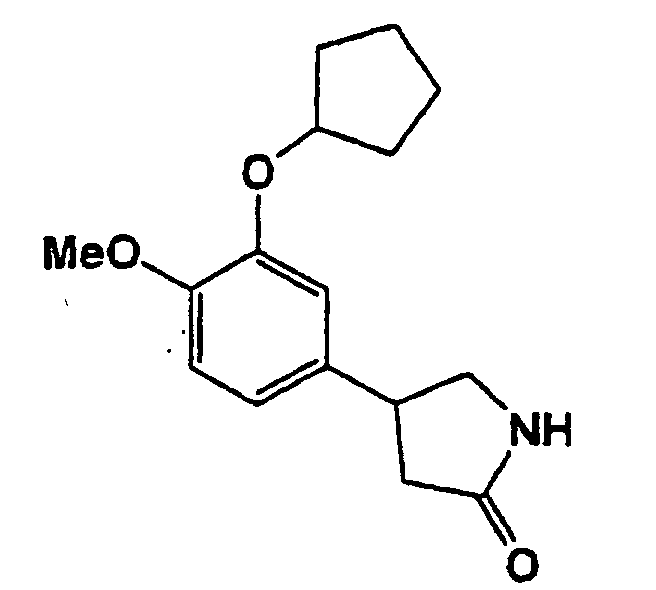
- Although various compounds have been known as PDE IV inhibitors (for example, compounds disclosed in Japanese Patent Unexamined Publication (Kokai) No. 4-253945/1992, International Patent Publication in Japanese (Kohyo) Nos. 6-504782/1994, 7-504442/1995, 8-501318/1996 and 9-500376/1997 and so forth), they have not been used clinically so far, and development of novel compounds having PDE IV inhibitory activity has been desired.
- US 3,862,189 discloses antianginal or bronchial dilator agents of the following formulawherein R1 is, chloro, hydroxy, mercapto, alkoxy of 1 to 6 carbon atoms, hydrazino, amino, amino substituted by one or two alkyl groups each of 1 to 6 carbon atoms, amino substituted by 1-naphtylmethyl or benzyl, or hydroxy-alkylamino of 1 to 6 carbon atoms and R2 is 1-naphthylmethyl, phenylmethyl, and phenylethyl substituted on the phenyl group by two or three alkoxy groups of 1 to 6 carbon atoms, 2 or 3 alkyl groups of 1 to 6 carbon atoms, or two chloros and pharmaceutically acceptable salts thereof.
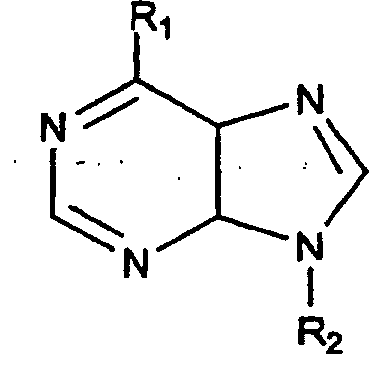
- An object of the present invention is to provide a novel compound ha ving specific inhibitory activity against PDE IV, of which possible usefulness for treatment of asthma has been suggested. Another object of the present invention is to provide a medicament comprising a compound that has the aforementioned characteristic as an active ingredient. A further object of the present invention is to provide a synthetic intermediate useful for efficient preparation of the aforementioned compound.
- The inventors of the present invention earnestly conducted researches to achieve the foregoing objects. As a result, they found that particular class of purine derivatives represented by the following formula had excellent inhibitory activity against PDE IV. They also found that these compounds were useful as active ingredients of medicaments, and they were extremely useful as, for example, as active ingredients of antiasthmatic agents. The present invention was achieved on the basis of these findings.
- The present invention thus provides purine derivatives represented by the following formula (I), salts thereof, or N-oxides thereof, or hydrates thereof or solvates thereof:wherein R1 represents a C1-C4 alkyl group or difluoromethyl group; R2 represents tetrahydrofuranyl group, a C1-C7 haloalkyl group, a C2-C7 alkenyl group, bicyclo[2,2,1]hept-2-yl group, or a C3-C8 cycloalkyl group; X represents hydrogen atom, a halogen atom, or nitro group; and A represents a group represented by the following formula:
 wherein R3 represents hydrogen atom, a halogen atom, hydroxyl group, a C1-C4 alkyl group, a C1-C4 alkoxyl group, amino group, a C1-C4 alkylamino group, or a C2-C8 dialkylamino group; R4 and R5 each independently represent hydrogen atom, a halogen atom, a C1-C4 alkyl group, a C1-C4 alkoxyl group, amino group, a C1-C4 alkylamino group, pyrrolidinyl group, morpholino group, a C2-C8 dialkylamino group, or a group represented by -Y-(CH2)n-B {Y represents -O-, -S-, -NHCO-, or -N(R6)- (R6 represents hydrogen atom or a C1-C4 alkyl group), n represents an integer of from 0 to 4, and B represents a phenyl group, a naphthyl group, or a heterocyclic residue, each of which may be substituted], provided that either R4 or R5 represents -Y-(CH2)n-B {Y represents -O-, -S-, -NHCO-, or -N(R6)- (R6 represents hydrogen atom or a C1-C4 alkyl group)} when X represents hydrogen atom,, and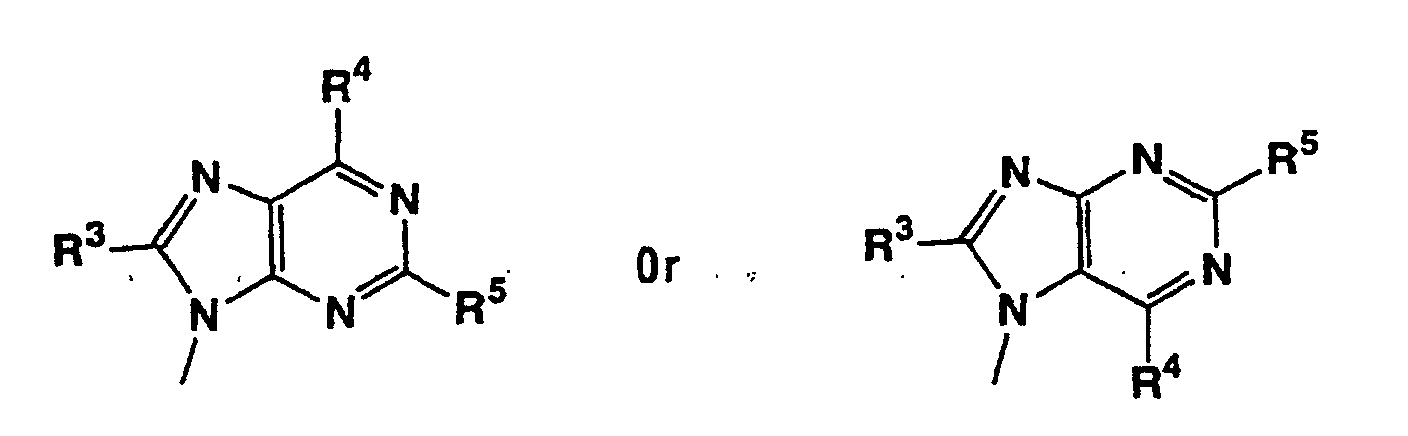
- (i) n represents an integer of from 0 to 4, and B represents a phenyl group, a naphthyl group, or a heterocyclic residue, each of which may be substituted when Y represents -O-, -S-, or -NHCO-, or
- (ii) n represents an integer of from 1 to 4, and B represents a heterocyclic residue when Y represents -N(R6)-.
-
- According to preferred embodiments of the present invention, there are provided the aforementioned purine derivatives, salts thereof, or N-oxides thereof, or hydrates thereof or solvates thereof, wherein A is a group represented by the following formula:wherein R3 is hydrogen atom, a halogen atom, hydroxyl group, a C1-C4 alkyl group, a C1-C4 alkoxyl group, amino group, a C1-C4 alkylamino group or a C2-C8 dialkylamino group; one of R4 and R5 is hydrogen atom, a halogen atom, a C1-C4 alkyl group, a C1-C4 alkoxyl group, amino group, a C1-C4 alkylamino group, pyrrolidinyl group, morpholino group, or a C2-C8 dialkylamino group, and the other is -Y-(CH2)n-B (Y is -O-, -S-, -NHCO-, or -N(R6)- (R6 represents hydrogen atom or a C1-C4 alkyl group), n is an integer of from 0 to 4, and B represents a phenyl group, a naphthyl group, or a heterocyclic residue, each of which may be substituted);

the aforementioned purine derivatives, salts thereof, or N-oxides thereof, or hydrates thereof or solvates thereof, wherein R1 is a C1-C4 alkyl group; R2 is tetrahydrofuranyl group, a C1-C3 haloalkyl group or a C3-C8 cycloalkyl group, and A is a group represented by the following formula:wherein R3 is hydrogen atom, a halogen atom, hydroxyl group, a C1-C4 alkyl group, or a C1-C4 alkoxyl group; R4 is hydrogen atom, a halogen atom, a C1-C4 alkyl group, a C1-C4 alkoxyl group, a C1-C4 alkylamino group, or a C2-C8 dialkylamino group, R5 is -Y-(CH2)n-B (Y is -O-, -S-, or -NHCO-, n is an integer of from 1 to 4, and B represents a heterocyclic residue which may be substituted); and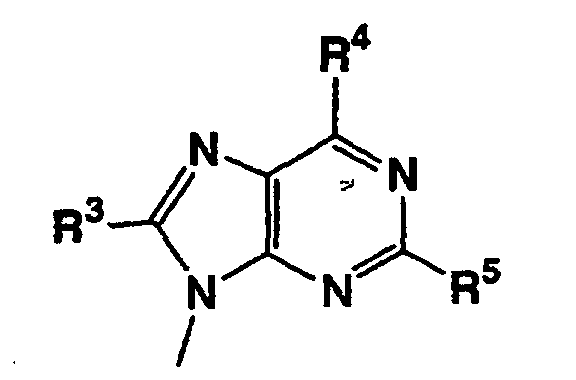
the aforementioned purine derivatives, salts thereof, or N-oxides thereof, or hydrates thereof or solvates thereof, wherein R1 is a C1-C3 alkyl group; R2 is a C3-C8 cycloalkyl group, and A is a group represented by the following formula:wherein R3 is hydrogen atom, a C1-C3 alkyl group, or a C1-C3 alkoxyl group; R4 is a C1-C3 alkyl group, a C1-C3 alkoxyl group or a C1-C3 alkylamino group; R5 is -Y-(CH2)n-B (Y is -O-, n is an integer of from 1 to 4, and B is a heterocyclic residue which may be substituted).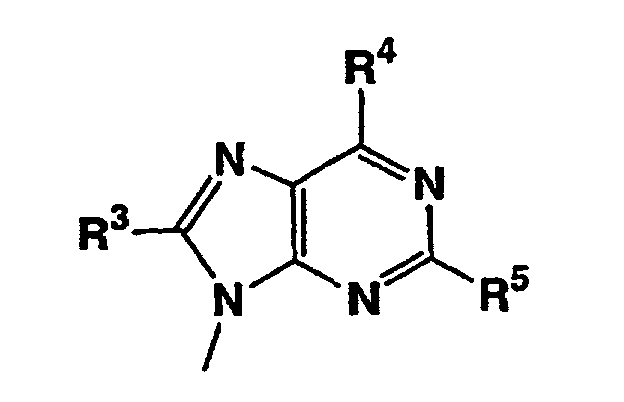
- According to another aspect of the present invention, medicaments are provided which contain a substance selected from the group consisting of the aforementioned purine derivatives, salts thereof, and N-oxide compounds thereof, and hydrates thereof and solvates thereof as an active ingredient. These medicaments are preferably provided as pharmaceutical compositions which contain the aforementioned active ingredient and an additive for pharmaceutical preparation, and they can be used as, for example, antiasthmatic agents for preventive and/or therapeutic treatment of asthma.
- According to further aspects of the present invention, there are provided use of a substance selected from the group consisting of the aforementioned purine derivatives, salts thereof, and N-oxide compounds thereof, and hydrates thereof and solvates thereof for the manufacture of the aforementioned medicaments; methods for preventive and/or therapeutic treatment of asthma which comprise the step of administering an effective amount of a substance selected from the group consisting of the aforementioned purine derivatives, salts thereof, and N-oxide compounds thereof, and hydrates thereof and solvates thereof to a mammal including human; and phosphodiesterase IV inhibitors which comprise a substance selected from the group consisting of the aforementioned purine derivatives, salts thereof, and N-oxide compounds thereof, and hydrates thereof and solvates thereof.
- According to further aspects of the present invention, there are provided compounds represented by the following formula (A):wherein R1 represents a C1-C4 alkyl group or difluoromethyl group; R2 represents tetrahydrofuranyl group, a C1-C7 haloalkyl group, a C2-C7 alkenyl group, bicyclo[2,2,1]hept-2-yl group or a C3-C8 cycloalkyl group; R4 represents hydrogen atom, a halogen atom, a C1-C4 alkyl group, a C1-C4 alkoxyl group, amino group, a C1-C4 alkylamino group, pyrrolidinyl group, morpholino group, a C2-C8 dialkylamino group or -Y-(CH2)n-B {Y represents -O-, -S-, -NHCO-, or -N(R6)- (R6 represents hydrogen atom or a C1-C4 alkyl group), n represents an integer of from 0 to 4, B represents a phenyl group, a naphthyl group, or a heterocyclic residue, each of which may be substituted, and X2 represents a halogen atom, and compounds represented by the following formula (B):
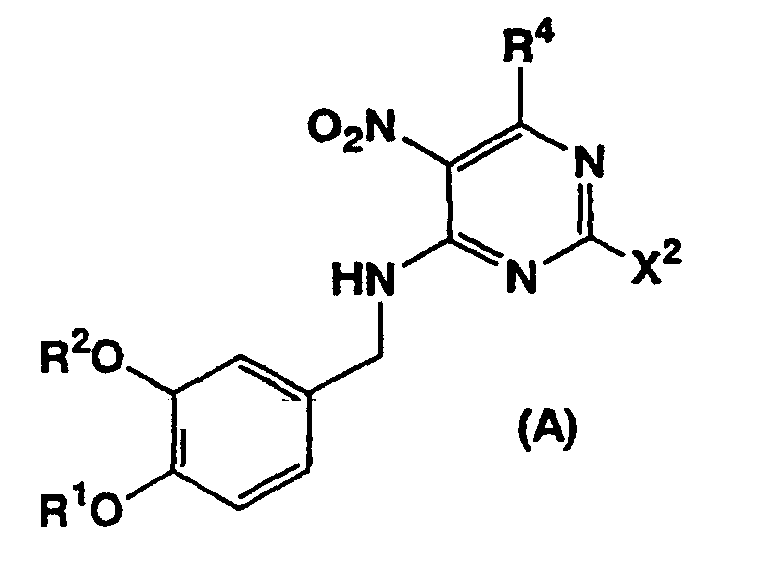 wherein R1 represents a C1-C4 alkyl group or difluoromethyl group; R2 represents tetrahydrofuranyl group, a C1-C7 haloalkyl group, a C2-C7 alkenyl group, bicyclo[2,2,1]hept-2-yl group, or a C3-C8 cycloalkyl group; R4 represents hydrogen atom, a halogen atom, a C1-C4 alkyl group, a C1-C4 alkoxyl group, amino group, a C1-C4 alkylamino group, pyrrolidinyl group, morpholino group, a C2-C8 dialkylamino group, or -Y-(CH2)n-B {Y represents -O-, -S-, -NHCO-, or -N(R6)- (R6 represents hydrogen atom or a C1-C4 alkyl group), n represents an integer of from 0 to 4, B represents a phenyl group, a naphthyl group, or a heterocyclic residue, each of which may be substituted, and X2 represents a halogen atom. These compounds are useful as synthetic intermediates for preparation of the compounds represented by the aforementioned formula (I).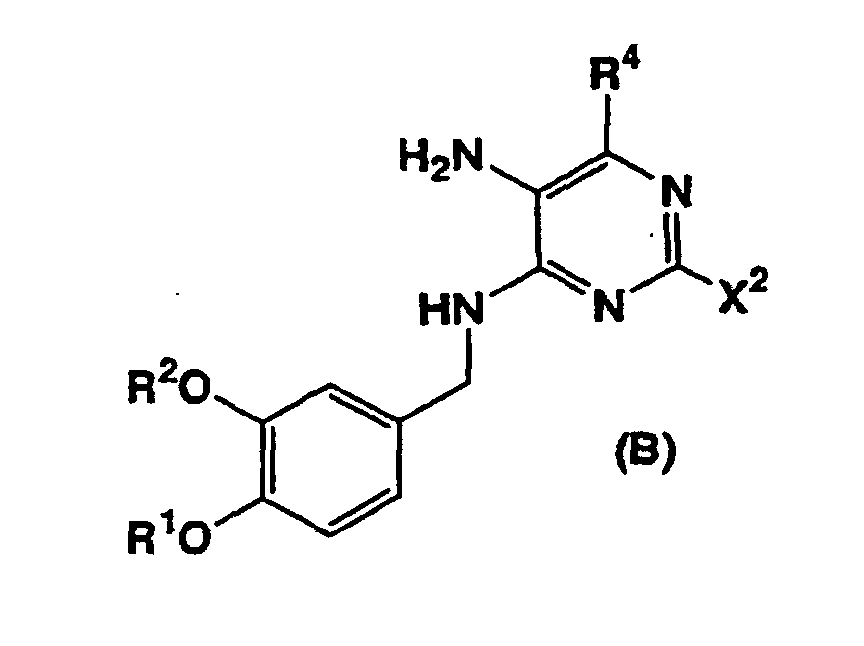
- According to preferred embodiments of the synthetic intermediates represented by the formula (A) or (B), there are provided those wherein R1 is a C1-C4 alkyl group, R2 is tetrahydrofuranyl group, a C1-C3 haloalkyl group, or a C3-C8 cycloalkyl group, R4 is hydrogen atom, a halogen atom, a C1-C4 alkyl group, a C1-C4 alkoxyl group, a C1-C4 alkylamino group or a C2-C8 dialkylamino group.
- R1 represents a linear or branched C1-C4 alkyl group (methyl group, ethyl group, n-propyl group, isopropyl group, n-butyl group, isobutyl group, sec-butyl group, t-butyl group and the like), or difluoromethyl group. R1 preferably represents a C1-C4 alkyl group, more preferably a C1-C3 alkyl group, further preferably methyl group or ethyl group, and most preferably methyl group.
- R2 represents tetrahydrofuranyl group, a C1-C7 haloalkyl group (chloromethyl group, bromomethyl group, dichloromethyl group, 1-chloroethyl group, 2-chloroethyl group, 3-chloropropyl group, 3-chlorobutyl group, 5-chloropentyl group, 6-chlorohexyl group, difluoromethyl group, trifluoromethyl group and the like), a C2-C7 alkenyl group (vinyl group, allyl group, 2-propenyl group, isopropenyl group, 3-butenyl group, 4-pentenyl group, 5-hexenyl group and the like), bicyclo[2,2,1]hept-2-yl group, or a C3-C8 cycloalkyl group (cyclopropyl group, cyclobutyl group, cyclopentyl group, cyclohexyl group, cycloheptyl group and the like). R2 preferably represents tetrahydrofuranyl group, a C1-C6 alkyl group, a C1-C3 haloalkyl group, or a C3-C8 cycloalkyl group, more preferably a C3-C8 cycloalkyl group, further preferably a C4-C6 cycloalkyl group, and most preferably cyclopentyl group.
- X represents hydrogen atom, a halogen atom (when a halogen is referred to in the specification, the halogen may be any of fluorine, chlorine, bromine, and iodine), or nitro group, preferably hydrogen atom. As symbol "A", a group represented by the following formula is preferred.

- In the above formula, R3 represents hydrogen atom, a halogen atom, hydroxyl group, a linear or branched C1-C4 alkyl group (methyl group, ethyl group, n-propyl group, isopropyl group, n-butyl group, isobutyl group, sec-butyl group, t-butyl group and the like), a linear or branched C1-C4 alkoxyl group (methoxy group, isopropoxy group, butoxy group and the like), amino group, a linear or branched C1-C4 alkylamino group (methylamino group, n-propylamino group, isopropylamino group, butylamino group and the like) or a linear or branched C2-C8 dialkylamino group (dimethyl amino group, diethylamino group, dipropylamino group, dibutylamino group and the like). R3 preferably represents hydrogen atom, a halogen atom, hydroxyl group, a linear or branched C1-C4 alkyl group, a C1-C4 linear or branched alkoxyl group, more preferably hydrogen atom, a C1-C3 alkyl group or a C1-C3 alkoxyl group.
- In the aforementioned formula, R4 and R5 each independently represent hydrogen atom, halogen atom, a linear or branched C1-C4 alkyl group (methyl group, ethyl group, n-propyl group, isopropyl group, n-butyl group, isobutyl group, sec-butyl group, t-butyl group and the like), a linear or branched C1-C4 alkoxyl group (methoxy group, isopropoxy group, butoxy group and the like), amino group, a linear or branched C1-C4 alkylamino group (methylamino group, n-propylamino group, isopropylamino group, butylamino group and the like), pyrrolidinyl group, morpholino group, a linear or branched C2-C8 dialkylamino groups (dimethylamino group, diethylamino group, dipropylamino group, dibutylamino group and the like) or -Y-(CH2)n-B {Y is -O-, -S-, -NHCO-, or -N(R6)- (R6 is hydrogen atom or a linear or branched C1-C4 alkyl group (methyl group, ethyl group, n-propyl group, isopropyl group, n-butyl group, isobutyl group, sec-butyl group, t-butyl group and the like), and Y is preferably -O-)}. Symbol "n" represents an integer of from 0 to 4, preferably an integer of from 1 to 3.
- B represents a phenyl group, a naphthyl group, or a heterocyclic residue. Each ofthese groups may have, on their rings, one or more substituents selected from the group consisting of a halogen atom, a linear or branched C1-C4 alkyl groups (methyl group, ethyl group, n-propyl group, isopropyl group, n-butyl group, isobutyl group, sec-butyl group, t-butyl group and the like), a C1-C4 haloalkyl group (chloromethyl group, bromomethyl group, dichloromethyl group, 1-chloroethyl group, 2-chloroethyl group, 3-chloropropyl group, 4-chlorobutyl group, difluoromethyl group, trifluoromethyl group and the like), a linear or branched C1-C4 alkoxyl group (methoxy group, isopropoxy group, butoxy group and the like), a linear or branched C1-C4 haloalkoxyl group (trifluoromethoxy group, difluoromethoxy group, 2,2,2-trifluoroethoxy group, 3-chloropropoxy group and the like), cyano group, nitro group, amino group, hydroxy group, carboxy group, a C1-C4 acyl groups (formyl group, acetyl group, propionyl group and the like), a C2-C4 alkoxycarbonyl group (methoxycarbonyl group, ethoxycarbonyl group and the like), a linear or branched C1-C4 alkylamino group (methylamino group, isopropylamino group, butylamino group etc.), and a linear or branched C2-C6 dialkylamino group (dimethylamino group, diethylamino group and the like), preferably one or more substituents selected from the group consisting of a halogen atom, a C1-C4 alkyl group, a C1-C4 alkoxyl group, a C1-C4 haloalkoxyl group, carboxy group, and a C2-C4 alkoxycarbonyl group.
- As the heterocyclic residue, a heterocyclic residue having 1 to 5 hetero atoms selected from oxygen atom, sulfur atom and nitrogen atom and having 5 to 10 ring-constituting atoms may be used, such as thienyl group, furyl group, pyrrolyl group, imidazolyl group, pyrazolyl group, triazolyl group, tetrazolyl group, oxazolyl group, isooxazolyl group, thiazolyl group, isothiazolyl group, pyrrolidinyl group pyridyl group, pyridazinyl group, pyrazinyl group, pyrimidinyl group, triazinyl group, piperidyl group, piperidino group, morpholinyl group, morpholino group, piperazinyl group, benzimidazolyl group, indolyl group, quinolyl group, naphthylidinyl group, quinazolinyl group and the like, preferably thienyl group, furyl group, pyrrolyl group, imidazolyl group, pyrazolyl group, pyridyl group, pyridazinyl group, pyrazinyl group, pyrimidinyl group, triazinyl group, piperidyl group, piperidino group, morpholinyl group, morpholino group, piperazinyl group, benzimidazolyl group and the like, more preferably a 6-membered heterocyclic residue having one or two nitrogen atoms as the hetero atom(s), for example, pyridyl group, pyridazinyl group, pyrazinyl group, pyrimidinyl group, triazinyl group, piperidyl group, piperidino group, morpholinyl group, morpholino group, piperazinyl group and the like. B represents a heterocyclic residue which may be substituted, and most preferably an unsubstituted heterocyclic residue.
- As for R4 and R5, R4 preferably represents hydrogen atom, a halogen atom, a C1-C4 alkyl group, a C1-C4 alkoxyl group, a C1-C4 alkylamino group, or a C2-C8 dialkylamino group, more preferably a C1-C3 alkyl group, a C1-C3 alkoxyl group, or a C1-C3 alkylamino group, and R5 represents -Y-(CH2)n-B (Y, n, and B have the same meanings as already defined above).
- When X represents hydrogen atom, either of R4 or R5 represents -Y-(CH2)n-B. In this case, Y represents -O-, -S-, -NHCO-, or -N(R6)- (R6 represents hydrogen atom or a C1-C4 alkyl group), and (i) when Y represents -O-, -S-, or -NHCO-, n represents an integer of from 0 to 4, and B represents a phenyl group, a naphthyl group, or a heterocyclic residue, each of which may be substituted, or (ii) when Y represents -N(R6)-, n represents an integer of from 1 to 4, and B represents a heterocyclic residue.
- When R4 or R5 in the compounds represented by the aforementioned formula (I) represents -Y-(CH2)n-B wherein B is a heterocyclic residue which has at least one nitrogen atom as the hetero atom, the compounds may exist as N-oxide compounds. The N-oxide compounds also fall within the scope of the present invention.
- Specific examples of the compounds of the present invention are shown in Table 1 below. In the table, Me represents methyl group, Et represents ethyl group, and n-Pr represents normal propyl group.


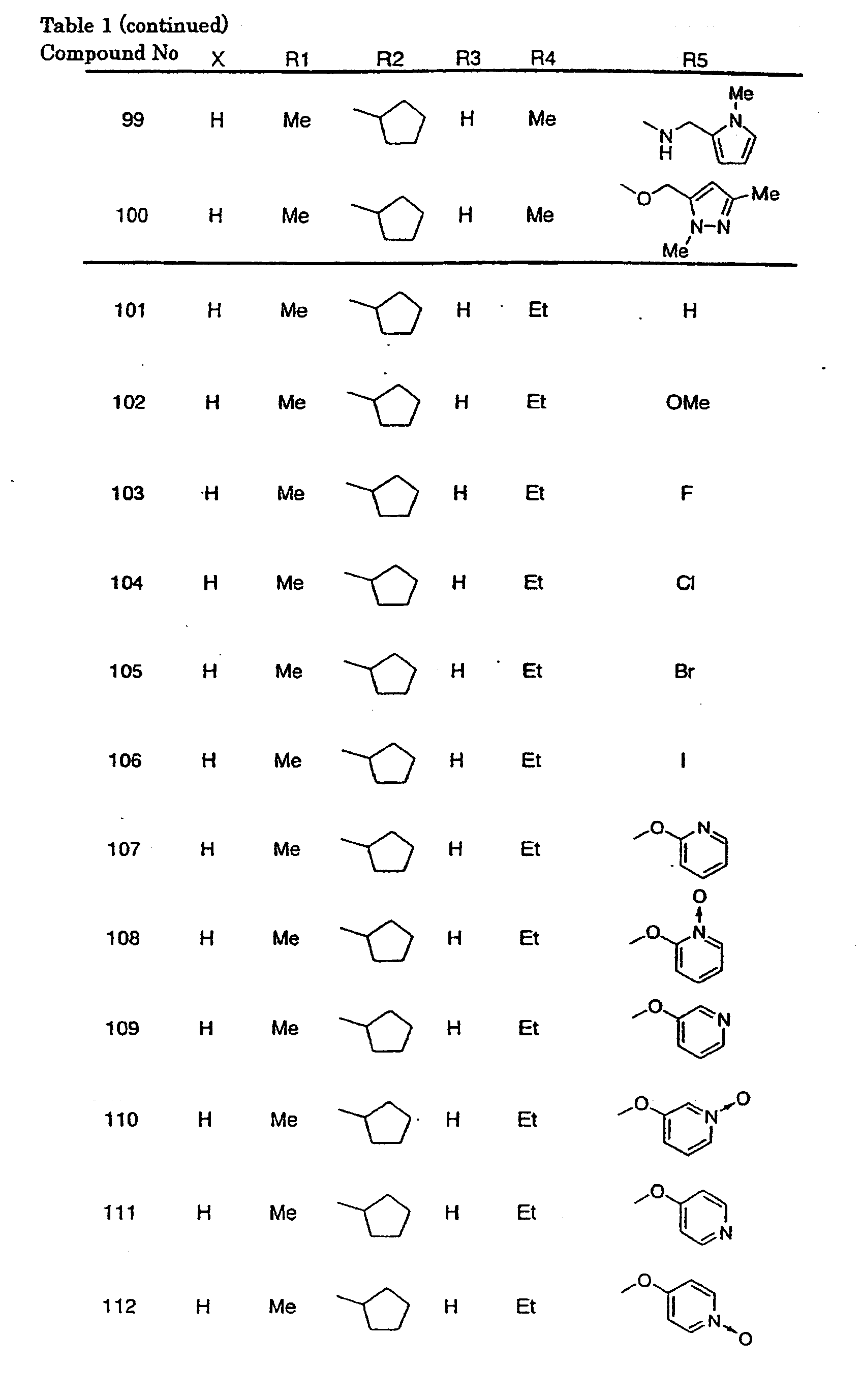
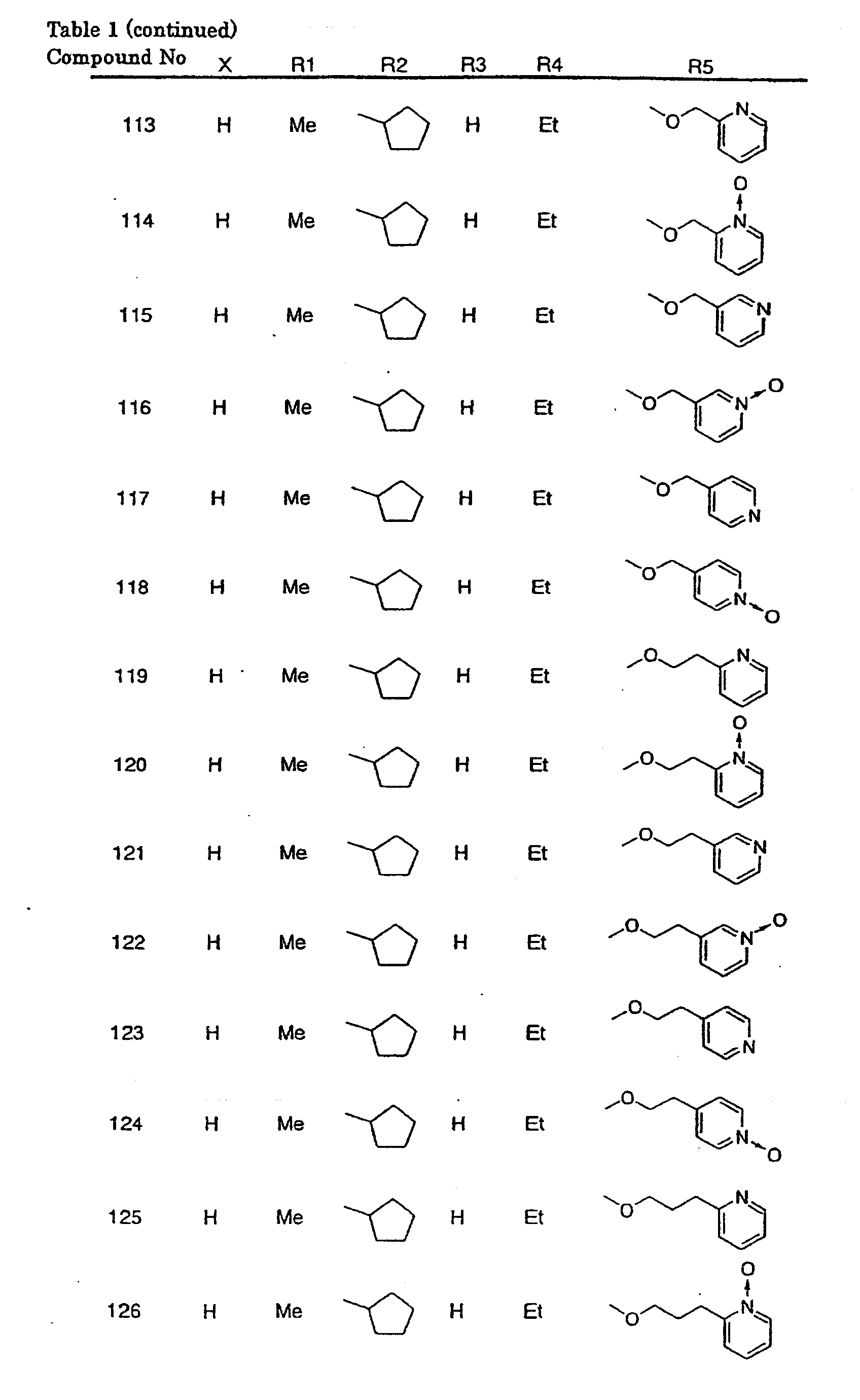


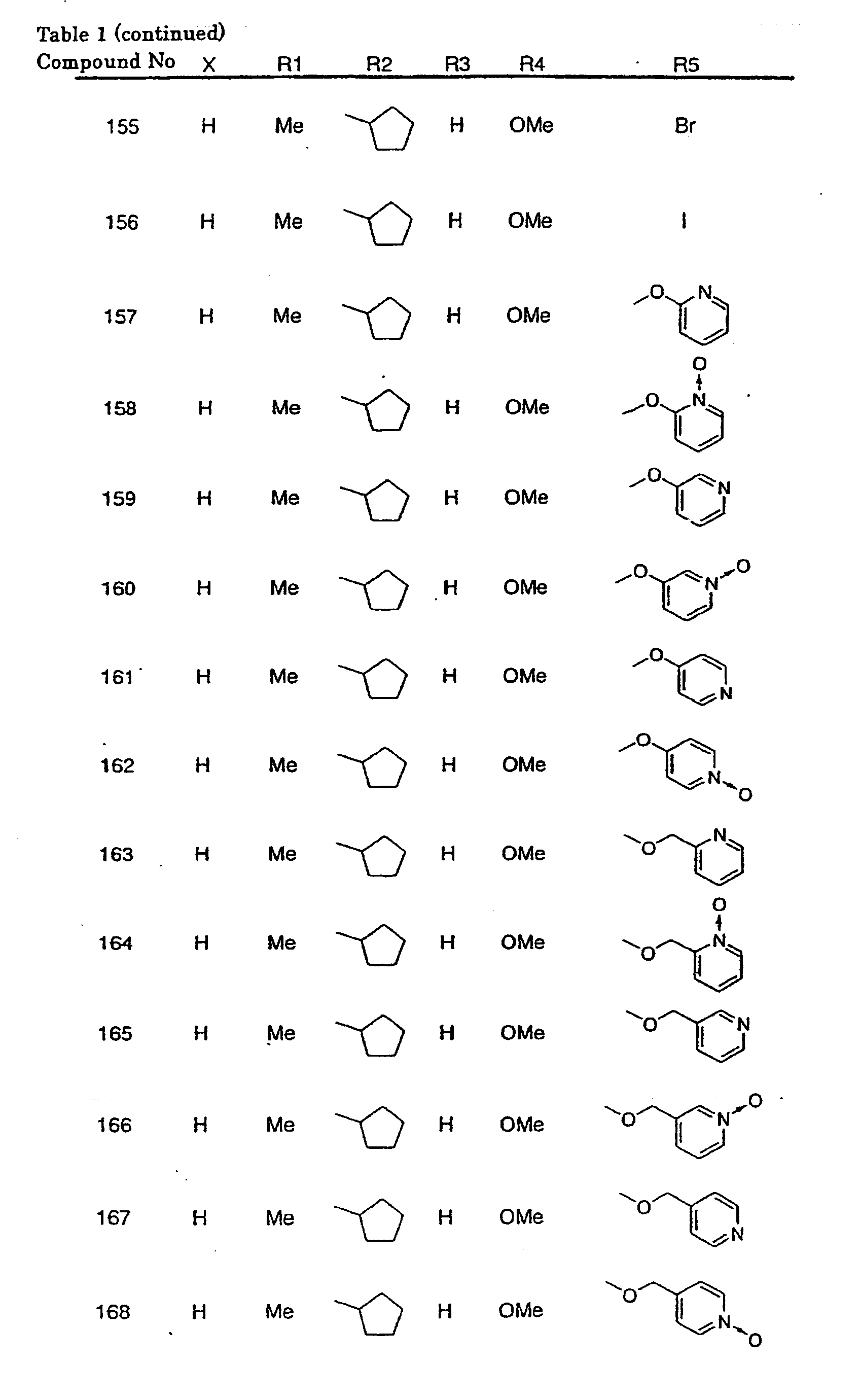


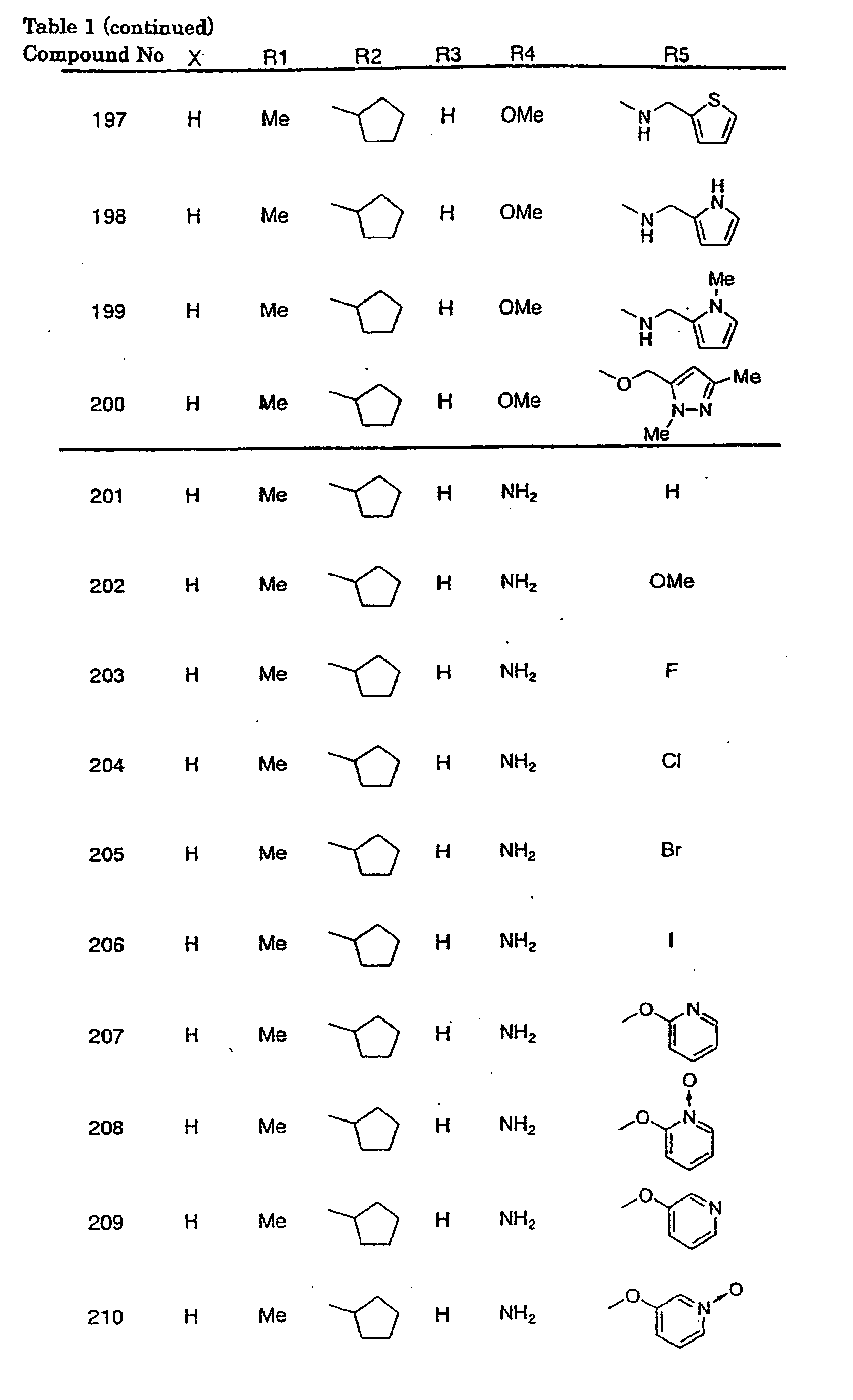
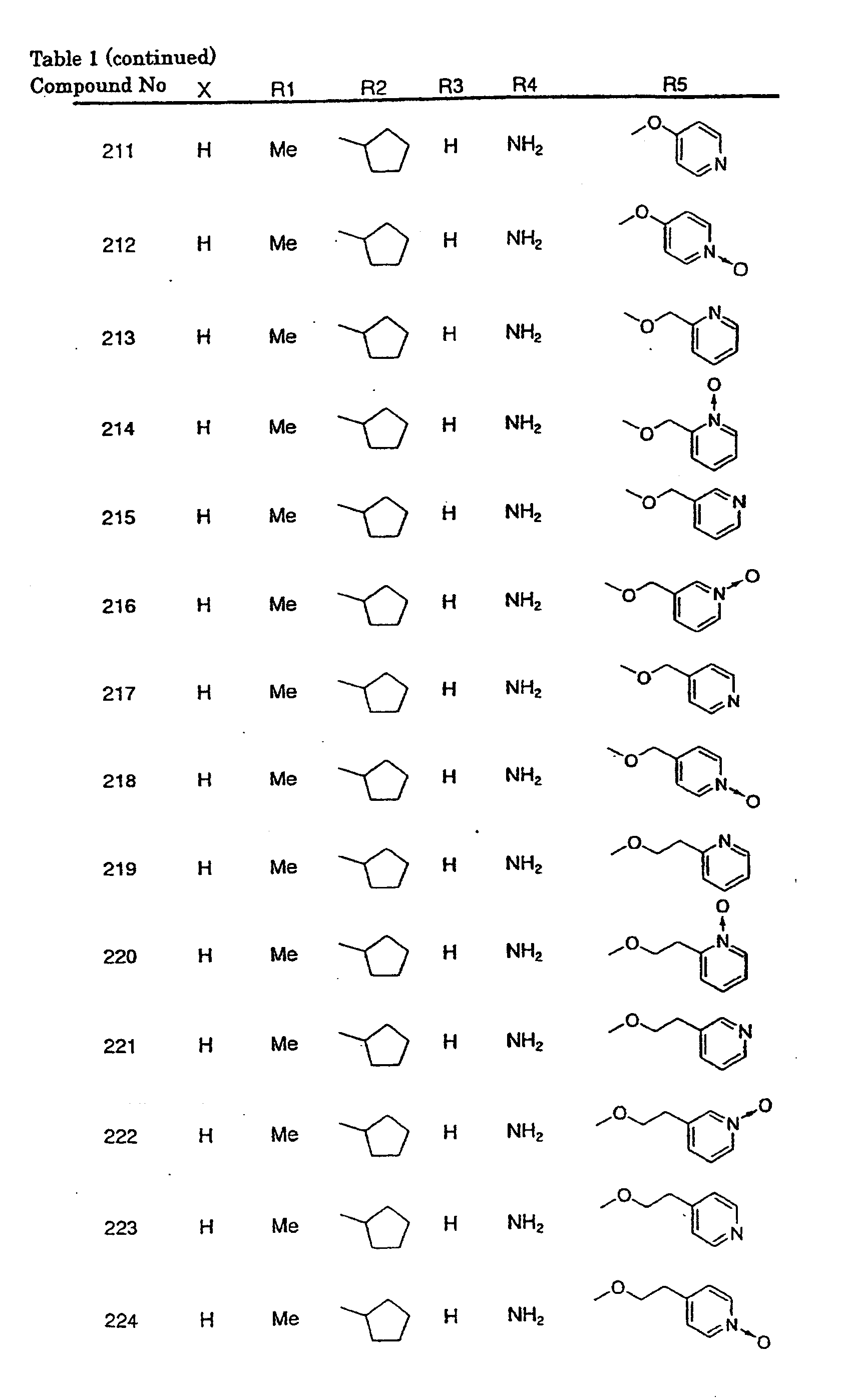

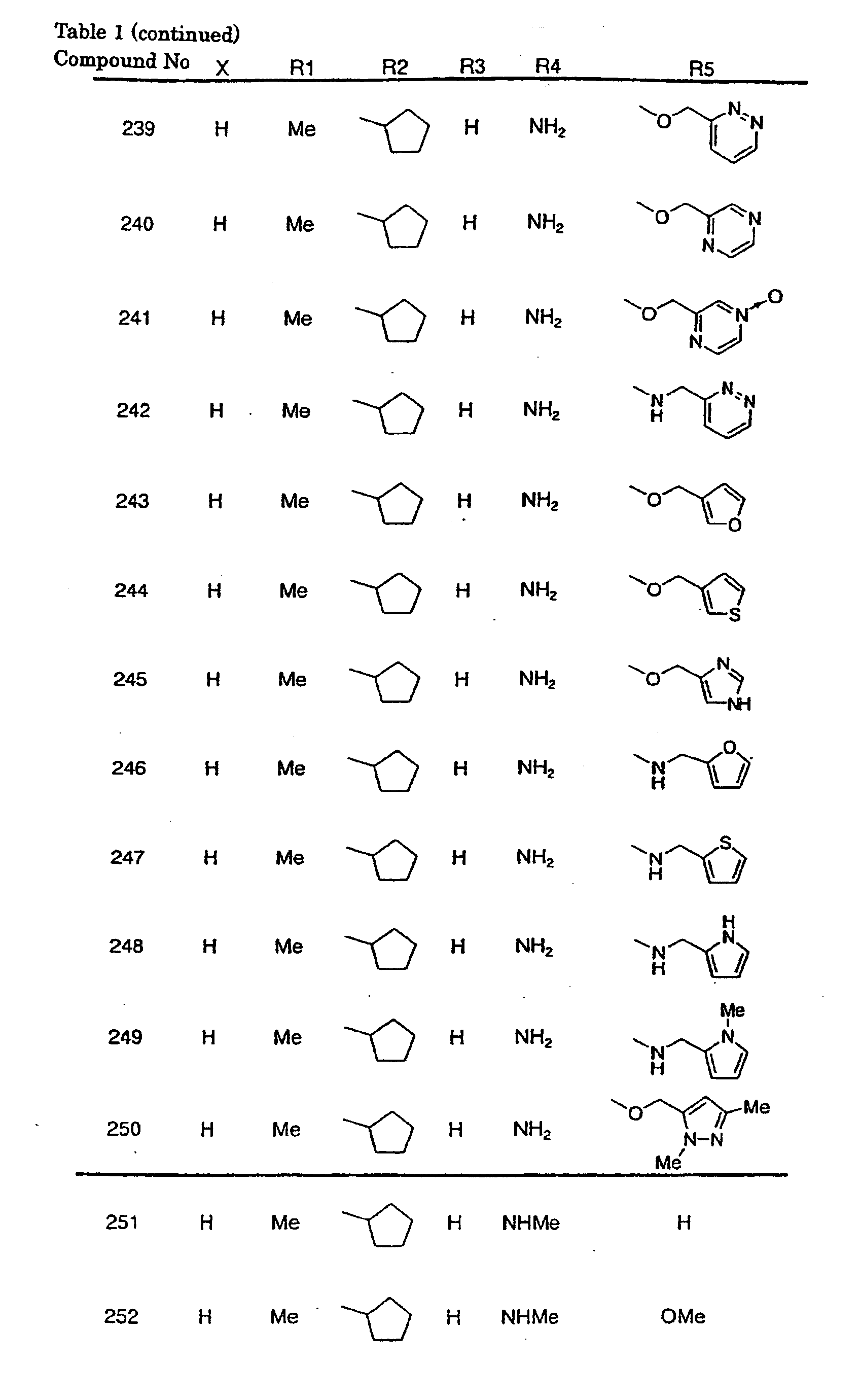


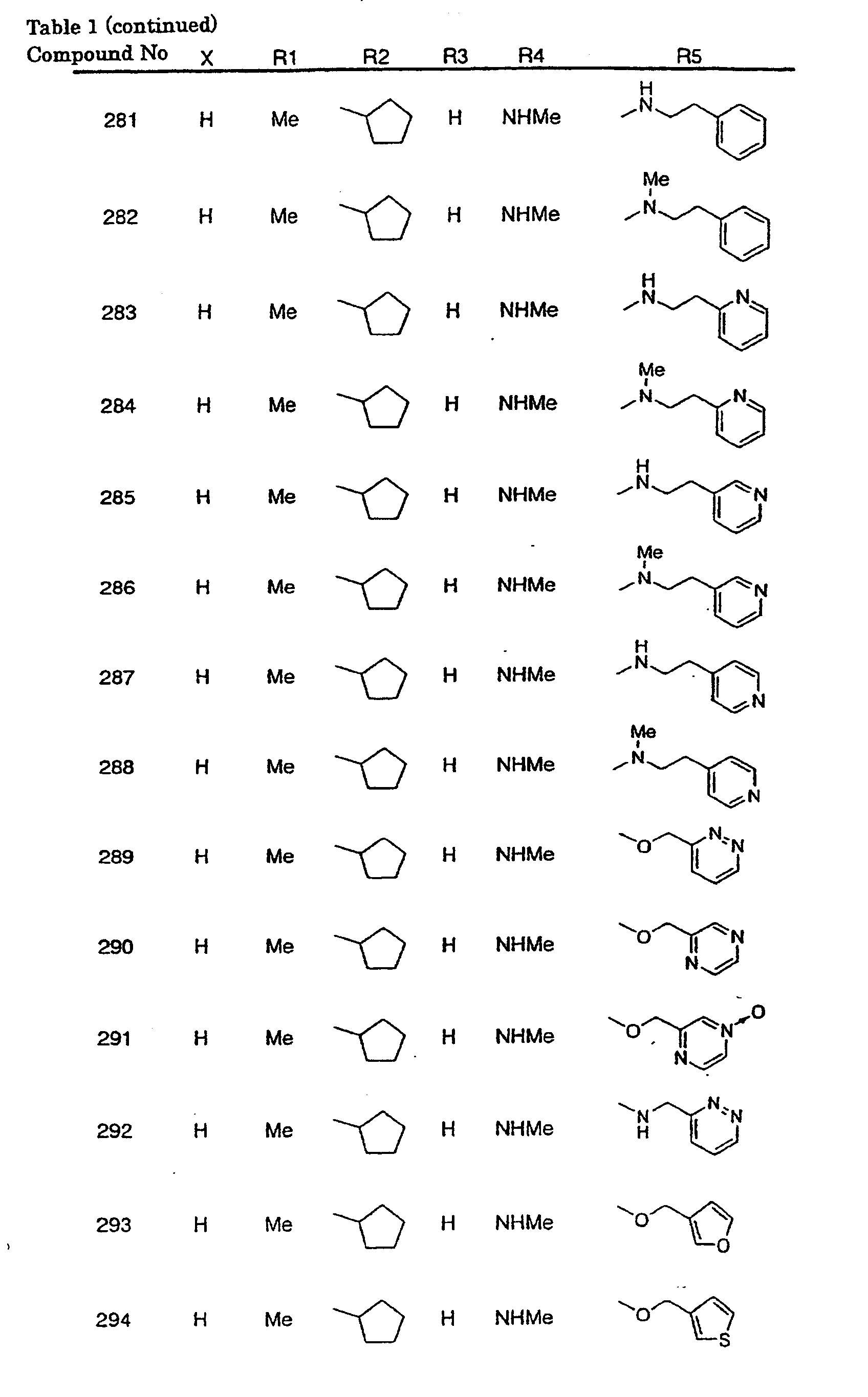


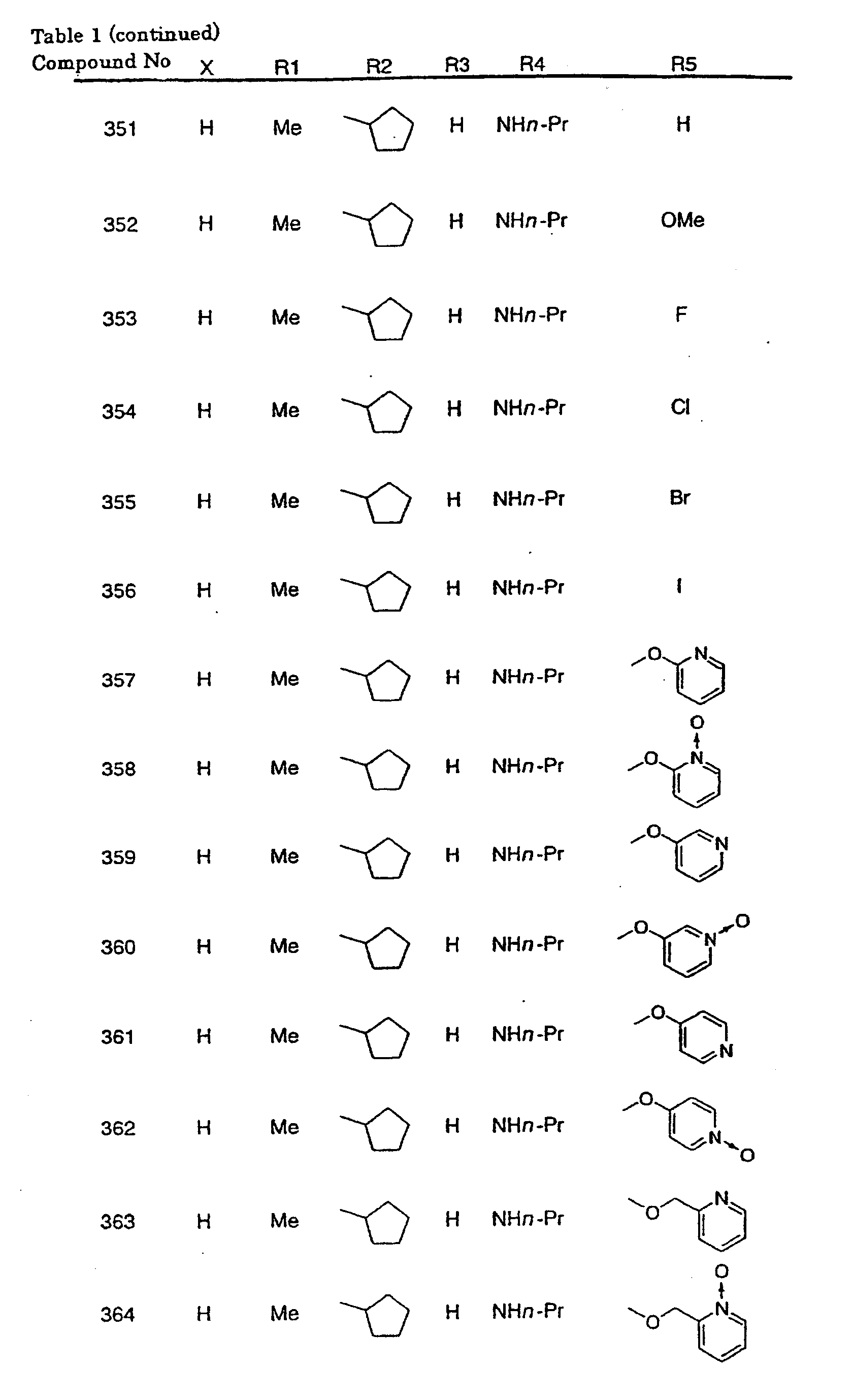
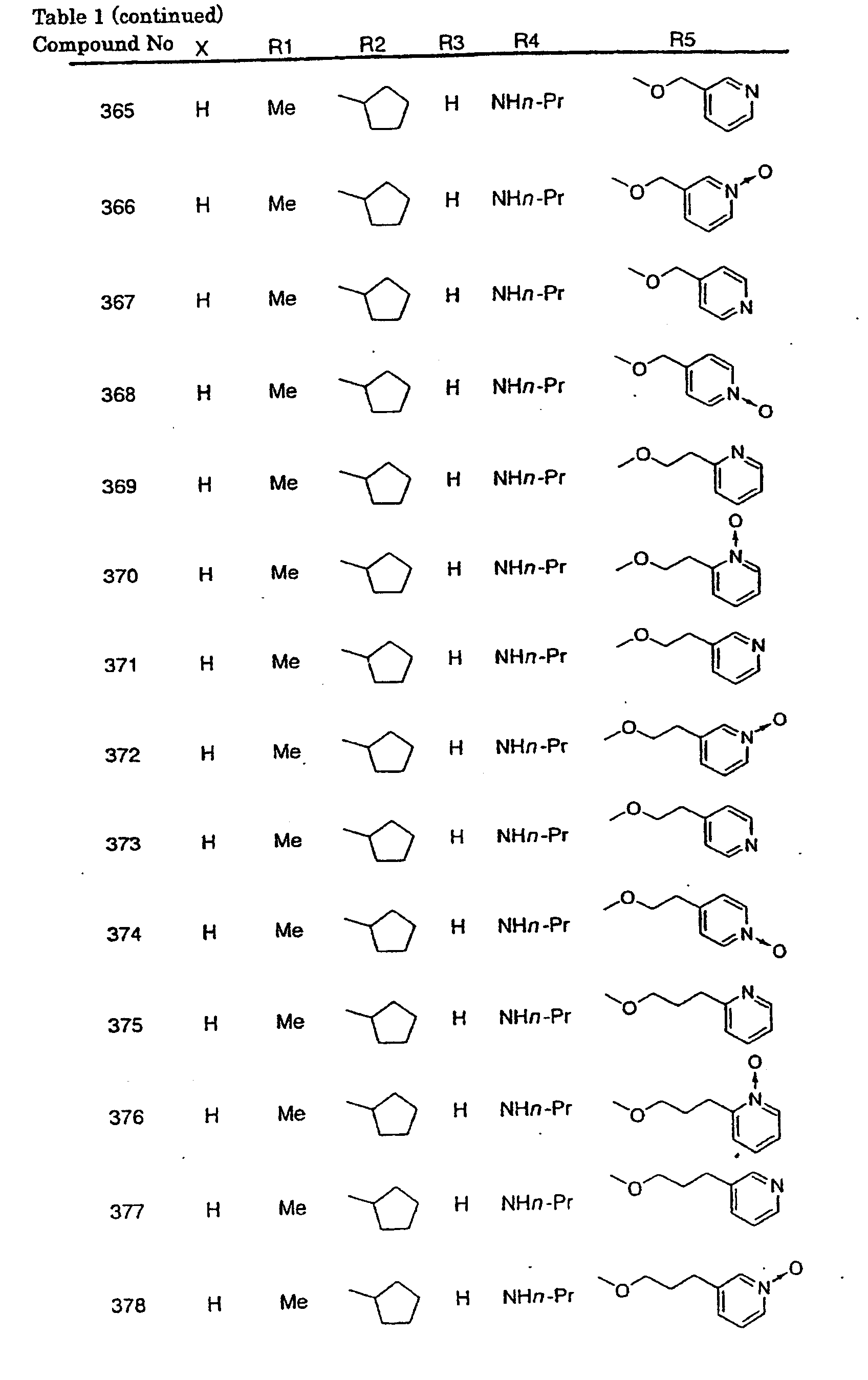

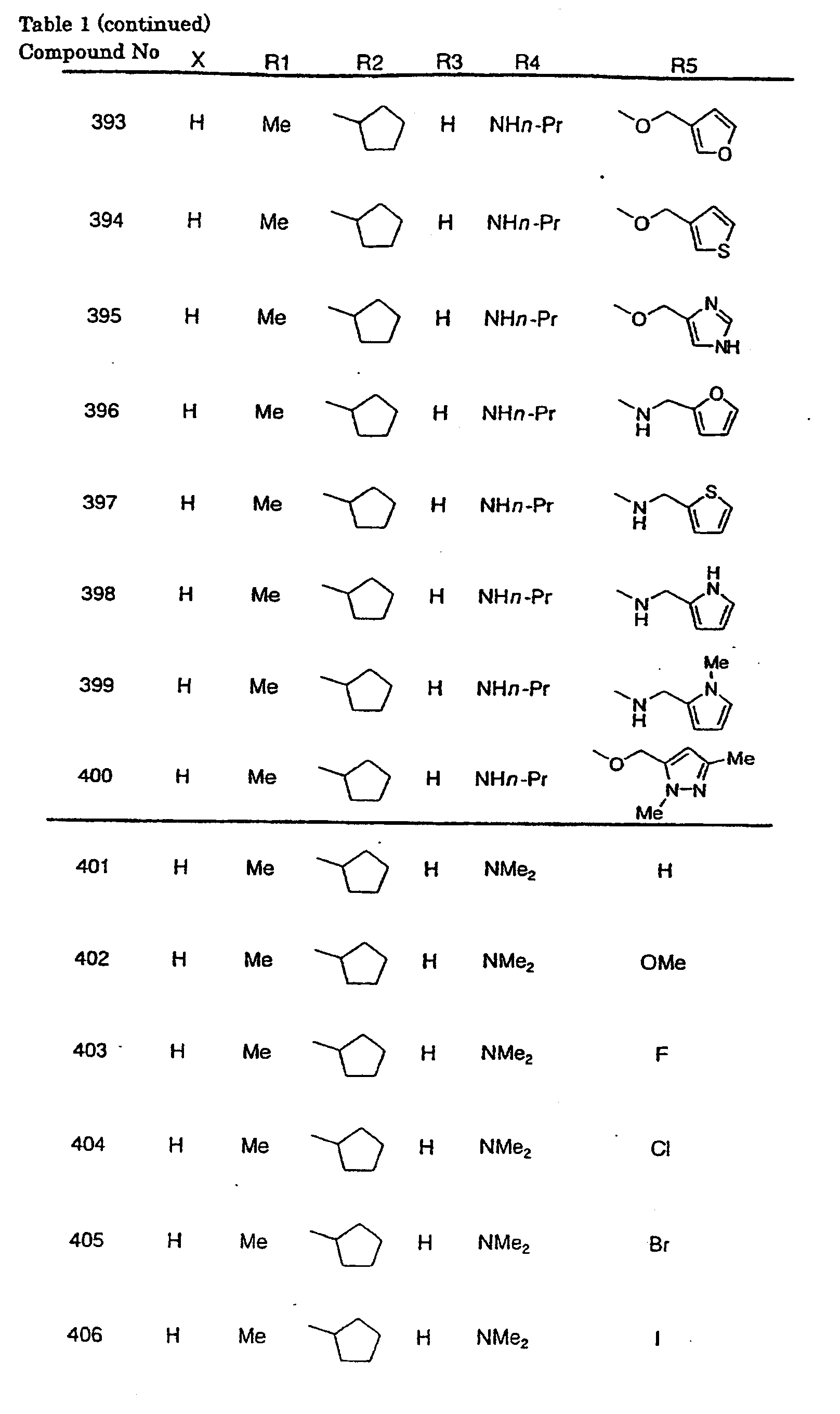


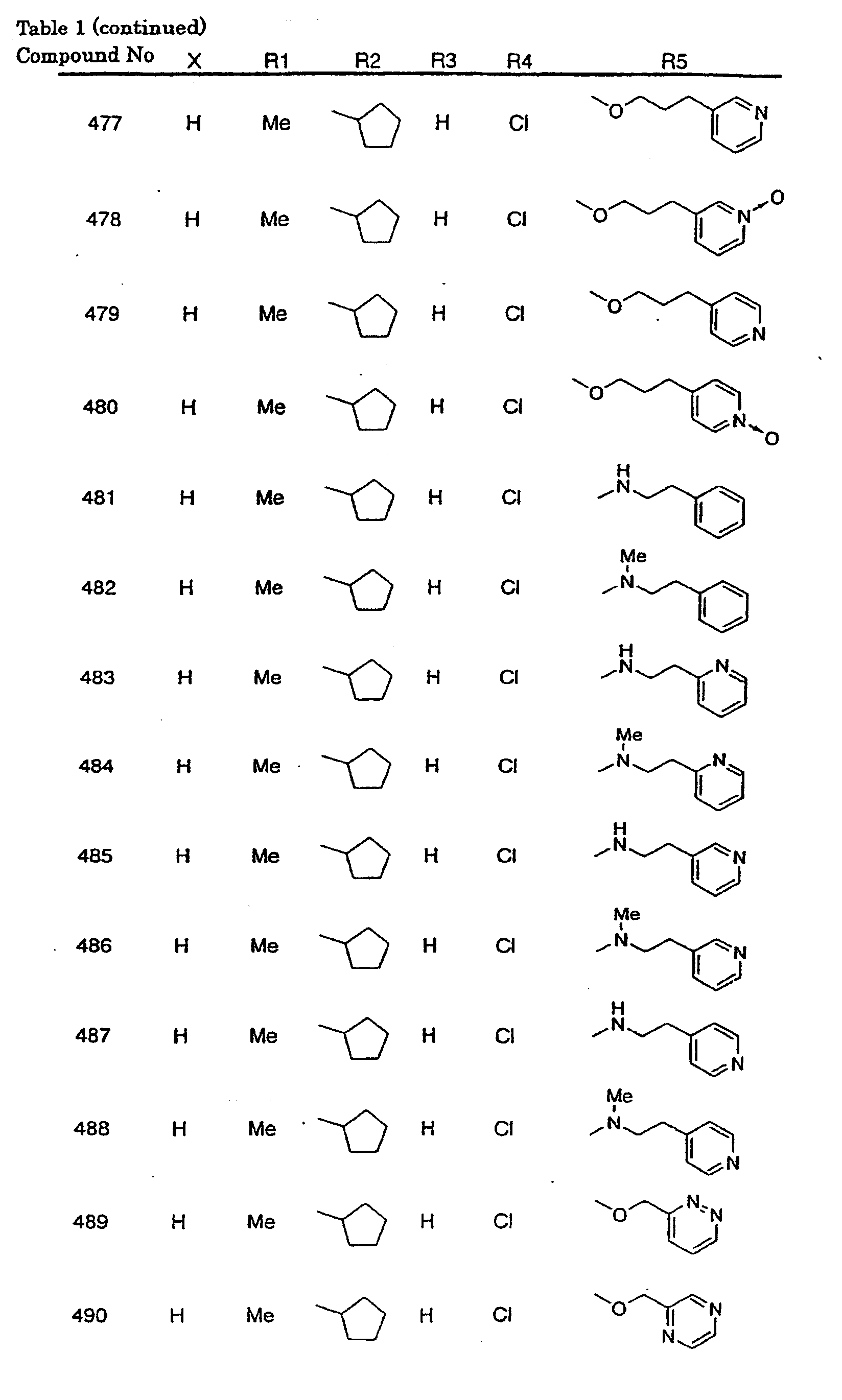
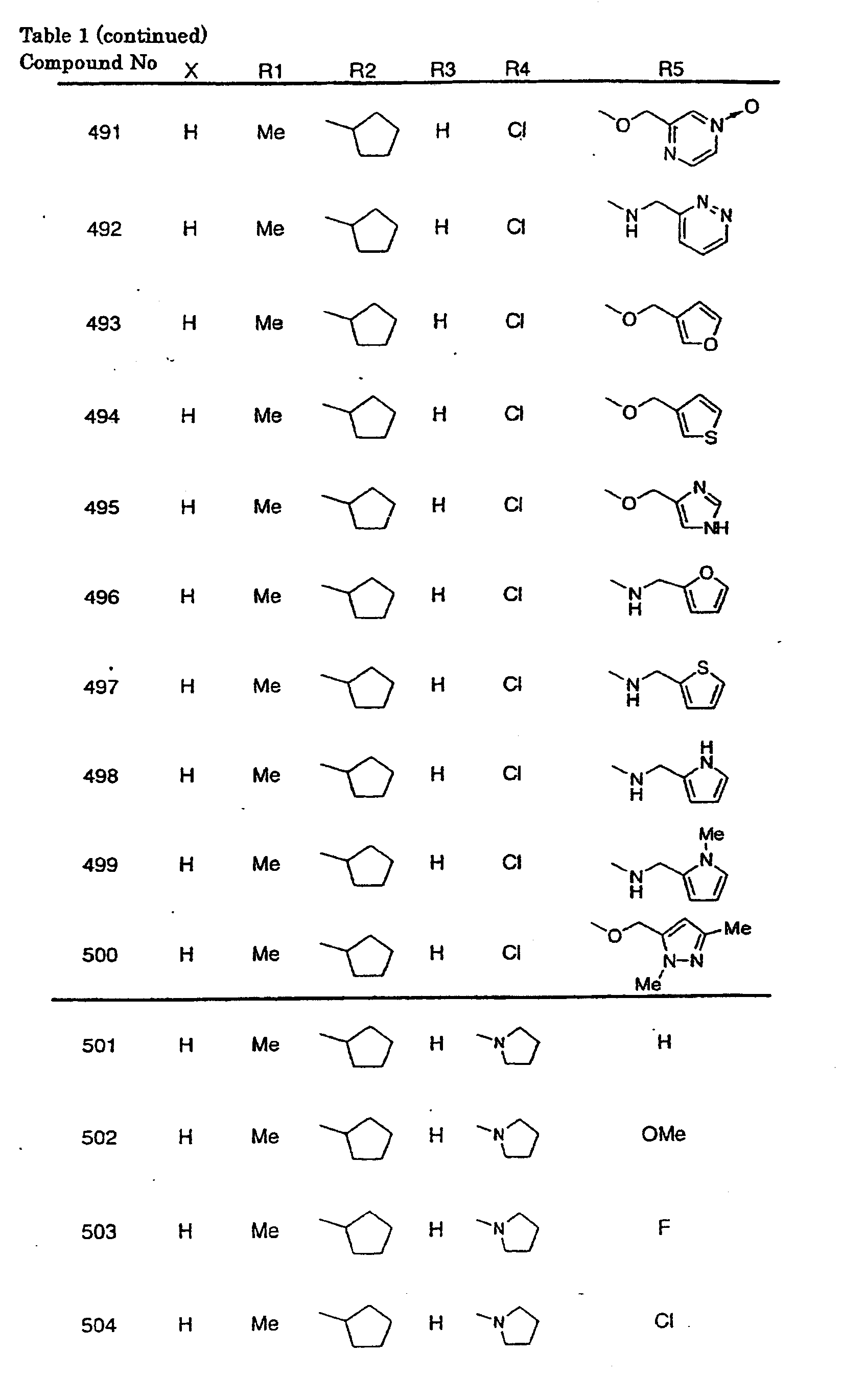

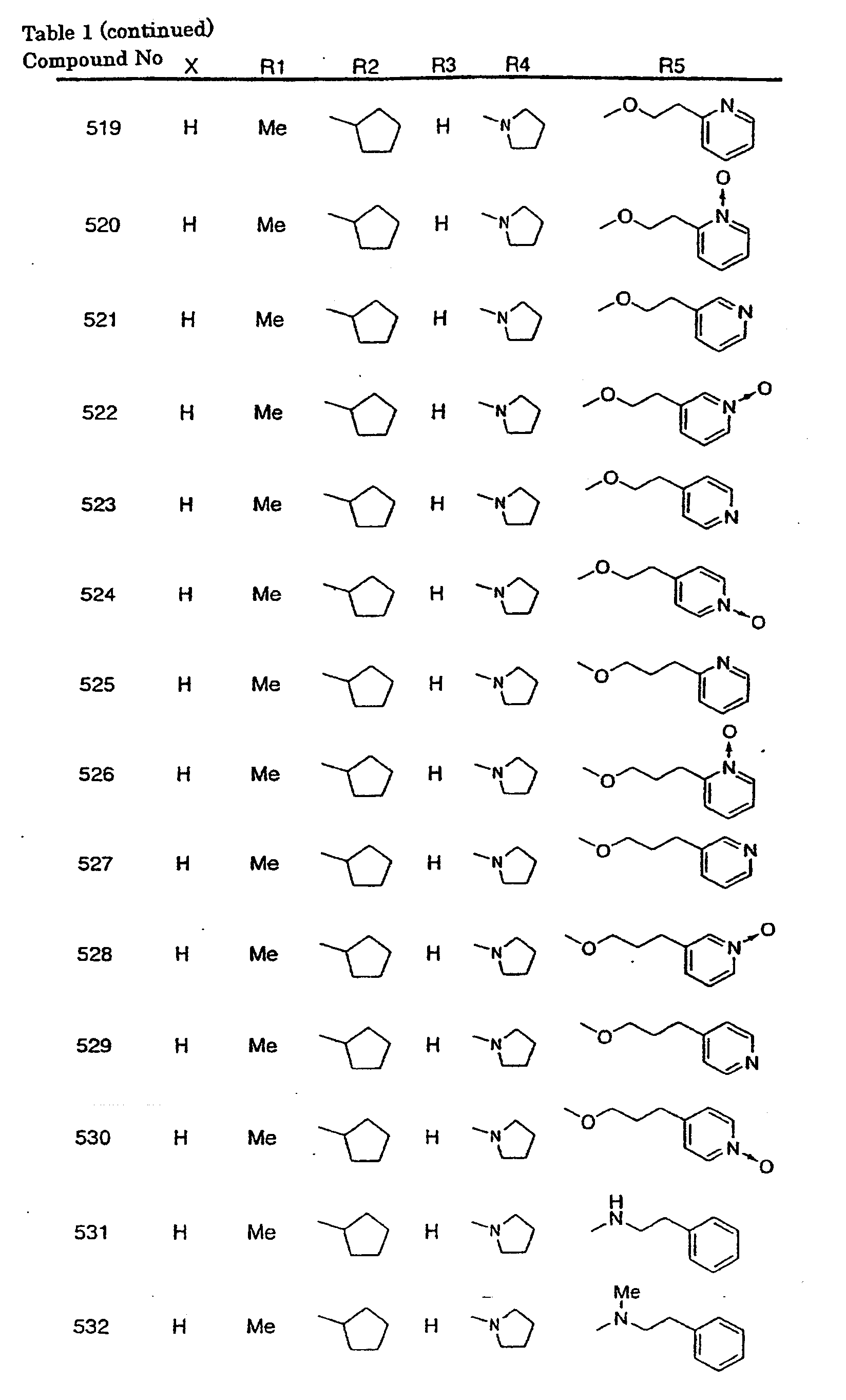
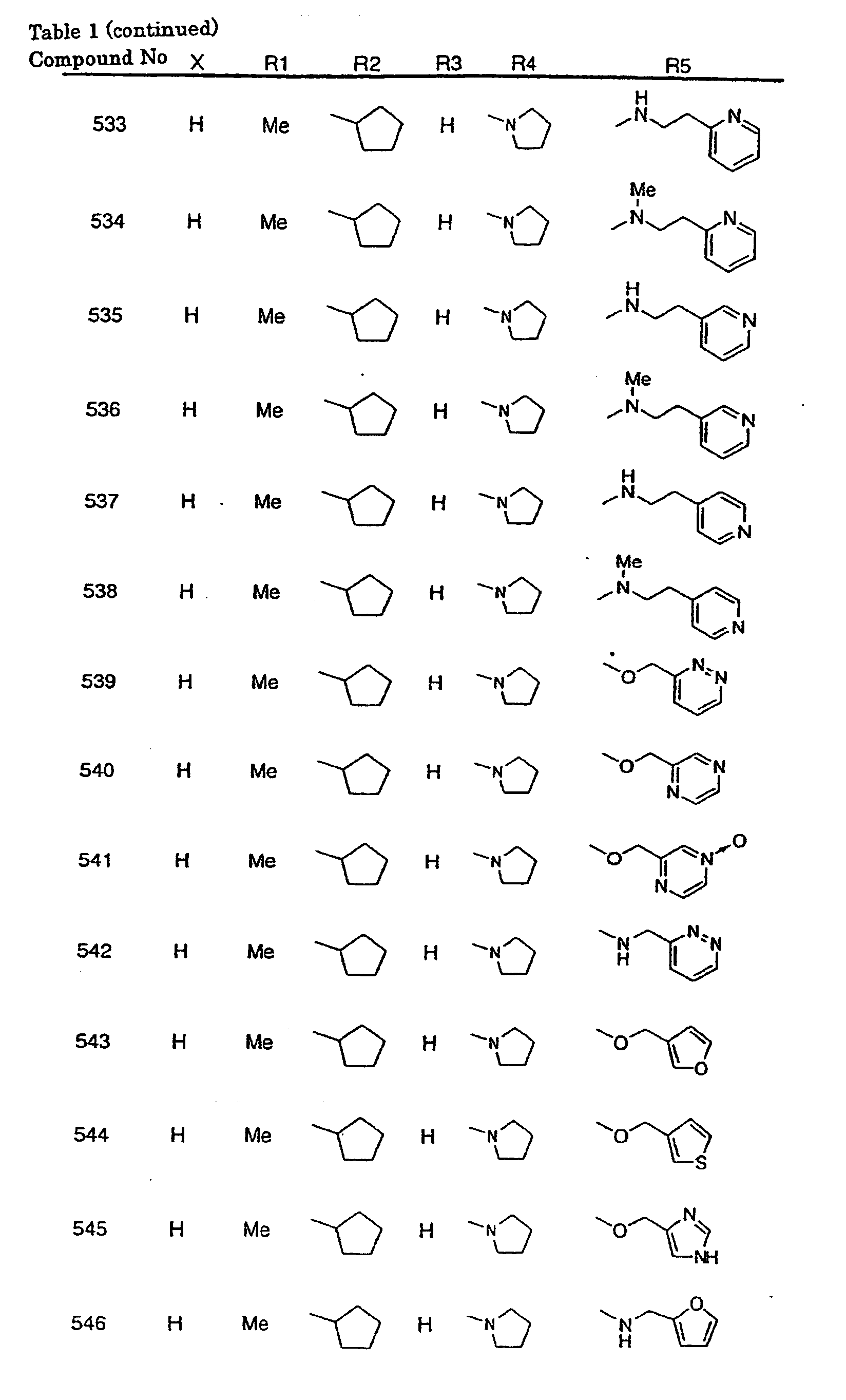
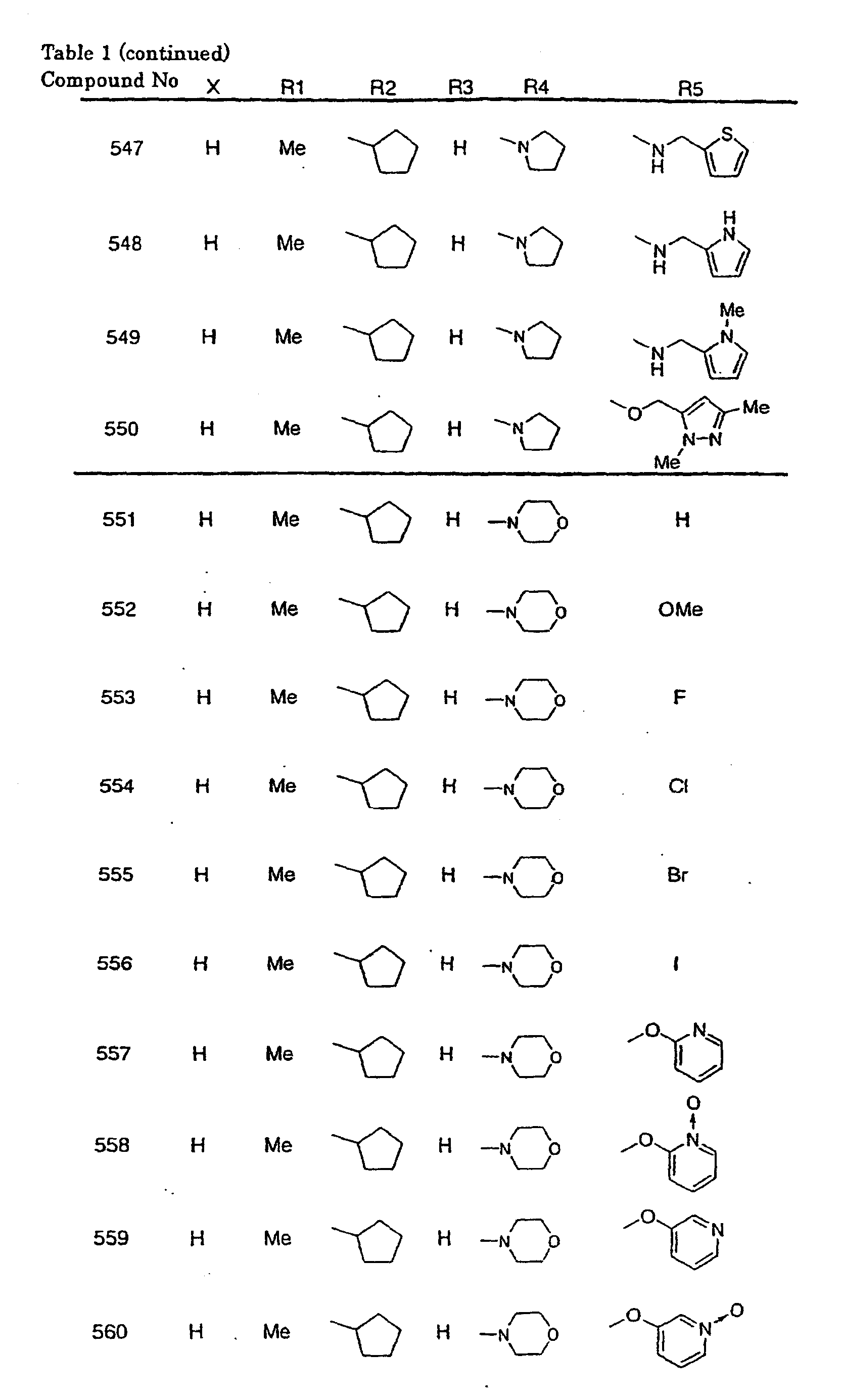

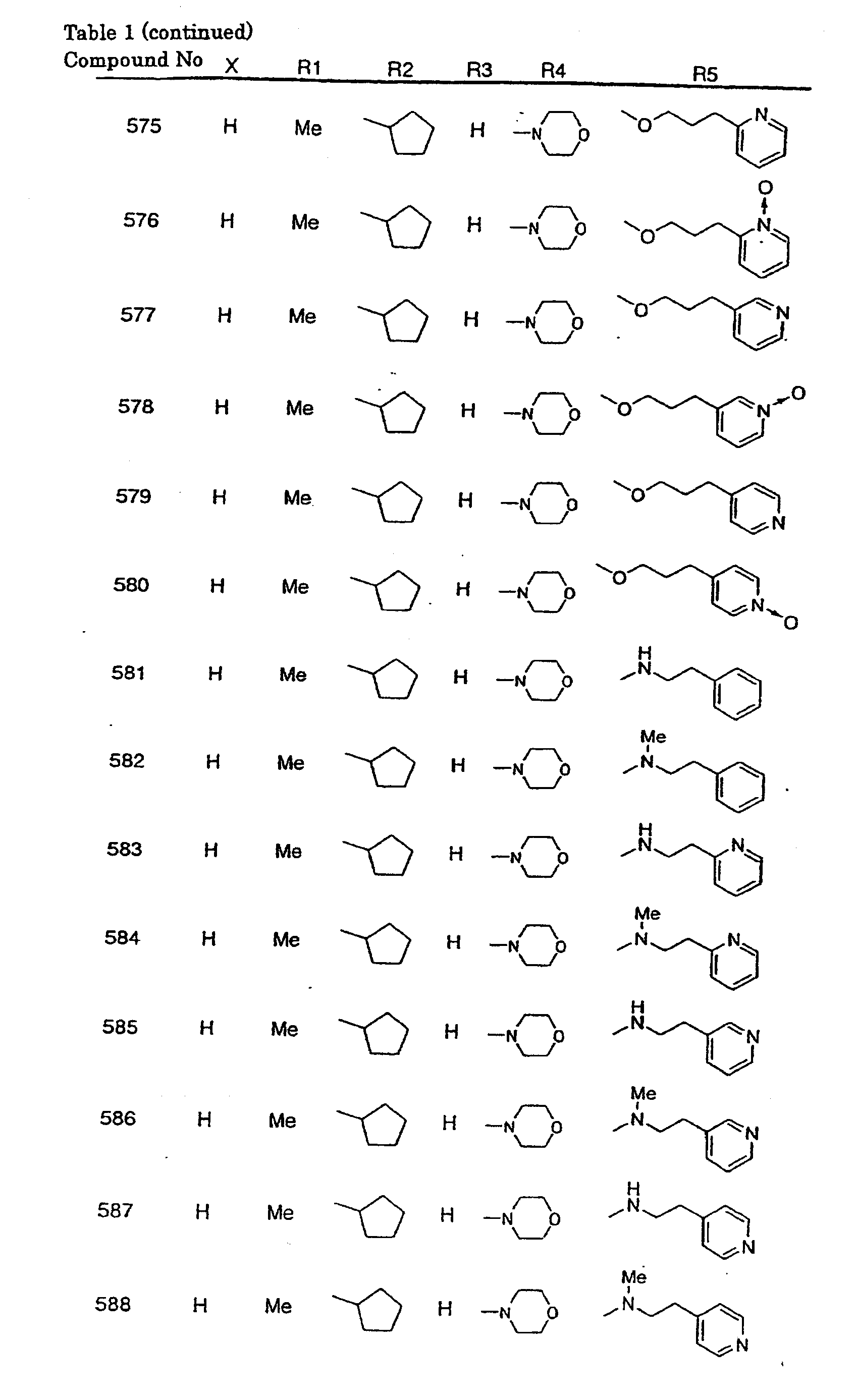


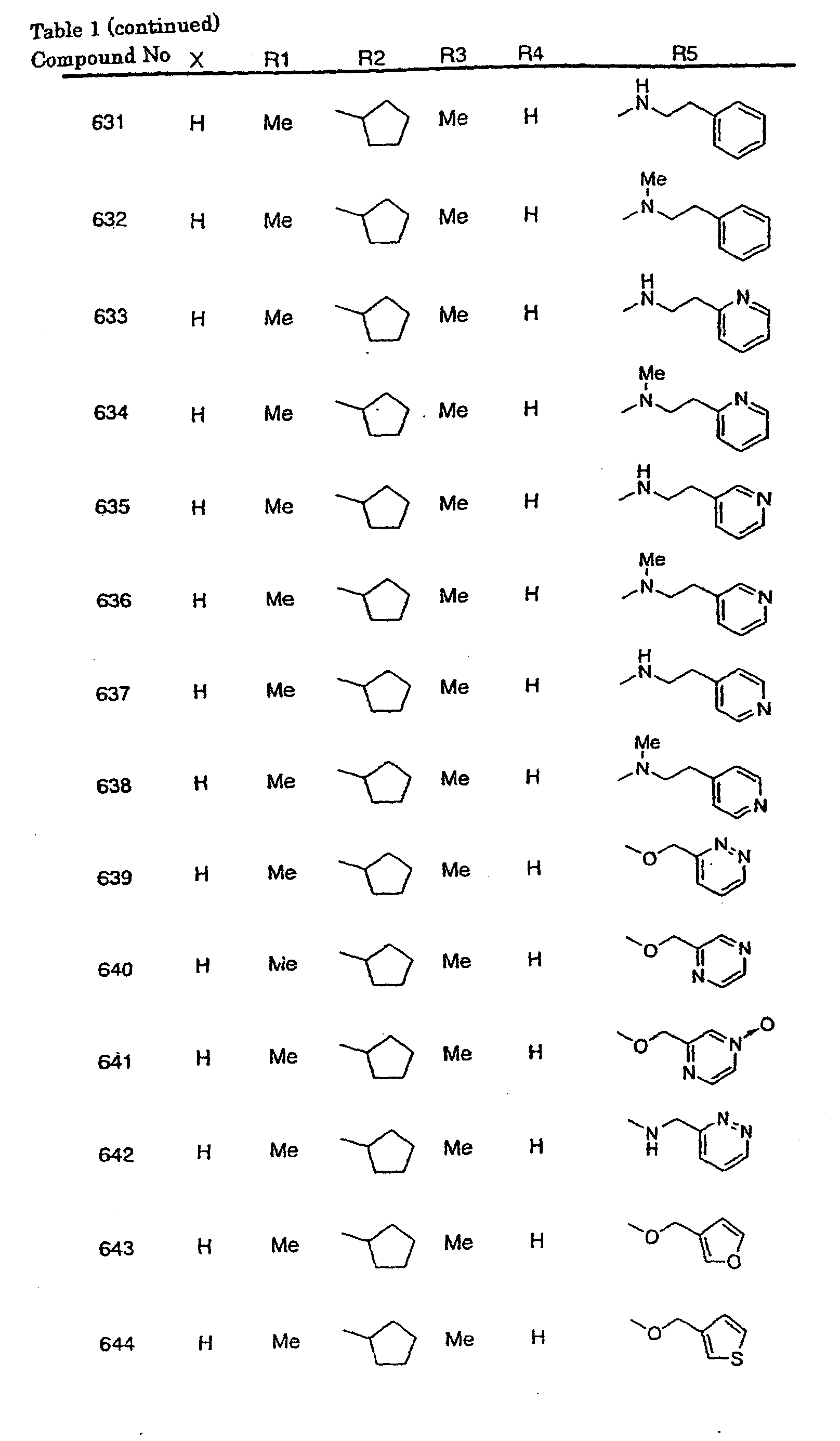
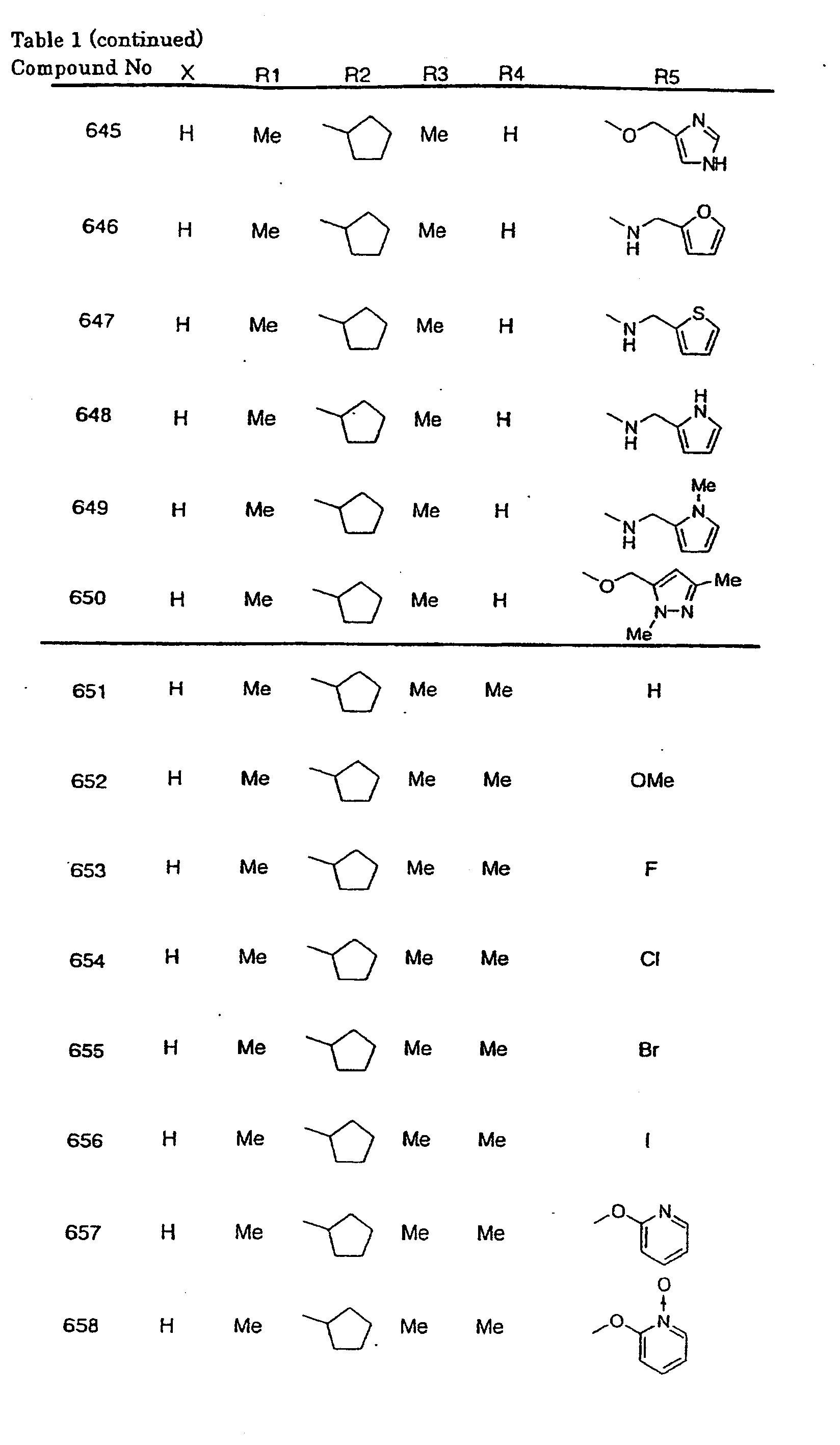
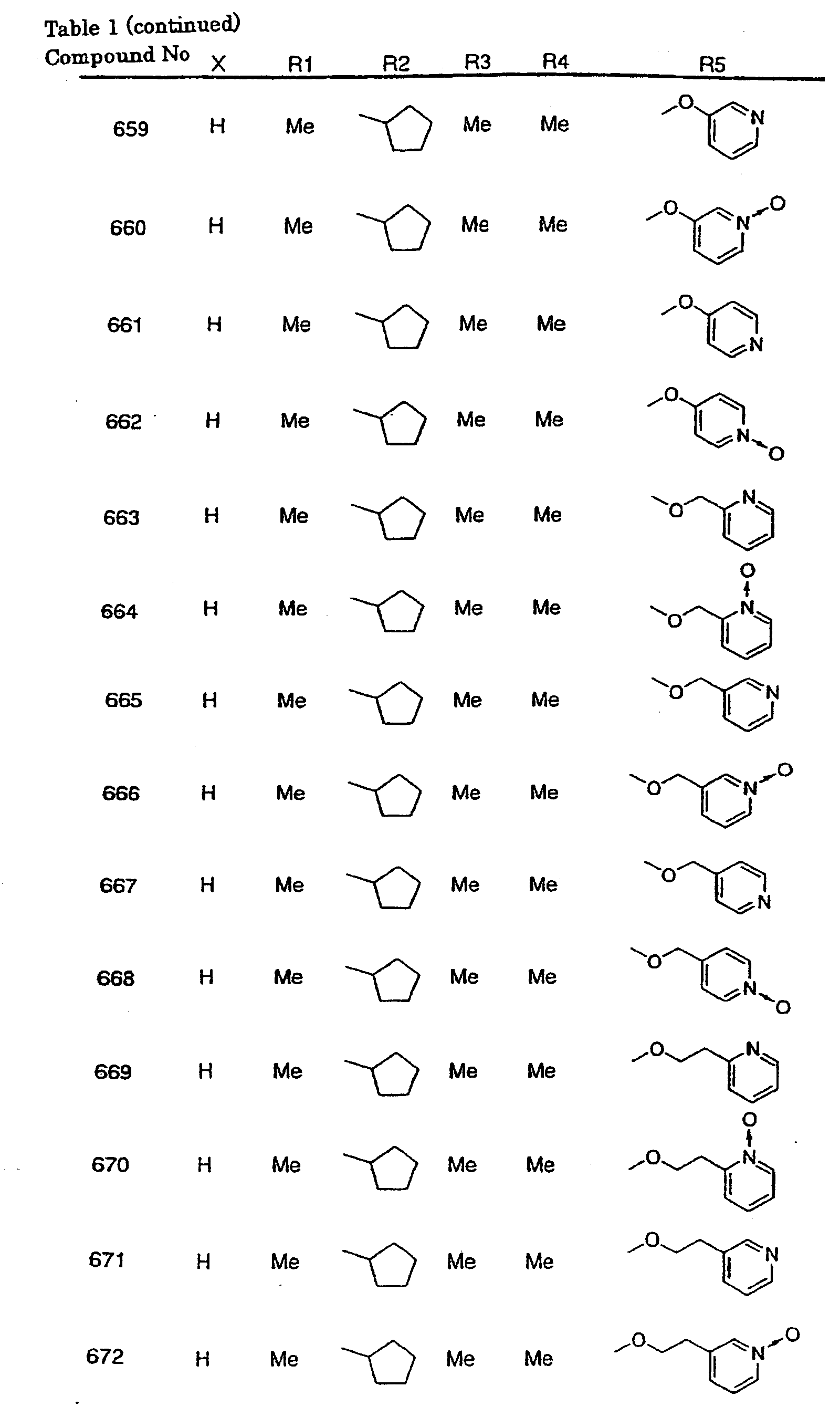

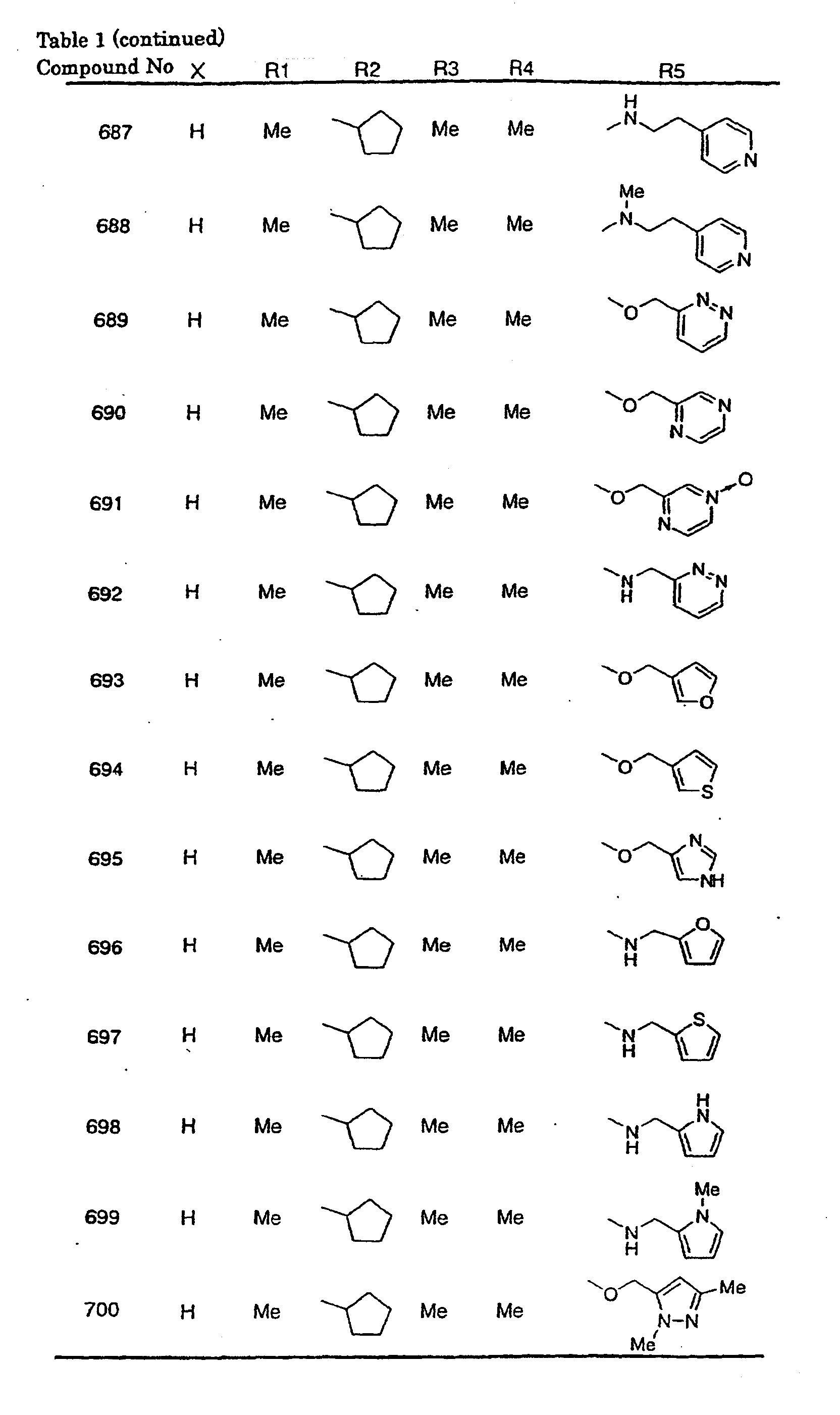
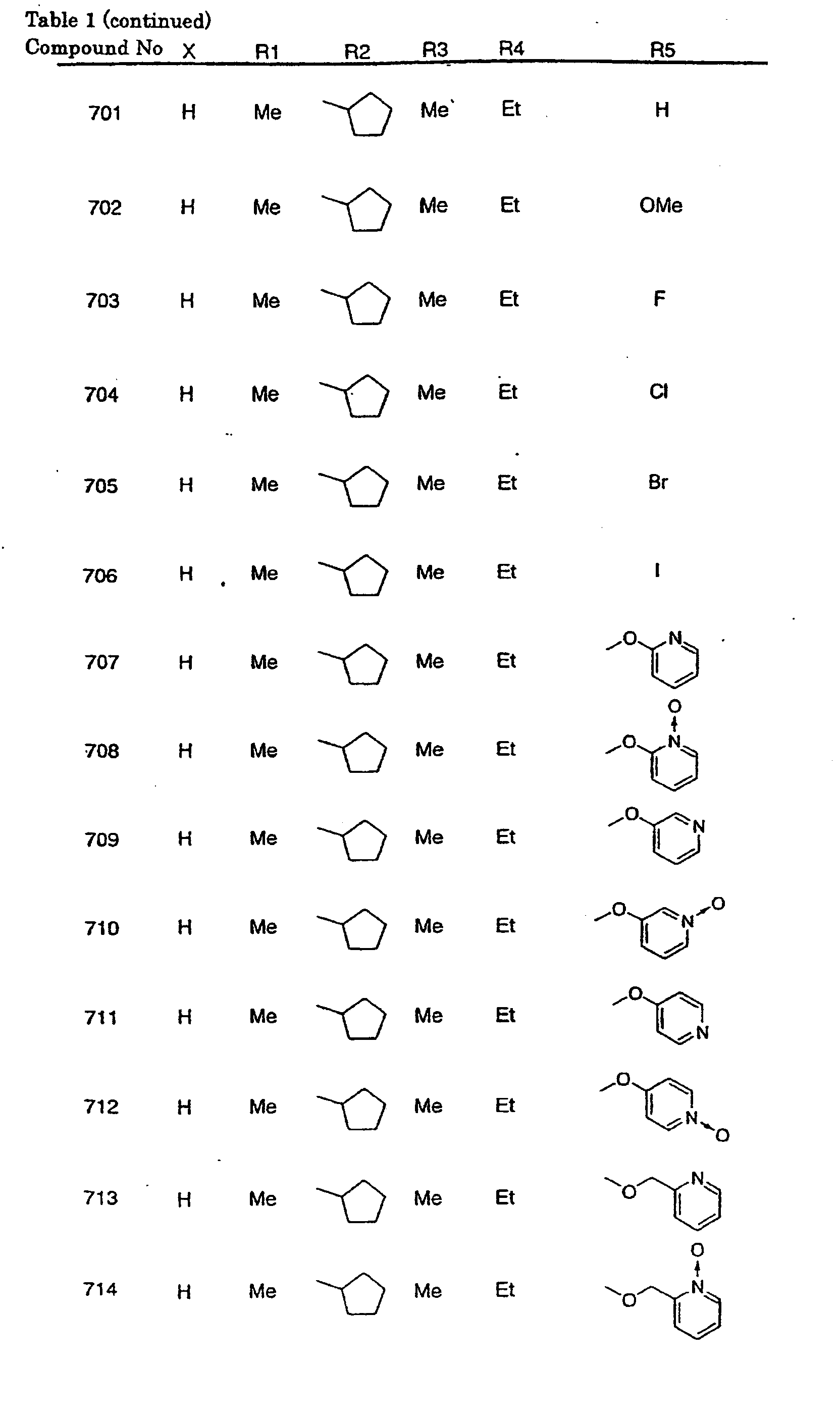


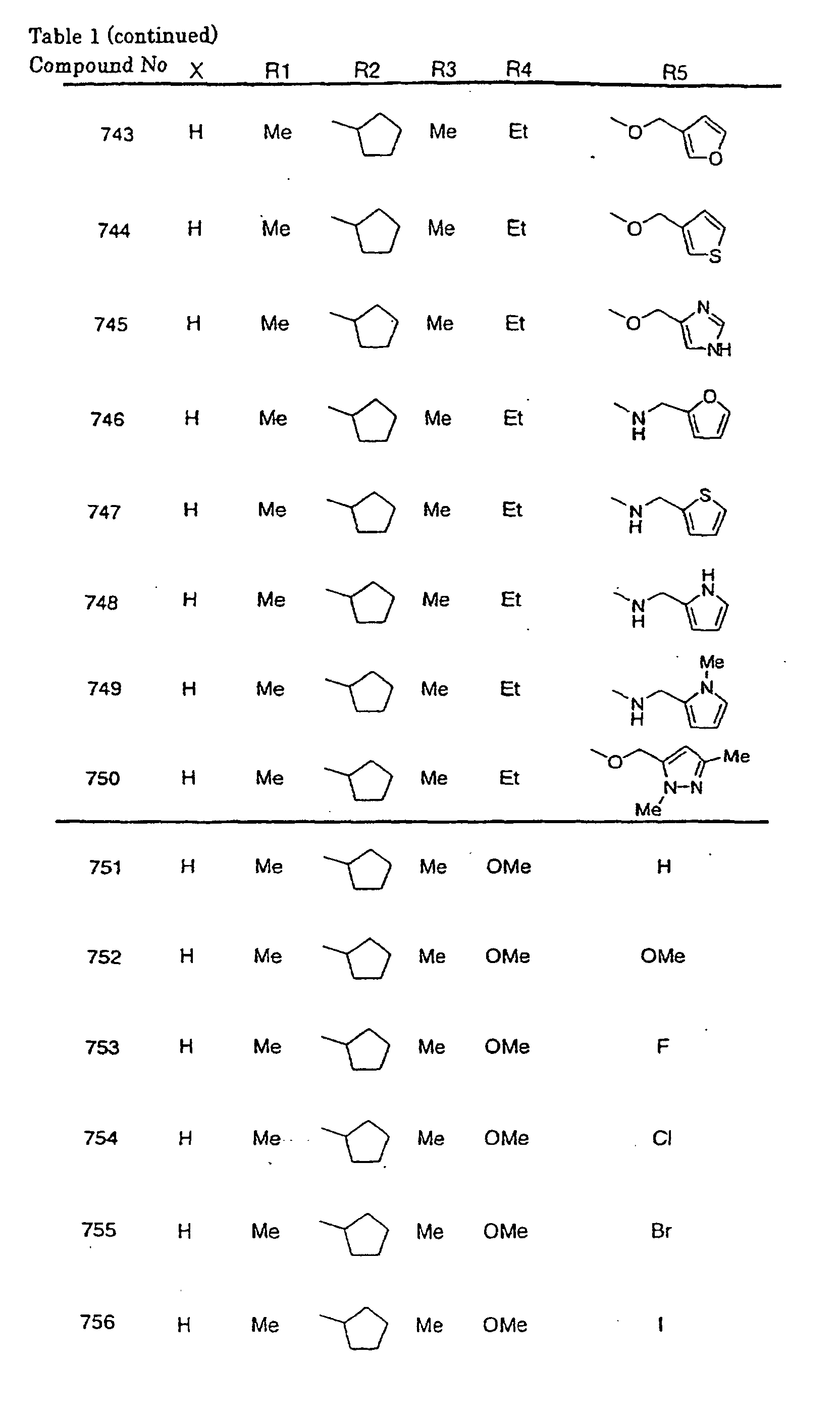

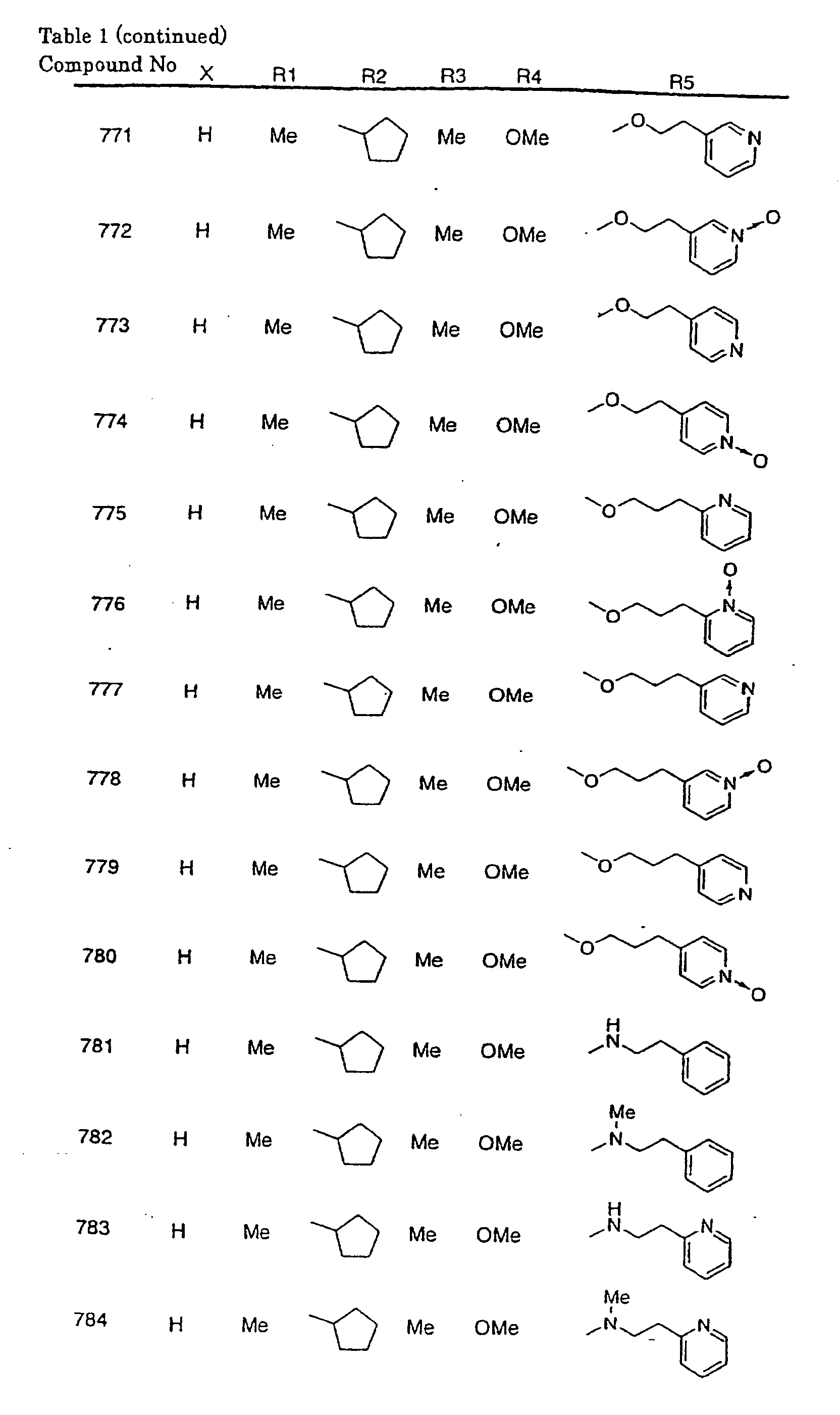
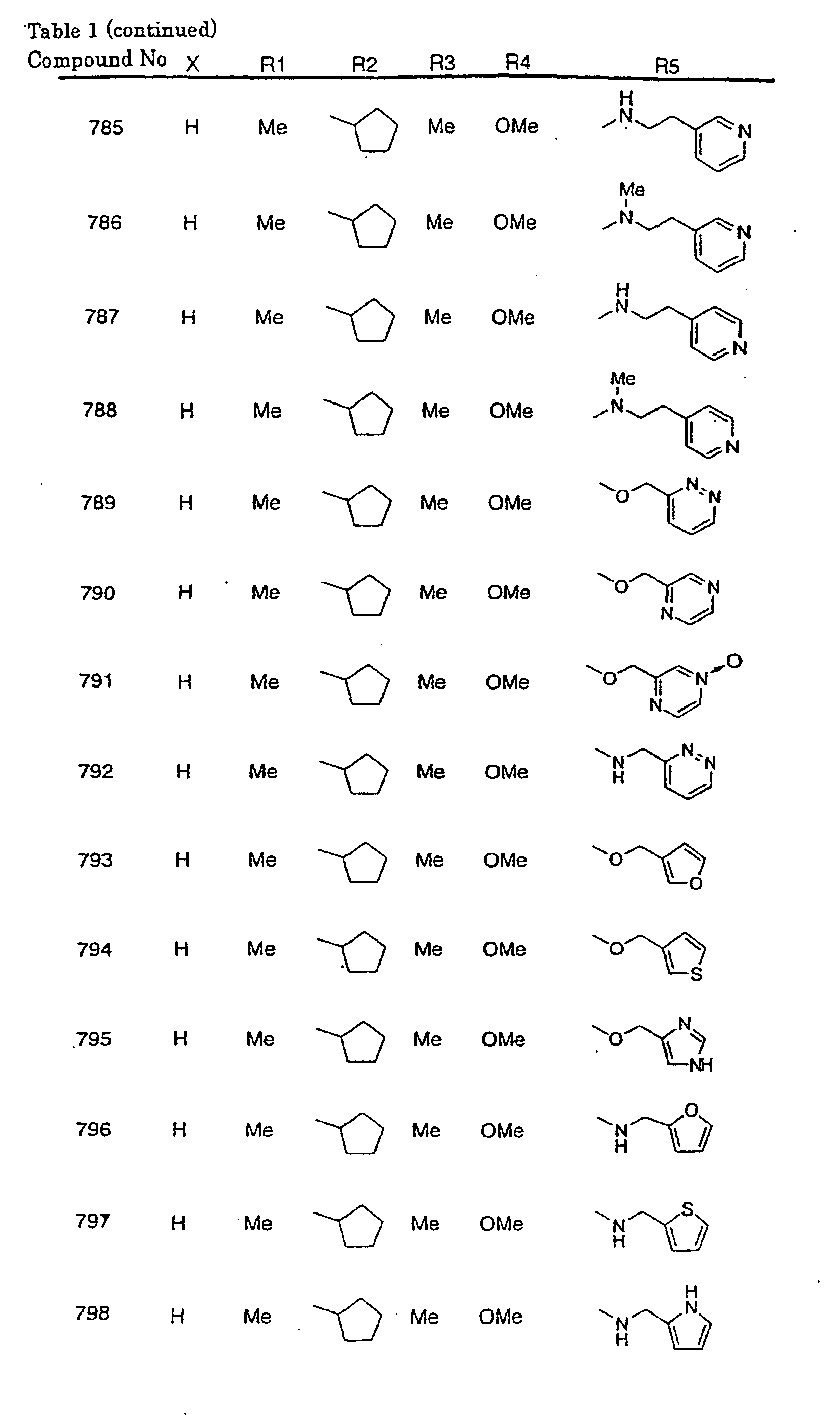
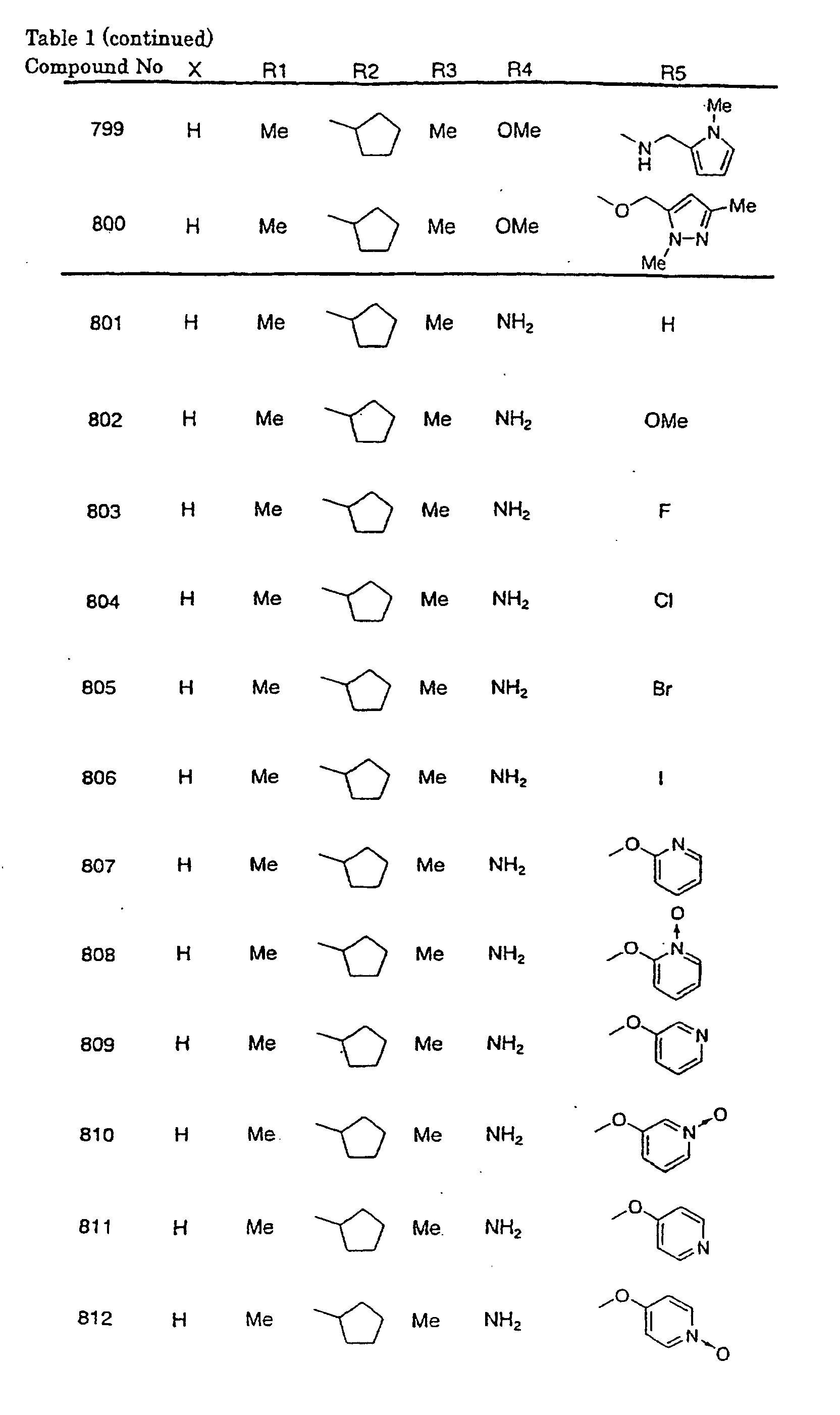

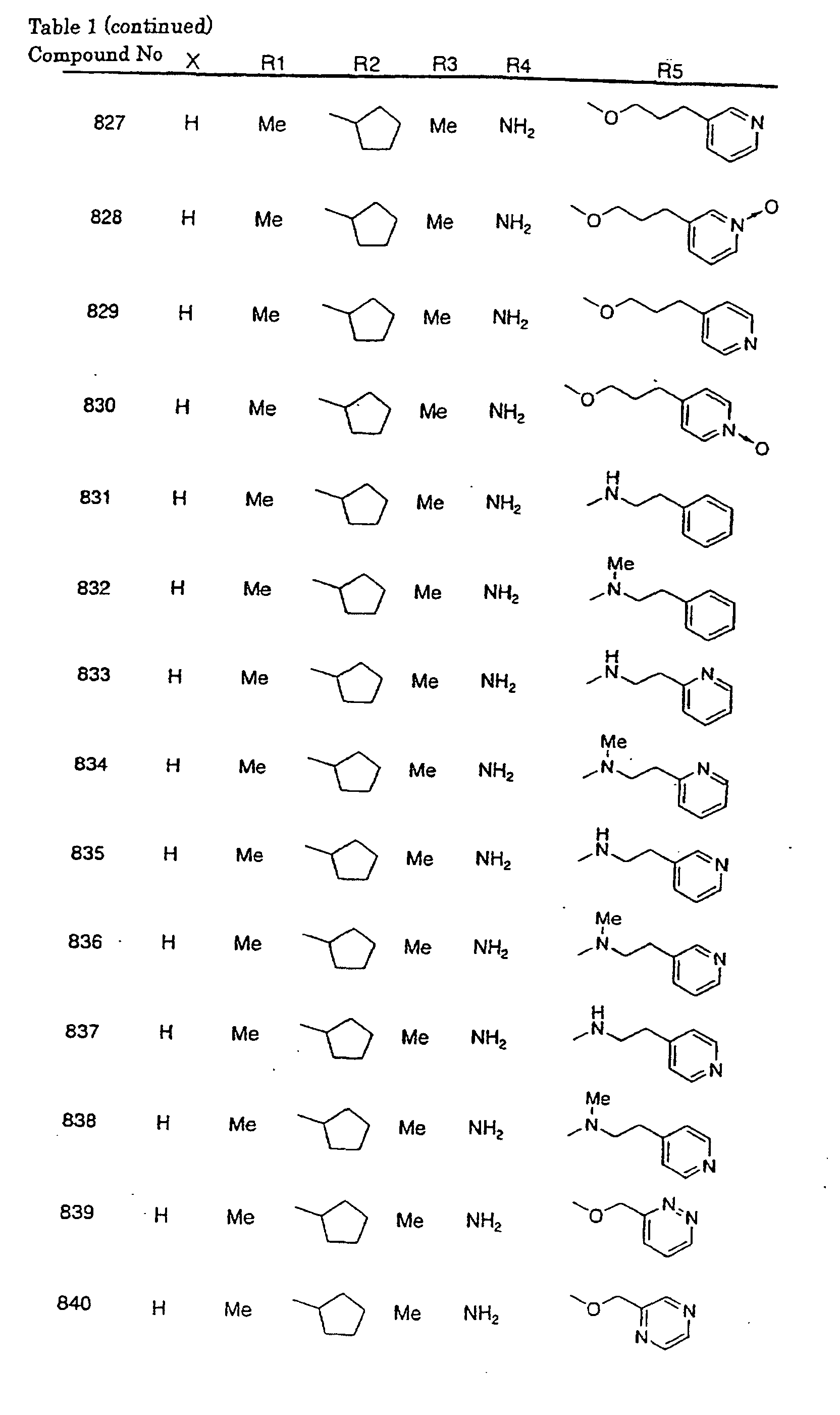
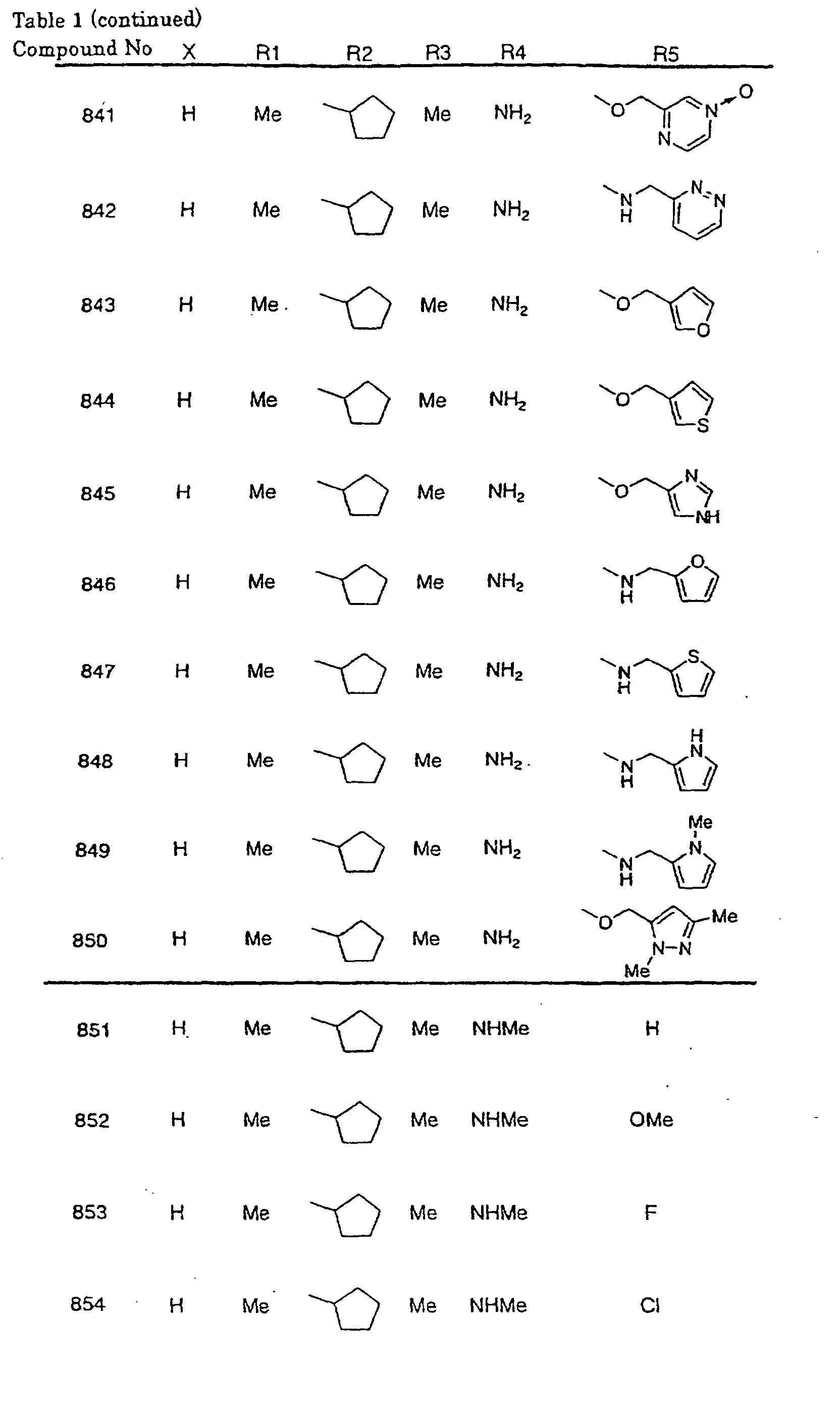


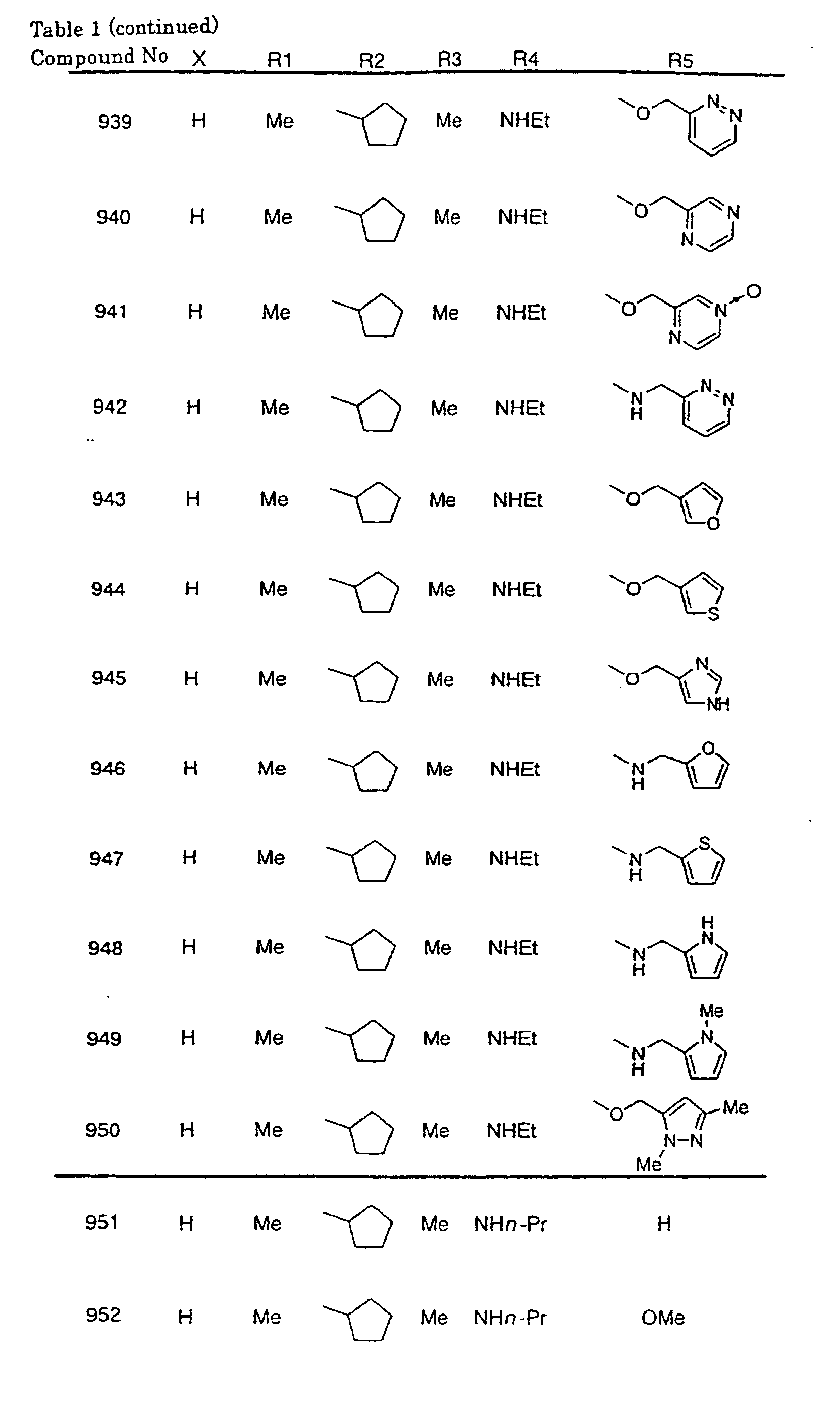


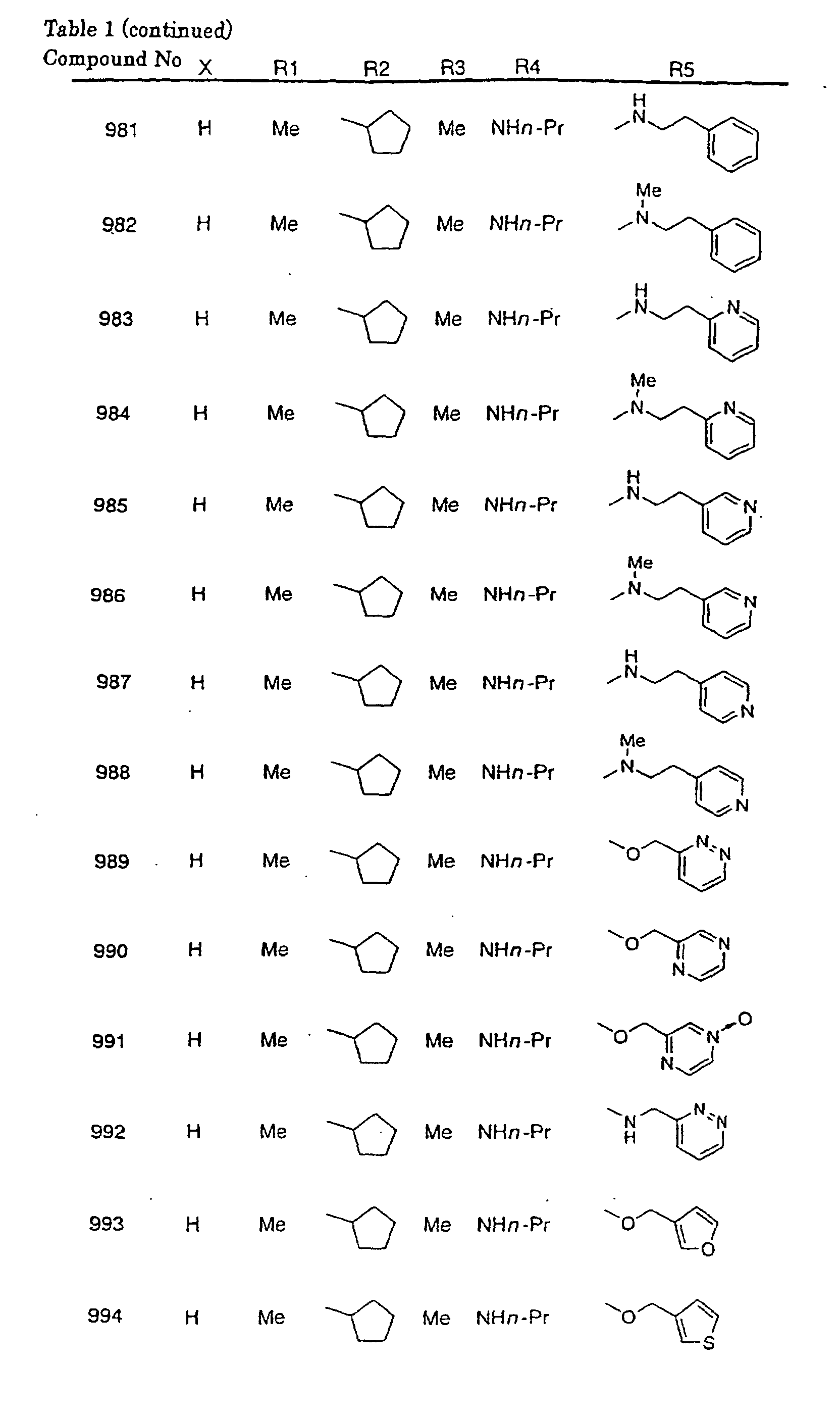
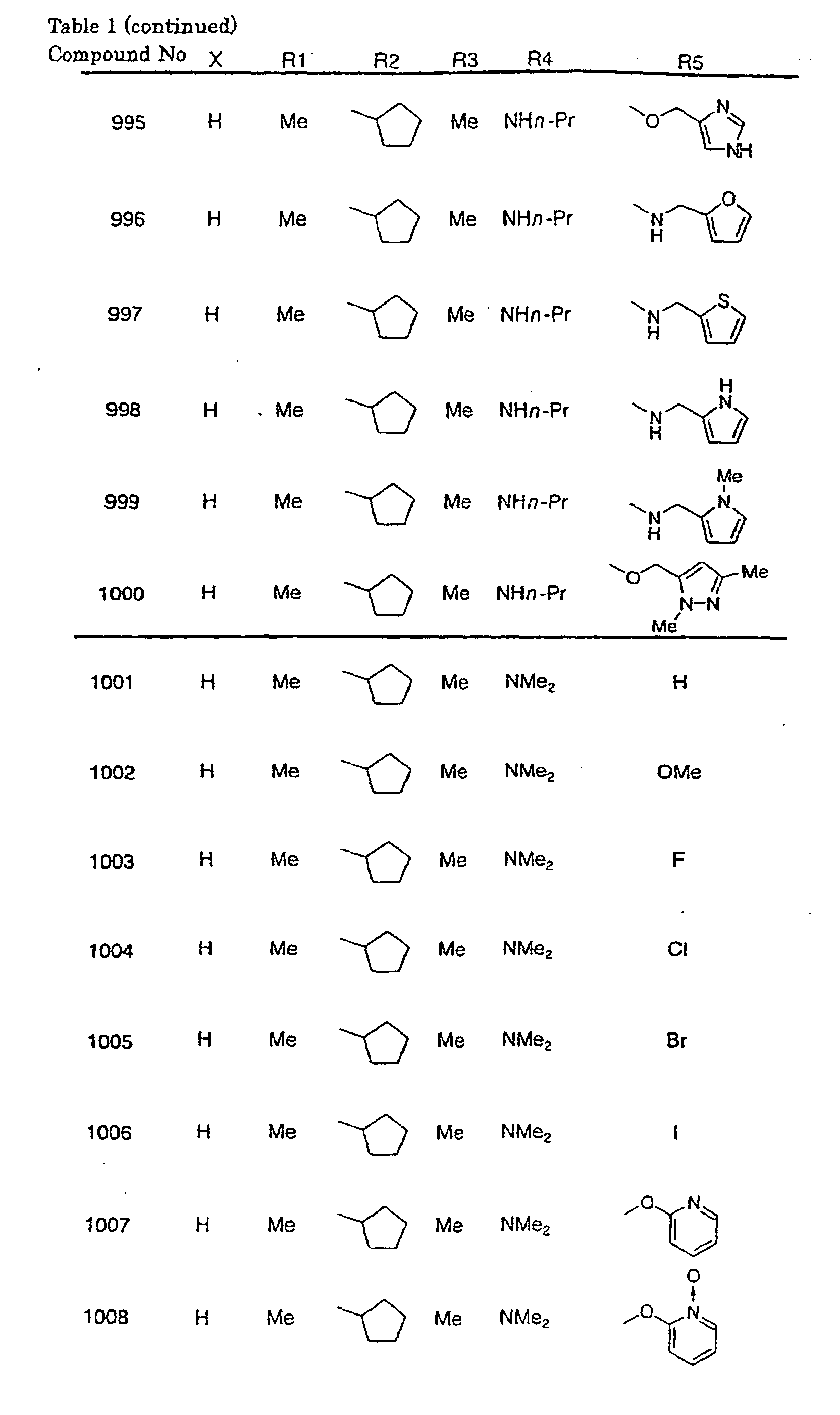
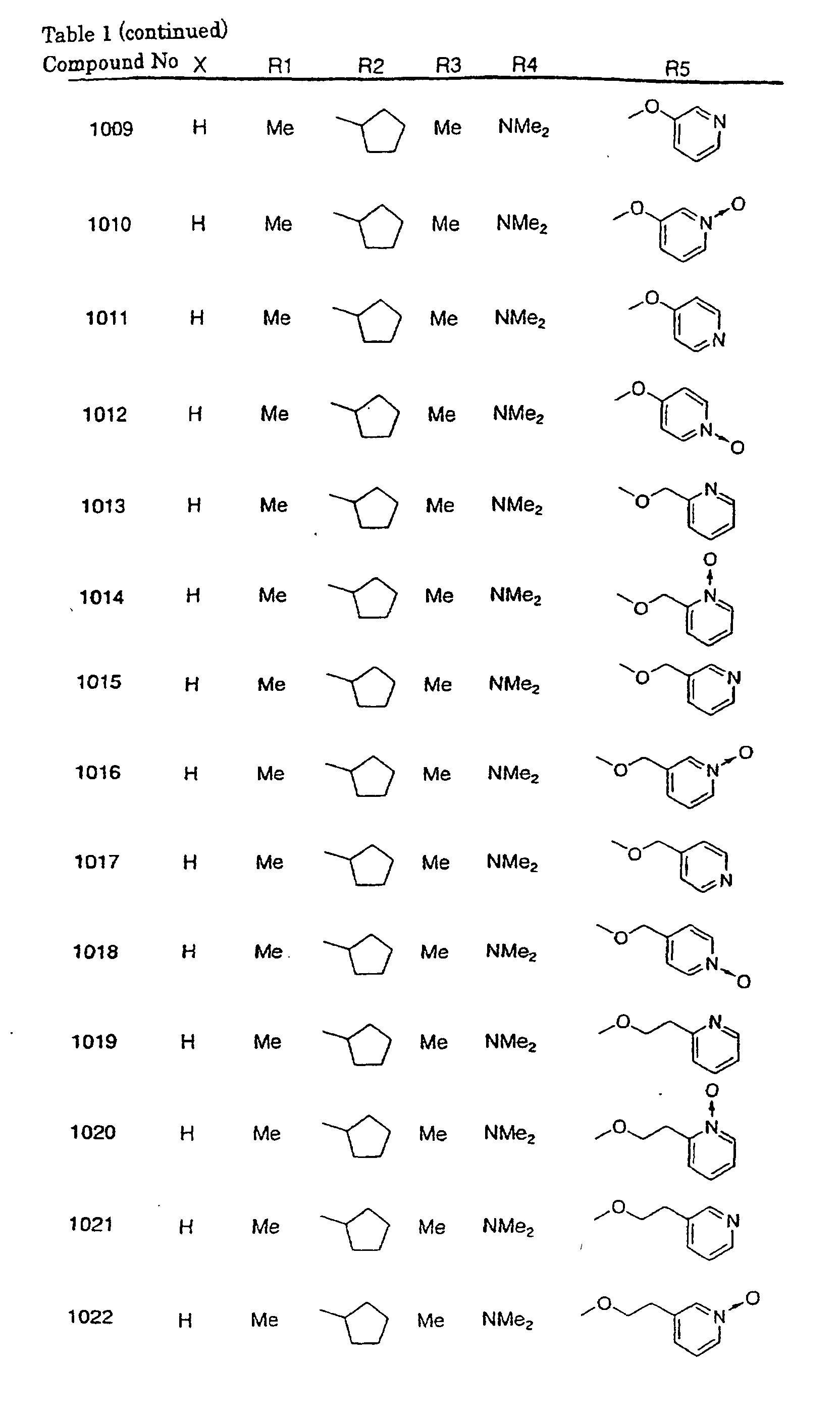

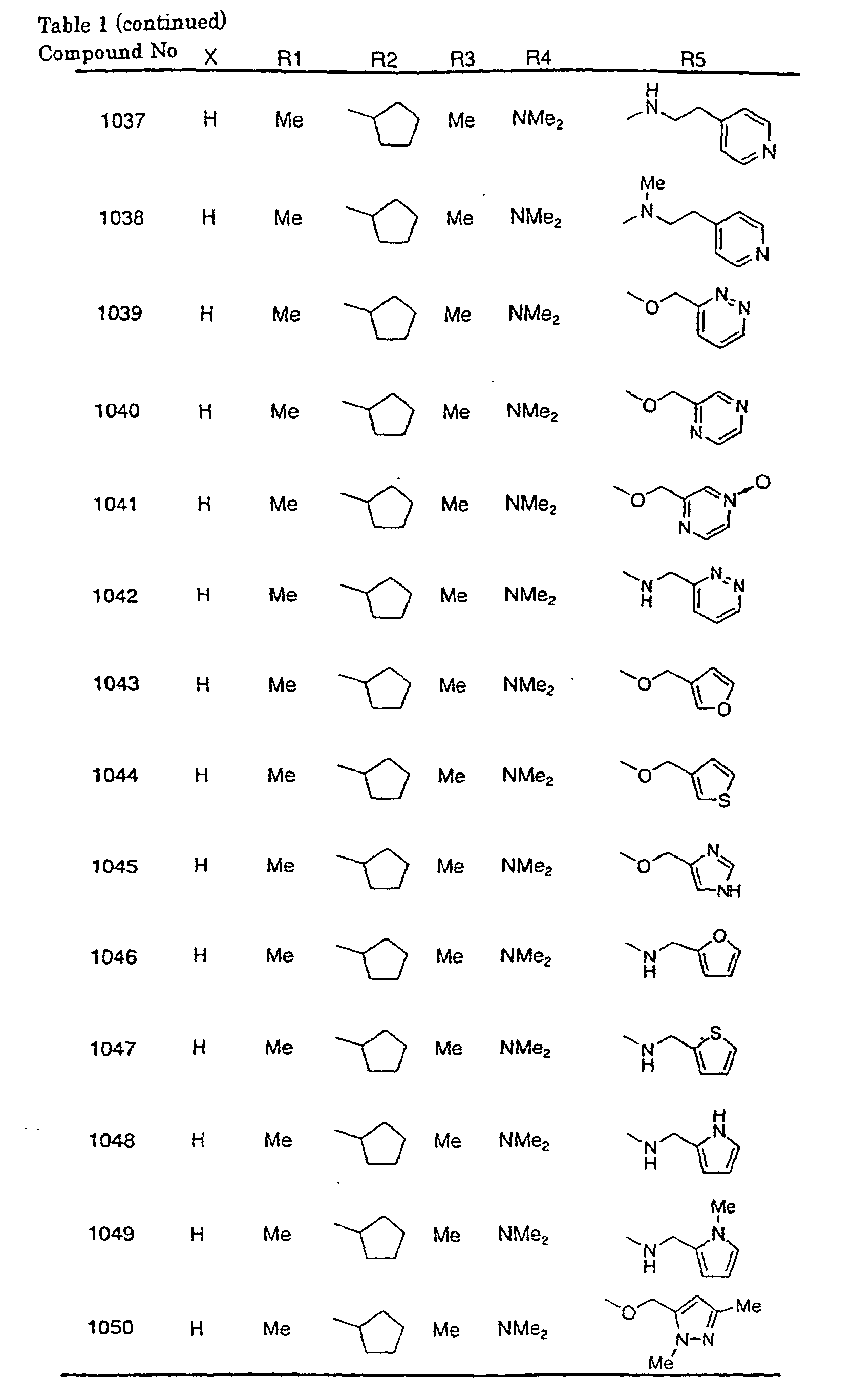

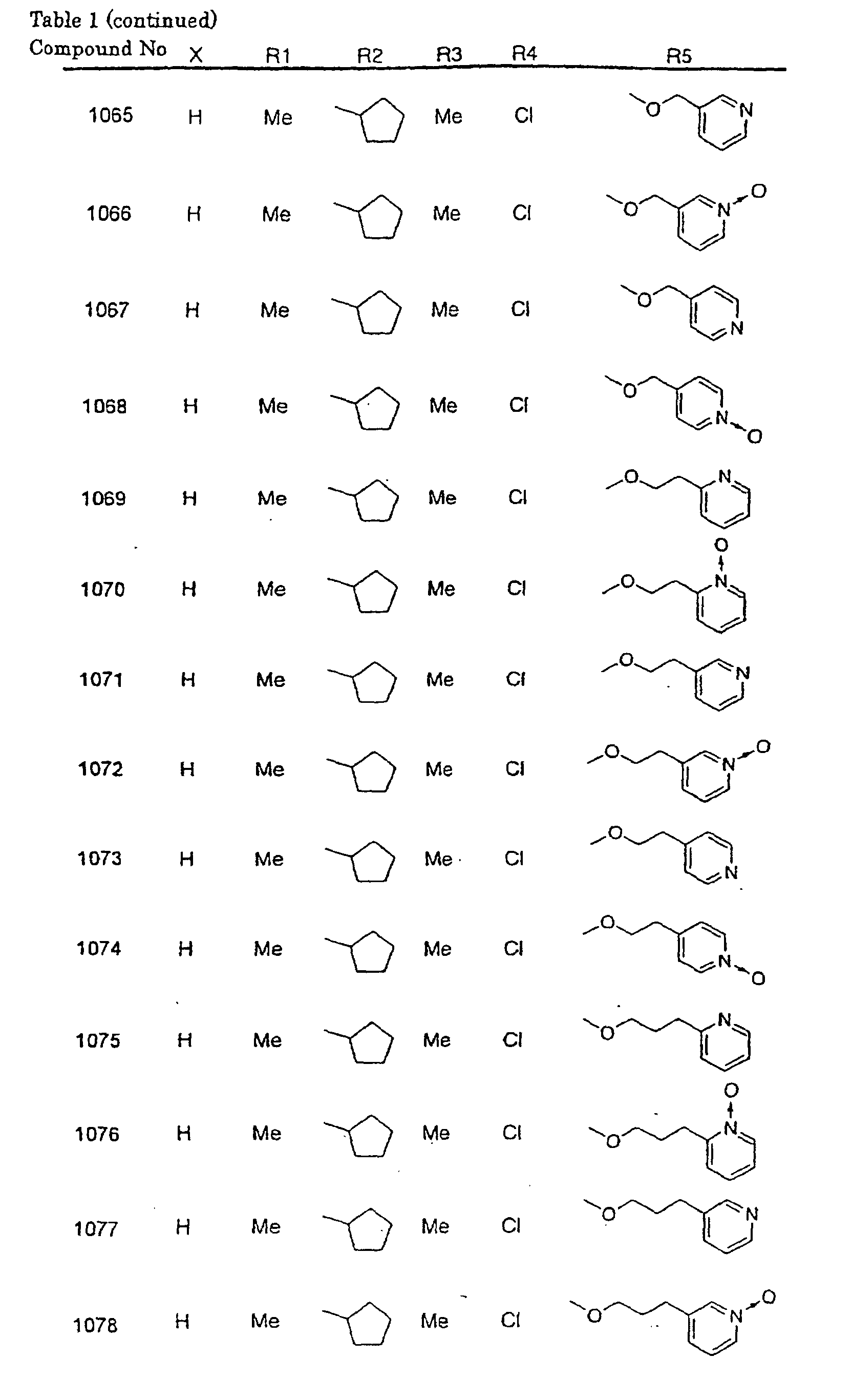
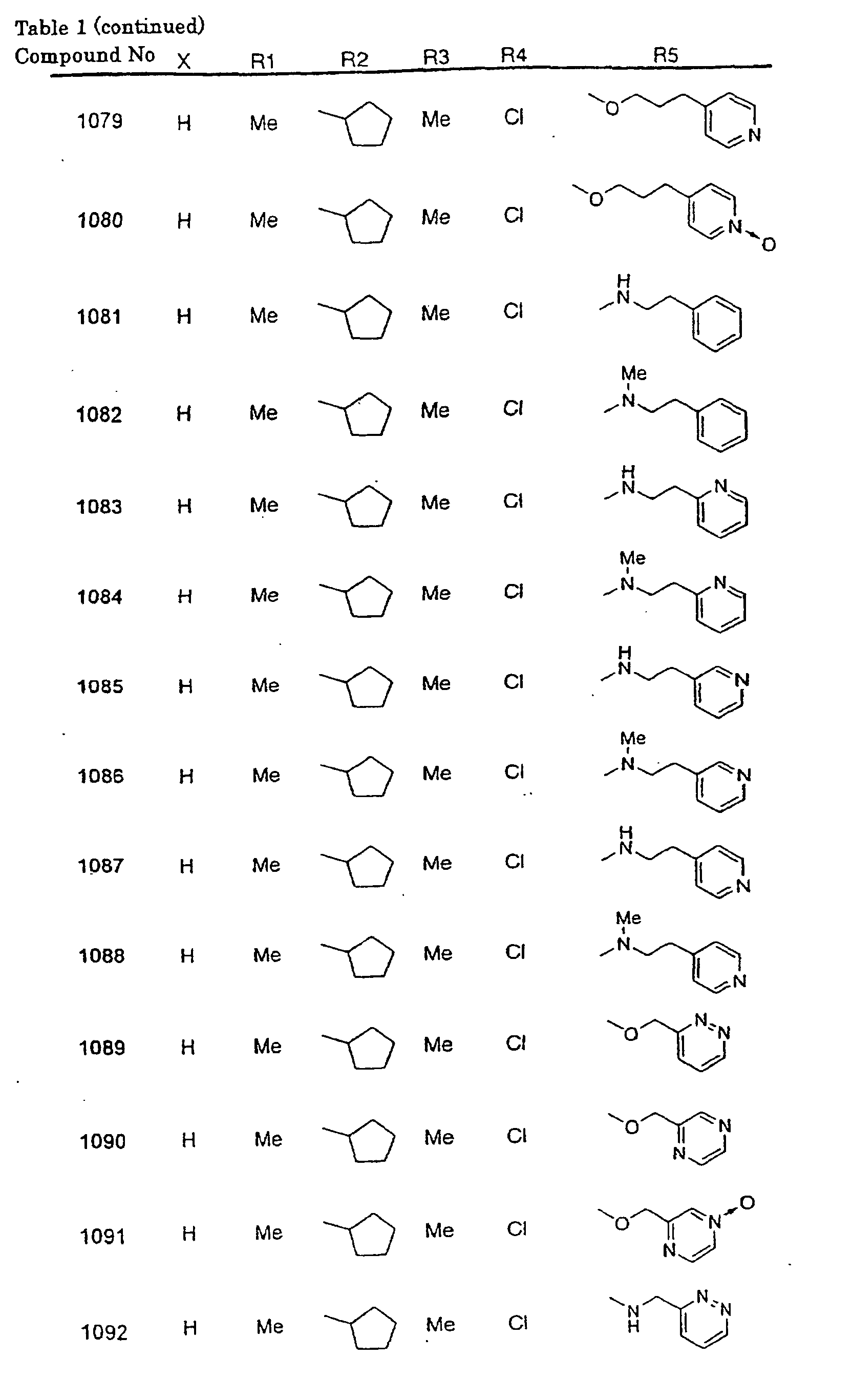
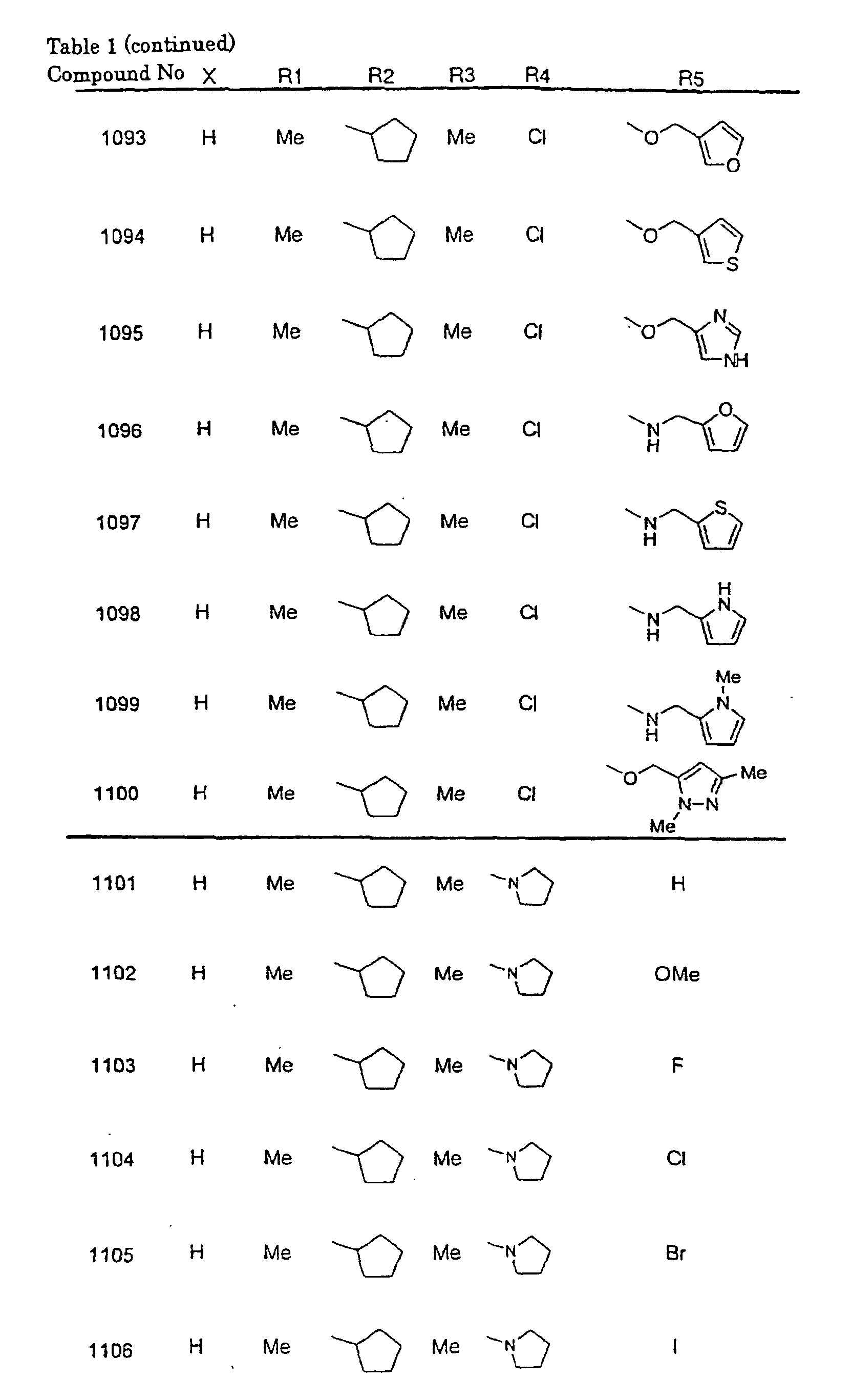


- Examples of particularly preferred compounds of the present invention include the following compounds. However, the compounds of the present invention are not limited to these examples.
- 2-chloro-9-[(3-cyclopentyloxy-4-methoxy)benzyl]-6,8-dimethylpurine;
- 9-[(3-cyclopentyloxy-4-methoxy)benzyl]-6,8-dimethyl-2-methoxypurine;
- 9-[(3-cyclopentyloxy-4-methoxy)benzyl]-6,8-dimethyl-2-(pyridazinylmethyloxy)purine;
- 9-[(3-cyclopentyloxy-4-methoxy)benzyl]-6,8-dimethyl-2-[4-pyridylmethyloxy]purine;
- 4-[[9-[(3-cyclopentyloxy-4-methoxy)benzyl]-6,8-dimethylpurin]-2-yl-oxymethyl]pyridine N-oxide;
- 9-[(3-cyclopentyloxy-4-methoxy)benzyl]-6,8-dimethyl-2-[2-(4-pyridyl)ethyloxy]purine;
- 4-[[9-[(3-cyclopentyloxy-4-methoxy)benzyl]-6,8-dimethylpurin]-2-yl-2-oxyethyl]pyridine N-oxide;
- 9-[(3-cyclopentyloxy-4-methoxy)benzyl]-6-methylamino-2-(3-pyridazinylmethyloxy)purine;
- 9-[(3-cyclopentyloxy-4-methoxy)benzyl]-6,8-dimethyl-2-[2-(4-pyridyl)ethylamino]purine;
- 9-[(3-cyclopentyloxy-4-methoxy)benzyl]-6,8-dimethyl-2-[(4-pyridyl)methylamino]purine;
- 9-[(3-cyclopentyloxy-4-methoxy)benzyl]-6,8-dimethyl-2-[3-(4-pyridyl)propyloxy]purine; and
- 4-[[9-[(3-cyclopentyloxy-4-methoxy)benzyl]-6,8-dimethylpurin]-2-yl-3-oxypropyl]pyridine N-oxide.
-
- As the salts of the compounds represented by the aforementioned formula (I), physiologically acceptable salts are preferred. Examples include, for example, inorganic acid salts such as hydrochlorides, hydrobromides, hydroiodides, sulfates and phosphates, and organic acid salts such as oxalates, maleates, fumarates, lactates, malates, citrates, tartrates, benzoates, methanesulfonates and p-toluenesulfonates. The compounds of the formula (I), N-oxide derivatives, and salts thereof may exist in the forms of hydrates or solvates, and such hydrates and solvates are also fall within the scope of the present invention. As solvents constituting such solvates, examples include, for example, methanol, ethanol, isopropanol, acetone, ethyl acetate, methylene chloride.
- Among the compounds of the present invention, those wherein R2 represents tetrahydrofuranyl group or bicyclo[2,2,1]hept-2-yl group may exist as optical enantiomers. Moreover, depending on the types of substituents, they may have one or more asymmetric carbons, and hence stereoisomers such as optical enantiomers and diastereoisomers based on the asymmetric carbon(s) may exist. Any stereoisomers in a pure form, any mixtures thereof, any racemates thereof and the like fall within the scope of the present invention.
- According to the present invention, there are provided the compound represented by the aforementioned formulas (A) and (B). These compounds are useful as synthetic intermediates for the preparation of the aforementioned purine derivatives represented by formula (I). In the compounds represented by the formulas (A) and (B), R1, R2 and R4 have the same meanings as R1, R2 and R4 defined for the compounds of the aforementioned formula (I). R1 is preferably a C1-C4 alkyl group, more preferably a C1-C3 alkyl group, further preferably methyl group or ethyl group, and most preferably methyl group. R2 is preferably tetrahydrofuranyl group, a C1-C3 haloalkyl group, or a C3-C8 cycloalkyl group, more preferably a C3-C8 cycloalkyl group, further preferably a C4-C6 cycloalkyl group, and most preferably cyclopentyl group. R4 is preferably hydrogen atom, a halogen atom, a C1-C4 alkyl group, a C1-C4 alkoxyl group, a C1-C4 alkylamino group, or a C2-C8 dialkylamino group, and more preferably a C1-C3 alkyl group, a C1-C3 alkoxyl group, or a C1-C3 alkylamino group. X2 represents a halogen atom, and preferably chlorine atom.
- Examples of particularly preferred compounds represented by the formula (A) include the following compounds.
4-(3-cyclopentyloxy-4-methoxybenzylamino)-2-fluoro-5-nitro-6-methylpyrimidine;
2-chloro-4-(3-cyclopentyloxy-4-methoxybenzylamino)-5-nitro-6-methylpyrimidine;
2-bromo-4-(3-cyclopentyloxy-4-methoxybenzylamino)-5-nitro-6-methylpyrimidine; and
4-(3-cyclopentyloxy-4-methoxybenzylamino)-2-iodide-5-nitro-6-methylpyrimidine. - Examples of particularly preferred compounds represented by the formula (B) include the following compounds.
5-amino-4-(3-cyclopentyloxy-4-methoxybenzylamino)-2-fluoro-6-methylpyrimidine;
5-amino-2-chloro-4-(3-cyclopentyloxy-4-methoxybenzylamino)-6-methylpyrimidine;
5-amino-2-bromo-4-(3-cyclopentyloxy-4-methoxybenzylamino)-6-methylpyrimidine; and
5-amino-4-(3-cyclopentyloxy-4-methoxybenzylamino)-2-iodide-6-methylpyrimidine. - Methods for preparing the compounds of the present invention are not particularly limited. For example, they can be prepared by the following methods.
- When A is a group represented by the following formula:a compound of the following formula (III) can be prepared by the following preparing method 1 or 2.

-

- In the scheme, R1, R2, R3, R4, R5, and X have the same meanings as those defined above, and X1 represents a halogen atom.
- The above reaction is performed at a temperature within the range of from 0 to 150°C without a solvent or in a suitable solvent such as N,N-dimethylformamide or tetrahydrofuran, and in the presence or absence of an organic base such as triethylamine, pyridine, and N,N-diethylaniline, or an inorganic base such as sodium carbonate and sodium hydride.
- A compound of the aforementioned formula (II) as the starting material of the above reaction can be prepared according to the following scheme.

- In the scheme, R1, R2, R3, R4, R5, X and X1 have the same meanings as already defined above.
-
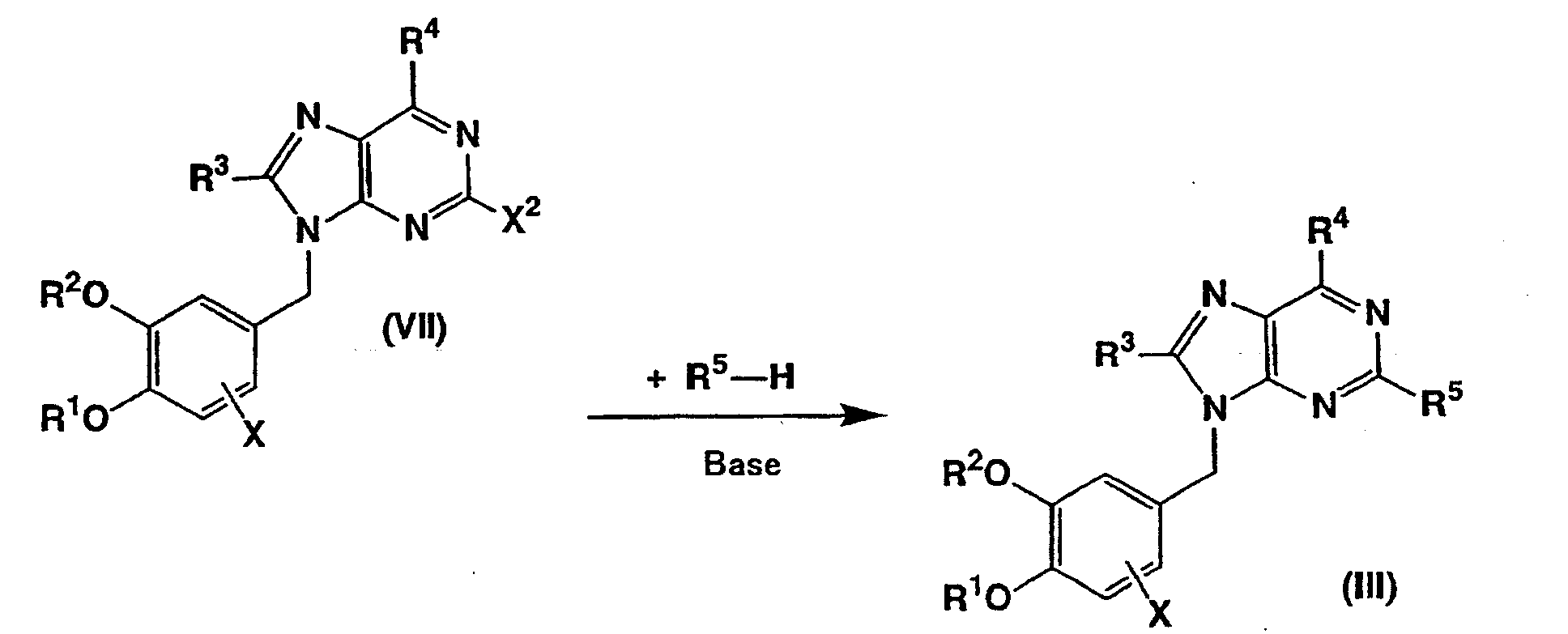
- In the scheme, R1, R2, R3, R4, R5, and X have the same meanings as those defined above, and X2 represents a halogen atom.
- A compound of the formula (III) can be prepared by carrying out condensation of a compound of the formula (VII) and a compound represented by R5-H according to the aforementioned reaction. A compound represented by R5-H is added to a suitable solvent such as N,N-dimethylformamide or tetrahydrofuran or a mixed solvent thereof, and the mixture is added with 1 to 5 equivalents of an organic base such as triethylamine, pyridine or N,N-diethylaniline, or an inorganic base such as sodium carbonate or sodium hydride. Then, the mixture is reacted with a compound of the formula (VII) to obtain the target compound of the formula (III). The reaction is usually performed at from -20 to 150°C under a nitrogen or argon flow. A compound of the aforementioned formula (VII) as the starting material of the aforementioned reaction can be prepared by any one of the following three methods.
-
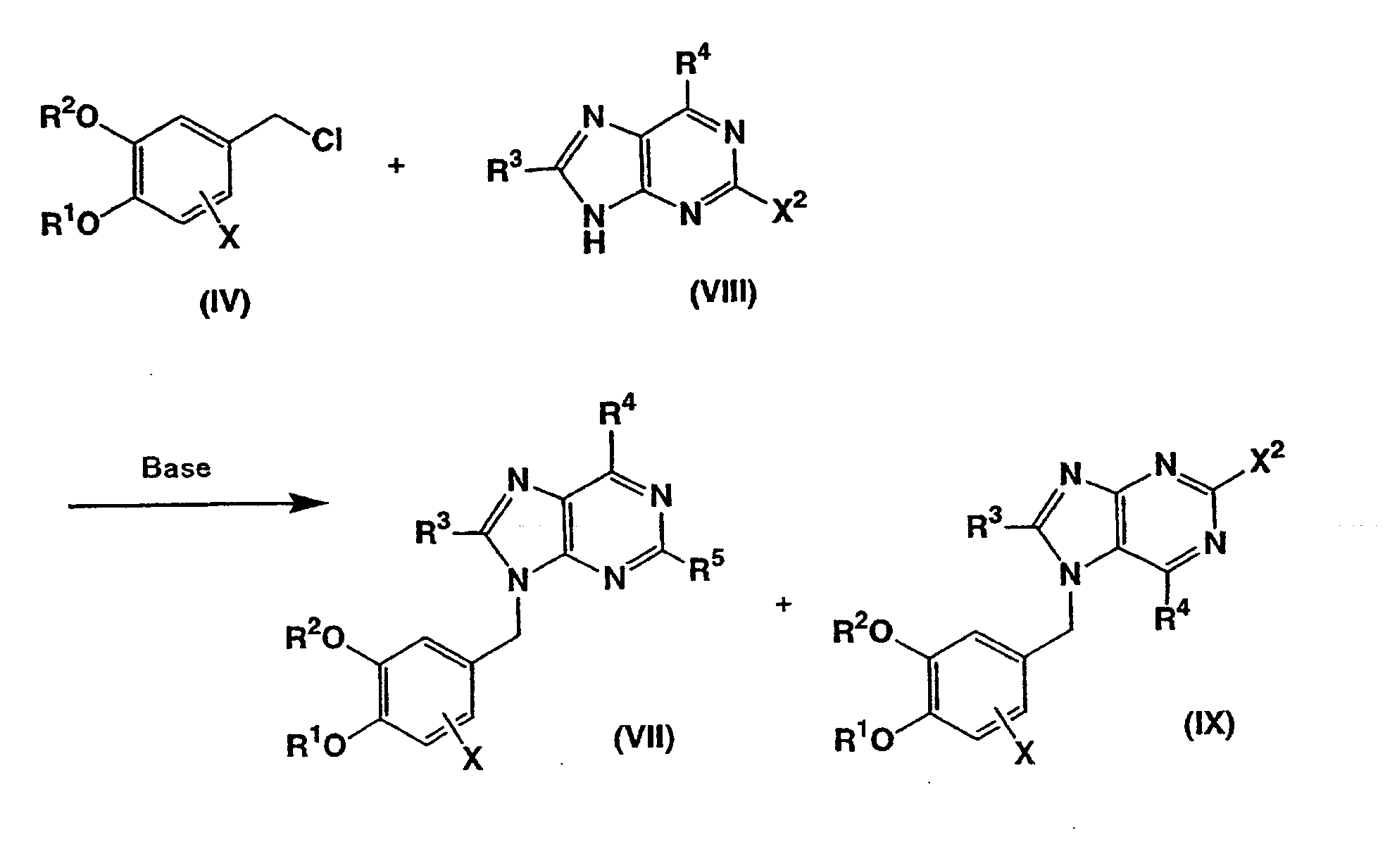
- In the scheme, R1, R2, R3, R4, R5, X, and X2 have the same meanings as those defined above.
-
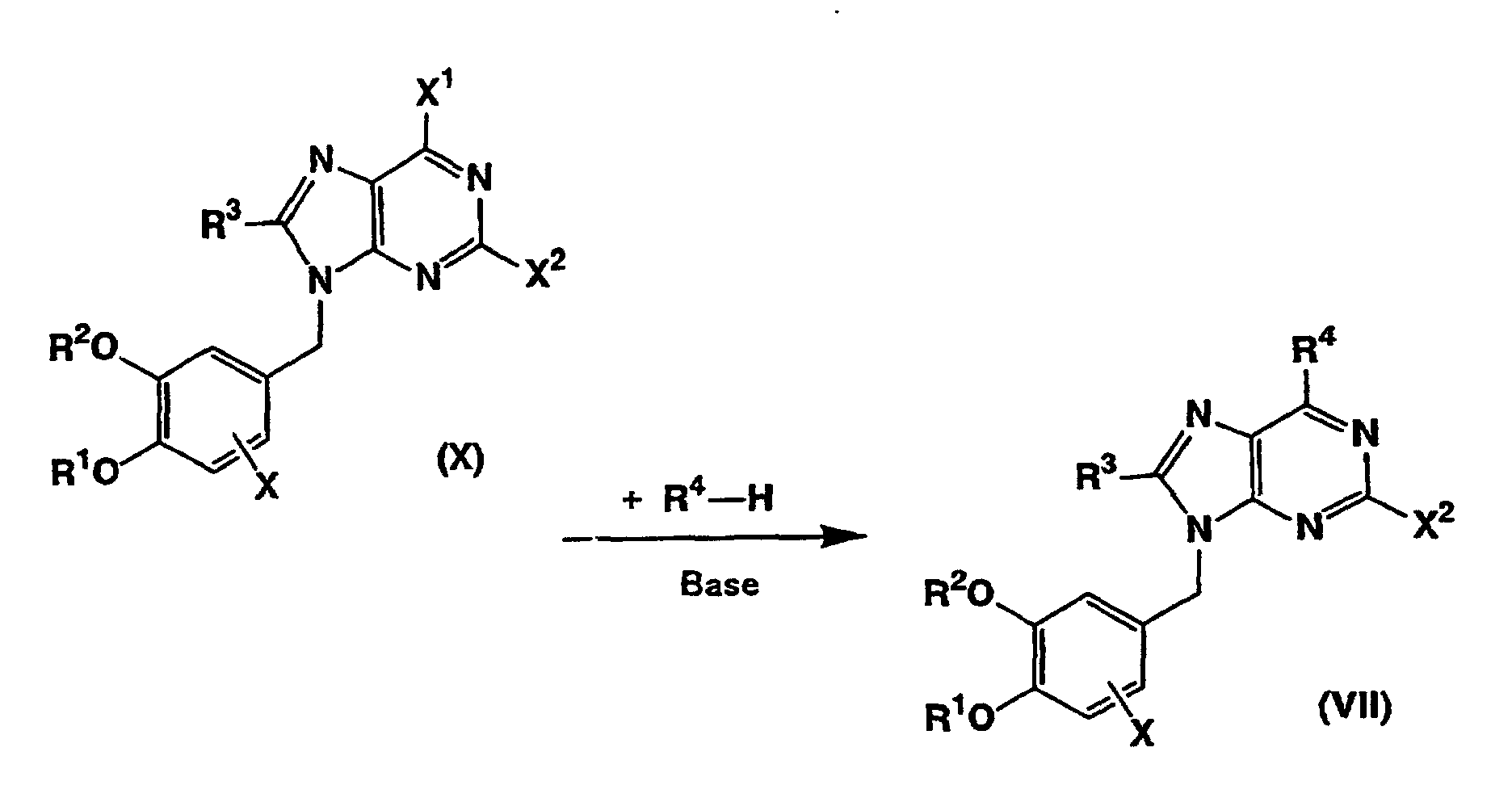
- In the scheme, R1, R2, R3, R4, R5, X, X1, and X2 have the same meanings as those defined above.
- When X2 is a halogen atom, a compound of the formula (VII) can also be prepared according to the following reaction formula.
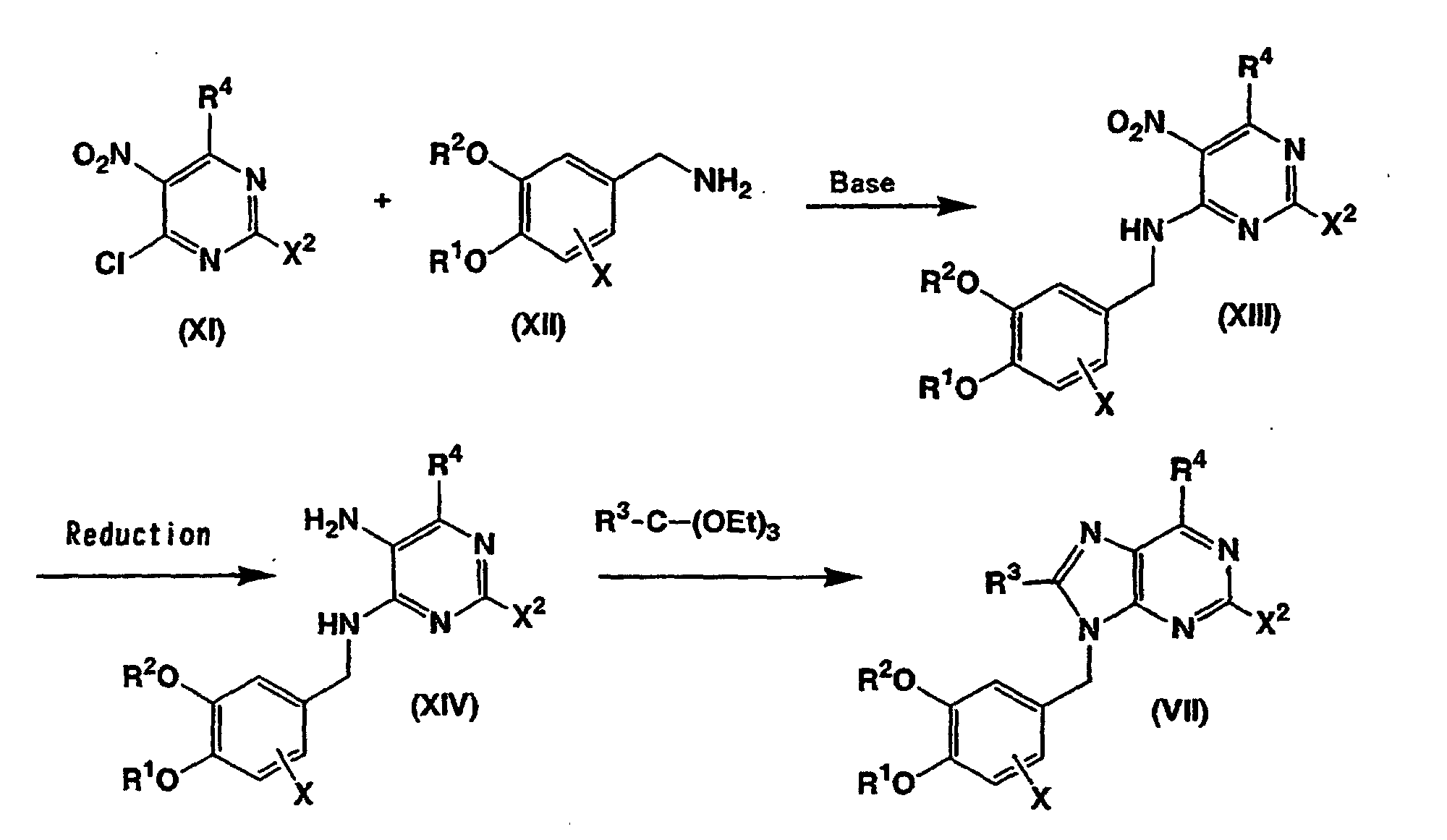
- In the scheme, R1, R2, R3, R4, R5, and X have the same meanings as those defined above, and X2 represents a halogen atom.
- In the above reaction, a compound of the formula (XI) and a compound of the formula (XII) are first condensed to prepare a compound of the formula (XIII). The compound of the formula (XI) and the compound of the formula (XII) are added to a suitable solvent such as N,N-dimethylformamide, tetrahydrofuran, methylene chloride or water, or a mixed solvent comprising a combination of these solvents, and the mixture is then added with 1 to 5 equivalents of an organic base such as triethylamine, pyridine or N,N-diethylaniline, or an inorganic base such as sodium carbonate or sodium hydride to obtain the target compound of the formula (XIII). The reaction is usually performed at -20 to 150°C under a nitrogen or argon flow.
- Then, a compound of the formula (XIV) can be obtained by reducing the compound of the formula (XIII). The reduction can be performed by dissolving the compound of the formula (XIII) in a solvent such as methanol, ethanol or tetrahydrofuran, or a mixed solvent comprising a combination of such solvents, adding 10 to 100% by weight of a catalyst such as Raney Nickel, palladium/carbon, hydroxylated palladium/carbon or platinum to the solution, and then performing the reaction at a temperature of from room temperature to 60°C under a hydrogen flow or under pressure. A compound of the formula (VII) can be obtained by allowing a compound of the formula (XIV) to react with 1 to 5 equivalents of a regent such as triethyl orthoformate or triethyl orthoacetate in the absence of a solvent or in the presence of 1 to 5 equivalents of an organic acid such as acetic acid, trifluoroacetic acid or p-toluenesulfonic acid, or an inorganic acid such as hydrochloric acid. The reaction can generally be performed at a temperature of from room temperature to 250°C. The compounds of the formula (A) and the formula (B), useful as synthetic intermediates of the compounds of the formula (I), correspond to the compounds of the formula (XIII) and formula (XIV) wherein X is hydrogen atom, respectively.
- When A is a group represented by the following formula:a compound of the following formula (XV) can be prepared by a method similar to Preparation Methods 1 and 2 using a compound of the aforementioned formula (VI) or a compound of the formula (IX).


- In the formula, R1, R2, R3, R4, R5, and X have the same meanings as those defined above.
- N-oxide compounds can be prepared by oxidizing a starting material by an ordinarily used method.
- When the compounds of present invention are used as active ingredients of the medicaments, the compounds, per se, may be administered, or they may be administered as pharmaceutical compositions which are prepared by using pharmaceutically acceptable additives for pharmaceutical preparations. The composition of the pharmaceutical compositions may be chosen depending on solubility and chemical properties of the aforementioned compounds as active ingredients, as well as administration route and schedule. For example, the composition may be orally administered in the forms of granules, powders, tablets, hard capsules, soft capsules, syrups, emulsions, suspensions, solutions and the like, or intravenously, intramuscularly or subcutaneously administered as injections. The composition may be prepared as powders for injection, and administered as injection prepared just before use.
- For the manufacture of pharmaceutical compositions suitable for oral, enteral, parenteral, or topical administration, organic or inorganic pharmaceutical additives can be used. These additives may be a solid or liquid, and examples include carriers and diluents for pharmaceutical formulations and the like. As excipients used for the manufacture of solid pharmaceutical compositions, for example, lactose, sucrose, starch, talc, cellulose, dextrin and the like can be used. For the manufacture of liquid pharmaceutical compositions for oral administration such as emulsions, syrups, suspensions and solutions, commonly used inactive diluents, for example, water, vegetable oils and the like can be used. The pharmaceutical compositions may contain, for example, wetting agents, suspension aids, sweeteners, aromatics, colorants, preservatives and the like as auxiliaries, as well as inactive diluents. A liquid preparation may be prepared and filled in capsules made of a material that can be disintegrated in body such as gelatin. As solvents or suspending agents used for the manufacture pharmaceutical compositions for parenteral administration such as injections, examples include water, propylene glycol, polyethylene glycol, benzyl alcohol, ethyl oleate, lecitin and the like. Method for preparing the pharmaceutical compositions are not particularly limited, and any methods for preparing formulations available in the art can be utilized.
- The medicaments of the present invention can be used as, for example, antiasthmatic agents for therapeutic and/or preventive treatment of asthma. Doses of the medicaments of the present invention for oral administration are generally 0.01 to 1000 mg (as a weight of an active ingredient), preferably 0.01 to 100 mg, per day for an adult. Preferably, the aforementioned doses are suitably increased or decreased depending on various conditions including the age, conditions and symptoms of a patient, and the presence or absence of a medicament simultaneously administered and the like. The aforementioned daily dose may be administered once a day or twice or three times a day as divided portions with suitable intervals, or intermittently administered every several days. When the medicaments are used as injections or drip infusions, they are preferably administered continuously or intermittently in a dose of from 0.001 to 100 mg (a weight of an active ingredient) per day for an adult.
- The present invention will be explained more specifically with reference to examples and test examples. However, the scope of present invention is not limited by the examples and test examples.
- 2,4-Dichloro-5-nitro-6-methylpyrimidine (2.0 g) was dissolved in tetrahydrofuran (14 ml) and added with a solution of 3-cyclopentyloxy-4-methoxybenzylamine (2.25 g) dissolved in tetrahydrofuran (7 ml) with stirring and cooling on a salt-ice bath (-10°C). Then, the mixture was added dropwise with triethylamine (1.4 ml), and stirred for 30 minutes on a salt-ice bath (-10°C). The reaction mixture was further added with saturated brine, and then extracted with ethyl acetate. The organic layer was dried over anhydrous sodium sulfate and concentrated under reduced pressure, and the resulting residue was suspended and washed in a mixed solvent of ether and hexane (50:50) to obtain 3.11 g of the title compound.
1H-NMR (CDCl3) δ ppm: 1.59-1.64 (m, 2H), 1.80-1.96 (m, 6H), 2.73 (s, 3H), 3.84 (s, 3H), 4.70 (d, 2H, J=5.4Hz), 4.74-4.79 (m, 1H), 6.83-6.91 (m, 3H), 8.36 (bs, 1H) - 2-Chloro-4-(3-cyclopentyloxy-4-methoxybenzyl)-5-nitro-6-methylpyrimidine (2.0 g) was dissolved in tetrahydrofuran (14 ml), and the solution was added with methanol (14 ml) and further added with Raney Nickel (1.8 g) under nitrogen atmosphere. The mixture was stirred at room temperature under hydrogen gas atmosphere for 4.5 hours. After the reaction was completed, the reaction suspension was filtered through Celite under nitrogen atmosphere while washing with methanol. The resulting organic layer was concentrated under reduced pressure, and the residue was recrystallized from ether to obtain 1.65 g of the title compound.
1H-NMR (CDCl3) δ ppm: 1.57-1.66 (m, 2H), 1.78-1.97 (m, 6H), 2.31 (s, 3H), 2.90 (bs, 2H), 3.83 (s, 3H), 4.54 (d, 2H, J=5.4Hz), 4.71-4.77 (m, 1H), 5.30 (bs, 1H), 6.79-6.93 (m, 3H) - 5-Amino-4-(3-cyclopentyloxy-4-methoxybenzyl)-2-chloro-6-methylpyrimidine (20.0 g) was added with triethyl orthoacetate (8.9 g) and acetic acid (3.3 g), and the mixture was heated for 3 hours with stirring under heating at 100°C, while ethanol generated during the reaction was removed from the reaction system. After the reaction was completed, the reaction mixture was cooled to room temperature and diluted by adding methylene chloride. The mixture was washed with saturated aqueous sodium hydrogencarbonate, and then with saturated brine. The organic layer was dried over anhydrous magnesium sulfate, and concentrated under reduced pressure. The residue was purified by silica gel column chromatography (chloroform:ethyl acetate = 80:20) to obtain 18.9 g of the title compound.
1H-NMR (CDCl3) δ ppm: 1.59-1.63 (m, 2H), 1.76-1.90 (m, 6H), 2.58 (s, 3H), 2.80 (s, 3H), 3.81 (s, 3H), 4.64-4.68 (m, 1H), 5.28 (s, 2H), 6.70 (dd, 1H, J=8.2, 2.0Hz), 6.78 (d, 1H, J=8.2Hz), 6.88 (d, 1H, J=2.0Hz) - 4-Pyridinepropanol (29.91 g) was dissolved in tetrahydrofuran (560 ml), andt the solution was added with 60% sodium hydride (8.72 g) and stirred at room temperature for 15 minutes. The mixture was added portionwise with 2-chloro-9-[(3-cyclopentyloxy-4-methoxy)benzyl]-6,8-dimethylpurine (59.10 g) and refluxed by heating for 2 hours. The reaction mixture was cooled and concentrated under reduced pressure, and then the mixture was added with water and extracted with ethyl acetate. The organic layer was washed with saturated brine, dried over anhydrous magnesium sulfate, and then concentrated under reduced pressure. The residue was purified by silica gel column chromatography (chloroform:methanol = 90:10) to obtain 68.19 g of the title compound.
1H-NMR (CDCl3) δ ppm: 1.54-1.81 (m, 8H), 2.15-2.22 (m, 2H), 2.86 (t, 2H, J=6.9Hz), 3.80 (s, 3H), 4.43 (t, 2H, J=6.9Hz), 4.62-4.64 (m, 1H), 5.23 (s, 2H), 6.67-6.79 (m, 3H), 7.16 (d, 2H, J=6.7Hz), 8.48 (d, 2H, J=6.7Hz) - 9-[(3-Cyclopentyloxy-4-methoxy)benzyl]-6,8-dimethyl-2-[3-(4-pyridyl)propoxy] purine (3 g) was dissolved in methylene chloride (30 ml), and the solution was added with MMPP (magnesium monoperoxyphthalate hexahydrate, 3.85 g) dissolved in distilled water (30 ml) with ice cooling, and then the mixture was stirred at room temperature for 3 hours. After complete consumption of the starting material was observed by TLC, the reaction mixture was poured into 5% aqueous solution of sodium sulfate with ice cooling, and the mixture was stirred at room temperature to decompose excessive MMPP. The reaction mixture was extracted with methylene chloride, washed with saturated aqueous sodium hydrogencarbonate, and further washed with saturated brine. The resulting organic layer was dried over anhydrous sodium sulfate, and concentrated under reduced pressure. The residue was purified by silica gel column chromatography (chloroform:methanol = 90:10), and the resulting compound was recrystallized from THF-heptane to obtain 2.22 g of the title compound.
1H-NMR (CDCl3) δ ppm: 1.56-1.81 (m, 8H), 2.10-2.19 (m, 2H), 2.51 (s, 3H), 2.75 (s, 3H), 2.85-2.90 (m, 2H), 3.81 (s, 3H), 4.40-4.44 (m, 2H), 4.63-4.64 (m, 1H), 5.24 (s, 2H), 6.65-6.79 (m, 3H), 7.14 (d, 2H, J=6.7Hz), 8.13 (d, 2H, J=6.7Hz) - 9-[(3-Cyclopentyloxy-4-methoxy)benzyl]-2,6-dichloropurine (8.07 g) was dissolved in tetrahydrofuran (80 ml), added dropwise with methylamine (40% solution in methanol, 8.0 g) with stirring and cooling on an ice bath, and the mixture was stirred at room temperature for 1 hour. The reaction mixture was concentrated under reduced pressure, and the residue was added with water and extracted with ethyl acetate. The organic layer was washed with saturated brine, dried over anhydrous magnesium sulfate, and then concentrated under reduced pressure to obtain 7.81 g of the title compound.
- 3-Pyridazinylmethanol (4.41 g) was dissolved in N,N-dimethylformamide (100 ml), added with 60% sodium hydride (1.60 g), and stirred at room temperature for 30 minutes. The reaction mixture was added portionwise with 2-chloro-9-[(3-cyclopentyloxy-4-methoxy)benzyl]-6-methylaminopurine (7.76 g), and then the mixture was stirred at 85°C for 2 hours with heating. The reaction mixture was cooled, and concentrated under reduced pressure. The residue was added with water, and extracted with ethyl acetate. The organic layer was washed with saturated brine, dried over anhydrous magnesium sulfate, and then concentrated under reduced pressure. The residue was purified by silica gel column chromatography to obtain 3.23 g of the title compound.
- According to the methods of Examples 1 to 7, compounds shown in Table 2 and Table 3 below were obtained (in the tables, melting points are indicated as °C).


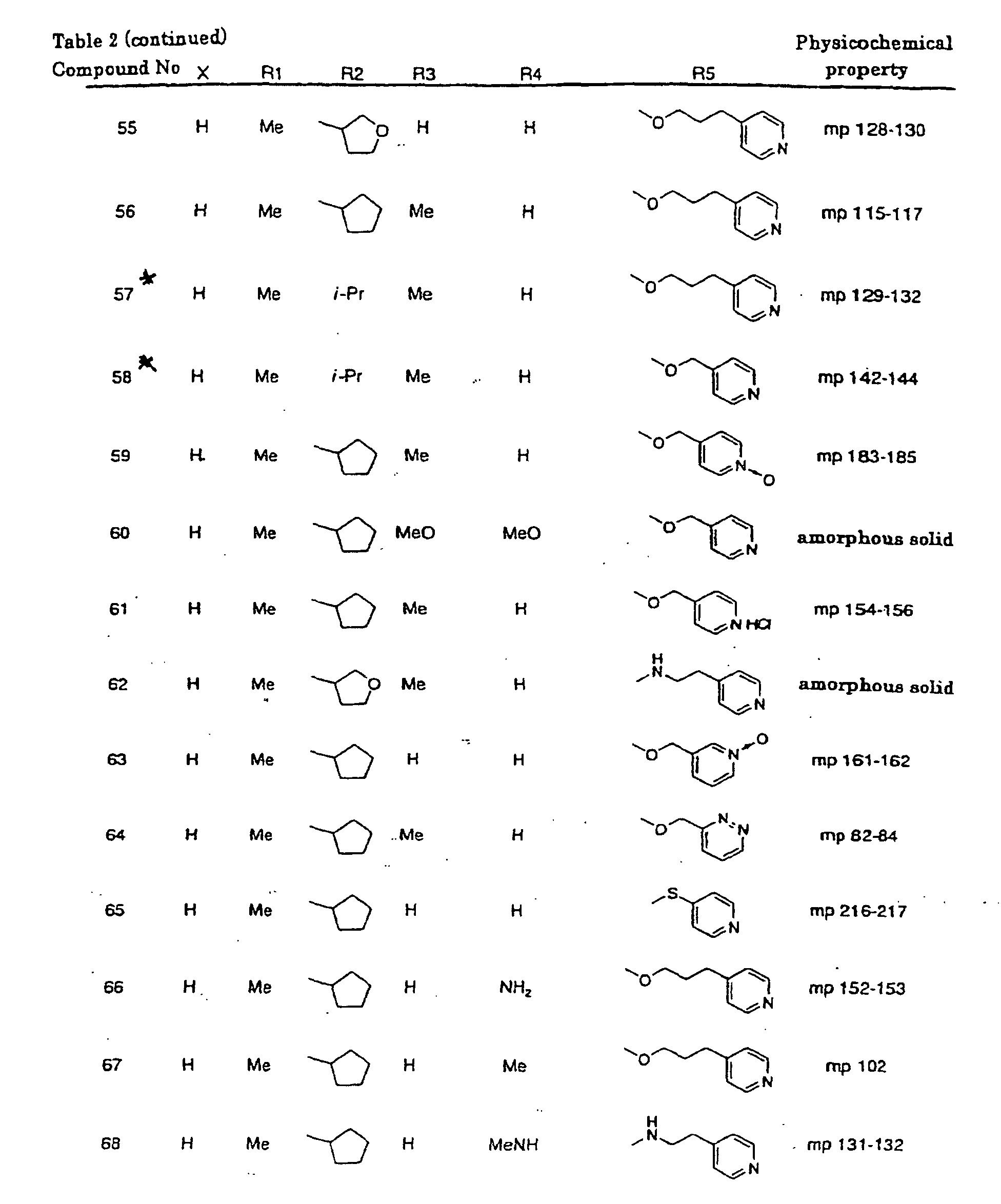

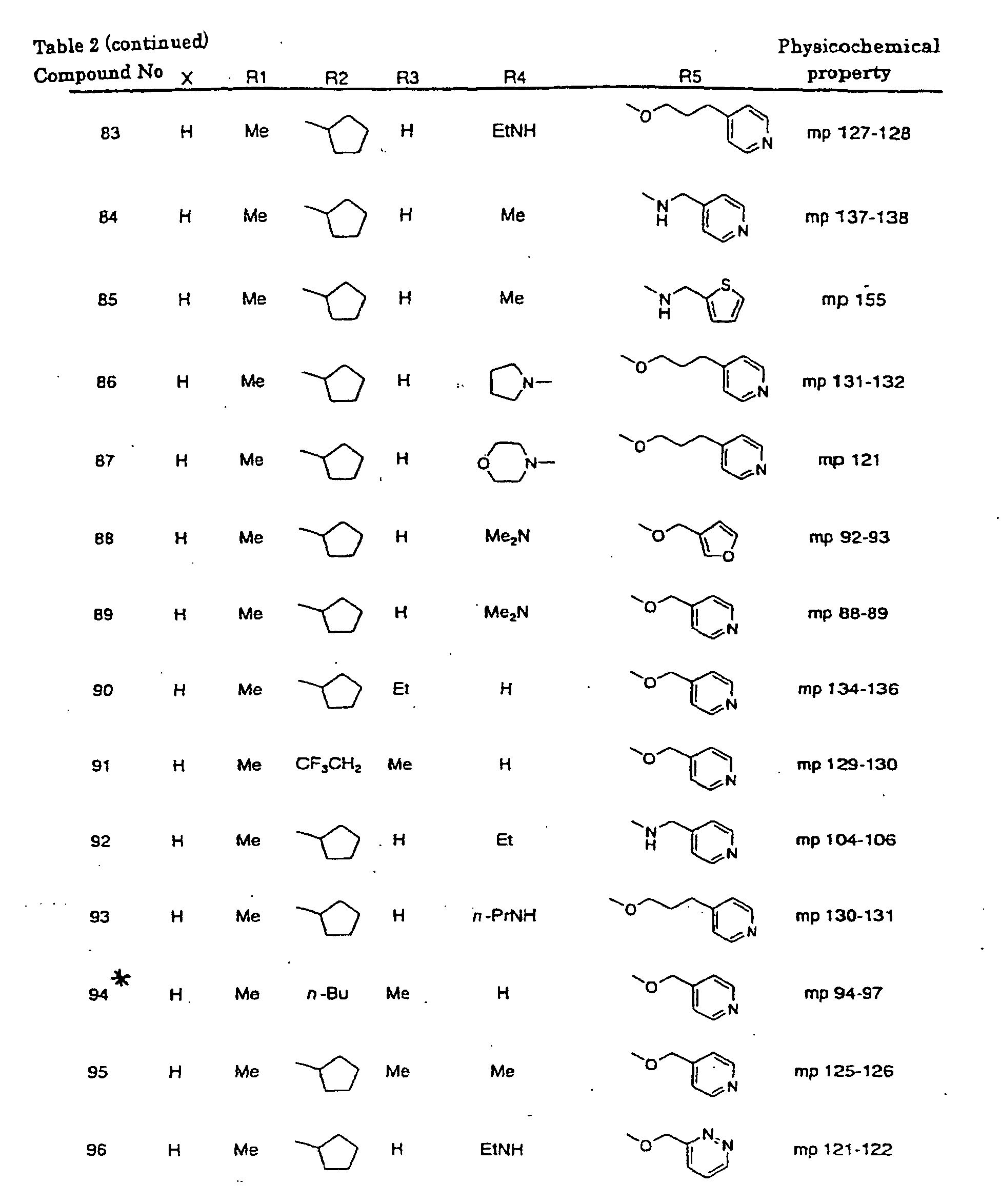


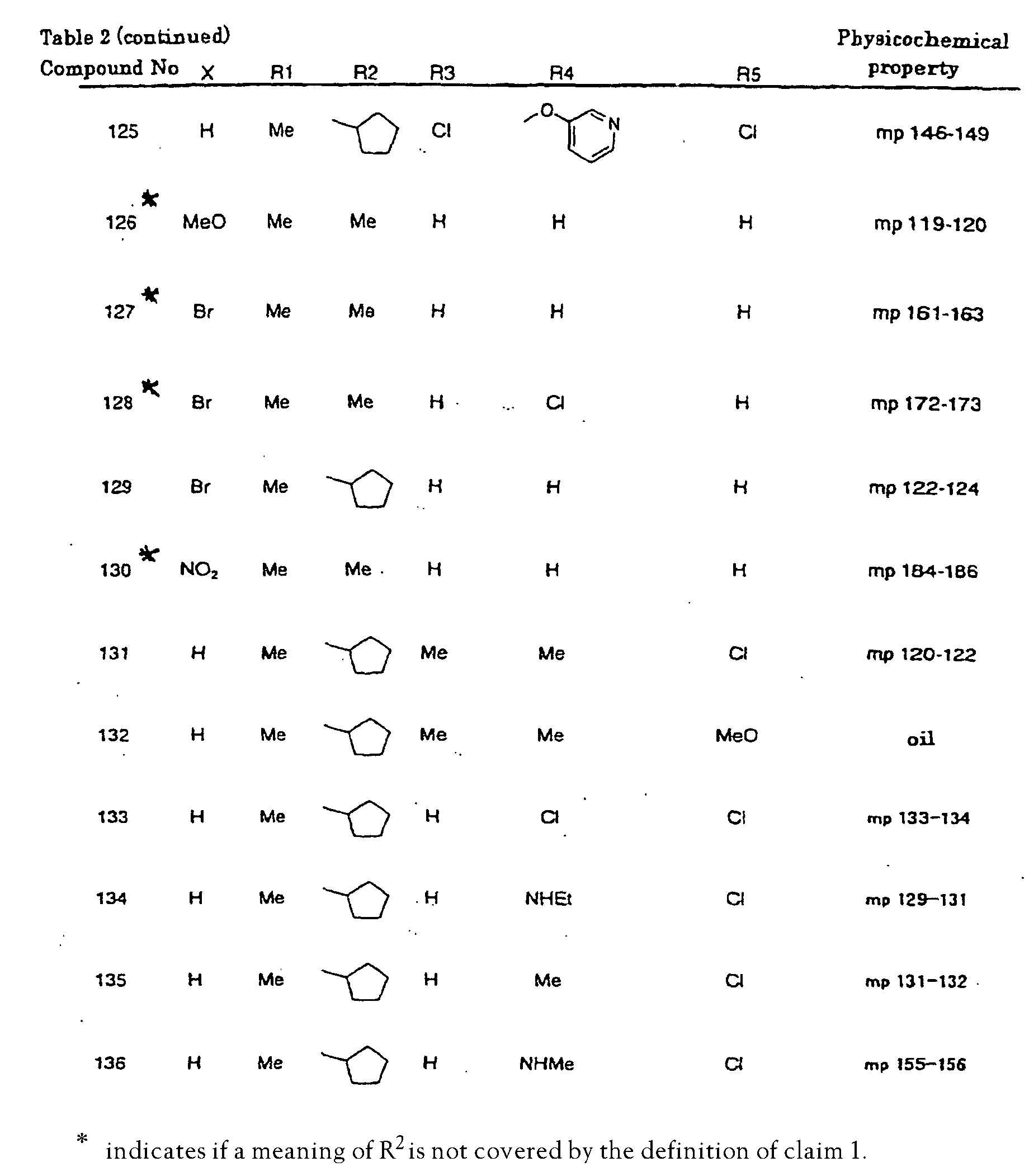

- NMR data are shown below for the following compounds (compound numbers are those shown in Tables 2 and 3),.
- No. 1
1H-NMR (CDCl3) δ ppm: 1.51-1.69 (m, 2H), 1.71-1.98 (m, 6H), 3.84 (s, 3H), 4.65-4.75 (m, 1H), 5.37 (s, 2H), 6.79-6.94 (m, 3H), 7.42 (dd, 1H), 7.64-7.72 (m, 1H), 8.02 (s, 1H), 8.53-8.58 (m, 1H), 8.54 (s, 1H), 8.65 (d, 1H) - No. 2
1H-NMR (CDCl3) δ ppm: 1.50-1.69 (m, 2H), 1.70-1.95 (m, 6H), 3.82 (s, 3H), 4.65-4.73 (m, 1H), 5.32 (s, 2H), 5.70 (s, 2H), 6.78-6.88 (m, 3H), 7.30 (dd, 1H), 7.88 (s, 1H), 7.87-7.94 (m, 1H), 8.55-8.60 (m, 1H), 8.58 (s, 1H), 8.80 (d, 1H) - No. 7
1H-NMR (CDCl3) δ ppm: 3.83 (s, 3H), 3.87 (s, 3H), 5.35 (s, 2H), 5.70 (s, 2H), 6.80-6.90 (m, 3H), 7.30 (dd, 1H), 7.89 (s, 1H), 7.87-7.94 (m, 1H), 8.55-8.60 (m, 1H), 8.59 (s, 1H), 8.80 (d, 1H) - No. 8
1H-NMR (CDCl3) δ ppm: 1.32 (d, 6H), 3.83 (s, 3H), 4.47 (m, 1H), 5.32 (s, 2H), 5.70 (s, 2H), 6.80-6.90 (m, 3H), 7.30 (dd, 1H) 7.89 (s, 1H), 7.87-7.94 (m, 1H), 8.55-8.60 (m, 1H), 8.58 (s, 1H), 8.80 (d, 1H) - No. 10
1H-NMR (CDCl3) δ ppm: 1.5-1.7 (m, 2H), 1.70-1.95 (m, 6H), 3.50 (br, 3H), 3.82 (s, 3H), 4.65-4.75 (m, 1H), 5.28 (s, 2H), 5.40 (br, 2H), 6.75-6.95 (m, 3H), 7.20-7.30 (m, 1H), 7.60-7.70 (m, 1H), 7.70 (s, 1H), 8.43 (s, 1H), 8.51 (m, 1H), 8.59 (s, 1H)
1H-NMR (CDCl3) δ ppm: 1.59 (m, 2H), 1.81-1.93 (m, 6H), 3.02 (t, 2H), 3.83 (s, 3H), 3.97 (m, 2H), 4.68-4.71 (m, 1H), 5.27 (s, 2H), 5.84 (m, 1H), 6.80-6.90 (m, 3H), 7.20 (d, 2H), 7.68 (s, 1H), 8.45 (s, 1H), 8.52 (d, 2H) - No. 15
1H-NMR (CDCl3) δ ppm: 1.50-1.70 (m, 2H), 1.70-1.95 (m, 6H), 3.83 (s, 3H), 4.65-4.73 (m, H), 5.34 (s, 2H), 5.84 (s, 2H), 6.80-6.95 (m, 3H), 7.91 (s, 1H), 8.50-8.60 (m, 3H), 8.85 (s, 1H) - No. 20
1H-NMR (CDCl3) δ ppm: 1.58-1.60 (m, 2H), 1.80-1.87 (m, 6H), 3.83 (s, 3H), 4.65-4.75 (m, 1H), 5.22 (s, 2H), 6.83-6.84 (m, 3H), 7.39 (dd, 1H), 7.60 (ddd, 1H), 7.94 (s, 1H), 8.52 (dd, 1H), 8.62 (d, 1H), 8.89 (s, 1H) - No. 28
1H-NMR (DMSO-d6) δ ppm: 1.51-1.77 (m, 8H), 3.70 (s, 3H), 4.44 (s, 2H), 4.68 (m, 1H), 6.50 (d, 1H), 6.86-6.93 (m, 4H), 7.84 (s, 1H), 8.33 (s, 2H) - No. 36
1H-NMR (CDCl3) δ ppm: 1.53-1.61 (m, 2H), 1.70-1.81 (m, 6H), 2.52 (s, 3H), 3.81 (s, 3H), 4.61-4.65 (m, 1H), 5.27 (s, 2H), 5.52 (s, 2H), 6.66-6.84 (m, 3H), 7.27-7.32 (m, 1H), 7.84-7.88 (m, 1H), 8.53-8.60 (m, 1H), 8.74-8.77 (m, 2H) - No. 37
1H-NMR (CDCl3) δ ppm: 1.53-1.59 (m, 2H), 1.75-1.90 (m, 6H), 2.46 (s, 3H), 3.81 (s, 3H), 4.59-4.63 (m, 1H), 4.68 (d, 2H, J=6.0Hz) 5.15 (m, 2H), 6.15-6.25 (m, 1H), 6.62-6.78 (m, 3H), 7.19 (dd, 1H, J=4.6, 7.8Hz), 7.70 (ddd, 1H, J=1.9, 1.9, 7.8Hz), 8.45 (dd, 1H, J=1.9, 4.6Hz), 8.53 (s, 1H), 8.63(d, 1H, J=1.9Hz) - No. 44
1H-NMR (CDCl3) δ ppm: 1.56-1.59 (m, 2H), 1.80-1.84 (m, 6H), 2.30-2.35 (m, 2H), 3.04 (t, 2H), 3.82 (s, 3H), 4.52 (t, 2H), 4.68-4.70 (m, 1H), 5.26 (s, 2H), 6.81-6.88 (m, 3H), 7.10-7.13 (m, 1H), 7.20 (d, 1H), 7.58 (m, 1H), 7.86 (s, 1H), 8.54 (dd, 1H), 8.86 (s, 1H) - No. 45
1H-NMR (CDCl3) δ ppm: 1.54-1.56 (m, 2H), 1.80-1.81 (m, 6H), 3.15 (t, 2H), 3.17 (s, 3H), 3.81 (s, 3H), 4.08 (t, 2H), 4.68 (m, 1H), 5.17 (s, 2H), 6.79-6.89 (m, 3H), 7.10-7.16 (m, 2H), 7.55 (m, 1H), 7.67 (s, 1H), 8.55 (d, 1H), 8.73 (s, 1H) - No. 46
1H-NMR (CDCl3) δ ppm: 1.48-1.65 (m, 2H), 6.93 (dd, 1H), 8.99 (s, 1H), 1.68-1.98 (m, 6H), 7.00 (d, 1H), 3.83 (s, 3H), 4.70-4.80 (m, 1H), 5.34 (s, 2H), 6.84 (d, 1H), 7.48-7.64 (m, 3H), 7.94 (s, 1H), 7.94-8.01 (m, 2H), 8.79 (brs, 1H) - No. 52
1H-NMR (CDCl3) δ ppm: 1.55-1.58 (m, 2H), 1.76-1.83 (m, 6H), 3.36 (t, 2H), 3.82 (s, 3H), 4.68-4.70 (m, 1H), 4.85 (t, 2H), 5.25 (s, 2H), 6.80-6.87 (m, 3H), 7.12-7.16 (m, 1H), 7.31 (d, 1H), 7.62 (ddd, 1H), 7.84 (s, 1H), 8.56 (d, 1H), 8.86 (s, 1H) - No. 53
1H-NMR (CDCl3) δ ppm: 1.56 (m, 2H), 1.81 (m, 6H), 2.95 (t, 2H), 3.18 (s, 3H), 3.81 (s, 3H), 3.94 (t, 2H), 4.68 (m, 1H), 5.18 (s, 2H), 6.80-6.87 (m, 3H), 7.16 (d, 2H), 7.67 (s, 1H), 8.49 (d, 2H), 8.74 (s, 1H) - No. 60
1H-NMR (CDCl3) δ ppm: 1.47-1.67 (m, 2H), 1.71-2.01 (m, 6H), 3.80 (s, 3H), 4.09 (s, 3H), 4.17 (s, 3H), 4.63-4.75 (m, 1H), 5.03 (s, 2H), 5.47 (s, 2H), 6.70 (d, 1H), 6.75 (dd, 1H), 6.93 (d, 1H), 7.38 (d, 2H), 8.59 (d, 2H) - No. 62
1H-NMR (CDCl3) δ ppm: 2.00-2.15 (m, 2H), 2.46 (s, 3H), 2.96 (t, 2H), 3.70-4.03 (m, 6H), 3.82 (s, 3H), 4.78-4.85 (m, 1H), 5.19 (s, 2H), 5.20 (brs, 1H), 6.70-6.85 (m, 3H), 7.17 (d, 2H), 8.51 (d, 2H), 8.57 (s, 1H) - No. 74
1H-NMR (CDCl3) δ ppm: 1.56-1.58 (m, 2H), 1.76-1.84 (m, 6H), 2.17-2.22 (m, 2H), 2.85 (t, 2H), 3.82 (s, 3H), 4.16 (s, 3H), 4.45 (t, 2H), 4.67-4.68 (m, 1H), 5.20 (s, 2H), 6.81-6.82 (m, 3H), 7.16 (d, 2H), 7.68 (s, 1H), 8.50 (d, 2H) - No. 75
1H-NMR (CDCl3) δ ppm: 1.56 (m, 2H), 1.81 (m, 6H), 2.96 (t, 2H), 3.74 (q, 2H), 3.81 (s, 3H), 4.07 (s, 3H), 4.66-4.68 (m, 1H) 5.07 (t, 1H), 5.15 (s, 2H), 6.81 (m, 3H), 7.16 (d, 2H), 7.54 (s, 1H), 8.52 (d, 2H) - No. 76
1H-NMR (CDCl3) δ ppm: 1.59 (m, 2H), 1.80-1.83 (m, 6H), 2.79 (s, 3H), 3.83 (s, 3H), 4.70 (m, 1H), 5.22 (s, 2H), 5.88 (s, 2H), 6.82 (m, 3H), 7.48 (dd, 1H), 7.79 (d, 2H), 7.83 (s, 1H), 9.15 (d, 1H) - No. 99
1H-NMR (CDCl3) δ ppm: 1.50-1.85 (m, 8H), 2.46-2.52 (m, 3H), 2.63-2.75 (m, 3H), 2.88-2.97 (m, 2H), 3.54-3.58 (m, 2H), 3.81 (s, 3H), 4.54-4.58 (m, 1H), 4.63 (brs, 1H), 5.16-5.24 (m, 2H), 6.67-6.79 (m, 3H), 7.14-7.18 (m, 2H), 8.49-8.52 (m, 2H) - No. 101
1H-NMR (CDCl3) δ ppm: 1.50-1.60 (m, 2H), 1.75-1.90 (m, 6H), 2.54 (s, 3H), 2.76 (s, 3H), 3.81 (s, 3H), 4.60-4.70 (m, 1H), 5.23 (s, 2H), 5.86 (s, 2H), 6.64-6.78 (m, 3H), 7.48 (dd, 1H, J=4.9, 8.5 Hz), 7.79 (dd, 1H, J=1.5, 8.5Hz), 9.14 (dd, 1H, J=1.5, 4.9 Hz) - No. 103
1H-NMR (CDCl3) δ ppm: 1.50-1.64 (m, 2H), 5.81 (s, 2H), 1.70-1.94 (m, 6H), 6.70-6.90 (m, 3H), 3.40 (brs, 6H), 3.82 (s, 3H), 4.64-4.72 (m, 1H), 5.15 (s, 2H), 7.44 (dd, 1H), 7.53 (s, 1H), 7.72 (dd, 1H), 9.11 (dd, 1H) - No. 109
1H-NMR (CDCl3) δ ppm: 1.50-1.60 (m, 2H), 1.70-1.90 (m, 6H), 2.52 (s, 3H), 2.76 (s, 3H), 3.81 (s, 3H), 4.60-4.70 (m, 1H), 5.22 (s, 2H), 5.66 (s, 2H), 6.63-6.83 (m, 3H), 8.52-8.55 (m, 2H), 8.86 (s, 1H) - No. 115
1H-NMR (CDCl3) δ ppm: 1.50-1.60 (m, 2H), 1.60-1.90 (m, 6H), 2.59 (s, 3H), 2.82 (s, 3H), 3.81 (s, 3H), 4.60-4.65 (m, 2H), 4.69 (s, 1H), 5.31 (s, 2H), 6.72-6.82 (m, 3H), 7.94 (d, 1H, J=1.2Hz), 8.65 (d, 1H, J=1.2Hz) - No. 120
1H-NMR (CDCl3) δ ppm: 1.56-1.81 (m, 8H), 2.10-2.19 (m, 2H), 2.51 (s, 3H), 2.75 (s, 3H), 2.85-2.90 (m, 2H), 3.81 (s, 3H), 4.40-4.44 (m, 2H), 4.63-4.64 (m, 1H), 5.24 (s, 2H), 6.65-6.79 (m, 3H), 7.14 (d, 2H, J=6.7Hz), 8.13 (d, 2H, J=6.7Hz) - No. 132
1H-NMR (CDCl3) δ ppm: 1.50-1.90 (m, 8H), 2.52 (s, 3H), 2.74 (s, 3H), 3.81 (s, 3H), 4.05 (s, 3H), 4.62-4.64 (m, 1H), 5.25 (s, 3H), 6.70-6.79 (m, 3H) - No. 148
1H-NMR (CDCl3) δ ppm: 3.80 (s, 3H), 3.90 (s, 3H), 5.46 (s, 2H), 6.72 (s, 1H), 7.10 (s, 1H), 8.29 (s, 1H), 8.85 (s, 1H), 9.15 (s, 1H) -
- Well pulverized 9-[(3-cyclopentyloxy-4-methoxy)benzyl]-6,8-dimethyl-2-[3-(4-pyridyl)propyloxy]purine (Compound No. 100 in Table 2, 1000 g), lactose (5900 g), crystalline cellulose (2000 g), low substituted hydroxypropylcellulose (1000 g) and magnesium stearate (100 g) were well mixed, and made into plain tablets containing 10 mg of the compound per one tablet of 100 mg by the direct compression method. These plain tablet were subjected to sugar coatings or film coatings to prepare sugar-coated tablets and film-coated tablets.
- Well-pulverized 9-[(3-cyclopentyloxy-4-methoxy)benzyl]-6-methylamino-2-[(3-pyridazinyl)methyloxy]purine (Compound No. 79 in Table 2, 1000 g), corn starch (3000 g), lactose (6900 g), crystalline cellulose (1000 g) and magnesium stearate (100 g) were mixed to prepare capsules containing 10 mg of the compound per each 120 mg capsule.
- Well-pulverized 9-[(3-cyclopentyloxy-4-methoxy)benzyl]-6-ethylamino-2-[(3-pyridazinyl)methyloxy]purine (Compound No. 96 in Table 2, 5 g), medium chain saturated fatty acid triglyceride (10 g) and sorbitan monooleate (0.2 g) were well mixed, and 15.2 mg of the mixture was weighed and placed in a 5-ml aluminum container for aerosol. 84.8 mg of Freon 12/114 (1:1 mixture) was charged at a low temperature into the container, and the container was equipped with a constant volume adapter of 10.0 µl per one spraying to obtain an inhalant for constant volume spraying containing 5 mg of the compound per one container of 5 ml.
- PDE IV inhibitory activity of the compounds of the present invention was examined. Rolipram used as control is a compound disclosed in Japanese Patent Unexamined Publication (Kokai) No. 50-157360/1975, of which structure is shown in the section of related art of the present specification. Adv. Second Messenger Phosphoprotein Res., 22, 1, (1988) and other articles disclose that this compound has specific inhibitory activity against PDE IV.
- The crude enzyme was purified from a cytoplasmic fraction of human monocyte-like cell strain U937 by using a Q-Sepharose column according to the method of Nicholson et al. [Br. J. Pharmacol., 97, 889 (1989)]. The enzymatic activity was determined by performing a reaction using 0.4 mM 3H-cAMP as the substrate in 50 mM Tris buffer (pH 8.0) containing 0.1 mg/ml BSA, 1 ml of EDTA and 5 mM MgCl2 at 30°C for 15 minutes, and then separating the produced 3H-5'-AMP using a cation exchange column and measuring its radioactivity according to the method of Hidaka et al. [Biochem. Med., 10, 301 (1974)]. After a test compound was added, the reaction mixture was incubated at 30°C for 15 minutes, and then added with the substrate. Inhibitory ratio at each concentration was obtained based on the reaction performed with no addition of a test compound which was taken as 100%, and a concentration for 50% inhibition (IC50) was calculated by the plot analysis.
The results are shown in Table 4.Compound No. PDE IV Inhibitory Activity: IC50 (M) 2 8.9 × 10⁻⁹ 32 1.2 × 10⁻⁹ 36 2.6 × 10⁻⁹ 37 1.0 × 10⁻⁹ 39 1.4 × 10⁻⁹ 41 4.7 × 10⁻¹⁰ 55 4.5 × 10⁻⁹ 56 1.3 × 10⁻⁹ 57 4.6 × 10⁻⁹ 66 1.4 × 10⁻⁹ 72 7.5 × 10⁻¹⁰ 77 8.3 × 10⁻¹⁰ 78 1.3 × 10⁻⁹ 79 4.7 × 10⁻⁹ 81 3.5 × 10⁻¹⁰ 82 8.2 × 10⁻¹⁰ 83 6.9 × 10⁻¹⁰ 84 1.9 × 10⁻⁹ 85 1.3 × 10⁻¹⁰ 88 2.0 × 10⁻¹⁰ 93 4.4 × 10⁻¹⁰ 95 1.7 × 10⁻⁹ 96 3.8 × 10⁻⁹ 98 1.0 × 10⁻⁹ 100 5.5 × 10⁻¹⁰ 101 6.1 × 10⁻⁹ 102 1.5 × 10⁻⁸ 104 1.1 × 10⁻⁹ 112 2.2 × 10⁻¹⁰ 113 2.4 × 10⁻⁸ 119 6.4 × 10⁻¹⁰ 120 2.0 × 10⁻⁹ 122 1.5 × 10⁻⁸ 131 6.7 × 10⁻⁹ 134 4.1 × 10⁻⁸ 136 7.4 × 10⁻⁸ 137 6.4 × 10⁻⁸ 139 5.4 × 10⁻⁸ Rolipram 3.0 × 10⁻⁷ - The compounds of the present invention represented by the formula (I) have excellent PDE IV inhibitory activity, and are useful as active ingredients of medicaments for therapeutic and/or preventive treatment of asthma and the like. The compounds represented by the formulas (A) and (B) are useful as synthetic intermediates for preparation of the compounds represented by the aforementioned formula (I).
Claims (12)
- A purine derivative represented by the following formula (I), a salt thereof, or an N-oxide thereof, or a hydrate thereof or a solvate thereof:wherein R1 represents a C1-C4 alkyl group or difluoromethyl group; R2 represents tetrahydrofuranyl group, a C1-C7 haloalkyl group, a C2-C7 alkenyl group, bicyclo[2,2,1]hept-2-yl group, or a C3-C8 cycloalkyl group; X represents hydrogen atom, a halogen atom, or nitro group; and A represents a group represented by the following formula:
 wherein R3 represents hydrogen atom, a halogen atom, hydroxyl group, a C1-C4 alkyl group, a C1-C4 alkoxyl group, amino group, a C1-C4 alkylamino group, or a C2-C8 dialkylamino group; R4 and R5 each independently represent hydrogen atom, a halogen atom, a C1-C4 alkyl group, a C1-C4 alkoxyl group, amino group, a C1-C4 alkylamino group, pyrrolidinyl group, morpholino group, a C2-C8 dialkylamino group, or a group represented by -Y-(CH2)n-B {Y represents -O-, -S-, -NHCO-, or -N(R6)- (R6 represents hydrogen atom or a C1-C4 alkyl group), n represents an integer of from 0 to 4, and B represents a phenyl group, a naphthyl group, or a heterocyclic residue, each of which may be substituted},
provided that either R4 or R5 represents -Y-(CH2)n-B {Y represents -O-, -S-, -NHCO-, or -N(R6)- (R6 represents hydrogen atom or a C1-C4 alkyl group)} when X represents hydrogen atom, and(i) n represents an integer of from 0 to 4, and B represents a phenyl group, a naphthyl group, or a heterocyclic residue, each of which may be substituted when Y represents -O-, -S-, or -NHCO-, or(ii) n represents an integer of from 1 to 4, and B represents a heterocyclic residue when Y represents -N(R6)-. - The purine derivative, a salt thereof, or an N-oxide thereof, or a hydrate thereof or a solvate thereof according to claim 1, wherein A is a group represented by the following formula:wherein R3 is hydrogen atom, a halogen atom, hydroxyl group, a C1-C4 alkyl group, a C1-C4 alkoxyl group, amino group, a C1-C4 alkylamino group, or a C2-C8 dialkylamino group; one of R4 and R5 is hydrogen atom, a halogen atom, a C1-C4 alkyl group, a C1-C4 alkoxyl group, amino group, a C1-C4 alkylamino group, pyrrolidinyl group, morpholino group, or a C2-C8 dialkylamino group, and the other is - Y-(CH2)n-B (Y is -O-, -S-, -NHCO-, or -N(R6)- (R6 represents hydrogen atom or a C1-C4 alkyl group), n is an integer of from 0 to 4, and B represents a phenyl group, a naphthyl group or a heterocyclic residue, each of which may be substituted.

- The purine derivative, a salt thereof, or an N-oxide thereof, or a hydrate thereof or a solvate thereof according to claim 1, wherein R1 is a C1-C4 alkyl group; R2 is tetrahydrofuranyl group, a C1-C6 alkyl group, a C1-C3 haloalkyl group, or a C3-C8 cycloalkyl group, and A is a group represented by the following formula:wherein R3 is hydrogen atom, a halogen atom, hydroxyl group, a C1-C4 alkyl group or a C1-C4 alkoxyl group; R4 is hydrogen atom, a halogen atom, a C1-C4 alkyl group, a C1-C4 alkoxyl group, a C1-C4 alkylamino group, or a C2-C8 dialkylamino group, R5 is -Y-(CH2)n-B (Y is -O-, -S-, or -NHCO-, n is an integer of from 1 to 4, and B represents a heterocyclic residue which may be substituted).
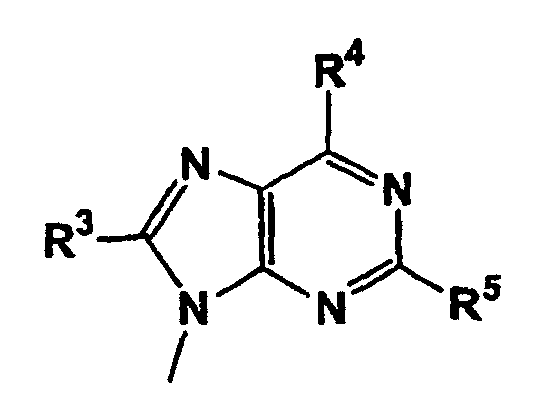
- The purine derivative, a salt thereof, or an N-oxide thereof, or a hydrate thereof or a solvate thereof according to claim 1, wherein R1 is a C1-C3 alkyl group; R2 is a C3-C8 cycloalkyl group, and A is a group represented by the following formula:wherein R3 is hydrogen atom, a C1-C3 alkyl group or a C1-C3 alkoxyl group; R4 is a C1-C3 alkyl group, a C1-C3 alkoxyl group or a C1-C3 alkylamino group; R5 is -Y-(CH2)n-B (Y is -O-, n is an integer of from 1 to 4, and B is a heterocyclic residue which may be substituted).

- A purine derivative according to claim 1 selected from the group consisting of the following compounds, a salt thereof, or an N-oxide thereof, or a hydrate thereof or a solvate thereof:2-Chloro-9-[(3-cyclopentyloxy-4-methoxy)benzyl]-6,8-dimethylpurine;9-[(3-Cyclopentyloxy-4-methoxy)benzyl]-6,8-dimethyl-2-methoxypurine;9-[(3-Cyclopentyloxy-4-methoxy)benzyl]-6,8-dimethyl-2-(3-pyridazinylmethyloxy)purine;9-[(3-Cyclopentyloxy-4-methoxy)benzyl]-6,8-dimethyl-2-[4-pyridylmethyloxy]purine;4-[[9-[(3-Cyclopentyloxy-4-methoxy)benzyl]-6,8-dimethylpurin]-2-yl-oxymethyl]pyridine N-oxide;9-[(3-Cyclopentyloxy-4-methoxy)benzyl]-6,8-dimethyl-2-[2-(4-pyridyl)ethyloxy]purine;4-[[9-[(3-Cyclopentyloxy-4-methoxy)benzyl]-6,8-dimethylpurin]-2-yl-2-oxyethyl]pyridine N-oxide;9-[(3-Cyclopentyloxy-4-methoxy)benzyl]-6-methylamino-2-(3-pyridazinylmethyloxy)purine;9-[(3-Cyclopentyloxy-4-methoxy)benzyl]-6,8-dimethyl-2-[2-(4-pyridyl)ethylamino]purine;9-[(3-Cyclopentyloxy-4-methoxy)benzyl]-6,8-dimethyl-2-[(4-pyridyl)methylamino]purine;9-[(3-Cyclopentyloxy-4-methoxy)benzyl]-6,8-dimethyl-2-[3-(4-pyridyl)propyloxy]purine; and4-[[9-[(3-Cyclopentyloxy-4-methoxy)benzyl]-6,8-dimethylpurin]-2-yl-3-oxypropyl]pyridine N-oxide.
- A purine derivative according to claim 5 which is 4-[[9-[(3-Cyclopentyloxy-4-methoxy)benzyl]-6,8-dimethylpurin]-2-yl-3-oxypropyl]pyridine N-oxide or a salt thereof, or a hydrate thereof or a solvate thereof.
- A medicament which comprises a substance selected from the group consisting of the purine derivative, a salt thereof, and an N-oxide compound thereof, and a hydrate thereof and a solvate thereof according to any one of claims 1 to 6 as an active ingredient.
- The use of the purine derivative, a salt thereof, or an N-oxide compound thereof, or a hydrate thereof or a solvate thereof according to any one of claims 1 to 6 for the preparation of an antiasthmatic agent.
- A compound represented by the following formula (A):wherein R1 represents a C1-C4 alkyl group or difluoromethyl group; R2 represents tetrahydrofuranyl group, a C1-C7 haloalkyl group, a C2-C7 alkenyl group, bicyclo[2,2,1]hept-2-yl group, or a C3-C8 cycloalkyl group; R4 represents hydrogen atom, a halogen atom, a C1-C4 alkyl group, a C1-C4 alkoxyl group, amino group, a C1-C4 alkylamino group, pyrrolidinyl group, morpholino group, a C2-C8 dialkylamino group, or -Y-(CH2)n-B {Y represents -O-, -S-, -NHCO-, or -N(R6)- (R6 represents hydrogen atom or a C1-C4 alkyl group), n represents an integer of from 0 to 4, B represents a phenyl group, a naphthyl group, or a heterocyclic residue, each of which may be substituted, and X2 represents a halogen atom.
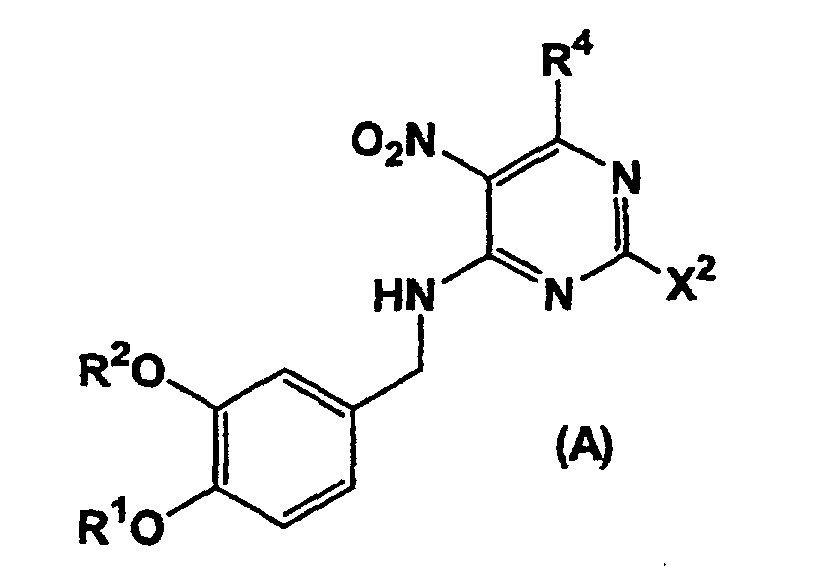
- The compound according to claim 9, wherein R1 is a C1-C4 alkyl group, R2 is tetrahydrofuranyl group, a C1-C3 haloalkyl group, or a C3-C8 cycloalkyl group, R4 is hydrogen atom, a halogen atom, a C1-C4 alkyl group, a C1-C4 alkoxyl group, a C1-C4 alkylamino group, or a C2-C8 dialkylamino group.
- A compound represented by the following formula (B):wherein R1 represents a C1-C4 alkyl group or difluoromethyl group; R2 represents tetrahydrofuranyl group, a C1-C7 haloalkyl group, a C2-C7 alkenyl group, bicyclo[2,2,1]hept-2-yl group, or a C3-C8 cycloalkyl group; R4 represents hydrogen atom, a halogen atom, a C1-C4 alkyl group, a C1-C4 alkoxyl group, amino group, a C1-C4 alkylamino group, pyrrolidinyl group, morpholino group, a C2-C8 dialkylamino group, or -Y-(CH2)n-B {Y represents -O-, -S-, -NHCO-, or -N(R6)- (R6 represents hydrogen atom or a C1-C4 alkyl group), n represents an integer of from 0 to 4, B represents a phenyl group, a naphthyl group, or a heterocyclic residue, each of which may be substituted, and X2 represents a halogen atom.
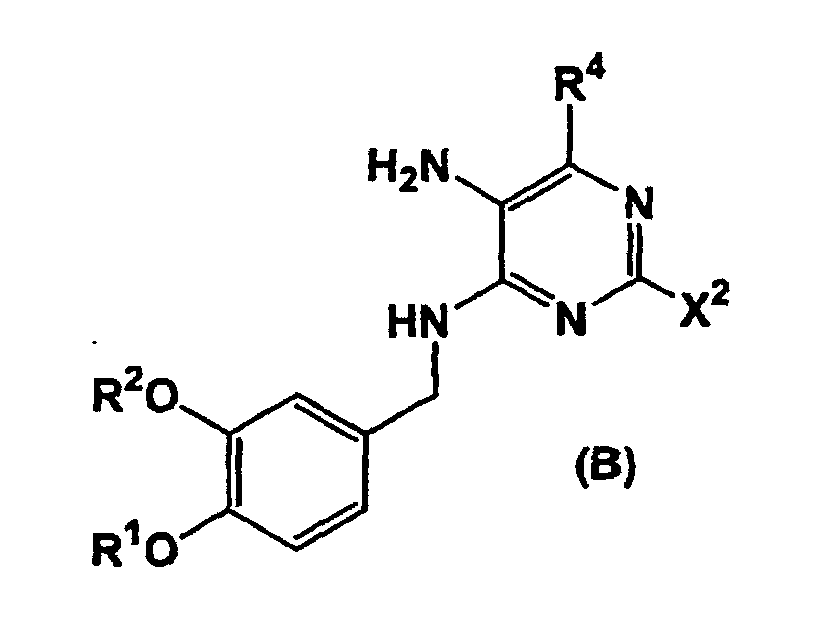
- The compound according to claim 11, wherein R1 is a C1-C4 alkyl group, R2 is tetrahydrofuranyl group, a C1-C3 haloalkyl group, or a C3-C8 cycloalkyl group, R4 is hydrogen atom, a halogen atom, a C1-C4 alkyl group, a C1-C4 alkoxyl group, a C1-C4 alkylamino group, or a C2-C8 dialkylamino group.
Applications Claiming Priority (3)
| Application Number | Priority Date | Filing Date | Title |
|---|---|---|---|
| JP31036597 | 1997-11-12 | ||
| JP31036597 | 1997-11-12 | ||
| PCT/JP1998/005092 WO1999024432A1 (en) | 1997-11-12 | 1998-11-12 | Purine derivatives and medicine containing the same as the active ingredient |
Publications (3)
| Publication Number | Publication Date |
|---|---|
| EP1043324A1 EP1043324A1 (en) | 2000-10-11 |
| EP1043324A4 EP1043324A4 (en) | 2001-08-29 |
| EP1043324B1 true EP1043324B1 (en) | 2004-06-16 |
Family
ID=18004375
Family Applications (1)
| Application Number | Title | Priority Date | Filing Date |
|---|---|---|---|
| EP98953025A Expired - Lifetime EP1043324B1 (en) | 1997-11-12 | 1998-11-12 | Purine derivatives and medicine containing the same as the active ingredient |
Country Status (8)
| Country | Link |
|---|---|
| US (1) | US6734187B1 (en) |
| EP (1) | EP1043324B1 (en) |
| KR (1) | KR100540046B1 (en) |
| CN (1) | CN1130363C (en) |
| CA (1) | CA2309350C (en) |
| DE (1) | DE69824632T2 (en) |
| ES (1) | ES2222614T3 (en) |
| WO (1) | WO1999024432A1 (en) |
Families Citing this family (84)
| Publication number | Priority date | Publication date | Assignee | Title |
|---|---|---|---|---|
| CZ27399A3 (en) * | 1999-01-26 | 2000-08-16 | Ústav Experimentální Botaniky Av Čr | Substituted nitrogen heterocyclic derivatives process of their preparation, the derivatives employed as medicaments, pharmaceutical composition and a compound pharmaceutical preparation in which these derivatives are comprised as well as use of these derivatives for preparing medicaments |
| CN1160355C (en) * | 1999-05-11 | 2004-08-04 | 三菱化学株式会社 | Purine derivative dihydrate, drug containing the compound as active ingredient, and intermediate for production thereof |
| EP1383767A1 (en) | 2001-02-08 | 2004-01-28 | Memory Pharmaceutical Corporation | Trifluoromethylpurines as phosphodiesterase 4 inhibitors |
| PE20030008A1 (en) | 2001-06-19 | 2003-01-22 | Bristol Myers Squibb Co | DUAL INHIBITORS OF PDE 7 AND PDE 4 |
| EP1440072A4 (en) | 2001-10-30 | 2005-02-02 | Conforma Therapeutic Corp | Purine analogs having hsp90-inhibiting activity |
| US7332486B2 (en) | 2002-08-08 | 2008-02-19 | Memory Pharmaceuticals Corp. | Phosphodiesterase 4 inhibitors |
| JP2005538133A (en) | 2002-08-08 | 2005-12-15 | メモリー・ファーマシューティカルズ・コーポレイション | Phosphodiesterase 4 inhibitor |
| US20040063938A1 (en) * | 2002-09-30 | 2004-04-01 | Pfizer Inc | Process for preparing haloalkyl pyrimidines |
| NZ546611A (en) | 2003-09-18 | 2010-02-26 | Conforma Therapeutics Corp | Novel heterocyclic compounds as HSP90-inhibitors |
| EP1689403A4 (en) * | 2003-11-10 | 2007-09-05 | Synta Pharmaceuticals Corp | Heteroaryl-hydrazone compounds |
| EP1724271A4 (en) * | 2004-02-26 | 2013-01-23 | Kyowa Hakko Kirin Co Ltd | Preventive and/or therapeutic agent for neutrophilic inflammation disease |
| US20070197559A1 (en) * | 2004-03-02 | 2007-08-23 | Rajagopal Bakthavatchalam | Aryl substituted purine analogues |
| EP1831225A2 (en) * | 2004-11-19 | 2007-09-12 | The Regents of the University of California | Anti-inflammatory pyrazolopyrimidines |
| BRPI0609509A2 (en) | 2005-03-30 | 2010-04-13 | Conforma Therapeutics Corp | pharmaceutically acceptable compound or a polymorph, solvate, tautomer, enantiomer, prodrug or salt thereof, pharmaceutical composition, and, use of the pharmaceutically acceptable compound, polymorph, solvate, tautomer, enantiomer, prodrug or salt |
| JP2009504803A (en) * | 2005-08-22 | 2009-02-05 | ザ リージェンツ オブ ザ ユニバーシティ オブ カリフォルニア | TLR agonist |
| WO2007035873A1 (en) * | 2005-09-21 | 2007-03-29 | Pharmacopeia, Inc. | Purinone derivatives for treating neurodegenerative diseases |
| US7989459B2 (en) | 2006-02-17 | 2011-08-02 | Pharmacopeia, Llc | Purinones and 1H-imidazopyridinones as PKC-theta inhibitors |
| EA200870409A1 (en) * | 2006-04-04 | 2009-04-28 | Дзе Риджентс Оф Дзе Юниверсити Оф Калифорния | ANTAGONISTS OF KINASE PI3 |
| EP2029597A4 (en) * | 2006-05-31 | 2011-11-23 | Univ California | ANALOGUES OF THE PURINE |
| US7902187B2 (en) | 2006-10-04 | 2011-03-08 | Wyeth Llc | 6-substituted 2-(benzimidazolyl)purine and purinone derivatives for immunosuppression |
| CL2007002866A1 (en) | 2006-10-04 | 2008-07-04 | Pharmacopeia Inc | COMPOUNDS DERIVED FROM 6-SUBSTITUTES-2- (BENCIMIDAZOLIL) PURINA AND PURINONA; PHARMACEUTICAL COMPOSITION THAT INCLUDES SUCH COMPOUND; AND USE OF THE COMPOUND IN THE TREATMENT OF AUTOIMMUNE DISEASES, INFLAMMATORY DISEASE, DISEASE MEDIATED BY M |
| CL2007002867A1 (en) | 2006-10-04 | 2008-06-27 | Pharmacopeia Inc | COMPOUNDS DERIVED FROM 2- (BENCIMIDAZOLIL) PURINA, INHIBITORS OF JANUS QUINASA 3; PHARMACEUTICAL COMPOSITION THAT CONTAINS THEM; AND ITS USE TO TREAT AUTOIMMUNE, INFLAMMATORY, CARDIOVASCULAR DISEASES, IMPLANT REJECTION, AMONG OTHERS. |
| AU2007309167A1 (en) * | 2006-10-20 | 2008-05-02 | N.V. Organon | Purines as PKC-theta inhibitors |
| ES2456964T3 (en) | 2007-02-07 | 2014-04-24 | The Regents Of The University Of California | Conjugates of synthetic TLR agonists and their uses |
| GB2467670B (en) * | 2007-10-04 | 2012-08-01 | Intellikine Inc | Chemical entities and therapeutic uses thereof |
| US8193182B2 (en) | 2008-01-04 | 2012-06-05 | Intellikine, Inc. | Substituted isoquinolin-1(2H)-ones, and methods of use thereof |
| CA2711558C (en) * | 2008-01-04 | 2016-12-13 | Intellikine, Inc. | Phosphatidyl inositol-3 kinase inhibiting compounds |
| JP2011511073A (en) * | 2008-02-07 | 2011-04-07 | ザ リージェンツ オブ ザ ユニバーシティ オブ カリフォルニア | Treatment of bladder disease with TLR7 activator |
| JP5547099B2 (en) * | 2008-03-14 | 2014-07-09 | インテリカイン, エルエルシー | Kinase inhibitors and methods of use |
| US8993580B2 (en) | 2008-03-14 | 2015-03-31 | Intellikine Llc | Benzothiazole kinase inhibitors and methods of use |
| AU2009268611B2 (en) * | 2008-07-08 | 2015-04-09 | Intellikine, Llc | Kinase inhibitors and methods of use |
| WO2010006072A2 (en) | 2008-07-08 | 2010-01-14 | The Regents Of The University Of California | Mtor modulators and uses thereof |
| JP5731978B2 (en) | 2008-09-26 | 2015-06-10 | インテリカイン, エルエルシー | Heterocyclic kinase inhibitor |
| CA2740885C (en) | 2008-10-16 | 2018-04-03 | The Regents Of The University Of California | Fused ring heteroaryl kinase inhibitors |
| US8476282B2 (en) * | 2008-11-03 | 2013-07-02 | Intellikine Llc | Benzoxazole kinase inhibitors and methods of use |
| WO2010088924A1 (en) | 2009-02-06 | 2010-08-12 | Telormedix Sa | Pharmaceutical compositions comprising imidazoquinolin(amines) and derivatives thereof suitable for local administration |
| WO2010093436A2 (en) * | 2009-02-11 | 2010-08-19 | Carson Dennis A | Toll-like receptor modulators and treatment of diseases |
| TWI394757B (en) * | 2009-04-28 | 2013-05-01 | Zenyaku Kogyo Kk | Anthraquinone derivative and antitumor agent using same |
| EP2427195B1 (en) | 2009-05-07 | 2019-05-01 | Intellikine, LLC | Heterocyclic compounds and uses thereof |
| EP2845856A1 (en) | 2009-06-29 | 2015-03-11 | Incyte Corporation | Pyrimidinones as PI3K inhibitors |
| WO2011047384A2 (en) | 2009-10-16 | 2011-04-21 | The Regents Of The University Of California | Methods of inhibiting ire1 |
| WO2011075630A1 (en) * | 2009-12-18 | 2011-06-23 | Incyte Corporation | Substituted fused aryl and heteroaryl derivatives as pi3k inhibitors |
| US8759359B2 (en) * | 2009-12-18 | 2014-06-24 | Incyte Corporation | Substituted heteroaryl fused derivatives as PI3K inhibitors |
| EP2558463A1 (en) | 2010-04-14 | 2013-02-20 | Incyte Corporation | Fused derivatives as i3 inhibitors |
| WO2011134668A1 (en) | 2010-04-30 | 2011-11-03 | Telormedix Sa | Phospholipid drug analogs |
| US9050319B2 (en) | 2010-04-30 | 2015-06-09 | Telormedix, Sa | Phospholipid drug analogs |
| AU2011255218B2 (en) | 2010-05-21 | 2015-03-12 | Infinity Pharmaceuticals, Inc. | Chemical compounds, compositions and methods for kinase modulation |
| WO2011163195A1 (en) | 2010-06-21 | 2011-12-29 | Incyte Corporation | Fused pyrrole derivatives as pi3k inhibitors |
| JP2013545749A (en) | 2010-11-10 | 2013-12-26 | インフィニティー ファーマシューティカルズ, インコーポレイテッド | Heterocyclic compounds and uses thereof |
| TW201249844A (en) | 2010-12-20 | 2012-12-16 | Incyte Corp | N-(1-(substituted-phenyl)ethyl)-9H-purin-6-amines as PI3K inhibitors |
| AU2012205669B2 (en) | 2011-01-10 | 2015-08-20 | Infinity Pharmaceuticals Inc. | Processes for preparing isoquinolinones and solid forms of isoquinolinones |
| JP6130305B2 (en) | 2011-02-23 | 2017-05-17 | インテリカイン, エルエルシー | Combinations of kinase inhibitors and their use |
| WO2012125629A1 (en) | 2011-03-14 | 2012-09-20 | Incyte Corporation | Substituted diamino-pyrimidine and diamino-pyridine derivatives as pi3k inhibitors |
| US9126948B2 (en) | 2011-03-25 | 2015-09-08 | Incyte Holdings Corporation | Pyrimidine-4,6-diamine derivatives as PI3K inhibitors |
| US9056877B2 (en) | 2011-07-19 | 2015-06-16 | Infinity Pharmaceuticals, Inc. | Heterocyclic compounds and uses thereof |
| JP6027610B2 (en) | 2011-07-19 | 2016-11-16 | インフィニティー ファーマシューティカルズ, インコーポレイテッド | Heterocyclic compounds and uses thereof |
| EP2751093A1 (en) | 2011-08-29 | 2014-07-09 | Infinity Pharmaceuticals, Inc. | Heterocyclic compounds and uses thereof |
| MX370814B (en) | 2011-09-02 | 2020-01-08 | Univ California | Substituted pyrazolo[3,4-d]pyrimidines and uses thereof. |
| UA121539C2 (en) | 2011-09-02 | 2020-06-25 | Інсайт Холдинґс Корпорейшн | HETEROCYCLYLAMINE AS RI3K INHIBITORS |
| AR090548A1 (en) | 2012-04-02 | 2014-11-19 | Incyte Corp | BICYCLIC AZAHETEROCICLOBENCILAMINS AS PI3K INHIBITORS |
| US8940742B2 (en) | 2012-04-10 | 2015-01-27 | Infinity Pharmaceuticals, Inc. | Heterocyclic compounds and uses thereof |
| US8828998B2 (en) | 2012-06-25 | 2014-09-09 | Infinity Pharmaceuticals, Inc. | Treatment of lupus, fibrotic conditions, and inflammatory myopathies and other disorders using PI3 kinase inhibitors |
| MX2015003874A (en) | 2012-09-26 | 2015-12-16 | Univ California | Modulation of ire1. |
| KR102229478B1 (en) | 2012-11-01 | 2021-03-18 | 인피니티 파마슈티칼스, 인코포레이티드 | Treatment of cancers using pi3 kinase isoform modulators |
| US9682978B2 (en) | 2013-02-07 | 2017-06-20 | Merck Sharp & Dohme Corp. | 2,6,7 substituted purines as HDM2 inhibitors |
| US9481667B2 (en) | 2013-03-15 | 2016-11-01 | Infinity Pharmaceuticals, Inc. | Salts and solid forms of isoquinolinones and composition comprising and methods of using the same |
| US9637487B2 (en) | 2013-07-02 | 2017-05-02 | Pharmacyclics Llc | Purinone compounds as kinase inhibitors |
| PE20160685A1 (en) | 2013-10-04 | 2016-07-23 | Infinity Pharmaceuticals Inc | HETEROCYCLIC COMPOUNDS AND USES OF THEM |
| US9751888B2 (en) | 2013-10-04 | 2017-09-05 | Infinity Pharmaceuticals, Inc. | Heterocyclic compounds and uses thereof |
| SG10201808053XA (en) | 2014-03-19 | 2018-10-30 | Infinity Pharmaceuticals Inc | Heterocyclic compounds for use in the treatment of pi3k-gamma mediated disorders |
| US20150320755A1 (en) | 2014-04-16 | 2015-11-12 | Infinity Pharmaceuticals, Inc. | Combination therapies |
| US10077277B2 (en) | 2014-06-11 | 2018-09-18 | Incyte Corporation | Bicyclic heteroarylaminoalkyl phenyl derivatives as PI3K inhibitors |
| US9708348B2 (en) | 2014-10-03 | 2017-07-18 | Infinity Pharmaceuticals, Inc. | Trisubstituted bicyclic heterocyclic compounds with kinase activities and uses thereof |
| UA122332C2 (en) | 2015-02-27 | 2020-10-26 | Інсайт Корпорейшн | Salts of pi3k inhibitor and processes for their preparation |
| WO2016183063A1 (en) | 2015-05-11 | 2016-11-17 | Incyte Corporation | Crystalline forms of a pi3k inhibitor |
| WO2016183060A1 (en) | 2015-05-11 | 2016-11-17 | Incyte Corporation | Process for the synthesis of a phosphoinositide 3-kinase inhibitor |
| US10160761B2 (en) | 2015-09-14 | 2018-12-25 | Infinity Pharmaceuticals, Inc. | Solid forms of isoquinolinones, and process of making, composition comprising, and methods of using the same |
| EP3377493B1 (en) | 2015-11-20 | 2020-04-08 | Forma Therapeutics, Inc. | Purinones as ubiquitin-specific protease 1 inhibitors |
| WO2017161116A1 (en) | 2016-03-17 | 2017-09-21 | Infinity Pharmaceuticals, Inc. | Isotopologues of isoquinolinone and quinazolinone compounds and uses thereof as pi3k kinase inhibitors |
| US11697851B2 (en) | 2016-05-24 | 2023-07-11 | The Regents Of The University Of California | Early ovarian cancer detection diagnostic test based on mRNA isoforms |
| US10919914B2 (en) | 2016-06-08 | 2021-02-16 | Infinity Pharmaceuticals, Inc. | Heterocyclic compounds and uses thereof |
| MX391135B (en) | 2016-06-24 | 2025-03-21 | Infinity Pharmaceuticals Inc | COMBINATION THERAPIES. |
| JP2021035910A (en) * | 2017-11-01 | 2021-03-04 | 大日本住友製薬株式会社 | Substituted purine compound |
| MX2020012826A (en) | 2018-06-01 | 2021-03-09 | Incyte Corp | DOSAGE REGIMEN FOR THE TREATMENT OF DISORDERS RELATED TO PHOSPHATIDYLINOSITOL 3-KINASES (PI3K). |
Family Cites Families (22)
| Publication number | Priority date | Publication date | Assignee | Title |
|---|---|---|---|---|
| US1135485A (en) * | 1915-01-11 | 1915-04-13 | John M Alderfer | Shipping-crate. |
| US3862189A (en) * | 1973-08-14 | 1975-01-21 | Warner Lambert Co | Aralkyl-substituted purines and pyrimidines as antianginal bronchodilator agents |
| US3936454A (en) * | 1973-08-14 | 1976-02-03 | Warner-Lambert Company | 5-Amino-4-chloro-6-(substituted amino)-pyrimidines |
| US4193926A (en) | 1974-03-20 | 1980-03-18 | Schering Aktiengesellschaft | 4-(Polyalkoxy phenyl)-2-pyrrolidones |
| DE2413935A1 (en) | 1974-03-20 | 1975-10-16 | Schering Ag | 4- (POLYALCOXY-PHENYL) -2-PYRROLIDONE |
| US5124455A (en) | 1990-08-08 | 1992-06-23 | American Home Products Corporation | Oxime-carbamates and oxime-carbonates as bronchodilators and anti-inflammatory agents |
| IE71647B1 (en) | 1991-01-28 | 1997-02-26 | Rhone Poulenc Rorer Ltd | Benzamide derivatives |
| GB9210839D0 (en) | 1992-05-21 | 1992-07-08 | Smithkline Beecham Plc | Novel compounds |
| AP9300589A0 (en) | 1992-11-18 | 1994-01-31 | Smithkline Beecham Corp | Novel 17a and 17b substituted acyl-3-carboxy 3,5-diene steroidal compounds, pharmaceutical compositions containing these compounds, and methods for using these compounds to inhibit steroid 5-a-reductase. |
| BR9307570A (en) | 1992-12-02 | 1999-05-25 | Pfizer | Catechol ethers as selective pdeiv inhibitors |
| TW263495B (en) | 1992-12-23 | 1995-11-21 | Celltech Ltd | |
| GB9312853D0 (en) | 1993-06-22 | 1993-08-04 | Euro Celtique Sa | Chemical compounds |
| US5380838A (en) | 1993-10-08 | 1995-01-10 | Merck & Co. Inc. | Stable solvates of avermectin compounds |
| ATE186732T1 (en) | 1994-01-07 | 1999-12-15 | Merrell Pharma Inc | (E)-2'-DEOXY-2'-(FLUOROMETHYLENE)CYTIDINE MONOHYDR T |
| GB9420503D0 (en) | 1994-10-11 | 1994-11-23 | Pfizer Ltd | Therapeutic agents |
| FI972035A7 (en) | 1994-11-14 | 1997-07-11 | Daiichi Seiyaku Co | Hydrate for medical use |
| DE19501482A1 (en) | 1995-01-19 | 1996-07-25 | Bayer Ag | 2,9-disubstituted purine-6-ones |
| GB9503717D0 (en) | 1995-02-24 | 1995-04-12 | Smithkline Beecham Plc | Novel compounds |
| US5580977A (en) | 1995-03-01 | 1996-12-03 | Eli Lilly And Company | Process for preparing loracarbef monohydrate |
| SE9501808D0 (en) | 1995-05-16 | 1995-05-16 | Astra Ab | New process |
| CN1160355C (en) | 1999-05-11 | 2004-08-04 | 三菱化学株式会社 | Purine derivative dihydrate, drug containing the compound as active ingredient, and intermediate for production thereof |
| EP1383767A1 (en) * | 2001-02-08 | 2004-01-28 | Memory Pharmaceutical Corporation | Trifluoromethylpurines as phosphodiesterase 4 inhibitors |
-
1998
- 1998-11-12 CA CA002309350A patent/CA2309350C/en not_active Expired - Fee Related
- 1998-11-12 DE DE69824632T patent/DE69824632T2/en not_active Expired - Lifetime
- 1998-11-12 EP EP98953025A patent/EP1043324B1/en not_active Expired - Lifetime
- 1998-11-12 WO PCT/JP1998/005092 patent/WO1999024432A1/en not_active Ceased
- 1998-11-12 KR KR1020007005172A patent/KR100540046B1/en not_active Expired - Fee Related
- 1998-11-12 ES ES98953025T patent/ES2222614T3/en not_active Expired - Lifetime
- 1998-11-12 CN CN98813083A patent/CN1130363C/en not_active Expired - Fee Related
-
2002
- 2002-07-23 US US10/200,576 patent/US6734187B1/en not_active Expired - Fee Related
Also Published As
| Publication number | Publication date |
|---|---|
| DE69824632T2 (en) | 2005-06-09 |
| ES2222614T3 (en) | 2005-02-01 |
| CA2309350A1 (en) | 1999-05-20 |
| DE69824632D1 (en) | 2004-07-22 |
| KR100540046B1 (en) | 2006-01-10 |
| US6734187B1 (en) | 2004-05-11 |
| CA2309350C (en) | 2007-04-03 |
| CN1130363C (en) | 2003-12-10 |
| KR20010032051A (en) | 2001-04-16 |
| WO1999024432A1 (en) | 1999-05-20 |
| EP1043324A4 (en) | 2001-08-29 |
| CN1285833A (en) | 2001-02-28 |
| EP1043324A1 (en) | 2000-10-11 |
Similar Documents
| Publication | Publication Date | Title |
|---|---|---|
| US6734187B1 (en) | Purine derivatives and medicaments comprising the same as active ingredient | |
| US6794391B2 (en) | Derivatives of pyrimido[6.1-a]isoquinolin-4-one | |
| KR970001528B1 (en) | New xanthine derivatives | |
| JP3350550B2 (en) | Novel compound having PDE-IV inhibitory activity | |
| CA2257807C (en) | Improved methods for the synthesis of chemical compounds having pde-iv inhibitory activity | |
| US20120309774A1 (en) | Selective antagonists of a2a adenosine receptors | |
| HUP0200938A2 (en) | Purine derivatives having phosphodiesterase iv inhibition activity and medicaments containing them | |
| KR20190140005A (en) | Method of Using Trisubstituted Benzotriazole Derivatives as Dihydroorotate Oxygenase Inhibitors | |
| JP3957023B2 (en) | Purine derivatives and pharmaceuticals containing them as active ingredients | |
| CN117384187A (en) | Ubiquitin-specific protease 1 inhibitor | |
| EP1178046B1 (en) | Purine derivative dihydrate, drugs containing the same as the active ingredient and intermediate in the production thereof | |
| CA2030112A1 (en) | Xanthine compound, method for preparing thereof, and a pharmaceutical composition comprising the same | |
| EP1597234A2 (en) | Novel compounds | |
| JPWO2000068231A1 (en) | Purine derivative dihydrate, medicine containing it as an active ingredient, and intermediate for its production |
Legal Events
| Date | Code | Title | Description |
|---|---|---|---|
| PUAI | Public reference made under article 153(3) epc to a published international application that has entered the european phase |
Free format text: ORIGINAL CODE: 0009012 |
|
| 17P | Request for examination filed |
Effective date: 20000607 |
|
| AK | Designated contracting states |
Kind code of ref document: A1 Designated state(s): DE ES FR GB IT |
|
| A4 | Supplementary search report drawn up and despatched |
Effective date: 20010712 |
|
| AK | Designated contracting states |
Kind code of ref document: A4 Designated state(s): DE ES FR GB IT |
|
| RIC1 | Information provided on ipc code assigned before grant |
Free format text: 7C 07D 473/00 A, 7C 07D 473/06 B, 7C 07D 473/16 B, 7C 07D 473/18 B, 7C 07D 473/28 B, 7C 07D 473/32 B, 7C 07D 473/34 B, 7C 07D 473/40 B, 7C 07D 239/48 B, 7C 07D 239/50 B, 7C 07D 473/20 B, 7C 07D 473/30 B, 7C 07D 473/36 B, 7C 07D 239/42 B, 7A 61K 31/52 B, 7A 61P 11/06 B |
|
| 17Q | First examination report despatched |
Effective date: 20020521 |
|
| GRAP | Despatch of communication of intention to grant a patent |
Free format text: ORIGINAL CODE: EPIDOSNIGR1 |
|
| GRAS | Grant fee paid |
Free format text: ORIGINAL CODE: EPIDOSNIGR3 |
|
| GRAA | (expected) grant |
Free format text: ORIGINAL CODE: 0009210 |
|
| RAP1 | Party data changed (applicant data changed or rights of an application transferred) |
Owner name: MITSUBISHI CHEMICAL CORPORATION |
|
| AK | Designated contracting states |
Kind code of ref document: B1 Designated state(s): DE ES FR GB IT |
|
| REG | Reference to a national code |
Ref country code: GB Ref legal event code: FG4D |
|
| REF | Corresponds to: |
Ref document number: 69824632 Country of ref document: DE Date of ref document: 20040722 Kind code of ref document: P |
|
| REG | Reference to a national code |
Ref country code: ES Ref legal event code: FG2A Ref document number: 2222614 Country of ref document: ES Kind code of ref document: T3 |
|
| ET | Fr: translation filed | ||
| PLBE | No opposition filed within time limit |
Free format text: ORIGINAL CODE: 0009261 |
|
| STAA | Information on the status of an ep patent application or granted ep patent |
Free format text: STATUS: NO OPPOSITION FILED WITHIN TIME LIMIT |
|
| 26N | No opposition filed |
Effective date: 20050317 |
|
| PGFP | Annual fee paid to national office [announced via postgrant information from national office to epo] |
Ref country code: FR Payment date: 20131108 Year of fee payment: 16 Ref country code: GB Payment date: 20131106 Year of fee payment: 16 Ref country code: DE Payment date: 20131106 Year of fee payment: 16 |
|
| PGFP | Annual fee paid to national office [announced via postgrant information from national office to epo] |
Ref country code: ES Payment date: 20131011 Year of fee payment: 16 Ref country code: IT Payment date: 20131114 Year of fee payment: 16 |
|
| REG | Reference to a national code |
Ref country code: DE Ref legal event code: R119 Ref document number: 69824632 Country of ref document: DE |
|
| GBPC | Gb: european patent ceased through non-payment of renewal fee |
Effective date: 20141112 |
|
| REG | Reference to a national code |
Ref country code: FR Ref legal event code: ST Effective date: 20150731 |
|
| PG25 | Lapsed in a contracting state [announced via postgrant information from national office to epo] |
Ref country code: GB Free format text: LAPSE BECAUSE OF NON-PAYMENT OF DUE FEES Effective date: 20141112 Ref country code: DE Free format text: LAPSE BECAUSE OF NON-PAYMENT OF DUE FEES Effective date: 20150602 |
|
| PG25 | Lapsed in a contracting state [announced via postgrant information from national office to epo] |
Ref country code: FR Free format text: LAPSE BECAUSE OF NON-PAYMENT OF DUE FEES Effective date: 20141201 |
|
| REG | Reference to a national code |
Ref country code: ES Ref legal event code: FD2A Effective date: 20151230 |
|
| PG25 | Lapsed in a contracting state [announced via postgrant information from national office to epo] |
Ref country code: IT Free format text: LAPSE BECAUSE OF NON-PAYMENT OF DUE FEES Effective date: 20141112 |
|
| PG25 | Lapsed in a contracting state [announced via postgrant information from national office to epo] |
Ref country code: ES Free format text: LAPSE BECAUSE OF NON-PAYMENT OF DUE FEES Effective date: 20141113 |