EP1041475A2 - Production and sales plan designing system - Google Patents
Production and sales plan designing system Download PDFInfo
- Publication number
- EP1041475A2 EP1041475A2 EP00106853A EP00106853A EP1041475A2 EP 1041475 A2 EP1041475 A2 EP 1041475A2 EP 00106853 A EP00106853 A EP 00106853A EP 00106853 A EP00106853 A EP 00106853A EP 1041475 A2 EP1041475 A2 EP 1041475A2
- Authority
- EP
- European Patent Office
- Prior art keywords
- production
- plan
- products
- orders
- information
- Prior art date
- Legal status (The legal status is an assumption and is not a legal conclusion. Google has not performed a legal analysis and makes no representation as to the accuracy of the status listed.)
- Withdrawn
Links
Images





Classifications
-
- G—PHYSICS
- G06—COMPUTING OR CALCULATING; COUNTING
- G06Q—INFORMATION AND COMMUNICATION TECHNOLOGY [ICT] SPECIALLY ADAPTED FOR ADMINISTRATIVE, COMMERCIAL, FINANCIAL, MANAGERIAL OR SUPERVISORY PURPOSES; SYSTEMS OR METHODS SPECIALLY ADAPTED FOR ADMINISTRATIVE, COMMERCIAL, FINANCIAL, MANAGERIAL OR SUPERVISORY PURPOSES, NOT OTHERWISE PROVIDED FOR
- G06Q10/00—Administration; Management
- G06Q10/06—Resources, workflows, human or project management; Enterprise or organisation planning; Enterprise or organisation modelling
-
- G—PHYSICS
- G05—CONTROLLING; REGULATING
- G05B—CONTROL OR REGULATING SYSTEMS IN GENERAL; FUNCTIONAL ELEMENTS OF SUCH SYSTEMS; MONITORING OR TESTING ARRANGEMENTS FOR SUCH SYSTEMS OR ELEMENTS
- G05B19/00—Program-control systems
- G05B19/02—Program-control systems electric
- G05B19/418—Total factory control, i.e. centrally controlling a plurality of machines, e.g. direct or distributed numerical control [DNC], flexible manufacturing systems [FMS], integrated manufacturing systems [IMS] or computer integrated manufacturing [CIM]
- G05B19/41885—Total factory control, i.e. centrally controlling a plurality of machines, e.g. direct or distributed numerical control [DNC], flexible manufacturing systems [FMS], integrated manufacturing systems [IMS] or computer integrated manufacturing [CIM] characterised by modeling, simulation of the manufacturing system
-
- G—PHYSICS
- G05—CONTROLLING; REGULATING
- G05B—CONTROL OR REGULATING SYSTEMS IN GENERAL; FUNCTIONAL ELEMENTS OF SUCH SYSTEMS; MONITORING OR TESTING ARRANGEMENTS FOR SUCH SYSTEMS OR ELEMENTS
- G05B2219/00—Program-control systems
- G05B2219/30—Nc systems
- G05B2219/31—From computer integrated manufacturing till monitoring
- G05B2219/31389—Pull type, client order decides manufacturing
-
- G—PHYSICS
- G05—CONTROLLING; REGULATING
- G05B—CONTROL OR REGULATING SYSTEMS IN GENERAL; FUNCTIONAL ELEMENTS OF SUCH SYSTEMS; MONITORING OR TESTING ARRANGEMENTS FOR SUCH SYSTEMS OR ELEMENTS
- G05B2219/00—Program-control systems
- G05B2219/30—Nc systems
- G05B2219/31—From computer integrated manufacturing till monitoring
- G05B2219/31413—Estimate capacity of plant
-
- G—PHYSICS
- G05—CONTROLLING; REGULATING
- G05B—CONTROL OR REGULATING SYSTEMS IN GENERAL; FUNCTIONAL ELEMENTS OF SUCH SYSTEMS; MONITORING OR TESTING ARRANGEMENTS FOR SUCH SYSTEMS OR ELEMENTS
- G05B2219/00—Program-control systems
- G05B2219/30—Nc systems
- G05B2219/32—Operator till task planning
- G05B2219/32035—Compose, configure article and order
-
- G—PHYSICS
- G05—CONTROLLING; REGULATING
- G05B—CONTROL OR REGULATING SYSTEMS IN GENERAL; FUNCTIONAL ELEMENTS OF SUCH SYSTEMS; MONITORING OR TESTING ARRANGEMENTS FOR SUCH SYSTEMS OR ELEMENTS
- G05B2219/00—Program-control systems
- G05B2219/30—Nc systems
- G05B2219/45—Nc applications
- G05B2219/45018—Car, auto, vehicle
-
- Y—GENERAL TAGGING OF NEW TECHNOLOGICAL DEVELOPMENTS; GENERAL TAGGING OF CROSS-SECTIONAL TECHNOLOGIES SPANNING OVER SEVERAL SECTIONS OF THE IPC; TECHNICAL SUBJECTS COVERED BY FORMER USPC CROSS-REFERENCE ART COLLECTIONS [XRACs] AND DIGESTS
- Y02—TECHNOLOGIES OR APPLICATIONS FOR MITIGATION OR ADAPTATION AGAINST CLIMATE CHANGE
- Y02P—CLIMATE CHANGE MITIGATION TECHNOLOGIES IN THE PRODUCTION OR PROCESSING OF GOODS
- Y02P90/00—Enabling technologies with a potential contribution to greenhouse gas [GHG] emissions mitigation
- Y02P90/02—Total factory control, e.g. smart factories, flexible manufacturing systems [FMS] or integrated manufacturing systems [IMS]
Definitions
- the present invention relates to an art of production management, for example, for a mass-production system such as a group of assembly plants for automobiles.
- the present invention relates to an art for designing a production plan indicating, if there are a plurality of production plants (factories) for producing a product, when to produce how many products in each of the production plants.
- the production plan is usually designed based on the information on orders because it is desirable to deliver the products by the deadline which is set when receiving orders.
- the designing of a production plan based on the information on orders will be referred to as a process processing.
- the process processing can be described mathematically.
- This mathematical description requires product-related information such as the products to be produced, the parts constituting the products, the plants where the parts are produced, the plants where the parts are assembled into the products.
- the description requires information such as specs of the products, specifications, component parts and production processes.
- information on production conditions such as the lead time for producing parts and the number of lots for manufacturing parts may be required.
- the process processing of the related art is mathematically described with the various data as mentioned above included.
- the information on products and production conditions is often changed. If the information undergoes some sort of change in the related art for designing a production plan, the entire description of the process processing needs to be reviewed and revised. For this reason a considerable burden is imposed in providing maintenance for the mathematical description (hereinafter referred to as a model). If new products or new production plants are added, the entire process model needs to be reviewed. Hence it is difficult to extend the system once the model has been constructed.
- the present invention has been made to solve the aforementioned problem.
- the present invention is designed to separately construct a model for describing the base algorithm of a process processing and a model including the information (data) referred to in the base algorithm.
- a computer system for designing a production plan from information on orders of products.
- the system comprises processor that performs a processing for determining a production plan by referring to products data based on the information on the orders and a data base constructed independently from the process means to store the products data.
- the present invention can also be applied to the designing of a sales plan.
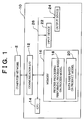
- Fig. 1 shows a hardware structure of a computer system (a production plan designing system) 10 in accordance with the embodiment of the present invention.
- the production plan designing system 10 has a memory 16, an input device 22 and an output device 24 which are connected to a CPU 14 through a bus 26.
- the production plan designing system 10 is connected to an in-house computer network through a communication I/O 12. This enables the production plan designing system 10 to utilize various pieces of in-house information (e.g. sales data in the past, data as to the shift in ordered quantity in the past, data as to the sales plan of a new product and the like).
- the production plan designed by the production plan designing system 10 can be utilized from an in-house management computer.
- a main program (a process model 18) and a product model 20 are stored in the memory 16.
- the main program performs the processing of designing a production plan based on order-related data.
- the product model 20 is a data base which is referred to when the process model 18 performs the processing.
- the designing of a production plan based on order-related data requires various data such as parts of an ordered product, a plant where those parts are produced, and a production plant where the product is assembled.
- the process model 18 of this embodiment does not have the aforementioned data therein but performs the processing by referring to the product model 20 which is an external data base.
- the process model 18 of this embodiment is constructed based solely on a mathematical algorithm required to design a production plan on the basis of order-related data. Thus, even if there is a change in data in a production system, the process model 18 itself need not be subject to any modification. If the production system undergoes any modification, the only thing to be done is to renew the data concerning the product model 20.
- Fig. 2 shows one example of constructions of the process model and product model in designing a production plan for motor vehicles.
- the process model 18 and the product model 20 are described in the manner of free topology.
- the process model 18 includes the following processings:
- the number of domestic orders of parts, the number of domestic orders of products (vehicles in this case), the number of oversea orders of parts and the number of oversea orders of vehicles in the future are estimated based on the data gathered through a computer network 2 (the order-related records in the past, the shift in the order-related records in the past, a plan for selling new products and the like).
- the process model 18 shown in Fig. 2 is constructed according to four categories, that is, according to whether orders have been given by a domestic client or an oversea client and whether the ordered article is a part or a product.
- the present invention can also be applied to the case where there is only one type of order-related data.
- Each of the sales plan designing processings designs a sales plan conforming to the estimated number of orders.
- the domestic sales plan for the vehicle designed in P1-6 is sent to:
- the oversea sales plan designed in P1-7 is sent to P1-9 as well as P1-11. This is because of the necessity to domestically manufacture and export some of the products ordered by an oversea client instead of manufacturing all of them abroad.
- the domestic production plan for the vehicle designed in P1-9 is sent to:
- the process model 18 estimates the number of future orders and then designs a sales plan based on the estimated number. Subsequently the process model 18 designs a production plan required to put the sales plan into practice. The designing of the sales plan and production plan is described based on mathematical logic. The process processing program of this embodiment is constructed based on that style of description.
- the designing of a sales plan from order-related information and the designing of a production plan from the sales plan require, in addition to an algorithm for development, various data which are referred to in executing the algorithm.
- the calculation of a concrete area requires concrete values (figures) of the base (a) and the height (b).
- an algorithm is constructed in the process model 18, and the product model 20 stores therein data which are referred to in executing the algorithm.
- the product model 20 includes various pieces of information on a production system requiring its plan in the form of a data base. This data base is described with a systematic data structure for ease of maintenance service such as the updating of a great deal of data.
- the product model 20 stores vehicle information D1, a piece of information on a product to be produced.
- vehicle information D1 has a vehicle name code and a vehicle type code indicative of a version of the vehicle.
- vehicle information D1 includes a piece of information indicative of a specific version (vehicle type) of Toyota Crown (vehicle name).
- the vehicle information D1 includes data indicative of a combination of specifications.
- the combination of specifications D7 includes a set of classifications concerning body type D8, grade D9, drive system (2WD, full-time 4WD or the like), transmission D11 and engine D12 of a relevant vehicle.
- body type D8 grade D9
- drive system (2WD, full-time 4WD or the like) drive system (2WD, full-time 4WD or the like)
- transmission D11 and engine D12 of a relevant vehicle if one combination of specifications is specified, the vehicle can be specified.
- the vehicle information also includes model information D6 which stores a sales model and a production model for each vehicle type specified by a vehicle name and its version.
- Part information D3 includes a spec code and the number of ciphers of an order for each part. For some parts there exists part number information D4. If a part is composed of "smaller parts", the part number information D4 includes a set of part numbers of those smaller parts.
- the product model 20 further stores process information D2 which indicates, for each vehicle specified by a vehicle name and its version, a production plant thereof in the form of a country code and a company code. Ultimate products to be manufactured (vehicles in this embodiment) are manufactured in a plurality of companies within a certain group. For this reason company codes are necessitated.
- the process information also includes information on production plants of parts and is systematized according to the sequence of production from parts to products. To simplify explanation, it is assumed that a gear A and a gear B (parts in a preceding process) are combined to produce a gear train C (a part in the present process) and that the gear train C is combined with other parts to manufacture a transmission D.
- the process information on the gears A and B is expressed as "the information preceding the process information on the gear train C"
- the process information on the gear train C is expressed as "the information preceding the process information on the transmission D”.
- the process information is described with a recursive data structure.
- the memory capacity required for data storage is diminished to make the data structure easy to understand and facilitate operations including the updating of data.
- the product model 20 has a part-related data block D3.
- the part data block D3 is a data base of parts required for production expressed in the form of a spec code and the number of ciphers of each order.
- a data base D4 regarding part numbers is expressed in the form of an assembly number and a site.
- the data base D4 also employs a recursive data structure so that the memory capacity required for data storage is diminished with a view to making the data structure easy to recognize and facilitating maintenance operations including the updating of the data base.
- a plan designing condition D5 is also stored in the process model 20 in the form of a data base.
- This data base stores processes in which parts with their respective part numbers are used, the numbers of the respective parts required for each vehicle model, and the lead time between processes which are interrelated with one another.
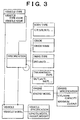
- Fig. 3 shows an example of a product model used in designing a sales plan or a production plan for a vehicle.
- a combination of specifications (classifications concerning body type, grade, drive type, transmission type, engine type and the like) is described herein for one vehicle model.
- FIG. 4 A data structure in accordance with the related art for specifying a vehicle from vehicle type information is shown for example in Figs. 4 and 5.
- this data structure is unfolded in the sequence of vehicle type, grade, drive type, engine type and transmission type.
- Fig. 5 this data structure is unfolded in the sequence of vehicle type, drive type, engine type, grade and transmission type.
- Fig. 6 shows a relation among vehicle type, combination of specifications, and vehicle in this embodiment.
- the data structure shown in Fig. 6 is simplified in comparison with those shown in Figs. 4 and 5.
- the structure shown in Fig. 6 only requires updating relevant portions in altering data, operations for conserving or maintaining the data base are facilitated.
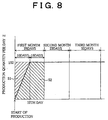
- Fig. 9 shows a process of designing a production plan satisfying the above-mentioned conditions.
- step 1 actual workdays during a plan designing period (three months) are set for example as follows:
- the (provisional) stable-period production quantity calculated in step 3 is reviewed and the procedures in steps 3 through 10 are repeated to find a stable-period production quantity in which S2/(S1 + S2) approaches 90%.
- Fig. 10A schematically and simply shows a processing ready for the process model 18 for application to such a case.
- This processing handles an example in which a quota of production quantities are allotted to factories A and B in producing a total of 100 vehicles of type (a) which can be produced in these factories.
- a quota of production quantities of vehicles of types (b) through (f) are already allotted to the factories. It is assumed that both the factories have an equal production capacity. There is a rule that at least one vehicle must be produced in each of the production plants where vehicles of that type can be produced.
- the process model 18 in this embodiment can store other algorithms for designing the optimal production plan under various conditions.
- the process model 18 can store an algorithm for optimally determining, upon receipt of an order, (a) whether to fill the order with stocks, (b) whether to produce the products domestically, (c) whether to produce the products abroad, (d) whether to use stocks of the parts required to produce the products, (e) whether to produce the parts domestically, (f) whether to produce the parts abroad and the like. This makes it possible to determine the optimal production plant and the optimal mode of production in accordance with each order and design a production plan for each production plant.
Landscapes
- Engineering & Computer Science (AREA)
- Business, Economics & Management (AREA)
- Manufacturing & Machinery (AREA)
- Strategic Management (AREA)
- Quality & Reliability (AREA)
- Physics & Mathematics (AREA)
- General Physics & Mathematics (AREA)
- Human Resources & Organizations (AREA)
- Entrepreneurship & Innovation (AREA)
- Economics (AREA)
- Educational Administration (AREA)
- Development Economics (AREA)
- Game Theory and Decision Science (AREA)
- Automation & Control Theory (AREA)
- General Engineering & Computer Science (AREA)
- Marketing (AREA)
- Operations Research (AREA)
- Tourism & Hospitality (AREA)
- General Business, Economics & Management (AREA)
- Theoretical Computer Science (AREA)
- Management, Administration, Business Operations System, And Electronic Commerce (AREA)
- General Factory Administration (AREA)
- Multi-Process Working Machines And Systems (AREA)
Abstract
Description
Claims (11)
- A computer system (10) for designing a production plan from information on orders of products, characterized by comprising:process means (18) for performing a processing for determining a production plan by referring to products data based on the information on the orders; anda data base (20) constructed independently from the process means to store the products data.
- The system (10) according to claim 1, wherein:the process means (18) includes at least one order estimation means (P1-1, P1-2, P1-3, P1-4) for estimating a quantity of future orders, at least one sales plan determination means (P-5, P-6, P1-7, P1-8) for determining a sales plan for the products based on an estimated result, and at least one production plan determination means (P1-9, P1-10, P1-11, P1-12) for determining a production plan for the products based on the sales plan;the sales plan determination means (P1-5, P1-6, P1-7, P1-8) and the production plan determination means (P1-9, P1-10, P1-11, P1-12) refer to the products data stored in the database during performance of the processing.
- The system (10) according to claim 2, wherein:the order estimation means (P1-1, P1-2, P1-3, P1-4) includes domestic order estimation means (P1-1, P1-2) and oversea order estimation means (P-3, P-4);the sales plan determination means (P1-5, P1-6) includes domestic sales plan determination means and oversea sales plan determination means (P1-7, P-8); andthe production plan determination means (P1-9, P1-10, P1-11, P1-12) includes domestic production plan determination means (P1-9, P1-10) and oversea production plan determination means (P1-11, P1-12).
- The system (10) according to claim 2, wherein:the products data include at least one of specifications, parts and production processes of products; andpieces of the products data are interrelated with one another in the database (20).
- The system (10) according to any one of claims 1 to 3, wherein:the process means (18) determines, when there are a plurality of production plants, a production quantity in each of the production plants.
- A computer system (10) for designing a sales plan from information on orders of products, characterized by comprising:process means (18) having order estimation means (P1-1, P1-2, P1-3, P-14) for estimating a quantity of orders based on information on orders and sales plan determination means (P1-5, P1-6, P1-7, P1-8) for determining a sales plan by referring to products data including at least specifications of the products; and a data base (20) constructed independently from the process means to store the products data.
- A method for designing a production plan from information on orders of products, characterized by comprising:determining a production plan by referring to products data based on the information on the orders; andstoring the products data in an independent database (20).
- The method according to claim 7 characterized by further comprisingestimating a quantity of future orders by referring to the information (P1-1, P1-2, P1-3, P1-4);determining a sales plan for the products based on an estimated result (P1-5, P1-6, P1-7, P1-8); anddetermining a production plan for the products based on the sales plan (P1-9, P1-10, P1-11, P1-12), whereinthe sales plan and the production plan are determined by referring to the products data stored in the database (20).
- The method according to claim 8, wherein:the estimating step estimates domestic future order (P1-1, P1-2) and oversea future order (P1-3, P1-4);the sales plan determining step determines domestic sales plan (P1-5, P1-6) and oversea sales plan (P1-6, P1-7); andthe production plan determining step determines domestic production plan (P1-9, P1-10) and oversea production plan (P1-11, P1-12).
- The method according to claim 8, wherein:the products data includes at least one of specifications, parts and production processes of products; andpieces of the products data are interrelated with one another in the database (20).
- The method according to any one of claims 7 to 9, wherein:a production quantity in each of the production plants is determined when there are a plurality of production plants.
Applications Claiming Priority (2)
| Application Number | Priority Date | Filing Date | Title |
|---|---|---|---|
| JP9521599A JP2000288875A (en) | 1999-04-01 | 1999-04-01 | Production and sales plan creation system |
| JP9521599 | 1999-04-01 |
Publications (2)
| Publication Number | Publication Date |
|---|---|
| EP1041475A2 true EP1041475A2 (en) | 2000-10-04 |
| EP1041475A3 EP1041475A3 (en) | 2006-04-05 |
Family
ID=14131536
Family Applications (1)
| Application Number | Title | Priority Date | Filing Date |
|---|---|---|---|
| EP00106853A Withdrawn EP1041475A3 (en) | 1999-04-01 | 2000-03-30 | Production and sales plan designing system |
Country Status (2)
| Country | Link |
|---|---|
| EP (1) | EP1041475A3 (en) |
| JP (1) | JP2000288875A (en) |
Cited By (2)
| Publication number | Priority date | Publication date | Assignee | Title |
|---|---|---|---|---|
| GB2379301A (en) * | 2001-09-04 | 2003-03-05 | Inventec Corp | Method and system for making a production plan |
| EP2977940A1 (en) * | 2014-07-22 | 2016-01-27 | Toyota Jidosha Kabushiki Kaisha | Product production planning method |
Families Citing this family (4)
| Publication number | Priority date | Publication date | Assignee | Title |
|---|---|---|---|---|
| JP4686937B2 (en) * | 2001-08-27 | 2011-05-25 | トヨタ自動車株式会社 | System for determining the number of production by production base and specification |
| JP3982617B2 (en) | 2002-05-17 | 2007-09-26 | 日本アイ・ビー・エム株式会社 | Production plan generation system, production plan generation method, program |
| WO2007105298A1 (en) * | 2006-03-13 | 2007-09-20 | Mitsubishi Denki Kabushiki Kaisha | Manufacture system development supporting apparatus and manufacture executing system |
| CN103455937A (en) * | 2013-08-22 | 2013-12-18 | 浙江工商大学 | Matrix adaption method for large-scale shop optimization in community business cloud environment |
Family Cites Families (4)
| Publication number | Priority date | Publication date | Assignee | Title |
|---|---|---|---|---|
| JPH03251348A (en) * | 1990-03-01 | 1991-11-08 | Sekisui Chem Co Ltd | Production plan making device for each item |
| US5854746A (en) * | 1990-04-28 | 1998-12-29 | Kanebo, Ltd. | Flexible production and material resource planning system using sales information directly acquired from POS terminals |
| US5841659A (en) * | 1994-05-26 | 1998-11-24 | Matsushita Electric Industrial Co., Ltd. | Production plan generating method and apparatus |
| US20020002516A1 (en) * | 1997-07-28 | 2002-01-03 | Masahiko Sakayori | Parts ordering system,parts management system and apparatus for managing ordering and reciept of orders |
-
1999
- 1999-04-01 JP JP9521599A patent/JP2000288875A/en active Pending
-
2000
- 2000-03-30 EP EP00106853A patent/EP1041475A3/en not_active Withdrawn
Cited By (3)
| Publication number | Priority date | Publication date | Assignee | Title |
|---|---|---|---|---|
| GB2379301A (en) * | 2001-09-04 | 2003-03-05 | Inventec Corp | Method and system for making a production plan |
| EP2977940A1 (en) * | 2014-07-22 | 2016-01-27 | Toyota Jidosha Kabushiki Kaisha | Product production planning method |
| CN105303289A (en) * | 2014-07-22 | 2016-02-03 | 丰田自动车株式会社 | Product production planning method |
Also Published As
| Publication number | Publication date |
|---|---|
| EP1041475A3 (en) | 2006-04-05 |
| JP2000288875A (en) | 2000-10-17 |
Similar Documents
| Publication | Publication Date | Title |
|---|---|---|
| Campbell et al. | Probabilistic traveling salesman problem with deadlines | |
| CN101589417B (en) | Map information managing system and map information distribution system | |
| KR20010053593A (en) | Computer-implemented value management tool for an asset intensive manufacturer | |
| EP1041475A2 (en) | Production and sales plan designing system | |
| CN112308514B (en) | Logistics order automatic issuing method, device, equipment and storage medium | |
| JP2003167615A (en) | Production planning apparatus and method | |
| CN109376976A (en) | Material information management method and terminal equipment | |
| CN112907193A (en) | Intelligent logistics transportation management system based on big data and Internet of things | |
| JP2011065224A (en) | Supply chain efficiency improvement support method | |
| Kurakawa et al. | Life cycle design support based on environmental information sharing | |
| JP2002342431A (en) | Inventory replenishment management system | |
| CN112581057A (en) | Intelligent stock method and device, computer equipment and storage medium | |
| Cheong et al. | MODELING THE VEHICLE ROUTINE PROBLEM FOR A SOFT DRINK MACHINE DISTRIBUTION COMPANY. | |
| Al-Ashhab | An optimization model for multi-period multi-product multi-objective production planning | |
| US20030149638A1 (en) | Parts ordering system for improving efficiency of parts delivery by estimating the order of the parts | |
| CN117094500A (en) | Production scheduling method and device for production flow, electronic equipment and storage medium | |
| US20210280302A1 (en) | Systems and methods for scheduling delivery of healthcare services | |
| CN114037247A (en) | Project scheduling risk monitoring system, method, terminal and computing storage medium | |
| Rostami et al. | Two-machine decentralized flow shop scheduling problem with inter-factory batch delivery system | |
| CN117744954B (en) | Intelligent scheduling method and related equipment based on identification analysis | |
| CN110148035A (en) | Vehicle trunk rent method, server and storage medium | |
| JP5204683B2 (en) | Forecast management device and program thereof | |
| JP2010061317A (en) | Forecast management system and program thereof | |
| JP3225762B2 (en) | Multi-company delivery instruction management method and multi-company delivery instruction management system | |
| Gao | Stochastic optimization with decisions truncated by random variables and its applications in operations |
Legal Events
| Date | Code | Title | Description |
|---|---|---|---|
| PUAI | Public reference made under article 153(3) epc to a published international application that has entered the european phase |
Free format text: ORIGINAL CODE: 0009012 |
|
| 17P | Request for examination filed |
Effective date: 20000330 |
|
| AK | Designated contracting states |
Kind code of ref document: A2 Designated state(s): AT BE CH CY DE DK ES FI FR GB GR IE IT LI LU MC NL PT SE |
|
| AX | Request for extension of the european patent |
Free format text: AL;LT;LV;MK;RO;SI |
|
| PUAL | Search report despatched |
Free format text: ORIGINAL CODE: 0009013 |
|
| AK | Designated contracting states |
Kind code of ref document: A3 Designated state(s): AT BE CH CY DE DK ES FI FR GB GR IE IT LI LU MC NL PT SE |
|
| AX | Request for extension of the european patent |
Extension state: AL LT LV MK RO SI |
|
| STAA | Information on the status of an ep patent application or granted ep patent |
Free format text: STATUS: THE APPLICATION HAS BEEN WITHDRAWN |
|
| 18W | Application withdrawn |
Effective date: 20060720 |