EP1040191B1 - Rantes mutants and therapeutic applications thereof - Google Patents
Rantes mutants and therapeutic applications thereof Download PDFInfo
- Publication number
- EP1040191B1 EP1040191B1 EP98966650A EP98966650A EP1040191B1 EP 1040191 B1 EP1040191 B1 EP 1040191B1 EP 98966650 A EP98966650 A EP 98966650A EP 98966650 A EP98966650 A EP 98966650A EP 1040191 B1 EP1040191 B1 EP 1040191B1
- Authority
- EP
- European Patent Office
- Prior art keywords
- rantes
- ala
- arg
- mutants
- cys
- Prior art date
- Legal status (The legal status is an assumption and is not a legal conclusion. Google has not performed a legal analysis and makes no representation as to the accuracy of the status listed.)
- Expired - Lifetime
Links
- 108010055166 Chemokine CCL5 Proteins 0.000 title claims abstract description 46
- 102000001327 Chemokine CCL5 Human genes 0.000 title claims abstract description 46
- 230000001225 therapeutic effect Effects 0.000 title description 2
- 238000006467 substitution reaction Methods 0.000 claims abstract description 21
- 150000001413 amino acids Chemical class 0.000 claims abstract description 19
- 230000003266 anti-allergic effect Effects 0.000 claims abstract description 4
- 230000035772 mutation Effects 0.000 claims description 17
- 241000725303 Human immunodeficiency virus Species 0.000 claims description 14
- 238000000034 method Methods 0.000 claims description 10
- 108090000765 processed proteins & peptides Proteins 0.000 claims description 10
- 101100436100 Caenorhabditis elegans asp-6 gene Proteins 0.000 claims description 9
- 239000013598 vector Substances 0.000 claims description 8
- 108700012434 CCL3 Proteins 0.000 claims description 7
- 101100315627 Caenorhabditis elegans tyr-3 gene Proteins 0.000 claims description 7
- 102000000013 Chemokine CCL3 Human genes 0.000 claims description 7
- 239000013604 expression vector Substances 0.000 claims description 6
- 230000003993 interaction Effects 0.000 claims description 6
- 241000701447 unidentified baculovirus Species 0.000 claims description 6
- 102000001326 Chemokine CCL4 Human genes 0.000 claims description 5
- 108010055165 Chemokine CCL4 Proteins 0.000 claims description 5
- 230000002209 hydrophobic effect Effects 0.000 claims description 5
- 238000004519 manufacturing process Methods 0.000 claims description 5
- 102000009410 Chemokine receptor Human genes 0.000 claims description 4
- 108050000299 Chemokine receptor Proteins 0.000 claims description 4
- 230000003110 anti-inflammatory effect Effects 0.000 claims description 4
- 239000000924 antiasthmatic agent Substances 0.000 claims description 3
- 230000002401 inhibitory effect Effects 0.000 claims description 3
- 239000002773 nucleotide Substances 0.000 claims description 3
- 125000003729 nucleotide group Chemical group 0.000 claims description 3
- 239000008194 pharmaceutical composition Substances 0.000 claims description 3
- 241000588724 Escherichia coli Species 0.000 claims description 2
- 239000012634 fragment Substances 0.000 claims description 2
- 239000004480 active ingredient Substances 0.000 claims 2
- 230000001088 anti-asthma Effects 0.000 claims 2
- 238000012258 culturing Methods 0.000 claims 1
- 210000003527 eukaryotic cell Anatomy 0.000 claims 1
- 230000009465 prokaryotic expression Effects 0.000 claims 1
- 239000002259 anti human immunodeficiency virus agent Substances 0.000 abstract description 3
- 230000036436 anti-hiv Effects 0.000 abstract description 3
- 239000002260 anti-inflammatory agent Substances 0.000 abstract description 2
- 239000000043 antiallergic agent Substances 0.000 abstract description 2
- 229940121363 anti-inflammatory agent Drugs 0.000 abstract 1
- 239000013615 primer Substances 0.000 description 14
- 108020004414 DNA Proteins 0.000 description 12
- 210000004027 cell Anatomy 0.000 description 12
- 239000013612 plasmid Substances 0.000 description 12
- 102000019034 Chemokines Human genes 0.000 description 11
- 108010012236 Chemokines Proteins 0.000 description 11
- 238000010276 construction Methods 0.000 description 8
- 238000003752 polymerase chain reaction Methods 0.000 description 8
- 102000004196 processed proteins & peptides Human genes 0.000 description 8
- 208000015181 infectious disease Diseases 0.000 description 7
- 108090000623 proteins and genes Proteins 0.000 description 7
- 102100035875 C-C chemokine receptor type 5 Human genes 0.000 description 6
- 101710149870 C-C chemokine receptor type 5 Proteins 0.000 description 6
- 230000000694 effects Effects 0.000 description 6
- 230000003612 virological effect Effects 0.000 description 6
- OYPRJOBELJOOCE-UHFFFAOYSA-N Calcium Chemical compound [Ca] OYPRJOBELJOOCE-UHFFFAOYSA-N 0.000 description 5
- 230000037429 base substitution Effects 0.000 description 5
- 229960005069 calcium Drugs 0.000 description 5
- 239000011575 calcium Substances 0.000 description 5
- 229910052791 calcium Inorganic materials 0.000 description 5
- 238000003780 insertion Methods 0.000 description 5
- 230000037431 insertion Effects 0.000 description 5
- 229920001184 polypeptide Polymers 0.000 description 5
- 102000005962 receptors Human genes 0.000 description 5
- 108020003175 receptors Proteins 0.000 description 5
- 230000003042 antagnostic effect Effects 0.000 description 4
- 238000007796 conventional method Methods 0.000 description 4
- 230000005764 inhibitory process Effects 0.000 description 4
- 230000003834 intracellular effect Effects 0.000 description 4
- 102000004169 proteins and genes Human genes 0.000 description 4
- 239000006228 supernatant Substances 0.000 description 4
- 241000201370 Autographa californica nucleopolyhedrovirus Species 0.000 description 3
- ROHFNLRQFUQHCH-YFKPBYRVSA-N L-leucine Chemical compound CC(C)C[C@H](N)C(O)=O ROHFNLRQFUQHCH-YFKPBYRVSA-N 0.000 description 3
- 101710182846 Polyhedrin Proteins 0.000 description 3
- 102000007056 Recombinant Fusion Proteins Human genes 0.000 description 3
- 108010008281 Recombinant Fusion Proteins Proteins 0.000 description 3
- 208000006673 asthma Diseases 0.000 description 3
- 238000010367 cloning Methods 0.000 description 3
- 238000012986 modification Methods 0.000 description 3
- 230000004048 modification Effects 0.000 description 3
- 239000002245 particle Substances 0.000 description 3
- 210000003819 peripheral blood mononuclear cell Anatomy 0.000 description 3
- 230000000770 proinflammatory effect Effects 0.000 description 3
- 206010039073 rheumatoid arthritis Diseases 0.000 description 3
- 201000001320 Atherosclerosis Diseases 0.000 description 2
- 108020004705 Codon Proteins 0.000 description 2
- 238000002965 ELISA Methods 0.000 description 2
- 208000031886 HIV Infections Diseases 0.000 description 2
- 208000037357 HIV infectious disease Diseases 0.000 description 2
- 101000797762 Homo sapiens C-C motif chemokine 5 Proteins 0.000 description 2
- 241000713772 Human immunodeficiency virus 1 Species 0.000 description 2
- ROHFNLRQFUQHCH-UHFFFAOYSA-N Leucine Natural products CC(C)CC(N)C(O)=O ROHFNLRQFUQHCH-UHFFFAOYSA-N 0.000 description 2
- 108091028043 Nucleic acid sequence Proteins 0.000 description 2
- FAPWRFPIFSIZLT-UHFFFAOYSA-M Sodium chloride Chemical compound [Na+].[Cl-] FAPWRFPIFSIZLT-UHFFFAOYSA-M 0.000 description 2
- 102100021669 Stromal cell-derived factor 1 Human genes 0.000 description 2
- 101710088580 Stromal cell-derived factor 1 Proteins 0.000 description 2
- 208000036142 Viral infection Diseases 0.000 description 2
- 230000004913 activation Effects 0.000 description 2
- 208000026935 allergic disease Diseases 0.000 description 2
- 230000003321 amplification Effects 0.000 description 2
- 229940124411 anti-hiv antiviral agent Drugs 0.000 description 2
- 230000000840 anti-viral effect Effects 0.000 description 2
- 238000007385 chemical modification Methods 0.000 description 2
- 230000003399 chemotactic effect Effects 0.000 description 2
- 231100000673 dose–response relationship Toxicity 0.000 description 2
- 108020001507 fusion proteins Proteins 0.000 description 2
- 102000037865 fusion proteins Human genes 0.000 description 2
- 238000002744 homologous recombination Methods 0.000 description 2
- 230000006801 homologous recombination Effects 0.000 description 2
- 102000045341 human CCL5 Human genes 0.000 description 2
- 208000033519 human immunodeficiency virus infectious disease Diseases 0.000 description 2
- 210000004698 lymphocyte Anatomy 0.000 description 2
- 238000013508 migration Methods 0.000 description 2
- 230000005012 migration Effects 0.000 description 2
- 210000001616 monocyte Anatomy 0.000 description 2
- 238000002703 mutagenesis Methods 0.000 description 2
- 231100000350 mutagenesis Toxicity 0.000 description 2
- 238000003199 nucleic acid amplification method Methods 0.000 description 2
- 230000003389 potentiating effect Effects 0.000 description 2
- 239000000047 product Substances 0.000 description 2
- 230000006798 recombination Effects 0.000 description 2
- 238000005215 recombination Methods 0.000 description 2
- 230000009385 viral infection Effects 0.000 description 2
- 108091032973 (ribonucleotides)n+m Proteins 0.000 description 1
- QFVHZQCOUORWEI-UHFFFAOYSA-N 4-[(4-anilino-5-sulfonaphthalen-1-yl)diazenyl]-5-hydroxynaphthalene-2,7-disulfonic acid Chemical compound C=12C(O)=CC(S(O)(=O)=O)=CC2=CC(S(O)(=O)=O)=CC=1N=NC(C1=CC=CC(=C11)S(O)(=O)=O)=CC=C1NC1=CC=CC=C1 QFVHZQCOUORWEI-UHFFFAOYSA-N 0.000 description 1
- HRPVXLWXLXDGHG-UHFFFAOYSA-N Acrylamide Chemical compound NC(=O)C=C HRPVXLWXLXDGHG-UHFFFAOYSA-N 0.000 description 1
- 241000024188 Andala Species 0.000 description 1
- 206010003210 Arteriosclerosis Diseases 0.000 description 1
- 208000031504 Asymptomatic Infections Diseases 0.000 description 1
- 208000037260 Atherosclerotic Plaque Diseases 0.000 description 1
- 241001203868 Autographa californica Species 0.000 description 1
- 208000023275 Autoimmune disease Diseases 0.000 description 1
- 102100031172 C-C chemokine receptor type 1 Human genes 0.000 description 1
- 101710149814 C-C chemokine receptor type 1 Proteins 0.000 description 1
- 102100024167 C-C chemokine receptor type 3 Human genes 0.000 description 1
- 101710149862 C-C chemokine receptor type 3 Proteins 0.000 description 1
- 102100031650 C-X-C chemokine receptor type 4 Human genes 0.000 description 1
- 102000004499 CCR3 Receptors Human genes 0.000 description 1
- 108010017316 CCR3 Receptors Proteins 0.000 description 1
- 102000004274 CCR5 Receptors Human genes 0.000 description 1
- 108010017088 CCR5 Receptors Proteins 0.000 description 1
- 102100037904 CD9 antigen Human genes 0.000 description 1
- 102000004127 Cytokines Human genes 0.000 description 1
- 108090000695 Cytokines Proteins 0.000 description 1
- 239000003155 DNA primer Substances 0.000 description 1
- 102000016928 DNA-directed DNA polymerase Human genes 0.000 description 1
- 108010014303 DNA-directed DNA polymerase Proteins 0.000 description 1
- 201000004624 Dermatitis Diseases 0.000 description 1
- 206010012438 Dermatitis atopic Diseases 0.000 description 1
- 238000008157 ELISA kit Methods 0.000 description 1
- 102000004190 Enzymes Human genes 0.000 description 1
- 108090000790 Enzymes Proteins 0.000 description 1
- 108700039887 Essential Genes Proteins 0.000 description 1
- 102000003688 G-Protein-Coupled Receptors Human genes 0.000 description 1
- 108090000045 G-Protein-Coupled Receptors Proteins 0.000 description 1
- HTTJABKRGRZYRN-UHFFFAOYSA-N Heparin Chemical compound OC1C(NC(=O)C)C(O)OC(COS(O)(=O)=O)C1OC1C(OS(O)(=O)=O)C(O)C(OC2C(C(OS(O)(=O)=O)C(OC3C(C(O)C(O)C(O3)C(O)=O)OS(O)(=O)=O)C(CO)O2)NS(O)(=O)=O)C(C(O)=O)O1 HTTJABKRGRZYRN-UHFFFAOYSA-N 0.000 description 1
- 101000922348 Homo sapiens C-X-C chemokine receptor type 4 Proteins 0.000 description 1
- 241000701041 Human betaherpesvirus 7 Species 0.000 description 1
- 206010020751 Hypersensitivity Diseases 0.000 description 1
- ZDXPYRJPNDTMRX-VKHMYHEASA-N L-glutamine Chemical compound OC(=O)[C@@H](N)CCC(N)=O ZDXPYRJPNDTMRX-VKHMYHEASA-N 0.000 description 1
- FFEARJCKVFRZRR-BYPYZUCNSA-N L-methionine Chemical compound CSCC[C@H](N)C(O)=O FFEARJCKVFRZRR-BYPYZUCNSA-N 0.000 description 1
- 108010023347 Met- RANTES Proteins 0.000 description 1
- 101100219997 Mus musculus Ccr1 gene Proteins 0.000 description 1
- 108091034117 Oligonucleotide Proteins 0.000 description 1
- 108010076504 Protein Sorting Signals Proteins 0.000 description 1
- 206010039085 Rhinitis allergic Diseases 0.000 description 1
- 210000001744 T-lymphocyte Anatomy 0.000 description 1
- 241000255985 Trichoplusia Species 0.000 description 1
- 108020005202 Viral DNA Proteins 0.000 description 1
- JLCPHMBAVCMARE-UHFFFAOYSA-N [3-[[3-[[3-[[3-[[3-[[3-[[3-[[3-[[3-[[3-[[3-[[5-(2-amino-6-oxo-1H-purin-9-yl)-3-[[3-[[3-[[3-[[3-[[3-[[5-(2-amino-6-oxo-1H-purin-9-yl)-3-[[5-(2-amino-6-oxo-1H-purin-9-yl)-3-hydroxyoxolan-2-yl]methoxy-hydroxyphosphoryl]oxyoxolan-2-yl]methoxy-hydroxyphosphoryl]oxy-5-(5-methyl-2,4-dioxopyrimidin-1-yl)oxolan-2-yl]methoxy-hydroxyphosphoryl]oxy-5-(6-aminopurin-9-yl)oxolan-2-yl]methoxy-hydroxyphosphoryl]oxy-5-(6-aminopurin-9-yl)oxolan-2-yl]methoxy-hydroxyphosphoryl]oxy-5-(6-aminopurin-9-yl)oxolan-2-yl]methoxy-hydroxyphosphoryl]oxy-5-(6-aminopurin-9-yl)oxolan-2-yl]methoxy-hydroxyphosphoryl]oxyoxolan-2-yl]methoxy-hydroxyphosphoryl]oxy-5-(5-methyl-2,4-dioxopyrimidin-1-yl)oxolan-2-yl]methoxy-hydroxyphosphoryl]oxy-5-(4-amino-2-oxopyrimidin-1-yl)oxolan-2-yl]methoxy-hydroxyphosphoryl]oxy-5-(5-methyl-2,4-dioxopyrimidin-1-yl)oxolan-2-yl]methoxy-hydroxyphosphoryl]oxy-5-(5-methyl-2,4-dioxopyrimidin-1-yl)oxolan-2-yl]methoxy-hydroxyphosphoryl]oxy-5-(6-aminopurin-9-yl)oxolan-2-yl]methoxy-hydroxyphosphoryl]oxy-5-(6-aminopurin-9-yl)oxolan-2-yl]methoxy-hydroxyphosphoryl]oxy-5-(4-amino-2-oxopyrimidin-1-yl)oxolan-2-yl]methoxy-hydroxyphosphoryl]oxy-5-(4-amino-2-oxopyrimidin-1-yl)oxolan-2-yl]methoxy-hydroxyphosphoryl]oxy-5-(4-amino-2-oxopyrimidin-1-yl)oxolan-2-yl]methoxy-hydroxyphosphoryl]oxy-5-(6-aminopurin-9-yl)oxolan-2-yl]methoxy-hydroxyphosphoryl]oxy-5-(4-amino-2-oxopyrimidin-1-yl)oxolan-2-yl]methyl [5-(6-aminopurin-9-yl)-2-(hydroxymethyl)oxolan-3-yl] hydrogen phosphate Polymers Cc1cn(C2CC(OP(O)(=O)OCC3OC(CC3OP(O)(=O)OCC3OC(CC3O)n3cnc4c3nc(N)[nH]c4=O)n3cnc4c3nc(N)[nH]c4=O)C(COP(O)(=O)OC3CC(OC3COP(O)(=O)OC3CC(OC3COP(O)(=O)OC3CC(OC3COP(O)(=O)OC3CC(OC3COP(O)(=O)OC3CC(OC3COP(O)(=O)OC3CC(OC3COP(O)(=O)OC3CC(OC3COP(O)(=O)OC3CC(OC3COP(O)(=O)OC3CC(OC3COP(O)(=O)OC3CC(OC3COP(O)(=O)OC3CC(OC3COP(O)(=O)OC3CC(OC3COP(O)(=O)OC3CC(OC3COP(O)(=O)OC3CC(OC3COP(O)(=O)OC3CC(OC3COP(O)(=O)OC3CC(OC3COP(O)(=O)OC3CC(OC3CO)n3cnc4c(N)ncnc34)n3ccc(N)nc3=O)n3cnc4c(N)ncnc34)n3ccc(N)nc3=O)n3ccc(N)nc3=O)n3ccc(N)nc3=O)n3cnc4c(N)ncnc34)n3cnc4c(N)ncnc34)n3cc(C)c(=O)[nH]c3=O)n3cc(C)c(=O)[nH]c3=O)n3ccc(N)nc3=O)n3cc(C)c(=O)[nH]c3=O)n3cnc4c3nc(N)[nH]c4=O)n3cnc4c(N)ncnc34)n3cnc4c(N)ncnc34)n3cnc4c(N)ncnc34)n3cnc4c(N)ncnc34)O2)c(=O)[nH]c1=O JLCPHMBAVCMARE-UHFFFAOYSA-N 0.000 description 1
- 238000010521 absorption reaction Methods 0.000 description 1
- 239000013543 active substance Substances 0.000 description 1
- 201000010105 allergic rhinitis Diseases 0.000 description 1
- AVKUERGKIZMTKX-NJBDSQKTSA-N ampicillin Chemical compound C1([C@@H](N)C(=O)N[C@H]2[C@H]3SC([C@@H](N3C2=O)C(O)=O)(C)C)=CC=CC=C1 AVKUERGKIZMTKX-NJBDSQKTSA-N 0.000 description 1
- 229960000723 ampicillin Drugs 0.000 description 1
- 239000005557 antagonist Substances 0.000 description 1
- 230000000692 anti-sense effect Effects 0.000 description 1
- 239000000427 antigen Substances 0.000 description 1
- 108091007433 antigens Proteins 0.000 description 1
- 102000036639 antigens Human genes 0.000 description 1
- 125000003118 aryl group Chemical group 0.000 description 1
- 201000008937 atopic dermatitis Diseases 0.000 description 1
- 239000011324 bead Substances 0.000 description 1
- 230000015572 biosynthetic process Effects 0.000 description 1
- 210000000601 blood cell Anatomy 0.000 description 1
- 229960001714 calcium phosphate Drugs 0.000 description 1
- 229910000389 calcium phosphate Inorganic materials 0.000 description 1
- 239000001506 calcium phosphate Substances 0.000 description 1
- 235000011010 calcium phosphates Nutrition 0.000 description 1
- 238000005251 capillar electrophoresis Methods 0.000 description 1
- 238000006243 chemical reaction Methods 0.000 description 1
- 230000035605 chemotaxis Effects 0.000 description 1
- 238000000975 co-precipitation Methods 0.000 description 1
- 239000002299 complementary DNA Substances 0.000 description 1
- 238000012217 deletion Methods 0.000 description 1
- 230000037430 deletion Effects 0.000 description 1
- 230000001419 dependent effect Effects 0.000 description 1
- 238000000586 desensitisation Methods 0.000 description 1
- 238000011161 development Methods 0.000 description 1
- 238000010790 dilution Methods 0.000 description 1
- 239000012895 dilution Substances 0.000 description 1
- 229940079593 drug Drugs 0.000 description 1
- 239000003814 drug Substances 0.000 description 1
- 238000001962 electrophoresis Methods 0.000 description 1
- 238000001943 fluorescence-activated cell sorting Methods 0.000 description 1
- YFHXZQPUBCBNIP-UHFFFAOYSA-N fura-2 Chemical compound CC1=CC=C(N(CC(O)=O)CC(O)=O)C(OCCOC=2C(=CC=3OC(=CC=3C=2)C=2OC(=CN=2)C(O)=O)N(CC(O)=O)CC(O)=O)=C1 YFHXZQPUBCBNIP-UHFFFAOYSA-N 0.000 description 1
- 238000001415 gene therapy Methods 0.000 description 1
- ZDXPYRJPNDTMRX-UHFFFAOYSA-N glutamine Natural products OC(=O)C(N)CCC(N)=O ZDXPYRJPNDTMRX-UHFFFAOYSA-N 0.000 description 1
- 230000012010 growth Effects 0.000 description 1
- 210000004524 haematopoietic cell Anatomy 0.000 description 1
- 229960002897 heparin Drugs 0.000 description 1
- 229920000669 heparin Polymers 0.000 description 1
- 238000000338 in vitro Methods 0.000 description 1
- 238000011534 incubation Methods 0.000 description 1
- 230000002458 infectious effect Effects 0.000 description 1
- 208000027866 inflammatory disease Diseases 0.000 description 1
- 230000002757 inflammatory effect Effects 0.000 description 1
- 230000037456 inflammatory mechanism Effects 0.000 description 1
- 230000028709 inflammatory response Effects 0.000 description 1
- 239000003112 inhibitor Substances 0.000 description 1
- 238000011835 investigation Methods 0.000 description 1
- 231100000518 lethal Toxicity 0.000 description 1
- 230000001665 lethal effect Effects 0.000 description 1
- 125000001909 leucine group Chemical group [H]N(*)C(C(*)=O)C([H])([H])C(C([H])([H])[H])C([H])([H])[H] 0.000 description 1
- 210000000265 leukocyte Anatomy 0.000 description 1
- 239000003446 ligand Substances 0.000 description 1
- 210000002540 macrophage Anatomy 0.000 description 1
- 210000004962 mammalian cell Anatomy 0.000 description 1
- 230000007246 mechanism Effects 0.000 description 1
- 230000001404 mediated effect Effects 0.000 description 1
- 102000006240 membrane receptors Human genes 0.000 description 1
- 108020004084 membrane receptors Proteins 0.000 description 1
- 229930182817 methionine Natural products 0.000 description 1
- 230000028550 monocyte chemotaxis Effects 0.000 description 1
- 210000004897 n-terminal region Anatomy 0.000 description 1
- 208000015122 neurodegenerative disease Diseases 0.000 description 1
- 230000007935 neutral effect Effects 0.000 description 1
- 238000010647 peptide synthesis reaction Methods 0.000 description 1
- 238000002360 preparation method Methods 0.000 description 1
- 230000002265 prevention Effects 0.000 description 1
- 238000001742 protein purification Methods 0.000 description 1
- 238000000746 purification Methods 0.000 description 1
- 238000011002 quantification Methods 0.000 description 1
- 230000009467 reduction Effects 0.000 description 1
- 230000010076 replication Effects 0.000 description 1
- 230000004044 response Effects 0.000 description 1
- 108091008146 restriction endonucleases Proteins 0.000 description 1
- 238000010839 reverse transcription Methods 0.000 description 1
- 206010039083 rhinitis Diseases 0.000 description 1
- 150000003839 salts Chemical class 0.000 description 1
- 230000028327 secretion Effects 0.000 description 1
- 238000012163 sequencing technique Methods 0.000 description 1
- 239000012679 serum free medium Substances 0.000 description 1
- 238000002741 site-directed mutagenesis Methods 0.000 description 1
- 239000011780 sodium chloride Substances 0.000 description 1
- 238000002415 sodium dodecyl sulfate polyacrylamide gel electrophoresis Methods 0.000 description 1
- 230000002269 spontaneous effect Effects 0.000 description 1
- 239000000758 substrate Substances 0.000 description 1
- 238000012360 testing method Methods 0.000 description 1
- 238000002560 therapeutic procedure Methods 0.000 description 1
- 230000000699 topical effect Effects 0.000 description 1
- 230000014599 transmission of virus Effects 0.000 description 1
- QORWJWZARLRLPR-UHFFFAOYSA-H tricalcium bis(phosphate) Chemical compound [Ca+2].[Ca+2].[Ca+2].[O-]P([O-])([O-])=O.[O-]P([O-])([O-])=O QORWJWZARLRLPR-UHFFFAOYSA-H 0.000 description 1
- 241000701161 unidentified adenovirus Species 0.000 description 1
- 241001529453 unidentified herpesvirus Species 0.000 description 1
- 241001430294 unidentified retrovirus Species 0.000 description 1
- 238000011144 upstream manufacturing Methods 0.000 description 1
- 230000005727 virus proliferation Effects 0.000 description 1
- 238000005406 washing Methods 0.000 description 1
- 238000001262 western blot Methods 0.000 description 1
Images



Classifications
-
- C—CHEMISTRY; METALLURGY
- C07—ORGANIC CHEMISTRY
- C07K—PEPTIDES
- C07K14/00—Peptides having more than 20 amino acids; Gastrins; Somatostatins; Melanotropins; Derivatives thereof
- C07K14/435—Peptides having more than 20 amino acids; Gastrins; Somatostatins; Melanotropins; Derivatives thereof from animals; from humans
- C07K14/52—Cytokines; Lymphokines; Interferons
- C07K14/521—Chemokines
- C07K14/523—Beta-chemokines, e.g. RANTES, I-309/TCA-3, MIP-1alpha, MIP-1beta/ACT-2/LD78/SCIF, MCP-1/MCAF, MCP-2, MCP-3, LDCF-1, LDCF-2
-
- A—HUMAN NECESSITIES
- A61—MEDICAL OR VETERINARY SCIENCE; HYGIENE
- A61P—SPECIFIC THERAPEUTIC ACTIVITY OF CHEMICAL COMPOUNDS OR MEDICINAL PREPARATIONS
- A61P11/00—Drugs for disorders of the respiratory system
- A61P11/06—Antiasthmatics
-
- A—HUMAN NECESSITIES
- A61—MEDICAL OR VETERINARY SCIENCE; HYGIENE
- A61P—SPECIFIC THERAPEUTIC ACTIVITY OF CHEMICAL COMPOUNDS OR MEDICINAL PREPARATIONS
- A61P29/00—Non-central analgesic, antipyretic or antiinflammatory agents, e.g. antirheumatic agents; Non-steroidal antiinflammatory drugs [NSAID]
-
- A—HUMAN NECESSITIES
- A61—MEDICAL OR VETERINARY SCIENCE; HYGIENE
- A61P—SPECIFIC THERAPEUTIC ACTIVITY OF CHEMICAL COMPOUNDS OR MEDICINAL PREPARATIONS
- A61P31/00—Antiinfectives, i.e. antibiotics, antiseptics, chemotherapeutics
- A61P31/12—Antivirals
- A61P31/14—Antivirals for RNA viruses
- A61P31/18—Antivirals for RNA viruses for HIV
-
- A—HUMAN NECESSITIES
- A61—MEDICAL OR VETERINARY SCIENCE; HYGIENE
- A61P—SPECIFIC THERAPEUTIC ACTIVITY OF CHEMICAL COMPOUNDS OR MEDICINAL PREPARATIONS
- A61P37/00—Drugs for immunological or allergic disorders
- A61P37/02—Immunomodulators
- A61P37/04—Immunostimulants
-
- A—HUMAN NECESSITIES
- A61—MEDICAL OR VETERINARY SCIENCE; HYGIENE
- A61P—SPECIFIC THERAPEUTIC ACTIVITY OF CHEMICAL COMPOUNDS OR MEDICINAL PREPARATIONS
- A61P37/00—Drugs for immunological or allergic disorders
- A61P37/08—Antiallergic agents
-
- A—HUMAN NECESSITIES
- A61—MEDICAL OR VETERINARY SCIENCE; HYGIENE
- A61K—PREPARATIONS FOR MEDICAL, DENTAL OR TOILETRY PURPOSES
- A61K38/00—Medicinal preparations containing peptides
-
- C—CHEMISTRY; METALLURGY
- C12—BIOCHEMISTRY; BEER; SPIRITS; WINE; VINEGAR; MICROBIOLOGY; ENZYMOLOGY; MUTATION OR GENETIC ENGINEERING
- C12N—MICROORGANISMS OR ENZYMES; COMPOSITIONS THEREOF; PROPAGATING, PRESERVING, OR MAINTAINING MICROORGANISMS; MUTATION OR GENETIC ENGINEERING; CULTURE MEDIA
- C12N2799/00—Uses of viruses
- C12N2799/02—Uses of viruses as vector
- C12N2799/021—Uses of viruses as vector for the expression of a heterologous nucleic acid
- C12N2799/026—Uses of viruses as vector for the expression of a heterologous nucleic acid where the vector is derived from a baculovirus
Definitions
- the present invention provides RANTES mutants with reduced pro-inflammatory activity, increased HIV-suppressive activity, and antagonistic activity to wild-type chemokines.
- Chemokines are small proteins involved in inflammatory mechanisms and in physiologic circulation of hemopoietic cells. Several studies have shown the important role of chemokines in recruiting leucocytes in inflammatory and autoimmune diseases, like rheumatoid arthritis, or during allergic reactions, like in asthma (Schall, T.J. The chemokines. In: The cytokine handbook, A Thompson ed. Academic Press, New York, 1994, p.419-460). Furthermore, some chemokines have been recently identified as potent natural inhibitors of human immunodeficiency virus (HIV) infection (Science 270, 1811-1815, 1995). Chemokines activity is due to their interaction with receptors having different specificity and expressed on the cell surface.
- HIV human immunodeficiency virus
- CCR5 the specific receptor for RANTES, MIP-1 ⁇ and MIP-1 ⁇ , and CXCR4, the SDF-1 specific receptor
- CXCR4 the SDF-1 specific receptor
- RANTES is a chemokine which belongs to the C-C family and is 68 amino acids long. Its sequence has been reported in J. Immunol. (1988).
- WO 96/17935 discloses RANTES molecules which are modified at the N-terminus through the addition of an amino acid such as methionine, leucine or glutamine, as antagonists of RANTES or MIP-1 ⁇ .
- an amino acid such as methionine, leucine or glutamine
- the use thereof for the treatment of asthma, allergic rhinitis, atopic dermatitis, atheroma-atherosclerosis or rheumatoid arthritis is described.
- WO 97/25350 discloses disaggregated mutants of MIP-1 ⁇ or LD78 having HIV suppressive activity
- WO 98/13495 discloses human RANTES mutants unable to aggregate under physiologic ionic strength and which exhibit antiviral activity.
- the addition of at least one amino acid at the N-terminus, and/or the substitution of one or more amino acids in the N-terminal region comprised between amino acids 1 and 11 of the mature form of the human chemokine RANTES, and/or in the "40's-loop" region, extending from Thr 43 to Asn 46, provides a notably higher efficacy towards different HIV isolates, both in primary mononucleated blood cells and in macrophages, a reduced pro-inflammatory activity and a potent antagonistic activity, as compared to the wild-type molecule.
- mutants of the invention competitively antagonise wild-type RANTES, MIP-1 ⁇ or MIP-1 ⁇ , and, with a comparable mechanism, the interaction between the HIV virus and a chemokine receptor.
- One or more of the amino acids: Ser 1, Ser 4, Ser 5, Tyr 3, Asp 6, Tyr 14, Arg 17, Arg 44, Lys 33, Lys 45 and Arg 46 are mutated, with respect to the wild-type human form described in J. Immunol. 141:1018-1025, 1988, as reference molecule.
- amino acids Ser 1, Ser 4, Ser 5, Tyr 3 are replaced by neutral or hydrophobic amino acids
- Asp 6 is replaced by a positively charged amino acid
- Tyr 14 by a hydrophobic aromatic
- Arg 17, Lys 33, Arg 44, Lys 45 and Arg 46 by a small sized hydrophobic amino acid.
- a first group of mutants is characterised by a triple mutation selected from a) Ser 1 with Cys; Ser 5 with Cys; Asp 6 with Arg, or b) Ser 1 with Cys; Ser 5 with Cys; Arg 17 with Ala, or c) Ser 1 with Cys; Ser 5 with Cys; Arg 44 or Lys 45 or Arg 46, with Ala.
- a second group is characterised by a double mutation selected from a) Ser 1 and Ser 5 with Cys, or b) Ser 1 and Ser 4 with Cys, or c) Ser 1 with Cys and Arg 44 with Ala, or d) Asp 6 with Arg and Arg 44 with Ala.
- a third group is characterised by a single mutation selected from a) Ser 1 with Cys, b) Tyr 3 with Ala, c) Asp 6 with Arg, d) Tyr 14 with Phe, e) Arg 17 with Ala, f) Lys 33 with Ala, g) Arg 44 with Ala, h) Lys 45 with Ala, i) Arg 46 with Ala.
- the above mutants can be added with up to two amino acids at the N-terminal, which are preferably selected from Leu, Ala, Cys or Trp.
- Ser 4 may be replaced by Cys and simultaneously an additional Cys may be added at the N-terminus.
- the single mutant Cys 1 or -1 which contains a free -SH group, may represent an optimal substrate for further chemical modifications.
- the application provides wild-type RANTES, having no internal amino acid mutations but bearing an additional amino acid at the N-terminus, which is preferably Cys, said RANTES derivatives being endowed with anti-HIV and anti-inflammatory activity, and the use of wild-type RANTES added with a Leu at the N-terminus (Leu(0) RANTES) as anti-HIV agent.
- the invention provides for peptides corresponding to RANTES fragments in the N-terminal, N-loop and/or "40's-loop" regions, said peptides contain the described mutations and competitively antagonise wild-type RANTES, MIP-1 ⁇ or MIP-1 ⁇ , or the interaction between HIV virus and a chemokine receptor.
- the invention provides nucleotide sequences encoding for the described mutants, the expression vectors comprising such nucleotide sequences, chimeric or fusion proteins which comprise a sequence corresponding to the invention mutants and a carrier sequence, for example a sequence aimed at improving the pharmacokinetic properties of active peptides or proteins; furthermore, the invention provides the use of such RANTES mutants as anti-HIV agents as well as anti-inflammatory, anti-allergic or anti-asthmatic agents.
- RANTES any polypeptide functionally equivalent to the human RANTES is meant, as well as equivalent proteins derived from cross-reactive species, as well as variants and allelic forms thereof which may differ from the standard sequence reported in J. Immunol. 141:1018-1025,1988.
- mutants of the invention may be prepared by conventional techniques of DNA cloning, recombination and in vitro expression, using suitable synthetic oligonucleotides, for example with techniques of site-directed mutagenesis or by the DNA Polymerase Chain Reaction (PCR). The resulting DNA is then inserted into an appropriate expression vector for a prokaryotic or an eukaryotic host.
- mutants can be prepared according to conventional methods of peptide synthesis.
- mutants of the invention will be administered in form of suitable pharmaceutical compositions by the parenteral, sublingual, intranasal, inhalatory or topical route of administration, prepared according to conventional techniques, which are suitable for polypeptide or protein active substances.
- the amount of polypeptide to administer will be sufficient to cause a significant inhibition of HIV infection or replication, or reduction of inflammatory responses, such as in rheumatoid arthritis, or in degenerative diseases such as atherosclerosis, or in allergic diseases such as asthma, rhinitis and dermatitis.
- the specific dosage will be determined on the basis of clinical trials and will depend on a number of factors, such as conditions, sex, age and weight of the patient and severity of the condition.
- the mutants of the invention will be also used in the prevention of HIV infection in individuals potentially exposed to the infection.
- DNA encoding such mutants which are produced as recombinant proteins in eukaryotic hosts and do not require further chemical modification, may be inserted into gene-therapy vectors (derived for instance, from mouse or human retroviruses, like MuLV or HIV, or Herpes-virus, like HHV-7, or Adenovirus) which allow their production directly into the tissue where the treatment is needed (i.e. lymphonodes, joints, etc.).
- gene-therapy vectors derived for instance, from mouse or human retroviruses, like MuLV or HIV, or Herpes-virus, like HHV-7, or Adenovirus
- RNA was extracted according to conventional techniques (Maniatis) from CD8+ T human lymphocytes purified by absorption with the anti CD8 antibody (Sigma C7423) bound to magnetic beads.
- Primers were designed so as to contain the restriction sites underlined in the P1 and P2 sequences, EcoRI (P1) at 5' and BamHI (P2) at 3', respectively.
- the PCR product was digested with the EcoRI and BamHI restriction enzymes, purified from the gel by a QIAEX (Promega) column and re-ligated to the pUC18 vector DNA (Promega), digested in the polylinker with the same enzymes.
- the riligated DNA was then used to transform E. coli competent cells (JM109). After selection of some ampicillin resistant clones, the DNA was sequenced to confirm the identity of the insert. Plasmid DNA was used for PCR mutagenesis, according to the procedure called "overlap extension" (Gene, 1991, 67:70). Such a technique allowed the production of single and multiple mutations in the same gene, by the use of common primers (which anneal to the sequence of the vector: A, B, C) and a series of primers specific for the various mutations. The sequences of the common primers are as follows:
- the specific oligo Tyr3 was used for the construction of pVU14 plasmid (5'-GTCCGAGGAA GC TGGGGAGGCAGATG).
- Such primer introduces a two bases substitution (GC instead of TA), which determines the substitution of Tyr with Ala in position 3.
- the oligo Cys1-Cys5 was used for the construction of pVU15 plasmid (5'-GGGTGTGGTGTC GC AGGAATATGGG C AGGCAG), which incorporates a two base substitution (GC instead of CG), in addition to the substitution of primer cys1 (C instead of G). This determines the double substitution of Ser with Cys in positions 1 and 5.
- the specific oligo Arg17 was used for the construction of pVU24 plasmid.
- Such primer produces two base substitutions (GC instead of CG) which determine the substitution of Arg with Ala in position 17.
- the specific oligo Asp6 was used for the construction of pVU38 plasmid.
- Such primer produces two base substitutions (CG instead of TG) which determine the substitution of Asp with Arg in position 6.
- oligo Arg44 was used for the construction of pVU26 plasmid. Such primer produces a two base substitutions (TC instead of CG) determining the substitution of Arg 44 with Glu. A second mutant for this position (Arg44 ⁇ Ala) was produced with a new oligo having the same sequence except for the double underlined T, substituted in G.
- the specific oligo Lys45 was used for the construction of pVU43 plasmid.
- Such primer produces a single base substitution (C instead of T, underlined) which determines the substitution of Lys with Glu in position 45.
- a second mutant for this position (Lys 45 ⁇ Ala) was produced with a new oligo having the same sequence except for the double underlined T, substituted in G.
- the specific oligo Leu-R was used for pVU17 mutant preparation (5'-ATATGGGGA TAA GGCAGATGCAGGAGCGCA).
- this primer a three nucleotides insertion at the 5' of the molecule is added, before the first naturally occurring codon.
- the antisense triplet encodes for the additional N-terminal Leucine.
- the specific oligo Tyr14 was used for the construction of pVU22 plasmid. Such primer introduce the substitution of Tyr14 with Phe in position 14. A second mutant for this position (Tyr 14-Ala) was also produced.
- mutants were prepared using the following oligo: the substitution of two G with two C (underlined) produces the substitution of two Ser (in positions 1 and 4) with two Cys; the substitution of G with C (underlined) produces the substitution of Ser (in position 4) with Cys, whereas the insertion of GCA produces the insertion of an additional Cys in position 0; the insertion of 6 nucleotides (GGCTAA) upstream the codon of Ser 1 produces the insertion of Leu and Ala in positions -1 and 0, respectively. the substitution of A in T (underlined) allows the substitution of Tyr14 in Phe.
- the PCR products were purified and cloned into the BGIII-BamHI site of the pUC18 vector.
- the recombinants were sequenced to confirm their identity and check for undesired mutations introduced during the cloning procedures.
- the Baculovirus expression system has been known for some years. It is based on the expression machinery of the Autographa californica Nuclear Polyhedrosis Virus (AcNPV). In this system the gene of interest are placed, by homologous recombination, under the control of the polyhedrin gene promoter, which is a non-essential gene but expressed at very high levels during the late phase of viral infection.
- AcNPV Autographa californica Nuclear Polyhedrosis Virus
- RANTES and its mutants in this system were cut out from pUC18 and cloned into the BamHI-EcoRI site of pVL1392 plasmid polylinker region (Pharmingen), under the control of the polyhedrin promoter.
- This plasmid also contains downstream of the cloned insert, an AcNPV homology region for homology recombination.
- An Autographa californica continuous cell line (SF9, Pharmingen) was transfected, using the calcium-phosphate co-precipitation, with the DNA of the recombinant plasmids and with the Baculovirus DNA containing a lethal deletion (BaculoGoldTM DNA, Pharmingen).
- the viral DNA was extracted from the potential recombinants, as detected by ELISA, and sequenced by PCR (Cycle Sequencing, Amersham) to confirm that the mutations had also occurred in the viral lineage.
- the selected viral stock was subsequently subjected to repeated cycles of infection and amplification in SF9 cells, to obtain high titer supernatants. These supernatants were used for the production of recombinant chemokines on a large scale, infecting a continuous Trichoplusia cell line (High Five, Invitrogen). These cells are capable of growth in a serum-free medium, simplifying the following protein purification procedures.
- 1.5 x 10 8 cells were infected with 1.5 x 10 9 vital viral particles in a final volume of 200 ml.
- the supernatant was collected, filtered (0.45 u) and the mutants purified on heparin columns. After repeated washing with PBS, the column was eluted with PBS + 1.5 M NaCl in 10 ml. An aliquot of the eluate was subjected to electrophoresis on acrylamide gel SDS-PAGE and stained with Coomassie blue, thus evaluating a 90% purity of the recombinant proteins. The eluate was subsequently dia-filtered to remove the present salts and concentrated (Centricon, cut-off 3000, Millipore). The final quantification of RANTES and its mutants was performed by an ELISA kit for the quantitative determination of RANTES (R&D) and confirmed by Western blot and capillary electrophoresis.
- R&D quantitative determination of RANTES
- PMBC peripheral blood mononuclear cells
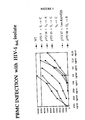
- the dose inhibiting viral proliferation by 90% (ID90) was remarkably lower for pVU15 as compared to wild-type RANTES which has an ID90 of 96 ng/ml (figure 1).
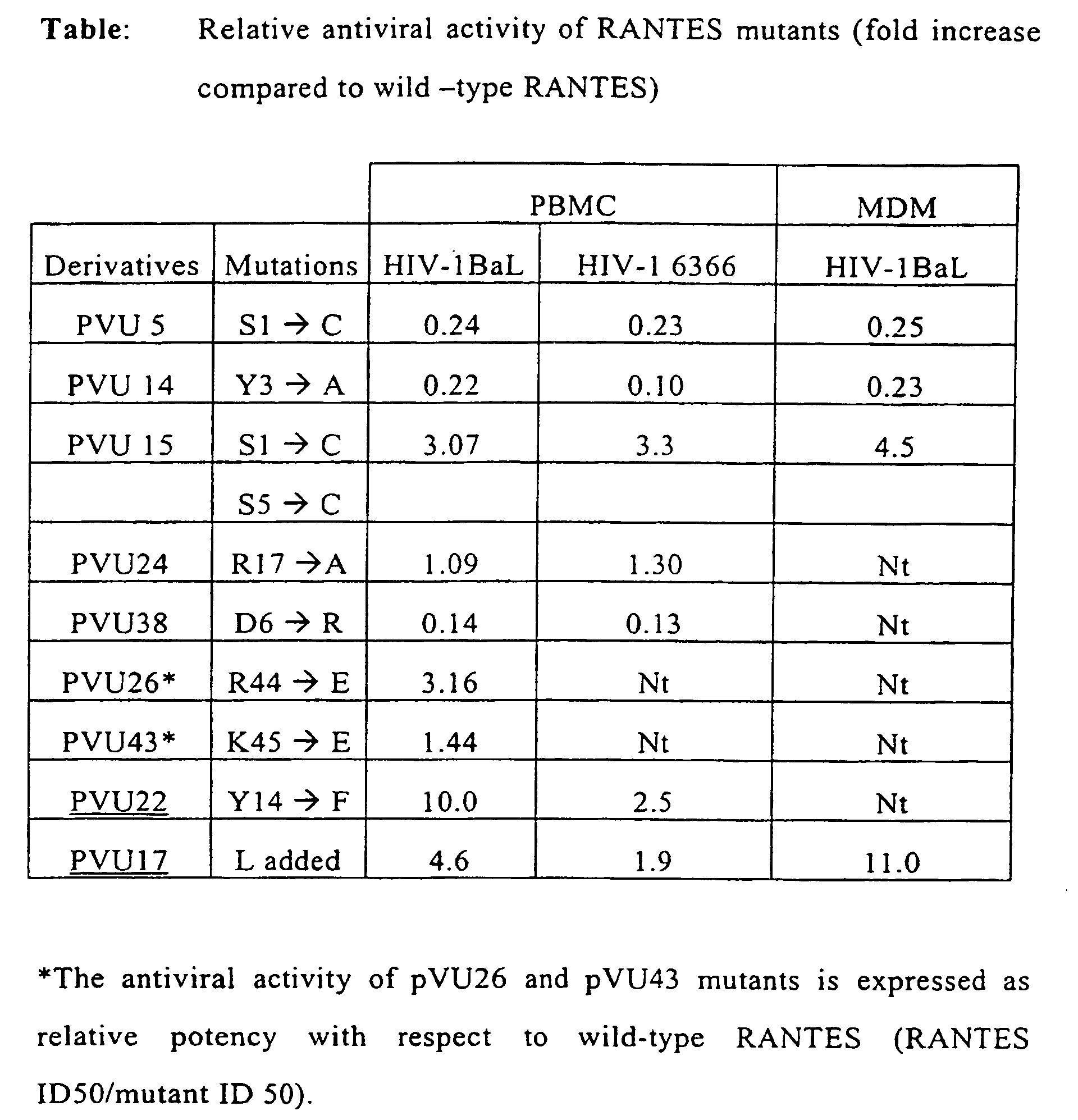
- the antiviral activity of the polypeptides of the invention, expressed as relative potency with respect to wild-type RANTES (ID90 RANTES/ID90 mutant) is illustrated in the following table.
- Wild-type RANTES induced a dose-dependent calcium mobilisation in U87-CD4 cells expressing CCR5 but not in CCR5-negative cells used as the control.
- pVU5 pVU14, pVU15, pVU24, pVU38, pVU26 and pVU43 tested mutants, only pVU38 pVU15 and pVU17 did not induce calcium mobilisation.
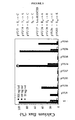
- pVU5, pVU14 and pVU43 had an efficacy lower than wild-type RANTES, as shown in figure 3.
- polypeptides of the invention to induce chemotaxis of primary human lymphocytes and monocytes was also measured, which ability can be mediated by different RANTES receptors, especially by CCR1.
- Monocyte migration was assayed using a modification of the Boyden chamber (48 well Transwell(TM), Costar). After 2 hours incubation in the presence of mutants at various concentrations, the filter was removed and migrated cells counted with a FACS.
- the chemotactic index represents the ratio of the number of cells that migrated in the presence of mutants to that due to the spontaneous migration. All the mutants except pVU5 and pVU14, induced monocyte chemotaxis, but at high concentrations, ranging from 100 to 500 ng/ml, pVU38 mutant exhibited an efficacy clearly lower than wild-type RANTES (figure 4).
- the ratio of the minimal chemotactic dose to the 90% HIV-suppressive dose in PBMC was between 8 and 50 for the mutant, it was between 1.0 and 2.9 for wild-type RANTES.
- mutant pVU15 and pVU17 were studied in terms of intracellular calcium mobilisation.
- the fluorescence signal induced by changes in intra-cellular Ca ++ , was monitored with a fluorometer.
Landscapes
- Health & Medical Sciences (AREA)
- Chemical & Material Sciences (AREA)
- Life Sciences & Earth Sciences (AREA)
- Organic Chemistry (AREA)
- General Health & Medical Sciences (AREA)
- Medicinal Chemistry (AREA)
- Veterinary Medicine (AREA)
- Pharmacology & Pharmacy (AREA)
- Chemical Kinetics & Catalysis (AREA)
- General Chemical & Material Sciences (AREA)
- Public Health (AREA)
- Nuclear Medicine, Radiotherapy & Molecular Imaging (AREA)
- Animal Behavior & Ethology (AREA)
- Immunology (AREA)
- Bioinformatics & Cheminformatics (AREA)
- Engineering & Computer Science (AREA)
- Molecular Biology (AREA)
- Pulmonology (AREA)
- Toxicology (AREA)
- Proteomics, Peptides & Aminoacids (AREA)
- Genetics & Genomics (AREA)
- Biophysics (AREA)
- Virology (AREA)
- Biochemistry (AREA)
- Gastroenterology & Hepatology (AREA)
- Zoology (AREA)
- Tropical Medicine & Parasitology (AREA)
- Rheumatology (AREA)
- Pain & Pain Management (AREA)
- Oncology (AREA)
- AIDS & HIV (AREA)
- Communicable Diseases (AREA)
- Peptides Or Proteins (AREA)
- Medicines That Contain Protein Lipid Enzymes And Other Medicines (AREA)
- Micro-Organisms Or Cultivation Processes Thereof (AREA)
- Preparation Of Compounds By Using Micro-Organisms (AREA)
Abstract
Description
- The present invention provides RANTES mutants with reduced pro-inflammatory activity, increased HIV-suppressive activity, and antagonistic activity to wild-type chemokines.
- Chemokines are small proteins involved in inflammatory mechanisms and in physiologic circulation of hemopoietic cells. Several studies have shown the important role of chemokines in recruiting leucocytes in inflammatory and autoimmune diseases, like rheumatoid arthritis, or during allergic reactions, like in asthma (Schall, T.J. The chemokines. In: The cytokine handbook, A Thompson ed. Academic Press, New York, 1994, p.419-460). Furthermore, some chemokines have been recently identified as potent natural inhibitors of human immunodeficiency virus (HIV) infection (Science 270, 1811-1815, 1995). Chemokines activity is due to their interaction with receptors having different specificity and expressed on the cell surface. Some of these receptors function as co-receptors for HIV-virus (Science 272, 872-877, 1996; Science 272, 1955-1958, 1996). The differential use of such co-receptors, particularly CCR5 the specific receptor for RANTES, MIP-1α and MIP-1β, and CXCR4, the SDF-1 specific receptor, represents a major determinant of the biological diversity among HIV strains. HIV-1 strains unable to infect continuous CD4+ T-cell lines, commonly involved in viral transmission and predominating during the asymptomatic phase of the infection, use primarily CCR5 as a co-receptor and are invariably sensitive to inhibition by CCR5-binding chemokines (Nature Med., 3:1259-1265, 1997). The most effective such chemokine, RANTES, is therefore under investigation for the development of novel anti-HIV therapies (Nature, 383: 400, 1996). RANTES is a chemokine which belongs to the C-C family and is 68 amino acids long. Its sequence has been reported in J. Immunol. (1988).
- WO 96/17935 discloses RANTES molecules which are modified at the N-terminus through the addition of an amino acid such as methionine, leucine or glutamine, as antagonists of RANTES or MIP-1α. In particular, the use thereof for the treatment of asthma, allergic rhinitis, atopic dermatitis, atheroma-atherosclerosis or rheumatoid arthritis is described.
- Further, Elsner J. et al.. in "European Journal of Immunology, Vol. 27, 2892-2898 (1997)", and WO 96/17934, disclose the antagonistic activity of the Met-RANTES peptide.
- The use of wild-type RANTES and of other chemokines of the same family in the treatment of allergic diseases, has been also described in WO 94/07521 and WO 94/21277.
- WO 97/25350 discloses disaggregated mutants of MIP-1α or LD78 having HIV suppressive activity, whereas WO 98/13495 discloses human RANTES mutants unable to aggregate under physiologic ionic strength and which exhibit antiviral activity. Surprisingly now, it has been found that the addition of at least one amino acid at the N-terminus, and/or the substitution of one or more amino acids in the N-terminal region comprised between
amino acids 1 and 11 of the mature form of the human chemokine RANTES, and/or in the "40's-loop" region, extending from Thr 43 to Asn 46, provides a notably higher efficacy towards different HIV isolates, both in primary mononucleated blood cells and in macrophages, a reduced pro-inflammatory activity and a potent antagonistic activity, as compared to the wild-type molecule. In particular, the mutants of the invention competitively antagonise wild-type RANTES, MIP-1α or MIP-1β, and, with a comparable mechanism, the interaction between the HIV virus and a chemokine receptor. One or more of the amino acids:Ser 1, Ser 4, Ser 5, Tyr 3, Asp 6, Tyr 14, Arg 17, Arg 44, Lys 33, Lys 45 and Arg 46 are mutated, with respect to the wild-type human form described in J. Immunol. 141:1018-1025, 1988, as reference molecule. The amino acids Ser 1, Ser 4, Ser 5, Tyr 3 are replaced by neutral or hydrophobic amino acids, Asp 6 is replaced by a positively charged amino acid, Tyr 14 by a hydrophobic aromatic, Arg 17, Lys 33, Arg 44, Lys 45 and Arg 46 by a small sized hydrophobic amino acid. - The following mutations are furthermore disclosed:
Ser 1 with Cys, Ser 4 with Cys, Ser 5 with Cys, Tyr 3 with Ala, Asp 6 with Arg, Tyr 14 with Phe, Arg 17, Lys 33, Arg 44, Lys 45 and Arg 46 with Ala. A first group of mutants is characterised by a triple mutation selected from a)Ser 1 with Cys; Ser 5 with Cys; Asp 6 with Arg, or b)Ser 1 with Cys; Ser 5 with Cys;Arg 17 with Ala, or c)Ser 1 with Cys; Ser 5 with Cys; Arg 44 or Lys 45 or Arg 46, with Ala. A second group is characterised by a double mutation selected from a)Ser 1 and Ser 5 with Cys, or b)Ser 1 and Ser 4 with Cys, or c)Ser 1 with Cys and Arg 44 with Ala, or d) Asp 6 with Arg and Arg 44 with Ala. A third group is characterised by a single mutation selected from a)Ser 1 with Cys, b) Tyr 3 with Ala, c) Asp 6 with Arg, d) Tyr 14 with Phe, e)Arg 17 with Ala, f) Lys 33 with Ala, g) Arg 44 with Ala, h) Lys 45 with Ala, i) Arg 46 with Ala. Furthermore, the above mutants can be added with up to two amino acids at the N-terminal, which are preferably selected from Leu, Ala, Cys or Trp. For example, Ser 4 may be replaced by Cys and simultaneously an additional Cys may be added at the N-terminus. In particular, thesingle mutant Cys 1 or -1, which contains a free -SH group, may represent an optimal substrate for further chemical modifications. - According to other aspects, the application provides wild-type RANTES, having no internal amino acid mutations but bearing an additional amino acid at the N-terminus, which is preferably Cys, said RANTES derivatives being endowed with anti-HIV and anti-inflammatory activity, and the use of wild-type RANTES added with a Leu at the N-terminus (Leu(0) RANTES) as anti-HIV agent.
- It is possible that the properties of some mutants according to the invention, in particular those carrying I or 2 additional Cys, are determined by structural modifications due to the formation of a new disulphide bond. Considering the structure of RANTES (Biochem. 1995, 34:9307-9314) or the structure of homologous molecules like SDF-1 (EMBO J., 16:6996:7007, 1997), it is also possible that the N-terminal or N-loop regions contribute to form the three-dimensional site of interaction with the specific membrane receptor.
- According to another aspect, the invention provides for peptides corresponding to RANTES fragments in the N-terminal, N-loop and/or "40's-loop" regions, said peptides contain the described mutations and competitively antagonise wild-type RANTES, MIP-1α or MIP-1β, or the interaction between HIV virus and a chemokine receptor.
- According to other aspects, the invention provides nucleotide sequences encoding for the described mutants, the expression vectors comprising such nucleotide sequences, chimeric or fusion proteins which comprise a sequence corresponding to the invention mutants and a carrier sequence, for example a sequence aimed at improving the pharmacokinetic properties of active peptides or proteins; furthermore, the invention provides the use of such RANTES mutants as anti-HIV agents as well as anti-inflammatory, anti-allergic or anti-asthmatic agents.
- By the term RANTES, any polypeptide functionally equivalent to the human RANTES is meant, as well as equivalent proteins derived from cross-reactive species, as well as variants and allelic forms thereof which may differ from the standard sequence reported in J. Immunol. 141:1018-1025,1988.
- The mutants of the invention may be prepared by conventional techniques of DNA cloning, recombination and in vitro expression, using suitable synthetic oligonucleotides, for example with techniques of site-directed mutagenesis or by the DNA Polymerase Chain Reaction (PCR). The resulting DNA is then inserted into an appropriate expression vector for a prokaryotic or an eukaryotic host. Alternatively, mutants can be prepared according to conventional methods of peptide synthesis.
- For the envisaged therapeutical purposes, the mutants of the invention will be administered in form of suitable pharmaceutical compositions by the parenteral, sublingual, intranasal, inhalatory or topical route of administration, prepared according to conventional techniques, which are suitable for polypeptide or protein active substances.
- The amount of polypeptide to administer will be sufficient to cause a significant inhibition of HIV infection or replication, or reduction of inflammatory responses, such as in rheumatoid arthritis, or in degenerative diseases such as atherosclerosis, or in allergic diseases such as asthma, rhinitis and dermatitis. The specific dosage will be determined on the basis of clinical trials and will depend on a number of factors, such as conditions, sex, age and weight of the patient and severity of the condition. The mutants of the invention will be also used in the prevention of HIV infection in individuals potentially exposed to the infection.
- Furthermore, the DNA encoding such mutants, which are produced as recombinant proteins in eukaryotic hosts and do not require further chemical modification, may be inserted into gene-therapy vectors (derived for instance, from mouse or human retroviruses, like MuLV or HIV, or Herpes-virus, like HHV-7, or Adenovirus) which allow their production directly into the tissue where the treatment is needed (i.e. lymphonodes, joints, etc.).
- The following examples illustrate the invention in more detail.
- Total RNA was extracted according to conventional techniques (Maniatis) from CD8+ T human lymphocytes purified by absorption with the anti CD8 antibody (Sigma C7423) bound to magnetic beads. The cDNA resulting from reverse transcription, using an oligo-dT as primer, was used for a PCR reaction (Polymerase Chain Reaction) with 2 oligonucleotide primers capable of amplifying the whole region coding for RANTES (434 bp):


- Primers were designed so as to contain the restriction sites underlined in the P1 and P2 sequences, EcoRI (P1) at 5' and BamHI (P2) at 3', respectively. After amplification, the PCR product was digested with the EcoRI and BamHI restriction enzymes, purified from the gel by a QIAEX (Promega) column and re-ligated to the pUC18 vector DNA (Promega), digested in the polylinker with the same enzymes.
- The riligated DNA was then used to transform E. coli competent cells (JM109). After selection of some ampicillin resistant clones, the DNA was sequenced to confirm the identity of the insert. Plasmid DNA was used for PCR mutagenesis, according to the procedure called "overlap extension" (Gene, 1991, 67:70). Such a technique allowed the production of single and multiple mutations in the same gene, by the use of common primers (which anneal to the sequence of the vector: A, B, C) and a series of primers specific for the various mutations. The sequences of the common primers are as follows:



- For the construction of pVU5 plasmid, the specific oligo Cys1 was used (5'-GGGTGTGGTGTCCGAGGAATATGGGCAGGCAG). Such primer contains a single base mutation (C instead of G), which determines the substitution of Ser with Cys in
position 1. - The specific oligo Tyr3 was used for the construction of pVU14 plasmid (5'-GTCCGAGGAAGCTGGGGAGGCAGATG). Such primer introduces a two bases substitution (GC instead of TA), which determines the substitution of Tyr with Ala in position 3.
- The oligo Cys1-Cys5 was used for the construction of pVU15 plasmid (5'-GGGTGTGGTGTCGCAGGAATATGGGCAGGCAG), which incorporates a two base substitution (GC instead of CG), in addition to the substitution of primer cys1 (C instead of G). This determines the double substitution of Ser with Cys in
positions 1 and 5. - The specific oligo Arg17was used for the construction of pVU24 plasmid. Such primer produces two base substitutions (GC instead of CG) which determine the substitution of Arg with Ala in

position 17. - The specific oligo Asp6was used for the construction of pVU38 plasmid. Such primer produces two base substitutions (CG instead of TG) which determine the substitution of Asp with Arg in position 6.

- The specific oligo Arg44was used for the construction of pVU26 plasmid. Such primer produces a two base substitutions (TC instead of CG) determining the substitution of Arg 44 with Glu. A second mutant for this position (Arg44―Ala) was produced with a new oligo having the same sequence except for the double underlined T, substituted in G.

- The specific oligo Lys45was used for the construction of pVU43 plasmid. Such primer produces a single base substitution (C instead of T, underlined) which determines the substitution of Lys with Glu in position 45. A second mutant for this position (Lys 45―Ala) was produced with a new oligo having the same sequence except for the double underlined T, substituted in G.

- The specific oligo Leu-R was used for pVU17 mutant preparation (5'-ATATGGGGATAAGGCAGATGCAGGAGCGCA). In this primer a three nucleotides insertion at the 5' of the molecule is added, before the first naturally occurring codon. The antisense triplet encodes for the additional N-terminal Leucine.
- The specific oligo Tyr14was used for the construction of pVU22 plasmid. Such primer introduce the substitution of Tyr14 with Phe in

position 14. A second mutant for this position (Tyr 14-Ala) was also produced. - Other mutants were prepared using the following oligo:the substitution of two G with two C (underlined) produces the substitution of two Ser (in

positions 1 and 4) with two Cys;the substitution of G with C (underlined) produces the substitution of Ser (in position 4) with Cys, whereas the insertion of GCA produces the insertion of an additional Cys in
position 0;the insertion of 6 nucleotides (GGCTAA) upstream the codon of
Ser 1 produces the insertion of Leu and Ala in positions -1 and 0, respectively.the substitution of A in T (underlined) allows the substitution of Tyr14 in Phe.
- The PCR products were purified and cloned into the BGIII-BamHI site of the pUC18 vector. The recombinants were sequenced to confirm their identity and check for undesired mutations introduced during the cloning procedures.
- The Baculovirus expression system has been known for some years. It is based on the expression machinery of the Autographa californica Nuclear Polyhedrosis Virus (AcNPV). In this system the gene of interest are placed, by homologous recombination, under the control of the polyhedrin gene promoter, which is a non-essential gene but expressed at very high levels during the late phase of viral infection.
- The choice of such a system involves a number of advantages, the main ones being: 1) high expression levels; 2) functionality of the recombinant protein, which is correctly processed and folded (most modifications correspond to the ones introduced by mammalian cells); 3) extracellular secretion due to the signal peptide (O'Reilly DR, Miller LK, Luckow VA, "Baculovirus expression vectors - A laboratory manual", Oxford University Press, 1994).
- In order to express RANTES and its mutants in this system, the corresponding DNA were cut out from pUC18 and cloned into the BamHI-EcoRI site of pVL1392 plasmid polylinker region (Pharmingen), under the control of the polyhedrin promoter. This plasmid also contains downstream of the cloned insert, an AcNPV homology region for homology recombination. An Autographa californica continuous cell line (SF9, Pharmingen) was transfected, using the calcium-phosphate co-precipitation, with the DNA of the recombinant plasmids and with the Baculovirus DNA containing a lethal deletion (BaculoGoldTM DNA, Pharmingen). Only a homologous recombination leading to the substitution of the polyhedrin gene with the DNA of the interesting mutants provides vital viral particles (Gruenwald S, Heitz J, "Baculovirus expression vectors: procedures and methods manual", Pharmingen, 1993). The supernatant of the transfected cultures was then collected at the 3rd day, diluted and used to infect new SF9 cultures, thereby obtaining the viral lineage from a single infectious particles (end-point dilution). As expected, the RANTES protein and its mutants are secreted and their expression levels may be evaluated by a commercial ELISA test (R&D). The viral DNA was extracted from the potential recombinants, as detected by ELISA, and sequenced by PCR (Cycle Sequencing, Amersham) to confirm that the mutations had also occurred in the viral lineage. The selected viral stock was subsequently subjected to repeated cycles of infection and amplification in SF9 cells, to obtain high titer supernatants. These supernatants were used for the production of recombinant chemokines on a large scale, infecting a continuous Trichoplusia cell line (High Five, Invitrogen). These cells are capable of growth in a serum-free medium, simplifying the following protein purification procedures. 1.5 x 10⁸ cells were infected with 1.5 x 10⁹ vital viral particles in a final volume of 200 ml. At the 4th infection day the supernatant was collected, filtered (0.45 u) and the mutants purified on heparin columns. After repeated washing with PBS, the column was eluted with PBS + 1.5 M NaCl in 10 ml. An aliquot of the eluate was subjected to electrophoresis on acrylamide gel SDS-PAGE and stained with Coomassie blue, thus evaluating a 90% purity of the recombinant proteins. The eluate was subsequently dia-filtered to remove the present salts and concentrated (Centricon, cut-
off 3000, Millipore). The final quantification of RANTES and its mutants was performed by an ELISA kit for the quantitative determination of RANTES (R&D) and confirmed by Western blot and capillary electrophoresis. - The ability of the mutants obtained as in Example 2, to inhibit infection by the prototypic macrophage-tropic viral strain, HIV-1BaL, was measured in primary cultures of activated peripheral blood mononuclear cells (PMBC). The procedure used to infect PBL and to evaluate p24 antigen production has been already described in the literature (Scarlatti et al., Nature Medicine, 1997). The dose inhibiting viral proliferation by 90% (ID90) was remarkably lower for pVU15 as compared to wild-type RANTES which has an ID90 of 96 ng/ml (figure 1). The suppressive activity of pVU5, pVU14, pVU15, pVU24 and pVU38, was confirmed in another HIV strain, isolated from a patient with asymptomatic infection (HIV-1 6366) and passaged only once in peripheral blood mononuclear cells (figure 2): as for the BaL strain, this isolate depended upon CCR5 co-receptor usage(ibid.). The antiviral activity of the polypeptides of the invention, expressed as relative potency with respect to wild-type RANTES (ID90 RANTES/ID90 mutant) is illustrated in the following table.
- The ability of the RANTES mutants to mobilise intra-cellular calcium, which is induced by G-protein-coupled receptor activation and it is connected to the efficacy of signal trasduction of various ligands, was studied.
- Cells were loaded with Fura-2 for one hour and stimulated by mutants at different concentrations. The effect was measured using a fluorimeter and calculated as the % increase of intra-cellular calcium. Wild-type RANTES induced a dose-dependent calcium mobilisation in U87-CD4 cells expressing CCR5 but not in CCR5-negative cells used as the control. Among pVU5, pVU14, pVU15, pVU24, pVU38, pVU26 and pVU43 tested mutants, only pVU38 pVU15 and pVU17 did not induce calcium mobilisation. pVU5, pVU14 and pVU43 had an efficacy lower than wild-type RANTES, as shown in figure 3.
- The ability of the polypeptides of the invention to induce chemotaxis of primary human lymphocytes and monocytes was also measured, which ability can be mediated by different RANTES receptors, especially by CCR1.
- Monocyte migration was assayed using a modification of the Boyden chamber (48 well Transwell(TM), Costar). After 2 hours incubation in the presence of mutants at various concentrations, the filter was removed and migrated cells counted with a FACS. The chemotactic index represents the ratio of the number of cells that migrated in the presence of mutants to that due to the spontaneous migration. All the mutants except pVU5 and pVU14, induced monocyte chemotaxis, but at high concentrations, ranging from 100 to 500 ng/ml, pVU38 mutant exhibited an efficacy clearly lower than wild-type RANTES (figure 4).
- Thus, whereas the ratio of the minimal chemotactic dose to the 90% HIV-suppressive dose in PBMC was between 8 and 50 for the mutant, it was between 1.0 and 2.9 for wild-type RANTES.
- The ability of the mutant pVU15 and pVU17 to antagonise CCR3- and CCR5- receptor activation by wild-type RANTES, was studied in terms of intracellular calcium mobilisation.
- When added immediately prior to the wild-type molecule, pVU15 reduced the response to wild-type RANTES with a dose-dependent effect. With respect to CCR5, a concentration of 500 ng/ml gave the highest inhibition of wild-type RANTES activity, while with respect to CCR3, the receptor desensitisation was incomplete (see figures 5 and 6).
- The fluorescence signal, induced by changes in intra-cellular Ca++, was monitored with a fluorometer.
Claims (16)
- A RANTES mutant, said mutant having the capability to competitively antagonise wild type RANTES, MIP-1α or MIP-1β, or to antagonise the interaction between HIV virus and a chemokine receptor, and bearing a mutation which is selected from:a) Arg 44 with a negatively charged or a small hydrophobic amino acid;b) Lys 45 with a negatively charged or a small hydrophobic amino acid.
- A RANTES mutant according to claim 1, wherein said mutation is the substitution of Arg 44 with Glu or Ala.
- A RANTES mutant according to any of the preceding claims, further comprising a single mutation selected from:a) Tyr 3 with Ala;b) Ser 1 with Cys;c) Asp 6 with Arg;d) Tyr 14 with Phe;e) Arg 17 with Ala;f) Lys 45 with Glu or Ala.
- A RANTES mutant according to claim 1, wherein said mutation is the substitution of Lys45 with Glu or Ala.
- A RANTES mutant according to any of the preceding claims, further comprising a single mutation selected from:a) Tyr 3 with Ala;b) Ser 1 with Cys;c) Asp 6 with Arg;d) Tyr 14 with Phe;e) Arg 17 with Ala;
- A RANTES mutant according to any of the preceding claims, furtjer comprising one or two additional amino acids at the N-terminal.
- A RANTES mutant according to claim 6, wherein said additional amino acids are selected from Leu, Ala, Cys, and Trp.
- A RANTES mutant according to claim 7, wherein said additional amino acid is Leu.
- A peptide derived from RANTES sequence of 40's loop regions comprising the mutation or addition of claims 1-8, having the ability to competitively antagonise wild type RANTES, MIP-1α or MIP-1β, or to antagonise the interaction between HIV virus and a chemokine receptor.
- A nucleotide sequence encoding a RANTES mutant of claims 1-8.
- A vector for eukaryotic or prokaryotic expression comprising the sequence of claim 10.
- A pharmaceutical composition having HIV-inhibiting, antiallergic, antiasthmatic or anti-inflammatory activity, comprising a mutant of claims 1-8 as the active ingredient.
- A pharmaceutical composition having HIV-inhibiting, antiallergic, antiasthmatic or anti-inflammatory activity, comprising a peptide of claim 9 as the active ingredient.
- A process for preparing RANTES mutants of claims 1-8 which comprises culturing eukaryotic cells transfected with vectors containing DNA fragments encoding said mutants.
- A process according to claim 14, wherein said vector is a baculovirus expression vector.
- A process according to claim 14, wherein said vector is an E. coli expression vector.
Priority Applications (2)
| Application Number | Priority Date | Filing Date | Title |
|---|---|---|---|
| DK03027936T DK1431391T3 (en) | 1997-12-23 | 1998-12-21 | RANTES mutants and their therapeutic uses |
| EP03027936A EP1431391B1 (en) | 1997-12-23 | 1998-12-21 | Rantes mutants and therapeutic applications thereof |
Applications Claiming Priority (5)
| Application Number | Priority Date | Filing Date | Title |
|---|---|---|---|
| ITMI972865 | 1997-12-23 | ||
| ITMI972865 IT1297015B1 (en) | 1997-12-23 | 1997-12-23 | RANTES mutants, useful for inhibiting HIV |
| IT98MI001866 IT1302012B1 (en) | 1998-08-07 | 1998-08-07 | RANTES mutants, useful for inhibiting HIV |
| ITMI981866 | 1998-08-07 | ||
| PCT/EP1998/008354 WO1999033989A2 (en) | 1997-12-23 | 1998-12-21 | Rantes mutants and therapeutic applications thereof |
Related Child Applications (2)
| Application Number | Title | Priority Date | Filing Date |
|---|---|---|---|
| EP03027936A Division EP1431391B1 (en) | 1997-12-23 | 1998-12-21 | Rantes mutants and therapeutic applications thereof |
| EP03027936.8 Division-Into | 2003-12-04 |
Publications (2)
| Publication Number | Publication Date |
|---|---|
| EP1040191A2 EP1040191A2 (en) | 2000-10-04 |
| EP1040191B1 true EP1040191B1 (en) | 2005-11-02 |
Family
ID=26331556
Family Applications (2)
| Application Number | Title | Priority Date | Filing Date |
|---|---|---|---|
| EP98966650A Expired - Lifetime EP1040191B1 (en) | 1997-12-23 | 1998-12-21 | Rantes mutants and therapeutic applications thereof |
| EP03027936A Expired - Lifetime EP1431391B1 (en) | 1997-12-23 | 1998-12-21 | Rantes mutants and therapeutic applications thereof |
Family Applications After (1)
| Application Number | Title | Priority Date | Filing Date |
|---|---|---|---|
| EP03027936A Expired - Lifetime EP1431391B1 (en) | 1997-12-23 | 1998-12-21 | Rantes mutants and therapeutic applications thereof |
Country Status (10)
| Country | Link |
|---|---|
| US (2) | US6608177B1 (en) |
| EP (2) | EP1040191B1 (en) |
| JP (1) | JP4323094B2 (en) |
| AT (2) | ATE308617T1 (en) |
| AU (1) | AU2415599A (en) |
| CA (1) | CA2316447C (en) |
| DE (2) | DE69832197T2 (en) |
| DK (2) | DK1431391T3 (en) |
| ES (2) | ES2247738T3 (en) |
| WO (1) | WO1999033989A2 (en) |
Families Citing this family (12)
| Publication number | Priority date | Publication date | Assignee | Title |
|---|---|---|---|---|
| US6025154A (en) | 1995-06-06 | 2000-02-15 | Human Genome Sciences, Inc. | Polynucleotides encoding human G-protein chemokine receptor HDGNR10 |
| US6743594B1 (en) | 1995-06-06 | 2004-06-01 | Human Genome Sciences, Inc. | Methods of screening using human G-protein chemokine receptor HDGNR10 (CCR5) |
| UA77950C2 (en) * | 2000-10-04 | 2007-02-15 | Applied Research Systems | Use of mutants of cc chemokines for treatment of multiple sclerosis |
| US7175988B2 (en) | 2001-02-09 | 2007-02-13 | Human Genome Sciences, Inc. | Human G-protein Chemokine Receptor (CCR5) HDGNR10 |
| US7553483B2 (en) | 2001-12-17 | 2009-06-30 | Merck Serono Sa | Chemokine mutants acting as chemokine antagonists |
| US7393934B2 (en) | 2001-12-21 | 2008-07-01 | Human Genome Sciences, Inc. | Human G-protein chemokine receptor (CCR5) HDGNR10 |
| EP1494703B1 (en) * | 2002-04-04 | 2006-03-08 | Applied Research Systems ARS Holding N.V. | Chemokines mutants having improved oral bioavailability |
| WO2005105841A2 (en) | 2004-03-12 | 2005-11-10 | Human Genome Sciences, Inc. | Human g-protein chemokine receptor (ccr5) hdgnr10 |
| WO2008063996A2 (en) * | 2006-11-13 | 2008-05-29 | Functional Genetics, Inc. | Therapeutic targeting of escort proteins |
| US8012474B2 (en) * | 2007-08-02 | 2011-09-06 | Nov Immune S.A. | Anti-RANTES antibodies |
| CN112469430B (en) | 2018-05-28 | 2024-12-24 | 日内瓦大学 | Ways to suppress inflammation in the brain |
| WO2025172252A1 (en) * | 2024-02-15 | 2025-08-21 | Novo Nordisk A/S | Protracted ccr5 antagonists and uses thereof |
Family Cites Families (3)
| Publication number | Priority date | Publication date | Assignee | Title |
|---|---|---|---|---|
| FI972433A0 (en) * | 1994-12-08 | 1997-06-06 | Glaxo Group Ltd | Rantes peptide and fragments and compositions containing it suitable for the treatment of inflammation |
| FR2748938B1 (en) * | 1996-05-22 | 1998-07-31 | Pasteur Institut | USE OF ANTAGONIST MOLECULES OF CHEMOKINES FOR THEIR ANTIVIRAL ACTIVITY IN PARTICULAR AGAINST HIV-TYPE RETROVIRUSES |
| EP0972043A1 (en) * | 1996-09-25 | 2000-01-19 | British Biotech Pharmaceuticals Limited | Human rantes mutants incapable of aggregate formation |
-
1998
- 1998-12-21 DK DK03027936T patent/DK1431391T3/en active
- 1998-12-21 AU AU24155/99A patent/AU2415599A/en not_active Abandoned
- 1998-12-21 EP EP98966650A patent/EP1040191B1/en not_active Expired - Lifetime
- 1998-12-21 AT AT03027936T patent/ATE308617T1/en active
- 1998-12-21 JP JP2000526645A patent/JP4323094B2/en not_active Expired - Fee Related
- 1998-12-21 ES ES98966650T patent/ES2247738T3/en not_active Expired - Lifetime
- 1998-12-21 AT AT98966650T patent/ATE308616T1/en active
- 1998-12-21 DE DE69832197T patent/DE69832197T2/en not_active Expired - Lifetime
- 1998-12-21 WO PCT/EP1998/008354 patent/WO1999033989A2/en not_active Ceased
- 1998-12-21 DE DE69832216T patent/DE69832216T2/en not_active Expired - Lifetime
- 1998-12-21 ES ES03027936T patent/ES2247475T3/en not_active Expired - Lifetime
- 1998-12-21 DK DK98966650T patent/DK1040191T3/en active
- 1998-12-21 CA CA002316447A patent/CA2316447C/en not_active Expired - Fee Related
- 1998-12-21 EP EP03027936A patent/EP1431391B1/en not_active Expired - Lifetime
-
1999
- 1999-07-08 US US09/581,070 patent/US6608177B1/en not_active Expired - Fee Related
-
2003
- 2003-03-28 US US10/400,487 patent/US7164000B2/en not_active Expired - Fee Related
Also Published As
| Publication number | Publication date |
|---|---|
| WO1999033989A2 (en) | 1999-07-08 |
| DE69832197D1 (en) | 2005-12-08 |
| ATE308616T1 (en) | 2005-11-15 |
| EP1431391B1 (en) | 2005-11-02 |
| CA2316447C (en) | 2009-07-28 |
| EP1431391A3 (en) | 2004-10-06 |
| AU2415599A (en) | 1999-07-19 |
| DK1431391T3 (en) | 2005-12-19 |
| ATE308617T1 (en) | 2005-11-15 |
| EP1040191A2 (en) | 2000-10-04 |
| ES2247738T3 (en) | 2006-03-01 |
| EP1431391A2 (en) | 2004-06-23 |
| JP4323094B2 (en) | 2009-09-02 |
| DE69832197T2 (en) | 2006-05-24 |
| WO1999033989A3 (en) | 1999-08-26 |
| ES2247475T3 (en) | 2006-03-01 |
| US20030216549A1 (en) | 2003-11-20 |
| JP2002507388A (en) | 2002-03-12 |
| US6608177B1 (en) | 2003-08-19 |
| DK1040191T3 (en) | 2005-12-19 |
| CA2316447A1 (en) | 1999-07-08 |
| DE69832216T2 (en) | 2006-05-24 |
| DE69832216D1 (en) | 2005-12-08 |
| US7164000B2 (en) | 2007-01-16 |
Similar Documents
| Publication | Publication Date | Title |
|---|---|---|
| AU708903B2 (en) | Human chemokine polypeptides | |
| US6174995B1 (en) | Human chemokines, CKβ4 and CKβ10/MCP-4 | |
| US6458349B1 (en) | Chemokine β-4 polypeptides | |
| EP1012260A1 (en) | Interleukin-20 | |
| EP1040191B1 (en) | Rantes mutants and therapeutic applications thereof | |
| Polo et al. | Enhancement of the HIV‐1 inhibitory activity of RANTES by modification of the N‐terminal region: dissociation from CCR5 activation | |
| JP2000507101A (en) | Chemokine Alpha 2 | |
| EP0885293A1 (en) | Human chemokine polypeptides | |
| AU711573B2 (en) | Short forms of chemokine beta-8 | |
| AU765890B2 (en) | Keratinocyte derived interferon | |
| US6537539B2 (en) | Immune cell cytokine | |
| ITMI981866A1 (en) | RANTES DERIVATIVES AND THEIR THERAPEUTIC APPLICATIONS | |
| ITMI972865A1 (en) | RANTES MUTANTS AND THEIR THERAPEUTIC APPLICATIONS | |
| AU767527B2 (en) | Human chemokine polypeptides | |
| US20030138400A1 (en) | Short forms of chemokine beta-8 | |
| AU753088B2 (en) | Human chemokine polypeptides | |
| JP2002136294A (en) | Human chemokine polypeptide | |
| MXPA97009090A (en) | Beta-11 human chemistry and chemisine alpha-1 hum | |
| AU2003271323A1 (en) | Keratinocyte derived interferon | |
| MXPA97009192A (en) | Protein 4 chemotherapy of monoci | |
| CA2233367A1 (en) | Short forms of chemokine .beta.-8 | |
| JP2002085063A (en) | Polynucleotide encoding C5a receptor | |
| AU2004200581A1 (en) | Human chemokine polypeptides | |
| JP2000506366A (en) | Chemokine Alpha 3 |
Legal Events
| Date | Code | Title | Description |
|---|---|---|---|
| PUAI | Public reference made under article 153(3) epc to a published international application that has entered the european phase |
Free format text: ORIGINAL CODE: 0009012 |
|
| 17P | Request for examination filed |
Effective date: 20000613 |
|
| AK | Designated contracting states |
Kind code of ref document: A2 Designated state(s): AT BE CH CY DE DK ES FI FR GB GR IE IT LI LU MC NL PT SE |
|
| 17Q | First examination report despatched |
Effective date: 20030603 |
|
| GRAP | Despatch of communication of intention to grant a patent |
Free format text: ORIGINAL CODE: EPIDOSNIGR1 |
|
| GRAS | Grant fee paid |
Free format text: ORIGINAL CODE: EPIDOSNIGR3 |
|
| GRAA | (expected) grant |
Free format text: ORIGINAL CODE: 0009210 |
|
| AK | Designated contracting states |
Kind code of ref document: B1 Designated state(s): AT BE CH CY DE DK ES FI FR GB GR IE IT LI LU MC NL PT SE |
|
| REG | Reference to a national code |
Ref country code: GB Ref legal event code: FG4D |
|
| REG | Reference to a national code |
Ref country code: CH Ref legal event code: EP |
|
| REG | Reference to a national code |
Ref country code: SE Ref legal event code: TRGR |
|
| REG | Reference to a national code |
Ref country code: CH Ref legal event code: NV Representative=s name: SERONO INTERNATIONAL SA CORPORATE IP DEPARTMENT |
|
| REF | Corresponds to: |
Ref document number: 69832197 Country of ref document: DE Date of ref document: 20051208 Kind code of ref document: P |
|
| REG | Reference to a national code |
Ref country code: DK Ref legal event code: T3 |
|
| REG | Reference to a national code |
Ref country code: GR Ref legal event code: EP Ref document number: 20050403623 Country of ref document: GR |
|
| REG | Reference to a national code |
Ref country code: ES Ref legal event code: FG2A Ref document number: 2247738 Country of ref document: ES Kind code of ref document: T3 |
|
| ET | Fr: translation filed | ||
| PLBE | No opposition filed within time limit |
Free format text: ORIGINAL CODE: 0009261 |
|
| STAA | Information on the status of an ep patent application or granted ep patent |
Free format text: STATUS: NO OPPOSITION FILED WITHIN TIME LIMIT |
|
| 26N | No opposition filed |
Effective date: 20060803 |
|
| REG | Reference to a national code |
Ref country code: CH Ref legal event code: PFA Owner name: FONDAZIONE CENTRO SAN RAFFAELE DEL MONTE TABOR Free format text: FONDAZIONE CENTRO SAN RAFFAELE DEL MONTE TABOR#VIA OLGETTINA, 60#20132 MILANO (IT) -TRANSFER TO- FONDAZIONE CENTRO SAN RAFFAELE DEL MONTE TABOR#VIA OLGETTINA, 60#20132 MILANO (IT) |
|
| REG | Reference to a national code |
Ref country code: CH Ref legal event code: PFA Owner name: FONDAZIONE CENTRO SAN RAFFAELE DEL MONTE TABOR Free format text: FONDAZIONE CENTRO SAN RAFFAELE DEL MONTE TABOR#VIA OLGETTINA, 60#20132 MILANO (IT) -TRANSFER TO- FONDAZIONE CENTRO SAN RAFFAELE DEL MONTE TABOR#VIA OLGETTINA, 60#20132 MILANO (IT) |
|
| PGFP | Annual fee paid to national office [announced via postgrant information from national office to epo] |
Ref country code: DK Payment date: 20101210 Year of fee payment: 13 Ref country code: AT Payment date: 20101129 Year of fee payment: 13 |
|
| PGFP | Annual fee paid to national office [announced via postgrant information from national office to epo] |
Ref country code: LU Payment date: 20110118 Year of fee payment: 13 |
|
| PGFP | Annual fee paid to national office [announced via postgrant information from national office to epo] |
Ref country code: GB Payment date: 20101215 Year of fee payment: 13 Ref country code: GR Payment date: 20101115 Year of fee payment: 13 Ref country code: IT Payment date: 20101218 Year of fee payment: 13 |
|
| PGFP | Annual fee paid to national office [announced via postgrant information from national office to epo] |
Ref country code: DE Payment date: 20101215 Year of fee payment: 13 |
|
| PGFP | Annual fee paid to national office [announced via postgrant information from national office to epo] |
Ref country code: PT Payment date: 20111221 Year of fee payment: 14 Ref country code: SE Payment date: 20111213 Year of fee payment: 14 Ref country code: CH Payment date: 20111213 Year of fee payment: 14 Ref country code: FR Payment date: 20111219 Year of fee payment: 14 Ref country code: FI Payment date: 20111212 Year of fee payment: 14 Ref country code: NL Payment date: 20111220 Year of fee payment: 14 Ref country code: IE Payment date: 20111212 Year of fee payment: 14 Ref country code: MC Payment date: 20111128 Year of fee payment: 14 |
|
| PGFP | Annual fee paid to national office [announced via postgrant information from national office to epo] |
Ref country code: BE Payment date: 20111229 Year of fee payment: 14 |
|
| REG | Reference to a national code |
Ref country code: GB Ref legal event code: 732E Free format text: REGISTERED BETWEEN 20130425 AND 20130501 |
|
| PGFP | Annual fee paid to national office [announced via postgrant information from national office to epo] |
Ref country code: CY Payment date: 20121214 Year of fee payment: 15 |
|
| PGFP | Annual fee paid to national office [announced via postgrant information from national office to epo] |
Ref country code: ES Payment date: 20120116 Year of fee payment: 14 |
|
| REG | Reference to a national code |
Ref country code: PT Ref legal event code: MM4A Free format text: LAPSE DUE TO NON-PAYMENT OF FEES Effective date: 20130621 |
|
| BERE | Be: lapsed |
Owner name: *FONDAZIONE CENTRO SAN RAFFAELE DEL MONTE TABOR Effective date: 20121231 |
|
| REG | Reference to a national code |
Ref country code: NL Ref legal event code: V1 Effective date: 20130701 |
|
| PG25 | Lapsed in a contracting state [announced via postgrant information from national office to epo] |
Ref country code: MC Free format text: LAPSE BECAUSE OF NON-PAYMENT OF DUE FEES Effective date: 20121231 Ref country code: SE Free format text: LAPSE BECAUSE OF NON-PAYMENT OF DUE FEES Effective date: 20121222 |
|
| REG | Reference to a national code |
Ref country code: CH Ref legal event code: PL |
|
| REG | Reference to a national code |
Ref country code: AT Ref legal event code: MM01 Ref document number: 308616 Country of ref document: AT Kind code of ref document: T Effective date: 20121221 |
|
| REG | Reference to a national code |
Ref country code: DK Ref legal event code: EBP |
|
| GBPC | Gb: european patent ceased through non-payment of renewal fee |
Effective date: 20121221 |
|
| PG25 | Lapsed in a contracting state [announced via postgrant information from national office to epo] |
Ref country code: FI Free format text: LAPSE BECAUSE OF NON-PAYMENT OF DUE FEES Effective date: 20121221 Ref country code: PT Free format text: LAPSE BECAUSE OF NON-PAYMENT OF DUE FEES Effective date: 20130621 |
|
| REG | Reference to a national code |
Ref country code: GR Ref legal event code: ML Ref document number: 20050403623 Country of ref document: GR Effective date: 20130703 |
|
| REG | Reference to a national code |
Ref country code: IE Ref legal event code: MM4A |
|
| REG | Reference to a national code |
Ref country code: FR Ref legal event code: ST Effective date: 20130830 |
|
| PG25 | Lapsed in a contracting state [announced via postgrant information from national office to epo] |
Ref country code: BE Free format text: LAPSE BECAUSE OF NON-PAYMENT OF DUE FEES Effective date: 20121231 |
|
| REG | Reference to a national code |
Ref country code: DE Ref legal event code: R119 Ref document number: 69832197 Country of ref document: DE Effective date: 20130702 |
|
| PG25 | Lapsed in a contracting state [announced via postgrant information from national office to epo] |
Ref country code: GR Free format text: LAPSE BECAUSE OF NON-PAYMENT OF DUE FEES Effective date: 20130703 Ref country code: AT Free format text: LAPSE BECAUSE OF NON-PAYMENT OF DUE FEES Effective date: 20121221 Ref country code: IE Free format text: LAPSE BECAUSE OF NON-PAYMENT OF DUE FEES Effective date: 20121221 Ref country code: NL Free format text: LAPSE BECAUSE OF NON-PAYMENT OF DUE FEES Effective date: 20130701 Ref country code: CH Free format text: LAPSE BECAUSE OF NON-PAYMENT OF DUE FEES Effective date: 20121231 Ref country code: DE Free format text: LAPSE BECAUSE OF NON-PAYMENT OF DUE FEES Effective date: 20130702 Ref country code: LI Free format text: LAPSE BECAUSE OF NON-PAYMENT OF DUE FEES Effective date: 20121231 |
|
| PG25 | Lapsed in a contracting state [announced via postgrant information from national office to epo] |
Ref country code: FR Free format text: LAPSE BECAUSE OF NON-PAYMENT OF DUE FEES Effective date: 20130102 Ref country code: GB Free format text: LAPSE BECAUSE OF NON-PAYMENT OF DUE FEES Effective date: 20121221 |
|
| REG | Reference to a national code |
Ref country code: CH Ref legal event code: PUE Owner name: FONDAZIONE CENTRO SAN RAFFAELE DEL MONTE TABOR, IT Free format text: FORMER OWNER: OSPEDALE SAN RAFFAELE S.R.L., IT Ref country code: CH Ref legal event code: PK Free format text: DIE UEBERTRAGUNG VOM 14.02.2013 VON FONDAZIONE CENTRO SAN RAFFAELE DEL MONTE TABOR AUF OSPEDALE SAN RAFFAELE S.R.L. ERFOLGTE IRRTUEMLICH. Ref country code: CH Ref legal event code: NV Representative=s name: MERCK SERONO S.A. - GENEVA, CH |
|
| PG25 | Lapsed in a contracting state [announced via postgrant information from national office to epo] |
Ref country code: IT Free format text: LAPSE BECAUSE OF NON-PAYMENT OF DUE FEES Effective date: 20121221 |
|
| PG25 | Lapsed in a contracting state [announced via postgrant information from national office to epo] |
Ref country code: DK Free format text: LAPSE BECAUSE OF NON-PAYMENT OF DUE FEES Effective date: 20130102 |
|
| REG | Reference to a national code |
Ref country code: ES Ref legal event code: FD2A Effective date: 20140307 |
|
| PG25 | Lapsed in a contracting state [announced via postgrant information from national office to epo] |
Ref country code: LU Free format text: LAPSE BECAUSE OF NON-PAYMENT OF DUE FEES Effective date: 20121221 Ref country code: ES Free format text: LAPSE BECAUSE OF NON-PAYMENT OF DUE FEES Effective date: 20121222 |
|
| PG25 | Lapsed in a contracting state [announced via postgrant information from national office to epo] |
Ref country code: CY Free format text: LAPSE BECAUSE OF NON-PAYMENT OF DUE FEES Effective date: 20131221 |