EP1039464A2 - Multi-session disc having DVD application session, and recording and/or reproducing apparatus and method thereof - Google Patents
Multi-session disc having DVD application session, and recording and/or reproducing apparatus and method thereof Download PDFInfo
- Publication number
- EP1039464A2 EP1039464A2 EP00302454A EP00302454A EP1039464A2 EP 1039464 A2 EP1039464 A2 EP 1039464A2 EP 00302454 A EP00302454 A EP 00302454A EP 00302454 A EP00302454 A EP 00302454A EP 1039464 A2 EP1039464 A2 EP 1039464A2
- Authority
- EP
- European Patent Office
- Prior art keywords
- disc
- session
- video
- rom
- dvd
- Prior art date
- Legal status (The legal status is an assumption and is not a legal conclusion. Google has not performed a legal analysis and makes no representation as to the accuracy of the status listed.)
- Granted
Links
Images


Classifications
-
- G—PHYSICS
- G11—INFORMATION STORAGE
- G11B—INFORMATION STORAGE BASED ON RELATIVE MOVEMENT BETWEEN RECORD CARRIER AND TRANSDUCER
- G11B20/00—Signal processing not specific to the method of recording or reproducing; Circuits therefor
- G11B20/10—Digital recording or reproducing
- G11B20/12—Formatting, e.g. arrangement of data block or words on the record carriers
-
- G—PHYSICS
- G11—INFORMATION STORAGE
- G11B—INFORMATION STORAGE BASED ON RELATIVE MOVEMENT BETWEEN RECORD CARRIER AND TRANSDUCER
- G11B27/00—Editing; Indexing; Addressing; Timing or synchronising; Monitoring; Measuring tape travel
- G11B27/10—Indexing; Addressing; Timing or synchronising; Measuring tape travel
- G11B27/19—Indexing; Addressing; Timing or synchronising; Measuring tape travel by using information detectable on the record carrier
- G11B27/28—Indexing; Addressing; Timing or synchronising; Measuring tape travel by using information detectable on the record carrier by using information signals recorded by the same method as the main recording
- G11B27/32—Indexing; Addressing; Timing or synchronising; Measuring tape travel by using information detectable on the record carrier by using information signals recorded by the same method as the main recording on separate auxiliary tracks of the same or an auxiliary record carrier
-
- G—PHYSICS
- G11—INFORMATION STORAGE
- G11B—INFORMATION STORAGE BASED ON RELATIVE MOVEMENT BETWEEN RECORD CARRIER AND TRANSDUCER
- G11B27/00—Editing; Indexing; Addressing; Timing or synchronising; Monitoring; Measuring tape travel
- G11B27/10—Indexing; Addressing; Timing or synchronising; Measuring tape travel
- G11B27/19—Indexing; Addressing; Timing or synchronising; Measuring tape travel by using information detectable on the record carrier
- G11B27/28—Indexing; Addressing; Timing or synchronising; Measuring tape travel by using information detectable on the record carrier by using information signals recorded by the same method as the main recording
- G11B27/32—Indexing; Addressing; Timing or synchronising; Measuring tape travel by using information detectable on the record carrier by using information signals recorded by the same method as the main recording on separate auxiliary tracks of the same or an auxiliary record carrier
- G11B27/327—Table of contents
- G11B27/329—Table of contents on a disc [VTOC]
-
- G—PHYSICS
- G11—INFORMATION STORAGE
- G11B—INFORMATION STORAGE BASED ON RELATIVE MOVEMENT BETWEEN RECORD CARRIER AND TRANSDUCER
- G11B20/00—Signal processing not specific to the method of recording or reproducing; Circuits therefor
- G11B20/10—Digital recording or reproducing
- G11B20/12—Formatting, e.g. arrangement of data block or words on the record carriers
- G11B20/1217—Formatting, e.g. arrangement of data block or words on the record carriers on discs
- G11B2020/1218—Formatting, e.g. arrangement of data block or words on the record carriers on discs wherein the formatting concerns a specific area of the disc
- G11B2020/1235—Formatting, e.g. arrangement of data block or words on the record carriers on discs wherein the formatting concerns a specific area of the disc session, i.e. a contiguous area having its own lead-in area, program area and lead-out area
-
- G—PHYSICS
- G11—INFORMATION STORAGE
- G11B—INFORMATION STORAGE BASED ON RELATIVE MOVEMENT BETWEEN RECORD CARRIER AND TRANSDUCER
- G11B2220/00—Record carriers by type
- G11B2220/20—Disc-shaped record carriers
- G11B2220/21—Disc-shaped record carriers characterised in that the disc is of read-only, rewritable, or recordable type
- G11B2220/213—Read-only discs
-
- G—PHYSICS
- G11—INFORMATION STORAGE
- G11B—INFORMATION STORAGE BASED ON RELATIVE MOVEMENT BETWEEN RECORD CARRIER AND TRANSDUCER
- G11B2220/00—Record carriers by type
- G11B2220/20—Disc-shaped record carriers
- G11B2220/25—Disc-shaped record carriers characterised in that the disc is based on a specific recording technology
- G11B2220/2537—Optical discs
- G11B2220/2545—CDs
Definitions
- the present invention relates to the field of optical discs, and more particularly, to a multi-session disc having a digital versatile disc (DVD) application session, and a recording and/or reproducing apparatus for the same and a method thereof.
- DVD digital versatile disc
- DVD video format is used to record and reproduce high image quality video data and/or high sound quality audio data having a transmission rate of about 10 Mbps (mega bits per second).
- DVD is generally used by people who do large-scale marketing, such as film producers, since the manufacture of the DVD is a great expense.
- CDs have become much cheaper, and even common users can directly manufacture CDs with the spread of CD-R (Recordable). Also, 32x-speed CD drives are now on the market due to the development of techniques for CD drives.
- General CDs include audio CDs, video CDs, and CD-ROMs.
- a CD-ROM is a disc having a logical format which is used for data recording of a computer in contrast to an audio CD or a video CD. These CDs are differentiated by control information in a sub-Q area of a lead-in area and top of contents (TOC) information. If an audio CD is prescribed in the control information in the sub-Q area, the CD is immediately recognized as an audio CD. If general data other than the audio CD is prescribed in the control information in the sub-Q area, the CD is recognized as a video CD or a CD-ROM.
- TOC top of contents
- CDs Given that the transmission rate of CDs is about 1.5 Mbps, 8x-speed or greater CD drives have a 10 Mbps or faster transmission rate, so that data recording and reproduction at the same rate as the transmission rate of DVDs is possible. However, the recording time of CDs is much shorter than that of DVDs, so that CDs cannot record data for a long period of time. However, CDs can be used when high image quality reproduction is required for a short time for applications such as clips for presentation or promotion.
- Multisession CDs can record at least two sessions having different formats such as an audio CD, a video CD and a CD-ROM.
- an audio CD a video CD
- CD-ROM a CD-ROM
- the CD-ROM session denotes a session having a logic format used for data recording by computers, in contrast to an audio CD.
- the sessions are distinguished by the TOC information in the lead-in area of a corresponding session of a disc. That is, when the TOC information in a corresponding session indicates a CD-ROM, existing audio CD players do not reproduce the CD-ROM session.
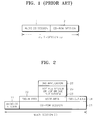
- a multisession CD shown in Figure 1 is a format designed so that only an audio CD session 1 is reproduced by general audio CD players, and a CD-ROM session 2, on which several data associated with the audio CD session are recorded, is used for computers or the like.
- a DVD application is recorded on the CD-ROM session existing on the multisession CD as proposed by the present invention
- general CD players reproduce the audio information in the audio CD session
- DVD players reproduce the DVD application in the CD-ROM session.
- a single album for an audio CD is produced, songs and musical performance can be recorded on the audio CD session, and the music video or the like of each song of a DVD application can be recorded on the CD-ROM session.
- Existing CD/DVD dual-purpose players play only an audio CD by recognizing only an audio CD session, so that a DVD application written to a CD-ROM session cannot be reproduced since a reproduction process for DVD applications is not performed when a physical media used in existing CD/DVD dual- purpose players is a CD.
- an aim of embodiments of the present invention is to provide a multisession disc having a DVD application session.
- Another aim of embodiments of the present invention is to provide a disc recording apparatus for recording DVD information on a multisession disc having a DVD application session.
- Still another aim of embodiments of the present invention is to provide a disc reproducing apparatus for reproducing a multisession disc having a DVD application session.
- Yet another aim is to provide a disc recording method of recording DVD information on a multisession disc having a DVD application session.
- Still yet another aim is to provide a disc reproducing method of reproducing the information on a multisession disc having a DVD application session.
- a multisession disc including a compact disc read only memory (CD-ROM) session, in which a lead-in area, a lead-out area, and a user area, each having a CD-ROM format, are distinguished, and a digital versatile disc (DVD) application format based on a predetermined file system is recorded in the user area.
- CD-ROM compact disc read only memory
- the predetermined file system is a universal disc format (UDF) a universal disc format (UDF) bridge format.
- UDF universal disc format
- UDF universal disc format
- an apparatus for recording/reproducing data on/from a multisession disc including a CD-ROM session in which a lead-in area, a lead-out area and a user area each having a CD-ROM format are distinguished, the apparatus comprising: a first encoder for encoding received audio and/or video (A/V) signals in a DVD format to provide an A/V stream; a first formatter for formatting the A/V stream in a predetermined file system for DVD application; and a second formatter for writing data formatted in the predetermined file system to the user area, formatting data for the lead-in area and the lead-out area in a CD-ROM format, and writing CD-ROM formatted data to the lead-in area and the lead-out area.
- A/V audio and/or video
- the apparatus may further comprise: a second encoder for encoding received audio and/or video (A/V) signals in accordance with a CD application to provide an A/V stream; a third formatter for formatting the A/V stream received from the second encoder in a CD application format; and a fourth formatter for writing the output of the second formatter in a CD-ROM session format and writing the output of the third formatter in a CD session format, to provide multisession CD formatted data.
- A/V audio and/or video
- the predetermined file system may be a universal disc format (UDF) a universal disc format (UDF) bridge.
- UDF universal disc format
- UDF universal disc format
- the apparatus may further comprise: a differentiator for determining whether a disc loaded into a drive is a video CD, an audio CD, or a multisession CD having a CD-ROM session; an analyzer for analyzing whether a predetermined file system exists, if it is determined by the differentiator that the disc is a multisession CD and that a corresponding session is a CD-ROM session; a first deformatter for deformatting a DVD application when the predetermined file system exists, and providing first deformatted data; and a first decoder for decoding the first deformatted data to restore the original A/V signal.
- a differentiator for determining whether a disc loaded into a drive is a video CD, an audio CD, or a multisession CD having a CD-ROM session
- an analyzer for analyzing whether a predetermined file system exists, if it is determined by the differentiator that the disc is a multisession CD and that a corresponding session is a CD-ROM session
- a first deformatter for deformat
- the apparatus may further comprise: a second deformatter for deformatting a CD application which has been read from a disc loaded into a drive, if it is determined by the differentiator that the disc is either a video CD or an audio CD or that the disc is a multisession CD and that a corresponding session is an audio CD session or a video CD session, and providing second deformatted data; and a second decoder for decoding the second deformatted data to restore the original A/V signal.
- a second deformatter for deformatting a CD application which has been read from a disc loaded into a drive, if it is determined by the differentiator that the disc is either a video CD or an audio CD or that the disc is a multisession CD and that a corresponding session is an audio CD session or a video CD session, and providing second deformatted data
- a second decoder for decoding the second deformatted data to restore the original A/V signal.
- the apparatus may comprise: a first differentiator for determining whether a disc loaded into a DVD/CD-ROM dual purpose drive is a DVD or CD, by checking the physical structure of the disc; a second differentiator for determining whether the disc is a video CD, an audio CD or a multisession CD having a CD-ROM session, if it is determined by the first differentiator that the disc is a CD; an analyzer for analyzing whether a predetermined file system exists, if it is determined by the second differentiator that the disc is a multisession CD and that a corresponding session is a CD-ROM session, or if it is determined by the first differentiator that the disc is a DVD; a first deformatter for deformatting a DVD application stored on the disc loaded into the drive if the predetermined file system exists and providing first deformatted data; a first decoder for decoding the first deformatted data to restore the original A/V signal; a second deformatter for deformatting a CD application which has been read from the loaded disc
- a method for recording/reproducing data on/from a multisession disc having a CD-ROM session in which a lead-in area, a lead-out area, and a user area each having a CD-ROM format, are distinguished comprising: (a) encoding received audio and/or video (A/V) signals in a DVD format to provide an A/V stream; (b) formatting the A/V stream in a predetermined file system for DVD application; and (c) writing data formatted in the predetermined file system to the user area, formatting data for the lead-in area and the lead-out area in a CD-ROM format, and writing CD-ROM formatted data to the lead-in area and the lead-out area, to provide first formatted data.
- A/V received audio and/or video
- the method may further comprise: (d) encoding received audio and/or video (A/V) signals in accordance with a CD application to provide an A/V stream; (e) formatting the A/V stream in a CD application format to provide second formatted data; and (f) writing the first formatted data in a CD-ROM session format and writing the second formatted data in a CD session format, to provide multisession CD formatted data.
- A/V audio and/or video
- the predetermined file system may be a universal disc format (UDF)or a universal disc format (UDF) bridge format.
- UDF universal disc format
- UDF universal disc format
- the method may further comprise: (d) determining whether a disc loaded into a drive is a video CD, an audio CD or a multisession CD having a CD-ROM session; (e) determining whether a predetermined file system exists, if it is determined in step (d) that the disc is a multisession CD and that a corresponding session is a CD-ROM session; (f) deformatting a DVD application on the user area of the disc when the predetermined file system exists and providing first deformatted data; and (g) decoding the first deformatted data to restore the original A/V signal.
- the method may further comprise: (h) deformatting a CD application which has been read from a loaded disc, if it is determined in step (d) that the disc is a video CD or an audio CD, or that the disc is a multisession CD and that a corresponding session is an audio CD session or a video CD session, and providing second deformatted data; and (i) decoding the second deformatted data to restore the original A/V signal.
- the method may comprise: (d) determining whether a disc loaded into a drive is an audio CD, by analyzing control information in a sub-Q area of the lead-in area of the disc, and if the loaded disc is an audio CD, playing the audio CD, and otherwise, determining whether or not the disc is a video CD by analyzing top of contents (TOC) information; (e) analyzing the video CD information on the first track and playing a video CD according to analyzed video CD information, if it is determined in step (d) that the disc is a video CD, and, if it is determined in step (d) that the disc is not even a video CD, analyzing TOC information to determine whether or not the disc is a multisession CD including a CD-ROM session; and (f) analyzing a UDF and reproducing DVD data if it is determined in step (e) that the disc is a multisession CD and that a corresponding session is a CD-ROM session.
- TOC top of contents
- the method of may further comprise: (d) determining whether a disc loaded into a DVD/CD-ROM dual-purpose drive is a DVD or a CD, by checking the physical structure of the disc; (e) determining whether the disc is an audio CD, a video CD or a multisession CD having a CD-ROM session, if it is determined in step (d) that the physical structure of the disc is a CD; (f) determining whether a predetermined file system exists, if it is determined in step (d) that the physical structure of the disc is a DVD or if it is determined in step (e) that the disc is a multisession CD and that a corresponding session is a CD-ROM session; (g) deformatting a DVD application read from the loaded disc, when the predetermined file system exists, and providing first deformatted data; and (h) decoding the first deformatted data to restore the original A/V signal.
- the method may further comprise: (i) deformatting a CD application, which has been read from the loaded disc, if it is determined in step (e) that the CD is a video CD or audio CD, or that the CD is a multisession CD and that a corresponding session is an audio CD session or a video CD session, and providing second deformatted data; and (j) decoding the second deformatted data to restore the original A/V signal.
- the method may further comprise: (d) determining whether a disc loaded into a DVD/CD-ROM dual-purpose drive is a DVD or CD, by analyzing the physical structure of the disc; (e) determining whether the disc is an audio CD, by analyzing control information in a sub-Q area of the lead-in area of the disc, if it is determined in step (d) that the physical structure of the disc is a CD, and playing an audio CD if the disc is an audio CD, and, otherwise, determining whether or not the disc is a video CD by analyzing TOC information; (f) analyzing video CD information on the first track and playing a video CD according to analyzed video CD information, if it is determined in step (e) that the disc is a video CD, and, if it is determined in step (e) that the disc is not a video CD, determining whether or not the CD is a multisession CD having a CD-ROM session; and (g) analyzing a UDF and reproducing DVD data if it is determined in step (e) that the
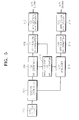
- FIG. 2 An example of the structure of a disc according to the present invention is shown in Figure 2, and a CD, a CD-R (Recordable) or a CD-RW (Rewritable) is used as the disc medium.
- the format of a multisession CD is used on a physical medium.
- an audio CD session 11 and a CD-ROM session 21 are defined on the multisession CD. That is, a lead-in area 22, a user area 23, and a lead-out area 24 are distinguished in the CD-ROM session 21.
- both control information in the lead-in area 22 and TOC information use the same format as a general CD-ROM format.
- the control information recorded in a sub-Q area of the lead-in area does not correspond to an audio CD.
- the format used on the CD-ROM session 21 is a type of format for a CD-ROM which is different to the format of an audio CD or a video CD.
- the logical format of the CD-ROM user area 23 follows a DVD format.
- the DVD format is based on a file system which is called a universal disk format (UDF).
- UDF universal disk format
- the specifications of a file system 25 for a DVD and a DVD application 26 which is based on the file system have already been defined by the DVD forum.
- the lead-in area 22 and the lead-out area 24 are recorded in the format of a CD-ROM.
- the logical volume area of the user area 23 records the DVD application 26 based on the file system 25 such as a UDF file system or a UDF bridge format.
- the UDF bridge format is a format where a UDF, and an international standard organization (ISO) 9660 format which is used in general CD-ROMs, coexist.
- ISO international standard organization
- a CD-ROM drive installed in a computer requires the ISO 9660 format to read a disc, so the UDF bridge format is used.
- the file system format can include only the UDF if the formats for the file system are all changed into the UDF with the lapse of time.
- Figure 3 is a block diagram illustrating an embodiment of a disc recording apparatus according to the present invention, including a DVD application A/V encoder 102, a DVD application formatter 104, a CD-ROM formatter 106, a multisession CD formatter 108, a CD application A/V encoder 110, a CD application formatter 112 and a recording processor 114.
- the DVD application A/V encoder 102 encodes received audio and/or video (A/V) signals in accordance with a DVD application. If a video signal is received, it is coded using a specification which is defined in a DVD video application book, and a coded video stream is provided. If an audio signal is received, it is encoded using a specification which is defined in a DVD audio application book, and an encoded audio stream is provided.
- the DVD application formatter 104 formats the encoded A/V streams received from the DVD application A/V encoder 102, and the information associated with the corresponding streams using a file system of a UDF or a UDF bridge format.
- the CD-ROM formatter 106 writes the DVD application formatted data received from the DVD application formatter 104 to the user area on the CD-ROM session, and writes lead-in data and lead-out data, which are defined in the CD-ROM format, to the lead-in area and the lead-out area on the CD-ROM session.
- the CD-ROM formatter 106 provides CD-ROM formatted data to the multisession CD formatter 108.
- the CD application A/V encoder 110 encodes received A/V signals in accordance with a CD application.
- the CD application formatter 112 formats the encoded A/V streams received from the CD application A/V encoder 110 using a CD application format, and provides CD application formatted data to the multisession CD formatter 108.
- the multisession CD formatter 108 writes CD application formatted data received from the CD application formatter 112 in an audio session format or a video session format, and writes CD-ROM formatted data received from the CD-ROM formatter 106 in a CD-ROM session format, thereby forming a multisession CD.
- the recording processor 114 signal-processes multisession CD formatted data received from the multisession CD formatter 108, and records the resultant data on a CD.
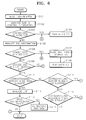
- FIG. 4 is a block diagram illustrating an embodiment of a reproducing apparatus according to the present invention.
- the reproducing apparatus includes a CD-ROM drive 202, a CD differentiator 204, a CD application deformatter 206, a CD application A/V decoder 208, a multisession CD differentiator 210, a UDF analyzer 212, a DVD application deformatter 214, and a DVD application A/V decoder 216.
- the CD differentiator 204 determines whether the loaded disc is a general audio CD or a general video CD. That is, the CD differentiator 204 determines whether the disc loaded into the CD-ROM drive 202 is an audio CD, using the control information in the sub-Q area of the lead-in area on the disc. If it is determined that the disc is not an audio CD, the CD differentiator 204 analyzes TOC information to determine whether the disc is a video CD.
- the CD differentiator 204 provides a differentiation signal representing that the loaded disc is either an audio CD or a video CD to the CD application deformatter 206.
- the CD differentiator 204 provides a differentiation signal representing the result of the determination to the multisession CD differentiator 210.
- the CD application deformatter 206 deformats data which has been picked up from the disc according to the differentiation signal representing that the loaded disc is either an audio CD or a video CD, in accordance with an audio CD application or a video CD application.
- the CD application A/V decoder 208 decodes CD application deformatted data to output the original A/V signal.
- the multisession CD differentiator 210 analyzes TOC information again to determine whether the loaded disc is a multisession CD having a CD-ROM session, if the differentiation signal representing that the loaded disc is neither an audio CD nor a video CD is received from the CD differentiator 204. If it is determined that the loaded disc is a multisession CD and a corresponding session is a CD-ROM session, a differentiation signal representing the result of the determination is provided to the UDF analyzer 212. If it is determined that the loaded disc is a multisession CD and a corresponding session is an audio CD session or a video CD session, a differentiation signal representing the result of the determination is provided to the CD application deformatter 206.
- the UDF analyzer 212 determines whether a UDF file system exists on the CD-ROM session, if the differentiation signal representing that the loaded disc is a multisession CD and a corresponding session is a CD-ROM session is received from the multisession CD differentiator 210. If it is determined that the disc has a UDF file system and that the file system is used for DVD application, the DVD application deformatter 214 deformats DVD application deformatted data read from the disc. The DVD application A/V decoder 216 decodes DVD application deformatted data to output the original A/V signal.
- the reproducing apparatus shown in Figure 4 plays general CDs (e.g., an audio CD and a video CD) and a multisession CD proposed by embodiments of the present invention in which a DVD application session is included.
- the present invention is also applicable to an apparatus for playing only multisession CDs including a DVD application session without playing general CDs, the apparatus capable of including the CD-ROM drive 202, the CD differentiator 204, the multisession CD differentiator 210, the UDF analyzer 212, the DVD application deformatter 214, and the DVD application A/V decoder 216.
- the CD differentiator 204 and the multisession CD differentiator 210 are separately installed, but a single differentiator can perform the determinations of the above two differentiators by analyzing the TOC information in the lead-in area. That is, as for the single differentiator, if it is determined that the disc loaded into the CD-ROM drive 202 is either a video CD or an audio CD, a differentiation signal representing the result of the determination is provided to the CD application deformatter 206. If it is determined that the loaded disc is a multisession CD and a corresponding session is a CD-ROM session, a corresponding differentiation signal is provided to the UDF analyzer 212. On the other hand, if it is determined that the loaded disc is a multisession CD and a corresponding session is an audio CD session or a video CD session, a corresponding differentiation signal is provided to the CD application deformatter 206.
- FIG. 5 is a block diagram illustrating another embodiment of a disc reproducing apparatus according to the present invention.
- the disc reproducing apparatus includes a DVD/CD-ROM drive 302, a DVD/CD differentiator 304, a CD differentiator 306, a CD application deformatter 308, a CD application A/V decoder 310, a multisession CD differentiator 312, a UDF analyzer 314, a DVD application deformatter 316, and a DVD application A/V decoder 318, and can play both a general DVD and a disc in which a DVD application session is included.
- the DVD/CD-ROM drive 302 can access a CD (an audio CD, a video CD and a multisession CD), and particularly, has a 8x-speed or faster transmission rate when the loaded disc is a CD.
- the DVD/CD differentiator 304 determines the physical structure of a loaded disc. If the loaded disc has a physical structure corresponding to a CD, the DVD/CD differentiator 304 provides a differentiation signal representing that the physical structure of the disc corresponds to a CD, to the CD differentiator 306, but if the loaded disc has a physical structure corresponding to a DVD, the DVD/CD differentiator 304 provides a differentiation signal representing that the physical structure of the disc corresponds to a DVD, to the UDF analyzer 314.
- the CD differentiator 306 determines if the CD is an audio CD, a video CD, or neither an audio CD nor a video CD, if the differentiation signal representing that the loaded disc is a CD is received from the DVD/CD differentiator 304. If the CD is either an audio CD or a video CD, the CD differentiator 306 provides a differentiation signal representing that the CD is either an audio CD or video CD, to the CD application deformatter 308. If the CD is neither an audio CD nor a video CD, the CD differentiator 306 provides a differentiation signal representing the result of the determination to the multisession CD differentiator 312.
- the multisession CD differentiator 312 determines whether or not the loaded disc is a multisession CD having a CD-ROM session, if it is determined that the loaded disc is neither an audio CD nor a video CD. If it is determined that the loaded disc is a multisession CD and a corresponding session is a CD-ROM session, a corresponding differentiation signal is provided to the UDF analyzer 314. If it is determined that the loaded disc is a multisession CD and a corresponding session is an audio CD session or a video CD session, a corresponding differentiation signal is provided to the CD application deformatter 308.
- CD application deformatter 308 The structures and operations of the CD application deformatter 308, the CD application A/V decoder 310, the multi-session CD differentiator 312, the UDF analyzer 314, the DVD application deformatter 316, and the DVD application A/V decoder 318 are the same as those shown in Figure 4, so they will not be described again.
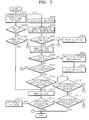
- FIG 6 which is a flowchart illustrating an embodiment of a disc reproducing method according to the present invention, will now be described with reference to the disc reproducing apparatus shown in Figure 4.
- the information in the lead-in area of a disc loaded into the CD-ROM drive 202 is read, in step S101.
- the control information in the sub-Q area of the lead-in area is analyzed, in step S102. If it is determined in step S103 that the control information in the sub-Q area corresponds to an audio CD, an audio title stored on the audio CD is played, in step S104. If it is determined in step S103 that the control information in the sub-Q area does not correspond to an audio CD, TOC information is analyzed, in step S105.
- step S106 If it is determined in step S106 that the analyzed TOC information corresponds to a video CD, video CD information is read from a first track, in step S107. Then, a video title stored in the video CD is played according to the read first track information, in step S108.
- step S106 Another determination as to whether or not the loaded disc is a multisession CD is made, if it is determined in step S106 that the loaded disc is not a video CD according to the analyzed TOC information, in step S109. If the loaded disc is a multisession CD, another determination as to whether or not a corresponding session is a CD-ROM session is made in step S110. If it is determined in step S110 that the corresponding session is a CD-ROM session, a UDF is analyzed in step S111, and then it is determined whether or not a DVD application exists in the CD-ROM session in step S112. If it is determined in step S112 that a DVD application exists, DVD data is reproduced in step S113. Otherwise, the disc reproducing process is concluded.
- step S110 If it is determined in step S110 that the loaded disc is a multisession CD but a corresponding session is not a CD-ROM session, another determination as to whether or not the corresponding session is an audio CD session is made in step S114. If the corresponding session is an audio CD session, the step S104 of playing the audio CD is performed. Otherwise, a determination as to whether the corresponding session is a video CD session is made in step S115. If it is determined in step S115 that the corresponding session is a video CD session, the step S107 of analyzing the information recorded on the first track of the corresponding session is performed, and then the step S108 of playing the video CD according to the analyzed information recorded on the first track is performed. Otherwise, the disc reproducing method is concluded.
- FIG 7 which is a flowchart illustrating another embodiment of a disc reproducing method according to the present invention, will now be described with reference to the reproducing apparatus shown in Figure 5.
- the physical structure of a disc loaded into the DVD/CD-ROM drive 302 is checked, in step S201.
- a determination as to whether or not the physical structure of the loaded disc is a CD is made in step S202. If the physical structure thereof is a CD, the control information in the lead-in area is read in step S203.
- Steps S203 through S217 are the same as the steps S101 through S115 shown in Figure 6, so they will not be described again.
- step S202 determines whether or not the physical structure of the loaded disc is a CD. If it is determined in step S218 that the loaded disc is a DVD, the step S213 of analyzing a UDF is performed. Otherwise, the process is concluded.
- the recording apparatus can record data, including a DVD application, on a multisession CD, and the multisession CD can be reproduced by the reproduction apparatus according to the present invention.
- the present invention can be used for music video or presentation which requires reproduction for a short period of time using low-priced CD media, since DVD applications can be recorded on and reproduced from the CD media to obtain a multi-function, which is possible in DVD application, with a high image quality and a high sound quality.
- the disc proposed by the present invention is a multisession CD
- an audio CD session and a CD-ROM session including a DVD application can coexist on the disc. Therefore, general CD players will reproduce audio information, DVD players will reproduce the information in a DVD application, and audio CD players, which support a multisession CD including a DVD application, will reproduce the DVD application information as well as audio information.
Landscapes
- Engineering & Computer Science (AREA)
- Signal Processing (AREA)
- Signal Processing For Digital Recording And Reproducing (AREA)
- Optical Recording Or Reproduction (AREA)
- Management Or Editing Of Information On Record Carriers (AREA)
Abstract
Description
Claims (20)
- A multisession disc including a compact disc read only memory (CD-ROM) session (21), in which a lead-in area (22), a lead-out area (24), and a user area (23), each having a CD-ROM format, are distinguished, and a digital versatile disc (DVD) application format (26) based on a predetermined file system (25) is recorded in the user area (23).
- The disc of claim 1, wherein the predetermined file system (25) is a universal disc format (UDF).
- The disc of claim 1, wherein the predetermined file system (25) is a universal disc format (UDF) bridge format.
- An apparatus for recording/reproducing data on/from a multisession disc including a CD-ROM session (21) in which a lead-in area (22), a lead-out area (24) and a user area (23) each having a CD-ROM format are distinguished, the apparatus comprising:a first encoder (102) for encoding received audio and/or video (A/V) signals in a DVD format to provide an A/V stream;a first formatter (106) for formatting the A/V stream in a predetermined file system for DVD application; anda second formatter for writing data formatted in the predetermined file system to the user area, formatting data for the lead-in area and the lead-out area in a CD-ROM format, and writing CD-ROM formatted data to the lead-in area and the lead-out area.
- The apparatus of claim 4, further comprising:a second encoder (110) for encoding received audio and/or video (A/V) signals in accordance with a CD application to provide an A/V stream;a third formatter (112) for formatting the A/V stream received from the second encoder in a CD application format; anda fourth formatter (108) for writing the output of the second formatter (106) in a CD-ROM session format and writing the output of the third formatter (112) in a CD session format, to provide multisession CD formatted data.
- The apparatus of claim 4, wherein the predetermined file system is a universal disc format (UDF).
- The apparatus of claim 4, wherein the predetermined file system is a universal disc format (UDF) bridge format.
- The apparatus of claim 4, further comprising:a differentiator (204, 210) for determining whether a disc loaded into a drive is a video CD, an audio CD, or a multisession CD having a CD-ROM session;an analyzer (212) for analyzing whether a predetermined file system exists, if it is determined by the differentiator (204, 210) that the disc is a multisession CD and that a corresponding session is a CD-ROM session;a first deformatter (214) for deformatting a DVD application when the predetermined file system exists, and providing first deformatted data; anda first decoder (216) for decoding the first deformatted data to restore the original A/V signal.
- The apparatus of claim 8, further comprising:a second deformatter (206) for deformatting a CD application which has been read from a disc loaded into a drive, if it is determined by the differentiator (204, 210) that the disc is either a video CD or an audio CD or that the disc is a multisession CD and that a corresponding session is an audio CD session or a video CD session, and providing second deformatted data; anda second decoder (208) for decoding the second deformatted data to restore the original A/V signal.
- The apparatus of claim 4, further comprising:a first differentiator (304) for determining whether a disc loaded into a DVD/CD-ROM dual purpose drive is a DVD or CD, by checking the physical structure of the disc;a second differentiator (306, 312) for determining whether the disc is a video CD, an audio CD or a multisession CD having a CD-ROM session, if it is determined by the first differentiator (304) that the disc is a CD;an analyzer (314) for analyzing whether a predetermined file system exists, if it is determined by the second differentiator (306, 312) that the disc is a multisession CD and that a corresponding session is a CD-ROM session, or if it is determined by the first differentiator (304) that the disc is a DVD;a first deformatter (316) for deformatting a DVD application stored on the disc loaded into the drive if the predetermined file system exists and providing first deformatted data;a first decoder (318) for decoding the first deformatted data to restore the original A/V signal;a second deformatter (308) for deformatting a CD application which has been read from the loaded disc, if it is determined by the second differentiator (306, 312) that the disc is either a video CD or audio CD, or that the disc is a multisession CD and that a corresponding session is an audio CD session or a video CD session, and providing second deformatted data; anda second decoder (310) for decoding the second deformatted data to restore the original A/V signal.
- A method for recording/reproducing data on/from a multisession disc having a CD-ROM session in which a lead-in area, a lead-out area, and a user area each having a CD-ROM format, are distinguished, comprising:(a) encoding received audio and/or video (A/V) signals in a DVD format to provide an A/V stream;(b) formatting the A/V stream in a predetermined file system for DVD application; and(c) writing data formatted in the predetermined file system to the user area, formatting data for the lead-in area and the lead-out area in a CD-ROM format, and writing CD-ROM formatted data to the lead-in area and the lead-out area, to provide first formatted data.
- The method of claim 11, further comprising:(d) encoding received audio and/or video (A/V) signals in accordance with a CD application to provide an A/V stream;(e) formatting the A/V stream in a CD application format to provide second formatted data; and(f) writing the first formatted data in a CD-ROM session format and writing the second formatted data in a CD session format, to provide multisession CD formatted data.
- The method of claim 11, wherein the predetermined file system is a universal disc format (UDF).
- The method of claim 11, wherein the predetermined file system is a universal disc format (UDF) bridge format.
- The method of claim 11, further comprising:(d) determining whether a disc loaded into a drive is a video CD, an audio CD or a multisession CD having a CD-ROM session;(e) determining whether a predetermined file system exists, if it is determined in step (d) that the disc is a multisession CD and that a corresponding session is a CD-ROM session;(f) deformatting a DVD application on the user area of the disc when the predetermined file system exists and providing first deformatted data; and(g) decoding the first deformatted data to restore the original A/V signal.
- The method of claim 15, further comprising:(h) deformatting a CD application which has been read from a loaded disc, if it is determined in step (d) that the disc is a video CD or an audio CD, or that the disc is a multisession CD and that a corresponding session is an audio CD session or a video CD session, and providing second deformatted data; and(i) decoding the second deformatted data to restore the original A/V signal.
- The method of claim 11, further comprising:(d) determining whether a disc loaded into a drive is an audio CD, by analyzing control information in a sub-Q area of the lead-in area of the disc, and if the loaded disc is an audio CD, playing the audio CD, and otherwise, determining whether or not the disc is a video CD by analyzing top of contents (TOC) information;(e) analyzing the video CD information on the first track and playing a video CD according to analyzed video CD information, if it is determined in step (d) that the disc is a video CD, and, if it is determined in step (d) that the disc is not even a video CD, analyzing TOC information to determine whether or not the disc is a multisession CD including a CD-ROM session; and(f) analyzing a UDF and reproducing DVD data if it is determined in step (e) that the disc is a multisession CD and that a corresponding session is a CD-ROM session.
- The method of claim 11, further comprising:(d) determining whether a disc loaded into a DVD/CD-ROM dual-purpose drive is a DVD or a CD, by checking the physical structure of the disc;(e) determining whether the disc is an audio CD, a video CD or a multisession CD having a CD-ROM session, if it is determined in step (d) that the physical structure of the disc is a CD;(f) determining whether a predetermined file system exists, if it is determined in step (d) that the physical structure of the disc is a DVD or if it is determined in step (e) that the disc is a multisession CD and that a corresponding session is a CD-ROM session;(g) deformatting a DVD application read from the loaded disc, when the predetermined file system exists, and providing first deformatted data; and(h) decoding the first deformatted data to restore the original A/V signal.
- The method of claim 18, further comprising:(i) deformatting a CD application, which has been read from the loaded disc, if it is determined in step (e) that the CD is a video CD or audio CD, or that the CD is a multisession CD and that a corresponding session is an audio CD session or a video CD session, and providing second deformatted data; and(j) decoding the second deformatted data to restore the original A/V signal.
- The method of claim 11, further comprising:(d) determining whether a disc loaded into a DVD/CD-ROM dual-purpose drive is a DVD or CD, by analyzing the physical structure of the disc;(e) determining whether the disc is an audio CD, by analyzing control information in a sub-Q area of the lead-in area of the disc, if it is determined in step (d) that the physical structure of the disc is a CD, and playing an audio CD if the disc is an audio CD, and, otherwise, determining whether or not the disc is a video CD by analyzing TOC information;(f) analyzing video CD information on the first track and playing a video CD according to analyzed video CD information, if it is determined in step (e) that the disc is a video CD, and, if it is determined in step (e) that the disc is not a video CD, determining whether or not the CD is a multisession CD having a CD-ROM session; and(g) analyzing a UDF and reproducing DVD data if it is determined in step (e) that the disc has the physical structure of a DVD or if it is determined in step (f) that the CD is a multisession CD and that a corresponding session is a CD-ROM session.
Applications Claiming Priority (2)
| Application Number | Priority Date | Filing Date | Title |
|---|---|---|---|
| KR1019990010270A KR100335439B1 (en) | 1999-03-25 | 1999-03-25 | multisession disc including DVD application session, recording and/or reproducing apparatus and method therefor |
| KR9910270 | 1999-03-25 |
Publications (3)
| Publication Number | Publication Date |
|---|---|
| EP1039464A2 true EP1039464A2 (en) | 2000-09-27 |
| EP1039464A3 EP1039464A3 (en) | 2001-01-31 |
| EP1039464B1 EP1039464B1 (en) | 2004-01-02 |
Family
ID=19577704
Family Applications (1)
| Application Number | Title | Priority Date | Filing Date |
|---|---|---|---|
| EP00302454A Expired - Lifetime EP1039464B1 (en) | 1999-03-25 | 2000-03-24 | Recording and/or reproducing apparatus and method for a multi-session disc having a DVD application session |
Country Status (6)
| Country | Link |
|---|---|
| US (1) | US6901210B1 (en) |
| EP (1) | EP1039464B1 (en) |
| JP (1) | JP2000293952A (en) |
| KR (1) | KR100335439B1 (en) |
| CN (1) | CN1163893C (en) |
| DE (1) | DE60007472T2 (en) |
Cited By (1)
| Publication number | Priority date | Publication date | Assignee | Title |
|---|---|---|---|---|
| CN101833973A (en) * | 2009-03-12 | 2010-09-15 | 联发科技股份有限公司 | Method and device for detecting optical disc |
Families Citing this family (12)
| Publication number | Priority date | Publication date | Assignee | Title |
|---|---|---|---|---|
| WO2001088917A1 (en) * | 2000-05-19 | 2001-11-22 | Matsushita Electric Industrial Co., Ltd. | Data recording medium and reproducing apparatus thereof |
| KR100413846B1 (en) * | 2001-03-08 | 2003-12-31 | 엘지전자 주식회사 | Method for reproducing a data on recorded multi-session disc |
| US7072266B2 (en) * | 2001-03-15 | 2006-07-04 | Mitsubishi Denki Kabushiki Kaisha | Multiple-area-compatible disk reproducing device |
| EP1400971A4 (en) * | 2001-05-24 | 2007-02-28 | Sony Corp | DATA RECORDING MEDIUM, DATA RECORDING APPARATUS AND METHOD, DATA REPRODUCING APPARATUS, AND REPRODUCING METHOD |
| US7149164B2 (en) * | 2002-03-18 | 2006-12-12 | Sanyo Electric Co., Ltd. | Optical disc apparatus for processing data according to different optical disc standards to achieve higher recording density |
| JP2004118910A (en) * | 2002-09-25 | 2004-04-15 | Sanyo Electric Co Ltd | Optical disk drive |
| CN100421169C (en) * | 2003-03-25 | 2008-09-24 | 株式会社理光 | Information recording device, information recording method |
| EP1639599A2 (en) * | 2003-06-19 | 2006-03-29 | Koninklijke Philips Electronics N.V. | Flexible formatting for universal storage device |
| CN1308933C (en) * | 2003-10-31 | 2007-04-04 | 华硕电脑股份有限公司 | Optical disc reading method and optical drive for executing the method |
| CN100367390C (en) * | 2004-01-14 | 2008-02-06 | 财团法人工业技术研究院 | Method for discriminating CD format of CD-RW |
| JP4349228B2 (en) * | 2004-07-27 | 2009-10-21 | 船井電機株式会社 | Evaluation disk |
| US20100195461A1 (en) * | 2009-02-02 | 2010-08-05 | Doug Carson & Associates, Inc. | Multi-Session Pre-Recorded Storage Medium |
Family Cites Families (19)
| Publication number | Priority date | Publication date | Assignee | Title |
|---|---|---|---|---|
| DE69531265T2 (en) * | 1994-03-19 | 2004-06-03 | Sony Corp. | Optical disc and method and apparatus for recording on and then reproducing information from that disc |
| US5602815A (en) | 1994-08-09 | 1997-02-11 | Wea Manufacturing, Inc. | Method and apparatus for combining CD-ROM data and digital audio on a single disc |
| JPH0863901A (en) | 1994-08-23 | 1996-03-08 | Sony Corp | Signal recording method and apparatus, signal reproducing apparatus, and recording medium |
| TW250565B (en) | 1994-10-20 | 1995-07-01 | Digital Audio Disc Corp | Mass production of multisession discs |
| JP3901748B2 (en) | 1995-01-30 | 2007-04-04 | ソニー株式会社 | Disc-shaped recording medium, recording apparatus and reproducing apparatus therefor |
| JPH09237438A (en) * | 1996-02-29 | 1997-09-09 | Sanyo Electric Co Ltd | Optical recording medium |
| JP3719758B2 (en) | 1996-03-19 | 2005-11-24 | パイオニア株式会社 | Information recording apparatus and method, and information reproducing apparatus and method |
| JP3707137B2 (en) | 1996-07-04 | 2005-10-19 | ソニー株式会社 | Recording medium and playback device |
| JPH1040574A (en) * | 1996-07-23 | 1998-02-13 | Mitsubishi Electric Corp | Optical disk media |
| JPH10172182A (en) * | 1996-12-12 | 1998-06-26 | Hitachi Ltd | Multilayer optical information media |
| US5959280A (en) * | 1997-01-16 | 1999-09-28 | Laser Dynamics, Inc. | Multi-standard optical disk reading apparatus and method of reading using same |
| JP2000509879A (en) | 1997-02-28 | 2000-08-02 | ダブリュイーエイ・マニュファクチャリング・インコーポレイテッド | Double-sided hybrid DVD-CD disc |
| KR19980082247A (en) * | 1997-05-02 | 1998-12-05 | 윤종용 | Method for playing multi-session disc composed of CD-ROM and DVD-ROM data area and device therefor |
| US6009058A (en) | 1997-05-13 | 1999-12-28 | Hewlett-Packard Company | Method of reducing formatting time for rewritable compact disks by pre-formatting less than the entire standard logical format |
| KR100242129B1 (en) * | 1997-06-18 | 2000-02-01 | 윤종용 | Optical disk satis fying plural standards |
| JPH1125607A (en) | 1997-07-04 | 1999-01-29 | Sanyo Electric Co Ltd | Recording medium and reproducing device |
| JP3546654B2 (en) | 1997-08-07 | 2004-07-28 | 株式会社日立製作所 | Information recording apparatus and information recording method |
| JPH11162114A (en) | 1997-11-28 | 1999-06-18 | Yamaha Corp | Optical disk |
| KR19990049713A (en) * | 1997-12-15 | 1999-07-05 | 구자홍 | How to make a CD / DVD disc |
-
1999
- 1999-03-25 KR KR1019990010270A patent/KR100335439B1/en not_active Expired - Fee Related
-
2000
- 2000-03-22 JP JP2000080809A patent/JP2000293952A/en active Pending
- 2000-03-24 US US09/534,493 patent/US6901210B1/en not_active Expired - Fee Related
- 2000-03-24 EP EP00302454A patent/EP1039464B1/en not_active Expired - Lifetime
- 2000-03-24 CN CNB001047205A patent/CN1163893C/en not_active Expired - Fee Related
- 2000-03-24 DE DE60007472T patent/DE60007472T2/en not_active Expired - Fee Related
Cited By (1)
| Publication number | Priority date | Publication date | Assignee | Title |
|---|---|---|---|---|
| CN101833973A (en) * | 2009-03-12 | 2010-09-15 | 联发科技股份有限公司 | Method and device for detecting optical disc |
Also Published As
| Publication number | Publication date |
|---|---|
| KR100335439B1 (en) | 2002-05-04 |
| US6901210B1 (en) | 2005-05-31 |
| KR20000061313A (en) | 2000-10-16 |
| CN1163893C (en) | 2004-08-25 |
| CN1268747A (en) | 2000-10-04 |
| EP1039464A3 (en) | 2001-01-31 |
| DE60007472T2 (en) | 2004-11-25 |
| JP2000293952A (en) | 2000-10-20 |
| DE60007472D1 (en) | 2004-02-05 |
| EP1039464B1 (en) | 2004-01-02 |
Similar Documents
| Publication | Publication Date | Title |
|---|---|---|
| RU2256956C2 (en) | Method for protecting compact disks containing digital audio records from copying | |
| JP3199082B2 (en) | Audio data break position adjustment method and apparatus | |
| EP1039464B1 (en) | Recording and/or reproducing apparatus and method for a multi-session disc having a DVD application session | |
| JPH06150550A (en) | Disk reproducing method | |
| US6865340B1 (en) | CD-type disc in which a DVD application is recorded on a physical layer of the CD-type disc, and a recording/reproducing apparatus and method thereof | |
| JP3199243B2 (en) | Information recording medium and reproducing method thereof | |
| CN1404608A (en) | Reproducing device, reproducing method and audio data storage medium | |
| US20030002417A1 (en) | Reproducing device, reproducing method and audio data storage medium | |
| JPH07220284A (en) | Disc and disc player | |
| JP3529542B2 (en) | Signal transmission / recording / receiving / reproducing method and apparatus, and recording medium | |
| JPH117705A (en) | Recorder of optical disc, optical disc data transfer device, optical disc data format device and optical disc reproducer | |
| JP4254530B2 (en) | File recording method, reproducing apparatus, and recording / reproducing system | |
| JP2001006334A (en) | Information recording medium and reproducing device therefor recording medium storing computer program, and medium and method for transmitting information | |
| JP3199247B2 (en) | Information recording medium and reproducing apparatus therefor | |
| JP2002352507A (en) | Apparatus and method for dubbing recording medium, and reproducing apparatus | |
| JP3866169B2 (en) | Recording / reproducing apparatus and data corruption detection method | |
| JP3201404B2 (en) | Information recording medium, reproduction method | |
| JP3199262B2 (en) | Encoding method, playback method | |
| JP3199249B2 (en) | Information recording medium and reproducing apparatus therefor | |
| KR100549472B1 (en) | Record carrier and playback device | |
| JP3199246B2 (en) | Information recording medium and reproducing apparatus therefor | |
| KR20040068264A (en) | System and method for playing dvd bitstream from non-dvd medium | |
| JP3230750B2 (en) | Encoding device, medium recording computer program | |
| JP3201407B2 (en) | Information recording medium, reproduction method | |
| JP3201401B2 (en) | Encoding method, playback method |
Legal Events
| Date | Code | Title | Description |
|---|---|---|---|
| PUAI | Public reference made under article 153(3) epc to a published international application that has entered the european phase |
Free format text: ORIGINAL CODE: 0009012 |
|
| 17P | Request for examination filed |
Effective date: 20000405 |
|
| AK | Designated contracting states |
Kind code of ref document: A2 Designated state(s): DE FR GB NL |
|
| AX | Request for extension of the european patent |
Free format text: AL;LT;LV;MK;RO;SI |
|
| PUAL | Search report despatched |
Free format text: ORIGINAL CODE: 0009013 |
|
| AK | Designated contracting states |
Kind code of ref document: A3 Designated state(s): AT BE CH CY DE DK ES FI FR GB GR IE IT LI LU MC NL PT SE |
|
| AX | Request for extension of the european patent |
Free format text: AL;LT;LV;MK;RO;SI |
|
| RIC1 | Information provided on ipc code assigned before grant |
Free format text: 7G 11B 20/12 A, 7G 11B 27/034 B |
|
| AKX | Designation fees paid |
Free format text: DE FR GB NL |
|
| 17Q | First examination report despatched |
Effective date: 20021213 |
|
| GRAP | Despatch of communication of intention to grant a patent |
Free format text: ORIGINAL CODE: EPIDOSNIGR1 |
|
| RTI1 | Title (correction) |
Free format text: RECORDING AND/OR REPRODUCING APPARATUS AND METHOD FOR A MULTI-SESSION DISC HAVING A DVD APPLICATION SESSION |
|
| GRAS | Grant fee paid |
Free format text: ORIGINAL CODE: EPIDOSNIGR3 |
|
| GRAA | (expected) grant |
Free format text: ORIGINAL CODE: 0009210 |
|
| AK | Designated contracting states |
Kind code of ref document: B1 Designated state(s): DE FR GB NL |
|
| REG | Reference to a national code |
Ref country code: GB Ref legal event code: FG4D |
|
| REF | Corresponds to: |
Ref document number: 60007472 Country of ref document: DE Date of ref document: 20040205 Kind code of ref document: P |
|
| ET | Fr: translation filed | ||
| PLBE | No opposition filed within time limit |
Free format text: ORIGINAL CODE: 0009261 |
|
| STAA | Information on the status of an ep patent application or granted ep patent |
Free format text: STATUS: NO OPPOSITION FILED WITHIN TIME LIMIT |
|
| 26N | No opposition filed |
Effective date: 20041005 |
|
| PGFP | Annual fee paid to national office [announced via postgrant information from national office to epo] |
Ref country code: NL Payment date: 20090303 Year of fee payment: 10 |
|
| PGFP | Annual fee paid to national office [announced via postgrant information from national office to epo] |
Ref country code: GB Payment date: 20090318 Year of fee payment: 10 |
|
| PGFP | Annual fee paid to national office [announced via postgrant information from national office to epo] |
Ref country code: DE Payment date: 20090319 Year of fee payment: 10 |
|
| PGFP | Annual fee paid to national office [announced via postgrant information from national office to epo] |
Ref country code: FR Payment date: 20090316 Year of fee payment: 10 |
|
| REG | Reference to a national code |
Ref country code: NL Ref legal event code: V1 Effective date: 20101001 |
|
| GBPC | Gb: european patent ceased through non-payment of renewal fee |
Effective date: 20100324 |
|
| REG | Reference to a national code |
Ref country code: FR Ref legal event code: ST Effective date: 20101130 |
|
| PG25 | Lapsed in a contracting state [announced via postgrant information from national office to epo] |
Ref country code: NL Free format text: LAPSE BECAUSE OF NON-PAYMENT OF DUE FEES Effective date: 20101001 Ref country code: FR Free format text: LAPSE BECAUSE OF NON-PAYMENT OF DUE FEES Effective date: 20100331 |
|
| PG25 | Lapsed in a contracting state [announced via postgrant information from national office to epo] |
Ref country code: DE Free format text: LAPSE BECAUSE OF NON-PAYMENT OF DUE FEES Effective date: 20101001 |
|
| PG25 | Lapsed in a contracting state [announced via postgrant information from national office to epo] |
Ref country code: GB Free format text: LAPSE BECAUSE OF NON-PAYMENT OF DUE FEES Effective date: 20100324 |