EP1036829A1 - Ultraviolet curable coating compositions for cationic electrodeposition applicable to metallic materials and electrically conductive plastic materials - Google Patents
Ultraviolet curable coating compositions for cationic electrodeposition applicable to metallic materials and electrically conductive plastic materials Download PDFInfo
- Publication number
- EP1036829A1 EP1036829A1 EP99200852A EP99200852A EP1036829A1 EP 1036829 A1 EP1036829 A1 EP 1036829A1 EP 99200852 A EP99200852 A EP 99200852A EP 99200852 A EP99200852 A EP 99200852A EP 1036829 A1 EP1036829 A1 EP 1036829A1
- Authority
- EP
- European Patent Office
- Prior art keywords
- cationic electrodeposition
- ultraviolet curable
- weight parts
- coating composition
- curable coating
- Prior art date
- Legal status (The legal status is an assumption and is not a legal conclusion. Google has not performed a legal analysis and makes no representation as to the accuracy of the status listed.)
- Granted
Links
- 238000004070 electrodeposition Methods 0.000 title claims abstract description 54
- 239000000463 material Substances 0.000 title claims abstract description 43
- 125000002091 cationic group Chemical group 0.000 title claims abstract description 40
- 239000008199 coating composition Substances 0.000 title claims abstract description 28
- 229920003023 plastic Polymers 0.000 title abstract description 7
- 239000004033 plastic Substances 0.000 title abstract description 7
- 239000007769 metal material Substances 0.000 title abstract description 4
- 238000000576 coating method Methods 0.000 claims abstract description 39
- 239000011248 coating agent Substances 0.000 claims abstract description 36
- NIXOWILDQLNWCW-UHFFFAOYSA-M Acrylate Chemical compound [O-]C(=O)C=C NIXOWILDQLNWCW-UHFFFAOYSA-M 0.000 claims abstract description 29
- 239000000203 mixture Substances 0.000 claims abstract description 22
- 239000003999 initiator Substances 0.000 claims abstract description 20
- 229920005989 resin Polymers 0.000 claims abstract description 17
- 239000011347 resin Substances 0.000 claims abstract description 17
- 230000005855 radiation Effects 0.000 claims abstract description 10
- 125000003647 acryloyl group Chemical group O=C([*])C([H])=C([H])[H] 0.000 claims abstract description 8
- 239000004925 Acrylic resin Substances 0.000 claims abstract description 5
- 229920000178 Acrylic resin Polymers 0.000 claims abstract description 5
- 239000004615 ingredient Substances 0.000 claims abstract description 4
- -1 monocarboxylic acid hydroxy ester Chemical class 0.000 claims description 16
- 125000001302 tertiary amino group Chemical group 0.000 claims description 15
- 229920001577 copolymer Polymers 0.000 claims description 12
- 239000000178 monomer Substances 0.000 claims description 8
- 239000000049 pigment Substances 0.000 claims description 8
- 239000004814 polyurethane Substances 0.000 claims description 8
- 229920002635 polyurethane Polymers 0.000 claims description 8
- 125000000391 vinyl group Chemical group [H]C([*])=C([H])[H] 0.000 claims description 5
- 229920002554 vinyl polymer Polymers 0.000 claims description 5
- 150000001875 compounds Chemical class 0.000 claims description 4
- 125000000217 alkyl group Chemical group 0.000 claims description 2
- 125000004432 carbon atom Chemical group C* 0.000 claims description 2
- 229910052751 metal Inorganic materials 0.000 abstract description 6
- 239000002184 metal Substances 0.000 abstract description 6
- 238000000034 method Methods 0.000 abstract description 6
- 239000003779 heat-resistant material Substances 0.000 abstract 1
- XLYOFNOQVPJJNP-UHFFFAOYSA-N water Substances O XLYOFNOQVPJJNP-UHFFFAOYSA-N 0.000 description 13
- JVTAAEKCZFNVCJ-UHFFFAOYSA-N lactic acid Chemical compound CC(O)C(O)=O JVTAAEKCZFNVCJ-UHFFFAOYSA-N 0.000 description 12
- CSCPPACGZOOCGX-UHFFFAOYSA-N Acetone Chemical compound CC(C)=O CSCPPACGZOOCGX-UHFFFAOYSA-N 0.000 description 11
- 239000000243 solution Substances 0.000 description 11
- 238000003756 stirring Methods 0.000 description 11
- HEMHJVSKTPXQMS-UHFFFAOYSA-M Sodium hydroxide Chemical compound [OH-].[Na+] HEMHJVSKTPXQMS-UHFFFAOYSA-M 0.000 description 9
- 239000000126 substance Substances 0.000 description 9
- QAOWNCQODCNURD-UHFFFAOYSA-N Sulfuric acid Chemical compound OS(O)(=O)=O QAOWNCQODCNURD-UHFFFAOYSA-N 0.000 description 7
- 238000010521 absorption reaction Methods 0.000 description 7
- QTBSBXVTEAMEQO-UHFFFAOYSA-N Acetic acid Chemical compound CC(O)=O QTBSBXVTEAMEQO-UHFFFAOYSA-N 0.000 description 6
- KFZMGEQAYNKOFK-UHFFFAOYSA-N Isopropanol Chemical compound CC(C)O KFZMGEQAYNKOFK-UHFFFAOYSA-N 0.000 description 6
- CTQNGGLPUBDAKN-UHFFFAOYSA-N O-Xylene Chemical compound CC1=CC=CC=C1C CTQNGGLPUBDAKN-UHFFFAOYSA-N 0.000 description 6
- YXFVVABEGXRONW-UHFFFAOYSA-N Toluene Chemical compound CC1=CC=CC=C1 YXFVVABEGXRONW-UHFFFAOYSA-N 0.000 description 6
- 238000001723 curing Methods 0.000 description 6
- 239000004310 lactic acid Substances 0.000 description 6
- 235000014655 lactic acid Nutrition 0.000 description 6
- 238000007747 plating Methods 0.000 description 6
- 239000008096 xylene Substances 0.000 description 6
- XMLYCEVDHLAQEL-UHFFFAOYSA-N 2-hydroxy-2-methyl-1-phenylpropan-1-one Chemical compound CC(C)(O)C(=O)C1=CC=CC=C1 XMLYCEVDHLAQEL-UHFFFAOYSA-N 0.000 description 5
- 150000002009 diols Chemical class 0.000 description 5
- LFQSCWFLJHTTHZ-UHFFFAOYSA-N Ethanol Chemical compound CCO LFQSCWFLJHTTHZ-UHFFFAOYSA-N 0.000 description 4
- NBIIXXVUZAFLBC-UHFFFAOYSA-N Phosphoric acid Chemical compound OP(O)(O)=O NBIIXXVUZAFLBC-UHFFFAOYSA-N 0.000 description 4
- PPBRXRYQALVLMV-UHFFFAOYSA-N Styrene Chemical compound C=CC1=CC=CC=C1 PPBRXRYQALVLMV-UHFFFAOYSA-N 0.000 description 4
- XBDQKXXYIPTUBI-UHFFFAOYSA-N dimethylselenoniopropionate Natural products CCC(O)=O XBDQKXXYIPTUBI-UHFFFAOYSA-N 0.000 description 4
- BDAGIHXWWSANSR-UHFFFAOYSA-N methanoic acid Natural products OC=O BDAGIHXWWSANSR-UHFFFAOYSA-N 0.000 description 4
- ZWEHNKRNPOVVGH-UHFFFAOYSA-N 2-Butanone Chemical compound CCC(C)=O ZWEHNKRNPOVVGH-UHFFFAOYSA-N 0.000 description 3
- UHOVQNZJYSORNB-UHFFFAOYSA-N Benzene Chemical compound C1=CC=CC=C1 UHOVQNZJYSORNB-UHFFFAOYSA-N 0.000 description 3
- XEKOWRVHYACXOJ-UHFFFAOYSA-N Ethyl acetate Chemical compound CCOC(C)=O XEKOWRVHYACXOJ-UHFFFAOYSA-N 0.000 description 3
- LYCAIKOWRPUZTN-UHFFFAOYSA-N Ethylene glycol Chemical compound OCCO LYCAIKOWRPUZTN-UHFFFAOYSA-N 0.000 description 3
- OKKJLVBELUTLKV-UHFFFAOYSA-N Methanol Chemical compound OC OKKJLVBELUTLKV-UHFFFAOYSA-N 0.000 description 3
- 230000002159 abnormal effect Effects 0.000 description 3
- 230000001464 adherent effect Effects 0.000 description 3
- 239000007864 aqueous solution Substances 0.000 description 3
- 230000000052 comparative effect Effects 0.000 description 3
- 238000013329 compounding Methods 0.000 description 3
- 239000004020 conductor Substances 0.000 description 3
- 230000007423 decrease Effects 0.000 description 3
- 125000005442 diisocyanate group Chemical group 0.000 description 3
- 239000000975 dye Substances 0.000 description 3
- UHESRSKEBRADOO-UHFFFAOYSA-N ethyl carbamate;prop-2-enoic acid Chemical compound OC(=O)C=C.CCOC(N)=O UHESRSKEBRADOO-UHFFFAOYSA-N 0.000 description 3
- 238000005342 ion exchange Methods 0.000 description 3
- 238000010526 radical polymerization reaction Methods 0.000 description 3
- 239000002904 solvent Substances 0.000 description 3
- OSWFIVFLDKOXQC-UHFFFAOYSA-N 4-(3-methoxyphenyl)aniline Chemical compound COC1=CC=CC(C=2C=CC(N)=CC=2)=C1 OSWFIVFLDKOXQC-UHFFFAOYSA-N 0.000 description 2
- 229910001369 Brass Inorganic materials 0.000 description 2
- SOGAXMICEFXMKE-UHFFFAOYSA-N Butylmethacrylate Chemical compound CCCCOC(=O)C(C)=C SOGAXMICEFXMKE-UHFFFAOYSA-N 0.000 description 2
- 229920000298 Cellophane Polymers 0.000 description 2
- 239000005057 Hexamethylene diisocyanate Substances 0.000 description 2
- 239000005058 Isophorone diisocyanate Substances 0.000 description 2
- FYYHWMGAXLPEAU-UHFFFAOYSA-N Magnesium Chemical compound [Mg] FYYHWMGAXLPEAU-UHFFFAOYSA-N 0.000 description 2
- PXHVJJICTQNCMI-UHFFFAOYSA-N Nickel Chemical compound [Ni] PXHVJJICTQNCMI-UHFFFAOYSA-N 0.000 description 2
- HCHKCACWOHOZIP-UHFFFAOYSA-N Zinc Chemical compound [Zn] HCHKCACWOHOZIP-UHFFFAOYSA-N 0.000 description 2
- 238000000862 absorption spectrum Methods 0.000 description 2
- 235000011054 acetic acid Nutrition 0.000 description 2
- 239000002253 acid Substances 0.000 description 2
- 229910052782 aluminium Inorganic materials 0.000 description 2
- XAGFODPZIPBFFR-UHFFFAOYSA-N aluminium Chemical compound [Al] XAGFODPZIPBFFR-UHFFFAOYSA-N 0.000 description 2
- 229910000147 aluminium phosphate Inorganic materials 0.000 description 2
- TZCXTZWJZNENPQ-UHFFFAOYSA-L barium sulfate Chemical compound [Ba+2].[O-]S([O-])(=O)=O TZCXTZWJZNENPQ-UHFFFAOYSA-L 0.000 description 2
- 238000005452 bending Methods 0.000 description 2
- 230000015572 biosynthetic process Effects 0.000 description 2
- 238000009835 boiling Methods 0.000 description 2
- 239000010951 brass Substances 0.000 description 2
- WERYXYBDKMZEQL-UHFFFAOYSA-N butane-1,4-diol Chemical compound OCCCCO WERYXYBDKMZEQL-UHFFFAOYSA-N 0.000 description 2
- 238000006243 chemical reaction Methods 0.000 description 2
- 238000000151 deposition Methods 0.000 description 2
- 230000008021 deposition Effects 0.000 description 2
- 238000004512 die casting Methods 0.000 description 2
- 230000008034 disappearance Effects 0.000 description 2
- 238000011156 evaluation Methods 0.000 description 2
- 235000019253 formic acid Nutrition 0.000 description 2
- RRAMGCGOFNQTLD-UHFFFAOYSA-N hexamethylene diisocyanate Chemical compound O=C=NCCCCCCN=C=O RRAMGCGOFNQTLD-UHFFFAOYSA-N 0.000 description 2
- 239000012948 isocyanate Substances 0.000 description 2
- NIMLQBUJDJZYEJ-UHFFFAOYSA-N isophorone diisocyanate Chemical compound CC1(C)CC(N=C=O)CC(C)(CN=C=O)C1 NIMLQBUJDJZYEJ-UHFFFAOYSA-N 0.000 description 2
- 239000011777 magnesium Substances 0.000 description 2
- 229910052749 magnesium Inorganic materials 0.000 description 2
- QSHDDOUJBYECFT-UHFFFAOYSA-N mercury Chemical compound [Hg] QSHDDOUJBYECFT-UHFFFAOYSA-N 0.000 description 2
- 229910052753 mercury Inorganic materials 0.000 description 2
- CRVGTESFCCXCTH-UHFFFAOYSA-N methyl diethanolamine Chemical compound OCCN(C)CCO CRVGTESFCCXCTH-UHFFFAOYSA-N 0.000 description 2
- 150000007522 mineralic acids Chemical class 0.000 description 2
- 238000006386 neutralization reaction Methods 0.000 description 2
- 150000007524 organic acids Chemical class 0.000 description 2
- 235000005985 organic acids Nutrition 0.000 description 2
- 208000014451 palmoplantar keratoderma and congenital alopecia 2 Diseases 0.000 description 2
- 238000006116 polymerization reaction Methods 0.000 description 2
- 235000019260 propionic acid Nutrition 0.000 description 2
- IUVKMZGDUIUOCP-BTNSXGMBSA-N quinbolone Chemical compound O([C@H]1CC[C@H]2[C@H]3[C@@H]([C@]4(C=CC(=O)C=C4CC3)C)CC[C@@]21C)C1=CCCC1 IUVKMZGDUIUOCP-BTNSXGMBSA-N 0.000 description 2
- 150000003254 radicals Chemical class 0.000 description 2
- 239000000725 suspension Substances 0.000 description 2
- 230000000007 visual effect Effects 0.000 description 2
- 229910052725 zinc Inorganic materials 0.000 description 2
- 239000011701 zinc Substances 0.000 description 2
- DNIAPMSPPWPWGF-VKHMYHEASA-N (+)-propylene glycol Chemical compound C[C@H](O)CO DNIAPMSPPWPWGF-VKHMYHEASA-N 0.000 description 1
- KFJJYOKMAAQFHC-UHFFFAOYSA-N (4-methoxy-5,5-dimethylcyclohexa-1,3-dien-1-yl)-phenylmethanone Chemical compound C1C(C)(C)C(OC)=CC=C1C(=O)C1=CC=CC=C1 KFJJYOKMAAQFHC-UHFFFAOYSA-N 0.000 description 1
- FKTHNVSLHLHISI-UHFFFAOYSA-N 1,2-bis(isocyanatomethyl)benzene Chemical compound O=C=NCC1=CC=CC=C1CN=C=O FKTHNVSLHLHISI-UHFFFAOYSA-N 0.000 description 1
- YPFDHNVEDLHUCE-UHFFFAOYSA-N 1,3-propanediol Substances OCCCO YPFDHNVEDLHUCE-UHFFFAOYSA-N 0.000 description 1
- VZXPHDGHQXLXJC-UHFFFAOYSA-N 1,6-diisocyanato-5,6-dimethylheptane Chemical compound O=C=NC(C)(C)C(C)CCCCN=C=O VZXPHDGHQXLXJC-UHFFFAOYSA-N 0.000 description 1
- 239000012956 1-hydroxycyclohexylphenyl-ketone Substances 0.000 description 1
- JKNCOURZONDCGV-UHFFFAOYSA-N 2-(dimethylamino)ethyl 2-methylprop-2-enoate Chemical compound CN(C)CCOC(=O)C(C)=C JKNCOURZONDCGV-UHFFFAOYSA-N 0.000 description 1
- GOXQRTZXKQZDDN-UHFFFAOYSA-N 2-Ethylhexyl acrylate Chemical compound CCCCC(CC)COC(=O)C=C GOXQRTZXKQZDDN-UHFFFAOYSA-N 0.000 description 1
- XNWFRZJHXBZDAG-UHFFFAOYSA-N 2-METHOXYETHANOL Chemical compound COCCO XNWFRZJHXBZDAG-UHFFFAOYSA-N 0.000 description 1
- OZICRFXCUVKDRG-UHFFFAOYSA-N 2-[2-hydroxyethyl(propyl)amino]ethanol Chemical compound CCCN(CCO)CCO OZICRFXCUVKDRG-UHFFFAOYSA-N 0.000 description 1
- FDSUVTROAWLVJA-UHFFFAOYSA-N 2-[[3-hydroxy-2,2-bis(hydroxymethyl)propoxy]methyl]-2-(hydroxymethyl)propane-1,3-diol;prop-2-enoic acid Chemical compound OC(=O)C=C.OC(=O)C=C.OC(=O)C=C.OC(=O)C=C.OC(=O)C=C.OCC(CO)(CO)COCC(CO)(CO)CO FDSUVTROAWLVJA-UHFFFAOYSA-N 0.000 description 1
- GVNHOISKXMSMPX-UHFFFAOYSA-N 2-[butyl(2-hydroxyethyl)amino]ethanol Chemical compound CCCCN(CCO)CCO GVNHOISKXMSMPX-UHFFFAOYSA-N 0.000 description 1
- POAOYUHQDCAZBD-UHFFFAOYSA-N 2-butoxyethanol Chemical compound CCCCOCCO POAOYUHQDCAZBD-UHFFFAOYSA-N 0.000 description 1
- NQBXSWAWVZHKBZ-UHFFFAOYSA-N 2-butoxyethyl acetate Chemical compound CCCCOCCOC(C)=O NQBXSWAWVZHKBZ-UHFFFAOYSA-N 0.000 description 1
- ZNQVEEAIQZEUHB-UHFFFAOYSA-N 2-ethoxyethanol Chemical compound CCOCCO ZNQVEEAIQZEUHB-UHFFFAOYSA-N 0.000 description 1
- OMIGHNLMNHATMP-UHFFFAOYSA-N 2-hydroxyethyl prop-2-enoate Chemical compound OCCOC(=O)C=C OMIGHNLMNHATMP-UHFFFAOYSA-N 0.000 description 1
- KGIGUEBEKRSTEW-UHFFFAOYSA-N 2-vinylpyridine Chemical compound C=CC1=CC=CC=N1 KGIGUEBEKRSTEW-UHFFFAOYSA-N 0.000 description 1
- VDHWOHDSOHPGPC-UHFFFAOYSA-N 3,3-dihydroxyoxepan-2-one Chemical compound OC1(O)CCCCOC1=O VDHWOHDSOHPGPC-UHFFFAOYSA-N 0.000 description 1
- JLBJTVDPSNHSKJ-UHFFFAOYSA-N 4-Methylstyrene Chemical compound CC1=CC=C(C=C)C=C1 JLBJTVDPSNHSKJ-UHFFFAOYSA-N 0.000 description 1
- GAWIXWVDTYZWAW-UHFFFAOYSA-N C[CH]O Chemical group C[CH]O GAWIXWVDTYZWAW-UHFFFAOYSA-N 0.000 description 1
- XDTMQSROBMDMFD-UHFFFAOYSA-N Cyclohexane Chemical compound C1CCCCC1 XDTMQSROBMDMFD-UHFFFAOYSA-N 0.000 description 1
- WOBHKFSMXKNTIM-UHFFFAOYSA-N Hydroxyethyl methacrylate Chemical compound CC(=C)C(=O)OCCO WOBHKFSMXKNTIM-UHFFFAOYSA-N 0.000 description 1
- VVQNEPGJFQJSBK-UHFFFAOYSA-N Methyl methacrylate Chemical compound COC(=O)C(C)=C VVQNEPGJFQJSBK-UHFFFAOYSA-N 0.000 description 1
- AKNUHUCEWALCOI-UHFFFAOYSA-N N-ethyldiethanolamine Chemical compound OCCN(CC)CCO AKNUHUCEWALCOI-UHFFFAOYSA-N 0.000 description 1
- ALQSHHUCVQOPAS-UHFFFAOYSA-N Pentane-1,5-diol Chemical compound OCCCCCO ALQSHHUCVQOPAS-UHFFFAOYSA-N 0.000 description 1
- XBDQKXXYIPTUBI-UHFFFAOYSA-M Propionate Chemical compound CCC([O-])=O XBDQKXXYIPTUBI-UHFFFAOYSA-M 0.000 description 1
- NRCMAYZCPIVABH-UHFFFAOYSA-N Quinacridone Chemical compound N1C2=CC=CC=C2C(=O)C2=C1C=C1C(=O)C3=CC=CC=C3NC1=C2 NRCMAYZCPIVABH-UHFFFAOYSA-N 0.000 description 1
- GWEVSGVZZGPLCZ-UHFFFAOYSA-N Titan oxide Chemical compound O=[Ti]=O GWEVSGVZZGPLCZ-UHFFFAOYSA-N 0.000 description 1
- DAKWPKUUDNSNPN-UHFFFAOYSA-N Trimethylolpropane triacrylate Chemical compound C=CC(=O)OCC(CC)(COC(=O)C=C)COC(=O)C=C DAKWPKUUDNSNPN-UHFFFAOYSA-N 0.000 description 1
- HVVWZTWDBSEWIH-UHFFFAOYSA-N [2-(hydroxymethyl)-3-prop-2-enoyloxy-2-(prop-2-enoyloxymethyl)propyl] prop-2-enoate Chemical compound C=CC(=O)OCC(CO)(COC(=O)C=C)COC(=O)C=C HVVWZTWDBSEWIH-UHFFFAOYSA-N 0.000 description 1
- BWVAOONFBYYRHY-UHFFFAOYSA-N [4-(hydroxymethyl)phenyl]methanol Chemical compound OCC1=CC=C(CO)C=C1 BWVAOONFBYYRHY-UHFFFAOYSA-N 0.000 description 1
- UKLDJPRMSDWDSL-UHFFFAOYSA-L [dibutyl(dodecanoyloxy)stannyl] dodecanoate Chemical compound CCCCCCCCCCCC(=O)O[Sn](CCCC)(CCCC)OC(=O)CCCCCCCCCCC UKLDJPRMSDWDSL-UHFFFAOYSA-L 0.000 description 1
- GUCYFKSBFREPBC-UHFFFAOYSA-N [phenyl-(2,4,6-trimethylbenzoyl)phosphoryl]-(2,4,6-trimethylphenyl)methanone Chemical compound CC1=CC(C)=CC(C)=C1C(=O)P(=O)(C=1C=CC=CC=1)C(=O)C1=C(C)C=C(C)C=C1C GUCYFKSBFREPBC-UHFFFAOYSA-N 0.000 description 1
- KXKVLQRXCPHEJC-UHFFFAOYSA-N acetic acid trimethyl ester Natural products COC(C)=O KXKVLQRXCPHEJC-UHFFFAOYSA-N 0.000 description 1
- 229920006243 acrylic copolymer Polymers 0.000 description 1
- 229920000122 acrylonitrile butadiene styrene Polymers 0.000 description 1
- 238000012644 addition polymerization Methods 0.000 description 1
- 239000000853 adhesive Substances 0.000 description 1
- 230000001070 adhesive effect Effects 0.000 description 1
- 150000001298 alcohols Chemical class 0.000 description 1
- 125000000129 anionic group Chemical group 0.000 description 1
- 230000003666 anti-fingerprint Effects 0.000 description 1
- 125000001797 benzyl group Chemical group [H]C1=C([H])C([H])=C(C([H])=C1[H])C([H])([H])* 0.000 description 1
- MQDJYUACMFCOFT-UHFFFAOYSA-N bis[2-(1-hydroxycyclohexyl)phenyl]methanone Chemical compound C=1C=CC=C(C(=O)C=2C(=CC=CC=2)C2(O)CCCCC2)C=1C1(O)CCCCC1 MQDJYUACMFCOFT-UHFFFAOYSA-N 0.000 description 1
- 125000005382 boronyl group Chemical group 0.000 description 1
- 125000000484 butyl group Chemical group [H]C([*])([H])C([H])([H])C([H])([H])C([H])([H])[H] 0.000 description 1
- 239000006229 carbon black Substances 0.000 description 1
- 239000003054 catalyst Substances 0.000 description 1
- 150000001768 cations Chemical class 0.000 description 1
- 229920006026 co-polymeric resin Polymers 0.000 description 1
- 238000007334 copolymerization reaction Methods 0.000 description 1
- 238000005260 corrosion Methods 0.000 description 1
- 230000007797 corrosion Effects 0.000 description 1
- 125000000113 cyclohexyl group Chemical group [H]C1([H])C([H])([H])C([H])([H])C([H])(*)C([H])([H])C1([H])[H] 0.000 description 1
- KQWGXHWJMSMDJJ-UHFFFAOYSA-N cyclohexyl isocyanate Chemical compound O=C=NC1CCCCC1 KQWGXHWJMSMDJJ-UHFFFAOYSA-N 0.000 description 1
- 239000012975 dibutyltin dilaurate Substances 0.000 description 1
- 238000007865 diluting Methods 0.000 description 1
- 125000006222 dimethylaminomethyl group Chemical group [H]C([H])([H])N(C([H])([H])[H])C([H])([H])* 0.000 description 1
- 238000007598 dipping method Methods 0.000 description 1
- 239000006185 dispersion Substances 0.000 description 1
- 125000003438 dodecyl group Chemical group [H]C([H])([H])C([H])([H])C([H])([H])C([H])([H])C([H])([H])C([H])([H])C([H])([H])C([H])([H])C([H])([H])C([H])([H])C([H])([H])C([H])([H])* 0.000 description 1
- 238000009297 electrocoagulation Methods 0.000 description 1
- 238000007772 electroless plating Methods 0.000 description 1
- 238000009713 electroplating Methods 0.000 description 1
- 238000000295 emission spectrum Methods 0.000 description 1
- 238000003912 environmental pollution Methods 0.000 description 1
- 125000001495 ethyl group Chemical group [H]C([H])([H])C([H])([H])* 0.000 description 1
- 239000004744 fabric Substances 0.000 description 1
- 230000004907 flux Effects 0.000 description 1
- 238000010528 free radical solution polymerization reaction Methods 0.000 description 1
- 125000000524 functional group Chemical group 0.000 description 1
- 238000013007 heat curing Methods 0.000 description 1
- XXMIOPMDWAUFGU-UHFFFAOYSA-N hexane-1,6-diol Chemical compound OCCCCCCO XXMIOPMDWAUFGU-UHFFFAOYSA-N 0.000 description 1
- 229910052739 hydrogen Inorganic materials 0.000 description 1
- 239000001257 hydrogen Substances 0.000 description 1
- 125000004435 hydrogen atom Chemical class [H]* 0.000 description 1
- 125000002887 hydroxy group Chemical group [H]O* 0.000 description 1
- 239000012770 industrial material Substances 0.000 description 1
- 239000003112 inhibitor Substances 0.000 description 1
- 239000001023 inorganic pigment Substances 0.000 description 1
- 238000007733 ion plating Methods 0.000 description 1
- UQSXHKLRYXJYBZ-UHFFFAOYSA-N iron oxide Inorganic materials [Fe]=O UQSXHKLRYXJYBZ-UHFFFAOYSA-N 0.000 description 1
- 150000002513 isocyanates Chemical class 0.000 description 1
- ZFSLODLOARCGLH-UHFFFAOYSA-N isocyanuric acid Chemical compound OC1=NC(O)=NC(O)=N1 ZFSLODLOARCGLH-UHFFFAOYSA-N 0.000 description 1
- 239000002932 luster Substances 0.000 description 1
- 229910044991 metal oxide Inorganic materials 0.000 description 1
- 150000004706 metal oxides Chemical class 0.000 description 1
- 150000002739 metals Chemical class 0.000 description 1
- 125000002496 methyl group Chemical group [H]C([H])([H])* 0.000 description 1
- 238000002156 mixing Methods 0.000 description 1
- 239000000983 mordant dye Substances 0.000 description 1
- KKFHAJHLJHVUDM-UHFFFAOYSA-N n-vinylcarbazole Chemical compound C1=CC=C2N(C=C)C3=CC=CC=C3C2=C1 KKFHAJHLJHVUDM-UHFFFAOYSA-N 0.000 description 1
- 229910052759 nickel Inorganic materials 0.000 description 1
- 239000012860 organic pigment Substances 0.000 description 1
- 239000003960 organic solvent Substances 0.000 description 1
- NDLPOXTZKUMGOV-UHFFFAOYSA-N oxo(oxoferriooxy)iron hydrate Chemical compound O.O=[Fe]O[Fe]=O NDLPOXTZKUMGOV-UHFFFAOYSA-N 0.000 description 1
- HPAFOABSQZMTHE-UHFFFAOYSA-N phenyl-(2,4,6-trimethylphenyl)methanone Chemical compound CC1=CC(C)=CC(C)=C1C(=O)C1=CC=CC=C1 HPAFOABSQZMTHE-UHFFFAOYSA-N 0.000 description 1
- RPGWZZNNEUHDAQ-UHFFFAOYSA-N phenylphosphine Chemical compound PC1=CC=CC=C1 RPGWZZNNEUHDAQ-UHFFFAOYSA-N 0.000 description 1
- IEQIEDJGQAUEQZ-UHFFFAOYSA-N phthalocyanine Chemical compound N1C(N=C2C3=CC=CC=C3C(N=C3C4=CC=CC=C4C(=N4)N3)=N2)=C(C=CC=C2)C2=C1N=C1C2=CC=CC=C2C4=N1 IEQIEDJGQAUEQZ-UHFFFAOYSA-N 0.000 description 1
- 238000005240 physical vapour deposition Methods 0.000 description 1
- 229920000515 polycarbonate Polymers 0.000 description 1
- 239000004417 polycarbonate Substances 0.000 description 1
- 229920000728 polyester Polymers 0.000 description 1
- 229920000642 polymer Polymers 0.000 description 1
- 239000002952 polymeric resin Substances 0.000 description 1
- 230000000379 polymerizing effect Effects 0.000 description 1
- 229920000166 polytrimethylene carbonate Polymers 0.000 description 1
- 230000002265 prevention Effects 0.000 description 1
- KCTAWXVAICEBSD-UHFFFAOYSA-N prop-2-enoyloxy prop-2-eneperoxoate Chemical compound C=CC(=O)OOOC(=O)C=C KCTAWXVAICEBSD-UHFFFAOYSA-N 0.000 description 1
- 125000001436 propyl group Chemical group [H]C([*])([H])C([H])([H])C([H])([H])[H] 0.000 description 1
- 150000003839 salts Chemical class 0.000 description 1
- 239000007787 solid Substances 0.000 description 1
- 230000008961 swelling Effects 0.000 description 1
- 238000003786 synthesis reaction Methods 0.000 description 1
- 229920003002 synthetic resin Polymers 0.000 description 1
- 229920001187 thermosetting polymer Polymers 0.000 description 1
- OGIDPMRJRNCKJF-UHFFFAOYSA-N titanium oxide Inorganic materials [Ti]=O OGIDPMRJRNCKJF-UHFFFAOYSA-N 0.000 description 1
- DVKJHBMWWAPEIU-UHFFFAOYSA-N toluene 2,4-diisocyanate Chemical compound CC1=CC=C(N=C=O)C=C1N=C=O DVKJHBMWWAPEIU-UHFFFAOYSA-N 0.000 description 1
- 239000013638 trimer Substances 0.000 description 1
- 238000007740 vapor deposition Methods 0.000 description 1
Classifications
-
- C—CHEMISTRY; METALLURGY
- C09—DYES; PAINTS; POLISHES; NATURAL RESINS; ADHESIVES; COMPOSITIONS NOT OTHERWISE PROVIDED FOR; APPLICATIONS OF MATERIALS NOT OTHERWISE PROVIDED FOR
- C09D—COATING COMPOSITIONS, e.g. PAINTS, VARNISHES OR LACQUERS; FILLING PASTES; CHEMICAL PAINT OR INK REMOVERS; INKS; CORRECTING FLUIDS; WOODSTAINS; PASTES OR SOLIDS FOR COLOURING OR PRINTING; USE OF MATERIALS THEREFOR
- C09D5/00—Coating compositions, e.g. paints, varnishes or lacquers, characterised by their physical nature or the effects produced; Filling pastes
- C09D5/44—Coating compositions, e.g. paints, varnishes or lacquers, characterised by their physical nature or the effects produced; Filling pastes for electrophoretic applications
- C09D5/4488—Cathodic paints
Definitions
- the present invention relates to ultraviolet curable coating compositions for cationic electrodeposition which afford anticorrosive properties such as waterproof, chemical resistance, anti-sweating and anti-fingerprint as well as multi-color variation to metallic materials including plated products and plastics which are made electrically conductive by plating.
- the electrodeposition is a coating method which comprises dipping an electrically conductive material to be coated into a suspension of a charged film-forming material dispersed in water, and subjecting the conductive material to electrocoagulation by the passage of electric current through the suspension, and carrying out a baking treatment of the conductive material coated with the electrocoaglation.
- the electrodeposition method has such major distinctive features that loss of coating material is low; automatic control of coating process is easy to reduce labor costs; a variety of materials to be coated are simultaneously treated; uniform film formation is possible in the inside and edge of the materials to be coated; and coating materials have good adhesiveness to the materials to be coated. Moreover, the electrodeposition using aqueous coating materials has also been appreciated in view of environmental pollution and disaster prevention.
- the electrodeposition is classified roughly into anionic electrodeposition and cationic electrodeposition.
- the cationic electrodeposition has widely been employed as a coating method for the body of cars and in divisions of industrial materials, for the following reasons: since the material to be coated is a cathode in the cationic electrodeposition, metals under the coating or chemical coating film are scarcely flowed out; the coating film resin per se exhibits high anticorrosive properties since it is basic to act as corrosion retarder.
- the coating film used in the aforementioned prior art is heat curing and has a thermosetting temperature of 100°C or higher, and so it cannot be used for heat-sensitive materials such as plastics.
- these coating materials are constituted by ultraviolet curable oligomers, monomers, photopolymerization initiators, sensitizers, and so on.
- coating materials are called coating materials of high-solid or solventless type.
- the monomer is used for diluting other components in place of an organic solvent. Accordingly there arises a problem that splashing of the monomer at the time of coating might afford a bad influence on the human body.
- This type of coating material has another problem that the coating film produced from this type of coating material is very hard, but fragile and less adhesive to the basal material. This is problematic particularly on a smooth plated base material.
- the object of the invention is to provide coating compositions for electrodeposition which are applicable to conventional metallic materials, die casting products of a metal such as aluminum, zinc, magnesium and brass which are plated with a metal, and plastic materials which are plated with a metal for providing electric conductivity, and which are good in adhesiveness and elasticity and afford high anticorrosion, transparency, luster and multi-color variation to the products.
- a metal such as aluminum, zinc, magnesium and brass which are plated with a metal
- plastic materials which are plated with a metal for providing electric conductivity, and which are good in adhesiveness and elasticity and afford high anticorrosion, transparency, luster and multi-color variation to the products.
- the plating includes wet plating such as electroplating, electroless plating and chemical plating as well as dry plating such as vapor deposition, spattering and ion plating (PVD, CVD).
- wet plating such as electroplating, electroless plating and chemical plating
- dry plating such as vapor deposition, spattering and ion plating (PVD, CVD).
- the present invention relates to an ultraviolet curable coating composition for cationic electrodeposition applicable to plated materials which comprises 100 weight parts of acrylic resin containing 10 to 70% by weight of poly-functional acrylate per se having 3 or more acryloyl groups and 90 to 30% by wieght of a resin of molecular weight 2,000 to 30,000 having a cationic electrodeposition property, and 0.1 to 10 weight parts, preferably, 1 to 6 weight parts of 2 or more species of photopolymerization initiators which absorb ultraviolet radiation in a wavelength range of 300 to 400 nm, as effective ingredients.
- the coating composition for cationic electrodeposition is electrically deposited as an aqueous solution to a cathode plated material.
- the coating composition for cationic electrodeposition of the invention which contains photopolymerization initiators which are activated by light in an ultraviolet region, absorbs ultraviolet radiation as photo-energy under irradiation of ultraviolet radiation to produce acryloyl radicals, which polymerize mutually and are cured to form a coating film on a plated material.
- 2 or more species of photopolymerization initiators which absorb ultraviolet radiation in the wavelength range of 300 to 400 nm may be used in an amount of 0.1 to 10 weight parts, preferably 1 to 6 weight parts, for 100 weight parts of the acrylic resin.
- a light source in ultraviolet irradiation a high pressure mercury lamp is usually used. This lamp has a wide emission spectrum range of 300 to 400 nm in which the major wavelength is at 360 nm.
- materials of which the absorption wavelength exists within the range of ultraviolet wavelength has a narrow absorption wavelength range.
- the ultraviolet curable coating composition for cationic electrodeposition contains much components which do not contribute to curing, 2 or more species of photopolymerization initiators of which the absorption range is different from each other are used in combination in order to utilize efficiently the photo-energy from a light source and increase the curing rate considerably.
- the rate of the photopolymerization initiators to be added is lower than the aforementioned rate, the acryloyl groups cannot transform rapidly into radicals to need much more time for curing.
- the rate exceeds the aforementioned it is inconvenient because the dispersibility of the coating composition decreases and the composition deposits in an aqueous solution. In order to prevent this phenomenon, it is necessary to use 2 or more species of photopolymerization initiators to utilize effectively the light source energy.
- Table 1 shows the substances which have an ultraviolet absorption range of 300 to 400 nm and can be used as photopolymerization initiators, together with their absorption wavelengths. As shown in Table 2, the substances of Table 1 may preferably be used in combination of 2 or more species.
- the ultraviolet curable coating composition for cationic electrodeposition of the invention contains 3 or more acryloyl groups in the acrylate molecule, radical polymerization of the acryloyl groups affords steric network structure to form a practically strong coating film.
- the ratio of the acrylate having 3 or more acryloyl groups in one molecule in the resin is 10 to 70% by weight. When the ratio is lower than 10% by weight, the radical is in short for the radical polymerization to induce insufficient curing. On the other hand, when the rate is over 70% by weight, the content of the resin with the cationic electrodeposition property decreases to 30% by weight or lower; thus, the cation is in short supply to yield insufficient electrodeposition.
- the aforementioned multi-functional acrylate having 3 or more acryloyl groups includes trimethylolpropane triacrylate, pentaerythritol triacrylate, dipentaerythritol pentaacrylate, and the like.
- those which are miscible well with resins having the cationic electrodeposition property and which are modified to have 3- or more multiple functions giving a good coating capacity for example, polyester acrylate, urethane acrylate and epoxyacrylate, may be used.
- the resin having a cationic electrodeposition property is a copolymer of 1 to 20 weight parts of the following material (a) and 80 to 99 weight parts of one or a mixture of two or more of the following materials (b-1), (b-2) and (b-3), which copolymer has an average molecular weight of 3,000 to 30,000 and posses a tertiary amino group on a side chain.
- the vinyl monomer (a) containing a tertiary amino group which is an essential component for giving a cationic electrodeposition property and affords adherent property of the coating film to the basal plated coat, may be used in a polymerization rate of 1 to 20 weight parts, preferably, 3 to 10 weight parts.
- a polymerization rate of 1 to 20 weight parts, preferably, 3 to 10 weight parts.
- the ⁇ , ⁇ -ethylenic unsaturated monocarboxylic acid hydroxy ester (b-1) which is copolymerized with the tertiary amino-containing vinyl monomer is used as a component assisting moisture dispersion and for the purpose of affording an adherent property to the basal plated coat.
- the compounding amount that may be set in a wide range is preferably 5 to 20 weight parts. Excessive use is not preferable because the moisture-absorption rate increases in the coating film.
- the ⁇ , ⁇ -ethylenic unsaturated monocarboxylic acid alkyl ester (b-2) is used for the purpose of affording flexibility and a flowing property to the coating film.
- the compounding amount may be set in a wide range as needed.
- the ⁇ , ⁇ -ethylenic unsaturated compound (b-3) is if required used as a coagent for improving such a property as water resistance or chemical resistance of the coating film or as a regulator for Tg of the coating film. Excessive use increases brittleness, and accordingly the amount to be used is limited up to 30 weight parts.
- the copolymerization may be achieved by the known radical polymerization method. That is, the copolymer may be produced by solution polymerization using an appropriate solvent, for example, methanol, ethanol, isopropyl alcohol, methylcellosolve, ethylcellosolve, butylcellosolve, butylcellosolve acetate, toluene, xylene, and the like.
- an appropriate solvent for example, methanol, ethanol, isopropyl alcohol, methylcellosolve, ethylcellosolve, butylcellosolve, butylcellosolve acetate, toluene, xylene, and the like.
- the resulting copolymer a basic substance, is neutralized, to which water dispersibility required for the electrodeposition is given.
- the acid required for the neutralization includes organic acids such as acetic acid, formic acid, propionic acid, lactic acid, and the like, and inorganic acids such as sulfuric acid, phosphoric acid, and the like.
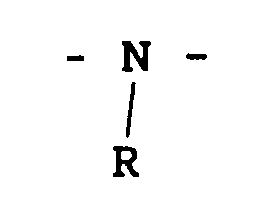
- the resin having the cationic electrodeposition property is a polyurethane having an average molecular weight of 2,000 to 10,000 containing a tertiary amino group represented by a formula: (wherein R is an alkyl of 4 or less carbon atoms).
- polyurethanes can be synthesized by reacting a divalent alcohol (diol) with a divalent isocyanate (diisocyanate).
- divalent alcohol divalent alcohol
- diisocyanate divalent isocyanate
- a tertiary amino group since a tertiary amino group has to be introduced in order to introduce a cationic property, it is necessary to introduce a tertiary aminodiol to a part of the divalent alcohols.
- the tertiary aminodiol includes, for example, N-methyl diethanolamine, N-ethyldiethanolamine, N-propyldiethanolamine, N-butyldiethanolamine, and the like.
- Other diol includes, for example, ethylene glycol, 1,3-propanediol, 1,4-butanediol, 1,5-pentanediol, 1,6-hexanediol, p-xylene glycol, polycarbonate diol, caprolactone diol, and the like.
- the compounding ratio of the tertiary aminodiol to the other diol as mentioned above is preferably 1 : 3 by molar ratio. When the tertiary aminodiol component is smaller than this ratio, the electrodeposition is impossible. Excessiveness induces an abnormal appearance of the coating film.
- the other component for polyurethane synthesis, diisocyanate includes, for example, 4,4-diphenylmethane diisocyanate, tolylene diisocyanate, xylylene diisocyanate, metaxylylene diisocyante, hexamethylene diisocyanate, isophorone diisocyanate, 4,4-methylenebis(cyclohexyl isocyanate), trimethylhexamethylene diisocyanate, 1,3-(isocyanate methyl)cyclohexane, and the like.
- diols and diisocyanates may be applied to addition polymerization in a solvent having no active hydrogen, for example, benzene, toluene, xylene, acetone, methyl ethyl ketone, methyl acetate, ethyl acetate, and the like, in a conventional way.
- a solvent having no active hydrogen for example, benzene, toluene, xylene, acetone, methyl ethyl ketone, methyl acetate, ethyl acetate, and the like, in a conventional way.
- the resulting polymer a basic substance, is neutralized, to which water dispersibility required for the electrodeposition is given.
- the acid required for the neutralization includes organic acids such as acetic acid, formic acid, propionic acid, lactic acid, and the like, and inorganic acids such as sulfuric acid, phosphoric acid, and the like.
- the coating film which has good adhesiveness, water resistance, particularly, good elasticity can be obtained.
- the aforementioned respective components are transformed into electrodeposition materials according to the following method (1) or (2).
- the invention is characterized in that the coating composition for electrodeposition comprises 20 weight parts or less of a coating material or pigment or a mixture thereof as needed.
- a dyestuff or pigment may be added to the above-prepared ultraviolet curable coating composition for cationic electrodeposition in order to afford color variation.
- the usable preferred dyestuff is of mordant dye.
- the pigment includes organic pigment, for example, those of azo-type, phthalocyanine type, metallic complex salt, quinacridone type, and the like, and inorganic pigment, for example, metal oxides such as titanium oxide and ferric oxide, and barium sulfate.
- the well-known carbon black may also be used.
- the mixing rate of the dyestuff or pigment may be determined according to light and shade of the intended color, but it should not be over 20% by weight for the total amount of the ultraviolet curable coating composition for cationic electrodeposition. When this limitation is exceeded, the aforementioned characteristics of the invention are lost.
- irradiation of ultraviolet radiation at ordinary temperature hardens the resin electrically deposited on the surface of the material to be coated, and accordingly the resin can be applied to plated materials can be applied to plated products of non-heat resistant plastics.
- This is also applicable to products of diecasting materials plated with a metal such as aluminum, zinc, magnesium and brass, without fear of producing any swelling caused by baking treatment at high temperature.
- the curing time can be reduced by combination of 2 or more of photopolymerization initiators. Accordingly, the curing time is far shorter than in the prior art electrodeposition by the baking treatment at high temperature.
- Example 2 To the urethane acrylate solution prepared in Example 1, (1-A), was added 1 g of 2-hydroxy-2-methylpropiophenone as a photopolymerization initiator with stirring and then added xylene to make 1 liter in total to give an ultraviolet curable coating composition for electrodeposition.
- the mixture was made to 1 liter in total to give an ultraviolet curable coating composition for electrodeposition.
- Test pieces (5 mm ⁇ 5 mm) which were prepared by nickel plating on an ABS resin were electrically deposited according to the conventionally utilized method in a film thickness of 10 ⁇ m with ultraviolet curable coating compositions for cationic electrodeposition which were prepared in the aforementioned Examples 1 - 3 and Comparative Examples 1 and 2. The pieces were dried at 80°C for 10 minutes and then irradiated with ultraviolet radiation by use of an UV drier (80W high pressure mercury lamp; Eye Graphic Co.) at a distance of 20 cm for 2 minutes. The results of evaluation of the coating films are shown in Table 3. Test Item Example 1 Example 2 Example 3 Comp.Ex. 1 Comp.Ex.
Landscapes
- Life Sciences & Earth Sciences (AREA)
- Chemical & Material Sciences (AREA)
- Health & Medical Sciences (AREA)
- Molecular Biology (AREA)
- Engineering & Computer Science (AREA)
- Materials Engineering (AREA)
- Wood Science & Technology (AREA)
- Organic Chemistry (AREA)
- Paints Or Removers (AREA)
Abstract
Description
- The present invention relates to ultraviolet curable coating compositions for cationic electrodeposition which afford anticorrosive properties such as waterproof, chemical resistance, anti-sweating and anti-fingerprint as well as multi-color variation to metallic materials including plated products and plastics which are made electrically conductive by plating.
- As well known in literatures (for example, J. Oil Col. Chem. Assoc., 63, 482 (1980)), the electrodeposition is a coating method which comprises dipping an electrically conductive material to be coated into a suspension of a charged film-forming material dispersed in water, and subjecting the conductive material to electrocoagulation by the passage of electric current through the suspension, and carrying out a baking treatment of the conductive material coated with the electrocoaglation.
- The electrodeposition method has such major distinctive features that loss of coating material is low; automatic control of coating process is easy to reduce labor costs; a variety of materials to be coated are simultaneously treated; uniform film formation is possible in the inside and edge of the materials to be coated; and coating materials have good adhesiveness to the materials to be coated. Moreover, the electrodeposition using aqueous coating materials has also been appreciated in view of environmental pollution and disaster prevention.
- The electrodeposition is classified roughly into anionic electrodeposition and cationic electrodeposition. The cationic electrodeposition has widely been employed as a coating method for the body of cars and in divisions of industrial materials, for the following reasons: since the material to be coated is a cathode in the cationic electrodeposition, metals under the coating or chemical coating film are scarcely flowed out; the coating film resin per se exhibits high anticorrosive properties since it is basic to act as corrosion retarder.
- It is a problem, however, that the coating film used in the aforementioned prior art is heat curing and has a thermosetting temperature of 100°C or higher, and so it cannot be used for heat-sensitive materials such as plastics.
- In order to solve this problem, there is a method for coating the materials with ultraviolet curable coating materials by irradiation of ultraviolet radiation, and these coating materials are constituted by ultraviolet curable oligomers, monomers, photopolymerization initiators, sensitizers, and so on. Such coating materials are called coating materials of high-solid or solventless type. In these coating materials, the monomer is used for diluting other components in place of an organic solvent. Accordingly there arises a problem that splashing of the monomer at the time of coating might afford a bad influence on the human body. This type of coating material has another problem that the coating film produced from this type of coating material is very hard, but fragile and less adhesive to the basal material. This is problematic particularly on a smooth plated base material.
- The object of the invention is to provide coating compositions for electrodeposition which are applicable to conventional metallic materials, die casting products of a metal such as aluminum, zinc, magnesium and brass which are plated with a metal, and plastic materials which are plated with a metal for providing electric conductivity, and which are good in adhesiveness and elasticity and afford high anticorrosion, transparency, luster and multi-color variation to the products.
- The plating includes wet plating such as electroplating, electroless plating and chemical plating as well as dry plating such as vapor deposition, spattering and ion plating (PVD, CVD).
- The present invention relates to an ultraviolet curable coating composition for cationic electrodeposition applicable to plated materials which comprises 100 weight parts of acrylic resin containing 10 to 70% by weight of poly-functional acrylate per se having 3 or more acryloyl groups and 90 to 30% by wieght of a resin of molecular weight 2,000 to 30,000 having a cationic electrodeposition property, and 0.1 to 10 weight parts, preferably, 1 to 6 weight parts of 2 or more species of photopolymerization initiators which absorb ultraviolet radiation in a wavelength range of 300 to 400 nm, as effective ingredients.
- The coating composition for cationic electrodeposition is electrically deposited as an aqueous solution to a cathode plated material. The coating composition for cationic electrodeposition of the invention which contains photopolymerization initiators which are activated by light in an ultraviolet region, absorbs ultraviolet radiation as photo-energy under irradiation of ultraviolet radiation to produce acryloyl radicals, which polymerize mutually and are cured to form a coating film on a plated material.
- According to the invention, 2 or more species of photopolymerization initiators which absorb ultraviolet radiation in the wavelength range of 300 to 400 nm may be used in an amount of 0.1 to 10 weight parts, preferably 1 to 6 weight parts, for 100 weight parts of the acrylic resin. As for a light source in ultraviolet irradiation, a high pressure mercury lamp is usually used. This lamp has a wide emission spectrum range of 300 to 400 nm in which the major wavelength is at 360 nm. On the other hand, materials of which the absorption wavelength exists within the range of ultraviolet wavelength has a narrow absorption wavelength range. Since the ultraviolet curable coating composition for cationic electrodeposition contains much components which do not contribute to curing, 2 or more species of photopolymerization initiators of which the absorption range is different from each other are used in combination in order to utilize efficiently the photo-energy from a light source and increase the curing rate considerably. When the rate of the photopolymerization initiators to be added is lower than the aforementioned rate, the acryloyl groups cannot transform rapidly into radicals to need much more time for curing. On the other hand, when the rate exceeds the aforementioned, it is inconvenient because the dispersibility of the coating composition decreases and the composition deposits in an aqueous solution. In order to prevent this phenomenon, it is necessary to use 2 or more species of photopolymerization initiators to utilize effectively the light source energy.
- Table 1 shows the substances which have an ultraviolet absorption range of 300 to 400 nm and can be used as photopolymerization initiators, together with their absorption wavelengths. As shown in Table 2, the substances of Table 1 may preferably be used in combination of 2 or more species.

No Example of Combination Wavelength at Absorption 1 6 ○ 3 parts + 7 ○ 1 part 360 - 410 nm 2 6 ○ 19 parts + 7 ○ 1 part 320 - 360 nm 3 5 ○ 1 part + 6 ○ 4 parts 320 - 360 nm 4 5 ○ 1 part + 7 ○ 1 part 380 - 410 nm 5 2 ○ 1 part + 9 ○ 1 part 320 - 350 nm 6 2 ○ 3 parts + 3 ○ 1 part + 9 ○ 2 parts 340 - 400 nm - Since the ultraviolet curable coating composition for cationic electrodeposition of the invention contains 3 or more acryloyl groups in the acrylate molecule, radical polymerization of the acryloyl groups affords steric network structure to form a practically strong coating film. The ratio of the acrylate having 3 or more acryloyl groups in one molecule in the resin is 10 to 70% by weight. When the ratio is lower than 10% by weight, the radical is in short for the radical polymerization to induce insufficient curing. On the other hand, when the rate is over 70% by weight, the content of the resin with the cationic electrodeposition property decreases to 30% by weight or lower; thus, the cation is in short supply to yield insufficient electrodeposition.
- The aforementioned multi-functional acrylate having 3 or more acryloyl groups includes trimethylolpropane triacrylate, pentaerythritol triacrylate, dipentaerythritol pentaacrylate, and the like. Preferably, those which are miscible well with resins having the cationic electrodeposition property and which are modified to have 3- or more multiple functions giving a good coating capacity, for example, polyester acrylate, urethane acrylate and epoxyacrylate, may be used.
- The invention is characterized in that the resin having a cationic electrodeposition property is a copolymer of 1 to 20 weight parts of the following material (a) and 80 to 99 weight parts of one or a mixture of two or more of the following materials (b-1), (b-2) and (b-3), which copolymer has an average molecular weight of 3,000 to 30,000 and posses a tertiary amino group on a side chain.
- (a) A vinyl monomer containing a tertiary amino group exemplified by dimethylaminomethyl (meth)acrylate, dimethylaminoethyl (meth)acrylate, dimethylaminopropyl (meth)acrylate, vinylpyridine, and the like.
- (b-1) An α,β-Ethylenic unsaturated monocarboxylic acid hydroxy ester exemplified by hydroxyethyl (meth)acrylate, hydroxypropyl (meth)acrylate, hydroxybutyl (meth)acrylate, and the like.
- (b-2) An α,β-Ethylenic unsaturated monocarboxylic acid alkyl ester exemplified by methyl (meth)acrylate, ethyl (meth)acrylate, propyl (meth)acrylate, butyl (meth)acrylate, 2-ethylhexyl (meth)acrylate, lauryl (meth)acrylate, boronyl (meth)acrylate, benzyl (meth)acrylate, cyclohexyl (meth)acrylate, phenoxyethyl (meth)acrylate, and the like.
- (b-3) An α,β-Ethylenic unsaturated compound exemplified by styrene, methylstyrene, vinylcarbazole, and the like.
-
- The vinyl monomer (a) containing a tertiary amino group, which is an essential component for giving a cationic electrodeposition property and affords adherent property of the coating film to the basal plated coat, may be used in a polymerization rate of 1 to 20 weight parts, preferably, 3 to 10 weight parts. When the polymerization rate is extremely low, no uniform film is formed because polymer resin is not dispersed to decrease the electrodeposition property to induce abnormal deposition. When the rate is excessive, the electric conductivity of the coating material increases to induce abnormal deposition, too.
- The α,β-ethylenic unsaturated monocarboxylic acid hydroxy ester (b-1) which is copolymerized with the tertiary amino-containing vinyl monomer is used as a component assisting moisture dispersion and for the purpose of affording an adherent property to the basal plated coat. The compounding amount that may be set in a wide range is preferably 5 to 20 weight parts. Excessive use is not preferable because the moisture-absorption rate increases in the coating film.
- The α,β-ethylenic unsaturated monocarboxylic acid alkyl ester (b-2) is used for the purpose of affording flexibility and a flowing property to the coating film. The compounding amount may be set in a wide range as needed.
- The α,β-ethylenic unsaturated compound (b-3) is if required used as a coagent for improving such a property as water resistance or chemical resistance of the coating film or as a regulator for Tg of the coating film. Excessive use increases brittleness, and accordingly the amount to be used is limited up to 30 weight parts.
- The copolymerization may be achieved by the known radical polymerization method. That is, the copolymer may be produced by solution polymerization using an appropriate solvent, for example, methanol, ethanol, isopropyl alcohol, methylcellosolve, ethylcellosolve, butylcellosolve, butylcellosolve acetate, toluene, xylene, and the like.
- The resulting copolymer, a basic substance, is neutralized, to which water dispersibility required for the electrodeposition is given. The acid required for the neutralization includes organic acids such as acetic acid, formic acid, propionic acid, lactic acid, and the like, and inorganic acids such as sulfuric acid, phosphoric acid, and the like.
- When the copolymer of the aforementioned (a) with one or a mixture of two or more of (b-1), (b-2) and (b-3) is used as a resin having the cationic electrodeposition property, the tertiary amino and hydroxy groups attached to the side chain produce an adherent property for the basal plated coat. Moreover, by selecting an appropriate one from (b-2) and (b-3) as a copolymer component, elasticity and hardness of the coating film can be controlled as needed.
- Moreover, the invention is characterized in that the resin having the cationic electrodeposition property is a polyurethane having an average molecular weight of 2,000 to 10,000 containing a tertiary amino group represented by a formula:(wherein R is an alkyl of 4 or less carbon atoms).

- In general, polyurethanes can be synthesized by reacting a divalent alcohol (diol) with a divalent isocyanate (diisocyanate). In this invention, however, since a tertiary amino group has to be introduced in order to introduce a cationic property, it is necessary to introduce a tertiary aminodiol to a part of the divalent alcohols.
- The tertiary aminodiol includes, for example, N-methyl diethanolamine, N-ethyldiethanolamine, N-propyldiethanolamine, N-butyldiethanolamine, and the like. Other diol includes, for example, ethylene glycol, 1,3-propanediol, 1,4-butanediol, 1,5-pentanediol, 1,6-hexanediol, p-xylene glycol, polycarbonate diol, caprolactone diol, and the like. The compounding ratio of the tertiary aminodiol to the other diol as mentioned above is preferably 1 : 3 by molar ratio. When the tertiary aminodiol component is smaller than this ratio, the electrodeposition is impossible. Excessiveness induces an abnormal appearance of the coating film.
- The other component for polyurethane synthesis, diisocyanate, includes, for example, 4,4-diphenylmethane diisocyanate, tolylene diisocyanate, xylylene diisocyanate, metaxylylene diisocyante, hexamethylene diisocyanate, isophorone diisocyanate, 4,4-methylenebis(cyclohexyl isocyanate), trimethylhexamethylene diisocyanate, 1,3-(isocyanate methyl)cyclohexane, and the like.
- The aforementioned diols and diisocyanates may be applied to addition polymerization in a solvent having no active hydrogen, for example, benzene, toluene, xylene, acetone, methyl ethyl ketone, methyl acetate, ethyl acetate, and the like, in a conventional way.
- The resulting polymer, a basic substance, is neutralized, to which water dispersibility required for the electrodeposition is given. The acid required for the neutralization includes organic acids such as acetic acid, formic acid, propionic acid, lactic acid, and the like, and inorganic acids such as sulfuric acid, phosphoric acid, and the like.
- When the aforementioned polyurethane containing a tertiary amino group is used as a resin having the cationic electrodeposition property, the coating film which has good adhesiveness, water resistance, particularly, good elasticity can be obtained.
- The aforementioned respective components are transformed into electrodeposition materials according to the following method (1) or (2).
- (1) A multi-functional acrylate is mixed with a neutralized tertiary amino-containing vinyl monomer and a copolymer of one or more species of α,β-ethylenic unsaturated monocarboxylic acid hydroxy ester or α,β-ethylenic unsaturated monocarboxylic acid alkyl ester or α,β-ethylenic unsaturated compound, then photopolymerization initiators are added, and the mixture is diluted with ion-exchanged water to adjust the resin content in 8 to 15%.
- (2) A multi-functional acrylate is mixed with the neutralized tertiary amino-containing polyurethane as mentioned above, then photopolymerization initiators are added, and the mixture is diluted with ion-exchanged water to adjust the resin content in 8 to 15%.
-
- Moreover, the invention is characterized in that the coating composition for electrodeposition comprises 20 weight parts or less of a coating material or pigment or a mixture thereof as needed.
- According to the invention, if required, a dyestuff or pigment may be added to the above-prepared ultraviolet curable coating composition for cationic electrodeposition in order to afford color variation. The usable preferred dyestuff is of mordant dye. The pigment includes organic pigment, for example, those of azo-type, phthalocyanine type, metallic complex salt, quinacridone type, and the like, and inorganic pigment, for example, metal oxides such as titanium oxide and ferric oxide, and barium sulfate. The well-known carbon black may also be used.
- The mixing rate of the dyestuff or pigment may be determined according to light and shade of the intended color, but it should not be over 20% by weight for the total amount of the ultraviolet curable coating composition for cationic electrodeposition. When this limitation is exceeded, the aforementioned characteristics of the invention are lost.
- According to the invention as mentioned above, irradiation of ultraviolet radiation at ordinary temperature hardens the resin electrically deposited on the surface of the material to be coated, and accordingly the resin can be applied to plated materials can be applied to plated products of non-heat resistant plastics. This is also applicable to products of diecasting materials plated with a metal such as aluminum, zinc, magnesium and brass, without fear of producing any swelling caused by baking treatment at high temperature. Moreover, the curing time can be reduced by combination of 2 or more of photopolymerization initiators. Accordingly, the curing time is far shorter than in the prior art electrodeposition by the baking treatment at high temperature.
- The invention will be explained in more detail by the following examples which are not intended as a limitation thereof.
-
- (1-A) In a four-necked flask equipped with a stirrer, condenser, thermometer and dropping funnel at each neck were placed 200 g of the trimer (isocyanurate) of hexamethylene diisocyanate and 135 g of xylene. A mixture of 116 g of 2-hydroxyethyl acrylate, 0.46 g of dibutyltin dilaurate as a catalyst and 0.1 g of methoquinone as a polymerizing inhibitor was dropwise added through the dropping funnel with stirring over 10 minutes at a fixed rate. The mixture was further stirred for 90 minutes with keeping the temperature at 40°C or lower to give an intended acrylate solution. The completion of the reaction of the isocyante group was confirmed by disappearance of the peak at 2270 cm-1 by infrared absorption spectra.
- (1-B) To 300 g of isopropyl alcohol as a solvent were added 40 g of dimethylaminoethyl methacrylate (a), 100 g of 2-hydroxyethyl methacrylate (b-1), 90 g of 2-ethylhexyl acrylate, 50 g of n-butyl methacrylate and 145 g of methyl methacrylate (b-2), and 75 g of styrene. Then, the combination No. 3 of photopolymeriation initiators as shown in Table 2, namely, 1 g of 1-hydroxy-cyclohexyl phenyl ketone and 4 g of 2-hydroxy-2-methyl-1-phenylpropan-1-one were added. The resulting mixture was placed in a 4-necked flask equipped with a stirrer and so on in the same way as in (1-A) and warmed up with stirring. After starting of flux, an equal amount of the mixture of the same component was dropwise added through the dropping funnel homogeneously over 90 minutes, and the mixture was stirred at 85°C for 4 hours to give a solution of the copolymer resin having the cationic electrodeposition property. The average molecular weight of this copolymer was 26,000, which was confirmed by GPC.
- (1-C) The copolymer solution (91 g) prepared in (1-B) was neutralized with 1.9 g of lactic acid. There was added the acrylate solution (71.4 g) prepared in (1-A) and 1 g of 2-hydroxy-2-methylpropiophenone as a photopolymerization initiator with stirring. Then, the mixture was made to 1 liter in total by addition of ion-exchange water with stirring to give the ultraviolet curable coating composition for cationic electrodeposition of the invention.
-
- (2-c) The copolymer solution (127 g) prepared in (1-B) was neutralized with 2.7 g of lactic acid. There was added 30 g of a commercially available acrylate having 3 or more functional groups, i.e., Urethane Acrylate UA-101T (trade name; Kyoei Chemical Co., Ltd.), and the photopolymerization initiators of combination No. 1 as shown in Table 2, namely, 3 g of 2-hydroxy-2-methyl-1-phenylpropan-1-one and 1 g of bis(2,4,6-trimethylbenzoyl)phenylphosphine oxide with stirring. Then, the mixture was made to 1 liter in total by addition of ion-exchange water with stirring to give the ultraviolet curable coating composition for cationic electrodeposition of the invention.
-
- (3-B) A solution of 106.7 g of isophorone diisocyanate contained in (c-3) dissolved in 75.8 g of xylene was placed in a 4-necked flask equipped with a stirrer and so on at each neck in the same way as in (1-A). There was dropwise added a solution of 220.7 g of PLACCEL205 (trade name; Daicel Chemical Industries, Ltd.) contained in a commercially available (c-1) and 24.4 g of N-methyldiethanolamine dissolved in 75 g of xylene with stirring through a dropping funnel within 30 minutes. The mixture was stirred at 40°C or lower for 120 minutes to give a solution of the polyurethane having a tertiary amino group. The completion of the reaction of the isocyante group was confirmed by disappearance of the peak at 2270 cm-1 by infrared absorption spectra.
- (3-C) The solution (71.4 g) of the polyurethane having a tertiary amino group prepared in (3-B) was neutralized with 2.2 g of lactic acid. There was added 150 g of a commercially available acrylate, OPF-Resin T, and photopolymerization initiators of combination No. 6 as shown in Table 2, namely, 3 g of 2,4,6-trimethylbenzophenone, 1 g of oligo(2-hydroxy-2-methyl-1-(4-(1-methyl-vinyl)phenyl)propanone and 2 g of 3,3-dimethyl-4-methoxybenzophenone with stirring. Then, the mixture was made to 1 liter in total by addition of ion-exchange water with stirring to give the ultraviolet curable coating composition for cationic electrodeposition of the invention.
-
- To the urethane acrylate solution prepared in Example 1, (1-A), was added 1 g of 2-hydroxy-2-methylpropiophenone as a photopolymerization initiator with stirring and then added xylene to make 1 liter in total to give an ultraviolet curable coating composition for electrodeposition.
- The cationic acrylic copolymer solution (91 g) prepared in Example 1, (1-B), was neutralized with 1.9 g lactic acid, to which was added photopolymerization initiators of combination No. 1 as shown in Table 2, namely, 3 g of 2-hydroxy-2-methyl-1-phenylpropan-1-one and 1 g of bis(2,4,6,-trimethylbenzoyl)phenylphosphine oxide with stirring. The mixture was made to 1 liter in total to give an ultraviolet curable coating composition for electrodeposition.
- Test pieces (5 mm × 5 mm) which were prepared by nickel plating on an ABS resin were electrically deposited according to the conventionally utilized method in a film thickness of 10 µm with ultraviolet curable coating compositions for cationic electrodeposition which were prepared in the aforementioned Examples 1 - 3 and Comparative Examples 1 and 2. The pieces were dried at 80°C for 10 minutes and then irradiated with ultraviolet radiation by use of an UV drier (80W high pressure mercury lamp; Eye Graphic Co.) at a distance of 20 cm for 2 minutes. The results of evaluation of the coating films are shown in Table 3.
Test Item Example 1 Example 2 Example 3 Comp.Ex. 1 Comp.Ex. 2 Appearance ○ ○ ○ Δ ○ Uniformity ○ ○ ○ × Δ Adhesiveness 100/100 100/100 100/100 0/100 70/100 Hardness 2H 3H 2H 4H 2B 180° Bending test ○ ○ ○ ○ ○ CASS 72hrs ○ ○ ○ ○ × Acetone Rubs 100 times or more 100 times or more 100 times or more 100 times or more 10 times or less Resistance to Boiling Water 5hrs ○ ○ ○ ○ × 5%NaOH 48hrs ○ ○ ○ ○ × 5%H2SO4 48hrs ○ ○ ○ ○ × - The test was carried out as follows.
- Appearance (visual observation): Δ:slight roughness
- Unifomity (visual observation): Δ:somewhat poor; ×: poor
- Adhesiveness: Eleven cuts were made crosswise, respectively, on the test piece at intervals of 1 mm, a cellophane tape was stuck thereon and peeled off. The number of the remaining sections not peeled is given (JIS K 5651).
- Hardness: Mitsubishi pencil Uni, load of 1 kg
- 180° bending test: The test pieces were bent into a 180° angle, and a cellophane tape was stuck on the fold surface and peeled off. ○: no peeling-off
- CASS 72hrs (JIS K 8617): ○: normal; ×: poor
- Acetone Rubs: An acetone-soaked cloth was loaded with 1 kg and moved reciprocally on the test piece. The value indicates the number of reciprocation until the undercoating appears.
- 5 hrs resistance to boiling water: The pieces were dipped in hot water at 90°C or higher for 5 hours, and the external appearances were visually observed. ○: normal; ×: poor
- 5% NaOH 48 hrs: The pieces were dipped in 5% NaOH at 25C for 48 hours, and the external appearances were visually observed. ○: normal; ×: poor
- 5% H2SO448 hrs: The pieces were dipped in 5% sulfuric acid aqueous solution at 25°C for 48 hours, and the external appearances were visually observed. ○: normal; ×: poor
-
- The invention may be embodied in other specific forms without departing from the spirit or essential characteristics thereof. The present embodiments are therefore to be considered in all respects as illustrative and not restrictive, the scope of the invention being indicated by the appended claims rather than by the foregoing description and all changes which come within the meaning and the range of equivalency of the claims are therefore intended to be embraced therein.
Claims (8)
- An ultraviolet curable coating composition for cationic electrodeposition applicable to plated materials, comprising 100 weight parts of acrylic resin containing 10 to 70% by weight poly-functional acrylate per se having 3 or more acryloyl groups and 90 to 30% by weight of a resin of molecular weight 2,000 to 30,000 having a cationic electrodeposition property, and 0.1 to 10 weight parts of 2 or more species of photopolymerization initiators which absorb ultraviolet radiation in a wavelength range of 300 to 400 nm, as effective ingredients.
- The ultraviolet curable coating composition for cationic electrodeposition of claim 1, wherein a ratio of the acrylic resin is 100 weight parts and a ratio of the photopolymerization initiators as effective ingredients is 1 to 6 weight parts.
- The ultraviolet curable coating composition for cationic electrodeposition of claim 1, wherein the resin having a cationic electrodeposition property is a copolymer of 1 to 20 weight parts of the following material (a) and 80 to 99 weight parts of one or a mixture of two or more of the following materials (b-1), (b-2) and (b-3), which copolymer has an average molecular weight of 3,000 to 30,000 and posses a tertiary amino group on a side chain:(a) a vinyl monomer containing a tertiary amino group,(b-1) an α,β-Ethylenic unsaturated monocarboxylic acid hydroxy ester,(b-2) an α,β-Ethylenic unsaturated monocarboxylic acid alkyl ester, and(b-3) an α,β-Ethylenic unsaturated compound.
- The ultraviolet curable coating composition for cationic electrodeposition of claim 1, wherein the resin having the cationic electrodeposition property is a polyurethane having an average molecular weight of 2,000 to 10,000 containing a tertiary amino group represented by a formula:(wherein R is an alkyl of 4 or less carbon atoms).
- The ultraviolet curable coating composition for cationic electrodeposition of claim 1, comprising 20 weight parts or less of a coating material or pigment or a mixture thereof as needed.
- The ultraviolet curable coating composition for cationic electrodeposition of claim 2, comprising 20 weight parts or less of a coating material or pigment or a mixture thereof as needed.
- The ultraviolet curable coating composition for cationic electrodeposition of claim 3, comprising 20 weight parts or less of a coating material or pigment or a mixture thereof as needed.
- The ultraviolet curable coating composition for cationic electrodeposition of claim 4, comprising 20 weight parts or less of a coating material or pigment or a mixture thereof as needed.
Priority Applications (3)
| Application Number | Priority Date | Filing Date | Title |
|---|---|---|---|
| EP99200852A EP1036829B1 (en) | 1999-03-18 | 1999-03-18 | Ultraviolet curable coating compositions for cationic electrodeposition applicable to metallic materials and electrically conductive plastic materials |
| AT99200852T ATE364664T1 (en) | 1999-03-18 | 1999-03-18 | UV-CURED CATIONIC ELECTROCOATING COMPOSITIONS SUITABLE FOR METAL SUBSTRATES AND CONDUCTIVE PLASTIC SURFACE |
| DE69936286T DE69936286D1 (en) | 1999-03-18 | 1999-03-18 | UV-curable cationic electrodeposition coating compositions suitable for metal substrates and conductive plastic surfaces |
Applications Claiming Priority (1)
| Application Number | Priority Date | Filing Date | Title |
|---|---|---|---|
| EP99200852A EP1036829B1 (en) | 1999-03-18 | 1999-03-18 | Ultraviolet curable coating compositions for cationic electrodeposition applicable to metallic materials and electrically conductive plastic materials |
Publications (2)
| Publication Number | Publication Date |
|---|---|
| EP1036829A1 true EP1036829A1 (en) | 2000-09-20 |
| EP1036829B1 EP1036829B1 (en) | 2007-06-13 |
Family
ID=8240005
Family Applications (1)
| Application Number | Title | Priority Date | Filing Date |
|---|---|---|---|
| EP99200852A Expired - Lifetime EP1036829B1 (en) | 1999-03-18 | 1999-03-18 | Ultraviolet curable coating compositions for cationic electrodeposition applicable to metallic materials and electrically conductive plastic materials |
Country Status (3)
| Country | Link |
|---|---|
| EP (1) | EP1036829B1 (en) |
| AT (1) | ATE364664T1 (en) |
| DE (1) | DE69936286D1 (en) |
Cited By (5)
| Publication number | Priority date | Publication date | Assignee | Title |
|---|---|---|---|---|
| GB2426977A (en) * | 2005-06-10 | 2006-12-13 | Nippon Paint Co Ltd | Cissing inhibitor for cationic electrodeposition |
| JP2010083933A (en) * | 2008-09-30 | 2010-04-15 | Honny Chem Ind Co Ltd | Composition for ultraviolet ray curable type cationic electrodeposition paint having satisfactory scratch resistance, and coating film thereof |
| US7816434B2 (en) | 2001-09-11 | 2010-10-19 | Henkel Kommanditgesellschaft Auf Aktien | UV-curing anti-fingerprinting coatings |
| CN104762014A (en) * | 2015-03-30 | 2015-07-08 | 广西吉宽太阳能设备有限公司 | Polyurethane waterproof mildew-resistant paint and preparation method thereof |
| CN113736357A (en) * | 2021-08-30 | 2021-12-03 | 湖南松井新材料股份有限公司 | Vacuum coating nano white slurry medium paint and preparation method and application thereof |
Citations (3)
| Publication number | Priority date | Publication date | Assignee | Title |
|---|---|---|---|---|
| US4029561A (en) * | 1976-01-22 | 1977-06-14 | Scm Corporation | Photocurable cathodic electrocoating |
| US4035274A (en) * | 1976-05-24 | 1977-07-12 | Scm Corporation | Dual cure cathodic electrocoating |
| US4039414A (en) * | 1974-06-19 | 1977-08-02 | Scm Corporation | Ultraviolet curing of electrocoating compositions |
-
1999
- 1999-03-18 DE DE69936286T patent/DE69936286D1/en not_active Expired - Lifetime
- 1999-03-18 EP EP99200852A patent/EP1036829B1/en not_active Expired - Lifetime
- 1999-03-18 AT AT99200852T patent/ATE364664T1/en not_active IP Right Cessation
Patent Citations (3)
| Publication number | Priority date | Publication date | Assignee | Title |
|---|---|---|---|---|
| US4039414A (en) * | 1974-06-19 | 1977-08-02 | Scm Corporation | Ultraviolet curing of electrocoating compositions |
| US4029561A (en) * | 1976-01-22 | 1977-06-14 | Scm Corporation | Photocurable cathodic electrocoating |
| US4035274A (en) * | 1976-05-24 | 1977-07-12 | Scm Corporation | Dual cure cathodic electrocoating |
Cited By (5)
| Publication number | Priority date | Publication date | Assignee | Title |
|---|---|---|---|---|
| US7816434B2 (en) | 2001-09-11 | 2010-10-19 | Henkel Kommanditgesellschaft Auf Aktien | UV-curing anti-fingerprinting coatings |
| GB2426977A (en) * | 2005-06-10 | 2006-12-13 | Nippon Paint Co Ltd | Cissing inhibitor for cationic electrodeposition |
| JP2010083933A (en) * | 2008-09-30 | 2010-04-15 | Honny Chem Ind Co Ltd | Composition for ultraviolet ray curable type cationic electrodeposition paint having satisfactory scratch resistance, and coating film thereof |
| CN104762014A (en) * | 2015-03-30 | 2015-07-08 | 广西吉宽太阳能设备有限公司 | Polyurethane waterproof mildew-resistant paint and preparation method thereof |
| CN113736357A (en) * | 2021-08-30 | 2021-12-03 | 湖南松井新材料股份有限公司 | Vacuum coating nano white slurry medium paint and preparation method and application thereof |
Also Published As
| Publication number | Publication date |
|---|---|
| DE69936286D1 (en) | 2007-07-26 |
| ATE364664T1 (en) | 2007-07-15 |
| EP1036829B1 (en) | 2007-06-13 |
Similar Documents
| Publication | Publication Date | Title |
|---|---|---|
| US5438080A (en) | Ultraviolet-curable coating composition | |
| US6232364B1 (en) | Ultraviolet curable coating compositions for cationic electrodeposition applicable to metallic materials and electrically conductive plastic materials | |
| US10150883B2 (en) | UV-curable coating compositions and methods for using them | |
| KR101622972B1 (en) | Composition for hard coat and molded product provided with hard coat layer | |
| DE4310414A1 (en) | Process for producing a two-coat top coat on a substrate surface | |
| KR20160077580A (en) | Graphene coating composition, graphene coated steel sheet and manufacturing method thereof | |
| JP2546871B2 (en) | Resin laminate having metallic luster and method for producing the same | |
| EP3168267B1 (en) | Coating resin composition | |
| JP2513713B2 (en) | Non-self-crosslinking binder composition | |
| JP2012001578A (en) | Curable resin composition and laminate | |
| TWI338023B (en) | Multi-component, waterborne coating compositions, related coatings and methods | |
| WO2004083327A1 (en) | Uv curable paint composition with high operating efficiency | |
| EP1036829B1 (en) | Ultraviolet curable coating compositions for cationic electrodeposition applicable to metallic materials and electrically conductive plastic materials | |
| TW558454B (en) | Hydraulic transfer method | |
| JP2010083933A (en) | Composition for ultraviolet ray curable type cationic electrodeposition paint having satisfactory scratch resistance, and coating film thereof | |
| JP5220524B2 (en) | Electronic device housing and method for manufacturing the same | |
| JP5220515B2 (en) | Electrodeposition coating composition and aqueous electrodeposition coating composition | |
| JP4533476B2 (en) | Fluorine resin-containing cationic electrodeposition coating and production method | |
| JP3192197B2 (en) | UV curable cationic electrodeposition coating composition for plating materials | |
| JP6487715B2 (en) | Painted body | |
| JPH08259644A (en) | Active energy ray curable resin composition | |
| JPH05295323A (en) | Cold-curable water-base paint composition and method for forming coating film | |
| WO2006137569A1 (en) | Water-borne clear coating composition and method of forming clear coating film | |
| DE10392212T5 (en) | Process for forming a coating film | |
| JP2019112627A (en) | Active energy ray-curable resin composition, coating agent, and coating agent for precoat metal |
Legal Events
| Date | Code | Title | Description |
|---|---|---|---|
| PUAI | Public reference made under article 153(3) epc to a published international application that has entered the european phase |
Free format text: ORIGINAL CODE: 0009012 |
|
| AK | Designated contracting states |
Kind code of ref document: A1 Designated state(s): AT DE ES FR GB IT |
|
| AX | Request for extension of the european patent |
Free format text: AL;LT;LV;MK;RO;SI |
|
| 17P | Request for examination filed |
Effective date: 20010206 |
|
| AKX | Designation fees paid |
Free format text: AT DE ES FR GB IT |
|
| 17Q | First examination report despatched |
Effective date: 20020412 |
|
| GRAP | Despatch of communication of intention to grant a patent |
Free format text: ORIGINAL CODE: EPIDOSNIGR1 |
|
| GRAS | Grant fee paid |
Free format text: ORIGINAL CODE: EPIDOSNIGR3 |
|
| GRAA | (expected) grant |
Free format text: ORIGINAL CODE: 0009210 |
|
| AK | Designated contracting states |
Kind code of ref document: B1 Designated state(s): AT DE ES FR GB IT |
|
| REG | Reference to a national code |
Ref country code: GB Ref legal event code: FG4D |
|
| REF | Corresponds to: |
Ref document number: 69936286 Country of ref document: DE Date of ref document: 20070726 Kind code of ref document: P |
|
| PG25 | Lapsed in a contracting state [announced via postgrant information from national office to epo] |
Ref country code: AT Free format text: LAPSE BECAUSE OF FAILURE TO SUBMIT A TRANSLATION OF THE DESCRIPTION OR TO PAY THE FEE WITHIN THE PRESCRIBED TIME-LIMIT Effective date: 20070613 |
|
| ET | Fr: translation filed | ||
| PG25 | Lapsed in a contracting state [announced via postgrant information from national office to epo] |
Ref country code: ES Free format text: LAPSE BECAUSE OF FAILURE TO SUBMIT A TRANSLATION OF THE DESCRIPTION OR TO PAY THE FEE WITHIN THE PRESCRIBED TIME-LIMIT Effective date: 20070924 |
|
| PLBE | No opposition filed within time limit |
Free format text: ORIGINAL CODE: 0009261 |
|
| STAA | Information on the status of an ep patent application or granted ep patent |
Free format text: STATUS: NO OPPOSITION FILED WITHIN TIME LIMIT |
|
| PG25 | Lapsed in a contracting state [announced via postgrant information from national office to epo] |
Ref country code: DE Free format text: LAPSE BECAUSE OF FAILURE TO SUBMIT A TRANSLATION OF THE DESCRIPTION OR TO PAY THE FEE WITHIN THE PRESCRIBED TIME-LIMIT Effective date: 20070914 |
|
| 26N | No opposition filed |
Effective date: 20080314 |
|
| PGFP | Annual fee paid to national office [announced via postgrant information from national office to epo] |
Ref country code: GB Payment date: 20080312 Year of fee payment: 10 |
|
| PGFP | Annual fee paid to national office [announced via postgrant information from national office to epo] |
Ref country code: IT Payment date: 20090316 Year of fee payment: 11 |
|
| GBPC | Gb: european patent ceased through non-payment of renewal fee |
Effective date: 20090318 |
|
| PG25 | Lapsed in a contracting state [announced via postgrant information from national office to epo] |
Ref country code: GB Free format text: LAPSE BECAUSE OF NON-PAYMENT OF DUE FEES Effective date: 20090318 |
|
| PGFP | Annual fee paid to national office [announced via postgrant information from national office to epo] |
Ref country code: FR Payment date: 20100324 Year of fee payment: 12 |
|
| PG25 | Lapsed in a contracting state [announced via postgrant information from national office to epo] |
Ref country code: IT Free format text: LAPSE BECAUSE OF NON-PAYMENT OF DUE FEES Effective date: 20100318 |
|
| REG | Reference to a national code |
Ref country code: FR Ref legal event code: ST Effective date: 20111130 |
|
| PG25 | Lapsed in a contracting state [announced via postgrant information from national office to epo] |
Ref country code: FR Free format text: LAPSE BECAUSE OF NON-PAYMENT OF DUE FEES Effective date: 20110331 |