EP1035717A2 - Method of routing calls in an automatic call distribution network - Google Patents
Method of routing calls in an automatic call distribution network Download PDFInfo
- Publication number
- EP1035717A2 EP1035717A2 EP00301556A EP00301556A EP1035717A2 EP 1035717 A2 EP1035717 A2 EP 1035717A2 EP 00301556 A EP00301556 A EP 00301556A EP 00301556 A EP00301556 A EP 00301556A EP 1035717 A2 EP1035717 A2 EP 1035717A2
- Authority
- EP
- European Patent Office
- Prior art keywords
- acd system
- acd
- communication
- communications network
- call
- Prior art date
- Legal status (The legal status is an assumption and is not a legal conclusion. Google has not performed a legal analysis and makes no representation as to the accuracy of the status listed.)
- Granted
Links
- 238000000034 method Methods 0.000 title claims 12
- 230000008901 benefit Effects 0.000 abstract description 7
- 238000010586 diagram Methods 0.000 description 4
- 238000012986 modification Methods 0.000 description 3
- 230000004048 modification Effects 0.000 description 3
- 238000013479 data entry Methods 0.000 description 1
- 230000003467 diminishing effect Effects 0.000 description 1
- QYSGYZVSCZSLHT-UHFFFAOYSA-N octafluoropropane Chemical compound FC(F)(F)C(F)(F)C(F)(F)F QYSGYZVSCZSLHT-UHFFFAOYSA-N 0.000 description 1
Images



Classifications
-
- H—ELECTRICITY
- H04—ELECTRIC COMMUNICATION TECHNIQUE
- H04Q—SELECTING
- H04Q3/00—Selecting arrangements
- H04Q3/64—Distributing or queueing
-
- H—ELECTRICITY
- H04—ELECTRIC COMMUNICATION TECHNIQUE
- H04M—TELEPHONIC COMMUNICATION
- H04M3/00—Automatic or semi-automatic exchanges
- H04M3/42—Systems providing special services or facilities to subscribers
- H04M3/50—Centralised arrangements for answering calls; Centralised arrangements for recording messages for absent or busy subscribers ; Centralised arrangements for recording messages
- H04M3/51—Centralised call answering arrangements requiring operator intervention, e.g. call or contact centers for telemarketing
- H04M3/523—Centralised call answering arrangements requiring operator intervention, e.g. call or contact centers for telemarketing with call distribution or queueing
- H04M3/5237—Interconnection arrangements between ACD systems
-
- H—ELECTRICITY
- H04—ELECTRIC COMMUNICATION TECHNIQUE
- H04M—TELEPHONIC COMMUNICATION
- H04M3/00—Automatic or semi-automatic exchanges
- H04M3/42—Systems providing special services or facilities to subscribers
- H04M3/42025—Calling or Called party identification service
- H04M3/42085—Called party identification service
- H04M3/42102—Making use of the called party identifier
-
- H—ELECTRICITY
- H04—ELECTRIC COMMUNICATION TECHNIQUE
- H04M—TELEPHONIC COMMUNICATION
- H04M3/00—Automatic or semi-automatic exchanges
- H04M3/42—Systems providing special services or facilities to subscribers
- H04M3/50—Centralised arrangements for answering calls; Centralised arrangements for recording messages for absent or busy subscribers ; Centralised arrangements for recording messages
- H04M3/51—Centralised call answering arrangements requiring operator intervention, e.g. call or contact centers for telemarketing
- H04M3/523—Centralised call answering arrangements requiring operator intervention, e.g. call or contact centers for telemarketing with call distribution or queueing
- H04M3/5232—Call distribution algorithms
Definitions
- This invention pertains generally to automatic call distribution (ACD) systems, also known as call centers or telemarketing systems, and specifically to the routing of calls among such systems in a network of such systems.
- ACD automatic call distribution
- Network ACD refers to a plurality of ACD systems that are interconnected with each other (networked) by a --typically the public telephone-- communications network.
- a --typically the public telephone-- communications network There are two main types of network ACD routing architectures in use.
- this architecture has the advantage that it does not use telecommunications links (e.g., telephony trunks) to route a call to the destination ACD beyond those that would be used to complete a regular, non-ACD, call.
- the other architecture is a "post-route” or "premises-route” architecture, which makes routing decisions after the call has been delivered to an ACD system.
- This architecture very high-quality routing decisions can be made by the receiving ACD.
- the re-routing of the call to different ACDs in the network requires the use of additional communications links --those required to connect the call from the receiving ACD to the destination ACD. This use of additional network resources to complete the call is undesirable.
- the ideal solution would be to make high-quality routing decisions without the need to use additional network resources for routing the call.
- the alternate destination redirection (ADR) feature of telephone switching systems (also known as the alternate destination call redirection, or ADCR) or an equivalent is used to implement a "post-route" routing architecture having the benefits of a "pre-route” routing architecture in a network ACD.
- the ADR feature is administered in the network, for individual ACD systems and individual call types at each ACD system, to identify another ACD system as the alternative destination for calls of the individual call type rejected by the individual ACD system.
- the network distributes calls to the plurality of ACD systems on a basis (e.g., fixed percentage, round-robin) that does not require the network to know the status of the individual ACD systems.
- an individual ACD system Upon having a call of an individual type routed thereto, an individual ACD system checks the status of the ACD system that is administered as the alternative destination for its rejected calls of the individual type. If it determines that it can provide the better service, the individual ACD system services the call. If it determines that the alternative destination ACD system can provide the better service, the individual ACD system rejects the call, whereupon the network, operating under influence of the ADR feature, releases the connection of the call to the individual ACD system and reroutes the call to the alternative destination ACD system.
- routing of communications to ACD systems in a network of a plurality of ACD systems interconnected by a communications network is effected as follows.
- the communications network routes a communication to a selected one of the plurality of ACD systems.
- the selected ACD system determines whether or not it will service the communication, by checking the status of the other ACD system and determining therefrom whether it or the other ACD system can provide better service to the communication.
- the selected ACD system sends a rejection (e.g., a "busy" indication) to the communications network.
- the other ACD system is identified (e.g., administered in the ADR feature or the equivalent) as the alternative destination for the communication rejected by the selected ACD system. Therefore, in response to receiving the rejection, the communications network releases a connection of the communication to the selected ACD system and reroutes the communication to the other ACD system.
- the invention incorporates the advantages of both pre-route and post-route architectures without the disadvantages of each. That is, it makes high-quality routing decisions without the need for additional trunking. It is also lower in cost than both traditional types of network ACD routing architectures: it does not have the capital costs for network servers and gateways that are incurred with pre-route architectures, and it does not have the extra trunking costs incurred by post-route architectures. Furthermore, for ACD systems that already have the capability to determine the status of other ACD systems, it requires no hardware changes or software development to implement --proper administration of the ACD systems and of the network is all that is required.
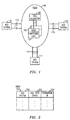
- FIG. 1 shows an illustrative network ACD which comprises a plurality of ACD systems 110-112 interconnected (networked) with each other and with calling and/or called parties via the public switched telephone network (PSTN) 100, the Internet, or some other communications network.
- PSTN public switched telephone network
- ACD systems 110-112 are connected to PSTN 100 via trunks 113-115, which preferably are ISDN trunks.
- PSTN 100 includes one or more conventional switching nodes 101 for routing communications (e.g., calls) to their destinations, which in this case are the ACD systems 110-112.
- PSTN 100 further includes a conventional call allocator 103, which is a stored-program-controlled machine that tells switching nodes 101 which ACD calls to route to which one of ACD systems 110-112.
- Switching nodes 101 of PSTN 100 conventionally provide the Alternate Destination Redirection (ADR) feature 102, or an equivalent. As shown in FIG. 2, this feature allows a single forwarding number 204 to be administered in a switching node 101 for each call type (e.g., called number, or DNIS) 203 for each ACD system 110-112 served by that switching node 101.
- ADR Alternate Destination Redirection
- this feature allows a single forwarding number 204 to be administered in a switching node 101 for each call type (e.g., called number, or DNIS) 203 for each ACD system 110-112 served by that switching node 101.
- call type e.g., called number, or DNIS
- the switching node 101 releases the call connection to the destination and reroutes the call to the call type's (called number's) forwarding number specified for that destination.
- the ADR feature 102 or an equivalent is used to achieve the advantages of both pre-route and post-route network ACD architectures without suffering the disadvantages of either architecture.
- This is illustratively accomplished as follows.
- Call allocator 103 is administered to operate without obtaining status information from ACD systems 110-112, and to simply route a percentage of calls of each call type to each ACD system 110-112.
- a post-route arrangement (such as is described in U.S. pat. no. 5,754,639, for example) is used by that non-central ACD system to compare the status of its splits with the status of the splits of the central ACD system, at step 304. If the non-central ACD system can offer a better service than the central ACD system, as determined at step 306, the call is simply queued to the appropriate split and is serviced at the non-central ACD system, at step 314.
- a rejection (e.g., a "busy" signal) is immediately returned by the non-central ACD system to a switching node 101, at step 308, which triggers the ADR feature 102.
- This feature causes switching node 101 to release the call connection to this non-central ACD system, at step 310, and to reroute the call to the designated alternate destination, which in this example is the central ACD system, at step 312.
- the rerouted call is queued to the appropriate split, at step 314.
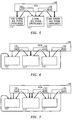
- the just-described embodiment of the invention is shown for one call type in FIG. 4.
- the central ACD system 111 may function just like one of the non-central ACD systems 110 and 112 as shown in FIG. 3, by comparing its service quality with and forwarding its excess calls to one --typically the largest one-- of the non-central ACD systems 110 and 112. This alternative is shown for one call type in FIG. 5.
- ACD systems 110-112 Another alternative embodiment, found to be particularly useful when all ACD systems 110-112 are of approximately the same size, eliminates the concept of a central ACD system and treats all ACD systems equally, as non-central ACD systems connected in a ring.
- Call allocator 103 is programmed to perform round-robin routing of calls to ACD systems 110-112, whereby they are all equally loaded with calls, and the ADR feature 102 of switching nodes 101 and the post-route arrangements of the ACD systems 110-112 are administered such that each ACD system 110-112 compares its service against, and forwards excess calls to, a different one of the other ACD systems 110-112. This embodiment is shown for one call type in FIG. 6.
- Yet another alternative embodiment causes calls of the same type that are being routed to a primary ACD system 111 to be delivered to that ACD system 111 in multiple streams (e.g., to different DNISs), and primary ACD system 111 has a different one of ACD system 110 and 112 administered in ADR feature 102 of switching node 101 as the backup system for each of the multiple streams.
- This embodiment is shown for one call type in FIG. 7.
- the streams may be sized proportionally to the relative sizes of the backup ACD systems for the corresponding streams.
- the described architecture is extendable to network ACDs with large numbers of ACD systems 110-112 and 910-912 where the network ACD is divided into a plurality of sub-networks 900 and 901, each with its own central ACD system 111 and 911, respectively.
- Call loads are balanced across the sub-networks 900 and 901 by connecting each central ACD system 111, 911 to the other ACD systems 110 and 112, 910 and 912, respectively, in its sub-system 900, 901, respectively, in the manner shown in one of the FIGS. 4-8, and by connecting together the two central ACD systems 111 and 911 to compare their service with, and to route excess calls to, one another.
- This embodiment is shown for one call type in FIG. 9.
- a variation on the embodiment of FIG. 9 involves the two central ACD systems 111 and 911 comparing their service with, and routing excess calls to, one of the non-central ACD systems 912 and 110, respectively, of the other sub-system. This variation is shown for one call type in FIG. 10.
- the lookahead interflow (LAI) of ACD systems such as the Lucent Definity® ACD system may be used to deliver calls to the very small ACD systems 1110-1112.
- LAI lookahead interflow
- This configuration is an extension of the configuration of FIG. 9, and is shown in FIG. 11.
- the small ACD systems 1110-1112 do not receive incoming calls directly from the network 100; rather, calls are redirected from central ACD systems 111 and 911 to the small ACD systems 1110-1112 using LAI when an agent becomes available at the small ACD systems 1110-1112. Although the calls redirected to the small ACD systems 1110-1112 via LAI do require additional call trunks, this accounts for a very small percentage of the total number of calls.
- a primary ACD system may merely check whether the backup ACD system is presenting a "busy" indication to arriving calls, and use this as the criterion for determining whether it or the backup ACD system can provide the better service.
- Such changes and modifications can be made within the scope of the invention and without diminishing its attendant advantages. It is therefore intended that such changes and modifications be covered by the following claims except insofar as limited by the prior art.
Landscapes
- Engineering & Computer Science (AREA)
- Business, Economics & Management (AREA)
- Marketing (AREA)
- Signal Processing (AREA)
- Computer Networks & Wireless Communication (AREA)
- Telephonic Communication Services (AREA)
Abstract
Description
Claims (10)
- A method of routing communications to ACD systems in a network of a plurality of ACD systems (110-112) interconnected by a communications network (100), comprising:the communications network routing (302) a first communication to a selected one of the plurality of ACD systems;the selected ACD system sending (308) a rejection to the communications network;in response to receiving the rejection, the communications network releasing (310) a connection of the first communication to the selected ACD system; andfurther in response to receiving the rejection, the communications network rerouting (312) the first communication to an other ACD system, which is identified (102) in the communications network as an alternative destination for the first communication rejected by the selected ACD system, CHARACTERISED IN THATsending a rejection comprisesin response to having the communication routed thereto, the selected ACD system checking (304-306) status of the other one of the plurality of ACD systems to determine whether or not it will service the first communication; andin response to determining (306) that it will not service the first communication, the selected ACD system sending (308) the rejection to the communications network.
- The method of claim 1 wherein:checking status comprisesdetermining (306) from the status which one of the selected ACD system and the other ACD system can provide better service to the communication.
- The method of claim 1 wherein:checking status comprisesreceiving (304) a status-indicative message from the other ACD system.
- The method of claim 1 wherein:checking status comprisesdetermining (304-306) whether the other ACD system is presenting a busy indication to communications.
- The method of claim 1 wherein:the communications network routes a first plurality of communications to the selected ACD system (110 or 112) which overloads the selected ACD system, and routes a second plurality of communications to the other ACD system (111) which underloads the other ACD system, so that the other ACD system has capacity to service communications rerouted thereto from the selected ACD system.
- The method of claim 1 wherein:the first communication is of a first type (203); andthe method further comprisesthe communications network routing a second communication, of a second type (203), to the selected ACD system,in response to having the second communication routed thereto, the selected ACD system checking status of a third one of the plurality of ACD systems to determine whether or not it will service the second communication,in response to determining that it will not service the second communication, the selected ACD system sending a rejection of the second communication to the communications network,in response to receiving the rejection of the second communication, the communications network releasing a connection of the second communication to the selected ACD system, andfurther in response to receiving the rejection of the second communication, the communications network rerouting the second communication to the third ACD system, which is identified in the communications network as an alternative destination for communications of the second type rejected by the selected ACD system.
- The method of claim 6 further comprising:administering the communications network to indicate (102), for each type of communications, an alternative destination ACD system for servicing communications of that type rejected by the selected ACD system.
- The method of claim 7 wherein:administering comprisesadministering an alternate destination redirection (ADR) feature (102), or an equivalent, of a switching system of the communications network.
- The method of claim 8 wherein:sending a rejection comprisessending (308) a busy indication.
- The method of claim 1 wherein:determining comprisesthe selected ACD system obtaining (304) information from the other ACD system regarding service that the communication would receive at the other ACD system,comparing (306) the service that the communication would receive at the other ACD system with service that the communication would receive at the selected ACD system, andin response to determining that the communication would receive better service at the other ACD system, sending (308) the rejection to the communications network.
Applications Claiming Priority (2)
| Application Number | Priority Date | Filing Date | Title |
|---|---|---|---|
| US09/266,283 US6366668B1 (en) | 1999-03-11 | 1999-03-11 | Method of routing calls in an automatic call distribution network |
| US266283 | 1999-03-11 |
Publications (3)
| Publication Number | Publication Date |
|---|---|
| EP1035717A2 true EP1035717A2 (en) | 2000-09-13 |
| EP1035717A3 EP1035717A3 (en) | 2003-11-19 |
| EP1035717B1 EP1035717B1 (en) | 2004-09-15 |
Family
ID=23013937
Family Applications (1)
| Application Number | Title | Priority Date | Filing Date |
|---|---|---|---|
| EP00301556A Expired - Lifetime EP1035717B1 (en) | 1999-03-11 | 2000-02-28 | Method of routing calls in an automatic call distribution network |
Country Status (7)
| Country | Link |
|---|---|
| US (1) | US6366668B1 (en) |
| EP (1) | EP1035717B1 (en) |
| JP (1) | JP3774102B2 (en) |
| KR (1) | KR100705304B1 (en) |
| AU (1) | AU756281B2 (en) |
| CA (1) | CA2298937C (en) |
| DE (1) | DE60013664T2 (en) |
Cited By (4)
| Publication number | Priority date | Publication date | Assignee | Title |
|---|---|---|---|---|
| EP1265426A1 (en) * | 2001-06-05 | 2002-12-11 | Avaya, Inc. | Punctual shut-down of a call center |
| DE10154327A1 (en) * | 2001-11-06 | 2003-05-28 | Tenovis Gmbh & Co Kg | Operating method of a telecommunication system and telecommunication system |
| DE10120036C2 (en) * | 2001-04-24 | 2003-11-06 | Tenovis Gmbh & Co Kg | Method for operating a telecommunication connection and telecommunication system |
| GB2399256A (en) * | 2003-10-07 | 2004-09-08 | Message Pad Ltd | Distributed communications routing using co-operating automatic call distributors |
Families Citing this family (114)
| Publication number | Priority date | Publication date | Assignee | Title |
|---|---|---|---|---|
| US7231035B2 (en) * | 1997-04-08 | 2007-06-12 | Walker Digital, Llc | Method and apparatus for entertaining callers in a queue |
| US6731744B1 (en) * | 1999-04-27 | 2004-05-04 | Sprint Communications Company, L.P. | Call processing system and service control point for handling calls to a call center |
| JP3399423B2 (en) * | 1999-11-12 | 2003-04-21 | 日本電気株式会社 | Automatic even call distribution method and system |
| US6570855B1 (en) * | 1999-12-30 | 2003-05-27 | At&T Corp. | Automatic call manager traffic gate feature |
| CA2328335A1 (en) * | 2000-01-24 | 2001-07-24 | Avaya Technology Corp. | Automated transaction distribution system and method allowing selection of agents by transaction initiators |
| US6678371B1 (en) * | 2000-02-15 | 2004-01-13 | Avaya Technolocy Corp. | Direct customer control of a network router |
| US6956941B1 (en) * | 2000-04-12 | 2005-10-18 | Austin Logistics Incorporated | Method and system for scheduling inbound inquiries |
| US6741699B1 (en) | 2000-04-27 | 2004-05-25 | Avaya Technology Corp. | Arrangement for controlling the volume and type of contacts in an internet call center |
| US7844504B1 (en) | 2000-04-27 | 2010-11-30 | Avaya Inc. | Routing based on the contents of a shopping cart |
| US6754333B1 (en) | 2000-04-27 | 2004-06-22 | Avaya Technology Corp. | Wait time prediction arrangement for non-real-time customer contacts |
| US7502460B2 (en) | 2006-11-20 | 2009-03-10 | Austin Logistics Incorporated | Method and system for distributing outbound telephone calls |
| US7142662B2 (en) | 2000-07-11 | 2006-11-28 | Austin Logistics Incorporated | Method and system for distributing outbound telephone calls |
| US7103173B2 (en) * | 2001-07-09 | 2006-09-05 | Austin Logistics Incorporated | System and method for preemptive goals based routing of contact records |
| US6801620B2 (en) * | 2001-06-21 | 2004-10-05 | Lucent Technologies Inc. | Enhanced agent automatic call distribution control |
| US6813349B2 (en) * | 2001-06-21 | 2004-11-02 | Lucent Technologies Inc. | Communication of user data to an automatic call distributor agent |
| US6798877B2 (en) * | 2001-06-21 | 2004-09-28 | Lucent Technologies Inc. | Enhanced end user automatic call distributor control |
| US6850612B2 (en) * | 2001-06-21 | 2005-02-01 | Lucent Technologies Inc. | End user automatic call distributor network control |
| US7054434B2 (en) | 2001-07-09 | 2006-05-30 | Austin Logistics Incorporated | System and method for common account based routing of contact records |
| US7715546B2 (en) * | 2001-07-09 | 2010-05-11 | Austin Logistics Incorporated | System and method for updating contact records |
| US9444738B2 (en) * | 2001-11-16 | 2016-09-13 | Ibasis, Inc. | System and method for monitoring the volume of calls carried by a voice over internet protocol telephone system |
| US6798875B2 (en) * | 2001-12-19 | 2004-09-28 | General Electric Company | Method and system for rerouting telephone calls directed to a private branch exchange via a private corporate network |
| US7336779B2 (en) * | 2002-03-15 | 2008-02-26 | Avaya Technology Corp. | Topical dynamic chat |
| US7415417B2 (en) * | 2002-03-15 | 2008-08-19 | Avaya Technology Corp. | Presence awareness agent |
| US7620169B2 (en) | 2002-06-17 | 2009-11-17 | Avaya Inc. | Waiting but not ready |
| US7924874B2 (en) * | 2003-03-11 | 2011-04-12 | Hewlett-Packard Development Company, L.P. | Evaluating and allocating system resources to improve resource utilization |
| US7110523B2 (en) | 2003-05-30 | 2006-09-19 | Interactive Intelligence, Inc. | System and method for distributing and routing calls in a call center |
| JP2007505618A (en) * | 2003-09-22 | 2007-03-15 | インスティティ・パスツール | Method for detecting nipah virus and method for providing immune protection against henipa virus |
| US20050071212A1 (en) * | 2003-09-26 | 2005-03-31 | Flockhart Andrew D. | Method and apparatus for business time computation in a resource allocation system |
| US7770175B2 (en) * | 2003-09-26 | 2010-08-03 | Avaya Inc. | Method and apparatus for load balancing work on a network of servers based on the probability of being serviced within a service time goal |
| US7460652B2 (en) * | 2003-09-26 | 2008-12-02 | At&T Intellectual Property I, L.P. | VoiceXML and rule engine based switchboard for interactive voice response (IVR) services |
| US20050071241A1 (en) * | 2003-09-26 | 2005-03-31 | Flockhart Andrew D. | Contact center resource allocation based on work bidding/auction |
| US8094804B2 (en) | 2003-09-26 | 2012-01-10 | Avaya Inc. | Method and apparatus for assessing the status of work waiting for service |
| US8254556B2 (en) * | 2003-12-29 | 2012-08-28 | Grape Technology Group, Inc. | System and method for processing and routing incoming calls to a communication assistance system |
| US7356475B2 (en) * | 2004-01-05 | 2008-04-08 | Sbc Knowledge Ventures, L.P. | System and method for providing access to an interactive service offering |
| US7729490B2 (en) * | 2004-02-12 | 2010-06-01 | Avaya Inc. | Post-termination contact management |
| US8457300B2 (en) * | 2004-02-12 | 2013-06-04 | Avaya Inc. | Instant message contact management in a contact center |
| US7085367B1 (en) | 2004-02-24 | 2006-08-01 | Avaya Technology Corp. | Call duration alert |
| US7885401B1 (en) | 2004-03-29 | 2011-02-08 | Avaya Inc. | Method and apparatus to forecast the availability of a resource |
| US7734032B1 (en) | 2004-03-31 | 2010-06-08 | Avaya Inc. | Contact center and method for tracking and acting on one and done customer contacts |
| US7953859B1 (en) | 2004-03-31 | 2011-05-31 | Avaya Inc. | Data model of participation in multi-channel and multi-party contacts |
| US7158909B2 (en) * | 2004-03-31 | 2007-01-02 | Balboa Instruments, Inc. | Method and system for testing spas |
| US8000989B1 (en) | 2004-03-31 | 2011-08-16 | Avaya Inc. | Using true value in routing work items to resources |
| US7936861B2 (en) * | 2004-07-23 | 2011-05-03 | At&T Intellectual Property I, L.P. | Announcement system and method of use |
| US20060026049A1 (en) * | 2004-07-28 | 2006-02-02 | Sbc Knowledge Ventures, L.P. | Method for identifying and prioritizing customer care automation |
| US8165281B2 (en) * | 2004-07-28 | 2012-04-24 | At&T Intellectual Property I, L.P. | Method and system for mapping caller information to call center agent transactions |
| US7580837B2 (en) * | 2004-08-12 | 2009-08-25 | At&T Intellectual Property I, L.P. | System and method for targeted tuning module of a speech recognition system |
| US7602898B2 (en) * | 2004-08-18 | 2009-10-13 | At&T Intellectual Property I, L.P. | System and method for providing computer assisted user support |
| US8234141B1 (en) | 2004-09-27 | 2012-07-31 | Avaya Inc. | Dynamic work assignment strategies based on multiple aspects of agent proficiency |
| US7949121B1 (en) | 2004-09-27 | 2011-05-24 | Avaya Inc. | Method and apparatus for the simultaneous delivery of multiple contacts to an agent |
| US7949123B1 (en) | 2004-09-28 | 2011-05-24 | Avaya Inc. | Wait time predictor for long shelf-life work |
| US7657021B2 (en) * | 2004-09-29 | 2010-02-02 | Avaya Inc. | Method and apparatus for global call queue in a global call center |
| US7197130B2 (en) * | 2004-10-05 | 2007-03-27 | Sbc Knowledge Ventures, L.P. | Dynamic load balancing between multiple locations with different telephony system |
| US7894587B1 (en) | 2004-10-15 | 2011-02-22 | Sprint Communications Company L.P. | System and method for dynamic assignment of dialed number identification services in call distribution system |
| US7668889B2 (en) | 2004-10-27 | 2010-02-23 | At&T Intellectual Property I, Lp | Method and system to combine keyword and natural language search results |
| US7657005B2 (en) * | 2004-11-02 | 2010-02-02 | At&T Intellectual Property I, L.P. | System and method for identifying telephone callers |
| US7933398B1 (en) * | 2004-11-05 | 2011-04-26 | Sprint Communications Company L.P. | System and method for call bridging in a call center using a virtual private network |
| US7724889B2 (en) * | 2004-11-29 | 2010-05-25 | At&T Intellectual Property I, L.P. | System and method for utilizing confidence levels in automated call routing |
| US7702094B2 (en) * | 2004-11-30 | 2010-04-20 | Aspect Software, Inc. | Method of storing information within an ACD |
| US7242751B2 (en) | 2004-12-06 | 2007-07-10 | Sbc Knowledge Ventures, L.P. | System and method for speech recognition-enabled automatic call routing |
| US7864942B2 (en) | 2004-12-06 | 2011-01-04 | At&T Intellectual Property I, L.P. | System and method for routing calls |
| US20060126811A1 (en) * | 2004-12-13 | 2006-06-15 | Sbc Knowledge Ventures, L.P. | System and method for routing calls |
| US7751551B2 (en) | 2005-01-10 | 2010-07-06 | At&T Intellectual Property I, L.P. | System and method for speech-enabled call routing |
| US7450698B2 (en) * | 2005-01-14 | 2008-11-11 | At&T Intellectual Property 1, L.P. | System and method of utilizing a hybrid semantic model for speech recognition |
| US7627096B2 (en) * | 2005-01-14 | 2009-12-01 | At&T Intellectual Property I, L.P. | System and method for independently recognizing and selecting actions and objects in a speech recognition system |
| US7627109B2 (en) | 2005-02-04 | 2009-12-01 | At&T Intellectual Property I, Lp | Call center system for multiple transaction selections |
| US7567653B1 (en) | 2005-03-22 | 2009-07-28 | Avaya Inc. | Method by which call centers can vector inbound TTY calls automatically to TTY-enabled resources |
| US8223954B2 (en) * | 2005-03-22 | 2012-07-17 | At&T Intellectual Property I, L.P. | System and method for automating customer relations in a communications environment |
| US7817796B1 (en) | 2005-04-27 | 2010-10-19 | Avaya Inc. | Coordinating work assignments for contact center agents |
| US7636432B2 (en) | 2005-05-13 | 2009-12-22 | At&T Intellectual Property I, L.P. | System and method of determining call treatment of repeat calls |
| US7809127B2 (en) | 2005-05-26 | 2010-10-05 | Avaya Inc. | Method for discovering problem agent behaviors |
| US7657020B2 (en) | 2005-06-03 | 2010-02-02 | At&T Intellectual Property I, Lp | Call routing system and method of using the same |
| US8005204B2 (en) | 2005-06-03 | 2011-08-23 | At&T Intellectual Property I, L.P. | Call routing system and method of using the same |
| US8503641B2 (en) * | 2005-07-01 | 2013-08-06 | At&T Intellectual Property I, L.P. | System and method of automated order status retrieval |
| US7779042B1 (en) | 2005-08-08 | 2010-08-17 | Avaya Inc. | Deferred control of surrogate key generation in a distributed processing architecture |
| US8526577B2 (en) * | 2005-08-25 | 2013-09-03 | At&T Intellectual Property I, L.P. | System and method to access content from a speech-enabled automated system |
| US8548157B2 (en) | 2005-08-29 | 2013-10-01 | At&T Intellectual Property I, L.P. | System and method of managing incoming telephone calls at a call center |
| US7881450B1 (en) | 2005-09-15 | 2011-02-01 | Avaya Inc. | Answer on hold notification |
| US8577015B2 (en) * | 2005-09-16 | 2013-11-05 | Avaya Inc. | Method and apparatus for the automated delivery of notifications to contacts based on predicted work prioritization |
| US7822587B1 (en) | 2005-10-03 | 2010-10-26 | Avaya Inc. | Hybrid database architecture for both maintaining and relaxing type 2 data entity behavior |
| US8116446B1 (en) | 2005-10-03 | 2012-02-14 | Avaya Inc. | Agent driven work item awareness for tuning routing engine work-assignment algorithms |
| US8073129B1 (en) | 2005-10-03 | 2011-12-06 | Avaya Inc. | Work item relation awareness for agents during routing engine driven sub-optimal work assignments |
| US10572879B1 (en) | 2005-10-03 | 2020-02-25 | Avaya Inc. | Agent driven media-agnostic work item grouping and sharing over a consult medium |
| US8411843B1 (en) | 2005-10-04 | 2013-04-02 | Avaya Inc. | Next agent available notification |
| US7787609B1 (en) | 2005-10-06 | 2010-08-31 | Avaya Inc. | Prioritized service delivery based on presence and availability of interruptible enterprise resources with skills |
| US7752230B2 (en) | 2005-10-06 | 2010-07-06 | Avaya Inc. | Data extensibility using external database tables |
| US8238541B1 (en) | 2006-01-31 | 2012-08-07 | Avaya Inc. | Intent based skill-set classification for accurate, automatic determination of agent skills |
| US8737173B2 (en) * | 2006-02-24 | 2014-05-27 | Avaya Inc. | Date and time dimensions for contact center reporting in arbitrary international time zones |
| US8442197B1 (en) | 2006-03-30 | 2013-05-14 | Avaya Inc. | Telephone-based user interface for participating simultaneously in more than one teleconference |
| US7936867B1 (en) | 2006-08-15 | 2011-05-03 | Avaya Inc. | Multi-service request within a contact center |
| US8391463B1 (en) | 2006-09-01 | 2013-03-05 | Avaya Inc. | Method and apparatus for identifying related contacts |
| US8811597B1 (en) | 2006-09-07 | 2014-08-19 | Avaya Inc. | Contact center performance prediction |
| US8938063B1 (en) | 2006-09-07 | 2015-01-20 | Avaya Inc. | Contact center service monitoring and correcting |
| US8855292B1 (en) | 2006-09-08 | 2014-10-07 | Avaya Inc. | Agent-enabled queue bypass to agent |
| US7835514B1 (en) | 2006-09-18 | 2010-11-16 | Avaya Inc. | Provide a graceful transfer out of active wait treatment |
| US20080120164A1 (en) * | 2006-11-17 | 2008-05-22 | Avaya Technology Llc | Contact center agent work awareness algorithm |
| US8767944B1 (en) | 2007-01-03 | 2014-07-01 | Avaya Inc. | Mechanism for status and control communication over SIP using CODEC tunneling |
| US20080162246A1 (en) * | 2007-01-03 | 2008-07-03 | International Business Machines Corporation | Method and system for contract based call center and/or contact center management |
| US7747705B1 (en) | 2007-05-08 | 2010-06-29 | Avaya Inc. | Method to make a discussion forum or RSS feed a source for customer contact into a multimedia contact center that is capable of handling emails |
| US8504534B1 (en) | 2007-09-26 | 2013-08-06 | Avaya Inc. | Database structures and administration techniques for generalized localization of database items |
| US8856182B2 (en) | 2008-01-25 | 2014-10-07 | Avaya Inc. | Report database dependency tracing through business intelligence metadata |
| US8385532B1 (en) | 2008-05-12 | 2013-02-26 | Avaya Inc. | Real-time detective |
| US8831206B1 (en) | 2008-05-12 | 2014-09-09 | Avaya Inc. | Automated, data-based mechanism to detect evolution of employee skills |
| US10375244B2 (en) * | 2008-08-06 | 2019-08-06 | Avaya Inc. | Premises enabled mobile kiosk, using customers' mobile communication device |
| US8948367B2 (en) * | 2008-08-19 | 2015-02-03 | Avaya Inc. | Rerouting of trunks by a PBX to an alternate PBX |
| US8116237B2 (en) | 2008-09-26 | 2012-02-14 | Avaya Inc. | Clearing house for publish/subscribe of status data from distributed telecommunications systems |
| US8621011B2 (en) * | 2009-05-12 | 2013-12-31 | Avaya Inc. | Treatment of web feeds as work assignment in a contact center |
| US8964958B2 (en) | 2009-05-20 | 2015-02-24 | Avaya Inc. | Grid-based contact center |
| US8644491B2 (en) * | 2009-08-21 | 2014-02-04 | Avaya Inc. | Mechanism for multisite service state description |
| US8385533B2 (en) | 2009-09-21 | 2013-02-26 | Avaya Inc. | Bidding work assignment on conference/subscribe RTP clearing house |
| US8565386B2 (en) | 2009-09-29 | 2013-10-22 | Avaya Inc. | Automatic configuration of soft phones that are usable in conjunction with special-purpose endpoints |
| US9468755B2 (en) * | 2009-09-30 | 2016-10-18 | Respicardia, Inc. | Medical lead with preformed bias |
| US9516069B2 (en) | 2009-11-17 | 2016-12-06 | Avaya Inc. | Packet headers as a trigger for automatic activation of special-purpose softphone applications |
| US8306212B2 (en) * | 2010-02-19 | 2012-11-06 | Avaya Inc. | Time-based work assignments in automated contact distribution |
| US8675860B2 (en) | 2012-02-16 | 2014-03-18 | Avaya Inc. | Training optimizer for contact center agents |
Family Cites Families (5)
| Publication number | Priority date | Publication date | Assignee | Title |
|---|---|---|---|---|
| US5253288A (en) * | 1990-03-28 | 1993-10-12 | At&T Bell Laboratories | Alternate destination call redirection for telecommunications systems |
| US6169904B1 (en) * | 1993-07-08 | 2001-01-02 | Qwest Communications International Inc. | System and method for automatically distributing communications to selected locations |
| US5530744A (en) * | 1994-09-20 | 1996-06-25 | At&T Corp. | Method and system for dynamic customized call routing |
| US5740238A (en) | 1995-11-03 | 1998-04-14 | Lucent Technologies Inc. | Method and apparatus for queuing a call to the best backup split |
| US5754639A (en) | 1995-11-03 | 1998-05-19 | Lucent Technologies | Method and apparatus for queuing a call to the best split |
-
1999
- 1999-03-11 US US09/266,283 patent/US6366668B1/en not_active Expired - Lifetime
-
2000
- 2000-02-17 CA CA002298937A patent/CA2298937C/en not_active Expired - Fee Related
- 2000-02-28 EP EP00301556A patent/EP1035717B1/en not_active Expired - Lifetime
- 2000-02-28 DE DE60013664T patent/DE60013664T2/en not_active Expired - Lifetime
- 2000-03-06 AU AU20667/00A patent/AU756281B2/en not_active Ceased
- 2000-03-10 JP JP2000067093A patent/JP3774102B2/en not_active Expired - Fee Related
- 2000-03-11 KR KR1020000012248A patent/KR100705304B1/en not_active Expired - Fee Related
Cited By (6)
| Publication number | Priority date | Publication date | Assignee | Title |
|---|---|---|---|---|
| DE10120036C2 (en) * | 2001-04-24 | 2003-11-06 | Tenovis Gmbh & Co Kg | Method for operating a telecommunication connection and telecommunication system |
| EP1265426A1 (en) * | 2001-06-05 | 2002-12-11 | Avaya, Inc. | Punctual shut-down of a call center |
| US6766013B2 (en) | 2001-06-05 | 2004-07-20 | Avaya Technology Corp. | Timely shut-down of a real-time work center |
| DE10154327A1 (en) * | 2001-11-06 | 2003-05-28 | Tenovis Gmbh & Co Kg | Operating method of a telecommunication system and telecommunication system |
| GB2399256A (en) * | 2003-10-07 | 2004-09-08 | Message Pad Ltd | Distributed communications routing using co-operating automatic call distributors |
| GB2399256B (en) * | 2003-10-07 | 2005-02-23 | Message Pad Ltd | Distributed communications routing using co-operating automatic call distributors |
Also Published As
| Publication number | Publication date |
|---|---|
| KR20010014569A (en) | 2001-02-26 |
| EP1035717B1 (en) | 2004-09-15 |
| US6366668B1 (en) | 2002-04-02 |
| JP3774102B2 (en) | 2006-05-10 |
| DE60013664D1 (en) | 2004-10-21 |
| DE60013664T2 (en) | 2005-11-24 |
| CA2298937C (en) | 2003-04-22 |
| CA2298937A1 (en) | 2000-09-11 |
| AU756281B2 (en) | 2003-01-09 |
| KR100705304B1 (en) | 2007-04-11 |
| JP2000295345A (en) | 2000-10-20 |
| EP1035717A3 (en) | 2003-11-19 |
| AU2066700A (en) | 2000-09-14 |
Similar Documents
| Publication | Publication Date | Title |
|---|---|---|
| EP1035717B1 (en) | Method of routing calls in an automatic call distribution network | |
| US5253288A (en) | Alternate destination call redirection for telecommunications systems | |
| US5450482A (en) | Dynamic network automatic call distribution | |
| FI109744B (en) | Ways of establishing connection and system for carrying out the procedure | |
| US5696809A (en) | Advanced intelligent network based computer architecture for concurrent delivery of voice and text data using failure management system | |
| EP0993170B1 (en) | Method of reporting status changes to a call distributer | |
| US5299259A (en) | Distributing calls over serving centers of a large customer | |
| US6163535A (en) | Distributed voice processing system | |
| US4445211A (en) | Arrangement for multiple custom calling | |
| US8699692B2 (en) | System and method for processing and routing incoming calls to a communication assistance system | |
| JPH07170546A (en) | Automatic call distribution network | |
| US6493444B2 (en) | Enhanced application telephone network | |
| CN1112344A (en) | Revertive calling automatic call distributor | |
| JP2801473B2 (en) | Method for servicing a call to a customer having a call distributor and a plurality of call distributor service centers | |
| US8213592B2 (en) | Call management using call routing engine | |
| US7088812B1 (en) | Call management implemented using call routing engine | |
| CA2328845C (en) | Direct customer control of a network router | |
| US20050100155A1 (en) | Call distribution in distributed call centers | |
| US6724751B1 (en) | Distributed voice processing system | |
| CA2023140C (en) | Alternate destination call redirection for telecommunications systems | |
| EP0921698A1 (en) | Traffic filtering based on destination address | |
| GB2330271A (en) | Handling telephone calls | |
| JPS59103456A (en) | Line selecting control system |
Legal Events
| Date | Code | Title | Description |
|---|---|---|---|
| PUAI | Public reference made under article 153(3) epc to a published international application that has entered the european phase |
Free format text: ORIGINAL CODE: 0009012 |
|
| 17P | Request for examination filed |
Effective date: 20000309 |
|
| AK | Designated contracting states |
Kind code of ref document: A2 Designated state(s): AT BE CH CY DE DK ES FI FR GB GR IE IT LI LU MC NL PT SE |
|
| AX | Request for extension of the european patent |
Free format text: AL;LT;LV;MK;RO;SI |
|
| RIN1 | Information on inventor provided before grant (corrected) |
Inventor name: MATHEWS, EUGENE P. Inventor name: SEERY, JUSITH B. Inventor name: FLOCKHART, ANDREW D. Inventor name: HYMUS, FRANCIS C. Inventor name: REIMAN, MARTIN I. Inventor name: BORST, SIMON C. Inventor name: TAYLOR, JOHN Z. |
|
| PUAL | Search report despatched |
Free format text: ORIGINAL CODE: 0009013 |
|
| AK | Designated contracting states |
Kind code of ref document: A3 Designated state(s): AT BE CH CY DE DK ES FI FR GB GR IE IT LI LU MC NL PT SE |
|
| AX | Request for extension of the european patent |
Extension state: AL LT LV MK RO SI |
|
| GRAP | Despatch of communication of intention to grant a patent |
Free format text: ORIGINAL CODE: EPIDOSNIGR1 |
|
| RIN1 | Information on inventor provided before grant (corrected) |
Inventor name: REIMAN, MARTIN I. Inventor name: SEERY, JUDITH B. Inventor name: TAYLOR, JOHN Z. Inventor name: FLOCKHART, ANDREW D. Inventor name: HYMUS, FRANCIS C. Inventor name: MATHEWS, EUGENE P. Inventor name: BORST, SIMON C. |
|
| GRAS | Grant fee paid |
Free format text: ORIGINAL CODE: EPIDOSNIGR3 |
|
| GRAA | (expected) grant |
Free format text: ORIGINAL CODE: 0009210 |
|
| AKX | Designation fees paid |
Designated state(s): DE FR GB |
|
| AK | Designated contracting states |
Kind code of ref document: B1 Designated state(s): DE FR GB |
|
| REG | Reference to a national code |
Ref country code: GB Ref legal event code: FG4D |
|
| REG | Reference to a national code |
Ref country code: IE Ref legal event code: FG4D |
|
| REF | Corresponds to: |
Ref document number: 60013664 Country of ref document: DE Date of ref document: 20041021 Kind code of ref document: P |
|
| ET | Fr: translation filed | ||
| PLBE | No opposition filed within time limit |
Free format text: ORIGINAL CODE: 0009261 |
|
| STAA | Information on the status of an ep patent application or granted ep patent |
Free format text: STATUS: NO OPPOSITION FILED WITHIN TIME LIMIT |
|
| 26N | No opposition filed |
Effective date: 20050616 |
|
| REG | Reference to a national code |
Ref country code: FR Ref legal event code: PLFP Year of fee payment: 17 |
|
| REG | Reference to a national code |
Ref country code: FR Ref legal event code: PLFP Year of fee payment: 18 |
|
| REG | Reference to a national code |
Ref country code: FR Ref legal event code: PLFP Year of fee payment: 19 |
|
| PGFP | Annual fee paid to national office [announced via postgrant information from national office to epo] |
Ref country code: GB Payment date: 20180216 Year of fee payment: 19 Ref country code: DE Payment date: 20180219 Year of fee payment: 19 |
|
| PGFP | Annual fee paid to national office [announced via postgrant information from national office to epo] |
Ref country code: FR Payment date: 20180222 Year of fee payment: 19 |
|
| REG | Reference to a national code |
Ref country code: DE Ref legal event code: R119 Ref document number: 60013664 Country of ref document: DE |
|
| GBPC | Gb: european patent ceased through non-payment of renewal fee |
Effective date: 20190228 |
|
| PG25 | Lapsed in a contracting state [announced via postgrant information from national office to epo] |
Ref country code: GB Free format text: LAPSE BECAUSE OF NON-PAYMENT OF DUE FEES Effective date: 20190228 Ref country code: DE Free format text: LAPSE BECAUSE OF NON-PAYMENT OF DUE FEES Effective date: 20190903 |
|
| PG25 | Lapsed in a contracting state [announced via postgrant information from national office to epo] |
Ref country code: FR Free format text: LAPSE BECAUSE OF NON-PAYMENT OF DUE FEES Effective date: 20190228 |