EP1035433A1 - Method for replenishing a color photographic developer - Google Patents
Method for replenishing a color photographic developer Download PDFInfo
- Publication number
- EP1035433A1 EP1035433A1 EP00420030A EP00420030A EP1035433A1 EP 1035433 A1 EP1035433 A1 EP 1035433A1 EP 00420030 A EP00420030 A EP 00420030A EP 00420030 A EP00420030 A EP 00420030A EP 1035433 A1 EP1035433 A1 EP 1035433A1
- Authority
- EP
- European Patent Office
- Prior art keywords
- antifoggant
- developer
- color developer
- color
- amount
- Prior art date
- Legal status (The legal status is an assumption and is not a legal conclusion. Google has not performed a legal analysis and makes no representation as to the accuracy of the status listed.)
- Withdrawn
Links
- 238000000034 method Methods 0.000 title claims abstract description 27
- 230000001419 dependent effect Effects 0.000 claims abstract description 8
- QGZKDVFQNNGYKY-UHFFFAOYSA-O Ammonium Chemical compound [NH4+] QGZKDVFQNNGYKY-UHFFFAOYSA-O 0.000 claims abstract description 5
- 229910052783 alkali metal Inorganic materials 0.000 claims abstract description 5
- 150000001340 alkali metals Chemical class 0.000 claims abstract description 5
- 125000000217 alkyl group Chemical group 0.000 claims abstract description 5
- 125000004429 atom Chemical group 0.000 claims abstract description 5
- OKTJSMMVPCPJKN-UHFFFAOYSA-N Carbon Chemical compound [C] OKTJSMMVPCPJKN-UHFFFAOYSA-N 0.000 claims abstract description 4
- 229910052799 carbon Inorganic materials 0.000 claims abstract description 4
- 229910052739 hydrogen Inorganic materials 0.000 claims abstract description 4
- 239000001257 hydrogen Substances 0.000 claims abstract description 4
- 125000004435 hydrogen atom Chemical class [H]* 0.000 claims abstract description 4
- 239000003795 chemical substances by application Substances 0.000 claims description 7
- 239000000463 material Substances 0.000 claims description 5
- 229910006069 SO3H Chemical group 0.000 claims description 2
- 238000011161 development Methods 0.000 claims description 2
- 125000000896 monocarboxylic acid group Chemical group 0.000 claims description 2
- 125000000449 nitro group Chemical group [O-][N+](*)=O 0.000 claims description 2
- 125000000020 sulfo group Chemical group O=S(=O)([*])O[H] 0.000 claims description 2
- 238000012545 processing Methods 0.000 description 24
- 239000000243 solution Substances 0.000 description 22
- VYWYYJYRVSBHJQ-UHFFFAOYSA-N 3,5-dinitrobenzoic acid Chemical compound OC(=O)C1=CC([N+]([O-])=O)=CC([N+]([O-])=O)=C1 VYWYYJYRVSBHJQ-UHFFFAOYSA-N 0.000 description 9
- 238000013112 stability test Methods 0.000 description 9
- ONMOULMPIIOVTQ-UHFFFAOYSA-N 98-47-5 Chemical compound OS(=O)(=O)C1=CC=CC([N+]([O-])=O)=C1 ONMOULMPIIOVTQ-UHFFFAOYSA-N 0.000 description 7
- XLYOFNOQVPJJNP-UHFFFAOYSA-N water Substances O XLYOFNOQVPJJNP-UHFFFAOYSA-N 0.000 description 7
- UIIMBOGNXHQVGW-UHFFFAOYSA-M Sodium bicarbonate Chemical compound [Na+].OC([O-])=O UIIMBOGNXHQVGW-UHFFFAOYSA-M 0.000 description 4
- JHJLBTNAGRQEKS-UHFFFAOYSA-M sodium bromide Chemical compound [Na+].[Br-] JHJLBTNAGRQEKS-UHFFFAOYSA-M 0.000 description 4
- AFPHTEQTJZKQAQ-UHFFFAOYSA-N 3-nitrobenzoic acid Chemical compound OC(=O)C1=CC=CC([N+]([O-])=O)=C1 AFPHTEQTJZKQAQ-UHFFFAOYSA-N 0.000 description 3
- OTLNPYWUJOZPPA-UHFFFAOYSA-N 4-nitrobenzoic acid Chemical compound OC(=O)C1=CC=C([N+]([O-])=O)C=C1 OTLNPYWUJOZPPA-UHFFFAOYSA-N 0.000 description 3
- -1 antifoggants Substances 0.000 description 3
- 238000004061 bleaching Methods 0.000 description 3
- 239000000203 mixture Substances 0.000 description 3
- 238000012360 testing method Methods 0.000 description 3
- CBCKQZAAMUWICA-UHFFFAOYSA-N 1,4-phenylenediamine Chemical compound NC1=CC=C(N)C=C1 CBCKQZAAMUWICA-UHFFFAOYSA-N 0.000 description 2
- CDBYLPFSWZWCQE-UHFFFAOYSA-L Sodium Carbonate Chemical compound [Na+].[Na+].[O-]C([O-])=O CDBYLPFSWZWCQE-UHFFFAOYSA-L 0.000 description 2
- 239000012670 alkaline solution Substances 0.000 description 2
- 229940101006 anhydrous sodium sulfite Drugs 0.000 description 2
- 239000012141 concentrate Substances 0.000 description 2
- 238000003672 processing method Methods 0.000 description 2
- 229910000030 sodium bicarbonate Inorganic materials 0.000 description 2
- 235000017557 sodium bicarbonate Nutrition 0.000 description 2
- GEHJYWRUCIMESM-UHFFFAOYSA-L sodium sulfite Chemical compound [Na+].[Na+].[O-]S([O-])=O GEHJYWRUCIMESM-UHFFFAOYSA-L 0.000 description 2
- 238000005406 washing Methods 0.000 description 2
- SPXOTSHWBDUUMT-UHFFFAOYSA-N 138-42-1 Chemical compound OS(=O)(=O)C1=CC=C([N+]([O-])=O)C=C1 SPXOTSHWBDUUMT-UHFFFAOYSA-N 0.000 description 1
- QTLHLXYADXCVCF-UHFFFAOYSA-N 2-(4-amino-n-ethyl-3-methylanilino)ethanol Chemical compound OCCN(CC)C1=CC=C(N)C(C)=C1 QTLHLXYADXCVCF-UHFFFAOYSA-N 0.000 description 1
- XBTWVJKPQPQTDW-UHFFFAOYSA-N 4-n,4-n-diethyl-2-methylbenzene-1,4-diamine Chemical compound CCN(CC)C1=CC=C(N)C(C)=C1 XBTWVJKPQPQTDW-UHFFFAOYSA-N 0.000 description 1
- LSNNMFCWUKXFEE-UHFFFAOYSA-M Bisulfite Chemical compound OS([O-])=O LSNNMFCWUKXFEE-UHFFFAOYSA-M 0.000 description 1
- BVKZGUZCCUSVTD-UHFFFAOYSA-L Carbonate Chemical compound [O-]C([O-])=O BVKZGUZCCUSVTD-UHFFFAOYSA-L 0.000 description 1
- DGAQECJNVWCQMB-PUAWFVPOSA-M Ilexoside XXIX Chemical compound C[C@@H]1CC[C@@]2(CC[C@@]3(C(=CC[C@H]4[C@]3(CC[C@@H]5[C@@]4(CC[C@@H](C5(C)C)OS(=O)(=O)[O-])C)C)[C@@H]2[C@]1(C)O)C)C(=O)O[C@H]6[C@@H]([C@H]([C@@H]([C@H](O6)CO)O)O)O.[Na+] DGAQECJNVWCQMB-PUAWFVPOSA-M 0.000 description 1
- ZLMJMSJWJFRBEC-UHFFFAOYSA-N Potassium Chemical compound [K] ZLMJMSJWJFRBEC-UHFFFAOYSA-N 0.000 description 1
- 229910021607 Silver chloride Inorganic materials 0.000 description 1
- LSNNMFCWUKXFEE-UHFFFAOYSA-N Sulfurous acid Chemical compound OS(O)=O LSNNMFCWUKXFEE-UHFFFAOYSA-N 0.000 description 1
- 239000003929 acidic solution Substances 0.000 description 1
- 239000000654 additive Substances 0.000 description 1
- 239000003242 anti bacterial agent Substances 0.000 description 1
- 239000007864 aqueous solution Substances 0.000 description 1
- 239000000872 buffer Substances 0.000 description 1
- 239000003086 colorant Substances 0.000 description 1
- 239000000470 constituent Substances 0.000 description 1
- 238000000354 decomposition reaction Methods 0.000 description 1
- 238000002474 experimental method Methods 0.000 description 1
- 230000001771 impaired effect Effects 0.000 description 1
- 238000012423 maintenance Methods 0.000 description 1
- 125000002496 methyl group Chemical group [H]C([H])([H])* 0.000 description 1
- 238000012986 modification Methods 0.000 description 1
- 230000004048 modification Effects 0.000 description 1
- 239000008191 permeabilizing agent Substances 0.000 description 1
- 125000001997 phenyl group Chemical group [H]C1=C([H])C([H])=C(*)C([H])=C1[H] 0.000 description 1
- 239000004033 plastic Substances 0.000 description 1
- 229910052700 potassium Inorganic materials 0.000 description 1
- 239000011591 potassium Substances 0.000 description 1
- 239000000843 powder Substances 0.000 description 1
- 239000003755 preservative agent Substances 0.000 description 1
- 230000001172 regenerating effect Effects 0.000 description 1
- 150000003839 salts Chemical class 0.000 description 1
- HKZLPVFGJNLROG-UHFFFAOYSA-M silver monochloride Chemical compound [Cl-].[Ag+] HKZLPVFGJNLROG-UHFFFAOYSA-M 0.000 description 1
- 229910052708 sodium Inorganic materials 0.000 description 1
- 239000011734 sodium Substances 0.000 description 1
- 239000000080 wetting agent Substances 0.000 description 1
Classifications
-
- G—PHYSICS
- G03—PHOTOGRAPHY; CINEMATOGRAPHY; ANALOGOUS TECHNIQUES USING WAVES OTHER THAN OPTICAL WAVES; ELECTROGRAPHY; HOLOGRAPHY
- G03C—PHOTOSENSITIVE MATERIALS FOR PHOTOGRAPHIC PURPOSES; PHOTOGRAPHIC PROCESSES, e.g. CINE, X-RAY, COLOUR, STEREO-PHOTOGRAPHIC PROCESSES; AUXILIARY PROCESSES IN PHOTOGRAPHY
- G03C7/00—Multicolour photographic processes or agents therefor; Regeneration of such processing agents; Photosensitive materials for multicolour processes
- G03C7/30—Colour processes using colour-coupling substances; Materials therefor; Preparing or processing such materials
- G03C7/44—Regeneration; Replenishers
Definitions
- the present invention concerns a method for replenishing a photographic developer used in the processing of color photographic products, and specifically a method for maintaining the quantity of antifoggant in a developer stable in time by adding to said developer a replenishing solution (also called maintenance or regenerating solution) containing a specific antifoggant.
- a replenishing solution also called maintenance or regenerating solution
- color developers In the processing of color photographic films, color developers are used that contain as their main constituent a color developing agent in an alkaline medium. These color developers also contain other components such as permeabilizing agents, antifoggants, preservatives, etc.
- the sensitometric characteristics of the processed products depend on the processing parameters: temperature, pH, and concentration of the components. These parameters must therefore be constantly monitored. Also, because the processing itself consumes the components initially present in the baths, these baths must be maintained or replenished.
- the processing manuals propose formulas for replenishing baths, in particular for developers. These replenishing solutions are supplied systematically after the developer has acted for a set number of hours, or every time a set amount of film has been processed in the developer. This replenishing system is fairly problem-free in continuous processing, especially in large plants for the continuous, or practically continuous processing of motion picture film.
- the usual amount of antifoggant in the developer replenishing solution is 0.30 g/l.
- Antifoggant n°9 is a dinitrobenzoic acid, the poor stability of which makes additional specific replenishment necessary if developer use is intermittent. It is found that the more intermittent the developer use is, the more the concentration of antifoggant in the replenishing solution has to be increased. Hence the standard replenishing solution cannot be used if developing is intermittent without incurring a risk of impaired sensitometric characteristics.
- the object of the present invention is a simplified method of replenishing a color developer that does not suffer from the disadvantages stated above.
- the present invention relates to a method for replenishing a color developer containing an antifoggant, the color developer being used intermittently, which comprises adding to the color developer an amount of antifoggant that is not dependent on the intermittent use of the color developer and wherein the antifoggant has the following formula (I) wherein X is -COOM or -SO 3 M with M being hydrogen, an alkali metal or ammonium ion, R is an alkyl group with 1 to 3 atoms of carbon, and n is 0, 1, 2 or 3.
- the invention also relates to a method of development of an exposed color photographic material that comprises developing the photographic material in an intermittently used developer containing a color developing agent and an antifoggant, and adding to the color developer an amount of the antifoggant that is not dependent on the intermittent use of the color developer, wherein the antifoggant is the antigoggant (I).
- a color developer used intermittently reflects the fact that in photographic processing laboratories, the processing lines can operate at different rates of use according to the square meter number of film processed daily. Processing laboratories can operate continuously 24 h a day for periods of several weeks or several months or intermittently, a few hours a day or a week.
- the color developer is running intermitendly. With the method of the present invention, it is no more necessary to adapt the amount of antifoggant to be added according to the extend of time the color developer is not running. After a stopping, when the color developer is running again, the added amount per time unit is the same as the added amount before the stopping. It can be thus advantageously a unique replenishing solution containing the antifoggant irrespective of the daily rate of use of the color developer.
- the antifoggant amount added to the color developer per running time unit is constant.
- the nitro group in formula (I) is positioned meta or para to the COOH or SO 3 H group.
- R is preferably methyl.
- n is 0 in formula (I), i.e., the benzene ring bears no alkyl group.
- the color developer used in the method of the invention is a conventional color developer usually comprising an alkaline aqueous solution of a color developing agent of the aromatic primary amine type, generally a paraphenylenediamine, for example, 2-amino-5-diethylaminotoluene (known as CD2), 4-amino-N-ethyl-N-( ⁇ -methanesulfoamidoethyl)-m-toluidine (CD3), 4-amino-3-methyl-N-ethyl-N-( ⁇ -hydroxyethyl)-aniline (CD4).
- a color developing agent of the aromatic primary amine type generally a paraphenylenediamine
- CD2 2-amino-5-diethylaminotoluene
- CD3 4-amino-N-ethyl-N-( ⁇ -methanesulfoamidoethyl)-m-toluidine
- CD4 4-amino-3-methyl
- CD2 is generally used in color developers for positive motion picture films
- CD3 is generally used in color developers for negative and intermediate motion picture films.
- concentration of the color developing agent is usually at least 7 x 10 -3 mol/l, and preferably between 9 x 10 -3 and 2 x 10 -2 mol/l.
- This color developer can contain various additives such as sulfite, bisulfite, carbonate, water softener, buffer, wetting agent, accelerator, antifoamant, antibacterial agent, and antifoggant that can be the same as or different from the antifoggant of formula (I).
- the pH of the color developer is usually between 9 and 12.
- the antifoggant (I) exhibit a redox potential preferably greater than -700 mV, measured relative to an Ag/AgCl/KCl 3M reference electrode.
- the antifoggant (I) can be 3-nitrobenzoic acid (redox potential -650 mV), 4-nitrobenzoic acid (redox potential -580 mV), 3-nitrobenzenesulfonic acid (redox potential -600 mV), or 4-nitrobenzenesulfonic acid.
- the antifoggant (I) is 3-nitrobenzenesulfonic acid.
- the antifoggant (I) is incorporated into an alkaline solution, it occurs as a salt of an alkali metal, for example sodium or potassium, or ammonium.
- the color developer can contain an antifoggant working concentration from 2 x 10 -4 mole/l and 3 x 10 -3 mole/l.
- the color developer can be prepared from a kit comprising a concentrated alkaline solution (A) containing the antifoggant of formula (I) and a concentrated acidic solution (B) containing the color developing agent of the paraphenylenediamine type, the ready-to-use color developer being obtained by mixing the concentrates (A) and (B) in either order.
- the color developer is obtained from concentrated solutions (A) and (B)
- the volume and antifoggant concentration in the concentrate (A) will be adapted to obtain such a working concentration.
- the antifoggant (I) can be added to the color developer in powder form. It can be also added in solution form. In a specific embodiment, it can be added through a replenishing solution containing the antifoggant (I). Such a replenishing solution can contain the antifoggant (I) in a concentration from 3 x 10 -4 to 5 x 10 -3 mole/l.
- the method of this invention can be used in any photographic processing method comprising a color developing step, a bleaching step and a fixing step.
- the bleaching step and the fixing step can be replaced by a single bleaching-fixing step.
- One or more washing baths can be inserted between these successive steps.
- the method of the invention is particularly useful for the processing method of a negative motion picture films such as Eastman Color Negative® sold by Kodak wherein the color developing step is carried out with CD3.
- the antifoggant (I) can be added through the replenishing solution.
- a replenishing solution is a solution continuously added to the color developer in order to compensate the amount of components consumed during the processing of photographic materials.
- the amount of the replenishing solution to be added can largely vary depending on the component concentration and the processor type. This determination will be easily made by one skilled in the art.
- a developer composition as prescribed in the Manual for Processing Eastman Motion Picture Films, Module 7, Process ECN-2-specifications, EKC, 1990, page 21 was prepared.
- Antifoggant n°9 (3,5-dinitrobenzoic acid) 0.22 g
- Sodium bicarbonate 2.7 g Kodak CD3 developer 4.0 g
- a color developer containing the components as disclosed in example 1 was prepared except that the 3,5-dinitrobenzoic acid was replaced by 0.173 g/l of 3-nitrobenzoic acid.
- the stability test of the example 1 was performed on this color developer containing 3-nitrobenzoic acid. The results of the stability test are given in Table I below.
- a color developer containing the components as disclosed in example 1 was prepared except that the 3,5-dinitrobenzoic acid was replaced by 0.173 g/l of 4-nitrobenzoic acid.
- the stability test of the example 1 was performed on this color developer containing 4-nitrobenzoic acid. The results of the stability test are given in Table I below.
- a color developer containing the components as disclosed in example 1 was prepared except that the 3,5-dinitrobenzoic acid was replaced by 0.233 g/l of 3-nitrobenzenesulfonic acid.
- the stability test of the example 1 was performed on this color developer containing 3-nitrobenzenesulfonic acid. The results of the stability test are given in Table I below. Duration of storage (days) Amount of remaining antifoggant (weight %) Ex 1 (Comp.) Ex 2 Ex 3 Ex 4 0 100 100 100 100 3 72 100 100 100 100 9 35 100 98 100 16 9 98 98 100 24 1 98 95 98
- This example is carried out with a Photomec machine wherein the color developer is as disclosed below.
- the color developer is replenished with a replenishing solution as disclosed below and containing 3-nitrobenzenesulfonic acid as antifoggant.
- the volume of the color developer is carried on through an overflow.
- the color developer and the replenishing solution have the following compositions: Developer Replenishing solution Water at 27°C 800 ml 800 ml Kodak n°4 water softener 2.0 ml 2.7 ml Anhydrous sodium sulfite 2.0 g 2.5 g 3-nitrobenzenesulfonic acid 0.35 g 0.48 g Anhydrous sodium bromide 1.20 g 0.93 g Anhydrous sodium carbonate 25.6 g 25 g Sodium bicarbonate 2.7 g 0.6 g Kodak CD3 developer 3.9 g 5.1 g Water qsp 1 liter 1 liter pH at 25°C 10.23 10.25
- An Eastman Color Intermediate 5274® negative color film was exposed through a step tablet with 21 density steps, each of these steps having an increment of 0.15 LogE with an exposure light of a color temperature 2850 K and an illuminant D1, for 1/50 sec.
- the film was developed using photographic process ECN-2®, which comprises the developer prepared in example 3, a bleaching bath, a fixing bath, and a final washing bath, both the film and the process being commercialized by Kodak, and the developer was maintained using the replenishing solution specified in example 1.
Landscapes
- Physics & Mathematics (AREA)
- General Physics & Mathematics (AREA)
- Silver Salt Photography Or Processing Solution Therefor (AREA)
Abstract
A method for replenishing a color developer containing an
antifoggant, the color developer being used intermittently, which comprises
adding to the color developer an amount of antifoggant that is not dependent on
the intermittent use of the color developer and wherein the antifoggant has the
following formula (I)
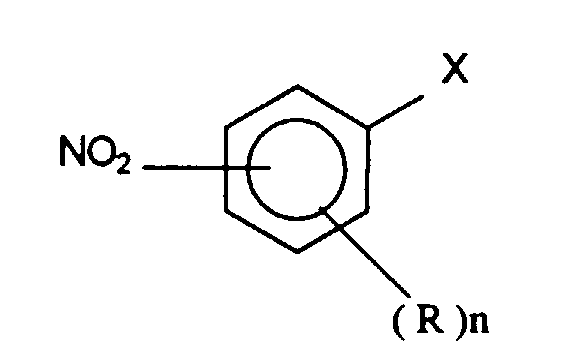 wherein X is -COOM or -SO3M with M being hydrogen, an alkali
metal or ammonium ion, R is an alkyl group with 1 to 3 atoms of carbon, and n
is 0, 1, 2 or 3.
wherein X is -COOM or -SO3M with M being hydrogen, an alkali
metal or ammonium ion, R is an alkyl group with 1 to 3 atoms of carbon, and n
is 0, 1, 2 or 3.
Description
- The present invention concerns a method for replenishing a photographic developer used in the processing of color photographic products, and specifically a method for maintaining the quantity of antifoggant in a developer stable in time by adding to said developer a replenishing solution (also called maintenance or regenerating solution) containing a specific antifoggant.
- In the processing of color photographic films, color developers are used that contain as their main constituent a color developing agent in an alkaline medium. These color developers also contain other components such as permeabilizing agents, antifoggants, preservatives, etc.
- The sensitometric characteristics of the processed products depend on the processing parameters: temperature, pH, and concentration of the components. These parameters must therefore be constantly monitored. Also, because the processing itself consumes the components initially present in the baths, these baths must be maintained or replenished. For this purpose the processing manuals propose formulas for replenishing baths, in particular for developers. These replenishing solutions are supplied systematically after the developer has acted for a set number of hours, or every time a set amount of film has been processed in the developer. This replenishing system is fairly problem-free in continuous processing, especially in large plants for the continuous, or practically continuous processing of motion picture film. However, when film processing plants do not operate continuously, but intermittently, for example less than 8 hours a day, the replenishment of the developer is also carried out intermittently, as the developer is used up. Some components of the developer can then decompose between the more widely spaced replenishments. This means that if the processing is intermittent, it is necessary to provide replenishment that will compensate for extra losses due to the decomposition of certain unstable components. This is particularly the case for antifoggants of the dinitrobenzoic acid type. Obviously, the precaution of specifically replenishing when the developer is used intermittently seriously complicates the processing procedure.
- For example, the Manual for Processing Eastman Motion Picture Films, Module 7, Process ECN-2- specifications, EKC, 1990, page 21, gives the following instructions for replenishing the antifoggant n°9 in a developer according to the rate of use:
Rate of use hours/day Quantity of antifoggant g/l 2 or less 0.46 4 0.42 6 0.38 8 0.34 10 or more 0.30 - The usual amount of antifoggant in the developer replenishing solution is 0.30 g/l. When the processing is running again after a stopping, it is necessary to change the replenisher concentration according to the above table. Antifoggant n°9 is a dinitrobenzoic acid, the poor stability of which makes additional specific replenishment necessary if developer use is intermittent. It is found that the more intermittent the developer use is, the more the concentration of antifoggant in the replenishing solution has to be increased. Hence the standard replenishing solution cannot be used if developing is intermittent without incurring a risk of impaired sensitometric characteristics.
- The object of the present invention is a simplified method of replenishing a color developer that does not suffer from the disadvantages stated above.
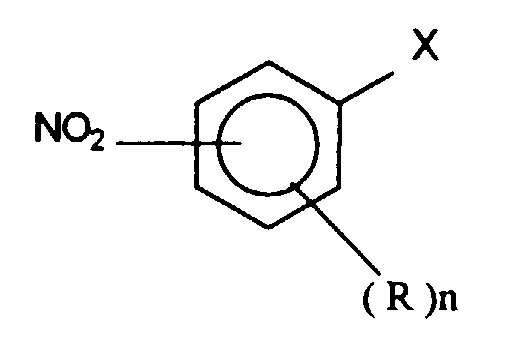
- The present invention relates to a method for replenishing a color developer containing an antifoggant, the color developer being used intermittently, which comprises adding to the color developer an amount of antifoggant that is not dependent on the intermittent use of the color developer and wherein the antifoggant has the following formula (I)wherein X is -COOM or -SO3M with M being hydrogen, an alkali metal or ammonium ion, R is an alkyl group with 1 to 3 atoms of carbon, and n is 0, 1, 2 or 3.
- The invention also relates to a method of development of an exposed color photographic material that comprises developing the photographic material in an intermittently used developer containing a color developing agent and an antifoggant, and adding to the color developer an amount of the antifoggant that is not dependent on the intermittent use of the color developer, wherein the antifoggant is the antigoggant (I).
- Herein the expression "a color developer used intermittently" reflects the fact that in photographic processing laboratories, the processing lines can operate at different rates of use according to the square meter number of film processed daily. Processing laboratories can operate continuously 24 h a day for periods of several weeks or several months or intermittently, a few hours a day or a week.
- In the method of the present invention, the color developer is running intermitendly. With the method of the present invention, it is no more necessary to adapt the amount of antifoggant to be added according to the extend of time the color developer is not running. After a stopping, when the color developer is running again, the added amount per time unit is the same as the added amount before the stopping. It can be thus advantageously a unique replenishing solution containing the antifoggant irrespective of the daily rate of use of the color developer.
- According to one embodiment, the antifoggant amount added to the color developer per running time unit is constant.
- According to one embodiment, the nitro group in formula (I) is positioned meta or para to the COOH or SO3H group. When n is equal to 1, 2 or 3, R is preferably methyl. In a different embodiment, n is 0 in formula (I), i.e., the benzene ring bears no alkyl group.
- The color developer used in the method of the invention is a conventional color developer usually comprising an alkaline aqueous solution of a color developing agent of the aromatic primary amine type, generally a paraphenylenediamine, for example, 2-amino-5-diethylaminotoluene (known as CD2), 4-amino-N-ethyl-N-(β-methanesulfoamidoethyl)-m-toluidine (CD3), 4-amino-3-methyl-N-ethyl-N-(β-hydroxyethyl)-aniline (CD4).
- CD2 is generally used in color developers for positive motion picture films, and CD3 is generally used in color developers for negative and intermediate motion picture films. The concentration of the color developing agent is usually at least 7 x 10⁻³ mol/l, and preferably between 9 x 10⁻³ and 2 x 10⁻² mol/l. This color developer can contain various additives such as sulfite, bisulfite, carbonate, water softener, buffer, wetting agent, accelerator, antifoamant, antibacterial agent, and antifoggant that can be the same as or different from the antifoggant of formula (I). The pH of the color developer is usually between 9 and 12.
- In the scope of the invention, the antifoggant (I) exhibit a redox potential preferably greater than -700 mV, measured relative to an Ag/AgCl/KCl 3M reference electrode. The antifoggant (I) can be 3-nitrobenzoic acid (redox potential -650 mV), 4-nitrobenzoic acid (redox potential -580 mV), 3-nitrobenzenesulfonic acid (redox potential -600 mV), or 4-nitrobenzenesulfonic acid. According to a preferred embodiment, the antifoggant (I) is 3-nitrobenzenesulfonic acid. Given that the antifoggant (I) is incorporated into an alkaline solution, it occurs as a salt of an alkali metal, for example sodium or potassium, or ammonium.
- The color developer can contain an antifoggant working concentration from 2 x 10⁻⁴ mole/l and 3 x 10⁻³ mole/l. The color developer can be prepared from a kit comprising a concentrated alkaline solution (A) containing the antifoggant of formula (I) and a concentrated acidic solution (B) containing the color developing agent of the paraphenylenediamine type, the ready-to-use color developer being obtained by mixing the concentrates (A) and (B) in either order. When the color developer is obtained from concentrated solutions (A) and (B), the volume and antifoggant concentration in the concentrate (A) will be adapted to obtain such a working concentration.
- In the scope of the present invention, the antifoggant (I) can be added to the color developer in powder form. It can be also added in solution form. In a specific embodiment, it can be added through a replenishing solution containing the antifoggant (I). Such a replenishing solution can contain the antifoggant (I) in a concentration from 3 x 10⁻⁴ to 5 x 10⁻³ mole/l.
- The method of this invention can be used in any photographic processing method comprising a color developing step, a bleaching step and a fixing step. The bleaching step and the fixing step can be replaced by a single bleaching-fixing step. One or more washing baths can be inserted between these successive steps. The method of the invention is particularly useful for the processing method of a negative motion picture films such as Eastman Color Negative® sold by Kodak wherein the color developing step is carried out with CD3.
- In the scope of the invention the antifoggant (I) can be added through the replenishing solution. A replenishing solution is a solution continuously added to the color developer in order to compensate the amount of components consumed during the processing of photographic materials. The amount of the replenishing solution to be added can largely vary depending on the component concentration and the processor type. This determination will be easily made by one skilled in the art.
- This invention is illustrated by the following examples:
- A developer composition as prescribed in the Manual for Processing Eastman Motion Picture Films, Module 7, Process ECN-2-specifications, EKC, 1990, page 21 was prepared.
Water at 27°C 800 ml Kodak n°4 water softener 2.0 ml Anhydrous sodium sulfite 2.0 g Antifoggant n°9 (3,5-dinitrobenzoic acid) 0.22 g Anhydrous sodium bromide 1.20 g Anhydrous sodium carbonate 26.6 g Sodium bicarbonate 2.7 g Kodak CD3 developer 4.0 g Water qsp 1 liter pH at 25°C 10.23 - An accelerated stability test was performed. For this test, the above freshly prepared developer was placed in a plastic bottle and stored at 50°C during 24 days. The sample of the developer was analysed after 3, 9, 16 and 24 days in order to determine the remaining amount of antifoggant.
- The amount of remaining antifoggant versus time is reported in table I below (expressed in weight %).
- A color developer containing the components as disclosed in example 1 was prepared except that the 3,5-dinitrobenzoic acid was replaced by 0.173 g/l of 3-nitrobenzoic acid. The stability test of the example 1 was performed on this color developer containing 3-nitrobenzoic acid. The results of the stability test are given in Table I below.
- A color developer containing the components as disclosed in example 1 was prepared except that the 3,5-dinitrobenzoic acid was replaced by 0.173 g/l of 4-nitrobenzoic acid. The stability test of the example 1 was performed on this color developer containing 4-nitrobenzoic acid. The results of the stability test are given in Table I below.
- A color developer containing the components as disclosed in example 1 was prepared except that the 3,5-dinitrobenzoic acid was replaced by 0.233 g/l of 3-nitrobenzenesulfonic acid. The stability test of the example 1 was performed on this color developer containing 3-nitrobenzenesulfonic acid. The results of the stability test are given in Table I below.
Duration of storage (days) Amount of remaining antifoggant (weight %) Ex 1 (Comp.) Ex 2 Ex 3 Ex 4 0 100 100 100 100 3 72 100 100 100 9 35 100 98 100 16 9 98 98 100 24 1 98 95 98 - These results show that, the amount of antifoggant (I) being time stable, it is no more necessary to add to the developer an amount of antifoggant (I) dependent on the intermittent use of the developer. These examples show that when the developer containing the antifoggant (I) is used, the amount of antifoggant to be added will only dependent on the component consumption by the photographic elements processed. This is not dependent on the intermittent use of the color developer.
- The same test was performed on a seasoned color developer containing the components as disclosed in example 1 was prepared except that the 3,5-dinitrobenzoic acid was replaced by 3-nitrobenzenesulfonic acid. The stability test of the example 1 was performed during 10 days in the experimental condition of the example 1. The results of the stability test are given in Table II below.
Concentration in the seasoned developer T = 0 0.356 g/l T = 10 days 0.358 g/l - These results show that with an intermittently used developer, the antifoggant (I) in a seasoned developer avoids any change in the amount to be added even after stopping the processing during 10 days.
- This example is carried out with a Photomec machine wherein the color developer is as disclosed below. The color developer is replenished with a replenishing solution as disclosed below and containing 3-nitrobenzenesulfonic acid as antifoggant. The volume of the color developer is carried on through an overflow.
- The color developer and the replenishing solution have the following compositions:
Developer Replenishing solution Water at 27°C 800 ml 800 ml Kodak n°4 water softener 2.0 ml 2.7 ml Anhydrous sodium sulfite 2.0 g 2.5 g 3-nitrobenzenesulfonic acid 0.35 g 0.48 g Anhydrous sodium bromide 1.20 g 0.93 g Anhydrous sodium carbonate 25.6 g 25 g Sodium bicarbonate 2.7 g 0.6 g Kodak CD3 developer 3.9 g 5.1 g Water qsp 1 liter 1 liter pH at 25°C 10.23 10.25 - After a running time, a sample of the seasoned developer was taken at the outlet of the overflow from the developing tank, just before stopping the processing line. This sample contained 0.360 g/l of antifoggant (I). Another sample of the same developer was taken after 70 hours with the line idle, just before starting it up again. The developer was not replenished during the stopping of the processing line. The antifoggant content in the second sample was 0.358 g/l.
- This test reproduced the conditions of an intermittent operation of the processing, and it shows that the concentration of antifoggant has not changed. Replenishing of the developer can therefore be carried out using the same solution as the replenishing solution used before stopping the processing. This was not the case when 3,5-dinitrobenzoic acid was used as antifoggant, as disclosed in Manual for processing Eastman motion picture Films, module 7, Process ECN-2 specifications, EKC, 1990, page 21.
- In this example a ready-to-use developer and a replenishment solution were prepared with the composition specified in example 5:
- An Eastman Color Intermediate 5274® negative color film was exposed through a step tablet with 21 density steps, each of these steps having an increment of 0.15 LogE with an exposure light of a color temperature 2850 K and an illuminant D1, for 1/50 sec. The film was developed using photographic process ECN-2®, which comprises the developer prepared in example 3, a bleaching bath, a fixing bath, and a final washing bath, both the film and the process being commercialized by Kodak, and the developer was maintained using the replenishing solution specified in example 1.
- By reading in the three colors blue, green and red on a densitometer, the following sensitometric results were obtained (seasoned bath). The results are reported in the table below.
- The same experiment was conducted with a color developer and a replenisher containing 3,5-dinitrobenzoic acid, in the conditions specified in the Manual for processing Eastman motion picture Films. The results are reported in the table below (..).
Red-sensitive layer Green-sensitive layer Blue-sensitive layer Dmin (+ 0.04) 0.178 (0.176) 0.600 (0.594) 0.958 (0.96) Dmax (+ 10) 1.40 (1.399) 2.03 (2.035) 2.32 (2.33) Contrast (+ 0.04) 0.530 (0.532) 0.576 (0.581) 0.564 (0.572) Speed (+ 4) 516.5 (516.1) 527.8 (527.2) 514.6 (514.) Dmin = minimal density corresponding to a portion of the unexposed film (support + fog) Dmax = maximal density of the film. Speed = 100(3-LogE), where E is the exposure at the point of density Dmin + 1. Contrast = slope of the straight line between the point of density Dmin + 0.20 and that of exposure greater than 1.35 LogE. - This shows the efficiency of the method of the invention as regard to the sensitometric results.
- The invention has been described in detail with particular reference to certain preferred embodiments thereof, but it will be understood that variations and modifications can be effected within the spirit and scope of the invention.
Claims (9)
- A method for replenishing a color developer containing an antifoggant, the color developer being used intermittently, which comprises adding to the color developer an amount of antifoggant that is not dependent on the intermittent use of the color developer and wherein the antifoggant has the following formula (I)wherein X is -COOM or -SO3M with M being hydrogen, an alkali metal or ammonium ion, R is an alkyl group with 1 to 3 atoms of carbon, and n is0, 1, 2 or 3.

- The method of claim 1 wherein the antifoggant amount added to the color developer per running time unit is constant.
- The method of claim 1 wherein the added amount of the antifoggant is such that the color developer concentration is between 2 x 10⁻⁴ and 3 x 10⁻³ mole/l.
- The method of claim 1 wherein the antifoggant amount is added to the color developer through a replenishing solution.
- The method according to claim 1 wherein the nitro group in the formula (I) is positioned meta or para to the COOH or SO3H group.
- Method according to any of claims 1 or 2, wherein n is equal to 0 in the formula (I).
- Method of development of an exposed color photographic material that comprises:developing the photographic material in an intermittently used developer containing a color developing agent and an antifoggant, andadding to the color developer an amount of the antifoggant that is not dependent on the intermittent use of the color developer, wherein the antifoggant has the following formula (I)
 wherein X is -COOM or -SO3M with M being either an atom of hydrogen, or an alkali metal or ammonium ion, R is an alkyl group with 1 to 3 atoms of carbon, n is 0, 1, 2 or 3.
 - The method of claim 6 wherein the antifoggant is added to the color developer through a replenishing solution having an antifoggant concentration from
3 x 10⁻⁴ to 5 x 10⁻³ mole/l. - Use of an antifoggant having formula (I) as defined in Claim 1 for providing a developer having a stable amount of antifoggant agent.
Applications Claiming Priority (2)
| Application Number | Priority Date | Filing Date | Title |
|---|---|---|---|
| FR9902974 | 1999-03-08 | ||
| FR9902974A FR2790841B1 (en) | 1999-03-08 | 1999-03-08 | METHOD FOR RENEWING A CHROMOGENEOUS PHOTOGRAPHIC DEVELOPER |
Publications (1)
| Publication Number | Publication Date |
|---|---|
| EP1035433A1 true EP1035433A1 (en) | 2000-09-13 |
Family
ID=9543033
Family Applications (1)
| Application Number | Title | Priority Date | Filing Date |
|---|---|---|---|
| EP00420030A Withdrawn EP1035433A1 (en) | 1999-03-08 | 2000-02-11 | Method for replenishing a color photographic developer |
Country Status (3)
| Country | Link |
|---|---|
| EP (1) | EP1035433A1 (en) |
| JP (1) | JP2000267240A (en) |
| FR (1) | FR2790841B1 (en) |
Citations (4)
| Publication number | Priority date | Publication date | Assignee | Title |
|---|---|---|---|---|
| FR2214910A1 (en) * | 1973-01-24 | 1974-08-19 | Eastman Kodak Co | |
| GB1468015A (en) * | 1974-11-21 | 1977-03-23 | May & Baker Ltd | Colour developer compositions |
| JPS6052849A (en) * | 1983-09-02 | 1985-03-26 | Fuji Photo Film Co Ltd | Method for processing photosensitive silver halide material |
| US5063141A (en) * | 1989-04-10 | 1991-11-05 | Fuji Photo Film Co., Ltd. | Method of processing silver halide photosensitive material |
-
1999
- 1999-03-08 FR FR9902974A patent/FR2790841B1/en not_active Expired - Fee Related
-
2000
- 2000-02-11 EP EP00420030A patent/EP1035433A1/en not_active Withdrawn
- 2000-03-07 JP JP2000067188A patent/JP2000267240A/en active Pending
Patent Citations (4)
| Publication number | Priority date | Publication date | Assignee | Title |
|---|---|---|---|---|
| FR2214910A1 (en) * | 1973-01-24 | 1974-08-19 | Eastman Kodak Co | |
| GB1468015A (en) * | 1974-11-21 | 1977-03-23 | May & Baker Ltd | Colour developer compositions |
| JPS6052849A (en) * | 1983-09-02 | 1985-03-26 | Fuji Photo Film Co Ltd | Method for processing photosensitive silver halide material |
| US5063141A (en) * | 1989-04-10 | 1991-11-05 | Fuji Photo Film Co., Ltd. | Method of processing silver halide photosensitive material |
Also Published As
| Publication number | Publication date |
|---|---|
| FR2790841B1 (en) | 2003-11-07 |
| FR2790841A1 (en) | 2000-09-15 |
| JP2000267240A (en) | 2000-09-29 |
Similar Documents
| Publication | Publication Date | Title |
|---|---|---|
| JPS6318729B2 (en) | ||
| CA1270402A (en) | Method of processing a silver halide photographic light-sensitive material | |
| EP0584665A2 (en) | Processing solution for silver halide photographic light-sensitive materials | |
| US4138257A (en) | Process for the treatment of photographic materials | |
| JPH023977B2 (en) | ||
| US4741991A (en) | Stable photographic developer and replenisher therefor | |
| EP1035433A1 (en) | Method for replenishing a color photographic developer | |
| EP0947879B1 (en) | Kit for photographic color developing bath | |
| US20010046648A1 (en) | Antifoggant concentrate for preparing or replenishing a photographic color developer | |
| US6312878B1 (en) | Color photographic developer kit | |
| JP2876157B2 (en) | Color developing replenisher for silver halide color photographic materials | |
| US5834168A (en) | Photographic image-forming process | |
| US5741631A (en) | Photographic dye image-forming process | |
| JP2673698B2 (en) | Color developer for silver halide color photographic materials | |
| EP0468781A1 (en) | Method of processing light sensitive silver halide color photographic material | |
| JP2811116B2 (en) | Color developing replenisher for silver halide color photographic materials | |
| JP2000206657A (en) | Composition for color development | |
| JPH035733B2 (en) | ||
| JPH04264550A (en) | Processing method for silver halide color photographic sensitive material | |
| JPH04131846A (en) | Processing method for silver halide color photographic sensitive material | |
| JP3021878B2 (en) | Color developing solution for silver halide color photographic material and processing method | |
| JPS61272745A (en) | Formation of color photographic image | |
| JPH01319034A (en) | Composition of photographic processing agent | |
| JPS5945145B2 (en) | Bleaching method for color photographic materials | |
| JPH0534881A (en) | Processing method of silver halide color photographic light-sensitive material |
Legal Events
| Date | Code | Title | Description |
|---|---|---|---|
| PUAI | Public reference made under article 153(3) epc to a published international application that has entered the european phase |
Free format text: ORIGINAL CODE: 0009012 |
|
| AK | Designated contracting states |
Kind code of ref document: A1 Designated state(s): DE FR GB |
|
| AX | Request for extension of the european patent |
Free format text: AL;LT;LV;MK;RO;SI |
|
| 17P | Request for examination filed |
Effective date: 20010222 |
|
| AKX | Designation fees paid |
Free format text: DE FR GB |
|
| 17Q | First examination report despatched |
Effective date: 20031103 |
|
| STAA | Information on the status of an ep patent application or granted ep patent |
Free format text: STATUS: THE APPLICATION IS DEEMED TO BE WITHDRAWN |
|
| 18D | Application deemed to be withdrawn |
Effective date: 20040316 |